/










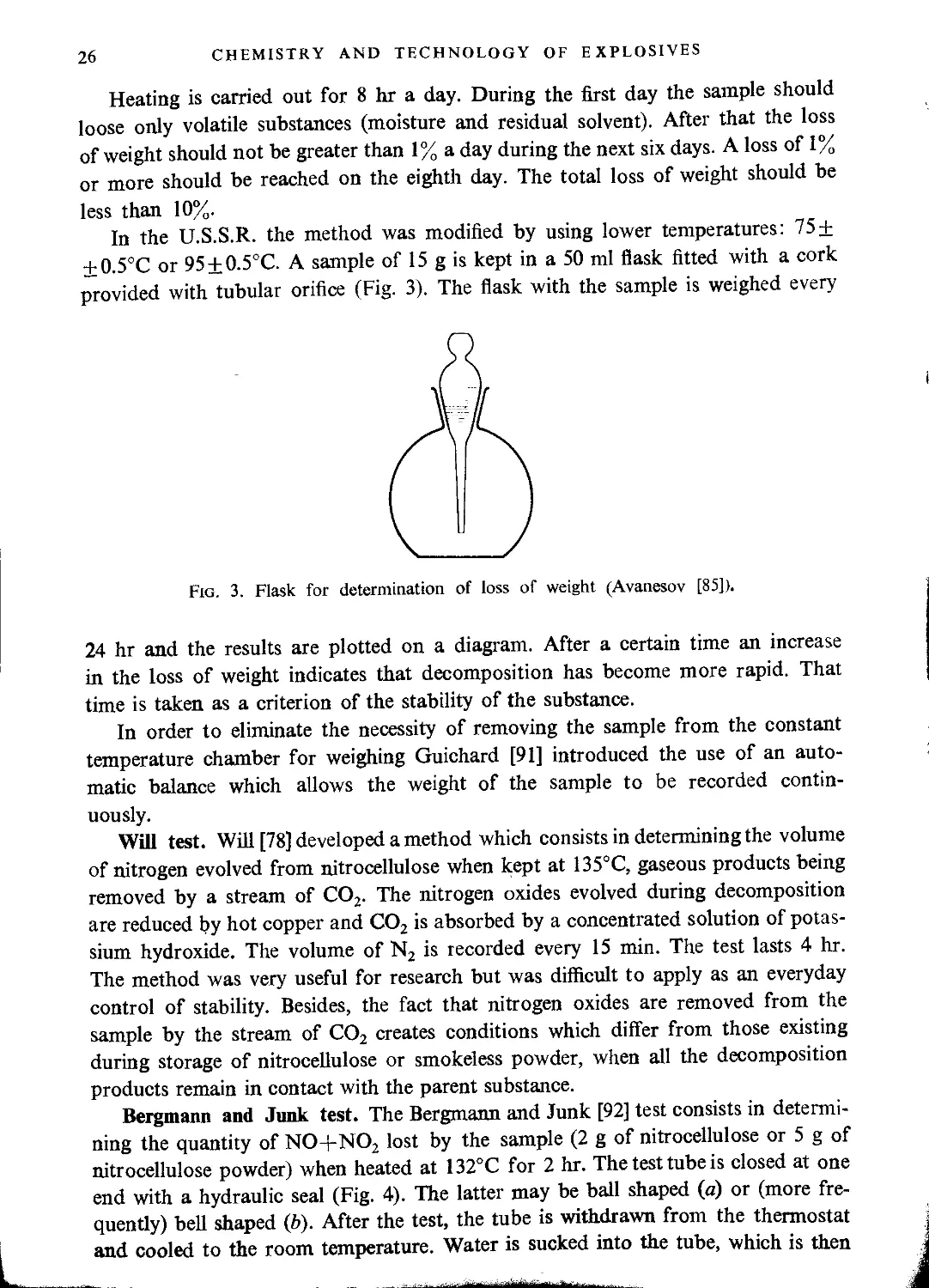
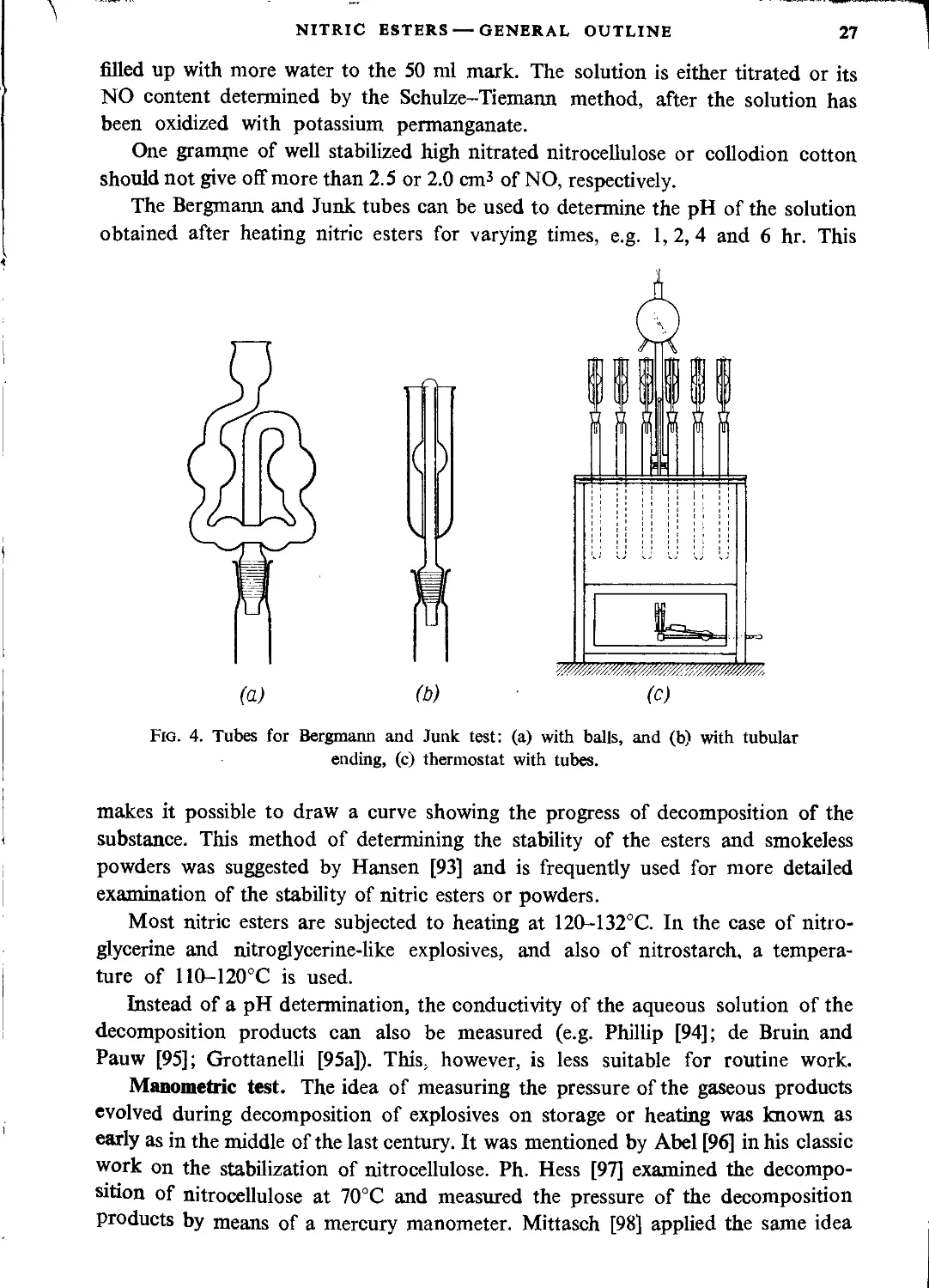
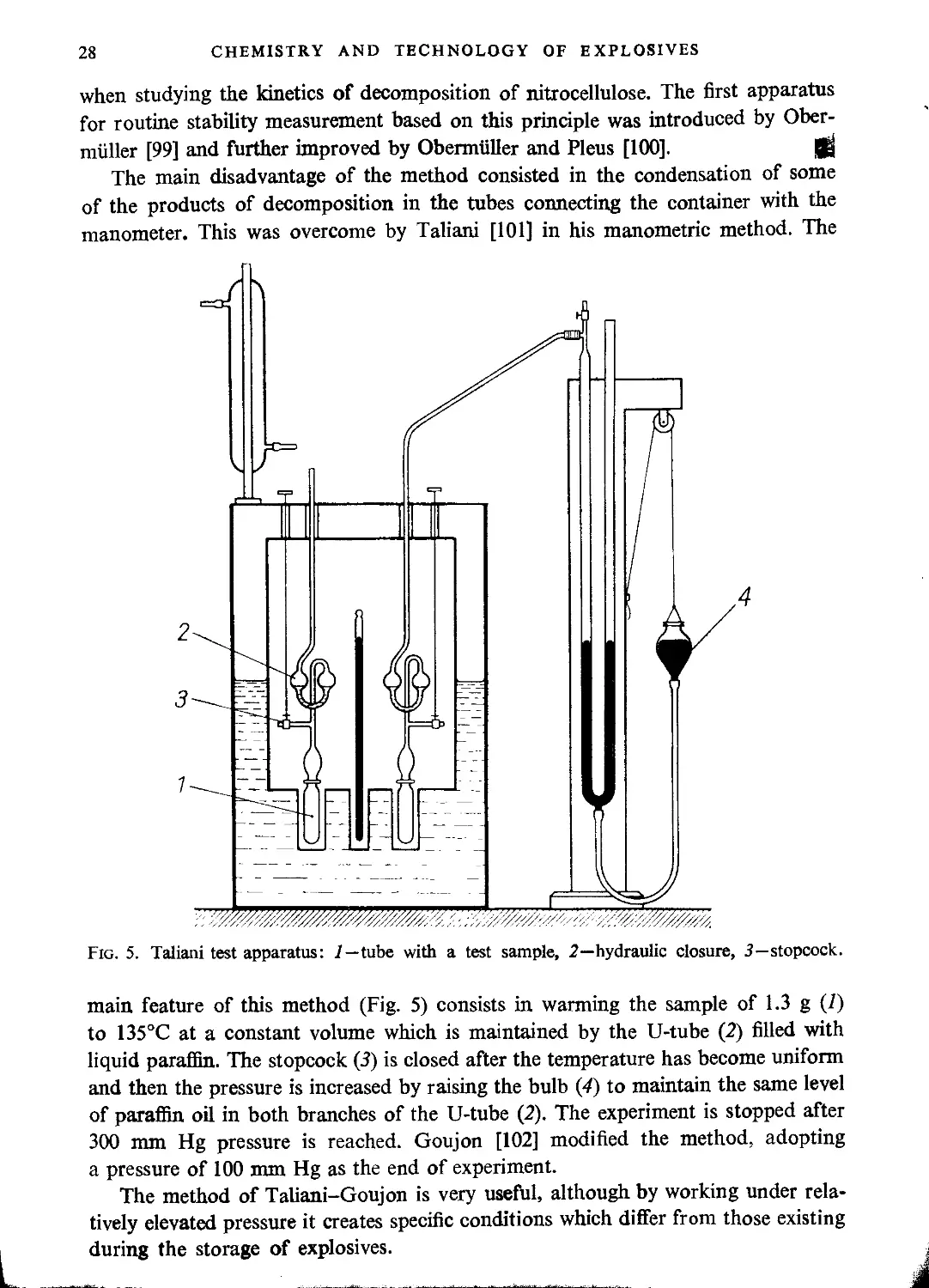
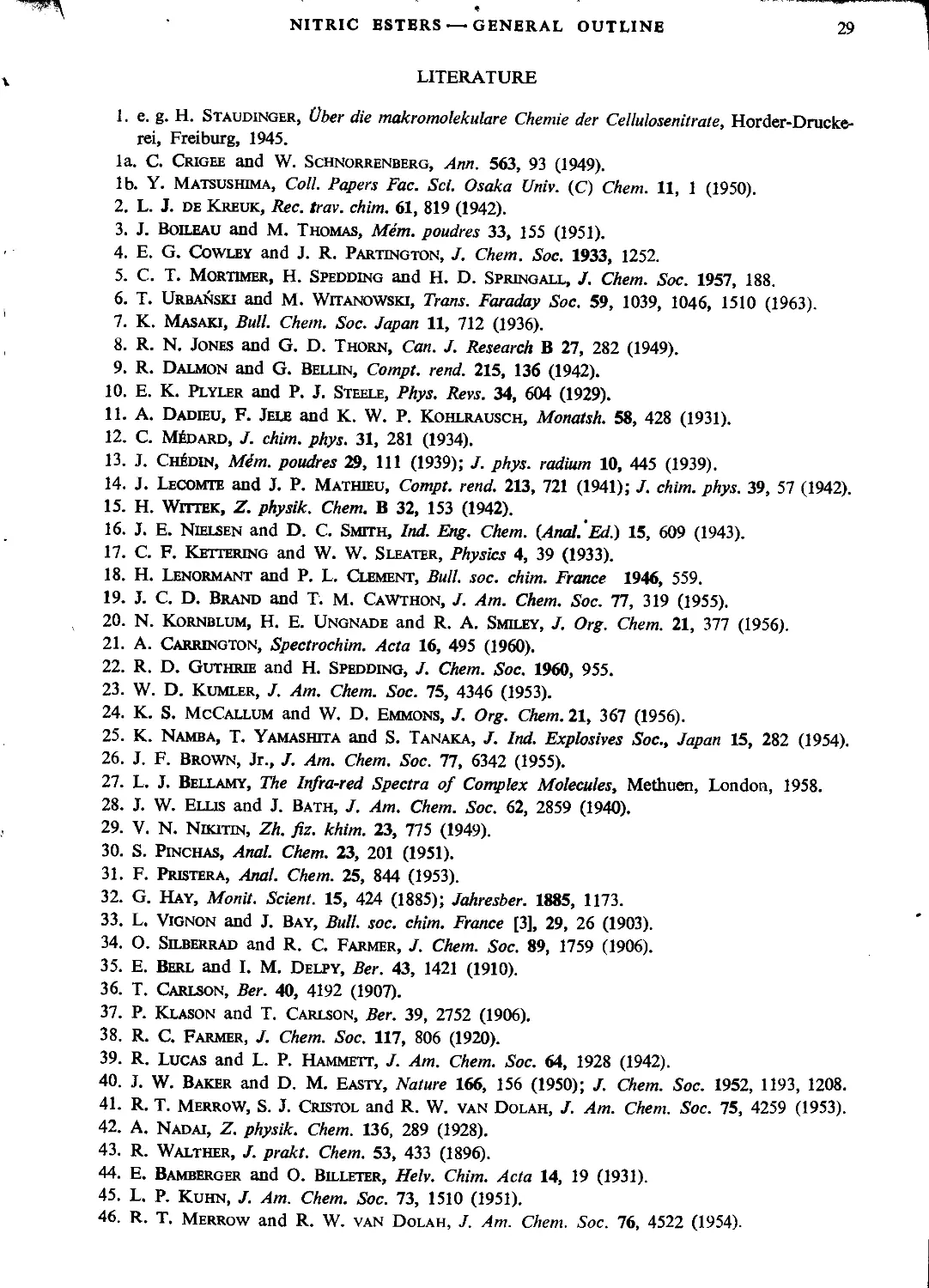


















































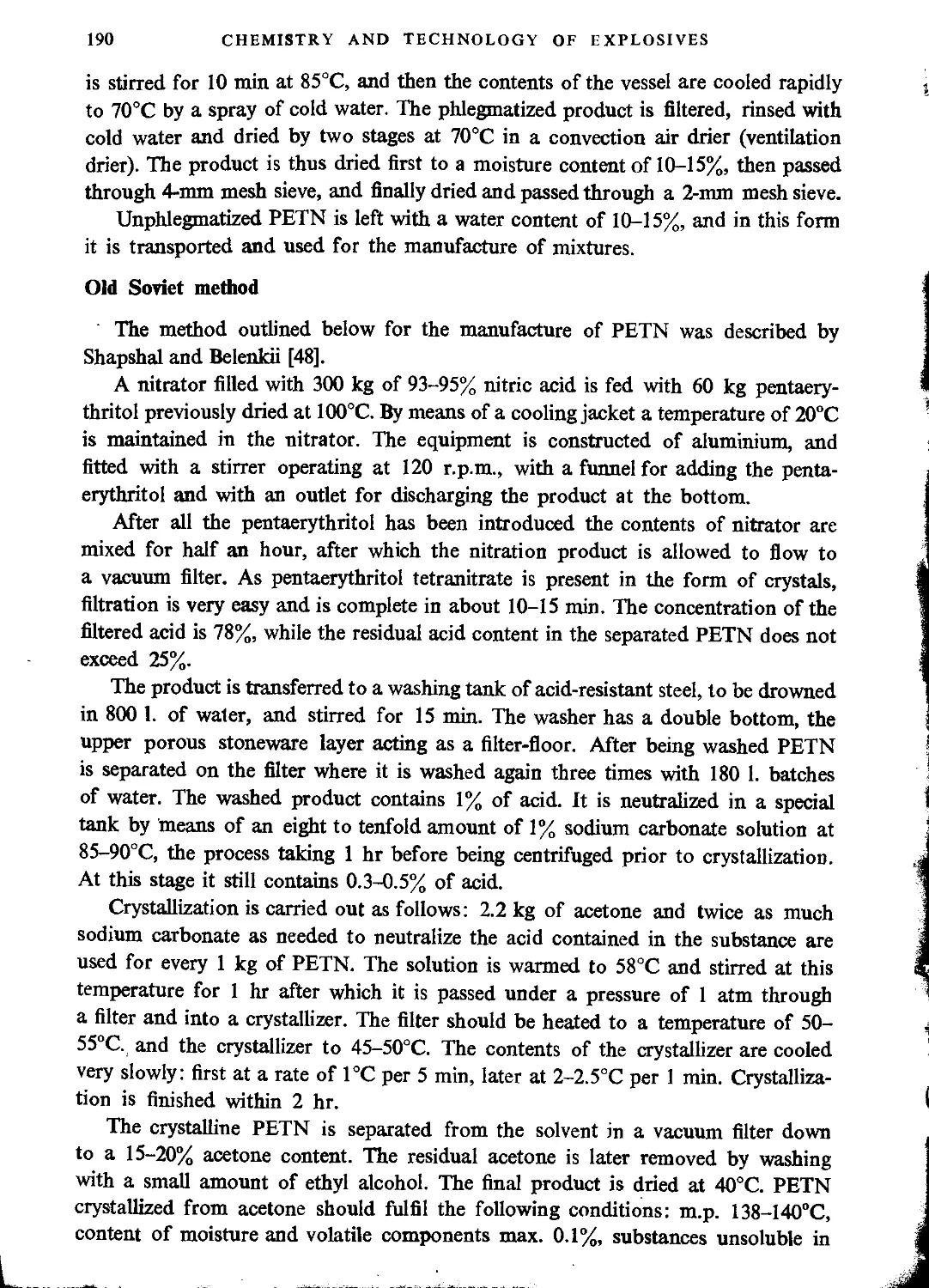
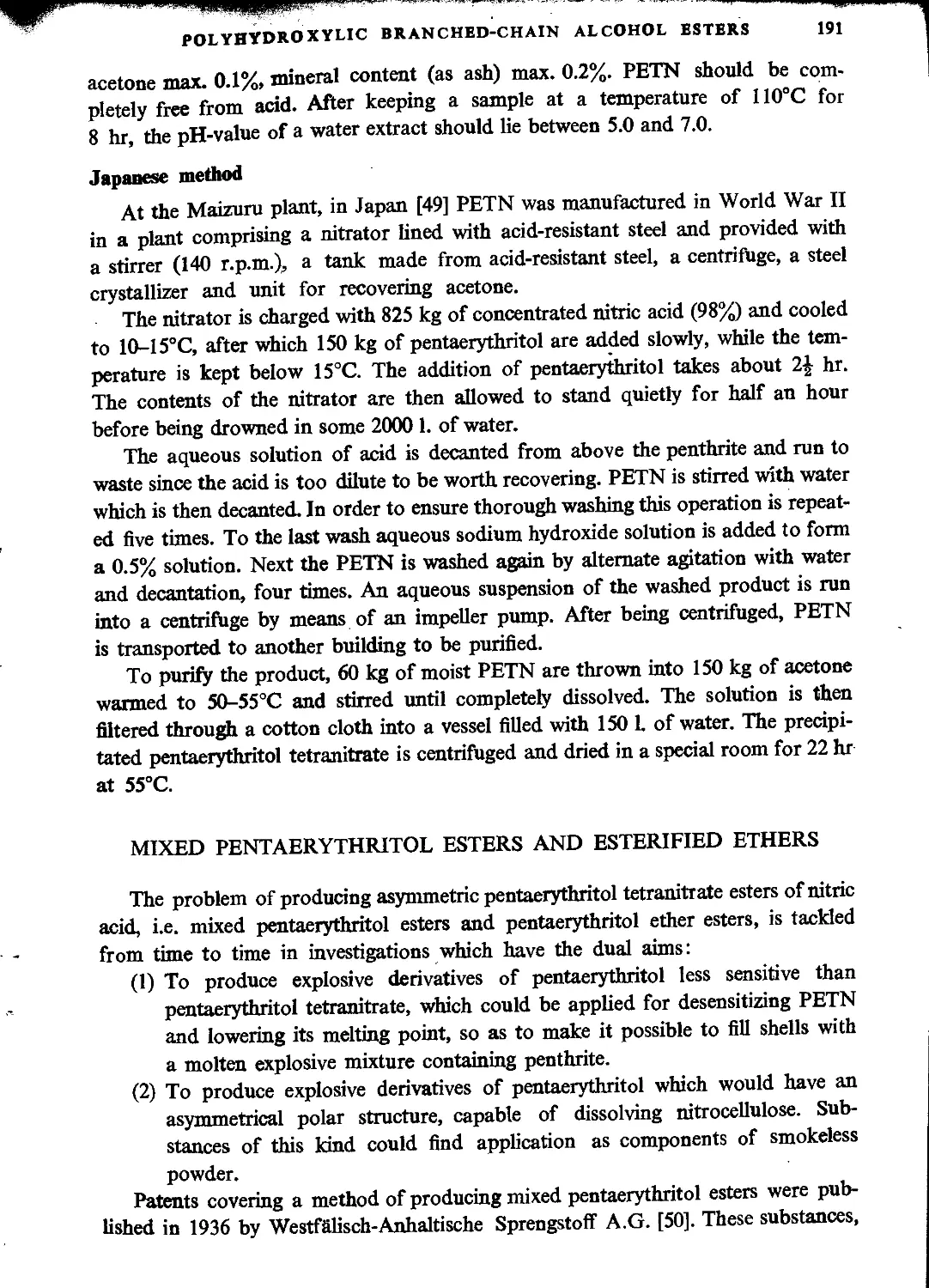
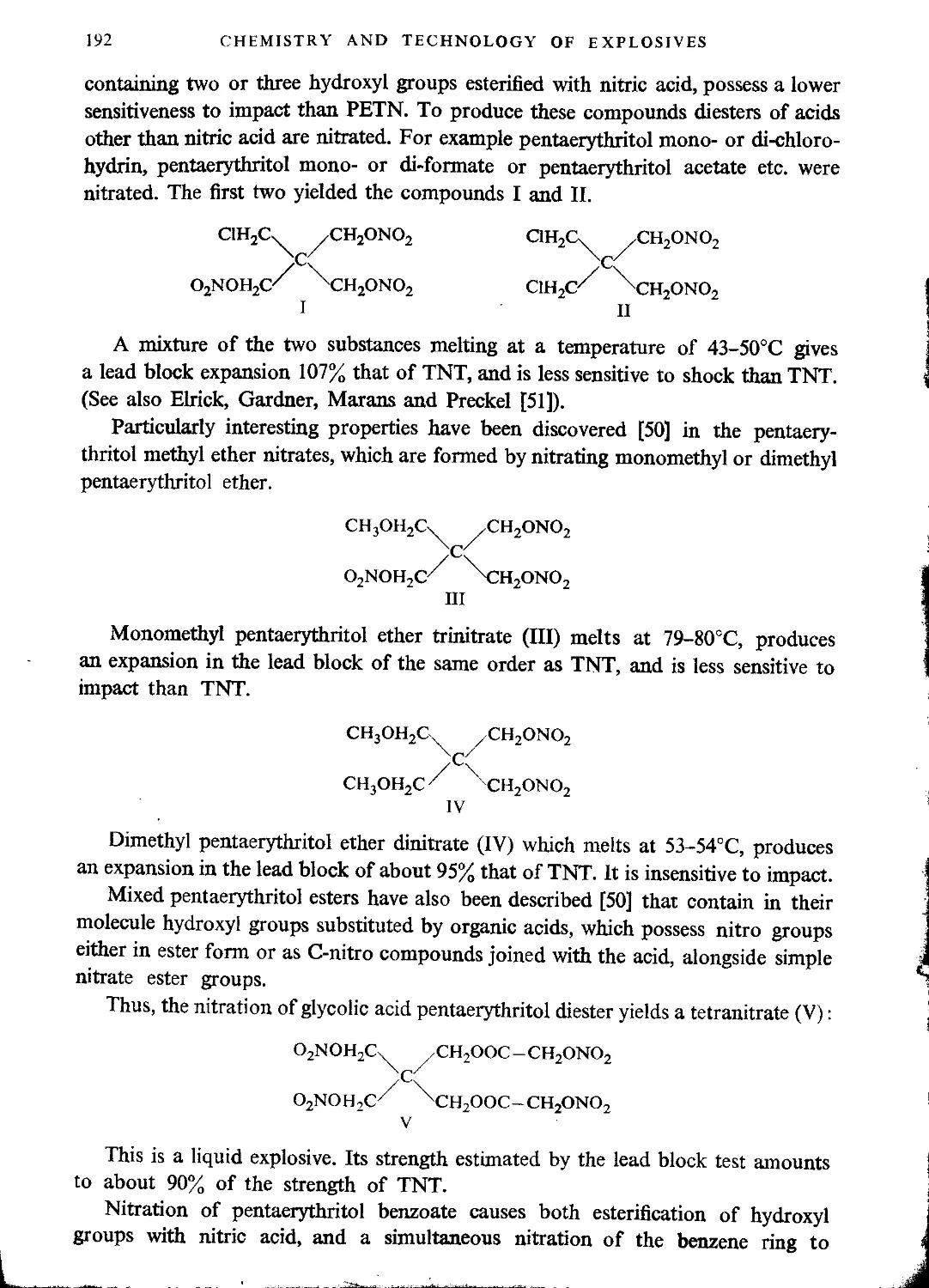
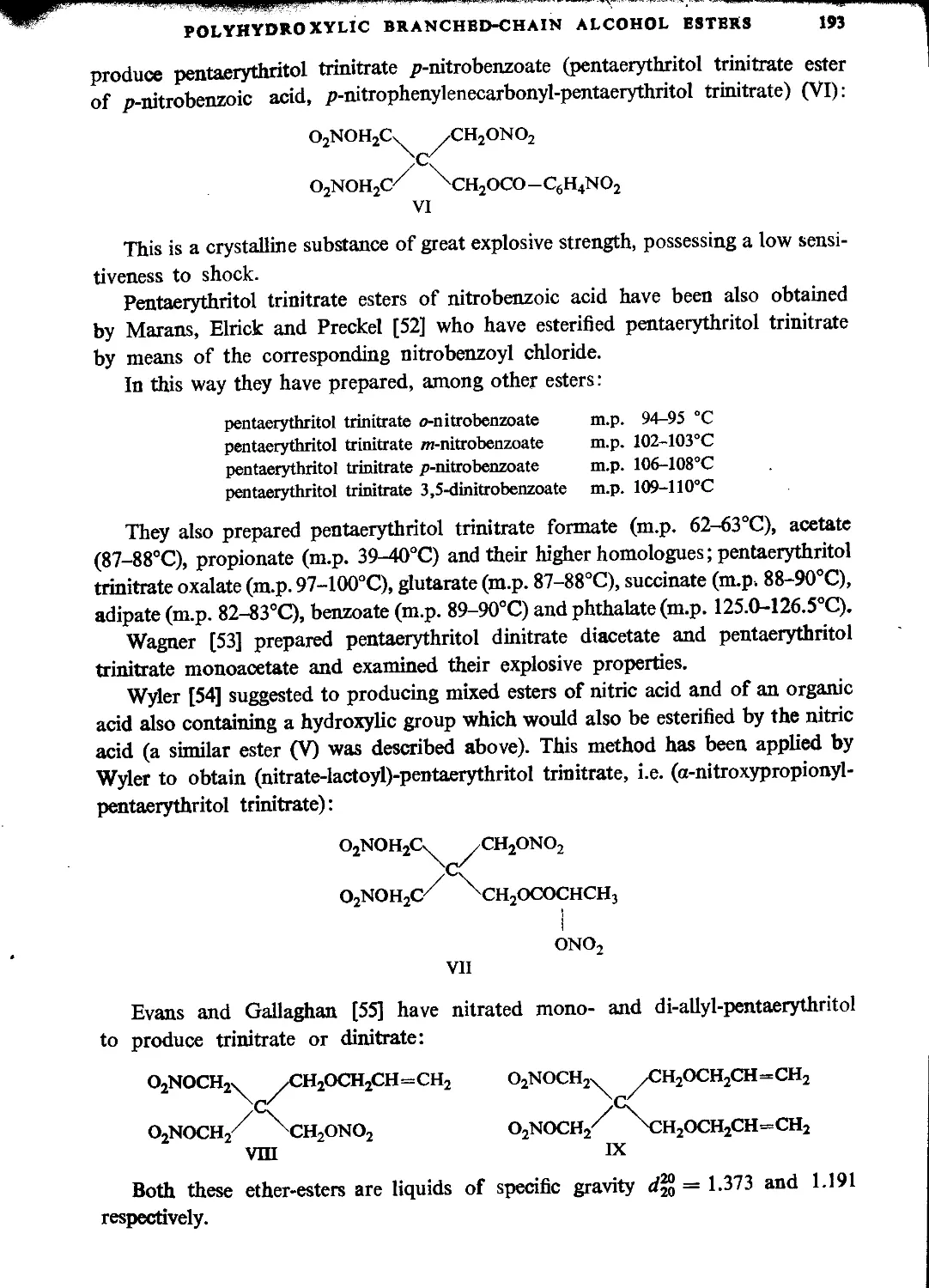





























































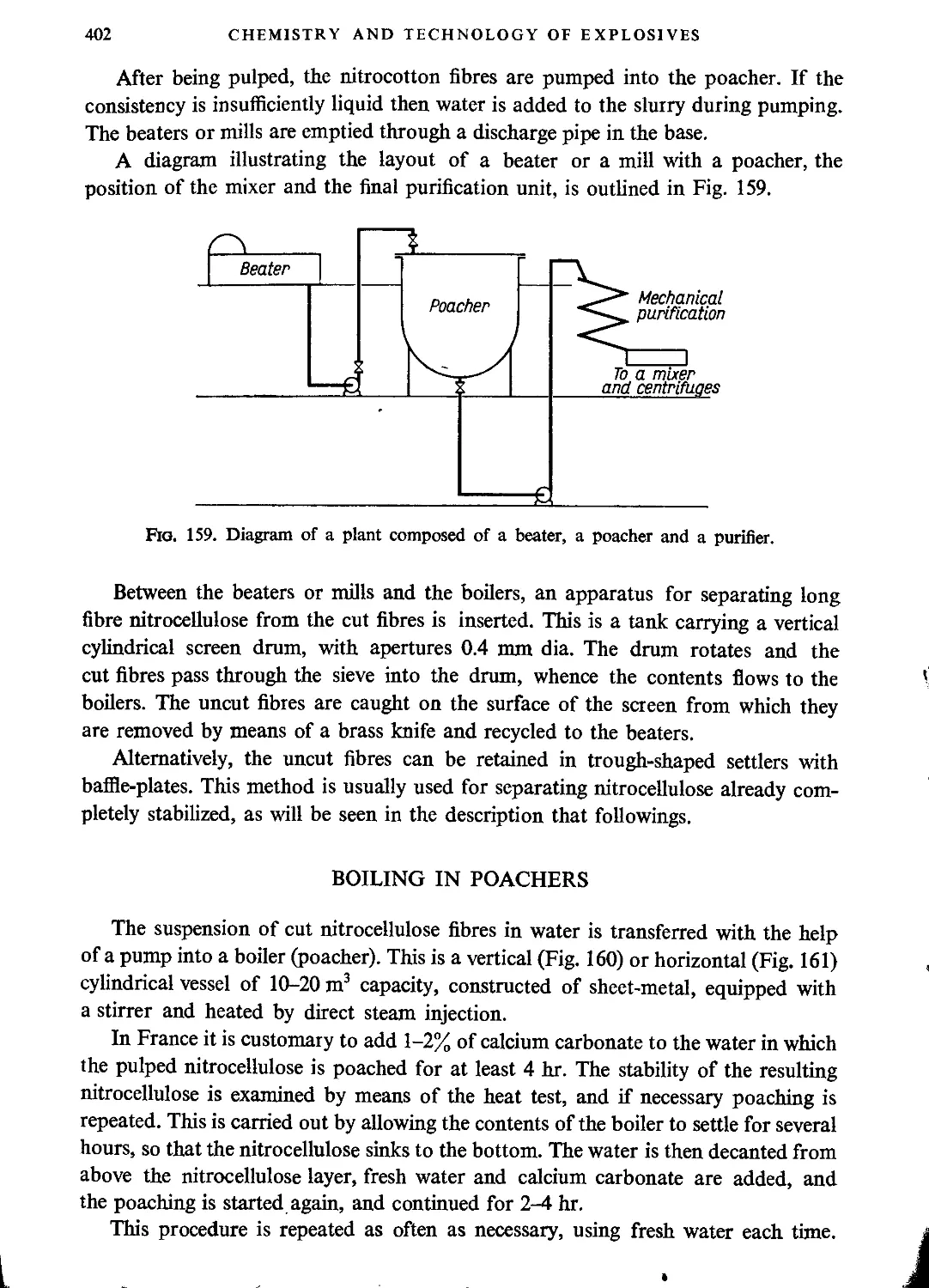

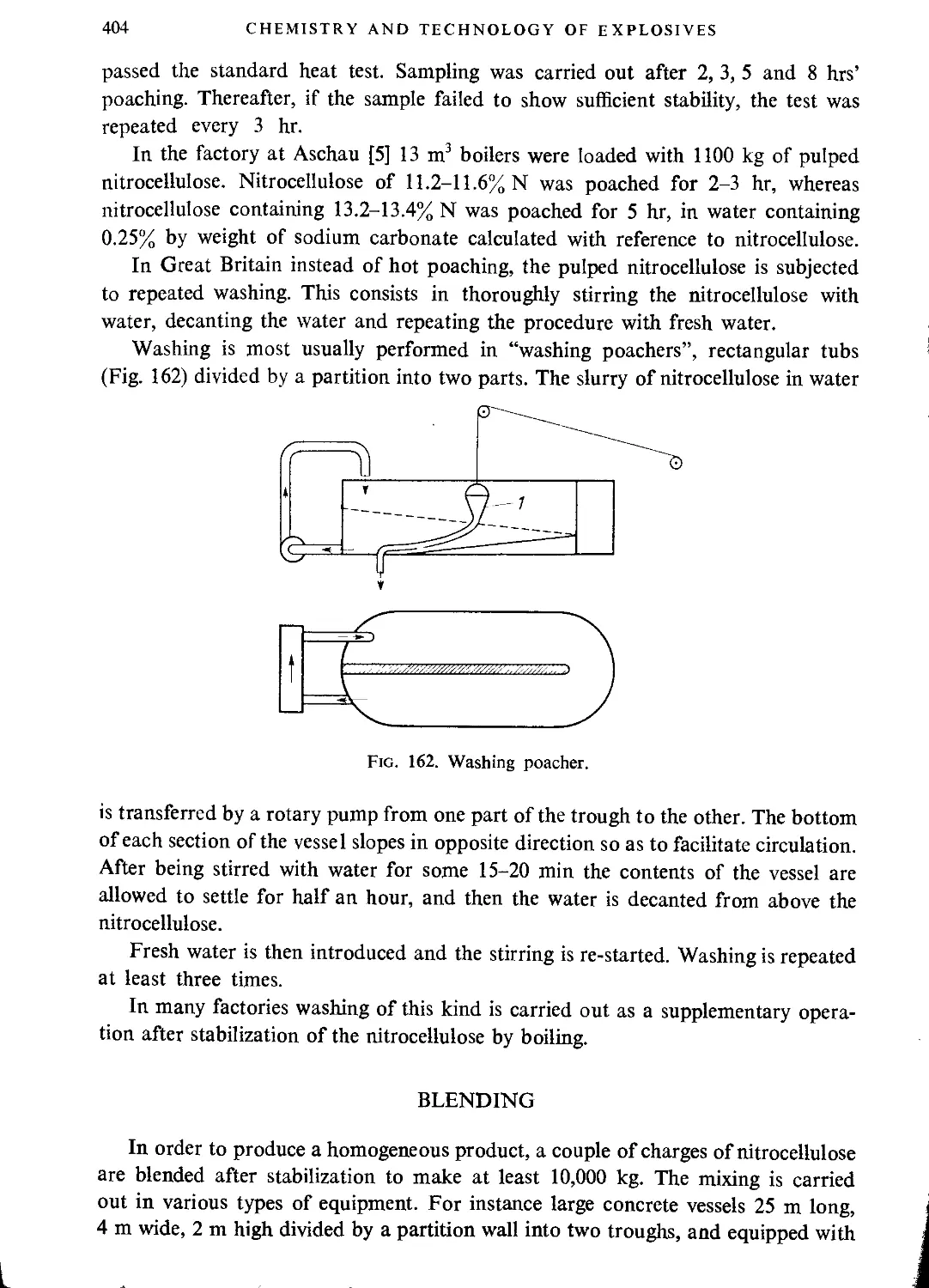
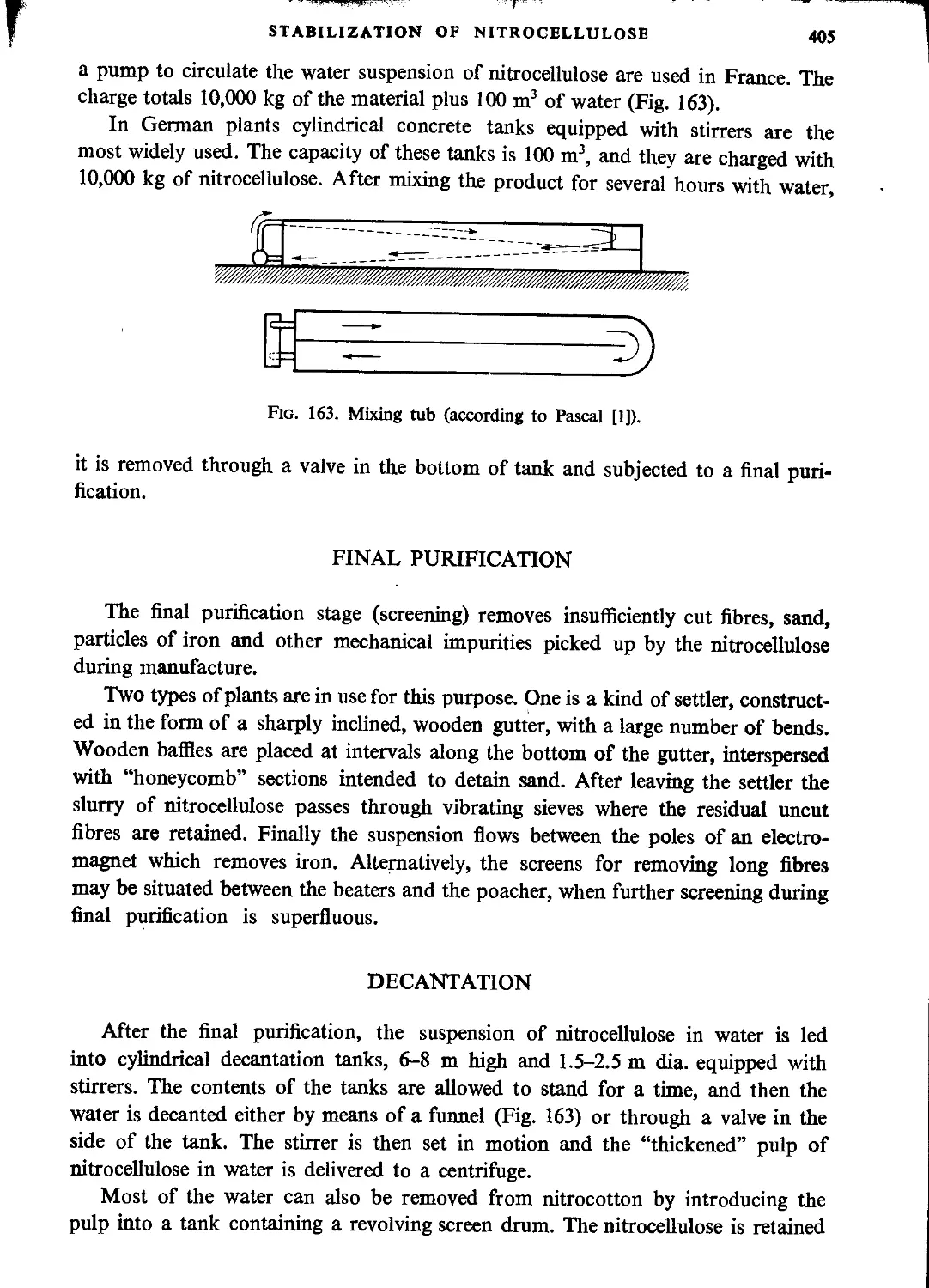

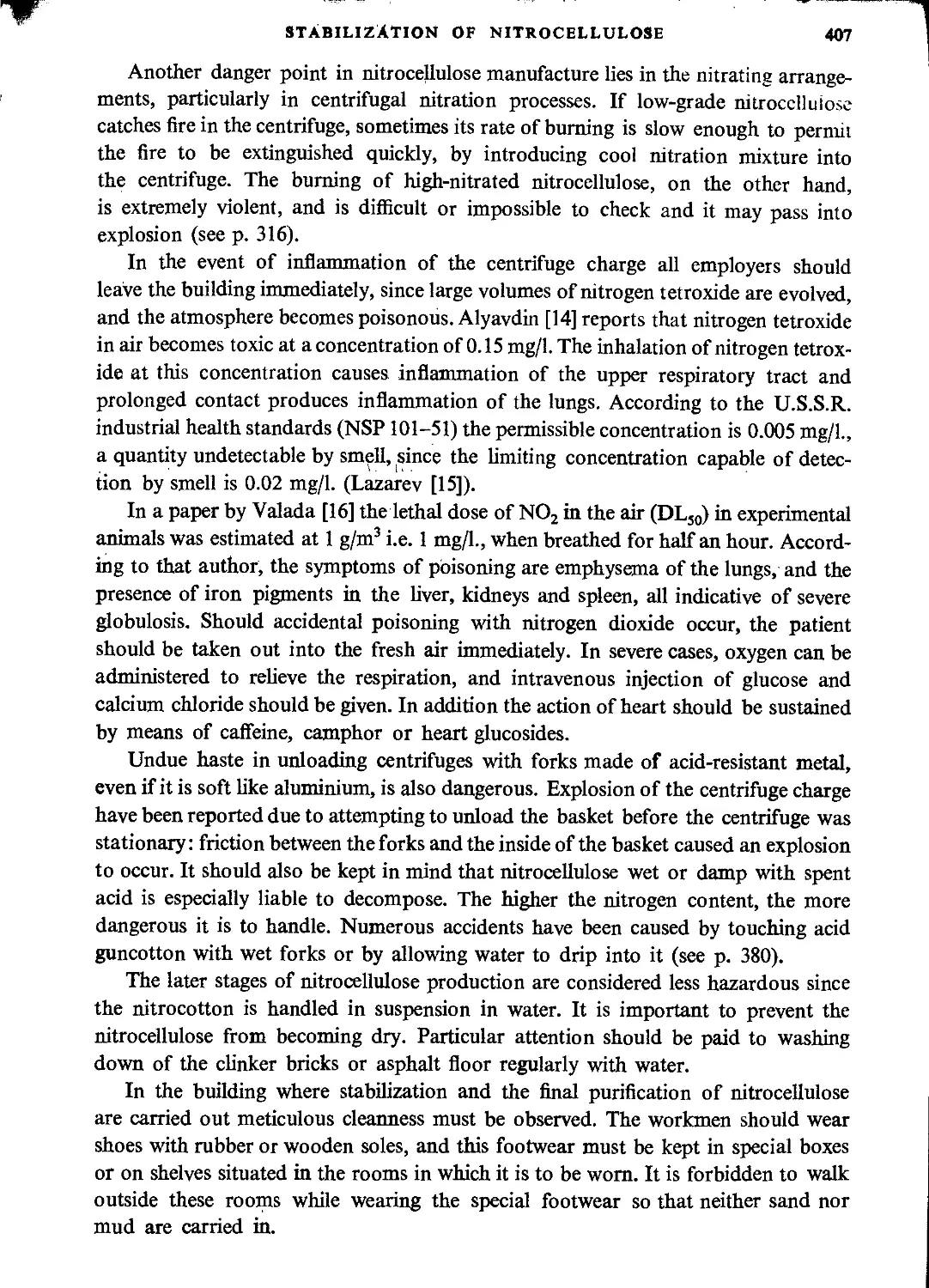







































Author: Ubranski T. Jeczalikowa I.
Tags: chemistry explosives translated literature molecular chemistry pyrotechnics explosions
Year: 1965
Text
                    Chemistry and Technology
of Explosives
Vol. II
by
TADEUSZ URBANSKI
Department of Technology, Politechnika
Warszawa
Authorized translation by
WLADYSLAW ORNAF
and
SYLVIA LAVERTON
PERGAMON PRESS
OXFORD • LONDON • EDINBURGH • NEW YORK
PARIS • FRANKFURT
PWN—POLISH SCIENTIFIC PUBLISHERS
WARSZAWA
Pergamon Press Ltd., Headington Hill Hall, Oxford
4 & 5 Fitzroy Square, London W. 1
Pergamon Press (Scotland) Ltd., 2 & 3 Teviot Place, Edinburgh 1
Pergamon Press Inc., 122 East 55th St., New York 22, N.Y.
Gauthier-Villars, 55 Quai des Grands-Augustins, Paris 6
Pergamon Press GmbH, Kaiserstrasse 75, Frankfurt-am-Main
Copyright © 1965
by
PANSTWOWE WYDAWNICTWO NAUKOWE
PWN — Polish Scientific Publishers
Warszawa
Scan by Amenf
Interim image release.
First edition 1965
Title of the original volume
Chemia i technologia materialow wybuchowych
Library of Congress Catalog Card No. 63-10077
Printed in Poland (WDN)
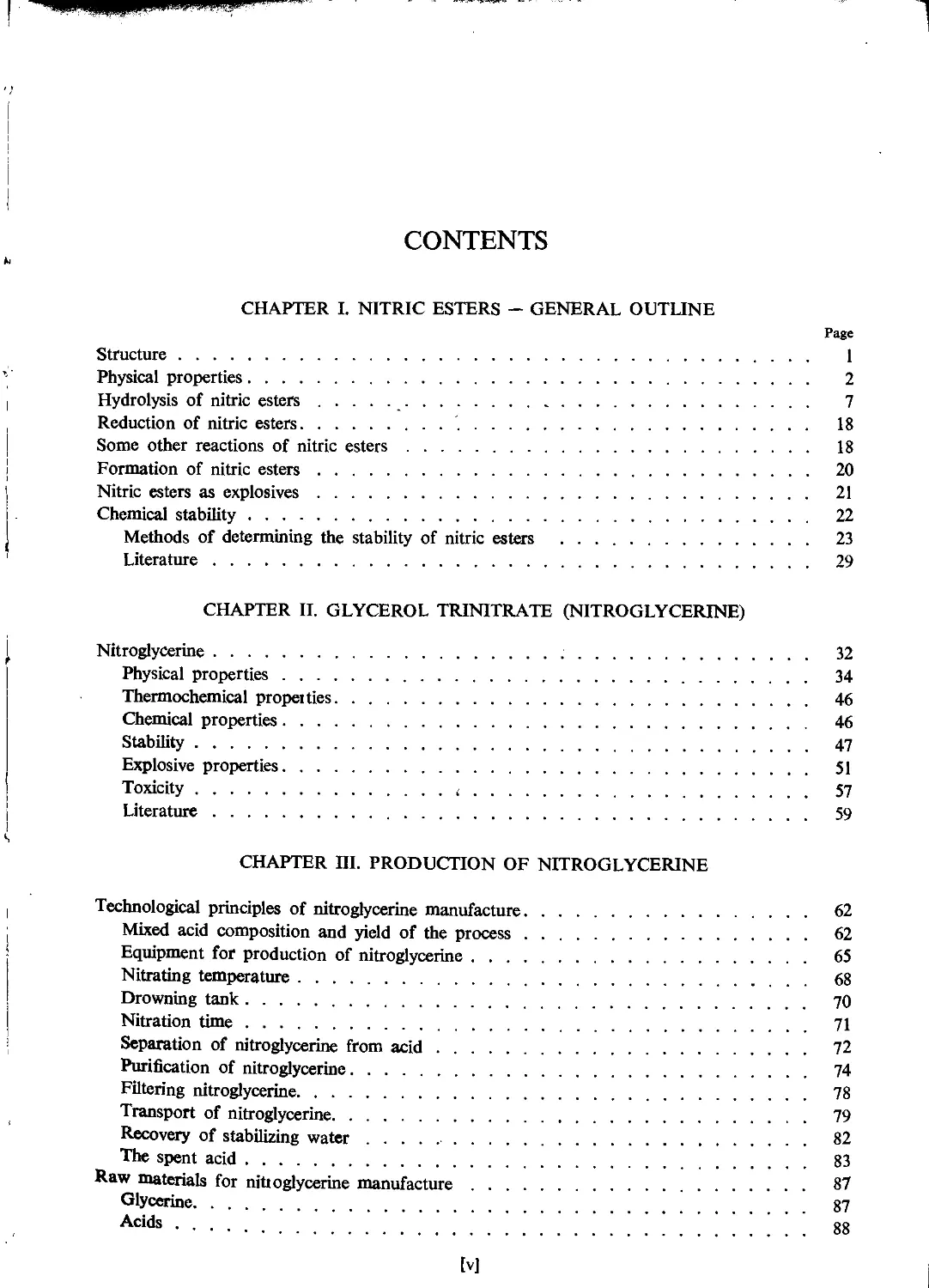
CONTENTS
CHAPTER I.	NITRIC ESTERS — GENERAL OUTLINE
Page
Structure.................................................................................. 1
Physical properties........................................................................ 2
Hydrolysis of nitric esters................................................................ 7
Reduction of nitric esters..............................................................   18
Some other reactions of nitric esters..................................................... 18
Formation of nitric esters................................................................ 20
Nitric esters as explosives............................................................... 21
Chemical stability........................................................................ 22
Methods of determining the stability of nitric esters ................................ 23
Literature............................................................................ 29
CHAPTER II.	GLYCEROL TRINITRATE (NITROGLYCERINE)
Nitroglycerine..........................................................................   32
Physical properties................................................................... 34
Thermochemical propet ties............................................................ 46
Chemical properties................................................................... 46
Stability............................................................................. 47
Explosive properties.................................................................. 51
Toxicity................................i............................................. 57
Literature............................................................................ 59
CHAPTER Ш. PRODUCTION OF NITROGLYCERINE
Technological principles of nitroglycerine manufacture.................................... 62
Mixed acid composition and yield of the process....................................... 62
Equipment for production of nitroglycerine............................................ 65
Nitrating temperature................................................................. 68
Drowning tank......................................................................... 70
Nitration time........................................................................ 71
Separation of nitroglycerine from acid................................................ 72
Purification of nitroglycerine........................................................ 74
Filtering nitroglycerine.............................................................. 78
Transport of nitroglycerine........................................................... 79
Recovery of stabilizing water......................................................... 82
The spent acid........................................................................ 83
Raw materials for nitioglycerine manufacture.............................................. 87
Glycerine............................................................................. 87
Acids................................................................................. 88
[v]
vi
CHEMISTRY AND TECHNOLOGY OF EXPLOSIVES
Batch methods of nitroglycerine manufacture............................................. 88
Old processes........................................................................ 88
Nobel process........................................................................ 89
Nathan, Thomson and Rintoul	process................................................. 91
Combined process..................................................................... 95
Continuous methods of nitroglycerine manufacture........................................ 97
Schmid process....................................................................... 99
Schmid-Meissner process..............................................................104
Raczynski process....................................................................106
Biazzi process.......................................................................107
N.A.B. injector nitration process....................................................114
Semi-continuous processes............................................................120
General safety rules....................................................................122
Literature...........................................................................124
CHAPTER TV. OTHER GLYCERINE ESTERS
Glycerol mononitrate....................................................................127
Glycidol nitrate........................................................................128
Glycerol dinitrate (“Dinitroglycerine”).................................................129
Explosive properties..................................................................150
Manufacture of dinitroglycerine.....................................................131
Mixed glycerine esters..................................................................133
Chlorohydrin nitrates...............................................................133
Dichlorohydrin nitrates...............................................................136
Formylglycerol dinitrate.............................................................137
Acetylglycerol dinitrate.............................................................137
Polyglycerol esters......................................................................138
Diglycerol tetranitrate..............................................................139
Literature...........................................................................140
CHAPTER V.	GLYCOL ESTERS
Ethylene glycol esters..................................................................141
Ethylene glycol mononitrate..........................................................142
Ethylene glycol dinitrate (“Nitroglycol”)............................................142
Diethylene and triethylene glycol esters................................................149
Diethylene glycol dinitrate......................................................... 149
Triethylene glycol dinitrate.........................................................154
Esters of other glycols................................................................ 155
Methylene glycol dinitrate...........................................................155
Trimethylene glycol dinitrate........................................................155
Methyl glycol dinitrate..............................................................157
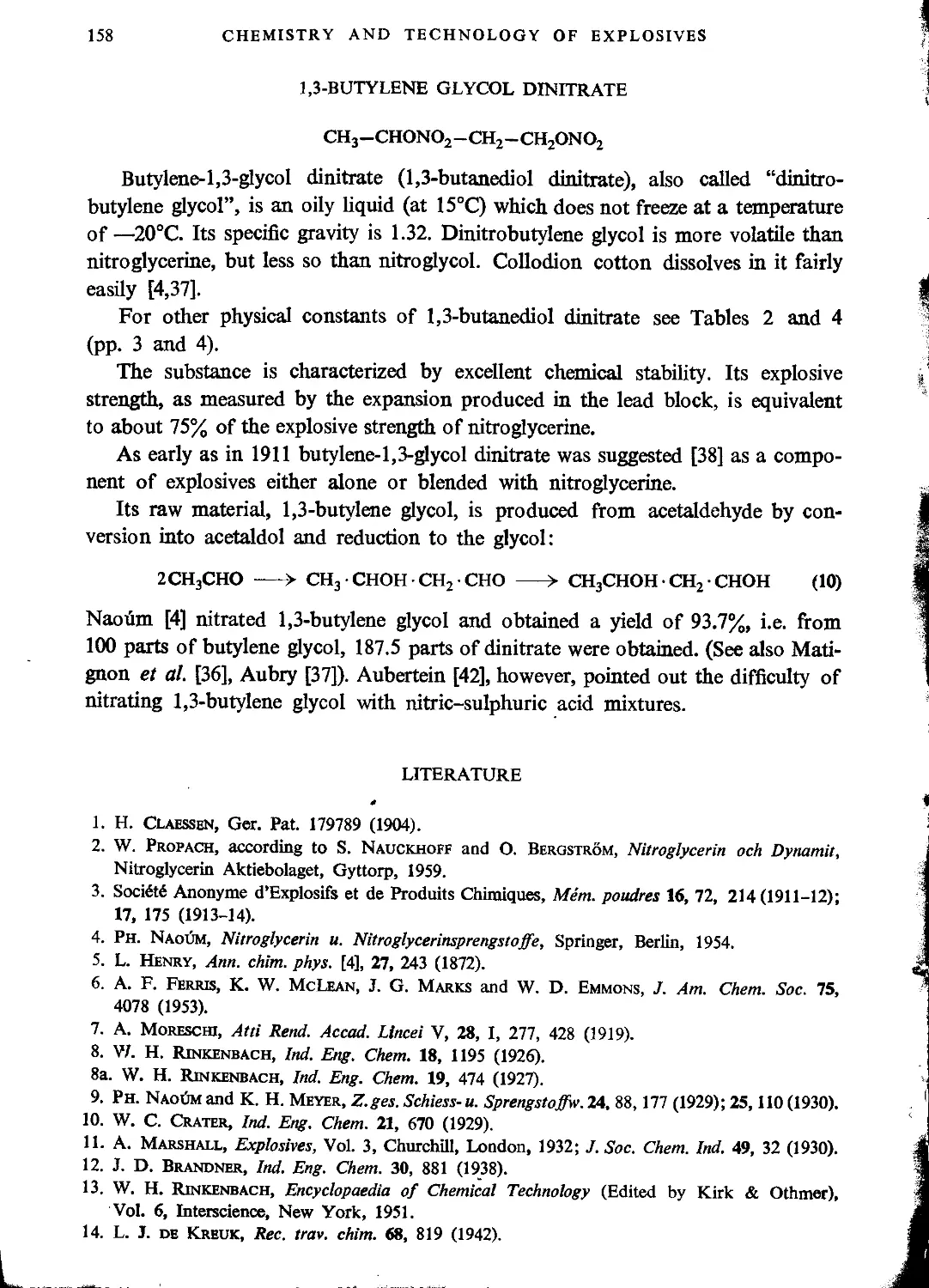
1,3-	Butylene glycol dinitrate......................................................158
Literature...........................................................................158
CHAPTER VI.	MONOHYDROXYLIC ALCOHOL ESTERS
Methyl nitrate..........................................................................160
Physical properties..................................................................160
Stability and thermal decomposition..................................................160
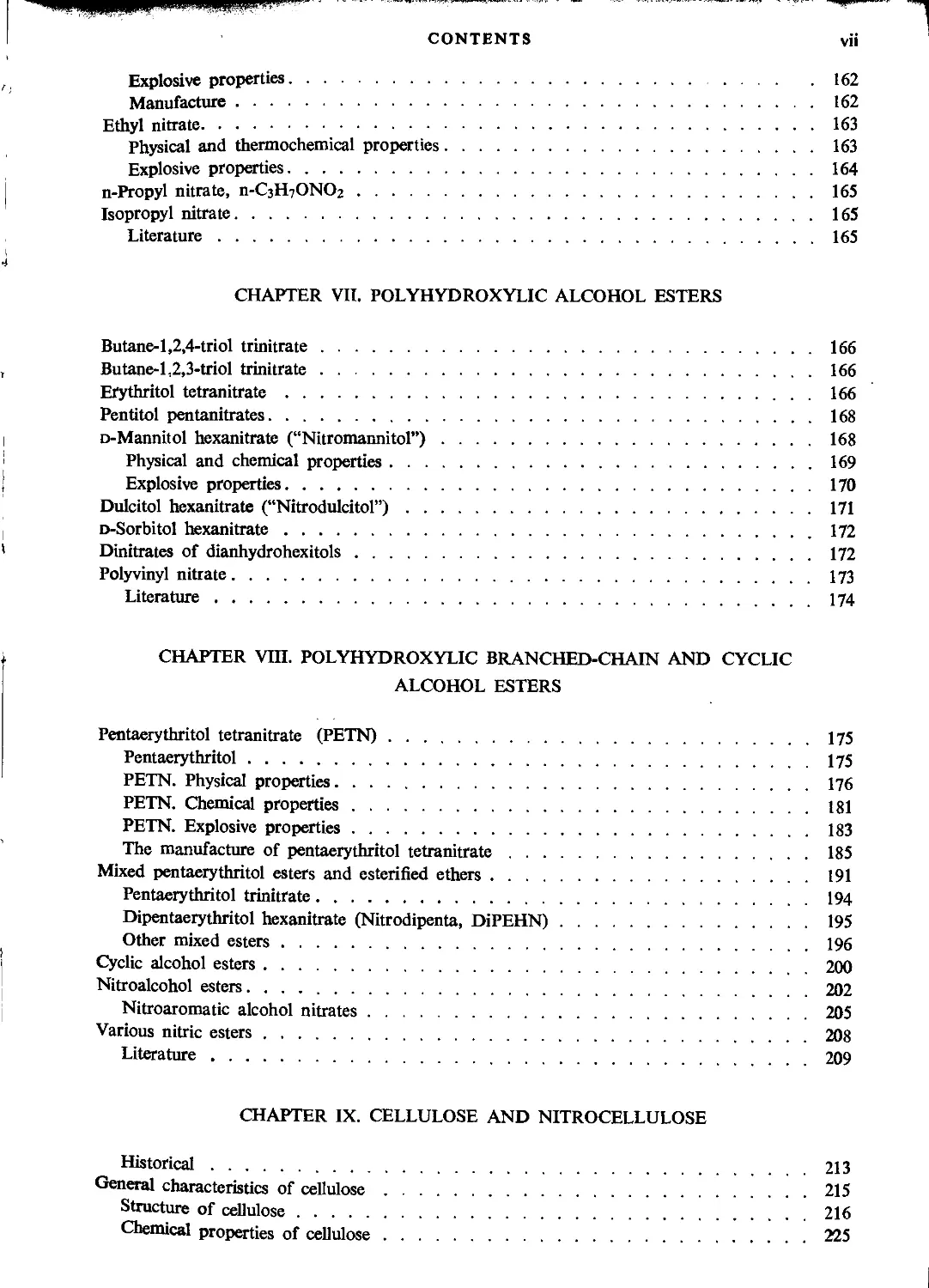
CONTENTS	vii
Explosive properties..................................................................162
Manufacture...........................................................................162
Ethyl nitrate............................................................................163
Physical and thermochemical properties................................................163
Explosive properties..................................................................164
n-Propyl nitrate, n-CjHvONCh.............................................................165
Isopropyl nitrate........................................................................165
Literature............................................................................165
CHAPTER VII.	POLYHYDROXYLIC ALCOHOL ESTERS
Butane-1,2,4-triol trinitrate...........................................................166
Butane-L2,3-triol trinitrate............................................................166
Erythritol tetranitrate..................................................................166
Pentitol pentanitrates...................................................................168
D-Mannitol hexanitrate (“Nitromannitol”)................................................168
Physical and chemical properties......................................................169
Explosive properties..................................................................170
Dulcitol hexanitrate (“Nitrodulcitol”)...................................................171
D-Sorbitol hexanitrate...................................................................172
Dinitrates of dianhydrohexitols..........................................................172
Polyvinyl nitrate........................................................................173
Literature............................................................................174
CHAPTER VIII.	POLYHYDROXYLIC BRANCHED-CHAIN AND CYCLIC
ALCOHOL ESTERS
Pentaerythritol tetranitrate (PETN).....................................................175
Pentaerythritol......................................................................175
PETN. Physical properties............................................................176
PETN. Chemical properties............................................................181
PETN. Explosive properties...........................................................183
The manufacture of pentaerythritol tetranitrate......................................185
Mixed pentaerythritol esters and esterified ethers......................................191
Pentaerythritol trinitrate...........................................................194
Dipentaerythritol hexanitrate (Nitrodipenta, DiPEHN).................................195
Other mixed esters...................................................................196
Cyclic alcohol esters...................................................................200
Nitroalcohol esters.....................................................................202
Nitroaromatic alcohol nitrates.......................................................205
Various nitric esters...................................................................208
Literature...........................................................................209
CHAPTER IX.	CELLULOSE AND NITROCELLULOSE
Historical...........................................................................213
General characteristics of cellulose....................................................215
Structure of cellulose...............................................................216
Chemical properties of cellulose.....................................................225
viii	CHEMISTRY AND TECHNOLOGY OF EXPLOSIVES
Substances accompanying cellulose..........................................................228
Hemicelluloses..........................................................................228
Lignin..................................................................................229
Classification of cellulose................................................................230
Literature..............................................................................231
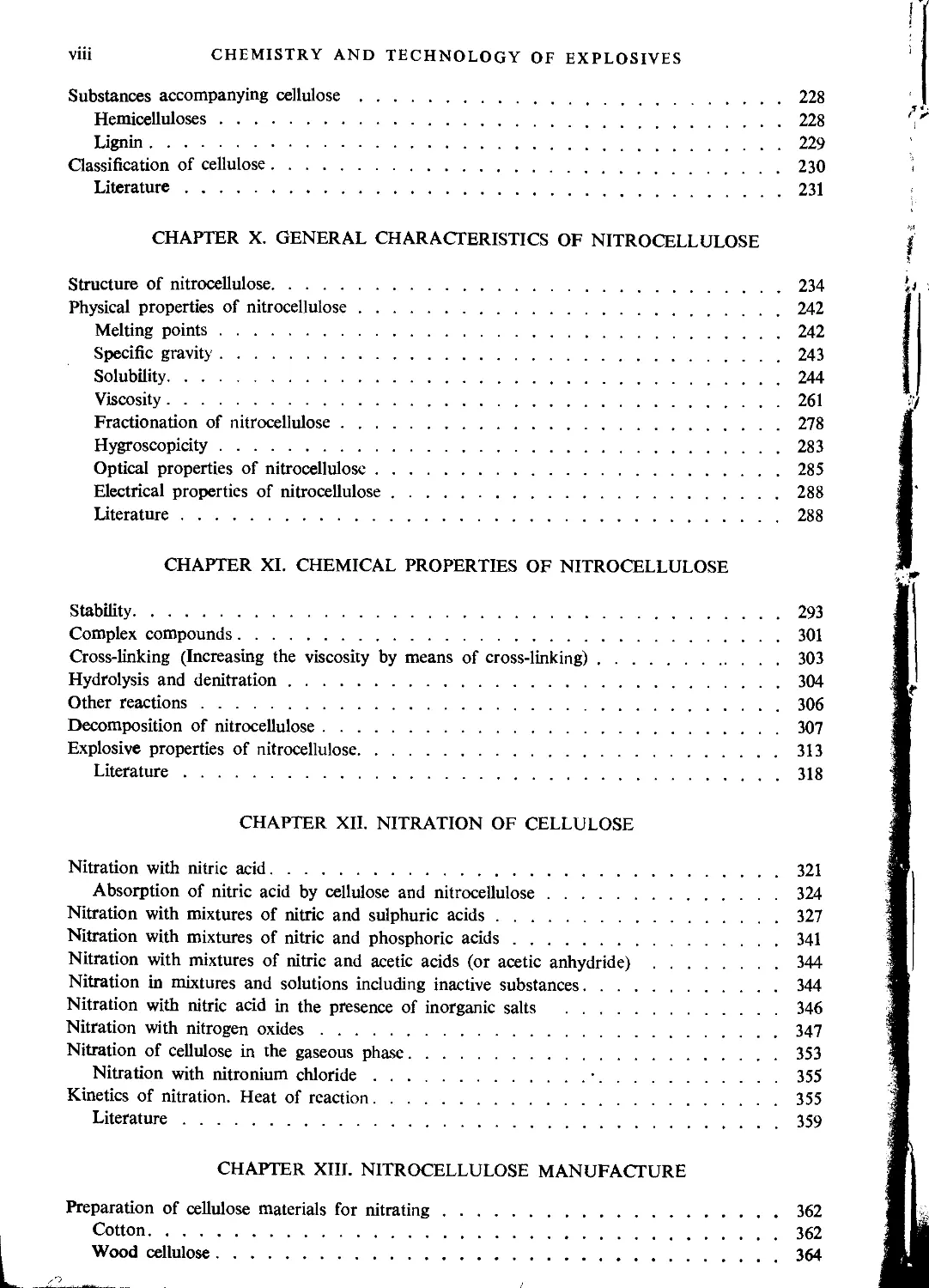
CHAPTER X.	GENERAL CHARACTERISTICS OF NITROCELLULOSE
Structure of nitrocellulose................................................................234
Physical properties of nitrocellulose......................................................242
Melting points..........................................................................242
Specific gravity........................................................................243
Solubility..............................................................................244
Viscosity...............................................................................261
Fractionation of nitrocellulose.........................................................278
Hygroscopicity..........................................................................283
Optical properties of nitrocellulose....................................................285
Electrical properties of nitrocellulose.................................................288
Literature..............................................................................288
CHAPTER XI.	CHEMICAL PROPERTIES OF NITROCELLULOSE
Stability..................................................................................293
Complex compounds..........................................................................301
Cross-linking (Increasing the viscosity by means of cross-linking).........................303
Hydrolysis and denitration.................................................................304
Other reactions............................................................................306
Decomposition of nitrocellulose............................................................307
Explosive properties of nitrocellulose.....................................................313
Literature..............................................................................318
CHAPTER XII.	NITRATION OF CELLULOSE
Nitration with nitric acid.................................................................321
Absorption of nitric	acid by cellulose and nitrocellulose...............................324
Nitration with mixtures	of	nitric	and sulphuric acids.....................327
Nitration with mixtures	of	nitric	and phosphoric acids....................341
Nitration with mixtures	of	nitric	and acetic acids (or acetic anhydride) .344
Nitration in mixtures and	solutions including inactive substances........................344
Nitration with nitric acid in the presence of inorganic salts .............................346
Nitration with nitrogen oxides.............................................................347
Nitration of cellulose in the gaseous phase................................................353
Nitration with nitronium chloride............................•..........................355
Kinetics of nitration. Heat	of reaction......................................355
Literature..............................................................................359
CHAPTER XIII.	NITROCELLULOSE MANUFACTURE
Preparation of cellulose	materials	for	nitrating..............................362
Cotton..................................................................................362
Wood cellulose..........................................................................364
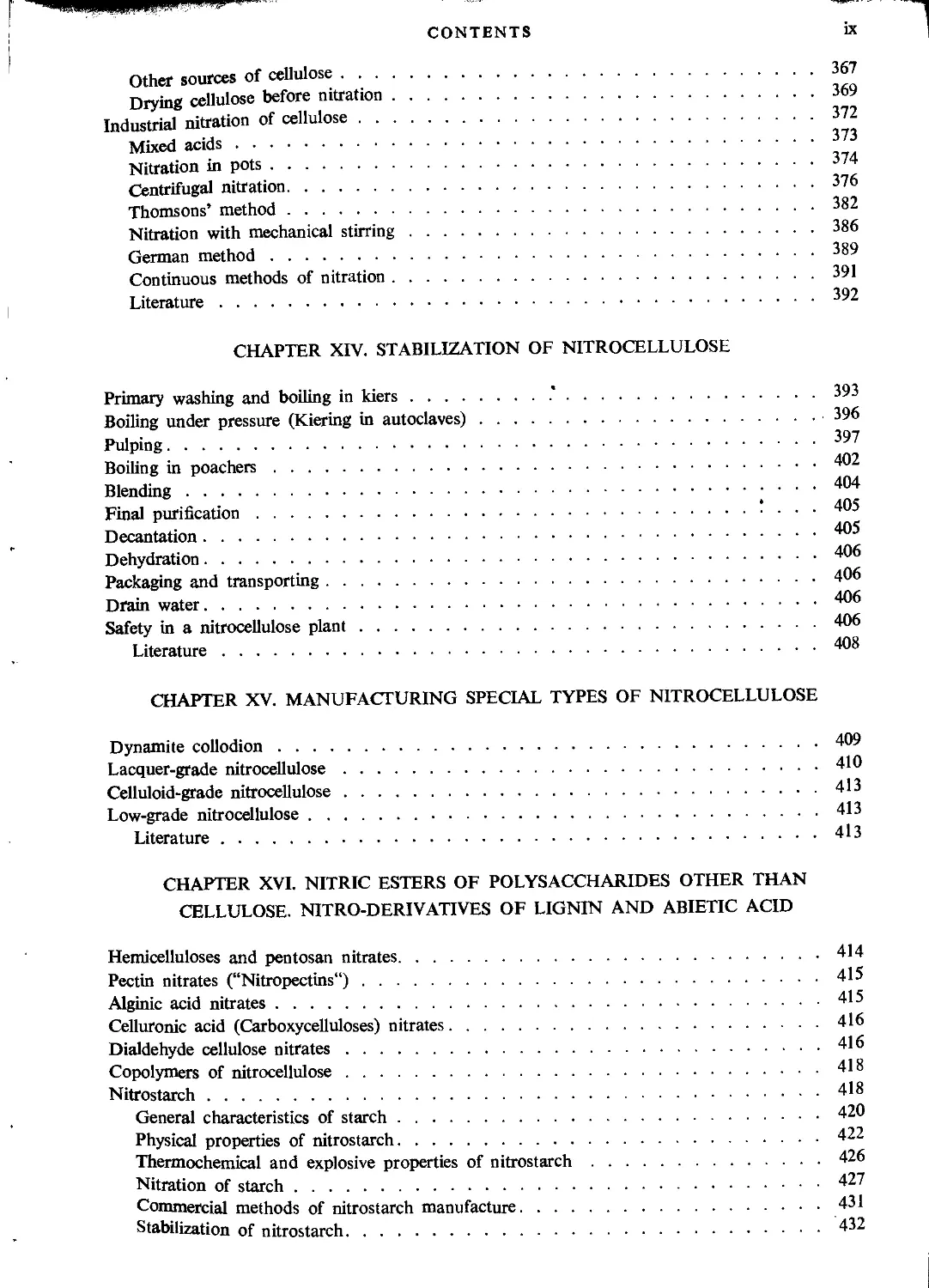
CONTENTS
ix
Other sources of cellulose............................................................367
Drying cellulose before nitration.....................................................369
Industrial nitration of cellulose........................................................372
Mixed acids...........................................................................373
Nitration in pots.....................................................................374
Centrifugal nitration.................................................................376
Thomsons’ method......................................................................382
Nitration with mechanical stirring....................................................386
German method.........................................................................389
Continuous methods of nitration.......................................................391
Literature............................................................................392
CHAPTER XIV.	STABILIZATION OF NITROCELLULOSE
Primary washing and boiling in kiers.................................................... 393
Boiling under pressure (Kiering in autoclaves)...........................................396
Pulping..................................................................................397
Boiling in poachers......................................................................402
Blending.................................................................................404
Final purification................................................................. • • • 405
Decantation..............................................................................405
Dehydration..............................................................................406
Packaging and transporting...............................................................406
Drain water..............................................................................406
Safety in a nitrocellulose plant.........................................................406
Literature............................................................................408
CHAPTER XV.	MANUFACTURING SPECIAL TYPES OF NITROCELLULOSE
Dynamite collodion.......................................................................409
Lacquer-grade nitrocellulose.............................................................410
Celluloid-grade nitrocellulose...........................................................413
Low-grade nitrocellulose.................................................................413
Literature............................................................................413
CHAPTER XVI.	NITRIC ESTERS OF POLYSACCHARIDES OTHER THAN
CELLULOSE. NITRO-DERIVATIVES OF LIGNIN AND ABIETIC ACID
Hemicelluloses and pentosan nitrates.....................................................414
Pectin nitrates (“Nitropectins").........................................................415
Alginic acid nitrates....................................................................415
Celluronic acid (Carboxycelluloses) nitrates.............................................416
Dialdehyde cellulose nitrates............................................................416
Copolymers of nitrocellulose.............................................................418
Nitrostarch..............................................................................418
General characteristics of starch.....................................................420
Physical properties of nitrostarch....................................................422
Thermochemical and explosive properties of nitrostarch................................426
Nitration of starch...................................................................427
Commercial methods of nitrostarch manufacture.........................................431
Stabilization of nitrostarch..........................................................432
X	CHEMISTRY AND TECHNOLOGY OF EXPLOSIVES
Nitrochitin..........................................................................432
Nitro-derivatives of lignin..........................................................433
Nitro-derivatives of abietic acid....................................................435
Literature........................................................................436
CHAPTER XVII.	SUGAR NITRATES (“NITROSUGARS”)
Historical........................................................................439
Preparation.......................................................................440
Chemical properties...............................................................443
Explosive properties..............................................................445
Literature........................................................................446
CHAPTER XVIII.	ESTERS OF OXY-ACIDS OF CHLORINE
Literature........................................................................449
CHAPTER XIX.	SALTS OF NITRIC ACID
Ammonium nitrate.....................................................................450
Physical properties...............................................................450
Chemical and explosive properties.................................................455
Commercial product................................................................463
Hydrazine nitrate....................................................................464
Fluorine nitrate.....................................................................465
Methylamine nitrate..................................................................465
Tetramethylammonium nitrate..........................................................466
Guanidine nitrate....................................................................466
Properties........................................................................467
Manufacture.......................................................................467
Urea nitrate.........................................................................469
Thiourea nitrate.....................................................................470
Ethylenediamine dinitrate........*...................................................470
Hexamethylenetetramine dinitrate....................................................471
Nitrates of ethanolamine nitric esters...............................................472
Oxonium nitrates.....................................................................473
Literature........................................................................474
CHAPTER XX.	SALTS OF OXY-ACIDS OF CHLORINE
Salts of chloric acid................................................................476
Ammonium chlorate	476
Hydrazine chlorate................................................................476
Ethylenediamine chlorate..........................................................477
Chlorine dioxide..................................................................477
Salts of perchloric acid.............................................................477
Ammonium perchlorate..............................................................477
Hydrazine perchlorate.............................................................483
Fluorine perchlorate..............................................................483
Nitryl perchlorate (Nitronium perchlorate, nitroxyl perchlorate)..................483
Nitrosyl perchlorate..............................................................484
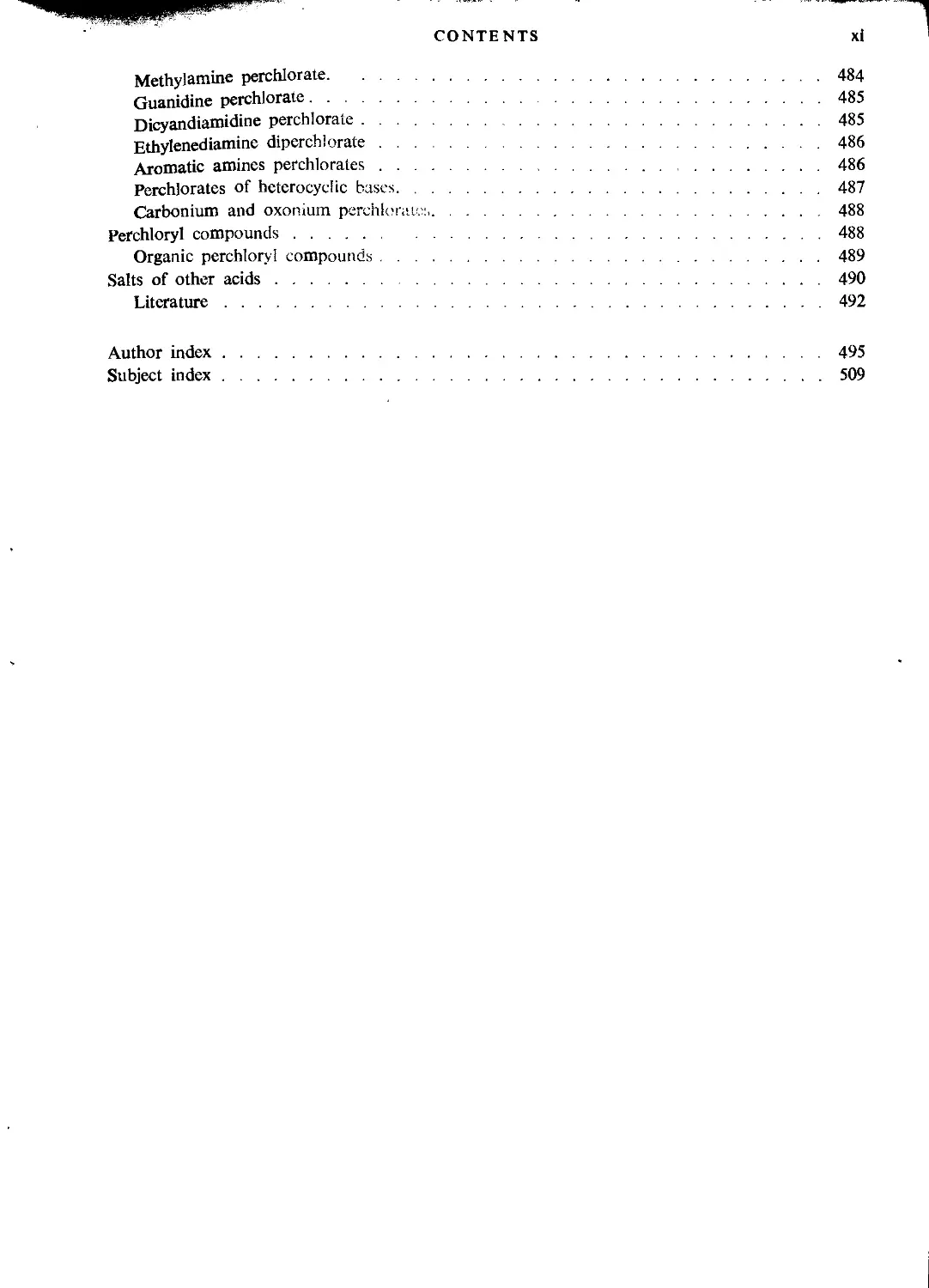
CONTENTS	xi
Methylamine perchlorate...............................................................484
Guanidine perchlorate.................................................................485
Dicyandiamidine perchlorate...........................................................485
Ethylenediamine diperchlorate.........................................................486
Aromatic amines perchlorates..........................................................486
Perchlorates of heterocyclic bases....................................................487
Carbonium and oxonium perchlorate:....................................................488
Perchloryl compounds.....................................................................488
Organic perchloryl compounds..........................................................489
Salts of other acids.....................................................................490
Literature............................................................................492
Author index.............................................................................495
Subject index............................................................................509

CHAPTER I
NITRIC ESTERS—GENERAL OUTLINE
STRUCTURE
Esters of nitric acid are characterized by the following atomic grouping:
—c—o—no2
that is by the presence of the nitroxy group. The nitro group in nitric esters is at-
tached to a carbon atom by means of an oxygen atom, i.e. they are O-nitro com-
pounds. This is confirmed by the fact that nitric esters undergo hydrolysis, and that
as the result of reduction of the nitro group, an alcohol is obtained:
R—ONO2	R—OH + NH3
This reaction shows the essential difference between nitric esters and nitro com-
pounds: the latter form amines under these conditions.
The structure of the nitro group present in nitric esters is the same as that in
nitro compounds.
The reactivity of nitric acid esters and in particular the complicated chemical
composition of the products formed by their hydrolysis led some investigators
[1, 37] to express the view that nitric esters may have the structure of peroxy-
compounds (I):
However there exists no evidence for this. Moreover, investigation of the absorption
spectra of nitric acid, nitrous acid and aliphatic nitro compounds indicates that
the peroxide structure hypothesis is incorrect, because nitric acid esters behave
as compounds having the normal ester structure (II) (Crigee and Schnorrenberg
[la], Matsushima [lb]):
R—О—NO2
II
X-Ray investigations, electron diffraction, Raman and infra-red spectra, and
dipole moment measurements of nitric esters also support the idea of a symmetrical
structure for the nitrate group (in spite of certain discrepancies obtained by differ-
ent authors):
[i]
2
CHEMISTRY AND TECHNOLOGY OF EXPLOSIVES
The bond distances and angles approximate to these found in nitro compounds.
The most accurate figures were determined with methyl nitrate [109].
PHYSICAL PROPERTIES
Esters formed by combination of nitric acid with lower alcohols are liquids,
the boiling points of which are slightly higher than the boiling temperatures of
the respective alcohols, but significantly higher than the boiling points of esters
of nitrous acid. C-nitro compounds are characterized by higher boiling temperatures
than the corresponding nitric acid esters (Table 1).
Table 1
Boiling points of alcohols, esters and nitro compounds, °C
Alkyl	Alcohol	Nitric ester	Nitrous ester	Nitro compound
Methyl	65	65	-12	101
Ethyl	78	88	17	114
n-Propyl	96	111	47	131
Isopropyl	82	102	45	120
n-Butyl	117	136	75	151
The small differences between the boiling points of the alcohols and their nitric
acid esters can be explained by the fact that the alcohols are highly associated liquids
(mainly through hydrogen bonds). Due to this molecular association the viscosity
of the alcohols is also higher than the viscosity of their nitric esters. On the other
hand the presence of a semi-polar bond in the nitro group of nitric esters is respon-
sible for their relatively high vapour pressure, as in nitro compounds, causing them
to be more volatile than the corresponding alcohols.
De Kreuk [2] made the first systematic study of the various physical constants
of nitric esters, i.e.: dielectric constant (e20), refractive index (n^), density (df) and
viscosity (»;20), (Table 2). Figures for tribromohydrin and triacetin are given for
comparison.
According to de Kreuk the difference between the viscosity values of similar
compounds (e.g. 1,3- and 1,2-propanediol dinitrates, 1,3- and 2,3-butanediol dini-
trates) may be attributed to rotational isomerism. Free rotation makes possible
the formation of trans isomers which according to this author should possess
a higher viscosity. This would explain the relatively high viscosities of 1,3-propanediol
and 1,3-butanediol dinitrates.
NITRIC ESTERS—-GENERAL OUTLINE
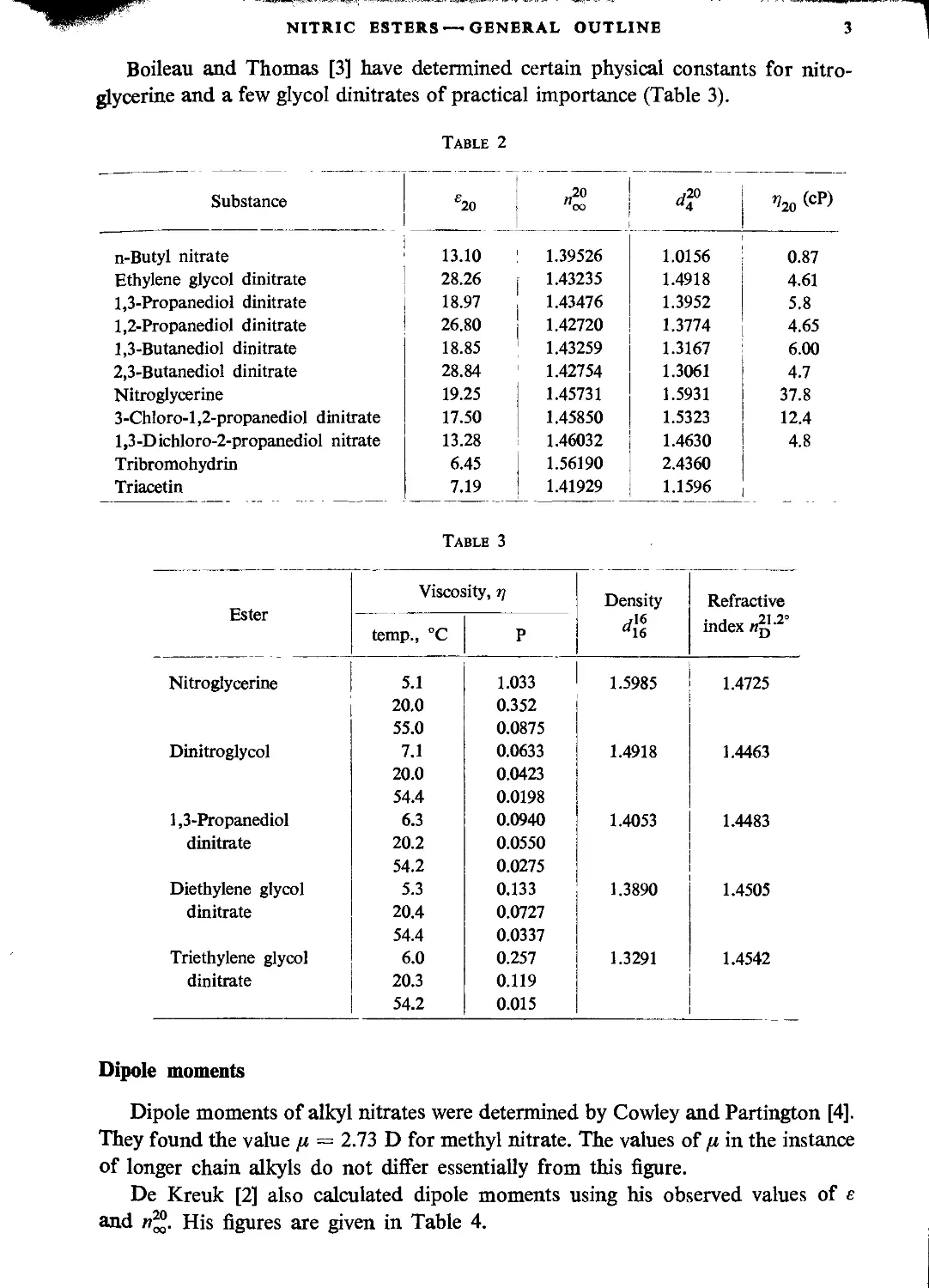
Boileau and Thomas [3] have determined certain physical constants for nitro-
glycerine and a few glycol dinitrates of practical importance (Table 3).
Table 2
Substance	fi20
n-Butyl nitrate	13.10
Ethylene glycol dinitrate	28.26
1,3-Propanediol dinitrate	18.97
1,2-Propanediol dinitrate	26.80
1,3-Butanediol dinitrate	18.85
2,3-Butanediol dinitrate	28.84
Nitroglycerine	19.25
3-Chloro-l ,2-propanediol dinitrate	17.50
l,3-Dichloro-2-propanediol nitrate	13.28
Tribromohydrin	6.45
Triacetin	7.19
	„20 "oo	dT	Ъ (cP)
1.39526		1.0156	0.87
[	1.43235		1.4918	4.61
1.43476		1.3952	5.8
1.42720		1.3774	4.65
1.43259		1.3167	6.00
1.42754		1.3061	4.7
	1.45731	1.5931	37.8
	1.45850	1.5323	12.4
	1.46032	1.4630	4.8
	1.56190	2.4360
	1.41929	1.1596
Table 3
Ester	Viscosity, г]		Density г/16 "16	Refractive index «o’2°
	temp., °C	P
Nitroglycerine	5.1	1.033	1.5985	1.4725
	20.0	0.352
	55.0	0.0875
Dinitroglycol	7.1	0.0633	1.4918	1.4463
	20.0	0.0423
	54.4	0.0198
1,3-Propanediol	6.3	0.0940	1.4053	1.4483
dinitrate	20.2	0.0550
	54.2	0.0275
Diethylene glycol	5.3	0.133	1.3890	1.4505
dinitrate	20.4	0.0727
	54.4	0.0337
Triethylene glycol	6.0	0.257	1.3291	1.4542
dinitrate	20.3	0.119
	54.2	0.015
Dipole moments
Dipole moments of alkyl nitrates were determined by Cowley and Partington [4].
They found the value ц = 2.73 D for methyl nitrate. The values of ц in the instance
of longer chain alkyls do not differ essentially from this figure.
De Kreuk [2] also calculated dipole moments using his observed values of e
and и^. His figures are given in Table 4.
4
CHEMISTRY AND TECHNOLOGY OF EXPLOSIVES
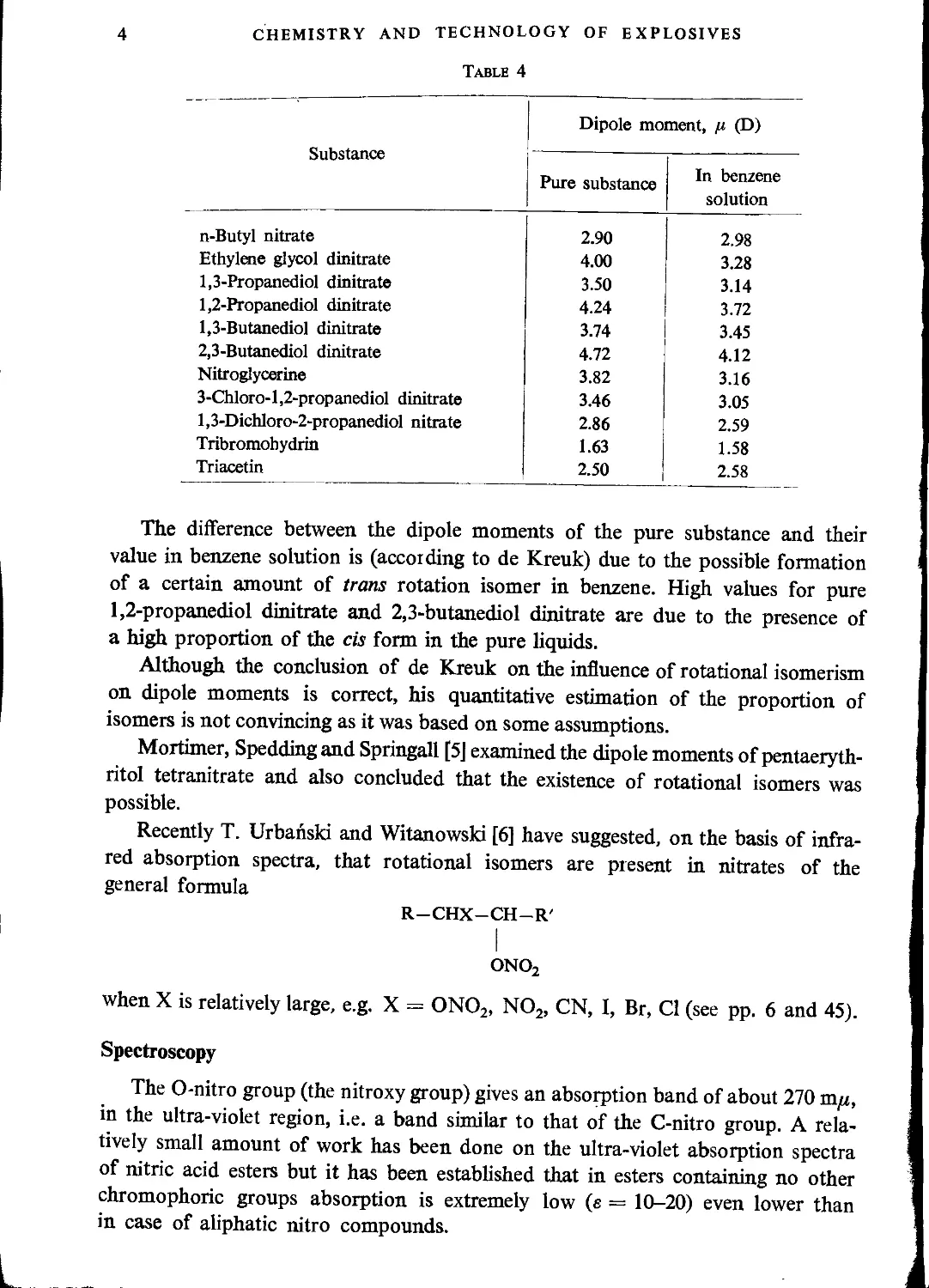
Table 4
Substance	Dipole moment, ц (D)
	Pure substance	In benzene solution
n-Butyl nitrate	2.90	2.98
Ethylene glycol dinitrate	4.00	3.28
1,3-Propanediol dinitrate	3.50	3.14
1,2-Propanediol dinitrate	4.24	3.72
1,3-Butanediol dinitrate	3.74	3.45
2,3-Butanediol dinitrate	4.72	4.12
Nitroglycerine	3.82	3.16
3-Chloro-l,2-propanediol dinitrate	3.46	3.05
l,3-Dichloro-2-propanediol nitrate	2.86	2.59
Tribromohydrin	1.63	1.58
Triacetin	2.50	2.58
The difference between the dipole moments of the pure substance and their
value in benzene solution is (according to de Kreuk) due to the possible formation
of a certain amount of trans rotation isomer in benzene. High values for pure
1,2-propanediol dinitrate and 2,3-butanediol dinitrate are due to the presence of
a high proportion of the cis form in the pure liquids.
Although the conclusion of de Kreuk on the influence of rotational isomerism
on dipole moments is correct, his quantitative estimation of the proportion of
isomers is not convincing as it was based on some assumptions.
Mortimer, Spedding and Springall [5J examined the dipole moments of pentaeryth-
ritol tetranitrate and also concluded that the existence of rotational isomers was
possible.
Recently T. Urbanski and Witanowski [6] have suggested, on the basis of infra-
red absorption spectra, that rotational isomers are present in nitrates of the
general formula
R-CHX-CH-R'
ONO2
when X is relatively large, e.g. X = ONO2, NO2, CN, I, Br, Cl (see pp. 6 and 45).
Spectroscopy
The O-nitro group (the nitroxy group) gives an absorption band of about 270 m/z,
in the ultra-violet region, i.e. a band similar to that of the C-nitro group. A rela-
tively small amount of work has been done on the ultra-violet absorption spectra
of nitric acid esters but it has been established that in esters containing no other
chromophoric groups absorption is extremely low (e = 10-20) even lower than
in case of aliphatic nitro compounds.
NITRIC ESTERS — GENERAL OUTLINE
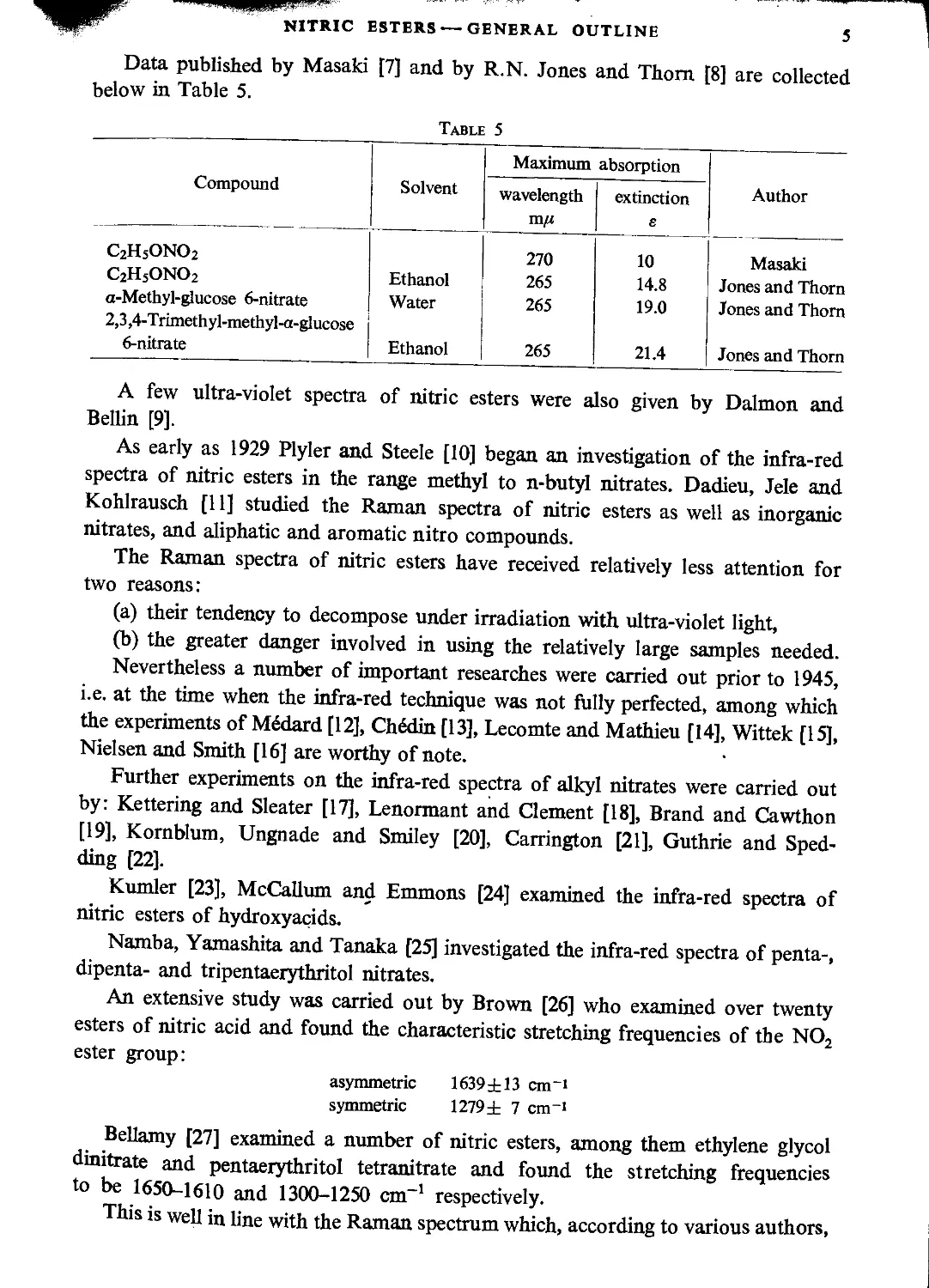
Data published by Masaki [7] and by R.N. Jones and Thom [8] are collected
below in Table 5.
Table 5
Compound	Solvent	Maximum absorption		Author
		wavelength m/z	extinction e
C2H5ONO2		270	10	Masaki
C2H5ONO2	Ethanol	265	14.8	Jones and Thorn
a-Methyl-glucose 6-nitrate	Water	265	19.0	Jones and Thom
2,3,4-Trimethyl-methyl-a-ghicose 6-nitrate	Ethanol	265	21.4	Jones and Thom
A few ultra-violet spectra of nitric esters were also given by Dalmon and
Bellin [9].
As early as 1929 Plyler and Steele [10] began an investigation of the infra-red
spectra of nitric esters in the range methyl to n-butyl nitrates. Dadieu, Jele and
Kohlrausch [11] studied the Raman spectra of nitric esters as well as inorganic
nitrates, and aliphatic and aromatic nitro compounds.
The Raman spectra of nitric esters have received relatively less attention for
two reasons:
(a)	their tendency to decompose under irradiation with ultra-violet light,
(b)	the greater danger involved in using the relatively large samples needed.
Nevertheless a number of important researches were carried out prior to 1945,
i.e. at the time when the infra-red technique was not fully perfected, among which
the experiments of Medard [12], Chedin [13], Lecomte and Mathieu [14], Wittek [15],
Nielsen and Smith [16] are worthy of note.
Further experiments on the infra-red spectra of alkyl nitrates were carried out
by: Kettering and Sleater [17], Lenormant and Clement [18], Brand and Cawthon
[19], Komblum, Ungnade and Smiley [20], Carrington [21], Guthrie and Sped-
ding [22].
Kumler [23], McCallum and Emmons [24] examined the infra-red spectra of
nitric esters of hydroxyacids.
Namba, Yamashita and Tanaka [25] investigated the infra-red spectra of penta-,
dipenta- and tripentaerythritol nitrates.
An extensive study was carried out by Brown [26] who examined over twenty
esters of nitric acid and found the characteristic stretching frequencies of the NO2
ester group:
asymmetric	1639±13 cnri
symmetric	1279± 7 cm-1
Bellamy [27] examined a number of nitric esters, among them ethylene glycol
dinitrate and pentaerythritol tetranitrate and found the stretching frequencies
to be 1650-1610 and 1300-1250 cm-1 respectively.
This is well in line with the Raman spectrum which, according to various authors,
6	CHEMISTRY AND TECHNOLOGY OF EXPLOSIVES
gives two frequencies near 1640 and 1290 cm'1 characterizing vibrations of the
NO2 group. Similar figures were given for Raman spectra by Nielsen and Smith [16].
Among more common nitric esters, nitrocellulose was examined by Ellis and
Bath [28] and Nikitin [29] (p. 287). Nitroglycerine and diethylene glycol dinitrate
were examined for the first time by Pinchas [30]. Pristera [31] investigated a number
of nitrates used as propellant ingredients, such as nitroglycerine, metriol trinitrate,
diethylene glycol dinitrate (DEGN) and triethylene glycol dinitrate (TEGN).
According to Pristera all of them give two bands with frequencies near 1667 cm'1
(6 ц) and 1282 cm'1 (7.8 /л). The particular compounds vary in details with regard
to the shape of the absorption curves. Thus, the tip of the symmetric stretching
band of diethylene glycol dinitrate (ca. 1639 cm'1) has a shoulder, whereas that
of triethylene glycol dinitrate has not. The 1282 cm-1 band of nitroglycerine has
a strong shoulder which does not exist in the spectra of other nitrates. The shoulders
are most likely due to rotational isomerism [6].
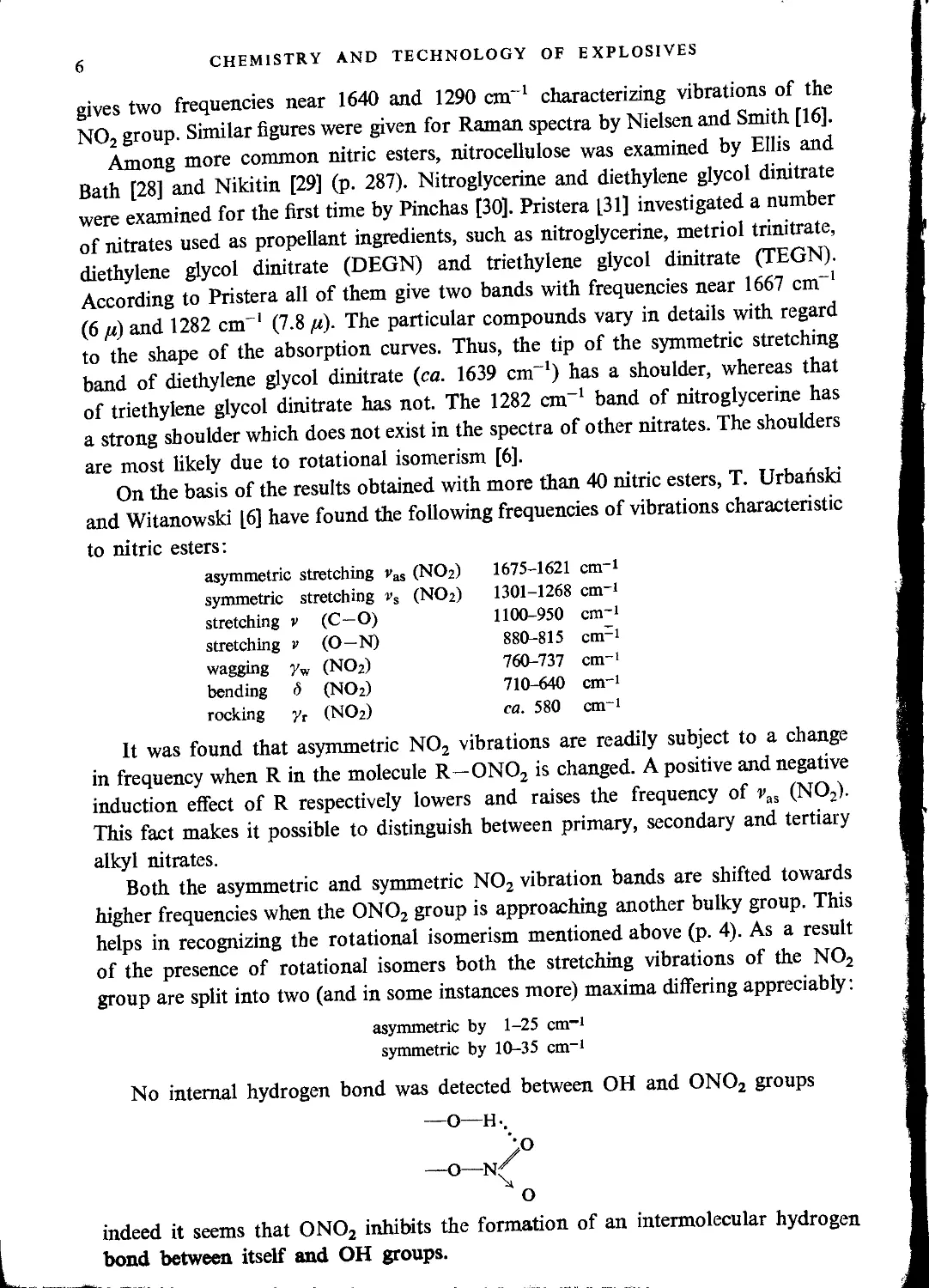
On the basis of the results obtained with more than 40 nitric esters, T. Urbanski
and Witanowski [6] have found the following frequencies of vibrations characteristic
to nitric esters:
asymmetric stretching vas (NO2)	1675-1621 cm-i
symmetric stretching vs (NO2)	1301-1268 cm-i
stretching p (С—O)	1100-950 cm-i
stretching v	(O—N)	880-815 cm-i
wagging /w (NO2)	760-737 cm-i
bending Ь (NO2)	710-640 cm-i
rocking yr (NO2)	ca. 580 cm1
It was found that asymmetric NO2 vibrations are readily subject to a change
in frequency when R in the molecule R—ONO2 is changed. A positive and negative
induction effect of R respectively lowers and raises the frequency of ras (NO2).
This fact makes it possible to distinguish between primary, secondary and tertiary
alkyl nitrates.
Both the asymmetric and symmetric NO2 vibration bands are shifted towards
higher frequencies when the ONO2 group is approaching another bulky group. This
helps in recognizing the rotational isomerism mentioned above (p. 4). As a result
of the presence of rotational isomers both the stretching vibrations of the NO2
group are split into two (and in some instances more) maxima differing appreciably:
asymmetric by 1-25 cm-1
symmetric by 10-35 cm-1
No internal hydrogen bond was detected between OH and ONO2 groups
—O—H-.
—O—Nf
О
indeed it seems that ONO2 inhibits the formation of an intennolecular hydrogen
bond between itself and OH groups.
NITRIC ESTERS — GENERAL OUTLINE
7
HYDROLYSIS OF NITRIC ESTERS
Nitric esters of monovalent and polyvalent alcohols are hydrolysed by com-
paratively mild reagents in alkaline or acid media and with slightly more difficulty
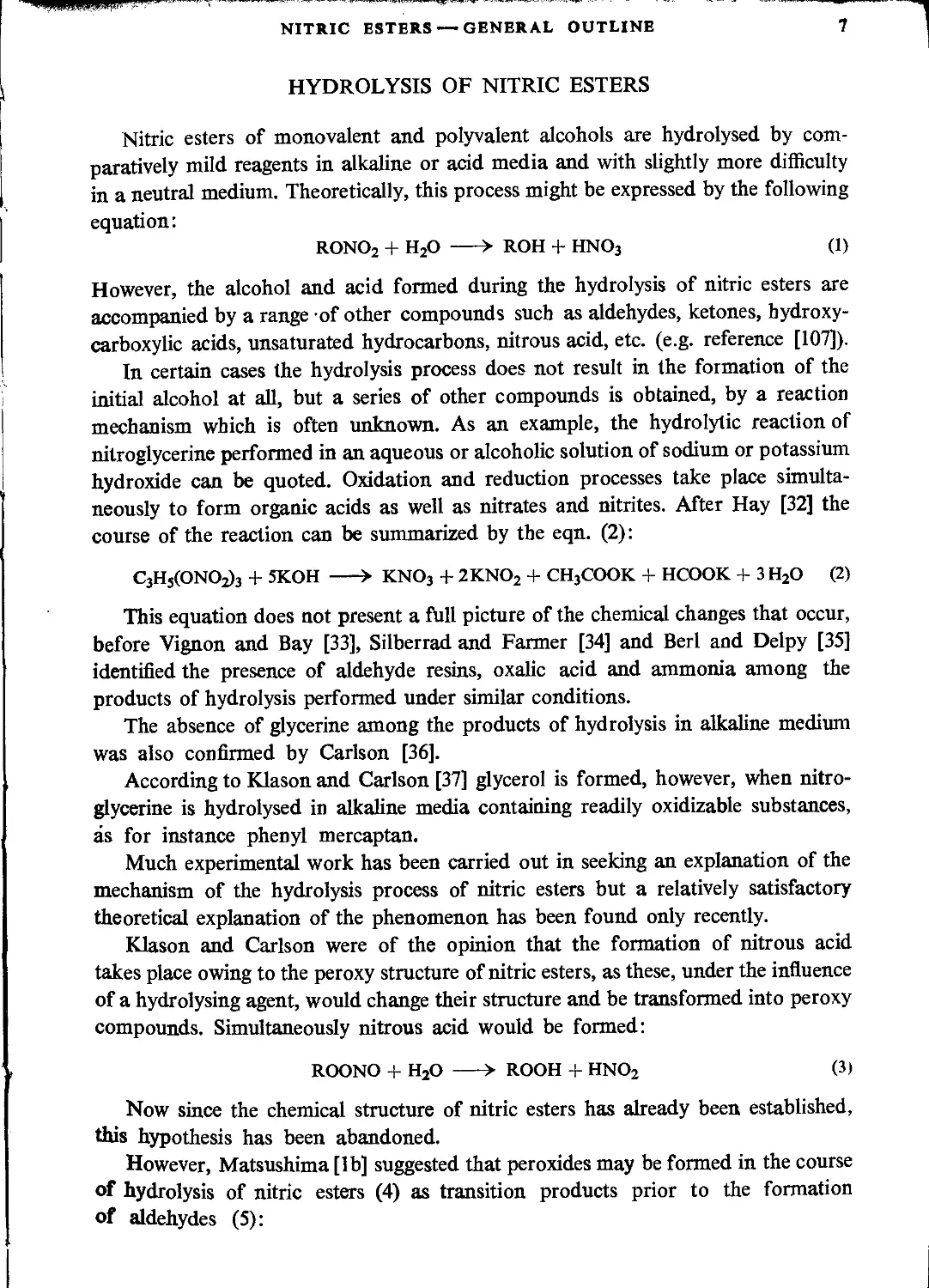
in a neutral medium. Theoretically, this process might be expressed by the following
equation:
RONO2 + H2O------> ROH + HNO3	(1)
However, the alcohol and acid formed during the hydrolysis of nitric esters are
accompanied by a range of other compounds such as aldehydes, ketones, hydroxy-
carboxylic acids, unsaturated hydrocarbons, nitrous acid, etc. (e.g. reference [107]).
In certain cases the hydrolysis process does not result in the formation of the
initial alcohol at all, but a series of other compounds is obtained, by a reaction
mechanism which is often unknown. As an example, the hydrolytic reaction of
nitroglycerine performed in an aqueous or alcoholic solution of sodium or potassium
hydroxide can be quoted. Oxidation and reduction processes take place simulta-
neously to form organic acids as well as nitrates and nitrites. After Hay [32] the
course of the reaction can be summarized by the eqn. (2):
C3H5(ONO2)3 + 5KOH ----> KNO3 + 2KNO2 + CH3COOK + HCOOK + 3 H2O (2)
This equation does not present a full picture of the chemical changes that occur,
before Vignon and Bay [33], Silberrad and Farmer [34] and Berl and Delpy [35]
identified the presence of aldehyde resins, oxalic acid and ammonia among the
products of hydrolysis performed under similar conditions.
The absence of glycerine among the products of hydrolysis in alkaline medium
was also confirmed by Carlson [36].
According to Klason and Carlson [37] glycerol is formed, however, when nitro-
glycerine is hydrolysed in alkaline media containing readily oxidizable substances,
as for instance phenyl mercaptan.
Much experimental work has been carried out in seeking an explanation of the
mechanism of the hydrolysis process of nitric esters but a relatively satisfactory
theoretical explanation of the phenomenon has been found only recently.
Klason and Carlson were of the opinion that the formation of nitrous acid
takes place owing to the peroxy structure of nitric esters, as these, under the influence
of a hydrolysing agent, would change their structure and be transformed into peroxy
compounds. Simultaneously nitrous acid would be formed:
ROONO + H2O -----> ROOH + HNO2	(3)
Now since the chemical structure of nitric esters has already been established,
this hypothesis has been abandoned.
However, Matsushima [lb] suggested that peroxides may be formed in the course
of hydrolysis of nitric esters (4) as transition products prior to the formation
of aldehydes (5):
8	CHEMISTRY AND TECHNOLOGY OF EXPLOSIVES
RCH2ONO2 + H2O -----> RCH2OOH + HNO3	(4)
RCH2OOH ----> RCHO + H2O	(5)
According to Farmer (38] the first stage of hydrolysis proceeds in accordance
with the eqn. (1) (p. 7). Afterwards, the products react with one another to form
nitrous acid or nitrites and the series of compounds ennumerated above. Fanner’s
hypothesis seems unsatisfactory when hydrolysis of nitric esters is carried out in
a neutral medium since, for example, if ethyl alcohol is treated with an aqueous
solution of potassium nitrate no oxidation of the ethyl alcohol occurs even if the
mixture of compounds is boiled.
An instance of the production of olefins has been detected by Lucas and
Hammett [39] as the result of hydrolysing the nitric ester of tertiary butyl alcohol.
In this case, in addition to the corresponding alcohol a certain quantity of isobutyl-
ene is also formed, as shown by eqn. (7):
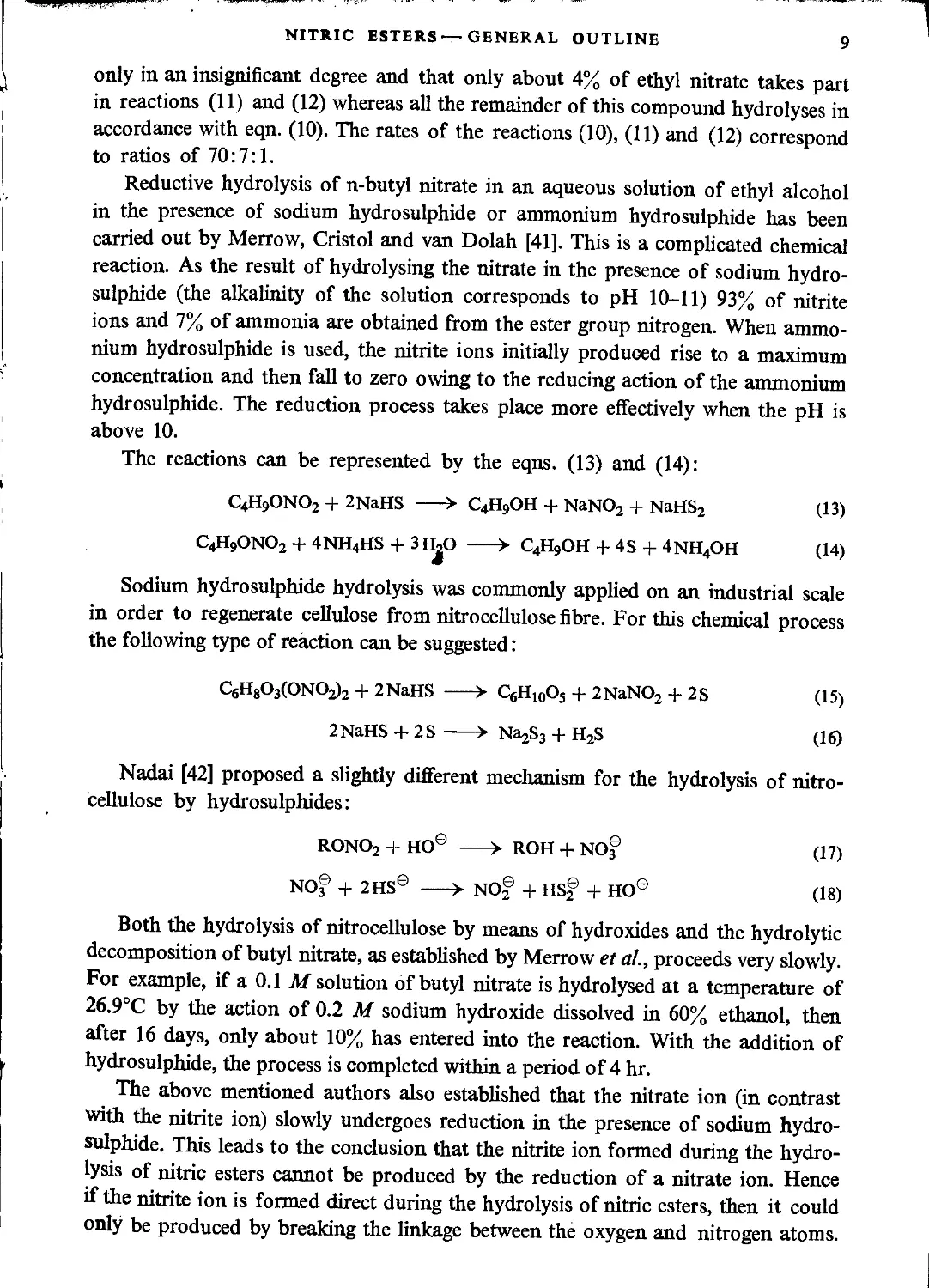
C4H9ONO2 + 2H2O ---> C4H9OH + H3O® + NOp	(6)
C4H9ONO2 + H2O ----> C4H8 + H3O® + NO®	(7)
In experiments with benzyl nitrate the same workers have established that during the
hydrolysis of this ester a certain quantity of benzaldehyde is obtained together with
benzyl alcohol:
C6H5CH2ONO2 + 2H2O----> C6H5CH2OH + H3O® + NO35	(8)
C6H5ch2ono2 СбН5сно + hno2	(9)
Experimental data collected by Baker and Easty [40] during a study of the hydro-
ysis of nitric esters has led them to conclude that this reaction can proceed in three
directions as shown in the following equations:
RCH2CH2ONO2 + Y® ----->	RCH2CH2Y + NOf'	(10)
RCH2CH2ONO2 + Y® ----->	RCH=CH2 + NO3' + HY	(11)
RCH2CH2ONO2 + Y® ----->	RCH2CHO + NO|' + HY	(12)
Y being a hydrolysing agent.
In the first case (10) a reaction of nucleophilic substitution takes place; the
second equation (11) indicates that a hydrogen atom in the /^-position can be re-
moved; similarly the removal of an a-hydrogen atom is postulated in eqn. (12).
The experiments mentioned above were performed in aqueous solutions of
alcohol containing aliphatic mononitrates. The hypothesis of Baker and Easty is
supported by the established fact that methyl nitrate fails to react according to
eqn. (11) and that tertiary butyl nitrate is unable to decompose in the way suggested
by reaction (12). It is also noteworthy that methyl nitrate reacts according to (12)
NITRIC ESTERS—GENERAL OUTLINE
9
only in an insignificant degree and that only about 4% of ethyl nitrate takes part
in reactions (11) and (12) whereas all the remainder of this compound hydrolyses in
accordance with eqn. (10). The rates of the reactions (10), (11) and (12) correspond
to ratios of 70:7:1.
Reductive hydrolysis of n-butyl nitrate in an aqueous solution of ethyl alcohol
in the presence of sodium hydrosulphide or ammonium hydrosulphide has been
carried out by Merrow, Cristol and van Dolah [41]. This is a complicated chemical
reaction. As the result of hydrolysing the nitrate in the presence of sodium hydro-
sulphide (the alkalinity of the solution corresponds to pH 10-11) 93% of nitrite
ions and 7% of ammonia are obtained from the ester group nitrogen. When ammo-
nium hydrosulphide is used, the nitrite ions initially produced rise to a maximum
concentration and then fall to zero owing to the reducing action of the ammonium
hydrosulphide. The reduction process takes place more effectively when the pH is
above 10.
The reactions can be represented by the eqns. (13) and (14):
C4H9ONO2 + 2NaHS ------> C4H9OH + NaNO2 + NaHS2	(13)
C4H9ONO2 + 4NH4HS + 3HjO -------> C4H9OH + 4S + 4NH4OH	(14)
Sodium hydrosulphide hydrolysis was commonly applied on an industrial scale
in order to regenerate cellulose from nitrocellulose fibre. For this chemical process
the following type of reaction can be suggested:
C6H8O3(ONO2)2 + 2NaHS -----> C6H10O5 + 2NaNO2 + 2S	(15)
2NaHS 4- 2S----> NajSj + H2S	(16)
Nadai [42] proposed a slightly different mechanism for the hydrolysis of nitro-
cellulose by hydrosulphides:
RONO2 + HOe ------> ROH + NO®	(17)
NO® + 2HS® -------> NO® + HSf + HO®	(18)
Both the hydrolysis of nitrocellulose by means of hydroxides and the hydrolytic
decomposition of butyl nitrate, as established by Merrow et al., proceeds very slowly.
For example, if a 0.1 M solution of butyl nitrate is hydrolysed at a temperature of
26.9°C by the action of 0.2 M sodium hydroxide dissolved in 60% ethanol, then
after 16 days, only about 10% has entered into the reaction. With the addition of
hydrosulphide, the process is completed within a period of 4 hr.
The above mentioned authors also established that the nitrate ion (in contrast
with the nitrite ion) slowly undergoes reduction in the presence of sodium hydro-
sulphide. This leads to the conclusion that the nitrite ion formed during the hydro-
lysis of nitric esters cannot be produced by the reduction of a nitrate ion. Hence
if the nitrite ion is formed direct during the hydrolysis of nitric esters, then it could
only be produced by breaking the linkage between the oxygen and nitrogen atoms.
10
CHEMISTRY AND TECHNOLOGY OF EXPLOSIVES
Since in numerous cases of hydrolysis of nitric esters the presence of a large
amount of nitrate ion has been established, which could be liberated only by rupture
of the C—О bond, the factors that influence the direction of this process should be
discussed. Several investigations have thrown light on this problem, which is more
complicated than with carboxylic esters, since during the hydrolysis of the latter
compounds whether in acid or in alkaline medium only rupture of the ester bond
can take place. This has been established in various ways including the use of water
containing an 18O-isotope. In general the hydrolysis of carboxylic esters can be
defined by the equation:
о	о
R—С—O—-R' + H—18O—H -> R—С—18O—H + R'—OH	(19)
This reaction scheme has been confirmed by the hydrolysis of esters containing
an optically active alcohol: no racemization of the alcohol occurs during the reac-
tion.
In the investigation with n-butyl nitrate by Merrow, van Dolah and Cristol [41]
already cited, neither the presence of the nitrate ion nor of mercaptan was detected.
For this reason the following reaction mechanism was proposed for the hydrolysis
of nitric acid alcohol esters by means of hydrosulphide:
or
RONO2 + S29 —	-> RO9 + NO2S9	(20)
NO2S9 + HSe(S2e) —	-> NO9 + HS9.! + (S2?!)	(21)
HS®+1+HS9	HS9 + Hsf*	(22)
RO9 + HS9 5=	ROH + S29	(23)
HO9 + HS9	H2O + s2e	(24)
RONO2 + S2e —	-> ROS9 + NO27’	(25)
ROsf + HS9 —	-> RO9 + HS9+i	(20
HS9+i + HS9	=* HS9 + Hsf'	(27)
RO9 + HS9	ROH+S29	(28)
HO9 + Hsf —	-> H2O + s29	(29)
As shown by the eqns. (20-24) owing to the activity of the sulphide or polysul-
phide ion, the 0—N linkage is broken to form alkoxide and thionitrate or polythio-
nitrate ions. In the other reactions the influence exerted by sulphide on the oxygen
atom, which results in the creation of nitrite ions, has been taken into account.
Both schemes indicate that the nitrite ion is not produced by the reduction of the
nitrate ion.
Recently the reactivity of nitric esters in the presence of hydrazine has been
—- ......... • - .. .... ........................... ....... \
NITRIC ESTERS — GENERAL OUTLINE
11
investigated. These experiments are connected chiefly with the application of
hydrazine as a liquid component in rocket fuels. In such fuels, nitric esters can
play the part of the oxidizing and explosive component.
As long ago as 1896 Walther [43] observed that as the result of chemical reaction
between ethyl nitrate and phenylhydrazine at an elevated temperature, aniline,
ammonium nitrate and nitrogen are formed. If the reaction takes place in the presence
of sodium ethoxide then, according to Bamberger and Billeter [44] even at room
temperature nitrite ions, nitrogen, benzene, phenyl azide, azobenzene, nitroben-
zene, aniline, acetic acid and acetaldehyde are formed.
Owing to the influence of hydrazine, at room temperature and in the presence
of palladium or platinum as a catalyst, hexyl nitrate is transformed into the corre-
sponding alcohol. Amongst other products nitrous oxide and nitrogen are formed
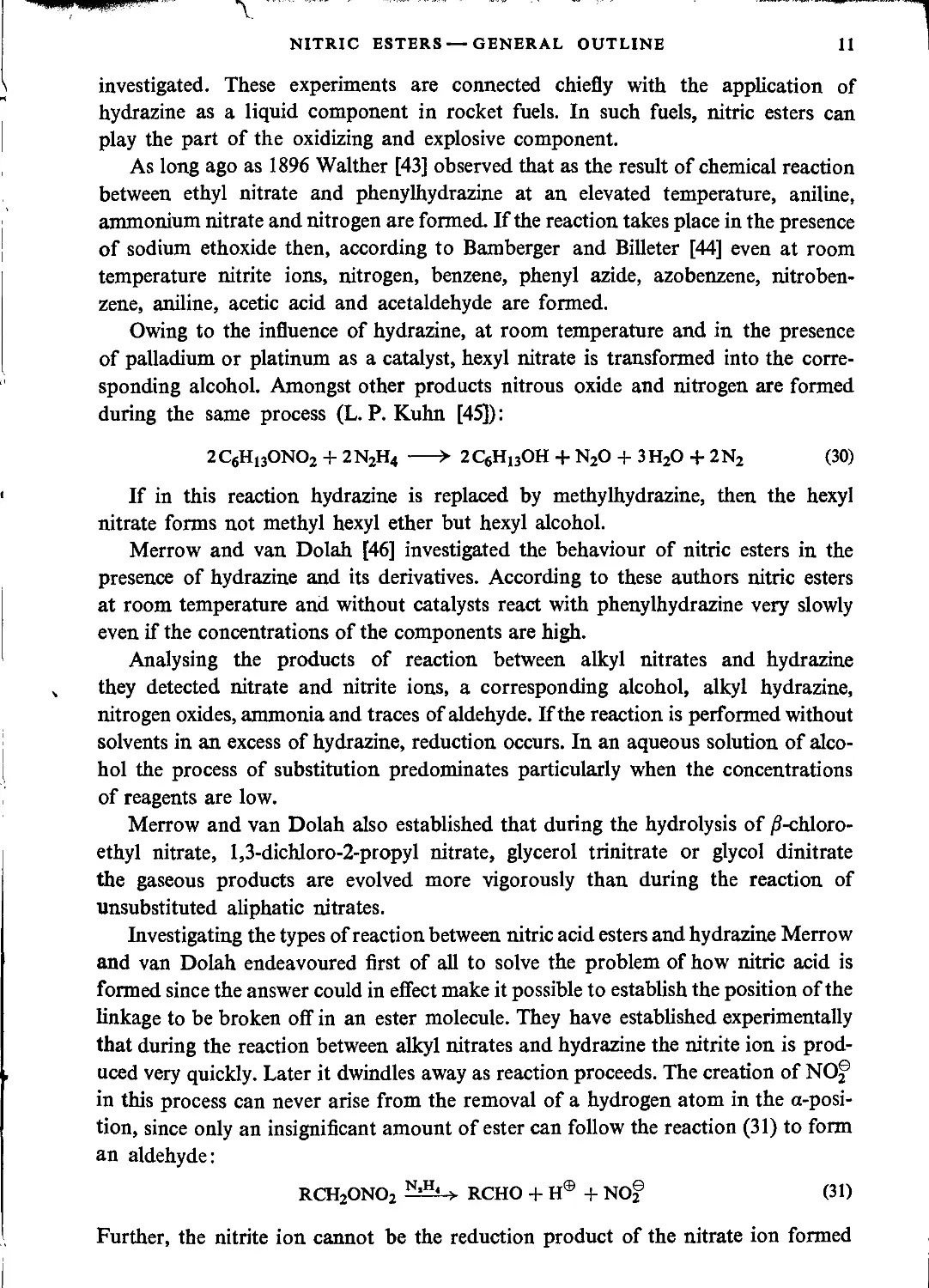
during the same process (L. P. Kuhn [45]):
2C6H13ONO2 + 2N2H4 -----> 2C6H13OH 4- N2O + 3H2O 4- 2N2	(30)
If in this reaction hydrazine is replaced by methylhydrazine, then the hexyl
nitrate forms not methyl hexyl ether but hexyl alcohol.
Merrow and van Dolah [46] investigated the behaviour of nitric esters in the
presence of hydrazine and its derivatives. According to these authors nitric esters
at room temperature and without catalysts react with phenylhydrazine very slowly
even if the concentrations of the components are high.
Analysing the products of reaction between alkyl nitrates and hydrazine
they detected nitrate and nitrite ions, a corresponding alcohol, alkyl hydrazine,
nitrogen oxides, ammonia and traces of aldehyde. If the reaction is performed without
solvents in an excess of hydrazine, reduction occurs. In an aqueous solution of alco-
hol the process of substitution predominates particularly when the concentrations
of reagents are low.
Merrow and van Dolah also established that during the hydrolysis of ^-chloro-
ethyl nitrate, l,3-dichloro-2-propyl nitrate, glycerol trinitrate or glycol dinitrate
the gaseous products are evolved more vigorously than during the reaction of
unsubstituted aliphatic nitrates.
Investigating the types of reaction between nitric acid esters and hydrazine Merrow
and van Dolah endeavoured first of all to solve the problem of how nitric acid is
formed since the answer could in effect make it possible to establish the position of the
linkage to be broken off in an ester molecule. They have established experimentally
that during the reaction between alkyl nitrates and hydrazine the nitrite ion is prod-
uced very quickly. Later it dwindles away as reaction proceeds. The creation of NO®
in this process can never arise from the removal of a hydrogen atom in the «-posi-
tion, since only an insignificant amount of ester can follow the reaction (31) to form
an aldehyde:
RCH2ONO2 RCHO 4- H® + NO^	(31)
Further, the nitrite ion cannot be the reduction product of the nitrate ion formed
12	CHEMISTRY ANu TECHNOLOGY OF EXPLOSIVES
in consequence of the rupture of the C—О bond since, for example, the NOj-ion
of sodium nitrate does not undergo any change in presence of hydrazine.
The NO®-ion might be formed from the nitrous acid ester if the latter was
present as an impurity in the main reactant. Trials carried out with ethyl nitrite and
n-butyl nitrite have demonstrated, however, that when these compounds are treated
with an excess of hydrazine they do not undergo any chemical reaction accompa-
nied by the formation of the nitrate ion.
According to Merrow and van Dolah the reaction between a nitric ester and
hydrazine is performed in the way outlined below:
RONO2 + H2NNH2 —+ RO® + H2N—NH2—NO2 5=^ ROH + H2N—NHNO2 (32)
*H2N—NH—NH—NH2 + HNO2	(33)
h2n- nh—no2 + h2nnhZ‘
X HN=NH + N2H4 • HNO2	(34)
H2N—nh—NH—NH2 —-> N2 + 2NH3	(35)
*NH=N—NH—NH2 —-> HN3 + NH3	(36)
2NH=NHf
^N2 + H2N—NH2	(37)
In the first stage of the reaction an alkoxyl anion and the nitrohydrazine cation
are formed which afterwards react together to give the corresponding alcohol and
nitrohydrazine. Nitrohydrazine reacts with excess hydrazine to produce tetrazene,
nitrous acid and di-imid. Then the tetrazene decomposes to form ammonia and
nitrogen; from di-imid on the other hand tetrazene, hydrazine and nitrogen are
formed. Hydrazoic acid and ammonia are then formed as decomposition products
of tetrazene.
Reactions (32-37) take place as a result of breakage of the N—О linkage, in
a maimer analogous to the breakage of the chemical bond between an acyl radical
and an oxygen atom when esters of carboxylic acids are hydrolysed. Generally
the linkage is broken off in this way when the n-alkyl esters of nitric acid are hydro-
lysed in an alkaline medium or when nitration is carried out with nitrates in the
presence of bases, e.g. the nitration of aniline by means of ethyl nitrate in the presence
of potassium ethoxide to yield phenylnitramine as its final product (Bamberger [47]).
The above reaction scheme between nitric esters and hydrazine or its deriva-
tives is confirmed by the reaction of methylhydrazine and ethyl nitrate which yield
methane (not ethane) and nitrogen. This indicates that the unstable monomethyl-
di-imid should have been an intermediate product:
CH3HNNH2 + C2H5ONO2 -----> CH3N=NH + C2H5OH + HNO2 (38)
CH3N=NH ------> CH4 + N2	(39)
The gradual decreasing concentration of nitrous acid in the mixture of reagents
can be explained as the result of the reduction process taking place under the in-
fluence of hydrazine:
NITRIC ESTERS — GENERAL OUTLINE
13
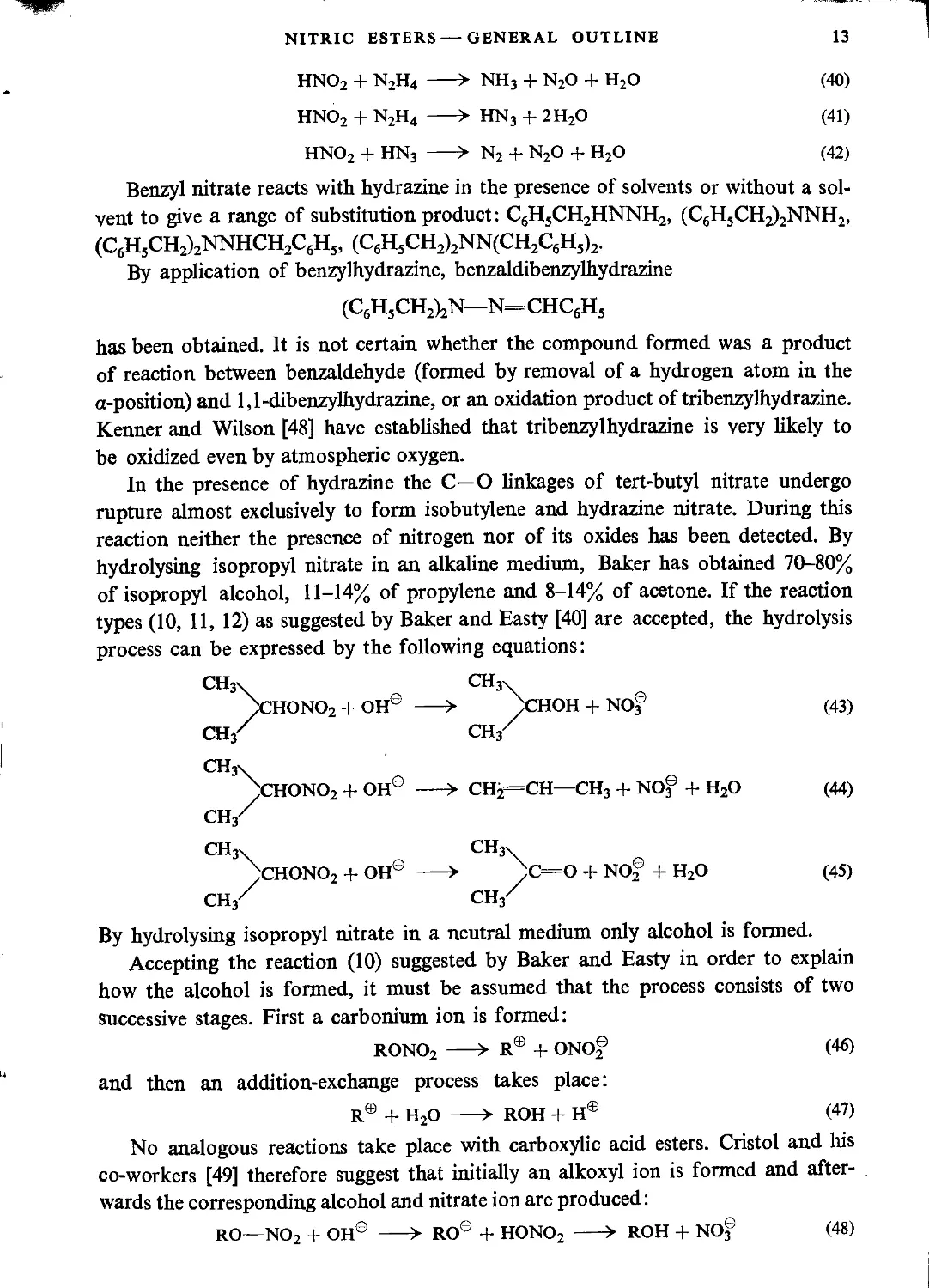
HNO2 + N2H4 ---->	NH3 + N2O + H2O	(40)
HNO2 + N2H4 ---->	HN3 + 2H2O	(41)
HNO2 + HN3 ---->	N2 4- N2O + H2O	(42)
Benzyl nitrate reacts with hydrazine in	the presence of solvents or without a sol-
vent to give a range of substitution product: C6H5CH2HNNH2, (C6H5CH2)2NNH2,
(C6H5CH2)2NNHCH2C6H5, (C6H5CH2)2NN(CH2C6H5)2.
By application of benzylhydrazine, benzaldibenzylhydrazine
(C6H5CH2)2N—n=chc6h5
has been obtained. It is not certain whether the compound formed was a product
of reaction between benzaldehyde (formed by removal of a hydrogen atom in the
а-position) and 1,1-dibenzylhydrazine, or an oxidation product of tribenzylhydrazine.
Kenner and Wilson [48] have established that tribenzylhydrazine is very likely to
be oxidized even by atmospheric oxygen.
In the presence of hydrazine the С—О linkages of tert-butyl nitrate undergo
rupture almost exclusively to form isobutylene and hydrazine nitrate. During this
reaction neither the presence of nitrogen nor of its oxides has been detected. By
hydrolysing isopropyl nitrate in an alkaline medium, Baker has obtained 70-80%
of isopropyl alcohol, 11-14% of propylene and 8-14% of acetone. If the reaction
types (10, 11, 12) as suggested by Baker and Easty [40] are accepted, the hydrolysis
process can be expressed by the following equations:
CH3\ сн/	)chono2 + oh® —	CH3\ -> Vhoh + NoP сн/	(43)
CH3\	Vhono2 + oh® —	-> CH2=CH—CH3 + NO3' + H2O	(44)
сн/ CH3X СН/	^chono2 + oh® —	CH3x ->	yC=O + NO® + H2O сн/	(45)
By hydrolysing isopropyl nitrate in a neutral medium only alcohol is formed.
Accepting the reaction (10) suggested by Baker and Easty in order to explain
how the alcohol is formed, it must be assumed that the process consists of two
successive stages. First a carbonium ion is formed:
RONO2 ----> R® + ONO®	(46)
and then an addition-exchange process takes place:
R® + H2O ----> ROH + H®	(47)
No analogous reactions take place with carboxylic acid esters. Cristol and his
co-workers [49] therefore suggest that initially an alkoxyl ion is formed and after-
wards the corresponding alcohol and nitrate ion are produced:
RO—NO2 + OH® -------> RO® + HONO2 —-> ROH + NO®	(48)
14
CHEMISTRY AND TECHNOLOGY OF EXPLOSIVES
Cristol and his co-workers have carried out the hydrolysis of the optically active
2-octyl nitrate in alkaline and neutral media. The alkaline hydrolysis was performed
in the presence of sodium hydroxide both in 92.6% ethanol, where the participation
of the ethoxide ion should be taken into account, and in a 64% aqueous solution
of dioxane. The neutral hydrolysis was carried out in a 70% acetone solution in the
presence of calcium carbonate.
By esterifying (+)2-octanol using a mixture of nitric and sulphuric acid, it was
established that the nitrate produced did not undergo inversion. The (+)2-octyl
nitrate obtained was heated during a period of 50 hr in a 10% alcoholic solution
of sodium hydroxide. The optical rotation of all the reaction products was nil.
Analysis by means of Grignard’s reagent indicated 45.6% of 2-octanol, 39.8% of
ketone and 14.6% of ether (by difference). A sample of the alcohol contained 76%
of (+)2-octanol and 24% of racemate, i.e. 88% of (+)2-octanol and 12% of (—)2-octa-
nol.
On the basis of these results and taking into account the effect of the ethoxide
ion, the authors propose the following reaction schemes:
EtO® + R—ONO2 —-> EtOR + NO®	(49)
EtO® + RO—NO2 —-> EtONO2 + RO®	(50)
During the hydrolysis of 2-octyl nitrate according to eqn. (49), ethyl 2-octyl
ether is formed which should have a rotation contrary to that of the unreacted
nitrate. On the other hand from the reaction (50) which resembles to some extent
eqn. (48), an alcohol of the same rotation and a product of transesterification is
obtained. Cristol does not explain in detail the mechanism of the reaction of trans-
esterification (ester group exchange reaction). None the less an assumption can be
made that it may occur only in the presence of nitronium cation NO®. Further,
the reaction leading to the formation of ketones has not yet been explained. Most
probably it is analogous to the scheme (12) in which a hydrogen atom attached
to the a-carbon atom is split off after a О—N linkage is broken:
R—CH—CH3 + OH® —-> R—c—CH3 + NO2J + H2O	(51)
I	II
ono2	о
The experiment of hydrolysing 2-octyl nitrate in a dioxane solution has been
carried out with a laevo-rotatory ester. In the reaction products 2-octanol forms
as the main product with some 2-octanone and a little unchanged 2-octyl nitrate.
The rotation of the reaction product amounted to —3.77°, and the alcohol consisted
of a mixture containing 42% of (-)2-octanol and 58% of racemate, i.e. 71%
(—)2-octanol and 29% (+)2-octanol.
By hydrolysis of a dextro-rotatory 2-octyl nitrate in a neutral medium, this
compound has been decomposed to yield a laevo-rotatory product containing
13% of 2-octanone and 87% of 2-octanol, the latter comprising 71% of (-)2-octanol
and 29% racemate, i.e. 85.5 parts of laevo-rotatory and 14.5 parts of dextro-rota-
tory alcohol.
NITRIC ESTERS — GENERAL OUTLINE
15
It can be concluded from these experimental results that in alkaline media the
2-octyl nitrate behaves like a typical ester (Day and Ingold [50]). In neutral media,
on the other hand, it behaves like an alkyl halogenide or like an ester of sulphuric
acid.
Cristol also established in the work cited that the hydrolysis of 2-octyl nitrate
cannot be performed with dilute sulphuric acid. In the presence of 10% sulphuric
acid as much as 99 parts of alcohol having the same rotation as the original nitrate
were formed. With 70-90% sulphuric acid, 2-octanone and nitrogen oxides were
formed.
According to Merrow and van Dolah [51] (+)2-octyl nitrate reacts with hydra-
zine at room temperature to yield 84% (+)2-octanol, whilst by the reaction of the
laevo-rotatory nitrate and ammonium polysulphide as much as 99 parts of (-)2-
octanol are produced. The fact that to a large extent the original rotation was
preserved indicates that in the cases cited the initial step was rupture of the N—О
bond.
Further experiments on the hydrolysis of cis- and tranj-cyclohexanediol dini-
trates have been carried out by Merrow and van Dolah. The rran^-l,2-cyclohexa-
nediol dinitrate in the presence of hydrazine is transformed exclusively into trans-
1,2-cyclohexanediol. Similarly the ciy-isomer does not change its configuration if
treated with ammonium sulphide. All these observations confirm the conclusion
mentioned above.
Baker [52], who investigated the influence of nucleophilic reagents on benzyl
nitrate in anhydrous alcohol, has established that two parallel reactions proceed
simultaneously (Y is a hydrolysing agent):
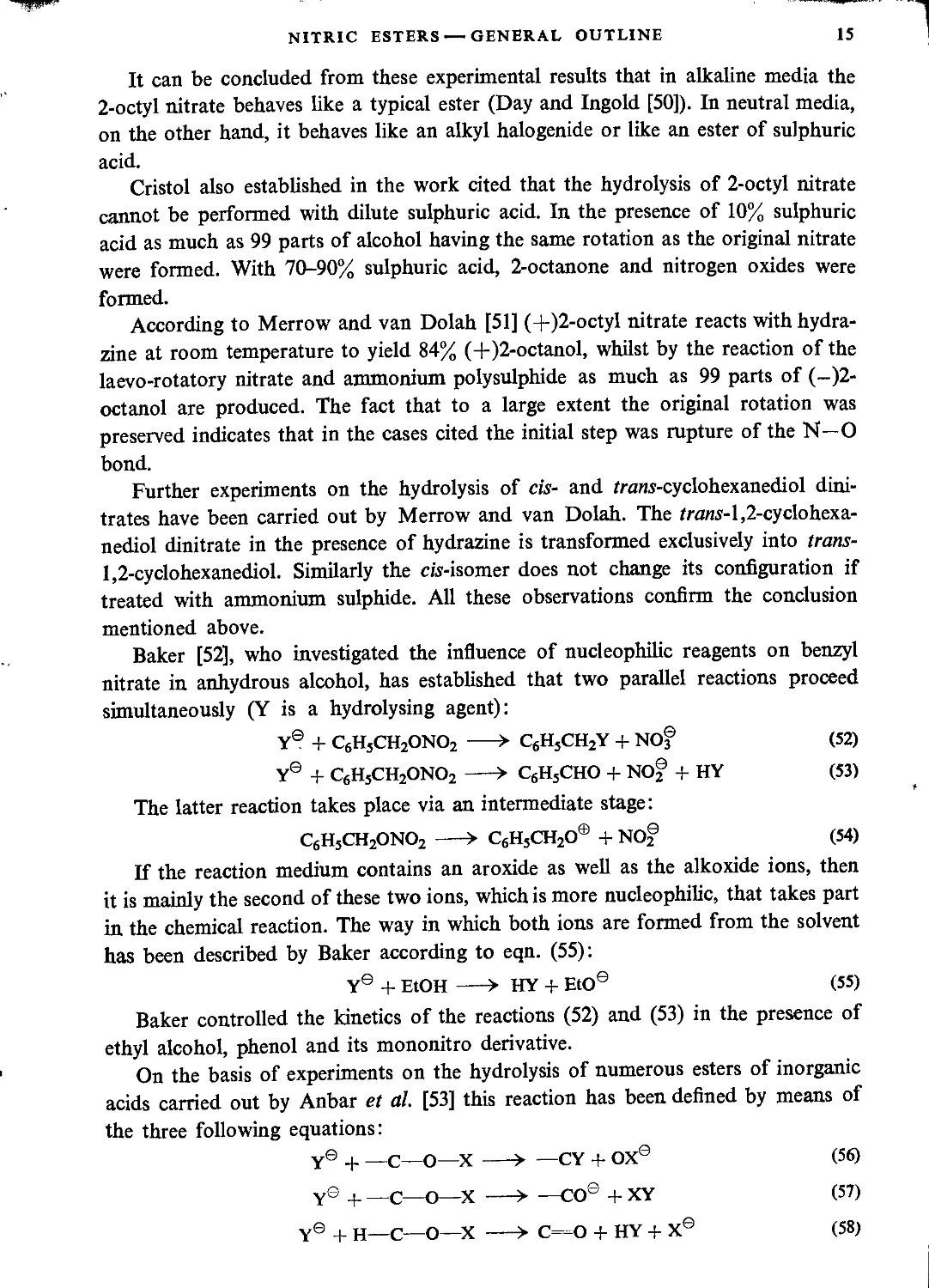
Y® + C6H5CH2ONO2 ----> C6H5CH2Y + NO®	(52)
Y® + C6H5CH2ONO2 —C6H5CHO + NO® + HY	(53)
The latter reaction takes place via an intermediate stage:
C6H5CH2ONO2 —C6H5CH2O® + NO®	(54)
If the reaction medium contains an aroxide as well as the alkoxide ions, then
it is mainly the second of these two ions, which is more nucleophilic, that takes part
in the chemical reaction. The way in which both ions are formed from the solvent
has been described by Baker according to eqn. (55):
Y® + EtOH —-> HY + EtO®	(55)
Baker controlled the kinetics of the reactions (52) and (53) in the presence of
ethyl alcohol, phenol and its mononitro derivative.
On the basis of experiments on the hydrolysis of numerous esters of inorganic
acids carried out by Anbar et al. [53] this reaction has been defined by means of
the three following equations:
Y	® + — С—О—X —-> —CY + OX®	(56)
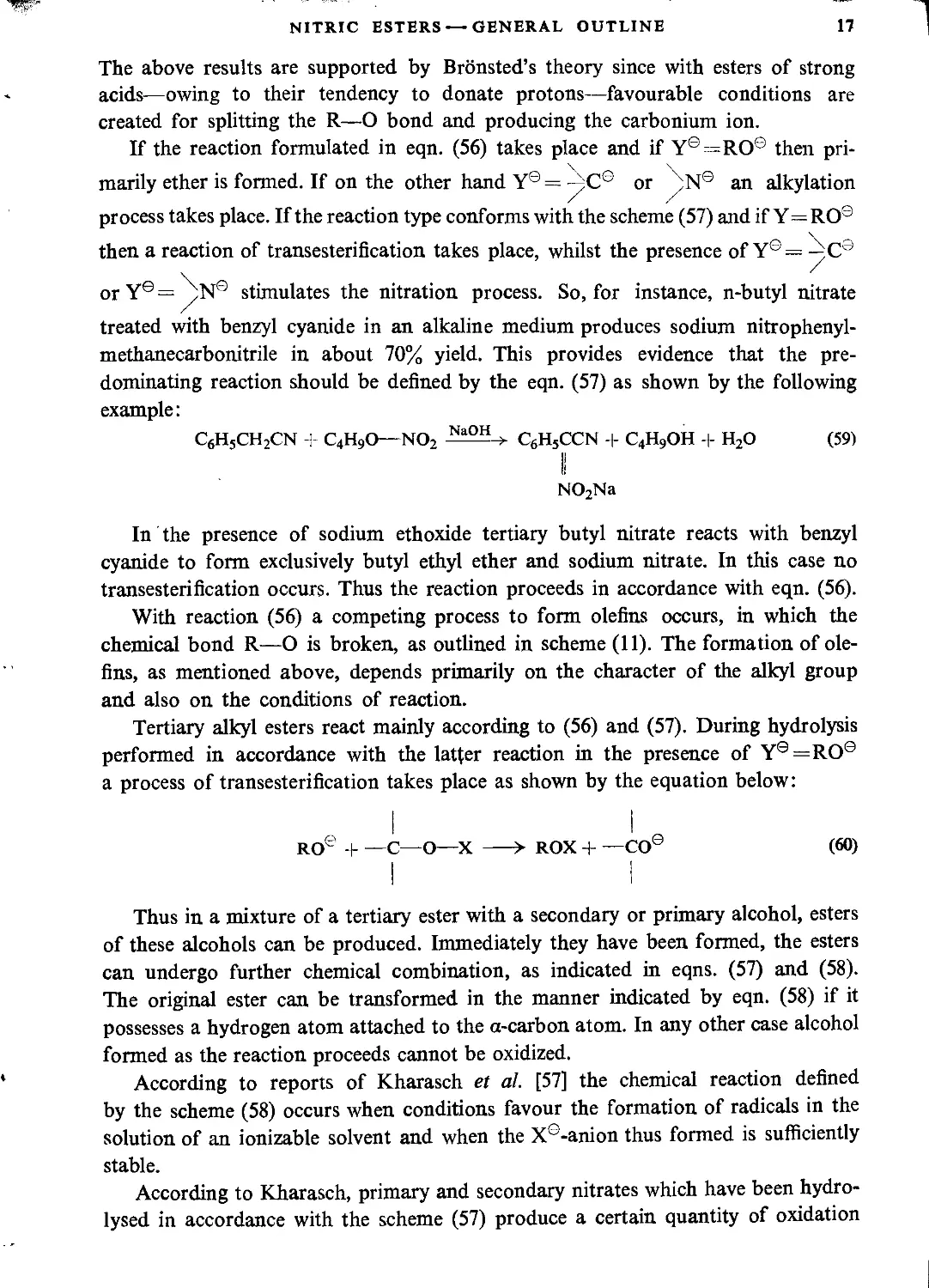
Y	® + — С О—X ----->	—CO® + XY	(57)
Y	® + H—С—О—X ------>	C=O + HY + X®	(58)
16	CHEMISTRY AND TECHNOLOGY OF EXPLOSIVES
According to eqn. (56) a nucleophilic substitution takes place, i.e. the compo-
nent Y is attached to the a-carbon atom. Similarly in reaction (57) Ye attaches
itself to the central atom of the X-group (such as the nitrogen atom in the nitro
group). The last equation illustrates a typical oxidation process, producing an al-
dehyde or ketone with the removal of a hydrogen atom attached to the a-carbon atom.
Equations (56) and (57) are analogous to (10) and (12) proposed by Baker;
and (58) resembles (50).
In order to generalize on the conditions that determine the direction of the hydro-
lysis process and to deduce adequate conclusions, several examples of the hydro-
lysis of esters of inorganic acids are quoted below together with the probable reaction
type. Hydrolysis was performed in an alkaline medium using water labelled with
the 18O-isotope.
tert-Butyl hypochlorite	(57)
Triphenyhnethyl chlorate, bromate, iodate	(58)
Triphenyhnethyl perchlorate	(56)
n-Butyl nitrate	(57)
tert-Butyl nitrate	(57)
Triphenylmethyl nitrate	(57)
n-Butyl nitrate	various reactions
n-Octyl nitrate	various reactions
tert-Butyl nitrate	(56)
Triphenyhnethyl nitrate	(56)
It is clear from this comparison that triphenylmethanol esters of weaker acids
undergo the reaction of hydrolysis as shown in the scheme (57). Depending on the
kind of radical, during the hydrolysis of strong acid esters either the R—О bond
is broken (scheme 56) or a mixture of reaction products is formed as indicated by
the schemes mentioned. The reaction goes more readily with esters of weak acids,
as the radical’s influence is not prominant. With strong acid esters and the more
electronegative (iso-) radicals hydrolysis proceeds in accordance with eqn. (56).
Esters of strong acids and those which contain less electronegative radicals do not
demonstrate any definite direction of hydrolysis.
The above conclusions find further confirmation in the results of hydrolysis
of sugar nitrates that have been carried out by Ansell and Honeymann [54], and
in experiments to nitrate cyclic ketones by means of optically active nitrates made
by Hom and Shimer [55].
Comparing triphenylmethanol esters of hydroxy-acids we can establish that
the higher oxidation compounds (being at the same time also stronger acids) are
hydrolysed according to the reaction scheme (56), whilst with compounds having
a lower degree of oxidation the process follows eqn. (57). For instance, among the
following esters: RO—Cl, RO—CIO, RO—C1O2, RO—C1O3, the change of
reaction type occurs between chloric and perchloric acid esters. Likewise nitric
esters react mainly according to the scheme (57). This question has been inves-
tigated particularly by Allen [56]. The direction followed by the hydrolysis process
depends upon many factors, including the type of radical and the reaction medium.
NITRIC ESTERS — GENERAL OUTLINE
17
The above results are supported by Bronsted’s theory since with esters of strong
acids—owing to their tendency to donate protons—favourable conditions are
created for splitting the R—О bond and producing the carbonium ion.
If the reaction formulated in eqn. (56) takes place and if Y°=RO° then pri-

marily ether is formed. If on the other hand Y° = -yC0
or
an alkylation
process takes place. If the reaction type conforms with the scheme (57) and if Y=RO°
then a reaction of transesterification takes place, whilst the presence of Y°= — C®
orYe=/Ne stimulates the nitration process. So, for instance, n-butyl nitrate
treated with benzyl cyanide in an alkaline medium produces sodium nitrophenyl-
methanecarbonitrile in about 70% yield. This provides evidence that the pre-
dominating reaction should be defined by the eqn. (57) as shown by the following
example:
C6H5CH2CN + C4H9O—NO2 2^23^ C6H5CCN + C4H9OH + H2O (59)
NO2Na
In the presence of sodium ethoxide tertiary butyl nitrate reacts with benzyl
cyanide to form exclusively butyl ethyl ether and sodium nitrate. In this case no
transesterification occurs. Thus the reaction proceeds in accordance with eqn. (56).
With reaction (56) a competing process to form olefins occurs, in which the
chemical bond R—О is broken, as outlined in scheme (11). The formation of ole-
fins, as mentioned above, depends primarily on the character of the alkyl group
and also on the conditions of reaction.
Tertiary alkyl esters react mainly according to (56) and (57). During hydrolysis
performed in accordance with the latter reaction in the presence of Y®=RO®
a process of transesterification takes place as shown by the equation below:
RO® + —С—О—X ----------> ROX + —CO0	(60)
Thus in a mixture of a tertiary ester with a secondary or primary alcohol, esters
of these alcohols can be produced. Immediately they have been formed, the esters
can undergo further chemical combination, as indicated in eqns. (57) and (58).
The original ester can be transformed in the manner indicated by eqn. (58) if it
possesses a hydrogen atom attached to the a-carbon atom. In any other case alcohol
formed as the reaction proceeds cannot be oxidized.
According to reports of Kharasch et al. [57] the chemical reaction defined
by the scheme (58) occurs when conditions favour the formation of radicals in the
solution of an ionizable solvent and when the Xe-anion thus formed is sufficiently
stable.
According to Kharasch, primary and secondary nitrates which have been hydro-
lysed in accordance with the scheme (57) produce a certain quantity of oxidation
18	CHEMISTRY AND TECHNOLOGY OF EXPLOSIVES
product. On the other hand tertiary butyl nitrite can undergo the reaction of trans-
esterification. However, it does not react as suggested by the eqn. (58), since the
NOe ion is not sufficiently stable.
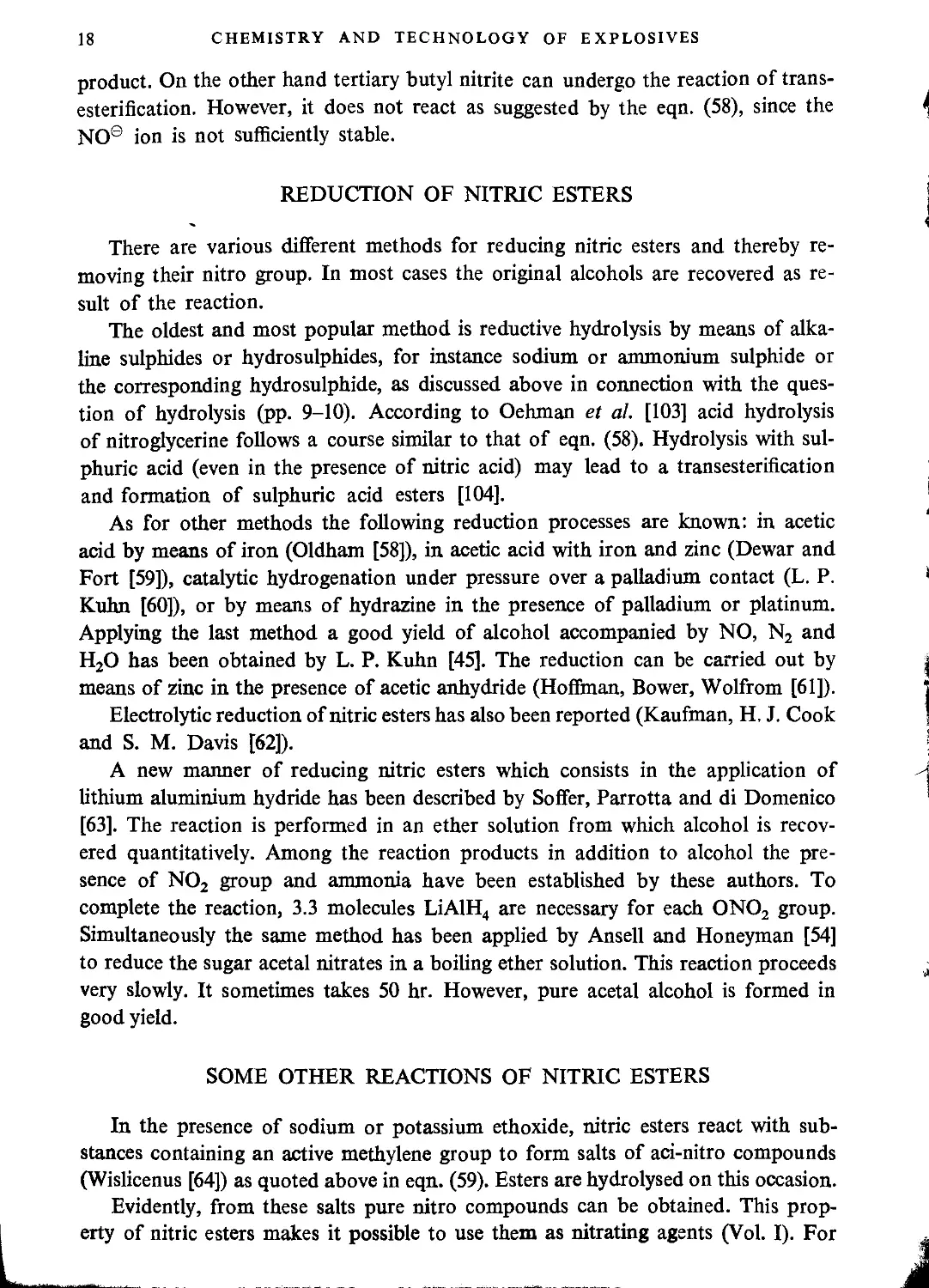
REDUCTION OF NITRIC ESTERS
There are various different methods for reducing nitric esters and thereby re-
moving their nitro group. In most cases the original alcohols are recovered as re-
sult of the reaction.
The oldest and most popular method is reductive hydrolysis by means of alka-
line sulphides or hydrosulphides, for instance sodium or ammonium sulphide or
the corresponding hydrosulphide, as discussed above in connection with the ques-
tion of hydrolysis (pp. 9-10). According to Oehman et al. [103] acid hydrolysis
of nitroglycerine follows a course similar to that of eqn. (58). Hydrolysis with sul-
phuric acid (even in the presence of nitric acid) may lead to a transesterification
and formation of sulphuric acid esters [104].
As for other methods the following reduction processes are known: in acetic
acid by means of iron (Oldham [58]), in acetic acid with iron and zinc (Dewar and
Fort [59]), catalytic hydrogenation under pressure over a palladium contact (L. P.
Kuhn [60]), or by means of hydrazine in the presence of palladium or platinum.
Applying the last method a good yield of alcohol accompanied by NO, N2 and
H2O has been obtained by L. P. Kuhn [45]. The reduction can be carried out by
means of zinc in the presence of acetic anhydride (Hoffman, Bower, Wolfrom [61]).
Electrolytic reduction of nitric esters has also been reported (Kaufman, H, J. Cook
and S. M. Davis [62]).
A new manner of reducing nitric esters which consists in the application of
lithium aluminium hydride has been described by Soffer, Parrotta and di Domenico
[63]. The reaction is performed in an ether solution from which alcohol is recov-
ered quantitatively. Among the reaction products in addition to alcohol the pre-
sence of NO2 group and ammonia have been established by these authors. To
complete the reaction, 3.3 molecules LiAlH4 are necessary for each ONO2 group.
Simultaneously the same method has been applied by Ansell and Honeyman [54]
to reduce the sugar acetal nitrates in a boiling ether solution. This reaction proceeds
very slowly. It sometimes takes 50 hr. However, pure acetal alcohol is formed in
good yield.
SOME OTHER REACTIONS OF NITRIC ESTERS
In the presence of sodium or potassium ethoxide, nitric esters react with sub-
stances containing an active methylene group to form salts of aci-nitro compounds
(Wislicenus [64]) as quoted above in eqn. (59). Esters are hydrolysed on this occasion.
Evidently, from these salts pure nitro compounds can be obtained. This prop-
erty of nitric esters makes it possible to use them as nitrating agents (Vol. I). For
NITRIC ESTERS — GENERAL OUTLINE
19
instance pyrrole and indole can be nitrated by means of ethyl nitrate. In effect
a /J-nitro compound is produced:
CH-----CH	CH------c—no2
!l	ii
CH	CH	CH	CH
^Hn/	^Nh/
Like nitrous esters, alkyl esters of nitric acid enter into reaction with a surplus
of Grignard’s reagent to form N-dialkylhydroxylamine.
Certain nitric esters are capable of forming addition products with aromatic
nitro compounds (see pp. 167, 169), as indicated by T. Urbanski [65].
An interesting property of nitric esters, namely their ability to catalyse certain
reactions of addition polymerization has been reported recently. Initially this obser-
vation was made by Rogovin and Tsaplina [66] while polymerizing styrene and
methyl methacrylate in the presence of nitroglycerine. The latter amounted to
5-20 parts by weight corresponding to about 10% of the polymerized substance.
As a result of the increased polymerization speed, the molecular weight of the poly-
mer is smaller than if polymerization is carried out slowly.
Hicks [67] confirmed these observations for the methyl methacrylate-glycol
dinitrate system. The substances have been used at mole ratios ranging from 0.07
to 5.9. Working at temperatures of 25, 60, 80 and 90°C it was established that
from 60 to 90°C partial decomposition of nitroglycol takes place and free radicals
initiating polymerization are formed.
An interesting exception reported by Rogovin and Tsaplina concerns vinyl
acetate which when exposed to the influence of nitric esters, polymerizes very slowly.
The ester radicals -NO2, ONO2 and ions NO®, ONO®, do not seem to influence
appreciably the rate of polymerization and the catalytic action of nitric esters is
not produced by the presence of O—NO2 groups.
However, the views of Rogovin and Tsaplina should be revised in the light
of recent experiments of Szyc-Lewanska and Syczewski [67а]. They found that
glycols and glycerol exhibit the same catalytic action as their nitric esters on the
polymerization of styrene and methyl methacrylate. This seems to suggest that the
molecules
CH2ONO2	CH2OH
| and |
CH2ONO2	ch2oh
behave in an identical way through the formation of the free radicals
CH2O •	CH2 •
| and |
CH2O-	CH2-
or through alkoxy (CH2O)2® and alkylene (CHjj® ions.
20
CHEMISTRY AND TECHNOLOGY OF EXPLOSIVES
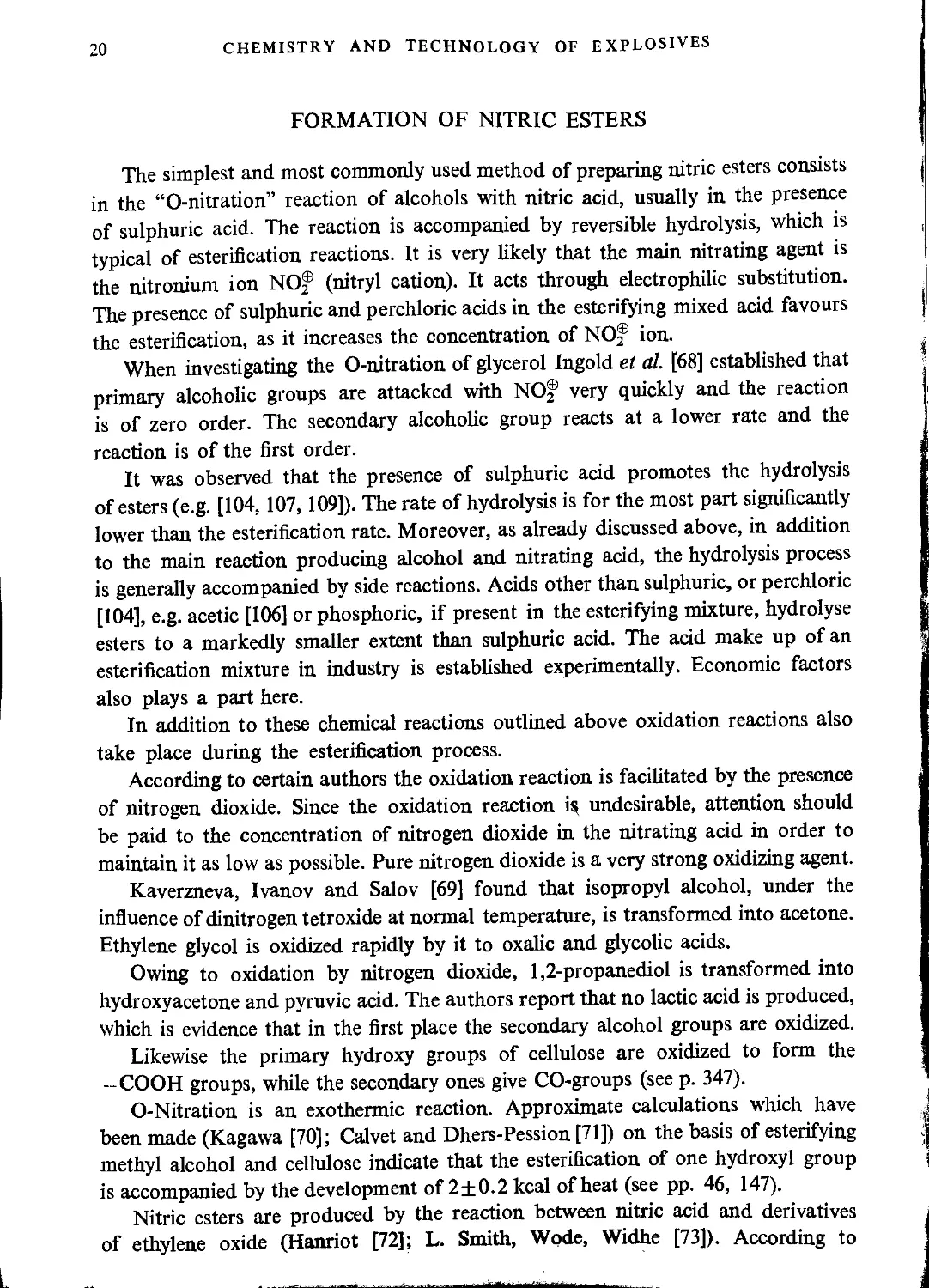
FORMATION OF NITRIC ESTERS
The simplest and most commonly used method of preparing nitric esters consists
in the “O-nitration” reaction of alcohols with nitric acid, usually in the presence
of sulphuric acid. The reaction is accompanied by reversible hydrolysis, which is
typical of esterification reactions. It is very likely that the main nitrating agent is
the nitronium ion NO® (nitryl cation). It acts through electrophilic substitution.
The presence of sulphuric and perchloric acids in the esterifying mixed acid favours
the esterification, as it increases the concentration of NO® ion.
When investigating the O-nitration of glycerol Ingold et al. [68] established that
primary alcoholic groups are attacked with NO® very quickly and the reaction
is of zero order. The secondary alcoholic group reacts at a lower rate and the
reaction is of the first order.
It was observed that the presence of sulphuric acid promotes the hydrolysis
of esters (e.g. [104, 107, 109]). The rate of hydrolysis is for the most part significantly
lower than the esterification rate. Moreover, as already discussed above, in addition
to the main reaction producing alcohol and nitrating acid, the hydrolysis process
is generally accompanied by side reactions. Acids other than sulphuric, or perchloric
[104], e.g. acetic [106] or phosphoric, if present in the esterifying mixture, hydrolyse
esters to a markedly smaller extent than sulphuric acid. The acid make up of an
esterification mixture in industry is established experimentally. Economic factors
also plays a part here.
In addition to these chemical reactions outlined above oxidation reactions also
take place during the esterification process.
According to certain authors the oxidation reaction is facilitated by the presence
of nitrogen dioxide. Since the oxidation reaction is undesirable, attention should
be paid to the concentration of nitrogen dioxide in the nitrating acid in order to
maintain it as low as possible. Pure nitrogen dioxide is a very strong oxidizing agent.
Kaverzneva, Ivanov and Salov [69] found that isopropyl alcohol, under the
influence of dinitrogen tetroxide at normal temperature, is transformed into acetone.
Ethylene glycol is oxidized rapidly by it to oxalic and glycolic acids.
Owing to oxidation by nitrogen dioxide, 1,2-propanediol is transformed into
hydroxy acetone and pyruvic acid. The authors report that no lactic acid is produced,
which is evidence that in the first place the secondary alcohol groups are oxidized.
Likewise the primary hydroxy groups of cellulose are oxidized to form the
-COOH groups, while the secondary ones give СО-groups (see p. 347).
О-Nitration is an exothermic reaction. Approximate calculations which have
been made (Kagawa [70]; Calvet and Dhers-Pession [71]) on the basis of esterifying
methyl alcohol and cellulose indicate that the esterification of one hydroxyl group
is accompanied by the development of 2+0.2 kcal of heat (see pp. 46, 147).
Nitric esters are produced by the reaction between nitric acid and derivatives
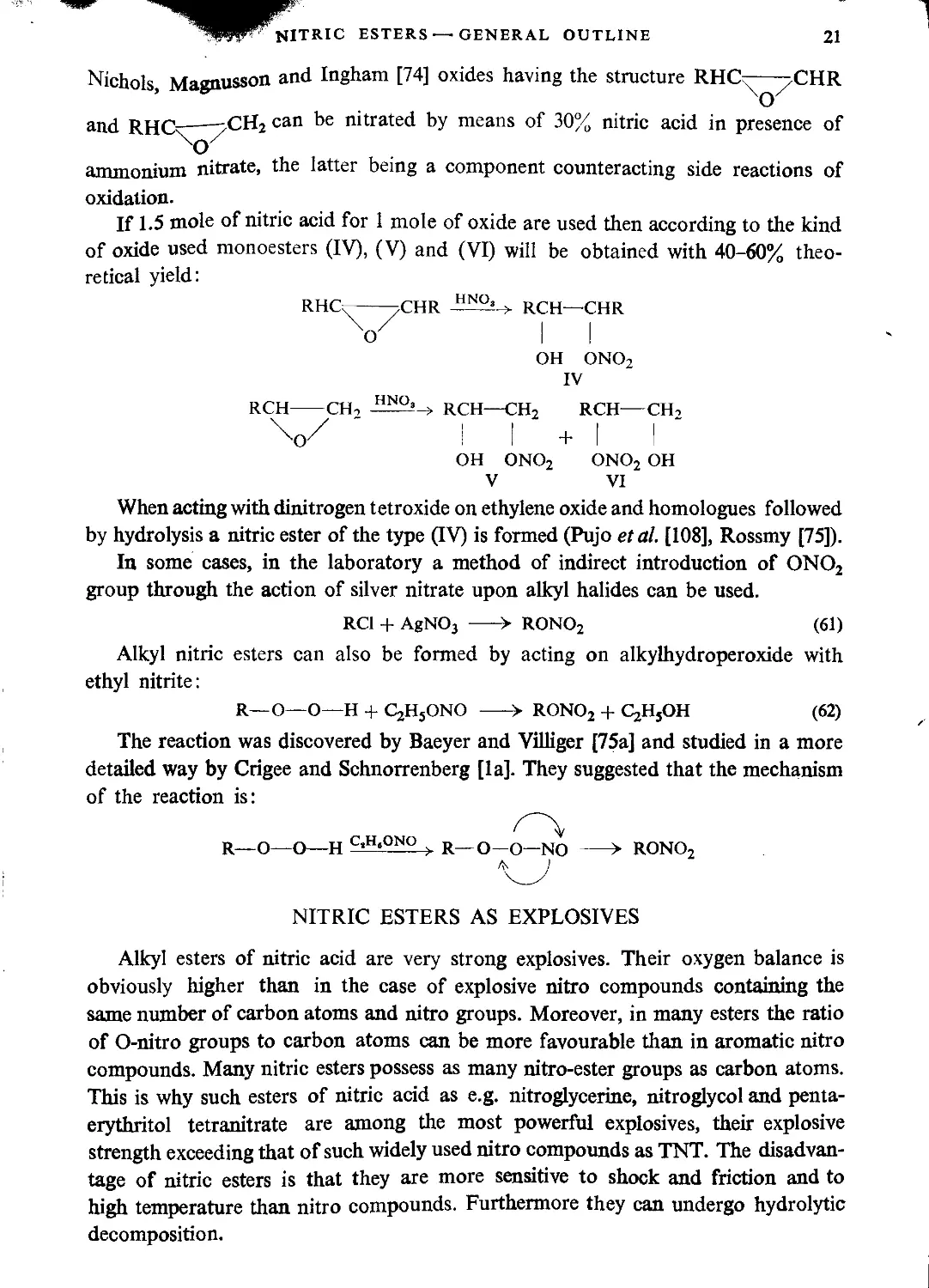
of ethylene oxide (Hanriot [72]; L. Smith, Wpde, Widhe [73]). According to

NITRIC ESTERS—'GENERAL OUTLINE
21
Nichols, Magnusson and Ingham [74] oxides having the structure RHC
—/CHR
Oz
and RHCr—->CH2 can b® nitrated by means of 30% nitric acid in presence of
ammonium nitrate, the latter being a component counteracting side reactions of
oxidation.
If 1.5 mole of nitric acid for 1 mole of oxide are used then according to the kind
of oxide used monoesters (IV), (V) and (VI) will be obtained with 40-60% theo-
retical yield:
RHC
CHR
HNO,
> RCH—CHR
OH ONO2
IV
RCH---CH,
X\y/'
RCH—CH2	RCH—CH,
! I + I I
OH ono2 ono2 oh
V	VI
When acting with dinitrogen tetroxide on ethylene oxide and homologues followed
by hydrolysis a nitric ester of the type (IV) is formed (Pujo etal. [108], Rossmy [75]).
In some cases, in the laboratory a method of indirect introduction of ONO2
group through the action of silver nitrate upon alkyl halides can be used.
RC1 + AgNO3 ----> RONO2	(61)
Alkyl nitric esters can also be formed by acting on alkylhydroperoxide with
ethyl nitrite:
R—О—О—H + CjHjONO -> RONO2 + C2H5OH	(62)
The reaction was discovered by Baeyer and Villiger [75a] and studied in a more
detailed way by Crigee and Schnorrenberg [la]. They suggested that the mechanism
of the reaction is:
R—О—О—H C,H,ONO > r—о—о—NO -----> RONO2
NITRIC ESTERS AS EXPLOSIVES
Alkyl esters of nitric acid are very strong explosives. Their oxygen balance is
obviously higher than in the case of explosive nitro compounds containing the
same number of carbon atoms and nitro groups. Moreover, in many esters the ratio
of O-nitro groups to carbon atoms can be more favourable than in aromatic nitro
compounds. Many nitric esters possess as many nitro-ester groups as carbon atoms.
This is why such esters of nitric acid as e.g. nitroglycerine, nitroglycol and penta-
erythritol tetranitrate are among the most powerful explosives, their explosive
strength exceeding that of such widely used nitro compounds as TNT. The disadvan-
tage of nitric esters is that they are more sensitive to shock and friction and to
high temperature than nitro compounds. Furthermore they can undergo hydrolytic
decomposition.
22
CHEMISTRY AND TECHNOLOGY OF EXPLOSIVES
CHEMICAL STABILITY
The stability of an explosive may be regarded as its capacity to remain unchanged
during a longer period of storage. The problem of stability is of primary importance
with nitric esters, since their structure exposes them to the risk of being hydrolysed.
However, the purer the ester, the smaller the danger of hydrolysis. It is of excep-
tional importance to keep the ester free from acids and strong bases which could
cause decomposition. Certain nitric acid alkyl esters exist that are insufficiently stable
even in the purest form. Their low stability results, of course, from their chemical
structure, as for instance, with methylene glycol dinitrate. For the most part nitric
esters of the nitroglycerine, pentaerythritol tetranitrate and nitrocellulose type
are characterized by an adequate stability provided they are in a pure form.
Ropuszynski [76] suggests two distinct aspects of stability, namely chemical
stability—which ought to be understood as the stability of the pure chemical
compound; and practical stability—that characterizes a product “stabilized”
by methods applied in practice.
In accordance with these definitions a substance possessing good chemical
stability may still be of insufficient practical stability if it is not fairly pure.
Hydrolytic decomposition has already been discussed. A different type of decom-
position of nitric esters occurs at elevated temperatures. More detailed information
concerning this type of decomposition will be included in the descriptions of the
individual esters properties, in particular those of nitroglycerine and nitrocellulose.
The decomposition of esters at elevated temperatures is of exceptional practical
importance, since it has often been responsible for accidents. Investigations of the
decomposition of esters at elevated temperatures by laboratory tests serve as a rapid
method of estimating their stability.
A number of authors have tried to express the decomposition rate of nitric
esters in mathematical formulae. Thus Berthelot [77] expressed the relation
between the decomposition rate of nitric esters and the temperature as:
V = Kt + C	(63)
where: V—the rate of reaction in mg of nitrogen produced from 1 g of the substance;
t—temperature; К, C—constants, of which C depends on the purity of the
substance and its degree of nitration; К depends on the nature of the substance.
Later the relation between the decomposition of alkyl esters of nitric acid and
the temperature was formulated (Will [78]) by means of the eqn. (64):
log N = a + b • 0.9932г	(64)
where: N—the quantity of mg nitrogen evolved from a 2.5 g sample of the substance
in 15 min; a, b~constants; t—-temperature.
According to Will for guncotton the following constants have been found:
a = 8.8842, b = 22.86.
NITRIC ESTERS — GENERAL OUTLINE
23
It is necessary to take into consideration the fact that the decomposition of
nitric esters has an autocatalytic character: water and nitrogen dioxide formed
during the decomposition lead to the formation of nitric and nitrous acids which
accelerate the reaction of decomposition of the nitric ester. The influence of nitric
acid on the rate of decomposition of nitroglycerine was studied by Roginskii [79]
and is described below.
METHODS OF DETERMINING THE STABILITY OF NITRIC ESTERS
All methods of determining the stability of explosives and particularly of nitric
esters consist in examining the behaviour of the substances at an elevated tem-
perature. It is obvious that the most reliable methods of determining stability are
those which are carried out at lower temperatures approaching the ordinary room
temperature.
It is known and has been demonstrated by several authors (by Sapozhnikov
et al. [80] for nitrocellulose; by Lukin [81] for nitroglycerine) that change of tem-
perature alters the composition of the reaction products. As the result of numerous
experiments, particular temperatures were chosen for definite nitric esters. Thus,
owing to the greater ease of decomposition of nitroglycerine as compared with nitro-
cellulose the high temperature heat test for nitroglycerine is carried out at a tem-
perature lower than that for nitrocellulose (120 and 132° C respectively).
The disadvantage of carrying out a stability test at low temperature is of course
the very low rate of the reaction, and hence the very long time required to complete
the experiment. Low temperature tests are applied in special cases only, and methods
employing elevated temperatures are in general use.
Two main categories are distinguished: (a) qualitative, and (b) quantitative
ones.
A full description of the methods of determining the stability of explosives are
given in books dealing with analysis of explosives, such as: Kast and Metz [82],
Clift and Fedoroff [83], Olsen and Greene [84], and Avanesov [85].
Qualitative tests
The qualitative tests usually consist in determining the heating period necessary
to produce a noticeable decomposition of the compound or decomposition of the
impurities present in the sample. The higher the stability, the longer the determined
time.
Heat test (Abel test). The oldest and the most popular qualitative test is
the heat test introduced in Great Britain by Abel in 1865 [86]. It is called the “Abel
test” on the Continent of Europe and the “KI starch test” in the U.S.A. It consists
in warming a sample of nitroglycerine or nitrocellulose (or dynamite or smokeless
powder) in a test tube in which a potassium iodide-starch paper moistened with
aqueous glycerol solution is suspended (Fig. 1). Warming is carried out until the
24
CHEMISTRY AND TECHNOLOGY OF EXPLOSIVES
test paper acquires a faint brown colour. A thermostatic bath is used for this pur-
pose.
The original British heat test [87] consists in heating the samples: 2 cm3 of nitro-
glycerine at 160°F (71.1°C) or 1.3 g of nitrocellulose at 170°F (76.7°C), or 1.6 g
of cordite at 180°F (82.2’C). The time the explosive should stand the test is 15 min,
10 min and 30 min respectively.
Fio. 1. Test tube for the Abel heat test, Soviet pattern [85].
In various countries different standards are accepted; e.g. in the U.S.S.R.
a temperature of 75±0.5°C and in U.S.A. 65.5±1°C is applied. In Germany more
sensitive zinc iodide-starch test paper is used (p. 77).
It is obvious that the heat test does not necessarily indicate the beginning of the
decomposition of the substance. More often it indicates the presence of unstable
impurities (e.g. residual nitrating acid) or unstable by-products more readily de-
composed than the substance itself.
The high sensitivity of the test and its simplicity are of great importance and
these facts account for the popularity of the method as a test of determining the
purity of nitroglycerine and nitrocellulose. The sensitivity of the test is considerably
reduced when mercuric salts (e.g. HgCI2) are present in nitrocellulose. This is the
result of the reaction of mercuric salts with iodine.
Litmus test (Vieffle test). This test introduced by Vieille [88] consists in
warming a sample of nitrocellulose (2.5 g) or smokeless powder in a hermetically
sealed test tube (Fig. 2) in presence of a band of blue litmus paper inserted within
the tube. The tube is kept in a thermostat warmed to 110°C. The temperature inside
the test tube is 108.5°C. In U.S^S.R. the temperature of the thermostat is 106.5°C.
The blue paper should not turn definitely red in less than 7 hr.
When smokeless powder is tested the sample is warmed to 108.5°C for several
NITRIC ESTERS — GENERAL OUTLINE
25
Fig. 2. Tube for litmus test (Vieille test).
days in succession but no longer than 10 hr a day (this is described in detail in
Vol. III).
Heat test at 134.5°C. This heat test is in use in the U.S.A. A sample of 2.5 g
of nitrocellulose or nitrocellulose powder (“single base powder”) is kept in a long
test tube in a constant temperature bath regulated to 134.5+0.5°C. A band of
methyl violet (rosaniline acetate with crystal violet) test paper is kept over the sur-
face of the sample. The test paper should not change to “salmon” colour before
30 min and no visible NO2 vapours should be detected before 45 min.
The test is usually continued for a total period of 5 hr, during which no explo-
sion should occur.
Nitroglycerine powder (“double base powder”) is tested at 120°C, the duration
of the test being the same.
Silvered Vessel test. The so-called “Silvered Vessel test” is a stability test
that consists in determining the period of heating necessary to cause exothermic
decomposition of the substance. It is usually limited to determining the stability
of smokeless powder and is described in Vol. III.
It was suggested by J. B. Taylor [89] as a method for the determination of the
stability of nitrocellulose at 135°C. Nitrocellulose can be accepted as stable when,
after 45-60 min heating, the temperature of the sample is not higher than the tem-
perature of the thermostat by 1.1 °C.
Qualitative tests at lower temperature (“Warmlagermethode”) are carried out
with powders only and are described in Vol. III.
Quantitative tests
Loss of weight. One of the oldest and simplest quantitative methods is the
determination of the loss of weight of a sample heated at a constant temperature.
The original Sy-test [90] used in the U.S.A, for determining the stability of nitro-
cellulose and nitrocellulose powder (“U.S. Ordnance Department 115° Test”) con-
sisted in heating a sample of the substance on a watch-glass at 115+0.5°C.
26	CHEMISTRY AND TECHNOLOGY OF EXPLOSIVES
Heating is carried out for 8 hr a day. During the first day the sample should
loose only volatile substances (moisture and residual solvent). After that the loss
of weight should not be greater than 1% a day during the next six days. A loss of 1%
or more should be reached on the eighth day. The total loss of weight should be
less than 10%.
In the U.S.S.R. the method was modified by using lower temperatures: 75 +
+ 0.5°C or 95 + 0.5°C. A sample of 15 g is kept in a 50 ml flask fitted with a cork
provided with tubular orifice (Fig. 3). The flask with the sample is weighed every
Fig. 3. Flask for determination of loss of weight (Avanesov [85]).
24 hr and the results are plotted on a diagram. After a certain time an increase
in the loss of weight indicates that decomposition has become more rapid. That
time is taken as a criterion of the stability of the substance.
In order to eliminate the necessity of removing the sample from the constant
temperature chamber for weighing Guichard [91] introduced the use of an auto-
matic balance which allows the weight of the sample to be recorded contin-
uously.
Will test. Will [78] developed a method which consists in determining the volume
of nitrogen evolved from nitrocellulose when kept at 135°C, gaseous products being
removed by a stream of CO2. The nitrogen oxides evolved during decomposition
are reduced by hot copper and CO2 is absorbed by a concentrated solution of potas-
sium hydroxide. The volume of N2 is recorded every 15 min. The test lasts 4 hr.
The method was very useful for research but was difficult to apply as an everyday
control of stability. Besides, the fact that nitrogen oxides are removed from the
sample by the stream of CO2 creates conditions which differ from those existing
during storage of nitrocellulose or smokeless powder, when all the decomposition
products remain in contact with the parent substance.
Bergmann and Junk test. The Bergmann and Junk [92] test consists in determi-
ning the quantity of N0+N02 lost by the sample (2 g of nitrocellulose or 5 g of
nitrocellulose powder) when heated at 132°C for 2 hr. The test tube is closed at one
end with a hydraulic seal (Fig. 4). The latter may be ball shaped (a) or (more fre-
quently) bell shaped (b). After the test, the tube is withdrawn from the thermostat
and cooled to the room temperature. Water is sucked into the tube, which is then
NITRIC ESTERS — GENERAL OUTLINE
27
filled up with more water to the 50 ml mark. The solution is either titrated or its
NO content determined by the Schulze-Tiemann method, after the solution has
been oxidized with potassium permanganate.
One gramme of well stabilized high nitrated nitrocellulose or collodion cotton
should not give off more than 2.5 or 2.0 cm3 of NO, respectively.
The Bergmann and Junk tubes can be used to determine the pH of the solution
obtained after heating nitric esters for varying times, e.g. 1, 2, 4 and 6 hr. This
Fig. 4. Tubes for Bergmann and Junk test: (a) with balls, and (b) with tubular
ending, (c) thermostat with tubes.
makes it possible to draw a curve showing the progress of decomposition of the
substance. This method of determining the stability of the esters and smokeless
powders was suggested by Hansen [93] and is frequently used for more detailed
examination of the stability of nitric esters or powders.
Most nitric esters are subjected to heating at 120-132°C. In the case of nitro-
glycerine and nitroglycerine-like explosives, and also of nitrostarch, a tempera-
ture of 110-120°C is used.
Instead of a pH determination, the conductivity of the aqueous solution of the
decomposition products can also be measured (e.g. Phillip [94]; de Bruin and
Pauw [95]; Grottanelli [95a]). This, however, is less suitable for routine work.
Manometric test. The idea of measuring the pressure of the gaseous products
evolved during decomposition of explosives on storage or heating was known as
early as in the middle of the last century. It was mentioned by Abel [96] in his classic
work on the stabilization of nitrocellulose. Ph. Hess [97] examined the decompo-
sition of nitrocellulose at 70°C and measured the pressure of the decomposition
products by means of a mercury manometer. Mittasch [98] applied the same idea
28
CHEMISTRY AND TECHNOLOGY OF EXPLOSIVES
when studying the kinetics of decomposition of nitrocellulose. The first apparatus
for routine stability measurement based on this principle was introduced by Ober-
miiller [99] and further improved by Obermiiller and Pleus [100].
The main disadvantage of the method consisted in the condensation of some
of the products of decomposition in the tubes connecting the container with the
manometer. This was overcome by Taliani [101] in his manometric method. The
Fig. 5. Taliani test apparatus: 1—tube with a test sample, 2—hydraulic closure, 3—stopcock.
main feature of this method (Fig. 5) consists in warming the sample of 1.3 g (J)
to 135°C at a constant volume which is maintained by the U-tube (2) filled with
liquid paraffin. The stopcock (3) is closed after the temperature has become uniform
and then the pressure is increased by raising the bulb (4) to maintain the same level
of paraflin oil in both branches of the U-tube (2). The experiment is stopped after
300 mm Hg pressure is reached. Goujon [102] modified the method, adopting
a pressure of 100 mm Hg as the end of experiment.
The method of Taliani-Goujon is very useful, although by working under rela-
tively elevated pressure it creates specific conditions which differ from those existing
during the storage of explosives.
NITRIC ESTERS — GENERAL OUTLINE
29
LITERATURE
1.	e. g. H. Staudinger, Ober die makromolekulare Chemie der Cellulosenitrate, Horder-Drucke-
rei, Freiburg, 1945.
la. C. Crigee and W. Schnorrenberg, Ann. 563, 93 (1949).
lb. Y. Matsushima, Coll. Papers Fac. Sei. Osaka Univ. (C) Chem. 11, 1 (1950).
2.	L. J. de Kreuk, Rec. trav. chim. 61, 819 (1942).
3.	J. Boileau and M. Thomas, Mem. poudres 33, 155 (1951).
4.	E. G. Cowley and J. R. Partington, J. Chem. Soc. 1933, 1252.
5.	С. T. Mortimer, H. Spedding and H. D. Springall, J. Chem. Soc. 1957, 188.
6.	T. Urbanski and M. WitanoWSKi, Trans. Faraday Soc. 59, 1039, 1046, 1510 (1963).
7.	K. Masaki, Bull. Chem. Soc. Japan 11, 712 (1936).
8.	R. N. Jones and G. D. Thorn, Can. J. Research В 27, 282 (1949).
9.	R. Dalmon and G. Bellin, Compt. rend. 215, 136 (1942).
10.	E. K. Plyler and P. J. Steele, Phys. Revs. 34, 604 (1929).
11.	A. Dadieu, F. Jele and K. W. P. Kohlrausch, Monatsh. 58, 428 (1931).
12.	C. MfiDARD, J. chim. phys. 31, 281 (1934).
13.	J. Chedin, Mem. poudres 29, 111 (1939); J. phys. radium 10, 445 (1939).
14.	J. Lecomte and J. P. Mathieu, Compt. rend. 213, 721 (1941); J. chim. phys. 39, 57 (1942).
15.	H. Witter, Z. physik. Chem. В 32, 153 (1942).
16.	J. E. Nielsen and D. C. Smith, Ind. Eng. Chem. (Anal. Ed.) 15, 609 (1943).
17.	C. F. Kettering and W. W. Sleater, Physics 4, 39 (1933).
18.	H. Lenormant and P. L. Clement, Bull. soc. chim. France 1946, 559.
19.	J. C. D. Brand and T. M. CaWthon, J. Am. Chem. Soc. 77, 319 (1955).
20.	N. Kornblum, H. E. Ungnade and R. A. Smiley, J. Org. Chem. 21, 377 (1956).
21.	A. Carrington, Spectrochim. Acta 16, 495 (1960).
22.	R. D. Guthrie and H. Spedding, J. Chem. Soc. 1960, 955.
23.	W. D. Kumler, J. Am. Chem. Soc. 75, 4346 (1953).
24.	K. S. McCallum and W. D. Emmons, J. Org. Chem. 21, 367 (1956).
25.	K. Namba, T. Yamashita and S. Tanaka, J. Ind. Explosives Soc., Japan 15, 282 (1954).
26.	J. F. Brown, Jr., J. Am. Chem. Soc. 77, 6342 (1955).
27.	L. J. Bellamy, The Infra-red Spectra of Complex Molecules, Methuen, London, 1958.
28.	J. W. Ellis and J. Bath, J. Am. Chem. Soc. 62, 2859 (1940).
29.	V. N. Nikitin, Zh. fiz. khim. 23, 775 (1949).
30.	S. Pinchas, Anal. Chem. 23, 201 (1951).
31.	F. Pristera, Anal. Chem. 25, 844 (1953).
32.	G. Hay, Monit. Scient. 15, 424 (1885); Jahresber. 1885, 1173.
33.	L. Vignon and J. Bay, Bull. soc. chim. France [3], 29, 26 (1903).
34.	O. Silberrad and R. C. Farmer, J. Chem. Soc. 89, 1759 (1906).
35.	E. Berl and I. M. Delpy, Ber. 43, 1421 (1910).
36.	T. Carlson, Ber. 40, 4192 (1907).
37.	P. Klason and T. Carlson, Ber. 39, 2752 (1906).
38.	R. C. Farmer, J. Chem. Soc. 117, 806 (1920).
39.	R. Lucas and L. P. Hammett, J. Am. Chem. Soc. 64, 1928 (1942).
40.	J. W. Baker and D. M. Easty, Nature 166, 156 (1950); J. Chem. Soc. 1952, 1193, 1208.
41.	R. T. Merrow, S. J. Cristol and R. W. van Dolah, J. Am. Chem. Soc. 75, 4259 (1953).
42.	A. Nadai, Z. physik. Chem. 136, 289 (1928).
43.	R. Walther, J. prakt. Chem. 53, 433 (1896).
44.	E. Bamberger and O. Billeter, Helv. Chim. Acta 14, 19 (1931).
45.	L. P. Kuhn, J. Am. Chem. Soc. 73, 1510 (1951).
46.	R. T. Merrow and R. W. van Dolah, J. Am. Chem. Soc. 76, 4522 (1954).
30	CHEMISTRY AND TECHNOLOGY OF EXPLOSIVES
47.	E. Bamberger, Ber. 53 B, 2321 (1921).
48.	J. Kenner and J. Wilson, J. Chem. Soc. 1927, 1108.
49.	S. J. Cristol, B. Franzus and A. Shadan, J. Am. Chem. Soc. 77, 2512 (1955).
50.	J. N. Day and С. K. Ingold, Trans. Faraday Soc. 37, 686 (1941).
51.	R. T. Merrow and R. W. van Dolah, J. Am. Chem. Soc. 77, 756 (1955).
52.	J. W. Baker, J. Chem. Soc. 1954, 3225.
53.	M. Anbar, I. Dostrovsky, D. Samuel and A. D. Yoffe, J. Chem. Soc. 1954, 3603.
54.	M. Ansell and J. Honeyman, J. Chem. Soc. 1952, 2778.
55.	W. H. Horn and R. L. Shirner, J. Am. Chem. Soc. 75, 4652 (1953).
56.	A. D. Allen, Nature 172, 301 (1953); J. Chem. Soc. 1954, 1968.
57.	M. Kharash, A. Fono, W. Nudenberg and F. Bishof, J. Org. Chem. 17, 209 (1952).
58.	J. W. H. Oldham, J. Chem. Soc. 127, 2840 (1925).
59.	J. Dewar and G. Fort, J. Chem. Soc. 1944, 492, 497.
60.	L. P. Kuhn, J. Am. Chem. Soc. 68, 1761 (1946).
61.	D. O. Hoffman, R. S. Bower and M. L. Wolfrom, J. Am. Chem. Soc. 69, 249 (1947).
62.	F. Kaufman, Н. J. Cook and S. M. Davis, J. Am. Chem. Soc. 74, 4997 (1952).
63.	L. M. Soffer, E. W. Parrotta and J. di Domenico, J. Am. Chem. Soc. 74, 5301 (1952)
64.	W. Wislicenus and A. Endres, Ber. 53, 1755 (1902); W. Wislicenus and H. Wren, Ber. 38,
502 (1905); W. Wislicenus and H. Elvert, Ber. 41, 421 (1908); W. Wislicenus and M. Fi-
scher, Ber. 43, 2234 (1910).
65.	T. UrbaNski, Roczniki Chem. 13, 399 (1933); 14, 925 (1934); 15, 191 (1935); 16, 359 (1936);
17, 585 (1937).
66.	Z. A. Rogovin and L. A. Tsaplina, Zh. prikl. khim. 20, 883 (1947).
67.	J. A. Hicks, Trans. Faraday Soc. 52, 1526 (1956).
67a. M. Syczewski and K. Szyc-Lewanska, Bull. Acad. Polon. Sci., ser. chim. 10, 177 (1962).
68.	E. Blackall, E. D. Hughes, С. K. Ingold and R. Pearson, J. Chem. Soc. 1958, 4366.
69.	E. D. Kaverzneva, V. I. Ivanov and A. S. Salov, Izv. Akad. Nauk SSSR 1956, 428.
70.	I. Kagawa, J. Soc. Chem. Ind., Japan 42, Suppl. 235 (1939).
71.	E. Calvet and J. Dhers-Pession, Mem. services chim. I'Etat 35, 45 (1950).
72.	Hanriot, Ann. chim. phys. [5], 17, 118 (1879).
73.	L. Smith, G. Wode and T. Widhe, Z. physik. Chem. 130, 154 (1927).
74.	P. L. Nichols, A. B. Magnusson and J. D. Ingham, J. Am. Chem. Soc. 75, 4255 (1953).
75.	G. Rossmy, Chem. Ber. 88, 1969 (1955).
75a. A. Baeyer and V. Villiger, Ber. 34, 755 (1901).
76.	S. Ropuszynski, Chemia stosowana 3, 341 (1958).
77.	M. Berthelot, Ann. chim. phys. [3], 623, 110 (1862).
78.	W. Will, Mitt. Zentralstelle wiss.-techn. Vnters. 2, 12 (1900); 3, 7 (1902).
79.	S. Z. Roginskh, Fiz. zh. 1, 640 (1932); Z. physik. Chem. (B) 18, 364 (1932).
80.	A. Sapozhnikov and M. Borisov, Zh. Russ. Khim. Obshch. 36, 836 (1904); Mem. poudres 14,
42 (1906); A. Sapozhnikov and W. YaGellovich, Zh. Russ. Khim. Obshch. 37, 822 (1905);
A. Sapozhnikov, Zh. Russ. Khim. Obshch. 38, 1186 (1906).
81.	A. Ya. Lukin, Zh. fiz. chim. 3, 406 (1932).
82.	H. Kast and L. Metz, Chemische Untersuchung der Spreng- und Ziindstoffe, Vieweg & Sohn,
Braunschweig, 1944.
83.	G. D. Clift and В. T. Fedoroff, A Manual for Explosives Laboratories, vol. I, Lefax So-
ciety, Philadelphia, 1942.
84.	A. L. Olsen and J. W. Greene, Laboratory Manual of Explosive Chemistry, Wiley, New
York, 1943.
85.	D. S. Avanesov, Praktikum po fiziko-khimicheskim ispytaniyam vzryvchatykh veshchestv,
Oborongiz, Moskva, 1959.
86.	A. Marshall, Explosives, Vol. П, p. 644, Churchill, London, 1917.
NITRIC ESTERS — GENERAL OUTLINE
31
87.	First Report of the Depart. Committee on the Heat Test, HMSO, London, 1914.
88.	L. Venin, E. Burlot and H. Lecorche, Les poudres et explosifs, pp. 392, 611, Beranger,
Paris, 1932.
89.	J. B. Taylor, Ind. Eng. Chem. 16, 1185 (1924).
90.	A. P. Sy, J. Am. Chem. Soc. 25, 549 (1903).
91.	M. Guichard, Bull. soc. chim. France 19, 1113 (1926); 1936, 115.
92.	E. Bergmann and A. Junk, Лл^еи’. Chem. 18, 982 (1904); Z. ges. Schiess- u. Sprengstoffw. 1,
321 (1906).
93.	Hansen, Dansk Artill. Tidsskrift 12, 129 (1925).
94	H. Phillip, J. Chem. Soc. 123,44 (1923); 127, 2552(1925); Researches into the stability of ex-
plosives etc., Ingenidrsvetenskaps akadetnien, No. 28, Stockholm, 1924.
95.	G. de Bruin and P. F. M. Pauw, Communique de la Soc. Anon. Fabriques Neerlandaises
d'Explosifs No. 6, Amsterdam, 1925.
95a. F. Grottanelli, private communication.
96.	F. Abel, Trans. Roy. Soc. 156, 269 (1866); 157, 181 (1867).
97.	Ph. Hess, Mitt. Art. u. Geniewes. 10, 360 (1879).
98.	A. Mittasch, Angew. Chem. 17, 929 (1903).
99.	J. Obermuller, Mitt. Berl. Bezirkver., Ver. deutsch. Chem. 1, 30 (1904).
100.	J. Obermuller and B. Pleus, Z. ges. Schiess- u. Sprengstoffw. 5, 121 (1910).
101.	M. Taliani, Gazz. chim. ital. 51, I, 184 (1921).
102.	J. Goujon, Mem. I’artill. franf. 8, 837 (1929); Ger. Pat. 56655 (1890).
103.	V. Oehman, E. Camera and L. Cotti, Explosivstoffe 8, 120, 148 (1960); La Chimica e find.
41, 1064 (1959).
104.	T.	G. Bonner and D. E. Friesel,	J. Chem.	Soc. 1959, 3902.
105.	T.	G. Bonner an<J D. E. Friesel,	J. Chem.	Soc. 1959, 3894.
106.	T. G. Bonner, J. Chem. Soc. 1959, 3908.
107.	M.	Berthelot, Compt. rend. 131,	519 (1900); P. Aubertein,	Mem.	poudres	30, 7 (1948).
108.	A.	M. Pujo, J. Boileau and C. Frejacques,	Bull. soc. chim. France	1955,	974.
109.	L. Pauling and L. O. Brockway, J. Am. Chem. Soc. 59, 13 (1937).
CHAPTER II
GLYCEROL TRINITRATE (NITROGLYCERINE)
Esters of monovalent alcohols and nitric acid do not play a large part as explosives.
Among the polyvalent alcohol esters most useful for that purpose glycerol nitrates
and glycol nitrates are especially important.
NITROGLYCERINE
CH2—ono2
ch—ono2
ch2—ono2
Nitroglycerine (NG), strictly glycerol trinitrate is one of the most widely used ex-
plosives. It is the main component of high explosives such as dynamites, as well as an
ingredient of most mining explosives and it is an essential ingredient of smokeless,
so-called double base propellants. Attempts to nitrate glycerine experimentally
were begun as long ago as 1830. Glycerine was dissolved in nitric acid without
being cooled. The reaction therefore proceeded at a temperature distinctly higher
than room temperature, and in these conditions glycerine did not undergo nitration
but was oxidized, forming water-soluble hydroxy-keto-acids and hydroxy-acids.
It was not until 1847 that nitroglycerine was obtained for the first time by Ascanio
Sobrero [1] who used a nitration mixture of nitric and sulphuric acids at a low
temperature. Afterwards the whole was poured into water. The oily nitroglycerine
sank to the bottom, whence it could be readily separated and freed from acid by
careful washing with water. Sobrero recognized the explosive properties of the
new substance and named it pyroglycerine. However, although these properties
engaged the attention of Sobrero he did not develop the appropriate application,
for the danger of manufacturing and handling seemed likely to prohibit its use
in practice.
Attempts to make use of nitroglycerine as a high explosive shell filling were
carried out in various countries: in Russia they were done by Zinin and his co-
worker Pietruszewski in 1854 [2]. However, the trials proved unsuccessful owing
to the materials sensitiveness to shock.
GLYCEROL TRINITRATE (NITROGLYCERINE)	33
The first important steps to develop the manufacture and application of nitro-
glycerine in mining were taken by a Swedish engineer—Alfred Nobel who learned
about nitroglycerine from Zinin 1855, when residing in St. Petersburg [2а]. In 1862
a factory to produce “explosive oil” was built by Nobel in Helleneborg near Stock-
holm and in 1864-66 he was granted patents [3] for the method of nitrating glycerine
by means of a mixed acid composed of nitric and sulphuric acid. At first nitroglyce-
rine was separated from the spent acid by running off the whole into water; after-
wards Nobel improved his method so as to get the nitration product as an indi-
vidual phase.
In spite of numerous failures, as for instance the explosion of his factory in 1864,
Nobel introduced the use of “explosive oil” in place of black powder (gunpowder)
for mining purposes.
To initiate the nitroglycerine, detonators filled with black powder were used
at first. Later, Nobel [4] invented blasting caps (detonators) charged with mer-
cury fulminate for this purpose.
The liquid consistency of nitroglycerine and its sensitiveness to shock are great
disadvantages in handling and transporting it.
Nobel endeavoured to diminish the sensitiveness of nitroglycerine to shock by
dissolving it in methyl alcohol. The transport of such a solution proved markedly
safer than that of nitroglycerine itself. On the spot, in the mine, this solution was
treated with water and after decanting the upper aqueous-alcoholic layer above
the nitroglycerine, which was precipitated in form of oil, the latter was used as
a high explosive. However, this operation was troublesome. Based on an observation
that a large quantity of nitroglycerine can be absorbed in diatomaceous earth (kie-
selguhr) to form a doughy mass, guhr dynamite, consisting of 75 parts by weight
nitroglycerine and 25 parts kieselguhr was patented by Nobel in 1867 [5]. This new
explosive rapidly become well known and popular. After 1868 about a dozen factories
were established in various continents to manufacture nitroglycerine and dynamite.
The manufacture of nitroglycerine was also started in Russia by Pietruszewski,
a co-worker of Zinin [2]. Intending to decrease the sensitiveness of nitroglycerine
to shock, Pietruszewski mixed the explosive substance with a solid adsorbent, in
this case magnesium carbonate. Since about 1867 nitroglycerine has been used
in the Upper-Uspienskii district’s gold mines in the Trans-Baykal of Siberia [6].
In 1875 Nobel [7] produced the so-called blasting gelatine by dissolving nitro-
cellulose in nitroglycerine. It is on the basis of this gelatine mixed with oxygen car-
riers, e.g. ammonium or sodium nitrates, that dynamites (“straight” dynamites)
are produced at the present day. It was also Nobel who invented smokeless,
“nitroglycerine” powder (“double base” powder), or so-called ballistite in 1888
[8]. Nitroglycerine has also found wide application as an ingredient of ammonium
nitrate explosives for mining purposes.
The method of manufacturing nitroglycerine introduced by Nobel has been
modified and improved. The research work of the authors listed below is cited as
containing the most important achievements in this field: Nathan, Thomson and
34	CHEMISTRY AND TECHNOLOGY OF EXPLOSIVES
Rintoul [9], A. Schmid [10], Raczynski [11], Biazzi [12]. A recent improvement
in this field was developed in Swedish factory N. A. B. Gyttorp [13].
A broad review of the history of nitroglycerine and dynamite manufacture was
published recently by Nauckhoff and Bergstrom [13].
PHYSICAL PROPERTIES
Nitroglycerine is an oily liquid and in pure form it is colourless and transparent.
The commercial product is usually yellowish (of straw yellow colour) or pale brown
depending on the purity of the original raw materials and on the conditions of
manufacture. Nitroglycerine has a slight “sweetish” smell perceptible after heating
to temperatures exceeding 50°C and it has a bitter-sweet and “burning” taste.
Freezing point
There are two modifications of nitroglycerine, differing in freezing point and
crystalline forms. With respect to crystal structure the form melting at the lower
temperature represents a labile form (Fig. 6) which can be transformed spontaneously
into the higher melting stable form of nitroglycerine (Fig. 7).
Fig. 7. Crystals of nitroglycerine, stable form (Hibbert [15]).
GLYCEROL TRINITRATE (NITROGLYCERINE)	35
The freezing and melting temperatures of these transformations have been
established by Kast [14] who also observed that very pure nitroglycerine is trans-
formed on freezing mainly into the labile crystals, whereas a less pure sample often
crystallizes in the stable form.,
The conditions necessary for the formation of each crystal form were examined
by Hibbert [15]. He found that if recently produced nitroglycerine is mixed with
wood meal or pulverized glass and cooled to the temperature of -40°C, while
being stirred vigorously, the labile form is produced. By introducing a crystal obtained
in this way into another portion of cooled nitroglycerine, crystallization of the labile
form can be induced.
On the other hand, if nitroglycerine is mixed with wood meal and sodium or
ammonium nitrate under the same conditions the stable crystalline form is produced.
Nitroglycerine which had been crystallized and afterwards melted readily solidifies
again in the same crystalline form it possessed before melting*. However, if nitro-
glycerine is kept after melting for a longer period at a temperature exceeding 50°C,
it is apt to become supercooled and to crystallize like a freshly prepared product
again. Hibbert reported that the labile form of nitroglycerine is converted to the
stable form after some 1-2 weeks’ storage.
Hackel [17] has established that the transformation of the labile into the stable
form does not proceed as readily as indicated by Hibbert. Thus, on keeping labile
nitroglycerine for a period of 4 months in a thermostat at the temperature of 0°C
no traces of conversion to the stable variant were observed. Further, Hackel did
not confirm Hibbert’s view that molten crystals of the stable form, seeded with
labile crystals yielded crystals of the labile form which were unusually inclined
to transform into the stable form. Simple, vigorous stirring would be enough to cause
this conversion. The cardinal factor determining the stability of either form consists,
according to Hackel, in safeguarding the nitroglycerine against being seeded with
crystals of the other form.
* The capacity of the molten nitroglycerine to crystallize again in its original form was proposed
by Hibbert [16] as evidence for the supposition that both variants are isomers (A) and (B) differing
in chemical structure:
Z°
OH2~ О—
1 /°
О /
7
CN—О—N\
В °
Even if the disagreement of these chemical formulae with the accepted method of depicting
the nitro group is disregarded, there is no evidence to confirm the existence of two such isomers.
36
CHEMISTRY AND TECHNOLOGY OF EXPLOSIVES
Hackel has extended Hibbert’s observations concerning the influence of certain
substances on the formation of nitroglycerine crystals of different forms. Thus,
adding urethane, phenylurethane, collodion, nitrocotton, cyclonite, tetryl, dinitro-
benzene, or centralites I and II promotes the formation of the labile form. Admixtures
of siliceous earth, trinitrobenzene, TNT, favour the creation of the stable form.
Freezing points for both variations of nitroglycerine, as published in different
papers, are collected in Table 6.
Table 6
Freezing temperatures of nitroglycerine modifications, °C
Modification	Nauckhoff [18]	Kast [14]	Hibbert [15]	Hackel [17]
Labile	—	2.1-2.2	1.9	1.9
Stable	12.4	13.2	13.0	13.0
Hibbert [15] assumed that the labile form of nitroglycerine belongs to the triclinic
system, while according to Flink [19] the stable form has orthorhombic bipyramidal
crystals.
On the basis of the dipole moment values and viscosity measurements of the
two forms of nitroglycerine, de Kreuk [20] considered that the difference between
the two forms is produced by rotational isomerism. According to this hypothesis
the labile and stable forms would correspond to cis- and Zrans-isomers respec-
tively. In a non-polar solvent the trans form predominates. In a polar solvent the
content of the cis form increases and reaches a maximum in liquid nitroglycerine.
This can be seen from the figures for dipole moments in various solvents given
below (p. 45).
The heat developed during the transformation of one form of nitroglycerine into
the other is given on p. 46. The linear crystallization rate of nitroglycerine to form
the stable modification at different temperatures was investigated by Nauckhoff
[18] who found the following figures:
temperature, °C	rate, mm/min
+5	0.145
0	1.183
-5	0.267
-17	0.125
Solubility
Nitroglycerine is hardly miscible with water. One litre of water dissolves (accord-
ing to Will [21], Naoum [22] and	Oehman [108]):
at 15°C	1.6	g	nitroglycerine
20°C	1.8	g	nitroglycerine
50°C	2.5	g	nitroglycerine
The solubility of nitroglycerine in aqueous (1-10%) sodium carbonate is still
lower (of the order of 1.0 g) [108].
L
GLYCEROL TRINITRATE (NITROGLYCERINE)
37
Nitroglycerine is readily dissolved in most organic solvents and itself behaves
as a good solvent. Thus, it is completely miscible in all proportions at room tempera-
ture with the following liquids: methyl alcohol, ethyl acetate, anhydrous acetic
acid, benzene, toluene, xylenes, phenol, nitrobenzene, nitrotoluenes, pyridine, chlo-
roform, dichloroethane, dichloroethylene, and the like.
Further, nitroglycerine can be blended in all proportions with other liquid nitric
esters, such as methyl nitrate, the so-called nitroglycol—ethylene glycol dinitrate,
diethylene glycol dinitrate, dinitroglycerine, trimethylolnitromethane trinitrate (nitro-
isobutylglycerine trinitrate), etc.
The solubility of nitroglycerine in halogeno derivatives of hydrocarbons depends
on their chlorine content. Thus, nitroglycerine can be mixed with dichloroethylene
in all proportions but with 100 parts of trichloroethylene at room temperature only
20 parts of nitroglycerine are miscible, whilst nitroglycerine dissolves with difficulty
in tetrachloroethylene and pentachloroethane.
To an appreciable extent the solubility of nitroglycerine in ethyl alcohol depends
on the temperature of the solvent and its water content. In the cold a limited quantity
of nitroglycerine is dissolved in absolute alcohol, whereas at temperatures of about
50°C it mixes with absolute or 96% alcohol in all proportions. The solubility of
nitroglycerine decreases as water is added to the ethanol. In consequence, when
water is poured into an alcoholic solution, nitroglycerine is precipitated step by step.
This precipitation becomes very considerable after the alcohol has been diluted
from 50 to 25% concentration.
To characterize the solubility of nitroglycerine in ethyl alcohol the data quoted
by Naoiim [22] are given below, in Table 7.
Table 7
The solubility of nitroglycerine in ethyl alcohol
Ethyl alcohol	Temperature °C	Grammes nitroglycerine dissolved in 100 cm3 ethyl alcohol
Absolute	0	ca. 30
Absolute	20	ca. 43
96%	20	31.6
50%	20	1.8
25%	20	0.7
Similarly other alcohols, such as propyl, isopropyl and amyl alcohols dissolve
nitroglycerine at room temperature to a limited extent only. However, they are
miscible in all proportions at 90-100°C.
In polyhydroxy alcohols nitroglycerine is still less soluble. The best of these
solvents is ethylene glycol. Thus 100 g of ethylene glycol dissolve 12 and 20 g of
nitroglycerine at 20 and 80°C respectively. The solubility of nitroglycerine in glycerol
is very low.
38
CHEMISTRY AND TECHNOLOGY OF EXPLOSIVES
For analytical purposes, attention must be paid to the solubility of nitroglycerine
in acetic acid and in carbon disulphide, since these solvents can be used to separate
nitroglycerine from aromatic nitro compounds. Thus nitroglycerine dissolves
readily in 65% acetic acid which does not dissolve nitro compounds. In carbon
disulphide, nitroglycerine dissolves with difficulty. At room temperature, 100 ml
of this solvent dissolve about 1.25 g nitroglycerine. Nitro compounds, on the other
hand, are readily dissolved in carbon disulphide.
Both in the cold and in the warm nitroglycerine is slightly soluble in aliphatic
hydrocarbons, for example petrol, ligroine, kerosene, paraffin oil, lubricating oils,
vaseline oil (Table 8).
Table 8
Solubility of nitroglycerine in aliphatic hydrocarbons
(after Naoum [22])
Solvent	Temperature °C	Grammes nitroglycerine dissolved in 100 g solvent
Ligroine	20	about 1.5
	80	about 6.0
	20	about 2
Petrol	80	about 6
Purified oil	20	about 4
	80	about 9
A comparatively high proportion of nitroglycerine can be blended with vegetable
oils. For instance, at 20°C 100 g olive oil dissolve 20 g nitroglycerine and at 100°C
about 25 g nitroglycerine are dissolved. Nitroglycerine is also relatively soluble
in castor oil. Nitroglycerine is only very slightly soluble in an aqueous solution
of ammonia, sodium hydroxide and potassium hydroxide. When hot it undergoes
the process of hydrolysis (for more details see p. 7).
From the manufacturing point of view the solubility of nitroglycerine in
sulphuric acid, nitric acid and in their mixtures is most important, hence great
attention has been paid to this question.
Concentrated sulphuric acid readily dissolves nitroglycerine. It has been reported
by Naoiim [22] that 100 g of 98% sulphuric acid at 20°C dissolve about 26 g nitro-
glycerine and 100 g of 70-80% sulphuric acid are capable of dissolving 7.5 g of
nitroglycerine.
In the presence of concentrated sulphuric acid, nitroglycerine is hydrolysed
to form HNO3. According to the concentration of the sulphuric acid the products
are either esters containing a smaller number of nitrate groups or mixed esters of
nitric and sulphuric acids, for instance glyceryl—sulphuric nitrates. At room tempera-
ture anhydrous nitric acid mixes with nitroglycerine in all proportions. The solubil-
ity decreases step by step as the concentration of acid is diminished. Thus a 100 g
portion of 65% nitric acid at 20°C dissolves 8 g nitroglycerine. Solutions of nitro-
GLYCEROL TRINITATE (NITROGLYCERINE)
39
glycerine in nitric acid are unstable since on storage they begin to decompose as
a result of oxidation caused by the nitric acid, and nitric oxides are evolved.
Nathan and Rintoul [23], when studying the solubility of nitroglycerine in mixed
acids, found that compositions with the ratio H2O: HNO3 = 1.1 and sulphuric acid
content from 0 to 60% are particularly dangerous in this respect: they readily
produce an uncontrollable reaction, and no acid of a composition in or near this
zone should ever be allowed to come in contact with nitroglycerine in a manufac-
turing operation. This extremely important observation was recently studied in
detail by Oehman et al. [110], (see Fig. 26, p. 84).
Nathan and Rintoul also examined the solubility of nitroglycerine in acid mixtures
with H2SO4: H2O and H2SO4: HN03 ratios having the constant values: 5.8 and
10.4 respectively.
Their figures were used by Pascal [24] to construct a triangular diagram—Fig. 8
(Table 9).
and water, according to Pascal [24].
Table 9
Solubility of nitroglycerine in mixtures of HNO3 and H2SO4
Designation of mixture	Composition of mixture, %			Quantity of dissolved nitroglycerine, %
	HNO3	H2SO4	H2O
Mi	24	50	26	13.5
M2	38	20	42	1.6
M3	13	75	12	2.5
40
CHEMISTRY AND TECHNOLOGY OF EXPLOSIVES
More recently investigations of the solubility of nitroglycerine in mixed acids
(spent acids) have been made by Oehman [108], Klassen and Humphrys [25] (Fig. 9).
In practice the nitrating conditions most frequently applied are those which permit
the composition of the spent acids after nitration to approximate to the mixture M3.
Naoiim [22] has established the solubility of nitroglycerine in mixed acids
composed of ingredients resembling approximately the mixture M3 (Table 10).
Fig. 9. Solubility of nitroglycerine in spent acid, according to Klassen and Humphrys [25].
Table 10
Solubility of nitroglycerine in mixtures of HNO3 and H2SO4
Composition of mixture, %	I	И	Ш	IV	V	VI
Nitric acid, HNO3	10	10	10	15	15	15
Sulphuric acid, H2SO4	70	75	80	80	75	75
Water, H2O	20	15	10	5	10	15
Quantity of nitroglycerine soluble in 100 parts by weight of mixed acid	6.00	3.55	3.33	4.37	2.60	2.36
GLYCEROL TRINITRATE (NITROGLYCERINE)
41
Part of the nitroglycerine dissolved in this mixture of acids undergoes hydrolysis.
Concentrated hydrochloric acid does not dissolve nitroglycerine. On heating,
a gradual decomposition occurs accompanied by a dark yellow colour due to
hydrolysis and the production of nitrosyl chloride.
Nitroglycerine as a solvent. The capacity of nitroglycerine to dissolve aromatic
nitro compounds has been studied for its practical importance, since blends of
nitroglycerine with nitro compounds often form the base components of high
explosives, as for example dynamites and smokeless powders. Investigating systems
which contain nitroglycerine makes it possible for instance to find substances which
decrease the freezing point of nitroglycerine. The first experiments of this kind
were performed by Mikolajczak [26]. In order to lower the freezing point of nitro-
glycerine, dinitroglycerine was added. Afterwards Herlin [27] investigated the
effect of adding nitro compounds. The influence of nitroglycol, dinitrochlorohydrin,
and diglycerol tetranitrate was determined by Sapozhnikov and Snitko [28]'
Hackel [29] carried out extensive research by means of thermal analysis to
establish the eutectic composition of both the labile and stable modification of
nitroglycerine with aromatic nitro compounds and with substances used in
manufacturing smokeless powders such as centralites, urethanes and others listed
in Table 11 and Fig. 10.
Table 11
Composition of eutectics formed from nitroglycerine
	Stable form		Labile form
	Nitro- glycerine percentage in eutectic	Freezing temperature of eutectic °C	Nitro- glycerine percentage in eutectic	Freezing temperature of eutectic °C
Nitrobenzene	45.5	-15.2	57.5	-22.9
m-Dinitrobenzene	82.5	5.0	88.0	- 5.4
2,4-Dinitrotoluene	72.7	6.1	89.0	- 4.1
2,4,6-Trinitrotoluene	82.9	6.3	90.0	- 4.0
Tetryl	90.0	9.8	94.0	- 0.6
Cyclonite	99.5	12.3	99.7	1.2
Nitroglycol	ca. 20	ca. —30	ca. 40	ca. —40
Pentaerythritol tetranitrate	98.5	12.3	98.9	1.3
Phenyl urethane	90.0	9.6	93.0	- 0.8
Phthalide	76.5	0.8	8.10	- 8.2
Methyl centralite	96.5	10.6	98.0	0.8
Diphenylamine	93.0	9.8	96.0	- 0.4
The freezing points of blends of nitroglycerine and nitroglycol have been investi-
gated by Avogadro di Cerrione [30] who established experimentally that both
substances can be dissolved in any quantitative ratio to form the following eutectic
mixtures:
42
CHEMISTRY AND TECHNOLOGY OF EXPLOSIVES
(1) 29% stable form of nitroglycerine,
71% nitroglycol,
melting point — 29°C;
(2) 39% labile form of nitroglycerine,
61% nitroglycol,
melting point —23°C.
Nitroglycerine is able to dissolve nitrocellulose containing a comparatively
low percentage of nitrogen, namely collodion cotton (“soluble nitrocellulose”).
Solution takes place slowly at room temperature, whereas at 60-65°C it is complete
in some 15-20 min. The consistency of the solution obtained depends on the con-
centration of nitrocellulose in the nitroglycerine and on the viscosity of the nitro-
cellulose. For practical purposes, for instance, in the manufacture of blasting gelatine,
collodion cotton that gives high viscosity solutions of jelly consistency should be
used even if they contain only a small quantity of nitrocellulose.
TNT	Nitroglycerine
Flo. 10. Eutectic of nitroglycerine with TNT (Hackel [17]).
Nitroglycerine can also dissolve a certain amount of inorganic acid. It has been
established by Wallerius [31] that the higher the concentration of nitric acid in the
spent acid, the higher is the residue of nitric acid in the nitroglycerine after it has
been separated. If for instance the HNO3 concentration in the spent acid amounts
10% then the quantity of HN03 left in the nitroglycerine amounts to 6.15%. A con-
centration of nitric acid in the spent acid amounting to 14% corresponds with as
much as 8.6% of HN03 retained in the nitroglycerine. As for the content of sulphuric
acid in the nitroglycerine, it remains the same in both cases and amounts only to
0.3% of H2SO4. According to Oehman [32] the acid (unwashed) nitroglycerine
contains about 8% of nitric acid; of the sulphuric acid it contains, 0.1% is dissolved
and 0.5% is emulsified.
In the system nitric acid-nitroglycerine-water, a labile equilibrium is established,
determined by the coefficient of phase separation. Thus under certain conditions as
much as 8% nitric acid passes into the water phase whereas the nitroglycerine does not
contain more than 0.01% HN03. A thorough study of the partition of HNO3 and
dinitroglycerine between nitroglycerine and aqueous solutions was made by Oehman
[108].
GLYCEROL TRINITRATE (NITROGLYCERINE)	43
These data are very important for practical purposes, namely for the problem
of purifying nitroglycerine by washing. This problem is discussed in detail later
(see p. 74).
Very recently Ropuszynski [33] has proved that nitrating glycerine at an elevated
temperature exerts a propitious influence upon the stability of the product. This
is due to the fact that nitroglycerine obtained at a higher temperature before being
stabilized by the usual methods i.e. is washed by means of water and of sodium
carbonate solution, contains less residual acid.
The data in question are collected in Table 12.
Table 12
The relation between the nitrating temperature and
RESIDUAL ACID CONTENT
Nitrating temperature °C	Residual acid content		Heat test min
	%HNOj	%H2SO4
15	0.0132	0.0024	15
25	0.0057	0.0017	24
40	0.0052	0.0008	30
Boiling point and vapour pressure
Nitroglycerine begins to boil at a temperature above 180°C. At the same time
decomposition takes place accompanied by the evolution of nitric oxides and water
vapour. In the distillate, dilute nitric acid and some nitroglycerine is present,
probably carried over with the water vapour. The water is formed as a result of
the partial decomposition of nitroglycerine which occurs when it is heated to high
temperature (see. p. 47).
Owing to decomposition, it is impossible to determine the precise boiling point,
though Belayev and Yuzefovich [34] reported that at a pressure of 50 mm Hg the
boiling point of nitroglycerine is 180°C, whereas under a pressure of 2 mm Hg it
is 125°C.
For the vapour pressure of nitroglycerine different data are to be found in the
literature which are incompatible and depend to an appreciable extent upon the
method of measurement chosen. Thus the vapour pressure of nitroglycerine at 25°C
was found by Chiaravigb’o and Corbino [35] to be below 0.00012 mm Hg.
The values found by Marshall and Peace [36] are of the same order:
at 20°C	0.00025 mm Hg	at 60°C	0.0188 mm	Hg
30°C	0.00038 mm Hg	70°C	0.043 mm	Hg
40°C	0.0024 mm Hg	80°C	0.098 mm	Hg
50°C	0.0072 mm Hg	93.3°C	0.29 mm	Hg
Naoiirn and Meyer [37], on the other hand, published significantly higher figures.
44
CHEMISTRY AND TECHNOLOGY OF EXPLOSIVES
By means of the dynamic method they found the following data:
at 20°C 0.011 mm Hg
at 60°C 0.036 mm Hg
Applying the statistical method they have calculated that at 20°C the vapour pressure
of nitroglycerine is 0.0009 mm Hg.
According to Rinkenbach [38] the vapour pressure of nitroglycerine is:
at 20°C 0.0015 mm Hg
at 60°C 0.060 mm Hg
The vapour pressure of nitroglycerine has also been determined by Crater [39]
and Brandner [40]. The latter attempted to remove the discrepancies which exist
between the values published by different investigators. Thus the data of Brandner
are:
temperature, °C
30
35
40
45
50
pressure, mm Hg
0.0012
0.0020
0.0030
0.0047
0.0081
The results of these researches are not in line with the data found by Naoiim
and Meyer, nor with those of Crater. These differences seem to be explicable by
suggesting that Naoiim, Meyer and Crater did not use absolutely dry nitroglycerine.
The data of Brandner approximate to the results quoted by Rinkenbach [38] and
Marshall and Peace [36] (at higher temperatures).
Using the Marshall data, Roginskii and L. M. Sapozhnikov [41] calculated
the heat of evaporation of nitroglycerine AZTV to be:
at T= 100°K
at T = 140°K
at T= 180°K
20.64 kcal/mole
20.38 kcal/mole
20.11 kcal/mole
Using his own data, Brandner has calculated the heat of evaporation of nitro-
glycerine to be AHV = 19.17 kcal/mole. The same author has investigated the
vapour pressure of nitroglycol (see p. 143) and calculated that of nitroglycerine-
nitroglycol mixed solutions. The results are collected in Table 13.
Table 13
Vapour pressure of the nitroglycerine-nitroglycol blends
Percentage of nitroglycol	Total vapour pressure, mm Hg
	10°C	30°C	40°C	50°C
10	0.0027	0.186	0.0433	0.1002
20	0.0051	0.0345	0.1159	0.1841
40	0.0093	0.0624	0.1475	0.3314
GLYCEROL TRINITRATE (NITROGLYCERINE)
Haussermann [42] reported that a small quantity of nitroglycerine distils with
steam. With the saturated steam produced from 1 1. of water, 8 g of nitroglycerine
are carried over at a temperature of 100°C.
Naoiim [22] reported that on exposure of a 20-g sample of nitroglycerine on a
70 mm dia. watch glass for a period of 24 hr the following weight decrease occur-
red:
at 50°C	0.04 g (0.2%)
at 75°C	0.32 g (1.6%)
at 100°C about 2 g (about 10%)
In agreement with reports of Rinkenbach [38] the weight loss of a nitroglycerine
specimen at a temperature of 60°C amounts 0.11 mg/cm2/hr.
Specific gravity and other physical constants
According to Perkin [43] the specific gravity of nitroglycerine is:
at 4°C	1.614	g/cm3
at 15°C	1.600	g/crn3
at 25°C	1.591	g/cm3
Kast determined the value as 1.5995 g/cm3 at a temperature of 15°C.
On freezing nitroglycerine contracts in volume by as much as 8.3%. The specific
gravity of the stable modification at 10°C is 1.735 g/cm3 (Beckerhinn, [44]).
The refractive index of nitroglycerine is = 1.4732.
The viscosity of nitroglycerine is higher than that of water but many times less
than that of glycerine. The following results have been published by Naoiim:
The time of discharge from a 20-ml pipette is 6 sec for water, 15 sec for
nitroglycerine, and 540 sec for glycerine.
According to de Kreuk [20] the viscosity of nitroglycerine at 20°C is 37.8 cP.
Rinkenbach [38] gives the figure 35.5 cP. See also Table 3 (p. 3).
Dielectric constant e20 = 19.25 and dipole moments p of nitroglycerine were
determined by de Kreuk [20]:
nitroglycerine (pure, liquid)	il	=	3.82	D
nitroglycerine in hexane	ц	—	2.56	D
nitroglycerine in carbon tetrachloride	ц = 2.88 D
nitroglycerine in benzene	/<	=	3.16	D
According to this author different values of p are due to rotational isomers
present in various proportions. Solutions in non-polar solvents would contain
a high proportion of trans-isomer, whose dipole moment is very low.
Absorption spectra
T. Urbanski and Witanowski [109] found that the infra-red absorption spectrum
contains the bands:
NO2 asymmetrical stretching vibrations: 1675, 1654, 1645 cm-1
NO2 symmetrical stretching vibrations: 1293, 1276 cm-1
Various frequencies are most likely due to rotational isomers (see above).
46
CHEMISTRY AND TECHNOLOGY OF EXPLOSIVES
THERMOCHEMICAL PROPERTIES
The specific heat of nitroglycerine was determined by Nauckhoff [18] as 0.356 cal/g
and that of the crystalline substance (stable form) as 0.315 cal/g. For liquid nitro-
glycerine Belayev [45] published the value 0.4 cal/g.
The heat of crystallization (freezing) of nitroglycerine has been determined by
many authors (Nauckhoff [18], Beckerhinn [44]). The most complete investigations
were those performed by Hibbert and Fuller [46] who have established the following
data:
heat of crystallization of the stable form 33.2 cal/g
heat of crystallization of the labile form 5.2 cal/g
Hence, the heat of transforming the labile variation into the stable one is
28 cal/g.
Heat of combustion and heat of formation of nitroglycerine. It has been reported
by Rinkenbach [47] that the heat of combustion —AHC at constant volume
should be 368.4 kcal/mole, which corresponds to 1623 kcal/kg. Thus the heat of
formation —AHf is+85.3 kcal/mole (+374 kcal/kg).
Values for the heat of formation of nitroglycerine published by other authors
are listed below:
415 kcal/kg (Brunswig [48])
416 kcal/kg (Kast [49])
370 kcal/kg (J. Taylor and Hall [50])
According to information from different sources the heat of nitration of glycerol
to nitroglycerine varies from 120 to 170 kcal per 1 kg of glycerine.
CHEMICAL PROPERTIES
In the presence of reducing agents such as tin and hydrochloric acid, zinc and
acetic acid, alkaline sulphides and hydrosulphides, nitroglycerine is reduced to
form glycerine and ammonia. This is evidence that there are no nitro groups
attached directly to a carbon atom, otherwise amines would be obtained. Like every
ester, nitroglycerine undergoes the reaction of hydrolysis. On heating in a solution
of sodium or potassium hydroxide in water or alcohol, not only is the hydrolytic
process stimulated, but also oxidation and reduction processes accompanied by the
formation of organic acids and of nitrates and nitrites. In consequence the reaction
products are more complicated than might be expected. According to Hay [51, 52]
the reaction proceeds according to eqn. (2), p. 7.
This equation does not comprise the whole complex of simultaneous chemical
reactions, which have already been discussed (p. 7). Later investigators (Vignon
and Bay [53]; Silberrad and Farmer [54], Berl and Delpy [55]) also found such prod-
ucts as aldehyde resins, oxalic acid and ammonia. It is characteristic that from
nitroglycerine hydrolysed in an alkaline medium no glycerine is recovered. Glycerine
can however be obtained again when the hydrolysis is carried out in the presence
GLYCEROL TRINITRATE (NITROGLYCERINE)	47
of readily oxidizable substances. Thus it was established by Klason and Carlson
[56] that as a result of hydrolysing nitroglycerine by means of NaOH in the presence
of phenyl mercaptan, glycerine was produced together with diphenyl sulphide.
The action of concentrated sulphuric acid and the formation of mixed sulphuric—
nitric esters, as well as the action of nitric acid and mixtures of nitric—sulphuric
acid and water and of hydrochloric acid have been discussed above. Concentrated
hydriodic acid of 1.5 density decomposes nitroglycerine to glycerol and nitric
oxides.
Dimethyldiphenyl urea (“Carbamite”) and nitroglycerine form anon-homogenous-
ly melting addition product of 1:1 molecular composition according to Hackel [29].
STABILITY
Heating nitroglycerine (particularly moist samples) at a temperature of 75°C
brings about an apparent decomposition within 3—4 days characterized by the
development of acid products. After 6 days the presence of HNO3 is clearly distin-
guishable. If the volatile products of decomposition are removed, e.g. by blowing
with air, as quickly as they are developed, then only very slow decomposition of
the nitroglycerine takes place.
Nitroglycerine contaminated with acid as the result of insufficient washing or
due to thermal decomposition undergoes decomposition. Small samples undergo
gentle decomposition to produce oxides of nitrogen, nitric acid and organic adds,
including among others oxalic acid. Naoiim reported that 10 g of nitroglycerine
decomposed to form 2 g of oxalic add and 2.3 g of other crystalline acids and oxi-
dation products. The products are slightly different if the specimen to be decomposed
is kept at a temperature higher than 50°C. The residue is a viscous syrup containing
glyceric acid and other organic acids. A valuable investigation into the relation
between the composition of spent acid and the stability of nitroglycerine was recently
carried out by Oehman et al. [110] (Fig. 26, p. 84).
Decomposition of small unconfined samples of nitroglycerine is not dangerous.
On confinement, however, the reaction takes a different course, since as decompo-
sition proceeds increasing quantities of gaseous reaction produds cause a high
pressure to develop and this stimulates further decomposition of the nitroglycerine.
The decomposition of large quantities of nitroglycerine can be dangerous. Eventually
the heat caused by decomposition is not removed quickly enough and an explosion
may take place. It has been proved by Roginskii [57] that such an explosion is not
necessarily due to the elevation of temperature to the point of initiation (i.e. to a
temperature over 180°C). Slow decomposition at a lower temperature in the
presence of the nitric acid, which exerts a catalytic effect, is accompanied by
development of branched reaction chains and an explosion can occur. Owing to
this an explosion is possible even at a temperature considerably lower than 180°C.
Test specimens of 0.3 g nitroglycerine with an admixture of 5% HNO3 in sealed
ampoules were kept by Roginskii in a thermostat at a temperature of 41 °C. Explosion
48
CHEMISTRY AND TECHNOLOGY OF EXPLOSIVES
took place after an interval of 320 min, by which time the temperature of the sample
exceeded that of the thermostat by only a few centigrade degrees (Fig. 11).
The decomposition of nitroglycerine is also accelerated in the presence of other
substances produced during the course of reaction. Attention was paid to that
phenomenon by several earlier authors, like e.g. Sapozhnikov [58]. It has been
confirmed by more recent investigations. For instance Lukin [59] has established
t °C
60
40
20
20	60	100	140	180	220	260	300 min
Fig. 11. Decomposition of nitroglycerine with 5% HNOj at 41 °C according to
Roginskii [57]: ab—warming up the sample in a thermostate, cde—self heating of the
sample, e—point of explosion.
that the chief accelerating agents are NO2 and water. Nitrogen, NO, CO and CO2,
on the other hand, exert no accelerating effect. Andreyev et al. [60] have shown
that water has the same influence upon nitroglycol.
According to results obtained by Andreyev and Bezpalov [61] dry nitroglycerine
starts to undergo an autocatalytic decomposition after having been heated for
a period of 40 hr at 100°C, whilst with nitroglycerine containing 0.01% of water
the interval is shortened to 30 hr. In the presence of 1.5% water the time is as
short as 2 hr.
R. Robertson [62] examined the decomposition of nitroglycerine at tempera-
tures from 90 to 135°C, using a carbon dioxide stream to remove volatile decom-
position products. The concentration of nitrogen oxides in the jet of carbon dioxide
was established spectrographically. He found in this way that nitroglycerine decom-
posed in a manner similar to that of fairly well stabilized nitrocellulose, but more
rapidly. In the temperature range of 95—125°C, every 5° elevation of temperature
doubled the decomposition rate in these conditions.
T. Urbanski, Kwiatkowski and Miladowski [63] examined the decomposition
of nitroglycerine at 110°C and found the following figures for the pH of the aqueous
extracts (Table 14):
Table 14
Samples	pH after heating at 100°C for
	1 hr	2 hr	3 hr
2.0 g	3.05	2.77	2.57
2.5 g	2.94	2.70	2.45
GLYCEROL TRINITRATE (NITROGLYCERINE)
49
The characteristic shape of the curve of pH as a function of time is given in
Fig. 12.
Addition of nitro compounds (suoh as nitro derivatives of benzene and toluene)
neither changes the pH nor the shape of the curve.
The decomposition of nitroglycerine at higher temperatures was investigated
by Snelling and Storm [64] who established that at a temperature of 135°C the
decomposition is sharply distinct from the lower temperature decomposition and
Fig. 12. Change of pH of aqueous extract of nitroglycerine heated
at 110°C (T. Urbanski, Kwiatkowski, Miladowski [63]).
the substance becomes red coloured owing to absorption of the decomposition prod-
ucts. At 145°C decomposition is accompanied by development of gaseous products
and becomes very energetic. At 165°C the process is still more vigorous: dilute
nitric acid and glycerol nitrates are distilled simultaneously. The remainder is
a liquid containing glycerol, its mono- and dinitrates as well as other products
difficult to identify. At a temperature of 18O-185°C the nitroglycerine becomes
highly viscous and at 215-218°C detonation occurs.
Temperature of initiation of nitroglycerine is 200-205°C (bath temperature),
the rate of the temperature increase being 20° per min. Above 180°C a distinct
exothermic decomposition of the substance begins, and hence at the moment of
explosion the temperature of the nitroglycerine is higher than that of the bath,
i.e. 215-218°C (Snelling and Storm [64]).
The behaviour of nitroglycerine on a heated metallic surface has been studied
by T. Urbanski and Rychter [65]. A drop of nitroglycerine allowed to fall on a metal
plate heated to a temperature between 215 and 250°C exploded with violence to
deform the plate. These observations suggest that the phenomenon is to be regarded
as detonation or an effect resembling detonation. If the plate is heated to a tempera-
ture exceeding 420°C the drop of nitroglycerine acquires a spherical form and
burns gently. At 470°C the slowest burning, lasting 2.0 sec, was observed.
This phenomenon is illustrated in Fig. 13.
50
CHEMISTRY AND TECHNOLOGY OF EXPLOSIVES
The activation energy E needed for the thermal decomposition of nitroglycerine
was calculated by T. Urbanski and Rychter to be:
for temperature ranging from 215 to 250°C E = 37.40 kcal/mole
at temperatures over 470°C	E = 4.975 kcal/mole
The first of those values is of the same order as those obtained by other authors.
Thus considering the numeral data of Robertson [62] and Will [66] the following
values of the activation energy necessary to decompose nitroglycerine were reported
by Semenov [67]:
150-190°C	E = 50.0	kcal/mole
125-150°C	E = 45.0	kcal/mole
20-125°C	E = 42.6	kcal/mole
Flo. 13. Decomposition of nitroglycerine on a hot metal plate: A —violent decompo-
sition, B—quiet decomposition of spheroid (T. Urbanski and Rychter [65]).
Attention was drawn by Semenov to the fact that explosive substances are char-
acterized by a high value of the activation energy E, as well as of the temperature-
independent factor B.
This has been confirmed in a recent reports by Andreyev, Glaskova, Maurina
and Svetlov [60]. According to these authors the activation energy of nitroglycerine
decomposition at 140-150°C is E = 45.0 kcal/mole (log10 В = 20).
It follows from the calculations of T. Urbanski and Rychter that a non-explo-
sive decomposition of nitroglycerine is characterized by a low E value which agrees
with the above considerations of Semenov.
The ability of nitroglycerine to decompose readily when heated to a relatively
low temperature (from 50°C upwards) long ago aroused suspicions that the chemical
stability of this substance is low and that in the course of time it gradually undergoes
spontaneous decomposition at room temperature. Well purified nitroglycerine,
however, does not undergo decomposition during storage as has been realized from
many years experience. Thus for instance, a sample of nitroglycerine obtained by
Sobrero in 1847, preserved in the factory at Avigliana for over 70 years and regularly
examined in the laboratory there has shown no signs of any change in stability.
At 1912 a bore hole filled with nitroglycerine was found in a Swedish mine which
had not been worked for a 38 years. The hole was a relic from the time when nitro-
glycerine was used alone as “blasting oil”. The average annual temperature in this
area is -f-8°C yet no changes in properties have been established in the nitro-
glycerine [22].
GLYCEROL TRINITRATE (NITROGLYCERINE)	51
It was also noted that samples of blasting gelatine and dynamite which had been
manufactured in Europe and delivered to Africa, and then sent back to Europe
after several years showed no marks of decomposition [22]. Actually it is now agreed
that very pure nitroglycerine is sufficiently stable at a temperature corresponding
to the mean climatic temperature experienced in Europe. However, it should be
protected from higher temperatures, and those approaching 50°C must be considered
as dangerous. Nitroglycerine which has been heated to this temperature should be
carefully checked. Similarly nitroglycerine which has been exposed to a direct
sunlight should be tested (see below).
In this connection special attention should be paid to the control of nitroglyc-
erine purity by means of the heat test (also called Abel test) which was described
earlier (p. 23).
In the U.S.A, and some other countries an examination of the acidity of nitroglyc-
erine by means of litmus paper is obligatory as well in addition to the Abel test.
The action of light. The opinion is expressed in the literature (e.g. Naoiim [22]) that
diffused daylight has no adverse effect on nitroglycerine. Nevertheless in plants
manufacturing or using nitroglycerine the latter is protected from direct sunlight.
T. Urbanski, Malendowicz and Dybowicz [68] examined the behaviour of
nitroglycerine (and of other nitric esters) exposed to ultra-violet rays and established
that nitroglycerine irradiated once for a short period with a quartz lamp started
to undergo slow decomposition which stopped only after an interval of 2-3 days.
A sample of 3 g nitroglycerine was irradiated for 1 hr with rays from quartz lamp
passing through a filter permeable to rays of 3200-4100 A whilst maintained at
a temperature of 15°C. In order to test the decomposition of the specimen, from
time to time 0.25-0.5 g sample of the substance were removed, shaken with water
and the pH values determined. The following results have been obtained: imme-
diately after irradiation pH — 6.86; after 6, 24, 48 and 72 hr—6.12, 4.66, 4.48 and
5.22 respectively.
The decomposition of a sample irradiated for 10 min without any filter was
similar.
By means of the Taliani-Goujon stability test it has been demonstrated that
nitroglycerine which has previously been irradiated decomposes distinctly more
quickly than non-irradiated nitroglycerine.
According to experiments by Deb [69] explosion of nitroglycerine can be provoked
by intensive irradiation with ultra-violet rays (of 900 J strength), if the substance
was previously heated to 100°C.
Kaufman [111] found that nitroglycerine is quite susceptible to -/-radiation,
N2, nitrogen oxides, H2, CO2 and CO being evolved.
EXPLOSIVE PROPERTIES
The explosive decomposition of nitroglycerine is generally expressed by the
following equation:
52
CHEMISTRY AND TECHNOLOGY OF EXPLOSIVES
4C3H5(ONO2)3 ----> 12COj + 10H2O + 6N2 + O2	(2)
According to Naoiim’s [22] calculations the heat of explosion ought to amount
in this case to 1485 kcal/kg, the volume of gases Vo = 715.7 l./kg (or after conden-
sation of water 469 l./kg), the temperature 3185°C (this number is repeated by the
author after Hess [70]); thence the “force”/ = 9292 m.
It has been established experimentally by Sarrau and Vieille [71] that the volume
of gases, after the water vapour had been condensed, is 465 l./kg, i.e. a value very
close to the value obtained by calculation. However, the composition of the gases
found by these authors is different, probably in consequence of the incomplete
explosive decomposition of nitroglycerine under the conditions of the experiment
(calorimeter bomb).
After condensation of water vapour, the following composition has been estab-
lished for the gases:
CO 35.9%
CO2 12.8%
NO 48.2%
N2	1.3%
H2	1.6%
CH4 0.2%
As reported by Bowden and Yoffe [72] the composition of the gaseous products
evolved during explosion of nitroglycerine depends on the method of initiating
the substance (composition of products in per cent):
	NO	n2o	N2	CO2	CO	H2	o2
Initiated by detonation	—	—	32.0	63.1	—	—	4.9
Initiated by shock	29.7	2.3	11.7	28.8	25.5	5.0	—
Initiated by heating to 180°C	50.3	1.0	2.1	17.2	28.9	0.5	—
A different equation for the decomposition of nitroglycerine based partly on
the data of Sarrau and Vieille [71] and partly on his own experiments was published
by Kast [49]
32C3H5(ONO2)3 -----> 96CO2 + 80H2O + 6 NO + 45 N2 + 5O2	(3)
together with the following figures: heat of explosion 1455 kcal/kg, volume of gases
V = 715 l./kg, temperature 4250°C, “force” f — 12,240 m.
Other sources quote the values listed below (heat of formation—see p. 46):
heat of explosion	temperature
1470 kcal/kg (Escales [731)	3153°C (Gody [75])
1478 kcal/kg (Berthelot [74]) 3OO5°C (Wuich [76])
Sensitiveness to shock. It was Nobel [77] who first established in 1869 that crystal-
line nitroglycerine is significantly less sensitive to shock than the liquid. Advan-
tage was taken of this property (Mowbrey [78]), in transport. The sensitiveness of nitro-
'GLYCEROL TRINITRATE (NITROGLYCERINE)
53
glycerine has been examined in detail by Hackel [17]. He found that the stable
modification was slightly more sensitive than the labile form. The results of his
experiments are collected below:
liquid nitroglycerine gives
crystalline nitroglycerine, stable form
crystalline nitroglycerine, labile form
10% explosions due to a
50% explosions due to a
10% explosions due to a
50% explosions due to a
10% explosions due to a
50% explosions due to a
shock of 0.08 kgm/cm2
shock of 0.11 kgm/cm2
shock of 0.51 kgm/cm2
shock of 0.65 kgm/cm2
shock of 0.63 kgm/cm2
shock of 0.78 kgm/cm2
In the earlier experiments of Beckerhinn [79], Hess [70] and Will [80] it was re-
ported that in order to bring about an explosion of solid nitroglycerine a 3-4 times
more powerful shock was needed than in the case of liquid nitroglycerine.
Cronquist [81] has found that a mixture containing both liquid and crystalline
nitroglycerine is more sensitive to shock than either of them alone. This is thought
to be the result of friction between the sensitive liquid and the crystals. Nitroglyc-
erine readily explodes on impact with a rifle bullet.
Although nitroglycerine is very sensitive to shock and explodes readily if sti-
mulated in various ways—both mechanical and thermal, it can often undergo
incomplete explosion.
The following data for nitroglycerine for the net expansion in the lead block
(with water tamping), obtained when detonators of different initiating strength were
used, have been reported by Naoum [22]:
detonator No. 1
detonator No.
detonator No.
detonator No.
190 cm3
225 cm3
460 cm3
590 cm3
2
6
8
In these experiments, Napum showed that weak initiation with the No. 1 deto-
nator produced only 32% of the effect obtainable by means of the No. 8 detonator.
Nitroglycol and methyl nitrate explode more completely even if initiated with weak
initiation differing in this respect from nitroglycerine.
A certain difficulty in detonating nitroglycerine is to some extent explicable
by its high viscosity and the fact that it is a liquid. If on the other hand nitroglyc-
erine is mixed with diatomaceous earth in the ratio of 75 parts of nitroglycerine
to 25 parts of kieselguhr the detonating capacity of nitroglycerine is increased.
Under these conditions on initiation with a No. 1 detonator the expansion recorded
in the lead block test is 285 cm3, whilst with a No. 8 detonator it is 305 cm3. The
insignificant difference between these two values is due to the difference in the deto-
nation strength of the initiators themselves and if a correction is applied, the values
are approximately the same. Undoubtedly both the dispersion of the nitroglycerine
over a large surface area on the particles of kieselguhr and its extensive contact
with air contained in the absorbent facilitate explosion.
54
CHEMISTRY AND TECHNOLOGY OF EXPLOSIVES
These considerations would suggest that solid nitroglycerine is likely to explode
more readily than the liquid nitroglycerine as, indeed, it does, as confirmed experi-
mentally by Gorst and Andreyev [82] and by Hackel [29]. The results of Hackel’s
investigations are quoted in Table 15.
Table 15
The lead block expansion* brought about by detonation
OF NITROGLYCERINE
Type of nitroglycerine	Sand tamping cm3	Water tamping (with admixture of glycerine) cm3
Crystalline nitroglycerine		*
(both modifications)	390	630
Liquid nitroglycerine	390	510
* The experiments were performed with blocks cooled to a temperature between —2 and
—5°C. This is why the resultant values are lower when compared with the data quoted by
other authors.
Sensitiveness to friction. Nitroglycerine is sensitive to friction. Thus, for
instance, an explosion can take place simply as the result of rubbing it in a porce-
lain mortar with a rough surface.
Rate of detonation. The rate of explosion of a liquid explosive may vary within
wide limits. Thus, according to numerous experiments it has been established that
for liquid nitroglycerine the order of the explosion rate is 1000-8000 m/sec. The
detonation rate of solid nitroglycerine, on the other side, does not vary in this way.
It amounts 8000 m/sec at the maximum density of loading.
The explosion rates of liquid and crystalline nitroglycerine found by different
authors are collected in Tables 16 and 17.
It follows from the data quoted that liquid nitroglycerine explodes with a mod-
erate velocity of the order 1000-2000 m/sec, if the initiation of explosion is insuf-
ficiently strong.
A small diameter of the tube to be filled with the explosive favours a low rate
of explosion. If this is very small, (a few millimetres) the velocity of propagation
of explosive decomposition may be reduced to 700 m/sec, and is variable, so that
the process cannot be regarded as detonation.
Nitroglycerine emulsified with a sufficiently large amount of water does not
detonate. An emulsion of nitroglycerine can, however, detonate if it is composed
of 150 parts (or less) of water and 100 parts of nitroglycerine, as reported by Mddard
[96]. The detonation rates of emulsions, when initiated with a No. 8 detonator are
as follows:
water to nitroglycerine ratio rate of detonation
75:100	6400	m/sec
100:100	5530	m/sec
150:100	5250	m/sec
ЯИВИ^|!|И
..‘ .....................
GLYCEROL TRINITRATE (NITROGLYCERINE)
55
Table 16
The explosion and detonation rates of nitroglycerine
Conditions of loading and initiation	Rate of explosion m/sec	Author
Liquid Explosion
Lead tube, 30 mm dia.	1525	Abel [831
Narrow lead or tin tube, 3-6 mm dia.	1100	Berthelot and Vieille [84]
Iron tube 30 mm dia.	2050	Mettegang [85]
	1525	Blochmann [86]
Glass tube 22 mm dia. initiated by No. 8	1165	Andreyev and Dzerzhko- vich [87]
detonator Detonation Glass tube 24 mm dia. initiated by	ca. 700	Ratner and Khariton [88]
No. 8 detonator	8000	Hackel [17]
Iron tube 25-37.5 mm dia.	7800	Cook [93]
initiated by 1.5 g mercury fulminate	8525	Comey and Holmes [89]
Gas pipe, initiated by 50 g tetryl Glass tube 22 mm dia. initiated by 10-15 g	7430	Gunther [90]
crystalline nitroglycerine	9100	Andreyev and Dzerzhko-
Steel tube 22 mm dia. initiated by 75 g		vich [87]
PETN	7760-8240	Friedrich [91]
Tube 35 mm dia. initiated by No. 8 detonator Tube as above, initiated by 50 g	6500	Naoiim and Berthmann [92]
of picric acid Crystalline	8580	Naoum and Berthmann [92]
Glass tube 21 mm dia. initiated by No. 10
detonator	8100	Chemisch-technische Reichsanstalt [94]
Iron crucible, initiated by No. 8 detonator	ca. 8000	Stettbacher [95]
Glass tube 22 mm dia. initiated by No. 8		Andreyev and Dzerzhko-
detonator stable form	9150	vich [87]
labile form	did not detonate	Andreyev and Dzerzhko- vich [87]
labile form, initiated by 20 g tetryl	9100	Andreyev and Dzerzhko-
Glass tube, 24 mm dia., stable form initiated		vich [87]
by No. 8 detonator	8220	Hackel [17]
labile form initiated by No. 8 detonator	ca. 8190	Hackel [17]
An emulsion composed of 200 parts of water and 100 parts of nitroglycerine
is incapable of being initiated. In order to achieve complete safety, however, a ratio
of 300 parts of water to 100 parts of nitroglycerine should be chosen.
In experiments designed to find the difference in the rates of explosion
56	CHEMISTRY AND TECHNOLOGY OF EXPLOSIVES
between the labile and the stable forms of crystalline nitroglycerine Hackel found
that both detonate with the same rate.
The occurrence of various explosion rates for liquid nitroglyceiine has been
explained by Audibert [97] by postulating two successive reaction stages. First
a slightly exothermic chemical reaction (4a) would occur:
C3H5(ONO2)3 -----> 2CO + CO2 + 2|H2 + 1|N2O + 1<O2 + 21 kcal (4a)
The decomposition of nitroglycerine can stop at this reaction stage if an initiation
is weak and if the nitroglycerine is not confined. In these circumstances large quanti-
ties of N2O are developed as the nitroglycerine decomposes. If initiation is strong
enough and the nitroglycerine is confined, (e.g. in a tube) then a second reaction
stage (4b) of distinctively exothermic character can follow:
C3Hj(ONO2)3 -----> 3CO2 + 2|H2O + 1|N2 + io2 + 319 kcal	(4b)
Audibert’s theory seems to be correct only in certain cases. After a very vigorous
initiation the final reaction probably takes place immediately and the maximum
heat energy is developed.
Sensitiveness to flame. Attention has been paid recently (Andreyev [98]) to the
fact that there is little precise information available concerning the sensitiveness of
nitroglycerine to flame and its ability to bum. Naoiim states in his book [22] that
nitroglycerine is difficult to ignite, yet bums readily. Unquestionably nitroglycerine
bums without difficulty in the open air. However, it behaves otherwise when con-
fined.
It was demonstrated by Andreyev that nitroglycerine placed in a glass tube
of 5.18 or 22 mm dia. can be ignited with a gas flame or with a glowing wire.
Burning is limited, however, to local decomposition and is not transferred to fur-
ther layers. This phenomenon occurs both at room temperature and at 80°C. None
the less an explosion can be brought about without preliminary burning if ignition
of nitroglycerine is repeated on the same spot.
In Andreyev’s experiments nitroglycerine burned in a vessel where the pressure
had been reduced below the atmospheric pressure. The flame died out, however,
when the pressure was increased beyond a certain limit, owing to the evolution
of gaseous decomposition products. In the neighbourhood of that pressure, burning
was very irregular. The critical pressure, when the flame of nitroglycerine is about
to expire, depends upon the conditions of experiment, and varies between 234
and 375 mm Hg. The linear burning rate was estimated as 0.075 cm/sec.
At a temperature of 98°C the critical pressure was similar, while burning the
rate increased significantly, to about 0.13 cm/sec.
Generalizing, Andreyev reported that nitroglycerine burns steadily at pressures
below 400 mm Hg; the rate of burning depends on the pressure (Fig. 14)
according to the equation:
0.0067+ 0.216p°'831
GLYCEROL TRINITRATE (NITROGLYCERINE)
Among the products of burning, substances characteristic of incomplete decom-
position of nitroglycerine, such as formaldehyde, can be detected. Extrapolating
the curve in Fig. 14, Andreyev has determined the rate of burning for nitro-
glycerine at atmospheric pressure to be of about 0.23 g/cm/sec. Crystallized (frozen)
nitroglycerine behaves the same as the liquid. Nitroglycerine with nitrocellulose
dissolved in it (as for instance blasting gelatine) burns distinctly more readily than
pure nitroglycerine and will burn under atmospheric pressure. Andreyev made the
p, mm H<>
Flo. 14. Rate of burning of nitroglycerine as a function of pressure
(Andreyev [60, 61]).
interesting observation that the higher the viscosity of the solution, the higher is
the pressure at which marked increase of the burning rate occurs. A more detailed
discussion of this is included in Vol. III.
Nitroglycol bums more readily than nitroglycerine, whereas dinitrodiglycol
burns distinctly less so.
TOXICITY
References to the extremely powerful physiological activity of nitroglycerine
were made as early as 1848 by Sobrero [1].
Nitroglycerine is a highly toxic substance. Its effect consists in dilating the blood
vessels and thereby lowering the blood pressure.
Poisoning can take place either from inhalation of the vapour of nitroglycerine
(the very low concentration corresponding with the vapour pressure at room temper-
ature is sufficient) or as the result of penetration through the skin or through the
mucous membranes (the latter occurs with particular ease).
The degree of sensitivity to the action of nitroglycerine varies to a large extent
among different people. The chief symptom of nitroglycerine poisoning is a very
severe headache which gives the impression that the head is being squeezed.
Consumption of alcoholic drinks increases the toxic effect. The human body quickly
becomes accustomed to the presence of nitroglycerine; often this accommodation
58
CHEMISTRY AND TECHNOLOGY OF EXPLOSIVES
is complete after a few days work with it. However, the immunity is lost when the
contact with nitroglycerine ceases and the worker’s system must re-adapt itself
when contact is resumed. Workers accustomed to close contact with nitroglycerine
manage to knead dynamite dough with bare hands and to pass in through a sieve,
without suffering any harmful consequences. Review of the medical literature
(Schuchard [99], Evans [100], Ebright [101], Hudson [102]) indicates from many
years of work that nitroglycerine produces no symptoms of chronic poisoning and
that the substance should not be regarded as an industrial poison. It is exceptionally
rare that individuals are found who cannot grow accustomed to handling nitro-
glycerine. Obviously any worker who fails to develop immunity should be trans-
ferred to other work. In cases of accidental poisoning (reported in the medical
press) pain, vomiting, cyanosis, disturbances of the sight, swelling of extremities
and paralysis have been observed. Rare cases of fatal poisoning have been reported.
Antidotes include caffeine and analgesics (pain-relieving remedies) but the first
step is to expose the patient to fresh air. In the case of slight poisoning the symptoms
can be relieved simply by the latter treatment. Nitroglycerine headaches can be
relieved by intramuscular injection of caffeine, sodium benzoate and oral admin-
istration of amphetamine sulphate (Rabinovitch [103]; Schwartz [104]).
After each shift, workers in the nitroglycerine department should change their
clothing and have a bath, since accidents have been reported in which a worker
returning home in his working clothes has caused his family to suffer from nitro-
glycerine poisoning (Lazarev [105]).
According to Weinberg [106] in the human system nitroglycerine is reduced to
nitrous esters.
For many years the physiological effect of nitroglycerine in promptly decreasing
the blood pressure has been used medically. It was used for the first time in about
1850 under the name glonoinum. For this purposes nitroglycerine is prepared in
the form of a 1% alcoholic solution, which is given orally in doses of one or a few
drops. The maximum single dose is 0.1 mg [107]. The present trend is to use other
esters of nitric acid, namely erithritol tetranitrate (see p. 167), pentaerithritol tetrani-
trate (see p. 183), mannitol hexanitrate (seep. 171) and other similar derivatives
instead of nitroglycerine to reduce the blood pressure. Being crystalline these sub-
stances are not so readily assimilated and therefore act more slowly and produce
a longer lasting effect.
LITERATURE
1.	A. Sobrero, L’Institut 15, 53 (1847); Compt. rend. 25, 121 (1847); Ann. 64, 398 (1848).
2.	According to A. G. Gorst, Porokha i vzryvchatyye veshchestva, p. 9, Oborongiz, Moskva, 1957.
2a. E. Bergengren, Alfred Nobel, p. 20, Th. Nelson & Sons, Edinburgh, 1962.
3.	A. Nobel, Swed. Pat. of 15 July 1864; Brit. Pat. 1813 (1864); Dinglers polyt. J. 178, 349
(1865); U.S. Pat. 57175 (1866); Bavar. Pat. of 1 August 1866.
4.	A. Nobel, Brit. Pat. 1345 (1867); Swed. Pat. of 13 September 1867.
5.	A. Nobel, Brit. Pat. 1345 (1867); Swed. Pat. of 19 September 1867; Bavar. Pat. of 14 Jan-
uary 1868.
GLYCEROL TRINITRATE (NITROGLYCERINE)	59
6.	Bolshaya sovetskaya encyklopediya, Vol. 7, pp. 634, 636, Moskva, 1951.
7.	A. Nobel, Brit. Pat. 4179 (1875); Ger. Pat. 4829 (1878); U.S. Pat. 175735 (1876).
8.	A. Nobel, Brit. Pat. 1471 (1888); Ger. Pat. 51471 (1889).
9.	F. L. Nathan, R. A. Thomson and W. Rintoul, Brit. Pat. 15983 (1901); 3020 (1903).
10.	A. Schmid, Z. ges. Schiess- u. Sprengstoffw. 22, 169, 201 (1927); A. Schmid and J. Meissner,
Brit. Pat. 284700, 284701, 299384 (1927).
11.	S. Raczynski, Pol. Pat. 21648 (1935).
12.	M. Biazzi, Fr. Pat. 859029 (1940); U.S. Pat. 2438244 (1948).
13?) S. Nauckhoff and O. Bergstrom, Nitroglycerine och Dynamit, Nitroglycerin Aktiebolaget,
Gyttorp, 1959.
14.	H. Kast, Z. ges. Schiess- u. Sprengstoffw. 1, 225 (1906).
15.	H. Hibbert, U.S. Pat. 994841, 994842 (1911); VIII Intern. Congress of Appl. Chemistry,
Vol. 4, p. 37, New York, 1912; Z. ges. Schiess- u. Sprengstoffw. 9, 83, 126 (1914).
16.	H. Hibbert, Z. ges. Schiess- u. Sprengstoffw. 9, 305, 321 (1914).
17.	J. Hackel, Roczniki Chem. 16, 213 (1933).
18.	S. Nauckhoff, Z. angew. Chem. 11, 53 (1905); Z. ges. Schiess- u. Sprengstoffw. 6,124 (1911).
19.	J. Flink, after S. Nauckhoff, Z. ges. Schiess- u. Sprengstoffw. 6, 124 (1911).
20.	L. J. de Kreuk, Rec. trm. chim. 61, 819 (1942).
21.	W. Will, Z. ges. Schiess- u. Sprengstoffw. 3, 373 (1908).
22.	Ph. Naoum, Nitroglycerin u. Nitroglycerinsprengstoffe, Springer, Berlin, 1924.
23.	F. L. Nathan and W. Rintoul, J. Soc. Chem. Ind. 27, 193 (1908).
24.	P. Pascal, Explosifs, poudres, gaz de combat, Hermann, Paris, 1925.
25.	H. J. Klassen and J. M. Humphrys, Chem. Engineering Progress 49, 641 (1953).
26.	A. Mikolajczak, Gliickauf 40, 629 (1904); Brit. Pat. 27706 (1904); Fr. Pat. 349078 (1904);
Austr. Pat. 48817 (1911).
27.	H. Herlin, Brit. Pat. 26493 (1913).
28.	A. Sapozhnikov and J. Snitko, Zh. prikl. khim. 3, 1077 (1930).
29.	J. Hackel, Roczniki Chem. 16, 323, 366 (1936).
30.	L. Avogadro di Cerrione, Chimica ed Ind. 35, 491 (1953).
31.	G. Wallerius, Z. ges. Schiess- u. Sprengstoffw. 28, 203, 247 (1933).
32.	V. Oehman, Chimie et Industrie, No. special, 618 (1931).
33.	S. Ropuszynski, Chemia stosowana 3, 341 (1958).
34.	A. F. Belayev and N. S. Yuzefovich, Dokl. Akad. Nauk SSSR 27, 133 (1940).
35.	D. Chiaraviguo and О. M. Corbino, Gazz. chim. ital. 43, П, 390 (1913); Z. ges. Schless-
u. Sprengstoffw. 10, 156 (1915).
36.	A. Marshall and G. Peace, J. Soc. Chem. Ind. 109, 298 (1916).
37.	Ph. Naoum and K. Meyer, Z. ges. Schiess- u. Sprengstoffw. 24, 88, 177 (1929); 25, 110
(1930).
38.	W. H. Rinkenbach, Encyclopaedia of Chemical Technology (Edited by Kirk & Othmer), Vol. 6,
p. 28, Interscience, New York, 1951.
39.	W. C. Crater, Ind. Eng. Chem. 21, 670 (1929).
40.	J. D. Brandner, Ind. Eng. Chem. 30, 681 (1938).
41.	S. Z. Roginskii and L. M. Sapozhnikov, Zh. fiz. khim. 2, 80 (1931).
42.	C. HXussermann, Angew. Chem. 23, 1761 (1910).
43.	W. Perkin, J. Chem. Soc. 55, 685 (1889).
44.	Beckerhinn, Sitzungsber. Akad. Wiss. Wien, II, 72, 759 (1875); И, 73, 235 (1876).
45.	A. F. Belayev and N. Matyushko, Dokl. Akad. Nauk SSSR 30, 629 (1941).
46.	H. Hibbert and G. P. Fuller, J. Am. Chem. Soc. 35, 978 (1913); Z. ges. Schiess- u. Spreng-
stoffw. 9, 87, 273, 296 (1914).
47.	W. H. Rinkenbach, Ind. Eng. Chem. 18, 1195 (1926).
48.	H. Brunswig, Explosivstoffe, Barth, Leipzig, 1909.
60	CHEMISTRY AND TECHNOLOGY OF EXPLOSIVES
49.	H. Kast, Spreng- und Ziindstoffe, Vieweg & Sohn, Braunschweig, 1921.
50.	J. Taylor and C. R. L. Hall, J. Phys, and Colloid Chem. 51, 593 (1947).
51.	G. Hay, Monit. Scient. 15, 424 (1885).
52.	G. Hay, Jahresber. 1885, 1173.
53.	L. Vignon and L. Bay, Bull. soc. chim. France [3], 29, 507 (1903).
54.	O. Silberrad and R. C. Farmer, J. Chem. Soc. 89, 1759 (1906).
55.	E. Berl and I. M. Delpy, Ber. 43, 1421 (1910).
56.	P. Klason and T. Carlson, Ber. 39, 2752 (1906).
57.	S. Z. Roginskii, Fiz. zh. 1, 640 (1932); Z. physik. Chem. (В) 18, 364 (1932).
58.	S. Sapozhnikov, Zh. Russ. Khim. Obshch. 36, 836 (1904); 37, 822 (1905); 38, 38,1186 (1906).
59.	A. Ya. Lukin, Zh. fiz. khim. 3, 406 (1932).
60.	К. K. Andreyev, A. P. Glaskova, N. D. Maurina and B. S. Svetlov, Zh. fiz. khim. 32,
1726 (1958).
61.	К. K. Andreyev and G. N. Bezpalov, Nauchnyye doklady vysshikh shkolNo. 4,635 (1958).
62.	R. Robertson, J. Chem. Soc. 95, 1241 (1909).
63.	T. Urbanski, B. Kwiatkowski and W. Miladowski, Przemysl Chem. 19, 225 (1935); Z. ges.
Schiess- u. Sprengstoffw. 32, 1 (1937).
64.	W. Snelling and C. Storm, Z. ges. Schiess- u. Sprengstoffw. 8, 1 (1913).
65.	T. Urbanski and S. Rychter, Compt. rend. 208, 900 (1939).
66.	W. Will, Mitt. Zentralstelle wiss.-techn. Unters. 2, 16 (1900).
67.	N. N. Semenov, Tsepnyye reaktsii, Goskhimtekhizdat, Leningrad, 1934; Chemical Kinetics
and Chain Reactions, Clarendon Press, Oxford, 1935.
68.	T. Urbanski, W. Malendowicz and K. Dybowicz, Compt. rend. 209, 103 (1939).
69.	S. K. Deb (1957), unpublished, quoted by F. P. Bowden and A. D. Yoffe, Fast Reactions
in Solids, Butterworth, London, 1958.
70.	Ph. Hess, Mitt. Art. u. Geniewesen 7, 213 (1876).
71.	Sarrau and P. Vieille, Compt. rend. 93, 269 (1881); Mem. poudres 2, 126 (1884-89).
72.	F. P. Bowden and A. D. Yoffe, Initiation and Growth of Explosion in Liquids and Solids,
Cambridge University Press, 1952.
73.	R. Escales, Nitroglycerin u. Dynamit, Veit & Co., Leipzig, 1908.
74.	M. Berthelot, Sur la force de matures explosives, Gauthier-Villars, Paris, 1883.
75.	L. Gody, Traitd des matures explosives, Wesmael-Charlier, Namur, 1907.
76.	Wuich, Mitt. Art. u. Geniewesen 22, 67 (1891).
77.	A. Nobel, Wagners Jahresber. 15, 260 (1869).
78.	Mowbrey, Dinglers polyt. J. 92, 172 (1869).
79.	Beckerhinn, Wagners Jahresber. 22, 486 (1876).
80.	W. Will, Z. Berg-, HUtten- u. Salinenwesen 53, 26 (1905).
81.	Cronquist, Osterreich. Berg- u. Hiitten Z. 1894, 211.
82.	A. G. Gorst and К. K. Andreyev, Zh. khim. prom. 8, 104, (1931).
83.	F. Abel, Trans. Roy. Soc. 156, 269 (1866); 157, 181 (1867).
84.	M. Berthelot and P. Vieille, Mem. poudres 4, 7 (1891).
85.	Mettegang, V Intern. Congress of Chemistry 2, 322 (1902).
86.	Blochmann, Bergbau 18, No. 48 (1905).
87.	К. K. Andreyev and A. Dzerzhkovich, Z. ges. Schiess- u. Sprengstoffw. 25, 353 (1930).
88.	S. В. Ratner and Yu. Khariton, Dokl. Akad. Nauk. SSSR 50, 293 (1943).
89.	A. Comey and F. Holmes, Z. ges. Schiess- u. Sprengstoffw. 8, 306 (1913).
90.	P. GUnther, unpublished.
91.	W. Friedrich, Z. ges. Schiess- u. Sprengstoffw. 26, 184, 221 (1931).
92.	Ph. Naoum and A. Berthmann, Z. ges. Schiess- u. Sprengstoffw. 26, 188 (1931).
93.	M. A. Cook, The Science of High Explosives, p. 45, Reinhold, New York, 1958.
94.	Chemisch-technlsche Reichsanstalt, Jahresber. 7, 170 (1928).
GLYCEROL TRINITRATE (NITROGLYCERINE)
61
95.	A. Stettbacher, Z. ges. Schiess- u. Sprengstoffw. 11, 182 (1916); Angew. Chem. 428, 716
(1928).
96.	L. Medard, Mem. poudres 35, 59 (1953).
97.	E. Audibert, Compt. rend. 178, 1167, 1275 (1924); Ann. des mines 12, 6, 63 (1924).
98.	К. K. Andreyev, Termicheskoye razlozheniye i goreniye vzryvchatykh veshchestv, Gosener-
goizdat, Moskva-Leningrad, 1957.
99.	Schuchard, Z. prakt. Heilkunde u. Medizinalw. 1866, Heft 1, according to Dinglers polyt.
J. 180, 406 (1866).
100.	Evans, J. Amer. Med. Assoc. 58, 550 (1912).
101.	Ebright, J. Amer. Med. Assoc. 62, 201 (1914).
102.	C. Hudson, Med. Record, 20 January 1917.
103.	I. M. Rabinovitch, Canad. Med. Assoc. J. 1944, 199.
104.	A. M. Schwartz, New England J. Med. 235, 541 (1946).
105.	N. V. Lazarev, Khimicheskiye vrednyye veshchestva, Vol. I, p. 339, Goskhimizdat, Lenin-
grad-Moskva, 1951.
106.	B. Weinberg, Dissertation, Gottingen, 1910; Z. ges. Schiess- u. Sprengstoffw. 6, 427 (1911).
107.	M. Semerau-Siemianowski, Z. Med. 31, 269 (1923).
108.	V. Oehman, Beitriige zur Kenntniss des Nitroglycerinprocesses II, Ingeniorsvetenskaps akade-
mien, No. 114, Stockholm, 1931.
109.	T. Urbanski and M. Wttanowski, Trans. Faraday Soc. 59, 1046 (1963).
110.	V. Oehman, Е. Camera and L. Сотп, Explosivstoffe 8, 120, 148 (1960); La Chimica e I'Ind.
41, 1064 (1959).
111.	J. V. R. Kaufman, Proc. Roy. Soc. (London) A 246, 219 (1958).
CHAPTER Ш
PRODUCTION OF NITROGLYCERINE
TECHNOLOGICAL PRINCIPLES OF NITROGLYCERINE MANUFACTURE
The O-nitration of glycerine and similar alcohols is a chemical reaction which
is applicable on a large scale only by special technical methods. The technological
processes used for manufacturing nitroglycerine and other similar nitric esters
differ considerably from the current methods usually applied in the commercial
production of organic compounds. These differences primarily concern the plant
and are due to a large extent to the danger of the nitration process itself and also
to the risks involved in handling both the product and the spent acids. In the manu-
facture of other organic chemicals the danger factor either does not exist or exists
in a considerably smaller degree.
From experience gained over many years, special equipment and methods
of nitration and purification of nitroglycerine have been developed and certain
traditions established. Recently, however, changes have occurred in this field. Con-
tinuous methods of nitroglycerine manufacture have been introduced. In many
cases they have revolutionized traditional techniques and led to new manufacturing
processes.
Before describing individual production processes certain general principles will
be outlined.
MIXED ACID COMPOSITION AND YIELD OF THE PROCESS
Theoretical calculation based on the equation of nitration shows that when 100
parts of glycerine are added to 205.4 parts of HN03 the yield is 246.7 parts of nitro-
glycerine. At the same time 58.7 parts of water are formed. In practice this yield
cannot be obtained because the nitration of glycerine, like every esterification reac-
tion, is in principle a reversible one. The yield is partly defined by the number of
O-nitro groups introduced into the molecule of glycerol.
The stronger the acid concentration, the higher the degree of nitration and the
larger is the yield. An excess of acids establishes equilibria that favour a more
complete reaction. The surplus must not be too large, however, since nitroglycer-
ine is slightly soluble in spent acid and this may considerably decrease the yield of
PRODUCTION OF NITROGLYCERINE
63
final product. For this reason it is necessary to formulate the nitrating acid so as
to achieve as complete a nitration as possible while at the same time minimizing
the loss of product due to its solubility in the spent acid.
Nitroglycerine can be obtained if nitric acid alone is used as a nitrating agent.
In this case a large excess of acid should be used. One part by weight of glycerine
mixed with 10 parts by weight of the strongest nitric acid (99%) below room tempera-
ture and afterwards diluted with 30 parts weight of water and ice yields 1.765 parts
of nitroglycerine. From the separated spent acid a further quantity (0.307 parts
by weight) of the substance can be extracted by means of chloroform. The total
yield therefore amounts to 2.072 parts of nitroglycerine, containing a small admix-
ture of “dinitroglycerine” (glycerol dinitrate), i.e. about 84% of theoretical yield.
If a smaller quantity of nitric acid is used in the process, e.g. 5 parts of acid
with 1 part of glycerine, the yield decreases and the product represents a mixture
of nitroglycerine and dinitroglycerine in the ratio of 1:3. Clearly an uneconomic
procedure of this kind cannot have any practical application. Therefore even in the
earliest experiments on nitroglycerine manufacture (Sobrero, Nobel, Zinin) a mix-
ture of nitric acid and sulphuric acid was used for nitrating the glycerine. It was
proved that for 1 part of glycerine a strong mixed acid containing 3 parts of nitric
acid 90% and 4.5 parts of concentrated sulphuric acid could be used instead of 10
parts of anhydious nitric acid, the yield being significantly higher, namely from 100
parts glycerine 215 parts of nitroglycerine, corresponding to 87% of the theoretical
yield. The quantity of water should be below this required for H2SO4 H2O [53, 54].
Experiments on the use of mixtures of nitric acid with phosphoric anhydride
showed this to be impracticable, since separate layers were formed with the phos-
phoric acid at the bottom and nitroglycerine remaining dissolved in the nitric acid
layer from which it had to' be separated by adding water. Nor was replacement of
sulphuric acid by anhydrous calcium nitrate of any practical value, as precipitation
of nitroglycerine by the addition of water was necessary. The yield attained by
application of both these methods does not exceed 2 parts of nitroglycerine from
1 part of glycerol. At the time when concentrated nitric acid was very expensive,
attempts were made to nitrate glycerine with a mixture of sulphuric acid and sodium
nitrate (Huntley and Kessel [1]). However, this method found no practical use.
Considerable progress in the field of nitrating glycerine was achieved by Nathan,
Thomson and Rintoul [2] who introduced oleum as a component of the nitrating
acid, thus formulating an anhydrous mixed acid for the nitration process. Its appli-
cation gave larger yields than nitration with acids containing about 5% of water.
For example 100 parts of glycerine react with a mixed acid prepared from 280 parts
of nitric acid 90% and 360 parts of oleum 20% to yield 225 parts nitroglycerine
which corresponds with 91% of the theoretical yield. The development of improved
equipment in full scale plant makes it possible to obtain 234 parts of nitroglycerine
from 100 parts of glycerine, i. e. 95% of theory.
At present the most commonly used nitrating agent is the anhydrous mixed
acid containing:
64
CHEMISTRY AND TECHNOLOGY OF EXPLOSIVES
45-50% HNO3
50-55% H2SO4
Mixed acid for nitration should be prepared from pure acids. The waste acids
remaining after nitrating glycerine are not re-used in the nitration. They are subjected
to a denitration process (more details are given on p. 84). In some factories ni-
trating acid is produced by mixing nitric acid with the spent acid which remains after
the trinitration of toluene, afterwards concentrating the mixture by the addition
of oleum. However such acid includes certain impurities, e.g. tetranitromethane,
traces of which in nitroglycerine may exert a negative influence on the result of the
starch-iodide paper test (heat test [3]). Where this procedure is adopted, during
the final washing of nitroglycerine with sodium carbonate solution a small quantity
of sodium sulphite should be added, since this combines with tetranitromethane
to form a soluble sodium salt of trinitromethanesulphonic acid which can be re-
moved with ease (see Vol. I, p. 589). In general, however, the use of spent acids in the
preparation of mixed acid for the manufacture of nitroglycerine should be consider-
ed as improper. Indeed the use of spent acids for this purpose is forbidden, for
instance, in the U.S.S.R. because despite special stabilizing methods (described
above) nitroglycerine of satisfactory stability cannot be obtained.
Further, attention should be paid to the composition of the nitrating acid, for
it is not without influence upon the stability of nitroglycerine and similar esters.
It has been demonstrated experimentally (L. P. Kuhn, W. J. Taylor and Grog-
gins [4]) that increasing the D.V.S. (Vol. I, p. 139) favours high stability of the
nitrator charge, while decreasing it results in reduced stability. This is explained
by the fact that increasing the D.V.S. tends to shift the nitration or esterification
further towards completion, whereas too low a D.V.S. would permit accumulation
of incompletely nitrated material, along with increased dilution, and this would
be favourable to oxidation reactions. It is also of interest to follow the changes
in the value of the D.V.S. ratio during the course of nitration when glycerine is fed
into the mixed acid. Since the amount of sulphuric acid is constant throughout
the nitration and there is no water at the beginning of the nitration, the D.V.S.
ratio is infinity until enough water has been formed to balance the initial negative
water content. In a typical glycerine nitration this takes place after about 18%
of the nitration has been completed. The D.V.S. ratio falls rapidly at first and then
more slowly approaches the specified value which is reached at the end of the nitra-
tion.
One of the important factors in maintaining safety during nitration is the neces-
sity for keeping the correct acid to glycerine ratio. In general too large a charge
of glycerine in relation to the amount of acid present may lead to decomposition
with a temperature rise accompanied by oxidation that is very often difficult to
control.
The ratio mixed acid/glycerine should be such as to maintain an excess {ca. 20%)
over the theoretical quantity of required nitric acid. The weight ratio mixed acid/
glycerine is usually 5.5-6.5.
PRODUCTION OF NITROGLYCERINE
65
EQUIPMENT FOR PRODUCTION OF NITROGLYCERINE
For production of nitroglycerine a variety of equipment can be applied, depending
on the method of manufacture to be used, that is either batch or continuous. In
Europe the batch process of nitrating glycerine is performed in nitrators holding
150-250 kg glycerine, in South Africa 400 kg glycerine and in the U.S.A. 600 kg
glycerine. According to MacNab [5] batch nitration was carried out with up to 1400 lb
(635 kg) of glycerine. Continuous processes are much more efficient and safer in
principle. Formerly the most commonly used construction material for nitrators
(Fig. 15) was lead. This substance, used as long ago as the 1870’s by Nobel, has
many advantages.
(1)	In the event of an explosion lead does not break into dangerous small frag-
Fio. 15. Diagram of Nobel nitrator made of lead (Nobel, U.S.
Pat. 57175 (1866), after Nauckhoff and Bergstrom [7]).
ments, but being a soft metal it is readily disintegrated or remains at the site of the
explosion or in its neighbourhood as a lumpy mass. Iron vessels, on the other hand,
break up if an explosion occurs and their destructive range may be considerable.
(2)	Lead is an acid-resistant material and the lead sulphate formed on the surface
does not contaminate the product of nitration, merely forming a permanent pro-
tective layer against the corrosive effects of the nitrating acids. However, the cover
of lead sulphate acts as a thermal insulator, which is undersirable since it lowers
efficiency of operation, e.g. when leaden cooling coils are used.
66
CHEMISTRY AND TECHNOLOGY OF EXPLOSIVES
(3)	Due to its softness lead can be struck or rubbed with less danger than that
caused by striking or rubbing other materials, e.g. iron.
(4)	Since it is a soft material, melting at a low temperature, lead is easily welded.
In nitroglycerine plants, parts of equipment of lead can be constructed without
difficulty in the factory’s own workshops from sheet lead 10-15 mm thick.
Cast iron nitrators (Fig. 16) were used [6] more often than lead ones for nitrating
nitroglycerine in the U.S.A.
Fig. 16. U. S. nitroglycerine nitrator with two mechanical stirrers (ca. 1| ton of
nitroglycerine produced in one batch; Symmes [6]).
In the recently introduced continuous methods of nitroglycerine manufacture
nitrators made from acid resistant steel are used since the art of welding stainless
steel had progressed remarkably by the 1930’s. The design and construction of
nitrators for nitrating glycerine are included in the descriptions of individual
methods of nitration.
Stirring
Good stirring of the mixture in the nitrator is a major safety factor and also
important in securing a good yield. Lead nitrators have been equipped since Nobel’s
times with compressed air stirring, the pressure applied being usually 4 atm. Air
nozzles are situated in the bottom of the nitrator in such way that no dead spaces
remain. The efficiency of stirring is checked by putting corks on the surface of water
led into the nitrator for test purposes.
If compressed air stirring is used, attention should be paid to the purity of air.
Usually the air coming from the compressor contains a certain amount of lubricat-
ing oil. If this oil were to enter the nitrator it would react with the mixed acid and
produce a dangerous rise in temperature. Thus the air must be purified before
entering the nitrator. Generally a filter filled with coke or pumice is used.
PRODUCTION OF. NITROGLYCERINE
67
Between the filter and the nitrator a reservoir of compressed air, fitted with
a safety valve set for 4 atm pressure, should be installed. In the event of any break-
down in the compressor and any pause in the in-flow of compressed air, a steel
cylinder filled with compressed nitrogen (or carbon dioxide) kept ready for this
emergency should be used to supply gas to the stirrer pipe. While stirring is inter-
rupted the supply of glycerine to the nitrator must be stopped.
Stirring by means of compressed air has a drawback, in that a certain quantity
of nitric add which is volatile is carried out of the nitrator and thus by decreasing
the nitric add content in the nitrator, can contribute to a diminished yield of the
whole process. Experience has indeed shown that with mechanical stirring the
output is usually higher by about 2% as compared with compressed air stirring.
The cast iron nitrators used in the U.S.A, are equipped with mechanical stirrers
(Fig. 16).
According to Nauckhoff and Bergstrom [7] a nitrator with mechanical stirring
was used as long ago as the 1870’s: in 1872 in the British Dynamite Co. in Ardeer
and in 1879 by A. Liedbeck at Isleton in Switzerland, Paulilles in France and Avi-
gliana in Italy.
Nowadays nitrators for continuous nitration made from stainless steel are fitted
with high-speed mechanical stirrers operating at up to 600 r.p.m. 1
The method by which glycerine addition is carried out also exerts an influence
on the uniformity of the nitration process. There exist several arrangements by
means of which the nitrator can be supplied with glycerine, in the form of a few
up to about twenty thin streams or in a finely divided state. On the basis of long years’
experience it has been found, however, that the method of adding the glycerine
to the acid is a secondary factor in comparison with stirring. Hence glycerine can
be added as a 1-1.5 cm stream without any trouble, if the contents of nitrator are
well stirred.
Since the viscosity of glycerine is high, especially at low temperatures, it must
be warmed before it is introduced into the nitrator. In practice glycerine is warmed
to 25-40°C. At a lower temperature its viscosity is too high, and at a more elevated
temperature there is a danger that the temperature could be too high at the moment
of contacting glycerine with the nitrating mixture and that decomposition of the
nitroglycerine formed thus could take place. Because of its low viscosity at tempera-
tures between 25 and 40°C the stream of glycerine is easily dispersed in the nitrating
acid by stirring.
There are special devices which make it possible to introduce glycerine to
the nitrator by means of compressed air if a convenient inlet valve is opened
manually by pressing with the hand. Then, if there is any danger of an explosion
(e.g. if the temperature is too high, and brown fumes are formed), the glycerine
supply must be stopped quickly. The workman in change of the nitration can do
this easily for simply by lifting his hand he stops the stream of glycerine.
Immediately after the full charge of glycerine has been added and the stirrer
stopped, the glycerine feed arrangement should be removed from the nitrator in
68
CHEMISTRY AND TECHNOLOGY OF EXPLOSIVES
order to make sure that no more glycerine falls into the nitrator while there is no
stirring. One drop of glycerine can bring about a dangerous explosive decomposi-
tion in these circumstances. An accidental explosion occurred in an emptied nitrator
which was partially destroyed when a drop of glycerine fell to the bottom of the
vessel onto remnants of spent acid and initiated remnants of nitroglycerine.
Equipment is also available for spraying glycerine under the surface of the
nitrating add. This arrangement does not offer any special advantages and is liable
to be easily corroded in the presence of adds.
NITRATING TEMPERATURE
Experience has shown that within certain limits the lower the temperature of
nitration, the higher the yield of nitroglycerine. This fact can easily be explained,
because the higher the temperature of nitration, the more intensive the oxidation
reactions. The nitration of glycerine may be performed on a small scale at a tempera-
ture of 40°C, but its yield is then rather low. In large scale manufacture, however,
this temperature is to be considered dangerous, the more so since thermometers
seldom show the temperature in the centres of decomposition, only the average
temperature, so that locally the temperature can be markedly higher and suffident
to produce a spontaneous decomposition process which usually ends in an explo-
sion. The maximum temperature allowed for nitration on plant scale is usually 30°C.
On the other hand a very low nitrating temperature (e.g. about 0°C) is not recom-
mended, as the nitration then proceeds too slowly.
A nitration temperature within the limits 3O-35°C should not be considered
dangerous and is often applied in some factories (e.g. Gyttorp [7]). However, should
any irregularity occur which may be accompanied by an increase in temperature,
obviously less time will be available to lower it than if the working temperature
is lower (e.g. 2O-25°C).
Stirring and cooling to keep an even temperature that does not rise above a certain
limit, is an essential feature of the nitrator. During the nitration of glycerine a large
amount of heat is produced; 120-170 kcal/kg glycerine are developed in the reaction
of esterification plus about 200 kcal/kg glycerine due to dilution of the add. The
cooling arrangements must be able to remove, rapidly, the heat liberated. Until
suitable equipment became available the nitration of large amounts of glycerine
always presented a serious danger. Initially, efforts were made to modify the
manufacturing process itself by dividing it into two stage (Boutrny and Faucher
method [31] see p. 88). Afterwards Nobel [8] designed nitrators carrying leaden
coils having a very large cooling surface and having an outer jacket. It was found,
however, that the jacket is superfluous and that cooling by means of coils is entirely
adequate, provided of course that the coils are fed with sufficiently cold water.
Later the efficiency of the cooling arrangements was further-increased by using
brine or spirit at temperatures below 0°C. In effect nitrating temperatures of about
12°C can be maintained, increasing the yield by 3-4%.
. - . -- , -
PRODUCTION OF NITROGLYCERINE
69
The relation between the temperature of nitration and the yield of nitroglycerine
is especially marked if less concentrated mixed acids are used. According to Naoiim’s
data, nitrating glycerine in mixed acid containing
39.0% HNO3
55.5% H2SO4
5.5% H2O
at 30°C yielded 205% nitroglycerine, whilst nitration at 0°C increased the yield
to 217%.
The yield differences are smaller if the acid contains less water. Thus, by using
mixed acid comprising
38.7% HNO3
58.6% H2SO4
2.7% H2O
in the ratio of 6.5 parts of add to 1 part of glycerine at different nitrating tempera-
tures the following yields were obtained:
at 30°C	216%
at 10°C	223%
at 0°C	225%
When nitration is carried out in an anhydrous mixed acid at a temperature
of 30°C the yield is about 4-4.5% smaller then when nitrating at 0-10°C.
Temperatures below 12°C are not usually used, since crystallization of nitro-
glycerine could take place. Lower temperatures (e.g. 5-7°C) can be applied only
when a mixture of glycerine with glycol or diglycerol is nitrated and if there exists
no fear that the mixture of esters resulting from the reaction can freeze. In factory
practice, nitration is performed mainly at temperatures of about 20-25°C or at
25-30°C. The temperature is measured by means of at least two thermometers,
immersed in the vessel at different depths.
A temperature increase in the nitrator accompanied by the evolution of red-
brown oxides of nitrogen indicates that dangerous decomposition and oxidation
processes are occurring. Should these danger signals occur, the glycerine supply
must be stopped instantly. Then, after waiting for a time, if the temperature does
not fall but tends to remain high or to increase further, the contents of the nitrator
should be let down into a special drowning tank.
At the beginning of each day’s work the cooling coil should be checked to ensure
that it is not damaged. A minute hole in the coil can bring about decomposition and
explosion, due to the heat developed by the cooling water penetrating to the acid
through the hole and causing the temperature to rise above the permitted limit.
The condition of the coil can be checked in different ways. The best method is to
remove all water from the coil, to fill the nitrator with acid and to attach the com-
pressed air line (of 3-4 atm) to the coil. Bubbles of air appearing on the surface of
acid indicate that the coil is not leakproof. Another method of checking that
the equipment is undamaged consists in the following operations: an evacuated
70	CHEMISTRY AND TECHNOLOGY OF EXPLOSIVES
nitrator is allowed to stand over night, with the water inlet valve of the coil open,
the outlet valve being shut. If there are any holes in the coil, water will be found
in the nitrator after a few hours.
Damage to the leaden coil also may be brought about by excessively high water
pressure. In order to avoid this, low pressures of water or an alternative cooling me-
dium should be used. The weaker parts of the coil may be expanded by the action
of water and the weakened place then attacked by corrosion. Welds are also liable
to undergo corrosion and welding should therefore be carried out with great care.
In some factories a suction system is used for the water or cooling liquid in place
of a pressure system. In such systems, slight damage of the coil may be less dangerous,
because the cooling liquid does not escape from the coil into the nitrator or only
to a very small extent, so that it is possible to complete the nitration without
undue risk.
In addition to carrying out all the checks which have been discussed and adopting
appropiate safety measures, an extra routine precaution to be recommended consists
in changing the old leaden coil for a new one after a certain number of nitrations
have been carried out.
DROWNING TANK
If decomposition begins in the nitrator with increasing temperature and evolution
of brown fumes, it is necessary to make the contents of the nitrator harmless
by discharging the whole into the drowning tank.
Decomposition can be caused by the following factors:
(1)	insufficient purity of the glycerine, especially if sugars and fatty acids are
present;
(2)	defective stirring and insufficient purity of the compressed air;
(3)	unadequate cooling or leaks in the cooling coil.
The nitrator should be fitted with a safety outlet of such a cross-section that
the nitrator contents can be discharged into the drowning tank in a period not longer
than half a minute.
The drowning tank is situated beneath the nitrator. It is constructed of concrete
or of wood lined with lead or stainless steel.
Its capacity should be about 10 times greater than that of the nitrator, and it
should be half filled with water. An inlet pipe feeds compressed air into the bottom
of the tank and the air supply should be turned on simultaneously as the safety
valve is opened to evacuate the nitrator. Another solution consists in simultaneously
opening the nitrator and injecting a strong jet of cold water before the mass enters
the drowning tank.
Alternatively, drowning tank may be filled with concentrated sulphuric acid.
In this case, nitroglycerine is not precipitated, but remains in solution. On mixing
with sulphuric acid less heat is evolved than is developed on stirring with water.
As result of both these factors, decomposition ceases, whereas after passing into
water, decomposition continues although the charge has been diluted.
PRODUCTION OF NITROGLYCERINE
71
The evacuation of nitrator should proceed with the greatest possible speed and
immediately after the respective valves are opened the personnel should leave the
nitration room. Good discipline and the ability to think and act quickly are essential
in the employees (more especially in the nitration foreman). In order to facilitate
operations at times of crisis, various automatic devices are used to ease the manipu-
lation of the valves. When a single lever is touched or a single button pressed
these devices simultaneously actuate, for example,
(1)	the discharge valve emptying the nitrator into the drowning tank,
(2)	the compressed air valve feeding the drowning tank and
(3)	the inlet valve supplying compressed air to the danger warning whistle.
One of the simplest arrangement of this type is illustrated in Fig. 17. By means
of the lever (2) the inflow of compressed air into the cylinder (2), furnished with
Fig. 17. Automatic quick discharge of the nitrator to the emergency
drowning tank.
a movable piston, is started. The movement of the piston in the direction indicated
by the arrow opens the valve (3) which empties the contents of nitrator. When the
piston is pushed through to its farthest position the compressed air passes out,
via the pipe (4) to the drowning tank and to the whistle. The efficiency of any auto-
matic safety device should be checked before every nitration.
NITRATION TIME
The nitration rate depends, of course, oh the concentration of the nitrating
acid, on stirring and on the temperature. At the beginning, in the fresh anhydrous
{ mixed acid, glycerine is nitrated at a high rate. According to Oehman [53] 80%
V. of glycerine is nitrated within less then 1 sec. The reaction occurs mainly on the
interface between the two reacting phases. As the nitric acid is consumed and
water is produced the reaction rate gradually decreases. When the nitration is nearing
completion (after 2-6 sec) the mixture of acids contains in addition to nitroglyc-
erine (which is present mainly in suspension and only to a small extent in solution)
dissolved glycerol dinitrates, the so called dinitroglycerines {ca. 4.5% according
72
CHEMISTRY AND TECHNOLOGY OF EXPLOSIVES
to Oehman [54]), as well as mixed esters of nitric and sulphuric acid. These sub-
stances react gradually with the nitric acid in the mixed acid to give further quantities
of nitroglycerine [27]. However, this process, which is called the secondary separa-
tion of nitroglycerine, requires a long time and it cannot be included in the nitration
period proper as this should be accomplished in the shortest possible time (for
details concerning this process see p. 95). There exist methods (Nathan, Thomson
and Rintoul, Biazzi) in which, for various reasons, the possibility of utilizing these
esters is ignored, and the secondary separation process omitted (see pp. 84, 91, 107).
Above all the time of batch nitrating depends on the cooling surface, on the
temperature of the cooling liquid and on the intensity of stirring. It is also related
to the size of the glycerine charge. On the average the nitration of 100 kg of nitro-
glycerine is completed in 20 min, if the temperature of the cooling water is 10-12°C
and the temperature in the nitrator is 30°C.
The original temperature of the mixture of acids also exerts its influence on the
period of nitrating; the lower it is the sooner the glycerine can be introduced into
the nitrator. In winter, nitration takes less time due to this factor.
In nitrators equipped with mechanical stirrers, as used in the U.S.A., 500 kg
of glycerine are nitrated in 50 min.
SEPARATION OF NITROGLYCERINE FROM ACID
Originally nitroglycerine was separated from the spent acid by pouring the whole
contents of the nitrator into a wooden tank containing a large amount of water.
Afterwards the aqueous solution from above the nitroglycerine was decanted. This
operation was troublesome and dangerous since on dilution a large quantity of
heat was evolved. Further, this method was uneconomic for it was impossible to
recover the spent add. Later, the technique of removing the nitroglycerine with
a ladle from above the waste acid was introduced, and finally modem methods have
been applied to the separation process.
For several minutes after the nitrator has been fully charged, stirring is discon-
tinued and then either the whole is allowed to remain in the nitrator which in this
stage plays the part of separator, or it is transferred to a special separating funnel.
In continuous production the mixture flows into the separator continuously.
All methods of separating nitroglycerine from acid take advantage of the differ-
ence between the specific gravities of the two liquids. Experience has shown that
the purity of glycerine to be nitrated and the purity of the nitrating acid exert a big
influence on the rate of separation of the two layers. It has been proved that fatty
acids, which frequently occur as impurities in glycerine, delay separation. Similarly
the separation rate of the two phases is decreased by the fine crystalline precipitate
of sulphate (of lead or iron) which is present in the spent acid as a suspension.
All colloidal components in the glycerine and in the acid also slow down the phase
separation.
Normal separation of phases should be complete in 20-30 min. However, under
PRODUCTION OF NITROGLYCERINE	73
unfavourable conditions the time required may extend to several hours or more,
and in this event separation can become a dangerous operation. Several serious
explosions took place (between 1904 and 1912) during the separation of nitroglycerine
from spent acid. In most of these incidents the explosion was caused by the lengthy
period of contact between nitroglycerine and spent acid, resulting from the too
slow separation of the nitroglycerine layer.
Much experimental work designed to accelerate the separation of nitroglycerine
from spent add has been carried out. It has been established that the separation
can be hastened in several ways:
(1)	Using shallow separators having, a large surface area in which the distance
to be travelled by drops of nitroglycerine is as short as possible.
(2)	Raising the temperature to 18-20°C in the final stage of nitration. This
is recommended if the nitration has been carried out at a low temperature, e.g.
12-15°C, since separation of the layers proceeds too slowly at such temperatures.
(3)	Adding certain substances to the emulsion of nitroglycerine in add, which
have been shown to accelerate phase separation. The first experiment in which
a marked increase in the rate of separation of the phases was achieved was reported
in 1904 by Naoiim [9] who added non-polar substances which do not undergo
nitration, e.g. paraffin oil, vaseline, in the proportion 0.05-0.2% of glycerine by
weight, towards the end of nitration. The paraffin oil remains in the nitroglycerine
layer, to be removed afterwards when the nitroglycerine is washed with water.
By this means the time of separation was halved in the factory at Krummel.
To the charge of 250 kg glycerine and 1600 kg mixed acid 100 ml of paraffin oil
were added, thereby reducing the separation time from 30-40 min to 15-20 min.
In the Dynamite Works at Wilmington, the addition of sodium fluoride to hasten
separation has been suggested by Reese [10]. Sodium fluoride has been chosen on
the assumption that rapid separation is hindered due to silicic acid and silicates
present in the nitrating acid. These impurities would be removed by reaction with
hydrofluoric acid to form silicon fluoride. It is true that in the presence of sodium,
fluoride separation is easier, though the reasons for its effect are different than those
indicated by the inventor. In fact, it has been demonstrated by the investigations
of Rheinische Dynamitfabrik, Opladen, 1912 [11] that with chemically pure sodium
fluoride the separation of the phases is not accelerated. The commercial product
however, containing silica and silicates, has a positive effect. Thus silicon fluoride,
SiF4, seems to be the factor which accelerates the separation of phases, as it is pro-
duced in the form of bubbles which flow towards the surface of the liquid simulta-
neously carrying up the nitroglycerine. For this reason the patent [12] based on these
experiments recommends adding either a mixture of sodium fluoride with silica
or with fluorosilicate. In either case silicon fluoride is formed according to the
following reactions:
4NaF + SiO2 + 2H2SO4 -----> 2Na2SO4 + H2O + SiF^	(1)
Na6SiF6 + H2SO4 ----> Na2SO4 + 2 HF + SiF4	(2)
74
CHEMISTRY AND TECHNOLOGY OF EXPLOSIVES
In the second case it is possible to take advantage of the resulting hydrofluoric
acid by addition of silica to produce further quantities of silicon fluoride. As reported
in the patent, to a 150-200 kg charge of glycerine approaching the end of nitration,
about 30 g of a mixture composed of sodium fluoride and silica are added. If the
addition is made too soon its effect is lost, since the SiF4 is carried away by the air
stream and removed from the system.
Other proposals have also been published, e.g. the suggestion of Westphalisch-
Anhaltische factory [13] to add 0.02-0.05% of talc. Another way of hastening the
separation is found in a patent of Carbonit A.G. in Hamburg [14], wherein additions
of about 1% urea, acetamide or dicyandiamide (calculated in relation to glycerine)
to the mixed acid are recommended. In contact with acid these substances decompose
to form gaseous products which hasten separation in the same way as silicon fluoride.
The quantitative effect of various additives on the rate of separation of nitroglyc-
erine from spent acid has been determined by Moisak and Grigoryev [15]. They
found that in the presence of 0.5% ferric sulphate or lead sulphate, the separation
rate is halved. Further, they established that the separation rate is related to the
composition of the spent acid. The maximum rate of separating was achieved by
using acid composed as follows:
HNO3	17%
H2SO4	70%
H2O	13%
An interesting attempt was made by Lehmann [16] to use an electrochemical
method to speed up the separation of nitroglycerine. His theory was that gas evolved
in the course of electrolysis would help nitroglycerine to rise to the surface.
PURIFICATION OF NITROGLYCERINE
After being separated from the spent acid, nitroglycerine still contains about
10% of acid. The composition of the acid absorbed by the nitroglycerine is different
from that of the acid forming the lower layer in the separating funnel, because
nitric acid is absorbed by nitroglycerine more than sulphuric acid. The H2SO4
to HNO3 weight ratio in the spent acid has a value of 9, whereas in the acid absorbed
by nitroglycerine the ratio is approximately 1:4 (this was discussed earlier, on p. 42).
The greater part of the add absorbed in the nitroglycerine is removed in the
primary washing, which is carried out with cold water of about 15°C, usually in the
same room as the nitrator. This primary washing is insufficient to remove the last
traces of absorbed add which are very difficult to eliminate. The product is therefore
washed again first with hot water, then with a dilute solution of sodium carbonate
(2-4%), again with hot water and finally by a cold water wash. The temperature
of the hot water and sodium carbonate solution should be held at such a level,
e.g. 60-70°C, that the whole contents of the washing tank can be kept at a tempera-
ture of e.g. 45-50°C. The last cold wash, referred to as stabilization, is carried out
in a separate room, into which acid vapour from the nitration room should not be
allowed to penetrate.
PRODUCTION OF NITROGLYCERINE
75
The washing of nitroglycerine would seem to be a simple and safe operation.
Nevertheless numerous explosions have occurred even in the washing tanks. Ex-
plosions of this kind were the more unexpected as right from the start compressed
air was used to mix the nitroglycerine with the water or carbonate solution, so that
there was no risk of friction between metal parts. In 1903 in Great Britain 9 incidents
of explosion in washing tanks were recorded. Analysis of the accidents indicated
that a few of them may have occurred due to friction of nitroglycerine in the numerous
stop-cocks situated beside the tank controlling the outflow of liquid. Several other
explosions were probably caused by the fact that the compressed air supply line
serving the bottom of tank was lying loose on the bottom. The introduction of air
could cause the pipe to move and to strike the walls of tank exploding the nitro-
glycerine. For these reasons in the construction of washing tanks (washers) outlet
cocks for the liquid are omitted, and the compressed air delivery pipe is rigid and
attached firmly to the bottom of tank.
The design of the most widely used type of nitroglycerine washing tank is illus-
trated in Fig. 18. The tank of a cylindrical shape is constructed of sheet lead
Fig. 18. Design of the tank for washing nitroglycerine (Naoiim [11]).
or of ajresinous wood (e.g. pitch-pine) since lead can readily undergo corrosion.
It is equipped with the device (I) for delivering compressed air, pipelines (2) for
cold water supply, and pipes (3) and (4) for hot water and sodium carbonate
solution respectively. It is desirable to equip the tank with a conical lid with a ventila-
tion duct (5), for carrying off acid vapours evolved during the preliminary washing
of the nitroglycerine, and vapours of nitroglycerine given off during hot washing.
The hose pipe (6) ending in a funnel is used for lowering the upper layer of liquid.
An accident occurred in 1894 [17] in which the rope holding the funnel was broken
off and the heavy leaden funnel weighing over 10 kg fell into the warm nitroglycerine
(ca. 50°C) and caused it to explode. Since then the funnels are made of thin tin
plate, sheet copper or sheet brass. The funnel is fastened to a cable drawn over
a pulley fixed in the ceiling.
The lower layer, i.e. nitroglycerine, is discharged from the tank through the
rubber hose (7) which is normally kept raised in a higher position by means of a hook
76
CHEMISTRY AND TECHNOLOGY OF EXPLOSIVES
fixed on the upper edge of the tank, so as to close the outlet. In order to open the
nitroglycerine outflow the hose (7) is lowered. After washing the nitroglycerine, com-
pressed air is applied to the hose (7) by means of pipe (8) to expel the nitroglycerine
collected in the lowest part of the hose and to transfer it to the stabilization process.
The tank should be equipped with a thermometer (which is not shown in the illus-
tration) to check the temperature of the nitroglycerine. The diameter of the tank
should be as large as possible and not less than its height. With these dimensions
the precipitation of nitroglycerine in water proceeds rapidly and may take some
10-15 sec. It has been demonstrated experimentally that in a liquid column of 70 cm
separation is accomplished after about 30 sec, while at a depth of 47 cm it requires
only about 10 sec.
If hardwash-water is used, sedimentation of calcium carbonate occurs in the
air supply lines. This materially increases the danger of handling the nitroglycerine
since calcium carbonate is hard and its surface is uneven and friction between nitro-
glycerine and a surface of this kind is more dangerous than contact with the smooth
surface of pure lead. For this reason hard water intended for washing should be
softened before use. Water of high purity should always be used. In accordance
with a report by M. Jacque [18] at one of the dynamite plants in Mexico great difficulty
was experienced in obtaining nitroglycerine capable of passing a 15-min heat test
at 76°C. Systematic experiments showed that the poor stability of the nitroglyc-
erine was caused by organic pollution of the wash water, derived from sea-weed and
plankton. The difficulty was over-come by careful purification of the water supply.
In different factories various methods of nitroglycerine purification are used.
A description of the British method was given by Marshall [19]. The primary washing
with water at the temperature of 18°C is repeated three times to be followed by the
last, fourth, washing with sodium carbonate solution. Afterwards nitroglycerine
is discharged through a pipe to undergo the final washing at 30°C (the temperature
inside the tank). The final washing comprises five stages;
(1)	15 min with a solution of 3.5% NaaCOa
(2)	36 min with a solution of 3.5% NajCOj
(3)	45 min with a solution of 3.5% NajCOa
(4)	15 min with softened water 3.5% NajCOa
(5)	15 min with softened water 3.5% NajCOj
The amount of water or solution to be used equals 2.5 parts by weight to 1 part
of nitroglycerine.
Following the findings of Naoiim [11] the first washing with cold water at 15°C
is succeeded by a series of washings with water wherein a larger and larger quantity
of hot water is utilized. Nitroglycerine is rinsed in this way 3 or 4 times, to attain
in the last washing a temperature of 40°C. Each washing lasts 5 min and consists
in vigorous stirring of the nitroglycerine and water, after which the water is de-
canted.
Afterwards, washing with a 2-3% sodium carbonate solution heated to about
70°C takes place. After the solution is poured into the tank with the nitroglycerine
PRODUCTION OF NITROGLYCERINE
77
the temperature inside the tank reaches about 50°C. Similarly, each washing with
carbonate solution consists in stirring up the contents of the tank for 15-20 min,
after which the upper solution is decanted. The decanted solution ought to give
an alkaline reaction to phenolphthalein. If not, washing with sodium carbonate
solution should be repeated.
After being washed with carbonate, nitroglycerine is subjected to a final washing
with water: at first with hot water at 50-70°C and finally with cold water, in order
to remove the sodium carbonate completely. Frequently the washing operations
are shortened to 5 min except for the sodium carbonate wash, which lasts each
15 min.
The washed nitroglycerine should be neutral to litmus. If the nitroglycerine
is to be used in the manufacture of mining explosives for immediate use, in certain
countries the litmus paper test is considered to be a sufficient criterion of purity.
If, however, the nitroglycerine is destined for the production of smokeless powders
or high explosives which are to be transported to distant places, the heat test should
be used to determine the purity of the nitroglycerine. German regulations require that
nitroglycerine for smokeless powder manufacture should withstand the zinc iodide-
starch paper test for at least 20 min at a temperature of 82°C. Nitroglycerine to
be used for the production of high explosives should withstand the test with the
less sensitive potassium iodide-starch paper for at least 10 min at 72°C. If a suffi-
ciently high purity nitroglycerine cannot be obtained by means of the normal washing
with sodium carbonate solution a supplementary washing with sodium carbonate
solution (2-3%) containing 0.1-0.2% sodium sulphite is recommended. The addition
of sodium sulphite is especially efficacious when nitroglycerine is contaminated
with tetranitromethane contained in nitrating mixture prepared from spent acid
from trinitrotoluene manufacture (see also p. 64). In the modem Biazzi process
(p. 107) nitroglycerine is washed with 12% sodium carbonate solution without
preliminary treatment with water.
Recently stabilization of nitroglycerine and nitroglycol by passing them through
a layer of substances adsorbing the residual acids remaining in the nitroglycerine
washed by the usual methods has been suggested (Ropuszynski [20]). Nitroglycerine
purified in the usual way contained 0.0056% HN03 and 0.0010% H2SO4 and withstood
the heat test at 72°C for 27 min. After passing this nitroglycerine through a layer
of aluminium oxide or an anion exchanger (the commercial product Wofatit MD
was used) nitroglycerine containing practically no acids and withstanding the heat
test for 50 min has been obtained.
The same author (Ropuszynski [21]) claims a slight improvement in the stability
of nitroglycerine achieved if it is washed with water or aqueous sodium hydrogen
carbonate in a magnetic field.
For instance nitroglycerine after preliminary washing (sample 1) was sta-
bilized by washing with water (sample 2) or by washing in a magnetic field
(sample 3) at 23.0°C. The pH of samples heated for 1| and 2| hr at 110°C were
measured:
78
CHEMISTRY AND TECHNOLOGY OF EXPLOSIVES
Sample
Table 17
pH after

1| hr	2f hr
at 110°C
1.	Washed	I 2.78	2.75
2.	Stabilized at 23°C	l 2.97	2.70
3.	Stabilized in magnetic	1
	field at 23°C	i 3.13	2.92
FILTERING NITROGLYCERINE
After washing, nitroglycerine is turbid, because water in the form of emulsion
and an insignificant quantity of mechanical impurities are dispersed in it. Both
are usually eliminated by filtering through woollen material (flannel). The fabric
may be loosely covered with a layer of crystalline common salt in order to facili-
tate the separation of water through the salting out phenomenon. It is also possible
to separate water and nitroglycerine simply by settling. Water rises to the surface
to form globules which can be removed with a ladle, and the turbidity is reduced.
If the filtered nitroglycerine is still turbid owing to the presence of water in
suspension, it is usually allowed to stand quietly for a day and night or longer.
Throughout this time the nitroglycerine grows clearer and its content of water
decreases to 0.3-0.4%, whereas immediately after filtering the water present may
amount to about 0.5%.
The filtrating installation comprises leaden tanks arranged on two or three levels
(Figs. 19 and 20).
Fig. 19. Diagram of filtration of nitroglycerine through flannel:
I—flannel, 2—net, 3— rubber hose.
The tank situated on the uppermost level is fed with recently washed nitroglycerine
through a pipe or gutter. The lower tanks are covered with a fine brass mesh on
which flannel is laid. The flow from the upper to the lower tanks proceeds via rubber
PRODUCTION OF NITROGLYCERINE
79
Fig. 20. General view of filtration room (Naoiim [11]).
hoses or by hooking the hose at the appropriate height. The flow is regulated me-
chanically by tightening a screw clip. In some factories ebonite stop cocks are used.
The use of stoneware cocks is not considered to be safe enough.
An alternative is to filter the nitroglycerine through a thick layer of common
salt (Fig. 21).
Fig. 21. Diagram of filtration of nitroglycerine through common
salt.
Generally the filtration unit is situated in a separate building where the finished
nitroglycerine is also stored. Here the nitroglycerine is weighed on a non-ferrous
balance, before being transferred to further production.
TRANSPORT OF NITROGLYCERINE
Formerly after primary washing nitroglycerine was transported from the nitra-
tion unit to the stabilization room by means of a gutter-shaped leaden pipeline,
furnished with a jacketed bottom heated in the winter with hot water. The tempera-
80
CHEMISTRY AND TECHNOLOGY OF EXPLOSIVES
ture of the gutter was controlled by means of thermometers. In order to safeguard
the nitroglycerine from mechanical contamination the gutter was covered with
canvas or with wooden lids. Now aluminium pipelines are used, rubber hoses
(sometimes made of conductive rubber to avoid production of static electricity)
or even glass pipelines equipped with a jacket and heated with hot water during
cold weather. To facilitate the flow of nitroglycerine the pipeline slopes downwards
slightly. Explosion traps are inserted in the nitroglycerine pipe-line to prevent the
spread of explosion should this occur. Various types are used:
(1)	The pipeline (or gutter) includes several bends. Since liquid nitroglycerine
has relatively little inclination to detonate it is highly likely that an explosion might
be quenched at one of the curves.
(2)	Part of the pipeline (or gutter) between buildings is replaced for a distance
of about 1 m by narrow-bore hose of about 10 mm dia. Any explosion will be
quenched at this point, because within pipes of this diameter nitroglycerine cannot
readily detonate.
(3)	The nitroglycerine conduit is equipped with a special detonation breaker.
The detonation breaker (Fig. 22) is a lead tank filled with water to half or two thirds
capacity. Nitroglycerine flows into the tank, collects on the bottom and runs on
from below through the siphon. This arrangement interrupts the nitroglycerine
stream. Detonation cannot be transferred readily through the water barrier.
For a time professional publications recommended carrying nitroglycerine
by hand from one site to another in ebonite or brass pails. However, in practice
this method of transfer was responsible for many catastrophic accidents caused
for instance when the workman carrying the nitroglycerine fell, stumbled or slipped.
The transport of stabilized nitroglycerine to the rooms where it is to undergo
final purification, e.g. filtration through a flannel, is now performed by means
of a pipeline. In order to increase the safety of this operation, an emulsion of nitro-
glycerine in water or in an aqueous solution of sodium carbonate is produced by
means of an injector and this emulsion is run through the pipeline.
PRODUCTION OF NITROGLYCERINE
81
As a safety measure, the ratio of water to nitroglycerine should be not less than
3:1, since at 1.5:1 the emulsion can detonate as shown by the investigations of
Medard [22] already quoted (see p. 54).
It is important to make a stable emulsion which does not tend to form separate
layers. The addition of surface active agents is recommended. According to Desseigne
[23] non-ionic emulsifying agents formed by the condensation of ethylene oxide
with higher alcohols, e.g. cetyl or oleyl alcohol should be used. The addition of
protective colloids such as Tylose DKL (carboxymethylcellulose) makes it possible
to economize considerably in the quantity of surface active agents required. For
instance 0.5% of an emulsifier and 0.2% of carboxymethylcellulose may be added to
the water. Tranchant [24] is of the opinion that the emulsifier mentioned above does not
affect adversely the stability of the nitroglycerine if its concentration is 0.5% or less.
The emulsion of nitroglycerine is allowed to run into separating tanks in which
the components are separated into two layers by an upward flow of water. Nitro-
glycerine is discharged from the bottom of the tank and passes to the filters.
Finally the purified, stabilized and filtered nitroglycerine is transported from
the store to the departments where it is required for further manufacturing processes
(to make dynamite or smokeless powder). When required for smokeless powder
manufacture, nitroglycerine can be transported as an aqueous emulsion by means
Fig. 23. Nitroglycerine truck (du Pont de Nemours Co. Repauno)
(Marshall [19]).
of pipelines as described above. Where dry nitroglycerine is required for dynamite
manufacture manual transport is used. From the safety point of view, this should
be mechanized as far as possible. Thus the vessels containing nitroglycerine are
carried in hand trucks equipped with good leaf springs and rubber-tyred wheels,
which travel paths of wood, asphalt or concrete between the buildings (Fig. 23).
Nauckhoff [25] invented a special transport device for nitroglycerine which was
82
CHEMISTRY AND TECHNOLOGY OF EXPLOSIVES
introduced in the nitroglycerine factory at Gyttorp (Nitroglycerin A. B. Gyttorp).
It comprises a rail over 2 m high on which a container is suspended. The rail and
suspended container (I) are shown in Fig. 24. The container is filled by sucking nitro-
glycerine from the transit tank (2). In the mixing compartment nitroglycerine is trans-
ferred from the container (I) to the kneading machine (5) by means of compressed
air.
Transport of liquid nitroglycerine from the nitroglycerine factory to another
plant is not allowed in Europe. It can be transported only in mixed forms: as dyna-
mites or semi-finished mixtures ready to be used for the manufacture of mining
explosives or of double base powders. Only in U.S.A, is the transport of nitro-
glycerine in special trucks allowed.
Fig. 24. Nitroglycerine transport device S. Nauckhoff system, Gyttorp 1919 (Nauckhoff and
Bergstrom [7]).
RECOVERY OF STABILIZING WATER
Some 2% of nitroglycerine remains in the water and in the sodium carbonate
solution used for washing. In the early days of the manufacture of nitroglycerine
the whole of the waste wash water was allowed to flow into a river or pool, when
the nitroglycerine slowly decomposed, under the influence of direct sunlight in the
presence of water. Clearly, in these conditions decomposition was rather slow and
in certain circumstances more and more nitroglycerine accumulated, and unfortunate
accidents occurred. One explosion occurred on a river bank near to an outlet carrying
waste wash water. Its cause was discussed by Naoiim [11]. In rowing a boat away,
the oarsman struck the rocky bank with a metal-clad oar and initiated an explosion
which killed him and destroyed the boat.
According to present practice polluted waste water flows into special trough-
shaped tanks or labyrinths (Fig. 25), made of lead, stoneware or preferably of
rubber-covered iron, and equipped with transverse baffle plates.
The waste water is thereby made to travel a long distance during which drops
PRODUCTION OF NITROGLYCERINE
83
of nitroglycerine settle out on the bottom of the labyrinth. Since acid water from
the first washing is mixed with carbonate solution from the final stabilization the
reaction of the waste water in the labyrinth is neutral or slightly acid. Nitroglycerine
flows down the sloping base of labyrinth, to be returned to the stabilization process.
It is drawn off in the normal way by means of a hose-pipe, avoiding as far as possible,
the use of stoneware stop-cocks.
Stabilization of the recovered nitroglycerine consists in washing and filtering
Fig. 25. Diagram of a labyrinth.
by the usual methods. From the stabilization water about 1% of the total nitroglyc-
erine output is recovered.
Water from which the nitroglycerine has separated flows to a tank lined with
lime-stone and after being neutralized it is discharged to a river or pool. Attempts
have been made to recover the appreciable quantity of ions: NO®, SO4 ®and HSO®
still present in the water. In a patent taken out by the Dynamit A.G. in Hamburg
[26] neutralization of the waste water with ammonia was suggested followed by
evaporation. This yields about 8 kg of nitrates and sulphates mixed in the ratio
of approx. 7:3 for every 100 kg of nitroglycerine. It was proposed to use the
mixture as a chemical fertilizer.
THE SPENT ACID
After separation of the nitroglycerine, the following remain in the spent acid:
nitroglycerine, dinitroglycerine, mixed esters of sulphuric and nitric acid. The two
latter esters react slowly with the nitric add contained in the waste add to form
further nitroglycerine, which floats on the surface of the acid.
There is a further method of obtaining nitroglycerine from the spent acid if
the main product is separated immediately after nitrating. Nitration is commonly
performed at the temperature of 25—30°C. The waste acid is cooled after nitration
is complete, to the temperature of 15°C or less, and as a result a part of the nitro-
glycerine which was dissolved in the acid is separated.
The amount of nitroglycerine recovered from the spent acid amounts to about
2% of the total output.
The separation rate of this supplementary yield of nitroglycerine depends not
only on the velocity of the additional reaction of esterification, but also on the
purity of the glycerine used and the purity of the mixed acid. It should be borne in
84	CHEMISTRY AND TECHNOLOGY OF EXPLOSIVES
mind that the separation of nitroglycerine from the spent acid may take several
days and that an acid apparently free from nitroglycerine may represent a source
of danger. Lengthy contact between nitroglycerine and spent acid may be followed
by decomposition. The explosions of nitroglycerine which has risen to the surface
of spent acid have been known to occur, chiefly in the summer. On the basis of
numerous experiments Oehman, Camera and Cotti [27] have constructed a diagram
indicating the composition of spent acid which can be dangerous in contact with
nitroglycerine (Fig. 26).
Fig. 26. Safety diagram of acidic nitroglycerine, according to Oehman et al. [27].
For comparison, nitroglycol is also indicated.
The supplementary separation is carried on in a special building. Several days’
supply of spent acid is collected in special lead tanks (settlers) each having a capac-
ity sufficient to hold the acid collected from a full-day’s nitration. Nitroglycerine
collected on the surface of the acid may be removed in various ways: by means
of an aluminium spoon (the old system) or by displacing the contents of the tank
from below with the waste acid (the combined process, p. 95). The handling of waste
acid free from nitroglycerine is not wholly safe, since more nitroglycerine may
still separate out.
Taking into account only the inorganic components of the spent acid, its compo-
sition is as follows:
HNO3	9-14%
H2SO4	70-75%
H2O	15-17%
sp. gr.	1.74-1.76
PRODUCTION OF NITROGLYCERINE	85
In order to make use of the spent acid it must undergo denitration, which
consists in separating the nitric acid from the sulphuric acid. The spent acid should
be denitrated as soon as possible after the supplementary separation of nitroglyc-
erine.
To lessen the danger of handling the spent acid immediately after the separation
of nitroglycerine, the addition of a certain amount of water was suggested by Nathan,
Thomson and Rintoul [2]. On dilution with water, the solubility of the nitroglycerine
in acid is increased and a loss of nitroglycerine occurs because it no longer separates.
However, the method greatly enhances the safety of handling the spent acid and
capital costs are reduced since no installation for the supplementary separation
of nitroglycerine is required.
Originally 2% of water were added to the spent acid and this prevented the sepa-
ration of nitroglycerine at temperatures from 10 to 15°C. Nevertheless in 1906
a tank filled with this dilute spent acid exploded while being transported. Further
experiments showed that nitroglycerine can separate from acid diluted in that way
if its temperature falls below 10°C. Addition of 5% water was therefore introduced,
to prevent separation of nitroglycerine even at a temperature of 0°C. At the present
time Ulis procedure is widely used with new methods of nitration including con-
tinuous processes.
The addition of water to detain nitroglycerine in the spent acid not only increases
the solubility of nitroglycerine in the acid, it also alters the equilibrium of the reac-
tion between dinitroglycerine, nitroglycerine and acid in such a way that dinitro-
glycerine does not undergo further nitration and the trinitrate is not formed (Renner
and Helle [28]).
Spent acid from nitroglycerine manufacture is not used to prepare nitrating
mixture since it contains too much organic matter with which it is undesirable to
contaminate the nitration. Decomposition of these substances during nitration could
make the process difficult to control and might lead to accidents.
Generally, therefore, the spent acid remaining after manufacturing nitroglycerine
and similar nitric esters undergoes denitration. The spent acid should be stored
in lead tanks, and before passing on to the denitration tower, any separated nitro-
glycerine is skimmed from the surface by means of an aluminium ladle.
The denitrating tower (I) (Fig. 27) consists of a steel shell lined with special
acid-resistant brick, and is packed with quartz or with Raschig rings of refractory
material or of iron with a high silicon content. A distributor at the top of the
tower delivers the spent acid in counter-current to superheated steam and air entering
at the bottom of the tower via a jet (2). A temperature of 3OO-35O°C is maintained
inside the tower by means of superheated steam. The steam and air drive off
nitric acid and nitric oxides (NO and NO2) present in the spent acid or formed
in the denitrating tower as the result of the oxidation of organic compounds.
Denitrated sulphuric acid flows through a syphon outlet (<5) at the bottom of
the tower and is cooled in the tub (7) before being concentrated or used for mixing
with oleum and nitric acid.
86
CHEMISTRY AND TECHNOLOGY OF EXPLOSIVES
S pent-acid
feed tank
Gases to absorption tower
Dr owner
for heels
Chemical-ware
blockcock
Sight glass
Nitric
distillate
sampler
Sulphuric acid,
to storage
Nitric acid.
-v to storage
Fig. 27. Recovery (denitration) of spent acid (according to W. de C. Crater [29]).
Steam
Thermometer
ulphuric
acid
Nitric acid and nitrogen oxides are driven off together with water vapour
and pass from the tower through the top to a “Bleacher” (3) filled with disks
or cylinders where they pass in counter-current to the condensed acid which
returns from the S-bend condenser (4) of high-silicon iron to flow through (5) to
storage.
When nitric acid alone is used for nitration and the product and acid are drowned
in hot water or hot dilute nitric acid as in the case of cyclonite manufacture, where
no organic substances remain in the acid (all being decomposed), the spent acid
is readily recovered by feeding it to an absorption tower in place of part of the
water normally added. The acid should be fed in at a point in the tower where the
concentration of acid is approximately the same as that of the acid being added.
In a plant of this type nitric acid of about 90% and sulphuric acid of 70% are
obtained. In the absorption towers nitric acid of 30-60% is produced.
According to its size a plant for denitrating spent acid may have a daily output
from 5 to 25 tons of acid.
The denitration system works satisfactorily only for spent acid from the nitration
of glycerine and similar alcohols. In spent acid from trinitrotoluene production
the high content of dissolved nitrated hydrocarbons causes an excessive reduction
of nitric acid at the top of the denitrating tower. Thus spent acid from the nitration
PRODUCTION OF NITROGLYCERINE
87
of hydrocarbons are unsuitable for denitration and are utilized instead by mixing
with oleum and concentrated nitric acid (Vol. I, p. 150).
RAW MATERIALS FOR NITROGLYCERINE MANUFACTURE
GLYCERINE
As already mentioned above, the purity of the glycerine exerts a fundamental
influence on the efficiency and safety of nitroglycerine manufacture. The so-called
dynamite glycerine, a very pure water-free product, distilled several times under
reduced pressure is produced for manufacture of nitroglycerine.
Glycerine is obtained mainly by the hydrolysis of fats. During World War I
when fats were in short supply in central Europe, glycerine was produced on plant
scale by sugar fermentation. Fermentation glycerine is suitable for the manufacture
of nitroglycerine although it contains certain by-products not present in glycerine
derived from fats, hence the yield of nitroglycerine from fermentation glycerine
is somewhat lower than that from glycerine obtained by the hydrolysis of fats.
The main by-product in fermentation glycerine is trimethylene glycol (see p. 155),
which forms an explosive nitric ester. When it is present the nitration temperature
should be kept lower than that normally maintained during nitration of glycerine
derived by hydrolysis. During the nitration of fermentation glycerine the tempera-
ture should be particularly strictly controlled. Dynamite glycerine is a transparent,
highly viscous, colourless, or yellowish or even pale-brown coloured liquid. The
intensity of colour is not of critical importance, but light-coloured samples are
considered more suitable for nitration than darker ones. Dynamite glycerine usually
has a light, distinctive smell resembling that of caramel.
According to the standards applicable in different countries, dynamite glycerine
should meet the following requirements:
(1)	colour — as pale as possible;
(2)	odour — no unpleasent smell should develop on heating to 100°C;
(3)	density at 15.6°C — not less than 1.262 g/ml;
(4)	reaction neutral;
(5)	glycerine content should be at least 98.5-99%, the limiting water content
being 1% or in some countries 1.5%;
(6)	mineral impurities should not exceed 0.05-0.15%;
(7)	maximum content of non-volatile organic substances — not higher than
0.1-0.15%;
(8)	it should be free from carbohydrates, proteins and other nitrogen-containing
compounds, acrolein, sulphites and sulphides. Sometimes the presence of white
arsenic as well as calcium, magnesium or ammonium salts is admissible, but in trace
quantity only. Sulphates and chlorides are permitted only in traces e.g. not more
than 0.01% calculated as NaCl;
(9)	no oils or fats, i.e. glycerides of fatty acids, may be present. In the U.S.A.
88
CHEMISTRY AND TECHNOLOGY OF EXPLOSIVES
standards the admissible amount of fats is equivalent to 0.1% of Na2O, used
as NaOH for hydrolysis. Further no fatty acids should be present.
The most reliable method of determining the quality of glycerine is the labora-
tory nitrating test. This should be carried out under conditions that correspond
as closely as possible to those prevailing in the plant. During the laboratory nitration,
temperature, the rate of separation of the nitroglycerine and the acid layers, the
contact surface of phases and so on should be recorded.
After separating and washing the products as in large-scale operations the yield
is determined. According to the temperature applied this should amount to:
nitrating temperature yield
30°C	225-226%
15°C	228-229%
For experimental nitration either the Schlegel-Novak apparatus [30] simulat-
ing a large scale nitrator or Hofwimmer’s nitration burette [31] are usually used.
Normal laboratory apparatus with a mechanical stirrer can also be used.
ACIDS
Acids for nitrating glycerine must be as pure as possible. Nitric acid (sp. gr. 1.50)
should not contain more than 1% N2O4.
Sulphuric acid (sp. gr 1.84) and oleum (20-25%) should be virtually free from
lead sulphate which is liable to be present in old installations constructed of lead,
and also from sulphates of iron, as these substances hinder the separation of nitro-
glycerine and acid. Since such acid is not always available storage of sulphuric
acid and oleum in special cast iron tanks is recommended in order to allow impuri-
ties to settle. Acid is drawn from the upper part of the tank so that the slime com-
posed of iron and lead sulphates remains on the bottom. Similarly, the mixed acid
is stored in tanks so designed that the precipitate can collect on the bottom.
BATCH METHODS OF NITROGLYCERINE MANUFACTURE
OLD PROCESSES
The oldest recorded method of manufacturing nitroglycerine was a most prim-
itive process that consisted of dropping small amounts of glycerine, e.g. 350 g,
into a cast iron pot containing a mixture of nitric and sulphuric acid. The pot was
cooled by standing in a larger, stoneware vessel containing water and ice, and hand
stirring was performed with an iron rod. When the nitration was completed (or if
danger of decomposition arose) the contents of the cast-iron pot were turned out
into the water and ice. Water was then removed by decantation and the blasting
oil was washed. In that way a 200% yield of nitroglycerine was obtained.
The design of apparatus to facilitate rapid and efficient removal of the heat
produced during nitration was not known at that time. Solution of these difficul-
ties was therefore sought in modification of the manufacturing process itself, as
suggested by Boutmy and Faucher [32]. They divided the nitrating process into two
PRODUCTION OF NITROGLYCERINE
89
stages. At each stage a certain amount of heat is developed, which is less, of course,
than the total heat of nitration.
The stages suggested by Boutmy and Faucher are as follows:
(1) Dissolving glycerine in sulphuric acid to form glyceryl-sulphuric acid.
(2) Adding nitric acid to the solution of glycerine in sulphuric acid.
The greater part of the heat is produced during the relatively safe process (1). The
amount of heat developed during nitration proper (2) is therefore relatively small and
the temperature can be controlled easily even if primitive methods of cooling are used.
For several years (until 1882) the Boutmy-Faucher method was used in France
and Great Britain. In completely primitive apparatus, about 680 kg nitroglycerine
were made at a time. The disadvantage of this method was that the nitroglycerine
obtained by nitrating according to reaction (2) separated only very slowly from
the acid. In the standard method the contents of the nitrator were allowed to stand
overnight to permit separation of the nitroglycerine. This lengthy contact between
the nitroglycerine and the acid involved the danger of decomposition. Indeed, in
factories where this method of nitroglycerine manufacture was practised frequent
explosions occurred during the separation stage. Finally this method had to be
abandoned and at the present time it is of historical importance only.
NOBEL PROCESS
Nobel invented a radically new design of nitrator for the manufacture of nitro-
glycerine. Originally it was made of sheet lead and equipped with a cooling coil
supplied with water, (Fig. 15, p. 65) and later a water-cooled jacket made of wood
was added (Fig. 28). In later versions of the Nobel nitrator the cooling jacket
was omitted in favour of a four-fold cooling coil with which it was easier to
control the nitration temperature.
Before starting the nitration the cooling coil and the compressed air inflow should
be checked to ensure that they are not damaged, and it is also necessary to ensure
that the lower discharge stoneware cock is well lubricated with vaseline and that
its discharge outlet is situated above the drowning tank. The inlet valve admitting the
cooling water to the coil and to the jacket is then opened fully, and through
the pipe (I) mixed acid is introduced to fill the nitrator to	its volume. Afterwards
compressed air is introduced by means of three pipes (2), (3) and (4) and then the
glycerine pipeline closed by a tap (5) and the lever (6) is opened. The lever (6)
is fitted with a spring which closes the cock instantly when the nitration foreman
ceases to press the lever.
Glycerine is run into the nitrator through a funnel in the cover. The part of
pipe containing (5) and (6) is joined by means of a hose to the stiff pipe for
feeding glycerine.
During nitration the temperature inside the nitrator is measured by thermometers
(7) and (S) and is controlled by the operator who reduces the flow of glycerine
if the temperature rises too high. Acid vapours together with the air used for mixing
90
CHEMISTRY AND TECHNOLOGY OF EXPLOSIVES
Fig. 28. Nobel nitrator, old pattern.
is removed through the ventilator duct (9). The conical cover of the nitrator is equip-
ped with several sight windows through which it is possible to observe the interior
of the nitrator.
After a measured amount of nitroglycerine has been introduced the exit of the
glycerine supply pipe is pushed as far as possible away from the funnel, and under
the lower discharge tap a leaden gutter is attached to permit the contents of the
nitrator to flow into a separator. Several minutes after the glycerine feed has been
stopped the cooling and then the compressed air supply are interrupted, after which
the lower cock is opened immediately to allow the nitroglycerine and acid emulsion
to stream via the gutter to the separator (Fig. 29).
The separator is a rectangle-shaped tank with a conical bottom and is made
of sheet lead. Its cover, also of lead plate reinforced with lead-coated iron rods,
is equipped with a number of windows through which it is possible to observe the
liquid surface in the separator. The exhaust duct with a sight glass, and a thermo-
meter are also fitted in the cover. Sometimes a compressed air line is led through
the cover to be opened in case the separator contents have to be discharged to the
drowning tank. In the lowest part of the separator there is a window (I) and three
outlet valves: two at the side for acid (2) and nitroglycerine (3) respectively and
one at the bottom leading to the drowning tank (4). While the separator is being
filled and during the separation process the tap (4) is connected with the drowning
tank. At the side of the separator, slightly higher than the separation line between
the nitroglycerine and acid phases, a cock (5) is fitted for discharging the nitroglycer-
ine into the primary washing tank (6). The level at which the cock (5) is fitted is
PRODUCTION OF NITROGLYCERINE
91
Fig. 29. Nobel separator (Naoiim (11]).
determined accurately by calculation of the charge and of the nitroglycerine yield
from one nitrator.
When through the sight glass (7) a distinctly clear separation line is visible be-
tween the phases, the main yield of nitroglycerine is removed by means of the cock
(5). Then acid is discharged through the tap (2) to leaden settling tanks situated
in another room. The separation surface of the two phases is observed through
the window (/) so that the tap (2) can be closed at the right time and the cock (5)
opened. The amount of nitroglycerine discharged via the tap (3) is added to the
main yield of nitroglycerine in the washing tank (6).
After-separators wherein the waste acid is stored, are open tanks of lead. Nitro-
glycerine that collects on the surface is removed every few hours with an aluminium
ladle, and is to be poured into the preliminary drowning tank situated in the same
room.
After the primary washing nitroglycerine is transferred to the final washing by
the usual methods. The solutions and water remaining after washing are transferred
to the labyrinth. The flow-sheet is shown in Fig. 30 and a complete view of the plant
is given in Fig. 31.
NATHAN, THOMSON AND RINTOUL PROCESS
As compared with the Nobel process for nitroglycerine manufacture certain
innovations were introduced in this method, namely:
(1)	new design of the nitrator;
(2)	use of the nitrator as a separator;
(3)	omission of nitroglycerine discharge cocks connecting the separator to the
washer;
(4)	abandoning the additional recovery of nitroglycerine from the spent acid
and hence the elimination of settling tanks.
92
CHEMISTRY AND TECHNOLOGY OF EXPLOSIVES
Io denitration
Nitroglycerine
towards filters
Fig. 30. Flow-sheet of Nobel system of manufacture of nitroglycerine.
Fig. 31. General view of nitrator, separator and pre-wash tank,
Nobel system (Naoiim [11]).
The nitrator-separator used in the Nathan, Thomson and Rintoul process is
a cylindrical vessel with a conical cover carrying a small chimney (Fig. 32).
PRODUCTION OF NITROGLYCERINE
93
Fig. 32. Nitrator-separator of Nathan, Thomson, Rintoul [2].
The cover, the chimney and the cylindrical part of the nitrator are fitted with
sight glasses so that it is possible to watch the nitrator contents. The bottom of the
vessel slopes downwards at one side. Inside the nitrator there is a four-fold cooling
coil, a compressed air pipe connected to the bottom, and two thermometers (one
of the two visible in the drawing). The lowest part of the nitrator is connected with
a duct that branches into three pipes (/,2, 3). Pipe (I) is used for removing the spent
acid to denitration, after the separation of nitroglycerine is complete. Pipe (2) allows
the nitrator contents to be discharged into the drowning tank. Pipe (5) has two bran-
ches leading to the acid tanks situated above the nitration house. One of these tanks
94
CHEMISTRY AND TECHNOLOGY OF EXPLOSIVES
holds nitrating mixture and the other spent acid. Spent acid is used to displace the
nitroglycerine layer through the overflow (4) in the upper part of the nitrator. In order
to avoid any leakage of nitroglycerine from the nitrator to pipe (3), for instance during
stirring, the three-way discharge pipe is kinked at a point about 30 cm below the
lowest part of the nitrator. Nitroglycerine is discharged from the nitrator through
the overflow (4). Acid vapours are drawn off through the chimney by means of an
exhauster fan.
In the nitration house two nitrators are situated with the primary washing tank
between them (Fig. 33).
Fig. 33. A unit composed of two nitrator-separators and pre-wash tank.
The course of nitration is as follows: the nitrator is fed with the mixed acid
Then the cooling water and compressed air lines are opened and glycerine is forced
through the nitrator chimney in the form of a spray by means of compressed air.
When the whole of the glycerine has been introduced into the nitrator its contents
are stirred for a certain time and then the cooling water inlet is closed and stirring
is stopped. The suspension is allowed to stand in the nitrator until the nitroglycerine
has separated, the progress of separation being watched through the inspection window.
Water is then added to prevent further separation of nitroglycerine.
When the separation is complete spent acid is introduced upwards into
the nitrator through the pipe (3) to displace the nitroglycerine, the latter passing
through the overflow (4) into a washer filled with cold water stirred by means of
compressed air. There are some plants where the separation of nitroglycerine and
acid is repeated after a lapse of at least 2 hr after the end of nitration, water then
being added as described below. When the nitroglycerine has been removed from
PRODUCTION OF NITROGLYCERINE	95
the nitrator part of the spent acid (about 1 of the nitrator’s capacity) is discharged
to a pressure-egg situated beneath the nitrator, the water inlet to the cooling coil
is opened again and stirring with compressed air is renewed in order to cool the
spent acid to 15°C or less, 5% of water being added through the nitrator chimney.
The temperature of the acid is increased approximately by 3°C for 1% water. The
acid is cooled to about 15°C and transferred via the pipe (/) to the tank below
the nitrator, when it goes to the denitration process. Sometimes a certain amount
of nitroglycerine is separated from the dilute acid on cooling. This should be dis-
charged to the washer by displacement with spent acid as already described.
While one of the nitrators is in use as a separator, nitration is carried out in the
other one and vice versa thus maintaining uninterrupted operation.
The nitroglycerine, washed twice with cold water, is then transferred to the
final purification stage in another building and the wash water is transferred to the
labyrinth in the usual way.
According to British reports from World War I [33], during nitroglycerine
manufacture the nitrogen content of the nitric acid (including that recovered by
denitration) was consumed as follows :
95.6% chemically combined in nitroglycerine
4.0% lost during nitration
0.4% lost during denitration
COMBINED PROCESS
The method of Nathan, Thomson, and Rintoul was used only in a few factories
and generally on the Continent a combined process incorporating the advantages
of the Nobel process with those of the Nathan, Thomson and Rintoul process was
used.
In this arrangement the nitrator-separator of the Nathan system was combined
with settlers of improved design so as to achieve a more precise separation of the
nitroglycerine and spent acid. This settler is reminiscent of the Nathan nitrator
(Figs. 34 and 35).
It comprises a cylindrical vat with a conical cover with which a glazed or glass
Fig. 34. Spent acid after separating tank (settler) in the combined
method.
96
CHEMISTRY AND TECHNOLOGY OF EXPLOSIVES
Fig. 35. General view of a
battery of secondary separation tanks (Naoiim [11]).
chimney with a small duct (/) is connected, made of a down-bent pipe. Spent acid
from the nitrator-separator is run into the settler through a pipe in its cover. The
bottom is sloping and to its lowest part a pipe is connected through which spent
acid can be led to the settler from a high-level tank by means of the cock (3). Another
branch of this pipe permits the contents of settler to be discharged if the valve (4)
is opened. The capacity of each settler is large enough to contain the full day’s output
of one nitrator. A flow-sheet is given on Fig. 36.
After nitration is completed, the contents of the nitrator are allowed to stand
Fig. 36. Flow-sheet of the combined method of nitroglycerine manufacture.
PRODUCTION OF NITROGLYCERINE
97
quietly while the other nitrator comes into operation. When the layers of nitro-
glycerine and acid have separated, spent acid is introduced into the bottom of the
nitrator-separator from the upper waste acid tank to displace the nitroglycerine
which is transferred for primary washing. The spent acid free from nitroglycerine,
after passing through a transit tank, flows to the settlers. At intervals of a few
hours nitroglycerine collecting on the surface of acid is displaced by means of spent
acid flowing down from the upper tank and into the settler from below. The over-
flowing nitroglycerine passes through a gutter to an aluminium vessel. By repeating
this operation every few hours lengthy contact between the nitroglycerine and the
acid, which involves the risk of nitroglycerine decomposition, is avoided. Separation
of nitroglycerine is almost 100% and of course the safety of the operation is consid-
erably increased.
In one of German plants in which this method was used the following materials
balance based on the average of a years’ production, was achieved:
From 100 parts by weight of glycerine, 228.7 parts by weight of nitroglycerine
were obtained.
Consumption of glycerine:
94.1% converted to nitroglycerine passed directly to filtration,
3.0% converted to nitroglycerine recovered from the spent acid,
0.8% converted to nitroglycerine recovered from the wash waters.
Total yield was 97.7%.
2.1% of glycerine was lost.
Consumption of nitric acid:
For 100 parts by weight of glycerine, altogether 261 parts by weight of nitric
acid were used, whereof:
74.0% were combined to form nitroglycerine,
17.8% were recovered in the denitration process,
8.2% represent losses (of which the washing water accounted to 7.3%, and the
denitration process 0.9%).
Consumption of sulphuric acid:
For 100 parts by weight of glycerine, 314.5 parts by weight of H2SO4 were used,
whereof:
99% were recovered in the denitration process, 1% was lost.
CONTINUOUS METHODS OF NITROGLYCERINE
MANUFACTURE
The manufacture of nitroglycerine is one of the most dangerous operations
in the whole explosives industry, due to the high sensitiveness of nitroglycerine to
impact and friction and its ability to bum to detonation. The decomposition of
nitroglycerine can readily be induced by autocatalytic chemical decomposition in
contact with mineral acids.
98
CHEMISTRY AND TECHNOLOGY OF EXPLOSIVES
All this makes the manufacture of nitroglycerine particularly dangerous and all
that has been said previously with regard to the danger of TNT manufacture and
the advisability of producing it by continuous methods applies with much greater
emphasis to nitroglycerine.
Continuous nitration of glycerine was suggested as early as 1866 by Nobel [8]
who mixed the two reactants by pouring them through a perforated funnel, and by
Rudberg [34]. The latter system was in limited operation for a short time. The nitrator
is shown diagrammatically in Fig. 37. It comprised a lead trough (I) with a step
shaped bottom, to which cooling was applied, in the form of a stream of cold water,
у Spent acid
Fig. 37. Continuous nitration of nitroglycerine according to Rudberg: 1— nitrator,
2—glycerine, 3—mixed acid, 4—separator.
to maintain a temperature below 30°C. Two streams: one of glycerine from
a container (2) and the other of mixed acid from (3) were introduced into the
nitrator. Reaction occurred as they flowed down into a tub (4) filled with water.
Nitroglycerine was collected through an overflow.
Two patents for the continuous nitration of glycerine by Kurtz appeared in
1878-1879 [35] and other methods comprising a continuous manufacturing scheme
where glycerine and nitrating acid were mixed in a spraying nozzle were patented
by Maxim in 1891 [36] and Evers in 1902 [37]. These ideas were incorporated into
the modern plants (p. 114).
However, largely because of doubts about the safety of the innovations proposed,
they have not found acceptance and it was not until 1927 when the Schmid process
was devised and 1935, when the Biazzi process was developed that these continuous
production processes were recognized as efficient and safe.
PRODUCTION OF NITROGLYCERINE
99
SCHMID PROCESS
The continuous method of nitroglycerine manufacture invented by A. Schmid
[38] involves not only continuous nitration, but also continuous separation and
washing of the product. A novel idea introduced by Schmid was the nitrator made
of acid-resistant steel with mechanical stirring (Fig. 38).
Fig. 38. Nitrator for continuous nitroglycerine manufacture according
to Schmid (original pattern).
!
The nitrator is constructed of acid-resistant steel and equipped with refrigerating
coils (1) (a baffle formed by the coil separates the interior of the nitrator from the
cooled section). Their cooling surface is four times larger than in the usual nitrators,
thus cooling is efficient in spite of the high flow rate of the liquid. The propellers
of the mechanical stirrer (2) revolving at a speed of 200-300 revolutions per
minute, extend to within 0.5-1.0 cm of the coils. Above the propellers steel plates
(3) parallel to the axis of the nitrator are fixed to promote a better circulation of
liquid. It is also possible to attach above the main propellers (2) another pair of smal-
ler ones acting in the opposite direction. In the cover a sight glass and a thermo-
meter (4) are installed. Due to the high flow velocity of the liquid during nitration
the thermometer must be protected by a metal sheath.
Before nitration starts, the nitrator is filled with spent acid up to the level of the
overflow (5). The water inlet to the cooling coils is opened, the stirrer is set in motion,
and through pipes (6) and (7) fresh mixed acid is introduced to be carried off with
the stream of liquid and blended with the spent acid. Mixing takes place without
any notable thermal effect. Part of the liquid is recirculated via the pipe (8) and
part is run through the overflow (5) to a separator. Glycerine enters through the
100
CHEMISTRY AND TECHNOLOGY OF EXPLOSIVES
pipe (9) in one or several streams. Should decomposition of the nitroglycerine occur
the contents of nitrator are discharged through a valve (10) into a drowning tank.
For efficient operation, a steady supply of glycerine and acid at a pre-determined,
constant ratio is necessary. The raw materials are delivered by means of pumps
driven by a common motor and regulated in such way that a constant relation
is established governing the quantity of liquid pumped. The pumps are placed in
an auxiliary room above the nitration house. Further tanks for glycerine and mixed
acid are located in the same room.
Due to the high velocity of stirring and to the large cooling surface the output
of this nitrator is about 10 times larger than that of conventional nitrators of the
same capacity.
An improvement to the Schmid nitrator has been introduced by Nauckhoff [25].
He replaced the cooling coils by a tubular cooler (Fig. 39).
In the separator for continuous separation of nitroglycerine and acid originally
used in the Schmid process, certain faults were detected, which were later eliminated
in a new design of 1928 (Fig. 40).
The separator, made of acid-resistant sheet-steel, resembles ал inclined cylinder
and its method of operation is as follows. The emulsion from the nitrator enters
through the conduit (1). To facilitate the separation of acid and nitroglycerine
baffles (4) of corrugated steel sheets and a cooling jacket (5) are installed. The spent
acid is collected in the lower region to form the layer (2) while nitroglycerine collects
in the upper part of the separator as the layer (3). Nitroglycerine is removed continu-
ally through the outflow (6) while the spent acid is discharged from below over
the siphon (7), which is a situated at the same level as pipe (6).
A general view of a nitrator and separator is given in Fig. 41.
Washing nitroglycerine. According to the Schmid process the continuous washing
of nitroglycerine is carried out in towers made of cylindrical glass segments carrying
perforated plates shelves of stainless steel between the segments (Fig. 42). All is
strengthened on the outside by means of steel rods. Washing towers can also
be constructed of stainless steel. An air outlet is connected to the cover of the
tower.
Nitroglycerine leaving the separator enters an injector fed with water or with
a solution of sodium carbonate or of ammonia, to form an emulsion which flows
into the tower from below. Compressed air is also introduced to facilitate mixing
and the shelves are also intended to ensure thorough mixing of the emulsion. The
latter rises to flow through a siphon pipe into a separator. The separator is built
of wood impregnated with paraffin, or of sheet aluminium. It is fitted out with
several baffle plates and its construction resembles that of a labyrinth (see Fig. 22).
Here the emulsion forms separate layers. Water flows out through the upper siphon
pipe, and nitroglycerine through the lower one.
For washing, two towers are usually used: one in which the nitroglycerine is
washed with water, the other for washing with sodium carbonate solution or with
dilute aqueous ammonia.
PRODUCTION OF NITROGLYCERINE	101
In a small plant equipped with a nitrator of 25 1. capacity yielding about
100 kg of nitroglycerine per hour, towers of the following dimensions are used;
for water washing the diameter is 0.2 m, and the height 2 m; for alkaline washing
the diameter is 0.3 m and the height 2.5 m.
Fig. 39. Nitrator for continuous manufacture of nitroglycerine according to Schmid, improved
pattern with tubular cooler by Nauckhoff (Nauckhoff and Bergstrom [7]).
102
CHEMISTRY AND TECHNOLOGY OF EXPLOSIVES
Fig. 40. Continuous separator according to Schmid.
Fig. 41. Schmid nitrator (centre) and separator (left) in Nitroglycerine Aktiebolaget,
Gyttorp, Sweden.
A flow-sheet for nitroglycerine manufacture by the continuous Schmid method
is shown in Fig. 43.
The whole apparatus is usually located in one room so as to facilitate super-
vision of the operation. During continuous manufacture the amount of nitroglycerine
present in the apparatus is several times smaller (4—5 times) than that in common
methods of batch nitrating. The purified product is removed from the column
30-45 min after nitration begins, whereas in existing batch processes nitroglycerine
washing does not take place earlier than 2 hr after the start of nitration. The manu-
facture of nitroglycerine by the continuous method is therefore safer and its safety
is further increased, since long pipelines for carrying acid contaminated with
nitroglycerine are eliminated, and nitroglycerine passes through the valves in an
emulsified form only so that handling of such cocks is less hazardous.
PRODUCTION OF NITROGLYCERINE
103
Mixed
acid
Fig. 42. Continuous washing of nitroglycerine according to Schmid.
Glycerine
Separator
Nitroglycerine
Spent
acid
Jbwards settlers
* and denitration
Water or soda liquor
I Emulsion [
"Acid water
Nitroglycerine
Compressed
•*---1 air


E
a

t
E
a
p
1

E
3
§
±
Fig. 43. Flow-sheet of continuous manufacture of nitroglycerine according to Schmid.
Some data published by Stettbacher [39] concerning the Schmid plant at Gyttorp’
Sweden, which had a production capacity of 600 kg nitroglycerine per hour are
listed below:
capacity of nitrator	75 1.
cooling surface	15 m2
temperature of the cooling liquid +10°C
nitrating temperature
composition of mixed acid
glycerine to acid ratio
yield
+ 18°C
50% HNOj+50% H2SO4
1:5
231.5%
104
CHEMISTRY AND TECHNOLOGY OF EXPLOSIVES
SCHMID-MEISSNER PROCESS
The process invented by Schmid and improved and developed by Meissner [40]
has since been adopted in many factories. A distinctive feature of the improved
method consists in the extensive use of metering devices and rotameters.
A diagram of the plant is illustrated in Fig. 44. It operates as follows. Nitrating
acid filtered through a ceramic filter (I) is transferred by compressed air from
tanks (2) and (5) over a rotameter into the nitrator (14). Glycerine heated in the
heater (9) is transported by means of the pump (10) through a bronze mesh filter
(11) to the metering tank (12) from which it is discharged by a pressure con-
trolled on the board (16). In order to permit the use of a rotameter for metering
the glycerine a temperature of 40°C is maintained in the glycerine feed tank, so
that no variation in viscosity occurs which would otherwise prevent the use of
a rotameter. From the compressed air tank (13) an air pressure of about 1.5 atm
is applied to both the glycerine and the mixed acid contained in measuring tanks.
Thus the glycerine and acid are delivered under the same pressure and any changes
in the pressure applied to the raw materials are the same for both liquids.
Nitroglycerine is discharged from the separator (17) through an overflow (17a)
and passing through injectors (22c) (23c), (24c) it enters in turn the washing columns
(22), (23) and (24).
In the earlier design when the plant was started up, the first nitroglycerine pro-
duced may be polluted by slime from the nitrator and separator. It is therefore
transferred to a “hand” washer (17b) to be washed as in batch production.
In more modern designs there is no slime in the nitrator and separator as the
whole installation is constructed of high-grade acid-resistant steel. The washing
tank is maintained, however, in order to wash the residue of nitroglycerine remaining
in the separator when the installation is shut down.
To the separator, an overflow for spent acid (18a) is fitted, by means of which
the height of the boundary layer between the two liquid phases can be regulated.
Spent acid flows down to a pressure-egg (79), from which it is discharged by means
of compressed air to a tank (18) (only a part of the pipe is shown) and then to
setling tanks as in the combined process, (p. 95).
Columns for nitroglycerine washing are built of glass rings of 200—300 mm
diameter, resting on acid-resistant steel plates. Into the first column (22) an emulsion
of nitroglycerine with cold water produced in the injector (22c) is introduced from
below. The temperature inside the column is shown by a remote thermometer (22b).
In the second column (23) the washing is carried out in an identical manner except
that a warm 3% sodium carbonate solution is used here, while in the third column
(24) warm water is used to remove sodium carbonate from the nitroglycerine.
The primary separation of nitroglycerine from water or sodium carbonate solution
is performed in separators (22a), (23a) and (24a). The lower parts of these columns
and separators are equipped with cocks by means of which the residue of
nitroglycerine remaining after a shut down is removed together with an aqueous
Fig. 44. Flow-sheet of continuous production of nitroglycerine according to Schmid-Meissner: 1— ceramic filter, 2,3— measuring tanks for nitrating
mixture, 4,11— bronze mesh filters, 5—cold water tank, 6—warm water tank, 7—sodium carbonate container, 8—sodium carbonate storage tank,
9—glycerine warming container, 10—glycerine pump, 12—glycerine measuring tank, 13—compressed air, 14—nitrator, 15—motor driving the stirrer in
the nitrator, 16—control panel connected with acid rotameter, reduction valve and distance-thermometer in the pre-washing vat 17b, 17— separator,
17a—nitroglycerine over-flow, 17b— pre-washing vat, 18—spent acid tank, 18a— nitroglycerine over-flow, 19—pressure egg, 20—emergency drowning
tank, 21— electric release of safety valves, 21a, b, c—valves to the drowning tank: (a) from the nitrator, (b, c) from the separator, 22, 23, 24—washing
columns, 22a, 23a, 24a—separators, of nitroglycerine from wash-water, 22b, 23b, 24b— rotameters, 22c, 23c, 24—injectors emulsifying nitroglycerine
with water or sodium carbonate solution, 25—labyrinth, 26—injectors for stabilized nitroglycerine, 27—tanks separators, 28—nitroglycerine filter,
29—labyrinth, 30—nitroglycerine can.
PRODUCTION OF NITROGLYCERINE
106
CHEMISTRY AND TECHNOLOGY OF EXPLOSIVES
solution or water to a labyrinth (25). Nitroglycerine collects here to be sent to a wash-
er (17b).
Through the injector (26) and by means of rubber pipes nitroglycerine stabilized
with an extermely dilute solution of sodium carbonate is transferred to the separating
tanks (27) wherein the final separation of the emulsion into layers is accomplished.
Nitroglycerine is passed through a filter (28), whilst the aqueous layer flows down
into the labyrinth (29). The product removed from the labyrinth is stabilized in the
washing tank (17b).
RACZYNSKI PROCESS
The distinctive feature of the process invented by Raczynski [41] is exact metering
of mixed acid and glycerine by means of automatic mechanical devices.
The nitrating acid is metered by means of tipping vessel fixed on a horizontal
shaft (Fig. 45a).
Acid flows into the vessel (1) from a pipe ending inside a container constructed
of acid-resistant steel or lead, in which the tipping vessel is located. The stream
of acid fills the vessel, and as a determined weight is reached it tips over and another
Fig. 45. Apparature for continuous dosage of acid (a) and glycerine (Z>) according to Raczynski [41].
empty vessel swings into place under the acid inlet pipe. This fills in turn and tips
over to pour off its contents and so the cycle continues. A volume-meter connected
to the equipment indicates the volume of liquid measured out. Acid from this device
passes into the nitrator.
Glycerine is metered by means of a bucket conveyer (Fig. 45b) driven by hydraulic
turbine.
The arrangements for introducing measured quantities of acid and glycerine
are connected by a lever (2) in such a way that the influx of acid and nitroglycerine
into the nitrator proceeds at a pre-determined ratio. Movement of the tipping vessel
exerts a pull on the lever and this takes the brakes off the bucket conveyer. At once
the conveyer starts to move and continues to do so until the acid metering vessel
returns the lever to its former position and stops the conveyer again.
PRODUCTION OF NITROGLYCERINE
107
A diagram of a plant for nitroglycerine manufacture by the continuous Ra-
czynski process, including the separating and washing units, is outlined in Fig. 46.
For nitration a nitrator (7) equipped with cooling coils and a mechanical stirrer
comprising a cylindrical rotor equipped internally with turbine paddles is used.
At a sufficiently high rate of rotation, the liquid flows rapidly through the rotor
in one direction thus ensuring correct circulation between the coils.
Fig. 46. Flow-sheet of continuous method of manufacture of nitroglycerine according
to Raczynski [41].
The emulsion of nitroglycerine and acid flows to a cylindrical separator (2)
from which the upper nitroglycerine layer flows over the high level pipeline to
a primary washing tank (3). The spent acid is removed from below by a hydraulic
system (4). Should any danger of decomposition arise it is possible to empty the
contents of the nitrator or separator into the drowning tank (5). As the separator
is emptied the compressed air inlet valve should be opened simultaneously to mix
the nitroglycerine with the acid again.
BIAZZI PROCESS
An original version of the continuous process worked out by Biazzi (Vevey,
Switzerland since 1935) [42] includes a new type of acid-resistant steel nitrator
(Fig. 47) and the application of “tangential” separators, the liquid content of which
is constantly in motion.
108
CHEMISTRY AND TECHNOLOGY OF EXPLOSIVES
One of the first plants nitrating glycerine by the Biazzi process was in operation
at Schlebusch in Germany [43]. For a plant with a rated output of 800-1000 kg
nitroglycerine per hour a nitrator of 250 1. capacity was used.
The flow sheet of a more modern Biazzi automatic plant is given in Fig. 48.
According to the original description [44] glycerine and glycol are pumped to an
intermediate tank (13).
Fig. 47. Continuous nitrator for Biazzi nitroglycerine manufacture
(according to Kuhn, W. J. Taylor, Groggins [4]).
Fig. 48. Flow-sheet for nitroglycerine manufacture according to Biazzi (Stettbacher [45]).
PRODUCTION OF NITROGLYCERINE	109
A metering pump introduces the required quantity of glycerine to the nitrator.
The mixed acid (72), brought to the nitration house by means of a centrifugal
pump, is fed into the nitrator via a metering pump. The flow of the two
reacting liquids is maintained in the correct proportion by means of speed
controller.
A high speed stirrer {ca. 600 r.p.m.) [45] emulsifies the content of the nitrator (7).
The temperature in the nitrator is kept within 10-15°C by cooling coils fed
with cold water, brine (—5°C) or freon [45, 46]. The temperature is kept constant
by means of a thermostatically controlled valve,
The suspension of nitroglycerine in acid flows from the nitrator to acid-
resistant steel separator (2). The separator inlet enters the vessel tangentially about
0.6 m below the nitrator outlet. The separator itself is a shallow cylindrical vessel
having a large diameter which is nearly twice as big as that of the nitrator. Its
upper part is conical, topped with a cylindrical chimney.
A stream of emulsion enters the separator to meet the emulsion already present
there. Above the emulsion there is a nitroglycerine layer, and below it an acid layer.
Owing to the tangential direction of flow, the emulsion circulates slowly with
respect to the two stationary layers already separated. Since the diameter of the
separator is large this rotary movement is extremely slow (peripheral rate of 2-3
cm/sec) and therefore favourable for the agglomeration of small drops of both
liquid phases. According to the data contained in Biazzi’s patent, by this system
separation is accomplished in a time not longer than 10 min.
The temperature inside the separator is determined by means of thermometers
situated at two levels: the upper one in the separated nitroglycerine and the lower
one in the acid layer. The separator is equipped with a sight glasses through which
the boundary line of the liquid phases can be observed.
The spent acid leaves the separator from below to flow via a siphon, the height
of which can be automatically controlled, to a diluter (6) where 1-2% water is
added and then to a spent acid mixer {8). Dilute spent acid is pumped to tank (9),
and is used for displacement of nitroglycerine from the nitrator and separator
after nitration has finished. Most of the dilute acid is sent to denitration.
Acid nitroglycerine flows into a battery of stainless steel continuous washing
tanks (3) and (4) provided with stirrers (580 r.p.m.). The first tank (3) is fed with
12% sodium carbonate solution. This is one of the characteristic features of the
Biazzi process and represents a radical change in approach to the stabilization
of nitroglycerine since for the first time the acid nitroglycerine is treated directly’
with sodium carbonate solution without previous water washing. The heat of neu-
tralization in tank (3) is removed by means of a water cooling jacket.
This direct neutralization has the advantage of eliminating the appreciable loss
of the nitroglycerine which occurs with acidic wash water systems. No further
washing of nitroglycerine is necessary after direct treatment with sodium carbonate
solution. Tank (3) is supplied with sodium carbonate solution through an auto-
matic outlet valve coupled with a pH-meter. To neutralize 100 kg of nitroglycerine
но
CHEMISTRY AND TECHNOLOGY OF EXPLOSIVES
ca. 7 kg anhydrous sodium carbonate is required (i.e. 52 1. of 12% solution). Each
washing tank contains ca. 160 kg of emulsion.
A sample of the washed nitroglycerine is subjected to a heat-test. After removing
sodium carbonate to max. 0.04%, nitroglycerine should give a positive test for
20 min at 80°C.
After stabilizing in the washing tanks the emulsion flows to another separator
where the nitroglycerine is removed and sent for storage prior to incorporation.
There is no final separator in the most recent Biazzi plants [44, 46]. The stabilized
nitroglycerine is emulsified with warm water in (5) and flows to a low level storage
tank.
The flow-sheet for the remote control of the nitroglycerine storage, transport
and weighing installation is given in Fig. 49.
Stabilized nitroglycerine in the form of an aqueous emulsion flows into storage
tank (2). If every batch of nitroglycerine is subjected to heat-test two storage tanks
should be provided.
Water separated from the emulsion flows over to tank (2). The small quantity
of nitroglycerine collected at the bottom can be sent back to (I) through the water
pump (5) or drained through valve (4). If the nitroglycerine level is too high or too
low a signal is given in the control room, that automatically sets in motion a number
of injectors (5). They transport nitroglycerine from (I) to the weighing house and
settling tank (6) until the level in the tank becomes satisfactory. The separated
water flows to tank (7) and nitroglycerine collected at the bottom can be sent back
through the water pump (S) or drained through valve (9). Nitroglycerine, free from
water, passes through a common salt filter (10). Here the last traces of water are
removed and the nitroglycerine is weighed in tank (II) which is mounted on
scale (12).
Automatic filling of the weighing tank (II) is effected by pneumatic remote control
through valve (12) and micrometric valve (15). The valves close automatically when
the desired weight is reached.
Nitroglycerine flows out to the mixing room. The quantity of nitroglycerine in
the weighing house is ca. 150 kg. As a rule no workmen come into contact with
nitroglycerine in either the storage or the weighing house.
The great advantage of the Schmid-Meissner and the Biazzi processes is the
small amount of separated explosive present in the plant at any given time—up
to 10% (and 4% respectively) of the output per hour—the remainder of the nitro-
glycerine in the system is in a safe emulsified form.
The largest nitroglycerine plant in the world has been in operation since 1956
by I.C.I. of Australia and New Zealand Ltd. at Deer Park, Victoria [47]. The Biazzi
system is used there. The normal output from this unit is 4400 lbs per hour of nitro-
glycerine, and it can be raised to 6600 lb [46].
One of most up-to-date Biazzi plants which came into operation in 1956 is the
plant run by the Nobel Division of I.C.I. at Ardeer, Great Britain [48]. It has
a production capacity of about 2500 Ibs/hr (1130 kg/hr). The installation com-
Storage House
Weighing House
Mix House
——— NG or NG-water emulsion normal flow
_=—=— NG or NG-water emulsion occasional flow
__________NG waste water
__________Cold water
PRODUCTION OF NITROGLYCERINE
Fig. 49. Flow-sheet for a remote controlled nitroglycerine storage, transport and weighing installation according to Biazzi.
PRODUCTION OF NITROGLYCERINE
113
Fig. 50. Nitroglycerine manufacture — a general view of the nitrator, separator and washing
equipment in a remote controlled Biazzi continuous plant (Ardeer Factory, Nobel Division,
Imperial Chemical Industries Ltd.; Great Britain, photograph of Vista of Glasgow, Glasgow, C 3).
Fig. 51. Nitroglycerine manufacture — the remote control room of a Biazzi continuous plant
(Ardeer Factory, Nobel Division, Imperial Chemical Industries Ltd., Great Britain, photograph
of Vista of Glasgow, Glasgow, C 3).
114	CHEMISTRY AND TECHNOLOGY OF EXPLOSIVES
VI.	Automatic discharge of the contents of nitrator and separator into a drowning
tank occurs, if the temperature in either exceeds the upper of safety limit.
VII.	The contents of the drowning tank are subjected to forcible stirring by means
of a strong jet of cold water flowing into the tank automatically.
The electrical control system is powered by means of 24-V batteries which
are charged automatically from a rectified a.c. supply. All the control devices are
located beyond the safety wall. The separator is monitored by a closed circuit tele-
vision system.
Klassen and Humphrys [49] quote data comparing the main features of the
Biazzi process as compared with batch nitration. The most recent data [50] are
given in Table 18.
The Biazzi process has been applied to the nitration of other substances, to
produce not only esters similar to nitroglycerine, but also for the preparation of
such substances as PETN, cyclonite and TNT.
Table 18
	Nitrators producing 1200 kg nitroglycerine/hr
	Biazzi	batch
Nitrator capacity, 1.	125	305
Total cooling surface, m2	10	23
Unit cooling surface, m2/l.	0.08	0.0075
Time in nitrator, min	10	50
Heat transfer, kcal/m2°C hr	800	365
Brine inlet temp., °C	-5	-25 to—20
Nitroglycerine in nitrator (at 4.7:1 acid ratio), kg	80	1590
	Raw materials and labour per 100 kg dry nitroglycerine
Glycerine (and ethylene glycol 50:50), kg	42.2	42.2
Sulphuric acid (100%), kg	101	99
Nitric acid (100%), kg	104	99
Sodium carbonate, kg	6.0	1.7
Operating, labour-man-hours	0.04	0.18
Maintenance, labour-man-hours	0.01	0.08
N. A. B. INJECTOR NITRATION PROCESS (NILSSEN AND BRUNNBERG OR N. A. B.
PROCESS)
This new method of manufacturing nitroglycerine developed by Nilssen and Brunn-
berg in 1950 at Nitroglycerin Aktiebolaget Gyttorp, Sweden [51] consists essentially
in nitrating glycerine in an injector and separating nitroglycerine in a centrifuge.
The flow of nitrating acid through an injector sucks in the correct amount of
glycerine mixed with air. Nitroglycerine forms an emulsion with the spent acid.
FRODUCTION OF NITROGLYCERINE
115
After cooling, the emulsion flows into a centrifuge. Here nitroglycerine is sepa-
rated from the spent acid and transferred to the washing house.
The main features of the N.A.B. process applied industrially since 1956 are
as follows:
(1)	Mixed acid. The nitrating acid is a conventional mixed acid, and spent
acid is added in such a quantity that the HNO3 content is 26.5-27.5% HNO3 and
the water content 9.5-10.0%. This water content is below the limit which may cause
incomplete nitration. The ratio spent acid : mixed acid is 1.6-1.75.
(2)	Ratio acid : glycerine. The flow of glycerine into the nitration injector
is controlled by the flow of acid and this gives a high degree of safety for a reduction
in the acid flow to less than the normal operating level results in a greater reduction
of the glycerine flow.
The inlet pressure of the acid into the injector is 3.5 kg/cm2 (50 p.s.i.) above
atmospheric pressure.
(3)	Temperature. A most important parameter characterizing nitration by
injection is its high temperature, which lies within the limits 45-50°C. Small varia-
tions in temperature during normal operation are the result of small variations
in the flow ratio of the reactants or in the initial temperature of the nitrating acid.
This high temperature can be maintained for a short while owing to the particular
conditions of the nitration, in which the heat of reaction is absorbed by a large
mass of nitrating acid. Thus the temperature of the system is not dependent on the
immediate removal of the heat of reaction as in other processes.
The glycerine or glycerine-glycol mixture (50:50) is pre-heated to 45-50°C
before entering the injector.
The temperature of the mixed acid is 0°C.
The temperature increase during nitration, i.e. the difference between the ni-
trating temperature and the temperature of the incoming mixed acid, is a very good
index of the ratio of glycerine to mixed acid. The exact value of the temperature
rise depends on the HN03 content in the incoming mixed acid and on the spent
acid, and the HN03 content of the latter depends (for a given concentration of
mixed acid) on the ratio of glycerine to mixed acid.
In practice it has been found that an additional temperature rise of about 3°C
corresponds to about a 1% decrease in the HN03 content of the spent acid and that
a 1% higher HN03 content in the mixed acid gives a 1.7°C temperature rise for
the HN03 content in the spent acid remaining constant. With the help of the diagram
(Fig. 52) it can be seen what temperature increase will be obtained for a given mixed
acid composition and for a given HN03 content in the spent acid.
4	If the temperature rises 4°C above the normal temperature, a warning signal
is given and the flow of glycerine is reduced by the nitration operator. Should the
amount of glycerine remain uncorrected despite the warning signal, and the tempera-
ture continues to rise, the electromagnet is de-energized at +54°C and the nitration
process is stopped.
The nitroglycerine-acid emulsion enters a cooling system immediately after
116
CHEMISTRY AND TECHNOLOGY OF EXPLOSIVES
Fig. 52. Temperature diagram for injection nitration.
Charging house
Air,3 — 4 kg/cm2
Operating room
Injector
Separator
Cooler
water
Separator
Water
tank
Towash-and weigh-house To after-separating house
Fig. 53. Flow-sheet of injector nitration of glycerine and centrifugal separation of nitroglycerine
at Gyttorp (Nitroglycerin Aktiebolaget Gyttorp, Sweden): 1 and 9—tubular coolers (—12°C),
2—glycerine suction tank with a constant level, 3—glycerine rotameter, 4—acid rotameter, 5—in-
jector-nitrator, 6—electromagnet, 7—needle valve for the air inlet to the injector, 8—cold water
cooler, 10—injector to supply nitroglycerine-water emulsion, 11—rotameter supplying water to
10,12,14, IS—thermometers, 13—vacuum-meter, 16—glass thermometer, 17—alarm bell, 18—cur-
rent switch, 19—relay to electromagnet 6.
eigcerol tank


house
PRODUCTION OF NITROGLYCERINE
117
leaving the injector and the temperature of 45-50°C is maintained for only about
half a second. During the next 80-90 sec the mixture is cooled to 15°C. In the follow-
ing 30 sec the nitroglycerine is separated from the spent acid.
Cooling is achieved in two stages: the mixture is cooled to 25°C by ordinary
water at 15°C and then it is cooled to 4-15°C by a cooling brine composed of a 30%
solution of sodium nitrate at —12°C.
The flow sheet for injector-nitration and centrifugal separation is given in Fig.53
and the general view of the injector-nitrator in Figs. 54 and 55.
(4) Separator (Fig. 56). Another characteristic feature of the N.A.B. system
is the continuous centrifugal separation of nitroglycerine from the spent acid.
The centrifuge operates at 3200 r.p.m. For a unit with a capacity of 2500 l./hr the
quantity of nitroglycerine in the separator bowl during operation is 3.5 kg. The
separated acid nitroglycerine is emulsified immediately by the wash-jet to form
a non-explosive mixture and is removed continuously from the separator house
to the nitroglycerine wash-and-weigh house.
The spent acid from the separator contains a small amount of emulsified nitro-
glycerine. The portion which is to be used to prepare fresh mixed acid need not
separated further, since when nitrating acid is added the emulsified oil redissolves
and returns to the cycle.
The remainder of the spent acid is allowed to separate in the usual way and
normally yields a maximum of 0.1% emulsified nitroglycerine. Instead of after-
separation, water can of course be added to prevent separation.
(5) Nitration. To start the nitration, current from the switch (18) (Fig. 53) is
applied to the electromagnet (6), which closes the air inlet to the injector. Mixed
Fig. 54. Injector nitration apparatus at Gyttorp, general view (Nitroglycerine
A. B. Gyttorp).
118
CHEMISTRY AND TECHNOLOGY OF EXPLOSIVES
acid is admitted by opening the valve under the acid rotameter (4). The injector
now comes into operation. The manometer (73) must show full vacuum. The needle
valve (7) is then opened and the vacuum adjusted to ca. 300 mm Hg. The glyc-
erine-glycol mixture is sucked in through the rotameter (3) to the injector from (2).
Fig. 55. Injector nitration apparatus at Gyttorp, side view (Nitroglycerine
A. B. Gyttorp).
Fig. 56. Centrifugal separator of nitroglycerine at Gyttorp (Nitroglycerine
A. B. Gyttorp).
PRODUCTION OF NITROGLYCERINE
119
The exact setting of the acid and glycerine rotameters is adjusted by means of the
corresponding valves and the nitrating temperature is checked. It should be 40-45°C
higher than the temperature of the incoming mixed acid.
Through the inspection glass nitroglycerine can be seen leaving the separator
within about 2 min after nitration has begun.
To stop the process the circuit through the electromagnet (<5) is broken at (18),
so that air rushes into the injector and the glycerine in the pipe and in rotameter
(5) runs back to (2). Mixed acid should be allowed to flow for 1 min in order to
flush the pipes and cooling system. The separator is stopped about 10 min later
and empties automatically.
The contents of the separator are collected in a special small separation vessel.
The emulsified explosive oil is separated and delivered direct to the wash jet (70).
After rinsing with separated spent acid, the separator is ready to be restarted.
A general view and a diagram of the operating room is given in Fig. 57 and
58 respectively.
Continuous washing of nitroglycerine is carried out in three wash columns:
(3), (6) and (9), (Fig. 59).
Nitroglycerine Aktiebolaget Gyttorp quote the following figures which refer
to the plant which has been in operation since 1956:
production: 500-650 kg nitroglycerine/hr
acid consumption: 2600-3400 kg/hr
glycerine consumption: 216-281 kg/hr
the yield of nitroglycerine-nitroglycol mixture is
231-232.5 kg of explosive oil, i.e. 93.9-94.5% of
theoretical
Fig. 57. Operating room, general view (Nitroglycerine A. B. Gyttorp).
120
CHEMISTRY AND TECHNOLOGY OF EXPLOSIVES
brine (30% NaNOj) consumption (Fig. 53):
cooler (Гуса. 75 l./min
cooler (9y.ca. 100 l./min
water consumption cooler (S): 80-100 l./min
compressed air at 4 kg/cm2 consumption: 1 m3/min
SEMI-CONTINUOUS PROCESSES
The invention of continuous methods of nitration of glycerine stimulated the
improvement of the old batch processes by transformation into semi-continuous
ones. One such methods was designed by Jarek [52] and is in use in Poland (Fig. 60).
The batch nitrator (7) is connected with a separator (2) and the drowning tank
(5). The displacing acid tank (4) can produce a flow of nitroglycerine from the
separator through the pipe (6) to the wash columns (7), (9) and (77). These columns
Fig. 58. Operating room, diagram (Nitroglycerine A. B. Gyttorp): 7—glycerol vessel, 2—glycerol
meter, 3—temperature control valve, 4—draining and manual by pass, 5—flow indicator glycerine,
6—flow indicator acid, 7—flow indicator wash water, 8—signal lamps, 9—switch board, 10—tem-
perature recorder controller, 11 —instrument board, 12—temperature recorder, 13—nitration ther-
mometer, 14—vacuum valve, 15—vacuum gauge, 16—air filter, 17—emergency nitrating stopper.
PRODUCTION OF NITROGLYCERINE
121
Fig. 59. Flow-sheet of washing nitroglycerine at Gyttorp: A—separator of acid wash-water, B—se-
parator of alkaline wash-water, C—separator of warm wash-water, D— storage tanks, with wash-
equipment, E— storage tanks with refrigerating coils, F— nitroglycerine waggon on a balance, 1, 4,
7—air separators, 2,5—injectors, 3,6,9—wash-columns.
are connected with the separators (8), (10) and (12) respectively. The columns (7),
(9) and (11) are fed with cold water, aqueous sodium carbonate solution and warm
water respectively. The contents of the columns are agitated by means of compressed
air fed to the bottom of the columns. Washed nitroglycerine flows from the bottom
of the separators (5) and (10) to the columns (9) and (11) respectively. Nitroglycerine
leaving the separator (12) is ready for use.
The method uses a batch nitrator but the separator (2) and the wash-columns
run continuously.
122
CHEMISTRY AND TECHNOLOGY OF EXPLOSIVES
GENERAL SAFETY RULES
The earliest plants for nitroglycerine manufacture were installed in buildings
of very light construction made of planks and sui rounded by a high mound of
earth (Fig. 61).
Fig. 61. Light building for manufacture of nitroglycerine with direct access to the
lower and upper storeys.
Explosion of nitroglycerine is always violent and produces a large number
of fragments partially retained by the safety mound. However, buildings of such
light construction were unable to withstand the blast produced by an explosion
in the neighbourhood. Another disadvantage was that in the event of explosion,
not all the splinters were caught by the protective ramparts, and those that were
projected beyond could initiate explosion in neighbouring parts of the plant.
Later, during World War I and since then, massive underground buildings
made of concrete have become customary. Formerly this type of construction was
used only for storage buildings. The underground buildings are semicylindrical
in design and are completely buried except for the end intended for entrance and
exit (Figs. 62 and 63).
Fig. 62. Heavy underground building for manufacture of nitro-
glycerine.
If an explosion occurs the building is destroyed. However, owing to its robust
construction no fragments are projected. Further the danger that the detonation
might be transmitted from one building to another is reduced to a minimum. To-
wards the end of World War I 360 kg of nitroglycerine exploded in a German
factory in the Rhineland but owing to its massive underground construction effects
of the explosion were limited to the building concerned. Being situated in hollows,
the buildings are fairly well earth-protected and danger of explosion by lightning
is reduced to the minimum. Some disadvantage arises from the limited space which
precludes certain changes or repairs, and from the high cost of the exhaust system.
PRODUCTION OF NITROGLYCERINE
123
Fig. 63. General view of a heavy underground building.
Fig. 64. Nitration Biazzi system building surrounded by earth mound with service tanks in
centre and right foreground. The nitration building is protected by lightning arrestors [47]. (I.C.I.
of Australia and New Zealand Ltd. at Deer Park, Victoria).
There is now a tendency to revert from underground buildings to less expensive
lightly constructed surface ones, as for example the buildings for the modem
Biazzi plant shown in Fig. 64.
The floor inside each building should be lined with sheet-lead, turned up at
the edges close to the walls and door in order to form a border about 10 cm high,
intended to contain any nitroglycerine that may be spilt.
124
CHEMISTRY AND TECHNOLOGY OF EXPLOSIVES
Nitroglycerine that escapes onto the floor or onto parts of the machinery, etc.
should be removed by means of a sponge from which it is then extracted and rinsed
under a stream of water into a special vessel for nitroglycerine waste. The spillage
area should then be washed with water, by means of another sponge. If acid escapes
the area should be covered with siliceous earth or with fine sand, and the whole
removed by means of a shovel and drowned in a large amount of water. A copper
or aluminium shovel is necessary in case nitroglycerine is present in the acid.
All leaden apparatus should be cleaned and washed inside at least once a
week to remove “lead slime”. In all departments scrupulous cleanliness should be
observed.
An old safety precaution required all work to stop in the nitroglycerine and
dynamite factory during a thunderstorm passing over head. In the nitrating house
no fresh charge could be started. All the men were to leave the building except those
in charge of nitration and separation. Nowadays since the design of lightning-
conductors has considerably improved, this regulation is not so necessary.
Every building must have a notice board at the entrance showing the maximum
number of workman that may be in it at one time. Usually this number should
not exceed two.
The maximum quantity of explosives in the building should also be limited and
indicated.
In some factories the number of loose articles (e.g. bottles, buckets, thermo-
meters) allowed in each house is also limited; accidents have been caused by heavy
objects dropping or falling.
LITERATURE
1.	Huntley and Kessel, Brit. Pat. 1919 (1878).
2.	F. L. Nathan, R. A. Thomson and W. Rintoul, Brit. Pat. 15983 (1901); 3020 (1903);
2776 (1905); Fr. Pat. 366593 (1906).
3.	F. A. Crawford, J. Soc. Chem. Ind. $1, 321 (1922); Z. ges. Schiess- u. Sprengstoffw. 158
(1922).
4.	L. P. Kuhn, W. J. Taylor, Jr. and P. H. Groggins, Nitration, in Unit Processes in
Organic Synthesis, (Edited by P. H. Groggins), McGraw-Hill, New York, 1958.
5.	W. MacNab, Chem. News 109, 166 (1914).
6.	E. M. Symmes, The Hercules Mixer, August 29, 1928.
7.	S. Nauckhoff and O. BergstrSm, Nitroglycerin och Dynamit, Nitroglycerin Aktiebolaget,
Gyttorp, 1959.
8.	A. Nobel, U.S. Pat. 57175 (1866).
9.	Ph. Naoum (Dynamit A.G.), Ger. Pat. 171106 (1904); Brit. Pat. 13562 (1904).
10.	Ch. Reese (Eastern Dynamite Company, Wilmington, U.S.A.), U.S. Pat. 804817 (1905); Brit.
Pat. 20310 (1905); Ger. Pat. 181489 (1905).
11.	Ph. Naoum, Nitroglycerin u. Nitroglycerinsprengstoffe, J. Springer, Berlin, 1924.
12.	Ph. Naoum (Dynamit A.G.), Ger. Pat. 283330 (1912).
13.	Westphaiisch-Anhaltische Sprengstoff A.G., Ger. Pat. 249573 (1911).
14.	Carbonit A.G., Hamburg, Ger. Pat 534534 (1925).
PRODUCTION OF NITROGLYCERINE
125
15.	I. E. Moisak and N. W. Grigoryev, Trudy Khim. Inst. Butlerova, Kazan, 1934, 187. (Papers
•	of Butlerov Chem. Institute).
16.	J. F. Lehmann, Brit. Pat. 18597 (1907).
17.	O. Guttman, Die Industrie der Explosivstoffe, p. 426, Vieweg & Sohn, Braunschweig, 1895;
also Ph. Naoum, ref. [11].
18.	M. Jacque, Z. ges. Schiess- u. Sprengstoffw. 5, 81 (1910).
19.	M. Marshall, Explosives, Vol. I, Churchill, London, 1917.
20.	S. Ropuszynski, Chemia stosowana 3, 341 (1958).
21.	S. Ropuszynski, Chemia stosowana 4, 511 (1959); 6, 427 (1961).
*	22. L. Medard, Mem. poudres 35, 59 (1953).
23.	G. Desseigne, Mem. poudres 35, 51 (1953).
24.	J. Tranchant, Mem. poudres 35, 51 209 (1953).
25.	S. Nauckhoff, according to S. Nauckhoff and O. Bergstrom, ref. [7].
26.	Dynamit A.G., Hamburg, Ger. Pat. 35944 (1918).
'	27. V. Oehman, E. Camera and L. Com, Explosivstoffe 8, 120, 148 (1960); 9, 95 (1961); La Chi-
mica e find. 41, 1064 (1959).
28.	V. K. Renner and J. Helle, Z. ges. Schiess- u. Sprengstoffw. 20, 89, 98 (1925).
29.	W. de C. Crater, in Encyclopaedia of Chemical Technology (Edited by Kirk & Othmer),
Vol. 9. p. 328, Interscience, New York, 1952.
30.	Schlegel and Novak, Z. ges. Schiess- u. Sprengstoffw. 1, 191 (1906).
31.	F. Hofwimmer, Chem. Ztg. 1912, 41.
•	32. H. Boutmy and L. Faucher, Compt. rend. 83, 786 (1872) (plis cachete); Bull. soc. chim.
France 27, 383 (1877).
33.	A. Marshall, Explosives, Vol. Ill, Churchill, London, 1932.
34.	A. E. Rudberg, Swed. Pat. of 30 April 1866.
35.	C. Kurtz, Ger. Pat. 6208 (1878); 8463 (1879).
36.	H. Maxim, Brit. Pat. 5209 (1891).
37.	R. Evers, Ger. Pat. 183183 (1902).
38.	A. Schmid, Z. ges. Schiess- u. Sprengstoffw. 12, 169, 201 (1927).
39.	A. Stettbacher, Die Schiess- und Sprengstoffe, 2. Auflage, Barth, Leipzig, 1933.
40.	A. Schmid and J. Meissner, Brit. Pat. 284700; 284701, 299384 (1927).
41.	S. Raczynski, Pol. Pat. 21648 (1935).
@M. Biazzi, Ital. Pat. 332990 (1935); Fr. Pat. 859029 (1940); U.S. Pat. 2438244 (1948).
43.	BIOS Final Report No. 833. Investigation of German Commercial Explosives Industry.
1^4	4) M. Biazzi S. A., Automatische Anlagen fur die kontimderliche Herstellung, BefSrderung und
,	Abwiegung von Sprengol, Nevey, 1962.
45.	A. Stettbacher, Explosivstoffe 7, 187 (1959).
46.	A. M. Pennie, Explosivstoffe 10, 261 (1962).
47.	Chemical Engineering and Mining Revs. (Melbourne) 50, 50 (1958).
48.	Chemistry & Industry 1956, 789; Chem. Age, London, 75, 72 (1956); Engineering, London 185,
101 (1958).
49.	H. J. Klassen and J. M. Humphrys, Chem. Engng. Progr. 49, 641 (1953).
50.	M. Biazzi S.A., private communication (1964).
(£1	) A. Nilssen and B. Brunnberg, according to S. Nauckhoff and O. BergstrOm, ref. [7];
A. Nilssen, U.S. Pat. 2737522 (1956).
52.	R. Jarek, unpublished, 1951.
53.	V. Oehman, E. Camera and J. Bourgeois, Chem. Ztg.-Chem. Apparatur 83, 339 (1959).
CHAPTER IV
OTHER GLYCERINE ESTERS
The most important drawbacks in the use of nitroglycerine are the danger of
manufacturing and handling the material and its comparatively high freezing point.
The danger of production has been partially overcome by improvements in manu-
facturing process and by strict observation of safety rules elaborated on the basis
of many years’ experience.
Much scientific effort has been devoted to the problem of how to lower the freezing
point of nitroglycerine. This is very important from the practical point of view.
If the nitroglycerine present in dynamite or in smokeless powder in the form of
a gel is frozen, it separates in the form of an oil on melting. This seldom happens
in the case of nitroglycerine powder, owing to its relatively low content of nitro-
glycerine, but the phenomenon is very frequent with dynamites. Handling dynamite
from which oily nitroglycerine has partially separated is very dangerous because of
the high sensitiveness of the oil to mechanical stimuli.
The problem of lowering the freezing point of nitroglycerine has been solved
in many ways. Most of these methods are now of historical interest only, since they
involved the use of substances which either weakened the explosive power of the
nitroglycerine significantly or increased the price of product appreciably.
The first experiments on lowering the freezing point of nitroglycerine were
undertaken by Rudberg [1] who blended nitroglycerine with nitrobenzene. Nobel [2]
suggested admixing methyl and ethyl nitrate, nitrobenzene and glyceryl acetates.
Methyl or ethyl nitrates certainly achieved the desired aim but owing to their high
volatility, their use was of no practical value. Addition of the other substances
mentioned reduced the explosive effect of the product.
The first effective work was carried out by Wohl [3], who proposed polymerizing
the glycerine prior to nitration. At first the method was not widely used owing to
various technical difficulties but eventually it found an application many years
later (see p. 138). A Polish chemist, Antoni Mikolajczak (A. Mikolajczak) [4]
is credited with being the inventor of the so-called low-freezing dynamites. In 1904
he obtained a patent for the production of glycerol dinitrate (so-called dinitroglyc-
erine) and suggested adding this to nitroglycerine with a view to lowering the
freezing point. Dinitroglycerine is a cheap substance and for several years Mikolaj-
czak’s invention was widely used. It also opened the way for further investi-
OTHER GLYCERINE ESTERS
127
gations. In later patents of various authors the substances proposed for lowering
the freezing point of nitroglycerine are glycerine derivatives, each molecule of which
contains two nitrate groups, the third hydroxy group being esterified by another
acid or being converted to an ether. Substances of this type include the so-called
dinitrochlorohydrin, fonnyldinitroglycerine, acetyldinitroglycerine and tetranitro-
diglycerine. Compounds containing one nitrate group, such as the so-called mononitro-
glycerine, nitrodichlorohydrin and nitroglyceride have found limited application.
The first theoretical basis for calculating the decrease of freezing point according
to van’t Hoff law as applied to nitric esters was given by Nauckhoff [5].
As progress was made in application of synthetic methods in the chemical
industry, ethylene glycol obtained from ethylene became available and large scale
manufacture of glycol dinitrate for blending with nitroglycerine in low-freezing
dynamites began. Diethylene glycol also became a commercial product and yielded
dinitrate used as an ingredient of smokeless (“double base”) powders.
GLYCEROL MONONITRATE
Glycerol mononitrate (or “mononitroglycerine”) exists in two isomeric forms,
« and /3:	CH2ONO2	CH2OH 1
CHOH	chono2
CH2OH a m.p. 58-59°C	CH2OH p m.p. 54°C
b.p. 155-160°C (15 mm Hg) b.p. 155-160°C (15 mm Hg)
sp.gr. 1.53
The pure a-isomer was first obtained by Hanriot [6] by nitrating glycide:
CH2OH
CHX
1 Z°
CH£
The properties of mononitroglycerine were investigated by Will et al. [7] and
Naoiim [8].
Mononitroglycerine, mainly as the a-isomer, is a by-product accompanying
dinitroglycerine produced by Mikolajczak’s method [4]. Naoiim’s method of separat-
ing of mononitroglycerines consists in making use of their appreciable solubility
in water and relatively low solubility in ether, in which they differ from dinitro-
glycerines which are barely soluble in water but dissolve fairly well in ether. Thus,
in order to isolate mononitroglycerines an aqueous solution of crude dinitroglycerine
is prepared, and the dinitrates are extracted with ether. Mononitrates remain in the
aqueous solution, from which water is removed by evaporating under reduced pressure
to leave the mononitrates.
128	CHEMISTRY AND TECHNOLOGY OF EXPLOSIVES
Pure a-mononitrate can be obtained by converting dinitroglycerine into “nitro-
glycide“ which in the presence of hot water is hydrolysed to form the mononitrate.
Afterwards water is removed under reduced pressure:
CH2ONO2 1
1 CHOH X	ch2ono2
1		CH2ONO2
CH2ONO2	CH\	1
CH2ONO2	CH2	CH2OH
CHONO2 '	Nitroglycide
CH2OH
Both the free hydroxyl groups readily undergo esterification. By chemical reaction
with benzoyl chloride, dibenzoates are obtained, namely:
a-nitrate forms a dibenzoate of m.p. 68-69°C
^-nitrate forms a dibenzoate of m.p. 52°C
A characteristic addition product is formed by the a-nitrate with calcium nitrate
(m.p. 117°C). Its composition is: [C3H5(OH2)(ONO2)]4.Ca(NO3)2. The product
is purified by crystallization in alcohol. ^-Nitrate does not form such a compound.
Glyceryl mononitrates are stable substances which do not undergo decompo-
sition when heated to a moderate temperature. In a sealed tube they decompose
explosively at a temperature of about 170°C.
Mononitroglycerines are weak explosives. In consequence of a distinctively
negative oxygen balance, only 434 kcal/kg are evolved on explosive decomposition
(water in the form of vapour). Their sensitiveness to impact is extremely low. Indeed
they are virtually insensitive. Their liability to detonate depends on their physical
state. According to Naoum the lead block expansion produced by liquid mononitro-
glycerine is 75 cm3 only and products of incomplete decomposition, e.g. acrolein,
are evolved. The crystalline product, on the other hand, detonates readily to produce
an expansion amounting to 245 cm3.
GLYCIDOL NITRATE
CH2ONO2
CHx
I >
СЩ
Glycidol nitrate (“nitroglycide”) decomposes if boiled under normal pressure at
a temperature of 174-175°C. Under a pressure of 20 mm Hg boiling takes place
at 94°C. The specific gravity is 1.332 at 20°C.
OTHER GLYCERINE ESTERS
129
As is stated above, glycidol nitrate is produced by hydrolysis of both isomeric
glycerol dinitrates (Naoiim, 1907) [8]. According to Naoiim hydrolysis of the dini-
trates is carried out by means of a 30% solution of KOH at room temperature. After
a time the oily glycidol nitrate is precipitated with a yield of 95%. The oil is separated,
washed with water and dried in desiccator. Nitroglycide dissolves slightly in cold
water (5 g in 100 ml of water at 20°C). When boiled in water it yields a-glyceryl
nitrate. Nitroglycide readily dissolves collodion cotton. Its explosive properties
are well established. The heat of explosion is 824 kcal/kg. It detonates readily
on impact (2 kg from 10-20 cm), and it explodes on heating to a temperature
of 195 to 200°C. In a lead block with water tamping it produces an expansion
of 430 cm3.
GLYCEROL DINITRATE (“DINITROGLYCERINE”)
Two isomeric glycerol dinitrates (dinitroglycerines) are known.
CH2ONO2
CHOH
I
CH2ONO2
a (or K)
CH2ONO2
chono2
CH2OH
fi (or F)
According to Will et al. [7] and Naoiim [8] the commercial product contain-
ing both isomers has a specific gravity of 1.47 at 15°C. On cooling it freezes at
a temperature of —40°C. Under a pressure of 15 mm Hg it distils at 146°C almost
without decomposition. It dissolves in water up to 8.6% at 20°C [25]. The
product readily dissolves in most of organic solvents. It is insoluble in carbon
tetrachloride and petrol. Being hygroscopic it picks up 10% of water at room tempera-
ture. It readily dissolves collodion cotton. Dinitroglycerine is nearly twice as vola-
tile as nitroglycerine. Its physiological activity resembles that of nitroglycerine. The
viscosity of dinitroglycerine is approximately twice as high as that of nitroglycerine
due to intermolecular hydrogen bonds between the hydroxyl groups.
The isomers of dinitroglycerine have been separated by Will, Haanen and Stbhrer
[7], utilizing the capacity of the a-isomer to form a crystalline hydrate. Thus by
cooling dinitroglycerine with a 3.2% water content, crystallization of the hydrate
occurs, whilst the /J-isomer hydrate remains in solution. The a-isomer hydrate,
melting at 26°C, has the formula: [СзН5(ОН)(ОНО^3.Н2О. It dissolves readily
in water and benzene. At a temperature of 40°C both hydrates lose their combined
water.
According to Will et al. the chemical structure of the isomers can be demons-
trated as follows. By introducing one more nitro group to the a-mononitrate,
two isomeric dinitrates — a symmetric a' and an asymmetric — are formed.
130	CHEMISTRY AND TECHNOLOGY OF EXPLOSIVES
By nitrating the /З-mononitrate, on the other hand, only one product, i.e. the asym-
metric dinitrate /S', can result.
CH2ONO2	OH2ONO2	ch2ono2
choh —	-> CH2ONO2 and CHOH 1
CH2OH a	1	i CH2OH	CH2ONO2 0'
CH2OH
CH2ONO2
chono2 —> CH2ONO2
CH2OH CH2OH

As mentioned above, dinitroglycerine is hydrolysed in the cold in the presence
of a concentrated potassium hydroxide solution to form nitroglycide.
Dinitroglycerine is more resistant to heating than nitroglycerine: it begins to
show signs of decomposition after 14 days’ heating at a temperature of 75°C. On
heating to 150°C it evolves brown fumes of oxides of nitrogen, on heating above
170°C it undergoes explosive decomposition, the latter being the more violent the
larger the amount of the substance hpated.
EXPLOSIVE PROPERTIES
According to Naoiim [8] the explosive decomposition of dinitroglycerine can
be expressed by the equation:
C3H5(OH)(ONO2)2 -----> 2CO2 + CO + 2H2O + N2 + H2 + 1201 kcal/kg
The large thermal effect entitles this substance to be regarded as a very powerful
explosive. Its sensitiveness to shock is barely less than that of nitroglycerine, as it
explodes under the impact of a 2 kg weight dropped from a height of 7-10 c i.
The crystalline a-dinitrate hydrate explodes under the impact of a weight dropped
from a height of 90-100 cm; for explosion of the liquid //-isomer a drop of only
30-40 cm is required.
In the lead block with water tamping, dinitroglycerine gives an expansion of
500 cm3. Under these conditions nitroglycerine causes an expansion of 600 cm3.
A 92% blasting gelatine made from dinitroglycerine produces an expansion of440 cm3,
whereas the same gelatine made of pure nitroglycerine produces an expan-
sion of 585 cm3. Considering these experiments and the heat of detonation, the
explosive strength of dinitroglycerine seems to amount about 80% of that of nitro-
glycerine.
To bring about complete detonation, as with liquid nitroglycerine, a rather
OTHER GLYCERINE ESTERS	131
powerful initiator is necessary. Thus the expansion in the lead block test, using
a No. 1 detonator amounts to 290 cm3, whereas that produced by a No. 8 detonator
is 500 cm3 (with water tamping).
The detonation rate of 92% dinitroglycerine blasting gelatine is 3300 m/sec,
according to Blochmann [9] the corresponding value for nitroglycerine being
7000 m/sec.
For a 75% Kieselguhr dynamite made from dinitroglycerine the rate of detonation
is 4300 m/sec (with nitroglycerine it is 6800 m/sec).
According to Blochmann transmission of detonation from a 100 g charge of
blasting gelatine made from dinitroglycerine is 5 cm, whereas for nitroglycerine
gelatine it is 25 cm.
MANUFACTURE OF DINITROGLYCERINE
The sole commercially important method of manufacturing dinitroglycerine
is that developed by Mikolajczak [4]. Glycerine is dissolved at a temperature
of 15-20°C in 3-4 parts of nitric acid as free as possible from oxides of nitrogen.
In order to achieve complete nitration the solution is allowed to stand for 2-6 hr.
Then it is diluted with water in the proportion of 1 part of water and ice to 1 part
of acid, and finally neutralized with calcium carbonate thus forming a concentrated
calcium nitrate solution (1.51 g/ml). Being insoluble in this solution, which is of
high density, dinitroglycerine rises to the surface to form an oily layer. This oil
is separated and washed by means of a concentrated sodium chloride solution
containing sodium carbonate or ammonia. Sodium chloride is added to lower
the solubility of the dinitroglycerine, so that washing can be carried out even at
40-50°C with negligeable loss of the product. (8 parts of dinitroglycerine dissolve
in 100 parts of water at 20°C whereas only about 2 parts dissolve in 100 parts of
a 30% solution of sodium chloride). Finally the dinitroglycerine is rinsed with
a solution of sodium chloride. In order to minimize the loss of dinitroglycerine, the
same solution of sodium chloride is used several times.
If nitrous and nitric oxides are present in the nitric acid, products of oxida-
tion may contaminate the main product. Such dinitroglycerine should be washed
with special care. The product is dried by passing a stream of warm air through it.
The calcium nitrate solution is treated with a calculated quantity of ammonium
sulphate to precipitate calcium sulphate and ammonium nitrate is recovered from
the resulting solution by evaporation, for use in the manufacture of explosives.
The raw materials consumption in the production of 100 kg of dinitroglycerine
is as follows:
glycerine	71.4	kg
nitric acid	250	kg
ice	75	g
calcium carbonate	125	kg
ammonium sulphate	165	kg
ammonia	1.5	kg
132
CHEMISTRY AND TECHNOLOGY OF EXPLOSIVES
The following by-products are obtained:
ammonium nitrate	200 kg
calcium sulphate	165 kg
The consumption of raw materials is such that the price of dinitroglycerine
is higher than that of nitroglycerine.
The Mikolajczak process is usually safer than nitroglycerine manufacture.
It is necessary, however, to maintain a low nitrating temperature and to use acid
free from oxides of nitrogen which favour oxidation reactions. Local overheating
should be carefully avoided, because dilute acid is specially prone to produce oxi-
dation processes.
According to du Pont Company [10], ammonia can be used for the neutralization
of the dilute solution of dinitroglycerine in nitric acid, thus producing a solution
of ammonium nitrate which is recoverable.
Piltz [11] obtained a patent for the preparation of dinitroglycerine relatively
free from the trinitrate by dissolving 1 part of glycerine in 3.3 parts of nitric acid
(sp. gr. 1.5) below 15°C. The solution was diluted with 1 part of water and neutra-
lized with calcium carbonate. The product was separated as an oil and a small
quantity was extracted with ether from the aqueous solution.
Dinitroglycerine was also obtained from nitroglycerine by denitrating it with
sulphuric acid [12, 25]. The denitration occurs simply by dissolving nitroglycerine
in cone, sulphuric acid without cooling. The solution is dissolved in water and
the dinitroglycerine extracted with ether.
Commercial dinitroglycerine contains a certain amount of glycerol mononitrate
and trinitrate. In dynamites dinitroglycerine is blended with nitroglycerine, hence
in a number of patents it has been proposed to nitrate glycerine in conditions which
enable a low freezing mixture of nitroglycerine and dinitroglycerine to be obtained
in one operation. In principle a higher yield is obtained when more acid is used
for the nitration. For the nitration of 100 parts by weight of glycerine, Naoiim [8]
obtained the following results which are tabulated below (Table 19).
'	Table 19
The results of nitrating 100 parts by weight of glycerine (after Naoum)
Amount of 95% HNO3	Yield of esters, parts by weight			Percentage ratio
used to nitrate, |n parts by weight	total	nitro- glycerine	dinitro- glycerine	nitro- glycerine	dinitro- glycerine
250	77.3	6.8	70.5	9	91
350	127.5	20.5	107.0	16	84
450	175.6	44.8	130.8	26	74
500	191.0	51.0	140	27	73
A few papers [7, 25] and patents [13] suggest the preparation of dinitroglycerine
by nitrating with a dilute mixed acid (e.g. containing 9% water), followed by dilution
OTHER GLYCERINE ESTERS	133
of the whole with water to separate dinitroglycerine. This method, however, is
uneconomic.
Other patents [4, 11] recommend manufacturing blends of dinitroglyceiine
and nitroglycerine in any ratio by nitrating glycerine with mixed acid containing
less sulphuric acid than usual, for example, a mixture containing
HNO3	60%
H2SO4	30%
H2o	10%
yields an oily product, the dinitrate to trinitrate ratio of which is ca. 70:30.
The separation of the oil is followed by dilution of the spent acid with water to
precipitate a further quantity of oil containing a higher proportion of dinitroglyc-
erine, e.g. ca. 90:10.
MIXED GLYCERINE ESTERS
CHLOROHYDRIN NITRATES
Mononitrochlorohydrin
Mononitrochlorohydrin is a chlorohydrin mononitrate, existing in the three
isomeric forms shown below:
CH2ONO2	CH2OH	CH2ONO2
CHOH	chono2	CHC1
CH2C1	CH2C1	CH2OH
AU are obtained by nitrating chlorohydrin with not overmuch concentrated
nitric acid, e.g. with a threefold excess of 80% acid. They can also accompany dinitro-
chlorohydrin as impurities. Owing to the presence of a hydroxy group they are
moderately soluble in water. In the warm they dissolve coUodion cotton. Mononi-
trochlorohydrin has weak, but distinct explosive properties; it can be made to
detonate by a strong initiator though it is not exploded by impact.
Dinitrochlorohydrin
The most important of the chlorohydrin nitrates are the chlorohydrin dini-
trates (“dinitrochlorohydrins”), existing in two isomeric forms:
CH2ONO2 1 chono2 CH2C1 a-dmitrochlorohydrin (m.p. +5°O	CH2ONO2 CHC1 CH2ONO2 /S-dinitrochlorohydrin (m.p. +16.2°C)
134	CHEMISTRY AND TECHNOLOGY OF EXPLOSIVES
Dinitrochlorohydrin was first obtained by Henry [14] and Volney (15] who was
the first to call attention to its explosive properties. It was used in blends with nitro-
glycerine for the manufacture of non-freezing dynamites [16,17] as early as in 1904
and since then it has been rapidly adopted for this purpose in some countries, owing
to its relative cheapness and simplicity of manufacture. The commercial product
is a mixture of both isomers, the a-isomer predominating. Cooling to a temperature
of—20°C usually fails to convert the substance into a solid since it is liable to super-
cooling. The specific gravity is 1.541 at 15°C. At 190°C commercial dinitrochloro-
hydrin boils and rapid decomposition occurs, whereas “boiling” under reduced
pressure at 10 mm Hg occurs at 117.5°C with little decomposition. Dinitrochloro-
hydrin is more volatile than nitroglycerine. Naoiim reported that the loss of weight
from a vessel of 50 mm diameter after standing for a day at 75°C was 3.1%, for
dinitrochlorohydrin and 0.35% for nitroglycerine. It is non hygroscopic and dis-
solves in water only to small extent (about 2.3 g in 11. of water at 15°C). It dissolves
with ease in most organic solvents, except carbon disulphide and petrol. Dinitro-
chlorohydrin mixes with nitroglycerine at any proportion, such mixtures having
a very low freezing point. A blend of 75% nitroglycerine with 25% dinitrochloro-
hydrin can be considered practically non-freezing.
Collodion cotton is soluble with difficulty in pure dinitrochlorohydrin. Disso-
lution takes place more rapidly in the warm, but on cooling the dinitrochlorohydrin
separates again from the sol. In blends of dinitrochlorohydrin with nitroglyc-
erine nitrocellulose dissolves with great ease. Dinitrochlorohydrin is less viscous
than nitroglycerine. According to Naoiim [8] its relative viscosity is 155, taking
the viscosity of water as 100, as compared with 278 for the relative viscosity of
nitroglycerine.
The chemical stability of dinitrochlorohydrin is higher than that of nitroglycerine.
It withstands the Abel heat test at 72°C for 30 min. On heating at a temperature
of 75°C, the first signs of decomposition and the development of acid fumes do not
appear before 10-12 days. A small quantity of chlorohydrin dinitrate heated in
a test tube undergoes decomposition with the evolution of oxides of nitrogen at
temperature above 170°C. Complete decomposition takes place (without explosion
at 180°C. Larger quantities of the substance decompose with a weak explosion,
if heated rapidly to a temperature of about 190°C.
The explosive properties of dinitrochlorohydrin are as follows. The heat of
explosion determined by Naoiim [8] in a calorimeter bomb (water in the liquid state,
hydrogen chloride as hydrochloric add) is 1140 kcal/kg. This value corresponds
to*a heat of explosion of 1000 kcal/kg when water and hydrogen chloride are as-
sumed to be in the gaseous state in agreement with the equation given by Naoiim:
C3H5C1(ONO2)2----> co2 + 2CO + 2H2O + HC1 + N2 + 1000 kcal/kg
Decomposition in accordance with the following equation is also possible:
CjHjCRONO^ ------> 2CO2 + CO + H2O + H2 + HC1 + N2 + 1050 kcal/kg
OTHER GLYCERINE ESTERS
135
Dinitrochlorohydrin can be ignited with difficulty to bum calmly without explo-
sion. Chlorohydrin dinitrate placed in a can and thrown into a fire bums quietly,
whereas in these circumstances nitroglycerine explodes. Dinitrochlorohydrin is
less sensitive to shock than nitroglycerine or dinitroglycerine. According to Kast
[18] in a drop test with a weight of 2 kg dinitroglycerine explodes on impact from
a height of 10-20 cm (for nitroglycerine a height of 4 cm is sufficient to initiate
explosion). The explosion of dinitrochlorohydrin caused by impact is appreciably
weaker than that of nitroglycerine. Owing to its low sensitiveness to impact and
the small risk of explosion on burning [19] in Germany chlorohydrin dinitrate was
regarded as an explosive safe for transport by rail in containers of 25-200 kg.
Dinitrochlorohydrin produces the following expansion in the lead block
(Naoiim) [8]:
with a No. 8 detonator and water tamping	475 cm3
with a No. 1 detonator and water tamping	380 cm’
blasting gelatine (made with 42% of dinitrochlorohydrin) 440 cm’
The rate of detonation of dinitrochlorohydrin is lower than that of nitroglycerine,
but no exact data have been reported.
The explosive strength of dinitrochlorohydrin is assumed to be about 80%
that of nitroglycerine. As a component of mining explosives chlorohydrin dinitrate
has the disadvantage of producing hydrogen chloride on explosion. It does not seem
to be any more of practical use.
.The raw material from which dinitrochlorohydrin is produced is chlorohydrin,
made by treating glycerine with hydrochloric acid at a temperature of 100-120°C
under pressure [20]. The substitution product is a mixture of a-and ^-isomers.
(The boiling point of a-chlorohydrin is 130°C at 18 nun Hg; that of /3-chlorohydrin
is 146°C at 18 mm Hg).
Chlorohydrin for the manufacture of dinitrochlorohydrin must be as pure as
possible and should contain the minimum amount of water, HC1 and polymeriza-
tion products of glycerine, since the presence of these substances favours the forma-
tion of an emulsion during nitration and washing. Usually chlorohydrin was made
in the explosives factory. After a single distillation the substance was transferred
to the nitrating unit generally in admixture with glycerine.
Dinitrochlorohydrin is formed by nitrating monochlorohydrin with mixed acid
in a manner analogous to the nitration of glycerine. Less heat is evolved than during
the nitration of glycerine, and the operation can therefore be carried out more
rapidly. Chlorohydrin is also less viscous than glycerine so that separation of the
nitrated product is accomplished in a shorter time than in the corresponding pro-
cess in nitroglycerine manufacture.
When 450 parts by weight of mixed add composed of
40%	HNO3
60%	H2SO4
are used to treat 100 parts of chlorohydrin at a temperature of 10-15°C, 161.5 parts
of dinitrochlorohydrin (both isomers) are obtained, i.e. an 89% theoretical yield.
136
CHEMISTRY AND TECHNOLOGY OF EXPLOSIVES
The composition of the spent acid is:
HNO3	16.6%
H2SO4	75.0%
H2O	7.4%
The solubility of dinitrochlorohydrin in the spent acid is negligible.
In practice, usually a mixture of chlorohydrin with 10-20% of glycerine is ni-
trated, to yield 165-175 parts of chlorohydrin dinitrates with nitroglycerine.
The pure isomers are obtained by the following chemical reactions:
CH2ONO2
CH2.
I 20
CHZ + 2HNO3 —> CHONO2 + H2O	[14]
CH2C1
Epichlorohydrin
CHjCI
a-dinitrochlorohydrin
CH2ONO2
2CHOH + PCI5
I
CH2ONO2
a-glycerol dinitrate
CH2ONO2
I
2CHC1 + POCI3
CH2ONO2
/J-dinitrochlorohydrin
[8]
DICHLOROHYDRIN NITRATES
Two isomers of dichlorohydrin nitrate exist, also called “nitrodichlorohydrins”
[14]:
CH2C1
chono2
CH2C1
b.p. 174°C
CH2ONO2
CHC1
CH2C1
b.p. 182-183°C
A mixture of these isomers has been suggested for addition to nitroglycerine
for the production of low-freezing dynamites [21]. However, it possesses many
pibperties undesirable for a component of explosives. It is more volatile than dinitro-
chlorohydrin, it is a poor solvent of collodion cotton and its explosive strength
is insignificant. The heat of explosion developed by nitrodichlorohydrin is approxi-
mately 350 kcal/kg and the lead block expansion is 75 cm3 including the effect
produced by the initiator. For these reasons nitrodichlorohydrin has not found
practical application. Nitrating dichlorohydrin by means of a water-free mixed
acid is carried out with ease to produce a 94.5% yield (127.5 parts of nitrodichloro-
hydrin are obtained from 100 parts of dichlorohydrin).
OTHER GLYCERINE ESTERS
137
FORMYLGLYCEROL DINITRATE
CH2ONO2
chono2
CH2OCHO
a-Formylglycerol dinitrate (“dinitroformylglycerine”) is a strong explosive, its
explosion producing about 1000 kcal/kg of heat. It is obtained as follows: 2 moles
of glycerine are heated with 1 mole of anhydrous oxalic acid to a temperature
of 140-150°C during a period of 20 hr to form monoformylglycerol:
CH2OH	CH2OCHO
I	COOH	I
CHOH + I	—> CHOH + H2O + co2
I	COOH	I
CH2OH	CH2OH
A proportion of the glycerine remains unchanged and the resulting product is a solu-
tion of formylglycerol in glycerine. This is nitrated by means of a mixed nitric and
sulphuric acid to yield a mixture containing 70% of nitroglycerine and 30% of
dinitroformylglycerol.
The explosion of this mixture which was proposed by Vender [22] as an additive
to nitroglycerine in the manufacture low-freezing dynamites produces approxi-
mately 90% of the explosive power of nitroglycerine.
ACETYLGLYCEROL DINITRATE
Acetylglycerol dinitrate (“dinitroacetin”, “nitroacetin”) exists in two isomeric
forms:
CH2ONO2
CHOCOCH3
CH2ONO2
ch2ono2
chono2
I
CH2OCOCH3
This is another explosive suggested by Vender [22] for lowering the freezing
point of nitroglycerine.
The commercial product composed of both isomers does not freeze at —20°C.
Its boiling point is 147°C under 15 mm Hg. The specific gravity is about 1.42 at 15°C.
Commercial nitroacetin is more volatile than nitroglycerine but less so than dinitro-
chlorohydrin. It is insoluble in water. Lower and even higher nitrated cellulose is
dissolved in it with ease. The substance is a little less stable than nitroglycerine,
because it undergoes a distinct decomposition accompanied by the evolution of
oxides of nitrogen after being kept for 24 hr at a temperature of 75°C. Heated in
138
CHEMISTRY AND TECHNOLOGY OF EXPLOSIVES
a test tube it starts to decompose at 160°C. At 170-180°C decomposition proceeds
violently. According to Naoiim [8] explosive decomposition is accompanied by the
production of about 660 kcal/kg of heat.
Acetylglycerol dinitrate is almost insensitive to shock. Initiated with a No. 8
detonator it gives a lead block expansion of about 200 cm3. A 92% blasting gelatine
made from dinitroacetin produces an expansion of about 145 cm3.
In comparison with dinitrochlorohydrin, dinitroacetin is more expensive but
has the advantage that it does not evolve gases detrimental to health. In spite of
this, the substance found only limited and transient application.
For blasting purposes mixtures in the proportion of 80 parts of nitroglycerine
to 20 parts of dinitroacetin were usually used. This composition has an explosive
strength of about 90% that of nitroglycerine. The manufacture of dinitroacetin,
reported by Vender [22], consists in nitrating monoacetyl glycerol (monoacetin)
by means of anhydrous mixed acid at a temperature below 25°C in the same kind
of apparatus as that used for nitrating glycerine, the product being washed in the
usual way. The yield is 159 parts by weight of dinitroacetin from 100 parts of
monoacetin, i.e. 95% of theoretical.
POLYGLYCEROL ESTERS
As mentioned earlier the idea of nitrating glycerine polymerized by dehydration
was suggested by Wohl [3]. He obtained a low-freezing blasting oil. However, this
idea has not found an immediate practical application. One problem was the difficulty
of feeding a nitrator with polyglycerine either dispersed as droplets or in the form
of a thin stream owing to its very high viscosity. An even greater drawback was the
tendency of polyglycerol nitrate to form emulsions not easy to separate and purify
due to the presence of impurities.
Wohl proposed to polymerize glycerine by heating it with a small amount of
sulphuric acid at a temperature between 130 and 160°C. Further investigations
were reported by Will [23] who discovered that polymerization accompanied by
the formation of water is most successful when glycerine plus a small quantity
of sodium carbonate or sulphite (about 0.5%) is heated to a temperature approaching
its boiling point, i.e. 290°C. The main product is diglycerol ether, more strictly
2,2',3,3'-tetrahydroxydipropyl ether [sym-bis(2,3-dihydroxypropyl) ether], or the
so called “diglycerine”:
2C3H5(OH)3 ---> CH2OH—CHOH—CH2—О—CH2—CHOH—CH2OH + H2O
Triglycerine and polyglycerine are produced in inappreciable quatities (4-6%).
The residual 30-40% is unchanged glyceiine. The mixture can be nitrated directly
and none of the difficulties accompanying the nitration of polyglycerol reported
by Wohl occur. Diglycerine, the chief component of the mixture, starts to boil
under a reduced pressure of 8 mm Hg at a temperature of 245-250°C. Its specific
gravity is 1.33 and its viscosity is about 11 times greater than that of glycerine.
OTHER GLYCERINE ESTERS
139
DIGLYCEROL TETRANTTRATE
By nitrating “diglycerine” diglycerol tetranitrate, also called “tetranitrodiglycerine“
or simply “nitrodiglycerine”, is obtained:
ch2ono2—CHONO2—CH2—О—CH2—chono2—CH2ONO2
Nitrodiglycerine is a liquid more viscous than nitroglycerine, which does not
freeze even if subjected to the strongest cooling. It does not dissolve in water and is
non-hygroscopic. Like nitroglycerine, it dissolves in the majority of organic solvents.
Collodion cotton is only partially dissolved by it. The chemical stability of dinitro-
glycerine is not less than that of nitroglycerine.
The explosive properties of nitrodiglycerine are as follows. According to the
work of Naoiim [8] and Will [7] nitrodiglycerine is capable of undergoing an explosive
decomposition in accordance with the following equation:
C6H10N4O13 ---> 2CO2 + 4CO + 5H2O + 2N2 + 1330 kcal/kg
Thus the substance is one of the strongest explosives known, and a composition
made from 75% of nitroglycerine and 25% of nitrodiglycerine gives practically the
same thermal effect as that caused by pure nitroglycerine.
In comparison with nitroglycerine, nitrodiglycerine has the advantage of being
less sensitive to shock; it explodes on the impact of a 2 kg weight falling from
a height of 8-10 cm.
The nitration of diglycerine to nitrodiglycerine is usually performed in the same
way as the nitration of glycerine, certain differences being occasioned by the different
properties of the substances. For the nitration of diglycerine slightly less mixed
acid is needed than in the case of nitroglycerine. This is clear from the stoichiometric
proportions and also follows from the fact that diglycerine is more prone to oxida-
tion than glycerine and more sensitive to the action of an excess of nitrating acid.
Owing to its high viscosity, diglycerine is heated up to 50-60°C before being intro-
duced into the nitrator.
The separation of nitrodiglycerine is slower than that of nitroglycerine, mainly
due to the high viscosity of nitrodiglycerine and to its tendency to form emulsions.
The more impure the diglycerine, the easier is the formation of emulsions. After the
separation of nitrodiglycerine, washing with a solution of common salt follows, the
presence of which prevents emulsification. Moisture retained by the washed product
is appreciably more difficult to remove than from nitroglycerine.
100 parts of diglycerine yield 168 parts of nitrodiglycerine, i.e. 81% of the theo-
retical yield. In practice the most commonly used method is the nitration of a mixture
of 60-70% glycerine with diglycerine, from which a virtually non-freezing mixture
of nitric esters is obtained [24].
Nitrodiglycerine is superior to dinitrochlorohydrin in low-freezing dynamites
since it does not evolve hydrogen chloride among the explosion products. Also
in favour of nitrodiglycerine is the fact that it does not dissolve in water. A further
140	CHEMISTRY AND TECHNOLOGY OF EXPLOSIVES
advantage is the ease of preparation of mixtures of diglycerine and glycerine. On the
other hand, however, the i emoval of impurities from such mixtures presents difficulty,
and their presence leads to difficulties in manufacturing the nitric ester. The high
viscosity of diglycerine and of the resulting nitration product is also a disadvantage
in the manufacturing process.
For these reasons, nitrodiglycerine has not been adopted in practice in some coun-
tries e.g. in Germany, where dinitrochlorohydrin was for many years the most
widely used raw material until it was replaced recently by nitroglycol. Nitrodiglyc-
erine came into a broad use only in Great Britain in the years between 1920 and
World War II.
LITERATURE
1.	A. E. Rudberg, Swed. Pat. of 30 April 1866.
2.	A. Nobel, Swed. Pat. of 8 July 1876.
3.	A. Wohl, Ger. Pat. 58957 (1890).
4.	A. Mikolajczak, Fr. Pat. 341911 (1904); Brit. Pat. 27706 (1904); Glilckauf 40, 629 (1904);
Austr. Pat. 48817 (1911).
5.	S. Nauckhoff, Angew. Chem. 18, 53 (1905).
6.	Hanriot, Ann. chim. phys. [5], 17, 118 (1879).
7.	W. Will, (Haanen and StShrer), Ber. 41, 1107 (1908); W. Will, Z. ges. Schiess- u. Spreng-
stoffw. 3, 324, (1908).
8.	Ph. NaoiIm, Nitroglycerin u. Nitroglycerinsprengstoffe, Springer, Berlin 1924.
9.	Blochmann, Bergbau 18, No. 48 (1905).
10.	J. R. du Pont de Nemours, U.S. Pat. 879899 (1907); also Castroper Sicherheitssprengstoff
A.G., Ger. Pat.210558 (1908).
11.	C. Putz, Ger. Pat. 205752, 225377 (1903).
12.	Zentralstelle f. wissenschaft. technische Untersuchungen, Neubabelsberg, Ger. Pat. 175751
(1904).
13.	For instance: Zentralstelle f. wissenschaft. technische Untersuchungen, Neubabelsberg, Ger.
Pat. 181384 (1904).
14.	L. Henry, Compt. rend. 70, 860 (1870); Ber. 3, 347 (1870). Ann. 155, 165 (1870).
15.	Volney, U.S. Pat. 249490 (1881); Z. ges. Schiess- u. Sprengstoffw. 4, 456 (1909); 5, 361 (1910).
16.	Dynamit A. G. vormals Alfred Nobel & Co., Ger. Pat. 183400 (1904); Belg. Pat. 185513
(1905).
17.	F. Rower, VI Intern. Congress Appl. Chem., Rome 1906, Vol. 2, p. 541; Z. ges. Schiess- u.
Sprengstoffw. 1, 229 (1906).
18.	H. Kast, Spreng- und Ziindstoffe, Vieweg & Sohn, Braunschweig, 1921.
19.	F. Lenze, VI Intern. Congress Appl. Chemistry, Rome 1906, Vol. 2, p. 548.
20.	Deutsche Sprengstoff A.G., Ger. Pat. 180668 (1906).
21.	Westphalisch-Anhaltische Sprengstoff A.G., Ger. Pat. 197404 (1905); Brit. Pat. 17891 (1906).
22.	V. Vender, VI Intern. Congress of Appl. Chemistry, Rome 1906, Vol. 2, p. 582. Ger. Pat. 209943
(1906); Brit. Pat. 9791 (1906); Fr. Pat 372267 (1906); Swiss Pat 50836 (1910); U.S. Pat 1029519
(1912).
23.	W. Will, Z. ges. Schiess- u. Sprenstoffw. 1, 231 (1906); VI Intern. Congress of Appl. Chem-
istry, Rome 1906, Vol. 2, p. 549.
24.	C. Classen, Ger. Pat. 181754 (1906); Brit. Pat. 6314 (1906).
25.	V. Oehman, Beitrdge zur Kenntnls des Nitroglycerinprozesses П, Ingeniorsvetenskaps akade-
mien, No. 114, Stockholm, 1931.
CHAPTER V
GLYCOL ESTERS
ETHYLENE GLYCOL ESTERS
The first reference to the application of ethylene glycol dinitrate (“nitroglycol”),
as a component of explosive mixtures was published by Claessen [1] as early as 1904
and Propach [2] in 1905. Subsequently in the years 1909-1914 [3] the original ex-
periments were carried out aimed at decreasing the freezing temperature of nitro-
glycerine by adding nitroglycol. At that time the manufacture of glycol was based
on the hydrolysis of dibromoethane. The method was very expensive and did not
produce an economic yield, so glycol was not then manufactured on a commercial
scale.
As a result of the acute shortage of glycerine that occurred in Germany during
World War I a method was developed for manufacturing ethylene glycol by the
hydrolysis of dichloroethane. However, this reaction produces a number of glycols
of different chain length composed of various numbers of ethylene oxide units.
Hence the method was superseded by another, which is still in use, consisting in
the following chemical reactions:
CH2	CH2OH	CH2K	CH2OH
II +H2O+C12-^ I	I /О 180_210+^f-2b—-> I (1)
сн2	сн2а	ch/	ch2oh
In the presence of hypochlorous acid ethylene reacts to form ethylene chlorohydrin
which, by means of calcium hydroxide in aqueous solution, is converted into ethylene
oxide. The ethylene oxide is then hydrolysed with water to form glycol. In addition
to ethylene glycol (“glycol”) a certain amount of diethylene glycol (“diglycol”) and
triethylene glycol (“triglycol”) are formed. On the average the percentage composition
of the product is as follows:
glycol	87-89%
diglycol	9-11%
triglycol	2-3%
All these components are capable of being nitrated.
Glycol, diglycol and triglycol are at present used for manufacturing their nitric
esters all over the world. Glycol dinitrate, or nitroglycol, is the most important
[141]
142
CHEMISTRY AND TECHNOLOGY OF EXPLOSIVES
additive to nitroglycerine in the preparation of low-freezing dynamites. The marked
volatility of this substance precludes its use for the production of smokeless powder.
Diglycol (2,2'-dihydroxydiethyl oxide) is also used as a substitute for glycerine.
Diglycol dinitrate, or dinitrodiglycol, is less volatile than nitroglycol and most
of it is utilised for the production of smokeless powder.
ETHYLENE GLYCOL MONONITRATE
CH2ONO2
I
CH2OH
Glycol mononitrate (mononitroglycol) is a by-product accompanying the
nitration of glycol in the manufacture of nitroglycol (glycol dinitrate). Mononitro-
glycol is a liquid with a boiling point of 91-92°C under a vacuum pressure of 10 mm
Hg. Its specific gravity at 20°C is 1.35, its viscosity being slightly higher than that
of nitroglycol. Mononitroglycol is soluble in water and in most organic solvents.
It readily dissolves collodion cotton. It is powerful enough explosive, its heat of explo-
sion is 855.6 kcal/kg (water as vapour) and in the lead block test it produces an
expansion of 375 cm3 [4].
Mononitroglycol may be obtained in a manner analogous to the Mikolajczak
process. Glycol is dissolved in 3 parts of nitric acid (density 1.51 g/cm3) at a tempera-
ture of 0°C, the solution is poured onto ice and neutralized with a sodium carbonate
solution. An oil consisting of glycol mononitrate (75%) and dinitrate (25%) separates
[4]. From this oil mononitroglycol is extracted with water and purified by distilla-
tion under reduced pressure. The mononitrate can be further purified by re-dis-
solving in water and re-distillation. The yield of mononitrate is about 52% of
theoretical. Mononitroglycol can be obtained from ethylene oxide and dinitrogen
tetroxide. Nitrito-nitrate is formed and then the O-nitroso group is hydrolysed
with sodium carbonate solution [39].
The simpliest laboratory method of preparing mononitroglycol consists in
reacting ethylene bromohydrin with silver nitrate [5] in acetonitrile solution [6]:
CH2Br	CH2ONO2
|	+ AgNO3 ----> |	+ AgBr	(2)
CH2OH	CH2OH
ETHYLENE GLYCOL DINITRATE (“NITROGLYCOL”)
CH2ONO2
CH2ONO2
Physical properties
Ethylene glycol dinitrate (EGDN, GDN, or nitroglycol respectively) is a trans-
parent liquid characterized by the following physical parameters: freezing point
—22.3 or —22.8°C; boiling point 197.5, 105.5 (19 mm Hg) or 70°C (2 mm Hg);
OLYCQL ESTERS
143
density 1.5176 (at 0), 1.496 (at 15) or 1.489 g/ml (at 20°C). The latent heat of
fusion of the frozen product is 30 kcal/kg. Nitroglycol, like nitroglycerine, is fairly
soluble in the majority of organic solvents except carbon tetrachloride and petrol
in which it dissolves to a smaller extent. Water mixes with it slightly more readily
than with nitroglycerine. The solubility of nitroglycol in 100 ml of water varies
with temperature (Naoiim [4]):
at 15°C	0.62	g
20°C	0.68	g
50°C	0.92	g
Other authors [40] quote the following value:
at 0°C	0.57	g
Nitroglycol dissolves collodion cotton with the greatest ease even in the cold, in this
respect performing better than nitroglycerine. Nitroglycol is practically non-hygro-
scopic, and is significantly more volatile than nitroglycerine.
Different authors have published divergent values for the volatility of nitro-
glycol. Thus Moreschi [7] reported a vapour pressure of 0.3 mm Hg at 20°C. Accord-
ing to Rinkenbach [8] at a temperature of 22°C the vapour pressure is 0.0565
mm Hg. The data quoted are cited both by Naoiim and Meyer [9] and by Crater
[10]. The most accurate values are those published by Marshall [11] for the tem-
perature range 0-100°C:
temperature, °C 0	20	40	60	80	100
pressure, mm Hg 0.0044 0.038 0.26 1.3 5.9 22.0
According to the work of Brandner [12] the vapour pressure of nitroglycol
at different temperatures is as follows:
temperature, °C 20	30	40	50
pressure, mm Hg 0.048 0.125 0.299 0.648
The vapour pressure of solutions of nitroglycol in nitroglycerine has been reported
on p. 44 (Table 13).
In a publication of Rinkenbach [13] the volatility of nitroglycol was reported
to be 2.2 mg/cm2/hr. This value is 20 times greater than that for nitroglycerine.
Since it possesses a sufficiently high vapour pressure at 100°C nitroglycol can be
slowly steam distilled.
The viscosity of nitroglycol is appreciably lower than that of nitroglycerine
(Moreschi [7]). At 15°C it amounts to 0.08056 P while at 40°C it is 0.02831 P.
Rinkenbach [8] has reported a viscosity of 0.0363 P at 23.6°C the corresponding
viscosity of nitroglycerine being 0.288 (and that of water 0.01 P), while in more
recent data by the same author [13] a value of 4.2 cP (0.042 P) at 20°C is reported.
The refractive index (я) is:
temperature, °C .	0	15	25	35
n	1.4546	1.4491	1.4454	1.4417
144
CHEMISTRY AND TECHNOLOGY OF EXPLOSIVES
Values for the physical constants of ethylene glycol dinitrate found by de Kreuk
[14], and Boileau and Thomas [15] are given in Tables 2 and 3 respectively
(p. 3). Dipole moments are given in Table 4 (p. 4).
Chemical stability
Like nitroglycerine, on heating with aqueous solutions of sodium or potassium
hydroxides, nitroglycol is hydrolysed. In contact with an alcoholic solution of potas-
sium hydroxide, it reacts vigorously to yield potassium nitrite and potassium glycolate.
Again like nitroglycerine, it is hydrolysed to some extent by hot water, the
degree of hydrolysis (0.008% of the substance at 60°C during 5 days) being rather
more marked than that of nitroglycerine. This is most probably due to the higher
solubility of nitroglycol.
Like nitroglycerine, nitroglycol decomposes on prolonged contact with concen-
trated acids. Nevertheless numerous experiments have shown nitroglycol to be
more stable than nitroglycerine. Thus when maintained at a temperature of 75°C the
first symptoms of decomposition do not occur until after 11 days’ heating. In spite of
this nitroglycol usually fails to pass a heat test at 72°C. This is due to its high volatility
and hydrolysis of the product that condenses on the potassium iodi de-starch
paper. Heating to a temperature of 195-200°C provokes an explosion less violent
than that of nitroglycerine.
The activation energy E of the thermal decomposition of nitroglycol has been
estimated:
by Apin, Khariton and Todes [16] as 35.0 kcal/mole
by Andreyev et al. [17] as 35.7 kcal/mole
(for the coefficient В the authors found values of log10 В = 14 and 14.3 respecti-
vely).
Explosive properties
Nitroglycol is a powerful high explosive, which detonates with complete decom-
position :
CH2ONO2
I	> 2CO2 + 2H2O + N2	(3)
CH2ONO2
Owing to thorough utilization of the carbon, hydrogen and oxygen the thermal
effect of explosion is larger than in the case of nitroglycerine. An explosion of 1 kg
nitroglycol is accompanied by the evolution of 1580 kcal (water vapour) or 1705 kcal
(condensed water), i.e. 7% more than that produced by nitroglycerine. The heat
of formation —AHf of nitroglycol is 67.7 kcal/mole.
Nitroglycol is less sensitive to impact than nitroglycerine. It explodes under
a 2-kg weight falling from a height of 20-25 cm.
According to Andreyev’s [17] experiments when contacted with a flame nitro-
glycol behaves in a slightly different way from nitroglycerine: it burns quietly at
atmospheric pressure. In glass tubes 4 mm dia. within a pressure range of 300-770
GLYCOL ESTERS
145
mm Hg at 14-15°C, its burning rate increases linearly with the pressure, in accor-
dance with the equation
U = A + Bp
Burning ceases as soon as the pressure drops below 230 mm Hg.
The same linear relation between the rate of burning and the pressure holds
for values up to 10 kg/cm2, after which a further increase in pressure causes a /aster
increase in the rate of burning, until detonation occurs.
Analysis of the combustion products of nitroglycol obtained at atmospheric
pressure (Altukhova and Andreyev [18] indicates a high content of NO (nearly all
the nitrogen being present in that form), and of CO2, CO and CH4.
The combustion of large amounts of the substance can lead to explosion. Liquid
nitroglycol is more readily initiated by means of a detonator than liquid nitroglyc-
erine, and explosive combinations containing nitroglycol behave similarly.
Nitroglycol, like nitroglycerine, can detonate with high or low velocity. The
following figures indicate the rate of detonation:
Table 20
Data characterizing the detonation rate of nitroglycol
State of aggregation	Method of loading	Initiation	Rate m/sec	Author
liquid	in an iron pipe,	No. 8 detona-	7830	Naoiim and
	32-38 mm dia.	tor		Berthmann [19]
liquid	in an iron pipe	80 g picric acid	8200-8300	Naoiim and
	32-38 or 35-43 in.			Berthmann [19]
	dia.
liquid	in a crucible	No. 8 detonator	1000-3000	Stettbacher [20]
solid (—70°C)	in a crucible	No. 8 detonator	over 8000	Stettbacher [20]
In a lead block with water tamping nitroglycol causes an expansion of 650 cm3,
i.e. 110% of that produced by nitroglycerine.
The biological properties of nitroglycol resemble those of nitroglycerine, but
the effect caused by breathing the vapour of nitroglycol is usually stronger, on
account of its higher volatility and hence its higher concentration in air, though
less persistent for the same reason of higher volatility [21].
Manufacture of nitroglycol
The first papers discussing methods of preparing glycol dinitrate from glycol
and its properties were published by Champion [22] and Henry [5]. At that time
they were only of theoretical interest in the absence of economic methods of pre-
paring ethylene glycol. According to a report by Kekule [23] published as early
as 1869, by passing ethylene through a mixture of nitric and sulphuric acids an oily
146	CHEMISTRY AND TECHNOLOGY OF EXPLOSIVES
substance was obtained which was hydrolysed in the presence of water vapour
to form nitric acid, oxides of nitrogen, glycolic acid and oxalic acid. By reduction
with sodium amalgam, a certain amount of glycol and ammonia were obtained.
It was not until 1920 that Wieland and Sakellarios [24] made it clear that the compo-
nents of Kekule’s oil were: nitroglycol (glycol dinitrate) (I) and nitric ester of
/?-nitroethyl alcohol, i.e. ^-nitroethyl nitrate (II). They suggested that the reaction
of nitrating ethylene proceeds as defined by equations (4) and (5).
CH, HO	CH2OH	CH,ONO,
II	1	|	+ HNO,
il + 1 -		* 1	->	1
CH2 no2	CH2NO2	CH2NO2
		II
CH2	ch2ono	ch7ono,
II + 2HNO3 	—H,O ? |	HNO, >	1
CH2	CH2ONO2	ch2ono2
		I
(4)
(5)
Fifty to sixty per cent of ethylene reacts in accordance with eqn. (4), and 40-50%
in accordance with eqn. (5). Numerous attempts to use an oil comprising a mixture
of (I) and (П) in the manufacture of explosives have been unsuccessful, because
|3-nitroethyl alcohol nitrate is insufficiently stable. Experiments have been made
to partially hydrolyse the oil with hot water at 80-90°C. Under these conditions
nitroethyl nitrate undergoes decomposition, whereas nitroglycol remains unchanged
(Oehme [25]). However, the method was not adopted in practice because the yield
of nitroglycol is relatively low, i.e. about 40% by weight of the oily product.
Finally in 1920 Oehme proposed a method for the nitration of ethylene oxide,
whereby an oil composed mainly of nitroglycol is produced. Unfortunately, the
quality of the product is appreciably impaired by other products which are formed
simultaneously, hence the method was not accepted by the industry.
A later method proposed by Oehman [26] produces glycol nitrate and diethylene
glycol from ethylene by electrolysis. A platinum wire mesh submerged in an acetone
solution of calcium nitrate acts as anode, ethylene being blown through the solution
continuously. The cathode space behind the aluminium cathode is filled with a solu-
tion of calcium nitrate in nitric acid. At the anode the nitrate ion forms a free radical
NO3 which combines partially with ethylene to produce nitroglycol (6);
CH2	CH2ONO2
jj + 2NO3 -----> |	(6)
CH2	CH2ONO2
According to Oehman a proportion of the free nitrate radicals reacts with
one another according to reaction (7) probably accompanied by the evolution
of oxygen that combines with NO3 radicals to form diethylene glycol dinitrate, as
outlined in eqn. (8):
2NO3 ----> N2O5 + [O] 2HNO3 ------------> 2NO3	(7)
GLYCOL ESTERS
147
CH2-ONO2
CH2	/CH2
II + [O] + 2NO3 ----->	<8)
CH2	\h2
ch2-ono2
The anode liquor is neutralized by means of calcium hydroxide, and acetone
is removed by distillation. The residue consists of calcium nitrate and glycol dinitrate.
These are separated by filtering and the product is washed with water in the usual
way. For a certain time this method was used industrially.
In tiie present time nitroglycol is produced in exactly the same way as nitro-
glycerine.
Particularly extensive investigation into the kinetics of ethylene glycol nitration
have been carried out by Oehman et al. [40, 41], Roth, Stow and Kouba [27]. The
mixed acid ranged in composition from 11.5 to 20% of water, 18-40% of HN03
and 45-68.5% of H2SO4. The ratio of mixed acid to ethylene glycol weight ranged
from 12 to 24.
Roth et al. found that with mixed acids containing less than 15% water, conversion
of glycol to ethylene glycol dinitrate was quantitative. Increase in the temperature
of the nitrator content can serve as a criterion of the progress of the reaction.
The heat evolution of the reaction is strongly influenced by the amount of water
in the mixed acid (Fig. 65). The bottom curve (mixed acid with 20% H2O) has practic-
ally no slope. In these experiments no glycol dinitrate was obtained. The initial
increase of temperature here is probably due to the heat of solution of glycol in
mixed acid followed by slow nitration.
The heat of nitration ДЯП from the equation: Glycol + 2HN03 (liq.) ----------->
---> GDN + 2H2O (liq.) + ДЯП was found to be 8.5 kcal/per mole of glycol.
The reaction carried out in larger equipment duplicated the data found on a small
scale.
The reaction is virtually finished after 1-1| sec.
The manufacture of nitroglycol on an industrial scale consists in the nitration
of glycol in tiie same type of plant as those used for the production of nitroglycerine.
German standards [28] require that glycol used for nitrating should correspond
to tiie following conditions: the limits of boiling temperature to be 196-200°C,
density 1.1130-1.1135 g/cm3 (20°/4°), acidity below 0.1, and saponification value
below 1.0 (Na20).
In consequence of the slightly different properties of the raw materials and the
products, there exist some divergencies in tiie course of nitrating glycol as compared
with glycerine nitration. No pre-heating of the glycol is necessary before nitration,
since the viscosity of glycol is appreciably lower than that of glycerine. The heat
produced during the nitration of glycol is a little less than with glycerine, and the
slightly higher nitration rate makes the process quicker. Furthermore, it is possible
148
CHEMISTRY AND TECHNOLOGY OF EXPLOSIVES
to use more intensive cooling without any danger of freezing the product. The
optimal temperature of nitrating is 1Q-15°C, higher temperature reduces the yield.
In view of the higher solubility of nitroglycol in water as little water as possible
should be used for washing. Both for the above reason and because of the higher
volatility of nitroglycol, the use of very warm wash water should be avoided. In
order to minimize the loss caused by the volatility of nitroglycol gentle stirring with
water and neutralizing solutions by means of compressed air must be carried out
with care. This does not exert any adverse effect on the purity of product, because
the viscosity of nitroglycol is lower than that of nitroglycerine and vigorous stirring
is not necessary.
Fig. 65. Heat evolution on nitration of ethylene glycol with nitrating mixtures of
variable water content (Roth, Stow and Kouba [27]).
Ropuszynski [29] reports a more elevated temperature for nitrating glycol giving
a product containing less residual acid (as observed by the same author in the case
of nitroglycerine)—Table 21.
Table 21
Temp, of nitration °C	Residual acid content		Heat test min
	% HNO3	% H2SO4
15	0.0088	0.0015	16
25	0.0041	0.0010	18
GLYCOL ESTERS
149
Since nitroglycol is more soluble and more volatile a marked loss of product
occurs so that the yield of nitroglycol is relatively lower than that of nitroglycerine.
100 kg of glycol at 10-12°C yield 222 kg of nitroglycol, i.e. 90.5% of the theoretical
yield of 245 kg.
Handling the spent acid from nitroglycol manufacturing is appreciably safer
than handling spent acid from the manufacture of nitroglycerine, since nitroglycerine
remains longer in contact with spent acid than nitroglycol. This factor, plus the
lower sensitiveness of nitroglycol to impact and its smaller tendency to explode
by ignition combine to make the manufacture of nitroglycol less dangerous than
the production of nitroglycerine. That there is less danger of nitroglycol contacting
spent acid as compared with nitroglycerine can also be seen from the diagram of
Oehman, Camera and Cotti [42] (Fig. 26, p. 84).
In practice a mixture of glycerine and glycol in a 50/50 ratio is usually nitrated,
so as to produce in one operation a product suitable for use in low-freezing dynamites.
DIETHYLENE AND TRIETHYLENE GLYCOL ESTERS
DIETHYLENE GLYCOL DINITRATE
CH2ONO2 - CH2—О—CH2—CH2ONO2
Diethylene glycol dinitrate is also known as diglycol dinitrate and DEGDN
(dinitrodiethylene glycol) or, more exactly, di-(ethyl-2-ol) ether dinitrate or 2,2'-
dihydroxydiethyl ether dinitrate. Its commercial names are: Dinitrodiglycol,
Nitrodiglycol and DNDG. In English speaking countries the abbreviations DEGDN,
DGDN or DEGN are commonly used.
Physical properties
Dinitrodiglycol exists in two crystalline forms—a stable form melting at a tempera-
ture of +2°C and a labile one whose melting point is —10.9°C (thus resembling
nitroglycerine). At 20°C it is an oily liquid of density 1.385 g/cm3, boiling and simul-
taneously decomposing at 160°C. Its refractive index is 1.4517 (at 20°C).
Dinitrodiglycol is more volatile than nitroglycerine. Its vapour pressure is
0.0036 mm Hg at 20°C and 0.130 mm Hg at 60°C. Its volatility at 60°C is 0.19 mg/cm2/hr.
Dinitrodiglycol dissolves in nitroglycerine, nitroglycol and in some organic sol-
vents. It is scarcely miscible with ethyl alcohol, carbon tetrachloride and carbon
disulphide. The solubility in 100 g water is 0.40 g at 25°C and 0.46 g at 60°C. Oehman
[43] and Aubertein [44] made a detailed investigation of the solubility of dinitrodi-
glycol in mixed acids (Fig. 66).
Hackel and Kuboszek [30] have examined the eutectics of both forms of DEGDN
with sjm-trinitrobenzene and a-trinitrotoluene (Table 22).
Collodion cotton is very readily dissolved in diethylene glycol dinitrate, more
so than in nitroglycerine. The viscosity of diethylene glycol dinitrate at 20°C is 8.1 cP,
i.e. lower than that of nitroglycerine.
150
CHEMISTRY AND TECHNOLOGY OF EXPLOSIVES
Fig. 66. Solubility of DEGDN in mixed acids [44].
Table 22
The second component	Eutectics
	Stable form		Labile form
	% of the second component	freezing temp. °C	% of the second component	freezing temp. °C
TNB	8.0	-13.2	11.5	-1.4
TNT	17.0	-15.5	20.5	-3.0
Stability and thermal decomposition
The chemical stability of dinitrodiglycol resembles that of nitroglycerine. Heated
with water it undergoes hydrolysis more slowly than nitroglycerine: on being main-
tained for 5 days at 60°C only 0.003% is decomposed. Hydrolysis in the presence
GLYCOL ESTERS
151
of adds (Fig. 67) or sodium hydroxide is also more difficult. On the other hand dini-
trodiethylene glycol decomposes more readily than nitroglycerine when exposed
to action of spent acid probably due to the presence of ether-oxygen in the mole-
cule.
Fig. 67. Rate of denitration of nitroglycerine, nitroglycol and dinitrodiglycol with mixed acid
containing 7.5-10.5% HNO3 and 0.5-l.l% H2O (Oehman [43D-
The relation between the chemical stability and nitrating temperature observed
by Ropuszynski [29] in the instance of nitroglycerine (p. 43) and nitroglycol (p. 148)
has been also confirmed with dinitrodiglycol. Diglycol nitrated at a higher temperature
demonstrates improved stability owing to its lower content of residual acids. The
relevant data are shown in Table 23.
Table 23
The relation between the nitrating temperature
AND RESIDUAL ACID CONTENT
Nitrating temperature °C	Residual acid content		Heat test min
	%HNO3	%H2SO4
15	0.138	0.0025	22
25	0.0069	0.0015	30
Dinitrodiglycol is as toxic as nitroglycerine. It explodes at a temperature of
200°C developing a relatively small heat of detonation that amounts to 1070 kcal/kg.
Advantage is taken of this property in the manufacture of flashless and non-errosive
low calorific smokeless (“double base”) powder.
Dinitrodiglycol is incomparably less sensitive to shock than nitroglycerine,
in this respect approaching nitrocompounds, such as TNT. It explodes on impact
with a 2-kg weight dropped from a height of 160 cm. It is ignited by a direct flame
with some difficulty and having been ignited it does not explode like nitroglycerine.
152
CHEMISTRY AND TECHNOLOGY OF EXPLOSIVES
It follows from the investigations of Andreyev [17] that dinitrodiglycol is less
capable of burning than nitroglycerine. Thus in glass tubes of 5-6 nun dia. it
does not bum at 15°C. To obtain burning the tube diameter must be increased
to 8 mm or the initial temperature to 40°C. The linear velocity of burning is at
that time only half that of nitroglycol.
The increments of pressure required to increase the velocity of burning can be
determined by the following equation:
U = 0.0162 + 0.01 lip
At a pressure of 55 kg/cm2 the burning acquires a pulsating character and its
velocity increases rapidly. This behaviour is similar to that of the majority of nitric
esters.
I
Explosive properties
Dinitrodiglycol detonates either at a high velocity of 6800 m/sec, or at a low
velocity of 1800-2300 m/sec. Its ability to detonate is less than that of nitro-
glycerine. Its lead block expansion value is 425 cm3, i.e. about 70% that of nitro-
glycerine.
Diglycol dinitrate is widely used in the explosives industry owing to its excellent
capacity of dissolving nitrocellulose, the relative safety of handling it and most
of all to its comparatively low price, which is less than that of nitroglycol and only
slightly higher than that of nitroglycerine. Its weak point is its particular tendency
to decompose in the presence of acid, so that storing spent acid is more dangerous
than in nitroglycerine manufacture.
Methods of production
The raw material for the production of dinitrodiglycol, i.e. diethylene glycol,
was synthesized as early as 1859 by Wurtz who saturated water and glycol with ethylene
oxide at a temperature of 100°C. He tried to nitrate diethylene glycol, but the reaction
yielded solely oxidation and hydrolysis products: glycolic acid, oxalic acid and other
acids, probably because the temperature was too high. Rinkenbach [8a] published
the first description of the properties of dinitrodiethylene glycol, while the industrial
nitration process was originally reported by Rinkenbach and Aaronson [31]. These
authors established that the largest yield was obtained by using a mixture of acids
composed of
,	50% HNO3
45%	H2SO4
5%	H2O
in the proportion of 367 parts of mixed acid to 100 parts by weight of diethylene
glycol at a temperature of 10-15°C.
In this way, from 100 parts of diethylene glycol, these authors obtained 158
parts of the product. This is 85.4% of the theoretical yield. Laboratory scale
nitration can give 93% yield [42].
GLYCOL ESTERS
153
In the factory at Krummel [28] the first stage of manufacturing dinitrodiethylene
glycol was the conversion of glycol and ethylene oxide into diethylene glycol accord-
ing to the equation:
CH2OH CH2\	CH2OH CH,OH
I + I >	I	I	(9)
CH2OH ch// (15 20atm) CH2-O-CH2
Diethylene glycol was separated from the reaction product by fractional
distillation. Its properties should meet the following standard requirements. It must
be an odourless, transparent, colourless or slightly coloured liquid, with a specific
gravity of 1.1157-1.1165 at 20°C and maximum water content of 0.5%. Under
a pressure of 760 mm Hg 99 parts by weight should distil within temperatures
of 241.0°C (at the beginning of distillation) and 246.5°C, the residual 1% coming
over below 250°C. The whole distillation should take 25 min. (For barometric
pressure a correction of 0.05° for every millimeter of mercury is applicable). Acidity
lower than 0.02% (as H2SO4) is required, the saponification value may be up to
0.05% (as Na2O), chlorides can be present only in traces, reducing agents must be
absent and the maximum permissible glycol content is 2%.
Diethylene glycol is highly hygroscopic (more so than ethylene glycol), and so
must be stored in sealed containers. The viscosity of diethylene glycol is a little
higher than that of ethylene glycol, but it is appreciably less viscous than nitroglyc-
erine, hence it is not necessary to heat diethylene glycol before feeding it into the
nitrator.
At Krummel [28] the mixed acid composed of
65%	HNO3
35%	H2SO4
was prepared by mixing nitric acid of 98-99% with oleum 26% and with sulphuric
acid. The nitrating acid should be freed from oxides of nitrogen as carefully as possible.
The nitration was carried out by a batch method, each charge comprising 420 kg
diglycol and 1218 kg mixed acid. As a safety precaution for storing the spent acid,
an excess of 293 kg HN03 was added to the mixed acid (theoretically 499 kg of
HNO3 are necessary for nitrating 420 kg of diglycol).
The nitration process was performed in the usual equipment, controlling the
temperature, which should not exceed 25°C, by cooling with a 35% sodium nitrate
solution, the temperature of which was — 15°C. Under these conditions nitration
lasted about 25 min. When the nitration was completed, the contents of the nitrator
were cooled down to 15°C and transferred to a separator. The separation was
accomplished within 7 min and the spent acid was immediately sent to the denitra-
tion unit. Special care had to be taken to ensure that no spent acid remained in the
tank, because decomposition of the residual dinitrodiethylene glycol may start
within a few hours. None the less such decomposition is less hazardous than that
of nitroglycerine, since dinitrodiethylene glycol produces a spontaneous explosion
only in the instance when the tank is confined.
154
CHEMISTRY AND TECHNOLOGY OF EXPLOSIVES
The spent acid consisted of:
HNOj	28-29%
H2SO4	44-46%
H2O	20-24%
Dinitrodiglycol 4-5%
The high proportion of nitric acid in the spent acid inhibits hydrolytic decom-
position of DEGDN.
Diethylene glycol dinitrate was washed twice after separation, the primary
washing being carried out with some 300 1. of water, to give an acid wash water
containing
ЗЛ%	HNO3
5%	H2SO4
2-3%	dinitrodiglycol
When the dinitrodiglycol has been separated,	the washings were transferred for
denitration.
For the second, final washing, 500 1. of cold water were used, after which the
product is neutralized with 150 1. of a 5% sodium carbonate solution heated to
a temperature of 60°C, and then washed using 500 1. of water.
A sample of dinitrodiglycol subjected to the heat test should withstand a tempera-
ture of 82°C for 20 min. Should the product fail the test washing with sodium carbon-
ate solution and water should be repeated.
From each nitration charge 710-715 kg of dinitrodiethylene glycol were produced,
i.e. about 92% of the theoretical yield.
TRIETHYLENE GLYCOL DINITRATE
Triethylene glycol dinitrate (dinitrotriethylene glycol, nitrotriglycol, dinitrotriglycol
or triglycol dinitrate):
ch2ono2	ch2ono2
CH2-O-CH2-CH2-O-CH2
is an oily liquid, with a specific gravity of 1,335. It is characterized by a wholly
insignificant sensitiveness to shock, resembling that of dinitrobenzene. Its stability
is similar to that of dinitrodiethylene glycol. Its heat of detonation is 750 kcal/kg.
The raw material for manufacturing dinitrotriethylene glycol i.e. triethylene
glyool (“triglycol”), should meet the following requirements. It should be a trans-
parent liquid of yellowish colour, with a faint smell. It should not contain glycol
and the maximum content of water should be 0.1%. Specific gravity should be
1.1217 at 20°C, and the refractive index at 20°C should be 1.4552. On distillation
95.2 parts by volume should distill over within the temperatures range of 278.8
to 310°C, leaving a solid residue not exceeding 0.001%. Maximum acid content
should be 0.005% (as H2SO4), the maximum saponification value 0.632% (as Na^),
chlorine may be present only in traces, and reducing agents must be absent.
GLYCOL ESTERS
155
According to information from the factory at Krummel [28] triethylene glycol
was nitrated with an acid mixed in the proportion:
HNO3	70%
H2SO4	30%
For a 500 kg charge of triglycol, 1250 kg of nitrating acid were used, nitration
being carried out during a period of 30 min.
The solubility of dinitrotriethylene glycol in the spent acid is exceptionally
high amounting to 8-9%. Denitrating such an acid can be hazardous in view of
the presence of such a large amount of an explosive substance. Separation takes
place slowly and lasts over half an hour. This is an added hazard, since dinitro-
triglycol readily decomposes in the presence of spent add. It is therefore necessary
to add water to the spent acid before the oily explosive material is separated, and
the residual spent acid is transferred to the denitration unit. The separated oil is
washed twice with water, then with a sodium carbonate solution and finally with
water. A sample of washed and neutralized triethylene glycol dinitrate should
withstand the heat test for 20 min at 82°C.
From 500 kg of triglycol, 650 kg of dinitrotriethylene glycol, i.e. 72.6% are obtained.
A laboratory scale reaction can give 86-87% yield [43].
ESTERS OF OTHER GLYCOLS
METHYLENE GLYCOL DINITRATE
/ONO2
CH2
\)NO2
Methylene glycol dinitrate, or “nitromethylene glycol“, is an oily liquid having
a boiling point of 75-77°C at 20 mm Hg.
It is a strong explosive, capable of dissolving collodion cotton. However it is
not stable, being readily hydrolysed and therefore it is of no practical significance.
A method of obtaining this explosive, by the nitration of moist paraformal-
dehyde was patented by Travagli and Torboli [32]. They utilised the well-known
property of formaldehyde of reacting like methylene glycol in the presence of water.
According to Travagli [33] methylene glycol dinitrate is obtained as follows:
paraformaldehyde is dissolved in sulphuric acid and added drop-wise at 3-5°C
into a mixture of nitric and sulphuric acid. The resulting oil is separated and washed
with water to give a final yield of 35%.
TRIMETHYLENE GLYCOL DINITRATE
Trimethylene glycol dinitrate, 1,3-propylene glycol dinitrate (1,3-propanediol
dinitrate) or nitropropylene glycol
O2NO-CH2-CH2-CH2-ONO2
156	CHEMISTRY AND TECHNOLOGY OF EXPLOSIVES
is an oily liquid boiling at 180°C under 10 mm Hg, with a specific gravity of 1.393
at 20°C. It is more volatile and less viscous than nitroglycerine. It is miscible with
the same solvents as nitroglyceiine. It dissolves collodion cotton fairly well. For
the various physical constants of 1,3-propylene glycol dinitrate (such as viscosity,
refractive index, dielectric constant, dipole moment) — see Tables 2, 3, and 4
(pp. 3 and 4).
Concentrated nitric acid decomposes it with oxidation.
The chemical stability of trimethylene glycol dinitrate is excellent. A sample
kept at a temperature of 75°C for a period of 25 days does not decompose. In the
heat test, the iodide-starch paper is coloured only because of the volatility of the
substance.
Nitropropylene glycol is a strong explosive. According to Naoum [4] the heat of
detonation is 1138.5 kcal/kg (water as vapour). When heated it explodes at 225°C.
Its sensitiveness to impact is very low: a 2-kg weight falling from a height of 100 cm
fails to initiate an explosion. According to Naoum it gives an expansion of 540 cm3
in the lead block with water tamping, which is equivalent to 90% of that produced
by nitroglycerine. The expansion produced by a 93% blasting gelatine made from
trimethylene glycol dinitrate is 470 cm3, i.e. 80% of the effect produced by the same
gelatine made from nitroglycerine.
Trimethylene glycol dinitrate aroused interest during World War I, since a
considerable amount of trimethylene glycol occurs in glycerine obtained by the
fermentation method. Furthermore glycerine may be converted to trimethylene
glycol by bacterial action, as demonstrated by Freund [34] as early as 1881. It has
been established that the amount of glycol formed during glycerol fermentation
is insignificant and that it is formed mainly from glycerine as a result of
secondary fermentation processes. A high concentration of sulphite in the fermen-
tation vats prevents the formation of glycol, but its formation is stimulated by
decreasing the sugar content of the mash.
Most of the trimethylene glycol can be separated from glycerine by distillation
since glycol has a significantly lower boiling point.
The presence of glycol does not have any adverse effect on nitration, it merely
reduces the yield.
Pure trimethylene glycol boils at 211°C, its specific gravity is 1.0526 (at 18°C).
Trimethylene glycol distilled from fermentation glycerine contains a certain amount
of sulphur compounds (0.6-0.7% expressed as sulphur).
According to Naoum [4] the nitration of trimethylene glycol requires a lower
temperature than that used for nitrating glycerine, because the central methylene
group is readily oxidized at a higher temperature. A temperature between 0
and 10°C is recommended since decomposition is possible even at 15°C, while
at 20°C yellow fumes are evolved. Separating the product from the spent acid occurs
with ease at 10°C. From 100 parts of trimethylene glycol, 198 parts of dinitrate
are produced corresponding to 90.6% of the theoretical yield.
The spent acid behaves differently from that remaining after the nitration of
GLYCOL ESTERS
157
nitroglycerine, since after an interval of time the glycol dinitrate contained in the
solution undergoes oxidation, accompanied by a temperature rise of as much as
30°C and by the evolution of oxides of nitrogen, and carbon dioxide.
As shown by Naoiim [4] a mixture of glycerine with 5-10% trimethylene
glycol can be nitrated without difficulty at 30°C, the mixture behaving like pure
glycerine. Nevertheless, if the proportion of trimethylene glycol amounts to 20%,
the inclination to oxidation is evident initially at a temperature of 20°C but if the
reaction is carefully controlled it is possible to perform the nitration at 25°C. The
spent acid that remains after nitrating such mixtures behaves like the acid resulting
from the nitration of glycerine, except that its content of NO2 developed by the
oxidation processes is greater.
METHYL GLYCOL DINITRATE
CH3-CHONO2
I
CH2ONO2
Methyl glycol dinitrate (propylene-1,2-glycol dinitrate or 1,2-propanediol dini-
trate) is an oily liquid, boiling at 92°C at 10 mm Hg. Its specific gravity is 1.368
(at 20°C). The liquid does not freeze at a temperature of —20°C. It is more volatile
thhn the isomeric propylene-l,3-glycol dinitrate.
Various physical constants of 1,2-propyleneglycol dinitrate (such as viscosity,
refractive index, dielectric constant, dipole moment) are given in Tables 2 and 4
(pp. 3 and 4).
In physical properties and explosive parameters methyl glycol dinitrate resem-
bles its isomer. The heat of detonation as 1110 kcal/kg (water as vapour). The expan-
sion produced in the lead block with water tamping is 540 cm3 [4].
As early as in 1904 the substance was proposed [35] as an additive to lower
the freezing temperature of nitroglycerine, but its practical application on a large
scale was hindered by lack of the raw material, propan-1,2-diol. It is only recently
that the synthesis of glycol from ethylene led to the development of a method for
producing methyl glycol from propylene via chlorohydrin. Even so, propylene-
1,2-glycol is somewhat more expensive than glycols derived from ethylene.
1,2-Propylene glycol was nitrated by Naoum [4] using mixed acid composed of
40%	HNO3
60%	H2SO4
at a temperature of 20°C to produce 187 parts of product from 100 parts of glycol,
i.e. an 86% yield.
A mixed acid containing
47.5% HNO3
45.5%	H2SO4
7%	H2O
was used by Matignon, Moureau and Dode [36] at 10°C. By using 10% excess of
HN03 they achieved a yield of 91-93%.
158
CHEMISTRY AND TECHNOLOGY OF EXPLOSIVES
1,3-	BUTYLENE GLYCOL DINITRATE
CH3-CHONO2-CH2-CH2ONO2
Butylene-l,3-glycol dinitrate (1,3-butanediol dinitrate), also called “dinitro-
butylene glycol”, is an oily liquid (at 15°C) which does not freeze at a temperature
of—20°C. Its specific gravity is 1.32. Dinitrobutylene glycol is more volatile than
nitroglycerine, but less so than nitroglycol. Collodion cotton dissolves in it fairly
easily [4,37].
For other physical constants of 1,3-butanediol dinitrate see Tables 2 and 4
(pp. 3 and 4).
The substance is characterized by excellent chemical stability. Its explosive
strength, as measured by the expansion produced in the lead block, is equivalent
to about 75% of the explosive strength of nitroglycerine.
As early as in 1911 butylene-1,3-glycol dinitrate was suggested [38] as a compo-
nent of explosives either alone or blended with nitroglycerine.
Its raw material, 1,3-butylene glycol, is produced from acetaldehyde by con-
version into acetaldol and reduction to the glycol:
2CH3CHO -----> CH3 CHOH CH2 CHO --------> CH3CHOH CH2 CHOH (10)
Naoiim [4] nitrated 1,3-butylene glycol and obtained a yield of 93.7%, i.e. from
100 parts of butylene glycol, 187.5 parts of dinitrate were obtained. (See also Mati-
gnon et al. [36], Aubry [37]). Aubertein [42], however, pointed out the difficulty of
nitrating 1,3-butylene glycol with nitric-sulphuric acid mixtures.
LITERATURE
1.	H. Claussen, Ger. Pat. 179789 (1904).
2.	W. Propach, according to S. Nauckhoff and O. Bergstrom, Nitroglycerin och Dynamit,
Nitroglycerin Aktiebolaget, Gyttorp, 1959.
3.	Soci6t6 Anonyme d’Explosifs et de Produits Chimiques, Mem. poudres 16, 72, 214 (1911-12);
17, 175 (1913-14).
4.	Ph. Naoum, Nitroglycerin u. Nitroglycerinsprengstoffe, Springer, Berlin, 1954.
5.	L. Henry, Ann. chim. phys. [4], 27, 243 (1872).
6.	A. F. Ferris, K. W. McLean, J. G. Marks and W. D. Emmons, J. Am. Chem. Soc. 75,
4078 (1953).
7.	A. MoRESCffl, Atti Rend. Accad. Lincei V, 28, I, 277, 428 (1919).
8.	VI. H. Rinkenbach, Ind. Eng. Chem. 18, 1195 (1926).
8a. W. H. Rinkenbach, Ind. Eng. Chem. 19, 474 (1927).
9.	Ph. Naoum and К. H. Meyer, Z.ges. Schiess- u. Sprengstoffw. 24, 88,177 (1929); 25,110 (1930).
10.	W. C. Crater, Ind. Eng. Chem. 21, 670 (1929).
11.	A. Marshall, Explosives, Vol. 3, Churchill, London, 1932; J. Soc. Chem. Ind. AS, 32 (1930).
12.	J. D. Brandner, Ind. Eng. Chem. 30, 881 (1938).
13.	W. H. Rinkenbach, Encyclopaedia of Chemical Technology (Edited by Kirk & Othmer),
Vol. 6, Interscience, New York, 1951.
14.	L. J. de Kreuk, Rec. trav. chim. 68, 819 (1942).
GLYCOL ESTERS
159
15.	J. Boileau and M. Thomas, Mem. poudres 33, 155 (1951).
16.	A. Ya. Apin, Yu. B. Khariton and О. M. Todes, Acta Physicochim. U.S.S.R. 5, 655 (1936).
17.	К. K. Andreyev, Termicheskoye raslozheniye i goreniye vzryvchatykh veshchestv, Gosener-
goizdat, Moskva-Leningrad, 1957.
18.	T. F. Altukhova and К. K. Andreyev, according to К. K. Andreyev, ref. [17], p. 125.
19.	Ph. Nao6m and A. Berthmann, Z. ges. Schiess- u. Sprengstoffw. 26, 188 (1931).
20.	A. Stettbacher, Schiess- u. Sprengstoffe, Barth, Leipzig, 1933.
21.	E. Gross, M. Bock and F. Hellrung, Arch. exp. Path. Phartnak. 200, 271 (1942).
22.	P. Champion, Compt. rend. 73, 571 (1871).
23.	F. A. Kekul6, Ber. 2, 329 (1869).
24.	H. Wieland and E. Sakellarios, Ber. 53, 201 (1920).
25.	H. Oehme, Ger. Pat. 310789, 338056, 341720 (1918); 349349, 360445 (1919); 376000, 377268,
384107 (1920); 386687, 410477 (1921); 414376 (1923).
26.	V. Oehman, Z. Elektrochem. 42, 862 (1936).
27.	J. Roth, F. S. Stow, Jr., and D. L. Kouba, Ind. Eng. Chem. 50, 1283 (1958).
28.	Technical Report P.B. p. 25, Explosives Plants D.A.G.: Krummel, Diineberg, Christianstandt,
U.S. Dept, of Commerce, Washington, 1945.
29.	S. Ropuszynski, Chemia stosowana 2, 341 (1958).
30.	J. Hackel and R. Kuboszek, Bull. Acad. Polon. Sci., ser. chim. 8, 143 (1960).
31.	W. H. Rinkenbach and H. Aaronson, Ind. Eng. Chem. 23, 160 (1931).
32.	G. O. Travagli and Torboli, Ital. Pat. 338080 (1935).
33.	G. O. Travagli, Gazz. chim. ital. 68, 718 (1938); Chimica ed Ind. 20, 389 (1938).
34.	A. Freund, Monatsh. 2, 638 (1881).
35.	H. Claessen, Ger. Pat. 179789 (1904).
36.	C. Maugnon, H. Moureau and M. Dode, Mem. poudres, 25, 176 (1932-33).
37.	Aubry, Mem. poudres, 25, 194 (1932-33).
38.	H. Hibbert, U.S. Pat. 994841, 994842 (1911).
39.	G. RossMY, Chem. Ber. 88, 1969 (1955).
40.	V. Oehman, Die Phasen- u. Reaktionsgleichgewichte bei der Darstellung von Nitroglykol, Inge-
niorsvetenskaps akademien, No. 139, Stockholm, 1936.
42.	V. Oehman, E. Camera and L. Cotti, Explosivstojfe 9, 95 (1961).
41.	V. Oehman, E. Camera and J. Bourgeois, Chem. Ztg.-Chem. Apparatur 83, 399 (1959).
43.	V. Oehman, Svensk Kem. Tidskr. 56, 328 (1944).
44.	P. Aubertein, Мёт. poudres 30, 7 (1948).
CHAPTER VI
MONOHYDROXYLIC ALCOHOL ESTERS
METHYL NITRATE
For a long time methyl nitrate CH3ONO2 has aroused interest, for it is the simplest
ester of nitric acid and at the same time one of the strongest explosives. However,
its high volatility and low boiling point prevented practical application until World
War II, though it was used in the nineteenth century for a certain time in the
organic chemical industry as a methylating reagent, e.g. instead of methyl sulphate.
This application soon ceased owing to the danger of handling the substance.
During World War II, it was used in Germany under the name myrol as a rocket
fuel.
PHYSICAL PROPERTIES
Naoiim [1J describes methyl nitrate as a colourless liquid boiling at 65-66°C,
very mobile and possessing a viscosity lower than that of water. Its specific gravity
is 1.21.
Pauling and Brockway [2] established the structure of methyl nitrate and the
length and bond angles, using the electron diffraction method (p. 2).
It is slightly miscible with water: 100 ml of water dissolve 3.85 g of methyl
nitrate at room temperature. Methyl nitrate is capable of dissolving collodion
cotton and higher nitrated cellulose with the greatest ease. It has a distinctive,
agreeable odour. Breathing vapours of methyl nitrate causes headaches. The physio-
logical action is similar to the effect of inhaling nitroglycerine, with the difference
that the symptoms are noticeable in a very short time and that they disappear more
swiftly. Vapours of methyl nitrate are inflammable: heating to a temperature of
150°C causes explosion.
Many investigations have been made into the mechanism of its explosive decom-
position in the gaseous phase on heating to a sufficiently high temperature, e.g.
250-300°C, or by a spark or irradiation.
STABILITY AND THERMAL DECOMPOSITION
Decomposition of methyl nitrate under these conditions produces a spontaneous
explosion. Apin, Khariton and Todes [3] on the basis of original experiments
MONOHYDRO XYLIC ALCOHOL ESTERS	161
in this field, suggested that the spontaneous decomposition is caused by the exo-
thermic character of the reaction:
2CH3ONO2 -----> CH3OH + CH2O + 2NO2	(1)
The explosion of gaseous methyl nitrate subjected to the influence of an electric
spark at 25°C was investigated by Zeldovich and Shaoulov [4] who found that
it differs from an explosion initiated by heat. According to these authors, the fo’low-
ing equations express the decomposition reaction caused by an electric spark:
induction: CH3ONO2  > CO 4- NO 4- H2O 4- ~sH2	(2)
explosion: CH3ONO2  > *CO 4- |H2O 4- 1CO2 4- -*N2	(3)
The thermal decomposition of methyl nitrate has been studied by Phillips [5],
who suggested that the reactions occurring at the initial stages of decomposition
of methyl nitrate and of other simple nitric esters are as follows:
RCH2ONO2 <=± RCH2Oe 4- NO2	(4)
Q	О
RCH2Oe 4- RCH2ON02 ->	RCH2OH 4- RCHONO2	(5)
0
RCHONO2 --->	RCHO 4- NO2	(6)
R—CH2Oe ---->	1R-CHO 4- 'R-CH2OH	(7)
Alternate oxidation and reduction reactions take place between the products
to form such gases as nitrous oxide and carbon monoxide.
Gray and Rogers [6] have studied the decomposition of methyl nitrate induced
both thermally and by irradiation. They postulate that a spontaneous decom-
position occurs at 300°C, in the following stages: initiation of the reaction ac-
cording to eqn. (2) is followed by oxidation reactions:
CO 4- H2o —	CO2 4- H2	(8)
2NO 4- 2CO —	-> 2CO2 4- N2	(9)
2NO 4- 2H2 —	2H2O 4- N2	(10)
Summing up, decomposition may be formulated in a single equation:
CH3ONO2 ----> 0.95 NO 4- 0.025 N2 4- 0.75 CO 4- 0.25 CO2 4- 0.7 H2 4- 0.8 H2O (11)
The reaction induced by an electric spark proceeds according to the following
equation:
CH3ONO2------> 0.175 NO 4- 0.41 N2 4- 0.49 CO 4- 0.51 CO2 4- 0.175 H2 4- 1.31 H2O (12)
As for the reaction occurring as the result of irradiating methyl nitrate Gray and
Rogers suggest that this chemical change may be expressed by means of the equation:
CH3ONO2 ---> 0.30 NO 4- 0.35 N2 4- 0.50 CO 4- 0.50 CO2 4- 1.2 H2O 4- 0.30 H2 (13)
162
CHEMISTRY AND TECHNOLOGY OF EXPLOSIVES
Gray and Rogers are of the opinion that free radicals take part in all explosive
decomposition reactions of methyl nitrate.
The thermal effect from exploding methyl nitrate (1609-1612 kcal/kg) is 1% higher
than that developed by the explosion of nitroglycerine according to equations:
2CH3ONO2 ----> CO2 + CO + 3H2O + N2	(14)
and 2CH3ONO2 ------> 2CO2 + 2H2O + H2 + N2	(15)
(Berthelot [7]).
Methyl nitrate is less sensitive to impact than nitroglycerine: it detonates under
the impact of a 2-kg weight falling from a height of 40 cm. Andreyev and Purkaln [8]
established that it bums in a glass tube at atmospheric pressure with a linear velocity
of about 0.12 cm/sec, i.e. about 4 times faster than nitroglycerine. Burning continues
to take place quietly under increased pressure until a value of 1.5 kg/cm2 is exceeded.
Under higher static pressures, pulsation becomes visible and further increase of
pressure, e.g. up to 4 kg/cm2 may produce explosion.
For pressures within the range 0.175-2.0 kg/cm2, the linear velocity of burning
may be estimated from the equation
(/ = 0.010 + 0.133 p
EXPLOSIVE PROPERTIES
The sensitiveness of methyl nitrate to shock produced by detonation is one
of highest ever known — it is appreciably higher than that for nitroglycerine.
Thus, detonation of methyl nitrate can be initiated even by a No. 1 detonator.
The lead block expansion with water tamping.was found to be (Naoiim [1]):
520 cm3 with a No.	1 detonator (nitroglycerine 190 cm3)
615 cm3 with a No.	8 detonator (nitroglycerine 590 cm3)
The	excellent aptitude to detonate may be explained to some	extent	by	the
exceptionally	low viscosity of the	substance. Similarly the low viscosity	of	methyl
nitrate favours a high detonation rate.
Berthelot [9] has published some data concerning the rate of detonation of methyl
nitrate. They are listed below:
in a glass	tube	dia.	3/12	mm	2480	m/sec
in a glass	tube	dia.	3/7	mm	2190	m/sec
in a steel	tube	dia.	3/15	mm	2085	m/sec
In a tube 30-40 mm dia. the detonation	rate is	8000	m/sec. In a small diameter
tube a detonation rate of about 1500 m/sec has been found, while in a wide tube
detonation is propagated at a rate exceeding 6000 m/sec (Ratner [10]).
MANUFACTURE
On a small scale methyl nitrate can be obtained by carefully distilling a mixture
of methyl alcohol with nitric acid containing urea nitrate [18] or with nitric-
sulphuric acid mixture at 40 or 18°C [19].
Commercial quantities are manufactured in a way similar to nitroglycerine, except
MONOHYDRO XYLIC ALCOHOL ESTERS	163
that because of the high volatility of methyl alcohol and methyl nitrate, the contents
of the nitrator should not be stirred by compressed air. Thus Schmid system
nitrators with mechanical stirrer were used in Germany during World War II
[11]. Also, on account of the low boiling point and high volatility of methyl nitrate,
hot water is not used for washing. Its low viscosity enables the product to be
washed thoroughly with cold water and cold solutions.
100 parts of methyl alcohol yield 200 parts of methyl nitrate, i.e. 83% of the
theoretical yield.
ETHYL NITRATE, C^ONCf,
PHYSICAL AND THERMOCHEMICAL PROPERTIES
Ethyl nitrate is a liquid boiling at 87°C, with a specific gravity of 1.12. It is scarcely
miscible with water, but readily dissolved by organic solvents. Collodion cotton
is dissolved in it with ease.
The substance aroused interest as long ago as in Berthelot’s [7] day. He deter-
mined the O-nitration heat of ethanol as 6.2 kcal/mole. Thomson [12] has esti-
mated the heat of combustion —ДЯС to be 324.04 kcal/mole.
Naoiim [1] investigated its explosive properties (see further) and reported the
heat of explosion to be 816 kcal/kg (water as liquid). Despite the fact that its appre-
ciable explosive properties had long been recognized, no further attention was paid
to ethyl nitrate for some time, because there seemed no possibility to finding a prac-
tical use for it. Very recently, however, it has been used as an ingredient of liquid
rocket fuels. This has stimulated investigations designed to determine its properties
more accurately.
Thus the heat of explosion (under oxygen-free conditions) has been determined by
Wheeler, Whittacker and Pike [13] to be — Q = 77.6 kcal/mole, i.e. 853 kcal/kg,
which is close to the value reported by Naoiim [1].
From the thermochemical data quoted, Gray, Pratt and Larkin [14] have cal-
culated both the heat of formation of ethyl nitrate at 25°C and other thermo-
chemical constants including the latent heat of evaporation. These data are col-
lected in Table 24.
Table 24
Thermochemical properties of ethyl nitrate
Property in question	Amount of heat
Heat of formation of the liquid substance at 25°C —ДЯр Heat of formation of the gaseous substance — ДЯГ Latent heat of evaporation (ДЯУ) at 25°C Latent heat of evaporation (ДЯУ) at boiling point Entropy (in relation to absolute zero) of the liquid substance at 25°C Entropy of formation of the liquid at 25°C Gibbs free energy of formation AEf of the liquid substance at 25°C	45.7 kcal/mole 37.0 kcal/mole 8.7 kcal/mole 8.1 kcal/mole 59.08 cal/mole/degree —	118.1 cal/mole/degree —	10.5 kcal/mole
164
CHEMISTRY AND TECHNOLOGY OF EXPLOSIVES
These authors have also determined the vapour pressure over the range 0 to
68°C. They found the following values:
temperature °C	0	20	30	40 50 60
pressure, mm Hg 16.3 49.9 81.8 129 197 292
These values fit the equation of Antoine
logio/’
(mm) = 7.145 —
1329
tC + 224°C
EXPLOSIVE PROPERTIES
According to Naoum [1] the expansion produced by ethyl nitrate in the lead
block with water tamping is 345 cm3, the rate of detonation in wide diameter tubes
being of the order of 6000-7000 m/sec. Medard [15] has reported that the substance
can be detonated in thick-walled metal tubes by strong initiation, for instance
by about 40 g of PETN. Using a tube of 27 mm inner dia., the rate of detonation
was found to be 5800 m/sec, while in a tube 60 mm diameter it was 6020 m/sec.
Attempts to detonate ethyl nitrate in glass tubes 10 mm dia. were unsuccessful.
The lead block expansion caused by explosion of ethyl nitrate is about 20% greater
than that of picric add. According to Mddard the sensitiveness of ethyl nitrate to
shock is not very high: drop tests with a 2-kg weight falling from a height of 50
cm caused explosion in 50%.
The use of ethyl nitrate as a component of rocket fuel involves the problem of
thermal decomposition. Levy [16] has studied the decomposition of ethyl nitrate
in the gaseous phase, in the temperature range 161 and 201°C under a pressure
of a few centimeters of mercury. He found that ethyl nitrite is the main decompo-
sition product. By-products include methyl nitrite, nitromethane, nitrogen dioxide
and nitrous oxide.
At 181°C the yield of nitromethane corresponds to 8-9% of the decomposed
ethyl nitrate.
Nitromethane and methyl nitrite are probably synthesized from free methyl
radicals which react with NO2.
Using their own data on the decomposition of ethyl nitrate between 180 and
215°C under pressures of 30-50 mm Hg, Adams and Bawn [17] have calculated the
activation energy E and the constant B:
£=39.90 kcal, log10B=15.8
Ethyl nitrate is produced [1] by disssolving ethyl alcohol in the cold in concen-
trated nitric add (density 1.41 g/cm3) free from nitrogen oxides followed by distil-
lation of the product.
In the presence of nitrogen oxides, ethyl alcohol is readily oxidized to acetal-
dehyde and this chemical change can upset the nitration reaction, if the add contains
appreciable amounts of nitrogen dioxide.
MONOHYDROXYLIC ALCOHOL ESTERS
165
n-PROPYL NITRATE, n-C3H7ONO2
n-Propyl nitrate is a liquid boiling at 110.5°C. Its specific gravity is 1.063. Its
explosive properties are not marked and it can be detonated only with great diffi-
culty. The calculated heat of detonation is 549 kcal/kg (water as vapour). Expansion
in the lead block test is only 15 cm3, after correction for the expansion produced
by the detonator. When mixed with kieselguhr in the proportions of 71.5-28.5,
however, it produces a distinct detonation and in a lead block test it gives an expan-
sion of 230 cm3 [1]. n-Propyl nitrate is prepared in the same way as ethyl nitrate.
ISOPROPYL NITRATE
The boiling point of isopropyl nitrate is 101-102°C. It can only be obtained
indirectly from isopropyl iodide and silver nitrate. Direct nitration of isopropyl
alcohol is difficult due to oxidation at the carbon atom carrying the secondary
hydroxyl group.
LITERATURE
1.	Ph. Naoum, Nitroglycerin u. Nitroglycerinsprengstoffe, Springer, Berlin, 1924.
2.	L. Pauling and L. O. Brockway, J. Am. Chem. Soc. 59, 13 (1937); see also L. R. Maxwell
and V. M. Mosley, J. Chem. Phys. 8, 738 (1940).
3.	A. Ya. Apin, Yu. B. Khariton and О. M. Todes, Acta Physicochim. USSR 5, 655
(1936).
4.	J. B. Zeldovich and J. H. Shaoulov, Zh. fiz. khim. 20, 1359 (1946).
5.	N. Phillips, Nature 160, 753 (1947); 165, 564 (1950).
6.	P. Gray and G. T. Rogers, Trans. Faraday Soc. 50, 28 (1954).
7.	M. Berthelot, Sur la force des matieres explosives, Gauthier-Villars, Paris, 1883.
8.	К. K. Andreyev and M. M. Purkaln, Dokl. Akad. Nauk SSSR 50, 281 (1954).
9.	M. Berthelot, Ann. chim. et phys. 23, 485 (1891).
10.	S. B. Ratner, Dokl. Akad. Nauk SSSR 42; 276 (1944).
11.	Technical Report P. B. 925, Explosives Plants D.A.G., Krummel, Diineberg, Christianstadt;
U.S. Dept, of Commerce, Washington, 1945.
12.	H. P. J. J. Thomson, Thermochemische Untersuchungen, Bd. IV, Barth, Leipzig, 1886.
13.	W. H. Wheeler, H. Whittaker and H. H. M. Pike, J. Inst. Fuel 20, 137 (1947).
14.	P. Gray, M. W. T. Pratt and M. J. Larkin, J. Chem. Soc. 1956, 210.
15.	L. Medard, Mem. poudres 35, 59 (1953); 36, 75, 87 (1954).
16.	J. B. Levy, J. Am. Chem. Soc. 76, 3254, 3790 (1954).
17.	G. K. Adams and С. E. H. Bawn, Trans. Faraday Soc. 45, 494 (1949).
18.	C. Lea, Jahresber. f. Chemie 1862, 387.
19.	G. Desseigne, Mem. poudres 30, 59 (1948).
CHAPTER VII
POLYHYDROXYLIC ALCOHOL ESTERS
BUTANE-1,2,4-TRIOL TRINITRATE
CH2ONO2-CHONO2-CH2-CH2ONO2
Butane-1,2,4-triol trinitrate, also called “nitrobutanetriol”, is a good solvent of
collodion cotton. It is less volatile than nitroglycerine and a chemically stable com-
pound. Its explosive strength is not much inferior to that of nitroglycerine. Its heat
of explosion is 1440 kcal/kg [1].
During World War II, it was produced in Germany on a semi-commercial scale.
Its manufacture largely depends on the availability of the raw material, 1,2,4-bu-
tanetriol, which is produced from acetylene by a sequence of chemical changes as
outlined below [2]:
Cn c	4* H.O
CH=CH + 2CH2O -£!!•£_> HOCH2-C=C-CH2OH ц
z	x	z H2SO4 + HgSO4
---> HOCH2-CO-CH2-CH2OH HOCH2-CHOH-CH2-CH2OH (1)
BUTANE-1,2,3-TRIOL TRINITRATE
CH2ONO2- CHONO2- CHONO2 - CH3
Groll [3] suggested the manufacture of butane-1,2,3-triol trinitrate for use as an
explosive. The possibility of using it in practice depends upon the industrial synthesis
of the raw material, butane-1,2,3-triol. Reppe [2] has suggested the following method:
CH=CH + CH3CHO Cu*c’-> CHteC-CHOH-CH3
---> CH2=CH-CHOH-CH3 HOC1> CH2OH-CHC1 CHOH-CH3 _N“olL;>
---> CH2OH-CHOH-CHOH-CH3	(2)
ERYTHRITOL TETRANITRATE
Erythritol tetranitrate (butanetetraol tetranitrate), also called “nitroerythrite”,
is a solid melting at 6ГС. It was obtained as early as in 1849 by Stenhouse [4],
by dissolving erythritol in nitric acid in the cold and afterwards precipitating the
[166]
POLYHYDROXYLIC ALCOHOL ESTERS	167
product by means of sulphuric acid. It is readily crystallized from an alcoholic
solution.
According to T. Urbanski [5, 6, 7] it forms a number of eutectics with nitro
compounds and nitric esters. The composition of some of these and their melting
points are given in Table 25.
Table 25
Eutectics
The second component	Content of erythritol tetranitrate, wt. %	m.p. °C	Literature
p-Nitrotoluene	47	32.4	T. Urbanski [5]
ли-Dinitrobenzene	70	42.4	T. Urbartski [5]
2,4-Dinitrotoluene	61	40.1	T. Urbanski [7]
syzn-Trinitrobenzene	67	45.8	T. Urbartski [7]
Pentaerythritol tetranitrate	95	59.5	T. Urbanski [5]
It also forms molecular addition compounds with a-trinitrotoluene and 2,4,6-tri-
nitroanisole (T. Urbanski [6, 7]).
Compounds of erythritol tetranitrate:
with 2,4,6-trinitroanisole 2:1 mol., m.p. 61.6°C
with a-trinitrotoluene 4:1 mol., m.p. ca. 65.5°C
(non-homogeneous melting)
Its chemical stability and sensitiveness to impact resembles those of nitroglycerine.
It is an extremely strong explosive possessing a positive oxygen balance [8]:
C4H6(ONO2)4 ----> 4CO2 + 3H2O + 2N2 + |O2 + 1414 kcal/kg	(3)
Wide practical application of erythritol tetranitrate has been prevented by the
lack of readily available raw material. The main sources of erythritol are certain
kinds of moss and sea-weeds, though chemical synthesis from acetylene, according
to the following scheme, has been suggested by Reppe [2]:
CH=CH + 2CH2O CU;Ci^ HOCH2-C=C-CH2OH -5«->
---> HOCH2-CH -CH-CH2OH HOC1 + HOCH2—CHOH—CHOH—CH2OH (4)
Nitroerythrite is used in medicine in place of nitroglycerine, its physiological
effect being similar but slower and more prolonged.
168
CHEMISTRY AND TECHNOLOGY OF EXPLOSIVES
PENTITOL PENTANITRATES
CH2ON O2 - (CHONO2) 3 - CH2ONO2
A number of pentitols (xylitol, ribitol and arabinitol) have been nitrated by
I. G. Wright and Hayward [9] to yield the pentanitrates.
The melting points of the nitrates are:
ribitol pentanitrate 33.5-34.0°C
xylitol pentanitrate 37-4O°C
l-(—)arabinitol pentanitrate 26.5-27.5°C
The pentanitrates can be partially and fully denitrated by warming with pyridine
and by hydrogenating with hydrogen over palladium-on-charcoal catalyst respec-
tively. In the latter case the original pentitols were recovered.
d-MANNITOL HEXANITRATE (“NITROMANNITOL”)
CH2ONO2-(CHONO2)4-CH2ONO2
D-Mannitol hexanitrate, “nitromannitol” or “nitromannite” was obtained by
Sobrero [10] by nitrating D-mannitol. In view of its high sensitiveness to impact
and great ease of detonation Sobrero suggested that it could act as an initiator.
However, experiments carried out in the arsenal at Torino, Italy, have not con-
firmed this. Nitromannitol has also been obtained by Domonte and Menard [11].
Fio. 68. Nitration of mannitol according to Kunz and Giber [16b]. Nitrogen content: 1— over
18%; 2-17.8-18.0%; 3-17.6-17.8%; 4-16.6-17.6%; 5-16.0-16.6%.
Owing to the ease of preparation and purification, the chemical and explosive
properties of mannitol hexanitrate have been thoroughly investigated. The follow-
ing papers are worth attention: Sokolov [12], Berthelot [13], Sarrau and Vieille [14],
Wigner [15], C. Taylor and Rinkenbach [16], Medard [16а].
The widest investigation on nitration of D-mannitol in nitric acid-sulphuric
acid nitration mixture at 0°C was recently reported by Kunz and Giber [16b]. The
authors built a triangle diagram (Fig. 68) known as “Sapozhnikov diagram” described
in detail in the chapter dedicated to nitrocellulose (p. 333). The curves of equal
POLYHYDROXYLIC ALCOHOL ESTERS
169
nitrogen content showed shapes similar to those of nitrocellulose. The highest
nitrogen content (17.8-18.0%) was obtained with the nitrating mixture of 44%
HNO3, 48% H2SO4 and 8% H2O.
The curves of yield possess a similar shape as those of nitrogen content.
The rate of O-nitration of D-mannitol depends mainly on the activity of nitric
acid in the acid mixtures.
PHYSICAL AND CHEMICAL PROPERTIES
D-Mannitol hexanitrate crystallizes from ethyl alcohol in the form of needles
melting at 112-113°C. Its specific gravity is 1.604. It is immiscible with water, dis-
solves readily in ether and hot ethanol and with difficulty in cold ethyl alcohol. With
aromatic mononitro compounds, e.g. nitrobenzene, p-nitrotoluene, p-nitroanisole,
a-nitronaphthalene, mannitol hexanitrate forms addition compounds melting in
a non-homogeneous way, as shown by T. Urbanski [5, 6, 7, 17].
The main data are collected in Table 26.
Table 26
Second component	Compound
	Mole ratio nitro com- pound : ni- tromannitol	Bent
		weight % of nitromannitol	m.p., °C
o-Nitroanisole	2:1	34	45.5
p-Nitroanisole	2:1	58	78
Nitrobenzene	2:1	50	60
a-Nitronaphthalene	1:1	27	56
o-Nitrotoluene	2:1	39	51
m-Nitrotoluene	2:1	43	58
p-Nitrotoluene	2:1	54	71
The thermal analysis of these systems can be represented by a general curve —
Nitromannitol weight, %
100 90 00 70 60 50 40 30 20	10	0
Nitrobenzene, %
Fig. 69. Nitromannitol and nitrobenzene system melting points
(T. UrbaAski [17]).
170
CHEMISTRY AND TECHNOLOGY OF EXPLOSIVES
Ordinary eutectics are formed by nitromannitol with higher nitrated aromatic
compounds (Table 27).
Table 27
Eutectics
Second component	Weight % of nitromannitol	m.p., °C
m-Dinitrobenzene	52.5	65.5
2,4-Dinitrotoluene	40.0	56.2
sym-Trinitrobenzene	55.0	78.7
a-Trinitrotoluene	42.5	62.8
Heated in a test tube, nitromannitol explodes at a temperature of 160-170°C.
There is a divergence of opinion concerning its chemical stability. The stability
of a very carefully purified, repeatedly crystallized sample is high, resembling that
of nitroglycerine (Guastalla and Racciu [18]). However, a product crystallized only
once or twice withstands heating at 75°C for only a few hours, after which brown
fumes start to develop.
According to a report of Tikhanovich [19] nitromannitol in contact with an ethereal
solution of ammonia undergoes a partial denitration to form D-mannitol penta-
nitrate (m.p. 81-82°C) together with derivatives of an ether-alcohol mannitane
C6H8(OH)4, namely mannitane tetranitrate C6H8O(ONO2)4 (an oily liquid) and
crystalline mannitane tetramine C6H8O(NH2)4.
Later, Wigner [15] found that by heating with pyridine nitromannitol is deni-
trated to mannitol pentanitrate, and Hayward [20] has confirmed the denitration to
pentanitrate by means of pyridine, occurring even at room temperature. After some
15 hr about a 65% yield is obtained.
Hayward produced evidence that the pentanitrate so obtained has the structure
of D-mannitol-l,2,3,5,6-pentanitrate. Methylation of the pentanitrate with silver
oxide and methyl iodide gave 4-methyl-D-mannitol pentanitrate (m.p. 111-112°C).
EXPLOSIVE PROPERTIES
Nitromannitol is a strong explosive with a positive oxygen balance. Its decom-
position proceeds according to the equation:
C6H8(ONO2)6 ---> 6CO2 + 4H2O 4- 3N2 + O2 + 1512 kcal/kg
It is initiated by shock as readily as nitroglycerine: a two kilogram weight
dropped from a height of 4 cm causes a sample to explode. In direct contact with
flame it melts and bums in the open air with difficulty. It bums evenly only after
it has been wanned up. Andreyev [21] has reported that nitromannitol bums with
appreciably more difficulty than nitroglycerine. In order to cause it to bum in a glass
tube it was necessary to heat it to 95°C and to reduce the pressure to 85 mm Hg.

....  ~	v •	—-——— .14, ил
POLYHYDROXYLIC ALCOHOL ESTERS	171
The rate of burning is thereafter rather high: 0.104 g/sec/cm2, appreciably higher
than that of nitroglycerine burning under the same conditions. Once it is kindled
mannitol hexanitrate burns rapidly and large quantities may explode. In the lead
block with water tamping an expansion of 560 cm3 is produced, i.e. 93% of that
produced by nitroglycerine.
The rate of detonation is:
for a loading density 0.9 g/cm3
in an iron pipe dia. 25/35 mm
for a loading density 1.5 g/cm3
in an iron pipe dia. 4 mm
for a loading density of 1.75 g/cm3
in an iron pipe dia. 12.8 mm
5600 m/sec (Naoum [8])
7000 m/sec (Berthelot [13])
i
8260 m/sec (Kast [21a])
Formerly the raw material for the production of nitromannitol, i.e. mannitol,
was prepared from the juice of berries, in particular from Traxinus ornus (manna).
At present it is produced by reducing D-mannose or D-fructose; in the latter case
D-sorbitol is also formed.
Nitromannitol can be obtained by nitrating mannitol with a mixture of nitric
acid and sulphuric acid. The method is inconvenient, however, since the reaction
produces a thick crystalline mass and the nitration proceeds unevenly [8]. Generally
therefore, mannitol is dissolved in a five-fold amount of nitric acid (d = 1.51) at
a temperature below 0°C, which is maintained while a ten-fold quantity of sulphuric
acid (d = 1.84) is added to the solution. Fine crystals of the product are precipitated
which were separated on a vacuum filter. The product is slightly impure due to the
presence of mannitol pentanitrate. The acid product is drowned quickly in cold
water, filtered again, washed with cold water, neutralized by means of dilute sodium
bicarbonate solution and once again washed with water. Nitromannitol is crystal-
lized from alcohol, to which a stabilizer (diphenylamine) is added.
Mannitol hexanitrate is now used as a secondary charge in some detonators,
instead of tetryl. Thus it is used in detonators in which the primary initiator is
diazonitrophenol. There also exist detonators wherein nitromannitol is used with
tetrazene. Such a blend behaves as an initiator.
On crystallization nitromannitol forms needles which easily felt together into an
unpourable mass which makes filling the detonators practically impossible. The crystal-
lization process is therefore carried out so as to precipitate the product as granules,
by adding protective colloids, triphenyhnethane dyestuffs or similar substances.
Nitromannitol is used for medicinal purposes instead of nitroglycerine, since
its physiological effect is slower and longer lasting.
DULCITOL HEXANITRATE (“NITRODULCITOL”)
Dulcitol hexanitrate, D- or L-galactitol hexanitrate, “nitrodulcite” or “nitrodul-
citol”, is a crystalline product, melting at 94-95°C. It was obtained as early as 1860
by B6champ [22]. Dulcitol is an isomer of mannitol, hence the properties of nitro-
172
CHEMISTRY AND TECHNOLOGY OF EXPLOSIVES
dulcite are similar to those of nitromannite (Wigner [15], Taylor and Rinkenbach
[16], Patterson and Todd [23]).
Dulcitol occurs in plants (manna from Madagascar). It can also be obtained
by reduction of D-galactose or lactose.
The preparation and chemical properties of dulcitol hexanitrate were studied
in detail by Hayward and McKeown [24]. They found that the hexanitrate is partly
denitrated by warming to 50°C with pyridine. The denitration product was charac-
terized as d- or L-galactitol-l,2,4,5,6-pentanitrate (m.p. 85-86°C).
d-SORBITOL hexanitrate
Sorbitol hexanitrate, or nitrosorbitol, is an isomer of nitromannitol. In normal
conditions it is a crystalline material melting at 55°C. It has been obtained by Berg-
heim [25] and by Tettamanzi and Arnaldi [26].
Davis [27] has described its physical state as an oily liquid, which was used
in the United States as an additive to nitroglycerine in low-freezing dynamites.
The discrepancy has been explained by the experiments of T. Urbanski and
Kwiatkowska [28] who found that by dissolving sorbitol in a five-fold quantity
of concentrated nitric acid (d = 1.52) at 0°C followed by precipitating the prod-
uct with the help of a ten-fold amount of 20% oleum at +5°C, hexanitrate only
slightly contaminated with pentanitrate was formed. When, however, the temperature
of nitration and precipitation is -10°C an oily mixture of sorbitol hexa- and pen-
tanitrates was produced. Most probably it was a mixture of this kind that Davis
described, as sorbitol pentanitrate exists under normal conditions in the form of
an oil. The explosive properties of nitrosorbitol resemble those of nitromannitol.
Sorbitol is at present manufactured commercially by catalytic reduction of
D-glucose. Hence the nitrated product may attain greater practical importance.
DINITRATES OF DIANHYDROHEXITOLS
CH2—CHONO2CH—CH—CHONO2CH2
2,5-Dinitrates of l,4;3,6-dianhydrohexitols have been prepared by Formann,
Carr and Krantz [29] in an attempt to obtain vasodilatory substances. Jackson
and Hayward [30] studied their chemical properties.
They prepared l,4;3,6-dianhydrides of D-mannitol, D-glucitol and L-iditol:
isomannide dinitrate, m.p. 64.5-65.5°C
isosorbide dinitrate, m.p. 50.5-51.5°C
iso-idide dinitrate, m.p. 68-69°C
POLYHYDROXYLIC ALCOHOL ESTERS
173
POLYVINYL NITRATE
Attempts to obtain polyvinyl alcohol nitrate, (polyvinyl nitrate), were made
with the object of producing a synthetic polymer capable of replacing nitrocellulose.
The earliest experiments began in 1929 when Bdrschman and Funk [31] dis-
solved polyvinyl alcohol in concentrated sulphuric acid at a temperature of ca. 0°C
and then introduced the solution slowly into the nitrating mixture which was heated
gradually to 4O-5O°C, polyvinyl nitrate being precipitated. The originally plastic
precipitate, after being filtered and washed changes into a brittle substance which
can be pulverized readily. The product contains ca. 10% of nitrogen. Burrows and
Filbert [32] reacted polyvinyl alcohol with nitric acid at 10-20°C to obtain the
nitrate. The authors pointed out that the alcohol is readily oxidized and that measures
to counteract this are necessary.
Noma, Oya and Nakamura [33] examined the reaction of nitrating polyvinyl
alcohol and concluded that neither nitration with a mixture of nitric and sulphuric
acid, nor nitration with nitric and acetic acid can bring about the esterification
of all the hydroxyl group. This is probably due to simultaneous hydrolysis. They
recommend nitrating either with a composition of nitric acid and acetic anhydride
or a solution of nitric acid in carbon tetrachloride, where by a higher nitrated prod-
uct, softening at a temperature of 4O-5O°C, is obtained.
According to Deans and Nicholls [34] polyvinyl nitrate of 13-15% N content
produced a lead block expansion of 153-342 cm3 (TNT produced 255 cm3).
Le Roux and Sartorius [35] have determined the content of nitrogen in poly-
vinyl alcohol nitrate to be 13.5-14.5%, whereas its theoretical maximum content
of nitrogen is 15.75%. The detonation of polyvinyl alcohol nitrate is propagated
with a rate similar to that of nitrocellulose of the same nitrogen content. The
rate of detonation of polyvinyl nitrate, containing 13.4% of nitrogen, in cardboard
cartridges 30 mm dia. is:
at a loading density
0.3 g/cm3	2030 m/sec
0.6 g/cm3	3450-3520 m/sec
1.0 g/cm3	4920-5020 m/sec
1.4 g/cm3	6090 m/sec
1.5 g/cm3	6560 m/sec
Polyvinyl nitrate is a readily inflammable substance which bums without melting.
It has not been used industrially on account of its poor chemical stability. Further,
unlike nitrocellulose, it cannot form solutions which after evaporation of the sol-
vent, leave a film of high mechanical strength. This is probably the result of lack
of orientation of the molecular chains.
174
CHEMISTRY AND TECHNOLOGY OF EXPLOSIVES
LITERATURE
1.	Technical Report P.B. 925, Explosives Plants D.A.G., Krummel, Diineberg, Christianstadt,
U.S. Dept, of Commerce, Washington, 1945.
2.	J. W. Reppe, Acetylene Chemistry, P.B. Report 18852 s, New York, 1949.
3.	H. P. A. Groll, U.S. Pat. 2139364 (1939).
4.	J.	Stenhouse,	Ann. 70,	226 (1849).
5.	T.	Urbanski,	Roczniki	Chem.	13,	399	(1933).
6.	T.	Urbanski,	Roczniki	Chem.	14,	925	(1934).
7.	T.	Urbanski,	Roczniki	Chem.	15,	191	(1935).
8.	Ph. Naoum, Nitroglycerin u. Nitroglycerinsprengstojfe, J. Springer, Berlin, 1924.
9.	I. G. Wright and L. D. Hayward, Canad. J. Chem. 38, 316 (1960).
10.	A. Sobrero, L'Institut 15, 53 (1847); Compt. rend. 25, 121 (1847); Ann. 64, 398 (1848).
11.	Domonte and Menard, Compt. rend. 24, 89, 390 (1847).
12.	N. Sokolov, according to G. Wagner, Ber. 12, 688, 698 (1879).
13.	M. Berthelot, Sur la force des matiires explosives, Vol. II, Gauthier-Villard, Paris, 1883.
14.	Sarrau and P. Vieille, Mem. poudres 2, 126 (1884-86).
15.	H. J. Wigner, Ber. 36, 794 (1903).
16.	C. Taylor and W. H. Rinkenbach, J. Franklin Inst. 204, 369 (1927).
16a. L. Medard, Mem. poudres 33, 223 (1951).
16b. A. Kunz and J. Giber, Acta Chim. Acad. Hung. 20, 393 (1959).
17.	T. Urbanski, Roczniki Chem. 16, 359 (1936); 17, 585 (1937); 25, 257 (1951).
18.	G. Guastalla and G. Racciu, Ind. Chimica 8, 843, 973, 1093, 1370, 1533 (1933).
19.	Tikhanovich, Jahresber. d. Chem. 1864, 582; Z. chem. Pharm. 1864, 482.
20.	L. D. Hayward, J. Am. Chem. Soc. 73, 1974 (1951); J. R. Brown and L. D. Hayward,
Canad. J. Chem. 33, 1735 (1955).
21.	К. K. Andreyev, Termicheskoye razlozheniye i goreniye vzryvchatykh veshchestv, Gosener-
goizdat, Moskva-Leningrad, 1957.
21a. H. Kast, Angew. Chem. 36, 72 (1923).
22.	A. Bechamp, Compt. rend. 51, 255 (1860).
23.	T. S. Patterson and A. R. Todd, J. Chem. Soc. 1929, 2876.
24.	G. G. McKeown and L. D. Hayward, Canad. J. Chem. 33, 1392 (1955).
25.	F. H. Bergheim, U.S. Pat. 1691955 (1925); 1751438 (1930).
26.	A. Tettamanzi and N. Arnaldi, Atti Accad. Sci. Torino 77, 278 (1942).
27.	T. L. Davis, The Chemistry of Powder and Explosives, Wiley, New York, 1943.
28.	T. Urbanski and S. Kwiatkowska, Roczniki Chem. 25, 312 (1951).
29.	S. E. Formann, C. J. Carr and J. C. Krantz, J. Am. Pharm. Assoc. 30, 132 (1941).
30.	M. Jackson and L. D. Hayward, Canad. J. Chem. 38, 496 (1960).
31.	K. BOrschman and W. Funk, Ger. Pat. 537303 (1929).
32.	L. A. Burrows and Wm, F. Filbert (E.I. du Pont de Nemours & Co.), U.S. Pat. 2118487
(1938).
33.	K. Noma, Sh. Oya and K. Nakamura, Chem. High Polymers (Japan) 4, 112 (1947).
34.	S. A. O. Deans and R. V. V. Nicholls, Can. J. Research В 27, 705 (1949).
35.	A. Le Roux and R. Sartorius, Mem. poudres 34, 167 (1952).
CHAPTER VIII
POLYHYDROXYLIC BRANCHED-CHAIN AND CYCLIC
ALCOHOL ESTERS
PENTAERYTHRITOL TETRANITRATE (PETN)
O2NOCH24	zH2CONO2
O2NOCH2	xh2cono2
Pentaerythritol tetranitrate (“nitropentaerythrite”) also has numerous trade
names which are different in various countries: PETN, Penthrite, Penta (English
speaking countries), Pentrit, Niperyth, Nitropenta, NP (Germany), Pentryt, NP
(Poland), Ten (U.S.S.R.). PETN was first obtained by the Rheinisch-Westfalische
Sprengstoff A.G. in 1894 [1], by nitrating pentaerythritol.
PENTAERYTHRITOL
Pentaerythritol was obtained by Tollens and Wigand in 1891 [2] from acet-
aldehyde and formaldehyde according to the following reaction:
CH3CHO + 4CH2O + |Ca(OH)2 ----> C(CH2OH)4 + |(HCOO) 2Ca (1)
Addition of copper salts permits substantial improvement of yield. The reaction
appears to proceed in two stages. Initially an aldol condensation occurs between
three molecules of formaldehyde and one molecule of acetaldehyde:
3CH2O + СН3СНО (он6) > C(CH2OH)3CHO	(2)
Afterwards the pentaerythrose reacts with a fourth molecule of formaldehyde
according to Cannizzaro’s reaction:
Ca	Ca
CH2O + C(CH2OH)3CHO+ —OH ------> C(CH2OH)4 + HCOO—	(3)
2
This reaction scheme was proposed by Tollens and Wigand [2].
[175]
176	CHEMISTRY AND TECHNOLOGY OF EXPLOSIVES
More recent investigations into the mechanism of formation of pentaerythritol
have been made both by Wawzonek and Rees [3] and by Barth, Snow and Wood 1
[4]. Both groups tried to explain the process in terms of the formation of jjm-pen-
taerythritol ether (dipentaerythritol), and other ethers, e.g. the methyl ether.
The latter is produced whenever the formaldehyde used for the reaction contains
methyl alcohol:
CH2O + H2O ---> HOCH2OH	(4a)
CH3OH + HOCH2OH ----> CH3OCH2OH + H2O	(4b)
CH3OCH2OH + CH3CHO CH3OCH2CH2CHO
CH3OCH2CH2CHO + 3CH2O + NaOH ---->
CH2OH
I	J
---> CH3OCH2-C-CH2OH + HCOONa	(4c)
CH2OH
Numerous investigations have been carried out with the aim of increasing the
yield of pentaerythritol. These are Reviewed in the monograph of Berlow, Barth
and Snow [5]. Recently the use of basic ion exchange resins instead of calcium \
hydroxide was recommended [5а]. Some sjm-pentaerythritol ether (dipentaeryth-
ritol) is produced along with pentaerythritol as shown by Friedrich and Brim [6].
The proportion of this substance depends upon the reaction conditions (see p. 195).
In spite of its great explosive strength and high chemical stability large-scale |
production of PETN could not be achieved until formaldehyde and acetaldehyde
became available industrially. Therefore during World War I PETN was only
of theoretical interest. During World War II it was used for filling detonators as
the secondary high explosive charge instead of tetryl boosters, detonating fuses,
small arms (e.g. 20 mm) ammunition and for making blends with various explo-
sives. Some 1440 tons of pentaerythritol tetranitrate per month were produced in
Germany during this period.	।
PETN. PHYSICAL PROPERTIES
PETN is a white crystalline substance which melts at 140-141 °C. The melting
point of the pure chemical substance is 141.3 °C. Its boiling point was reported by
Belayev and Yuzefovich [7] to be
160°C at 2 mm Hg
180°C at 50 mm Hg
200°C at 760 mm Hg
POLYHYDROXYLIC BRANCHED-CHAIN ALCOHOL ESTERS 177
The ultra-violet absorption spectrum of a single crystal of PETN is characterized
by a marked absorption at wave lengths above 280 m/z (Deb [8], Fig. 70).
PETN usually forms needle or column-shaped crystals, in which state it
pours with difficulty. It is however possible to produce cubic crystals, which pour
easily, by recrystallization from ethyl acetate. PETN has been subjected to many
crystallographic studies. On the basis of X-ray measurements carried out by Booth
and Llewellyn [9] the interatomic distances have been shown to be:
C-C = 1.50A, C-O = 1.37A, O-N = 1.36A,
N—О (nitro group) = 1.27 A
Fig. 70. Ultra-violet absorption spectrum of a single crystal of PETN (Deb,
according to Bowden and Yoffe [29)].
The vapour pressure, according Edwards [10], is:
temperature, °C pressure, cm Hg
97.0	8.38 x 10-s
110.6	3.12x10”-*
121.0	1.09x10⁻³
131.6	3.76x10 з
138.8	7.08x10⁻³
From these data Edwards has deduced
an empirical equation:
logp = 16.73 - 7750^
where p — the vapour pressure in cm Hg
T — absolute temperature.
PETN is practically insoluble in water. According to Desvergnes [11], 100 g
water dissolve 0.01 g of PETN at 50°C and 0.035 g at 100°C. It is soluble in most
178
CHEMISTRY AND TECHNOLOGY OF EXPLOSIVES
organic solvents. Values for the solubility of pentaerythritol tetranitrate (expressed
in g dissolved in 100 g of solution) found by T. Urbanski and Kwiatkowski [12]
are tabulated in Table 28.
Table 28
Solubility of pentaerythritol tetranitrate in organic solvents
Temperature °C	PETN (g) dissolved in 100 g of solution
	Ethyl alcohol	Ether	Acetone	Benzene	Toluene
0	0.070	0.200	14.37	—	0.150
10	0.085	0.225	16.43	0.150	0.170
20	0.115	0.250	20.26	0.300	0.230
30	0.275	0.340	24.95	0.450	0.430
40	—	0.450	—	—	—
40	0.415	—	36.16	1.60	0.620
50	0.705	—	—	2.010	1.100
60	1.205	—		3.350	2.490
62	—	—	42.68	—	—
70	2.225	—	—	5.400	3.290
78.4	3.795	—	—	5.400	—
80.2	—	--	—	7.900	—
90	—	—	—	—	9.120
113	•—			—	30.960
Values for its solubility in ethyl acetate and pyridine, as reported by Desvergnes,
are given in Table 29.
Table 29
Solubility of pentaerythritol tetranitrate (Desvergnes [11])
Temperature °C	PETN (g) dissolved in 100 g of solvent
	Ethyl acetate	Pyridine
19	6.322	5.436
50	17.868	8.567
it is of special importance for industrial practice to know the solubility of PETN
in mixtures of acetone with water. Data reported by Aubertein [13] are listed in
Table 30.
The recently published solubility data of Roberts and Dinger [14] agree
well with those reported by T. Urbanski and Kwiatkowski. The differences are
only apparent, owing to the fact that the solubility is reported by the latter authors
as grammes of pentaerythritol tetranitrate dissolved in 100 g of solvent (Table 31).
POLYHYDROXYLIC BRANCHED-CHAIN ALCOHOL ESTERS
179
Table 30
Solubility of pentaerythritol tetranitrate in acetone-water
mixtures (Aubertein [13])
Amount of PETN	Acetone concentration
dissolved in 100 g
of solvent	55%	70%	80%	90%	92%
g	Temperature of solution, °C
1	41	__			—
2	52	—	—
2.5	-	24.5	—	—	—
4	62	—	—	-
5	—	41.5	22	—	-
10	—	54.5	38.5	15	10
15	...	62	48	24.5	20.5
17.5		65	—	—
20		—	54	34.5	29
25	—		59	41.5	34
30	- -	—	63	46.5	40.5
35	—	—	-	51.5	45
40	--	—	-	55	50
45	—	—	—	58.5	54
50		—		61.5	57.5
55		—			60.5
60		-		-	62.5
Table 31
Solubility of pentabrythritol tetranitrate (after Roberts and Dinger [14])
Temperature °C	Acetone	Benzene	Ethanol
15	20.81	—	—
20	24.84	0.275	0.125
25	30.56	—	—
30	34.56	0.496	0.213
40	44.92	0.834	0.378
50	58.76	1.448	0.657
60	—	2.389	1.196
Dimethylformamide is also a good solvent for PETN (Lang [15])
at 40°C	100 g	of solution	contain	40	g	PETN
at 60°C	100 g	of solution	contain	50	g	PETN
at 100°C	100 g	of solution	contain	70	g	PETN
Furthermore, it dissolves in liquid or fused aromatic nitro compounds and in
nitric esters to form eutectics. T. Urbanski [16] has reported the composition and
melting temperatures of the eutectics specified below (Fig. 71).
180
CHEMISTRY AND TECHNOLOGY OF EXPLOSIVES
20% PETN with 80% m-dinitrobenzene
10% PETN with 90% 2,4-dinitrotoluene
13% PETN with 87% a-trinitrotoluene
30% PETN with 70% tetryl
20% PETN with 80% mannitol hexanitrate
m.p. 82.4°C
m.p. 67.3°C
m.p. 76.1°C
m.p. 111.3’C
m.p. 101.3°C
Similar systems were examined by Desseigne [105].
According to Hackel [17] PETN forms eutectics with nitroglycerine (see p. 41).
With diethyldiphenylurea (centralite I) it produces an eutectic containing 12%
of pentaerythritol tetranitrate, melting at 68.0°C.
Ternary systems giving eutectics composed of 16% PETN, 8.5% trinitro-m-
xylene, 75.5% m-dinitrobenzene and 12.5% PETN, 71.0% m-dinitrobenzene and
Fig. 71. PETN and TNT system melting points (T. Urbanski [16]).
16.5% 1,8-dinitronaphthalene were investigated by Khaybashev and Bogush [18]. The
melting points of these eutectics are 79.5 and 69°C, respectively.
PETN differs from other nitric esters in failing to produce a colloid solution
with nitrocellulose. This is the result of the symmetrical structure of PETN, which
has a zero dipole moment. PETN is completely non-hygroscopic. Its specific gravity
in crystalline form is 1.77. On compression the following density values are obtained:
pressure, kg/cm2 density, g/cm3
351	1.575
703	1.638
1406	1.710
2109	1.725
2812	1.740
Ebert, Eisenschiitz and Hartel [19] examined the dipole moment of PETN in
dilute benzene solution and found it be ca. 2.0 D.
Mortimer, Spedding and Springall [20] determined the dipole moments of
pentaerythritol and a few of its derivatives including PETN. They found the dipole
moment of pentaerythritol to be ca. 2.0 D and that of PETN in dioxane p, = 2.5 D.
This led them to conclude that there is free rotation about the C—О bond in the
nitrate. It also indicates that the shortening of this bond in crystals observed by
^4J||p^"TOLYHYDR0XYLIC BRANCHBD-CHAIN ALCOSOL BSTERS 181
Booth and Llewellyn [9] cannot be due to possession of any marked degree of
double-bond character.
The specific heat of pentaerythritol tetranitrate is 0.4 cal/g/°C, the heat of com-
bustion is 1974 kcal/kg, and hence the heat of formation is +390 kcal/kg or
—ДЯГ= +123 kcal/mole.
The heat of fusion has been estimated by Roberts and Dinger [14] to be
23-24 kcal/mole. This value has been calculated from experimental solubility data
in organic solvents at different temperatures.
The latent heat of sublimation of PETN is 36.3+0.5 kcal/mole (Edwards
[10]).
PETN. CHEMICAL PROPERTIES
Due to its symmetrical structure, pentaerythritol tetranitrate is characterized
by high resistance to many reagents. Thus PETN, differing from the majority of
nitric esters, is not readily decomposed by sodium sulphide at 50°C. On the other
hand, it is decomposed quite quickly by boiling in a ferrous chloride solution. Boiling
with a 2.5% solution of sodium hydroxide causes very slow decomposition, whereas
nitrocellulose rapidly decomposes under these conditions.
Experiments by Aubertein and Rehling [21] have shown that treatment with
water at approximately 100°C causes PETN to hydrolyse. At 125°C, and under
pressure, hydrolysis proceeds quite quickly, and is considerably speeded up by the
presence of 0.1% of HNO3. Whether it occurs in water alone or in water acidified
with nitric acid, the hydrolysis produces mainly pentaerythritol dinitrate. A dilute
sodium hydroxide solution causes PETN to hydrolyse more rapidly than acidified
water. PETN neither reduces Fehling’s reagent nor enters into addition products
with any aromatic nitro compound. In this respect it differs from both nitroerythritol
and nitromannitol.
The chemical stability of pentaerythritol tetranitrate is very high and exceeds
that of all other nitric acid esters. It withstands the heat test at 80°C for several
hours. As heating continues decomposition is gradually perceptible at temperatures
above the melting point, i.e. above 140°C. Aubertein and Rehling [21] have found
that water is occluded in crystals of PETN purified by recrystallization from
acetone-water. The presence of these occlusions has an adverse effect on the results
obtained by examining the stability of penthrite at 132°C. Removal by grinding
and drying the crystals improves the result of the stability test.
It has been established experimentally (T. Urbanski, Kwiatkowski, Miladowski
[22]) that the addition to pentaerythritol tetranitrate of such nitro compounds as
nitrobenzene, nitrotoluene, dinitrobenzene, dinitrotoluene, trinitrobenzene, and
trinitrotoluene, decreases its stability as determined by heating to 12O-135°C. The
degree of decomposition of PETN, heated alone or in mixtures, can be estimated
in terms of the pH-values determining the acidity of the decomposition products
(Table 32, Fig. 72).
182
CHEMISTRY AND TECHNOLOGY OF EXPLOSIVES
Fig. 72.
at
Change of pH of PETN alone and with TNT on heating
120°C (T. Urbanski, Kwiatkowski, Miladowski [22]).
Table 32
Changes in
STABILITY OF PETN AT PRESENCE OF ADMIXTURES (T. URBANSKI,
Kwiatkowski and Miladowski [22])
Admixtures	pH-Value of a water extract from the sample kept at 120°C
	1 hr	2 hr	3 hr	6 hr
Pure PETN	7.16	7.15	6.33	5.86
9.1% p-nitrotoluene	5.34	3.50	3.19	1.92
9.1% 2,4-dinitrotoluene	6.30	4.20	3.13	2.92
9.1% a-trinitrotoluene	6.54	5.70	3.32	3.03
Similar results have been found by estimating the time needed to attain a stand-
ard pressure (300 mm Hg) due to vapours evolved on decomposition at 134.5°C
(the Taliani-Goujon method, p. 28). The following times were recorded (Fig. 73)
for PETN
for PETN with 9.1% p-nitrotoluene
for PETN with 9.1% 2,4-dinitrotoluene
for PETN with 9.1% a-trinitrotoluene
68.5	min
26.5	min
27.5	min
30.5	min
The lower stability is probably due to the fall in melting point of pentaeryth-
ritol tetranitrate, and hence its transition at a relatively low temperature into
the higher energy liquid state.
POLYHYDROXYLIC BRANCHED-CHAIN ALCOHOL ESTERS
183
Fig. 73. Pressure evolved by PETN alone and with TNT on heating at 134.5°C
(Taliani-Goujon method). (T. Urbahski, Kwiatkowski, Miladowski (22J).
Other substances exert a similar influence on the stability of PETN, for example
solvents capable of lowering its melting temperature.
The U.S. military specification MIL-P-387 A lays down the following technical
conditions for PETN
minimum melting point		140.0°C
minimum nitrogen content		17.50 %
substances insoluble in acetone	max.	0.10 %
acid or alkali content	max.	0.003%
vacuum stability at 120°C, max. 5 ml gas evolved in a 20 hours’ test
The action of PETN on the human system is the same as that produced by all
other nitric esters. Nevertheless inhalation of PETN is not dangerous, as its vapour
pressure is negligible. Similarly, breathing small amounts of penthrite m the form of
dust causes no deleterious effect owing to its low solubility. Lazarev [23] reports the
toxicity of pentaerythritol tetranitrate to be lower than that of nitroglycerine.
PETN was introduced into clinical medicine for the treatment of angina pectoris
as a long-acting coronary vasodilator [24]. The administration of PETN has very
little effect on peripheral arterial vasodilation [25].
PETN. EXPLOSIVE PROPERTIES
Pure PETN heated above its melting point explodes violently at 205-225°C.
In the primary stage of thermal decomposition, within the temperature range of
161-233°C, the activation energy E equals 47.0 kcal/mole, while logie В — 19.8,
according to A. J. B. Robertson [26].
184	CHEMISTRY AND TECHNOLOGY OF EXPLOSIVES
The following equation of decomposition, using a 1000 g sample of PETN,
has been established by A. Schmidt [27]:
C15.8H25.3°38.on12.7 = 12.13CO + 3.38CO2 + 10.35H2O + 1.71H2 4- 0.1CH4 4
4- 0.1C2H2 + 0.2NH3 4- 0.1HCN 4- 6.23N,
heat of explosion	1530 kcal/kg
volume of gases	Ko — 768 l./kg
temperature of explosion t = 4230°C
It has been found by Haid and Schmidt [28] that the equation of decomposition
is practically independent on the loading density. The proportion of gaseous
products resulting from the explosive decomposition of PETN under the influence
of different stimuli, shown in Table 33, was determined by Bowden and Yoffe [29],
Table 33
Gaseous products of explosive decomposition of PETN, %
Initiation	no2	NO	n2o	n2	CO2	co		o2
Detonation	—	5.3	—	22.8	37.0	26.7	6.8	1.4
Impact	—	24.3	5.3	9.4	19.1	35.4	6.5	—
Thermal decomposition at 210°C	12.0	47.6	9.5	1.6	«.3	21.0	2.0	—
Sensitiveness to shock. T. Urbanski [30] has reported that PETN is exploded
with a 50% probability on impact by a kinetic energy of 0.20 kgm/cm2 (in com-
parison with about 0.95 kgm/cm3 needed for tetryl). The data of Naoiim [31] and
Izzo [32] are similar. Stettbacher [33] on the other hand considered the sensitiveness
to impact of PETN to be almost the same as that of tetryl. On account of its rela-
tively high sensitiveness PETN is generally used after being desensitized (“phlegma-
tized”) by adding 10% of montan (Ugnit) wax. This desensitization has practically
no effect on the completeness of detonation.
PETN is not very sensitive to friction but it is characterized by a very high sensi-
tiveness to initiation by explosion. It is detonated by 0.01 g lead azide, the minimum
amount required for tetryl being 0.025 g of lead azide. PETN blended with desen-
sitvdng agents does not readily lose its aptitude for detonation. Thus, according
to the researches of T. Urbanski and Galas [34] PETN mixed with 40% of water
can be initiated by a No. 8 detonator, which fails to detonate TNT containing barely
15% of water. Thus it is obvious why pentaerythritol tetranitrate detonates with
ease when blended with 10% montan wax. On account of its high explosive power
and appreciable sensitiveness, PETN is itself an excellent explosive for transmitting
a detonation from an initiating explosive to a high explosive charge, i.e. as a “sec-
ondary filling” of detonating cups or as a filling for gaines (boosters).
POLYHYDROXYLIC BRANCHED-CHAIN ALCOHOL ESTERS 185
Initiation by an electric spark. PETN can be detonated by a 2000-12000 V
electric spark produced by discharging a condenser, as demonstrated by Basset
and Basset [35].
Initiation by ultra-violet rays. When a crystal of PETN is subjected for a period
of 1.2 msec to an intensive irradiation with ultra-violet rays, producing 900 J
of energy, prompt decomposition occurs. Cracks occur on the faces of the crystal
resembling those which appear in other explosives as the result of heating. PETN
heated to a temperature slightly above its melting point can be exploded however
by exposure for 20 /tsec to irradiation producing an energy of 480 J (Deb [8J).
It is decomposed by irradiation with y-rays [104, 104а].
PETN ignites with difficulty on contact with a flame, differing this respect from
straight-chain nitric esters such as nitroglycerine, nitroglycol etc. In accordance
with studies of Andreyev [36] PETN does not bum even in a tube as wide as 18 mm
in diameter. Only after pre-heating to 95°C is it possible to induce burning, which
proceeds with the extraordinary low linear rate of 0.047 cm/sec. Under a. pressure
of 20 kg/cm2 or more, it bums uniformly with a rate depending on the pressure
according to the linear relationship:
U = 0.02 + 0.0180^
The rate of detonation of PETN is 8500 m/sec. Results concerning the detonation
rate of pentaerythritol tetranitrate at different loading densities are collected in
Table 34.
An increase of the rate of detonation can be achieved by driving out the air
retained among the crystals of PETN and replacing it by a non explosive liquid,
e.g. water, as shown by the investigations of T. Urbanski and Galas [34]. The au-
thors reported detonation rates for charges with a loading density of 1.45 g/cm3 to be:
for dry PETN	rate	of	detonation 7295	m/sec
for PETN with 10%	of water	rate	of	detonation 7445	m/sec
for charges .with a loading density of 1.40 g/cm3:
for dry PETN	rate	of	detonation 7125	m/sec
for PETN with 20%	of glycerine	rate	of	detonation 7825	m/sec
The expansion produced by PETN in the lead block with sand tamping is 500 cm3
and with water tamping, 560 cm3. This is equivalent to about 93% of the strength
of nitroglycerine or about 170% of that of picric acid.
THE MANUFACTURE OF PENTAERYTHRITOL TETRANITRATE
Of the various methods of manufacturing PETN, the most widely used involves
pouring pentaerythritol into nitric acid (d = 1.50-1.52) at a temperature not
exceeding 25°C. PETN is scarcely soluble in nitric acid. The product which is pre-
cipitated towards the end of the nitration, is filtered, washed with water and re-
crystallized from acetone.
186
CHEMISTRY AND TECHNOLOGY OF EXPLOSIVES
Table 34
The detonation rate of pentaerythritol tetranitrate, m/sec
Specific gravity		Roth [41]	Friedrich [40]	Laffitte and Parisot [42]8	T. Urbafiski and Galas [34]9	Cook [43]
0.45		31502
0.50			39654
0.76				4200
0.80				4400
0.84				4860
0.85	5330 [31]*
0.91		53003		5120
1.00				5320		5550
1.03			56155
1.04		57303
1.22			63556
1.35					6950
1.40					7125
1.45		73753			7295
1.48	6945 [39]
1.50			74207
1.60	7200 [39]
1.62	8000 [37]		7913’
1.70						8300
1-71	8340 [38]
1.72		85003
1.73			8350’
1.75	7750 [39]“
1 in an iron pipe, 25 mm dia.
2 in a bakelite pipe 6/8.5 mm dia.
3 in a bakelite pipe 4.5/6.3 mm dia.
4 in a copper pipe, 15/17 mm dia.
5 in a glass pipe, 11.4/13 mm dia.
6 m a copper tube 10/10.6 mm dia.
7 without confinement
8 in a pipe, 6 mm dia.
9 in an iron pipe 21/25 mm dia.
Certain workers (e.g. Stettbacher [44]) have suggested precipitating PETN
from nitric acid by adding sulphuric acid at 20°C, filtering the product only after
thi i operation. This method is not to be recommended, since sulphuric acid causes
the precipitation of certain impurities dissolved in nitric acid, so that the slight
increase in yield is offset by the diminished purity of the product.
Another method suggested by T. Urbanski [45] consists in diluting the acid
remaining after the nitration with water. If the final concentration of acid is 30-50%
HNO3, complete precipitation of PETN occurs, while the impurities remain in
the solution. However, the method can only be used if pentaerythritol of the highest
purity is available as the raw material. In practice, two methods are in use: (1)
POLYHYDRO XYLIC BRANCHBD-CHAIN ALCOHOL ESTERS 187
nitration with nitric acid alone without dilution; (2) nitration followed by dilution
with water.
Pentaerythritol destined for the preparation of PETN must be exceptionally
pure. In Germany, nitrating grade pentaerythritol (“grade M”) had to conform to
the following technical specification:
The substance should contain at least 85% of crystals passing through a 2-mm
sieve and retained by 0.2-mm sieve. No more than 15% may pass through the latter.
The mineral content	max.	0.5%
moisture content	less than	0.7%
dipentaerythritol content max.	2%
reducing substances	absent
A laboratory test nitration should produce a yield over 98%.
Pentaerythritol (LG grade) manufactured by the reaction of formaldehyde
and acetaldehyde in the presence of sodium hydroxide at a temperature within
the range 10-14 to 37°C was also used for nitrating purposes.
The melting point of pentaerythritol corresponding with the above mentioned
specification lies within 250 and 260°C (pure pentaerythritol melts at 261-262°C).
To produce it an aqueous solution of acetaldehyde is treated with formaldehyde
in the presence of milk of lime, the temperature being gradually increased from 15
to 55°C. When the reaction is complete, the whole is treated with sulphuric acid
sufficient to precipitate the lime as calcium sulphate. This is filtered off, and the
solution concentrated under reduced pressure. The crystallized product is cen-
trifuged and then recrystallized from water. The yield is about 62% (calculated
with respect to acetaldehyde) or 51% if related to formaldehyde.
German method
The nitration of pentaerythritol to produce PETN by a semi-continuous method
as used at Krummel [46] was carried out as follows (Fig. 74).
A nitrator (7) of 5001. capacity is charged with 1000 kg of concentrated nitric acid
(98-99%) and 200 kg of pentaerythritol. Nitric acid passes from a storage tank into
a metering tank and thence into the nitrator. Pentaerythritol is sucked by vacuum
from a storage tank into a metering tank, from which a worm conveyer transfers
it to the nitrator. The weighing of the raw materials takes 10 min, the nitration
itself about 40 min. A temperature of 15-20°C is maintained in the nitrator by the
use of a jacket and of a cooling coil refrigerated by a solution of sodium nitrate
(—5 down to —10°C).
Shortly after the nitration has been started a new batch of raw material is weighed
and fed gradually into the nitrator so that the contents of the nitrator (I) are removed
by an overflow to another nitrator (2). This unit, with a capacity of 170 1., is cooled
by means of a jacket only. In it the incoming product is cooled to 10°C.
The vapours are drawn off the nitrators via a ventilator and flow upwards into
a tower where they are sprayed with water, and recovered as 20% nitric acid.
Water
Fig. 74. Flow sheet of continuous manufacture of PETN: I—nitrator No. 1, 2—nitrator No. 2. 3 — diluting vat,
4—vacuum filter, 5—washing vat, 6, 8,10,12—filters, 7—neutralizer, 9—vat for dissolving PETN in acetone, 11 —diluting
vat, 13—distillation apparatus, 14—vapour condensers.
POLYHYDRO XYLIC BRANCHED-CHAIN ALCOHOL ESTERS 189
In nitrator (2) a suspension of PETN-crystals in 80% nitric acid is present.
From here the contents pass to diluter (3) cooled by a coil and jacket. Here
sufficient water is introduced to lower the nitric acid concentration to 30%, while
the temperature is kept at 15-20°C.
The suspension of crystals of PETN contained in the diluter flows into one
of a batch of vacuum filters (4). As each filter is filled with PETN, the stream is
directed to another filter, while from the first acid is removed as completely as
possible by suction, after which an outlet in the centre of the filter-floor, closed
by a conical stopper is opened. The PETN is washed out of the filter with water
and carried to a battery of continuously operated washers.
The first unit in the washing installation is a tank (5) for washing with water,
from which the suspension is pumped to a vacuum filter (<5) to extract the acid
washings. After being washed, the PETN enters a neutralizer (7), where it is mixed
with sodium carbonate solution at 60°C for 1| hr. It is then filtered in the vacuum
filter (S). The liquor from this filter should be alkaline.
The yield of PETN amounts 96.8%, (100 parts of pentaerythritol yield 225 parts
of PETN). The raw materials required for the manufacture of 100 kg of PETN are :
and 224
of which 80
16
and 128
44.4 kg of pentaerythritol
kg of nitric acid (98-99%)
kg enter into the reaction
kg are lost
kg are recovered as 30% nitric acid.
Afterwards the crude washed PETN is purified by continuous recrystallization.
PETN containing about 10% of water is transferred to a tank (9), where it is dissolved
in acetone at 45°C. A little sodium carbonate is added (for a 200 kg nitration charge
of pentaerythritol, 1000 1. of acetone and 3 kg of sodium carbonate are used). After
warming up to 50°C the solution is passed through a filter (10). After being diluted
at 60°C by adding an amount of water to obtain a concentration of acetone of 50-55%
the liquor with PETN crystals suspended in it passes to a battery of six stills (13)
equipped with stirrer and heating jacket, some also having an internal heater. Acetone
is distilled off and its vapours condensed in (14). In the first still a temperature
of 85°C and an acetone concentration of 12-15% is maintained. In the second,
3-5% of acetone is present at 90°C, while in the third, fourth and fifth stills the
temperature is 100°C and only traces of acetone remain. As the acetone is distilled
off the PETN crystals assume their final shape. PETN purified in this way is sepa-
rated from water on the filter (12). The diluted acetone recovered in the condensers
is purified by distillation.
The “phlegmatization” of PETN consists in thorough mixing with montan wax
in the proportion of 90% PETN to 10% montan wax [47]. The process is as follows.
A mixing tank, equipped with gentle stirrers, is filled with 1200 1. of water heated
to 85°C. 315 kg of purified PETN which still contains 10% water is added followed
by 250 ml of dilute Sudan red solution intended to distinguish the phlegmatized
product, and finally the appropriate amount of melted montan wax. The whole
190	CHEMISTRY AND TECHNOLOGY OF EXPLOSIVES
is stirred for 10 min at 85°C, and then the contents of the vessel are cooled rapidly
to 70°C by a spray of cold water. The phlegmatized product is filtered, rinsed with
cold water and dried by two stages at 70°C in a convection air drier (ventilation
drier). The product is thus dried first to a moisture content of 10-15%, then passed
through 4-mm mesh sieve, and finally dried and passed through a 2-mm mesh sieve.
Unphlegmatized PETN is left with a water content of 10-15%, and in this form
it is transported and used for the manufacture of mixtures.
Old Soviet method
The method outlined below for the manufacture of PETN was described by
Shapshal and Belenkii [48].
A nitrator filled with 300 kg of 93-95% nitric acid is fed with 60 kg pentaery-
thritol previously dried at 100°C. By means of a cooling jacket a temperature of 20°C
is maintained in the nitrator. The equipment is constructed of aluminium, and
fitted with a stirrer operating at 120 r.p.m., with a funnel for adding the penta-
erythritol and with an outlet for discharging the product at the bottom.
After all the pentaerythritol has been introduced the contents of nitrator are
mixed for half an hour, after which the nitration product is allowed to flow to
a vacuum filter. As pentaerythritol tetranitrate is present in the form of crystals,
filtration is very easy and is complete in about 10-15 min. The concentration of the
filtered acid is 78%, while the residual acid content in the separated PETN does not
exceed 25%.
The product is transferred to a washing tank of acid-resistant steel, to be drowned
in 800 1. of water, and stirred for 15 min. The washer has a double bottom, the
upper porous stoneware layer acting as a filter-floor. After being washed PETN
is separated on the filter where it is washed again three times with 180 1. batches
of water. The washed product contains 1% of add. It is neutralized in a spedal
tank by means of an eight to tenfold amount of 1% sodium carbonate solution at
85-90°C, the process taking 1 hr before being centrifuged prior to crystallization.
At this stage it still contains 0.3-0.5% of acid.
Crystallization is carried out as follows: 2.2 kg of acetone and twice as much
sodium carbonate as needed to neutralize the acid contained in the substance are
used for every 1 kg of PETN. The solution is warmed to 58°C and stirred at this
temperature for 1 hr after which it is passed under a pressure of 1 atm through
a filter and into a crystallizer. The filter should be heated to a temperature of 50-
55°C. and the crystallizer to 45-50°C. The contents of the crystallizer are cooled
very slowly: first at a rate of 1°C per 5 min, later at 2-2.5°C per 1 min. Crystalliza-
tion is finished within 2 hr.
The crystalline PETN is separated from the solvent in a vacuum filter down
to a 15-20% acetone content. The residual acetone is later removed by washing
with a small amount of ethyl alcohol. The final product is dried at 40°C. PETN
crystallized from acetone should fulfil the following conditions: m.p. 138-140°C,
content of moisture and volatile components max. 0.1%, substances unsoluble in
POLYHYDROXYLIC BRANCHED-CHAIN ALCOHOL ESTERS
191
acetone max, 0.1%, mineral content (as ash) max. 0.2%. PETN should be com-
pletely free from acid. After keeping a sample at a temperature of 110°C for
8 hr, the pH-value of a water extract should lie between 5.0 and 7.0.
Japanese method
At the Maizuru plant, in Japan [49] PETN was manufactured in World War II
in a plant comprising a nitrator lined with acid-resistant steel and provided with
a stirrer (140 r.p.m.), a tank made from acid-resistant steel, a centrifuge, a steel
crystallizer and unit for recovering acetone.
The nitrator is charged with 825 kg of concentrated nitric acid (98%) and cooled
to 10-15°C, after which 150 kg of pentaerythritol are added slowly, while the tem-
perature is kept below 15°C. The addition of pentaerythritol takes about 2| hr.
The contents of the nitrator are then allowed to stand quietly for half an hour
before being drowned in some 20001. of water.
The aqueous solution of acid is decanted from above the penthrite and run to
waste since the acid is too dilute to be worth recovering. PETN is stirred with water
which is then decanted. In order to ensure thorough washing this operation is repeat-
ed five times. To the last wash aqueous sodium hydroxide solution is added to form
a 0.5% solution. Next the PETN is washed again by alternate agitation with water
and decantation, four times. An aqueous suspension of the washed product is run
into a centrifuge by means of an impeller pump. After being centrifuged, PETN
is transported to another building to be purified.
To purify the product, 60 kg of moist PETN are thrown into 150 kg of acetone
warmed to 50-55°C and stirred until completely dissolved. The solution is then
filtered through a cotton cloth into a vessel filled with 150 1. of water. The precipi-
tated pentaerythritol tetranitrate is centrifuged and dried in a special room for 22 hr
at 55°C.
MIXED PENTAERYTHRITOL ESTERS AND ESTERIFIED ETHERS
The problem of producing asymmetric pentaerythritol tetranitrate esters of nitric
acid, i.e. mixed pentaerythritol esters and pentaerythritol ether esters, is tackled
from time to time in investigations which have the dual aims:
(1) To produce explosive derivatives of pentaerythritol less sensitive than
pentaerythritol tetranitrate, which could be applied for desensitizing PETN
and lowering its melting point, so as to make it possible to fill shells with
a molten explosive mixture containing penthrite.
(2) To produce explosive derivatives of pentaerythritol which would have an
asymmetrical polar structure, capable of dissolving nitrocellulose. Sub-
stances of this kind could find application as components of smokeless
powder.
Patents covering a method of producing mixed pentaerythritol esters were pub-
lished in 1936 by WestfSlisch-Anhaltische Sprengstoff A.G. [50]. These substances,
192
CHEMISTRY AND TECHNOLOGY OF EXPLOSIVES
containing two or three hydroxyl groups esterified with nitric acid, possess a lower
sensitiveness to impact than PETN. To produce these compounds diesters of acids
other than nitric acid are nitrated. For example pentaerythritol mono- or di-chloro-
hydrin, pentaerythritol mono- or di-formate or pentaerythritol acetate etc. were
nitrated. The first two yielded the compounds I and II.
C1H2CX /CH2ON02
cih2cx zch2ono2
п
A mixture of the two substances melting at a temperature of 43-50°C gives
a lead block expansion 107% that of TNT, and is less sensitive to shock than TNT.
(See also Elrick, Gardner, Marans and Preckel [51]).
Particularly interesting properties have been discovered [50] in the pentaery-
thritol methyl ether nitrates, which are formed by nitrating monomethyl or dimethyl
pentaerythritol ether.
CH3OH2Cx ,ch2ono2
/C\
O2NOH2Cz XCH2ON02
Ш
Monomethyl pentaerythritol ether trinitrate (III) melts at 79-80°C, produces
an expansion in the lead block of the same order as TNT, and is less sensitive to
impact than TNT.
CH3OH2C	zCH2ONO2
/C\
CHjOHjCX	CH2ONO2
IV
Dimethyl pentaerythritol ether dinitrate (IV) which melts at 53-54°C, produces
an expansion in the lead block of about 95% that of TNT. It is insensitive to impact.
Mixed pentaerythritol esters have also been described [50] that contain in their
molecule hydroxyl groups substituted by organic acids, which possess nitro groups
either in ester form or as C-nitro compounds joined with the acid, alongside simple
nitrate ester groups.
Thus, the nitration of glycolic acid pentaerythritol diester yields a tetranitrate (V):
O2NOH2Cx /CH2OOC-CH2ONO2
/c\
O2NOH2Cz xCH2OOC-CH2ONO2
V
This is a liquid explosive. Its strength estimated by the lead block test amounts
to about 90% of the strength of TNT.
Nitration of pentaerythritol benzoate causes both esterification of hydroxyl
groups with nitric acid, and a simultaneous nitration of the benzene ring to
POLYHYDROXYLIC BRANCHED-CHAIN ALCOHOL ESTERS
193
produce pentaerythritol trinitrate p-nitrobenzoate (pentaerythritol trinitrate ester
of p-nitrobenzoic acid, p-nitrophenylenecarbonyl-pentaerythritol trinitrate) (VI):
O2NOH2Ck zCH2ONO2
O2NOH2c/ xCH2OCO-C6H4N02
VI
This is a crystalline substance of great explosive strength, possessing a low sensi-
tiveness to shock.
Pentaerythritol trinitrate esters of nitrobenzoic acid have been also obtained
by Marans, Elrick and Preckel [52] who have esterified pentaerythritol trinitrate
by means of the corresponding nitrobenzoyl chloride.
In this way they have prepared, among other esters:
pentaerythritol trinitrate o-nitrobenzoate
pentaerythritol trinitrate zn-nitrobenzoate
pentaerythritol trinitrate p-nitrobenzoate
pentaerythritol trinitrate 3,5-dinitrobenzoate
m.p. 94-95 °C
m.p. 102-103°C
m.p. 106-108°C
m.p. 109-110’C
They also prepared pentaerythritol trinitrate formate (m.p. 62-63°C), acetate
(87-88°C), propionate (m.p. 39-4O°C) and their higher homologues; pentaerythritol
trinitrate oxalate (m.p. 97-100°C), glutarate (m.p. 87-88°C), succinate (m.p. 88-90°C),
adipate (m.p. 82-83°C), benzoate (m.p. 89-90°C) and phthalate (m.p. 125.0-126.5°C).
Wagner [53] prepared pentaerythritol dinitrate diacetate and pentaerythritol
trinitrate monoacetate and examined their explosive properties.
Wyler [54] suggested to producing mixed esters of nitric acid and of an organic
acid also containing a hydroxylic group which would also be esterified by the nitric
acid (a similar ester (V) was described above). This method has been applied by
Wyler to obtain (nitrate-lactoyl)-pentaerythritol trinitrate, i.e. (a-nitroxypropionyl-
pentaerythritol trinitrate):
O2NOH2C\ ,CH2ONO2
OjNOHjc/ 'CHjOCOCHCH,
ono2
VII
Evans and Gallaghan [55] have nitrated mono- and di-allyl-pentaerythritol
to produce trinitrate or dinitrate:
O2NOCH2.
CH2OCH2CH=CH2
o2noch/ ch2ono2
vni
O2NOCH2
H2OCH2CH=CH2
O2NOCH2 H2OCH2CH=CH2
IX
Both these ether-esters are liquids
respectively.
of specific gravity d^= 1.373 and 1.191
194
CHEMISTRY AND TECHNOLOGY OF EXPLOSIVES
The same authors succeeded in obtaining glyceryl pentaerythritol ether and
diglyceryl pentaerythritol ether, and converted them by nitration into pentanitrate
and hexamtrate respectively:
ONO2
i
OjNOCH, , ZCH2- OCH2 CH - CH2ONO2
/c\
o2noch/ ch2ono2
X
(m.p. 55°C)
ono2
O2NOCH2x yCH2O —CH2—CH —CH2ONO2
O2NOCH//ZC'cH2O - ch2 - ch - ch2ono2
ono2
XI
The ether-ester (XI) is an oily liquid, of specific gravity 6?2q — 1.540.
PENTAERYTHRITOL TRINITRATE
Initially, attempts to introduce fewer nitro groups into a molecule of pentaery-
thritol by means of direct nitration were unsuccessful. When less concentrated nitric
acid was used the only result was a decreased yield of PETN contaminated by
small quantity of pentaerythritol trinitrate.
For a long time the only practicable method was the nitration of an organic
acid pentaerythritol ester followed by removal of the acyl.
In this way Marans, Elrick and Preckel [52] have obtained pentaerythritol
monoacetate together with certain amounts of di- and triacetate by heating pen-
taerythritol tetra-acetate with pentaerythritol at 180-185°C. The monoacetate was
nitrated to yield pentaerythritol acetate trinitrate (XII). Careful hydrolysis of the
latter produced pentaerythritol trinitrate (XIII):
O2NOCH2x zCH2O-COCH3
o2nocH;/ xch2ono2
xn
m.p. 87-88°C
O2NOCH2	zCH20H
/c\
O2NOCH/	XH2ONO2
XIII
m.p. 27-28°C
However, it has been discovered that pentaerythritol trinitrate can also be
produced by direct nitration of pentaerythritol with a mixed acid composed of 80%
nitric acid and 80% sulphuric acid (Camp, Marans, Elrick and Preckel [56]). The
nitration is performed at a temperature close to 0°C. The product, representing
a mixture of PETN with trinitrate, is precipitated by adding water. To separate
the components the acetone solution neutralized by means of ammonium carbonate
is treated with aqueous alcohol so as to form a mixture of 7 parts of acetone, 3 parts
POLYHYDRO XYLIC BRANCHED-CHAIN ALCOHOL ESTERS 195
of water and 2 parts of ethanol. PETN precipitates from this solution, while pen-
taerythritol trinitrate remains in the liquor to be completely separated as a precipi-
tate by further treatment with hot water. The yield of trinitrate amounts to about
50%.
Pentaerythritol trinitrate can be used for preparing a range of mixed pentaery-
thritol esters.
DIPENTAERYTHRITOL HEXANITRATE (NITRODIPENTA, DiPEHN)
DiPEHN melting at 72°C, and the alcohol from which the ester is derived,
have been obtained by Friedrich and Brun [6].
O2N-0CH2	ch2o no2
o2n~och2-c-ch2-o-ch2-c-ch2o-no2
o2n-och2	CH2O-NO2
Their work has shown that some dipentaerythritol is always produced alongside
pentaerythritol during chemical combination of acetaldehyde and formaldehyde.
The proportion of dipentaerythritol formed depends on the conditions under which
the reaction of the two aldehydes takes place.
According to Wawzonek and Rees [3] dipentaerythritol is formed as a result
of a series of reactions, in which acrolein is one of the intermediates:
OH©
CH3CHO + HCHO (	> HOCH2CH2CHO CH2=CHCHO + H2O
6CH.O
HOCH2CH2CHO + CH2=CHCHO	O(CH2CH2CHO)2 OHQ »
CH2OH	CH2OH
I	I
---> HOCH2-C-CH2-O-CH2-C-CH2OH
CH2OH	CH2OH
Barth, Snow and Wood [4] have proposed another reaction scheme approaching
to that outlined by Tollens and Wigand [2], in which they assume that formal-
dehyde is present in the form of a polyoxymethylene chain:
OHC-CH3 + HO-CH2OCH2OH + CH3CHO ---->
6 CH,о
---> OHC-CH2CH2OCH2CH2-CHO	>
CH2OH	CH2OH
I	I
---> HOCH2-C-CH2-O-CH2-C-CH2OH + 2HCOONa
CH2OH	CH2OH
196
CHEMISTRY AND TECHNOLOGY OF EXPLOSIVES
In order to produce dipenta [6] one equivalent of acetaldehyde is allowed to
react with three equivalents of formaldehyde in the presence of half a mole of
calcium hydroxide. In that way, pentaerythritol containing about 15% of dipenta-
erythritol is formed. This mixture melts at 221 °C.
The melting point of pure dipentaerythritol is 221-222.5°C. From pentaeryth-
ritol and dipentaerythritol a eutectic mixture of 70% pentaerythritol and 30%
dipentaerythritol melting at 190°C is formed.
Nitrodipenta resembles PETN in its physical and chemical properties. Nitro-
dipenta dissolves in acetone more readily than PETN, and this is used to separate
the two nitrates. The specific gravity of single crystals of nitrodipenta is 1.630 at
15°C, while pellets prepared under a pressure of 2500 kg/cm2 acquire a specific
gravity of 1.589. Nitrodipenta is less sensitive to impact and to friction than PETN
and its temperature of initiation is higher. In spite of this, its chemical stability
at 100°C is distinctly less than that of PETN. This is the main reason why the presence
of nitrodipenta in PETN is undesirable.
Besides, nitrodipenta is a less effective explosive than PETN. As determined
by Briin [38] the rate of detonation is 7410 m/sec for nitrodipenta of specific gravity
1.589, the net expansion in the lead block being 75% as that of PETN.
The method of preparing nitrodipenta reported by Friedrich and Briin [6]
consists in nitrating pentaerythritol rich in dipentaerythritol and in afterward sepa-
rating the two components by utilizing their different solubility.
The mixture of alcohols undergoes nitration with nitric acid in the same manner
as pentaerythritol, after which the crude product is treated with an equal portion
(by weight) of acetone. PETN is insoluble, while nitrodipenta remains in solution
with a small quantity of PETN. Water added carefully causes the residual pen-
taerythritol tetranitrate to precipitate. The solution separates into two layers: the
upper composed of fairly hydrated acetone containing a small amount of nitrodi-
penta, and the lower which consists of a saturated solution of nitrodipenta in acetone
containing a little water. The bottom layer is removed and treated with an excess
of alcohol. Almost pure dipentaerythritol hexanitrate is precipitated.
It is possible to convert hexanitrate into the original alcohol — dipentaerythritol
—by treating its solution in acetone with boiling alkaline sulphide solution in alcohol.
OTHER MIXED ESTERS
Tripentaerythritol octanitrate (Nitrotripenta)
ch2ono2	ch2ono2	ch2ono2
I	I	I
O2NOCH2-C-CH2-O-CH2-C-CH2-O-CH2-C-CH2ONO2
I	I	I
ch2ono2 ch2ono2 ch2ono2
Tripentaerythritol octanitrate (Nitrotripenta) melting at 82-83°C was prepared
by Wyler [57] by nitrating tripentaerythritol (m.p. 248-250°C), another by-product
of the pentaerythritol reaction.
POLYHYDROXYLIC BRANCHED-CHAIN ALCOHOL ESTERS 197
The formation of tripentaerythritol is favoured by keeping high alkalinity in
the pentaerythritol reaction, by using potassium hydroxide or by carrying out the
pentaerythritol reaction in the presence of pentaerythritol or dipentaerythritol [58].
Nitrotripenta has been prepared by the nitration of tripentaerythritol with 99%
nitric acid at 0-10°C. Nitrotripenta is readily soluble in hot benzene and in acetone,
soluble in alcohol and chloroform, insoluble in water. Because of its relatively
low melting point, nitrotripenta can be melted and poured, and can therefore be
used as a coating agent and sensitizer for ammonium nitrate.
Tetrapentaerythritol decanitrate (Nitrotetrapenta)
ch2ono2	ch2ono2	ch2ono2	ch2ono2
O2NOCH2-C-CH2-O-CH2-C-CH2-O-CH2-C-CH2-O-CH2-C-CH2ONO2
ch2ono2	ch2ono2	ch2ono2	ch2ono2
Tetrapentaerythritol decanitrate (Nitrotetrapenta) m.p. 70°C was prepared by
Wyler [59] by nitrating tetrapentaerythritol (m.p. 234°C).
Tetrapentaerythritol was isolated by the same author from technical pentaery-
thritol by fractional crystallization. It was nitrated with 98% nitric acid at —5 to
+5°C. It is readily soluble in acetone and ethylene dichloride. It has been sug-
gested as a coating agent and sensitizer for ammonium nitrate.
Dihydrated pentaerythritol nitrate
Pentaerythritol has been converted to polymeric ethers by the action of heat,
preferably in presence of small amounts of acids [60]. Wyler [61] nitrated it and
obtained an explosive of the formula [(C5H8)(ONO2)2O]JC, where x has a value between
1 and 7.
1,1,1-Trimethylolethane trinitrate
1,1,1-Trimethylolethane trinitrate (trimethylolmethylmethane trinitrate, nitro-
pentaglycerine, “nitrometriol")
CH2ONO2
I
CH3-C-CH2ONO2
ch2ono2
has been proposed by Hertz [62] as an explosive capable of partly or totally re-
placing nitroglycerine.
Colson [63] has described it as a liquid freezing at —60°C with a specific gravity
of 1.4685 at 20°C, and a refractive index of 1.4760 at 17.5°C. Its solubility in water
at 19°C is 0.516 g/1. while at 36°C it is 0.685 g/1. According to Medard [64] the melt-
ing point of pure nitrometriol is 51 °C.
198
CHEMISTRY AND TECHNOLOGY OF EXPLOSIVES
Collodion cotton is readily dissolved by nitrometriol, which in this respect
differs from PETN. The heat of explosion is 1270 kcal/kg. The lead block expansion
is about 85% that of penthrite and 115% that of picric acid.
According to Medard [64] the rates of detonation developed with non confined
nitrometriol cartridges, 30 mm dia., were:
density, g cm3 1.39	1.48	1.50
rate, m/sec 6750 7040 7060
After being fused the explosive solidifies to form a mass having a density of 1.48
to 1.50 g/cm3, which needs a very strong initiation by about 30 g PETN to detonate
under these conditions with a rate of estimately 6300 m/sec. Being less sensitive
to mechanical shock than PETN, methyltrimethylolmethane trinitrate explodes
under an impact energy more or less like that needed for tetryl.
Medard has suggested using it in blends with ammonium nitrate (see Vol. III).
During the last war a certain amount was manufactured in Germany for use
as a component of smokeless (double-base) powder. The extent of production was
limited, however, due to inadequate supplies of propionaldehyde. Trimethylol-
methylmethane is produced in an analogous way to pentaerythritol by reacting
propionaldehyde with formaldehyde:
CH2OH
CH3CH2CHO + 3CH2O --------> CH3-C-CH2OH + HCOOH
CH2OH
Nitrometriol is obtained by nitrating metriol in a manner resembling the produc-
tion of nitroglycerine.
Colson [63] has reported that as a result of nitrating 100 parts by weight of
1,1,1-trimethylolethane at 10°C by means of a mixed acid containing 45% HN03
and 55% H2SO4, 197-198 parts by weight of its nitric ester were obtained i.e. about
93% of the theoretical yield. The author considers that it is possible to increase
the yield up to 97-98% of theoretical, by using mixed acid fortified with 20% oleum.
A continuous method of nitration has also been outlined by Colson: trimethylol-
methylmethane was first dissolved in sulphuric acid and then introduced into the ni-
trating mixture.
The preparation of mixed trimethylolethane esters, i.e. of acetate-nitrates, was
described by Marans and Preckel [65]. By heating metriol in the presence of metriol
triacetate at 175-180°C, a mixture of mono- and diacetate is obtained together
with unchanged trimethylolethane.
From the nitration of metriol monoacetate metriol acetate-dinitrate is formed
as an oily liquid of specific gravity d25 = 1.362. Cautious hydrolysis of this substance
in contact with sodium hydroxide solution in ethanol at room temperature produces
trimethylolethane dinitrate with a yield of 75%.
The dinitrate is a liquid, d25 = 1.362, Пд = 1.4692.
POLYHYDROXYLIC BRANCHED-CHAIN ALCOHOL ESTERS
199
Metriol diacetate can be nitrated to yield trimethylolethane diacetate nitrate.
The latter, subjected to mild hydrolysis, yields metriol mononitrate, a crystalline
substance which melts at 76-77°C.
1,1,1-Trimethy lol propane trinitrate (ethyltrimethylolmethane trinitrate)
CH2ONO2
C2H5 C CH2ONO2
ch2ono2
This solid melting at 45°C (Spaeth [66]) is an explosive approaching tetryl in
strength. Its sensitiveness to shock lies between that of picric acid and TNT.
To produce the raw material, trimethylolpropane, formaldehyde is condensed
with butyraldehyde in an alkaline medium:
CH2OH
C2H5CH2CHO + 3CH2O -----> C2H5-C-CH2OH + HCOOH
I
CH2OH
Anhydroenneaheptitol pentanitrate
Anhydroenneaheptitol pentanitrate (3,3,5,5-tetramethylol-4-hydroxypyran penta-
nitrate) is a derivative of an alcohol called anhydroenneaheptitol produced by
esterifying it with nitric acid.
zCH2ONO2
CH2-c/
; I CH2ONO2
О CHONO2
CH2-C
ch2ono2
ch2ono2
It was first obtained by Hertz [67] who proposed its use as an explosive, since
(in the authors opinion) it develops greater explosive strength that PETN but is
less sensitive. Tollens and Apel [68] have prepared the initial alcohol (m.p. 156°C)
resulting from the reaction of acetone with formaldehyde in the presence of calcium
hydroxide, to which they attributed the structure of an enneaheptitol anhydride
without, however, determining which hydroxyl groups were dehydrated.
Latter this has been made clear by Mannich and Brose [69] who reported that
the pyran ring structure:
200
CHEMISTRY AND TECHNOLOGY OF EXPLOSIVES
ZCH2OH
CH2-C^
;	!	ch,oh
!	I
о	CHOH
I	!
I	j	zCH2OH
CH2-C\
CH2OH
is to be regarded as most probable.
Anhydroenneaheptitol pentanitrate has found no practical application, since
the yield of alcohol is low owing to the fact that in the main acetone and formaldehyde
react with one another to form polymers of vinyl methyl ketone (methylene
acetone) CH2=CHCOCH3 (Muller [70]).
CYCLIC ALCOHOL ESTERS
Inositol hexanitrate
Inositol hexanitrate (“nitroinosite”, “nitroinositol”), a solid melting at 132.5°C,
and quebrachitol hexanitrate (“nitroquebrachite”), an oily liquid, are esters of
isomeric cyclic alcohols. Their common constitutional formula is:
chono2
o2noch chono2
o2noch chono2
chono2
Both esters, and specially hexanitroinositol, were suggested by Crater [71] for
use in explosives practice instead of tetryl for filling detonators and boosters. In
explosive strength, sensitiveness to mechanical shock, and stability both esters
are similar to nitromannite. References to quebrachitol pentanitrate can be found
in the patents of Burke and McGill [72].
Tetramethylolcyclohexanol pentanitrate
Tetramethylolcyclohexanol pentanitrate (“nitrohexanol”) is a solid, melting at
122.5°C	ono2 1
O2NOH2C O2NOH2C// 1	CH z,	zCH2ONO2 X'c\ I CH2ONO2
H2CX	xyCH2 CH2
POLYHYDROXYLIC BRANCHED-CHAIN ALCOHOL ESTERS
20]
Attention has been drawn to this substance as an explosive by Friedrich and
Flick [73]. L. Wohler und Roth [74] have established its explosive character, deter-
mining the heat of explosion to be 900 kcal/kg,/= 11,700 m and the rate of
detonation of a sample of density 1.44 g/cm3 to be 7670 m/sec.
Nitrohexanol is produced as a result of nitrating the corresponding alcohol
(II) obtained from cyclohexanone:
An intermediate product is tetramethylolcyclohexanone (I). Subjected to nitration,
this compound yields its tetranitrate (“nitrohexanone”) melting at 66°C. The heat
of explosion of nitrohexanone is 825 kcal/kg, f = 12,110 m, rate of detonation being
7740 m/sec at a density of 1.51 g/cm3.
Up to the present none of these substances are used in practice.
Tetrameihylolcyclopentanol tetranitrate
Tetramethylolcyclopentanol tetranitrate (“nitropentanol”) is a solid melting at
92°C.
	ono2 1 CH
O2NOH2Cx	zCH2ONO2
OjNOHjC/	1	| XCH2ONO2 CH2~ CH2
It was first described by Friedrich and Flick [73] and its explosive properties
were examined by L. Wohler and Roth [74]. Nitropentanol is a strong explosive:
its heat of explosion is 1035 kcal/kg, the rate of detonation is 7360 m/sec at a density
of 1.57 g/cm3, / = 12,550 m.
It is obtained by the nitration of an alcohol (IV) obtained from cyclopentanone:
202
CHEMISTRY AND TECHNOLOGY OF EXPLOSIVES
H /ОН	н zono2
НОН2Сч^у\^//СН2ОН	O2NOCH /X /CH2ONO2
HOH^c/L - l^CH,OH	OjNOCH7^	^CHiONO,
IV
Tetramethylolcyclopentanone (III) is an intermediate product in the above
reaction chain. It can be nitrated to give a tetranitrate, m.p. 74°C (nitropentanone).
Friedrich and Flick report the explosion heat of nitropentanone as 820 kcal/kg,
J = 10,680 m and the detonation rate 7940 m/sec at a density of 1.59 g/cm3. These
substances are not in practical use at present.
NITROALCOHOL ESTERS
Nitroalcohols are produced when nitroparaffins react with formaldehyde in an
alkaline medium (Henry [75]). In the case of primary paraffins, the reaction
proceeds as below:
CH2OH
R-CH2NO2 -l 2CH2O 9"	- R-C- NO2
CH2OH
With nitromethane, a trihydric alcohol, trimethylolnitromethane, so called
nitroisobutylglycerine, is formed:
CH2OH
CH3NO2 3CH2O — > HOCH2-C-NO2
CILOH
Trimethylolnitromethane trinitrate
CH2ONO2
O2N-C-CH,ONO2
ch2ono2
Trimethylolnitromethane trinitrate, known also as nitroisobutylglycerine trini-
trate (other names are nitroisobutanetriol trinitrate, NIB-glycerine trinitrate) is
an oily liquid, freezing at —39°C (Hofwimmer [76]), but crystallizing only with
the greatest difficulty. It is immiscible with water, but soluble in the most of organic
solvents except petroleum ether (like nitroglycerine). It is capable of dissolving
collodion cotton but not so effectively as nitroglycerine. Its specific gravity is 1.68.
The substance is more viscous and less volatile than nitroglycerine.
Opinions about the chemical stability of nitroisobutylglycerine trinitrate do
POLYH YDRO XYLIC BR A NC HED-CH AIN ALCOHOL ESTERS
203
not agree. Naoiim [31] reported its stability between the temperatures of 70 and 80°C
to be the same as that of nitroglycerine. Other sources, on the contrary, report
inadequate stability which, however, can be ascribed to the presence of impurities
difficult to remove (see further under preparation of the substance).
Trimethylolnitromethane trinitrate has attracted considerable interest as an
explosive owing to its ideal oxygen balance. Explosive decomposition results in produc-
tion of heat exceeding that produced by nitroglycerine by 7%
NO2C(CH2ONO2)3 -------> 4CO, + 3H2O ; 2N2 - 1707 kcal/kg
Its sensitiveness to impact is of the same order as that of nitroglycerine. The
initiation temperature is 180°C.
In the lead block trimethylolnitromethane trinitrate produces an expansion
slightly greater than that of nitroglycerine, i.e. 105-110% of the value for nitrogly-
cerine. Blasting gelatine made from nitroisobutylglycerine trinitrate is, in spite of
this, somewhat weaker than blasting gelatine from nitroglycerine because nitrogly-
cerine applied as a component of gelatine furnishes it with some oxygen to oxidize
the nitrocellulose component of this explosive. Thus, according to Naoiim [31],
a 93% blasting gelatine from trimethylolnitromethane trinitrate gave a 580 cm3
expansion in the lead block, while gelatine from nitroglycerine gave 600 cm3.
The mode of preparation of nitroisobutylglycerine trinitrate investigated par-
ticularly by Aubry [77] consists in nitrating NIB-glycerine with a mixture of nitric
and sulphuric acid under conditions more or less approximating to those applied
in nitroglycerine manufacture. Being more viscous the nitrated product compares
unfavourably with nitroglycerine in that 'acids are washed out with difficulty. The
yield is nearly 90% of theoretical (about 243 parts of nitrate from 100 parts of tri-
methylolnitromethane).
The quality of the product and especially the effectiveness of water washing
are dependent on the purity of the original raw material since the presence of impu-
rities cause the ester to form emulsions with water.
Nitroisobutylglycerine for nitrating purposes should have a melting point not
lower than 150°C (the pure compound melts at 164-165°C).
Its practical application depends on the manufacture of nitromethane, which
can be now obtained by vapour phase nitration (Hass et al, [78]; T. Urbanski
and Slori [79]).
Dimethylolnitroethane dinitrate
CH3
O,N-C CHjONO,
ch2ono.
Dimethylolnitroethane dinitrate (2-nitro-2-methylpropanediol-l,3-dinitrate) is
a solid melting at 38°C, of low volatility, dissolving nitrocellulose readily enough.
204	CHEMISTRY AND TECHNOLOGY OF EXPLOSIVES
The substance was first described in a report by Bergheim [80] and afterwards
by Wyler [81] and Medard [82]. It is an explosive a little weaker than nitroglycerine,
but slightly stronger than cyclonite. Its heat of explosion is about 1250 kcal/kg.
Its sensitiveness to impact is distinctly less than that of nitroglycerine. Wyler
has estimated the sensitiveness to shock as approximately the same as TNT. Medard
has reported it to be slightly higher than that of tetryl, and comparable with cyclonite.
When compressed the product can attain the following densities:
under a pressure of 1360 kg/cm2 d = 1.58
under a pressure of 2760 kg/cm2 d = 1.61
Medard has established that the chemical stability of this compound is insuf-
ficient for any wider use in explosives technology.
Dimethylolnitropropane dinitrate
C2H5
o2n-C—ch2ono2
ch2ono2
Dimethylolnitropropane dinitrate (2-ethyl-2-nitropropanediol-l,3-dinitrate) is
a liquid that does not dissolve nitrocellulose.
Medard [83] found that it is a stronger explosive than picric acid, producing in
the lead block an expansion some 25% larger. Its sensitiveness to mechanical shock
is appreciably smaller than that of picric acid.
Nitromethoxymethanol nitrate
CH2—O—no2
о
ch2-no2
This ester, known as methyl ether nitronitrate (more correctly as nitromethoxy-
methanol nitrate), is a colourless, oily liquid, boiling at 48°C at 15 mm Hg
with a specific gravity 1.50 at 20°C. It readily dissolves collodion cotton, and is
more volatile than nitroglycol. It was first produced by Moreschi [84] by nitrating
sym-dichlordimethyl ether formed by reacting a 40% formaldehyde solution with
gaseous hydrogen chloride:
CH2C1	CH2C1	CH2ONO2
HN0,
2CH2O + 2HCI ----> О + H2O; О ,H О
CH2C1
CH2C1
CH2NO2
POLYHYDRO XYLIC BRANCHED-CH AIN ALCOHOL ESTERS
205
T. Urbanski and Magiera [85] have examined the chemical stability and explosive
properties of the ester and conclude that neither the substance itself nor a solution
of nitrocellulose in it are sufficiently stable for practical application. Its tempera-
ture of initiation is 150°C (whereas nitroglycol is initiated at 220°C), and it is con-
siderably more sensitive to impact than nitroglycol. They also found that an
impact energy of 0.91 kgm/cm2 is necessary to ensure a 10% probability explo-
sion of nitroglycol, as compared with barely 0.11 kgm/cm2 for the ester.
Nitromethoxy methanol nitrate produced a lead block expansion of 420 cm’
whereas the net expansion produced by nitroglycol in the same series of experiments
was 450 cm3.
During the reaction between formaldehyde and hydrogen chloride a chloroether
is also produced: C1CH2OCH2OCH2C1. According to Houben and Pfankuch [86]
nitration of this substance produces a nitronitrate O2NOCH2—О—CH2OCH2NO2
boiling at a temperature of 88°C under 9 mm Hg. It is less volatile than the other
nitronitrate, though more volatile as nitroglycol.
T. Urbanski and Magiera have found that this compound had similar explosive
properties, low chemical stability, high sensitiveness to shock, and produced
a large expansion in the lead block (440 cm3).
Neither of these substances has been used in practice, owing to their low sta-
bility.
NITROAROMATIC ALCOHOL NITRATES
There exists a range of explosives which are prepared by the nitration of aromatic
alcohols. None of these explosives has found practical application, though this
might be possible providing the costs of production were not too great and the
explosive strength sufficiently high. This group of materials includes such compounds
as: dinitrobenzyl nitrate [106], trinitrohydroxyethylbenzene nitrate, trinitrophen-
oxyethyl nitrate and the like.
Trinitrohydroxyethylbenzene nitrate
Trinitrohydroxyethylbenzene nitrate or trinitrophenyl-/?-ethyl nitrate, melting
at 83°C, is obtained from trinitrotoluene, that undergoes an addition reaction
with formaldehyde in an alkaline medium to produce the corresponding alcohol
(m.p. 112°C), which is then nitrated (Vender [87]):
CH3	CH2CH2OH	CH2CH2ONO2 1	1
o2n—no2 __ 1	1	1 O2N—no2 	> O2N—no2 V	V
1 no2	1	I no2	no2 m.p. 83°C
206
CHEMISTRY AND TECHNOLOGY OF EXPLOSIVES
Trinitrophenoxyethyl-oj-nitrate
OCH2CH2ONO2
O2N——NO,
I
no2
This is a white crystalline powder with a melting point of 104.5°C, soluble
in acetone and capable of gelatinizing collodion cotton.
It can be obtained by reacting sodium hydrogen ethylene glyoxide and chloro-
dinitrobenzene followed by nitration, or chlorotrinitrobenzene, as reported by
Faiboume and Toms [88]:
Cl	OCH2CH2OH	och2ch,ono2 1
/\i—NO2	—No,	O2N—/ Г II	+ NaOCH2CH2OH	। J		->	[ \/	у	4	NO,
no2	no2	no2
Trinitrophenoxy ethyl alcohol, the parent substance of trinitrophenoxyethyl
nitrate, was also obtained by Wasmer [89] in another way, namely:
Cl	OCH2CH2OH
O2N——NO2	O2N—(/\— NO, LI	+ C1CH2CH2OH -I- NaOH 	>	1 >	Y no2	no2	+ NaCl + H2O
Trinitrophenoxyethyl-w-nitrate is more sensitive to impact than picric acid and
less so than tetryl. Its explosive strength approaches that of tetryl, since it produces
an expansion in the lead block of 350-355 cm3.
Trinitrophenyl-a-glycerol-/>,y-dinitrate (a-glyceryl-trinitrophenyl ether p,y-dinitrate)
OCH2CH(ONO2)CH,ONO,
O2N——no2
no,
I
This is a white crystalline substance with a melting point of 125-127°C.
POLYHYDROXYLIC BRANCHED-CHAIN ALCOHOL ESTERS	207
It was suggested as an explosive by Lewis [90] and later described by Des-
vergnes [91]. According to Willgerodt [92] it is formed by reacting chlorodinitro-
benzene with glycerol in the presence of sodium hydroxide to yield dinitrdphenyl-
a-glycerol (II), followed by nitration:
Cl	OCH2CH(OH)CH,OH
—NO2 CH2(OH)CH(OH)CH2OH	n°2 HN03
\^'	Na	\/	H,SO4 ’ 1
no2	no2
II
The product (I) gives an expansion in the lead block 25-30% greater than that
of picric acid.
The dinitrate of (II) was also obtained [91, 93] as a substance
OCH2CH(ONO2)CH2ONO2
I
—NO,
\2
I
no2
melting at 119-120°C. See also [94].
Bis(trinitrophenyI)-a,y-gIyceroI-^-nitrate[a,y-glyceryl-bis(trinitrophenyl)ether]/?-nitrate
О - CH2CH(ONO2)CH2 - О
NO,	NO,
Ш
This is a straw yellow crystalline substance with a melting point 178-178.5°C.
It was first obtained and suggested as an explosive by Dynamit A.G. [95].
Later, Desvergnes [91], Stefanovic and 6iric [94] described its preparation by
the following sequence of reactions:
Cl	O-CH2CHOHCH2-O
1	CH2OH /\ NO2 1	NaOH 21|	|	+ CHOH —	 V	। 1	CH,OH no2	1	1 NO,	NO, HNOj \z	4/	- H*so* no2	no2 (m.p. 173.5—174°C)
208
CHEMISTRY AND TECHNOLOGY OF EXPLOSIVES
2,4,6,-Trinitro-3-(/8-nitroxyethylamine)toluene
CH3
o2n—,
no2
I—NHCH2CH2ONO2
no2
I
(m.p. 100—1O2.5°C)
2,4,6-Trinitro-3-(/9-nitroxyethylamine)toluene was prepared by Plucinski [96] as
follows;
The compounds (II) and (III) are known in the literature. They were obtained
and described by Racciu [97]. Further nitration of both produced (I), according to
Plucinski.
VARIOUS NITRIC ESTERS
Tartaric acid dinitrate
COOH—CHONO2—CHONO2—COOH
This compound was prepared by Dessaignes in 1857 [98]. The compound is
unstable and is spontaneously transformed into dioxosuccinic acid (Kekule [99],
Thiele and Dralle [100] and others [101]).
POLYHYDROXYLIC BRANCHED-CHAIN ALCOHOL ESTERS	209
The high reactivity of the dinitrate may be used to obtain heterocyclic compounds.
An ingenious method of forming imidazol derivatives was developed by Payman
and Fargher [102]:
COON COOH
1	N		-c-coonh4	N-		CH
chono2	co ch/™° “	,	4NH3	1	'	h„o&	II	II
I	>!	,	/c\	zc-coonh4	z	/C\	,CH
chono2 co	ch3	\hz	-co, CH/		^Nr/
i
COOH COOH
Hydroxyalkylacylamide nitrates
Esters of this constitution include: di(hydroxyethyl)-oxamide dinitrate [107]
and di-(/?,y-dihydroxypropyl)-oxamide tetranitrate. The latter was first prepared
by Domanski and Skudrzyk [103] by heating an oxalic acid ester with dihydroxy-
propylamine to form an amide which was then nitrated, as shown below:
COOR	CONHCH2CH(OH)CH2OH
I + 2NH2CH2CH(OH)CH2OH --------> I	--->
COOR	CONHCH2CH(OH)CH2OH
ono2
conhch2chch2ono2
conhch2chch2ono2
ono2
It must be pointed out that experiments intended to attach a nitro group to a nitrogen
atom failed. The substance is stable, since it did not undergo decomposition after
being maintained for 200 hr at 70°C, and its temperature of initiation is 187°C.
Its explosive properties are as follows. At a density of 0.62 g/cm3 it detonates with
a rate of 4030 m/sec, the lead block expansion is 325 cm3 and its relatively low
sensitiveness to shock is indicated by the fact that it is exploded in a drop test by
a 2-kg weight falling from a height of 60 cm.
Discussion concerning aminoalcohol esters of nitric acid which are also salts of
nitric acid, is developed further in the chapter devoted to nitric salts (see p. 472).
LITERATURE
1.	Rheinisch-Westfalische Sprengstoff A.G., Ger. Pat. 81664 (1894).
2.	B. Tollens and P. Wigand, Ann. 265, 318 (1891).
3.	S. Wawzonek and D. A. Rees, J. Am. Chem. Soc. 70, 2433 (1948).
4.	R. H. Barth, J. E. Snow and E. H. Wood, Meeting of the North Jersey Section, Am.
Chem. Soc., January 1951.
210	CHEMISTRY AND TECHNOLOGY OF EXPLOSIVES
5.	E. Berlow, R. H. Barth and J. E. Snow, The Pentaerythritols, Reinhold, New York,
1958.
5a. H. M. Spurlin, U. S. Pat. 2364925 (1944); G. H. Austerweil and R. Palland, Bull. soc.
chim. France 1955, 678; J. Melvin, J. Org. Chem. 24, 56 (1959); T. J. Rabek et al., Bull. Acad.
Polon. Sci., ser. chim. 10, 165 (1962).
6.	W. Friedrich and W. Brun, Ber. 63, 2681 (1930). Z. ges. Schiess- u. Sprengstoffw. 27, 73,
125, 156 (1932).
7.	A. F. Belayev and N. A. Yuzeeovich, Dokl. Akad. Nauk SSSR 30, 632 (1941).
8.	S. K. Deb, unpublished (1957), according to F. P. Bowden and A. D. Yoffe, Fast Reactions
in Solids, Butterworth, London, 1958.
9.	A. D. Booth and F. J. Llewellyn, J. Chem. Soc. 1947, 837.
10.	G. Edwards, Trans. Faraday Soc. 49, 152 (1953).
ILL. Desvergnes, Chimie et Industrie 29, 1263 (1933).
12.	T. Urbanski and B. Kwiatkowski, Roczniki Chem. 13, 740 (1933).
13.	P. Aubertein, Mem. poudres 34, 107 (1952).
14.	R. N. Roberts and R. H. Dinger, J. Phys. Chem. 62, 1009 (1958).
15.	M. Lang, Mem. poudres 35, 215 (1953).
16.	T. Urbanski, Roczniki Chem. 13, 399 (1933); 14, 925 (1934); 16, 359 (1936); 25, 257
(1951).
17.	J. Hackel, Roczniki Chem. 16, 323 (1936).
18.	О. K. Khaibashev and O. F. Bogush, Nauchno-issledovatelskiye roboty Khim. Inst. Akad.
Nauk SSSR 1941-43, p. 78, Moskva-Leningrad, 1945.
19.	L. Ebert, R. Eisenschutz and H. von Hartel, Z. physik. Chem. (В) 1, 94 (1928).
20.	С. T. Mortimer, H. Spedding and H. D. Springall, J. Chem. Soc. 1957, 188.
21.	P. Aubertein and R. Rehling, Mem. poudres 35, 91 (1953).
22.	T. Urbanski, B. Kwiatkowski and W. Miladowski, Przemysl Chem. 19, 225 (1935);
Z. ges. Schiess- u. Sprengstoffw. 32, 1 (1937).
23.	N. N. Lazarev, Khimicheskiye vrednyye veshchestva, Vol. I, Goskhimizdat, Moskva, 1951.
24.	P. Balatre, J. F. Merlen and L. Grandjean, Lapresse medicale 73,1067 (1949); P. Deilheu-
Geoffroy, L'ouest medical 3, 37 (1950); J. Marche, Fiches medicales 144, 1 (1950); R. W. Tal-
ley, O. W. Beard and J. E. Doherty, Amer. Heart J. 44, 851 (1952); M. Plotz, New York
State J. Med. 52, 2012 (1952).
25.	G. Bizard, J. Vanlezenberghe and J. Grandjean, Soc. Biologie de Lille, November 1947;
J. Schunk, Arch, exptl. Pathol. Pharmakoi, 212, 297 (1951); T. Winsor and C. Scott, Amer.
Heart J. 49, 414 (1955).
26.	A. J. B. Robertson, Trans. Faraday Soc. 44, 177 (1948); J. Soc. Chem. Ind. 67, 221 (1948).
27.	A. Schmidt, Z. ges. Schiess- u. Sprengstoffw. 31, 8 (1936).
28.	A. Haid and A. Schmidt, Z. ges. Schiess- u. Sprengstoffw. 26, 253, 293 (1931).
29.	F. P. Bowden and A. D. Yoffe, Initiation and Growth of Explosion in Liquids and Solids,
Cambridge University Press, 1952.
30.	T. Urbanski, Przemysl Chem. 20, 117, 179 (1936); 22, 521 (1938); Z. ges. Schiess-u. Spreng-
stoffw. 33, 41, 62 (1938).
31.	Ph. Naoum, Nitroglycerin und Nitroglycerinsprengstoffe, Springer, Berlin, 1924; Schiess- u.
Sprengstoffe (Technische Fortschrittsber.), Bd. 16, Steinkopff, 1927.
32.	A. Izzo, Rivista Artigl. Genio 69, 1317 (1930).
33.	A. Stettbacher, Schiess- u. Sprengstoffe, Barth, Leipzig, 1933; Angew. Chem. 41, 716 (1928).
34.	T. Urbanski and T. Galas, Compt. rend. 209, 558 (1939).
35.	J. Basset and J. Basset, Compt. rend. 231, 759 (1950).
36.	K. K‘. Andreyev, Termicheskoye razlozheniye i goreniye vzryvchatykh veshchestv, Gosener-
goizdat, Moskva-Leningrad, 1957.
37.	H. Kast, Angew. Chem. 36, 72 (1923).
POLYHYDROXYLIC BRANCHED-CHAIN ALCOHOL ‘ESTERS
211
38.	W. Brun, Z. ges. Schiess- u. Sprengstoffw. 27, 125 (1932).
39.	A. Haid and Koohnen, Jahresber. Chem. Techn. Reichsanstalt 8, 122 (1929).
40.	W. Friedrich, Z. ges. Schiess- u. Sprengstoffw. 26, 184, 221 (1931).
41.	J. Roth, Z. ges. Schiess- u. Sprengstoffw. 28, 42 (1933).
42.	P. Laffitte and A. Parisot, Compt. rend. 206, 1516 (1936); A. Parisot, Theses, Nancy,
1939.
43.	M. A. Cook, The Science of High Explosives, p. 45, Reinhold, New York, 1958.
44.	A. Stettbacher, Angew. Chem. 41, 716 (1928).
45.	T. Urbanski, Pol. Pat. 19858 (1931).
46.	Technical Report P.B. 925, Explosives Plants D.A.G., Kriimmel, Diineberg, Christianstadt,
U.S. Dept, of Commerce, Washington, 1945.
47.	CIOS XXV-6 Report, Manufacture of Phlegmatized PETN, G.m.b.H. zur Ververtung Che-
mischer Erzeugnisse, Wolfratshausen.
48.	S. A. Shapshal and M. S. Belenkh, Spravochnik po proizwodstvu vzryvchatykh veshchestv
(Edited by Ushakov-Lebedev), Goskhtmizdat, Moskva-Leningrad, 1934.
49.	BIOS (JAP) PR 921 Report, Japanese Explosives.
50.	Westfalisch-Anhaltische Sprengstoff A.G., Ger. Pat. 638432, 638433 (1936).
51.	D. E. Elrikh, W. H. Gardner, N. S. Marans and R. T. Preckel, J. Am. Chem. Soc.
76, 1374 (1954).
52.	N. S. Marans, D. E. Elrikh and R. T. Preckel, J. Am. Chem. Soc. 76, 1304 (1954).
53.	OTS Report PB 74423, U.S. Dept, of Commerce, Washington.
54.	J. A. Wyler (Trojan Powder Co.), U.S. Pat. 2086146 (1937).
55.	E. Evans and J. A. Gallaghan, J. Am. Chem. Soc. 75, 1248 (1953).
56.	A. T. Camp, N. S. Marans, D. E. Elrikh and R. F. Preckel, J. Am. Chem. Soc. 77, 751
(1955).
57.	J. A. Wyler (Trojan Powder Co.), U.S. Pat. 2389228 (1945).
58.	H. Burrell, Ind. Eng. Chem. 37, 86 (1945).
59.	J. A. Wyler (Trojan Powder Co.), U.S. Pat. 2429573 (1947).
60.	J. A. Wyler (Trojan Powder Co.), U.S. Pat. 2462047, 2462048 (1949); S. F. Marrian and
A. McLean (Imperial Chemical Industries Ltd.), Brit. Pat. 615370 (1949).
61.	J. A. Wyler (Trojan Powder Co.), U.S. Pat. 2465776 (1949).
62.	E. Hertz, Ger. Pat. 474173 (1927).
63.	R. Colson, Mem. poudres 30, 43 (1948).
64.	L. MtDARD and M. Thomas, Mem. poudres 36, 97 (1954).
65.	N. S. Marans and R. T. Preckel, J. Am. Chem. Soc. 76, 3223 (1954).
66.	С. P. Spaeth, U.S. Pat. 1883044 (1933).
67.	E. Hertz, Ger. Pat. 286, 527 (1913).
68.	B. Tollens and M. Apel, Ann. 289, 47 (1896).
69.	C. Mannich and W. Brose, Ber. 55, 3155 (1922).
70.	A. Muller, Ber. 54, 1142 (1921).
71.	W. C. Crater, Ind. Eng. Chem. 21, 67 (1929); U.S. Pat. 1850224 (1932); 1951595 (1934).
72.	E. Burke and R. McGill, Chem. Zentr. 1934, П, 1406; 1935, II, 2121.
73.	W. Friedrich and K. Flick, Ger. Pat. 509118 (1929).
74.	L. Wohler and J. Roth, Z. ges. Schiess- u. Sprengstoffw. 29, 289, 331, 365 (1934); 30,
11, 39 (1935).
75.	L. Henry, Conipt. rend. 121, 210 (1895); Ber. 30, 2207 (1897); 38, 2027 (1905).
76.	F. Hofwimmer, Z. ges. Schiess- u. Sprengstoffw. 7, 43 (1912).
77.	Aubry, Mem. poudres 25, 197 (1932-33).
78.	H. B. Hass, E. B. Hodge and В. M. Vanderbilt, Ind. Eng. Chem. 28, 339 (1936).
79.	Т. Urbanski and M. Sion, Compt. rend. 203, 620 (1936); 204, 870 (1937); Roczniki Chem.
16, 466 (1936); 17, 161 (1937).
212
CHEMISTRY AND TECHNOLOGY OF EXPLOSIVES
80.	F. H. Bergheim, U.S. Pat. 1691955 (1929); 1751438 (1930).
81.	J. A. Wyler (Trojan Powder Co.), U.S. Pat. 2195551 (1940).
82.	L. Mf.dard, Mem. poudres 35, 59 (1953).
83.	L. M£dard, Mem. poudres 35, 113 (1953); 36, 87 (1954).
84.	A. Moreschi, Atti. Acad. Lincei 28, I 277 (1919); J. Chem. Soc. 116, 385 (1919).
85.	T. Urbanski and J. Magiera, unpublished (1937).
86.	J. Houben and E. Pfankuch, Ber. 59, 86 (1926).
87.	V. Vender, VI Intern. Congress, Rome, 1906; II, 582, Gazz. chim. ital. 45, II, 97 (1915).
88.	A. Faibourne and T. Toms, J. Chem. Soc. 119, 1035 (1921).
89.	A. Wasmer, Mem. poudres 28, 171 (1938).
90.	Lewis, U.S. Pat. 1560426 (1925); Chem. Abstr. 20, 112 (1926).
91.	L. Desvergnes, Chimie et Industrie 25, 811 (1931).
92.	C. Willgerodt, Ber. 12, 766 (1879).
93.	P. P. Shorygin and A. T. Smirnov, Zh. obshch. khim. 4, 830 (1934).
94.	G. Stefanovic and J. S. Ciric, Bull. soc. chim. Beograd 22-24, 447 (1958-59).
95.	Dynamit A. G. Nobel A. G., Ger. Pat. 294813 (1914); Chem. Zentr. 1916 П, 965.
96.	J. Plucinski, Roczniki Chem. 33, 1219 (1959).
97.	J. Racciu, Atti Acad. Torino 69, 364 (1934).
98.	Dessaignes, Jahresber. 1857, 306.
99.	А. Kekule, Ann. 221, 247 (1883).
100.	J. Thiele and E. Dralle, Ann. 302, 291 (1898).
101.	H. Filippo, Rec. trav. chim. 29, 113 (1910); A. Lachmann, J. Am. Chem. Soc. 43, 579, 2049
(1921); F. D. Chattaway and W. G. Humprey, J. Chem. Soc. 1927, 1324.
102.	F. L. Paymann and R. G. Fargher, J. Chem. Soc. 115, 217 (1919); also: H. R. Snyder.
R. G. Handrick and L. A. Brooks, Organic Syntheses 22, 65 (1942).
103.	T. Domanski and J. Skudrzyk, Roczniki Chem. 19, 427 (1939).
104.	J. V. R. Kaufman, Proc. Roy. Soc. (London) A 246, 219 (1958).
104a. M. J, Urizar, E. D. Loughran and L. C. Smith, Explosivstoffe 10, 55 (1962).
105.	G. Desseigne, Mem. poudres 30, 127 (1948).
106.	T. G. Bonner and D. E. Friesel, J. Chem. Soc. 1959, 3902.
107.	G. Desseigne, Mem. poudres 30. 101 (1948).
CHAPTER IX
CELLULOSE AND NITROCELLULOSE
The most important of the carbohydrate esters of nitric acid are the polysaccharide
nitrates, particularly cellulose nitrate or nitrocellulose (NC) and starch nitrate
(“nitrostarch”) which is much less used. Nitric esters prepared from other sugars
such as saccharose and lactose are not of any importance as explosives.
Introduction. Today nitrocellulose is one of most important derivatives of cellulose
used in industry and commerce, and a major product of the chemical industry.
Its wide and manifold applications are due mainly to its extraordinary physical
properties. Thus a protective coating of nitrocellulose varnish, a nitrocellulose
film or a tube of smokeless powder — all are characterized by relatively high elasticity
and mechanical strength. These properties are a direct consequence of the micro-
structure of cellulose, which is composed of highly oriented long-chain molecules
of polysaccharide. Not only nitrocellulose, but also other derivatives of cellulose,
such as other esters and ethers, demonstrate similar characteristics.
Today nitrocellulose is used in the manufacture of all types of smokeless powder,
blasting gelatine and dynamites, celluloid, films, varnishes, and artifical leather,
in the printing industry and in the pharmaceutical industry.
There exists a range of various kinds of nitrocellulose differing from one
another in their physical properties according to the application intended. Nitrocellu-
lose for smokeless powder manufacturing (guncotton) represents one type while
other properties are demanded from the raw material to be used for making
celluloid or artificial fibres (collodion cotton, collodion nitrocotton).
HISTORICAL
The first reference to the preparation of nitrocellulose was made by Braconnot
at Nancy in 1833 [1]. He prepared a number of products he named “xyloidine”
by dissolving in nitric acid a series of substances of vegetable origin. The resultant
solution was passed into a large amount of water to precipitate xyloidine. Xyloidine
obtained in this way was described by the discoverer as a solid, easily inflammable,
burning violently and completely to leave no residue. Taking into consideration its
mode of preparation, Braconnot’s xyloidine probably contained only 5-6% of nitro-
gen.
[213]
214	CHEMISTRY AND TECHNOLOGY OF EXPLOSIVES
Pelouze [2] continued the investigations of Braconnot by subjecting paper or
cotton to the action of nitric acid. The difference was that in his experiments the
nitrated material was not dissolved in nitric add, but the product was similar.
In later papers it was described under the name of pyroxylin. Extending his earlier
researches, Pelouze [3] later established that pyroxylin was a substance differing
in prindple from the product obtained by nitrating starch.
At the same time some original investigations were described by Schonbein [5]
of Basle. In 1845 he began to examine the properties of ozone and “active oxygen”.
He also investigated how various organic and inorganic substances, among them
cotton, sugar etc., behave, when treated with nitric add in the presence of sulphuric
acid. He paid special attention to the properties of the product obtained from cotton
which he has named guncotton in order to emphasize the possibility of using it as
gunpowder. Indeed, the important contribution of Schonbein was that he indicated
the practicability of the large-scale application of nitrocellulose as an explosive.
At the same time Bottger [6] announced the preparation of an explosive cotton
in 1846. This was done independently of Schonbein, and Bottger’s priority was
admitted by Schonbein [5].
Meanwhile Otto [6] had been pursuing the same subject and reported in 1846
that he had succeeded in produdng an explosive cotton similar to Schonbein’s
guncotton by immersing cotton in concentrated nitric acid for about half a minute,
followed by washing and drying. Schonbein applied for a patent to protect his
method of preparing guncotton. However, when further trials were begun to extend
Schonbein’s experiments and to develop production on plant scale, serious difficulties
arose, mainly due to spotaneous decomposition of the nitrocellulose brought about
by the low chemical stability of the product. Thus an explosion took place in 1847
in the nitrocellulose factory of Messrs John Hall and Sons at Faversham, Great
Britain, which used the method based on Schonbein’s patent [5]. The whole
plant was destroyed. In 1848 in France storage buildings containing guncotton
suffered a similar misfortune [7] and later an explosion occurred in an Austrian
plant where nitrocotton manufacture had been established since 1853 by Lenk
von Wolfsburg [8]. The Austrian authorities viewed the incidence of these explo-
sions in guncotton stores with such anxiety that an edict was promulgated forbidding
the manufacture of this product in Austria until its properties were thoroughly un-
derstood and production techniques firmly established.
It is now clear that the process of stabilizing nitrocellulose used by Lenk [9]
that consisted in washing nitrocellulose with running water for 14 days, followed
by a boil with dilute carbonate solution and a final washing with a sodium silicate
solution (p. 293), was not sufficient to produce a completely stable product.
Abel takes the credit for explaining that the accidents with nitrocellulose occurred
as the result of incomplete removal of readily decomposable products, i.e. they
were due to inadequate purification (“stabilization”) of the guncotton.
Prolonged boiling of the guncotton with water followed by pulping the substance
was introduced by Abel [10]. This technique permitted the removal of the unstable
CELLULOSE AND NITROCELLULOSE
215
products from inside the fibres. In this way Abel prepared guncotton which was
chemically stable.
At that time, however, the practical application of guncotton was still limited
and for a long time attempts to use it as an explosive failed.
A considerable advance in the application of guncotton for military purposes
was made when Abel and Brown [11] suggested using a compressed product as
a high explosive. The detonation of guncotton was brought about by means of
a recently discovered detonator filled with mercury fulminate. The compressed gun-
cotton was intended for the manufacture of demolition charges and for filling mines
and torpedoes.
Another appreciable advance was the use of moist guncotton which was safer
to handle. Detonation was achieved by means of a gaine (booster) made from dry
guncotton initiated by a detonator.
For a time compressed guncotton was used in Russia by the artillery (1876)
[12] as a shell filling. From 1890 moist guncotton was adopted for this, purpose
[12]. Guncotton continued to be used for a shell filling in some countries until it
was replaced by the introduction of picric acid.
However, the widest military application for nitrocellulose was in the manufacture
of smokeless propellants, which will be discussed in more detail in Vol. III. Between
1891 and 1895 Mendeleyev [13] sought to develop a high nitrated nitrocellulose
which would dissolve in the solvent used in smokeless powder manufacture, i.e. in
a mixture of alcohol and ether. Earlier work suggested that an increase in nitrogen
content would cause the solubility of nitrocellulose to decrease. However, by applying
suitable conditions for the nitrating process Mendeleyev prepared nitrocellulose
soluble in the ether-alcohol solution despite its high nitrogen content of 12.6%.
This be named pyrocollodion cotton or “pyrocellulose”.
GENERAL CHARACTERISTICS OF CELLULOSE
Cellulose is one of the most widely distributed natural polymers, since it is one
of the principal components of vegetable tissue. It always occurs in nature in the
form of fibres varying from the knap-like fibres covering cotton seeds, to the woody
substance of trees. The name cellulose is used both for cellulose isolated from the
plant, and thus a chemical compound, and for cellulose in situ in the form normally
occurring in the plant. In the second case cellulose together with hemicelluloses
and lignin form the main constituents of the plant.
Little is known of the manner in which these three main components of plant
tissue are bound together, whether by purely physical forces or partly by these
and partly by chemical links, possibly of the ester type (Hirst [14]).
It is possible, therefore, that isolated cellulose contains some functional groups
which were engaged originally in forming the linkages between cellulose and the
pther components of the plant. Further the isolation of cellulose inevitably causes
216	CHEMISTRY AND TECHNOLOGY OF EXPLOSIVES
some breakage in the long-chain molecule of cellulose, so that in general the average
molecular weight of isolated cellulose is lesser than that of cellulose existing in
plants. During separation and purification, cellulose oxidation reactions may occur
with the formation of new functional groups in the cellulose.
Strictly speaking it is possible to isolate cellulose from any plant. However, in
the selection of cellulose as raw material for industrial purposes a complex of fac-
tors is to be considered:
(a)	the cellulose content in the plant, hence the yield of cellulose and the costs
of isolating it;
(b)	the physical and chemical properties of the cellulose and partly the charac-
teristics of associated substances;
(c)	the purpose for which the cellulose is to be used: as a textile, or in the chemical
industry.
As a raw material for large-scale nitration, cellulose from cotton, alfalfa
and wood pulp is used. Cellulose from annual or biennial plants such as nettle or
cereals (straw pulp) etc. is seldom used.
STRUCTURE OF CELLULOSE
Cellulose can be regarded as a polymer of glucose formed by condensation
through removal of water molecules. It may well be that cellulose, and also other
polysaccharides, are synthesized from glucose in plants according to the equation :
hC6H)2O6 ----> (C6H10O5)„ + »H2O	(1)
This hypothesis is based mainly on the results of hydrolysis, in which glucose
is the only product. In contact with dilute sulphuric acid cellulose is broken down
as follows:
(CeHjoOsln + «H2O -----> «C6H6O12
(2)
D-Glucose
The yield of this reaction may approach the theoretical value (about 96%).
For a long time the degree of polymerization n, of the anhydroglucose units
C6H10O5 remained unknown. Cellulose is insoluble in all common solvents so that
it was impossible to estimate its molecular weight by the usual methods, e.g. ebullio-
metric, cryometric, osmotic and the like. On the other hand, attempts to determine
how the molecules of glucose are combined to form cellulose succeeded. As the
result of treating cellulose with cone, sulphuric acid in the presence of acetic anhy-
dride, to acetylate the hydroxyl groups and thus protect the compound against
more extensive hydrolysis or breakdown, cellobiose acetate was formed. Cellodextrine
acetate, composed of a few glucose units can also be formed as an intermediate
product. Cellobiose acetate is a derivative of one of the bioses having the general
formula С]2Н22ОП. Further hydrolysis of cellobiose results in the formation of
CELLULOSE AND NITROCELLULOSE
217
D-glucose. This reaction demonstrates the basic difference between the structure
of starch and that of cellulose. Starch, in contact with an enzyme amylase
(diastase), is broken down to form a different biose maltose, which when hydrolysed
in the presence of acid is also converted into D-glucose.
The constitution of both of these bioses has been established by Haworth et al.
[15]. It was found that the compounds differed from one another in the spacial
configuration of the oxygen bond (glucosidic bond): this linkage joins the carbon
atoms 1 and 4 which occupy the /З-position in cellobiose, and the а-position in
maltose:
ОН	CH2OH
Cellobiose
Like all carbohydrates, cellulose possesses the clearly marked prominent pro-
perties of an alcohol owing to the presence of hydroxyl (alcoholic) groups. The
presence of those groups explains the ability of cellulose to form esters with nitric
acid and with acetic acid which have attained great practical importance, and also
with sulphuric, phosphoric and different organic acids, as well as the formation
of cellulose ethers.
Formation of cellulose ethers and esters has shown that for every six carbon atoms
contained in one C6H10Os group there are three free hydroxyl groups capable of
undergoing esterification or forming ethers. It has also been established that the
copper salts of Fehling’s solution are reduced by cellulose only to a small extent.
Those facts, supported by a series of studies devoted to the products of uncomplete
hydrolysis of cellulose, for instance the isolation of cellotriose (Haworth, Hirst
and H. A. Thomas [16]), provide sufficient evidence that a molecule of cellulose
218
CHEMISTRY AND TECHNOLOGY OF EXPLOSIVES
is a straight chain composed of glucopyranose rings joined through an oxygen
linkage which binds the 1- and 4-carbon atoms in the ^-position (the formula is
quoted from Sookne and Harris [16a]).
This formula is now regarded as a conventional one, as it is well known that
non-aromatic rings of the cyclohexane type, including pyran rings, are non planar
strainless rings. According to the present state of the conformation analysis a chair-
form is usually attributed to the six membered rings. It follows that the anhydro-
glucose units form a chain, a fragment of which consisting of two rings is
illustrated below. The glucoside C—О linkages joining the rings are in equatorial
conformation.
The terminal glucopyranose rings of the chain contain four hydroxyl groups
(two end rings of this type are shown in the formula), so that the hydrolysis of methy-
lated cellulose would be expected to give a certain amount of tetramethylglucose
together with a large amount of trimethylglucose. Among the products of hydro-
lysis 0.6% of tetramethylglucose has indeed been detected, resulting without ques-
tion from the terminal glucopyranose nuclei, and this enabled Haworth [17] to
make the first estimate of the magnitude of a cellulose molecule. He suggested that
the molecule contains to some 100-200 anhydroglucose units, which would corre-
spond with a molecular weight of 20,000-40,000.
Other methods of determining the molecular weight of cellulose include the
reduction of Fehling’s solution (a property of the extreme glucopyranose ring with
a hemiacetal group), measurement of the viscosity of cellulose in Cuprammonium
solution, and estimation of the osmotic pressure of this solution or its sedimentation
rate in the ultracentrifuge. The average molecular weight determined by the last three
methods was higher than Haworth’s original figure, namely 100,000-2,000,000.
Some data for the molecular weight of cellulose of various origins determined
by ultra-centrifuging Cuprammonium solution, are given in Table 35.
L
Table 35
Origin of cellulose	Molecular weight	Degree of polymerization	Author
Unbleached cotton Purified linters Nettle fibre Rainie fibre Sulphite pulp	1,500,000 1,500,000-500,000 1,760,000 1,840,000 400,000	9200 10,000-3000 10,800 11,300 2900	Gralen and Svedberg [18] Kraemer [19] Gralen and Svedberg [18]
CELLULOSE AND NITROCELLULOSE
219
According to Bryde and RAnby [20] the degree of polymerization of sulphite
pulp varies from 845 to about 3200.
The constitutional formula and molecular weight of cellulose determined on the
basis of chemical and physico-chemical experiments has been confirmed by X-ray
analysis, which has also led to the discovery of the microcrystalline structure of
cellulose. Today the structural model proposed by Meyer and Mark [21] and Mark
and Misch [22] based on the X-ray measurements of Polanyi [23] and Sponsler and
Dore [24] and taking into consideration Haworth’s conclusions about the existence
Fig. 75. Unit cell of cellulose I according to Meyer and Mark [21],
Mark and Misch [22].
of the bond 1-4 in cellulose, is fully accepted. The fundamental unit of cellulose,
in crystallographic measurements, consists of five cellobiose members ranged axially
along the cellulose fibre. The dimensions of this unit are as follows: a = 8.35 A,
b = 10.3 A (along the fibre axis), c = 7.9 A, the angle formed by the axes c and a
being 84°. A diagram of the crystal unit is given in Fig. 75 in which three of the
five cellobiose units are shown.
According to Trommel [24a] the cell dimensions of cellulose are: a — 8.29A,
b = 10.5 A, c = 7.93 A, /3 = 84°53'. The angle /3 changes to 90° in the course of the
nitration.
Crystalline cellulose is believed to exist in at least four crystalline variations.
Cellulose I occurs in the majority of plants. Its crystal structure conforms with the
diagram in Fig. 75.
Cellulose II represents cellulose precipitated from solution or regenerated from
220
CHEMISTRY AND TECHNOLOGY OF EXPLOSIVES
an addition compound, for instance alkalicellulose. The essential characteristic of
the microcrystalline constitution of cellulose II is a certain deformation of its crystal
lattice resulting in a distortion of the /Langle, making it approximately 62° (Andress
[25]).
Swelling cellulose I by means of liquid ammonia and precipitating the substance
leads to the formation of cellulose III, which also differs from I by virtue of its
deformed crystal lattice, in which the /Langle is approximately 58° (Legrand [26].
Regenerated cellulose (cellulose II) heated in water under pressure or in glycerine
to 140-300°C yields cellulose IV giving an X-ray picture approximately the same
as that of cellulose I, but with a wider /Langle of 90° (Kubo [27]).
The differences in the microcrystalline structure of the different forms of cellulose
are compared in Table 36.
Table 36
Parameter	Cellulose I	Cellulose II	Cellulose III	Cellulose IV
Axis a	8.35 A	8.1 A	7.74 A	8.11 A
Axis b	10.3 A	Ю.З A	Ю.З A	10.3 A
Axis c	7.9 A	9.1 A	9.9 A	7.9 A
Angle /J	84°	62°	58°	90°
To account for the phenomenon of chelation by intermolecular hydrogen bonds,
Pierce [28] has suggested an alternative constitution for cellulose, as shown in Fig. 76.
Carbon atoms are depicted as single circlets, the oxygen atoms of the primary
alcohol groups as two concentric circlets, the oxygen atoms of the secondary hydroxyl
groups as two concentric circlets, the inner one being marked with a broken line,
and the hydrogen bonds are indicated by the letter H.
A similar system has also been proposed by Hermans [29] who postulated that
the hydroxyl groups at the carbon atoms 3 and 6 were capable of forming hydro-
gen bonds with neighbouring oxygen atoms. The existence of hydrogen bridges
in cellulose has been demonstrated by analysing its infra-red spectrum and the
spectra of its derivatives (Nikitin [30], Konkin et al. [30a]). This is discussed on
p. 287.
The existence of hydrogen bonds joining the straight chains of cellulose ex-
plains the rigidity and mechanical strength of cellulose fibres.
Cellulose fibres are probably packed parallel to one another lengthwise along
the axis to form bundles, so called micelles, which are highly oriented along the
fibre axis, thus giving cellulose its characteristic mechanical properties.
On the basis of X-ray measurements it is assumed that a micelle composed
of 100-170 simple cellulose chains has a length of at least 600A and a width
of 50-60A. An outline of the micellar structure of cellulose, according to Meyer
and Mark [31], is sketched in Fig. 77. The “secondary” valencies (a) unite individual
CELLULOSE AND NITROCELLULOSE
221
chain-molecules while the “tertiary” valencies (b) join different micelles in a given
system. The micellar theory of the structure of fibrous substances was suggested
as early as 1858 by the Hungarian botanist Nageli [32] while taking into consider-
ation the double refraction of light by fibre-like substances. He published the hypo-
thesis that substances showing a fibrous texture under the microscope were com-
Fig. 76. Diagram of the structure of native cellulose with hydrogen
bonds according to Pierce [28].
Fig. 77. Diagram of the micellar structure of cellulose according
to Meyer and Mark [31].
posed of smaller units, invisible under the microscope, that were also fibre-shaped
particles. This theory, once forgotten, has been revived as the result of more modern
studies with fibrous substances.
The views of Mark and Meyer have been modified and extended by several
authors, e.g. Katz [33], Rogovin [34], Kargin [35] and others [36]. The most ser-
ious objections to the Mark and Meyer’s theory are: (1) the hypothesis cannot
explain the process of swelling, for it does not show why micelles are not de-
stroyed when a liquid penetrates into the fibre; (2) Staudinger’s investigations on
222	CHEMISTRY AND TECHNOLOGY OF EXPLOSIVES
viscosity shown that cellulose micelles possess a length of the order of some 10,000 A,
a value distinct greater than that of 600 A as estimated by X-ray experiments. An
alternative concept of micellar structure emerged from this discussion, formulated
by Frey-Wyssling [37], Kratky [38] and Rogovin [34]. Mark [39] and Meyer [40]
accepted it and it is now generally known as the “fringe micellar theory”.
According to this theory the micelles are considered as statistically distributed
regions of ordered lattice, consisting of approximately parallel chain “crystalline”
Fig. 78. Diagram of the micellar structure of cellulose according
to Rogovin [34].
molecules in an “amorphous” mass. Generally speaking, cellulose fibre is a two-
phase system, wherein the crystalline substance is one phase, and amorphous cellulose
the other. The characteristic feature of the micellar theory of cellulose proposed
by Rogovin [34], is that the term “micelle” is to be understood as an aggregation
of highly oriented cellulose chains (Fig. 78) which are situated very close to one
from other, hence the energy of the bonds joining the chain-molecules is high.
Such aggregations are situated in a complex of non-oriented amorphous chains.
Non-oriented chains are indicated in the diagram by thin lines, while micelles,
that is oriented parts, are marked with thicker ones. This concept made many facts
explicable. Thus the spectrum of cellulose with about half its hydroxyl groups
esterified with nitric or acetic acid showed an unchanged fibrous structure (Hess
and Trogus [41]). To explain this, Rogovin suggests that the esterification proceeds
in the non-oriented cellulose so that in effect the spectrum of the micelles remains
unchanged. In the same way the swelling of cellulose fibres takes place in the amor-
phous phase, the micelles remaining as well oriented as before and therefore giving
the distinctive X-ray diagram of the fibrous structure.
A similar theory was published by Frey-Wyssling [37] who suggested a scheme
composed of two projections outlined in Fig. 79, where the crystalline phases of
the cellulose fibre are marked as dotted line rectangles.
The spatial configurations proposed by Kratky [38] and Mark [39] repeat in
principle the basic idea of the fringe micellar theory, according to which long cellu-
lose chains lie lengthwise through the crystal and amorphous phases form the fibre
(Fig. 80).
The letters a, a', b', represent the ends of molecules in the crystal phase of the
micelle, b, the ends of molecules in the non-crystalline phase, I the length of the
crystalline phase.
CELLULOSE AND NITROCELLULOSE
223
Fig. 79. Diagram of the micellar structure of cellulose according to
Frey-Wyssling [37].
Fig. 80. Diagram of the fringe micellar structure according to Mark
[39].
Figure 81 is an electron micrograph of section of cellulose fibre, enlarged 39,000
times. The micellar texture of the fibre is clearly visible.
224
CHEMISTRY AND TECHNOLOGY OF EXPLOSIVES
Fig. 81. Electron micrograph of cellulose fibres, from purified cotton and wood pulp respectively,
magnification 39,000, according to RAnby [41а].
The Soviet authors Kargin et al. [35, 42] and Kozlov [43] have developed the
theory of fully amorphous cellulose. Kargin and Leipunskaya [44] have drawn
similar conclusions from an electron diffraction study of cellulose esters, including
nitrocellulose.
At the present moment it is difficult to decide which of the two hypotheses
concerning the structure of cellulose is correct: the idea of an amorpho-crystalline
structure, or that postulating solely an amorphous texture. Nikitin assumes that
the first hypothesis is the more probable, more especially as it is well in line with
the most recent work of Zaydes and Sinitskaya [45] who conclude on the basis
of electron diffraction investigations that in the natural cellulose fibre of Chinese
nettle, there exist phases having a distinct microcrystalline structure. This suggests
that structures shown in Figs. 78, 79 and 80 are the most probable.
Further evidence in favour of the amorpho-crystalline texture was recently
provided by Ranby [46]. In a series of his papers several questions connected with
the.microstructure of cellulose are made clear. Cellulose to be examined in an electron
microscope was initially dispersed by means of ultrasonic waves. In this way
Ranby has isolated elementary thread-like micelles of about 70 A dia. Any dimension
characterizing the length of the micelle is however missing.
From an examination of a-, /?-, and y-cellulose of spruce (the classification of
cellulose in a-, />-, and у-variations is described in more detail on p. 230) Ranby
arrived at the idea that the а-fraction consisted to thread-like micelles 80 A
dia. /З-Cellulose has a similar structure, but with shorter micelles and seems
CELLULOSE AND NITROCELLULOSE
225
likely to be a degraded form of a-cellulose. y-Cellulose, however, is amorphous
and contains no thread-like micelles. It appears to be composed of different polyoses
including hemicelluloses together with amorphous cellulose filling the space between
the micelles.
Cellulose dissolved in Schweitzer’s reagent (cuprammonium) demonstrates
strong laevo-rotatory optical activity. The optical activity of cellulose solutions
differing in origin and of different morphological structure is the same.
CHEMICAL PROPERTIES OF CELLULOSE
Wetting and swelling. As stated above, the presence of hydroxyl groups
in cellulose enables it to be esterified up to a maximum of three ester groups to every
anhydroglucose unit. Further, the high content of hydroxyl groups endows cellulose
with hydrophilic properties. Nevertheless, the amount of water absorbed by cellu-
wet—swollen (b) cellulose with hydrogen bonds.
(a)
Fig. 82. Chains dry (a) and
lose from an atmosphere saturated with moisture is smaller than would be expected
for a substance containing so many hydroxyl groups. The maximum quantity of
waiter taken up by cellulose is 16%. Esters of cellulose are appreciably less hygro-
scopic. Their hygroscopicity decreases as the number of ester groups increases though
esterification does not totally eliminate hygroscopicity.
The affinity of cellulose and its derivatives for water can be explained by the
existence of hydrogen bonds that bind the molecules of the cellulose chain either
directly or with the help of water molecules, as outlined in Fig. 82. The existence
of hydrogen bonds has been confirmed experimentally by studies of the infra-red
absorption spectra of cellulose and its derivatives (the subject will be discussed
later, on p. 287).
Moreover the presence of chelate bonds makes it possible to explain both certain
properties of nitrocellulose and phenomena connected with the esterification reaction
mechanism of cellulose, all of which will be discussed later.
According to Mark [39] the anhydroglucose units are combined along the a-axis
(Fig. 75) by means of linkages, the energy of which amounts to ca. 50 kcal/mole.
226
CHEMISTRY AND TECHNOLOGY OF EXPLOSIVES
The energy of hydrogen bonds is 15 kcal/mole, while that of the intermolecular
(van der Waals) bond acting mainly in the direction of c-axis corresponds to
8 kcal/mole.
Another typical property of cellulose and its derivatives dependent on water
sorption is the swelling of the fibre that occurs under the influence of certain solutions
such as aqueous sodium hydroxide or an ammoniacal solution of cupric oxide,
i.e. “cuprammonium”. The process of swelling does not start with sorption as in
the instance of water. In the first stage of swelling the liquid penetrates the molec-
ular chains of the cellulose, gradually coming in contact with all of them so that
chemical combination takes place to form alkali celluloses, (C6H10O5) • NaOH and
(C6H10O5)2 • NaOH.
Compounds of this type are unstable, and hydrolyse in water, hence sodium
hydroxide can be completely removed by water washing. In effect swollen cellulose
is produced. Formerly, in view of the difficulty of removing the water contained
in such cellulose by drying, it was called hydrated cellulose, the idea that it
represented a water-cellulose compound, a “cellulose hydrate”, being current at
that time.
Cellulose hydrate is more hygroscopic than cellulose and demonstrates increased
reactivity, e.g. esterification. Cellulose hydrate can also be produced by the action
of dilute nitric acid.
In certain cases as for instance by treatment of cellulose with cuprammonium,
swelling virtually dissolves the cellulose. (The theory of swelling and solution of
nitrocellulose is developed in more detail on p. 244). During swelling a characteristic
increase in the diameter of the fibre occurs, without any increase in its length.
Sorption and swelling are accompanied by the evolution of heat (Katz [33]).
Water sorption causes the evolution of some 3.5-6.0 kcal/mole. The heat of swelling
in the presence of sodium hydroxide depends on its concentration. When a 5-18%
sodium hydroxide solution is used, the heat of swelling amounts to 13-30 cal/g
of cellulose.
Degradation of cellulose. In contact with hydrolysing or oxydizing agents,
cellulose undergoes hydrolysis, or oxidation accompanied by hydrolysis, to form
hydrocellulose or oxycellulose.
Hydrocellulose is formed when pure cellulose is subjected to the action of cold
mineral acids solutions. Hydrolysis then proceeds by stages to yield glucose as the
final product. It is possible to stop the hydrolysis at any desired moment, for example
by diluting the reaction mixture with water. Hydrocellulose then remains in the form
of non dissolved fibres or as powder (Girard [47]). The hydrolysis is usually per-
formed by means of hydrochloric acid or with hydrogen chloride in an anhydrous
medium. In the latter case, a water-soluble addition compound (C6H10O5)2.3HCl
may occur as a transient product, as reported by Hess and M. Ullman [48].
The changes that occur when cellulose is subjected to hydrolysis all follow from
the destruction of the 1,4-glucoside bond. Thus the cellulose chains are shortened
and a decrease in the average molecular weight takes place and the cellulose fibres
CELLULOSE AND NITROCELLULOSE
227
lose some of their tensile strenght and elasticity. Hydrocellulose can reduce Fehling’s
solution, a property that accords well with the presence of hemi-acetal groups
at the terminal anhydroglucose rings.
Hydrocellulose is partially soluble in sodium hydroxide solution. The stronger
the reducing action of the hydrocellulose the better its solubility, which can vary
from 2-10% in a solution containing 18% NaOH, at room temperature. At alow
temperature, e.g. —5°C, the solubility is higher.
Oxycellulose is formed by the action of oxidizing agents such as hypochlorite
solutions, hydrogen peroxide and atmospheric oxygen, acting in the presence of
a sodium hydroxide solution. The properties of oxycellulose depend on its method
of preparation. Oxidation in a neutral or acid medium gives a product with definite
reducing properties, indicating the presence of aldehyde groups. Oxidation in an
alkaline medium gives a product with acidic properties, indicating the presence
of carboxylic groups. An oxycellulose of this kind is distinguished from the other
by its capacity of being coloured by methylene blue.
Sodium hydroxide solution partially dissolves oxycellulose. The remaining
insoluble fraction does not possess reducing properties. The tensile strength of
oxycellulose fibres is lower than that of cellulose fibres, but depending on the mode
of preparation they may possess a higher strength than hydrocellulose fibres.
Effect of other factors on cellulose. Dry distillation at a temperature above
150°C causes cellulose to produce compounds of low molecular weight, such as
water, methane, ethylene, carbon monoxide, carbon dioxide, acetic acid, and
acetone. According to Pictet [49] dry distillation under reduced pressure yields
a substance having the empirical formula C6HJ0O5, laevo-glucosan which probably
is j5-D-glucopyranose anhydride:
---------CH--------r
I
неон
HOCH о
о
неон
нс-----------------
---------сн2
Later on the decomposition of cellulose at high temperature was examined by
a number of authors. Most of the research was devoted to the problem of the
origin of coal. The experiments of T. Urbafiski at al. [50] using infra-red spectroscopic
analysis for the examination of the products of thermal decomposition of cellulose
are described in Vol. III. (Charcoal for blackpowder manufacture).
228
CHEMISTRY AND TECHNOLOGY OF EXPLOSIVES
Cellulose brought into contact with hydrogen bromide is converted in co-bromo-
methylfurfural
CH-----CH
II	I!
BrCH2-Cx zC-CHO
Cellulose can be degraded by different bacteria. One type of micro-organism
causes a methane fermentation, which yields methane, carbon dioxide and lower
fatty acids. A hydrogen fermentation is possible, giving H2, CO2 and the same acids.
There is also a methane-hydrogen fermentation and nitrogen fixing bacteria which
assimilate nitrogen from the atmosphere can bring about a breakdown involving
the formation of nitrates. In the presence of the nitrates synthesized by these bacte-
ria, cellulose is decomposed with evolution of nitrogen.
The decomposition of cellulose can be also brought about by moulds, usually
by moulds such as Aspergillus and Monilia. The process is one of slow decay. Others
however, for instance Merilius domesticus, decompose wood cellulose very quickly.
SUBSTANCES ACCOMPANYING CELLULOSE
In addition to cellulose certain related substances, namely hemicelluloses and
lignin, occur widely in plants.
HEMICELLULOSES
Hemicelluloses (cellulosans) is the family name of polysaccharides that includes
pentosans (C5H8O4)„, made up of the pentose units and hexosans (C6H10O5)„ made
up of hexose units. The pentosans include such substances as xylan and araban which
are hydrolysed to xylose and arabinose respectively. On dehydration, furfuraldehyde
is formed:
CHOH—CHOH
I	-3H,O
CH2OH CHOH------->
CHO
Pentose
CH----CH
CHx yC-CHO
Furfural
The notable hexosans are mannan and galactan.
The hemicelluloses also include the polyuronides, or polyuronic acids, for
instance a polymer of a hexuronic acid such as galacturonic acid. There is a possible
generic link between the polyuronides and the pentosans since the latter might
be produced as the result of the decarboxylation of hexuronic acids. The possibility
of transforming hexuronic acids into pentosans by the removal of carbon dioxide
CELLULOSE AND NITROCELLULOSE
229
molecules, and hence the conversion of hexosans into pentosans via these acids
was first discussed by K. Smolenski [51]. It can be sketched as below:
COOH	H OH	COOH
Polyglucuronic acid
All hemicelluloses differ from cellulose in that they are soluble in dilute alkalis;
it is self-evident that hexuronic acids dissolve particularly readily.
LIGNIN
Cellulose and lignin are the structural components of most plant cell walls.
The constitution of lignin and its biosynthesis have been extensively studied but
these problems are not yet solved.
Lignin is an ill-defined insoluble product of high molecular weight which is sensi-
tive and therefore difficult to isolate in an unchanged form.
Already in 1897 Klason [52] suggested that gymnosperm lignin is derived from
coniferyl alcohol. On the basis of experiments using isoeugenol as a model substance,
Erdtman [53] advanced the hypothesis that lignin is a product of the oxidative
polymerization of coniferyl alcohol:
CH2OH
CH
CH
A
Y^OCH3
OH
When the latter compound became easily available Freudenberg [54] studied
its oxidation (mainly enzymatic) and obtained many crystalline compounds, believed
230
CHEMISTRY AND TECHNOLOGY OF EXPLOSIVES
to be intermediates in the conversion of coniferyl alcohol into lignin, as well as
amorphous lignin-like products believed to be closely related to lignin of wood.
Similar work was done by Manskaya [55]. However, degradative studies by Hibbert
[56], Freudenberg [57] and many others are in agreement with the assumption that
lignin is built up from phenylpropane units joined either by oxygen atoms or by
carbon-carbon links.
The presence of ether linkages were indicated by studies of Shorygin and Sho-
rygina [58].
Present views on the structure of lignin are still largely speculative and in parti-
cular little is known of the non-aromatic parts of the molecules.
The occurrence in lignin of units such as:
is the subject of much discussion at the present time. Structure A shows how phenyl-
propane molecules could be joined by carbon-carbon links and В by ether linkages.
The unit В contains a hydroxyl group in the а-position to the aromatic ring and
such benzylalcoholic groups, according to Holmberg and Heden [60], account for
many of the characteristic reactions of lignin, e.g. the formation of lignin sulphonic
acids during the sulphite cooking process.
It is generally assumed that at least part of the lignin of wood is chemically
bound to carbohydrates (hemicellulose).
Lignin gives characteristic colour reactions. With phloroglucinol and hydro-
chloric acid it turns red, with aniline sulphate, yellow.
CLASSIFICATION OF CELLULOSE
Cross and Bevan [59] suggested defining the pure cellulose content of a com-
mercial cellulose in terms of its behaviour in the presence of a 17-18% aqueous
sodium hydroxide solution. That part of commercial cellulose which is insoluble
in this solution bears the name of a-cellulose and is the true cellulose, fl- and
у-cellulose remain dissolved in the caustic soda solution. The difference between
231
WJjWJJlb	....“	.'
CELLULOSE AND NITROCELLULOSE
these two fractions is shown by treating the alkaline solution with acetic acid, which
causes /?-cellulose to precipitate, whereas y-cellulose remains in solution.
/^-Cellulose is composed of cellulose with chains shortened by chemical treat-
ment e.g. hydrocellulose, or oxidized cellulose (oxycellulose).
y-Cellulose is mainly a hemicellulose fraction. The division into a-, /5-, and
y-celluloses is a conventional classification.
Recently it received a certain physico-chemical justification as the resv.lt of
Ranby’s [46] work (p. 224). In any case it serves a useful purpose in practice. This
method of classifying being widely used, as for example in order to estimate the
value of a sample of chemical wood pulp for nitrating, when certain quantitative
requirements concerning the minimum a-cellulose content are imposed.
LITERATURE
1.	H. Braconnot, Am. chim. phys. 52, 290 (1833); Ann. 7, 249 (1833).
2.	J. H. Pelouze, Compt. rend. 7, 713 (1838).
3.	J. H. Pelouze, Compt. rend. 23, 557, 806, 861 (1846).
4.	J. Dumas, Compt. rend. 23, 806, 983 (1846).
5.	C. F. SchOnbein, Sitzungsber. Naturforsch. Ges. Basel 7, 26 (1846); U.S. Pat. 4874 (1846);
Brit. Pat. 11407 (1846) (in the name of J. Taylor).
6.	According to E. C. Worden, Technology of Cellulose Esters, Vol. I, Part 3, p. 1579, Spon &
Spon, London, 1923.
7.	According to T. Urbanski, Мёт. artill. franf. 18, 825 (1934).
8.	According to E. C. Worden, Technology of Cellulose Esters, Vol. I, Part 3, p. 1595, Spon &
Spon, London, 1923.
9.	Lenk v. Wolfsburg, Brit. Pat. 1090 (1862); 2720 (1863); U.S. Pat. 43166 (1864).
10.	F. Abel, Brit. Pat. 59888 (1865); Fr. Pat. 69079 (1865); U.S. Pat. 59888 (1866); Phil. Trans.
Roy. Soc. 156, 269 (1866), 157, 181 (1867); Phil. Mag. 32, 145 (1866); 33, 545 (1867); J. Chem.
Soc. 20, 310, 340 (1867); Compt. rend. 69, 105 (1869).
11.	F. Abel and E. Brown, Brit. Pat. 3115 (1868).
12.	According to A. G. Gorst, Porokha i vzryvchatyye veshchestva, Oborongiz, Moskva, 1957.
13.	D. I. Mendeleyev, Collected Work, Vol. 9, Op. 181,209, 254, Izd. Akad. Nauk SSSR, Lenin-
grad-Moskva, 1949; D. I. Mendeleyev, Morskoi Sbornik 158, 38 (1895); 171,33 (1896); 272,
39 (1896).
14.	E. L. Hirst, Chemical Structure in the Hemicellulose Group, in ref. [14а].
14a. F. Bolan (Editor), Fundamentals of Paper Making Fibres, p. 93, British Paper and Board
Makers’ Assoc., Kenley, Surrey, 1958.
15.	W. N. Haworth, The Constitution of Sugars, Arnold, London, 1929.
16.	W. N. Haworth, E. L. Hirst and H. A. Thomas, J. Chem. Soc. 1931, 824.
16a. A. M. Sookne and M. Harris in Cellulose and Cellulose Derivatives (E. Ott, H. M. Spurlin
and M. W. Grafflin, Editors), p. 197, Interscience, New York, 1954.
17.	W. N. Haworth and H. Machamer, J. Chem. Soc. 1932, 2270.
18.	N. Gralen and T. Svedberg, Nature 152, 625 (1943).
19.	E. O. Kraemer, Ind. Eng. Chem. 30, 1200 (1938).
20.	O. Bryde and B. G. RXnby, Swensk. Paperstidning 50, Nr 11В (1947).
21.	К. H. Meyer and H. Mark, Ber. 61, 593 (1928); Z. physik. Chem. В 2, 115 (1929).
22.	H. Mark and L. Misch, Ber. 70, 266 (1937); Helv. Chim. Acta 20, 232 (1937).
23.	M. Polanyi, Z. Physik 7, 149 (1921); M. Polanyi and Weisseberg, Z. Physik 9, 123 (1922).
232	CHEMISTRY AND TECHNOLOGY OF EXPLOSIVES
24.	O. L. Sponsler and W. H. Dore, Colloid Symposium Monograph, vol. IV, p. 174, Chemical
Catalog Co., New York, 1926.
24a. J. Trommel, Communication No. 15, N.- V. Koninlijke Nederlandsche Springstoffenfabriken,
Amsterdam, 1959.
25.	K. R. Andress, Z. physik. Chem. 34, 190 (1929).
26.	C. Legrand, J. Polymer Sei. 7, 333 (1951).
27.	T. Kubo, Z. physik. Chem. A 187, 297 (1940).
28.	R. Pierce, Trans. Faraday Soc. 42, 546 (1946).
29.	P. H. Hermans, Physics and Chemistry of Cellulose Fibres, Elsevier, Amsterdam, 1949.
30.	V. N. Nikitin, Zh.fiz. khim. 23, 775 (1949); Nauchn. Dokl. Leningrad. Univ. No. 3, 33 (1950).
30a. A. A. Konkin, D. N. Shigorin and L. I. Novikova, Zh. fiz. khim. 32, 897 (1958).
31.	К. H. Meyer and H. Mark, Der Aufbau der hochpolymeren organischen Naturstoffe, Akadem.
Verlagsges., Leipzig, 1930.
32.	C. Nageli, Die Starkekbrner, Schulthub, Zurich, 1858.
33.	J. R. Katz, Trans. Faraday Soc. 29, 279 (1933); Z.physik. Chem. A150, 37 (1930); Die Micel-
lar-Theorie u. die Quellung der Cellulose, in K. Hess, Die Chemie der Cellulose, Akadem.
Verlagsges., Leipzig, 1928.
34.	Z. A. Rogovin, Prom, organ, khim. 2, 645 (1936); Usp. khim. 7, 797 (1938).
35.	V. A. Kargin, V. Karpov and Z. Pinsker, Acta Phys. Chim. URSS 7, 648 (1937); V. Kar-
gin, Z. A. Rogovin, and S. Papkov, Zh. fiz. khim. 13, 206 (1939).
36.	O. Gerngross, K. Herman and W. Abitz, Biochem. Z. 228, 499 (1930).
37.	A. Frey-Wyssling, Protoplasma, 25, 261 (1936); 27, 372 (1937); Kolloid. Z. 85, 148(1938).
38.	O. Kratky, Kolloid. Z. 70, 14 (1935); Z. Papier, Pappe, Cell. u. Holzstoff 56, 149 (1938);
O. Kratky and A. Musil, Z. Elektrochem. 43, 326 (1937).
39.	H. Mark, J. Phys. Chem. 44,764 (1940); Chem. Revs. 26,169 (1940); H. Mark and O. Kratky,
Z. physik. Chem. 34, 129 (1937).
40.	К. H. Meyer, Natural and Synthetic High Polymers, Interscience, New York, 1942.
41.	K. Hess and C. Trogus, Z. physik. Chem. (B) 15, 157 (1931); Z. Elektrochem. 40, 139 (1934).
41a. B. G. RAnby, Fine Structure of Cellulose Fibrils, in ref. [14а].
42.	V. A. Kargin and N. V. Mikhailov, Zh. fiz. khim. 14, 195 (1940); V. A. Kargin and
P. V. Kozlov, Zh. kino-foto-khim. prom. 4, 40 (1940); N. V. Mikhailov, V. A. Kargin
and V. M. Bukhmon, Zh. fiz. khim. 14, 205 (1940).
43.	P. V. Kozlov and P. V. Zeyeva, Trudy Nauchno-issl. Kino-fotoinst. No. 7 (1947); P. B. Ko-
zlov, Fiziko-khimiya Efirotselluloznykh Plenok, Goskinoizdat, Moskva, 1948.
44.	V. A. Kargin and D. I. Leipunskaya, Zh.fiz. khim. 14, 312 (1940); 15, 1011 (1941).
45.	A. L. Zaydes and I. G. Sinitskaya, Dokl. Akad. Nauk SSSR, 80, 213 (1951).
46.	B. G. RAnby, Thesis, Uppsala, 1952; Disc. Faraday Soc. 11, 158 (1951); Acta Chem. Scand.
6, 101, 116, 123 (1952).
47.	A. Girard, Compt. rend. 81, 1105 (1875); Ann. chim. phys. [5], 9, 116 (1876); 24, 337 (1881).
48.	K. Hess and M. Ullman, Ber. 74, 119, 136 (1941).
49.	A. Pictet and J. Sarasin, Helv. Chim. Acta 1, 87 (1918).
50.	W. Hoeman, T. Ostrowski, T. Urbanski and M. Witanowski, Bull. Acad. Polon. Sci., ser.
chim. 7, 851 (1959); Chemistry & Industry 1960, 95.
51.	K. Smolenski, Z. physiol. Chem. Ti., 45 (1911); Gazeta Cukrownicza 36, 45 (1911); Roczniki
Chem. 1, 382 (1921); 3, 86 (1923).
52.	P. Klason, Svensk Kern. Tid. 9, 133 (1897).
53.	H. Erdtman, Ann. 503, 283 (1933); Biochem. Z. 25%, 172 (1933); Ind. Eng. Chem. 49, 1385
(1957).
54.	K. Freudenberg, H. Richtzenhain, E. Flickinger and K. Engler, Ber. 72, 1805 (1939);
K. Freudenberg, Sitz. ber. heidelberg. Akad. Wiss. Math.-naturw. Klasse 1949, 151; K. Freu-
denberg, Chem. Ztg 74, 12 (1950); K. Freudenberg and W. Heimberger, Ber. 83, 519 (1950);
CELLULOSE AND NITROCELLULOSE	233
K. Freudenberg and F. Bittner, ibid. 85, 86 (1952); K. Freudenberg and H. SchlUter,
ibid. 88, 617 (1955); K. Freudenberg and G. Grion, ibid, 92, 1355 (1959); K. Freudenberg
and B. Lehmann, ibid. 93, 1354 (1960).
55.	S. M. Manskaya, Usp. sov. biokhim. 23, 203 (1947); Dokl. Akad. Nauk. SSSR 1948, 62.
56.	H. Hibbert, Can. J. Research 16 B, 69 (1938); J. Am. Chem. Soc. 61, 725 (1939); 62, 984
(1940); A. Bell, W. L. Hawkins, G.F. Wright and H. Hibbert, J. Am. Chem. Soc. 59, 598
(1937); H. Hibbert, I. K. Buckland and G. H. Tomlinson, ibid. 59, 597 (1937); R. M. Dor-
land, W. L. Hawkins and H. Hibbert, ibid. 61, 2698 (1939).
57.	K. Freudenberg, Tannin, Cellulose, Lignin, Springer, Berlin, 1933; K. Freudenberg and
F. Sohus, Ber. 66, 262 (1933); K. Freudenberg, K. Engler, E. Flickinger, A. Sobek and
F. Klink, ibid. 71, 1810 (1938); K. Freudenberg, F. Klink, E. Flickinger and A. Sobek,
ibid. 72, 217 (1939); K. Freundenberg and E. Plankenhorn, ibid. 75, 857 (1942); 80, 149
(1947); K. Freudenberg, F. Sohus and A. Janson, Ann. 518, 62 (1935).
58.	P. P- Shorygin, N. N. Makarova-Zemlyanskaya (Shorygina), Dokl. Akad. Nauk SSSR,
14, 509 (1937); N. N. Shorygina, Zh. obshch. khim. 14, 825 (1944); N. N. Shorygina and
T. Ya. Kefely, ibid. 17, 2058 (1947); 18, 528 (1948); N. N. Shorygina, T. Ya. Keeely and
A. F. Semechkina, Dokl. Akad. Nauk SSSR 1949, 689.
59.	C. F. Cross and E. J. Bevan, Researches on Cellulose, Vol. II (1900-1905), Longmans, Green
& Co., London, 1906; C. G. Cross, E. J. Bevan and R. L. Jenks, Ber. 34, 2496 (1901).
60.	S. Heden and B. Holmberg, Svensk. Kern. nd. 48, 207 (1936).
CHAPTER X
GENERAL CHARACTERISTICS OF NITROCELLULOSE
STRUCTURE OF NITROCELLULOSE
Nitrocellulose is obtained by esterification of cellulose with nitric acid. This
process is described simply as nitration or more exactly O-nitration. The nitration
of cellulose can be expressed by means of the following equation:
C6H10O5 + xHNO3 C6H10 xO5^(ONO2)x + xH2O	(4)
The cellulose formula in this equation is simplified by assuming the polymerization
degree n — 1.
As with every reaction of esterification this process is a reversible chemical
change. In addition to the fundamental process of esterification the opposite reaction
of hydrolysis takes place, accompanied by a series of side reactions which result
in the formation of various by-products. Thus a non-uniform, highly complex
product is obtained.
The greatest number of (ONO2) groups which can be introduced in relation
to every six carbon atonis is three, as explained earlier in the chapter devoted to the
structure of cellulose. The theoretical nitrogen content in such nitrocellulose, called
“trinitrate”, is 14.15%. This nitrogen content has been calculated for an empirical
cellulose formula C6H10O5. In point of fact, if the terminal rings with four hydroxyl
groups are taken into consideration, the calculated theoretical maximum nitrogen
percentage can be slightly higher, e.g. 14.17%. The longer the nitrocellulose chain,
the lower this theoretical value.
In practice experiments to obtain a nitrocellulose with the theoretical nitrogen
content failed, since a product of such high nitrogen content was readily decomposed,
the nitrogen content falling to 13.5%.
The possibility of attaining a nitrogen content of 14.0% by nitrating with the help
of nitric anhydride was indicated by Hoitsema [1]. His experiments have since been
repeated and modified by many workers, as shown in the chapter on nitrating
cellulose with nitric anhydride.
Nitrocellulose of 14.04% nitrogen was obtained by Berl and Ruff [2], when they
nitrated cellulose with a mixture of nitric and phosphoric acid. Later Dalmon
[3] has prepared nitrocellulose containing 14.12% of nitrogen by treating cellulose
with gaseous N2O5.
L........................... .	........	.................
GENERAL CHARACTERISTICS OF NITROCELLULOSE
235
Commercially produced nitrocellulose may have all the possible number of
NO2 groups, from 0 to 3 including the fractional ones. Moreover, the nitrogen
content in a series of nitrocelluloses can vary continuously: a full series of cellulose
nitrates can be obtained differing only by an insignificant variation in nitrogen
percentage. In view of this fact, Eder [4] advanced the hypothesis that nitrocellulose
was not one individual chemical compound but a mixture of several products. Eder
postulated the existence of as many as six substances of different nitrogen content,
namely: 14.15, 12.75, 11.15, 9.15, 6.75 and 3.75%.
This hypothesis could not explain, however, why such physical properties as
solubility and viscosity in the instance of, say, nitrocellulose containing 13.45%
of nitrogen, which Eder assumed to be composed of equal parts of nitrocelluloses
14.15 and 12.75%, are not the average properties of the components. Besides
Eder could not explain why high nitrated cellulose, with 14.15% N, in general
a chemically unstable substance, decomposed to form a 13.5% N nitrocellulose.
In accordance with Eder’s views the decomposition should have gone on until
the content of nitrogen was 12.75% i.e. to the nearest nitration degree.
In order to express the chemical formula of nitrocellulose, for some time
formulae suggested by Vieille [5], were generally used in which a polymerization
degree of nitrocellulose n = 4 was proposed:
C24H40-xC20-*(ONO2)jt
x having any value up to 12.
A more exact formula including a variable polymerization degree p, would be
as follows:
[C24H40_xO20_x(ONO2)^
By treating cellulose with nitric acid or nitrating mixtures of different composition
Vieille [5] isolated a range of nitrocellulose samples containing a number of (ONO2)
groups lying very close to the values x = 4 and x = 12. He named the different
nitrocelluloses according to the parameter x by applying a suitable prefix (Table 37).
Table 37
X	Name	Formula	Nitrogen content, %
12	Cellulose dodecanitrate	C24H28O8(ONO2)12	14.15
11	Cellulose endecanitrate	C24H29O9(ONO2)ii	13.45
10	Cellulose decanitrate	C24H3oOio(ON02) io	12.75
9	Cellulose enneanitrate	C24H3iOn(ONO2)9	11.96
8	Cellulose octanitrate	C24H32Oi2(ONO2)8	11.11
7	Cellulose heptanitrate	C24H33013(ONO2)7	10.16
6	Cellulose hexanitrate	C24H34Oi4(ONO2)6	9.15
5	Cellulose pentanitrate	C24H35Oi5(ONO2)5	8.00
4	Cellulose tetranitrate	C24H36O16(ONO2)4	6.76
236	CHEMISTRY AND TECHNOLOGY OF EXPLOSIVES
Today Vieille’s formulae are regarded as purely conventional though useful
in arranging various types of nitrocellulose into classes. Nevertheless, many authors
have tried to isolate definite substances corresponding to Vieille’s compounds.
Thus de Bruin [6] claimed that be had isolated definite compounds containing
11.97 and 12.76% of nitrogen, corresponding to the enneanitrocellulose and deca-
nitrocellulose of Vieille.
At present a less complicated nomenclature, based on the average number of
(ONO2)-groups attached to one anhydroglucose ring, is accepted:
cellulose trinitrate C6H7O2(ONO2)3 14.15% N
cellulose dinitrate CgHgOslONChh 11.11% N
cellulose mononitrate C6H9O4(ONO2) 6.76% N
Nitrocellulose of 12.65% N, according to this nomenclature, is called 2|-nitrate,
etc. The degree of nitration can also be designated by the “degree of substitution”
(D.S.) which is the average number of nitrated hydroxyl groups in one anhydro-
glucose unit.
This manner of determining the share of esterified groups results partly from
the X-ray studies on nitrocellulose, because it has been proved that only the high
nitrated cellulose, i.e. trinitrate, gives a wholly sharp definite picture. Other cellulose
nitrates manifest a composite X-ray picture looking as if it were formed by super-
posing an X-ray picture of cellulose on that of its trinitrate. This observation led
to the view that every cellulose with a lesser nitrogen content than cellulose trinitrate
represented a mixture of trinitrate with non-nitrated cellulose. This idea was suggested
by the first X-ray investigators of cellulose: Herzog and Naray-Szabo [7], Naray-
Szabo and Susich [8], and particularly by Hess and Trogus [9]. The fact that neither
non-nitrated cellulose nor cellulose trinitrate have ever been separated from nitro-
cellulose, nor even a low-nitrated cellulose is a weighty argument against this
suggestion.
The earlier view has therefore been modified to suggest that every nitrocellulose
is composed of anhydroglucose rings with three nitrate groups attached, containing
14.15% of nitrogen, and of non-nitrated and partly nitrated anhydroglucose rings.
This view is generally accepted and the diagrammatic presentation shown in Figs. 86
and 89 is discussed below.
Among other X-ray investigations, the publications of Trillat [10], of Berl and
Hefter [11] and of Champetier [12] should be mentioned.
The studies of Miles and Craik [13] merit special attention since they obtained
the following X-ray diagrams of ramie (Chinese nettle) cellulose, which is notable
for a distinctly crystalline structure (Fig. 83).
The dimensions of a nitrocellulose crystal cell depend on the degree of nitration.
Values from the papers of Mathieu [14, 34] characterizing native cellulose and
various nitrocelluloses are quoted in Table 38.
According to Mathieu, trinitrocellulose crystals belong to the orthorhombic sys-
tem, the dimensions of the crystal cell being: a = 12.40 A, b = 25.4 A, c = 9.0 A,
angle fl = 90°. Similar figures have been reported by Happey [15].
GENERAL CHARACTERISTICS OF NITROCELLULOSE
237
(a)
(c)
Fig. 83. X-Ray diagrams (according to Miles and Craik [13]): (a) ramie cellulose,
(b) ramie cellulose dinitrate, (c) ramie cellulose trinitrate.
Table 38
Native cellulose a = 8.35 A ci = 7.40 A	A 4(002) d = 3.93 A	Л(101) d = 5.46 A Я2(101) d = 6.06 A
Nitrocellulose 10.54% N 11.46 12.30 12.66 12.90	A* = 4.00 A	A* = 6.84 A 6.93 7.08 7.13 7.15
According to Trommel [15a] nitrocellulose exists in two structural forms:
(1) Intermediate structure characterized by cell dimensions a = 13.81 A,
b — 10.45 A, c = 7.92 A, p = 90°. The structure closely resembles that of cellulose
and some cellulosic structural elements are present. The nitrate groups are located
between the glucose rings in line with the а-axis. This structure exists between 12.3
and 13.2% N.
238
CHEMISTRY AND TECHNOLOGY OF EXPLOSIVES
(2) Trinitrate structure with cell dimensions a = 12.94 A, b = 25.66 A,
c = 8.92 A. The chain molecules are paralied to the b-axis. It is formed with
great difficulty but once formed it remains stable, even after denitration.
A plane projection of the crystal cell of cellulose (a) and of cellulose trinitrate
\b) is outlined by the schemes in Fig. 84. Much interest was aroused in the results
Native cellulose	Nitrocellulose (10.5-1287,)
Trlnltrocellulose
Cellulose
Trinitroceltulose
Fig. 84. X-Ray fibre diagrams (a, b and c), cell projections of cellulose (d) and cellulose trinitrate
(e) by Mathieu [34].
obtained by Miles [16] who examined the crystal cell dimensions along the equatorial
axis (101) for nitrocellulose obtained by nitration and denitration (Table 39).
The spatial configuration, extended in consequence of nitration, is retained de-
spite partial denitration. This is why the cell size of a denitrated cellulose is larger
than that of nitrocellulose containing the same nitrogen percentage, but obtained
by a direct nitration of cellulose.
These results were confirmed by Trommel [15a] who expressed the change of
the 101-spacing with increase of the nitrogen content graphically (Figs. 85 and 86).
GENERAL CHARACTERISTICS OF NITROCELLULOSE	239
Table 39
The dimensions of the nitrocellulose cell unit along
THE (101) AXIS
Examined product	Nitrogen, %	d,k
Cellulose nitrated to	11.14	6.67
Cellulose nitrated to	12.77	6.85
Cellulose nitrated to	13.57	7.25
Nitrocellulose 13.75% N,
denitrated to	11.52	7.10
Nitrocellulose 13.75% N
denitrated to	10.42	7.05
Fig. 85. 101-spacing of nitrated cellulose (I) and partly denitrated trinitrocellulose (П)
according to Trommel [15а].
-Ш ?????????????????
(a)
f
(b)
(0
Fig. 86.	Diagrammatic presentation of cellulose (a), intermediate
structure (b) and trinitrate (c) chains, according to Trommel [15а].
240	CHEMISTRY AND TECHNOLOGY OF EXPLOSIVES
His diagram shows the existence of the intermediate structure between 12.3 and
13.2% N and the two-phase system between 13.2 and 14.1% N, and also indicates
(Fig. 85) that once the trinitrate structure has been formed, it persists even when
a considerable number of nitrate groups have been removed. Because of the increase
of the distance along а-axis, the hydrogen bonds —О—H • • • О— which exist in cellu-
H
lose and cellulose dinitrate are not present in denitrated cellulose trinitrate, accord-
ing to Trommel [15b], or are weakened. At the same time the X-ray diagrams of
nitrocelluloses having a complete range of nitrogen content were studied by Miles
and Craik [13]. According to these authors the products of nitration of cellulose
can be divided into three classes:
(1)	Those containing less than 7.5% N, which show a fibre character and give
no X-ray diffraction indicating nitration, but only those of mercerized cellulose.
(2)	Those containing between 7.5 and 10.5% N. They are more or less disinte-
grated, yielding very diffuse diffractions, apparently due in part to very small crystal-
line elements of mercerized cellulose.
(3)	Those of more than 10.5% N giving diagrams which indicate the crystal-
line character of the structure, increasing as the nitrogen content increases until
eventually a critical point at 12.8% is reached when the sharply defined diagram
characteristic of cellulose trinitrate makes its appearance. On the basis of these
experiments Miles and Craik presented the following picture of cellulose nitration.
In the first stage of nitration (stage I) the nitric acid penetrates the whole of the
cellulose structure (otherwise it could not be mercerized), nitration occurring only
in the disordered amorphous regions. As the acid concentration is increased, the
nitration gradually invades the ordered regions (stage II). At the same time the
micellar arrangement is almost entirely broken down.
Swelling and breakdown of the micellar arrangement takes place in final stage
of nitration (stage III), but to a diminished extent as the acid concentration increases.
The number of the nitrate groups increases with the acid concentration but in
a random manner, so that crystalline arrangement is at first difficult. It is facilitated
as the nitrate groups accumulate and when 12.8% N is reached there are so many
ONO2 groups that an orderly arrangement of chains becomes possible and there
is a sudden registration of the trinitrate structure.
Meyer and Mark [17] reached a similar conclusion on the basis of their own
experiments and the results of other authors.
Mathieu [18] has shown that X-ray diagrams taken at frequent intervals during
nitration of cellulose with N2O5 vapour indicate that the structure progresses through
all the stages from cellulose to cellulose trinitrate.
Taking into account both their own X-ray investigations and those of other
workers, Meyer and Mark [17] came to the conclusion that indistinct pictures of
cellulose nitrates having a lower nitrogen content than cellulose trinitrate and hence
containing free hydroxyl groups, occur due to the statistically irregular distribution
GENERAL CHARACTERISTICS OF NITROCELLULOSE	241
of esterified hydroxyl groups. This explains why composite pictures that appear
to be created by superposition of the cellulose picture upon that of trinitrate, are
found in the X-ray diagrams.
The X-ray experiments of Hess and Trogus [19] have shown that nitro-
cellulose immediately after formation gives a very diffuse X-ray diagram with
barely legible interference bands, typical for swollen cellulose and nitrocellulose.
(c)
Fig. 87.	X-Ray diagrams: (a) of nitrocellulose immediately after the separation from the nitrating
acid, (b) of nitrocellulose after washing out the acid, (c) of stabilized nitrocellulose (Hess and
Trogus [19]).
The interference bands grow more and more distinct, however, as nitrocellulose
is washed, until after stabilization boiling, a picture with very sharp rings is obtained,
as shown in Figs. 87 a, b and c.
Herzog and Londberg [20] have examined the X-ray diagrams of cellulose pro-
duced by denitration of a carefully nitrated product. The picture of the regenerated
cellulose was in principle identical with that of cellulose before nitration. This
observation suggests that a cautious nitration of cellulose that proceeds without
oxidation or hydrolysis does not change the microcrystalline structure of the cellu-
lose, i.e. this is a topochemical reaction, in which the product preserves the same
242
CHEMISTRY AND TECHNOLOGY OF EXPLOSIVES
crystalline structure as the original substance. Among inorganic substances, a similar
reaction is that between NaOH and cupric nitrate. The cupric hydroxide formed
shows the same crystallographic properties as the original compound differing
only in crystal size since one large crystal is make up of a considerable number
of the small ones. Similarly ion-exchange processes depend on the ability of
permutits, which are artificially produced silicates, natural crystal zeolites and
ion-exchange resins, to absorb from solutions certain cations and to return
to the solutions other cations contained in the silicate and the resins respec-
tively.
о Giacopyranose ring
Partially reacted micelle
»OH
°- Sabstltujent
Fig. 88. Diagram of esterification of cellulose (Spurlin [21]).
The amorphous part of cellulose is regarded as more reactive than the crystalline
part. When the crystalline part enters into a reaction, as for instance, in swelling
or nitrating, its structure can undergo certain changes, as swelling causes the micelle
chains to expand. An outline of the process suggested by Spurlin [21] showing how
the micelles react with an esterifying agent is shown in Fig. 88 which indicates how the
reagent attacks one end of the micelle and a gradual sliding apart the chain ensues.
PHYSICAL PROPERTIES OF NITROCELLULOSE
MELTING POINTS
Newman [22] has estimated indirectly the melting point of nitrocellulose con-
taining 12.6% N by the following method. He determined the melting points of
mixtures of nitrocellulose and y-butyrolactone obtaining values from 39 toll2°C. By
extrapolation he calculated the melting point of nitrocellulose to be 890°K, i.e. 617°C.
GENERAL CHARACTERISTICS OF NITROCELLULOSE
243
The calculated heat of fusion is 1350 cal per anhydroglucose unit, and the corre-
sponding entropy of fusion is 1.51 cal/°C.
SPECIFIC GRAVITY
Earlier authors: Wehrhahn [23] and Mosenthal [24], assumed that the specific
gravity of nitrocellulose determined in water is independent on the nitrogen
content, and is 1.66. For cellulose in alcohol, Mosenthal reports the value 1.56-1.58.
The specific gravity of nitrocelluloses of different nitration degree has been deter-
mined by Brunswig [25].
For a nitrogen content of 11.10% he found the specific gravity to be 1.653,
whereas for a nitrogen content of 12.30 and 13.20% N the value was 1.654 and
1.659 respectively.
Values measured later in the Chemisch-Technische Reichsanstalt [26] are well
in line with those reported earlier. The increase of specific gravity accompanying
the increase of nitrogen content is extremely small, namely:
nitrogen content, %	specific gravity	at 15°C
	in xylene	in water
11.61	1.616	1.655
11.73	1.622	1.655
12.20	1.630	1.655
For the specific gravity determined in a pycnometer with mercury, a series of
diminishing figures has been established:
nitrogen content, % specific gravity
11.61	1.680
11.73	1.666
12.20	1.660
The determination of the specific gravity of nitrocellulose is beset with difficulty,
since the result depends to a considerable extent upon the capacity of the liquid
used for measurement to penetrate into the interior of the colloidal structure of the
fibre. Petitpas and Mathieu [27] have estimated the specific gravity of trinitrocellulose
at 20°C in various liquids:
paraffin oil	1.608
benzene	1.636
cyclohexane	1.644
water	1.669
ethanol	1.696
For the specific gravity of nitrated products in water following data were reported
by the same authors:
nitrogen content, % 11.52 11.9 12.2 13.1	specific gravity 1.654 1.659 1.674 1.662
244
CHEMISTRY AND TECHNOLOGY OF EXPLOSIVES
SOLUBILITY
Esters and ethers of cellulose, and especially nitrocellulose, are most widely used
in the form of a colloidal solution. This technique is applied in the manufacture
of smokeless powder, nitrocellulose varnishes, film and celluloid.
Nitrocellulose will dissolve in many solvents, e.g. acetone, acetic esters, ether-
alcohol. There also exist types of nitrocellulose soluble in ethyl alcohol alone.
Non-volatile solvents are usually called “gelatinizers” (or “plasticizers” in
plastics technology).
The solubility of nitrocellulose in a solvent is defined by the percentage in this
nitrocellulose of the fraction soluble in the solvent in question.
Thus the expression “solubility” of nitrocellulose in a certain solvent has a
different meaning from the concept of solubility as applied to a crystalline
substance able to form a saturated solution.
Solutions of cellulose, its esters and ethers are colloidal solutions. They are
reversible lyophilic colloids. The most important characteristics of such solutions
are as follows.
(1)	The dissolved substance is precipitated with difficulty from the dispersing
phase. Having been precipitated, it can be redissolved. The precipitated phase
contains much dispersing phase.
(2)	Prior to dissolution the substance undergoes swelling.
(3)	The viscosity of the solutions is high, even if the concentration is low.
(4)	The substance does not form saturated solutions in a single solvent, hence
it has no limits of solubility in the usual sense of this term as applied to crystalline
bodies. A solution resembling in its properties a saturated one can be prepared
by means of a binary solvent, where a liquid immiscible with nitrocellulose is one
of the two components (e.g. acetone and water).
Formerly it was believed that in their physical properties, as for instance no increase
in boiling point and in osmotic pressure, colloidal solutions of cellulose derivatives
were radically different from solutions of crystalline substances having small mole-
cules. Now, however it is clear that the difference is not so considerable and that
a close analogy exists between solutions of cellulose and its derivatives and those
of substances of low molecular weight.
Thus analogy is visible even in the first stage of dissolution, i.e. in swelling. If
acetone is added to a suspension of nitrocellulose in benzene, nitrocellulose starts
to swell, increasing in volume, finally dissolving when a sufficient amount of acetone
is added. The swollen nitrocellulose phase can be regarded as a solution of solvent
in a solid phase. The water layer of a water-benzene system behaves the same way
when alcohol is introduced to the system. Namely, as long as alcohol is added the
water layer increases in volume, i.e. it “swells” whilst the benzene layer remains
almost unchanged. After a certain amount of alcohol has been added the benzene
layer joins with the other phase to form a homogeneous solution. Nitrocellulose
can be compared with the water layer in this example.
GENERAL CHARACTERISTICS OF NITROCELLULOSE	245
The process of dissolving nitrocellulose fibres in non-volatile solvents, that are
commonly used in small quantities to bring about the transition of nitrocellulose
fibres in a solubilized state, is often called gelatinization.
Microscopic investigations of the gelatinization and dissolution of nitrocellulose
seem to indicate that a protective cover exists on the surface of nitrocellulose fibres
which dissolves with difficulty (Mangenot and Raison [134], Fenson and Fordham
[133], p. 286).
According to investigations reported by Jenkins and G. Davies [28] and by
T. Urbanski [29] the dissolution and gelatinization of nitrocellulose begins at
the ends of fibres cut in the beating process.
The viscosity of nitrocellulose solutions provides a further example of analogy.
It has been demonstrated by examining the viscosity of solutions prepared from
low-molecular substances that the higher the molecular weight, the greater the
viscosity. Staudinger [30] established his rule for substances with small molecules.
Subsequently it was proved that his law can also be applied to long-chain high
molecular weight substances such as cellulose derivatives.
Detailed experiments on the osmotic pressure of cellulose solutions (Kratky
and Musil [31]) have shown that the osmotic pressure of cellulose derivatives is
subject to rules which do not differ from the laws for ideal solutions. The equation
of osmotic pressure
P	RT
“ =~гг(1+-Яс—Cc2+...)
с	м
where P represents the osmotic pressure, c — concentration, M — molecular weight,
and В and C are constants independent of the polymerization degree, is valid for
solutions of substances of high-molecular weight as well as for those of low-mole-
cular weight provided that the mass concentrations are uniform.
The divergencies observed with high-molecular weight substances are caused
by the fact that when the value of M is large the pressure P becomes insignificant,
hence the experimental error is large.
Assuming that in principle manifold similarities exist between the solutions
of low-molecular weight substances and the solutions of cellulose derivatives, the
hypothesis has been formulated that in a cellulose derivative solution the mole-
cules are associated into large aggregates — micelles. In this way micelles which
are assumed to be present in cellulose and its derivatives in the solid state were
thought to exist also in solution, individual molecules in the solution being bound
together by van der Waals or electrostatic forces.^This idea has been used to explain
numerous properties of colloidal solutions of inorganic substances and of soaps.
Nevertheless it was realized that inorganic salts and soaps carry strong electric
charges whereas nitrocellulose solutions are almost completely electrically neutral.
These views have now been abandoned in favour of the hypothesis advanced
by Staudinger [30] that only individual molecules are present in a solution forming
no larger aggregates. In point of fact particular molecules are capable of combining
246
CHEMISTRY AND TECHNOLOGY OF EXPLOSIVES
among themselves by means of residual bonds (van der Waals forces), but these
linkages are unstable and are readily broken as the result of the thermal motion
of the molecules.
One of the arguments against the existence of micelles in solutions of cellulose
derivatives is the fact that when cellulose is converted into its derivative, e.g. an ester,
the degree of polymerization remains almost unchanged. This however only occurs
when ester formation is carried out under strictly controlled conditions (nitration
at low temperature with nitric and phosphoric acids mixture — p. 341, or with
nitric, acetic acids and acetic anhydride mixtures — p. 344). The relevent data
found by Staudinger and Mohr [32] are collected in Table 40.
Table 40
The degree of polymerization of cellulose and nitrocellulose
Polymerization degree of cellulose (determined by measuring the viscosity of Cuprammonium solution)	76	186	254	450	720	1540	2550
Polymerization degree of nitro- cellulose (determined by meas- uring the viscosity of ace- tone)	77	170	220	440	670	1360	2500
If micelles were present in both types of solutions, we would have to assume
different forces binding different cellulose derivatives, hence viscosity measurements
should give different molecular weights. However the results disagree with those
obtained by Gralen and Svedberg [32a], and reported on p. 343.
Solutions of cellulose derivatives, such as nitrocellulose, passed through a fine
porous filter demonstrate neither the Tyndall effect, nor the presence of particles
visible in the ultra-microscope. This is one more piece of evidence that the properties
of these solutions are the same as those of substances with low molecular weight.
The same holds for cellulose in ammoniacal solutions of cupric oxide (“cupr-
ammonium”)-
The nature of solubility and the “strength” of solvent. According to present
views the dissolution of cellulose esters consists in the separation of the chain-mole-
cules under the specific influence of the solvent until all bonds between the chains disap-
pear. The macromolecules of polymer can slide apart even at the swelling stage.
Because of their elasticity, it is possible that the chains can be pushed aside in
certain places or along the entire molecules. Further, a shortening of chains occurs,
but being a secondary effect it proceeds slowly.
In certain cases dissolution does not take place, the action of the solvent being
limited to the production of swelling, due to insufficient “strength” of the solvent.
This is possible in two events.
GENERAL CHARACTERISTICS OF NITROCELLULOSE
247
(1) If nitric groups are substituted for the hydrogen atoms of cellulosic hydroxyl
groups only to an inappreciable extent then the constitution of the chains is regular
enough to ensure a great probability that two hydrogen atoms in neighbouring
macro-molecules will be close enough to link the two chains together. Hence a low
nitrated cellulose may swell in contact with ether-alcohol but will not dissolve.
(2) If all or nearly all the hydroxyl groups are esterified (as in cellulose trinitrate),
then the long-chain-molecules again possess a regular structure, and under the
influence of forces of adhesion (van der Waals bonds) close mutual contact may be
maintained (Fig. 89a). Here again the solvent may be “too weak” as to push aside
(a) Completely substituted derivatives
(b) Derivatives of substitution 2.3
о Oxygen • Hydrogen 0 Substituents
Flo. 89. Influence of complete (a) and partial (b) esterification on contact between cellulose chains
according to Spurlin (in Ott and Spurlin [33]). Only substituents between chains are shown; oxygen
atoms not shown in rings.
such chains, and in fact high-nitrated nitrocellulose is not soluble in a mixture
of alcohol and ether (Spurlin [33]).
On the other hand, in the case of cellulose dinitrate or 2|-nitrate, the structure
is generally irregular, hence no adhesion between the chains exists. With a small
number of irregularly distributed hydroxyl groups there exists little probability
that the macro-molecules could be joined together by means of hydrogen bonds
(Fig. 89b, see also Figs. 86 and 88).
According to Trommel [15b] the cellulose dinitrate chains become more ir-
regular after being dissolved in acetone and precipitated with water. Hence the solu-
bility of precipitated cellulose dinitrate is increased [15с]. The proposed relationship
between the solubility and regularity of the structure of nitrocellulose has been
confirmed by experiments with nitrocellulose at different stages of swelling and
248	CHEMISTRY AND TECHNOLOGY OF EXPLOSIVES
dissolution. Thus, it has been established by Mathieu (34] and Petitpas [35] on
the basis of X-ray analysis that adding small amounts of solvent, e.g. acetone,
cyclopentanone, methyl nitrate, to nitrocellulose, causes an increase in the distance
between the nitrocellulose chains. The distance grows larger until one molecule
of solvent is absorbed in proportion to every anhydroglucose unit after which
further addition of solvent does not bring about any further increase in the distance
between the macro-molecules. Finally the fibrous structure disappears completely
when one molecule of solvent to one (ONO2) group-equivalent has been added.
On the other hand, numerous observations favour the opinion that the solvent
enters into a chemical combination with nitroceUulose to form solvates. Some
of those solvates are stable only at low temperatures. For instance, cellulose dini-
trate does not dissolve in methyl alcohol at room temperature, though on cooling
it does so. The cellulose nitric ester precipitates again when the solution is heated.
Similar behaviour is observed with ethyl alcohol: a lower temperature causes nitro-
cellulose to swell or even to dissolve more readily. The solvent seems likely to be
bound to free hydroxyl radicals (Highfield [36]). The hypothesis explains why
nitrocellulose is soluble in a mixture of ether and alcohol, though neither of these
solvents, when used separately, is capable of dissolving it. It is assumed that first
an alcohol solvate of nitrocellulose is formed which then dissolves in the ether.
The hypothesis that nitrocellulose is capable of forming solvates with certain
solvents has been confirmed by X-rays analysis. Hess et al. [37] have estab-
lished that nitrocellulose reacts to form microcrystalline addition compounds
with many solvents: acetone, methyl nitrate, cyclohexanone, cyclopentanone and
camphor. Despite the fact that other workers (Desmaroux and Mathieu [38]) have
not fully confirmed the results of Hess’s experiments, they are most probably correct.
As evidence that nitrocellulose forms compounds with solvents the fact is quoted
that when nitrocellulose is dissolved heat is evolved. It has been established by
Okatov and Emmanuilova [39] that in the boundary layer of the solid nitrocellu-
lose phase and the liquid ether-alcohol phase heat is developed by the following
processes which occur in turn: wetting of the nitrocellulose fibres, formation of the
solvate, swelling and dissolution. Those solvents which evolve the greatest heat
of wetting and solvatation, are also characterized by a greater ability to bring about
the swelling and dissolution of nitrocellulose. Thus, with an ether-alcohol mixture
of 1:1 ratio, a considerably larger amount of solvatation heat is developed than
with ether alone. The values of the heat produced by dissolving a film made from
nitrocellulose of 11.9% of nitrogen content, and treated with different solvents,
determined by Lipatov and Meyerson [40] are collected in Table 41. (Formore
details about the absorption heat of the solvent see p. 284). Investigations into the
absorption isotherms of solvent in nitrocellulose are of considerable importance in
relation to the problem of which essential factors cause nitrocellulose to bind
solvents.
Two methods of investigating the ability of nitrocellulose to sorb substances
which dissolve it are in use. One consists in placing nitrocellulose in an atmosphere
GENERAL CHARACTERISTICS OF NITROCELLULOSE
249
Table 41
Heat of solution of nitrocellulose
Type of film and solvent	Heat of solution (cal per gramme of the solvent) for solution of concentration:
	15%	2%
Film including 2.4% water	—	——
CH3COCH3	19	13
CH3COOC2H5	16	13
Dry film - CH3COCH3	20	19
containing vapours of the solvent being examined at a vapour pressure lower than
the saturation pressure at the temperature for which the sorption isotherm is to
be determined. The other method consists in drowning nitrocellulose in a solution
composed of the solvent and another non-solubilizing liquid (diluent). The amount
of solvent absorbed by nitrocellulose is then estimated.
It is evident that only the second of the two methods can be applied if a non-
volatile solvent (gelatinizer) is being tested.
The amount of the substance absorbed (x) can be defined either as a percentage
or as a proportion of the sorbent (m) thus by a ratio of x/m-100% or by x/m. Fur-
thermore it may be expressed as the molecular ratio Hj/«2 of the absorbed substance
to the sorbent, or as the proportion of absorbed molecules to the total number of
molecules: N — щЦщ+пз).
The absorption isotherms of acetone in nitrocellulose containing 11.6 and
13.5% N respectively at 40°C have been studied by Desmaroux [41]. Acetone was
dissolved in castor oil. In a separate series of experiments, Desmaroux has established
the vapour pressure of acetone dissolved in castor oil, hence the activity of acetone
vapour, defined as the ratio of acetone vapour pressure of the respective solution
to the vapour pressure of pure acetone. Curves illustrating the relationship between
the number of acetone equivalents absorbed by one anhydroglucose unit (C6)
equivalent of nitrocellulose, and the activity of the acetone vapours are shown in
Fig. 90.
Miles [42] has followed the absorption of acetone from aqueous solutions,
obtaining the results shown in Fig. 91.
The question whether the absorption of acetone vapours at 30°C was dependent
on the nitrogen content of nitrocellulose was investigated by Rubenstein [43] (and
Jenkins, Bennett and Rubenstein [122]). Figure 92 outlines the results: the acetone
to nitrocellulose weight ratio as well as the mole proportion of acetone to anhydro-
glucose unit (“submole of nitrocellulose”).
The experiments on the absorption of different alcohols, ether, and butyl acetate,
carried out by McBain et al. [44] and those on absorption of ether-alcohol
mixtures by Desmaroux [45] are also noteworthy.
250
CHEMISTRY AND TECHNOLOGY OF EXPLOSIVES
Fig. 90. Relationship between the number of moles of acetone absorbed by nitrocellulose and the
activity of acetone vapour, according to Desmaroux [41].
Wt. % of acetone in acetone-water mature
GENERAL CHARACTERISTICS OF NITROCELLULOSE
251
Fig. 92. Absorption of acetone by nitrocottons of various nitrogen
content, at the acetone activity of 0.64 according to Rubenstein [43].
Absorption isotherms of such important gelatinizers as carbamite (centralites)
and camphor in petroleum ether (Fig. 93) were published by Desmaroux [46].
Fig. 93. Absorption isotherms of carbamite (ethyl centralite) (from
hexane) by nitrocelluloses, according to Desmaroux [46].
252	CHEMISTRY AND TECHNOLOGY OF EXPLOSIVES
G. G. Jones [47] has obtained similar graphs for camphor, tricresyl phosphate
and dibutyl phthalate.
Desmaroux has also determined the nitroglycerine absorption isotherms from its
chloroform and acetone solutions at 20°C by a nitrocellulose with a nitrogen content
of 11.2-13.35 and 14.2% N (Figs. 94a and 94b respectively) as well as those of nitro-
glycol in an ethyl ether solution at 20°C sorbed by nitrocellulose of 12.2% N as
shown in Figs. 95a and 95b.
More recently the absorption of methyl and ethyl nitrates from the gaseous
phase at 40°C by nitrocellulose of 12% N, was examined, the results being shown
in Fig. 96 (Petitpas and Mathieu [27]).
In order to see whether the solvent, or gelatinizer, formed addition compounds
with nitrocellulose, several investigators have examined the X-ray diagrams of
nitrocellulose previously treated with solvents. The first experiments in this field
were those of Hess, Trogus and Tomonari [37]. They examined nitrocellulose that
had absorbed acetone from its solution in ligroin (“compound I”) or from its water
solution (“compound П”) and concluded that in both cases addition compounds
were formed. This was confirmed by the fact that the X-ray diagrams of nitrocellu-
lose treated with acetone differed from those of nitrocellulose itself. Furthermore,
the diagram of “compound I” differed from that of “compound II”, both with
regard to the number of spots and their sharpness. According to Hess et al. the
addition product contained three molecules of acetone to each molecule of
anhydroglucose. The authors have also studied the X-ray diagrams of nitrocelluloses
treated with other ketones, e.g. cyclohexanone, camphor, etc.
Later, X-ray diagrams given by nitrocelluloses with acetone prepared after the
Desmaroux method by absorbing acetone from castor oil solutions, were examined
by Mathieu [34]. The spacing of the plane Ad (101) (Fig. 84, Table 38) was 7.25 A
for trinitrocellulose, and less than 7 A for nitrocellulose of 11.6% N. However, the
distance in both types of nitrocellulose is increased considerably as acetone is ab-
sorbed, approaching 11 A when the acetone to nitrocellulose mole ratio is 1:1, i.e.
when one molecule of CH3COCH3 corresponds to three ONO2 groups.
Miles [16] has reported similar results for nitrocellulose containing acetone
absorbed from a water solution.
From these facts it seems beyond doubt that the crystal lattice of nitrocellulose
undergoes a marked deformation as the result of absorbing a solvent or gelatinizer.
For the time being it is difficult to say whether a new chemical compound is formed.
Nevertheless the formation of molecular addition compounds appears likely. It is
also without question that addition compound are formed by nitrocellulose
and camphor. According to Hess et al. nitrocellulose of 13.7% N combines with
camphor in a 1:1 mole ratio (one molecule camphor to one anhydroglucose
unit).
The capacity of a nitrocellulose gel to bind solvents and gelatinizers should
be considered as evidence that nitrocellulose yields addition compounds with those
substances.
GENERAL CHARACTERISTICS OF NITROCELLULOSE
253
(a)
(b)
Fig, 94. Absorption isotherms of nitroglycerine (from chloroform solution) by nitrocelluloses,
according to Desmaroux [46].
254
CHEMISTRY AND TECHNOLOGY OF EXPLOSIVES
It is well-known in practice that about 1% of the solvent remaining in the nitro-
cellulose film can be removed only with difficulty. In the instance of a nitrocellulose
film over 1% acetone is still retained after evaporating and drying at 70°C for 75 hr,
as reported by Miles [16а].
Fig. 95. Absorption isotherms of ethylene glycol dinitrate (from solution) by nitrocellulose of
12.2% N (Desmaroux [46]) as a function of concentration (a) and activity (b). Absorption of
nitroglycerine (NG) is also given (b).
Activity of DNG in soivent
(b)
Fig. 96. Absorption of methyl and ethyl nitrates by nitrocellulose
(12% N) from vapour at 40°C, according to Petitpas and Mathieu [27].
Data have been published by Baelz [48] concerning the retention of solvent
by a 50 /л. thick film dried at 25°C to a constant weight in air at 60% R.H. The results
are shown in Fig. 97.
GENERAL CHARACTERISTICS OF NITROCELLULOSE
255
It is well-known that the camphor in celluloid is combined with nitrocellulose
in such a stable maimer that it is not removable by normal heating or evaporation
under a reduced pressure.
As for the capacity of ether-alcohol to dissolve nitrocellulose, efforts have been
Fig. 97. Solvent retained by nitrocellulose films (50/t thickness) after exposure to air at 25°C
(Baelz [48]). I—Cyclohexenyl acetate, II—methyl cyclohexanone, III—diacetone alcohol, IV—cyclo-
hexanone, V—cellosolve acetate, VI—amyl acetate-ethyl alcohol 1:1, VII—amyl acetate, VIII—
methyl cellosolve acetate, IX—amyl acetate-toluene 1:1, X—butyl acetate-ethyl alcohol 1:1,
XI—butyl acetate, XII—cellosolve, XIII—methyl-ethyl ketone, XIV—cellosolve-toluene 1:1,
XV—methyl cellosolve, XVI—ethyl acetate, XVII—acetone.
made to explain it by assuming that the alcohol forms molecular addition compounds
with the ether, these in turn acting as solvents for nitrocellulose. Desmaroux and
Vandoni [49] have established that ether forms molecular addition compounds
with ethanol at mole ratios of 1:1, 1:3 and 1:5. However, the compounds are stable
only in the neighbourhood of the freezing point of the mixtures, that is below
256
CHEMISTRY AND TECHNOLOGY OF EXPLOSIVES
—100°C; at room temperature they undergo dissociation. Summing up it seems
improbable that these compounds are of any importance in the dissolution process
of nitrocellulose. The Highfield theory [36] (p. 248 and below) is more feasible.
General rule concerning nitrocellulose solvents. A number of suggestions for
establishing a rule indicating which compounds are capable of dissolving nitro-
cellulose can be found in the literature. The best-known general rule is based on the
principle that in order to dissolve a given substance a solvent of similar chemical
constitution should be used. Thus, nitrocellulose being an ester, all esters can be
used as solvents.
A more precise theory published by Highfield [36] has been mentioned already
(p. 248). This author has drawn attention to the fact that having strongly polar
(OH) groups and less polar (ONO2) groups attached to a non-polar ring, nitro-
cellulose dissolves best either in liquids containing both polar and non-polar
groups, for instance acetone, esters, acetic acid, or in a mixture of two liquids,
one of which is polar, the other being non-polar or only weakly polar. As evidence
supporting his view, Highfield reported that acetone mixed with 9% water is a
better solvent of nitrocellulose (12.2% N) than acetone alone.
The influence of the polarity of solvents on their ability to dissolve nitrocellulose
has been also demonstrated by Wo. Ostwald [50], who has introduced the value
/x2/e as an expression characterizing the “strength” of solvent (u-dipole moment,
e—dielectric constant). Good solvents of acetyl celluloses are characterized by a high
/z2/s value. The physical significance of /?/s is not clear, however, and its intro-
duction has not helped to clarify the process of dissolution.
The solubility of high-nitrated cellulose (13.46% N) in a mixture of formic and
acetic acid esters with ethyl alcohol was followed by T. Urbanski [51]. The author
established that for a range of homologous esters of both acids, the capacity of
dissolving nitrocellulose increased in proportion with the value of the dipole moment
of the ester. According to T. Urbanski the sequence of formic acid esters corre-
sponding with an increasing capacity to dissolve nitrocellulose is paralleled by the
dipole moment values, as follows:

НСООСНз	1.21
HCOOC2H5	1.35
HCOOC3H7	1.50
HCOO-iso-C4H9	1.51
HCOO-iso-C5Hn	1.60
Finally Papkov [52] observed that the surface tension of the solvent is a further
factor influencing the solubility of cellulose esters. This worker established that
the best solvents from a series of liquids resembling each other chemically, e.g.
in a homologous range, were characterized by a moderate, “optimum” surface
tension. Liquids having higher or lower surface tensions than this optimum value
are worse solvents. The rule is also valid for mixtures. Thus a 50:50 acetone-water
solution with a surface tension a = 30.4 dyne/cm caused only a weak swelling of
GENERAL CHARACTERISTICS OF NITROCELLULOSE
257
nitrocellulose, whereas 75:25 acetone-water solution, having the surface tension
a = 26.7 dyne/cm, produced strong swelling.
Taking into consideration both the work of Ostwald, and that of Papkov, extend-
ed investigations into the ability of solvents to dissolve esters and ethers of cellulose
have been carried out by Moll [53] who has linked the results of his experiments
both with the electrostatic constants and with surface tension. The results of Moll’s
Fig. 98. Relation between /z2/e and surface tension a of aliphatic
liquids on their ability to dissolve cellulose trinitrate (Moll [53]).
investigations are described graphically, a typical example of his curves being shown
in Fig. 98.
The graph concerns cellulose trinitrate and aliphatic solvents including alcohols,
ketones, esters, nitroparaffins, chloroderivatives of hydrocarbons. The liquids
are ranged in respect of their /j,2/e values and of surface tension a.
Liquids forming highly viscous solutions are characterized by constants included
within the curve A. These are:
ethylene glycol acetate (u2/e = 0.62, a = 29.0)
methoxybutanol acetate (a2/e = 0.64, a = 28.8)
Other liquids capable of dissolving trinitrate give less viscous solutions. The
constants fi2/e and a for those substances are situated in an area enclosed by the
curve B. Values of both constants that lie outside the curve B, in the area C, indicate
solvents which are merely able to cause cellulose trinitrate to swell (Fig. 99).
The chart in Fig. 99 concerns liquid cyclic compounds (aromatic, hydroaro-
matic, heterocyclic). In this graph, the curve В limits the area characterizing liquids
that produce solutions of relatively low viscosity while the area C again defines
liquids that cause swelling only.
On the basis of many years’ experience it has been established which groups of
chemical compounds are capable of dissolving nitrocellulose:
(1)	Alcohols: methyl, ethyl, propyl and other alcohols (in case of low-nitrated cellulose).
(2)	Aldehydes: acetaldehyde, benzaldehyde, furfural.
258
CHEMISTRY AND TECHNOLOGY OF EXPLOSIVES
Fig. 99. Relation between /z2/e and surface tension a of cyclic liquids
on their ability to dissolve nitrocellulose (Moll [53]).
(3)	Ketones: acetone, methyl ethyl ketone, propione, acetophenone, cyclohexanone, camphor.
(4) Ethers: methyl, ethyl, propyl, butyl etc. ethers in mixtures with alcohols.
(5)	Inorganic acid esters: nitrates (e.g. methyl nitrate, nitroglycol, nitroglycerine), silicates (e.g.
ethyl silicate), phosphates (e.g. triphenyl phosphate, tricresyl phosphate), mixed esters of
nitric and hydrochloric acid (e.g. chlorohydrin dinitrate).
(6)	Organic acid esters: carbonates (e.g. ethyl carbonate), formates, acetates (e.g. ethyl acetate,
butyl acetate, amyl acetate), propionates, etc., oxalates (e.g. ethyl oxalate), maleates, phtha-
lates (e.g. butyl phthalate); carbamates and phenylcarbamates (e.g. ethyl phenylcarbamate).
(7)	N-substituted carbonamides: e.g. acetanilide, substituted urea-derivatives.
(8)	Aliphatic nitro compounds: nitroparaffins (e.g. nitromethane, nitroethane, etc.).
(9)	Aromatic nitro compounds: nitrobenzene, nitrotoluene, dinitrobenzene, dinitrotoluene,
trinitrotoluene, nitroanisoles and nitrophenetoles, dinitroanisoles and dinitrophenetoles,
nitrophenols etc.
(10)	Heterocyclic compounds: pyridine, picolines (these substances cause nitrocellulose to denitrate),
dimethylpyrone.
Solubility of nitrocellulose in ether-alcohol. In commercial practice, in the
explosives industry, the most widely used solvent is a mixture of ether and alcohol.
The solubility of nitrocellulose depends upon two factors: (1) the degree of poly-
merization of the nitrocellulose, (2) the nitrogen content of nitrocellulose. (1) The
influence of the degree of polymerization on the solubility in ether-alcohol has
not been investigated systematically, hence there exact information is lacking.
However, from many years’ observation in the manufacture and application of
nitrocellulose is possible to take for granted the conclusion that the higher the
molecular weight of the nitrocellulose the lower its solubility.
Nitrocellulose with a decreased molecular weight may be obtained as the result
of depolymerization (degradation) of the cellulose before nitration, e.g. by keeping it
at a temperature of 150-170°C or by treating it with acids. The resultant hydro-
cellulose, which usually possesses a lower molecular weight than cellulose, is then
subjected to nitration to produce a more soluble substance as compared with the
nitration product of a non-depolymerized raw material.
GENERAL CHARACTERISTICS OF NITROCELLULOSE	259
Further, the stabilization boiling of the nitrated cellulose exerts an express
influence on the solubility of nitrocellulose. It causes the substance to become more
soluble due to partial depolymerization and denitration. (A certain, insignificant
decrease of nitrogen value occurs owing to partial hydrolysis). According to Bruley
[54] the following relationship exists:
	solubility, %	nitrogen content, %
after 20 hr of boiling	5.2	12.99
after 60 hr of boiling	11.3	12.94
after 100 hr of boiling	10.9	12.95
after 140 hr of boiling	14.8	12.91
after 220 hr of boiling	21.2	12.94
after 260 hr of boiling	22.4	12.92
Likewise the solubility of nitrocellulose in ether-alcohol solution is improved
by prolonged heating of the substance, accompanied by a reduction in the nitrogen
content. Data from Lacape [55] show that nitrocellulose of 13.03% N and 7.0%
of soluble matter, after being maintained at 108.5°C for 50 hr, has a nitrogen content
of 12.65% and a solubility of 52.7%. On the other hand, nitrocellulose of 11.73% N,
98% soluble after being heated for 35 hr at 108.5°C was found to have a nitrogen
content of 11.11% and its solubility fell to 92.7%.
The change of solubility in both of these instances occurs not only in consequence
of depolymerization, but also owing to partial denitration.
(2) The influence of nitrogen content on the solubility of nitrocellulose in ether-
alcohol has been known for a long time. Cellulose nitrates of an average nitrogen
Nitrogen content, %
Fig. 100. Solubility of nitrocellulose in ether-alcohol against nitrogen content.
content from 10.5 to 12.2% dissolve in ether-alcohol, while nitrates containing
more nitrogen (12.8-14.1%) or less than 10% are insoluble in mixtures of this kind.
Some inclination towards higher or lower solubility is induced by the molecular
dimensions, but the influence of this factor is rather limited.
The effect of nitrogen content on the solubility of nitrocellulose in ether-alcohol
(2:1) is shown in the graph in Fig. 100.
This was found by several authors. One of the latest reports on the subject is given
260	CHEMISTRY AND TECHNOLOGY OF EXPLOSIVES
by Trommel [55а]. He found that the solubility rapidly decreases as the nitrogen
content increases from 12.9 to 13.15% N.
In his investigations into the relationship between the solubility of nitrocellulose
and its nitrogen content Brunswig [55b] has claimed that the solubility is
independent of the method of preparing nitrocellulose of a given nitrogen content —
whether it was performed by direct esterification of cellulose, or by hydrolysing
a higher nitrated cellulose with a mixture of dilute acids. By drowning
nitrocellulose containing 13.2% of nitrogen, of 5% solubility in a sufficiently dilute
acid mixture, the nitrogen content may be reduced to 12.6%. The solubility of the
nitrocellulose thus obtained is 100%, exactly the same as that of nitrocellulose with
the same nitrogen value produced by direct nitration of cellulose.
However, de Bruin and Witte [55c] found that the solubility of partly denitrated
nitrocellulose is abnormal. Thus, nitrocelluloses of 13.43 and 12.98% N prepared
by direct nitration had solubilities in ethanol-ether (1:2 by volume) of 5 and 100%
respectively.
Nitrocellulose of the same nitrogen contents prepared by denitration had solu-
bilities of 13 and 45% respectively.
The authors attribute this to the influence of the OH groups which in the denitrated
product are not distributed randomly but are placed preferentially in such a way
that the OH groups of neighbouring chains can be linked by hydrogen bonds.
The solubility of nitrocellulose depends to an appreciable extent on the con-
ditions of nitration. Among several nitrocelluloses with roughly the same nitrogen
Table 42
The solubility of nitrocellulose in ether-alcohol
Water content of nitrating acid О/ /О	Nitrogen content of nitrocellulose %	Solubility °/ /0	Molecular weight of nitrocellulose (from viscosity measurements)
3.73	13.34	1.81	220,000
5.12	13.38	3.76	150,000
6.99	13.43	3.51	170,000
12.92	13.33	3.12	190,000
13.77	13.40	3.67	185,000
15.61	12.62	89.0	150,000
15.87	12.72	100.0	130,000
18.60	11.81	100.0	90,000
18.76	11.94	100.0	95,000
21.50	10.03	36.21	40,000
22.33	9.64	28.25	25,000
GENERAL CHARACTERISTICS OF NITROCELLULOSE
261
content (13.5-11.0% N) prepared by means of different nitrating acids the nitrocel-
lulose with the highest solubility was the one made from the nitration mixture
containing more water. Hence, in practice it is assumed that an increase of 1%
in the water content of the mixed acids giving products of 13.4-12.0% N will cause
the solubility of the nitrocellulose to increase considerably, while the nitrogen value
is decreased only to an insignificant degree, e.g. 0.1-0.2%.
In Table 42 the effect of the water content of the mixed acid on the solubility
of cellulose nitrates in ether-alcohol, mixed in a 4:3 weight ratio, taking into account
also the molecular weight of the nitrocellulose, is shown according to Schiemann
and Kiihne [56]. (The figures also indicate the strong depolymerizing or degrading
activity of water-rich nitrating acids.)
The composition of the solvent, i.e. the ether to ethyl alcohol ratio, also exerts
an influence on the solubility of nitrocellulose. Gibson and McCall [57] found that
the composition of ether-alcohol showing the highest solubilizing capacity differed
according to the nitrogen value of the nitrocellulose. The ether-alcohol mixtures
which are the best solvents for nitrocellulose of a given nitrogen content are as
follows:
N content, %
11.80
12.20
12.55
the optimum volumetric
ether to alcohol ratio
50:50
53:47
70:30
With solutions that have been prepared from solvents at a limiting ratio, i.e.
where a small change in the proportion of the solvents may cause the dissolved
nitrocellulose to coagulate, the highest viscosities are observed. The question is
discussed below.
Solubility in alcohol and in other solvents. The solubility of nitrocellulose in
alcohol is relatively low. In the case of nitrocellulose containing more than 11%
of nitrogen the solubility in ethanol does not exceed a few per cent. Lower nitrated
products are dissolved up to 100%, but further lowering the nitrogen value leads
to a product that dissolves only with difficulty.
Acetone is not capable of dissolving nitrocelluloses of nitrogen value less than
10%. They can be dissolved in dilute aqueous NaOH.
In ethyl acetate and in other organic esters nitrocellulose containing 10% of N
or more is completely soluble.
VISCOSITY
Viscosity, as well as solubility, is a most important characteristic for distin-
guishing various types of nitrocellulose. The determination of viscosity is of great
theoretical importance, since it is used to study the degree of polymerization of
nitrocellulose. In commercial practice viscosity frequently plays a decisive part,
for it is used to assess suitability of nitrocellulose for specific purposes. Thus, in
262	CHEMISTRY AND TECHNOLOGY OF EXPLOSIVES
the manufacture of blasting gelatine or varnishes a nitrocellulose with the appro-
priate viscosity is used to make the required products. Films, protective coatings
or tubes and cords of smokeless powders should neither be brittle not too soft:
properties which depend mainly on the viscosity of the nitrocellulose.
With regard to their viscosity, nitrocellulose solutions demonstrate the typical
properties of lyophilic colloids. The action of pressure, temperature and concen-
tration causes anomalies to appear indicating that these solutions deviate from the
Fig. 101. Change of viscosity with addition of water to solutions of nitrocellulose
in acetone (Masson and McCall [58]).
classical Hagen-Poiseuille’s law of viscosity. The measurement of viscosity, as
carried out in practice, is discussed on p. 277.
The viscosity of nitrocellulose solutions is to some extent dependent on the
composition of the solvent, and on its solvent capacity or “strength”. Masson and
McCall [58] have examined the viscosity of nitrocellulose solutions in acetone to which
different amounts of water had been added. They obtained a curve, reproduced
in Fig. 101, that illustrates the effect of the water content of the acetone on the visco-
sity of nitrocellulose solutions.
The curve shows a distinct minimum viscosity at a water content of about 7%,
since acetone containing this amount of water is a better solvent than anhydrous
acetone. As the water content increases the dissolving “strength” of the solvent
GENERAL CHARACTERISTICS OF NITROCELLULOSE	263
is diminished. Simultaneously the viscosity of the solution increases. Finally, at
a 12% water content the “limit of dissolution” is achieved, and on exceeding this
percentage, precipitation of nitrocellulose gel takes place.
The viscosity of nitrocellulose solutions in ether-alcohol undergoes similar
changes as the composition of the solvent is modified.
The relationship between the viscosity of 3, 4 and 5% solutions and the ether
to alcohol ratios is outlined in the graph (Fig. 102) reproduced after Gibson and
Fig. 102. Influence of the composition of the solvent (alcohol and ether) on the
viscosity of nitrocellulose solutions, (Gibson and McCall [57]).
McCall [57]. The minimum viscosity of a 4% solution corresponds to a mixture of
55 parts by volume of ether with 45 parts by volume of alcohol (1.1:1 parts by
weight). A solvent composed of 75% of ether and 25% of ethanol produces a high
viscosity solution. By an inappreciable decrease of the alcohol content the precip-
itation of nitrocellulose gel is brought about. The opposite effect, giving a high-
viscosity solution on the border of gel precipitation is produced by a solvent made
up from 25% ether and 75% alcohol. The gel precipitates on the addition of a
small amount of alcohol.*
* The viscosity, expressed in seconds, represents the time needed by a steel sphere 0.793
±0.001 cm dia., weighing 2.0385 ±0.0007 g, to fall through a 10 in. layer of solution contained
in a tube 2.5 cm dia., 35.5 cm long at a temperature of 25°C.
264
CHEMISTRY AND TECHNOLOGY OF EXPLOSIVES
The intrinsic viscosity [??] (dl/g or ml/g) is an important physico-chemical constant
of polymers estimated by extrapolation to an infinite dilution, that is to a zero con-
centration of the polymer. (For the Fikentscher function k — “Eigenviscositat”
— see p. 278). If the intrinsic viscosity were in fact a measure of the length of the
polymer chain molecules, then it would be expected not to vary as a result of chang-
ing the solvent. Dobry [59] has determined the viscosities of 0.04% solutions of
nitrocellulose (11.4% N) in different solvents and calculated the intrinsic viscosity
by means of extrapolation. The results are collected in Table 43. The changes in the
Table 43
The intrinsic viscosity of nitrocellulose
Solvent	И	Solvent	И
Acetic acid	0.33	Cyclohexanone	0.33
Acetone	0.29	Acetophenone + 3% of
Methyl cyanide	0.31	ethanol	0.32
Methanol	0.30	Ethyl benzoate + 11% of
Isobutyl formate	0.30	ethanol	0.32
Ethyl formate	0.32	Methyl salicylate + 20% of
Nitrobenzene	0.32	methanol	0.33
intrinsic viscosity brought about by varying the solvents are negligeable. Lindsley
[60] has come to the same conclusion.
Nevertheless, such a uniformity in results has not been confirmed by all investi-
gators. Thus G. G. Jones [61] has found a range of less uniform values for high-
viscosity collodion nitrocotton HH, with 12.2% N. Some of these data are collected
in Table 44.
Table 44
The intrinsic viscosity of collodion cotton
Solvent	W
Acetone	0.53
Methanol	0.53
Ethyl lactate	0.66
Epichlorohydrin	0.69
Benzyl acetate	0.71
Nitrobenzene	0.66
The addition of aromatic hydrocarbons to a nitrocellulose solution in amyl
acetate produces an increase in the viscosity of the solutions, as shown in a diagram
published by Drinberg [62] (Fig. 103).
Different plasticizers added to nitrocotton solutions can reduce their viscosity.
Thus it has been established (Nisizava [63]) that the addition of camphor lowers
GENERAL CHARACTERISTICS OF NITROCELLULOSE	265
the viscosity of nitrocellulose solutions. The same effect was reported by Wolff
and Rosen [64] for nitrocellulose solutions in butyl acetate, to which additions
of tricresyl phosphate and dibutyl phthalate were made.
The results published by other authors, concerning similar systems, for instance
the work of Kozlov and Kalashnikova [65] on the behaviour of nitrocellulose and
Fig. 103. Change of viscosity of nitrocellulose solution in amyl acetate
with addition of aromatic hydrocarbons, according to Drinberg [62].
acetylcellulose in the presence of plasticizers, are inconsistent with the above obser-
vations. According to Kozlov and Kalashnikova on the addition of camphor or
castor oil to an acetone solution of nitrocotton no change of viscosity occurred.
It is very interesting to observe the influence of aldehydes on nitrocellulose solu-
tions. This has been done by Kozlov and Bedushevskaya [66]. This effect is most
complicated, since in accordance with the said authors two processes were occurring
simultaneously: the formation of cross links which produced an increase of viscosity,
and a degradation of the long-chain molecules which reduced the viscosity.
An addition of diphenylamine causes a marked decrease in viscosity, as reported
by Drinberg [62]. The viscosity of high-viscosity nitrocotton solution is decreased
under the influence of a 5% admixture of diphenylamine (by weight of nitrocellulose)
as much as 24%.
According to the work of Kozlov et al. [67] the viscosity of a 2% nitrocellulose
(11.5% N) solution in acetone is decreased as a result of adding such electrolytes
as lithium chloride up to a quantity equivalent to the number of available hydroxyl
groups. The viscosity fell from 0.17 P to some 0.14-0.11 P.
When the amount of added lithium chloride was increased to a value equivalent
to all the hydroxyl groups, both free and esterified, the viscosity was reduced to
266
CHEMISTRY AND TECHNOLOGY OF EXPLOSIVES
0.0038 P. The change of viscosity is not brought about by any change of molecular
weight, as this undergoes no diminution after treatment with LiCl.
The problems of the increase in viscosity of nitrocotton and the precipitating
gel in the presence of inorganic compounds, owing to the formation of complex
compounds, is discussed later (see p. 302).
The effect of temperature on the viscosity of nitrocellulose solutions has been
studied by many authors, e.g. Nishida [68], Drinberg [62], E. Karrer et al. [69],
Kozlov [70] and Goldman [71]. These experiments showed that the viscosity of
concentrated nitrocellulose solutions is lowered more quickly, the higher the con-
centration of the solution. Attempts were made by E. Karrer, Berl and Umstatter
[69] to find a formula expressing the relationship between the viscosity and the
temperature (from 20 to 48°C). Shor [72] has examined the viscosity of nitrocellu-
lose solutions within the concentrations range 14.9-17.9% and at temperatures
from 0 to 40°C. On the basis of a mathematical analysis of the numerical results,
the author has deduced the following formula:
where: 7]t is the viscosity of the solution at a temperature t°C, % is the viscosity
of the solution at 0°C and к is a constant equal to about 0.05.
The determination of viscosity at 0°C is difficult to carry out, hence the author
has modified his formula as follows:
% = w1’0 05'
where rl2Q represents the viscosity at 20°C.
d??r
Hence the formula for the temperature gradient is: ----------= —0.05r]t. Thus
dt
a change of the temperature of solution by 1°C causes the viscosity to vary by 5%.
The equation has been confirmed by experiment. In the graph (Fig. 104) the calcu-
lated values fit well with the experimental data.
Ageing of nitrocellulose solutions. The tendency of nitrocellulose solutions
to undergo changes in the course of time (to “age”) has been known for many
years. It consists mainly in a decrease of viscosity during the first ten to twenty
hours after dissolution. At room temperature the decrease of viscosity stops after
1-2 days. At an elevated temperature it continues, and the viscosity approaches
a certain asymptotic limiting value, that may be estimated by means of extrapola-
tion.
The rate of decrease in viscosity, and the value of the lower limit at which the
viscosity becomes stable depends on the type of nitrocellulose and on the solvent
used. The higher the initial viscosity, the faster viscosity falls. However, the viscosity
curves as a function of time never cross one another.
The reason why the viscosity falls is the effect of the solvent on the molecules
of nitrocotton which tends to degrade the chains. The shortening of the molecular
chains is relatively more marked in the case of long chains, i.e. with nitrocellulose
GENERAL CHARACTERISTICS OF NITROCELLULOSE
267
that produces the more viscous solutions. This is an irreversible process. If from
a solution that is already stabilized in respect of viscosity, nitrocellulose is precipi-
tated and then redissolved, then the viscosity of the new solution is exactly the same
as immediately before the precipitation. Addition of acids or bases to the solution
hastens the degradation of nitrocellulose.
Studying this phenomenon of ageing the viscosity measurements of the nitro-
cellulose must always be carried out at a pre-determined time, e.g. 24 hr, after the
О 10	20	30	40 °C
Fig. 104. Change of viscosity of nitrocellulose solution with tempera-
ture (o —experimental and -<— calculated values), according to Shor
[72].
solution has been prepared and kept at room temperature, since otherwise the
results obtained are not comparable.
Effect of storage on viscosity. Factors such as the method of storing undis-
solved nitrocellulose affect the viscosity of its solutions. It has been established
(Kanamaru [73]) that nitrocellulose kept in a polar liquid, e.g. water, alcohol, and
tested for viscosity at stated periods by dissolving samples in acetone, shows for
the first few days a rather rapid increase in viscosity, which gradually becomes
slower. If cellulose is stored in a non-polar liquid, such as carbon tetrachloride, or
petroleum ether, then the viscosity of solutions remains unchanged or increases
only very slightly.
From samples examined by means of X-rays it has been established that the
increase in viscosity is related to an improved orientation of the microcrystals along
parallel axes.
Effect of the degree of polymerization on the viscosity. It has been made clear
by the experiments of many authors that operations leading to the degradation of
cellulose prior to nitration contributes to the production of a less viscous nitrocel-
lulose. Moreover, the degree of polymerization of cellulose before nitrating depends
upon the origin of the cellulose: the type of plant, its age and so on. The properties
of the cellulose, such as polymerization degree, are passed on to the nitrocellulose,
as already stressed (p. 246), to exert an influence on the viscosity of the product.
Hence cotton yields nitrocellulose solutions more viscous than these from wood
268
CHEMISTRY AND TECHNOLOGY OF EXPLOSIVES
pulp cellulose and the solutions of the product from long fibre cellulose are more
viscous than those from short fibre cellulose. Solutions prepared from nitrocellulose
of older plants demonstrate a lower viscosity.
The relationship between the viscosity of nitrocellulose solutions and the age
of poplar wood cellulose according to Pascal [74], is shown in Table 45.
Table 45
The effect of the age of wood on the viscosity
OF NITROCELLULOSE SOLUTIONS
Age of poplar years	Nitrogen content %	Viscosity sec
26-48	10.5	128
24-36	10.9	201
8-24	10.9	248
8	10.8	697
As shown experimentally by Piest [75], cotton which was subjected to various
operations, e.g. bleaching, treatment with alkalis or acids, strong heating prior to
nitration furnishes nitrocellulose solutions of low viscosity. At the same time an
increase in the solubility of the nitrocotton was also observed. This is evidence that
the cellulose molecules are shortened and their content of terminal group is in-
creased. A certain proportion of hydrocellulose and oxycellulose may result. The
total effect is to bring about an increase in the reductive properties of the cellulose,
i.e. an increase of the copper number.
In Tables 46 and 47 results reported by Gabillon [76] are tabulated.
Table 46
The effect of heat treatment of cellulose on the viscosity
OF NITROCELLULOSE SOLUTIONS
Cotton	Copper number	Nitrogen content %	Viscosity sec	Solubility in alcohol %
Without heating	0.25-0.27	11.82	480	3.6
Heated for 4 hr at 120°C	0.28-0.30	11.90	320	3.9
Heated for 8 hr at 120°C	0.26-0.34	11.90	270	3.5
Heated for 12 hr at 120°C	0.32-0.39	11.94	238	5.8
Heated for 4 hr at 130°C	0.31-0.37	11.92	350	5.6
Heated for 8 hr at 130°C	0.40-0.43	11.95	276	6.7
Effect of the conditions of nitration. The conditions under which the nitration
was carried out exert an appreciable influence on the viscosity of nitrocellulose
solutions. Thus a high nitrating temperature produces low viscosity nitrocellulose
GENERAL CHARACTERISTICS OF NITROCELLULOSE
269
Table 47
The effect of chemical treatment of cellulose on the properties
AND YIELD OF NITROCELLULOSE
Cotton	Copper number	Nitrogen content %	Viscosity sec	Solubility in hot alcohol %	Yield °/ /0
No treatment Treated with caustic soda	0.26-0.29	12.22	78	3.1	137
under pressure	0.44-0.41	12.08	28	10.8	125
No treatment Treated with 1% hydro-	0.13	12.06	730-810	0.95	150
chloric acid at 70°C	0.57	12.03	245-250	3.9	147.5
Treated in the same way
at 80°C	0.96	12.03	39-40	11.09	140
since nitration at an elevated temperature is accompanied by degradation, hydro-
lysis, and oxidation processes to a larger extent than at a lower temperature.
The following relationship has been given by Berl and Klaye [77]:
nitrating temperature, °C viscosity, sec
25	1215
35	765
45	480
An exactly similar decline of viscosity is observed, according to Gabillon, on
raising the temperature to 45°C. The effect of nitration at a temperature exceeding
45°C (45-65°C) produces a considerably smaller diminution though the decrease
in yield is appreciable. Data quoted by Stark [78] for cotton nitrated for 30 min
by means of a mixed acid composed of
38.5%	HNOj
44.5%	H2SO4
17.0%	H2O
are given in Table 48.
Table 48
The influence of nitration temperature of cellulose on the viscosity
AND SOLUBILITY OF NITROCELLULOSE SOLUTIONS
Nitration temperature °C	Nitrogen content %	Viscosity sec	Solubility in ether-alcohol %
15	10.7	330	52
18	10.9	280	68
20	10.8	260	79
22	11.2	205-290	84-98
40	11.5	28	100
270
CHEMISTRY AND TECHNOLOGY OF EXPLOSIVES
Prolonged nitration favours the processes of degradation and oxidation, and
hence also the reduction of viscosity. Schur and Hoos [78a] have nitrated wood
pulp cellulose at various temperatures to attain results as follows (Table 49).
Table 49
The temperature of nitration and the viscosity
OF NITROCELLULOSE solutions
Tempe- rature °C	Nitrogen content %	Viscosity sec	Yield 0/ /0
40	11.09-11.19	50-80	150.7-155.2
45	11.13-11.31	15-27	146.8-150.0
50	11.25-11.35	11-14	136.5-147.2
55	11.41-11.44	5-6	125.5-134.0
. In the Table 50 data have been collected from the investigation of the influence
of the time of nitration by means of a mixed acid composed of:
38.2%	HNO3
44.5%	H2SO4
17.3%	H2O
at 22°C, on the viscosity of nitrocellulose solutions.
Table 50
The effect of time of nitrating cellulose
ON THE VISCOSITY OF NITROCELLULOSE SOLUTIONS
Time of nitration min	Nitrogen content %	Viscosity sec	Solubil- ity in ether- alcohol О/ /0
30	11.8	180	99.3
35	12	160	99.5
40	12	138	99.7
45	11.9	102	99.3
60	11.8	93	98.5
An increase of the nitrogen content is also accompanied by an increase of visco-
sity, providing that the nitrocotton is prepared under accurately uniform conditions.
This relationship is described by Berl and Klaye [77] as tabulated below (Table 51).
In these experiments the nitrocellulose was washed (free of acid) with cold water
only after being nitrated.
GENERAL CHARACTERISTICS OF NITROCELLULOSE
271
Table 51
The relationship between the nitrogen content and viscosity
OF NITROCELLULOSE
Nitrogen content 0/ /0	Viscosity sec
9.09	447
10.41	1800
12.48	16,200
13.02	18,600
13.50	322,500
It has been demonstrated in experiments by many authors that the nitrogen
content has a distinct influence on the viscosity of solutions when identical conditions of
nitration and purification of the nitrocellulose are used. Thus for a nitrocellulose
containing 11.96% N, giving a solution of viscosity 203 sec, the molecules of nitro-
cellulose do not differ in chain length from those of a nitrocellulose containing
11.05%N giving a solution of only 27 sec viscosity (Kruger [79]). The molecular
weight was determined by the diffusion method. Additional nitration of a lower
nitrated cellulose yielded a more viscous product.
Of all the factors influencing viscosity the most important is the molecular weight
of the raw material.
Okada [80] therefore suggested determining the molecular weight of cellulose
by determining the viscosity of nitrocellulose derived from it. He suggested nitrating
cellulose with a strong nitrating mixture (27.5% HNO3, 63% H2SO4, 9.5% H2O)
and at low temperature (0°C) to yield a high nitrated product (13.0-13.2% N).
However, the conditions of nitration did not guard sufficiently against degra-
dation, and oxidation (e.g. [146]), and a number of authors suggested nitration
under conditions where the possibility of degradation and oxidation was considerably
reduced. This is discussed on p. 343.
Thus Rogovin and Shlakhover [81] performed a stepwise nitration applying
mixed adds composed of nitric acid, acetic anhydride and acetic acid. Nitrating
mixtures of this composition do not bring about degradation, hydrolysis or oxi-
dation of nitrocellulose during the nitration (see p. 344). Each additional nitration
causes an increase of viscosity. The results are collected in Table 52.
In order to avoid the degradation of cellulose Wannow [82] used a mixture of
nitric add with phosphoric acid and water at temperatures of 0 and 20°C. The
constant degree of polymerization was demonstrated by measuring the osmotic
pressure. It has been confirmed that the viscosity of nitrocellulose solutions depends
upon the nitrogen content of the substance (Fig. 105).
The extent to which the composition of the mixed add influenced the viscosity
of the nitrocellulose was followed by Berl and Berkenfeld [83]. They demonstrated
that enriching the nitrating mixtures with sulphuric acid caused a considerable
decrease in the viscosity of the nitrocellulose solutions.
272
CHEMISTRY AND TECHNOLOGY OF EXPLOSIVES
Table 52
The effect of an additive nitration on the viscosity of nitrocellulose
SOLUTIONS
Type of substance	Nitrogen content %	Viscosity
		absolute, of a 2% solution in acetone sec	specific, of a 0.25% solution in acetone sec
Cellulose nitrate	11.40	93	0.78
Re-nitrated cellulose nitrate	13.39	348	1.75
Cellulose nitrate	11.28	186	0.95-1.0
Cellulose nitrate re-nitrated
once	12.40	510	1.30
Cellulose nitrate re-nitrated
twice	13i40	910	2.85
Cellulose nitrate	11.21	51	0.6
Re-nitrated cellulose nitrate	13.41	153	1.4
Fig. 105. Change of viscosity of nitrocellulose solutions with nitrogen
content (Wannow [82]). н— Nitration at 0°C, о — at 20°C.
Effect, of the treatment after nitration. The treatment of the nitrocellulose after
nitration also exerts a major influence on the viscosity. Thus, for instance vigorous
stabilization boiling leads to a decrease in viscosity. Values reported by Bruley
[54] are given below:
GENERAL CHARACTERISTICS GF NITROCELLULOSE
273
boiling period, hr
10
14
18
24
32
40
48
60
viscosity, sec
703
454
424
389
279
254
237
140
A particularly marked change in the viscosity of nitrocellulose results from keeping
it boiling in solutions of different reagents — bases and acids. In order to lower the
viscosity of nitrocellulose, careful boiling in an alkaline medium is sometimes applied
in practice.
Lenze, Metz and Rubens [84] reported the data assembled in Table 53.
Table 53
The effect of after treatment with alkalis on the viscosity
OF NITROCELLULOSE SOLUTIONS
Treatment of nitrocellulose	Nitrogen content О/ /о	Viscosity of ether- alcohol solution sec	Solubility in 95% alcohol О/ /О	Copper number after denitration
Nitrocellulose untreated with alkalis	12.22	88	5.5	3.94
Nitrocellulose slightly treated with alkalis	12.18	64	5.4	4.06
Nitrocellulose treated slightly more with alkalis	12.16	29	9.2	5.71
Nitrocellulose treated strongly with alkalis	12.08	11.4	13.2	8.70
Nitrocellulose vigorously treated with alkalis	11.91	8	20.0	9.25
In view of the increase of the copper number it may be concluded that the sub-
stance undergoes strong hydrolysis and oxidation in the course of the treatment with
alkali. Operations of this kind should therefore be performed with great care, since
the over intensive action of these reagents and the appreciable fall in viscosity
that ensues cause the gel formed after evaporation of the solvent to become brittle. In
recent times therefore stabilization boiling under pressure has been widely applied.
274
CHEMISTRY AND TECHNOLOGY OF EXPLOSIVES
The first references to this method were however published as early as 1899 (Schulz
[85]).
Stabilization by boiling under pressure is now used:
(1) in order to shorten considerably the time of stabilization, which is usually
the longest manufacturing operation;
(2) in order to attain the viscosity characterizing the collodion cotton intended
for varnish making.
Various kinds of varnish collodion cotton differ widely in the viscosity of their
solutions; ranging from an insignificant value to a high viscosity, achieved chiefly
by means of stabilization boiling in an autoclave.
Wehr [86] reported the values tabulated below characterizing the change in
viscosity brought about by keeping nitrocellulose boiling under pressure in water
at 134°C (Table 54).
Table 54
Type of nitrocellulose	Nitrogen content %	Time of boiling at 134°C min	Intrinsic viscosity V
original	12.12	—	1.220
I	12.01	15	0.360
И	12.02	40	0.190
III	11.98	90	0.100
IV	11.98	165	0.050
V	11.97	295	0.029
IV	11.87	430	0.021
The viscosity of nitrocellulose is also affected by prolonged exposure to sunshine
primarily by ultra-violet rays. It is beyond question that these cause shortening of
the molecular chain. (Donald [87], Fric [88], Breguet and Caille [89], Stark [78] and
others).
time of exposure to light, hr viscosity, sec
335
320
305
270
240
24
48
480
900
Similar results due to irradiation were also established by Rogovin and Glas-
man [90]. Clement, Riviere and Beck [91] found that under the influence of the light
only the viscosity of high-viscosity nitrocellulose was decreased, low-viscosity
nitrocellulose did not undergo any change. In view of the experiments of Mine [92],
quoted below, this observation appears to be inaccurate. Clement, Riviere and
Beck observed, moreover, that the solubility was increased by irradiation. The
increase of solubility may be brought about to some extent by a certain denitration
GENERAL CHARACTERISTICS OF NITROCELLULOSE	275
that accompanies the irradiation of nitrocellulose. Denitration produced by the
influence of ultra-violet rays has also been reported by other workers (see p. 312).
As shown by Mine [92], the reduction in viscosity of collodion cotton, nitrogen
content 11.2%N, dissolved in acetone by ultra-violet irradiation is greater, the
higher the concentration of nitrocellulose in the solution.
Thus in the instance of 1% solution exposed for an interval of 4 hr to the action
of light the decrease in viscosity is O.3-O.7%. With 10-20% solutions, on the other
hand, the reduction in viscosity during the same period is 25.0-34.2%. Mine’s exper-
iments showed that in solutions of low viscosity the reduction of viscosity could
remain unobserved. Claesson and Wettermark [92a] investigated the irradiation of
solutions of cellulose nitrate with light of wave-length 253 т/л. The depolymerization
was followed viscosimetrically and the chain breakage was found to obey the course
predicted theoretically for a random process with a quantum yield of 0.01-0.02.
In their more recent paper Claesson, Palm and Wettermark [92b] investigated
the magnitude of the degradation of nitrocellulose (12.2% N)
(1) at different wave-lengths,
(2) when the energy of the light was varied.
A solution of nitrocellulose in methanol (concentration 0.40-0.45%) showed de-
polymerization after exposure to light to the wave-length 302 m/i, whereas no
depolymerization was detectable after exposure to the wave-lengths 334 and 365 m^u.
Solutions of the same nitrocellulose sensitized by adding ca. 1% /S-naphthylamine
showed depolymerization at all the wave-lengths.
The viscosity of the solutions fell from [ту] = 4.14 to ca. 2.4 dl/g during the
first 50 hr exposure, after which it rapidly assumed a constant value. The decom-
position of nitrocellulose by light is discussed later (see p. 312).
Ultrasonic waves also bring about a reduction in the viscosity of nitrocellulose.
The effect is more marked the higher the initial viscosity, and thus the longer the
nitrocellulose chains (Sollner [93]; Schmidt and Rommel [94]). For instance, nitro-
cellulose with a molecular weight of 123,000, estimated by means of Staudinger’s
viscosity equation, subjected in solution form to the action of ultrasonic waves
suffered a degradation to a molecular weight of 70,000-80,000.
In more recent experiments, Edehnann [95] has followed the depolymerization
of nitrocellulose in dilute (0.5%) solution. He reported that nitrocellulose of an
average polymerization degree n = 1060, and containing considerably amounts
of the n > 2500 fraction, was degraded after being subjected for 1 and 4 hr to the
action of ultrasonic waves of 800 kc/sec to an average polymerization degree of
n = 910 and 630 respectively. By fractionation, the presence of a small quantity
of и = 1400 was established in the latter.
The action of ultrasonic waves seems likely to be the result of mechanical rupture
of the long chain molecules of nitrocellulose on being rubbed by the violently
oscillating particles of solvent. Thus it is one of rare examples of depolymerization
brought about by mechanical forces. Further evidence in favour of the supposition
that mechanical forces may cause the substance to depolymerize is provided by the
276
CHEMISTRY AND TECHNOLOGY OF EXPLOSIVES
effect of pulping nitrocellulose in beaters on the viscosity of the product. The
shortening the nitrocellulose fibres that occurs reduces its viscosity. According
to Bruley [54] the relation can be depicted numerically, as shown in Table 55.
Table 55
The effect of beating nitrocellulose
ON THE VISCOSITY OF ITS SOLUTION
Viscosity, sec
before beating	after beating
109	82
228	117
92	50
89	53
More recently Staudinger and Dreher [96] have confirmed these observations,
by determining the effect of the time of pulping nitrocellulose in a colloid mill on
its molecular weight as determined by viscosity measurement. They further estab-
lished that owing to intensive milling a partial denitration of nitrocellulose took
also place, as seen in Table 56.
Table 56
The RELATION BETWEEN THE TIME OF BEATING
NITROCELLULOSE AND ITS MOLECULAR WEIGHT
Time of beating, hr	%N	Molecular weight
0	12.95	430,000
4	12.80	125,000
8	12.46	80,000
12	11.75	47,000
Recently, the effect on the nitration product of beating the cellulose prior to
nitration has been studied by Ellefsen [97] who confirmed the well-known view
that beating of cellulose was accompanied by partial degradation to soluble sub-
stances. However, the molecular weight was unchanged in those fractions of
cellulose that did not dissolve in water.
Sometimes an increase in the viscosity of nitrocellulose is possible, through
cross links formed between free hydroxyl groups. This involves the chemical
reactions of cellulose, which are discussed later (see p. 303).
It follows from the experiments of Nishida [98] and Kozlov [70] that mixing
or stirring solutions of nitrocellulose causes the viscosity to increase initially and then
to fall. As mentioned already (p. 261) the viscosity of nitrocellulose is of major
GENERAL CHARACTERISTICS OF NITROCELLULOSE	277
importance for the properties of smokeless powder gel. Low viscosity solutions
yield a brittle gel. Besides, the lower the viscosity, the more the gel shrinks on
removal of the solvent. More detailed information regarding the relationship
between the viscosity of nitrocellulose and its suitability for use in powder manu-
facture is contained in Vol. III.
The viscosity of commercial types of nitrocellulose is tested by means of a variety
of different methods in various countries.
The Ardeer Method is the most commonly used in Great Britain and in the
British Commonwealth [16a], The determinations are made in acetone of specific
gravity 0.8097 at 20°C, prepared by mixing 95.0 volumes of acetone and 5.0 volumes
of water, by the falling-sphere method adapted in the first place for military nitro-
celluloses by Masson and McCall [58]. As mentioned already (p. 262) these authors
found that the addition of a small amount of water to the acetone reduced the
viscosity of the nitrocellulose solution very considerably and that a minimum
viscosity was reached with a certain percentage of water, which varies from one
nitrocotton to another (Fig. 101). The apparatus is calibrated with sugar solution
of known absolute viscosity. The results are calculated on the assumption of specific
gravity of 0.80 for all nitrocellulose solutions and are always reported in c.g.s.
units (poises, P) at 20°C. The viscosity figure is always preceded by one of the fol-
lowing letters: X, L, M or H, which in the usual I.C.I. dual notation, indicate
different ranges of both nitrogen content and viscosity. First letter (N-content):
L = 10.5-11.2%, M= 11.2-11.8%, H = 11.8-12.2%. Second letter (viscosity):
X = lowest, H = highest. A general idea of the viscosity range can be gathered
from the concentrations quoted, for each of which a steel ball 1/16 in. in diameter
has to fall through 15 cm of the solution within a period of 6 sec to 6 min. The
time of fall on seconds is approximately twice the viscosity in c.g.s. units.
There are four degrees of viscosity: X, L, M, and H. In each a different concen-
tration is used, thus for X, L, M and H the concentrations are 40, 20, 10 and
3% respectively (in g per 100 ml solvent). These ranges bear no simple relation
to each other, and the general use of conversion factors to convert a viscosity deter-
mined in one range into another is quite inadmissible.
Many other formulations are in use. The most general in the United States
is the Hercules Method [16а]. Determinations are also made at various con-
centrations, but the solvent consists of ethyl acetate, ethyl alcohol, and toluene in
the proportions 20:25:55 by weight. Results are recorded in c.g.s. units, as in the
Ardeer Method, but at the same time a general classification of nitrocelluloses
as e.g. “5 sec”, “1 sec”, sec” -product and so on is in use. These are the times
of fall of a steel ball through a 10 in. layer of solution containing 12 g nitrocellulose
in 100 g of solution. The smallest are derived by extrapolation from data obtained
with more concentrated solutions and are fictitious. Thus commercial sorts of nitro-
cotton furnished by the Hercules Powder Co. possess viscosities corresponding to
the following values: 1/4, 1/2, 15-20, 25-30, 30-40, 60-80 and 125-175 sec. Products
used for varnish making possess the first four viscosities.
278
CHEMISTRY AND TECHNOLOGY OF EXPLOSIVES
Viscosity determinations at the highest convenient concentration are of practical
value, because in most of the applications of nitrocellulose, solutions of these concen-
trations are used, and there is usually little difference between the concentration
in use and that used for the determination. All nitrocellulose solutions that are not
very dilute show more or less abnormal viscosity, i.e. the rate of flow is not pro-
portional to the applied stress or pressure. The ease of flow of a solution at one
degree of stress cannot then be inferred from a “viscosity” determined at another.
Nevertheless the measured viscosity of a comparatively concentrated solution is
in general useful information. This advantage is sacrificed in what is the most
rational of all viscosity systems, the German I.G. Method. Measurements are made
in dilute solutions and the results are expressed in terms of the “Eigenviscositat”
(k) of Fikentscher and Mark [99] a function which to a large extent is independent
of concentration:
The Fikentscher function к can be defined by means of the expression:
15k2c
c being the concentration in g/ml.
The values accepted are those of the Fikentscher к multiplied by 10,000. This
system, which specifies the nitrocellulose and not its solutions, is the most scientific
and consistent of all, but is limited to German practice only. For example, E510
and E9501.G. nitrocelluloses correspond to |-1 and 12.5 sec Hercules and X39-X140
and L125 Ardeer products respectively.
FRACTIONATION OF NITROCELLULOSE
Long ago it has been established that nitrocellulose is not a homogeneous
substance. The earliest experiments in this field were made by Stepanov [100] who
used the method of fractional precipitation from an acetone solution by the addition
of water. Stepanov added different amounts of water stepwise to a solution of nitro-
cellulose in acetone to obtain fractions varying slightly, corresponding with the
nitrogen content. The first and least soluble fraction contained 13.15% of nitrogen,
while the N-content of the last, fifth portion, was 12.90%.
Duclaux et al. [101] came to other conclusions for he established that particular
fractions differed only in the viscosity of solutions the nitrogen content being the same.
In order to precipitate nitrocotton from its acetone solutions the authors added
acetone-water mixtures, richer and richer in water until finally pure water was added.
A range of fractions was separated from nitrocellulose acetone solution of viscosity
0.1 P (poises). The viscosity of the first fraction was 0.603 P, and that of the last
0.007 P (2% solutions).
Identical results of fractionating nitrocellulose by successive dissolution and
precipitation have also been reported by other authors, e.g. Brunswig [102] Kumi-
chel [103], Lacape [55], Glikman [104].
GENERAL CHARACTERISTICS OF NITROCELLULOSE
279
The most extensive investigations were those of Medvedev [105]. Commercial
collodion cotton of 11.08%N was divided by Medvedev into four fractions.
The viscosity of the acetone solutions as well as the molecular weight (osmotic
method) of these were determined. The nitrogen content in all the fractions was
approximately the same (Table 57).
Table 57
The properties of collodion cotton fractions
Fraction	Nitrogen content %	Specfic viscosity of solution of concentration:			Molecular weight (by osmotic pressure)
		2%	1%	0.25%
I	11.4	21.56	3.9	0.39	25,000
II		26.37	4.67	0.43	60,000
III	ca. 11.8	24.52	4.47	0.42	40,000
IV		57.50	7.30	0.68	75,000
Lipatova and Lipatov [106] also found that the fractions, of higher viscosity
possessed a higher temperature coefficient of viscosity.
In other experiments, the opposite method of fractionation by dissolution
was applied. In this way G. Meissner [107] prepared a soluble fraction with a nitrogen
content of 10.28%, in quantity about 4% by extracting a specimen of nitrocellulose
with 12.17% N using 50:50 ether-alcohol. The insoluble part was composed of
nitrocellulose of 12.32% N.
Nitrocellulose has also been extracted with alcohol, the residue then being treated
with a mixture of ether and ethanol (60:40 by volume, Berl and Hefter [108]). Three
fractions were isolated: the first soluble in alcohol, the second soluble in ether-
alcohol, and the third an insoluble residue. The fractions differed in nitrogen
content. The lowest nitrogen content was found in the first fraction and the highest
in the third fraction (Table 58).
Table 58
The properties of nitrocellulose fractions
Nitrogen content of original nitrocellulose	Solubility, %		Nitrogen content of fractions, %
	in alcohol	in ether- alcohol
			(1)	(2)	(3)
12.65	7.44	92.40	9.6	12.60	12.25
13.13	2.68	8.60	9.7	12.15	13.35
13.17	2.40	11.43	—	12.00	13.15
12.72	2.80	74.00	—	12.96	13.00
Similarly Craik and Miles [109] extracted nitrocotton by means of aqueous
acetone with a gradually increasing acetone concentration. The fraction which
280	CHEMISTRY AND TECHNOLOGY OF EXPLOSIVES
dissolved with the greatest facility was the poorest in nitrogen, whilst the insoluble
portion contained more nitrogen than the original substance. These workers also
studied the viscosity of the fractions, finding that the less soluble fractions yielded
the more viscous solutions.
A range of nitrocotton samples containing from 11.3 to 13.1% N, and nitro-
ramie of 10% N prepared by denitrating nitroramie of 13% N by acting with nitric
acid 80%, have been fractionated by G. G. Jones and Miles [110] by a method of
successive extraction with aqueous acetone: every subsequent solvent was richer
in acetone than the preceding one. They demonstrated that particular fractions
differed in nitrogen content and viscosity.
The change of nitrogen content as the extraction proceeded is showed in Fig. 106.
From their collected results Jones and Miles have constructed a graph (Fig. 107)
Fig. 106. Nitrogen contents of extracted nitrocellulose fractions according to G. G. Jones and
Miles [16a]: (I) HH nitrocellulose, 12.20% N, high viscosity, unkiered; (II) HX nitrocellulose,
12.26% N, low viscosity; (III) HX nitrocellulose, 12.07% N, low viscosity; (IV) Guncotton, unkiered,
13.14% N; (V) Guncotton, kiered, 12.95% N; (VI) Guncotton, kiered, 12.93% N; (VII) “Pyro”
nitrocellulose, 12.70% N; (VIH) Nitro-woodpulp, 11.30% N; (IX) Nitroramie (73.5% soluble
in acetone), 10.00% N.
GENERAL CHARACTERISTICS OF NITROCELLULOSE
281
Fig. 107. Viscosity-concentration ratio (logio VCR) (plain lines) and distribution of logio VCR
of fractions of nitrocotton (broken lines), according to G. G. Jones and Miles [16а]. Designation
of samples as in Fig. 106.
to express the viscosity in terms of viscosity-concentration ratio (VCR) which is the
specific viscosity, and the quantity of the component extracted, of different nitrogen
content.
Extensive research into the fractional partition of nitrocellulose by means of
acetone-water mixtures was carried out by Rogovin and Glasman [111]. The results
of these experiments are given in the Table 59.
Table 59
Viscosity of fractions of nitrocellulose
Nitrocellulose fractions	Viscosity of a 2% solution in acetone sec
I	16-17
П	33-34
III	54-62
IV	62-115
V	420
VI	690-1000
The method of fractionating by dissolution has also been used to determine
the length of cellulose chains: nitration by means of nitric acid mixed with phos-
phoric acid does not bring about any degradation of practical importance. The
molecular chains of nitrocellulose produced in this manner are as long as those
of the original cellulose, hence different fractions do not differ with regard to their
viscosity. Schieber [112] used a mixture of alcohol and ethyl acetate in which pro-
portion of the acetate was augmented step by step.
282	CHEMISTRY AND TECHNOLOGY OF EXPLOSIVES
Kruger [113] tried fractionating nitrocellulose by diffusion. The principle of
the method was that a nitrocellulose solution in acetone, methyl alcohol or amyl
acetate diffused into a pure solvent layer on the surface of the solution. Clearly
molecules of smaller size penetrate more rapidly. A nitrocellulose solution of 12.8% N
was separated into two layers in this way after 42 days’ diffusion. The lower fraction
comprised nitrocotton with a nitrogen content of 13.1%N, the upper layer one of
12.1% N.
Fractionating nitrocellulose by means of ultra-filtration was carried out by
Duclgaix and Wollmann [101]. Using filters differing in pore sizes, nitrocellulose
of 11.0-12.5% N was separated into fractions of different viscosity ranging from
0.08 to 3.7. The molecular weight of the fractions, determined by the osmotic pressure
method, was found to range from 21,000 to 70,000. Differences in the nitrogen con-
tent of the fractions was negligeable.
The distribution of molecular weights in nitrocellulose solutions has been
studied by other methods, e.g. Svedberg’s ultra-centrifuge method (Svedberg and
Gralen [114] and Jullander [115]). Svedberg and Gralen have also made use of
this method to determine the molecular weights of cellulose and nitrocellulose,
and hence the degradation of the cellulose chain during nitrating. The results of
these experiments are reported elsewhere (see. p. 343).
The fractionating of nitrocellulose by chromatographic absorption has also
been described. As reported by Claesson [116] a 1.5% nitrocellulose solution in
Fig. 108. Chromatographic separation of nitrocellulose fractions
(quantity of fractions in mg/g and their molecular weight Af; Claes-
son [116]).
acetone was absorbed on activated charcoal in differing amounts that correspond
with the molecular weight. This relationship is illustrated by the diagram (Fig. 108).
The higher the molecular weight, the less it is absorbed by the charcoal. Nitrocel-
lulose can be also fractionated on starch.
There is no doubt that even the most uniform nitrocellulose, the nitro group
content of which corresponds to trinitrate, is not a chemical individual in the usual
sense of the term. The substance is composed of chains of different length, hence
it is non-homogeneous.
GENERAL CHARACTERISTICS OF NITROCELLULOSE
283
HYGROSCOPICITY
As early as 1894 it was found that the lower the nitrogen content of nitrocellulose,
the larger the amount of moisture it absorbs. Extensive research on the hygroscop-
icity of nitrocellulose was carried out by Will [117]. At an atmospheric humidity
exceeding 90%, but below that at which condensation of vapour occurs on the
nitrocotton owing to fluctuation of temperature, there exists a distinctive relationship
between the nitrogen content of nitrocellulose and the amount of moisture absorb-
ed. The more nitrate groups there are present in the molecule the fewer the avail-
able hydroxyl groups, and the less hygroscopic the nitrocellulose. This is due to the
fact that molecules of water associate by means of hydrogen bonds with free, non-
esterified HO-groups in the nitrocellulose.
It has been reported by Will that for nitrocelluloses with nitrogen content from
9.0 to 13.3%, dried to a constant weight at the temperature of 40°C, the percentage
sum of the nitrogen content and of the absorbed mixture was constant equal, on
average, to 14.6:
%N + %H2O = 14.6
This simple formula has not been fully confirmed in later investigations, however.
Thus Demougin [118] from his own investigations on the hygroscopicity of nitro-
cellulose containing from 10.94 to 14.1% of nitrogen has come to the conclusion-
that Will’s rule could only be valid in atmospheres of low humidity. As the moisture
content of the atmosphere approaches saturation point, the physical shape of the
nitrocellulose, and hence the state of its surface, and the diameter and number of
capillaries varied. De Pauw [119] then found that for nitrocelluloses containing 12.3 to
13.8% N the sum of the nitrogen content and of the hygroscopic moisture content
was not constant, but was higher the lower the nitrogen content of the nitrocellulose.
So for nitrocellulose with a 12.3% N the sum amounts to 17.1, whereas for 13.8% N
it is 16.4.
In spite of the variability of the sum calculated from the nitrogen content and
hygroscopicity the effect of the nitrogen content on the hygroscopicity can be expres-
sed by a straight line. In Fig. 109 (after de Pauw) straight-lines corresponding with
different relative moistness of atmosphere (f/F) are shown.
Water absorption from a 40% calcium nitrate solution was studied by Gukhman,
Petrov and Yakovlev [120], who found that a nitrocellulose film immersed in such a
solution was capable of absorbing up to 50% of water. After 5 min the water con-
tent reached 15-20%, and after 15 min it amounted to 25-30%.
From the practical point of view the absorption of acids by nitrocellulose is
of major importance for the question of stabilizing nitrocellulose. It has been estab-
lished (Wiggam [121]) that nitrocellulose absorbs dilute nitric acid and dilute
sulphuric acid to the same extent, the absorption of hydrochloric acid being some-
what less.
The capacity of nitrocellulose to absorb vapours of organic solvents from the
284
CHEMISTRY AND TECHNOLOGY OF EXPLOSIVES
Fig. 109. Hygroscopicity of nitrocellulose as a function of nitrogen
content (de Pauw [119]).
air has also been investigated. Here again the amount of substance absorbed depends
on the nitrogen content of the nitrocellulose. According to Jenkins, Bennet and
Rubenstein [122, 43]) there exists a certain maximum nitrogen content, character-
ized by the highest absorption capacity of nitrocellulose. Nitrogen values greater
or less than this lower the absorption capacity. In the case of acetone, maximum
absorption is attained at 12% N.
The absorption of vapours is accompanied by a positive thermal effect. Kargin
and Papkov [123] measured the heat developed when acetone or pyridine were
absorbed by nitrocellulose from petroleum ether or from a pure solvent, and found
it was about 20 cal/g for acetone, and about 30 cal/g for pyridine.
The heat of absorption of acetone, ethanol, or ether by nitrocellulose was reported
by Calvet [124]:
nitroramie 14% N:
nitroramie 11.5% N:
ethanol 1.30 kcal/mole solvent
ether 2.50 kcal/mole solvent
acetone 3.88 kcal/mole solvent
ethanol 1.80 kcal/mole solvent
ether 3.37 kcal/mole solvent
acetone 4.09 kcal/mole solvent
The heat of absorption of a mixed solvent: ethanol + ether, has been deter-
mined by the same author. The value varied according to the composition of the
solvent reaching its maximum value at an ether: ethanol mole ratio of 1:1.3. The
same solvent gave the maximum absorption heat both with high-nitrated and
low-nitrated nitrocellulose. The thermal effect was appreciably larger for lower
nitrated nitrocellulose. This seems to confirm Highfield’s theory (see pp. 248, 256)
that molecules of alcohol form bonds with the free hydroxyl groups of nitrocotton,
thus producing a complex compound soluble in ether.
Other sources (Calvet and Izac [125]) report a value of 67.5 cal/g for the heat
of absorption of acetone.
GENERAL CHARACTERISTICS OF NITROCELLULOSE
285
The investigations of Kargin and Stepanova [126] indicate that the heat of
solution of nitrocellulose is slightly greater than the heat of absorption. The heat
of solution was discussed on pp. 248-249.
OPTICAL PROPERTIES OF NITROCELLULOSE
Like cellulose, nitrocellulose demonstrates optical anisotropy (double refraction)
which is regarded as one of the facts confirming the microcrystalline structure
of the substance. A relationship between this property of nitrocellulose and the
nitrogen content has been discovered by Ambronn [127] who studied the double
refraction of cellulose. Differences in the refractive index for rays of different wave-
lengths in two directions at right angle are of the order —0.50 X10⁻³ to +2.8 X 10~3
(Table 60).
Table 60
Differences of refractive indices along two perpendicular directions for
DIFFERENT WAVE-LENGTH
Nitrocellulose with nitrogen content, %	435 m/z	546 m/z	579 m/z	650 m/z
13.16	-0.50	-0.32	-0.31	-0.23
12.85	-0.32	-0.20	-0.17	-0.12
11.88	-0.12	-0.08	0	+0.02
10.55	+0.35	+0.32	+0.31	+0.30
cellulose	+2.8	+2.2	+2.07	+1.91
The data show that nitrocellulose containing 11.88% of nitrogen is isotropic
for a wave-length of 579 m/z. Isotropic properties have also been established with
nitrocellulose in a colloidal state, the phenomenon being attributed to the unoriented
state of the micelles. However stretching a solid colloidal mass of nitrocellulose
(celluloid) mechanically is sufficient to produce the anisotropic effect, since elongation
of the micelles (and molecular chains bound by covalent bonds) causes them to
orient and align themselves in the direction of the stretching force (Wachtler [128]).
These investigations agree well with experiments by Trillat [129] who found
that the X-ray diagram of colloidal nitrocellulose showing a non-oriented structure
of crystallites (interference rings), altered after being stretched to indicate a fibrous
structure in which the crystallites were oriented along the axis in the direction in
which the film was stretched.
Under the polarizing microscope nitrocellulose acquires different colours.
According to Tissot [130] the different colours of nitrocellulose (11.6-12.55% N)
seen through crossed nicols depended on the nitrogen content of nitrocellulose,
but his conclusions were subjected to strong criticism in the later work of Phillips
[131], who found that the colour of nitrocotton in polarized light does not depend
on the nitrogen percentage, but it is related to the degree of aggregation of the nitro-
286	CHEMISTRY AND TECHNOLOGY OF EXPLOSIVES
cellulose molecules. A red colour is seen when the degree of dispersion is high and
blue when it is low.
Nitrocellulose fibres of different nitrogen content, suspended in glycerine, were
investigated in a polarizing microscope by Miles [132]. He classified the samples
into three groups:
(1)	steel-grey to bluish-grey:	below 11.0% N
(2)	yellow to brownish-yellow: 11.4—11.8%N
(3)	blue:	over 11.8% N
More recently the experiments with polarized light have been extended to
gelatinized nitrocellulose.
A solvent containing 80% of nitroglycerine and 20% of nitroglycol to which
0.02% of crystal violet had been added was used by Fenson and Fordham [133].
The technique of adding a dyestuff to a solvent when investigating the process of
dissolution of nitrocellulose was first described in a paper by Mangenot and Raison
[134]. Using Sudan Red or Indophenol Blue, they succeeded in following the gradual
progress of solution from the initial swelling of the nitrocellulose until the fibre
ceased to be visible. The transformations taking place in the interior of fibres could
be seen by following the absorption of the dyestuff.
Fenson and Fordham report observing in polarized light the colours listed in
Table 61.
Table 61
The colour of nitrocellulose in polarized light
Nitrogen content of nitrocellulose О/ /О	Colour
11.4	pale red to grey
11.5-11.8	pale yellow, brown to red
11.9	neutral
12.0-12.6	‘ pale blue to grey
12.6	light blue to greenish white
Both Mangenot and Raison, Fenson and Fordham have established from their
microscopic studies on swelling and solution of nitrocellulose fibres that the surface
of the fibres consists of a thin coating of a distinctively less soluble substance than
the interior of fibres. Fenson and Fordham assumed that this was a superficial
layer that had been partially denitrated in consequence of drastic stabilization
processes. Therefore in the instance of a nitrocellulose of 11% N a solvent
penetrates into the fibres through the damaged points of this layer.
Unpublished microscopic experiments of T. Urbanski [29] on the dissolution
of nitrocellulose fibres provide additional evidence that there exists a layer hin-
dering the action of solvents, since the fibre starts to dissolve at the ends which have
been tom and frayed by passage through the beaters.
GENERAL CHARACTERISTICS OF NITROCELLULOSE	287
The absorption spectrum of nitrocellulose solutions has been examined (Rassow
and Aehnelt [135]). It has been established that the capacity to absorb light differs
with the origin of the nitrated cellulose. Thus nitrocellulose made from wood pulp
gives a slightly different absorption spectrum from that of nitrocotton.
G. G. Jones and Miles [136] examined the ultra-violet absorption spectra
of nitrocelluloses having a range of nitrogen contents from 10.9 to 14.1%. The
absorption curve shows a maximum close to 220 m/i, and an inflection below 300
m/i. The extinction is relatively small (e = 15.0). This is typical of aliphatic com-
pounds which lack a conjugated double bond system and give only the “R” spectrum.
Experiments by Ellis and Bath [137] on the infra-red absorption spectrum of
cellulose have indicated the existence of hydrogen bonds between the hydroxyl
groups of the cellulose molecules, probably following the —О—H—О— pattern
(see p. 225).
An extensive analysis of infra-red absorption spectra has been carried out by
Fig. 110. Hydroxyl bands in infra-red spectrum of cellulose (Nikitin
[138]).
Nikitin [138] who investigated native cellulose, mercerized cotton, cellulose esters
(nitrates, acetates), and cellulose ethyl ether. Cellulose gave a number of the overtone
absorption bands between 6711 and 4739 cm'1 that correspond to the overtone
vibrations of hydroxyl groups bound by hydrogen linkages. These bands disap-
pear as the hydrogen atoms of the hydroxyl radicals are substituted. In the spectrum
of a cellulose dinitrate of 12.8% N, the band 3571 cm'1 appears caused by the hydro-
xyl groups freed from hydrogen bonds. A “trinitrate” containing 13.7% of nitrogen
does not give any of those bands. Instead another band of 1639 cm'1 occurs, belong-
ing to the O-nitro group. Well in line with these data are the results of Barchewitz,
Henry and Chddin [139]. Two maxima in the infra-red absorption spectrum, charac-
288	CHEMISTRY AND TECHNOLOGY OF EXPLOSIVES
terizing the O-nitro group, i.e. about 1667 and 1282 cm-1 have been found by
Champetier and Cl&nent [140]. Similar results have been reported by Zhbankov
[141].
Nikitin has proved that in cellulose obtained by regeneration of nitrocellulose,
the bands typical for hydrogen bonded OH group reappear. The curve in Fig. 110a
represents the absorption band of cellulose dinitrate due to the presence of a OH
group. After the regeneration of cellulose the absorption curve on Fig. 110b is
obtained with the band shifted and widened owing to the hydrogen linkage.
ELECTRICAL PROPERTIES OF NITROCELLULOSE
It has been demonstrated experimentally on an industrial scale that nitro-
cellulose is readily charged with static electricity by friction, even by the air current
during drying. Dry nitrocellulose charged with electricity may ignite on discharging.
Lee and Sakurada [142] have examined the dielectric constant of nitrocellulose
dissolved in acetone and in acetone-hexanone mixtures. They found that the dielec-
tric constant was only very slightly dependent on the viscosity, and completely
independent of the concentration.
Among other electrical properties of nitrocellulose, attention should be paid
to the experimental work on the electrical conductivity of solutions. Thus Dobry
[143] found the conductivity of a nitrocellulose solution in acetone to be proportional
to its concentration. Experiments on the electrophoresis of solutions made by
Lantz and Pickett [144] demonstrated that the particles of nitrocellulose carry
a negative charge. Electrolysis of the solution causes the nitrocellulose gel to collect
at the anode. This gel may contain the metal of which the anode is constructed,
as demonstrated byApard [145].
LITERATURE
1.	C. Hoitsema, Angew. Chem. 11, 174 (1898).
2.	E. Berl and G. Ruff, Ber. 65, 3212 (1930); Cellulosechem. 14, 97 (1933).
3.	R. Dalmon, Compt. rend. 201, 1123 (1935).
4.	J. M. Eder, Ber. 13, 169 (1880).
5.	P. Vieille, Compt. rend. 95, 132 (1882); Mem. poudres 2, 212 (1884-89); 22, 311 (1926).
6.	G. de Bruin, Communique Soc. Anon. Fabriques Nederland, d'Explosifs, No. 1 Amsterdam,
1921.
7.	R. O. Herzog and S. NAray-Szabo, Z. physik. Chem. 130, 616 (1927).
8.	S. Naray-Szab6 and G. Susich, Z. physik. Chem. 134, 264 (1928).
9.	K. Hess and C. Trogus, Z. physik. Chem. (B) 15, 157 (1931); Z. Elektrochem. 40, 139 (1934).
10.	J. J. Trillat, Compt. rend. 191, 654 (1932); 194, 1922 (1932); Trans. Faraday Soc. 29, 85
1933; J. chim. phys. 31, 125 (1934).
11.	E. Berl and O. Hefter, Cellulosechem. 14, 65, 72 (1933).
12.	G. Champetier, Bull. soc. chim. France 5, 1, 613 (1934).
13.	F. D. Miles and J. Craik, J. Phys. Chem. 34, 2607 (1930).
14.	M. Mathieu, Trans. Faraday Soc. 29, 122 (1933).
GENERAL CHARACTERISTICS OF NITROCELLULOSE	289
15.	F. Happey, J. Textile Inst. 41, T 381 (1950).
15a. J. Trommel, Communication No. 15, N. V. Koninklijke Nederlansche Springstoffenfabrieken,
Amsterdam, 1959.
15b. J. Trommel, Communication No. 13, N. V. Koninklijke Nederlansche Springstoffenfabrieken,
Amsterdam, 1955.
15c. G. de Bruin and С. H. D. Witte, Communication No. 12, N. V. Koninklijke Nederlansche
Springstoffenfabrieken, Amsterdam, 1955.
16.	F. D. Miles, Ardeer 1932-37, according to F. D. Miles, ref. [16a], p. 121.
16a. F. D. Miles, Cellulose Nitrate, Oliver & Boyd, London-Edinburgh, 1955,
17.	К. H. Meyer and H. Mark, Ber. 61, 593 (1928).
18.	M. Mathieu, Compt. rend. 212, 80 (1941).
19.	C. Trogus and K. Hess, Z. physik. Chem. (B) 12, 268 (1931).
20.	R. O. Herzog and C. Londberg, Ber. 57, 329 (1924).
21.	H. M. Spurlin, Trans. Electrochem. Soc. 73, 95 (1938).
22.	S. Newman, J. Polymer Sci. 13, 179 (1954).
23.	B. Wehrhahn, according to H. Brunswig, Chem. Ztg. 17, 1004 (1893).
24.	H. DE Mosenthal, J. Soc. Chem. Ind. 26, 443 (1907); Angew. Chem. 20, 1970 (1907).
25.	H. Brunswig, Explosivstoffe, Barth, Leipzig, 1909.
26.	Jahresber. Chem. Techn. Reichsanstalt 5, 100 (1926).
27.	T. Petitpas and M. Mathieu, Trans. Faraday Soc. 42 B, 17 (1946).
28.	W. J. Jenkins and G. Davies, Brit. Pat. 328657, 328934 (1928).
29.	T. Urbanski, unpublished, 1938.
30.	H. Staudinger, Die hochmolekularen organischen Verbindungen, Springer, Berlin, 1932.
31.	O. Kratky and A. Musil, Z. Elektrochem. 43, 326 (1937).
32.	H. Staudinger and R. Mohr, J. prakt. Chem. 158, 233 (1941).
32a. N. Gralen and T. Svedberg, Nature 152, 625 (1943).
33.	H. M. Spurlin, m Cellulose and Cellulose Derivatives, (Edited by E. Отт & H. M. Spur-
lin), p. 1075, Interscience, New York.
34.	M. Mathieu, La gelatinization des nitrocelluloses. Reaction topochimique, Hermann & Cie,
Paris, 1936.
35.	T. Petitpas, J. chim. phys. 37, 6 (1940).
36.	A. Highfield, Trans. Faraday Soc. 22, 57 (1926).
37.	K. Hess, T. Tomonari and C. Trogus, Z.physik. Chem.(B) 7,17 (1930); (B) 16,351,374(1932).
38.	J. Desmaroux and M. Mathieu, Mem. poudres 26, 180 (1934-35).
39.	A. P. Okatov and Z. I. Emmanuilova, Zh. prikl. khim. 8, 1248 (1935).
40.	S. M. Lipatov and Meyerson, Kolloidn. Zh. 12, 427 (1950).
41.	J. Desmaroux, Compt. rend. 199, 148 (1934).
42.	F. D. Miles, Ardeer (1932—37), according to F. D. Miles, ref. [16a], p. 181.
43.	L. J. Rubenstein, J. Phys. Chem. 34, 2330 (1930).
44.	J. W. McBain, Trans. Faraday Soc. 29, 1086 (1933).
45.	J. Desmaroux, Mem. poudres 24, 265 (1930).
46.	J. Desmaroux, Mem. poudres 20, 70 (1923); 23, 54 (1928).
47.	G. G. Jones, Ardeer (1934), according to F. D. Miles, ref. [16a], p. 210.
48.	Baelz, Technical Papers Nos. 60 and 114, Research Assoc. Brit. Paint Manufacturers, 1938.
49.	J. Desmaroux and R. Vandoni, Mem. poudres 13, 198 (1928).
50.	Wo. Ostwald and H. Ortloff, Kolloid. Z. 59, 25 (1932).
51.	T. Urbanski, Roczniki Chem. 14, 944 (1934).
52.	S. P. Papkov, Kolloid. Z. 71, 204 (1935).
53.	W. L. Moll, Kolloid. Beih. 49, 1 (1939).
54.	Bruley, Mem. poudres, 8, 111 (1885-96).
55.	Lacape, Thesis, Bordeaux, 1934.
290	CHEMISTRY AND TECHNOLOGY OF EXPLOSIVES
55a. J. Trommel, Communication No. 14, N. V. Koninklijke Nederlansche Springstoffenfabrieken,
Amsterdam, 1958.
55b. H. Brunswig, Cellulosechem. 7, 118 (1926).
55c. G. de Bruin and С. H. D. Witte, Communication No. 12, N. V. Koninklijke Nederlansche
Springstoffenfabrieken, Amsterdam, 1955.
56.	G. Schiemann and S. Kuhne, Cellulosechem. 15, 78, 93 (1934).
57.	H. W. Gibson and R. McCall, J. Soc. Chem. Ind. 39, 172 (1920).
58.	O. Masson and R. McCall, J. Chem. Soc. 117, 819 (1920).
59.	A. Dobry, Compt. rend. 197, 1318 (1935).
60.	С. H. Lindsley, J. Polymer Sci. 7, 635 (1951).
61.	G. G. Jones, The Viscosity of Dilute Nitrocellulose Solutions, Ardeer (1936), according to
Miles, ref. [16a], p. 356.
62.	A. Ya. Drinberg, Zh. prikl. khim. 4, 87 (1931); Tekhnologiya plenkoobrazuyushchikh vesh-
chestv, Goskhimizdat, Leningrad-Moskva, 1948.
63.	Y. Nisizava, Kolloid. Z. 56, 59, 179, 317 (1931).
64.	H. Wolff and B. Rosen, Z. physik. Chem. (B) 7, 17 (1930).
65.	P. V. Kozlov and K. N. Kalashnikova, Otchet Nauchno-Issled. Kino-Foto-Instituta (NIKFI),
1933.
66.	P. V. Kozlov and A. Bedushevskaya, Otchet Nauchno-Issled. Kino-Foto-Instituta (NIKFI),
1944.
67.	P. V. Kozlov, A. A. Treiman, E. S. Shratstein and L. K. Lokutsevskaya, Kolloidn.
zh. 16, 115 (1954).
68.	H. Nishida, Kunststoffe 4, 81, 105 (1914).
69.	E. Karrer, E. Berl and H. Umstatter, Z. physik. Chem. 152, 150, 284 (1931).
70.	P. V. Kozlov, Tekhnologiya fotokinoplenki, Vol. I, Gizlegprom., Moskva-Leningrad, 1933.
71.	I. O. Goldman, Kino-fotokhimich. prom. 3, 35 (1937).
72.	M. I. Shor, Kino-fotokhimich. prom. 3, 32 (1937).
73.	K. Kanamaru, Kolloid. Z. 87, 191 (1939).
74.	P. Pascal, Explosifs, poudres, gaz de combat, Hermann, Paris, 1925.
75.	C. Piest, Angew. Chem. 21, 2497 (1908); 22, 1215 (1909); 23, 1009 (1910).
76.	R. Gabillon, Rev. gen. matures plast. 7, 259, 323 (1931).
77.	E. Berl and R. Klaye, Z. ges. Schiess- u. Sprengstoffw. 2, 403 (1907).
78.	Ch. Stark, Die Kollodiumwolle, Krayn, Berlin, 1931.
78a. M. O. Schur and B. G. Hoos, Ind. Eng. Chem. 29, 26 (1937).
79.	D. Kruger, Cellulosechem. 15, 85 (1934).
80.	H. Okada, Cellulosechem. 10, 120 (1929).
81.	Z. A. Rogovin and M. Shlakhover, Cellulosechem. 14, 17, 40 (1933).
82.	H. A. Wannow, Kolloid. Z. 102, 29 (1943).
83.	E. Berl and E. Berkenfeld, Angew. Chem. 41, 130 (1928).
84.	F. Lenze, L. Metz and E. Rubens, Jahresber. Chem. Techn. Reichsanstalt 7, 15 (1928).
85.	C. R. Schulz, Ger. Pat. 133954 (1899).
86.	W. Wehr, Kolloid. Z. 88, 185, 290 (1939).
87.	J. T. Donald, J. Soc. Chem. Ind. 30, 785 (1911).
88.	R. Fric, Compt. rend. 154, 31 (1912).
89.	A. Breguet and A. Caille, Bull. soc. chim. France [4], 35, 680 (1924).
90.	Z. A. Rogovin and S. A. Glasman Zh. obshch. khim. 8, 498 (1938).
91.	L. Clement, C. Riviere and A. Beck, Chimie et Industrie No. special 702 (1932).
92.	S. Minc, Przeglqd Chem. 6, 83 (1948).
92a. S. Claesson and G. Wettermark, Arkiv Kemi 17, 355 (1961).
92b. S. Claesson, G. Palm and G. Wettermark, Arkiv Kemi 17, 579 (1961).
93.	K. Sollner, J. Phys. Chem. 42, 1071 (1938).
GENERAL CHARACTERISTICS OF NITROCELLULOSE	291
94.	G. Schmidt and O. Rommel, Z. Elektrochem. 45,659 (1939); Z. physik. Chem. (A) 185,114 (1939).
95.	K. Edelmann, Faserforsch. u. Textiltechn. 4, 407 (1953).
96.	H. Staudinger and E. Dreher, Ber. 69, 1091 Q936).
97.	O. Ellefsen, Norsk Skogind. 7, 405 (1953).
98.	H. Nishida, Kunststoffe 4, 81, 105 (1914).
99.	H. Fikentscher and H. Mark, Kolloid. Z. 49, 135 (1929); 53, 32 (1930).
100.	N. A. Stepanov, Tekhn. obzor. 17, 73 (1906); Z. ges. Schiess- u. Sprengstoffw. 2, 43 (1907).
101.	J. Duclaux and E. Wollmann, Bull. soc. chim. France [4], 27, 44 (1920); 29, 374 (1921);
J. Duclaux and R. Nodzu, Rev. gen. colloides 7, 241 (1929).
102.	H. Brunswig, Z. ges. Schiess- u. Sprengstoffw. 23, 337, 384 (1928).
103.	W. Kumichel, Kolloid. Beih. 26, 161 (1928).
104.	S. A. Glikman, Zh. fiz. khim. 11, 512 (1938).
105.	A. J. Medvedev, Kunststoffe 23, 249, 273 (1933).
106.	G. V. Lipatova and S. M. Lipatov, Kolloidn. zh. 5, 647 (1939).
107.	G. Meissner, Z. ges. Schiess- u. Sprengstoffw. 13, 252 (1913).
108.	E. Berl and O. EIefter, Cellulosechem. 14, 65, 73 (1933).
109.	J. Craik and F. D. Miles, Trans. Faraday Soc. 27, 756 (1931).
110.	G. G. Jones and F. D. Miles, The Fractionation of Nitrocellulose, Ardeer (1934), according
to Miles, ref. [16a], p. 307.
111.	S. A. Rogovin and S. A. Glasman, Kolloid. Z. 76, 210 (1936).
112.	W. Schieber, Papier-Fabr. 37, 205 (1939); Angew. Chem. 52, 561 (1939).
113.	D. Kruger, Angew. Chem. 41, 408 (1928).
114.	N. Gralen and T. Svedberg, Nature 152, 625 (1943).
115.	E. I. Jullander, Swed. Pat. 120451 (1947); Chem. Abstr. 42, 7528 (1948).
116.	S. Claesson, Discuss. Faraday Soc. 7, 321 (1949); Phys. Revs. 73, 1221 (1948).
117.	W. Will, Mitt. Zentralstelle wiss.-techn. Untersuch. Neubabelsberg 4 (1904).
118.	P. Demougin, Mem. poudres 25, 287 (1931-33).
119.	P. F. M. de Pauw, Z. ges. Schiess- u. Sprengstoffw. 34, 69 (1939).
120.	B. S. Gukhman, В. I. Petrov and T. I. Yakovlev, Zavodskaya Lab. 14, 1264 (1948).
121.	D. R. Wiggam, J. Phys. Chem. 35, 536 (1931).
122.	W. J. Jenkins, EL B. Bennet and L. J. Rubenstein, J. Phys. Chem. 34, 2318 (1930).
123.	V. A. Kargin and S. P. Papkov, Acta phys. chim. USSR 3, 839 (1935).
124.	E. Calvet, Mem. service chim. PEtat 32, 168 (1945).
125.	E. Calvet and EL Izac, Compt. rend. 212, 542 (1941).
126.	V. A. Kargin and A. Stepanova, Zh. fiz. khim. 9, 26 (1937).
127.	H. AmbrOnn, Kolloid. Z. 13, 203 (1913); Uber die Anderung des optischen Verhaltens der
Cellulose bei der Nitrierung, Sammlung wissensch. Arbeiten, Bd. 20, Langensalza, 1914.
128.	M. Wachtler, Kolloid. Beih. 20, 157 (1924).
129.	J. J. Trillat, J. phys. radium 7, 2, 65 (1931).
130.	J. Tissot, Mem. poudres 22, 31 (1926).
131.	A. J. Phillips, J. Phys. Chem. 33, 118 (1929).
132.	F. D. Miles, Ardeer (1924), according to Miles, ref. [16a], p. 113.
133.	D. Fenson and S. Fordham, Trans. Faraday Soc. 43, 538 (1947).
134.	G. Mangenot and M. Raison, Compt. rend. 210, 674, (1940); Mem. service chim. I'Etat
31, 276 (1944).
135.	B. Rassow and W. Aehnelt, Cellulosechem. 10, 169 (1929).
136.	G. G. Jones and F. D. Miles, Ardeer (1932), The Absorption of Ultra-violet Light by
Cellulose Compositions, according to Miles, ref. [16a], p. 152.
137.	J. W. Ellis and J. Et. Bath, J. Am. Chem. Soc. 62, 2959 (1940).
138.	V. N. Nikitin, Zh. fiz. khim. 23, 775 (1949); Vestnik Leningr. Univ. No. 3, 33 (1950); ch.
IV in: N. I. Nikitin, Khimia drevesiny, Izd. Akad. Nauk SSSR, Moskva-Leningrad, 1951.
292	CHEMISTRY AND TECHNOLOGY OF EXPLOSIVES
139.	P. Barchewitz, L. Henry and J. Chedin, J. chim. phys. 48, 590 (1951).
140.	G. Champetier and L. Clement, Compt. rend. 22A, 199 (1947).
141.	R. G. Zhbankov, Optika i spektroskopiya 4, 318 (1958).
142.	S. Lee and I. Sakurada, Kolloid. Z. 82, 194 (1938).
143.	A. Dobry, J. chim. phys. 34, 20 (1938).
144.	E. A. Lantz and O. A. Pickett, Ind. Eng. Chem. 22, 1309 (1930).
145.	A. Apard, Compt. rend. 186, 153 (1938).
146.	L. Vignon, Bull. soc. chim. France [3], 25, 131 (1901).
i
CHAPTER XI
CHEMICAL PROPERTIES OF NITROCELLULOSE
STABILITY
One of the most important problems in nitrocellulose technology concerns the
purification process intended to increase as far as possible the stability of the product.
In the initial period of nitrocellulose manufacture numerous catastrophic explo-
sions took place due to insufficient purification of the product. The purification
method developed by Lenk [1] was then in use:
(1)	washing nitrocellulose for at least two weeks with running water;
(2)	boiling for several minutes in a 2% sodium carbonate solution and keeping
in concentrated sodium silicate solution;
(3)	rinsing with water and drying.
It became clear, however, that the methods introduced by Lenk were not suf-
ficient to ensure a high enough chemical stability of the product. Also it became
clear that a systematic study of stability and stabilization of nitrocellulose are
needed.
The first study of the stability of nitrocellulose seems to be that of de Luca [2].
It is described below (p. 307).
A turning point in the field of stabilizing nitrocellulose was reached when Abel [3]
discovered in 1865 that a certain amount of acid is retained within the channels
extending along the fibres and this was causing the lack of stability of the nitrocellulose
then produced. According to Abel stable nitrocellulose can be obtained by longer
boiling of nitrocotton fibres cut in short pieces.
Later it was proved experimentally that the resistance of nitrocellulose to heating
was dependent on the composition of the mixed acid, thus on the quantitative pro-
portions of its three ingredients: sulphuric acid, nitric acid and water. With a high
concentration of sulphuric acid in the nitrating mixture the nitrocellulose stability
is reduced as established by Lunge’s work mentioned below. Simultaneously it was
suggested (Cross, Bevan and Jenks [4], Berl and Klaye [5]) that during nitration
initially sulphuric acid esters are formed which are afterwards interchanged with
nitric acid. The result is that cellulose nitrates or mixed sulphuric and nitric acid
esters are produced, the latter if the chemical exchange is incomplete. These
[293]
294	CHEMISTRY AND TECHNOLOGY OF EXPLOSIVES
researches suggested that the mediocre stability of nitrocellulose might be due to
the sulphuric acid esters or mixed cellulose sulphate-nitrates present in the product
(Hake and Lewis [6]).
In point of fact it has been established by many workers that a nitrocotton
freshly produced and washed from acid could contain up to 8% of sulphuric acid
cellulose esters. Berl and Boltenstem [7] stated in later investigations that sulphuric
acid always occurred in the stabilized nitrocotton in two forms: (a) as an inorganic
salt, for the most part CaSO4; (b) as sulpho groups chemically combined with
cellulose. Their data are given in Table 62.
Table 62
Sulphuric acid content in stabilized nitrocellulose
Nitrogen content in nitrocellulose, %	Sulphuric acid content, %		The ratio of the total amount of acid to the part bonded as inorganic salts
	total amount	bonded as inorganic salts
11.20	0.24	0.12	2:1
11.88	0.16	0.12	1.3:1
12.45	0.16	0.10	1.7:1
13.00	0.27	0.12	2.3:1
13.19	0.25	0.10	2.4:1
13.25	0.27	0.13	2.1:1
According to Hess, Trogus and Tomonari [8] mixed sulphuric and nitric esters
of cellulose are soluble in methyl alcohol. Hence by boiling nitrocellulose in methyl
alcohol it is possible to remove these substances up to a quantity corresponding
to some 1% of the nitrocellulose mass. The extracted product contains three NO2
and two SO3H groups for every two C6H10O5 units.
An appreciable advance towards explaining the essential basis of stabilizing
nitrocellulose, and towards inventing an adequate stabilization process came from
the studies of R. Robertson [9]. He has stated that the sulpho groups in cellulose
sulphates and sulphate-nitrates undergo a quick and complete decomposition when
boiled in the presence of dilute acids. Alkaline boiling on the other hand, causes
the mixed ester to decompose very slowly and incompletely. This is why in practice
prolonged boiling of at least 20 up to 100 hr in pure water is recommended as the
first operation. The water becomes quickly acid during boiling due to the presence
of acid absorbed or formed from the decomposition of unstable esters. According to
Robertson this hydrolysis is most effective, when about 1% of sulphuric acid is
present in the water. After changing the water and repeating the boiling in fresh water,
a mild alkaline boiling (most preferably using calcium carbonate) can be carried
out in order to neutralize the add products formed during the previous treatment.
If the alkali is added too soon to the water it may check the process of stabilization,
since any incompletely hydrolysed sulphuric add esters present are capable of
CHEMICAL PROPERTIES OF NITROCELLULOSE
295
forming salts in the alkaline stabilizing liquor, for instance calcium salts, difficult
to dissolve in water, and to decompose.
Goujon [10] also found it necessary to begin the stabilization with an “acid
boiling”, and he confirmed the danger of too early an alkalization of the stabilizing
bath. It has been found (Demougin and Landon [11]) that the stabilizing capacity
of acids decreases in the following order: HNO3, HC1, H2SO4.
Later experiments were carried out with a nitrocellulose stabilization process
that consisted in treating a partially purified nitrocotton in an ammonia bath
(e.g. Reeves and Giddens [12]). This was based on the supposition that ammonia
was capable of neutralizing accurately acids contained in the interior of nitro-
cellulose fibres. However, this method has not been adopted in practice, since
it was feared that the sulpho groups attached to cellulose in the form of mixed esters
would undergo only partial hydrolysis in the presence of ammonia and later spontan-
eous hydrolysis of these substituents in the finished (stabilized) product might
reduce its stability.
On the basis of his extensive works on the sulpho groups attached to cellulose
in the form of neutral esters R^OSOjOR^ and hydrogen sulphates RcelOSO2OH,
Kullgren [13] concluded that stabilization should be begun immediately after
the spent adds are removed from nitrocellulose.
Cellulose nitrated with nitric add vapour or by means of HNO34-N2O5 mixtures
demonstrates a significantly higher stability than nitrocellulose nitrated in a mixture
of nitric and sulphuric add. This provides further evidence that the presence of
sulphuric esters in nitrocellulose is responsible for its low stability.
Very extensive investigation made by A. C. Smith [14] showed that nitrocel-
lulose with a low nitrogen percentage contained cellulose hydrogen sulphate,
whereas in nitrocellulose with a high nitrogen content, sulphuric acid and oxidation
products of cellulose were detected. For this reason, nitrocellulose with a relatively
low degree of nitration approaching 12% N or slightly exceeding 12% is particularly
easily stabilized.
Smith carried out his experiments by means of the following technique: nitro-
cotton removed from the nitrating add was washed in running water until the water
was no longer acid. The total acid content (by titrating its acetone solution), and
the concentration of sulphuric acid esters were determined in the products. The
results are shown in Table 63.
An interesting observation has been made while attempting to purify nitrocotton
by dissolving it in acetone followed by predpitation with water. Guncotton (sample 1)
was fairly well purified and stabilized by this method, but collodion cotton (sample 4)
retained almost the whole amount of add present in it before purification and it
was just as unstable as before, because the sulphuric esters were dissolved and re-
precipitated with the nitrocellulose. Inddentally this is convincing chemical evidence
confirming the existence of sulphuric acid cellulose esters in lower nitrated cellulose.
Smith also stated that the sulphuric add content in nitrocotton was dependent
of the proportion of H2SO4 in the mixed acid. Thus if the sulphuric add content
296
CHEMISTRY AND TECHNOLOGY OF EXPLOSIVES
Table 63
Sulphuric acid and its esters in nitrocellulose (Smith [14])
No.	Type of nitrocellulose	Nitrogen content %	H2SO4 as free acid 0/ /0	H2SO4 as nitrocellulose hydrogen sulphate %
1	Guncotton	13.4	0.69	0.08
2	Pyrocollodion cotton	12.6	0.44	0.16
3	High-viscosity collodion cotton	12.1	0.17	0.30
4	Low-viscosity collodion cotton	10.7	0.00	0.52
of the nitrating mixtures was increased from 18 up to 64%, the product of 13.4% N
included from 0.16 to 0.68% of sulphuric acid.
Similar observations were also published earlier by Tribot and Marsaudon [16].
Recently, however, Lhoste [17] has questioned the validity of the hypothesis of the
formation of sulphuric acid esters during the nitration of cellulose. On the basis
of analytical data the author has arrived at the idea that sulphuric acid is bound
with nitrocellulose solely by occlusion. He found no evidence to confirm the existence
of cellulose sulphates in nitrocotton.
The values reported by Lhoste comparing the total amount of sulphuric acid
with the amount of sulphuric acid bound in nitrocellulose before stabilization,
and then at the time of stabilization boiling in distilled water, are collected in Table 64.
Table 64
Content of sulphuric acid in nitrocellulose (in % of the H2SO4)
(after Lhoste [17])
Nitrogen content %	Sulphuric acid	Stabilization boiling, hr
		0	5	10	25	50	100	200
13.40	Total Free	0.753 0.760	0.332 0.279	0.270 0.251	0.143 0.120	0.110 0.080	0.054 0.077	0.020 0.039
12.52	Total Free	0.517 0.481	0.047 0.056	0.040 0.034
11.24	Total Free	0.401 0.385	0.019 0.028
The analytical results for total and free sulphuric acid figures do not differ within the
limits of experimental error.
It follows from these figures that practically all the sulphuric acid is bonded.
CHEMICAL PROPERTIES OF NITROCELLULOSE
297
Lhoste has also drawn attention to the fact that the rate of removal of sulphuric
acid from nitrocellulose depends on its nitrogen content. The more highly nitrated
the nitrocotton, the more slowly sulphuric acid is eliminated from it. Thus in the instance
of nitrocellulose of 13.40% N, a 100 hours’ boiling is necessary to attain the same
sulphuric acid content as that of nitrocellulose with 12.19% N-content boiled for lOhr.
Lhoste’s views are rather unexpected for they are contrary to those of most of the
other authors and particularly of A. C. Smith (p. 295).
Certain differences in numerical data reported in various publications can be
justified to some extent by differences in the analytical methods used. On the other
hand, the values given by Lhoste seem to show that the sulphuric acid in nitrocotton
could be combined with nitrocellulose molecules less firmly than in an ester group.
For instance, it is not out of the question that sulphuric acid may be bound with
nitrocellulose as an inclusion (clathrate) compound. (Attention was also drawn
to this point by Miles [15] in his monograph on cellulose nitrate.)
The content of sulphuric acid may also depend on the type of cellulose nitrated,
according to Gagnon, Keirstead and Newbold [18].
Research into the course of partial nitrocellulose denitration occurring during
stabilization boiling has provided material for a further inquiry into the question
of removing both sulphuric acid, and sulpho groups contained in nitrocotton during
the stabilization process.
This problem was first investigated by Vieille [19]. Later Chedin and Tribot [20]
made a detailed study of the composition of the adds that passed into the water
while nitrocellulose was boiled for long periods. Nitrocotton of 13.2% N was pre-
pared by means of the usual mixed acid containing 22% of nitric acid. The results
of the experiments are illustrated in Fig. 111. Up to 90 hr the concentration of both
of adds in water increased rapidly. Thereafter it slowed down. The increase of
nitric acid concentration in the water became less marked while the amount of
sulphuric acid no longer increased. The ordinates between I and reference line III
indicate the evolution of nitric acid which is constant {ca. 2.48) at any time of the
second stage of the hydrolysis. The loss of nitric acid during 90 hr was 2.80%
corresponding to a 0.62% nitrogen loss by the nitrocellulose. Such a strongly marked
denitration demonstrates the difficulties of manufacturing high-nitrated nitrocellulose
by the usual methods, even if the product obtained immediately after the nitration
has a nitrogen content approaching that of cellulose trinitrate [15].
In order to explain the limited stability of not fully purified nitrocotton a theory
has been developed that at the time of esterifying cellulose hypothetic nitrous
acid esters are formed alongside nitric esters under the influence of nitrogen
dioxide, present in the nitrating acid. This suggestion was apparently confirmed by
Nicolardot and Chertier [21] who assumed they had prepared cellulose nitrites
as they treated a suspension of cellulose in dilute nitric acid by means of nitrous
acid. Cellulose nitrites were separated from the nitrates by dissolving the latter in
acetone. These cellulose nitrites were described by the authors as a grey, hygroscopic
powder, containing about 2.5% of nitrogen, immiscible with water and organic
298
CHEMISTRY AND TECHNOLOGY OF EXPLOSIVES
Fig. 111. Production of acids by boiling guncotton (13.2% N), according to Chedin
and Tribot [20] and Miles [15].
solvents. There is some doubt however, whether the substance was not composed
of cellulose oxidation and nitration products.
Furthermore, certain nitrocellulose degradation products, for example organic
acids, exert an adverse influence on the stability of nitrocellulose. That the stability
of nitrocellulose is raised by washing it with an alcohol can be quoted in support
of this view. Thus as a quick laboratory stabilization method boiling nitrocotton
with methyl alcohol (Tomonari [22]) or with ethyl alcohol (Muraour [23]) is re-
commended. In accordance with the investigations of Hess, Trogus and Tomonari [8]
already cited, methyl alcohol is capable of removing not only the degradation prod-
ucts, but also mixed esters of sulphuric and nitric acids.
Following the changes in the properties of nitrocellulose during stabilization
boiling, Will [24] has come to the conclusion that the higher the nitrogen content,
the longer stabilization boiling is necessary. Thus for every nitration degree the
substance should be boiled for a certain, determined interval of time in hours.
According to Will a well stabilized nitrocotton can be recognized by the fact that
on heating at 134.5°C in a stream of carbon dioxide, it breaks down to produce
nitrogen at a steady rate:
An
----= const.
At
where An = the amount of nitrogen lost by the nitrocellulose at time At.
CHEMICAL PROPERTIES OF NITROCELLULOSE
299
Insufficiently purified, non-stabilized nitrocotton demonstrates a variable value
of An/At. The evolution of nitrogen as a function of time is illustrated in the dia-
gram (Fig. 112). The curves I-IV relate to nitrocellulose of a high nitrogen content
(13% N) boiled in water for different periods from 30 to 100 hr. The longer the time
of boiling, the more the curve approaches a straight-line. Finally, after 100 hr
Fig. 112. Decomposition of nitrocellulose of different stability at 134.5°C, according
to Will [24].
a straight line is attained. Will therefore assumed that in order to stabilize such
nitrocellulose at least 100 hr boiling is needed.
On the basis of his results already quoted, Goujon [10] also concluded that
there exists a threshold stability of nitrocotton that can be achieved by sufficiently
prolonged stabilization boiling. Using the Taliani test Goujon determined the
pressure of the gases evolved on keeping nitrocellulose at the temperature of 135°C.
He found the time necessary to attain the threshold stability to be nearly twice
as long as that indicated by Will. Thus in the instance of guncotton No. 1, i.e.
nitrocellulose of 13.3% N, Will considers 120-hours’ boiling is indispensible, whereas
Goujon recommends 240 hr. In the case of guncotton No. 2. with a nitrogen con-
tent of 12.0%, Goujon considers 24-hours’ boiling followed by washing with water
containing calcium carbonate, to be long enough.
300	CHEMISTRY AND TECHNOLOGY OF EXPLOSIVES
When the threshold stability has been attained, further boiling does not improve
the nitrocellulose any more and the gradient bn]b.t at any temperature is dependent
on the nitrogen value of the nitrocellulose (Fig. 113).
The stabilization time may be considerably shortened if the product is boiled
in water under pressure. Data from Goujon’s paper reported below show to what
extent the time of boiling was shortened by using autoclaves for the stabilization
Fig. 113. Rate of decomposition of nitrocellulose (d„/zlt) as a function of nitrogen
content (Will [24]).
of high-nitrated cotton (CP15 p. 373). Boiling at 100°C for 120 hr is equivalent to
a boiling:
at 110°C for 30 hr
at 120°C for 16 hr
at 130°C for 6 hr
In practice the following principle of stabilization boiling is generally accepted.
First prolonged boiling is carried out without changing the water. The water becomes
more and more acid due to the add substances released by the product.
This fundamental stabilizing operation should be prolonged as long as possible.
According to Goujon, for guncotton No. 2 (CP2) it should last 15-20 hr, for
guncotton No. 1 (CP]) 72-96 hr, whereas for very high-nitrated guncotton 120-192 hr
are necessary. The water is then filtered off, the nitrocotton may be rinsed, and then
boiled again for a short time. Finally the fibres are pulped and given an alkaline
boiling or washing in the presence of calcium carbonate.
In more up to date processes nitrocellulose a boiling under atmospheric pressure
is first given and then heated for a short time in an autoclave, under pressure,
at a temperature of 140°C. This results in an appreciable saving in the total time
required for stabilization. Stabilization by acting with readily absorbed substances
[97] and in solvents (p. 392) was also reported.
Hess et al. [25, 8] carried out X-ray investigations of nitrocellulose during
the stabilization process. In the X-ray diagrams of the nitrocotton fibres
immediately after nitration, almost no interference rings were visible. They appear
CHEMICAL PROPERTIES OF NITROCELLULOSE	301
only after acid is removed by thorough washing. As the result of prolonged sta-
bilization in 50% acetic acid, or of boiling the substance in methyl or ethyl alcohol,
sharp diagrams are obtained (Fig. 87, p. 241).
Since on stabilization the outlines of interference rings became more distinctive,
new rings became visible, while simultaneously ones formerly perceptible disappeared,
the authors suggested that owing to chemical processes during stabilization,
nitrocellulose undergoes a certain transformation in crystalline structure. Further
the changes in the X-ray diagrams also depend on the composition of the mixed
acid. Thus if mixed acid poor in water is used to yield a product with a nitrogen
content of about 14%, a substance giving the X-ray diagram characteristic of cellulose
trinitrate is formed immediately on nitration with a mixture containing a large
proportion of nitric acid. When nitration is carried out with an HN03 concentra-
tion between 18 and 46%, the change in the X-ray diagram mentioned above takes
place during stabilization of the product.
Ropuszynski [26] recently reported that the action of a magnetic field during
the boiling of nitrocellulose in water produces a beneficial effect on the stability
of nitrocellulose.
For example, nitrocellulose of 13.0% N made from wood cellulose, boiled for
74 hr, was compared with a product subjected to the same treatment in conjunction
with the action of a strong magnetic field.
The results of pH measurement of samples heated at 120°C were:
pH after 2 hr after 4 hr
nitrocellulose boiled, initial pH — 6.95	3.36	2.78
nitrocellulose subjected to the action of
magnetic field and boiled, initial
pH = 6.95	4.61	3.21
In spite of the most extensive investigations into the stabilization of nitrocotton,
the essence of the process has not yet been made clear. It seems that the removal
of unstable products present in the nitrocotton alone cannot explain sufficiently
clearly the stabilization of nitrocellulose by stabilization boiling. It has also been
suggested that cellulose nitrate directly after nitration has an unstable chemical
structure, e.g. a peroxy structure. It was assumed that this structure proceeds to
a stable system during boiling. As indicated by the X-ray investigations of nitrocotton
at different stabilization stages, mentioned above, at the time of the stabilizing boil
a change in the microcrystalline structure of the compound takes place. This
structural change may well CXert an influence upon the stability of the nitro-
cellulose.
COMPLEX COMPOUNDS
Apard [27] found that the addition of finely powdered plumbous oxide, calcium
oxide or calcium hydroxide to a 1% nitrocellulose solution in acetone, ether-alcohol
or amyl acetate initially brought about an increase of the viscosity. Further addition
of these substances caused the nitrocellulose to coagulate, together with the added
302	CHEMISTRY AND TECHNOLOGY OF EXPLOSIVES
metals. Apard therefore considered that nitrocotton formed complex compounds
with these oxides.
Rogovin and Shlakhover [28] report that nitrocellulose produces a complex
compound with calcium hydroxide. If coagulation does not take place, then an
increase in viscosity is observed in the presence of calcium hydroxide (Glikman
[29]).
It has likewise been shown by Morozov [30] that it is possible to coagulate nitro-
cellulose under the influence of boric acid, in the presence of the following metal
oxides: Mn, Fe, Ni, Cu, and Zn. This author noticed that the nitrocotton gel
formed owing to the influence of the oxides redissolved in the course of time,
probably as a result of a change in chemical composition. On the other hand, the
precipitate obtained by treating nitrocellulose with plumbous oxide or aluminium
oxide is insoluble. Papkov and Khveleva [31] have established that a similar coag-
ulation takes place under the influence of such salts as: zinc sulphate, magne-
sium chloride and aluminium chloride.
It has long been known that nitrocotton may be precipitated from solution in the
form of a gel on the addition of a metallic powder, e.g. copper, aluminium. Jenkins
[32] examined the activity of different metals as coagulating agents, and found
lead to be the strongest, and zinc the weakest coagulating agent. The metallic powders
studied have been ranged with respect to this property to form a series as fol-
lows:
Pb>Ca>Ag>Sn>Fe>Cu>Zn
The addition of different organic acids weakens the effect or prevents it alto-
gether. The strongest anticoagulating activity is that of maleic acid.
Gloor and Spurlin [33] are of the opinion that compounds are formed between
the nitrocellulose and the powdered metal by means of the secondary valencies.
They have demonstrated that the higher the molecular weight of the nitrocotton,
the smaller the quantity of metal powder necessary to cause the gel to coagulate.
It was further observed by Pamfilov, Shikher and Shikher [34] that the less the
nitrocellulose had been stabilized the quicker the precipitation of gel. On this basis
it was assumed that traces of acids accelerate the coagulation process. According
to Vodiakov [35] the quantity of metal or metal oxide combined or absorbed
in the gelatinized nitrocellulose is approximately proportional to its nitrogen
content.
A hypothesis has been published by de Waele [36] that nitrocotton combines
with metallic oxides (pigments) through the carboxylic groups. The latter are present
in partially oxidized derivatives of cellulose that accompany nitrocellulose. More
recently Campbell and Johnson [37] have come to conclusions similar to those of
Vodiakov and of de Waele.
Taking into consideration the nature of the complex compounds between nitro-
cotton and metals or metal oxides, Miles [15] suggested that they approach in chemical
character the Cuprammonium complexes of cellulose.
CHEMICAL PROPERTIES OF NITROCELLULOSE
303
CROSS-LINKING
(INCREASING THE VISCOSITY BY MEANS OF CROSS-LINKING)
There exist instances where an increase in the viscosity of nitrocellulose solutions
is recommended as in the product intended for manufacture of blasting gelatine,
i.e. for the solution of nitrocellulose nitroglycerine. The solution must have
the consistency of firm gelatine.
Jullander [38] has proposed reacting nitrocellulose 12.2% of N with inorganic
acid polychlorides such as SiCl4, PC15,' POC13, or with chlorides of dicarboxylic
acids, e.g. oxalyl chloride. T. Urbanski and G. K. Jones [39] used thionyl chloride
for the same purpose and Bouchez [94] sebacyl chloride. There is no doubt that
these substances react with free hydroxylic groups to form cross-linkages. These
methods do not appear to be of practical value, since during the reaction hydrogen
chloride is evolved and in order to remove this acid the nitrocotton would have to
be stabilized again. Besides, there exists the undesirable possibility of producing
with great ease a substance so thoroughly cross-linked that it is insoluble in organic
solvents. The processes also appear to be rather expensive as large enough quantities
of cross-linking agents are required.
Another interesting cross-linking was obtained by Kreshkov, Guretskii and
Andryanov [39а]. They reacted tetra-alkoxysilanes with nitrocellulose to obtain
a reaction with free OH groups.
ONOj
ONO?
The product is highly resistant towards acids. It possesses high thermal resistance
and good dielectric properties.
More important from the practical point of view is the discovery of Fordham,
W. H. Marshall and Browne [40] that dihydroxydimethyl urea, commonly known
304	CHEMISTRY AND TECHNOLOGY OF EXPLOSIVES
under the name of dimethylol urea, and also its ethers, were suitable agents for
producing cross-linkages. The action of those substances is very slow, however.
Thus the addition of about 0.1% of dihydroxydimethyl urea dibutyl ether to a low-
viscosity solution of nitrocellulose in nitroglycerine produces the desired viscosity
increase only after a week if kept at 60°C (Fordham and Browne [41]).
Among other substances capable of cross-linking di-isocyanates, e.g. hexamethyl-
ene di-isocyanate, OCN—(CH^—NCO, should be mentioned. It also reacts
with free HO groups to form carbamic esters.
HYDROLYSIS AND DENITRATION
The general aspect of the problem of hydrolysis has been discussed already (p. 7).
Here some particular points on hydrolysis of nitrocellulose will be briefly described.
Nitrocellulose, treated with different hydrolysing agents such as aqueous solutions
of alkalis, does not yield cellulose and the corresponding metal nitrate, but a range
of highly variable decomposition products of cellulose as well as of inorganic sub-
stances.
Different authors have isolated definite compounds from the products of alkaline
hydrolysis of nitrocotton. Wolfrom et al. [42] enumerate the compounds that are
produced by hydrolysis of nitrocellulose in the presence of acids and bases:
inorganic nitrates and nitrites,
cyanides,
oxides of nitrogen (N2O, NO, NO2),
oxides of carbon (CO, CO2),
ammonia,
organic acids: oxalic, mafic, formic, glycolic, butyric, malonic, tartaric, tri-
hydroxyglutaric, dihydroxybutyric, hydroxypyruvic, saccharic, tartronic.
Most of these products have been detected by the earliest investigators of nitro-
cellulose, such as Vohl [43], Bechamp [44], Hadow [45], Will [46] and M. Bert-
helot [47].
In the presence of solid sodium hydroxide the reaction can proceed so quickly
and violently that it can bring about ignition of the nitrocotton.
The most extensive quantitative examination of the alkaline decomposition
of nitrocellulose has been carried out by Kenyon and Gray [48].
Nitrocellulose can undergo hydrolysis by moisture at temperatures above room
temperature, or even at room temperature as discussed in more detail below in the
chapter on the decomposition of nitrocotton.
Nitrocellulose dissolves in concentrated sulphuric acid, at the same time decom-
posing slowly, losing nitric add to form a sulphuric ester.
In concentrated nitric acid, sp. gr. 1.52, it dissolves on warming (80 to 90°C).
As the result of the prolonged action of more dilute nitric add, specific gravity 1.41,
a partial denitration and formation of oxycellulose occurs.
CHEMICAL PROPERTIES OF NITROCELLULOSE
305
In order to achieve complete hydrolysis of nitrocotton, and to recover cellulose
as unimpaired as possible, nitrocellulose is subjected to the action of sodium or
ammonium hydrosulphide according to the equation:
C6H8O3(ONO2)2 + 2NaHS -------> C6H10O5 + 2NaNO2 + 2S
2NaHS + 2S ------> Na^ + H2S
The nitrate groups are removed and reduced to sodium nitrite. The reaction
is of the first order.
This method of denitrating cellulose nitrate was widely used industrially to
regenerate cellulose from the first (nitrocellulose) artificial fibre (Chardonnet [49]).
Rassow and Dorr [50] examined the influence of different denitrating agents
and concluded that a denitration performed with the aid of KHS or NH4HS pro-
ceeded more rapidly in an alcoholic solution that in an aqueous one. According to
these investigators the denitration is never complete, some nitrate groups remaining
unchanged. These may be detected by treating the substance with diphenylamine
dissolved in concentrated sulphuric acid. A blue colour demonstrates that owing
to the presence of nitrate groups nitric acid and nitrogen oxides are evolved under
the influence of sulphuric acid.
To explain the mechanism of denitrating nitrocotton by means of hydrosul-
phides the reactions (17) and (18) have been proposed by Nadai [51] (see p. 9).
The reaction was also studied by Merrow, Cristol and Van Dolah [52] (see p. 9,
reactions (15) and (16)).
During the reduction, nitrite ions and polysulphides are produced. The hydro-
lysis reaction (17) is rather slow, if performed in a medium of alkaline hydroxides
alone. It can proceed considerably more rapidly if carried out in the presence
of HS ions (18).
According to a statement of Oldham [53] nitrocellulose can be denitrated by
reduction with iron or an iron-zinc mixture in an acetic acid solution.
It has been demonstrated by the work of numerous investigations that re-
generated cellulose may contain 0.5-2.0% of nitrogen. Yield of the denitration
reaction amounts to 90-96%.
During denitration cellulose is also degraded to some extent. This is probably
the result of oxidation-reduction processes. Rogovin and Shlakhover [54] and
Staudinger et al. [55] have established the average length of a regenerated
cellulose chain-molecule to be appreciably shorter than the length of a nitrocellulose
chain.
Cellulose trinitrate, 13.8% N, undergoes rapid denitration at room temperature
when treated with dry pyridine. Segall and Purves [55a] have stated that in the
presence of hydroxylamine the course of the reaction is changed: one molecule of N2 is
produced and a highly polymerized fibre-like dinitrate with a number of nitro groups
1.7 is formed. During this reaction denitration without degradation takes place.
The dinitrate produced is characterized by its solubility in organic solvents
306	CHEMISTRY AND TECHNOLOGY OF EXPLOSIVES
as well as by a relatively high resistance to alkalis. The NO2 groups of this compound
are attached in the positions 3 and 6. This has been determined by the following
series of reactions:
(CHt)tSO4	denitration
Dinitrate __	Mono-O-methylcellulose dinitrate —_TTT
NaOH 30%	NH4HS
----> Mono-O-methylcellulose _	‘2-O-methylglucose
О V(1O ПГ/
Hence the O-substituents (NO2 groups) are placed in positions 3 and 6, so that
the substance is a 3,6-cellulose dinitrate.
Nitrocellulose with a nitrogen content of 13.0 up to 13.9% has been reduced
by Softer, Parrotta and di Domenico [56] by means of lithium-aluminium hydride
in a tetrahydrofuran medium. A yield 90-95% of considerably degraded cellulose
was obtained.
X-Ray investigations on regenerated cellulose have shown that its structure ap-
proximates to the constitution of hydrated cellulose, i.e. mercerized cotton.
An interesting chemical exchange process occurs when nitrocellulose is boiled
with sodium iodide: the primary nitrate groups (—CT^ONO^) are substituted by
iodomethyl groups (—CH2I). On treating high-nitrated cellulose (13.2% N) oxida-
tion processes accompany this reaction, but these side reactions do not occur with
low-nitrated cellulose. Murray and Purves [57] have studied these chemical reactions
using nitrocellulose containing 2.5-9% N and established that at least half the
O-nitro groups are bonded to primary alcoholic groups.
OTHER REACTIONS
Among other characteristic reactions of nitrocellulose worthy of notice is the
transesterification of cellulose nitrate performed by means of acetic anhydride.
In this way cellulose mononitro-diacetate was obtained (Berl and Smith [58]).
Clement and Riviere [59] also reported that cellulose acetate or a mixed ester —
a nitrate-acetate — can be obtained by reacting cellulose nitrate with acetic anhyd-
ride, acetic acid, and sulphuric acid. According to more recent contributions, e.g.
Wolfrom, Bower and Maker [60], the reaction should be performed as follows :
Cellulose nitrate is dissolved in the cold in a little sulphuric acid and acetic anhydride,
the surplus of acetic anhydride is then hydrolysed also in the cold, and cellulose
acetate is extracted with a suitable solvent, such as chloroform. Other methods
of acetylating nitrocellulose consist in reduction, for instance with zinc and hydro-
gen chloride, which entails denitration of the ester, followed by acetylation with
acetic anhydride. All these reactions are carried out in the same vessel. Further,
it is possible to synthesize mixed esters, cellulose nitrate-acetates, by subjecting
cellulose to the action of a mixture that includes nitric acid, acetic acid and acetic
anhydride in the presence of sulphuric acid (Kriiger [61]). The use of a large amount
of nitric acid favours the formation of nitrocellulose only. Mixed esters are formed
CHEMICAL PROPERTIES OF NITROCELLULOSE
307
when the concentration of nitric acid in the mixed acid is low. Danilov et al.
[62] have reached a similar conclusion.
Amination of cellulose is a relatively new reaction (Scherer and Feildt [63]).
It occurs if nitrocellulose in liquid ammonia is exposed to the action of sodium or
potassium amide, according to the equation:
F NaNH2 С^НдОз 4- NaNO3	(6)
\h2
Only half the nitrate groups present in cellulose dinitrate is substituted by amine
groups, the other half undergoing hydrolysis.
Aminocellulose is a reddish-yellow hygroscopic powder that dissolves readily
in water. It can be diazotized and coupled with phenols to yield reddish dyes.
However, aminocellulose should be considered as a derivative of highly degraded
cellulose, and could hardly be called a cellulose derivative.
The same objection should be raised to aminocellulose acetylide of Scherer
and Saul [64].
DECOMPOSITION OF NITROCELLULOSE
Early experiments (1861—67) devoted to the decomposition of nitrocellulose
were carried out by de Luca [2], who was the first to perceive that the decomposition
rate of unstable guncotton increased more rapidly in moist air. He also found that
decomposition was accelerated under the influence of the sunshine. Unstable gun-
cotton stored in a dark room and at a low temperature, decomposed more slowly.
According to the classical work of Abel [3] the instability of nitrocotton
samples is caused not so much by the tendency of nitrocellulose to decompose, as
by the presence of certain impurities. Abel showed that the purest nitrocellulose
was so resistant to decomposition by heating that it could withstand the action
of a temperature between 65 and 100°C even for several months. He also demon-
strated that low-nitrated cellulose added to guncotton does not exert an adverse
effect on the latter’s stability and its capacity to withstand the heat test.
Vieille [65] supposed a lower nitrated cellulose to be less stable than a higher
nitrated one. This suggestion arose from considering the behaviour of differently
nitrated cellulose towards hydrochloric acid. According to Vieille a low-nitrated
cellulose is attacked by hydrochloric acid even in the cold, collodion cotton undergoes
decomposition by hydrochloric acid only on boiling, whilst prolonged boiling is
necessary to remove all the nitrogen from a guncotton containing 13% of nitrogen,
and to convert it into nitrogen oxides.
The phenomenon described by Vieille seems to have no direct connection with
the chemical stability of nitrocellulose, in the usual sense of this term, meaning
the capacity of a substance to endure long storage, but appears to be limited to the
308	CHEMISTRY AND TECHNOLOGY OF EXPLOSIVES
capacity of being hydrolysed under exactly determined conditions, i.e. in hydro-
chloric acid. However, under these conditions cellulose itself does not manifest
any chemical stability: it is readily dissolved in hydrochloric acid, being simul-
taneously hydrolysed to yield glucose. In respect of this property, an incom-
pletely nitrated cellulose differs from cellulose less than a high nitrated product,
hence it also retains a high sensitivity to the hydrolytic action of hydrochloric
acid.
If the temperature of nitrocellulose is raised steadily, e.g. at the rate of 5°C/min,
an explosive decomposition takes place at a temperature of 18O-185°C. With
a lower rate of heating the temperature of decomposition is lower: about
165°C.
The decomposition reaction of cellulose nitrate brought about by heating is
an autocatalytic process. According to the investigations of Will (p. 299) com-
pletely pure nitrocellulose undergoes decomposition at a constant rate, if the
decomposition products are removed, otherwise the reaction accelerates owing
to the activity of acid products (N2O4 + H2O). Below the temperature of initia-
tion decomposition is relatively slow. In the case of well stabilized nitrocotton
it ceases at room temperature or a slightly higher one (3O-35°C). An insufficiently
stabilized nitrocellulose, that contains unstable cellulose esters or traces of
acids, can decompose at normal storage temperature, finally producing an
explosive decomposition in the same way as that resulting from heating.
From experiments on the decomposition of nitrocotton (13.1% N) within the
temperature range 126.5-157°C, Will formulated an equation from which the decom-
position of nitrocellulose can be estimated:
log10A = a+bx 0.99321
where: N—milligrams of nitrogen evolved from 2.5 g of nitrocellulose in period
of 15 min, t — temperature (°C), a, b — coefficients: a = 8.84, b = —22.86.
Miles [15] has applied the Arrhenius equation to the numerical data of Will
and calculated the following values:
activation energy E = 46.2 kcal/mole
the constant log10B = 24.68
It is noteworthy that in more recent studies on nitrocellulose decomposition (Wil-
fong, Penner, Daniels [66]) similar results and values for the activation energy
have been obtained, namely E — 46.67 kcal/mole in the temperature range 84 to
162°C. R. D. Smith [67] has examined the thermal decomposition of nitrocotton
of 11.8% N in such high-boiling substances as chlorodinitrobenzene, nitronaph-
thalene, benzophenone, within the temperature range 165-200°C and determined
the values:
E = 43.0 kcal/mole, log10R = 18.0
Will and other contemporary workers assumed that nitrogen evolved during the
thermal decomposition of nitrocotton occurred chiefly as nitrogen oxide. On the
CHEMICAL PROPERTIES OF NITROCELLULOSE
309
contrary nitrogen dioxide is produced in relatively inappreciable quantities.
R. Robertson and Napper [68] used Will’s apparatus to decompose nitrocotton
in an atmosphere of carbon dioxide. They examined the decomposition products
spectrographically and established that over 50% of the nitrogen evolved from
nitrocellulose is produced in the form of nitrogen dioxide.
The proportion of nitrogen dioxide among the decomposition products varies
according to the experimental conditions. Thus on maintaining a temperature
of 135°C for 60 hr the nitrogen content was decreased from 13 to 8.7% N.
The evolution of nitrogen was more or less constant at ca. 0.72 mg per hour per 1 g
of nitrocellulose. At the beginning nitrogen dioxide represented as much as 54%
of the total quantity of nitrogen, while near the end it was scarcely 8%.
In view of those experiments some results reported by later authors who did
not find NO2 among the thermal decomposition products of nitrocellulose should
be subjected to revision. There is in fact, a serious controversy concerning this
question as shown in the following paragraphs.
Koehler and Marqueyrol [69] investigated the products of nitrocellulose de-
composed under pressure. The decomposition products were removed in order
to avoid the possibility of starting side reactions and to preclude any catalytic
action by the decomposition products on the nitrocellulose. It has been stated that
the composition of the gases evolved during decomposition is almost independent
of the temperature and this is compatible with the data reported by Robertson.
However, the composition of the products differs from that found by Robertson.
These are as follows (omitting the water formed):
NO	62.0%
CO 2	20.0%
CO	8.5%
N2O	3.8%	।
N2	6.0%
According to Goujon [10] heating nitrocotton in a carbon dioxide medium causes
the nitrogen to evolve chiefly in the form of NO2 and NO. In addition some N2
and N2O are produced. Hydrogen is evolved mainly as H2O, carbon as CO2 and
to a smaller extent as CO. Traces of hydrocarbons are also formed.
If decomposition takes place with access to air, nitrogen oxide is, of course,
converted to nitrogen dioxide. A large proportion of the latter is re-absorbed by
nitrocellulose and hastens its decomposition, particularly in the presence of moisture,
as it reacts as nitrous and nitric acids.
The researches of A. Sapozhnikov and Borisov [70] and of A. Sapozhnikov
and Yagellovich [71] were devoted to a study of the evolution of gases during
thermal decomposition of guncotton in air. As shown in the graph (Fig. 114) the
quantity of gaseous products evolved is dependent on the temperature of heating.
The loss of weight and the volume of gases evolved from 1 g of guncotton are
listed in Table 65.
310
CHEMISTRY AND TECHNOLOGY OF EXPLOSIVES
Fig. 114. Gas evolution from nitrocellulose at different temperatures (Sapozhnikov
et al. [70]).
Table 65
The effect of heating on nitrocellulose decomposition
Temperature of heating °C	Time of heating hr	Volume of developed gases cm3	Loss of weight О/ /О	Loss of nitrogen О/ /О
125	150	162	49.7	64
135	150	236	61.8	83
140	40	310	66.5	91
150	20	325	70.2	98
On the basis of gas analyses the following gaseous decomposition products
were calculated by Sapozhnikov and Borisov:
for a temperature of 125°C:
C24H29O9(NO3)n ----> 2.5CO2 + 1.60CO + 1.98NO + 2.52N2 + 14.5H2O	(7>
for a temperature of 135°C:
С24Н29О9(НОз)п -----> 5.03CO2 + 2.ЮСО + 2.93NO + 3.04N2 + 14.2H2O	(8)
for a temperature of 140°C:
C24H29O9(NO3)n —-» 6.22CO2 + 3.20CO + 5.18NO + 2.70N2 + 9.6H2O	(9)
for a temperature of 150°C:
C24H29O9(NO3)n -----> 6.27CO2 + 3-58CO + 5.37NO + 2.70N2 + 8.0H2O	(10)
Hence at higher temperatures nitrogen is removed from the nitrocellulose almost
completely.
Vandoni [72] has reported that at 108.5°C guncotton nitrogen is evolved into
the atmosphere mainly as nitrous oxide. He has determined the percenta.ge pro-
portion of nitrogen compounds in the decomposition products as follows:
CHEMICAL PROPERTIES OF NITROCELLULOSE	311
NO	1.89%
N2O	13.79%
N2	9.03%
plus: 63.61% of CO2, 10.16% of CO, 1.52% of CH4.
Vandoni has also examined the decomposition produced by treatment with
water at 130°C of high-nitrated guncotton, 14% N, and the decomposition pro-
ducts of nitrocellulose of 12% N evolved when treated at 50°C with dilute (25%
HNO3) nitric acid.
The composition of the gases in both experiments was:
temperature	N2O	NO	n2	CO 2	CO	CH4
130°C	26.57	1.05	3.96	64.43	2.70	1.29
50°C(with HN03)	15.39	32.33	5.01	42.13	5.24	0.0
A probable mechanism for the thermal decomposition of nitrocellulose has been
suggested by Desmaroux [73] who assumed the occurrence of three types of decom-
position reaction:
(1)	hydrolysis of ester (—ONOj) groups;
(2)	hydrolysis of linkages between particular glucose units;
(3)	intermolecular oxidation of particular anhydroglucose rings, while during
the oxidation of one ring the neighbouring units may remain intact.
Desmaroux [73a] followed the decomposition of nitrocotton kept at a tempera-
ture of 132°C and established that the reaction types (1) and (3) predominated.
Only J of the substance broke down by the hydrolysis of ester groups. Des-
maroux also determined the loss of weight of the sample so as to compare it with
the loss of nitrogen. The weight loss of the nitrocellulose calculated1 on the basis
of the nitrogen lost is 3-12 times smaller than the total weight loss, as seen from the
data in Table 66.
Table 66
Thermal decomposition of nitrocellulose (according to Desmaroux [73aD
Nitrogen content of nitrocellulose 0/ /0	Sample heated for 24 hr (at 132°C)			Sample heated for 32 hr (at 132°C)
	P	N	*	P	N	R
13.38	0.131	12.94	5.4	0.093	12.86	3.3
12.32	0.154	11.77	5.4	0.269	11.61	7.4
12.13	0.254	11.58	8.6	0.372	11.40	10.0
11.71	0.325	11.07	7.9	0.512	10.86	12.2
The symbols used in Tables 66 and 67 indicate:
P — the loss in weight of 1 g of nitrocotton, N — the nitrogen content (in per
cent). R — the P/(A0—N) ratio, where No—N is the loss in weight of 1 g substance
calculated from the loss of nitrogen.
Lower nitrated types of nitrocotton lose their nitrogen to a smaller degree than
higher nitrated types, as would be expected.
312	CHEMISTRY AND TECHNOLOGY OF EXPLOSIVES
In addition to the three main types of reaction involved in nitrocellulose decom-
position, the author assumes that secondary reactions also occur originating in the
chemical combination between oxides of nitrogen and water vapour to produce
nitric and nitrous acids, which in turn react with the nitrocellulose. By heating
nitrocotton with dilute nitric acid at 40°C, Desmaroux found in this instance that
hydrolytic and oxidation reactions predominate, causing a weight loss of
of the total loss (see Table 67).
Table 67
Thermal decomposition of nitrocellulose (according to Desmaroux [73a])
Nitrogen content of	HNO3 %	Sample heated for 24 hr (at 40°C)			Sample heated 72 hr (at 40°	for C)
nitrocellulose		P	V	A	P	N	*
13.38	25 45	0.012 0.058	13.25 12.60	1.63 1.39	0.014	13.12	0.97
12.13	25 45	0.00 0.265	11.93 10.09	2.76	1 0.029 ! 11.72 1 1	1.42
Tn one of the experiments, a denitration of the nitrocotton without any per-
ceptible loss of weight was observed. This showed that nitrocellulose of low nitrogen
content (12.13%), was denitrated with ease, and is in good agreement with Vieille’s
observation (mentioned above), that lower nitrated nitrocellulose was more easily
decomposed when boiled with an acid. Gelernter et al. [96] examined the decompos-
ition of nitrocellulose (10.8-11.8% N) labelled with ,5N at 157°C and found the
secondary ONO2 groups less stable than those of C6.
Decomposition of nitrocellulose by light. The effect of sunlight and of
ultra-violet light on the viscosity of nitrocellulose solutions has already been discus-
sed (see p. 275). However, the irradiation of nitrocellulose causes not only a decrease
in the degree of polymerization but also a decomposition involving denitration.
D. Berthelot and Gaudechon [74] followed the effect of irradiating nitrocotton
by ultra-violet light, and found among the decomposition products CO, CO2, N2
and oxides of nitrogen. A. Kraus [75] reported that nitrocellulose containing 11.74%
of nitrogen was denitrated to 10.81% by irradiation for 48 hr.
T. Urbanski and Malendowicz [76] have examined the rate of decomposition
of nitrocellulose by ultra-violet light. The results showed (T. Urbaiiski [77]) that
nitrocellulose of 13.3% N undergoes decomposition expressed by an exponential
equation, whereas lower nitrated nitrocotton, 11.9% of N, decomposes approxi-
mately in accordance with a linear function. Somewhat discordant results were
published by Oguri, Takei and Fujita [78] who reported the fall in nitrogen content
of nitrocellulose to be 1.0% N, after 3 hours irradiation, and 1.95% N after 8 hr.
G. G. Jones examined the effect of ultra-violet light of different, selected wave-
L
CHEMICAL PROPERTIES OF NITROCELLULOSE	313
lengths on nitrocellulose, containing 12.2% N, dissolved in methanol or in ethyl
acetate.
Radiation of 253.6 m/z wave-length especially is capable of reducing the viscosity
of nitrocellulose solutions. Radiation of 366 m/z wave-length has practically no
influence on the viscosity. Nitrogen content was decreased in both cases. With 366 mfi
radiation applied under specific experimental conditions, the nitrogen content was
reduced after 48 hr from 11.85 to 11.68%.
It is also known that nitrocellulose or nitrocellulose film grows yellow as a result
of prolonged exposure to sunshine.
Nitrocellulose (11.8%N) has been decomposed by the action of intense у-radia-
tion and its microstructure (as shown by X-rays) was entirely disrupted [95].
Other factors. It has been stated many times that some kinds of moulds,
e.g. Aspergillus, can grow on wet nitrocotton. The first systematic enquiries in this
field were made by Bokorny [79]. He found that moulds could grow in a medium
comprising an aqueous solution of mineral salts, in which nitrocellulose was sus-
pended. Bokorny suggested that nitrocellulose provided the mould with essential
carbon, and perhaps nitrogen. Hence, anxiety was aroused (e.g. Sy [80]) concerning
the possibility that denitrifying bacteria might bring about the decomposition of
nitrocotton. It was established however by further investigations (Malenkovic [81],
Jacque [82]), that only the mineral salts dissolved in the water were being utilized
by the moulds and by the micro-organisms, which cannot bring about the decompo-
sition of nitrocellulose. However they can produce various organic substances,
e.g. acids, which in turn may have an adverse effect on the stability of nitrocellulose
and other nitric esters. It has been established that nitrocellulose can be protected
against moulds by the addition of a small amount of corrosive sublimate. This
technique was used for a time at the beginning of the current century, particularly
for nitrocotton exported to tropical countries. Later the method was abandoned
for the corrosive sublimate interfered with the heat test with potassium iodide-
starch making it difficult to detect inadequate stabilization of the nitrocellulose
(the question will be discussed in detail in Vol. III).
EXPLOSIVE PROPERTIES OF NITROCELLULOSE
The equation of decomposition and the physical constants reported by Kast
[83] are quoted below. They refer to guncotton of 13.1% N:
2
C^H^OgfONO^u
= 36CO2 + 47CO + 4CH4 + 39H2O + 2C2H2 + 3HCN + 3.5 H2 +
С24Нзо01о(ОН02)10	+ 18 5n2 + 2NH4HCO3
Heat of explosion	1025 kcal/kg
Volume of gases evolved Fo = 765 l./kg
Temperature	t = 3100°C
314
CHEMISTRY AND TECHNOLOGY OF EXPLOSIVES
The decomposition equation for the same guncotton containing 16% of water,
has the following values:
2
C^H^CX/ONO^,
+ 48H2O = 41CO2 + 37 CO + 5CH4 + 63H2O + C2H2 + HCN -l-
C24H3o02o(ON02)i0	+ 7 5jj2 + 15 5Nz + 10NH4hCO3 + 875 kcal/kg
Ko= 720 l./kg
t = 2260’C
Guncotton such as the above, in a dry state, compressed to a density of 1.30 g/cm3
demonstrated a detonation rate of 6300 m/sec, and an expansion in the lead block
of 375 cm3, while guncotton with 16% of water content detonated with a rate of
6800 m/sec, and produced an expansion in the lead block of 280 cm3.
Milus [84] investigated the explosive decomposition of nitrocotton with different
nitrogen content and obtained experimental data which he used to calculate the
values tabulated below (Table 68).
Taking into account earlier experiments, Roux and Sarrau [85] have estimated the
heat of explosion of guncotton to be 1056 kcal/kg, a value compatible with those
Table 68
Explosive decomposition of nitrocellulose (after Milus [84])
	Nitrogen content of nitrocellulose, %
	12.62	13.0	13.15	13.2	13.45
Heat of explosion cal/g (H2O liquid)	973	1025	1046	1055	1096
cal/g (H2O vapour)	865	925	946	955	955
Volume of gases: Ko cm3/g (H2O liquid)	900	880	874	868	857
Composition of the gas: (H2O liquid) CO2	21.2	23.8	24.3	24.4	27.0
CO	45.9	43.9	43.7	43.5	41.0
H2	18.7	17.3	16.7	16.5	16.1
CH4	0.4	0.4	0.4	0.4	0.3
N2	13.8	14.6	14.9	15.1	15.6
Temperature of explosion: t, °C	2840	3025	3095	3130	3245
Composition of gases calculated for respective temperature of explosion: CO2	10.5	13.9	14.3	14.4	16.0
CO	43.8	40.8	40.5	40.2	38.6
H2	9.5	9.6	9.2	9.0	7.9
n2	11.1	11.7	11.9	12.1	12.5
H2O	25.1	24.0	24.1	24.3	25.0
CHEMICAL PROPERTIES OF NITROCELLULOSE	315
quoted above. According to Taylor and Hall [86] the heat of explosion for nitro-
celluloses containing 12.1-12.3% N varies from 883.5 to 929.5 kcal/kg. The dis-
crepancies are undoubtedly attributable to differences in the conditions of experiments,
i.e. by the formation of different explosion products. Taylor and Hall report that
the heat of explosion of nitrocotton in calories per gramme (g) for constant volume
and liquid water at 0°C, may be expressed as a linear function of the nitrogen content:
Q = 144.9 V — 850.3
The heat of combustion (experimental values) and the heat of formation (calcu-
lated) by Tomioka [87] and Lenze et al. [88] for nitrocelluloses of different nitrogen
content are listed in Table 69.
Table 69
Heat of combustion and heat of formation of nitrocellulose
Nitrogen content 0/ /0	Heat of combustion kcal/kg	Heat of formation kcal/kg	Author
7.66	3071	958.9	Tomioka [87]
10.14	2717	804.1	Tomioka [87]
11.06	2612	742.3	Tomioka [87]
12.45	2434	645.2	Tomioka [87]
12.88	2390	616.5	Tomioka [87]
13.53	2236	594	Lenze, Metz and Rubens [88]
13.58	2286	568.7	Tomioka [87]
13.92	2239	513	Lenze, Metz and Rubens [88]
14.12	2208	504	Lenze, Metz and Rubens [88]
Values found for the heat of formation of nitrocellulose by Taylor and Hall
are lower than those given in Table 69.
Recently, Jessup and Prosen [89] have examined the heat of combustion of
cotton cellulose and wood pulp cellulose, and of their nitrates. The data for di-
and trinitrate are higher than those of Taylor and Hall, and approximate to the
Table 70
Heat of formation of nitrocellulose (after Taylor and Hall [86])
Nitrogen content %	Number of nitro groups in relation to Cg	Molecular weight of a Ceunit	Heat of formation
			—AHf kcal/mole	kcal/kg
10	1.71	238.8	181.4	759.6
11	1.97	250.6	174.0	694.3
12	2.26	263.8	165.7	628.1
13	2.58	278.3	156.5	562.3
14	2.94	294.6	146.3	496.6
316
CHEMISTRY AND TECHNOLOGY OF EXPLOSIVES
values published by earlier authors (Tomioka [87], Lenze, Metz and Rubens [88]).
No essential difference has been found between the values for cotton and wood
pulp cellulose.
Jessup and Prosen deduced for nitrocotton an equation that expresses the heat
of combustion and the heat of formation as functions of the nitrogen content:
—4176.70+14.126 f' cal/g of nitrocellulose and
—5896.88+21.178 f cal/g of nitrocellulose, respectively,
where /' — the mass of nitrogen in nitrocellulose calculated for the mass of nitrocot-
ton = 1.0. The formula is valid for/' values from 0.115 to 0.135
Nitrocellulose is very inflammable. It bums extraordinary readily though without
detonating. Explosion can occur on burning large amounts of guncotton particularly
in a confined space. The rate of burning depends on the type of guncotton, i.e. on
the degree of nitration, the degree of fineness etc. as well as on the moisture content.
Dry nitrocellulose is extremely inflammable and very dangerous. A higher fineness
reduces the inflammability by increasing the loading density under given pressure.
Increase in nitrogen content on the other hand increases the inflammability.
Andreyev [90] has established the linear rate of burning for guncotton and col-
lodion cotton under different pressures:
For guncotton No. 1
density 0.56-0.68 g/cm3, under pressures (p) of 3-12 kg/cm2 the rate of burning is
defined by the equation
U = 0.0907 +0.0405/?
For collodion cotton
density 0.47-0.54 g/cm3, under pressures in the range 4-30 kg/cm2
U = 0.0710+0.0162p
According to Andreyev and Polyakov the rate of burning under higher pressures,
e.g. over a few kg/cm2, increases more slowly and follows a nearly straight-line
law (Fig. 115).
25
20
£
+ 1.5
t
1.0
з
0.5
0	25	50	75	100 125	150
p, kg/cm2
Fig. 115. Rate of burning of nitrocellulose under different pressures
according to Andreyev [90].

..  WWi.,,IM.	-   ——"  ."	"' '
CHEMICAL PROPERTIES OF NITROCELLULOSE	317
Experiments on burning nitrocellulose (deflagration and explosion) were carried
out in World War II by Rideal and A. J. B. Robertson [91]. One interesting obser-
vation they made was that nitrocotton heated for a long time at 200°C under a pres-
sure of 50 mm Hg liquefied shortly before the explosion. Nitrocellulose has been
known to melt while being stabilized in an autoclave at an elevated temperature,
since it overheats if there is too little water in the autoclave (on melting nitro-
cellulose, see p. 242).
Recently extensive investigations on burning nitrocellulose under reduced pres-
sures have been carried out by Wolfrom et al. [42, 92] who have described their results
in a series of papers. Nitrocellulose of 12.6-13.2% N was examined. It was ignited
under pressures of 2-3 mm Hg or 200 mm Hg.
At the lowest pressures investigated, a white fragmented oxycellulose nitrate
(9% N) was isolated in good yield (ca. 40% by weight). The yield of this material
decreased rapidly with increasing pressure, and a liquid mixture containing formic
acid, formaldehyde, glyoxal and HCN was obtained. The cyanide ion is detectable
immediately following ignition, and disappears soon after, simultaneously with
the disappearance of compounds with a carbonyl group, such as formaldehyde
and glyoxal. This is probably due to the formation of cyanhydrins which have
been found in the decomposition products.
Intermediate formation of a triose (identified as phenylosazone) was also proved
by the authors and the following sequence of reactions is suggested:
Nitrocellulose-> NO + triose
V	f	(11)
[NH2OH] CH3NQ,	ch3
CH2O ----> CH2=NOH -----> HCN + H2O
In the last paper of Wolfrom, Shafizadeh et al. [93] nitrocellulose labelled at C,
and C2 with 14C was used for the experiments. This led to the conclusion that Ct
gives mainly CO2 and lesser amounts of formic acid and glyoxal (the latter from Ct
and C2) and that the major product from C6 is formaldehyde with lesser amounts
of formic acid and CO2:
Cn ^CO2+HCOOH
6	(Cl	CHO
CH2ONO2	C2’ CO2 + HCOOH + I
I	CHO
ono2
C5
Сб—* HCHO + CO2+ HCOOH
318
CHEMISTRY AND TECHNOLOGY OF EXPLOSIVES
As a safety precaution nitrocellulose intended to be transported should always
contain 25-30% of water. Guncotton rich in nitrogen will, however, ignite even
if the water content exceeds 40%, but it is difficult to raise the moisture content
above 30%, since nitrocellulose is not capable of absorbing more water.
Collodion cotton used industrially for lacquers, celluloid and such like, can
be transported after being wetted with ethyl, propyl or butyl alcohol the choice
depending on which alcohol is to be used as a component of the solvent for the
nitrocellulose in question.
LITERATURE
1.	Lenk v. Wolfsburg, Brit. Pat. 1090 (1862); 2720 (1863); U.S. Pat. 43166 (1864); see also
in E. C. Worden, Technology of Cellulose Esters, Vol. I, Part 3, p. 1598, Spon & Spon, London,
1923.
2.	S. de Luca, Compt. rend. 53, 300 (1961); 59, 487 (1867).
3.	F. Abel, Brit. Pat. 59888 (1865); Fr. Pat. 69079 (1865); U.S. Pat 59888 (1866); Phil. Trans.
Roy. Soc. 156, 269 (1866); 157, 181 (1857); Phil. Mag. 32, 145 (1866); 33, 545 (1867);
4.	C. F. Cross, E. J. Bevan and R. L. Jenks, Ber. 34, 2496 (1901).
5.	E-. Berl and R. Klaye, Z. ges. Schiess- u. Sprengstoffw. 2, 403 (1907).
6.	C. N. Hake and R. J. Lewis, J. Soc. Chem. Ind. 24, 374, 914 (1905).
7.	E. Berl and W. v. Boltenstern, Angew. Chem. 34, 19 (1921); W. v. Boltenstern, Thesis,
Darmstadt, 1921.
8.	K. Hess, C. Trogus and T. Tomonari, Z. physik. Chem. (B) 16, 351 (1932); T. Tomonari,
C. Trogus and K. Hess, Angew. Chem. 45, 99, 126 (1932).
9.	R. Robertson, J. Soc. Chem. Ind. “25, 624 (1906).
10.	J. Goujon, Mem. artill. franc. 8, 837 (1929); Mem. poudres 24, 73 (1930-31).
11.	P. Demougin and M. Landon, Mem. poudres 27, 182 (1937).
12.	R. E. Reeves and J. E. Giddens, Ind. Eng. Chem. 39, 1303 (1937).
13.	C. Kullgren, Svensk Kern. Tid. 53, 233 (1941); 56, 221 (1944).
14.	A. C. Smith, Ardeer (1946-47), according to Miles, ref. [15].
15.	F. D. Miles, Cellulose Nitrate, Oliver & Boyd, London-Edinburgh, 1955.
16.	A. Tribot and A. Marsaudon, Mem. service chim. PEtat 32, 145 (1931).
17.	P. Lhoste, Mem. poudres 39, 209 (1957); 40, 77 (1958).
18.	E. Gagnon, К. T. Keirstead and В. T. Newbold, Canad. J. Chem. 36, 215 (1958).
19.	P. Vieille, Mem. poudres 22, 311 (1926).
20.	J. Chedin and A. Tribot, Мёт. service chim. PEtat 32, 157 (1945).
21.	P. Nicolardot and G. Chertier, Compt. rend. 151, 719 (1910).
22.	T. Tomonari, Angew. Chem. 46, 269 (1933); 47, 47 (1934); T. Tomonari, C. Trogus and
K. Hess, Angew. Chem. 45, 126 (1932).
23.	H. Muraour, Bull. soc. chim. France [4], 51, 1089 (1932).
24.	W. Will, Mitt. Zentrallstelle wiss.-techn. Untersuch. Neubabelsberg 2 (1900); 3 (1902);
Angew. Chem. 14, 743 (1901).
25.	K. Hess and C. Trogus, Z.physik. Chem. (B) 12, 157 (1931); Angew. Chem. 44, 825 (1931).
26.	S. Ropuszynski, Chemia stosowana 5, 85 (1961).
27.	A. Apard, Compt. rend. 186, 153 (1938).
28.	Z. A. Rogovin and М. Shlakhover, Kolloid. Z 78, 224 (1937).
29.	S. A. Glikman, Zh. fiz. khim. 11, 512 (1938).
30.	O. R. Morozov, Zh. khim. prom. 8, 863 (1931).
CHEMICAL PROPERTIES OF NITROCELLULOSE	319
31.	S. P. Papkov and M. Khveleva, Kolloid. Z. 73, 202 (1935).
32.	W. J. Jenkins, Ardeer (1925-26), according to Miles, ref. [15].
33.	W. E. Gloor and H. M. Spurlin, J. Am. Chem. Soc. 58, 854 (1936).
34.	A. V. Pamfilov, A. G. Shikher and M. G. Shikher, Kolloidn. zh. 4, 569, 587 (1938).
35.	L. T. Vodiakov, Nauchn. Dokl. Khim. Tekhn. Instituta im. Kirova, Kazan, 1940, 61.
36.	A. de Waele, J. Oil Colour Chem. Assoc. 22, 65 (1939).
37.	H. Campbell and P. Johnson, J. Polymer Sci. 3, 735 (1948).
38.	E. I. Jullander, Swed. Pat. 120451; Chem. Abstr. 42, 7528 (1948).
39.	T. Urbanski and G. K. Jones, Bull. soc. chim. Beige 57, 467 (1948).
39a. A. P. Kreshkov, I. Y. Guretskh and R. A. Andryanow, Zh. obshch. khim. 1, 187 (1958).
40.	S. Fordham, W. H. Marshall and M. Browne, Ardeer (1944-46), according to Miles,
ref. [15].
41.	S. Fordham and M. Browne, Ardeer (1946), according to Miles, ref. [15].
42.	M. L. Wolfrom, J. H. Frazer, L. P.'Kuhn, E. E. Dickey, S. M. Olin, D. O. Hoffman,
R. S. Bower, A. Chaney, E. Carpenter and P. McWain, J. Am. Chem. Soc. 77, 6573
(1955).
43.	H. Vohl, Dinglers polyt. J. 112, 236 (1849).
44.	A. Bechamp, Compt. rend. 41, 817 (1855); Ann. chim. phys. [3], 46, 338 (1856); Bull. soc.
chim. France [1], 3, 289 (1863).
45.	E. Hadow, J. Chem. Soc. 7, 201 (1855).
46.	W. Will, Ber. 24, 400 (1891).
47.	M. Berthelot, Compt. rend. 131, 519 (1900).
48.	W. O. Kenyon and H. Le B. Gray, J. Am. Chem. Soc. 58, 1422 (1936).
49.	C. Chardonnet, Ger. Pat. 56655 (1900).
50.	B. Rassow and E. Dorr, J. prakt. Chem. 108, 113, 163 (1924).
51.	A. Nadai, Z. physik. Chem. 136, 289 (1925).
52.	R. T. Merrow, S. J. Cristol and R. W. van Dolah, J. Am. Chem. Soc. 75, 4259(1953).
53.	J. W. H. Oldham, J. Chem. Soc. 127, 2840 (1925).
54.	Z. A. Rogovin and M. Shlakhover, Angew. Chem. 48, 649 (1935).
55.	H. Staudinger and M. Sorkin, Ber. 70, 1565 (1937); H. Staudinger and A. W. Sohn,
Ber. 72, 1709 (1934); Cellulosechem. 18, 25 (1940).
55a. G. H. Segall and С. B. Purves, Canad. J. Chem. 30, 860 (1952).
56.	L. M. Soffer, E. W. Parrotta and J. di Domenico, J. Am. Chem. Soc. 74, 5301 (1952).
57.	G. E. Murray and С. B. Purves, J. Am. Chem. Soc. 62, 3194 (1940).
58.	E. Berl and W. Smtth, Jr., Ber. 40, 903 (1907 ; 48, 1837 (1908).
59.	P. L. Clement and C. Riviere, U. S. Pat. 1168164 (1916); La cellulose et les ethers cellulosiques,
Paris, 1920.
60.	M. L. Wolfrom, R. S. Bower and G. G. Maker, J. Am. Chem. Soc. 73, 874 (1951).
61.	D. KrOger, Angew. Chem. 41, 408 (1928); Cellulosechem. 15, 85 (1934).
62.	S. N. Danilov, M. A. Sokolovskii and A. I. Yevdokimova, Zh. obshch. khim. 17, 1888
(1947).
63.	P. C. Scherer and J. M. Feildt, Rayon Textile Monthly 22, 607 (1941).
64.	P. C. Scherer and J. M. Saul, Rayon Textile Monthly 28, 474, 537 (1947).
65.	P. Vieille, Mem. poudres 2, 212 (1884-89).
66.	R. E. Wilfong, S. S. Penner and F. Daniels, J. Phys. Colloid. Chem. 54, 863 (1950).
67.	R. D. Smith, Nature 170, 844 (1952).
68.	R. Robertson and S. S. Napper, J. Chem. Soc. 91, 761, 764 (1907).
69.	A. Koehler and M. Marqueyrol, Mem. poudres 18, 101 (1921).
70.	A. Sapozhnikov and M. Borisov, Zh. Russ. Khim. Obshch. 36, 836 (1904); Mem. poudres
14, 42 (1906).
71.	A. Sapozhnikov and W. Yagellovich, Zh. Russ. Khim. Obshch. 37, 822 (1905).
320
CHEMISTRY AND TECHNOLOGY OF EXPLOSIVES
72.	R. Vandoni, Mem. poudres 26, 303 (1934-35).
73.	J. Desmaroux, Compt. rend. 194, 1649 (1932); 196, 1394 (1933).
73a. J. Desmaroux, Mem. poudres 29, 134 (1939).
74.	D. Berthelot and H. Gaudechon, Compt. rend. 153, 1220 (1911); 154, 201, 514 (1912).
75.	A. Kraus, Farbe u. Lack 1933, 545.
76.	T. Urbanski and W. Malendowicz, Roczniki Chem. 18, 856 (1938).
77.	T. Urbanski, Roczniki Chem. 21 120 (1947).
78.	S. Oguri, M. Takei and N. Fujita, J. Soc. Chem. Ind., Japan 42 B, 54 (1939).
79.	T. Bokorny, Chem. Ztg. 20, 985 (1896).
80.	A. P. Sy, J.U.S. Artill., Sept.-Oct. (1903).
81.	B. Malenkovic, Rev. d’Artill. 71, 261 (1908).
82.	M. Jacque, Z. ges. Schiess- u. Sprengstoffw. 5, 81 (1910).
83.	H. Kast, Spreng- u. Ziindstoffe, Vieweg & Sohn, Braunschweig, 1921.
84.	P. R. Milus, Ind. Eng. Chem. 29, 492 (1937).
85.	J. Roux and Sarrau, Compt. rend. 77, 478 (1873).
86.	J. Taylor and C. R. L. Hall, J. Phys. Chem. 51, 580, 593 (1947).
87.	K. Tomioka, Cell. Ind., Tokyo 8, 19 (1932).
88.	F. Lenze, L. Metz and E. Rubens, Jahresber. Chem. Techn. Reichsanstalt 7, 15 (1928).
89.	R. S. Jessup and E. J. Prosen, J. Res. Nation. Bureau Standards 44, 387 (1950).
90.	К. K. Andreyev, Termicheskoye razlozheniye i goreniye vzryvchatykh veshchestv, p. 138,
Gosenergoizdat, Moskva-Leningrad, 1957.
91.	E. Rideal and A. J. B. Robertson, Third Symposium on Combustion, Williams & Wilkins
Co., Baltimore, 1949.
92.	M. L. Wolfrom, J. H. Frazer, L. P. Kuhn, E. E. Dickey, S. M. Olin, R. S. Bower, G. G.
Maker, J. D. Murdock, A. Chaney and E. Carpenter, J. Am. Chem. Soc. 78, 4695 (1956).
93.	F. Shafizadeh and M. L. Wolfrom, J. Am. Chem. Soc. 80, 1675 (1958); M. L. Wolfrom,
A. Chaney and P. McWain, ibid. 80, 946 (1958); F. Shafizadeh, M. L. Wolfrom and P.
McWain, ibid. 81, 1221 (1959); M. L. Wolfrom and G. P. Arsenault, ibid. 82, 2819 (1960).
94.	E. Bouchez, Theses, Paris, 1959.
95.	M. J. Urizar, E. D. Loughran and L. C. Smith, Explosivstoffe 10, 55 (1962).
96.	G. Gelernter, L. C. Browning, S. R. Harris and С. M. Mason, J. Phys. Chem. 60, 1260
(1956).
97.	F. Olsen, U. S. Pat. 1893677 (1933).
CHAPTER XII
NITRATION OF CELLULOSE
NITRATION WITH NITRIC ACID
The first attempts to esterify cellulose by means of nitric acid consisted in treating
cellulose with the acid without any dehydrating agents. Vieille [1] discovered in
1882 that on nitration with nitric acid alone the rate of reaction and the nitrogen
Content of the nitrocellulose increased as the concentration of HNO3 was increased:
concentration of HNO3, %: 77.3	80.8	83.5	87.0	89.6	92.1	95.1
% N in nitrocellulose:	6.85	8.07	8.78 10.33 11.53 12.23 12.68
Attempts to obtain nitrocellulose containing more than 12.7% of nitrogen failed.
When acid diluted below 77% was used partial dissolution of the product occurred.
As an explanation for this, Vieille suggested that the soluble substances represented
products which were hydrolysed or oxidized under the influence of the relatively
dilute nitric acid. The reactions of hydrolysis and oxidation occur less readily the
more concentrated the nitric acid, and the more hydroxyl groups are esterified.
It also seems that nitrate groups counteract the side processes (such as oxidation).
A number of authors have shown that esterification can be carried out with
nitric acid of over 65% concentration. Sixty five per cent acid, of specific gravity
1.14, yields addition products with cellulose, as obtained by Knecht [2]. After
removing the acid retained mechanically Knecht established that the addition
compound contained nitric acid corresponding to 7.7% N. This is approximately
equivalent to one NO2 group for every anhydroglucose unit. Drowning the addition
product in water causes nitric acid to split off. Knecht thought that it was an
exceptionally labile nitrate. Haussermann [3] found it to be a rather unstable addition
product. Champetier and Marton [3a] examined the ultra-violet reflexion spectrum
of the Knecht compound. They found it contains a band 270-305 niw which is not
present in the spectrum of nitrocellulose. The authors considered that this supports
the view that the Knecht compound is an individual substance differing from
nitrocellulose.
Cellulose regenerated from the addition compound may demonstrate a certain
degree of nitration, say 0.5-2.2% N. The properties of the compound are similar
to those of hydrocellulose: glittering fibres, increased hygroscopicity, higher
reactivity.
[321]
322	CHEMISTRY AND TECHNOLOGY OF EXPLOSIVES
X-Ray investigations by Hess and Katz [4] suggest that the addition product
is probably compatible with the formula C6H10O5-HNO3. The X-ray diagram of
the compound is a characteristic one differing from that of cellulose. On the basis
of their research these workers concluded that the addition compound was produced
by the action of 86% nitric acid. According to Trogus [5] it is not out of question,
that besides the product of composition mentioned above, another compound is
formed consisting of cellulose and nitric acid hydrate: C6H10O5 • HNO3  H2O
(see below).
Moreover, there is some evidence that the addition compound is also formed
as a transient product in the first stage of nitrating cellulose by means of a mixed
nitric and sulphuric acid.
According to the experiments of Andress [6] the composition of the “Knecht
compound” after being kept under reduced pressure for some time should be denoted
by the formula 2C6H10O5 • HNO3. Andress has demonstrated that the compound
produces a characteristic X-ray fibre diagram.
Later, Wilson [7] established that the composition of the compound after drying
under a “high vacuum” is:
2C6H10O5 * HNO3 * H2O
The product of absorption of nitric acid vapours by cellulose is according to
Wilson not a Knecht compound, since it did not give the characteristic X-ray diagram
although its chemical composition is approximately that of the Knecht compound.
Trogus [5] collected numerical data (Fig. 116) concerning the concentration
of nitric acid to produce Knecht compound (7), nitration of cellulose expressed in
terms of nitrogen content (% N) (II), freezing points of nitric acid-water solutions
{III), and HNO3 partial vapour pressure in nitric acid-water solutions (IV). The
concentrations of HNO3 in aqueous nitric acid that produce strong swelling or
solution {ca. 80% HNO3) of cellulose are also included. The diagram shows which
factors play an important part in the formation of the Knecht compound and
in the nitration of cellulose. It seems that the Knecht compound is formed when
a mixture of almost equivalent quantities of the hydrates HNO3- H2O and HNO3-3H2O
acts on cellulose. The curve of nitration (II) follows a similar trend to the curve
for the vapour pressure of HNO3 (IV).
Andress and Rheinhardt [9] have discovered that cellulose swells in an aqueous
solution of perchloric acid to produce the compound 2C6H10O5-. HC1O4 which
also gives a characteristic X-ray diagram. Miles [8] has suggested that the compo-
sition of this substance is:
2C6H10o5-HC1O4-H2o
It is impossible to obtain nitrocellulose containing a high percentage of nitrogen
by nitration with nitric acid alone. This is explicable by the fact that every con-
centration, even the strongest nitric acid, causes the cellulose fibres to swell, and
thus hinders the diffusion of acid into the fibre mass. Attempts to nitrate cellulose
by means of a mixture consisting of nitric acid and sulphuric acid have demon-
NITRATION OF CELLULOSE
323
Fig. 116. Diagram by Trogus [5]: I—Formation of the addition (Knecht) compounds,
II— Nitration^of cellulose (in % N), III— Freezing temperature of HNO3-H2O solutions,
IV— Partial vapour pressure of HNO3 in aqueous nitric acid. Hatched area —
strong swelling of cellulose fibre. Cross hatched area — solution of cellulose fibre
in the acid.
strated, however, that the presence of sulphuric acid counteracts the swelling, and
hence nitration can proceed more evenly.
On the other hand, attention should be drawn to the contribution of Miles and
Wilson [10] who reported that nitric acid of 85% concentration causes the highest
rate of nitration of all nitrating mixtures. An acid of this concentration produced
a product containing 8.0% of nitrogen. Such an acid exerts a strong denitrifying
effect on a higher nitrated nitrocellulose, as shown by the reversibility of the reaction
of nitrating cellulose. Thus nitrocotton of 12.1% N is denitrated at a rate of
1.41% of N per hour at 20°C. Moreover, concentrated nitric acid of about 85% has
been found to be most efficiently absorbed by nitrocellulose.
It is also possible to nitrate nitrocellulose which has already been partly pre-
324
CHEMISTRY AND TECHNOLOGY OF EXPLOSIVES
nitrated. This principle has been used in the manufacturing process for nitrating
nitrocellulose of 13.5% N by means of 100% nitric acid to obtain a product with
14.09% N (de Bruin and Witte [28a]). Another method consists in nitrating nitro-
cellulose by means of nitric acid vapours. A detailed description of such a process
as applied in Germany will follow later (see p. 353).
Chedin and Tribot [11] have demonstrated that a 100% nitric acid which is
capable of nitrating cotton linters up to 13.2% N can produce a higher nitrated
product, if the gelatinized nitrocellulose after being converted into an amorphous
mass by dissolving the product in acetone, precipitating by addition of water and
drying, is further nitrated be means of nitric acid. This proceedure repeated several
times makes it possible to increase the nitrogen percentage to as much as 13.7 to
13.8% N.
ABSORPTION OF NITRIC ACID BY CELLULOSE AND NITROCELLULOSE
The absorption of nitric acid is a phenomenon preceding nitration. Afterwards
nitric acid is also absorbed by the nitrocellulose formed. This phenomenon has been
examined under various conditions: e.g. the absorption of nitric acid in vapour
form and the absorption of HNO3 from pure nitric acid and from its solution re-
spectively.
Wilson and Miles [12] have measured the absorption of nitric acid by treating
with it nitrocotton of 13.8% N. Under a pressure of 4 mm Hg as much as 15% of
HNO3, was absorbed by this nitrocotton. Nitric acid is absorbed better by a lower-
nitrated substance, just as the absorption of water vapour is easier in the case of
lower-nitrated nitrocellulose. The maximum absorption has been established with
nitrocellulose of 7% N. The amount of nitric acid absorbed by cellulose depends
on its type. For native cellulose it amounts to about 25% by weight of the cellu-
lose, and approaches 50% for mercerized cellulose. Such differences in the behaviour
of different kinds of nitrocellulose indicates that swelling has an appreciable influence
on absorption. Mercerized cotton which is more liable to swell simultaneously shows
stronger absorption.
In another investigation by the same authors [13] the absorption of HNO3
from aqueous solutions of nitric acid has been investigated. The absorption proceed
most effectively, attaining about 50% with nitrocellulose of 13% N, if the latter
is immersed in acid containing 80% of HNO3, which has approximately the com-
position HNO3-H2O.
The relevent data are shown in the chart (Fig. 117) which depicts the absorption
of HNO3 and of water in the presence of vapours produced from nitric acid, 78 to
80% of HNO3
The absorption of nitric acid from the nitrating mixtures is exceptionally
interesting and important from the theoretical and practical point of view. It has
long been known that nitric acid absorbed from a mixed acid is richer in HNO3
than the nitrating acid itself.
NITRATION OF CELLULOSE
325
Fig. 117. Absorption of HNO3 and water by nitrocellulose of 13.8% N (Wilson and Miles [13]).
The question of absorption of acids from their mixtures has been studied exper-
imentally by Demougin and Bonnet [28], by Wilson and Miles [13] and more recently
by Chedin [11]. The last author has provided clear experimental evidence that
the nitric acid remaining in nitrocellulose after nitration has ended is present in two
forms: as spent acid (after-nitration acid) of the same composition as the waste
acid, and as nitric acid diluted to varying concentration by the water absorbed
by the nitrocellulose fibres. The spent acid can be removed to some extent from the
nitrocotton by squeezing it between rollers. By increasing the pressure from
150 to 550 kg/cm2 the residue of this acid can be reduced from 121 to 45%. The
chemical composition of the acid removed does not change appreciably with
the wringing pressure. Nitric acid absorbed by nitrocellulose cannot be removed
by mechanical operations such as, for instance, hydro-extraction.
Taking into consideration these experiments as well as later contributions (Chedin
and Tribot [11]) Chedin has constructed a diagram (Fig. 118), the curves of which
show:
(7) the chemical composition of mixed acids, from which a constant percentage
of HNO3+H2O is absorbed;
(2) constant values of effective concentrations of nitric acid in the nitrating
mixtures, expressed by the ratio
326
CHEMISTRY AND TECHNOLOGY OF EXPLOSIVES
11><)
Fig. 118. Nitric acid absorption and effective concentration in mixed acid, according to Chedin
and Tribot [11].
HNO3 + H2O
The values (I) and (2) refer to absorbed nitric acid, the mixed acid retained in
the nitrocellulose without being absorbed is neglected.
Thus the curves (J) and (2) give an idea of the absorption percentage (HNO3+
H2O), whereas the curves of series (2) are intended to illustrate the concentration
of the absorbed acid.
For example nitrocellulose of 12% N prepared by nitration with a mixed acid
containing 17% of H2O and 25% of HNO3 absorbed about 37% of nitric acid of ca.
90% concentration.
NITRATION OF CELLULOSE
327
These observations are of importance in practice as they indicate that on sepa-
ration of acid from the nitrocellulose, e.g. in centrifuges, the composition of the
nitrating mixture retained in the product changes so that the concentration of the
nitric acid is increased. As a result an additional “after-nitration” process can
occur. Due to the small amounts of acids present in the product, the heat devel-
oped during after-nitration can raise the temperature of acid nitrocotton sufficiently
high to bring about inflammation or even explosion.
The tendency of nitrocellulose to absorb nitric acid that cannot be removed
except by washing with water or by means of sulphuric acid insufficiently strong
to dissolve the nitrocellulose (e.g. containing 50% of H2SO4) would seem to justify
the supposition that nitrocotton is capable of forming complex compounds with
nitric acid. There is however no other evidence in favour of this suggestion, although
the formation of such complex compounds would appear possible.
NITRATION WITH MIXTURES OF NITRIC AND SULPHURIC ACIDS
The first attempts to nitrate cellulose by means of mixtures made up from
nitric and sulphuric acids were made as early ashy Vieille who in 1884 [1] also found
that increasing the concentration of sulphuric acid in the mixture diminished the
rate of the nitration reaction.
The rate of nitration of cellulose is dependent both on the rate of the chemical
reaction of esterification itself, and on the rate of diffusion of the nitrating acid into
the cellulose fibres. This is discussed later (p. 356).
The first extensive investigations into the relation between the nitrogen content
of nitrocellulose and the composition of the mixed- acid were carried out by Bruley
[14]. They are summarized graphically in Fig. 119.
Lunge et al. [15] examined the effect of the composition of mixed acid, and
the influence of the nitration temperature within the range from 0 to 80°C
on the nitrogen content of nitrocellulose, the content of non-nitrated cellulose,
the yield, the solubility of the products in ether-alcohol mixture and the viscosity
of the acetone solution. Cotton linters were used. From these experiments it has been
established that nitrocellulose containing more than 13.5% N is unstable and decom-
posed readily, as mentioned before.
Nitrocellulose containing 13.5% N can be obtained by nitrating with mixtures
that are composed of sulphuric and nitric acid in various proportions, the water
content being limited within 1 and 13%. Hence it can be concluded that in practice,
the application of the most concentrated nitrating acids is not indispensable for
producing nitrocellulose with the maximum nitrogen content (Table 71).
For mixed acids with a constant sulphuric to nitric acid ratio, the nitrogen con-
tent of the nitrocellulose falls as the proportion of water increases (Fig. 120).
After the water content in the mixed acid exceeds 13% the reaction proceeds more
and more slowly. At the same time the solubility of the product increases up to a cer-
tain limit (Table 72).
328
CHEMISTRY AND TECHNOLOGY OF EXPLOSIVES
Fig. 119. Relation between the nitrogen content of nitrocellulose and composition
of mixed acids, according to Bruley [14].
Fk>. 120. Change of nitrogen content in nitrocellulose as a function of water con-
NITRATION OF CELLULOSE
329
Table 71
The effect of nitrating cellulose with mixed acids of different
composition (after Lunge [15])
No.	Composition of mixed acid, %			Nitrogen content of nitrocellulose %	Yield /0
	H2SO4	HNO3	H2O
1	60.00	27.43	12.57	13.62	173
2	62.10	25.79	12.11	13.75	174
3	62.95	24.95	12.10	13.83	175
4	63.72	25.31	10.97	13.75	175
5	64.56	24.65	10.79	13.71	175
6	68.02	25.28	5.70	13.76	—
7	64.55	26.55	8.88	13.72	173
8	63.35	25.31	11.34	13.92	173
9	75.33	22.80	1.87	13.53	176
10	74.16	22.12	3.72	13.51	175
11	72.97	21.63	5.40	13.57	—
12	69.90	20.45	9.65	13.64	177
13	68.31	20.49	11.20	13.61	176
14	67.43	19.37	13.20	13.25	172
15	67.32	32.53	0.15	13.62	176
16	65.41	31.34	3.25	13.57	175
17	63.75	30.80	5.45	13.63	176
18	60.68	29.31	10.01	13.68	176
At a water percentage of 25-27%, hydrocellulose and oxycellulose are formed
to an extent large enough to bring about a decrease in yield, and to diminish the
nitrogen value of the product below the limit required for commercial application.
Numerous investigators have drawn attention to the above mentioned fact that
an anhydrous mixture produces nitrocellulose of a lower nitrogen content than a
mixed acid slightly diluted with water. Rassow and Bonge [16] attained the highest
nitrogen content of nitrocellulose by using a nitrating mixture containing 9-10%
of water, and further reduction in the water content did not result in any increase in the
nitrogen content of the nitrocellulose, as the reaction rate is slowed down. Thus an
anhydrous mixture containing sulphuric and nitric acid in a 1:1 ratio results in a
nitrogen content of 13.2-13.5% only after an interval of 12 hr, whereas adding
10% of H2O to the same mixed acid makes it possible to shorten the time of
nitration to only 45-60 min.
It has been confirmed by Schiemann and Kiihne [17] that increasing the water
content in the nitrating acid favours nitration. They reported that an almost an-
hydrous mixture, e.g. composed of 22.6% HNO3, 76.6% H2SO4, 0.8% H2O,
gave a product of 12.9% N content, whereas increasing the proportion of water in
this acid to 9.5% caused the nitrogen content to rise to 13.5%.
330
CHEMISTRY AND TECHNOLOGY OF EXPLOSIVES
The origin of this phenomenon has not yet been made clear. Anhydrous acids
seem likely to cause too rapid swelling on the surface of the cellulose fibres, so that
the nitrating acid penetrates only with difficulty into the fibres.
Schiemann and Kiihne also stated that changes in the water content of the mixed
acid, maintained within the limits from 3.5 to 13.5%, do not, in fact, cause appre-
ciable variations in the nitrogen content of nitrocellulose.
Lunge et al. [15] has examined the influence of the H2SO4:HNO3 ratio on the
rate of reaction, confirming the earlier observations of Vieille that increasing the
amount of sulphuric acid decreases the rate of the chemical reaction. Thus the
maximum degree of nitration is reached:
for a ratio of H2SO4:HNO3 = 1 after 0.5 hr
H2SO4:HNO3 = 3 after 3 hr
H2SO4:HNO3 = 8 after 30 days
The highest nitrogen content is achieved by keeping the proportion of H2SO4
:HNO3 within the limits
Further increase in the value of the H2SO4:HNO3 ratio reduces the nitrogen
percentage of the nitrocellulose until at H2SO4:HNO3 = 8, a considerable part
of the cellulose remains un-nitrated. (Table 73).
Table 72 (Lunge [15])
Solubility of nitrocellulose as a function of composition of mixed acid
AND OF NITROGEN CONTENT
Composition of the mixed acid, %			Nitrogen content О/ /о	Solubility in ether- alcohol %	Yield °/ /О
H2SO4	HNO3	H2O
45.31	49.07	5.62	13.65	1.50	177.5
42.61	46.01	11.38	13.21	5.40	176.2
41.03	44.45	14.52	12.76	22.00	—
40.66	43.85	15.49	12.58	60.00	167.0
40.14	43.25	16.61	12.31	99.14	159.0
39.45	42.73	17.82	12.05	99.84	153.0
38.95	42.15	18.90	11.59	100.02	156.5
38.43	41.31	20.26	10.93	99.82	144.2
37.20	40.30	22.50	9.76	74.22	146.0
33.72	39.78	23.50	9.31	1.15	138.9
35.87	38.83	25.30	8.40	0.61	131.2
34.41	37.17	28.42	6.50	1.73	—
The problem of the rate of nitration of cellulose is discussed in a more detailed
way in a special section — p. 355.
It should be borne in mind that laboratory experiments on the nitration of
cellulose on a gramme scale usually using a large excess of acid, do not portray
plant conditions in an exact manner. Under laboratory conditions a two hours’ nitra-
NITRATION OF CELLULOSE
331
Table 73
The effect of HNO3:H2SO4 ratio (Lunge [15])
HNO3:H2SO4 ratio	After 1/2 hr		After 24 hr		After 15 days
	nitrogen content 0/ /0	yield °/ /0	nitrogen content 0/ /0	yield °/ /0
1:1 1:2 1:3 1:5	12.58 13.25 12.72 8.14	162.75 174.14 166.14 130.88	' 13.40 13.10	176.44 166.6	12.74% N
			After 3 days		After 30 days
1:8	24.44% unnitrated cellulose		10.86	151.6	11.70% N, 152% of yield, 4.48% unnitrated cellulose
tion is frequently carried out, whilst in commercial manufacture, the nitration time
is considerably shorter. It might therefore be concluded that commercial techniques
would produce a lower nitrogen content than reported for laboratory conditions. On
the other hand industrial equipment permits a more effective stirring so as to obtain
more uniform product, thus compensating for the short time of reaction.
When nitrating to a nitrogen content of 12% and more the nitration rate is higher,
hence no significant divergence exists between nitration on the industrial scale
and laboratory experiments.
Increase in the proportion of sulphuric acid in the mixture tends to reduce the
chemical stability of the product, probably in consequence of the formation of un-
stable sulphuric esters of cellulose.
On varying the temperature of nitration from 0 to 80°C, Lunge observed that:
(1)	the reaction rate increases appreciably with temperature increase;
(2)	at a temperature above 40°C the nitrogen content of the nitrocellulose is
decreased, remaining unchanged at temperatures between 60 and 80°C;
(3)	elevation of the temperature causes a decrease in yield due to decomposition
of the product;
(4)	at a higher temperature, the solubility increases and the viscosity of the
solutions falls lower and lower.
The first effort to formulate a theory explaining the nitration of nitrocellulose
is to be found in a paper by Sapozhnikov [18]. This author paid special attention
to the role of sulphuric acid in the nitration process. Sapozhnikov’s theory has already
been outlined (Vol. I, p. 9) so only certain assumptions he made as the basis for
his speculation will be mentioned here.
Sulphuric acid acts as a dehydrating agent in the mixed acid. In this way a hydrate,
332
CHEMISTRY AND TECHNOLOGY OF EXPLOSIVES
H2SO4H2O, is produced, accompanied by higher hydrated compounds defined
by the formula H2SO4-xH2O. Likewise nitric acid is capable of forming hydrates.
Thus in the nitrating mixture an equilibrium corresponding to the eqn. (1) is postu-
lated :
HNO3 «H2O + xH2SO4 HNO3 + (n—x)H2SO4'H2O	(1)
As the proportion of sulphuric acid in the mixture increases nitric acid loses water,
because the affinity of H2SO4 for water is greater than that of HNO3.
When the mole quantity of sulphuric acid balances the number of moles of water,
i.e. when n = x, nitric acid loses all its water. Equation (1) is then converted to the
form (2):
HNO3 • лН2О + nH2SO4 HNO3 + nH2SO4 • H2O	(2)
According to Sapozhnikov, the esterification proceeds most intensively in
the presence of anhydrous nitric acid HNO3, as in eqn. (2). In the presence of smaller
amounts of sulphuric acid, nitric acid hydrates are formed; in practice they are
not capable of esterifying cellulose.
Research on the nitric acid vapour pressure in the ternary system
H2SO4-HNO3-H2O
allowed Sapozhnikov suggest a hypothesis explaining the relationship existing
between the HNO3 vapour pressure and the form in which nitric acid is present
in the nitrating mixture. Thus a maximum vapour pressure is correlated with anhy-
drous nitric acid, a lower pressure being shown by nitric acid in the form of the
hydrate, HNO3- H2O, while an even lower value is shown by the hydrate HNO3 • 3 H2O.
On expressing the relationship between the nitric acid vapour pressure and the
composition of the mixed acid, and on its capacity to nitrating cellulose, by means
of graphs, Sapozhnikov saw that the curves showing the nitric acid vapour pressure
and of those indicating the degree of cellulose nitration were very similar in appear-
ance. He therefore deduced that the nitrating effectiveness of mixed acids was
dependent on the nitric acid vapour pressures of the mixture (Vol. I., Fig. 3). Figures
121 and 122 give the nitration and HNO3 partial pressure curves for nitrating mixtures
in weight %.
As mentioned in Vol. I, Sapozhnikov’s theory was abandoned for some time,
but latterly it has been revived, mainly due to work byVandoni [19] and Miles [8] —
see Vol. I.
From a study of the vapour pressures of the mixed acids, Miles has concluded
that the highest nitrogen content is to be achieved by nitrating with a mixed acid
consisting of:
HNO3	24.3%
H2SO4	65.8%
H2O	9.9%
This is closely in line with experimental data published by Lunge, quoted in
NITRATION OF CELLULOSE
333
Fig. 121. Nitration of cellulose. A modified Sapozhnikov diagram with curves of
equal nitrogen content in nitrocellulose. Composition of acid mixtures in weight %.
Fig. 122. Isobars of HNO3 vapour pressure in nitrating mixtures. A modified
Sapozhnikov diagram. Composition of acid mixtures in weight %.
334
CHEMISTRY AND TECHNOLOGY OF EXPLOSIVES
Table 63 of this volume, which show that a nitrogen percentage of 13.92% may be
attained, by using an acid composed of:
HNO3	25.3%
H2SO4	63.4%
H2O	11.3%
Miles and Milboum [20] and Trogus [5] have revised Sapozhnikov’s chart so
as to indicate areas rich in water and most abundant in sulphuric acid, in which
cellulose undergoes swelling at the time of nitration, the area richest in sulphuric
acid where dissolution of cellulose prior to nitration proceeds and the zone defining
mixtures being used in practice (Figs. 123 and 124).
Basing his view mainly on the theory of Hantzsch, that suggests that nitric acid
at high concentrations exists in the form of the pseudo-acid O2N OH, Farmer [21]
Fig. 123. Sapozhnikov diagram modified by Miles and Milboum [20]. Composition of acid mixtures
in weight %.
NITRATION OF CELLULOSE
335
HNOj
Fig. 124. Sapozhnikov diagram modified by Trogus [5]. Composition of acid mix-
tures in mole %.
suggested that nitric pseudo-acid is the active factor in the process of esterifying
cellulose, similarly in the process of C-nitration. Sulphuric acid esterifies cellulose
with difficulty, since it does not readily assume its pseudo-form. In a concentrated
mixture of nitric and sulphuric acid, a nitronium sulphate is formed thus decreasing
the concentration of the pseudo-acid form of nitric acid. In anhydrous nitric
acid nitronium nitrate, which is also a salt inactive as an esterifying agent, should
be present. Farmer thus explained the well-known observation that the esterifying
capacity of a concentrated nitric acid and that of concentrated mixed acid is lower
than that of acid containing a small proportion of water. The concentration of nitric
pseudo-acid is highest in mixtures containing about 10% of water.
Berl et al. [22] established that the upper limit of cellulose nitration is reached
when the composition of the nitrating mixed acid has the mole ratio
HNO3 1
H2SO4 H2O ~ 2
Such a mixed acid corresponds with the following weight percentage of ingredients:
HNO3	21.8%
H2SO4	66.0%
H2O	12.2%
and is thus well in line with experimental values.
336	CHEMISTRY AND TECHNOLOGY OF EXPLOSIVES
According to Chedin et al., the higher the concentration of nitronium ions
NOf1 in the nitrating acid the more complete the nitration of nitrocellulose.
Chedin [23] has produced a graph (Fig. 125) depicting the composition of
mixed acids and their effect on cellulose. Thus, in the area II, rich in sulphuric acid
but poor in nitric acid and water, a rather low concentration of NO® is found, though
Fig. 125. Diagram of Chedin [23]: limits of compositions, nitrating cellulose, according to Miles [8].
almost the whole of the nitric acid is dissociated into NOf and OH® ions. This is
why the degradation of cellulose predominates here, while nitration occurs only
to an unimportant extent. Within the region I, cellulose is nitrated to a nitrogen
value as high as 13.75% N. Nitric acid is only partially dissociated here, while sulph-
uric acid can be hydrated. In the area III, the NOf1 ions are not detectable by spec-
NITRATION OF CELLULOSE
337
trographic measurements. The nitrogen content of nitrocellulose is lower under
these conditions. It falls considerably as the mixed acid is diluted with water.
The role of sulphuric acid during nitration is not limited to participation in the
creation of the NO® ions nor to binding water, however. Increase in the amount
of sulphuric acid causes the ester produced, i.e. cellulose nitrate, to hydrolyse since
the reaction is reversible.
The hydrolytic activity of sulphuric acid is one of reasons why efforts to obtain
cellulose trinitrate by treatment with mixtures composed of nitric acid and sulphuric
acid were a failure. The maximum percentage of nitrogen combined in ester form
was not higher than 13.96%.
Berl and Klaye [24] pointed out the reversibility of the esterification reaction,
and stated that the degree of cellulose nitration was dependent primarily on the
final composition of the mixed acid.
Japanese authors [25, 26] were the first to formulate the nitration equilibrium
in terms of the activities of nitric acid and water in the nitrating mixtures (see
p. 357). It is self-evident that the final composition of the mixed acid differs from
the initial one, as nitric acid is consumed and water is produced during the course
of the reaction. Therefore the content of nitro groups in the nitrocellulose does not
depend solely on the composition of the mixed acid, but also on the excess of acid,
and thus it depends on the cellulose to acid ratio. If the excess of mixed acid is large
enough, its dilution by water formed during nitration, and the consumption of nitric
acid, is relatively unimportant. Hence the nitrogen content of nitrocellulose is higher.
If it is desired that the composition of the nitrating mixture should change as
little as possible during the nitration, a large excess of acid must be used. In commer-
cial practice a cellulose to acid ratio of 1:50 is usually used. This is 10-15 times
as much acid as needed in relation to the amount of nitric acid calculated from theory.
To designate the change in composition of mixed acid brought about by nitration,
Schiemann and Kiihne [17] reported the data given in Table 74.
Table 74
Change in the mixed acid ratio after nitration
Composition of the nitrating mixture, %			Composition of the spent acid, %			Cellulose to acid ratio	Nitrogen content of nitrocellulose, %
HNOj	H2SO4	H2O	HNO3	H2SO4	H2O
24.78	70.82	5.40	20.69	71.29	8.02
23.05	68.07	8.88	18.20	69.56	12.24	1:50	13.0-13.5
21.09	68.52	10.19	16.91	69.10	13.99
22.65	76.50	0.85	21.80	76.71	1.49
21.73	73.15	5.12	20.29	74.37	5.34	1:80	12.9-13.5
20.70	69.45	9.78	19.58	70.12	10.30
338
CHEMISTRY AND TECHNOLOGY OF EXPLOSIVES
Treating nitrocellulose with a mixed acid capable of producing cellulose nitrate
with a lower nitrogen value results in a partial denitration of the cellulose. On the
other hand nitrocellulose immersed in a mixture of concentrated acids undergoes
further nitration. Berl et al. [24, 27] have reported unquestionable examples.
For instance three samples of nitrocellulose of different nitrogen content:
10.9, 12.7, and 13.5% respectively, were drowned in two nitrating acids. After
a sufficiently long time each of the three samples of nitrocellulose immersed
in any one of the mixed acids showed the same percentage of nitrogen.
Cotton and guncotton No. 1 (high nitrated guncotton) were treated with a ni-
trating mixture consisting of
H2SO4	60.0%
HNO3	22.5%
H2O	17.5%
by Demougin and Bonnet [28]. In both instances, after specific times nitrocotton
of the same nitrogen content was obtained, as shown in Table 75.
Table 75
Changing nitrogen content (% N) in samples of cotton immersed
in mixed acid [28]
After the period of	15 min	1 hr	4 hr	24 hr	4 days	7 days	60 days
Cotton	11.62	11.81	12.84	12.32	12.41	12.62	12.65
Guncotton No. 1	13.33	13.23	13.09	12.99	12.94	12.87	12.66
Demougin and Bonnet reported that both these reactions occurred at the same
rate in cone, acids, equilibrium being established after about fourteen days. With
nitrating acids containing an exceptionally high percentage of water, i.e. 21.7%
water in experiments of Miles and Milbourn [20], or 24.6% in the experiments of
Berl and Hefter [27], the balance tends to establish itself very slowly, and considerably
altered products are formed due to side reactions. Efforts to achieve an absolute
equilibrium fail in such instances.
The results obtained by de Bruin and Witte [28a] make it clear that denitration
of nitrocellulose with mixed acid may not reach completion even after one
year (e.g. denitration of nitrocellulose of 13.95% N with mixed acid containing
21.9% HN03 and 16.9% H2O which yields nitrocellulose of 12.4% N on nitration).
The authors also denitrated nitrocellulose with nitric acid, obtaining rather non-
uniform products.
They pointed out that the rate of denitration is much lower than that of nitra-
tion. A theory recently advanced by Trommel [80] explained this in terms of the
relative accessibility of the reacting groups in cellulose and nitrocellulose (see p. 239).
NITRATION OF CELLULOSE
339
Fabel and Fritsche [29] have carried out experiments designed to re-nitrate and
denitrate nitrocellulose, as follows. Cellulose was at first nitrated by immersion for
1 hr in one of a series of mixed acids: А, В, C, or D (see Table 76). In succession
Table 76
Composition of mixed acids used in the experiments of Fabel and Fritsche [29]
Composition, %	A	В	C	D
HNO3	20.4	20.4	20.3	20.3
H2SO4	65.5	62.0	59.6	58.1
H2O	14.1	17.6	20.1	21.6
each sample of nitrocellulose, except D, was divided into 4 parts, to be immersed
in the other (or the same) nitrating acid, for 4 hr. Products of nitrogen content
shown in Table 77 were obtained.
Table 77
Nitrating acid	First nitration %N	(% N) Re-nitration in the mixture
		A	в	C	D
A	13.05	13.07	12.77	12.12	12.01
В	12.24	13.12	12.49	11.69	12.26
C	11.19	13.07	12.48	11.50	10.84
D	10.15	—	-	—	10.53
The figures indicate the result of the additional re-nitration and the effect of
denitration, respectively.
Extensive research has been carried out by Wilson and Miles [10] on the denitra-
tion of nitrocellulose by the mixed acid. They investigated the influence of acids
that varied in chemical composition within wide limits (the content of nitric acid
varied from 10 to 70%). A couple of noteworthy rules were formulated. Thus, they
found that the higher the proportion of nitric acid, the more rapid the rate of deni-
tration. Sulphuric acid alone or a mixture containing a small amount of nitric acid,
e.g. 6% of HN03 and 68% of H2SO4, has a very weak denitrating effect. The quickest
denitration occurs in the presence of acids able to cause cellulose to swell, if such
acids are used for the nitration. The higher the nitrogen content of the substance
undergoing denitration, the more rapidly denitrating proceeds. Raising the tempera-
ture causes the rate of denitration to increase appreciably.
The following example is described by these authors: nitrocotton of 12.2% N
was denitrated down to 10.7% N in the presence of acid of 69% HN03 and 19% H2O
at 20°C for 5 hr, whilst at 60°C, denitrating to 10.0% N was accomplished within
3 min.
340
CHEMISTRY AND TECHNOLOGY OF EXPLOSIVES
The products obtained by denitrating to below 9.5% N are not completely soluble
in acetone.
Craik [30] has determined the influence of temperature, and in consequence the
effect of the denitration rate, on the solubility of nitrocellulose (Table 78).
Table 78
Denitration	%N		Denitrating acid		Temper- ature °C	Time hr	Solubility, %
	Before	After	% HNO3	% H2O			Acetone	Alcohol-ether
Slow	13.43	12.78	41.3	20.3	20	72	100 100	2.3 (before the reaction) 99.5 (after the reaction)
Rapid	13.10	9.5	37.2	28.4	55	3/4	100 1.5	5.3 (before the reaction) 0.9 (after the reaction)
Rapid	12.55	10.8	38.8	25.3	35	1/2	100 100	100 (before the reaction) 33.5 (after the reaction)
While regarding the formation of the O-nitro derivative of cellulose as an effective
resultant from the nitration and denitration processes, the following picture of the
course of reaction leading to the formation of nitrocellulose should be kept in mind.
(1)	A portion of the cellulose brought into contact with fresh mixed acid is
nitrated to a high nitrogen content. The acid is diluted by water produced
during the reaction.
(2)	Another portion of cellulose not nitrated so as to form a higher nitrated
substance, reacts to give a product containing a lower percentage of nitrogen
since the mixed acid has been diluted during stage (1). Gradually further
dilution of the acid takes place.
(3)	Higher nitrated fractions suffer hydrolysis due to the presence of the more
dilute acid.
The process (3) may be slow, hence under industrial conditions it may be broken
off before the equilibrium is established. This means that the chemical reaction
(3) is not completed. As a final product, a not very homogeneous nitrocotton is
obtained. The higher the nitrating temperature, the more rapid the denitration
process, the sooner the reaction balance is established, and hence the more uniform
the product.
341
NITRATION OF CELLULOSE
The following formulae, intended for calculating the ratio of components
in the mixed acid after equilibrium is established, have been published by Miles
[8]:
100—n
R
31.13-----7?—1
N
40+w
-
31.13---R — 1
N

where: N nitrogen content of nitrocellulose as % N,
n the nitric acid concentration in the mixed acid as % HNOj,
w the water concentration in the mixed acid as % H2O,
Л the weight ratio of mixed acid to cellulose,
D„ the difference in the nitric acid percentage of the mixed acid before and after the
nitration,
Dw the difference in the water percentage in the mixed acid before and after the nitration.
Taking into consideration the results of experiments reported by different authors,
Berl, Andress and E. Escales [31] have constructed a chart resembling Sapozhnikov’s
graph, to depict the relationship between the nitrogen content of nitrocellulose
and the ratio of spent acid (Fig. 126). In principle the shape of the curves does not
differ from those outlined in Sapozhnikov’s work and a resemblance exists be-
tween those curves and the curves of nitronium ions (NOf) concentration
(Fig. 125).
The same observations apply to the graph of nitrating starch discussed in one of
the following chapters, with the exception that the solubility of nitrostarch in nitrating
mixtures is, however, a major factor. Thus mixed acids of poor sulphuric acid
percentage dissolve nitrostarch, and esterification in such homogeneous systems
proceeds more readily.
NITRATION WITH MIXTURES OF NITRIC AND PHOSPHORIC ACIDS
The attempt to substitute phosphoric acid for sulphuric acid was first made
by Hoitsema [32] and was also investigated independently at the same time by Lunge
and Weintraub [15]. Work in this field has been revived by Krauz and Blechta [33],
Berl and Ruff [34], Bouchonnet, Trombe, Petitpas [35], Staudinger and Mohr [35a]
and Wannow [36].
Hoitsema obtained a nitrogen content as high as 14.0% N. The works of Berl
and Ruff showed that the highest rate of nitration was obtained with mixtures
having a phosphoric acid to nitric acid ratio varying within the limits of 3:1 and
1:1. By using these nitrating acids, Berl and Ruff obtained nitrocellulose containing
13.5% N within 1| min.
Increasing the content of phosphoric acid above 75% of the total mixture is
accompanied by a significant reduction in the reaction rate. The nitrogen content
of a product prepared by nitrating with mixtures of HN03 and H3PO4 is higher
342
CHEMISTRY AND TECHNOLOGY OF EXPLOSIVES
Fig. 126. Nitration of cellulose as a function of the terminal composition of nitrating mixtures
(Berl, Andress and E. Escales [31]).
than when mixed acid of HNO3 and H2SO4 are used. This is due to the fact that
phosphoric acid does not act as a hydrolysing agent on the cellulose nitrate produced.
The recent systematic investigations carried out by Newman et al. [37] were
devoted to the viscosity, sedimentation, diffusion and osmotic pressure of nitro-
celluloses prepared by nitrating non-purified cotton, purified cotton, and viscose
fibres with mixed acid containing phosphoric acid and phosphoric anhydride.
The nitrogen value obtained was reported to be 13.34-13.61% N.
Wannow [36] has stated that the nitration of cellulose by means of mixed nitric and
phosphoric acid doesnot reduce the degree of polymerization of the nitrated substance.
The stability of nitrocellulose obtained by treatment with H3PO4 and HNO3 is
NITRATION OF CELLULOSE ,	343
excellent, as there are no sulphuric esters tending to decompose. Phosphoric acid
cellulose esters, if produced, are not characterized by poor stability.
According to Lenze and Rubens [38], the application of concentrated nitric
acid with phosphoric anhydride P2O5 makes it possible to attain a nitrogen content
close to 14.1%, i.e. approximately that of the pure trinitrate.
Several investigators (Berl and Ruff [34], Staudinger and Mohr [35a], Davidson
[39], Wannow [36]) have stated that nitrating cellulose by means of a mixture consis-
ting of nitric acid and phosphoric acid gave an appreciably less de-polymerized,
although more swollen product than one resulting from the usual nitration by a
mixed acid made of nitric and sulphuric acid. For this reason Davidson has recomm-
ended nitrating cellulose with mixture of nitric acid and phosphoric acid in order to
determine the molecular weight of the nitrocellulose and hence to estimate the molecular
weight and the degree of polymerization of the original, untreated cellulose. Davidson
reported the following preparative method as suitable for this purpose: one part by
weight of cellulose is stirred into 100 parts by weight of a mixture prepared from:
HNO3	48%	by	weight
H3PO4	50%	by	weight
P2O5	2%	by	weight
cooled —10°C. After the cellulose has been introduced a temperature of 0°C
is maintained for 4-6 hr. The product is filtered off in a suction funnel, and sub-
sequently washed with a mixture of acetic acid and water in a 1:1 volume ratio.
During this operation the temperature must be kept at —10°C. The product is
rinsed with distilled water until its reaction is neutral. Then it is allowed to stand
overnight in a large amount of distilled water, after which it is subjected to a threefold
boiling, each lasting 3 hr.
Using the ultracentrifuge sedimenting method, Gralen and Svedberg [40]
have determined the molecular weight of nitrocellulose prepared from various types
of cellulose. The nitration was carried out at 0°C by means of a mixture composed
of 40% of nitric acid, 40% of phosphoric acid, and 20% of phosphorus pentoxide.
The results are collected in Table 79.
It follows from these values that the degree of degradation is not inconsiderable,
since it corresponds with a two- to three-fold reduction in molecular weight, in spite
of the conditions of nitration. The results clearly disagree with those obtained by
Staudinger and Mohr [35a] and reported earlier on p. 246.
It has been stated on the basis of trials carried out in the factory at Angouleme,
France [41], that the method of nitrating with a mixture composed of nitric and phos-
phoric acid can be successfully applied commercially for manufacturing high nitrated
guncotton (CPj) containing 13.7% of nitrogen. On the other hand it is less suitable
for the production of low nitrated guncotton with a nitrogen percentage of about 12%,
since it yields a non homogeneous product.
Nitration by means of nitric and phosphoric acid appears to have prospects
of being adopted industrially. However, the use of mixtures containing phosphoric
acid involves great technical difficulties, as for instance, the greater tendency of
344
CHEMISTRY AND TECHNOLOGY OF EXPLOSIVES
Table 79
Type of cellulose	Cellulose		Nitrocellulose
	Mx 10-6	1 Polymerization degree		Mx 10-6	Polymerization degree
Unbleached cotton
Linters	1.75	10,800	0.78	2700
Bleached cotton
Linters	0.41	3000	0.40	1360
Sulphite wood pulp	0.46	2900	0.43	1470
Sulphate wood pulp	0.40	2500	0.42	1450
phosphoric acid, as compared with sulphuric acid, to corrode iron and steel. Besides,
the recovery of the spent acid is considerably more complicated, since extraordinarily
high temperatures for distillation are necessary.
NITRATION WITH MIXTURES OF NITRIC AND ACETIC ACIDS
(OR ACETIC ANHYDRIDE)
Acetic acid, or acetic anhydride can be used in the manufacture of nitrocellulose
as dehydrating agents. Berl and Smith [42] showed that increasing the proportion of
acetic acid mixed with 88% nitric acid favours the nitrating capacity of the mixed
acid, since they obtained products containing 13.7-14.0% of nitrogen.
Trogus [43] used the Berl and Smith method to prepare nitrocellulose for
X-ray investigations, because it showed the least swelling. Recently Harland [44]
has suggested using a mixed acid composed of nitric acid, acetic acid and acetic
anhydride when preparing nitrocellulose for the determination of the molecular
weight and the degree of polymerization by viscometry. This proposal followed
from his observation that cellulose undergoes virtually no de-polymerization when
nitrated with a mixed acid of this kind.
Darzens [45] has claimed that nitrating cellulose in a homogeneous mixture of
nitric acid, acetic anhydride and chloroform makes it possible to obtain a product
containing as much as 13.7% of nitrogen.
It has been established (Bouchonnet, Trombe and Petitpas [35]) that cellulose
trinitrate with 14.14% N can be obtained as result of nitrating linters with a mixture
composed of 50% of nitriy acid, 25% of acetic acid and 25% of acetic anhydride
for 5 hr at 15°C. The product was stabilized by alcohol extraction.
NITRATION IN MIXTURES AND SOLUTIONS INCLUDING
INACTIVE SUBSTANCES
The earliest attempt to nitrate cellulose in mixtures comprising inactive substances
was made by Rogovin and Paradnia [46]. The experiments were aimed at inves-
tigating the possibility of replacing the large excess of sulphuric acid which does
NITRATION OF CELLULOSE
345
not take part in the chemical reaction, and exerts an adverse influence on nitro-
cellulose, for in the presence of a relatively high percentage of water in the mixed
acid, it favours side reactions, and oxidizes and hydrolyses the nitrocellulose.
Rogovin and Paradnia substituted carbon tetrachloride or pentane for a part
of the mixed add, and obtained nitrocellulose with different nitrogen values. With
a low water content, and a ratio HNO3:H2SO4 of 3:1, and by varying the pro-
portion of the inert substance for 75-87%, they obtained nitrocellulose of different
nitrogen contents.	i
Thus for instance, nitration in the mixture composed of
HNO3	18%
H2SO4	5%
NO2	2%
CC14	75%
to which an emulsifying agent (naphthalenesulphonic acids) had been added, gave
nitrocellulose containing 11.7% N. An increase of the carbon tetrachloride percent-
age to 87.5% caused the nitrogen value to decrease to 10.6%.
Kenyon et al. [47] published a graph (Fig. 127) showing the effect of the nitric
Fig. 127. Nitrogen content in nitrocellulose as a function of HNO3
concentration in carbon tetrachloride. Ratio of reactants 5:1: x
(cellulose: CC14:HNO3) (Kenyon et al. [47]).
acid concentration in the carbon tetrachloride on the nitrogen percentage of the
nitrocellulose produced. The conditions of experiment were as follows: for 5 parts
of cellulose, 120 parts of carbon tetrachloride mixed with varying amount of anhydrous
nitric acid were used to carry out the chemical reaction for 1 hr.
In addition, there are a few references in the literature describing experiments
to nitrate cellulose in media comprising solvents resistant to nitration such as chlo-
roform and other chlorinated hydrocarbons.
Thus, Bouchonnet [48] nitrated cellulose in a solution of nitrogen pentoxide
in carbon tetrachloride, to obtain a stable cellulose trinitrate of 14.1% N. Similar
346
CHEMISTRY AND TECHNOLOGY OF EXPLOSIVES
products, i.e. with, a nitrogen percentage of 13.9-14.1%, have been obtained by this
worker, using other solvents, namely chloroform and dichlorodiethyl ether. Ethyl
ether includes a characteristically “basic” oxygen atom that forms addition com-
pounds with nitric acid, hence it hinders for the nitration process. Dichlorodiethyl
ether, on the other hand, does not behave in this way so that nitration to trinitrate
is possible.
In the thirties a new commercial method of nitrating cellulose was invented
in Germany by Thinius and Weihe [49]. It consists in acting upon cellulose with
anhydrous nitric acid dissolved in organic solvents that do not enter into reaction
with this acid, and which do not dissolve nitrocellulose. After being separated,
the product is stabilized by ordinary methods. Nitrocellulose produced in this way
is characterized by high purity and long-lasting stability.
Rogovin and his colleagues [50] nitrated cellulose by means of nitric acid dis-
solved in methyl nitrate. Nitrocellulose containing 13.7-14.0% N was obtained with
the help of 2 parts of anhydrous acid added to 3 parts of methyl nitrate, allowed
to react with the raw material for a period 2 hr at 35°C. Using nitric acid 95% a prod-
uct containing 10.1% N was obtained under the same conditions. A large propor-
tion of the nitrocellulose containing more than 10% N was dissolved in the nitrating
solution. The product can be separated by precipitation with water.
NITRATION WITH NITRIC ACID IN THE PRESENCE OF
INORGANIC SALTS
A series of investigations has been devoted to the problem of nitrating cellulose
with nitric acid mixed with inorganic salts. Thus for example, Bouchonnet, Trombe
and Petitpas [51] have established that the nitration of cellulose by means of anhyd-
rous nitric acid containing an admixture of different salts may yield nitrocellulose
with a high nitrogen content shown in Table 80.
Table 80
The effect of nitrating cellulose with 100% nitric acid in
THE PRESENCE OF DIFFERENT SALTS [51]
Salt	Content of salt in nitric acid, %	Content of nitrogen in nitrocellulose, %
No salt	—	13.3
NH4NO3	12	13.87
K2SO4	13-15	13.87
KH2PO4	20	13.87
(NH4)2SO4	10	13.81
KNO3	30	13.81
NH4H2PO4	12-15	13.91
Hence salts exert a characteristic effect that brings about an increase in the
nitrogen content of the nitrocellulose.
NITRATION OF CELLULOSE
347
When 97% nitric acid was used with an addition of 14-16% potassium nitrate
nitrocellulose containing 13.37% N was produced.
T. Urbahski and Szypowski [52] obtained slightly different results on nitrating
linters (98.6% of a-cellulose) by means of fuming nitric acid 98.6% HNO3, with
admixtures of different salts, as shown in Table 81.
Table 81
The effect of nitrating cellulose with 98.6% nitric acid in the
PRESENCE OF DIFFERENT SALTS [52]
Salt	Content of salt in nitric acid, %	Content of nitrogen in nitrocellulose, %
No salt	—	12.85-12.90
NaNO3	5	13.35
	9	13.26
KNO3	"5	13.20
	10	13.25
	20	13.07
	30	12.70
NH4NO3	5	13.32
	10	13.18
	20	13.02
	35	10.80
Ca(NO3)2	5	13.20
Mg(NO3)2	5	13.50
Na2SO4	4	13.52
NaHSO4	5	13.42
The maximum nitrogen content of nitrocellulose was reached in these experiments
when a 5% solutions of sodium, potassium or ammonium nitrate in nitric acid were
used. The highest nitrogen percentage, i.e. 13.5%, was attained when using anhydrous
salts that readily form hydrates, namely magnesium nitrate, Mg(NO3)2, and sodium
sulphate, NajSO,,.
NITRATION WITH NITROGEN OXIDES
The investigations of Lunge and Bebie [15] made it clear that dinitrogen
tetroxide, present in the mixed acid up to 6%, had no adverse influence on the
degree of esterification of cellulose. It is known that dinitrogen tetroxide reacts in
the presence of sulphuric acid so as to form one molecule of HNO3 from one
molecule of dinitrogen tetroxide:
N2O4 + H2SO4 --> HOSO2ONO + HNO3	(3)
Pinck [53] examined the nitrating activity of such a mixture, and obtained nitro-
cellulose with various nitrogen contents, rising to 13.36%, when nitric acid containing
15% N2O4 mixed with 95% sulphuric acid was used.
348
CHEMISTRY AND TECHNOLOGY OF EXPLOSIVES
An important contribution was made by Rogovin and Tikhonov [54] who
followed the nitration of cellulose by means of nitric acid including different quanti-
ties of nitrogen trioxide N2O3, dinitrogen tetroxide N2O4, or nitric anhydride
N2O5. In every instance the degree of nitration was higher than could be achieved
by nitration with nitric acid alone. The presence of nitrogen trioxide and tetroxide
causes cellulose to de-polymerize during nitration. Because of this, the viscosity of
nitrocellulose prepared in this way is lower than that made by esterification in the
presence of nitrogen pentoxide. Likewise the stability of nitrocotton produced in
the presence of N2O3 and N2O4 is lower than that of nitrocellulose yielded in effect
of nitration accompanied by N2O5.
Nitration by means of 96% nitric acid enriched with 4% nitrogen pentoxide
results in a nitrocellulose containing 13.7% N of good stability, while nitration with
96% nitric acid alone yields a product with 13.0% N. This has been confirmed by
many research workers, using N2O5 in various ways for nitration. Thus Hoitsema
[32] obtained nitrocellulose containing 14% N, while Berl and Klaye [24] produced
one with 13.86% N. Lenze and Rubens [38], using nitrogen pentoxide dissolved
in nitromethane, obtained nitrocellulose of 14% N. Dalmon, Chedin and Brissaud
[55] showed that a solution of N2O5 in carbon tetrachloride produced nitrocellulose
which contained 14% N.
T. Urbanski and Janiszewski [56] have confirmed the results of their predecessors,
using nitrogen pentoxide plus a small amount of nitric acid, intended for preparing
a liquid nitrating solution. Within 40 min at 20°C or after 35 min at 45°C, a product
containing 14.0% N was reached. This kind of nitrocellulose is characterized by its
high stability.
Rogovin and Tikhonov [54] reported cellulose nitrated in solutions of nitrogen
trioxide N2O3 in nitric acid formed the nitrates described in Table 82.
Table 82	4
The effect of nitrating cellulose with solutions of N2O3 in nitric acid [54]
	Concentration of N2O3 0/ /о	Nitrogen content of nitrocellulose °/ /о	Viscosity of a 2% acetone solution	Stability at 110°C hr
		13.03-13.06	312	4.5
	2	13.3 -13.4	—	i	4
	3	13.4 -13.5	159	4
	4	13.4 -13.5	96	1.75
	10	9.6 - 9.4	12	1	1.33
On carrying out the nitration by means of nitric acid plus N2O4, these
investigators observed results intermediate between the action of N2O3 and
N2O5 (Table 83).
Examining the action of dinitrogen tetroxide alone in liquid or gaseous
form, or dissolved in nitric acid, Shorygin and Khait [57] found that N2O4
NITRATION OF CELLULOSE
349
Table 83
The effect of nitrating cellulose with solutions of N2O4 in nitric acid [54]
Concentra- tion of n2o4%	Nitrogen content of nitrocellulose % *	Viscosity of a 2% solution in acetone	Stability min
—	13.0	312	240
2	13.35	150	—
4	13.65	175	150
10	13.65	193	90
caused considerable degradation of the cellulose, but no nitration. Only oxidation
products of acid character soluble in sodium carbonate solution are formed under
these conditions. Nitric acid with dinitrogen tetroxide dissolved in it gives nitro-
cellulose of a higher nitrogen content, if the content of N2O4 is kept within the
limit of 20-30%. In the presence of a larger percentage of N2O4 the degree of nitra-
tion falls.
Cellulose regenerated by treatment with ammonium sulphide suffered extensive
degradation on nitration in the presence of dinitrogen tetroxide.
Shorygin and Khait [57] first drew attention to the fact that cellulose brought
into contact with nitrogen dioxide is converted into a substance totally soluble in
alkali solution. This reaction was then investigated in more detail by Kenyon et al.
[58] as well as by Rogovin et al. [59].
It has been made clear that the primary hydroxylic groups undergo
oxidation, and as a result macromolecules comprising units of glucuronic acid are
formed:
—COOH
It is possible to oxidize all the CH2OH groups to carboxylic groups, if the con-
ditions of reaction are sufficiently severe, when the content of COOH may reach
25%. The product obtained in this way is a polyanhydroglucuronic add, known
as carboxycellulose or celluronic acid. When half the CH2OH groups present in the
cellulose are oxidized, a product with a 13% COOH content is obtained, soluble in
dilute solutions of caustic soda, ammonia and sodium carbonate. Celluronic acid can
form esters with nitric acid. The properties of these esters will be discussed later.
According to the more recent investigations of Nabar and Padmandabhan [60]
and Nevell [61], and Kaverzneva, Ivanov, Salov and Kist [62] not only the primary
alcoholic groups in cellulose molecules but also secondary ones undergo oxidation
by dinitrogen tetroxide. Kaverzneva et al. have confirmed that N2O4 attacks
primarily the carbon atom 6, oxidizing the groups CH2OH to carboxylic groups.
350	CHEMISTRY AND TECHNOLOGY OF EXPLOSIVES
Further, these authors assume that some carboxylic groups are formed by opening
and oxidizing the pyran ring.
Oxidation of CHOH groups results, of course, in the formation of carbonyl
groups, but the number of aldehyde groups formed is virtually nil. Kaverzneva
and others have calculated that for every 100 anhydroglucose rings, 19 CO and 65
COOH groups are formed, but no more than 0.3 aldehyde groups. Such a product
is unstable and tends to decompose readily in the presence of moisture or alkalis.
The content of nitrogen, which is all present in the form of ONO2 groups, does
not exceed 2.5% N.
Kenyon et al. [47] suggest that the action of dinitrogen tetroxide on cellulose
proceeds in three stages:
(1)	Nitric acid is produced by the chemical reaction of N2O4 and water,
a small amount of which is present in the cellulose, formed in the course of oxi-
dizing or nitrating cellulose:
2N2O4 + H2o ----> 2HNO3 + N2O3	(5)
(2)	Nitration of cellulose:
[C6H7O2(OH)3]„ + nHNO3 ----> [C6H7O2(OH)2ONO2]n + «H2O	(6)
(3)	Hydrolysis of the cellulose nitrate produced and oxidation of the primary
alcohol groups under the influence of nitrogen dioxide:
[C6H7O2(OH)20NO2]n [C5H7O2(OH)2COOH]„	(7)
To show the effect of the percentage of dinitrogen tetroxide in the carbon
tetrachloride solution on the nitrogen content and on the carboxyl group content
of the reaction product, Kenyon reports the following data, collected in Table 84.
Table 84
N2O4:CC14 ratio	Nitrogen content, /о	Content of carboxyl groups, %
1:1	0.32	21.1
1:2	0.33	12.8
1:3	0.35	9.3
1:4	0.37	7.6
1:5	0.39	7.4
1:6	0.40	7.0
1:7	0.40	6.3
1:8	0.39	5.9
The degree of cellulose oxidation decreases markedly as the concentration of
N2O4 in the solution decreases. The nitrogen content, on the contrary, rises slightly
as a result of the initial dilution, remaining constant during further decrease in con-
centration.
NITRATION OF CELLULOSE
351
Other characteristics of the reaction of cellulose with nitrogen dioxide solution
in carbon tetrachloride in the presence of anhydrous nitric acid, are shown in Table 85.
Table 85
Anhydrous HNO3 parts	CC14 parts	n2o4 parts	Reaction time hr	Nitrogen content °/ /0	Content of carboxyl groups 0/ /О
3.5	120	—	1	4.1	10.12
7.0	120	—	1	5.4	13.23
10.5	120	—	1	7.8	17.28
14.0	120	—	1	10.6	17.18
7.0	120	—	2	7.2	14.40
7.0	120	—	4	7.2	16.50
7.0	120	—	6	7.6	15.65
7.0	120	—	8	6.7	14.45
	60	60	2	0.58	11.94
	60	60	4	0.78	16.97
	60-	60	6	0.76	19.33
	60	60	8	0.67	19.76
7.0	60	60	2	2.30	15.87
7.0	60	60	4	1.90	17.11
7.0	60	60	6	0.58	18.92
7.0	60	60	8	0.80	20.27
Cellulose oxidized by means of dinitrogen tetroxide can have surgical applications
as a material for dressing wounds, since it is assimilated by the human body
(Kenyon et al. [58]).
A nitrogen content of about 5.7% N can be attained after 1 hr on treating
5 parts of cellulose with 60 parts of dinitrogen tetroxide dissolved in 60 parts of
carbon tetrachloride, mixed with 7 parts of anhydrous nitric acid. The relationship
between the nitration time under the conditions mentioned above and the variation
of nitrogen content of the product is shown in Fig. 128.
Fig. 128. Nitrogen content in nitrocellulose as a function of time
of action with N2O4-HNO3 solution. Ratio of reactants 5:60:60:7
(cellulose -.NjC^CCU'.HNOs) (Kenyon et al. [47]).
352	CHEMISTRY AND TECHNOLOGY OF EXPLOSIVES
The shape of the curve indicates that after 1 hr, denitration begins.
Cellulose nitrated by fixed quantities of N2O4 and CC14, whilst the quantity of
nitric acid varied from 0 to 40 parts, after one hour yielded products differing in
nitrogen content. The highest nitrogen content was reached by adding 8-20 parts
of nitric acid (Fig. 129).
Kaverzneva [63] and Nevell [61] have detected 1-1.5% of ketone groups (carbonyl
groups), among the oxidation products of cellulose formed by oxidation of sec-
ondary alcohol groups.
The experiments cited are of great importance in practice. Mixed acids always
contain a certain amount of nitrogen dioxide, hence the investigations described
Fig. 129. Influence of the content of HNOj in nitric acid-N2O4
solution in CC14 on nitrogen content of nitrocellulose. Ratio of reac-
tants 5:60:60: x (cellulose: N2O4:CC14:HNO3) (Kenyon et al. [47]).
have disclosed the possibility that cellulose oxidation reactions may occur during
nitrating. This may be regarded as confirmation of K. Smolenski’s view (already
mentioned, p. 229) that cellulose can be converted into pentosans through an
intermediate stage involving uronic acids, more so, since it has been shown
experimentally that the amount of pentosans could increase during nitration.
Celluronic acid nitrates (carboxycelluloses nitrates). Celluronic acid obtained
by treating cellulose with nitrogen dioxide may then be esterified by means of nitric
acid.
It has been found that even in the presence of a small number of carboxyl groups
an appreciable change in the properties of the nitric ester is brought about, as com-
pared with nitrocellulose.
To characterize the properties of the product obtained by esterifying celluronic
acid with nitric acid, Rogovin, Treyvas and Shorygina [64] have reported the following
numerical data, collected in Table 86.
These figures show that the nitric ester is scarcely soluble in a good solvent
for nitrocellulose such as acetone when it contains 2 or 3% of COOH groups, i.e.
one carboxylic group for 8-10 pyran rings.
In order to explain the low solubility of celluronic acid nitrates Rogovin et al.
NITRATION OF CELLULOSE
353
Table 86
Carboxyl group content of	Nitrogen	Solubility in
the substance	content	!	acetone
О/ /0	0/ /о	1	о/ i
1.56	13.5	18.2
3.6	13.0	9.7
8.0	11.5	13.2
18.5	7.0	2.5
suggest that cross-linkages are formed between the carboxyl and free hydroxyl
groups, thus binding neighbouring molecular chains.
Due to partial substitution of the primary alcoholic groups by carboxyl groups,
the strength of the glucosidic linkages joining the pyran rings is appreciably weak-
ened, hence carboxycellulose containing 2-3% of COOH groups is de-polymerized
if treated with dilute solution of alkalis even at room temperature.
NITRATION OF CELLULOSE IN THE GASEOUS PHASE
Investigations into the possibility of nitrating cellulose in nitric acid vapour
on a commercial scale were first carried out by Deutsche Celluloidfabrik [65J.
Later the process was described by Baker and Bateman [66]. The experiments were
carried out as follows. Vapours of nitric acid, either at atmospheric pressure, or
under reduced pressure of 20-90 mm Hg, or in a stream of carbon dioxide, were
passed through a layer of cellulose at room temperature. None of these methods
gave a product containing over 10% N, however, because the nitric acid was con-
densed on the cellulose fibres and gelatinized them. Better results were obtained
by nitration with the vapours of nitrogen pentoxide in a stream of carbon dioxide,
the products having a nitrogen content approaching 13.6% N. Even so, the surface
of the fibres was gelatinized and the nitrated product was very non-uniform.
The next published paper was that of Berl and Ruff [67]. They treated cellulose
by means of nitric acid vapours at 0°C for periods of 60-80 hr and attained a product
containing only 4-8% N. From the X-ray diagrams, the authors concluded that
a mixture composed of nitrated cellulose, non-nitrated cellulose, and Knecht com-
pound (see p. 321) was formed. Later the question was investigated by Rogovin
and Tikhonov [54] who subjected cotton to the action of vapours of 96% nitric
acid. They have found that the time necessary to reach a specific nitrogen content
by means of gaseous phase nitration was appreciably longer than that needed for
nitrating in the liquid phase. Cellulose treated with liquid nitric acid of this concen-
tration at 20°C yields a product of 12.65% N in 2| hr, whereas in the gaseous phase
the same degree of nitration is scarcely achieved within 48 hr.
By nitrating cellulose by means of nitric acid vapours at pressures of 50-150 mm
Hg and at temperatures from 38 to 65°C, Bouchonnet et al. [68] obtained
products containing 10.9-13.7% N in periods of 15 min to 3 hr.
354
CHEMISTRY AND TECHNOLOGY OF EXPLOSIVES
The most detailed research on nitration in the gaseous phase has been carried
out by Wilson and Miles [69]. They concluded that there were no prospects of intro-
ducing this method in practice, since the nitrocellulose produced is non-homogeneous,
and the nitration is inadmissibly slow. Thus, to reach a nitrogen content of 10% N
by vapour phase nitration, at a vapour pressure of 16 mm Hg, a period of 48 hr
was needed.
Similar conclusions have been reached by Champetier and Foex [70] and by
Trombe, Foex and Champetier [71]. Wilson and Miles also studied the kinetics
of nitration in nitric add vapour. On the basis of these investigations they concluded
that two molecules of nitric acid take part in the reaction with one OH group:
- OH + 2HNO3 ----> —ONO2 + HNO3H2O	(8)
Acid of the composition HNO3 H2O is a strong denitrating agent and this may
account for the difficulty in obtaining a highly nitrated product when using HNO3
vapour. Instead of the ordinary equation of the second order
Wilson and Miles suggest the following second order equation for the rate of nitra-
tion with nitric add in vapour phase:
dx
where j is the acid combined with the water formed and present in the fibre and
r is a correction for the absorptive capacity of the nitrate groups in the cellulose,
deduced from the determined absorption of nitric add by fully nitrated cellulose.
Shoryghin and Khait [57] brought cellulose into contact with vapours of nitro-
gen dioxide at room temperature and obtained a product largely oxidized and
degraded, that contained up to 3.2% N.
Dalmon [72] reacted the fibre of Chinese nettle (ramie) with nitric anhydride
in a stream of dry air. Nitrocellulose containing as much as 14.12% N, i.e.
cellulose trinitrate (within the limits of analytical error), was obtained. T. Urban-
ski and Janiszewski [56] obtained a nitrogen content of 13.90-13.95% on repeating
these experiments with cotton (linters) at 25°C.
The nitration of polysaccharides with nitrogen pentoxide in the gaseous phase
has the advantage of not degrading the large molecule (Vollmert [73]).
During World War II, a method of two-stage cellulose nitration was used in
Germany on a semi-plant scale (10 tons a month). Cellulose was first treated with
air saturated with nitric acid vapours, and then the partially nitrated cellulose
was immersed in 98% nitric acid. The initial treatment of the cellulose with vapours
of nitric acid prevents the surface gelatinization that ordinarily occurs if cellulose
is introduced direct into concentrated nitric acid. The product obtained in this way
NITRATION OF CELLULOSE
355
contained 13.65-13.8% N, and was very easy to stabilize since no sulphuric acid
had been used in the nitration process.
According to a description by Buhs [74] the method was developed by Dietsch,
Mesket and Hechler. See also [84].
NITRATION WITH NITRONIUM CHLORIDE
T. Urbanski and Siemaszko [75] examined the nitration of cellulose with NO2C1
in the vapour phase. Gaseous NO2C1 was drawn through cellulose at 20°C for 4 hr,
and the nitrocellulose than subjected to the usual treatment. A product with 12.2%N
was obtained with 168% yield. The product does not contain chlorine. Its stability
is higher than that of nitrocellulose of the same nitrogen content prepared by means
of the usual nitrating mixture.
~ It is interesting to note that NO2C1 dissolved in chloroform or carbon tetrachloride
was a much less efficient nitrating agent and only yielded a product of 9.5-10.0% N.
KINETICS OF NITRATION. HEAT OF REACTION
It was demonstrated in the early investigations of Lunge [15] and Berl [31]
(see pp. 327 and 341) and more recent work of Chedin and Tribot [76] on the
nitration of cellulose that the nitration reaction proceeds very rapidly for the first
few minutes, whereupon the rate decreases gradually, slowing down as the maximum
nitrogen content is approached. At 20°C and above, this stage is reached within 20 min.
A striking example of the great rapidity of nitration, particularly in the first
few minutes can be seen from the diagram by Spalding [76a] (Fig. 130). The figures
Fig. 130. Rate of nitration of cellulose in a laboratory dipping pot, according to
Spalding, Hercules Powder Co. [76а].
356
CHEMISTRY AND TECHNOLOGY OF EXPLOSIVES
refer to the nitration of cellulose with a mixed acid containing 21.0% HNO3, 61.5%
H2SO4 and 17.5% H2O.
At a lower temperature the process is slower. Hence in order to bring about
a thorough nitration in a short period, a more concentrated nitrating acid should
be applied. The rate of nitration depends not only on the composition of the mixed
acid and its temperature, but also on the rate of diffusion of the acid within the
cellulose fibre.
Atsuki and Ishivara [77] have established that the rates of diffusion and of
esterification are of the same order, but that diffusion proceeds more rapidly.
According to Sakurada [78] bleached cellulose is nitrated in a shorter time than
an unbleached one since diffusion through the bleached tissue is quicker. Nitration
was carried out at 0°C by means of a 1:2 mixture of nitric acid, density 1.52 g/cm3
and sulphuric acid, density 1.84 g/cm3. The results are shown in Table 87.
Table 87
The effect of nitrating bleached and unbleached cotton (after Sakurada [78])
Bleached ramie-cellulose			Unbleached ramie-cellulose	—
Time of nitration sec	Nitrogen content of nitro- cellulose О/ /О	Nitrate group number in one CeHioOs unit	Time of nitration sec	Nitrogen content of nitro- cellulose °/ /О	Nitrate group number in one СбНюО5 unit
—	—		15	1.53	0.20
45	3.18	0.42	45	2.11	0.27
90	3.91	0.52	90	2.71	0.35
300	5.63	0.78	300	4.55	0.61
600	7.67	1.18	599	5.86	0.82
1800	11.07	2.00	1800	9.08	1.49
3600	12.65	2.48	3600	11.82	2.20
18,000	13.85	2.89	18,000	13.80	2.87
Taking into consideration the factor of diffusion Sakurada expresses the nitration
rate of cellulose by the equation
x = kzm
where: x is the amount of cellulose that has entered into reaction, z — the time
of reaction, k,m — constants depending on the capacity of the acid to diffuse into
the fibre. The kinetics of nitration of cellulose in nitric acid vapour was reported
earlier (p. 354).
Recently Kunz et al. [79a] examined the nitration of pulverized cellulose
and found it to be extremely rapid.
To emphasize the importance of diffusion into the solid phase as a factor affecting
the nitration of cellulose, an observation of Hackel and T. Urbanski [79] (see
NITRATION OF CELLULOSE
357
p. 428) may be cited. Thus the nitration of starch by means of mixtures rich in nitric
acid results in a higher nitrogen content than obtained from cellulose under corre-
sponding conditions, because the starch is dissolved in such acids. (This has already
been discussed on p. 341.)
A new concept of the mechanism of O-nitration of cellulose and denitration
of nitrocellulose was recently advanced by Trommel [80]. On the basis of his ex-
periments on the nitration equilibrium of cellulose he came to the conclusion that
various reacting groups in cellulose and nitrocellulose molecules differ in their
accessibility to nitration and denitration respectively.
The accessibility of the OH groups in cellulose is 96-99% when nitrated with
mixed acids. The accessibility of ONO2 in cellulose trinitrate on denitration is only
ca. 70%. The latter value is much lower than the former because of the much higher
crystallinity of the trinitrate compared with that of the lower substituted cellulose
nitrates. The difference may explain why the rate of nitration is higher than that
of denitration. The inaccessible regions in the nitration are to be attributed to cellu-
lose “junction points” and in the denitration of cellulose trinitrate to trinitrate
“junction points”.
On the basis of his studies on the kinetics of the O-nitration of cellulose, Miles [8]
concluded that the reaction of O-nitration of cellulose should be expressed as follows:
— OH + 2HNO3 -NO3 + HNO3'H2O	(9)
the water produced during the nitration being combined with a molecule of nitric
acid.
Hence the equilibrium value can be expressed by the equation
'	_ [—NO3][HNO3-H2O]
1	[-OH][HNO3]2	( }
Nitric acid hydrate exists in balance with its components. Therefore there is
a further equilibrium value:
_jhno,h2oi
2	[HNOJ[H2OI
Thus the final total equilibrium value of the process is expressed by the ratio
К = —	(12)
K2
According to other investigations (Sendo [25], Kagawa [26]):
=	(13)
a„ 3—5
where: a„ — the activity of nitric acid, i.e. the ratio of the vapour pressure of the nitric acid in
the mixture to that of pure nitric acid;
358	CHEMISTRY AND TECHNOLOGY OF EXPLOSIVES
aw—the activity of water, i.e. vapour pressure ratio of the water in the mixture to that
of pure water;
s - the number of nitrated hydroxyl groups for every Ce, in which for every anhydro-
glucose unit there are 3 — s non-nitrated groups.
Heat of nitration. During O-nitration of cellulose heat is evolved. Wilson, in
1937 [81] first carried out measurements of the thermal effects of this reaction with
both nitric acid-water, and mixed acid.
The results of his measurements (in cal/g of cellulose) are summarized in Table 88.
Table 88
Final percentage of nitrogen %	Total heat evolved during nitration	Heat developed due to the change in acid composition		Heat of absorption by nitrocellulose	Heat of nitration (and —№in kcal/mole HNO3)
		—HNO3	+H2O
10.57 13.28	69.3 111.4	-10.1 -13.1	33.0 64.2	26.7 13.8	19.7 (1.74 kcal /moleHNOs) 30.5 (1.86 kcal/mole HNO3)
Kagawa [82] established that the heat of nitrating cellulose to 10.4% N is 77.5 cal
per 1 g. cellulose, from which he calculated the heat of nitrating one —OH group
to be 2.11 kcal. Calvet and Dhers-Pession [83] reported a value of 2.0 ±0.2 kcal.
Kunz et al. [79a] determined the heat of nitration of pulverized cellulose
at 0°C with nitric acid. They found it be 61.6 cal per 1 g cellulose or 1.696
kcal per one nitrated OH group.
The heat of nitration has been also calculated from the heat of combustion of
nitrocellulose (Miles [8]), as 1.17 kcal per one hydroxyl group. Measurements of
the heat of combustion are extremely accurate, hence this value appears to be close
to the actual value although it differs considerably form the values obtained by
direct measurement by earlier authors.
Temperature coefficient of nitration. Experiments have shown that in a moderate
range, e.g. from 0 to 45°C, temperature affects the degree of nitration very little.
A decrease in temperature usually results in some decrease in degree of nitration
on a technical scale, where nitration time is limited, but this is because equilibrium
is not reached, and the rate of the reaction is the governing factor. From a knowledge
of the heat of nitration it should be possible to predict the course of the reaction
from the known equation:
dlnK ДЯ
dT ~ RT1
(14)
However, the experiments by Miles [8] do not confirm these thermodynamic
calculations, due to our incomplete and faulty knowledge of the mechanism of the
nitration reaction.
NITRATION OF CELLULOSE
359
LITERATURE
1.	P. Vieille, Compt. rend. 95, 132 (1882); Mem. poudres 2, 212 (1884-89).
2.	E. Knecht, J. Soc. Dyers and Colourists 12, 89 (1896); Ber. 37, 549 (1904).
3.	C. Haussermann, Angew. Chem. 23, 176 (1910).
3a. G. Champetier and R. Marton, Bull. soc. chim. France [5], 10, 102 (1943).
4.	K. Hess and J. R. Katz, Z. physik. Chem. 122, 126 (1926).
5.	C. Trogus, Cellulosechem. 15, 105 (1934).
6.	K. R. Andress, Z. physik. Chem. 136, 279 (1928).
7.	G. L. Wilson, Ardeer (1936), according to Miles, ref. [8], p. 56.
8.	F. D. Miles, Cellulose Nitrate, Oliver & Boyd, London-Edinburgh, 1955.
9.	K.	R.	Andress and L. Rheinhardt, Z. physik.	Chem. A	151, 425 (1930).
10.	G.	L.	Wilson	and F.	D.	Miles,	Ardeer (1935),	according	to Miles,	ref.	[8],	p.	72.
11.	J. Chedin and A. Tribot, Mem. service chim. I'Etat 34, 277 (1947).
12.	G.	L.	Wilson	and F.	D.	Miles,	according to Miles, ref.	[8], p. 90.
13.	G.	L.	Wilson	and'F.	D.	Miles,	Ardeer (1932),	according	to Miles,	ref.	[8],	p.	90.
14.	Bruley, Mem. poudres 8, 111 (1895-96).
15.	G. Lunge and E. Weintraub, Angew. Chem. 12, 441, 467 (1899); G. Lunge and J. Bebie,
ibid. 14, 515 (1901); G. Lunge, J. Am. Chem. Soc. 23, 527 (1901).
16.	B. Rassow and W. v. Bonge, Angew. Chem. 21, 732 (1908).
17.	G. Schiemann and S. Kuhne, Cellulosechem. 15, 78, 93 (1934).
18.	A. Sapozhnikov, Zh. Russ. Khim. Obshch. 35, 126 (1903); Z. physik. Chem. 49, 697 (1904);
51, 609 (1905); 53, 225 (1906); Z. ges. Schiess- u. Sprengstoffw. 1, 453 (1906); 3, 201 (1909);
4, 441, 462 (1909).
19.	R. Vandoni, Mem. service chim. I'Etat 31, 87 (1944).
20.	F. D. Miles and M. Milbourn, J. Phys. Chem. 34, 2598 (1930).
21.	R. C. Farmer, J. Soc. Chem. Ind. 50, 75 (1931).
22.	E. Berl and E. Berkenfeld, Angew. Chem. 41, 130 (1928).
23.	J. Chudin, Mem. service chim. I'Etat 31, 113, 154 (1944); 32, 108 (1945).
24.	Ё. Berl and R. Klaye, Z. ges. Schiess- u. Sprengstoffw. 2, 403 (1907).
25.	M. Sendo, Cellulose Ind. 8, 290 (1932); Chem. Abstr. 33, 2802 (1933).
26.	I. Kagawa, J. Soc. Chem. Ind., Japan 40 В, 151 (1937).
27.	E. Berl and O. Hefter, Cellulosechem. 14, 65 (1933).
28.	P. Demougin and J. Bonnet, Mem. poudres 24, 147 (1931).
28a. G. de Bruin and С. H. D. Witte, Communication No. 12, N. V. Koninklijke Nederlandsche
Springstoffenfabrieken, Amsterdam, 1955.
29.	K. Fabel and H. Fritsche, Nitrocellulose 10, 3, 24 (1939).
30.	J. Craik, Colloid Symposium Monograph 5, 273 (1928).
31.	E. Berl, K. R. Andress and E. Escales, Beitrage zur Kenntnis der Mischsdure, Lehmann,
Mtinchen, 1937.
32.	C. Hoitsema, Angew. Chem. 11, 174 (1898).
33.	C. Krauz and F. Blechta, Chem. News 134, 1, 17 (1927).
34.	E. Berl and G. RUff, Ber. 63, 3212 (1930); Cellulosechem. 12, 53 (1931); 14, 109, 115 (1933).
35.	A. Bouchonnet, F. Trombe and G. Petitpas, Bull. soc. chim. France [5], 4, 560 (1937).
35a. H. Staudinger and R. Mohr, Ber. 70 2296 (1937); J. prakt. Chem. 158, 233 (1941).
36.	H. A. Wannow, Kolloid. Z. 102, 29 (1945).
37.	S. Newman, L. Loeb and С. M. Conrad, J. Polymer Sci. 10. 463 (1953).
38.	F. Lenze and E. Rubens, Z. ges. Schiess- u. Sprengstoffw. 26, 4 (1931); 27, 114, 154 (1932).
39.	G. F. Davidson, J. Textile Inst. 29 T, 195 (1938).
40.	N. Gralen and T. Svedberg, Nature 152, 625 (1943).
41.	Poudrerie Nationale, Angouleme, Mem. poudres 28, 82 (1938).
360
CHEMISTRY AND TECHNOLOGY OF EXPLOSIVES
42.	E. Berl and W. Smith, Ber. 41, 1837 (1908).
43.	C. Trogus, Ber. 64, 405 (1931).
44.	J. Harland, British Cotton Ind. Research Assoc. Report, according to W. Pigman (Editor),
Advances in Carbohydrate Chemistry, Academic Press, New York, 1957.
45.	G. Darzens, Mem. poudres 25, 437 (1932-33).
46.	Z. A. Rogovin and P. Paradnia, Cellulosechem. 15, 32 (1934).
47.	P. A. McGee, W. F. Fowler, Jr., E. W. Taylor, .С. C. Unruh and W. O. Kenyon,
J. Am. Chem. Soc. 69, 355 (1947).
48.	A. Bouchonnet, Мёт. poudres 28, 295 (1938).
49.	K. Thinius and Weihe, private communication.
50.	Z. A. Rogovin, K. Tikhonov and A. Maslov, Zh. prikl. khim. 19, 659 (1946).
51.	A. Bouchonnet, F. Trombe and G. Petitpas, Compt. rend. 197, 332 (1933); Bull. soc.
chim. France [5], 4, 894 (1937); Mem. poudres 28, 277 (1938).
52.	T. Urbanski and W. Szypowski, Roczniki Chem. 19, 387 (1939).
53.	L. Pinck, Ind. Eng. Chem. 22, 1241 (1930).
54.	Z. A. Rogovin and K. Tikhonov, Cellulosechem. 15, 102 (1934); 16 И (1935)
55.	R. Daemon, J. Chedin and L. Brissaud, Compt. rend. 201, 664 (1935).
56.	T. Urbanski and Z. Janiszewski, Roczniki Chem. 17, 384 (1937).
57.	P. P. Shorygin and E. V. Khait, Zh. obshch. khim. 7, 188 (1937).
58.	E. C. Yackel and W. O. Kenyon, J. Am. Chem. Soc. 64, 121 (1942); С. C. Unruh and
W. O. Kenyon, ibid. 64,127 (1942); W. O. Kenyon, R. H. Hasek, L. G. Davy and K. J. Broad-
brooks, Ind. Eng. Chem. 421, 2 (1949).
59.	Z. A. Rogovin, A. G. Yashunskaya and N. N. Shorygina, Zh. prikl. khim. 22, 865 (1949);
Z. A. Rogovin, L. I. Kondrashchuk and R. A. Malakhov, ibid. 23, 428 (1950).
60.	G. M. Nabar and С. V. Padmandabhan, Proc. Ind. Acad. 32 A, 212 (1950).
61.	T. Nevell, J. Text. Inst. 42, 91 (1951).
62.	E. D. Kaverzneva, V. I. Ivanov, A. S. Salov and S. A. Kist, Izv. Akad. Nauk SSSR 1956,
358; E. D. Kaverzneva and S. A. Kist, ibid. 1956, 604.
63.	E. D. Kaverzneva, Dokl. Akad. Nauk. SSSR 68, 865 (1949).
64.	Z. A. Rogovin, Treyvas and N. N. Shorygina, Zh. prikl. khim. 22, 1214 (1949).
65.	Deutsche Celluloidfabrik, Ger. Pat. 269246 (1914).
66.	W. Baker and A. H. Bateman, Ardeer (1930), according to Miles, ref. [8].
67.	E. Berl and G. ROff, Cellulosechem. 14, 97 (1933).
68.	A. Bouchonnet and F. Trombe, Bull. soc. chim. France [5], 5, 715 (1938); F. Trombe, Bull,
soc. chim. France [5], 9, 526 (1942); A. Bouchonnet, F. Trombe and G. Petitpas, Mem. poudres
28, 308 (1938).
69.	G. L. Wilson and F. D. Miles, Trans. Faraday Soc. 40, 150 (1944).
70.	G. Champetier and M. Foex, Compt. rend. 211, 468 (1940); Bull. soc. chim. France [5],
8, 115, (1941); [5], 9, 711 (1942); M. Foex, Bull. soc. chim. France [5], 8, 381, 390 (1941).
71.	F. Trombe, M. Foex and G. Champetier, Ann. chim. [12], 4, 745 (1949).
72.	R. Daemon, Compt. rend. 201, 1123 (1935).
73.	B. Vollmert, Makromol. Chem. 6, 78 (1951).
74.	A. Buhs, Rev. quim. ind. Rio de Janeiro, 21, 14 (1952).
75.	T. Urbanski and A. Siemaszko, Bull. Acad. Polon. Sci., Cl. Ill, 5, 1145 (1957).
76.	J. Chedin and A. Tribot, Mem. service chim. PEtat 31, 128 (1944).
76a. E. B. Spalding, Hercules Powder Co., Partin N. J., according to J. Barska, in: E. Отт
& H. M. Spurlin (Editors), Cellulose and Cellulose Derivatives, Interscience, New York, 1954.
77.	K. Atsuki and M. Ishiwara, Proc. Imper. Acad. Tokyo, 4, 382 (1928).
78.	I. Sakurada, J. Soc. Chem. Ind. Japan, 35 B, 123, 283 (1932); 36 B, 280, 299 (1933); I. Sa-
kurada and M. Shojino, J. Soc. Chem. Ind., Japan 35 B, 387 (1932); I. Sakurada, Т. Na-
kashima and H. Nakahara, J. Soc. Chem. Ind., Japan 39 B, 51 (1936).
NITRATION OF CELLULOSE
361
79.	J. Hackel a*/T. Urbanski, Roczniki Chem. 12, 276 (1932); Z. ges. Schiess- u. Sprengstoffw.
28, 306 (1933); Tetrahedron 2, 300 (1958).
79a. A. Kunz, T. Kompolthy and Cs. Balogh, Acta Chim. Acad. Hung. 33, 463 (1962).
80.	J. Trommel, Communication No. 16, N. V. Koninklijke Nederlandsche Springstoffenfabrieken,
Amsterdam, 1960.
81.	G. L. Wilson, Ardeer (1937), according to Miles, ref. [8], p. 81.
82.	I. Kagawa, J. Soc. Chem. Ind. Japan 42, Suppl., 236 (1939).
83.	E. Calvet and J. Dhers-Pession, Mem. service chim. I’Etat 35, 45 (1950).
84.	L. Brissaud E. Grison, R. Nancy and J. Naud Fr. Pat. 1200864 (1959); Mem. poudres
42, 501 (1960).
CHAPTER XIII
NITROCELLULOSE MANUFACTURE
PREPARATION OF CELLULOSE MATERIALS FOR NITRATING
In the following section information is given about the industrial methods
of obtaining cellulosic raw materials, such as cotton and wood pulp cellulose, for
the purposes of nitration. The question is discussed more extensively in special
handbooks devoted to the technology of cellulose. For this reason the description that
follows will be limited to general information only.
The basic sources of raw material for the manufacture of cellulose are cotton,
and wood cellulose.
COTTON
Cotton is the richest source of cellulose, since cotton fibres contain as much
as 85-97% cellulose. Cotton consists of the nap covering the seeds of the cotton
plant (Gossypium) which grows throughout the whole year in a warm, moderately
damp climate (Egypt, southern areas and of United States, and U.S.S.R., India,
and China Pacific Islands). The length, thickness and colour of the nap depend on
the variety of the plant and on the climate in which it is cultivated.
Every cotton fibre consists of a single cell, filled with air and albumin residues,
breakdown products of protoplasm. It also contains certain colouring matter.
Two kinds of cotton are obtained from the cotton plants:
1. Long fibre cotton 20-50 mm in length and 0.01-0.04 mm dia., which is
the raw material for the textile industry. Waste from this cotton is utilized in the
production of certain sorts of high viscosity nitrocellulose, e.g. dynamite nitrocotton.
2. Short fibre cotton, 10-20 mm in length, known as linters, which is the nap
remaining on the surface of the cotton seeds after the long fibres of cotton destined
for spinning have been separated. Short cotton fibres are separated from the seed
by special machines and compressed into bales so as to reduce the bulk of the product
to be sent for purification.
The purification of linters consists in removing all non-cellulosic substances,
such as fats and waxes, lignin, proteins, non-cellulosic carbohydrates and mineral
substances. The process is carried out in two stages:
(a) mechanical cleaning and (b) chemical purification.
[3<й]
NITROCELLULOSE MANUFACTURE
363
The mechanical cleaning consists in passing the linters through toothed rollers,
which remove the large types of foreign body. Thus the cotton is teased out on the
rollers and transported by conveyer to autoclaves in which it undergoes chemical
purification under pressure.
Linters in batches of about 3000 kg are kiered in a 1-3% solution of caustic soda
for a period of 2-6 hr, at a temperature of 105-140°C. The access of air must be
prevented during this operation. During kiering the fats and waxes are hydrolysed,
pectins are decomposed, and at the same time hydrolysis and dissolution of the residual
lignin in the chaff takes place. The duration and the temperature of treatment depend
on the cleanness of the linters, and must also be correlated with the viscosity desired
in the product. The higher the temperature and the longer the time of boiling the
lower the viscosity of the cellulose produced and hence that of the nitrocellulose.
After kiering is finished a large valve in the bottom of the autoclave is opened, the hot
mass being expelled by the pressure within the autoclave into a double-bottomed
tank. The upper false bottom acts as a strainer, on which the cotton is rinsed with
a large amount of water until all traces of sodium hydroxide are removed. About
150 m3 of water are consumed for 1 metric ton of linters.
The colour of cotton purified in this manner is pale to dark brown. The product
is then bleached by means of chlorine or hypochlorite solutions at room temperature.
Vats provided with a vertical stirrer or trough-shaped vessels with a horizontal or
vertical stirrer are usually used for this purpose.
During chlorination, destruction of the colouring matter and further decomposi-
tion of other substances accompanying the cellulose proceeds, all these substances
being oxidized by chlorine or hypochlorite.
The bleached cotton is thoroughly washed with water to remove residual chlorine
and its compounds and then the alkalis are neutralized by acidifying with dilute
sulphuric acid. The product is then rinsed again with water to remove the mineral
constituents.
If the linters are to be used for the manufacture of particularly pure, white collod-
ion cotton intended for production of varnishes or celluloid, it is necessary to remove
any iron compounds from the cellulose. This can be carried out by washing the cotton
with an oxalic acid solution, followed by a water rinse.
The results achieved by linters purification are shown in Table 89.
The moisture content of the raw linters is 5-10% depending on the climate of
the country in which it is stored.
In general, linters are considered the best raw material for nitrocellulose manu-
facture, having the following advantages as compared with long-fibre spinning
cotton: (a) low price, (b) easier handling, (c) shorter time of pulping the product
preceding stabilization. The advantages (b) and (c) result from the fact that the
linters are composed of short fibres.
If long-fibre cellulose is to be used as a nitration material then noils from combing
machines or waste from a spinning mill are usually used. Such wastes are usually
contaminated with lubricating oils and before the chemical treatment they should be
364
CHEMISTRY AND TECHNOLOGY OF EXPLOSIVES
Table 89
The effect of purifying linters
Components	Raw linters %	Purified linters %
a-Cellulose	75-85	99.0
Fats and waxes	0.5-1.0	0.2
Proteins	1.0-1.5	0.2
Mineral components (includ-
ing iron compounds)	(0.06)	(0.002)
Hemicelluloses	5	0.3
Lignin	3	0.2
subjected to an extraction with petrol or other solvent, e.g. trichloroethylene or carbon
tetrachloride. Subsequently they are boiled for a short period in dilute caustic soda
solution so as not to lower the viscosity, since cotton with long fibres is used for
manufacturing nitrocellulose of the highest viscosities. For the same reason such
cotton is not usually bleached.
During alkaline kiering and bleaching, cellulose does not undergo purification
only. Simultaneously a certain modification of its tissue takes place: it grows more
spongy and permeable, and is therefore able to take up rapidly liquids such as mixed
acid. This makes the process of nitration considerably easier.
In commercial specifications for cotton destined for nitration, the following
approximate values are required:
moisture percentage	ca. 6%
mineral (as ashes), up to	O.5-O.7%
fats and waxes in average up to 0.30%
(oily places can contain up to 1%)
mechanical impurities (determined
by hand sorting of a sample) up to 0.01-0.02%
organic impurities, undergoing carbonization by
cone, sulphuric acid, and insoluble in
this acid, up to	0.75-1.0%
chlorine, free	absent
chlorine, bonded, determined in ash, up to 0.05%
WOOD CELLULOSE
The question of substituting wood pulp cellulose for cotton as a raw material in
the production of nitrocellulose arose at the beginning of the present century due ta
the big increase in nitrocellulose manufacture, which was followed by an expan-
sion in the demand for cotton.
A particularly acute shortage of cotton occurred in Germany during World
War I, and wood pulp cellulose was widely used there for nitration, although the
product was inferior in quality than that made from cotton. Towards the end of
World War I (about 1918), due to the shortage of cotton in the U.S.A, (despite
NITROCELLULOSE MANUFACTURE	365
the very large production there), attempts were made to nitrate wood cellulose. They
were accompanied by serious difficulties. It was found that wood pulp in the form
of crepe paper tended to swell significantly in the course of nitration. After nitration
the product retained much more acid than nitrocotton, while the yield of nitrocel-
lulose was smaller, since from 100 parts of cellulose 120 instead of 150 parts of
nitrocellulose were obtained. Nitrocellulose made from wood pulp and intended
for powder manufacture, when dehydrated with alcohol, gave up its water with
difficulty owing to its peculiar fibrous structure. Therefore, during the transition
period the nitration of mixtures of linters and wood cellulose was widely practized
in many countries. The mixtures are still in use for some rocket propellants
where high mechanical properties are required.
Eventually, the problem of using wood cellulose as a nitration material was solved
successfully during the interwar period, and during World War II, wood pulp
cellulose was commonly used for nitrocellulose manufacture.
Raw wood contains 45-60% of cellulose. Morphologically this kind of cellulose
is distinguished from cotton cellulose by the smaller size of its fibres. Chemically
it is more reactive.
Spruce wood for example consists of the following components:
cellulose	55-56%
carbohydrates,	other	than	cellulose 10-14%
lignin	20-30%
oils, resins, mineral	matter	13-15%
albumins	0-0.7%
The separation of cellulose from the wood is carried out by one of three methods:
the soda process, the sulphate process, and the sulphite process. Nitration cellulose
is prepared chiefly by the sulphite and sulphate methods.
In the sulphite pulping process wood cut into pieces is subjected to kiering in
a calcium bisulphite solution under a pressure of 3-8 kg/cm2, at 120-145°C for
7-30 hr. The higher the temperature, the shorter the time of boiling. Substances
accompanying cellulose dissolve in the liquor. Lignin is converted into a soluble
lignin sulphonic acid. Cellulose is isolated from the solution, known as sulphite
cellulose lye, and washed with water.
The sulphite process produces cellulose pulp readily bleached, pale in colour,
containing a high percentage of a-cellulose and a low content of lignin and of pento-
sans. The large quantities of waste sulphite cellulose lye obtained as a by-product
can be used for various purposes, i.e. alcoholic fermentation, production of fodder
yeast, manufacture of tanning agents, production of vanillin, etc. Nevertheless,
sulphite lyes in general cause much trouble, since the amount of liquor produced
is usually larger than can be rationally utilized.
The average composition of crude cellulose sulphite pulp is as follows:
cellulose	85%
lignin	2%
pentosans	4%
hexosans	5%
366	CHEMISTRY AND TECHNOLOGY OF EXPLOSIVES
The “sulphate” process consists in kiering pieces of wood in a solution composed
of sodium hydroxide, sodium sulphide and sodium carbonate in a 65:15:20 ratio.
The concentration of the solution is 10-12% of NaOH. Boiling at a temperature
of 17O-175°C under pressure lasts about 6 hr, of which 3 hr are required for heating,
the other 3 hr being the kiering proper. Cellulose is then separated from the lye,
washed with water, bleached, and subjected to final purification. The lye is condensed,
evaporated to dryness, then sodium sulphate is added, and the whole is calcined.
The sodium sulphate is thus reduced to sodium sulphide. Unchanged sulphate and
the excess of carbonate are removed by addition of milk of lime.
The sulphate process yields cellulose pulp of high purity, though it contains more
lignins. This pulp has a darker colour and does not undergo bleaching so readily.
This is probably due to the presence of relatively stable, coloured sulphur compounds.
Further, the content of undecomposed pentosans is higher in the sulphate pulping
process than in the sulphite method. One of the advantages of the sulphate method
lies in the recovery of the whole “sulphate lyes”. When coniferous trees are used,
certain amounts of turpentine and of “sulphate oil” (“tall oil”) are also obtained.
Cellulose for nitration is subjected to bleaching and to final purification.
Bleaching. Crude wood cellulose is bleached by means of calcium or sodium
hypochlorite in large tanks, “bleachers”, equipped with stirrers. Bleaching cellulose
is of great importance for nitrocellulose manufacture, particularly in the case
of nitrocellulose intended for the production of smokeless powder. It is essential
that the powder should be pale in colour, as a change in the colour of the powder
often indicates decomposition. Similarly, cellulose destined for manufacturing
collodion cotton, for varnishes, celluloid and film, should be carefully stripped
of colour so that the final products are colourless.
Finishing wood cellulose. The finishing process is made to obtain a higher
a-cellulose content and to endow the wood pulp with a shape conducive to easy
nitration. This is the last operation prior to nitration. It consists in removing
hemicelluloses, pentosans, and hexosans, which are undesirable ingredients of wood
pulp. An insufficiently purified wood pulp may contain 5-6% of pentosans, straw
cellulose even as much as 20%, whereas cotton does not contain more than O.5-O.6%.
According to the present theory (e.g. Zherebov [1]) most of the hemicelluloses,
pentosans and hexosans are removed during sulphitation, because calcium sulphite
is capable of forming addition compounds with pentosans. Complete removal
of hemicelluloses is only possible however after lignins have been removed, as lignin
seems likely to be chemically combined with hemicellulose and thus with pentosans
or hexosans. Only rupture of these bonds and the separation of lignins makes it
possible to attack the non-cellulosic polysaccharides (Heuser and Haug [2]).
Generally after each operation including bleaching, the cellulose is washed with
sodium hydroxide solution, so as to increase the content of a-cellulose.
The final purification is designed chiefly to remove pentosans, as these undergo
nitration with difficulty to yield products of low nitrogen content that are insoluble
or only partly soluble in organic solvents. Hence the presence of pentosans can
NITROCELLULOSE MANUFACTURE
367
have an adverse effect on the nitrogen content and solubility of the nitrated product.
The imperfect solubility causes the solutions to be turbid, which is particularly de-
trimental in nitrocellulose for manufacturing varnishes and films.
A high proportion of lignin also reduces the solubility of nitrocellulose. According
to Bryde and Rdnby [3], the solubility in acetone is reduced only when the lignin
content approaches 18%.
The physical nature of nitration cellulose is very important. In general it is
prepared in the form of thin paper sheets, 16-20 g/m2 in weight. It is also possible
to produce wood cellulose in the form of loosened fibres resembling linters by
“carding”, i.e. tearing cardboard in two opposite directions.
The form of the cellulose affects its permeability to acid, and the retention of
spent acid in the fibres. Schur and McMurtrie [4] report that wood pulp cellulose
from coniferous trees retains the more acid, the larger the diameter of the cellulose
fibres.
An extensive discussion, explaining which forms of cellulose are the most suitable
for nitrating, appears in a paper by Schur and Hoos [5].
In Great Britain, according to the patents of Picton [6] small flakes of sheet
wood-cellulose have been nitrated, while in the United States shredded cellulose
prepared by the Stern method [7] was most widely used (shreds made of loosely
felted cellulose fibres in a special machine). This last form of cellulose is especially
suitable for uniform penetration and imbibition of the nitrating acid. Normal nitrators,
as used for linters, are also suitable for nitrating this type of cellulose.
Wood pulp for nitration is made exclusively from coniferous trees, since it has
been found that conifers give cellulose with long fibres, and hence mechanical losses
are small.
OTHER SOURCES OF CELLULOSE
In the view of the limitations governing cotton growing and the necessity
of preserving existing areas of woodland, the problem of finding alternative sources
of cellulose for nitration other than cotton or wood cellulose, has received attention.
To solve this question investigations were made at the turn of the present century,
and later during World War. I. Experiments on the nitration of cellulose fibres
from maize stalk, agave, hop, hemp, flax, alfalfa and ramie, have been described.
The majority of these experiments were devoted to the nitration of expensive fibres,
of high value in the textile or paper industry. It is clear that work of this kind could
not receive great attention due to economic considerations, and the experiments
were limited for the most part to the laboratory scale.
More important, from the practical point of view, was the extensive work of
Psenica [8] devoted to the question of nitrating fibres of cellulose isolated from nettle,
fibres of little interest for the textile industry. By nitrating nettle cellulose in the same
way as cotton, nitrocellulose containing 13.4% of nitrogen was produced, of ade-
quate chemical stability provided the cellulose was well purified before the nitration.
368
CHEMISTRY AND TECHNOLOGY OF EXPLOSIVES
Another cheap and readily available source of cellulose is the straw of annual
plants. This raw material usually contains exceptionally large quantities of mineral
matter. In order to separate cellulose the chlorine process is often used. It consists
in treating the cellulosic raw material (previously boiled in a 10% sodium hydroxide
solution and then in water) with chlorine. The decomposition of lignin, pentosans
and other substances takes place and at the same time the cellulose is bleached.
Crude cellulose prepared in this way contained 80-92% of a-cellulose and about 1%
of mineral matter.
Naiman and Troitskii [9] have carried out extensive investigations to compare
the nitration of cotton with that of cellulose differing in origin and purity from
wood pulp, with hydrocellulose and oxycellulose, and with pentosans. The results
are collected in Tables 90 and 91.
Table 90
Composition of different cellulosic raw materials for nitration
No.	Material for nitrating	Cellulose content %	Copper number	Pentosans content %	Lignin content 0/ /0	Fats, waxes content 0/ /0	Ash content %
1	Cotton cellulose	99.55	0.06	—	—	—	0.08
2	Wood cellulose	98.50	0.59	1.38	0.36	0.23	0.20
3	Surgical cotton	98.86	0.49	1.43	0.37	0.24	0.12
4	Linters	99.38	0.13	2.14	0.10	0.37	0.36
5	Purified wood cellulose	96.08	0.29	2.90	0.02	0.21	0.44
6	Bleached wood cellulose	87.36	1.20	5.63	0.77	0.91	0.29
7	Unbleached wood cellulose	87.76	1.10	4.86	4.23	1.22	1.30
8	Bleached spruce paper	86.64	1.13	4.77	0.55	0.41	0.54
9	Unbleached spruce paper	87.90	1.14	4.93	1.61	0.57	0.88
10	Straw cellulose, bleached	71.96	1.39	27.45	2.78	0.27	3.25
11	Spruce sawdust	60.45	2.4	10.92	29.26	7.27	0.16
12	Cotton hydrocellulose	93.45	3.91	1.31	—	0.18	0.49
13	Oxycellulose	69.72	8.91	1.09	0.12	0.10	0.76
14	Pentosans	—	—	90.75		—	0.47
Nitration was carried out with acid of composition:
22.2%	HN03
68.5%	H2SO4
9.0%	H2O
0.3%	NO2
The ratio acid: cellulose was 60. The nitration was carried out for 1 hr at 15-18°C.
From the values obtained the deleterious effect of pentosans is noticeable since
the presence of these compounds reduces the yield and the solubility of the product.
The adverse effect of a high percentage of pentosans is less evident when only lower
NITROCELLULOSE MANUFACTURE
369
Table 91
The results of nitrating materials listed in Table 90
No.	Nitrogen content °/ /0	Solubility %		Viscosity	Ash %	Yield О/ /О
		in ether- alcohol	in alcohol
1	13.1	—	—	—		171.1
2	13.1	18.9	0.51	1.1	0.04	163.3
3	13.2	1.6	0.27	23.2	0.14	—
4	13.15	3.3	1.03	7.3	0.11	167.5
5	13.1	4.0	0.18	8.1	0.7	167.0
6	13.0	7.0	0.62	10.0	0.20	163.2
7	12.95	8.8	0.35	10.0	0.33	153.5
8	12.95	8.3	1.26	6.5	0.12	—
9	12.95	8.6	0.97	9.4	0.07	—
10	12.55	9.5	1.86	5.4	0.3	132.1
11	11.7	14.8	2.33	4.8	0.3	96.0
12	13.2	17.5	—	1.4	0.11	151.9
13	12.8	5.5	1.72	—	0.6	140.3
14	10.7	17.3	3.5	—	0.4	102.5
nitrated products are produced, probably because pentosans treated with less
concentrated acids are decomposed by oxidation and hydrolysis, and dissolve in
the acid.
Oxycellulose produces a product difficult to stabilize, in low yield. Hydrocellu-
lose, on the other hand, yields a product more soluble in ether-alcohol mixture,
and containing more nitrogen than the nitrated oxycellulose.
From their experiments Naiman and Troitskii concluded that wood pulp cellu-
lose should be subjected to specially careful purification before nitration.
More recently attempts to nitrate viscose fibres have been reported, e.g. Newman
[10], Okajima, Hayama, Watanabe [11] nitrated viscose fibres by means of a mixture
containing nitric add and acetic anhydride.
DRYING CELLULOSE BEFORE NITRATION
Cotton or wood pulp as delivered to nitrocellulose plants contains 6% or more
of moisture. This moisture should be removed prior to nitration so that it does not
bring about any dilution of the mixed acid and thereby change the course of the
reaction. Cotton is usually transported in the form of compressed bales, which are
opened and shredded before drying. Wood cellulose, in the form of pressed cellulose
pulp or of crepe paper, is dealt with similarly. Dryers for dehydrating cotton or cellulose
may be of various types. The simplest is the shelf drier, equipped with mechanical
ventilation and heaters situated at the bottom, supplied with water or steam
so as to maintain a temperature of 80-100°C inside the drier.
More thorough and quicker drying is attained in the formerly widely used Schielde
370	CHEMISTRY AND TECHNOLOGY OF EXPLOSIVES
semi-continuous driers. A simple design of this type of drier is shown in Fig. 131.
It comprises two drying chambers I and II, separated by partitions. The whole is
made from sheet-iron. In the lower part of one chamber and between the chambers
heaters are installed. Air sucked from above by means of a ventilator enters one of
chambers (I) from underneath and is heated there. Flowing upwards, it passes
a range of shelves on which cellulose material is spread. Subsequently the air passes
Fig. 131. Schielde drying oven for cellulose.
via the central heater to the other chamber (II), where again it flows upwards and
escapes through a ventilator.
Cotton or wood cellulose is introduced into an iron box 7 equipped with a metal
mesh bottom occupying the outside position. By means of a chain and sprocket
mechanism the box is moved in position 2 and later to the position 3. Meanwhile
another box I is loaded and so on. Finally the box from position 3 is transferred
to the neighbouring chamber, position 4, to be shifted gradually downwards to the
positions 5 and 6, and thereafter to the position 1 and outside again. There the
dried cotton is unloaded and replaced by a fresh batch. Drying cellulose in chamber
(I) is co-current process, while in the chamber (II) a counter-current process is
carried out. The movement of shelves carrying the cellulose is marked as a thick
line, while a thin line indicates the direction of air.
A continuous drier of the Petrie type is outlined in Fig. 132. This drier is a sheet-
iron box about 4.5 m high, about 6.0 m long, and 1.25 m wide. In this box five
or six slatted shelves are constructed. Between the slats a system of movable slats
is arranged so as to propell the cotton in one direction, by a series of upward and
forward movements. After each forward movement the slats are lowered and return
NITROCELLULOSE MANUFACTURE
371
Air
Fig, 132. Petrie drying oven for cotton.
to their original position, to repeat the cycle. In this way wet material falling from
a conveyer onto the uppermost shelf of the drier is gradually pushed towards the
lower shelves, till it ends on the bottom conveyer which removes the dried material.
Air, blown through a steam heater situated in the lower part of the drier, is warmed
and then flows to the upper pari of the unit in со-and counter-current with the
cotton. It has been found that application of the counter-current principle can
readily cause a blockage in the lower part of the drier.
The Petrie drier is unsuitable for drying wood pulp in the form of thin paper
sheet, as such a material is readily carried away by the air stream, the mechanical
device alone is not sufficient to shift cellulose of this sort.
Among other systems of driers, continuous apparatus transporting cellulose
on a conveyor belt in a stream of warm air are widely used (Fig. 133).
During World War II pneumatic driers of cellulose were developed in Ger-
many and they are in use in modern industrial practice. They are based on the
Fig. 133. Diagrammatic presentation of Hass drying oven [12].
principle of introducing cellulose into a stream of hot air. Air is heated to 110°C
and cools down to 8O-9O°C when contacting cold cellulose with the normal moisture
content (6-8%). The stream of air with cellulose enters “a cyclone” where the air
velocity is rapidly reduced and the cellulose falls down. A diagrammatic presentation
372
CHEMISTRY AND TECHNOLOGY OF EXPLOSIVES
of pneumatic drier is given in Fig. 134. Air filtered through (1) is blown by a fan
(2) into a heater (3). Cellulose enters (4) and passes with air along the wide pipe
to a cyclone (5). From here moist air leaves (6) and dried cellulose falls through (7).
The advantage of pneumatic driers is that they serve both for drying and trans-
porting the cellulose. Drying is very quick.
The disadvantage of the method is that it is difficult tolower the moisture content
below 2% (this is the consequence of the co-current system). Also the air consumption
Fig. 134. Cellulose drier with a pneumatic transport [12].
is high (ca. 10 m3/kg of cellulose). This is much higher than in ordinary mechanical
driers.
Cellulose material, such as cotton or wood cellulose, is dried until the moisture
content is below 1%, or in the pneumatic drier to ca. 2%, and then loaded into sealed
sheet metal containers or bags, to cool to room temperature.
Care should be taken that the temperature inside the driers does not exceed
105-110°C, as otherwise the material may ignite. Further, there exists a danger of
inflammation of the cotton dust present in the air, for it can be kindled by static
electricity. For this reason both the driers and all auxiliary equipment must be earthed.
INDUSTRIAL NITRATION OF CELLULOSE
The types of nitrocellulose produced commercially and their properties are listed
in Table 92.
Data on the viscosity of different types of nitrocellulose, particularly varnish
nitrocellulose have been given above (see p. 277).
373
NITROCELLULOSE manufacture
Table 92
Types of nitrocellulose
Nitrogen content	Amount of NO	Solubility	Name of nitrocellulose type	Specific gravity
%	cm3/g subst.
13.45-12.9	214	Insoluble both in alcohol and in ether-alcohol, sol- uble in acetone and ethyl acetate	Guncotton, coton-poudre No. 1, (CPi), nitrocellulose No. 1 (NCO, Schiessbaum- wolle S (13.2-13.4% N)	1.659-1.654
12.6-12.8	203	Partly soluble in ether- alcohol	Pyroxyline, pyrocollodion cotton, pyrocellulose	1.653
12.3-11.0	196-176	Soluble in: ether-alcohol, acetone, ethyl acetate, in- soluble in alcohol, solu- ble in nitroglycerine	Collodion cotton (colloxy- line), coton-poudre No. 2 (CP2), nitrocellulose No. 2 (NC2), Schiessbaumwolle PE (11.3-12.6% N)	1.653
10.5-10.0	162	Soluble in alcohol and other organic solvents	Low-grade collodion cotton
MIXED ACIDS
Clearly composition of the nitrating acids used to nitrate cellulose depends
on the type of nitrocellulose required. Nitrocellulose showing specific properties
can be produced by means of mixed acid of widely different composition. Hence
the composition of the nitrating acid should be chosen to secure the most advam
tageous operating conditions, as for instance the most economic mixture with the
highest safety factor during nitration. The use of mixtures of high nitric acid content
increases the risk of the product igniting during nitration.
In practice the H2SO4 to HNO3 ratio ranges from 2.5-3, while the water content
should be varied according to the required degree of nitration, the solubility of
nitrocellulose, etc.
For manufacturing high nitrated guncotton (coton-poudre No. 1 or CPj in
France, Schiessbaumwolle S in Germany) the mixed acid should contain 5-13%
of water. For the production of lower nitrated guncotton (coton-poudre No. 2 or
CP2 in France, Schiessbaumwolle PE in Germany) 15-20% of water is used and
for collodion cotton 18-25%. A more or less exact rule is that varying the water
content by 0.5% causes the nitrogen percentage of the nitrocellulose to vary by about
0.1-0.2%. The quantity of acid to be used for the nitration of cotton or wood pulp
cellulose is chosen so as to make it possible to saturate the cellulosic material with
acid quickly and uniformly. The composition of the mixture changes during nitra-
tion owing to the consumption of nitric acid and the production of water during
the reaction. Hence a large excess of acid should be used, so that the change in its
374	CHEMISTRY AND TECHNOLOGY OF EXPLOSIVES
composition is negligible during nitration and hence a more uniform nitration
is achieved. The use of a large excess of acid also makes it possible to use a less
concentrated acid, as the dilution during nitration is relatively less.
The ratio of cellulose to acid used in practice ranges from 1:40 to 1:60, and
in exceptional cases may be 1:80. A larger excess of acid is also recommended
for nitrating poor quality material, which is much more difficult to wet with mixed
acid.
The cellulose to acid ratio also depends on the method of nitration. Thus if
nitrators equipped with mechanical stirrers are used, the nitration proceeds quietly
and evenly so that a smaller excess of acid can be used.
The exact composition of mixed acids and the cellulose to acid ratios are in-
cluded in the detailed descriptions of particular methods of nitration.
Economy in the consumption of acid in a nitrocellulose plant is achieved by
fortifying the spent acid with concentrated nitric acid, sulphuric acid and oleum
(see Vol. I) for further use.
The loss of acids is due mainly to the ability of nitrocellulose to retain a consid-
erable amount of waste acid after being centrifuged. It has been established that
100 kg of nitrocotton retain as much as 100 up to 150 kg of acid. In addition, there
is some loss in handling, and a further loss of acid vapours, mainly those of nitric
acid, carried away by the ventilation air.
NITRATION IN POTS
The oldest method of nitrating cotton consisted simply in immersion in acid.
The cotton was allowed to remain for a certain time in the acid and then the
combined charge of a dozen pots was transferred to a centrifuge to separate the
nitrocotton.
An improvement to the pot method was introduced by Abel. It consisted in
dividing the process of nitration into two operations. First the cotton was immersed
for a short time in a very large volume of acid. Then it was removed and transferred
to pots in which the cotton was nitrated slowly by the acid taken up in the first
operation.
About 200 kg of nitrating acid mixed in the ratio indicated in Table 93 are
used for each charge.
The temperature of the acid at the beginning of the process lies within 20 and
25°C, and as the nitration proceeds, it may rise to 30, or even 35°C if there is no
cooling. 800-900 g of cotton are introduced rapidly into the vessel containing acid,
and pressed down to the bottom. To facilitate this operation, the cotton is held
with tongs. It is removed after some 5-6 min. Subsequently it is laid on the net
attached to the upper edge of the pot and the excess of acid is pressed out of the
cotton (which is already nitrated to some extent), by means of an aluminium spade
operated by a handle (Fig. 135). The cotton still contains 9-12 times its weight
NITROCELLULOSE MANUFACTURE
375
Table 93
The pot process for producing guncotton
Type of nitrocellulose	Composition of the acid	HNO3	H2SO4	H2O	no2
CPi	mixed acid	15.5	72.5	11.5	0.45
	spent acid	12.3	74.2	13.0	0.48
CP 2	mixed acid	16.5	65.5	17.5	0.50
	spent acid	14.3	66.5	18.5	0.70
of acid after pressing. It is transferred into the covered stoneware or aluminium pot
standing nearby, and a series composed of several pots is transported on a truck to
concrete basins, to be cooled with running water (Fig. 136).
Fig. 135. Nitration pot according to Abel (no cooling jacket is shown):
1— fume hood, 2—net, 3—aluminium spade with a handle, 4—ven-
tilation pipe.
Fig. 136. Nitrating pots for “ripening” of nitrocellulose.
Here the nitrocotton ripens for the following period:
CPi	for 6-10 hr
CP2	for 3- 4 hr
Spontaneous decomposition of the nitrocotton may occur during the process
of ripening, provoked by a variety of causes, e.g. the entrance of water into the
pots due to careless handling or to a defect in the pot itself, such as a crack, or the
316	CHEMISTRY AND TECHNOLOGY OF EXPLOSIVES
use of too warm cooling water in the summer, which permits the temperature
in the pot to rise.
After the ripening is finished the contents of a dozen up to twenty pots, i.e. about
25 kg of guncotton, are transferred to a centrifuge to extract the excess of acid.
The content of acid is reduced in this way to some 100-150%. Safety precautions
during centrifugating and the removal of the centrifuged guncotton are described
later.
After the cotton has been removed from the nitration tank (Fig. 135) the composi-
tion of the acid in the tank is adjusted so that in quantity and strength of it remains
unchanged throughout. The waste acid from the centrifuge is low in nitric acid. The
regeneration of this spent acid by addition of oleum and fresh nitric acid is unecono-
mic. Spent acid is denitrated.
According to French data the consumption of raw materials in the production
of 100 kg of guncotton CP, (coton-poudre No 1) is as follows:
cotton	63	kg
nitric acid	126	kg
sulphuric acid	123	kg
From 100 parts of cotton, 159 parts of guncotton are obtained. The consumption
of raw materials for the manufacture of lower nitrated (CP2) nitrocotton is less
economic.
The pot process of nitration is very simple, no elaborate plant is required, and
it can be used for nitrating low grade cotton. Because of the long nitration time it
is possible to make use of nitrating mixtures containing little nitric acid, thus reducing
the hazards involved in nitration and centrifugation.
A disadvantage of this method is that it involves handling small amounts of raw
material, and therefore labour requirements are high. The output per worker per
8-hour shift is only 40 kg of guncotton. The unhealthy working conditions are a se-
rious drawback; the atmosphere is contaminated by nitrous fumes, which escape
because the reaction vessels are not tightly closed.
Although the pot process should be considered as obsolete and not competitive
with more modem mechanical nitrators, it may still be considered as an auxiliary
method, useful when it is necessary to organize production quickly and for a low
outlay or when cellulose of low grade must be nitrated.
The pot process was widely used in Russia, France and Great Britain, during
World War I.
CENTRIFUGAL NITRATION
For a long time nitration of cellulose in a centrifuge was the commonest method
used in all countries. The process developed as a result of the centrifuge constructed
by Selwig and Lange [13] that produced considerable amounts of nitrocellulose
from one charge during a relatively short time.
The centrifuge shown in Figs. 137 and 138 is the principal unit of the plant.
NITROCELLULOSE MANUFACTURE
377
Fig. 137. Diagram of a nitration centrifuge of Selwig and Lange,
according to Pascal [14].
Fig. 138. Nitration centrifuge of Selwig and Lange [13].
378
CHEMISTRY AND TECHNOLOGY OF EXPLOSIVES
The nitration centrifuge is a cylindrical steel vessel (7), 0.55-0.65 m high and
1.1-1.3 m dia., suspended on a fixed support erected on a strong foundation. Inside
the vessel there is a basket of stainless steel sheet with 5 mm perforations, mounted
on a rotating vertical shaft. It is made in various sizes: diameter 1.0 m, height 0.4 m
(small model) or diameter 1.2 m, height 5.5 m (large model). An important con-
structional detail of steel vessel (7) is the protection of the shaft against corrosion
by the nitrating acid. The shaft can run at both high and low speeds. The whole
is closed at the top by an aluminium cover (2), equipped whith an exhaust duct
through which acid vapours are removed. Acid is fed in and removed through a
pipe in the bottom of the vessel (not shown in the sectional view) which is branched
to connect with: (a) the metering tank for the mixed acid (inflow), (b) the spent
acid tank (outflow).
The process of nitration is carried out as follows: according to the size of centri-
fuge, either 600-650 kg or 1000-1200 kg of nitrating acid mixed in the ratio given
in Table 94 are introduced into the centrifuge.
Table 94
The centrifugal nitration process of guncotton manufacture in France [14]
Type of nitrocellulose	Composition of the acids	HNO3	H2SO4	H2O	no2	Specific gravity (at 15’0
CPi	mixed acid	21.25	66.25	120	0.50	1.738
VcT 1	spent acid	18.75	67.50	13.2	0.55	1.734
CP?	mixed acid	20.00	61.75	17.5	0.75	1.694
	spent acid	17.30	63.30	18.6	0.80	1.692
In the manufacture of high nitrogen guncotton (13.45% N) a more concen-
trated mixed acid should be used, composed of:
HNO3	22.1%
H2SO4	68.4%
H2O	8.5%
NO2	0.5%
The temperature of the acid for the production of this nitrocellulose should
be 20-30°C, while in the production of lower nitrated guncotton (CP2) a tempera-
ture of 25-33°C is permitted. The acid is maintained at the required temperature
in special tanks (temperature stabilizers) situated above the metering tanks. The
stabilizers are heated with warm water or cooled with cold water, usually by means
of a coil.
A charge of cotton or wood pulp cellulose of 11-15 kg for a small unit or
20-22 kg for a large one is immersed in the acid so that it is rapidly and evenly dis-
tributed in the basket.
NITROCELLULOSE MANUFACTURE	319
This task is carried out by means of a special aluminium or aluminium tipped
steel fork. Local overheating followed by decomposition of the nitrocellulose can
occur at the boundary of the acid-wet and dry substance, if immersion is not uniform.
This danger is particularly liable to occur with insufficiently purified cellulose, which
does not readily take up the mixed acid.
The cotton to acid ratio should lie within the limits 1:40 to 1:60. The most
widely used range is 1:50 to 1:55.
After the centrifuge is loaded it is shut, and put in motion at about 20-25
r.p.m. for a period of 20-45 min.
The rotatory movement forces the acid to circulate through the appertures in the
basket into the fixed outer case whence it flows down, below the basket towards
the shaft and so back into the basket again. Due to the circulation of acid uniform
and rapid nitration is achieved.
It has been demonstrated experimentally that the maximum nitrogen content
of the product is attainable in this process yet within 15-20 min. For the time of
nitrating cotton in a centrifuge at 25°C, Pascal [14] reports the figures listed in
Table 95.
Table 95
The time of nitrating cotton in a centrifuge (after Pascal)
Time min	Nitrogen content in CPi О/ /О	Amount of unnitrated substance °/ /О	Nitrogen content in CP2 %	Amount of unnitrated substance %
5	11.75	5	10.95	10
10	12.93	—	11.30	—
15	13.10	—	11.65	—
20	13.10	—.	11.95	—
25	13.10	—	—	—
After nitration is finished, the centrifuge is run at high speed (1000-1100 r.p.m.
for the smaller centrifuge or 600-800 r.p.m. for the larger unit), in order to separate
the nitrocotton from the spent acid. The nitrocellulose obtained still contains
100-150% of spent acid. After 5-7 minutes’ centrifuging, the nitrocellulose is removed
by means of aluminium forks, as illustrated in Fig. 139.
During nitration nitrocellulose occasionally catches fire. It has now been made
clear that these accidents are caused mainly by the nitrocellulose’s greater absorp-
tive power for HN03 than for H2SO4 from the spent acid (p. 327). As the result, the
composition of the absorbed acid differs from that of the liquid phase and corre-
sponds to a higher degree of nitration. The acid retained by the nitrocellulose causes
secondary nitration during centrifuging, a phenomenon which is accompanied by the
development of a certain amount of heat. Towards the end of nitration, there is
380
CHEMISTRY AND TECHNOLOGY OF EXPLOSIVES
Fig. 139. General view of nitration centrifuges. Discharge of nitrocellulose with
aluminium forks (Bofors Nobelkrut, Sweden).
no large volume of acid left to play the part of a thermostatic liquid. Hence the tem-
perature of the product may rise sufficiently to provoke self-ignition. Spontaneous
ignition of this kind is particularly frequent while manufacturing higher nitrated
guncotton during the summer. Insufficiently purified cotton or wood cellulose
catches fire more easily than a pure material owing to decomposition of the impurities
or to uneven nitration.
Other stimuli can also cause nitrocellulose to ignite: a drop of lubricant, or
a drop of water falling upon the centrifuged nitrocotton, e.g. off the wet fork, may
cause a fire, rapid decomposition or even explosion.
Further, too much haste to unload the product by means of the fork, before the
centrifuge has stopped, may bring about an explosion, due to the friction between
the fork and the inner surface of the moving basket. The use of a steel fork is
particularly dangerous and has caused many accidents.
If the decomposition is not of a rapid character, then it can be controlled by
immediately pouring cool acid into the centrifuge.
As a precaution should fire occur, the workers should be provided either with
protective helmets, equipped with a fresh air supply, or with masks and absorbers,
and they should also wear protective clothing of asbestos or thick wool. If a violent
fire occurs, the building must be evacuated, since to remain in an atmosphere con-
taining a high concentration of nitrogen dioxide, even for a short time, is very dan-
gerous. This is discussed in more detail on p. 407.
The centrifugal nitration process is reasonably economic. However, it requires
well instructed personnel, it is troublesome for the workmen, and its electric power
requirements are high.
For each centrifuge, two workers are required, and the rated output per hour
of the smaller type centrifuge is 35 kg of nitrocellulose, but taking into account
NITROCELLULOSE MANUFACTURE
381
delays and minor repairs, the average hourly output rarely exceeds 30 kg of nitro-
cellulose, i.e. 120 kg of guncotton per man per 8-hour shift.
According to French calculations dating from World War I, the consumption
of raw materials and the power requirements per 100 kg of guncotton pro-
duced was:
cotton	61	kg
HNOj	140	kg
H2SO4	81	kg
electric power 6.5 kWh
During World War I attempts were made to recover the absorbed nitric acid
from the guncotton after centrifuging, by washing with sulphuric acid. No satisfac-
tory results were attained, however as the sulphuric acid failed to penetrate deeply
into the closely packed layer of nitrocellulose, and the quantity of recovered nitric
acid was insufficient to cover the cost of the operation.
However, during World War II a method of recovering nitric acid by washing
the nitrocellulose in the centrifuge was taken out in Germany, covering the use
of spent acid, as will be discussed later (see p. 390).
After being spun in the centrifuge the nitrocellulose is transported via a stoneware
channel to a neighbouring shop, in which the preliminary stabilizing operations,
i.e. water washing, is carried out.
Usually two centrifuges are connected to a common channel, as shown in Fig. 140.
Fig. 140. Diagram showing two centrifuges combined with a drowning trough:
Ci and C2—two centrifuges, I—ventilation pipe, 2—syphon, according to Pascal [14].
The channel comprises a stoneware funnel, having a collar through which a pow-
erful stream of water enters from different sides, and a stoneware pipe with a U-bend
to form a siphon, sketched in Figs. 141 and 142. The diameter of the pipe should
be at least 30 cm. Above the funnel there is a hood connected with the fume
ducting system. Nitrocellulose is carried by the water flowing down the channel,
and thus transported to the next building.
It is extremely important to supply the runway with an abundant quantity
of water when the nitrocellulose is introduced. Explosion may occur if nitrocellulose
is unloaded from the cetrifuge to the trough while the latter is empty due to an
oversight by the worker, or to an interruption in the water inflow. The explosion is
caused by the contact between the acid nitrocellulose and the small amount of
water remaining in the channel after the preceding load was emptied.
382
CHEMISTRY AND TECHNOLOGY OF EXPLOSIVES
In order to avoid such dangerous errors, automatic safety devices may be
incorporated, so that for instance, the cover of the channel cannot be opened unless
a full stream of water is flowing through it.
The consumption of water is large, amounting to some 120-150 1. per 1 kg of
guncotton.
Fig. 141. Diagram of the drowning trough: 1 —ventilation pipe, 2—aperture to
discharge nitrocellulose, 3—fume hood, 4—syphon, according to Pascal [14].
Fig. 142. Diagram of the connection of a centrifuge (C) with a drowning trough:
/—syphon, 2—service platform, 3—trough, 4,5—ventilation pipes, according to
Pascal [14].
THOMSONS’ METHOD
The process patented by the Thomsons in 1903 (J. M. Thomson and W. T. Thomson
[15]) was used only in Great Britain, though during World War I it was used to a
lesser extent also in France. It has now been superceded by the use of nitrators
with mechanical stirring.
The principle features of Thomsons’ method are: (/) immersing the cotton in
the acid, and (2) after nitration washing out the acid with water.
The nitrator sketched in Fig. 143 is a cylindrical stoneware vessel of internal
diameter 1.1m and depth 0.4 m, strengthened with an iron belt. Its conical bottom
is fitted with an outlet pipe. A three-way valve is provided for evacuating and
filling the vessel with acid. Inside the vessel there is a perforated stoneware plate
to support the cotton charge. Twenty five to twenty nine centimeters above this
plate supports carry a perforated aluminium plate 15 mm thick, which acts as a false
NITROCELLULOSE manufacture
Э83
Fig. 143. Diagram of Thomsons’ nitrator: /—perforated bottom plate of stone-
ware, 2—filtering stoneware plate, 3—perforated aluminium plate, 4—discharge
pipe, according to Pascal [14].
bottom. The nitrator is covered with an aluminium hood connected to the fume
duct. The units are grouped in batteries of four nitrators.
Nitration in the Thomsons’ plant is carried out as follows. Some 500-540 kg
of nitrating acid mixed in the ratio reported in Table 96 are introduced
Table 96
The nitration of cotton by the Thomsons’ method, as applied in France [14]
Type of nitrocellulose	Composition of the acids	0/ /0
		HN03	H2SO4	H2O	NO2
CPi	mixed acid	21.5	69.75	8.55	0.25
	spent acid	18.2	71.0	10.5	0.30
from beneath into the vessel.
The nitration is performed without stirring, and hence with a more concen-
trated nitric acid than in the centrifugal method, so that the process proceeds more
rapidly. The temperature of the acid is 24-25°C. A charge of 14-18 kg of cotton is
immersed in the acid so that it is spread uniformly throughout the vessel. The
proportion of cotton to acid varies within the range 1:30 to 1:38.
When the cotton has been introduced, the aluminium plate is placed in a position
such that the meniscus of acid lies halfway up the perforations (Fig. 144).
---—Water’~
Fig. 144. Diagram of hydraulic closure of a Thomsons’ nitrator.
Water is then led in carefully by means of a rubber pipe lying on the aluminium
plate so as to form a hydraulic seal, i.e. the water in contact with the acid in the plate
384
CHEMISTRY AND TECHNOLOGY OF EXPLOSIVES
perforation creates two layers of liquid immiscible owing to the difference in their
specific gravities. Moreover, the small diameter of the perforations makes mixing
of the two liquids difficult.
Due to this water seal, acid vapours do not escape from the nitrator, and the
atmosphere in the nitration shop is unpolluted. After the nitrator is loaded the
ventilation hood is removed to a neighbouring vessel which is then charged in
exactly the same way.
The nitration process lasts 1 j-2 hr for the manufacture of high nitrated guncot-
ton. For the production of lower nitrated guncotton 1-1| hr is long enough.
After nitration is finished the apparatus is slowly emptied at the rate of about
150 1. of acid per hour. At the same time cold water supplied by a rubber pipe is
allowed to flow at the same rate onto the surface of the aluminium plate so as to
maintain the same level of liquid in the nitrator. During this operation acid is dis-
placed by water that also mixes with the acid retained in the guncotton. The boundary
between the two liquids falls in the vessel at a rate of 2.5 mm/min.
Smoothness of the displacement and dilution of the acid by water depends to
a large extent on the quality of cotton used; only the best grade of cotton is suitable
for this system of nitration.
The admixture of water with the acid remaining in the guncotton is accompanied
by the development of an appreciable quantity of heat. Water used for this purpose
should therefore be cooled at least to 4-8°C in order to prevent the temperature
rising above the permitted limit, which would otherwise cause decomposition. In spite
of this precaution, on mixing with the acid retained by the nitrocotton, a partial
denitration always takes place, so the highest nitrated guncotton cannot be obtained
by the Thomson process.
Unstable esters formed during nitrating also undergo decomposition, when
water is added. Nitrocotton prepared by Thomsons’ method is therefore more stable
than the product obtained by other methods. Due to partial denitration, the solubility
of the guncotton in an ether-alcohol solution is increased.
Sometimes, e.g. when low-grade cotton is used, sudden evolution of heat and
rapid denitration is unavoidable, and simultaneous decomposition followed by
inflammation of the guncotton can take place, causing the stoneware vessel to
break.
The acid flowing out of the nitrating vessel gradually changes its strength and
composition. At the beginning, for 1J hr, about 250 1. of concentrated spent acid
flows out. Its average composition is given in Table 96.
This concentrated spent acid is collected separately, and within the next 15-20 min
a further 50 1. of diluted acid is collected. Thereafter acid wash-water flows out,
and is neutralized before being allowed to escape to the drains.
The composition of the spent acid varies, as shown in the graph (Fig. 145).
At first it contains a relatively small proportion of nitric acid, the HNO3:H2SO4
ratio being 0.24, since nitrocotton absorbs more nitric acid than sulphuric acid.
This HNO3:H2SO4 ratio increases significantly when acid partially diluted by water
NITROCELLULOSE MANUFACTURE
385
begins to flow out, because nitric acid absorbed and retained in the guncotton
is now washed out with water. After about an hour, the ratio of nitric to sulphuric
acid is approximately 0.8.
Concentrate (d = 1.766) and dilute acid (d = 1.16) are collected in separate tanks,
and the acid wash water goes to a neutralizing basin. After washing, the water supply
is turned off, and the nitrocellulose is conveyed in trucks to the stabilization house.
Fig. 145. Change of composition of acid flowing from a Thomsons’
nitrator, according to Pascal [14].
Thomsons’ process is advantageous for many reasons: the actual operation is
simple and the atmosphere in the nitration shops is free from health hazards. The
nitrocotton removed from the nitrators contains only a small quantities of acid,
and is easier to stabilize than nitrocellulose produced by other methods. The loss
of acid is negligible indeed, and this is the chief advantage of the process.
The drawbacks of the method lie in the necessity of using high grade cotton, in
the difficulty of achieving a high nitrogen value, and in the need for preparing well-
cooled water.
The raw materials consumed in the manufacture of 100 kg of guncotton accord-
ingly to French reports from World War I [14] are:
cotton	58	kg
HNO3	106	kg
H2SO4	84	kg
thus from 100 kg of cotton 172.5 kg of nitrocellulose are manufactured.
From each nitration lasting 4 hr, 22.4 kg of CPj were produced corresponding
to a daily output of 134 kg in all. The same French sources report that 22 nitra-
tors, served by an 8 man crew, produced 115 kg of product per worker during an
8-hour shift.
386
CHEMISTRY AND TECHNOLOGY OF EXPLOSIVES
NITRATION WITH MECHANICAL STIRRING
Nitrating in vessels equipped with mechanical stirrers is now the most widely
used method. It was first introduced by du Pont de Nemours in U.S.A. It was
described in 1922 [16].
A nitration unit is composed of four nitrators (Figs. 146-149) constructed of
acid resistant steel. Each nitrator (Figs. 146) is fitted with two stirrers that rotate
Fig. 146. Diagram of mechanical nitrators (according to Bonwitt [17]).
at about 45 r.p.m. either in the same or in opposite directions. A centrifuge installed
below each nitrator receives the contents of the nitrator and separates the nitrocotton
from the spent acid. The centrifuge is constructed in such a way that lifting a cone
in the centre of the movable basket opens the discharge outlet for the acid allowing
it to flow down into a gutter in the storey below. Nitrocotton from this gutter enters
a washing tank where the product is freed from acid, and is then sent to the stabilizers.
The complete installation is illustrated in Fig. 148.
The process of nitration is as follows: The nitrator is charged with 750 kg of
mixed acid of the composition shown in Table 97.
Then 17 kg of cellulosic material are loaded into the nitrator, with the stirrers
NITROCELLULOSE MANUFACTURE
387
Fig. 147. A plant of four batteries of four nitrators with one centrifuge each (ac-
cording to Bonwitt [17]).
Table 97
The nitration of cotton with mechanical stirring
Composition of the mixed acid, % Type of nitrocellulose	HNO3	H2SO4	H2O
Guncotton	CPi Collodion cotton CP2	24 24	66-67 61-62	9-10 14-15
running all the time. After 20-25 xnin the nitration is finished, and the contents of
the nitrator are discharged into the centrifuge (Fig. 149).
Centrifugation lasts 5 xnin, followed by unloading, which takes the same time.
In order to maintain continuous operation, the four nitrators are used in turn:
while the first nitrator is being loaded with acid and cotton, in the second nitration
is just starting, nitration in the third is nearing completion, and the fourth nitrator
is being emptied.
Fume ducting connected to the nitrators and to the centrifuge keep the atmo-
sphere in the building pure.
The numerous advantages of the method include absence of complicated opera-
tions, low energy requirement, and the fact that it can be used for the nitration
388
CHEMISTRY AND TECHNOLOGY OF EXPLOSIVES
Fig. 148. Diagram of a plant for nitration of cellulose in mechanical nitrators,
du Pont system (according to du Pont de Nemours [16]).
of low grades of cotton as well as wood pulp cellulose, from which very uniform
products are obtained. The disadvantage of the method is the neccessity for multi-
storey buildings.
A modification also exists in which the nitrator is loaded with half the total acid,
389
NITROCELLULOSE MANUFACTURE
Fig. 149. General view of centrifuges in a mechanical nitration plant (Hercules Powder Co., [18])-
*
the cellulose is then immersed in the acid as quickly as possible and at the same time
the remainder of the mixed acid is added.
GERMAN METHOD
The process of nitrating cellulose described below was used in the German fac-
tories at Krummel [19] and Aschau [20] during World War II.
The nitration plant was identical in principle with that described above, with
mechanical stirring. In the German method cellulose in the form of crepe paper
prepared from 70% birch and 30% spruce was nitrated. Cellulose, tom to pieces
in rollers, was dried to reduce its moisture content from 6-7 to 1.2%. Towards
the end of the war the drying stage was omitted at Krummel, and cellulose containing
6-7% of moisture was nitrated, since the time saved and the economy in steam
achieved then was reckoned sufficient compensation for the need to make use
of more concentrated acids.
The mixed acid was wanned to the required temperature (30°C at Krummel
and 18°C at Aschau) by means of temperature stabilizers. These were cylindrical
tanks provided with a coil to heat or to cool the content, and a mechanical stirrer.
The data collected in Table 98 show the composition of the mixed acid used in
the German plants. The cellulose to acid ratio was 1:45.
The nitration process consisted in immersing cellulose in the mixed acid. At
Krummel a charge of 25 kg was immersed for 30 min, while at Aschau 21 kg of
cellulose were immersed for 40 min. Towards the end of nitration the temperature
was around 25°C. The nitrators were provided with stirrers able to revolve at a speed
of ’200 r.p.m. This rate was maintained during the addition of cellulose to the nitra-
tors, after which the rate of rotation was slowed down to 100 r.p.m. After the nitra-
390
CHEMISTRY AND TECHNOLOGY OF EXPLOSIVES
Table 98
Nitrating cellulose by the German method
'-^^^Composition of the acid, % Type of nitrocellulose	'	HNO3	H2SO4	H2O	NO2
Krummel TypeS: 13.2-13.3% N Type PE: 11.25-11.5% N	22.5 20	67.5-68.5 62-64	9-10 16-18
Aschau
13.2-13.3% N	22.0	67.8	10.2	2.0
12.4-12.6% N	22.0	62.5	15.5	2.0
11.2-11.5% N	22.0	59.5	18.5	2.0
tion was finished, the contents of the nitrator were let down into the centrifuge, from
which separated solid material was removed through the bottom, while the spent
acid went to denitration.
At Krummel, from 100 kg of cellulose 164 kg of high nitrated nitrocellulose
(Schiessbaumwolle S) containing 13.2-14.3% of nitrogen and 144 kg of lower ni-
trated nitrocellulose of 11.2-11.5% N were obtained.
A distinctive feature of the process used at Aschau was the recovery of the acid
retained by the nitrocellulose by washing with dilute spent acid in a centrifuge.
Three subsequent washings using more and more dilute acid, and finally a water
wash, were used.
The composition of the acids used for the successive washings is reported in
Table 99.
Table 99
Composition of spent acids used for washing nitrocellulose
Washing	Composition of the acids, %
	HNO3	H2SO4	H2O
I	18	47	35
II	17	28	55
III	16	14	70
IV	0	0	100
Every acid rinse lasted 30 sec, to be followed by centrifugation for 20 sec.
The total washing took 170 sec.
In order to utilize the recovered acids, the liquor from the first washing was sent
back to tank I. Half the acid from the second washing was sent to tank I and half
to tank II, while half of the third acid rinse went to tank II and half to tank III.
The final rinsing water also went into tank III.
NITROCELLULOSE MANUFACTURE
391
The concentration of the dilute acid in the tanks I, II and III, was maintained
more or less constant, so that the acid could be used again for washing nitro-
cellulose. Excess acid went to the denitration plant.
At Aschau the consumption of nitric acid for 100 kg of nitrocellulose of 12.0 to
12.6% N was 90 kg of nitric acid, whereas without the arrangement for recovering
the acid, the consumption was 110 kg of HN03.
This utilization of the dilute acid produced by washing nitrocellulose is of inter-
est for economic reasons. In former methods the acid wash water had to be neutrali-
zed before being discharged to waste. Thus it involved both loss of acid and a large
consumption of calcium and sodium carbonate.
While the nitrocellulose was being washed in a centrifuge as described above
“fume off and inflame” frequently occurred, generally during the first wash. The
accidents were attributed to traces of water remaining in the pipe-line after the
final water wash of the preceding charge, for small amounts of water dropped onto
a fresh centrifuge charge readily caused it to inflame. One of measures adopted to
prevent these ignitions was to push aside the mouth of the water pipe, so as to make
it impossible for any water to drop into the centrifuge. A special nozzle was also in-
stalled to produce an even spray of acid or water.
Nitric add recovery included the recovery of the acid vapours from nitrating
installations and all tanks, metering tanks and stabilizers holding nitric acid. These
vapours were led by means of fume ducts from the nitration plant and by suction
pipes from the tanks into towers, where they were sprayed with water or with dilute
nitric acid, to produce 50% nitric acid.
CONTINUOUS METHODS OF NITRATION
Numerous methods for continuously nitrating cellulose are to be found in the
patent literature. For instance, several patents propose passing cellulose laid on
a moving belt through a nitrating bath. The same belt conveys the nitrated cotton
to a tank, where it is separated from add. Subsequently the guncotton produced
is unloaded into water. Arrangements of this type were patented [21].
The main drawback of these methods consists in the difficulty of maintaining
constant composition of the mixed acid, hence there is liable to be a significant lack
of uniformity in the resulting nitration product. A more uniform product can be
obtained by using nitric acid vapour [24].
Another method which enables a more homogeneous product to be made by
more uniform nitration, was proposed by Juer [22]. The nitrator comprises a rotatory
drum inside which is a plate, bent in a spiral form. As the drum turns, this spiral
moves the charge in one direction. In a separate pre-nitration vessel provided with
a stirrer, cotton and acid are metered and mixed to feed the nitrator batch-wise.
The length of the drum and its speed of rotation are arranged so that completely
nitrated cotton is delivered. The guncotton produced is separated from the spent
acid by conventional methods, e.g. in a centrifuge.
392
CHEMISTRY AND TECHNOLOGY OF EXPLOSIVES
Meissner [23], in a patent for the continuous nitration of cellulose suggests using
several U-shaped nitrators coupled together. Cellulose is introduced to one of the
nitrators, while another is fed with acid. By means of suitable stirrers it is possible
to transfer the contents of one nitrator successively to the following nitrator.
Acceptably uniform nitration is achieved by this system.
Up to the present, continuous processes for the cellulose nitration have not
been introducted in practice.
New ideas in the manufacture of nitrocellulose consist in nitrating cellulose in the
presence of a solvent (e.g. methylenedichloride [25], nitromethane) which is not sub-
jected to nitration but dissolves nitrocellulose and forms a separate phase. The
solution of nitrocellulose is then washed with water to stabilize the product. The
operations can be made continuous.
Nitrocellulose precipitated from the solution can be subjected to an additional,
very brief stabilization (e.g. a 1-hour boil).
LITERATURE
1.	L. P. Zherebov, Bumazhnaya prom. 6, 387 (1927).
2.	E. Heuser and A. Haug, Лл^еи’. Chem. 31, 166 (1918).
3.	O. Bryde and B. Ranby, Svensk Papperstidn. 50, No. 11 b (1947).
4.	M. O. Schur and D. H. McMurtrie, Paper Trade J. 127, 39, 51 (1948).
5.	M. O. Schur and B. G. Hoos, Ind. Eng. Chem. 29, 26 (1937).
6.	N. Picton (Imperial Chemical Industries Ltd.) Brit. Pat. 336235 (1929); U.S. Pat. 1872181
(1932).
7.	R. L. Stern, Hercules Powder Co., U.S. Pat. 2028080 (1936),
8.	N. PSenica, Die nitrierte Nesselfaser, Deuticke, Leipzig-Wien, 1921.
9.	I. M. Naiman and N. D. Troitskii, J. Soc. Chem. Ind. 54, 255 (1935).
10.	S. Newman, J. Polymer Sci. 10, 463 (1953).
11.	S. Окалма, Sh. Hayama and K. Watanabe, Bull. Chem. Soc. Japan 26, 322 (1953).
12.	S. Ksiazkiewicz, J. Kubicki and E. T^siorowski, Nitroceluloza, MON, Warszawa, 1961.
13.	J. Selwig and B. Lange, Ger. Pat. 64447 (1891); Brit. Pat. 10747 (1891); 11929 (1900);
U.S. Pat. 541573 (1895).
14.	P. Pascal, Explosifs, poudres, gaz de combat, Hermann, Paris, 1925.
15.	J. M. Thomson and W. T. Thomson, Brit. Pat. 8278 (1903); Fr. Pat. 364981 (1906).
16.	J. R. du Pont de Nemours, Chem. & Met. Engng. 26, 11 (1922).
17.	G. Bonwttt, Das Celluloid u. seine Ersatzstoffe, Union Deutsch. Verlagers, Berlin, 1933.
18.	The Hercules Mixer, August 29, 1928.
19.	Technical Report PB 925, Explosive Plants DAG., Krummel, Diineberg, Christanstadt, U.S.
Dept, of Commerce, Washington, D.C., 1945.
20.	CIOS XXVII—73, Final Report, Manufacture of Nitrocellulose. Deutsche Sprengstoffe
Aschau, Ebenhausen.
21.	A. Vajdafy, Ger. Pat. 300740 (1915); 350480 (1922); Hercules Powder Co., U.S. Pat.
2776964 (1958). .
22.	G. Juer, U.S. Pat. 1485507 (1924).
23.	J. Meissner, Ger. Pat. 670242 (1938).
24.	L. Brissaud, E. Grison, R. Nancy and J. Naud, Fr. Pat. 1200864 (1959); Mem. poudres 42,
501 (1960).
25.	C. Frejacques, Fr. Pat. 1118916 (1959); Mim. poudres 42, 477 (1960); Explosivstojfe 10,
272 (1962).
CHAPTER XIV
STABILIZATION OF NITROCELLULOSE
There are many methods of stabilizing nitrocellulose. In different countries and
in various plants, a variety of techniques are in use, partly as a result of local con-
ditions, e.g. the quality of the water available for stabilization boiling, but influenced
also by tradition and by the development of earlier processes.
However, certain fundamental operations are common to all stabilization
methods, namely:
(1)	Primary washing of nitrocellulose by means of water and boiling in kiers,
either in pure water or in dilute acid (the alkaline kiering formerly in use has
now been abandoned).
(2)	Additional kiering in autoclaves under pressure (in more up to date plants).
(3)	Pulping (grinding) nitrocellulose in beaters and in mills respectively.
(4)	Poaching (final boiling) in boilers, in water containing alkalis (not always
applied).
(5)	Certain kinds of collodion cotton for industrial purposes, e.g. for varnishes,
celluloid, films, are also subjected to a bleaching process.
(6)	Decanting and rinsing the stabilized nitrocellulose.
(7)	Removal of mechanical impurities, e.g. sand or long fibres.
Other operations also in use include:
(8)	Blending batches of nitrocellulose to form large homogeneous stocks of product.
(9)	Centrifuging the nitrocellulose in order to remove excess water.
(10)	Semi-hermetic or hermetic packing for transport.
During the various operations enumerated samples are taken to be checked
in the laboratory for stability (Abel heat test), degree of fineness, etc.
PRIMARY WASHING AND BOILING IN KIERS
Nitrocellulose delivered from the centrifuges is washed with water either in
special vats with stirrers (Fig. 150), or directly in kiers in which the product is then
boiled. In the latter case water is introduced into the kier loaded with nitrocellulose
and then let out again, the washing being repeated several times.
The drum (7) made of perforated plate is equipped with paddles both inside
and outside. Nitrocellulose picked up by the outer paddles is thrown over to the
neighbouring compartment, while the inner paddles remove water. To the second
[393]
394
CHEMISTRY AND TECHNOLOGY OF EXPLOSIVES
Fig. 150. Diagram of washing nitrocellulose.
Fig. 151. Diagram of a digester (kier) for stabilizing boiling nitro-
cellulose, according to Pascal [1].
Fig. 152. General view of digesters for stabilization of nitrocellulose (Hercules Powder Co., [3]).
STABILIZATION OF NITROCELLULOSE	395
tank fresh water is introduced and a similar drum removes water and transfers
nitrocellulose to the next compartment and so on.
The kiers are vats made from wood in the form of a cylinder or truncated cone
(Figs. 151 and 152), of 2-50 m3 capacity (10-20 m3 is the most common).
Recently, an improvement in construction has been introduced that consists
in lining the kiers with stainless steel plates. 100 kg of nitrocellulose is loaded for
every 1-2 m3 of volume of the vat.
The kiers are double-bottomed, the upper “false” bottom being made of per-
forated acid-resistant sheet or a wood frame lined with perforated stoneware bricks.
Live steam at about 3 atm pressure is introduced into the space below the false
bottom. In order to ensure a better circulation of hot water and steam in the kier,
in many installations boilers are provided with one or more pipes (e.g. four), which are
open at both ends and arranged so that the lower opening is situated above the steam
inlet. Water and steam rise in the pipes and spout from the top. In this way a vigorous
circulation is maintained inside the boiler. An outlet tap is situated in the lower part
of the boiler. The kier is loaded with nitrocellulose transported in water, which
then flows out leaving the nitrocellulose inside. With this method, which was used
in Germany, it is impossible to attain a higher loading density than 50 kg/m3.
Wet nitrocellulose can be pressed down manually in the kier by workers dressed
in protective clothing, rubber shoes and woollen clothing for entering the boiler.
In this way, as used in France, the loading density can be increased to 100 kg/m3.
Although better use is made of the capacity of boiler, the high density of
loading has an adverse effect on water circulation, thus making it necessary to
prolong the period of stabilization boiling.
Below examples are given of stabilization boiling as carried out in France in
СР,- and CP2-guncotton manufacture.
The stabilization boiling comprises the following stages:
(a)	three water washes, each of 15 min (each wash consists in filling the vat with
water, allowing it to remain for 15 min and then removing it);
(b)	one 4-hr boil followed by change of water;
(c)	one 72-hr boil for CPt or one 36-hr boil for CP2, followed by a change of
water;
(d)	three boils, each of 1 hr in the presence of calcium carbonate (about 0.5%
calculated on the weight of guncotton). Each of the boils is followed by rinsing
the load with cold water.
This method of stabilization is very expensive, and takes an exceptionally long
time — several days. It is therefore necessary to arrange a considerable number
of kiers and hence a large and costly installation is required. Pascal [1] states that
in a factory to produce 100 tons of nitrocotton a day some 400-500 vessels of 2-4 m3
should be installed.
Furthermore, the operation of an installation is also expensive, since 4-5 kg
of steam are consumed for every 1 kg of nitrocellulose. A boiler house to supply
the kiers with steam should be situated near to the stabilizing house.
396
CHEMISTRY AND TECHNOLOGY OF EXPLOSIVES
The stabilization of guncotton produced by the Thomsons’ method is slightly
less expensive, as this product is easier to purify. According to Robertson [2] 10
successive boiling and washing operations are to be carried out:
(a)	two 10-hr boils.
(b)	washing with cold water;
(c)	five 4-hr boils;
(d)	three 2-hr boils";
The water is changed after each boil. In spite of the relatively short time needed
for stabilization, the Thomsons’ method is too expensive.
The introduction of autoclaves, which considerably reduced the time required
for boiling, brought about a marked improvement in commercial methods of
stabilization. The high installation costs for the high pressure system are fully compen-
sated by the very much shorter stabilization process.
In the plant at Krummel [4] nitrocellulose was boiled with water in kiers of
14 m3 capacity. S-type was boiled for 6-8 hr, and collodion nitrocellulose (PE-type)
for only 3 hr.
In the factory at Aschau [5], boiling was carried out using water acidified with
0.5% of sulphuric acid, the operation lasting up to 10 hr for S-nitrocellulose, or up to
8 hr for PE-nitrocellulose. In both plants, nitrocellulose was then kiered under pressure.
BOILING UNDER PRESSURE (KIERING IN AUTOCLAVES)
According to the stabilization method used in German factories, after primary
stabilization in boilers, the nitrocellulose was subjected to a short kiering in
autoclaves made from acid-resistant steel with a hot-water circulation (Fig. 153).
At Aschau [5] autoclaves of 5 m3 capacity were used, loaded with 400 kg nitrocellu-
lose and 4 m3 of water. The autoclave was equipped with a stirrer, and was heated
by means of both direct and external heat, under a pressure of 12 atm until the
desired temperature of 140°C was reached, after which the temperature was main-
tained exclusively by means of external heating. Kiering took about 15 min.
At Krummel [4] kiering was carried out for 6 min at a temperature of 142-145°C.
After kiering, the contents of the autoclave were transported by means of a pump
or in a water conveyer to the beaters, where the fibres were broken down.
Treatment in autoclaves was also used in earlier years to reduce the viscosity
of collodion cotton intended for the manufacture of varnishes. For the same purpose,
a water slurry of nitrocellulose may be “boiled” under hydrostatic pressure in tubes,
as a continuous process. These methods are discussed in detail in the chapter de-
voted to the manufacture of collodion cotton for varnish production.
According to Miles [7] at Ardeer, rotary autoclaves, spherical in shape, made
from stainless steel are used. A pressure of about 3.5 kg/cm3 and a temperature
of ca. 142°C are maintained inside the autoclave. The nitrocellulose to water ratio
is 1:10, and since the nitrocellulose contains less than 0.25% of acids (as H2SO4),
the acidity of the water in which the kiering is performed is less than 0.03%.
STABILIZATION OF NITROCELLULOSE
397
Fig. 153. Autoclave for stabilizing nitrocellulose [6].
During kiering a partial degradation of the nitrocellulose takes place, followed
by the dissolution of part of the product. The loss thus caused is higher in the
case of lower nitrated cellulose, e.g. 10.8% N, than with higher nitrated products,
e.g. containing 12.2% N. On the other hand the denitration is more severe with
higher nitrated products. This is most evident in the initial stage of boiling. A phe-
nomenon of this kind was described by Desmaroux [8].
The viscosity of nitrocellulose is also reduced. For instance, during 2 hr kiering
nitrocellulose with a polymerization degree P of 200 undergoes a de-polymerization
to P = 50, at the same time losing 0.12% of nitrogen.
The autoclave is equipped with a device to remove any gases produced during
pressure boiling. The composition of the gases evolved varies within the range:
20-50%	CO2
25-35%	NO2
10-25%	NO
PULPING
An important operation in the stabilization of nitrocellulose, particularly for
materials containing over 11.5% N involves cutting the fibres into short pieces. Only
nitrocellulose of low nitrogen content, below 11.5% N (collodion cotton) can be
stabilized adequately without such a treatment.
Generally, shortening the fibres is carried out in beaters, equipment adapted
from the paper industry. The operation is known as pulping.
The majority of paper beaters are of the type illustrated in Fig. 154, which com-
398
CHEMISTRY AND TECHNOLOGY OF EXPLOSIVES
prises a cast iron tub divided by a vertical partition (7). In one half of the tub
a cutting drum (2) is placed, provided with steel teeth lying parallel to the axis of the
drum. As it rotates, the drum meshes with identical fixed teeth (3) attached to the
bottom of the vessel.
The tub is filled with nitrocellulose and water. The semi-liquid slurry passes
between the teeth, where the fibres are cut by the knives (2) and (3) that function
Fig. 154. Diagram of a beater (small size), according to Pascal [1].
like shears. Due to the high speed of rotation of the drum (100-150 r.p.m.), the
semi-liquid slurry is drawn between the knives and thrown on to the other side.
A considerable slope at the bottom helps to maintain a high velocity. The stream
of pulp follows to the second half of the beater whence it returns to the first com-
partment, to be drawn once more by the revolving drum between the knives, and so on.
At the beginning, the circulation of the slurry is difficult owing to its uneven con-
sistency, so movement of the mass is aided by wooden paddles. Gradually the fibres and
lumps of nitrocellulose are cut, the consistency of pulp becomes more and more
uniform, and the slurry flows more easily as the nitrocellulose becomes finer. The
paddles should however be kept ready to use until the end of pulping, to move the
mass by hand should any congestion occur. As pulping proceeds, the bearings that
support the shaft of the cutting drum are gradually lowered, so that the distance
between the fixed teeth and the drum’s knives is gradually reduced.
The time required for pulping depends on the design of the beater and on the
type of nitrocellulose. Thus, the more highly nitrated the cellulose, the lower the
mechanical strength of fibres, i.e. the more brittle they are and the more easily torn
to pieces.
Very large beaters (capacity 25 m3), may be used (Figs. 155 and 156). Here, the
cutting drum is situated at one end of the tub which is made either of cast iron, from
a couple of units to be assembled together, or of concrete. Concrete vessel are
lined internally with glazed tiles. The trough is divided into two by means of a ver-
tical baffle plate. In these compartments the bottom is inclined in opposite directions
in order to facilitate the circulation of the pulp.
STABILIZATION OF NITROCELLULOSE
399
The dimensions of the equipment used in France are as follows: length 5.5 m,
width 2.4 m, height 1.2 m drum diameter 1.35 m and length 1.75 m. The drum is
equipped with 80 knives.
Vessels of these dimensions are loaded with a pulp charge of 1000 kg guncotton.
The tub is filled with 15 m3 of water, and gradually 1000 kg of boiled nitrocotton
Fig. 155. Diagram of a beater (large size), according to Pascal [1].
Fig. 156. General view of a beater plant (Bofors Nobelkrut, Sweden).
(dry weight), are added during a period of 2 hr. The drum revolves at a rate of
125 r.p.m. During loading, the men move the material with paddles to cause the
mass to get under the cutting drum. After the total charge of guncotton has been
loaded pulping is continued for 2-4 and 4-6 hr for high and lower nitrated
guncotton, respectively.
During the pulping, sodium carbonate or calcium carbonate is added to neutralize
the residual acid freed from inside the cut fibres. Initially enough sodium carbonate
is added to prepare a solution of about 0.1% of Na^COj concentration. Later on,
during the process, more sodium carbonate is added to keep the pH-value within
400
CHEMISTRY AND TECHNOLOGY OF EXPLOSIVES
the range 7.0-9.0. The admixture of carbonate prevents the acidification of the
reaction medium, and protects the cutting knives against corrosion. Calcium carbonate
is used in excess so that a certain amount of it remains in the nitrocellulose.
The adjustment of the knives of the cutting drum so as to maintain close contact
Fig. 157. Disk mills, Raczynski system [9].
is carried out in accordance with the indications of an ammeter. Using a 100 HP
motor the consumption of electrical power is 30 kWh per 100 kg nitrocotton.
In the factory at Krummel [4] beaters of 14.5 m3 capacity were used, their effec-
tive capacity approaching 2400 kg of guncotton. In this machine S-type nitrocellulose
was pulped for 5-6 hr, whereas for PE-type nitrocellulose pulping time was extended
to 10-12 hr. The fibre length after pulping was 0.2-0.5 mm. The operation was
regarded as complete when a specimen taken from the beater demonstrated a fineness
characterized by a value of 80-100 cm3. The test consists in stirring 10 g nitro-
cellulose with 250 cm3 of water in a graduated cylinder, the volume occupied by
the nitrocellulose being measured after a few hours. Under these conditions a well
pulped nitrocellulose occupies a volume less than 140 cm3 corresponding to
a mean fibre length of 1 mm.
Raczynski [9] replaced the beaters for pulping nitrocellulose by disk mills
(Fig. 157). A nitrocellulose water suspension flows down from a tank (7) through
STABILIZATION OF NITROCELLULOSE
401
the channel (2) into the mill (3). The mill simultaneously acts as a draw-lift pump.
By means of the worm (4) the suspension is conveyed to the milling disks (5) and (6).
The disk (5) is fixed, and the disk (6) is attached to the outside of a rotor (7) which
revolves about the spindle (&). The other surface of the rotor (7) is equipped with
paddles (9) which throw the slurry through a vertical outlet during rotation. The
screw (10) presses the rotor carrying the disk (6) into the fixed disk (5).
Markiewicz, Zenftman and Raczynski [10] included the Raczynski mills in
a pulping plant (Fig. 158) which comprised a battery of eight mills (1-8) and two
Fig. 158. Diagram of a Raczynski milling plant [10].
tanks in which nitrocellulose was kept in suspension in water by means of stirrers.
The suspension from one tank proceeds through the disk mills into the other tank.
When the whole contents of one tank have been transferred to the other one, the
direction of flow of the slurry is reversed.
The introduction of the Raczynski mill revolutionized the pulping of nitrocellu-
lose fibres. Their most important advantage is that they require only 25-30% of the
power needed for beaters. The design of the Raczyfiski mill has since been improved
by Wroclawski [11].
Attempts have also been made to replace the beaters by conical mills in which
conical knives on the rotor mesh with fixed knives. Owing to its shape and to the incli-
nation of the knives, the mill also acts as a pump, drawing the suspension of nitro-
cellulose from the tank and returning it to the same or to another tank. These mills
have not been wider adopted in practice, since they have no material advantage over
conventional beaters.
402
CHEMISTRY AND TECHNOLOGY OF EXPLOSIVES
After being pulped, the nitrocotton fibres are pumped into the poacher. If the
consistency is insufficiently liquid then water is added to the slurry during pumping.
The beaters or mills are emptied through a discharge pipe in the base.
A diagram illustrating the layout of a beater or a mill with a poacher, the
position of the mixer and the final purification unit, is outlined in Fig. 159.
Between the beaters or mills and the boilers, an apparatus for separating long
fibre nitrocellulose from the cut fibres is inserted. This is a tank carrying a vertical
cylindrical screen drum, with apertures 0.4 mm dia. The drum rotates and the
cut fibres pass through the sieve into the drum, whence the contents flows to the
boilers. The uncut fibres are caught on the surface of the screen from which they
are removed by means of a brass knife and recycled to the beaters.
Alternatively, the uncut fibres can be retained in trough-shaped settlers with
baffle-plates. This method is usually used for separating nitrocellulose already com-
pletely stabilized, as will be seen in the description that followings.
BOILING IN POACHERS
The suspension of cut nitrocellulose fibres in water is transferred with the help
of a pump into a boiler (poacher). This is a vertical (Fig. 160) or horizontal (Fig. 161)
cylindrical vessel of 10-20 m3 capacity, constructed of sheet-metal, equipped with
a stirrer and heated by direct steam injection.
In France it is customary to add 1-2% of calcium carbonate to the water in which
the pulped nitrocellulose is poached for at least 4 hr. The stability of the resulting
nitrocellulose is examined by means of the heat test, and if necessary poaching is
repeated. This is carried out by allowing the contents of the boiler to settle for several
hours, so that the nitrocellulose sinks to the bottom. The water is then decanted from
above the nitrocellulose layer, fresh water and calcium carbonate are added, and
the poaching is started again, and continued for 2-4 hr.
This procedure is repeated as often as necessary, using fresh water each time.
STABILIZATION OF NITROCELLULOSE
403
The weight of calcium carbonate added is equivalent to 0.1-0.5% that of the nitro-
cellulose.
With high nitrated guncotton (CPJ the stabilizing process usually consists of
two 4-hr poachings, each boil being followed by decantation, for which an outlet
tube ending with a funnel is usually used. The stability of the nitrocellulose is then
tested, and one or more further poachings in the presence of calcium carbonate,
Fro. 160. Vertical boiler (poacher).
Fro. 161. Horizontal boiler (poacher).
lasting 2 hr, and a couple of water washings are carried out, if necessary. The water
washing consists in agitation of the nitrocellulose with cold water, followed by
settling and decantation of the water.
In Germany during World War П, cylindrical boilers, provided with mixers,
of 10-14 m3 capacity, were used. The vessels were made of sheet-iron or of concrete
lined internally with an acid-resistant material, for instance ceramic plates joined
by means of a phenol-form aldehyde resin, “asplit”.
In the plant at Krummel [4] the water suspension of the pulped nitrocellulose
of low nitrogen content was stabilized by heating it to boiling point, cooling and
refrigerating it, and then washing with water. Nitrocellulose of high nitrogen value,
on the other hand, was boiled for several hours until a sample taken from the poacher
404
CHEMISTRY AND TECHNOLOGY OF EXPLOSIVES
passed the standard heat test. Sampling was carried out after 2, 3, 5 and 8 hrs’
poaching. Thereafter, if the sample failed to show sufficient stability, the test was
repeated every 3 hr.
In the factory at Aschau [5] 13 m3 boilers were loaded with 1100 kg of pulped
nitrocellulose. Nitrocellulose of 11.2-11.6% N was poached for 2-3 hr, whereas
nitrocellulose containing 13.2-13.4% N was poached for 5 hr, in water containing
0.25% by weight of sodium carbonate calculated with reference to nitrocellulose.
In Great Britain instead of hot poaching, the pulped nitrocellulose is subjected
to repeated washing. This consists in thoroughly stirring the nitrocellulose with
water, decanting the water and repeating the procedure with fresh water.
Washing is most usually performed in “washing poachers”, rectangular tubs
(Fig. 162) divided by a partition into two parts. The slurry of nitrocellulose in water
Fig. 162. Washing poacher.
is transferred by a rotary pump from one part of the trough to the other. The bottom
of each section of the vessel slopes in opposite direction so as to facilitate circulation.
After being stirred with water for some 15-20 min the contents of the vessel are
allowed to settle for half an hour, and then the water is decanted from above the
nitrocellulose.
Fresh water is then introduced and the stirring is re-started. Washing is repeated
at least three times.
In many factories washing of this kind is carried out as a supplementary opera-
tion after stabilization of the nitrocellulose by boiling.
BLENDING
In order to produce a homogeneous product, a couple of charges of nitrocellulose
are blended after stabilization to make at least 10,000 kg. The mixing is carried
out in various types of equipment. For instance large concrete vessels 25 m long,
4 m wide, 2 m high divided by a partition wall into two troughs, and equipped with
STABILIZATION OF NITROCELLULOSE
405
a pump to circulate the water suspension of nitrocellulose are used in France. The
charge totals 10,000 kg of the material plus 100 m3 of water (Fig. 163).
In German plants cylindrical concrete tanks equipped with stirrers are the
most widely used. The capacity of these tanks is 100 m3, and they are charged with
10,000 kg of nitrocellulose. After mixing the product for several hours with water,
Fig. 163. Mixing tub (according to Pascal [1]).
it is removed through a valve in the bottom of tank and subjected to a final puri-
fication.
FINAL PURIFICATION
The final purification stage (screening) removes insufficiently cut fibres, sand,
particles of iron and other mechanical impurities picked up by the nitrocellulose
during manufacture.
Two types of plants are in use for this purpose. One is a kind of settler, construct-
ed in the form of a sharply inclined, wooden gutter, with a large number of bends.
Wooden baffles are placed at intervals along the bottom of the gutter, interspersed
with “honeycomb” sections intended to detain sand. After leaving the settler the
slurry of nitrocellulose passes through vibrating sieves where the residual uncut
fibres are retained. Finally the suspension flows between the poles of an electro-
magnet which removes iron. Alternatively, the screens for removing long fibres
may be situated between the beaters and the poacher, when further screening during
final purification is superfluous.
DECANTATION
After the final purification, the suspension of nitrocellulose in water is led
into cylindrical decantation tanks, 6-8 m high and 1.5-2.5 m dia. equipped with
stirrers. The contents of the tanks are allowed to stand for a time, and then the
water is decanted either by means of a funnel (Fig. 163) or through a valve in the
side of the tank. The stirrer is then set in motion and the “thickened” pulp of
nitrocellulose in water is delivered to a centrifuge.
Most of the water can also be removed from nitrocotton by introducing the
pulp into a tank containing a revolving screen drum. The nitrocellulose is retained
406
CHEMISTRY AND TECHNOLOGY OF EXPLOSIVES
on the surface of the screen drum, the water passing through and being removed
from the inside of the drum.
DEHYDRATION
The water content of the “thickened” nitrocellulose pulp is reduced to 30-40%
in centrifuges of the type similar as those used in the manufacture of sugar. In many
plants, additional dehydration is carried out in hydraulic presses, in which the
nitrocellulose is subjected to a pressure of about 20 kg/cm2 and formed into blocks
or “cakes” in which the water content is 20-30%. Clearly this is advantageous
from the point of view of transport.
The dehydration and pressing of nitrocellulose is often combined with an addi-
tional blending. Thus, for example, after centrifuging, the nitrocellulose is placed
in a large wooden box in horizontal layers, from which vertical slices are then re-
moved for pressing.
PACKAGING AND TRANSPORTING
Wet nitrocellulose containing 20-40% of water is packed in galvanized iron
drums or in semi-hermetic wooden boxes lined with zinc sheet or sometimes
only with paraffin wax paper. Rubber gaskets are fitted under the lids. The box
lids are fastened down by means of brass screws. Nitrocellulose packaged in this
way is accepted for railway transport in separate Waggons.
DRAIN WATER
Prior to being discharged to waste, water acidified during the stabilization of
nitrocellulose should be neutralized by means of calcium carbonate. Further, all
wash-water should be freed from particles of nitrocotton. This is usually accom-
plished in large settling tanks in the form of divergent cones. Waste water is intro-
duced into the tank at a point roughly half way up. The velocity of water flow is
therefore reduced as its level rises, so that the nitrocellulose sinks to the bottom,
while water freed from nitrocotton overflows and is discharged. From time to time
nitrocellulose (strongly contaminated as a rule) is removed from the bottom of
settlers and is destroyed either by means of boiling with milk of lime or by careful
burning.
SAFETY IN A NITROCELLULOSE PLANT
Danger exists in nitrocellulose plants even during the first stage of the manufac-
turing process, while shredding and drying the cellulosic material. Too high a tem-
perature in the drier or contamination of the cotton with lubricating oils are sufficient
to cause it to catch fire. Under the influence of a discharge of static electricity,
cotton dust present in the air may to explode. Therefore the electric installation must
be designed and built with particular care.
STABILIZATION of nitrocellulose
407
Another danger point in nitrocellulose manufacture lies in the nitrating arrange-
ments, particularly in centrifugal nitration processes. If low-grade nitrocellulose
catches fire in the centrifuge, sometimes its rate of burning is slow enough to permit
the fire to be extinguished quickly, by introducing cool nitration mixture into
the centrifuge. The burning of high-nitrated nitrocellulose, on the other hand,
is extremely violent, and is difficult or impossible to check and it may pass into
explosion (see p. 316).
In the event of inflammation of the centrifuge charge all employers should
leave the building immediately, since large volumes of nitrogen tetroxide are evolved,
and the atmosphere becomes poisonous. Alyavdin [14] reports that nitrogen tetroxide
in air becomes toxic at a concentration of 0.15 mg/1. The inhalation of nitrogen tetrox-
ide at this concentration causes inflammation of the upper respiratory tract and
prolonged contact produces inflammation of the lungs. According to the U.S.S.R.
industrial health standards (NSP 101-51) the permissible concentration is 0.005 mg/1.,
a quantity undetectable by smell, since the limiting concentration capable of detec-
tion by smell is 0.02 mg/1. (Lazarev [15]).
In a paper by Valada [16] the lethal dose of NO2 in the air (DL50) in experimental
animals was estimated at 1 g/m3 i.e. 1 mg/1., when breathed for half an hour. Accord-
ing to that author, the symptoms of poisoning are emphysema of the lungs, and the
presence of iron pigments in the liver, kidneys and spleen, all indicative of severe
globulosis. Should accidental poisoning with nitrogen dioxide occur, the patient
should be taken out into the fresh air immediately. In severe cases, oxygen can be
administered to relieve the respiration, and intravenous injection of glucose and
calcium chloride should be given. In addition the action of heart should be sustained
by means of caffeine, camphor or heart glucosides.
Undue haste in unloading centrifuges with forks made of acid-resistant metal,
even if it is soft like aluminium, is also dangerous. Explosion of the centrifuge charge
have been reported due to attempting to unload the basket before the centrifuge was
stationary: friction between the forks and the inside of the basket caused an explosion
to occur. It should also be kept in mind that nitrocellulose wet or damp with spent
acid is especially liable to decompose. The higher the nitrogen content, the more
dangerous it is to handle. Numerous accidents have been caused by touching acid
guncotton with wet forks or by allowing water to drip into it (see p. 380).
The later stages of nitrocellulose production are considered less hazardous since
the nitrocotton is handled in suspension in water. It is important to prevent the
nitrocellulose from becoming dry. Particular attention should be paid to washing
down of the clinker bricks or asphalt floor regularly with water.
In the building where stabilization and the final purification of nitrocellulose
are carried out meticulous cleanness must be observed. The workmen should wear
shoes with rubber or wooden soles, and this footwear must be kept in special boxes
or on shelves situated in the rooms in which it is to be worn. It is forbidden to walk
outside these rooms while wearing the special footwear so that neither sand nor
mud are carried in.
408
CHEMISTRY AND TECHNOLOGY OF EXPLOSIVES
LITERATURE
1.	P. Pascal, Explosifs, poudres, gaz de combat, Hermann, Paris, 1925.
2.	R. Robertson, J. Soc. Chem. Ind. 25, 624 (1906).
3.	The Hercules Mixer, August 29, 1928.
4.	Technical Report PB 925, Explosive Plants DAG., Krummel, Diineberg, Christianstadt, U.S.
Dept, of Commerce, Washington, D.C., 1945.
5.	CIOS XXVII-73, Final Report. Manufacture of Nitrocellulose. Deutsche Sprengstoffe, Aschau,
Ebenhausen.
6.	S. Ksi^zkiewicz, J. Kubicki and E. T^siorowski, Nitroceluloza, MON, Warszawa, 1961.
7.	F. D. Miles, Cellulose Nitrate, Oliver & Boyd, London-Edinburgh, 1955.
8.	J. Desmaroux, Mem. poudres 29, 134 (1939).
9.	S. Raczynski, Pol. Pat. 20924 (1935).
10.	S. Markiewicz and H. Zenftman, Pol. Pat. 26465 (1938); S. Raczynski, private commu-
nication.
11.	J. Wroclawski, Pol. Pat. 26464 (1938).
12.	M. G. Milliken, Ind. Eng. Chem. 22, 326 (1930).
13.	Hercules Powder Co. (M. G. Milliken), Brit. Pat. 301267 (1928); U.S. Pat. 1818733 (1931);
1911201 (1933).
14.	Alyavdin et al., К klinike i profilaktike intoksikatsii khlorom i okislami azota. Len. Inst.
Gigieny Truda i Profzabolevanii, Leningrad, 1939.
15.	N. V. Lazarev, Khimicheskye vrednye veshchestva v promyshlennosti, Vol. II, Goskhimizdat,
Leningrad-Moskva, 1951.
16.	P. Valada, Мёт. poudres 33, 487 (1951).
CHAPTER XV
MANUFACTURING SPECIAL TYPES
OF NITROCELLULOSE
DYNAMITE COLLODION
Collodion nitrocotton for manufact uring blasting gelatine and dynamite, also called
dynamite cotton or dynamite collodion, is characterized by the very high viscosity
of its solutions in organic solvents. It is produced by selecting a suitable cellulosic
raw material, and performing the nitration at a low temperature, followed by
a brief stabilization boil in a neutral or nearly neutral medium. The most important
factor is the choice of suitable raw material.
Cellulosic raw materials. The best raw material for manufacturing dynamite
nitrocotton is unbleached or very slightly bleached long-fibre cotton. Usually cotton
wastes from spinning mills are used. The raw material is purified as described earlier
(p. 363).
Too drastic purification should be avoided, as this can have an adverse effect
on the product, lowering the viscosity of its solutions. Thus it is particularly un-
desirable to subject the cotton to bleaching.
Nitration. In order to keep the viscosity of the product as high as possible,
the cotton is nitrated at a low temperature: 10-12°C. The reaction rate is not high
at this temperature. It is therefore necessary to use a mixed acid relatively rich in
nitric acid, for example:
HNO3	22-24%
H2SO4	61-62%
H2O	15-16%
The nitration is carried out in nitrators with mechanical stirring (or — in earlier
days — in pots), the cotton to acid ratio being kept within the limits 1:45 to 1:50.
In this way nitrocellulose containing 12.1-12.3% of N is obtained.
Stabilization. Dynamite nitrocotton, after being spun in the centrifuge, is immersed
in the usual way in cold water, rinsed, and subjected to stabilization boiling. Sta-
bilization must be carried out under conditions which make impossible to bring
about a significant decrease of viscosity. Since a greater reduction of nitrocotton
viscosity is caused by boiling it in acidified water than when it is boiled in pure
water several preliminary boiling operations, carried out for short periods are
[4091
410	CHEMISTRY AND TECHNOLOGY OF EXPLOSIVES
recommended. For instance, a series of three 2-hr boils, between each of which
the water is changed, may be followed by one or more 4-8 hr boil also inter-
spersed by a change of water. In some plants the product of nitration is first washed
for 2 hr in hot water at 90°C (poaching), and is boiled several times for longer
periods of time only after the acid has been removed.
Dynamite nitrocotton is pulped within as short a period of time as possible,
e.g. 2 hr, because excessive beating of the product reduces the viscosity of the nitro-
cellulose solutions. The pulping is followed by washing or by a short poaching in
boilers, after which the purity is checked by means of the heat test. After stabili-
zation, the nitrocotton is freed from sand and other impurities.
Properties of dynamite nitrocotton. The most important test consists in dissolving
dry dynamite nitrocotton in nitroglycerine in a porcelain dish at 65°C. To 97.5 g
of nitroglycerine, 2.5 g of dynamite cotton are added. The ingredients are mixed
for 20 min by means of a horn spatula. After being cooled the gelatine produced
should be of such a consistency that it can be taken out of the porcelain vessel like
a piece of dough. The gelatine should be neither too viscous, nor too fluid. Frequently
an exudation test is carried out at a temperature slightly above room temperature.
To this purpose a cylinder of gelatine is kept on a filter paper at 3O-33°C for 144 hr.
The relevent specifications in different countries allow different diameters for the
liquid exuded into the filter paper.
LACQUER-GRADE NITROCELLULOSE
Nitrocotton used for lacquer manufacture is characterized by the following
properties:
(1) complete solubility in organic solvents, proved by its capacity to give clear
solutions;
(2) a viscosity appropriate to the specific purpose for which it is intended.
The nitrogen content should be within the range 11.0-12.3% N, i.e. within
such limits that ensure complete dissolution in organic solvents. For cheaper var-
nishes, in which ethyl alcohol is used as a solvent, nitrocellulose of lower nitrogen
value, e.g. 10-10.5%, is used. Such a nitrogen content endows the product with
complete solubility in ethyl alcohol.
Cellulosic raw materials. Linters or wood pulp cellulose are in use as raw material
for manufacturing lacquer nitrocellulose. It is essential to use very well purified
and bleached raw material. Wood cellulose should contain mainly a-cellulose.
The admissible pentosan content is limited to traces only, because these compounds
are a source of products insoluble in organic solvents. Cellophane can also be uti-
lized for nitration.
An essential, important test is the measurement of the viscosity of a Cupram-
monium solution of the cellulose, as by this method it is possible to classify cellulosic
material into grades suitable for manufacturing lacquer nitrocellulose of the desired
viscosity.
MANUFACTURING SPECIAL TYPES OF NITROCELLULOSE
411
Nitration. The nitration is usually carried out under conditions that promote the
production of a low-viscosity product. Hence the process is carried out primarily
with linters, at a relatively elevated temperature, commonly between 30 and
35°C. The clarity of ni|rocellulose sulution increases, with nitration time to an
optimum and tljen decreases [1].
Stabilization. After being thoroughly washed free from acid, the nitrocellulose
is subjected to stabilization either in boilersand afterwards in autoclaves (Fig. 153), or
directly in autoclaves. Pressure boiling nitrocellulose in autoclaves makes it possible
to control the viscosity of nitrocellulose with a high accuracy, since both time and
temperature are controlled. The kiers for lacquer nitrocellulose manufacture are
Fig. 164. Continuous digester for nitrocellulose, Hercules Powder Co., [2, 3]: /—mixer to prepare
a slurry of nitrocellulose with water, 2—pump, 3—tube autoclave, 4—collector of; stabilized
nitrocellulose, 5—immergency water pipe with a pump (6), 7—reduction valve, 3—heated part,
9—cooled part, 10—insulated part.
constructed of stainless steel or welded sheet iron, enamelled inside. The capacity
of the autoclaves ranges from 5 to 25 m3, their charges varying from 400 to
1500 kg, at a nitrocellulose to water ratio of about 1:10. It is very important to
ensure and maintain thorough mixing of the collodion cotton with the water, in
order to prevent the nitrocellulose from getting dry, for this may cause decompo-
sition, often followed by explosion. The autoclave is equipped with an external
heating jacket as well as with a direct steam injection system.	>
A considerable advance in the practice of stabilizing lacquer nitrocellulose was
made by the development of a continuous process of boiling under pressure in
acid-resisting tubes, 100 mm dia., up to 1500 m long (Figs. 164 and 165), The
tubes are warmed or cooled by means of outer jackets being heated throughout
412
CHEMISTRY AND TECHNOLOGY OF EXPLOSIVES
Flo. 165. Continuous digester for nitrocellulose (Hercules Powder Co.) according
to Milliken [2, 3].
most of their length, and cooled at the outlet. Lacquer nitrocellulose as a 4%
suspension in water is circulated in the tubes by means of centrifugal pumps. By
regulating of the flow rate, the temperature, and the pressure, nitrocellulose of the
required viscosity can be produced.
The essential problem in the operation of kiering whether it takes place in auto-
claves or in tubes, lies in the removal of acid vapours evolved from the nitrocellulose
as a result of the denitration of unstable cellulose esters. Vapours collected in the
kiers are removed from time to time by opening a gas-release valve which allows
the compressed gases to pass into a special duct. In the continuous boiling process
in pipes, the gases are entrained with the suspended nitrocellulose.
Great attention should be paid during the manufacture of lacquer nitrocellulose
to the purity of the water used for washing and stabilization. The water should be
carefully freed from iron, the maximum permissible concentration of which is
0.002 g/1. Water used in the production of film nitrocellulose should be of even
higher purity and also must not contain calcium salts.
Bleaching. It is often necessary in the manufacture of lacquer nitrocellulose to
remove all traces of coloured substances by bleaching. One method consists in
oxidizing with potassium permanganate in the proportion of 1 kg KMnO4 to 100 kg
of lacquer nitrocellulose in the presence of a little sulphuric acid. After the reaction
is over the nitrocellulose is rinsed with water, and the brown colour of manganese
dioxide is removed by the action of sulphur dioxide or sodium sulphite.
It is also possible to bleach collodion by means of a 1% solution of chlorine
or calcium hypochlorite applied for 30-60 min, after which the traces of chlorine
are removed with sodium sulphite, and the product is washed.
MANUFACTURING SPECIAL TYPES OF NITROCELLULOSE
413
CELLULOID-GRADE NITROCELLULOSE
Nitrocellulose of 11.8-12.3% N intended for celluloid manufacture is obtained in
a way resembling the production of lacquer-grade material with the exception that
the viscosity of the product is not of such decisive importance. Low viscosity of the
nitrocellulose can cause the celluloid gel to be brittle, however. For this reason care
should be taken to keep the viscosity above a certain limit. The essential stabilization
can be carried out in boilers without recourse to autoclaves, but in order to shorten
the stabilization process it is possible to carry out the kiering in autoclaves, the
process then requiring only a few minutes.
LOW-GRADE NITROCELLULOSE
Recently interest was evinced in nitrocelluloses of very low nitration grade,
e.g. 0.5-2.0% [4]. They were obtained by nitrating cellulose with mixtures con-
taining 32% HNO3, 31-38% H2SO4 and 32-37% H2O at 8-30°C.
A noticeable degradation accompanies the reaction (lowering of molecular
weight, appearance of carboxyl and carbonyl groups).
The most interesting property consists in their solubility in aqueous 6% NaOH
at low temperature (e.g. —7°C). Products containing 0.9-1.0% N possess the best
solubility. The viscous solutions can be used to form transparent film by treating
with coagulating agents (e.g. C2O) and washing with water (to remove alkali).
The films possess high tensile strength and resistance to bending [5].
LITERATURE
1.	Y. Matsuda, J. Soc. Text. Lellul. Ind. Japan 11, 822 (1955).
2.	M. G. Milliken, Ind. Eng. Chem. 22, 326 (1930).
3.	Hercules Powder Co. (M. G. Milliken), Brit. Pat. 301267 (1928); U.S. Pat. 1818733 (1931);
1911201 (1933).
4.	G. A. Petropavlovskii et al., Zh. prikl khim. 31, 1862 (1958); 36, 1799 (1963).
5.	G. A. Petropavlovsku et al., Zh. prikl. khim. 36, 1816 (1963).
CHAPTER XVI
NITRIC ESTERS OF POLYSACCHARIDES OTHER THAN
CELLULOSE. NITRO-DERIVATIVES OF LIGNIN
AND ABIETIC ACID
HEMICELLULOSES AND PENTOSAN NITRATES
Experiments on the nitration of hemicelluloses composed mainly of pentosans
were carried out by Will and Lenze [1]. These authors treated hemicelluloses with
strong nitric acid, and isolated the nitration product by precipitation with water
or sulphuric acid. The product obtained was insoluble in ether-alcohol.
Rassow and Dorr [2] nitrated hemicelluloses using the mixed acids applied for
nitrating cellulose. Thus, making use of a mixture composed of
25.10%	HNO3
66.85%	H2SO4
8.05%	H2O
that normally produces nitrocellulose with a nitrogen content over 13%, they estab-
lished that from hemicelluloses an insignificantly nitrated product was obtained
in a small yield (Table 100).
The nitration products obtained by Rassow and Dorr were partially soluble
in ether-alcohol, and completely soluble in amyl acetate.
As a result of nitrating hemicelluloses by means of more dilute acids, including
16.5-21.0% of water, at 20°C, a product containing even less nitrogen (5.8-7.2%)
was obtained. It was scarcely soluble in mixtures of ether and alcohol.
Rassow and Dorr have also nitrated pure xylan, isolated from straw cellulose.
By applying a concentrated nitrating acid, mixed at the proportions mentioned above
they prepared nitroxylan in the form of a white powder containing 8.76% N, in
115.7% yield.
This product contains only 61% of substances soluble in ether-alcohol. This
fraction contains 7.13% of nitrogen, whereas the nitrogen content of the insoluble
part is 9.22% N. Other investigations in this field have been mentioned earlier,
in Tables 89 and 90.
[414]
NITRIC ESTERS OF POLYSACCHARIDES
415
Table 100
The result of nitrating hemicellulose (after Rassow and Dorr [2])
Temperature °C	Nitrogen content of product %	Yield of nitro- hemicellulose produced from 100 g of hemicellulose g
20	7.24	50.75
10	8.30	107.5
0	8.88	113.2
PECTIN NITRATES (“NITROPECTINS”)
Before Wovld War II attempts were made in Germany to nitrate pectins
prepared by extracting sugar beet shavings. However, the properties of the
nitropectins were of no great interest, and they have not found any practical
application.
Until recently, published data concerning pectic acid nitrates was lacking.
Schneider and Ziervogel [3] obtained nitric esters of pectins as intermediate products
which were then esterified by means of acetic anhydride to the corresponding acet-
ates.
In 1949, Rogovin, Treyvas and Shorygina [4] prepared pectin nitric esters in
order to investigate their properties. Pectic acid was nitrated for 4 hr at 20°C in
a mixture composed of: 48% HNO3, 50% H3PO4 and 2% P2O5 to yield a product
containing 9.2% of nitrogen and 7.5% of carboxylic groups.
The number of COOH groups remained unchanged during nitration, and in
contrast, say, with celluronic acid nitrates, the product is completely soluble in ace-
tone. In order to explain this behaviour Rogovin et al. suggest that a part of the
carboxyl groups in pectic acid are esterified, and therefore incapable of participating
in ester cross-links between carboxyl and hydroxyl groups. These links are mentioned
by the same investigators while discussing the structure of celluronic acids (see
below).
ALGINIC ACID NITRATES
Rogovin, Treyvas and Shorygina [4] have examined the product of nitration
of alginic acid obtained after 4 hr at 20°C by means of a mixed acid consisting
of: 48% HNO3, 50% H3PO4, and 2% P2O5.
The product contained 9.3% N and 16% COOH. During nitration the number
of carboxylic groups did not increase. The product was almost completely soluble
in acetone (96.4%).
416
CHEMISTRY AND TECHNOLOGY OF EXPLOSIVES
To explain the appreciable solubility of the product, Rogovin et al. suggest
that the carboxylic groups of alginic acid are probably internally esterified with
hydroxyl groups. Thus (as with pectic acid nitrates, see above) no cross-links can
be formed of the type assumed by the same authors to exist in celluronic acids and
in celluronic acid nitrates (see below).
CELLURONIC ACID (CARBOXYCELLULOSES) NITRATES
Celluronic acid produced by treating cellulose with nitrogen tetroxide may then
be esterified by means of nitric acid. It has been found that even in. the presence
of small number of carboxylic groups a considerable change in the properties of the
nitric esters is brought about, as compared with cellulose.
To characterize the properties of the product of esterification by means of nitric
acid, Rogovin, Treyvas and Shorygina [4] have determined the values collected
in Table 101.
Table 101
The result of nitrating celluronic acid (after Rogovin, Treyvas, Shorygina [4])
Content of COOH groups in the original substance %	Nitrogen content of product %	Solubility in acetone %
1.56	13.5	18.2
3.6	13.0	9.7
8.0	11.5	13.2
18.5	7.0	2.5
It is clear from the figures that owing to the presence of 2-3% COOH, i.e. one
carboxylic group for 8-10 anhydroglucose rings, the product is made very poorly
soluble even in such a good solvent of nitrocellulose as acetone.
As for the negligible solubility of celluronic acid nitrates, Rogovin et al. consider
that it is brought about by the formation of cross-links between the neighbouring
long-chain-molecules of oxidized cellulose, owing to the participation of carboxylic
groups and free hydroxylic groups. The strength of the glycosidic bonds that link
the anhydroglucose units together is considerably weakened by a partial substitution
of the primary alcoholic groups by carboxylic groups. Thus, carboxycellulose
containing 2-3% of COOH undergoes de-polymerization in the presence of dilute
alkalis even at room temperature.
DIALDEHYDE CELLULOSE NITRATES
In the anhydroglucose units of cellulose oxydized by means of periodic acid
two aldehyde groups are present produced as a result of the oxidation reaction
NITRIC ESTERS. OF POLYSACCHARIDES
of the neighbouring secondary alcoholic groups (a-glycols) detected by Hudson
and Jackson [5] :
CHOH	CHO
HOCH HI0«-> CHO
I	I
Rogovin, Yashunskaya and Shorygina [6] have studied the products of este-
rification of dialdehyde cellulose by means of nitric acid. The raw material, containing
various quantities of aldehyde groups, was nitrated at 0°C with mixture composed
of 48% HNO3, 50% of H3PO4 and 2% of P2O5.
The product is distinguished from nitrocellulose by its higher hygroscopicity
and poorer solubility in organic solvents. Data illustrating the point are listed in
Tables 102 and 103.
Table 102
The hygroscopicity of aldehyde cellulose nitrates
» Degree of oxidation (number of aldehyde groups contained in every 100 anhydroglucose units)	 Nitrogen content of product %	Hygroscopicity (absorbed water) %
0 (cellulose)	13.85	0.82
7.0	13.66	1.02
43.8	12.69	2.64
72.0	11.91	3.50
144.6	9.42	11.02
Table 103
The solubility of aldehyde cellulose nitrates
Degree of oxidation	Nitrogen content of the product 0/ /0	Solubility in acetone %
0 (cellulose)	13.85	100
5.2	13.75	44.4
14.0	13.11	27.6
43.8	12.7	3.4
73.3	11.8	3.8
117.4	10.3	3.3
144.6	9.4	1.6
418
CHEMISTRY AND TECHNOLOGY OF EXPLOSIVES
COPOLYMERS OF NITROCELLULOSE
Recently Kargin, Usmanov and Aikhodzhayev [7] prepared a grafted copolymer
of nitrocellulose with vinyl chloride or vinylidene chloride. The method roughly
consists in the formation of free macro-radicals of nitrocellulose (through у-irra-
diation or — more effectively — ozonization of nitrocellulose). After that, the mono-
mer of vinyl chloride or vinylidene chloride is reacted with the macro-radical in the
presence of a redox catalyst. This eventually gives a copolymer of the following
diagrammatic structure:
1	-ONO2
-CH2CHC1-CH2CHC1- ...
— ono2
-ono2
The main property of such a copolymer is a much lower ignitability and combus-
tibility than that of nitrocellulose. This may be of value in making heat resistant
and non-inflammable films, lacquers, celluloid, etc.
On cross-linking nitrocellulose — see p. 303.
NITROSTARCH
Braconnot, who first nitrated cellulose, was also the first fe nitrate starch, in
1833 [8]. He dissolved potato meal in cone, nitric acid, and then precipitated the
nitration product by adding water. These experiments were repeated by Pelouze
[9] and Buijs Ballot [10], whereas in an experiment of Rheinsch [11] the starch was
nitrated like cellulose in modem methods, by means of a mixture of nitric and sul-
phuric acids. For a long time nitrostarch was not distinguished from nitrocellulose.
Eventually, attention was drawn to their difference by Bechamp [12]. By reduction
of starch nitrate he recovered the initial carbohydrate, i.e. starch in a form that
differed from the non-nitrated original starch by its solubility in water. (In accordance
with our knowledge it was most probably dextrin). Bechamp [13] tried to apply
various methods for isolating nitrostarch dissolved in nitric acid. He used both
water and sulphuric acid, and obtained nitrostarch with different nitrogen contents,
and has observed that the product separated by means of sulphuric acid was the
less stable, readily undergoing spontaneous decomposition. Muhlhauser [14] ex-
pressed a far-sighted view that the low stability of this nitrostarch was due to partial
sulphonation brought about by sulphuric acid.
The most extensive of the researches carried out in the nineteenth century were
those of Miihlhauser [14], who dissolved starch in a ten-fold quantity of nitric acid,
sp. gr. 1.50 and precipitated the product with thirty times as much sulphuric acid.
In this way he introduced 13.5% N, but the nitration product was unstable.
NITRIC ESTERS OF POLYSACCHARIDES	419
Experimenting with a still stronger nitric add, sp. gr. 1.52, Will and Lenze [1]
prepared nitrostarch characterized by a nitrogen content of 14.04%. They established
that it is possible to produce nitrostarch of high nitrogen percentage and adequate
stability providing it is subjected to a stabilization boil in ethyl alcohol.
Moreover, Will and Lenze established that starch can be nitrated in a manner
resembling cellulose nitration, by means of a mixture of nitric and sulphuric acid,
to obtain a product containing 13.9% N. The same method was tried by Sapozh-
nikov [15]. However, he did not wholly confirm the results published by Will and
Lenze, since the maximum nitrogen content in his product was 13.5%.
Starch nitrated by Brown and Millar [16], by dissolution in nitric acid and subse-
quent precipitation with the help of sulphuric acid, was stabilized by washing in
ether and chloroform.
Soluble starch was nitrated by Syniewski [17]. The most extensive published
researches devoted to the preparation, purification and properties of nitrostarch
are those of Hackel and T. Urbanski [18].
Theoretical experiments with nitrostarch attracted the attention of technologists.
Uchatius [19] worked out a commercial method of nitrostarch manufacture in 1861
and proposed the use of nitrostarch as a propellant.
Patents were granted in 1889-90 to Schiicker [20] for smokeless powder consisting
of nitrostarch and oxidizing substances as saltpetre or potassium chlorate, while
a pate^ for manufacturirig hitrostarch was granted to Dynainit A.G., Alfred Nobel,
in 1891 [21]. This proposed the nitration of starch by dissolution in a tenfold amount
of nitric add, followed by precipitation of the product by means of spent add from
nitroglycerine manufacture. Subsequent operations comprised washing with water,
aqUebus sodium carbonate, and aqueous aniline. According to Snelling [22] the
production of nitrostarch started in the U.S.A, in-about 1888, under the name
“Volney’s powder”.
Initially nitrostarch could not be used in pradice due to its inadequate chemical
stability, but by the beginning of the present century nitrostaTch had found practical
application in the U.S.A., where it was introduced by a British chemist, Hugh [24]
who in 1900 and 1903 constructed and set in operation two nitrostarch factories:
one near Asburg Park, New Jersey, and the other near Wharton. Hugh advertized
“non-freezing Hugh’s Powder” aS a substitute for dynamite. It has been proved
to be pure nitrostarch.
To nitrate starch, Hugh treated it with an anhydrous mixture of nitric acid,
sulphuric acid and oleum to obtain a product that very probably contained
13.3-13.5% N. Hugh’s plant was destroyed as the result of an explosion, and the
manufacture and application of Hugh’s powder was abandoned. Further develop-
ment of nitrostarch was then taken up by du Pont [25]. In 1905 this company intro-
duced a low-freezing explosive “Nyalite”. A similar low-freezing explosive material
“Arctic”, introduced by the same firm in 1907, was manufactured for the next
decade. Both contained nitrostarch.	-
Another corporation engaged in the same manufacture of nitrostarch for com-
420	CHEMISTRY AND TECHNOLOGY OF EXPLOSIVES
mercial mining purposes was the Trojan Powder Co. [25], which remained for
many years the largest and most important producer of nitrostarch.
Another major manufacturer was the Eastern Dynamite Corporation, at Wil-
mington, Delaware, which developed the patents of Holmes [26]. The starch was
nitrated by means of mixed nitric-sulphuric acid and then stabilized by prolonged
boiling with water in the presence of calcium carbonate, for 75-100 hr. In later
patents the addition of ammonium salts to the water was recommended.
Sadtler [27] lays particular stress on the purification of the starch prior to nitration.
In the period after World War I the efforts of the Trojan Powder Co. to improve
the chemical stability of nitrostarch were continued, and a series of patents was
granted (Waller [28]).
Special care was devoted to the manufacture, stabilization and application of
nitrostarch in the Trojan Powder Co. under the direction of Snelling. His work
during the period from 1918 to 1945 is embodied in a large number of patents [29].
Further, a noteworthy patent describing the nitration of starch in the form of
flakes was obtained by Norman of the Hercules Powder Co., in 1933 [30].
Towards the end of World War I some 25,000 tons of nitrostarch per annum
were manufactured in the U.S.A. It was used mainly in the form of two explosive
materials: Grenite and Trojan Explosive. The composition of these explosives is
given in Vol. Ш.
In the period between the two World Wars the production of nitrostarch on
an industrial scale also started in Hungary and Poland.
At the beginning of World War II nitrostarch explosives were used for filling
bombs, but this practice ceased when the output of trinitrotoluene reached adequate
volume. Serious interest was roused, on the other hand, in Trojan’s Nitrostarch
Demolition Explosive. Its composition is reported in Vol. III.
In Hungary nitrostarch explosives were used during World War II for filling
hand grenades.
An extensive review of the literature on nitrostarch was given by Caesar [23].
GENERAL CHARACTERISTICS OF STARCH
Starch is a plant product composed of polysaccharides having the general for-
mula (C6H10O5)„. Usually starch is diffused in the form of granules, differing in
shape and dimensions according to the particular plants in which the starch occurs.
Despite such morphological and physical differences (i.e. in the molecular size) the
chemical properties of starches of different origin are the same in principle.
A basic characteristic, common for all kinds of starch, is its aptitude to
undergo hydrolysis. Because of this property it is one of the fundamental elements
of the diet.
In all types of starch small amounts of phosphorus are present owing to the part
played by phosphoric compounds in the enzymatic processes of starch formation.
Disregarding a few exceptions,.starch consists of two fundamental components:
CITRIC ESTERS OF POLYSACCHARIDES	,	421
amylose and amylopectin. The separation of these components can be achieved
roughly by means of hot water (70°C) which dissolves amylose (10-20%) but is
incapable of dissolving amylopectin (80-90%). As a result of hydrolysis these sub-
stances yield maltose, resulting from an enzymatic breakdown, or glucose. The
components of starch can be distinguished by means of the iodine test; amylose
in the presence of iodine is coloured blue, whereas with amylopectin the colour
is violet to red-violet. In comparison with amylose, amylopectin is more resistant
to the action of enzymes. Thus in the presence of /S-amylase, the amylose is com-
pletely hydrolysed to maltose, whilst amylopectin undergoes hydrolysis only to the
extent of some 60%.
From osmotic pressure measurements, the molecular weight of amylose has
been determined as approximately 10,000-50,000. This value is well in line with
the value estimated from the determination of the terminal functional groups.
The molecular weight of amylopectin is appreciably higher, since according to
osmotic pressure determinations it is 50,000-1,000,000.
Fig. 166. Structure of amylose and amylopectin: a—amylose, b—amylopectin.
From the determination of the end groups, the long-chain molecules of amylo-
pectin seem to be composed of 24-30 glucose units, from which it is concluded
that the substance is a branched-chain carbohydrate.
On the basis of researches devoted to the products of partial or total hydrolytic
breakdown of methylated starch, the chain of a-D-anhydroglucose is thought to
constitute the main element of the amylose and amylopectin molecules. These
units are combined as in maltose, i.e. by means of a-glucosidic linkages formed
between the carbon atoms 1 and 4:
CH2OH	CH2OH	CH2OH	CH2OH
As a result of hydrolysing methylated starch, in addition to the main product,
which is 2,3,6-trimethylglucose, a small amount of 2,3,4,6-tetramethylglucose is
formed from the end rings.
422
CHEMISTRY AND TECHNOLOGY OF EXPLOSIVES
Similarly, the hydrolysis of methylated amylopectin yields small quantities of
2,3-dimethylglucose and its isomeric ether, probably 2,6-dimethylglucose. The
presence of the last two compounds confirms the branching of the chains (Fig. 166)
at carbon atom 6, and perhaps 3. Staudinger [31] has therefore proposed the following
formula for amylopectin (reproduced according to L. F. Fieser and M. Fieser [73]):
PHYSICAL PROPERTIES OF NITROSTARCH
According to Hackel and T. Urbanski [18] the solubility of nitrostarch is de-
pendent on its nitrogen content.
Nitrostarch containing 8.0-12.8% N dissolves completely in ether-alcohol,
but products with a nitrogen content of over 12.8% N are only partially soluble.
In the instance of 13.1% N the solubility amounts to about 78%.
Nitrostarch characterized by a nitrogen content below 8.0% is scarcely soluble
in ether-alcohol. Thus the solubility of a 6.4% N-product is only 8.4%.
Nitrostarch dissolves in alcohol more easily than nitrocellulose, and at a nitrogen
content of 10.0-11.5% is wholly soluble in ethyl alcohol. Incomplete dissolution
indicates nitrostarch of higher or lower nitrogen percentage. A product containing
12.1% N has a solubility of 32.5%.
As shown by the experiments of Hackel and T. Urbanski, all nitrostarch con-
taining 6.4% of N or more dissolves entirely in acetone.
Kolaczkowska and T. Urbanski [32] on the basis of X-ray investigations attempt-
ed to explain the crystallographic transformations suffered by starch as result of
nitration. They used nitrated potato starch and soluble starch in this investigation.
NITRIC ESTERS OF POLYSACCHARIDES	423
In the X-ray diagram of potato starch, a series of rings was discovered. Using
the nomenclature of Katz [33] these are typical of the “B-spectrum” (Fig. 167a).
The spectrum of soluble starch resembles the spectra of amorphous substances
(Fig. 167b).
It has been proved that nitrostarch produced by the nitration of potato starch,
(a)	(b)	(c)
Fig. 167. X-Ray diagrams of natural potato starch (a), soluble starch (b), nitrostarch (c).
and the product of nitrating soluble starch, gave exactly the same picture shown in
Fig. 167c for which Kolaczkowska and Urbanski suggested the name of “N-spec-
trum”.
From these experiments the authors concluded that the nitration of raw starch
entailed a decrease in its structure regularity. Amorphous starch, on the contrary,
acquired a more regular stucture as the result of nitration.
These experiments also suggest that nitration of starch passes through the stage
of hydrolysis to soluble starch before being nitrated:
Starch -?N0* > soluble starch --> nitrostarch
This is supported by the examination of the viscosity of nitrostarch which indi-
cates strong degradation of the starch molecule in the course of nitration.
The viscosity of nitrostarch solutions is appreciably lower than the viscosity
of the corresponding nitrocellulose solutions. Taking the viscosity of water as 100,
the viscosity of 1% nitrostarch solutions varies within the relative values of 45 and
70. Due to such low viscosity and non-oriented crystal structure, nitrostarch
solutions leave very fragile film after evaporation. Hence nitrostarch is valueless
for varnish production, and for smokeless powder making.
In principle the viscosity of nitrostarch is affected by the same factors which
cause a change of viscosity in nitrocellulose. Thus a high nitrogen content in the
product, an elevated nitration temperature, or an intensive stabilization boiling
of the nitrated product lowers the viscosity of the nitrated substance. However,
in the case of nitrostarch the changes in viscosity under the influence of these factors
are insignificant.
The data collected below illustrate the behaviour of nitrostarch obtained by
treatment with nitric acid alone, without any admixture of sulphuric acid
(Table 104).
There is no doubt that starch is strongly degraded during nitration owing
424
CHEMISTRY AND TECHNOLOGY OF EXPLOSIVES
Table 104
The relationship between the nitrating conditions and the properties
OF NITROSTARCH
Temperature of nitration °C	Nitrogen content of nitrostarch %	Relative viscosity (water = 100)	Solubility in alcohol %
20	12.13	58.4	32.5
	11.09	52.7	100
	10.28	50.7	78.2
	9.51	50.3	41.8
0	13.19	71.6
10	13.08	68.3
20	12.76	61.7
30	12.57	57.3
to the hydrolytic action of nitric acid. This is demonstrated by the rapid decrease in
viscosity of a 10% starch solution in 97.3% nitric acid, at a temperature of 20°C,
as reported by Hackel and T. Urbanski [18]:
after the lapse of:
45 min
75 min
2 hr
3 hr
61 hr
12 4 hr
relative viscosity
(water = 100)
4730
3530
2720
1925
1040
625
24 hr
415
On account of such strong degradation, the viscosity of nitrostarch solutions
is low whatever the preparative method applied. Likewise large differences in the
viscosities of starch before nitration exert practically no influence on the viscosity
of the nitrated product. Experiments carried out by T. Urbanski and Golofit [34]
provided the data needed to determine the viscosity of starch (in Parlow degrees)
and the viscosity of nitrostarch obtained by nitration with nitric acid, sp. gr. 1.50,
followed by precipitation with water. The results are collected in Table 105.
The degradation of nitrostarch is also considerable, if starch is nitrated by
means of a mixed acid composed of nitric and sulphuric acid. On the contrary,
application of nitrating mixture consisting of nitric acid and ortho-phosphoric
acid makes it possible to obtain a product nearly twice as viscous as that obtained
by treatment with a mixture of nitric and sulphuric acid (T. Urbanski and Kapu-
scinski [36]). This shows that the mixture of nitric and phosphoric acid causes less
degradation of starch than nitric acid alone or mixed with sulphuric acid. Previously,
Berl and Kunze [37] had come to the same conclusion. They found the product of
NITRIC ESTERS OF POLYSACCHARIDES
425
Table 105
Comparison of the viscosities of starch and nitrostarch
(after T. Urbanski and Golofit [34])
Type	Starch		Nitrostarch
	Viscosity in Parlow degrees	Relative viscosity (water = 100)	Nitrogen content %	Relative viscosity (water = 100)
1	224	1415	13.3	138
2	165	707	13.2	136
3	151	560	13.1	134
4	144	471	13.3	131
5	122	319	13.2	132
6	99	232	13.2	131
soluble	14	103	13.3	124
nitration with a mixture of nitric and phosphoric acid to be of significantly higher
viscosity. Later it was confirmed by Kunz et al. [37a). They determined the mean
molecular weight of search nitrated with nitric acid-phosphoric acid-water (64/26/10)
and nitric acid-sulphuric acid-water (70/20/10) mixtures and found the relative figures
100 and 21-43, respectively.
The nitration product of starch is a non-homogene ous substance. Nitrostarch
may be divided into fractions by adding water to its solution in acetone as demon-
strated by T. Urbanski and Cieslak [38]. The individual fractions vary slightly in
respect of nitrogen content, whereas their viscosity is almost identical.
Ashford, Cook and Hibbert [39] have found that it is possible to divide nitrostarch
into a soluble fraction of low nitrogen content, and an insoluble fraction containing
up to 13.9% N by boiling nitrostarch in alcohol.
A further factor that causes the non-homogeneity of nitrostarch is the presence
of the two components, amylose and amylopectin in starch. It has been demonstrated
by nitrating each of these starch components separately that the nitration products
differ from one another. Berl and Kunze [37] detected that amylopectin yields
a product of a considerably higher viscosity than that resulting from the nitration
of amylose. This effect may be attributable to the higher molecular weight of amylo-
pectin.
However, T. Urbanski and Beriowski [40] have not confirmed this observation
and in fact they report that either of these substances give products of more or less
the same viscosity. This could occur in consequence of extensive hydrolysis during
nitration.
The solubility of the amylose nitration product in ether-alcohol was reported
(Ashford, Cook and Hibbert [39]) to be lower, e.g. 20%, than that of the nitration
product of amylopectin, which is 86-87%. Such behaviour is explicable in terms
426
CHEMISTRY AND TECHNOLOGY OF EXPLOSIVES
of the branched structure of the latter, on the general principle that the solubility
of all branched-chain polymers, except space-network polymers, is higher than that
of straight-chain ones. According to Ashford et al. nitroamylose is more stable
than amylopectin.
THERMOCHEMICAL AND EXPLOSIVE PROPERTIES OF NITROSTARCH
D. Smolensk! and Strzondala [41] determined the heat of combustion of nitro-
starch of various nitrogen percentage and hence estimated the heat of formation
of nitrostarch, for nitrostarch obtained both by nitration in mixed acid (Table 106)
or in nitric acid alone (Table 107).
Table 106
Nitrostarch produced by means of mixed acid
Nitrogen content о/ /0	Heat of combustion cal/g	Heat of formation cal/g
10.52	2575.8	702.4
11.02	2510.6	668.3
12.87	2276.7	555.5
13.24	2217.9	541.0
Table 107	’
Nitrostarch produced by means of nitric acid alone
Nitrogen content О/ /О	Heat of combustion cal/g	Heat of formation cal/g
10.52	2580.7	696.5
12.20	2378.4	576.3
12.87	2309.0	523.3
13.34	2273.3	504.5
The differences in values between the two kinds of nitrostarch are regarded
by the authors as related to the presence of sulphuric esters in the nitrostarches
prepared by means of mixed acids.
Nitrostarch when ignited burns readily in a way similar to nitrocellulose.
Data characterizing the explosive properties of nitrostarch have been published
by Hackel and T. Urbanski [42] for nitrogen contents from 7.7% to 13.4% N.
Le Roux [42a] examined explosive properties of nitrostarch of 13.52% N.
At a density of 0.90, a charge of 30 mm dia. in a cardboard tube detonated at the
rate of 4970 m/sec. The relative lead block expansion was 117 (picric acid = 100),
i.e. much the same as for nitrocellulose of 13.40% N.
NITRIC ESTERS OF POLYSACCHARIDES
427
Table 108
Explosive properties of nitrostarch (after Hackel and T. Urbanski [42])
No.	Nitrogen content %	Rate of detonation (in a pipe of diameter 34/28 mm), d = 0.88, initiation by		Lead block test cm3	Sensitiveness to shock; 8% explosions caused by a 5-kg weight falling from a height of cm
		No. 8 detonator	10 g of picric acid
1	13.4	6190	—	430	21
2	13.1	5740		395	23
3	12.8	5300		375	—
4	12.4	4950	—	360	36
5	12.1	4480	—	320	38
6	11.6	3880	-	300	70
7	11.0	3020	—	260	100
8	10.5	2880	—	230	100
9	9.4	1500	3200	160	100
10	8.9	1000	3000	125	100
11	7.7	does not detonate		35	does not explode
NITRATION OF STARCH
A fundamental difference between starch and cellulose is shown by their behaviour
in the presence of nitric acid. Starch brought into contact with nitric acid of over 76%
concentration swells and eventually dissolves, whereas cellulose swells only insignifi-
cantly and generally does not dissolve (as described already it can only be dissolved
in nitric acid of ca. 80% HNO3).
When a nitrostarch solution in nitric acid is poured into water, sulphuric acid
or phosphoric acid, the nitrostarch is precipitated as an amorphous powder.
Hackel and T. Urbanski [18] reported that a solution of starch in 10 times its
weight of nitric acid (97.3% HNO3) poured after 6 hr at 20°C into 20 times its weight
of water yielded a nitrostarch of 11.7-11.9% N almost completely soluble in alcohol
and ether-alcohol. The method has not come into practical use as the dilution of
nitric acid with water is not economic.
Nitrostarch of 12.6% N can be prepared, if starch dissolved in ten-fold quantity
of nitric acid is poured into 40 times its volume of 94% sulphuric acid, at a tempera-
ture not exceeding 20°C. Such nitrostarch includes 11.4% of substance soluble in
alcohol, and 95.7% of substance soluble in ether-alcohol.
Starch exposed to the action of nitric acid for a period shorter than 6 hr is con-
verted into nitrostarch of lower nitrogen content, e.g. 12.2% N, after 4 hr.
The main reason why this procedure has not been developed commercially
is that during the precipitation of nitrostarch by means of sulphuric acid a sticky
intermediate product separates. This is difficult to mix, hence it is not easy to keep
its temperature constant and correct, and its composition uniform. In consequence
428	CHEMISTRY AND TECHNOLOGY OF EXPLOSIVES
of local overheating, local denitration often takes place so that the product always
has a lower nitrogen content than one nitrated directly in a mixture of nitric and
sulphuric acid.
Nitration in a mixture of nitric and sulphuric acid results in a more homogeneous
product. The maximum nitrogen content is attained after 1-2 hr. As in the case
of nitrocellulose, the nitrogen content depends on the final composition of the ni-
trating acid, i.e. on two factors:
(1) the composition of the mixed add,
(2) the ratio of mixed acid to starch.
In order to determine the relationship between the nitrogen content of nitro-
starch and the composition of the nitrating mixture, Hackel and T. Urbafiski [18]
examined the nitration of starch by means of over a hundred mixed acids of different
composition. The starch was nitrated for 1 hr in 50 times as much nitrating
add at 10-12°C. The results obtained can be depicted in a triangular diagram
HNO3-H2SO4-H2O. The composition of the add is given both in mole per cent,
and in weight per cent (Figs. 168a, b).
The region of mixtures between the curve AAA'A' and axis HNO3-H2SO4
corresponds with nitration to a nitrogen content of more than 12.75% N. In the
area limited by AA-BB and A'A'-B'B' respectively, there are values that correlate
with mixed acids yielding products of 11.1-12.75% N. Between BB-CC and B'B'-
CC respectively, products of 9.15-11.1% N are obtained. To the left of the line
CC lies an area corresponding to nitrating acids that give non-homogeneous, low-
grade nitrated, oxidized or hydrolysed products. The outlines of the curves AA,
BB, CC, resemble those for nitrocellulose (Fig. 121) and also those for nitronium
ion NO® concentrations.
Comparison of the Sapozhnikov graph for nitrocellulose with the graph by
Hackel and T. Urbanski shows that in the latter the curve has a minimum which
corresponds approximately with a mixed acid where the nitric acid to sulphuric
acid weight ratio is about 6 (mole ratio is about 9).
All mixed adds made up with a HNO3:H2SO4 weight ratio exceeding 6, i.e.
poorer in sulphuric acid, favour the production of nitrostarch of higher nitrogen
percentage. This can be demonstrated by the slope of the lines A'A’, B'B', CC', and is
explained by the fact that mixtures confined to those areas dissolve the starch during
nitration, which therefore proceeds not as a two-phase system as with most mixtures,
but in a single phase, so that the nitrating action of these mixtures is more intense.
Only towards the end of the nitration process a certain amount of nitrostarch is
precipitated from certain mixed acids.
Further, the hydrolysis of starch nitrate in acids containing little or no sulphuric
acid does not proceed to such a large extent as is usual when starch is treated
with mixtures of high sulphuric acid content.
In all experiments with nitrating acid prepared by mixing nitric and sulphuric
add at a weight ratio higher than 6, the nitrostarch was separated by drowning the
whole in water.
NITRIC ESTERS OF POLYSACCHARIDES
429
(b)
Fig. 168. Triangular diagram of nitration of starch, according to Hackel and
T. Urbanski [18]: (a) in mole %, (b) in weight %.
430
CHEMISTRY AND TECHNOLOGY OF EXPLOSIVES
By nitrating different types of starch by means of mixed acid Staudinger and
Eilers [43] obtained a product containing 12.5% of nitrogen. Staudinger and Hu-
semann [44] followed the degradation of starch during its nitration.
An interesting nitration method according to which starch was nitrated in two
stages at 5°C for 30 min by means of a nitrating mixture including 75-90% of nitric
Fig. 169. Reaction time of nitration of starch as a function of temperature,
according to Kunz and T6th [46].
acid, was worked out in the Hungarian factory “Nitrokemia” [45]. Nitration was
carried out in two stages. The patents claim that this improves the chemical stability
of the product.
Recently extensive investigations on the nitration of starch, mainly by using
mixed nitric and sulphuric acid have been carried out by Kunz and T6th [46]. Their
object was to determine the effect of the ratio of the components in the nitrating
mixture and the activity of nitric acid in the mixtures on the nitrogen content of
the nitrostarch, the heat of esterification, and the relation between the nitration
temperature and the viscosity of the product. Their observations concerning the
time of reaction are of special interest. This varies as a linear function of the nitration
temperature. In the graph (Fig. 169) the relationship is shown for two mixed acids:
(I) 35.0% HN03, 57.5% H2SO4, 7.5% H2O,
(II) 33.4% HN03, 60.75% H2SO4, 5.81% H2O.
At temperatures of + 14°C and over a product nitrated to the maximum nitrogen
content is obtained almost immediately.
T. Urbanski and Kapuscinski [36] investigated the nitration of starch in a mixture
consisting of nitric acid and phosphoric acid, and found that mixed acids containing
ca. 10% of water or more caused the starch to swell so that nitration proceeded
unevenly. Using an anhydrous mixed acid, for instance composed of 20% of HN03
and 80% of H3PO4, nitrostarch containing 13.0-13.1% of nitrogen was obtained.
This is compatible with the results of earlier experiments by Berl and Kunze (37].
It has been demonstrated (T. Urbanski and Janiszewski [47]) that it is possible
to nitrate starch by means of nitric anhydride vapour in a stream of air or with
NITRIC ESTERS OF POLYSACCHARIDES
431
nitrogen pentoxide dissolved in nitric acid. By nitration for 1 hr starting with 30 min
at 10°C, and finishing at 16°C, a product containing as much as 13.86% of nitrogen,
characterized by a high chemical stability, was prepared.
During World War II the nitration of starch by means of nitrogen pentoxide
was investigated by Caesar et al. [48]. They used N2O5 dissolved in chloroform.
In the course of the reaction nitric acid was formed, which partially dissolved
the nitrostarch. In order to counteract this disadvantage the authors added
sodium fluoride, which bound the nitric acid by a hydrogen bond to form
a complex compound Na—F---HO—NO2. In this way they succeeded in achieving
practically complete substitution of the hydroxyl groups and thus obtained starch
trinitrate of low degradation. Its nitrogen content was 13.92-14.03%. No sulphuric
esters being present, the stabilization of this product did not present any difficulties.
Later these results were confirmed by Vollmert [49].
According to Izraelashvili [50] nitration conditions favourable for yielding
an ester of high nitrogen percentage occur if the concentration of nitronium ions
NO® in the nitrating agent is high.
Hackel and T. Urbanski [18] examined starch derived from different plants
(maize, wheat, rice, tapioca and potato) and on reaction with mixtures of nitric and
sulphuric acid they obtained nitric esters of practically identical properties (i.e. of the
same nitrogen content, solubility, and viscosity) providing the degree of purity of the
starch was the same.
COMMERCIAL METHODS OF NITROSTARCH MANUFACTURE
The methods of manufacturing nitrostarch on an industrial scale are not reported
in any detail in the technical literature, since for most of them are kept secret.
A solitary description of a commercial method in use in the U.S.A, was published
by Davis [51]. To prepare starch for nitration it is first freed from oils and pectic
acids by washing in a dilute solution of sodium or ammonium hydroxide, and then
rinsing with water. The starch is then dried to a moisture content of below 0.5%,
and nitrated.
As the nitrating agent, mixed acid composed of
38%	HNO3
62%	H2SO4
is used.
A charge of about 90 kg of starch is nitrated in one operation. It is immersed
in some 360 kg of acid warmed to 32°C. The nitrator is equipped with stirrer. During
the operation the temperature is kept within the limits 38-40°C. At the end of
nitration the contents of the nitrator are drowned into a tank with water, and the
separated product is filtered from the acid.
The nitration product is purified by washing in cold water, without boiling.
In order to neutralize acid, in the first stage of washing ammonia is added. Timely
application of ammonia is very important for stabilization, since ammonia is readily
432	CHEMISTRY AND TECHNOLOGY OF EXPLOSIVES
absorbed by the grains of nitrostarch. The product is dried at a temperature of
35-40°C. Its nitrogen content is 12.75%.
There are many questionable points in this description. To begin with, the dilu-
tion of the batch by plunging into water is uneconomic. This can also easily cause
denitration of the product owing to local overheating. A stabilization method that
omits boiling does not, in general, yield a product of satisfactory stability.
STABILIZATION OF NITROSTARCH
The problem of how to stabilize nitrostarch has been solved by different means,
but the majority of stabilization processes remain obscure as patent secrets. None
the less, from certain observation some general conclusions can be made. It was
early observed by Bechamp [13] that nitrostarch obtained by nitration in nitric acid
alone is more stable than one obtained by means of nitric acid mixed with sulphuric
acid. This has been confirmed experimentally by Hackel and T. Urbanski [18],
and seems likely to be explained by the formation of starch sulphates or mixed nitric
and sulphuric esters of starch.
One of the nitrostarch stabilization methods worked out by Hackel and T. Ur-
banski (unpublished) consisted in giving the nitrostarch a very finely divided form
so as to make it possible for water to invade the interior of the nitrostarch granules.
It is, in fact, a method very similar in principle to the process of stabilizing nitrocellu-
lose, since the fundamental operation in the latter consists in cutting the nitrocotton
fibres into shorter pieces so as to open the interior of the fibres and permit water
to penetrate.
The other principal operation in the stabilization of nitrostarch is prolonged
boiling, initially in acid water, and finally in alkaline water. As in the stabilization of
nitrocellulose premature alkalization of the stabilizing medium is not recommended
as this hinders the hydrolysis of sulphuric esters. Nevertheless in some American
contributions (as mentioned above) early addition of ammonia for washing
nitrostarch is reported to favour the formation of a stable product.
In patents granted to the Hungarian plant “Nitrokemia”, at Fiizfo [52] the
addition during stabilization boiling of substances capable of swelling nitrostarch
is suggested in order to facilitate penetration of the stabilizing liquor into the grains
of nitrostarch. Such compounds as epichlorohydrin can act as swelling agents.
For laboratory purposes nitrostarch may be stabilized by boiling with ethyl
alcohol. The insoluble part containing 13.4-13.9% N is characterized by considerably
higher chemical stability than the raw product before boiling (Ashford, Cook
and Hibbert [39]).
NITROCHITIN
Chitin is a long-chain polymer (similar to cellulose) composed of /9-N-acetyl
glucosamine unit (Meyer and Mark [53]). Every unit contains two OH groups and
one NH-COCHj group:
NITRIC ESTERS OF POLYSACCHARIDES
433
CH/OH	NHCOCH3
l/^	\|	0 i/он ^\|
NHCOCH3 CH2OH
Nitration of chitin was carried out for the first time by Fiirth and Scholl [54].
They tried to produce degradation of the chitin by acting with fuming nitric acid
(d 1.525). They obtained two products: one insoluble in the common organic solvents,
the other soluble in polar solvents. Most likely they were nitrochitin and the oxid-
ation product, respectively. The authors pointed out a similarity between nitro-
chitin and nitrocellulose. Later on, Schmidt [55] examined the birefringence of
chitin and nitrochitin.
The most extensive experiment on nitrochitin preparation and properties were
reported by Shorygin and Khait [56]. Shorygin and Khait found that the ordinary
nitrating mixture cannot be used to nitrate chitin, as decomposition occurred when
the nitrating mixture contained sulphuric acid. They prepared nitrochitin by dis-
solving chitin in fuming nitric acid (d 1.50). After 1-2 hr the solution was poured into
large volume of water. The nitrochitin was precipitated in the form of white flakes.
The nitrogen content of the ONO2 groups was 7.5% N, which corresponds to 1.5
ONO2 groups in every glucosamine unit.
Shorygin and Khait described the properties of nitrochitin. It bums readily when
ignited. The ignition temperature is about 163°C. It withstands the heat test at 65°C
for 3-8 hr (no change of the colour of starch-potassium iodide paper).
Nitrochitin is partly soluble in formic acid and can be fractionated into two
parts by means of this solvent. It can be precipitated with water from the solution
in formic acid. The two fractions differ very little with respect to the nitrogen content,
but very probably they differ in molecular weight. Nitrochitin swells in benzene,
tetralin, nitrobenzene, aniline, phenol, pyridine and furfural.
NITRO-DERIVATIVES OF LIGNIN
An appreciable part of the lignin molecule is aromatic in character. Hence it
would be expected to take part readily in the reaction of nitration. It has been found,
however, that the capacity of lignin to undergo oxidation predominates especially
in the presence of dilute nitric acid. This can be explained by the fact that the aro-
matic part of the lignin molecule derives from pyrocatechol. The reaction of lignin
with nitric acid forms the basis of a method of separating cellulose from wood
pulp, that consists in treating this mass with dilute nitric acid (3-10%).
The reaction may be applied in analysis or as an industrial process. Thus Krais
[57] obtained patents for producing cellulose from wood pulp by means of 3-6% nitric
acid.
The earliest experiments devoted to the nitration of lignin, previously isolated
434	CHEMISTRY AND TECHNOLOGY OF EXPLOSIVES
from wood pulp by means of hydrochloric acid, were carried out by Hagglund [58].
T ignin mixed with fuming nitric acid was heated on a water bath until the lignin
was completely dissolved, whereupon the nitration product was precipitated by
diluting the solution with water. In the aqueous solution oxalic acid was the main
product. Hagglund did not investigate more closely the nitrolignin obtained in this way.
Several authors have examined the effect on lignin of nitric acid or its mixture
with sulphuric acid.
Detailed investigations were carried out by Fischer and Schrader [59] who
nitrated lignin by treating it with 31.5% nitric acid at room temperature, completing
the operation with moderate heating. Only 4.3% of nitrogen was found in the prod-
uct, to which the formula C39H29O2iN3(OCH3)3 was assigned on the basis of
analysis. At the same time Konig [60] nitrated lignin at a low temperature in a mixture
of nitric acid to obtain a product containing 3% of nitrogen.
Powell and Whittaker [61] nitrated lignin with mixed nitric and sulphuric acid
at —5°C. The nitration product was isolated by precipitation with water and ice.
The nitrolignin prepared by these workers was a red powder, with the empirical
composition:
C'42H39O13(NO2)3
The most extensive investigations devoted to the preparation of nitrolignin by
direct nitration of wood pulp were those of Kiirschner et al. [62]. A solution of
nitric acid (d 1.40) in ethyl alcohol was used at the temperature of boiling
ethanol. Under these conditions cellulose remained unchanged. Lignin, on
the other hand, was nitrated and dissolved in the alcoholic solution. Nitrolignin
was then separated from the solution by means of water, in the form of an amorphous
yellow powder. The yield of nitrolignin was 15-17% of the weight of wood pulp.
According to the type of wood used to prepare the lignin the nitrogen content of
the fully nitrated product varied from 3.0-4.5%.
On the basis of his own experiments, Kiirschner suggested the following functional
composition of nitrolignin:
C18H13O2(COOH)(OH)2(OCH3)(NO2)
In order to separate lignin from carbohydrates stronger reagents were used in
the experiments of Friese et al. [63] for the nitration of wood pulp, namely
normal mixed acids. In this way nitrolignin with a higher nitrogen content was
obtained.
When nitric acid and sulphuric acid mixed in a 1:2 ratio were used a product
containing 8.45% N was obtained with a yield of 55%. O-nitro groups make up
7.1% N whereas the contribution of C-nitro groups was only 1.35%. An approximate-
ly equal relationship between the C-nitro and O-nitro groups was reported by these
investigators on nitrating by means of mixtures consisting of nitric and phosphoric
acid or nitric acid, acetic acid and acetic anhydride.
A property of the nitration product of lignin which attracted attention was its
failure to form detectable amino groups on reduction. The product of reduction
NITRIC ESTERS OF POLYSACCHARIDES
435
could not be diazotized. The reason for this phenomenon is still a matter for contro-
versy. However, Kiirschner’s view [62] that the amino groups produced in conse-
quence of reduction enter into reaction with the carboxyl group to form a lactam ring
seems feasible.
In the course of treating lignin with nitric acid, especially with dilute acid, hydro-
cyanic acid is evolved. This is- explained by the formation of nitrosophenols that
undergo a tautomeric conversion into quinone oximes, the latter then being oxi-
dized and hydrolysed. During these reactions HCN is split off in a manner resembling
that reported by Seyewetz [64] (compare Vol. I).
In spite of the aromatic character of lignin the experiments described indicate
that it is unsuitable for manufacturing nitro compounds likely to be of practical
value as explosives.
Nevertheless these experiments have helped to clarify the chemical character
of lignin. From this point of view the researches of Freudenberg et al. [65].
who acted on lignin with nitrogen dioxide or with nitric anhydride are also
of importance.
The most noteworthy experiments were these in which nitrogen pentoxide was
used in chloroform solution. Thus Freudenberg obtained a product containing
4.7% of nitrogen that corresponds to 0.9 nitro group for a unit comprising one
aromatic ring. Freudenberg considered that partial removal of the methoxy groups
occurred during nitration. Hence methyl alcohol or methyl nitrite were present among
the reaction products.
To explain this fact Freudenberg proposed the following reaction scheme:
in which the formula (I) represents the original product of nitration of lignin, while
(II) is a semiquinone which is transformed into a nitrophenol (III).
NITRO-DERIVATIVES OF ABIETIC ACID
It is known that the solid residue of distillation of essential oils (turpentine) of
coniferous tress—rosin or colophony—is composed mainly of abietic acid:
436
CHEMISTRY AND TECHNOLOGY OF EXPLOSIVES
CH3 COOH
CH3
CH3
Nitration of abietic acid was reported in 1904 [66]. Johansson [67] was the
first to describe a crystalline nitro-derivative which he considered to be dinitro-
abietic acid of the formula Ci9H27(NO2)2COOH, m.p. 178-184°C (see also [68]).
Later reports by Dubourg [69], Goldblatt et al. [70] described the nitration
in nitric acid (d = 1.42) in presence of acetic add to form dinitroabietic acid
C18H25(NO2)2COOH of m.p. 171°C (yield 33%).
Fieser and Campbell [71] nitrated dehydroabietic acid with nitric-sulphuric add
mixtures and obtained a product Ci9H25(NO2)2COOH, decomposition 178-185°C,
identical with this described by Johansson. This was 6,8-dinitro-dehydroabietic
add. It seems to be identical with one of the non-identified products with three (?)
NO2 groups of Dubourg [69].
A trinitroabietic acid, Ci5Hi6(NO2)3COOH, m. p. 156-158°C, was also obtained
by Dubourg. He also prepared polynitroabietic acid by nitration of abietic acid
with hot anhydrous nitric add.
An ethyl ester of dinitroabietic acid (m.p. 157.5-158°C) was also described by
Goldblatt et al. [70].
Nitro-derivatives of abietic acid did not find any practical application, although
a few patents were issued [72].
LITERATURE
1.	W. Will and F. Lenze, Ber. 31, 87 (1898).
2.	B. Rassow and E. D6rr, J. prakt. Chem. 108, 113, 163 (1924).
3.	G. Schneider and M. Ziervogel, Ber. 69, 2530 (1936).
4.	Z. A. Rogovin, M. G. Treyvas and N. N. Shorygina, Zh. prikl. khim. 22, 1244 (1949).
5.	C. S. Hudson, E. L. Jackson, J. Am. Chem. Soc. 59, 994, 2049 (1937); 60, 989 (1938);
61, 1530 (1939).
6.	Z. A. Rogovin, A. G. Yashunskaya and N. N. Shorygina, Zh. prikl. khim. 22, 865
(1949).
7.	V. A. Kargin, Kh. U. Usmanov and В. I. Aikhodzhayev, Makromol. Soyedineniya 1,
157 (1959).
8.	H. Braconnot, Ann. chim. phys. 52, 29 (1833); Ann. 7, 249 (1833).
9.	J. H. Pelouze, Compt. rend. 7, 713 (1838).
10.	С. H. D. Buus Ballot, Ann. 45, 47 (1843).
11.	H. Rheinsch, Report, pharm. 3, 6 (1849).
12.	A. Bechamp, Compt. rend. 41, 817 (1855); J. prakt. Chem. 68, 51 (1856); Ann. chim. phys.
[3], 46, 349 (1856); 48, 458 (1856).
13.	А. Вйснамр, Ann. chim. phys. [3], 64, 311 (1862); Bull. soc. chim. France 4, 358 (1862).
' NITRIC ESTERS OF POLYSACCHARIDES	437
14.	O. Muhlhauser, Dinglers polyt. J. 284, 140 (1892).
15.	A. Sapozhnikov, Zh. Russ. Khim. Obshch. 35, 26 (1903).
16.	H. T. Brown and J. H. Millar, J. Chem. Soc. 75, 308 (1899); J. Soc. Chem. Ind. 18,
159 (1899).
17.	W. Syniewski, Ber. 31, 1791 (1898).
18.	J. Hackel and T. Urbanski, Roczniki Chem. 12, 276 (1932); Z. ges. Schiess- u. Sprengstoffw.
28, 35 (1933).
19.	F. Uchatius, Dinglers polyt. J. 132, 37 (1854); 161, 146 (1861).
20.	W. Schucker, Ger. Pat. 51755 (1889); 54434 (1890).
21.	Dynamit, A. G. Nobel, Ger. Pat. 57711 (1891).
22.	W. O. Snelling, private communication, according to Caesar, ref. [23].
23.	G. V. Caesar, Starch Nitrate, in Advances in Carbohydrate Chemistry (Edited by M. L. Wolf-
rom and R. S. Tipson), vol. 13, Academic Press, New York, 1958.
24.	A. Hugh, U.S. Pat. 751076 (1904); Ger. Pat. 172549 (1903); Brit. Pat. 12627 (1904).
25.	According to Caesar, ref. [23].
26.	F. B. Holmes, U.S. Pat. 779421, 779422 (1905); 875913, 875928 (1907).
27.	S. S. Sadtler, Chem. Met. Engng. 16, 361 (1917).
28.	С. E. Waller, U.S. Pat. 1305845, 1305846 (1919); 1386478 (1921); 1462093 (1923).
29.	W. O. Snelling, U.S. Pat. 1274343 (1918); 1305946, 1308453, 1310969, 1316396 (1919);
1343063 (1920); 1386437, 1386438,1386439,1386440 (1921); 1395775, 1395776, (1922); 1456341,
1462074, 1462075, 1464667 (1923); 1472691, 1473257, 1497600, 1504986, 1510348 (1924);
1579964, 1588277 (1926); 1617182, 1631070 (1927); 1709636 (1929); 1808613 (1931); 2333275
(1944); 2371000 (1945); W. O. Snelling and W. R. Lams, U.S. Pat. 1329311, 1329212
(1920); W. O. Snelling and G. A. Rupp, U.S. Pat. 1652960, 1659449 (1928); W. O. Snelling
and J. A. Wyler, U.S. Pat. 1749613 (1930); 1835911 (1932); W. O. Snelling and G. E. Rus,
U.S. Pat. 2271877 (1942).
30.	G. M. Norman, U.S. Pat. 1908857 (1933).
31.	H. Staudinger and E. Husemann, Ber. 71, 1057 (1938).
32.	M. Kolaczkowska and T. Urbanski, Roczniki Chem. 15, 339 (1935).
33.	J. R. Katz, Z. physik. Chem. A 150, 37 (1930); 168, 321 (1934); Rec. trav. chim. 53, 555
(1934).
34.	T. Urbanski and J. Golofit, in T. Urbanski and Hackel, ref. [35], p. 771.
35.	T. Urbanski and J. Hackel, VI Congres Intern. Industries Agricoles, Budapest, 1939, p. 766.
36.	T. Urbanski and Z. Kapuscinski, in T. Urbanski and Hackel, ref. [35], p. 769.
37.	E. Berl and W. C. Kunze, Angew. Chem. 45, 669 (1932);
37a. A. Kunz, J. Giber and O. Dobis, Acta Chim. Acad. Hung. 20, 275 (1959).
38.	T. Urbanski and I. Cieslak, in T. Urbanski and Hackel, ref. [35], p. 772.
39.	W. R. Ashford, L. M. Cook and H. Hibbert, Can. J. Research 24 B, 238 (1946).
40.	T. Urbanski and S. Berlowski, unpublished (1952).
41.	D. Smolensk! and J. Strzondala, Zeszyty Nauk Politechn. Wroclaw, No. 4, Chem. No. 1,
49 (1954).
42.	J. Hackel and T. Urbanski, Z. ges. Schiess- u. Sprengstoffw. 30, 98 (1935).
42a. A. Le Roux, Mem. poudres 33, 211 (1951).
43.	H. Staudinger and H. Eilers, Ber. 69, 819 (1936).
44.	H. Staudinger and E. Husemann, Ann. 527, 195 (1937); Ber. 71, 1057 (1938).
45.	“Nitrokemia” Ipartelepek, Hungar. Pat. 118102 (1938).
46.	A. Kunz and I. Toth, Acta Chim. Hungar. 13, 385 (1958).
47.	T. Urbanski and Z. Janiszewski, Roczniki Chem. 17, 384 (1937).
48.	G. V. Caesar and M. Goldfrank, J. Am. Chem. Soc. 68, 372 (1946); G. V. Caesar,
N. S. Gruenhut and M. L. Cushing, ibid. 69, 617 (1947); N. S. Gruenhut, M. L. Cushing
and G. V. Caesar, ibid. 70, 424 (1948); G. V. Caesar, U.S. Pat. 2400287 (1946).
438	CHEMISTRY AND TECHNOLOGY OF EXPLOSIVES
49.	B. Vollmert, Makromol. Chem. 6, 78 (1951).
50.	Sh. Izraelashvili, Nature 165, 686 (1950).
51.	T. L. Davis, The Chemistry of Powder and Explosives, Wiley, New York, 1943.
52.	“Nitrokemia” Ipartelepek, Hungar. Pat. 121180 (1939); A. Kunz, Ger. Pat. 691154 (1940);
S. Oliver, Hungar. Pat. 123989 (1940).
53.	К. H. Meyer and H. Mark, Ber. 61 1939 (1928).
54.	O. FUrth and E. Scholl, Beitr. Chem. Physiol., Pathol. 10, 188 (1907); Chem. Zentr.
1907, II, 910.
55.	W. J. Schmidt, Z. wiss. Mikroskopie, mikrosk. Technik 50, 296 (1934); Chem. Zentr. 1934,
I, 3242.
56.	P. P. Shorygin and E. V. Khait, Ber. 67, 1712 (1934).
57.	P. Krais, Ger. Pat. 391713, 395191, 395192 (1924).
58.	E. Hagglund, Arkiv Kemi, Miner., Geol. 7, 20 (1918).
59.	F. Fischer and H. Schrader, Brennstoff-Chem. 2, 217 (1921).
60.	F. Konig, Cellulosechem. 2, 93, 105, 117 (1921).
61.	W. G. Powell and H. Whittaker, J. Chem. Soc. 125, 357, 364 (1924).
62.	K. KUrschner, Chem. Ztg. 48, 461 (1924); Brennstoff-Chem. 6, 117, 177, 188 (1925); J. prakt.
Chem. [2], 118, 238 (1928); Cellulosechem. 12, 281 (1931); Zellstoff-Faser 32, 17, 81, 87 (1935);
33, 1, 49, 121 (1936); K. KOrschner and F. Schindler, ibid. 33, 121 (1936); K. KOr-
schner and K. Wittenberger, Cellulosechem. 18, 21 (1940).
63.	H. Friese and H. FOrst, Ber. 70, 1463 (1937); H. Friese and W. LOdecke, Ber. 74, 308
(1941).
64.	A. Seyewetz, Compt. rend. 148, 1110 (1909).
65.	K. Freudenberg and W. DOrr, Ber. 63, 2713 (1930); K. Freudenberg, W. Lautsch and
G. Piazolo, Cellulosechem. 21, 95 (1943).
66.	T. H. Easterfibld and G. Bagley, J. Chem. Soc. 85, 1238 (1904).
67.	M. D. Johansson, Arkiv Kemi, Min., Geol. 6, 20 (1917).
68.	O. Ashan and A. I. Virtanen, Ann. 424, 150 (1921).
69.	J. Dubourg, Bull. Inst, de Pin 41, 241 (1927); Chem. Abstr. 22, 593 (1928).
70.	A. Goldblatt, A. Lowy and W. B. Burnett, J. Am. Chem. Soc. 52, 2133 (1930).
71.	L. F. Fieser and W. P. Campbell, J. Am. Chem Soc. 60, 159 (1938).
72.	G. Fry, U.S. Pat. 754298 (1904); J. J. Kesler, U.S. Pat. 922596 (1909); R. Arnot, Fr. Pat.
520984 (1921); Ger. Pat. 337954 (1921).
73.	L. F. Fieser and M. Fieser, Organic Chemistry, Heath, Boston, 1944.

CHAPTER XVII
SUGAR NITRATES (“NITROSUGARS”)
HISTORICAL
Long ago, such widely occurring and readily available carbohydrates as glucose,
lactose, galactose, and saccharose attracted the attention of chemists, who examined
these substances to find out whether they were suitable raw materials for manufac-
turing explosives, in the form of nitric esters.
However, as the result of investigations carried out during different periods of
the nineteenth century it became clear that the nitration of sugars was a very delicate
operation. The formation of resinous products can occur with the greatest ease.
The residues of the nitrating acid are removable only with difficulty and no economic
purification process was available. In consequence the product was unstable and it
readily suffered decomposition. It was shown, however, by the extensive studies
of Will and Lenze [1], that it is possible to obtain crystalline products from the
majority of the sugars examined. The following is a general method of O-nitration
of sugars. Sugar is dissolved in nitric acid at a temperature below 0°C, and the
solution is then poured into well stirred sulphuric acid, the temperature being kept
below 0°C. The corresponding sugar nitrate is precipitated. After being separated
from acid by filtration, the product is washed with water and ice and then crystal-
lized, most frequently from alcohol. There exist certain sugar nitrates that have
no distinct melting point despite being crystalline merely softening within rather
wide temperature limits.
Recently a chromatographic method of purifying sugar nitric esters on alumin-
ium oxide has been described (Ansell and Honeyman [2], Honeyman and Morgan
[3]).
The nitration of sugars was also studied by: Hlasiewetz and Pfaundler [4],
Lea [5], Colley [6], Elliott [7], Ge [8], E. J. Hoffman and Hawse [9], Pictet et al.
[10, 11], and a number of authors whose studies are mentioned later. The most
noteworthy of the earlier results, mainly those of Will and Lenze [1], are collected
in Table 109.
An excellent review on sugar nitrates was given by Honeyman and Morgan
[3].
[439]
440
CHEMISTRY AND TECHNOLOGY OF EXPLOSIVES
Table 109
The results of nitrating different sugars
Stability
Type of sugar	Formula and nitration degree	Crystalli- zation solvent	Melting point °C	IClll” peratureof Loss of weight at 1 .
				50°C	sition °C
Monoses
L-Arabinose D-Xylose D-Xylose	C5H6O(ONO2)4 C5H6O(ONO2)4 C5H7O2(ONO2)3		85 liquid 141	40% after 40 days	120
L-Ramnose L-Ramnose	C6H8O2(ONO2)4 C6H9O3(ONO2)3		135 ca. 100	1.2% after 30 days
D-Galactose	C6H7©(ONO2)5	ethyl alcohol	la 115-116 J/5 72-73	42% after 1 day 46% after 1 day	125 125
D-Glucose	C6H7O(ONO2)5		liquid	38% after 1 day	135
D-Mannose a-o-Gluco- heptose	C6H7O(ONO2)5 C7H8O(ONO2)6	ethyl alcohol	81-82 100	46% after 1 day	124
Bioses
Maltose	Ci2Hi4O3(ONO2)8	methyl alcohol	164-165	23% after 43 days	170-180
Lactose Lactose	Ci2Hi4O3(ONO2)8 C12H16O5(ONO2)6	methyl or ethyl alcohol	145-146 70	40% after 40 days	135
Saccharose Trehalose	Ci2Hi4O3(ONO2)8 Ci2Hi4O3(ONO2)8	,, methyl or ethyl alcohol	85 124	11% after 3 days	135 136
Trioses
Raffinose	C18H2lO5(ONO2)n		55-65		136
PREPARATION
According to the recent experiments of Fleury, Brissaud and Lhoste [12],
the nitration of sugars can be carried out at a temperature of about 0°C by means
of a mixture prepared from 2 parts anhydrous nitric acid, 1 part acetic anhydride
and 1 part acetic acid. A quantitive yield is thus achieved. Further, crystallization
of the products is achieved more easily than with esters obtained by nitration with
nitric and sulphuric acid.
The following products were prepared by these authors:
Melting point, °C Ignition temperature, °C
(1) D-a-anhydroglucose pentanitrate	53.5	200
(2) D-/?-anhydroglucose pentanitrate	111	257
(3) D-a-xylopyranose tetranitrate	73.5	250
(4) ^-cellobiose octanitrate	140	287
SUGAR NITRATES (“NITROSUGARS”)
441
It is possible to crystallize the majority of these esters from hydrated or anhydrous
alcohol. These compounds are not stable. Their weight decreases on heating at
100°C, as follows:
compound (1)
compound (2)
compound (3)
compound (4)
60 parts within	10 hr
60 parts within	6 hr
60 parts within	10 hr
35 parts within	20 hr
Monasterski [13] has carried out experiments on nitration of saccharose by means
of a mixture of anhydrous nitric acid and oleum 17%, in the presence of urea nitrate,
at a temperature not above +2OC. After washing in water, in sodium carbonate
solution, and in water again, the product was crystallized from ether-alcohol. Maltose
was also nitrated in the same way.
Will and Lenze [1] reported that monoses, in contact with mixed acid at 0-15°C
for a period of two days, yield pentosan and hexosan nitric esters. This probably
takes place in consequence of the dehydrating action of such mixture on the monoses.
In this way they obtained:
from o-xylose: xylan dinitrate CsH^ChiONChh (m.p. 75-80°C);
D-gatactose: galactosan trinitrate, СбНуОгЮМОгЪ;
D-glucose:	glucosan trinitrate, СбН7О2(ОНОг)з (m.p. about 80°C);
D-fructose: fructosan trinitrate СбН7С>2(ОМО2)з, in two crystalline forms; a (m.p. 139-
140°C, temp, of decomposition 145°C), /? (m.p. 48-52°C, temperature of
decomposition 135°C)
D-sorbose:	sorbosan trinitrate, СбН7Оз(ОЬЮ2)з (m.p. 4O-54°C).
Methylglucosides were also nitrated by Will and Lenze [1]. From methyl-a-
D-glucoside they obtained the tetranitrate, C7H10O2(ONO2)4, melting at 40-50°C.
This is considerably more stable than glucose pentanitrate, its loss of weight after
5 days at 50°C being barely 0.7%. Its decomposition temperature is 135°C.
From methyl-a-D-mannoside a similar product, C7H10O2(ONO2)4, was obtained
in the form of needles, melting at 36°C, rather unstable at 50°C.
Fleury, Brissaud and Lhoste [12] also prepared alkyl glucoside esters, using the
nitrating mixture described above, composed of nitric acid, acetic anhydride and
acetic acid:
(1)	methyl-a-D-glucopyranoside tetranitrate (m.p. 48°C) (also Brissaud, Leclercq
and Roussin [14]); (2) methyl-^-D-glucopyranoside tetranitrate (m.p. 116.5°C); (3)
ethyl-D-xylopyranoside trinitrate, that transforms on crystallization into (4) ethylxy-
loside trinitrate (m.p. 95.5°C); (5) methyl-^-cellobioside heptanitrate (m.p. 134°C).
The stability of the above compounds is indicated by the following figures that
show the loss of weight on keeping the specimen at a temperature of 100°C:
for (1) —	the	loss	is	3%	within	20	hr
(2)	—	the	loss	is	5%	within	20	hr
(4)	—	the	loss	is	3%	within	20	hr
(5)	—	the	loss	is	less	than 1%	during 20 hr.
442
CHEMISTRY AND TECHNOLOGY OF EXPLOSIVES
Besides these investigations which were undertaken to determine whether sugar
nitrates were of any practical value as explosives, a series of papers devoted to the
theoretical problems of the sugar chemistry have been published. It has been found
possible to remove nitrate groups selectively from determined positions by means
of methods outlined below, and also to bring about complete denitration by means
of reduction processes. These techniques were successfully employed, for instance,
in synthesizing a range of new D-glucose, D-galactose, and D-fructose methyl
ethers.
The applications mentioned are well illustrated by the following example. Methyl-
^-D-glucopyranoside 2,3-dinitrate was converted in the presence of methyl iodide
and silver oxide into the 4,6-dimethyl ether of the above nitrate, whereupon it was
treated with trityl chloride and acetic anhydride in pyridine eventually yield methyl
4-O-acetyl-6-O-trityl-j3-D-glucoside 2,3-dinitrate (Bell and Synge [15]).
Experiments have been made with more moderate nitrating reagents both in
order to achieve a more easily controlled reaction than that resulting from the
use of a mixed nitric and sulphuric acid, and also with the view to obtaining less
impure products. Thus Konigs and Knorr [16] used a solution of nitric acid in
chloroform to nitrate /J-D-glucopyranose penta-acetate, obtaining 2,3,4,6-tetra-
O-acetyl-a-D-glucosyl nitrate. Only the acetyl group attached to the C atom was
substituted by the nitro group.
Use was also made of a nitric acid solution in chloroform containing phosphorus
pentoxide (Oldham [17]). In this way Oldham nitrated trimethyl glucose ether and
triacetyl-l,6-anhydroglucopyranose and obtained the crystalline substances: 2,3,
5-trimethyl-a-D-glucose 1,6-dinitrate (m.p. 86°C), triacetyl-a-D-glucose 1,6-dinitrate
(m.p. 132-135°C).
Nitrogen pentoxide dissolved in chloroform is an excellent O-nitrating agent
(Oldham [17]). Montgomery and Clark [18] obtained 1,2,4,5-di-O-isopropylidene-
D-fructose 3-nitrate in that way. According to Bell and Synge [15] below 0°C
methyl-4,6-O-ethylidene-/J-D-glucoside was transformed mainly into 2,3-dinitrate
within about 5 min.
With nitric acid, methyl /З-D-glucoside 2,3,4,6-tetranitrate is the chief product,
probably due to the stronger hydrolysing power of nitric acid, which causes the
labile acetal system to break down.
Methyl 4,4-O-benzylidene-a-D-glucoside was converted by Honeyman and
Morgan [3] into its 2,3-dinitrate; neither its acetal system nor the aromatic ring
was nitrated.
By treating 2,3,4,6-tetra-O-acetyl-a-D-glucosyl chloride in ether solution with
silver nitrate (Schlubach, Stadtler, Wolf [19]) 2,3,4,6-O-acetyl-a-D-glucosyl nitrate
was obtained.
Leibowitz and Silmann [26] have nitrated the degradation products of poly-
amylose, namely “di-, tri-, and tetra-amylose”. Following in principle the nitration
method introduced by Will and Lenze, Leibowitz and Silmann obtained a series
of compounds, which they named:
SUGAR NITRATES (“NITROSUGARS")	443
a-diamylose hexanitrate, [C6H7O2(ONO2)3]2, m.p. 206°C, crystallized from acetic acid;
/З-triamylose hexanitrate, [CjHgOjfONOjbh, m.p. 203°C, crystallized from ethanol;
/J-triamylose nonanitrate, [СбН7О2(ОНО2)з]з, m.p. 198°C, crystallized from acetic acid;
a-tetra-amylose octanitrate [CeHsO3(ONO2)2]4, m.p. 204°C, crystallized from acetic acid.
All the products were unstable, as within several months of storing in a desicca-
tor, a loss of weight of some 75% was noted.
CHEMICAL PROPERTIES
Fehling’s solution is reduced at an elevated temperature by all sugar esters
including esters of bioses and trioses.
Sugar nitric acid esters are also subject to reductive denitration (see p. 9) and
to the chemical reactions typical of sugar nitrates.
One of these consists in the substitution of iodine for the ester group attached
to the primary carbon atom as the result of prolonged heating with sodium iodide
in acetone solution (Finkelstein’s reagent (20]). The reaction appears likely to consist
in breaking the C—О linkage:
-CH2-ONO2 + Nal ------> -CH2I + NaNO2	(1)
Finkelstein’s reagent was first brought into use for this purpose by Oldham [17].
The secondary ester radical does not undergo this chemical reaction, but it may
suffer hydrolysis followed by the formation of an OH group:
\	Nal \
/)CHONO2------> /СН-ОН	(2)
Such a reaction takes place more or less readily depending on the position of
the atom to which the hydroxyl group is attached. Thus, Oldham and Rutherford
[21] kept inethyl-2,3-di-O-methyl-/?-D-glucoside and sodium iodide in acetone at
100°C for 20 hr and obtained methyl 6-desoxy-6-iodo-2,3-di-O-methyl-/J-D-glucoside,
accompanied by a small amount of 4-nitrate. As for the /3-D-gluco-pyranoside
tetranitrate, it seems that the nitrate group attached to the C4-carbon atom is
more reactive than the C3-nitrate. Thus, Honeyman and Morgan [3] reported
that methyl 4,6-O-ethylidene-/?-D-glucoside 2,3-dinitrate, exposed to heating with
Nal under the same conditions as above (20 hr at 100°C) produced the 3-nitrate
with a good yield.
The reaction mechanism seems likely to be different when secondary ester is
hydrolysed by means of sodium iodide. It appears to consist in breakage of the
О—N bond:
^CH-O—NO2 + Nal --------> ^CH-O-Na + NO2I	(3)
NO2I + NaI ---> NaNO2 + I2	(4)
Among other characteristic chemical reactions of the sugar nitrates, the reac-
tion with sodium nitrite ethanol solution deserves attention. It is used to remove
444
CHEMISTRY AND TECHNOLOGY OF EXPLOSIVES
an NO2 group from a secondary ester. Thus methyl-4,6-O-ethylidene-a-D-glucoside
and 4,6-O-benzylidene-a-D-glucosyl 2,3-dinitrate are converted after about 12 hr
of boiling into the corresponding 3-nitrate. The primary ester groups undergo
this interchange only in particular cases.
Pyridine and hydroxylamine separately exert only a weak influence on the high-
nitrated sugar esters of nitric acid, whereas when they are used together they bring
about somewhat violent chemical reaction, as demonstrated by Hayward and
Purves [21а].
In this way, from methyl-a-D-glucopyranoside tetranitrate a mixture composed
of lower nitrated esters, mainly 2,3,6-trinitrate (28% yield), and 3,6-dinitrate (17%
yield) is formed. This is also the best way of any to remove the nitrate group attached
to the C4-carbon atom.
The alkaline hydrolysis of nitric esteis can furnish a complicated mixture о
products as formerly described (p. 7).
Owing to the ability of alkalis to attack carbonyl compounds, however, clearly
the products obtained by the hydrolysis of sugars are more complicated than those
obtained from simple nitric esters. This was described in detail by Honeyman and
Morgan [3]. It should be pointed out that relatively mild alkaline agents, such
as barium carbonate in boiling methanol can also be used to hydrolyse the nitrate
groups, e.g. 2,3,4-tri-O-methyl-a-D-glucose 1,6-dinitrate is converted into the corres-
ponding tri-O-methyl-a-D-glucopyranoside.
A high yield of methyl 3,6-anhydro-a-D-glucopyranoside was obtained on treating
methyl a-D-glucopyranoside-6-nitrate with alkali (Gladding and Purves [22]).
Investigations by Honeyman [3] have shown that two modes of heterolytic
fission of 2,3-nitrate groups can occur under the action of sodium methoxide in
methanol on 4,6-O-benzylidene-a-D-glucoside 2,3-nitrate.
A small yield of 7.5% of 2,3-anhydro-a-D-alloside-3-nitrate, and methyl 4,6-0-
benzylidene-a-D-glucoside was obtained. The formation of two last products could
be explained by the diagram:
H-C-OH
I
,	HO-CH
H-C-ONO2	, I
o2no-c-h
(5a)
H-C\
1 z°
H-CZ
(5b)
2,3-anhydro-a-D-allos ide
Anbar, Dostrovsky, Samuel and Yoffe [23] confirmed the existence of these two
modes of fission by the use of a solution of alkali in water containing I8O.
SUGAR NITRATES (“NITROSUGARS”)	445
EXPLOSIVE PROPERTIES
The explosive properties of nitrosugars have been examined by Monasterski [13].
This author reported that saccharose octanitrate developed a heat of explosion of
950 kcal/kg, and produced in the lead block an expansion of about 300 cm3. In the
drop test it exploded from the impact of a 2-kg weight falling from a height of at
least 20 cm. Maltose octanitrate, in the lead block, caused a net expansion of some
260 cm3.
Medard [23a] examined the explosive properties of methyl-a-D-glucopyranoside
tetranitrate prepared according to Fleury et al. [12]. The product requires a relatively
weak initiator, e.g. 0.25 g of mercury fulminate suffised to detonate a sample of the
substance of density 1.10. Only the cast product (density 1.65) requires a strong
detonator (over 1.5 g fulminate).
The sensitiveness to impact is expressed by the data: 50% explosions were obtained
by the impact of 1 kg from the height of ca. 105 cm. The data are similar to those
of cyclonite.
The relative lead block expansion was found to be 130 (picric acid = 100),
and the rates of detonation of charges of 30 mm	dia. in cardboard tubes were:
density 1.10	5630	m/sec
density 1.50	6970	m/sec
density 1.60	7560	m/sec.
Cast charges (density 1.65) of 20 mm dia. gave the rate of 7830 m/sec.
Medard concluded that methyl-a-D-glucopyranoside tetranitrate is only slightly
inferior to cyclonite with regard to its explosive power. Medard also examined
mixtures of the substance with dinitrotoluene or ammonium nitrate.
Practical application has been achieved only in the U.S.A, where a mixture of
nitrated saccharose with nitroglycerine has found some use. In order to produce
such an explosive, a mixture containing 20-25% of saccharose and 75-80% of
glycerine is nitrated to produce an oily nitration product [24]. This material was
used for the manufacture of dynamite instead of pure nitroglycerine. A mixture of
this kind was commercially produced in U.S.A, on economic grounds, namely
saccharose was cheaper than glycerine [25].
The product of nitrating saccharose mixed with glycerine marketed under the
trade name Nitrohydrene, has an appreciably higher viscosity than nitroglycerine
itself, hence its stabilization washing is considerably more difficult. Nitrohydrene
is particularly inclined to form a water emulsion. To cause it to separate more
completely from water after being washed in sodium carbonate solution Nitro-
hydrene is treated with a sodium chloride solution. The composition of Nitrohydrene
differs slightly from that of the original mixture. Nitrohydrene 80/20 obtained by
nitrating a mixture consisting of 80% of glycerine and 20% of saccharose contains
86% of nitroglycerine and 14% of nitrosaccharose. In Nitrohydrene 75/25, 82%
of nitroglycerine and 18% of nitrosaccharose are present.
The stability of Nitrohydrene is significantly worse than that of nitroglycerine.
446	CHEMISTRY AND TECHNOLOGY OF EXPLOSIVES
The higher the nitrosaccharose percentage in the mixture, the lower its stability.
According to Naoum [25] wood meal admixed with dynamite may act as a sta-
bilizer, because it absorbs the impurities or the decomposition products and can
enter into reaction with these compounds, thus removing them. With the aim
of improving storage life, 0.1-0.2% of diphenylamine is also added to act as a sta-
bilizer. A mixture prepared in this way can be kept for 75 days at 55°C or for 8 years
at 20°C with no sign of decomposition.
Naoum [25] has determined the values of the lead block expansion as follows:
Nitroglycerine 550 cm5
Nitrohydrene 80/20 530 cm3
Nitrohydrene 75/25 515 cm3
LITERATURE
1.	W. Will and F. Lenze, Ber. 31, 68 (1898).
2.	E. G. Ansell and J. Honeyman, J. Chem. Soc. 1952, 2778.
3.	J. Honeyman and J. W. H. Morgan, Chemistry & Industry 1953, 1035; J. Chem. Soc. 1955,
3660; Advances in Carbohydrate Chemistry (Edited by W. Pigman) Vol. 12, Academic Press, New
York, 1957.
4.	H. Hlasiewetz and L. Pfaundler, Ann. 127, 362 (1863).
5.	C. Lea, Silliman’s Amer. J. No. 135, 381 (1868), according to Bull. soc. chim. France [21, 10,
415 (1868).
6.	A. Colley, Compt. rend. 76, 436 (1873).
7.	A. H. Elliott, J. Am. Chem. Soc. 4, 147 (1882).
8.	G. Ge, Zh. Russ. Khim. Obshch. 253 (1882), according to Ber. 15, 2238 (1882).
9.	E. J. Hoffman and V. P. Hawse, J. Am. Chem. Soc. 41, 235 (1919).
10.	A. Pictet and J. Reilly, Helv. Chim. Acta 4, 613 (1921).
11.	A. Pictet and H. Vogel, Helv. Chim. Acta 10, 588 (1927).
12.	G. Fleury and L. Brissaud, Compt. rend. 222, 1051 (1946); G. Fleury, L. Brissaud
and P. Lhoste, Mem. poudres 31, 107 (1949).
13.	S. Monasterski, Z. ges. Schiess- u. Sprengstoffw. 28, 349 (1933).
14.	L. Brissaud, M. Leclercq and S. Roussin, Mem. poudres 33, 187 (1951).
15.	D. J. Bell and R. К. M. Synge, J. Chem. Soc. 1937, 1711; 1938, 836.
16.	W. Konigs and E. Knorr, Ber. 34, 957, 4343 (1901).
17.	J. W. H. Oldham, J. Chem. Soc. 127, 2840 (1925).
18.	T. N. Montgomery, J. Am. Chem. Soc. 56, 419 (1934).
19.	H. H. Schlubach, Stadtler and I. Wolf, Ber. 61, 287 (1928).
20.	H. Finkelstein, Ber. 43, 1528 (1910).
21.	J. W. H. Oldham and J. K. Rutherford, J. Am. Chem. Soc. 54, 366 (1932).
21a. L. D. Hayward and С. B. Purves, Can. Chem. J. 32, 19 (1954)
22.	E. K. Gladding and С. B. Purves, J. Am. Chem. Soc. 66, 76 (1944).
23.	M. Anbar, I. Dostrovsky, D. Samuel and A. D. Yoffe, J. Chem. Soc. 1954, 3603.
23a. L. M£dard, Мёт. poudres 33, 193 (1951).
24.	Bjorkman, Brit. Pat. 2483 (1880); Cockingand Kynoch, Brit. Pat. 17221 (1911).
25.	Ph. Naoum, Nitroglycerin u. Nitroglycerinsprengstoffe, Springer, Berlin, 1926.
26.	J. Leibowitz and S. H. Silmann, Ber. 58, 1889 (1925).
CHAPTER XVIII
ESTERS OF OXY-ACIDS OF CHLORINE
Esters of hypochlorous, chloric and perchloric acid possess explosive properties,
but due to their extraordinary sensitiveness to friction, to impact or even to shaking,
they have not found any practical application.
Ethyl hypochlorite, C2H5OC1, is a substance that is decomposed with explosion
when irradiated by sun-light or brought into contact with copper dust. Methyl
hypochlorite, boiling at 12°C, also exhibits similar properties.
Ethyl hypochlorite is a yellow liquid, the boiling point of which is 36°C
(Sandmeyer [1]). It was prepared by introducing chlorine gas into a cooled mixture
composed of 1 part of sodium hydroxide, 1 part of ethanol and 9 parts of water.
Ethyl perchlorate, C2H5OCIO3, was first prepared by Hare and Boyle [2] as early
as 1841. These authors drew attention to the highly explosive character of the sub-
stance and the danger of handling it. It is an oil liable to explode even when it is poured
from one vessel into another. They obtained it by digesting barium ethyl sulphate
with barium perchlorate. Later it was prepared by Roscoe [3] by acting with silver
perchlorate on ethyl iodide.
Methyl perchlorate exhibits similar properties.
The explosive properties of these two substances were examined by Berthelot
[4]. He found that methyl perchlorate is endothermic substance, with a heat of for-
mation —AHf of 4 kcal/mole.
The explosive decomposition of methyl perchlorate approximately follows the
equation:
CH3C1O4 ----> CO2 + H2O + HC1 + jo2 + 1529 kcal/kg
the volume of gases produced (Vo) is 713 l./kg. These data approximate closely to
the corresponding values for nitroglycerine.
It has been found possible (K. A. Hofmann and Zedtwitz [5]) to obtain the
esters of perchloric acid by treating alcohols with nitrosyl perchlorate, NOC1O4-H2O.
Nitrosyl perchlorate is a stable, crystalline substance that reacts explosively on contact
with aromatic amines. In the presence of alcohol the perchlorate and alkyl nitrite
are produced.
J. Meyer and Spormann [6] prepared methyl, ethyl and propyl perchlorates
from barium ethyl sulphate and barium perchlorate. Their products were oily
1447]
CHEMISTRY AND TECHNOLOGY OF EXPLOSIVES
liquids very sensitive to heat, impact and friction. They determined the boiling
points of methyl and ethyl esters as ca. 52 and ca. 89°C, respectively.
They also found that methyl perchlorate can be formed by the action of di-
azomethane on perchloric acid. The esters can be hydrolysed by water. The ease
of hydrolysis increases from the propyl to the methyl derivative.
Recently, Radell, Connolly and Raymond [7] prepared normal pentyl, hexyl,
heptyl and octyl perchlorates from the corresponding alkyl iodide and silver per-
chlorate. The oily esters were purified as urea inclusion compounds.
Their boiling points were:
П-С5Н11ОСЮ3
n-C6H|3OClO3
П-С7Н15ОСЮ3
П-С8Н17ОСЮ3
51.5°C (11 mm Hg)
52.0°C (4.5 mm Hg)
49-51 °C (2.5 mm Hg)
55-6O°C (1.5 mm Hg)
The authors examined the infra-red spectra and found a number of charac-
teristic bands:
Cl—О asymmetric stretching 1260, 1230 cm~i
Cl—О symmetric stretching 1035 cm~i
Cl-O stretching 1125-1080, 709-704 crn'i.
Their sensitiveness to impact varies from 5 to 12.7 cm (5-kg weight) and de-
creases with an increase of the molecular weight. The ignition temperature varies
from 150°C (n-pentyl perchlorate) to 35O°C (n-octyl perchlorate).
K. A. Hofmann, Zedtwitz and Wagner [8] also obtained the esters listed below:
diethylene glycol monoperchlorate, CIO4C2H4OC2H4OH (I)
chlorohydrin monoperchlorate, С1О4СН-2СНОНСН2С1 (II)
The substance (I) was obtained by treating ethylene oxide with 60% perchloric
acid, and the compound (II) by acting with 60% perchloric acid on epichlorohydrin.
The physical state of both esters is that of an oil immiscible with water. According
to these investigators, the compounds are strong explosives producing an explosive
effect larger than nitroglycerine. Under the influence of water at the room temperature
or directly in the presence of atmospheric moisture, the perchlorates are readily
hydrolysed, hence their importance in practice is negligible. The stability of the
compound (I) is considerably higher than that of (II). Even so it is insufficient to
make it practicable to use substance commercially.
Zinovyev et al. [9] prepared partial or complete esters with ethylene glycol,
glycerine and pentaerythritol by setpwise addition of the alcohol to be nitrated
to anhydrous perchloric acid at —75 to —78°C, followed by heating to 60 to
80°C. The reaction mixtures could not be diluted with water since even a few
drops of water caused violent explosion. Dilution was effected by adding the constant
boiling mixture of perchloric acid and water after which water was added to sepa-
rate the heavy esters. The esters were extracted with ether. Separation of the ether
layer could not be carried out in ordinary funnels as an explosion can occur when
the solution enters a ground glass stop-cock. All the products were oily liquids,
ESTERS OF OXY-ACIDS OF CHLORINE
449
except the pentaerythritol esters, which were solids. All the perchlorates were very
sensitive to impact and friction, and exploded even on careful pouring from one
container to another.
A number of alkaryl perchlorates were also prepared for analytical purposes [10].
An interesting attempt to prepare a perchlorate polymer was made by Radell
and Connolly [11]. They prepared epiperchloratohydrin (I) from epibromohydrin:
CH2 ---_ CH - CH2Br
AgClO,
80°C in
benzene
CH2-----CH-CH2C1O4
I
The product (I) polymerized on standing to yield a viscous, sirupy mass. It was
unstable and exploded at a temperature as low as 25°C after the solvent was removed.
LITERATURE
1.	T. Sandmeyer, Ber. 18, 1768 (1885); 19, 858 (1886).
2.	C. Hare and M. H. Boyle, Phil. Mag. [3], 19, 370 (1841).
3.	H. E. Roscoe, Ann. 124, 124 (1862).
4.	M. Berthelot, Sur la force des matiires explosives, Paris, 1883.
5.	K. A. Hofmann and A. Zedtwitz, Ber. 42, 2031 (1909).
6.	J^Meyer and W. Spormann, Z. anorg. Chem. 228, 341 (1936).
7.	J. Radell, J. W. Connolly and A. J. Raymond, J. Am. Chem. Soc. 83, 3958 (1961).
8.	K. A. Hofmann, A. Zedtwitz and H. Wagner, Ber. 42, 4390 (1909).
9.	A. A. Zinovyev, I. A. Zakharova and G. I. Kondratskaya, Zh. Neorg. Khim. 3, 2390
(1958).
10.	H. Burton and P. F. G. Praill, Analyst 80, 4 (1955).
11.	J. Radell and J. W. Connolly, Mezhdunar. Simpoz. Makromol. Khim., Moskva, 1960, Sekts.
1, 292.
CHAPTER XIX
SALTS OF NITRIC ACID
The salts of nitric acid can be divided into two groups: explosive and non-explosive•
Metallic salts, e.g. sodium nitrate, potassium nitrate are not explosives themselvest
None the less use is made of them in many explosive mixtures, as components tha
act as readily available oxygen carriers.
There are also salts of nitric acid that demonstrate explosive properties. This
group consists both of inorganic nitrates such as ammonium nitrate, and of organic
nitrates. Despite their marked explosive properties these substances are usually
used only as ingredients of explosive mixtures.
AMMONIUM NITRATE
Ammonium nitrate is the most readily available and cheapest salt of nitric acid,
now manufactured wholly from synthetic ammonia and from nitric acid obtained
by oxidation of ammonia. Ammonium nitrate was prepared for the first time as
early as in 1659 by Glauber. The original experiments with it as a component of
explosive mixtures began in the second half of the nineteenth century. Ammonium
nitrate is the most widely used oxygen carrier, since it is an ingredient of the com-
monest group of high explosives. The reasons for this are to be seen in its properties
and those of its explosive mixtures: appreciable chemical stability, and low
sensitiveness to friction and to shock.
The disadvantage of ammonium nitrate, which limits its application, is its hygro-
scopicity.
PHYSICAL PROPERTIES
Ammonium nitrate exists in the form of crystals, melting at 169.6°C. It occurs
under five crystalline modifications distinguished by the transition temperatures:
, - 18°C	+32.1°	84.2-C
Tetragonal  - > Orthorhombic —	> Orthorhombic
a (V)	£ (IV)	у (III)
125.2»C	169.6’C
~—- Tetragonal —---------> Cubic —-------Liquid
6 (II)	e (I) *
[450]
SALTS OF NITRIC ACID
451
Attention was first drawn to the existence of several crystalline variations of
ammonium nitrate by Frankenheim in 1854 [1].
At temperatures above 169°C, under pressures exceeding 9000 kg/cm2, Bridgman
[2] has established the existence of one more form (VI).
The experiments of Volfkovich, Rubinchik and Kozhin [3] indicated that only
three transformations are observed when melted ammonium nitrate is cooled quickly
at 2°C per minute:
Liquid state----> (I)-----> (II) ---> (IV)	♦
Owing to rapid cooling, form (II) changes directly to form (IV) at 50°C, omitting
the transitions that would take place at 84.2 and 32.1 °C. An indispensable con-
dition for this behaviour consists in cooling the liquid phase. The phenomenon
has not been observed on cooling ammonium nitrate previously heated to 125°C,
because the formation of the form (III) is clearly noticeable here. Likewise the
transformation at 50°C does not occur when the variation (IV) is heated, as in this
case forms (III) and (IV) develop in turn.
The same authors also detected that cooling the form (V) below —170°C causes
further transformation to a modification which the authors suggest should be
designated as (VII).
The transition at the temperature of 32.1 °C, or according to some authors at
32.3 °C, from the orthorhombic /З-form into the у-form is accompanied by a volume
increase of the crystals of ca. 3%. Simultaneously the crystals are split into smaller
ones. When the у-form is cooled, its smaller crystals tend to agglomerate (to “cake”).
If moisture is present in the salt, lumps are formed. Both the phenomenon itself
and methods of preventing it are discussed more widely later.
The specific gravity of the orthorhombic /^-modification is 1.72, and that of the
у-form is 1.66. On heating the substance above 84.2°C a convertion into the <5-va-
riation, followed by an increase of the sp. gr. up to 1.69, occurs.
A negative thermal effect accompanies the transformations of the ammonium
nitrate crystal form with rising temperature, whereas during cooling the process
is of course exothermic (Table 110).
The transformations, particularly at the temperatures of 32.1 and 84.2°C, are
very important with reference to the manufacture and application of ammonium
nitrate explosives. In the manufacture of mining explosives containing ammonium
nitrate care should be taken that the cartridges are filled with material cooled below
32.1 °C. Likewise the temperature inside the various storage rooms in transit during
production as well as in the storehouse of finished explosives, should not be allowed
to rise above 30°C. Neglecting to observe these conditions may cause the cartridges
to harden (see Vol. III). Further, it should be taken into consideration that as the
result of loading shells with hot amatols or with any other explosive material
containing ammonium nitrate, the loading density will change not only in conse-
quence of cooling but also owing to the transformations of the ammonium nitrate
crystal forms.
452
CHEMISTRY AND TECHNOLOGY OF EXPLOSIVES
Table 110
The effects of transformation between ammonium nitrate crystalline
modifications (after Hendricks, Posnjak, Kracek; [3a])
Crystalline form		Temperature	Change of volume	Thermal effect
of ammonium nitrate		°C	cm3/g	cal/g
I -	> II	125.2	-0.013	+ 11.9
II -	> III	84.2	+0.008	+5.3
III -	> IV	32.1	-0.002	+5.0
IV -	> v	-18	+0.016	+ 1.6
С. C. Stephenson, Bentz and D. A. Stevenson [4] have estimated the specific heat
of ammonium nitrate at different temperatures from 15 to 315°K. A selection of
figures determined by these authors is collected in the table below:
T, °K	Cp,cal/mole °K
15.12	0.43
33.08	3.39
73.62	10.74
132.78	18.01
form (V)	175.58	22.55
216.70	27.00
250.69	30.62
252.78	30.91
254.30	31.13
256.80	31.46
260.27	30.03
267.70	30.76
274.91	31.40
form (IV) 278.92	31.88
280.35	31.87
289.53	32.58
300.85	33.47
302.83	33.65
308.9	28.63
f ,ТТГ1 311.24 form (III)	„	28.78
7	313.52	28.85
314.06	28.87
The changes in specific heat brought about by the conversion from one crystal
form into another, particularly by the transition of the form (IV) into the variation
(III), are worth noting.
The solubility of ammonium nitrate in water is very high, as shown in Table 111.
SALTS OF NITRIC ACID
453
Table 111
Solubility of ammonium nitrate in water
Temperature °C	Solubility о/ /О	Temperature °C	Solubility О/ /О
20	66.1	100	91.0
40	73.3	120	94.7
60	80.2	140	97.4
80	85.9	160	99.4
Ammonium nitrate is also soluble in methyl alcohol and ethyl alcohol. In methyl
alcohol 14% of ammonium^itrate is dissolved at 18.5°C.
Ammonium nitrate is also miscible with fused salts of nitric acid. The compo-
sition of the eutectics and the fusion temperatures of mixtures with sodium, potas-
sium, and calcium nitrate are considered in future chapters (Vol. Ш). Data con-
cerning the properties of mixtures with guanidine nitrate, nitroguanidine, ethylene
diamine dinitrate, are also reported in Vol. III.
Ammonium nitrate is highly hygroscopic: it becomes liquid in moist air.
According to the relative humidity and the temperature, transformation processes
changing the crystallographic form of ammonium nitrate or of its mixtures take
place, as a result of which the salt may agglomerate into a stiff mass. This is very
undesirable and troublesome. Attempts to break up the caked ammonium nitrate
by detonation with explosives have caused accident for which the “caking” was
indirectly responsible (p. 454). Numerous experiments have been carried out in
search of a method to protect ammonium nitrate against caking during storage.
Here are the most important proposals which have been made:
(1)	Protection of ammonium nitrate against moisture by storage under com-
pletely dry conditions, e.g. by means of suitable water-proof packaging, e.g. waxed
paper.
(2)	Addition of water-absorbing substances, e.g. anhydrous salts that readily
form hydrates, such as anhydrous copper sulphate.
The addition of fine-powdered “inert coating” substances which are adhering to
the surface of the ammonium nitrate crystals or granules and are simultaneously
capable of absorbing moisture, e.g. powdered kaolin, chalk, kieselguhr, silica gel,
zinc carbonate or zinc oxide, in amounts from 0.1 to 5%. This method seems to
be accepted in many countries.
In France 1% of calcium stearate is added. It is believed to endow ammonium
nitrate with a higher resistance against moisture.
Another method was suggested by J. Taylor and Sillitto [5]. It consists in adding
of 0.2-1.5% carboxymethylcellulose and calcium stearate to ammonium nitrate.
The mechanism of the action of these compounds is based on the fact that carboxy-
methylcellulose gels rapidly when it comes into contact with water, forming a bar-
454
CHEMISTRY AND TECHNOLOGY OF EXPLOSIVES
rier to the further penetration of water into the composition. Calcium stearate is
a substance very difficult to wet with water and so helps water proofing by slowing
down the initial wetting. Subsequently it requires more time for the sodium carb-
oxymethyl-cellulose to swell.
(3)	Addition of 2-10% fuel oils, generally 4-6%. However, it should to be pointed
out that the presence of a relatively large quantity of a combustible material increases
the ability of ammonium nitrate to detonate. This is discussed later (p. 461).
(4)	Manufacturing granulated ammonium nitrate with granules as uniform in
size as possible, in order to prevent the product from containing any powder which
would absorb moisture more readily. A fall in humidity owing to the influence of
a higher temperature could cause the fine-crushed product to agglomerate. The
same result can be obtained by producing ammonium nitrate in the form of minute
balls or pellets (“prilled” ammonium nitrate). This shape minimizes the contact
surface of the granules whereas any saturated solution of salt is spread over a larger
surface, due to surface tension (Dubovitskii [6]).
Adding “inert coating” and fuel oil to ammonium nitrate is more efficient when
the latter is in granulated, prilled or flaked form.
(5)	Adding to ammonium nitrate small quantities of Acid Magenta, a tri-
sulpho-triamine-methyl-triphenylmethane dyestuff*. According to Butchart and
Whetstone [7] 0.1% of this dyestuff admixed with a saturated ammonium nitrate
solution or 0.03% of the dye added to the crystals forms an effective layer that
prevents ammonium nitrate from caking within the temperature range —18 to
32°C.
The presence of such a small quantity of an organic substance in ammonium
nitrate does not increase its sensitiveness to initiators, hence the danger of storing,
or transporting these materials is not increased.
(6)	In order to prevent caking some authors have suggested avoiding drying
at elevated temperatures. Thus Perelman and Klevke [8] suggested drying ammonium
nitrate under reduced pressure at temperatures below 0°C.
(7)	According to investigations by Jaenecke et al. [9] addition of potassium
nitrate to ammonium nitrate prevented the transition from modification (IV) into
(III) and the change of volume of the ammonium nitrate crystals. Accordingly,
it was suggested at the time of World War II that addition of potassium nitrate
SO3Na	SO3Na
nh2
SALTS OF NITRIC ACID
455
should counteract cracking of compressed or cast charges and agglomeration of
powdered ones containing ammonium nitrate.
CHEMICAL AND EXPLOSIVE PROPERTIES
Attention was paid to the explosive properties of ammonium nitrate as early
as 1883 by Berthelot [10] who first formulated the equation of decomposition, and
gave the numerical data for the heat of explosion, heat of formation, the volume
of gases evolved and the temperature of explosion.
Complete detonation of ammonium nitrate is defined by the eqn. (1). Formulae
(2), (3), and (4) correspond with incomplete explosion. In a more recent publication
Saunders [11] reports that the decomposition of ammonium nitrate at the time of
explosion proceeds in accordance with the eqn. (5).
NH4NO3 -----> N2 4- 2H2O 4- ^O2 4- 346.5 kcal/kg	(1)
4NH4NO3 ----->	3N2	4-	2NO2 4- 8H2O 4- 300 kcal/kg	(2)
NH4NO3 ----->	|N2	4-	NO 4- 2H2O 4- 140 kcal/kg	(3)
NH4NO3 ----->	N2O	4-	2H2O 4-133.6 kcal/kg	(4)
8NH4NO3 ----->	5N2	4-	4NO 4- 2NO2 4- 16H2O 4- 132.6 kcal/kg	(5)
Other formulae of decomposition are also possible. Heat of formation -A7/f is
88,6 kcal/mole.
Thermal decomposition. According to A. J. B. Robertson [12] a very high acti-
vation energy, E = 40.5 kcal/mole, characterizes the thermal decomposition of
ammonium nitrate.
Wood and Wise [13] examined the rate of decomposition of ammonium nitrate
enclosed in sealed ampoules and kept at temperatures between 200 and 300°C.
They found the energy of activation E = 31.4 kcal/mole.
Cook and A. Taylor [14] as well as Guiochon and L. Jacque [15] used a thermo-
gravimetric method to study the decomposition of ammonium nitrate between the
temperatures: 217-267 and 180-280°C respectively. They found the energy of
activation was 38.3 and 36.5 kcal/mole respectively.
Using the numerical data of Shah and Oza [16], Guiochon [17] also calculated
the energy of activation E = 39.0 kcal/mole, thus approaching the data of A. J. B.
Robertson, Cook and A. Taylor, Guiochon and L. Jacque. Moreover, all these
authors agree that the reaction of thermal decomposition (“thermolysis” according to
Guiochon and L. Jacque) of ammonium nitrate is of the first order (under the
conditions studied).
However, Feick and Hainer [18] consider most of the above figures of the energy
of activation are not very accurate as in the period prior to explosion a considerable
quantity of ammonium nitrate is evaporated. The authors suggest the following
equations for ammonium nitrate thermal decomposition:
at 170°C, NH4NO3	NH3 4- HNO3, ДЯ = 35.4 kcal/mole	(6)
at 290°C, NH4NO3	N2O 4- 2H2O, ДЯ =-16.4 kcal/mole	(4)
456	CHEMISTRY AND TECHNOLOGY OF EXPLOSIVES
Decomposition accompanied by the development of nitrous oxide compatible
with the scheme (4) only starts above 170° C. Marked decomposition together
with the evolution of nitrogen, nitric oxide and water, corresponding with the
reaction (3), begins at a temperature of about 220°C [11].
Kummer [19], Friedman and Biegeleisen [20] studied the decomposition of
ammonium nitrate labelled withI5N: [15N]H4 [I4N]O3. The completely anhydrous
salt did not decompose until 300°C. Only sublimation took place. But a trace of
water initiated decomposition at 180°C. The main products of the reaction were
N2O and water (according to the eqn. (4)) and with the labelled salt, nitrous oxide
[14N] [15N]O was produced showing that the gas was formed by the interaction of the
two ions in the molecule. They also showed that with ordinary ammonium nitrate
and H218O, no N2I8O was formed, indicating that the water had a purely catalytic
effect.
According to Guiochon [17] the experiments with labelled nitrogen atoms seem
to support an earlier suggestion of Davis and Abrams [21] that the decomposition
of ammonium nitrate may pass through the intermediate formation of nitramide
through dehydration of ammonium nitrate in the first stage (7):
NH4NO3 ----> NH2NO2 + H2O	(7)
NH2NO2 ----> N2O + H2O	(8)
The reaction (8) would be very rapid and the reaction (7) is the rate determining
step.
A number of authors also examined the influence of addition of various com-
pounds on the thermolysis of NH4NO3. Saunders [11], Tramm and Velde [22], Keenan
[23] were among those who investigated the influence of the presence of ammonium
chloride. The widest experiments on this line were carried out by Guiochon and
L. Jacque [24, 17]. Using the thermogravimetric method, they examined decom-
position of ammonium nitrate with ammonium fluoride, chloride, bromide, iodide
and sodium chloride between 160 and 250°C. Figure 170 shows the change in weight
of the samples of ammonium nitrate — pure and with ammonium chloride: at 200
and 250°C with 5% NH4C1 and with 0.01, 0.2, 1.0 and 5.0% NH4C1 respecti-
vely.
The authors drew attention to the induction period noticeable in both types
of samples: of pure ammonium nitrate and those with ammonium chloride. The
time, length and character of the induction period does not seem to depend on the
concentration of ammonium chloride in the samples. After the induction period
the decomposition of ammonium nitrate with ammonium chloride becomes faster
than that of the pure substance. Guiochon and L. Jacque found that the samples
became acid during the induction period. Free nitric acid, and in the samples with
ammonium chloride free hydrochloric acid (and subsequently chlorine) are formed.
By adding nitric acid or chlorine to the samples, a considerable reduction or suppres-
sion of the induction period was achieved.
SALTS OF NITRIC ACID
457
Fig. 170. Thermal decomposition of ammonium nitrate (pure and with varying
quantities of ammonium chloride) at 200°C (broken line) and 250°C. ©—induction
period in min, according to Guiochon and Jacque.
Several authors noticed that the addition of chromium salts to ammonium nitrate
increases the rate of its decomposition: Audrieth and M. T. Schmidt [25], Blinov
[26], J. Taylor and Sillitto [5], J. Taylor and Whetstone [27], A. J. B. Robertson
[12], Shidlovskii [28], Shirai and Ishibashi [29].
J. Taylor and Sillitto found that ammonium nitrate mixed with 3% of potassium
chromate or bichromate undergoes spontaneous decomposition (“burning”) on being
heated to about 400°C. J. Taylor et al. [5, 27] suggest utilizing mixtures made
from ammonium nitrate and potassium chromate as the main component of
rocket solid fuels. This is described in more detail in Vol. HI.
The most extensive investigation was carried out by Guiochon and L. Jacqu6
[30] and Guiochon [17, 31]. They used the same thermogravimetric method as in
their former experiments, and examined the influence of chromium oxide (0.3-8%),
potassium bichromate (0.1-3%), chromium nitrate (1-5%) and also pure chromium
(0.033-5.5%) [30].
The increase in the rate of decomposition under the influence of added Cr2O3
and K2Cr2O7 is shown on Figs. 171 and 172 respectively.lt has been found that an
increase of the rate occurred only at temperatures near to the melting point of
the samples. Guiochon [17] also found that cobalt salts increase the rate of ther-
molysis of ammonium nitrate. Other mineral salts (of manganese, nickel and
copper) have a similar but much weaker action. A large number of salts of
other metals are without any noticeable action.
Thermal decomposition of ammonium nitrate can also be facilitated by adding
organic compounds. Thus, ammonium nitrate mixed with cellulose begins to decom-
pose at 100°C and decomposition becomes distinctly perceptible at 120°C. Also
salts of some organic bases (e.g. pyridine nitrate) considerably lower the temperature
of decomposition of ammonium nitrate.
458
CHEMISTRY AND TECHNOLOGY OF EXPLOSIVES
Fig. 171. Decomposition of ammonium nitrate with 1.6% СГ2О3
added, according to Guiochon and Jacqui.
Time, hr
Fig. 172. Decomposition of ammonium nitrate with 3.0% К2СГ2О7,
according to Guiochon and Jacque.
Explosive decomposition and stability. The following data are reported to be
correlated with the decomposition according to eqn. (1):
volume of gases, Ko 980 1.
temperature,	r=1500°C (Muraour and Aunis [32] found
a temperature of 1125°C)
“force”,	/=6570 m
It has long been realized that ammonium nitrate is one of the most difficult
explosive materials to detonate. Moreover, it was generally accepted that it would
SALTS OF NITRIC ACID
459
be impossible to cause the substance to detonate even by means of exceptionally
strong initiation, provided no admixtures of other explosives were present. This
view led to the belief that ammonium nitrate was so safe to handle that it was
subjected to operations normally permitted only for non-explosive substances.
This resulted in several great catastrophes noteworthy in the history of ammonium
nitrate manufacture.
In Upper Silesia, in the summer of 1921, while unloading caked ammonium nitrate
from a railway car in order to make the work easier shot holes were bored in
the material, and charged with an ammonium nitrate explosive, whereupon the
charges were exploded. The detonation of these charges was followed by the detona-
tion of ammonium nitrate contained in the car. The detonation was transmitted
to ammonium nitrate in the neighbouring car. This accident claimed numerous
victims and was accompanied by appreciable material damage.
The largest catastrophe in the history of the chemical industry took place in
September, 1921, at Oppau, where a partial detonation of about 4000 tons of a double
salt, composed of more or less equal amounts of ammonium nitrate and ammonium
sulphate occurred. The cause of this explosion has never been fully explained. Most
likely it was brought about by attempts to break up the agglomerated double
salt by means of an explosive. Approximately 1000 men were killed in the Oppau
explosion.
These catastrophic accidents showed that ammonium nitrate even diluted by
another ammonium salt, is an explosive capable of detonating under a sufficiently
powerful explosive stimulus [33].
Ammonium nitrate is stable at room temperature, though on storage a little
ammonia is evolved, in accordance with the reaction (6a) (see also eqn. (6), p. 455):
NH4NO3 ------> NH3 + HNO3 (gasj — 521 kcal/kg	(6a)
This is an endothermic reaction of non-explosive character. It is evident from
reaction (6a) why ammonium nitrate becomes acid during storage. Owing to the
presence of free nitric acid in ammonium nitrate, its admixture with nitroglycerine
may cause the latter to decompose in the course of time. Hence a little calcium
carbonate, e.g. 0.3%, is very often added to ammonium nitrate destined for the
manufacture of explosives including nitroglycerine.
At any temperature below the melting point, that is below 160°C, no chemical
reactions occur except (6a) as mentioned already.
Pure ammonium nitrate when hermetically confined can be made to explode
by rapid heating to a temperature above 200°C. Thus, for example Herguet [34]
reports that ammonium nitrate confined hermetically undergoes an explosive decom-
position on being heated to a temperature of 260-280°C. On the other hand attempts
to bring about an explosion of ammonium nitrate that was not perfectly confined
failed. Sherrick [35] has established that ammonium nitrate non-hermetically confined
does not decompose explosively due to a thermal reaction, but will do so if brought
in contact with molten iron.
460
CHEMISTRY AND TECHNOLOGY OF EXPLOSIVES
The ease of detonation of ammonium nitrate is greatly influenced by its density.
This was studied in detail by Fukuyama [36]. He prepared porous ammonium nitrate.
The porous state appears at the transition points of 125 and 84°C when cooled.
After the transition, the salt reserves its normal, less porous state. By rapid cooling
the porous state can be preserved.
Table 112 gives the sensitiveness to initiation of low density and ordinary ammonium
nitrate according to Fukuyama. Samples were loaded in a steel pipe of 12.5/16.5 mm
dia. 50 mm length.
Table 112*
* Abbreviations: N — no explosion, I — incomplete explosion, E — explosion or detonation.
The rate of detonation of low-density ammonium nitrate was also determined
by Fukuyama [36] (Table 113) at different temperatures in steel pipes of 35/40.4 mm
dia. The initiation was by a No. 6 detonator.
In steel tubes of smaller diameter at room temperature, at the loading density
0.5 g/cm3, the rates of detonation were:
in 12.5/16.5 mm dia.	1520-1550 m/sec
in 27/32	mm dia.	1690-1740 m/sec
Fukuyama also studied the sensitiveness and the rate of detonation of ammonium
nitrate containing water.
He found that ammonium nitrate containing 5-8% of water at a loading density
0.5 can be brought to detonation by a very strong initiator such as a No. 6 detonator
with 15 g of TNT. With a 60 g TNT detonator, ammonium nitrate of even 10%
water content can detonate in a 35/40.4 mm steel tube at a rate of 1900 m/sec.
SALTS OF NITRIC ACID
461
Table 113*
Temperature °C	Loading density g/cm3	Rate of detonation m/sec	Loading density g/cm’	Rate of' detonation m/sec
20	0.67	1760	1.0	N
50	0.67	1900	1.0	N
70	0.60	1900	1.0	N
90	0.60	1900	0.93	I
100	0.65	2170	0.93	I
110	0.65	2170	0.90	I
120	0.60	2000	0.84	1250
130	—	—	0.79	1530
140	0.65	2170	0.74	1570
* Abbreviations: N — no explosion, Z — incomplete explosion.
The sensitiveness of ammonium nitrate to impact is relatively low: explosion takes
place when a 10 kg weight is dropped from a height of 20 cm. The sensitiveness to
shock increases with increasing of temperature, as shown in Table 114, published
by Rinkenbach [42]:
Table 114
The effect of the temperature on the sensitiveness to shock of ammonium nitrate
Temperature, °C	25	75	100	150	175 fused
height of fall a 2-kg weight, cm	79	71	69	69	50
The sensitiveness of fused ammonium nitrate is distinctly higher, and approximates
to that of TNT. Ammonium nitrate does not take fire from the hot flame produced
by a safety fuse.
The rate of detonation of ammonium nitrate depends to a large extent on the
degree of fineness, the initiator, the density, and the confinement of the charge.
It varies within wide limits, from 1100 to 2700 m/sec.
The net expansion in the lead block, as reported by different authors, varies
between 180 and 220 cm3.
Many years’ experience indicates that pure ammonium nitrate containing no
organic substances detonates with greater difficulty than one containing organic
substances. The well known explosion on the ship “Texas City” in April, 1947,
was originated by the inflammation of an ammonium nitrate made in U.S.A, that
contained 1% of mineral oil and 5% of kaolin. In order to prevent the propagation
of fire both the ventilation channels and the doors in the partitions separating the
462
CHEMISTRY AND TECHNOLOGY OF EXPLOSIVES
store rooms were shut. This resulted in an increase of pressure within the storage
holds which ended by an explosion.
This accident caused a re-investigation of the explosive properties of ammo-
nium nitrate mixed with fuel oil. A considerable amount of work was done by
several authors particularly in the Explosives Research Laboratories, U.S. Bureau
of Mines.
Cook and Talbot [37] found that the highest sensitiveness of ammonium nitrate
to initiation by detonation exists when ammonium nitrate contains 0.75-1.5%
of paraffin oil. It can be detonated by a No. 6 detonator.
Brinkley and Gordon [38] have shown that some compositions can be brought
to detonation with considerable ease, and the maximum sensitiveness is at ca.
2-4% of oil content.
This was confirmed by Van Dolah [39]. The latter also determined the rate of
detonation of paper cartridges of prilled ammonium nitrate with 4% fuel oil at
a density of 0.95:
in 1.25 in. dia.	2980 m/sec (No. 8 detonator)
in 1.87 in. dia.	3750-3760 m/sec (No. 6 and 8 detonators)
Also according to Van Dolah ammonium nitrate-oil mixtures offer a certain
dust explosion hazard and any electric equipment (switches controls, motors,
lights) located in the plant should conform to the safety requirements or should
be installed outside the plant. In order not to increase the dust explosion hazard
no liquid hydrocarbon fuel with higher volatility than No. 2 Diesel fuel (minimum
flash point of 145°F, ASTM closed-cup procedure) should be used as an admixture
to ammonium nitrate. More volatile fuels, such as gasoline, kerosine or No. 1 Diesel
fuel cannot be recommended according to Van Dolah, as they would seriously
increase the hazard of a vapour explosion.
It has been suggested by Lee and Akre [40] that fertilizer grade ammonium nitrate
containing “inert-coating” and fuel oil can be used as a blasting explosive. Indeed
it became a useful explosive in open pit blasting. This is described in detail in
Vol. III.
Tournay, Murphy, Damon and Van Dolah [41] examined the fumes produced
by the detonation of ammonium nitrate-fuel mixtures. They came to the conclusion
that carbon monoxide formation is within the allowed limits. However, the con-
centration of nitric oxide and nitrogen dioxide is much higher than in typical dynamite
compositions. On the ground of these experiments they expressed the view that
ammonium nitrate-fuel compositions should not be recommended for underground
blasting.
An unconfirmed hypothesis was also formulated that ammonium nitrate in the
presence of sulphuric acid undergoes dehydration to the formation of nitramine
(Vol. Ill) which is a strong and unstable explosive compound.
A double salt of ammonium nitrate and sulphate, defined by the formula
2NH4NO3-(NH4)2SO4, is capable of detonating with a rate of 1000-1400 m/sec
SALTS OF NITRIC ACID
463
provided an exceptionally strong initiator and completely hermetic confinement are
used (Kast [33, 43]). However, the detonation train of this double salt has a ten-
dency to break up after travelling a short distance (see also Blinov [43a]).
It has been suggested (Comet and Boodberg [44]) that the explosive properties
of ammonium nitrate might be utilized for improving the ignition of the fuel
in Diesel motors. For this purpose concentrated ammonium nitrate solution was
added to the fuel containing 0.25% of emulsifier, thus producing an emulsion of
aqueous ammonium nitrate in the fuel. Adding 4% of ammonium nitrate solution
of 20% concentration, to a self-igniting fuel that ignites at 215°C reduced the self-
ignition temperature to 207°C. The same amount of water without ammonium
nitrate added to the fuel increased the self-ignition temperature to 220°C.
COMMERCIAL PRODUCT
Ammonium nitrate for explosive manufacture should conform with the following
purity requirements in accordance with the Soviet standard (GOST 2-40):
colour
ammonium nitrate content
maximum moisture percentage
reaction
non-volatile mineral content
water-insoluble material
salts of sulphuric acid calculated
as NH4(SO4)2
organic substances (oxidizable)
white or yellowish
99.5%
0.5% type A (fine crystals)
0.8% type В (larger crystals)
neutral
max. 0.15%
max. 0.08%
max. 0.15%
traces
According to the U.S. Standards ammonium nitrate for production of military
explosives should contain: 99.0% of NH4NO3, no more than 0.02% free nitric
acid, 0.18% of water-insoluble material, 0.50% of ammonium sulphate and 0.5% of
ammonium chloride. The product should be free from alkalis and metal nitrates.
A substance of similar purity is used for the manufacture of mining explosives.
In the U.S.A, ammonium nitrate is available commercially in different forms.
There are prilled, flaked and granular forms.
Various brands of ammonium nitrate uncoated or coated with clay or kiesel-
guhr, and with other inorganic or organic substances, such as fuel oil are pro-
duced.
Methods of manufacture ammonium nitrate are described in specialist books
on inorganic technology and technology of nitric acid and ammonium salts. How-
ever, the method of manufacture of low density prilled ammonium nitrate merits
special attention as it can be used to manufacture low density coal mine explo-
sives.
Prilled ammonium nitrate is prepared essentially by methods involving
the following steps:
464
CHEMISTRY AND TECHNOLOGY OF EXPLOSIVES
The ammonium nitrate solution (from the neutralizer) is evaporated to ca. 96%
concentration in the steam heated vacuum evaporator. The concentrated solution
is sprayed into the top of the prilling tower, where it falls through an upward
flow of air supplied by blowers at the base of the tower. During its fall it is cool-
ed and solidifies to round pellets or “prills” of the desired size.
The prills are drawn off continuously from the hopper bottom of the tower by
means of a conveyer and fed to the pre-drier, then to the drier and cooler. From the
cooler the prills are elevated to a double deck screen. Oversize and undersize are
dissolved in water and returned to the neutralizer or used for producing “nitrogen
solutions”.
The intermediate size is dusted with a small amount of coating material (dia-
tomaceous earth or kaolin) in a rotary coating drum.
Fertilizer grade ammonium nitrate prilled with fuel oil is generally used in the
U.S.A, for making explosives other than permitted types (see Vol. Ш).
Ammonium nitrate prepared from ammonia obtained by the dry distillation
of coal should not be used as component of any explosive material because of the
ammonium thiocyanate and pyridine present in it (the latter as nitrate). When
the ammonia liquor from dry distillation of coal was the sole source af ammonia
and ammonium nitrate, decomposition of mixtures containing ammonium nitrate
with TNT (amatols), was brought about: at the melting point TNT reacted with
ammonium thiocyanate or with pyridine nitrate and evolved gaseous products.
Minute traces of these impurities were sufficient to cause abundant gas evolution
to develop during the fusion, pouring, and cooling of amatol.
HYDRAZINE NITRATE
© ©
Hydrazine nitrate, NH2-NH3-NO], exists in two crystalline forms of different
melting temparatures: the stable form melts at 70.7°C, while the labile melts
at 62.1°C. In contact with water hydrazine nitrate dissolves with great ease to form
a strongly acid solution. In the fused state it reacts rapidly with several
metals, such as zinc and copper. Hodgkinson [45] explains this behaviour as due
to the formation of azides under these conditions. In the presence of nitrites, hydra-
zine nitrate forms salts of hydrazoic acid.
According to Kast [46] hydrazine nitrate is practically stable at 75°C, since
after 9 months of heating it lost barely 0.7% of the weight. It does not explode
on heating to 360°C. The substance is sensitive to friction and to impact, resem-
bling tetryl, and according to Medard [47] resembling cyclonite. Compressed
under a pressure of 3000 kg/cm2 it has the density 1.64 g/cm3.
Medard [47] established that hydrazine nitrate is an explosive that is readily
detonated by an initiating cap, even when the density achieved by loading the prod-
uct in the molten state is high (1.62 g/cm3). The rate of detonation of a cartridge,
30 mm dia., placed in a cardboard paper case is:
г
SALTS OF NITRIC ACID
465
density, g/cm3	rate, m/sec
1.00	3900
1.20	5200
1.25	5640
1.30	5440
1.45	5000
1.57	3250
The expansion in the lead block is 20% larger than with picric acid. According
to Kast [46] it is 320 cm3. Hydrazine nitrate is slightly less hygroscopic than ammo-
nium nitrate. It is stable at temperatures within the range 110-120°C. Since its melting
point is low hydrazine nitrate is valuable for preparing fusible mixtures with ammo-
nium nitrate. An admixture of about 10% of hydrazine to ammonium nitrate
significantly decreases the difficulty of provoking detonation of the latter compound.
Hydrazine dinitrate is an unstable substance, hence it is of no practical value.
FLUORINE NITRATE
Moissan [48] observed that explosions took place when fluorine was introduced
into concentrated nitric acid. Afterwards it was found that more dilute nitric acid,
e.g. 4N HNO3, reacts with fluorine to form an explosive product. The reaction prod-
uct was isolated by Cady [49] who has also determined that both the chemical
composition and the molecular weight of the product are well in Kne with the for-
mula NO3—F.
Fluorine nitrate, under normal conditions, is a colourless gas with an irritant
smell that is condensed at a temperature of about —42°C. It combines with potassium
iodide and with potassium hydroxide as shown in the equations:
NO3F + 31® ---> I® + f® + NO®	(9)
NO3F + 2 OH® ---> |O2 + F® + NOp + H2O	(10)
According to Yost and Beerbower [50] fluorine nitrate explodes when heated within
the temperature limits of 200 and 300°C. Sometimes the liquid or solid substance
explodes without any obvious cause.
METHYLAMINE NITRATE
Naoiim [51] proposed the use of methylamine nitrate as an ingredient of fusible
explosives. During World War II it was employed in Germany, under the name
Man-Saiz as one of components of a fusible explosive blend used for filling missiles,
along with sodium nitrate and cyclonite.
Methylamine nitrate was obtained by treating methylamine with concentrated nitric
acid (66%). The explosive strength of methylamine nitrate exceeds that of TNT. Its
hygroscopicity, which is even higher than that of ammonium nitrate, is a disadvantage.
On experimental grounds Le Roux [52] reports that the tendency of methylamine
nitrate to detonation is not high. At a density of 0.9 g/cm3 it is completely decomposed
by a 2-g detonating cap along a short space only. A much stronger detonator, con-
466
CHEMISTRY AND TECHNOLOGY OF EXPLOSIVES
taining up to 40 g of PETN, is necessary to cause the detonation to propagate on
a larger area. Likewise the substance is scarcely sensitive to shock.
The heat of explosion of methylamine nitrate is 1200 kcal/kg, the volume of
gases produced being Lo = 834 l./kg. When initiated by 40 g pentaerythritol tetra-
nitrate (PETN) it detonates in steel pipes of 30/33 mm diameter, with the following
rates:
density, g/cm3	rate of detonation, m/sec
0.90	3140
1.10	3280
1.20	2860
1.30	does not detonate
It produces a net expansions of 325 cm3 in the lead block.
Methylamine nitrate is a stable compound. Marked thermal decomposition
starts at 195°C, and on raising the temperature to 235°C, oxides of nitrogen are
developed. A sample of the substance thrown into a test-tube heated to 375-390°C
explodes in 7 sec.
Le Roux found that methylamine nitrate forms the following eutectics:
methylamine nitrate	67%)
ammonium nitrate	33%j	m’P'
methylamine nitrate	92%)
sodium nitrate	8%)	m,p‘	<
© ©
TETRAMETHYLAMMONIUM NITRATE, (CH3)4NNO3
According to le Roux [53] tetramethylammonium nitrate has no explosive
properties: it did not detonate even when initiated by a strong charge of PETN.
Attempts to provoke explosive decomposition by impact failed. Le Roux suggested
that the compound might be used as an ingredient of explosive mixtures, for instance
blended with cyclonite or incorporated in a fusible mixture with ammonium nitrate
(see Vol. III).
Tetramethylammonium nitrate has the form of white crystals, soluble in water,
m.p. 410°C. Its density is 1.25 g/cm3. Compressed under 3400 kg/cm2 it has a density
of 1.22 g/cm3.
GUANIDINE NITRATE
© e
NH3NO3	NH2
C=NH	C NH2NO3
nh2	nh2
Guanidine nitrate exists as crystals melting at 215-216°C, soluble in water (4.64 g
in 100 ml of water) and in alcohol. It may be recrystallized from the either of
these solvents.
L

SALTS OF NITRIC ACID
467
PROPERTIES
Guanidine nitrate has found application as a component of fusible explosive
mixtures containing ammonium nitrate (see Vol. III). Further, it represents the most
important intermediate product for the commercial manufacture of both nitro-
guanidine and aminoguanidine. Gaensa [54] proposed the use of guanidine nitrate
as an ingredient of propellants, while Gerard [55] suggested using it as a component
of fusible mixtures containing ammonium nitrate.
T. Urbanski and Skrzynecki [57] investigated the ammonium nitrate -guanidine
nitrate system, and established that the substances form an ordinary eutectic contain-
ing 26 parts of guanidine nitrate melting at 127.7°C. The formation of the eutectic
composed of guanidine nitrate and nitroguanidine, and of the ternary eutectic
with ammonium nitrate and nitroguanidine, will be discussed in Vol. III. The
most important chemical property of guanidine nitrate is its ability to be converted
into nitroguanidine in the presence of dehydrating agents, for instance sulphuric
acid (Vol. III).
Guanidine nitrate, being a rather weak explosive, can be detonated only with
difficulty.
Patart [58] determined experimentally that the “force” / of guanidine nitrate is
5834 m and hence he calculated the temperature of explosion t — 930°C. This low
explosion temperature is probably a consequence of incomplete detonation due to
the compound’s poor aptitude to detonation.
T. Urbanski, Kapuscinski and Wojciechowski [59] reported that guanidine
nitrate produced a net expansion in the lead block amounting to only 140 cm3
(Kast [46] reported 110 cm3). The rate of detonation was not determined, since the
substance could only undergo a partial detonation. Even the addition of 4% of TNT
did not bring about a total detonation. According to Medard [59a] guanidine
nitrate can be brought to detonation at a density 1.0 in a steel tube 36/42 mm by
using 50 g of NP. Mn 95/5 (a mixture of 95% PETN and 5% nitronaphthalene)
as a primer. He found the rate to be 3700 m/sec.
MANUFACTURE
A. W. Hofmann [56] was the first to prepare guanidine nitrate from guanidine
hydrochloride which he obtained by treating chloropicrin with an alcoholic solution
of ammonia at 100°C. In 1908 the method of manufacturing guanidine salts by way
of fusing or heating dicyandiamide with ammonium salts was worked out by Stick-
stoffwerke at Spandau, Germany. On the development of the synthetic ammonia
industry, the raw materials for making guanidine nitrate became readily
available.
The most widely used method for manufacturing guanidine nitrate was
described in detail by Davis [60]. Its basic principle is heating dicyandiamide with
two equivalents of ammonium nitrate at 160°C. Originally the mixture was fused
C
468
CHEMISTRY AND TECHNOLOGY OF EXPLOSIVES
to form biguanide nitrate (guanylguanidine nitrate, (I)). On being heated in the
presence of another mole of ammonium nitrate this salt is gradually converted into
guanidine nitrate (II):
N	NH
И NH-C	® e NH—C—NH3NO, + NH.NO, , ।	-bNH.NO, s	® e NH3NO3
C=NH	160°C	' C=NH 1	160°C	2C=NH
nh2	1 nh2		nh2
	I		II
z Biguanide is a strong base, hence it brings about the decomposition of ammonium
nitrate, accompanied by evolution of free ammonia. In order to avoid the loss of
ammonium nitrate, the latter should be used in excess. For a long time this method
was the most widely used for the production of guanidine nitrate, and nitroguani-
dine. Another process used for manufacturing hitroguanidine from dicyandiamide
is described in Vol. III.
A slightly different method of guanidine nitrate manufacture was introduced
in German plants during World War П. It consists in the chemical combination of
ammonium nitrate and cyanamide as defined by eqns. (12) and (13).
NH2
I	(12)
CaCN2 + CO2 + H2O----> C-N + CaCO3
® e
nh2	NH3NO3
I	I
c=n + nh4no3	c=nh	(13)
I
nh2
Both reactions are carried out in the same reactor. A diagrammatic outline
of the plant for guanidine nitrate manufacture is illustrated by Fig. 173 [61].
An autoclave (I) is supplied with an aqueous solution that contains 600 g of
ammonium nitrate and 40 g of ammonia per litre. Calcium cyanamide in the ratio
of 500 g CaCN2 to every litre of solution is then added from container (2) after
being weighed at (5). The autoclave is closed, carbon dioxide is introduced, while
the contents are cooled with water so that the temperature does not exceed 100°C.
When no more carbon dioxide is absorbed, the supply is stopped, and so is the inflow
of cooling water. The reaction mixture is now steam heated to 160°C. Afterwards
a communicating valve joining the autoclave (1) with a second autoclave (15) is opened.
The other vessel (15) is filled with ammonium nitrate solution prepared for the next
charge. In this way the major part of the ammonia passes from autoclave (1) over
to autoclave (15). After the reaction is finished the mixture is raised from the auto-
L
SALTS OF NITRIC ACID
469
clave to the tank (4) and then to a rotating filter (5). In the tank (4) calcium carbon-
ate suspended in guanidine nitrate solution is diluted with the mother liquor from
a tank (14) in the ratio 1:1, and the calcium carbonate is separated on the filter (5),
and rinsed with water. The guanidine nitrate solution, together with the washings
from rinsing the precipitate, is passed over the receiver (6) to the evaporator (7),
where the whole solution is evaporated to a concentration of 300 g guanidine nitrate
per litre. This solution is filtered hot in a filter press (8). The hot liquor collected
in the tank (9) flows down to a crystallizer (10). In the crystallizer the solution is
held until it cools to 20-25°C. Thereafter the crystallized guanidine nitrate together
with its mother liquor is passed to the centrifuge (12), where the separation of
crystals takes place. The product is then transported to the drier (13), and the mother
liquor goes to the tank (14) from which it is pumped over to the autoclave. There
sufficient ammonium nitrate is added to adjust its concentration to the initial 600 g/1.
Then ammonia evolved in the preceding operation in the autoclave (1) is introduced
so as to saturate the solution with 40 g NH3 per litre. The yield of guanidine nitrate
is 50-55% of theoretical.
UREA NITRATE
,NH3NO3
C=O
or
NH2
yNH2l®
C^OH Nof [61a]
Nsih2
m.p. 163°C
Urea nitrate is prepared by treating urea with dilute nitric acid, e.g. 34%. Choisy
[62] proposed using it as an explosive. However, the manufacture of cheap urea
470
CHEMISTRY AND TECHNOLOGY OF EXPLOSIVES
nitrate was only possible after the Bazarov-Fichter reaction (i.e. the synthesis of urea
from carbon dioxide and ammonia) was developed on an industrial scale. Under
action of dehydrating agents (e.g. sulphuric acid) it yields nitro urea (Vol. III).
Urea nitrate has not found practical application, since it is not stable enough, al-
though according to Kast [46] the loss of weight after 14 days at 75°C was only
0.2%. Decomposition into carbon dioxide, nitrous oxide, ammonium nitrate and
urea takes place even at 140°C, and at 180°C decomposition is rather violent. Nev-
ertheless a small sample of the substance does not explode.
Urea nitrate is insensitive to friction and to impact. The density of the substance
subjected to a pressure of 1500 kg/cm3 is 1.59 g/cm3. In the lead block test it caused
an expansion of 260 (Kast) or 270 cm3 (T. Urbanski, Kapuscinski, Wojcie-
chowski [59]). It detonates somewhat better than ammonium nitrate and guanidine
nitrate, but a No. 8 detonator did not provoke complete detonation. Medard [59a]
reported that urea nitrate gives a relative figure of the lead block expansion 79.6
(picric acid = 100) and the rate of detonation of 30 mm dia. charges is:
density 0.85 (in paper tube) 3400 m/sec
density 1.20 (in steel tube) 4700 m/sec.
THIOUREA NITRATE
© e
zNH3NO3
C=S
\<H2
,nh2i
C^SH NO®
чмн2
m. p. 130—134°C
Thiourea nitrate was prepared by Palamo Coll [62a] by the action of dilute nitric
acid (d = 1.33) on thiourea at 5-10°C. The same author prepared nitrothiourea
by the action of thiourea nitrate with acetic anhydride (Vol. III).
Its decomposition temperature on a hot copper plate (induction period r = ca.
0.5 sec) is 410°C, as determined by T. Urbanski and Kurcewicz [62b].
The same authors found that thiourea nitrate is a weak explosive giving a lead
block expansion of 150 cm3.
ETHYLENEDIAMINE DINITRATE
® e
ch2nh3no3
I © e
ch2nh3no3
m.p. 185-187°C
This substance was suggested as a component of explosive materials by Stabler
[63]. It was introduced in Germany during World War II, where it was used as an
SALTS OF NITRIC ACID
ingredient of fusible mixtures containing ammonium nitrate (see Vol. Ill) under
the name PH-Salz. The drawback of ethylenediamine dinitrate lies in its hygro-
scopicity.
Le Roux [64] reports that ethylenediamine dinitrate forms an eutectic with ammo-
nium nitrate 50/50, the fusion temperatureof which is above 100°C. He suggested using
a mixture composed of 50% of ammonium nitrate and 50% of ethylenediamine
dinitrate instead of amatol 50/50.
Ethylenediamine dinitrate is a chemically stable compound. After being kept
for 14 days at 75°C it lost only 0.38% of its original weight. It does not explode
on heating up to 350°C. Its explosive strength is greater than that of TNT or picric
acid, but slightly lower than tetryl. The density of ethylenediamine dinitrate pelleted
under a pressure of 1500 kg/cm2 was 1.49 g/cm3 according to Kast [46]. Its expan-
sion in the lead block amounts to 345 cm3. The rate of detonation can reach 6800
m/sec (30 mm dia. cardboard tube) according to Le Roux.
HEXAMETHYLENETETRAMINE DINITRATE
NO,
I (m.p. 160°C)
Hexamethylenetetramine dinitrate (“hexamine” dinitrate) itself is of no impor-
tance as an explosive. However, it plays a considerable part in the production of cyclonite
by one of the methods described in Vol. Ш. Hexamine dinitrate is prepared from
hexamine by treating it with 50-*/0% nitric acid, at a temperature not above —15°C.
Foss, Hirst, Jones, Springall, A. T. Thomas and T. Urbanski [65] have estab-
lished that boiling an aqueous solution of hexamine dinitrate causes the substance
to transform into methylhexamethylene mononitrate (П).
The base of the nitrate (П) has proved to be identical with Knudsen’s base
for which an incorrect formula was given by Knudsen [66], and identical with the
product (П) of interaction of methyl nitrate with hexamine described by Hahn
and Walter [67].
Observations also made by Foss et al. [65] showed that a certain amount of the
nitrate (П) is produced during prolonged storage of hexamine dinitrate owing to
partial decomposition followed by the reduction of formaldehyde to a methyl radical.
472
CHEMISTRY AND TECHNOLOGY OF EXPLOSIVES
,N
4 СН/
II (m.p. 192°C)
This is of practical importance, for the presence of the substance (II) in (I) may
reduce the purity of cyclonite.
NITRATES OF ETHANOLAMINE NITRIC ESTERS
Naoiim [68] has drawn attention to the nitric acid salts of ethanolamine nitric esters
(O-nitrated ethanolamines), i.e. mono-, di- and triethanolamine nitrate salts, as
substances suitable for explosives. Nitration of a mixture of all three ethanolamines
furnishes an oil-like, insufficiently stable product, readily decomposed with the
evolution of oxides of nitrogen. The individual substances are crystal products
soluble in water, in which they are hydrolysed.	e e
Ethanolamine nitric ester nitrate (ethanolamine dinitrate) NO3NH3CH2CH2ONO2
is a solid melting at 103°C. According to Naoiim this compound can be prepared
by nitrating ethanolamine [68]. Aubry [69] has reported that a yield of 90-96%
can be achieved in this reaction. This method of preparation has not been confirmed
by some authors. Serious disadvantages of the substance include its inclination
to absorb moisture, and the readiness with which it loses nitric acid owing to the
weakly basic properties of the amine [70].
The nitric acid produced causes decomposition, hence the product has a low
chemical stability.
Ethanolamine dinitrate is a strong explosive, since its expansion in the lead block
test, as determined by Naoiim, is 430 cm3. It has a remarkably low sensitiveness to
impact. Nevertheless its tendency to dissociate and to form free nitric acid and its
low stability prevent any practical application.
Diethanolamine dinitric ester nitrate (diethanolamine trinitrate)
zCH2CH2ONO2
e © /
no3nh2
ch2ch2ono2
SALTS OF NITRIC ACID
473
This compound has the same drawbacks and advantages as that described above.
Medard [71] has published the relevent physical data. The melting point of diethanol-
amine trinitrate is 123.8°C (previously values of 116 and 120.5°C were published).
The pure substance is non-hygroscopic. Its sensitiveness to shock is insignificant:
a 10-kg weight dropped from the height of 1.0 m caused 34% explosions. The rate
of detonation at a density of 1.0 g/cm3 amounts to 5560 m/sec, whilst at a density
of 1.40 g/cm3 it is 6510 m/sec. The lead block test figure is some 30% higher than
that of picric acid. The most serious disadvantage of this explosive is that its sta-
bility is not high enough: a specimer^ kept at 130°C deflagrates after 8 min whilst
at 85°C an explosive decomposition takes place within 5 hr.
However, it is not unimportant as it is an intermediate product in the manufac-
ture of diethanolnitramine dinitrate (DINA, see Vol. III).
Triethanolamine trinitric ester nitrate (triethanolamine tetranitrate)
zCHjCHjONOj
Э -0/
NO3NH—CH2CH2ONO2
xCH2CH2ONO2
(m.p. 62°C)
Its properties resemble those of the preceding substance. One molecule of nitric
acid is readily lost by the compound, which is then transformed into triethanol-
amine trinitrate. The latter is also unstable and inclined to undergo decomposition.
Diphosphoric salt of the trinitric ester was claimed to be an effective remedy against
angina pectoris, instead of nitroglycerine.
OXONIUM NITRATES
Oxonium nitrates have been known since 1835 [72]. They were originally de-
scribed as addition compounds of aldehydes and ketones with nitric acid [72, 73].
Reddelien [74], who carried out particularly extensive studies, represented the
structure of the compounds diagrammatically as C = O - HONO2. Recently,
Hofman, Stefaniak and T. Urbanski [75] produced evidence of the oxonium struc-
ture of the additive compounds, on the basis of infra-red absorption spectra:
C=OHNO^
The products of addition of nitric acid to ethers also possess the same oxonium
structure:
OHNO,
474
CHEMISTRY AND TECHNOLOGY OF EXPLOSIVES
LITERATURE
1.	M. L. Frankenheim, Pogg. Ann. 93, 18 (1854).
2.	P. W. Bridgman, Proc. Amer. Acad. 51, 599 (1915).
3.	S. I. Volfkovich, S. M. Rubinchik and W. M. Kozhin, Izv. Akad. Nauk SSSR. 1954,
209.
3a. S. B. Hendricks, E. Posnjak and F. C. Kracek, J. Am. Chem. Soc. 54, 2766 (1932).
4.	С. C. Stephenson, D. R. Bentz and D. A. Stevenson, J. Am. Chem. Soc. 77, 2161 (1955).
5.	J. Taylor and G. P. Sillitto, Third Symposium on Combustion and Flame, Wisconsin,
1948, p. 572, William & Wilkins, Baltimore, 1949; Trans. Inst. Min. Engrs. (London) 109,
991 (1949-50).
6.	A. M. Dubovitskii, Khim. referat. zh. 1940, 88.
7.	A. Butchart and J. Whetstone, Discuss. Faraday Soc. 5, 254 (1949).
8.	S. Perelman and V. A. Klevke, Zh. khim. prom. 17, 23 (1940).
9.	E. Jaenecke, H. Hamacher and E. Rahlfs, Z. anorg. Chem. 206, 357 (1932).
10.	M. Berthelot, Sur la force des matieres explosives, Gauthier-Villars, Paris, 1883.
11.	H. Saunders, J. Chem. Soc. 121, 698 (1922).
12.	A. J. B. Robertson, J. Soc. Chem. Ind. 67, 221 (1948).
13.	B. J. Wood and H. Wise, J. Chem. Phys. 23, 693 (1955).
14.	M. A. Cook and A. Taylor, Ind. Eng. Chem. 43, 1098 (1951).
15.	G. Guiochon and L. JacquS, Compt. rend. 224, 771 (1957).
16.	M. S. Shah and T. M. Oza, J. Chem. Soc. 1932, 725.
17.	G. Guiochon, Theses, Masson & Cie., Paris, 1958.
18.	G. Feick and R. M. Hainer, J. Am. Chem. Soc. 76, 5860 (1954); Nature 173, 1188(1954).
19.	J. T. Kummer, J. Am. Chem. Soc. 69, 2559 (1947).
20.	L. Friedman, and J. Biegeleisen J. Chem. Phys. 18, 1513 (1951).
21.	T. L. Davis and A. J. J. Abrams, J. Am. Chem. Soc. 47, 1043 (1925).
22.	H. Tramm and H. Velde, Angew. Chem. 47, 782 (1934).
23.	A. G. Keenan, J. Am. Chem. Soc. 77, 1379 (1955).
24.	G. Guiochon and L. JacquS, Compt. rend. 244, 1927 (1957).
25.	L. F. Audrieth and M. T. Schmidt, Proc. Nat. Acad. Sci. 20, 221 (1934).
26.	I. F. Blinov, Zh. khim. prom. 14, 1151 (1937).
27.	J. Taylor and J. Whetstone, U.S. Pat. 2434872, 2455205 (1948).
28.	A. A. Shidlovskh, Trudy Moskov. Khim. Tekhn. Inst. im. Mendeleyeva, 1956.
29.	T. Shirai and T. Ishibashi, Sci. Papers College Gen. Educ., Univ. Tokyo 6, 45 (1956).
30.	G. Guiochon and L. Jacque, Compt. rend. 244, 1927 (1957).
31.	G. Guiochon, Мёт. poudres 42, 47 (1960).
32.	H. Muraour and G. Aunis, Mem. poudres 25, 91 (1932-53).
33.	H. Kast, Sonder-Beilage zur Z. ges. Schiess- u. Sprengstoffw. 20, 21 (1925-26).
34.	M. L. Herguet, Explosifs, (Liege) 5, 29 (1952).
35.	J. L. Sherricx, Army Ordnance 4, 237 (1924).	*
36.	I. Fukuyama, J. Ind. Explos. Soc. Japan, 16, 1, 4 (1955); 17, 3 (1956); 18, 1 (1957).
37.	M. A. Cook and E. L. Talbot, Ind. Eng. Chem. 43, 1098 (1951).
38.	S. R. Brinkley, Jr., W. F. Gordon, XXXI Congres Intern, de Chimie Industriel, Lidge,
1958.
39.	R. W. Van Dolah, Explosives Research Laboratory, Bureau of Mines Rep. No. 1287 (1959).
40.	Н. B. Lee and R. L. Akre, U.S. Pat. 2703528 (1955).
41.	W. E. Tournay, E. J. Murphy, G. H. Damon and R. W. Van Dolah, University of
Missouri School of Mines and Metallurgy Bull., Technical Series 97.
42.	W. H. Rinkenbach, in Encyclopaedia of Chemical Technology, (Edited by Kirk & Othmer),
Vol. 6, Tnterscience, New York, 1951.
SALTS OF NITRIC ACID
475
43.	H. Kast, А. Наш and К. H. Meyer, Z. ges. Schiess- u. Sprengstoffw. 21, 205 (1926); 22, 6,
30, 56, 77, 99, 131 (1926).
43a. I. F. Blinov, Zh. khim. prom. 14, 337 (1937).
44.	I. Cornet and A. Boodberg, Ind. Eng. Chem. 45, 1033 (1953).
45.	W. R. E. Hodgkinson, J. Soc. Chem. Ind. 32, 519 (1913).
46.	H. Kast, Spreng- u. Ziindstoffe, Vieweg & Sohn, Braunschweig, 1921.
47.	L. Medard, Mem. poudres 34, 147 (1952); 36, 93 (1954).
48.	H. Moissan, Ann. chim. phys. [6], 24, 224 (1891).
49.	G. H. Cady, J. Am. Chem. Soc. 56, 2635 (1934).
50.	D. M. Yost and A. Beerbower, J. Am. Chem. Soc. 57, 782 (1935).
51.	Ph. Naoum, Ger. Pat. 499403 (1928).
52.	A. Le Roux, Mem. poudres 34, 129 (1952).
53.	A. Le Roux, Mem. poudres 35, 12F(1953).
54.	Gaensa, Ger. Pat. 54429 (1890).
55.	E. Gerard, Fr. Pat. 350371 (1904).
56.	A. W. Hofmann, Ber. 1, 146 (1868).
57.	T. Urbanski and J. Skrzynecki, Roczniki Chem. 16, 353 (1936).
58.	G. Patart, Мёт. poudres, 13, 153 (1905-06).
59.	T. Urbanski, Z. Kapuscinski and W. Wojciechowski, Wiad. Techn. Uzbr. IV, 35 (1935).
59a. L. Medard, Mem. poudres 33, 113 (1951).
60.	T. L. Davis, J. Am. Chem. Soc. 43, 2234 (1921).
61.	BIOS Final Report 1720, Dicyandiamide Production, 1947.
61a. W. Kutzelnigg and R. Mecke, Chem. Ber. 94, 1706 (1961).
62.	Choisy, Fr. Pat. 332805 (1903).
62a. A. L. Palamo Coll, Afinidad 30, 104 (1953).
62b. T. Urbanski and L. Kurcewicz (in press).
63.	A. Stahler, Ger. Pat. 288114, 290999 (1915).
64.	A. Le Roux, Mem. poudres, 32, 121 (1950).
65.	M. E. Foss, E. L. Hirst, J. K. N. Jones, H. D. Springall, A. T. Thomas and T. Urban-
ski, J. Chem. Soc. 1950, 624, 1691.
66.	P. Knudsen, Ber. 47, 2694 (1914).
67.	F. L. Hahn and H. Walter, Ber. 54, 1531 (1921).
68.	Ph. Naoum and H. Ulrich, Dynamit A. G. vorm. A. Nobel and Co., Ger. Pat 500407 (1929);
513653 (1930); Brit. Pat. 357581, 358157 (1930); Z. ges. Schiess- u. Sprengstoffw. ZT, 184 (1932).
69.	Aubry, Mem. poudres 25, 189 (1932-33).
70.	E. Herz, Ger. Pat. 543174 (1930).
71.	L. MSdard, Мёт. poudres 36, 93 (1954).
72.	J. Dumas and E. Peugot, Ann. 14, 65 (1835).
73.	G. J. Mulder, Ann. 34, 165 (1840); J. Kachler, Ann. 159, 283 (1871); J. Collie and K. Ti-
chle, J. Chem. Soc. 75, 710 (1899); F. Kehrmann and M. Mattison, Ber. 35, 343 (1902);
J. Schmidt and K. Bauer, Ber. 38, 3758 (1905); К. H. Meyer, Ber. 43, 157 (1910).
74.	G. Reddelien, Ber. 45, 2904 (1912); 48, 1462 (1915); J. prakt. Chem. 91, 213 (1915); Angew.
Chem. 35, 580 (1922).
75.	W. Hofman, L. Stefaniak and T. Urbanski, J. Chem. Soc. 1962, 2343.
CHAPTER XX
SALTS OF OXY-ACIDS OF CHLORINE
SALTS OF CHLORIC ACID
Pure sodium and potassium chlorates do not possess explosive properties, but
in earlier times were important components of the most widely used explosive
mixtures (Vol. III). Also some complex salts of chloric acid possess initiating pro-
perties (Vol. III). Chlorates of nitrogen bases are explosives and deserve some
attention. In particular, ammonium chlorate should be mentioned owing to the
part it has played in the history of explosives.
AMMONIUM CHLORATE
Ammonium chlorate, NH4C1O3, is a substance that undergoes explosive de-
composition according to the equation:
2NH4CIO3 ---> N2 + 3H2O + 2HC1 + |O2 + 459 kcal/kg	(1)
The rate of detonation of ammonium chlorate of density 0.9 g/cm3 is 3300 m/sec,
and its expansion in the lead block test is about 250 cm3. Ammonium chlorate
is sensitive to impact: it explodes if a 2-kg weight is dropped on it from a height
of 15-20 cm. It takes fire from the flame produced by a safety fuse, and if confined
the flame causes it to explode.
Ammonium chlorate is non-hygroscopic, but dissolves readily in water. It de-
composes with ease on keeping at room temperature, and very promptly at slightly
higher temperatures. Galhaar [1] has stated that in 7 weeks it lost 80% of its weight.
Explosion occured at 40°C after 11 hr, and at 70°C after only 45 min.
Due to its low stability, the use of ammonium chlorate in explosive mixtures
is out of the question. Furthermore it is not permissible to mix ammonium salts
together with salts of chloric acid (e.g. ammonium nitrate with potassium chlorate,
see Vol. Ill) [2].
© ©
HYDRAZINE CHLORATE, NH2NH3C1O3
Salvador! [3] studied the properties of hydrazine chlorate and established that
it melts at 80°C, simultaneously exploding violently.
[476]
SALTS OF OXY-ACIDS OF CHLORINE	477
ETHYLENEDIAMINE CHLORATE
© ©
CH2NH3C1O3
ch2nh2
Suggestion that ethylenediamine chlorate might be used in explosive manufacture
was made by Stabler [4] who reported the substance to be a very strong explosive,
sensitive to impact. So far it has not found commercial application.
CHLORINE DIOXIDE
Having considered the explosive chlorates, the explosive properties of chlorine
dioxide, C1O2 should also be mentioned. Chlorine dioxide is a mixed chlorous-
chloric anhydride
2C1O2 + H2O ---> HC1O2 + HC1O3	(2)
There are several methods of manufacturing is on a commercial scale, for instance
the calcination of oxalic acid blended with potassium chloride, treatment of sodium
chlorite with chlorine, or of sodium chlorate with sulphur dioxide in the presence
of concentrated sulphuric acid. Chlorine dioxide is utilized as a strong bleaching
agent for cellulose, paper, flour, oils and such like, as well as a solvent for removing
lignin from wood pulp.
Under normal condition it exists as a gas that it condensed at +10°C, and
freezes at —76°C. In the condensed or solid state, chlorine dioxide explodes even
while being poured from one vessel into another. The expansion produced in the
lead block is 200 cm3. It was recently suggested as a component in liquid propellants
for rockets.
SALTS OF PERCHLORIC ACID
The explosive salts of perchloric acid are considerably more interesting than
the explosive chlorates, since these are more stable and safer to handle. A few of
them, for instance ammonium perchlorate, rank as components of explosive mix-
tures and rocket propellants. Some salts of perchloric acid possess initiating prop-
erties (Vol. III).
Others, for instance guanidine perchlorate, pyridine perchlorate, are among
the strongest explosives.
Potassium perchlorate, a non-explosive compound, is an important ingred-
ient in many mixed explosives. An excellent monograph on perchlorates was
written by Schumacher [54].
AMMONIUM PERCHLORATE
There exist two crystalline modifications of ammonium perchlorate, NH4C1O4:
an orthorhombic form below 24O°C, and a cubic form above this point. An addi-
tion of small amount of some dyestuffs inhibits change of the crystalline forms [52].
478
CHEMISTRY AND TECHNOLOGY OF EXPLOSIVES
The explosive properties of ammonium perchlorate are more marked than those
of ammonium nitrate.
Ammonium perchlorate is used as a component of perchlorate high explosives.
Lately it has been brought into prominence as a constituent of solid rocket fuels,
the combustible components of which include such polymers as thiokol and methyl
polymethacrylate (Vol. III). Hence a considerable interest has recently been taken
in ammonium perchlorate.
Thermal decomposition
A study of the kinetics of the decomposition of ammonium perchlorate has
been made by Bircumshaw and Newman [5]. The gaseous products, up to a tempera-
ture of 300°C, were found to be oxygen, chlorine, chlorine dioxide, nitrous oxide,
nitrogen tetroxide, chlorine dioxide, hydrochloric acid, perchloric acid and water.
The total volume of oxygen and nitrogen produced by unit weight of the solid showed
practically no variation up to about 300°C.
The course of the reaction in the range 200-300°C was followed gasometrically
by two methods: (1) by heating the salt in vacuo, condensing out all the gaseous
products other than oxygen and nitrogen, and measuring the rate of increase of
pressure with time in a constant volume apparatus, (2) by measuring the “build
up” of pressure during 30 or 60 sec at fixed intervals of time.
Experiments were made on single crystals heated for varying lengths of time.
It was shown by photo-micrographs that decomposition started at points on the
surface and then spread inward and over surface (Fig. 174). The cross-section
Fig. 174. Nuclei formed in crystals of ammonium perchlorate (Bircumshaw and
Newman (51).
of a crystal heated for a period to produce about half decomposition showed that
the reaction spreads inwards, and demonstrated the presence of a definite inter-
face between the decomposed and “undecomposed” material (Fig. 175).
SALTS OF OXY-ACIDS OF CHLORINE
479
Fig. 175. Interface between the decomposed and undecomposed ammonium per-
chlorate (Bircumshaw and Newman [5]).
A most interesting and unexpected result was found in the lower temperature
range (220-300°C). Only 30% by weight of the salt would decompose in spite of
the fact that in plotting pressure as a function of time the usual sigmoid curve was
obtained. The residue, which has a different physical appearance (“zeolytic”) from
the original crystalline salt, was found to be pure ammonium perchlorate with
a trace of H® and perhaps NO® ions. It could be “rejuvenated” by exposure to
a water vapour (after two days the salt again decomposed to the extent of 30% of its
weight) and to the vapour of other liquids in which the salt was soluble. The extent
of the rejuvenation depended on the solubility and the time of exposure. Experi-
ments were made in which the original salt, both before and after a small amount
of decomposition had occurred, was exposed to the gaseous products of decompo-
sition. This was found to have no effect, so it was concluded that stoppage of decom-
position was not due to poisoning of the reaction centres. The rejuvenation may
be due to the same type of interface recrystallization.
The perchlorate was found to sublime in vacuo to some extent at all tempdratures.
A small pressure of inert gas was found to reduce the sublimation. The sublimate
was found to be ammonium perchlorate} with traces of H® and NO^ ions. It
decomposed with a reduced induction period at a slightly higher rate. It was found
that sublimation continued after decomposition had stopped. It is curious that the
vapour, which may or may not be dissociated, is not decomposed at these
temperatures.
The variation in maximum rate (build up curves) with temperature is shown
in Fig. 176. A rapid increase in the rate above 240°C might have been expected
since the salt is then in the cubic form with both ions rotating, but evidently the
cubic is the more stable form. The occurrence of the minimum could be due to the
cubic form possessing the maximum stability at this temperature. Alternatively,
480
CHEMISTRY AND TECHNOLOGY OF EXPLOSIVES
Fig. 176. Rate of decomposition of ammonium perchlorate. Variation with tempera-
ture according to Bircumshaw and Newman [5].
assuming that the cubic is more stable than the orthorhombic form, the fall in
rate between 240 and 250°C might be due to the presence of a mixture of the two
forms (allowing for transition time). The more thermally stable form is present
in increasing quantity as the temperature approaches 250°C.
Experiments were made to determine the influence of the surface area on the
rate of decomposition. Five fractions were obtained and the effect of the surface
area was determined from the rate curves at a temperature of 230°C. By plotting
the maximum rate as a function of the total surface area it was found the rate
rose steeply to a maximum at a certain size as the particle size decreased, and then
decreased again. Mampel [6] predicted that a decrease in the rate would occur at
a particular particle size. The period of acceleration will come to an end just after
the expanding reaction zones begin to interfere with one another, and this will
happen sooner with small than large particles. On decreasing the size, the effect
of increasing the area first comes into play, but after a certain size, the above
effect begins to operate and the rate decreases again.
The recent experiments by Galwey and Jacobs [7a] were mainly dedicated to
examining the thermal decomposition of ammonium perchlorate above ca. 35O°C.
They found the decomposition differs in several respects from that below this tem-
perature, complete decomposition occurs, whereas at low temperatures a residue
of ammonium perchlorate always remains as described above.
They suggest that the rate determining step for the high temperature thermal
decomposition is a proton-transfer on the surface of the solid followed by oxidation
of the ammonia gas by radicals resulting from the decomposition of perchloric
acid. It seems probable that perchloric acid should undergo fast decomposition
at these temperatures, generating oxygen atoms which oxidize the ammonia:
2HC1O4 ---> H2O + C12O7
SALTS OF OXY-ACIDS OF CHLORINE
481
C12O7 ---> 2C12 + 7O2
4NH3 + 5O2 ----> 6H2O + 4NO
The scheme accounts for the major products found by Dode [8] who repre-
sented the overall reaction as follows:
2NH4C1O4 ----> 4H2O - 2NO + O2 + Cl2
A few experiments made by Bircumshaw and Newman [5] at a temperature
of 400°C in a spiral gauge apparatus agreed with the conclusion that the decom-
position was quite different from that at the lower temperatures. There was no
induction period, the whole of the reaction was a decelerating one, and decomposi-
tion went to completion. The reaction appeared to follow a simple power law,
p = ktn, where n varied with temperature and was always less than unity.
Although no solid products are produced in this decomposition, nevertheless
the reaction type must be
A ----> В + C + D ...
solid solid gas gas
the undecomposable residue functioning as the solid В and providing the interface
at which the reaction takes place. The sigmoid curves obtained were explicable,
in the accelerating phase in terms of the Prout-Tompkins [10] accelerating equation,
p
log---------------------------------= k{t + constant
Pf-P
where p is the pressure at time t, p{ the final pressure, i.e. the pressure at 30%
decomposition; on the basis of the power expression, p — ktn, n = 6.0. In the
decelerating phase, the Prout-Tompkins equation,
p
log------= k-2t + constant
Pf~P
and the unimolecular decay law both gave straight lines.
From the rate constants obtained, the activation energy was found to be 27.8
and 18.9 kcal/mole for the orthorhombic and cubic forms respectively.
According to Glasner and Makovky [13] the activation energy of decomposition
of ammonium perchlorate is 31.0 kcal/mole in the temperature range 44O-478°C.
Recently Freeman, Anderson and Campisi [11] examined the effects of X-rays
on the chemical reactivity of ammonium perchlorate in the solid state. They found
that pre-exposure of ammonium perchlorate to high energy radiation greatly affects
the way it decomposes thermally.
In unirradiated ammonium perchlorate crystals decompose at preferential re-
gions that occur along intermosaic Foundries where crystal structure imperfections
occur (Fig. 177a). The reaction sites in X-ray irradiated samples occur in a homo-
geneous-like manner throughout the crystal. Nuclei for reaction are distributed
uniformly throughout the crystal (Fig. 177b).
482
CHEMISTRY AND TECHNOLOGY OF EXPLOSIVES
An electron spin resonance study by Hyde and Freeman [12] revealed that
ammonia radical ion NH® form when ammonium perchlorate is exposed to X-rays.
This radical ion was found to be stable in the ammonium perchlorate lattice up
to 120°C. It is not formed during thermal decomposition and is not present in
ammonium perchlorate sublimate.
Fig. 177. Microphotographs of ammonium perchlorate in transmitted light: (a) unirradiated
crystal, (b) X-ray irradiated crystal (Freeman, Anderson and Campisi [11]).
The activation energy of decomposition of both irradiated and unirradiated
ammonium perchlorate in the orthorhombic form below 240°C is ca. 18.0 kcal/mole
according to Freeman. This seems to indicate that irradiation of ammonium
perchlorate does not change the decomposition mechanism but provides many
more nucleation sites.
The authors have also found that chlorate ion is present after irradiation. The
chlorate ion may provide intermediate species which act as catalysts.
The introduction of silver ions which act as electron traps enhances the radia-
tion-induced changes in the thermal decomposition of ammonium perchlorate.
Irradiated samples containing silver show thermal decomposition similar to samples
without silver, but which received a considerably greater radiation dose.
The influence of a number of catalysts on the decomposition of NH4CIO4 has been
investigated [9]. Salt crystallized out from solutions containing traces of free per-
chloric acid decomposed with a much shorter induction period. Ammonia had
the reverse effect. Mixing the salt with a number of oxides was also tried. Calcium
oxide slowed down the reaction. Aluminium oxide had no effect. Ferric oxide had
a marked catalytic effect, but the greatest effect was observed with manganese
dioxide. It gave complete decomposition at 230°C without sublimation, unlike
the other cases. Galwey and Jacobs [7a] investigated the thermal decomposition
of ammonium perchlorate with MnO2 at 137-212°C. They found that the reaction
proceeds in two stages: the first being the catalysed decomposition of NH4CIO4
(activation energy 32 kcal/mole) and the second the decomposition of NH4CIO4 which
is not influenced by the presence of MnO2. See also Makovky and Salmon [55].
The same authors [7b] examined the thermal decomposition of ammonium
perchlorate with charcoal (see also Vol. III). At temperatures below 24O°C the
SALTS OF OXY-ACIDS OF CHLORINE	483
activation energy was 32.1 kcal/mole, above 240°C there was a non-isothermal
decomposition following a power law (activation energy 40.1 kcal/mole). Above
260°C the reaction accelerated rapidly and resulted in a mild explosion. Ab-
sorption of ammonia by charcoal was found to be an important factor: it in-
creased the overall rate of decomposition.
Explosive properties
Explosive decomposition of ammonium perchlorate was estimated by Naoiim
and Aufschlager [14] to proceed according to the equation:
2NH4C1O4 ----> N2 + 3H2O + 2HC1 + |O2 + 266 kcal/kg	(3)
The volume of gases (Ko) amounts 810 l./kg
the explosion temperature t = 1200°C
“force”	f — 4600 m
The heat of formation is 79.7 kcal/mole.
Ammonium perchlorate explodes under the impact of a 10-kg weight dropped
from a height of 15 cm. According to Kast [15] the rate of detonation of a sample
of density 1.17 g/cm3, in an iron pipe 35 mm dia. was 2500 m/sec, the net expansion
in the lead block being 220 cm3.
HYDRAZINE PERCHLORATE
® e
Hydrazine perchlorate, NH2NH3C1O4, m.p. 137-138°C, was obtained by Salvadori
[3] from hydrazine and perchloric acid. The substance is as strong an explosive
as tetryl, being significantly more sensitive to shock approximating in this regard
to mercury fulminate [16].
From aqueous solutions its semihydrate, (N2H5C1O4)2-H2O, melting at 85°C
is formed. This compound is less sensitive to impact.
FLUORINE PERCHLORATE, C1O4F
Fluorine perchlorate (b.p. —15.9°C, m.p. —167.5°C) is a gaseous explosive
compound prepared for the first time by Fichter and Brunner [17] by the action of
fluorine on perchloric acid solution. Rohrback and Cady [18] improved the method
of preparing it by using 72% perchloric acid in a platinum vessel.
It possesses properties similar to fluorine nitrate (p. 465). It explodes in con-
tact with organic materials. It is readily decomposed in an alkaline medium:
4 OH® + 2C1O4F ---->• O2 + 2C1O® + 2F® + 2H2O	(4)
The same reaction can occur with water but the rate of this reaction is low. It
possesses strong oxidizing properties.
NITRYL PERCHLORATE (NITRONIUM PERCHLORATE, NITROXYL PERCHLORATE),
NO2C1O4
This is a crystalline compound which decomposes on heating above 135°C
giving off nitrogen dioxide.
484
CHEMISTRY AND TECHNOLOGY OF EXPLOSIVES
Nitryl perchlorate was obtained by Gordon and Spinks [19] by mixing chlorine
dioxide with ozone and nitrogen dioxide. Ingold [20] prepared it from nitrogen
pentoxide and anhydrous perchloric acid by the reactions:
N2O5 + 3HC1O4 ----> 2NO® + CIO^ + H3O® + Ciof
H3O® + CIO^ + 2N2O5 -----> NO® + C1O4 + 3HNO3
Gordon and Spinks [19] also isolated the same product from the precipitate
formed by mixing anhydrous nitric and perchloric acid, by fractional crystalliza-
tion from methanol.
Earlier Hantzsch et al. [21] thought the precipitate in question was nitracidium
and hydronitracidium perchlorates (p. 13, Vol. I). However Ingold et al. [22] showed
that Hantzsch’s product is a mixture of perchloric acid monohydrate and nitryl
perchlorate.
Crystallographic examination [23] and Raman spectra [24] showed that the
compound is composed of ions NO® and CIO®. Gillespie [25] found that the
following dissociation takes place in sulphuric acid:
NO2C1O4 + H2SO4 ----> NO® + HC1O4 + HSO4®
The compound reacts rapidly with water to yield nitric and perchloric acid. It reacts
violently with many organic compounds causing ignition or explosion.
When dissolved in nitromethane it can be used as a nitrating agent.
NITROSYL PERCHLORATE, NOC1O4
This is a crystalline compound of density 2.169 g/cm3, and low stability.
It was first prepared by K. A. Hofmann and Zedtwitz [26] by passing a mixture of
nitric oxide and nitrogen dioxide into 72% perchloric acid. The acid was then evapor-
ated to 140°C and on cooling the hydrate of nitrosyl perchlorate NOC1O4-H2O
crystallized out. The product was dehydrated in vacuo over phosphorous pentoxide.
When heated below 100°C it decomposes [27] according to the equation:
2NOC1O4 ----> 2C1O2 + N2O5 + |O2
At higher temperature the decomposition follows a different course:
2NOC1O4 ----> Cl2 + n2o4 + 3O2
It is a strongly endothermic compound with a heat of formation -&Ht
= 41.79±0.08 kcal/mole [27].
It reacts with water with evolution of nitrogen oxides. Ethanol, acetone, dry
ether and primary amines react violently with nitrosyl perchlorate causing ignition
or explosion.
METHYLAMINE PERCHLORATE
© e
Methylamine perchlorate, CH3NH3C1O4 (m.p. 210°C) [28], is a substance that
resembles cyclonite and PETN in explosive strength. However, it is more sensitive
to impact than these compounds.
SALTS OF OXY-ACIDS OF CHLORINE
485
GUANIDINE PERCHLORATE
© ©
nh3cio4 nh2
I	I
। © e
C=NH resp. C=NH2C1O4
I	I
nh2	nh2
(m.p. 250°C)
Marckwald [29] proposed the use of guanidine perchlorate in explosives. It
has the important advantages of being stable, non-hygroscopic and moderately
sensitive to shock, and is capable of producing a violent explosion. Its preparation,
by fusing dicyandiamide with ammonium perchlorate at 150-160°C, offers no
significant difficulties.
Guanidine perchlorate heated to a temperature above 300°C undergoes explo-
sive decomposition. Glasner and Makovky [13] studied the thermal decomposition
of guanidine perchlorate, and concluded that the (Recomposition can be expressed
by the following equations:
CH5N3 HC1O4 CN-NH2 + NH4C1O4	(5)
NH4C1O4 <=> NH3 + HC1O4	(6)
3CN-NH2 C3H6N6 (melamine)	(7)
C3H6N6 + HC1O4 (or NH4C1O4) ---> HO, CO, CO2, N2, NH3, O2, H2O (8)
Thus, in the first stage of reaction, ammonium perchlorate and cyanamide are
produced. The latter furnishes melamine, which is decomposed in turn under the in-
fluence of ammonium perchlorate or the perchloric acid that is produced from the
perchlorate.
The activation energy of the decomposition of guanidine perchlorate within
the temperature range 390-440°C, quoted in the same contribution, is E = 30.5
kcal/mole. The decomposition is catalysed by metallic oxides such as Fe2O3,
CuO and V2O5, and by platinum.
As for its explosive strength, guanidine perchlorate is similar to tetryl. Its sensi-
tiveness to shock is comparable with that of picric acid. The rate of detonation is
6000 m/sec at a density of 1.15 and the net expansion in the lead block test is about
400 cm3.
DICYANDIAMIDINE PERCHLORATE
NHCONH2
C=NH
•nh3cio4
486	CHEMISTRY AND TECHNOLOGY OF EXPLOSIVES
Dicyandiamidine perchlorate [30] is an appreciably weaker explosive than gua-
nidine perchlorate, hence it is of no practical importance.
ETHYLENEDIAMINE DIPERCHLORATE
© e
CH2NH3C1O4
i © e
ch2nh3cio4
This compound was suggested as an explosive by Stabler [4]. It is a stronger
explosive than tetryl, but weaker than PETN. Its disadvantages are high sensitiveness
to impact (greater that of PETN) and hygroscopicity. Mainly for this reason ethylene-
diamine diperchlorate has found no practical application.
According to the Chemisch-Technische Reichsanstalt [31]
the heat of formation — ДЯГ is	525 cal/g
the heat of detonation — Q	900 cal/g
gas volume	842 cm3/g
expansion in lead block	410 cm3
rate of detonation at d = 1.67 g/cm3	7150 m/sec
Tetrazene perchlorate is used as an initiating explosive (see Vol. III).
AROMATIC AMINES PERCHLORATES
Spallino [32] has obtained aniline, p-nitraniline, m- and p-phenylenediamine
perchlorates, by treating the corresponding amine sulphates with barium perchlorate
Table 115
The properties of aromatic amines perchlorates (T. Urbanski and Kowalski [34])
Perchlorate of	Mel- ting point °C	Tempera tuft of initiation- explosion within 1 sec at °C	Sensitiveness to shock — 10% of explosions from work of kg	Lead block expansion cm3	Rate of detonation (glass tube 12 mm dia., density 1.1 g/cm3) m/sec
Aniline	—	295	1.30	185	5980
o-Nitraniline	206	235	0.40	245	6600
m-Nitraniline	196	245	0.56	235	6825
p-Nitraniline	182	256	0.58	210	6445
m-Phenylenediamine	♦	350	1.06	335	—
p-Phenylenediamine	*	326	1.08	235	7825
a-Naphthylamine	*	280	1.48	145
/J-Naphthylamine	*	290	1.54	45
Picric acid
(standard)			1.30
Melting is almost simultaneous with explosion.
SALTS OF OXY-ACIDS OF CHLORINE
487
in aqueous solution and evaporating the solution freed from barium sulphate.
Lundsgaard [33] suggested using the perchlorates of toluidines, phenylenediamines,
and benzidine as explosives.
T. Urbanski and Kowalski [34] examined the properties of those perchlorates
as well as a range of others, not previously described, to determine their sensitiveness,
stability, and explosive strength (Table 115).
Only nitraniline perchlorates are fusible. The others explode without melting.
The investigations carried out by T. Urbanski and Kowalski showed that the
presence of a nitro group in the aromatic ring of the amine causes the sensitiveness
to impact of the salt to increase appreciably, and contributes to its greater explosive
strength. The presence of two molecules of perchloric acid combined with phenyl-
enediamine significantly increases the explosive strength, without appreciably increasing
the sensitiveness to impact. The initiation temperature of such diperchlorates is
higher than that of monoperchlorates, probably as a result of higher melting points.
PERCHLORATES OF HETEROCYCLIC BASES
The very attractive characteristics of the perchlorates of heterocyclic bases were
discovered with pyridine perchlorate which was first prepared by Cordier [35] and
described by Arndt and Nachtwey [36]. The explosive properties of pyridine per-
chlorate were described by Muraour and Wohlgemuth [37].
T. Urbanski and Kowalski [34] have studied the explosive properties of pyridine
perchlorate as well as quinoline and its nitro derivative perchlorates. Due to the
introduction of a nitro group the sensitiveness to shock of the quinoline perchlorate
increased, but to a smaller extent than the authors had previously observed with
primary aromatic amines. The introduced nitro group markedly favoured the
increase of explosive strength of the perchlorates (Table 116).
Table 116
Explosive properties of perchlorates of heterocyclic bases (T. Urbanski and Kowalski [34])
Perchlorate of	Melt- ing point °C	Temperature of initiation- explosion within 1 sec at °C	Sensitiveness to shock — 10% of explosions from work of kg	Lead block expansion cm3	Rate of detonation (glass tube 12 mm dia., density 1.1 g/cm3) m/sec
Pyridine	245	335	0.68	245	6650
Quinoline	130	291	0.94	195	—
8-Nitroquinoline	192 ,	303	0.88	240	—
7-Nitroquinoline	172 '	290	!	0.84	I	240	—
6-Nitroquinoline Picric acid (standard)	188	296	0.86 1.30	235	—
488
CHEMISTRY AND TECHNOLOGY OF EXPLOSIVES
Hexamethylenetetramine perchlorates (Hexamine perchlorates)
The following salts are known:
© e
perchlorate (C6H2)6N3NHC1O4
© ©
diperchlorate (C^H2)6N2(NH)2(C1O4)2
Hexamine diperchlorates are strong explosives. In spite of this the compound
has not come into commercial use because of its insufficient stability on storage.
CARBONIUM AND OXONIUM PERCHLORATES
Gomberg in one of his papers on triphenylmethyl (Gomberg and Cone [38])
described carbonium perchlorates, e.g. triphenylcarbonium perchlorate
©
(C6H5)3CC1O^ (m.p. 150°C)
and a number of their derivatives.
Oxonium perchlorates of the general formula
Rx ©
юнею®
* 1/
Rz
have been obtained by K. A. Hofmann et al. and described in a series of
papers [39]. They were prepared by acting with concentrated perchloric acid
on aldehydes, ketones and ethers. They are extremely unstable crystalline compounds,
and all are decomposed immediately by moisture.
Smeets [40] described dioxane perchlorate (m.p. 80-82°C) of the composition
C4H8O2.HC1O4-H2O. It was prepared from dioxane and 70% perchloric acid
atO°C. Pfeiffer etal. [41] described perchlorates of quinones, e.g. fuchson perchlorate
(m. p. 167°C)
PERCHLORYL COMPOUNDS
Perchloryl fluoride, C1O3F
Perchloryl fluoride (b.p. — 47.5 + 0.5°C, m.p.—146 + 2°C) is a gaseous
substance prepared for the first time by Bode and Klesper [42] by acting on potas-
sium perchlorate with fluorine at —40 to —20°C. Engelbrecht and Atzwanger
prepared the substance by electrolysis of sodium perchlorate in liquid hydrogen
fluoride. Barth-Wehrenalp [43] described a new method of preparing it. This consists
in heating potassium perchlorate with fluorosulphuric acid (HSO3F).
SALTS OF OXY-ACIDS OF CHLORINE
489
It proved to be remarkably stable to high temperature (Engelbrecht and Atz-
wanger [44]).
It is not hydrolysed by water but reacts quantitatively with NaOH to yield sodium
perchlorate and fluoride. It oxidizes iodides to iodine. Perchloryl fluoride reacts with
ammonia to yield ammonium perchlorylamide NH4NHCIO3 [45а]. It reacts with
potassium and caesium hydroxide to yield crystalline precipitates of K2NCIO3
and CS2NCIO3. It is isomorphous with metal sulphates, is explosive and very
sensitive to flame, shock and friction.
It is quite safe to handle, but being a powerful oxidizing agent, it reacts violently
with any oxidizable substance.
Details about the safety in handling perchloryl fluoride are described by
Pennsalt Chemicals ^Corp. [45].
ORGANIC PERCHLORYL COMPOUNDS
This is a new class of compounds recently obtained and described by Inman,
Oesterling and Tyczkowski [46]. They are characterized by the presence of the
perchloryl group (C1O3) and their general formula is RC1O3. So far only aromatic
derivatives of this kind are known.
They are formed by a Friedel-Crafts type of reaction between perchloryl fluoride
(C1O3F) and aromatic compounds:
C1O3F + A1C13 --> ClOf + FAlClf
C6H6 + CIO® ----> C6H5C1O3 + H®
H® + FA1C1® ----> A1C12F + HC1
A number of perchloryl compounds were prepared by this method with a good
yield.
No data on their explosive properties are available, but they are reported to be
sensitive to shock and high temperature.
Perchloryl benzene
C1O3
Perchloryl benzene is a liquid with a b.p. of 232°C and freezing point of —3°C.
The density at 30°C is 1.185 g/cm3.
It can be hydrolysed with potassium hydroxide solution to yield potassium
chlorate and phenol. When reduced with hydrogen on palladium it yielded benzene,
HC1 and water [53].
490	CHEMISTRY AND TECHNOLOGY OF EXPLOSIVES
3-NitroperchloryI benzene
CIO,
This was obtained [46] by nitrating perchlory] benzene with a nitrating mixture
of anhydrous nitric acid and sulphuric acid. It forms pale yellow needles with
a m.p. of 49-50°C.
On reduction with stannous chloride it yielded 3-aminoperchloryl benzene,
in the form of colourless needles, m.p. ЗО-ЗГС. By acetylation with acetic anhydride
and acetic acid it yielded 3-perchlorylacetanilide (m.p. 136-137°C).
4-FluoroperchIoryl benzene
This was prepared by the reaction of fluorobenzene with perchloryl fluoride in
presence of aluminium chloride. The compound melts at 28°C and has a b.p. of 53°C
(0.25 mm Hg).
2,5-DhnethylperchIoryl benzene
This was prepared by perchlorylation of p-xylene.
SALTS OF OTHER ACIDS
Among acids capable of forming explosive salts are included those with distinct
marked oxidizing properties, e.g. chromic acid, permanganic acid.
Ammonium bichromate, (NH4)2Cr2O7, begins to undergo decomposition at
a temperature over 100°C, and explodes at 240°C. Its explosive decomposition
proceeds in accordance with the equation:
(NH4)2Cr2O7 ----> Cr2O3 + N2 + 4H2O + 310 kcal/kg	(9)
Initiated with a picric acid detonator, bichromate detonates with difficulty,
and within a small space only. It does not take fire from a flame.
Noteworthy properties were discovered in ammonium “trichromate” (NH4)3Cr3O10,
produced while crystallizing ammonium bichromate from nitric acid, d = 1.39
(Siewert [47]). At 190°C the compound undergoes explosive decomposition, evolving
nitric oxide and nitrogen dioxide.
The kinetics of the ammonium chromate, bichromate and trichromate decompo-
sition were investigated by Fischbeck and Spingler [48] who measured the increase
of pressure with time in an evacuated vessel. The activation energy is 40.0, 49.0
and 34.0 kcal/mole, respectively.
Aliphatic amine chromates, for example methylamine chromate, manifest
a more clearly defined explosive character. The properties of hexamethylenetetr-
SALTS OF OXY-ACIDS OF CHLORINE	491
amine chromate are similar. The aliphatic amine chromates kindle from a flame to
burn vigorously.
Ammonium permanganate, NH4MnO4, has distinct marked explosive properties,
but it is unstable. Decomposition and alteration of the appearance of the
compound can be discerned within 1-2 days, and within a few weeks its explosive
properties are lost. This is probably due to the decomposition of ammonium
permanganate, in accordance with the reaction:
2NH4MnO4 -----> NH4NO3 + 2H2O + Mn2O3	(10)
The temperature of initiation is reported by different authors to be 110-130°C.
Bircumshaw and F. M. Taylor [49] have examined the thermal decomposition
of ammonium permanganate between 96 and 117°C. The activation energy of
this decomposition was estimated as 27.9 kcal/mole. Within the temperature range
from 70 to 80°C the energy of activation was 26.0 kcal/mole. An explosive decompo-
sition brought about by an initiator procedes according to the reaction:
NH4MnO4 -----> MnO2 + 2H2O -f- 0.5N2 + 565 kcal/kg	(11)
Ammonium permanganate detonates with a rate of 1700 m/sec. It causes an
expansion of 100-125 cm3 in the lead block test.
Ammonium permanganate is of no practical importance as an explosive. However,
its spontaneous formation should be avoided, otherwise an explosion such as one
that occurred in a German plant (Roburit Fabrik) at Witten, in 1906, may take
place. 0.5% of potassium permanganate was added to an ammonium nitrate
explosive, Roburit. Seven hours later self-ignition of the product occUtred, followed
by an explosion.
Ammonium nitrite, NH4NO2. Ammonium nitrite forms deliquescent crystals.
On heating it begins to sublime at 32-33°C and decomposes explosively at 60-70°C.
It cannot be stored under ordinary conditions as it decomposes at room temperature
evolving N2 and H2O but the dry salt can be preserved for some time under an atmos-
phere of hydrogen.
It was prepared by Berzelius as early as 1812 [50] by treating lead nitrite with
ammonium sulphate. Later M. Berthelot [50] obtained it by acting with barium
nitrite on ammonium sulphate. Erdmann and Sorensen [50] prepared it by acting
with dinitrogen tetroxide on coarsely ground ammonium carbonate near 0°C.
Ammonium nitrite cannot be obtained from its aqueous solution, as it decomposes
on evaporating.
Ammonium nitrite is explosive and very sensitive to heating. Explosive decom-
position can occur even when an aqueous solution is heated to 60-70°C. Acidi-
fication of an aqueous solution with a drop of concentrated hydrochloric, sulphuric
or nitric acid produces a spontaneous decomposition even at room temperature.
Kast [51] examined the explosive properties of ammonium nitrite. He found
the heat of explosion to be 803 kcal/kg, temperature of explosion 2210°C, gas
volume 1050 l./kg.
492
CHEMISTRY AND TECHNOLOGY OF EXPLOSIVES
The rate of detonation was found to be ca. 4000 m/sec at the density of 1.0 and
/ = 9865 m.
LITERATURE
1.	J. Galhaar, Teknisk Tidsk., according to Z. ges. Schiess-u. Sprengstoffw. 11, 166 (1916).
2.	G. Hantke, Angew. Chem. 50, 473 (1937).
3.	R. Salvadori, Gazz. chim. ital. 37, II, 32 (1907).
4.	A. Stahler, Ger. Pat. 288114, 290999 (1915).
5.	L. L. Bircumshaw and В. H. Newman, Proc. Roy. Soc. A 227, 115, 228 (1955).
6.	K. L. Mampel, Z. physik. Chem. (A) 187, 43, 235 (1940).
7.	A. K. Galwey and P. W. M. Jacobs, Proc. Roy. Soc. A 254, 455 (1960).
7a. A. K. Galwey and P. W. M. Jacobs, Trans. Faraday Soc. 55, 1165 (1959).
7b. A. K. Galwey and P. W. M. Jacobs, Trans. Faraday Soc. 56, 581 (1960).
8.	M. Dode, Bull. soc. chim. France [5], 5, 170 (1938).
9.	L. L. Bircumshaw, in Chemistry of the Solid State, p. 245 (Edited by W. E. Garner), Butter-
worth, London 1955.
10.	E. G. Prout and F. C. Tompkins, Trans. Faraday Soc. 40, 488 (1944); 43, 148 (1947).
11.	E. S. Freeman, D. A. Anderson and J. Campisi, Chem. Eng. News 39, No. 44, 40 (1961).
12.	J. Hyde and E. S. Freeman, Chem. Eng. News, 39, No. 44, 40 (1961).
13.	A. GLASNEReand A. Makovky, Bull. Res. Council Israel 3, 89 (1953); J. Chem. Soc. 1953,
182, 154, 1606.
14.	Ph. Naoum and R. Aufschlager, Z. ges. Schiess-u. Sprengstoffw. 19, 121 (1924).
15.	H. Kast, Spreng-u. Ziindstoffe, Vieweg & Sohn, Braunschweig, 1921.
16.	J. Barlot and S. Marsaule, Compt. rend. 228, 1497 (1949).
17.	F. Fichter and E. Brunner, Helv. Chim. Acta 12, 305 (1929).
18.	G. H. Rohrback and G. H. Cady, J. Am. Chem. Soc. 69, 677 (1947).
19.	W. E. Gordon and J. W. T. Spinks, Can. J. Research В 18, 358 (1940).
20.	D. R. Goddard, E. D. Hughes and С. K. Ingold, J. Chem. Soc. 1950, 2559.
21.	A. Hantzsch, Ber. 58, 941 (1925).
22.	D. R. Goddard, E. D. Hughes and С. K. Ingold, Nature 158, 480 (1946).
23.	E. G. Cox, G. A. Jeffrey and M. R. Truter, Nature 162, 259 (1948).
24.	D. J. Millen, J. Chem. Soc. 1950, 2606.
25.	R. J. Gillespie, J. Chem. Soc. 1950, 2537.
26.	K. A. Hofmann and A. Zedtwitz, Ber. 42, 2031 (1909).
27.	K. Cruse, B. Drobny, G. Huck and Н. Muller, Z. anorg. Chem. 259, 154; 260, 295 (1949).
28.	Ch. J. S. Lundsgaard and К. T. Herbst, Brit. Pat. 168333 (1921).
29.	E. Marckwald, Ger. Pat. 309297 (1916).
30.	W. Rintoul et al., Brit. Pat. 14706 (1915).
31.	Chemisch-Technische Reichsanstalt Jahresber. 6, 93 (1926).
32.	R. Spallino, Ann. chim. appl. 1, 435 (1914).
33.	Ch. J. S. Lundsgaard, Ger. Pat. 387624 (1924).
34.	T. Urbanski and W. Kowalski, unpublished (1938).
35.	V. Cordier, Monatsh. 43, 530 (1922).
36.	F. Arndt and P. Nachtwey, Ber. 59, 447 (1926).
37.	H. Muraour and J. Wohlgemuth, Chimie et Industrie 36, 472 (1936).
38.	M. Gomberg and L. H. Cone, Ann. 370, 142 (1910).
39.	K. A. Hofmann, A. Metzler and H. Lecher, Ber. 43, 178 (1910); K. A. Hofmann,
H. Kirmzenther, and A. Thal, Ber. 43, 183 (1910); K. A. Hofmann, P. Roth, K. Hobold
and A. Metzler, Ber. 43, 2624 (1910).
'sXWs'OF OXY-ACIDS OF CHLORINE
493
ЧИРНИНЯЯ
40.	C. Smeets, Natuurw. Tijdschr. 19, 12 (1937).
41.	P. Pfeiffer, W. Jowlbff, P. Fischer , P. Monti and H. Mully, Ann. 412, 253 (1916).
42.	H. Bode and E. Klesper, Z. anorg. Chem. 266, 275 (1951).
43.	G. Barth-Wehrenalp, J. Inorg. Nuclear Chem. 2, 266 (1956).
44.	A. Engelbrecht and H. Atzwanger, Monatsh. 83, 1087 (1952); J. Inorg. Nuclear Chem.
2, 348 (1956).
45.	Pennsalt Chemicals Corp., Booklet DC — 1819, Perchloryl Fluoride, Philadelphia 2, Pa., U.S.A.
45a. H. C. Mandell, Jr. and G. Barth-Wehrenalp, 134th Meeting of the Amer. Chem Soc.,
Chicago, Ш., 1958.
46.	С. E. Inman, R. E. Oesterling and E. A. Tyczkowski, J. Am. Chem. Soc. 80, 5286,
6533 (1958).
47.	M. Siewert, Z. ges. Naturw. 19, 11 (1862).
48.	K. Fischbeck and H. Spingler, Z. anorg. Chem. 241, 209 (1939).
49.	L. L. Birckumshaw and F. M. Taylor, J. Chem. Soc. 1950, 3674.
50.	According to G. D. Parkes and G. W. Mellor, Mellor’s Modern Inorganic Chemistry,
Vol. 8, 470, Longmans, London, 1928.
51.	H. Kast, Z. ges. Schiess-u. Sprengstoffw. 22, 8 (1927).
52.	H. E. Buckley, Discuss. Faraday Soc. 5, 243 (1949).
53.	F. L. Scott and R. E. Oesterling, J. Org. Chem. 25, 1688 (I960).
54.	J. C. Schumacher, Perchlorates, Reinhold, New York, 1960.
55.	A. Makovky (Hermony) and A. Salmon, Bull. Res. Council Israel, 9A, 206 (1960); 11A, 198
(1962).

AUTHOR INDEX
Aaronson, H. 152 (159)
Abel, F. 23, 27 (31), 55 (60), 214, 215
(231), 293, 307 (318), 374
Abitz, W. (232)
Abrams, A. J. J. 456 (474)
Adams, G. K. 164 (165)
Aehnelt, W. 287 (291)
Aikhodzhayev, В. I. 418 (436)
Akre, R. L. 462 (474)
Allen, A. D. 16 (30)
Altukhova, T. F. 145 (159)
Alyavdin 407 (408)
Ambronn, H. 285 (291)
Anbar, M. 15 (30) 444 (446)
Anderson, D. A. 481, 482 (492)
Andress, K. R. 220 (232), 322, 341, 342 (359)
Andreyev, К. K. 48, 50, 54, 55, 56, 57 (60,
61), 144, 145, 152 (159), 162 (165),
170 (174), 185 (210), 316 (320)
Andryanov, R. A. 303 (319)
Ansell, E. G. 439 (446)
Ansell, M. 16, 18 (30)
Apard, A. 288 (292), 301, 302 (318)
Apel, M. 199 (211)
Apin, A. Ya. 144 (159), 160 (165)
Arnaldi, N. 172 (174)
Arndt F. 487 (492)
Arnot, R. (438)
Arsenault, G. P. (320)
Ashan, O. (438)
Ashford, W. R. 425, 426, 432 (437)
Atsuki, K. 356 (360)
Atzwanger, H. 488, 489 (493)
Aubertein, P. (31), 149, 158 (158), 178, 179,
181 (210)
Aubry 158 (159), 203 (211), 472 (475)
Audibert, E. 56 (61)
Audrieth, L. F. 457 (474)
Aufschlager, R. 483 (492)
Aunis, G. 458 (474)
Austerweil, G. H. (210)
Avanesov, D. S. 23, 26 (30)
Avogadro di Cerrione, L. 41 (59)
Baelz 254, 255 (289)
Baeyer, A. 21 (30)
Bagley, G. (438)
Baker, J. W. 8, 13, 15, 16 (29, 30)
Baker, W. 353 (360)
Balatre, P. (210)
Balogh, Cs. (361)
Bamberger, E. 11, 12 (29, 30)
Barchewttz, P. 287 (292)
Barlot, J. (492)
Barska, J. (360)
Barth, R. H. 176, 195 (209, 210)
Barth-Wehrenalp, G. 488 (493)
Basset, Jacques 185 (210)
Basset, James 185 (210)
Bateman, A. H. 353 (360)
Bath, J. H. 6 (29), 287 (291)
Bauer, K. (475)
Bawn, С. E. H. 164 (165)
Bay, J. 7 (29)
Bay, L. 46 (60)
Beard, O. W. (210)
Bebie, J. 347 (359)
Bechamp, A. 171 (174), 304 (318), 418, 432
(436)
Beck, A. 274 (290)
Beckerhinn 45, 46, 53 (59, 60)
Bedushevskaya, A. 265 (290)
Beerbower, A. (475)
Belayev, A. F. 43, 46 (59, 60), 176 (210)
Belenkii, M. S. 190 (211)
Bell, A. (233)
Bell, D. J. 442 (446)
[495]
496
AUTHOR INDEX
Bellamy, L. J. 5 (29)
Bellin, G. 5 (29)
Bennet, H. B. 249, 284 (291)
Bentz, D. R. 452 (474)
Bergengren, E. (58)
Bergheim, F. H. 172 (174), 204 (212)
Bergmann, E. 26, 27 (31)
BergstrOM, O. 34 (59), 65, 67, 82, 100 (124,
125, 158)
Berkenfeld, E. 271 (290, 359)
Berl, E. 7 (29), 46 (60), 234, 235, 266, 269,
270, 271, 279 (288, 290, 291), 293, 294,
306 (318, 319), 335, 337, 338, 341, 342,
343, 344, 348, 353, 355 (359, 360), 424,
425, 430 (437)
Berlow, E. 176 (210)
Berlowski, S. 425 (437)
Berthelot, D. 312 (320)
Berthelot, M. 7, 22 (30, 31), 52, 55 (60),
162, 163 (165), 168 (174), 304 (319),
447 (449), 455 (474), 491
Berthmann, A. 55 (60) 145 (159)
Berzelius 491
Bevan, E. J. 230 (233), 293 (318)
Bezpalov, G. N. 48 (60)
Biazzi, M. 34 (59), 72, 98, 107, 108, 109, 111,
113, 114 (125)
Biegeleisen, J. 456 (474)
BlLLETER, O. 11 (29)
Birkumshaw, L. L. 478, 479, 480, 481, 491
(492, 493)
Bishop, F. (30)
Bittner, F. (233)
Bizard, G. (210)
Bjorkman (446)
Blackall, E. (30)
Blechta, F. 341 (359)
Blinov, I. F. 457, 463 (474, 475)
Blochmann 55 (60), 131 (140)
Воск, M. (159)
Bode, H. 488 (493)
Bogush, O. F. 180 (210)
Boileau, J. 3 (29, 31), 144 (159)
Bokorny, T. 313 (320)
Bolan, F. (231)
von Boltenstern, W. 294 (318)
Bonge, W. 329 (359)
Bonner, T. G. (31, 212)
Bonnet, J. 325, 338 (359)
Bonwitt, G. 386, 387 (392)
Boodberg, A. 463 (475)
Booth, A. D. 177, 181 (210)
Borisov, M. (30), 309, 310 (319)
Borschman, K. 173 (174)
Bottger 214
Bouchez, E. 303 (320)
Bouchonnet, A. 341, 344, 345, 346, 353
(359, 360)
Bourgeois, J. (125, 159)
Boutmy, H. 68, 88, 89 (125)
Bowden, F. P. 52 (60), 177, 184 (210)
Bower, R. S. 18 (30), 306 (319, 320)
Boyle, M. H. 447 (449)
Braconnot, H. 213, 214 (231, 436)
Brand, J. C. D. 5 (29)
Brandner, J. D. 44 (59, 143 (158)
Breguet, A. 274 (290)
Bridgman, P. W. 451 (474)
Brinkley, S. R., Jr. 462 (474)
Brissaud, L. 348 (360, 361,392), 440,441 (446)
Broadbrooks, K. J. (360)
Brockway, L. O. (31), 160 (165).
Brooks, L. A. (212)
Brose, W. 199 (211)
Brown, E. 215 (231)
Brown, H. T. 419 (437)
Brown, J. F. 5 (29)
Brown, L. R. (174)
Browne, M. 303, 304 (319)
Browning, L. C. (320)
de Bruin, G. 27 (31), 236, 260 (288, 289,
290), 324, 338 (359)
Bruley 259, 272, 276 (289), 327, 328 (359)
BrUn, W. 176, 195, 196 (210, 211)
Brunnberg, B. 114 (125)
Brunner, E. 483 (492)
Brunswig, H. 45 (59), 243, 260, 278 (289,
290, 291)
Bryde, O. 219 (231), 367 (392)
Buckland, I. K. (233)
Buckley, H. E. (493)
Buhs, A. 355 (360)
Buns Ballot, С. H. D. 418 (436)
Bukhmon, V. M. (232)
Burke, E. 200 (211)
Burlot, E. (31)
Burnett, W. B. (438)
Burrell, H. (211)
Burrows, L. A. 173 (174)
Burton, H. (449)
Butchart, A. 454 (474)
AUTHOR INDEX
497
Cady, G. H. (475), 483 (492)
Caesar, G. V. 420, 431 (437)
Caille, A. 274 (290)
Calvet, E. 20 (30), 284 (291), 358 (361)
Camera, E. (31, 61), 84 (125), 149 (159)
Camp, A. T. 194 (211)
Campbell, H. 302 (319)
Campbell, W. P. (438)
Campisi, J. 481, 482 (492)
Carlson, T. 7 (29), 47 (60)
Carpenter, E. (319, 320)
Carr, С. J. 172 (174)
Carrington, A. 5 (29)
Cawthon, T. M. 5 (29)
ChaMpetier, G. 236, 288 (288, 292), 321,
354 (359, 360)
Champion, P. 145 (158)
Chaney, A. (319, 320)
Chardonnet, С. 305 (319)
Chattaway, F. D. (212)
Chedin, J. 5 (29), 287 (292), 297, 298 (318),
324, 325, 326, 336, 348, 355 (359, 360)
Chertier, G. 297 (318)
Chiaraviglio, D. 43 (59)
Choisy (475)
Cieslak, I. 425 (437)
diRid, J. S. 207 (212)
Claessen, H. 141 (158, 159)
Claesson, S. 275, 282 (290, 291)
Clarc 442
Classen, C. (140)
CLiMENT, P. L. 5 (29), 274, 288 (290, 292),
306 (319)
Clift, G. D. 23 (30)
Colley, A. 439 (446)
Collie, J. (475)
Colson, R. 197, 198 (211)
Comey, A. 55 (60)
Cone, L. H. 488 (492)
Connolly, J. W. 448, 449 (449)
Conrad, С. M. (359)
Cook, H. J. 18 (30)
Cook, L. M. 425, 432 (437)
Cook, M. A. 55 (60), 186 (211), 455, 462
(474)
Corbino, О. M. 43 (59)
Cordier, V. 487 (492)
Cornet, I. 463 (475)
Cotti, L. (31, 61), 84 (125), 149 (159)
Cowley, E. G. 3 (29)
Сох, E. G. (492)
Craik, J. 236, 237, 240, 279 (288, 291), 340
(359)
CpATER, W. C. 44 (59), 86 (125), 143 (158),
200 (211)
Crawford, F. A. (124)
Crigee, С. 1, 21 (29)
Cristol, S. J. 9, 10, 13, 14 (29, 30), 305 (319)
Cronquist 53 (60)
Cross, C. F. 230 (233), 293 (318)
Cruse, K. (492)
Cushing, M. L. (437)
Dadieu, A. 5 (29)
Dalmon, R. 5 (29), 234 (288), 348, 354 (360)
Damon, G. H. 462 (474)
Daniels, F. 308 (319)
Danilov, S. N. 307 (319)
Darzens, G. 344 (360)
Davidson, G. F. 343 (359)
Davies, G. 245 (289)
Davis, S. M. 18 (30)
Davis, T. L. 172 (174), 431 (438), 456, 467
(474, 475)
Davy, L. G. (360)
Day, J. N. 15 (30)
Deans, S. A. O. 173 (174)
Deb, S. K. 51 (60), 177, 185 (210)
Deilheu-Geoffroy, P. (210)
Delpy, I. M. 7 (29), 46 (60)
Demougin, P. 283 (291), 295 (318), 325,
338 (359)
Desmaroux, J. 248, 249, 250, 251, 252, 253,
254, 255 (289), 311, 312 (320), 397 (408)
Dessaignes 208 (212)
Desseigne, G. (125, 165), 180 (212)
Devergnes, L. 177, 178, 207 (210, 212)
Dewar, J. 18 (30)
Dhers-Pession J. 20 (30), 358 (361)
Dickey, E. E. (319, 320)
Dietsch 355
Dinger, R. H. 178, 179, 181 (210)
Dobis, O. (437)
Dobry, A. 264, 288 (290, 292)
Dode, M. 157 (159), 481 (492)
Doherty, J. E. (210)
van Dolah, R. W. 9, 10, 11, 12, 15 (29,
30), 305 (319), 462 (474)
Domanski, T. 209 (212)
di Domenico, J. 18 (30), 306 (319)
498
AUTHOR INDEX
Domonte 168 (174)
Donald, J. T. 274 (290)
Dore, W. H. 219 (232)
Dorland, R. M. (233)
Dorr, E. 305 (319), 414, 415 (436)
Dostrowsky, I. (30), 444 (446)
Dralle, E. 208 (212)
Dreher, E. 276 (291)
Drinberg, A. Ya. 264, 265, 266 (290)
Drobny, B. (492)
Dubourg, J. 436 (438)
Dubovitskii, A. M. 454 (474)
Duclaux, J. 278, 282 (291)
Dumas, J. (231, 475)
DOrr, W. (438)
Dybowicz, K. 51 (60)
Dzerzhkovich, A. 55 (60)
Easterfield, T. H. (438)
Easty, D. M. 8, 13 (29)
Ebert, L. 180 (210)
Ebright 58 (61)
Edelmann, K. 275 (290)
Eder, J. M. 235 (288)
Edwards, G. 177, 181 (210)
Eilers, H. 430 (437)
Eisenschutz, R. 180 (210)
Ellefsen, O. 276 (291)
Elliott, A. H. 439 (446)
Ellis, J. W. 6 (29), 287 (291)
Elrikh, D. E. 192, 193, 194 (211)
Elvert, H. (30)
Emmanuilova, Z. I. 248 (289)
Emmons, W. D. 5 (29, 158)
Endres, A. (30)
Engelbrecht, A. 488, 489 (493)
Engler, K. (232, 233)
Erdmann 491
Erdtman, H. 229 (232)
Escales, E. 341, 342 (359)
Escales, R. 52 (60)
Evans 58 (61)
Evans, E. 193 (211)
Evers, R. 98 (125)
Fabel, K. 339 (359)
Faibourne, A. 206 (212)
Fargher, R. G. 209 (212)
Farmer, R. C. 7, 8 (29), 46 (60), 334, 335
(359)
Faucher, L. 68, 88, 89 (125)
Fedoroff, В. T. 23 (30)
Feick, G. 455 (474)
Feildt, J. M. 307 (319)
Fenson, D. 245, 286 (291)
Ferris, A. F. (158)
Fichter, F. 483 (492)
Fieser, L. F. (438)
Fikentscher, H. 278 (291)
Filbert, Wm. F. 173 (174)
Filippo, H. (212)
Finkelstein, H. 443 (446)
Fischbeck, K. 490 (493)
Fischer, F. 434 (438)
Fischer, M. (30)
Fischer, P. (493)
Fleury, G. 440, 441, 444 (446)
Flick, K. 201, 202 (211)
Flickinger, E. (232, 233)
Flink, J. 36 (59)
Foex, M. 354 (360)
Fono, A. (30)
Fordham, S. 245, 286 (291), 304 (319)
Formann, S. E. 172 (174)
Fort, G. 18 (30)
Foss, M. E. 471 (475)
Fowler, W. F., Jr. (360)
FrankenheiM, M. L. 451 (474)
Franzus, B. (30)
Frazer, J. H. (319, 320)
Freeman, E. S. 481, 482 (492)
Frfjacques, C. (31, 392)
Freudenberg, K. 229, 230 (232, 233), 435 (438)
Freund, A. 156 (159)
Frey-Wyssling, A. 222, 223 (232)
Fric, R. 274 (290)
Friedman, L. 456 (474)
Friedrich, W. 55 (60), 176, 186, 195, 196,
201, 202 (210, 211)
Friese, H. 434 (438)
Friesel, D. E. (31, 212)
Fritsche, K. 339 (359)
Fry, G. (438)
Fujita, N. 312 (320)
Fukuyama, I. 459 (474)
Fuller, G. P. 46 (59)
Funk, W. 173 (174)
Furst, H. (438)
Furth, O. 433 (438)
AUTHOR INDEX
499
Gabillon, R. 268, 269 (290)
Gaense 467 (475)
Gagnon, E. 297 (318)
Galas, T. 184, 185, 186 (210)
Galhaar, J. 476 (492)
Gallaghan, J. A. 193 (211)
Galwey, A. K. 480, 482 (492)
Gardner, W. H. 192 (211)
Gaudechon, H. 312 (320)
Ge, G. 439 (446)
Gelernter, G. 312 (320)
Gerard, E. 467 (475)
Gerngross, O. (232)
Giber, J. 168 (174, 437)
Gibson, W. H. 261, 263 (290)
Giddens, J. E. 295 (318)
Gillespie, J. 484 (492)
Girard, A. 226 (232)
Gladding, E. K. 444 (446)
Glaskova, A. P. 50 (60)
Glasman, S. A. 274, 281 (290, 291)
Glasner, A. 481, 485 (492)
Glauber 450
Glikman, S. A. 278 (291), 302 (318)
Gloor, W. E. 302 (319)
Goddard, D. R. (492)
Gody, L. 52 (60)
Goldblatt, A. 436 (438)
Goldfrank, M. (437)
Goldman, I. O. 266 (290)
Goloht, J. 424, 425 (437)
Gomberg, M. 488 (492)
Gordon, W. E. 484 (492)
Gordon, W. F. 462 (474)
Gorst, A. G. 54 (58, 60, 231)
Goujon, J. 28 (31), 295, 299, 300, 309 (318)
Gralen, N. 218 (231), 246, 282 (289, 291),
343 (359)
Grandjean, J. (210)
Gray, H. le B. 304 (319)
Gray, P. 161, 163 (165)
Greene, J. W. 23 (30)
Grigoryev, N. W. 74 (125)
Grion, G. (233)
Grison, E. 23 (30)
Groggins, P. H. 64, 108 (124)
Groll, H. P. A. 166 (174)
Gross, E. (159)
Grottanelli, F. 27 (31)
Gruenhut, N. S. (437)
Guastella, G. 170 (174)
Guichard, M. 26 (31)
Guiochon, G. 455, 456, 457, 458 (474)
Gukhman, B. S. 283 (291)
GOnther, P. 55 (60)
Guretskii, I. Y. 303 (319)
Guthrie, R. D. 5 (29)
Guttman, O. (125)
Haanen 129 (140)
Hackel, J. 35, 36, 41, 42, 47, 53, 54, 55, 56
(59), 149 (159), 180 (210), 356 (361),
419, 422, 424, 426, 427, 428, 429, 431,
432 (437)
Hadow, E. 304 (319)
HXgglund, E. 434 (438)
Hahn, F. L. 471 (475)
Haid, A. 184 (210, 211, 475)
Hainer, R. M. 455 (474)
Hake, C. N. 294 (318)
Hall, C. R. L. 46 (60), 315 (320)
Hamacher, H. (474)
Hammett, L. P. 8 (29)
Handrick, R. G. (212)
Hanriot 20 (30), 127 (140)
Hansen 27 (31)
Hantke, G. (492)
Hantzsch, A. 484 (492)
Happey, F. 236 (289)
Hare, C. 447 (449)
Harland, J. 344 (360)
Harris, M. 218 (231)
Harris, S. R. (320)
von Hartel, H. 180 (210)
Hasek, R. H. (360)
Hass, H. B. 203 (211)
Haug, A. 366 (392)
Haussermann, C. 45 (59), 321 (359)
Hawkins, W. L. (233)
Haworth, W. N. 217, 218, 219 (231)
Hawse, V. P. 439 (446)
Hay, G. 7 (29), 46 (60)
Hayama, Sh. 369 (392)
Hayward, L. D. 168,170,172 (174), 444 (446)
Hechler 355
Heden, S. 230 (233)
Hefter, O. 236, 279 (288, 291), 338 (359)
EIeimberger, W. (232)
Helle, J. 85 (125)
Hellrung, F. (159)
Hendricks, S. B. 452 (474)
500
AUTHOR INDEX
Henry, L. 134 (140), 145 (158), 202 (211),
287 (292)
Herbst, К. T. (492)
Herguet, M. L. 459 (474)
Herlin, H. 41 (59)
Herman, K. (232)
Hermans, P. H. 220 (232)
Hertz, E. 197, 199 (211)
Herz, E. (475)
Herzog, R. O. 236, 241 (288, 289)
Hess, K. 222, 226 (232), 235, 241, 248, 252
(288, 289), 294, 298, 300 (318), 322 (359)
Hess, Ph. 27 (31), 52, 53 (60)
Heuser, E. 366 (392)
Hibbert, H. 34, 35, 36, 46 (59, 159), 230
(233), 425, 432 (437)
Hicks, J. A. 19 (30)
Highfield, A. 248, 256 (289)
Hirst, E. L. 215, 217 (231), 471 (475)
Hlasiewetz, H. 439 (446)
Hobold, K. (492)
Hodge, E. B. (211)
Hodgkinson, W. R. E. 464 (475)
Hoffman, D. O. 18 (30, 319)
Hoffman, E. J. 439 (446)
Hofman, W. (232), 473 (475)
Hofmann, A. W. 467 (475)
Hofmann, K. A. 447,448 (449), 484,488 (492)
Hofwimmer 88 (125), 202 (211)
Hoitsema, C. 234 (288), 341, 348 (359)
Holmberg, B. 230 (233)
Holmes, F. 55 (60)
Holmes, F. B. 420 (437)
Honeyman, J. 16, 18 (30), 439, 442, 443, 444
(446)
Hoos, B. G. 270 (290), 367 (392)
Horn, W. H. 16 (30)
Houben, J. 205 (212)
Huck, G. (492)
Hudson, C. S. 58 (61), 417 (436)
Hugh, A. 419 (437)
Hughes, E. D. (30, 492)
Humphrys, J. M. 40 (59), 114 (125)
Humprey, W. G. (212)
Huntley 63 (124)
Husemann, E 430 (437)
Hyde, J. 482 (492)
Ingham, J. D. 21 (30)
Ingold, С. K. 15, 20 (30), 484 (492)
Inman, С. E. 489 (493)
Ishibashi, T. 457 (474)
Ishiwara, M. 356 (360)
Ivanov, V. I. 20 (30), 349 (360)
Izac, H. 284 (291)
Izraelashvhj, Sh. 431 (438)
Izzo, A. 184 (210)
Jacobs, P. W. M. 480, 482 (492)
Jackson, E. L. 417 (436)
Jackson, M. 172 (174)
Jacqu£, L. 455, 456, 457, 458 (474)
Jacque, M. 76 (125), 313 (320)
Jaenecke, E. 454 (474)
Janiszewski, Z. 348, 354 (360), 430 (437)
Janson, A. (233)
Jarek, R. 121, 121 (125)
Jeffrey, G. A. (492)
Jele, F. 5 (29)
Jenkins, W. J. 245, 249, 284 (289, 291, 319)
Jenks, R. L. (233), 293 (318)
Jessup, R. S. 315, 316 (320)
Johansson, M. D. 436 (438)
Johnson, P. 302 (319)
Jones, G. G. 252, 264, 280, 281, 287 (289,
290, 291), 312
Jones, G. K. 303 (319)
Jones, J. K. N. 471 (475)
Jones, R. N. 5 (29)
Jowleff, W. (493)
Juer, G. 391 (392)
Jullander, E. I. 282 (291), 303 (319)
Junk, A. 26, 27 (31)
Kachler, J. (475)
Kagawa, I. 20 (30), 357, 358 (359, 361)
Kalashnikova, K. N. 265 (290)
Kanamaru, K. 267 (290)
Kapuscinski, Z. 424, 430 (437), 467, 470 (475)
Kargin, V. A. 221, 224 (232), 284, 285
(291), 418 (436)
Karpov, V. (232)
Karrer, E. 266 (290)
Kast, H. 23 (30), 35, 36, 45, 46, 52 (59, 60),
135 (140, 174, 210), 313 (320), 463, 464,
465, 467, 470, 471 (474, 475), 483, 491
(492, 493)
Katz, J. R. 221, 226 (232), 322 (359), 423
(437)
AUTHOR INDEX
SOI
Kaufman, F. 18 (30)
Kaufman, J. V. R. 51 (61, 212)
Kaverzneva, E. D. 20 (30), 349, 350, 352
(360)
Keenan, A. G. (474)
Kefely, T. Ya. (233)
Kehrmann, F. (475)
Keirstead, К. T. 297 (318)
Kekule, F. A. 145, 156 (159), 208 (212)
Kenner, J. 13 (30)
Kenyon, W. O. 304 (319), 354, 349, 350,
351, 352 (360)
Kesler, J. J. (438)
Kessel 63 (124)
Kettering, C. F. 5 (29)
Khaibashew, О. K. 180 (210)
Khait, E. V. 348, 349, 354 (360), 433 (438)
Kharasch, M. 17 (30)
Khariton, Yu. B. 55 (60), 144 (158), 160 (165)
Khveleva, M. 302 (319)
Kirmzenther, H. (492)
Kist, S. A. 349 (360)
Klason, P. 7 (29), 47 (60), 229 (232)
Klassen, H. J. 40 (59), 114 (125)
Klaye, R. 269, 270 (290), 293 (318), 337,
348 (359)
Klesper, E. 488 (493)
Klevke, V. A. 454 (474)
Klink, F. (233)
Knecht, E. 321, 322 (359)
Knorr, E. 442 (446)
Knudsen, P. 471 (475)
Koehler, A. 309 (319)
Kohlrausch, K. W. P. 5 (29)
Kolaczkowska, M. 422, 423 (437)
Kompolthy, T. (361)
Kondrashchuk, L. I. (360)
Kondratskaya, G. I. (449)
Konig, F. 434 (438)
Konigs, W. 442 (446)
Konkin, A. A. 220 (232)
Koohnen (211)
Kornblum, N. 5 (29)	»
Kouba, D. L. 147, 148 (159)
Kowalski, W. 486, 487 (492)
Kozhin, W. M. 451 (474)
Kozlov, О. V. 224 (232), 265, 266, 276 (290)
Kracek, F. C. 452 (474)
Kraemer, E. O. 218 (231)
Krais, P. 433 (438)
Krantz, J. C. 172 (174)
Kratky, O. 222 (232), 245 (289)
Kraus, A. 312 (320)
Krauz, C. 341 (359)
Kreshkov, A. P. 303 (318)
de Kreuk, L. J. 2, 3, 4 (29), J6, 45 (59),
144 (158)
KrOger, D. 271, 282 (290, 291), 306 (319)
Ksi^zkiewicz, S. (392, 408)
Kubicki, J. (392, 408)
Киво, T. 220 (232)
Kuboszek, R. 149 (159)
Kuhn, L. P. 11, 18 (29, 30), 64, 108 (124,
318, 320)
Kuhne, S. 261 (290), 329, 330, 337 (359)
Kullgren, C. 295 (318)
Kumichel, W. 278 (291)
Kumler, W. D. 5 (29)
Kummler, J. T. 456 (474)
Kunz, A. 168 (174), 356, 358 (361), 425,
430 (437, 438)
Kunze, W. C. 424, 425, 430 (437)
Kurcewicz, L. 470 (475)
Kurschner, K. 434, 435 (438)
Kurtz, C. (125)
Kutzelnigg, W. (475)
Kwiatkowska, S. 172 (174)
Kwiatkowski, B. 48, 49 (60), 178, 181, 182,
183 (210)
Lacape (259, 278 (289)
Lachmann, A. (212)
Lafhtte, P. 186 (211)
Lams, W. R. (437)
Landon, M. 295 (318)
Lang, M. 179 (210)
Lange, B. 376, 377 (392)
Lantz, E. A. 288 (292)
Larkin, M. J. 163 (165)
Lautsch, W. (438)
Lazarev, N. V. 58 (61), 183 (210), 407 (408)
Lea, C. (165), 439 (446)
Lecher, H. (492)
Leclercq, M. 441 (446)
Lecomte, J. 5 (29)
Lecorche, H. (31)
Lee, H. B. 462 (474)
Lee, S. 288 (292)
Legrand, C. 220 (232)
Lehmann, B. (233)
Lehmann, J. F. 74 (125)
502
AUTHOR INDEX
Leibowitz, J. 442 (446)
Leipunskaya, D. I. 224 (232)
Lenk von Wolfsburg 214 (231), 293 (318)
Lenormant, H. 5 (29)
Lenze, F., (140), 273 (290), 315, 316 (320),
343, 348 (359), 414, 419 (436), 439, 441,
442 (446)
Levy, J. B. 164 (165)
Lewis 207 (212)
Lewis, R. J. 294 (318)
Lhoste, P. 296, 297 (318), 440, 441 (446)
LlEDBECK, A. 67
Lindsley, С. H. 264 (290)
Lipatov, S. M. 248, 279 (289, 291)
Lipatova, G. V. 279 (291)
Llevellyn, F. J. 177, 181 (210)
Loeb, L. (359)
Lokutsevskaya, L. K. (290)
Londberg, C. 241 (289)
Loughran, E. D. (212, 320)
Lowy, A. (438)
de Luca, S. 293, 307 (318)
Lucas, R. 8 (29)
Ludecke, W. (438)
Lukin, A. Ya. 23 (30), 48 (60)
Lundsgaard, Ch. J. S. 487 (492)
Lunge, G. 293, 327, 329, 330, 331, 332, 341,
347, 355 (359)
Machamer, H. (231)
MacNab, W. 65 (124)
Magiera, J. 205 (212)
Magnusson, A. B. 21 (30)
Makarova-Zemlyanskaya, N. N. (233)
Maker, G. G. 306 (319, 320)
Makovky, A. 481, 485 (492)
Makovky, A. (Hermony) 482 (493)
Malakhov, R. A. (360)
Malendowicz, W. 51 (60), 312 (320)
Malenkovi6, B. 313 (320)
Mampel, K. L. 480 (492)
Mandell, H. C. (493)
Mangenot, G. 245, 286 (291)
Mannich, C. 199 (211)
Manskaya, S. M. 230 (233)
Marans, N. S. 192, 193, 194, 198 (211)
Marche, J. (210)
Marckwald, E. 485 (492)
Mark, H. 219, 220, 221, 222, 223, 225
(231, 232), 240, 278 (289, 291), 432 (437)
Markiewicz, S. 401 (408)
Marks, J. G. (158)
Marqueyrol, M. 309 (319)
Marrian, S. F. (211)
Marsaudon, A. 296 (318)
Marsaule, S. (492)
Marshall, A. (30), 43, 44 (59, 125), 143 (158)
Marshall, M. 76 (125)
Marshall, W. H. 303 (319)
Marton, R. 321 (359)
Masaki, K. 5 (29)
Maslov, A. (360)
Masson, O. 262, 277 (290)
Mathieu, J. P. 5 (29)
Mathieu, M. 236, 238, 240, 243, 248, 252,
254 (288, 289)
Matignon, C. 157, 158 (159)
Matsuda, Y. (413)
Matsushima, Y. 1, 7 (29)
Mattison, M. (475)
Matyushko, N. (59)
Maurina, N. D. 50 (60)
Maxim, H. 98 (125)
Maxwell, L. R. (165)
McBain, J. W. 249 (289)
McCall, R. 261, 262, 263, 277 (290)
McCallum, K. S. 5 (29)
McGee, P. A. (360)
McGill, R. 200 (211)
McKeown, G. G. 172 (174)
McLean, A. (211)
McLean, K. W. (158)
McMurtrie, D. H. 367 (392)
Me Wain, P. (319, 320)
Meche, R. (475)
Medard, C. 5 (29)
Medard, L. 54 (61), 81 (125), 164 (165),
168 (174), 197, 198, 204 (211, 212),
444 (446), 464, 467, 473 (475)
Medvedev, A. J. 279 (291)
Meissner, G. 279 (291)
Meissner, J. (59), 104 (125), 392 (392)
Mellor, G. W. (493)
Melvin, J. (210)
Menard 168 (174)
Mendeleyev, D. I. 215 (231)
Merlen, J. F. (210)
Merrow, R. T. 9, 10, 11, 12, 15 (29, 30),
305 (319)
Mesket 355
Mettegang 55 (60)
AUTHOR INDEX
503
Metz, L. 23 (30), 273 (290), 315, 316 (320)
Metzler, A. (492)
Meyer, J. 447 (449)
Meyer, К. H. 43, 44 (59), 143 (158), 219,
220, 221, 222 (231, 232), 240 (289),
432 (437, 475)
Meyerson 248 (289)
Mikhailov, N. V. (232)
Mikolajczak A.—see Mikolajczak, A.
Mikolajczak, A. 41 (59), 126, 127, 131 (140)
Milbourn, M. 334, 338 (359)
Miles, F. D. 236, 237, 238, 240, 249, 250,
252, 254, 279, 280, 281, 286, 287 (288,
289, 291), 297, 298, 302, 308 (318),
322, 323, 324, 325, 328, 332, 334, 338,
339, 341, 354, 357, 358 (359, 360), 396
(408)
Millar, J. H. 419 (437)
Millen, D. J. (492)
Milliken, M. G. (408), 412 (413)
Milus, P. R. 314 (320)
Miladowski, W. 48, 49 (60), 181, 182, 183
(210)
Minc, S. 274, 275 (290)
Misch, L. 219 (231)
Mittasch, A. 27 (31)
Mohr, R. 246 (289), 341, 343 (459)
Moisak, I. E. 74 (125)
Moissan, H. 465 (475)
Moll, W. L. 257, 258 (289)
Monasterski, S. 441, 444 (446)
Montgomery, T. N. 442 (446)
Monti, P. (493)
Moreschi, A. 143 (158), 204 (212)
Morgan, J. W. H. 439, 442, 443, 444 (446)
Morozov, O. R. 302 (318)
Mortimer, С. T. 4 (29), 180 (210)
de Mosenthal, H. 243 (289)
Mosley, V. M. (165)
Moureau, H. 157 (159)
Mowbrey 52 (60)
Muhlhauser, O. 418 (437)
Mulder, G. J. (475)
Muller, A. 200 (211)
MUller, H. (492)
Mully, H. (493)
Muraour, H. 298 (318), 458 (474), 487 (492)
Murdock, J. D. (320)
Murphy, E. J. 462 (474)
Murray, G. E. 306 (319)
Musil, A. (232), 245 (289)
Nabar, G. M. 349 (360)
Nachtwey, P. 487 (492)
Nadai, A. 9 (29), 305 (319)
Nagashima, T. (360)
Nageli, C. 221 (232)
Naiman, I. M. 368, 369 (392)
Nakahara, H. (360)
Nakamura, K. 173 (174)
Namba, K. 5 (29)
Nancy, R. (361, 392)
Naoum, Ph. 36, 37, 38, 40, 43, 44, 45, 47,
51, 52, 53, 55, 56 (59, 60), 69, 73, 75,
76, 79, 82, 91, 92, 96 (124), 127, 128,
129, 130, 132, 134, 135, 138, 139 (140),
143, 145, 156, 157 (158, 159), 160, 162,
163, 164 (165, 174), 184, 203 (210),
444 (446), 465, 472 (475), 483 (492)
Napper, S. S. 309 (319)
Naray-Szabo, S. 236 (288)
Nathan, F. L. 33, 39 (59), 63, 72, 85, 91,
92, 95 (124)
Naukhoff, S. 34, 36, 46 (59), 65, 67, 81, 82,
100, 107 (124, 125), 127 (140, 158)
Naud, J. (361, 392)
Nevell, T. 349, 352 (360)
Newbold, В. T. 297 (318)
Newman, В. H. 478, 479, 480, 481 (492)
Newman, S. 241 (289), 342 (359), 369 (392)
Nicholls, R. V. V. 173 (174)
Nichols, P. L. 21 (30)
Nicolardot, P. 297 (318)
Nielsen, J. E. 5, 6 (29)
Nikitin, N. I. 287 (291)
Nikitin, V. N. 6 (29), 220, 224 (232, 291)
Nilssen, A. 114 (125)
Nishida, H. 266, 276 (290, 291)
Nisizava, Y. 264 (290)
Nobel, A. 33, 52 (58, 59, 60), 63, 65, 68,
89, 98 (124), 126 (140)
Nodzu, R. (291)
Noma, K. 173 (174)
Norman, G. M. (437)
Novak 88 (125)
Novikova, L. I. (232)
Nudenberg, W. (30)
Obermuller, J. 28 (31)
Oehman, V. 18 (31), 36, 39, 40, 42, 47 (59,
61), 71, 72, 84 (125, 140), 146, 147,
149, 151 (159)
504	AUTHOR	INDEX
Оенме, Н. 146 (159) Oesterling, R. Е. 489 (493) Ogum, S. 312 (320) Ohman, V.—see Oehman, V. Okada, H. 271 (290) Okajima, S. 369 (392) Okatov, A. P. 248 (289) Oldham, J. W. H. 18 (30), 305 (319), 442, 443 (446) Olin, S. M. (319, 320) Oliver, S. (438) Olsen, A. L. 23 (30) Olsen, F. 300 (320) Ortloff, H. (289) Ostrowski, T. (232) Ostwald, Wo. 256, 257 (289) Otte, E. 247 (289, 360) Otto 214 Oya, Sh. 173 (174) Oza, T. M. 455 (474) Padmandabhan, С. V. 349 (360) Palamo Coll, A. L. 470 (475) Palland, R. (210) Palm, G. 275 (290) Pamfilov, A. V. 302 (319) Papkov, S. P. (232), 256, 257, 284 (289, 291), 302 (319) Paradnia, P. 344, 345 (360) Parisot, A. 186 (211) Parkes, G. D. (493) Parrotta, E. W. 18 (30), 306 (319) Partington, J. R. 3 (29) Pascal, P. 39 (59), 268 (290), 377, 379, 381, 382, 383, 385 (392), 394, 395, 398, 399, 405 (408) Patart, G. 467 (475) Patterson, T. S. 172 (174) Pauling, L. (30), 160 (165) de Pauw, P. F. M. 27 (31), 283, 284 (291) Paymann, F. L. 209 (212) Peace, G. 43, 44 (59) Pearson, R. (30) Peligot, E. (475) Pelouze, J. H. 214 (231), 418 (436) Penner, S. S. 308 (319) Pennie, A. M. (125) Perelman, S. 454 (474) Perkin, W. 45 (59) Petitpas, G. 341, 344, 346 (359, 360) Petitpas, T. 243, 248, 252, 254 (289)		Petropavlovskh, G. A. (413) Petrov, В. I. 283 (291) Pfankuch, E. 205 (212) Pfaundler, L. 439 (446) Pfeiffer, P. 488 (493) Phillip, H. 27 (31) Phillips, A. J. 285 (291) Phillips, N. 161 (165) Piazolo, G. (438) Pickett, O. A. 288 (292) Pictet, A. 227 (232), 439 (446) Picton, N. 367 (392) Pierce, R. 220, 221 (232) Piest, C. 268 (290) Pietruszewski 32, 33 Pike, H. H. M. 163 (165) Pinchas, S. 6 (29) Pinck, L. 347 (360) Pinsker, Z. (232) Plankenhorn, E. (233) Pleus, B. 28 (31) Plotz, M. (210) Plucinski, J. 208 (212) Plyler, E. K. 5 (29) Polanyi, M. 219 (231) Polyakov 316 du Pont de Nemours J. R. (140), 386, 388 (392) Posnjak, E. 452 (474) Powell, W. G. 434 (438) Praill, P. F. G. (449) Pratt, M. W. T. 163 (165) Preckel, R. T. 192, 193, 194, 198 (211) Pristera 6 (29) Propach, W. 141 (158) Prosen, E. J. 315, 316 (320) Prout, E. G. 481 (492) Psenica, N. 367 (392) Pujo, A. M. 21 (31) PURKALN, M. 162 (165) Purves, C. 305, 306 (319), 444 (446) Putz, C. 132 (140) Rabek, T. J. (210) Rabinovitch, I. M. 58 (61) Racciu, G. 170 (174), 208 (212) Raczynski, S. 34 (59), 106, 107 (125), 401 (408) Radell, J. 448, 449 (449) Rahlfs, E. (474)
AUTHOR INDEX
505
Raison, M. 245, 286 (291)
RXnby, B. G. 219,224,231 (231,232), 367 (392)
Rassow, B. 287 (291), 305 (319), 329 (359),
414, 415 (436)
Ratner, S. B. 55 (60), 162 (165)
Raymond, A. J. 448 (449)
Reddelien, G. 473 (475)
Rees, D. A. 176, 195 (209)
Reese, Ch. 73 (124)
Reeves, R. E. 295 (318)
Rehling, R. 181 (210)
Reilly, J. (446)
Renner, V. K. 85 (125)
Reppe, J. W. 166, 167 (174)
Rheinhardt, L. 322 (359)
Rheinsch, H. 418 (436)
Richtzenhain, H. (232)
Rideal, E. 317 (320)
Rinkenbach, W. H. 44, 45, 46 (59), 143,
152 (158, 159), 168, 172 (174), 461
(474)
Rintoul, W. 34, 39 (59), 63, 72, 85, 91, 92,
95 (124, 492)
Riviere, C. 274 (290), 306 (319)
Roberts, R. N. 178, 179, 181 (210)
Robertson, A. J. B. 189 (210), 317 (320),
455, 457 (474)
Robertson, R. 48, 50 (60), 294, 309 (318,
319), 396 (408)
Rogers, G. T. 161 (165)
Roginskii, S. Z. 23 (30), 44, 47 (59, 60)
Rogovin, Z. A. 19 (30), 221, 222 (232), 271,
274, 281 (290, 291), 302, 304 (318, 319),
344, 345, 348, 349, 352, 353 (360), 415,
416, 417 (436)
Rohrback, G. H. 483 (492)
Rommel, O. 275 (291)
Ropuszynski, S. 22 (30), 43, (59) 77, (125),
148, 151 (159), 301 (318)
Roscoe, H. E. 447 (449)
Rosen, B. 265 (290)
Rossmy, G. 21 (30, 159)
Roth, J. 147, 148 (159), 186, 201 (211)
Roth, P. (492)
Roussin, S. 441 (446)
le Roux, A. 173 (174), 426 (437), 465 , 466,
471 (475)
Roux, J. 314 (320)
ROwer, F. (140)
Rubens, E. 273 (290), 315, 316 (320), 343,
348 (359)
Rubenstein, L. J. 249, 251, 284 (289, 291)
Rubinchik, S. M. 451 (474)
Rudberg, A. E. 98 (125), 126 (140)
RUff, G. 234 (288), 341, 343, 353 (359, 360)
Rupp, G. A. (437)
Rus, G. E. (437)
Rutherford, J. K. 443 (446)
Rychter, S. 29, 50 (60)
Sadtler, S. S. 420 (437)
Sakellarios, E. 146 (159)
Sakurada, I. 288 (292), 356 (360)
Salmon, A. 482 (492)
Salov, A. S. 20 (30), 349 (360)
Salvadori, L. 476, 483 (492)
Samuel, D. (30), 444 (446)
Sandmeyer, T. 447 (449)
Sapozhnikov, A. 23 (30), 41 (59), 309, 310
(319), 331, 332, 333, 341 (359), 419 (437)
Sapozhnikov, L. M. 44 (59)
Sapozhnikov, S. 48 (60)
Sarasin, J. (232)
Sarrau 52 (60), 168 (174), 314 (320)
Sartorius, R. 173 (174)
Saul, J. M. 307 (319)
Saunders, H. 455, 456 (474)
Scherer, P. C. 307 (319)
Schieber, W. 281 (291)
Schiemann, G. 261 (290), 329, 330, 337 (359)
Schindler, F. (438)
Schlegel 88 (125)
Schlubach, H. H. 442 (446)
SchlUter, H. (233)
Schmid, A. 34 (59), 98, 99, 100, 103 (125)
Schmid, M. T. 457 (474)
Schmidt, A. 184 (210)
Schmidt, G. 275 (291)
Schmidt, J. (475)
Schmidt, W. J. 433 (438)
Schneider, G. 415 (436)
Schnorrenberg W. 1, 21 (29)
Scholl, E. 433 (438)
Schonbein, C. F. 214 (231)
Schrader, H. 434 (438)
Schuchard 58 (61)
SchUcker, W. 419 (437)
Schulz, C. R. 274 (290)
Schumacher, J. C. 477 (492)
Schunk, J. (210)
Schur, M. O. 270 (290), 367 (392)
506
AUTHOR INDEX
Schwartz, A. M. 58 (61)
Scott, C. (210)
Scott, F. L. (492)
Segall, G. H. 305 (319)
Selwig, J. 376, 377 (392)
Semechkina, A. F. (233)
Semenov, N. N. 50 (60)
Semerau-Siemianowski, M. (61)
Sendo, M. 357 (359)
Seyewetz, A. 435 (438)
Shadan, A. (30)
Shafizadeh, F. 317 (320)
Shah, M. S. 455 (474)
Shaoulov, J. H. 161 (165)
Shapshal, S. A. 190 (211)
Sherrick, J. L. 459 (474)
Shidlovskh, A. A. 457 (474)
Shigorin, D. N. (232)
Shikher, A. G. 302 (319)
Shikher, M. G. 302 (319)
Shirai, T. 457 (474)
Shirner R. L. 16 (30)
Shlakhover, M. 271 (290), 302, 305 (318,
319)
Shojino, M. (360)
Shor, M. I. 266, 267 (290)
Shorygin, P. P. (212), 230 (233), 348, 349,
354 (360), 433 (438)
Shorygina, N. N. 230 (233, 352 (360), 415,
416, 417 (436)
Shraistein, E. S. (290)
Siemaszko, A. 355 (360)
Siewert, M. 490 (492)
Silberrad, O. 7 (29), 46 (60)
Sillitto, G. P. 453, 457 (474)
Silmann, S. H. 442 (446)
Sinitskaya, T. G. 224 (232)
Skrzynecki, J. 467 (475)
Skudrzyk, J. 209 (212)
Sleater, W. W. 5 (29)
Slon, M. 203 (211)
Smeets, C. 488 (492)
Smiley, R. A. 5 (29)
Smirnov, A. T. (212)
Smith, A. C. 295, 296, 297 (318)
Smith, D. C. 5, 6 (29)
Smith, L. 20 (30)
Smith, L. C. (212, 320)
Smith, R. D. 308 (319)
Smith, W. 306 (319), 344 (360)
Smolenski, D. 426 (437)
Smolenski, K. 229 (232), 352
Snelling, W. O. 49 (60), 419, 420 (437)
Snitko, J. 41 (59)
Snow, J. E, 176, 195 (209)
Snyder, H. R. (212)
Sobek, A. (233)
Sobrero, A. 32, 50, 57 (58), 63, 168 (174)
Softer, L. M. 18 (30), 306 (319)
Sohn, A. W. (319)
Sohus, F. (233)
Sokolov, N. 168 (174)
Sokolovskii, M. A. (319)
Sollner, K. 275 (290)
Sookne, A. M. 218 (231)
Sorensen 491
Sorkin, M. (319)
Spaeth, С. P. 199 (211)
Spalding, E. B. 355 (360)
Spallino, R. 486 (492)
Spedding, H. 4, 5 (29), 180 (210)
Spingler, H. 490 (492)
Spinks, J. W. T. 484 (492)
Sponsler, O. L. 219 (232)
Spormann, W. 447 (449)
Springall, H. D. 4 (29), 180 (210), 471 (475)
Spurlin, H. M. (210), 241, 247 (289), 302 (319, 360)
Stadtler 442 (446)
StXhler, A, 470 (475), 477, 486 (492)
Stark, Ch. 269, 274 (290)
Staudinger, H. (29), 221, 245, 246, 276
(289, 291), 305 (319), 341, 343 (359),
422, 430 (437)
Steele, P. J. 5 (29)
Stefaniak, L. 473 (475)
Stefanovi6, G. 207 (212)
Stenhouse, J. 166 (174)
Stepanov, N. A. 278 (291)
Stepanova, N. 285 (291)
Stern, R. L. 367 (392)
Stettbacher, A. 55 (61), 103, 108 (125),
145 (159), 184, 186 (209, 211)
Stevenson, С. C. 452 (474)
Stevenson, D. A. 452 (474)
Stohrer 129 (140)
Storm, C. 49 (60)
Stow, F. S. 147, 148 (159)
Strzondala, J. 426 (437)
Susich, G. 236 (288)
Svedberg, T. 218 (231), 245, 282 (289,
291), 343 (359)
AUTHOR INDEX
507
Svetlov, B. S. 50 (60)
Sy, A. P. 25 (31), 313 (320)
Syczewski, M. 19 (30)
Sywmes, E. M. 66 (124)
Synge, R. К. M. 442 (446)
Syniewski, W. 419 (437)
Szyc-Lewanska, K. 19 (30)
Szypowski, W. 347 (360)
Takei, M. 312 (320)
Talbot, E. L. 462 (474)
Taliani, M. 28 (31)
Talley, R. W. (210)
Tanaka, S. 5 (29)
Taylor, A. 455 (474)
Taylor, C. 168, 172 (174)
Taylor, E. W. (360)
Taylor, F. M. 491 (493)
Taylor, J. 46 (60), 315 (320), 453, 457 (474)
Taylor, J. B. 25 (31)
Taylor, W. J., Jr. 64, 108 (124)
Tettamanzi, A. 172 (174)
Ti-siorowski, E. (392, 408)
Thal, A. (492)
Thiele, J. 208 (212)
Thinius, K. 346 (360)
Thomas, A. T. 471 (475)
Thomas, M. 3 (29), 144 (159, 211)
Thomson, H. P. J. J. 163 (165)
Thomson, J. M. 382 (392)
Thomson, R. A. 33 (59), 63, 72, 85, 91,
92, 95 (124)
Thomson, W. T. 382 (392)
Thorn, G. D. 5 (29)
Tichle, K. (475)
Tikhanovich 170 (174)
Tikhonov, K. 348, 353 (360)
Tissot, J. 285 (291)
Todd, A. R. 172 (174)
Todes, О. M. 144 (159), 160 (165)
Tollens, B. 175, 195, 199 (209, 211)
Tomioka, K. 315, 316 (320)
Tomlinson, G. H. (233)
Tomonari, T. 252 (289), 294, 298 (318)
Tompkins, F. C. 481 (492)
Toms, T. 206 (212)
Torboli 155 (159)
Toth, I. 430 (437)
Tournay, W. E. 462 (474)
Tramm, H. 456 (474)
Tranchant, J. 81 (124)
Travagli, G. O. 155 (159)
Treiman, A. A. (290)
Treyvas, M. G. 352 (360), 415, 416 (436)
Tribot, A. 296, 297, 298 (318), 324, 325,
326, 355 (359, 360)
Trillat, J. J. 236, 285 (288, 291)
Trogus, C. 222 (232), 236, 241, 252 (288,
289), 294, 298, 322, 323, 334, 335, 344
(359, 360)
Troitsmi, N. D. 368, 369 (392)
Trombe, F. 341, 344, 346, 354 (359, 360)
Trommel, J. 219 (232), 237, 238, 239, 240,
247, 260 (289, 290), 338, 357 (361)
Truter, M. R. (492)
Tsaplina, L. A. 19 (30)
Tyczkowski, E. A. 489 (493)
Uchattus, F. 419 (437)
Ullman, M. 226 (232)
Ulrich, H. (475)
Umstatter, H. 266 (290)
Ungnade, H. E. 5 (29)
Unruh, С. C. (360)
Urbanski, T. 4, 6, 19 (29, 30), 45, 48, 49,
50, 51 (60, 61), 167, 169, 172 (174),
178, 179, 180, 181, 182, 183, 184, 185,
186, 203, 205 (210, 211), 227 (231, 232),
245, 256, 286 (289), 303, 312 (319, 320),
347, 348, 354, 355, 356 (360, 361), 419,
422, 423, 424, 425 , 426, 427, 428, 429,
430, 431, 432 (437), 467, 470, 471, 473
(475), 486, 487 (492)
Urizar, M. J. (212, 320)
Usmanov, Kh. U. 418 (436)
Vajdafy, A. (392)
Valada, P. 407 (408)
Vanderbilt, В. M. (211)
Vandoni, R. 255 (289), 310 (320), 332 (359)
Vanlezenberghe, J. (210)
Velde, H. 456 (474)
Vender, V. 137, 138 (140), 205 (212)
Venin, L. (31)
Vieille, P. 24, 52, 55 (60), 168 (174), 235,
236 (288), 297, 307 (318, 319), 321, 327
(359)
Vignon, L. 7 (29), 46 (60, 292)
508
AUTHOR INDEX
VlLLIGER, V. 21 (30)
VlRTANEN, A. I. (438)
Vodiakov, L. T. 302 (319)
Vogel, H. (446)
Vohl, H. 304 (319)
Volfkovich, S. I. 451 (474)
Vollmert, B. 354 (360), 431 (438)
Volney 134 (140)
WAchtler, M. 285 (291)
de Waele, A. 302 (319)
Wagner, G. (174), 193
Wagner, H. 448 (449)
Waller, С. E. 420 (437)
Wallerius, G. 42 (59)
Walter, H. 471 (475)
Walther, R. 11 (29)
Wannow, H. A. 271, 272 (290), 341, 342,
343 (359)
Wasmer, A. 206 (212)
Watanabe, K. 369 (392)
Wawzonek, S. 176, 195 (209)
Wehr, W. 274 (290)
Wehrhahn, B. 243 (289)
Weihe 346 (360)
Weinberg, B. 58 (61)
Weintraub, E. (359)
Weisseberg (231)
Wettermark, G. 275 (290, 438)
Wheeler, W. H. 163 (165)
Whetstone, J. 454, 457 (474)
Whittaker, H. 163 (165), 434 (438)
Widhe, T. 20 (30)
Wieland, H. 146 (159)
Wigand, P. 175, 195 (209)
Wiggam, D. R. 283 (291)
Wigner, H, W. 168, 170, 172 (174)
Wilfong, R. E. 308 (319)
Will, W. 22, 26 (30), 36, 50, 53 (59, 60),
127, 129, 138, 139 (140), 283 (291), 298,
299, 300, 304, 308 (318, 319), 414, 419
(436), 439, 441, 442 (446)
WlLLGERODT, C. 207 (212)
Wilson, G. L. 322, 323, 324, 325, 339, 354,
358 (359, 360, 361)
Wilson, J. 13 (30)
Winsor, T. (210)
Wise, H. 455 (474)
Wislicenus, W. (30)
Witanowski, M. 4, 6 (29), 45 (61, 232)
Witte, С. H. D. 260(289, 290), 324, 338(359)
Witter, H. 5 (29)
Wittenberger, K. (438)
Wode, G, 20 (30)
Wohl, A. 126, 138 (140)
WOhler, L. 201 (211)
Wohlgemuth, J. 487 (492)
Wojciechowski, W. 467, 470 (475)
Wolf, I. 442 (446)
Wolff, H, 265 (290)
Wolfrom, M. L. 18 (30), 304, 306, 317
(319, 320)
Wollmann, E. 282 (291)
Wood, B. J. 455 (474)
Wood, E. H. 176, 195 (209)
Worden, E, C. (231, 318)
Wren, H. (30)
Wright, G. F. (233)
Wright, I, G. 168 (174)
Wroclawski, J. 401 (408)
Wuich 52 (60)
Wurtz 152
Wyler, J. A. 193, 196, 197, 204 (211, 212,
437)
Yackel, E. C. (360)
Yagellovich, W. (30), 309 (319)
Yakovlev, T. I. 283 (291)
Yamashita, T. S. 5 (29)
Yashunskaya, A. G. (360), 417 (436)
Yevdokimova, A. I. (319)
Yoffe, A. D. (30), 52 (60), 177, 184 (210),
444 (446)
Yost, D. M. 475
Yuzefovich, N. S. 43 (59), 176 (210)
Zakharova, A. I. (449)
Zaydes, A. L. 224 (232)
Zedtwitz, A. 447, 448 (449), 484 (492)
Zeldovich, J. B. 161 (165)
Zenftman, H. 401 (408)
Zeyeva, P. V. (232)
Zhbankov, R. G. 288 (292)
Zherebov, L. P. 366 (392)
Ziervogel, M. 415 (436)
Zinin, R. 32, 33, 63
Zinovyev, A. A. 448 (449)
SUBJECT INDEX
Abel test—see Heat test
Abietic acid, 436
nitration, 436
Acetylglycerol dinitrate, 137
Acid Magenta, 454
Aci-nitro compounds, salts of, 18
Activation energy,
of ammonium nitrate, 455
ammonium perchlorate, 481
ammonium permanganate, 491
ethyl nitrate, 164
ethylene glycol dinitrate, 144
guanidine perchlorate, 485
nitrocellulose, 308
nitroglycerine, 50
pentaerythritol tetranitrate, 183
Addition compounds,
of erythritol tetranitrate, 167
D-mannitol hexanitrate, 169
nitric esters, 19
nitrocellulose, 252, 255
Aldehyde cellulose nitrates, 417
Alginic acid nitrates, 415
Alkaryl perchlorates, 449
Aminocellulose, 307
Ammonium bichromate, 490
Ammonium chlorate, 476
Ammonium nitrate, 450
activation energy of, 455
crystalline modifications of, 451
decomposition of, 455, 457
decomposition rate of, 455
detonation rate of, 461
explosive properties of, 458
Ammonium nitrite, 491
detonation rate of, 492
Ammonium perchlorate, 476
activation energy of, 481
decomposition of, 478
decomposition rate of, 480
detonation rate of, 483
effect of X-ray, 481
Ammonium permanganate, 491
activation energy of, 491
detonation rate of, 491
Amylopectin, 421, 422
Amylose, 421
Anhydroenneaheptitol pentanitrate, 199
Arctic, 419
Aromatic amines perchlorates, 486
explosive properties of, 486
Benzyl nitrate, reaction with hydrazine, 13
Bergmann and Junk test, 26
Biazzi process, 107, 108, 109-114
Biological action,
of erythritol tetranitrate, 167
ethylene glycol dinitrate, 145
D-mannitol hexanitrate, 171
methyl nitrate, 160
nitroglycerine, 58
pentaerythritol tetranitrate, 183
Bis(trinitrophenyl)-a,y-glycerol-|7-nitrate, 207
Blasting gelatine, 33
Boutmy-Faucher method, 88
a>-Bromomethylfurfural, 228
Burning rate,
of diethylene glycol dinitrate, 152
ethylene glycol dinitrate, 145
D-mannitol hexanitrate, 171
methyl nitrate, 162
nitrocellulose, 316
nitroglycerine, 57
1,3-Butanediol dinitrate—see 1,3-Butylene gly-
col dinitrate
Butanetetraol tetranitrate—see Erythritol tetra-
nitrate
[509]
510
SUBJECT INDEX
Butane-l,2,3-triol trinitrate, 166
Butane-l,2,4-triol trinitrate 166
heat of explosion of, 166
1,3-Butylene glycol dinitrate, 158
tert-Butyl nitrate reaction with hydrazine, 13
n-Butyl nitrate, reductive hydrolysis of, 9
Carbonium ion, 17
Carbonium perchlorates, 488
Carboxycelluloses nitrates—see Celluronic acid
nitrates
Cellobiose, 217
Cellotriose, 217
Celluloid, 255
Celluloid-grade nitrocellulose, 413
Cellulosans—see Hemicelluloses
Cellulose, 215
a-cellulose, 230
^-cellulose, 231
y-cellulose, 231
action of dinitrogen tetroxide, 350
classification of, 230
degradation of, 228
drying of, 369
electron diffraction investigations, 224
molecular weight of, 218
nitration of, 234, 327
centrifugal, 376-382
continuous methods, 391
German method, 390
kinetics of, 355
Thomsons’ method, 382
temperature coefficient of, 358
polymerization degree of, 246
structure of, 216
micellar, 221, 222, 223
microcrystalline, 220
swelling of, 226
Cellulose dinitrate, 236, 237
Cellulose hydrate, 226
Cellulose nitrate, 236, 237
hydrolysis of, 350
Cellulose trinitrate, 236, 237
Cellulosic materials, composition of, 368
Celluronic acid nitrates, 352, 416
cross-linkages in, 353
Centrifuges, 377, 380, 381
Chelation, by intermolecular hydrogen bonds,
220, 225
Chitin, 432
Chlorine dioxide, 477
Chlorohydrin dinitrates, 133
detonation rate of, 135
heat of explosion of, 134
Chlorohydrin mononitrates, 133
Chlorohydrin monoperchlorate, 448
Chromatographic absorption, of nitrocellulose,
282
Coniferyl alcohol, 229
Cotton, 362
purification of, 363
Cross-linkages,
in celluronic acid nitrates, 353
nitrocellulose, 303
Decomposition,
of ammonium nitrate, 455, 457
ammonium perchlorate, 478
methyl nitrate, 160, 161
nitric esters, 22
nitrocellulose, 299, 300, 307, 311, 312, 313
nitroglycol, 48, 50
pentaerythritol tetranitrate, 184.
Decomposition products, of nitrocellulose, 310
Decomposition rate,
of ammonium nitrate 455
ammonium perchlorate, 480
nitric esters, 22
DEGDN—see Diethylene glycol dinitrate
DEGN—see Diethylene glycol dinitrate
Degradation of cellulose, 228
Denitration,
of dulcitol hexanitrate, 172
D-mannitol hexanitrate, 170
mixed acid, 338
nitrocellulose, 338
spent acid in nitroglycerine production,
85, 86
Detonation breaker, 80
Detonation rate,
of ammonium nitrate, 461
ammonium nitrite, 492
ammonium perchlorate, 483
ammonium permanganate, 491
chlorohydrin dinitrates, 135
diethanolamine dinitric ester nitrate, 473
dipentaerythritol hexanitrate, 196
ethylenediamine dinitrate, 471
SUBJECT INDEX
511
ethylenediamine diperchlorate, 486
ethyl nitrate, 164
glycerol dinitrate, 131
guanidine perchlorate, 485
hydrazine nitrate, 465
D-mannitol hexanitrate, 171
methyl nitrate, 162
methylamine nitrate, 466
nitrocellulose, 314
nitroglycerine, 54, 55
nitrostarch, 427
pentaerythritol tetranitrate
polyvinyl alcohol nitrate, 173
tetramethylolcyclohexanol pentanitrate, 201
tetramethylolcyclopentanol tetranitrate, 201
urea nitrate, 470
Dianhydrohexitol dinitrates, 172
Dichlorohydrin nitrates, 136
heat of explosion of, 136
Dicyandiamidine perchlorate, 486
Diethanolamine dinitric ester nitrate, 472
detonation rate of, 473
Diethanolamine trinitrate—see Diethanolamine
dinitric ester nitrate
Diethylene glycol, 141
Diethylene glycol dinitrate, 149
crystalline forms of, 149, 150
manufacture of, 152
Diethylene glycol monoperchlorate, 448
Diglycerol tetranitrate, 139
explosive properties of, 139
Diglycol—see Diethylene glycol
Diglycol dinitrate—see Diethylene glycol dini-
trate
Dihydrated pentaerythritol nitrate, 197
Dimethylolnitroethane dinitrate, 203
heat of explosion of, 204
Dimethylolnitropropane dinitrate, 204
Dimethyl pentaerythritol ether dinitrate, 192
2,5-Dimethylperchloryl benzene, 490
Dinitroacetin—see Acetylglycerol dinitrate
Dinitrobutylene glycol—see 1,3-Butylene glycol
dinitrate
Dinitrodiglycol—see Diethylene glycol dinitrate
Dinitroformylglycerine—see Formylglycerol di-
nitrate
Dinitrogen tetroxide, action on cellulose, 350
Dinitroglycerine—see Glycerol dinitrate
Dinitrotriethylene glycol—see Triethylene gly-
col dinitrate
Dinitrotriglycol—see Triethylene glycol dini-
trate
Dioxane perchlorate, 488
DiPEHN—see Dipentaerythritol hexanitrate
Dipentaerythritol hexanitrate, 195
detonation rate of, 196
Dipole moments,
of nitric esters, 3, 4
nitroglycerine, 45
pentaerythritol tetranitrate, 180
DNDG—see Diethylene glycol dinitrate
Driers, for cellulose, 369-372
Dulcitol hexanitrate, 171
denitration of, 172
Dynamite collodion, 409
Dynamite glycerine, 87
Dynamite nitrocotton—see Dynamite collodion
EGDN—see Ethylene glycol dinitrate
Electrophilic substitution, 20
Energy of activation—see Activation energy
Epichloratohydrin, 449
Erythritol tetranitrate, 166
biological action of, 167
eutectics, 167
molecular addition compounds, 167
Esters of inorganic acids, hydrolysis of, 15, 16
Ethanolamine dinitrate—see Ethanolamine ni-
tric ester nitrate
Ethanolamine nitric ester nitrate, 472
Ethyl hypochlorite, 447
Ethyl nitrate, 163
activation energy of, 164
detonation rate of, 164
heat of explosion of, 163
thermochemical properties of, 163
vapour pressure of, 164
2-Ethyl-2-nitropropanediol-1,3-dinitrate—see
Dimethylolnitropropane dinitrate
Ethyl perchlorate, 447
Ethylene glycol, 141
Ethylene glycol dinitrate, 141, 142
activation energy of, 144
biological action of, 145
manufacture of, 145-149
refractive index of, 143
solubility in water, 143
vapour pressure of, 143
Ethylene glycol mononitrate, 142
Ethylenediamine chlorate, 477
512
SUBJECT INDEX
Ethylenediamine dinitrate, 470
detonation rate of, 471
Ethylenediamine diperchlorate, 486
detonation rate of, 486
Ethyltrimethylolmethane trinitrate—see
1,1,1-Trimethylolpropane trinitrate
Eutectics,
with erythritol tetranitrate, 167
D-mannitol hexanitrate, 170
nitroglycerine, 41, 42
pentaerythritol tetranitrate, 179, 180
Expansion in the lead block test—see Lead
block expansion test
Explosion, heat of—see Heat of explosion
Explosive properties,
of aromatic amines perchlorates, 486
diglycerol tetranitrate, 139
glycerol dinitrate, 130
heterocyclic bases perchlorates, 487
nitric esters, 21
nitroglycerine, 51
nitrosugars, 445
Fikentscher function, 278
Fluorine nitrate, 465
Fluorine perchlorate, 483
4-Fhioroperchloryl benzene, 490
Formylglycerol dinitrate, 137
Fringe micellar theory, 222
Fuchson perchlorate, 488
Furfural, 228
d- огь-Galactitol hexanitrate—see Dulcitolhexa-
nitrate
Galacturonic acid, 228
GDN—see Ethylene glycol dinitrate
Glucuronic acid, 349
Glycerine, 87
Glycerol dinitrate, 63, 126, 129
detonation rate of, 131
explosive properties of, 130
isomeric forms of, 129
manufacture of, 131
Glycerol mononitrate, 127
isomeric forms of, 127
Glycerol trinitrate—see Nitroglycerine
a,y-Glyceryl-bis(trinitrophenyl)-ether ^-nitrate
—see Bis(trinitrophenyl)-a,y-glycerol-/?-
nitrate
a-Glyceryl-trinitrophenyl ether /J, y-dinitrate—
see Trinitrophenyl-a-glycerol-/?,y-dini-
trate
Glycidol nitrate, 129
Glycol—see Ethylene glycol
Granite, 420
Guanidine nitrate, 466
manufacture of, 468
Guanidine perchlorate, 485
activation energy of, 485
detonation rate of, 485
Guncotton, 214
application of, 215
Heat of combustion,
of nitrocellulose, 315
nitroglycerine, 46
nitrostarch, 426
pentaerythritol tetranitrate, 181
Heat of explosion,
of butane-l,2,4-triol trinitrate, 166
chlorohydrin dinitrates, 134
dichlorohydrin nitrates, 136
dimethylolnitroethane dinitrate, 204
ethyl nitrate, 163
methyl glycol dinitrate, 157
nitrocellulose, 313
nitroglycerine, 52
tetramethylolcyclohexanol pentanitrate, 201
tetramethylolcyclopentanol tetranitrate,
201
trimethylene glycol dinitrate, 156
Heat of formation,
of ethylene glycol dinitrate, 144
nitrocellulose, 315
nitroglycerine, 46
pentaerythritol tetranitrate, 181
Heat of nitration, of cellulose, 358
Heat of sublimation, of pentaerythritol tetra-
nitrate, 181
Heat, specific, of ammonium nitrate, 452
Heat test, 23
Hemicelluloses, 228
nitration of, 414
n-Heptyl perchlorate, 448
Heterocyclic bases perchlorates, 487
explosive properties of, 487
Hexamethylenetetramine dinitrate, 471
Hexamethylenetetramine perchlorates, 488
Hexamine—see Hexamethylenetetramine
SUBJECT INDEX
Hexosans, 228
Hexuronic acid, 228
n-Hexyl perchlorate, 448
Hydrazine,
reaction with benzyl nitrate, 13
with nitric esters, 11, 12
with tert-butyl nitrate, 13
Hydrazine chlorate, 476
Hydrazine nitrate, 464
detonation rate of, 465
Hydrazine perchlorate, 483
Hydrocellulose, 227
Hydrogen bonds, intermolecular, 220, 225
Hydrolysis,
of n-butyl nitrate, 9
cellulose nitrate, 350
esters of inorganic acids, 15, 16
nitrocellulose, 304
nitrosugars, 16
Hydroxyalkylacylamide nitrates, 209
Indole, nitration of, 19
Infra-red spectra—see Spectra, infra-red
Inositol hexanitrate, 200
Isopropyl nitrate, 165
Kl-starch test—see Heat test
Knecht compound, 321, 323, 353
Knudsen’s base, 471
Lacquer-grade nitrocellulose, 410
Lead block expansion test,
of acetylglycerol dinitrate, 138
ammonium permanganate, 491
1,3-butylene glycol dinitrate, 158
dichlorohydrin nitrates, 136
diethanolamine dinitric ester nitrate, 473
diethylene glycol dinitrate, 152
dipentaerythritol hexanitrate, 196
ethanolamine nitric ester nitrate, 472
ethyl nitrate, 164
ethylene glycol dinitrate, 145
ethylenediamine dinitrate, 471
ethylenediamine diperchlorate, 486
glycerol mononitrate, 128
guanidine nitrate, 467
guanidine perchlorate. 485
\
513
D-mannitol hexanitrate, 171
methyl-a-D-glucopyranoside tetranitrate,
445
methyl glycol dinitrate, 157
methyl nitrate, 162
nitrocellulose, 314
nitroglycerine, 53, 54
nitrohydrene, 446
nitromethoxymethanol nitrate, 205
nitrostarch, 426
pentaerythritol tetranitrate, 185
polyvinyl alcohol nitrate, 173
n-propyl nitrate, 165
thiourea nitrate, 470
trinitrophenoxyethyl-co-nitrate, 206
urea nitrate, 470
Lignin, 229, 433
Litmus test, 24
Low-grade nitrocellulose, 413
D-Mannitol hexanitrate, 168
addition compounds of, 169
biological action of, 171
denitration of, 170
detonation rate of, 171
eutectics, 170
Manometric test, 27
Manufacture,
of diethylene glycol dinitrate, 152
ethylene glycol dinitrate, 145-149
glycerol dinitrate, 131
guanidine nitrate, 468
methyl nitrate, 162
nitrocellulose, 374
nitroglycerine, 62
pentaerythritol tetranitrate, 185
Methyl ether nitronitrate—see Nitromethoxy-
methanol nitrate
Methyl-a-D-glucopyranoside tetranitrate, 445
Methyl glycol dinitrate, 157
heat of explosion of, 157
Methyl hypochlorite, 447
Methyl nitrate, 160
biological action of, 160
decomposition of, 160, 161
detonation rate of, 162
manufacture of, 162
Methyl perchlorate, 447
Methylamine nitrate, 465
detonation rate of, 465
514
SUBJECT INDEX
Methylamine perchlorate, 484
Methylene glycol dinitrate, 155
Mixed acid,
in nitroglycerine production, 63, 64
denitration of nitrocellulose with, 338
Monomethyl pentaerythritol ether trinitrate, 192
Mononitroglycerine—see Glycerol mononitrate
Mononitroglycol—see Ethylene glycol mono-
nitrate
N.A.B. process, 114-119
Nathan, Thomson and Rintoul process, 91
NC—see Nitrocellulose
NG—see Nitroglycerine
NIB-glycerine trinitrate—see Trimethylolnitro-
methane trinitrate
Niperyth—see Pentaerythritol tetranitrate
Nitration,
of abietic acid, 436
cellulose, 234, 327
centrifugal, 376-382
continuous methods, 393
German method, 390
heat of, 358
kinetics of, 355
temperature coefficient of, 358
Thomsons’ method, 382
hemicelluloses, 414
starch, 427-431
various types of cellulose, 344
Nitrators, 386-389
Nitric acid, pseudo-acid form, 335
Nitric esters,
addition compounds, 19
as catalysts in polymerization reactions, 19
boiling points of, 2
decomposition of, 22
decomposition rate of, 22
dipole moments of, 3, 4
explosive properties of, 21
formation of, 20
hydrolysis of, 7-10, 13, 14
reductive, 18
reaction with hydrazine, 11, 12
reduction of, 18
electrolytic, 18
stability of, 23
determining of, 23
structure of, 1, 2
viscosity of, 2
Nitroacetin —see Acetylglycerol dinitrate
Nitrobutanetriol—see Butane-1,2,4-triol trini-
trate
Nitrocellulose, 213
absorption of solvents, 248-255
activation energy of, 308
ageing of solutions of, 266
complex compounds, 301, 302
copolymers with vinyl chloride, 418
with vinylidene chloride, 418
cross linkages in, 303
decomposition of, 299, 300, 307
by light, 312
by micro-organisms, 313
thermal, 311
decomposition products, 310
denitration of, 338
detonation rate of, 314
fractionation of, 279
by chromatographic absorption, 282
by diffusion, 282
by dissolution, 281
by ultra-filtration, 282
heat of explosion of, 313
hydrolysis of,
alkaline, 304
by hydrosulphides, 9
hygroscopicity of, 283, 284
manufacture of, 374
melting points of, 242
molecular addition compounds, 252, 255
molecular weight determination, 343
optical properties of, 285
polymerization degree of, 235, 246
solubility of, 244, 256-261
specific gravity of, 243
stabilization of, 293-298
transesterification of, 306
types of, 373
viscosity of, 264
determination of, 277
Nitrocellulose, celluloid-grade, 413
Nitrocellulose, lacquer-grade, 410
Nitrocellulose, low-grade, 413
Nitrochitin, 433
Nitrodiglycol—see Diglycol dinitrate
Nitrodiglycerine—see Diglycerol tetranitrate
Nitrodipenta—see Dipentaerythritol hexani-
trate
Nitrodulcite—see Dulcitol hexanitrate
Nitrodulcitol—see Dulcitol hexanitrate
SUBJECT INDEX
515
Nitroerythrite—see Erythritol tetranitrate
Nitroglycerine, 34, 35, 36
action of light on, 51
activation energy of, 50
as a solvent, 41
biological action of, 58
boiling point of, 43
chemical properties of, 46
decomposition of, 48, 50
detonation rate of, 54, 55
dielectric constant of, 45
dipole moments of, 45
eutectics, 41
with trinitrotoluene, 42
explosive properties of, 51
explosions in washing tanks, 75
filtering of, 78
freezing point of, 34
heat of explosion of, 52
manufacture of, 62
batch methods, 88
continuous methods, 97
semi-continuous methods, 120
nitrating temperature, 68, 69
physical properties of, 3
purification of, 74-77
refractive index of, 45
separation from acid, 72, 73
solubility of, 36-40
in spent acid, 40
specific gravity of, 45
stability of, 47
temperature of initiation of, 49
thermochemical properties of, 46
toxicity of, 57
transport of, 79-82
vapour pressure of, 43, 44
viscosity of, 45
Nitroglycerine, labile form, 34, 35, 36
Nitroglycerine, stable form, 34, 35, 36
Nitroglycide—see Glycidol nitrate,
Nitroglycol—see Ethylene glycol dinitrate
Nitrohexanol—see Tetramethylolcyclohexanol
pentanitrate
Nitrohydrene, 445
Nitroinosite—see Inositol hexanitrate
Nitroinositol—see Inositol hexanitrate
Nitroisobutanetriol trinitrate—see Trimethylol-
nitromethane trinitrate
Nitroisobutylglycerine trinitrate—see Trimethyl-
olnitromethane trinitrate
Nitrolignin, 434
Nitromannite—see в-Mannitol hexanitrate
Nitromannitol—see D-Mannitol hexanitrate
Nitromethoxymethanol nitrate, 204
2-Nitro-2-methyl-propanediol-1,3-dinitrate - see
Dimethylolnitroethane dinitrate
Nitromethylene glycol—see Methylene glycol
dinitrate
Nitrometriol—see 1,1,1-Trimethylolethane tri-
nitrate
Nitronium chloride, 355
Nitronium ion, 20, 336
Nitronium nitrate, 335
Nitronium perchlorate, 483
Nitropectins—see Pectin nitrates
Nitropenta—see Pentaerythritol tetranitrate
Nitropentaerythrite—see Pentaerythritol tetra-
nitrate
Nitropentaglycerine—see 1,1,1 -Trimethylol-
ethane trinitrate
Nitropentanol—see Tetramethylolcyclopentanol
tetranitrate
3-Nitroperchloryl benzene, 490
Nitropropylene glycol—see Trimethylene glycol
dinitrate
Nitroquebrachite —see Quebrachitol hexani-
trate
Nitrosorbitol—see D-Sorbitol hexanitrate
Nitrostarch, 213, 418
detonation rate of, 427
stabilization of, 432
Nitrosugars, 440
explosive properties of, 445
hydrolysis of, 16
Nitrosyl perchlorate, 484
Nitrotetrapenta—see Tetrapentaerythritol deca-
nitrate
Nitrotriglycol—see Triethylene glycol dinitrate
Nitrotripenta—see Tripentaerythritol octani-
trate
Nitroxyl perchlorate—see Nitronium perchlo-
rate
Nitryl perchlorate—see Nitronium perchlorate
Nobel process, 83
NP—see Pentaerythritol tetranitrate
Nucleophilic substitution, 16
Nyalite, 419
2-Octyl nitrate, 14
n-Octyl perchlorate, 448
516
SUBJECT INDEX
Olefins, formation of, 17
Optically active compounds, 14, 15
Oxonium nitrates, 473
Oxonium perchlorates, 488
Oxycellulose, 227
Pectin nitrates, 415
Penta—see Pentaerythritol tetranitrate
Pentaerythritol, 175, 187
Pentaerythritol tetranitrate, 175
activation energy of, 183
biological action of, 183
decomposition of, 184
detonation rate of, 185, 186
dipole moments of, 180
eutectics, 179, 180
manufacture of, 185
German method, 187
Japanese method, 191
old Soviet method, 190
solubility of, 178, 179
vapour pressure of, 177
Pentaerythritol trinitrate, 194
esters of, 193
Penthrite—see Pentaerythritol tetranitrate
Pentitol pentanitrates, 168
Pentrit—see Pentaerythritol tetranitrate
Pentryt—see Pentaerythritol tetranitrate
n-Pentyl perchlorate, 448
Perchloryl benzene, 489
Perchloryl fluoride, 488
PETN—see Pentaerythritol tetranitrate
Polyglucuronic acid, 229
Polyglycerol esters, 138
Polyuronic acids, 228
Polyvinyl alcohol nitrate, 173
detonation rate of, 173
Polyvinyl nitrate—see Polyvinyl alcohol nitrate
1,2-Propanediol dinitrate—see Methyl glycol
dinitrate
1,3-Propanediol dinitrate—see Trimethylene
glycol dinitrate
n-Propyl nitrate, 165
Propylene-1,2-glycol dinitrate—see Methyl
glycol dinitrate
1,3-Propylene glycol dinitrate—see Trimethyl-
ene glycol dinitrate
Prout-Tompkins equation, 481
Pyrocellulose—see Pyrocollodion cotton
Pyrocollodion cotton, 215
Pyrrole, nitration of, 19
Quebrachitol hexanitrate, 200
Raczynski process, 106
Raman spectra—see Spectra, Raman
Rate of detonation—see Detonation rate
X-Ray spectra—see Spectra, X-ray
X-Ray analysis,
of cellulose, 219
nitrocellulose, 248, 252
X-Ray investigations of Knecht compound, 322
Rotational isomerism, 2, 4, 6, 45
in nitrates, 4, 6
Safety rules,
in nitrocellulose plant, 406
in nitroglycerine manufacture, 122
Schmid-Meissner process, 104, 105
Schmid process, 99-103
Sensitiveness,
to flame, of nitroglycerine, 56
to friction, of nitroglycerine, 54
to shock,
of ammonium nitrate, 461
dimethylolnitroethane dinitrate, 204
nitroglycerine, 52
nitromethoxymethanol nitrate, 205
nitrostarch, 427
pentaerythritol tetranitrate, 184
Silicon fluoride, 73
Silvered vessel test, 25
Sodium fluoride, 73
D-Sorbitol hexanitrate, 172
Spectra,
infra-red,
of cellulose, 220, 221, 225
nitric esters, 5
nitrocellulose, 287
nitroglycerine, 45
Raman, of nitric esters, 5, 6
X-ray,
of nitrocellulose, 237, 238, 241
nitrostarch, 422, 423
ultra-violet,
of nitric esters, 4, 5
nitrocellulose, 287
pentaerythritol tetranitrate, 177
SUBJECT INDEX
517
Spent acid in nitroglycerine production, 83, 84
denitration of, 85, 86
Stability, chemical, 22
of diethylene glycol dinitrate, 150
ethylene glycol dinitrate, 144
nitroglycerine, 47
Stability, practical, 22
Stabilization,
of nitrocellulose, 293-298
nitrostarch, 432
Starch, 420
components of, 421
nitration of, 427-431
Starch nitrate—see Nitrostarch
Sugar nitrates—see Nitrosugars
Talc, 73
Taliani-Goujon test, 28
apparatus for, 28
Tartaric acid dinitrate, 208
Ten—see Pentaerythritol tetranitrate
Tetramethylammonium nitrate, 466
Tetramethylolcyclohexanol pentanitrate, 200
detonation rate of, 201
heat of explosion of, 201
Tetramethylolcyclopentanol tetranitrate, 201
detonation rate of, 201
heat of explosion of, 201
3,3,5,5-Tetramethylol-4-hydroxypyran pentani-
trate—see Anhydroenneaheptitol penta-
nitrate
Tetranitrodiglycerine—see Diglycerol tetrani-
trate
Tetrapentaerythritol decanitrate, 197
Tetrazene perchlorate, 486
Thiourea nitrate, 470
Thomsons’ method, 382
Toxicity,
of diethylene glycol dinitrate, 151
nitroglycerine, 57
Triethanolamine tetranitrate—see Triethanol-
amine trinitric ester nitrate
Triethanolamine trinitric ester nitrate, 473
Triethylene glycol, 141
Triethylene glycol dinitrate, 154
Triglycol—see Triethylene glycol
Trimethylene glycol, 87
Trimethylene glycol dinitrate, 155
heat of explosion of, 156
1,1,1-Trimethylolethane trinitrate, 197
Trimethylolmethylmethane trinitrate—see
1,1,1-Trimethylolethane trinitrate
Trimethylolnitromethane trinitrate, 202
1,1,1-Trimethylolpropane trinitrate, 199
Trinitrohydroxyethylbenzene nitrate, 205
2,4,6-Trinitro-3(/?-nitroxyethylamine) toluene,
208
Trinitrophenoxyethyl-co-nitrate, 206
Trinitrophenyl-/?-ethyl nitrate—see Trinitro-
hydroxyethylbenzene nitrate
Trinitrophenyl-a-glycerol-/?,y-dinitrate, 206
Trinitrotoluene, eutectics with nitroglycerine, 42
Tripentaerythritol octanitrate, 196
Trojan Explosive, 420
Ultra-violet spectra—see Spectra, ultra-violet
Urea nitrate, 469
detonation rate of, 470
Vieille test—see Litmus test
Vinyl chloride, copolymers with nitrocellulose,
418
Vinylidene chloride, copolymers with nitro-
cellulose, 418
Volney’s powder, 419
Win test, 26
Wood cellulose, 364
Xylan, 414
Xylan-(/?-D-pyranoglucose), 229
Xyloidine, 213