/
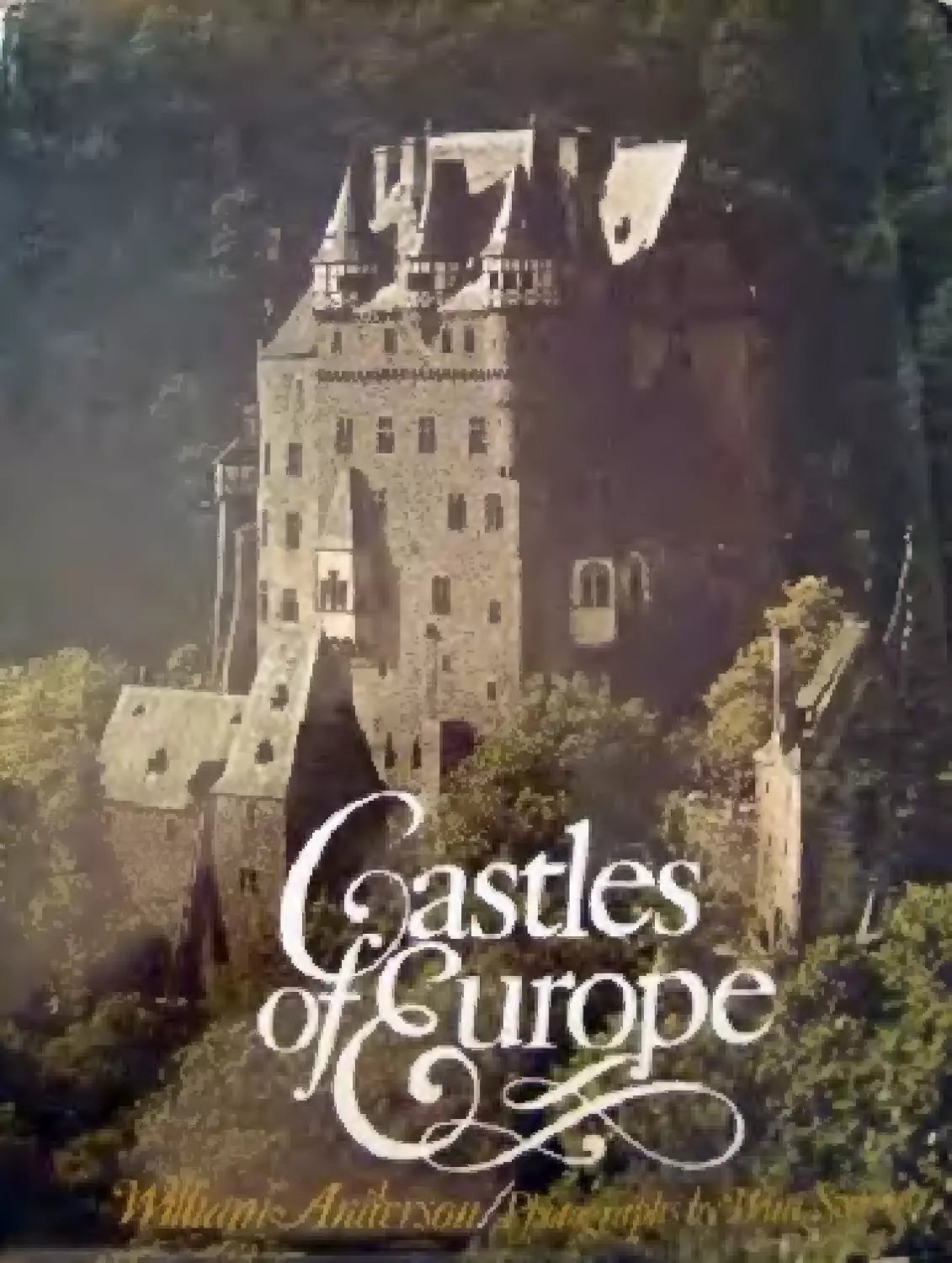


Author: Anderson W.
Tags: european history castles renaissance european culture
ISBN: 0-907853-04-8
Year: 1984




Text
J
(ash.
FROM CHARLEMAGNE TO THE RENAISSANCE
William Anderson
Photographs by
Foreword by
Sir
Wim
Swaan
John Hackett GCB DSO MA BLitt LLD
London
Principal of King's College, University of
TORONTO
In memory of my father
Newton Edward Anderson, MC
Architect and Soldier
Died of wounds, France,
August 28th 1944
This edition published 1984 by
1
West
Street,
Omega Books Ltd,
Ware, Hertfordshire, under licence
from the proprietor.
Copyright© Paul Elek Productions Limited 1970.
tf'
All rights reserved No part of this publication
be reproduced, stored in a retrieval system,
or transmitted, in any form or by
any means,
may
electronic,
mechanical, photocopying, recording or otherwise,
without the prior permission of the publishers.
ISBN
907853 04 8
Printed and
bound
in
Hong Kong by South China
Printing Co.
A trebuchet from an edition of De Re Militari by Valturio
1532.
Title page: The brass in Fletchling Church, Sussex,
of the builder
of Bodiam castle Sir Edward Dalyngrigge, and of his wife.
Above:
Paris,
1
2'
Contents
Preface
1
Foreword
1
Introduction
17
European castle
Classical fortifications and siegeworks
The walls of Byzantium
20
The
origins of the
Three great invasions
The Saracens
The knights of Charlemagne
The Viking invasions
The Magyar invasions
Early fortresses and castles
The
society of the early castles
Fulk Nerra and Langeais
47
Castles in an age of conquest
The Normans
Normandy, England, and
William
in
the
Conquest
England
The motte-and-bailey castle
The Tower of London
The square keep and the shell keep
The Normans in Sicily
German
castles of the eleventh century
Henry IV
The investiture contest
The new German society
Spain
The
first
Crusade
Castles of the 12th and 13th centuries
ladies,
soldiers,
masons,
74
and lovers
The knight
Arms and armour
The knight in the field
The castle in warfare
Siting the castle
Masons and builders
The castle and western science
The day-to-day life of a castle
The ladies of the castle
The castle as a cradle of secular
Capetians and Angevins
literature
Crusader, French, English,
and Iberian castles in the 12th and 13th centuries
Castles in the Holy
Land
France and England
Stephen and the Anarchy
Square and transitional keeps
Castles of the Midi
Henry
II
Coeur-de-Lion and Philip Augustus
French castles of the thirteenth century
The Albigensian crusade
St Louis in the south
Ghent and Chillon
Castles in thirteenth-century England
Edward
I
in
Wales
Castles in Scotland and Ireland
Spain and Portugal
103
•JiNT'V,
Hohenstaufens and communes
German, Austrian, Swiss,
152
and Italian castles of the 12th and 13th centuries
Castles under the Hohenstaufens
Imperial palaces and castles
The castle and the growth of trade
The castles of the knights
The conquest of the east
The interregnum and the first Habsburg
Castles in Bohemia and Hungary
The castle in Scandinavia
The castles of Holland
Barbarossa
Frederick
in Italy
II
Angevins and other tyrants
6
_pfv tactic
»J&
il<
..*;
Warfare, courts, and castles in the 14th and 15th centuries 181
The castle in a changing world
Later medieval warfare and the castle
;.?.imbu*i.m1s>fimdultn
Arms and armour
ftniuicciiilxdiftontc&utfcllia in.
The towns and technology
The courts and the castle
Conspicuous chivalry
The castle and later medieval
7
literature
French, English, Spanish, and Portuguese castles of the
203
14th and 15th centuries
The Hundred Years War
English castles
Spain and Portugal
8
Castles of eastern, central, and Mediterranean Europe
in the 14th
246
and 15th centuries
The castles of the Teutonic Knights
The Emperor Charles IV and Karlstejn
The Hussite wars
The Turks and castles in the east
Later German, Austrian, and Swiss castles of the
fourteenth and fifteenth centuries
Castles of the Netherlands
Italian castles
9
280
Kings, cannons, and gunpowder
The bastion
10
Changes and transformations -the
later history of the
castle
285
Acknowledgements
294
Glossary
295
Bibliography
296
Notes
298
Index
303
Building the
Tower of
thirteenth century.
Babel, from the Maciejowski Old Testament
New
York, Pierpont
Morgan
Library. M.638. fo
;
French,
3.
3
1
A
56 Windsor, England.
List of Plates
seventeenth-century view by Hollar
The Norman keep
The central hall with fountain
59 La Zisa, Sicily. The crowned eagle from the fountain recess
60 Bergfried of Harburg, W. Germany. A reconstruction
57 Adrano, Sicily.
58 La Zisa, Sicily.
Half
A
title
the Belli/orris by
ram from
Opposite
Konrad Kyeser
61
page
title
"The castle
of love'; thirteenth-century French ivory mirror case
Verso
page
A
title
Habsburg, Switzerland
62 Rethra, E. Germany.
A
reconstruction of the fortified temple of
the Slavs
trebuchet from
De Re
63 Hohensalzburg, Austria
Militari by Valturio
W. Germany. A
reconstruction and plan
Opposite
64 Staufen,
Building of the Tower of Babel from the Maciejowski Old Testament
65 Karlstein bei Reichenhall,
66 Rothenburg,
1
2
Josselin, France.
Grotto
The frontage on
A
fortress. Italy.
67 Karlstein,
the River Oust
seventeenth-century view by Merian
from the palace of Ashurnasirpal II. Nimrud
4 Saalburg. W. Germany. A reconstruction
5 A ram and penthouse from a sixteenth-century edition of Vegetius
6 The 'tortoise' from the same edition of Vegetius
3
7
8
The
siege of a city
12 Istanbul. Turkey.
W. Germany. A
The land
70 San Servando, Toledo, Spain
71
Masonry
Spain. The San Vicente Gate
Spain. View of towers
Avila, Spain.
72 Avila,
Tomb
of
Duke Robert
of
Normandy
The main entrance
76 Scenes from the life of David from
in
Gloucester Cathedral
75 Sahyun, Syria.
10 Chillon. Switzerland. Interior (colour)
1
69 Clavijo, Spain
74
9 Chillon, Switzerland (colour)
Porta Nigra, Trier,
W. Germany. A nineteenth-century view
W. Germany. A nineteenth-century view
68 Rothenburg,
73 Avila,
The Lateran Gate, Rome
Burgle. W. Germany. A reconstruction
W. Germany. A reconstruction
W. Germany. A reconstruction
nineteenth-century view
II
Armour
in the battle
the Winchester Bible
of Hastings from the Bayeux Tapestry
78 Conical helm from Moravia
walls
Tomb.
Illumination from a twelfth-century
13 Almeria. Spain
79 The three Marys at the
14 Almeria. Spain. Flanking walls
Encina. Spain. Flanking walls and towers
German gospel
80 Armed soldier from
la
Encina. Spain. Double horseshoe gateway
81
la
Encina. Spain
82 Effigy with a barrel-shaped helm; early thirteenth-century English
83 Armorial devices from the Weingartner Liederbuch
15
16
17
Banos de
Banos de
Banos de
la
and towers
Rome, by Claude- Joseph Vernet
18 Castel Sant' Angelo.
84
19 Carolingian cavalry from the St Gall 'Golden Psalter'
La Cuba,
The palace
at
A
25
The Rock of Cashel,
87 Gisors, France.
reconstruction
91
reconstruction
31
fifteenth-century
nineteenth-century view
An
eighteenth-century view
93 Trifels,
reconstruction
W. Germany.
A
Ludlow, England.
An
eighteenth-century view
92 Alter do Chao, Portugal. Stair
28 Gniezno. Poland. Reconstruction of part of the wall
30 The Husterknupp,
A
W. Germany. A
nineteenth-century view
94 Puylaurens, France
reconstruction
95 Loarre, Spain
Peyrepertuse, France
32 Chinon. France
96 Lastours, France
Tower of Alinge and Duke's Tower
34 The Boosenburg. Riidesheim, W. Germany
35 The Bromserburg. Riidesheim, W. Germany
36 Fougeres, France. Tour Melusine
97 Rocca Maggiore, Assisi, Italy
33 Chillon, Switzerland.
98 Chepstow, England
99 Gravensteen, Ghent, Belgium. Windows of the castellan's
apartments
37 Langeais, France. Fulk Nerra's donjon
100 Largoet-en-Elven. France.
38
The surrender of Dinan by Conan from the Bayeux Tapestry
The building of a motte at Hastings from the Bayeux Tapestry
40 Richmond. England. The keep
101
39
102 Schonburg, Germany.
41
Berkhamsted, England
42
An
attack on the motte
44 Crocodile or dragon heads
Tower of London.
46 William
in a
at
Round tower
A
John
of the keep
seventeenth-century view by Hollar
Chateau Gaillard, France (colour)
52 Chillon, Switzerland. Interior of the Chatelaine's
4
A
Bergfried (colour)
103 Harlech, Wales (colour)
room
53 Dover, England. Interior of the upper chapel (colour)
54 Colchester, England.
An
55 Restormel, England.
A
stone privy
Keep and
(colour)
107 Giant crossbows from a twelfth-century
bartizans of the
Arab manuscript on
weapons
108 The death of Louis VIII from a fourteenth-century manuscript
109 A baggage train from the Maciejowski Old Testament
10 Assault tower from Guido da Vigevano's manuscript
I I I
A floating bridge from Guido da Vigevano's manuscript
112 Mechanical devices from Villard de Honnecourt's sketchbook
Chessmen from a twelfth-century Scottish set
14 A brass aquamanile in the form of a knight on horseback.
1
1
1
1
English, thirteenth century
eighteenth-century view
nineteenth-century view
A
105 Title page from a fourteenth-century manuscript of Vegetius
Kilpeck chapel, England
Interior of the chapel of St
50 Berkeley, England
51
Pierrefonds, France. Before restoration
perimeter wall
palace from the Bayeux Tapestry
49 The Tower of London.
nineteenth-century view
106 Gravensteen, Ghent, Belgium.
47 Rochester, England. The square keep
48 Rochester, England.
A
104 Gravensteen, Ghent. Belgium.
Dol from the Bayeux Tapestry
at
43 Fantoft stave church, Norway
45 The
W. Germany
stone from Steingaden,
90 Aigues-Mortes, France. The wall (colour)
W. Germany. A
A
German
89 Carcassonne, France. The Narbonne Gate (colour)
Eire
29 Trelleborg, Denmark.
in
88 Odiham, England.
reconstruction
26 Gravensteen, Ghent, Belgium
27 Werla, near Goslar,
chandelier
thirteenth-century English sword; a thirteenth-century
86 Crossbow; north German,
W. Germany. A
Ingelheim,
24 Dorestad. Holland.
A
85 Armorial shield
Sicily (colour)
22 Volterra, Italy (colour)
23
German
sword; a tenth-century northern European sword
20 Richmond, England. The square keep (colour)
21
a twelfth-century
A fourteenth-century chainmail hauberk
1
15
A
thirteenth-century chest trom Coburg,
W. Germany
7
1
1
16
1
1
18
1
19
120
121
1
Charlemagne finding the body of Roland from the Grandes
179 Carrickfergus, Northern Ireland
Chroniques dc France
180 Edinburgh, Scotland.
The poet Hartmann von Aue
The besieging of Montalbanus from Henrick van Veldeke's Eneide
Mars, Venus and Vulcan from Henrick van Veldeke's Eneide
A
184 Calatrava
thirteenth-century French ivory mirror case
122 Markab, Syria.
The south
187
View from the south-west
188
124 Monemvasia, Greece
125 Montlhery, France.
1
26 Loches, France.
127 Falaise, France.
A
A
An
nineteenth-century view
131
Eltz,
The
A
Germany.
nineteenth-century view by Preller
W. Germany
Gelnhausen, W. Germany. A nineteenth-century view of the
Drachenfels, W. Germany. A nineteenth-century view from
Barbarossa from a thirteenth-century
I
190
Marksburg, Braubach, W. Germany
191
Marksburg, Braubach, W. Germany. The gatehouse
The
The
192 The
193 Bad
The keep
oratory (colour)
Marksburg, Braubach, W. Germany.
Godesberg, W. Germany.
W. Germany. A
132 Middleham, England. Interior of the keep
194 Wildenberg,
133 Etampes, France, from the Tres Riches Heures
195 Dankwarderode, Brunswick,
1
135 Conisborough, England
Roman
197 Munzenberg,
137 Orford, England.
An
eighteenth-century view
138 Framlingham, England.
An
200 Schonburg, W. Germany.
202 Visby, Sweden.
Newcastle, England. The keep
The Tour du Moulin
The round keep
W. Germany. Interior of a dressing-room (colour)
W. Germany. The inner courtyard (colour)
207 Bologna,
sixteenth-century view of the
W. Germany. A
Italy.
Italy.
A
drum towers
209 Gioia del Colle,
50 Dourdan, France, from the Tres Riches Heures
210 Prato,
Beaucaire, France. Triangular keep
21
52 Bas-relief from Carcassonne probably representing the death of
Simon de Montfort
A
nineteenth-century view
Sicily.
The drum towers
Italy
Italy
Lucera,
Italy. Inside the
base of the palace
212 Lucera,
Italy.
Corner vaulting
213 Lucera,
Italy.
Drawing by J-L Desprez
215 Karlstejn, Czechoslovakia. Doorway and wall decoration from
the chapel of Saint Catherine (colour)
54 Najac, France
155 Aigues-Mortes, France.
Tower of Constance
Tower of Constance
156 Aigues-Mortes, France. Interior of the
216 Castel del Monte,
Italy.
Doorway
157 Albi Cathedral, France
217 Castel del Monte,
Italy.
A
58 Carcassonne, France. View of castle, cathedral and
159 Carcassonne, France.
160 Carcassonne, France.
161
Tour de
la
Vade
Doorway of the Narbonne Gate
The lists
162 Winchester, England.
An
eighteenth-century view of the interior
An
220 Effigy of Bertrand du Guesclin
221 Brass of Sir Edward Dalyngrigge and
A
his wife
nineteenth-century view
224 King John of France with members of his Order of the Star from
the Grandes Chroniques de France
225 A tourney. Drawing from John Rous, c 1485
168 York, England, in the fifteenth century.
A
Conway, Wales. The Queen's Tower and
reconstruction
the Constable's
Tower
eighteenth-century view by the brothers Buck
Harlech, Wales. The south outer and inner curtain walls
172 Harlech, Wales. Steps leading to apartments in the gatehouse
Inside a
drum tower
1
73
1
74 Caernarvon, Wales. The frontage on the River Seiont
175 Caernarvon, Wales.
eighteenth-century view
An
167 Almourol, Portugal (colour)
Conway, Wales.
An
223 Caister, England
eighteenth-century view
166 Castel del Monte, Italy (colour)
171
Italy.
probably Sempach, from the Weltchronik of
eighteenth-century view
165 Lucera, Italy (colour)
An
battle,
222 Nunney, England.
164 Kenilworth, England.
169
A
into the ground-floor court
capital
Rudolf von Ems
of the great hall
170 Flint, Wales.
218 Castel Nuovo, Naples,
219
Carcassonne, France. Tour Carree de l'Eveque and the walls
163 Pembroke, Wales.
nineteenth-century view
214 Karlstejn, Czechoslovakia (colour)
153 Montsegur, France
1
town walls
seventeenth-century view by Merian
208 Castel Ursino, Catania,
148 Angers, France. Detail of wall
1
reconstruction
Bergfried
205 The Muiderslot, Muiden, Holland (colour)
206 San Gimignano,
147 Chinon, France. Ruins of the hall of the Chateau du Milieu
1
A
from Tombleson
204 Banquet given by Charles V, and a crusading exploit from
the Grandes Chroniques de France (colour)
144 Chateau Gaillard, France. Chemise wall
149 Angers, France. Five
A
203 Rheinfels, St Goar,
143 Chateau Gaillard, France.
151
late nineteenth-
Rappottenstein, Austria
201
142 Chinon, France.
W. Germany. A
199 Neuscharfeneck,
eighteenth-century view
140 Dover, England
1
reconstruction
W. Germany. A
W. Germany
139 Newcastle, England. Interior of the chapel
146 Eltz,
seat
198 Heidenreichstein, Austria
amphitheatre
145 Eltz,
A window
nineteenth-century view
A seventeenth-century view by Merian
96 Chur, Switzerland.
1
136 Aries, France. Early nineteenth-century view of the
A
century view
34 Carcassonne, France. Eastern facade of the citadel
141
ruins
manuscript
staircase
page from the Maciejowski Bible {colour)
W. Germany. An
Nueva, Spain. The chapel
89 The Emperor Frederick
1
nineteenth-century view
129 Castle Hedingham, England.
A
la
Tombleson
eighteenth-century view
128 Castle Rising, England.
130
183 Lisbon, Portugal
186 Goslar,
side
123 Crac des Chevaliers, Syria.
nineteenth-century view
182 Guimaraes, Portugal.
185 Wartburg, E.
Sahyun. Syria. The pinnacle
A
Trim, Eire
181
from the Weingartner Liederbuch
The Eagle Tower
1
76 Beaumaris, Wales. South-west corner tower and gate
1
77 Bodiam, England (colour)
178 Bunratty, Eire. Interior of the great hall (colour)
226 Helm of George Castriota, Prince of Albania
227 Crest and cap of the Black Prince
228 Surcoat, shield and gauntlets of the Black Prince
229 Helm from the harness of Philip the Fair
230 A German helm, c 1400-10
231
A
south
German
sallet
232 Seal of Guy of Flanders
233
A
saddle; fifteenth-century, Hungarian
234 Rappottenstein, Austria. Interior of chapel
235 Castel del Monte, Italy. Octagonal corner towers
236 Fresco by Simone Martini in the Palazzo Civico, Siena,
237 A chariot from the Bellifortis of Konrad Kyeser
Italy
238
Armour
239
A
manuscript (colour)
302 King David of Scotland before Newcastle from Froissart's
240 Lscalading machine from the
241
from Viollet-le-Duc
for scaling operations
fifteenth-century dagger
Belli/ortis
of Konrad Kyeser
'Chronicles' (colour)
303 Doornenburg. Holland. The keep (colour)
Cahors. France. Tower on the Pont Valentre
242 The Battle of Sluys from Froissart's 'Chronicles'
304 Embid. Guadalajara. Spain
243 Saumur, France, from the Ties Riches Heures
305 Coca. Spain
244 Trento,
Italy.
A
306 Fuensaldana. Spain Detail of the keep
water-colour h> Diirer
245 Poitiers. France, from the Tres Riches
246 'The Sea Monster'.
An engraving
Hemes
307 Penafiel. Spain. The keep
308 Almodovar del Rio. Spain. The tone del homenaje
by Diirer
247 Aigle. Switzerland. The guardroom and wall-walk
309 The arms of Leon-Castile from Leon Cathedral. Spain
248 Aigle. Switzerland. The keep
310 Coca, Spain. Detail of the keep
249 Aigle. Switzerland. Interior of the wall-walk
250 Chimney-piece in the house of Jacques Coeur. Bourges, France
311
251
Aigle. Switzerland (colour)
Holy Rood (colour)
from
the
Chapel
of the Holy
Saints
Czechoslovakia.
Karlstejn,
253
The Chapel of
252 Karlstejn, Czechoslovakia.
Rood
the
{colour)
254 'Taste' from La
Dame
au Lieorne tapestry
A
W. Germany
chest from Coburg,
from the Histoire du Grand Alexandre
259 The Palace of the Popes, Avignon, France
258 Building a
river fort
260 Villeneuve-les-Avignon, France. The tower of Philip the Fair
261 Villeneuve-les-Avignon, France. The gatehouse of Fort St Andre
262 Vincennes. France. The donjon
263 Vincennes, France. Interior of lower great
264 Vincennes, France. The donjon within
its
del
Campo. Spain
Campo, Spain. Crenellations
Campo, Spain. The lorre del homenaje
313 La Mota, Medina del
314 Almodovar del Rio, Spain
315 Manzanares
el
Real, Spain. Gallery in the isahelino style
316 Manzanares
el
Real, Spain.
317 Marienburg, Poland.
255 Fresco of the Gonzaga family by Mantegna at Mantua
256 Gothic cupboard from Heidenreichstein. Austria
257
La Mota. Medina
312 La Mota, Medina del
Grand Master's
An
Gateway
in the
outer walls
early nineteenth-century view of the
lodgings
318 Marienburg, Poland. The river frontage
319 Marienburg, Poland. Interior of the summer refectory
320 Marienburg, Poland. A nineteenth-century view of the exterior
of the chapel
Marienwerder. Poland
322 Marienwerder, Poland. The bridge connecting the Danske and
321
the castle
hall
of the donjon
defences
323 Niedzica, Poland.
A
corner tower from the inner courtyard
324 Rehden, Poland
A
seventeenth-century view by Merian
265 Vincennes, France. Tour du Village
325 Prague, Czechoslovakia.
266 The Bastille. Paris. France. An eighteenth-century view
267 Bertrandon de la Brocquiere and Philip the Good from a
326 The battle of Narva with an eighteenth-century view of
Hermannsburg, Narva, Russia
fifteenth-century manuscript
327 Tabor, Czechoslovakia.
268 Vincennes. Y ranee, from the Tres Riches Heures
269 Tarascon, France, and the keep of Beaucaire
270 Pierrefonds, France.
271
A
reconstruction by Viollet-le-Duc
Tarascon, France. The castle from across the Rhone
272 Tarascon. France. Interior of the chapel
273
A
staghunt from the Livre de
la
Chasse of Gaston-Phebus
328
An
329
A
A
seventeenth-century view by Merian
on a castle from a fifteenth-century manuscript
Hussite camp. A reconstruction
attack
330 Montealegre, Spain (colour)
331
Penafiel, Spain (colour)
332
A
bear hunt from the Devonshire Hunting Tapestries (colour)
333 Fuensaldana, Spain (colour)
A cannon
from the Hussite manuscript
A passageway
274 Tarascon. France. Graffiti
334
275 Fougeres. France. Tour Raoul
335 Pernstejn, Czechoslovakia.
276 An illumination from Rene of Anjou's Le Livre des Tournois
277 Fougeres, France
336 Pernstejn, Czechoslovakia. The entrance
278 Detail from the door of a dressoir at Bunratty, Eire
279 Josselin, France. Facade
Bellver,
flamboyant
A drum
280 Goodrich, England.
281
in
338
339
style
340
tower
Majorca, Spain
341
282 Chinon, France. The clock tower
283 Warwick, England.
A
342 Pernstejn, Czechoslovakia.
nineteenth-century view by Peter de Wint
284 Herstmonceux, England.
A
286 Hohensalzburg, Austria. Stove
in the
Golden
Room
(colour)
287 Kirby Muxloe, England
288 Tattershall. England
An
eighteenth-century view
An
oratory
W. Germany. Entrance and curtain
347 Coburg, W. Germany. The Hohes Haus
346 Coburg,
351
view from below
Heidenreichstein, Austria
352 Walzin, Belgium
293 Bunratty, Eire. The entrance
353 Viterbo,
Joos de
A
A
seventeenth-century view by
Mompers
Italy.
354 Benevento,
The
loggia of the papal palace
Italy
An eighteenth-century
An eighteenth-century view
A nineteenth-century view of the
355 Palazzo Vecchio, Florence.
295 Craigievar, Scotland
356 Spoleto,
Italy.
296 Blarney, Eire
357 Gubbio,
Italy.
297 Stanton-in-Vale Church, Berkshire. England
298 Wall painting in Longthorpe Tower, England
358 The equestrian statue of Cangrande
299 Embid. Guadalajara. Spain. Corner of the keep
359 Sirmione,
Italy.
300 Alter do Chao. Portugal. The gatehouse
360 Sirmione,
Italy.
Sirmione,
Italy.
301
Jl
An
walls
349 Rappottenstein, Austria. The kitchen
292 Borthwick, Scotland. The entrance
294 Pontefract, England.
W. Germany
350 Hohensalzburg, Austria. Gateway to the inner castle
290 Borthwick. Scotland
Bunratty, Eire.
courtyard
seventeenth-century view by Merian
The Golden Hall
348 Rappottenstein, Austria.
289 Warkworth, England.
A
W. Germany. A
345 Hohensalzburg, Austria.
285 Beersel, Belgium (colour)
291
343 Wildenstein,
344 Pfalzgrafenstein and Gutenfels, Kaub,
nineteenth-century view
hall
A
doorway
Pernstejn, Czechoslovakia. The fortified main entrance
Schonburg, W. Germany. The Schildmauer
Hunedoara, Rumania
Schonburg, W. Germany. A view from Oberwesel
337 Pernstejn, Czechoslovakia.
assault with a siege-tower
from a Spanish thirteenth-centur\
view
palazzo municipale
361
I
from Verona,
The fortified docks
The top of the central round tower
The landward facade
Italy
)
K^
1
5
;
1
1
362 Castel Vecchio, Verona,
Italy.
A
Maps and
view from the river
Plans
363 Castello Visconti. Pavia, Italy
364 Castel Vecchio. Verona. Italy. The bridge
365 Castello Sforzesco. Milan. Italy. The main front
366 Castello Sforzesco, Milan,
367
A
stylized castle
Italy.
The device of Francesco Sforza
1
2
368 Coca, Spain (colour)
3
4
by Merian
372
373
A gunpowder mill from a German fifteenth-century
A cannon from the Milemete manuscript
A cannon from Burg Eltz, W. Germany
374
Mons Meg,
375
Cannon cast
at
of Europe and parts of the Middle East showing
Page 14
The
distribution of the principal castles in part of the
manuscript
5
Map
Map
Map
67
7 Plan of the defences of
Le
Puiset,
France
378 Studies of fortifications by Leonardo da Vinci
379 Deal, England
12
II
at the
8 Plan of
Tower of London, England
376 Rocca Pia, Tivoli, Italy
377 Volterra, Italy
A
380 Rothesay, Scotland.
38
nineteenth-century view
384 Valencia de
385
A joust from
An eighteenth-century
Don Juan, Spain (colour)
view by the brothers Buck
386 Marienburg, Poland. After shelling
Bastille, 14 July
A map
16
17
18
The Ordinances of Chivalry ( colour
387 The taking of the
20
1
1945
in
1789
A seventeenth-century view
by Merian
21
A
A
Combourg, France
de
Chambord, France. An eighteenth-century view
392 Chateau
23 Three
393 The Enchanted Castle by Claude
25
395 Salses, France.
A
J.
24
26
M. W. Turner
27
drawing by Francesco da Hollanda
396 Gateway to the Capua bridge,
Italy.
A
28
reconstruction
Front end papers
Knights jousting, drawing by Diirer, 1489. London, British Museum
Back endpapers
Drawings of machines and fortifications: (top right hand page) a castle
defended by heavy, low towers, the entrance guarded by a bastion.
Perhaps a design for the modernization of a castle
attributed to
Leonardo da
Vinci,
Biblioteca Ambrosiana, 41 v-b
Bibliotheque Rationale
of artillery
fire at
;
;
and from Ms.
fo 24v
in the
Romagna
from the Codex Atlanticus, Milan,
shows
B, fos 24v
and 55v,
Paris,
(top) studies of the trajectories
Castello Sforzesco, Milan.
Jacket front
Eltz,
W. Germany
Jacket back
Battle at the gates of a city. London, British
fo83.
Museum, Stowe Ms.
54,
108
112
14
116
124
140
144
144
146
149
1
53
A
A
A
A
A
174
plan of the ground floor of Castel del Monte, Italy
22
394 Richmond Castle by
of imperial palaces, imperial castles and castles of
plan of Lucera, Italy
390 Segovia, Spain
391 Chateau de
108
imperial ministeriales in the Hohenstaufen period
388 Pierrefonds, France. Drawing by Viollet-le-Duc before restoration
389 Fleckenstein, France.
83
105
1
19
14
382 Bolsover, England
A map of the Angevin empire
A plan of Chateau Gaillard, France
A cross-sectional reconstruction of the keep of Coucy, France
A plan of Harlech, Wales
A plan of Conway, Wales
A plan of the castle and town of Caernarvon, Wales
A plan of Beaumaris, Wales
A plan of Caerlaverock, Scotland
13
'The siege of a fortress' by Diirer
383 Raglan, Wales.
45
49
British Isles
Crac des Chevaliers, Syria
9 Sections and plans of Houdan, France
10 Section and plan of the keep of Provins, France
11 Elevation, section and plans of the keep of Etampes, France
Mehmet
29
6 Plan of Canossa, Italy
Edinburgh Castle, Scotland
for
18
Lombardy, Italy
showing the disposition of the walls of Byzantium
of Anjou in the time of Fulk Nerra (987-1040)
showing the distribution of motte castles in the
plain of
369 Portrait of Federigo da Montefeltro by Justus van Ghent
370 Castello Sforzesco, Milan, Italy. A seventeenth-century plan
371
Map
principal sites
from the Devonshire Hunting Tapestries (colour)
maps of France during
the
Hundred Years War
plan of Tarascon, France
Raby
England
plan of Queenborough, England
plan of Bodiam, England
plan of Marienburg, Poland
plan of
Castle,
177
21
215
217
218
220
247
II
PREFACE
how deep is his appreciation of the art and
The yoke permitted
Cathedral,
Gentle dray horses to build
Coercive castles
of the period. Next
necessary on the
was intended
Essex
1
This recent haiku by
W. H. Auden
expresses beautifully and
succinctly the interconnections of the castle with
medieval
A
life. It is
word
this flavour
I
have
tried to
all
sides of
communicate.
way this book is arranged. The
captions sometimes contain much information that is not in
is
the text. This
to avoid breaking the chronological
flow of the text as far as possible. Chapter
1
describes
how
the
was evolved Chapter 2 describes the spread of the castle
means of conquest in the eleventh century. The next three
castle
as a
centuries; Chapter 3
concerned with general considerations,
is
life and literature. From this
onwards the division of Chapters 4, 5, 7 and 8 has a geo-
ranging from warfare to social
graphical basis. Chapter 4 covers the castles of France, the
and Spain with a side-look
British Isles,
at the
Holy Land, and
chapter 5 the castles of the Empire (including the present
Germany, Switzerland, Austria and
pendant to Chapter
3)
I
Italy). In
Chapter 6
(a
attempt to distinguish some of the new
and fifteenth
centuries and the next two chapters follow the same pattern as
Chapters 4 and 5. Chapter 9 is concerned with the introduction
of firearms, and Chapter 10 acts as an epilogue.
Some readers may complain that their favourite castles or
groups of castles receive no mention; the numbers built will
help to explain why. Here I could mention only 300 or so out
factors affecting the castle in the fourteenth
of the tens of thousands that
will
still survive or once stood. Others
complain with greater justice of the castles of whole
regions or countries that are treated very shortly or ignored
altogether.
I
can only answer that
I
have been forced to
concentrate on certain important areas and periods and so
exclude others
many
in trying to strike a
balance between mentioning
and trying to relate the
in which they were
used, to the political and social life of the Middle Ages. Also
the quality of the information available varies widely from
country to country and region to region and I have frequently
had to depend on a range of sources limited both in depth and
as
different castles as possible
reasons for their building, and the manner
detail.
In writing this
First
I
book
I
have incurred
must thank General
Sir
many debts of gratitude.
my
My
made
friend
Dr Paul Thompson of
the University of
several very helpful suggestions. In
many ways
who
mentioned
chief debt
is
to a scholar
but whose caustic and witty pen
prefers not to be
in fighting error, pretension,
unjustified generalizations, gave
me new
insight into the
and into the many places where, still,
I have fallen short. I am, of course, responsible for all the
faults that remain. Judith Filson was of the greatest assistance
to me both in reading for me and taking notes and in her
enthusiasm for the subject spurred on by her great love and
wide knowledge of architecture. My acknowledgements to
all the scholars and writers whose works I have made use of
are given in the bibliography and notes at the back. must also
thank others who have not read the manuscript but who have
helped in other ways. I must record my gratitude to Professor
M. R. D. Foot who, although in no way responsible for anything in this book, first gave direction to my early and scattered
interest in military history. Senor J. F. Fino kindly sent me
proofs of the latest edition of his book on French castles.
Mr H. J. H. T. Moddermann, Treasurer General of the Institut
des chateaux historiques, helped me with queries and generously lent me material. The library staff of Chelsea College
obtained books from abroad for me that otherwise I should
never have read. Gerta Calmann put me in the way of finding
the subject
I
other extremely useful books.
Mrs
Betty Ellis typed the
first
two drafts of the book for me. My colleagues in the Nuffield
Foundation Science Teaching Project were extraordinarily
patient with me. My wife read, criticized, and made many
useful suggestions.
My
children helped by keeping out of the
way when I was working and by not falling off the battlements
when we visited castles. Finally I must express my gratitude
to Moira Johnston of Elek Books Limited for helping me in so
many ways, in getting me books, allowing me extra time, and
for her ingenuity and persistence in obtaining on so many
occasions exactly the illustration that was required.
many
had the benefit of conversations with Wim
Swaan, the photographer, who is an architect himself and who
has shown in the companion volume to this. The Gothictelling points.
and
demands of
John Hackett, Principal of
King's College, London, for a foreword which makes so
£
Empire.
;
chapters deal with the castle in the twelfth and thirteenth
point
buildings
would like to thank Professor Donald
Bullough of Nottingham University who read two drafts and
with kindly patience helped me with advice and corrections.
Dr Kenneth Fowler of Edinburgh University read the portions
on French and English castles with precision and care.
Dr Henry J. Cohn of Warwick University has criticized the
manuscript especially where it affects the history of the
I
I
January 1970
12
FOREWORD
by Sir John Hackett, gcb, dso, ma, b litt, ll d
Principal of King's College, University of London
There are many ways of considering castles. They can be looked
at first of all from a purely military point of view, and even then
have more than one aspect- strategical, for example, or
tactical,
interest
or technical, or logistical. They also have political
and importance, as well as
tectural, romantic, aesthetic.
about them
in
A
social,
economic, archi-
special inclination to think
one of these ways may lead to restlessness or
impatience when they are presented in another. Thus an
economic historian exploring the effect on a neighbourhood
of the pattern of confidence and constraints imposed upon it
by the proximity of strong places
is
likely to find a description
of their ruins in purely scenic terms unsatisfactory.
A
student
satisfy a variety
may
lose
patience with romantic stories of seductive troubadours.
Yet all these, and more, ways of thinking of castles, and of
what went on around and in and because of them, are to be
found among us and none deserves to be lightly dismissed.
The shaping in much of western Europe of local economic
development by the proximity of fortified dwellings is of
great importance. So is the relationship between the degree
of security offered by a defensible family base and the viability
of dynastic succession. All these things deserve-and receiveclose attention. But the ruins exist too, in some profusion
and often with great beauty. Since the building now in decay
was put up almost always for a functional purpose it was
usually located on a spot that mattered-a high place, perhaps,
or a place that for some reason or another (the nearby canalization or crossing of communications for example) could not be
ignored.
It
tends
still
to be a noticeable feature of a landscape
into which, with the effect of passing time
it
upon
local materials,
A
writer of such a
book must
usually though not always be judged against the record, his
interpretations may not everywhere be equally welcome.
His right to say what he likes, however, deserves to be most
vigorously defended. This is a book containing much erudition,
which a tremendous mass of material is marshalled, not
a collection of pictures which must surely be unique.
Anyone with any liking for castles at all will find here a vast
amount to interest and much to stimulate and where the
stimulus is to informed disagreement it is not the less valuable
in
least in
for that.
What distinguishes the castle from
of political history investigating the part played in dynastic
devolution by the tenure of a secure family base
of requirements.
accept that, apart from questions of hard fact which can
other habitable edifices
is
purpose of a quite specific kind. This was
the denial of entry. Other buildings with other primary
purposes -farmhouses, barns, churches, storehouses, for
example -have been furnished with the means of denying
an
essential military
entry to those
whom
it
was thought
better, for
more or less
make
pressing reasons, to keep out. This did not necessarily
castles of them.
They would only become
castles
if,
being
inhabited also as dwellings, the requirement to deny entry
to
them took precedence over pretty well all other requirements.
Denial of entry created a secure space within which those
who disposed of it could not be prevented by others outside
from doing as they wished -from surviving, for example, or
from making or keeping what they wanted to make or keep.
On the security of a space, and the immunity from interference
of those
who occupied
it,
is
based the military
importance of the castle and the enormous influence it has had
in the development of a culture whose pattern probably owes
more
to military factors than to anything else.
Between the
has often become largely assimilated.
tenth and fifteenth centuries, for half a millennium, the castle
There
was not only the most important artefact in western Europe:
it was possibly even its dominant element.
The chief function of the castle was to furnish, in a military
stands, an extension of nature under the
hand of
man, lonely, crumbling, creeper-covered, pleasing to the eye
and evocative of thoughts pleasurable or melancholy, feelings
it
of regret or satisfaction, reflections philosophic or sentimental.
structure, a secure base for offensive action. This
As for troubadours and castle ladies, these too have their place.
The importance for our western European literature and style
that
of
of the concept of courtly love
is immense. Every castle
form or content or in both,
to sources of the highest significance in the growth of the
culture in which we are bred.
There is thus no exclusively respectable way of thinking
about castles and any book about them, if it aims to be a full
and important statement as this one does, must recognize
life
romance
traces back, whether in
the existence of
more than one point of view and
the need to
it
was not very often used
defensively.
It
is
not to say
could be used to
meet defensive requirement, or in the offensive, or in the
counter-offensive and in the pages of this book will be found
a wealth of clear examples of each of these applications. But
even when its purpose was primarily defensive it fulfilled this
purpose only by the possession of a potentiality for offensive
action. Without this it could in the military context be safely
ignored. The offensive capability lay in the soldiery it harboured
and a castle would be quite correctly described as 'commanding'
the area over which fighting men, based securely within it.
1
13
of the system as a whole
could effectively operate.
The
from another point of view as
a protected but (unlike the tank today) immobile weapon platform with certain conceptual similarities to the hardened
silo which houses a ballistic missile upon a launching pad in
the strategic weapons systems of a superpower. With the
castle could be regarded
introduction of
gunpowder
the similarity of the castle to the
more and less; more
because the attack is now made by means of a missile weapon,
less because the missile weapon from the cannon was projected by an explosion and was no longer self-propelling like
the man-at-arms. In this context we should be careful not to
weapon-in-the-silo system grows both
make
too sharp a distinction between the man-at-arms and the
weapons he
The man-at-arms together with
bore.
instruments and his
skill in their
these
use should be regarded, in
sum, as a weapon. The military significance of the castle lay
in the furnishing of a secure base from which this weapon
could be offensively applied at a distance from it.
Herein lay the great advantage of mounted men over
dismounted. Not only could the mounted
protected, carry heavier and therefore
more
use them
man
more
be more heavily
efficacious tools,
effectively than the foot soldier
by reason of the
weapon platform and develop shock action
out of the momentum of the moving horse he could also move
much more quickly than the foot soldier and, perhaps most
elevation of his
;
important of
all in
relation to the castle, his radius of effective
action from his base was greater. Three or four miles was in
normal times
(I
exclude campaigning) about the limit of the
would be
less in unfavourable terrain. That of a mounted man would be
double this and more, while his response time would be much
shorter. A foot soldier would scarcely be expected to move at
more than three and a half miles in the hour. The quicker
response of mounted troops can be judged from the speeds
formerly laid down in the British Army in the manual Cavalry
Training four miles an hour at the walk, eight at the trot and
fifteen at the gallop. We aimed to cover five miles in the hour
through the marching day. Our horses were lighter, of course,
than the animals bred for remounts in the twelfth century.
They were handier and less burdened. In what was called
marching order, a troop horse with an average man would be
carrying not much less than three hundred and fifty pounds.
This would be considerably less than the all-up weight of a
fully equipped and protected mounted man-at-arms in, say,
radius of action of the foot soldier from his base.
It
:
1250.
The importance of the mounted man
of western Europe
in the military structure
Middle Ages, with all the immense
and still incalculable effect this has had upon the development
of our culture, depended above all on the stirrup. The introduction of the stirrup had as important an effect on the development of weapons technology as the introduction of gunpowder,
mechanical propulsion or nuclear fission. The system of which
the castle is a cardinal feature would have been quite otherwise
without the stirrup. The castle is indeed a machine for ruling
and fighting, as the author of this book points out. It might
best be looked at, however, following a mid-twentieth century
mode, as one component (the major component perhaps) in a
complete weapons system. Advancement in techniques,
developments in design, the availability of new and improved
materials all play a part in the development of the system as a
whole. The parts of the system can be studied to some degree
in isolation
but
in the
we should never
lose sight of the
coherence
if
we
functioning of the parts. But
overtones
in
investigate
is
are fully to understand the
let
the term 'knight'
if
us here be careful about
what we are seeking
to
not an institution, that of knighthood, but the
mounted man-at-arms.
However castles are looked at or thought about, there is
much in this beautiful book for everyone. Early origins in
Europe, in which a good deal must remain speculative, lead
to firmer and better-known ground, as we move forward
through wooden structures and the motte and bailey to
more enduring monuments of stone. Here the restless,
functional significance of the
questing
Normans
catch the eye, stern realists with harsh,
inquiring minds of seemingly endless adaptability.
When
they
invaded England they brought stone castle building with them
but used
it
now as it had not been used at home, as an instrument
and the stabilization of a
foreign subject realm. If the Norman Conquest changed
England it also changed the Normans. The very military
structure within which they operated underwent a radical
change in transplantation. The oath of allegiance now to be
taken by sub-tenants directly to the crown diminished in
England the opportunity for that armed dissidence on the part
of tenants-in-chief which the dukes in Normandy had themfor the consolidation of conquest
selves so profitably exploited.
Norman
feudalism
is
based
and the horse; it was a military structure
employing a powerful weapons system to political ends.
The Normans in south Italy, Sicily and the Levant, the
emperors in Germany and Italy; the relationship in England
and on the continent between private crenellation and public
order-not always and everywhere an identical relationship
and the huge increase in castle building in stone wherever
feudalism ramified and developed; the influence of the
Crusades, both in feed-out and feed-back; considerations of
siting and construction spur castles, Wasserburgen, concentric
upon
the castle
;
impact of the
development of the whole weapons system on science and
fortification, related military techniques, the
literature;
the
Angevins,
the
Capetians,
Hohenstaufens; the Welsh and Scottish wars
the
in
Valois,
the
England, the
extension of Teutonic control over Slavs beyond the Elbe;
Bohemia, Hungary, Scandinavia;
the growth of mercenary military service and the new professionalism of the late fourteenth and fifteenth centuries; the
decline of the dominance of the mounted man-at-arms with
the rediscovery of infantry and the impact on the system as a
whole of the introduction of gunpowder; the brief revival in
military importance of the fortified dwelling in the seventeenth
century, during the Thirty Years War in Germany, the Wars of
Religion in France and the Civil War in England; the final
separation of fortress and dwelling once more to develop
independently; these and many other strands are here woven
into a fabric which it would be quite impossible to reduce
into the compass of what can be described in a page or two.
This is a large topic and not at all an easy one to manage. But we
have here a notable and beautiful book upon it, with the most
splendid pictures, by reason of which a central theme in the
growth of western society will now be better understood.
Ireland, Spain, Portugal;
It
is
For
important that
in
this better
whatever one of
many
understanding should spread.
different
ways these
fortified
whatever combination of
dwellings may
several, there can be few things in the background of the
western European more important, or commanding wider
be regarded, or
interest,
than the castle.
in
Shetland
l>
• Mousa
1
Map of Europe and part of the
Middle East showing principal sites
Fig
4
SWEDEN
Kildrummye
Visbye
Craigievar
SCOTLAND
Castle
Stirling
Swecni
Edinburgh
Rothesay*
Kalmar
North Sea
«,Borthwick
Linlithgow
e Bamburgh
Roxburgh
Antrim
Caerlaverock
•
e
ULSTER
4
Carnckfergus
Chipch ase
»
r-i,
• Warkworth
• _-•
— Belsay
Baltic
£ppenhagen
DENMARK
Trelleborg
Newcastle
• Hammershus
Rabye
E.R.
EIRE
m
* Richmond
Middleham*
* Scarborough
Killaloe
Killaloi
N
r*»
Bunratty
S»
9
Cashel
Rehc
Harney*
NETHERLANDS
^nslerdam
Leyden v
ENGLAND
Sk
Utrechi
Gos|ar .Harzburg
EAST
GERMANY
^
Ghent*
C ° U tra
'
.
r0bUr9-
Gro,enburg ••
NiTme g e n
Werla
fptwerp
.
om
#
Obermarsburg
Louvain "Assault f
Hohensyburg
Brussels Aachen
#
#
-Husterknupp^
Bruges
,* BELG.UM
Tourn!,
Atlantic
Brunswick
eMuiderslot
The Haguejf» • *Dorestad_Doornenburg
Ocean
n-j*
« n 9 eri Tou£
Montreuil Bellay*,
#
.C
#
Loches
Chinon/
Karlsttern
# Mehun sur Yev
Hochosterwitz
• Churburg
Lusignan * *Chau«igny
Nliort*
AUSTRIA
Innsbruck
Poitiers
.
y
•Burghausen
# Salzburg
Hohenzollern Kirnstem
#
tghwanstein.
\
Couh6
rdeaux
Bonaguil*
*Cahors
S ,Alb
Orthez
Villeneuve
les-Avignon
<£
Orange
* Najac
• ,/
NimesV%Av,gnon
Beaucaire
'
Puylaurens
• •
-Tarascon
Muret
•*Lastours Ait« "V ;85 BaUX
Aries
Carcassonne*
minrtoo
Foix*
i
1
I
Alessandria
Sarzanello*
Poggio Imperials* • P'ato Urbm*
Florence* Caste *
Garde Frainet
.„
Msntssgur*
*
Bologna
Canossal
"Salses
f Queribus
Peyrepertuse
•*
Fiorentino
Volterra**.
•
*Gubbio
San Gimignano^ Siena
Sassoforte
i
Assist
Spoleto*
Castel del
•
Viterbo*
CORSICA
Monte
Civit8C»Stellana*Tivoli
_
at
ITALY
Luce
Anagni*
• Benevento
• Naples *
Lagopesole
Majorca
Mediterranean Sea
La Zisa
La Cuba
Adrand
SICILY
• Catania
• Syracu
Casiii-
York*
Howard
• Trim
• Bolton
Manchester
Bolsover
Tattershall
Castle Rising
Kirby Muxloe
rminqham
Norwich*
I
•
Coventry
•\J
nit
Longthorpe Tower
Kenilworth*
• Warwick
Hereford*
Ewyas Harold*
Framlingham
Castle
Bedford!
Hedingham
• Goodrich
Pembroke* •Manoibiei
• Penmaen
Raglan*
«r-K„„,.„
• Chepstow
.
.
*South Mimms
• Wallingford
Windsor
Newbury
r
R».t
nest
or
me
,
I
a
Nunney*
Condon
*
Devizes*
Odiham
•
Old Sarum
Wardour*
•
Berkhamsted
^
Bampton*
Caerphilly*
0rfQr
Clavering
_.
Oxford
*
*
Rochester
MerewoM*
Abinger*
*
Longford Winchester
*
"
ndel*
* De al
Winchelaea
•*
Pavensey* •
Trematon
^
•
Chilham
oodiam*
Herstmonceux
Exeter
•Quaenborough
^^*^
Camber
Ca
Hatting*
Pendennis
Arq,
miles
40
Bad Godesberg*
3
80
120
160 kilometres
_
*Drachenfels
20
10
40 miles
30
I
60 kilometres
40
20
• Marksburg
• Munzenberg
Salzburc
(F
Saalburg*
Gelnhausen*
Frankfurt
.«Wildenberg
Eltville
•
Rudesheim
tA»"
Ingelheim
Main/
• Neuscharfeneck
V
•
Castles
J Cities and towns
200
100
200
300
400
400 miles
600 kilometres
SYRIA
• Crac des Chevaliers
IRAQ
Mediterranean Sea
SAUOI ARABIA
I
K&P
Smcu
;
17
INTRODUCTION
Throughout history man has sought permanent security by
building fortifications, and every variation of landscape that
Europe has to offer reveals evidence of this desire lake villages.
Bronze- or Iron-Age encampments dense with bracken and
gorse. Roman town and frontier walls, a Norman motte
standing like a large inverted pudding-basin, a castle on a
mountain peak, a fortified monastery, a town still cramped
:
within
its
star-shaped bastions of the seventeenth century, or a
gun emplacement of the last war, its concrete now brown with
rust. All these examples tell a story of men's need to guard their
families, their land, their cattle, their crops, their factories,
their
way of
life,
and
their local or national pride. This
book
deals with only a short part of the long history of defensive
from the times of Charlemagne and of the Vikings
to the French invasion of Italy in 1494, but to the fortifications
of no other period does there attach the romance and fascination that draws us to the castles built and lived in during these
few hundred years.
Why do castles still exercise this fascination over us? It is
not only the still powerful effect of Walter Scott and his fellow
Romantic novelists and poets who taught Europe to admire
them again, nor the childhood fairy stories, nursery rhymes,
films and television serials about Robin Hood or King Arthur
and his knights that steep us in the atmosphere of crenellated
building,
walls, blue-tiled towers, flapping banners,
and the
rattle
battle.
armour
to pass over the
connected with the
fact that society
today
true of the castle in
if
only to gain time; this
is
our period, not merely for military reasons
but because the presence of castles gained time also for the
tranquillity,
the sense of ease,
and the
reflection
that are
necessary to civilization.
What
is
a castle? The Shorter Oxford English Dictionary
wisely keeps
its first
definition very loose: 'a large building or
group of buildings protected by fortifications'. This covers
both the royal castles which acted as military bases or as
garrisoned forts and the royal and baronial castles which were
fortified residences. In the latter sense the castle has a double
nature: it is both a home and a fortress. These two elements
were forced into marriage by necessity; it was rarely a comfortable or an equal partnership and in most European
countries the marriage had ended in divorce by the seventeenth
when
century
the partners could only develop
if
separated.
deeply affected
architectural or military history. In this comparatively short
moat on
this
is still
said that fortifications are necessary
fascination,
trumpets sounding,
There are deeper reasons for
castle not provided
this double nature which makes the castle so
from the dwellings and the fortifications of other
periods. Throughout this book the reader will be aware of
the constant swing between the castle built chiefly as a residence
and the castle built chiefly as a military base or fortress.
Whichever element is dominant depends on the political
climate of the period and the country at the time of building;
it is because of this sensitivity to social and political influences
that one cannot tell the story of the castle simply as a matter of
of a drawbridge being lowered for a party of
knights in gleaming
to
one of the stabilizing factors in
their early development and had it not played a notable part in
the recovery of secular civilized life in Europe. Napoleon once
had the
their
way
men and women
These distant people who
It is,
however,
different
by the political and social rules evolved by the
study
who
building against the general historical background, charting
and resided in the castles.
bequeathed us language, laws, literature, and nationhood
are our ancestors, whether by blood or by the spirit, and in
built
studying the castle
we
are brought nearer to their time. Their
society, frequently based
on the
castle,
gave us
Magna
Carta;
one of the most important influences in European secular
literature in the poems of the troubadours and the minnesingers
and new ideals in romantic love and in personal honour and
liberty, to offer
the castle which
fortifications in
alive today.
]
it stand out from earlier and from later
our imagination draws on traditions that are
The frontage on
the Breton River
Oust of the former
of the great constable of France, Olivier de Clisson,
castle in 1370
of Brittany.
i
makes
These traditions would never have been so strong
Josselin, France.
home
only a few examples. The special attraction of
and made
it
a
weapon of
royal
who bought
power against
the
dukes
the
I
have
tried to set
each main area and period of castle
the variations of this double nature in the castle as
it
responded
At the same time, by descriptions of the
by stories from contemporary chroniclers, or with
to these influences.
buildings,
biographical details
diversity
of roles
I
have
that
tried to give
castles
an impression of the
These roles were
played.
exceedingly varied, whether as a means of terrorizing a
conquered population, or as toll stations on a river or a
mountain pass, or as a military arsenal, or as a shrine for relics,
or, as in the case of some of the Hussites, a fortress devoted
for a time to Christian
communism. Some
castles never
had
to
withstand a single siege and for the whole of their existence
were calm country houses. Others had short and violent lives
and were constantly under attack. Some were the centres of
administration for their districts and were more busy with the
sharpening of pens than of arrows. Others,
like the
Swiss
:
Introduction
18
#
l.go M.gg.o..
.
L. 9
*.i*r
Vara*,
>\^'
,»
^^^
^^fl
Basozzo
ifc
od,Con,o^^
.
f^
^Varese
W* Angara
Parravicino
W Pomeno
•A^ate
•
•.
Invengo*
Sepno
#
•
lerago,
lerago*
Castel
Cassano
Sgmmaa
"
M
•Trada.e
•Tradate
»Brivio
#
Cassago
Car|m8te
•
•
1
• Mongu«o
• Caidate
allarate fk|
#Trev.olo W
Carate B •
• Cislago
Bergamo
\
Merate*
Fagnano
+m
#
\Solza
Sulb,ate
£sa
|
N
Bellusco*
Trezzo
Monza
• Senago
MILAN
•
Fagnano
•
-..
Rosatet
•
Coazzano
#
La Sforzesca
9 9
Celpenchio •
iSL a , a
Mortara
S
•
Parasacco#
--
• Olevano
•
Alagna*
• Valle
Sartirana
F
tRocca Bnvio
• Melegnano
.
W
^
•*,
• ^^r^
•^^aaa^
•
Gambarana
Castiglione
M AeWa
AM
Villanteno
Gereniago* a
Inverno
ValleS
jlleS
S,
Pinarolo Po
.
L
J
* *r»—
\ # Borghetto
Casai Kusterlengo
Casa)
Pusterlengo #uanna
Cnstma
S.
al
Po
f*
S Fiorano
F«mb?o
\ *# S
•^»**«a>*B^V
A ffln , p"
Mf9na
KO
_
•
.
ra
o
Maleo*
Chignolo Po
o_
man
bomagna*
Zenone
'
• Pizzighettone
£
Colombano
*B
^
Maccastorna
*
Caselle
^^a*W
Stradella
^
l»#*v
w
^^
+
,..
Cervesina
di
#C astelle.
.
• Lardirarjo
* a
7
Argine
Calvisano
c Angelo
a
,
S,
L
Mf** iQ
•
Montod.n^
\.
LambroMer
«
S
Padernello
Lodi^.
BeJgiojoso
aJgiojoso e B,ss #
^^ *
*
*
c rj
S
Gaudenzio
V.
.
%
,
• Orzinuovi
Soncino*
,
Lomelto
•Tortorolo
-.
«
Pieve del Cairo
Pallavicini
•
V
•
Mirabello
Sirmione
Desenzano
•Scaldasole
aj
Mede«
_
«
• Roccafranca
• Torre
Pandino
Bascap*
\
l
.
#
Bornasco*
Gropello C
• Valeggio
L
Vidigulfo*
.\
..
Settimo de
•
P«„.«^
ravia^
Garlasco*
Cozzo
_
»
V '
^
Drugolo
•Carpiano
•
Brfl
^»
-.,
•P^menengo
B,
"o
#
M^
•
^
Roncadelle
•
,
V
.
Beraguardo
•
^Chiari
_«
•Calcio
-Castel
• Peschiera
,,
B
oinasco
• Sizjano
• Landnano
,-,... ^,„n„
Lacchiarella
•
Gambolo
Romano Urago •£
•
•Gabb.ano
#
i
Castello
Lago
• Martin.engo
Pagazzarw •
Treviglio
# Bornato
*»«-
#Coccaaglio
Longhignana
Tolcinasco
Locate Tr
™
Vtgevano,M
Rosasco#
m
S
al
.
• Gudo V
^
^\
.>
Buccinasco
™
#Cassino S
•Vermezzo
\
Abbiategrasso •
A
•
'<>•
•
Corbetta
Cusago
*;,
Mont.cell
di
Bngnano G A
Bernate
!
GoMa 9°
Costa* •
Palazzolo
kTurbigo
•
Seriate
Cavernago*
•
Marne
Malpaga
Urgnano*
Cologno
Villanova
Ji
•Dalmme
#
Legnano
Ldgo d Iseo
Molina
^.Af
^^Piacenza
• Casei Gerola
Voghera^
•
*
Castles
Cities
and towns
20 Miles
10
10
The
Lombardy
Fig. 2
east
20
30 Kilometres
exaggerated. In Aquitaine there was a castle every eight miles
distribution of the principal castles in part of the plain of
50-km (30-mile) radius of Milan and extending southtowards Mantua. There are 170 marked here but many other less
within a
important ones existed or
still
exist. (After Perogalli,
along important routes (four miles being considered the
effective
C. Castelli della
range of sortie from each). In Spain, there
still
exist
number which reaches 10,000 if
kinds in the post-Roman period are
more than 2,500
works of all
included. Even a country
castles, a
pianura Lombarda)
fortified
grotto fortresses, were barely fortified mountain caves, acting
and brigands. Some were the palaces
of kings and princes ablaze with colour, fashion, life, and
intrigue; and some were dour outposts for down-at-heel
as the holds of robbers
mercenaries with never the sight of a
woman.
The forms the castle took and the purposes it served varied,
of course, from country to country, but one of the rewards
of looking at castles on the scale of Europe as a whole is to be
reminded of the international nature of medieval
the great pilgrimages, the Crusades, the
life
at its best
common bonds
of
and chivalry, and the exchange of ideas, artistic
influences, and techniques. Castles were the post-stages in this
international exchange and it may give some idea of their
1
as far east as Poland has 450 castles
surviving in various states of repair. In Belgium there are
more than
900. In Italy, the province of Verona alone contains
map on
page shows the density
of castles over part of the plain of Lombardy. The achievement
of small populations in building a few hundred cathedrals is
astonishing but the much larger numbers of castles built
during the same period makes the energy of medieval
over 100 fortresses and the
this
communities even more amazing.
At least as early as King Alfred of England,
who
it
was
said that
who
religion
men
importance
and those who work. Castles are the architectural remains
of those who fight. The remains of those who pray, the
cathedrals, abbeys, and churches, have retained their original
purpose longest. The labour of the peasant, which cleared the
great forests, drained the marshes, and tilled and marled
numbers
in
that
medieval society to quote estimates of the
were built. According to one, there were
10,000 castles in
give
Germany
more than twice
that
For France some estimates
number, though they are probably
alone.
are divided into three kinds: those
pray, those
fight,
infertile soil, created the
country landscape of Europe. Castles.
di
Garda
;
Introduction
2
A
grotto fortress as
shown by Merian
Austriatarum. 1649. In present-day
the elder in Topographia
Italy, the
River Brcnta
foreground and the town of Cismon d'Grappa on the
however, have had the shortest
lives in
is
shown
in the
right.
terms of
fulfilling the
Many are still
needs now a great
functions for which they were built.
lived in;
some
effort of
the
are used as barracks. But
imagination
to
it
understand
their
dominating role
in
stabilizing medieval society or the part they played in the
geography
growth of Europe and in the fixing of
and in the foundation of many of its cities and towns. Castles
were essential to the political structure of the society which
built and lived in them. It was because of this that so many
thousands of castles were built. In a time when the very metal
needed to mint money was physically scarce, castles represented
an enormous investment and although they may now seem
merely romantic ruins or military curiosities they were to
medieval monarchs what the provision of rocket bases and
its political
early-warning systems are to modern governments.
And
it
was
who wanted castles, because to
was the desire of great numbers of
ambitious princelings and feudal lords. The strong castle was
not only kings and rulers
possess
many
castles
the great landowner's token of success in the eyes of the world
dining
in his hall
he was surrounded by dependants
ingrained with a lifelong devotion to
his
who were
person and
his
advancement. Going to war he attacked other castles and,
1!
19
if
he were a keen builder, tried to learn everything he could of the
latest methods in making his home impregnable. The heroes
he hoped to emulate, Roland, Oliver, the Cid, Arthur, Lancelot,
all were given magnificent castles in the imagination of the
and even the Holy Grail, the ultimate desire of every true
its home in the Castle of Carbonek.
Castles, therefore, touch every side of medieval life from
the basest to the most sublime the aim of this book is to give an
poets,
knight, had
:
impression of their rich diversity and the world they defended
and nurtured.
20
THE ORIGINS OF THE
EUROPEAN CASTLE
The monks of
their souls
The
the
and
Dark Ages
built their
monasteries to save
in the process to help preserve civilization.
had a more primitive compulsion-to
from the Norsemen and the Magyars. Out of
the troubles of the ninth century grew feudalism, a political
and social system whereby land and rights are held by a vassal
of his lord, not in outright ownership, but in exchange for
specified military assistance and for a number of other duties,
including making payments on great occasions or crises in the
first
defend
castle builders
life itself
career of the lord.
largesse,
and
The
vassal in return expected protection,
security in his tenure.
Historians have noted the appearance of this system in other
first
appeared
in
a civilized form in the age of Charlemagne.
This society was under pressures either of invasion or of social
change
that, in the ninth century, forced together the
scattered settlements, had to be concentrated within fortifications
whose designs derived from
built castles for their private wars, especially in the sixteenth
attack and defence
aspects of
home and
castle,
with
its
is
to contrast
From
them with
the fortifications of the ancient
this contrast certain
become
unchanging principles of
evident.
twin
fortress, is inextricably linked with the
and flowering of this new social order. Wherever in northwestern Europe there was anarchy, feudalism appeared to
counteract it and with feudalism came the castle. What makes
the castle so different from the fortifications of the classical
world is that it derives from the new non-Roman society that
rise
Classical fortifications and siegeworks
Military architecture
is
probably as old an art as religious
some of the temples and citadels of ancient
Egypt and Mesopotamia the two are found combined. The
architecture and in
great gateways, or pylons, of an Egyptian temple such as
Medinet Habu (1200 bc) are fortresses
in their
own
>2?iv
r^TJ -fe~
/
—
*&$
A
The siege ol a city from the palace of'Ashurnasirpal II (883-59 BC)at
Nimrud. The wheeled siege-engine is equipped with a ram for battering the
3
walls while archers in
its
tower rake the wall-walks of the
Note the flanking towers
in the city walls.
first
One way of understanding the original features of the castle
and how these were dependent upon new social and military
world.
European
refuge or
protected religious centres. These pressures created the
forces
history of the
world or
camps of
castles.
century onwards where the daimyo, or land-holding magnates,
The
either the classical
the ring-works which had earlier sheltered
countries at various periods, notably in Japan from the twelfth
century. 1
formerly
home and fortress: the ancient German
and Scandinavian way of life, based on the open hall and on
separate elements of
city with arrowfire.
""-N
right.
The
The
Hittite citadels
provide some of the
flanking (ensuring that
a cover for the
enemy
castle
21
examples of
unobserved or out of range).
as crenellation. the up-and-
known
to battlements
signs
identifying
European
no part of one's own defences provides
to attack
Even the form of defence
down edging
earliest
origins of the
of the
which
is
to us
one of the chief
may have
castle,
originated
in
Mesopotamia -not as a military device to protect defending
archers but as an architectural expression of a holy snake
symbol
the sacred character of the building
signify
to
it
were so. a good commander would still be
crowned.quick to realize its advantages and the famous bas-reliefs of
Ashurnasirpal II show in other ways how advanced the
If this
by the ninth century bc (plate 3).
So much experience of fortifications and sieges had been
gained by the ancient world, in Egypt, Mesopotamia, Asia
Assyrians were
in siegecraft
Minor, and Greece, that by 200 bc a school devoted to military
architecture was founded on the island of Rhodes. The subject
was studied at other schools as well and the results were
published
manuscripts
in
such
as
of
those
Pyrrhus
of
Macedonia, Diades, Agesistratus, Aeneas, and Philo of
Byzantium. The last was writing in about 20 bc. and he moved
to Alexandria where he became a pupil of the great engineer,
Ctesibius. The ideas these men evolved were preserved in
Byzantium and the Arab world and reached the western world
1
through the writings of Vitruvius and Vegetius. The Romans
came across this highly developed siegecraft during their
conquests of the Greek world.
No more
sophisticated devices
were used than at the siege of Syracuse, for example, during
which Archimedes, using one of his numerous inventions, was
burned the
Roman
by training great mirrors
and in
the course of extending their Empire northwards through Gaul,
the Rhine valley, and Britain, the Romans adapted this
said to have
fleet
to the ships. After their final conquest in the east,
on
experience to
new
base for taking
by siege an enemy town or fort. This camp was
rectangular in form, surrounded by a rampart or a wall and
protected beyond that by a ditch or a series of ditches. Four
gates, one in the centre of each wall, straddled the roads that
led to the centre of the camp, where stood the tent of the
commander. This simple
plan,
from which seasoned
troops could construct a castrum in a matter of days, was
gradually adopted for permanent
Castra Praetoria built at
Praetorian guard in
ad 23
camps or barracks, such
Rome
as
by Tiberius for the
(see also plate 4),
and
it
even came
some cases for the founding of new cities. As
became permanent, so towers carrying weapons
and other sophistications were added. Even in its simplest form,
however, it provided a Roman army with a fortified base
which was always difficult to take. It can be compared with the
Normans' use of the rapidly built motte and bailey described
in Chapter 2, which was also a means of consolidating a
position on ground already conquered.
The Romans' skill in building their army camps was
naturally applied also to the defences of the towns upon which
the trade of the Empire depended. Many of them survived,
to be used in
settlements
despite neglect, for so long that they could be repaired for
defence against the Vikings
in the
ninth century, and even later
incorporated into medieval fortifications, as with the multiangular tower at York. In their building techniques, as in other
1
W. Germany. A water-colour
reconstruction
frontier fortress of the second century ad. Its regular plan
Roman army camp.
for fortifications- the
in the first place as a
generally
matters, the
Roman
derives from the castrum, the
The Romans invented a simple plan
the
of a
uses.
castrum or camp, devised
legionary
4 Saalburg, near Bad Homburg,
Romans drew upon
the experience of the Greeks.
using timber bonding in the very walls, which
far
more
made
these walls
They were also, of
with such permanence
resistant to the action of a ram.
course, admirable
that, to take
masons and
built
one example of the enduring quality of their work,
even today builders' contracts for work in the City of London
provide for extra payment should the Roman wall be
encountered. Great care and experience were used in the
placing of towers-the avoidance of sharp angles that could
be attacked by bores, the provision of further defences on the
and the burying in soft soil of large pots in the
outworks that would cause siege engines to sink.
These defences were, of course, planned with certain wellestablished means of attack in mind. The methods of siegecraft
used by the Romans, which were to be the same in the Middle
Ages, were of four main types -mining, ramming, escalade,
and the use of projectile weapons such as the petraria and
wall rampart,
balista?
mining, the object was to take away enough of the
foundations of a tower or a wall to cause the superstructure
In
to collapse either
by subsidence or by setting
fire
to the pit-
props. This method could be opposed by counter-mining by
which the defenders tried to cut through to the attackers'
gallery and to drive them off either by fighting or by smoking
them out like wasps with foul-smelling substances.
In the case of ramming, the largest tree to be found in the
neighbourhood was felled, stripped, and furnished with a
heavy metal head, sometimes actually in the shape of a ram's
;
22
The
origins of the
European
castle
head hence its name. To protect the men working it the ram
was sheltered by a penthouse. This penthouse, moving upon
wheels or rollers, had a roof composed of several layers,
tiles, covered by heavy mattresses, to make
proof against missiles dropped from the walls, and it was
including mortared
it
topped with hides to prevent it catching fire. The ram was hung
on" chains from the roof of the penthouse and the men inside
would swing it against the walls. The penthouse also acted as a
protection for the bore or musculus whose action was to pick
away, stone by stone, at the walls a technique more effective
against Roman timber-bonded walls than the ram.
Escalade meant the use of ladders (a very dangerous
procedure), or the building of great siege-towers constructed
to the height of the wall they were designed to attack.
defenders on the ramparts could be raked with
fire
The
while a
drawbridge was lowered to the wall-walk and the besiegers
then rushed out to fight hand-to-hand. These towers were
extremely cumbersome to move; they were in constant danger
of overturning or of catching
fire,
or of being battered to
pieces by the artillery of the besieged.
came
and the balistaweapons for hurling large stones or javelins. The Romans had
developed them to a considerable degree of power and accuracy
but it is possible that medieval military engineers produced
many improvements on Roman artillery, including the use of
Into this last category
the petraria
4
counterpoises in the trebuchet, a device
unknown
to
the
Romans who depended on such weapons as great bows worked
by tension or stone-throwing machines worked by the torsion
of human or animal hairs and fibres.
There was, therefore, scarcely a method of fortification or
siegecraft known to the Middle Ages that had not been
employed by the Romans or their predecessors. The one great
difference between the methods of fortification lay in the
purpose for which they were used. The communications of the
Roman Empire were set by the great trade routes -for the
import of grain from North Africa to southern Europe,
spices and cloth from the East, pottery and soap from Gaul, or
metals from Spain. The transport of goods, sped on welltended roads and freighted on pirate-free seas, went from
fortified town to fortified town -those towns into which it was
the Roman policy to concentrate the population. The
boundaries of this Empire were guarded by professional
soldiers, often recruited hundreds or thousands of miles from
the provinces in which they served. The camps they built and
the walls they manned had a solely military purpose to defend
the Roman roads and the Limes. These fortifications, far more
effective and thorough than most works of the Middle Ages,
:
were related to an international strategy. Except for the
Danevirke, built between c 8 10 and c 160 to protect Denmark
from the south, we can find nothing in the Middle Ages
1
conceived on the scale of Hadrian's Wall or the defences of the
Limes, the borders of Germany with the Empire, or, to seek an
example from another continent, with the Great Wall of China
5
a
in
Above left A ram in its penthouse, sometimes called a 'sow' or a 'cat'
woodcut from the 1585 edition of Vegetius' De Re Militari. published
Antwerp.
6 Left The 'tortoise', a detachment of Roman soldiers attacking under
cover of their shields; another woodcut from the same edition of Vegetius.
7 Right
The Lateran Gate. Rome. The impressive brickwork of
Rome.
part of the defences of
BW
this ancient
_*<*»
I*. <!*>&*».'
$&/w#i
f
1
^P
88
24
The
origins of the
European
castle
sides all of equal strength.
The adoption of a system of
piece-
meal defence points to a much less assured spirit in the builder,
as though when fighting he is only trying to gain time -not
to drive off the attackers once and for all. By the fourth century
there is another sign of decaying confidence: the frontier
defences could no longer keep out the barbarians and between
306 and 337 Constantine adopted a policy of defence in depth
in Gaul by providing the towns with fortified walls, traces of
which remain to this day.
But the fortification of towns did little to arrest the decline
of the Empire's trade in the fourth and the fifth centuries ad
and this was followed by a corresponding decline in the towns.
Richer citizens removed to the country where they tried to
make themselves
entirely self-supporting except for luxuries.
Other factors contributing to the break-up were the extreme
decrease in the population and the barbarization of the Empire.
Society lacked cohesion, a lack caused by the dwelling together
of so many races that remained separate in language, law,
and customs.
This meant, in effect, a return to the form of defence that had
prevailed in most of Europe before the establishment of the
Roman Empire: the provision of local centres of refuge-a
system that had perhaps never been interrupted in lands such
as Scandinavia and the territories of the Slavs and those
regions of Germany which had avoided Roman rule. The most
non-Roman
sophisticated
had been the stone
and west of
fortifications
brochs with double walls built
in
the north
Scotland, possibly by settlers from south-west Britain, largely
ad as a refuge from slavers. The most famous
Broch of Mousa in the Shetlands.
The recent excavations on South Cadbury Hill in Somerset 5
which some identify with the site of King Arthur's Camelot,
show what happened in one case after the Roman withdrawal.
The hill, which has a record of settlement going back to the
Neolithic Age, was a pagan cult centre in the fourth century ad.
By the end of the next century-traditionally the period of
Arthur-it was fortified by a stone wall pinned through with
in the first
of these
is
century
the
,
8 Burgle,
W. Germany, on
the upper reaches of the
fortress of the fourth century
The spacious and
Danube; a
late
Roman
ad; a water-colour reconstruction.
regular layout of the
camp
in plate
4 has been rejected
in
favour of a system of defending the fortress sector by sector.
which stretches over a distance as
Istanbul. In contrast, the
first
from Calais to
of the early Middle Ages
far as that
castles
were centres of rural and local administration. In many of their
functions they were the heirs of the Roman villa rather than
of the
Roman
villa,
town.
the centre of
the brick slave houses
Roman
rural
life
which stood alongside the wooden
mansions of the southern slave states before the Civil War
in America.
Not all Roman fortifications depended on the cast rum plan.
An introduction in the time of Antoninus Pius (138-161 ad)
was the burgus, or watchtower, which was probably the forerunner of the Bergfried, the nucleus of many later German
Even the rigid ground-plan of the castrum became
modified, as in the fourth century fortress of the Burgle near
castles.
Gundremmingen
which the burgus acts as a sort of keep
conforms with the principle of defence
according to which most early castles were to be built -the
defence of a fortress sector by sector, and it is a sign of a lack
in
(plate 8). This plan
of confidence. The
burg (plate
4),
was a
Roman
especially in
whether in Italy or
in the provinces, was rarely a fortified building. There was more
to be feared from uprisings of the slaves by whose labour the
great estates (or latifundia) were tilled, than from outside
attacks. The problem therefore was to keep the slaves in rather
than marauders out. The system can be compared to that of
The
timbers at right angles to the wall, running to the stone
embankment which acted as a wall-walk. The timber-pinning
Roman
castrum
like
Saalburg near
Hom-
on the other hand, could deal with attack from
practice. There were many similar sites of refuge,
Germany and Poland, but these either show a
decline from the scientifically designed fortifications of the
world or else were never in a position to be influenced
by them. By the fifth century series of forts were built on the
Baltic islands, on the west coast of Sweden, and in many parts
classical
of
Norway and Finland.6
The medieval castle builders were
methods. Later
Roman
fascinated by
on military
writers
affairs,
Roman
such as
many notable commanders
The memory of Rome's greatness was
Vegetius, were studied avidly by
in the twelfth century.
on an island site on Lake Geneva
from antiquity, the castle of Chillon owes its present form to the
architect Pierre Mainier working for Peter II of Savoy in the middle of the
9 Chillon, Switzerland. Standing
fortified
He brought earlier constructions, such as the central
tower or Bergfried (known as the Tower of Alinge). into a coherent system of
defence which, because of the strength of the site, demanded the use of
thirteenth century.
flanking towers only on the land side (right).
function, because
water
traffic
on
interiors, dating
&
52)
it
it
occupied a
the lake.
from
was used
its
site
Although
The
castle's
vital trade route,
it still
contains
many
most important
was the control of
notable medieval
use by the counts of Savoy as a residence (plates 10
later as a prison,
of the Swiss reformation
on a
who
o/ Chillon.
JB
notably for Francois Bonnivard, a hero
inspired
Byron to
his
poem The
Prisoner
4.
It>
M
J
•
••
•4*1
M
r
:vi:
'
i!W*
¥
\%u.
>
-71
1
The
not preserved solely by the Church, with
its
Latin and
its
claims
have inherited the western Empire. It was preserved also
by structures as enduring as the Porta Nigra at Trier (plate 1 ),
Hadrian's Wall, the walls of Rome itself, and Constantine's
Gallo-Roman town walls. The first Crusaders must have been
to
1
well
accustomed to the
in 1096,
great
they
Roman
came
to
sight of
Roman
fortifications but
Byzantium, they found a
city
when,
where the
military skills had not only been preserved but
Leo the Wise (886-911)
fifth
with their conquerors.
Why
were the Byzantines
much more effective than the Romans against the
barbarians? One answer is that they had kept their civilization
so
it
more
Another is that, unlike Rome, Byzantium's
population was still growing and the eastern Empire was still
very rich. The building of the walls was followed over several
a
higher general level and therefore defended
vigorously.
centuries by a strengthening of military organization, according
to rules attributed to the
century,
10 Left Chillon, Switzerland.
paintings surviving above
1
Emperors Maurice (562-602) and
An
interior of the castle with traces of wall-
some of
the
many windows overlooking
the lake.
Above The Porta Nigra at Trier {Augusta Trevirorum), W. Germany,
gateway, c 300 ad; a nineteenth-century engraving.
Roman
Tactica.
Rome had shrunk far within the walls of Aurelian.
in the
3),
fig.
ran across the west side of the promontory on
the city stands. Built of stone with a concrete core
which
bonded with brick lacing courses
wall
is
1
5
ft
(4.6
m)
by a lower wall, 6
thick at the base. This great wall
ft
6 in (2
m)
and
five bricks in depth, the inner
is
preceded
thick, again supplied with pro-
truding towers, which sheltered a road running the extent of
The third line of defence was provided by the
moat, which was crossed by bridges to the five main gates,
the city walls.
in their turn led to the centre of the city.
This placing of the lower and the higher walls enabled a
new defensive tactic to be employed: two lines of archers, one
which
firing
in
over the head of the other. This device was to be repeated
thirteenth-century Europe, especially by
Edward
I
in
some
of his concentric castles in Wales. The towers were capable of
carrying the great weight of the Byzantine missile-throwing
engines and also their machines for throwing Greek
Greek fire was invented about 670 ad.
a
and the
in the
This wall, strengthened every sixty yards by great towers
The walls of Byzantium
The construction of the land walls of Byzantium began in
413 ad against the threat of the Ostrogoths and the Huns.
Three years before, Alaric the Visigoth had sacked Rome.
The western Empire was in dissolution and the inhabitants of
Gaul and Italy were forced to acknowledge that they would
at
in the Strategicon
27
castle
same period, Byzantium had spread far beyond the
confines of the Emperor Constantine's original defences, thus
making a new wall necessary.
But
(see
live
European
west the leaders of society were warriors and
chieftains hungry for fighting, the Greeks sought to avoid battle
as much as possible and to conserve their power. By the early
Where
improved.
have to
origins of the
at its contents.
fire.
Many have tried to guess
Professor Partington describes
it
as 'a distilled
petroleum fraction combined with other specified ingredients,
but not containing saltpetre". It could be extinguished only
with great difficulty and was particularly effective in naval
12 Istanbul, Turkey.
They were begun
The land
walls of Byzantium
from the Tekfursaray.
military policy with
413 ad as a defence against the Ostrogoths and the Huns.
in
conflict
and
its
its
insistence
on
the avoidance of direct
devious and subtle stratagems which
is
far
more
comprehensible to us today. But walls are designed to keep
enemies out and for a thousand years those walls preserved
battles. Kallinikos
jecting
Greek
fire
of Heliopolis invented a method of pro-
through siphons
probably used against the Arabs
Byzantium and
destroyed by
it
in the
prows of ships.
in their first
later against the
It
was
attempts to seize
Russians whose
fleet
was
in 941.
In the time of Justinian (527-65), before the rise of Islam,
was an attempt to regain the lost possessions in Italy
and North Africa. For a short period under the generalship
of Belisarius this was successful and to consolidate these gains
there
Justinian launched a vast
and
programme of
building fortresses
walls-a policy celebrated by the historian Procopius
in On the Buildings. Many of these fortresses, especially in
the Holy Land, were to be taken over and added to by, first,
the
city
Arabs and,
their
later, the
example. Although
Crusaders
this
who were
expansive
to learn
from
movement was
to be
thrown back by Islam, the inhabitants of Byzantium remained
proud of their technical superiority in weapons and their
knowledge of the science of fortifications. So much so that,
later, in the
tenth century, in an exchange of insults between
Emperor Nicephorus and Liutprand of Cremona, the
ambassador of Otto the Great, one of the Byzantine charges
was that the Franks were ignorant savages who knew nothing
the
of
how
to besiege a city. 7
The
walls of
Byzantium played a
Greek civilization until the time came when western Europe
was sufficiently mature to comprehend it.
The efficiency of a defensive system must be related to the
intelligence and value of the society it is meant to defend and,
although for too many historians Byzantium seems to have
been in a state of advanced decadence from its very foundation,
there was an astonishing vitality that survived even the conquest of the city by the Crusaders in 1204.
a breach
Mehmet
II in
civilization. Earlier writers, taking their
European
cue from Gibbon 8
,
have poured scorn on Byzantine armies, ignoring the firm
in the walls
weapons
for
finally
1453, they
many months
but
it
was
that occasion
later repaired,
and
crumbled, before the cannon of
had defied both him and
his
new
with far too few soldiers and with
almost no help from the West.
Three great invasions
Although the early
although
this
were the heirs of a great
from the ancient world and
castle builders
tradition in the arts of fortification
tradition
survived undiminished in By-
still
zantium, the general form of the medieval castle was decided
by other forces- the forces, in fact, that made feudalism
necessary, that drove free
men
liberty to gain the protection
All
vital part in
was made
even when the walls
On
Europe was
affected
to surrender their land
of a strong
man and
their
by invasions, whether by the
Saracens, the Magyars, or the Vikings, each of which
mark upon some
and
his castle.
left
their
part of the continent; the abbey of Luxeuil in
Burgundy, for example, was plundered by
all
three.
The
first
of
1
3
Almeria, Spain. Part of the great complex of Moorish and Christian
Almeria was founded in the eighth century on the site of a
fortifications.
147, but was recaptured
It fell to the Christians in
and they did not gain it finally until 1489. The round towers
form part of the additions built by Ferdinand and Isabella.
Phoenician fortress.
1
after ten years
and the one that probably did much to destroy
the international exchange and the old trading organization of
the Roman Empire was that of the Saracens.
these invasions
The Saracens
Beaten back from Byzantium
in 675, the
Saracens were able
to devote their main energies to North Africa, which they
conquered by 695. Sixteen years later they invaded Spain,
then under Visigothic rule, and in nine years they possessed
nearly the whole peninsula except for the northern province
of Galicia. Great builders, they constructed powerful fortifications and citadels, and the history of castle building in Spain
was to be largely connected with the slow process of reconquest
by Christian kings. By the tenth century the Saracens had built
many hundreds of strongholds on the coast and in the interior
of Spain. These are known as akazabas among which Malaga
and Almeria
(plates 13
holds remained
in
and
14) survive.
Many
of these strong-
constant use throughout our period and of
Almeria one Spanish writer says, 'the union formed by the
alcazaba, the castle of San Cristobal, and the important
flanking wall constitute without doubt the most important
medieval work of fortification in Spain'.9 These akazabas
consisted of irregular walls of enceinte, generally following the
contours of a defensible
hill
and made stronger by square or
J!
polygonal towers. Their chief building material consisted of
Fig. 3
rest
Map
of the
showing the disposition of the land walls of Byzantium and
city.
(After Talbot Rice, D. Constantinople)
the
w
JkA.»
WW*
-
\
*%7 x^Vrv-«?*v
^.
»r^
^^^r-
.^
\
)&&&
*»V
S*M*
SlS*
I
*•<
*
w**
•
/i
•*?*;*
,.
Ii
*
'"'-r
*
S
•
'«- .
i
i«?v
tapia. a
mixture of cement and pebbles poured between boards
and left to dry in the sun. It produced an extremely strong wall
and as the material was not suitable for round towers the
Moors kept
Banos de
to their square or polygonal construction as at
Encina in southern Spain (plates 15, 16 and 17).
the Saracens entered France, only to be thrown
back by Charles Martel at the battle of Poitiers in 732 or 733.
la
From Spain
They
remained a threat to Europe, however, and a hundred
still
years later had begun the long drawn-out conquest of Sicily.
In 846, they laid siege to
tomb of Hadrian
Rome when Leo
They
Castel Sant'Angelo (see plate 18).
permanent
fort at
Garde-Frainet
in
IV converted the
now known
into the great fortress
as the
also established a
Provence from which they
They were only
raided travellers between France and Italy.
driven out after they had captured an abbot of Cluny in 972,
and thus provoked rather too powerful enemies. There were
to be many contacts with the Saracens which had a pronounced
effect on the building of castles. Here we are concerned with
them as a force that helped to create the new society in Europe
which appeared under the Emperor Charlemagne.
The knights of Charlemagne
The new man of this new society was the knight or professional
cavalryman, and he was a very expensive necessity. His equipment was equal in value to that of twenty oxen. He needed a
(a leather jerkin
carthorse, strong
of metal
14
On
previous pages,
left
Almeria, Spain. Eleventh-century Moorish
in a
enough
down
the
hill
dominating the town and port
to carry the knight
15 Previous
page Banos de
la
Encina, Spain. Moorish walls and flanking
is
virtually a
towers of the tenth century built of tapia, a mixture of pobbles and mortar
and
his weight
sun-dried to great hardness.
to be a destrier, that
charge. These horses were expensive to train
The knight needed a squire to look after his armour
was always rusting and a groom to guard the horses,
with his life. The Byzantine emperors had for some
The early date of this castle (967 ad) shows how
advanced the Moorish conquerors were in the art of fortification when
compared with most of contemporary Christian Europe.
to keep.
because
literally
it
centuries maintained armies of cavalry, but they
still
had no such resources;
company
16 Left Banos de la Encina, Spain. The superb
Moorish double horseshoe gateway.
17
Above Banos de
la
had
either to maintain a
of knights as part of their households, or else they
gave the knights landed estates,
in return for
of the tenth-century
Encina, Spain. Built to defend the line of the
was captured from the Moors by the
Navas de Tolosa. After their
\ ictory they then built the torre del homenaje on the north (just visible left
of centre) as an extra defence and as a symbol of their victory.
Guadalquivir before Jaen,
their leaders
lines
possessed
gold from a rich trading society to pay for them. The Franks
M\
;
faced with metal plates), or later a
of mail, a helmet, a shield, a lance, an axe, and at least
one horse. The horse had
and
was recognized the king was still the leader but he never acted
without the advice and counsel of his vassals. Unlike the
Merovingian kings, the Carolingian monarchs were held
responsible to their people, and this attitude of duty and
dependence was one of the most potent forces in the making of
the Middle Ages.
flanking walls and towers built
hauberk
shirt
had to be ready to come to the lords' defence when required
and to maintain their own armour and mounts. This was the
beginning of what is called Carolingian feudalism. The knightly
class at this period was not hereditary, although every knight
would have been sure to want his son to become a knight.
The system was to lead to great changes in men's view of
society and to the ways in which land was held.
Charles Martel was the mayor of the palace in the Merovingian kingdoms of Austrasia, Neustria, and Burgundy in the
early eighth century. His family had come to power first in
Austrasia where, by the grants of newly cleared land to nobles
who were anxious to 'commend' themselves, they established
their power on a basis of feudal patronage. With the backing of
this military and political support, Charles Martel's son Pepin
brought an end to the Merovingian dynasty and was made
king with the Pope's approval. By this act a new form of society
which the knights
this castle
Christians in 1212 just before the battle of Las
.
9Wu
WH»
Ji
^^
IT *<'
tiat
<»*«"T
'**•*
Charlemagne, the first western Emperor since 476, needed
horsemen even more than his father Pepin his conquests extended from Hamburg to Barcelona, and much can be learned
of his military organization from the capitularies he issued.
For example, in the Capitulare de Exercitu Promovendo of 803,
;
the great vassals are ordered to take to the field as
retainers as possible.
many
A count could leave only two men behind
was allowed another two to disA bishop was only allowed to
leave two. Every holder of land had to provide something for
the army, even if it were only a quarter part of a soldier's
equipment. Thus Charlemagne procured for himself a large
and efficient army for the building of his empire.
According to the Capitulare Aquisgranense of 813, he
organized what appear to be trains for siegeworks, and for
supplying the army. The supply train was equipped with
rations for three months and clothing for six. He took great
care to record the supplies of armour in his empire and he
forbade their export even though steel swords made in
Carinthia and Styria from the eighth century by the cementation process were in great demand all over Europe. Writing
about a hundred years after the event, the Monk of St Gall
to look after his wife but he
charge his business for him.
<:
iiin^
!
...
18
Above A sporting
contest on the Tiber at
Rome by Claude-Joseph
1750, showing the Castel Sant' Angelo. Originally the
mausoleum of
Vernet.
the
Emperor Hadrian, it was converted into a fortress in the middle of the ninth
century by Pope Leo IV as a defence against the Saracen attacks on Rome.
It continued to receive further embellishments and defences especially at the
end of the fifteenth century. Its most famous siege was in 1527 when Pope
Clement VII was attacked there by the forces of the Emperor Charles V,
an event described by Benvenuto Cellini
in his
Autobiography
20 Right Richmond, England. The great square keep of the middle twelfth
century, built in the tradition of the White
19 Carolingian cavalry
and
footsoldiers attacking fortifications;
end of the
ninth century. This particular manuscript illustration from the St Gall
"Golden
Psalter'
representations.
shows the
The
lance
one of its earliest western
in the hand and is not couched.
stirrup in use,
is
held lightly
St Gall, Stiftsbibliothek. cod. 22, p. 141.
is
one of the few stone
immediately following the
Richmond
is
Tower
castle buildings that
Norman Conquest
an example of a
at
London. Scolland's Hall
can be dated to the years
of England
in 1066.
castle acting not only as the residence of a
great lord but also as an administrative centre for the hundreds of
held of him in vassaldom.
manors
M£
m
NH
mSir
The
provides a dramatic description of the advance of Charlemagne's army on Pavia in 773.
Then approached
the iron king,
sleeves of iron mail
on
crowned with
his iron helm, with
arms, his broad breast protected by an iron
his
byrnie. an iron lance in his
hand, his right free to grasp his
left
unconquered sword. His thighs were guarded with iron mail, though
other men are wont to leave them unprotected that they may spring
more
the
lightly
on
their steeds.
And
his legs, like those
were protected by iron greaves. His shield was plain
of
all
his host,
iron, without
device or colour, and round him and before and behind him rode
men, armed as nearly
his
rilled
from
iron. "Iron, iron
terrified citizens
all
they could fashion themselves; so iron
and the ways and the sun's rays were
the fields
reflected
like as
everywhere", cried
in
every quarter
in their
dismay the
of Pavia.' 10
Charlemagne's chief enemies
Saxons,
in the east, the
still
had
encampments such as the Eresburg, now the site
of the town of Obermarsburg, the Hohensyburg, and the
Skidroburg. As Charlemagne advanced into their territory, he
seems to have built rectangular fortresses or curies in West
Saxony as far as the Weser. After his truce with the Saxons in
785, however, he gave up the ambition to conquer them entirely
and came to an arrangement whereby he was accepted as their
overlord. East of the Weser he seems to have constructed oval
or round-shaped camps of earthworks and palisades, much
smaller in size than the old Saxon encampments but resembling
them in ground-plan with an irregular distribution of buildings
within the palisade. These round fortresses seem to have played
the same part as administrative centres and rallying points for
troops as those further west. Sometimes they were built in
close proximity to the Saxon camps as, for instance, the
Hunenring built near the Grotenburg and the Bomhof near
the Skidroburg.
ways the building of
does not seem
fortifications
have played a large part in Charlemagne's military system.
size of the army he was able to collect and the astonishing
The
obedience he
it
commanded
in his
wide
territories
perhaps
made
unnecessary. His palaces were built in various parts of his
lands to provide lodging and centres for administration and,
Aachen or Ingelheim, were undefended, but these
upon the later design
of castles because of their regular, rectangular ground plan.
as
at
buildings were to have a profound effect
Dorestad
Holland (plate 24), for example, is typical with its
two enclosures, the curtis and the curticula, and
in
division into
21
Above
left
La Cuba,
palaces to be built, c
was probably used
the buildings
the
most
1
Sicily.
180.
It
The
exterior of the latest of the
was surrounded on
for official receptions.
An
inscription
and
round the top of
bade the
illustrious
22 Left Volterra,
visitor 'pause and admire the illustrious dwelling of
King of the Earth, William the Good'.
Italy.
The
fortress
begun by Lorenzo
de'
uprising in the town against Florentine rule had been put
massacre
was
in 1472.
vital to
Norman
three sides by a lake
The
fortress
Medici after an
down by
a
compelled the submission of Volterra which
Florence because of the nearby mines, the chief product of
which was alum.
Alum was needed
for fulling the cloth
made
in
Florence,
her main source of wealth.
23 Above right
A
suggested reconstruction of the palace at Ingelheim, based
on excavations. Landesbildstelle Rhemland
24 Right Dorestad, Holland.
Frankish eighth-century
A
Pfalz.
water-colour reconstruction of the
curtis clearly
which was to have a strong influence
showing the regular ground-plan
later
on the design of castles.
castle
37
outside these, the pomerium. Another effect, though long
encouraging the use of stone for secular buildings, he set a
standard of living and a style of design that was not to be
forgotten.
is from the period of struggle between the Franks and
Saxons that the noted German scholar Carl Schuchhardt"
dates the dualism that runs through the design of German
castles. On the one hand there were regular plans based on the
Roman remains and the Carolingian palaces and, on the other,
the inheritance from the Saxons: round walls or walls dictated
by the lie of the land enclosing an irregular distribution of
It
the
buildings without particular regard for the part they should
play in the total system of defence.
Another legacy of the age of Charlemagne
their giant
to
European
delayed, was that, by introducing Italian craftsmen and by
an indirect one.
In other
origins of the
It
lay in the effect his
memory
to the castle
was
exercised on the
38
The
25 The
origins of the
Rock of Cashel,
buildings of a later date,
by the Irish
in the
Viking invaders.
European
Eire.
is
castle
The round tower, here grouped with
one of a
series
ruins of
of similar towers probably built
ninth century and later as centres of refuge from the
An
engraving from Hearne's Antiquities of Ireland, 1791.
The Viking
One
invasions
of the most frightening talents of the Vikings was their
speed of movement so that they constantly attacked with the
advantage of surprise. They were able to cross far greater
distances than Charlemagne's armies, for all their efficiency
and
their
range of action, ever managed, travelling from
Scandinavia, past Gibraltar to
Italy,
or across Russia by the
portages on the Dnieper or the Volga at a
much
simply because they were the only seapower.
It is
Charlemagne had crushed
when he put down
the sole possible rivals to the Vikings
the Frisians,
and although
he had based a navy on the Channel
under
faster rate
thought that
it
late in his reign
did not survive long
his successors.
The Viking invasions
are important in the development of
the castle for several reasons.
society,
which meant
in effect
They broke up Carolingian
western Christian society, to
such an extent that a new local feudal society arose. The local
warrior
who
could lead, arm, and protect his followers
became an increasingly
free agent.
The Viking forced
victims to defend themselves by fortifications.
a
new speed
into warfare
He
his
introduced
and therefore provoked, by
reaction,
the need for a military device that could delay that speed.
Coming from a divided and unruly society, Viking warriors
already knew the value of strong defensive camps that could
And it was their descendants, the Normans,
become the masters of castle building in northwest Europe, Sicily, and the near East.
be erected rapidly.
who were
to
It took a long time for this reaction to gather force. After
Charlemagne's death, his descendants were at first more
concerned with their quarrels of succession than with reports
of distant marauding bands. The centres of government,
The continued inspiration of the
surrounded him and his paladins
society living in the castles.
legends and myths that
gave
rise,
long after his death, to the chansons de geste, the
poems chanted and sung
and twelfth
in the castle halls
centuries. Just as the
of the eleventh
Hohenstaufen Emperors were
consciously to emulate the splendour of his palaces in their
own
architecture, so the imagination of the youth of
Europe
was stirred with the visions of heroism, of Roland and of
Oliver, of the battles against the
in the
Moors.
Pyrenees became the heroic
An
last
Roncesvalles, and in setting off for the Holy
had a precedent, they believed,
obscure skirmish
stand of Roland at
Land the Crusaders
in the struggles
of the paladins
whether imperial, royal, or comital, as we have seen, were not
generally fortified. They consisted of groups of halls, such as
the imperial palaces at Aachen or Ingelheim. Apart from the
few trading towns, such as Duurstede and Quentovic, the only
other centres of population were the abbeys, rich in gold and
vestments, which again were not fortified. The wide estuaries
of Europe were open to the Norse ships with their shallow
draught, and the settlements they found up the Thames, the
Seine, the Loire, and the Rhine were almost totally unprepared
to defend themselves.
In Ireland, the strange round towers, like that
on the Rock of
Cashel (plate 25), were probably built at this time as a refuge
from the Vikings. A large part of the country itself became a
Viking kingdom. In England, the temporary and partial
unification achieved by Offa of Mercia collapsed completely
Charlemagne can be said to
have contributed little to the visible form of the castle as it
first appeared two hundred years later, his memory helped to
give it something equally important high ideals of courage and
faith which deeply affected later generations who were to live
in the castles and thereby created the atmosphere which draws
us to them today.
Charlemagne's empire did not long survive his death.
With his great armies so well supplied and armed, and with the
rumours of invincibility flying ahead of their approaches,
Charlemagne had not only created a new unity in Europe, but
also brought lands into his realms that the Romans had
been successful under Charlemagne in keeping hold of his
eastern conquests, was allowed to lapse.
Three entries in the History of the Church of Rheims by
Flodoard 12 show the change that overtook the peace of the
preferred to leave untouched. His was, however, entirely a
then enjoying a period of great calm, granted him not only the
land power and it was under
importance of seapower was
weaker successors that the
walls but also the gates of the town. Ebo's successor as bishop,
time since the
to continue with the demolition.
however,
shows Hincmar's successor, Fulk,
The third entry,
having the church of St Denis knocked down to make walls to
against the infidel.
If,
therefore,
:
loss of the
in force.
his
felt
for the
first
Mediterranean -when the Viking invasions began
under the weight of
disaster.
On
the continent, the system of
building fortifications or Burgen, which would appear to have
Empire. The first tells how Ebo, the bishop of Rheims, asked
Charlemagne's son, Louis the Pious, to grant him the GalloRoman walls of the town to use as a quarry for the rebuilding
and aggrandizement of his church of Notre-Dame. Louis,
Hincmar, was allowed
shelter the
town from the ravages of the pagans.
26 Gravensteen, Ghent. Belgium. The famous Castle of the Counts, seen
here in
its
present twelfth and fourteenth-century form with
its
fortifications to
keep (centre)
and palace (left) behind its extensive roughly circular perimeter walls, is built
on the site probably once occupied by a Viking fortress. It later became a
comital castle and remains of tenth- or eleventh-century stone buildings are
incorporated
There
in
the late twelfth-century keep.
some evidence
is
developed their
own
style
that
the
Vikings had already
of fortification at home.
It
may
be.
however, that the camps they
built overseas were a response
immediate military needs or that they learned the
value of these camps from their contacts with Russia. Whatever
the influences, they always guarded their longer halts inland
with effective and hurriedly constructed camps of earth and
wood, preferably on islands. The first permanent fortress the
Vikings built in the west was at Dublin. In the Netherlands they
made Asseult, Louvain, Ghent, and Courtrai into fortified
sites which proved very hard to take. They established winter
camps controlling the mouths of the Thames, the Loire, the
Garonne, the Charente, the Seine, and the Somme. In the
Slav world to the east, however, they came across lands
to their
covered
in
grody, or fortresses, to which the population fled
from attack.
their
name
although
It
for
it is
has been suggested 13 that the etymology of
Russia, Gardarike,
more
likely that
it is
is
'land of the grody
,
homehomestead. The vast
'land of the fortified
from gard, the Swedish word for
which is now Poland and Russia then resembled
later medieval Europe in its density of fortified places far more
than the open and undefended settlements of the Carolingian
empire. In the east the Viking rulers built more permanent
stead'
stretch of land
guard their trade routes and their great
cities
of Kiev and Novgorod.
Slowly
it
was
realized that even
if
the Vikings could not be
defeated at sea, it might be possible to impede their progress
on land by building fortifications along their most usual routes.
By the second Edict of Pitres (864) Charles the Bald ordered
the construction of fortified bridges up the Seine. These
fortifications were mainly of wood but showed their effectiveness in the great siege of Paris in 885-6. The Vikings had
first to overcome the bridges further down the river to make
sure of a safe retreat. When they reached Paris, they had to
besiege, not the undefended town they had sacked with ease
twenty years earlier, but an island city joined to the mainland
by two fortified bridges with stone towers at their landward
gates. According to the writer Abbo, 14 if he did not embellish
his poem by borrowing from his classical reading to make the
siege
more dramatic,
the Vikings assaulted the fortifications
with every device of siegecraft they had learned. They used
away stones, until they were foiled by a shower
on the operators. They mined the tower and were
succeeding until they were driven back by the darts and bolts
of the halistae on the walls. They brought up three great rams
under the shelter of penthouses, an operation spoilt by the
defenders letting down large forked beams which gripped the
rams and stopped them swinging. They sent fire-ships against
the bridge and these were caught aground on stones in the
river bed. The attackers promised their lives to the defenders
of a beleaguered tower if they surrendered and murdered them
the moment they laid down their arms. The defence stood up
to all these terrors and the siege was finally raised by the
the bore to pick
of boiling
oil
The
origins of the
European
castle
appearance of an army of the Emperor Charles the Fat who
bought off the Vikings by a danegeld of silver and the free
offer to sack Burgundy, then in revolt against him. There they
laid siege in vain at Sens which was still defended by its Roman
walls.
Many
other settlements were provided with walls by
or at this time. Local lords were building castles in the
Charente region in about 868. Walls like those at Paris were
built at Bruges in 879, Cambrai after 881, Tournai in 898.
and Huy in 895. 15 The castles at Ghent (plate 26) and Antwerp
seem to have been adapted at this time from fortifications
actually built by the Vikings. These were trading centres but it
is probable that wherever there was a group of population
large enough a castle or some sort of fortification was constructed, whether as the residence of a count or a bishop,
as at Utrecht, or an abbey, as at Montreuil-sur-mer.
In Wessex, King Alfred adopted the same procedure of
fortification. After he had defeated Guthrum at Ethandun in
878 and re-established his rule, he set out to defend the limits
of his kingdom by the construction of fortified towns or burhs.
Each burh was made the responsibility of a certain number of
hides, whose thegns had to supply materials and men for its
building and upkeep. By the beginning of the tenth century,
there were thirty of these burhs in existence and they functioned
well at this time as defences and scarcely any were successfully
besieged by the Danes. One example of their use was in 896
when a party of Vikings had gone up the river Lea. Alfred
constructed two burhs on either side of the river, joined them
with a boom, and so sealed off the enemy, who had to abandon
their ships which were borne off to London in triumph. The
work of building burhs was carried on by Alfred's successors
after his death and the construction of these fortresses played
an essential part in the eventual Danish collapse.
Thus the men of western Europe were learning to defend
themselves against the Vikings. A new terror, however, had
sprung from the east, a race who seemed as swift in attack as
the Vikings and as impossible to pursue- the Magyars.
27 Werla, near Goslar,
W. Germany. A
water-colour reconstruction
showing what one of the series of fortresses originally devised by Henry the
Fowler looked like in about 950 ad.
28 Gniezno, Poland. Part of the wall of the tenth-century fortress
showing the method of construction using layers of logs arranged in cross
patterns to achieve the greatest possible stability.
is
made of giant
crates of logs filled with stones
The Magyar invasions
The Magyars attacked
The base of
the wall-walk
and sand.
bands of horsemen. They first
appeared as a serious threat at the end of the ninth century
and they were not finally crushed until Otto the Great's victory
at the battle
in small
of the Lech in 955. Their raids extended as far as
Lombardy, Provence, and Burgundy, and they dealt a final
blow to the Carolingian kingdoms.
It may well have been in the hope that he would be able to
repel these invaders that in 919 Henry the Fowler was made
king of Germany, the first of the Saxon dynasty. He had to deal
with Slav attacks as well as those of the Magyars and he gave
a fresh impetus to the building of fortifications by the system
of fortress-towns he devised for the defence of Saxony and
Thuringia.
He gained
time for their construction by buying off
the Magyars. All his knights were formed into groups of nine.
One of these nine men was selected to live in a fortress-town and
build houses there for the other eight, who in return were to
cultivate his land.
stored
in
the
A
third of the
fortress-town
as
produce from the land was
provision
against
a
siege.
On
Henry's orders, the building of these towns continued day
and night until they were finished. By decreeing that all
festivals and holidays should be celebrated in these fortresstowns, he built up their importance in the minds of the
population whom they were meant to protect. Surviving
Roman works, like those at Strasbourg and Trier, were used
where possible and elsewhere new settlements arose, as at
Brunabor (the future Brandenburg) and Magdeburg. A reconstruction of one of these fortresses in about 950, Werla near
Goslar16 is shown in plate 27 and it is remarkable for its extent
,
of stone walls, the division of the bailey (see page 51) into
sectors and the strong towers with which the gates are defended.
Thus Saxony and other parts of Germany were well defended
not only against the Magyars but also against the Slavs.
By 950 the Bavarians had recovered to such an extent that
it was they who invaded and plundered Magyar territory.
Henry also ordered the monasteries to fortify themselves
neighbouring
These arrangements were
recorded by the monk Widukind at the monastery of Corvey.
The monks of the famous abbey of St Gall, which suffered
from raiding by the Magyars, even built a Wassirburc or water
and
to provide a refuge for the people of the
Gau, or administrative
district.
castle in the early tenth century.
The
European
origins of the
continuously from before 900 ad till sometime
Early fortresses and castles
Recent excavations in many countries have added to the
numbers of other fortifications in Europe of the early MiddleAges which were already known. Work at Gni^zno 17 in
The excavations
century.
chosen
in
the
first
19
show
that
it
in
castle
41
the fourteenth
was almost
certainly-
instance as a place of refuge from the Vikings.
present-day Poland has revealed a notable ring-work fortress
The swampy surroundings and its position in a loop of the
River Erft would have attracted fugitives. Although itsdefences,
of the tenth century where the walls were constructed not
consisting only of ditches and palisades without mounding,
mainly of earth but of logs used with great prodigality (plate 28).
the logs were filled in with stones and sand
were small,
The spaces between
and the outer
this style
in
side
was coated with
of building exist
in
examples of
Poland and they were to remain
clay. Earlier
use far into our period.
Another
vast
camp
fortress,
29).
The plan was
m)
the
with astonishing
laid out
exactitude; basically sixteen great
(30.5
is
of the late tenth century at Trelleborg in West
Zeeland (plate
farmstead -were
wooden
halls,
now
prepared to
instead of keeping nearby
flee.
excavated comparatively recently,
contained several wooden buildings, and
it
interesting that people in the country
live
for this
in
much
it
is
fortified
within their defences,
encampments
This settlement remained
was a
to
the
which they could
same form
till
the
middle of the tenth century, and it is of great importance
for showing in one case how a motte-and-bailey castle
developed from earlier forms of
fortification.
100ft
all
long, built in elliptical shapes like upturned boats,
stood in squares of four each within the earthern ramparts
and another fifteen houses stood outside the walls. An even
bigger site, on the Lim Fjord at Aggersborg, contained fortyeight houses each 110ft (33.5m) long. These and two other
encampments appear to date from the early years of the reign
of Sweyn Forkbeard and they were used as barracks for the
soldiers whom he and his son Canute led to the conquest of
England. The money financing their construction probably
came from the danegeld or tribute money paid in huge sums
by Ethelred the Unready
conquest. Built at a time
in a vain
when
attempt to stave off the
the old highly individual free-
29 Right Trelleborg. Denmark. A model reconstruction of the giant
encampment or barracks probably built by Sweyn Forkbeard in the
tenth century, as a base for the terrorizing of England
and
late
later for its
conquest. Copenhagen, Nationalmuseet.
W. Germany. A fortified site occupied from
ad up to the fourteenth century. The three reconstruction
drawings show (a) the late Carolingian fortified farmstead; (b) the
transitional motte or artificial hillock made in the second half of the tenth
30 Below The Husterknupp.
before 900
century; and (c) the motte-and-bailey form converted in the twelfth century
(After Herrnbrodt)
booting
spirit
of the past was
in decline
before the
new power
of the kings, Trelleborg and the other camps reveal a previously
unsuspected power of organization possessed by the Danish
monarchy
at this period. 18
Neither Gniezno nor Trelleborg are
strictly castles, and to
combination
of home and
examples
fortress one must at this period go further west to France and
the Rhineland. Plate 30 shows the development of the Husterknupp in the area of the lower Rhine, a site occupied
find early
of the true
Most
and fortresses of this period were constructed
Husterknupp, of earth works and wooden palisades.
Building in stone was largely the prerogative of the Church.
Nevertheless there remain a few stone castles dating from the
beginning of the eleventh century or the end of the tenth.
Among these are the castles and watchtowers in the RoussiMon
castles
like the
designed for border defence on the Pyrenees.
Many
castles
in the south of France which originated in this period,
Queribus, Peyrepertuse, and those of Lastours, were built in
:
42
31
The
origins of the
European
castle
Right Peyrepcrtusc, France. This extraordinary castle built on a mountain
crest in the
extreme south of the department of Aude
is
mentioned
in a
document of 1020 as one of a series of castles belonging to the count of
Besalu. The remaining buildings of this early date are incorporated in the
complex (centre right). In the thirteenth century another castle, the Chateau
Saint Jordy, was built at the other end (top left) of the crest and additions
were made to the older defences. St Louis used
Roussillon, and in the fourteenth century
there after the battle of Najera in
it
as a border castle against
Henry of Trastamara took refuge
which the Black Prince and Pedro the
Cruel triumphed and took prisoner Bertrand du Guesclin.
A view from across the River Vienne showing
complex which consisted of three castles
32 Below Chinon, France.
part of this great military
(left
to right) the
Chateau du Coudray,
trip
Fort St Georges (out of the picture). The
Chateau du Milieu, and the
was earlier occupied by the
site
Gauls and the Romans. Remains of a tenth-century stone castle are fo be
seen in the Chateau du Coudray. Henry II died in the Fort St Georges and
the castle fell to Philip Augustus in 1205 after a siege of eight months.
He strengthened the Chateau du Coudray with a keep built at its most
vulnerable point and among the prisoners at a later date were Templars
(1308).
Here also
in
1429 Joan of Arc resided.
extremely mountainous country and, with their later additions,
Oberburg or Boosenburg
are superb adornments to the landscape. 20
may
At Chinon part of
a curtain-wall in the Chateau du Coudray (plate 32) can not
only be dated by its masonry to the tenth century but also
provides evidence that hoarding (wooden galleries built out
over the walls with holes in the floor through which to drop
missiles
on the enemy below) and crenellation were known
Europe long before the
German
first
Crusade.
21
Two
in
important early
stone castles were built at Riidesheim on the Rhine.22
Both have as
which were enclosed
at a later date by stone enceintes. The Niederburg or
Bromserburg (plate 35) was probably built on Roman
foundations and was in use in about 1000 by an archbishop
of Mainz as a toll station on the river. The other, known as the
(plate 34), has a stepped tower that
be of the tenth century. The earliest parts of Chillon
in
Switzerland (plate 33), including the central tower of Alinge
and the tower of the Duke, are of this period also.
The area of Europe that would appear in this period to have
had the densest concentration of castles was in north-west and
and in Flanders, significantly the area that
suffered most from the Viking invasions and where a new
society grew up to deal with the anarchy of the times.
central France
their nuclei stone towers
The
society of the early castles
Certain strong monarchs such as Charlemagne, Alfred the
Great, and Henry the Fowler, had understood the importance
of strong fortifications, and had provided them as part of
:
The
imperial or royal policy. Such a strategy, however, depended
34 The Boosenburg, Rudesheim,
and respected ruler. Weaker rulers, like the
descendants of Charlemagne, were incapable of the swift
military movements needed to deal with the Vikings and could
not maintain at a distance of several hundred miles the morale
and discipline necessary for keeping a fortress in repair, and
also for seeing that garrison duties were properly carried out.
Nonetheless the population needed protection, and from
this need grew the political and military system known as
feudalism. The system of commendation, whereby the great
leaders became vassals of the emperor or king, spread downwards through society as lesser men increasingly felt it better
to resign their freedom and their land in return for the protection of a strong local landowner or monastery. The
seigneuries that had grown up as grants of land from the royal
or comital authority, especially in northern France and
Flanders, became more and more autonomous and selfdependent defensive and economic units. Monasteries or
bishoprics had to find laymen who were capable of leading
their serfs in battle, and so the posts of the vidame (vicedominus) in France and the Vogt in Germany became established. The power of these new leaders became established in
the manner described by Richard Koebner: 23
tenth century or earlier, rises
upon
The
a powerful
professional fighting
man
wished to
live as
that implied not only service to his lord but
as a resident landowner.
endowment with
diction
of
halls,
and claims
"noble"
So the increase of the knightly
associated
owed
with
W. Germany. The stepped
Irom an enceinte of
castle
43
tower, possibly
later date, a steel
engraving
dated 1X40
man; and
economic independence
class led to
dependent peasants' holdings, rights of
to services previously
residences
a noble
European
origins of the
to the state.
village
its
juris-
The number
settlements
grew.
became the fortresses of
knights. Royal control over fortifications weakened: nobles built their
own strong-houses on the land -their chateaux and firmites, at first
mere blockhouses. Dependent peasants were obliged to group their
homes about the lord's strong place, and the village was often named
after it -firmitas castrum: La Ferte Vidame. In Normandy, it is true,
In France, as early as the ninth century, they
strong dukes, though they gave hundreds of villages to single noblemen,
forbade them to build their
sign of a
weak
own
castles.
Such building was always the
central government."
Merovingian and Carolingian times rich landowners had
helped the royal or imperial governments as little as possible,
although they could employ their wealth and social position
In
to their
own
As
advantage.
power of
the
the central govern-
danger of losing
everything. Especially in France north of the Loire and in
Flanders, the duty to govern was forced upon the local lord
ment
to protect declined, so they
were
in
government was at the level of the local military leader
and, therefore, it was he who had to provide defence for his
land in the form of castles, police it with his vassal knights and
men-at-arms, hold a court for his tenants, and make them
build roads and bridges. Under the crisis that followed the
Viking invasions in the ninth and tenth centuries these men
who had privileges now had to accept responsibility. 24
effective
33 Left Chiilon, Switzerland.
Two
of the oldest parts of this famous castle
are to be seen in this photograph: (top
(perhaps tenth century, altered
left)
Duke's Tower (top centre) incorporated
this
W. Germany. An
made
eleventh-century Rhine castle. Additions were
century.
Tower of Alinge
and the eleventh-century
in later buildings.
35 Above The Bromserburg. Rudesheim.
of
the central
in the thirteenth),
early lithograph
in the twelfth
-\v
wi >jpg
L
v.c
r.<«
gfc
*
>
3&
.-5 f
-•
V fc*y
••*-
w
1
:
w
.-
««W'
J
m
~G
'
.
w
4>"
<
'
4
'*«»'•
t
***
j -
.-r
i
r
-'
:
The
origins of the
serfs to their lords, quite apart
ments
in
European
from work
produce and kind, labour
in
45
castle
pay-
in his fields,
building his castle, must
be traced to this magical source. These were often called loveduties
and from them probably derived the
of
later legends
the ins primae noctis, which gave the lord the right to deflower
any
girl
married on his demesne, or the even
com-
less
prehensible duty of beating the lord's moats and ponds with
long sticks to prevent the mating calls of the frogs from
disturbing his sleep at night.
Some
families cherished legends specially concerned with
These legends,
working on superstitious minds, could be embroidered and
used for propaganda purposes, as in the case of the great
family of Lusignan who claimed descent from the Fairy
their origin, telling of fairy or devilish blood.
Melusine who was half beautiful woman and half fish. Many
castle towers are named after her, as at Fougeres (plate 36).
A similar legend lay behind Richard Coeur-de-Lion's outburst
we return'. He was
Anjou of great beauty and
mysterious charm who would never stay at mass for the
elevation of the host. When one day her husband tried to
'From
we came;
the devil
to the devil
referring to a legendary countess of
The
and
test
was too strong
in the tenth
for
many of the old
century large numbers of
leaders of society
new men
often of
force her to remain, she floated out through the
obscure origins rose to the forefront. Their power came to be
two of her sons
based on the mesnie, the extended family relationships of
blood, interest, commendation, and vassaldom. Each private
thus proving her devilish origin.
castle
provided a centre where
his large family to
whom
its
lord could live surrounded by
he was a father. The sense of loyalty,
from
the strongest emotional element in feudalism, derives
intense family love of the mesnie
and the
A
in the folds
nearer relative of this lady
is
count of Anjou. 27
Fulk Nerra and Langeais
The family of the counts of Anjou
in
the period of Fulk the
little
in the fields
interrupted by savage private wars,
trade or travel and with winters confined to the
only from poems written
fireside. It is
down
at a later date that
we feel the intensity of their passions, as when in Raoul de
Cambrai Guerri the Red sees his men killed with heavy spears
and he weeps over them, his tears running down to his
breeches. 25 The danger of the times and this new sense of the
family explain
more than anything
else the
reason
one of the most important
and he was Fulk Nerra,
this
fiery local patriotism
was focused on the castle. The few hints we have of life
these castles show a dull and brutish existence composed of
heavy labour
why
the
came to be the centre of early medieval secular society.
The home became a fortress and the fortress a home because
society was enmeshed in war and the wars were between
castle
exceptional
Good
first
came
to
prominence
a time
(941-60),
when
of the area-caused by lying fallow
fertility
Anjou was one of
princes at this time. Fulk Nerra succeeded his father, Geoffrey
Greymantle, as count at about the age of sixteen in 987. He was
to rule until 1040. His first victory was to defeat and kill
Conan of Rennes at the battle of Conquereuil in 992 and thus
secure his possessions from attack from the west.
his long fighting life
was devoted
These new men held the key position in the feudalism of
the Middle Ages, because they were first and foremost warriors.
consequence of Fulk Nerra's
But they had not gained their positions simply for the reason
strategic chain (see
Tours, a prize
won
Whenever he gained
The
by
efforts.
land, he built a fortress, constructing a
map on this page) intended to cut in two
lands of his chief
geais 28 (plate 37), one of the earliest stone castles which
is
contained
in folklore as well as in
commendations. 26
Many
charters of grants and
of the curious duties owed later by
36 Left Fougeres, France. The Tour Guibe and the Tour Melusine, carrying
the flag-post, a fourteenth-century tower
power of the
fairy legend specially
whose name shows the enduring
rivals, the
Fig. 4
Above
Map of Anjou
in
the time of Fulk Nerra.
The dotted
Names show
sites
Fulk Nerra's hands or dependent on him. Dates indicate castles
him. Undated
sites
mean
they were built before his time.
An
line
of castles
built
in
by
asterisk
indicates capture by Fulk Nerra in the year mentioned. (After Southern
i
the
His castle of Lanis
known
have been standing before 995, was built to threaten Tours.
It is generally agreed that Langeais is the earliest known
example of the rectangular donjon or keep, an architectural
form which the Normans were to scatter over England and
was to play a
continually recurring part throughout the Middle Ages. As, in
parts of the Mediterranean lands, and which
of Europe-Germany, southern France, Italythe castle was already developing or was to develop from the
much of the
rest
but more slender tower, Langeais, being
made of stone, shows clearly the different line
tall
basically a hall but
encloses the Carolingian county of Anjou.
counts
of Blois.
to
nucleus of the
connected with the Lusignan family.
of
his son, but as a
draw on
They were admired for their violence, their fertility,
their physical prowess, and their toughness. Their peasantry
was as superstitious as themselves and the history of feudalism
rest
to the encirclement of the
after his death
that they were able to protect their followers; they could also
forebears.
long
several counties and
of the kings of
nominal
suzerainty
duchies that owned the
France, and whose rulers acted virtually as independent
settlers.
city of
and Teutonic
in
in
the
years of depopulation after wars and invasions-attracted
wealth and
family groups at enmity.
the old hero magic of their Frankish
with
figures in the early history of the castle
that
with
window
of her dress, never to return and
of development to be followed by the castle in central and northern France and in the British Isles. Its importance, therefore, is
immense. The keep of Langeais stands on the narrow crest of
a long spur between the River Loire and the River Roumer.
;
own city of Angers. After he
had crushed a rebellion by his own son he made him crawl in
the dust for miles wearing an ass's saddle. He enforced the
unfaithfulness,
and
set fire to his
acknowledgement of his suzerainty over the county of Maine
from its ageing count, Hugh, on his deathbed. And he rewarded
Hugh's successor, Herbert of Maine, who helped him over-
come
the gravest crisis of his reign at the battle of Pontlevoy
Odo of Blois, by inviting him to Saintes for the declared
purpose of investing him with the city. Once there, Herbert was
against
flung into prison for
two years
recognizing Fulk's suzerainty.
until he
The
had been reduced
to
story that best conveys the
terror Fulk inspired concerns his second wife, Hildegarde,
whom
he cherished dearly.
his castles
One day
while returning to one of
he entered a potter's shop and amused himself by
making a cup of clay. He then entered the castle and went to
his wife in the hall on the first floor. There he offered her the
cup, saying 'This was made for you by the man you love best.'
Hildegarde started up, convinced he was accusing her of
:
infidelity,
denied everything, offered to go through the
water, and before he could stop her leaped from a
test
by
window of the
below from which she was rescued from
drowning only with difficulty. 29
Fulk's sins would provoke long bouts of remorse. He made
the journey to Jerusalem on at least three occasions, returning
home to commit more outrages, and dying at Metz in 1040
on his return from the last visit. During this last pilgrimage,
two servants, sworn before setting out to obey his every
command, led him round the city, one dragging him by a
hall into the river
37 Langeais, France.
The
earliest datable
or keep, Fulk Nerra's castle as
it
now
example of the rectangular donjon
remains. Later castles were built at
Langeais, including one belonging to Pierre de Brosse, adviser to St Louis
and
later to Philip the
poisoning her
sold
it
own
Bold
who had him hanged
son. English troops of
for 2,500 gold ecus in 1427
for accusing his
Henry VI captured the
on the condition
except for Fulk Nerra's keep should be torn down.
1465,
one of the grandest fifteenth-century French
that
A
all
new
castles,
queen of
and
castle
the buildings
castle
still
begun
in
stands.
halter, the other lashing his back, all before the eyes
Moslems.
If
no
social or
of the
moral scruples deterred him from
his
crimes of violence neither did pride alter his determination to
repent. 30
ground measurements are 55ft 5 in by 23ft (16m by 7m)
and its masonry consists of small, roughly cut stones, regularly
Its
coursed.
The
walls vary in thickness according to the direction
from which attack was feared and they are strengthened by
Only the north and east walls, both damaged, still
stand but much can be told from these and other remains.
The floors were wooden, but that of the first storey seems to
have been supported by a stone pillar. As with later examples
of this style the great hall was on the first floor and the entrance
seems to have been on this level, by a staircase in a small tower
with its door set at right angles to the east wall of the keep.
If this were so, it shows that considerations of flanking were
already being taken into account and this adds to the originality
and interest of the design.
Why did Fulk use stone for a castle in which he would not
live continuously, and when for a hundred years and more the
timbered motte-and-bailey castle was still to be used as a
thoroughly efficient means of defence? This and others of his
castles were besieged many times in the course of his life,
sometimes to be taken and sometimes to be recaptured, and the
stone castle, apart from its resistance to fire, would not seem
to have proved obviously superior to the wooden castle at
this time. Perhaps his ambition and rapacity, which were to
remain an awful memory for many centuries, demanded
permanent and ostentatious evidence. Murder, treachery, and
plunder were nothing in the pursuit of his aims, or where his
pride was affronted. He was especially attracted by the bones
of saints which he wanted to possess in his own lands.
According to one legend, in the year 1000, the date set for the
ending of the world, he murdered his wife Elizabeth for
buttresses.
He
two great abbey churches, one at Angers
and one near his castle of Loches (which was later to be rebuilt
with one of the finest of French keeps).
This wild and extraordinary man provokes thought, partly
through his originality and partly through his immense energy.
With him and men like him in mind (he was not atypical) we can
sense the driving force that was necessary to build a castle and
see in the castle the stored and vital power of his time. So many
strands important to the history of castles are to be found in his
career. He not only built stone castles to threaten and terrify
he placed them in a strategic chain. He had close connections
with the Church, which, in the beginnings of the Romanesque
period, had a virtual monopoly of architects building in stone.
He was rich -another essential for building in stone. He went
to the Holy Land on pilgrimage, a journey to be followed by
the Crusaders, who brought back techniques which had wide
effects on castle building in the twelfth century. But, above all,
he bequeathed to the Plantagenets not only his outrageous
temper but the military sense which made of them the dynasty
whose exploits in castle building in Europe were to be rivalled
only by the Capetian and Valois kings-who also counted him
among
built
their ancestors.
47
CASTLES IN AN AGE
OF CONQUEST
The energy of the north had shown
Charlemagne and then because of
its
power once under
the
the
pressure of great
sophisticated.
ways
in
which
castles
were designed and made them more
A new social class had arisen out of the specialist
As
invasions and of the resulting anarchy
mounted
contract. In the eleventh century
had gained ground in the course of the eleventh century and
as the military and political status of the knight had hardened
into a sense of an ordained social superiority, so there arose
the problem of land hunger, especially for younger sons who
could not or would not go into the Church. The answer lay
in conquest -and foremost among the conquerors were the
Normans. By 1066 they had assimilated and refined all the
techniques on which feudalism depended. Their near neighbours, the counties of Flanders and of Anjou, had also reached
a high stage of feudal development and the Normans had
learned much from them. They were now ready to transform
yet more of Europe with the codes and practice of their
particular forms of feudalism in a movement of expansion
that won for them either the outright possession of, or positions
it had been forced to
Europe was about to expand
in every possible way. Through the gradual development of
feudalism in the north-west and the accompanying spread of
a number of technological improvements and inventions, the
chief of them being the castle, this great flood of energy found
new channels of expression and a new realization of power.
In northern and central France and Flanders the castle
gradually became the focal point of feudal society. As the lord
of the castle
made
it
a miniature capital, as self-dependent as
possible, gaining control of all the
means of power, whether
the labour of his serfs, the mills, the toll stations, the smithy,
the horses, or the exaction of reliefs
castle
drew together
all
and other dues, so the
the separate innovations in order that
they functioned as part of a
improvements predate the
common
castle, in
whole.
some
Many
of these
cases by several
their gearing together that
important.
centuries, but
it
Among them
were the introduction of the heavy plough,
is
is
rider, the knight.
of great power
and southern
in,
Italy,
the principle of primogeniture
England, Scotland, Ireland, Spain,
and
the
Sicily
Holy Land.
improved harness for haulage animals, the stirrup and the
horseshoe, all adopted during the Dark Ages 1 but it needed
the new feudal society to give them their full impact and to
synthesize them into the social structure. The introduction of
the heavy plough, the strip system, and the rotational system
of crops, had led to the growth of the manorial economy.
Every knight and, therefore, every castle depended for upkeep
on the basis of the manor.2 New peasant communities collected
The Normans
Wherever the Normans went, they built castles and, therefore,
to the military, economic, and historical reasons for the
extraordinary development of the castle in the early Middle
Ages is added a new factor- the Norman character. Men as
because various
Norse character into means of gaining political advantage
through systematic terrorism, with an instantaneous ability
to adapt to new ideas and techniques, and they possessed,
above all, an overriding self-confidence. This genius gave to
,
in villages, rather
parts of the plough
than
in scattered hamlets,
and the oxen were owned by several people.
But large groups of humans offer richer plunder to attackers
than a scattered population and the new co-operation
in the
was to lead to a new readiness in defence. The use of the
heavy plough opened up fertile but hitherto untilled land which
meant an additional surplus of fodder to support an evergrowing population of horses. The process of clearing new
land and the foundation of new villages, which was to be one
of the greatest achievements of the Middle Ages in the making
of Europe, was already under way. The manor was established.
The castle as the centre of local political power came to
dominate all these changes and activities.
With the expansion of the feudal system in the eleventh
century, however, the castle was given a new and more
aggressive character as a base for subjugating newly conquered
territory and imposing on the surrounding country new
political and social systems. This new role profoundly affected
village
William the Conqueror, Robert Guiscard, or
different as
Bohemond
of Antioch, combined a genius for organization,
a hardness, and an ability to channel the native savagery of the
feudalism
its
harshest expression.
The Normans had
settled
around the mouth of the Seine
in
about 911 under their leader Rollo, who took the land as a
nominal vassal of Charles the Simple. Gradually they were
christianized and they adopted the speech of their new country.
The dukes consolidated their authority through their vassals,
the vicomtes, and by adopting feudal relationships for their
duchy. In times of strong overlords the vicomtes kept their
castles as centres of ducal power, but, equally, would use them
to defy their masters in periods of unrest.
the
more
usual, whether
from
civil
Troubled times were
war, or because of the need
defend frontiers against encroachment from Paris, Maine,
or Anjou, or because of the private warfare which was almost
to
continuous
in that society.
—
Castles in an age of conquest
48
Normandy, England, and the Conquest
The youthful William the Conqueror (10277-87), only nine
when he succeeded to his father's dukedom, was forced
constantly to fight his unruly vassals whose castles stretched
across Normandy. From 1037 to 1047, the date of the battle of
Val-es-Dunes when William first crushed his vassals, there
seems to have been continuous anarchy and warfare. Even
after his victory William was again obliged to fight his own
subjects in alliance with the French crown and its other fiefs,
and it was not until 1060 that he was able finally to establish his
power. But his natural talent for war had been increased in that
period and the experience of his newly loyal vassals in fighting,
and besieging one another could now be turned
mutual advantage in the conquest of England.
slaughtering,
to their
38 Incidents from the Bayeux Tapestry during Harold's enforced stay with
Normans:
the
the surrender of
Dinan by Conan, duke of
hands over the keys of the motte-and-bailey
and William giving Harold armour.
castle to
Brittany,
who
William (on the
How
were
far these conditions
fulfilled
current diggings and investigations.
unknown
because, under
Edward
remain to be seen from
The
was not
castle
the Confessor, his
favourites had constructed castles but these were few. The only
ones known are those at Hereford, Ewyas Harold, and
Richard's Castle and probably the one at Clavering in Essex.
Early this century a great debate broke out between historians
as to whether or not the
Anglo-Saxons had built castles.
by Mrs Armitage with the
publication in 9 2 of her exhaustive work which proved, on the
basis of the evidence then available, that the Anglo-Saxons
had possessed no castles and that they were an introduction
of the Norman Conquest, the pre-Conquest examples also
being the work of Normans in any case.
The question seemed
1
William
in
settled
1
England
What William gained by
left)
castles. Just as
Hastings, he held on to with his
he had defeated the Anglo-Saxons drawn up
their old-fashioned shield-wall formation with his
The
totally
Norman
in
modern
of the Vikings on France had been to weaken and
almost destroy the power of the central government thus
combination of cavalry charges and highly
On England their
had been completely opposite: there it was the royal
power that increased under Alfred and his successors.3 The
building of burhs had been under direct royal control and
although, as the recent excavations at South Cadbury Hill
of the gatehouse of the time of Ethelred the Unready show,
their builders were capable of great sophistication, it would
seem that the Anglo-Saxon nobility had not had the responsibilities of their counterparts across the Channel forced on
them and therefore they did not build private fortresses. Also,
England did not have feudalism. A thegn, receiving land from
the king, would have it permanently. He might have performed
an act of commendation to the king, acknowledging him as
his lord, but his rights of possession were not subject to his
performance of his public duties. The Anglo-Saxon aristocracy
seems to have preferred the old Germanic and Norse halls
keep his conquest. Unlike the Normans, the Anglo-Saxons
had not grasped the implications of the new technical
innovations-even though they knew of them- and, therefore,
did not remodel their military organization. Ordericus Vitalis.
one of the most important chroniclers of the Normans and
effect
allowing the growth of private fortifications.
effect
for
its
hood
dwellings, although the stipulations conferring thegn-
efficient
onslaughts
of arrows, so he used the equally modern device of the castle
to
himself partly of English birth, noted the lack of castles in
England as a
Tn
the
significant
reason for the
Norman
the English districts there were very few fortresses, which
Normans
call
castles
[castella]-so
English were warlike and brave, they were
that
little
a determined resistance.' 4 In this connection
it
although
able to
is
the
make
interesting
two important invasions of England from
the continent, those of the future Henry II during the Anarchy
and of Louis VIII of France during the reign of King John,
both ended in stalemate partly because of the large numbers
to note that the next
of castles held by their opponents.
The Normans, forced
at
home
to fight over small distances,
an early eleventh century code include the possession
of a certain amount of land, a private chapel, and a burhgeat.
hedged
The burh was the ring-work, either surrounding a town or a
smaller encampment, and the geat was probably a gate-tower.
speed after the battle of Hastings. The only place to
in
victory.
in
by
fortifications, all of
secure retreat, were able to travel
which had to be taken to
across England with great
make
notable defence was the walled city of Exeter, holding out
a
in
Castles in an age of conquest
idea are that there
is
nothing
in
49
writing to suggest the existence
of such a plan and thai the poor knowledge then current of
geography of the country would have ruled out its applicahad it been thought of. There are some factors which
have been brought as evidence, however, to support the idea
the
tion,
of strategic planning. Professor Beeler* has drawn attention to
the large
number of
castles in the interior, suggesting that
William followed a policy of defence in depth, and also to those
surrounding London and Coventry, the two most important
centres of communication. There were, for example, over
100 castles from which guard could be kept on the approaches
to
London at distances of between twenty-five and
The thickest concentration of castles, however,
miles.
the
1068 for eighteen days, but
undermined the
walls.
it
Welsh marches, where the
fifty-nine
lies
along
intensity of warfare with the
surrendered when William
Wherever the Normans reached an
important strategic point, they immediately started digging
-
and yet another great palisaded mound would rise above the
town or village to depress the natives into subjugation.
William had started the pattern, even before fighting Harold,
by building a castle at Pevensey, where he landed, within the
Roman fortress of Anderida. Then on reaching Hastings he
ordered the construction of a motte (plate 39). After Hastings
he seized the Anglo-Saxon burh at Dover, built a castle there
and moved in a circuitous route to London. After his
coronation on Christmas Day 066 he ordered the construction
of ramparts and a ditch on the site soon to be occupied by the
Tower of London. Two months later he had gone back to
Normandy, leaving behind Odo of Bayeux and William
fitz Osbern. who, according to the Anglo-Saxon Chronicle,
'built castles far and wide throughout the land, oppressing the
unhappy people: and things went from bad to worse'. 5
The construction of castles in towns was carried out quite
ruthlessly. In Lincoln, 166 houses were destroyed because they
stood on the land intended for the castle; in Norwich, 113
houses were similarly demolished. As William and his followers
introduced castles, they also brought in feudalism. With every
castle that was built came an accompanying string of dues and
duties which increased the feudalizing of the country. Each of
these castles, to a greater or lesser degree, depending on whether
it was a royal or a baronial fortification, called for the feudal
service of castle-guard -a duty by which a vassal served a
certain period in garrisoning his lord's estate. This concerned
the knights and men capable of or trained to bear arms.
1
The building of castles also demanded the service of castlework from the peasants-a duty made familiar in AngloSaxon times from work on the burns or ring-works but
infinitely more onerous under their new masters. As the castle
was often the most obvious centre of a baronial domain, so
one finds the term
castellaria being used to
denote a barony or
Richmond
Domesday Book as the
honor. Thus the area of 199 manors surrounding
Castle (plate 40)
is
described in
of Richmond.
By 100 (thirty-four years after the Conquest) a great number
castellaria
1
of castles had been built
as 500 or so.
The
in
England.
It
may have been
as
many
intensity of castle building in this period
has suggested to some writers that William was
left The construction of a motte at Hastings before the battle took
from the Bayeux Tapestry. Note the method of suggesting layersof
earth. On the right a messenger tells William news of Harold.
39 Top
place,
fulfilling a
Fig. 5
plan of national defence in their construction; he had to fear
not only uprisings of the native population
invasion from
but also an
Denmark. The objections put forward
to this
Above The distribution of motte
these, especially in Ireland,
of
sites in
the
were
castles in the British Isles.
Welsh Marches, extending along
Pembrokeshire. (After Renn)
the
Many
of
Note the density
south Wales coast into
built in the twelfth century.
IE
s *
Castles in an age of conquest
Welsh made
security (see
much more
life
fig. 5).
difficult
to live in
peace and
7
stone castles were being built
century,
the
wooden
France
in
in
the late tenth
further protected
often
castle,
51
by a
Whether William had such a plan or not, the success of
is shown by the important part his
palisaded bailey, remained typical of eleventh-century fortifica-
castle building in his reign
tion for several reasons. First, the building of stone castles
garrisons played in resisting the rebellion of 1069, the most
involved the employment of masons, and, therefore, was
serious crisis of his reign. In this revolt the navy of
of
Denmark was beaten
wich, and Norwich before
in 1070.
By
this
King Sweyn
off by the garrisons at Dover,
it
reached the mouth of the
Sand-
Humber
time William had established a series of royal
along the main
England with
terminal points at Exeter, York, Lincoln, and Norwich.
Herefordshire, under William fitz Osbern, and Kent, under
Odo of Bayeux, were made military commands and in Sussex
the old organizations of rapes were turned directly into feudal
castleries. The type of castle which enabled these reforms to
be enforced was, in general, what is called a motte-and-bailey
castles
castle, but the design
roads of southern
expensive.
Money was scarce, but wood was plentiful, and every
able-bodied peasant could act as a woodcutter
carpenter.
The
if
not as a
lord of a district could impress his local labour
into constructing a fortification that could withstand
the
most determined
when
firmly in
command,
tried to
wooden
fortifying their dwelling places. But a
could be erected
in
lord could hear of
all
but
dukes of Normandy,
prevent their vassals from
attacks. Second, the
fortification
a matter of weeks, almost before the overit
and prevent
building, whereas a stone
its
could be very varied.
The motte-and-bailey castle
The motte-and-bailey castle as usually shown
in
drawings consists of an
motte), palisaded
artificial hillock (the
reconstruction
round the summit and the base, carrying a wooden tower on
top, and surrounded by a ditch formed by the excavation of
earth. The motte is connected by a bridge to the bailey,
a larger, lower area enclosed by an earth wall and walk
strengthened with palisades on the outer side. The bailey, too,
has a surrounding ditch and the whole complex forms a
figure of eight. Two assumptions were generally made about
these castles: that the motte was constructed first of all; and
that the Normans had already fully evolved the technique of
building
motte-and-bailey
England. The
fieldwork in
last
castles
before
they
landed
Normandy showing
that
there are very few
motte-and-bailey sites which can be dated to before the
Conquest.
From
in
point was challenged as a result of recent
this arises the fascinating
Norman
suggestion that
it
Conquest that the Normans
learned to develop the form to its greatest effect. This would
mean, as Brian Davison says, that 'the Conquest brought
about a radical change not only in the habits of the English
but in the habits of their conquerors as well.' 8
The theory that the motte was the first part of the castle to
be constructed has been proved wrong in certain cases;
excavations in Germany and Ireland show that the motte was a
was
in the actual throes of the
later addition to
Husterknupp
late tenth
an already existing ring-work. The
(plate 30, see
site
page 41) was transformed
century from a palisaded
of the
in the
encampment into a far more
what Herrnbrodt
Kernmotte
or transitional motte. Its full transformation into a motte-andbailey castle, with a high motte surmounted by a wooden
tower, did not come until the beginning of the twelfth century.
Here the defences of the castle were improved by the gradual
rising of the water level in this period. Again at Castle
Neroche in Somerset the motte was added to a gigantic earthwork complex of earlier date. But it should also be said that
recent fieldwork has shown the great diversity of forms and
adaptations of forms amongst castles of the motte-and-bailey
effective defensive site, with
calls a
type (see below).
Although, as was shown by the example of Fulk Nerra,
40 Richmond, England.
castle
which
in the
A
view of the great twelfth-century keep of
previous century had played an important part
enforcing the success of the Conquest
in
Yorkshire
in
this
41
Berkhamsted, England.
castle.
The
An
aerial
later stone buildings
view of
have largely
this
Norman motte-and-bailey
down and winter
fallen
flooding leaves the earthwork pattern plain, showing clearly the separation
of motte from bailey. The castle guarded the road to London from the
Midlands across the Chilterns. Not
far
from here William received the
submission of the English Church and nobles.
might take several seasons to build. Even if the palisades
and towers were destroyed, the earthworks would often remain
and could be refurbished very quickly, as appears from a story
from the next century told by Lambert of Ardres. In about
39 Henry of Bourbourg, at war with Arnold of Ardres,
arranged for the site of an old destroyed castle which stood
castle
1
1
within sight of Arnold's castle to be surveyed in secret.
had a wooden
castle prefabricated,
its
He
then
parts were conveyed at
night to the earthworks, and one morning Arnold and his
astonished people saw menacing them a completed
wooden
which they only took after a violent siege. 9
In flat country the motte or hillock was artificially raised and
surrounded by a ditch formed by excavation of the earth,
but in hilly country the builder naturally chose to construct
on a rocky base. One method of raising an artificial mound is
shown in the Bayeux Tapestry (plate 39), where William the
castle
Conqueror's camp is in the process of construction. The earth
was raised in layers which were then rammed down. The
Bayeux Tapestry also shows finished mottes at Dinan,
Dol (plate 42), and Rennes, and suggests in its stylized way a
At the base of the mound the
ditch was provided with a counterscarp or bank surrounding
the exterior of the construction. From the tower on the motte,
watch could be kept over the countryside and the bailey, again
protected with its own palisade and ditch, provided refuge for
familiar military technique.
Castles in an age of conquest
52
the local population
and
farm animals in time of trouble.
of keeping cattle alive through the winter in the
Middle Ages made it even more important to preserve stock
during adversity. Again, the peasants who had built the castle
would have to serve as part of the defending force in an
describes the large
emergency and
man
The
its
difficulty
it
was
in
such circumstances that the mutual
tower. These few examples
show something of the variety of
forms to which the motte-and-bailey castle could be adapted.
What were these wooden towers like to live in? A passage
in the Miracles of St Benedict (end of the eleventh century)
.
.
room on
slept'. 10 In fact all life
bivouac.
DDonEkCONABj
:OS:-
PVSA.
the
first
floor
where
'the
powerful
together with his household, lived, conversed, ate,
.
A
was
public, as in a
permanent military
rather grander house built for Arnold of Ardres
in the Pas de Calais (see page 99 )at the beginning of the twelfth
century by the carpenter, Lodewijck of Bourbourg, is described thus:
f*
'Arnold, lord of Ardres, built on the motte of Ardres a wooden
house, excelling all the houses of Flanders of that period both in
material and in carpenter's work.
The
first
storey
was on
the surface
of the ground, where were cellars and granaries, and great boxes,
tuns, casks,
and other domestic
dwelling and
common
utensils. In the storey
above were the
livingrooms of the residents, in which were
rooms of the bakers and butlers, and the great chamber
which the lord and his wife slept. Adjoining this was a private room,
the dormitory of the waiting maids and children. In the inner part of
the larders, the
in
the great
chamber was a
certain private room, where at early
dawn
or in the evening or during sickness or at time of blood-letting, or for
warming
the maids and weaned children, they used to have a fire
upper storey of the house were great garret rooms, in which on
the one side the sons (when they wished it), on the other side the
.
.
.
In the
42
An
attack
of Brittany
is
on the motte at Dol— from
on the other side.
the
Bayeux Tapestry. Duke Conan
fleeing
daughters (because they were obliged), of the lord of the house used
to sleep. In this storey also the
to
keep the house took
watchman and the servants appointed
some time or other. High up on
their sleep at
was the chapel which
was made like unto the tabernacle of Solomon in its ceiling and painting.
There were stairs and passages from storey to storey, from the house
into the kitchen, from room to room, and again from the house into
the east side of the house, in a convenient place,
were tested to the full. Here
then in the bailey were the barns, shippons, and storehouses
where the peasants gathered. Also in the bailey was the cookresponsibilities in feudal society
I
away from the motte for fear of fire.
The wooden tower which often surmounted the motte
house, kept well
might vary
in size
from a construction almost
rivalling
one of
new stone keeps to a simple hall. Nothing remains of these
wooden towers, although from the evidence of the Bayeux
the
Tapestry they
may have been
highly decorated and carved
Norwegian wooden stave -churches (plate 43).
The red sandstone dragon heads that project from the Norman
chapel at Kilpeck in Herefordshire, which seem to be inspired
rather like the
by wooden gable-ends, may give a clue to the forms this
decoration took. Some towers seem to have consisted of
storeys raised on timber pillars above the ground which left
the first floor open and gave the defenders greater ease of
movement within the palisade surrounding the crest of the
motte. They were perhaps faced with tiles or hides as a protection against fire and the entrance might have been by a
bridge or staircase leading to the first storey. It has been
suggested, from the evidence found at excavations of the motte
at Abinger which revealed the post-holes of the timber tower,
that here
the
it
was
in fact the
tower which was built
mound was heaped about
its
massive
first
and that
pillars; in this case
the tower would have been built before the defensive ditch
was dug. At South Mimms in Hertfordshire, excavated by
Dr John Kent, the motte was similarly designed as a base for a
great wooden tower over sixty foot high and the entry to the
tower was through a timber-lined tunnel. Scarcely any part
of the motte was visible from the outside because its sides were
revetted with a palisade and its summit was covered with
mortar.
Penmaen
A
in
as a bailey
totally
different
Glamorgan where
use of the motte appears at
the summit of the motte served
and the chief strength of the castle lay in its gate
left The thirteenth-century wooden stave church at Fantoft in
Norway. Compare the roof decoration with that on the wooden mottetower at Dinan from the Bayeux Tapestry shown in plate 38.
43 Below
44 Below right Crocodile or dragon heads projecting from the south wall
of the early twelfth-century church at Kilpeck, Herefordshire, built close to
an earlier motte-and-bailey
castle.
Castles in an age of conquest
the loggia where they used to sit in conversation for recreation, and
again from the loggia into the oratory. "
The Tower of London
To see the White Tower
This passage describes a tower built
eyes.
-
late
in
1117 but households
of a similar complexity must have existed
in
the previous
century. Such organization must have depended
proper fulfilment of an immense number of rules
upon
the
appeared to Londoners of the
eleventh century one must wipe a veil of blood from one's
as
it
Admittedly it was a fortress built to subjugate London,
was not a prison, it was not a storehouse of tilting armour,
was not made less significant by big surrounding buildings.
but
it
53
it
something
Chapter 3.
Another description of the motte appears in the life of
Bishop John of Therouanne by John of Colmieu written
about 1130:
to be discussed in
"Bishop Jean used to stay frequently
round
his
fortification,
Merchem when he was going
at
Near the churchyard was an exceedingly high
diocese.
which might be called a
castle
or municipium built
according to the fashion of the country by the lord of the
years before. For
it
is
spend their time for the most part
themselves from their enemies, to
can, and encircle
it
towers on the
this wall they plant their
thing.
The entrance
in private
make
a
this hill
circuit,
till it
hill
war,
in
order to defend
of earth as high as they
with a very strong wall of
hewn
according to their means. Inside
houses or keep, which overlooks the whole
to this fortress
is
only by a bridge which
the counterscarp of the ditch, supported
columns,
who
with a ditch as broad and deep as possible. They
surround the upper edge of
logs, placing
manor many
the custom of the nobles of that region,
rises
on double or even
from
triple
reaches the upper edge of the motte.'
46
The motte-and-bailey
long time and
it
was
castle
spread under
twelfth century to Scotland
to continue in use for a
Anglo-Norman
influence in the
messenger informs William of Harold's capture. The building on
Rouen — from the
Bayeux Tapestry.
and Ireland. William, however,
launched a movement that was to render
the motte-and-bailey completely obsolete. His White Tower
or Tower of London, one of the most famous castles ever built,
by building
A
the right symbolizes a palace or castle, presumably
in stone,
was a powerful expression of his desire to display his new
kingly estate and the permanence of the conquest he had made.
When the king and his chief vassals were present it was a court,
garnished with rich hangings and wall paintings,
lit
at night
with torches that shone on the splendour of gold and rich
cloths.
There the bishops and the clerks of the administration
would scurry with
their missives, the ladies of the court
would
converse and walk, and the crowds of lords and their knights
would gather. Henry III was to order its exterior to be white-
45 The Tower of London.
St
John showing the
A
view looking eastward into the Chapel of
gallery walk.
washed in the thirteenth century, and perhaps it was painted in
this manner from its earliest days. Washing the walls with
lime had in any case a practical as well as a decorative purpose;
it preserved the mortar. The banners of William would have
floated from its corner towers and its high walls stood in
defiance of foolhardy rebels or to greet its owner as he returned
by the Thames from some expedition or journey.
the 1070s under the direction of
of Rochester. 12 It has been
bishop
Gundulf of Bee,
suggested that this and Colchester, another stone keep constructed by William in England, were inspired by the ducal
Construction began
in
later
palace at Rouen, long since destroyed.
The palace shown
in the
(plate 46) may be that at Rouen, and it is
possessed not only a hall but also a donjon
Bayeux Tapestry
known
built
that
it
by Duke Richard
I
(942-96). This
may,
in its turn,
have
owed
its design to the fortified palaces of late-Carolingian
northern France. The White Tower, whatever its precursors,
was certainly a palace as much as a castle. The only part that
47 Overleaf Rochester. England. The square keep built 126-39, one of the
several buildings built in the tradition of the Tower of London. The
1
entrance was through the forebuilding on the
left.
48 Overleaf, right Rochester, England. The thirteenth-century round tower
at the south-east corner of the keep built to replace the square corner tower
brought
down by King
The mine was
set alight.
filled
John's miners from the Forest of Dean in 1215.
with the carcasses of forty fat pigs which were then
j«SS-
8B&
'«**,
f
"'*?'
#
'-
»*jf?
l^.v
i/f*
T5
V5J
'y
>
^
Juj
/
j
-ri,V
•--.-<?
l» *"•"«' j»*=S.
^iOT
'£<.
.
•
>• r,
jr.
*
r.
^•^
i
*»**
^R*U
(** */ *
MHM
56
Castles in an age of conquest
—
•
(\l.v
t
Pm ale
tHIII
Pl<\
I.onuuictkvt'
vu'jo
whom
monastics
m
•
Tower.
rk<-
now
to see the
war
for gain,
seen by the
who had
he encouraged. For although
Norman Conquest
it
is difficult
as anything but a successful
was accompanied by a papal
Normans
it
blessing
and was
as a rightful crusade against a usurper
retracted his oath over holy relics, against a schismatic
and uncanonical archbishop, and against a degenerate English
Church which obstinately sang the wrong tunes. The chapel
reminds us of
this
crusading
zeal.
The Tower is built of Kentish rag stone. Although from some
angles
it
looks a square construction (plate 49),
irregular shape.
The chapel and
its
steps to the
is
of an
undercroft butt out in an
apsidal projection to the south-east.
(now destroyed) was by
it
The
first
original entrance
floor
from the south,
The basement, which was kept
the direction of the river.
for
and sometimes for prisoners, had no entrance from the
outside-as was usual with stone keeps of this period. The
height of the walls is about 90 ft (27.4 m), decreasing in
stores
49 Above The Tower of London, a seventeenth-century view by Hollar
showing the White Tower and Traitor's Gate, the river entrance. In the
thirteenth century it was converted by Edward I into one of the most
later
impressive concentric castles in Europe.
retains
its
palatial flavour
is
the chapel (plate 45), with
its
where the members of the royal family could conduct
their devotions without being disturbed by soldiers or members
of the household in the main body. The plain severity of the
chapel has always aroused admiration. Most castle chapels
have the air of being yet another necessary office of the whole
complex of buildings here, it strikes one as the most important
part of the castle. This is perhaps what Gundulf was really
setting out to defend in building the Tower for William. Its
puritan calm accords well with William's deep attachment to
the Church and to the new reforming zeal of the Norman
gallery
;
An
aerial view showing the shell keep
up from the base of the mound on
which it was formed. Frequently added to at later dates, this castle was the
scene of the murder of Edward II.
50 Above
now
which
51
Berkeley, England.
case had
masonry
built
Right Chateau Gaillard, France. The remains of one of the most famous
castles
and
left
in this
his
of the Middle Ages. Built by Richard Coeur-de-Lion, between
death
in
1
199,
its
capture by Philip Augustus from King John
1204 marked the end of Angevin rule
in
1
195
in
Normandy.
52 Overleaf Chillon, Switzerland. The thirteenth-century room of the
Chatelaine showing a simple chevron wall pattern and wall hangings.
The wooden columns copy contemporary masonry work. The
for the most part, of later date and untypical.
furniture
is,
r
/
.»•
jti
r„
i
•
2
•
1
r>"
•
I
la
Castles
thickness from 15ft (4.6m) at the base to
in
an age of conquest
61
1ft (3.4m) in the
upper storey a massiveness typical of Romanesque building
though increased by the desire for military security. Some of the
original windows, which must have been much smaller, were
replaced by Sir Christopher
century. Inside there
purposes:
it
is
it
it
helped to support the
gave the garrison the chance,
infiltrated,
the early eighteenth
in
a great cross wall which served several
gave added strength to the whole building,
simplified the roofing,
and
Wren
1
if
wooden
it
floors,
ever the keep should be
of containing the attackers
in
one half while they
defended the other.
The square keep and
Square keeps of
the shell keep
possessed obvious advantages over
this type
wooden motte. They could not catch fire, they could be
built to a much greater height, and because of their height they
did not demand the same concentration of soldiers as was
the
needed for the defence of the lower earth-and-timber walls.
The disadvantages were that their square corner towers could
be attacked quite easily with the bore and the square shape
narrowed the
from the flanks. In the next century,
the evolution of the polygonal keep and the round tower offset
these faults but square keeps continued to be built throughout
our period. It should, by the way, be remembered that nearly
a hundred years might pass after the building of a castle before
its defensive qualities would be severely tested -by which time
siege techniques would have improved and the defenders would
have to contend with skills the builders had not taken into
account. One example of this is the siege in 1215 of Rochester
Castle (plate 47) which was built in the 1130s. There, King
John's supporters managed to undermine one of the square
corner towers and break into the keep. The defenders retreated
behind the crosswall inside the keep and held out there until
forced to surrender. The broken corner tower was then
replaced in that century by a round tower so constructed that
it was more difficult to bore (plate 48).
William's other great stone castle in England was built at
Colchester, possibly as a centre of defence against the Danes
field
of
fire
for East Anglia, then, according to
area in the country.
The keep
at
Domesday Book,
the richest
Colchester- built partly on the
podium of a Roman temple dedicated to a deified earlier
conqueror of the country, the Emperor Claudius- covers an
even larger area than the Tower of London although now it has
upper storeys. Other stone castles built in the eleventh
century probably include Pevensey, parts of Richmond
(plate 40), and the Peak but stone castles were certainly rare
lost its
at this time.
The motte-and-bailey served
was introduced only gradually -first
purpose and stone
of all probably for the
its
chapel, such as that in the episcopal castle of
Durham. The
other feature of the castle to invite rebuilding was the gate,
always one of the chief sources of concern. By the beginning
of the twelfth century the wooden surround on top of the
53 Left Dover, England.
The upper chapel of
this
powerful and important
by Henry II on a vital route connecting the two parts of
Angevin empire. This chapel is a small but fine example of the
transitional style that preceded the change to the Gothic.
fortress built
the
54 Top right Colchester, England.
An
eighteenth-century view of what was
William the Conqueror's most magnificent stone keep.
55 Right Restormel. England.
shell
keep of
this
The
late eleventh or early twelfth-century
Cornish castle an engraving dated
;
1
809.
motte was beginning to be replaced with a stone wall, thus
making what is called a shell keep; examples can still be seen
on their mottes at Arundel, Windsor (much altered, plate 56),
Totnes, Restormel (plate 55), and Trematon. But more
impressive than these are the square keeps built throughout
the twelfth century in the tradition of the Tower, such as
Richmond
(plate 40), Castle Rising (plate 128),
Middleham
Hedingham
and Newcastle (plate 141 ).
their model but, unlike it,
they occupied the sites of earlier castles. They took over the
function of the motte as the last defence in war and the home
(plate 129),
In
all
cases, they
of the lord
(plate 132),
were smaller than
in peace.
probably remained
The
much
bailey with
as before.
A
its
wooden
palisade
construction such as
Richmond or Castle Rising, built not by the king but by a
magnate, revealed a considerable change of attitude and a
deeper sense of security; the Norman barons had come to stay,
and were no longer quite so dependent on the king as they had
been when they were invaders co-operating out of necessity.
The Normans in Sicily
The other great Norman conquest in the eleventh century was
of southern Italy and Sicily. Invited to serve as mercenaries
by 1046 the Normans had conquered the greater part
of Apulia and Calabria. In 1061 they seized Sicily from the
in 1016,
an amazing series of battles and sieges. Once
established there, and on the mainland, they built cathedrals.
monasteries, palaces, and castles. Adrano, one of the earliest
is
(1031-1 101
castles (plate 57), built before 1100 by Roger
Moslems
in
I
).
the ideal
Norman keep constructed
before the
of Islamic culture. This assimilation
is
full
assimilation
seen in the surviving
portions of the two twelfth-century palaces of La Zisa (plate 58)
and La Cuba
Norman form
(plate 21) in both of
which the rectangular
adapted to a luxurious mode of living and to
contain strong Islamic and Byzantine elements in the design.
The
is
strength of the
Normans' power
in Sicily led to their
papacy in the investiture contest,
but only after the quarrel had broken out. The events in
Germany were among the few major political struggles of
eleventh-century Europe in which the Normans were not
directly implicated from the beginning. In Germany, however,
there was a very different society and the growth of castle
building in the Empire bears little relation to the processes
special connection with the
seen so far in the west.
56 Above Windsor, England.
A
bird's-eye view of this castle by Hollar
showing the appearance it largely retained until Wyatville's reconstruction
George IV. The round tower derives from a shell keep.
57 Left Adrano.
prior to
1
An example
Sicily.
100 by Roger
I
of the
Norman keep
of Sicily before the
full
influences which are to be seen so strongly in
58 Right La Zisa,
Norman
Sicily.
A
in Sicily built
assimilation of Islamic
La Zisa and La Cuba.
fountain in the central hall of this twelfth-century
palace. Strong Islamic influences are obvious in the
recess like the
for
honeycombed
It was
mihrab of a mosque and the use of geometrical patterns.
begun by William
I.
William the
Good
palace, patronized Arabic poets, kept a
protected by a bodyguard of negroes.
II (1
166-89).
who completed
the
harem of Moslem women, and was
4
'
;
Iki'w
1
''I
1
fit
KM
,
.
'
,
•r
1
1
'
X?&.'
I"
I
I
\
(
SL»Trfi <l
jhB ^Dl
i#
,J
*
Ol,
^
X
\
>4r
rfrt
<
W®&
%
*n
!
i*
E
(
German
castles of the eleventh century
Every powerful ruler in Germany from Charlemagne to
Henry the Fowler had used a system of fortresses to repel
invaders and to settle newly-won land to the east.
The con-
struction of these fortresses had, however, always been under
imperial control and to build an adulterine castle
terrible penalties
and the destruction of the castle.
was to invite
The strength
of the Emperors, the part played by free colonists
immense
that brought civilization to large parts of
close relationship between the
had
all
in
the
of clearing and settling vast stretches of land
effort
delayed the
full
Church and
Germany, and the
government
central
arrival of feudalism-
and therefore the
building of private castles. Gradually in the eleventh century
French influence creeping
in
from Lorraine caused many
nobles to pay more attention to the fortification of their
houses. Apart from those which incorporated
manor
Roman masonry,
or consisted of a single defensive tower, the Bergfried 13
probably a descendant of the
Roman
(itself
frontier watchtower),
most of these early German castles seem to have been made of
wood; a fortress as important as the Wartburg, for example,
had two wooden towers in 1080. The motte-and-bailey castle
was not adopted generally, although there remain a few
examples, such as the Husterknupp, already described. More
typical
is
the tower such as that
shown
in plate 61, the castle
from which the Habsburgs take their name, now in Switzerland.
But the fact that the Germans had built few castles and knew
little of siegecraft is no sign of backwardness; it contrasts well
with the anarchy of France and is evidence of a higher general
degree of order.
Germany
differed in
many ways from
France. There was
number of free peasants, especially in Saxony, and land
was frequently owned outright as an allodium or patrimonial
a large
There were
also different answers to the problem of overpopulation; one
was the large tracts of land within Christian Germany that,
until the eleventh century, remained uncleared and which now
provided settlements for energetic peasants. Another was the
estate (this in fact applied to parts of Aquitaine).
won
of the Slav and pagan lands to the east, an
was to be increasingly pursued in the next
century but which had already begun with successes such as
that of Bishop Burchard of Halberstadt when in 1066 he
captured and destroyed the great fortified temple of the Slavs
at Rethra. The political importance of the Church was much
greater than in France. The Church worked extremely closely
with the Emperors, the authority of the bishops deriving from
prize to be
objective which
homage to
Emperor on consecration. It was this last point that caused
the quarrel between Henry IV and Pope Gregory VII and it
was during the resulting anarchy that the German-speaking
lands, from possessing few castles, became thickly populated
the vast ecclesiastical estates for which they did
the
with them.
59 Left
The crowned
to
make
shown in
combined with Islamic
eagle; a mosaic in the fountain recess
plate 58. Byzantine influences, as in these mosaics,
the interior of the palace exceptionally luxurious.
60 Top right
A
reconstruction drawing of the Bergfried of Harburg,
W. Germany. The
chief functions of the Bergfried. a special characteristic
German-speaking lands, were as a wutchtower and as a
final refuge, rarely as permanent living quarters. Like the contemporary
Anglo-Norman keeps, its entrance was on the first floor.
of the castle
in
Right Habsburg, Switzerland. The castle from which the Habsburg
Emperors took their family name, it was begun in the early eleventh
century and added to at later periods.
61
lastlcs in
an age of conquest
65
:
Castles in an age of conquest
66
Henry IV
Henry IV (1056-1106) had already dealt with serious unrest
in Saxony before the investiture contest broke out in 1075.
Determined to extend the royal demesnes in Saxony and to
secure control of the silver mines of the Rammelsberg, he had
owed him by the free peasants
commissioners to determine his rights, and built
which he garrisoned with Swabians, Bavarians, and
increased and enforced the dues
there, sent
castles
Franconians.
He was
easily because
one of his most
able to build these castles
all
the
more
was an architect
Bishop of Osna-
faithful servants
of obviously exceptional talent, Benno
II,
Norbert of Magdeburg's Life 11 shows Benno a man of
churchman,
administrator, judge, expert on agricultural improvements,
and pacifier. Just as William the Conqueror had his ecclesiastical expert on fortifications in Gundulf of Bee, so Henry had his
in Benno. The link between secular and ecclesiastical building
is shown by the fact that Benno not only superintended the
building of the castles of the Harz but was also responsible
for drawing the plans and laying the foundations of the
briick. St
humble
i
origins rising by his abilities to act as
Romanesque cathedral of Speyer. He was a man of remarkable
character who managed to remain friends with Henry, with
Pope Gregory VII and with the anti-Pope Clement III until
his death in 1088, and succeeded in this with typical subtlety.
On one occasion when a vote was being taken by the bishops
on whether to support Emperor or Pope, he was unwilling
to commit himself to either party, and, being a small man,
he hid himself in a hollow altar, praying while the debate raged.
After the vote had been taken, he reappeared and on being
challenged was able to swear that he had never
left
the church.
His fellow bishops, therefore, believed he had been made
invisible by a miracle and did not press him for his opinion.
This shows something of the practical ingenuity that marked
good castle builder.
The greatest and most dreaded of Benno's fortresses was
the Harzburg. In 1073, incited by a noble named Otto of
Nordheim, the Saxons rose in rebellion. The chronicler Bruno
the
gives Otto's manifesto to the rebels-fascinating for the pro-
minence
it
accords to the
castles.
Speaking of Henry, Otto says
built as you know, strong castles in places that are naturally
and there he has collected no small multitude of his henchmen
'He has
strong,
[fideles],
equipped with arms of
all
sorts.
These
castles could not
possibly have been built against the heathen [Slavs],
past devastated our whole country which
is
who have
in the
adjacent to theirs: for
it is
very middle of our land (where no heathen have ever tried to carry
in the
on war) that they have been built with such vigour. What they portend
and there are already many of you who know it from experience -you
are
all
about to experience shortly, unless God's mercy and your valour
it. Your goods and those who live with you will be carried off
prevent
in
those castles against your
will,
they will use your daughters and
much as they want. They will take command of
and your beasts of burden -yes, and you yourselves they
force to carry all sorts of burdens on your backs, even dung.' 15
wives for their desire as
your
will
The
serfs
rebellion
and met the
was
serious.
Henry
fled
from the Harzburg
an attempt at settlement.
He cleverly alienated the Saxon nobles from the peasants by
offering to dismantle his castles if the nobles dismantled theirs.
The peasants
rebels the next year in
in a fury
exacerbated by a Slav raid, attacked the
Harzburg, destroying the tombs of Henry's son and his brother
Conrad, and flung their bones, together with the venerated
skull of a saint, into a ditch. Henry revenged himself by the
<VX>^.&T*-'i
t"
(yf~t
62 Rethra, E. Germany. The fortified temple of the Slavs, the destruction
of which
in
1066 marked an important point
in the
reconquest of the pagan
lands to the east; a water-colour reconstruction.
Saxon peasantry at the battle of Homburg on
The royal castles were rebuilt and Henry
seemed, at the diet of Goslar, on the point of bringing Saxony
completely into his power. It was then that Gregory VII reawoke all the violence of Germany by his letter of December
1075, urging Henry to absolute obedience. At the same time
a papal legate threatened him with the possibility of excomslaughter of the
the Unstrut in 1075.
munication and, by implication, the
The
The
loss
of his throne.
investiture contest
was one of the most important causes
in Europe. During the anarchy
let loose by the quarrel, castles sprang up throughout the lands
that are now Germany, Austria, Switzerland and Italy, and
castles were to be the principal scenes of the most dramatic
events of the contest. Since the time of Charlemagne the chief
permanent strength of the imperial and royal government had
been its close alliance with the Church. The bishops, in return
for their power and the vast possessions they controlled, were
investiture contest
of the spread of castle building
confirmed in their election by the imperial government.
In opposing Gregory, Henry believed he was defending his
ancient and quasi-divine rights, while Gregory believed he
was the instrument of God in redeeming the purity of the
Church. The quarrel went deeper than the form of the
investiture of bishops: it was a fundamental struggle between
Pope and Emperor over who should have supremacy in
Christendom. In 1076 Gregory excommunicated and deposed
Henry and released his subjects from their obedience. The
Saxons joined with the dissatisfied princes of the south and
rose against him.
The
princes
made
preparations at the diet of
Tribur and Oppenheim to depose him and called him to
answer before the Pope at a diet to be held at Augsburg in
February 1077. They kept constant guard from castles lining
the routes to the Alpine passes to prevent any communication
between Henry and the Pope. The great castle of Hohensalzburg
Castles
(plate 63), built by a bishop of the papal party,
first
comes
to
ice and snow; Lambert of Hersfeld
and her ladies sat on ox hides on
which they sledged down from the pass. Once in Italy Henry
safely reached the castle of Canossa (fig. 6) in the Emilian
Apennines where Gregory was waiting for his escort over the
Alps. This castle, which recent excavations have shown was
unusually complex for an Italian fortification of the period 17
possessed three circuits of walls. Before the Pope would receive
the king he demanded that Henry should surrender his crown
and do penance. Henry agreed and was admitted to the second
circuit of the walls. There, as Gregory himself wrote:
Gregory, by
journey through the Alpine
how
describes
the queen
lfi
,
aside
with
all
royal insignia, barefooted
many
who were
and
in
coarse
tears to beseech the apostolic help
present or
and compassion
who had
castle gate,
attire,
he ceased not
and comfort,
heard the story were so
laying
until all
moved by
pity
and prayer.
and some cried out that we
that they pleaded his cause with tears
All marvelled at our
unwonted
severity,
were showing not the seriousness of apostolic authority, but rather the
ft*-
all
present,
1
rebels in
duty as a
his
Germany whom
priest,
was forced
to betray the
he had incited to revolt.
The
rebels,
deposed Henry and elected the Swabian Rudolf of
Rheinfelden king in his stead. The civil war continued, Henry
being finally and irrevocably deposed in 1080 by the Pope.
Henry's answer was to invade Italy the next year and by 1084
he had taken most of Rome, while Gregory resisted in the
Castel Sant' Angelo (plate 18). The Normans under Robert
Guiscard came to Gregory's assistance, looting and burning
a great part of the city, and they bore him off to Salerno where
he died in 1085. It took Henry IV another six years to put down
even
so,
the opposition in
'On three successive days, standing before the
67
last,
penitence and the urgency of
at this time.
an age of conquest
overcome by his persistent show of
we released him from the
bonds of anathema, and received him into the grace of the Holy
Mother Church.' "
cruelly of a savage tyrant. At
Henry, however, managed to leave
Burgundy
way
of
and reached Italy via the Mont
Germany by
Cenis pass, eluding his enemies in a remarkable mid-winter
prominence
in
Germany and
he then had to struggle until
1097 with the forces of Matilda of Tuscany in Lombardy;
when he
own
died in
1
106 he was in the midst of a rebellion led by
Henry V. He died
excommunicate,
his authority weakened by constant papal propaganda against
his claims to rule by divine right, the crown lands diminished
by grants to supporters, and areas of his Empire depopulated
his
son, the future
still
aMM
63 Left Hohensalzburg. Austria.
Added
century, the original castle was built
in
to continuously
supporter of the Pope in the investiture contest,
castles, here
and elsewhere
at
up
to the seventeenth
1077 by Archbishop Gebhard, a
who hoped
Werfen and Friesach,
by building
to secure
one of the
highways across the Alps.
Fig. 6
in
Above Plan of Canossa,
the Emilian Apennines,
Italy, in the early twelfth century.
This castle
owned by Matilda, countess of Tuscany and
supporter of Pope Gregory VII. was the scene of the submission of the
Emperor Henry IV
to the
contest. A. Street leading
C. Palace of Matilda.
F.
/.
Pope in January 1078 during the investiture
from the town to the fortress. B. Entrance.
D. Chapel of St Apollonius.
Crypt. G. Underground cellars. H.
Tower. (After Bertolani
Doorway
E. Castle gateway.
to cellars.
del Rio)
and gone to waste in the misery and anarchy of war. One effect
was an intensification of feudal institutions already existing
in
Germany.
The new German society
Those who benefited most from
the great princes
who
the investiture contest were
exacted every obedience from their
vassals but denied that they themselves
owed any
similar
Castles in an age of conquest
duties to the
Emperor they
elected.
The other gainers were
burghers, especially those of the Rhineland towns,
the
who had
supported Henry IV and had been able to defend themselves
behind their
city walls against the
papal forces. The chief losers
who formerly had recognized no
superior but the Emperor but who were now forced to positions
were many of the freemen
of feudal
subordination
important
becoming,
was
worst,
at
serfs.
An
by the
minister tales, a rank unknown in the rest of Europe but
producing in Germany many notable warriors and families.
They were administrators and soldiers who first appear in the
royal service and whose uses were soon apparent to the princes
and bishops. Often they were of low rank, even serfs, in origin
but, as will be seen, they sometimes rose to be more powerful
than members of the free aristocracy. As in ninth and tenthincreasingly
part
to
be
played
century France, the very insecurity of society at this time drove
landowner to surrender his freedom and land to a
more powerful neighbour because he could no longer support
the direct burden of military service. The more powerful
neighbour was in turn subject to a greater lord whose own
rivalries often impelled him to increase the number of his
vassals continually. The same military reforms that had
changed France, and more recently England, hastened the
process; the Saxon freemen in their rebellions had fought on
foot and had rarely been a match for mounted knights. Every
bishop or great landowner needed mounted soldiers for his
defence and for establishing what frequently came to be
hereditary garrisons in his ever-growing numbers of castles.
The sudden importance of the castle by the beginning of the
the smaller
twelfth century
is
shown
adopted the names of
in the
way
that powerful families
their castles, rather than of their
Gau
or old territorial district from which the Carolingian counts
had drawn
For example, Frederick of Biiren built
his castle at Staufen (plate 64), thus naming the most famous
imperial house of the Middle Ages, the Hohenstaufen. An
Emperor of another family, Lothar II (1125-37), was known
after his castle of Supplinburg. The family of Bertold took its
ducal title from the castle of Zahringen. Lesser families
their titles.
naturally followed this fashion, edging their
independence as a
result.
way
into greater
Thus, with the breakdown of central
65 Karlstein bei Reichenhall, W. Germany. A water-colour reconstruction
of a castle built on a mountain peak in about 100.
1
power,
in the
course of the twelfth century the castle became
and throughout Germany
the pivot of local government,
Burgbezirk or castellany denoted an administrative
These
man
castles
were not generally
built
the
district.
on land held of another
but on allodial estates- unlike, for example, the English
practice after the
Norman Conquest.
Built in civil
war without
authority, they were as adulterine as any baron's motte in the
64 Reconstruction and plan of Staufen,
1090, based
on excavations
in
W. Germany,
as
it
appeared
in
1936 and 1938. This was the castle from
which the imperial family of the Hohenstaufens took their name.
1. Keep. 2. Palace.
3. Chapel with cellar. 4. Well. 5. Houses.
6.
Walk along
the battlements. (After
Munz)
contemporary England of Stephen. However, no figure comparable to Henry II Plantagenet appeared before Frederick
Barbarossa, and he found it politic to recognize in retrospect
the titles and rights to castellate which the new nobility had
already appropriated to themselves.
The motte-and-bailey
castle and the Anglo-French keep
development when they were employed as a
means of conquest. Although Henry IV in quelling the Saxons
used much the same methods as William -the building of
fortresses and the use of cavalry against footsoldiers-the
military pressures on the German castle builder were not the
same. When he built a castle, it was often on land that had been
in his family for centuries, and he still wanted it to be a home.
He was not building a military outpost in a foreign land, and
he generally trusted to his knowledge of the country and his
selection of a naturally strong site, often a mountain peak such
only reached
%%
^r"
full
as Karlstein bei Reichenhall in Bavaria (plate 65). 19 Others
might be on a spur cutting into a
(plate 66). This
9b
'"V$
Hi
not develop
5
till
river,
such as Rothenburg
that the science of flanking did
a later date in
Germany, but
also that the
ff
Wfl#\
Hi,
meant not only
domestic buildings did not have to be forced into the defensive
(
lastles in
an age of conquest
69
network but could be placed more for the owner's comfort
whose chief
for his defence. Thus even the Bergfried,
than
function was as a watchtower,
o\' in
the outer defences.
is
frequently not
The main emphasis
in
made
full
use
defence was on
Defences on the
the gates and the roads leading to them.
with
approach could sometimes reach a ludicrous extent, as
which very much
the castle of Hochosterwitz in Carinthia,
and three great
later came to have fourteen successive gates
ditches.
between the French and
Anglo-Norman castles and those of Germany we must now
and use
a country totally dissimilar in its development
From
stressing the differences
turn to
of fortifications from either -Spain.
S P al "
L
A f
land trom
The struggle of the Christians in Spain to win back
build castles. In the last
the Moors led them at an early stage to
exceptional skill in
chapter mention was made of the Moors'
.
fortification
Christians.
.
the
and many lessons were well learned by
The very name of Castile reminds
us of
its
origins
between Leon and the
as a mark, or borderland, established
as Burgos
Moors and guarded by a line of castles. Towns such
grew up around the
(again another castle name) slowly
have been
monasteries
castle and even the
protection of a
same time a large
described as 'fortified ranch houses'. At the
buildings
number of Iberian, Roman, and Visigothic stone
Reconquest.
were restored and adapted to the needs of the
It
was
gained
its
Christian north
the eleventh century that the
native rulers were
first great successes. Here the
in
greatly aided by
Norman and French
adventurers,
many
of
positions
whom were to settle in Spain and later to win high
important events of this period
for themselves. One of the most
2U Under
in 1064.
siege of Barbastro in the north-east
was the
an army ot
of William VIII, duke of Aquitaine,
besieged and
Normans and Frenchmen, blessed by the Pope,
of prisoners, sending
took the city. They captured thousands
Byzantium. It has
some to France, some to Rome, and some to
included a Moorish
even been suggested that these prisoners
involved in the siege, and
corps of engineers, who had been
in
in technical skill to any
a number of craftsmen superior
had
have
craftsmen may
northern Europe. This movement of
the
66 Top Rothenburg. W. Germany. A
River Tauber, as it might have appeared
castle built
67 Above Karlste.n.
W. Germany. A
in
steel
about
on a spur cutting
1
into the
100.
engrav.ng of the Romant.c period
secular
on the new grandeur shown in religious and
of the
period
the
at
architecture in England and Normandy
occurred
must have
Conquest. International exchange of ideas
a bearing
by Wurthle showing the ruins.
The ruins of the castle
68 Top right Rothenburg. W. Germany.
Martini
an engraving by J. G.
command
in
1823;
70
Castles in an age of conquest
P
but rather because he had just taken one of the daughters
as his wife, pointing out that the
with Christian
women when
Moslems had done
the
same
they conquered the country.
In his broken Arabic the count then asked another girl to sing
and he pleased and surprised the Jew by the enthusiasm he
showed for the music and verses. 21
Other successes followed. Toledo surrendered to Alfonso VI
in 1085 and there he took the castle of San Servando (plate 70
shows it in its present fifteenth-century form). Alfonso
refurbished the castle, which had originally been built by the
Arabs in 866 on Roman foundations to protect the bridge of
Alcantara, and made it a Benedictine monastery with monks
from Cluny and Sahagun. It was burned in the Almoravide
69 Above
left
of the battle
Clavijo, Spain.
in
The
ruins of the castle dominating the scene
844 where St James the Apostle of Spain
appeared and inspired the Christian forces
is
said to have
to their first great victory
over
the Saracens.
70 Left San Servando, Toledo. Spain. Built on a
castrum and, after the conquest of Toledo
site
in 1085, a
occupied by a
Roman
Benedictine monastery
where the Cid once stayed, this castle is now wholly fifteenth century, the
work of Pedro Tenorio, archbishop of Toledo, who rebuilt a Templar castle
which had succeeded the monastery. The pointed merlons are typical of
Mudejar work (see page 237) and the design of the balconies in the tone del
homenaje
and a more certain story of these exchanges concerns a French
count who, in common with the other victorious knights, had
been granted a house in Barbastro with all its occupants and
contents. The Moorish former owner sent a Jew to the count
as an intermediary to ransom his daughters at any price.
The count refused, partly because he was now quite rich enough
71
is
also clearly Moorish.
Above Avila. Spain. Masonry
older buildings.
liquid,
and the
One
in the city walls,
obviously used from
stone resembles an altar slab or stone for draining
inscription
on another
is
upside down.
72 Right Avila, Spain. The San Vicente gate, the most impressive of the
nine gates of this walled city, controlling the road to Segovia.
«
**?*'
MB
.
PI »
WfM^
-
'
'
"
H
ilia
i<
^
r^
A^.Sf
"A
'V
iK
;
5<
7i
.-
it'")
^*£
^
7
*i
22S
./j
»»*>
liHWfesAr
Castles in an age of conquest
often took over Moorish castles and adapted them. For
example, after seizing an akazaba they would add a keep of
their own, the torre del homenaje, provided for reasons of
on the second floor, to act not only
symbol of their newlyplate 17 of Bahos de la Encina at
safety with a single entrance
as the final point of refuge but as a
acquired dominion (see
Another reason for their difference is because feudalism
never gained a deep hold in Leon and Castile, so the castle was
Ja4n).
More
not primarily the residence of a feudal lord.
often
it
was
intended to house garrisons, such as those of the knightly
orders of Calatrava and Santiago, founded in the twelfth
century, in this function resembling the Moorish practice.
The power of
the
towns was maintained by the granting of
fueros or charters which defined their rights and duties to the
local overlords this power was naturally supported by the
kings, particularly in the case of towns such as Avila which
had been reconquered and needed to attract new settlers.
Only in Italy and southern France were towns as important a
factor in politics at this date.
Spain was, however, teaching the
monks of Cluny
of the Popes and the
interest
of Europe. The
rest
in the progress
of the Reconquest and the successes of proclaiming a holy war
in
73 Avila, Spain.
Some
of the eighty-eight towers of the walls of Avila built
between 1090 and 1099 probably making use of already existing Roman
walls.
The
original purpose of the builder,
Raymond
the peninsula provided the
model
for an even greater
military adventure- the Crusades.
of Burgundy,
son-in-law of Alfonso VII of Castile, seems to have been to provide a huge
military base from which to control the lands north of the recently
conquered
of Toledo. Eastern and Byzantine influences have been seen
which were constructed by Moslem, Jewish, and Christian
workmen. The use of rounded towers in curtain walls seems to have been
most exceptional in Europe at this early date.
city
in the walls
attack on Toledo in 1099 and Alfonso rebuilt
walls
and a moat. San Servando
is
it
mentioned
with curtain
in the
Cantar
Mio Cid several times and the Cid himself stayed there.
To help control the lands north of Toledo, in 1090, Alfonso's
del
son-in-law,
masons
Raymond
of Burgundy, brought
in
twenty French
work on the walls of Avila (plate 73). 22 The site was
ancient but uninhabited owing to the border strife. For the
to
success of his operations to the south, Alfonso needed a base
much
larger than could
be provided by a castle, so this
74 The tomb of Duke Robert of Normandy, in Gloucester Cathedral,
member of the first Crusade, eldest son of William the Conqueror, defeated
at
extraordinary stone
came
into existence.
encampment with eighty-eight towers
The traditional theory is that the walls
were designed by two masters of geometry, an Italian,
Cassandro, and a Frenchman, Florian de Ponthieu, but there is
some reason for thinking that Raymond of Burgundy recon-
Tinchebrai
in
1
106 by his younger brother Henry
dukedom. He died
in prison in
were spent
in learning
The
Crusade
first
from Roman times. Jewish,
Moslem, and Christian masons, reputedly nearly 2,000 in
number, worked on the walls for nine years till their completion
in 1099. When in the next century the cathedral was built and
Teutonic Knights
included
this
structed existing walls dating
in the
as a town.
defences of the east wall, Avila quickly revived
The use of stone
such a scale has no parallel
in curtain walls (see
in the Christian
Glossary) on
west at this time.
Moreover the towers possess rounded faces, a shape that was
not to become general for at least another hundred years.
Avila precedes the other great walled towns of Europe, such as
Carcassonne, Aigues-Mortes, Conway, Dubrovnik, and Visby,
but is not excelled by them.
The struggle with the Moors caused the development of
the castle in Spain to differ greatly from that in England
and
France, on the one hand, and the Empire, on the other. This
difference
had many causes one was the
:
fact that the Christians
It is
Cardiff Castle in
Welsh. The wooden
a curious fact that
many
effigy
of the
1
in Spain,
and
known
to
whom
was carved
finest
castles are set at the edges of medieval
and Scotland,
I
134 where his
lost his
last
years
c 1250.
and most original
Europe in Wales,
in the regions
belonging to the
many cases
Normans and
as the Ordensland. In
largely because of the expansion of the
is
he
French neighbours across the continent and
beyond its bounds. Those castles which many consider to be
the finest of all, the fortresses built by the Crusaders, resulted
from the farthest flung effort of this expansion, an effort so
pushed to its limit that the attempt to make the Holy Land
their northern
Europe was doomed to eventual failure- but so rich in
and civilizing exchanges that one can still be grateful
part of
cultural
that
it
happened.
Pope Urban
II (1088-99), in his famous speech at ClermontFerrand in 1095 promulgating the first Crusade, had pointed
out how small a part of the known world was under the
(
Church and commented bitterly
shame of this fact. By doing so he gave hope and a
mission to all the numerous landless knights and free men of
Europe whose only means of maintaining their rank in societ)
was to travel and tight for possessions elsewhere. The example
of the Normans in Sicily and of the French knights in Spain
was an added spur. The Holy Land was to be as fully
influence of the Western
upon
the
feudalized in the twelfth century as England had been in the
eleventh.
The
castle
may have
and anarchy and, as the
arisen in response to invasions
examples of Avila and the
a high state of sophisticaCrusade; but it was through the
differing
Tower of London show, had reached
by the time of the first
experience of the Crusades that the ingenuity of the castle
tion
West was taxed to the full. Monarchs such as
Richard Coeur-de-Lion. Philip Augustus, and the Emperor
Frederick II went to the land of Outremer and returned
builders of the
lastlcs in
an age of conquest
73
Godfrey of Bouillon by Gaston of Beam and the other
of Toulouse by William Ricou. The noncombatant pilgrims, the old men. and the women sewed camelhide and oxhide and nailed it to the towers as a protection
against the Greek fire of the Turks. These towers could only
be moved over level ground and, therefore, the ditch round the
city had to be filled in at a predetermined point of assault before
the towers were trundled slowly up to the walls. It took many
hours of struggle before Godfrey of Bouillon, commanding
from the top storey of his tower, was able to throw a bridge
down on to the north wall at midday on July 15. Once they
had gained the wall-walk, more knights and footsoldicrs
climbed up by ladder. Raymond of Toulouse came through
on the other side of the city. While the walls rang with the cries
built for
for
Raymond
brimming with new ideas and techniques they urgently wished
came back with the
same ambitions. They also returned having discovered that
to put into practice. Their richer followers
many
luxuries were in fact necessities.
Even the first Crusaders, taking four years to reach
Jerusalem, must have learned much on that terrible journey.
The route followed by those under the command of Godfrey
of Bouillon took them from their own well-castled Lorraine,
through a
Germany now
investiture contest, across
thick with towers as a result of the
Hungary whose nobles
lived in huts
of reeds, to enter the Eastern Empire by way of Belgrade and
Adrianople. Then at Christmas 1096 they saw for the
the gigantic walls of Byzantium.
time
first
They were joined by
the
Normans of Sicily under Bohemond and the Provencals under
Raymond of Toulouse. Thence, to the openly expressed relief
of their Byzantine hosts, they set out for Jerusalem, a journey
was to take them two and a half years. After taking
Nicaea from the Turks with the help of the Byzantines and
after a near defeat at the battle of Dorylaeum, the route was
open to the great city of Antioch on the River Orontes, seemingly impregnable with its curtain walls and towers. There they
built fortifications which were designed to prevent sorties from
the city and to cut off reinforcements and supplies and they
even built a castle, suitably named Malregard, a form of
Gegenburg or anti-castle. Antioch fell to them eventually
through the treachery of an Armenian in the employ of the
Turks. Only the citadel held out for a few weeks but this, too,
surrendered after the Crusaders had beaten off a strong Turkish
relieving army. After a delay of fifteen months they set out
that
for Jerusalem.
in
which
their
7,
had shown themselves better at open
heavy cavalry overpowered the more
mounted Turks, than
at siege warfare.
1098,
battle,
lightly
Now, desperation
at
The main entrance
lo the castle (extreme right) together
man-made gorge
seen in
plate 121.
of the victors, the resistance of the defenders crumbled and
nearly
all
the
put to death.
Until the siege of Jerusalem, which began on June
the Crusaders
75 Sahyun, Syria.
with the twelfth-century keep overlooking the
Moslem and Jewish inhabitants of the city were
The leaders of the first Crusade rode through the
corpses and blood
altar of the
on the
Holy Sepulchre, treating as their
who had confirmed them as His
in the streets to set their offerings
Church of
the
feudal overlord the
God
vassals by granting
them
this
new
land by their victory.
following years they and their heirs consolidated
being so near to losing their prize, the buoyancy of their faith
Then
which, with the help of real or pretended miracles, enabled
their success
them
they could enforce their alien feudalism upon the land.
losses,
on
to recover their spirits even after the
and the considerable military
the journey,
all
skill
most appalling
they had acquired
contributed to their success. Their
first
enough ladders. The scarcity of wood
and other materials in the surrounding country seriously
delayed them until some Christian ships carrying ropes, nails
and bolts put in at Jaffa. The wood was brought from the
forests of Samaria on camel-back or dragged by captive
Moslems. Now they began to construct siege-towers, two
large ones and a smaller one. Of the two large towers, one was
assault failed for lack of
in the
by building large numbers of castles from which
74
CASTLES OF THE 12TH AND 13TH
CENTURIES -SOLDIERS, MASONS,
LADIES, AND LOVERS
One
of the most important effects of the conquests of the
3
used by the royal courts
in their
journeys, the other types
eleventh century was the creation of an international society,
ranging from undefended palaces, such as Westminster or
based largely on the customs and modes of behaviour of the
land-owning, warrior class in France, known as 'la chevalerie'
Goslar, to hunting lodges, such as Woodstock, or manors, like
from
teenth century.
special connection with the
Although the
knight himself might be only a small landowner or a poor
mercenary or even unfree, like the ministeriales of Germany,
the values of knighthood came in the twelfth and thirteenth
centuries to extend all through the upper classes to the great
lords and members of royal families. A northern French or
an Anglo-Norman baron travelling to the Crusades across
France and taking a ship from Italy, would find himself
constantly in the company of men with similar standards and
education and with the same language in common. Not
infrequently he would be related to some of them and also to
the knights settled in the Holy Land. If he were lucky and
returned, he would be welcomed at castle after castle on his
journey back and his wife in England, who would have ruled
his own castle and estates in his absence, would now appear
resplendent in the Eastern silks he brought back for her.
Partly from such contacts and partly by spreading to yet more
countries, in the twelfth and thirteenth centuries the castle
acquired new functions and characteristics. It kept those it had
its
horse.
Vincennes before
its
Some
transformation into a castle
in the four-
of the royal castles came to act as depots
and were looked after by very small
garrisons. Others, depending on the needs of a king in wartime
or for purposes of justice and administration, were frequently
visited and used by the court. Great nobles or territorial rulers,
such as the counts of Champagne, would generally have the
same diversity of dwelling places but just as the palaces and
manor houses would often be the older constructions, so
when they had to build afresh they chose to build castles.
In Spain at this time few castles seem to have been residential.
for
military stores
In Germany, even by the early years of the twelfth century,
most of the nobility did not live in castles although it later
became common for magnates and ecclesiastical overlords
to entrust castles to ministeriales or hereditary castellans.
This was not the English practice but there are French
examples of this happening, as at Vergy in Burgundy. Whether
a baron or a member of the lesser nobility built and lived in a
castle would depend on whether he needed to protect his
estates in this way, on whether he was rich enough, on whether
already gained -its defensive nature as a fortified enceinte
he could raise enough cash on his estates from the local Jewish
round the
money
hall
or tower of
its
owner and the aggressive
had acquired as an instrument of conquest in the
eleventh century- but certain new factors emerged. With the
increasing use of stone the castle became more permanent:
it was more expensive to build and it had to justify that expense
by its usefulness. With that new permanence, it became a
stabilizing influence with effects far beyond the sphere of war.
For example in successfully conquered areas, where it had been
chiefly a weapon of war, it could now become a centre of
character
it
lender,
on whether he could
get permission
from
his
overlord to build, and on whether the example of his neigh-
bours made it a social necessity. A noble living in a peaceful
area of East Anglia would not have the same compulsion to
build fortifications that a counterpart living on the Welsh
border would have. The East Anglian might have a manor
house which would be fortified in some respects but nothing
some general
whereas the Marcher baron, probably
much poorer in terms of income, depended for his and his
family's lives on possessing a complete defensive enceinte.
Lower down the scale, the knight, whether landed or not,
would not have a castle- unless, of course, he could attract
considerations affecting the castle -the means and methods of
such favour at court that he was married to a great heiress or
warfare, the part played in this warfare by the castles, the
shall see,
conquered someone else's castle either at home or abroad.
In both cases his rank would change respectively, according
to that of his bride and according to his new responsibilities.
Although the possession of a castle was largely the prerogative of the royal families and the upper classes, castles
affected all the other levels of society in one way or another.
As medieval society was organized on the assumption that
warfare was a permanent feature of life, so we must look first
one of various types of buildings
at the knight as a soldier, his military education, his arms, his
administration or the residence of the conquerors' descendants.
Before dealing with some individual castles of these two
centuries (see Chapters 4
people
who
built
and
5),
we must look
them, the people
who
occupations and pastimes. First of
at
lived in them,
and
their
one must ask 'Who
can be
answered roughly by examining the dwelling places of those on
the feudal scale, from king to tenant-in-chief, to vassal barons,
and then to the various degrees of subvassals above the rank
actually
of
owned and
serfs. In
all,
lived in castles in this period?' This
France, the Empire, and England, as
the royal castles were only
we
to merit the title of castle,
Soldiers, masons, ladies
methods of warfare and then
the castle both tactically and
at
how
these factors influenced
strategically.
The knight
The knight was trained for the cavalry charge and hand-to-hand
combat. When he was about seven years of age he was taken
away from the society of the women of the castle and frequently
he was sent to the castle either of his father's overlord or of a
relative and, as in the case of the young William Marshal who,
in the middle of the twelfth century, was sent from his father's
home in England to an uncle in Normandy, this might mean
a very long separation from his family. From then onwards
he would be trained in horsemanship, in managing his lance,
in becoming accustomed to the weight of armour, and in
&
lovers: 12th
&
13th centuries
75
wielding the great two-handed swords, axes, and maces then
The amusements of his lord in which he would assist,
according to his age, were equally physical, being chiefly
hunting (a necessity for the provision of fresh meat) and
in use.
tournaments.
He
progressed from being a page, during which
time he learned to wait at table, to carve meat, a most elaborate
and
diflicult
accomplishment, to attend
76 Scenes from the
II
im hester Bible
(<
life
1
ladies,
and to
act in
of David: a sheet from the twelfth-century Knghsh
170) which, apart
from
its
intrinsic beauty, gives
much
information on civilian and military costume. Note, for example. Goliath's
armour
(centre top), the double girths
Absalom's saddle (bottom
geometric patterns.
New
left).
The
and the high pommel and cantle on
shields arc decorated with simple
York. Pierpont
Morgan
Library,
M
614. fo Iv.
76
Soldiers,
masons, ladies
&
lovers: 12th
&
13th centuries
become a squire at
when
he
became
more actively
about the age of fifteen,
concerned in learning about the care of arms and of horses
nearly every
way
as a personal servant, to
and attendance on knights in battle or tournaments. This
intense and specialized military training explains how, on the
one hand, there was little time left for the acquisition of
learning in the clerical sense and also, on the other, how in
many
areas the sense of social superiority in the nobility
fostered by this specialized training
depended on
this extra-
ordinary form of education.
After being a squire at an age that varied according to the
man and local custom, he was dubbed a
The wealth of Christian associations with which the
Church was later to endow this ceremony was absent in the
twelfth century. All that was generally needed was a blow from
one who was already a knight and then the young man would
give a display of his skill in horsemanship and the management
of his arms. From then onwards he was part of an interrank of the young
knight.
78 Conical helm with a nasal or nose piece, beaten from one piece of iron.
was found in Moravia, it is usually dated to the eleventh or
and bears a strong resemblance to some of the helms in the
Bayeux Tapestry. Vienna, Kunsthistorisches Museum.
Although
this
twelfth centuries
national brotherhood, nearly always, whatever his wealth,
79 Right
the recipient of a certain respect and deference.
What caused and ensured
The
three
Marys
soldiers sleep, their torches
the continuance of this
form of
education? Every holder of land had military obligations either
are greeted at the
Tomb
doused and using
German
illumination from a twelfth-century
by the angel while the
their shields as beds or covers;
gospel. Stuttgart,
Landesbildstelle Wurttemberg, Bibl. fo 28.
fortification
positive
learned
bond
century
of conquest.
The
was loyalty to
was one of the deepest strands in medieval
that held this society together
one's lord. This
society.
during a
To Dante,
the worst sinners were Judas Iscariot,
Brutus, and Cassius who, for their disloyalty to their lords,
mouths of Satan
bottommost abyss of Hell. In repayment for this loyalty, of course,
the vassals expected much in return and some of the most
valuable achievements of medieval society arose from the
clash of interpretations as to what the mutual obligations of the
are crushed eternally in the
feudal
in the
bond meant.
Arms and armour
The aggressive nature of
77
Armour
in the battle
of Hastings; from the Bayeux Tapestry. Note the
knee-length hauberks of leather protected with metal rings, the long shields,
and the conical helms here made of segments with or without bands.
to the king
if
he held directly of him or to his overlord.
He was
expected to bring a certain number of knights and sergeants
of forty days,
whether in one of the king's wars, to put down rebellions, to
engage in private wars or sieges, or to provide garrisons for
castles or towns. By keeping under his control the education
of his vassal's sons, he not only secured a permanent source of
men to fulfil his obligations or defend his own rights, but he
at his lord's call to serve or fight for a period
also kept alive the personal contact
and sense of obligation
on which the feudal bond depended. The
contained
in the castles
large households
of the greater barons (which we
look at from another aspect later
in
this
will
chapter) were
early medieval warfare and the
emphasis on hand-to-hand combat meant that the knight had
to be properly fitted with armour if he were to have any chance
of survival. The leather hauberks used in earlier days gave
way, by the early twelfth century, to body garments of chain-
mail which
castles
whom
the
first
had developed and now protected by the
permitted considerable ease of movement.
These had to withstand blows from a couched lance and
arrows. The head was protected by the Norman conical helm
made familiar by the Bayeux Tapestry (plate 77) fitted with a
nose piece. Very few examples of this armour survive (plate 78).
Underneath the chain-mail the knight would wear a gambeson
or padded garment which would prevent arrows penetrating
into the body. But neither mail-shirt nor gambeson could
always prevent the damaging effect of bruising and bones
breaking.
The introduction of the crossbow
later in the twelfth
much
greater projectile
century, with a bolt or quarrel of
force capable of piercing chain-mail,
making armour
stronger.
An
was another reason
for
introduction of the later twelfth
century was the barrel-shaped helm (plate 82) which rested
its
weight on the shoulders and provided complete protection
to the face, unlike the older conical helm which must have been
very heavy on the skull.
The knight was
expressions of this chain of feudal connections, a development
of the family group, the mesnie, round
still
further protected by his shield. This grew
private
smaller than the great kite-shaped shields used by the
arts of
in
the
Normans
Bayeux Tapestry and by the thirteenth century
is
77
rv
''iHHHm2gill
•.»».
I..
r..
II....TJ
..
A soldier armed with lance, shield, and sword and wearing a scaled
40
hauberk one of a series of gilt-bronze figures on a chandelier c
formerly in the abbey church of St Nicholas, Gross-Comburg. Stuttgart,
80 Le/>
1
1
:
Landesbildstelle Wurtlemberg.
Above A chainmail hauberk attached to its helm traditionally made
Rudolf IV (1339-65) of Austria and Styria. Tower of London.
81
for
and a triangular form,
an adaptation which probably made for ease of movement on
horseback. The shield was one of the first pieces of a knight's
equipment to lend itself to the new art of heraldry. As armour
generally
hid
shown with a
straight top
more and more of the wearer,
so
it
became correspondingly
important that he should make himself identifiable by other
means. At first the designs were comparatively simple but
by the fourteenth century, as the German Weingartner
Liederbuch manuscript shows, there was scarcely any part of
with his own
a knight's equipment that was not emblazoned
particular symbols,
from the
crest
on
his
helm to the cloth
trapper of his horse (plate 83).
The knight
in the field
the knight charged at his enemy, he
was prevented from
stirrups. If he
falling off by his high, built-up saddle and his
his axe
shivered his ash lance, he then drew his sword or used
When
and well-trained knight could obviously
and the
be a formidable enemy but the dependence on armour
or his mace.
A
skilful
to
extremely stylized training frequently led to an inability
example
One
disaster.
deal with the unexpected and hence to
comes from the important battle of Benevento in 1266 which
won for Charles of Anjou the Hohenstaufen lands in Italy
There, a body of heavily armoured German cavalry
Frenchman
stood up to repeated attacks by the invaders until a
and
Sicily.
realized that
when
the
Germans
raised their
weapons
to strike
closed in so
their armpits were not protected. The French
little avail and
tightly that the Germans' long swords were of
1
using their short daggers they slaughtered the cavalry.
Another disadvantage was the over-dependence on attack
in
78
Soldiers,
warfare.
masons, ladies
&
lovers: 12th
&
13th centuries
Thus when two armies of cavalry met
in battle they
attacked simultaneously, as in the deadly tournaments with
which the knights amused themselves when not fighting
in
earnest. Defensive strategy of the kind practised so successfully
by the Byzantines through long centuries was beyond the
capability of the typical western army. Its soldiers never stayed
together long enough to learn to stand
is,
until the English victories in
fourteenth century showed
battles,
how
upon
the defensive - that
Scotland and France
it
in the
might be done. Some great
such as Hastings and Dorylaeum, had been
won
partly
by cavalry charges but just as numerous are accounts of defeat
where the men could not be restrained from charging at the
is the only method open to untrained
troops or, as in this case, to troops frequently unused to fighting
together. This emphasis on attack was increased by the introduction by the end of the eleventh century, at the latest, of the
knight charging with his lance couched. Although the stirrup
had been known for several centuries, probably accounting
for the greater use of cavalry and therefore the growth in the
importance of the knight as a professional cavalryman from
Carolingian times onwards, its full value was not extracted
until some unknown knight realized that he could combine
wrong moment. Attack
his own weight with that of his horse when delivering a blow.
Thus he had invented a new and powerful military device. 2
Up to the introduction of the stirrup the mounted soldier
could have used only the biceps and shoulder muscles in
striking a blow; otherwise he would have fallen off, especially
if he missed his target. Up to at least the time of the Bayeux
Tapestry he used his spear as a throwing or stabbing weapon.
Now he could charge with it, and a group of such heavily
82 Left Effigy, showing the barrel-shaped helm that succeeded the conical
helm, thought to be of Robert, second Lord Tattershall,
now
in
83 Above Armorial devices on shield, pennon, and helm
crest:
who
died in 1212,
Kirkstead Church, Lincolnshire.
Wahsmut von
in the
form of a
Kiinzich. from the fourteenth-century Wemgdrtner
Liederbuch. Such decorative use of personal or family devices became
increasingly popular from the thirteenth century. Stuttgart. Landesbildstelle
Wurttemberg,SW&, Nr
20.
mounted soldiers could easily vanquish many times
number of footsoldiers.
their
own-
Military historians have in general deplored the paucity of
employed by medieval commanders. 3 Few came
up to the standard of William the Conqueror who employed
feigned flights at Hastings and a relentless pursuit of his
objectives. On the other hand, few had the opportunity of
making their names by resounding victories in the field
because, compared with later history, not many battles took
original ideas
place at this time. Except in the cases of the great Crusades
and Barbarossa's descents into Italy, armies were generally
small and concentrations of soldiers would frequently be
broken up by the need to besiege numerous troublesome
castles. This meant that it was the castle that absorbed much of
the available talent amongst thinking military men of the day
and just as the ideally equipped knight could attack while
remaining completely protected himself, so immense thought
and effort went into making a castle that could always let its
garrison out to drive off the attackers and always be impreg-
nable to assault.
mason s.
Soldiers,
84 Left
A
ladies
&
lovers: 12th
&
13th centuries
sword from .he River
thirteenth-century English
79
Witham.
London. British Museum.
„
German. 1200 50 Glasgow. Art Gotten
CeTre A sword, .hough, to be
timl
Museum.
iind
Museum
/;
Gallery
north European Glasgow. Art
Right Tenth-century sword;
The castle in warfare
and thirteenth
Whether all these improvements of the twelfth
not depended
or
centuries in the defences of castles worked
armies,
on the garrison, on the size of attacking
defenders. In some
on the stores, and on the morale of the
must have strengthened
cases well-thought-out defences
ultimately
garrison lazy. Small
morale in others they obviously made the
purposes in the field had
armies summoned only for special
which were rarely
corollary in small garrisons for castles
;
their
violent regions such as the
kept on a war basis except in very
Especially if they
Spanish marches, the Holy Land, or Wales.
were allowed to
castles
were made of earthworks and timber,
were no longer required for their
fall into desuetude if they
new function could be found for them.
original
purpose and no
keep control of a
much expense in maintenance,
castle without incurring too
was to establish
answer in Germany and parts of France
Where
a
monarch or
a
magnate wished
to
the
hereditary castellans on
whom
the
responsibility
for
the
England such posts were
defence of the castle depended. In
castle guard maintained the
virtually unknown and the duty of
But King John had to
royal castles with a changing garrison.
Carta from forcing knights
be prevented by a clause in Magna
85 Left
An
from Steingaden. Swabia.
armorial sh.eld carved in stone,
Munich. Bayerisches Nationalmuseum.
projectile force_
of its greater range and
86 Above The crossbow, because
cen.ury
twelfth
la.er
became increasingly popular from the
consumable faU for
I. needed, however
on .he field and in s.ege warfare.
or mercenary
favoured the hiring of profess.onal
its successful use and this
from nor.h
example
.hem. Th.s
crossbowmen by .hose who could afford
Museum
and
Gallery
Art
1475. Glasgow.
is much later, c
«««*£*
Germany
who were
willing to undertake their tours of duty to
payments
instead,
and
it
make
clear that he preferred obtaining
is
money for the hire of professionals rather than depending on
eager but not always competent amateurs. Mercenaries had
been in demand in England since the time of the Conqueror
and Henry
I
advised his son-in-law, the Emperor Henry V,
to solve his difficulties
by hiring professional troops. Through-
out the twelfth and thirteenth centuries, as warfare became
more
sophisticated
and
became more
castles
came
some
difficult in
cases to take and in others to hold, the rulers of
many
western
depend upon professional
soldiers both for field armies, hiring for example Flemish
crossbowmen, and for their castles or siege trains. By the end
of the thirteenth century the small permanent garrisons of
most English royal castles included a few professional soldiers.
countries
Conway,
increasingly
to
had fifteen mercenaries in its
garrison of thirty. Then too, kings and those nobles who could
afford them would maintain professional soldiers as part of
their courts and these would travel with them from castle to
palace or manor and back again.
The huge perimeters of many castles would seem to belie
the small garrisons known from records to have existed.
The need for these great extents is explained by other factors,
some of which we come to later, but one of them is that they
acted as bases for the gathering together of an army before a
campaign. Gisors (plate 87) certainly fulfilled this function
for example, in 1284
Anglo-Norman/French wars and it has been calculated
that a thousand troops could have encamped within its curtain
walls. Lucera (fig. 21 ), with its huge enceinte, played the same
in the
part for Charles of Anjou.
One
suggestion for the purpose of
the outer walls in the concentric castle
is
that they provided
permanent fortified space for the elements of an army to
encamp. 4 The small size of the permanent garrison would mean
that in wartime some castles fell because of surprise attacks or
a
because they never received reinforcements. In such cases
much
would depend on morale and the intelligence of the commander.
Odiham
(plate 88) in Hampshire, a
by King John, three knights
and ten sergeants held out for a week against the French
In 1216 at the siege of
castle with a polygonal
keep
built
invaders before surrendering. Sahyun (plate 75)
in
1
188 in spite of
of the
skills
ing forces.
when
its
fell
to Saladin
seemingly impregnable position because
of his engineers and the high morale of his attack-
Many castles fell to tricks, as Linlithgow did in
1312
the Scottish soldiers entered the castle hidden in a cart
carrying hay and then used the cart to block the gate.
87 Top Gisors, France. The chief base of the Anglo-Norman kings in their
wars with the Capetians— until its cession to Philip Augustus in 195
1
brought about the building of Chateau Gaillard. The keep, its chemise, and
the motte were probably built for William Rufus by Robert of Belleme in
1096-7. Further work was carried out there by Henry
Philip Augustus; a lithograph
88 Above Odiham, England.
polygonal keep, built
century.
A
invaders.
by G. Engelmann,
An
I,
Henry
II,
and
824.
engraving of the ruins of King John's
in the tradition
of the transitional keeps of the twelfth
tiny garrison held out for a
From Grose's
1
week here
Antiquities, Vol.
II,
in
1216 against French
1772.
89 Right Carcassonne, France. The Narbonne Gate, protecting the narrow
on which it is built to the neighbouring high
end of the reign of Philip the Bold (1245-85), son of
beaked towers, based on an ogival ground-plan, are designed
part of the city joining the spur
ground. Built
St Louis,
its
at the
to eliminate absolutely
dead ground. Exceptionally well-preserved,
Viollet-le-Duc only replaced the roof with slate
suitable clay tiles were substituted.
The
tiles;
subsequently the more
buildings in front of the gate are
part of St Louis's barbican protecting the entrance.
Because the most dramatic individual events
history are
its sieges,
in a castle's
the military purpose of the castle
often thought of as being solely defensive.
is
too
A description of one
of the three sieges of the castle of Le Puiset by Louis the Fat,
by Suger in his Life of his master, is often quoted as an example
of the defence of a motte-and-bailey castle. 5 The first siege,
was a very
engagement in which carts filled with
and dried blood were pushed against the
gate and set on fire; the motte was only taken after the failure
of repeated assaults and a tonsured priest had shown how to
break through the palisade. But the use of this example overlooks the reason why Louis the Fat had to go to this effort
of enforcing his will. The castle was the base of Hugh of
Le Puiset for his offensive attacks on the lands of the Church
and his neighbouring lords. At the height of Hugh's power
even the count of Chartres did not dare approach within eight
or nine miles of Le Puiset. This particular castle was used as
in 1111,
kindling, pork fat,
fierce
-r»
,"-»V5
-.i*3
-
r
*
•^
i
'
»
EMI
!*fe
Soldiers, masons, ladies
_
\
&
lovers: 12th
&
13th centuries
83
\
Middle Ages progressed, the design both of armour and of
became more elaborate, more adapted to keeping what
one had than to taking what others possessed. But this was
castles
not the attitude of the successful knight of the twelfth century.
The warfare to which he was trained depended on attack.
Robin Fedden, writing of theCrusaderC'astles. hasdeseribed
what he calls 'castle mentality',' when the strain of being on the
defensive was too much for the nerves of the garrison. This was
1
a base for offensives for
most of
its
existence,
and was on
the
The
fact that a great lord
encased his body
hall, in
in
metal and that
was also fostered by the education common to many
knights. If, from the age of seven, a boy were brought up almost
solely to the business of war and if the only stories he would hear
were of great war-chiefs and frightful disasters, there might well
be a compensating fear in the back of his mind that he might
not come up to the standards of Roland and Oliver, that it
would be better to avoid battle behind strong walls rather than
be revealed as a coward or a weakling, and that all his wealth
should be devoted to personal splendour in apparel and
it
building to conceal an innate lack of strength. So, looking at
armour of these tiny men, one thinks of Andrew Young's
musings on a dead crab thrown up by a storm:
'Or does it make for death to be
Oneself a living armoury?"
These reflections contain too much hindsight. Certainly, as the
the
and
A
3 the
plan of the defences of Le Puiset, France.
church and cemetery Hatched
lines
1
and
2 indicate
show ramparts or
destroyed. Broken lines indicate twelfth-century enceintes. Dots
mottes
ditches
now
show
buildings erected in 1839. (After Fino)
crusading expeditions. The moat has been
filled in.
is its
its
round twelfth-century chapel; an
eighteenth-century engraving.
particularly true of the Crusading
thus diminishing the
kingdom where
there were
enough men to garrison a fortress properly. He quotes
one example the second siege of El Habis Djaldak, a grotto
fortress where the Arabs surrendered after a siege of three
weeks, not because they feared the Franks themselves but
because they could not endure waiting while they were being
dug out 'like badgers'. If the enemy army approaching a castle
considerably outnumbered the defenders, naturally the
garrison would be wise to keep within the walls though this
is not at all the policy followed by the elder Simon de Montfort
at Muret (see page 127). If the forces were better matched, the
commander did not mew himself up while his crops were
destroyed and his authority over the district diminished.
rarely
as
He came
An
rushing out to
fight.
involved story illustrating this and
many
other aspects
of aggressive defence comes from the Romance oj Fulk
Fitzwurine? It concerns not the main hero of the romance,
a Robin Hood figure, but his father. Fulk le Brun Fitzwarme.
who
while a youth was sent as a page to Josse de Dinan at
Ludlow
Ludlow
built
his
Marcher castle and the scene of the
FitzWanne (see pages 83 & 84). One of
most unusual surviving features
Castle, Shropshire (plate 91
at that time
)
in the reign
of Henry
was one of the most advanced
II.
castles in
seems to have been unusual in that its enceinte was
of stone, perhaps in the reign of William Rufus. Its stone
Britain.
90 Left Aigues-Mortes, France. Part of the walls built for Philip the Bold
to protect the port and town originally laid out by St Louis as an arsenal lor
apparent height of the walls.
great
This
wariness was proper to a society that was extremely warlike
Fig. 7
A
a castle of stone,
points to a defensive mentality throughout society.
and
Ludlow, England.
twelfth-century story of Fulk
defensive for only a very short period.
he encased his natural home, the
91
It
keep was built later, probably by the time of this story. Josse de
Dinan had originally been granted the castle by Stephen.
His chief enemies were the Lacys who had claims on Ludlow
S4
and
Soldiers,
in
about
masons, ladies
1
&
lovers: 12th
&
13th centuries
it. Josse de Dinan did not
and hope they would go away;
160 they attacked
hide behind his double walls
he came out and fought a battle with his enemies. Fulk
Fitzwarine, watching from a tower, with Josse's wife and his
daughter Hawise. saw that Josse had been cut off by Walter
de Lacy and three other knights. Although as a page he had
been kept from the fight, he seized an axe and an old helmet,
ran down and reached Josse just as he had dismounted.
In a prodigy of valour, Fulk killed two of the knights and took
prisoner Walter de Lacy and the fourth knight, Arnold de Lisle,
who were promptly locked up in the castle. Fulk was naturally
considered a hero and arrangements went forward to marry
him to Josse's daughter Hawise. But Josse had another ward
of good family in his household, Marion de la Bruere, who
was being brought up by his wife. Marion fell passionately in
love with the captured Arnold de Lisle who persuaded her to
provide him with a knotted linen rope. Using this, he and
Walter escaped from their prison. Once they were at large a
temporary truce was arranged between the Lacys and Josse
who now felt free to celebrate the marriage of Fulk to Hawise
and to accompany them on a journey away from Ludlow
Castle.
Marion de la Bruere sent Arnold de Lisle a message that
let him in by the same window through which he had
escaped and that Josse and his family were away. Arnold
informed Walter de Lacy and at the appointed time they came
to the castle bringing a hundred men-at-arms. Arnold climbed
up the ladder which he left hanging out of the window and
went to Marion's room where he made love to her. Meanwhile
Walter and his men climbed up the rope and entered the castle.
Some opened the castle gates, killing the watchman, and others
slaughtered the garrison in their beds. Marion, who was alone
with her lover, heard the screams and realized what he had done.
She leaped from her bed, seized his sword, ran him through
the body where he lay, and then threw herself to her death from
the window on to the rocks below.
Walter de Lacy was now in command of Ludlow but Josse
and Fulk returned in haste to try and seize it back again.
she could
camp
behaviour dims our conception of the violence, the
immediate response of aggression to any
danger, the state of perpetual warfare. Loyalty to one's lord
civilized
fierce passions, the
was the chief law. There was no other action possible for the
young Fulk Fitzwarine but to rush to the defence of Josse
de Dinan, just as there was no prospect in life left for Marion
de
la
Bruere after she had realized the result of her unwitting
betrayal.
It
was only as a
last resort that
to seek legal redress for his
Fulk went to Henry
II
wrongs.
Ludlow concern a local quarrel between two
family groups but in a major war the capture of an enemy's
castle was only a secondary aim. The real objective was to
capture the enemy himself and as many of his greater vassals
The
sieges of
as possible.
What the attacker wanted,
apart from the extortion
of land and other concessions, was the ransom. For a great
sum needed to build several castles
and, in the case of a monarch such as Coeur-de-Lion, would
equal the entire income of the Angevin empire for many years.
For this reason, important military commanders were somelord this could equal the
times granted permission to leave a castle entrusted to their
it came under threat of attack, and to operate in the
open countryside. But as much as to defend its owners or
castellan, the role of the castle was to act as a firm military
care, if
base for the protection of the horses, their forage, the supplies
of armour and other warlike stores. Horses were particularly
important
and
because
they
superiority.
social
gave the knights
Jordan Fantosme,
describing the rebellion of the
Young King
their
in
military
his
against
poem
Henry
II
of England, says that the loss of a war-horse equals the loss
many
armour. This is echoed in many
places. The young and penniless William Marshal made the
beginnings of his fortune from all the horses he captured.
The duties and payments in kind exacted from the peasantry
were as much a tax to provide for permanent warfare as a
means of enriching their lords. It is difficult, therefore, to
separate the strategic considerations that went into the building
of a castle from the honor or lordship of which it was the
of
soldiers without
administrative centre.
A
castle without
land or labour to
Kaynham, three miles off, as a base for his attack on Ludlow.
The siege began. Again, although the roles were reversed, the
garrison came out to fight before the walls. This time they were
beaten back and Josse's men attacked the outer ward by piling
was either an extremely expensive military necessity
or else it was useless -a point illustrated in the life of William
Marshal. In
99 Richard Coeur-de-Lion and Philip Augustus
agreed to a five-year truce on condition that Philip should,
while keeping the Norman castles he had already seized,
wood against the gate, pouring grease on
surrender
Josse constructed a temporary castle in the British
When
the gate
it
and
setting fire to
was charred through, they burst
captured the ward. Walter de Lacy,
now
in
at
it.
and
confined to the inner
ward and in desperate straits, sent a secret message to the
Welsh Prince of Gwynnedd offering to acknowledge him as
his lord if he would come to his assistance. To invite the
participation of the Welsh was against all the codes of Marcher
behaviour, but the trick worked. The Prince of Gwynnedd
arrived with his men and Josse had to fight on two fronts.
He was captured in the battle and Fulk, his son-in-law, only
escaped after being badly wounded. Fulk then went to court
where the Lacys were ordered to release Josse and to dispense
with their
allies.
Josse, however, died
soon after
(in
support
it
1
all
1
control of the surrounding castle lands. Richard
he had been tricked into the loss of these castles
and shut himself up 'choked with rage like a wounded bear'.
The Marshal was the only man who dared go near him and
roused him with these words:
at first felt
'Why be annoyed at such a trifle: you should laugh rather, for you
all. The King of France wants peace. Leave him the castles
have gained
until the next passage to the
to us.
When
castles at his
own
than a war. That
tomorrow.'
Holy Land, but keep
the land which belongs
he can get nothing from the land and has to keep up the
cost, he will find that he
is
what
will
happen.
I
is
carrying a heavier burden
wager they
will
come back
8
1166)
and the Lacys kept Ludlow. It took four years to drive the
Welsh from Shropshire.
All these events centred on the possession of a castle that is
now one of the loveliest ruins of the Marches-where Philip
Sidney spent part of his boyhood and Milton's Comus was
first performed. The weight of association and of later, more
How
did such a castle influence
said of a castle that
it
commands
92 Alter do Chao, Portugal.
illustration conveys, as
A
its
surroundings?
a valley, a
stair in the thickness
do so many
mentality, a preference for darkness
castles, the
and
river,
It is
often
or a road-a
of the wall. This
impression of a defensive
self-incarceration.
£#*
IiN&
Sffl
was not why the two castles were built in the first place.
Between 1136 and 1149 four castles were built in southern
that
Palestine with the object of harrying excursions
which
fell
The aggressive
days.
To
Crusaders
finally to the
use of the castle
in
is
1
1
from Ascalon.
53."
apparent from
its
earliest
take one example, the illustrious Lusignan family of
Poitou, which was to produce
monarchsof the Latin Kingdom
and of Cyprus, arose from obscurity in the tenth century.
By building castles at Lusignan and Couhe in the beginning of
the next century and by manipulating their weak ecclesiastical
overlords, they forced lesser castellans to become their vassals
and extended their power to include numerous other castles. "
By the end of the twelfth century ten generations of tough and
grasping leaders had, by warfare, litigation, and the constant
assertion of dubious rights, created a great barony able to
play a notable part in Anglo-French affairs. This form of
'creeping aggression' is shown perfectly on a bigger scale by
1
the long history of castle building in Wales,
first
along the
Marches, then along the south coast reaching into Pembrokeand finally by Edward Fs containment of Snowdonia.
It was not meant to convey to the Welsh at the completion of
shire,
each stage that the invaders had come so far and intended only
to
W. Germany. The ruins of Hohenstaufen buildings at this
important castle. The projection, part of the chapel, is a very early example
of a feature much used in German castles; a lithograph dated 1825.
4? Above Tnfels.
phrase taken from later artillery warfare when
to
aim and shoot from a
distance.
It
it
was possible
could have commanded,
nothing further than the range of a crossbow
shot or a lucky cast from a mangonel. The commanding elein that sense,
ments were the parties of horsemen which would issue out
over a range of from four to eight miles to repel small groups
of invaders, to harass larger forces, or merely to patrol.
These were the
activities that
made
secure the estates and the
administrative area of which the castle was the centre.
to
keep these horsemen
in readiness that
It
was
such large perimeters
containing stabling, smithies, armourers, and storehouses had
to be provided and, in case of sieges, defended. These areas
were necessary for the day-to-day work of the castle its deep
involvement in the life outside. They were often an embarrass-
ment
in
times of siege simply because of the additional extent
of wall that had to be manned, but they were essential: while
a siege
was often
a
sudden and not always predictable
catastrophe, the quelling of petty disorders, the collection of
dues and taxes, and the regulation of lives were immediate
and pressing duties that had to be carried out from day to day
and it was
were built.
for those that
many
royal
and baronial
castles
The expense and trouble of building a castle often needed
justification of a long-laid plan of attack.
the castle
was
to place
it
One
the
strategic use of
close to the city or territory
on which
much of
his life in
the builder had designs. Fulk Nerra spent
ringing Tours with fortresses, and there are other examples
from the Holy Land. Bohemond of Antioch
built castles for
his intended siege of Aleppo. In
103 Raymond of St Gilles
began the siege of Tripoli by building a castle within sight of its
walls; from this castle, by continually disputing control of the
countryside with the Moslems, he induced the surrender of
the town after six years. The castles of Toron and Iskandaruna
were first built for the subjection of Tyre. Naturally, after Tyre
was in Crusader hands, they were turned to its defence but
1
defend these
limits,
were coming further.
but exactly the opposite: the invaders
A
was
by the
A
on a
frontier stands in an architectural posture of defiance and the
very building of one such as Chateau Gaillard was interpreted
as a statement of warlike intent and the struggle for its possession ended one of the most important periods in the history o(
both France and England.
castles of the
similar part
Teutonic Knights
in the
to be played
East.
castle
make
enemy
Siting the castle
was
Considerations of both defence and attack had, therefore,
his initial impulse,
to be taken into
to place a castle
of border
Henry
I
in
account
and
castles,
in
choosing the general area
in its actual design.
The aim of a
in
which
great ring
such as those built or reconstructed by
Normandy along
the edge of the Capetian domains.
to
the
fight at a
and by
disadvantage by weakening
splitting
up
his forces.
Even
one
if
castle were lost, the effort of defence would often have been
worth while in terms of the delay and cost caused to the enemy.
The siting of a castle would, therefore, depend not only on
its relation to its honor or castellany but on the position from
which most damage could be done to an enemy advance.
In general the actual choice of site was decided by the tactical
advantages of the terrain and the builders would try to make
use of geographical accidents which would help defence.
Sometimes strategic considerations overruled the choice of
what was tactically the best site. For example, the signal
towers of the vicomte of Conflent are not placed on the hilltops,
where they could best be defended, but on the sides of the
valleys from which a better watch could be kept on the road. 11
Berkhamsted Castle (plate 41) is placed not on one of the hills
around but close to the road to London. The building of a
town around a castle might completely change its defensive
possibilities and, conversely, when a castle was added to a preexisting town it could not always be given the best tactical site.
The geographical features of which the builders made use are
very
varied.
German
castles
are
generally
divided
into
Hbhenburgen and Wasserburgen, or between those like Trifels
(plate 93), high on a mountain near Annweiler, and those at
Riidesheim (plates 34 and 35) on the bank of a river. This division
can be broken down further into those castles that stand on
rocky peaks, such as the four castles of Lastours, France
(plate 96), Loarre. Spain (plate 95), or Rocca Maggiore, Assisi,
95 Above Loarre, Spain.
Templars,
this castle
One of the
chief centres of the Order of the
near Huesca, Aragon. contains elements of the
late
eleventh century, the twelfth century and later periods, including a
particularly fine
Romanesque chapel
96 Left Lastours, France. The four castles of
94 Le/l Puylaurens. France. One of the several southern mountain castles
such as Lastours and Ouenbus.
summit Parts of
its
its
enceinte closely follows the edge ol the
construction go back to the tenth century The remains
of several lines of forebuildings guarding the entrance can be seen.
from Carcassonne: (top
this
remarkable group not
and most
important). Tour Reginc. Fleur d'Lspine, and Oucrtinhcuv Simon de
Montfort tried in vain to take Cabaret by siege in 1209 and only gained
finally
to
bottom) Cabaret (the
by negotiations. The castles
far
earliesl
later fell into royal
power.
it
XX
Soldiers,
masons, ladies
&
lovers: 12th
&
13th centuries
and those that stand on spurs of high land, like
Chepstow, Monmouthshire (plate 9X), Chateau
Gaillard on the Seine (plate 51), and many examples from the
Holy Land. Again, the builder might choose a site amongst
marshes, ponds, or forests, all of which could slow up enemy
manoeuvres. One such was Wallingford in Berkshire, which
held out from the middle of a marsh for Matilda all through
the period of the Anarchy, and later examples include
Largoet-en-Elven in Brittany (plate 100) and Pierrefonds, Oise
(plate 101). These again differ from those castles which were
protected on one or more flanks by rivers, lakes, or streams,
such as Ghent. Belgium (plate 106), Chillon, Switzerland
Italy (plate 97),
Langeais.
(plate 9), or Caerphilly in south Wales.
Applying the principle of delay in defence also affected the
design oi' individual castles from the period of the motte-andbailey castle up to the development of the concentric design.
Here the aim was to present a series of obstacles to the enemy.
First the terrain about the castle would be kept clear to deprive
him of any cover and there would be special 'killing grounds'
where fire could be concentrated. Next would be a moat or a
series of ditches, and even if he penetrated the outer ward or
bailey he would have to overcome the resistance offered by
another ditch filled with stakes, another wall, and finally the
stone keep which, sometimes containing a strong interior crosswall like Rochester, could be divided into two independently
defensible parts like watertight bulkheads in a ship. Very often
the best stratagem on the part of an attacker was simply to
wait until the garrison was starved out or their wells had run
dry. Too long a wait, however, would invite other troubles
for the attacker-disease through living in an insanitary camp.
97 Above Rocca Maggiore. Assisi.
St Francis,
its
Italy. Built
on a peak above the town of
present form owes most to Cardinal Albornoz in the
fourteenth century.
98 Below Chepstow. England. Built on a spur cutting into the River Wye.
this
is
one of the great Marcher
hall (top centre), built in
thirteenth century,
is
castles.
The rectangular but
thought to have had an influence on the
development of the towerhouse. In the centre foreground
built
slightly tapering
1C70 with the upper storeys remodelled
about 1250, with
its
is
in the
later
Marten's Tower,
spurs at the base providing for greater stability
and protection from sappers.
99 Right Gravensteen, Ghent. Belgium. The remarkable
windows of
late
Romanesque
the facade of the castellan's apartments attached to the keep.
p
mm
H
The popularity
his son.
ol'
the
work
is
shown
in the fact that
over 300 manuscripts survive (plate 105) and that other writers,
from Hrabanus Maurus
copiously from him
shows
ninth century onwards,
in the
writing of military matters.
well Vegetius' influence
moutier's
A
in
life
A
draw
story that
comes from John of Mar-
of Geoffrey Plantagenet (the father of Henry
group of monks called on him while he was laying
II).
12
siege to
the castle of Montreuil-Bellay in 1151. There they found
him
reading Vegetius and he invited them to return next day to see
new incendiary
weapon in Vegetius,
his
based on a description of a
projectile,
put into action for the
first
time.
Perhaps the revival of Roman influence can be seen not
only in the adaptation of classical techniques to the design of
and
whole field of
and after the
second half of the eleventh century when architects and patrons
seemed to want to build on a scale that would rival the
achievements of the Romans. Here again the importance of the
use of stone stands out and here also is a reason for seeing in
the increased size and complexity of castles not only an answer
to purely military challenges, such as improvements in siege
techniques, but a part of the development common to all
building in the north, from the time of the construction of the
great church of Cluny and of Edward the Confessor's Westminster Abbey onwards. The architect had begun to think in
grander dimensions; various new techniques and the improvement of lines of communication hastened him in the fulfilment
of his ambitions and it was inevitable that secular buildings,
such as the White Tower, should soon be built on the same
scale as the many grandiose and recently erected churches of
the time. The importance of the architect naturally increased
with his new ability to think and plan on a greater scale than
ever before. Many influences went to increase his knowledge
and the demand for his services.
In dealing with Spain in the last chapter mention was made
of the importance to architecture of contacts with the
castles
to siege warfare but also over the
Romanesque
&*^C$
architecture, especially during
Saracens through such events as the siege of Barbastro (see
page 69). Even before the first Crusade the pointed arch, which
was
had been
to be so vital an element in the Gothic style,
introduced, perhaps as an Eastern influence. Also before the
or an
had
army come
to fight
to relieve the defenders,
on two fronts or
retire.
A
which would mean he
castle could, therefore,
be an extremely effective barrier, especially after the general
adoption of stone for
its
Crusade the cross-ribbed vault, the other crucial element of
Gothic, was introduced to Europe, again perhaps from the
East. Saracen architects and engineers captured as prisoners
worked in Europe; there is a record of one of them called
'Lalys' who was the builder of Neath Abbey and was perhaps
architect to Henry I of England, an inveterate castle builder.
The rise of the Gothic style in the first half of the twelfth century
did not have a marked effect on the exterior design of castles,
except in the use of stone vaulting either for increased safety
construction.
Land where there was a shortage of
The tendency of the Gothic to thinner walls and
windows of great size could not be adopted in the castle for
or in regions like the Holy
Masons and builders
The Roman tradition of
for the Middle Ages in
timber.
military engineering
Vitruvius and Vegetius. Vegetius
certain date
who wrote De Re
restoring the
Roman
siege
works and
was a
late
Roman
of un-
Militari with the object of
legion. In his fourth
book he
dealt with
fortifications, especially stressing "the im-
portance of flanking
From
was preserved
works of
the manuscripts of the
fire
from the towers of curtain
the round or polygonal tower over the square tower in resisting
is
Jean
Henry
II
lithograph of 1844 showing the
II
de Malestroit. partly protected by marshes and water.
101
said to have been the
of England and of Richard,
Left Pierrefonds, France.
An
eighteenth-century view before
Viollet-le-Duc's complete restoration of the castle for
1
favourite reading of
A
walls.
Vitruvius, medieval builders learned the superiority of
the blows of battering rams. Vegetius
100 Top Largoet-en-Elven, France.
great octagonal donjon, built perhaps in the late fourteenth-century for
02 Right Schonburg, W. Germany.
this
Rhine
castle
founded
Napoleon
III.
A view of a Bergfried, one of two at
in the twelfth
century.
->•-"
»
«
>:
*•
v
Sr-r--
*'v
v*r
-\V.
why the external design ol'
Romanesque tradition throughout the
Middle Ages. As we shall sec. however, when dealing with
Coucy and Aigues-Mortes. the Gothic understanding of
military reasons
and
this explains
the castle continues the
opposing forces pro\ ided a vital insight to future development.
The new skills and the answers to new challenges brought
about by the Gothic must have had a marked general effect
upon the castle simply because the masons who worked on a
cathedral one year could have worked on a castle the next.
Many new technical developments came in the twelfth and
help the mason.
thirteenth centuries to
important was the technique of cutting
One
of the most
finely fitting
blocks of
ashlar for covering the whole surface of a building, thus giving
permanence and stability. This introduction reached
England by about the early years of the twelfth century when
Bishop Roger built his new castle and church at Old Sarum in
Wiltshire. William of Malmesbury. speaking of his buildings
there and at Malmesbury, says. *he created extensive edifices,
at vast cost, and with surpassing beauty; the courses of stone
being so correctly laid that the joint deceives the eye, and
leads it to imagine that the whole wall is composed of
a single block.' 13 Not everyone used such smooth masonry.
The Hohenstaufen Emperors, starting with Barbarossa,
preferred the use of ashlar with a roughened exterior known as
greater
many of
appareil-d-bossage or Buckelquader in
This
style,
much used
the
in
Holy Land,
is
their castles.
thought to have been
employed in order to deflect projectiles.
Other factors led to an increased use of stone. The rapid
population growth which had started in the tenth century
continued it was a process which is reflected in all the countries
mentioned here in the great number of names of towns and
castles which have the prefix or suffix, 'new', 'neuf, 'neu',
or 'nuovo', and it led to the settlement of mountainous regions
where trees were few and where the castle builder was forced
;
Also the great forests of the plains were disappearing. Suger described his difficulties in finding oak of the
to use stone.
right size for his
abbey
at St Denis. If
one considers that
it
has
been calculated that 8,000 trees (about 200 acres of forest)
were necessary
one can gain some idea of
to build Trelleborg,
the devastations caused by the building of hundreds or even
thousands of wooden motte-and-bailey castles. In the Midi,
where good building stone is rare, building material was
composed of brick and pebbles smoothed
reinforced with courses of ashlar.
in river
beds and
Wood, of course, continued
From the evidence of the
to be used, especially in hoarding.
103 Left Harlech. Wales.
One
of the great series of castles such as
Caernarvon and Conway built under the supervision of the Savoyard
Master James of St George for Edward as part of his plans for the
I
subjection of north Wales. Harlech has the most eventful history of
these castles. Seized by
Owen Glendower
in
all
the early fifteenth century,
Henry IV's troops until many of its defenders died of starvation.
Wars of the Roses it was held against Edward IV in a siege lasting
over two years. Its most original feature was the gatehouse which combined
it
defied
In the
the residential quarters with a military structure of the greatest strength.
Originally the sea
came up
to the foot of the cliff
below and a Watergate
kept communication open between friendly shipping and the castle.
104 Top right Gravensteen. Ghent. Belgium.
105 Right
A
title
page from
a
A
stone privy.
manuscript of Vegetius' De Re Million
dating from the beginning of the fourteenth century. This work was one of
the most popular with medieval castle builders
London. British Museum,
Add
ms.
1
1698. fo
2.
and military engineers.
44
Soldiers,
masons, ladies
&
lovers: 12th
&
13th centuries
Soldiers,
earliest part of the
Chateau du C'oudray
masons, ladies
&
lovers: 12th
&
95
13th centuries
Chinon. crencluse before the fust Crusade, but
at
and hoarding were in
example o{' sieges, such as the fust oi' e Puisel already
mentioned, where the priest was able to work away at the
palisade because there was no overhanging projection from
which to drop missiles on him. and the experiences of men in
the Holy Land, must certainly have led to the much greater
tations
the
1
Wood was
way; the Roman method of bonding walls
with beams o\ timber was employed at Gisors and Coucy.
An elaboration ol' this method was adopted in the Sainte
Chapelle where iron ehains were sunk in the cement eore of the
provision of these hoardings
in the twelfth
eentury.
also used in another
crypt walls.
Among
whose wider use affected the building
century was the trebuchet (plate 30).
a projectile-throwing weapon worked by counterpoise. One of
its first uses was at the siege and capture of Lisbon in
147 and
its importance lies not only in that it was a more accurate and
adjustable improvement on the older Roman torsion-worked
machines, which would fail in wet weather, but also in that it
was one of the earliest inventions of western technology.
New scaffolding methods (see Coucy, page 126), the introduction of the wheelbarrow, and a general diffusion of the
skills and labours of the masons resulted in more efficient
the inventions
of the castle
in the twelfth
1
1
construction.
Yet another important introduction
106 Left Gravensteen. Ghent. Belgium.
A
view of the keep and the
bartizans of the perimeter wall, which could have
their interiors in time of siege to allow defence
are defended by restored
wooden
the
in
wooden
from two
floors
levels.
added
The
to
crenels
shutters.
twelfth century
107 Below Giant crossbows designed to be shot from
tower. Each crossbow could
illustration to a
fire
(1
the
Arab
writer
Murda ben
is
was
that of the windmill,
and building materials
could be transported by heavy haulage carts over longer
four sides of a
three bolts or arrows at a time. This
work on weapons by
contemporary with Saladin
Hunt. 264. fo 94.
all
an
distances with the great improvements
Ali,
137-93). Oxford. Bodleian Library, Ms.
The work of organization was
made
to
road systems.
the province of the
mason;
he had to have considerable practical knowledge and
skill in
every side of building, and to combine this with international
108 Right
during the
The death of Louis VIII at
Albigensian crusade. Note
Paris, Bibliotheque Rationale.
Ms.
fr.
the castle of Montpensier in 1226
experience in the deployment of labour and materials. Such
the limewashed exterior of the tower.
men were
6465. fo 251
v.
in
demand
not only for working
in
stone but also
and wooden fortifications. 14
Kings, bishops, great lords, and military engineers, all
depended on him for the creation of the perfect castle, one that
combined the needs of aggression with the needs of defence,
that could let its garrison out to attack but would never let
for the construction of earthworks
the
enemy
in.
Ordericus Vitalis illustrates
completely impregnable castle by
of great size and strongly
telling
this desire to
of
Ivri, 'the
which was
own
a
famous
by
Alberede wife of Ralph, count of Bayeux ... It is said that
Alberede, having completed this fortress and expense, caused
Lanfred, whose character as an architect transcended that of
castle,
all
fortified,
the other French architects at that time,
built
and who
after
building the castle of Pithiviers was appointed master of these
works, to be beheaded, that he might not erect a similar
fortress
anywhere
else.' 16
This
is,
of course, a variant of a
story told long before the end of the eleventh century but the
fact of bringing
it
up
architect's skill at this
to date
shows a general
respect lor
t
he-
time.
Later, by the thirteenth century, architects such as St Louis's
%%>. ^ Qfr<?<^*5s?gS
Eudes de Montreuil and Edward I's James of St George came
to have an international renown and occupied the highest
places in their masters' esteem. CloseK allied to the work of
these men was that of the military engineers who were to have
a profound effect on the history of Europe.
96
Soldiers,
A
109 Below
&
masons, ladies
lovers: 12th
&
13th centuries
thirteenth-century baggage train from the Maciejowski
Old
Testament. Helms, clothes, and chainmail are loaded into the wagons and
cooking vessels hang from the
M.
New
York, Pierpont
Morgan
Library.
s
An
10 Right
1
side.
638, fo27v.
assault tower with a mobile platform
worked on a pulley
MB* <*
system; a drawing from Guido da Vigevano's manuscript. Paris,
Biblioiheque Nationale, Ms. Lat.
1
ft*
1015, fo 47v.
"ir liidYro d.-.-nvrc .uiciimi
^rj-ro^njumuivrv
I
*^
^yennr
ti'.Uir.vt'
ti
MJTO
locum
.
•
fhonnrt mi}in.i;.iinjflr»die<np:
y>;
3
The
castle
.
r^.»>/
"!
and western science
Contact with the very different Byzantine and Arab societies,
where much of the Graeco-Roman technical skills and interest
in the natural sciences had been preserved, awoke the dormant
scientific interest of the West. To take one example, once they
had come across Greek
seeing
it
used
fire
in action,
and recovered from the shock of
western travellers
made
the greatest
how it was made. Books of recipes, such as
Mark the Greek, were copied out and
Through such contacts both Albertus Magnus and
efforts to find out
l«V<Mnr«*»
the Liber Ignium of
circulated.
Roger Bacon
in the thirteenth century first
heard of gunpowder
and, although there are some accounts of Greek
in
action in
Europe, probably the greatest
fire
*
being used
effect
of this
knowledge was that, however useless many of
these recipes were, men began to experiment with materials
and so assisted in the beginnings of chemistry. 16
The chief agent of this diffusion was probably the military
engineer. Only he would have both the opportunity to travel
and the initial training necessary to understand new and
circulation of
unfamiliar techniques.
^
fur -T^fc
ihxn*
The complete acceptance of warfare
* &« *&*&&<****
cr fS» Crru^t
«y«r>t> i.m>fi*r>+*
y r>f»v c*p-^ ft****'
by the society of the Middle Ages as a permanent feature of
life probably explains why so many inventions, with later
uses of great importance, were the work originally of military
among
and
crossbow and only later in clocks). 17
These military engineers were not only concerned with matters
connected with their craft one of them was the Crusader, Peter
of Maricourt, known as Petrus Peregrinus, whom Roger Bacon
described in glowing terms as magister experimentorum and
who gave the West the first full description of magnetism.
engineers,
the fusee
(first
these inventions being the trebuchet
used
in a
;
This Crusader stands
in a line
interested in military matters,
of either soldiers or
who have made
butions to the development of western science,
men
great contri-
men
such as
r;
si
,
%T
-,--,—-»^-i
rr-i
—
t
-- '
-
—^^
lb— «•«««»»
«-»-'
1
.
Soldiers, masons, ladies
Germany, Stevinus of Bruges, who
developed the science of statics and also wrote a work on
fortifications, or the young French engineer officer, Sadi
Carnot, who was to formulate the First Law of Thermodynamics. The medieval engineers seem to have come from
Descartes on service
varied backgrounds
in
and often
have shared their
to
activities
&
lovers: 12th
&
97
13th centuries
V of France to embark on another Crusade.
many more examples of the influence of artists,
persuade Philip
There are
architects,
and
scientists
time of the Renaissance.
upon
The
military affairs, especially in the
castle, together with
related
its
fortifications, remained the chief product of medieval technology and great and undreamed-of consequences were to
develop from all the skills devoted to besieging it or to repelling
its
attackers.
Keeping
to consider the
connection
this
running of the
castle,
mind, we turn now
in
beginning with one of
most valuable twelfth-century descriptions by the English
cleric and scientist, Alexander Neckam.
the
The day-to-day
life
of a castle
if a castle is to be decently built, it should be girded by a double moat.
Nature must provide the proper site as the motte or mound should beset upon native rock. Where Nature fails, the benefit of skill must take
over, and a heavy massive wall, made from stone and cement, has to
grow or
rise
as an arduous task. Outside this a fearsome stockade with
squared pales and prickly briars should be well erected. Afterwards
a wide ditch in the space in between should be enjoyed.
The foundation
of the stone wall must be joined with the bowels of the earth. The wall
should be supported with pilasters inside and out. The surface of it must
be evened by the mason's trowel. Crenels should be separated by
proper intervals. Small towers (on
or donjon, which
[On the wall]
to be
let
is
set
may
this wall)
must flank the main keep,
the high place in the very centre of everything.
there not be lacking baskets containing huge boulders
thrown down
defenders
on
if
the castle
is
strongly besieged. In order that the
not be obliged to surrender, there should be supplies of
and wheat, and haunches and bacon, and other meat put in
and entrails, meat puddings, pork, mutton, beef, lamb,
spelt
storage, sausages
and various vegetables. One needs a spring that flows continuously,
small posterns, portcullises, and underground passages by which those
bringing aid
may move about
without being seen.
One needs
also
lances and catapults, shields, small light targes, cross bows, clubs,
slings
....
and
sticks. Balearic slings,
and towers hurling
P
fire
pegs of iron, boards, knotty cudgels,
by which the assaults of the besiegers
eluded and their purpose foiled.
You
siege mantlets, baskets,
heavy
slings,
for the use of knights. In order that the knights going out
TV kft*
cheered, there should sound together trumpets, pipes,
The
divisions
and echelons of the
fighting
men
shall
may
flutes,
The
with other professions, such as the French architect, Villard
drawings
who
travelled as far as
Hungary and
left
many
and technical devices, including a
famous sketchbook (plate 112). Egidio
of military
trebuchet,
in
his
Colonna, who wrote De Regimine Principum for Philip the Fair
in about 1280, was a churchmaji and so was the engineer in
castle should
be better
and horns.
be ranged
by the constables, even when they go forth to a tourney or lance
de Honnecourt,
be
and other machines. There should
be there palfreys or riding horses, and pacing war horses more suitable
•*
i
•
may
should have also iron beams,
in
order
tilting
.
.
have also prudent men. without whose advice nothing
time of hostility, a power which constitutes the
and highest council of a kingdom -men by whose
intercession tortures are applied more mildly, by whose sternness
digressors, lawbreakers, violators of ordinances, horse thieves, and
should be done
in
greatest strength
murderers
may
be whipped,
punished, or condemned
to
capital
punishment.' 18
charge of the siege weapons at the siege of Montsegur in
Durand, bishop of Albi. At the beginning of the
fourteenth century we find the Italian physician, Guido da
Vigevano, passionately devising a whole series of prefabricated
weapons (plates 110 and 111) which he vainly hoped would
1243-4,
1
1
Left
A
bridge floating on casks, one of
persuade Philip
Ms.
V
Guido da Vigevano's
ideas to
of France to go on Crusade. Pun\. Bibliothique Nationale,
Lat. 11015. fo49v.
One is left almost breathless from this description at the number
and complexity of tasks to be carried out in the daily running
of a castle and in maintaining its efficiency, and it must be said
that Neckam is writing a Latin vocabulary in which he has to
get in as many objects as possible and if his description fitted
any castle it would be that of an exceptionally rich English earl
or French count. Even in less well-equipped castles the owner
would have plenty to do and he could depend upon wellestablished
Above A page from the sketchbook of Villard de Honnecourt. c 1235,
showing various mechanical devices, among them being a hydraulic saw.
a crossbow 'that cannot miss', a device for making an angel (on a church
1
12
roof) turn towards the sun.
Bibhotheque Nahonale. Ms.
and a machine
fr.
for lifting weights. Paris,
19093, fo 22v.
rules
being observed
by
his
miniature court.
Like the king, he would have butlers, constables, and marshals,
concerned with the provision of his table, the care of his stables,
and the feeding of his horses. His vassals' and relations' sons
would
act as his pages
and squires and
his wife
would be
Soldiers,
98
masons, ladies
&
lovers: 12th
&
similarly attended by the daughters of vassals
she supervised.
hall
The
13th centuries
whose education
living quarters consisted essentially of the
with a fireplace which was the centre of social
life,
and
a
if he maintained a regular chaplain, would hear daily
mass before his usual occupations of hunting or hawking.
These pursuits demanded the provision of stables, lodgings
for the huntsmen, and mews for the hawks, either in the baileys
or wards of the castle or outside the walls.
Open-plan living was the rule and the elaborate social
baron,
hierarchy, the care taken that everyone should be placed at
meals according to his rank, the deference shown to the lord
and lady, probably arose as a means of making bearable the
pressures of living at such close quarters. Much has been made
how uncomfortable life in a castle must have been, with
draughts whistling through the oiled linen window coverings,
during freezing nights high up on sites wide open to the winds,
of
but one effect of these large numbers of people living so closely
together must have been a considerable generation of animal
warmth. Although, from an early time, the baron and his lady
had separate quarters and gradually withdrew into greater
privacy as the designs of castles such as those of Philip
Augustus allowed a more favourable disposition of the residential parts, their male dependants had no such privacy and
would sleep together either in dormitories, as described by
Lambert of Ardres, or on the bone-strewn rushes of the hall
floor.
Again,
much
has been
made of
Above Chessmen from
favourite pastime and
in
the king by the
it
is
a twelfth-century set
found on the island of
often mentioned in the stories of the period as a
has been suggested that the influence of the
exalting the position of
women
led to the
displacement of
queen as the most powerful piece on the board.
London. British Museum.
1
14 Below
A
in the form of a knight on horseback
charming objects were very popular on the Continent
brass aquamanile or ewer
English. 1250. These
as well as in England. London. British
:
Museum.
warmed
by a central hearth and therefore with a high roof to let the
smoke escape through a louver-or else it is placed on the
first or second floor of the keep. Here the baron ate in public,
conducted his business, held courts, and watched the entertainments. One of the most important features of the castle was
the chapel, sometimes dedicated to St Michael who was
regarded as the type of the supremely loyal vassal. Here the
I
13
troubadours
chamber where the master would withdraw and sleep. The
chamber often had a privy or garderobe leading off it. How
these rooms were disposed varied from region to region.
In German-influenced countries the hall is on the second floor
and the living quarters on the first floor. In French and English
castles the hall either stands as a separate building,
1
Lewis. Scotland. Chess
the simple furnishings.
The most important piece of furniture was the bed which
was placed in the chamber and was used to sit on in
the daytime. Kings and barons accustomed to travel would
have their beds carried around with them in their baggage.
Chairs were few and as they possessed an aura of singular
honour they were neither very comfortable nor much in use.
Window
were nearly always provided by the builders in
living quarters and many poems describe the ladies sitting in
them and watching their lovers coming or going from the
castle. Shelves were hardly known until later in the Middle
seats
Ages. The most usual place to keep clothes or the charters
of grants, rights, and records of payments, was in a chest-a
most untidy arrangement
for the latter. Clothes
were some-
times stored in the lavatories where the stench kept the moths
away -hence, it is said, the euphemism garderobe from which
our word 'wardrobe' comes. Benches and trestle tables were
normal furnishings of the hall and the baron's dependants
would be accustomed to standing in his presence (probably
the
Soldiers,
not the strain alter spending a day in the saddle that
be to us) until he retired to
his
chamber.
We ean
would
it
rarely gather
an impression today, and generally only through documents,
of the variety of the wall-paintings and
hangings which
decorated the state rooms of important castles. Just as the
outside walls were frequently lime washed and otherwise
decorated, so. especially from the thirteenth century, the
hall,
and private apartments were alive with colourful
stories, moral tales, and episodes from the Bible and the lives
of the saints, though it is exceptional for wall-paintings of
chapel,
this
such as those
date,
at
Chillon (plate
survive.
to
10).
Elaborate furniture was not general, either because social
conventions limited
its
use to a few cases or because
amusements of
the knight, apart
from chess and
in
Most of
contrast to our sedentary existence, extremely active.
the
was,
life
&
masons, ladies
lovers: 12th &. 13th centuries
99
young knights
who would endeavour to please them. Part of the young
William Marshal's success came from the charm of his manner
and his singing.
The status of women varied, of course, from locality to
have great influence
in
furthering the careers of
locality. In Languedoc. if one trusts the troubadours, they
were almost supreme and at the least were treated as equals in
points of intelligence and manners, but further north their
condition could be much harder. The Church's influence in
regulating marriage was devoted largely to seeing that
monogamy was observed and that no one married within an
extensive list of prohibited degrees. It had little influence on
the sexual morality of the
marriage vows
lightly
men who
generally treated the
where they applied
to
themselves.
listening
to songs or recited stories, were intensely energetic
all
the
_
forms of hunting, hawking, tournaments, and dancing.
As conditions became more peaceful, so the castle acquired
more comforts and luxuries in its residential quarters. Because
they were
less likely to
to look with love
be burned
upon
in their
beds, so
men
learned
the scenes of their upbringing.
The
Sieur de Joinville could not bear to look back on his castle as
he left it to go on Crusade, and the churchman Giraldus
Cambrensis has left a famous description of his family's castle
of Manorbier in Pembrokeshire, speaking with the warmest
affection of its towers and walls, its fishpond, garden, lake,
and its fine position by the sea. Playing on the beach below its
walls, his brothers used to build castles and palaces in the sand
but Giraldus showed his future vocation by always making
churches and abbeys. 19
The
ladies of the castle
This softening of the rigours of
life
must
in the castle
to a
due to the influence of the women of
Between the eleventh and the thirteenth centuries a
remarkable change came over the attitude to women. Although
they had no rights to speak of and were never allowed to
marry for love if they were heiresses, the fact that so many
great estates descended into female hands, and that so many
women showed themselves eminently capable of running not
only large estates but also kingdoms in the absence of their
husbands or because of widowhood, helped to give greater
large extent have been
the time.
authority to their position. Characters as masterful as the
Conqueror's daughter, Adela of Blois, who sent her weakwilled husband on the first Crusade because she thought it
would be good for him, had in any case been known in earlier
days. There is a story told of a siege of the Husterknupp when
the attackers sent a message to the lady of the castle that she
could take her leave before the
final assault,
together with
15
A
thirteenth-centurv chest
in
the castle
ofCoburg
William the Conqueror was considered exceptional for his
fidelity to his wife. The system of marriage to extend possessions, which often involved childhood marriages between the
had as haphazard results as marrying for love. Divorce
was not unknown and, although the husband could behave
parties,
as he wished,
if
he suspected his wife of unfaithfulness he could
murder her with impunity providing he was more powerful
than her relations.
The Church influenced
the position of
women
in
another
way. Society in the early Middle Ages was deeply devoted to
the Virgin
Mary. This extended from the monasteries and
the
anything she could carry. So she issued from the castle gate
great cathedrals built in her honour, but also affected the
The extreme toughness of
whose followers were permeated with a newsense of the worth of womankind. The other great influence
in raising the status of women owed practically nothing to
the Church and was frequently in conflict with it. This was the
with her husband on her back.
the life made some of them very formidable creatures.
One chanson of the cycle concerning William of Orange shows
his wife,
Guibourc. cheering up the hero
disaster with the spirit of a
women came
make
their
after a
Greek heroine. What
is
new
to be appreciated for being themselves
power
felt
frightful
is
that
like
who used
by swimming in the
her shift and beneath
the simple Petronilla. wife of Arnold of Ardres.
and the
clerics
on hot days clad only in
the eyes of her ladies and knights. 2 " In particular, those ladies
who were attached to courts, such as the one at Troyes, would
castle fishpond
effect
of the literature of
'amour courtois.
I
and could
through essentially feminine ways,
to scandalize the elderly
knightly code
The
The
castle as a cradle of secular literature
role of the castle in acting as a locus for the
of early technological and
scientific skills
development
has already been
mentioned. The other great contribution of the society of the
Europe was that it acted as a cradle
northern and southern France, in
castle to the civilization of
of secular literature,
in
KM)
Soldiers,
Germany and
masons, ladies
lovers: 12th
&
13th centuries
Austria, in southern Italy, and in Spain.
the castle, just as
in
&
much
It
was
as in the other residences of the
upper classes, that forms of lyric, narrative, and epic poetry
were evolved that are still read with pleasure today and which
still exercise a commanding influence on what is now written.
Every art needs an audience and the halls of the castles brought
together
men and women
thirsting to hear the transformations
of the old Celtic, Frankish and Teutonic myths, of Troy, of
Alexander, of Arthur, of Charlemagne, and of the heroes of the
They also heard new lyric songs in praise of
the Virgin or of some famous beauty, satirical and political
squibs or the elaborate and mystical trobar clus of some of the
Nibelungenlied.
southern poets.
The earliest examples of this castle
literature are the chansons
degeste of which over eighty, written between the
and the early fourteenth
centuries, survive.
are divided into several groups:
among them
late eleventh
These chansons
are those dealing
with Charlemagne and his peers, those that cover the cycle of
William of Orange, and
the
first
which
later
ones that rehearse the
Crusade. The most famous
tells
of
how Roland's
is
the
trials
of
Song of Roland
rashness in refusing to
call the
Charlemagne by sounding his horn when ambushed at
Roncesvalles brings disaster and death to him and his followers.
A version of this was sung to the Norman knights at Hastings
and it reveals not only the depth of attachment that the feudal
bond could inspire but also a new working of the Christian
aid of
spirit in the
turbulence of warfare which
reconciliation between
is
seen in the final
Roland and Oliver and when, waiting
'The Count Rollanz, beneath a pine he
Charlemagne finding
from the Grandes Chroniques de France.
Ms.
fr.
his
sword Durendal. and his
French representation
Paris, Bibliotheque Nationale,
6465. fo 113v.
having seen her simply because of the good he heard pilgrims coming
from Antioch
tell
of her; and he
made many poems about
her with fine
music and poor words. From the desire to see her he took the cross and
to sea. In the ship he
fell ill
and immediately he recovered
and was taken
to
an inn
at Tripoli as
;
for having allowed
the tunes still survive, the poems are at their best when
They have a totally individual vigour and freshness.
The first and most difficult form was the canso but there were
Where
sung.
as the troubadours.
The
William, seventh count of Poitou
and ninth duke of Aquitaine. It was his father who took
Barbastro from the Moors and the influence of HispanoArabic poetry was probably very deep on his son and his fellow
poets (see page 70). The long-hidden influence of the neoplatonists revived again and the beloved became once more an
ideal to aspire to and to inspire. Feudal ideas of devotion and
service were adopted and transferred to the lady (domna or
mi 'dons) of the poet's choice and both his own valor or worth
and his reputation were enhanced by the intensity of his love.
These poets came from all classes of society many of them
:
travelled far, especially after Eleanor of Aquitaine married
Henry II of
troubadour poems and
the king of France and then, divorced by him,
England, thus diffusing a taste for the
and sense of smell and he
misery she had of his death.' 22
At about the same time as the chansons de geste, but inspired
by totally different influences, there arose in Poitou and
known
God
sight, hearing,
him life until he had seen her. Thus he
died in her arms; and she had him buried with great honour in the
House of the Temple. And then that same day she took the veil for the
thanked
And Charlemagne, his lord, who nourished him.
Nor can he help but weep and sigh at this.
But his own self, he's not forgotten him,
He owns his faults, and God's forgiveness bids."21
known troubadour was
body of Roland,
sits;
Remembering so many divers things:
The many lands where he went conquering.
And France the Douce, the heroes of his kin,
Aquitaine the school of poets
the
at Roncesvalles: a fifteenth-century
though dead. The Countess was told of him and she came to him. to
his bed and took him in her arms. And he knew it was the Countess
Turning towards Spain he begins
first
16
went
death,
first
I
horn beside him
many
other forms permitting the poet to express not only his
love but his passion for fighting, his lament for a dead patron
or mistress, his disgust at paltry behaviour on the part of
some noble, or
his delight in the spring.
The
society that pro-
duced the troubadours also produced the main heresy of the
Middle Ages and when that society was swept away in the
Albigensian Crusade the ideals of the poets appear again in
southern Italy, Tuscany, and northern France.
Northern France had its counterpart to the troubadours in
the trouveres who were deeply influenced by the southern poets.
However the most original contribution of that area was made
by the rediscovery of the Matter of Britain, the old Celtic
stories of Arthur and his knights, of Tristan and Yseult. and.
above all, of the legend of the Grail. In the hands of the master.
Chretien de Troyes, these old stories were adapted to express
and demands of feudal society, as in his Lancelot
whose courtly love for Guinevere is at odds with his sense of
the tensions
'
songs through
and their
profound
many
lands.
Many stories are told of their deeds
which were to have a
on manners and behaviour.
loves, such as the following,
effect
His greatest work, the Conte du Graal or
Perceval, though unfinished, brought the memory of the Grail
back into the consciousness of Europe. This he wrote for
the knightly code. 2
1
Philip of Alsace, the builder of the great castle at
'Jaufre
Rudel of Blaye was a gentleman of great nobility and Prince
of Blaye; and he
fell in
love with the Countess of Tripoli without ever
(plate 106).
The theme of
to ask the question, even
Perceval, the foolish boy
when presented with
Ghent
who
fails
a vision of the
"
Soldiers,
Grail, that will restore the
Waste Land
to fertility,
and
his sub-
&
masons, ladies
&
liners: 12th
13th centuries
101
exciting in the telling and they are also full of descriptions o\
the rules governing, for example, the hunt.
sequent purification, remained the highest attempt to express
manners or of
the ideals of knighthood. In the best of these stones the didactic
'The poet, of course, knew that half his audience would be
listening to see if he had got it right and the other half to
masked almost completely by the Celtic magic and
love of symbols and subtle behaviour: in the moment, for
example, when Yseult swears she has never been in the arms
of other men apart from her husband King Mark, except for
purpose
is
the beggar
who
has
just
carried her across a ford (the beggar
is.
of course. Tristan disguised). Or when Tristan, parted from
his
own
Yseult and married to another
woman
of the same
memorize
all
it
come
stories
say. in
2S
for future reference.
alive
was
beyond
the
hill.
The names of
singing of her while he can assuage
name. Or.
to take
anexample
from a later telling of the Grail legend, 25 this is the way in
which King Arthur learns of the damage done by Perceval's
neglect of asking the question of the Grail: 'The sun shone
through the windows everywhere amidst the hall that was
strewn of flowers and rushes and sweet herbs and gave out
smell like as had it been sprinkled with balm". Suddenly there
appear three ladies, the first riding on a white mule and holding
the head of a king sealed in silver and crowned with gold.
She has been bald since Perceval failed to ask the question and
she tells of the other sorrows and deaths that have arisen from
this lack. The second lady carries the head of a queen sealed in
lead and crowned with copper. Outside, she says, there is a cart
containing the heads of a hundred and fifty knights, some
sealed in gold, some in silver, and some in lead. In this way,
arousing their listeners' interest immediately with hints of
magic and foul deeds, the poets embark on a story that would
take many nights to complete. The stories are full of battles and
individual fights, often, as in Chretien de Troyes, still very
>NK
t^ \#
way,
Arthur came to be buried under Mount Etna,
Glastonbury, reborn as a chough in Cornwall, or
dispatched to the island of Avalon. This process probably
explains why the same legends and stories recur again and
again, ascribed to different castles. 27
is
would
in this
for example,
ma dm, hot ma mic.
En vans ma mart, en vou.s ma vie.
\\ seult, my love. Yseult. my dear.
24
In you my death, in you my life)
his grief by uttering his true love's
the heroes
be associated with neighbouring landmarks and
name, sings
so his wife can imagine he
locally, in that very
an Arthurian legend, took place
castle or just
of making the
to inform the audience that the events,
entombed
Isot,
One way
at
The inspiration of the Arthurian legends spread far beyond
France and Flanders. The greatest telling of the Grail legend
28
who was a
is the Parzifal of Wolfram von Eschenbach
,
welcome guest
century at the poetry-
in the early thirteenth
loving court maintained by the Landgrave
Wartburg
(plate
Strassburg
who
185).
left
His great
Hermann
at the
rival was Gottfried von
unfinished a long epic on the Tristan
theme. 29 Epics with classical heroes also appeared
generally based on French
originals, but, in the
in
Germany,
case of Henrik
van Veldeke's Eneide, coming via the Low Countries. This
survives only in a manuscript (plate 18) specially connected
with the Wartburg in a translation from the Limburg into the
Thuringian dialect. French and troubadour influences were
1
also absorbed into the native
German lyric
known as the
tradition thus
Minnesingers,
producing the school of poets
many of whom are depicted in the pages of several later
manuscripts (plate 117). They flourished particularly in the
castles and courts of the Babenberg dukes of Austria and at
that region, too, probably came the great
myth, the Nibelungenlied. Many of
Teutonic
masterpiece of
these poets were of the ministerialis class and some achieved
great influence through their songs and political comments.
Chief among them was Walter von der Vogelweide who was
granted a fief, probably in the see of Wurzburg, by Emperor
Vienna.
From
about 1220 as a reward for his support.
Frederick's interest in poetry was by no means purely
political. Although only a few poems are doubtfully attributed
to him, the courts he and his son Manfred maintained in their
Frederick
II in
Apulia saw the development of Italian lyric poetry
and of the forms that were to be used by Dante and Cavalcanti.
His contemporary. St Francis of Assisi, was inspired by the
castles of
ideal
woman
commands
of the troubadours to create and follow the
of his
own
lady. Poverty. In Spain the great epic
already mentionedof the Can larch 7
Vfio
(id"\ the only Spanish
chanson degeste to survive almost complete, with
its
numerous
accounts of attacks on castles and strongholds, appeared in
the twelfth century and was followed later by the intense
literary, musical, and scientific activity of the court of Alfonso
Wise (1221-84) of Castile. Also in the thirteenth century
there was the remarkable Majorcan soldier, mystic, poet, and
deviser of a system of universal knowledge, Ramon Lull, whose
work on chivalry and whose romances on chivalric themes
the
were to have a deep and abiding
117
wT.
The poet Hartmann von Aue
(II
This account of the
effect.
1190 1210). the author of two
Arthurian epics based on Chretien de Troyes and of l)n arme Heinrich.
He was
a ministerialis in
Crusade of
1
197.
From
Swabia and took part
in
the
bmperor Henrj VTs
the fourteenth-centur) n eingartner Liederbuch.
Stuttgart, Landesbildstelle Wiirttemberg.
f.
33,
no
9.
iw&a&j
V-
/./
"A
•
produced and disseminated by the society of the
castle, has left out the chansons de toile, the sewing songs from
which the English ballad probably derived, the Crusader songs
with their great laments, and many other forms of writing and
entertainment the gossip of Walter Map, the lais of Marie de
France, the first known French poetess, or the extraordinary
tale from thirteenth-century Germany of Meier Helmbrecht
by Werner der Gartner which tells the story of a peasant lad
who goes off to be a knight and of his miserable end after
literature
falling in with
how much
robber barons. 31
It is
useful, though, to
remember
produced this literature depended
on the castle, how much was actually written and performed
in the castle, and to reflect that, without the temporary
tranquillity provided by its walls, we would be much the
poorer today. For although in writing of castles the military
aspect, especially in the early years, is bound to predominate
one must not, in telling how it protected in the twelfth and
the society that
thirteenth centuries, forget to ask 'what did
answer
is
idea that a
it
protect?'
the slow growth of secular civilization
man
or
woman
One
and of the
did not have to go as a celibate into
a monastery or nunnery to learn to cultivate their finer tastes
and aspirations, but that they could be responsive to beauty
and the deeper emotions, courteous and understanding of
others, while living the lives of normal human beings.
120 Right
A
thirteenth-century French ivory mirror case. London, Victoria
and Albert Museum. (See also opposite
title
page)
1
Above
18
(c
1
left
A
drawing from the Eneide of Henrik van Veldeke
145-c 200), a Limburg poet and ministerialis of the counts of Loon,
1
showing Camilla and Turnus besieging Montalbanus.
Staatsbibliothek, Ms. Germ. 20282, fo 46v.
Berlin,
Deutsche
Above Another drawing from the same manuscript showing (top) Mars
in the net by Vulcan and (below) Vulcan forging armour
for Aeneas at the behest of Venus. Berlin. Deutsche Staatsbibliothek.
Ms. Germ. 20282. fo 39v.
1
19
and Venus caught
103
CAPETIANS AND ANGEVINSCRUSADER, FRENCH, ENGLISH,
AND IBERIAN CASTLES IN THE
12TH AND 13TH CENTURIES
The French and Norman
castle builders created the great
school of medieval fortification, the influence of which was
to extend
over Europe. Their
all
many conquests and
their
meant that they possessed
a mastery of skills that central Europe and Italy were always
to copy and rarely to anticipate. It was in France and England
that the development of flanking and, later, of concentric
defence was understood first and best of all, and it was in
France that the Gothic style first arose, bringing with it
attendant benefits for the castle in improved techniques. It is
this mastery of skills which dictates the order in which the
success in holding on to their gains
castles of various countries are dealt with in the following
chapters and
it
is
the pre-eminence of the French in the
Crusades that makes
Holy Land.
it
first
necessary to start with the castles of the
in the Holy Land
was generally assumed, up
Castles
It
to the beginning of this century,
that every important innovation in military architecture
came
from Moslem and Byzantine examples in the Holy Land.
Then T. E. Lawrence challenged this assumption entirely by
claiming that the Crusaders learned nothing of importance
from the East and had in fact introduced the form of the castle
already developed in Europe to the Holy Land, pointing to
the number of square keeps resembling the Norman type which
were built after the first Crusade. Further light has been thrown
on this question by a recent study of the Crusader castle in
example of a similar choice being Richard Coeur-de-Lion's
The castle
at Les Andelys for his Chateau Gaillard (plate 51
of Sahyun (plate 75), where Frankish and Byzantine work
stand side by side, shows the clearest evidence of Byzantine
influence, which lay not in scientific principles (these as we
have already shown were studied from Vegetius and Vitruvius
in the West) but in details of fortification and construction. 2
The first settlement of the Latin Kingdom was made by
bold individuals seizing fortified places and converting them
into strong castles with the aim of dominating newly-acquired
property. This settlement was largely a haphazard business
not directed by a central authority: the prime reason for
maintaining an already fortified place or building a new
castle was the economic one of gaining revenue. As the
).
kingdom of Jerusalem grew, so a military system evolved,
based on the relation between the Latin field army and the
castles and walled towns. The castles acted as essential bases
providing water and supplies for the field army. It was while
moving from the castle of Saffuryia to relieve the beleaguered
1
relation to the military needs of Frankish society. This has
shown
during
that the design of the castles built in the
the
Crusades owes
far
less
to
the
Holy Land
influence
of
sophisticated theories of defence, whether these were brought
from Europe or found in Asia Minor, than to the typical
on which the castles were sited. Nature had already
provided strong sites, many of which had been fortified
for thousands of years, and the design was dictated first
by the need to reinforce this natural strength. Thus each
terrain
of the greatest Crusader castles, those at Sahyun, Crac and
Crac des Chevaliers. Markab (plate 122). and Beaufort as
well as
many
protected on
lesser ones,
all
sides but
was built on a similar site-a spur
one by steep or precipitous cliffs.
The unprotected side was provided with a ditch and a wall.
At Sahyun the Crusaders, or possibly their Byzantine predecessors, cut a ditch from the living rock 90ft (27m) deep,
leaving one pinnacle to carry a postern bridge to the gate
across the divide (plate 121). This attention to the choice of
site
certainly finds
many echoes
in
Europe, the most notable
121
Sahyun, Syria. The
isolate the castle
90-ft (27-m)
man-made gorge
eut
from the rock
from an easterly attack. The pinnacle was
postern-bridge. (See also plate 75)
left
to
to carry a
104
castle
Capetians
&
Angcvins: 12lh
&
of Tiberias, for example, that
was caught and destroyed
at the
by Saladin, the disaster that
lost
13th centuries
Guy
of Lusignarfs army
Horns of Hattin,
in
1187.
Jerusalem to the Moslems
and caused the third Crusade.
The castles of the Holy Land, therefore, formed part of a
military network across the kingdom and were frequently
linked by a signalling system. They did not constitute a
coherent frontier defence partly because no frontiers were well
enough defined. They had a strong administrative purpose,
especially because the Frankish lords were dependent on
taxes and other revenues, and they were also meant to dominate
the heterogeneous local populations whom the Franks could
rarely trust for long periods. As we have already seen, many
of the castles were built not for defence but for determined and
sustained attack. Warfare may have seemed part of life at
home in Europe; here it was constant and unremitting. A new
professionalism, which affected the design of castles and
impressed all visitors from Europe, arose in response to this
challenge.
This professionalism was especially seen
in
the knightly
orders of the Hospitallers, the Templars, and later of the
Teutonic Knights. The high death-rate among the Frankish
settlers and the paucity of able-bodied knights meant that
from an early period the defence of the Latin Kingdom came
to depend on these strange orders of fighting monks to whom
the art of war was a form of worship. Being organized into
permanent religious orders with great funds available from
estates in many parts of Europe, they were much better placed
to carry on a continuous war with the Moslem, than the knight
who had come to the Holy Land to settle down and who was
much more inclined to reach a compromise with his enemies.
The most famous of their castles is Crac des Chevaliers
fortification,
great
years.
It
is
a most powerful example of concentric
each defence covering the one beneath
it,
adaptation of the
latest technical device to
make
and proof against starvation.
The Templars grew particularly rich and acted
the fortress
self-sufficient
as one of the
chief bankers of the time until their suppression in the early
outside the Holy Land, notably in Cyprus and Spain.
of Antioch
castle
in 1109 till the eventual surrender by its few
remaining Hospitaller Knights to Sultan Baibars in 1271, it
remained untaken although enduring many sieges and two
its
chambers capable of storing grain to feed a garrison for
Even a windmill stood on its battlements, the ultimate
avoided capture by Saladin when nearly every
other castle of importance had surrendered from fear or had
been taken by siege. From its original occupation by Tancred
(plate 123). This
Z
earthquakes.
fourteenth century. They possessed
many
influence of the orders dictated, in
took
in
castles
The
ways, the form the
Portugal and the Teutonic Knights, on estab-
were to build some of the
As a result of the Crusades
lishing themselves in eastern Europe,
most
many important
original of all medieval castles.
n
Capetians
& Angevins
:
12th
&.
105
13th centuries
122 Left Mark.ib. Syria A view of the south side of this Crusader castle
on the coast near the small harbour of Baniyas It was visited b>
Richard Coeur-de-l ion during the third Crusade
A
123 Opposite BcluH Crac des Chevaliers, Syria.
of
most powerful of Crusader
this
view from the south-west
which was
castles
century and transformed into a concentric castle
^wwA.
built in the twelfth
in the
£
VuTD"S7W^"»» ft
course of the next
the extreme scarping of the inner curtain walls.
Note
Right
Fig. 8
A
ground-plan
o\'
Crac des Chevaliers
welflh-century
I
portions in black; thirteenth-century additions cross-hatched: additions
than the middle of the thirteenth century hatched; post-1271 alterations
latei
unshaded
4.
Great
towers.
10.
I.
hall
7.
North
and
Lower
Inner gate.
I
gate.
2.
cloister.
5.
mam
I.
gale
North tower.
Magazine.
8.
3.
6.
Castle chapel.
Substructure of the three south
Upper main
Tower of Sultan Qala'un.
Barrier in passage-way. 9.
Stables and magazine.
12.
gate.
(After Miiller- Wiener)
124 Below right
Monemvasia. Greece.
A castle
built
Peloponnese. captured by William Villehardouin
on a
cliff at the tip
in 1249.
It
had
an outpost of the Comnenos Emperors against the west and returned
Byzantium
in
1262 as part of Villehardouin's ransom.
Byzantine fortress to defy
appeared
castles
known
been
Mehmet
many
in
It
of the
been
earlier
was the
to
last
II
regions where they had scarcely
before. After the capture of
Byzantium
in
1204
by troops diverted from the fourth Crusade and the establishment of a Latin empire, western adventurers carved out feudal
princedoms for themselves in parts of the Balkans, and in
Greece, especially
many
in
W
the Peloponnese where their additions to
great citadels already existing, such as
(plate 124)
Q
and Acrocorinth. remain
to
Monemvasia
remind the
of these successful conquerors who, later
in
traveller
the thirteenth
century, were regarded as the noblest knighthood in the world.
Mention of the Crusades calls to mind almost inevitably
names of Coeur-de-Lion and Philip Augustus of France
and the history of their quarrels has a long background of
events which in their time deeply affected the development
of the castle in both France and England.
the
France and England
The
ruling
society
of England was French-speaking and
constantly travelling to France. Ireland and Scotland in the
twelfth century were to be brought into this international
community by Franco-Norman adventurers who introduced
the castle into those countries. The most important factor in
the building of castles was supplied, however, by the rivalry
between the Capetian kings and the kings of England. The
Normandy
in 1204.
He
also built widely in England.
A
notable
master of siege warfare, his success probably depended on
the use of
wooden
known
siege-towers (otherwise
we have already
as the
cautious Capetian monarchs, biding their time, careful of
malvoisin or beffroi), like those
form a marked contrast to the flamboyant sons of the
Conqueror and to the Angevins. To hold on to and gradually
extend their small domain of the lie de France was their sole
ambition. The possession of one tower, that of Montlhery
(plate 125), was as much to Philip I as the realm of England had
been to his contemporary, William the Conqueror, and he died,
according to Suger, saying, 'Make sure, my son, that you never
Jerusalem. The energy Henry put into his campaigns and sieges
effort,
lose the
Tower of Montlhery.
Frankly that tower has made
It
has caused
me
old before
me
untold trouble.
my time."'
His son,
is
shown by a
fire to the town and preparing for
on the castle, he ran about like a young soldier,
encouraging his men, instructing his carpenters in how to
build the siege-towers, and taking the most active part in the
in
1133 when, after setting
work. Most of
I
so, his
who
energy can hardly
in
the English crown.
The
reign of
I
was
followed by the Anarchy.
Normandy. About
Stephen and the Anarchy
Norman
twenty-six castles of stone, including parts of Arques, Falaise
The
and Gisors (plate 87), are attributed to him in
Normandy alone and these castles were to play a vital role in
the border quarrels up to Philip Augustus's conquest of
building of castles under royal control.
127)
Henry
built or reconstructed
a line of castles as a strategic defence for
(plate
Normandy, notably
If the Capetian kings were less spectacularly successhowever, they never suffered the appalling reactions that
came upon
be compared with that of Henry
took place
Belleme.
constantly engaged
of Le Puiset already mentioned. Even
his sieges
during his crushing of the great house of Montgomeryful,
warfare, including the three sieges
Pontaudemer
the assault
Louis the Fat, considerably extended his power and was
in siege
description of him at the siege of
seen in use at
first
three
kings
in
England had firmly kept the
From
1135 to 1152,
the period of divided succession under Stephen and Matilda,
the
number of private
or adulterine castles multiplied.
If
there
30
10
WM
Fm
Capetians
106
&
Angevins:
1
2th
&
13th centuries
125 Below An eighteenth-century print of the remains of the castle of
Monllhery which was so important to the Capetians in their struggles of the
eleventh century since it controlled the road from Paris to Orleans.
127 Above Falaise, France.
The
great square keep rebuilt by
replacing that put up by William the
together with the round Talbot
Normandy
the
famous English fifteenth-century
128 Below Castle Rising. England.
A
126 Above Loches, France.
fortified site since the sixth
century and later
the Middle Ages.
The
century lithograph,
parts of
it
is
great keep,
shown
here in a French nineteenth-
generally dated to the late eleventh century, though
are earlier. In the late Middle Ages the castle
prison and Ludovico
il
Moro
129 Opposite Castle Hedingham. England.
English square keeps, built
during
his visit here at the
Bacon. Henry VII fined
<
was used as a
died incarcerated there.
1
One
of the most elegant of the
140 for the dc Vere earls of Oxford.
end of the
his host
fifteenth century that,
5000 marks for
It
was
according to
his defiance
of the laws
against livery and maintenance. Note the finely cut ashlar, especially at the
corner, backed by a rubble core.
forebuilding
now
in ruins.
The entrance was formerly through
a
in
1
123,
soldier;
from a lithograph by
1830.
Norfolk keep,
belonging to Fulk Nerra, this castle received numerous additions throughout
I
Tower constructed by Philip Augustus after
The tower is named after
conquest of
t
Henry
to guard his birthplace,
to guard the approach.
his
Vilain,
Conqueror
The Romanesque
staircase of this great
built in the r^id-twelfth century for the Albini earls of Sussex.
I
OS
Capetians
&
Angevins:
1
2th
&
13th centuries
were few developments
in
this period, castles
previously.
seems
It
in the
design of English fortifications
can never have been used so much
likely that
most of these adulterine
castles
were of the motte-and-bailey type and they largely consisted
in the days of the Conquest. Some
were very makeshift -the castle of Bampton was a construction
of refurbished castles built
ob top of the church tower. 4 Many royal
castles
fell
into private
Tower of London which was seized by
Geoffrey de Mandeville. Castles were used as pawns in the
hands, including the
political
game; they were
as important in the exchange of
prisoners and in treaties as for their intrinsic military worth.
Stephen provoked the start of civil war by seizing the castles
belonging to Roger, bishop of Salisbury, and his family.
Stephen besieged his castle of Devizes which was surrendered
by the bishop's mistress, Matilda of Ramsbury, after three
days. The king's action provoked the anger of the Church.
The Empress Matilda landed in England and for many years
a ding-dong war of besieging castles, of taking castles, oi
and exchanging castles for important prisoners
government of the country and enabled barons
in those parts not directly affected by the royal wars to engage
in private feuds and plunder. The most famous siege was that
of Oxford castle in 1141 from which, after a three months'
investment, Matilda escaped on a winter's night over the ice
on the Thames, dressed in a white sheet so that she could not
relieving castles
distorted the
&
O
O
10
20
10 1«
be seen
in the
the cruelty
snow. One siege
and the petty
brings out both
in particular
scale
on which these wars were
fought. 5 William Marshal, later to be called the greatest knight
of his age, companion of the Angevin kings, and finally
regent of England, was the fourth son of John Marshal, a
supporter of Matilda. Stephen had besieged the castle of
Newbury, whose castellan owed duty to John Marshal.
The
castellan asked for a truce to send to the
Marshal for
advice and the Marshal gained an extension by handing over
William as a hostage and a guarantee that he would not reinforce
Newbury. The Marshal then broke the truce by revictualling
Newbury and by strengthening its defences. Now according
to the practice of the time Stephen was free to kill the Marshal's
son.
When
matter?
I
told of this, the father replied,
possess the anvil and the
more.' William, then about five or
six,
'What does
hammer
was
to
that
make many
led off to the gallows
not comprehending where he was being taken. Stephen heard
one of his knights, 'O sir, what a pretty javelin!
May I have it?' and was so pierced by his charm and innocence
that he refused to hang the boy. He also refused a later request
him say
1
by
to
his harder-hearted followers that they
boy
was exceptionally merciful
had allowed the blinding and disfiguring
grand-daughters to avenge a wrong committed
into the castle. But Stephen
for his time.
Henry
of two of his
by
should catapult the
I
his son-in-law.
130 Right Saul smiting the
Ammonites
(top)
and the annointing of David
(below) from the thirteenth-century French Old Testament
Cardinal Bernard Maciejowski
who
presented
it
to
named
after
Shah Abbas of Persia
in
and the illumination opposite the contents page and in plate 109 are
among the numerous illustrations to this work which is not only celebrated
1608. This
one of the masterpieces of the artists of the period but is invaluable for
the information to be found there about the military and other aspects of
as
the time.
New
York, Pierpont
Morgan
Library,
M.
638, fo 23v.
Fig. 9 Top Sections and plans of Houdan, France, one of the earliest
transitional keeps designed to
Fig. 10
improve the flanking. (After Toy, 1955)
Above Provins, France. Section and plan of the keep known
Tour de Cesar,
c
1
150. (After
Toy, 1955)
as the
31 Overleaf Eltz, W. Germany. The small fifteenth-century oratory
Riibenacher Haus. one of the several dwellings into which the castle
I
divided.
The oratory can be shut
wall hangings.
off by the
in the
is
doors painted to resemble
I
u
^
J
*
•
V
!
I.
:
"
-
ST
J.*
y
V
(
>l
V
ttfj
I
I
vN
'
5-
Mm
*UU
T=r
*£T
i
rli";
'
c
tf*
n
•-
icatio iinrcnu.cc*iiii ainmpopulo unc<Ttm"Rccr
id quam ppulus r.icrincu'ir.
T
v
ir/
m
r
-
•if
i
f
\-\-\-\-\-\-\-
\
^<^>:#^
i^K^H
fci
fl
3
~\
x J-h
in»/>
i.
';'/>
^r
I
».
•
>
"1
—
'.')
Arm
, '•&*.
'£
,
>*if~<3?:
i
W,:>
.
*
y=*x
-w
jr*!%i
-
JHr
i
m
m
Capetians
112
&
Angcvins: 12th
&
1
3th centuries
nrurnnnni
Square and transitional keeps
Certain important castles in England do, however, date from
i
Hedingham
this period. Castle
in
for the de Vere earls of Oxford,
(plate 128),
famous
for
Essex (plate 129) was built
and Castle Rising
in
Norfolk
particularly beautiful staircase, for
its
the Albini earls of Sussex. Both are fine examples of the
ractangular keep, but they are old-fashioned
to
some of
the
new keeps of
when compared
the transitional type already
constructed in France. There the fashion for the older keeps
such as Loches (plate 126) or Falaise (plate 127) waned as the
disadvantages of the form became apparent. The purpose of
employed round or polygonal
forms, was to avoid giving the attacker any screen from arrow
fire or other projectiles such as was provided by the square
these transitional keeps, which
corners of the rectangular keep.
Rounded or polygonal edges
also offered greater resistance to battering or picking engines.
As
early as
Houdan
1
130,
Amaury
III
de Montfort built his castle of
round keep with projecting
circular turrets at its imagined corners (see fig. 9). The
curve of the walls between the turrets, however, prevented the
Drawbridge
full
as a
(Seine-et-Oise)
use of flanking
fire.
The octagonal design of Provins
(Seine-et-Marne), the castle of the counts of
(fig.
10)
Champagne
of about 1150 suffers from the same disadvantage.
At the royal keep of Etampes (Seine-et-Oise) of about 140
the four-leaf plan, consisting of intersecting round
towers, overcomes the problem better, and another introduction at Etampes was the use of ribbed vaulting, supported
by a central pillar, for the ceiling of the hall on the first storey. 6
This innovation shows not so much the influence of the Holy
Land, where the lack of wood had forced the crusaders to
vault with stone, but the adaptation of a Gothic technique to
fortifications. One cannot see such original forms as some of
1
Above Etampes, France. Elevation, section and plans of the keep of
this royal castle, showing the use of stone vaulting in the hall on the first
floor, c 140. The means of entrance was particularly complicated.
An attacker who did not know the keep would rush straight on into a blind
alley and he could be taken from the stairs on either side leading to the
Fig.
1
1
1
ground
floor
and the
hall respectively. (After
Toy. 1955)
(fig.
1 1 )
these transitional keeps solely as responses to tactical problems. Their fascinating use of cylindrical volumes or of sudden
and unexpectedly sharp edges points to a desire on the part
of both architect and patron to produce something different,
something totally individual-in short, high fashion. In the
same way old fashions return with slight or more up-to-date
changes, as for example in the castle of Niort (about 1160)
which has two square keeps, both with rounded corner towers,
I
joined together by the curtain walls of the intervening courtyard. These castles reflect the growing awareness of the use
of great stone constructions as a means of furthering dynastic
ambitions, an aim followed by great feudatories as well as
the Capetian kings. Bishops, too, built castles -the
first
castle
Chauvigny was built by a bishop of Poitiers some time in the
on a hilltop site near the River Vienne, so
naturally strong and yet so close to an important trading route
at
twelfth century
f
that
it
attracted the building of four castles by other owners. 7
France the different social conditions produced
In the south of
many
fruitful
developments.
'1
132 Previous page Middleham. England.
rectangular keep, begun about
1
An
interior of the ruined
170 for Robert FitzRalph. which was later
enclosed within a quadrangular enceinte. In the fifteenth century Middleham
belonged to Warwick the Kingmaker.
I
\
133 Left Etampes, France. Etampes in the late fourteenth-century: 'August'
from the Tres Riches Heures of the due de Berry by Pol de Limbourg.
Chant illv, Musee Conde.
)
Capetians
1
&
Angevins: 12th
34 Left Carcassonne, France
built
I
&
13th centuries
1
13
he eastern facade of the citadel or castle
of yellow sandstone and generally thought to be
<
I
130
The
50.
gatehouse contained two portcullises worked from different floors to avoid
The arrow slits are placed In a pattern of five so that the masonry
The approach to the bridge is guarded by a (later) huge
treachery
is
not weakened.
semicircular barbican.
An
135 Left Conisborough, England.
supported by
It
was
six
aerial view of the great
round keep
massive buttresses, one of which contains an oratory.
built in the late twelfth-century for a half-brother of
136 Above Aries, France.
The Roman amphitheatre
in
Henr>
II
1807 before
it
was
cleared of the accretions of medieval and later fortified and domestic
From A-L
buildings.
Millin, Atlas
pour servir au voyage dans
les
Departements du Midi.
landscape looking
in the
down on
the plains of Provence. There, too,
south flourished the society that produced the literature
of the troubadours, and also the most dangerous heresy to
challenge the Church of the Middle Ages, that of the Cathars
or Albigensians, amongst whose centres was Carcassonne.
Here the Trencavel family
about
1
1
30. K
built their very original citadel in
The absence of
a donjon, the rectangular plan
round an open courtyard, the provision of a watchtower, the
placing of arrow slits in a quincuncial disposition to avoid
weakening the masonry and to increase the field of fire, all
these features make the citadel of Carcassonne one of the most
advanced of its period and one which was to have a great
influence on future building. Another subtle innovation was
to provide two successive portcullises, each raised by separate
machinery, placed on different floors without communication
between them so that a traitor could get
Castles of the Midi
In the south of
more
France the building of fortifications followed
closely the Italian pattern; society
because castles played a dominant part
was more urban and
in the
organization of
these towns their lords could derive a considerable revenue
from the burgesses. Also there were many more Roman
remains to adapt. The arenas at Nimes and at Aries (plate 36)
were converted into circles of fortified town houses. Carcassonne (plate 58) was on the site of a Visigothic citadel and
even the triumphal arch at Orange was adapted into a fortress.
The mountainous nature of much of the south provided many
naturally strong positions for castles, amongst them the four
castles of Lastours, near Carcassonne, and one of the most
1
1
superbly sited of
all castles,
at
one but
still
not be
able to open the castle to attackers. (See also plates 89 and
Les Baux,
set in a
white lunar
60.
1
Wide regions of the south, in Aquitaine and Poitou, were
brought under the rule of Henry II of England when in 152
he married the fascinating patroness of the troubadours,
Eleanor of Aquitaine, a queen so famous that even a contemporary German poet sang of her that, were the whole
world his from the ocean to the Rhine, he would give it up if
1
he had her lying in his arms. This marriage greatly extended the
Angevin empire and added many new reasons to the longstanding quarrels between the French and English kings.
Henry
II
Constantly on the move, whether for the administration of
justice, the pursuit of war, or to evade embarrassing suitors or
1
Capetians
14
Fig. 12
Right
&
A map
Angevins: 12th
&
13th centuries
of the Angevin Empire. (After Poole)
37 Below Ort'ord. England. One of Henry II's earliest castles in England
The polygonal keep is one of the most developed forms of the transitional
type. It was built between 1165 and 1173. From Grose's Antiquities, 1773.
1
138 Below right Framlingham, England. The great curtain walls and square
flanking towers built c 1200 for the Bigod earls of Norfolk. It possesses no
keep, trusting completely to its wall of enceinte. It was a centre of the 1216
King John and from here
rebellion against
Mary
set
in the sixteenth
out to claim her throne from Lady Jane Grey.
Antiquities.
1
century Queen
From
Grose's
773.
Henry needed many castles. As a descendant of Fulk
Nerra, the passion for building was in his Angevin blood and
hardly a year of his long reign passed without the erection of a
relatives,
new
improvements on an old one. As well as building
castles or heavily reconstructing them on the main frontiers
of the Welsh Marches, the Scottish border, and the south-east
castle or
more
coast, he devoted even
interior of England.
attention to the castles of the
Although these would also be used as
administrative centres, as treasuries, or as prisons, the attention
paid to them, in spite of the fact that they formed no part of a
frontier system, helps to make clear the military basis of
Angevin government. 9 One of Henry's frontier castles in
England, Orford in Suffolk (plate 137) is also one of the most
original keeps of the transitional kind.
It is still
in a fine state
of preservation, standing on a hillock, commanding views
over the estuary of the Aide and the flat Suffolk coast. The
castle
was
built
between
1
1
65 and
1
1
73 partly as a check against
the activities of the Bigod earls of Norfolk
castle not far
away
at
Framlingham
who had
(its later
form
a strong
is
seen in
and partly against Flemish mercenaries who landed
on the coast. Other transitional keeps of this time include
Conisborough in Yorkshire (plate 135), built for Henry's half
brother, Hamo de Warenne, earl of Surrey, and Chilham, also
built for Henry. The chief impetus to his castle building in his
later years was given by the rebellion of
74-5 when Henry's
wife and sons joined with all his most powerful enemies. After
this tragic contest Henry imprisoned Eleanor in the castle of
Old Sarum for the rest of his life and then he suffered the death
of his eldest son, Henry the Young King, beloved of all wild
young knights and troubadours for his largesse and his passion
plate 138)
1
1
rectangular keep, was built by 1175-8 as an extra defence
The
was probably a certain
Maurice the Engineer who was also associated with the
building of Henry's last and finest castle at Dover (plates 140
and 53) in 1-179-81. As Dover, called the 'key of England' by
Matthew Paris, was one of the links between the two main
divisions of the Angevin empire, the troubles of Henry II's
last years made it all the more important that Dover should
be held. Although its keep follows in general the traditional
form, a great innovation was to encircle it completely with the
inner curtain walls and this was followed by the building of an
outer curtain wall (probably finished under John) which'
makes this castle the earliest known example of concentric
against
the
Scots.
fortification in western
architect
Europe. 10 The twelfth-century outer
curtain wall has largely disappeared.
survives to this day, but with
gun emplacements
in the
its
The inner
eighteenth century to the level of
the wall ramparts.
for tournaments.
As
139 Right Newcastle, England.
a result of the rebellion
castles in England.
Henry concentrated on other
Newcastle (plate
141), a particularly fine
curtain wall
rectangular towers cropped for
Heavy zigzag patterns
door frames of the castle chapel. Compare
of Dover (plate 53) built only a little later.
this
in the
window and
with the more elegant chapel
vr
't
AA/^v
*V:
Mi
w
A panoramic view of Henry II's most powerful
on a site occupied by a Roman light-house and
possibly fortified by Harold for William the Conqueror before the Conquest
as a condition of his release from captivity. In front of the great rectangular
140 Above Dover, England.
castle in England, built
keep can be seen the
with square flanking
late twelfth-century curtain walls
towers which, with an outer
line
now
of walls of the same period
largely
vanished, formed the earliest example of concentric fortification in a castle
western Europe. Hubert de Burgh, with a garrison of 140 knights and
more men-at-arms, successfully held
army whose failure
against a French
in
many
the castle during the invasion of 1216
to capture
it
significantly reduced their
chances of success.
141
Left Newcastle, England.
An
exterior view of
Henry
the upper portions of which have been heavily restored.
II's
It is
square keep,
doubtful
whether the crenellations should project as they do here.
Fig. 13
Below
A
plan of Chateau Gaillard, France.
A
indicates
where the
French began sapping operations; B marks the building through which they
gained entry to the middle bailey. Note the pattern formed by the chemise
to the inner bailey,
and the pointed base of the donjon or keep.
(After Toy, 1955)
Li
The keep
itself is the largest
of the twelfth-century square
on a splayed base or talus, the purpose of which
bounce on to the enemy projectiles dropped from the
tower. The walls are extremely thick, from 17ft to 21ft (5m to
keeps.
was
It rests
to
6m), the thickness being used to provide a considerable
number of rooms
Water, hauled up to
from the well, was supplied to different
parts of the keep by lead pipes (a similar system has been
employed at Newcastle), and the keep was provided with
garderobes or lavatories. There are two chapels; the upper
chapel (plate 53), with its ribbed vault and arcading, is a
fine example of transitional architecture. Another feature of
note is the forebuilding to the keep, which protected the
entrance by a system of three drawbolted doors.
fitted into the walls.
the top of the keep
Such an undertaking as the building of Dover castle cost a
great amount of money. Henry and his son Richard spent
about £4000 on the keep and probably another £3000 on the
outbuildings. This sum was spread over the years 1179-91
when the average yearly income of the Angevin kings was
about £10,000. And they were, of course, spending sums of
almost the same order on other castles at the same time.
The construction of castles certainly absorbed the major part
of the royal revenue and this must have been justified by the
essential part they played in Angevin administration.
142 Right Chinon, France.
The twelfth-century Tour du Moulin which
guards the westernmost point of the Chateau du Coudray. Parts of the
curtain wall on either side
may
be tenth-century. The tower
square base to an octagon and then to a circular form.
rises
from a
*
l --41.
<\
V
*
}
V"
*« .....H*
mft
Z*WA
'^JR
.mm-
i
&
rw**.
r
i
2*
s
Capetians
&
Angevins: 12th
&
13th centuries
Perhaps the most extraordinary of Henry's castles is that at
(plate 32). It consists of an entrenched camp on a
Chinon 11
spur overlooking the River Vienne which had been fortified
by the Romans. The
camp
is
divided into three distinct castles
separated by deep moats -on the east the Fort St Georges;
Chateau du Milieu; and on the west the
Chateau du Coudray. Henry had lavished much care on works
here and it was in the Fort St Georges in 188 that he died in
pain and misery at the rebellion of his sons, deserted by nearly
all his followers, after his servants had pillaged the room for
the few belongings that remained to him. (See also plates 147
and 282.)
in^the centre the
1
Coeur-de-Lion and Philip Augustus
The long quarrel between
the Angevin and Capetian kings
which reached its climax in the struggles between Richard and
John on the one side, and Philip Augustus, on the other,
ended one of its phases in a great victory for the latter. Many
great castles were built during the struggle and its ending
meant that both sides were free to deal with other problems:
the Capetians to gain control of yet more of France and the
English kings to engage in the great constitutional struggles
of the thirteenth century and then to embark on the conquest
of Wales and Scotland.
The rivalry was brought to a head by the building of Chateau
Gaillard (plates 143 and 144) by Coeur-de-Lion to compensate
for the loss of Gisors (plate 87), ceded to Philip Augustus
by the Treaty of Issoudun in 1195. His new castle was sited
on a spur overlooking the Seine near Les Andelys to cover the
approach to Rouen, the capital of Normandy. The land
chosen belonged to the archbishop of Rouen who was so
enraged by Richard's requisition of his manors that he laid
an interdict on Normandy until he was recompensed with rich
lands elsewhere. Richard, it must be remembered, was the
greatest general of his age, accustomed to command to build
since being made count of Poitou when still an adolescent.
He was a master of military skills and even carried with him
on the way to the Holy Land his own transportable wooden
castle with which he terrified the Sicilians during his long halt
on their island. He had captured Cyprus, thus adding many
years of survival to the Latin Kingdom by giving the Crusaders
a secure base for reinforcements and command of the sea.
At the siege of Acre he performed one of the rarest feats of
medieval warfare, the defeat of an army come to relieve a
beleaguered garrison. Normally under such a threat the
besiegers retired. Richard, however, won a great victory
against Saladin and then went on to capture Acre. His years
Chateau Gaillard, France. The round keep from its strongest
side in nature on the edge of the chalk cliff. The machicolation and keel or
pointed base were on the other side, facing the inner wall of the chemise.
No attack was expected from the direction of the cliff.
143
Above
left
144 Left Chateau Gaillard, France.
protection of the keep.
had won the
most subtle
When
The
wall of the chemise (right), the
he had breached
this wall. Philip
last
Augustus
The design of closely set, bellying towers was one of
features of the castle and was meant to provide the fullest
castle.
the
possible flanking at this point.
145 Right Eltz,
W. Germany. The dressing-room, one of a series of small,
The lady receiving a ring from the knight, the
but highly decorated rooms.
angel displaying a coat of arms on the chimney breast, and the vigorous
decoration of vegetation and flowers, each of which had a definite meaning,
add a liveliness and gaiety to what might otherwise be a poky little room.
'^^^^^^
i
•"
^M
^
_-:
r^^^ l JJki,
«
^5fctv
S
_
Jfy^fT^J^t
F^^^^^g^m
?£?£<-
%#
/
f
fr-.rv
J
«
<
I
ft
*
^w-
Xd|
/
I.
"/i-
£
V
vS
*
'
»
•
f*> /J
•-»-
•
-;
Capetians& Angcvins:
of imprisonment
in the
Empire, when captured
in the
12th
&
1
3th centuries
121
lands of
Leopold of Austria on his return from the Crusade, did not
break his spirit even though during his captivity in Diirnstein
his only amusements were writing poems and wrestling with
his warders. His experience of warfare was unrivalled and,
Powicke says:
as Sir Maurice
'We must regard Richard's wars
Crusader
tights as a
.
.
.
in
Normandy
as a continuation of his
during the four years of his reign the unity of
was never broken, and
was
the soldier's
life
company
Mercadier the Brabancon or Master lvo the Balistarius.
oi'
He brought back
Syria,
band of Saracens
supervised the
five
.
.
in Syria,
in
the
men who had been trained in
one of them from Nazareth, were among his
is
good evidence that he had brought back
him
We may think then, that as he
to fight for
workmen
at
.
.
.
Andeli. Richard's thoughts often went back
or six years to the siege of Acre or to his
fortress of Margat.'
Much
his best talk
with him from the East
franks born
artillerymen; indeed there
a
.
1
visit to
the great Syrian
-
thought has been devoted to the question of whether
or not Chateau Gaillard marks a
castle building.
Although
it
is
new
era in the history of
extremely skilfully designed,
it marks the end of the
and that most of its characteristic features
had already appeared in earlier French castles notably the
basic plan which had been employed at La Roche-Guyon
about twenty miles upstream from Les Andelys. Certainly
its scheme of defence, in which the keep stands at the extreme
end of the promontory so that it could only be reached when a
whole series of defence works had been captured, looks back
to past practice both in Europe and the Holy Land rather
than to the recently conceived concentric design in which the
castle can be actively defended from all sides of equal strength
and which had already appeared at Dover.
Although many details about its building are to be found
in the Normandy exchequer rolls for 1197-8, no architect is
mentioned and it is generally agreed that Richard himself
supervised the works. Even if he did not boast that it was built
in one year, as a later chronicler claimed, the work certainly
went forward with great speed. When Philip Augustus was
reported to have said that he would take it though its walls
were made of iron, Richard retorted that he would hold it
though its walls were made of butter. A lodging on the island
below the castle became his favourite residence for the last
two years of his life.
Built on a spur and therefore protected on all sides but one,
the castle had as its first defence a wide ditch cut across the
it
has been claimed, however, that
Norman
fortress 13
spur (see
fig.
13).
Then came
projecting round towers.
A
146 Eltz,
further ditch separated that in
W. Germany A view of the
its
inner courtyard which contains
foundation
in the twelfth
sixteenth century. Situated on a tributary of the
came
to be
The
ruins of the great hall in the
Chateau du Milieu.
according to the story, when he had tried to
among
make
himself indistinguishable
to go to Rhcims to be
crowned and to carry on the fight against the English. The level of the floor
can be seen from the joist holes and the position of the fireplace.
his courtiers.
Here she gave him the courage
the outer bailey with widely
turn from the middle bailey which itself was cut off by a moat
from the chemise wall protecting the keep. The chemise is one
of the most original and visually exciting parts of the castle.
It consists of a series of round towers projecting at such short
intervals that only about 3 ft (914cm) divide one from the next
and it gives the impression from a distance of a gigantic jelly
elements of every period, from
147 Chinon. France.
Here, in 1429. Joan of Arc met the Dauphin, Charles VII, picking him out.
Mosel
century to the
(see jacket front),
it
an example of the Gancrbenhurg or castle under multiple
ownership: four separate dwellings open on
to this courtyard.
This helps to
explain the resemblance to later medieval town building, with every device
used to gain more light and space by projections from the upper storeys,
including even the oratory (painted red).
mould. The keep is a round tower with walls 12 ft (4m) thick
and a prow-shaped projection facing the inner wall of the
chemise. Around the top of the keep were machicolations of
the key-arch type supported on buttresses embedded in a stone
plinth reinforcing the base of the walls.
The machicolation
and the plinth were used by the defenders in conjunction
because the point of the plinth was not so much to prevent
sapping but to act as a platform off which projectiles could be
bounced. The upper part is concave and the lower part oblique,
thus deflecting projectiles in a fan-shaped trajectory. Most of
these subtleties were intended to avoid the provision of any
dead ground which would enable an attacker to mine or sap
undisturbed. The remains reveal, out of all the complexity of
the building, only one part, the bridge to the chemise or wall of
the inner court, that provided such protection and it was here
that Philip Augustus's miners were able to work in safety. 14
'i&mvM v
r *»-•'
\
•••' **.*
;.;;..
iSwWR
/
V*
*3fesd
*fc
£
**>.
''.'1
W*"c*S-
**a
-
i-'Sfe" -• **
''
5**^
If
i^ji
-
L
T*
t
k*^
»» *
Wit.
-
:
Capetians
Richard was not content with merely defending the promonthe castle was linked to a series of defences extending
across the river and including a barrage of stakes in it. the
construction of which was a task probably as difficult to
tor>
& Angevins
:
12th
149 Angers. France, Five of the seventeen striped
begun
in
1232 on the
site
&
13th centuries
drum towers
123
of the castle
of that of Fulk Nerra by Blanche of Castile
;
achieve as any part of the castle
itself.
young St Louis. Angers had become an advance post ol
monarchy against Brittany, following the capture of the Angevin
lands by Philip Augustus. The drum towers formerly rose high above the
curtain walls and were capped with conical towers
when
regent to the
the French
Richard did not have long to enjoy it. In 1199 he was
wounded by a crossbow shot at a minor siege of the
mortally
castle
of Chalus whose owner refused to surrender some
of gold, probably Gallo- Roman, which had
figures
been
discovered near the castle. John, though capable of violent
bursts of energy and gifted with
fitful
military capacity,
was
Augustus who. in 1203. moved with a great
army to seize Chateau Gaillard as the first stage in his conquest
of Normandy. There followed one of the most famous sieges
of the Middle Ages the seemingly impregnable fortress fell
no match
for Philip
after only six years of existence. In describing this siege
has been
made of small
points, such as the
much
dead angle under the
bridge to the chemise already mentioned, as though these were
deficiencies in Richard's design.
They would have been of no
account had Richard been able to plan against one totally
new factor the new cohesion and organization of the Capetian
army. Whenever
in
the twelfth century the Capetian kings had
gone to war. whether against Henry I, Henry II, or Richard I,
they had been defeated unless they had break-away support
from the opposing side. For one thing, they were not as rich
as the Angevins and, for another, they could not rival the
organization of the Anglo-Norman chanceries and other royal
offices. Philip Augustus, through a long and continuous
preparation, had built up his army to the point where at last
he was a fitting match for his old enemy. Considering this
background, the unusual strength of the besieging army and
the length of time that Philip Augustus was able to devote to
its siege (it lasted throughout the winter) were far more
important factors in the capture of the castle than any small
flaws in the design of
The
its
defences.
was described by
a chaplain to Philip Augustus,
William Le Breton. " in the course of a very long epic. The
French king arrived with his army in August 1203 and gained
an almost immediate success in destroying Richard's elaborate
siege
most of them and they died of the effects of
and exposure.
By February 1204 the French towers and siege-engines were
ready and the assault began. The miners, who worked under
was too
late for
starvation
1
system of defences across the Seine. The palisade across the
was broken up by strong swimmers and the fort on the
The only offensive by John's forces, a night attack
under the earl of Pembroke, failed miserably. It remained for
Philip Augustus to take the castle. In September he built double
lines of circumvallation and sat down to wait. The garrison
of the castle under a brave commander, Roger de Laci,
consisted largely of Englishmen, forty knights, two hundred
foot sergeants, and about sixty engineers and crossbowmen.
Hundreds of refugees had fled to the shelter of the castle on the
river
island taken.
French approach. To save his supplies, de Laci expelled many
who were allowed to pass through the French lines. A second
wave of about four hundred were not, however, allowed to
pass through by the French,
who hoped de
Laci would take
them back. De Laci refused to do so and these unfortunate
wretches had to spend the winter on the sides of the promontory, in danger of missiles from either side, living in
whatever shelter they could find, and reduced to cannibalism.
When Philip Augustus finally relented and let them through, it
148 Angers. France.
The
striped pattern
by the land walls of Byzantium (plate
shale
bonded with limestone
is
12).
mantlets for protection, picked holes
curtain wall of the outer bailey, set
in the
fire
foundation of the
to the
wooden
props,
and the wall collapsed. The next obstacle was the ditch,
30 ft (9 m) deep to the inner bailey whose walls rose flush from
the ditch and gave no purchase for the miners who even tried
sticking daggers into the chalk to
make
ladders for themselves.
Then a French soldier noticed that the drain of a privy opened
on the west side just below an unbarred window of the chapel.
He managed to crawl up the drain of the privy, entered the
chapel, and reached the window through which he pulled up
make
other soldiers. There they raised an uproar to
defenders believe a great
The defenders failed
and
in
fled to the safety
made
it
many
the
of them had gained entrance. 16
an attempt to smoke them out. panicked,
of the chemise. The design of the chemise
particularly difficult for the miners to attack
it
-except
one place under the stone bridge which afforded them
Philip Augustus brought in a great catapult
named Cabalus to reinforce their efforts. The defenders made
a brave attempt at counter-mining but their efforts only
weakened the wall further without driving off the attackers.
There was a huge fall of masonry and the defenders, not even
bothering to retreat to the keep, tried to flee by a postern gate
where they were met and forced to surrender.
in
protection.
thought to have been inspired
The
pattern
is
made
with black
French castles of the thirteenth century
The
seizure of
Normandy
rapidly followed the
fall
of Chateau
Capetians
124
&
&
Angevins: 12th
13th centuries
150 Dourdan, France. Built by Philip Augustus
the south-east sector of the royal lands, this
is
in
about 1220 to cover
an excellent example of the
rectangular form favoured for his castle by this monarch.
keep can be seen
Tres Richer
in the
Hemes.
background.
C'luinlillv.
A
late
The
great round
fourteenth-century view from the
Musie Conde.
constructions of
Vauban
in
the seventeenth century.
Philip Augustus, in the opinion of
than
the
Lion-Heart,
made
great
many
a better engineer
improvements
to
the
numerous Angevin castles, adding powerful towers to their
most open lines of approach. Examples of this work can be
seen in the round Talbot tower at Falaise (plate 127), standing
beside the Anglo-Norman keep, and in the Chateau du
Coudray (plate 32) at Chinon.
In his own original castles, such as the Louvre and at
Rouen, although he did not neglect to build keeps, he adopted
a simple quadrilateral plan, perhaps owing much to the Trencavel
citadel
Carcassonne,
at
much
simpler
than
the
elaborations beloved by the Angevins but extremely effective
because of the care that went into the placing of round towers,
the design of the
arrow
slits,
the use of hoarding (or
wooden
The
machicolations), and the employment of portcullises. 17
quadrilateral plan had ancient roots in
Roman
practice, in the
Below Coucy, France. A cross-sectional reconstruction of the round
keep by Viollet-le-Duc, long before its destruction in the First World War.
The great strength of the tower derived from the application of buttresses
Fig. 14
which distribute the weight of the building. The stone parapet
rising above the roof level supported the tiled roof of the hoarding which
was built out from 48 corbels extended from the upper circumference.
rising to arches
From
151
Military Architecture, 1879.
Right Beaucaire, France.
pointing towards the Rhone,
The
thirteenth-century triangular keep
marking
the old boundaries between
Languedoc and the Empire. One of the most important fairs in Europe was
held in the town here and it was at Beaucaire in 1216 that Simon de
Montfort received his first check in the Albigensian crusade. The castle is
also associated with the story of the loves of Aucassin and Nicolette. a
Picard chant e-fable of c
Gaillard and the next few years saw a remarkable expansion of
Capetian control in France. Philip Augustus not only gained
most of the Angevin empire but also, by the battle of Bouvines
in 1215, established his power over Flanders. His son, Louis
VIII, although he failed in his conquest of England (see
page 135), reaped the benefit of the Albigensian crusade by
bringing large parts of the south under royal control. His
widow, Blanche of Castile, struggled to preserve the royal
power and then handed over to her son, St Louis, a country
that had never been so united even in the time of Charlemagne.
This period saw the building of the most impressive and
ambitious of French fortifications, the immense striped towers
of Angers (plate 149), the walled city of Carcassonne (plates
58, 59 and 161), and the port of Aigues-Mortes in the marshes
of the Rhone delta (plates 90, 155 and 156), which were
1
1
not to be rivalled by their extent in that country until the
1
206.
t
r*
I
\
V
r
-j
/.
1
>..
I
V
^l
*'
f
i
X
^^J
,ii
30
/
f^»«»^t-
s
!lBfe
K
e,
«*..
w, A«tf^-»;
,*!** ~£i
:
Capetians
126
&
Angevins: I2ih
&
3th centuries
1
disposition of Carolingian palaces and especially in the layout
of monasteries since the building of St Gall
Its
adoption for the
however,
castle,
in the
ninth century.
reflects
a
new
pro-
The system of piecemeal defence had,
had done
behind the next
line
on the quadrilateral plan,
like the
concentric
which we come later, presented fronts of equal
strength on all sides, except, of course, for the entrances which
were particularly strongly fortified. This signifies a new
confidence in the castle builder and in his sense of his ability
to
to drive
sap and mine
-
cathedral and castle take their strength from sheer mass; the
castle based
castle
difficult to
sappers break through to a niche, the arch
utmost to repel the enemy from the outer walls.
retire
their
if
of defence before they
above all, a psychological weakness, something Machiavelli
was later to comment upon: the garrisons would always be
The
because even
distribution of the weight,
The basic idea had been
known before in, for example, the way the interior of the wall
of the ring-fort at Leyden (c 1150) was strengthened with
arches, but not with such subtlety. In general the Romanesque
fessionalism in warfare.
tempted to
method include great solidity, and
at the same time making it more
One of Philip Augustus's best
Dourdan (plate 150, shown here as
in the Chantilly Book of Hours).
off his attackers.
surviving castles
is
that of
the illustration to April
Another given
him
which has an
interesting lozenge-shaped ground-plan. His work on his
castles settled the general design of fortifications in France
for the next hundred years, and in Germany, Holland,
England, and the Iberian peninsula we will find many examples
of castles laid out on the quadrilateral plan.
to
is
Yevre-le-Chatel
sustains the rest of the building.
Gothic cathedral and
castle
from arches and the opposition
of forces.
The threat presented by such private castles impelled
Blanche of Castile to build on a similar scale. At Angers
between 1232 and 1238 she built a huge castle on the site of
Fulk Nerra's
home and
seat of power.
The seventeen round
towers, formerly rising higher than the intervening curtain
were crowned with tiled conical roofs. The alternate
bonding of dark shale with courses of limestone makes a
fierce and almost Saracen impression on the onlooker (plate
149), and, like the later Caernarvon, probably derives its
inspiration from the walls of Byzantium (plate 12). There was
no keep at Angers, probably because the walls were themselves
walls,
considered sufficient defence; therefore the layout permitted
Under the regency of Blanche of Castile, when the royal
power was perforce relaxed, private castle building continued
to flourish. The most notable of these castles was that at
Coucy (fig. 14) built by Enguerrand III de Coucy who had
designs on the French throne. The keep, rising to a height of
180 ft (55 m) and with a diameter of 102 ft (31m). which had
defied the efforts of Richelieu's engineers to blow it up and
was only destroyed in the first World War by the Germans,
was considered to be the strongest and greatest ever built.
So impressive was this tower that it has even been suggested 18
that it was built not at the same time as the castle, but two
hundred years later as one of the first French experiments
against cannon-an opinion which is not generally held.
The masons were able to raise it to such a height by providing
holes for projecting beams placed at spirally rising intervals,
so that a helical path could be made for carrying up materials
to whatever point the circumference had risen. The castle itself
was joined to the town by a continuous line of wall strongly
defended with round towers.
No
approach could be
made to the castle except through the town which meant
negotiating a barbican, a great ditch and two sets of town gates
before the castle itself was even reached. The keep was protected from the rest of the castle by a moat and the foundations
of the castle were provided with a network of subterranean
passages sometimes guarded by grilles to facilitate escape.
According to Viollet-le-Duc, it would have been necessary to
employ 800 men for the construction of Coucy over a period of
five summers- an effort that must have placed a severe strain
on local food resources and on the coffers even of the lord of
Coucy.
Earlier we remarked on the continuance of the Romanesque
appearance of castles throughout the Middle Ages, but here
at Coucy is an example of Gothic influence which is not
immediately apparent. In this donjon, and in the Tour du
Treseau at Carcassonne, in the Tour de Constance (AiguesMortes), and in the Wakefield Tower of the Tower of London,
direct
the interior face of the circumference
is
applied perpendicularly
with buttresses, thus providing niches each covered by an arch
from buttress to buttress. On the next floor the buttresses rise
on the keystones of the arches beneath. The advantages of this
152
An
early thirteenth-century bas-relief preserved in St Nazaire.
is thought to have come from the tomb of Simon de
Montfort. and to represent the scene of his death at the siege of Toulouse
in 1218. On the right can be seen the trebuchet which is pulled down by a
Carcassonne, which
group of men and women. They must have released it simultaneously
signal otherwise it would have been very dangerous for anyone still
at a
;
hanging on to
his rope.
A
stone
is
being inserted into the
a freer disposition of the chapel
and
sling.
residential quarters,
giving the impression of a palace within a castle such as
Augustus had already achieved in the Louvre, except
Louvre was finished with a great round keep like that
of Coucy.
Blanche was also deeply involved in retaining the authority
in the south, newly won by the crown under the cover of the
Philip
that the
Albigensian crusade.
m
Capetians
town and
after
pitilessly,
Angevins: 12th
&
127
13th centuries
were nearly everywhere triumphant, seizing
the crusaders
town
&
castle after castle,
burning the heretics
plundering and appropriating lands at the same time.
They were, in fact, destroying far more than the centres of
heresy, and were deliberately ruining the liberal and gracious
civilization of the south. The count of Toulouse, the leader of
the south, formed a league with Peter II of Aragon and with a
huge army they moved to trap Simon de Montfort at the castle
of Muret, Garonne, in 1213. Simon had only 900 knights as
against the 2000 of his opponents and yet he did not hide
behind the walls of the castle but attacked so furiously that
the southern knights were completely routed and Peter of
Aragon was killed. The French knights then turned on the
enemy footsoldiers who had been trying to take Muret and
slaughtered thousands of them.
The
major reverse Simon met was at the siege of
1216. He was forced to withdraw and although
he achieved other successes the city of Toulouse, which he had
taken from the counts, revolted against his barbarous treatment of the inhabitants. He began to besiege the city in 1217.
Although the walls of the city had been destroyed, the inhabifirst
Beaucaire
tants
153 Above Montsegur, France.
An
aerial view of the last
stronghold of the Albigensian heretics. 300 of
months against
a royal
army
whom
worked with such vigour
at the
construction of palisades
important
held out here for nine
Two
until forced to surrender in 1244.
of them were burnt alive rather than abjure
in
their faith.
hundred
The exceptional
thickness of the curtain walls can be seen here very well.
154 Right Najac. France.
donjon
built
1253. This
A
view from the east showing
(left)
the round
by Alphonse of Poitiers, younger brother of St Louis,
round tower,
built in red
in
about
sandstone on the model of the donjon
of Coucy, took the place, as keep, of the earlier square donjon which was
transformed into residential quarters. The earlier castle built about 100
1
and
had been involved
later enlarged,
in
the quarrels of Richard
Coeur-de-Lion and Philip Augustus, dominating as
it
sides of the
hill
155 Overleaf Aigues-Morles. France.
1241
does important
Guienne inland. The River Aveyron
on which it is built.
routes leading from
curls
round three
The Tower of Constance,
built
50.
156 Overleaf, right Aigues-Mortes. France. The lower hall (c 1250) of the
Tower of Constance showing the great stone hood of the fireplace, the oven,
and the doorway to the postern leading to the open country. A staircase
goes to a gallery
in the
thickness of the wall, from which archers could
who
penetrated the hall through eleven windows set
between the spandrels. All the needs of the building have been brought
shoot at an enemy
together in a pure and satisfying design
to note
one example, the way
in
which the corbel above the fireplace sinks into the top of the hood.
The Albigensian crusade
The Albigensians had won
and barbicans and were possessed with such enthusiasm
either support or tolerance
from
the rulers of the south in the area stretching from Toulouse to
Beaucaire (plate 151) on the Rhone. The cupidity of northern
barons and the fear and bigotry of the Church found common
cause
in
promoting a crusade against
this
dangerous heresy.
The crusaders soon found a leader of genius in Simon de
Montfort 1' Amaury, a soldier of great integrity and passionately
devoted to the Church. The crusaders set the style of the war
from the beginning by sacking and burning Beziers in 1209.
massacring the inhabitants indiscriminately. 'The grass of the
fields
was
as red as a rose, for
no prisoners were
taken', said
Chanson de la Croisade. Shortly afterwards
Carcassonne was forced to surrender. In the following years
the poet of the
they repelled
all
that
the assaults of the crusaders for eight months.
Then in June 1218 some women working a trebuchet mounted
on a church flung a stone that struck Simon on the head and
smashed his brains. The besiegers withdrew and took Simon's
body for burial to Carcassonne, an event which inspired the
writer of the Chanson to one of the most terrible judgements
ever penned on fanaticism.
'Straight to Carcassonne, they carried
in the
Abbey of
epitaph, that he
inherit
Saint Nazaire.
is
And
a saint, a martyr, that
the blessing without equal,
kingdom.
I
him
those
for burial
and for the service
who can
read will see
he
will rise again, that
wear the crown and
have heard say that he must be
all
in his
he
will
inherit the
these things for
if,
by
»
.'
-
m
•
s
/
I
IW
i'
•
130
killing
Capetians
men and
& Angevins
spilling blood,
murders, by believing
in false
:
12th
&
1
3th centuries
by damning souls, by consenting to
counsel, by lighting
fires,
by destroying
barons, by dishonouring chivalry, by taking land by force, by making
pride triumph, by advancing evil and extinguishing good, by killing
children, one can in this world win Jesus
must indeed wear the crown and shine forth in heaven.' 19
women, and by massacring
Christ, then he
Toulouse remained in the hands of its counts but the crusade
revived under the direct royal control of the future Louis VIII,
the husband of Blanche of Castile, who had returned from his
nearly successful attempt to conquer England. One result of
his wars before his death in 1226 was to establish Carcassonne
as a centre of royal
power
in the
still
intensely hostile south.
The Trencavels, though long dispossessed, had not given up
hope of regaining their city and they attacked it in 240.
1
The report
to
(see note 20 to this chapter)
Blanche of Castile by her constables after
on the siege sent
they had success-
routed the attackers, shows the high degree of
fully
siegecraft
employed by both
skill
in
The number of mining
sides.
operations is almost incredible. Although these attempts failed
apd although the Inquisition had established a terrible power
in the south, smelling out the heretics and burning them if they
would not repent, the Albigensians still held out, especially in
the Pyrenees in the mountain castle of Montsegur (plate 153)
which had been the centre of their faith since 1231. Although
nothing of what is known of the Catharist religion supports
this, it has been suggested that Montsegur may have acted as
a kind of temple for the ceremonies of the heretics. 21 There are
certain unmilitary features in its construction: two great
unfortified gates, far wider than was common in comparable
castles, and the provision of windows instead of arrow slits.
The
castle acted as the last
seminary for instruction
in the
Catharist faith and must have witnessed scenes of the most
intense devotion. Acting on the orders of Louis
an army
hoped
laid siege to the
300 people
to starve out the heretics
IX
in
May
1
243
At first they
but by November, when the
in the castle.
warlike bishop of Albi arrived to organize the siege-engines,
they had determined on
making an
assault. Although the
answer and drove off many
assaults, by March 1244, after nine months, they were forced
to surrender and the victors celebrated by burning 200 of the
heretics alive at the foot of the mountain.
The mountain fortress of Queribus held out even longer,
until 1255, and the opposition to the Church gradually died
down. But hatred was still strong enough in 1285 for the
defenders constructed machines
in
bishops of Albi to build their cathedral as a completely
fortified building (plate 157) with
and a
arrow
slits,
machicolation,
Languedoc finally came to the French
on the death of Alphonse of Poitiers, younger
brother of St Louis who had married the daughter of the last
count of Toulouse. Alphonse had been responsible for
improvements to the great castle of Najac (plate 154) which
had already played a part in the quarrels between Coeur-deLion and Philip Augustus and in the Albigensian crusade.
Its most notable feature is the great round keep, constructed in
the same manner as that of Coucy, and considerable attention
was paid to the provision of arrow slits and murder holes.
single entrance.
throne
in 1271
St Louis in the south
St
Louis redirected the efforts of Crusaders to the original aim
of fighting Islam instead of their fellow Christians. Instead of
making use of Italian
base and harbour on
that, in spite
ports, he decided to construct his
the Mediterranean coast.
of the recent Capetian successes
It is
own
strange
in the south,
none of the existing ports had fallen into royal hands. Therefore, he had to buy land from the Abbey of Psalmodi in a most
unsuitable part, the marshes of the Rhone delta. Aigues-Mortes
was Louis's greatest work of fortification and from here in 248
he set out with 30,000 followers for his disastrous campaign
in Egypt and in 1270 for Tunis where he died of the plague.
Louis was responsible for the building of the huge round keep,
the Tower of Constance, between 1246 and 1250 (except for
1
the lighthouse tower off 1300), the construction of the harbour,
and
for the laying out of the
The Tower of Constance
1
57 Albi, France.
Abbey of St
Salvi.
The
fortified cathedral seen
from the watchtower of the
reputation
century,
is
as
a
prison
town on
the quadrilateral pattern.
(plate 155),
for
which acquired a dismal
Protestants in the eighteenth
a redoubtable construction
owing much
to the
keep
158 Carcassonne. France.
A
view from the south-west of the most
and the huge round
marks the point
at which they turn up towards the Narbonne Gate. The town contains
fortifications of the Visigothic period, and of the twelfth and thirteenth
centuries. Its name is said to be derived from a lady called Carcasse, the
widow of a Saracen governor, who. when the town was besieged by
castle
on the
is
Tour de
la
far
Vade
left,
the cathedral
is in
the centre,
(far right), the strongest in the outer walls,
Charlemagne and was on the point of
starvation, ordered the last remaining
bag of grain. The pig was then slung over by
pig to be stuffed with the last
a siege-weapon to the Prankish lines.
It
burst scattering grain as
it
his
did so
one another that if the inhabitants could still
on grain there was no chance of their ever starving
out. abandoned the siege. At that point a trumpet sounded for
and the Franks, saying
to
afford to feed their pigs
the citizens
parley and Carcasse married the
say. the story
is
very old and
is
first
of the Trencavel dynasty. Needless to
ascribed to
many
castles.
Its two entrances, one to the town, the other to the
open country, were each provided with two doors and a
portcullis and a murder hole. A corridor running round the
upper part of the ground-floor chamber has eleven bays
opening into the chamber so that should an enemy penetrate
of Coucy.
down immediately. Not surprisingly
no reports of the tower being taken. After Louis's
death the construction of the walls with their five gates was
that far he could be shot
there are
continued by his son. Philip
III.
under the direction of Louis's
The work
Fair and was
favourite military architect. Eudes de Montreuil.
probably continued into the reign of Philip the
The walls, it is interesting to note.
masonry with roughened exteriors
known as appareil-d-bossage, mentioned in Chapter 3.
Formerly they stood higher but now the moat has been filled in.
Some way outside the town the highway was blocked by a
square tower, the Tour Carbonniere, again provided with two
portcullises, to hold up any enemy and gain time for a
not finished until about
1
295.
are constructed in the
warning to reach the town. Money for the building of the walls
was arranged by the Genoese doge, William Bocc?negra,
whose townsmen had grown rich on ferrying Crusad i and
pilgrims across the Mediterranean, and he was paid by a share
in the
ownership of the town and the
taxes. After his
death
in
fascinating aspect of Aigues-Mortes, apart from
name, is that, unlike Carcassonne, it was a totally new
creation, dependent on no earlier fortifications but representing
a completely thirteenth-century design. It can be compared to
Edward I's creation of new towns within military complexes
in Wales at Conway and Caernarvon, but the military purpose
was not the same. The Welsh towns were centres of colonizaits
line of walls and towers, thus creating the greatest
complex of concentric fortifications in western Europe. Seen
today, they largely bear the mark of the great restorer. Violletle-Duc, who began his task as long ago as 1844, and although
many features of his work have provoked criticism the general
impression is excellent. An extraordinary round barbican
(plate 158) and a winding road protected the entrance to the
castle. The two gates of the town are like castles in themselves,
especially the famous Narbonne gate (plate 159) with the
double
extremely subtle ogival points attached to
its
twin
drum
towers. These, of course, were yet another device to eliminate
dead ground. Should an enemy manage to break through the
first line of walls, he would find himself completely exposed in
the lists to fire from the second line. Should he somehow break
through the second line he would then, given a sufficient spirit
in the garrison, have to take each of the twenty-five towers
one by one because each was designed for independent
defence.
Ghent and Chillon
These great works of St Louis signalled the extension of
Capetian power in France. Much of the country still remained
in other, and frequently, hostile hands, such as Guienne
where Edward
of England was to build a series of small
fortresses. Again, neighbouring countries, though deeply
influenced in many ways by French civilization, were slow to
pick up the sophistications of French military architecture
either because they had firm traditions of their own or
I
its
present melancholy air of desolation amongst the dead waters
of
son after his death, consisted of encircling the town with a
because, in terms of the scale of attack expected, the elaborate
1274 another Genoese took over the finances. 22
One
At Aigues-Mortes there was a great arsenal for overseas
operations; a more apt comparison would be with the new
town of Winchelsea on the south coast, which Edward laid
out and fortified as a new Cinque Port later in the century,
whose harbour, like that of Aigues-Mortes, also silted up so
soon that it was made useless in a hundred years.
Among St Louis's other great military works was his adding
to the fortification of Carcassonne. This work, continued by
tion.
powerful example of concentric fortifications of the medieval West. The
The statue of the Virgin above the
Narbonne Gate. After its surrender to Simon dc Montfort
1209 Carcassonne became a base for the establishment of Capetian power
the south and a bulwark of the Church in ils persecution of the heretic
159 Overleaf Carcassonne. France.
doorway of
in
in
the
Albigensians.
160 Overleaf, right Carcassonne. France.
lists
of the western walls of the town.
A
view looking
down
the
narrow
Yr.
BF
(
/
4
/
•
'
-
/
-
i
<
I-'"
j^n
1
AK
4
.-,*
A
ak\
I
h
TMK A.U7'
PROAFMCT
OA- r///:
IjrjSIDK
^
« X«r- Mb*
devices used at Carcassonne were too expensive for their
usefulness.
One example
(plate 106). built in
1
is
the
famous Gravensteen
at
Ghent
180 for Philip of Alsace, count of Flanders
on his return from the Holy Land. 23 Constructed on the site
probably occupied by a ring wall, having been a comital
fortress since 1000. its exterior wall shows little regard for
flanking. The bartizans or projecting towers are probably a
fourteenth-century addition. The most notable feature of the
making use of the earlier stone castle
and containing the hall of the counts who seemed
to have used it as a setting for displays of pomp and authority
rather than as a permanent residence. The placing of a palace
(plate 99) within the enceinte and separate from the keep
resembles Corfe as redesigned by John but also looks to
contemporary German practice. Another famous castle,
Chillon 2i (plates 9 and 33) in Switzerland, again well within the
sphere of French influence, also looks more to German
castle
is
the great keep,
in its cellars
its comparative lack of flanking,
on a naturally strong position on Lake Geneva, and
Bergfried-hke central tower. Although its site was occupied
practice than to France, with
its
its
161
reliance
Left Carcassonne. France.
the walls near the cathedral
tower
in
;
The Tour Carreede I'Eveque, and
the bishop
had the use of
this
a sector
and a nearby
time of peace.
162 Above Winchester. England.
The twelfth-century
castle
which was completely remodelled by Henry
finest
rooms of
its
type
III
great hall of the
and
is
one of the
now remaining: an eighteenth-century
engraving.
of
f*"*
--
*/*•'
**"
from prehistory, as it now appears it is largely of the thirteenth
when it was redesigned by Pierre Mainier for Peter II
of Savoy. Its fine series of wall-paintings of this and later date
reflect the light from the water of the lake and the harshness
century
of
history melts in the evanescence of the atmosphere.
its
The country
still
most open
to
French influence was, of
course, England.
Castles in thirteenth-century England
After the breakdown of negotiations over
1215,
England came close
France.
The
future
to
Magna
Carta
in
becoming another province of
Louis VIII, son of Philip Augustus,
landed with a great army
in 1216 and it was only the energy
shown by John and then by William Marshal, as
regent to the minor Henry III, that saved the country. The
warfare was conducted largely by sieges of towns and castles.
These sieges, which are well-documented, provide some of the
best evidence we have of the techniques at the command of the
and
skill
armies of the period. In
many
cases the beleaguered castles
had been standing for many years, for example Rochester
(plates 47 and 48) or Dover (plate 140). During the struggle for
Rochester in 1215a square corner tower fell an easy prey to
miners. After they had dug then hole and supported it with
props, they filled the mine with the carcasses of forty fat pigs
and set fire to them. The heat was so intense that the masonr)
cracked and the corner came crashing down, resulting in the
eventual capture of the castle. As was mentioned in Chapter 2.
(apctians
136
&
Angevins: 12th
13th centuries
century the corner was repaired with a round tower
later that
(plate 48).
castle
&
When
a few years after
this,
occupied by Fawkes de Breaute
Henry
at
111
attacked the
Bedford
used siege-engines on the outer walls, built
in 1224,
he
wooden towers
from which to harry the garrison, and successfully mined the
inner walls and the great tower.
Baronial building in the later part of the twelfth century and
throughout most of the thirteenth kept pace with the royal
castles. To around 1200 can be ascribed the great curtain walls
of Framlingham with their square projecting towers (plate 38)
and William Marshal's domed round keep at Pembroke
1
(plate 163). Caerphilly,
which
like the earlier
is,
Kenilworth,
notable as a castle making use of great expanses of water in
its
defence, dates from the middle of the century, and in
of
its
features foreshadows
Edward
I's
Welsh
Henry
III
shared to the
full his
Henry
chamber was
to be
panelled and entirely whitewashed inside and newly painted
with roses. (This was only two years after
it had been painted
was to be made between
that chamber and the garderobe which had to be tiled outside.
His great chamber had to be whitewashed and repainted and
afl its shutters remade with new wood, new catches, and
hinges, to be painted with his arms and newly barred with iron.
The glass windows in the chapel of St John the Baptist needed
repairing, as did the windows in the great chamber towards
the Thames. The eastern corner of this great chamber was to
receive the addition of a great round tower, the lowest chamber
of which was to go down into the Thames. 25
Again, in 1256, we find him instructing William the Painter,
A
before.)
partition wall of panelling
castles. Kenil-
worth was one of Simon de Montfort's seats of power
great constitutional struggles with
many
include the following orders: the queen's
in the
III.
family's passion for building
and, although during his reign there began, probably under
the direction of his son, the future
the
Tower of London
castles in
Europe
Edward
into one of the
(plate 49),
it
I,
the conversion of
most powerful concentric
accords with his mild but
we should
him as a great innovator of comforts and beauty.
Rendered devious and unstable in government by his powerful
Savoyard relations and by the barons who surrounded him,
in matters of interior decoration he knew exactly what he
wanted. Great numbers of his directions to his masters of
works survive and these examples show him paying the same
attention to detail in decorating rooms as when he superinextravagant nature that where castles are concerned
think of
monk
of Westminster, to execute a painting at Westminster
chamber where the king washes his head, the painting
show the tale of the king who was saved by his dogs from the
in the
to
How
plots of his seditious subjects. 26
he must have longed to
have owned such dogs!
At Winchester
is
all
that remains of his additions to the castle
the twelfth-century great hall which he remodelled (plate
one of the
finest
rooms of its type
163 Left Pembroke, Wales.
An
domed
its
and
62),
on one wall
eighteenth-century print of a painting by
Richard Wilson. The round keep
notable for
to survive,
1
built
by William Marshal
in
about 1200
is
roof.
164 Above Kenilworth, England. This great Warwickshire castle, once
defended by large expanses of water, contains elements of every period from
the twelfth to the sixteenth centuries,
and among
were Simon de Montfort. John of Gaunt, and the
of Elizabeth
I
its
most famous owners
earl
of Leicester, favourite
an eighteenth-century engraving.
;
A view of one of the two corner round
and the 'Lioness' which were added at two
165 Above right Lucera, Italy.
towers,
known
as the 'Lion'
particularly important positions in the wall of enceinte after 1270 b>
Charles of Anjou. the conqueror of the son and grandsons of the former
owner of the fortress, the Emperor Frederick II. who planted a colony of
Moslems nearby. The scarped platform made it almost impossible for
attackers to approach the base of the tower
itself.
tended the sculptors during the rebuilding of Westminster
Abbey. Tiling for floors, wall-paintings especially including the
colour green which was his favourite, plasterwork, carpets on
the floor for his Spanish daughter-in-law, Eleanor of Castile,
in 1255 to make her feel at home, glazed windows -all these
tastes he either encouraged or introduced.
His directions in 1240 for improving the Tower of London
on an octagonal plan with
castle was
166 Below right Castel del Monte.
Italy. Built
eight octagonal corner towers, this
most famous and beautiful
constructed in about 1240 for the Emperor Frederick
lodge.
It is
II
chiefly as a hunting
unlike any other castle and had no stylistic successors.
The
entrance shown here reveals the combination of classical and Gothic
influences that are so harmoniously joined in other parts of the building.
Its
shape
may
represent the form of the imperial crown.
:
1
'**
ffi
/
I
r
fl
K
'At.
-*&mi+ * ''
1^f'.
m
•
-
v
-
1
Capetians
hangs the painting of King Arthur's Round Table which
was ancient in the reign of Henry VIII. This taste for greater
comforts, appreciation of beauty, and luxury spread naturally
from the court to his richer subjects. His own brother, Richard
still
of Cornwall,
who
possessed
lofty
aspirations
to
become
Emperor, also lived in a style of great ostentation and wealth.
The connection between Church and castle building was still
very important and this is shown by one of Henry's most
interesting buildings, the very original Clifford's
Tower
(see
plate 168) at York, begun in 1245 on a quatrefoil plan using
the motte of William the Conqueror's original castle as its base.
It was designed by Henry Ill's master-mason, Henry de Reyns,
the architect of the Westminster chapterhouse.
entirely to
Angevins: 12th
sea defences
of controlling lines of sea
&
13th centuries
139
and he never forgot the importance
traffic. It is interesting,
therefore, to
on the
see the influence of his years in the East
siting
and
building of the great castles he built or reconstructed for the
subjection of north Wales. Nearly
the sea, thus enabling
Edward
all
of them have access to
to ring his
enemies about and
deprive them of outside aid or supplies. There
is one notable
Holy Land and
Wales. There, the dying Latin community was
difference between
what he did
in
what Edward saw
forced to use the sea as
its
last
in the
defence. Here, he used his
castles as bases in a strategy of attack, linking land
and sea
forces to crush the resistance of the Welsh.
'1
my
Edward I in Wales
Under his son, Edward I, there was, however, a return to the
object of making the castle an even more impregnable military
unit. Edward was in the Holy Land on Crusade when he
learned of his father's death. He had already gained considerable experience of warfare by his opposition to, and final
defeat of, Simon de Montfort. He was the last great medieval
monarch to visit the Holy Land at a time when it was reduced
its
&
did not think there had been such buildings.
ideas,'
murmured Dr Johnson
in
amazement
It
surpassed
after seeing
Caernarvon Castle in 1774, and modern visitors still feel the
same surprise. Edward's Welsh castles were built to subjugate
and to pacify and did their work so well that scarcely any of
them, apart from Harlech, have provided any very dramatic
historical
interest after the
story of their actual building.
They include Rhuddlan 277-82), Flint ( 211 -c 285), Harlech
Caernarvon (1283-1327), Beaumaris (1295-c 1330)
1
( 1
(1283-90),
and Conway (1283-89)- 7
was determined by their
,
all
highly individual in design, which
different sites, and, in
some
cases,
by
the existence of earlier fortifications that could be adapted
A castle built on an island in the River Tagus.
Templars from the twelfth century until 1312 when King
handed it over to the Order of Christ, it has a central tower with ten
167 Left Almourol. Portugal.
Owned by
Dinis
I
towers
the
in its wall
168 Above
A
of enceinte.
view of York, England,
in
the fifteenth century seen here in a
Tower
was begun
for Henry III in 1245. It is unusual both in its shape and in being sited on an
artificial motte. Earlier, stone buildings were rarely placed on man-made
earthworks because of the risk of subsidence. This motte and the one on
the opposite bank of the river were the work of William the Conqueror.
reconstruction.
The quatrefoil-shaped
Clifford's
(centre)
and made use of. Each castle is treated as though it were a
separate problem and this is due to the skill of Edward's chief
military architect and engineer. Master James of St George,
who was to Edward what Eudes de Montreuil had been to
St Louis.
James of St George had been architect to Edward's cousin.
Count Philip of Savoy, and it was from the count's castle of
Saint-Georges-d'Esperanche near Lyons which he himself had
built that he took his name. After sixteen years of working
)
Capetians
&
Angevins: 12th
&
13th centuries
169 Left
Conway. Wales. Two drum towers, with
the smaller round
watch-towers projecting from their ramparts which characterize the towers
of the inner ward: (left to right) the Chapel Tower and the Stockhouse
Tower. Part of the Kitchen Tower defending the outer ward can be
seen (right).
170 Below
the
first
left Flint.
of Edward
much
Wales.
I's
A
view
in
great series of
1742 by the brothers Buck of one of
Welsh
Hint
castles (1277 c 12X5).
work and, with its great round keep (right) detached
from the castle and the town walls and having separate connection with the
sea, resembles the Tower of Constance at Aigues-Mortes. It was here that
Richard II surrendered to Henry Bolingbroke. soon to be Henry IV. in 1399.
includes
earlier
presented a series of obstacles to the enemy.
On the other hand,
the separate connection of the keep with the sea -resembling
in this the
Tower of Constance
at
Aigues-Mortes- shows a
strong awareness of contemporary practice. All the others are
closer to the principle of aggressive defence.
171
and
At Harlech
(plates
172) for instance, the gatehouse, formerly considered the
is made the strongest. Caernarvon
and Conway resemble one another in many ways: both were
seats of government overlooking newly created towns and
forming part of the complex of walls defending the towns.
weakest part of the defence,
for the count building castles
and other
edifices in all parts of
the wide Savoyard lands, in about 1277 he
was transferred to
Edward I's service. As master of the king's works in Wales he
was in a position of enormous authority and supervised
numerous experts in masonry and the various forms of labour
required. He was so valuable to the king that in 1284 he was
awarded a pension
promised to
for
his wife.
life
CATE NEXT
THE SEA
Scale of
Ambrosia, of
Is
6d a day
if
she were to
survive him. His powers of organization must have been
Fig. 15
workmen
side of
prodigious to deal with the variety and numbers of
which might reach as many as 500, as at Conway in
the season of 1285. The experts under him came from various
parts of Europe for example, Master Manasser from Vau-
on a
site,
1
;
couleurs in
Champagne was
in
charge of the diggers at
Caernarvon. Other types of workmen included quarriers,
masons, workers in lead for the roofing,
stonecutters,
and many others these seem to have been
most part from England and there was hardly a
carpenters, smiths,
drawn
for the
1
70),
with
its
round keep cut
some ways looks back
Above A plan of Harlech. Wales. The gatehouse protecting the only
approach was made the strongest part of the castle. The buildings,
such as the hall built in the inner ward, have
H. M.
171
et al.
now
disappeared. (After Colvin.
History of the King's Works)
Right Harlech. Wales. The south outer and inner curtain walls. The
inner curtain wall rises 80
ft
(24
m) and
the cliff drops another 200
ft
(60
m
Harlech saw the longest siege of the Wars of the Roses when Daffydd ap
Jeuan held the castle for the House of Lancaster for two years
until
surrendering in 1468.
;
county that did not contribute to the labour force.
Although these castles are remarkable for their individual
designs they have many similarities in common. Flint (plate
in
Metra
of 3s a day and a further grant
off
from the bailey beside it.
which
to the older style of castle
The
up
apartments
in the
gatehouse; a view from the north curtain wall into the inner ward
(built
172 Overleaf Harlech, Wales.
1283-90). In
steps leading
Owen Glendower's heyday
forced to surrender the castle
173 Overleaf, right
to
he held court here. His family was
when besieged by Henry IVs
Conway. Wales. Looking up
inside
soldiers in 1408-9.
one of the drum
towers. These towers were formerly capped with tiled pepperpot roofs.
-
*
.
r~>*--
**£
Capetians
144
&
Angevins: 12th
The
&
on
13th centuries
showing
Chamberlain Tower,
the Black Tower, and part of the Queen's Gate. Note the banding of the
masonry thought to be influenced by the land walls of Byzantium.
174 Below Caernarvon, Wales.
(left to right)
Fig. 17
Right
front
the River Seiont,
the Eagle Tower, the Queen's Tower, the
A
plan of the castle and town of Caernarvon. Wales,
Note the
in the
on three sides by the
waters of the River Seiont, the River Cadnant. and the Menai Strait.
(After Colvin. H M. et al History of the King's Works)
early fourteenth century.
position, protected
ScaJe of Metres
Both depend on a
single wall line of defence of such strength
was to be feared from mining or other means of
They differ most in the design of the towers,
those at Caernarvon being multiangular and those at Conway
being round and, therefore, formerly capped with tiled conical
that
little
penetration.
towers. Because of their different styles of towers they present
onlooker (plates 169, 173, 174
and 175). The sharpness of the angles of Caernarvon is
terrifying, expressing the harsh legalism of the man who was to
totally contrasting views to the
be
known as the hammer of the Scots and who made his subjects
tremble by the thoroughness of his inquisitions into their rights
and possessions. The Eagle Tower takes
its
sculptures of eagles that formerly stood on
name from
its
the
battlements,
showing that Edward drew on Roman symbolism to express
his imperium over the Welsh. The castle stood on the site of
the Roman Segontium and the banded masonry used at
Caernarvon, in conjunction with polygonal towers, seems to
have been directly inspired by the walls of Theodosius at
Byzantium (plate 12). During the building of the castle a body,
supposed to be that of the Emperor Maximus, was found and
reverently re-buried. This is the emperor who appears in the
Mabinogion as Macsen Wledig, who dreams at Rome of a
beautiful girl seated in a gold chair with eagles on it in a castle
beyond the seas and mountains, and who finds her at last at
Caernarvon and marries her. All these associations, or similar
ones, would appear to have been present in the minds of
Edward and his advisers in the planning and design of this
castle.
Conway has a milder look, the product of gently encroaching
shadows on its drum towers. Here again the differences between
two fade when compared with the concentric designs of
Rhuddlan and of Beaumaris. Rhuddlan, built in the valley of the
the
of a comparatively simple design but it is Beaumaris
(plate 176 and fig. 18) that always arouses admiration for
Clwyd,
is
being the most perfect surviving expression of the concentric
The complete freedom of the defenders to make their
way round the ramparts and to concentrate their fire from
any point, the way in which the archers on the inner walls
castle.
can fire over the heads of their fellows on the outer walls, the
complexity of the turns in the entrance from the sea, the
strength of the two gatehouses, all these advantages have been
provided with the greatest
skill
and
in the
most elegant design.
almost seems a pity to record that Beaumaris never saw
any siege of any importance and that fifty years after its partial
completion nearly all its timbers had perished. But it is to
It
Fig. 16 Left
made
i.
particularly strongly defended
N.W. Tower
Kitchen Tower
kitchen Wing
y Stockhouae Tower
3
inner wards.
4.
7.
8.
9.
10.
1
1.
i».
The
and so was the
hall,
town was
division between the outer and
The outer gate
to the
royal apartments were in the inner ward.
Well
Site of Drawbridge
? Granary
Chapel Tower
Chamben of King and Queen
King 1 Tower
Bakehouse Tower
175 Right Caernarvon, Wales.
Roman
eagles which were
battlements.
Sir
Tower
S.W Tower
13. Prison
14.
plan of Conway, Wales. Note the curious kinked great
Outer Cite
a.
6.
A
to follow the lines of the outer wall.
Scale of Metres
The tower was
Otto de Grandson who,
castle,
was a Savoyard.
The Eagle Tower, named
among
the
many
the residence of the
like
James of
St
after the statues of
sculptures once embellishing the
first
constable of the castle.
George, the architect of the
J»«*"
I
mm*
f
'%>.
{&&iip&*z
zsasz
,
I
jag© peg
Capetians
146
Fig. IS
&
Angevins: 12th
&
13th centuries
Right Plan of Beaumaris, Wales, showing the perfectly regular
HMSO guide)
layout of this concentric castle. (After
176 Below Beaumaris, Wales.
The moat,
the south-west corner tower of the
outer curtain wall, and the gate next the sea; the mill and the fortifications
of the dock giving into the Menai Strait are beyond the
tree.
forget one of the chief purposes of a castle to anticipate a
history of sieges; the
vain
before
it
first
arose
object
and
to
was
to
deter
make
rebellion
attack
by
seem
obvious
impregnability.
Edward turned from
his successful
conquest of Wales to
attempt a similar victory over the Scots. There, he was to be
less
the
happy
Welsh
later part
in the
outcome and
castles seriously
the huge sums he had spent on
embarrassed the finances of the
of his reign, especially
which was followed
in the next
in the financial crisis
year by a constitutional
of 1296
crisis. 2
"
Castles were constantly in his thoughts
and he even had a toy
wooden
who had been born
castle
made
to give to his son
to
Caernarvon Castle and whom he is said to have
presented to his newly conquered subjects as a prince who
was born a Welshman and who could speak not a word of
English. This toy castle was made at a cost of 44s for the future
Edward II in 1290 when he was six by a member of his
him
in
household. 29
active help of the
Canmore monarchs,
Castles in Scotland and Ireland
to
When Edward I turned from Wales to attempt the conquest
of Scotland, he found a country where the presence and
although, as
importance of the castle had already been recognized. Under
England by the stone keep and
the influence of
Norman-French adventurers, and with
the
lowland Scotland
built
were
entirely,
feudal institutions
in the twelfth century.
it
we have
The
came
castles they
seems, of the motte-and-bailey type
were being superseded in
Numerous examples of
these motte-and-bailey castles remain and several have been
excavated. Further north, however, the periphery of Scotland
was controlled by Norse jarls, one of whom possibly built the
stone keep known as Cubbie Roo's Castle on the island of
Wyre in the Orkneys in about 150. The earliest existing stone
castle in Scotland itself is Castle Sween in Argyllshire, probably
seen, these
bailey.
1
built in the late eleventh or early twelfth century, 30 consisting
of 40 ft (12.2m) high walls
now forming
a quadrangular
enclosure on a rock in the sea-loch of Sween. These walls were
probably
in fact a keep. Little
known of
is
its
early history,
and one has to wait for the thirteenth century, when lowland
castles were being built of stone, for Scotland to come well to
the forefront of contemporary developments in castle building.
The singular round form of Rothesay (plate 380), the triangular
ground-plan of Caerlaverock (fig. 19) and Kildrummy, with
its great gatehouse and round keep, showing affinities on the
one hand with Coucy and on the other with Edward I's castles
in Wales, are a few examples that demonstrate this late but
notable arrival on the European scene. During the AngloScottish wars, sieges and recaptures of castles, notably
Edinburgh (plate 180), and Stirling, played a far more prominent part than they had in Wales and it was in this hard
school that the English armies received
they were to use in France in the
177 Right Bodiam, England.
Bodiam was
quadrangular castles being
is
on the other
machicolation,
is
in the twelfth
One of the most
It is
by
Sir
Edward
also typical of the
built in the fourteenth century.
The main
side while a lesser gateway, protected
shown on
the
left.
The main
century the
celebrated of English moated
built in the years following 1385
Dalyngrigge. a veteran of the French Wars.
entrance
of the experience
Hundred Years War.
During the conquest of Ireland
castles,
much
by heavy
living quarters for
were on either flank of the nearest drum tower.
its
owner
l
;
^s.^^
'
HP
r
1
•
».*
•
-
I
—
w
Capetians
Fig
I
1
'
&
&
Angevins: 12th
149
13th centuries
showing the triangular
and Ross, T. The Castellated and
/</' Plan of Caerlaverock, Scotland,
ground-plan (Alter Macgibbon,
I),
Domestit Architecture of Scotland, 18X7)
180 Edinburgh, Scotland. An eighteenth-century view of this
most famous of Scottish castles. During the 1745 rebellion it was
military importance, holding for the Hanoverians against the
still
of
Young
Pretender throughout
Plan ol Ground Floor
Anglo-Norman adventurers again demonstrated the continuing usefulness of the motte-and-bailey castle. About 50 of
1
these can
still
be traced, mostly around the perimeter of the
plain. 31
central
In
was added to
Killaloe. As the
certain cases the motte
existing Irish earthworks, or ruths, as at
became assured, so
success of the conquest
century the
new
achieving
cases
European
in the thirteenth
aristocracy began to build in stone, in a few
the
sophistication
castles as at
Trim
of the
(plate 181)
contemporary
or Carrickfergus
(plate 179).
This chapter began with the Crusader castles in the Holy
Land and
it
must end with the older struggle of Christendom
still continued bitterly in Spain and
Islam which
against
Portugal.
*4^
o
1L.
178 Left Bunratty, Eire.
The
great hall of this fifteenth-century towerhouse
*
/
181
its
179 Above Carrickfergus. Northern Ireland
Lough
c
1
180-1205. unlike Trim,
its
keep
is
Built
on
the shores of Belfast
joined to the curtain walls.
Trim,
'' F
Eire.
1
largest
1
Anglo-Norman
castle in Ireland, with
square keep and projecting wings, was built
walls, enclosing
c
The
1
220.
c
1
The curtain
m) were later.
190- 1200.
an area of more than three acres (300
sq.
Capctians
150
&
Spain and Portugal
Angevins: 12th
&
13th centuries
and thirteenth centuries
in the twelfth
One of the most important events to affect the
in the twelfth
in
A
1147.
Iberian peninsula
century was the seizure of Lisbon from the
Germans, Flemings, and East Anglians had
second Crusade from Dartmouth
They were
in a large
set off for the
number of
ships.
deflected in their journey by an invitation from the
king of Portugal, Afonso Henriques (111 1-85), to join him
first
in
Moors
heterogeneous party of adventurers including
taking the Moorish citadel and town of Lisbon whose
inhabitants had already repulsed several earlier attempts to
take
it.
An East Anglian
priest
wrote an account of the events 32
form of a letter home, addressed to Osbert of Bawdsey.
Afonso could offer the Crusaders no money, only a share in
the spoils if there were any. The Crusaders, who had no overall
commander, and who, according to the account, disputed
vigorously among themselves, nevertheless came to an agreement with him, chiefly under the influence of powerful sermons.
The Moorish city stood on an arm of the Tagus protected on
one side by a tributary, now built over, and the summit of its
defences was a citadel whose place is now occupied by the
later castle of Lisbon (plate 183). For all the expedition's
diversity and lack of notable feudal commanders, it obviously
included many skilled engineers and others versed in the latest
techniques, among them a Pisan engineer killed in the later
assaults, because they made there one of the first recorded uses
of the trebuchet which was worked by relays of a hundred men
in the
at a time (see plate opposite
Contents page).
Although the Crusaders easily took the suburbs, they
were brought to a halt by the walls of the city, from which
the Moors taunted them with insults about the infidelity of
their wives at home and with blasphemies against the Christian
religion.
their
The Flemings and Germans were constantly
attempts to mine by
and
sorties
tower of the English became stuck
ruler
on
Moors were
whom
foiled in
and the
in the sand. After six
however, the Crusaders captured
only that the
missiles
letters
siege-
weeks,
which showed not
facing starvation but that a local
they were depending for relief refused his help
and advised them to buy their way out. This, and a successful
engagement with the Moors at Almada by the Anglo-Normans,
after which they were able to display eighty impaled enemy
heads before the walls of Lisbon, gave heart to the besiegers.
The Germans and Flemings constructed a mine under the
and completed it in a month.
They then set fire with inflammable material to the supports of
the mine and a large portion of the walls crumbled to the
ground. However, the terrain still suited the defenders who
rapidly constructed a barrier of wood in the breach from which
the attackers were always repulsed. Now it was the turn of the
Anglo-Normans again, who had built a great siege-tower
83 ft (25 m) high aimed to attack a tower on the south-western
corner of the city wall. The incoming tide cut off the men in
the siege-tower from their fellows; the following passage
shows the violence and difficulties of the assault:
walls of the city with five entrances
Moors observed that the rising tide had cut us off, they
two companies through the gate and attacked our machine
siege-tower]. And the others upon the wall, an incredible multitude,
'When
the
issued in
I*
[the
182 Above right Guimaraes, Portugal.
replacing the one where the
183 Right Lisbon, Portugal.
first
A
The
later
medieval castle
Portuguese king. Afonso
wall-walk
took the place of the earlier Moorish
I,
was born.
in the fifteenth-century castle that
citadel.
Capetians
brought up
articles
of wood, together with pitch and
flax
and
and
oil
every kind of inflammable matter, and hurled them at our engine.
And
others discharged an intolerable hail of stones upon us.
still
But there was beneath the wings of our engine, between
a
penthouse of plaited
osiers,
which
is
which were seven youths from the
And under
constantly in position
in
.
assistance of those
.
.
who were
commonly
district
this
it
called
of Ipswich
and the wall,
a Welsh cat,
who
kept
some of our men, with
it
the
inside the engine, beat out the burning
matter piece by piece as best they could.
underneath the engine and. lying
in
And
others dug trenches
them, drew away the balls of
fire.
&
Angevins: 12th
(plate 95), a fascinating
complex of
&
13th centuries
religious
151
and military
buildings.
was the concentration of power and wealth in the hands of
the kings and the orders that gave them such superiority in
the possession of castles. The great, privately owned castles in
the rest of Europe, such asCoucy, Caerphilly, or some of those
on the Rhine, were unknown in the peninsula while the finest
examples of castle building in Spain will be discussed in
Chapter 7.
It
upper storeys poured water through holes upon the
hides which were suspended from above, so that the tails hanging in
order on the outside irrigated the whole engine. And still others, drawn
Still
others
up in
from
in the
fighting formation, manfully resisted those
prodigious effort, very few of our
protection of God,
in
who had come
out
the gate. So the engine was defended through that night by a
men
being wounded, thanks to the
but the greater part of the
hand-to-hand or distant combat.'
Moors being cut
to pieces
33
The knights and soldiers defended their tower for two days
and nights before being relieved. When the siege-tower was
pushed to a distance of only 4 ft (1.2 m) from the wall in a
la Nueva. Spain. The chapel, with its rose window, of this
which from about 1216 onwards was the headquarters of the Order of
184 Calatrava
position enabling the Crusaders to lower the drawbridge, the
castle
Moors
the Knights of Calatrava.
capitulated after a siege of seventeen weeks. Afonso
was thus established on
a basis of firm territorial power:
Portugal begins her separate existence from the time of this
siege.
same year Alfonso VII of Castile took Cordoba,
sacked Granada and Seville, and for a time held Almeria
(plates Band 14). Most successes on both sides were short-lived;
there was a wide area in the centre of Spain so fought over
that no one held it long enough to build castles there, thus
In the
giving rise in twelfth-century France to the expression 'castles
in
Spain' for a
much
longed-for but impossible dream. 34
The
had changed by the end of the century. Just as the
had provoked
the terrifying reaction of the Almoravides, so retribution
came again in the shape of the Almohades who dealt a terrible
blow to the Castilians at the battle of Alarcos in 1195.
The king who lost then was Alfonso VIII and seventeen years
later, in 1212, under the banner of a Crusade he gathered an
army of 60,000 knights at Toledo and marched south to meet
situation
great Christian successes of the previous century
Almohade
Mohammed-al-Nazir, at Las Navas de
footmen armed with spears
managed to hold off the mounted Moslems with the help of
the Knights of Santiago after the Knights of Calatrava had
the
Tolosa.
There
caliph,
the
Spanish
been virtually destroyed. This great Christian victory
assured the success of the Reconquest and, although
was not
to fall for another
finally
Granada
280 years, the Moslems never again
threatened to rule the peninsula.
The knightly orders deservedly played a notable part in
the final victory and it is their castles that form the most
examples of military architecture in the Spain of
The Knights of Calatrava took their name from a
castle (now called Calatrava la Vieja, lying between Toldeo
and Cordoba) which even the Templars had refused to defend.
Though themselves driven from it by the Almohades the
numbers of their other conventual castles grew. After the
victory of Las Navas de Tolosa they transferred their headquarters to Calatrava la Nueva in about 1216. There they built
a great church with a superb rose window, a keep with double
curtain walls, and monastic quarters. An earlier and somewhat
similar castle belonging to the Templars is Loarre in Huesca
interesting
this period.
35
,
152
HOHENSTAUFENS AND COMMUNES
GERMAN, AUSTRIAN, SWISS, AND
ITALIAN CASTLES OF THE 12TH
AND 13TH CENTURIES
5
Castles under the Hohenstaufens
In
1
1
52 the princes of Germany chose as their king Frederick
I,
Barbarossa, partly in the hope that he would be strong enough
to put
an end to the quarrels that had lasted since the investiture
The lands and powers of the Emperor had been
contest.
severely curtailed in the disturbances following the investiture
same time,
and Barbarossa, himself a member of the new nobility which
had arisen at the expense of the imperial lands, was firmly
committed to the new feudal society. He came of a family
noted for its castle building, and for the founding of towns.
contest and the social changes that took place at the
Of
his grandfather, Frederick of
Swabia, the historian. Otto
of Freising, says, 'Duke Frederick always drags a fortress with
him
at the tail
of his hoise'. 1 Barbarossa's
own
lands were
largely concentrated in Swabia, then including part of
modern
Switzerland. His high awareness of the political role of the
*-.v »$**.,
,
r-v-
Emperor in Christendom led him to reassert the imperial rights
in Italy, at the same time furthering his dynastic ambitions by
making Swabia the centre of a greatly enlarged empire instead
of an outpost. His more energetic predecessors had derived
most of their basic power from the extent of their demesnes,
iSfir^/!*
/.^p*
^a
'i^sMM
m*£
*
•j >
&*
.
and Barbarossa devoted great attention to the increase of his
lands, building an estimated 350 palaces and castles and setting
them under the command of ministeriales for their administration. These ministeriales gradually achieved more and more
freedom, either as they received more power from the Emperor,
or when in periods of disturbance they were able to use the
castles they were entrusted with as bases for personal advancement.
One
power
as
ministerialis,
Henry VTs
Markward of
Anweiler, rose to great
lieutenant in Italy. Another,
Werner of
Bolland, under Barbarossa, possessed seventeen castles and
—
had over 1000 knights
many
This class also produced
of the great poets of the age and played a significant part
in the civilization
itaff??
in his service. 2
of the Hohenstaufen period.
Imperial palaces and castles
^;:£
Deeply influenced by the classical revival of his era, Barbarossa
saw himself as the heir not only of Charlemagne but also of
the whole ancient Roman Empire. He introduced a new
ostentation into the buildings of his reign, a policy to be
followed in Germany by his son and successor, Henry VI,
185 The Wartburg, E. Germany. A romantic etching by Preller of this
famous castle at Eisenach, one of the great centres of secular literature and
learning in the
Germany of the
early thirteenth century.
and in Italy by his grandson, Frederick II. Efforts were made to
emulate the open disposition of the Carolingian palaces, such
as Aachen, and, according to Rahewin who continued Otto of
Freising's history, he restored those at Ingelheim and Nijmegen.
Rahewin described Barbarossa's own palace
at Kaiserslautern
Hohenstaufens
beautiful
now
palace,
(plate 187),
& communes:
which was
an imperial city
in
1
1
ruins,
in
built
12th
lies
&
at
by Barbarossa
13th centuries
153
Gelnhausen. Hesse
who made
the
town
70 and which was also a favourite residence
of his son, Henry VI. At Gelnhausen, however, the palace was
completely surrounded by a strong military enceinte and
In contrast to these palaces are the
guarded by a Bergfried.*
imperial castles such as Nuremberg, restored since the war,
Eger, Bavaria, and Trifels (plate 93), which were all sites
previously belonging to other families, taken over by the
Emperors. They lay on or near important trading routes, and
at this time there was a remarkable commercial growth in
German-speaking lands. The castle at Nuremberg controlled
the route from the important city of Ratisbon (Regensburg)
to the upper Main. Eger was no less important for trade from
© impeMl
o
,
palaces
impenei catties
100 kilometre,
50
Casiies ol imptnil m.msleriales
lOOmilei
50
Fig. 20
Map
of imperial palaces, imperial castles, and castles of imperial
minisleriales in the
Hohenstaufen period. (After Bauml)
and surrounded on one side by a wall
and on the other by a fishpond like a lake. Thus the preference
of the imperial court for life in Pfalzen or palaces was to have a
profound effect on the development of the German castle.
There were many imperial castles or Kaiserburgen, such as
Nuremberg, but these were administrative centres placed for
the protection of trade routes, and not sufficiently luxurious
for the Emperor. The palaces for the most part were imperial;
the Wartburg at Eisenach 3 (plate 185) is one of the few princely
examples, and that was built by the Landgraves of Thuringia,
members of a new rank attached to the imperial cause and
intended to offset the power of the great territorial magnates.
The German preference for a plan based on the open court is
evidence of the pacifying and civilizing effect of the Emperors
at their strongest, and many of the castles occupied by imperial
as built of red sandstone
ministeriales
include
smaller
versions
of
their
masters'
residences, though contained within strong walls. But, to a
palace such as Goslar, fortifications were added only as an
afterthought; the comforts and amenities of
life
were not
cramped or deprived of light simply because of military needs
and precautions. The effect on the design of castles was,
however, to delay the adoption of French improvements in
flanking, to continue to trust in the choice of an impregnable
and to stick to the more haphazard arrangement already
mentioned as common to Germany. Goslar is the most famous
site,
of the imperial Pfalzen,
now
almost entirely a nineteenth-
century reconstruction (plate 186)
looked
like in
about 1200.
Many
of what
it
presumably
W
Germany. A view of the imperial palace set in the Harz
was reconstructed in the last century to its probable form in
the early thirteenth century. Note the extent of windows and the general
186 Top Goslar.
mountains.
It
lack of defensive characteristics.
previous Emperors had held
court there, notably Henry
III. Its most outstanding feature is
on the first floor with its arcaded Romanesque
windows opening on to the courtyard so that crowds could
watch the ceremonies taking place within. Another very
the Kaisersaal
187 Bottom Gelnhausen,
this
W. Germany. A
important Hohenstaufen
Romanesque
carvings that
nineteenth-century engraving of
fortified palace,
still
remain.
showing some of the
rich
.
Hohenstaufens
154
Bohemia
Trifels,
Main
to the
which
is
&
communes:
valley
12th
&
13th centuries
and thence to the
near Annweiler,
lies
rest
of Germany.
near the great route from
Speyer to the Saar, thus connecting the middle Rhine area
with France. Barbarossa enlarged Trifels in 1153 and he
with
credited
the
residential
Nuremberg. Eger and Hagenau, in
with double chapels on two levels intended
imperial suite from the lesser court followers at
The
The
is
Eger in 1175. 5
Alsace, are embellished
buildings at
to separate the
their devotions.
castle and the growth of trade
trade which Barbarossa tried to nurse
fruitful
became a new and
source of revenue to the nobility across whose lands
had to pass. The cities themselves burst out of
and had to build new fortifications. The richer
burghers built themselves tower houses of stone, of which one
example survives at Trier. The towns were convenient sources
of wealth and the bishops and dukes built castles in or near
towns for purposes of administration and taxes. In some cases
too, they may have been urged by the same reasons that made
the merchants
their old limits
Philip of Alsace build his great castle in
proud burghers
The
in the city.
in the
Rhine
who had
effect
valley;
castles acting as toll
after his
constructed so
Ghent-to control
many
fortified
of trade on castles is particularly clear
under Barbarossa there were nineteen
stations levying fees on the merchants;
,
either to attain their object or to be endurable for long,
the thirteenth century the cities
were
many
death the number rose to sixty-two 6 far too
oppressors.
built
Many
the
towers
formed leagues
and
in
to fight their
of the most famous castles of the Rhine
mainly as
toll stations.
The archbishops of Mainz,
Cologne, and Trier ringed their lands with castles, one of the
most famous being that on the Drachenfels (plate 188), con-
Arnold of Cologne in 147 on an old
site, and previously fortified against Henry V in 1117. Bad
Godesberg (plate 193) was begun by Archbishop Theoderich I,
also of Cologne, in 121 0. 7 The best preserved of the Rhine
castles, the Marksburg near Braubach (plates 190, 191 and 192),
first mentioned in 1231, continuously added to, and restored
structed by Archbishop
by the
last
Kaiser's favourite architect,
1
Bodo Ebhardt,
to
Middle Ages, was not, however, an
of the Bergfried, with the
grouping
episcopal castle.
residential quarters superbly placed on the summit of an
impregnable hill (it was the only Rhine castle to escape
appearance
in the late
Its
capture in the Thirty Years War) provides one of the most
characteristic examples of the
West German
188 Left Drachenfels,
(315
m) above
W. Germany. An
in
Alps en-
episcopal castle built 1050
the Rhine by an archbishop of
Cologne
celebrated in Childe Harold by Byron. Siegfried
cave
castle.
in trade across the
Further south, the increase
its
is
in
1
147,
it
ft
was
said to have killed, in a
the mountainside, the dragon guarding the hoard of the Nibelungs
and then bathed
in its
blood; from Tombleson's Views of the Rhine. 1832.
The Emperor Frederick I Barbarossa depicted here as a Crusader
was during his journey to the Holy Land to join the Third
Crusade that he was drowned while crossing the. Anti-Taurus mountains.
The Vatican, Vat. Lat. 2001
189 Above
c
1
188.
It
190 Right
The Marksburg, Braubach. W. Germany. As a prospective
attacker might have seen
it,
a view of the only Rhineland fortress to resist
capture in the Thirty Years War,
in the late fifteenth
century.
Its
now
restored to
its
probable appearance
building was probably begun in the early
thirteenth century by the counts of Eppstein with the square central tower
or Bergfried; round this were grouped the palace (on the other side), the
building
Tower
known
as the
(far right),
Rheinbau
named
and the Kaiser Heinnch
Emperor Henry IV but much later, which
(centre),
after the
Mark dedicated in 1437. from which the castle
name. As with numbers of other Rhine castles, its purpose was
the regulation of trade and to guard its owner's right to tolls on passing
merchants and their goods. In 1282 Rudolf of Habsburg granted the nearby
contains the chapel of St
derives
its
of Boppard to the Katzenelnbogen family who controlled the castle.
They had also to defend their rights to the toll of Braubach from the claims
toll
of the archbishop of Mainz.
m
m*
k
.
*
M"
Rt
r<
1
Hohenstaufens
58
&
communes:
12th
&
13th centuries
couraged the building of yet more castles in valleys followed by
important routes and in the passes. These castles never reached
the size or grandeur of many on the Rhine and generally
consisted of a single tower with minor outworks, as at Kirnstein
in the Inntal,
though
this
does not apply to Churburg on the
Swiss borders of Austria, later the seat of the lords of Matsch.
Many
belonged to bishops or great families who naturally
more comfortable areas to dwell in and therefore
put ministeriales in charge of them to further their interests.
Barbarossa had a strong political interest in the Alpine castles
preferred
because he wanted to keep open the passes to
Italy.
The low
passes to the Adige were too vulnerable to pressure from
Verona and after
57 he had to depend on the western passes
to Lake Como, either the Septimer Pass or the Spliigen Pass
by way of Chur, both leading to Chiavenna. He was most
1
1
careful, for example, not to offend the bishop of
Chur, even
though the latter would not support him against the Pope,
and despite the fact that Barbarossa already had an ally in the
Vogt of Chur. 8
The
castles of the knights
German-speaking lands followed the
by the end of the eleventh century and
In general the castle in
plan already settled
194 Wildenberg.
castle built
line
on
a
W. Germany. A
reconstruction of a thirteenth-century
spur Note the care that has gone into protecting the chief
of approach.
The
residential quarters are provided with
many windows.
;
described in Chapter
2.
The
palaces of the Emperors had an
effect in influencing their subjects' desire for
more spacious
living quarters within their fortifications. If these
Si
were not
always on the scale of the Wartburg (plate 185) or Henry the
Lion's Dankwarderode at Brunswick (plate 195), nevertheless
1
many
castles reveal their builders' developing taste for greater
comfort and ease. Stone was used more frequently for the
perimeter walls which could then be provided with tile-covered
wall-walks.
castles,
By
the beginning of the thirteenth century,
such as Munzenberg, Wetterau 9 (plate
Wildenberg imOdenwald 10 (plate
many
and
were provided with two
194),
Bergfrieden, to cover different areas of approach.
197),
The
resi-
dential quarters with their halls, their rooms, their up-to-date
sanitary arrangements, bear out the high standard of living
of the knightly classes which
is
otherwise confirmed by the
evidence of manuscript illuminations and the descriptions of
interiors
and manners
left
by the poets.
Many
of the most
under the
Babenberg dukes, the minnesingers were particularly en-
attractive castles of this period are in Austria where,
191
Previous pages,
left
gatehouse to the upper
The Marksburg, Braubach, W. Germany. The
castle,
one of the
series
of gatehouses guarding the
constantly turning and rising approach, a characteristic of
mountain
castles built
on
sites so
naturally strong that
all
German
hill
or
defences were
concentrated on the entrances.
The Marksburg, Braubach, W. Germany. A window seat
The general lack of chairs made the provision of
a necessity. Note the thickness of the wall.
192 Previous page
in the residential quarters.
window
193
seats
Above Bad Godesberg. W. Germany. The ruins of another episcopal
on the Rhine; from a steel engraving c 1840.
castle
195 Right Dankwarderode. Brunswick. W. Germany. A woodcut of c 1880
showing Henry the Lion's palace before its reconstruction. The palace and
the cathedral of St Blasius were completely enclosed by a large defensive
enceinte. Outside stands a lion, the largest known example of Romanesque
bronze casting, erected by Henry the Lion.
3m
v
'
Hohenstaufens
couraged.
much
Among them
altered.
& communes:
12th
&
13th centuries
|
59
are two castles, both subsequently
Heidenreichstein
(plate
I9K)
built
the
b\
Burggraf von Gars in 190 and generally considered one of the
most important Austrian Wasserburgen, and Rappottenstcm
1
(plate> 201
57 by Rapoto von Kuenringer.
the chief reasons for the highly individual nature of
and 348) begun in
One o\'
German
the
is
a
castle
and
lor
'
1
1
late
its
surrender to French influence
geographical one: the large numbers of mountainous and
hilly sites
which provide naturally strong positions close to
much-frequented routes such as the Rhine. It was the form of
the site that causes the great varieties of ground-plan, whether
roughly triangular as
at Trifels (plate 93).
or elliptical as at
Wimpfen. Many of these
only
by
one possible route and
positions could be approached
so all the main defences are concentrated on the gate and its
approaches. Here there was no possibility of a policy of
concentric defence and so the castle would be divided, like
\\ ildenberg. into sectors cut off from one another by deep
ditches and passable only by drawbridges. In some areas,
especially in the Neckar valley, in the Palatinate, and on the
Rhine, use was made of the Schildmauer, an exceptionally
strong wall provided with galleries and arrowslits, as at
Neuscharfeneck (plate 199). In many cases the chapel was
included in the gate tower as if to bring heavenly power to
bear on the place where it was most needed.
Miinzenberg or
Behind
just irregular as at
these
defended
strongly
approaches stood the
which in certain castles could be very
These were the castles known as Ganerbenburgen,
that is castles under joint ownership by inheritance. This
arrangement was also known in the Midi where brothers or
residential quarters
scattered.
different families
make
would take
One
separate homes.
different parts of a castle
of the most notable
and
German
the castle of Salzburg in Franconia 12 which
was
and divided into six sectors.
Burg Eltz, on a tributary of the Mosel (see jacket front,
plates 145 and 146), first mentioned in 157, became a Ganerbenburg, and so did the mainly fourteenth-century Rhine castle.
Schonburg at Oberwesel (plates 102 and 200). As time went on
examples
is
owned by
the bishops of Wiirzburg
1
the
number of heirs increased so that Miinzenberg, for example,
whose construction began in the early
the major part of
thirteenth century under the
Hohenstaufen ministerialis,
Kuno
von Hagen. came to acquire as many as forty-eight!
Top Chur. Switzerland. This town played a
vital role in
Menan
controlling one of
the elder. Topographia
197 Above Miinzenberg,
W. Germany. The two round
Bergfrieden of this
early thirteenth-century castle act as watchtowers covering the
approach. The
elliptical
ground plan of the
main
lines of
castle follows the lines of the
hill.
(1212-50), Barbarossa's grandson, preferred southern Italy
as his place of residence, the
work
Hohenstaufen chancery and
ofministeriales remained to protect his
German
net-
interests.
on these Emperors
left them little time for one of the most important movements
of their period. This was the intensification of the conquest of
the east from the Slavs, and other heathen tribes, which led to
the development of the castles of the Teutonic Knights.
Although Barbarossa settled the Pleissenland and the ErzBut the fascination that
Italy exercised
gebirge under the direction of his minister idles, the great leader
of the eastern conquests during Barbarossa's reign was Henry
the Lion, head of the
Welf
Plantagenet, and until his
family, son-in-law of
fall in
Henry
II
1181 virtually an independent
in the north. A great builder, notable at Liibeck and
Brunswick, where he was responsible for the castle of Dank-
monarch
at
%
Helvetia?. 1644.
The conquest of the east
Barbarossa and his son, Henry VI, brought a firm and settled
government to the German parts of their Empire. This settlement largely survived their deaths because, although Frederick
II
1
Barbarossa's main routes into Italy; from
warderode, erecting opposite
it
in
about
1
160 the bronze lion
which symbolized his ambitions, his conquests in the east
were to make new lands suffer the power of the castle as an
instrument of domination. His fall from power was to arouse
the sleeping quarrels of Germany into the Guelf-Ghibelline
wars in which Italy as well was to be fully involved as a result of
Barbarossa's fatal fascination for control of the south.
Although leaders such as Henry the Lion and Albert of
Brandenburg played an important part in the conquest of the
east a steadier and stronger impetus was given by the merchants
of the cities on the Baltic coast which formed the Hanseatic
League whose beginnings can be dated partly from the treaty
concluded between Hamburg and Liibeck in 1241. German
merchants made their power felt in Scandinavia and they were
.
loo
Hohenstaufens
& communes
:
12th
&
13th centuries
responsible for the remarkable fortifications of Visby (plate
202) in Gotland in the thirteenth and fourteenth century.
The winning of
the east from the heathen Prussians and
other Slav tribes has been called the greatest achievement ot
the German people in the Middle Ages; as with the Norman
expansion over Europe, the castle was to play a notable role
in
As early as 108 the Germans in the west
move by inflammatory proclamations such as
the settlement.
were incited to
1
the following:
'[the Slavs] are
an abominable people but
honey, grain, birds, and abounding
the earth, so that
their land
in all
is
very rich
products of the
in flesh,
fertility of
none can be compared unto it. Wherefore, O Saxons.
men of Flanders most famous- here you can
Franks. Lotharingians,
both save your souls, and,
if it
please you, acquire the best of land to
live in.' 13
Later in
1
147 the bishops of
Magdeburg, Brandenburg, and
Halberstadt preached a crusade against the heathen and
great numbers of peasants were encouraged to go east,
attracted by the promise of lands, special exemptions and
freedoms.
As many
as
two million,
it
has been estimated.
199 Above Neuscharfeneck,
W. Germany. A reconstruction of
immense Schildmauer
this
thirteenth-century castle showing the
200 Right Schonburg, W. Germany. A rectangular Bergfried, one of two
at this Rhine castle. The other, a round tower, can be seen in plate 102.
many
meant
dominance and superior
position over the peasantry they had acquired in the west.
The princes kept the rights of castle building strictly in their
own hands and only in some areas, as on the borders of
settled
on Slav
land. In
parts the freedoms offered
that the nobility never acquired the
Brandenburg, allowed the erection of private castles as a
protection against border raids from the Poles.
The final success of the conquest of the east was assured by
the involvement of the order of the Teutonic Knights who
were to found, in areas now belonging to Poland, Russia and
East
Germany, one of the most modern of medieval states-a
which by the celibate nature of the order did not depend
for continuity on hereditary succession but on devotion to a
religious ideal and a powerful administrative service based on
a network of castles and fortified towns which grew up round
state
the castles.
The Teutonic Order was founded
of all as an order devoted to the sick
Too
in the
Holy Land
first
in the late twelfth century.
late to achieve there the authority
of the Templars and
the Hospitallers, the Teutonic Knights only possessed one
Frederick
which
secured for them in 1221. The rule was
strict.
The most important Austrian Wasserhurg,
The square Bergfried
(centre, distance) is thirteenth-century. Later numerous additions include
the great round tower whose hoarding is included in the conical tiling.
The castle underwent sieges by Hussites and by rebellious peasants.
198 Heidenreichstein, Austria.
was founded
in the twelfth century.
common,
on hard beds, and were
required to attend daily services. The knights took monastic
vows, adding a further one that they would devote themselves
to the cure of the sick and to fighting the heathen. It was the
heathen religion of the Slavs that gave them the great opportunity to conquer which was denied them by the decline of
Frankish power in the Latin Kingdom. Gradually they were to
withdraw from the Holy Land as the chances of success in
Prussia grew. Even though their territorial ambitions had been
made plain in Hungary, from which they had already been
Members
this castle
II
now in
Israel,
notable fortress, Montfort or Starkenberg,
lived in
slept
r
'*'
^
Ft
-
r
J
7...
.
v.'
*
:>
>
•
tm*
-••*>
Hohenstaufens
^tTlUt-r
JW-, Sir
& communes
:
12th
&
1
3th centuries
163
V^»
m 4fM r*Mrnimrftf*tmm
Left Rappottenstein. Austria.
201
on massive rocks. Founded
Kuenringer. the castle received
tine
arcaded courtyard
in
The defended approach to the castle
century by Rapoto von
built
in the twelfth
many
The
now Malbork
(plate 318),
was
built,
they were
masters of the country and were able to produce
later additions including a particularly
the sixteenth century.
Marienburg,
curtain walls support
of the
Itahanate merlons.
in
the
fourteenth century the most sophisticated and original forms
German
castle. Just as the
French and Norman
castle
builders had needed the pressures of conquest to develop their
202 Above Visby. Gotland, Sweden.
town walls of
this
A
view
c
1
580 of the thirteenth-centurs
once immensely important mercantile centre.
fortifications to their fullest extent, so at last the
builders received
and reacted
a permanent hold on the
duke of Masovia invited the Order
to subdue the Prussians. By 1233 the Order had built the
fortified town of Marienwerder, now Kwidzyn (plate 321
At
German
to the challenge of maintaining
new lands
they had seized.
expelled, in 1226 the Polish
).
first
their castles
were wooden structures but
later in the
century
they began to build in brick. Part of their success depended on
their
understanding of sea power, perhaps, as with Edward
a legacy of service in the
Holy Land, and on the
nections they kept with the Hanseatic League.
reverses, as
ice
when an army of
of Lake Peipus
in
Novgorod. They had
that
lasted
the
I,
close con-
They met
Order was defeated on the
1242 by Alexander Nevsky defending
to put
for twenty years
down an
but by
uprising of the Slavs
1283,
by which time
The interregnum and the first Habsburg
These influences did not react on the castle in the older settled
regions of Germany until the fourteenth century. For the first
half of the century Frederick II ruled by proxy, giving more
and more power to the great princes so that he did not need
to be distracted from his ambitions in Italy. After his death the
strife between the cities and the nobility which led to the
formation of the leagues continued during the miserable period
of the interregnum 1250-73. This was the time of the robber
barons when, from impregnable castles such as RheinlcK
plate 203) or those along the Danube, they could plunder with
(
r i'M
u
i"
ra
w
ifcn
I
IM
I
lohenstaufens
203 Rheinfels,
& communes:
12th
&
13th centuries
Goar, W. Germany. Built in 1245 by Count Dieter von
a toll station, it was later converted into one of the
on the Rhine and provided with a great Renaissance palace
St
ICatzenelnbogen as
Strongest castles
b\ the
andgrave I'hilip II of Hesse-Cassel. It was captured by the French
and blown up in 1794: from Tombleson's Views <>/ the Rhine, 1832.
I
were not
which had been the Hohcnstaufen
were placed in or near cities, or in certain cases
cities were founded near imperial castles. Special groups of
knights were formed for the defence of the city castles in case
of war. The commander of these groups, the Burggraf, was
in the countryside,
practice, but
often also entrusted with the administration of the surrounding
imperial estates. 15
Castles in Bohemia and
One
Hungary
of the chief reasons for the success of the
Germans
in
colonizing the east was their genius for creating permanent
urban settlements. This meant that they were welcomed as
come to conquer, as in Bohemia
and Hungary. Strong native rulers saw the advantages of
increased wealth from their trade. The numbers of towns and
castles in close combination grew; for example, Prague
dominated by the Hradschin, or Bratislava, then in Hungary.
The Pfemyslid rulers of Bohemia encouraged German knights
and ministeriales to settle as counterweight to the unruly native
Slav nobility. In the thirteenth century the chief royal seat was
the castle of Zvikov (Klingenberg) which, although following
the characteristics of a German castle, was adorned with a
richly ornamented chapel designed by a French architect.
French designers also worked in Hungary, notably the famous
Villard de Honnecourt (see plate 12). The kings of Hungary
had, under the impact of the Mongol invasion of 1241, been
colonizers where they did not
1
forced to relax their strict control over the building of private
Already in the twelfth century the royal castles
included those of Sarospatak and Esztergom and these were
later rivalled by many castles built by the nobles.
German
settlers were especially prominent in Transylvania where the
fortifications.
111
ease in the knowledge that there
was no
central authority
capable of dealing with them, when the value of
money had
and that of land had gone down, and when the old values
of knighthood were in decay and were satirized. This last
development is seen particularly clearly in the depiction
of the foolish hero of Meier Helmbrecht, although in his
case the authorities manage to catch up with him after his
career as squire to a local knight, robbing, raping, and
murdering comes to an end, and, when after being blinded and
mutilated, he is hanged by his fellow peasants a fate his father
warns him of at the outset by relating a terrifying series of
risen
dreams. By the time that Rudolph of Habsburgwas made king,
most of the imperial possessions had fallen into the
hands of private individuals. One example of how this
happened is shown by the imperial castle of Landskron which
Frederick II gave in charge to the ministerialis, Gerhard of
Sinzig. Even before Frederick's death he was calling himself
dominus de Landscrone and after 1250 he gave up using his
family name altogether and became a noble with an independent lordship. 14 Rudolph of Habsburg, whose family was
named after the castle shown in plate 61, and whose chief
family lands were in Alsace, began a systematic policy of
regaining imperial lands. By defeating and killing Ottakar of
in 1273,
Bohemia in
battle in
1
278 he gained possession of the territories
of the defunct Babenberg dukes of Austria, a victory which
largely peasant population were later to protect themselves by
castle-like fortifications
The
round
their
churches and
villages.
castle in Scandinavia
German
influence also spread into Scandinavia which, in the
twelfth century, began to see castles being built in
many
parts.
Although Denmark had already known a variety of fortifications ranging from the late tenth-century Trelleborg to
examples of the motte-and-bailey, it was in this period that
the first stone castles were built. The Danevirke still acted as
the line of the March to the south, and in the reign of
Waldemar 1(11 57-82) it was further strengthened in parts with
stone or brick walls. The bishops had come, in the late
christianization of the country, to play an extraordinarily
powerful part, not always, however, making their flocks as
up-to-date as their position might have warranted. At the
battle of Fotevik in
34 five Danish bishops died in the defeat
of Danish infantry by German cavalry, one of the battles
which, like Hastings and Homburg on the Unstrut, demon1
1
strated the general superiority of the trained
who
1
soldier
warfare of the time. Other great ecclesiastics were fore-
in the
most
mounted
in the building
of castles, including Archbishop Eskil
in Zeeland in about
constructed a stone castle at S0borg
150 on a
site
previously occupied by an octagonal
wooden
established the basis for the later successes of his dynasty.
Rudolph's ambitions were infinitely smaller in scope than
those of the Hohenstaufens but his concentration on setting
his lands in order was to have lasting effects. He provided
military security for the imperial estates by renewing the network of imperial castles, such as Nuremberg, which had fallen
into abeyance. The castles Rudolph built himself, however.
204
An
Frame by Jean
honour of the
illumination from the Grandes Chroniques de
Fouquet. Charles
V
Emperor Charles
IV.
of France
Among
is
giving a banquet
in
the guests are Wenceslas. king of the
Romans
and son of Charles IV, the archbishop of Rheims and bishops of other
towns. Below is a representation of the embarkation for Crusade, and the
taking of Jerusalem. Note the crenellations on the ship and on the gold
"boats' on the table. Paris, Bibliothique Nationale, Ms. fr. 2813, fo 473
Mh£*
J
*
mmfmttmuimuHmiiummmmmuiiumitmiitmmmuwuii
N
iriiiiciC(iiciiJ^ iBircitcrif
I
J^ rtm raJcoif
Zc
kcmij
lc
Kov riwroiftcpiiiwhcti
tm fi\)ur ic l« frt ic^ip;»
lc Kov trdnna: feoiHc
w
if.
TOMomnnio.^tmioiraiifmtrcrtofoincr
tut kov an kov ere ixmuiuio come bu
H0ViiKin>\ir»r. grauottitf icunnrm
lc kov crlc koi eta lomnme \lu\\v
ptrccmcur -vii ,i i tt toay cm bHtr ttvrlm
au mi* nrnicft tr fmncc r riwfcflho cvttf'
•
1
1
•
***
k
I
II
\\'t
1
•
:
/
i
'"
V
1
n
.v.
'
'
"'
ft ,.
Hohenstaufens
tower. In
i
layout his new castle probably
is
owed much
& communes
:
12th
&
1
107
3th centuries
to
Archbishop Absalom
Goslar for
built the fortress (now almost completely disappeared) which
formed the nucleus o\' Copenhagen. Many of these castles
have, as in the case of Nyborg, been incorporated in later
inspiration.
its
buildings
successful
1211
or they have since disappeared because of the
growth of the towns they nurtured. As the Danish
monarchy grew strong in
number of castles brought
as
In
Hammershus
with
its
the early thirteenth century, so the
directly
under the royal power, such
Bornholm,
great keep on the island of
increased.
Norway
scarcely
knew
feudal institutions and the
number
of castles, again either ecclesiastical or royal, was few. Sweden,
on the other hand, had to be protected from the inroads of
pirates on its east coast at the end of the twelfth century by a
series of castles. Flanking was introduced there in the later
thirteenth century in the walls of Visby, nearly two miles long,
w hose German inspiration is shown by their resemblance to the
walls of Cologne. Kalmar, a Swedish royal castle of late in
the same century, introduced the French fashion for round
corner towers, but it remained exceptional in that country for
some
time.
Italy
he famous towers ol this small Tuscan town
good idea of the densiH of formications which once was
of great numbers of Italian cities; from a lithograph b\ E. Cicen.
20d San Gimignano.
which
The castles of Holland
The lack of good building stone in many parts of the Netherlands meant that it was not until the thirteenth century, when
techniques of brickbuilding were more advanced, that permanent castles became general in Holland. A few examples of
stone ring-walls remain from the twelfth century and earlier
at Utrecht, Leyden and Horn, showing the characteristics of
the perimeter plan that was retained at Ghent. In the thirteenth
century Floris IV, count of Holland, gave a great impetus to
the building of castles with
strong French influence in
Muiden (plate 205), which shows
its drum towers and rectangular
and with his great hall, the Ridderzaal, in his palace.
Het Binnenhof. now the seat of the Dutch government at the
Hague. The low-lying nature of the land lent itself to the
development of the Wasserburg or water castle and numerous
examples exist of castles, both of regular and irregular
ground-plan, making use of natural and artificial waterways in
layout,
their defences.
still
feature
in Italy
Although the German
command
a large
cities
were flourishing
in the
second
compared with
the cities of northern Italy.
Rich from the Crusades and the expansion of trade, enjoying
high standard of literacy compared with other parts of
a
Europe, the
communes of Milan and
the other great cities had
evolved a political system that was very
to
difficult for
outsiders
comprehend or countenance. Otto of Freising says
the feudal rulers of the north, by
1
160. only the
that of
bishop of Asti
soldiers
Something must be said on the origins of the
political
owing
system of northern
Italy.
different
After the break-up of the
Carolingian empire the bishops had become the natural
leaders of each town, exercising either comital or de facto
authority. Imperial authority had been reasserted by
numerous
expeditions in the eleventh century but, in the need to gain
would be granted to compliant cities. For example,
Henry IV had agreed with Lucca to build no palace in
the city and no castles within a distance of six miles. 18 By the
middle of the twelfth century the main matters of government,
the provision of defence, administration, and the law, had in
most cities become the responsibility of the commune, the
body of local landowners, nobles, merchants, and notaries
allies, rights
in 1081
whom
might come under
all
these categories)
who
had taken over the power of the bishops or the lord. The
dependence of city and countryside meant that nobles came
to live in the cities to be close to the centres of power and that
merchants bought land outside. There was great social mobility
while at the same time much respect was paid to the ideals of
chivalry. The nobles who came to live in the cities and towns
brought with them from the countryside the design of the
knights of men of inferior station, 'workers of
the low mechanical crafts', in their efforts to have at their
tall,
generally rectangular watchtowcrs and these they added to
their
town houses. These towers are mentioned as
early as
about
00 in Pisa when the consuls tried to regulate the height
to which they could be built. The violence of city life and the
never-ceasing vendettas between rival family groups made it
1
and the marquis of Montferrat had escaped the dominion of
one of the cities. 17 He also notes with some horror that the
communes made
enough body of mounted
the city cavalry service.
inter-
half of the twelfth century, they were widely scattered and
thinly populated
a
1863.
(any one of
Barbarossa
I
give a
1
essential to possess a castle in the city
which could stand up
to
were not powerful enough individually
would form consorzerie, or formal alliances for mutual defence
and for constructing a tower and house in common. In a
contract of
77 made in Bologna, the purpose of the tower is
siegecraft. Families that
One >•! the most notable Dutch
was begun by Count Huns IV ol Holland in the thirteenth
century and was added to later in the fifteenth and seventeenth centuries
Machicolation is confined to the sunken entrance but a covered wall-walk
given as defence and for harming the
runs the length of the curtain walls
they were built, there are accounts of siege engines being used
205 The Muiderslot, Muidcn. Holland
brick castles, tins
1
consorzeria.
19
1
enemy or enemies
In spite of the close concentration with
ol the
which
168
Hohenstaufens
& communes:
12th
&
13th centuries
and Benjamin of Tudela, a Jewish traveller in the
160s, describes how in Genoa they fought one another from
the tops of towers. Although most of these towers have now
against them,
207 Below Bologna,
in his
Topographia
Italy.
Italiae,
A
seventeenth-century
showing the extent of
new
by Matthaeus Merian
the fortifications
and some
1
disappeared, a
number remain. Many
give us an impression of
how
old prints of Florence
the city bristled with lean,
rectangular towers, to which families fled from attack in
of the family towers.
208 Right Castel Ursino. Catania. Sicily. The powerful
of the corner towers
fronfthe eruption
is
oi'
based on the
drum lowers which
The interior
octagon. Note, on the right,
characterize this castle built for Frederick
II
<
1239.
disposition
the lava
1669.
J
quarrels that lasted
for
generations.
San Gimignano has
thirteen remaining out of forty-eight (or, traditionally, seventysix); in
Bologna
(plate 207) only
out of about 180. In
Rome the
two famous towers are
Frangipani family
made a
left
series
Germany, neither of which type
could usually be mined, would be enough to explain this.
In
58 Barbarossa besieged Milan for a month and forced it to
castles
1
and Wasserburgen
in
1
surrender.
He
installed a magistrate or podesta
new
of fortresses within the confines of the Colosseum from the
the tolls, exacted
which they terrified the Popes. This violence was
reflected on a wider scale in the wars the cities of the north
fought to secure the mastery of trading routes.
Barbarossa was drawn into Italian politics partly because on
his way to be crowned Emperor at Rome and to curb the king
of Sicily, he wished to be accepted as peacemaker by the
northern cities, a role in which he had enjoyed some success
in Germany. His peace-making involved him in some of the
bloodiest wars of the twelfth century and these campaigns of
his are thought to have introduced to the Germans the most
up-to-date techniques of siege warfare. Otto of Freising, for
example, describes the use of mining at the siege of the castle
of Tortona in 155 during Barbarossa's first invasion of Italy
as 'a quite unusual device' when it had been known for years in
other parts of Europe-though the preponderance of mountain
building of imperial castles.
safety of
1
The
difficulties
taxes,
who took
and used forced labour
Barbarossa had to overcome
in
over
in the
taking
cities
which both sides resorted are shown by
Crema 20 in 160 which, although
defended by double walls and a ditch, could be invested from
all sides. At one point, Frederick ordered prisoners, earlier
sent to him from Milan and Crema, to be bound to the front
of a tower which was then pushed up to the walls and lit with
candles at night. His hopes that the Cremese would spare their
relations and not attack the tower were proved wrong, and
and the barbarisms
his siege
to
of the small city of
1
was repulsed. Both sides slaughtered their prisoners
in the sight of their friends. Hunger and disease finally forced
Crema to surrender after six months. Milan rebelled and again
Barbarossa besieged it continuously from 1160 until 1162
the tower
when
it
surrendered, a victory he compelled by building a
ir&wi
ft*
» ' .
fc.
*
i*f'
Sw'l'T^'lS.
CM
»
»»
l
•|«»
^vr
fc*
*
V
&
*-*
A
A
I
*m
>.*«?v
-*
v
u
.
$?
>X^
;
*•%
i
^
1
Hohenstaufens
series
of castles which could prevent
supplies of food from
all
reaching the city: this time he ra/ed Milan to the ground.
But he had entirely underestimated the power of the
Lombard
cities and the importance of the site of Milan. One result of
the strong opposition to him was the founding of the fortress
town of Alessandria on the Tanaro in northern Italy, named
after the Pope he was fighting against. In 167 the other cities of
the Lombard League started to rebuild and it was not until 174
that Barbarossa was free enough to invade Italy in order to
1
1
punish the rebels. In
victory over the
1
point from which
many
Lombard
won
Frederick
171
Swabia. thus con-
Empire from the south. He had been made
Emperor in 1212 by the great Innocent III in the hope that he
would prove docile to papal claims and injunctions. No
monarch in the Middle Ages defied the papacy so consistently
or with less fear of its spiritual power. The papal lands in the
centre and the papal influence in the north were the chief
trolling
the
barriers to the uninterrupted rule throughout Italy he desired.
No Pope
could endure being totally surrounded by another
war and constantly building
powerful
fortifications.
Although he was
at frequent periods in the north, building, for
castle at Prato (plate 210)
with
we
cities
example,
his
and forming alliances where possible
or with tyrants such as Ezzelino of
Romagna,
here
are concerned with his castles in the south and, as these in
their turn reflect his political
aims and personal
tastes,
some-
thing must be said of these sides of him.
A
poet in whose court the great Italian tradition of lyric
verse began, a sceptic
who
inclined rather perhaps to Islam
than to Christianity, a devotee of the chase
who wrote
a book
on falconry, a natural scientist given to revolting experiments
on men and children, a philosopher with a reputation for
tastes in magic and astrology, a patron of the plastic arts of
the highest connoisseurship, and an Emperor who drew upon
classical precedent to claim obedience and suzerainty beyond
all his predecessor's dreams, he aroused the terror and forced
the admiration of his contemporaries.
Matthew
Paris, the
English chronicler, calls him stupor mundi, the wonder of the
world. A widely travelled man, he had fought for his rights in
yielded further to the fascination which
Italy
extended to the parts of northern Italy under his influence.
These methods, it is thought, he intended to introduce into
209 Left Gioia del Colle. Italy. An exterior view of this much-restored
Hohenstaufen castle. The original castle was built in 1090 by a son of Count
Hauteville, one of the
Norman conquerors
u was greatly altered by Frederick
Italy.
The
of southern
Italy,
and
II
castle built by Frederick
II
in
1237
in
one of
his
The gateway of this castle, which has a
rectangular ground-plan, bears some resemblance to that of Castel del
Monte (plate 166).
centres of support in Tuscany.
21
in
3th centuries
at
Empire by making Apulia
his preferred country of residence and devoting most of his
energies to Italian politics. Salimbene makes him say that:
'the God of the Jews had not seen his land, the Terra di Lavoro,
Calabria. Sicily, and Apulia; otherwise He would not so often
have commended the land which He promised and gave to
the Jews." Germany, on the other hand, he could scarcely bear,
complaining of long winters, sombre forests, muddy towns,
and rugged castles. Apart from these tastes and the fact that
he had a Sicilian mother (he was brought up in the south and
part of his youth was spent in the castle of Rocca Maggiore
at Assisi). there was a strong political factor to confirm him
in his choice; this was the highly developed Norman-Sicilian
administration which he re-organized and improved and
210 Right Prato.
Austria and the old Hohenstaufen lands
1
events followed. Henry the Lion.
a decisive
exercised over his predecessors in the
Drogo of
&
ruler, and so up to his death in 1250 Frederick was
an almost continuous state of excommunication, constantly
cities
II
II
12th
in
at the battle
Barbarossa's chief vassal, had refused to come to his aid in the
campaign that led to Legnano when Barbarossa had balked at
handing over Goslar as payment for his aid. Barbarossa
pursued him seeking vengeance for other reasons, drove him
into exile at the Angevin court, and thus gave a new impetus
to the Guelf-Ghibelline struggle which was to convulse Italy
and the rest of the Empire in the next century. Another result
was that the power of the cities continued to grow, those of
Tuscany following the same pattern as their northern counterparts. Barbarossa came to terms with the papacy and with
Italy and married his son to Constance, the heiress of the
Norman kingdom of Sicily. The offspring of this union was
the Emperor Frederick II. Henry VI and his son Frederick
were to construct between them 196 castles in Italy and Sicily,
and those built by Frederick include some of the most original
secular buildings of the Middle Ages.
Frederick
:
of Legnano, a turning
176 the
Emperor
& communes
Overleaf Lucera. Italy
A
view inside the base of Frederick
The corbels formerly supported
a gallery
nine embrasures on each side fitted with arrow
212 Overleaf, right Lucera.
Italy
A
detail
the sloping roof of the base of Frederick
II's
palace.
from which archers could use the
slits
showing the corner vaulting of
II's
palace.
Germany, he had been crowned both
Jerusalem, he had seen
many
military organization of the
at
Holy Land and,
attracted a cosmopolitan court where
many
and were synthesized. At the beginning of his
of the already existing
Aachen and
at
of the fortresses and studied the
Norman
therefore, he
influences met
made use
Adrano in
rule he
fortresses such as
Sicily (plate 57) for establishing his
power. Soon, however,
own account
and, taking the absolute
he began to build on his
*,
*
r
>*
I*
,
I
^4
Hohcnstaufcns
of layout
regularity
Moslem
& communes:
that
help achieved
and La Cuba
&
Norman
his
in their
12th
13th centuries
predecessors with
palaces of La Zisa (plate 58)
and his architects added to that
and further influences from the
Moslem world, from Burgundian Gothic, and from classical
(plate 21). he
regularity a diversity of shapes
examples. His castles can be divided into the following types:
those, such as Lagopesole (Lucania), Gioia del Colle (plate 209),
Castel Ursino (plate 208), and Lucera( plates 165 and 21 ), which
1
were fortresses containing residential quarters, barracks, and
prisons; those, of which only Gravina (Apulia) survives,
which were summer hunting-lodges; and other buildings,
such as his triumphal arch and fortified bridge at Capua, the
x^W^^^
palace at Foggia, and Castel del Monte, the best preserved
and most remarkable construction of all (plates 166, 216, 217
and
235). 21
Gioia del Colle was badly restored at the beginning of this
century (indeed so badly restored that much of the restoration
has fallen down again). Originally, however, it was constructed
A plan of Lucera showing Frederick
Angevin enceinte. (After Hahn)
Fig 21
later
ll's
palace in relation to the
with a symmetrical layout and four towers. Stronger Islamic
from the plan of the caravanserai, are to
be seen in Frederick's later castles in Sicily, such as Syracuse
and Castel Ursino, Catania (plate 208) which, according to a
influences, especially
letter
from Frederick
aedificiorum
in
to
Sicily,
Richard of Lentini, his praepositus
were under construction in 1239.
Castel Ursino was formerly on the sea but a flow of lava in
1669 from Etna destroyed ramparts and trenches and extended
the land out to sea. Its exterior
is protected by four massive
round towers whose internal arrangements are based on the
octagon. The walls contain smaller intermediate round towers.
Everything points to
having been built at great speed, as
though the builder feared attack during the construction.
At Lucera, where Frederick imported and settled a Moslem
its
army, allowing them their own mosques and customs, there
stood formerly one of his greatest constructions, a square
tower with a top storey whose internal arrangements were
based on the octagon. The tower, which Frederick is said to have
filled with antique statues and splendid furnishings, is known,
however, only from the paintings and drawings of J. L. Desprez
executed in 778, twelve years before the ruins were blown up
1
(plate 21
3).
The great base of the tower, measuring 50m by 50m
65 ft square), had continuous galleries for archers in its walls
still preserves its sloping upper part. The other remains at
Lucera are the later work of Charles of Anjou and date from
(
1
and
between 1270 and 1283.
Frederick's use of the octagon is to be seen at its most
complete in Castel del Monte. It is one of the supreme achievements of medieval secular building; every writer dwelling
on its splendours echoes the tones of Gregorovius when he
it as 'the crown of Apulia' and 'the diadem of the
Hohenstaufen empire'.-- It lies isolated on a hill in central
Apulia so that it can be seen from afar. The ground-plan of
the whole is octagonal; so is the enclosed courtyard; all the
described
corner towers are octagonal, and also almost
the
rooms
in
exceptional complexity of design has provoked an enormous
amount of literature, comparing it with the chapel of Charlemagne at Aachen, with Barbarossa's Hagenau, with San Vitale
at Ravenna, and with the Dome of the Rock in Jerusalem.
These comparisons show that the octagon was used widely
as the design of many important buildings, both sacred and
secular. Frederick had been crowned at Aachen and knew all
the buildings referred to, including the
All
Its
^v
all
the towers (with the exception of the round staircases). This
sorts
design
Dome
of the Rock.
of symbolism have been read into
may owe something
shape.
its
to Frederick's other buildings:
the octagonal vaulting in the round towers of Castel Ursino.
'o
!
Mfild-'
~P
I
—4
L
*r\
<
•
'=Pir*
t
o
the Capua bridge (plate 396) with its octagonal bases to the
drum towers on either side of the triumphal arch, and the final
*
//_.»»•
\
i
1JL.
j
\
JU
_LJU.
*
*
stage
1
-"
_V\JL
ol'
The windows and niches
Monte would seem to have resembled
the great tower of Lucera.
of Lucera and Castel del
-I
*sc
214 Right Karlstejn. Czechoslovakia. Begun
'priests'
Emperor'
and as a centre of
in the last
castles in
to
his
power
century. Although
its
height
1348 by Charles l\
in
house the crown jewels and
and
defences with their trust
its
in
it
Bohemia,
.
his vast collection
this castle
was
the
of relics
extensively restored
can be compared to the contemporary Valois
internal splendour, the disposition of
in the naturally
strong
site
its
and the emphasis on
more
The huge
Holy Rood.
disputing the main line ol approach by a series of successively
powerful obstacles, owes more to traditional
Italy. A drawing made in 1778 by the French artist J. L. Desprez
showing how the tower of Frederick H's palace rose from its splayed base.
The internal arrangements of the top storey were based on the octagon.
213 Lucera.
I
In 1790 the tower
local courthouse.
was blown up
to provide building materials for a
German
practice
keep houses the Hall of the Empire and the Chapel of the
Other chapels and the residential quarters are
in
the lower buildings
The strength of the castle is shown by the fact that it stood out for the
Emperor Sigismund all through the Hussite Wars when nearly ever) other
imperial or Catholic stronghold
fell.
jamBF?:
\
Ground Floor
Vaulting
each other and a comparison of the cross-sections reveals some
other striking similarities. Both owed much still to the inspira-
Norman-French keep design.
tion of
tell how much the idea of an octagon was
own,
but
he must certainly have taken the closest
Frederick's
interest in the plan as well as the decorations. These include
the use of expensive marbles in the portals, windows, pillars,
pilasters and wall decoration, in motifs combining classical
and oriental features. There were luxurious sanitary arrangements, water conduits, and bathrooms. On the top of one of
the towers may have been a mews for hawks; Frederick was
the author of the notable work on falconry, De arte venandi
cum avibus, a work with a didactic purpose because he believed
the art could be of the greatest value in training young noblemen in self-control and patience. Some of his hawks were
brought all the way from Iceland by way of Liibeck and the
It is
impossible to
Alps.
buildings in
Earlier
Italy,
notably the eleventh-century
baptistery at Florence, had already anticipated the Renaissance
which classical details or craftsmanwas largely absent from Frederick's
earlier castles and this points to new influences and new
architects in the mid- 1230s, the period during which the
in the spirit
and the
style in
ship were used. Such a spirit
Capua bridge was being built. One particularly Roman
Monte is the pattern on the wall made by
the method known as opus reticulatum-the incorporation of
feature at Castel del
regular diagonal courses. Other classical individual features
main entrance
chamfered pilasters,
the so-called 'egg-and-dart' pattern and the mouldings on the
consoles. A Roman relief was built into one of the walls.
The torso of a rider, definitely classical in spirit, remains above
the main door from the inner court to the private apartments,
and other similar fragments are preserved in Bari Museum.
The main entrance was protected by a very medieval portcullis.
The overall octagonal form dictated that the rooms in
between the towers should be trapezoidal in shape and the idea
are the
(plate
166), the
Kig.
22 Above
A
plan of the ground floor dispositions of Castel del Monte,
the right-hand side
showing the vaulting. Notice the turned route into the
inner court. (After
Hahn)
216 Overleaf Caste] del Monte.
into the court
on the ground
show
that
rooms on
it
the
appear, but these are not
this had already been done in the choir surrounds of
French cathedrals having the same ground-plan. In the same
a castle, a palace,
Monte one finds the stylistically advanced
the characteristics
It is
with the realistic supporting figures on the vaulting consoles
it
and bosses, display the 'modern' influences of France and
forgets the
northern
the fineness of
of Cistercian archi-
tecture.
Monte can be
seen as an architectural expression
of the synthesis of various cultures that Frederick was trying
to achieve in other spheres;
Empire a
whether
in politics, to
make
the
power of his Roman
shown by his interest in
truly international revival of the
predecessors; whether in religion, as
other creeds apart from western Christianity; or whether in
literature,
where perhaps
his court
achieved the most fruitful
making a synthesis. This building has always posed
question, 'What did Frederick use it for?' Although
success in
the
it seems too grand, too
Attempts have been made to
scale,
Italy.
doorway
One of the many superb
a fortress than might at
first
all
convincing. Nevertheless, on a
it
brings together the functions of
and a hunting-lodge. And
in addition, all
is
and the shapes, were combined within
much of
not so
it.
a fortification as Bari or Castel Ursino,
not as light and intimate as Gravina once was, yet one
mass of the building
Castel del
Castel del
first
the previous experience of imperial castle building in Italy,
early Gothic capitals of cup-shaped leaf buds, which, together
Italy, especially the influence
side of the
first floor.
was much more of
comparatively small
vaulting at Castel del
The inner
217 Overleaf, right Castel del Monte.
capitals in the
of vaulting over the trapezoidal rooms as a single unit was
Gothic:
Italy.
floor.
in its crystal-clear outline
and
its detail.
Monte
is
unique
in
western Europe and
be compared with buildings of another epoch
it is
if it
can
with the work
of Akbar the Great at, for example, Fatehpur Sikri in India.
There is a curious resemblance between Frederick II and
Akbar, in their determination to synthesize various religions
and philosophies, their aspirations to international government, their passions for warfare, hunting, poetry and the arts,
and in both cases their architecture depended upon the combination of the most disparate and apparently conflicting
influences harmonized into new and satisfying styles.
basically a defensible hunting-lodge,
original for so simple a purpose.
Angevins and other tyrants
Emperor Frederick's death
After the
Fiorentino
215 Karlstejn, Czechoslovakia.
Chapel of
priests.
who
is
St Catherine,
A doorway
one of the
series
and wall decoration from the
of chapels served by a college of
This chapel was the private oratory of the Hmpcror Charles IV,
shown
in the
von Schweidnitz.
painting above the door with one of his wives.
Anna
in
Apulia
in 1250, his
lands
at his castle
in the
south
of Castel
fell
to his
bastard son Manfred. Charles of Anjou, a younger brother of
St Louis,
desire
made
was
same time
himself the weapon of the papacy, whose one
to extirpate the hated
fulfilled his
Hohenstaufens, and
at the
ambition of having a kingdom to himself.
•>:<v,"
I
m
%
4
Hohenstaufcns
At Benevento
Tagliacozzo
in
in
& communes:
12th
&
13th centuries
1266 he defeated and killed Manfred and
1268 he
won
at
a great victory over the last
in the
comes
history of the castle
memory and example remained,
to
an end, except that
not least
in the
their
legend of the
Hohenstaufen at large, the sixteen-year-old Conradin, whom
he had publicly executed at Naples. Charles brought the latest
French influences to the design of castles in Italy. At Lucera
(plate 165) he added the great series of towers and curtain
walls which form its perimeter and in Naples he began the
end of the eleventh century and occupied by
it was said Frederick II
slept until he should wake to vanquish the priests. The legend
seems originally to have been applied to Wotan and later to
Nuovo (plate 218) and rebuilt the Castel del Uovo.
Monte he made a prison for the remaining members
century the Church organized pilgrimages there to exorcize
Castel
Castel del
of the Hohenstaufen family.
known
as the Sicilian vespers,
become
and
in
1282, in the
invited the king of
The wars between
the Angevin
and Aragonese royal families over the possession of the south
Aragon
to
in
their ruler.
Thuringia. There, beneath a castle
built at the
imperial ministeriales to about 1350,
Barbarossa, but
it
remained so powerful that
the imperial spirit and, in
His Sicilian subjects rebelled against him
episode
Kyffhauser mountain
unhappy
1
in the fifteenth
525 during the Peasants' Revolt, the
rebels of central
Germany, drawn by a dream of
come again, met at the foot
vanished justice that was sure to
of
the
mountain
before
their
defeat
at
the
battle
of
Frankenhausen. 23
were to continue for many years. Aragon had already shown
its strength, especially in naval power, by the capture of the
Balearic islands from the Moslems in the course of the
thirteenth century,
peninsula were
and the other kingdoms of the Iberian
now playing an important part on the European
scene.
How these events and
affect
the castle will
the
new
situation in Italy were to
be considered in Chapters 7 and
With the extinction of the Hohenstaufen
line,
8.
a particular force
218 Castel Nuovo. Naples,
castle (left),
who
it
also
Italy.
An
eighteenth-century engraving of this
planned for Charles of Anjou after 1265 by Pierre d'Angicourt.
worked on
the walls of Lucera. Extensively altered at later dates,
included the triumphal arch of Alfonso of Aragon (1401-58).
IXI
WARFARE, COURTS, AND
CASTLES IN THE 14TH
AND 15TH CENTURIES
The castle in a changing world
By the end of the thirteenth century many of the tendencies
that were to lead to the supersession of the castle, both as a
military
weapon and
as
one of the chief types of residence of
the ruling classes, had already appeared.
The autonomous
feudalism of an earlier age had long departed. The era of the
paid soldier had arrived and with
it
a
new professionalism
many changes
to the art and practice of war.
towns which had grown up since the
twelfth century were now even more politically powerful,
offering both more effective obstacles to attacking armies and
richer plunder if captured. Gunpowder was known although it
had not been used in warfare. The strong rule of Edward I
in England and of St Louis and his immediate successors in
France provided examples of kingdoms, comprising wide
areas of peaceful settlement, that needed defence only at their
limits. All these tendencies for the most part met many setbacks. Gunpowder and firearms proved more useful at first
to the defenders than to the attackers of a castle and it is only
in the fifteenth century that provisions began to be made
specifically against the effect of cannon. And then the peace
attained in England and France was wrecked by the Hundred
Years War whose damaging effect spread through Spain,
Italy, the realms of the Empire, and Flanders.
The castle was still therefore militarily, politically, and
socially a necessity. So far we have seen the castle arising as a
response to invasion and to private warfare, as a means of
conquest and of consolidating gains, as a centre of government
and administration, as the provider of defence in depth or as
part of a strategic network, as the court of rulers and great
nobles, and as the seat of country landowners. Castles continued to exercise all these functions in one way or another.
The threat of the Turks, for example, enforced from the
fifteenth century onwards the building or reconstruction of
castles in the Balkans, Hungary, Bavaria, and Austria. Private
warfare in numerous parts of Germany made it vital to keep
castles in repair. In Ireland and Scotland the same cause made
that brought
The bigger and
richer
the building of castles a necessity continuing into the seven-
means of consolidating
gains one can point to the Ordensland where the Teutonic
Knights had to protect the 1000 new villages and 93 towns
that had been settled in their lands; or, for an example of
consolidation over a smaller area, the use Henry V made of
castles in keeping his grip on Normandy after the siege of
teenth century. For the castle as a
Rouen. An instance of the use of the
network or for providing defence
castle as part of a strategic
in
depth
is
the
group of
by Sicard de Lordat, for Count
Gaston-Phebus of Foix between 1365 and 1380. A little later,
between 1392 and 1407, Louis d'Orleans added Pierrefonds
and La Ferte Milon to the network of older castles, including
Coucy, that he already controlled over the wide region to the
east and north-east of Paris so enabling him to threaten
the capital when necessary and break up the forces of his rival
Burgundian relations should they attack. 2 Monarchs and
rulers, whether Valois kings or tyrants of Italian cities, still
found it essential either to build castles close to their palaces or
actually to keep their courts in castles. In Spain, the success
of the Reconquest and periods of weakness in the Castilian
monarchy permitted for the first time the construction of huge
private castles by bishops and rich nobles.
These examples show the continuity of the reasons for
building and using castles, but in design and in function they
continued to evolve and to change in response to new military,
technological, social, architectural, and artistic pressures.
The thirteenth century had been in general a period of
expanding trade and economic health. By contrast the fourteenth century is an unhappy age, with famine over wide areas
in its earlier years and the pandemic of the Black Death in the
mid-century causing depopulation and economic depression.
To these miseries can be added the longer-lasting and more
castles built or reconstructed
1
devastating warfare
now
practised.
Later medieval warfare and the castle
Middle Ages elaborate theories of war remained
because tradition and physical conditions played a greater part than ideas in moulding military
methods. Most of the ideas had in fact gone into the design of
castles and fortifications. Now, with the decay of the feudal
levy as the basis of the royal army and the increase in the hiring
of indentured troops, a new professionalism marks the warfare
of the fourteenth and fifteenth centuries. Although by modern
standards the armies were still small (the total number of
troops engaged at Crecy was 18,000, at Poitiers 10,000, and at
Agincourt
,000 3 ), they were now much larger than previously
and the kings of this period could put into the field armies of a
size which could only have been raised for a Crusade in earlier
In the earlier
unpractised
1
in the field
1
centuries.
Against such armies there were few castles that could hold
out for long, and, even though
many French
Henry V a lot of trouble, in the end he won
Again the castle garrisons could do little to
all
castles gave
he besieged.
halt the smaller
chevauchees or raiding cavalry parties the English sent through
Warfare, courts,
182
&
castles: 14th
&
15th centuries
France; they could only keep themselves shut up and hope to
re-establish the rights of the Valois after the raiders had done
their
damage. Battles
in the
open
rare in the earlier period; they
field
had been comparatively
now became more
frequent and
a victory such as Philip Augustus's conquest of
won by a
siege
is
revenged by Edward
followed up by the successful siege
Normandy
on the field of Crecy,
of the town of Calais.
III
The causes of employment of indentured troops varied in
different parts of Europe. Edward I, for example, to enforce
his will on Wales and Scotland, needed troops who would
serve for a long period, especially through the winters. 4 They
had to be organized according to a proper chain of command,
and be accustomed to respond to discipline. From the Welsh
wars the English learned their special superiority in the use of
the longbow to which they owed so many triumphs in the
Hundred Years War. The feudal levy had shrunk in numbers
became more convenient to make payment in lieu of
service, and thus the English armies after 1327 consisted
entirely of paid soldiers. Troops were hired by professional
soldiers, such as Sir John Chandos, who would contract with
the monarch to provide so many men for a certain length of
time. In Italy, the towns had to employ mercenaries because,
although citizen armies had been raised over a long period,
the mercenaries were rather more efficient. Here the contracts
were with professional war leaders or condottieri who raised
bands of heavily-armoured horsemen.
The feudal army had depended on the mounted knight as its
main arm and, although there had been important battles such
as Tinchebrai in 106, in which the issue had been decided on
foot, the tendency was to despise the footsoldier and to neglect
his provision, especially in France and Germany. It is a sign
as
it
1315. They won another resounding
Sempach in 1386 (plate 219). Here the Swiss had
achieved a new professionalism and discipline, with their
device of the infantry phalanx armed with the pike or halberd.
Morgarten
battle of
in
victory at
This formation was designed to
resist the
impact of a cavalry
charge, and to allow those in the hinder ranks to
of the
ga'ps
This same formation
fallen.
Burgundy,
Laupen
fill
won them
in the
great
and over a
hundred years later against Charles the Bold. The Hussites,
too, were to demonstrate how powerful determined and welltrained infantry could be against cavalry. The outcome of
battles depended, of course, on who was in command; at
Roosbeke in 1382 the French cavalry routed the Flemish foot,
but the general tendency of success was in favour of the
victories against
first
at
in
1
339,
infantry.
One
result
of this new professionalism was the emergence
of great captains, such as Bertrand du Guesclin, often of
comparatively humble origins. Several English professional
commanders, such as Dalyngrigge who built Bodiam (plate
177), Delamare who built Nunney (plate 222), and Fastolf
who
built Caister (plate 223),
out of the warfare
in
were able to make large fortunes
France, and build themselves grandiose
1
of the rigidity of thinking in the upper classes that the French
could not bring themselves to understand the English success
in
mixing their arms
at Crecy.
At
Poitiers they
dismounted
and still lost, and, in spite of the intervening victories of
du Guesclin using other tactics, reverted to relying on their
heavily-armoured knights
at
Agincourt. Earlier, the French
knights had been slaughtered at Courtrai in 1312 by Flemish
footsoldiers.
In
Switzerland, the halberdiers of the Swiss
220 Above The
effigy in St
Denis of Bertrand du Guesclin
constable of France and chief aide to Charles
French royal territory
in the latter part
V
in
(c
1320-80),
driving the English from
of the fourteenth century.
infantry cut to pieces the cavalry of Leopold of Austria at the
221
219
A
scene from the Weltchronik of Rudolf von
the battle of
Sempach
probably depicting
Edward Dalyngrigge and of
his wife.
which Swiss infantry defeated a force of
Murhardsche Bibliolhek der Stadt. Handschrift 2°.
in 1386, in
the Habsburgs. Kassel,
Ms
Ems
Right The brass in Fletching church. Sussex, of the builder of Bodiam
castle. Sir
theol. 4. to 46v.
castles to
announce
their arrival in the
upper ranks of society.
need to pay troops was (in France) the
raising of special taxation or aides permanentes and an
increased dependence on the banker. Although Edward III of
England had helped to ruin several great Florentine banking
Another
result of the
houses, by his refusal to repay the
for
money he had borrowed
the diplomatic alliances that preceded his assault
on
many examples of more successful relationDick Whittington financed Henry V's campaigns.
Jacques Coeur of Bourges, whose house is shown in plate 250,
France, there are
ships.
provided
much of the money used
to drive the English out of
France. Thus the more sophisticated means of finance available
offset to a certain extent the lack
of supplies caused by the
general economic regression.
remained small. That this was accepted
in general is shown by the tendency to reduce the perimeter to
be defended, making use of greater heights, and a disregard for
Castle garrisons
still
Warfare, courts.
the
truly
concentric formation
(except
at
Queenborough,
had obviously been too expensive for frequent
adoption in any case. Pierrcfonds would have required less
than 200 defenders, and in 1449 Surienne had to await an attack
on the town and castle of Fougeres by the Duke of Brittany's
forces with only 600. of which 150 went to the castle. 250 to
the town, and the rest were kept in reserve. 5 Apart from the
tig.
26) which
effect
of cannon (see Chapter 9) there appear to be no major
introductions
in
the
form of
siege
weapons and methods.
Mining, the casting of flaming projectiles or carcasses of
animals to spread disease, escalation, and induced starvation,
all
continue to find a mention. The defences of
many
castles
were improved by the widescalc adoption of stone machicolation,
much
obviously
safer than
wooden hoarding, and,
especially in French castles, the provision of continuous wall-
walks and wide platforms to allow the defenders to rush to
any threatened area. The sieges produced many terrifying and
dramatic incidents; for example, at the siege of Caen in 1417
Sir Edward Springhouse fell off a scaling ladder into a ditch
and the French dropped burning straw on him, roasting him in
his armour. 6 On occasions women still led or helped in the
defence: Black Agnes, countess of March, shrieked in
triumph. "The English sow has farrowed!' when her
managed
to crush a
to batter her walls 7
;
men
penthouse or 'sow' guarding a ram about
and the countess of Montfort, wife of the
claimant to the
dukedom of
when besieged
in
1342
Brittany, backed by
in the castle
Edward
of Hennebont led
III,
sallies
against the French dressed in armour. After the castle had
taken a terrible battering by siege weapons, her advisers
begged her to surrender but she insisted on waiting for English
223 Right Caister. England. This Norfolk castle of brick and limestone
dressings, bearing a close resemblance to certain lower Rhineland castles,
was
John Fastolf (( 1378 1459) who at one period in his career
During the Wars of the Roses the castle was held
Paston family for the Yorkists and it fell to the cannonfire of the
built for Sir
commanded
by the
the Bastille
duke of Norfolk who besieged
it
in
1469.
222 Below Nunney,
h> the Bastille. Sir
1
ngland
&
\
castles: 14th
15th centuries
1X3
Somerset towerhouse, probably influenced
J73; From
to build it in
John Delamare was licensed
nineteenth-century engraving.
&
I
.i
184
Warfare, courts,
A
225 Right
&
castles: 14th
&
15th centuries
tourney; one of John Rous's drawings
in Ihe Life anil acts of
Richard Bcauchamp. Earl oj Warwick, c 485. London. British Museum.
v.
Cotton Ms Julius I IV Art VI. fo
1
•'.
I
I
X
^
.
->
XV-. '•.
...
.
is-
•
J
>
^
*,
a
:
te
.
fa*
An illumination from the Grandes Chroniques de France depicting
King John of France with members of his Order of the Star. The members
wore scarlet cloaks with huge blue and gold star-shaped badges. The order
lapsed shortly after it was founded. Paris, Bibliotheque Nationale,
Ms. fr. 2813, fo 394.
224 Above
226 Below The helm of George Castriota. called Scanderbeg, Prince of
Albania (I4J2-68). Vienna. Kunsthistorisches Museum.
228 Right The surcoat embroidered with his arms, his shield with the arms
modelled
in gesso,
and
his gauntlets, all c 1376;
funeral achievements in Canterbury Cathedral.
help. 'Then the countess looked
window
in the castle,
and began
down along
the sea, out of a
to smile for great joy
.
.
.
Then
she cried out aloud and said twice, "I see the succours of
England coming!" Then they of the town ran to the walls and
saw a great number of ships, great and small, freshly decked,
coming toward Hennebont.' 8
An
i
important development, stemming from old feudal
customs and also from the law of nations, was the observance
of a law of arms regulating the behaviour of soldiers to one
another, and to their enemies.
and did much
of
humane
It
was applied
in military courts,
to ensure, at least for prisoners,
some degree
treatment. 9 These rules applied to the surrender of
a castle or town garrisons as well as to
One of the most
field
engagements.
characteristic features of this period
was
the
founding of knightly orders such as Edward Ill's Order of the
Garter in 1348 and Philip the Good's Order of the Golden
Fleece in 1429. King John of France, captured at Poitiers in
was
fortunate in his Order of the Star (1352), the
300 members of which took an oath never to flee in battle
(see plate 224). Within a year, nearly a third of the knights had
1356,
less
died in one engagement, and the order
There are many
themselves to
fell
into abeyance.
stories of knights deliberately
gain
more
professional advice because
glory,
it
handicapping
of deliberately spurning
was unchivalrous, as
in the
from the Black Prince's
&
Warfare, courts.
m^
22 7
in
/ .<//
The
crest
and cap from
Canterbury cathedral,
22 l) Below
Helm with
<
1
visor
castles: 14th
the funeral
&
1
achievement of the Black Prince
576
and mail from
the harness ol Philip the Fair,
presented to Chartres Cathedral after his victory at Mons-en-Pevelc
I'lM
Chartres, Cathedral
1X5
5th centuries
in
Museum
jft
disastrous charge of the western knights in the battle of
Nicopolis against the Turks in 1396, when the survivors had
to cut off the long points of their fashionable shoes so they
could run
faster. Froissart tells
men who went
to fight,
of a number of young English-
each with one eye bandaged until they
performed some deed of note.
Not all soldiers were so foolhardy, as
developments
in
armour
Arms and armour
As warfare became more
is
shown by
the
in this period.
professional, so the richer fighting
more on protecting his body.
contend against much the same
dangers as in earlier centuries when fighting members of his
own class -the cavalry charge was still followed by hand-to-
man was
forced to spend
The mounted knight had
to
hand fighting- but the infantryman, armed according
to his
nation, with the halberd, the crossbow, or the longbow,
became increasingly a foe to guard against. Much as he disliked
it, the knight often had to dismount from his horse, because it
was so vulnerable to arrows, and fight on foot. Otherwise, he
had to shield his horse, as well as himself, with armour.
The surviving armour and funeral effigies of the fourteenth
century show an increasing use of plate armour, articulated so
as to allow movement (see plates 220 and 228). Gradually the
whole body came to be encased
like the
exoskeleton of an
insect. The shield became of less importance as protection,
and the shape of the helmet altered, becoming rounded so that
presented a glancing surface to blows, instead of the earlier
flat-topped helm. During the fourteenth century it was pro-
it
vided with a visor, thus completely protecting the eyes and
Warfare, courts.
186
&
castles:
1
4th
&
15th centuries
For purposes of recognition the crest became much
more necessary. Only a few examples survive, notably the
horns preserved in the family armoury of the Lords of Matsch
in their castle of Churburg (see also plate 226), and among
nose.
the magnificent funeral achievements of the Black Prince in
Canterbury Cathedral (plate 227). Helmets acquired many
shapes according to the rank, function, or country of the
wearer, including that of the chapeau de Montauban (plate 238)
specially designed for scaling operations. Footsoldiers
much
armour, a brigandine and a
lighter
they could be protected in the
field
wore
marriages and diplomatic celebrations, occasions which also
provided opportunities for the most lavish displays of fashion
and wealth.
The towns and technology
The skills, wealth, and political power of great cities and towns
in this period all have a bearing on warfare, technology, and.
therefore, on the castle. The Valois kings, from Charles V
onwards, were only able to pay for their armies and garrisons
light helmet,
but
or during siege operations
by large body shields called pavises or targes, by stakes, or
even by trenches.
The chief centres of armour production were Milan and
in
232 Below The seal of
Guy
of Flanders attached to a deed
233 Bottom
A
saddle coated
in
bone chased with
scroll
A German helm c 1400-10 from a harness of plate armour, now
museum of Coburg. W. Germany. The visor is of a particularly
frightening design.
231
Above
German
A
right
sallet.
the technical
name
for this type of
in
their
products
demand all over Europe. Superbly applied with designs
in gilt-brass,
metal,
helm; south
1470-80. Glasgow. Art Gallery and Museum.
Germany, Nuremberg and Augsburg, and
were
ornamented with Outings and
some of
works of
and in the
art,
ripplings in the
these late-medieval harnesses are remarkable
quite transcending in their accomplishment,
with which they follow the lines of the human
body, their often grisly purpose. Sometimes the armour was
skill
inscribed; for example, the breastplate of the earliest complete
harness surviving at Churburg of about
1
390 bears the often
repeated words, 'Jesus autem transiens per
ibat' ('But he,
way' -Luke IV,
Of all
medium
illorum
passing through the midst of them, went his
30), as a
charm. 10
the weapons, the lance remained the
most important
of a knight's equipment. Although his sword retained a special
place of honour, the dagger was often much more useful as a
means of forcing a
fallen
enemy, completely encased in armour,
ransom. It acquired many forms
to surrender or to agree to a
and many apt names, including the ballock dagger and the
ear dagger. Another weapon which became more popular,
especially as the shield became obsolete, was the two-handed
poleaxe. The earlier and dangerous tournaments were replaced
by the individual encounters of the joust, a rather more skilful
sport, and this meant the development of a separate class of
armour and weapons, often particularly richly decorated and
adorned.
The
joust
frequently
accompanied
banquets.
I
345.
now
in
decoration c 1480-90:
probably Hungarian. Glasgow. Art Gallery and Museum.
230 Above
in the
oi'
the Gravensteen. Ghent.
234 Right Rappottenstcin. Austria. Interior of the chapel.
*•'
ST'A,
Warfare, courts.
by raising extraordinary taxation, the aides permanentes, and
the burden of this fell on the townsmen. Bankers, too, were
men
of the towns, eventually providing one dynasty
the
in
Medici, and employed in many countries in great affairs.
Although it was the towns which received the severest
challenges from starvation, and from the plague (if grain failed
in eastern Europe then Flanders suffered, and the same was
true for Venice and Genoa, dependent as they were on seaborne food), nevertheless, they survived and became formidable
military obstacles. In Germany and Italy, especially in periods
of weak rulers, they became independent and autonomous
states, conquering and controlling castles for their own ends.
By 1370, at the Peace of Stralsund, the Hansa had won the
fortifications of the Sound from the Danish monarchy and a
&
houses with walls, varying
castles: 14th
&
I
5th centuries
I
S l>
strength and efficiency according
in
to the needs and the resources of the place. Rouen, to take one
example, was able to hold out against Henry V in 1418 for
six months, despite the fact that he possessed artillery.
Temporary
were
forts
built outside besieged cities
still
during the long siege of Calais 1346-7) Edward
(
III
and
constructed
camp like a town, complete with shops and markets.
Continuous warfare ensured that in spite of general
economic regression and the effects of depopulation, great
advances in technology continued to be made, especially in
metallurgy because the demand grew for iron to fashion plate
armour and later for casting cannon. Mills were increasingly
used for hammering and for furnace bellows, while the introduction of a new smelting technique meant that iron could now
a siege
It
w
l»
li
m
"1
•
1
p
i
i
;
"
ii
:
»v
—ffw
«*i
fl
1
jjK'^MH
-
1
••.
1
m
Bill
m
\\-J\j "V* V, hJ*
.
hi
\
J
be cast like bronze. 13 These
new
tough mayor of Rothenburg ob der Taube,
Heinrich Toppler, was acquiring fortified houses for his
territorial ambitions. 11 The city of Siena gave Simone Martini
concentration
a special payment for a journey in 1328 to study the castles of
Florence and of Flanders that
Montemasso and
of firearms. Diffusion of the products was, however,
little
later the
their general
Sassoforte,
whose
sieges
had been raised by
Guidoriccio da Fogliano, before he started his
fresco in the Palazzo Pubblico (plate 236 above), to
he painted them correctly. Thus
city fathers including in
it is
make
sure
many of
the
greater
in industrial centres, and this is
it was the great urban complexes of
first
grasped the significance
made
by the invention of the mobile fore-carriage which
increased the efficiency of haulage waggons.
easier
interesting to observe the
their civic buildings
of effort
reflected in the fact that
skills resulted in a
Just as the
warrior became more professional, so the
military engineer
became increasingly specialized. This applied
characteristics of the castle, as at Bruges, oratToruri (Poland),
especially to artillerymen (see
or at Florence or Siena in Italy, amongst them being belfries,
trades.
watchtowers, crenellations, shutters, and iron
spread further by the diffusion of manuscripts, such as those
grilles. In this
they shared the opinion of the noted Italian military architect,
Francesco
di
Giorgio Martini, that
be constructed
'a
palazzo pubblico should
like a fortress, in anticipation
of popular risings,
and of the inconstancy of events'. 12 From their beginnings most
medieval towns provided themselves with stone walls or
palisades: here again the experience of the castle builder was
used in extending old fortifications or making new ones,
devoting especial attention to gates, and to the defences of
bridges, as at Cahors over the Lot (plate 241 ), and ringing the
of the
Increased literacy
German Konrad
to the
Chapter 9) but also to other
meant that new ideas could be
Kyeser, whose Bellifortis was dedicated
Emperor Rupert of
the Palatinate in 1405,
and which
contained an astonishing range of recipes and techniques
The drawings of the Hussite manuscript (plate 334)
recorded the new artillery methods of Jan Zizka, and his
(plate 240).
followers. In Italy, the
not so
much
main technological advances were made,
in the city states,
but at the courts of the great
tyrants such as Urbino, Ferrara,
specialization
had increased
in the
and Milan. For, although
towns, it was still possible
man skilled as a military engineer to share this ability
with many other activities. The great example, of course, is
Leonardo da Vinci, who in writing to offer his services to
Ludovico
Moro of Milan in about 1483 recites first his skill
for a
235 Left Castel del Monte,
Italy.
Two
of the octagonal corner towers.
236 Above The fresco by Simone Martini
in
the Palaz/o Pubblico. Siena,
showing the General Guidoriccio da Fogliano
just defeated the Ghibelline leader Castruccio
sieges of
Montemasso and
background.
in
1
328.
The general had
Castracane and raised the
Sassoforte. both of which are
shown
in the
il
making bridges, draining trenches, methods of bombardment, armoured cars capable of withstanding artillery and
covering the advance of infantry, and a host of other sug-
in
190
Warfare, courts,
An
237 Below
Kyeser.
Ii
artillery-carrying chariot
effect,
Rii;Iii
&
from the
An
15th centuries
of Konrad
Bellifortis
were to use with such
Gottingen, Niedersachsische Staats- und
niversitdtsbibliothek,
240
castles: 14th
w.is this very device that the Hussites
devastating
I
&
Cod.
plul 63.
escalading machine and ram from the Bellifortis of
Konrad
Kyeser. Gottingen. Niedersachsische Staats- und Universitdtsbibliothek,
Cod
plul 63.
Only afterwards does he mention architecture,
sculpture, and painting. 14 Many of the great Renaissance
architects, artists, and engineers were just as deeply involved in
the business of war and in their writings on architecture, to
gestions.
varying
degrees,
Alberti,
Martini, and Taccola
all
Filarete,
dealt with
Francesco
di
Giorgio
problems of siegecraft
and of fortification. This fascination with military matters was
also shared by Durer, whose last book, on fortifications,
Unterricht zur Befestigung der Stadte, Schlosser und Flecken,
was published in 1527. Even if he had not written this book,
his interest in castles would still be plain from such watercolours
as
the
Hinterburg
(plate 244), or the
at
Innsbruck,
innumerable towers
or
in the
the
Trento
and engravings.
Improvements in the design of shipping from the beginning
his paintings
of the thirteenth century, notably with the introduction of the
stem rudder and more efficient rigging and sails, had already
had a pronounced effect, as we have seen, both on trade and
the scope of warfare. These tendencies were to increase in
importance throughout the fourteenth and fifteenth centuries
and the ships illustrated, for example, in manuscripts of
Froissart depicting sea battles, like that of Sluys in
(plate 242),
show
and crow's
crenellated superstructures
remembered
1340
a strong influence from the castle, with their
in the
nests,
an influence
still
terms foc'sle (or forecastle) and aftercastle.
landscapes of
The courts and
the castle
One of
the reasons for the continuing use of the castles in
Europe
is
that they still acted in conjunction with only partly
defended or unfortified residences as the courts of kings or
and magnates. In the area now covered by
about 1370 there would have been not only the
royal court of Charles V but also courts maintained by his
territorial rulers
France,
in
brothers, Jean de Berry and the
duke of Burgundy, the court
of the Popes at Avignon, and the numerous courts of great
magnates such as Enguerrand VII at Coucy or of GastonPhebus of Foix at Orthez. The princes and bishops of Germany
and the tyrants of Italy in the next century kept state in a
sometimes similar splendour. Allowing for the accidents of
war, kings were growing richer and the nobility felt the need
left Armour designed for scaling operations: a huge wide helm,
known as the chapeau <lc Montauban, and extra protection for the shoulders
The drawing, based on one dated 1420 in the Bibliothcquc Nationale.
238 Far
<
Paris,
comes from
Viollet-le-Duc, Dictionnaire Raisonne
<lu
Mobilier
Francois 1874.
239 Left
A
dagger, fifteenth-century, Paris, Musee de Varmie.
A
towei on the Pont Valcntrc built in 1355
241
Right Cahors, France.
The
"Breton' machicolations are built on consoles which sharpen to a point
to give the
defenders as wide
,i
field
of
lire
as possible.
)
Warfare, courts,
142
&
castles: 14th
&
15th centuries
more money. (The accidents of war could have a very
the examples of the ransom demanded by
Edward III for John of France, or of the Emperor Sigismund.
deprived of his Bohemian revenues by the Hussite Wars,
for
severe effect:
pawn
forced to
England
arc
the Garter insignia he had been given in
continue on his journey
to be able to
enough
ished, the
to
show
money
ment, general
in the
in 1416.
of the feudal levy by indentured troops. The great lord
now
had to pay for his servants and, if he were exceptionally rich,
he housed these by the hundred. The design of castles and
other residences had to be more generous to allow for the
But once the reason for the loss van-
this.
started
home
There was another result of the commutation of labour
money which is perhaps related to the supersession
services for
coming
in again.)
Although the move-
west though not in the east, towards the
commutation of labour
helped the landowning
payments might have
rich, it was offset by
the effect of depopulation, caused by famine and plague,
making prices rise and rents fall. To become really rich,
therefore, the great noble had to keep in constant contact with
the court, the one certain source of heiresses, grants of land
and appanages, of new and more grandiose titles, and of
money
who would employ
and honour
their
power
in
bestowing wealth
to bind the nobility ever closer to them, using
rivalry with other courts
and
devices to ensure loyalty.
The
his
grow
This dependence on the court was welcomed by
itself.
the rulers
services for cash
nobility to
own minor court
in his
their
own
orders of chivalry as
successful noble
own
territory
would maintain
and thus the fashions
242 Left The battle of Sluys
in 1340,
luxuries.
made
The concentration
in the
towns of
the time of Fulk Nerra.
into
At the time of
one of the most luxurious
skilled artisans
Saumur on
on elaborate metalwork,
windows of clear and stained glass, have its
chambers panelled, hung with tapestries, or painted with
strange and beautiful devices, and be a boast in stone of its
master's power and superiority. This was the period of
International Gothic, in which Italian artists would paint in
Avignon and Bohemia and Frenchmen in England.
the Loire could shine with gold leaf
This has
many
crenels, the
Italy.
A
water-colour by Albrecht Diirer (1471
1528).
interesting features, notably the shutters protecting the
open balcony
like
projections London. British
those of Venetian palaces, and a
2043. fo 72.
in
the miniature
number of
Museum.
.v-*-
n
^^B
this painting
it
had been transformed
castles of France. Chantilly,
sparkle with
244 Right Trento,
fr.
243 Above Saumur. France. This castle, shown here
Burgundy would spread down through
arousing a greater demand for comforts and
these comforts possible, so that a castle like
Ms.
depicting September in the Tres Riches Heures, has a history going back to
originating in Paris or
local society,
an illustration to Froissart's
'Chronicles'. Paris, Bihliotheque Nationale.
Musee Conde.
Warfare, courts,
&
&
castles: 14th
245 Left Poitiers, France. Detail of
'July' in the Tris Riches Heures.
This castle (no longer existing) shared with Caerlaverock (Fig. 19)
Scotland and Sarzancllo
193
15th centuries
in Italy a triangular plan. Chaniilly,
246 Below Castles appear again and again
in Diirer's
work
in
Musee
Condi'
as in this
engraving of the 'Sea Monster' of 1500.
accommodation of households
been
much
Jean de Berry
and that
him.
that in
many
cases must have
larger than those of earlier times.
in
1398 had to provide
room
The
hotel of
for 200 servants,
figure does not allow for the courtiers attending
The maintenance of such
on
large numbers, whether by a
had many implications. Monarchs
led a peripatetic life, whether
administration,
or amusements such
of
warfare,
for reasons
as hunting, and, therefore, they had to keep several castles or
palaces in commission, each well provided with stores for the
travelling entourages and with permanent servants who would
keep the place in readiness and arrange for the cleaning out of
rooms and garderobe pits after they had gone.
Another change was brought about by the fact that the castle
was defended by hired soldiers. Their professionalism meant
that the owner of the castle and his courtiers could live more
openly and could pay less attention, in many ways, to the needs
of defence. But, also, he had to ensure greater privacy.
He could not trust the soldiers too close to his person, and he
had to provide barracks within the castle. His own lodgings,
frequently furnished with great splendour although by our
standards with meagre comforts, would be placed close to the
donjon for easy refuge, or, not infrequently, the donjon itself
was constructed as a new well-lit and comfortable stone or
monarch, or by a great
lord,
or great territorial princes
brick
building,
as
in
still
tower-houses of England.
the
One
suggestion of a factor that would have impelled everyone in
this
period to look to his comforts,
grew much worse
with short wet
in the
is
that in general the weather
fourteenth and fifteenth centuries,
summers and
long, freezing winters.
Whether
or not this was the case has been hotly contested.
Many of these
in
introductions, whether military or decorative
purpose, had the effect of intensifying the Gothic appearance
of the castle. Roofs were pitched higher, not only to deflect
projectiles but because they
that style.
Machicolation
in
were thought more attractive
stone lent
itself to
nounced national
tastes
and
influences,
whether flamboyant,
or perpendicular, or isabelino, the Spanish version of the
in
flamboyant
style; they also
provided a greater freedom for
decoration and love of ornament, which can be seen
in the
embellishment of every kind of artefact, from the windows of
great halls to the jewellery of reliquaries, and for a short period
decoration.
Flanking towers, as at Pierrefonds, France (plate 270), either
had their sturdy massiveness relieved with sculptures or
elaborately carved
finials,
or else became
much
thinner, as at
Aigle in Switzerland (plate 251), or at Valencia de
in
its
narrow pointed towers and
a superb example of the late-Gothic
Spain (plate 384). Aigle, with
elegant
tiling,
is
Don Juan
its
castle.
The
247 Overleaf Aigle, Switzerland.
also provide machicolation.
of the Gothic not only show more pro-
A
serving the wall-walk in
It is
Note the chimney
248 Overleaf, right Aigle. Switzerland.
fine late-medieval castle,
later styles
A guardroom
the curtain wall projects over the entrance.
built out
for the
fire.
view of the keep of this particularly
showing also the square
and one of the round corner towers.
on consoles which
guardroom
turret seen in plate 251,
v
,
-
j^.7
\\l
K'
'••*»-*•«
**4
T*
X
f ^*».
* A"
-•
'
€
&
s
'
*
.--
A
*>**
•s».
'
V*
is*-'
•
•
fc
.-?->:,
»*c& tS8*;5
-
*&s?
*'V
'•
-
«.
*' "V »«
'
?
*
-'^
—*
-V
*
•
•
^^^
*
',
-V
•
'
*-
.
-A-
-
i
1
.•"
**"
_
4^
4fc
**
-
•
.
is
•
.
**V.%
-
.~*
s
53&T.:
Sne
»
*
W&&
v.
-v
3»
-3PT"
SI
5s
Bfl
•
t*fo
^w«
\l
a
-f*.
T^
Iv'-
.
''
I
tt-
&
*v
x-x
-
* v,v
.
1
-
1
Warfare, courts,
& castles:
14th
&
15th centuries
or the castles of the Teutonic Knights, and above all, the love of
a many-spired and pinnacled outline. Eltz (jacket front) is a fine
example of
dating from the fifteenth century and
this,
later.
The complex of buildings rises like a clump of plants bunched
together and having to thrust higher to gain their share of light.
The use of the bartizan, or projecting turret, originally devised,
as»in the perimeter wall of Ghent (plate 106), to increase the
flanking power of the castle, became more and more a
decorative motif- so that, for example, at Eltz the altar end
of an oratory bulges out, suspended in the
air.
The
use of such
projections, whether for throwing missiles, for privies, or for
window seats, reached particularly elaborate
forms in many later German castles.
One of the effects of the more obviously Gothic appearance
providing elegant
of the castle was to add to
of enjoyment, of adventure,
air
its
and of lightheartedness. To understand more of
this,
we must
turn to the people living in the castles at this time.
Conspicuous chivalry
There are two changes
in the life
him with
that contrast
One is that life
many more rules
of the later medieval nobleman
his ancestor
of two or three centuries
much more formal
earlier.
has become
are
of behaviour to observe, whether in
heraldry, hunting, fighting, or court
fashion
is
much more important;
styles
The other
life.
there
:
is
that
of clothes change more
youth is a time to prolong as far as possible, and a
sense of melancholy at the passing of time pervades the lyrics
of poets as different in their upbringing as Guillaume de
Machault, Charles d'Orleans, and Francois Villon. Numbers
of surviving tapestries, such as the great Unicorn series
(plate 254), or illuminations such as the Tres Riches Heures
(plates 50, 245 and 268), or wall-paintings and frescoes testify,
rapidly,
1
however, to a delight
lovemaking.
in nature, in flowers
and gardens and
in
Both the increase in formality and the new responsiveness
were due to the influence of the great courts and
the new capacity of towns to provide for these luxurious tastes.
Enormous sums of money would be spent on banquets,
tournaments, and display, especially at royal weddings or
other great diplomatic occasions. The rich court of Burgundy
would take almost any excuse to hold a banquet. In 1454
Philip the Good gave one at Lille to express his grief at the
to fashion
fall
of Constantinople after he,
249 Above
left
which
A
common
with
all
Aigle, Switzerland. Inside the covered wall-walk
round the curtain
250 Left
in
which runs
walls.
fireplace in the
illustrates
the other
admirably
House of Jacques Coeur, Bourges.
how
c 1443
51.
the features of the castle entered the
decorative language of the time. The upper frieze consists of a stone
in
the fifteenth century, fashionable ladies could even be
crowned with conical hats resembling the spiral towers of the
castles in which they lived. The luxury of the courts demanded
more light and more space, and so we find that in the fourteenth
century halls were added to the earlier fortifications, as at
Coucy, or John of Gaunt's great hall at Kenilworth or Jean de
Berry's hall in the Palace of the Counts at Poitiers. The
chimney-pieces were often elaborately carved, as at Tattershall,
and the one shown
Coeur,
is
wall-walk with projecting tourelles themselves provided with machicolation,
a style very similar to Pierrefonds (plate 270). Jacques
Charles VII and immensely powerful until his
251
Right Aigle, Switzerland.
delightful
thirteenth-century origin,
Bernese
in 1475.
The
it
acquired
its
Coeur was banker
to
1451.
example of the late-Gothic
castle with its attenuated conical tiled roofs to
its
drum
towers.
present form after
its
Of
capture by the
central buildings stand almost free of the surrounding
rectangular curtain walls with the three round towers and one great tower
(in the distance)
in plate 250,
A
fall in
guarding the corners.
from the house of Jacques
especially interesting because
its
mock machicolation
and crenels show how the characteristics of the castle had
become part of the decorative language of the time.
Other Gothic influences continuing in the castle include the
increased use of ribbed vaulting, as in the Hradschin at Prague
252 Overleaf Karlstejn, Czechoslovakia. The Chapel of the Holy Rood,
intended by Charles IV to house his
The lower
relic
of the cross on which Christ died.
embedded with semi-precious stones while the upper
panels contain the portraits of saints by the otherwise unknown master,
Theodric (see plate 253). Note especially the superb metal arch of the
walls are
roodscreen.
^ttr^&m
•\*V
r
••
•
i
•
"\\
V
:\
Y /<
i
i 2,
iW
f
*
i
•
i
•
».
•>. «
.•to.:--
f
.
:
'
.
fa
'£
1,
-
r
Warfare, courts,
&
castles: 14th
&
15th centuries
201
western leaders, had done nothing to help the unfortunate
in their last despair. (The Burgundians may have
having had to ransom John the Fearless after Nicopolis
Byzantines
felt that,
fifty
years earlier, they had done enough.) Olivier de
describes the elaborate set pieces 15
,
la
Marche
including the castle of
Lusignan with Melusine in the shape of a serpent on the top.
and with orange water flowing from two of the towers into the
moat, while facing the high table was the carving of a naked
woman guarded by a live lion chained to a pillar. Hippocras
wine flowed from her right breast and she was adorned with a
cloth with Greek writing on it. The guests were moved by all
this to take an oath to go on Crusade, but nothing came of it.
Yet one should not think that all this symbolism was the
result of an empty vanity. Symbolism and imagery provided
another language of expression, frequently very subtle and
economical, and, in the works of great Flemish painters and
tapestry makers, acquired a height of intensity that was only
equalled in contemporary Italy. Every flower, every colour,
every gesture was endowed with a particular meaning in a
\-'j$wi
K
language to which, particularly when expressed by Van Eyck,
we respond immediately. But
the
noblemen of the time were
numbers of other ways,
war. One extreme example
trained to respond to this language in
in heraldry, in courtship, and in
was the use of the colour yellow to express hostility and, when
Henry of Wurtemberg paraded with all his retinue dressed in
yellow past Philip the Good, it was to let Philip know of his
enmity. 16 Much of this symbolism was related to the abiding
strength of the chivalric code and the secularization of rituals,
with meanings taken over from the Church. The ceremonies
connected with a knighting, the vigil and fast, the mass and
the accolade,
The
all
share this love of semi-ecclesiastical ritual.
ideals of chivalry
were
still
very strong and were set out
and discussed in numbers of treatises.
Thus one of the features of the later medieval period that
emerges is the way in which artefacts of all kinds and sizes,
whole castles, suits of armour, or jewellery, became conscious
works of art. The artist accepted his obligations to a warlike
society, and the warrior wished to appear with greater panache
and splendour. This artistry was applied to the clothing of the
upper classes, which at the same time permitted freer movement and was much better cut. The miniatures of Jean
Fouquet and other painters and the evidence of tomb effigies
reveal infinitely greater elegance and style. The hennins or
spire
head-dresses of the
women
the drawn-in waists, the low-cut
of the fifteenth century,
bosoms
are echoed by the
scalloped edges of the houpelandes of the men, their floppy
and their brazenly
and they show an
hats, their ridiculously long, pointed shoes,
cut
tights
stressing
their
masculinity,
enjoyment of dressing-up that we are only slowly beginning
to
recapture.
The furnishings they surrounded themselves with reflected
the same love of display. They would, of course, vary in
different parts of
Europe; Eltz
still
contains
its
vigorously
painted but comparatively humble rooms of the fifteenth
253 Left Karlstejn. Czechoslovakia.
paintings by Theodric
on the
left is
in
the
Two
royal saints from the series of
Chapel of the Holy Rood
254 Above right 'Taste', a tapestry from La
made
in
(plate 252).
The one
St Louis.
Dame au
Licorne series
a Loire studio in the early sixteenth century. Paris,
Musee Clun)
255 Right Part of the frescoes depicting the Gonzaga family painted by
Mantegna
in
the Castello
Ducale
at
Mantua.
BHBF!&iSNttflHIHHH9
century (plate 145) but
century,
Gonzaga
it is
amazing
to think that, in the
Mantegna was executing his
family in the castle at Mantua
of course, far
in
architecture and
advance of the
its
furnishings.
same
great frescoes of the
(plate 255). Italy was,
of Europe, both
in its
Further north, the
later-
rest
Gothic style was applied to the decoration of wooden furniture,
producing the most elegant roundels and panel-carving on
202
A
256 Right
cupboard
late-medieval Gothic-
in the castle
of the rich and the production of illuminated books in town
workshops, whether devotional works such as the duke of
Bedford's Book of Hours, or books of the poems of Eustache
of
Heidenreichstein, Austria.
257 Below
A
chest
Deschamps, or chronicles such as those of Froissart, added
by the beauty of their paintings to the desire to know their
ornamented with
roundels and hatchings in the castle
of Coburg,
W. Germany.
contents.
The
great Italian courts also encouraged poets and writers,
and sculptors, especially as will be seen
8). And it was the old themes,
of Alexander, Troy, Charlemagne, and Arthur, that continued
to exercise their fascination. Thus Arthur reappears in his own
as they did painters
in
dealing with Urbino (Chapter
country
in
whether
real or
English in the fourteenth century Sir Gawaine and
the Grene Knight. The old love of descriptions of battles,
imaginary, remained.
Of more
rigorous works,
Vegetius stayed a favourite. Christine de Pisan, an Italian
woman
but writing in French, translated and adapted him in
the fourteenth century,
and a
an English writer
produced a verse translation of him which is one of the ugliest
little
later
works of the period.
The chief connection between the castle and the literature of
this period was an enforced one, where the writers were
actually imprisoned in castles. King James I of Scotland is
said to have written his King's Quhair while a prisoner in
Windsor Castle
and Charles
in the early fifteenth century
d'Orleans, captured at Agincourt in 1415, then spent
years as a prisoner, chiefly in the
wrote great numbers of
affairs.
Then again
lyrics
many
Tower of London, where he
and conducted
at least
two love
the Arthurian tales received their latest
and one of their most magnificent tellings in Le Morted'A rthur
of Sir Thomas Mallory. Thanks to the recent work of an
American scholar 17 we can now think of this Thomas Mallory,
not as the rowdy Knight of Newbold Revel who seems to have
,
much attention to a life of crime ever to have put
pen to paper, but as another man of the same name from a
Yorkshire family living near Fountains Abbey. This man was
probably taken prisoner towards the end of the Hundred Years
War and was immured in one of the castles belonging to
Jacques d'Armagnac, duke of Nemours, who happened to
given too
and standing cupboards (plates 256 and
The sideboard was the most important introduction,
again used more for display than for comfort, because all the
plates and vessels of gold that were a necessary concomitant
of rank could be exhibited on it. The Valois kings and dukes
chests, sideboards,
257).
were probably the greatest patrons of the goldsmith in this
period and a few examples of Parisian goldsmiths' work survive to show the exquisite shapes and enamelling achieved.
It must be stressed again in mentioning these aspects of life
that the castle was only one of the types of building in which
the upper classes now lived, and then, often in peaceful areas,
only out of habit, inertia, or because they were useful country
headquarters. Rules of behaviour still owed much to the warbeginnings of the castle and the ideals of chivalry continued to receive added lustre and respect in the literature of
like
possess one of the very few libraries of Arthurian manuscripts
extensive enough to provide Mallory with
is
known
castle in
all
the sources he
have used. Cycles come full cycle, and the very
which he was imprisoned provided him with the
to
means of spiritual escape
have most desired.
his genius
and
his feelings
could
258 The building of a river fort outside a town; a detail from
the fifteenth-century Histoire du
Grand Alexandre.
Paris. Petit Pahns.
Ms. 78607, fo 48v.
~
*-
the period.
The
castle
and
Ci-SL^MU
later medieval literature
Poets and chroniclers were attracted to the royal and princely
courts for rewards and for their audience. To draw a writer
of Froissart's reputation to your court and to get him to record
your deeds was an extremely successful exercise in public
relations. In many countries the upper classes had become
literate to some extent by the thirteenth century and the
tendency was to spread considerably in this later period.
Charles
V
of France, with his libraries at St Germain-en-Laye
and Vincennes, shared
his tastes with considerable
numbers
Jt'v
.
*
*
203
FRENCH, ENGLISH, SPANISH,
AND PORTUGUESE CASTLES
OF THE 14TH AND 15TH CENTURIES
shows the difference between
and earlier Middle Ages is the Palace of the Popes
at Avignon which Froissart called the 'finest and strongest
building in the world'. The collapse of papal authority that
The
fortified building that best
the later
1
followed Philip the Fair's victory over Boniface VIII at his
family's castle of Anagni. south-east of
Rome,
1305 forced
in
Boniface's six immediate successors to maintain their authority
not
at
Rome
but at Avignon, a town that
to the possession
owed
its
importance
of a bridge over the Rhone. Here, the
was added
Clement VI who built the new palace, the
two parts forming one immensely strong military complex.
Cistercian Benedict XII built the old palace and this
to considerably by
The
severity of the outside of the Palace belies
its
reputation,
described by Petrarch, as,
abode of sorrows, the shame of mankind, a sink of vice
all the filth of the universe is gathered. There God is
held in contempt, money is worshipped, and the laws of God and man
'an
.
.
.
a sewer where
are trampled underfoot. Everything there breathes a
earth, the houses,
The
and above
interior of the
all
the air, the
lie;
the bedrooms.'
new palace contains some of
the most
splendid medieval chambers, most of them the result of the
special requirements of the papal court for halls of audience
and consistories. The ground area of the vast echoing
Clementine chapel is equal to that of the nave of Amiens
cathedral. One dominating feature of the severe exterior is
provided by the use of pointed-arch machicolations which
are held on buttresses sunk down to the foundations.
Machicolations of this type had two advantages: one was that
very large projectiles, such as treetrunks, could be cast
them on
to
rams or sappers, and the other was
that,
down
should the
sappers get through the wall, the buttresses and the arch would
not collapse, and the
damage would be
towers, the Tours Trouillas and
localized.
Campane
The general reason why
the
in
of the
known
Avignon Popes
on
their successes partly
it
because of the
On
the
machicolation on consoles of
felt it
partly because there were so
necessary
can only
The Hundred Years War
The castles of France, although they witnessed few of the
most dramatic events of this long war, played an important
and abiding part in its events. 3 The English, despite their
the field, found
its
left is
c
the
Tour de
la
1340 contrasting with the
stone
be seen in relation to events in France, Italy and the Empire.
in
with
old-fashioned machicolation on buttresses of the facade (centre).
France. 2
to provide so gigantic a fortress for their protection
frequent triumphs
Campane
(1339-46) also are
embellished with examples of some of the earliest
machicolation on consoles to be found
Two
259 The Palace of the Popes. Avignon.
impossible to capitalize
difficulties
of supply and
many
castles that
remained
faith-
and so acted as bases for re-establishing
Constant fear of attack meant that castles all
over France continued to be built, or to be improved, and many
new developments were introduced. Again, after the French
recovery in the later fourteenth century, they found it
impossible to expel the English utterly because of the line of
ful to
the Valois cause
the royal power.
-
fortresses the English controlled
all
the
way down
the coast,
from Calais to Bordeaux and Bayonne, which were linked to
improved coastal defences across the channel. 4
The Hundred Years War had been under way a long time
&*•**"**
"*X ^L
^ *l^
a**
France, England
before the parties actually engaged
in
Edward
battle.
Ill's
mother
claim to succeed to the French throne by
had been rejected in favour of thai of Philip of Valois. Clashing
right of his
interests
and indecisive campaigns
in
Flanders and
in
Gascony
brought the struggle nearer, but it was the disputed succession
of Brittany in 1341 that gave the English the chance to gain
won
a foothold across the channel, where they
A
the battle of
campaign
of 1346 that ended in the astounding victory of Crecy and the
long siege of Calais, the capture of which resulted in the
establishment of a permanent English base in France. Ten
Morlaix.
little later
Edward
himself crossed for the
years later the Black. Prince turned seemingly certain disaster
where the French king John was
captured. The first part of the war was concluded by the Treaty
of Bretigny in 1360. whereby Edward III gained great
advantages of territory and power, but failed in his objective
oi' the
French crown. Thereafter the able French king,
into victory at
Poitiers,
Charles V, swung the tide against the English by a policy of
piecemeal recapture of castles and possessions and by never
The French progress in this was halted by the
madness of his successor, Charles VI, and by the desperate
civil war that broke out between the Armagnacs and the
Burgundians in their struggle for control of the regency.
England had her own problems at home, and the dramas of the
reigns of Richard II and of Henry IV allowed no time or
giving battle.
money
for adventures abroad.
Henry V restored
his great-grandfather's
power
in
France
by the victory of Agincourt where the French nobility,
spurning all tactical advice and the help of archers, died in the
mud of a ploughed field under a hail of arrows. Much of
northern France, including Paris, was his by the time Henry
died in 1421, together with the promise of the succession to
the throne. The French recovery under the Dauphin, who was
to be the future Charles VII, was slow and again wrecked by
civil disputes until Joan of Arc came to meet him in the great
hall of the Chateau du Milieu at Chinon (plate 147) and gave
to be
&
Iberia: 14th
formed of a combination of
all
&
15th centuries
arms,
made
205
certain that
the fortunes of France would never again depend on the tactics
adopted at Agincourt. It was now the turn of the French to
watch and benefit from the troubles of their neighbours as
England plunged into the Wars of the Roses which were to
see the destruction of numbers of her great families and were
to end in the establishment of the Tudor monarchy. Froissart
saw the events of the Hundred Years War, which he chronicled,
as results of the turns of Fortune's wheel, raising monarchs
and casting them as abruptly to despair, defeat or
death. It is against this background that we must trace the
developments in the building of castles in these years.
In France in the first half of the fourteenth century there
was no major change in the design of castles. Introductions
included the new stone machicolations built on consoles and
these assumed various types. The most efficient, known as
Breton machicolation, was supported on a console cut like a
reversed pyramid to give a wider field of fire to the defender.
An example of this can be seen in plate 241 which shows the
Pont Valentre at Cahors on the River Lot built in 1355.
Another tendency in France, already realized at Harlech in
Wales, was the concentration of attention upon the gatehouse.
This was to lead to such creations as the entry to the Fort
St Andre, probably built between 362 and 368, at Villeneuveles-Avignon, a royal frontier town up to the annexation of
Provence in 1480 (plate 261), with its thick encrusting of
machicolation on the twin towers on either side of the gate. 5
No part of the ground below on the wall-walk is left safe from
up
to victory
1
1
these gaps.
It
was
the effect of Poitiers in
1
356 that led to great changes
in
The expulsion of the English
and then finally very rapid as the artillery
trains of the brothers Bureau blasted them off the fields of
battle, the levying of extraordinary taxation and the coffers
of Jacques Coeur of Bourges supplied the money for the
campaigns, and the first standing army since Roman times
heart to his dispirited followers.
was gradual
at first
260 Left Villeneuve-les-Avignon. France. The tower of Philip the Fair, built
up to the first storey from 1293- 1307. Later in the fourteenth century the
higher portions were added, together with the machicolation. Villeneuve-
les-Avignon was a
much
vital
outpost of royal power
in the
south and
defensive building, notably the great gatehouse towers
it
attracted
shown
in
plate 261.
261
Right Villeneuve-les-Avignon. France.
Andre
The gatehouse of
the Fort
immensely impressive stone machicolations on
consoles covering every part of the ground near the walls.
St
<
1
360 with
its
262 Overleaf Vincennes. France. Charles V's great donjon of six
storeys which rises to a height of over 170 ft (51 m) and formerly was even
higher. The only entrance was originally by a drawbridge and postern to the
chemise plate 265 w hich
I
)
itself
was cut
off by a
moat from
the rest of the
castle.
263 Overleaf right Vincennes.
f- ranee. The superb octagonal central pillar
supporting the vaulting of the great chamber on the second floor ol the
donjon. The original oak vaulting remains probably devised to
prevent heat loss by the chilling of warm air on bare stone.
.
King John was a prisoner in the Tower of
London, and the peasantry rose against their lords. Marauding
bands patrolled the countryside. In an uprising in Paris,
Etienne Marcel murdered the followers of the future King
Charles V before his eyes. It was this last experience that
probably made Charles V take the castle of Vincennes and
the design of castles.
VA
i
/
V
^^tx~
^^L^*^BaH|j%^_
*'
•^
**
--*;;:'
-•
"
•'
-
^
s
'
-fjjV
"•:,
«r=-
*~
'-i
f|
.
.T-
ISreil
|
HRrfl
France, England
208
turn
it
&
Iberia: 14th
&
15th centuries
into not only one of his favourite, but also the safest of
his residences. The open plan generally favoured since Philip
Augustus is rejected, and the ruler once more retires into the
keep to dwell -a keep which is strongly defended against
treachery within the bounds of the castle, as the outer walls are
against rebellion in the kingdom. It is interesting to compare
Charles V's experience at the hands of Etienne Marcel, and
his subsequent use of Vincennes as a residence, with the young
Louis XIV's early brush with the Frondeurs, and his later
determination to avoid the indignities of Paris by living
at
Versailles.
Vincennes 6 had long been a favourite hunting box for the
Capetian kings. There, St Louis loved to dispense justice seated
under an oak tree, as Joinville describes. The fourteenthcentury rebuilding began under Philip VI, and was continued
A
and completed by John and Charles V.
huge rectangle,
1096 ft x 604 ft (334 m x 174 m) described the perimeter of
the castle- large
enough
to hold a considerable army.
nine towers, rising to a height of 138
ft
Formerly
(42m), marked the
corners and the intervals of the curtain walls. Their original
appearance can be seen in the miniature in plate 268. All except
one have gone, some in the time of Napoleon who used the
and who had the due d'Enghien
shot there. The remaining tower, the Tour du Village, was
provided with two drawbridges, one for carts and one for
pedestrians. Each tower, by reason of its height, was built with
castle for his political prisoners,
windows looking
large
forms
at the top of
into vaulted chambers.
each tower were
made
The stone
plat-
especially strong to
stand up to the force of projectiles, while their walls were
elaborately buttressed. There were no flanking towers in the
curtain wall on the side containing the donjon; this
avoid the possibility of an enemy,
a tower to
mount an
was
to
he gained the wall, using
attack on the donjon. Here the curtain
wall breaks to allow
room
the great donjon
its
and
if
for the square
splayed chemise
moat from which
rise.
This complete
separation of the donjon from the bailey of the castle, designed
guard against treachery from within, nevertheless considerably weakened the outer defences of the castle, for it was
by this gap that in 1432 Jacques de Chabanne entered and
recaptured it from the English. The donjon is 170ft (51 m) in
height and is constructed on six storeys, each finely vaulted
and magnificently appointed (plate 262). Not only was access
to the chemise guarded by a drawbridge across the moat but
passage from the wall-walk of the chemise into the donjon was
only possible by another drawbridge on the second floor level.
The top of the donjon was defended by two tiers of battlements
at the summit. Each corner is protected by round turrets and a
to
fifth
projecting turret isolated the privies.
A
very deep well
Wooden panelling on the
and even, most unusually, in the vaulting, rich furs,
tapestries, goldwork displayed on open shelves alleviated the
chill of this stony eyrie for Charles V, and in the gatehouse to
the donjon he kept the library of books which he loved to
study in the intervals of directing du Guesclin and his other
commanders in the task of freeing France from the English.
Charles V was also responsible for completely transforming
the Louvre, built by Philip Augustus, and withdrawing it from
the outer defences of Paris. It became a luxurious palace,
though still within a complete defensive enceinte and retaining
its round thirteenth-century donjon. To St Germain-en-Laye
Charles added a massive donjon. The most important
fortification in Paris now became the Bastille, built between
provided the inhabitants with water.
walls,
1370 and 1382 (plate 266) to guard the Porte St Antoine.
Though
as
much an innovation
in its
own way
as Vincennes,
was entirely different. The castle was strengthened by eight
round towers of equal size and, a most unusual feature, the
curtain walls were raised to the same height as the towers so
that an active defence could be conducted by rushing troops
to any threatened point without their being delayed by
negotiating entrances and towers- blocking the way. The
Bastille was entirely a military fortress but one finds its basic
spirit adapted later to residential castles. The furthest flung
imitation of the Bastille is said to be Nunney in Somerset
(plate 222). More important developments of its style are to
be found in Pierrefonds 7 (plate 270) and Tarascon* (plate 271
Pierrefonds was built by Louis d'Orleans between 1392 and
the time of his murder by the orders of his cousin, John the
Fearless, duke of Burgundy, in 1407, and was transformed in
the last century into a medieval fantasy by Viollet-le-Duc for
Napoleon III. It was defended by a continuous, covered wallwalk projecting from both curtain walls and towers forming
the most impressive stone machicolations of the Middle Ages,
and further protected by higher open wall-walks for firing
it
).
over the roofs of the lower one. Like Tarascon,
it
also inherits
L
264 Above
within
Jutting
left
Vinccnnes, France.
A
view from the north-west of the donjon
The chapel of the castle can be seen on the right.
out from the donjon on the left is the wing containing an oratory
its
defences.
and the drainage systems.
265 Left V'incennes. France. The Tour du Village containing the main
entrance to the castle reached by a bridge and drawbridge across the moat.
This
is
the only tower in the perimeter wall
The bases of two others can be seen
266 Above The
J.
Bastille. Paris, in
Rigaud. The curtain wall
drum
is
far left
left at its
original height.
and near
right.
an eighteenth-century view engraved by
raised to the
same height
as the flanking
towers.
268 Right Vincennes. France. This detail of 'December' from the Tres
Riches Heures shows
up
to the time of
all
the towers in the curtain wall standing as they did
Napoleon and shortly
after Chantilly,
Musee Condi.
267 Lett Bertrandon de
a translation
la
Brocquiere offers to Philip the
of the Koran at the
Abbey of
Mussy-l'Eveque; from Avis Directif pour /aire
1456-9. Paris, Bibliotheque Nutionale. Ms.
Good
of Burgundy
Pothiere during a siege of
fr.
le
passage d'Outremer,
9087, fo 152v.
from
the rest of the castle but neither of these patterns weakens the
outer defences as at Vincennes. Tarascon, built from 1400
onwards for Louis II of Anjou, king of Naples, and later the
castle of the good King Rene, continues the Bastille style and
improves on it by having a wider roof platform thereby giving
from Vincennes the separation of the
residential quarters
the defenders even greater mobility.
Castles such as Vincennes were the
work
monarchs
either of
or else of royal holders of great appanages, such as Jean de
Berry.
One must
not forget that, especially during the troubles
Hundred Years War, the practically independent lords
maintained great courts- such as, for example, Gaston-
of the
still
Phebus, count of Foix
who
patronized Froissart and
the castle of Foix in the south.
travelled
To
his castle
and gathered there some of
owned
of Orthez Froissart
his
material,
best
describing the machinations of the evil king of Navarre,
so poisoned the count's
mind against
his
own son
who
that he
murdered him, and the narration of the Bascot of Mauleon,
the old soldier who told what it was like to live as a routier,
depending on war as the only means of survival, and who could
boast of the twenty-seven towns and castles that in palmier
and earlier days had been his. Other castles were the work of
military commanders grown rich in the service of the state.
Such a one is the beautiful castle of Josselin" (plates and 279)
1
purchased
in
1370 by the Constable de Clisson
who
rebuilt
it
H ^*
1
France, England
and made
monarchy
&
Iberia: 14th
one of the strongest supports of the French
An idea of the riches he gained can be
the
inventory,
made on his death in 1407,
gathered from
which listed: '109,053 francs, 11,857 ecus, 9539 moutons,
99? guyennois, 966 florins, 611 nobles, 4 reaux, and
17 pavillions'. 10 Josselin is also interesting because it shows the
it
&
15th centuries
21
into
in Brittany.
gradual transformation,
in the late fifteenth century,
chateau-fort to the chateau or country house.
be seen in plate
1
is
The facade
m
r
of the
Li
to
largely the work of the constable but in
•
1488 the castle was dismantled by order of the duke of Brittany,
at the turn
of the century
*
ElJS
was transformed into a
magnificent country palace by Jean, due de Rohan, in the
flamboyant style (plate 279). He added the dormer windows,
the elaborate finials and other carving, and Breton machicolations, more because they fitted in with the style rather than
for pressing needs of defence. The great donjon at Josselin
was blown up on Richelieu's orders in 1629, and the most
and then
tn
it
impressive surviving tower keep in France
is
t
In.
a
fir
r
r,
PfcV.'Jilt!
rrtrrrrrrrf
l
r
l|
r.
probably that of
Largoet-en-Elven (plate 100), another Breton
castle, built in
and now a lonely ruin in the forests
11
of the Morbihan.
Another castle which continued to be
improved throughout this time was Fougeres 12 on the north
side of Brittany. It had a long history- Henry II razed it to the
ground in 1166 and it had been rebuilt in 1173 by Raoul II,
baron of Fougeres. Frequently added to since that rebuilding,
a remarkable use was made of water in its defences; it was
isolated from the town by a series of pools which could be kept
flooded by sluices from the River Nancon. In the first moat
still stands the seigneurial water-mill. Here in the fourteenth
century the existing towers and some of the curtain walls were
the late fourteenth century
269 Left Tarascon. France.
Bastille in
One of
r
270 Pierrefonds. France.
in the last
Napoleon
the castles influenced by the style of the
movement of troops to the defence of any
is largely the work of Louis d'Anjou,
king of Naples, who began it in 1400 and the famous good King Rene
(1408-80). The kingdom of Provence was separate from France at this time
and across the Rhone on the left can be seen the outline of the keep of
Beaucaire. an outpost of the French kings until the annexation of Provence
France
in
crenellations are restored.
Hundred Years War. From
left
to right:
1328: France in 1360 (Treaty of Bretigny); France in 1420
(Treaty of Troyes). (After Fowler)
Mun
deft and appanages
Limit* ol the
Kingdom
of Franc*
Limits of the Plantaganet fi«f*
Navaireie Dominions
Mam
fiefs
Kingdom
lines of wall-walks,
one with a covered
House of Burgundy
and appanages
Limits of the
had two
roof.
slits were adapted to firearms and,
most significant of all, towards 1480 were built the Surienne
and Raoul towers which are among the first French experiments
in designing fortifications specifically against cannon fire.
These towers, constructed in horseshoe shapes, are ahead of
their time when compared with many of their contemporary
fortifications -for example the royal castle of Langeais, built
by Louis XI not far from Fulk Nerra's keep in about 1465,
whose designers, apart from providing loops for firearms,
acted as though the trebuchet were still the most dangerous
weapon in use. Rambures,13 a brick-built castle in Picardy
of an exceptionally satisfying design based on interlacing
circles, begun in 1421 but not finished for another forty years,
shows by its numerous embrasures and by being partially
threatened sector. This example
Fig 23 Below France during the
III. It
next century, the arrow
which curtain walls and flanking towers are of the same height
The
reconstruction drawing by Viollet-le-Duc who.
century, rebuilt the ruins of Louis d'Orleans's castle for
heightened and provided with stone machicolations. In the
thus permitting the rapid
in 1480.
A
Si
of Franc*
Limits of English Dominions
House of Anjou. Orleans and Bourbon
Limits of the
Kingdom
of France
Limits of Anglo Burgundian Dominions
H
*ti«<i
x
&
France, England
hidden
in a
dry moat some understanding of the measures to
be taken against the
how
new weapons.
to design fortifications as
the French had to wait
example of
whole
against
gunpowder,
a
But, for a close
when
bands,
who would
Iberia: 14th
them
use
&
15th centuries
as bases for their raids.
213
The
trouble caused by these immensely skilful brigands could be
immense. Merigot Marches, for example, had made, according
the Spanish
to Froissart, 100,000 francs (probably a wild exaggeration) by
engineer Ramirez began to build the fortress of Salses 14 to
and laying tribute to his part of the Auvergne in the
borderland between English and French territory, in the ten
years up to 1391. In that year, regretting the sale of one castle,
he remembered that, 'to pill and to rob (all things considered)
was a good life, and so repented him of his good doing'.
defend the rights of
his
highest parts of the castle
it
after
countrymen
French
siege in 1503 the
till
1497,
to Roussillon; in a great
managed to wreck all the
and were on the point of capturing
artillery
when Spanish reinforcements arrived. The Spanish now took
pillaging
advantage of a truce to repair Salses and thus produced the
shown in plate '395 which totally
reverses the dominating character of the medieval castle built
revolutionary construction
demonstrate its power over the surrounding countryside,
and instead uses the lie of the land to conceal itself as much
as possible from its attackers.
These were the exceptional castles of the period in France.
to
Many
others remain, but the lesser nobility could not compete
financially to equip themselves with anything
more than strong
houses, capable of standing up to the minor dangers of war
One must
but yielding instantly to harder threats.
not forget,
on the other hand, the continued usefulness of earlier
tions.
The Black
fortifica-
Prince, for example, in his chevauchee of
bourg of Carcassonne but did not even dream
of attacking the cite, so impregnable did it seem. Another use
for the older castles was found by the captains of the mercenary
1355. burnt the
271
Left Tarascon, France.
Rhone which
A
reveals
its
A
view of the castle from across the River
particularly clean-cut
and subtle design.
postern gives access to the boats and the only frontage containing
windows looks out on
the river
from the royal apartments.
272 Below Tarascon, France. The altar end of the chapel.
273 Right
A
staghunt from the Livre de
count of Foix, a great lord of the south
builder and
owner of many
Bihliotheque Nalionale, Ms.
castles
fr.
la Chas.se
of Gaston-Phebus,
in the later
and patron of
fourteenth century,
Froissart. Paris,
616. fo 87.
274 Below right Graffiti on the interior wall of one of the chambers
Tarascon used as a prison.
at
.
> •ACTU^ir
immmmwiim
r
;
\
;
,
?
—
'..:,'
1
m<f>.
*rv^
&ȣ
•rv*i'
fit*
:
France, England
makes him say
Froissart
there
'Sirs,
use such
is
no sport nor glory
we have done
as
lite
to his
in
&
Iberia: 14th
&
1
5th centuries
215
comrades:
in this
world
among men of war,
time past what joy
;
it
was
to us
but to
when we
rode forth at adventure, and sometime found by the way a rich prior
or merchant, or a rout of muleteers
o\'
Montpellier. of Narbonne. of
Limoges, of Fougans, of Beziers, of Toulouse, or of Carcassonne,
laden with cloth of Brussels, or leathcrware. coming from the
fairs.
or laden with spices from Bruges, from Damascus, or from Alexandria
whatsoever we met,
was ours, or
all
else
ransomed
at
our pleasures:
new money, and the villeins of Auvergne and Limousin
daily provided and brought to our castle wheatmeal. bread ready baken.
WC
daily
got
litter, good wines, beefs and fat muttons,
and wild fowl; we were ever furnished as though we had been
When we rode forth, all the country trembled for fear, all was
oats for our horses and
pullens,
kings.
How we
ours, going or coming.
Compayne? And
scale with
table five
I
and the Bourge of
How
we
did
kept
it
not past
five
days, but
I
received for
on a
it
fair
thousand francs, and forgave one thousand for the love of
the Earl Dolphin's children.
life
I
aid the strong castle of Marquell, pertaining to the Earl
little
of Dolphin?
took Carlaste,
and Perrot of Bcrnois took Chaluset?
I
By my
was a
faith this
fair
and a good
.'"
.
.
The memory and
He and
the temptations were too
his followers seized
River
Fig. 24
much
for him.
an empty castle called La Roche
Rhone
Above Plan of Tarascon. France. (After
Finci)
275 Left Fougeres. France. The immensely strong Tour Raoul which,
together with the Tour Surienne, was added c 1480 to protect a long stretch
of enceinte formerly reinforced by smaller rectangular towers. The Tours
Raoul and Surienne. with
some of
capable of withstanding
276 Below
1460
5.
their
horseshoe-shaped groundplans represent
the earliest French experiments to construct fortifications
An
artillery.
illumination from
Rene of Anjou's Le Livre des Tournois,
The duke of Brittany
written about the tournaments held in 1446.
handing over to the king-at-arms the sword intended for the duke
of Bourbon. Paris, Bihlioiheque Nationale. Ms. fr. 2695. fo 3v.
is
fr/'
277 Top Fougeres, France. Three towers (from left to right), Guemadeuc,
Melusine and Gobelins, in the perimeter wall of this castle which dates
1
}
originally
A «
»*&
278 Above Detail from the door of a dressoir
4
:*m
from the eleventh century and contains elements of all
later periods.
at Bunratty. Eire.
Vendeux and returned
terrifying the
to that fair and good life pillaging and
neighbourhood. Though he was besieged by the
Vicomte Meaux, he used
connections with the English
court to try to get the siege raised through negotiations with
^
Jean de Berry.
7
Ps
•
r^
, .
N
s
ifci
i
j
When
his
that failed, he
left
the castle secretly to
y.-f
rxXA
Wi
*s
v
it.
>•
1
jt
//t8c*
K
11>^
I
JM
If
u£'
K
M
!
-\
r
I*
M
qjoj
-
a
i
•r
^
1$
i
iC
1
i
J
W
x
'W*
"V.
4
1
I
France, England
was given up by his uncle
who had remained behind. Merigot was eventually betrayed
h\ a cousin, to whom he had gone tor help, and he w as executed
look for more companions, and
in
it
Pans. 'Thus fortune payeth the people when she hath
them on
reverseth
the highest
them
part of her wheel,
for
to the lowest part*, says Froissart
set
280 Goodrich, England.
spurred taluses.
rooms
for
on the
right.
It
has
a
Ins
A drum tower
contained
&
Iberia: 14th
a state
15th centuries
strengthened
chamber
in
at
Goodrich was one
ol the
the base with
on
remodelled
ownership by the de Valence
between 300 and 1350.
its
it
hall
of the castle
most powerful Marchei castles
rectangular lwell'th-ccnlur\ keep ami
dating from
217
Us lop store) and other
important guests and connected with the great
suddenly she
his end.
I
&
man)
later
towers and walls
Pembroke who
calls of
I
English castles
The development of the English castle in this period, especially
in the south, shows a much greater tendency towards
than in France; the strongly fortified castle
changes into a palace, to express the power of the monarch
or lord, and then is transformed into the country house, still
perhaps retaining the symbols of nobility the moat and the
domesticity
but reflecting
crenellations
unwarlike aspirations of
much
its
in
its
owner.
peaceful atmosphere the
It is
interesting to note the
smaller part sieges play in the warfare of the time
Wars of the Roses, with their terrifying list of
engagements on the battlefield. The castle was no longer fulfilling its purpose of delaying an advancing army and, except
especially in the
in
the north
and
in
Wales, the possession of the towns was of
all-dominating importance. Castles certainly underwent sieges
but they nearly always
fell;
these sieges were merely part of the
mopping-up operations following
turning-point
in the
a battle which had been the
fortunes of the parties.
Although England had
to contend with
no prolonged or
successful invasions in this period -only raids by the French
on the south coast and forays by the Scots
tig. 25 Below
A
plan of
Raby
in the
Castle, England. (Alter Allen
north
civil
Brown)
weak or
monarchs, great
lords, backed by the resources of great estates from which
they drew their followers, frequently rebelled under the
excuses of a threat to the rights of their order, or of removing
war was frequent.
In times of
child
Four kings,
boy Edward V
were murdered in their castle prisons; Richard III died on the
battlefield and Prince Edward, the son of Henry VI, was
murdered after his capture at the battle of Tewkesbury.
The fates of kings were frequently those of their adherents,
and their enemies.
To have large possessions was still to invite the threat of
attack. The change from dependence on feudal levies to the
use of paid and indentured troops has already been mentioned.
In England this gave rise to what historians have called bastard
feudalism, the system whereby a lord entrenched himself in his
district by extensive payments and patronage, a system in many
ways bestowing remarkable stability, but liable to many upsets
depending on the fortunes of the lord. This system tended to
perpetuate the administrative and social functions of the castle.
Just as in France, room had to be found for the hundreds of
the
evil
surrounding
counsellors
Edward
II,
servants,
and other dependants,
Richard
II,
the
Henry VI and
king.
the
halls for audiences, galleries
for suitors to wait in, barracks for the professional soldiers,
and private apartments
civil
and his family. In time of
becomes a base for the gathering
for the lord
disturbance, the castle
of troops, but when the lord
279 Left Josselin, France. Exuberant Breton carving on the landward side
of the complex of buildings
style
in plate
1
ordered by Jean, due de Rohan,
dismantled by the duke of Brittany
particularly splendid country house
showing the work
in
in the flamboyant
about 1500. The castle had been
1488 and its adaptation into
soon followed.
in
a
is
defeated
it
is
only by chance,
and not by choice, that he himself retreats to his castle to
withstand a siege. That is what he pays his soldiers to do for him.
He himself prefers to escape to the Continent, and to await more
favourable times at the French or Burgundian courts. Such
218
France, England
&
Iberia:
1
4th
&
15th centuries
with the Chapel of St George.
On
the other hand, there are
Goodrich (plate 280), belonging to the de
Valence family, where a successful attempt had been made by
castles such as
the early fourteenth century to bring the higgledy-piggledy
accretion of earlier buildings into a rational scheme of defence
with the provision of a barbican to defend the main entrance.
Warwick (plate 283), the building of Guy's Tower
and
Caesar's Tower (r 1400) by Thomas Beauchamp.
(1394)
earl of Warwick, to flank the gatehouse and barbican in the
fourteenth century, show that it was still thought necessary
to redress the imbalance caused by too great an insistence on
domestic needs- though these towers, too, were provided with
Again
at
lodgings for the earl's
The new
generally
castles of the fourteenth
into
fall
tower house. In
attention
officials. 18
two
many
was paid
and
fifteenth centuries
classes: the quadrilateral castle
and the
cases in the south, because not so
to the choice of site
much
from the point of view
of immediate defensive needs, castles were no longer built to
follow the contours of the hill or country in which they were
placed. This
meant
that the quadrilateral plan, with
its
open
court or series of courts like the contemporary (and fortified)
Majorca. One of the few completely circular castles, this view
shows the exterior round tower connected to the castle by a bridge on the
other side. The entrance is on the right. The Majorcan branch of the Aragon
281
Bellver,
dynasty enjoyed a
brilliant reputation for its style
of living and chivalrous
attainments. This castle probably inspired the design of
Queenborough
Edward
Ill's
was the choice made, for example, by Warwick the Kingmaker.
The plan of his great castle of Raby, Durham (fig. 25)
shows a haphazard arrangement, grown up over many years
and which was suited more to residential than to defensive
purposes. 16
English castles of this period can be divided into those
role,
still
those that were adapted
from earlier works, and those that were built to new designs,
and were primarily royal or baronial courts or simply fortified
manor houses. An example of the first is Queenborough
Castle, built by Edward III between 1361 and 1377 in Kent,
on the Isle of Sheppey, as a barrier to French invasions. 17
It was built by John Box under the supervision of William
of Wykeham. Edward III was particularly proud of it and often
lived there in his later years. Probably owing something to the
earlier round castle of Bellver (plate 281), Queenborough was
unfortunately destroyed by order of Parliament in 1650, but
the plan (fig. 26) shows a remarkable development of the
concentric castle. The only entrance to the round keep was
at the opposite end to the main gateway, and the bailey itself
was cut in two by corridors leading from the gates to the keep.
The design combined the merits of the Norman plan of
defending the castle sector by sector with the
full benefits
of
which was allowed by a concentric plan.
Where older castles are adapted in the fourteenth century, it
generally to add to the domestic comforts and to extend the
active defence
is
'Boojum'. This castle was built by Sir Edward Dalyngrigge
Dalyngrigge had made his money
French wars serving under the grim Sir Robert Knollys,
whose men used to speak of his 'mitres' in Normandy and
Brittany, comparing the burnt gable ends of houses to the
episcopal crown. This was at the period of French recovery,
when Rye on the south coast had been sacked and burnt in
in the reign
of Richard
II.
19
in the
(Fig. 26).
intended for a major military
Oxford and Cambridge, could be followed. The
most famous example of a castle built on the quadrilateral
plan is Bodiam (plate 177 and fig. 27), originally pronounced
colleges at
.
residential areas of the original buildings-as, for example,
John of Gaunt's great red sandstone hall at Kenilworth, with
its wide and traceried windows. Thus it was at Windsor
(plate 56), which Edward III turned into one of the great
palaces of Europe to be a worthy setting for his new Order of
the Garter, and which was embellished by later monarchs
1372 and when, in 1386, Olivier de Clisson, the owner of
had a prefabricated castle or encampment of wood
made at Boulogne as part of his preparations for an invasion
of England. 20 The castle at Bodiam was to prevent the French
penetrating up the River Rother, and the licence of 21 October
385 to crenellate empowered Dalyngrigge 'to strengthen and
crenellate his manor house of Bodyham near the sea in the
Josselin,
1
282 Right Chinon. France. The Tour de l'Horloge from which entry
gained to the Chateau de Milieu from the Fort St Georges. This
tower, built in the later fourteenth century,
when
Fig.
is
extraordinarily narrow
seen from the side.
26 Below
(After Allen
A
plan of the
Brown)
now
destroyed Queenborough. England
is
\
I
1
?
'!
mv( *
t
mm
y
.
;*i
HF-i:
I
i
rm
>
t~
<-
v
**- * a,
V
1.
31
v\
E
-
-
•
^J
</)
2SS
t^
*
J
:
220
France, England
&
Iberia: 14th
&
15th centuries
1
283 Above Warwick, England. A water-colour by Peter de Wint (1784-1849)
showing the two great later fourteenth-century towers flanking the gatehouse
284 Herstmonceux, England. The gatehouse as seen c 1830 in an engraving
by W. Tombleson of this splendid brick castle licensed for Sir Roger
(right) Guy's Tower with a polygonal shape and
on a trilobed ground-plan.
residence of the
(left)
Caesar's
Tower
built
Fiennes, a veteran of the French wars, in 1441.
It is
now
the official
Astronomer Royal. Many features of its design reflect
influence of the not far distant Bodiam built sixty years earlier.
the
Below left A plan of Bodiam, England. A. Later causeway.
Octagon. C. Bridge foundations. D. Barbican. E. Chapel. F. Hall.
G. Kitchen. //.Well. /.Dungeon. K. Stablest?) (After National Trust Guide)
Fig. 27
B.
r^nnnns^v
-«
s>
%
*
county of Sussex with a wall of stone and lime, and to construct
%!n
and make thereof a castle in defence of the adjacent countryside, and for resistance against our enemies'. In fact, the castle,
like so many, never withstood a siege; the nearest it came to
this was in 1483, when Sir Thomas Lewknor who then held it
was attainted by Richard III. This has led several writers to
call it 'an old soldier's castle' and to belittle the resistance it
could have put up to attack by a powerful fourteenth-century
army, even though at the time it was built England, for the
first time since the battle of Sluys over forty years earlier, had
no control over the shipping lanes of the channel. It was one
of the first castles in Europe to be equipped with gun-loops.
The
at
castle consists of a rectangular area with
round towers
each corner, square flanking towers, and two opposed
machicolated gatehouses.
To
reach the castle, the visitor or
had to cross the moat by a wooden bridge at rightangles to the main gate, thus exposing his undefended swordside to the enemy. The turn to the gate was defended by an
outwork which led by a drawbridge to a barbican and then by
another drawbridge to the gatehouse. The gatehouse was fitted
with three portcullises and three sets of folding doors, and the
bosses of the vaulting contain murder holes. The arrangements
within the quadrangle show a sharper demarcation between
the rooms for the lord and his family, and those for his
retainers. The south-east tower probably contained Dalyngthe attacker
rftrR't'TMH
285 Right Beersel, Belgium.
added
to the perimeter
Additions were
made
Two
of the three horseshoe-shaped towers
of this thirteenth-century brick castle
in 1491.
to the towers in the early seventeenth century.
w
r\
1
V
1
..»\.
_k.
«
-
*>«
*
•
&,
1
.
Hi ii
.
-"^J
'a-
M'
:
!
•
'
v.
v.;
*
*
111
France, England
rigge's private
apartments, and he also had a great chamber
and a hall whose small dimensions show that he
was accustomed to eating in private. There are even two
kitchens, one for the lord and one for his retainers.
Bodiam was one oi' main quadrilateral castles. The great
for audiences
northern castle. Bolton
in
Yorkshire, a seat of the powerful
&
Iberia: 14th
&
15th centuries
22"*
gargoyles and machicolations. Like several other castles of
time,
is
it
comparisons have been drawn between
lower Rhineland. Forty years after
was
its
constructed of brick with limestone dressings, and
in the
siege by the
its
it
and
possession of the Paston family,
duke of Norfolk, and
quadrilateral castles include Kirby
fell
castles of the
construction,
to his
Muxloe
when
it
underwent a
artillery. Other
it
(plate 2X7). built
Lord Hastings by the noted architect John Couper who
had worked at Eton and Winchester, and the great palace
known as Herstmonceux Castle, Sussex (plate 2X4). These
for
quadrilateral castles are important not only in themselves,
but because from them developed the great
which, whether
for
Cowdray,
in ruin like
Tudor houses
the last English house
which a royal licence to crenellate was granted, or
preservation like the
quadrangles of
first
Hampton
in
Court,
impress by the sheer quality of their architecture -the
finest
expressions of domestic tranquillity, order, and responsibility
that
England has achieved.
The tower houses
in the
keep, as at
contemporary French interest
Vincennes, and the isolation of the lord from
reflect the
his professional soldiers.
This renewal of interest
in the
keep
has been interpreted as an archaizing movement, a harking
Scrope family, had preceded it in 1379. Here, a strong tower
was provided with a rectangular courtyard and it was obviously
still thought necessary to pay attention to the choice of site
from the point of view of defence. Yet another famous
back to the days when the baron was at peace in his good,
strong keep. It is better seen, however, as something that
happened in many parts of Europe, and can be explained as a
fashion, released by changing methods of warfare and systems
of defence, that did not require the exigencies of the concentric
The tower house
layout.
also
derives
from a
thirteenth-
whom
century custom of placing a solar tower containing the great
Shakespeare derived his fat knight, built the rectangular
Caister Castle in Norfolk (plate 223), again incorporating a
tower, this time a tall, slender one nearly 90ft (27m) high,
chamber next to the hall in an unfortified manor house. 22
The keep in any case never went entirely out of fashion; now it
was to be made more comfortable. The tower houses of the
Fastolf paid for the castle with the
fourteenth and early fifteenth centuries appear in diverse
commander
in the
French wars.
containing his private
suite.
Sir
John
Fastolf,
from
ransom he obtained for the due d'Alencon captured at the
battle of Verneuil in 1424,21 and the castle was famous in
tower
day for the luxury of its appointments, since its builder,
who at one time under Henry V was commander of the Bastille,
clothed its rooms with tapestries and decorated its walls with
castle.
its
286 Left Hohensalzburg. Austria. The Golden
Room
Leonhard von Keutschach 1495-1519) showing
(
the
built for
famous
shapes: at Wardour, licensed for Lord Lovell in 1393, the
hexagonal with a central court; the Yellow Tower of
Gwent (1430-45) at Raglan (plate 383) is also hexagonal but
has no inner court and is isolated from the main body of the
is
Guy's Tower
at
Warwick has twelve
sides
Archbishop
stove, a
supreme
example of late-medieval ceramic work, richly decorated with saints and
religious scenes in the upper series of panels and with fantastic devices in
the lower.
The splendour of
the stove
is
echoed
in the gildings
and
elaborate carvings of the apartments. These interiors give a fine example of
the
outward display surrounding the courts of the princely magnates, both
and secular, in the Empire of the fifteenth century. Externally,
ecclesiastical
however,
at the
same
time, Hohensalzburg's defences were being increased
against the threat of Turkish invasions.
287 Above Kirby Muxloe, England.
quadrilateral brick castle
(
1
An
aerial view of the
remains of
this
480- 4) in Leicestershire built for the Yorkist
magnate William. Lord Hastings, by John Couper. The
completed because of the execution of Lord Hastings
at
full
r
plan was never
Richard
Ill's
orders
The accounts surviving are so full they allow one to follow its
progress week by week, and they include a payment to five men in May
to sit up all one night to watch in case the moat overflowed and flooded
in 1483.
1481
the site
288 Right Tattcrshall. England. The towerhousc built for Ralph, Lord
Cromwell, the Lancastrian Lord High Treasurer, by Baldwin Docheman
h
m
!
i
between 1434 and 1446 as an addition to the thirteenth-century castle.
Parallels have been drawn between this towerhouse and, on the one hand,
the donjon built by Jean de Berry at Poitiers and. on the other, the Grand
Master's lodgings at Marienburg. Poland.
K
w
>
iifi
J
t
and
rises to
224
Fiance. England
&
Iberia: 14th
&
15th centuries
2X9 Left Warkworth. England. The unusual towcrhouse or keep built on
Greek cross c 1380 as dated by the stone heraldic
It was a stronghold of the Percy family and was
besieged by Henry IV and taken in 1405. A central well supplied light to the
inner rooms of the keep; from Hearne's Antiquities <>l Ureal Britain. 1789.
the ground-plan of a
devices on the exterior.
290 Below
seenjn
left
Borthwick. Scotland. The Scottish form of the towcrhouse
border castle
this
blind exterior forms a
towerhouse
by Sir William Borthwick. This almost
with, for example, the
contemporary
at Tattershall (plate 288).
Bottom
291
built c 1440
marked contrast
left
An
Bunratty. Eire.
oratory furnished with ornaments of
various dates.
A
292 Right Borthwick. Scotland.
closer view
showing the deeply incut
passage covering the entrance to the castle.
128
(39m);
ft
Caesar's Tower,
fellow,
its
is
even higher
at
m) and has a trilobed plan. The design of the tower
Warkworth in Northumberland (plate 289) is singular, not
so
much
(133 ft, 41
of
its
in its height as in its
An
cross.
much
addition to a
building
it is
ground-plan based on a Greek
older
a far cry from
the sophistication
site, in
some of the
severely practical
From the evidence
designs of the eleventh and twelfth centuries.
about 1380. 23
Just as Nunney, one form of the tower house, has been ascribed
of heraldic carvings on the tower
to the influence of the Bastille,
lower Rhineland
it
was
built in
and Caister compared
to the
castles, so Tattershall (plate 288), the great
Cromwell in the
was the work of Baldwin Docheman, who may have
brick tower built for the Lancastrian Lord
1430s,
been a Hanseatic
German
and, therefore, influenced by the
great brick castles of the Teutonic knights. 24
has
many
points in
its
The tower
castle
favour as a residence, especially at this
could be well
period, since
it
provided with
fine fireplaces
most impressive form of
lit
with large windows and
and stairways.
castle; the lord
It is
is
much
also
simply by the Babel-like heights to which he can build.
this applies to Karlstejn in
Scotland
is
One of
the
And
Czechoslovakia, to Pierrefonds
France, and to Fuensaldana in Spain, just as
to Tattershall.
the
seen to be a lord
much
most remarkable tower
as
makes use of
create the most
deep incut entrance to
fear and domination. Here, as
in
its
in
does
castles in
Borthwick, c 1440, 25 which, as can be seen
illustration (plate 292),
it
in the
severe angles and
chilling impression of
common
with most Scottish
castles of the period, the needs of defence permitted
no large
window openings, and
intricate
the keep contains the
most
pattern of staircases to confuse an intruder and put him at the
mercy of the defender. A similar castle, this time
also showing little allowance for the comforts of
in Ireland,
life,
except
Bunratty (plates 178, 291 and 293).
The border between England and Scotland, at a time when
country gentlemen much further south often sought licences
in its
splendid great
hall, is
now saw the
commonly known as pele towers. 26
were built with walled enclosures known as
to crenellate as a sign of their social position,
building of the small castles
Sometimes these
barmkins. into which the
cattle, the object
of raiding parties,
were driven. These pele towers were built as a response to the
dangerous and continuous wars of the Border. They were
almost entirely defensive
in character
although some, such as
and Belsay (c 1340) have machicolations
and turrets. In their small and uncomfortable interiors, the
young and the old sought refuge until the raid was over or had
passed by, and by their puny scale they illustrate the smallness
of the numbers involved in the raids, and the poverty of
Chipchase
(c 1340)
m
"t
rr
•
rimm*
fO.'
^
y^r
'Vfc?
^mf
-
;
Thomond
293 Left Bunrattv. Eire. Built for the O'Brien earls of
in
somewhat similar method of protecting
employed at Borthwick (plate 292).
1450. this castle reveals a
entrance to that
294 Above Pontefract, England.
An
important royal
decayed compared with
its
(1564 1635) Richard
was murdered here
II
appearance
An
295 Above right Craigievar. Scotland.
1626.
it
is
the form
still
Eire.
This famous
Cormac MacCarthy, The
is
just
now much
Mompers
in 1400.
Aberdeenshire castle finished
it
also
in
shows that
capable of development.
296 Right Blarney.
which
castle,
painting by Joos de
example of the Scottish towerhouse but
a late
was
in this
about
the
Irish castle
was
built c 1446
by
origin of the practice of kissing the Blarney-stone,
below the battlements,
unknown. Note
is
the fine machicolation
resources of the society that produced the great and savage
poetry of the Border ballads. In Scotland
itself the nobility
continued to build castles long after the English lords had
turned to the country house. This was partly because of the
continually unsettled state of society, and partly because they
could not afford to build on the scale, or
in the style,
of
Longleat or Castle Ashby. Thus we find a perfect example of
the tower house castle as late as 1626 in Craigievar. Aberdeenshire (plate 295).
styles
and
the curious
combination of Palladian
drum towers
with turrets and
that feature in other
Some French influences affected the Scottish castle and among these were the
iron grilles, such as one sees in the illustration of Saumur
seventeenth-century
(plate 243).
buildings.
Scottish
which enabled larger windows
sinister
function
Edward
II
as
was kept
the castle sewer ran,
in this
period acquired another,
more
prisons and as places for execution.
Berkeley in a dungeon through which
and was murdered by a method of which
at
various tales are told,
unspeakable. His wife, Isobel of
all
France, after her lover Mortimer was killed, was kept in
Castle Rising for twenty-one years, while her son prosecuted
his claim to the throne of
her.
One can extend
the
France which he derived solely from
list
to include Pontefract (plate 294).
scene of the murder of Richard II, and the imprisonments and
executions in the Tower of London, and later to Mary Queen
of Scots beheaded at Fotheringhay after nineteen years of
imprisonment.
Disgust,
with
the
weight
of
unpleasant
associations, superstitious stories, and fears- all these could
become too much
memory of
past happiness.
This sense of disgust was, of course, offset by the
who had been bequeathed
And
sooth to seyn
my chambre was
Ful wel depeynted. and with glas
Were
al
the
windowes wel yglased
Ful clere, and not an hole y-crased,
That to beholde hit was gret joye;
For hoolly al the storie of Troye
Was in the glasyng y-wroght thus.
Of Ector, and of kyng Priamus:
his palace at
grief at
And
much
horror. Richard
skills
making life more comfortable and luxurious. The tastes that
Henry III had worked so hard to nourish now burgeoned, and
Chaucer's Bake of the Duchess, written to commemorate the
death of John of Gaunt's first wife, gives in its opening an idea
oi' how delightful it must have been to be surrounded by
original carvings and glass. 'In the dawenynge* in May as he
lies naked on his bed he is woken by the birds and he looks
about the room:
and of Lamedon,
And eke of Medea and of Jasoun
Of Paris. Eleyne, and of Lavyne;
for the heir
new
in
to be inserted in
the towers.
Castles in England
be disturbed by the
too
II ordered a retreat in the grounds of
Shene (now Richmond) to be destroyed in his
the death of Anne of Bohemia, so that he should not
Of
Achilles,
al
the walles with colours fyne
*
228
France, England
&
Iberia: 14th
&
15th centuries
Were peynted, bothe text and glose,
And all the Romaunce of the Rose.' 27
One such
painted chamber survives
dating from about 1330 (plate 298).'
\
Longthorpe Tower,
This was probably made
in
!
-s
Thorpe family, but the astonishing
range of subjects crammed on the walls gives an idea of the
contents of the residential parts and chapels of many castles. 28
England, it must be remembered, unlike France, did not suffer
from a cessation of work on churches and cathedrals and the
same masons and the same painters were, as we have seen,
frequently employed on secular as well as ecclesiastical
buildings. Another peculiarly English development affected
the design and adornment of castles. It was soon realized that
the perpendicular style was exceptionally well suited for
domestic purposes. It was very economical: stone could be
cut in an almost mass-produced manner so that ornamentation
frequently became very stylized. It is fascinating to see the
for an anchorite of the
exchange of
stylistic
I
I
ideas between features predominantly
and those of the perpendicular style.
gave to the castle more open and
glazed windows, elegance to the form of its courtyards,
vaultings and doorways, and broke down its defensive and
characteristic of castles
The adaptation of this
style
light-hating characteristics in such a
looks at
some of
many
its
as to turn the castle
on the other hand, the
found
richest inspirations for design. If one
into the country house. But
in the castle
way
style
of the surviving roodscreens of the fifteenth
century, for example, one finds very often that the upper lines
of decoration consist of crenellation, complete even to the
roll-
top on the merlon designed originally to stop stray arrows
from glancing over on to the wall-walk. Crenellations are to
be found on the exteriors of numbers of fourteenth and
fifteenth-century churches, such as Launceston, but trans-
formed from
their vulgar military use into part of the integral
design intended to uplift the onlooker into praise of
God and
Even church towers, which sometimes in
the past had defensive purposes, now sprout angels and
delight in his works.
A
I
The Wheel of Senses" one of a series of wall-paintings
Longthorpe Tower, near Peterborough. England.
298 Above
:
r
I
330
in
299 Right Embid. Guadalajara, Spain. The corner of the keep said to have
been undermined
in a siege.
The open inner
prevented an attacker from making use of
it
face of the corner tower (centre)
as cover should he penetrate
that far.
apostles on their battlements as at Gresford.
This was a very natural development. Castles, however grim
many of them look now,
deprived of their white walls, their
blue roofs and their gilded
beauty and
were considered objects of
of admiration. Perhaps it was this
worthy
finials,
shows better than
anything that their period of greatness was coming to a close.
realization of the beauty in castles that
They were no longer capable of
297 Below Crenellation used as decoration on a church: Stanton-in-Vale,
I
features
their
could
be
taken
inspiring quite such fear if
up and transformed
into
Berkshire. England.
decorative motifs. This
is
century
skills
in
the
old
paralleled by the decay in the fifteenth
of horsemanship
which
once
characterized the knight, something noted by Caxton in his
version of Ramon Lull's The Book of the Order of Chivalry,
and lamented by Mallory also.
For some of the most splendid later-medieval castles where
stern military necessity was still kept in balance with the desire
to produce a beautiful building, those of Spain are certainly
among
the finest.
300 Overleaf Alter do Chao. Portugal. The gatehouse to
century royal castle built by Pedro
the
round corner tower
301
Overleaf, top right
is
A
a feature
I
this fourteenth-
from 1321 onwards. The capping of
common
to
many Portuguese
castles.
Spanish thirteenth-century illumination showing
an assault with a siege-tower. The incident depicts a siege of the citadel of
Belinas,
now
the knights
in Syria,
on the
left
during the early Crusades. Note the barrel helms of
and the Moorish horseshoe arch of the
gate.
Madrid, Bihlioteca Nacional, Conquistade Ultramar, fo 2v.
302 Overleaf, bottom right King David of Scotland before Newcastle
1346.
An
in
incident depicted in a fifteenth-century manuscript of Froissart's
Hundred Years War. The armour shown is
contemporary with the manuscript, not with the war depicted. Paris,
Bibliotheque Rationale, Ms. fr. 2643, fo 97v.
great chronicle of the
Jk
5^
„'/•>-
,•1
'.'*</*
J5*»
-'
''
C
W£&«:
VS&SSkbH^.'t^
f--^
'••Zs*
f**
:SK JfOtf%
$
y*4
^<
?W^f^i£'
!£r*5
&m
^IBHmj
'
* rr
..«/..
™.y.,
-
|-
f
-
$w
"»
'»
S&&12&
'
K-U
|x','
.y.
I
!
I
I
5
WW
.
,,.M,* -'
-'
>'•
i:
-
..-•*
-&-fi
'.
•
•
«£<*U
c
r
'
-iM*
'tvi
:
-
/
•
'
^'\
Zh
*j
.-
v
r
~'
sf~~
!
i
;H:
m
s*
^
--i
.'
*,\
.,
^.
.,-
$&
l\S
,
irae
ri, JC
France. England
'>
;
Left
Doornenburg, Holland A
total
fifteenth-century keep destroyed in 1945.
bm
faithful reconstruction
The keep
is
Iberia:
1
4th
&
15th centuries
233
of the
divided from the
by a moat of running water and entranee
bailey (right)
&
is
gained only by a
narrow bridge and drawbridge
304 Right Embid. Guadalajara. Spain. Typical of the more regular groundplan favoured in Spain from the fourteenth century onwards, this small
castle
was
first
built after 1331
Alfonso XI of Castile as
a
between the two kingdoms
In 1710
it
by Diego Ordonez by permission of
border fortress against Aragon. Border wars
in the
was severely damaged
305 Below Coca. Spain.
A
War
its
reconstruction.
of the Spanish Succession.
view of this massive fifteenth-century episcopal
The gun ports low down
moat was never flooded.
fortress.
the
next century caused
in the
in the
scarped plinth would indicate that
306 Overleaf Fuensaldana. Spain. Machicolation and round corner towers
of the massive fifteenth-century keep.
307 Overleaf, right Penafiel. Spain. Looking up
at the
keep from below the
curtain wall, a view that impresses with the quality of the masonry.
turrets project
family,
The
on rounded rings of stone. The arms are those of the Giron
owners of Penafiel during
its last
stages of building,
and they
quarter the royal arms of Castile and Leon.
Spain and Portugal
in the
One of the
effects
area round
Granada was
fourteenth and fifteenth centuries
of the containment of the
small
the fourteenth
to enable the rulers of the three
main
was drawn
European affairs. Thus, in
Wise of Castile attempted
become Emperor and Aragonese power was successfully
kingdoms
established in Majorca and Sicily. This tendency continued in
in a
to play a larger part in
the thirteenth century, Alfonso the
to
Moors
and
into the
fifteenth centuries, especially as Castile
Hundred Years War and
as trade
and
wealth grew. French influences, therefore, are increasingly
found
in the
attention
is
Spanish castles of the
later period
and greater
paid to laying out regular, geometrical ground-
•
I
s
/
r
/
k
*>
•
,
.-.
^
'I
•
*m..i
>i+-]
'-'
"¥
"X
III
r
/
IsgH
m
w
•
i^Hd
I
H
:sgaip
n*
'»"
•'-*
r
---<f»«j.
*j
1
France, England
plans.
One example of
pentagonal castle of
this is the small
by
Guadalajara (plates 299 and 304) which was
Diego Ordonez after 1331 on the borders of Aragon by permission of Alfonso XI. 29 It was reconstructed in the fifteenth century
because of border warfare between Castile and Aragon and
Embid
built
in
was taken
1452 by partisans of the king of Navarre. The
in
mainland
of Spain, nor did the round castle, although on Majorca the
30
built by Pedro Salvat for King
castle of Bellver (plate 281 J,
fourteenth century, probably
years
of
the
II
in
the
first
James
truly concentric castle never gained favour in the
influenced the later
circular form.
Its
Queenborough
(fig.
26) in
almost blind exterior, with
perfect
its
entrance
its
guarded by a detached round tower, is in complete contrast
to the elegant, arcaded courtyard of the interior. A particularly
fine example of the trapezoidal ground-plan is Montealegre
(Valladolid) 31
of the early fifteenth century, with
.
square corner defences superbly
towers rising
in the centre
set off
great
its
by the slender round
of each wall (plate 330).
exceptionally strong; Pedro the Cruel tried to take
it
It
and
was
failed
lines
circumscribe the crest of the
the keep,
its
ground
level
fourteenth-century example
prior of the Hospitallers, with
built to a
A
less
much
the
square corner towers, one
regular form appears in Alter do
in 1321 (plate 300).
really great castles of
is
Don Alvaro Pereira,
larger scale to act both as keep
ordered to be rebuilt
The
its
by
and gatehouse.
Chao which Pedro
I
33
Spain belong to the period when
and prelates of Castile took advantage of the weak
Trastamara monarchy, especially under Henry II (the
Impotent), to seize power and wealth; they expressed their
new-found dominion in castle-palaces which, though owing
something to the influence of the French royal castles such as
Vincennes or Mehun-sur-Yevre, nevertheless were expressed
in a thoroughly Spanish form. The Spanish had always clung
to the tower form, the torre del homenaje; and new fashion and
new building skills impelled them to construct castles centred
on immensely tall keeps rising high above elaborate lengths of
curtain walls, now provided with gun loops and built to withstand the artillery of the period. Such a castle is Penafiel 34
(plate 331), interesting in any case as an example of the fortress
the nobles
type
known
as gran buque, or 'great ship' -for so
it
appears,
on a great rounded hill on the southern banks of the
River Duero between Valladolid and Aranda de Duero.
The site had been fortified for centuries when Don Pedro Giron,
master of the Order of Calatrava, decided to rebuild it in the
middle of the fifteenth century. Its defences consist of two
lines of curtain walls, the inner thickly studded with round
riding
308 Left Almodovar del Rio, Spain. The great torre del homenaje or keep
connected to the
rest
of the castle by a high stone bridge.
It
is
bears the traces
of a more recent war.
A close view of the amazing brickwork of the
showing the cross-and-orb gun loops and a small embrasure
a cannon. Note the decoration of the base of the projecting turret.
310 Overleaf Coca, Spain.
crenellations,
for
31
Overleaf, right
La Mota, Medina
del
Campo,
Spain.
The
oldest parts of
the castle are the square towers of the inner curtain wall built partly of
mampostena
Before them
(like the
the scarping nearly to
to be paid to
Moorish
tap'ia, a
rises the fifteenth-century
its full
mixture of pebbles and mortar).
outer curtain wall which shows, by
height and
guarding against cannon.
its
gunloops, the attention that had
15th centuries
high,
and
in the
237
middle stands
with elegantly severe turrets
corners and the centre of
it
its sides.
For
all
has few windows and
and the dog's-leg entrance
to the hall, confirms
strongly military character.
At Fuensaldana there stands a keep similar
in
many ways
from
the ground and the outworks are built in a rectangular form
more suited to the plains. This castle, which was never finished
or occupied 35 was the work of Don Alfonso Perez de Vivero.
John IPs treasurer who was murdered by order of the king's
favourite, Don Alvaro de Luna, in Burgos in 1453.
Coca (plates 305, 310 and 368), one of the famous Castilian
palace-fortresses, forms a complete contrast to these two
castles. 36 Unlike Penafiel and Fuensaldana it was built largely of
brick and it is generally claimed as the finest example of Mudejar
to that of Penafiel. Here,
however, the corner towers
rise
,
work
military
A
&
omission, together with the height of the entrance above
and working
influential.
its
hill
height and dominating position
this
its
(34m)
112ft
projecting from
The preference for a regular and generally rectangular form
was equally strong in Portugal where the knightly orders
remained
Iberia: 14th
towers and containing an almost continuous wall-walk; these
against a defence organized by the wife of one of his enemies.
castle of Amieira 32 (Alto Alentejo) built
&
in
The Mudejars were Moslems, living
reconquered areas, and their particular style
Spain.
in the
309 The arms of Leon-Castile from Leon Cathedral. Spain.
<±:
'
/'.:
//
</
#M
m,
/,."
-s:
"'/.
'/
U
.'
i
'/>
7&A</
/
v.
4'.
A
mi
C
-**T=
'
B5mB= ^^S
=^?r^L3^^^^S=tr bfciS _i
.-c
^
L^"Vi
I
J
&
France. Kngland
242
Iberia: 14th
&
15th centuries
of craftsmanship forms an important part of the highly
individual, decorative nature
and
as at Segovia or farther south at
Coca was
profile of the
Almodovar
del
Spanish castle,
Rio (plate 3 14).
by the archbishop of Seville, Alfonso de
Fonseca, perhaps in the middle of the fifteenth century and it
played an important part in the struggles of Isabella of Castile
built
her efforts to establish her rights to the throne. Quite apart
in
from
its
Coca
is
huge and dominating size, the architectural quality of
exceptional, depending mostly on the tension set up
between the rigour of its extremely regular layout and the fantasy and richness of its decorations, a tension harmonized by
the variety of geometrical forms employed, squares, hexagons,
and hemicircles. The main design consists of a square
within a square and the keep is an enlarged corner tower of the
circles
inner part guarding its single entrance. This could only be
reached by turning a corner from the entrance from the bridge
over the moat. The brickwork is astonishing, especially the
crenellations which are
as
if to
built
emphasize
it,
ornamented with rounded furrows and,
their downfall to the
Moslem workmen who
gun loops of the
the walls are interrupted by square
cross-and-orb type. There are even embrasures provided for
heavy cannon. One of the most interesting features of the
is the provision of hexagonal
bartizans (a device known as an escaraguaita) from each
hexagonal face which seems to serve no special purpose here
for flanking but adds considerably to the fantastic air of the
castle. Of the famous ceramics and other Mudejar decorations
inside the castle unfortunately nothing remains.
A more severe example of the brick built castle is La Mota 37
(plates 311, 312 and 313), with its dominating and terrifying
keep. Probably a thirteenth-century castle built to guard the
important trading centre of Medina del Campo, La Mota
was transformed in the fifteenth century into a fortress
equipped for using and withstanding gunfire. The new
buildings were begun in about 1440 by Fernando de Carreno
for John II and were completed in about 1479 by Alfonso Nieto.
They probably included the outer curtain wall, which was
provided with two galleries in its thickness, and the keep itself
supporting four pairs of twin turrets with the corner angles
protruding between them and its machicolations on stone
corner towers in the external wall
The
an unpleasant reputation as a prison;
among its unwilling guests were Joanna the Mad, the daughter
of Isabella the Catholic, and Cesare Borgia who nevertheless
managed to escape. The castle chaplain gave him a file to
break through the grille on his window and a rope with which
consoles.
to slide
down
castle has
to the dry moat.
The powerful
(plate 384),
ruins
round towers
in its
its
that
show a strong Moorish
(plate 70), built
with
its
Don Juan
clusters of very
keep and curtain walls
of castle building in the north.
decorations were intended to deceive their Catholic Majesties,
who had
already expressed their dislike of any
And
tall,
offer
(Leon)
very thin
tracted by the
charm and invention of
noticing
powerful military strength.
its still
two
Toledo
influence San Servando at
:
castle
the building from
From each
of the
round corner towers of the western facade there springs
another round tower of lesser diameter studded with round
bosses like the stone cannon-balls then in use.
decorated tower, this time octagonal,
rises
A
similarly
from the roof of
the keep. In about 1480 the second
duke of the Infantado
example of the
isabelino or Spanish flamboyant style in Spain. The architect
was Juan de Guas who had designed the church of San Juan
de los Reyes in Toledo.
With the fall of Granada in 1492 and the opportunities
provided for all the adventurous and unruly spirits of the
peninsula by the discovery of America in the same year, the
power of the joint monarchies of Spain was established and the
added the famous
gallery (plate 315), the finest
great period of Spanish castle building
When
Philip
II in
1
came
an end.
to
574 ordered an inventory to be taken of the
showed a picture of consistent
and decay among these great and proud buildings that
a new age had no use for.
castles of Spain, the returns
decline
312
On previous pages,
left
La Mota. Medina
del
Machicolation and bartizans crowning the keep,
313 Previous page La Mota, Medina del
Campo, Spain.
now the haunt of jackdaws.
Campo.
Spain.
The stupendous
brick built torre del homenaje or keep of this important Castilian royal
castle.
Although a
of Medina del
castle stood here protecting the
Campo
programme of new
between 1440 and 1480.
worked
for
John
important trading centre
at least as early as the twelfth century, this
It is
keep
is
building and reconstruction carried out
attributed to
Fernando de Carreno who
II.
an example
further south there are
new
building in their territories, so that their agents might be dis-
part of the vast
of Valencia de
remarkable for
low curtain walls. The machicolation of the main building is,
however, false and all the energies of the Mudejar craftsman
went into the decorative possibilities of the form. Perhaps the
314 Right Almodovar del Rio. Spain.
A
Moorish
castle, rebuilt in the
fourteenth century by Pedro the Cruel and heavily restored
in the last
century, on the banks of the Guadalquivir.
by the archbishop of Toledo, Pedro Tenorio,
pointed merlons typical of Mudejar style; and the
much-restored but
still
very striking
Almodovar
shows best the new
style
Rio
which
Guas. The octagonal tower
common
to the
facade.
Cordoba. But the
of splendid living,
el
del
Real. Spain. Part of the
famous
gallery in the
duke of the Infantado by Juan de
bossed with rounded boulders, a pattern
isabelino style designed for the second
castle
'
(plate 308) in the province of
315 Overleaf Manzanares
is
followed on the two towers rising above the wall-walk of the western
higher nobility of the great countries of Europe at this time,
The gateway
Manzanares el Real. 38 The earlier castle built nearby in
the Guadarrama hills belonged to the Marquis of Santillana,
the writer of enchanting lyrics, to whom it was granted by
John II. His son, who became duke of the Infantado in 1475,
316 Overleaf, right Manzanares
reconstructed the castle, building a palace defended by strong.
loops which have an interesting double-cross pattern.
is
el
Real, Spain.
built
in the
most richly decorated of all fifteenth-century Spanish
near Madrid in the Guadarrama hills by the first duke of the
walls of this
Infantado.
The machicolations
main defence
function, and the
are blind,
is
i.e.
outer
castles,
only there for their decorative
horizontal, not vertical, from the gun-
1
f
•
<i-
W
*1K
W**
«
1*/
•%4
N
^\
,_
.
A
^s
JLfir'Afr.
-?*
•""><*'
**
W ^
&2
'-
J*»
I
•
•
-.**4T
ia
use
^^"*l
^ .4*r>i
^C
w
•
/ •»
Nf'-
PI
T-M
«
r?~iS'
?>l
&L
W**>L
^1
ft
y*r'
X.:*
is
is«
*
"V
.w-
«w£&^^
-v
-:"
firt;
«
v£
<*
-
v**K-
n
>.
ultt*-
5fr<
5-*-
*•
~.
9*£
tv;
246
CASTLES OF EASTERN, CENTRAL,
8
AND MEDITERRANEAN
EUROPE IN THE 14TH AND
15TH CENTURIES
The castles of the Teutonic Knights
The great fortifications of the Teutonic Knights, now scattered
in various parts of Poland and Russia, formed the nuclei of
one of the most original political foundations of the Middle
Ages. The final defeat of the Latin Kingdom had caused the
removal of the headquarters of the Order first, after the fall of
Acre in 1291, to Venice, and then, under the Grand Master
Siegfried von Feuchtwangen, to Marienburg (plate 3 8) in 309.
The great period of castle building therefore lasts roughly
from this time, throughout the fourteenth century, and until
the battle of Tannenberg in 1410 which marks the decline of
the Order. The splendour and comforts of these castles reflect
1
1
the extraordinary authority that the knights secured in the
east.
Working with
grew
the Hanseatic League, they
rich
on the trade of the
Baltic, controlling
and take part
crusade against the heathen -and so the
Visby (plate 202) and
the coasts of that sea. Kings, among them John of Bohemia
and the future Henry IV of England, were proud to visit them
in a
greater castles grew to resemble palaces worthy of their visitors.
There are three features that mark the originality of these
castles, especially
The
first,
when compared with
of course,
is
earlier
German castles.
that they were military convents and,
therefore, strongly influenced by monastic designs
in their construction.
The second
is
their regularity
and needs
of layout,
generally rectangular, which has been claimed as a direct
influence of the Crusades but which
may
be seen as a revival of
3
1
7
Marienburg, Poland. The exterior
features include the
to allow
the practice going back to Carolingian times. 1
They were
of the
Grand Master's
lodgings, in an early nineteenth-century engraving.
more
manner of breaking
light into the state
Its
apartments, and the ornate consoles of the
corner towers.
generally built on low ground by rivers and provided with
moats and, therefore,
or mountains.
I
I
form was not dictated by
the most important castles were
their
And third,
hills
built
particularly original
the buttresses with slender pillars
318 Below Marienburg. Poland. The river frontage.
I
ast, central
&
south Europe: 14th
&
15th centuries
247
o( brick, thus adding an extra impetus to the movement along
the north of Germany, Holland, and East Anglia where the
good ashlar had delayed the spread of the great Gothicmore common further south. A brickworks, one
mention,
stood in the outworks of the castle of Marienmust
lack of
buildings
burg. Because of this use of brick the great castles of the
Teutonic Knights share many characteristics with both the
churches and cathedrals of the Hansa towns and of Poland
and with the town
halls
of those regions as well. These
and of great
which
could
expanses of bare brick walls
be relieved of
monotony either by blind, sunken panels or by patterns of
different coloured bricks. By the acceptance of this style,2 and
by adapting it to their own military, conventual, and administrative needs the Teutonic Knights brought a new dignity and
characteristics include the use of stepped gables
beauty to the architecture of the
Marienburg.
now Malbork,
century and badly
known
damaged
Mill-race
*
1
ig
28 Above
A
River Nogat
plan of Marienburg. Poland. (After Hotz)
castle.
heavily restored in the last
in parts in
World War
II,
used
Order in
the East'. By 1280 it consisted of two main parts, the Hochschloss which contained a chapel and a chapterhouse from
which the great possessions of the Order were ruled, and the
Mittebchloss which contained barracks and necessary offices
(see fig. 28). A remarkable feature of the Hochschloss was the
Wehrgcmg or covered gallery with machicolations that ran
all round the building and which could be reached from the
chapel, the chapterhouse, and the dormitories of the knights
by staircases in the walls. From their dormitories the knights
could also reach the Danske, or sewage-tower, which contained
their lavatories and which was built out over the River Nogat.
A similar arrangement existed at Marienwerder. The transfer
from Venice, however, led to great changes at Marienburg.
Between 1335 and 1341 the Grand Master Dietrich von
Altenburg added a tower and a bridge over the Nogat, transto be
as 'the
queen of
all
the castles of the
319 Below Marienburg. Poland. The interior of the
Grand Master's
summer
refectory in the
lodgings, designed by Nikolaus Fellenstein. and probably
influenced by the chapter houses of
some English
cathedrals.
320 Above Marienburg, Poland. The exterior of the chapel showing the great
statue of the Virgin with (left) the Hochschloss. the older part of the castle,
*$*
i
'\
and
**+j
TE
,>;>:
I
>;>:$
(right) part of the Mittelschloss. This
the castle at the time
when
it
engraving shows the condition of
was an inspiration
to the poet Eichendorff
and
to the Neo-classical architect Schinkel before the mid-nineteenth-century
restoration.
East, central
248
&
south Europe: 14th
&
15th centuries
Left
321
Mancnwcrder. Poland. A view of the
and military buildings comprising
(left
great
complex of ecclesiastical
sewage tower
to right) the Dan.skc or
connected by a bridge to the castle of the Teutonic Knights, and the
cathedral with
its
bell
tower.
322 Below left Manenwerdcr. Poland. Part of the bridge
and the castle.
to the
Danskc
wing of the Mittelschloss.
century by
4
the Rhenish architect Nikolaus Fellenstein and was intended
to express the power and majesty of the Order and to entertain
the grand master's royal and princely guests. Its luxuries
lodgingof the grand master which
This building was constructed
is
a
in the late fourteenth
included the provision of underfloor heating
in the
winter
The most beautiful room was the summer refectory,
with its windows looking onto the river by which communication was made to many of the other towns and castles of the
Order. Here the vaulting is supported by a single granite pillar,
refectory.
reminiscent of the English chapterhouses, and the whole forms
a
room of
exceptional power and originality.
The romantic
poet Eichendorff sighed 'Here one truly understands what in
the
exuberance of youth Schlegel meant when he called
architecture "frozen music"
For
all its
(it
503 m), Marienburg was
(plate 319).
it
had
has a river frontage of 550 yards or
still
a thoroughly defensible castle.
Grand Master Ulrich von Jungingen went
Poles he took with him the cannon of the castle.
in 1410, the
off to fight the
He
5
splendour and despite the extent to which
been allowed to grow
When,
'
died, together with thousands of his followers, at
Tannen-
berg and his cannon were captured, to be brought back to
Marienburg by the victors and turned on its walls. Heinrich
von Plauen, a young member of the Order, rushed to the
defence of Marienburg, set fire to the town so as to prevent the
Poles using it as a base, mustered a large garrison, and managed
to hold off tha armies of King Vladislas for two months.
Several storming attempts failed and dysentery broke out
among the besiegers so that they were forced to retire. The great
days of Marienburg were soon to be over. Von Plauen was disgraced in an intrigue for power and no grand master of his
capabilities succeeded him. In 1457 the grand master was so
short of cash that he had to pledge twenty castles and towns,
including Marienburg, to his own mercenary soldiers, largely
Hussite Bohemians. These mercenaries finally revolted and
drove the grand master and his magnates from the castle with
whips and insults. A brave attempt by other knights to regain
the castle from the Poles, to whom the mercenaries sold it,
failed and, after the siege of 1466, it was formally ceded to
Poland.
formed the Mittelschloss into
residential quarters,
and added
a third element to the defence, the Unterschloss which contained,
among
other things, the brickworks and a foundry.
The most splendid innovations were those of his later successor
as grand master, Winrich von Kniprode- appropriately so for,
under
its
his long rule
zenith.
added
to
He
its
from 1352
to 1383, the
enlarged the chapel
in
Order achieved
the Hochschloss and
eastern exterior a gigantic statue of the Virgin
holding the Christ child 3
set in a
window
niche and studded
with gold mosaic (plate 320). She stood there as a reminder
that the knights were members of a religious state devoted to
crushing the heathen and that her faithful were guarded in
the folds of her cloak. Beneath
knights.
The most admired of
her statue lay the graves of the
all
the buildings
was the new
Marienburg draws most attention but something must be
said of the other castles which the Order built over their wide
6
now Kwidzyn
lands. Chief among these is Marienwerder
which
consists of a
(plate 321), also severely war damaged,
castle of the Order attached to a cathedral, built together in a
powerful architectural group on a steep bank of a river
valley. Its most unusual feature was the great Danske or
sewage-tower which was detached from the main body of the
castle and could only be reached by a gallery 176 ft (54m)
long supported on five great arches resting on four free,
standing brick pillars (plate 322). Quite elaborate examples of
lavatories
and provisions
for the disposal
A waste
are to be
found in much earlier castles (Henry IPs castles and the
Wartburg, to take two instances), but never had so much effort,
expense, and superb architectural skill been devoted to a
Fust, central
sewage-tower
in a secular fortress.
Perhaps we must look
to the
conventual nature of the Order's building for an explanation;
in
many monasteries
to such a length that
the horror of bodily functions
each
monk was
was taken
provided with a separate
privy.
The most easterly castle of the Teutonic Knights was
Hermannsburg at Narva, not far distant from the future site
On
bank Ivan the Great built
his fortress of Ivangorod in 1492 and the two castles still glare
at one another across the Narva (plate 326). 7 One of the most
beautiful Teutonic castles must have been Rehden (1290-1300)
(plate 324). where the square shape of the main block was
of St Petersburg.
the opposite
relieved with elegant patterns in the brickwork, with hatch-
ments of different coloured bricks picked out on the main mass
of the walls. Other examples include Gollub (c 1300) and
Nidzica. both in Poland.
The chief reason for the existence of the Order in the east
was the war against the heathen. This reason suddenly
disappeared
in
1386
when
the Jagellon
duke of Lithuania
accepted baptism and married the heiress of the Polish crown.
From
this
time the Order was under attack from an increasingly
strong Poland.
Many
of
its
members became
affected by
&
south Europe: 14th
&
15th centuries
249
Hussite doctrines and its military reputation was severely
damaged, as we have seen, by the battle of Tannenberg and by
later Bohemian invasions. It finally disappeared as an outpost
of the Catholic Church when the last grand master of the east,
a Hohenzollern, accepted the teachings of Luther and
secularized the lands under his control.
The Emperor Charles IV and Karlstejn
With the Emperor Charles IV and, later, the Hussites in
Bohemia we come to new roles for the castle, first as a shrine
and then as a bulwark of Christian communism. Charles IV
was a remarkable ruler who combined great personal holiness
with the most civilized of tastes. 8 The son of the blind King
John of Bohemia who died at Crecy, he was deeply affected
by his upbringing at the French court. He saw Bohemia as
the best basis for building up the territorial power necessary
to a strong emperor and so continued the shift of gravity of
power in central Europe to the east which had already begun
in the thirteenth century. To him the Czechs owe the introduction of the vine, the building of the Charles bridge and the
reconstruction of St Vitus's cathedral in Prague, the founding
of Prague University, and the establishment of peace by
323 Niedzica. Poland.
A
corner tower of a hill-top castle near Cracow, built
about 1325 and reconstructed
in 1601
324 Above Rehden, Poland. Enough remains of this once exceptionally
elegant castle, built 1290-1300, to
a feature
the
common
show
the quality of the brickwork,
also to the ecclesiastical
and
civic buildings
of the area
in
same period.
clearing the roads of brigands.
Germany
to
To dominate
Prague and to act as
the road from
house and as a
his great castle of
his treasure
shrine for his vast collection of relics, he built
Karlstejn 9 (plates214, 215. 252 and 253) between 1348 and 1357.
Charles's close connections with the French court have led
some
writers to speak of Karlstejn as a French chateau set
down in Bohemia. In scale and splendour of decoration it is
comparable to the great Valois castles but its ground-plan and
the omission of flanking towers in the curtain walls, except at
show it to be more typical of the castles of
Germany. And its wall-paintings and interior decoration owe more to Italy, where Charles had acted as regent for
his father, than to France. The use of wooden hoarding (now
completely restored, as in our illustrations) was superseded in
the western European castles of similar importance by stone
the entrances,
central
machicolation.
Karlstejn
is
defended
piecemeal
by
five
250
East, central
&
south Europe: 14th
&
15th centuries
—
i
w
P*M
y«ifi
'
A panoramic view by Matthaeus Merian
from Topographic! Bohemiae, Moraviae et Silesiae.
The Hradschin and St Vitus Cathedral overlook the whole city. Note the
326 Below Narva, Russia. In
the elder in 1650,
this depiction of the battle of Narva in 1704
between Peter the Great and Charles XII of Sweden can be seen (centre left)
Hermannsburg, the most easterly castle of the Teutonic Knights. From an
addition of sharp-angled bastions to the medieval walls.
eighteenth-century engraving.
325 Above Prague. Czechoslovakia.
•
Oeliruatu
^t^unl^ycstuyT^arrcLjflmtdu ^chlefjcsthaiwgcr
l
: J.' -'Hit II
-~ ./
r.-irn..
Uj* aj.» arm unti > iJiit.ili.fi t llie.hm j,ni.i.'ht ».• Am
.1
''-'•>
-
.
'
-i.'.i
.
li
Jlit
Aptff!
«"
..-.. tjrrt~ n.i.h.:, -iTnt.-,
Jit .v.i./r.
';
Jtji
l
i .'
</:fr
liatt'titn
.'
Iin !.! "ut
l/lhjrn
luj
rermitti ',:
J)
i
T
,',iui
Jui
ItJirtu mit
ttcJlJ.
.¥,-.-fi. »•
K
Hu
can
'
r
Sturnten i" njn.l
•;
i
Ittiji,
jnf
.
-
I
./
tuM
hi
t
hen
/.
East, central
buildings:
first
by the well tower which was furnished with
supplies by underground passages from the River
second, by the lodgings of the Burggraf, the
Morina;
commander of the
trompe
influence.
a
subsidiary chapel of St Catherine (plate 215); and
fifth and
by the great keep. 121 ft (37m) high. This holds the Hall
of the Empire and above it the chapel of the Holy Rood
(plate 252) w here Charles kept the crown jewels of the Empire
and of Bohemia and his vast collection of relics, including the
piece of the True Cross which gave the chapel its name. Thus
last,
the castle
is
built
according to a progression of degrees of
holiness and the external might of each tower
value of what
The
first
it is
is
related to the
intended to preserve and defend.
stone of the castle was laid on 10 June 1348 by the
is
German who had worked
master-mason Matthew of Arras, who
thought to have been a Czech or a
Prague under the
had come to Prague from Avignon in 1342. The interiors of
the castle contain some of the most complete series of medieval
wall-paintings surviving.
The chapel of
the Virgin
is
painted
327 Above Tabor. Czechoslovakia. The fortress-town of the Hussites as
appeared in Menan's Topographs Bohemiae, Moraviae a Silesiae. 1650.
it
The engraving shows well the defensive possibilities of the natural features
of the site. The Hussites were told to go up into 'the high places' to await
the coming of the Lord and this site and that of Oreb were renamed after
biblical
mountains.
15th centuries
him receiving the
relic
o\' relics,
251
including
of the True Cross from
is
also a series of
panels showing a marked Italian
The most remarkable paintings were the works of a
I'oeil architectural
painter,
known
only as Theodric,
in
the chapel of the
Holy
Rood. Nothing is known of his origins and nothing similar to
lumpy figures (plate 253) links his style with any
contemporary fashion. 10 The paintings are on the upper parts
his powerful,
of the walls, while beneath runs a high frieze of gilded plaster
embedded with about 3000 chunky semi-precious stones.
The paintings, together with the golden vaulting, the superbly
elegant roodscreen, the altarpiece by Tomaso di Modena,
give the chapel an overpowering impression of richness
and
mystical splendour.
archbishop of Prague. Ernest of Pardubica. The architect
at
&
Pierre de Lusignan, king of Cyprus. There
of St Nicholas and St Wenceslas; fourth, by the tower of the
Our Lady, and
south Europe: 14th
with scenes celebrating Charles's collection
a depiction of
castle: third, by the imperial palace containing the chapels
Virgin containing the collegiate church of
&
To Charles
was as much a place of retreat as a
Holy Week in the small
chapel (plate 215) off the chapel of the Virgin and his meals
and papers requiring his urgent attention would be pushed to
him through a hatch. His devotion to the Church did not,
the castle
weapon of his power. He
however,
mean
that
liked to spend
his
other duties
suffered.
His con-
temporaries noted the care with which he listened to a report.
whittling
away
all
the time at a piece of
wood, and offered
an instant decision. He was deeply concerned with the advancement of his family (another of the Karlstejn series of paintings,
this time in the great hall, depicted important figures from his
genealogy), and was married four times. Villani tells a story of
one of his wives who was so frightened that he might be
attracted by one of the court beauties that she gave him a
draw him to her. Unfortunately it poisoned him
and he nearly died. To protect herself, she accused some
gentlemen of his chamber of a plot to kill him and they were
about to be put to death when the truth came out. So flattered
was he that he forgave her the lies and the poison, restored the
wrongly accused men to his favour, and, 'considering the frail
love potion to
nature of
women, with
meekness he received her
honourably to his love'. His fourth wife, Elizabeth, had the
strange endowment of hands that could grip like steel and
Charles used to
make
his usual
her
show
how
his court
she could rip
wood and parchment to pieces. She was the mother of Richard
II's beloved Anne of Bohemia and she herself was so devoted
to Charles that when he was dangerously ill in 371 she walked
barefoot from Karlstejn to the shrine of St Sigismund to make
1
an offering of gold for his recovery.
Charles's great reforms in Bohemia, his fostering of the
Czech language, his endowment of the University, and his own
deep concern for the purity of the Church were to have an
effect totally
opposite to his intentions. These
his
traits in
policy awoke, however, the reforming zeal of the Czechs,
first
under Jan Hus and then under two great military leaders,
Jan 2izka and Prokop the Bald.
The Hussite wars
The burning of the great Czech reformer, Jan Hus, at Constance
in 1415, a direct contravention of the safe-conduct given him
by Sigismund, the king of the Germans, was the chief event
that led to the Hussite wars; in these wars time and again the
Bohemians were to defeat great crusading armies gathered
from all over Europe and their final collapse only came about
through internal dissensions. Hus had
stirred
popular feeling
against the Church's vast possessions (at the beginning of the
..v.
century half Bohemia was in ecclesiastical ownership) and his
demands
and
for reform of abuses, for
communion
in
both kinds,
for poverty of the clergy united the lesser nobility
328 Above
A
left
page from a
attack on a castle.
The
German
and the
'Firework Book' c 1440 showing an
barrel of the large
mounted cannon
consists of long
segments bound together with hoops. The crossbowmen are shooting
incendiaries at the castle and the defenders have special hooks for pulling
them off the roofs. Note the
Tower of London.
329 Left
A
barrels of the
handguns on the
right.
reconstruction of a Hussite camp, showing the artillery-laden
wagons acting
as the
first
line
of defence. The wagons carrying the
cannonballs form the second.
330 Above right Montealegre, Spain. The grandeur and subtlety achieved
by the use of simple geometrical shapes are shown
striking Spanish castle built
important part
in the
on
at their best in this
a trapezoidal ground-plan.
impression
made by
Shadows
play an
the various parts of the castle:
here the sharp black patterns of the corner towers seem to express dominion
and defiance, while the smaller intervening towers with their softer shadows
evoke the shelter and security to be found within the walls.
name means 'the
when it was
rebuilt by the Grand Master of the Order of Calatrava. Don Pedro Giron.
This type of castle running along the crest of a hill is known as gran buque
331
Right
Pefiafiel,
Spain. This powerful castle whose
faithful rock", received
or great ship.
A
its
series of
present form in the fifteenth century
turned entrances leads to the
homenaje, characteristic of Spanish castles of
all
tall
keep or
tot re del
periods.
332 Overleaf Hunting remained one of the chief amusements of the upper
classes
throughout the Middle Ages. This savage bear hunt comes from the
Devonshire Hunting Tapestries executed
may
in
Toumai
(
1425-50. The tapestries
be connected with the marriage of Henry VI of England to Margaret
of Anjou
in 1445.
4
ET*!!
**?
•>
-—^«._*
J&
T^^ai?
W%
»
ir »
3*&rf
•
••
r
»
Ml'
<
-X*A ^V„
*
'V
J
1
Ill
T^Ws
\V
BZ
>
*
East, central
common
From
people against both the great landowners and the
Church. The death
King Wenceslas in 1419 meant the
as
king
Bohemia
o\' the hated Sigismund. who
succession
of
uas determined to stamp out this heresy. In 1420 he besieged
Prague (plate 325) and his armies suffered disaster in an
engagement with the Hussites under their great general.
o\'
&
&
south Europe: 14th
the fortress of
Tabor and.
1
257
5th centuries
from the similar
later,
foundation of Oreb (named after a biblical mountain, as
Tabor was). Zizka led forth his armies, first to defend Prague
and then to a series of resounding victories against the invading
crusaders. Although notable as a builder of fortifications and
extremely skilled in siegecraft, his main contribution to military
tactics was his use of artillery mounted in great wooden
wagons which on the field were formed into squares (plate 329).
At first these wagon formations were used as defensive
positions but during the night-battle of Kutna Hora in 1421,
when he was surrounded by Sigismund's troops, Zizka
ordered the wagons to move on the enemy and, stopping only
to
fire,
cover the advance of his
own
a mobile castle, the ancestor of the
new
only
possibilities for artillery
static warfare.
in
troops. Zizka had invented
modern
which had previously been used
His other introductions included a
degree of discipline quite exceptional
speed of
tank, thus opening
movement which enabled him
in
a medieval army, a
to surprise his
enemies
again and again, and an ability to follow up a victory relentlessly.
Jan Zizka of Tronor. Zizka was a member of the lesser
nobility who had already seen service abroad, fighting at the
battle of Tannenberg against the Teutonic Knights and conducting a successful defence of their castle of Radzyn which
had taken. Deeply imbued with the Hussite doctrines,
he was one of the many who had flocked to Mount Tabor
(plate 327) near Bechyne to form a new Christian community,
where for a time all was owned in common, set up in 1420 by
pilgrims on a hill. The priests of the movement told their
followers. The end of the world is approaching, resplendent
castles shall fall into ruins, proud cities shall perish, magnificent
monasteries crumble into dust, and all existing society is to
be destroyed.' 11 But for all their hatred of castles as the symbol
of the old feudal and ecclesiastical order, the Taborites were
forced to make their new home one of the most powerful
fortresses of the land. Even the widely travelled Aeneas
Sylvius, the future Pope Pius II and builder of the Rocca Pia
at Tivoli (plate 376), was impressed with its strength. Zizka was
as good a builder of fortifications as he was a general. He reinforced Tabor with a great double wall completely encircling
its natural position, a steep hill on a peninsula formed by the
joining of the Luznice river and the smaller Tismenice river.
The only approach by land was guarded by a moat and then by
three walls. The ground-plan was roughly hexagonal and at
each projecting corner a great tower was built. 12 It was
difficult to shake off old habits in other ways. Zizka wished to
change his name to Jan of the Chalice, that being the symbol
the Poles
demand for communion in both kinds. As men
were known by the names of the castles they owned, he took
a castle, called it Kalich (or Chalice castle) and named himself
of the Hussite
after
it.
333 Left Fuensaldana, Spain.
Spanish nobility
for
in the
Don Alfonso
One
of several great castles built by the
unruly period of the fifteenth century, this was built
Perez de Vivero, treasurer to John
II
who was murdered
seems never to have been finished or occupied. The light
slanting through the machicolation shows how well provided for defence it
in 1453.
The
castle
would have been.
334 Above
for raising
A drawing from
and lowering the
the Hussite ms.
barrel.
showing
a
cannon with
a device
Munich. Stoat sbibliothek, cod. Lat. 197,
fo 28v.
335 Right Pernstcjn. Czechoslovakia.
castle walls.
A passageway
in
the thickness of the
This discipline was backed by the strength of the
Hussite religious convictions; they would enter battle singing
their great
hymn 'Ye Warriors
of God' and beating drums,
producing an effect of such terror in their enemies that
it
was
put about after Zizka's death that his flayed skin had been
stretched over a
drum. Well before Zizka the Bohemians
had an exceptional reputation for their military skills, their
ingenuity, and their courage. This extended to their women
followers who are said in one early battle of the wars to have
laid their veils on the ground to entangle the spurs of the
enemy knights advancing on foot. It has been said of Zizka
that he 'revolutionized warfare'. 13
The
eclipse of the knightly
cavalry of the Middle Ages was due quite as
much
to Hussite
forms of military organization, Hussite methods of
fighting,
and the development of the recently invented fire weapons
under Zizka, as to the Swiss mercenary infantry. This legacy
howitzer from the
is still seen in the names of weapons today
Czech word houfrice, and pistol from the Czech word pistala.
Even after Zizka 's death in 1424 the Hussite armies, especially
.•••
it.
•".
,*m«j;-*
East, central
&
south Europe: 14th
under Prokop the Bald, continued to hold off Sigismund's
troops. They were only defeated by their own countrymen
using their own tactics against them at the battle of Lipany
in
to
Sigismund died a matter o\' months after his return
the country that had rejected him for so long, the main
1434.
effect
of the revolution being to confirm the Bohemians in
an independence they preserved to varying degrees until 1620.
Another effect was the seizure and redistribution of the Church
who naturally began to reconstruct
the old fortresses and make them more comfortable and more
splendid. A notable example of one of these castles is PernStejn
(plate 338). M William and John of Pernstejn began to reconstruct it in 1457 after a fire. Improvements continued to be
made for another hundred years, generally in the late Gothic
style, a fine example being the cellular vaulting in the entrance
hall (plate 336 and see also plates 335, 337 and 342).
lands amongst the nobility,
The Turks and castles in the east
Under the rule of two monarchs of the Neapolitan Angevin
house (1304-82). Hungary absorbed many of the influences
of French chivalry: a feudal army, the establishment of
military orders, and the attraction of the nobility to the court.
This naturally had an effect on the design of castles and the
standard of living enjoyed there. The most original fortifications were, however, built in response to the increasing
danger
of Turkish invasions which, although repelled in the fifteenth
century by the two great leaders John Hunyadi and his son
Mathias Corvinus, finally ended in the disaster of Mohacs in
1526 and the Turkish conquest. One response to this threat
was that of the German settlers in Transylvania, who constructed fortresses surrounding their churches with a perimeter
wall with covered wall-walks, as at Tartlau,
now
Prejmer, or
which contains two Bergfrieden and a moat. 15 The
grandest hfteentn-century castle is that of Vadyahunyad or
Hunedoara (plate 340), now in Rumania, the palace of John
Hunyadi whose great hall, with its gallery of oriel windows,
seems to owe much to the influence of the Teutonic castles
further north. Under Mathias Corvinus strong Italian
influences came to Hungary, one of the most important in the
at Kelling.
next century being the introduction of the bastion.
The
threat of the
Turks
to
Europe had been made more
apparent at the battle of Nicopolis
in
1396
when
the defeat of
army of Crusaders, including the future Emperor
Sigismund and members of the French and Burgundian royal
a large
houses, showed
how
out-dated the old chivalric cavalry charge
had become. The siege and capture of Byzantium in 1453
shocked the consciousness of Europe with the new power of
gunpowder. This was followed in 1480 by the siege of Rhodes
in which the Knights of St John barely beat off repeated
Turkish attacks. All the countries in danger of invasion were
forced to look to their defences and it was to the Italians,
vi-^gr
with their mastery of fortification, that they turned for advice
336 Left Pernstejn. Czechoslovakia. Cellular vaulting of about 1520 creates
an apparently simple but extremely satisfying pattern above this staircase in
the entrance hall.
337 Above right Pernstejn, Czechoslovakia.
A
late
Gothic doorway.
ik
338 Right Pernstejn. Czechoslovakia. The way to the main entrance of the
castle
is
defended by
a particularly strong
polygonal tower connected by a
bridge to the main block and encircled by a series of machicolated
turrets (left).
&
15th centuries
259
:
East, central
&
south Europe: 14th
&
15th centuries
342 Right PernStejn, Czechoslovakia.
reconstructed
A
court in this great Czech castle.
1457 by William and John of PernStejn, which continued
in
to receive additions both to
its
residential quarters
and
its
defensive works
into the seventeenth century.
339 Above
left
Schonburg. W. Germany. The great fourteenth-century
Schildmauer protecting the most accessible part of the
site.
The round
Bergfried on the right also appears in colour plate 102.
341
Above Schonburg, W. Germany.
Frauenkirche
A
view from Oberwesel with the
in the centre.
Later German, Austrian, and Swiss castles of the fourteenth and
fifteenth centuries
Only one Emperor
in this
period attempted with any success
to re-establish the authority of his office in the style of his
Ludwig of Bavaria (131 4-47), and his attempt was
wrecked by quarrels over the papacy at Avignon and the
predecessors,
ambitions of the Valois kings to interfere
in
German
politics.
Even an Emperor as strong in many ways as Charles IV
preferred to buy peace by the privileges he granted to the
electors in the Golden Bull of 1356 and to build up his own
territorial power outside Germany proper, in Bohemia. This
resulted
in
autonomous
340 Above Hunedoara, Rumania.
century Transylvanian
A
view of this much-restored fifteenth-
castle, the seat
of Jan Hunyadi.
the
fragmentation
electorates
and
of
states
Germany
into
almost
whose princes eventually
were to gain almost complete sovereignty. These princes,
having won a large measure of independence, now found it
necessary to crush the resistance of the towns and of the lesser
nobility who still dared to defy them from their castles. One
Moscow now
feature of their rule was the increasing power they gained over
Church lands and appointments, a movement that helps to
explain the success of the Reformation in those regions where
the princes supported Luther. This was, however, no easy task
the leagues both of towns and nobles had arisen in many cases
regarded themselves as the heirs to the Byzantine imperium,
as a reaction against the anarchy caused by the withdrawal
showed a belated
of imperial power and frequently they possessed cohesivenesss
and strength. The castle still played a notable part in these
and
help.
Even Russia, where
the Tsars of
interest in the art of fortification
and the
was employed on the walls of the
Kremlin as early as 1475. But it was not only the eastern
European countries that had to fear the Turk Germany and
Italian architect Fioravanti
;
Austria
until
still
show many
traces of the threat that did not cease
long after our period
from Poland
besiegers.
in
1683
to help save the city of
when Jan
Sobieski
Vienna from
its
came
Turkish
struggles.
One
of the most important
princely ranks in the fifteenth century
zollern,
who
new
was
arrivals to the
that of the
Hohen-
took their name from a castle south of Tubingen
and who had
risen
from obscurity
to
become hereditary
Burggrafen of the imperial castle of Nuremberg and then
electors of Brandenburg. Before Frederick I became the first
a
262
&
East, central
Hohenzollern elector
south Europe: 14th
in 1415,
&
15th centuries
every princely castle in Branden-
burg, apart from Spandau, had been appropriated to private
ownership. After violent struggles with a league
Stellmeiser he
managed
to defeat
them
in
known
as the
1414 and to issue
laws condemning private feuds as criminal offences. 16 These
leagues
of knights
especially
known elsewhere
were
amongst the unruly
in
Germany,
nobility in the old imperial
lands of Swabia and Franconia, notably the League of the
Growling Lion founded in 1379 and so called because of the
arms borne by its knights. Wide areas were given over to
anarchy and the peasantry suffered terribly in these feuds.
It was only as the princes established their power, gained
control of taxation, and began to expend their hard-won
wealth on gunpowder and artillery, which the nobility could
not afford to a significant extent, that the private castle declined
in importance.
In
common
built in
with France and England, fewer castles were
Germany
in this period.
Where
the
new
castles
were
associated with princes or great ecclesiastics, they took on the
appearance of palaces. The vast numbers of servants and
courtiers required at these courts meant that castles such as
Coburg (plate 346) or Hohensalzburg (plate 63) had to spread
in
extent and provide
enough
living space. In their general
show the old German trust
and an irregular layout. In other
castles, however, one noticeable development is the adoption
of a regular ground-plan and due attention paid to flanking.
disposition both these examples
in a
strong natural
site
An exceptional example, with
enchanting Pfalzgrafenstein bei
its
hexagonal plan,
Kaub 17
is
the
begun in
1327 by Ludwig of Bavaria on an island in the Rhine to act
as a toll station and seeming itself like a ship about to sail.
Another adoption was the form of the tower-house as at
Eltville, on the Rhine 18 one of a series of fortresses constructed
by Archbishop Baldwin of Trier (1307-54) and memorable
for its connection with Gutenburg who had a printing press
installed there. Two later Rhineland castles of the fifteenth
century, Heyden near Aachen and Hiilchrath, also reveal
adaptations of the tower-house idea. 19 So many castles had,
however, been constructed in earlier centuries that it was more
usual to add to an already existing complex, which is visually
sometimes very exciting, as at Eltz (jacket front and plates
131, 145 and 146). In some cases, as at Harburg in Swabia,
the device of double walls with lists in between (as at Carcassonne) now played the part of the Schildmauer on the only
(plate 344)
,
side of approach. 20
The areas
from the Turks, notably Austria
and Bavaria, were especially well fortified, the most notable
and impressive example being Burghausen in Upper Bavaria,
which consists of six castles strung along the 1,000 yards
(914 m) of a mountain top, built largely between 1479 and
1503. In the same period Hohensalzburg (plate 63) was
liable to attack
343 Above right Wildenstein,
W. Germany. A
by Merian from Topographia Sueviae of
this
seventeenth-century view
extraordinary castle on the
Swabian reaches of the Danube. Four drawbridges had to be crossed before
reaching the main castle. Its form, as seen here, was the work of Count
Werner von Zimmern in the first half of the sixteenth century.
344 Right Pfalzgrafenstein and Gutenfels, Kaub, W. Germany. Ludwig of
Bavaria's
toll
station in the
baroque roof to
its
Rhine
built
from 1327 onwards and given
central tower in the seventeenth century
the earlier thirteenth-century castle of Gutenfels.
is
a
overlooked by
345 Right Hohensalzburg. Austria. Twisted columns of red marble
in the
Golden Hall, the centre of which carries the devices of the builder.
Archbishop Leonhard von Keutschach. and the date 1501. These columns
help to support an elaborately panelled ceiling embossed with gilded studs.
346 Overleaf Coburg. W. Germany. The main entrance and part of the
famous castle, seat of the Saxe-Coburg family
and refuge of Martin Luther in 1530 during the diet of Augsburg. First
mentioned as a castle in the thirteenth century, though occupied as a site
from prehistory, most of its earlier buildings were destroyed in a great fire
curtain walls of this late but
though the Hohes Haus (centre left) with its steep pitched roof is as
was rebuilt in 1450. Much of the rebuilding was the work of the first duke
of Saxe-Coburg Johann Casimir (1564-1635). Wallenstein besieged Coburg
in 1632 for seven days and had to withdraw. Three years later it fell to the
in 1499,
it
The handsome baroque
crowned with cannon powder kegs and balls.
imperial armies after a siege lasting five months.
gateway
( 1
67
1
)
is
,
347 Overleaf, right Coburg, W. Germany. Another view of the Hohes Haus
and below
it
one of the towers of the perimeter
wall.
i
•H
vr.
*
f
I
I
1
*+
ML
*£.
266
East, central
&
south Europe: 14th
&
15th centuries
provided with four round towers, new bulwarks, and a granary
in the later fifteenth
century as a protection against the Turks.
21
146), with the delightfully painted walls
rich
its
chambers and
oratory. Frequently the exterior of the castle was
of
its
Hohensalzburg are the state apartments built by the Archbishop Leonhard von Keutschach
(1495-1519), the great hall (plate 345), and the Golden Room
with its stove (plate 286), one of the most astonishing
provide greater comfort inside -for example the great chimney
stacks of Heidenreichstein (plate 35 ), 23 although this parti-
achievements of the late-medieval potter.
Hussites and rebellious peasants.
However much the nobility despised and hated the townsmen, they were not slow to adopt the tastes and luxuries the
towns developed and provided. One example is given by the
numbers of small rooms now built, the result being more like
a town house than a country mansion. This love of lavish
decoration is to be found not only in great princely castles but
also in castles of the nobility, such as Eltz 22 (plates 131, 145 and
example of the German castle one cannot choose
(plate 346) where the disposition of its
defences exactly conforms to the great dolomite rock on which
it is built. Although it was a thirteenth-century foundation,
nearly all that remains now dates from after a great fire in
499. Many of its residential portions, therefore, show a marked
Renaissance influence, a feature Coburg shares with numbers
of other German and Austrian castles that continued to be
occupied in the sixteenth and seventeenth centuries, Rheinfels,
Heidelberg and Rapottenstein being among them. Coburg's
defences, reinforced in 1614 and later, were so strong that
The most
striking parts of
modified, regardless of consideration of defence, simply to
1
cular castle
As
was besieged
the fifteenth century by both
in
a final
better than
Coburg 24
1
Wallenstein besieged
and three years
later
it
it
for seven days without success in 1632
held out for five
months against another
imperial army, only falling this time through a trick. Although
fascinating as the place where Luther sheltered during the diet
of Augsburg and as the
home of
348 Left Rappottenstein, Austria.
on a high outcrop of
rocks.
The
A
the
Saxe-Coburg family.
view looking up to the castle perched
corbels probably supported
wooden
hoarding.
349 Below
left
Rappottenstein, Austria. The kitchen.
350 Below Hohensalzburg, Austria. The gateway to the inner castle
built
Archbishop Leonhard von Keutschach (1495 1519) whose emblem of
turnip appears in the armorial devices and
He had
who
is
recorded
by
a
in the
up residence here because of the opposition
of the citizens of Salzburg and of peasant risings. During his successor's
reign the castle underwent its only siege during the Peasants' Revolt of 1525.
inscriptions.
351
to take
Right Heidenreichstein, Austria.
Chimney stacks, one with a stork's
dates, show residential needs
and projecting privies, of various
overcoming those of defence.
nest,
9
;r
Nfv
,r^..»
^
r*W
-
/
k\
x*
«
><:
**£W
r*
w&jfe
t¥fi>
n
•SB
-
268
&
East, central
&
south Europe: 14th
15th centuries
1
closely connected with the British royal family,
astonishing but short-lived resurgence
in the
importance of the castle that took place
century Europe, whether
in the
also shared
it
in the military
in
seventeenth-
tr
I
1$
if
Thirty Years War, Richelieu's
struggles against the French nobility, or the English Civil
M
^••r£;% J ^1
War.
'
'3£
Castles of the Netherlands
The landscapes of
the seventeenth-century
Dutch landscape
painters, notably of the Ruysdaels, frequently concentrate
upon
down
the ruins of a brick castle slowly tumbling
into
Be;
its
r
\
moat as the focus of sunlight before the storm
Today Holland has about 300 castles remaining out
reed-thick
breaks.
of the 2000-odd
it
once possessed 25 and, as
t
;
*
i
i
KM
in the Baltic areas,
The proximity of the
however, with their great wealth and luxurious
these castles were largely built of brick.
Flemish
cities,
Dutch
tastes, strongly influenced the later
To this period
castle.
X
we owe the great Dutch brick castles, among them the additions
to Muiden (plate 205), built by Albert of Bavaria between
1370 and 1386, and Doornenburg (plate 303) of the early
fifteenth century. The keep of Doornenburg, which was
separated from a large bailey by a moat and could only be
approached by a wooden postern, was totally destroyed in
1945;
has
it
now been
$&*
^-SiaSwlv
completely restored. Another brick
castle of the fifteenth century, Beersel (plate 285) in Belgium,
352 Walzin. Belgium. This
shows signs of French influence
thirteenth century
in its use
of the tower with a
horseshoe ground-plan designed to withstand gunfire and
adopted earlier at Fougeres (plate 275). The three great towers
incorporating
and
fine castle
near Dinant was founded
rebuilt c 1581 for the
many Renaissance
features.
It
de
la
Marck
fourteenth and fifteenth centuries, with the
perimeter wall which keeps the general appearance of the castle
rulers establishing their
A
desire for
very rich areas, a
new
out above a sheer and rugged
the courts of military leaders. 26
From
the Netherlands
they had
many
resembled them
links
cliff
we must
of extraordinary height.
turn to a country with which
of trade and
in the intensity
of
commerce and which
its
urban development
Italy.
Italian castles of the fourteenth
The death of Frederick
age of castle building in
II in
Italy.
and
fifteenth centuries
1250 had brought to an end one
Although,
in the
second half of
had triumphed in
Tuscany, the quarrels that broke out amongst the Guelfs
themselves provoked further disorders especially in Florence
and the lands it controlled. One of the chief victims of these
disorders was Dante Alighieri who, from 301 until his death in
Ravenna in 1321, was an exile, punishable with an unspeakable
death should he be taken, living in hiding in Apennine castles,
the thirteenth century, the Guelf party
1
taking shelter with Ghibelline nobles or at the court of some
new, powerful family of the north, such as the Scaligeri at
Verona, enjoying a few ecstatic months when it seemed likely
that the
Emperor Henry of Luxembourg would
restore peace
end of every journey of nothing but
disappointment. One legend tells of him receiving warning of a
Florentine emissary coming to seize him at the castle where he
was staying. Dante left but met the emissary on the road going
up to the castle. The Florentine asked him whether Dante
Alighieri was in the castle and received the truthful reply,
'He was there when I was'. They parted and Dante escaped.
In earlier times the most original castles in Italy were the
creations of foreign invaders and their descendants now, in the
to Italy, but certain at the
;
in the
of indigenous
Italian style develops, strongly helped
both by the
brought
rise
power over comparatively small but
comfort and luxury did not yet mean that all considerations
of defence were neglected, so one finds such curious hybrids as
Walzin (plate 352) with its elegant palace-like facade gazing
brilliant
the
was enlarged 1880-3.
of Beersel were added in 1491 to an existing roughly circular
well within the characteristic style of the region.
in
family,
line
of architects
who preceded and
Renaissance and by the intense technological
development encouraged
and, more especially, at
The fourteenth century sees
in the cities
on consoles,
together with merlons with rounded incuttings and the gradual
use of more regular ground-plans; and the next century, an
increasing awareness of the dangers of firearms and a host of
experiments from which emerged the sharp-angled bastion
described in Chapter 9. One can divide the Italian fortifications
of this period into those built by the cities, by the papacy or its
representatives, and, most interesting of all, by the tyrants.
All of them employed mercenaries, more especially the tyrants
who could not trust their unwilling subjects. The numbers of
the
widespread
mercenary troops
adoption
of machicolation
in Italy greatly increased after the
Treaty of
Bretigny in 1360 and for a few years the infantry tactics so
successfully practised in France
became common south of
and Scotland by the English
the Alps.' In the fifteenth century,
however, as native mercenaries assumed the ascendancy, there
was a reversion almost entirely to the use of cavalry in battle
and
to protracted sieges of castles
and
cities. Cities
such as
Florence and Siena continued to fortify their public buildings
and
their walls.
One of
the
most famous examples
is
the Palazzo Vecchio
(plate 355) at Florence, built at the beginning of the fourteenth
century. According to the historian Villani,
it
had
to be given
a trapezoidal ground-plan instead of a regular form simply
to avoid building on a site once occupied by the dwellings of
the Ghibellines then in exile. 27 Between 1310
and 1328
Villani
charge of the building of a third series of city
himself was
walls with fifteen gates and seventy-two towers, an extent made
in
necessary by the fact that Florence had probably the highest
East, central
population of any city
in
Europe
at
the time.
These walls
were made necessary from fear of attack, first, by Henry of
uxembourg and. later, by Castruccio Castracane, the tyrant
ol' Lucca, who built in 1324 the great triangular fortress of
I
Sarzanello which later
in
which the
fell
into Florentine hands.
was adapted
castle
to
Another way
urban needs can be seen
in
was changed
1
« e
«*»
j'
*
south Europe: 14th
into indignation at the
&
15th centuries
shame brought upon
269
the
Vicar of Christ. Although after 1305 the papacy was absent at
Avignon its representatives were not always idle. For example.
the papal rector in the south built the great keep of Benevento
(plate 354) in
about
1
320, not far
from the plain where Manfred
had died fighting the French invaders in 1266. Later the great
Cardinal Albornoz prepared for the return of the papacy by a
series of campaigns and by rebuilding or constructing castles.
Rocca Maggiore at Assisi (plate 97)
which he rebuilt in 1367 and the great fortress of Spoleto
(plate 356) which Matteo Gattopone constructed for him
between 1362 and 1370. 29 At Spoleto the castle was fed with
water by a great aqueduct, the ponte delle torri, 750ft (229 m)
long, but even more amazing is the height of 260ft (79m) it
Among
>» -,
&
?
1
these were the
above the gorge it spans. After the return to Rome in
1377 and the long squabbles of the Conciliar movement,
at last, by the middle of the fifteenth century, the popes were
rich enough to start building again in the most up-to-date
styles. One such example is the Rocca Pia built on the site of
a Roman amphitheatre by the much travelled Pius II in 1452
to keep a firm hold on his subjects at Tivoli. With its great
attains
Hhfi
forms part of a series of similar castles, such
30
at Naples (plate 218), built or reconas the Castel Nuovo
structed at this time as one of the experiments to withstand
round towers
complex of palaces at Gubbio. 28
The papacy had earlier led the way in the development of
the castle into the palace, notably at Viterbo (plate 353) and
Anagni, the seat of the Gaetani family, where Boniface VIII
was imprisoned by Nogaret and Sciarra Colonna, an event
which so scandalized Dante that his hatred for his old enemy
the great
353 Above Viterbo.
Italy.
354 Below Benevento.
to
guard the interests
The
Italy.
loggia of the papal palace, built c 1267.
The tower
in the area
built
355 Right Palazzo Vecchio. Florence. Built
fourteenth centuries,
to
many
it is
the
Italian cities; detail
by a papal rector
in
about 1320
of the absent Pope at Avignon.
in the late thirteenth
and early
most famous of the municipal palaces
from an engraving by Zocchi.
common
it
artillery.
The papacy was constantly involved
by the tyrants
who had
arisen in
many
wars conducted
in the north the
in the
cities
Gonzagas at
Romagna. the
Visconti and, after 1450, the Sforza in Milan, the
Mantua, and the Estensi at Ferrara and, in the
Malatesta at Rimini and the Montefeltri at Urbino. These
families, all famous in the history of civilization for their
courts and their encouragement of the arts, were also great
builders of fortifications. One of the most notable families in
the fourteenth century was the Scaligeri who had gained
control of the city and territory of Verona. The Cangrande
whose statue rides so proudly at the Castelvecchio
(plate 358) was the patron of Dante. Among the Scaligeri
castles is Sirmione (plate 361) on Lake Garda on the peninsula
della Scala
270
East, central
&
south Europe: 14th
&
15th centuries
celebrated by Catullus. Constructed between the late thirteenth
and early fourteenth centuries
military
fortified
it
was intended
for residence and
far
more
for
incorporated a
purposes than
harbour in its defences. The main keep with
its
slender
form resembles the family towers of the great cities and its
wide, projecting machicolations and striking crenellations add
to the elegant architectural effect gained by the grouping of the
towers. 31 For their chief residence the Scaligeri built the great
Castelvecchio in Verona with its famous bridge, destroyed in
the Second World War and now totally reconstructed (plates
362 and 364). 32 The bridge linking the Castelvecchio with the far
side of the Adige is castellated and is protected by two drawbridges. This bridge, together with most of the castle, was
built for Cangrande II della Scala between 1354 and 1356
and it was completed probably by Francesco Bevilacqua in
about 1375. The castle itself is divided in two by the road
leading to the bridge which also separates the palace on the
south-west from the barracks for the mercenaries on the
north-east-a division, as we have seen, that was also common
in
France.
however,
is
Its
lack of symmetrical planning or of flanking,
uncommon
The most impressive
in
contemporary French
castles.
fortification of this family, a ten-mile
356 Left Spoleto.
Italy.
The
castle built for Cardinal
Gattopone 1362-70, from an engraving of 1793 by
Albornoz by Matteo
B. T.
Pouncy. The great
aqueduct cannot be seen here.
357 Above Gubbio,
Italy.
The Palazzo Municipale
century woodcut, built c 1332^16 by the consuls
in a late
nineteenth-
who governed
this small
Umbrian town.
358 Castelvecchio, Verona. The equestrian statue of Cangrande della
by an unknown artist. Similar statues commemorate
members of his family outside S. Maria Antica in Verona. The horse
Scala, carved 1335
other
wearing a cloth trapper
crested helm rests
on
359 Right Sirmione,
skilfully suggested in stone
his shoulders.
Italy.
The
fortified
docks on Lake Garda. The chief
purpose of building the castle there was to control
exact dues from shipping.
wall
connecting their castles at Nogarole, Villafranca di
Verona, and Valeggio has mostly vanished. After their fall to
the Viscontis in the late fourteenth century, however, a further
section
known
as the Ponte Rotto
probably to act as a
was
built for
Gian Galeazzo
dam to strip Mantua of the water used in its
defences. 33
To provide such technological marvels the tyrants had to
surround themselves with brilliant engineers: Sigismondo
Malatesta employed Roberto Valturio, the author of a work
on siegecraft (see contents page), Federigo da Montefeltro had
Francesco di Giorgio Martini and, most famous of all,
Ludovico il Moro had Leonardo da Vinci. War was then the
temptation of the architect and the artist as it is now to the
scientist.
At
the
same time one
traces the inevitable
the castle into the palace.
development of
The most notable
fourteenth-
and Cangrande's great
traffic
on the lake and
to
is
» „
t
i
9
%
i
<*.
<„'
1
r
#i
century example
the Castello Visconteo at
is
Pavia. built
Gian
Galeazzo. Here one finds two main influences- the town
palace, both private and public, and the desire to provide a
cloister. The two storeys on its inner facade of wide, twin-lighted
by Galeazzo
c 1360-5
11
Visconti and completed by
Gothic arcades reveal how far the transformation had gone;
it was defended only by mercenaries and by a deep, wide moat.
Not every tyrant felt so secure. At Ferrara Nicolo II engaged
Bartolino da Novara
following
d'Estense
in
1385 to build the brick Castello
against
uprising
serious
a
his
The same architect built the Castello di Giorgio
Gonzaga at Mantua from 1395 onwards. Each castle
rule.
the
for
consists
of an isolated, symmetrical block enclosing a rectangular
courtyard and with corner towers showing a far greater
concern for flanking than, for example,
Verona. 34
The
castle
was
still
essential
to be
is
these tyrants.
to
found
at
1452
In
who had quelled a short-lived republic in
Milan on the death of the last Visconti duke in 1447, wrote
that the safety of the state depended on the castellans of his
130 castles. To make himself secure in his own city he had
begun in 1450 the great fortress-palace known as the Castello
Sforzesay" (plate 365) on the site of a Visconti castle destroyed
Francesco Sforza,
by the republic.
Much
of
its
exterior
is
now
a restoration but
and Leonardo worked
quarters within its huge
architects such as Bramante. Filarete,
on
and on the luxurious residential
Here Francesco and his descendants, notably
Ludovico il Moro, held a brilliant court attracting humanists
and artists, holding great displays and tournaments until the
fatal involvement with the French which led to the invasions
of Charles VIII and Louis XII and the death in exile in 1508
of Ludovico il Moro in the castle of Loches where he was
it
rectangle.
reduced to painting the walls of his prison with geometrical
designs in red and black.
Even more important as a centre of civilization and infinitely
36
attractive, is the Ducal Palace of Urbino.
It is not
strictly a castle, though it fulfilled all the functions of a great
castle at this date-as a seat of government, as the headquarters
of a military commander, and as a court. It was an extraordinary improvement on the Valois palace-castles of the
previous century. It was begun in about 1465 for the duke of
Urbino, Federigo Montefeltro II. and the chief architect was a
Dalmatian military architect and engineer, Luciano Laurana.
more
Piero della Francesca
palace, with
its
may have
influenced the design of the
rooms and chambers,
door frames and windows.
exquisitely proportioned
and the superb decorations of
its
Top Sirmione, Italy. The landward side of this castle built by the
Verona on the peninsula jutting into Lake Garda whose
waters were employed as defences and for the fortified port in plate 359.
361
Scaligeri lords of
360 Left Sirmione,
Italy.
The top of
grouped. The tower
of the castle
is
towers built
in Italian cities
The machicolations
is
the central tower
round which the
rest
reminiscent both of the earlier family
and of the
It
was
built
between 1290 and 1310.
Bergfrieti of castles further north
are particularly striking and the notched merlons
362 Centre Castelvecchio, Verona,
Italy.
indicate the Scaligen support of the Ghibelline or imperial cause.
the bridge leading to the castle.
365 Overleaf, right Castello Sforzesco. Milan. Italy The highly restored
363 Bottom Castello Visconteo. Pavia.
main front of Francesco Sforza's powerful
begun by Galeazzo
fortress built
from 1450 onw.irds
to replace a Visconti castle destroyed during the period of the
republic
last
in
Ambrosian
It
A
view from the River Adige of
Italy.
An
exterior view of the castle
Gian Galeazzo.
combines the characteristics of the town house with those of a castle.
II
Visconti c 1360-5 and finished by
Milan. The central tower of Filarete was built at the end of the
century as a copy of Filarete's original tower which had been pulled
down. The massive round towers with
survive from the original building.
their impressive pillow ashlar
mainly
364 Overleaf Castelvecchio. Verona.
Italy.
A
view over the entirely restored
bridge leading to the chief castle of the Scaligeri.
The road from
the bridge
runs through the castle, dividing the residential parts from the barracks.
mr
'm
»
*K*
r
i
i
+m*
f
\Vi
*
i
.
•:
n
j
East, central
366
On previous
pages,
the Visconti family
Castello Sforzesco, Milan.
left
adopted b)
1
hah
the device
member
15th centuries
279
—
CaJTILLVM MIDloLANf Nn
I
connected with a Crusader
&
ol
cue an appearance of legitimacy to Ins rule
he carving, which
appears on the two corner drum towers, shows a vipei swallowing a child
refers to a legend
smith Europe: 14th
rancesco Sforza, tyrant and self-styled duke
of Milan to
and
&
— /•!••
.
'*,'
Am*
of the Visconti
family
367 Previous page
Swan Hunt
A
stylized fifteenth-century castle
from the Otter and
section of the Devonshire Hunting Tapestries, nevertheless
show ins; well one method of
Albert Museum.
drawbridges London, Victoria
raisins;
tint!
368 Left Coca. Spain. The great brick-built fortress of Coca was
Moslem workmen for the archbishop of Seville. Alfonso dc
constructed bv
Fonseca. Built
at a
time
rather than the attacker,
when
it
is
the use of artillery favoured the defender
provided with embrasures for cannon and
gunloops of the cross-and-orb type.
It
was completed by another famous military
day. Francesco
fortresses
visitors to
for
di
its
Giorgio Martini,
Alberti
protection.
architect of the
who also provided
outlying
and Mantegna were
Urbino. and Bramante and Raphael were born
there. Federigo
made
it
not only a centre of humanist learning
but also one of the forcing-houses of Renaissance technology.
His great preoccupations are strikingly contrasted
painting by Justus van
Ghent
(plate 369)
in
the
which shows him
in
armour, prepared for instant warfare while he sits fully
absorbed in the book on the Gothic lectern before him.
full
Beside him stands his son Guidobaldo under whom,
Urbino became
fine a
'that
grammar
when duke,
school of courtesies'. This
reason as any other for taking Urbino as our
for at this court there took place the conversations
a
"Si
is
as
last castle.
which
down
Castiglione wrote
that
is
in his
book
//
Cortegiano. Everything
best in the society of the previous centuries
been nourished
in
castles,
the courage,
which had
the chivalry,
individualism, the delight in fine action and the stress
the
on
modesty, everything that was good in the ideals of the troubadours and the minnesingers, receives a rebirth there, refreshed
in the clear light
old age to the
of Platonic thought. This book interprets the
new and, though
the court at
Urbino
lasted only
a few years before Cesare Borgia besieged and plundered the
palace,
its
influence spread throughout
Europe
to Spain, to
France, to Sir Philip Sidney and to Shakespeare. In
its
earlier
days the castle had witnessed the restoration of the Arthurian
legends; in
its last
moments Urbino provided
which everything good
.
in its past
the setting in
was preserved or transformed.
V
jst.
4
369 Left Portrait of Federigo da Montefeltro by Justus van Ghent
(fl.
1460-80)
now
in the
Palazzo Barberini. Rome, and formerly
in the
Uudiolo of the ducal palace at Urbino. His son Guidobaldo stands beside
him.
370 Above Castello Sforzesco. Milan,
Italy.
The
elder Merian's view
from
Topographia Italiae showing how the Sforza buildings had oecome
outdated for defensive purposes against
by massive sharp-angled bastions.
\7Vii
artillery
and were now protected
280
KINGS, GANNONS, AND
9
GUNPOWDER
Although the use of gunpowder was widespread from well
before the middle of the fourteenth century, it is evident that it
was not until after about 1450 that the revolutionary effect of
cannon, in completely altering the design of castles and other
fortifications, became apparent. One reason for this was a
gradual improvement in the technology of artillery weapons,
but there were other, economic, and political reasons. Kings or
sovereign rulers, through taxation and customs revenue and
through the reversion to the crown of appanages and other
estates, continued to grow richer. As warfare became more
and more a professional matter and no longer the natural
concern of every nobleman from his youth, so it became more
expensive, and so it came about that only a monarch could
afford to buy guns on an increasingly large scale, and to
rebuild fortifications to withstand them. For example, the
money spent by the French crown between 1440 and 1490 on
1
artillery quintupled, from 10,000 to 50,000 livres a year. In the
fifteenth century many sovereigns were deeply interested in
everything to do with cannon, among them being Duke
Alfonso d'Este, King John II of Portugal, James II of Scotland,
who was actually killed by the explosion of one of his guns at
the siege of Roxburgh in 1460, and the Emperor Maximilian.
left A gunpowder mill from a German 'Firework Book' of
The need to produce a consistently reliable gunpowder led to the
invention of a method of corning the grains, one example of the many ways
in which the introduction of artillery made heavy demands on western
371
Below
c 1440.
technological expertise. Tower of London.
372 Top The earliest known representation of a cannon c 1325.
The vase-shaped weapon is shown discharging a metal arrow somewhat
a crossbow bolt.
From
like
the Milemete ms, Oxford, Christ Church, Ms. 92.
fo 70 v.
373 Bottom
A
fifteenth-century cast-iron
W. Germany. Owing
early
cannon preserved
cannon not infrequently blew up, as
in this case.
They were followed in the next century
Charles V and Henry VIII of England.
In
its
at Eltz.
to impurities in the metal, or to overloading, these
earlier history a castle
in this interest
which possessed
its
by
own smithy
could be, to a certain extent, self-sufficient for the supply and
maintenance of weapons for its soldiers and for its other
defences.
The immensely complex techniques of
casting or
welding cannon, of corning gunpowder, of carving and
calibrating stone balls or of casting metal ones, and the new
techniques of smelting, all demanded a much higher degree
of industrial organization, of finance, and of professional
knowledge. These in their turn depended on urban society.
and it is not surprising that the earliest manuscript reference
to cannon is in the Registro delle provisione of Florence of
Kings, cannons, and gunpowder
2X1
1326,- or that the later municipal accounts of towns of northern
fiance and F landers include many references to the purchase
and provision of artillery. 3 It was probably in this last area
that the casting ol' iron, made possible by higher furnace
temperatures and the production of an iron with a relatively
high carbon content, was developed to a state in which it was
useful for casting cannon. 4
The
first
representation of a cannon
is
in
the Milemete
manuscript of c 1325 at Christ Church, Oxford (plate 372)
The vase-shaped weapon is shown discharging a large arrowlike a
crossbow quarrel. After
references to the use of the
at sea
and
and
in sieges,
a
this
time there are ever increasing
new weapons, on
the field of battle,
contemporary poem describes them
:
of Calais
in use at the siege
patron saint
Barbara
in St
in 1346.
who
*****
Artillerymen acquired a
has only recently been removed
from the calendar.
cannon seem
In fourteenth-century battles
to
but psychological value and not always that.
Aljubarotta in
artillery,
It
was
1385 was
have had
The
little
battle of
won by the Portuguese without
who had sixteen bombards.
against the Castilians
the Hussites in the next century,
and then the French
armies driving the English from France,
effective they
could be on the
who showed how
battlefield. In sieges they
were
used for some time alongside the old stone-throwing artillery
of trebuchets and mangonels, which,
action, were
more
not so terrifying in
if
The Hospitallers were using a
of Rhodes as late as 1480. There were
reliable.
trebuchet at the siege
many reasons for the lack of reliability in early cannon.
One was varying mixtures and strengths of gunpowder; the
invention of a
method of corning
the grains so that they were
evenly distributed throughout the mixture, which seems to
have been made
in
about 1420, helped to put
this right. 5
Another was that a wise gunner did not pack his guns with
much powder, for fear of the barrel exploding and killing
him. (See also the gun in plate 373.) Or else the saltpetre
content was kept deliberately low to prevent this happening,
which meant a much weaker explosive effect. There was no
374 Top
probably
Mons Meg. the great bombard kept at Edinburgh Castle, made
at Mons in about 1460. When last fired in 1682. it cracked.
375 Above Bronze cannon cast for Mehmet
now
at the
Tower of London. They were
two parts and
fitted
together for
II
by Munir Ali
1464
in
so large they had to be
made
in
firing.
very
standardization
in the calibres
or the charging instruments.
As late as the early sixteenth century a Spanish report on the
weapons in the Castello Sforzesco complains that 200 different
types of charging instruments were necessary, when eleven
would have been enough had the guns been standardized. 6
Each gun was an individual and was given a name, like a ship.
It had to have its cannonballs cut or cast specially for it, and
it
required special experience in handling.
like
those
only
fire
these
be
in
Mehmet
II
besieging Byzantium, could
once every seven hours or
so.
Everything to do with
it
was
like to
charge of a train of oxen-pulled wagons, each piled high
with huge, stone cannonballs,
all
liable to
sudden jolt, on a journey from Medina del
avalanche at a
Campo to Granada,
for Isabella the Catholic's great victory!
The French realized that metal cannonballs are more
They do not break on impact and have a much higher
efficient.
projectile force. Therefore the calibre of the
These cannon could be made of iron bars welded into a
tube and strengthened with hoops, or cast from bronze or iron.
Some were breech-loading and some were muzzle-loading.
metal
The muzzle-loader was generally more popular because
that
problems concerned with escaping gases and the danger of
for
cannon was cumbersome. Imagine what
smaller.
the
made
It
was armed with
balls,
that
light,
guns could be
bronze cannon, shooting
Charles VIII demonstrated,
Bretons, that the day of the great castle was
first
now
to
the
over; and
then he descended into Italy in 1494 to wage the campaign
shocked the Italians into becoming the chief military
theorists of the next hundred years.
explosions in breech-loading cannon were not solved until the
nineteenth century. 7
The cannon came
in
many
sizes,
from the
semi-portable culverins which could be carried on horseback,
huge weight and calibre, like the famous Mons Meg
at Edinburgh Castle (plate 374), which weighs 14,5601b
(664 kgm) and has a calibre of 20 inches (50cm). When cannon
of such size were cast they were frequently made in two parts
so they could be more easily transported. Then they had to be
put together again if they were made to screw together, the
heat of the explosion would expand the thread and the gunners
would have to wait for several hours before the breech block
to giants of
:
was cool enough
to unscrew. 8
Very large cannon, therefore,
The bastion
As a result of the growing effectiveness of firearms between
the
middle and the end of the fifteenth century, Italian engineers
evolved the sharp-angled bastion, an invention which has been
described as the most significant of
all
the architectural forms
Up to this point in the Middle Ages a wall
had been defended by hurling missiles vertically from hoarding
or machicolation or from flanking towers. The introduction
of the cannon meant that attackers could deliver for the first
time a horizontal blow with considerable effect. One answer to
this was to make the walls thicker and to scarp them for twoof the Renaissance.
9
Kings, cannons, and gunpowder
thirds of their height to detleet the balls, thereby also
siege
ladders
Scarping to
by increasing their inclination
this extent,
however, prevents the
to
weakening
the
wall.
efficient use
378 Studies and designs
tiihhoicca
ol fortifications bv
Ambrosiana, Codex
283
Leonardo da Vinci Milan
Atlanticus. to 43v-«.
of
machicolation and. therefore, the whole burden of defending
was
a wall directly under attack
A
high tower presented too
and
so. as
we have
laid
much
on
its
Hanking towers.
front to the attackers' guns
seen at Salses, instead of dominating the
countryside, the builders were eventually to try to conceal
their fortresses in the lay
of the land.
•1
There were two other reasons for lowering towers to the
height of the curtain
:
one was
commander
to enable the
*1fti§
^7
to run
;'
troops from one side of his castle to the other without meeting
obstacles, as had already been understood in the design of the
Bastille
and Tarascon. Another was to enable guns
the ramparts as easily as possible.
to be
moved around
In general, during the later fourteenth century, the intro-
duction of firearms favoured the defending forces rather than
the attackers, which explains the gun-loops one finds as early
Bodiam
Improvements in gunnery in
on the side of the
attacker and so the defenders had to allow for heavier cannon
mounted in or on their walls. Mounting a heavy cannon within
a tower presents many difficulties: not too many embrasures
can be made without weakening the structure; thick masonry
reduces the arc of fire; recoil adds to the structural dangers;
and gases would accumulate and choke the gunners without
as the date of
(1385).
the next century were to put the advantage
the provision of ventilation.
Where
the builders did
make
embrasures for the cannon they could, therefore, only provide
a few, as at
Coca
(plate 368).
The advantages of gunfire in breaking up concentrations of
attacking troops soon became apparent to the builders of
376 Left Rocca
Pope Pius
II
Pia, Tivoli, Italy.
The massive towers of
between 1458 and 1464 are among the
first
this castle
Italian
bunt by
experiments to
deal with the threat of artillery.
Italy. The great round tower of this Medici fortress
Note the combination of machicolation with scarped base
377 Below Volterra.
begun
in 1472.
producing a dramatic architectural form.
and the problem was how to bring enough
cannon effectively to bear on any approach the enemy might
make. The first answer was to place the guns on platforms at
the tops of towers, and eventually the bastion developed from
the tower as a solid platform. This was thrust as far forward as
was consistent with the flanking cover needed by its adjoining
walls, and to give it as wide a field of fire as possible. We have
already mentioned that scarping the wall reduced the efficiency
of machicolation. The placing of heavy cannon on the battlements meant that crenellation gave way to pierced ramparts
and that machicolation changed first to bracketing, without
holes for dropping missiles, and finally disappeared.
The round tower at first remained the chief defence against
cannon as, owing to its superior strength and suitability for
flanking, it had been evolved to deal with earlier siege-engines.
But although it had considerably less dead ground at its base
than the rectangular tower, some dead ground remained. While
machicolation was still in use this ground remained covered
by vertical defence but, without machicolation, it became more
and more imperative to eliminate it. In earlier fortifications
this had sometimes been done by making the towers elliptical,
as at Loches, or adding sharp projections, as at the Narbonne
gate at Carcassonne, thus making an ogival ground-plan, or
by adding a raised platform to the drum, as at Lucera (plate
65). The solution adopted in Italy was the gradual evolution of
fortifications,
1
the bastion with a sharp angle pointing directly outwards.
It
seems to have appeared first in some obscure Italian hill towns,
but its adoption was made slow by the relative smallness of the
attacking forces taking part
in
wars and by the fashion for
great round towers in palace-fortresses. These are to be found
in
i
3^.J.^H|
1
(1443-58) (plate 218), the
Rocca Pia
Nuovo
at
Naples
at Tivoli (plate 376) built
at Volterra (plate 22)
dating from 1472, and Imola (1472-3) and Forli (1481-3), both
in
it*'1
regions and include the Castel
between 1458 and 1464, the fortress
'
*yj^
many
the
Romagna.
Kings, cannons, and gunpowder
284
379 Below Deal. England. One of the series of forts built by Henry VIII
the later part of his reign along the south coast from Kent extending to
in
a
form that was already outdated by contemporary
Florentine
of the
Cornwall. These low-lying constructions make use of rounded bastions.
A
centuries notable for
forework was added
381
its
castle of the twelfth
A
massive
Middle Ages.
Below right Detail from 'The siege of a fortress', a woodcut of 1527
by Diirer. Note the scarped rounded bastion provided with cannon on the
platform and
in a
double gallery with embrasures. As much as possible
concealed from attackers by building
ditch which
is
it
well
below ground
level in a
to
make
bastion to
fortresses in
many
parts of
Tuscany, including Siena and Florence, and to ensure they
never knew exile again. Their most admired building of this
style is the Fortezza da Basso at Florence, designed by
and thirteenth
irregularly circular ground-plan.
in the later
republic
Medicis and, when that family returned, they employed the
Italian practice.
new form of
380 Bottom Rothesay. Scotland.
was the last attempt
throw off the rule of the
disposition of the defences. That siege
is
wide
Antonio da Sangallo the younger, a nephew of the two elder
Sangallos, in 1534, which the widely travelled Francesco da
Hollanda, the friend of Michelangelo (he executed the drawing
of Salses
given further protection by two isolated round gun turrets.
in plate
Cannon had
395) called the 'finest fortress in Europe'.
already been, for some seventy years, the
At one end of Europe the
Wallachian gun founder, Orban, had in 1453 gone over to
greatest threat to fortifications.
Jgk
i
-
T^
&
^
Mehmet
his
II,
because the Byzantine Emperor could not pay
wages, and
it
smashed a breach
was he who constructed the cannon which
in the
ancient walls of Byzantium.
One
of a
Mehmet II by Munir
on the Dardanelles, can be seen today in the
Tower of London (plate 375). At the other end of Europe,
Bamburgh castle on the Northumberland coast fell in 1464
before a terrific bombardment. The barbicans and outworks
that frightened owners erected before the new and obvious
series
of forty-two cannon cast later for
Ali, for a battery
In the decade preceding the French invasion of 1494 the
sharp-angled bastion
is
introduced more frequently and with
greater understanding. Poggio Imperiale, planned in 1487 by
Giuliano da Sangallo,
10
combines, for the
fortress with a bastioned
made another
architect
first
time, a bastioned
Sant'Angelo and
bastions.
The same
only
machicolation
but
temporarily succeeded
The
form
in
In 1523 Philip of
Hesse was to bombard the Rhineland castle
of Landstuhl to a ruin on a single day.
of Europe, and to the New World, the bastion form they
had already invented. Their work can be seen as far afield as
Russia, Poland, and Hungary. Henry VIII was to experiment
with his round and clover-leaf shaped, low fortresses such as
those at Deal (plate 379) and Camber, and Pendennis Castle,
but the future lay with the Italian model, and the theory of the
polygonal shapes, which provided the most complete network
reinforce
them with seven-sided
and there he abolished not
the bracketing which had
in 1494,
also
many
architects
and
designers,
including Michelangelo, whose designs for the fortifications
of Florence
presented, as at Bonaguil
of the same family, Antonio da
it.
fascinated
now
France, or Rothesay (plate 380), were at best only palliatives
In response to this challenge, the Italians were to give to the
wall. In
architect altered Civitacastellana for the
Pope's son, Cesare Borgia,
in
1492 Alexander VI
town
Sangallo, modernize the round towers at the corners of the
Castel
targets their beetling towers
1530 were criticized for being too subtle
in the
rest
from a given fortress area, exercised many of
the best minds from the time of Leonardo da Vinci and
Michelangelo to that of Vauban and beyond.
of lines of
fire
2X5
CHANGES AND
TRANSFORMATION -THE LATER
HISTORY OF THE CASTLE
What happened
10
to the castle? In the course of the sixteenth
most countries, it split into its separate functions,
home and fortress, which now continued to exist independently.
Large numbers of castles fell into desuetude and then ruin.
century
No
in
longer essential in the military or political senses, they
could not match
in
comfort the new
styles
of the Italian or
Flemish Renaissance. Where private castles continued to be
occupied,
was because of family pride or because
it
their
particular designs allowed additions, or because of poverty.
Many
royal castles, such as Windsor, or viceregal castles,
Nuovo
such as the Castel
at
Naples, continued to receive
embellishment and additions but
this
was because of their past
associations rather than because their double nature as fortress
and residence was
still
needed. Once the master creation of
medieval technology, the castle was hopelessly outdated by
the rapid advances in other fields of Western engineering
and
applied science.
This does not
mean
that castles did not continue to be used
time of trouble, but only as refuges, not as centres for
in
aggression and extending power.
Many
a
German nobleman
during the Peasants' Wars of 1525 must have blessed his
ancestors for building walls of such strength, although the
and sack several castles. A
hundred years later, during the Thirty Years War, artillery had
reached a new and terrible intensity of power and the size of
armies in the field had increased enormously. Consequently,
peasants did
although
like the
manage
to seize
many castles were
Marksburg
besieged, only the exceptional few,
(plate 190), defied their attackers either
successfully or for long. In France they played a considerable
Wars of Religion of
part in the
the later sixteenth century,
notably the battle of Arques (1589) one of the turning points
Henry IV
campaigns against the Ligue, but, during
many great structures from
which rebellious nobles might otherwise have defied the state
were blown up or dismantled. Although the chateau retained
its name, it was no longer a chateau-fort but became instead a
country palace or house, following the example already set
by Francis with his stupendous palaces on the Loire, such as
Chambord (plate 392). where the aim was to find a refuge,
not from the enemies in the physical sense but from those of
the mind and spirit. In another Loire castle, Chenonceau.
for
in his
the rule of Cardinal Richelieu,
I
many of the
false
originally military features, the drum-towers, the
machicolation, the crenellation, the concept of a fortified
bridge,
are
retained
but
employed
solely
as
intrinsically
architectural forms.
In
England, too, the
382 Bolsover, England. An aerial view showing the great keep < 1590
designed by Robert Smythson the elder, a remarkable attempt to make use
of older practice to create an impression of power and domination.
house.
From
the moated, quadrangular castle
Tudor house,
was
to the country
the
moated
round a courtyard, and the great houses of
built
the Elizabethan era,
some of which,
especially those of the
Smythsons, such as Bolsover castle (plate 382), with its great
keep, hark back deliberately to the castles of the past. This was
part of an archaizing movement with effects on many spheres:
the establishment of the Royal College of Heralds for one,
and the labours of antiquaries for another. From the labours
of one. Sir Edward Coke, came the rediscovery and reinterpretation of Magna Carta and it was he who said: 'the house of
everyone is to him as his castle and fortress'. Other historians
and writers brought into the popular consciousness the idea of
the Norman yoke, the idea that the Saxons had been happy and
free until the Normans came, stole their land, and took away
their basic rights. When the Civil War broke out, many
castles were again refurbished and garrisoned in the king's
1
name;
it is
not surprising that to the members of the other side
the castle itself should have
castle's chief legacy
came
the
Norman
seemed
yoke, especially after
symbol of
the trouble caused by such
to be the very
The
2X6
of the castle
later history
383 Below Raglan, Wales.
One
of the large series of engravings b>
brothers Samuel and Nathaniel Buck carried out
eighteenth century which did
ruins of castles
who was
Afterwards
it
was
slighted
was
its
interest in the
the Yellow
he
built
by
Raglan underwent one of the most
was held
Don
Juan, Spain.
A
communists
sitting in
Prague.
century,
Leon
striving for height.
carry
were
castles
away
wars of the seventeenth
part, after the civil
quarries but too big
fifteenth-century castle in
its
to
from which orders can be dictated
yet another castle, the Hradschin in
Kremlin
in the
it
For the most
for the king by the earl of
narrow towers and
installed
remains and
Tower of Gwent
of government from St Petersburg but actually
the seat
on the orders of Parliament.
cluster of
built for the
it
evoke
I
of the
forced to surrender after a heroic defence in 1646.
384 Right Valencia de
remarkable for
War;
to
is
c 1432—45.
sieges of the Civil
Worcester
It
foreground
Ap Thomas
Sir \\ illiam
famous
In the
much
in the first third
still
altogether.
dinosaurs,
technological
for
most stonecutters
Once they were
in the
useful
as
to be able to
very forefront of
Western technology, and in going on to deal shortly with the
and with how we are conditioned to
look at them today, it is this aspect I want to stress first.
aesthetics of the castle,
counts of Ortonez.
Historians of military architecture generally consider the
design and functions of castles solely from the points of defence
their relation to the technology of
and attack. But, granted
///A
*
\
1
.irl
nr]
"
0fi
y-
WJZST V2KW
ItAGLANIJ CAST/Ji.
HENRY SOMKHSKT
I..M
,m
1
Vli
\ '& mtiti
Ot'A'A
Baron <Aaa/\
vi.,,.,.,.1.
H«iUt(
Ratlin Krriwr
Batwi
•
/,/!
/\
(Of X'/Y
'/'///>
////.i
CASTIA
:
'
(>/>
"
'
""
///.
\/() \ \/(>f
'
'•>
'"
//.I/
/'.
i.'»r«l
Ml
•'/•
i.wui..r.'.<
»- ir r,,i,i.i
r/i,
_'•./„, r/u. r *
'ti"~
/'•
./ '' 7ft /Vt '/<
'/«•//
i!
Profiled
Raglan or Scarborough. 2 After the victory
of Parliament, therefore, great numbers of castles were
the age,
they resembled
releasing
it
ordered to be 'slighted' or so damaged
inertial
sieges as those of
that they could not be
used again.
powerhouses storing energy and
according to necessity, storing
it
in
terms of the
and releasing it in
terms of the violent action of an army of cavalry issuing from
mass the
castles offered to attackers
was also associated
from the very beginning with the old regime and the hated
feudalism that was being abolished. After all, the Revolution
was sparked off by the capture and destruction of the Bastille,
the castle which symbolized most of all the Ancien Regime.
The castles of the Rhineland suffered severely in the ensuing
their gates. Just as a great cathedral keeps in reserve all the
Napoleonic wars, as did those of Spain in the Peninsular
Campaigns. But if castles had to be blown up or shelled, it was
rarely because they presented any major military obstacle;
their towers were being used as observation posts or for the
temporary shelter of parties of soldiers.
Later wars have been equally cruel to castles, as will have
been realized from the numbers already mentioned as having
been destroyed in the two world wars. Later revolutions have,
however, been kinder; the French revolutionaries may have
destroyed the Bastille but the Russian ones not only removed
political
In the
French Revolution the
castle
ideas, symbols,
and
spiritual
achievements of two or three
hundred years of striving, so a great
of effective functioning, sucked
castle in
in
its
shorter period
the labour of peasant,
and mason, the fodder and produce of the
fields, the obedience and acknowledgement of
power from villages and towns, and stored it until it
stonecutter
surrounding
could be used
in
time of
crisis.
The
ten or twenty-foot thick
walls, the great ashlar blocks, the splayed foundations
were
not intended to withstand one short siege but were built for
a lasting
and useful purpose.
This point of view
may
help to explain the difficulties that
historians of architecture have in considering the aesthetics of
the castle. Some are obviously deterred by the appalling
difficulties of dating walls and piles of rubble bare of any
decoration that would enable an estimate on
stylistic
grounds.
,
I
5a
r,
_
r**
SS^* -;£ ""-Tv
^"'* :
"v58v"
7
.t'
^^^»
1.
«&£?
'
»
3fc
SIKOBH
••
The
385
/
eft
A
joust
2X9
of the castle
later history
from the fifteenth-century 'Ordinances of Chivalry'.
John Astley who was
written ami illuminated in England for Sir
famous
for his feats of
victualer for
Edward
arms
at
tournaments and jousts and who was
The rider on the
IV's castle of Alnwick in 1463.
John, as can be seen from the crest, a crowned harpy.
Sir
Morgan Library M.
Pierponi
386 Above
One
casualty of
New
left is
York.
775. (o 2\.
World War
II
:
Manenburg
after seven
weeks of
shelling in 1945.
387 Right The taking of the Bastille, 14 July 1789. In the minds of the
revolutionaries this castle
am leu
is
It
was connected with
all
that
was bad
in
the
regime.
not
uncommon
to find authorities differing by as
as five centuries and this
much
not surprising since naturally
is
always attract builders in every age. Many
historians shy away from castles, obviously disliking them.
Frankl. for example, in his book on Gothic Architecture says:
strong
sites
and the whole field of military architecture have their
own immanence; their artistic quality lies in the fact that their
form was made to symbolize threats, arrogance, and the
instillation of fear'. 3 He quotes from an earlier German art
historian. Dehio: They seek to give the effect of a Gorgon's
"Castles
head'. 4 This reveals only part of the truth. Clearly
to
fit
a castle into the
same
temple, a Gothic cathedral, or a Palladian
it
it is
difficult
aesthetic categories as a
villa,
but
if
Greek
one sees
as a feat of engineering built with a definite technical purpose,
same line as the Pont du Gard or
the aqueducts of the Roman campagna and the great warehouses of the industrial revolution or the nuclear power
stations of our own day. The difference between the castle and
the cathedral lies in their functions. The various forms of the
cathedral arise from the desire to find an expression in stone of
man and his relation to the divine in the universe. Only in
much later forms of the castle, such as Warkworth. with its
then
keep
it
appears to be
built
in
in the
the form of a
Maltese cross, Longford, an
Elizabethan hunting-lodge with
its
three towers joined in a
triangle to symbolize the Trinity, and, to take a purely literary
example, the mystical castle of
Alma
described by Spenser
in
Book
II
of The Faerie Queene, 5 does one
come
to express religious or metaphysical ideas
Its
practical function
although, as
we have
across attempts
through the design.
dominated the design of the
castle
and
seen, this did not exclude the influence
of fashion and of elaborate design and decoration,
our appreciation of the castle today. Seen
at
it
colours
a distance
Beaumaris can seem stunningly beautiful, in the same way as
does the not-so-distant Menai bridge by Telford linking
Anglesey with the mainland. Approach both structures more
closely and one is struck by an objective sense of practical
purpose dominating everything; there is a lack of the numinous.
Dehio,
writing
of
German
castles,
thinks
that
they
are
appreciated not as architecture but as painting, as part of the
landscape they enhance. 6
bungs
To add
to this,
one nearly always
to a building or a landscape certain associations, ideas.
290
The
later history
of the castle
388 Below Pierrefonds, France.
it
was decided
An
early
drawing by Viollet-le-Duc before
and remodel the chateau completely
Napoleon III and his court.
to rebuild
medieval fantasy for
to
make
a
389 Right The castle as a symbol of domination and power: the Alsatian
fortress of Fleckenstein, of various dates
idealized form.
It
was blown
and shown here
to pieces in 1670.
in a highly
From Merian
the elder.
Topographia Alsatiae.
played by military engineers such as Petrus Peregrinus, the
author of the
first
description of magnetism in the West, in
the development of medieval science
this point
and technology. From
of view at least one can think of the castle as a
machine, a machine for ruling and for fighting.
But something else also happened to the castle which colours
our appreciation of it today. This process had already begun
century with the use of special features as
in the fifteenth
or prejudices about the history that formed
So that at
Harlech, for example, one is affected not only by the noble
position, overlooking the sea, by the power of the walls and
the gatehouse keep, and the terrible sieges it endured during
the times of Owen Glendower and the Wars of the Roses, but
by an even older magic dating back to the story described in
the Mabinogion, of Bran the Blessed seated upon Harlech hill
watching the thirteen ships coming from the south of Ireland
that were to bring him to his fate. After deeds of great prowess
in Ireland, he commanded that his own head should be struck
off and that it should be buried where the Tower of London
now stands to guard the country from invasion.
There is, however, another architectural quality castles
certainly possess, quite apart from the expression of terror
and domination; it is to be seen in their geometrical forms,
their massive square keeps and cylindrical towers, and it can
be called stored energy. An excellent example of this is
Montealegre (plate 330). Medieval masons were frequently
known as geometers and although, when using the science of
geometry in building the cathedrals, they continued in the
Pythagorean tradition of associating number and form with
religious and philosophical ideas, when it came to designing
castles, they
maintained the relation only
in the
it.
use of simple
proportions, for example in the relation of height of towers to
height of curtain walls. Perhaps, therefore,
we can
see in the
one of the earliest expressions of Western philosophy
and technology with its emphasis on the practical and the
mechanical. This is certainly borne out by the close part
castle
decorative motifs (see Chapter
7).
But
in the sixteenth
the castle appears fully as a symbol, above
had good reason
to
know and
century
to Luther
who
be thankful for the practical
refuge afforded by such castles as
When
all,
Coburg and
the Wartburg.
he wrote,
Einefeste Burg
ist
wiser Gott,
Wehr und Waffen,
(A mighty castle is our God,
A strong defence and weapon),
Eiri gute
he sent the castle on a long journey that has survived its
debasement even by insurance firms and makers of toothpaste.
Eleventh-century monastics used to describe their monasteries
as 'Castles of God', smugly contrasting
buildings of their noble neighbours.
them with
Now
the secular
the castle entered
strongly into religious language. At the other end of Europe,
St Teresa,
who had
been brought up
among the mighty walls of
Avila and where she read innumerable tales of chivalry as a
took the castle as a symbol for the soul in her book
Castillo interior. This was a treatise on prayer based on a
vision of 'a most beautiful crystal globe made in the shape of a
child,
and containing seven mansions, in the seventh and
innermost of which was the King of Glory, in the greatest
splendour, illumining and beautifying them all'. 7
castle,
Some
of the great English Palladian houses were
still
called
such as Mereworth Castle or Castle Howard, and
Vanbrugh who designed the latter consciously tried to endow
his buildings with the massiveness and solemnity of great
castles,
1
The
medieval fortresses."
He
loved them so
much
that he castellated
house at Greenwich in 1717. still called Vanbrugh Castle.
The admirable engravings o\' the brothers Buck in the 1730s
his
how much
(plate 383) helped the English to realize
590 Below
Segovia, Spain.
te/f
Spanish castles
A
ureal
lire in
later history
of the castle
29
The Alcdzar, one of the most famous of all
1862
left
only the outer walls and towers
standing, destroying completely the superb interiors.
o( their
medieval heritage remained to them. The taste for ruins in
landscapes diffused by the original works, or
classical
engravings of them, of such
artists
as
Claude or Gaspar
Dughet, probably had a strong influence
turn with interest to the ruins of their
own
making people
in
countries.
awaken partly
through the literary efforts of Thomas Gray and Horace
Walpole in cultivating the Gothic taste. They saw them as
ruins and loved them as ruins, sensing in them 'old mortality
and the ruin of forgotten times'. Where landowners had no
genuine ruins in their parks they built sham ones and made
Thus a
further interest in castles began to
their lodge keepers live in miniature castles to
maintain the
illusion.
A
far
castle
more powerful urge
and the society
that
to
understand and admire the
Scott in his historical novels.
He
was given by
Walter
awoke the imagination of
produced
it
Sir
charms and horrors. He was followed in this
by many of the Romantics who were inspired far more by
castles than by cathedrals in their reverence for the Middle
Ages. Chateaubriand was actually brought up in a castle-the
Eichendorff's
ancient Breton Chateau de Combourg(plate39
poems are full of scenes of ruined castles and castle legends.
But perhaps it was Byron's Childe Harold, seeing the
Europe
to their
1
'.
.
.
).
chiefiess castles breathing stern farewells
From
gray but leafy walls, where Ruin greenly dwells,'
Chateau de Combourg. France. This Breton castle was built in the
eleventh century and enlarged in the fourteenth and fitteenth centuries.
Among its earlier owners was the du Guesclin family and in the eighteenthcentury it passed into the hands of Chateaubriand's father It was in his
Memoires d' Outre-Tom.be that Chateaubriand recalled his lonely years spent
391
in
the
gloomy
castle.
that did most, after Scott, to arouse a general fascination with
the castle.
It satisfied
lines
the
new
taste for the picturesque
thousands came to the Rhine to repeat
tourists in their
addressed
and
his
to his sister:
'The castled crag of Drachenfels
Frowns o'er the wide and winding Rhine,
Whose
breast of water broadly swells
Between the banks that bear the vine.
And hills all rich with blossom'd trees.
And fields which promise corn and wine.
And scatter'd cities crowning these.
Whose far white walls along them shine
Have strew'd a scene, which I should see
With double joy wert thou with me
W?^*
And peasant girls, with deep
And hands which offer early
.
.
.
blue eyes,
flowers,
.
Walk
smiling o'er this paradise;
Above, the frequent feudal towers
.'
M»4.
Through green
«$
*
****'""*W5^V:^<
leaves
And many
And noble
a rock
Thy
hand
lift
their walls of gray,
which steeply lowers.
proud decay,
of vintage bowers;
vale
Look o'er this
But one thing want these banks of Rhine,gentle
arch
in
9
to clasp in mine.'
Such verses encouraged battalions of artists, Turner amongst
them, to record great numbers of castles all over Europe.
The newly invented techniques of lithography and steel
engraving diffused their pictures even further in albums and
242
The
later history
of the castle
works such as Tombleson's Views of the Rhine (see plates 188
and 203).
But the appeal of the castle to the Romantics was not only
that it was picturesque. They sensed, as we do still, its strange
and mixed nature. Like the French revolutionaries' reaction
to the Bastille, they saw it as a symbol of oppression and
tyranny, with every justification too if one remembers
Napoleon's use of Vincennes, or the Austrian and papal castle
prisons in this period, or Dumas's description of Danthes's
long years in the Chateau dTf. Byron was inspired by the story
of Francois Bonnivard to write his Prisoner of Chilian and
Gotthelf, the Swiss poet and novelist, wrote his remarkable
story Die Spinne with its ferocious feudal lord terrorizing from
his castle the poor peasants in his power. Samuel Rogers
caught an agonizing
Her
in his strange Captivity:
woods, whose reverend echoes wake
the hern screams along the distant lake.
'Caged
When
mood
in old
little
Romantics found an escape
in a longing for the very society that had produced the castle.
This is the ambivalent nature of the castle; on the one hand it
expresses tyranny and the force of alien laws but on the other
security, and peace-as it did to the
it means tranquillity,
Russian poet Lermontov who, in one of his most powerful
lyrics,
asks
why
he
the
not a bird, a raven of the steppes to
is
across the sea to his ancestral Scottish castle.
(
fly far
He was descended
from a seventeenth-century Scottish soldier of fortune.) In this
sense, as to Tennyson or the young William Morris, the castle
is the magic centre of a lost civilization, or of a lost and
innocent childhood, the castle whose towers shine with promise
in a mind overcome with the misery, the human suffering, and
came
the scholars, the
Some were
remarkable, like
After the poets and the storytellers
In vain! the nurse that rusted relic wears.
imitators,
gold -nor to be mov'd by tears;
and the
Viollet-le-Duc, the
And terraced walls their black reflection throw
On the green-mantled moat that sleeps below.
Imprisonment and the desire
many of
Curiously enough
'The words of Mercury are harsh after the songs of Apollo.'
Oft sighs to turn the unrelenting Key.
Ficielio
I
angelic orders?'
the dirt of the industrial revolution.
heart oft flutters to be free.
Nor moved by
was while walking on the battlements of the castle o\' Duin
Rilke was inspired with the great cry that begins his
Duineser Elegien: 'Who, if cried, would hear me amongst the
that
Hugo and
Beethoven's
to escape, as in
and the castle provided the perfect
symbol for the predicament of the artist. More recently this
theme was taken up again in a new and individual way by
Kafka in his novel. The Castle. Yeats in his later years lived
in a medieval tower frequently mentioned in his poems and it
great romantic themes
famous
restorer
the scholar Arcisse de
Middle Ages, came
who, inspired by Victor
Caumont
with a passion for
Gothic a lay
civilization forcing itself free of the clerical domination of
the Church and he found in the various forms of the donjon
the most original and powerful architectural invention of this
new secular society. Some lovers of castles now seem unexpected, as for example Napoleon III who, when incarcerated
the
or Pushkin's Prisoner of the Caucasus, was one of the
restorers.
in the great castle
wrote studies
of
to see in the rise of the
Ham
(destroyed in the 1914-18 war),
of artillery and who,
in the history
later,
had
The reLudwig
of
creation of Pierrefonds for him was echoed by
Bavaria's famous Neuschwanstein. The castle was also
trebuchets constructed and tried out at Vincennes.
392 Chateau de Chambord. France. This vast and magnificent palace
standing in a park as large as Paris was built for Francois
his
son Henry
II
1
(1494-1547) and
considered suitable for prisons,
as a pleasure retreat from the international quarrels of the
suburban residences of
sixteenth century.
\
l
l
I
Dl
('HATHA!
In
Dl
C'H
like
rich English
Reading gaol, or the
businessmen,
in the style
VMUORI)
i
i
t v
» w
ir
ir
r"
v
-Ay4"<V
'
.V
1
iTn
it
V
•
•
The
'Wimbledon baronial". Some restorers, prompted
vulgar nationalism, rebuilt relentlessly as at the
the
most
by
Wartburg and Goslar. Others, like Lord Curzon, were more
sympathetic; he returned from India, where he had saved
the Taj Mahal, to restore both Bodiam and Tattershall.
The last Kaiser also had a passion for castles, devoting much
energy to restoration work and, very suitably, he spent his
long exile and died in one. But of all modern castle-fanciers
perhaps the most extraordinary was Lawrence of Arabia
whose journey when an undergraduate to find the castles of the
Crusaders first introduced him to the countries where he was
known
as
later history of the castle
393 Above The Enchanted Castle by Claude Gellee
This painting did not receive
but
it is
not
difficult to see
its
why
present
it
title until
le
Lorrain (1600-
293
82).
the eighteenth century
received that name.
It
inspired
John
Keats's Epistle to John Hamilton Reynolds. Keats noted the various styles of
building, ascribing part to 'a banished Santon of Chaldee', part to
'Cuthbert de Saint Aldebnm", and a
turn'd maudlin
Nun
little
wing
to "a
Lapland witch
.'
.
.
name. According to Robert Graves, 10 much that is
difficult to understand in his character and motives becomes
clearer if the influence of the troubadours and his devotion to
to
make
his
the ideals of chivalry
is
taken into account.
Castles are immensely popular
some cases
is
still.
All that remains in
a battered wall sticking out of
mounds of
turf
on which cows are grazing. Yet, even so, it will attract visitors
to muse on vanished races and history. For this reason there is
little point
in restoring castles; most restorations, unless
extremely well done, jar on the sensibilities. There is something
unnatural about them, unlike ruins. Ruins provide the
foundations of dreams and exercises of the imagination; they
also comfort us in a curious way because they are evidence
of the dust that all will become. If nothing of the splendour
and the riches survives, then neither does anything of the
guilt, the bloodshed, and the oppression. In this we are at one
with the Sultan Mehmet II who. at the consummation of his
desires in the conquest of Byzantium, was heard to murmur
to himself as, on the day of his entry into the city, he wandered
through the half-ruined Sacred Palace of the Emperors, the
words of a Persian poet.
The spider weaves the curtains in the palace of the Caesars;
The owl calls the watches in Afrasiab's towers.'"
394 Richmond Castle. Yorkshire by
British
Museum
J.
M. W. Turner (1775
1851). London,
;
:
294
The Publishers would
281. Christies.
thank
like to
London: 270, 388. Spanish National Tourist Office, London:
London: 283. Paul Popper. London: 295. Biblioteca
Nacional, Madrid: 301, 395. Museum Zamkowe Pracownia Fotograficzna, Warsaw 317. 320. 386. Teodor Hermanczyk, Warsaw: 318,
Institute,
Acknowledgements
those individuals and organiza-
all
:
who permitted Wim Swaan
them. He was given enormous
photograph the
to
tions
castles
owned by
co-operation and met nothing but
courtesy during his tour of ten countries. In addition the Publishers
would
like to
express their appreciation to
the
all
museums,
libraries,
and individuals from whom they received information,
encouragement and photographs during their search for pictures. In
collections
The London Library staff were always helpful. All the
illustrations in this book are acknowledged to the following sources
322.
323.
bibliothek.
Uppsala: 326. Bayensche Staats-
Universitetsbiblioteket,
Munich:
334. Fotoarchiv
Landesamt
fur
Denkmalpflcge
Rheinland Pfalz: 344. Commissariat General au Tourisme de Belgique.
Brussels: 352. Christ Church. Oxford: 372. Biblioteca
Ambrosiana.
Milan: 378. back end papers. Property of the author: 383. Property of
the Trustees of T.C. Loyd.
London
:
393.
particular
who
also gave their permission for reproduction.
The Publishers would like to acknowledge the sources of the maps and
plans and some of the reconstructions reproduced in this volume and to
thank the publishers and/or the authors
Wim Swaan:
1.7,9, 10, 12. 13, 14, 15.16,17,20,21.22,26,32,33,36,40,
47. 48, 51, 52, 53, 58, 59. 63, 70, 71, 72. 73, 74, 89, 90, 92, 99, 102, 103.
146, 147, 148, 149. 151. 152, 155, 156, 157, 158, 159, 160, 161, 165, 166,
167. 169. 171. 172, 173, 174, 175, 176, 177. 178, 183, 190, 191, 192, 198,
200. 201, 205, 208, 209, 210, 21
212, 214, 215, 216, 217. 220, 229. 230. 232.
1.
234, 235. 236, 241. 247. 248, 249. 250, 251, 252, 253, 256, 257, 259, 260,
261, 262, 263, 264, 265, 269. 271. 272, 274, 275, 277. 278, 279. 280, 282,
285, 286, 290, 291, 292, 293, 299, 300, 303, 304, 305, 306, 307, 308, 309,
310, 31
312, 313, 314, 315, 316, 330, 331, 332, 333, 335, 336, 337, 338,
1.
339, 341, 342, 345, 346. 347, 348, 349. 350, 351, 354, 358, 359, 360, 361,
362, 364. 365, 366, 367, 368, 373, 376, 377, 384. Courtesy of the Trustees
Museum: Front end
of the British
papers,
2, 3,
1
1,49, 54, 55, 56, 84,91,
planum Lombarda.
Electa
W. Southern The making of the Middle Ages, Hutchinson and Co. (Publishers) Ltd; fig 5: D. F. Renn Norman Castles in
Britain, John Baker Publishers Ltd; fig 6: M. Bertolani del Rio /
Editrice fig 4
;
104, 106, 115. 128, 129, 131, 132, 134, 139, 140, 141, 142. 143. 144, 145.
specifically for permission to
use them. Fig 2: C. Perogalli Castelli delta
:
R.
castelli reggiani,
EN IT;
and 24:
7
figs
France Medievale, Editions A.
J.
Picard
et J.
F.
et
Fino Forteresses de
Cie;
fig 8:
W.
la
Miiller-
Wiener Castles of the crusaders, Thames and Hudson Ltd; figs 9, 10,
II and 13: S. Toy A history of fortification, Heinemann Educational
Books Ltd: fig 12: A. L. Poole From Domesday Book to Magna Carta,
The Clarendon Press; figs 15, 16 and 17: R. Allen Brown. H. M.Colvin
and A. J. Taylor The history of the King's Works. HMSO and reproduced by permission of Her Britannic Majesty's Stationery Office:
fig 18 HMSO Guide to Beaumaris Castle; fig 20: T. H. Bauml Medieval
civilization in Germany, Thames and Hudson Ltd; figs 21 and 22:
H. Hahn, Hohenstaufenburgen in Suditalien. Verlag F. Bruckmann;
:
196,207,218,222,225,244,246,
101. 105, 113, 114, 162, 163, 170, 180,
284, 289, 325, 327, 355, 370, 381, 392, 394.
Burg, Verlag Weidlich. Frankfurt: 4,
329.
W. Meyer, Die Deutsche
8, 24, 27, 60, 62,
65, 66, 194, 199,
John R. Freeman, London: Opposite contents page,
Pfalz
18. Stiftsbibliothek St
:
Nationalmuseet, Copenhagen: 29.
31, 69, 94, 95. 96,
153,
Wiesbaden-Biebrich:
Dr Herrnbrodt:
30.
Stadtmuseum:
Kolnisches
35.
Archives
Photographiques, Paris: 37, 87, 100, 154, 391. Victoria and Albert
Museum, London: Opposite title page,
M. The Bayeux Tapestry, Phaidon
Sir F.
Country
120, 221. 332, 367. Stenton,
Press Ltd: 38, 39, 42, 46. 77.
London: 41, 50, 98, 135, 287. Norwegian National TourLondon: 43. Hammonds and Kilpeck Church, Hereford:
Life,
Office,
ist
44.
Crown Copyright:
By courtesy of
figs
25 and 26: R. Allen
Ltd, artist
fig
28 and plate 396:
London:
P.
Munz Frederick
(S.P.
Cape
57, 97, 353, 363.
80476; 1090), 68 (S.P. 2978a; 1125),
185 (K. 61 19; 279). A. F. Kersting, London: 75, 121, 122, 123.Pierpont
Morgan
Library,
New York:
Kunsthistorisches
emberg, Stuttgart:
Opposite
Museum. Vienna:
79, 80, 83,
of plates, 76, 109, 130, 385.
78, 226. Landesbildstelle Wiirtt-
H. Crossley, Chester: 82. Bayer-
17. F.
1
Nationalmuseum. Munich:
isches
list
Glasgow Museums and Art
85.
Galleries: 86, 231, 233. Historisches
Museum
der Pfalz, Speyer: 93.
Bodleian Library, Oxford: 107. Bibliotheque Nationale, Paris: 108,
1
1
0.
1
1
1
,
1
1
2,
1
1
6,
1
26,
1
27, 204. 224. 242, 266, 267. 273, 276, 302, 387,
back end papers. Foto Marburg: 118, 119, 197, 319, 324. National
Tourist Organization of Greece,
London
184.
:
1
79.
Bord
Failte,
London
:
1
1
24.
Photographie Giraudon,
Northern Ireland Tourist Board,
Paris: 133, 150, 243, 245, 254, 268.
Belfast
:
8
1 ,
296. A. A. Weissmuller.
Rome
Deutsche Staatsbibliothek, Berlin: 118, 119, 186, 193, 321, 343,
389. Stadelsches Kunstinstitut, Frankfurt: 187. Vatican Library: 189.
Niedersachsisches
Landesverwaltungsamt, Brunswick:
195.
Antik-
varisk Topografiske Arkivet, Stockholm: 202. Bertarelli Collection,
Castello Storzesco, Milan: 206, 356, 357. Kungl.
Akademien
for de
Fria Konsterna, Stockholm: 213. Murhardsche Bibliothek der Stadt
Kassel und Landesbibliothek: 219. Edwin Smith. Saffron Walden:
und UniversiMusee de l'Armee, Paris: 239.
223, 227. 228, 288, 297, 298. Niedersachsische Staatstatsbib.,
Gottingen: Half
title,
237, 240.
English medieval castles, B. T. Batsford
fig
W. Hotz
27 National Trust Guide to Bodiam
:
Kleine Kunstgeschichte der deutschen
Barharossa, Eyre and Spottiswoode Ltd.
For extracts quoted from published books the Publishers would like to
acknowledge permission to reproduce from the Publishers whose
names are given in the notes, and to George Scott Moncrieff for permission to quote from C. Scott Moncrieff s translation of The song of
Roland. The two lines from Andrew Young's poem The Dead Crab.
from his Collected Poems, are reproduced by permission of Jonathan
Swiss National Tourist Office, London: 61. Germanisches National-
museum, Nuremberg: 67
;
Burg, Wissenschaftliche Buchgesellschaft-Abteilung Verlag: plate 64:
45, 81, 168, 294, 328, 371, 374, 375, 379, 382.
the Italian Tourist Office,
Brown
Mr Gilbert Howes
Yan, Toulouse:
Landeskonservator von Hessen,
390.
182,
34.
Landesbildstelle Rheinland
19.
des Chateaux Historiques, Holland 28.
23. Institut International
:
Gall:
25, 28,
National Gallery,
88. 125. 136, 137, 138. 164. 188, 203, 238, 340, 380.
London:
5, 6,
Mansell Collection, London: 255, 369. Bulloz, Paris: 258. Courtauld
*
W*
Ltd.
295
Gunloop
Glossary
An
aperture for tiring hand guns through
Arrow
slit
Narrow
towers or curtain walls to allow archers to shoot through,
slits in
carefully spaced to avoid
weakening
kinds: the single, upright
slit
the
masonry. Generally they arc of two
slit, for the use of the crossbow.
and the cross
arrow
Hoarding
Worked
wall to provide vertical defence.
in regular courses.
covered wooden gallery projecting from the top of a tower or from a curtain
Badcv
keep
The outer enclosure or court of a castle and later applied to any court within
the series of walls. Sometimes used synonymously with ward.
The English term
Barbican
and generally biggest building
for the donjon, the strongest
more
the castle, used often both as the last refuge and,
in
1
outer defence to the castle, often defending the approaches to a bridge and
An
2th century, as a residence.
Its earliest
known
use
is
especially in the
586.
1
Lists
gatehouse.
A
Bastion
century to the spaces between two lines of towers and curtain walls
A
low, solid projection, generally sharp-angled, designed to provide the
maximum amount
of flanking to the curtain walls and to
bastions and at the
same time providing
its
neighbouring
as small a target as possible to the
narrow tower characteristic of many
countries (see note 13 to chapter
castles in
German-speaking
piece of stone or
wood
projecting from a wall, to support hoarding or
Chemise
Usually applied to the wall protecting a keep either by surrounding
completely or joining on to
it
and more frequently
in later centuries
which consists of two or more complete
of walls within one another, the aim being to present the
of equal strength,
at the
2th century
1
same time permitting
enemy with
a quicker response to
attack on the part of the garrison.
An opening
applied
to
the
supports from which
wall connecting
the
enemy
from which
projectiles
and
liquids could be
of walls or towers. The term
in
many
on consoles
is
thrown on
to
usually reserved for the
countries superseded the use of
same purpose (see Hoarding).
Merlon
The rising part of a parapet -in contradistinction
Moat
The water-filled
wood
for
surrounding a
ditch
in
origin.
castle,
to the crenel.
sometimes wholly
Just as 'donjon'
artificial,
from signifying the
came in dungeon to denote its lowest, so moat, deriving
from motte, was transferred from the motte to the ditch from which it was
excavated.
Motte
A
wooden tower
hillock either artificially created or natural, often carrying a
A
term sometimes used for the openings
in the floors
in
of rooms
in
gatehouses
other important places.
secret dungeon or prison whose opening was
Almost mythical and few seem to have existed.
a trap
door from above.
Portcullis
A
fortifications
where the attackers cannot be reached
by the arrows or projectiles of the defenders (see Flanking).
heavy grating suspended on chains worked by winches which could be
dropped quickly down vertical grooves in the gatehouse or at other important
entrances.
Rampart
Ditch
A
wide trench designed either
in
doing
Here
so.
it
is
used to
to stop the
mean
enemy crossing or hampering them
A mound
A
Another and older term for the keep, deriving originally from the Latin
dominus ("lord"), and revealing the dominion it was meant to express. It was
size,
corrupted into dungeon meaning a prison.
Drawbridge
bridge, generally hinged at
drawn up
to prevent
one end and
free at the other, that
an enemy crossing the ditch or moat
in front
could be
of the gate.
movable plank; others were pulled up by chains worked
by pulleys. The most elaborate worked on a counterpoise system: the chains
were suspended from beams which, when the bridge was drawn up. fitted into
recesses provided for them above the entry. Others worked on a pivot so that
simplest form
is
a
the inner part of the bridge
fell
into a pit while the outer part completely-
covered the entry.
loose term describing any earthen defensive enclosure, regardless of period,
or function.
Schildmauer
The especially strong wall guarding the only line of approach of a castle built
on a mountain or on a spur in certain parts of Germany (see chapter 5).
Spur
An
angular projection applied, for example, to the base of a
hinder mining.
had the same purpose as the
drum tower
to
talus.
Talus
The sloping or scarped
side of a wall (also called the batter).
Tourelle
A
turret projecting
from
a larger
tower acting either as a watchtower
or. if
Towerhouse
An opening
for
guns to
fire
through
in the
parapet or
in
The term applied to residential towers of the 14th and 15th centuries.
Transitional Keep
The term applied to French and English polygonal keeps of the 12th century
whose design was intended to overcome the disadvantages of the square or
the wall
Enceinte
The main enclosure of a
castle.
Flanking
of disposing fortifications so that, for example, the approaches to
each tower are covered by neighbouring towers.
Its
chief purpose
is
to eliminate
rectangular keep.
Turret
dead ground.
A
Ganerbenburg
Ward
A German
It
provided with machicolation, for vertical defence, or just for decoration.
Embrasure
art
of earth raised as a defensive wall.
Ringwork
a dry trench.
Donjon
term for a castle under the mutual ownership of several
heirs.
Gatehouse
The
it,
at the foot
A
battlements (see Merlon).
two towers or bastions.
Dead ground
Any area at the base of
The
often, a series of openings either built out
Oubliette
in
Curtain wall
Its
more
above the passage from the entrance or
Crenel
The notch or indentation
A
or.
Murderhole
generally
bracket,
for
machicolation was built out.
later
useful term
(see chapter 2).
Console
A synonym
The
however a
concen-
highest part of a castle
Concentric castle
all
It is,
the last
in
Machicolation
sometimes partly natural
it.
A term generally applied to the form of castle introduced in the late
sides
the belief that jousts took place there.
in
the
machicolation (see also Console).
circles
jousting and wrongly applied
set aside for
stone constructions which
2).
Bracket
A
tric castles in
standing before
Bergfried
tall,
term for the area
or provided by the gap between a recessed wall and the buttressed arch
attackers.
The
terms
gases to escape
A
masonry, or squared stone
in artillery
slit.
Ashlar
stone,
the equivalent
These took many forms: the essentials were a round hole for
the barrel of the gun and a slit, sometimes vertical, and sometimes in the shape
of a cross (making the cross and orb pattern), for sighting and to allow the
o\ the
fortifications specially designed to
into a castle.
guard the main or other points of entry
A
slender tower or a tourelle projecting from a larger tower.
courtyard of a castle.
296
simpson. w.D. (1969) Castles
Bibliography
ll
l
4
Works
consulted
3 vols.
J.
castles.
London
Tut)LSE, a.
militares Portugueses,
merovingiens
Manuel
Bohmen. Frankfurt
d'archeologie francai.se depuis
le.s
temps
jusqu'a la Renaissance. T.2. Architecture civile et militaire.
Paris
eydoux, h.p. (1969) Chateaux fantastiques. Paris
fedden, r. and Thompson, j. (1957) Crusader castles. London
FINO.
j.e.
(1967) Forteresses de la France medievale: construction,
F, tr. eaton hart, H. (1964) The chateaux of France.
London
HAHN, H. (1961) Hohenstaufenburgen in Suditalien. Munich
Hamilton THOMPSON, a. (1912) Military architecture in England
during the middle ages. London
GEBELIN,
hindi. FY. G. (1968) Castles of Europe. Feltham
hotz, w. (1937) Staufische Reichsburgen am Mittelrhein. Berlin
hotz, w. (1956) Burgen am Rhein und an der Mosel. Deutsche Lande,
Deutsche Kunst series
hotz, w. (1965) Kleine Kunstgeschichte der deutschen Burg. Darmstadt
Lawrence, T.E. (1936) Crusader castles, 2 vols. London
ask, h.g. (1941 Irish castles and castellated houses. Dundalk
i
i
)
c. (1965) Kastelle, Palaste, Villen in Italien. Frankfurt
Meyer, w. (1963) Den Freunden
die
ein Schutz, den Feinden
zum
Trutz:
nebbia,
(1966) Castles oj the Crusaders.
u. (1955) Castelli d'ltalia.
PEROGALLI,
London
Novara
Lombarda. Milan
Bauwesen und Geschichte der Burgen
C. (1960) Castelli delta pianura
piper, o. (1912) Burgenkunde :
zunachst innerhalb des Deutschen Sprachgebiet, 3rd edn.
PIPER, O. (1902-10) Oe.sterreichi.sche Burgen. 8 vols.
POUX, J. (1925) La Cite de Carcassonne. Toulouse
oman.
sir c. (1926) Castles.
O'NEILL. B.H. ST.
J.
Munich
Vienna
London (G.W.R.)
Chateaux, donjons,
et
places fortes
['architecture
militaire francai.se. Paris
sain/. DE robles,
!*
F.
sarthou carreres,
s<
HUCHHARDT,
l
l
-l
l
1958) Castles pj the western world.
l
-DUC, II.
tr.
Cologne and Graz
MACDERMOI
military architecture of the middle ages.
weingaRI MR.
wi
i
ss
m
i
i
i
i
r
J.
.
M.
(
I860)
An
essay on the
Oxford
1950) Tiroler Burgenkunde. Vienna
(
a a
.
I
.
.
(1
967) Castles from the heart of Spain.
London
A. (1963) English medieval mural paintings. Oxford
chastel, a, tr. Murray, p. and L, (1963) Italian art. London
CLARK, K. (1962) The Gothic Revival. London
clasen, k.h. (1939) Die mittelalterliche Bildhauerkunst im
Deutschordensland Preussen: die Bildwerk
his zur
Mine
des I?
Jahrhunderts, 2 vols. Berlin
COLVIN,
H. M.,
ALLEN BROWN,
R.
and TAYLOR. A.J. (1963) The
and plans London
1959) Carolingian and Romanesque architecture.
history of the king's works, 2 vols,
conant. k.j.
Harmondsworth
(
DEHio, G. (1923) Geschichte der deutschen Kunst.
vol. 2. Berlin
and
Leipzig
evans,
J.
(1948) Art
Evans,
J.
ed. (1966)
frankl, p, tr.
GIROUARD, M.
in
medieval France. Oxford
The flowering of the middle ages. London
pevsnfr. d. (1962) Gothic architecture. Harmondsworth
(1966) Robert Smythson and the architecture of the
London
harvey, j. (1950) The Gothic World. London
KNOOP, d. and jonfs, g.p. (1933) The medieval mason. Manchester
lamperez Y romea, v. (1908-9) Historic! de la arquitectura cristiana
espahola en la Edad Media, segun el estudio de los element OS v los
monumentos. Madrid
martindale, a. (1967) Gothic art. London
rosenau, h. (1959) The ideal city in its architectural evolution. London
SALZMANN. I..F. (1952) Building in England down to 1540:
(1962) Castillos en Espana.
Madrid
Madrid
C. (1932) Castillos de Espana.
C. (1931)
a documentary history. Oxford
shearer, c. (1935) The renaissance of architecture in southern
Cambridge
stenton, sir f.m. ed. (1965) The Bayeux Tapestry. London
terrasse, h. (1932) L'art hispano-mauresque
Die Burg im Handel der Weltgeschichte.
Berlin
simpson, w.D. (1949) Castles from
the air.
London
Italy.
des origines au Mil'
siecle. Paris
f.f. (1858-68) Dictionnaire raisonne de
francaise du XT'' au
XVI
e
I 'architecture
siecles. 10 vols. Paris
WEBB, G. (1956) Architecture in Britain: the middle ages
Harmondsworth
white. J. (1966) Art and architecture in Italy 1250 to 14(H)
Harmondsworth
whitehill, w.m. (1941) Spanish romanesque architecture
oj the
Oxford
WILLEMSEN, (A. and ODFNTHAL,
Apulia. London
wood.
England. Oxford
ortiz echagOe, j. (1956) Espana: Castillosy Alcazares. Madrid
rinn, d.f. (1968) Norman castles in Britain. London
r. (1953)
vkii
eleventh century.
(1960) Castles and cannon: a study oj early
artillery fortifications in
ritter,
(
usi.ar. r. (1964) Studien zufriihgeschicht lichen Befestigungen
viollet-le-duc,
Deutsche Burg. Frankfurt
muller-wiener. w.
R.P.
Elizabethan era.
attaque, defense. Paris
von lorck,
GIRDWOOD,
tr.
London
Histories of art and architecture
London
CRUDEN, s. (1960) The Scottish castle. Edinburgh
ebhardt, B (1908) Deutsche Burgen. Berlin
ebhardt, B. (1909-27) Die Burgen Italiens, 6 vols. Berlin
edwards, sir J. G. (1951) Edward I's castle building in Wales. London
C. (1927-32)
1700.
CAIGER-SMITH.
Konigsberg
clasen, k.h. (1931) Marienburg und Marienwerder. Berlin
CRESSWELL. k.a.c. (1954) Fortification in Islam before ad 1250.
in
s.
:w ischen Nordsee und Alpen.
clasen, k.h. (1924) Der Hochmeisterpalast der Marienburg.
enlart.
AD
to
London
von
London
engel, h.u. (1961) Burgen und Schlbsser
England and Wales. London
(1953) The castles of (neat Britain.
rOY,
of the Morea. Princeton
h. (1936) The English castle.
in
Lexicon der deutschen Burgen und Schtbssen.
(1955) A history oj fortification from 3000 BC
Rome
armitage. mrse.s. (1912) Early Norman castles oj the British Isles.
London
BERTOLANI del Rio. m. (1959) / castelli reggiani. Reggio Emilia
BOASi:. t.s.r. (1967) Castles and churches of the crusading kingdom.
London
braun,
S.
Sicilia.
DE (1945-8) Roteiro das monumentos
k. (1953) Castles
)
London
Lisbon
Andrews,
C, (1958-61
vols. Stuttgart
rOY,
Works on castles and military architecture
agnello. G. (1935) L'architettura sveva in
ALLEN brown, R. (1954) English medieval
almeida.
MANN.
l
D.
tr.
WOODWARD.
M. (1965) The English medieval house.
D. (1959)
London
General histories and biographies
ALLEN brown, r. (1969) The Normans and the Norman Conquest.
London
BAETHGEN, F. (1951) Europa im Spdlmiltelalter. Berlin
BARRACLOUGH,
G. (1947, reprinted 1966) The origins oj
modem
Germany. Oxford
BARRACl OUGH, ci. ed. and tr.
essays by German historians, 2
(1961
vols.
)
Medieval Germany, 911-1250:
Oxford
Bibliography
BAUML,
London
m
tn
H
I
M,
II.
t
mi
\i
c. (1954)
ii
vkm
i
i
.
\.
i
wi.
xi'ii
i
MAN YON.
tr.
D
niiitiii.il.
t
sim
1
i
brooke,
i
Germany 800-12
1969) Medieval civilization in
1
il
j
the central middle ages 962-1154.
and powi
history oj Europe,
I
1
ondon
The age oj Charlemagne. London
»(>^i
1954) The origins
(
.
i
m
Europe
ondon
I
1962) The Golden 4ge oj Burgundy.
(
i
l
L.A. (1961) hernial society
k.
HI.
I.
v)
s f1
1
ed.
.
1941
(
The agrarian
wai.i v. D.
k. ed.
i
1
<
roN, O.G. (1910)
DAVIS, R.H.C.
1957)
(
CIPOLLA,
Princeton
in history.
history of medieval Europe Irani
(
(Histamine
(
.
hi
k. r. tr
ii
H
\i
ik. R. and
ii
ADAM,
R.J.
(
the
I960) The Capet/an kings
.
iiii.iii
I,
ii
HASKINS,
HAY.
I
1906)
(
.
YMANN,
i..
1
B. ed.
(1965) Europe
in the
Normans
in the
in
/'
European
fourteenth
J.
(
history.
andfifteenth
1937) The waning oj the middle ages.
JONES, G. (1968) The likings.
New York
centuries.
London
seas.
Princeton
i
MACK SMITH,
D.
(1
968 A
his lory of Sicily
)
:
medieval Sicily 800- 1 713.
London
(1957) Frederick
ii.
NENDEZ PIDAL,
and
sails in the
to circa 1700.
R.,
tr.
Hohenstaufen: a
II of
SUNDERLAND,
life.
h. (1934) The
1965) The laws of war
(
F.
(1947) L'art militaire
dans
le
Proche Orient. 2
his
London
MUNZ, P. (1969) Frederick Barbarossa a study in medieval polities.
London
NORGATE, K. (1887) England under the Angevin kings. 2 vols. London
NORWICH, J. J. (1967) The Normans in the south 1016-1130. London
OLDENBOURG. Z. (1959) Le Bucher de Montsegur. 16 Mars. 1244.
:
OMAN.
SIR
J.
j
I
.
(
I960)
F, tr.
and
ed. HI)
I
n
EARNEWORTH,
An
R. C. (1966)
outline of
E, in
A history
London
R. A, WISE, S.F.
The Works of Nicholas
arms and armour
Edward
<d the art of
and Werner. H.O.
1961
PAINTER,
The Norsemen.
PAINTER,
Feudalism and
liberty. Articles
and addresses,
warner,
p.
Baltimore
in
medieval France. Baltimore
PEERS, e.a.
(
1929)
Ramon
Lull: a biography.
London
perroy. E, tr. wells, w.b. with intro. by douglas, d.C. (1962)
The Hundred Years War. London
POOLE. a.L. (1951) Domesday Book to Magna Carta 10X7-1216.
2nd edn. Oxford
postan. m and rich,
id
Europe,
I'tiwu ki
.
sir m.
PREVITE-ORTON,
Cambridge
RORIG,
I
.
tr
E.E, ed.
(
1952) The
Trade and industry
vol. II.
(
<
1961
///c
)
(
in the
'ambridge economic history
middle ages. Cambridge
Loss of Sormandy. 2nd edn. Manchester
,w. (1912) The earh history of the house of Savoy.
br> \n
i
London
middle ages.
Men
in
arms; a
J.G. (1929)
The armoury of the
castle
of
London
(1968) Sieges of the middle ages.
crombie. a.C. (1961 Augustine to Galileo. 2 vols. London
derry, T.K.. and Williams, T.I. (1960) A short history of technology
from the earliest times to AD 1900. Oxford
)
B.
(1966) The Renaissance engineers.
mumford,
l.
Partington.
Cambridge
London
New York
(1934) Technics and civilization.
J.R. (I960)
A
history
of Greek
fire
and gunpowder.
SINGER, C, HOLMYARD.
E.J, HALL. A.R. and WILLIAMS. T.I. (1954-8)
A history of technology. 5 vols, esp. vol. 2. Oxford
white, L. (1962) Medieval technology and social change. Oxford
More precise references from
books and
articles are given
below
the
in
titles listed
the notes.
full
It
all
in
and up-to-date bibliography of
above and from other
has not been possible
works and guides
the
the text. Fino (1967)
this
nature for French
and I am particularly grateful for the help
have derived from this book; Tillman (1958-61) in Vol. 3 has a long
bibliography for castles in German-speaking countries. For English
castles see the National Trust Guides and the Ministry of Works
castles (and
some
others)
I
(1940) French chivalry, chivalric ideas and practices
s.
in the
1956)
(
England.
Science and technology
contains a
f.a. jr. Baltimore
(1933) William Marshal, knight-errant, baron, and regent
s.
nt England.
)
in
Oxford
London
pain hR.
(
I.
war
available on the individual castles mentioned
s.
et
London
(1901) The Welsh wars of
2 vols.
Norman England.
of
middle ages. London
London
i
der
armees au Movcn Age en Europe
for reasons of space to give a full account of
CAZALET,
Rahmen
vols. Paris
SIR C. (1924)
2nd edn.
n.b.
Paris
NSTIERNA. COIN!
tr.
in the late
et les
Machiavelli (1775) The art of war.
GlLLE,
London
Cid and
Spain.
ed.
London
early phase of European
(1900-36) Geschichte der Kriegskunsl im
ii.
TRAPP, GRAE O, tr. MANN,
Churbwg. London
London
LIVERMORE, H. (1966) A history of Spain. 2nd edn. London
i\
RMORE, H. (1966) A history of Portugal. Cambridge
MAi'EK. J. (1958) 77n' Hussite Movement in Bohemia. 2nd edn. Prague
ti\i
London
smail. R.C. (1956. reprinted 1967) Crusading warfare. Cambridge
London
Later medieval France: the polity.
p.s. (1968)
m \snon.
1965) Guns
LOT.
PRESTON,
London
LEWIS. A.R. (1958) The northern
Ml
(
history of warfare.
HU1ZINGA,
i
Oxford
keene. m.
morris,
Pans
siccle.
Princeton
lewis,
.
mai'HIAvelli, N,
London
1955) Jan /izka and the Hussite revolution.
(
(
delbrOck,
MANN,
comic d'AnjOU au A
I'.<-
(1966) Europe
I).
and SMAl LEY,
j.r.
(1918) The
ii.
<
l).
l
Valois.
London
middle ages.
HAI PHEN,
ill
and
ik. k. (1967) The age oj Plantagenet
i
late
s
HOLLISTER. c.w. (1965) The military organization
Norman impact
of France. London
fowi
1969) The Italian cily-republit
politischen Geschichte, 7 vols. Berlin
upon England. London
i
(
to Luther.
expansion 1400-1700. London
medieval garner. London
.4
A
Feudalism
1
dawson. c. (1953) Medieval essays. London
1964) William the Conqueror:
dolgi as. D.i
\\\
from Saint Louis
Warfare, weapons, and armour
the middle ages.
life <>l
London
to St Louis.
i
(
1964) Later medieval Europe
Blair, C. (1958) European armour circa 1066
ambridge
cot horn.
the middle ages
The Cambridge economh
>
(
ton
U.EY, D.
<</
w. (1928) Feudal Germany. Chicago
j.
i
tot ial history
London
ondon
I
Oxford
Prussia.
<>l
iiiiRv r.w. (1953) The making of the middle ages. London
iiomi'nos. j.w. (1928) Et onomic and
New York
hompson,
\\
297
.
i)
1967) The medieval town.
i
ki \t
London
iman, sirs. (1965) I he lull ui Constantinople, 1453. Cambridge
RUN< IMAN, sir s. (1951
histOI
Of the Crusades, 3 vols. Cambridge
ki \t iman. sir s. (I960) The Sicilian vespers. Harmondsworth
I
I
i
HMSO
guides which include
many
excellent individual accounts, only
some of which are given below. For Spanish
very much on Weissmuller (1967).
castles
1
have depended
6
3
1
1
.
298
23 Quoted from Koebner, R, 'The settlement and colonization of
Notes
Europe', Cam. Eton. Hist. vol.
I.
published by Cambridge Uni-
p. 61,
versity Press.
24 See Strayer,
A.E.A.C.
Asociacion espahola de aminos de ios castillos
Chat. Inst. Hist.
Instilut International des
Hist.
King
Works
s
HM.etal
Colvin,
King's
'Feudalism
J,
in
Western Europe'
in
Feudalism
in
history (1956) ed. Coulborn, R. pp. 15-25.
Abbreviations to the Notes below
Works
(see
Chateaux historiques
The History of
(1963)
the
Camhrai
25 Raoul de
The'wars
by Flodoard
(1926)
J.
London,
105.
p.
be based on an incident shortly described
an entry for the year 943.
in
26 Bloch (1961)
above)
Crosland.
tr.
poem may
in this
p. 313.
C.A.F.
Congres archeologique francaise
27 For what follows on Fulk Nerra see Halphen (1906), Southern
M.G.H.
Cam. Eton
Monumenta Germaniae
(1953),
Historica
Hist.
and
Norgate (1887)
also
vol.
I.
28 For Langeais see Lesueur, F. (1949) 'Le chateau de Langeais',
Cambridge Economic History of Europe
C.A.F.
CVI e session
(1948) Tours, pp. 378-85.
29 Norgate (1887) pp. 165-6.
30 Halphen says of him: 'Ses violences sont grandes mais ses penitences
Preface
Quoted from W. H. Auden (1967) About
I
the house, p. 73, published
eclatantes', p. 130.
by Faber and Faber.
Chapter 2
See White, L. (1962) but also discussion of his theories by Hilton,
1
Introduction
R.H. and Sawyer, P.H.
This and the following figures are taken from Bulletin No. 20, Chat.
1
Hotz (1965)
Inst. Hist. (1966).
He
countries.
p.
4 gives figures for German-speaking
also quotes a figure of 40,000 castles formerly existing in
France.
3
1
in non-European
The appearance of feudalism as the inevitable response to
anarchy is a favourite theme in science fiction, in, for example, the
books of Isaac Asimov, Poul Anderson, and in John Christopher's
See Coulborn (1956) for discussions of feudalism
1
countries.
in the military architecture
and
in the
symbolism of the ancient Near East' in Essays in the history of architecture presented to Rudolj Wittkower (1967) ed. Fraser, D, Hibbard, H.
and Lewine, M.J. London.
3
7
in
Ashe, ed.
Wright, F.A. (1930) Works. London,
tr.
Chapter
I,
were inherent, their
vices of Byzantine armies
victories accidental.' Vol.
II, p.
382. See
Oman, Art of war. Book
IV,
For Bafios see Sanz y Diaz, J. (1958)
La alcazaba de Bahos, Boletin A.E.A.C. No. 20, pp. 20-4.
10 Quoted from Oman (1924) Art of war, vol. I, p. 86, published by
Methuen
1
&
9.
Co.
Schuchhardt
1
(
93 1 ) pp.
1
77-90,
and also Von Uslar ( 964) Chapter 6,
1
and
12 Flodoard, ed.
Reims, 2 vols. Vol.
Lewis,
A
.
R.
(
1
I,
tr.
Lejeune,
M.
pp. 341-5; Vol.
958)
p. 389,
II,
(1854) Histoire de I'eglise de
pp. 17-8; Vol.
but see Oxenstierna
(
1
I,
pp. 308-9.
966) pp.
1
03-4
les
Described
in
Meyer
( 1 963) pp. 61-3,
and Von
Uslar
(
1
964) pp. 68-70.
!
u
Renn
in Hollister
(1968)
criptions
wooden
p.
14
in
castle'
early
article
is
and
Map
D.
Norman motte
at
Abinger, Surrey and
Recent archaeological excavations
in
Britain,
its
ed.
Brown, R, The Norman
Conquest (1969) and the same author's earlier English medieval castles
in
The Bayeux Tapestry,
examples, see Herrnbrodt (1958) and
9
Stenton.
ed.
Von
For continental
Uslar (1964) pp. 102-8.
Lambert of Ardres, Historia comilum Ghisnensium, M.G.H. XXIV,
10
1
Quoted from Bloch (1961) p. 301.
Lambert of Ardres, M.G.H. XXIV,
Bonn Jahrbuch.
This translation, which
a passage by Walter de Clusa incorporated in
John Murray (Publishers) Ltd,
London.
12 See Hist. King's Works, vol.
Brown, R.
13 Piper (1912)
Meyer
(1963)
ie,
It
I,
pp. 28-32, vol.
Chapter
6, p.
devote
173,
Paris,
and Crozet, R. (1949) 'Chinon'
22 For the Riidesheim castles see the entries
and Hotz (1965) Kleine Kunstgeschichte
,
in
Tillmann (1958-61)
p. 18.
pp. 706-29,
Schuchhardt (1931) pp. 224-5, and
space to the disputed etymology
seems, however, that
it
does not mean what
Vita
with the English belfrey. the
Bennonis Episcopi Osnabrugcnsis.
it
says,
comes
French beffroi, and
the tower designed to keep peace on the mountain, but that
common
and
much
M.G.H.
it
Scriptores
XII
(1856). Gottingen.
The translation from Bruno's Liber Saxonici Belli (ed. Lohmann.
M.G.H. S.S. (1937) pp. 28-9) is taken here from Davis, R.H.C. (1957)
A history of medieval Europe from Constantine to St Louis, pp. 249-50.
published by the Longman Group Ltd, London.
16 Annates, ed. Holder-Egger. O. (1894) Hanover and Leipzig,
15
session (1948) Tours, pp. 342-51.
II,
The Bayeux Tapestry, ed. Stenton.
in
p. 80, all
14
6.
p. 624.
Lambert of Ardres,
and the one following from John of Colmieu are taken from Armitage,
E.S. (1912) The early Norman castles of the British Isles, pp. 89-90 and
is
The Vikings, pp. 360-4.
19 Herrnbrodt, A. (1958) Der Husterknupp, Vol.
vol. 2,
Norman and
(1965) pp. 162-4.
B. (1956) 'The
Hist. (1965).
Cologne and Graz.
20 Eydoux(1969)p. 35 ff.
21 Pepin, E. (1925) Chinon
London,
(1953)
archaeology,
from a root
CVI e
vol. II, p. 19.
Garmonsway, G.N.
November 1967, which also contains desof Bramber, South Mimms, and Penmaen. For Abinger see
8 Current
the Italian beffredo.
18 Jones (1968)
I
discussed
17 Gruszecki, A. 'Castles in Poland' in Bulletin No. 19, Chat. Inst.
C.A.F.
London,
Angevin England', Speculum. XXXI, pp. 581-601. This
of this term.
15 Lewis, A. R. (1958) p. 392.
p
tr.
6 Beeler, John H. (1956) 'Castles and strategy in
also Allen
1
14 Abbon, ed. and tr. Waquet, H. (1942) Le Siege de Paris par
Normands: poeme du IX e siecle. Paris.
1
vols,
Anglo-Saxon Chronicle,
pp. 88-9 respectively, published by
p. 34.
1
Forester, T. (1853) Ecclesiastical history of
tr.
pp. 589-90.
for a reasoned defence.
9 Ortiz Echagiie (1956) p.
Norman
the
p. 61.
and essay
The
says:
The Normans and
in
of the motte-and-bailey castle see Allen
p. 83.
Liutprand of Cremona,
Gibbon
Allen Brown, R.
England and Normandy, 4
5
does not mean that every manor had a
Bruce-Mitford, R.L.S, London, pp. 223-49. For general discussions
pp. 241-2.
8
Conquest,
Hope-Taylor,
1
1
6 Jones (1968)
made by
point
4 Ordericus Vitalis,
7
Drachmann, W.
See Oman, Art of war. Book I, Chapter 6, and
963) The mechanical technology of the ancients. Copenhagen.
also
4 Jones (1968) pp. 99-102.
5 See Alcock, L. and Ashe, G. 'Cadbury: is it Camelot?'
968) The quest for Arthur 's Britain, London, pp. 55-88.
(
A
It
it.
p. 200.
The death of grass.
2 See Porada, E. 'Battlements
( 1
residences as well as the castle.
castle attached to
Chapter
Past and Present, 24 (1963) pp. 90-100, and
in
by Bullough, D. (1965) The age of Charlemagne. London.
2 This dependence on the manor was shared by monasteries and secular
pp. 286-7 and 292 for
what follows on Canossa.
5
7
1
1
.
Notes
No.
Bcrtolani del Rio (1959) pp. 65-8.
17
18 Translation
Emerton,
For
19
E.
this
from A
selection
\
II.
tr.
Columbia University Press. Now York.
Karlstein and Rothcnburg sec Meyer (1963) pp. 68-76.
of architecture'
Mush m
Harvey.
this siege see
Evans (1966) p. 112.
tr. and abridged b> Hague.
in
Ribera. Julian,
(1929)
Gregory
(1932) pp. 111-2.
20 For the importance of
21
the letters oj
oj
'The development
J.
und Spain, being La Musica de
ancient Arabia
his
For Petrus Pcregrinus see Sarton, G. (1950)
128.
p.
Introduction to the history of science, vol.
He wrote
18
in
1
the twelfth century (1952) University of
1
the
83-4. In the course of this
passage comes.
this
22 For recent accounts see Wcissmtiller (1967) pp. 106-11 and Fino
19 GiraldusCambrensis, ed.
(1967) pp. 315-7.
London, p. 35.
20 Lambert of Ardres, M.G.H. XXIV,
Chapter 3
21
enemy while remaining invulnerable to
II, p. 429. But see Allen Brown
defence of the Normans as soldiers.
sieges of
Louis VI le gros. Paris, esp. pp.
6 Fedden and
Thompson
1
tr.
37-43 for the
Powicke (1961)
in
199. published
p.
Kemp- Welch,
A.
Oman
by Manchester Univer-
10 Painter, S.
taken from Smail (1967) pp. 201-3.
(1956) 'The Lords of Lusignan in the eleventh and twelfth
all
centuries' in Feudalism
Find (1967)
11
p.
12 See Mortet. V.
a Vhistoire de
13
and liberty
vol.
II.
P.
(1929) Recueil des textes relatifs
f
XII -XIII
(
siecles, Paris, pp. 80-2.
Giles (1904) Chronicle of the Kings oj
tr.
442.
p.
14 This is shown by the following quotation from Lambert of Ardres.
M.G.H. XXIV. pp. 640 ff. (The passage is also interesting as one of the
few surviving to show the ambivalent attitude of the peasant to these
fortifications:
admiration equally balanced with
count of Guisnes and Ardres,
count of Boulogne
in
fortified
about 1200.
'.
.
.
labourers forgot their penury
in the
fear.)
Arnold
many
oftentimes
came together
poor folk as were not hired
joy of beholding this work; while
the rich, both knights and burgesses and oftentimes priests or
daily only, but again
II,
Ardres against his enemy the
to see these great earthworks: for such
and again every day,
monks,
to refresh their
who
but a man stupefied and
deadened by age or cares, could have failed to rejoice in the sight of that
Master Simon the Dyker, so learned in geometrical work, pacing with
rod in hand, and with all a master's dignity, and setting out hither and
bodies and see so marvellous a sight. For
thither, not so
much
with that actual rod as with the spiritual rod of his
mind, the work which
tearing
trees
in
down houses and
imagination he had already conceived?-
granges, hewing to the ground orchards and
covered with flowers or
fruit,
seeing to
it
with the utmost zeal
and care that the streets should be cleared, on workdays even more
than on holidays, for all convenience of traffic, digging up kitchengardens with crops of potherbs or of flax, treading
the crops to
make
straight the ways, even
down and
destroying
though some groaned
in the
indignation of their heart, and cursed him under their breath.' Translation
(
1
9 0)
1
from Lambert of Ardres
p.
1
in
70, published by Constable and Co. Ltd,
15 Ordericus Vitalis, vol.
Ill, p.
A medieval
London
Coulton, G.G.
L.
garner
Strassburg,
26 Hohler, C.
A.T.
Hatto.
tr.
(1960)
tr.
Evans,
S, 2 vols
(
1
898) London.
in
of how, in 1867, he heard of an old man who had seen
King Arthur's soldiers drilling at Castle-an-Dinas (near
St Columb) and 'remembered the glancing of the moonbeams on their
musket s\'
28 Tr. Mustard, Helen M. and Passage, Charles E. (1961) New York.
29 Tr. Hatto, A.T. (1960) Harmondsworth. The same translator has
tells
made
a version of the Nibelungenlied (1964)
Harmondsworth.
30 Tr. Merwin, W.S. (1959) London.
Tr. Bell,
3
C.H.
( 1
93
1
)
in
Peasant
life in
old
German
epics.
(Columbia
New York
'Evolution of fortification and poliorcetics'
Chapter 4
Crusader castles (1936) London.
1
and what follows
2
For
3
Suger, ed. Waquet, op.
this
4 Poole (1951)
Crosland,
5
see Smail (1967) especially
cit. p.
in
and also
Bulletin
Chapter VII.
39.
p. 155.
(1962) William the Marshal, London, p. 20. See also
J.
Painter, S. (1928) William Marshal.
For these three
6
Toy
castles see
(1953) pp. 104-9 and Fino (1967)
and 406-10.
Eydoux (1969) pp. 133-45.
pp. 346-7. 367-70.
7 Described in
8 See
Poux
(1925).
9 Hist. King's Works. (1963) vol.
I.
p. 67.
Brown, R. (1966) Dover castle. H.M.S.O. Guide, London,
and the same author in Hist. King's Works (1963) vol. II, pp. 629-41
Pepin (1925) and Crozet (1949). See note 21, Chapter above.
10 See Allen
1
1
12
Powicke (1961)
p.
196, published
by Manchester University Press.
Gebelin (1964) pp. 49-52.
14 See Dieulafoy, M. (1898) 'Le Chdteau-Gaillard
13
militaire
(
au XI/I e
Academie des
1
siecle.'
Memoires de
et
Tarchitecture
TInstilut National de France
inscriptions et belles lettres) 36, 1st part, pp. 325-86.
See Oeuvres de Rigordet de Guillaume
(1882) 2 vols, Paris. William
verse (Phillipidos Bk. VII, vol.
le
Breton, ed. Delaborde, H.F.
Breton described the siege not only
le
II)
but also in a prose chronicle (vol.
in
I,
pp. 212-20).
16
The
buildings the French broke into at this point did not,
it
is
thought, form part of Richard's original scheme, but were built during
John's reign.
1
See Gebelin (1964) pp. 52-8,
calls the 'Philip
who
describes at
some
length what he
Augustus formula'.
18 Gille (1966) p. 50. but see the
25.
16 See Partington (1960) for descriptions of these recipes
Villena,
(1913) London. This
p. 293.
25 The high history of the Holy Grail,
Records)
pp. 41-72.
and Deschamps.
Varchitecture,
England. London,
.
von
by Gottfried
Harmondsworth,
W.W.
Comfort,
tr.
Perceval.
27
William of Malmesbury.
came not
book does not include
also
sity Press.
9 These examples are
Nelli
the ghosts of
(1926). pp. 134-8.
Quoted
Lavaud and
The author
(1957) p. 59.
with an introduction by Brandin, L. (1904) London. See also
8
ed.
II,
Waquet. H. (1929)
See The history of Fulk Fitz-Warine englished by
7
23 See Arthurian romances,
24 Tristan
vol.
260.
p.
first siege.
166.
p.
Le Puiset. see Suger, ed. and
p. 629.
Evans (1966) p. 161.
27 For many other examples particularly concerning Cornwall see
Jenner, H. (1915) 'Some possible Arthurian place-names in West
Penwith' in Journal of the Royal Institution of Cornwall XIX. pp. 46-89.
Art Militaire. vol.
(1969) pp. 49-51 for a
'ie (le
an impossible
for
strike heavily at the
4 Hohler. C. in Evans (1966)
For the
and strategy
nobility 'sacrificed tactics
his returning blows'.
5
art',
or the remark that Lot quotes with approval, saying that the
p. 75.
Butler, H.E. (1937) Autobiography.
tr.
22 Translated from Les Troubadours,
(1966) Paris,
of feudal chivalry was inimical to military
'the spirit
European
dream: to
I
the other
See. for example. Liddell-Hart. Sir B. (1954) Strategy: the indirect
3
approach
and
Translation by Scott Moncrieff. C. (1919) The song of Roland.
London, lines 2375-84.
1
(
Wisconsin Press,
book Professor Holmes translates nearly
whole of Alexander Neckam's De nominibus ut ens ilium from which
pp.
Cantigas. Stanford.
Runciman. Sir S. (1960) The Sicilian Vespers, p. 110.
2 For the importance of the stirrup see White. L. 1962) and
references in note 1, Chapter 2.
Baltimore, pp. 1030-2.
II.
on magnetism while at the siege of Luccra in 269.
Translation from Alexander Neckam. taken from Holmes, V.T.
his letter
Daily living
and Leffingwell. M.
E.
Hist. (1964).
Chat. Inst
19.
White (1962)
17
299
account
in
There are excellent old photographs of the keep
(1913) Le chateau de Coney. Paris.
Fino (1967) pp. 333-7.
in
Lefevre-Pontalis, E.
)
1
.
Notes
3(X)
19 Translated
himself above
Troubadours, vol.
we
we
from La Chanson de la Croisade, passages in Le.s
II. ed. Lavaud and Nelli (1966) Paris, lines 8680-98
and illustrious lady, Blanche, by the Grace of God
excellent
the
20 'To
Guillaume des Ormes, seneschal of Carcassonne,
of
the
French,
Queen
her humble, devoted, and faithful servant, greeting:
make known
presents are to
to
Madam,
these
your Excellency that the town of
Carcassonne was besieged by the self-called Viscount and his accomplices, on Monday, September 17, 1240
They began a mine against the barbican of the Narbonnaise gate;
and forthwith we. having heard the noise of the work underground,
a countermine, and we made in the inside of the barbican a great
others.
As
for the other matters
to
speak the truth to you respecting them when
Madam,
concerning these parts,
shall be in your presence. Know therefore. Madam, that they had
begun to mine against us strongly in seven places. We have nearly
everywhere countermined, and have not spared our pains. They began
to mine from the inside of their houses, so that we knew nothing
thereof until they arrived at our lists.
Done
.
.
all
be able.
will
Carcassonne. October
at
13.
Taken from Viollet-le-Duc (1860)
21 Oldenbourg (1959) p. 333.
1
240."
pp. 38-42.
made
22 See Fliche. A. (1951) 'Aigues-Mortes', C.A.F.
and strong wall of stones
Montpellier (1950) pp. 90-103.
full
half of the barbican
making,
in
;
and then they
such wise that the
the front of the barbican
They began
to
we could thereby
laid dry, so that
fell
set fire to the
wood having been
protect the
hole they were
burnt, a portion of
mine against another
turret of the lists;
certain Saracen wall, at the wall of the
we made
we counter-
lists;
but immediately as
we
good and strong paling between us and them,
higher up in the lists, and we countermined. Thereupon they fired their
mine and flung us to a distance of some ten fathoms from our crenelles.
But we forthwith made a good and strong paling and thereon a good
brattish (or breast-work) with good archieres: so that none amongst
this,
a
them dared to come near us in this quarter.
They began also. Madam, a mine against the barbican of the gate
of Rhodez, and they kept beneath, because they wished to arrive at
our walls, and they made a marvellous great passage; but we, having
perceived it, forthwith made a great and strong paling both on one
side and the other thereof; we countermined likewise, and having fallen
in with them, we carried the chamber of their mine.
'Know
Madam,
also.
never ceased to
bows, and
it
was
'At
make
men animated
in their assaults
last,
that since the beginning of the siege they have
assaults
upon
many
assault,
on a certain Sunday, they called together
all
cross-
Sunday following,
their men-at-
to the barbican,
and hurled
abandon
and wounded.
we forced them
wherein several of them were
all
together, assailed the barbican,
We descended
stones and bolts that
'But the
we had such good
with so true a desire to defend themselves, that
arms, crossbow-men and others, and
so
us; but
they suffered their heaviest losses.
at a point below the castle.
killed
to
the said
after the feast of St Michael, they
God and
very great assault on us; and we, thanks to
made a
who
our people,
great
1
wherewith they made
the said siege
were resident
'As for us,
Madam, your
abandoned
in
who were engaged in
same night, even those who
their palisades. All those
it
secretly that
the bourg.
we were
well prepared, to
much
God
be thanks, to await.
none of our people were in
want of provisions, how poor soever they might be; nay more. Madam,
we had in abundance corn and meat enough to enable us to wait during
a long time, if so it was necessary for your succour. Know, Madam,
assistance, so
so that
III'
session,
Schryver. A. (1966) Guide to the castle of the counts oj Flanders,
Ghent.
Chillon'. C.A.F.
25 Quoted in Salzmann (1952)
26 See Caiger-Smith (1963)
King's
Hoiks,
vol.
p. 382.
p. 82.
The
27 See A.J. Taylor's essay
Hist.
chateau de
L. 'Le
CX e session, Suisse Romande( 1952) pp. 270-82.
King's works
Wales 1377-1330'
in
in
same author's
1966) and Conway
pp. 293-395 and also the
1,
H.M.S.O. guides Caernarvon Castle and town
walls
(
Castle and town walls
28 Edwards (1954) pp. 64-5.
29 Taylor, A.J. 'Military architecture'
Poole, A.L, vol.
I,
in
Medieval England, ed.
p. 98.
30 Cruden (1960) pp. 22-6.
31
For a short survey of
Chat.
Irish castles see
Le Clerc,
P. in Bulletin no. 13.
See Leask (1941) for Trim and Carnckfergus,
Inst. Hist. (1960).
pp. 27-34.
32
De expugnatione
Lyxbonensi,
ed.
and
published by Columbia University Press.
tr.
David. C.W. (1936)
New York.
33 Ibid. pp. 161-3.
34
Thompson
(1928)
555.
p.
35 See the account in Weissmiiller (1967) pp. 140-223.
Chapter 5
1
Otto of Freising and Rahewin,
tr.
The Two Cities (Columbia Records)
2
Barraclough (1966)
3
Asche,
4 Hotz,
p.
Evans, A. P. and Knapp.
New
York,
(1954) Die Wartburg unci Hire Kunstwerke. Eisenach.
S.
W.
in
Burgen der Hohenstaufen
in
Hessen by Wulfing, O.E. (1960) Diisseldorf,
5
Hotz (1965) p. 105.
Thompson, J.W. (1931
the later middle ages
7
For the
8 See
castles
9 See Hotz,
W.
in
)
Schwaben Franken
unci
p. 142.
Economic and social history of Europe
New York, p. 129.
in
(1300-1530)
mentioned here see Hotz (1965) pp. 100-5.
Munz(1969)pp.
10 See the
P. (1928)
p. 45.
137.
6 See
good will in defending themselves, repulsed them;
several amongst them were killed and wounded; none of our men.
thanks be to God, were either killed or received a mortal wound. But at
last, on Monday, October
1, towards evening, they heard news that
your people. Madam, were coming to our aid, and they set fire to the
houses of the bourg of Carcassonne. They have destroyed wholly the
houses of the Brothers Minors, and the houses of a monastery of
the Blessed Virgin Mary, which were in the bourg, to obtain the wood
showed
De
24 Hindley (1968) pp. 159-68 and see also Pelichet.
down.
mined and succeeded in taking possession of the chamber which
they had formed. They began, thereupon, to run a mine between us
and a certain wall and they destroyed two crenelles of the lists; but we
set up there a good and strong paling between them and us.
They undermined also the angle of the town wall, in the direction
of the bishop's house, and by dint of mining they arrived under a
perceived
23
CI
103-4.
Wulfing (1960) above,
p. 146.
book by Walter Hotz. Burg Wildenberg im
963) Amorbach.
charming
little
Odenwald (
For Heidenreichstein see Piper, O. (1904) Oesterreichische Burgen,
vol. Ill, pp. 46-60. For Rappottenstein see ibid. vol. IV pp. 129-36.
50 and Meyer 1963) pp. 122-4.
12 Wulfing (1960) p.
Thompson
13 Quoted from
(1928) p. 497.
1
1
(
1
14 Barraclough (1966) p. 245, n.
15
Baethgen (1951).
L. 'Hungary'
16
Gero,
17
Otto of Freising (see above)
18 See
Waley(1969)p.
2.
in Bulletin no. 14.
Chat.
Inst. Hist.
(
1961
).
p. 128.
20.
19 Ibid. p. 175.
20 Munz(1969)pp. 177-9.
21
For Frederick IPs
castles see the
works
listed
above by Hahn 1961
(
that these evil doers killed,
Shearer (1935) Willemsen and Odenthal (1959). See also Gifuni. G.
three priests and other clerks,
(1937) Lueera. 2nd edn. Urbino.
on the second day after their arrival, thirtywhom they found on entering the bourg;
know moreover. Madam, that the Seigneur Pierre du Voisin. your
constable of Carcassonne, Raymond de Capendu, and Gerard
d'Ermenville. have borne themselves very well
the constable by his vigilance, his valour,
and
in this affair.
Nevertheless
his coolness, distinguished
22 Cjregorovius, F. (1889)
in
Wanderjahre
in Italien.
vol.
5.
Leipzig.
23
Mun/
(1969) Chapter
1
'The Kyffhauser Legend' pp. 3-22.
p.
174.
6
1
Notes
(
hapter 6
25 Cruden (I960) pp.
who
Ritter (1953) pp. 93-8
I
m
was
points oul thai though Sicard de
charge of Gaston-Phibus's
provisions against attack h> enemy artillery
made no
he
artillery,
in
I
ordai
specific
the designs of these
ydou* (l%
1
1
3
Lot (1947) vol.
344-8. 359-64; vol.
p.
I.
4 Smail. R.C. (1958) 'Art
vol.
I.
o\'
War'
147-52. See also
pp
papers h> Macfarlane,
PP
II.
.
Find (1967)
6
Warner! %S)
J.
in
1300-1600' with
society
Past ami Present (l%2).
term 'pele tower' inaccurate and,
The proper terms are "tower house' lor a stone tower of
more storeys and 'bastel house' for the longer house of two
185.
p.
siege look place in
I
338 « hen the earls of Salisbury and Arundel
attempt partly beeause of the strong defence and partly
failed in their
27
Works, ed. Skeat.
p.
314. lines 321-35.
28 Caiger-Smith (1963) pp. 95-8.
29 Ortiz Echague (1956) p. 14 and Layna Serrano. F. (1960) Castillos
ilc Guadalajara, Madrid, 2nd edn. pp. 505-16.
30 Sainz de Robles (1962) pp. 232-5.
31 Ortiz Echague, .1. (1956) pp. 24-5.
254
p.
I
The
168. calls the
storeys.
13-14, 484.
Medieval England, ed. Poole.
War and
and Hale.
B.
k.
in
3-36.
5
I
M-6.
|
p.
drawing on the research of Dr R.W. Brunskill, points out that the pele
was a temporary wooden fortification used by the English army against
three or
pp. 226-7.
))
;
PP
(1965)
the Scots.
castles.
A.L.
Wood. M.
26
301
Agnes used to
wear mail herself and her splendidly dressed maids would use white
napkins to wipe away the dust on the battlements raised by the impact
of missiles from the English machines. D.N.B. vol. XVI. p. 150.
8 Taken from Lord Berner's translation of Froissart's Chronicles.
reprint of 1812. London, vol 1. p. 103.
because French provision boats could reach the
castle.
32 de
33
Almeida (1948)
vol. III. p. 166.
Ibid. vol. III. pp. 25-8.
34 Weissmuller (1967) pp. 58-67.
9 See Keene(1965).
10
I!
12
13
Trapp(1929)p. 19.
R6rig(1967)p. 168.
Quoted in Gille (1966) p. 108.
Derry and Williams (1960) pp. 139-41.
14 Selections from the notebooks of Leonardo da Vinci, ed. Richter.
LA. (1952) Oxford, pp. 294-6.
15 Mi-moires of Olivier de la Marche.ed. Beaune. H.andd'Arbaumont.
J. (1884) Paris, vol. 2. Chapter 29.
16 Huizinga (1937) p. 251.
17
William Mathews
Los Angeles,
The ill-framed knight (1966) Berkeley and
in his
especially
Chapter
?95 S.iKes. France. A drawing by the Portuguese Francesco da Hollanda
which shows well the new idea of concealing the castle in the landscape.
3.
Madrid, Bihliotecci Nacional.
Chapter 7
1
Pradel. P. (196?) Avignon:
2 Fino (1967)
3
For
the
le
palais des Papes. Paris.
262.
p.
Hundred Years War and
its
background
see the
works by
35 Ibid. pp. 75-80.
Perroy. Hay. Waley. and Fowler listed above.
36 Ibid pp. 128-35. See also Dotor. A. (1957) 'Los castillos de Segovia"
4 Fowler (1967) pp. 123-4.
5 Bonnel. E. (1963) 'Le fort Saint-Andre a Villeneuve-les-Avignon'
37 Ibid. pp. 67-74.
CX XI e session, Avignon et Comtat-Venaissin, pp. 202-5.
Fossa, F. (1910) Le chateau de Vincennes. Paris. For more recent
C.A.F.
6
De
accounts see Fino (1967) pp. 428-31 and Gebelin (1964) pp. 76-9.
7 Grodecki. L. (1957) Le chateau de Pierrefonds. Paris.
8
Ritter (1953) p. 121.
(1963) C.A.F.
CXXI'
and Pressouyre,
Avignon
S.
"Le chateau de Tarascon'
Comtat-Venaissin. pp. 221-43.
9 Grand. R. (1919) 'Le chateau de Josselin'. C.A.F. LXXXl' session.
Brest et
session,
et
Vannes (1914) pp 302-22.
Eydoux (1969)
12
Fino (1967) pp. 348-53.
Stym-Popper.
pp. 177-89.
(1955) 'Le chateau de Salses' C./LF. CA7/' session
vol.
II.
p.
480. Bcrners calls
Merigot. Aymergot Marcel.
Brown
( 1
19
II.
(
London.
castles of the
dealt
with
Teutonic Order see the works by Clasen.
in the
bibliography.
Klemens Wieser,
in
Many
aspects of the Order
(1967)
ed.
dent scher Orden in Einzeldarstellungen, Vol.
2 See Frankl (1962)
I
Acht Jahrhunderte
of Quellen und Studien
F. (1967) p. 259.
Fowler. K. (1967)
22
Wood
Wood
p.
(1965)
p.
166.
(1965)
p.
170
24 Simpson (1969)
p.
200.
144.
and Harvey (1950)
for the influence of the
Gothic
brick buildings of the north.
3
Clasen (1939)
vol.
4 The most recent
p. 59.
I.
full
account of Marienburg
See EichendorlFs essay Die
is
Schmid,
B. (1955)
Wiederherstellung des Schlosses
Deutschen Ordensritter :u Marienburg
Die
in
Werke und Schriften,
da
vol. 4,
pp. 951-1052. Stuttgart.
Sussex, National
I
rust
Guide,
6 See Clasen (1931).
7
J
21
23
are
5
pp. 793-804.
Wood, M. (1965) p. 171.
Simpson. W.D. 1965) Bodiam Castle,
20 Fino.
For the
Marienburg, Wiirzburg.
954) pp. 96 and 99.
17 Hist. King's Works, vol.
18
1
Schuchardt. and Piper
Baethgen (1951).
S.
of Froissart's Chronicles. 1X12 edition,
Allen
Chapter 8
Bad Godesberg. Treitschke's Das
in 1942 by Paul, E. and C.
as Treitschke's Origins of Prussianism ( The Teutonic Knights) London,
and for more recent short accounts see the works by Hay (1966) and
Le Roussillon (1954) pp. 406-24.
15 Quoted with spelling modernized from Lord Berners's translation
1
38 Ibid. pp. 154-7.
deutsche Ordensland Preussen was translated
13 Ibid. pp. 411-3.
14
A.E.A.C. pp. 12-21.
zur Geschichte des deutschen Ordens,
10 Lewis. P. (1968) p. 214.
11
in
Tuulse(l958)p.
109.
8 See Jarrett. B. (1935) Life oj
(
harles IV.
London.
9 See Drovakova, V. and Menclova, D. (1966) Karlstejn 1'iague.
10 For the paintings at Kaiistejn see Martindale (1967) pp. 225-30.
1
12
Quoted from Macek (1958) p. 37.
Heymann (1955) p. 103. For the castle of Kalich
see ibid. pp. 218-9.
302
Notes
13 Ibid. p. 13.
32 White,
For Pernstejn see Piper (1908) Oesterreichische Bui gen, vol. 6,
pp. 159-83 and Knox, B. (1965) The architecture of Prague and
33 Ibid.
14
Bohemia, pp.
19-20.
1
J.
(1966)331-3.
p. 331.
34 Ibid. pp. 333-5.
35 Beltrami, L. (1894)
//
Castello di Milano. Milan.
15 See Meyer (1963) pp. 155-9 for reconstructions.
36 Rotondi, P. (1969) The ducal palace of Urbino:
16 Barraclough (1966)
decoration.
17
18
21
Meyer (1963)
architecture
and
Chapter 9
pp. 133-40 for reconstructions.
Fowler (1967)
1
Oman
Ibid. p. 163-70.
2
Schlegel. R. rev. Klein, H. (1962) Guide to the castle of Hohensalz-
but this
p. 138.
(1924) vol.
is
now
2, p.
212 accepts an earlier entry for Metz
in
1324
considered doubtful.
Find (1967) p. 277.
4 Derry and Williams (1960)
5 White, L. (1962) p. 101.
3
burg. Salzburg.
22 Michel, F. (1969) Burg Eltz. Munich.
23 Piper, O. (1904) Oesterreichische Burgen, vol.
24
its
London.
•ft.
Hotz(1956)p. 22.
Hotz(1965)p. 220.
19 See
20
p. 342.
Ill,
pp. 46-60.
Maedebach, H. (1969) Veste Coburg. Kunstfuhrer 871, 2nd
ed.
Munich.
6
Quoted
7
Find (1967)
in
Cipolla (1965)
p. 140.
p. 29.
p. 283.
8 Cipolla (1965) p. 23.
9 By J.R. Hale in his essay 'The early development of the bastion;
an Italian chronology,
c 1450-r 1534,' in
ed. Hale, J.R. Highfield, R.
Europe
and Smalley, B,
in the late
466
p.
ff.
middle ages,
on which what
follows largely depends.
10
For the Sangallo family, see Gille (1966) pp.
1
15-20.
Chapter 10
1
Hill, C. (1958)
Norman Yoke'
'The
in
Puritanism and revolution,
London, pp. 50-122.
2 Not all the castles were held for King Charles. See Wallace Notestein's
account of how Brilliana, Lady Harley, held the castle of Brampton
Bryan with immense resource and courage for Parliament in English
folk: a book of characters (1938) London, pp. 273-308.
3 Frankl (1962) p. 245. But see Sir John Summerson's admirable essay
English castles 940) for the views of someone who likes them positively.
(
1
4 Dehio (1923)
vol. 2, p. 297.
5 Faerie Queen,
Book
Cant IX,
II,
xxi, xxii.
Dehio (1923) vol. 2, p. 299.
7 The complete works of Saint Teresa of Jesus, tr. and ed. Allison
Peers, E. (1946) London, vol. II, p. 88.
8 See Whistler, L. (1938) Sir John Vanbrugh: architect and dramatist
1664-1726. London. As a young man, Vanbrugh was imprisoned for a
time in the Bastille, an experience which had a deep influence on him.
6
it seems,' says Whistler
p.
50
'as if in
some way haunted by
of imprisonment, he was for ever trying to
walls by rebuilding
them
in a
London
11
memory
escape from those phantom
happier context.'
9 Childe Harold's Pilgrimage, canto
10 In his essay 'The
the
III.
word "Romantic"'
in Poetic craft
and principle,
(1967) pp. 190-2.
Quoted from Runciman,
Sir S. (1965)
The
fall
of Constantinople,
p. 149.
396 Reconstruction of the gateway to the Capua Bridge. This fortification
Emperor Frederick II c 1235 and mostly destroyed in the
was notable for many reasons. Drawing on classical
built for the
early
sixteenth century
inspiration especially in the style of the sculpture,
ambitions. The octagonal bases to the
with this form that appears most completely
The archway
later
triumphal arch
in the Castel
26 Gille (1966) Chapter
Nuovo
J.
Castel del Monte.
at
Naples. (After Hotz)
in Bulletin no. 13.
4. p.
79
27 Villam, ed. Zingarelh (1934)
29
in
expressed his imperial
reflect the fascination
provided an inspiration for Alfonso of Aragon's
25 Schellart, A.J.M. (1960)
28 White,
it
drum towers
Chat. Inst. Hist.
ff.
p. 93.
(1966) pp. 176-80.
Ibid. p. 330.
30 Filangieri, R. (1965) Castel Nuovo: reggia angoina ed aragonese
di
Napoli. Naples.
31
White,
J.
(1966) pp. 188-9 and Perogalli (1960)
p.
199.
»
1
303
Bureau, brothers 205
Index
i
Burghausen 262
Burgle 24. 8
146, 151, ix
hlir^us 24
III
B\ron. Lord 291. 292
Byzantium, land walls of 27, 28. 73, 26,
259. 12, fig. 3; 1204 siege 28; 1453
siege28.259.284.293
Bold figures milium' illustrations
1
When
37, 38. 171, 174
Abinger 52
tcrocorinth 105
Adela of Blois 99
Caen
Adran6
Caerlaverock 146.
6l,
I
7
57
1,
Aigle
Aigues-Mortes72.93,
140. 155. 156.90
124, 126, 130. 131,
Alarcos. battle of 151
Albertus Magnus 96
Albi 130. 157
Albigcnsians 113. 124. 130
Alessandria 171
Alexander, cycles of 100. 202. 258
Canossa
Antioch. siege of 73
Aries 113. 136
Armnage. Mrs 48
arms andarmour; Carolingian 35. 36.
in Ith. 12th. and 13th centuries 76.
in 14th and
5th centuries 185-6
1
37:
77;
1
Arques
Arthur, king, and Arthurian legends
19.
139,202,279
artillery, and gun founding 189. 280;
effect on castles 280-4; in the battle24. 100, 101.
field
257. 259
Arundel 61
Avignon, Palace of the Popes
259
Avila.72. 290.71,72,73
396
1
1
3.
1
24,
1
26,
definition
190. 203
of,
12,
in
numbers
;
292. 266, 387
76, 78. 38, 39, 42, 46,
77
Beaucaire 127, 151
Beaufort 103
Beaumaris 139, 144.
Bedford 136
Beeler. John S. 49
146, 289. 176,
fig.
18
Beersel 268. 285
Bellver 218, 237, 281
Belsay 224
Benedict XII. Pope 203
Bencvento. battle of 77, 180; castle 269,
354
Benno
Bishop of Osnabruck 66
Bergfried 24. 65. 69. 60
Berkeley 227. 50
Berkhamsted 86,41
Berry. Jean de 190. 193, 215
II.
Bezicrs 127
Binnenhof. Het 167
Blanche of Castile 124, 126, 130
Blarne\ 296
Bodiam
218, 220. 223, 283, 293. 177
Bohemond
Bologna
of Antioch 73, 86
207
Boniface VIII.. Pope 203
Borgia. Cesare 242. 279. 284
Borthwick 224. 290. 292
Box. John 218
Bramantc 273
brochs 24
huhr 40. 48. 49
Bunratty 224. 278. 291, 293
167,
built
in
Edinburgh
1
146, 180
of England 131, 136, 139, 140,
144, 146, 181, 182
of England 146, 217
of England 182, 192,205.218
the Black Prince 186, 205, 213,
227, 228
Eger 153. 154
Eichendorff, Joseph von 248
Eleanor of Aquitame 100. 113-4
El Habis Djaldak 83
Eltville 262
Eltz 159, 196, 201, 262. 266, 131, 145, 146
II
III
35, 36, 37, 38,
237. 299, 304
Romagna
Emperor 249, 251, 252, 260
of France 186. 190, 202, 205,
Falaise 105, 112, 124, 127
Fantoft 52, 43
VI and VII of France 205
d'Orleans 196.202
Chateau Gaillard 86, 88, 103, 118. 121,
123-4,51, fig. 13, 143, 144
Chaucer, Geoffrey 227
Fedden, R. 83
Ferdinand of Aragon 242
Chauvigny
2
Chenonceau 285
Chepstow 88, 98
1
42, 95,
1
1
8,
1
9, 10,
33
24, 205, 32, 142, 282
Chipchase 224
chivalry, orders of 184
Chrfetien de Troyes 100, 101
Churburg
158. 186
Cid. the 19, 72
Civitacastellana 284
Claude Gellee le Lorrain 291 293
Clavijo 69
Clement VI, Pope 203
( lisson. Olivier de 209, 218
Coburg 262, 266, 290. 346, 347
Coca, 237, 242. 283, 305, 310, 368
Coeur, Jacques 182, 205; house of 196,
,
250
Colchester 53, 61, 54
Colonna, Egidio 97
Combourg 291, 391
Conflcnt, signal towers of 86
Conisborough 14, 135
Constantinc the Great 24. 27
I
Conway
fig.
16
72, 82, 131, 140. 144. 169, 173,
John
1
,
1
1
Hennebont 183
Henrik van Veldeke 118, 119
Henry I of England 83, 87, 90. 92, 105,
1
171
IV,
Fastolf. Sir
167
Hanseatic League 159, 163, 189,246.247
Harburg 60
Harlech 139, 140, 205. 290, 103, fig. 15.
171, 172
Harzburg 66
Hastings, battle of 48. 78, 77; castle at
39
49, 5
Hattin, battle of the Horns of 104
Hedingham 12. 129
Heidenreichstein 59. 266, 198, 351
1
V
Chillon 42, 88, 99, 135.
154, 174
108
Etampes 112, fig. 11, 133
Eudes de Montreuil 95, 139
Ezzelino of
1
Habsburg65,6I
3-8. 2
Henry II of England 48.
Henry III of England 53, 135, 136, 277
Henry IV, Emperor 66-8, 167
Henry V of England 8 205
Henry VI, Emperor 152-3, 159, 171
Henry the Fowler, Emperor, and
of Anjou 77, 83, 177, 180
Charles
Charles
Charles
208
Charles
Charles
Guesclin, Bertrand de 182, 208, 220
Guidoriccio da Fogliano 189, 236
Guimarfles 182
Gundulf of Bee. bishop of Rochester 53,
56
gunpowder 281, 371
Gutenfels 344
Hagenau
Eneide 101, 118, 119
Esztergom 164
285. 392
66, 67
Hadrian's Wall 22
61
Embid
Chinon
Gravina 174
Greek fire 27, 96
Gregorovius 174
Gregory VII, Pope
Gubbio 269. 357
Dover 49, 51, 114, 135, 53, 140
Drachenfels 154, 188
Durand. bishop of Albi 97, 130
Durer, Albrecht 190, 244, 246, 381
lustrum 21
100. 116
Bastille, the 208. 209, 223, 224. 283, 286.
22, 164
Chalus 123
Charlemagne, Emperor
Encina 35, 72. 15, 16, 17
Barbastro. siege of 69-70, 96. 100
Bayeux Tapestry
castles;
Middle Ages 18, 298; as residences 98;
and romanesque architecture 92-3;
as symbols 290; and western technology 47, 189-90, 285, 286, 289;
and trade 154, 158; and towns 181,
186, 189; and warfare 79, 80, 83,
chansons de geste 38, 99, 100
la
182, 218, 220,
153, 187
Geoffrey Plantagenet 92
Ghent (Gravensteen) 39, 88, 135, 154,
196, 26,99, 106
Gioia del Colle 174, 209
Giraldus Cambrensis 99
Gisors82, 95, 105, 118, 87
Gniczno 41, 28
Gollub 249
Goodrich 218, 280
Goslar7l. 153.293.186
Gottfried von Strassburg 101
Hammershus
medieval literature
and 20th-century
Bad Godesberg
154. 193
Edward
Dorestad 37, 24
Dorylaeum, battle of 73
Dourdan 126, 150
Edward
Edward
Edward
;
19th
292
Sir
Garde-Frainet 35
Gaston-Ph6bus, count of Foix 181, 190.
209. 273
Gelnhauscn
Dinan 51,38
Dol 51,42
Doornenburg 268, 303
gunpowder
literature
8
Davison, Brian 51
Deal 284. 379
Dehio, Georg 289
Delamare, Sir John 182
Edward
1
fig.
Diirnstein 121
84, 85; siting of 86-7
108
Courtrai. battle of 182
Crac 103
Cracdes Chevaliers 103-4. 123,
Craigievar 22. 295
Crecy, battle of 181, 182, 205
Crema 168
Crusader castles 85. 103-5
concentric forms of 27, 114; and the
Gothic style 92, 103, 192, 193; and
8
213, 215.242, 302
uensaldarta 224, 237, 306,333
Fulk Ncrra, count of Anjou 45, 46, 86,
114. 126
furnishing of the castle 97-8, 201-2
I
Couper, John 223
Durham
17;
Chambord
Banos de
30. 131.
Castel del Monte 174, 177, 180, 166,
fig. 22, 216, 217,235
Castel del Uovo 180
Castel Fiorentino 175
Castel Nuovo 180, 269, 283, 285, 218
Castel Sant' Angelo 35, 67, 284, 18
Castel Ursino 174, 175, 208
castle guard 49, 81-2
Bacon. Roger 96
Bampton
1
Carnckfergus 149, 179
Cashel. Rock of 38, 25
1
I
Dankwarderode 158, 159, 195
Dante Alighien 76, 101, 268
174,
in
I. 196. lig
14; Enguerrand
Enguerrand VI de IV0
Couhe 86
Danevirke
213. 283. 134, 158, 159, 160, 161
99-102;
105. 285
.
223, 221
Carnot, Sadi 97
castle,
I2(.
Dalyngngge,
Castle Neroche 51
Castle Rising 61, 112, 227, 128
Castle Sween 146
52,99
de
Cuba, la 62, 174, 21
Cubbie Roo's Castle 146
6
fig.
Carcassonne, 72,
Almoravide invasions 70
Amieira 237
Anagni 203. 269
Angers 46. 124. 126. 148, 149
51,
67,
Capua bridge
151
Archimedes 21
Ardres, Arnold of
126, 131, 139, 140, 144, 146.
17.
fig.
Camber 284
Alfonso VI of Castile 70. 72
Alfonso VIII of Castile 151
Alfonso X the Wise of Castile 101. 233
Alfred, king of Wessex 18. 40
Almeria 29. 151. 13, 14
Almoddvar del Rio 242. 308, 314
Almohades
19
fig.
175
Caerphilly 88. 151
Caister 182. 223. 224, 223
Calais, siege pf 189, 281
Calatrava, Order of 72. 151
Calatrava la Nueva 151. 184
Calatrava la Vieja 151
174,
247, 248. 249, 251
19.!,
183
Caernarvon
Afonso, Hennques 150
Aggersborg 41
Agincourt, battle of 182. 205
orfe 135
castle of 93. 95. 126. 130. 131
Coucy.
1
1 ,
fortresses 40
Henry the Lion 158, 159, 171
Henry of Wurtemberg 201
182, 223
heraldry 77, 83, 85
Ferrara, Castello d'Estense 189, 273
Fert6 Milon, La 181
feudalism; Carolingian 35; and the castle
20, 43, 45, 47, 74; in England 48
in Germany 65; in the Holy Land 73
Norman 47; and society 47, 74
and warfare 76; decline of feudal
levies 181, 182
Filarete 273, 365
Fitzwanne, Fulk le Brun 83-4
Fleckenstein 389
Flodoard 38
Florence, Palazzo Vecchio 268, 269, 355;
defences of the town 269. 284; Fortezza
da Basso 284
Foggia 174
Hermannsburg 249. 326
Herstmonceux 223, 284
Heyden 262
Hochosterwitz 69
Hohensalzburg 66-7, 262. 266, 63, 286,
345, 350
Hohenzollern family 260, 262
Hollanda, Francesco da 284, 395
Holy Grail 19, 101
Homburg on the Unstrut. battle of 66
Honnecourt, Villard de 97, 164, 112
Hospitallers, Order of 104
Houdan
112.
fig.
9
Hradschin 164, 196,286,325
Hulchrath 262
Hunedoara 259.340
Hussites 17. 182. 248, 249. 252, 257, 259
Anglo-Saxon 40, 48;
Carolingian 36, 37, 38; Saxon 37
fortifications,
Husterknupp
Fotevik, battle of 164
Fougeres 45, 21 1, 268, 36, 275, 277
Fouquet, Jean 201
Framlingham 114, 136. 138
Francesco di Giorgio Martini 189. 270,
Ingelheim 37, 38, 152, 23
Innocent III, Pope 171
Innsbruck 190
Isabella of Castile 242, 281
279
Frangipani family 168
Frankenhausen, battle of 180
Frankl, P. 289
Frederick Barbarossa,
1
Emperor
41, 51, 65, 30
Islamic influences on architecture 29, 32,
62,92
Ivri
95
James of
78, 93,
101, 152-9, 168, 171, 174, 180. 189
Froissart 184. 190. 202. 203. 205, 209,
St
George
95,
Jerusalem, siege of 73
Joan of Arc 205
John of Colmieu 53
1
39
1
304
;
1
Index
John II of Castile 237, 242
John of England 79. 82. 121. 123. 135
John of France 1X4. 192, 205, 208, 224
John of Gaunt 218. 227
Mehmel
Joinville, Sicur de 99. 208
Michelangelo 284
Milan 167. 168. 189; Castillo SforzesCO
27 V 2X1. 365, 366. 370
Josselin 209. 211,
I.
279
28. 281. 284. 293
II
Mchun-sur-Ycvre 237
Vfeier Helmbrecht 102. 164
Melusine45, 201
Ministerialis class 68, 74, 101. 152
Kaiserslautern 152
Kalmar 167
Karlstein bei Rcichcnhall 68. 65
KarlStejn 224, 249, 250, 252, 214, 215,
252, 253
Kenilworth 136, 196, 218. 164
Kildrummy 146
Killaloe 149
minnesingers Mil
Kirnstein 158
Knights and
knighthood
in
the
Carolingian period 33; as cavalry in
warfare48, 68. 77, 78 education of 75
and later warfare 182-3. 184; ideals of
38, 76, 228, 279
Kyeser. Konrad 189, 237, 240
Kyffhauser legend 180
;
;
Lagopesole 174
Lambert of Ardres 5 -2, 98, 99
Lambert of Hersfeld 67
Landstuhl 284
Langeais, donjon of 45, 46, 88, 37; later
castles of 46, 21
Largoet-en-Elven 88, 21 I. 100
Las Navas de Tolosa. battle of 151
Lastours41, 86, 113,96
Laupen, battle of 182
Lawrence, TV E. 103, 293
Legnano. battle of 7
Le Puiset 82-3, 105, fig. 7
Leonardo da Vinci 189, 270, 284, 378
1
I
Les Baux
Leyden 126. 167
Lisbon 95, 150, 151, 183
Loarre 86, 151,95
Loches46, 112, 273, 283. 126
Longford 289
Longthorpe Tower 228, 298
Lordat, Sicard de 181
Lothar II, Emperor 68
Louis d'Orleans 181, 208
Louis VI of France 83, 105
Louis VIII of France 48, 124, 135, 108
Louis IX, St 124. 130, 131, 181, 208, 253
Louvre, the 124, 126, 208
Lucca 167
Lucera 82, 174, 180.283, 165,211,212,
213
Muret
83. 127
Najac 130. 154
Napoleon I 17,208,292
Napoleon III 208,292
Narva, see Hermannsburg
Neckham, Alexander 97
Neuscharfeneck 159, 199
Neuschwanstein 292
Nevsky, Alexander 163
Newcastle 14, 139, 141, 302
260, 262
Ramon 101, 228
Lusignan. family 45. 85 Guy of 104
Luther, Martin 260, 266, 290
Lull,
;
I
Manfred 101
Manorbier 99
Mantegna, Andrea 201, 255
Mantua 201, 273, 255
Manzanares el Real 242,
315, 316
Marche, Olivier de la 201
Marches, Merigot 213, 215
Marienburg 163, 246. 247. 248, 289, 317,
318, 319,320, fig. 28
Mahenwerder 163, 247, 321, 322
Mark the Greek 96
103. 122
Niort 112
Marksburg
154, 285. 190, 191, 192
152
Marshal, William 75, 84. 99, 108, 135,
136
Martini,
Matthew Paris 14. 171
Maurice the Engineer
Medinet Habu 20
I
I
14
Tattershall 196, 224, 293. 288
Templar, Order of Knights 104
Teutonic Knights. Order of 72.
218. fig. 25
Raglan 223. 286. 383
Rahewin 52
160. 16.3. 181. 246. 247. 248.
I
Rambures 211.213
Rappottenstein 159, 266. 201. 234, 348,
349
Raymond of Burgundy 72
Raymond of St Gilles 73, 86
Rehden 249. 324
Rene d'Anjou. king of Naples
Rennes 51
Salses 213, 395
136. 163
307,331
Pendennis 284
Penafiel 237,
Penmaen
52
Perceval 100. 101
PernStejn 259, 335, 336, 337, 338, 342
perpendicular style 193, 228
Petrarch 203
Petrus Peregnnus 96, 290
Pevensey 49, 61
Peyrepertuse 41, 31
197. 208
Pierrefonds 88. 181, 193, 208. 224. 292.
270,388
Pius
second edict of 39
Pope 257
II.
poets, 12th
and 13th centuries
100, 101.
5th centuries 171. 196.
202, 227, 228; later 290. 291
I
lower castle 245; palace 196;
battle of 181, 182, 184
Pontefract 227, 294
Pont Valentre (Cahors) 189. 205, 241
Poitiers,
o"
279. 369
7
i
Valencia de
Don Juan
384
193. 242.
Valturio, Roberto 270
Vanbrugh. Sir John 290-1
Vauban
42.
86,
34;
163, 164
40, 126;
monk
of
Germain-en-Laye 202, 208
71
124, 284
Vegetius2l,24.90.92, 103,202,5,6, 105
Verona, Castelvecchio 269. 270. 358,
362, 364
Vigevano, Guido da 97. 1 10, 111
Viking invasions 38. 39. 40
Villeneuve-les-Avignon 205. 260. 261
Vincennes 202, 205, 237, 292. 262, 263,
264, 265, 268
Viollet-le-Duc 126. 131. 208, 292
Visby 72, 160, 167, 246, 202
Viterbo 269, 353
Vitruvius21,90, 103
Volterra 283, 22, 377
Salzburg (Franconia) 159
Sangallo. family 284
San Gimignano 168, 206
San Servando 70. 70
Santiago, Order of 72, 151
Saracen invasions of Europe 29
Sarospatak 164
Sarzanello 269
Saumur 192. 227. 243
Scahgen family 269, 270
Scarborough 286
Wallingford 88
Walter von der Vogelweide 101
Walzin 268, 352
Wardour 223
Warkworth 224, 289, 289
Wartburg65. 153. 158.248.290.293. 185
Warwick 218, 223. 224. 283
Werla 40. 27
Werner der Gartner 102
Werner of Bolland 152
Westminster. Abbey 92. 39, Palace 74
Schonburg
136
Whittington. Dick 182
Wildenberg 158. 159. 194
Wildenstein 343
1
159, 102, 20f>, 339, 341
Schuchhardt, Carl 37
Scott, Sir Walter 17. 291
Segovia 390
Sempach. battle of 182
Sforza, Francesco 273
Sforza, Ludovico
Pfalzgrafenstein 262, 344
Philip Augustus, king of France 73, 98.
105, 118, 121. 123. 124
Philip of Alsace 100. 136
Philip the Good, duke of Burgundy 196.
149. 181
Urban II, Pope 72, 73
Urb no 189, 202, 273,
Saladin 82, 104
1
30
troubadours 100, 101
Turkish invasions 1X1. 259-60
Turner, J.M.W. 291. 394
83. 103. 75, 121
Salimbene
St
I
Trifels 87, 153. 154. 159. 93
Utrecht
monastery of
61
Trencavel family 113,
Trento 190. 244
Tristan and Yseull 100. 101
37
Peipus, battle of Lake 163
12
Tripoli 86
121. 123
Oxford 108
Pitres,
103,
walls of 27, 7
St Gall,
27.3. 363
Peak, the 61
1
Trim
Coeur-de-Lion 45, 73,84,
Ordericus Vitalis 48. 95
Orford 114, 137
Orthez 190, 209
Otto of Freising 152. 167, 168
Otto of Nordheim 66
Parzifal 101
Pavia, siege of 37; Castello Visconteo
225
Richard
18,
56.61.90. 108.
49
trebuchet 22, 95. 130
Sainte Chapelle 95
St Francis 101
Orban 284
75.
transitional keeps
Trematon
1
53.
36, 284. 290, 45,
1
tournaments
209. 276
Saalburg 24, 4
Oliver 19, 83
26,
TreIleborg4l. 91. 29
Sahyun
14
1
Rheinfels 163. 266. 203
Rhodes, school of military architecture
at 21; siege of 259, 281
Rhuddlan 139, 144
Odiham 82, 88
Old Sarum 91.
I
Totnes 61
Toulouse 127. 130
Tower of London 49,
Rethra 65. 62
I,
86, 104.
249
Tiberias 104
Tinchebrai. battle of 182
Tortona 168
Ramirez 213
Raoul de ( ambrai 45
Bromserburg 42, 86, 35
Rudolf of Habsburg. Emperor
101,
fig. 24
Tartlau 259
Raby
Rudel. Jaufre 100
Riidesheim. Boosenburg
51
102; 14th and
Simonc 184, 236
Matilda of England 105, 108
26
Nunney 182. 208, 224. 222
Nuremberg 153. 154, 164, 260
Nyborg 167
Pisa 167
Markward of Anweiler
fig
Roosbeke, battle of 182
Rothenburg 68, 66
Rothesay 146, 380
Rouen 53, 46
3
Pembroke
Xfabinogion 144, 290
machicolation 193, 203, 205
Magna Carta 17, 79
Marnier, Pierre 35
Malaga 29
Malatesta family 269, 270
Mallory, Sir Thomas 202. 228
218.
Tannenberg. battle of 246. 248. 257
Tarascon 208. 283. 269, 271, 272, 274,
I
Rome,
Niedzica323
1
Tagliacozzo, battle of 180
in i>ia 35
Rocca Maggiore 86, 171. 269
Rocca Pia 257, 269. 283. 376
Rochester 61, 88, 135.47,48
Roland 19, 83, 100
1
I
257. 327
Taccola 190
Richard II of England 217. 227. 252
Richelieu. Cardinal 126. 21 1. 26X. 285
Richmond 49. 61. 20, 40
Nibelungenlied 100, 101
Nicopolis, battle or 185, 201
Nidzica 249
Nimes
Oueenborough 183.
Quenbus4l. W
105,
Paris, siege of (885-6) 39-40
Ludlow 83-4, 91
Ludwig of Bavaria, Emperor
Markab
97, 130, 153
Morgarten, battle of 182
Moscow. Kremlin 260. 286
Mota. La. Medina del Campo 242. 311,
312 v 313
Motte-and-bailey castle 51-3
Mudejar style 237. 242
Muiderslot, Muiden 167. 268. 205
Mu'nzenberg 158. 159. 197
Norwich
II 3
105, 124
Montealegre 237, 290, 330
Montefcltro, Federigo da 270, 273, 279.
369
Montfort, countess of 183-4
Montfort (Starkenberg) 160
Montlhery 105. 125
Montsegur
Kilpcck 52,44
Kirby Muxloe 223. 287
Tabor
I
Kahch 257
Monemvasia
Porta Nigra (Trier) 27. II
Powickc. Sir Maurice 121
Prato 171, 210
Provins 12, fig. 10
Pus laurens 94
il
Moro 189, 270,
Roman 21
siegecraft, Assyrian 21
273
;
Sigismund. Emperor 192, 252, 257, 259
Simon de Montfort (the Elder) 126. 127.
130; the
Younger
136. 139
William the Conqueror 47. 48. 49. 53. 78.
99, 139,38,39
William VIII. dukeofAquitaine69, 100
William IX. duke of Aquitaine 100
William e Breton 123
William of Malmesbur) 93
vVmchelsea 131
Winchester '6. 162
1
Sirmione 269, 270, 359, 360, 361
Sluys, sea battle of 190, 220. 242
Windsoi
S«)borg 164
Wolfram von Eschcnh.uh
South Cadbury 24. 48
South Mimms 52
Spolcto 269, 356
Staufen 68, 64
Stephen, king of England 107
Ste\ inus 97
importance of 47,
Suger. Abbot 82. 93. 105
Stipplinburg 68
Surienne 183
W oodstock
78. 19
56
101
74
Yevre-le-Chatel 126
21, 51, 139. 168
York
Zahringen 68
Zisa,
Stirling 146
stirrup,
I
61. 62. 202. 218. 285.
la
62. 174. 58, 59
Zizka. Jan 189,252,257
z*\iko\ 164
*
H
;.«».
*H
j
y
n
. .
„
•
.
* ~*
.
*
i
»
,
Ail* if* *iH .t"*i
-
*
its.-.
•
*
-
«
r
t3
»*?*
WAIfW'
n
1 up* i\ kit-»
LzA?
'
I
«*
*-
1
>
v/6
«^
<>•
»
•
w» « * P»
v*nf *£>-•*' y^-<
*«,
»J
• ft >
-r>t
1
s
'a. .......
*^-y-r-
,r
"M-f-i
lam
'
ZB
^_ E
1&TX0
;jfttvi
t
&
<-^;.-r
** «> ~
/r
M*Q
v
V,
I
>t/yr¥
*£»*?***
*«<f"
"<±>
-
^^«^V'^/r ^2 ^
»
*1
fc
S*«^
.
/
»
r>A
W V^V"^
&9
mm
SKIS
&&JFSS
m
•*.vis
V.M'"
USR
KT»
W|^M £*>.
JH
I
nssw:«i
as
^ * -*>**».
A>\v:-sw;-;v.
>***-
9?
?u
.1