/


























































Author: Clark D.A. Beck A.T.
Tags: psychology the guilford press cognitive therapy anxiety disorder cognitive disorder
ISBN: 978-1-60623-434-1
Year: 2010




Text
Cognitive therapy
of anxiety DisorDers
Cognitive Therapy
of Anxiety Disorders
Science and Practice
DaviD a.Clark
aaron T.BeCk
THE GUILFORD PRESS
New York
London
© 2010 The Guilford Press
A Division of Guilford Publications, Inc.
72 Spring Street, New York, NY 10012
w w w. guilford.com
All rights reserved
Except as indicated, no part of this book may be reproduced, translated, stored in a retrieval
system, or transmitted, in any form or by any means, electronic, mechanical, photocopying,
microfilming, recording, or otherwise, without written permission from the Publisher.
Printed in the United States of America
This book is pri nted on acid-f ree paper.
Lastdigitisprintnumber: 9 8 7 6 5 4 3 2 1
These materials are intended for use only by qualified mental health professionals.
The Publisher grants to individual purchasers of this book nonassignable permission
to reproduce all materials for which photocopying permission is specifically granted
in a footnote. This license is limited to you, the individual purchaser, for personal
use or use with individual clients. This license does not grant the right to reproduce
these materials for resale, redistribution, electronic display, or any other purposes
(including but not limited to books, pamphlets, articles, video- or audiotapes, blogs,
file-sharing sites, Internet or intranet sites, and handouts or slides for lectures,
workshops, webinars, or therapy groups, whether or not a fee is charged). Permission
to reproduce these materials for these and any other purposes must be obtained in
writing from the Permissions Department of Guilford Publications.
Library of Congress Cataloging-in-Publication Data
Clark, David A., 1954-
Cognitive therapy of anxiety disorders: science and practice / David A. Clark
and Aaron T. Beck.
p.;cm.
Include s bibliog raphical ref erences a nd index .
ISBN 978-1-60623-434-1 (hardcover: alk. paper)
1. Anxiety disorders—Treatment. 2 . Cognitive therapy. I . Beck, Aaron T. II . Title.
[DNLM: 1. Anxiety Disorders—therapy. 2 . Cognitive Therapy—methods.
WM 172 C592c 2010]
RC531.C535 2010
616.85′22—dc22
2009027597
To my wife, Nancy, and our daughters,
Natascha and Christina, with sincere love
for your steadfast interest, support, and understanding
D.A.C.
To my wife, Phyllis,
our children, Roy, Judy, Daniel, and Alice,
and our grandchildren,
Jodi, Sarah, Andy, Debbie, Eric, Ben, Sam, and Becky,
with love
A.T.B.
vi
About the Authors
David A. Clark, PhD, is Professor of Psychology at the University of New Brunswick,
Canada. He has published seven books, including Intrusive Thoughts in Clinical Disor-
ders: Theory, Research, and Treatment; Cognitive-Behavioral Therapy for OCD; and
Scientific Foundations of Cognitive Theory and Therapy of Depression, as well as over
100 articles and chapters on various aspects of cognitive theory and therapy of depres-
sion and anxiety disorders. Dr. Clark is a Fellow of the Canadian Psychological Asso-
ciation, a Founding Fellow of the Academy of Cognitive Therapy, and a recipient of the
Academy’s Aaron T. Beck Award for significant and enduring contributions to cognitive
therapy. He is an Associate Editor of the International Journal of Cognitive Therapy
and maintains a private practice.
Aaron T. Beck, MD, is University Professor Emeritus of Psychiatry, School of Medicine,
University of Pennsylvania, and the founder of cognitive therapy. He has published 21
books and over 540 articles in professional and scientific journals. Dr. Beck is the recipi-
ent of numerous awards, including the Albert Lasker Clinical Medical Research Award
in 2006, the American Psychological Association Lifetime Achievement Award in 2007,
the American Psychiatric Association Distinguished Service Award in 2008, and the
Robert J. and Claire Pasarow Foundation Award for Research in Neuropsychiatry in
2008. He is President of The Beck Institute for Cognitive Therapy and Research and
Honorary President of the Academy of Cognitive Therapy.
vii
Preface
The intricacies of anxiety have continued to capture the attention of some of the world’s
greatest scientists, scholars, and critical thinkers. In 1953 Rollo May stated in M a n’s
Search for Himself that the “middle of the twentieth century is more anxiety-ridden
than any period since the breakdown of the Middle Ages” (p. 30). If this statement char-
acterized the last century, is it not even more applicable to the dawn of the 21st century
with all the social, political, and economic threats that besiege us? Despite an end to
the cold war, an era of relative global stability and cooperation, and an unprecedented
rise in economic prosperity and technological advances, many in the Western world live
in a state of perpetual threat and uncertainty. According to the National Institute of
Mental Health (2003) approximately 40 million American adults (18%) suffer from an
anxiety disorder, with serious mental illness, including the anxiety disorders, costing
an estimated $193 billion in lost personal earnings (Kessler et al., 2008). No wonder
the search for highly effective and accessible treatments for the anxiety disorders has
become a major health initiative for most developed countries.
Twenty-five years ago, coauthor Aaron T. Beck published Anxiety Disorders and
Phobias: A Cognitive Perspective with Gary Emery and Ruth Greenberg. In the first
part of that book, Beck introduced a cognitive model of anxiety disorders and phobias
that represented a significant reconceptualization of the etiology, nature, and treatment
of anxiety (Beck, Emery, & Greenberg, 1985). At that time, research on the cognitive
features of anxiety was scant, and so much of the theoretical scaffolding was, by neces-
sity, based on clinical observation and experience. Since key aspects of the cognitive
model of anxiety had not yet been investigated, some of the treatment recommendations
described in the second half of the book have not stood the test of time. However, the
last 20 years has witnessed a virtual explosion in basic information-processing research
on the cognitive model of anxiety, the development of disorder-specific cognitive mod-
els and treatment protocols for the major anxiety disorders, and dozens of treatment
outcome studies demonstrating the efficacy of cognitive therapy of anxiety. In light of
the unprecedented advances in our understanding and treatment of the cognitive basis
of anxiety, a comprehensive, updated, and reformulated presentation of the cognitive
viii
Preface
model of anxiety was needed so the model could be understood within the context of
contemporary research findings. This book, then, was born out of this necessity. In
addition, we believe that a single volume containing a detailed comprehensive treatment
handbook for cognitive therapy is timely in order to encourage greater use by clinicians
of evidence-based psychotherapy for the anxiety disorders.
The book is divided into three parts. Part I consists of four chapters on the refor-
mulated cognitive model of anxiety and its empirical status. Chapter 1 discusses the dis-
tinctions between fear and anxiety and provides a rationale for taking a cognitive per-
spective on anxiety. Chapter 2 presents a reformulation of the generic cognitive model
of anxiety based on the original model (Beck et al., 1985) that was later refined by Beck
and Clark (1997). Twelve key hypotheses of the model are presented in Chapter 2, and
the vast empirical research relevant to these hypotheses is critically reviewed in Chap-
ters 3 and 4. The literature review spans hundreds of studies conducted in key research
centers in Western Europe and North America, confirming our perception that the main
tenets of the cognitive model of anxiety have achieved a broad basis of empirical sup-
port.
The cognitive therapy approach has been applied to a wide range of psychiatric
and personality conditions. Thus, Part II consists of three chapters that explain how
the basic elements of cognitive therapy are used to alleviate anxiety. Chapter 5 reviews
several standardized measures of anxious symptoms and cognition that are useful for
assessment and treatment evaluation and provides a detailed explanation for produc-
ing a cognitive case formulation of anxiety. Chapters 6 and 7 present a step-by-step
description for implementing various cognitive and behavioral intervention strategies
for reduction of anxious symptoms. Case illustrations, suggested therapy narratives,
and clinical resource materials are provided in all three chapters as training tools in
cognitive therapy.
The final section, Part II I, consists of five chapters that present disorder-specific
adaptations of cognitive therapy for panic disorder, social phobia, generalized anxiety
disorder, obsessive– compulsive disorder, and posttraumatic stress disorder. We excluded
specific phobias because there have been fewer developments on the cognitive aspects
of phobia since its presentation in Beck et al. (1985), and exposure-based treatment is
still considered the main treatment approach for reduction of phobic responses. Each of
the disorder-specific chapters presents a cognitive model tailored to that disorder and a
review of the empirical research that addresses key hypotheses of each model. In addi-
tion, the chapters offer disorder-specific case conceptualizations and cognitive therapy
strategies that target unique symptom features of each disorder. In essence, Part III
consists of five minitreatment manuals for complex anxiety disorders.
To assist therapists in explaining cognitive concepts and strategies to their clients,
we are in the process of developing a companion client workbook that will match the
organization and themes of the present book and will offer explanations for key aspects
of the therapy, homework exercises, and record-keeping forms.
We are indebted to a large contingent of renowned experts in the anxiety disorders
whose theoretical contributions, innovative and rigorous research, and clinically astute
treatment insights are responsible for the significant advances that we have presented in
this volume. In particular we acknowledge the notable contributions to cognitive the-
ory and therapy of anxiety of Drs. Martin Antony, Jonathan Abramowitz, David Bar-
low, Thomas Borkovec, Brendan Bradley, Michelle Craske, David M. Clark, Meredith
Preface
ix
Coles, Michel Dugas, Edna Foa, Mark Freeston, Randy Frost, Richard Heimberg,
Stefan Hofmann, Robert Leahy, Colin MacLeod, Andrew Mathews, Richard McNally,
Karen Mogg, Christine Purdon, Stanley Rachman, Ronald Rapee, John Riskind, Paul
Salkovskis, Norman Schmidt, Robert Steer, Gail Steketee, Steven Taylor, and Adrian
Wells. Furthermore, we wish to acknowledge with gratitude the tenacity and meticu-
lousness of Michelle Valley, who laboriously revised and validated all the references,
and to past and current graduate students, Mujgan Altin, Anna Campbell, Gemma
Garcia-Soriano, Brendan Guyitt, Nicola McHale, Adriana del Palacio Gonzalez, and
Adrienne Wang for their research and thoughtful discussions on cognitive aspects of
anxiety. We also appreciate the partial financial support for publication costs from the
University of New Brunswick Busteed Publication Fund. Finally we are grateful for the
encouragement, guidance, advice, and support of the staff at The Guilford Press, espe-
cially Jim Nageotte, Senior Editor, and Jane Keislar, Assistant Editor.
xi
Contents
PaRTI. Cognitive theory andresearCh on anxiety
1
Chapter 1. Anx iety: A Common but Multifaceted Condition
3
Chapter 2. The Cognitive Model of An xiety
31
Chapter 3. Empirical Status of the Cognitive Model of Anxiety
58
Chapter 4. Vulnerability to Anxiety
101
PaRTII. Cognitive therapyof anxiety:
assessmentand interventionstrategies
125
Chapter 5. Cognitive Assessment and Case Formulation
127
Chapter 6. Cognitive Interventions for Anxiety
180
Chapter 7. Behavioral Inter ventions: A Cognitive Perspective
234
PaRTIII. Cognitive theory andtreatment
of speCifiCanxietydisorders
273
Chapter 8. Cognitive Therapy of Panic Disorder
275
Chapter 9. Cognitive Therapy of Social Phobia
332
Chapter 10. Cognitive Therapy of Generalized An xiety Disorder
388
Chapter 11. Cognitive Therapy of Obsessive–Compulsive Disorder
446
Chapter 12. Cognitive Therapy of Posttraumatic Stress Disorder
491
References
557
Index
611
1
PaRT I
CogniTive Theory anD researCh
on anxieTy
Cognitive therapy is a theory-driven psychotherapy with a strong commit-
ment to scientific empiricism. Its defining characteristics are not found in a set
of unique intervention strategies but rather in its cognitive conceptualization
of psychopathology and the therapeutic change process. Thus articulation of
the cognitive model as well as the derivation of testable hypotheses and their
empirical evaluation are critical to determining its construct validity. Similar
to the organization of earlier primary treatment manuals of cognitive therapy,
this book begins with a focus on the theoretical and empirical foundation of
cognitive therapy for anxiety. Chapter 1 discusses phenomenology, diagnostic
features, and the cognitive perspective on fear and anxiety. Chapter 2 presents
the reformulated generic or transdiagnostic cognitive model of anxiety and its
hypotheses, whereas Chapter 3 provides a critical evaluation of the prodigious
experimental literature relevant to key aspects of the cognitive model. This
section concludes with Chapter 4, which focuses on empirical evidence for cog-
nitive vulnerability to experience heightened states of intense and persistent
anxiety.
3
Chapter 1
Anxiety
A Common but Multifaceted Condition
Love looks forward, hate looks back, anxiety has eyes
all over its head.
—Mignon McLaughLin (American journalist,1915–)
Anxiety is ubiquitous to the human condition. From the beginning of recorded his-
tory, philosophers, religious leaders, scholars, and more recently physicians as well as
social and medical scientists have attempted to unravel the mysteries of anxiety and
to develop interventions that would effectively deal with this pervasive and troubling
condition of humanity. Today, as never before, calamitous events brought about by
natural disasters or callous acts of crime, violence, or terrorism have created a social
climate of fear and anxiety in many countries around the world. Natural disasters like
earthquakes, hurricanes, tsunamis, and the like have a significant negative impact on
the mental health of affected populations in both developing and developed countries
with symptoms of anxiety and posttraumatic stress showing substantial increases in the
weeks immediately following the disaster (Norris, 2005).
Elevated levels of anxiety and other posttraumatic symptoms spike in the first few
weeks after acts of terrorism, war, or other large-scale acts of community violence. In
5–8 weeks after the September 11, 2001, terrorist attacks on the World Trade Center
towers in New York City, symptoms of posttraumatic stress disorder (PTSD) doubled
(Galea et al., 2002). An Internet-based survey (N = 2 ,729) found that 17% of individu-
als outside New York City reported PTSD symptoms 2 months after 9/11 (Silver, Hol-
man, McIntosh, Poulin, & Gil-Rivas, 2002). The National Tragedy Study, a telephone
survey of 2,126 Americans, found that 5 months after the 9/11 terrorist attacks month,
30% of Americans reported difficulty sleeping, 27% felt nervous or tense, and 17%
indicated they worried a great deal about future terrorist attacks (Rasinski, Berktold,
Smith, & Albertson, 2002). The Gallup Youth Survey of American teenagers conducted
21⁄2 years after 9/11 found that 39% of teens were either “very” or “somewhat” worried
that they or someone in their families will become a victim of terrorism (Lyons, 2004).
4
COGNITIVE THEORY AND RESEARCH ON ANXIETY
Although large-scale threats have their greatest impact on the psychological morbidity
of individuals directly affected by the disaster in the weeks immediately following the
traumatic event, their wider effects are evident months and years later in the heightened
concerns and worries of a significant proportion of the general population.
Fear, anxiety, and worry, however, are not the exclusive domain of disaster and
other life-threatening experiences. In the majority of cases anxiety develops within the
context of the fluctuating pressures, demands, and stresses of daily living. In fact anxi-
ety disorders represent the single largest mental health problem in the United States
(Barlow, 2002), with more than 19 million American adults having an anxiety disorder
in any given year (National Institute of Mental Health, 2001). Approximately 12–19%
of primary care patients meet diagnostic criteria for an anxiety disorder (Ansseau et al.,
2004; Olfson et al., 1997). Moreover, antidepressants and mood stabilizers are the third
most prescribed pharmacotherapy class, having 2003 global sales of $19.5 billion (IMS,
2004). Thus millions of people worldwide mount a daily struggle against clinical anxi-
ety and its symptoms. These disorders cause a significant economic, social and health
care burden for all countries, especially in developing countries that face frequent social
and political upheavals and high rates of natural disaster.
This chapter provides an overview of the diagnosis, clinical features, and theo-
retical perspectives on the anxiety disorders. We begin by examining definitional issues
and the distinction between fear and anxiety. The diagnosis of anxiety disorders is
then considered with particular attention to the problem of comorbidity, especially with
depression and substance abuse disorders. A brief review of the epidemiology, course,
and consequence of anxiety is presented, and contemporary biological and behavioral
explanations for anxiety are considered. The chapter concludes with arguments for the
validity of a cognitive perspective for understanding the anxiety disorders and their
treatment.
anxiety anD fear
The psychology of emotion is rich with diverse and opposing views on the nature and
function of human emotions. All emotion theorists who accept the existence of basic
emotions, however, count fear as one of them (Öhman & Wiens, 2004). As part of our
emotional nature, fear occurs as a healthy adaptive response to a perceived threat or
danger to one’s physical safety and security. It warns individuals of an imminent threat
and the need for defensive action (Beck & Greenberg, 1988; Craske, 2003). Yet fear can
be maladaptive when it occurs in a nonthreatening or neutral situation that is misinter-
preted as representing a potential danger or threat. Thus two issues are fundamental to
any theory of anxiety: how to distinguish fear and anxiety, and how to determine what
is a normal versus an abnormal reaction.
Defining Fear and Anxiety
Many different words in the English language relate to the subjective experience of anxi-
ety such as “dread,” “fright,” “panic,” “apprehension,” “nervous,” “worry,” “fear,”
“horror,” and “terror” (Barlow, 2002). This has led to considerable confusion and
inaccuracy in the common use of the term “anxious.” However, “fear” and “anxiety”
Anxiety: A Common but Multifaceted Condition
5
must be clearly distinguished in any theory of anxiety that hopes to offer guidance for
research and treatment of anxiety.
In his influential volume on the anxiety disorders, Barlow (2002) stated that “fear
is a primitive alarm in response to present danger, characterized by strong arousal
and action tendencies” (p. 104). Anxiety, on the other hand, was defined as “a future-
oriented emotion, characterized by perceptions of uncontrollability and unpredictability
over potentially aversive events and a rapid shift in attention to the focus of potentially
dangerous events or one’s own affective response to these events” (p. 104).
Beck, Emery, and Greenberg (1985) offered a somewhat different perspective on
the differentiation of fear and anxiety. They defined fear as a cognitive process involv-
ing “the appraisal that there is actual or potential danger in a given situation” (1985,
p. 8, emphasis in original). Anxiety is an emotional response triggered by fear. Thus
fear “is the appraisal of danger; anxiety is the unpleasant feeling state evoked when fear
is stimulated” (Beck et al., 1985, p. 9). Barlow and Beck both consider fear a discrete,
fundamental construct whereas anxiety is a more general subjective response. Beck et
al. (1985) emphasize the cognitive nature of fear and Barlow (2002) focuses on the
more automatic neurobiological and behavioral features of the construct. On the basis
of these considerations, we offer the following definitions of fear and anxiety as a guide
for cognitive therapy.
Clinician Guideline 1.1
Fear is a primitive automatic neurophysiological state of alarm involving the cognitive
appraisal of imminent threat or danger to the safety and security of an individual.
Clinician Guideline 1.2
Anxiety is a complex cognitive, affective, physiological and behavioral response system (i.e.,
threat mode) that is activated when anticipated events or circumstances are deemed to be
highly aversive because they are perceived to be unpredictable, uncontrollable events that
could potentially threaten the vital interests of an individual.
A couple of observations can be derived from these definitions. Fear as the basic
automatic appraisal of danger is the core process in all the anxiety disorders. It is evi-
dent in the panic attacks and acute spikes of anxiousness that people report in specific
situations. Anxiety, on the other hand, describes a more enduring state of threat or
“anxious apprehension” that includes other cognitive factors in addition to fear such as
perceived aversiveness, uncontrollability, uncertainty, vulnerability (helplessness), and
inability to obtain desired outcomes (see Barlow, 2002). Both fear and anxiety involve a
future orientation so that “what if?” questions predominate (e.g ., “What if I ‘bomb’ this
job interview?”, “What if my mind goes blank during the speech?”, “What if my heart
palpitations trigger a heart attack?”).
The distinction between fear and anxiety can be illustrated by Bill, who suffers from
obsessive – compulsive disorder (OCD) due to a fear of contamination and so engages in
compulsive washing. Bill is hypervigilant about the possibility of encountering “dan-
6
COGNITIVE THEORY AND RESEARCH ON ANXIETY
gerous” contaminants, and so he avoids many things that he perceives as possible con-
tamination. He is in a continual state of high arousal and subjectively feels nervous and
apprehensive due to repetitive doubts of contamination (e.g ., “What if I become con-
taminated?”). This cognitive–behavioral–physiological state, then, describes anxiety. If
Bill touches a dirty object (e.g ., the doorknob in a public building) he quickly experi-
ences fear, which is the perception of imminent danger (e.g ., “I’ve touched this dirty
doorknob. A cancer patient may have recently touched it. I could contract cancer and
die.”). Thus we describe Bill’s immediate response to the doorknob as “fear,” but his
almost continuous negative affective state as “anxiety.” Anxiety, then, is of greater con-
cern for those individuals who seek treatment for a heightened state of “nervousness” or
agitation that causes considerable distress and interference in daily living. Consequently
it is anxiety and its treatment that is the focus of the present volume.
Normal versus Abnormal
It would be difficult to find someone who hasn’t experienced fear or felt anxious about
an impending event. Fear has an adaptive function that is critical to the survival of
the human species by warning and preparing the organism for response against life-
threatening dangers and emergencies (Barlow, 2002; Beck et al., 1985). Moreover, fears
are very common in childhood, and mild symptoms of anxiety (e.g ., occasional panic
attacks, worry, social anxiety) are frequently reported in adult populations (see Craske,
2003, for review). So, how are we to distinguish abnormal from normal fear? At what
point does anxiety become excessive, so maladaptive that clinical intervention is war-
ranted?
We suggest five criteria that can be used to distinguish abnormal states of fear and
anxiety. It is not necessary that all these criteria be present in a particular case, but one
would expect many of these characteristics to be present in clinical anxiety states.
1. Dysfunctional cognition. A central tenet of the cognitive theory of anxiety is
that abnormal fear and anxiety derive from a false assumption involving an erroneous
danger appraisal of a situation that is not confirmed by direct observation (Beck et al.,
1985). The activation of dysfunctional beliefs (schemas) about threat and associated
cognitive-processing errors leads to marked and excessive fear that is inconsistent with
the objective reality of the situation.
For example, the sight of a loose Rotweiller charging toward you with teeth bared
and raised fur on a lonely country road would likely elicit the thought “I am in grave
danger of being attacked; I better get out of here fast.” The fear experienced in this
situation is perfectly normal, because it involves a reasonable deduction based on an
accurate observation of the situation. On the other hand, anxiety elicited by the sight of
a toy poodle dog held on a leash by its owner is abnormal: the threat mode is activated
(e.g ., “I ’m in danger”) even though direct observation indicates this is a “nonthreaten-
ing” situation. In this latter case we would suspect that the person has a specific animal
phobia.
2. Impaired functioning. Clinical anxiety will directly interfere with effective and
adaptive coping in the face of a perceived threat, and more generally in the person’s daily
social or occupational functioning. There are instances in which the activation of fear
results in a person freezing, feeling paralyzed in the face of danger (Beck et al., 1985).
Barlow (2002) notes that rape survivors often report physical paralysis at some point
Anxiety: A Common but Multifaceted Condition
7
during the attack. In other cases the fear and anxiety may lead to a counterproductive
response that actually increases risk of harm or danger. For example, a woman anxious
about driving after being involved in a rear-end collision would constantly check her
rear-view mirror and so pay less attention to the traffic in front of her, increasing the
chance that she would cause the very accident she feared.
It is also recognized that clinical fear and anxiety usually interfere in a person’s
ability to lead a productive and fulfilling life. Consequently, in the Diagnostic and Sta-
tistical Manual of Mental Disorders (DSM-IV-TR; American Psychiatric Association
[APA], 2000), marked distress or “significant interference with the person’s normal
routine, occupational (or academic) functioning, or social activities or relationships”
(p. 449) is one of the core diagnostic criteria for most of the anxiety disorders.
3. Persistence. In clinical states anxiety persists much longer than would be expected
under normal conditions. Recall that anxiety prompts a future-oriented perspective that
involves the anticipation of threat or danger (Barlow, 2002). As a result, the person with
clinical anxiety can feel a heightened sense of subjective apprehension by just thinking
about an impending potential threat, regardless of whether it eventually materializes.
Thus it is not uncommon for anxiety-prone individuals to experience elevated anxiety
on a daily basis over many years.
4. False alarms. In anxiety disorders one often finds the occurrence of false alarms,
which Barlow (2002) defines as “marked fear or panic [that] occurs in the absence of
any life-threatening stimulus, learned or unlearned” (p. 220). A spontaneous or uncued
panic attack is one of the best examples of a “false alarm.” The presence of panic
attacks or intense fear in the absence of threat cues or very minimal threat provocation
would suggest a clinical state.
5. Stimulus hypersensitivity. Fear is a “stimulus-driven aversive response” (Öhman
& Wiens, 2004, p. 72) to an external or internal cue that is perceived as a potential
threat. However, in clinical states fear is elicited by a wider range of stimuli or situations
of relatively mild threat intensity that would be perceived as innocuous to the nonfearful
individual (Beck & Greenberg, 1988). For example, most people would be quite fearful
about approaching a Sydney funnelweb spider, which has the most lethal spider venom
in the world for humans. On the other hand, a spider phobic patient was referred to
our clinical practice who exhibited intense anxiety, even panic attacks, at the sight of a
spider web produced by the smallest, most harmless Canadian household spider. Clearly
the number of spider-related stimuli that elicits a fear response in the phobic individual
is far greater than the spider-related stimuli that would elicit fear in the nonphobic indi-
vidual. In the same way individuals with an anxiety disorder would interpret a broader
range of situations as threatening compared to individuals without an anxiety disorder.
Clinician Guideline 1.3 presents five questions to determine if a person’s experience of
fear or anxiety is sufficiently exaggerated and pervasive to warrant further assessment,
diagnosis, and possible treatment.
Clinician Guideline 1.3
1. Is fear or anxiety based on a false assumption or faulty reasoning about the potential for
threat or danger in relevant situations?
2. Does the fear or anxiety actually interfere in the person’s ability to cope with aversive or
difficult circumstances?
8
COGNITIVE THEORY AND RESEARCH ON ANXIETY
3. Is the anxiety present over an extended period of time?
4. Does the individual experience false alarms or panic attacks?
5. Is fear or anxiety activated by a fairly wide range of situations involving relatively mild
threat potential?
anxiety anD the problem of ComorbiDity
Over the last several decades clinical research on anxiety has recognized that the older
term “anxiety neurosis” had limited heuristic value. Most theories and research on
anxiety now recognize that there are a number of specific subtypes of anxiety that
cluster under the rubric “anxiety disorders.” Even though these more specific anxiety
disorders share some common features such as the activation of fear in order to detect
and avoid threat (Craske, 2003), there are important differences with implications for
treatment. Thus the present volume, like most contemporary perspectives, will focus
on specific anxiety disorders rather than treat clinical anxiety as a single homogenous
entity. Table 1.1 lists the core threat and cognitive appraisal associated with the five
DSM-IV-TR anxiety disorders discussed in this book (for similar summary, see Dozois
& Westra, 2004).
Psychiatric classification systems like DSM-IV assume that mental disorders like
anxiety consists of more specific disorder subtypes with diagnostic boundaries that
sharply demarcate one type of disorder from another. However, a large body of epi-
demiological, diagnostic, and symptom-based research has challenged this categorical
approach to psychiatric nosology, offering much stronger evidence for the dimensional
nature of psychiatric disorders like anxiety and depression (e.g ., Melzer, Tom, Brugha,
Fryers, & Meltzer, 2002; Ruscio, Borkovec, & Ruscio, 2001; Ruscio, Ruscio, & Keane,
2002).
One of the strongest challenges to the categorical perspective is the evidence of
extensive symptom and disorder comorbidity in both anxiety and depression—that
is, the cross-sectional co-occurrence of one or more disorders in the same individual
(Clark, Beck, & Alford, 1999). Only 21% of respondents with a lifetime history of dis-
order had only one disorder in the National Comorbidity Survey (NCS; Kessler et al.,
1994), a National Institute of Mental Health (NIMH) epidemiological study of mental
disorders involving a randomized nationally representative sample of 8,098 A mericans
who were administered the Structured Clinical Interview for DSM-III -R . Based on a
sample of 1,694 outpatients from the Philadelphia Center for Cognitive Therapy evalu-
ated between January, 1986, and October, 1992, only 10.5% of those with a primary
mood disorder and 17.8% with panic disorder (with or without agoraphobia avoidance)
had a “pure diagnosis” without Axis I or I I comorbidity (Somoza, Steer, Beck, & Clark,
1994). Clearly then, diagnostic comorbidity is the norm rather than the exception, with
prognostic comorbidity, in which one disorder predisposes an individual to the develop-
ment of other disorders (Maser & Cloninger, 1990) also important to consider in the
pathogenesis of psychiatric conditions.
Numerous clinical states have reported a high rate of diagnostic comorbidity within
the anxiety disorders. For example, a large outpatient study (N = 1,127) found that
Anxiety: A Common but Multifaceted Condition
9
two-thirds of anxiety disorder patients had another current A xis I disorder, and over
three-fourths had a lifetime comorbid diagnosis (Brown, Campbell, Lehman, Grisham,
& Mancill, 2001). Individuals with an anxiety disorder, then, are much more likely
to have at least one or more additional disorders than would be expected by chance
(Brown et al., 2001).
Comorbid Depression
Anxiety disorders are more likely to co-occur with some disorders than with others.
Much of the research on comorbidity has focused on the relationship between anxiety
and depression. Approximately 55% of patients with an anxiety or depressive disorder
will have at least one additional anxiety or depressive disorder, and this rate jumps to
76% when considering lifetime diagnoses (Brown & Barlow, 2002). In the Epidemio-
logic Catchment Area (ECA) study individuals with a major depression were 9 to 19
times more likely to have a coexisting anxiety disorder than individuals without major
depression (Regier, Burke, & Burke, 1990). Fifty-one percent of anxiety disorder cases
in NCS had major depressive disorder, and this increased to 58% for lifetime diagnoses
(Kessler et al., 1996). Moreover, anxiety disorders are more likely to precede depressive
disorders than the reverse, although the streng th of this sequential association does vary
across specific anxiety disorders (Alloy, Kelly, Mineka, & Clements, 1990; Mineka,
Watson, & Clark, 1998; Schatzberg, Samson, Rothschild, Bond, & Regier, 1998).
Results from the ECA survey waves indicated that simple phobia, obsessive– compulsive
disorder (OCD), agoraphobia, and panic attacks were associated with increased risk for
major depression 12 months later (Goodwin, 2002).
Research into comorbidity has important clinical implications for the treatment of
all psychological disorders. Clinical depression comorbid with an anxiety disorder is
associated with a more persistent course of disturbance, greater symptom severity, and
greater functional impairment or disability (Hunt, Slade, & Andrews, 2004; Kessler &
Frank, 1997; Kessler et al., 1996; Olfson et al., 1997; Roy-Byrne et al., 2000). In addi-
table 1.1. Core features of five Dsm-iv-tr anxiety Disorders
Anxiety disorder
Threatening stimulus
Core appra is al
Pan ic disorder
(with or without
agoraphobia)
Physical, bodily sensation s
Fear of dying (“heart attack”),
losing control (“goi ng c ra z y”) or
cons ciou sness (fainting), havi ng
further panic attacks
Generalized anxiety
disorder (GAD)
Stressful life events or other
persona l concer ns
Fear of possible future adverse or
threatening life outcomes
Soci al phobia
Social, public situations
Fea r of ne gative evaluation from others
(e.g ., embar rassment , hu miliation)
Obsessive – compulsive
disorder (OCD)
Unacceptable intrusive
thoughts, images, or impulses
Fea r of losi ng ment al or behavioral
cont rol or other w is e b ei ng respon sible
for a ne gative outcome to self or others
Posttraumatic stress
disorder (PTSD)
Memorie s , s ensations , ex ter nal
stimuli associated with past
traumatic ex per ience s
Fear of thoughts, memories,
sy mptoms, or stimuli associated with
the t rau matic event
10
COGNITIVE THEORY AND RESEARCH ON ANXIETY
tion, anxiety disorders with a comorbid depression show a poorer treatment response,
higher relapse and recurrence rates, and greater service utilization than cases of pure
anxiety (Mineka et al., 1998; Roy-Byrne et al., 2000; Tylee, 2000).
Comorbid Substance Use
Substance use disorders, especially use of alcohol, are another category of conditions
that are often seen in the anxiety disorders. In their review Kushner, Abrams, and Bor-
chardt (2000) concluded that presence of an anxiety disorder (except simple phobia)
doubles to quadruples the risk of alcohol or drug dependence, with anxiety frequently
preceding the alcohol use disorder and contributing to its persistence, although alcohol
misuse can also lead to anxiety. Even at subthreshold diagnostic levels, individuals with
an anxiety condition are significantly more likely to use drugs and alcohol than non-
clinical controls (Sbrana et al., 2005).
It is evident that a special relationship exists between alcohol use disorders and
anxiety. Compared with mood disorders, anxiety disorders more often precede sub-
stance use disorders (Merikangas et al., 1998), leading to the assumption that anxious
individuals must be “self-medicating” with alcohol. However, this “self-medicating”
assumption was not supported in a 7-year prospective study in which alcohol depen-
dence was as likely to increase risk of developing a subsequent anxiety disorder as was
the reverse temporal relationship (Kushner, Sher, & Erickson, 1999). Kushner and col-
leagues concluded that anxiety and alcohol problems likely have reciprocal and inter-
acting influences that will lead to an escalation of both anxiety and problem drinking
(Kushner, Sher, & Beitman, 1990; Kushner et al., 2000). The end result can be a “down-
ward self-destructive spiral” leading to helplessness, depression, and increased risk for
suicide (Barlow, 2002).
Comorbidity within Anxiety Disorders
The presence of one anxiety disorder significantly increases the probability of having
one or more additional anxiety disorders. In fact, pure anxiety disorders are less fre-
quent than comorbid anxiety. In their large clinical study, Brown, DiNardo, Lehmann,
and Campbell (2001) found that comorbidity for another anxiety disorder ranged from
27% for specific phobia to 62% for posttraumatic stress disorder (PTSD). Generalized
anxiety disorder (GAD) was the most common secondary anxiety disorder, followed
by social phobia. For PTSD, which had the highest comorbid rate for another anxiety
disorder, panic disorder and GAD were the most common secondary anxiety condi-
tions. Social phobia and GAD tended to precede many of the other anxiety disorders.
Analysis of lifetime diagnoses revealed even higher rates for occurrence of a secondary
anxiety disorder.
Clinician Guideline 1.4
A case conceptualization of anxiety should include a broad diagnostic assessment t hat cov-
ers investigation of comorbid conditions, especially major depression, alcohol abuse, and
other anxiety disorders.
Anxiety: A Common but Multifaceted Condition
11
prevalenCe, Course, anD outCome of anxiety
Prevalence
The anxiety disorders are the most prevalent form of psychological disturbance (Kessler,
Chiu, Demler, & Walters, 2005). Epidemiological studies of adult community samples
have been remarkably consistent in documenting a 25–30% lifetime prevalence rate for
at least one anxiety disorder. For example the 1-year prevalence for any anxiety disorder
in the NCS was 17.2%, compared with 11.3% for any substance abuse/dependence and
11.3% for any mood disorder (Kessler et al., 1994). The NCS lifetime prevalence, which
includes all individuals who ever experienced an anxiety disorder, was 24.9%, but this
may be an underestimate because OCD was not assessed. In a recent replication of the
NCS (NCS-R), involving a nationally representative sample of respondents (N = 9,282)
interviewed between 2001 and 2003, 12-month prevalence for any anxiety disorder
was 18.1% and estimated lifetime prevalence was 28.8%, findings that are remarkably
similar to the first NCS (Kessler et al., 2005; Kessler, Berglund, Demler, Robertson, &
Walters, 2005).
National surveys conducted in other Western countries like Australia, Great Britain,
and Canada have also reported high rates of anxiety disorders in the general population,
although the actual prevalence rates vary slightly across studies because of different
interview methodologies, diagnostic decision rules, and other design factors (Andrews,
Henderson, & Hall, 2001; Jenkins et al., 1997; Canadian Community Health Survey,
2003). The World Health Organization (WHO) World Mental Health Survey Initiative
found that anxiety was the most common disorder in every country except the Ukraine
(7.1%), with 1-year prevalence ranging from 2.4% in Shanghai, China, to 18.2% in the
United States (WHO World Mental Health Survey Consortium, 2004).
Anxiety disorders are also common in childhood and adolescence, with 6-month
prevalence rates ranging from 6% to 17% (Breton et al., 1999; Romano, Tremblay,
Vitaro, Zoccolillo, & Pagani, 2001). The most frequent disorders are specific phobia,
GAD, and separation anxiety (Breton et al., 1999; Whitaker et al., 1990). Some dis-
orders like social phobia, panic, and generalized anxiety significantly increase during
adolescence, whereas others like separation anxiety show a decrease (Costello, Mustillo,
Erkanli, Keeler, & Angold, 2003; Kashani & Orvaschel, 1990). Girls suffer higher rates
of anxiety disorders than boys (Breton et al., 1999; Costello et al., 2003; Romano et al.,
2001), comorbidity between anxiety and depression is high (Costello et al., 2003), and
anxiety disorders that arise during childhood and adolescence often persist into early
adulthood (Newman et al., 1996).
Individuals suffering from anxiety disorders often first come to the attention of
family physicians in primary care settings because of unexplained physical symptoms
like noncardiac chest pain, palpitations, faintness, irritable bowel syndrome, vertigo,
and dizziness. These complaints may reflect an anxiety condition such as panic disorder
(see discussion by Barlow, 2002). Moreover, patients with anxiety disorders seek out
medical advice in disproportionate numbers. Studies of primary care patients find that
10–20% have a diagnosable anxiety disorder (Ansseau et al., 2004; Olfson et al., 1997,
2000; Sartorius, Ustun, Lecrubier, & Wittchen, 1996; Vazquez-Barquero et al., 1997).
Sleath and Rubin (2002) found that anxiety was mentioned in 30% of visits to a univer-
sity medical clinic family practice. Anxiety disorders, then, place a considerable burden
on health service resources.
12
COGNITIVE THEORY AND RESEARCH ON ANXIETY
Alargepercentageofthegeneraladultpopulationexperiencesoccasionalormildsymp-
toms of anxiety. There is some evidence that individuals are at increased risk for developing
a full-blown anxiety disorder if they experience panic attacks, sleep disturbance, or have
obsessional concerns that are not sufficiently frequent or intense to meet diagnostic criteria
(i.e ., subclinical forms), or have high anxiety sensitivity (see Craske, 2003). Worry, the
cardinal feature of GAD, is reported by a majority of nonclinical individuals who express
concerns with work (or school), finances, family, and the like (e.g., Borkovec, Shadick, &
Hopkins, 1991; Dupuy, Beaudoin, Rhéaume, Ladouceur, & Dugas, 2001; Tallis, Eysenck,
& Mathews, 1992; Wells & Morrison, 1994). Problems with sleep are reported by 27%
of British women and 20% of British men (Jenkins et al., 1997). In the U.S . 1991 National
Sleep Foundation Survey, 36% of participants had occasional or chronic insomnia (Ancoli-
Israel & Roth, 1999). Other studies indicate that 11–33% of nonclinical students and com-
munity adults have experienced at least one panic attack in the last year (Malan, Norton,
& Cox, 1990; Salge, J. G . Beck, & Logan, 1988; Wilson et al., 1992). Thus symptoms of
anxiety and its disorders are prevalent problems that threaten the physical and emotional
well-being of a significant number of people in the general population.
Clinician Guideline 1.5
Given the high rate of anxiety disorders and symptoms in the general population, clinical
assessment should include specification of symptom frequenc y and intensity as well as mea-
sures that enable differential diagnosis between disorders.
Gender Differences
Women have a significantly higher incidence of most anxiety disorders than men (Craske,
2003), with the possible exception of OCD, where the rates are approximately equal (see
Clark, 2004). In the NCS women had a lifetime prevalence of 30.5% for any anxiety
disorder, compared with 19.5% for men (Kessler et al., 1994). Other community-based
and epidemiological studies generally have confirmed a 2:1 ratio of women to men in
prevalence of anxiety disorders (e.g ., Andrews et al., 2001; Jenkins et al., 1997; Olfson
et al., 2000; Vazquez-Barquero et al., 1997). Since these gender differences were found
in community-based surveys, the preponderance of anxiety disorders in women cannot
be attributed to greater service utilization. In a critical review of research on gender
differences in the anxiety disorders, Craske (2003) concluded that women may have
higher rates of anxiety disorders because of an increased vulnerability such as (1) higher
negative affectivity; (2) differential socialization patterns in which girls are encouraged
to be more dependent, prosocial, empathic but less assertive and controlling of everyday
challenges; (3) more pervasive anxiousness as evidenced by less discriminating and more
overgeneralized anxious responding; (4) heightened sensitivity to reminders of threat
and contextual threat cues; and/or (5) tendency to engage in more avoidance, worry, and
rumination about potential threats.
Cultural Differences
Fear and anxiety exist in all cultures but their subjective experience is shaped by culture-
specific factors (Barlow, 2002). Comparing the prevalence of anxiety across different cul-
Anxiety: A Common but Multifaceted Condition
13
tures is complicated by the fact that our standard diagnostic classification system, DSM-
IV-TR (APA, 2000), is based on American conceptualizations and experiences of anxiety
that may not have high diagnostic validity in other cultures (van Ommeren, 2002). Cross-
cultural generalizability is not necessarily improved by using the WHO’s classification of
anxiety disorders, the International Classification of Diseases—Tenth Revision (ICD-10),
because of the dominance of the European-influenced Western experience (World Health
Organization, 1992). Thus our standard diagnostic and assessment approaches to anxiety
may overemphasize aspects of anxiety that are prominent in the European Western expe-
rience and omit significant expressions of anxiety that are more culture-specific.
Barlow (2002) concluded in his review that apprehension, worry, fear, and somatic
arousal are common in all cultures. For example, a large community survey of 35,014
adult Iranians found that 20.8% had anxiety symptoms (Noorbala, Bagheri-Yazdi,
Yasamy, & Mohammad, 2004). Even in remote rural or mountainous regions of develop-
ing countries where modern industrial amenities and pressures are minimal, the occur-
rence of anxiety and panic disorders is similar to rates reported in Western community
surveys (Mumford, Nazir, Jilani, & Yar Baig, 1996). Nevertheless, countries do appear
to have different population rates of the anxiety disorders. The WHO World Mental
Health Surveys found that 1-year prevalence of DSM-IV anxiety disorders ranged from
a low of 2.4%, 3.2%, and 3.3% in Shanghai, Beijing, and Nigeria, respectively, to
11.2%, 12%, and 18.2% in Lebanon, France, and the United States, respectively (WHO
World Mental Health Survey Consortium, 2004). This broad variability in prevalence
rates raises the possibility that culture may influence the actual rate of anxiety disorders
across countries, although methodological differences across sites cannot be ruled out
as an alternative explanation for the differences.
There is substantial evidence that culture does play a significant role in the expres-
sion of anxious symptoms. Barlow (2002) noted that somatic symptoms appear more
prominent in emotional disorders in most countries other than those of the European-
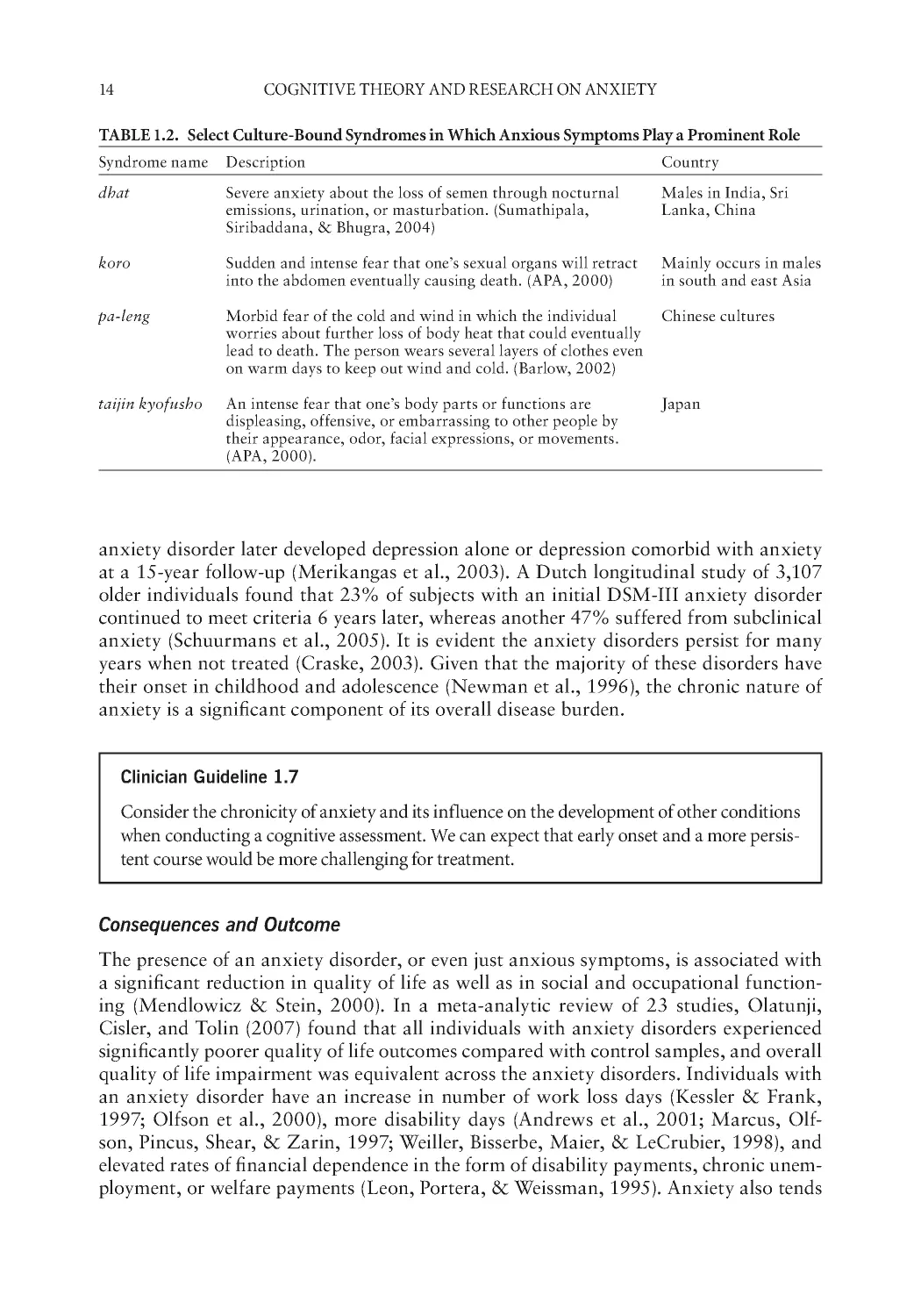
influenced West. Table 1.2 presents a select number of culture-bound syndromes with a
significant anxiety component.
Clinician Guideline 1.6
Assessment for anxiety should include a consideration of the individual’s culture and social/
familial environment and their inf luence on the development and subjective experience of
anxiety.
Persistence and Course
In contrast to major depression, anxiety disorders are often chronic over many years
with relatively low remission but more variable rates of relapse after complete recovery
(Barlow, 2002). The Harvard–Brown Anxiety Disorder Research Program (HARP), an
8-year prospective study, found that only one-third to one-half of patients with social
phobia, GAD, or panic disorder achieved full remission (Yonkers, Bruce, Dyck, & Keller,
20 03).1 The Zurich Cohort Study found that nearly 50% of individuals with an initial
1 Although these remission rates are very low, especially for social phobia and panic disorder, they probably
overestimate the true remission rates for the anxiety disorders since 80% of the subjects had some form of
phar macological treat ment over the 8-yea r follow- up.
14
COGNITIVE THEORY AND RESEARCH ON ANXIETY
anxiety disorder later developed depression alone or depression comorbid with anxiety
at a 15-year follow-up (Merikangas et al., 2003). A Dutch longitudinal study of 3,107
older individuals found that 23% of subjects with an initial DSM-III anxiety disorder
continued to meet criteria 6 years later, whereas another 47% suffered from subclinical
anxiety (Schuurmans et al., 2005). It is evident the anxiety disorders persist for many
years when not treated (Craske, 2003). Given that the majority of these disorders have
their onset in childhood and adolescence (Newman et al., 1996), the chronic nature of
anxiety is a significant component of its overall disease burden.
Clinician Guideline 1.7
Consider the chronicity of anxiety and its influence on the development of other conditions
when conducting a cognitive assessment. We can expect that early onset and a more persis-
tent course would be more challenging for treatment.
Consequences and Outcome
The presence of an anxiety disorder, or even just anxious symptoms, is associated with
a significant reduction in quality of life as well as in social and occupational function-
ing (Mendlowicz & Stein, 2000). In a meta-analytic review of 23 studies, Olatunji,
Cisler, and Tolin (2007) found that all individuals with anxiety disorders experienced
significantly poorer quality of life outcomes compared with control samples, and overall
quality of life impairment was equivalent across the anxiety disorders. Individuals with
an anxiety disorder have an increase in number of work loss days (Kessler & Frank,
1997; Olfson et al., 2000), more disability days (Andrews et al., 2001; Marcus, Olf-
son, Pincus, Shear, & Zarin, 1997; Weiller, Bisserbe, Maier, & LeCrubier, 1998), and
elevated rates of financial dependence in the form of disability payments, chronic unem-
ployment, or welfare payments (Leon, Portera, & Weissman, 1995). Anxiety also tends
table 1.2 . select Culture-bound syndromes in Which anxious symptoms play a prominent role
Synd rome na me Description
Country
dhat
Severe anxiety about the loss of semen through nocturnal
emissions, urination, or masturbation. (Sumathipala,
Siribaddana, & Bhugra, 2004)
Males in India, Sri
Lanka, China
koro
Sudden and intense fear that one’s sexual organs will retract
into the abdomen eventually causing death. (APA, 2000)
Mainly occurs in males
in south and east Asia
pa-leng
Morbid fear of the cold and wind in which the individual
worries about further loss of body heat that could eventually
lead to death. The person wears several layers of clothes even
on warm days to keep out wind and cold. (Barlow, 2002)
Chinese cultures
taijin kyofusho An intense fear that one’s body parts or functions are
displeasing , of fensive, or emba rras sing to other p eople by
their appearance, odor, facial expressions, or movements.
(APA, 2000).
Japa n
Anxiety: A Common but Multifaceted Condition
15
to reduce the quality of life and social functioning in patients with a comorbid chronic
medical illness (Sherbourne, Wells, Meredith, Jackson, & Camp, 1996). Olfson et al.
(1996) even found that primary care patients who did not meet diagnostic criteria for
GAD, panic, or OCD but had symptoms of these disorders reported significantly more
days of lost work, marital distress, and visits to a mental health professional. The nega-
tive impact of anxiety disorders in terms of distress, disability, and utilization of services
can be even greater than for individuals whose main problem is a personality disorder
or substance abuse (Andrews, Slade, & Issakidis, 2002). In fact, individuals with panic
disorder evidence significantly lower social and role functioning in daily activities than
patients with a chronic medical illness like hypertension (Sherbourne, Wells, & Judd,
1996).
Individuals with a diagnosable anxiety disorder make more visits to mental health
professionals and are more likely to consult with their general practitioners for psycho-
logical problems compared with nonclinical controls (Marciniak, Lage, Landbloom,
Dunayevich, & Bowman, 2004; Weiller et al., 1998). A large-scale study of employed
Americans found that individuals with anxiety disorders were significantly more likely
than the nonclinical control group to visit medical specialists, more likely to use inpa-
tient services, and more likely to visit emergency rooms (Marciniak et al., 2004; see
also Leon et al., 1995, for similar results). However, the majority of individuals with an
anxiety disorder never receive professional treatment, and even fewer come to the atten-
tion of mental health practitioners (Coleman, Brod, Potter, Buesching, & Rowland,
2004; Kessler et al., 1994; Olfson et al., 2000). Family physicians, for example, are
particularly poor at recognizing anxiety, with at least 50% of anxiety disorders missed
in primary care patients (Wittchen & Boyer, 1998).
Given the adverse personal and social effects of anxiety disorders, the economic
costs of anxiety are substantial in both the direct costs of services and the indirect costs
of lost productivity. Self-reported anxiety in one American study accounted for an esti-
mated 60.4 million days per year in lost productivity, which is equivalent to the level of
lost productivity associated with the common cold or pneumonia (Marcus et al., 1997).
Greenberg et al. (1999) estimated the annual cost of anxiety disorders at $42.3 billion
in 1990 U.S . dollars, whereas Rice and Miller (1998) found that the economic costs of
anxiety were greater than for schizophrenia or the affective disorders.2
Clinician Guideline 1.8
Given the significant morbidity associated with anxiety, the negative impact of the disorder
on work/school productivity, social relations, personal finances, and daily functioning must
be included in the clinical assessment.
2There is evidence that a significant offset of the costs of anxiety can be achieved by early detection and
treatment (Salvador-Carulla, Segui, Fernández-Cano, & Canet, 1995). Health economic studies have con-
sistently shown that cognitive-behavioral therapy (CBT) for anxiety disorders is cheaper than medication
and produces significant reduction in health care costs (Myhr & Payne, 2006). As the most common of the
mental disorders, anxiety inflicts a significant human and social cost on our society, but increased provi-
sion of cognitive and cognitive-behavioral treatment could reduce the personal and economic costs of these
disorders.
16
COGNITIVE THEORY AND RESEARCH ON ANXIETY
biologiCal aspeCts of anxiety
Anxiety is multifaceted, involving diverse elements of the physiological, cognitive,
behavioral, and affective domains of human function. Table 1.3 lists the symptoms of
anxiety divided into the four functional systems involved in an adaptive response to
threat and danger (Beck et al., 1985, 2005).
The automatic physiological responses that typically occur in the presence of threat
or danger are considered defensive responses. These responses, seen in the fear-eliciting
contexts of both animals and humans, involve autonomic arousal that prepares the
organism to deal with danger by fleeing (i.e., flight) or by directly confronting the danger
(i.e ., fight), a process known as the “fight-or-flight” response (Canon, 1927). The behav-
ioral features primarily involve escape or avoidance as well as safety-seeking responses.
The cognitive variables provide the meaningful interpretation of our internal state as
that of anxiety. Finally the affective domain is derived from cognitive and physiological
activation, and constitutes the subjective experience of feeling anxious. In the follow-
ing sections, we briefly discuss the physiological, behavioral, and emotional aspects of
anxiety. The cognitive features of anxiety are the focus of subsequent chapters.
Psychophysiology
As evident from Table 1.3, many of the symptoms of anxiety are physiological in nature,
reflecting activation of the sympathetic (SNS) and parasympathetic (PNS) nervous sys-
tems. Activation of the SNS is the most prominent physiological response in anxiety,
and it leads to hyperarousal symptoms such as constriction of the peripheral blood
vessels, increased strength of the skeletal muscles, increased heart rate and force of con-
traction, dilation of the lungs to increase oxygen supply, dilation of the pupils for pos-
sible improved vision, cessation of digestive activity, increase in basal metabolism, and
increased secretion of epinephrine and norepinephrine from the adrenal medulla (Brad-
table 1.3 . Common features of anxiety
Physiological symptoms
(1) Increase heart rate, palpitations; (2) shortness of breath, rapid breathing; (3) chest pain or pressure;
(4) choking sensation; (5) dizzy, lightheaded; (6) sweaty, hot flashes, chills; (7) nausea, upset stomach,
diarrhea; (8) trembling, shaking; (9) tingling or numbness in arms, legs; (10) weakness, unsteady,
faintness; (11) tense muscles, rigidity; (12) dry mouth
Cognitive symptoms
(1) fear of losing control, being unable to cope; (2) fear of physical injury or death; (3) fear of “going
crazy”; (4) fear of negative evaluation by others; (5) frightening thoughts, images, or memories; (6)
perception s of un rea lity or detach ment; (7) poor concentration , conf usion , distrac tible; (8) na r rowi ng of
attention, hypervigilance for threat; (9) poor memory; (10) difficulty in reasoning, loss of objectivity
Behavioral symptoms
(1) avoidance of threat cues or situations; (2) escape, flight; (3) pursuit of safety, reassurance; (4)
restlessness, agitation, pacing; (5) hyperventilation; (6) freezing, motionless; (7) difficult speaking
Affective symptoms
(1) nervous, tense, wound-up; (2) frightened, fearful, terrified; (3) edgy, jumpy, jittery; (4) impatient,
frustrated
Anxiety: A Common but Multifaceted Condition
17
ley, 2000). All of these peripheral physiological responses are associated with arousal
but cause various perceptible symptoms such as trembling, shaking, hot and cold spells,
heart palpitations, dry mouth, sweating, shortness of breath, chest pain or pressure, and
muscle tension (see Barlow, 2002).
The role of PNS excitation, which causes a conservation of certain physiological
responses, has not been as well researched in anxiety. The PNS is involved in symp-
toms like tonic immobility, drop in blood pressure, and fainting, which are a type of
“conservation-withdrawal” response strategy (Friedman & Thayer, 1998). The effects
of PNS stimulation include decreased heart rate and force of contraction, constricted
pupils, relaxed abdominal muscles, and constriction of the lungs (Bradley, 2000). More-
over, research on heart rate variability in panic attacks indicates that the cardiovascular
activity associated with anxiety should not be seen simply in terms of excessive SNS
activation but also reduced compensatory PNS excitation. Thus the PNS probably plays
a greater role in anxiety than previously considered.
Barlow (2002) concluded that one of the most robust and enduring findings in
the past 50 years of psychophysiological research is that chronically anxious individu-
als exhibit a persistently elevated autonomic arousal level often in the absence of an
anxiety-producing situation. For example, Cuthbert et al. (2003) reported significantly
elevated heart rate base levels for panic and specific phobias but not social phobia or
posttraumatic stress disorder (PTSD) groups. Other researchers, however, have linked
anxiety (or neuroticism) to excess autonomic lability and reactivity rather than to endur-
ing tonic levels of activation (Costello, 1971; Eysenck, 1979). Craske (2003) proposed
that heightened cardiovascular reactivity might be a predisposing factor for panic dis-
order such that a tendency to experience intense and acute autonomic activation could
increase the salience and therefore threat attributed to bodily sensations.
Empirical support for autonomic differences between anxious and nonanxious con-
trols in response to stressful or threatening stimuli has not been consistently obtained
across studies (Barlow, 2002). Freidman and Thayer (1998) also noted that psychophysi-
ological findings of reduced heart rate and electrodermal variability challenge the view
that anxiety is characterized by excessive autonomic lability and reactivity. Neverthe-
less, anxious individuals do show a slower decline in their physiological response to
stressors (i.e ., slow habituation), but this is probably due to their higher initial baseline
arousal level (Barlow, 2002). In addition Lang and colleagues found greater physiologi-
cal arousal to fear-relevant imagery in snake phobic individuals, but reactivity was less
evident in those with panic (Cuthbert et al., 2003; Lang, 1979; Lang, Levin, Miller, &
Kozak, 1983). Together these results suggest that heightened physiological reactivity
to fear stimuli may be greatest in specific phobic conditions but less evident in other
anxiety states like panic disorder or PTSD. However, a heightened basal arousal level
and slower habituation rate might be seen more consistently across various anxiety dis-
orders, thereby providing the physiological basis for chronically anxious individuals to
misinterpret their persistent state of hyperarousal as evidence of an anticipated threat
or danger.
Recent psychophysiological research suggests that individuals with chronic anxi-
ety exhibit diminished autonomic flexibility in response to stressors (Noyes & Hoehn-
Saric, 1998). This is characterized by a weak but sustained response to stressors, indi-
cating a poor habituation trajectory. In a study of heart rate reactivity under baseline,
relaxation, and worry conditions, Thayer, Friedman, and Borkovec (1996) found that
18
COGNITIVE THEORY AND RESEARCH ON ANXIETY
individuals with GAD or those actively engaged in worry had lower cardiac vagal con-
trol, which supports the view that GAD is characterized by autonomic inflexibility.
In sum it would appear that important psychophysiological features of anxiety such
as elevated basal arousal level, slower habituation, and diminished autonomic flexibility
might contribute to the misinterpretation of threat that is the core cognitive feature of
anxiety. However, a different physiological response pattern may distinguish phobia,
panic disorder, and GAD, which prevents generalizing research findings across the anxi-
ety disorders. Furthermore, it is unclear whether the anxiety state is primarily an excess
of SNS activation and a withdrawal of vagal activity, or if SNS activity is depressed and
PNS activity remains normal under the conditions of daily living (see Mussgay & Rüd-
del, 2004, for discussion).
Clinician Guideline 1.9
Assessment of anxiet y disorders must include a thorough evaluation of the type, frequency,
and severity of physiological symptoms experienced during acute anxiet y episodes, as well
as the patient’s interpretation of these symptoms. Baseline as well as patterns of physiological
reactivity should be assessed using diaries and daily rating scales.
Genetic Factors
There is considerable empirical evidence that anxiety runs in families (see Barlow, 2002,
for review). In a meta-analysis of family and twin studies for panic disorder, GAD,
phobias, and OCD, Hettema, Neale, and Kendler (2001) concluded there is significant
familial aggregation for all four disorders, with the strongest evidence for panic disor-
der. Across all disorders, estimates of heritability ranged from 30 to 40%, leaving the
largest proportion of the variance due to individual environmental factors. Even at the
symptomatic level, heritability accounts for only 27% of the variability by predisposing
individuals to general distress, with environmental factors determining the development
of specific anxiety or depressive symptoms (Kendler, Heath, Martin, & Eaves, 1987).
Barlow (2002) raised the possibility that a separate genetic transmission might be
evident for anxiety and panic. In a structural equation modeling of diagnostic data col-
lected on a large female twin sample, Kendler et al. (1995) found separate genetic risk
factors for major depression and GAD (i.e., anxiety), on the one hand, and for acute,
short-lived anxiety like phobias and panic, on the other. An earlier study also found
a common genetic diathesis for major depression and GAD with disorder-specificity
determined by exposure to different life events (Kendler, Neale, Kessler, Heath, &
Eaves, 1992a).
There is less evidence that individuals inherit specific anxiety disorders and stronger
empirical support for inheritance of a general vulnerability to develop an anxiety dis-
order (Barlow, 2002). This nonspecific vulnerability for anxiety could be neuroticism,
high trait anxiety, negative affectivity, or what Barlow, Allen, and Choate (2004) called
a “negative affect syndrome.” Vulnerable individuals might show a stronger (or at least
more sustained) emotional response to aversive or stressful situations. However, envi-
ronmental and cognitive factors would interact with this genetic predisposition to deter-
mine which of the specific anxiety disorders is experienced by a particular individual.
Anxiety: A Common but Multifaceted Condition
19
Clinician Guideline 1.10
A diagnostic interview should include questions about the prevalence of anxiety disorders
in first-degree relatives.
Neurophysiology
In the last decade rapid advances have been made in our understanding of the neurobio-
logical basis of fear and anxiety. One important finding that has emerged is the central
role of the amygdala in emotional processing and memory (see discussion by Canli et al.,
2001). Human and nonhuman research indicates that the amygdala is involved in the emo-
tional modulation of memory, the evaluation of stimuli with affective significance, and
the appraisal of social signals related to danger (see Anderson & Phelps, 2000). Research
on auditory fear conditioning by LeDoux (1989, 1996, 2000) has contributed most to
implicating the amygdala as the neural substrate for the acquisition of conditioned fear
responses. LeDoux (1996) concluded that the amygdala is the “hub in the wheel of fear”
(p. 170), that it is “in essence, involved in the appraisal of emotional meaning” (p. 169).
LeDoux (1989) contends that one of the most important tasks of the emotional brain
is to evaluate the affective significance (e.g ., threat vs. nonthreat) of mental (thoughts,
memories), physical, or external stimuli. He proposed two parallel neural pathways in
the amygdala’s processing of fear stimuli. The first pathway involves direct transmission
of a conditioned fear stimulus through the sensory thalamus to the lateral nucleus of
the amygdala, bypassing the cortex. The second pathway involves transmission of fear
stimulus information from the sensory thalamus through the sensory cortex and on
to the lateral nucleus. Within the amygdala region the lateral nucleus, which receives
inputs in fear conditioning, innervates the central nucleus that is responsible for the
expression of the conditioned fear response (see also Davis, 1998). Figure 1.1 illustrates
the two parallel pathways of LeDoux’s conditioned fear reaction system.
LeDoux (1996) draws a number of implications from his dual pathway of fear. The
more direct thalamo– amygdala path (called “the low road”) is quicker, more rudimen-
tary, and occurs without thinking, reasoning, and consciousness. The thalamo– cortical–
amygdala path (labeled “the high road”) is slower but involves more elaborative pro-
cessing of the fear stimulus because of extensive involvement of higher cortical regions
of the brain. Although LeDoux (1996) discusses the obvious evolutionary advantage
of an automatic, preconscious neural basis to information processing of fear stimuli,
his research demonstrated that the cortical pathway is necessary for fear conditioning
to more complex stimuli (i.e ., when the animal must discriminate between two similar
tones in which only one is paired with the unconditioned stimulus [UCS]).
The central role of the amygdala in fear is entirely consistent with its neuroana-
tomical connections. It has multiple output projections via the central nucleus to the
hypothalamus, hippocampus, and upward to various regions of the cortex, as well as
downward to various brainstem structures involved in autonomic arousal and neuroen-
docrine responses associated with stress and anxiety like the periaqueductal gray region
(PAG), the ventral tegmental area, the locus ceruleus, and the raphe nuclei (Barlow,
2002). All of these neutral structures have been implicated in the experience of anxiety,
including the bed nucleus of the stria terminalis (BNST; Davis, 1998), which may be the
most important neural substrate of anxiety (Grillon, 2002).
20
COGNITIVE THEORY AND RESEARCH ON ANXIETY
The role of conscious cognitive processing in fear is a much debated issue in light of
LeDoux’s research suggesting a rapid and rudimentary noncortical thalamo –amygdala
pathway in the processing of conditioned fear. In fact LeDoux (1996) found that fear-
relevant stimuli can be implicitly processed by the amygdala through the subcortical
thalamo –amygdala pathway without conscious representation. Neuroimaging stud-
ies have found that fearful or negatively valenced stimuli are associated with relative
increases in regional cerebral blood flow (rCBF) in the secondary or associative visual
cortex and relative reductions in rCBF in the hippocampus, prefrontal, orbitofron-
tal, temporopolar, and posterior cingulated cortex (e.g ., see Coplan & Lydiard, 1998;
Rauch, Savage, Alpert, Fishman, & Jenike, 1997; Simpson et al., 2000). These findings
have been interpreted as evidence that fear can be preconscious without the occurrence
of higher cognitive processing.
Evidence for a subcortical, lower order pathway to immediate conditioned fear pro-
cessing should not divert attention away from the critical role that attention, reasoning,
memory, and subjective appraisal or judgments play in human fear and anxiety. LeDoux
(1996) found that the thalamo– cortico –amygdala pathway was activated in more com-
plex fear conditioning. Moreover, the amygdala has extensive connections with the hip-
pocampus and cortical regions, where it receives inputs from cortical sensory processing
areas, the transitional cortical area, and the medial prefrontal cortex (LeDoux, 1996,
2000). LeDoux emphasizes that the hippocampal system involving explicit memory and
the amygdala system involving emotional memory will be activated simultaneously by
the same stimuli and will function at the same time. Thus cortical brain structures
involved in working memory, such as the prefrontal cortex and the anterior cingulate
and orbital cortical regions, and structures involved in long-term declarative memory,
Emotional
Stimulus
Amygdala
Emotional
Response
Sensory
Thalamus
Sensory Cortex
Cortico–amygdala pathway
(slow but more elaborated
processing)
Thalamo–amygdala pathway
(rapid but crude processing)
figure 1.1. LeDoux ’s parallel neural pathways in auditory fear conditioni ng.
Anxiety: A Common but Multifaceted Condition
21
like the hippocampus and temporal lobe, are implicated with amygdala-dependent emo-
tional arousal to provide the neural basis to the subjective (conscious) experience of
fear (LeDoux, 2000). The neural substrates of cognition, then, can be expected to play
a critical role in the type of fear acquisition and persistence that characterizes complex
human fears and anxiety disorders. This is supported by various neuroimaging studies
that found differential activation of various medial prefrontal and frontotempororbital
regions of the cortex (e.g ., Connor & Davidson, 1998; Coplan & Lyiard, 1998; Lang,
Bradley, & Cuthbert; 1998; McNally, 2007; van den Heuvel et al., 2004; Whiteside,
Port, & Abramowitz, 2004).
In their review Luu, Tucker, and Derryberry (1998) argued that fear-relevant mental
representations of the cortex influence emotional functioning not only at the later stage
of fear expression and responsivity, but cortical influence can also serve an anticipatory
function even before sensory information is physically available. The authors conclude
that “with our highly evolved frontal networks, we humans are capable of cognitively
mediating our actions, and of inhibiting the more reflexive responses triggered by lim-
bic and subcortical circuits” (Luu et al., 1998, p. 588). This sentiment was recently
echoed in a review paper by McNally (2007a) in which he concludes that activation in
the medial prefrontal cortex can suppress conditioned fear acquisition that is mediated
by the amygdala. Thus prefrontal executive functions (i.e., conscious cognitive pro-
cesses) can have fear-inhibiting effects that involve learning new inhibitory associations
or “safety signals” that suppress fear expression (McNally, 2007a). Frewen, Dozois, and
Lanius (2008) concluded in their review of 11 neuroimaging studies of psychological
interventions for anxiety and depression that CBT alters functioning in brain regions
such as the dorsolateral, ventrolateral, and medial prefrontal cortices; anterior cingu-
late; posterior cingulate/precuneus; and the insular cortices that are associated with
problem solving, self-referential and relational processing, and regulation of negative
affect. Clearly, then, the extensive involvement of higher order cortical regions of the
brain in emotional experiences is consistent with our contention that cognition plays an
important role in the production of anxiety and that interventions like cognitive therapy
can effectively inhibit anxiety by engaging cortical regions responsible for higher order
reasoning and executive function.
Neurotransmitter Systems
Neurotransmitter systems such as the benzodiazepine–gamma-aminobutyric acid
(GABA), noradrenergic, and serotonergic, as well as the corticotropin-releasing hor-
monal pathway, are important to the biology of anxiety (Noyes & Hoehn-Saric, 1998).
The serotonergic neurotransmitter system has become of increasing interest in research
on anxiety and panic. Serotonin acts as a neurochemical break on behavior, with block-
age of serotonin receptors in humans associated with anxiety (Noyes & Hoehn-Saric,
1998). Although low levels of serotonin have been implicated as a key contributor to
anxiety, direct neurophysiological evidence is mixed on whether abnormalities in sero-
tonin can be found in anxiety disorders like GAD compared to controls (Sinha, Mohl-
man, & Gorman, 2004). The serotonergic system projects to diverse areas of the brain
that regulate anxiety like the amygdala, septo-hippocampal, and prefrontal cortical
regions and so may have a direct influence on anxiety or an indirect influence by alter-
22
COGNITIVE THEORY AND RESEARCH ON ANXIETY
ing the function of other neurotransmitters (Noyes & Hoehn-Saric, 1998; Sinha et al.,
2004).
A subgroup of the inhibitory transmitter GABA contains benzodiazepine receptors
that enhance the inhibitory effects of GABA when benzodiazepine molecules bind to
these receptor sites (Gardner, Tully, & Hedgecock, 1993). Evidence that generalized
anxiety may be due to a suppressed benzodiazepine-GABA system comes from the anxi-
olytic effects of benzodiazepine drugs (e.g ., lorazepam [Ativan], alprazolam [Xanax]),
which appear to have their clinical effectiveness by enhancing benzodiazepine-GABA
inhibition (Barlow, 2002).
Corticotropin-releasing hormone (CRH) is a neurotransmitter that is primar-
ily stored in the hypothalamic paraventricular nuclei (PVN). Stressful or threatening
stimuli can activate certain brain regions like the locus ceruleus, amygdala, hippocam-
pus, and prefrontal cortex, which then releases CRH. CRH then stimulates secretion
of adrenocorticotropic hormone (ACTH) from the anterior pituitary gland and other
pituitary–adrenal activity that results in increased production and release of cortisol
(Barlow, 2002; Noyes & Hoehn-Saric, 1998). The CRH, then, not only mediates endo-
crine responses to stress but also other broad brain and behavioral responses that play
a role in the expression of stress, anxiety, and depression (Barlow, 2002). Overall, then,
abnormalities at the neurotransmitter level appear to have anxiogenic or anxiolytic
effects that play an important contributory role in heightened physiological states that
characterize fear and anxiety. However, the exact nature of these abnormalities is still
unknown. Table 1.4 provides a summary of the biological aspects of anxiety that might
underlie the cognitive features of these disorders discussed later in this volume.
Clinician Guideline 1.11
Discuss the neural basis of anxiety when educating the client about the cognitive model of
an xiety. The rationale for cognitive therapy should include a discussion of how the higher
order cortical centers of the brain involved in memory, reasoning, and judgment can “over-
ride” or inhibit subcortical emotional brain structures, thereby reducing the subjective
experience of anxiet y.
table 1.4 . biological Concomitants of Cognition in anxiety
Biological factors
Cognitive sequel ae
Elevated tonic autonom ic activation
••
Increased salience of threat-related stimuli
••
Slower habituation rat e
••
Sustained attention to threat
••
Dimi nished autonom ic fl exibility
••
Reduced ability to shift attention
••
Genetic predisp osition for negative emotiona lity
••
Hyper valent schemas of threat a nd d anger
••
Subcortical fear potentiation
••
Preconscious fear stimulus identification and
••
immediate physiological arousa l
Extensive cor tical afferent a nd efferent pathways
••
to sub cor tical emotion-relevant ci rc u itry
Cognitive appraisal and memory influence fear
••
perception and mo dulates fea r expres sion a nd
action
Anxiety: A Common but Multifaceted Condition
23
behavioral theories
Over several decades experimental psychologists grounded in learning theory have dem-
onstrated that fear responses can be acquired through an associative learning process.
Theoretical and experimental work from this perspective has focused on the physi-
ological and behavioral responses that characterize an anxious or fearful state. Early
learning theory focused on the acquisition of fears or phobic reactions through classical
conditioning.
Conditioning Theories
According to classical conditioning, a neutral stimulus, when repeatedly associated with
an aversive experience (unconditioned stimulus [UCS] that leads to the experience of
anxiety (unconditioned response [UCR]), becomes associated with the aversive experi-
ence, it acquires the capability to elicit a similar anxiety response (conditioned response
[CR]) (Edelmann, 1992). The emphasis in classical conditioning is that human fears are
acquired as a result of some neutral stimulus (e.g ., visit to a dentist’s office) coming into
association with some previous anxiety-provoking experience (e.g ., a highly painful and
terrifying experience at the dentist office when a child). Although numerous experimen-
tal studies over the past 80 years have demonstrated that fears can be acquired in the
laboratory by repeatedly pairing a neutral stimulus (e.g ., tone) with an unconditioned
stimulus (e.g ., mildly aversive electric shock), the model could not provide a credible
explanation for the remarkable persistence of human fears in the absence of repeated
UCS – CS pairings (Barlow, 2002).
Mowrer (1939, 1953, 1960) introduced a major revision to the conditioning theory
in order to better account for avoidance behavior and the persistence of human fears.
Referred to as “two-factor theory,” it became a widely accepted behavioral account of
the etiology and persistence of clinical fears and anxiety states throughout the 1960s
and early 1970s (e.g ., Eysenck & Rachman, 1965). Although no longer considered a ten-
able theory of anxiety, the two-factor theory is important for two reasons. First, many
of the behavioral interventions that have proven so effective in the treatment of anxiety
disorders had their origins in the two-factor model. And second, our current cognitive
models of anxiety were in large part born out of the criticisms and inadequacies of the
two-factor theory.
Figure 1.2 provides an illustration of how the two-factor theory might be used to
explain Freud’s case study of Little Hans (Freud, 1909/1955). Little Hans was a 5-year-
old Austrian boy who developed a fear that a horse would bite him, and so experienced
considerable anxiety whenever he ventured outside for fear of seeing a horse. The onset
of the “horse phobia” occurred after he witnessed a large “bus-horse” fall down and
violently kick its feet in an effort to get up. Little Hans then became frightened that
horses, particularly those pulling carts, would fall down and bite him. (Of course Freud
interpreted the real source of Little Han’s phobia as his repressed sexual affection for his
mother and hostility toward his father that became transposed [displaced] onto horses.)
In the two-factor model, the first stage of fear acquisition is based on classical
conditioning. Little Hans experiences a traumatic event: seeing a large horse fall to the
street and thrash about violently (UCS). This elicits a strong fear response (UCR), so
that the sight of horses (CS) through association with the UCS is now capable of elic-
24
COGNITIVE THEORY AND RESEARCH ON ANXIETY
iting a CR (fear response). However, fear persistence is explained at the second stage
because of extensive avoidance of the CS. In other words, Little Hans stays indoors
and so avoids the sight of horses (the CS). Because avoidance of horses ensures that
Little Hans will not experience fear or anxiety, the avoidance behavior is negatively
reinforced. Avoidance is maintained because fear reduction is a powerful secondary
reinforcer (Edelmann, 1992). Furthermore, because he stays indoors, Little Hans fails
to learn that horses do not regularly fall down (i.e ., he does not experience repeated CS-
only presentations that would lead to extinction).
By the late 1970s serious problems were raised with the two-factor model explana-
tion for human phobias (Rachman, 1976, 1977; see also Davey, 1997; Eysenck, 1979).
First, classical conditioning assumes that any neutral stimulus can acquire fear-eliciting
properties if associated with a UCS. However, this assumption was not supported in
aversive conditioning experiments in which some stimuli (e.g ., pictures of spiders and
snakes) produced a conditioned fear response much more easily than other stimuli (e.g .,
pictures of flowers or mushrooms; for review, see Öhman & Mineka, 2001). Second,
many individuals who develop clinical phobias can not recall a traumatic conditioning
event. Third, there is considerable experimental and clinical evidence of nonassociative
learning of fears through vicarious observation (i.e ., witnessing someone else’s trauma)
or informational transmission (i.e ., when threatening information about specific objects
or situations is conveyed to the individual). Fourth, people often experience traumatic
events without developing a conditioned fear response (Rachman, 1977). Again the
two-factor model requires considerable refinement to explain why only a minority of
individuals develop phobias in response to a traumatic experience (e.g ., painful dental
work). And finally, the two-factor theory has difficulty explaining the epidemiology
of phobias (Rachman, 1977). For example, fear of snakes is much more common than
dental phobia, and yet many more people experience the pain of dental work than are
bitten by snakes.
figure 1.2 . A two-factor theory of fear acquisition explanation of Freud’s case study of Little
Hans.
CS
CS
Horse
Horse
UCS
UCS
Sight of horse
Sight of horse
falling down and
falling down and
thrashing violently
thrashing violently
UCR
UCR
Intense
Intense
fear
fear
CR
CR
Learned
Learned
fear
fear
response
response
Stage One
Stage One—
— Acquisition of Fear
Acquisition of Fear
Stage
Stage Two
Two—
— Persistence
Persistence of Fear
of Fear
Avoidance
Avoidance
Active avoidance of
Active avoidance of
horses
horses
Reinforcement
Reinforcement
Fear reduction
Fear reduction
is reinforcing
is reinforcing
Phobia
Phobia
Fear
Fear
persists
persists
Anxiety: A Common but Multifaceted Condition
25
Although various refinements were proposed, it became clear that the two-factor
theory of conditioning was unable to explain the development and persistence of human
fears and anxiety disorders. Many behavioral psychologists concluded that cognitive
constructs were needed to provide an adequate account of the development and main-
tenance of anxiety, even phobic states (e.g., Brewin, 1988; Davey, 1997). A variety of
cognitive concepts were proposed (e.g ., expectancies, self-efficacy, attentional bias, or
threat-related schemas) as mediators between the occurrence of a fear-eliciting stimu-
lus and the anxious response (see Edelmann, 1992). Not all behavioral psychologists,
though, embraced cognitive mediation as a causal mechanism in the development of
anxiety. An example of a more “noncognitive” perspective is the fear module proposed
by Öhman and Mineka (2001).
The Fear Module
Öhman and Mineka (2001) state that because fear evolved as a defense against preda-
tors and other threats to survival, it involves a fear module composed of behavioral,
psychophysiological, and verbal-cognitive components. A fear module is defined as “a
relatively independent behavioral, mental, and neural system that is specifically tailored
to help solve adaptive problems encountered by potentially life-threatening situations in
the ecology of our distant forefathers” (Öhman & Mineka, 2001, p. 484).
They discuss four characteristics of the fear module. First, it is selectively sensitized
to respond to stimuli that are evoluntionarily prepotent because they posed particular
threats to the survival of our ancestors. They reviewed a large experimental literature
that demonstrated selective association in human aversive conditioning in which indi-
viduals evidence better conditioning and greater resistance to extinction for phyloge-
netic stimuli (e.g ., slides of snakes or spiders) than for ontogenetic materials (e.g ., slides
of houses, flowers, or mushrooms). Öhman and Mineka (2001) concluded that (1) evo-
lutionarily prepared fear-relevant stimuli have preferential access to the human fear
module and (2) selective association of these prepared stimuli is largely independent of
conscious cognition.
A second characteristic of the fear module is its automaticity. Öhman and Mineka
(2001) state that because the fear module evolved to deal with phylogenetic threats to
survival, it can be automatically activated without conscious awareness of the triggering
stimulus. Evidence for automatic preconscious activation of fear includes physiological
fear response (e.g ., S CR) to fear stimuli that are not consciously recognized, continued
conditioned fear response to nonreportable stimuli, and the acquisition of a conditioned
fear response to fear-relevant stimuli that were not amenable to conscious awareness.
A third feature is encapsulation. The fear module is assumed to be “relatively impen-
etrable to other modules with which it lacks direct connections” (Öhman & Mineka,
2001, p. 485) and so will tend to run its course once activated with few possibilities
that other processes can stop it (Öhman & Wiens, 2004). Even though the fear module
is relatively impenetrable to conscious influences, Öhman and Mineka argue that the
fear module itself can have a profound influence by biasing and distorting conscious
cognition of the threat stimulus. In support of their contention of the independence of
the fear module from the influence of conscious cognition, Öhman and Weins (2004)
cite evidence that (1) masking of stimuli affects conscious appraisals but not condi-
26
COGNITIVE THEORY AND RESEARCH ON ANXIETY
tioned responses (SCRs), (2) instructions that alter explicit UCS – CS expectancies do
not affect conditioned response to biological fear-relevant stimuli, (3) individuals can
acquire conditioned fear responses to masked stimuli outside conscious awareness, and
(4) conditioned fear responses to masked stimuli can affect conscious cognition in the
form of expectancy judgments.
A final characteristic is its specific neural circuitry. Öhman and Mineka (2001) con-
sider the amygdala the central neural structure involved in the control of fear and fear
learning and contend that fear activation (i.e., emotional learning) occurs via LeDoux’s
(1996) subcortical, noncognitive thalamo –amygdala pathway, whereas cognitive learn-
ing occurs via the hippocampus and higher cortical regions. The authors contend that
the amygdala has more afferent than efferent connections to the cortex and so has more
influence on the cortex than the reverse. Based on this view of the neural structure of
the fear module, they conclude that (1) nonconscious activation of the amygdala occurs
via a neural route that does not involve the cortex, (2) this neural circuitry is specific to
fear, and (3) any conscious cognitive processes associated with fear are a consequence of
the activated fear module (i.e., amygdala) and thus play no causal role in fear activation.
Thus biased appraisals and beliefs are a product of automatic fear activation and the
production of psychophysiological and reflexive defensive responses (Öhman & Weins,
2004). Exaggerated beliefs in danger may play a role in maintaining anxiety over time
but they are the consequence rather than the cause of fear.
Clinician Guideline 1.12
Given the substantial evidence concerning the importance of learning in the development of
an xiety, the clinician should explore with patients past an xiety-related learning experiences
(e.g ., trauma, life events, exposure to threat-related information).
the Case for Cognition
Öhman and Mineka’s (2001) perspective on fear and anxiety is at variance with the
cognitive perspective advocated by Beck and colleagues (Beck et al., 1985, 2005;
Beck & Clark, 1997; D. M . Clark, 1999). Although they acknowledge that cogni-
tive phenomena should be targeted in treatment because they play a key role in the
longer term maintenance of anxiety, they still consider anxious thinking, beliefs, and
processing biases a consequence of fear activation. Öhman and Mineka (2001) do not
consider conscious cognition critical in the pathogenesis of fear itself, which is contrary
to the conceptualization of fear that we offered earlier in this chapter. This noncogni-
tive view of fear is evident in other learning theorists like Bouton, Mineka, and Barlow
(2001), who argue that interoceptive conditioning in panic disorder occurs without
conscious awareness and is quite independent of declarative knowledge systems. Nev-
ertheless, we consider cognitive appraisal a core element of fear and critical to under-
standing the etiology, persistence, and treatment of anxiety disorders. This view is
based on several arguments.
Anxiety: A Common but Multifaceted Condition
27
Existence of Preconscious Cognition
Critics of cognitive models tend to overemphasize conscious awareness when discuss-
ing cognition, arguing that the substantial experimental evidence of conditioned fear
responses without conscious awareness fails to support basic tenets of the cognitive per-
spective (e.g .,, Öhman & Mineka, 2001). However, there is equally robust experimental
research demonstrating preconscious, automatic cognitive and attentional processing of
fear stimuli (see MacLeod, 1999; Wells & Matthews, 1994; Williams, Watts, MacLeod,
& Mathews, 1997). Thus the cognitive perspective on anxiety is misrepresented when
cognition is characterized only in terms of conscious appraisal.
Cognitive Processes in Fear Acquisition (i.e., Conditioning)
Öhman and Mineka (2001) argue that cognitive processes are a consequence of fear
activation and so play little role in their acquisition. However, over the last three decades
many learning theorists have argued that cognitive concepts must be incorporated into
conditioning models to explain the persistence of fear responses. Davey (1997), for
example, reviews evidence that outcome expectancies as well as one’s cognitive repre-
sentation of the UCS will influence the strength of the fear CR in response to a CS. In
other words, CRs increase or decrease in strength depending on how the person evalu-
ates the meaning of the UCS or trauma (see also van den Hout & Merckelbach, 1991).
According to Davey (1997), then, cognitive appraisal is a key element in Pavlovian fear
conditioning.
It has long been recognized that outcome expectancies (i.e., expectations that in a
particular situation a certain response will lead to a given outcome) play a critical role
in aversive conditioning (e.g ., Seligman & Johnston, 1973; de Jong & Merckelbach,
2000; see also experiments on covariation bias by de Jong, Merckelbach, & Arntz,
1995; McNally & Heatherton, 1993). In his influential review paper Rescorla (1988)
argued that modern learning theory views Pavlovian conditioning in terms of learn-
ing the relations among events (i.e ., associations) that must be perceived and that are
complexly represented (i.e., memory) by the organism. For most behaviorally oriented
clinical researchers, then, the acquisition and elicitation of fear and anxiety states will
involve learning contingencies that recognize the influence and importance of various
cognitive mediators (for further discussion, see van den Hout & Merckelbach, 1991).
Conscious Cognitive Processes Can Alter Fear Responses
Öhman and Mineka (2001) contend that the fear module is impenetrable to conscious
cognitive control. However, this view is difficult to reconcile with empirical evidence
that cognitive or informational factors can lead to a reduction in fear (see discussion
by Brewin, 1988). Even with exposure-based interventions, which are directly derived
from conditioning theory, there is evidence that long-term habituation of fear responses
requires conscious directed attention and processing of the fear-relevant information
(Foa & Kozak, 1986). Brewin (1988) succinctly makes a case for the influence of cogni-
tion on fear responses, stating that “a theory that assigns a role to conscious thought
processes is necessary to explain how people can alternately frighten and reassure them-
28
COGNITIVE THEORY AND RESEARCH ON ANXIETY
selves by thinking different thoughts, test out a variety of different coping responses, set
goals and reward or punish themselves depending on the outcome, etc.” (p. 46).
The Amygdala Is Not Specific to Fear
A central argument of Öhman and Mineka (2001) is that a direct thalamus–amygdala
link in fear activation and emotional learning accounts for the automaticity of the fear
module and so is dissociable from declarative acquisition of information via the hip-
pocampus. Thus activation of the amygdala begins a fear response which then leads to
more complex cognition and memory processes via projections to the hippocampus and
higher cortical brain regions (see also Morris, Öhman, & Dolan, 1998).
Although experimental research has been quite consistent in showing amygdaloid
activation in the processing of fearful stimuli, there is evidence that the amygdala may
also be involved in other emotional functions such as the appraisal of the social and
emotional significance of facial emotions (Adolphs, Tranel, & Damasio, 1998; Ander-
son & Phelps, 2000). Neuroimaging studies suggest greater activation occurs in the pre-
frontal cortex, amygdala, other midbrain structures, and the brainstem when processing
any generally negative, arousing emotional stimuli, which suggests that the amygdala
and other structures involved in emotional processing may not be specific to fear but
rather to the valence of emotional stimuli (e.g ., Hare, Tottenham, Davidson, Glover, &
Casey, 2005; Simpson et al., 2000; see also amygdala activation when processing sad
film excerpts, Lévesque et al., 2003). In addition the amygdala is responsive to positively
valenced stimuli, although this response seems to be more variable and elaborative in
nature than the fixed, automatic response seen to fear expressions (Somerville, Kim,
Johnstone, Alexander, & Whalen, 2004; see also Canli et al., 2002). Thus there is
experimental evidence that the amygdala may not be the seat of anxiety specifically but
an important neural structure of emotion processing more generally (see also Gray &
McNaughton, 1996).
Other neuroimaging research suggests that the amygdala can be influenced by
cognitive processes mediated by higher cortical regions of the brain. McNally (2007a)
reviewed evidence that the medial prefrontal cortex can suppress conditioned fear
acquired via activation of the amygdala. For example, in one study perceptual pro-
cessing of threatening pictorial scenes was associated with a strong bilateral amygdala
response that was attenuated by cognitive evaluation of the fear stimuli (Hariri, Mattay,
Tessitore, Fera, & Weinberger, 2003). Together these findings suggest that conscious
cognitive processes mediated by other cortical and subcortical regions of the brain
have an important influence on the amygdala and together provide an integrated neural
account of the experience of fear.
Role of Higher Order Cortical Regions in Fear
The critical issue for a cognitive perspective on anxiety is whether conscious cogni-
tive processes play a sufficiently important role in the propagation and amelioration of
anxiety to warrant an emphasis at the cognitive level. As discussed previously, there is
considerable neurophysiological evidence that higher cortical regions of the brain are
involved in the type of human fear and anxiety responses that are the target of clinical
Anxiety: A Common but Multifaceted Condition
29
interventions. LeDoux (1996) has shown that the hippocampus and related areas of the
cortex involved in the formation and retrieval of memories are implicated in more com-
plex contextual fear conditioning. It is this type of conditioning that is particularly rel-
evant to the formation and persistence of anxiety disorders. Moreover, LeDoux (1996,
2000) notes that the subjective feeling associated with fear will involve connections
between the amygdala and the prefrontal cortex, anterior cingulate, and orbital corti-
cal regions, as well as the hippocampus. From a clinical perspective, it is the subjective
experience of anxiety that brings individuals to the attention of clinicians, and it is the
elimination of this aversive subjective state that is the main criteria for judging treat-
ment success. In sum, it is apparent that the neural circuitry of fear is consistent with a
prominent role for cognition in the pathogenesis of anxiety.
summary anD ConClusion
In many respects anxiety is a defining feature of contemporary society and the tenac-
ity of its clinical manifestations represents one of the greatest challenges facing mental
health research and treatment. The pervasiveness, persistence, and deleterious impact of
anxiety disorders have been well documented in numerous epidemiological studies. In
this chapter, a number of issues in the psychology of anxiety disorders were identified.
One of the most basic confusions arises from the definition of anxiety and its relation
to fear. Taking a cognitive perspective, we defined fear as the automatic appraisal of
imminent threat or danger, whereas anxiety is the more enduring subjective response
to fear activation. The latter is a more complex cognitive, affective, physiological, and
behavioral response pattern that occurs when events or circumstances are interpreted as
representing highly aversive, uncertain, and uncontrollable threats to our vital interests.
Fear, then, is the basic cognitive process underlying all the anxiety disorders. However,
anxiety is the more enduring state associated with threat appraisals, and so the treat-
ment of anxiety has become a major focus in mental health.
Another fundamental issue associated with anxiety is the differentiation between
normal and abnormal states. Although fear is necessary for survival because it is essen-
tial for preparing the organism for response to life-threatening dangers, fear is clearly
maladaptive when present in the anxiety disorders. Once again a cognitive perspective
can be helpful in identifying the boundaries between normal anxiety or fear, and their
clinical manifestations. Fear is maladaptive and more likely associated with an anxi-
ety disorder when it involves an erroneous or exaggerated appraisal of danger, causes
impaired functioning, shows remarkable persistence, involves a false alarm, and/or cre-
ates hypersensitivity to a wide range of threat-related stimuli. The challenge for practi-
tioners is to offer interventions that “dampen down” or normalize clinical anxiety so it
becomes less distressing and interfering in daily living. The elimination of all anxiety
is neither desirable nor possible, but its reduction to within the normal range of human
experience is the common goal of treatment regimens for anxiety disorders.
Anxiety states are multifaceted, involving all levels of human function. There is a
significant biological aspect to anxiety, with particular cortical and subcortical neural
structures playing a critical role in emotional experience. This strong neurophysiologi-
cal element gives anxiety states a sense of urgency and potency that makes modification
30
COGNITIVE THEORY AND RESEARCH ON ANXIETY
difficult. At the same time anxiety is often acquired through the organism’s interaction
with the environment even though this learning process may occur outside awareness
and beyond rational consideration. And yet cognitive mediation such as expectancies,
interpretations, beliefs, and memories play a critical role in the development and persis-
tence of anxiety. As a subjective experience, anxiety may feel like a storm that surges
and recedes throughout the day. Relief from this state of personal turmoil can be a
potent motivator even when it elicits response patterns, such as escape and avoidance,
that are ultimately counterproductive to the vital interests of the individual.
Despite its complexity, we have argued in this chapter that cognition plays a key role
in understanding both normal and abnormal states of anxiety. The essence of maladap-
tive anxiety is a faulty or exaggerated interpretation of threat to an anticipated situation
or circumstance that is perceived to have significance for the person’s vital resources.
In the last two decades substantial progress has been made in elucidating the cognitive
structures and processes of anxiety. Based on the cognitive model of anxiety first pro-
posed by Beck et al. (1985), this book presents a more refined, elaborated, and extended
cognitive formulation that incorporates major advances made within cognitive- clinical
research of anxiety. A systematic evaluation of the empirical status of this reformulation
is presented along with theory-driven strategies for cognitive assessment and treatment.
In subsequent chapters disorder-specific cognitive theories, research, and treatment are
presented for the major forms of anxiety disorders: panic disorder, social phobia, GAD,
OCD, and PTSD. It is our contention that the cognitive perspective continues to hold
much promise for the advancement of our understanding of anxiety and the provision
of innovative treatment approaches.
31
Chapter 2
The Cognitive Model of Anxiety
In cognitive therapy for anxiety and depression patients are taught a very basic idiom:
“The way you think affects the way you feel.” This simple statement is the cornerstone
of cognitive theory and therapy of emotional disorders, and yet individuals often fail to
recognize how their thoughts affect their mood state. Given the experience of intense
and uncontrollable physiological arousal often present during acute anxiety, it is under-
standable why those who suffer with it may not recognize its cognitive basis. Notwith-
standing this failure in recognition, cognition does play an important mediational func-
tion between the situation and affect, as indicated in this diagram:
Triggering Situation →• Anxious Thought/Appraisal →• Anxious Feeling
Individuals usually assume that situations and not cognitions (i.e., appraisals) are
responsible for their anxiety. Take, for example, how you feel in the period before an
important exam. Anxiety will be high if you expect the exam to be difficult and you
doubt your level of preparation. On the other hand, if you expect the exam to be quite
easy or you are confident in your preparation, anxiety will be low. The same holds true
for public speaking. If you evaluate your audience as friendly and receptive to your
speech, your anxiety will be lower than if you evaluate the audience as critical, bored,
or rejecting of your talk. In each example it is not the situation (e.g., writing an exam,
giving a speech, or having a casual conversation) that determines the level of anxiety,
but rather how the situation is appraised or evaluated. It is the way we think that has a
powerful influence on whether we feel anxious or calm.
The cognitive perspective can help us understand some apparent contradictions in
anxiety disorders. How is it possible for a person to be so anxious over an irrational and
highly improbable threat (e.g ., that I might suddenly stop breathing), and yet react with
ease and no apparent anxiety in the face of more realistic dangers (e.g ., developing lung
cancer from a chronic nicotine addiction)? What accounts for the highly selective and
situationally specific nature of anxiety? Why is anxiety so persistent despite repeated
nonoccurrences of the anticipated danger?
32
COGNITIVE THEORY AND RESEARCH ON ANXIETY
In this chapter we examine the nature and persistence of anxiety. We present the
cognitive model of anxiety as an explanation for one of the most important and perplex-
ing questions faced by mental health researchers and practitioners: Why does anxiety
persist despite the absence of danger and the obvious maladaptive effects of this highly
aversive emotional state? The chapter begins with an overview of the cognitive model
(Figure 2.1) followed by a discussion of its central tenets, a description of the model,
analysis of the cognitive basis of normal and abnormal anxiety, and a statement of key
cognitive hypotheses.
overvieW of the Cognitive moDel of anxiety
Anxiety: A State of Heightened Vulnerability
The cognitive perspective on anxiety centers on the notion of vulnerability. Beck, Emery,
and Greenberg (1985) defined vulnerability “as a person’s perception of himself as sub-
ject to internal or external dangers over which his control is lacking or is insuf ficient to
afford him a sense of safety. In clinical syndromes, the sense of vulnerability is magni-
fied by certain dysfunctional cognitive processes” (pp. 67– 68).
In anxiety this heightened sense of vulnerability is evident in individuals’ biased and
exaggerated appraisals of possible personal harm in response to cues that are neutral
or innocuous. This primary appraisal of threat involves an erroneous perspective in
which the probability that harm will occur and the perceived severity of the harm are
PRIMAL THREAT
MODE
ACTIVATION
A
C
T
I
V
A
T
I
N
G
S
I
T
U
A
T
I
O
N
,
C
U
E
,
O
R
S
T
I
M
U
L
U
S
Orienting
Mode
Increased
autonomic
arousal
Cognitive
processing
biases and
errors
Immediate
defensive,
inhibitory responses
Threat-oriented
thoughts and
images
SECONDARY
ELABORATIVE
REAPPRAISAL
A
N
X
I
O
U
S
S
Y
M
P
T
O
M
S
IMMEDIATE FEAR RESPONSE
STATE OF ANXIOUSNESS
figure 2.1. Cognitive model of anxiety.
The Cognitive Model of Anxiety
33
greatly overestimated. Rachman (2004) noted that fearful individuals are much more
likely to overestimate the intensity of threat, which then leads to avoidance behavior. At
the same time anxious individuals fail to perceive the safety aspects of threat-evaluated
situations and tend to underestimate their ability to cope with the anticipated harm
or danger (Beck et al., 1985, 2005). This secondary elaborative reappraisal, however,
occurs immediately as a result of the primary threat appraisal, and in anxiety states it
amplifies the initial perception of threat. Thus the intensity of an anxiety state depends
on the balance between one’s initial appraisal of threat and the secondary appraisal of
coping ability and safety. The level or intensity of anxiety can be expressed in the fol-
lowing manner:
High Anxiety = ↑ threat probability/severity + ↓ coping and safety
Low Anxiety = ↓ threat probability/severity + ↑ coping and safety
Moderate Anxiety = ↔ threat probability/severity + ↔ coping and safety
Beck and Greenberg (1988) noted that the perception of danger sets off an “alarm
system” involving primal behavioral, physiological, and cognitive processes that evolved
to protect our species from physical harm and danger (see also Beck, 1985). Behavioral
mobilization to deal with the danger might involve a fight-or-flight response (escape
or avoidance), but it could also consist of other instrumental behaviors like calling for
assistance, taking a defensive stance, or negotiating to minimize the danger (Beck et
al., 1985, 2005). Autonomic arousal and other physiological responses that occur dur-
ing threat vulnerability are important aspects of this early reflexive defense system.
The presence of anxiety activates behavioral mobilization to deal with perceived threat.
Although this primal behavioral mobilization evolved as a rapid and efficient response
to physical danger, it can impair actual performance when activated in benign situations
or the complex, diffusely stressful circumstances of contemporary society. Mobiliza-
tion of the primal defense system can also have adverse effects when it is interpreted as
signaling a serious disorder such as when the person with panic disorder misinterprets
an elevated heart rate as a possible myocardial infarct (Beck et al., 1985; D. M . Clark
& Beck, 1988).
A second type of behavioral response often seen in anxiety states as a result of a
perception of threat is immobility in situations where active coping might increase the
actual or imagined danger (Beck et al., 1985). Signs of this immobility response may
be evident as freezing, feeling faint, or feeling “woozy.” It is associated with the cogni-
tive perspective of being totally helpless. The immobility response is apparent in social
anxiety, such as when a highly anxious person feels faint when attempting to deliver a
public speech.
Despite the importance of behavioral mobilization and physiological arousal, it is
the initial primary appraisal of threat combined with a secondary appraisal of personal
inadequacy and diminished safety that are responsible for instigating anxiety. In this
sense faulty cognition is necessary but not sufficient for generating a state of anxiety.
The cognitive model of anxiety is rooted within an information-processing perspec-
tive, in which emotional disturbance occurs because of an excess or deficient function-
ing of the cognitive apparatus. Previously we defined information processing as “the
34
COGNITIVE THEORY AND RESEARCH ON ANXIETY
structures, processes, and products involved in the representation and transformation
of meaning based on sensory data derived from the external and internal environment”
(D. A. Clark et al., 1999, p. 77).
Anxiety, then, is the product of an information-processing system that interprets
a situation as threatening to the vital interests and well-being of the individual. In this
case a “threatening” meaning is generated and applied to the situation. The central-
ity of threat meaning-assignment (i.e., information processing) is nicely illustrated in
an example provided by Beck et al. (1985, 2005). Most individuals could easily walk
across a plank that is 6 inches wide without fear, if it were placed 1 foot off the ground.
However, raise the plank 100 feet off the ground, and most individuals would become
intensely afraid and refuse to walk the plank. What accounts for the different emotional
experiences in these two situations is that individuals evaluate walking a plank 100 feet
above the ground as highly dangerous. They also doubt whether their balance could be
maintained, and might actually experience dizziness and unsteadiness should they ven-
ture a few inches onto the plank. Although the plank is at different heights, their abil-
ity to elicit fear or anxiety depends on the perception of danger. Likewise perceptions
of danger are central to clinical states of anxiety. The cognitive model views clinical
anxiety as a reaction to an inappropriate and exaggerated evaluation of personal vulner-
ability derived from a faulty information-processing system that misconstrues neutral
situations or cues as threatening. This is entirely consistent with the definitions of fear
and anxiety proposed in Chapter 1. Based on the concept of vulnerability, Figure 2.1
illustrates the structures, processes, and products of the information-processing system
that are involved in the experience of anxiety.
Clinician Guideline 2.1
Correcting faulty appraisals of threat and secondary appraisals of v ulnerability is a funda-
mental approach in cognitive therapy considered necessar y for the reduction of an xiety.
Automatic and Strategic Processing
The cognitive model readily acknowledges that both automatic and strategic processes
are involved in anxiety (see Beck & Clark, 1997). Table 2.1 presents the defining char-
acteristics of automatic and strategic or controlled processing first outlined in Beck and
Clark (1997).
At the cognitive level, automatic processing in anxiety has been most clearly dem-
onstrated in the preconscious attentional bias for threat-related stimuli evidenced in
emotional Stroop and dot probe experiments (Macleod, 1999). Findings from implicit
memory tests suggest the presence of an automatic memory bias for negative informa-
tion in anxiety disorders (Coles & Heimberg, 2002; Williams et al., 1997). Classical
conditioning research has demonstrated the acquisition of conditioned fear responses
(e.g ., a skin conductance response) to masked fear-relevant stimuli presented outside
conscious awareness, indicating that fear learning can occur as an automatic, precon-
scious process (Öhman & Wiens, 2004). LeDoux’s (1996) research has documented the
acquisition of auditory fear responses in rodents via the subcortical thalamo –amygdala
pathway that bypasses the higher cortical centers for thinking, reasoning, and con-
The Cognitive Model of Anxiety
35
sciousness. Clearly, then, certain cognitive, neurophysiological, and learning processes
that are critical to the experience of anxiety occur at the automatic-processing level.
Although automatic processes are important to anxiety, one should not overlook
the central role played by the slower, more elaborative, and strategic processes in the
persistence of anxiety. Threat-biased judgments, reasoning, memory, and thinking are
critical parts of the subjective experience of anxiety that motivates individuals to seek
treatment. We should not overlook the importance of worry, anxious rumination, threat
images, and traumatic memories if we want to understand the anxiety disorders. In fact
controlled strategic processing allows us to interpret novel and complex information.
McNally (1995) concluded that, because of its meaning-assignment capabilities, strate-
gic, elaborative processing is required for the anxious person to misinterpret innocuous
situations as threatening. Moreover, any particular cognitive task involves a mixture of
automatic and strategic processing, so a specific aspect of information processing should
not be rigidly dichotomized as automatic or strategic, but rather as reflecting more of
one type of processing than another (see McNally, 1995). Furthermore, involuntariness
rather than preconsciousness (i.e ., outside conscious awareness) is the key feature of
automaticity in anxiety states (McNally, 1995; Wells & Matthews, 1994).
In the cognitive model (Figure 2.1) the initial orientation toward threat involves a
predominantly automatic, preconscious process. Activation of the primal threat mode
(i.e ., the primary appraisal of threat) will be largely automatic because of the necessity
for rapid and efficient evaluation of a potential threat for the survival of the organ-
ism. (The term mode refers to a cluster of interrelated schemas organized to deal with
particular demands that pertain to one’s vital interests, survival, and adaptation [Beck,
1996; Beck et al., 1985, 2005; Clark et al., 1999].) However, some strategic, controlled
processing must occur even at this stage of the immediate threat response because of
our conscious, subjective experience of distress associated with the threat appraisal. As
we engage in secondary appraisal of coping resources, the presence or absence of safety,
and the reappraisal of the initial threat, this aspect of information processing will be
much more controlled, strategic, and elaborative. Even at this secondary stage respon-
sible for a sustained anxiety response, processing will not be entirely strategic as evident
in processes such as worry and anxious rumination.
table 2 .1. Characteristics of automatic and strategic processing
Automatic pro ce ssi ng
Strategic (cont rolled) proc essi ng
Effor tless
••
Effortful
••
Involuntary
••
Voluntary
••
Uni ntentiona l
••
Intentional
••
Prim ar ily precons cious
••
Fully con scious
••
Fast, difficult to terminate or regulate
••
Slow, more a me nable to reg ulation
••
Minimal attentional processing capacity
••
Requi res a lot of attentiona l proc es sing
••
Capable of para llel proce ssi ng
••
Relies on serial processing
••
Stereotypic, involving familiar and highly
••
prac ticed tasks
Can deal with novel, difficult, and unpracticed
••
task s
Low level of cognitive processing with minimal
••
an alysis
Higher levels of cognitive processing involving
••
sema ntic an alysis a nd sy nthesis
36
COGNITIVE THEORY AND RESEARCH ON ANXIETY
Clinician Guideline 2.2
Cognitive therapy teaches individuals to be more aware of their immediate t hreat appraisals
and to correct maladaptive secondary cognitive processes.
Central tenets of the Cognitive moDel of anxiety
A number of propositions derived from the cognitive perspective guided the develop-
ment of the cognitive model (see Figure 2.1). These propositions were first articulated in
the original cognitive model of anxiety (Beck et al., 1985, 2005) and are elaborated in
the sections below (see Table 2.2 for a definition of the basic tenets).
table 2.2 . Central tenets of the Cognitive model of anxiety
Exaggerated threat appraisals
Anxiety is characterized by an enhanced and highly selective attention to personal risk,
threat, or danger that is perceived as having a serious negative impact on vital interests
and well-being.
Heightened helplessness
Anxiety involves an inaccurate evaluation of personal coping resources, resulting in an
underestimation of one’s ability to cope with a perceived threat.
Inhibitory processing of safety information
Anxiety states are characterized by inhibited or highly restricted processing of safety
cues and information that convey diminished likelihood and severity of a perceived
threat or danger.
Impaired constructive or reflective thinking
During anxiety more constructive, logical, and realistic elaborative thinking and
reasoning are difficult to access and so are ineffectively utilized for anxiety reduction.
Automatic and strategic processing
Anxiety involves a mixture of automatic and strategic cognitive processes that are
responsible for the involuntary and uncontrollable quality of anxiety.
Self-perpetuating process
Anxiety involves a vicious cycle in which heightened self-focused attention on the signs
and symptoms of anxiety will itself contribute to an intensification of subjective distress.
Cognitive primacy
The prima ry cognitive appraisal of threat and the secondary appraisal of personal
vulnerability can generalize such that a broader array of situations or stimuli are
m isperceived as threatening and various physiological and behavioral defensive
responses a re inappropriately mobilized to deal with the threat.
Cognitive vulnerability to anxiety
Increased susceptibility to anxiety is a result of enduri ng core beliefs (schemas) about
personal vulnerability or helplessness and the salience of threat.
The Cognitive Model of Anxiety
37
Exaggerated Threat Appraisals
We previously introduced the concept of exaggerated threat appraisal as a primary, core
feature of anxiety. The process of appraising or evaluating external or internal cues as
potential threat, danger, or harm to personal vital resources or well-being involves a
rapid, automatic, and highly efficient cognitive, physiological, behavioral, and affective
defensive system that evolved to protect and ensure the survival of the organism. Many
writers have noted the obvious evolutionary significance of a cognitive system primed
to rapidly and selectively scan the environment for anything that might pose a physical
danger to our primordial ancestors (Beck, 1985; D. M . Clark & Beck, 1988; Craske,
2003; Öhman & Mineka, 2001). Threat is rapidly appraised in terms of its temporal/
physical proximity or intensifying nature (i.e., “threat imminence” [Craske, 2003] or
“looming vulnerability” [Riskind & Williams, 2006]), probability of occurrence, and
severity of outcome. Together these evaluated characteristics of the stimulus will result
in the initial assignment of a threat value.
This primary assignment of threat value is inherent in all experiences of anxiety. In
the cognitive model this initial, relatively automatic threat appraisal is due to activation
of the primal threat mode (see Figure 2.1). The appraisal of threat will involve various
cognitive processes and structures including attention, memory, judgment, reasoning,
and conscious thought. This is illustrated in the following example. Imagine an indi-
vidual running along a fairly isolated country road. He suddenly hears the bark of a dog
in the yard of a house he is approaching. Instantly his muscles tighten, his pace quickens,
his breathing and heart rate accelerate. These responses to the barking dog are triggered
by a very rapid initial threat appraisal that just barely registers in the runner’s conscious
awareness: “Am I in danger of an attack?” The situation will be assigned a high threat
value if the runner is close to the house in question, thinks there is high probability that
the dog is not leashed, and assumes the dog is large and vicious (high severity). On the
other hand, the runner might assign a low threat value with increased distance from the
dog, or if he concludes that the dog is probably leashed or simply a friendly household
pet. An immediate threat appraisal, then, will be apparent in all experiences of both
normal and abnormal anxiety states. In clinical anxiety, the primary threat appraisal is
exaggerated and disproportionate to the actual threat value of an event.
Clinician Guideline 2.3
Cognitive therapy focuses on helping clients recalibrate exaggerated threat appraisals and
increase their tolerance for risk and uncertaint y related to their anxious concerns.
Heightened Helplessness
A secondary appraisal of personal resources and coping ability involves a more con-
scious, strategic evaluation of one’s ability to respond constructively to perceived threat.
This appraisal occurs at the secondary elaborative phase of the cognitive model (see
Figure 2.1). This secondary appraisal will involve Bandura’s (1977, 1989) concepts of
self-efficacy (“Do I have the ability to deal with this threat”?) and outcome expectancy
(“What is the likelihood that my efforts will reduce or eliminate the threat?”). Positive
38
COGNITIVE THEORY AND RESEARCH ON ANXIETY
self-efficacy and outcome expectation could lead to a reduction in anxiety, especially
if the person’s initial efforts to deal with the threat appeared successful. On the other
hand, low perceived self-efficacy and a negative outcome expectation would lead to a
heightened state of helplessness and greater feelings of anxiety.
Although secondary appraisal of coping resources is triggered by the primary threat
appraisal, both will occur almost simultaneously as a highly reciprocal and interactive
cognitive evaluation (Beck et al., 1985, 2005). As noted previously, the intensity of
anxiety will depend on the degree of threat in relation to one’s perceived capacity to
cope with the danger. In our case of the runner hearing a barking dog, anxiety would
be minimized if he recalled previous positive experiences of dealing with dogs, or if he
remembered he was carrying a can of pepper spray. In clinical anxiety individuals have a
heightened sense of helplessness in the face of certain perceived threats and so conclude
they are unable to deal with the anticipated danger.
Clinician Guideline 2.4
Increasing self-confidence to deal with threat and uncertainty is an important objective of
cognitive therapy of anxiet y.
Inhibitory Processing of Safety
Beck (1985) noted that anxiety is not only characterized by a selective enhanced pro-
cessing of danger but also a selective suppression of information that is incongruent
with perceived danger. D. M . Clark and Beck (1988) included underestimated rescue
factors (what others can do to help) as a cognitive error that will contribute to an exag-
gerated evaluation of threat in anxiety. It is suggested that in anxiety disorders the
immediate and automatic formation of a threat appraisal based on activation of threat
schemas will so bias the information-processing system toward detecting and evaluat-
ing threat, that any information incongruent with threat schemas will be filtered out,
even ignored. As a result any corrective information, which could lead to a reduction
in the threat value assigned to the situation, is lost and the anxiety persists. So, in our
example, a runner intensely anxious about the barking dog may fail to notice a fence
around the property, thus reducing the chance that the dog will charge out onto the
road. This apparent inability to process the safety aspects of a situation is clearly seen in
the anxiety disorders such as the speech-anxious person who fails to process cues from a
receptive audience, or the test-anxious student who has successfully answered the most
difficult questions.
Another consequence of inhibited processing of safety cues is that the person may
seek inappropriate ways to secure safety or avoid danger. The person with agoraphobia
may only venture outside with certain family members because this appears to reduce the
chance of a panic attack, or the individual with contamination obsessions may develop
certain compulsive rituals to reduce anxiety and secure a sense of safety from the pros-
pect of contamination. Salkovskis (1996b) noted that safety-seeking behavior and avoid-
ance may contribute to the persistence of anxiety, because both prevent disconfirmation
that the perceived threat is benign or will not occur. Thus in health anxiety the person
The Cognitive Model of Anxiety
39
may spend many hours searching the Internet for information that would confirm that
a particular skin rash is benign and not a sign of melanoma. However, in this case the
safety-seeking behavior (i.e ., reassurance seeking) may be particularly maladaptive and
a potent contributor to anxiety because the individual fails to find conclusive evidence
to disconfirm the threat attributed to the skin rash. Another form of disconfirmation
bias occurs when the person with panic disorder, for example, engages in controlled
breathing (safety-seeking behavior) whenever he feels tightness in the throat and fears
suffocation. In this case the controlled breathing prevents the person from learning that
the throat sensation will not lead to the catastrophic outcome of suffocation.
Clinician Guideline 2.5
Improved processing of safety cues that disconfirm perceived threats is an important ele-
ment in cognitive therapy of anxiety disorders.
Impaired Constructive or Reflective Thinking
During anxious states constructive modes of thinking are less accessible. This means
that slower, more logical and effortful deductive reasoning involving a more complete
and balanced processing of a situation’s threat potential is more difficult to achieve.
This more constructive, reflective approach to threat is under conscious control and
so takes more time and effort because it involves not only a more complete evaluation
of the threat and safety features of a situation, but it also requires selection of instru-
mental behaviors for dealing with anxiety. Beck et al. (1985, 2005) noted that this
constructive mode of thinking may be an alternative anxiety-reduction system to the
anxiety-potentiating, automatic primal threat process. However, this reasoned, elabo-
rative cognitive orientation appears lost to individuals who are intensely anxious. The
predominance of the primal threat mode appears to inhibit access to constructive mode
thinking. Beck (1996) stated that once an automatic or primal mode of thinking is acti-
vated, it tends to dominant information processing until the activating circumstance
disappears.
The relative inaccessibility of constructive thinking contributes to the persistence of
anxiety. Beck (1987) argued that a key factor in the experience of panic is the inability
to realistically appraise (i.e ., apply tests, draw on past experiences, generate alternative
explanations) a specific physical sensation (e.g ., chest pain) in any way other than from
a catastrophic perspective. It is the existence of impaired reflective thinking that is a key
entry point for cognitive therapy of anxiety. Clients are taught cognitive restructuring
skills as a means of developing a more constructive cognitive perspective on perceived
threat.
Clinician Guideline 2.6
Cognitive therapy seeks to improve access to and the effectiveness of ref lective thinking to
counter immediate faulty threat appraisals.
40
COGNITIVE THEORY AND RESEARCH ON ANXIETY
Automatic and Strategic Processing
We have already considered how automatic and strategic processes are evident at vari-
ous facets of the cognitive basis of anxiety. Automatic processing will be more apparent
in the early primary appraisal of threat involving activation of the primal threat mode,
whereas controlled strategic processing will be more evident at the secondary elabora-
tive phase of threat reappraisal, coping resources, and safety seeking. Given this mix of
automatic and controlled processing, one question that emerges is whether more effort-
ful and voluntary reflection really can have a significant effect on reducing anxiety.
As previously noted, there is considerable empirical evidence from conditioning
experiments that acquired fear responses can be reduced via social transmission of
information (e.g ., see discussion by Brewin, 1988). Moreover, information on the pre-
dictability and controllability of future threat, danger, or other negative events deter-
mines in large part the presence or absence of anxious apprehension (Barlow, 2002).
Furthermore, personal and clinical experience supports the assertion that conscious
controlled cognition can have a significant anxiety-reducing effect. In our everyday lives
we have all had experiences of correcting an initial feeling of anxiousness through con-
trolled, effortful, and logical reanalysis of the perceived threat. So experimental and
anecdotal evidence is consistent with the assertion in cognitive therapy that therapeutic
interventions, like cognitive restructuring, that rely on controlled effortful thought pro-
cesses can significantly contribute to anxiety reduction.
The presence of reflexive, automatic cognitive processing in anxiety does mean
that experiential or behavioral interventions, such as direct exposure to the fear stimu-
lus, will be needed in addition to controlled cognitive interventions to reduce anxi-
ety. Exposure-based treatment strategies are important because they enable a deeper,
more generalized and stronger activation of threat schemas and provide opportunities
to gather direct disconfirming evidence against the high threat value initially assigned
by the anxious patient (for related discussion, see Foa & Kozak, 1986). These kinds of
behavioral experiences also become powerful tools for building self-confidence in one’s
ability to deal with the anticipated threat. Chapter 6 discusses cognitive interventions at
the strategic processing level, and Chapter 7 presents various behavioral exercises used
to provide disconfirming evidence for threat.
Clinician Guideline 2.7
Strategic cognitive processing interventions and more behavioral, experiential exercises are
used to modify immediate threat appraisals and reduce heightened states of anxiety.
Self-Perpetuating Process
An anxiety episode can last from a few minutes to many hours. In fact some patients
with GAD complain that they are never really free of anxiety. So the persistence of
anxiety must be seen as a vicious cycle or a self-perpetuating process. Once the anxi-
ety program is activated, it tends to be self-perpetuating through a number of pro-
cesses. First, self-focused attention is enhanced during anxiety states so that individu-
als become acutely aware of their own anxiety-related thoughts and behaviors. This
The Cognitive Model of Anxiety
41
heightened attention to the symptoms of anxiety will intensify one’s subjective appre-
hension. Second, the presence of anxiety can impair performance in certain threaten-
ing situations, such as when the speech-anxious person goes blank or starts to perspire
profusely. Attention to these symptoms could easily interfere with the person’s ability
to deliver the speech.
In the final analysis the anxious person interprets the presence of anxiety itself as
a highly threatening development that must be reduced as quickly as possible in order
to minimize or avoid its “catastrophic effects.” In this case the person literally becomes
“anxious about being anxious.” D. M . Clark and colleagues have developed cognitive
models and interventions for panic, social phobia, and PTSD that emphasize the del-
eterious effects of misinterpreting the presence of anxious symptoms in a catastrophic
(or at least highly negative) manner (D. M . Clark, 1996, 2001; D. M . Clark & Ehlers,
2004). This self-perpetuating characteristic of anxiety, then, indicates that any inter-
vention designed to interrupt the cycle must deal with any threat-related appraisals of
anxious symptoms themselves.
Clinician Guideline 2.8
Correcting misinterpretations of anxious sy mptoms is another important component of
cognitive therapy for anxiet y disorders.
Cognitive Primacy
The cognitive model asserts that the central problem in anxiety disorders is the acti-
vation of hypervalent threat schemas that present an overly dangerous perspective on
reality and the self as weak, helpless, and vulnerable (Beck et al., 1985, 2005). From
a cognitive perspective, an initial rapid and involuntary stimulus evaluation of threat
occurs in the early phase of anxiety. It is within this framework that we view cognition
as primary in the acquisition and maintenance of fear responses. Furthermore, because
of the primacy or importance of cognition, we propose that some shift in the cognitive
conceptualization of threat is needed before any reduction in anxiety can be expected.
Without treatment, the repeated appraisal and reappraisal of threat and vulnerability
will lead to a generalization of the anxiety program so that it encompasses a broader
array of eliciting situations.
Clinician Guideline 2.9
Changing the cognitive evaluation of threat and vulnerability is necessary to reverse the gen-
eralization and persistence of anxiety.
Cognitive Vulnerability to Anxiety
There are individual differences in susceptibility or risk for anxiety disorders. Indi-
viduals are at increased risk for anxiety because of certain genetic, neurophysiological,
42
COGNITIVE THEORY AND RESEARCH ON ANXIETY
and learning histories that are causal factors in the anxiety disorders (see Chapter 1).
However, the cognitive model also asserts that particular enduring schemas involving
rules and assumptions about danger and helplessness may predispose an individual to
anxiety. See Chapter 4 for discussion of cognitive, personality, and emotional factors
that may be contributors to the etiology of anxiety.
DesCription of the Cognitive moDel
The cognitive model depicted in Figure 2.1 is divided into an early, immediate phase of
fear response, followed by a slower, more elaborative processing phase that determines
the persistence or termination of the anxious state. Our discussion of the cognitive
model will proceed from the far left of the diagram to the end product at the far right.
Although this allows us to provide a systematic presentation of the cognitive model, in
reality all structures and processes involved in anxiety are activated almost simultane-
ously, and all are so interrelated that reciprocal feed forward and feedback loops are
clearly evident throughout the anxiety program.
Activating Situations, Events, and Stimuli
Environmental factors are important in the cognitive model because anxiety is a response
to an internal or external stimulus that triggers an appraisal of threat. In this sense the
model is more consistent with a diathesis–stress perspective in which particular situa-
tions or cues (the stress) activate the anxiety program in individuals with an enduring
propensity to generate primary appraisals of threat (the diathesis). Although it is pos-
sible for anxiety to occur spontaneously, as in panic attacks that occur “out of the blue,”
the more usual pattern is situation- or cue-activated anxiety.
The types of situations that can trigger anxiety are not randomly distributed. Acti-
vating situations or stimuli will differ according to the type of anxiety disorder with,
for example, social situations as relevant triggers in social phobia, stimuli that trigger
memories of a past trauma relevant to PTSD, and circumstances perceived as elevating
risk of panic attacks relevant to panic disorder. Although the situations that provoke
anxiety are personally idiosyncratic and highly diverse even within specific anxiety dis-
orders, a stimulus will only activate the anxiety program if it is perceived as a threat to
one’s vital interests (Beck et al., 1985, 2005). This threat may be symbolic or hypotheti-
cal, as evident in GAD, or it could be perceived as real, such as when the person with
agoraphobia believes that going to a store could trigger such intense panic that a heart
attack and death could ensue.
Beck et al. (1985, 2005) conceptualized vital interests in terms of highly valued
goals or personal strivings within the social or individual domains. “Sociality” (later
termed “sociotropy”) refers to goals that involve the establishment and maintenance of
close, satisfying, and self-affirming relationships with others, whereas “individuality”
(i.e ., “autonomy”) refers to goals relevant for gaining a personal sense of mastery, iden-
tity, and independence. Furthermore, these goals can be expressed in either the public
or the private sphere. From this a classification of vital interests can be constructed that
enables a better understanding of how situations might be interpreted in a threatening
manner (see Table 2.3).
The Cognitive Model of Anxiety
43
Personal strivings or goals of a social nature (sociotropy) within the public sphere
focus on our relationships within larger social settings (e.g ., an audience, being in class
or at work, attending a party) that provide a sense of belonging, acceptance, approval,
and affirmation, whereas the same social strivings in the private sector refer to our more
intimate dyadic social relations (e.g ., life partners, children, parents) that provide nur-
turance, love, empathy, and understanding. Individual personal goals within the private
sphere are concerned with achieving self-sufficiency, mastery, independence, and com-
petence, whereas individuality (autonomy) within the public realm deals with competi-
tion and comparison where other people become instruments to achieve personal goals
and standards. Sociotropy and autonomy are understood from the perspective of the
individual, so it is the perception of acceptance, approval, independence, or competence
that is important, not some “objective” standard of whether or not a person has met his
or her goals. Also individuals will differ in the value or importance of certain strivings
for their own self-worth (for further discussion of sociotropy and autonomy, see Beck,
1983; D. A . Clark et al., 1999).
It is clear how a situation could be perceived as highly threatening if it is thought
not only to interfere or prevent the satisfaction of valued personal strivings but, even
much worse, result in a personally painful negative state of affairs (e.g ., isolation, rejec-
tion, defeat, even death). For example, individuals concerned with the approval of oth-
ers might feel particularly anxious if they perceive social cues of possible disapproval or
criticism in a particular social setting. On the other hand, individuals who highly value
good health and optimum functioning of their mind and body (autonomous strivings in
the private sphere) could perceive any indication of possible disease or death a serious
threat to their own survival. Any of the perceived threats common to the anxiety disor-
ders, like loss of control or death in panic disorder and negative evaluation of others in
social phobia, can be understood in terms of threat to one’s vital interests in the public
or private spheres of sociality and autonomy.
Clinician Guideline 2.10
Determining each individual’s vital interests in the social and autonomous domains is
important for understanding development of the exaggerated personal threat evaluations
that underlie the anxiety condition.
table 2.3 . Classification of threats to personal Concerns
Domain
Sociot ropy
Autonomy
Public concer ns
Disapproval
Disregard
Sepa ration
Isolation
Defeat
Defection
Depreci ation
Thwarting
Private concer ns
Aba ndon ment
Deprivation
Disapproval
Reje ction
Disability
Malfunction
Illnes s
Death
Note. Ba sed on Be ck, Eme ry, and Greenberg (1985).
44
COGNITIVE THEORY AND RESEARCH ON ANXIETY
Orienting Mode
Beck (1996) first proposed a cluster of schemas called the orienting mode that provides a
very rapid initial perception of a situation or stimulus. The orienting mode operates on a
matching basis such that these schemas are activated if the features of a situation match
the orienting template. The template for the orienting mode may be quite global, simply
reflecting the valence and possible personal relevance of a stimulus. That is, the orient-
ing mode may be biased toward detection of negative and personally relevant stimuli.
We would also expect that depression and anxiety may not be differentiated at the level
of the orienting mode, with an orienting negativity bias evident in both disorders.
The orienting mode operates at the preconscious, automatic level and provides an
almost instantaneous perception of negative stimuli that could represent a possible threat
to the organism’s survival. Moreover, the orienting mode is perceptually rather than
conceptually driven. It is “an early warning detection system” that identifies stimuli and
assigns an initial processing priority. Further, attentional resources will be diverted to
situations or stimuli detected by the orienting mode. Because the function of the orient-
ing mode is the basic survival of the organism, it is a very rapid, involuntary, and pre-
conscious stimulus-driven registration process. At this stage stimulus detection is global
and undifferentiated, primarily identifying the valence of stimuli (negative, positive,
neutral) and its potential personal relevance. Furthermore, the orienting mode may be
biased toward detection of emotional stimuli more generally (MacLeod, 1999). Thus in
the anxiety disorders, the orienting mode is excessively tuned toward detection of nega-
tive emotional information that will subsequently be interpreted as threatening once
the primal threat mode is activated. This preconscious attentional bias means that the
anxious person has an automatic tendency to selectively attend to negative emotional
material, thus making deactivation of the anxiety program more difficult.
Primal Threat Mode Activation
The detection of possible threat-relevant negative emotional information by the orient-
ing schemas will result in a simultaneous automatic activation of threat-related schemas
called the primal threat mode. Activation of these schemas will result in the production
of a primary threat appraisal. We use the term “primal” in this context because this
cluster of interrelated schemas is concerned with the basic evolutionary objectives of
the organism: to maximize safety and to minimize danger. For this reason the primal
threat-relevant schemas tend to be rigid, inflexible, and reflexive. They are an auto-
matic “rapid response” system that enables the immediate detection of threat so the
organism can set about maximizing safety and minimizing danger. Once activated,
the primal threat mode tends to capture most of our attentional resources and domi-
nates the information-processing system so that slower, more elaborative, and reflective
modes of thinking are blocked. That is, once activated, threat schemas become hyper-
valent and dominant, making it difficult for the anxious person to process anything but
threat. The simultaneous and immediate activation of the orienting and primal threat
schemas are evident in our previous example of the runner. Subjectively the runner
feels a sudden tension and anxiousness at hearing the dog bark. What has happened
between the dog bark and the tension is an orientation toward the sound of the dog and
the automatic primary appraisal “Could this be danger?” due to activation of primal
threat schemas.
The Cognitive Model of Anxiety
45
The primal threat mode consists of different types of schemas all aimed at maxi-
mizing safety and minimizing danger. Table 2.4 lists the different schemas of the threat
mode and their function.
Cognitive-Conceptual Schemas
These schemas represent beliefs, rules, and assumptions that are relevant to making
inferences and interpretations of threat. Activation of the cognitive-conceptual schemas
of the primal threat mode results in the primary appraisals of threat. They enable the
selection, storage, retrieval, and interpretation of information in terms of degree of
threat to one’s vital resources. They also represent information about the self in terms
of vulnerability to threat as well as specific beliefs about the dangerousness of certain
experiences or situations in the external or internal environments.
Behavioral Schemas
Behavioral schemas consist of response disposition codes and action readiness programs
that enable a very quick and automatic early defensive response to threat. Most often this
will involve behavioral mobilization such as the fight-or-flight response regularly seen in
anxiety states. However, the behavioral schemas of the primal threat mode also enable
persons to perceive and evaluate their initial behavioral response. Behavioral responses
that are considered effective in immediately reducing threat will be reinforced and uti-
lized on future occasions, whereas behavioral responses that do not lead to immediate
anxiety or threat reduction will tend to be discarded.
Physiological Schemas
These schemas represent information pertinent to autonomic arousal and other physi-
cal sensations. Physiological schemas are involved in the processing of proprioceptive
stimuli and allow individuals to perceive and evaluate their physiological responses (D.
A. Clark et al., 1999). Anxiety states are often associated with heightened perceptions
of physiological arousal, which can make the situation seem even more threatening. In
panic disorder the interpretation of certain physical sensations (e.g ., elevated heart rate,
chest pain, breathlessness) may actually constitute the primary appraisal of threat. In
table 2.4 . schemas of the primal threat mode
Type of schema
Fu nc tion
Cognitive-conceptual Represents appraisals of threat and danger to personal
well-being, and absence or reduced likelihood of safety
Behaviora l
Repre sent s e arly defen sive behaviors (mobiliz ation ,
immobility, e sc ape , avoida nce)
Physiological
Repre sent s p erc eived autonom ic a rousa l, physic al
sensations
Motivationa l
Represents aims of moving away; a desire to minimize
unpredictability, lack of control, and unpleasantness
Affective
Repre sent s subjective fe elings of ner vousne ss , a gitation
46
COGNITIVE THEORY AND RESEARCH ON ANXIETY
other anxiety disorders, like social phobia, PTSD, or OCD, perceived elevation of auto-
nomic arousal and the physical symptoms of anxiousness can be interpreted as confir-
mation of threat. It is the physiological schemas of the threat mode that are responsible
for anxious persons’ threat appraisals of their heightened physical state.
Motivational Schemas
These schemas are closely related to the behavioral domain and involve representations
of our aims and intentions relevant to threat. Thus motivational schemas involve beliefs
and rules about the importance of moving away from threat or danger and of reducing
the unpredictability and aversiveness of situations. Moreover, loss of control is a state that
one is highly motivated to avoid under conditions of threat. Activation of the motivational
schemas of the primal threat mode, then, is responsible for the sense of urgency anxious
individuals feel in trying to escape or avoid a perceived threat and reduce their anxiety.
Affective Schemas
These schemas are involved in the perception of feeling states and so are integral to the
subjective experience of emotion. The affective schemas play an important functional
role in the survival of the organism by ensuring that attention is diverted to a poten-
tial threat and that some form of corrective action is taken (Beck, 1996). Activation of
threat mode affect schemas, then, produces the emotional experience individuals report
when in states of anxiety: increased nervousness, tension, agitation, feeling “on edge.”
Clinician Guideline 2.11
Utilize cognitive and behavioral interventions in cognitive therapy to reduce the accessibil-
ity and dominance of primal threat schemas, which are considered central to the experience
of anxiety.
Consequences of Threat Mode Activation
As depicted in Figure 2.1, the relatively automatic activation of the primal threat mode
sets in motion a complex psychological process that does not end simply with a pri-
mary appraisal of threat. Four additional processes can be identified that help define the
immediate fear response: increased autonomic arousal, immediate defensive and inhibi-
tory responses, cognitive processing biases and errors, and threat-oriented automatic
thoughts and images. Each of these four processes is bidirectional with primal mode
activation responsible for their initial occurrence, but once active these processes feed
back in a manner that strengthens the primary threat appraisal.
Heightened Autonomic Arousal
Threat mode activation involves an appraisal of the heightened autonomic arousal that
characterizes anxiety states. Beck et al. (1985, 2005) stated that subjective anxiety is
The Cognitive Model of Anxiety
47
proportional to perceived estimate of danger. Thus the greater the appraised danger,
the more likely that increased autonomic arousal will be given a threatening interpreta-
tion. Highly anxious individuals often experience heightened physiological arousal as
an aversive state that confirms the initial appraisal of threat. Thus reduction of arousal
can be a prime motivation for anxious individuals. In this way a negative, threatening
interpretation of one’s increased physiological state can augment the already hyperva-
lent threat mode.
Defensive Inhibitory Responses
Activation of the primal threat mode will lead to very rapid, reflexive self-protective
responses involving escape, avoidance (fight or flight), freeze, faint, and the like. Beck et
al. (1985, 2005) noted that these responses tend to be relatively fixed, preprogrammed,
and automatic. They are “primal” in the sense of being more innate than the complex
acquired responses associated with more elaborative processes. In the anxiety disorders,
these very immediate defensive and inhibitory responses are evident as an almost instan-
taneous response to a threat appraisal. For example, individuals with long-standing
OCD often report that their performance of a compulsive ritual in response to an
anxiety-provoking obsession can be so automatic that they are hardly aware of what
they are doing until they are well into the ritual. Beck et al. (1985, 2005) also recognized
that the occurrence of these protective or defensive behaviors can also reinforce primal
mode activation. They noted that these behaviors often impair performance, thus elevat-
ing the threatening nature of the situation. Thus the socially anxious individual might
automatically look away when talking to another person, which makes it more difficult
to have an engaging conversation.
Cognitive Processing Errors
Threat mode activation is “primal” in the sense that it is a relatively automatic, nonvo-
litional, and reflexive system for dealing with basic issues of survival. Thus one of the
cognitive by-products of this type of activation is a narrowing of attention on to the
threatening aspects of a situation. Cognitive processing, then, becomes highly selec-
tive, involving the amplification of threat and the diminished processing of safety cues.
Certain cognitive errors are evident such as minimization (underestimates the positive
aspects of personal resources), selective abstraction (primary focus on weaknesses),
magnification (views flaws as a serious shortcoming), and catastrophizing (mi sta kes
or threat have disastrous consequences). In anxiety these cognitive errors are mani-
fested primarily as exaggerated estimates of the proximity, probability, and severity of
potential threat. Obviously with this type of cognitive processing dominant, the anxious
individual finds it extremely difficult to generate alternative, more constructive modes of
thinking about the situation.
Automatic Threat-Relevant Thoughts
Finally, activation of the primal threat mode will produce automatic thoughts and
images of threat and danger. These thoughts and images have an automatic quality to
48
COGNITIVE THEORY AND RESEARCH ON ANXIETY
them because they tend to be nonvolitional and intrude into the stream of conscious-
ness. They are characterized as (1) transient or state-dependent, (2) highly specific and
discrete, (3) spontaneous and involuntary, (4) plausible, (5) consistent with one’s cur-
rent emotional state, and (6) biased representation of reality (Beck, 1967, 1970, 1976).
Because automatic thoughts reflect the person’s current concerns, in anxiety disorders
they reflect themes of threat, danger, and personal vulnerability and so are hypothesized
to be content-specific to each of the anxiety disorders. In anxiety states the occurrence
of threat-relevant automatic thoughts and images will capture attention and in that way
reinforce activation of the primal threat mode.
Clinician Guideline 2.12
The adverse cognitive, behavioral, and physiological effects of threat mode activation are a
primary focus of intervention in cognitive therapy of anxiet y disorders. Teach patients alter-
native strategies to reduce the negative impact of the threat mode.
Secondary Elaboration and Reappraisal
The quick automatic production of an immediate fear response via activation of the
primal threat mode triggers a secondary, compensatory process involving much slower,
more elaborative, and more effortful information processing. This secondary reap-
praisal phase always occurs with threat activation. Whether this secondary elaborative
processing leads to an increase or reduction in anxiety depends on a number of fac-
tors. The information processing that occurs at this more conscious, controlled level
will feed back into the threat mode to enhance or reduce its activation strength. In
the anxiety disorders this more constructive, reflective, and balanced thinking rarely
attains sufficient plausibility to present an alternative to primal threat mode activa-
tion. Below we discuss five cognitive phenomena associated with secondary elaborative
processing.
Evaluation of Coping Resources
A key aspect of secondary reappraisal involves the effortful evaluation of one’s abil-
ity to cope with the perceived threat. This is a strategic mode of thinking that is pre-
dominantly under voluntary and intentional control. However, in anxiety disorders the
primal threat mode activation so skews one’s elaborative thought processes that any
consideration of coping resources leads to an enhanced sense of vulnerability.
Beck et al. (1985, 2005) discussed a number of aspects of coping evaluation relevant
to anxiety. The first is a more global self-appraisal that produces self-confidence or an
increased sense of personal vulnerability. Self-confidence is “an individual’s positive
appraisal of his assets and resources in order to master problems and deal with threat”
(Beck et al., 1985, p. 68). Self-confidence will be associated with high self-ef ficacy and
an expectation of success (Bandura, 1977). In anxiety states, however, individuals per-
ceive their coping resources as insufficient. A vulnerability cognitive set is reinforced,
which causes individuals to interpret incoming information in terms of their weaknesses
The Cognitive Model of Anxiety
49
rather than their strengths. A second aspect of coping evaluation concerns whether indi-
viduals believe they lack important skills to deal with the situation. The person in our
running example would experience an immediate reduction in anxiety if she recalled
previous training in dealing with dog attacks. In addition the presence of self-doubt,
uncertainty, and novel or ambiguous contexts can intensify a sense of vulnerability.
Presence of these contextual factors can mean that a cognitive set of “self-confidence”
is replaced by a “vulnerability” set (Beck et al., 1985, 2005).
One consequence of a negative evaluation of one’s coping ability is that perceived
lack of competence may cause a person to act tentatively or to withdraw from a threaten-
ing situation (Beck et al., 1985, 2005). Such tentativeness can impair one’s performance
in the situation, which only exacerbates its threatening nature (e.g., the socially anx-
ious person trying to initiate a conversation). The anticipation of possible incompetence
and subsequent injury may inhibit approach behaviors and trigger withdrawal. This
automatic inhibition reflects a continual alteration between “confident mobility and
fearful immobility” (Beck et al., 1985, p. 73). The resulting dilemma can be described
in the following manner: “Anxiety in this instance is an unpleasant signal to stop for-
ward progress. If the person stops or retreats, his anxiety decreases. If he advances, it
increases. If he makes a conscious decision to proceed, he may be able to override the
primal inhibitory reaction” (Beck et al., 1985, p. 72).
Clinician Guideline 2.13
Correcting maladaptive evaluations and beliefs about personal v ulnerability, risk, and cop-
ing resources associated with anxious concerns is an important focus in cognitive therapy
of anxiety.
Search for Safety Cues
Beck and Clark (1997) argued that the search for safety cues is another important pro-
cess that takes place at the secondary elaborative reappraisal phase. Rachman (1984a,
1984b) introduced the concept of “safety signals” to explain the discordance that can
be found between fear and avoidance (i.e ., fear without avoidance and avoidance behav-
ior in the absence of fear). Rachman proposed that in agoraphobia, for example, the
intensity of threat is primarily a function of perceived access to and speed of return to
safety. Thus the absence of reliable safety signals can leave the person in a chronic state
of anxiety, with the presence of anxiety eliciting a more vigorous search for safety cues.
The end result, however, is that the anxious person’s attempts are often ineffective,
especially in the long term. This is because safety is defined narrowly as an immediate
reduction in anxiety rather than as a long-term coping strategy. Thus the person with
panic disorder and agoraphobic avoidance might sit next to the exit in a theater, seek the
company of close friends on an outing, or carry tranquilizers as a means of procuring an
immediate sense of safety. However, all of these strategies are based on a dysfunctional
belief that “there is great danger out there and I can’t deal with it alone.” In the end
anxiety is characterized by a preoccupation with immediate safety but an unfortunate
reliance on inappropriate safety-seeking strategies.
50
COGNITIVE THEORY AND RESEARCH ON ANXIETY
Clinician Guideline 2.14
Emphasize the elimination of safety-seeking behavior in cognitive therapy of anxiety disor-
ders.
Constructive Mode Thinking
The presence of strategic elaborative thinking provides an opportunity for more con-
structive, reality-based reappraisal of perceived threat. It is possible that problem-solving
strategies could be considered during secondary elaboration rather than more immedi-
ate reflexive responses aimed at self-protection or escape. Access to more realistic coping
resources is represented by schemas of the constructive mode . Constructive mode sche-
mas are primarily acquired through life experiences and promote productive activities
aimed at increasing (not protecting) the vital resources of the individual (D. A . Clark
et al., 1999). Our ability to engage in reflective thought, to be self-conscious and evalu-
ative of our own thoughts (i.e., metacognition), to problem-solve, and to reevaluate a
perspective based on contradictory evidence is attributable to activation of the construc-
tive schemas.
Beck et al. (1985, 2005) proposed that anxiety is characterized by two systems, one
of which is an automatic primal inhibitory system that occurs in response to primal
threat mode activation. This system tends to be immediate and reflexive, and is aimed
at self-protection and defense. A second system, called the anxiety reduction system, is
slower, more elaborative, and processes more complete information about a situation.
The presence of anxiety can motivate a person to mobilize the more strategic processes
of anxiety reduction.
The problem in anxiety disorders, however, is that the initial automatic reflexive
(inhibitory) system activated by the primal threat mode tends to dominate information
processing and block access to more elaborative anxiety-reducing strategies represented
in the constructive schemas. Once the inhibitory system aimed at self-protection and
immediate threat reduction is activated, it is very difficult for the highly anxious person
to shift to more reflective, constructive thinking. One of the aims of cognitive therapy
is to help the anxious patient engage in more constructive mode thinking as a means of
achieving longer term reduction of anxiety.
Clinician Guideline 2.15
Encourage the development of constructive mode thinking in anxious patients to achieve
more enduring reduction in an xiety.
Initiation of Worry
Beck and Clark (1997) proposed that worry is a product of the secondary, elaborative
reappraisal process triggered by primal threat mode activation (see p. 393 for a defini-
tion of worry). In nonanxious states worry can be an adaptive process that leads to
The Cognitive Model of Anxiety
51
effective problem solving. It is anchored in constructive mode thinking in which the
individual arrives at realistic solutions based on a careful analysis of contradictory evi-
dence. A minimal amount of anxiety may be experienced as the person considers the
possibility of negative outcomes and the consequences of ineffective coping. However,
the anxiety is not based in primal threat mode activation and so, if anything, it serves
to motivate the individual toward action.
For the highly anxious individual worry takes on pathological features that do
not lead to effective problem solving but rather to an escalation of the initial threat
appraisal. Here the worry becomes uncontrollable and almost exclusively focused on
negative, catastrophic, and threatening outcomes. Because of the domination of threat
mode thinking in the anxiety disorders, any constructive aspects of worry are blocked
and the narrow focus on negative outcomes potentiates the appraisal of threat. Thus
worry in the anxiety disorders, especially GAD, can become a self-perpetuating elabo-
rative cycle that intensifies the anxious state and is perceived as confirmation of the
person’s initial appraisal of threat.
Clinician Guideline 2.16
Since worry is a common feature of all anxiety disorders, interventions that focus directly on
worry reduction are a major feature of cognitive therapy of anxiety.
Reappraisal of Threat
One outcome of secondary elaborative thinking is a more conscious, effortful reeval-
uation of the threatening situation. In nonanxious states this may result in a dimin-
ished state of anxiety as the person downgrades the probability and severity of
anticipated threat in light of contradictory evidence. Moreover, recognition of safety
features in the environment and a reappraisal of coping strategies may lead to a reduced
sense of vulnerability. In this case elaborative processing can result in a reduction in
anxiety.
In the anxiety disorders secondary elaborative thinking is dominated by the threat
mode and so is biased toward confirming the dangerousness of situations. An increased
sense of personal vulnerability is reinforced by this elaborative thinking and the realistic
safety features of the situation are overlooked. Worry and anxious rumination support
the anxious person’s initial automatic appraisal of threat. In this way, secondary elabo-
rative cognitive processes are responsible for the persistence of anxiety, whereas primal
threat mode activation is responsible for the immediate fear response of the anxiety
program.
Clinician Guideline 2.17
Cognitive therapy seeks to help clients process disconfirming evidence that will lead to a
reevaluation of threat as less probable, severe, or imminent.
52
COGNITIVE THEORY AND RESEARCH ON ANXIETY
normal anD abnormal anxiety: a Cognitive perspeCtive
In our description of the cognitive model, we focused primarily on pathological anxiety.
As noted earlier, fear can be adaptive and anxiety is a common experience in every-
day life. So, how does the cognitive model explain the difference between normal and
abnormal anxiety? This is an important consideration for clinical practitioners as well
as researchers. After all, our goal as therapists is to normalize the experience of anxiety.
Thus what is the nature of normal cognitive processing of anxiety? Table 2.5 sum-
marizes a few key differences at the automatic and elaborative phases of information
processing that characterize nonclinical and clinical anxiety.
Automatic Cognitive Processes in Normal Anxiety
Given the automatic and involuntary nature of the immediate fear response, it is obvious
that individuals who do not suffer an anxiety disorder have a distinct advantage over
clinical samples. In normal anxiety, the orienting mode is not as primed for the detec-
tion of negative self-referent stimuli as in the anxiety disorders. In nonclinical states,
the detection of negative stimuli will still be given attentional priority, but the range of
stimuli that would be identified as negative and potentially self-relevant would be nar-
rower. In fact, Mogg and Bradley (1999a) reviewed evidence that less anxious individu-
als show attentional avoidance of low threat stimuli whereas highly anxious individuals
show enhanced attention to low, and especially moderately, threatening stimuli (see also
table 2 .5 . Cognitive Differences between normal and abnorma l anxiety predicted by the
Cognitive model
Phase of proce ssi ng
Abnormal anxiety
Normal anxiety
Orienting mo de
Heightened sensitivity to negative
••
stimuli
More balanced sensitivity to the
••
dete ction of positive a nd neg ative
stimuli
Primal threat activation
Exaggerated primary appraisal of
••
threat
Negative evaluation of autonomi c
••
a rou sal
Presence of threat-related
••
processing biases and errors
Freque nt and salient autom atic
••
thoughts and images of threat
Initiation of automatic, inhibitory
••
sel f-prot ective b ehavior s
More appropri at e, rea lity-based
••
apprai sal of threat
Views a rou sal as an u ncomfor table
••
but not a threatening state
Attention not as na rrowly focused
••
on threat; fewer cog nitive errors
Fewer and less salient anxious
••
thoughts and images
Delay in inhibitory self-protective
••
behaviors as more elab orative
coping respons es are considered
Second a r y elaborative
re appraisal
Focus on weakness; low self-
••
efficacy and negative outcome
expectancy
Poor processing of safety cues
••
Inaccessibility of constructive mode
••
thinking
Uncontrol lable , threat-or iented
••
worry
Initial threat estimation is enhanced
••
Focus on strength; high self-efficacy
••
and positive outcome ex p ecta nc y
Better processing of safety cues
••
Ability to access and utilize
••
constructive mode thinking
More controlled and reflective,
••
problem- oriented wor r y
Initial threat estimation is
••
diminished
The Cognitive Model of Anxiety
53
Wilson & MacLeod, 2003). Because the orienting mode in nonclinical individuals does
not show the heightened sensitivity to negative stimuli, the anxiety program is less often
activated in nonclinical than in clinical individuals.
When the anxiety program is activated in nonclinical individuals, we propose quali-
tative differences in primal threat mode activation compared with anxious patients. Non-
clinical individuals are less likely to exhibit a preconscious attentional bias for threat,
and so their initial appraisals of threat are less exaggerated and more appropriate to the
situation at hand. In normal anxiety, threat appraisals will more accurately reflect the
consensually recognized threat value associated with internal or external situations. For
example, the panic disorder patient misinterprets chest pain as a heart attack, whereas
the nonclinical individual might interpret the chest pain as only remotely indicative of
heart disease and instead more likely due to recent strenuous physical activity.
In normal anxiety states, activation of the threat mode does not have the same nega-
tive processing effects that are evident in the anxiety disorders. For example, autonomic
arousal will be perceived as uncomfortable but not dangerous. Thus nonclinical persons
are more likely to view their aroused state as tolerable and not requiring immediate
relief. Furthermore, both automatic and more strategic attentional processes are not as
narrowly focused on threat, so nonclinically anxious individuals make fewer cognitive
errors as they process both the threatening and the nonthreatening aspects of a situa-
tion. The automatic reflexive inhibitory behaviors aimed at self-protection (fight/flight,
escape) that are so prominent in the anxiety disorders are delayed in nonclinical states.
This gives opportunity for more elaborative and strategic cognitive processes to recon-
sider the situation and execute a more adaptive, controlled response. The end result is
that even during times of anxiousness, nonclinical individuals will have fewer and less
salient intrusive and uncontrollable automatic thoughts and images of threat.
Secondary Elaborative Cognitive Processing in Normal Anxiety
The greatest differences between clinical and nonclinical anxiety are evident in the sec-
ondary, strategic controlled processes responsible for the persistence of anxiety. For the
clinical individual further elaboration results in a persistence and even escalation of
anxiety, whereas the same processes result in reduction and possible termination of the
anxiety program for the nonclinical person.
One of the most important differences at the elaborative phase is that nonclinical
individuals have a more balanced understanding of their personal strengths and coping
resources whereas clinical individuals tend to focus on their weaknesses and deficien-
cies. In nonclinical individuals this leads to high self-efficacy and expectancy of a suc-
cessful or positive outcome. For individuals with anxiety disorders, negative evaluation
of their coping resources intensifies a sense of personal vulnerability and helplessness.
Second, we expect that nonclinical individuals are better able to recognize and
comprehend the safety cues in a situation compared to those with anxiety disorders.
This will allow them to arrive at a more complete understanding of their circumstances
and a more realistic assessment of its threat potential. Third, the nonclinical individual
will have greater access to constructive mode thinking so that initial threat apprais-
als can be reevaluated in the light of more rational, evidenced-based reasoning. In the
anxiety disorders, this type of rational, reflective thought is blocked by the hypervalent
threat schemas.
54
COGNITIVE THEORY AND RESEARCH ON ANXIETY
A fourth consideration is the quality of worry that occurs at the elaborative phase.
Normal anxiety is characterized by a more controlled, reflective, and problem-oriented
type of worry. The worry of a nonclinical person may lead to the generation of possible
solutions to a particular problem. The pathological worry in the anxiety disorders is
less controllable, more persistent, and more focused on the immediate threat of the situ-
ation. Worry in the anxiety disorders appears to intensify anxiety, whereas the worry
in nonclinical states may motivate an individual to take constructive action. The final
result is that processes at the elaborative phase may lead to diminished threat estimation
in normal anxiety, but to an intensification of the initial threat appraisal in the anxiety
disorders. In this way secondary elaborative cognitive processes are responsible for the
persistence of anxiety in abnormal states but for a controlled management and eventual
reduction of the anxiety program in normal conditions.
The cognitive perspective on normal and abnormal anxiety has direct implications
for the treatment of anxiety disorders. As cognitive therapists, our focus should be on
the elaborative strategic processes involved in secondary reappraisal. Teachman and
Woody (2004) concluded that experimental evidence supports the view that strategic
elaborative processing can override implicit or automatic cognitive processes and behav-
ior. This is the challenge for cognitive therapists
Clinician Guideline 2.18
Shift the secondary elaborative processing and reappraisal in anxiety disorders from one of
threat enhancement to one of threat reduction, as seen in nonclinical states.
hypotheses of the Cognitive moDel
Table 2.6 presents 12 primary hypotheses derived from the cognitive model of anxiety.
Although many other hypotheses can be formulated from the cognitive perspective,
we believe these 12 hypotheses represent critical aspects of the model that provide an
empirical test of its validity. These hypotheses were derived from the central tenets of
the model (see Table 2.2) as well as the two-phase structure outlined in Figure 2.1.
Chapters 3 and 4 provide an extensive review of the empirical support for each of the
hypotheses.
summary anD ConClusion
It is 25 years since the cognitive model of anxiety was first introduced by Beck and col-
leagues (Beck et al., 1985). In this chapter we presented a reformulation of that model,
which incorporates the considerable progress made in our understanding of the cogni-
tive contributors to the pathogenesis of anxiety. The last two decades have represented
an exceptionally productive period of cognitive-clinical research on the anxiety dis-
orders and their treatment. In light of these developments a number of modifications,
elaborations, and clarifications were made to the cognitive model.
The Cognitive Model of Anxiety
55
table 2.6. hypotheses of the Cognitive model of anxiety
Hypothesis 1: Attentional threat bias
Highly anxious individuals will exhibit an automatic selective attentional bias for negative stimuli
that are relevant to threats of particular vital concerns. This automatic selective attentional threat
bias will not be present in nonanxious states.
Hypothesis 2: Diminished attention al processing of safety
Anxious individuals will exhibit an automatic attentional shift away from safety cues that are
incongruent with their dominant threat concerns, whereas nonanxious individuals will show an
automatic attentional shift toward safety cues.
Hypothesis 3: Exaggerated threat appraisals
Anxiety is characterized by an automatic evaluative process that exaggerates the threatening valence
of relevant stimuli in comparison to the actual threat valence of the stimuli. Nona n xious individuals
will automatically evaluate relevant stimuli in a less threateni ng man ner that approximates the
actual threat value of the situation.
Hypothesis 4: Threat-biased cognitive errors
Highly anxious individuals will commit more cognitive errors while processing particular
threatening stimuli as reflected in biased estimates of the proximity, probability, a nd severity
of potential threat. The reverse pattern will be evident in nonan xious states where a cognitive
processing bias for nonthreat or safety cues is present.
Hypothesis 5: Negative interpretation of anxiety
Highly anxious individuals will generate more negative and threatening interpretations of their
subjective anxious feelings and symptoms than i ndividuals experiencing low levels of anxiety.
Hypothesis 6: Elevated disorder-specific threat cognitions
Anxiety will be characterized by an elevated frequency, i ntensity, a nd duration of negative
automatic thoughts and images of selective threat and danger in comparison to nona n xious states
or other types of negative affect. Furthermore, each of the anxiety disorders is characterized by a
particular thought content relevant to its specific threat.
Hypothesis 7: Ineffective defensive strategies
Highly anxious individuals will exhibit less effective immediate defensive strategies for diminishing
anxiety and securing a sense of safety relative to individuals experiencing low levels of anxiety. In
addition highly anxious individuals will evaluate their defensive abilities in threatening situations as
less effective than nonanxious individuals.
Hypothesis 8: Facilitated threat elaboration
A selective threat bias will be evident in explicit and elaborated cognitive processes such that in
anxiety memory retrieval, outcome expectancies, and inferences to ambiguous stimuli will show a
preponderance of threat-related themes relative to nona n xious individuals.
Hypothesis 9: Inhibited safety elaboration
Explicit and controlled cognitive processes in anxiety will be characterized by an inhibitory bias of
safety information relevant to selective threats such that memory retrieval, outcome expectancies,
and judgments of ambiguous stimuli will evidence fewer themes of safety in comparison to
nonan xious individuals.
(cont .)
56
COGNITIVE THEORY AND RESEARCH ON ANXIETY
The present formulation places a much greater emphasis on the automatic, invol-
untary cognitive processes involved in the initial fear response. Although the original
cognitive model recognized that some of the mechanisms of anxiety were more innate
and automatic, the current model provides a more elaborated and fine-grained descrip-
tion of the automatic cognitive processes in anxiety. As the initial fear response, these
automatic processes, such as preconscious attentional threat bias, immediate threat
evaluation, and inhibitory processing of safety cues, are the catalyst for the more pro-
tracted state of anxiety that follows. Activation of threat-related schemas remains a core
feature of the cognitive model of anxiety but is now seen as responsible for maintain-
ing an automatic threat-processing bias and its negative consequences. Thus schematic
change is still viewed as crucial to the therapeutic effectiveness of cognitive therapy for
the anxiety disorders.
Beck et al. (1985) focused much of their original discussion on the conscious, elabo-
rative cognitive processes and structures of anxiety. The present model offers further
clarification of the role of these elaborative, strategic processes in the persistence of
anxiety. Activation of secondary, elaborative reappraisal processes, such as a conscious
evaluation of one’s coping resources, search for safety cues, attempts at more construc-
tive or reflective thinking, and worry about and deliberate reappraisal of threat, deter-
mine the persistence of an anxious state. If a person concludes from this elaborative
processing that a significant personal threat or danger is highly probable and her ability
to establish a sense of safety through effective coping is minimal, than a state of per-
sistent anxiety will ensue. On the other hand, anxiety will be reduced or eliminated if
the perceived probability and/or severity of threat are lowered, increased confidence in
adaptive coping is established, and a sense of personal safety is restored. Based on this
model, cognitive therapy focuses primarily on modification of these secondary, elabo-
rative cognitive processes through specific cognitive and behavioral interventions that
shift the patient’s perspective from one of possible imminent threat to one of probable
personal safety. A change in secondary elaborative processing will reduce the propensity
table 2.6. (cont.)
Hypothesis 10: Detrimental cognitive compensatory strategies
In high anxiety worry has a greater adverse effect by enhancing threat salience, whereas worry
in low anxiety states is more likely to be associated with positive effects such as the initiation of
effective problem solving. In addition, other cognitive strategies aimed at reducing threatening
thoughts, such as thought suppression , distraction, a nd thought replacement, a re more likely to
exhibit paradoxical effects (i.e ., rebound, increased negative affect, less perceived control) in high
than in low anxious states.
Hypothesis 11: Elevated personal vulnerability
Highly anxious individuals will exhibit lower self-con fidence a nd greater perceived helplessness in
situations relevant to their selective threats compared to nonanxious individuals.
Hypothesis 12: Enduring threat-related beliefs
Individuals vulnerable to anxiety can be distinguished from nonvulnerable persons by their
preexisting maladaptive schemas (i.e ., beliefs) about particular threats or dangers a nd associated
personal vulnerability that remain inactive until triggered by relevant life experiences or stressors.
The Cognitive Model of Anxiety
57
for automatic threat processing and decrease the activation threshold for threat-related
schemas.
The therapeutic strategy described in this book is theory-driven. In subsequent
chapters we discuss various cognitive restructuring and exposure-based interventions
derived from the cognitive model that can be used to modify the faulty cognitive and
behavioral processes that maintain anxiety. The basic premise is that anxiety reduction
depends on a change in the faulty cognitive processes and structures of anxiety. In the
last part of the book, a disorder-specific cognitive model and treatment protocol is pro-
posed for each of the major anxiety disorders, which draws on the basic propositions
of the generic or “transdiagnostic” model described in this chapter. However before
considering these therapeutic applications, the next two chapters discuss the empirical
support and unresolved issues associated with our cognitive formulation for vulnerabil-
ity and persistence of clinical anxiety.
58
Chapter 3
Empirical Status
of the Cognitive Model of Anxiety
Since the emergence of the cognitive model in the early 1960s (Beck, 1963, 1964,
1967), an emphasis on empirical verification has been important to its development and
elaboration. The scientific basis of the model rests on constructs and hypotheses that are
sufficiently precise to enable their support or disconfirmation in the laboratory (D. A .
Clark et al., 1999). In this chapter and the next, we present a review of the empirical sta-
tus of the cognitive model of anxiety based on the 12 hypotheses presented in Table 2.6 .
We begin in this chapter with the initial three hypotheses that refer to core cognitive
attributes of primal threat mode activation. The next section discusses empirical sup-
port for the cognitive, physiological, and behavioral products involved in the immediate
fear response (i.e ., Hypotheses 4 to 7). The final section of this chapter reviews empirical
findings that are relevant to the persistence of anxiety (i.e., Hypotheses 8 to 10), that is,
the secondary elaboration and reappraisal phase of the model. Hypotheses 11 and 12
will be discussed in the next chapter on cognitive vulnerability to anxiety because they
deal with the etiology of anxiety.
immeDiate fear response: threat moDe aCtivation
Hypothesis 1. Attentional Threat Bias
Highly anxious individuals will exhibit an automatic selective attentional bias for negative
stimuli that are relevant to threats of particular vital concerns. This automatic selective
attentional threat bias will not be present in nonanxious states.
After 20 years of experimental research it is now clear that anxiety disorders are
characterized by a preconscious, automatic selective attentional bias for emotionally
threatening information (for reviews, see D. M . Clark, 1999; Macleod, 1999; Mogg &
Empirical Status of the Cognitive Model
59
Bradley, 1999a, 2004; Wells & Matthews, 1994; Williams et al., 1997). Because human
attentional capacity is limited, some stimuli will capture attentional resources and oth-
ers will be ignored. The presence of an attentional bias for threat is expected to cause an
increased propensity to experience anxiety (McNally, 1999). Below we organized our
review of the attentional research around three types of experimentation; emotional
Stroop, dot probe detection, and stimulus identification.
Emotional Stroop
In order to experimentally investigate attentional bias in anxiety, clinical researchers
have borrowed and then modified various information-processing tasks from cognitive
experimental psychology. One of the most popular of these experimental paradigms
has been the emotional Stroop task. Based on the classic Stroop color-naming para-
digm (Stroop, 1935), participants are asked to name as quickly as possible the color of
emotionally threatening (e.g ., “disease,” “cancer,” “embarrassed” “disaster,” “dirty,”
“inferior”) and nonthreatening (e.g ., “upward,” “network,” “leisure,” “secure”) words
printed in blue, yellow, green, or red and to disregard the meaning of the word. Typi-
cally, anxious but not nonanxious individuals take longer to name the printed color of
threat words compared with nonthreat words (e.g ., Bradley, Mogg, White, & Millar,
1995; Mathews & Klug, 1993; Mathews & MacLeod, 1985; Mogg, Mathews, & Wein-
man, 1989; Mogg, Bradley, Williams, & Mathews, 1993). This longer color-naming
latency suggests that anxious individuals exhibit preferential allocation of attention to
the threat meaning of the word (Mogg & Bradley, 2004). Thus the extent of interference
in color-naming response by the meaning of the word is assumed to reflect attentional
bias for threat.
The emotional Stroop threat interference effect has been found in all five of the anxi-
ety disorders discussed in this volume: panic disorder (e.g ., Buckley, Blanchard, & Hick-
ling, 2002; Lim & Kim, 2005; Lundh, Wikström, Westerlund, & Öst, 1999; McNally,
Riemann, & Kim, 1990); OCD (e.g ., Kyrios & Iob, 1998; Lavy, van Oppen, & van den
Hout, 1994); social phobia (e.g ., Becker, Rinck, Margraf, & Roth, 2001; Hope, Rapee,
Heimberg, & Dombeck, 1990); PTSD (e.g ., J. G . Beck, Freeman, Shipherd, Hamblen,
& Lackner, 2001; Bryant & Harvey, 1995); and GAD (e.g ., Bradley et al., 1995; Mogg,
Bradley, Millar, & White, 1995). Moreover, threat interference effects significantly cor-
relate in the low to moderate range with state and symptom anxiety measures (e.g .,
MacLeod & Hagan, 1992; Mathews, Mogg, Kentish, & Eysenck, 1995; Spector, Pec-
knold, & Libman, 2003) and become more apparent as the threat stimulus intensity
increases from mild to severe intensity (Mogg & Bradley, 1998). In addition, the best
discrimination of attentional bias in high trait and nonclinically anxious individuals
versus low anxiety individuals might be with weak to moderately threatening cues in
which the nonanxious person would show no preferential bias for threat (Mathews &
Mackintosh, 1998).
The most consistent and robust interference effects are found with words that are
semantically related to the current emotional concerns of the anxious person (Mathews
& Klug, 1993); this content-specificity seems particularly pronounced in OCD, social
phobia, and PTSD (J. G . Beck et al., 2001; Becker et al., 2001; Buckley et al., 2002;
Foa, Ilai, McCarthy, Shoyer, & Murdock, 1993; Hope et al., 1990; Kyrios & Iob, 1998;
Lavy et al., 1994; Mattia, Heimberg, & Hope, 1993; Spector et al., 2003). However, the
60
COGNITIVE THEORY AND RESEARCH ON ANXIETY
attentional bias in GAD and, to a lesser extent, panic may be more emotionally oriented
and thus elicited by any negative emotional stimuli, and in some cases, even positive
information (e.g ., Becker et al., 2001; Bradley, Mogg, White, & Millar, 1995; Buckley
et al., 2002; Lim & Kim, 2005; Lundh et al., 1999; Martin, Williams, & Clark, 1991;
McNally et al., 1994; Mogg et al., 1993; Mogg, Bradley, Millar, & White, 1995).
To investigate the automaticity of attentional threat bias, researchers modified the
emotional Stroop task to include subliminal (below conscious awareness) and supral-
iminal (above conscious awareness) conditions. In these studies individual threat and
nonthreat words are presented very briefly (20 milliseconds or less ) followed by a mask,
which usually involves a string of random letters presented in the same location as the
word. In some studies participants are asked to name the color of the word whereas in
other studies they are asked to name the color of the background of the word. In the
supraliminal condition the words remain unmasked on the screen until a color-naming
response is made. Figure 3.1 provides an illustration of the modified emotional Stroop
task.
In a number of studies anxious patients exhibited significantly slower color-naming
latencies to subliminal threat words, suggesting that selective attention to threat occurs
at the automatic preconscious level (e.g ., Bradley et al., 1995; Kyrios & Iob, 1998; Lundh
et al., 1999; Mogg et al., 1993). Since this threat interference effect was found on both
subliminal and supraliminal trials within the same study, it suggests that attentional
bias for threat involves both automatic and elaborative cognitive processes (e.g ., Bradley
et al., 1995; Lundh et al., 1999; Mogg et al., 1993).
Another important issue addressed in the emotional Stroop research is the relation
of attentional threat bias to state and trait anxiety. MacLeod and Rutherford (1992)
reported that automatic attentional threat bias is most influenced by an interaction
between state and trait anxiety. They compared nonclinical high and low trait-anxious
students on a modified emotional Stroop task and found that the high trait-anxious
students under stress (tested 1 week before exams) showed greater subliminal Stroop
interference for threat, whereas stress did not enhance threat interference for the low
trait-anxious students. In the supraliminal condition both high and low trait-anxious
students showed intentional avoidance of threat words. Other studies have also found
that increased stress and arousal are associated with greater attentional bias, especially
in high trait or fearful individuals (Chen, Lewin, & Craske, 1996; Mogg, Mathews,
Bird, & MacGregor-Morris, 1990; Richards, French, Johnson, Naparstek, & Williams,
1992; see McNally, Riemann, Louro, Lukach, & Kim, 1992, for contrary findings).
However, the effects of state and trait anxiety on attentional bias may be more compli-
cated than first thought. High trait anxious individuals exhibit a preconscious, auto-
matic attentional bias for threat, but unlike clinical samples, this attentional bias may be
sensitive to negative valence more generally rather than to specific threat content (e.g .,
Fox, 1993; Mogg & Marden, 1990). In addition, elevated state anxiety may lead to
greater automatic threat bias in high trait anxiety individuals (interaction effect), but at
the more elaborative, strategic level, stress may have independent effects on attentional
threat bias. MacLeod and Hagan (1992) suggested that nonclinical individuals may be
able to strategically modify their automatic threat bias, thereby eliminating any differ-
ential interference effects in the supraliminal condition. Anxious patients, on the other
hand, may fail to strategically modify their preconscious attentional threat bias so that
threat differences continue to emerge at the elaborative stage of information processing.
Empirical Status of the Cognitive Model
61
Finally, results of an emotional Stroop experiment on PTSD led to the conclusion that
an elevation in stress or arousal might enhance automatic threat bias whereas anticipa-
tion of a more potent threat might suppress attentional bias (Constans, McCloskey,
Vasterling, Brailey, & Mathews, 2004).
There is some evidence that treatment responders do show a significant decline
in the interference effects of disorder-specific threat words whereas treatment nonre-
sponders show no change in Stroop interference (Mathews et al., 1995; Mattia, Heim-
berg, & Hope, 1993; Mogg, Bradley, Millar, & White, 1995). In sum, there is consistent
evidence that preferential allocation toward threatening cues occurs at a preconscious,
automatic level of information processing in both clinically anxious and high trait-
anxious individuals. The emotional Stroop findings are less consistent when it comes to
demonstrating attentional biases at the slower, elaborative level of information process-
ing.
figure 3.1. Illustration of the subliminal and supraliminal conditions in a modified emotional
Stroop task.
SUBLIMINAL CONDITION
Masked Stimuli
Exposure time
(< 20 msec)
Color-Naming Response
Answers
“red” for color of word
OR
Answers “red” for
color of background
SUPRALIMINAL CONDITION
Exposure time
(> 500 msec)
Answers “red” for
color of word
Color-Naming Response
XXXXXXXXXX
(printed in red)
(printed in red)
(printed in red)
(background is red)
62
COGNITIVE THEORY AND RESEARCH ON ANXIETY
Unfortunately, interpretation of the Stroop findings is hindered by limitations in its
methodology. It is possible that slower color naming could be due to diverting attention
away from threatening words rather than because of enhanced attention to the meaning
of the word (MacLeod, 1999). Also longer reaction times to threatening words could be
due to the interfering effects of an emotional reaction to the word (e.g ., startle response),
or because of mental preoccupation with themes related to the word (Bögels & Mansell,
2004). Because of these potential response biases (see Mogg & Bradley, 1999a), probe
detection tests have surpassed the emotional Stroop task as the preferred experimental
paradigm for investigating attentional bias in anxiety.
Dot Probe Detection
The dot probe detection experiment is able to assess hypervigilance for threat in terms
of both facilitation and interference with dot detection without the effects of response
bias (MacLeod, Mathews, & Tata, 1986). In this task a series of word pairs is presented
so that one word is in the upper half and the other word in the lower half of a computer
screen. The trial begins with a central fixation cross presented for approximately 500
milliseconds, followed by a brief presentation (500 milliseconds) of a word pair. On
critical trials a threat and neutral word pair are presented followed by the appearance of
a dot in the location formerly occupied by one of the words. Individuals are instructed
to press a key as quickly as possible when they see the dot. Hundreds of word pair trials
are usually presented with many involving filler neutral– neutral word pairs.
A number of dot probe experiments have demonstrated an attentional threat bias
in clinically anxious patients but not in nonanxious controls. Anxious patients mainly
with a primary diagnosis of GAD exhibit significantly quicker dot probe detection after
physically and socially threatening words (MacLeod et al., 1986; Mogg, Bradley, &
Williams, 1995; Mogg, Mathews, & Eysenck, 1992). Attentional vigilance for threat
has also been found in panic disorder for detection of physically threatening words
(Mathews, Ridgeway, & Williamson, 1996), OCD for contamination words (Tata, Lei-
bowitz, Prunty, Cameron, & Pickering, 1996), and social phobia for negative social
evaluation cues (Asmundson & Stein, 1994). Vassilopoulos (2005), however, found that
socially anxious students showed vigilance for all emotional words (positive and nega-
tive) at short exposure intervals (200 milliseconds) but avoidance of the same word stim-
uli at longer intervals (500 milliseconds). In addition, negative findings have also been
reported, with GAD patients failing to show attentional vigilance for threatening words
or angry faces (Gotlib, Krasnoperova, Joormann, & Yue, 2004; Mogg et al., 1991; see
also Lees, Mogg, & Bradley, 2005, for negative results with high health-anxious stu-
dents).
Researchers have employed a visual dot probe task in which probe detection is
measured to pairs of pictorial stimuli involving angry versus neutral facial expressions
as a more valid representation of social evaluative threat (Mogg & Bradley, 1998).
However, visual dot probe has produced inconsistent results. While some researchers
have reported an initial selective vigilance (quicker probe detection) to angry or hostile
facial expressions at short intervals only (e.g ., Mogg, Philippot, & Bradley, 2004), other
researchers failed to find vigilance for threatening or angry faces in analogue or even
clinical social anxiety groups (Gotlib, Kasch, et al., 2004; Pineles & Mineka, 2005),
and others have even reported an opposite finding, with high social anxiety character-
Empirical Status of the Cognitive Model
63
ized by a significant avoidance of emotional faces (Chen, Ehlers, Clark, & Mansell,
2002; Mansell, Clark, Ehlers, & Chen, 1999). One possibility is that social phobia
involves an initial attentional vigilance for social evaluation followed by an avoidance
of social threat stimuli once more elaborative processing occurs (Chen et al., 2002; see
findings by Mogg et al., 2004).
Dot probe experiments have been used to investigate cognitive vulnerability to
anxiety by determining if high trait anxiety is characterized by speeded detection of
threat stimuli. The most consistent finding is that high trait-anxious individuals exhibit
quicker probe detection to threatening words or faces compared to low-trait anxious
individuals, especially at shorter exposure intervals (Bradley, Mogg, Falla, & Hamilton,
1998; Mogg & Bradley, 1999b; Mogg, Bradley, Miles, & Dixon, 2004; Mogg et al.,
2000, Experiment 2). Other studies, however, have reported entirely negative findings
for trait anxiety, concluding that hypervigilance for threat was due to state anxiety (or
immediate stress) either alone or in interaction with trait anxiety (e.g ., Bradley, Mogg,
& Millar, 2000; Mogg et al., 1990).
It is likely that these inconsistent findings occur because attentional bias in anxiety
involves both hypervigilance and avoidance of threat stimuli (Mathews & Mackintosh,
1998; Mogg & Bradley, 1998). Generally hypervigilance for threat has been more appar-
ent during brief exposures when preconscious automatic processes predominate and at
higher levels of threat intensity. Avoidance of threat stimuli more likely occurs at longer
exposure intervals when more elaborative processing comes into effect and with mildly
threatening stimuli. This vigilance-avoidance pattern may be particularly evident in
specific fears, with high trait anxiety characterized by initial vigilance for threat with-
out subsequent avoidance (Mogg et al., 2004; see Rohner, 2002, for contrary findings).
However, Rohner (2002) did not confirm this distinction between anxiety and fear.
In a study that directly examined the effects of varying levels of threat intensity,
Wilson and MacLeod (2003) compared probe detection times of high and low trait-
anxious students to very low, low, moderate, high, and very high anger facial expres-
sions paired with a neutral face. All participants failed to show attentional bias to the
very low threat stimuli, attentional avoidance of mildly threatening faces, and atten-
tional vigilance at the most intensely threatening stimuli. Interestingly, group differ-
ences in attentional deployment were only apparent with the moderately threatening
faces where only high trait-anxious group showed quicker detection of threatening than
neutral faces. Others have also found that attentional bias for threat increases with stim-
ulus threat value (Mogg et al., 2004; Mogg et al., 2000). In a more recent study high
trait-anxious individuals showed clear evidence of facilitated attention and impaired
disengagement from high threat at 100 milliseconds but attentional avoidance at 200
or 500 milliseconds (Koster, Crombez, Verschuere, Van Damme, & Wiersema, 2006).
Finally, in an attentional training experiment by MacLeod, Rutherford, Campbell, Ebs-
worthy, and Holker (2002), students given training to attend away from negative words
had reduced emotional response to a stress induction compared to students trained to
attend to negative probes. This indicates that attentional bias can have a causal impact
on emotional response.
In summary both semantic (words) and visual (faces) dot probe detection research
provides the strongest experimental evidence for an automatic, preconscious hypervigi-
lance for threat. Hypervigilance for threat is more likely when conscious elaborative
processing is restricted (shorter exposures with reduced awareness), when threat stimuli
64
COGNITIVE THEORY AND RESEARCH ON ANXIETY
match the current concerns or worries of the patient, and when threat intensity is moder-
ate to severe. In addition facilitated attention to threat may be enhanced by an impaired
disengagement from highly threatening stimuli in anxious individuals (e.g ., Koster et
al., 2006). Attentional avoidance of threat clearly plays an important role in defining
perceptual bias in anxiety but it may be less prominent in high trait anxiety (Mogg et
al., 2004). Finally, attentional bias is probably not unique to anxiety, with depression,
for example, characterized by an attentional bias for negative information (e.g ., Gotlib,
Krasnoperova, et al., 2004; Mathews et al., 1996).
Stimulus Identification Tasks
Stimulus identification paradigms involve a search for threatening or nonthreatening
words within a matrix of random words or measurement of latency to identify words
presented at participants’ threshold of awareness. In a number of studies panic patients
had enhanced identification of threat stimuli (Lundh et al., 1999; Pauli et al., 1997;
see Lim & Kim, 2005, for negative findings) and social phobia individuals had facili-
tated identification of angry faces (Gilboa-Schechtman, Foa, & Amir, 1999). However,
studies of generalized anxiety have been more complicated, with some showing facili-
tated detection of threat (Mathews & MacLeod, 1986; Foa & McNally, 1986) and
others indicating that the problem might be increased distraction by threatening stimuli
(Mathews, May, Mogg, & Eysenck, 1990; Rinck, Becker, Kellerman, & Roth, 2003).
Summary
There is strong empirical support for the first hypothesis of the cognitive model. Despite
some inconsistencies across studies, there is still substantial evidence from a variety
of experimental methodologies that anxiety is characterized by a hypervigilance for
threatening stimuli and that this attentional bias is absent in low anxiety states. How-
ever, it is also clear that a number of qualifications must be added to this statement.
Attentional threat bias is more evident in the immediate or early stages of processing
when conscious awareness is reduced, when threat stimuli match the specific anxiety-
relevant concerns of the individual, and when threat intensity has reached a moderate to
high level. Figure 3.2 provides a schematic illustration of how exposure duration, mean-
ing, and threat value determine the role of selective attentional processing for threat in
anxiety (see Mogg & Bradley, 1998, 2004, for further elaboration).
Hypervigilance for threat will be absent when mildly threatening and impersonal
stimuli (e.g ., general threat words) are presented at long exposure intervals. At the other
extreme, all individuals will exhibit heighten vigilance when stimuli are extremely
threatening, highly personal, and preconscious or automatic. That is, anyone will attend
to stimuli evaluated as posing a significant threat. However, it is the moderately threat-
ening, personally specific stimuli presented at brief, preconscious exposure intervals
that will result in the exaggerated attentional threat bias that characterizes the anxi-
ety disorders. Moderately threatening stimuli are considered threatening by vulnerable
individuals but nonthreatening to those with low anxiety (Mogg & Bradley, 1998).
However, selective attention to threat (i.e., facilitation effects) must be understood as
an interplay with avoidant (i.e ., inhibitory) attentional processes, which in turn depends
Empirical Status of the Cognitive Model
65
on an evaluation of stimulus threat value (Mathews & Mackintosh, 1998). An apparent
hypervigilance for threat may be due to any combination of facilitated threat detection,
impaired threat disengagement, or subsequent avoidance of threat cues with prolonged
exposure. The following clinical implication can be drawn from this research.
Clinician Guideline 3.1
Clinically anxious and vulnerable individuals automatically orient toward threat without
conscious awareness of this tendency. Some form of attentional training might help counter
this orienting bias.
Hypothesis 2. Diminished Attentional Processing of Safety
Anxious individuals will exhibit an automatic attentional shift away from safety cues that
are incongruent with their dominant threat concerns, whereas nonanxious individuals will
show an automatic attentional shift toward safety cues.
The selective attentional bias for threat reflects a narrowing of attention that accom-
panies emotional arousal (Barlow, 2002). “Narrowing of attention” is based on Easter-
brook’s (1959) proposal that increased emotional arousal will cause a reduction in the
range of cues utilized (processed) by an organism. From an information-processing per-
spective, this means the higher the anxiety level, the more one’s attention will become
narrowly focused on a restricted range of mood-congruent stimuli, thereby causing a
reduction in the scope of stimulus processing (Barlow, 2002; Wells & Matthews, 1994;
see also Mathews & Mackintosh, 1998). In the present context this means that highly
anxious individuals should exhibit the greatest amount of attentional narrowing for
threat-relevant stimuli, with little attentional resources remaining to process informa-
Personal
Threat
Temporality
Relevance
Intensity
D
D
e
e
l
l
a
a
y
y
e
e
d
d
I
I
m
m
p
p
e
e
r
r
s
s
o
o
n
n
a
a
l
l
M
M
o
o
d
d
e
e
r
r
a
a
t
t
e
e
L
L
o
o
w
w
Exaggerated
Attentional Threat Bias
Normal Attentional
Threat Bias
Attentional Threat Bias
Absent
I
m
m
e
d
i
a
t
e
P
e
r
s
o
n
a
l
H
i
g
h
figure 3.2 . Schematic representation of threat gradient for attentional bias.
66
COGNITIVE THEORY AND RESEARCH ON ANXIETY
tion that is mood-incongruent, such as cues of nonthreat or safety. We predict that
information signifying safety or absence of threat would be a stimulus category most
likely to be ignored in anxiety states because it is highly incongruent with this intense
focus on a narrow band of threatening information.
Two questions are relevant for this second hypothesis. First, do highly anxious indi-
viduals exhibit significantly reduced processing of relevant safety information? Second,
do nonanxious individuals show an enhanced processing bias for safety cues? Two other
issues that are related but less central to this hypothesis are whether nonanxious indi-
viduals automatically shift their attention away from threat and whether highly anxious
individuals eventually avoid threatening cues in an effort to intentionally compensate or
suppress the earlier automatic hypervigilance for threat and danger (Mathews & Mack-
intosh, 1998; Mogg & Bradley, 2004; Wells & Matthews, 1994).
High Anxiety: Reduced Safety Signal Processing
As noted in Chapter 2 inhibited processing of safety information is an important faulty
information-processing characteristic of anxiety. Diminished processing of safety might
be a cognitive factor that underlies the propensity of anxious individuals to engage in
safety-seeking behavior, an important factor in the persistence of anxiety (i.e., Rach-
man, 1984a; Salkovskis, 1996a, 1996b; Salkovskis, Clark, Hackmann, Wells, & Gelder,
1999). This is because avoidance and other safety behaviors (e.g ., holding on to objects,
venturing out only when accompanied, having immediate access to medication, reassur-
ance seeking, checking) deprive individuals of opportunities to disconfirm their cata-
strophic beliefs. For example, a person with panic disorder who will only go to a store
with a close family member fails to learn that she will not have a heart attack from chest
pain (i.e ., the catastrophic fear belief) even though she may feel intense anxiety when
alone in the store. The catastrophic belief, then, persists despite the nonoccurrence of
heart attacks because the person engages in safety-seeking behavior (avoids stores or
takes a friend) that averts the dreaded outcome and reduces anxiety, but it also prevents
the person from learning that the belief is groundless (Salkovskis, Clark, & Gelder,
1996).
Research has shown a link between safety-seeking behavior, catastrophic beliefs, and
persistent anxiety. A questionnaire study of panic disorder (Salkovskis et al., 1996) found
evidence of the predicted associations between threat beliefs and actual safety-seeking
behavior when individuals were questioned about their responses during their most pan-
icky or anxious episodes. In addition, brief treatment analogue studies have shown that
decreases in safety-seeking behavior lead to greater reductions in catastrophic beliefs
and anxiety (Salkovskis et al., 1999; Sloan & Tech, 2002; Wells et al., 1995). If anxious
individuals exhibit less rapid and efficient processing of safety information, this would
leave them with a narrowed intense focus on the threatening aspects of a situation. This
hypervigilance for threat combined with diminished processing of mood-incongruent
safety cues might promote more extreme and effortful attempts to reestablish a sense of
security through safety-seeking behavior (see Figure 3.3 for proposed relationships).
Only a few studies have investigated information processing of safety cues in anxi-
ety. Mansell and D. M . Clark (1999) found that socially anxious individuals exposed
to a social-threat manipulation (give a short speech) recalled significantly fewer positive
public self-referent trait adjectives and Amir, Beard, and Prezeworski (2005) reported
Empirical Status of the Cognitive Model
67
that individuals with generalized social phobia had difficulty learning nonthreat inter-
pretations of ambiguous social information. Also, a psychophysiological study found
that combat veterans with PTSD were less expressive to emotionally positive standard
pictorial stimuli (i.e ., lower zygomatic facial EMG response) after viewing a 10-minute
trauma videotape (Litz, Orsillo, Kaloupek, & Weathers, 2000; see Miller & Litz, 2004,
for failure to replicate). These findings suggest that diminished processing of nonthreat
or safety information may be evident in anxiety but this may only occur at the later
stage of strategic processing (see Derryberry & Reed, 2002). Also, the provision of
safety cues may have difficulty overriding the strong information-processing bias for
threat (i.e., Hayward, Ahmad, & Wardle, 1994) and there is even evidence that indi-
viduals with panic may show a recognition bias for “safe” facial expressions (Lundh,
Thulin, Czyzykow, & Öst, 1998).
At this point too few studies have investigated the processing of safety cues in
anxiety and so the empirical status of Hypothesis 2 cannot be determined. Clearly, stud-
ies are needed that directly compare the automatic and strategic processing of threat-
relevant and safety-relevant information in clinically anxious and nonanxious controls.
In addition it would be important to establish a relationship between diminished safety
cue processing as a mediator of safety-seeking behavior.
Low Anxiety: Enhanced Safety Signal Processing
Two outcomes are possible when investigating safety signal processing in the absence of
anxiety. It is possible that attention is drawn toward positive stimuli or safety cues so
that a positivity bias is evident in nonanxious states. An alternative outcome is that no
attentional bias occurs in low anxiety so that an evenhanded processing of threatening
and safety cues prevails.
At this point we know very little about the processing of safety-relevant informa-
tion in low anxiety states. In the original dot probe experiment MacLeod et al. (1986)
found that the nonanxious control group tended to shift their attention away from
threat words (see also Mogg & Bradley, 2002). However, this effect has not been rep-
licated in most subsequent studies (e.g ., Mogg, Mathews, & Eysenck, 1992; Mogg,
Bradley, et al., 2004; Mogg et al., 2000). On the other hand, MacLeod and Rutherford
(1992) found that low trait-anxious students evidenced a significant reduction in color-
naming interference for threat words as their state anxiety level increased in a high stress
Early Processing
Later Processing
HIGH aNXIETY
Heightened Attention to Threat
Diminished Attention to Safety
X
Delayed Threat Disengagement
Inadequate Safety Cue Processing
Increased Safety-Seeking Behavior
LOW aNXIETY
Reduced Attention to Threat
Enhanced Attention to Safety
X
Low Threat Engagement
Appropriate Safety Cue Processing
Safety-Seeking Behavior absent
figure 3.3. Proposed relation of threat and safety processing biases in high and low anxiety.
68
COGNITIVE THEORY AND RESEARCH ON ANXIETY
condition. Based on a color perception task, Mogg et al. (1992, Experiment 3) found
that low state anxiety individuals attended more often to manic than to neutral words.
However, in most studies the nonanxious group shows little differential result across
stimuli, suggesting an evenhanded attention to threat and nonthreat cues. Although the
key research is missing, Figure 3.3 illustrates a possible interaction between attentional
processing of threat and safety in high and low anxiety, and how these combined effects
might contribute to safety-seeking behavior in highly anxious individuals.
Threat Avoidance: An Empirical Perspective
As previously mentioned, there is emerging evidence that specific fears may be charac-
terized by an initial vigilance for threat (at brief exposures), followed by an attentional
avoidance of threat at longer intervals, whereas high trait anxiety simply shows the
initial orientation toward threat (Amir, Foa, & Coles, 1998a; Mogg, Bradley, et al.,
2004; Vassilopoulos, 2005). However, others have reported a vigilance-avoidance pat-
tern of attentional bias for high trait anxiety (Rohner, 2002) and increased distraction
for threat (Fox, 1994; Rinck et al., 2003). Thus questions remain about the relation
between an initial orientation to threat and subsequent disengagement followed by sus-
tained attention away from threatening cues. It is evident that threat hypervigilance can
be countered through treatment interventions, by intentional suppression efforts, or by
creating a state of low anxiety (Mogg & Bradley, 2004). However, it is unknown how
this disengagement from threat might influence the processing of safety cues.
Summary
Empirical support for Hypothesis 2 is meager at this time because of the dearth of
relevant studies. There is some preliminary evidence that highly anxious individuals
may have diminished processing of nonthreat or safety information but this processing
bias may be evident only at the strategic and not at the automatic processing level. The
relationship between reduced safety cue processing and the occurrence of safety-seeking
behavior has not been investigated and little is known about safety signal processing in
low anxiety. Finally, mixed findings have been reported in studies on threat disengage-
ment or avoidance, and there has been no research on its relation to safety cue process-
ing.
Clinician Guideline 3.2
Diminished safety signal processing suggests that deliberate attentional training for safety
cues may be a useful component of anxiety treatment.
Hypothesis 3. Exaggerated Threat Appraisals
Anxiety is characterized by an automatic evaluative process that exaggerates the threatening
valence of relevant stimuli in comparison to the actual threat valence of the stimuli.
Nonanxious individuals will automatically evaluate relevant stimuli in a less threatening
manner that approximates the actual threat level of the situation.
Empirical Status of the Cognitive Model
69
There is now considerable evidence that an automatic threat appraisal process is
involved in the preattentive threat bias in anxiety. Mathews and Mackintosh (1998)
proposed that the representation of potential threat is dependent on activation of a
threat evaluation system (TES). The TES represents the threat value of a previously
encountered stimulus and is computed automatically at an early stage of information
processing. During heightened anxiety, the output from the TES increases so that a
lower threshold of stimulus intensity is required for threat valuation. Thus Mathews
and Mackintosh argue that a hypervigilant attentional threat bias occurs in response
to a prior preconscious automatic threat appraisal. Mogg and Bradley (1998, 1999a,
2004) also proposed that threat stimulus evaluation is a critical part of the automatic
information processing that occurs in anxiety (see also the self-regulatory executive
function model proposed by Wells, 2000). Recent theoretical accounts of fear and anxi-
ety derived from a conditioning perspective propose that information is first analyzed
by feature detectors and a preconscious “significance evaluation system” that results in
a quick judgment of the fear relevance of stimuli (Öhman, 2000). Thus our contention
that automatic threat appraisal is a critical component of primal threat mode activation
is entirely consistent with other cognitive and behavioral models of fear and anxiety.
Implicit memory tasks offer an excellent experimental paradigm for investigating
the presence of automatic threat evaluation in anxiety. These tasks involve memory
retrieval in which some previously encoded information causes enhanced performance
on a subsequent task even though the individual has no awareness or recollection of the
relation between the prior experience and the task at hand (Schacter, 1990; Sternberg,
1996). In other words, previous exposure to a stimulus passively facilitates subsequent
processing of the same stimuli and this “priming effect” is thought to reflect the degree of
integrative processing that occurs during stimulus encoding (MacLeod & McLaughlin,
1995). Implicit memory more likely reflects automatic information processing, whereas
explicit memory, a deliberate and effortful retrieval of stored information, maps more
closely onto controlled, strategic processes (Williams et al., 1997).
Word Stem Completion
Implicit memory was first investigated with the word completion task. In this task indi-
viduals are presented with a list of anxiety-relevant (e.g ., disease, attack, fa ta l) and
neutral (e.g ., inflated, daily, storing) words. After a filler task, individuals are given a set
of word fragments, such as the first three letters of a word, and are asked to complete
the fragment with the first word that comes to mind. A tendency to complete the word
fragment with a less common word that was included in a previously presented word
list would be an example of implicit memory. In the following example a threat-priming
effect would be evident by completing the word fragment with a previously presented
threat word rather than with a more common neutral word.
Encoded List
Word Fragment
Possible Response
coronary
cor
coronary vs. corn
attack
att
attack vs. attend
fatal
fat
fatal vs. father
70
COGNITIVE THEORY AND RESEARCH ON ANXIETY
Studies employing word stem completion have produced mixed results that can only
be interpreted as weak evidence of implicit memory in anxiety. In some studies clinically
anxious patients or high trait-anxious individuals have generated more threat word
completions, which suggests an implicit memory for threat (e.g ., Cloitre, Shear, Can-
cienne, & Zeitlin, 1994; Eysenck & Byrne, 1994; Mathews, Mogg, May, & Eysenck,
1989; Richards & French, 1991). However, other studies have failed to find an implicit
threat bias (e.g ., Baños, Medina, & Pascual, 2001; Lundh & Öst, 1997; Rapee, McCal-
lum, Melville, Ravenscroft, & Rodney, 1994). McNally (1995) considers word stem
completion a poor test of implicit memory in anxiety because it is strongly affected by
the physical attributes of words rather than by their meaning.
Lexical Decision Tasks
In lexical decision tasks individuals are shown a list of mixed-valence words in which
some may be anxiety-relevant, some depression-relevant, and others neutral. After a
filler task individuals are shown a second list of words that will contain some of the
“old” words, some “new” words, and also some nonword distractors (e.g ., eupine,
ma rd, flidge). Participants are told to indicate as quickly as possible whether the stimu-
lus is a “word” or a “nonword.” Quicker lexical decision for previously presented words
suggests an implicit memory priming effect. In anxiety we would predict quicker lexi-
cal decision for previously presented threat than nonthreat words. In this experimental
paradigm priming effects can be investigated subliminally or supraliminally depending
on whether the first exposure occurs above or below the threshold of awareness.
In two lexical decision experiments, Bradley and colleagues (Bradley, Mogg, &
Williams, 1994, 1995) failed to find evidence of an anxiety- congruent implicit memory
bias in either subliminal or supraliminal priming conditions (see also Foa, Amir, Ger-
shuny, Molnar, & Kozak, 1997, for negative results). Amir and colleagues utilized a
more sensitive measure of automatic encoding of the meaning of information by requir-
ing perceptual rather than word judgments to more complex stimuli. In two studies
socially anxious individuals exhibited a significant auditory or visual preferential rating
for previously presented threat stimuli that was interpreted as indicating an implicit
memory-priming effect for social threat stimuli (Amir, Bower, Briks, & Freshman,
2003; A mir, Foa, & Coles, 2000). However, Rinck and Becker (2005) failed to find an
implicit memory bias for socially threatening words in an anagram task (i.e., identify
the word from scrambled letters). Thus findings from standard lexical decision experi-
ments or more recent perceptually oriented priming studies have not been particularly
supportive of implicit (automatic) threat evaluation in anxiety.
Primed Stimulus Identification Tasks
A number of studies have investigated implicit memory bias by determining if anx-
ious individuals show more accurate detection of briefly presented threatening words
(stimuli) as a result of prior exposure to threat and nonthreat stimuli. MacLeod and
McLaughlin (1995) found an implicit memory bias for threat in GAD patients com-
pared to nonanxious controls based on a tachistoscopic word identification task. The
GAD group exhibited better detection of old threat than nonthreat words, whereas
Empirical Status of the Cognitive Model
71
nonanxious controls had better identification on nonthreat than threat stimuli. How-
ever, others have failed to find speeded detection of previously presented threat versus
nonthreat words in panic disorder or PTSD (Lim & Kim, 2005; Lundh et al., 1999;
McNally & Amir, 1996). There is little evidence, then, for an implicit memory bias for
threat from stimulus identification priming studies.
Other Tests of Automatic Threat Evaluation
Amir et al. (1998a) employed a homograph paradigm to investigate activation and inhi-
bition of threat-relevant information in individuals with generalized social phobia (GSP)
and healthy controls. Individuals read short sentences that were followed by a single
word that either did or did not fit the meaning of the sentence. Individuals had to decide
whether or not the cue word matched the meaning of the sentence. As predicted, only
the GSP group showed a slower response to cue words that followed homographs with
a possible social threat meaning. This effect was only present at short sentence prim-
ing intervals, which suggests that GSP individuals were able to suppress or inhibit an
automatic evaluation of the sentence’s threat meaning when more effortful processing
was allowed.
Employing a memory task called release of proactive interference (RPI) that taps
into the semantic organization of memory, Heinrichs and Hofmann (2004) failed to find
the predicted memory effects of socially threatening information for high socially anx-
ious students. In fact, the opposite effect was found with the low social anxiety group
demonstrating a RPI effect for socially threatening words. In a study involving analysis
of eye movement to angry, happy, and neutral faces, Rohner (2004) was able to show
that individuals learned to avert their attention away from angry faces. In this experi-
ment, then, anxiety was related to an implicit memory for threat avoidance.
Finally, an experimental paradigm called the Implicit Association Test (IAT) has
been used to examine automatic memory-based associations between two concepts
(Greenwald, McGhee, & Schwartz, 1998). It is considered an index of implicit atti-
tudes because it is relatively uninfluenced by conscious controlled processes (Teachman
& Woody, 2004). In a study involving individuals highly fearful of snakes or spiders,
Teachman, Gregg, and Woody (2001) found significant differences in implicit negative
associations for snake versus spider attitudes across several semantic categories that
matched individuals’ fear concerns (Teachman & Woody, 2003; see de Jong, van den
Hout, Rietbrock, & Huijding, 2003, for negative findings of implicit associations for
spider cues in a group with high fear of spiders). Moreover, fear-related implicit associa-
tions were shown to change over the course of a three-session group exposure treatment
for phobias (Teachman & Woody, 2003).
Two studies have compared high and low socially anxious individuals on the IAT.
Tanner, Stopa, and de Houwer (2006) found that both high and low socially anxious
groups had positive implicit self-esteem as indicated by their reaction times to IAT word
classification. However, implicit self-esteem was significantly less positive in the high
social anxiety group, suggesting that a self-favoring effect was weaker in those with
high self-reported social anxiety. De Jong (2002) also concluded that high socially anx-
ious individuals have a weaker self-favoring bias, but his results suggested this was due
to significantly higher esteem associations for others. Although only a few IAT stud-
72
COGNITIVE THEORY AND RESEARCH ON ANXIETY
ies have been published to date, they do provide some tentative support for automatic
threat association in anxiety. However, most of the studies relied on analogue samples
and so it is possible that stronger results would be found in clinical samples (Tanner et
al., 2006).
Summary
Despite consensus across various models of anxiety that some level of automatic evalu-
ation of threat must be present in anxious states, it has been difficult to demonstrate
this effect experimentally. The few studies that are relevant to Hypothesis 3 have pro-
duced inconsistent findings. Coles and Heimberg (2002) concluded from their review
that there is modest support for implicit memory biases in all the anxiety disorders. It
may be that the results would be more supportive if priming manipulations were more
sensitive to the semantic meaning of stimuli as opposed to its perceptual properties.
It is also apparent that evidence for automatic threat bias will vary depending on the
experimental cognitive task employed. Some of the early results using the IAT suggest
that implicit associations for threat may characterize anxiety, but the results are still too
preliminary.
Clinician Guideline 3.3
The presence of automatic threat evaluation in anxiet y indicates that deliberate identifica-
tion, tracking and questioning of the initial threat eva luation might be helpful in diminish-
ing the impact of automatic threat appraisals.
ConsequenCe of threat moDe aCtivation
Hypothesis 4. Threat-Biased Cognitive Errors
Highly anxious individuals will commit more cognitive errors while processing particular
threatening stimuli, which will enhance the salience of threat information and diminish
the salience of incongruent safety information. The reverse pattern will be evident in
nonanxious states where a cognitive processing bias for nonthreat or safety cues is present.
Hypothesis 4 refers to the cognitive effects of fear activation that involve precon-
scious hypervigilance of threat, the automatic generation of threat meaning, and dimin-
ished access to safety cues. This automatic selectivity for threat will lead to further
biasing in effortful or strategic processing. We predict that threat mode activation will
lead to:
1. Overestimation of the probability, severity, and proximity of relevant threat
cues.
2. Underestimation of the presence and effectiveness of relevant safety cues.
3. The commission of cognitive processing errors such as minimization, magnifica-
tion, selective abstraction, and catastrophizing.
Empirical Status of the Cognitive Model
73
Biased Threat Estimations
One of the most consistent findings in cognitive research on anxiety is that anxious indi-
viduals tend to overestimate the probability that they will encounter situations that pro-
voke their specific anxiety state. In an early study Butler and Mathews (1983) gave clini-
cally anxious individuals, depressed individuals, and nonclinical controls 10 ambiguous
situations. The anxious group generated significantly more threatening interpretations
and rated these negative threatening events as significantly more probable and severe
(i.e ., subjective cost) than nonclinical controls but not the depressed group. This finding
was later replicated with high trait-anxious students (Butler & Mathews, 1987). Biased
estimates of threat probability have been found in subsequent research in which social
phobics overestimate the probability of experiencing negative social events (Foa, Frank-
lin, Perry, & Herbert, 1996; Lucock & Salkovskis, 1988), claustrophobics exaggerate
the likelihood they will encounter closed spaces (Öst & Csatlos, 2000), individuals with
panic disorder interpret arousal-related scenarios and negative physical outcomes more
probable and costly (McNally & Foa, 1987; Uren, Szabó, & Lovibond, 2004), and wor-
riers generate higher subjective probabilities for future negative events (e.g ., MacLeod,
Williams, & Bekerian, 1991). In this latter study increased access to reasons why the
negative event would happen and reduced access to why it would not happen (i.e., safety
features) predicted probability judgments.
Cognitive bias should be most evident during fear activation. The positive corre-
lation between heightened probability or severity (i.e ., costly) estimates of threat and
intensity of anxious symptoms is consistent with this prediction (e.g ., Foa et al., 1996;
Lucock & Salkovskis, 1988; Muris & van der Heiden, 2006; Öst & Csatlos, 2000;
Woods, Frost, & Steketee, 2002). Moreover, causal relations between anxiety and threat
perception have been found in fear provocation experiments. In various studies anxious
and phobic individuals predict that they will experience more fear and panic attacks
than actually happens when exposed to the fear situation (e.g ., Rachman, Levitt, &
Lopatka, 1988b; Rachman & Lopatka, 1986; Rachman, Lopatka, & Levitt, 1988).
This tendency to overestimate the likelihood of threat has also been found in the worry
concerns of chronic worriers (Vasey & Borkovec, 1992) and in the exaggerated negative
appraisals of social performance generated by socially anxious individuals (Mellings
& Alden, 2000; Stopa & Clark, 1993). However, with repeated experience, individu-
als show a decrease in their overpredictions of fear so that their estimates more closely
match their actual fear level.
Maladaptive Looming Effect
Along with exaggerated estimates of threat probability and severity, inaccurate apprais-
als of the proximity of danger are also an aspect of biased cognitive processing in anxi-
ety. Riskind and Williams (2006) emphasize that “mental representations of dynamically
intensifying danger and rapidly rising risk” (pp. 178–179), termed looming maladaptive
style, are a key component of threat appraisal in anxiety. According to Riskind and col-
leagues, a critical feature of any threatening stimulus is the perception of the threat as
moving and intensifying in relation to the self in terms of physical or temporal proxim-
ity of real events but also in terms of the mental rehearsal of the potential time course
of future events (Riskind, 1997; Riskind, Williams, Gessner, Chrosniak, & Cortina,
74
COGNITIVE THEORY AND RESEARCH ON ANXIETY
2000). Exaggerated threat in anxiety must be understood in terms of this dynamic
danger content involving qualities such as the velocity (directional speed), accelerating
momentum (rate of increase), and direction (coming toward the person) of threat (Ris-
kind, 1997; Riskind & Williams, 1999, 2005, 2006). The looming vulnerability model,
then, maintains that anxiety occurs when threat is appraised as rapidly approaching
or developing such as an approaching snake, a deadline, an illness, or a social failure
(Riskind, 1997). It is considered a key feature of the danger schema activated in anxiety
and so is a specific construct that is applicable to all anxiety states from simple phobias
to more abstract phenomena like worry and GAD (Riskind & Williams, 1999).
Riskind and Williams (2006) review an emerging research literature that supports
the role of perceived intensifying danger and rapidly rising risk (i.e., looming) in pre-
dicting other features of anxious phenomenology. Experimental studies indicate that
moving fear stimuli (e.g ., videotape of tarantulas) elicit more fear and threat-related
cognitions than stationary fear or neutral stimuli (Dorfan & Woody, 2006; Riskind,
Kelly, Harman, Moore, & Gaines, 1992) and phobic anxiety is associated with a greater
tendency to perceive a fear stimulus (e.g ., spider) as changing or moving rapidly toward
one’s self (e.g ., R iskind et al., 1992; Riskind, Moore, & Bowley, 1995; Riskind & Mad-
dux, 1993). In addition, the Looming Maladaptive Style Questionnaire (LMSQ), which
assesses a tendency to generate mental scenarios that involve movement toward some
dreaded outcome, is uniquely associated with several features of anxious phenomenol-
ogy (Riskind et al., 2000) and may be a latent common factor that underlies OCD,
PTSD, GAD, social phobia, and specific phobias (Williams, Shahar, Riskind, & Joiner,
2005). Overall these findings are consistent with the observation that anxious individu-
als misjudge the impending nature of threatening stimuli, leading them to the errone-
ous conclusion that danger is closer or more immediate than is actually true. Riskind’s
research indicates this heightened sensitivity to the kinetic qualities of danger is an
important aspect of biased threat appraisals in anxiety.
Cognitive Errors
Surprisingly little research has investigated the relevance of depressive cognitive errors
(e.g ., dichotomous thinking, overgeneralization, selective abstraction) for anxiety. In a
study of thought content individuals with GAD generated more imperatives (“have to/
should”) and catastrophizing words than dysphoric and nonanxious students, and all
participants generated more cognitive errors during worry than during a neutral condi-
tion (Molina, Borkovec, Peasley, & Person, 1998). Despite a paucity of research, it is
likely that anxious individuals do exhibit many of the same cognitive errors found in
depression, especially when dealing with information relevant to their fear concerns.
However, research is needed to determine the role of inferential cognitive errors in the
anxiety disorders.
Summary
We began our review of Hypothesis 4 with three predictions concerning the role of
cognitive errors in fear activation. Unfortunately, only one of these predictions has been
tested empirically. The empirical evidence is consistent in showing that anxious indi-
viduals exaggerate the likelihood and probably the severity of negative situations related
Empirical Status of the Cognitive Model
75
to their anxious concerns. This cognitive bias for threat estimation appears relevant to
most of the anxiety disorders, although it is still debatable whether it is specific only to
anxiety. The research on looming cognitive style clearly indicates that overestimating
the proximity or impending nature of danger is a critical aspect of biased threat evalua-
tion that potentiates the anxious state.
It is likely that highly anxious individuals generate the same types of cognitive
errors that we see in depression. Catastrophizing is well known in panic disorder, but it
is likely that dichotomous thinking, selective abstraction, magnification/minimization,
overgeneralization, and other forms of rigid and absolutistic thinking are prominent
in all the anxiety disorders. Research is needed to determine whether some of these
cognitive errors are specific to anxiety-relevant concerns and what role they play in the
persistence of fear activation. It would also be helpful to move beyond static paper-and-
pencil measures of cognitive errors to “online assessment” of thought content during
fear provocation.
At this time we have no information on the role of cognitive errors in the dimin-
ished processing of safety cues that is considered an important feature of fear activation.
We assume that if cognitive processing errors can lead to an overestimation of threat,
then this same cognitive processing style might lead to an underestimation of safety.
This latter proposition, however, must await empirical investigation.
Clinician Guideline 3.4
Repeated experiences with situations involving vary ing levels of impending threat that dis-
confirm anxious individuals’ exaggerated threat expectancies are critical in modifying the
erroneous thinking style that contributes to the persistence of the anxious state.
Hypothesis 5. Negative Interpretation of Anxiety
Highly anxious individuals will generate more negative and threatening interpretations of
their subjective anxious feelings and symptoms than individuals experiencing low levels of
an xiety.
In the cognitive model (see Figure 2.1) increased autonomic or physiological arousal
is another prominent feature of threat mode activation. Hypothesis 5, however, refers to
the cognitive processes associated with physiological arousal. It is proposed that highly
anxious individuals will perceive their heightened arousal, anxious feelings, and other
somatic symptoms of anxiety as more threatening and unacceptable than low anxious
individuals. It is also expected that this “fear of fear” (Chambless & Gracely, 1989) will
be more evident during highly anxious states and will motivate individuals to terminate
the fear program.
Beck et al. (1985, 2005) identified another aspect of this negative interpretation of
a n x i e t y, “emotional reasoning,” in which the state of feeling anxious is itself interpreted
as evidence that danger must be present. Later Arntz, Rauer, and van den Hout (1995)
referred to this as “ex-consequentia reasoning” which involves the fallacious proposi-
tion “If I feel anxious, there must be danger” (p. 917). They found that spider phobic,
panic, social phobic, and other anxiety disorder patients but not nonclinical controls
76
COGNITIVE THEORY AND RESEARCH ON ANXIETY
were significantly influenced in their danger ratings of hypothetical anxiety scripts by
the presence of anxiety response information.
It is proposed that different aspects of the subjective experience of anxiety will be
perceived as threatening depending on the nature of the anxiety disorder. In some cases
it will be the physiological symptoms that are considered most unacceptable, whereas in
other disorders it is cognitive phenomena (i.e ., worry or unwanted intrusive thoughts)
or even the heightened sense of general anxiousness that is perceived as most disturbing.
Whatever the actual focus, it is the state of being anxious that is considered threatening
and intolerable to the person. Table 3.1 presents the specific negative interpretations of
anxiety associated with each of the anxiety disorders discussed in this volume.
Empirical Evidence
Negative interpretation of physiological arousal is a central process in the cognitive model
of panic disorder (see Chapter 8 for further discussion). Questionnaire studies indicate
that individuals with panic disorder are more likely to negatively (even catastrophically)
misinterpret bodily sensations associated with anxiety and to report more distress when
experiencing these symptoms than nonclinical individuals or those with other types
of anxiety disorders (e.g., D. M . Clark et al., 1997; Harvey, Richards, Dziadosz, &
Swindell, 1993; Hochn-Saric, McLeod, Funderburk, & Kowalski, 2004; Kamieniecki,
Wade, & Tsourtos, 1997; McNally & Foa, 1987; Rapee, Ancis, & Barlow, 1988). Also,
experimental research indicates that panic patients are more likely to feel anxious or
even to panic when they focus on induced or naturally occurring bodily sensations
(Antony, Ledley, Liss, & Swinson, 2006; Pauli, Marquardt, Hartl, Nutzinger, Hölzl, &
Strain, 1991; Rachman, Lopatka, & Levitt, 1988; Rachman, Levitt, & Lopatka, 1988;
Hochn-Saric et al., 2004). Together these studies provide a strong empirical basis that a
heightened misinterpretation of physiological arousal is a key process in panic.
For individuals with GAD a focus on the more cognitive symptoms of anxiety will
characterize their negative interpretation of anxiousness. Adrian Wells first noted that
“worry about worry” (i.e ., metaworry) is a prominent feature of GAD that distinguishes
high worriers from those who are nonworriers (Wells, 1997; Wells & Butler, 1997;
table 3.1. specific negative interpretations of anxiety associated with each
of the anxiety Disorders
Anxiety disorder
Focus of negative interpretation of anxiety
Pan ic disorder
Physiological a rou sa l, spe cific bodily sen sations
Generalized anxiety disorder
Subjective ex per ience of wor r y (“wor r y about worr y”)
Social phobia
Somatic and behavioral indicators of being anxious in social settings
Obsessive– compulsive disorder Anxious feeling associated with certain unwanted intrusive thoughts,
images, or impulses
Posttraumatic stress disorder
Specific physiological and emotional arousal symptoms associated
with traum a- rel ated mental int r usions
Empirical Status of the Cognitive Model
77
Wells & Mathews, 1994). Metaworry involves a subjective negative appraisal of the
significance, increased incidence, and perceived difficulties associated with the uncon-
trollability of worry (Wells & Mathews, 1994). Evidence that GAD is associated with
heightened metaworry would support Hypothesis 5 and indicate that in generalized
anxiety a negative interpretation of the act of worrying (e.g ., “If I don’t stop worrying,
I’ll end up an emotional wreck”) contributes to an intensification and persistence of the
anxious state. In fact, various studies have shown that GAD patients were distinguished
from patients with other anxiety disorders (especially social phobia) by heightened
scores on metaworry (Wells & Carter, 2001) and there is a strong relationship between
metaworry and increased tendency to experience pathological worry (Wells & Carter,
1999; Wells & Papageorgiou, 1998a; see also Rassin, Merchelback, Muris, & Spaan,
1999). An early study by Ingram (1990) found that generalized anxiety and depression
were characterized by a heightened focus on one’s thoughts, sensations, and feelings
as indicated by Fenigstein, Scheier, and Buss’s (1975) Self-Consciousness Scale (SCS).
These studies are consistent with Hypothesis 5, indicating that an increased focus on the
negative characteristics of worry will exacerbate the general anxiety state.
In social phobia negative interpretation of anxious symptoms in social situations
because of a concern that anxiety will be perceived negatively by others is a central
feature of the disorder (see D. M . Clark & Wells, 1995; Wells & Clark, 1997). Various
studies have found that social phobia is characterized by negative appraisal of anxiety-
related interoceptive cues that leads to erroneous inferences about how one appears to
others and subsequently to heightened subjective anxiety (for review, see D. M . Clark,
1999; Bögels & Mansell, 2004). Elevated self-focused attention has been found in social
anxiety (e.g ., Daly, Vangelisti, & Lawrence, 1989; Hackman, Surawy, & Clark, 1998;
Mellings & Alden, 2000). Moreover, a specific focus on anxious symptoms (e.g ., blush-
ing) intensifies anxiety in high social anxiety but not in low social anxiety (Bögels &
Lamers, 2002; see Bögels, Rijsemus, & De Jong, 2002, for contrary findings).
Experimental research has also supported the cognitive model. Mansell and D. M .
Clark (1999) found a significant association in high but not low social anxiety between
perception of bodily sensations and ratings of how anxious individuals thought they
appeared to others. Mauss, Wilhelm, and Gross (2004) compared high and low socially
anxious students before, during, and after a 3-minute impromptu speech and found that
the high social anxiety group perceived a greater level of physiological arousal, felt more
anxious, and exhibited more anxious behavior than the low anxious group even though
there were no significant group differences in actual physiological activation. Moreover,
self-reported anxiety correlated with perceived but not actual physiological activation
for the total sample. These findings are consistent with Hypothesis 5. Social phobia is
characterized by a heightened focus on anxious symptoms that clearly intensifies the
anxious state.
In cognitive accounts of OCD the central problem is the faulty appraisal of
unwanted intrusive thoughts, images, or impulses of dirt, contamination, doubt, sex,
causing injury to others, and the like (D. A . Clark, 2004; Salkovskis, 1989, 1999; Rach-
man, 1997, 1998, 2003). Thus obsessional thinking develops when an unwanted intru-
sive thought, image, or impulse is misinterpreted as representing a significant potential
threat to one’s self or others and the person perceives a heightened sense of personal
responsibility to prevent this anticipated threat. Rachman (1998) suggested that “emo-
78
COGNITIVE THEORY AND RESEARCH ON ANXIETY
tional reasoning” could play an important role in the faulty appraisal of obsessional
intrusions. Any anxiety associated with an intrusion could be misinterpreted as con-
firming the significance and potential dangerousness of the thought. This would be an
example of “ex-consequentia reasoning” (Arntz et al., 1995) contributing to the faulty
appraisal and escalation of the intrusion (e.g ., “If I feel anxious by the thought of being
dirty and potentially contaminating others, then I must be in danger of infecting oth-
ers.”).
There is a strong association between the subjective anxiousness or emotional dis-
tress of an intrusive thought, and its frequency, uncontrollability, and obsessionality (e.g .,
Freeston, Ladouceur, Thibodeau, & Gagnon, 1992; Parkinson & Rachman, 1981a; Pur-
don & Clark, 1993, 1994b; Salkovskis & Harrison, 1984). Moreover, individuals with
OCD rate their obsessions and other unwanted intrusions as more anxiety-provoking
than do nonobsessional controls (Calamari & Janeck, 1997; Janeck & Calamari, 1999;
Rachman & de Silva, 1978). In a diary study involving 28 patients with OCD the indi-
vidual’s most upsetting obsession was rated as more frequent and more meaningful in
terms of importance and control of thought than the least upsetting obsessions (Rowa,
Purdon, Summerfeldt, & Antony, 2005). These findings are consistent with the view
that OCD is characterized by a heightened sensitivity to certain OCD-related mental
intrusions that may in part be due to the anxiety-eliciting properties of the obsession.
However, research is needed that specifically investigates whether OCD is characterized
by a misinterpretation of anxious feelings associated with obsessional intrusions and
that this, in turn, contributes to a heightened state of general anxiousness.
Negative interpretation of anxious symptoms associated with trauma-related intru-
sions is a key process emphasized in cognitive theories of PTSD (Brewin & Holmes,
2003; Ehlers & Clark, 2000; Wells, 2000). Many studies have now shown that negative
interpretation of initial PTSD symptoms plays a causal role in the persistence of PTSD
(see review by Brewin & Holmes, 2003). In addition, negative appraisal of unwanted
trauma-relevant intrusive thoughts or images is predictive of the severity and persistence
of PTSD (Halligan, Michael, Clark, & Ehlers, 2003; Steil & Ehlers, 2000; Mayou,
Bryant, & Ehlers, 2001). These findings, then, are entirely consistent with Hypothesis
5, indicating that negative and threatening interpretations of trauma-related anxious
symptoms contribute significantly to the persistence of PTSD.
Summary
This brief review of the empirical research on enhanced negativity bias in the interpreta-
tion of anxious symptoms indicates strong empirical support for Hypothesis 5. Research
spanning all five anxiety disorders found evidence that enhanced negative interpretation
of anxiety or “fear of fear” was a contributor to the persistence of anxiety (see also
chapter 4 on the related concept of anxiety sensitivity). Panic disorder is characterized
by threat misinterpretations of the physical symptoms of anxiety, GAD by metaworry,
social phobia by heightened self-focused attention on internal states of anxiousness,
OCD by the anxiety-arousing properties of mental intrusions, and PTSD by physiologi-
cal arousal elicited by trauma-related internal and external triggers. In each case a ten-
dency to perceive anxiety itself in a threatening manner contributed to the persistence
of the unwanted emotional state.
Empirical Status of the Cognitive Model
79
Clinician Guideline 3.5
The idiosy ncratic meaning of anxious symptoms (i.e ., the significance of heightened anx-
iousness) must be assessed and treated with cognitive restructuring as part of the interven-
tion for reducing primal threat mode activation.
Hypothesis 6. Elevated Disorder-Specific Threat Cognitions
Anxiety will be characterized by an elevated frequency, intensity, and duration of negative
automatic thoughts and images of selective threat and danger in comparison to nonanxious
states or other types of negative affect. Furthermore, each of the anxiety disorders is
characterized by a particular thought content relevant to its specific threat concerns.
One of the conscious phenomenal manifestations of primal threat mode activation
is the frequent and repeated intrusion into conscious awareness of automatic thoughts
and images related to the specific fear concerns of the individual. There is, in fact, a
very large empirical literature that has demonstrated a preponderance of harm, threat,
and danger cognitions and images in panic disorder (Argyle, 1988; McNally, Hornig,
& Donnell, 1995; Ottaviani & Beck, 1987); GAD (Beck, Laude, & Bohnert, 1974;
Hibbert, 1984); social phobia (Beidel, Turner, & Dancu, 1985; Hackmann et al., 1998;
Turner, Beidel, & Larkin, 1986); and OCD (Calamari & Janeck, 1997; Janeck & Cala-
mari, 1999; Rachman & de Silva, 1978; Rowa et al., 2005); as well as posttrauma-
relevant threatening intrusions in PTSD (Dunmore, Clark, & Ehlers, 1999; Mayou et
al., 2001; Qin et al., 2003; Steil & Ehlers, 2000). This “softer version” of Hypothesis 6,
then, has been well documented in the empirical literature.
The more controversial aspect of Hypothesis 6 is the “strong version” predicting
that each of the anxiety disorders will show a specific cognitive profile, and that this
profile will distinguish anxiety from other negative emotional states. Table 3.2 presents
the automatic thought content that characterizes each of the anxiety disorders.
There are two aspects to the “specificity” question in this hypothesis. First, to what
extent is anxiety distinguishable from depression, with the former characterized by
thoughts of harm and danger whereas the latter is distinguished by thoughts of loss and
failure? And second, is there a specific cognitive profile that characterizes each of the
anxiety disorder subtypes?
Cognitive Specificity: Distinguishing Anxiety from Depression
The content-specificity hypothesis states that “each psychological disorder has a distinct
cognitive profile that is evident in the content and orientation of the negative cogni-
tions and processing bias associated with the disorder” (Clark et al., 1999, p. 115). The
content or orientation of the automatic thoughts and processing bias that characterizes
anxiety states focuses on the possibility of future physical or psychological threat/dan-
ger and the sense of increased personal vulnerability or lack of safety. In depression the
predominant cognitive theme concerns past personal loss or deprivation. In fact, global
hopelessness as well as hopelessness about specific life problems is significantly greater
in major depression than in GAD (Beck, Wenzel, Riskind, Brown, & Steer, 2006). The
80
COGNITIVE THEORY AND RESEARCH ON ANXIETY
cognitive model, then, asserts that anxiety and depression can be distinguished by the
content (and temporal orientation) of the negative automatic thoughts and interpreta-
tions generated by the individual.
In our own studies future-oriented threat-related cognitions distinguished panic
and GAD from major depression/dysthymia (Clark, Beck, & Beck, 1994) and threat-
related cognitions showed a closer, more specific relation with an anxiety than a depres-
sion symptom dimension (Clark, Beck, & Stewart, 1990; Clark, Steer, Beck, & Snow,
1996). These findings have been supported in other studies, although anxious cognitions
appear to have a greater degree of nonspecificity than depressive cognitions (e.g ., Beck,
Brown, Steer, Eidelson, & Riskind, 1987; Ingram, Kendall, Smith, Donnell, & Ronan,
1987; Jolly & Dykman, 1994; Jolly & Kramer, 1994; Jolly, Dyck, Kramer, & Wherry,
1994; Schniering & Rapee, 2004). In a meta-analysis of 13 studies, R . Beck and Per-
kins (2001) found only partial support for the content-specificity hypothesis. Anxious
and depressive cognition measures were significantly correlated with both their corre-
sponding and noncorresponding mood/symptom measures and the cognition measures
showed an average correlation of .66 with each other. Yet, quantitative comparisons did
reveal that the depressive cognition measures had significantly higher correlations with
depression than with anxious symptoms, but the anxious cognitions were equally corre-
lated with depression and anxiety. The authors concluded that threat-related cognitions
may not have the same degree of specificity as depressive cognitions (R. Beck & Perkins,
2001; see similar conclusion reached in review by Clark et al., 1999), although certain
clinical populations or levels of symptom severity may show more or less specificity
(Clark et al., 1996; Ambrose & Rholes, 1993).
The apparent lack of specificity for anxious cognitions may reflect a greater degree
of heterogeneity for anxious than depressive cognitions. R . Beck and Perkins (2001)
suggest two possibilities for the lack of specificity with anxious cognitions. Is it possible
that a subset of anxious thought can be identified that is specific to particular anxiety
disorders, whereas other types of anxious thinking may be more generally related to
anxiety and depression? Or depressive cognitions may show greater specificity because
they are related to low positive affect, which is a specific mood–personality construct
of depression, and anxious cognition is less specific because it is the cognitive face of
table 3.2 . types of automatic thoughts a nd images that Characterize specific
anxiety Disorders
Anxiety disorder
Thematic cont ent of automatic thought/image
Pan ic with /without agoraphobic
avoida nce
. . . of physical catastrophe (e.g., fainting, heart attack,
dying, going cra zy)
Generalized anxiety disorder
. . . of possible future loss and failure in valued life domains
as well as fear of losing control or inability to cope
Social phobia
. . . of negative evaluation by others, humiliation, poor
social performance
Obsessive – compulsive disorder
. . . of losing mental or behavioral control that results in
serious harm to self or others.
Posttraumatic stress disorder
. . . of past trauma and its sequelae
Empirical Status of the Cognitive Model
81
high negative affect, which is a mood–personality dimension common to all emotional
disorders.
There is evidence that specificity may only apply to a subset of anxious cognitions.
Jolly and Dykman (1994) reported that some threat cognitions were more related to a
general negativity factor, whereas other cognitions related to physical or health-related
threat were more specific to anxiety. In other research anxious overconcern (i.e ., worry)
emerged as a common feature of all anxiety disorders, whereas negative evaluation of
others or social threat may evidence more subtype-specificity (Becker, Namour, Zayfert,
& Hegel, 2001; Mizes, Landolf-Fritsche, & Grossman-McKee, 1987). Finally, Riskind
(1997) has argued that looming vulnerability, the perception of threat movement, may
offer better precision in distinguishing anxiety from depression because it incorporates
time and rate of change in its conceptualization of threat appraisal. Although still ten-
tative, it appears that only certain types of threat-related cognitions such as concerns
about physical symptoms, health, social evaluation, and impending danger are specific
to anxiety, whereas anxious apprehension or worry may be more evident in both anxi-
ety and depression.
Cognitive Specificity in Anxiety Disorder Subtypes
Less research has investigated whether a specific cognitive content is associated with the
anxiety disorder subtypes. In two studies R. Beck and colleagues found that worry was
common to anxiety and depression and a strong predictor of negative affect, whereas
hopelessness was predictive of low positive affect and panic-related cognitions were
clearly specific to anxiety states (R. Beck, Benedict, & Winkler, 2003; R. Beck et al.,
2001). In a confirmatory factor analysis of self-reported anxious and depressive self-
statements, self-statements reflecting depression /hopelessness and self-statements reflect-
ing anxiety/uncertainty about the future had large and significant loadings on a general
negativity factor (Safren et al., 2000).
One of the most direct tests of cognitive content-specificity among anxiety disorder
subtypes was reported by Woody, Taylor, McLean, and Koch (1998). They found that
patients with panic disorder scored significantly higher on a measure of threat-related
cognitions that were unique to panic (i.e ., the UBC Cognitions Inventory—Panic sub-
scale) compared to patients with major depression. However, the two groups did not
differ on the Cognitions Checklist—Anxiety subscale, which the authors claim assesses
more general conceptions of anxious cognitions.
Summary
Over the years numerous studies have shown that automatic thoughts and images of
threat, danger, and harm occur with greater frequency and intensity in the anxiety dis-
orders when fear is activated. Consequently there is ample evidence supporting the basic
assertion of Hypothesis 6. Whether thoughts of threat and danger are a specific marker
of anxiety has been more equivocal, and whether each anxiety disorder has its own
unique cognitive content that distinguishes it from other emotional states has not been
subjected to adequate empirical investigation. However, a number of tentative conclu-
sions can be drawn about cognitive content-specificity in anxiety. It is likely that only
some forms of anxious thought will show the level of specificity predicted by Hypothesis
82
COGNITIVE THEORY AND RESEARCH ON ANXIETY
6. Specificity is more likely when researchers focus on thought content that character-
izes each of the disorder subtypes (see Table 3.2) rather than more general forms of
apprehensive thought. Moreover, cognitive content-specificity may be more apparent at
higher levels of symptom severity or in clinical groups that present with greater diag-
nostic homogeneity (e.g ., pure anxiety disorder groups). Failure to find specificity in
the anxiety disorders could reflect the inadequacies of the measures employed, espe-
cially if self-report questionnaires are used that underrepresent the more specific forms
of cognition associated with the anxiety subtypes. Also, the high rate of comorbidity
between anxiety and depression has complicated efforts to investigate level of specificity
in pathognomonic processes. Cognitive specificity research would be advanced if inves-
tigators compared “pure” (single-diagnosis) anxiety and depression groups using spe-
cialized instruments of negative thought content. Until then, much remains unknown
about the parameters of cognitive content-specificity in anxiety.
Clinician Guideline 3.6
Clinicians should use thought records, diaries, and other self-monitoring forms to obtain a
“real-time” assessment of the automatic thought and image content that intrudes into con-
scious awareness during fear activation. Specific themes of threat and danger will provide
va luable diagnostic and assessment information for constructing a case formulation of the
an xiety disorder.
Hypothesis 7. Ineffective Defensive Strategies
Highly anxious individuals will exhibit less effective immediate defensive strategies for
diminishing anxiety and securing a sense of safety relative to individuals experiencing
low levels of anxiety. In addition, highly anxious individuals will evaluate their defensive
abilities in threatening situations as less effective than nonanxious individuals.
Hypothesis 7 focuses on the final consequence of threat mode activation (see Figure
2.1). It is proposed that fear activation involves an automatic defensive response that
is aimed at immediate reduction or avoidance of fear and the reinstatement of safety.
This rapid response system is not an effortful intentional coping response but instead a
fundamental biologically based adaptational system that is triggered when the organ-
ism encounters a potentially life-threatening situation (Öhman & Mineka, 2001). The
adaptational value of fear is partly due to its ability to trigger an immediate defensive
response.
Fear has evolved to deal with situations involving physical danger that are poten-
tially life-threatening and so primitive alarm reactions may be effective for external
dangers. However, they are less useful, even counterproductive, for the more abstract,
protracted, and internally oriented threats that characterize the anxiety disorders. Beck
et al. (1985, 2005) proposed that two automatic behavioral defensive systems can be trig-
gered by threat. The first is an active, energic system involving mobilization (e.g ., fight,
flight) in response to danger. The second is a more passive, anergic system that involves a
stereotypic immobility response (e.g ., fainting). Craske (2003) presented a threat immi-
Empirical Status of the Cognitive Model
83
nence model in which increased proximity and detection of a threat is associated with a
corresponding state of autonomic arousal in preparation for fight or flight.
Figure 3.4 summarizes the behavioral, cognitive, and safety-seeking processes
involved in the automatic defensive reaction elicited by threat mode activation.
Behavioral Escape and Avoidance
Escape and avoidance behavior is so prominent in anxiety states that it is included as
one of the cardinal DSM-IV diagnostic features of social phobia, PTSD, specific phobia,
and panic disorder (APA, 2000). Furthermore, attempts to ignore, suppress, or neutral-
ize obsessions in OCD and the ineffective control of worry in GAD can be considered
examples of escape responses in these disorders. Escape and avoidance responses are
so closely associated with subjective fear that their occurrence is taken as an important
marker of fear expression (Barlow, 2002).
Behavioral, biological, and emotion theories of fear are almost universal in their
agreement that an automatic escape and avoidance response is part of fear activation
(Barlow, 2002). Various defensive reactions such as withdrawal (flight, escape, avoid-
ance), attentive (freezing) or tonic (unresponsive) immobility, aggressive defense, and
deflection of attack (appeasement or submission) are associated with fear arousal in
all animals including humans as a means of protection against danger (Marks, 1987).
Active avoidance of fear stimuli, which has been demonstrated in numerous animal and
human aversive conditioning experiments, is known to have reinforcing effects because
it is associated with the avoidance of punishment (Gray, 1987; Seligman & Johnston,
1973). Avoidance learning, then, is resistant to extinction because it terminates expo-
sure to punishment (the aversive stimulus) and engenders a sense of control over the
Threat Mode
Activation
Automatic Behavioral Response
f Avoidance
f Escape
f Immobility
Automatic Cognitive Response
f Attentional avoidance
f Distraction
f Thought Suppression
Automatic Safety Seeking
f Active responses to restore
personal safety
figure 3.4 . The automatic defensive response system associated with threat mode activation .
84
COGNITIVE THEORY AND RESEARCH ON ANXIETY
situation, the latter of which augments fear reduction (for review and discussion, see
Mineka, 1979, 2004). It is not surprising that escape and avoidance responding has
played a prominent role in learning theories of fear acquisition and persistence (for fur-
ther discussion, see Barlow, 2002; Craske, 2003; Öhman & Mineka, 2001; LeDoux,
1996; Marks, 1987).
Phenomenological studies of the anxiety disorders have found that some form of
immediate escape and avoidance is evident in most anxiety states. Escape and avoidance
is more prevalent in high levels of state and trait anxiety (Genest, Bowen, Dudley, &
Keegan, 1990). Most individuals with panic disorder (i.e ., 90%) evidence at least mild to
moderate levels of agoraphobic avoidance (Brown & Barlow, 2002; Craske & Barlow,
1988). In social phobia individuals are more likely to engage in subtle avoidance behav-
iors like not giving eye contact or looking away while in social evaluative situations
(Beidel et al., 1985; Bögels & Mansell, 2004; Wells et al., 1995), whereas emotional
numbing, avoidance of trauma-related cues, or foreshortened future are active and pas-
sive avoidance responses in PTSD that reflect attempts to reduce the aversiveness of
reexperiencing the trauma (e.g ., Feeny & Foa, 2006; Wilson, 2004). Between 75 and
91% of individuals with OCD have both obsessions and compulsions, the latter being
an active avoidance or escape response (Akhtar, Wig, Varma, Peershad, & Verma, 1975;
Foa & Kozak, 1995). For the vast majority of anxious patients, behavioral avoidance
plays an important role in their daily experience of this negative emotional state.
Cognitive Avoidance: An Automatic Defensive Reaction
Various cognitive processes have been identified as part of the automatic avoidance
response to threat. Attentional shift away from threat stimuli, distraction, thought sup-
pression, and the initiation of worry are all protective cognitive processes that are aimed
at terminating or preventing exposure to threat (Craske, 2003). Ironically, these imme-
diate responses may actually increase accessibility to the very schemas that represent
threat (Wells & Matthews, 2006). Moreover, all of these processes involve a mix of
automatic and more conscious, effortful processing. In this section we consider evidence
for an automatic cognitive avoidance, whereas the more elaborative aspects of distrac-
tion, worry, and thought suppression will be discussed as deliberate avoidant coping
strategies under Hypothesis 10.
An automatic avoidance of threat has been more consistently demonstrated in spe-
cific and social phobias than in GAD and the other anxiety disorders (see reviews by
Bögels & Mansell, 2004; Mogg & Bradley, 2004; e.g ., experiment by Mogg, Bradley,
Miles, & Dixon, 2004). As a result it is still unknown whether an automatic attentional
avoidance of threat is a universal feature of all high anxiety states.
If a delayed automatic attentional avoidance of threat does emerge more consis-
tently across the anxiety disorders, then this process could be a key element in triggering
the more conscious, strategic cognitive avoidance responses like distraction, thought
suppression, and worry (see also Mathews & Mackintosh, 1998, for similar view).
Borkovec and colleagues present compelling evidence that worry functions as a cogni-
tive avoidance reaction to threatening information (Borkovec, 1994; Borkovec, Alcaine,
& Behar, 2004; see also Mathews, 1990) that is instigated by the automatic attentional
biases for threat. Although worry is predominantly a conscious effortful coping strat-
Empirical Status of the Cognitive Model
85
egy with an avoidant function, the initiation of the worry process may be a product of
automatic vigilance for threat.
Automatic Safety Seeking
Safety-seeking behavior is an important class of escape and avoidance behavior that
is evident in the persistence of agoraphobia (Rachman, 1984a), panic disorder (D. M .
Clark, 1997; Salkovskis, 1996a), social phobia (Rapee & Heimberg, 1997; Wells &
Clark, 1997), and PTSD (Ehlers & Clark, 2000). Various studies have shown that
increased use of safety-seeking behaviors is related to the persistence of anxiety and
avoidance (e.g ., Dunmore et al., 1999; Dunmore, Clark, & Ehlers, 2001; Salkovskis et
al., 1999; Sloan & Telch, 2002; Wells et al., 1995). White and Barlow (2002) reported
that 74% of their patients with panic disorder with agoraphobia engaged in one or more
safety behaviors such as carrying a medication bottle, food/drink, bags, bracelets, or
other objects. In another study individuals with social phobia exhibited more safety
behavior that was associated with increased anxiety and that mediated actual deficits in
social performance (Stangier, Heidenreich, & Schermelleh-Engel, 2006).
Cognitive models of specific anxiety disorders and the few studies that have been
conducted on safety seeking suggest that this form of response may be important in the
pathogenesis of anxiety. However, this research is of limited relevance to Hypothesis 7
because it focuses on safety seeking as a deliberate avoidant coping strategy. Whether
there are more immediate automatic aspects of safety seeking that would make it part
of the immediate defense response is unknown at this time.
Summary
There is overwhelming clinical and laboratory evidence for a fairly automatic escape
and avoidance response in high anxiety, and this responding is part of a characteristic
automatic defensive pattern aimed at protecting the organism against threat and danger.
What is less well known is whether the elimination of escape and avoidance responses
is necessary for the successful treatment of anxiety states. Much less is known about
the more automatic features of cognitive avoidance and safety-seeking behaviors. The
research that has been published has examined these topics in terms of conscious delib-
erate coping strategies aimed at the reduction of anxiety. Thus more research is needed
that directly compares the automatic defensive response of high and low anxious indi-
viduals in terms of its immediate impact on anxiety level and perceived effectiveness as
a direct test of Hypothesis 7. Until this research has been conducted, the empirical status
of the cognitive and safety-seeking aspects of Hypothesis 7 is unknown.
Clinician Guideline 3.7
Relatively automatic and idiosyncratic cognitive, behavioral, and safet y-seeking defensive
responses must be identified and targeted for change. A broad perspective on avoidance, one
that recognizes its cognitive and safety-seeking characteristics as part of an automatic rapid
response system to threat, is essential.
86
COGNITIVE THEORY AND RESEARCH ON ANXIETY
seConDary elaborative reappraisal:
the state of anxiousness
Hypothesis 8. Facilitated Threat Elaboration
A selective threat bias will be evident in explicit and elaborated cognitive processes such that
in anxiety memory retrieval, outcome expectancies, and inferences to ambiguous stimuli will
show a preponderance of threat-related themes relative to nonanxious individuals.
As discussed in Chapter 2, the cognitive model of anxiety postulates that a second-
ary, compensatory stage of information processing occurs in response to threat mode
activation (i.e ., the immediate fear response). Whereas the earliest moments of anxiety
are dominated by automatic processes that characterize primal threat mode activation,
the later secondary phase primarily involves deliberate and effortful processing that
reflects a conscious strategic approach to anxiety reduction.
The secondary elaborative phase plays a primary role in the persistence of anxiety.
In fact, most cognitive-behavioral interventions of anxiety focus on change at this elabo-
rative phase. The modification of effortful cognitive processing can lead to a significant
reduction even in the more automatic aspects of fear activation. In his review Mansell
(2000) presented clinical and experimental evidence that conscious interpretations can
have a significant positive or negative impact on the automatic processes involved in
anxiety. Psychological intervention that effectively reduces anxious symptoms has been
shown to also lessen automatic attentional bias for threat (see MacLeod, Campbell,
Rutherford, & Wilson, 2004). Nevertheless, we consider conscious effortful informa-
tion processing that involves making judgments, generating expectancies, evaluating or
appraising information, reasoning and decision making, and explicit memory retrieval
important aspects of the threat-biased cognitive architecture of anxiety. As evident from
the review below, there has been much debate in the research literature on the role of
elaborative, strategic processing in anxiety.
Threat-Biased Interpretations
A variety of experimental tasks have been employed to determine if anxious individuals
exhibit a greater tendency to make biased threat-related judgments than nonanxious
individuals. In some studies threat and nonthreat words were presented but evidence for
a clear preference for threat was mixed (e.g ., Gotlib et al., 2004; Greenberg & Alloy,
1989). More consistent findings emerged from emotional priming experiments in which
participants are shown positive and negative trait adjectives preceded by a positive or
negative sentence prime. In these studies GAD and panic patients exhibited a preferen-
tial response to primed threat stimuli (e.g ., D. M . Clark et al., 1988; Dalgleish, Cam-
eron, Power, & Bond, 1995).
Biased judgment is more accurately investigated with experimental paradigms that
present threatening and nonthreatening ambiguous stimuli, with the prediction that
anxious individuals will endorse the more threatening interpretation. Ambiguous tasks
are more sensitive to evaluation biases because they allow for the possibility of gener-
ating alternative interpretations that vary in their aversiveness (MacLeod, 1999). One
experimental paradigm used to investigate interpretation bias involves auditory presen-
tation of homophones, which are words with identical pronunciation but distinct spell-
Empirical Status of the Cognitive Model
87
ing, and threatening or nonthreatening meaning (e.g ., die/dye; weak/week; flu/flew).
Individuals are asked to write down the word they heard presented. In an early study
Mathews, Richards, and Eysenck (1989) found that anxious patients generated signifi-
cantly more threatening spellings than nonanxious patients. This finding has been rep-
licated in other studies (e.g ., Mogg, Bradley, Miller, et al., 1994, Experiments 2 and 3).
One could argue that the presentation of ambiguous sentences and other forms
of text comprehension might provide a more accurate representation of the complex
concerns we find in the anxiety disorders than single word stimuli. In these studies
anxiety disorder patients are more likely to generate or endorse threatening rather than
nonthreatening interpretations of the sentences (e.g ., Amir, Foa, & Coles, 1998b; D. M .
Clark et al., 1997; Eysenck, Mogg, May, Richards, & Mathews, 1991; Harvey et al.,
1993; Stopa & Clark, 2000; Voncken, Bögels, & de Vries, 2003). On the other hand,
Constans, Penn, Ilen, and Hope (1999) found that non-socially anxious individuals had
a positive interpretation bias for ambiguous social information whereas socially anxious
individuals were more even-handed in their interpretations (see also Hirsch & Mathews,
1997). Brendle and Wenzel (2004) found that socially anxious students had particularly
pronounced negative interpretation bias to self-relevant positive unambiguous passages
and reduced positive interpretation of the same passages after 48 hours. Thus it may be
that both enhanced threat interpretation and reduced postivity bias operate differently,
especially in social phobia, but both are important in characterizing the interpretation
bias in anxiety.
One problem with homophones and ambiguous (or unambiguous) passages is that
the threatening productions of the anxious may reflect a response bias (i.e., tendency to
emit a particular response) rather than an interpretation bias (i.e., tendency to encode
or interpret stimuli in a certain threatening manner; see MacLeod, 1999). Macleod and
Cohen (1993) used a text comprehension task to show that only the high trait-anxious
students had quicker comprehension latency for ambiguous sentences that were fol-
lowed by a threatening continuation sentence. This priming effect indicates that the
high but not the low trait-anxious students were more inclined to impose a threatening
meaning on the ambiguous sentences. A more recent study of homograph pairs (i.e .,
a word with two different meanings; e.g ., bank could mean a financial institution or
side of a river) suggests that when threat meanings are primed in generalized social
phobia, this activated interpretative bias may persist longer than it does in nonsocially
anxious individuals (Amir et al., 2005). Furthermore, recent studies employing inter-
pretative bias training suggest a possible causal relation between threat interpretations
and anxiety. Nonanxious individuals trained to make negative or threat interpretations
to ambiguous sentences experienced subsequent increases in state anxiety or anxiety
reactivity (Mathews & Mackintosh, 2000; Salemink, van den Hout, & Kindt, 2007a;
Wilson, MacLeod, Mathews, & Rutherford, 2006). The training effect, however, may
be more pronounced for positive interpretations (e.g ., Mathews, Ridgeway, Cook, &
Yiend, 2007; Salemink et al., 2007a), with some studies even finding weak or insig-
nificant effects of negative interpretative training on anxiety levels (Salemink, van den
Hout, & Kindt, 2007b).
In summary there is considerable evidence that the anxiety disorders are character-
ized by a conscious, strategic interpretation bias for threat that is particularly evident
when processing ambiguous information that is relevant to the specific anxiety concerns
of the individual. The fact that this effect has been found in priming studies indicates
88
COGNITIVE THEORY AND RESEARCH ON ANXIETY
that it can not simply be dismissed as response bias. Interpretative biases have been
demonstrated in panic disorder for body sensation information and in social phobia for
ambiguous social scenarios (see Hirsch & Clark, 2004). In addition, the interpretative
bias training studies provide evidence of a possible causal role in anxiety (see also Chap-
ter 4). Although much remains to be understood about the specificity of the interpreta-
tive bias, we believe the findings are sufficiently well advanced to conclude that it plays
a contributory role in anxiety and so warrants a “strongly supported” designation.
Threat-Related Expectancies
If anxiety is characterized by a threat bias in elaborative processing, then anxious indi-
viduals should be more likely to hold heightened expectations for future threat or danger
that are relevant to their anxious concerns. MacLeod and Byrne (1996) reported that
anxious students anticipated significantly more negative personal future experiences
than nonanxious controls. In a 6-month follow-up of New York City workers after the
9/11 terrorist attacks, individuals who reported more PTSD symptoms also appraised
the threat of future terrorist attacks more likely (Piotrkowiski & Brannen, 2002).
Research on covariation bias indicates that heightened expectations of negative
experiences can bias perceptions of environmental contingencies (MacLeod, 1999). In
this experimental paradigm, individuals are presented fear-relevant or neutral slides that
are randomly associated with a mild shock (aversive response), a tone (neutral response),
or nothing. Participants are asked to pay attention to the stimulus–response associations
and determine whether or not there was a particular relationship between type of stimu-
lus and response. Tomarken, Mineka, and Cook (1989) found that high fearful women
consistently overestimated the percentage of times that the fear slides were associated
with an electric shock, which reflects a processing bias for threat. This overestimation
of threat as indicated by exaggerated judgments of fear stimuli and shock associations
was replicated in spider-phobic individuals (de Jong et al., 1995), although prior fear
may have a greater effect on future covariation expectancies rather than post hoc esti-
mates of past covariation (de Jong & Merckelbach, 2000). Covariation bias for threat
has also been demonstrated in panic-prone individuals exposed to slides of emergency
situations (Pauli, Montoya, & Martz, 1996) and, more recently, in generalized social
phobia when estimating the contingency between negative outcomes and ambiguous
social events (Hermann, Ofer, & Flor, 2004; see Garner, Mogg, & Bradley, 2006, for
contrary results). Although it is unclear whether the covariation bias is as prominent in
the anxiety disorders as it is in specific phobic states, it is evident that negative expectan-
cies can bias judgments of contingencies that characterize anxiety-relevant situations.
Explicit Memory Bias
Information-processing research has also investigated whether anxiety is characterized
by a biased recall of threat-congruent information. If threat-relevant schemas are acti-
vated in anxiety, one would expect increased access to schema-congruent memories.
However, evidence that anxious individuals exhibit a mnemonic advantage for threat-
relevant information has not been compelling (Mathews & MacLeod, 1994; MacLeod,
1999). Williams et al. (1997) concluded that biased implicit memory for threat is more
Empirical Status of the Cognitive Model
89
often found in anxiety, whereas a negative bias in explicit memory is more likely found
in depression. In addition, MacLeod (1999) concluded that anxiety vulnerability is
characterized by implicit but not explicit memory bias for threat.
Presence of an explicit memory bias for threat is indicative of bias at the strate-
gic, elaborative phase of information processing. Contrary to earlier assertions, Coles
and Heimberg (2002) concluded in their review that explicit memory biases for threat-
relevant information is evident in panic disorder and, to a lesser extent, in PTSD and
OCD. However, explicit memory bias is less apparent in social phobia and GAD.
The self-referent encoding task (SRET) has been used most often to assess explicit
memory bias in anxiety and depression. Individuals are shown a list of positive, negative
(or threatening), and neutral self-relevant words and asked to indicate which words are
self-descriptive. After the endorsement task, individuals are given an incidental recall
exercise in which they write down as many words as they can remember. Based on this
experimental paradigm or various modifications, a negative or threat recall bias has
been found for social phobia (Gotlib et al., 2004); panic disorder (Becker, Rinck, &
Margraf, 1994; Cloitre et al., 1994; Lim & Kim, 2005; Nunn, Stevenson, & Whalan,
1984); PTSD (Vrana, Roodman, & Beckham, 1995); and GAD or high trait anxiety
(Mogg & Mathews, 1990). However, other studies have failed to find a negative cued or
free recall (or recognition) bias for GAD or high trait anxiety (Bradley, Mogg, & Wil-
liams, 1995; MacLeod & McLaughlin, 1995; Mathews, Mogg, et al., 1989; Mogg et al.,
1987, 1989; Richards & French, 1991); social phobia (Cloitre, Cancienne, Heimberg,
Holt, & Liebowitz, 1995; Lundh & Öst, 1997; Rapee et al., 1994, Experiments 1 and
2; Rinck & Becker, 2005); OCD (Foa, Amir, Gershuny, et al., 1997); and even panic
disorder (Baños et al., 2001).
Coles and Heimberg (2002) noted that explicit memory bias for threat was more
apparent when conceptual or “deep” processing of information was required at the
encoding stage, when individuals did not have to produce the stimuli they fear at the
retrieval stage, when recall rather than recognition is tested, and when externally valid
experiences are used that relate directly to the fear concerns of the individual. To this
end, some researchers have investigated memory for threatening experiences by expos-
ing individuals to imagined or real-life situations. Most of these studies involved socially
anxious individuals who were exposed to hypothetical or actual social encounters and
then assessed for encoding and retrieval of various elements of the experience. In the
majority of cases the high socially anxious group did not show an explicit threat recall
bias (e.g ., Brendle & Wenzel, 2004; Rapee et al., 1994, Experiment 3; Stopa & Clark,
1993; Wenzel, Finstrom, Jordan, & Brendle, 2005; Wenzel & Holt, 2002). Radomsky
and Rachman (1999) found evidence for enhanced recall of prior contact with perceived
contamination objects (see also Radomsky, Rachman, & Hammond, 2001), but this
effect was not replicated in a later study of OCD patients with washing compulsions
(Ceschi, van der Linden, Dunker, Perroud, & Brédart, 2003).
A sufficient number of studies have found evidence of an explicit memory bias for
threat, especially when recall rather than recognition is assessed, to conclude that this
body of research provides a modest level of empirical support for Hypothesis 8. It would
appear that the conscious elaborative processing involved in the encoding and retrieval
of information may be biased toward threat in anxiety. However, an explicit memory
bias for threat has been most apparent in panic disorder and least evident in GAD and
90
COGNITIVE THEORY AND RESEARCH ON ANXIETY
social phobia. In fact, most studies have been unable to find evidence of an explicit
memory bias for threat in social phobia even with information-processing manipula-
tions that map closely to real-life social experiences. Too few memory studies have been
conducted in OCD or PTSD to allow any conclusions to be drawn, although Muller
and Roberts (2005) recently concluded in their review that OCD is characterized by a
positive memory bias for threatening stimuli. Overall research on explicit memory bias
provides only modest support for Hypothesis 8.
Autobiographical Memory
If anxiety is characterized by threat-biased elaborative processing, then we would expect
anxious individuals to exhibit an elevated tendency to recall past personal experiences
of threat or danger. Selective retrieval of autobiographical memories has been demon-
strated most clearly in depression where a negative mood-congruency effect has been
found across numerous studies (for review, see D. A . Clark et al., 1999; Williams et al.,
1997). In the typical autobiographical study, individuals are asked to report the first
memory that comes to mind in response to neutral or valenced cue words. The auto-
biographical memory task has good ecological validity because it assesses individuals’
personal memories and experiences, although biased recall could be caused by a greater
number of past threatening experiences in the lives of anxious individuals (MacLeod,
1999). Thus retrieval differences may not reflect memory differences as much as differ-
ences in life experiences.
Only a few studies have investigated autobiographical memory in anxiety. Rapee
et al. (1994, Experiment 4) failed to find any differences between socially anxious and
nonanxious groups in number of positive or negative memories recalled to social or
neutral stimulus words, although Burke and Mathews (1992) produced more positive
results indicative of an autobiographical memory bias in GAD. Mayo (1989) found that
high trait anxiety was associated with recall of fewer happy and more unhappy per-
sonal memories. Wenzel, Jackson, and Holt (2002) reported that individuals with social
phobia recalled more personal memories involving negative affect in response to social
threat cues but this effect was weak, accounting for only 10% of their social threat-cued
memories. Although only a few studies of autobiographical memory in anxiety have
been published, it may emerge that this memory bias may be specific to certain anxiety
disorders such as GAD but not to others like social phobia.
Summary
Overall there is considerable empirical support for Hypothesis 8, that anxiety is charac-
terized by facilitation of threat at the elaborative, strategic stage of information process-
ing. The strongest research support is from the interpretative bias research. The most
frequent finding is biased threat-related judgments in high anxiety. This is most appar-
ent when ambiguous information is presented that is specific to the fear concerns of the
individual (e.g ., body sensations for panic disorder and negative social evaluation for
social phobia). There is some indication that the interpretation bias in anxiety is persis-
tent, focuses mainly on the severity of threat, and has a causal impact on anxiety. Ques-
tions still remain on whether the interpretation bias primarily involves the exaggeration
of threat or the diminution of a positivity bias that characterizes nonanxious states.
Empirical Status of the Cognitive Model
91
There is some evidence that a conscious strategic processing of threat is evident in
the form of heightened negative expectancies. Anxious individuals may be more likely
to expect that negative or threatening future events will happen to them, although more
research is needed to establish this finding. Experiments on the covariation bias indicate
that fear-related expectancies in phobic states can result in biased perceptions of envi-
ronmental contingencies (MacLeod, 1999). Whether covariation biases also operate in
the anxiety disorders requires further research. However, at this stage there is at least
some experimental support for the view that anxiety involves a biased expectancy for
future negative or threatening personal events.
Finally, the considerable research literature on explicit memory bias in anxiety has
established that a biased retrieval of threat-relevant information is evident in panic dis-
order but not in social phobia or GAD. Too few memory studies have been conducted
on individuals with OCD or PTSD to allow firm conclusions. In addition anxious indi-
viduals may have a tendency to recall personally threatening memories and this could
contribute to other elaborative processes such as anxious rumination and postevent
processing (see Hirsch & Clark, 2004). However, evidence for selective autobiographi-
cal memory for threat is very tentative at the present time.
Clinician Guideline 3.8
Considerable empirical evidence supports therapeutic interventions that seek to change the
conscious strategic information processing that is the basis of an exaggerated reappraisal of
threat. Modify intentional threat eva luations, expectancies, and memory retrieval to estab-
lish a more balanced reappraisal of immediate threat that can have a positive impact on the
automatic processes of fear activation.
Hypothesis 9. Inhibited Safety Elaboration
Explicit and controlled cognitive processes in anxiety will be characterized by an inhibitory
bias for safety information relevant to selective threats such that memory retrieval, outcome
expectancies, and judgments of ambiguous stimuli will evidence fewer themes of safety in
comparison to nonanxious individuals.
If anxious individuals have a bias for consciously and effortfully processing threat-
relevant information, is it not possible that these same strategic processes might be
biased against safety-related cues? Unfortunately, very little experimental research has
addressed this possibility. Even though a number of attentional deployment studies have
shown that anxious individuals exhibit attentional avoidance of threat stimuli at longer
presentation intervals (see discussion under Hypotheses 1 and 2), there is practically no
research on whether anxious persons show a more deliberate inhibition of safety infor-
mation processing. Other researchers, such as D. M . Clark (1999), have emphasized
that safety behaviors play an important role in the persistence of anxiety, but they fail
to consider whether highly anxious individuals might actively inhibit the processing of
safety material.
In a series of experiments Hirsch and Mathews (1997) investigated the emotional
inferences that high and low anxious individuals made when primed with ambiguous
92
COGNITIVE THEORY AND RESEARCH ON ANXIETY
sentences after they read about and imaged being interviewed. The main difference
between groups occurred with the nonanxious group, who showed a quicker latency
to make positive inferences after a positive prime. The high anxiety group failed to
show this positivity bias in their online inferences. The authors concluded that biased
judgments in anxiety may be better characterized in terms of an absence of a protective
positive bias that characterizes healthy individuals (see also Hirsch & Mathews, 2000).
If we extend this deficit inferential processing of positive information to include safety
material, then these results might suggest that nonanxious individuals have a propensity
to elaborate safety-relevant information whereas individuals with social anxiety may
lack such a deliberate, strategic processing bias.
Self-report measures can also be used to assess whether anxious individuals are
less likely to deliberately process safety or corrective information. Researchers at the
Center for Cognitive Therapy in Philadelphia developed a 16-item questionnaire called
the Attentional Fixation Questionnaire (AFQ) to assess whether individuals with panic
disorder fixate on distressing physical symptoms and ignore corrective information dur-
ing panic attacks (Beck, 1988; Wenzel, Sharp, Sokol, & Beck, 2005). A number of the
AFQ items deal with safety issues such as “I am able to focus on the facts,” “I can
distract myself,” “I can think of a variety of solutions,” or “I remember others’ advice
and apply it.” Fifty-five patients with panic disorder completed the questionnaire at four
time intervals: pretreatment, 4 weeks, 8 weeks, and termination. Patients who contin-
ued to have problems with panic attacks scored higher on the AFQ than individuals
with panic disorder who no longer had panic attacks, and treatment improvement was
associated with large pre–posttreatment differences on the ATQ. While only suggestive,
these results are consistent with Beck’s (1988) contention that during a panic attack
individuals are less able to consciously process safety or corrective information.
Summary
At this point it is unknown whether the interpretation threat bias in anxiety also affects
the processing of safety cues. We might expect that safety information would not be
encoded as deeply if the information-processing apparatus is oriented toward threat.
However, to date there is only suggestive evidence for inhibited or diminished elabora-
tive processing of safety information in anxiety, with a present lack of critical research
on this issue.
Clinician Guideline 3.9
Treatment of anxiety might benefit from training that improves deliberate and effortful
processing of safet y and corrective information during periods of anticipatory and acute
anxiety.
Hypothesis 10. Detrimental Cognitive Compensatory Strategies
In high anxiety states worry has a greater adverse effect by enhancing threat salience
whereas worry in low anxiety states is more likely to be associated with positive effects such
Empirical Status of the Cognitive Model
93
as the initiation of effective problem solving. In addition, other cognitive strategies aimed
at reducing threatening thoughts, such as thought suppression, distraction, and thought
replacement, are more likely to exhibit paradoxical effects (i.e ., rebound, increased negative
af fect, less perceived control) in high than low anxiety states.
Worry: A Maladaptive Coping Strategy
As a product of threat mode activation worry has a deleterious impact on the persis-
tence of anxiety by enhancing the perceived likelihood and severity of threat as well as
one’s personal sense of vulnerability or ability to cope. Worry, then, has a dual function
both as a “downstream” consequence of automatic threat processes and a “feedback”
contributor to the persistence of anxiety. This leads to three specific predictions about
worry in the anxiety disorders:
Highly anxious individuals will have more excessive, exaggerated, and uncon-
••
trolled worry than those with low anxiety.
Worry in high anxiety will have a more negative consequence, resulting in greater
••
threat reappraisal and increased subjective anxiety.
The worry process in low anxiety is characterized by more adaptive and effective
••
problem solving, whereas worry in high anxiety is counterproductive.
EXCESSIvE, UNCoNTRoLLAbLE WoRRY
Considerable evidence indicates that worry is a prominent feature of all the anxiety
disorders and when it occurs in these clinical states, it is much more excessive, exagger-
ated, and uncontrollable than the worry reported by nonclinical individuals. In a recent
review of cognitive specificity of the anxiety disorders, it was concluded that pathologi-
cal worry is not only evident in GAD but in other anxiety disorders as well, such as
panic disorder and OCD (Starcevic & Berle, 2006). Worry is a prominent feature of
symptom constructs considered common across the anxiety disorders such as anxious
apprehension (Barlow, 2002), negative affect (Barlow, 2000; Watson & Clark, 1984),
and trait anxiety (Spielberger, 1985). Although most studies find that worry is signifi-
cantly more frequent, severe, and uncontrollable in GAD (Chelminski & Zimmerman,
2003; Dupuy et al., 2001; Hoyer, Becker, & Roth, 2001), nevertheless elevated levels are
also present in panic disorder, OCD, social phobia, PTSD, and even depression as well
as subsyndromal states of high anxiety (Chelminski & Zimmerman, 2003; Gladstone
et al., 2005; Wetherell, Roux, & Gatz, 2003). Naturally, the actual content of worry
will vary, with social phobia associated with social evaluative concerns, panic with the
occurrence of panic attacks or some dreaded physical consequence, PTSD with past
trauma or the negative impact of the disorder, and OCD with a variety of obsessional
fears. Moreover, the worry in GAD may be distinguished by concerns about minor daily
matters, remote future events, or illness/health/injury (Craske, Rapee, Jackel, & Barlow,
1989; Dugas, Freeston, et al., 1998; Hoyer et al., 2001). Overall, though, the research
clearly indicates that excessive and maladaptive worry is commonly associated with
states of high anxiety.
94
COGNITIVE THEORY AND RESEARCH ON ANXIETY
NEgATIvE EFFECTS oF PATHoLogICAL WoRRY
Anxious individuals worry in order to avoid unpleasant somatic anxiety or other nega-
tive emotions, as well as a problem-solving strategy that seeks to avoid or at least pre-
pare for anticipated future negative events (Borkovec et al., 2004; Wells, 2004). In his
cognitive model of GAD, Wells (1999, 2004) emphasized that positive beliefs about the
perceived benefits of worry are an important factor in the persistence of worry and the
anxious state. However, worry is a problematic coping strategy that ultimately contrib-
utes to an escalation in anxiety by intensifying perceived threat. For clinically anxious
individuals, excessive worry will contribute to a reappraisal of the threat as even more
dangerous and imminent, and their coping resources as less than adequate for the antici-
pated event. Worry, then, causes an intensification of anxiety through its negative effect
on emotional responding, cognition, and ineffective problem solving.
Wells (1999) argued that the worry process is problematic because (1) it involves
the generation of numerous negative scenarios that cause a greater sense of threat and
personal vulnerability, (2) it heightens sensitivity to threat-related information, (3) it
increases the occurrence of unwanted intrusive thoughts, and (4) it leads to a misattribu-
tion of the cause for the nonoccurrence of a catastrophe, thereby strengthening positive
beliefs about worry (e.g ., “I won’t do well on an exam unless I worry”).
There is considerable evidence that worry leads to an increase in subjective anxiety.
Both cross-sectional and longitudinal studies indicate that increased worry is associ-
ated with elevations in both anxiety and depression (Constans, 2001; Segerstrom, Tsao,
Alden, & Craske, 2000). The close association between repeated anxious thoughts or
worry and subjective negative emotion has been found in daily dairy studies (Papageor-
giou & Wells, 1999) as well as in laboratory-based research in which nonclinical indi-
viduals are assigned to an instructed worry condition (e.g ., Andrews & Borkovec, 1988;
Borkovec & Hu, 1990; York, Borkovec, Vasey, & Stern, 1987).
Another negative consequence of worry is an increase in unwanted negative intru-
sive thoughts. In a number of studies worry-prone individuals who engaged in a worry
induction condition later reported an increase in unwanted anxious and depressive
intrusive thoughts (Borkovec, Robinson, et al., 1983; York et al., 1987). Pruzinsky and
Borkovec (1990) found that self-labeled worriers had significantly more negative thought
intrusions than nonworriers even without a worry induction manipulation, and Ruscio
and Borkovec (2004) reported that GAD worriers had greater difficulty controlling neg-
ative thought intrusions after a worry induction than did non- GAD worriers, although
the negative intrusions caused by worry were short-lived. A causal relation between
worry and unwanted intrusive thoughts has also been demonstrated after exposure to
a stressful stimulus in which instructions to worry after viewing a film resulted in a
greater number of unwanted film intrusions (see Butler, Wells, & Dewick, 1995; Wells
& Papageorgiou, 1995).
PATHoLogICAL WoRRY, AvoIDANCE, AND PRobLEM SoLvINg
The persistence of worry is a paradox. On the one hand, it is an aversive state associated
with elevated anxiety and distress, and yet we are drawn to it in times of anxiousness.
One explanation is that worry persists because of the nonoccurrence of that which
we dread (Borkovec, 1994; Borkovec et al., 2004). Moreover, it is maintained by the
Empirical Status of the Cognitive Model
95
belief that it helps in preparation for anticipated future negative outcomes (Borkovec
& Roemer, 1995). Wells (1994b, 1997) has argued persuasively that positive beliefs
about worry’s effectiveness in threat reduction contribute to its persistence. However,
the effectiveness of worry is immediately undermined by the fact that most of the things
that people worry about never happen (Borkovec et al., 2004). Under these conditions a
powerful negative reinforcement schedule is set in place in which positive beliefs about
the effectiveness of worry for avoiding or preventing bad events become strengthened by
the nonoccurrence of adverse events. So we worry not to gain any particular advantage
but instead to prevent or avoid anticipated adversity.
Even though worry may be a superfluous cognitive activity, its negative effect is fur-
ther compounded by evidence that its very occurrence thwarts effective problem solving.
Measures of worry are negatively correlated with certain aspects of social problem-
solving measures in both clinical and nonclinical samples (Dugas, Letarte, Rhéaume,
Freeston, & Ladouceur, 1995; Dugas, Merchand, & Ladouceur, 2005). Chronic worry
is unrelated to social problem-solving ability but more directly associated with lower
problem-solving confidence, less perceived control, and reduced motivation to engage
in problem solving (Davey, 1994; Davey, Hampton, Farrell, & Davidson, 1992; Dugas
et al., 1995). In sum, this research suggests that although pathological worry may not
be characterized by social problem-solving deficits, it probably interferes in the per-
son’s ability to implement effective solutions (Davey, 1994). In contrast, worry phenom-
ena in nonclinical populations may be associated with more effective implementation
of problem-solving responses (Davey et al., 1992; Langlois, Freeston, & Ladouceur,
2000b).
EXCESSIvE WoRRY AND THE THREAT INTERPRETATIoN bIAS
A final negative consequence of worry is that it causes one to reappraise a fear stimulus
in a more threatening manner. In a study of self-reported worriers and nonworriers
in elementary school-aged children, Suarez and Bell-Dolan (2001) found that worriers
generated more threatening interpretations to hypothetical ambiguous and threatening
situations than children not prone to worry. Constans (2001) also found that worry-
proneness 6 weeks before an exam was associated with increased estimated risk of fail-
ing the exam. These findings, then, are consistent with our proposition that worry will
contribute to a reappraisal of threat as a more severe and probable occurrence.
Negative Impact of Safety Seeking
Even though various aspects of safety-seeking have been discussed previously, it can also
be viewed as a maladaptive compensatory coping strategy. More extensive reliance on
safety-seeking behavior has been linked to the persistence of anxiety and threat-related
beliefs (see section on Hypothesis 2). Furthermore, there is some evidence of a weaker
automatic processing of safety information and a later attentional avoidance of threat.
If more direct experimentation upholds the notion that automatic processing of safety
information is less efficient in high anxiety states, then this could help explain why the
anxious person has to expend more elaborative resources in the pursuit of safety.
Anxious individuals are more likely to utilize safety-seeking behaviors as a means
of coping with anxiety than nonanxious individuals (see section on Hypothesis 2). In
96
COGNITIVE THEORY AND RESEARCH ON ANXIETY
the short term safety-oriented coping may result in some immediate relief of anxiety
but in the long term it actually sustains threatening interpretations by preventing their
disconfirmation (Salkovskis, 1996b). In this way, extensive reliance on safety seeking
will contribute to the persistence of anxiety. The importance of safety seeking as a
maladaptive strategic coping response that contributes to the pathogenesis of anxiety
has been recognized as an important process in most of the specific anxiety disorders
such as GAD (Woody & Rachman, 1994), panic disorder (D. M . Clark, 1999), social
phobia (D. M . Clark & Wells, 1995), and PTSD (Ehlers & Clark, 2000). Like worry,
then, extensive use of safety seeking is a detrimental coping strategy that contributes to
the persistence of anxiety.
Thought and Emotion Suppression
The deliberate suppression of unwanted thoughts and emotions are two other coping
strategies that may contribute to the persistence of anxiety. Wegner and his colleagues
were the first to demonstrate that the deliberate suppression of even neutral cognitions,
such as the thought of a white bear, will cause a paradoxical rebound in the frequency of
the target thought once suppression efforts cease (Wegner, Schneider, Carter, & White,
1987). In the typical thought suppression experiment, individuals are randomly assigned
to one of three conditions: a short interval (e.g ., 5 minutes) in which they can think any-
thing except a target thought (suppression condition), an express condition (purpose-
fully think the target thought), or monitor-only condition (think any thoughts including
the target thought). This is followed by a second interval of equal length in which all
participants are given an express or monitor-only condition. In both intervals partici-
pants indicate whenever the target thought intrudes into conscious awareness. Evidence
of postsuppression rebound is apparent when the suppression group reports a higher
rate of target intrusions during the subsequent express or monitor-only period than the
group that initially expressed or monitored their thoughts. The rebound phenomenon is
attributed to the lingering effects of intentional thought suppression that becomes most
apparent when mental control is relaxed (Wenzlaff & Wegner, 2000). The relevance of
this research for emotional disorders is obvious (for critical reviews, see Abramowitz,
Tolin, & Street, 2001; D. A . Clark, 2004; Purdon, 1999; Purdon & Clark, 2000; Rassin,
Merckelbach, & Muris, 2000; Wegner, 1994; Wenzlaff & Wegner, 2000). If unwanted
thoughts actually accelerate as a result of prior intentional suppression efforts, then
deliberate mental control of distressing thoughts would be a maladaptive cognitive cop-
ing strategy that contributes toward higher rates of threatening and disturbing cognition
seen in anxiety states. In this case thought suppression would be a major contributor
to the persistence of anxiety. However, two issues must be addressed. First, how often
do anxious individuals rely on deliberate thought suppression as a coping strategy? And
second, when anxious individuals suppress their unwanted threatening and worrisome
thoughts, is there a resurgence in anxious thinking and emotion?
PREvALENCE oF THoUgHT SUPPRESSIoN
The tendency to utilize thought suppression has been measured by self-report question-
naires like the White Bear Suppression Inventory (WBSI; Wegner & Zanakos, 1994).
The WBSI is a 15-item questionnaire that assesses individual differences in the tendency
Empirical Status of the Cognitive Model
97
to engage in deliberate mental control of unwanted thoughts. Positive correlations have
been reported between the WBSI and various self-report measures of anxiety as well
as measures of obsessionality (e.g ., Rassin & Diepstraten, 2003; Wegner & Zanakos,
1994). Moreover, scores on the WBSI are significantly elevated in all the anxiety dis-
orders but then decline in response to effective treatment (Rassin, Diepstraten, Merck-
elbach, & Muris, 2001). A factor analytic study of the WBSI, however, found that an
unwanted intrusive thoughts rather than thought suppression factor correlated with
anxiety and OCD symptoms (Höping & de Jong-Meyer, 2003). Nevertheless, other
clinical studies have indicated that thought suppression is evident in the anxiety disor-
ders. Harvey and Bryant (1998a) found that survivors of motor vehicle accidents with
acute stress disorder (ASD) had higher ratings of natural thought suppression than sur-
vivors without ASD. A study of women who experienced a pregnancy loss revealed that
a tendency to engage in thought suppression predicted PTSD symptoms at 1 month and
4 months postloss (Engelhard, van den Hout, Kindt, Arntz, & Schouten, 2003). Overall
these findings indicate that thought suppression is a coping strategy that is very often
employed by those who are suffering from anxiety.
NEgATIvE EFFECTS oF THoUgHT SUPPRESSIoN
It appears that individuals with an anxiety disorder are as effective as nonclinical or
low anxious individuals in suppressing anxious target thoughts, at least in the short
term (Harvey & Bryant, 1999; Purdon, Rowa, & Antony, 2005; Shipherd & Beck,
1999), although there are other studies that indicate less efficient suppression by diag-
nostically anxious individuals (Harvey & Bryant, 1998a; Janeck & Calamari, 1999;
Tolin, Abramowitz, Przeworski, & Foa, 2002a). Moreover, the experimental evidence
is inconsistent in whether suppression of anxious thoughts such as worries, obsessional
intrusive thoughts, or trauma-related intrusions is more likely to result in postsuppres-
sion rebound. Some studies have reported rebound effects with anxious and obsessional
target thoughts (Davies & Clark, 1998a; Harvey & Bryant, 1998a, 1999; Koster, Ras-
sin, Crombez, & Näring, 2003; Shipherd & Beck, 1999), whereas others have generally
failed to find any rebound suppression effects (Belloch, Morillo, & Giménez, 2004a;
Gaskell, Wells, & Calam, 2001; Hardy & Brewin, 2005; Janeck & Calamari, 1999;
Kelly & Kahn, 1994; Muris, Merckelbach, van den Hout, & de Jong, 1992; Purdon,
2001; Purdon & Clark, 2001; Purdon et al., 2005; Roemer & Borkovec, 1994; Rutledge,
Hollenberg, & Hancock, 1993, Experiment 1). Generally, it appears that postsuppres-
sion rebound of anxious thoughts is no more or less likely in clinically anxious samples
than in nonclinical individuals (see Shipherd & Beck, 1999, for contrary findings).
Even though an immediate postsuppression resurgence of unwanted thought intru-
sions has not been consistently supported, there is evidence that suppression of anxious
thoughts may have other negative effects that are important to the persistence of anxi-
ety. First, it appears that over a longer time period, such as a 4- or 7-day interval, previ-
ous suppression of anxious targets will result in a significant resurgence of unwanted
thoughts (Geraerts, Merckelbach, Jelicic, & Smeets, 2006; Trinder & Salkovskis, 1994).
Abramowitz et al. (2001) suggested that individuals can successfully suppress unwanted
thoughts over short time periods, but as time progresses and individuals relax their
control efforts, a resurgence of target thought frequency is more likely. Second, suppres-
sion does appear to have a direct negative effect on mood, causing anxious and depres-
98
COGNITIVE THEORY AND RESEARCH ON ANXIETY
sive symptoms to intensify (Gaskell et al., 2001; Koster et al., 2003; Purdon & Clark,
2001; Roemer & Borkovec, 1994; Markowitz & Borton, 2002; Trinder & Salkovskis,
1994). Third, more recent studies have found that suppression of anxious or obsessional
intrusions can sustain or even alter one’s negative appraisal of their reoccurring target
intrusions and in this way contribute to an escalation in anxious mood (Kelly & Kahn,
1994; Purdon, 2001; Purdon et al., 2005; Tolin, Abramowitz, Hamlin, Foa, & Synodi,
2002b). Finally, it is clear that certain parameters can accelerate the negative effects of
suppression and/or reduce its immediate effectiveness such as the imposition of a cogni-
tive load (see Wenzlaff & Wegner, 2000, for review) or presence of a dysphoric mood
state (Conway, Howell, & Giannopoulos, 1991; Howell & Conway, 1992; Wenzlaff,
Wegner, & Roper, 1988). Moreover, some researchers have suggested that individual
difference variables might influence the effects of suppression (Geraerts et al., 2006;
Renaud & McConnell, 2002). For example, highly obsessional individuals may be more
likely to experience persisting negative effects of suppression than individuals low in
obsessionality (Hardy & Brewin, 2005; Smári, Birgisdóttir, & Brynjólfsdóttir, 1995;
for contrary findings, see Rutledge, 1998; Rutledge, Hancock, & Rutledge, 1996).
The nature of intentional thought suppression and its role in psychopathology is cur-
rently the subject of intense empirical investigation. It is obvious that the process is com-
plex and initial views that suppression causes a postsuppression rebound in unwanted
thought frequency that reinforces persistent emotional disturbance is overly simplified.
At the same time, the research is sufficiently clear that suppression of anxious thoughts,
especially worry, trauma-related intrusions, and obsessions, is not a healthy coping
strategy for reducing distressing thoughts and anxiety. For example, in one study indi-
viduals with panic disorder who experienced a 15-minute CO2 challenge were randomly
assigned to either accept or suppress any emotions or thoughts during the challenge test
(Levitt, Brown, Orsillo, & Barlow, 2004). Analyses revealed that the acceptance group
reported less subjective anxiety and less avoidance in response to the 5.5% CO2 chal-
lenge than the suppress group, although no differences were evident on subjective panic
symptoms or physiological arousal. At this point it is probably safe to conclude that the
intentional and effortful suppression of anxious thoughts is not a coping strategy that
should be encouraged in the management of anxiety. Rather, the expression and accep-
tance of distressing thoughts and images no doubt has therapeutic benefits that we are
only beginning to understand.
SUPPRESSIoN oF EMoTIoN
There has been increasing interest in the role that emotion regulation or stress reactivity
might play in specific types of psychopathology as well as psychological well-being more
generally (e.g ., S . J. Bradley, 2000). One type of emotion regulation that is of particular
relevance to the anxiety disorders is emotion inhibition. Gross and Levenson (1997)
defined emotion inhibition as an active, effortful recruitment of inhibitory processes
that serve to suppress or prevent ongoing positive or negative emotion-expressive behav-
ior. In their study of 180 undergraduate women shown amusing, neutral, and sad film
clips suppression of positive or negative emotion was associated with enhanced sympa-
thetic activation of the cardiovascular system, reduced somatic reactivity, and a modest
decline in self-rated positive emotion.
Empirical Status of the Cognitive Model
99
Researchers have begun to investigate emotion inhibition and its related construct
of experiential avoidance in the anxiety disorders. The latter refers to an excessively
negative evaluation of unwanted thoughts, feelings, and sensations as well as to an
unwillingness to experience these private events, thereby resulting in deliberate efforts to
control or escape from them (Hayes, Strosahl, Wilson, et al., 2004b). In a study compar-
ing Vietnam combat veterans with and without PTSD, those with PTSD reported more
frequent and intense withholding of positive and negative emotions and this tendency
to suppress emotions was specifically associated with PTSD symptomatology (Roemer,
Litz, Orsillo, & Wagner, 2001; see also Levitt et al., 2004, for panic disorder). Experi-
ential avoidance is significantly correlated with a number of anxiety-relevant features
like anxiety sensitivity, fear of bodily sensations and suffocation, and trait anxiety, and
it prospectively predicted daily social anxiety and emotional distress over a 3-week
period (Kashdan, Barrios, Forsyth, & Steger, 2006). Although these findings are pre-
liminary, it would appear that the suppression of emotion may join the suppression of
unwanted thoughts as a maladaptive coping strategy that inadvertently fuels distressing
emotional states like anxiety.
Clinician Guideline 3.10
Anxious individuals rely on certain deliberate and effortful coping strategies as an immedi-
ate compensation for their highly aversive subjective state. Unfortunately, any immediate
relief from anxiety due to worry, avoidance, safety-seeking behaviors, or cognitive/experi-
ential suppression is temporary. Indeed, these strategies actually play a prominent role in
the longer term persistence of anxiety states. Thus effective inter vention must redress the
detrimental impact that these maladaptive effortful coping strategies have on anxiety.
summary anD ConClusion
A review of the research literature relevant to the cognitive model of anxiety (see Figure
2.1) indicates there is mounting empirical support for the role of automatic cognitive
processes in immediate fear activation. This is most evident for Hypothesis 1, where
there is consistent experimental data indicating that fear is characterized by an auto-
matic, preconscious attentional threat bias for moderately intense personal threat stim-
uli presented at very brief exposure intervals. Very little research has been conducted on
the possibility of an automatic attentional processing against safety information (i.e.,
Hypothesis 2), although there is moderate research support for an automatic threat
evaluation process in high anxiety states (i.e ., Hypothesis 3).
Hypotheses 4 to 7 focus on various cognitive, behavioral, and emotional conse-
quences elicited by immediate threat mode activation. There is considerable evidence that
anxious individuals overestimate the probability, proximity, and, to a lesser extent, the
severity of threat-relevant information (i.e., Hypothesis 4). There is consistent empirical
evidence that highly anxious individuals misinterpret their anxious symptoms in a nega-
tive or threatening manner (i.e., Hypothesis 5) and that automatic negative thoughts and
images of threat, danger, and personal vulnerability or helplessness characterize anxiety
100
COGNITIVE THEORY AND RESEARCH ON ANXIETY
states (i.e., Hypothesis 6). However, research on cognitive content-specificity was much
less consistent in demonstrating that threatening thought content is specific to anxiety.
It may be that cognitive specificity would be more apparent if researchers focused on
disorder-specific cognitions rather than on general forms of apprehensive thought.
Hypothesis 7, which proposes that an automatic defensive response is elicited
by immediate threat mode activation, has mixed support. Although there is a well-
established behavioral literature demonstrating the prominence of behavioral escape as
an automatic defensive response in anxiety, there has been little research on an auto-
matic cognitive avoidance and safety-seeking defensive response.
The final three hypotheses reviewed in this chapter deal with the secondary, elabo-
rative phase of anxiety. This component of the anxiety program will be of greatest
interest to practitioners because the processes involved in the elaboration of anxiety
have a direct impact on its persistence. This is also the phase that is specifically targeted
in cognitive therapy of anxiety. Empirical support for Hypothesis 8 was strong, with
numerous studies demonstrating that anxious individuals exhibit a deliberate threat
interpretation bias for ambiguous stimuli, which is indicative of a conscious, strategic
threat-processing bias. However, it is unknown whether diminished elaborative process-
ing of safety information occurs in anxiety (i.e ., Hypothesis 9) because there is practi-
cally no research on the topic. Empirical evidence for maladaptive cognitive coping
strategies in anxiety is very strong (i.e ., Hypothesis 10), with numerous studies dem-
onstrating the detrimental effects of worry, excessive safety-seeking behavior, thought
suppression, and, more recently, experiential avoidance. This research clearly highlights
the importance of targeting these response strategies when offering cognitive therapy
for anxiety.
Our extensive review of the extant empirical research clearly supports a cognitive
basis to anxiety. Specific cognitive structures, processes, and products are critical to the
activation and persistence of anxiety. Although this research provides a basis for advo-
cating a cognitive approach to the treatment of anxiety, it does not address the question
of etiology. In the next chapter we consider whether there might be a causal role for
cognition in the etiology of anxiety.
101
Chapter 4
Vulnerability to Anxiety
We walk in circles so limited by our own anxieties that we can no longer distinguish
between true and false, between the gangster’s whim and the purest ideal.
— in g r i d Be r g M a n (Swedish-born actress, 1915–1982)
People who have suffered years from an anxiety disorder are often perplexed about the
origins of their disorder. Clients will frequently ask “Why me?,” “How come I devel-
oped this problem with anxiety?”, “Did I inherit this condition, do I have some kind of
imbalance in my brain chemistry?,” “Did I do something to bring this on myself?” “Is
there a flaw in my personality or some weakness in my psychological makeup?” Unfor-
tunately, clinicians facing questions about the etiology of anxiety have great difficulty
providing satisfactory answers given that our knowledge of vulnerability to anxiety is
relatively limited (McNally, 2001).
Even though research on vulnerability has lagged behind our knowledge of the psy-
chopathology and treatment of anxiety, most would agree that susceptibility to devel-
oping an anxiety disorder varies greatly within the general population. This is well
illustrated in the following case examples. Cynthia, a 29-year-old factory worker, who
described herself as being highly anxious, worrisome, and lacking self-confidence since
early childhood, developed moderately severe doubt and checking compulsions after
leaving high school and assuming the increased responsibilities of work and living inde-
pendently. Andy, a 41-year-old accountant, presented with a first onset of severe panic
disorder and agoraphobic avoidance after promotion to a highly stressful, performance-
driven managerial position that led to the onset of various physical symptoms, such as
chest pressure and pain, heart palpitations, numbness, sweating, lightheadedness, and
stomach tightness. He had a comorbid health anxiety that intensified after receiving
treatment for hiatus hernia, high cholesterol, and acid reflux. Ann Marie, a 35-year-
old government office worker, suffered from long-standing social phobia that remained
untreated until she experienced her first full-blown panic attack after a promotion that
caused a significant increase in her work stress. Ann Marie stated that she had always
been a generally anxious and worrisome person since high school, but currently found
social interactions the most threatening for her.
102
COGNITIVE THEORY AND RESEARCH ON ANXIETY
In each of these case illustrations the emergence of an anxiety disorder occurred
within the context of predisposing factors and precipitating circumstances. Frequently
individuals with anxiety disorders report a predisposition toward high anxiety, ner-
vousness or worry, as well as precipitating events that escalate their daily stress. Since
predisposing biological or psychological characteristics and environmental factors are
both involved in the etiology of clinical anxiety, diathesis– stress models are frequently
proposed to account for individual differences in risk for anxiety (Story, Zucker, &
Craske, 2004). In many cases major life events, traumas, or ongoing adversities are
involved in anxiety; in others, the precipitants are not so dramatic, and fall within the
realm of normal life events (e.g ., increased work stress, an uncertain medical test, an
embarrassing experience). These differences in clinical presentations have led research-
ers to search for vulnerability and risk factors that might predict whether a person
develops an anxiety disorder.
In this chapter we present the cognitive model of vulnerability to anxiety. We begin
by defining some of the key concepts employed in etiological models of disorder. This is
followed by an overview of the role that heritability, neurophysiology, personality, and
life events may play in the origins of anxiety disorders. We then present the cognitive
vulnerability model of anxiety that was first articulated in Beck et al. (1985). The chap-
ter concludes with a discussion of the empirical support for the last two hypotheses of
the cognitive model, elevated personal vulnerability and enduring threat-related beliefs,
that pertain directly to the issue of etiology.
vulnerability: Definitions anD CarDinal features
Although often used interchangeably, the terms “vulnerability” and “risk” have very
distinct meanings (see Ingram, Miranda, & Segal, 1998; Ingram & Price, 2001). Risk
is a descriptive or statistical term referring to any variable whose association with a
disorder increases its likelihood of occurrence (e.g ., gender, poverty, relationship status)
without informing about actual causal mechanisms. Vulnerability, on the other hand,
is a risk factor that has causal status with the disorder in question. Vulnerability can be
defined as an endogenous, stable characteristic that remains latent until activated by a
precipitating event. This activation can lead to the occurrence of the defining symptoms
of a disorder (Ingram & Price, 2001). Knowledge of vulnerability factors has treatment
implications because it will elucidate the actual mechanisms of etiology (Ingram et al.,
1998). However, vulnerability does not directly lead to disorder onset but instead is
mediated by the occurrence of precipitating events.
Vulnerability factors are internal, stable, and latent or unobservable until activated
by a precipitating event (Ingram et al., 1998; Ingram & Price, 2001). This private, unob-
servable nature of vulnerability in asymptomatic individuals has presented special chal-
lenges for researchers in search of reliable and valid methods for detecting vulnerability
(Ingram & Price, 2001). Moreover, vulnerability constructs must have high sensitivity
(i.e ., must be present in disordered individuals), a moderate level of specificity (i.e ., more
prevalent in the target disorder than in controls), and be distinct from the precipitating
life event (Ingram et al., 1998). In Beck’s cognitive model vulnerability constructs are
neither necessary nor sufficient but rather contributory causes of psychopathology that
may interact or combine with other etiological pathways that are present at the genetic,
Vulnerability to An xiety
103
biological, and developmental levels (see Abramson, Alloy, & Metalsky, 1988; D. A .
Clark et al., 1999).
The cognitive model of anxiety presented in Chapter 2 (see Figure 2.1) describes
the proximal cognitive structures and processes involved in the persistence of anxiety,
whereas this chapter focuses on distal cognitive variables that are predispositions for
anxiety. These distal cognitive vulnerability factors are modera tors (i.e ., they affect the
direction and/or strength of association between stress and symptom onset), whereas
more proximal cognitive variables are mediators (i.e ., they account for the relationship
between vulnerability, stress, and disorder onset) (see Baron & Kenny, 1986; Riskind &
Alloy, 2006). In the cognitive model multiple distal vulnerabilities are present at the bio-
logical, cognitive, and developmental levels so that some individuals may have multiple
vulnerabilities. These compound vulnerabilities might be associated with even higher
risk for disorder onset, a more severe symptom presentation, or comorbid emotional
conditions (Riskind & Alloy, 2006).
biologiCal Determinants
Individual differences in genetics, neurophysiology, and temperament will interact with
a predisposing cognitive vulnerability to heighten or reduce one’s anxiety-proneness in
response to life adversity or threat. Barlow (2002) convincingly argued for a generalized
biological vulnerability to anxiety disorders, in which heritability, a nonspecific vulner-
ability factor, accounts for 30 – 40% of variability across all anxiety disorders. This
genetic vulnerability is most likely expressed through elevations in broad personality
traits or temperaments like neuroticism, trait anxiety, or negative affectivity. Chronic
arousal, prepotent neuroanatomical structures (e.g., amygdala, locus coeruleus, BNST,
right prefrontal cortex), and neurotransmitter abnormalities in serotonin, GABA, and
CRH are other biological vulnerabilities to anxiety that have etiological significance, in
part by interacting in a synergistic fashion with cognitive vulnerability (see Chapter 1
for further discussion).
personality vulnerability
Neuroticism and Negative Affectivity
Eysenck and Eysenck (1975) described neuroticism (N) as a predisposition toward emo-
tionality in which the highly neurotic individual is overly emotional, anxious, wor-
risome, moody, and has a tendency to overreact strongly to a range of stimuli. High
N and low E (extraversion) individuals— or introverted individuals—were considered
more likely to develop anxiety because they have an overreactive limbic system that
causes them to more easily acquire conditioned emotional responses to arousing stimuli.
Although there is strong empirical support for high N in the pathogenesis of anxiety
(e.g ., see review by Watson & Clark, 1984), empirical evidence for other characteristics
of N, such as its neurophysiological basis, have not been as well supported (Eysenck,
1992).
Watson and Clark (1984) proposed a mood–dispositional dimension called nega-
tive affectivity (NA). NA reflects a “pervasive individual difference in negative emo-
104
COGNITIVE THEORY AND RESEARCH ON ANXIETY
tionality and self-concept” (p. 465), with high NA individuals more likely to experience
elevated levels of negative emotions including subjective feelings of nervousness, tension,
and worry, as well as a tendency to have poor self-esteem and to dwell on past mis-
takes, frustrations, and threats (Watson & Clark, 1984). Research within the Big Five
personality tradition have subsumed the notion of N and NA under the higher order,
superordinate personality construct of “negative emotionality” (e.g., Watson, Clark, &
Harkness, 1994).
There is a large correlational and factor analytic research showing an association
between negative emotionality and anxiety in clinical and nonclinical samples (i.e., Lon-
gley, Watson, Noyes, & Yoder, 2006). Higher emotionality is evident in all the anxi-
ety disorders as well as in depression (e.g ., Bienvenu et al., 2004; Cox, Enns, Walker,
Kjernisted, & Pidlubny, 2001; Trull & Sher, 1994; Watson, Clark, & Carey, 1988) and
it predicts future anxious symptoms (Gershuny & Sher, 1998; Levenson, Aldwin, Bossé,
& Spiro, 1988). Thus high NA or emotionality is a broad, nonspecific distal vulnerabil-
ity factor for anxiety and its disorders that constitutes a temperamental characteristic of
proneness to nervousness, tension, and worry with roots in genetic and early childhood
experiences (i.e ., Barlow, 2002).
Trait Anxiety
Another personality construct so closely related to negative emotionality (i.e ., N or
NA) that the two are considered almost synonymous is trait anxiety (Eysenck, 1992).
Spielberger, the strongest proponent for distinguishing between state and trait anxiety,
defined state anxiety as “a transitory emotional state or condition of the human organ-
ism that is characterized by subjective, consciously perceived feelings of tension, appre-
hension and heightened autonomic nervous system activity. A-States vary in intensity
and fluctuate over time” (Spielberger, Gorsuch, & Lushene, 1970, p. 3).
Trait anxiety, on the other hand, is considered to be “relatively stable individual
differences in anxiety proneness” (Spielberger et al., 1970, p. 3). Individuals with high
trait anxiety are more likely to respond to situations of perceived threat with elevations
in state anxiety and evaluate a greater range of stimuli as threatening, have a lower
anxiety activation threshold, and feel more intense anxious states (Rachman, 2004;
Spielberger, 1985). Although there is substantial evidence that Spielberger’s State-Trait
Anxiety Inventory is highly relevant for stress and anxiety (Roemer, 2001), high trait
anxiety is a problematic vulnerability construct because (1) its temporal stability has not
been consistently supported, (2) its unidimensional structure has been challenged, (3)
it is too highly correlated with state anxiety, (4) it may lack specificity for anxiety, and
(5) it embodies a vague idea of vulnerability that is closely aligned with Freud’s concept
of neurotic anxiety (Eysenck, 1992; Rachman, 2004; Reiss, 1997; Roemer, 2001). For
these reasons researchers have looked elsewhere for more specific personality predictors
of anxiety disorders.
Anxiety Sensitivity
In recent years anxiety sensitivity, a fear of or sensitivity to experiencing anxiety, has
emerged as a more promising personality vulnerability construct that takes a more cog-
Vulnerability to An xiety
105
nitive perspective with greater specificity to anxiety and its disorders. Anxiety sensitiv-
ity (AS) is the fear of anxiety-related bodily sensations based on enduring beliefs that
negative physical, social, or psychological consequences might result from these anxious
symptoms (Reiss, 1991; Reiss & McNally, 1985; Taylor, 1995a; Taylor & Cox, 1998).
For example, a person with high AS might interpret chest pain as sign of an immi-
nent heart attack and so feel highly anxious when experiencing this bodily sensation,
whereas a person with low AS might interpret the chest pain as muscle tension due to
physical exertion and so experience no anxiety with the bodily sensation.
A propensity to feel anxious about certain bodily symptoms is present in high AS
because individuals believe anxiety and its physical symptoms can lead to serious con-
sequences like heart attacks, mental illness, or intolerable anxiety (Reiss, 1991). Thus
AS is a personality variable that amplifies fear when anxiety sensations and behaviors
are experienced (Reiss, 1997). In this way it is thought to play both an etiological and a
maintaining role in all the anxiety disorders, but particularly panic disorder and agora-
phobia (Reiss, 1991; Taylor & Cox, 1998).
Psychometric Validation
The 16-item Anxiety Sensitivity Index (ASI) is the primary measure for assessing indi-
vidual differences in AS (Reiss, Peterson, Gursky, & McNally, 1986; Reiss & McNally,
1985). Despite considerable debate over its factorial structure, it now appears that the
ASI is a hierarchical multidimensional construct with two or three correlated lower
order factors (i.e ., Fears of Mental Catastrophe vs. Fears of Cardiopulmonary Sensa-
tions or Physical Concerns, Mental Incapacitation, and Social Concerns about Being
Anxious) linked to a higher order general factor of AS (Mohlman & Zinbarg, 2000;
Schmidt & Joiner, 2002; Zinbarg, Barlow, & Brown, 1997). There is also controversy
over which dimensions best describe AS. Based on a 36-item ASI-R, only two correlated
factors were replicated across data sets drawn from six countries: Fear of Somatic Symp-
toms and Social-Cognitive Concerns (Zolensky et al., 2003).
The most recent revision of the ASI, the 18-item ASI-3, may provide the best assess-
ment of the three AS dimensions; physical, cognitive, and social concerns (Taylor, Zvo-
lensky, et al., 2007). The ASI-3 subscales had improved internal consistency and good
criterion-related validity, although the three subscales were very highly correlated (r’s >
. 83). Nevertheless, findings across the various versions of the ASI indicate that subscales
rather than a total score should be utilized to indicate level of AS.
The ASI measures have good internal consistency, test–retest reliability, and strong
convergent validity with other measures of anxiety (Mohlman & Zinbarg, 2000; Reiss
et al., 1986; Taylor & Cox, 1998; Zvolensky et al., 2003). Moreover, the AS lower order
dimensions are generally consistent across various countries (Bernstein et al., 2006; Zvo-
lensky et al., 2003), although there is some evidence that high AS scores may decrease
over time even in the absence of a specific intervention (Gardenswartz & Craske, 2001;
Maltby, 2001; Maltby, Mayers, Allen, & Tolin, 2005). There has been considerable
debate on whether AS is distinct from trait anxiety (for discussion, see Lilienfeld, 1996;
Lilienfeld, Jacob, & Turner, 1989; McNally, 1994). The current view is that AS is a dis-
tinct lower order construct hierarchically linked to the broader personality disposition
of trait anxiety (Reiss, 1997; Taylor, 1995a).
106
COGNITIVE THEORY AND RESEARCH ON ANXIETY
Experimental Validation
If AS amplifies fear reactions, then high AS should lead to more intense anxiety in
response to a wider range of stimuli (Reiss & McNally, 1985; see Taylor, 2000). This
should be particularly evident in biological challenges that provoke panic attacks under
controlled laboratory conditions or other experimental manipulations that elicit the
physical symptoms of anxiety (McNally, 1996). In fact, there is now considerable empiri-
cal evidence that baseline AS predicts postchallenge anxiety symptoms and panic attacks
in people with or without diagnosable panic disorder (for reviews, see McNally, 2002;
Zvolensky, Schmidt, Bernstein, & Keough, 2006). High AS predicts fearful response
and panic symptoms to carbon dioxide (CO2) inhalation (e.g ., Rapee, Brown, Antony, &
Barlow, 1992; Rassovsky, Kushner, Schwarze, & Wangensteen, 2000; Schmidt & Mal-
lott, 2006), hyperventilation (Carter, Suchday, & Gore, 2001; Holloway & McNally,
1987; McNally & Eke, 1996; Rapee & Medoro, 1994), and caffeine ingestion (Telch,
Silverman, & Schmidt, 1996). Although ASI Physical Concerns may be the only AS
dimension that predicts fear response to a physical challenge (Brown, Smits, Powers,
& Telch, 2003; Carter et al., 2001; Zvolensky, Feldner, Eifert, & Stewart, 2001), these
experimental findings support the predictive validity of the ASI and its special relevance
to panic-spectrum psychopathology (Zvolensky et al., 2006).
Diagnostic Specificity
If AS is a specific cognitive-personality vulnerability factor for anxiety, then it should
be significantly more elevated in anxiety, especially panic disorder, than in other clini-
cal and nonclinical samples (McNally, 1994, 1996). Individuals with panic disorder or
agoraphobia score on average two standard deviations above the normative mean on
the ASI (McNally, 1994, 1996; Reiss, 1991; Taylor, 1995a, 2000) and anxiety disorder
samples (except simple phobias) score significantly higher than depression or nonclinical
comparisons (Taylor & Cox, 1998; Taylor, Koch, & McNally, 1992). Within the anxi-
ety disorders, persons with panic disorder and agoraphobia score significantly higher
than the other anxiety disorders, with PTSD, GAD, OCD, and social phobia scor-
ing significantly higher than nonclinical comparison groups (Deacon & Abramowitz,
2006a; Taylor, Koch, & McNally, 1992a). At the symptomatic level ASI has a specific
association with self-report of panic attacks in nonclinical child and adult populations
(e.g ., Calamari et al., 2001; Cox, Endler, Norton, & Swinson, 1991; Longley et al.,
2006), although some studies have found AS relates to depressive symptoms as well
(Reardon & Williams, 2007).
The ASI subscales appear to have differential specificity for anxiety and panic.
ASI Physical Concerns is the only dimension specific to panic disorder whereas Social
Concerns may be more relevant to social phobia (e.g ., Deacon & Abramowitz, 2006a;
Zinbarg et al., 1997) and Cognitive Dyscontrol may be related to depression (Cox et
al., 2001; Rector, Szacun-Shimizu, & Leybman, 2007). However, caution must be exer-
cised when using the ASI to screen for anxiety or panic. Hoyer and colleagues examined
the predictive accuracy of the ASI, BAI, and several other anxiety measures in a large
epidemiological sample of 1,877 young women in Dresden, Germany (Hoyer, Becker,
Neumer, Soeder, & Margraf, 2002). None of the measures alone were able to accu-
Vulnerability to An xiety
107
rately screen for anxiety disorders, although better predictive accuracy occurred when
a specific anxiety disorder was targeted by more specific symptom questionnaires (e.g .,
screening for agoraphobia with the Mobility Inventory). Clearly, then, it would be incor-
rect to assume the presence or absence of panic solely on the basis of an individual’s ASI
score.
Prospective Studies
The best empirical evidence that AS is a cognitive personality vulnerability factor for
panic disorder comes from longitudinal studies. Maller and Reiss (1992) reported that
ASI scores predicted frequency and intensity of panic attacks 3 years later. In two sepa-
rate samples of U.S . Air Force cadets assessed before and after a stressful 5 weeks of basic
cadet training, the ASI predicted spontaneous panic attacks that occurred in 6% of the
cadets during the 5-week period (Schmidt, Lerew, & Jackson, 1997, 1999). Additional
analyses revealed that AS uniquely predicted changes in anxious symptoms (i.e., BAI
scores) when controlling for the close association between anxiety and depression. Unex-
pectedly, analysis of the ASI subfactors revealed that it was ASI Mental rather than Physi-
cal Concerns that predicted the spontaneous panic attacks and changes in BAI scores.
In a 4-year community-based longitudinal study, adolescents classified as stable
high or escalating ASI scorers were significantly more likely to experience a panic attack
than low stable scorers (Weens, Hayward, Killen, & Taylor, 2002). However, there was
little evidence that experiencing panic led to subsequent increases in AS (see Schmidt,
Lerew, & Joiner, 2000, for contrary findings). Plehn and Peterson (2002) conducted
an 11-year mailed follow-up survey with first year undergraduates initially assessed for
AS and trait anxiety. After controlling for history of panic symptoms, only Time 1 ASI
was a significant predictor of panic symptoms and panic attacks over an 11-year time
interval. Surprisingly, trait anxiety, not AS, was the only significant predictor of panic
disorder. In a retrospective cross-sectional study ASI Physical Concerns and exposure
to aversive life circumstances predicted panic attacks and agoraphobic avoidance in
the past week (Zvolensky, Kotov, Antipova, & Schmidt, 2005). Together these findings
indicate that high AS constitutes a significant cognitive-personality predisposition for
panic attacks. However, it is unclear which of the ASI subfactors is the most potent
predictor of panic and whether having panic causes a “scarring effect” on AS (i.e ., leads
to subsequent increase in AS). McNally (2002) also reminds us that the amount of vari-
ance accounted for by AS is modest, suggesting that other factors are clearly important
in the etiological of panic.
Treatment Effects
There is considerable evidence that AS is responsive to interventions (for reviews, see
McNally, 2002; Zvolensky et al., 2006). For example, a primary preventive program
that targeted AS produced significant reductions in AS that translated into lower sub-
jective fear response to a biological challenge and a significant decrease in A xis I psy-
chopathology over a 2-year follow-up period (Schmidt, Eggleston, et al., 2007). Thus
targeting AS in cognitive therapy should produce immediate and long-term benefits in
anxiety reduction.
108
COGNITIVE THEORY AND RESEARCH ON ANXIETY
Anxiety Sensitivity and the Cognitive Model
Empirical evidence that AS is a specific predisposing factor for anxiety, especially panic,
fits with the cognitive vulnerability model of anxiety. AS is a cognitive construct that
describes individual differences in the propensity to misinterpret the bodily sensations
of anxiety in a threatening manner. It is a specific cognitive vulnerability construct that
may have relevance beyond panic to the extent that negative interpretation of subjective
anxiety and its symptoms is a consequence of automatic threat mode activation (see
Chapter 2). In Chapter 3 we discussed empirical evidence that emotional reasoning or
a tendency to interpret anxious symptoms in a negative or threatening manner is an
important cognitive phenomenon in anxiety. We expect that individuals high in AS will
more likely engage in emotional reasoning and other forms of biased interpretation of
their anxious symptoms than individuals low in AS.
Based in part on correlational analyses between the ASI and the Fear Survey Sched-
ule (see Taylor, 1995a), Rachman (2004) concluded that AS along with illness/injury
sensitivity and fear of negative evaluation are distinct lower order traits that are nested
hierarchically in the broader construct of trait anxiety. All three of these constructs
are cognitive in nature since they focus on a tendency to misinterpret physical or social
information in a negative or threatening manner. They describe specific cognitive-
personality vulnerabilities for panic and social-evaluative anxiety states. And yet, even
though there is strong empirical support that AS is a vulnerability factor in anxiety, its
ability to account for only modest variance indicates that other cognitive-personality
factors must be involved in the pathogenesis of anxiety disorder.
Clinician Guideline 4.1
Include the ASI or ASI-3 in the pretreatment assessment battery to evaluate the client’s pro-
pensity to misinterpret physical, cognitive, and social symptoms in an anxious or fearful
ma nner.
Diminished Personal Control
It has been suggested that the greatest human fear is of losing control, leading many
researchers to consider impaired control a key feature of stress, anxiety, depression, and
other aspects of psychological distress (Mineka & Kihlstrom, 1978; Shapiro, Schwartz,
& Astin, 1996). In his account of the origins of anxious apprehension, Barlow (2002)
posited that a generalized psychological vulnerability interacts with a generalized bio-
logical vulnerability and particular learning experiences in the development of specific
anxiety disorders. Psychological vulnerability was defined as “a chronic inability to
cope with unpredictable uncontrollable negative events, and this sense of uncontrol-
lability is associated with negatively valenced emotional responding” (Barlow, 2002,
p. 254). Earlier Chorpita and Barlow (1998) defined control as “the ability to personally
influence events and outcomes in one’s environment, principally those related to positive
or negative reinforcement” (p. 5).
In anxiety uncertainty that one possesses the required level of control over an antic-
ipated aversive outcome is an enduring characteristic (Alloy et al., 1990). This dimin-
Vulnerability to An xiety
109
ished sense of personal control is an individual difference variable that may be acquired
through childhood experiences of stifled independence, limited exploration, and high
parental protection. As a result of repeated experiences of uncontrollable or unpredict-
able events throughout early and middle childhood, the individual develops low per-
ceived control over life circumstances and perhaps increased neurobiological activity in
the behavioral inhibition system (Barlow, 2002; Chorpita & Barlow, 1998). According
to Barlow, these beliefs of low personal control constitute a personality diathesis that
interacts with negative or aversive life events to trigger anxiety or depression.
It has been long recognized that a decrease in perceived control is associated with
anxiety and that lower control over a threatening event can increase estimates of the
probability of danger and personal vulnerability (Chorpita & Barlow, 1998). Beck et
al. (1985, 2005) recognized that fear of losing control is a prominent cognitive feature
found in many anxiety states. Barlow and colleagues (Barlow, 2002; Chorpita & Bar-
low, 1998) note that the perception that threatening events occur in an unexpected,
unpredictable fashion is part of a diminished sense of personal control over aversive
events. However, there is a lack of direct support for a specific association between
chronic diminished control and anxiety (see Barlow, 2002; Chorpita & Barlow, 1998).
In fact there has been a long research tradition in locus of control, learned helplessness,
life event appraisals, and attributional style that recognizes a role for perceived control
in depression (e.g ., Abramson, Metalsky, & Alloy, 1989; Alloy, Abramson, Safford, &
Gibb, 2006; Hammen, 1988). Alloy et al. (1990), for example, stated that a generalized
tendency to perceive negative events as uncontrollable is a distal contributory cause of
depression.
Alloy and colleagues further proposed a helplessness– hopelessness theory that iden-
tifies certain key cognitive processes that underlie the high comorbidity between anxiety
and depression (Alloy et al., 1990). According to the theory, anxiety is experienced when
individuals expect to be helpless in controlling important future events but are uncer-
tain about their helplessness, whereas this anxiety turns to hopelessness and depression
when the future negative outcomes become certain. Unfortunately, research on the role
of a cognitive style of diminished control for negative outcomes in anxiety, and its prob-
able connection to depression, is limited (Chorpita & Barlow, 1998). This state of affairs
is partly due to the lack of sensitive measures of perceived uncontrollability of threat.
To rectify this situation, the 30-item Anxiety Control Questionnaire (ACQ) was devel-
oped to assess perceived control over anxiety-related symptoms, emotional reactions,
and external problems and threats (Rapee, Craske, Brown, & Barlow, 1996). The ACQ
has good internal consistency, 1-month test–retest reliability, and moderate correlations
with anxiety and depression symptom measures (see also Zebb & Moore, 1999).
There is fairly consistent empirical evidence of a close association between anxiety
and diminished sense of control over outcomes. In a panic disorder study agoraphobic
avoidance was greatest in those who had high anxiety sensitivity and low ACQ percep-
tion of control (White, Brown, Somers, & Barlow, 2006). Likewise Hofman (2005)
found that anxiety in social phobia persists because individuals have low perceived
control over emotions and bodily sensations when exposed to social threat (see also
McLaren & Crowe, 2003; Rapee, 1997, for similar findings).
Despite evidence of an association between diminished sense of control over poten-
tially threatening outcomes and anxiety, there is a significant body of research from the
110
COGNITIVE THEORY AND RESEARCH ON ANXIETY
attributional style literature showing that reduced perceived control over past negative
events may have an even stronger relation to depression than to anxiety. A negative or
pessimistic attributional style refers to the belief that the cause of past loss and fail-
ure can be attributed to internal, global, and stable or enduring personal deficiencies
(Abramson, Seligman, & Teasdale, 1978). A negative attributional style can be viewed
as a diminished sense of past control. There is now considerable evidence that negative
attributional style is a cognitive-personality vulnerability for depression (for reviews,
see Alloy et al., 2006; Sweeney, Anderson, & Bailey, 1986; e.g ., Hankin, Abramson,
& Siler, 2001; Metalsky, Halberstadt, & Abramson, 1987). However, studies that have
examined the specificity of the negative attributional style reveal that it is also apparent
in anxiety, though to a lesser degree, (e.g ., Heimberg et al., 1989; Johnson & Miller,
1990; Luten, Ralph, & Mineka, 1997).
Perceived reduction in control over potentially threatening outcomes appears to be
an important factor in the anxiety disorders, especially if there is elevated uncertainty
about the threat (Alloy et al., 1990; Moulding & Kyrios, 2006). However, the necessary
longitudinal research has not been conducted to determine whether there is an enduring
belief in diminished personal control over threat that is a distal contributory factor to
anxiety. Nevertheless, there is sufficient evidence to conclude that low perceived control
is a contributor to anxiety, although it is probably a nonspecific cognitive-personality
factor found in both depression and anxiety.
Clinician Guideline 4.2
Include assessment of perceived control over threat in the case formulation. Two aspects
of control are important to assess in anxiety: (1) clients’ perceived control over emotional
responses, especially sy mptoms of anxiet y; and (2) clients’ evaluations of their ability to
manage anticipated threats related to their primary threat concerns. The ACQ can be help-
ful when assessing perceived control of anxiety.
life event preCipitants of anxiety
Diathesis–stress models have been proposed for anxiety that explain disorder onset
in terms of an interaction between negative life events and a preexisting vulnerability
diathesis (e.g ., Barlow, 2002; Chorpita & Barlow, 1998). A life event, situation, or cir-
cumstance that is evaluated as a potential threat to one’s survival or vital interests can
activate an underlying vulnerability that will lead to a state of anxiety. This underlying
diathesis can involve personality predispositions like high negative emotionality, trait
anxiety, anxiety sensitivity, and a chronic sense of diminished control, as well as more
specific cognitive vulnerabilities such as hypervalent threat schemas and heightened
sense of personal weakness and ineffectiveness (see discussion below).
There is evidence that an excess of negative life events is associated with the anxi-
ety disorders. In a large population-based twin study, the occurrence of high-threat life
events was associated with a significant increase in risk of developing a pure general-
ized anxiety episode (e.g ., Kendler, Hettema, Butera, Gardner, & Prescott, 2003). In
a retrospective study of life adversity and onset of psychiatric disorders in over 1,800
Vulnerability to An xiety
111
community-based young adults, individuals who averaged over six major life events or
potentially traumatic experiences and an accumulating exposure to lifetime adversity
had increased risk of depressive or anxious episodes (Turner & Lloyd, 2004). Stressful
or adverse life experiences have been shown to frequently precede and/or exacerbate
the onset of OCD (i.e ., Cromer, Schmidt, & Murphy, 2007), social phobia, panic dis-
order, GAD, and, of course, PTSD (for reviews, see Clark, 2004; Craske, 2003; Ledley,
Fresco, & Heimberg, 2006; Taylor, 2000, 2006). However, one must keep in mind that
many individuals develop an anxiety disorder without experiencing a major negative life
event, and most people who experience life adversities never develop an anxiety disorder
(McNally, Malcarne, & Hansdottir, 2001).
Although there is consistent evidence that life events play an etiological role in
anxiety, it is also apparent that their contribution may be less prominent in anxiety
than they are in depression. For instance, Kendler, Myers, and Prescott (2002) did not
find evidence to support a diathesis– stress model for the acquisition of phobias (see also
Brown, Harris, & Eales, 1996). Thus threatening life events and other experiences of
life trauma and adversity are significant contributors in the pathogenesis of anxiety, but
much remains to be learned about the exact nature of these proximal contributors and
how they interact with the cognitive-personality vulnerability factors for anxiety.
Clinician Guideline 4.3
Given the prominence of threat-oriented stressful events, adversity, and traumatic experi-
ences in anxiety disorders, include a life history in the assessment. The cognitive case formu-
lation should include appraisals of control, perceived vulnerability, and expected outcomes
associated with these experiences.
the Cognitive vulnerability moDel
In their original account of the cognitive model of anxiety Beck et al. (1985, 2005)
defined vulnerability as “a person’s perception of himself as subject to internal or exter-
nal dangers over which his control is lacking or is insuf ficient to afford him a sense of
safety. In clinical syndromes, the sense of vulnerability is magnified by certain dys-
functional cognitive processes” (Beck et al., 1985, pp. 67– 68). In this formulation vul-
nerability to anxiety is conceptualized as a predisposition to misinterpret potentially
threatening or novel situations as dangerous and devoid of safety, leaving the individual
in a state of perceived helplessness. In the anxiety disorders only certain types of threat
will activate this underlying cognitive vulnerability. Once activated in a particular situ-
ation, the cognitive-affective program described in Chapter 2 (see Figure 2.1) maintains
the individual in a heightened state of anxiety.
Beck et al. (1985, 2005) focused on two main characteristics of cognitive vulnerabil-
ity. The first is an enduring tendency to misinterpret certain types of threatening or novel
situations as dangerous. The second is a predisposition to perceive one’s self as incompe-
tent, weak, or lacking the personal resources to deal with certain types of threatening or
stressful situations. In the current formulation of the cognitive model, the first feature of
cognitive vulnerability is captured by Hypothesis 12, enduring threat-related beliefs, and
112
COGNITIVE THEORY AND RESEARCH ON ANXIETY
the second falls under Hypothesis 11, elevated personal vulnerability. Both aspects of
vulnerability must be present for an individual to be cognitively predisposed to anxiety.
Furthermore, we would expect cognitive vulnerability to exhibit a high degree of selec-
tivity within a diathesis– stress framework, so that it would only surface when the vulner-
able person anticipates encountering specific types of potentially threatening situations.
Thus an enduring tendency to misinterpret certain types of potential threat and one’s
ability to manage this threat would remain dormant until activated by relevant trauma or
other forms of perceived stress. Once activated, the threat schemas would dominate the
information-processing system whenever a relevant threat-related cue is encountered.
Like other anxiety researchers, we believe a cognitive vulnerability for anxiety
develops through repeated experiences of neglect, abandonment, humiliation, and even
trauma that can occur during childhood and adolescence (see Barlow, 2002; Chorpita
& Barlow, 1998; Craske, 2003). Certain parenting practices such as overprotection,
restriction of independence and autonomy, preoccupation with potential danger, and
encouraging escape and avoidance in response to anxiety could all contribute to the
development of a cognitive vulnerability to anxiety. Although there is some empirical
evidence that supports this conjecture, much of it is based on retrospective assessment
of childhood experiences (McNally et al., 2001). Large community-based longitudinal
studies that begin in childhood are needed in order to determine the developmental
antecedents of cognitive vulnerability to anxiety.
The present account of cognitive vulnerability is consistent with the proposals of
other cognitive-behavioral researchers. M . W. Eysenck (1992), for example, proposed
a hypervigilance theory of anxiety in which individuals with high trait anxiety have an
attentional system that is oriented toward threat detection when they are in potentially
threatening situations or in a state of high anxiety. Craske (2003) suggested that both
negative affectivity and a threat-based style of emotional regulation (i.e., a response
to arousal and distress characterized by avoidance and danger-laden expectations) are
vulnerability factors for anxiety. Rachman (2004) noted that people may be primed to
detect threat cues and overlook or minimize safety information. Mathews and MacLeod
(2002) argued that attentional and interpretative biases for threat constitute a vulner-
ability to anxiety. And Wells (2000) proposed that enduring metacognitive beliefs (i.e.,
beliefs about one’s thoughts) about worry, judgments of cognitive confidence, and the
importance of monitoring one’s thought processes constitutes a vulnerability for emo-
tional disorders.
Our focus on the cognitive basis of vulnerability to anxiety must be understood
within the context of other etiological factors such as biological and developmental
determinants, NA, trait anxiety, anxiety sensitivity, diminished personal control, and
the like. This broader view of vulnerability is represented in Figure 4.1.
Prepotent threat schemas and perceived personal vulnerability or weakness are more
specific cognitive constructs that directly reflect the slightly broader constructs of high
anxiety sensitivity, diminished personal control, and sensitivity to negative evaluation,
which in turn are related to broad traits of negative emotionality and high trait anxiety.
In this way vulnerability to anxiety disorders involves the interaction of multiple path-
ways emanating from constitutional, developmental, environmental, personality, and
information-processing domains. Based on this framework for vulnerability, we turn to
consider the empirical evidence for the two main components of the model: an enduring
sense of personal vulnerability and the presence of hypervalent threat schemas.
Vulnerability to An xiety
113
Hypothesis 11. Heightened Sense of Personal Vulnerability
Highly anxious individuals will exhibit lower self-confidence and greater perceived
helplessness in situations relevant to their selective threats compared to nonanxious
individuals.
Beck et al. (1985, 2005) considered diminished self- confidence and self-doubt an
important aspect of cognitive vulnerability to anxiety. For the person who suffers from
anxiety a self-confidence set is replaced by a vulnerability perspective. When in a vul-
nerability mode, individuals evaluate their own abilities and competence as inadequate
for dealing with a perceived threat. As a result, they become tentative or withdraw
from a situation in a self-protective manner. When a confident attitude is adopted, the
individual focuses on the positives in a situation, minimizes the dangers, and may even
assume a greater sense of personal control than when low self-confidence prevails (Beck
et al., 1985, 2005). Adopting a confident mode increases the probability of success in
Genetic
Predisposition
Biological
Determinants
Developmental
Learning
Experiences
High Negative Affect or
Emotionality
Trait Anxiety
High Anxiety
Sensitivity
Sensitivity to
Negative
Evaluation
Diminished
Personal Control
Aversive
Life Events
Hypervalent Threat
Schema Activation
Heightened Sense of
Personal Weakness
and Reduced Safety
State of Anxiety
BROADER
FOCUS
NARROWER
FOCUS
figure 4.1. Cognitive vulnerability model of anxiety.
114
COGNITIVE THEORY AND RESEARCH ON ANXIETY
a threatening situation, whereas dominance of the vulnerability mode is more likely to
lead to failure and reinforce individuals’ belief in their incompetence because it is associ-
ated with self-questioning, uncertainty, and a weak or tentative response in a challenging
situation. Bandura’s (1991) concept of low perceived self-efficacy, as well as uncontrolla-
bility and unpredictability, are distal vulnerability factors in anxiety proposed by other
researchers (e.g ., Chorpita & Barlow, 1998; Schmidt & Woolaway-Bickel, 2006) that
are consistent with the cognitive vulnerability concept of diminished self-confidence for
selective types of perceived threats.
There are three assumptions about the nature of low self-esteem in anxiety. First,
the lack of self-confidence is highly specific to the anxious concerns of the individual.
Unlike depression, where we find a generalized negative view of the self, the lower self-
worth in anxiety is only evident in situations relevant to the person’s anxious concerns.
For example, a client with a specific phobia about swallowing was discouraged and
disheartened about his ability to eat in the presence of others and yet felt very compe-
tent when performing in front of hundreds as an amateur comedian. Second, lack of
self-confidence will be a significant determinant of self-protective responses in anxious
situations such as escape and avoidance, and deficit performance in dealing with the
situation. And third, lack of self-confidence in responding to certain types of perceived
threat arises from early childhood and other learning experiences and so acts as a vul-
nerability factor for the later development of an anxiety disorder.
Empirical Evidence
The first criterion of vulnerability is sensitivity to the disorder in question. Anxious
individuals should exhibit less self-confidence in dealing with threatening situations
relevant to their anxiety state than nonanxious individuals. Like depression, presence of
anxiety disorders is characterized by a significant lowering of self-esteem (e.g ., Ingham,
Kreitman, Miller, Sashidharan, & Surtees, 1986). In fact a connection between low
self-esteem and anxiety has figured prominently in psychological theories and research
on social anxiety, in particular. Various studies have shown that low self-esteem or
dysfunctional beliefs about the self are related to heightened social anxiety or shyness
(de Jong, 2002; Jones, Briggs, & Smith, 1986; Kocovski & Endler, 2000; Tanner et al.,
2006; Wilson & Rapee, 2006). However, there are a number of qualifications that must
be made about the nature of low self-esteem in social anxiety.
First, most of the research evidence indicates that the lack of self- confidence in
social phobia is specific to social situations involving the perception of evaluation from
others rather than a global low self-esteem. In fact social threat is often needed to prime
low self-worth in socially anxious samples (e.g., O’Banion & Arkowitz, 1977; Rapee
& Lim, 1992; Stopa & Clark, 1993). Second, it is not clear whether the lack of self-
confidence in social anxiety reflects an elevation in negative self-evaluation or a reduc-
tion in positive self-evaluation. Mansell and Clark (1999) found that a high social anxi-
ety group recalled fewer positive trait adjectives but not more negative adjectives than a
low social anxiety group after giving a 2-minute videotaped speech (see de Jong, 2002;
Tanner et al., 2006, for similar findings). Thus the primary problem in social anxiety
may be a reduction in positive self-evaluation in social situations rather than an eleva-
tion in negative self-view. Third, it is still unclear which aspects of low self-esteem may
Vulnerability to An xiety
115
be most important in social phobia. Wilson and Rapee (2006), for example, found that
it was certainty of self-concept that was reduced in social phobia, whereas Mansell and
Clark (1999) found that socially anxious individuals had reduced positivity recall for
public but not private self-referent trait adjectives. Finally, differences in self-esteem may
depend on whether automatic (i.e ., implicit) or more effortful (i.e., explicit) processes are
assessed. Implicit Association Test (IAT) studies suggest that the problem of low self-
esteem in anxiety may be reflected in more controlled, effortful processes rather than an
underlying, automatic evaluative bias (see de Jong, 2002; Tanner et al., 2006).
Although considerably less is known about the role of low self-esteem in other anxi-
ety disorders, there is some preliminary research that is noteworthy. Ehntholt, Salkovs-
kis, and Rimes (1999) found that both OCD and non-OCD anxious groups had signifi-
cantly lower self-worth and generalized self-esteem than a nonclinical control group but
concluded that low generalized self-esteem may be a consequence of anxiety rather than
a predisposing factor. Wu, Clark, and Watson (2006) found that OCD patients were
distinguished by a very low self-image based on profile analysis of the SNAP-2 and low
self-esteem has been implicated in the development of PTSD symptoms (Piotrkowski &
Brannen, 2002). Doron and Kyrios (2005) proposed that a restricted self-concept may
constitute an underlying vulnerability for OCD. Thus there is increasing interest among
researchers on the role that low self-esteem and other selfhood concepts might play in
the pathogenesis of the anxiety disorders.
Summary
Although there is empirical evidence that low self-esteem characterizes the anxiety dis-
orders, it is not clear whether this is a cause or a consequence of the disorder. Research
on self-esteem vulnerability in anxiety has lagged far behind the empirical literature
on low self-esteem in depression. Two types of studies are critical to progress beyond
mere speculation. First, longitudinal studies are needed to determine if low self-worth
is indeed a predisposing contributor to an anxiety disorder. These types of studies are
practically nonexistent in the anxiety literature. And second, experimental research is
needed to determine if variations in self-esteem have a corresponding causal effect on
anxious symptoms. Causal effects must be demonstrated if low self-confidence in deal-
ing with threat is a true cognitive vulnerability for anxiety.
If low self-worth is a cognitive vulnerability for anxiety, the preliminary findings
suggest it is highly specific to threatening content perceived relevant to an individual’s
primary anxious concerns. In addition the lack of self-confidence is most likely evident
at the secondary phase of anxiety where effortful, controlled processes predominant
(see Figure 2.1). However, a conclusion on the empirical support for Hypothesis 11 must
wait until further research has been completed.
Clinician Guideline 4.4
When assessing self-worth issues in anxiety, the clinician should evaluate the client’s level of
self-confidence in dealing with situations that exemplify the individual’s primary anxious
concerns.
116
COGNITIVE THEORY AND RESEARCH ON ANXIETY
Hypothesis 12: Enduring Threat-Related Beliefs
Individuals vulnerable to anxiety can be distinguished from nonvulnerable persons by
preexisting maladaptive schemas (i.e ., beliefs) about particular threats or dangers and
associated personal vulnerability that remain inactive until triggered by relevant life
experiences or stressors.
The cognitive model of anxiety (see Chapter 2) considers automatic activation of
the primal threat mode a central process in the experience of anxiety. Threat mode
activation sets in motion the symptoms that constitute a state of anxiety. Moreover, the
dysfunctional beliefs or schemas that comprise the primal threat model are personal
and quite idiosyncratic to each individual. They are primarily learned through various
positive or negative experiences of threat or danger that occurred to self or significant
others. As such they are enduring representations of threat, which in the anxiety dis-
orders are often excessive, biased and maladaptive. These dysfunctional threat-related
schemas will result in exaggerated appraisals of the probability and severity of threat,
underestimate personal coping ability, and minimize the presence of safety (Beck et al.,
1985, 2005).
In the cognitive model threat-relevant schemas constitute the core cognitive vulner-
ability for anxiety. The threat schemas of the anxiously vulnerable person are not only
qualitatively different from those of the nonvulnerable person in terms of containing
misinformation and bias about particular threats, but they are also “prepotent” in that
a broader range of less intense stimuli will activate the schemas. For example, most
people feel some anxiety before giving a public address that reflects activation of beliefs
such “It is important that I do a good job” and “I expect the audience will be recep-
tive.” However, the person vulnerable to social anxiety might feel intense anxiety when
asked a question in a work-related meeting because of activation of schemas like “I can’t
speak-up, people will notice that my voice is trembly,” “They’ll think there is something
wrong with me,” “They’ll assume I must have an anxiety problem—a mental illness.”
In comparison to the nonvulnerable person, the individual with social anxiety has more
extreme, exaggerated schemas that lead to an exaggerated appraisal of the danger. Also
notice that a much less threatening situation triggers the threat schemas of the socially
anxious person. In this way the schematic representations of threat in the vulnerable
person are prepotent or hypervalent, leading to more frequent and intense activation.
Unlike the nonvulnerable person, activation of certain threat schemas in the vulnerable
person will tend to capture much of the information-processing resources so that the
more constructive schemas become relatively inaccessible to the person.
Empirical Evidence
Is there any evidence that threat-relevant beliefs or schemas constitute an enduring cog-
nitive predisposition for clinical anxiety states? We have already reviewed a consid-
erable amount of empirical evidence that is consistent with a schema-based cognitive
vulnerability to anxiety. In the previous chapter numerous studies by MacLeod, Mogg,
Bradley, Mathews, and others found that nonclinical individuals with high trait anxiety
had an attentional processing bias for threat, especially under conditions of stress (see
reviews by Mathews & MacLeod, 1994, 2002, 2005; Mogg & Bradley, 1998). The con-
Vulnerability to An xiety
117
clusion reached by Mathews and MacLeod (2002) is that high trait-anxious individuals
have a cognitive vulnerability to anxiety in the form of a lower threshold for switching
from an avoidance to a vigilant information-processing mode.
A second source of supportive evidence for a schematic vulnerability to anxiety
comes from the anxiety sensitivity and diminished control studies reviewed in this chap-
ter. Although it would be inaccurate to describe the ASI as a beliefs measure, it does
assess appraisals that are based on a variety of preexisting beliefs about physical sen-
sations and anxiety. For example, the ASI item “It scares me when I become short of
breath” would be based on a preexisting belief such as “I am putting myself at severe
risk of being unable to breath when I feel short of breath.” If high ASI scores pre-
dict elevated likelihood of subsequent anxiety, we can generalize from these findings to
the beliefs that underlie ASI appraisals as supportive evidence that these beliefs consti-
tute vulnerability for anxiety. The same generalization can be made from the research
on diminished control and negative attributional style in anxiety. Certain preexisting
beliefs about lack of control over anticipated threats will underlie control perceptions,
making these beliefs an important element in the proposal that diminished sense of
personal control is a vulnerability factor in anxiety. To summarize, the notion of pre-
existing dysfunctional beliefs that predispose to anxiety is a common feature of many
cognitive theories of anxiety disorders (e.g ., D. A . Clark, 2004; Ehlers & Clark, 2000;
Wells, 2000; Wells & Clark, 1997).
DYSFUNCTIoNAL ANXIETY bELIEFS
In order to investigate the role of dysfunctional beliefs in the etiology of anxiety, specific
belief measures are needed that directly assess threat schema content. Unfortunately,
research in this area is not as well developed as the experimental studies on attentional
bias or the brief prospective diathesis–stress studies found in depression. Nevertheless,
we are beginning to see more research on the role of threat-relevant schemas and beliefs
in clinical anxiety.
In recent years there has been considerable research on the belief structure of OCD.
An international group of researchers called the Obsessive Compulsive Cognitions
Working Group (OCCWG) proposed six belief domains as constituting a cognitive vul-
nerability to OCD: inflated responsibility, overcontrol of thoughts, overimportance of
thoughts, overestimated threat, perfectionism, and intolerance of uncertainty (OCCWG,
1997). Definitions of these belief domains can be found in Table 11.3.
An 87-item self-report questionnaire, the Obsessive Beliefs Questionnaire (OBQ),
was developed to assess the six OCD belief domains. Later factor analysis indicated
it could be reduced to 44 items that assessed three belief dimensions: responsibility/
threat estimation, perfectionism /intolerance of uncertainty, and importance/control
of thoughts (OCCWG, 2005). Two large-scale multisite clinical studies based on the
87-item OBQ revealed that OCD patients scored significantly higher than other non-
obsessional anxious and nonclinical comparison groups on OBQ Control of Thoughts,
Importance of Thoughts, and Responsibility subscales, in particular, and the six OBQ
belief scales correlated better with self-reported OCD measures than with the BAI or
BDI (OCCWG, 2001, 2003; see Steketee, Frost, & Cohen, 1998, for similar results).
However, the six OBQ subscales are highly intercorrelated and they have strong correla-
tions with other non-OCD measures like the Penn State Worry Questionnaire. At pres-
118
COGNITIVE THEORY AND RESEARCH ON ANXIETY
ent the OBQ is probably the best measure of OCD beliefs, although certain weaknesses
are apparent in its construct validity.
It is also becoming increasing clear that only certain belief domains like responsibil-
ity, importance, and control of thoughts may be specific to OCD whereas other domains
like threat overestimation and perfectionism are common across the anxiety disorders.
Although there has been some inconsistency across studies, beliefs about the importance
of thoughts and need to control thoughts have tended to differentiate OCD patients
from other anxiety groups, with responsibility and overestimated threat sometimes
showing specificity but perfectionism and intolerance of uncertainty more often emerg-
ing as nonspecific across the anxiety disorders (e.g., Anholt et al., 2006; Clark, Purdon,
& Wang, 2003; Sica et al., 2004; Tolin, Worhunsky, & Maltby, 2006; see Emmelkamp
& Aardema, 1999, for contrary results). Moreover, some beliefs may be particularly
relevant for certain OCD subtypes such as importance/control of thoughts for pure
obsessions, or perfectionism/intolerance of uncertainty for OCD checking (Calarami et
al., 2006; Julien, O’Connor, Aardema, & Todorov, 2006). Also, cluster analytic stud-
ies with the OBQ suggest that not all patients with OCD will necessarily endorse these
OCD beliefs, leading some researchers to question whether dysfunctional beliefs plays a
role in all OCD cases (Calamari et al., 2006; Taylor et al., 2006).
Recently there has been an attempt to determine whether preexisting dysfunctional
beliefs might prospectively predict an escalation in OC symptoms. Eighty-five parents
who were expecting their first child were administered the OBQ-44 and other mea-
sures of anxious and obsessional symptoms prenatally and then 3 months postpartum
(Abramowitz, Khandker, Nelson, Deacon, & Rygwall, 2006). Most of the mothers
and fathers reported distressing intrusive thoughts about their newborns at the fol-
low-up assessment, and regression analyses revealed that OBQ Total Scores predicted
an increase in postpartum OC symptoms as determined by the Yale– Brown Obses-
sive Compulsive Scale and the Obsessive– Compulsive Inventory—Revised. In a 6-week
prospective study involving 377 undergraduates, Coles and Horng (2006) found that
OBQ-44 Total Scores predicted an increase in OC symptoms as measured by the Obses-
sive Compulsive Inventory Total Score but the interaction between beliefs and negative
life events failed to reach significance. However, in a second study Coles and colleagues
failed to entirely replicate this finding (Coles, Pietrefesa, Schofield, & Cook, 2007), with
OBQ-44 showing only a trend toward significance and no interaction with negative life
events.
Researchers have examined the types of dysfunctional beliefs found in other anxi-
ety disorders. Preexisting maladaptive beliefs about worry and its consequences are evi-
dent in chronic worry and GAD (Cartwright-Hatton & Wells, 1997; Dugas et al., 2005;
Dugas, Gagnon, Ladouceur, & Freeston, 1998; Wells & Cartwright-Hatton, 2004;
Ruscio & Borkovec, 2004; Wells & Papageorgiou, 1998a). Wenzel, Sharp, Brown,
Greenberg, and Beck (2006) found that beliefs relevant to panic such as the anticipation
of anxiety, concern about physical and emotional catastrophes, and self-deprecation
were more closely associated with anxiety and panic symptoms than with self-reported
depression. Individuals with social anxiety may endorse a number of early maladaptive
schemas as indicated by elevated scores on the Young Schema Questionnaire subscales
of Emotional Deprivation, Guilt/Failure, Social Undesirability/Defectiveness, Depen-
dence, and the like (Pinto-Gouveia, Castilho, Galhardo, & Cunha, 2006). Overall there
is some indication that enduring maladaptive beliefs about threat and vulnerability
Vulnerability to An xiety
119
characterize the anxiety disorders, but this research is still in its infancy and many
fundamental questions about the nature of schematic vulnerability in anxiety have not
been addressed.
INDUCED THREAT INTERPRETATIoN bIAS
It is now well established that a tendency to endorse threatening interpretations of ambig-
uous information is an important feature of the selective processing bias for threat that
characterizes anxiety (Mathews, 2006). However, demonstrating that threat-processing
bias, and its underlying schematic threat activation by extension, has causal influence
is more difficult because most of the research has been correlational or involved cross-
sectional research designs. Mathews and MacLeod (2002) note that evidence of dif-
ferential bias in anxious and nonanxious groups, reduction of threat bias with treat-
ment, or differential activation of bias in high and low trait anxious individuals after
a stressful event can not rule out a noncausal explanation such as the influence of a
third unidentified variable. Thus research showing that experimental manipulation of
interpretative bias through deliberate training conditions has a considerable impact on
emotion is strong empirical evidence for causality in evaluative processing of threat.
Furthermore, this research is important for cognitive vulnerability because it provides
evidence for a basic precondition of vulnerability: that biased information processing
has a causal effect on emotion.
The basic aim of induction procedures is to train volunteers to engage in selective
processing of new anxiety-relevant information and assess changes in subsequent anxi-
ety. Two effects are necessary to demonstrate. First, that training in differential process-
ing bias has been successful and generalizes to the processing of new information. And
second, an increase or decrease in threat-processing bias results in changes in level of
anxiety. A third question often addressed is whether there are individual differences
in susceptibility to threat-bias training that might suggest heightened vulnerability to
anxiety.
MacLeod and colleagues conducted a series of experiments on induced attentional
bias for threat in student volunteers. In the typical experiment individuals were randomly
assigned to an attentional threat training condition or the avoidance of threat in favor of
emotionally neutral cues (Mathews & MacLeod, 2002). In a series of unpublished pilot
experiments (see discussion in Mathews & MacLeod, 2002), MacLeod and colleagues
adapted the dot probe detection paradigm so that participants were randomly assigned
to 576 training trials in which the dot always appeared in the location of threatening or
neutral words. Analysis of 128 test trials revealed a significant training effect in which
participants trained to detect threat words were significantly faster at probe detection
after a threat word and slower to detect probes after a neutral word. This training effect
was replicated in another pilot experiment using happy and angry faces.
In their first major published study, MacLeod et al. (2002) reported on two studies
involving experimental manipulation of attentional bias. In the first experiment 64 non-
vulnerable students (trait anxiety scores in the middle range) were randomly assigned
to an “attend negative” training condition or an “attend neutral” condition. Training
involved 576 trials in which 50% of the word pair presentations were at a short exposure
interval (i.e., 20 milliseconds) and the other 50% were at a longer exposure duration
(i.e ., 480 milliseconds). Ninety-six test trials were distributed throughout the training
120
COGNITIVE THEORY AND RESEARCH ON ANXIETY
trials. Thus half of the participants were trained to attend to the negative information
and the other half were trained to attend away from negative stimuli (attend to neutral
words). After the dot probe training all participants completed a stressful anagram
task. Analysis revealed that students in the negative training condition exhibited faster
dot probe detection to negative words in the test trails, whereas participants trained to
attend away from negative words exhibited a speeding effect to dot probes following
the neutral words. However, this training effect was only evident at the longer exposure
trials, indicating that differential bias was not preconscious. Furthermore, attentional
training had no immediate effect on mood, although after the anagram stress students
trained to attend away from negative information showed significantly lower elevations
in negative mood. The authors concluded that attentional threat avoidance training
may reduce vulnerability for negative emotional response to stress.
In a second replication study all training trials were conducted at a longer exposure
interval and emotional reactivity to stress was assessed before and after attentional
training (MacLeod et al., 2002). Analysis revealed that a differential training effect was
again achieved and that attentional training away from negative stimuli resulted in no
negative emotional response to the anagram stressor, whereas the group that had nega-
tive attentional training showed a pronounced negative emotional response to the stres-
sor. These differential effects were due to training because at baseline the groups did
not differ in showing elevations in negative mood to a preinduction baseline anagram
task. The authors concluded that attentional training modified the degree of emotional
response to a subsequent stressor. Thus the training had its greatest impact not on mood
directly but rather on affecting emotional vulnerability to stress.
Of greatest relevance to Hypothesis 12 are a series of published studies on inter-
pretative bias training. Grey and Mathews (2000) first investigated whether interpre-
tative bias for threat could be trained in volunteers with normal trait anxiety scores.
Individuals were randomly assigned to a threatening or a nonthreatening homograph
training condition in which volunteers were trained to complete a word fragment with a
threatening or nonthreatening homograph. In the first experiment, Grey and Mathews
(2000) found that threat training resulted in faster response for generating threat solu-
tions on 20 critical test items, and the biasing effect of threat training was found to
generalize to a lexical decision task in two further experiments. In a final study that
included an untrained control group, individuals exposed to homograph threat training
showed faster lexical decision for threat than the baseline group. These studies, then,
demonstrated that an interpretative threat bias for ambiguous stimuli can be trained in
nonvulnerable individuals.
Mathews and Mackintosh (2000) conducted five experiments in which interpreta-
tive bias training involved making a negative (threatening) or positive (nonthreaten-
ing) interpretation to a short description of an ambiguous social situation. Sixty-four
descriptions were presented with each one followed by a word fragment that matched
a threatening or nonthreatening interpretation. In the first experiment, volunteers ran-
domly assigned to interpretative threat training were faster at completing negative probe
word fragments and gave higher recognition ratings to threatening interpretations of the
ambiguous descriptions. Furthermore, there was a direct effect on mood, with the threat
group reporting an increase in anxiety after training, although this mood effect was
not replicated in the second experiment. In the fourth experiment interpretative threat
training did result in an increase in state anxiety but its effects were shown to dissipate
Vulnerability to An xiety
121
rather rapidly. The final experiment demonstrated that induced bias for threat will lead
to an increase in anxiety only when it is activated by generating personally threatening
meanings. The authors conclude that their results provide direct experimental evidence
that activation of threat interpretation bias plays a causal role in anxiety.
In a more recent study Wilson et al. (2006) used the homograph interpretative bias
induction of Grey and Mathews (2000) and randomly assigned 48 nonanxious students
to a threat or nonthreat training condition. Analysis revealed the expected differential
interpretation bias with training but no direct effect on depressed or anxious mood.
However, interpretation bias did have a significant impact on emotional reactivity to
four stressful video clips with the threat-trained group showing an elevation in state
anxiety in response to the stressor. The authors concluded that threat interpretation bias
can make “a causal contribution to anxiety reactivity” (Wilson et al., 2006, p. 109).
Yiend, Mackintosh, and Mathews (2005) used the text-based ambiguous social
scenarios from Mathews and Mackintosh (2000) to demonstrate that the induction of
a threat interpretation bias can endure over at least 24 hours but, like previous studies,
there was no significant direct effect on state anxiety. In another study Mackintosh,
Mathews, Yiend, Ridgeway, and Cook (2006) again found that induced interpretation
bias endured over a 24-hour time period and survived changes in environmental context
between training and testing. This enduring effect of induction training was replicated
in a second experiment using text-based scenarios involving potential physical threat.
Furthermore, individuals with the negative interpretation training showed the largest
increases in state anxiety after viewing stressful accident video clips a day after training.
However, a replication study of Mathews and Mackintosh (2000) failed to find that the
effects of interpretative bias training generalized to indices of interpretative process-
ing that differed from the training task, although they did find that negatively trained
individuals had significant increases in state anxiety (Salemink et al., 2007a). A second
experiment, however, produced negative results, with positive and negative interpreta-
tive bias training having no significant effect on state anxiety or emotional reactivity
to stress (Salemink et al., 2007b). Together these results indicate that interpretative
training effects can endure over time and across differing environmental and possibly
stimulus contexts, and that changes in emotional reactivity due to training may also
have some measure of durability.
In a special issue of the Journal of Abnormal Psychology a series of studies based
on cognitive bias training demonstrated that significant therapeutic benefits could be
achieved from directly training anxious individuals to generate benign or positive inter-
pretations to emotionally ambiguous material, or to selectively attend to nonthreatening
stimuli; the procedures were labeled cognitive bias modification (for a discussion see
MacLeod, Koster & Fox, 2009). Four studies are of particular relevance in demonstrat-
ing the causal status of threat bias. In the first study nonclinical students who were
trained over several days to selectively avoid emotionally negative or threatening words
using a home-based dot probe program had significantly lower trait anxiety scores and
weakened stress reactivity to a naturalistic stressor encountered 48 hours after training
than a no-train control group (MacLeod & Bridle, 2009).
In a second study high worriers trained to access benign meanings to threat-related
homographs and emotionally ambiguous scenarios had significantly fewer negative
thought intrusions and less anxiety during a focused breathing task than the no-training
control group (Hirsch, Hayes, & Mathews, 2009). In two final studies involving atten-
122
COGNITIVE THEORY AND RESEARCH ON ANXIETY
tional training using a dot probe task, individuals with GAD trained to selectively attend
to neutral words had a significant decrease in attentional threat bias and anxiety symp-
toms (Amir, Beard, Burns, & Bomyea, 2009), and in a second similar study socially
anxious participants trained to disengage from negative social cues also reported signifi-
cantly greater reductions in social anxiety and trait anxiety than the no-training control
group (Schmidt, Richey, Buckner, & Timpano, 2009). Together these studies indicate
that cognitive bias training may be effective in reducing anxiety, which provides further
support for a causal basis to threat bias in anxiety.
Summary
There is relatively little research on cognitive vulnerability to anxiety that has employed
self-report questionnaires of dysfunctional beliefs about threat, except for some stud-
ies reporting inconsistent findings on enduring beliefs in OCD. However, more recent
experimental studies employing different training protocols have demonstrated that a
threat interpretation bias can be created in nonanxious individual that may be similar
to the selective processing bias for threat that characterizes anxiety. Evidence of some
durability over time and transfer of induced processing style to novel stimuli and changes
in environmental context suggests that these training effects may be quite robust. How-
ever, the causal effects of induced threat interpretation bias on anxiety are not simple.
It is apparent that training effects on anxiety are most likely when the induced bias is
activated when individuals are required to generate personally threatening meanings
(Mathews & Mackintosh, 2000) or, possibly when interpretation bias activates per-
sonally threatening imagery (Hirsch, Clark, & Mathews, 2006). Moreover, the mood-
congruency effects of induced interpretation bias are most notable with exposure to a
stressor. Thus the evidence to date indicates that threat interpretation bias plays a causal
role in modifying vulnerability to emotional reactivity. However, this research is still in
its infancy and many fundamental questions remain unanswered.
Training in positive interpretation bias may prove to be an effective treatment for
clinical anxiety states. Studies on cognitive bias modification have demonstrated sig-
nificant reductions in anxious symptoms. Mathews et al. (2007) found that training in
positive interpretation bias reduced trait anxiety scores. Furthermore, use of imagery
during interpretation training might improve training effects as indicated by reductions
in state anxiety and increases in positive affect (Holmes, Mathews, Dalgleish, & Mack-
intosh, 2006; see also Holmes, Arntz, & Smucker, 2007). The current findings, then,
are most promising and are our strongest experimental evidence to date that schematic
threat activation in the form of interpretative threat bias plays a significant contribu-
tory role in anxious reactivity to stress. Moreover, there may be significant therapeutic
benefits in reversing the preexisting cognitive bias by training vulnerable individuals to
make positive interpretations of ambiguous threat stimuli.
Clinician Guideline 4.5
Deliberate and sustained training in generating positive, nonthreatening interpretations of
personally meaningful situations relevant to the client’s primar y anxious concerns can coun-
ter the hypervalent schematic threat activation that characterizes vulnerability to anxiety.
Vulnerability to An xiety
123
summary anD ConClusion
In this chapter we discussed a number of constructs that have been proposed in the etiol-
ogy of anxiety disorders. Although various genetic, biological, developmental, and envi-
ronmental factors have been implicated in the onset of anxiety, it is our contention that
individuals can also possess cognitive vulnerability for anxiety. As depicted in Figure
4.1, the cognitive model recognizes that genetic predisposition, biological determinants,
childhood experiences, and aversive life events all play a significant role in the etiology
of an anxiety disorder. At the same time, however, general cognitive-personality factors
interact with more specific enduring cognitive structures as contributory pathways to
the expression of anxiety.
At the more general level the cognitive model recognizes that certain personality
characteristics such as high negative emotionality or elevated trait anxiety are non-
specific vulnerability factors in anxiety. There is now considerable empirical evidence
that nonclinical high trait-anxious individuals exhibit a propensity for a threat-related
information-processing bias that is similar to that seen in the anxiety disorders, espe-
cially when induced by training or activated by a stressor (e.g ., see review by MacLeod
et al., 2004). High NA has been implicated in the etiology of both anxiety and depres-
sion. However, it is at the more specific level that we see contributory factors that have
even more relevance for anxiety. An extensive literature now exists on the etiological
role of anxiety sensitivity and while perceived uncontrollability is clearly involved in the
pathogenesis of anxiety, it is doubtful its influence is limited to the anxiety disorders.
The remainder of the chapter discussed evidence for the final two hypotheses of
the cognitive model. There is emerging evidence that enduring beliefs or schemas about
threat and personal vulnerability are predisposing factors to anxiety. Although research
on a cognitive vulnerability model of anxiety is still in its infancy, considerable progress
has been made in the last few years in demonstrating the causal status of an information-
processing bias for threat in anxiety. We are only beginning to see how this cognitive
vulnerability research might lead to better treatments for the anxiety disorders.
125
PaRT II
CogniTive Therapy of anxieTy
Assessment and Intervention Strategies
The reformulated generic cognitive model of anxiety presented in Part I pro-
vides a framework for assessment and case formulation as well as for cognitive
and behavioral approaches to intervention that are common across the anxiety
disorders. In this sense cognitive therapy is transdiagnostic, targeting maladap-
tive cognitive structures and processes that are common across the various sub-
types of anxiety. The chapters in this part of the book provide detailed, step-
by-step instructions for basic cognitive assessment and treatment approaches
that are relevant to all forms of anxious symptom presentation. Chapter 5 dis-
cusses standardized measures for assessing general anxiety as well as a frame-
work and case illustration for developing a cognitive case formulation for anxi-
ety. Chapter 6 explains how to implement cognitive intervention strategies like
education, self-monitoring, cognitive restructuring, and generating alternatives
to modify the exaggerated threat and vulnerability appraisals and beliefs in
anxiety disorders. Chapter 7 focuses on the critical role played by behavioral
interventions such as exposure, response prevention, and directed behavioral
change in cognitive therapy for anxiety disorders. Together these chapters pro-
vide basic instruction in how to implement core cognitive and behavioral inter-
vention strategies that provide the scaffolding for the disorder-specific cogni-
tive therapy discussed in Part III.
127
Chapter 5
Cognitive Assessment
and Case Formulation
Our Age of Anxiety is, in great part, the result of trying to do today’s jobs
w ith yesterday’s tools .
— Mar sh a L L McLu h a n (Canadian academic and author, 1911–1980)
Sharon is a 52-year-old single woman who worked as an information technol-
ogy consultant for a large advertising firm. She had been employed with this
firm for 10 years, and her job involved daily contact with a large number of
employees who requested her assistance whenever they experienced problems
with their computers. Thus her job required many daily one-to-one interac-
tions with individuals at their workstations dealing with their computer and
network problems as well as meetings with senior managers whenever there
were questions about information technology.
Sharon decided to finally seek treatment for what she described as a “life-
long struggle with anxiety.” She indicated that her main problem was height-
ened anxiety whenever she engaged in social interaction with work colleagues.
She reported only mild anxiety outside the work setting and so never before
considered treatment until 6 months ago when she experienced a significant
increase in her work setting anxiety level. She declined pharmacotherapy from
her family physician and instead agreed to see a psychologist for psychotherapy.
Before offering Sharon a course of cognitive therapy, there were a number of
questions about her anxiety that needed to be addressed. What was the nature
of her anxiety disorder and what were her primary anxiety symptoms? What
external or internal cues triggered her anxiety? What were her automatic anx-
ious thoughts and exaggerated appraisals of threat and personal vulnerability?
Was she highly intolerant of anxiety and hypervigilant for certain symptoms
of anxiety? How did she try to cope with her heightened anxiety? Were worry
and avoidance prominent responses to anxiety? How did she interpret her fail-
ure to control anxiety? These are a few of the questions that were addressed
during Sharon’s assessment sessions that led to an individualized cognitive case
formulation that is presented at the end of this chapter.
128
ASSESSMENT AND INTERVENTION STRATEGIES
Assessment and case formulation stand as a bridge between cognitive theory and
treatment. Since its earliest inception cognitive therapy has emphasized the importance
of theory-guided assessment as the foundation for effective psychotherapy. In the first
published cognitive therapy manual, Beck, Rush, Shaw, and Emery (1979) emphasized
that diagnostic formulation, establishing treatment goals, educating the client into the
cognitive model, and selecting target symptoms were critical elements in treatment for
depression.
The tools of assessment and case formulation that are now available to the cogni-
tive therapist are much more precise than those available in the early years of cognitive
therapy. For example J. S . Beck (1995, 2005) developed a more detailed and refined
cognitive case conceptualization scheme that can be applied to the anxiety disorders.
She argues for the importance of conceptualization as a guide for focusing therapy on
the critical problems and processes that underlie a psychological disturbance. Often
treatment failure in difficult cases can be traced to a misguided or incomplete case
conceptualization (J. S . Beck, 2005). Persons and colleagues (Persons, 1989; Persons
& Davidson, 2001) provided one of the most comprehensive models for case formula-
tion, emphasizing its individualized, theory-driven, and hypothesis-generating nature.
Cognitive-behavioral treatment protocols for specific anxiety disorders like panic (S.
Taylor, 2000), social phobia (Elting & Hope, 1995), GAD (Turk, Heimberg, & Mennin,
2004; Wells, 1997) and OCD (D. A . Clark, 2004) again emphasize the important role
played by cognitive assessment and case formulation.
In this chapter we present a case formulation scheme for anxiety based on the cog-
nitive model (see Figure 2.1). A general framework for cognitive case conceptualization
is described that can be applied to all anxiety disorders. Precise applications of this case
conceptualization scheme will be considered within the disorder-specific chapters. The
first section of the chapter reviews diagnostic and general anxiety symptom measures
that are an important assessment tool in cognitive therapy of anxiety. This will be fol-
lowed by a discussion of the assessment of immediate fear activation (Phase I) and its
sequelae. A third section focuses on assessment of secondary, elaborative processes that
lead to a reappraisal of threat and personal vulnerability. The chapter concludes with a
case illustration of cognitive formulation of anxiety and a consideration of difficulties
that can arise at this stage of treatment.
DiagnostiC anD symptom assessment
The first two or three contact sessions should focus on assessment that leads to a pre-
liminary case formulation. Figure 5.1 illustrates a three-pronged approach to assessment
that will be present during the initial phase of cognitive therapy for anxiety.
Diagnostic Interviews
The diagnostic interview has always played an important role in cognitive therapy. Beck
et al. (1979) argued that a complete diagnostic evaluation is essential for establishing
symptom targets and treatment planning. Although clinicians are divided on the impor-
tance of differential diagnosis in psychotherapy, there is no debate that critical clinical
Cognitive Assessment and Case Formulation
129
information is obtained in the course of conducting a diagnostic interview. A diagnostic
interview is important to case conceptualization and treatment planning because:
It provides detailed information on the presenting symptom typology, frequency,
••
and severity.
Key cognitive processes in the anxiety disorders are often assessed.
••
Situational triggers and coping strategies, especially avoidance responses, are
••
evaluated.
Level of distress and impact on daily functioning is determined.
••
Precipitating factors, symptom development, and course are delineated.
••
Competing symptoms and other psychological processes that might complicate
••
treatment are identified.
Two key questions must be settled before conducting a diagnostic assessment in
cognitive therapy. Is it really necessary to spend the extra time doing a structured or
semistructured clinical interview, or would a traditional unstructured interview suffice?
Which is the best structured diagnostic for the anxiety disorders? Experts agree that
structured or semistructured interviews must be used to establish diagnostic status in
clinical research (Antony & Rowa, 2005). This is because structured interviews are
significantly more accurate in determining a valid diagnosis than unstructured clinical
interviews (Miller, Dasher, Collins, Griffiths, & Brown, 2001), and they have greater
interrater reliability (Miller, 2001). Miller (2002) determined that the diagnostic impre-
cision of traditional unstructured clinical interviews was in large part due to incomplete
data collection. Because semistructured interviews force the clinician to assess all key
diagnostic symptoms, this error in data collection is overcome.
Despite the diagnostic superiority of semistructured interviews, they are rarely used
in clinical practice (Antony & Rowa, 2005). This is because semistructured interviews
Diagnostic
Information
Symptom
frequency
and severity
Personal
(idiographic)
data
figure 5.1. Three aspects of assessment for anxiety.
130
ASSESSMENT AND INTERVENTION STRATEGIES
can take upwards of 2 hours to administer, they require some degree of training, and
the published booklets can be quite costly. Nevertheless, we believe that the wealth of
information obtained from an interview like the Anxiety Disorders Interview Schedule
for DSM-IV (ADIS-IV) or the Structured Clinical Interview for DSM-IV Axis I Disor-
ders (SCID-IV) justifies the investment in clinical resources (see Miller, 2002, for cost–
benefit analysis).
Although a fairly wide selection of interviews is available to the clinician, the ADIS-
IV (Brown, Di Nardo, & Barlow, 1994) and SCID-IV (First, Spitzer, Gibbon, & Wil-
liams, 1997) have become the most widely used interviews in North America. Both
are clinician-administered, semistructured interviews designed to make a differential
diagnosis based on DSM-IV-TR criteria (APA, 2000). The SCID for A xis I has a pub-
lished clinician version (SCID-CV) that covers the DSM-IV-TR diagnoses most com-
monly seen in clinical practice, whereas the unpublished research version (SCID-RV)
is much longer and includes numerous diagnostic subtypes and course specifiers (First
et al., 1997). Summerfeldt and Antony (2002) concluded that the SCID is superior in
its breadth of diagnostic coverage and there is evidence of good interrater reliability for
many of the most common diagnostic disorders (Williams et al., 1992; Riskind, Beck,
Berchick, Brown, & Steer, 1987). However the SCID-CV provides only a brief symptom
screener for certain anxiety disorders like specific phobia, GAD, social phobia, and ago-
raphobia without a history of panic disorder while failing to assess past history of other
disorders. In order to obtain an accurate diagnosis of specific anxiety disorders, the
SCID-CV must be supplemented with additional symptom questions from the SCID-
RV. The addition of dimensional severity ratings on situational triggers is also recom-
mended in order to provide important clinical data on the specific anxiety disorders
(Summerfeldt & Antony, 2002).
The best diagnostic interview for the anxiety disorders is the ADIS-IV. Although
the ADIS-IV has current and lifetime versions available for adults, the current version
will be of most relevance in clinical practice. It includes sections on each of the anxiety
disorders as well as highly comorbid conditions (e.g., mood disorders, hypochondriasis,
alcohol/drug abuse or dependence). In each of the anxiety disorder sections, severity
and distress ratings are obtained on specific symptoms, and the Hamilton Rating Scale
of Anxiety (HRSA; Hamilton, 1959) and Hamilton Rating Scale of Depression (HRSD;
Hamilton, 1960) are included so that the scales can be administered during the inter-
view. Although the ADIS-IV covers all the key diagnostic criteria for the anxiety disor-
ders, it goes well beyond DSM-IV-TR by providing information on psychopathological
phenomena that are targeted in interventions for anxiety (e.g ., partial symptom expres-
sion, avoidance, situational triggers, and apprehension).
The ADIS-IV has high interrater reliability for the DSM-IV-TR anxiety and mood
disorders (see review by Summerfeldt & Antony, 2002). Brown and Barlow (2002)
reported that the ADIS-IV current or lifetimes versions had good to excellent inter-
rater agreement for principal diagnoses based on a clinical sample of 362 outpatients
(see also Brown, Di Nardo, Lehman, & Campbell, 2001). Kappas for two indepen-
dent interviews conducted within a 2-week interval ranged from .67 for GAD to .86
for specific phobia. The most common source of disagreement among the interviewers
involved whether a case met threshold criteria for a particular anxiety disorder as well
as information variance across interviews (i.e ., patients giving different information to
the interviewers). Summerfeldt and Antony (2002) noted that although the ADIS-IV
Cognitive Assessment and Case Formulation
131
provides more detailed information and dimensional ratings of anxious symptoms, it is
more time-consuming and assesses a narrower range of disorders. The ADIS-IV can be
purchased from Oxford University Press/Gray wind Publications.
Clinician Guideline 5.1
Administer the ADIS-IV current version prior to implementing a course of cognitive therapy
for anxiety. The ADIS-IV provides a precise diagnosis and crucial symptom data for the five
an xiety disorders discussed in this volume.
Symptom Measures
A number of standardized self-report questionnaires and clinician rating scales are
available to assess the frequency and severity of anxious symptoms. Here we focus on
broadly based, general measures of anxiety with disorder-specific measures covered in
later chapters. Standardized measures of general anxiety symptoms are useful because
they provide:
A broad overview or screening of various anxious symptoms.
••
A measure of symptom severity that is important for evaluating treatment effec-
••
tiveness.
Access to normative data so that the relative severity of an anxiety state can be
••
determined.
Opportunity for repeated administration over the course of treatment so that
••
progress can be charted and symptom clusters identified that have been unre-
sponsive to treatment.
Over the years a variety of general anxiety measures have been developed. The fol-
lowing section presents a few measures that we believe are most relevant for cognitive
therapy of anxiety. A more comprehensive review of anxiety measures is provided in an
edited book by Antony, Orsillo, and Roemer (2001).
Beck Anxiety Inventory
The Beck Anxiety Inventory (BAI; Beck & Steer, 1990) is a 21-item questionnaire that
assesses the severity of anxious symptoms on a 0 (“not at all”) to 3 (“severely, I could
barely stand it”) scale. According to the manual (Beck & Steer, 1990), the normal range
for the BAI Total Score is 0 –9, mild anxiety is 10–18, moderate severity is 19–29, and
severe anxiety ranges from 30 to 63. Psychometric studies indicate that the BAI has
high internal consistency (alpha = .92) and a 1-week test– retest reliability of .75 (Beck,
Epstein, Brown, & Steer, 1988; Steer, Ranieri, Beck, & Clark, 1993). The BAI Total
Score correlates moderately with other anxious symptom measures like the Hamilton
Rating Scale of Anxiety—Revised, State–Trait Anxiety Inventory, and weekly diary
ratings of anxiety, and patients with anxiety disorders score significantly higher than
those with other psychiatric diagnoses (Beck et al., 1988; Creamer, Foran, & Bell, 1995;
Fydrich, Dowdall, & Chambless, 1992; Steer et al., 1993). As reported in the manual
132
ASSESSMENT AND INTERVENTION STRATEGIES
(Beck & Steer, 1990), the BAI Total Score means and standard deviations for various
diagnostic groups are as follows: panic disorder with agoraphobia (M = 27.27, SD =
13.11), social phobia (M = 17.77, SD = 11.64), OCD (M = 21.69, SD = 12 .42), GAD (M
= 18.83, SD = 9.08), and primary depressive disorder (M = 17.80, SD = 12 .20).1 Factor
analyses indicate that the questionnaire is multidimensional with either a two or a four
factor structure (e.g ., Creamer et al., 1995; Hewitt & Norton, 1993; Steer et al., 1993).
However, only one-quarter of the items assess the subjective or more cognitive aspects
of anxiety (e.g ., fear of the worst, unable to relax, terrified, nervous, scared) with the
remainder assessing the physiological hyperarousal symptoms of anxiety. Thus the BAI
is a good measure of the physical aspects of anxiety (especially panic disorder) and it is
sensitive to treatment effects, although like most anxiety measures it correlates highly
with self-report depression instruments (e.g ., D. A . Clark, Steer, & Beck, 1994). The
BAI is available from Pearson Assessment at pearsonassess.com.
Hamilton Rating Scale of Anxiety
The Hamilton Rating Scale of Anxiety (HRSA; Guy, 1976; Hamilton, 1959) is a 14-item
clinician rating scale that assesses the severity of predominantly biological and behav-
ioral symptoms of anxiety. Each symptom is rated on a severity scale from 0 (“not pres-
ent”) to 4 (“very severe/incapacitating”) with symptomatic descriptions for each item.
A cut-off score of 14 on the HRSA Total Scale differentiates individuals with an anxi-
ety disorder from those with no current diagnosis (Kobak, Reynolds, & Greist, 1993).
The HRSA Total Score has good internal consistency, interrater reliability, and 1-week
test–retest reliability, and it has strong convergent and discriminant validity as well as
sensitivity to treatment (Maier, Buller, Philipp, & Heuser, 1988; Moras, Di Nardo, &
Barlow, 1992; see review by Roemer, 2001). However, the majority of individuals with
major depression score above the cut-off score so the instrument does not accurately
discriminate anxiety from depression (Kobak et al., 1993). Given that some training is
required for the HRSA, the measure could be reserved for cases where a self-assessment
of anxiety might be highly inaccurate (i.e ., individuals who minimize or exaggerate
their anxiety). A copy of the HRSA can be found in Appendix B of Antony et al. (2001)
or in the appendix of the ADIS-IV.
Depression Anxiety Stress Scale
The Depression Anxiety Stress Scale (DASS; Lovibond & Lovibond, 1995a, 1995b) is
a 42-item questionnaire with 14 items each assessing the severity of anxiety, depres-
sion, and stress. The anxiety subscale assesses autonomic arousal, skeletal muscula-
ture, situational, and subjective aspects of anxiety. For the DASS Anxiety Scale, 0 –7
represents the normal range, 8 –9 is mild anxiety, 10 –14 is moderate, 15 –19 is severe,
and 20+ is extremely severe (see Lovibond & Lovibond, 1995b). The subscale has
good internal consistency, temporal reliability, and convergent validity (Antony, Biel-
ing, Cox, Enns, & Swinson, 1998a; Brown, Chorpita, Korotitsch, & Barlow, 1997;
1 The BAI Total Score mean for the primary depressive disorder group (major depression, dysthymia, and
adjustment disorder with depressed mood) was derived from an intake data set (N = 293) from the Center
for Cognitive Therapy, University of Pennsylvania Medical School, that was available to the first author.
Cognitive Assessment and Case Formulation
133
Lovibond & Lovibond, 1995a). For example, DASS Anxiety correlates .81 with the
BAI and DASS Depression correlates .74 with the BDI in student samples (Lovibond
& Lovibond, 1995b). In addition, individuals with panic disorder score significantly
higher on DASS Anxiety than patients with major depression but those with OCD,
social phobia, GAD, and simple phobia do not score higher than the major depression
group (Antony, Bieling, et al., 1998; Brown et al., 1997). A shorter 21-item version
of the DASS was developed by Antony, Bieling, and colleagues (1998) and has psy-
chometric characteristics comparable to the original 42-item DASS. Although DASS
Anxiety and Depression are moderately correlated (r’s ~ .45) in clinical samples and
DASS Anxiety has a predominant emphasis on autonomic arousal and fear (Antony,
Bieling, et al., 1998; Brown et al., 1997), it is a promising measure. The DASS-42 is
available in Appendix B of Antony et al. (2001) or it can be downloaded directly from
www.psy.unsw.edu.au/dass. The manual and scoring template can be ordered from
the same website.
State–Trait Anxiety Inventory
The State–Trait Anxiety Inventory (STAI—Form Y; Spielberger, Gorsuch, Lushene,
Vagg, & Jacobs, 1983) consists of two 20-item scales with one scale assessing state
anxiety (“how you feel right now, that is, at this moment”) and the other measur-
ing trait anxiety (“how you generally feel”). With its emphasis on current state, the
STAI State scale has greater clinical relevance for tracking the effectiveness of cogni-
tive therapy. Although the STAI has good reliability and convergent validity with other
anxiety measures, its ability to distinguish anxiety from depression has been questioned
(Roemer, 2001). For this reason we believe there are other anxiety symptom measures
that provide a clearer assessment for the cognitive therapist. The STAI—Form Y can be
purchased from Consulting Psychologists Press, Inc.
Cognitions Checklist
The Cognitions Checklist (CCL; Beck, Brown, Steer, Eidelson, & Riskind, 1987) com-
prises a 12-item anxiety subscale (CCL-A) and a 14-item depression subscale (CCL-D)
that assesses the frequency of negative self-referent anxious and depressive thoughts
along a 5-point scale ranging from 0 (“never”) to 4 (“always”). The content of CCL-A
revolves around themes of uncertainty and an orientation toward the future (Beck et
al., 1987), with the majority of items (71%) focused on anxious thinking about physical
or health-related concerns. Both subscales have good internal consistency, and factor
analyses reveal the expected loadings of CCL items on separate anxiety and depression
dimensions, especially in clinical samples (Beck et al., 1987; Steer, Beck, Clark, & Beck,
1994). Although CCL-A and CCL-D are moderately correlated, each subscale is more
highly correlated with its congruent than incongruent symptom state (Beck et al., 1987;
D. A . Clark et al., 1996; Steer et al., 1994). In clinical practice the CCL-A provides an
estimate of the frequency of anxious thoughts, especially the physical or health concerns
of most relevance to panic disorder. Individuals with anxiety disorders typically score in
the midteens or higher on CCLA (Steer et al., 1994). A copy of the CCL can be obtained
from the Center for Cognitive Therapy, Department of Psychiatry, University of Penn-
sylvania Medical School, Philadelphia, PA.
134
ASSESSMENT AND INTERVENTION STRATEGIES
Penn State Worry Questionnaire
The Penn State Worry Questionnaire (PSWQ; Meyer, Miller, Metzger, & Borkovec,
1990) is a 16-item trait measure that assesses the propensity to worry as well as the
intensity of worry experiences without reference to specific worry topics (Molina &
Borkovec, 1994). The items are rated on a 5-point Likert scale from 1 (“not at all typi-
cal”) to 5 (“very typical”), with items 1, 3, 8, 10, and 11 reverse scored. Although there
is some debate over the factorial structure of the PSWQ (Brown, 2003; Fresco, Heim-
berg, Mennin, & Turk, 2002), only the Total Score is normally interpreted. The PSWQ
has high internal consistency, test–retest reliability, and correlates with other self-report
worry measures but it does have lower convergence with measures of general anxiety
(Brown, Antony, & Barlow, 1992; Davey, 1993; Meyer et al., 1990; Molina & Bork-
ovec, 1994). Group comparisons indicate that individuals with GAD score highest on
the PSWQ, followed by other anxiety disorder groups and major depression who have
similar elevated scores that are significantly higher than nonclinical controls (Brown et
al., 1992; Chelminski & Zimmerman, 2003). A PSWQ cutoff score of 45 can be used to
identify pathological worry or GAD in a treatment-seeking population (Behar, Alcaine,
Zuellig, & Borkovec, 2003), although a higher cutoff score (62 or even 65) is needed
to differentiate GAD from other anxiety disorders and possibly even depression (e.g .,
Fresco, Mennin, Heimberg, & Turk, 2003). Given that worry is prominent in most
anxiety disorders (and depression), we suggest the PSWQ be included when assessing
general anxiety. A copy of the PSWQ can be found in Molina and Borkovec (1994) or
Appendix B of Antony et al. (2001).
Daily Mood Rating
In clinical practice daily idiographic ratings of general anxiety level can be a very useful
metric for tracking fluctuations in subjective anxiety. For example, Craske and Barlow
(2006) suggest that individuals complete a Daily Mood Record in which overall anxiety,
maximum anxiety, overall physical tension, and preoccupation with worry are rated on
a 0 (none) to 100 (extreme) scale at the end of each day. This can be augmented with
single ratings on more specific symptom dimensions that may be more indicative of the
person’s particular anxiety disorder such as ratings on average worry about having a
panic attack in panic disorder or mean daily social evaluative anxiety in social phobia.
It is important that the cognitive therapist also assess changes in general anxiety as
part of an evaluation of treatment effectiveness and for identifying situations that trig-
ger anxiety. These data can be useful for suggesting issues that need to be addressed in
therapy. We have found a 0 to 100 single scale most helpful in capturing the day-to-day
changes in general anxiety (see Figure 5.2).
0
50
100
“Absolutely no anxiety,
totally relaxed”
“Moderate or usual level
of anxiety felt when in
anxious state”
“Extreme, panic-stricken
state that is unbearable
and feels life-threatening”
figure 5.2 . Daily mood rating scale.
Cognitive Assessment and Case Formulation
135
This rating scale has been incorporated into a daily situation record form (see
Appendix 5.1) that can be used to assess daily fluctuations in general anxiety.
Beck Depression Inventory–II
The Beck Depression Inventory–II (BDI-II; Beck, Steer, & Brown, 1996) is a 21-item
questionnaire that assesses the severity of cognitive-affective, behavioral, and somatic
symptoms of depression over a 2-week interval. The BDI-II is the third and latest revision
of the original BDI that was published by Beck, Ward, Mendelson, Mock, and Erbaugh
(1961). The second revision of the BDI (Beck & Steer, 1993) has been used widely in
depression research and so most of the psychometric information has been generated on
that measure. However, the BDI and BDI-II are highly correlated (r = . 93; Dozois, Dob-
son, & Ahnberg, 1998), so the psychometric findings on the BDI are relevant for BDI-
II. Although the BDI appears to be mulifactorial, the Total Score is most often used in
clinical practice and research (Beck, Steer, & Garbin, 1988). There is extensive research
demonstrating the internal reliability and the convergent and discriminant validity of
the BDI (see Beck et al., 1988, for review; Tanaka-Matsumi & Kameoka, 1986). Indi-
viduals with major depression score significantly higher (M = 26.52 , SD = 12 .15) than
those with anxiety disorders (M = 19.38; SD = 11.46; see Beck et al., 1996). The cut-
off scores for the BDI-II are 0 –13 nondepressed, 14 –19 mildly depressed or dysphoric,
20–28 moderately depressed, and 29– 63 severely depressed (Beck et al., 1996; see also
Dozois et al., 1998). Given the high co-occurrence of depressive symptoms and disorder
in those with high anxiety, it is recommended that the BDI-II be included in the stan-
dard assessment battery for anxiety. The BDI-II is available from Pearson Assessment
at pearsonassess.com.
Clinician Guideline 5.2
To assess severity of general anxiety symptoms, administer the BAI, CCL, PSWQ, and daily
ratings of average anxiety level. If desired, DASS An xiety can be included and the HRSA can
be used when clients over- or underreport their level of anxiety. The BDI-II should be added
to assess level of comorbid depressive symptoms. A complete assessment will also include
measures of specific anxiet y disorders that are reviewed in subsequent chapters.
fear aCtivation: assessment anD formulation
Based on the cognitive model (see Figure 2.1) in this section we focus on assessment tools
that provide critical information needed to develop a case formulation of the immedi-
ate fear response and its consequences. Experimental research on the immediate fear
response uses information-processing tasks and psychophysiological measures that are
not readily available to the therapist. However, the practitioner can use self-report, inter-
view, and behavioral observation methods that rely on conscious, effortful processing in
a manner that offers valuable information on a person’s immediate fear response.
One of the most basic propositions of cognitive therapy is that schematic content,
which is inaccessible to direct observation or detection, can be inferred from conscious,
136
ASSESSMENT AND INTERVENTION STRATEGIES
verbal report of one’s thoughts, images, daydreams, ruminations, evaluations, and the
like. Beck (1967) stated: “The schemas pattern the stream of associations and rumina-
tions as well as the cognitive responses to external stimuli. Hence, the notion of schemas
is utilized to account for the repetitive themes in free associations, daydreams, rumi-
nations, and dreams, as well as in the immediate reactions to environmental events”
(p. 283). If schemas direct conscious thought, then the differential activation and con-
tent of schemas can be inferred from verbal content (see also Kendall & Ingram, 1989).
Furthermore, there is a direct link between automatic and elaborative processes as indi-
cated by evidence that changes in conscious appraisal or meaning can modify automatic
threat biases (see Mansell, 2000) and that an automatic attentional bias can be induced
through an attentional training program that involves both brief and long processing
intervals (e.g ., Matthews & MacLeod, 2002; MacLeod et al., 2002). Together these
considerations lead to the following proposition: that the nature and function of auto-
matic threat schema activation during the initial fear response can be determined from
the cognitive, behavioral, and physiological products of this activation.
Three primary questions must be addressed in any case formulation of the immedi-
ate fear response (Phase I).
What situations, cues, or experiences trigger the immediate fear response?
••
What is the core schematic threat or danger to self?
••
What is the immediate inhibitory or defensive response to this threat?
••
Although standardized questionnaire and interview data can be helpful in building a
case formulation, the most critical information will be obtained from idiographic mea-
sures. These are self-monitoring forms, rating scales, and diary records that allow the
person to collect critical information when experiencing anxiety. They are tailored to
the particular needs and circumstance of each client so that process-oriented, “online”
data gathering is available that contributes to a more accurate case conceptualization.
Behavioral observation is another assessment approach that can provide important
clinical information on immediate fear response. Some anxiety states like social pho-
bia, OCD, and PTSD can be quite easily elicited in the therapy session by introducing
relevant triggers of anxiety. Other anxiety disorders like panic and GAD require more
ingenuity in order to trigger an immediate fear response. Often the therapist accompa-
nies the client to particular external situations in order to observe an anxious state. In
either case, direct observation of a fear response provides opportunity to gather detailed
information on the nature, severity, and functional characteristics of the immediate fear
response. We believe it is important for the therapist to have at least one opportunity to
observe a client’s acute anxiety state in order to develop an accurate case formulation
and a sensitive individually tailored treatment plan.
Clinician Guideline 5.3
Daily self-monitoring and direct behavioral observation are important assessment strate-
gies that should be a regular feature of any assessment and case formulation of anxiety. Both
strategies are critical for determining the nature of immediate fear activation.
Cognitive Assessment and Case Formulation
137
Situational Analysis
A cognitive case conceptualization of anxiety must begin with a thorough assessment of
the situations, experiences, and cues that trigger anxiety. The cognitive therapist could
begin at the most general level by asking about the problems or difficulties that led to
a decision to seek treatment. With the anxiety disorders, the development of a Problem
List (see Persons & Davidson, 2001) will inevitably lead into a discussion of the situa-
tions that trigger anxiety. Three types of situations should be assessed (see also Antony
& Rowa, 2005). Table 5.1 presents a number of clinical questions that can be asked in
the assessment interview.
Environmental Triggers
Information on the external or internal cues, situations, or experiences that trigger a
state of fear or anxiety is a critical part of an evidence-based assessment strategy for the
anxiety disorders (Antony & Rowa, 2005). It is important that the cognitive therapist
obtain a comprehensive list of anxiety-provoking situations with sufficient detail to fully
understand the specific cues that trigger an anxious response. In practically all cases,
objects, events, or situations in the external environment can be identified that trigger
anxiety. Examples of anxiety-eliciting situations include a variety of social settings or
interactions in social phobia, in GAD daily events involving some degree of uncertainty
or possibility of negative outcome (e.g ., going on a trip, scheduling an appointment,
paying bills), or in OCD situations that elicit fear of contamination or doubt would be
prominent (e.g ., washroom, sitting on park bench). Since a comprehensive knowledge of
anxiety-eliciting situations is critical to case formulation, treatment planning, and later
exposure interventions, the therapist should complete a broad list of triggering situa-
tions that range from the mild to most severe anxiety-arousing triggers.
The cognitive therapist can obtain initial information on environmental triggers
from the clinical interview by asking specific questions about the types of situations that
elicit anxiety (see Table 5.1). However, most anxious clients have selective and inaccu-
rate recall of their anxiety-provoking situations so daily self-recording forms should be
assigned in the early phase of treatment. Appendix 5.2 provides a Situational Analysis
Form that can be used to collect key information on provoking situations. In some cases
where there has been a long history of avoidance or where the client’s self-report may be
unreliable, it may be necessary to interview a spouse, close friend, or family member to
obtain more complete information on provoking situations. The therapist could accom-
pany the client to particular situations or set a homework assignment that involved
exposure to a situation in question in order to assess its anxiety-eliciting properties.
However, this might be too threatening for many anxious individuals, especially in the
early phase of treatment.
Interoceptive Triggers
Most anxious individuals have a heightened awareness and responsiveness to the bodily
sensations that characterize physiological hyperarousal in anxiety. Physiological sensa-
tions such as increased heart rate, feeling warm, lightheadedness, weakness, tension,
and the like can themselves become triggers for elevated anxiousness. Thus it is impor-
138
ASSESSMENT AND INTERVENTION STRATEGIES
table 5.1. interview questions for assessing Different types of situational triggers in anxiety
Type of situationa l
trigger s
Clinical questions
External situations,
settings, objects
“Have you noticed whether there are certain situations or experiences that are
••
most likely to cause you to be come a nx ious?”
“Are there some situations that cause only mild anxiety or occasionally cause
••
you to be anxious and other situations that cause more extreme levels of
anxiety?”
“Can you tell me about the last time you were in each of these situations and felt
••
anxious.” [Therapist probes for a full account of anxiety-provoking situations by
obtaining examples from client’s immediate past.]
“Have you noticed whether there is anything about a situation that might make
••
the anxiety worse?”
“Is there anything about a situation that might ease your anxiety?”
••
“How often do you experience these situations in your daily life?”
••
“Do you try to avoid the situation? How much does this interfere in your daily
••
life?”
Intero ceptive
(physical) cues
“When you are in an anxious situation, have you noticed any changes in how
••
you feel physic ally?” [ Therapist could mention a few of the mo st com mon signs
of hypera rous al if client ne eds prompting.]
“Have you noticed whether any of these physical sensations occur before you
••
start feeling anxious?”
“How often do you get these physical sens ations when you’re a n xious? A re some
••
a lway s pres ent whereas others a re only pre sent oc casiona lly?”
“Which of the physical sensations is felt most strongly when you are anxious?
••
Which of the sensations do you notice first when you’re anxious?”
“Have you noticed whether you feel more anxious once you are aware of a
••
physical sensation?” [e.g ., client might feel more anxious about sudden increases
in heart rate.]
“Have you ever had the physical sensation (e.g., chest pain) occur unexpectedly
••
when you were not anxious? Can you recall an example of when this happened?
How did you feel after noticing the sensation?”
“Do you take special precautions to ensure that you don’t experience a
••
particular physical sensation?” [e.g ., client might avoid time pressures because
wants to maintain state of calm and avoid feeling tense.]
Cog nitive cues
“Have you ever had a thought, image, or impulse about something quite
••
weird, unexpected, even disturbing, suddenly pop into your mind?” [Therapist
might have to give examples or provide client with a list of common unwanted
intr usions to prompt self- repor t of int ru sion s.]
“ When you are entering an anxious situation [therapist states specific situations],
••
do you recall having any sudden thoughts or images pop into your mind?”
“Do any of these unexpected intrusive thoughts involve things that are totally
••
out of your cha ract er or that would cause you considerable embar rassment or
dreaded conse quenc es?”
“How upset do these thoughts make you feel?”
••
“Have you ever felt concerned that something might be wrong with you or
••
that something bad could happen because of the intrusive thought, image, or
impulse?”
Cognitive Assessment and Case Formulation
139
tant to determine if there are any particular bodily sensations that make clients feel
more anxious. Although interoceptive cues to anxiety are particularly evident in panic,
they will be present in all of the anxiety disorders (Antony & Rowa, 2005). For exam-
ple, a person with social phobia might become even more anxious in a social setting if
she begins to feel warm because this is interpreted as a sign of increased anxiety that
might be noticed by others.
The therapist should include questions in the clinical interview about interoceptive
cues (see Table 5.1), but many clients have even less insight into the presence of physical
triggers to anxiety than they do to external cues. A self-monitoring checklist of physical
sensations, such as the form in Appendix 5.3, can be assigned as homework in order
to gather more accurate information on interoceptive triggers. An interoceptive expo-
sure test is another useful strategy for assessing the physical triggers of anxiety. Taylor
(2000) describes a number of exercises that can be used in the therapy session to induce
physical sensations. For example, the client can be asked to breathe through a straw or
jog on the spot to induce chest tightness, to tense muscles to induce trembling/shaking,
or to face a heater to feel bodily sensations of warmth. Although the intentional induc-
tion of such sensations can not be equated with the spontaneous occurrence of these
sensations in vivo, they give the therapist an opportunity to directly observe the client’s
reaction to the sensations.
Cognitive Triggers
Unwanted and disturbing intrusive thoughts, images, or impulses are an example of a
cognition that can trigger anxiety. Practically everyone experiences unwanted mental
intrusions and they are commonly found in all the anxiety disorders. First described by
Rachman (1981) within the context of OCD, unwanted intrusive thoughts, images, or
impulses are “any distinct, identifiable cognitive event that is unwanted, unintended,
and recurrent. It interrupts the flow of thought, interferes in task performance, is associ-
ated with negative affect, and is difficult to control” (Clark & Rhyno, 2005, p. 4). Some
examples of common intrusions are “unprovoked doubt about locking the door when I
know I did,” “touching something gross and dirty that is lying on the street,” “saying an
insulting or embarrassing remark for no apparent reason,” “blurting out an obscenity in
a public meeting,” “swerving your car into oncoming traffic,” and the like. Unwanted
intrusions are very common in OCD as obsessions and in PTSD as sudden recollections
of a past trauma. However, they can also occur in GAD as a negative consequence of
excessive worry (Wells, 2005a) or as unwanted cognitions in the presleep phase of indi-
viduals suffering from insomnia (Harvey, 2005). Unwanted intrusions often involve the
theme of losing control that leads to a dreaded negative consequence.
It is important that the cognitive therapist inquire about unwanted intrusive
thoughts. Table 5.1 lists some possible questions for assessing this clinical phenomenon.
With the exception of OCD or PTSD, individuals are often not very aware of their
intrusive thoughts. A list of common unwanted intrusions can be used and clients asked
if they ever had any of these thoughts, images, or impulses (lists can be found in D. A .
Clark, 2004; Rachman & de Silva, 1978; Steketee & Barlow, 2002). Since most intru-
sions are provoked by external cues, clients can be asked to be especially vigilant for
mental intrusions when in situations that typify their anxious concerns.
140
ASSESSMENT AND INTERVENTION STRATEGIES
Elements of a Complete Situational Analysis
A thorough situational analysis should consist of the following elements:
Detailed description of multiple situations or triggers
••
Intensity of associated anxiety
••
Frequency and duration of exposure to situation/trigger
••
Presence of escape, avoidance responses
••
Specific eliciting cues
••
A detailed description of each situation or trigger is needed. Subtle changes in con-
text can alter the intensity of anxiety. For example, a patient with panic disorder might
report little anxiety driving to work on a very familiar route. However, vary the route
by one new street, and anxiety level might change dramatically. The proximity of a
safety signal will also influence anxiety (e.g ., presence of a trusted friend or distance
from a medical facility). It may be that a particular situation (e.g ., interacting with
work colleagues) needs to be broken down into finer gradients in order to understand
its anxiety-eliciting properties. The cognitive therapist should have enough detail about
each anxiety-provoking situation or trigger so that accurate exposure assignments can
be constructed.
It is important to know the intensity of anxiety felt in each situation since the thera-
pist should have a range of situations or triggers that elicit mild to severe anxiety states.
Some clients require considerable practice using the 0 –100 rating scale to gauge their
anxiety level, especially if they tend to engage in dichotomous thinking (e.g., they feel
intensely anxious or not anxious at all). These ratings, however, are needed to develop
an effective treatment plan.
The therapist must determine how ofte n the person experiences an anxiety-
provoking situation and the duration of his or her exposure to the situation. Anxiety-
provoking situations that occur regularly in the person’s daily life will be more helpful
for treatment than rare or exceptional occasions. For example, daily social interactions
with work colleagues that trigger anxiety in someone with social phobia will be much
more important to treatment than a situation such as giving a speech that may rarely
occur in the person’s life. Also, does the provoking situation involve brief or prolonged
exposure when the person encounters the circumstance? Again anxiety-provoking situ-
ations that involve longer exposure intervals (e.g ., using a public washroom) will be
more useful in treatment planning than triggers involving brief exposure (e.g ., touching
a public telephone as you walk by it).
The cognitive therapist should also obtain information on the extent that each situ-
ation is associated with escape or avoidance. Clients should be asked if they always try
to avoid the situation or escape from the situation as quickly as possible. At this assess-
ment stage the therapist should have a good understanding of how well the client toler-
ates anxiety in each provoking situation. If the situation is avoided on some occasions
but not others, what determines the presence or absence of avoidance? Does this depend
on the person’s mood state or some subtle characteristic of the situation? Information on
escape and avoidance will be critical in planning an exposure hierarchy.
Finally, the cognitive therapist should determine whether there are specific cues or
stimuli in a situation that are first noticed by the anxious individual. For example, when
Cognitive Assessment and Case Formulation
141
a person with fear of contamination first enters a public area, what is first noticed that
elicits some concern, the speck of dirt on the floor or the fact that a stranger just brushed
past him? For a socially anxious individual, does he first notice that his throat feels dry or
that his hand seems to be shaking? A person with PTSD might avoid a particular route to
work because of anxiety but it is really the fact that driving past a particular ethnic store
along the route triggers flashbacks that is the crux of the problem. In addition it is impor-
tant to determine whether the person is hyperviligant for these subtle and specific anxiety-
provoking cues. It is likely that a self-monitoring homework assignment will be needed in
order to identify the salient attentional features of anxiety-provoking situations.
Clinician Guideline 5.4
A complete situational analysis should include detailed information on a wide range of
an xiety-provoking external and internal situations or stimuli, with a specific focus on the
intensity of an xiety, frequency, and duration of situational exposure, extent of escape/avoid-
ance, and presence of eliciting cues.
The First Apprehensive Thoughts or Images
One of the main consequences of threat schema activation during the immediate fear
response phase is the production of automatic threat-oriented thoughts and images (see
Figure 2.1). These threat-oriented automatic thoughts and images occur at the earliest
point in anxiety generation and provide a window into the schematic content that is the
basis of the anxiety disorder.
In the context of assessment the cognitive therapist can refer to these initial threat-
oriented automatic thoughts as the first apprehensive thoughts. They are defined as brief,
sudden, and completely automatic thoughts or images that something bad or unpleas-
ant is about to happen, or at least could happen, to persons or their valued resources.
In panic disorder these first apprehensive thoughts might refer to the dangers posed by
a perceived physical sensation, in social phobia it might be the thought of drawing the
attention of others, in OCD it might be of some catastrophe for others as a result of
one’s action or inaction, in PTSD it could be a sense of losing control and increased per-
sonal vulnerability, and in GAD it could be the occurrence of some serious negative life
event. Notice that the first apprehensive thoughts always reflect some important aspect
of the person’s primary anxious concerns. In fact the situational analysis will provide
the therapist some clues as to first apprehensive thoughts because of the types of situa-
tions that provoke anxiety.
Discovering the client’s first apprehensive thoughts presents special challenges for
assessment. Often these thoughts are so rapid and transient that the person only experi-
ences them as a sudden feeling of fear or apprehension. The actual automatic thought
content is lost because it is quickly replaced by more elaborative, reasoned reappraisal
of the situation. So, when the therapist questions clients about their first apprehensive
thoughts, what is recalled and reported are the more deliberate reappraisal thoughts
that occur in the second phase of anxiety. Clients interviewed when not feeling anxious
may dismiss the first apprehensive thoughts as too exaggerated and unrealistic, and so
deny they ever occurred during an anxious episode.
142
ASSESSMENT AND INTERVENTION STRATEGIES
So how can the cognitive therapist gain access to this fleeting cognitive content?
It is important to introduce the topic of first apprehensive thoughts in a collaborative,
exploratory manner. A description of the first apprehensive thoughts should be provided
and the client should be warned that it is often difficult to identify these thoughts in
the anxiety cycle. Explain that when entering an anxious situation, most people are so
focused on how they feel and the details of the situation, that their first apprehensive
thoughts are often lost to them. The following example can be used to introduce clients
to the concept of the first apprehensive thoughts.
“Imagine for a moment that you are walking down a deserted street or country
road by yourself and it is getting dark. Suddenly you hear a noise behind you. You
immediately stiffen, your heart beats quickly, and you quicken your pace. Why this
sudden surge of adrenalin? No doubt you instantly interpret the noise as a danger-
ous possibility: ‘Could someone be approaching from behind who could cause me
harm?’ You turn around and there is no one there. Quickly you think to yourself
‘No one is there, it must have been the wind, a squirrel, or my imagination.’ It is
this secondary thought, this reevaluation of the situation, that sticks in your mind.
If later I asked you about your walk, you would remember a momentary twinge
of fear and the later realization that ‘nothing was there.’ That first apprehensive
thought that triggered the fear ‘Is there an attacker behind me?’ is lost to recall,
instead replaced by your reasoned response to the situation.
“In the last couple of sessions you have described a number of situations that
cause you considerable anxiety. In these situations you would have had some initial
apprehensive thoughts or images that fueled your fear or anxiety. It may be that
now you can’t remember what they are because you don’t feel threatened at the
moment and you are not in an anxiety-provoking situation. However, it is impor-
tant to our treatment that we discover the first apprehensive thoughts. We want to
know what ‘kick-starts’ the anxiety. Together, by carefully going over each situa-
tion and collecting some further information, we may discover the types of appre-
hensive thoughts or images that define your anxious experiences.”
The first assessment strategy for identifying the initial apprehensive thoughts is the
clinical interview. Although individuals often don’t remember their initial automatic
anxious thoughts, a few specific, well-phrased questions can provide some initial clues
to these thoughts. Here are some examples of clinical questions:
“You indicated that in situation
••
X you feel intensely anxious. For you what would
be the worst thing that could happen in this situation? What would be the worst
possible outcome? Try to think about the worst consequence without considering
whether or not you think it is likely to happen.”
“Is there anything specific about the situation or about how you are feeling that
••
concerns you? What is not quite right for you? What is different from your nor-
mal self?”
“How could the situation change so you feel less concern, less uneasy?”
••
“What do you tell yourself to ease your anxiety, to reassure yourself that every-
••
thing will be fine?”
Cognitive Assessment and Case Formulation
143
It is important that the first apprehensive thought be recorded in the person’s own words
and not reflect the therapist’s own suggestions. The therapist might probe for a cer-
tain type of thought content, but its actual expression should reflect the idiosyncratic
concerns of the client. This will ensure that the apprehensive thought content is highly
relevant to the specific anxious concerns of the client.
It is also important to remember that even in the same anxiety-provoking situa-
tion, people will differ in the focus of their apprehension and so it is important for the
therapist to discover each client’s unique anxious apprehension. As an example, a client
reports intense anxiety about going to a meeting with work colleagues. The first appre-
hensive thought could be any of the following possibilities:
“What if I’m asked a question in the meeting that I can’t answer? Everyone will
••
think I’m incompetent.” (performance evaluation cognition)
“What if I have to say something and everyone stares at me? This makes me so
••
nervous.” (social evaluation cognition)
“What if my voice trembles when I speak? Everyone will know that I am nervous
••
and wonder what’s wrong with me.” (social phobia cognition)
“What if I have a panic attack in the meeting?” (panic disorder cognition)
••
“What if I accidentally blurt out an insulting remark?” (OCD cognition)
••
“What if I’m not supposed to be at this meeting and everyone wonders why I am
••
there?” (interpersonal acceptance cognition)
“What if I feel nauseated in the meeting and have to run out and vomit?” (cogni-
••
tion about specific fear of vomiting)
“I never really know what to say in these meetings and how to chit-chat with oth-
••
ers; I really hate this.” (social skills deficit cognition)
As can be seen from this example, there are a large number of possible apprehensive
thoughts triggered by any anxiety-provoking situation. The purpose of the cognitive
assessment is to identify the anxious thought content that is unique to each client.
Self-monitoring homework tasks must be assigned in order to obtain more immedi-
ate and accurate assessment of the first apprehensive thoughts or images. The “imme-
diate anxious thoughts” column of the Situational Analysis Form (Appendix 5.2) can
be used as an initial attempt to collect self-monitoring data on the first apprehensive
thought. Clients must be encouraged to focus on “what is the worst that could happen
in this situation” without considering whether it is probable, realistic, or rational. They
should be encouraged to write down the automatic threat thoughts while they are in
the anxious situation. They can ask themselves “What is so bad about this situation?”,
“What am I thinking is the worst that could happen?,” or “What could harm me in
this situation?”. If a more detailed self-monitoring form is needed, the Apprehensive
Thoughts Self-Monitoring Form can be used (see Appendix 5.4).
Imagery or role plays can be used in the therapy session to determine individu-
als’ apprehensive cognitions in anxious situations. In fact anxious patients often have
conscious fantasies or images of physical or psychosocial harm that can elicit intense
subjective feelings of anxiety (Beck et al., 1974). It is important, then, that the therapist
determine whether the initial apprehension may take the form of an intrusive image
such as reliving a traumatic event. Whatever the case, the client can be asked to imagine
144
ASSESSMENT AND INTERVENTION STRATEGIES
a recent anxiety-provoking situation or the therapist and client could role-play the situ-
ation in order to elicit automatic anxious thoughts or images. Throughout, the therapist
probes for a client’s anxious appraisals of the situation and her ability to cope. Naturally
the effectiveness of this assessment approach depends on the client’s imaginative ability
or capacity to engage in role playing.
Induction exercises can also be used to elicit apprehensive thoughts. For example,
various physiological hyperarousal symptoms can be induced and clients encouraged
to verbalize their “stream of thoughts” as they experience these symptoms. A situation
could be created in the therapy session or stimuli introduced to elicit anxiety and clients
could again be asked to verbalize their emerging thoughts. For example, someone with
fear of contamination could be given a dirty cloth to touch and then report on his anx-
ious thoughts.
Finally, the most effective procedure for eliciting the first apprehensive thoughts is
to accompany the client into a naturalistic anxiety-provoking situation. Although the
presence of the therapist might have a safety cue effect, careful probing of clients’ stream
of consciousness should reveal their first apprehensive thoughts. Even generating an
expectation of exposure to an anxiety-provoking situation might be sufficient to elicit
these primary automatic anxious thoughts.
Clinician Guideline 5.5
Obtain an accurate assessment of the client’s first apprehensive thoughts in a variet y of
an xiety-provoking situations to determine the underlying threat schema responsible for t he
an xious state.
Perceived Autonomic Arousal
Individuals are usually very aware of the physical symptoms of anxiety and so can
quite readily report these symptoms in the clinical interview. They should be asked for
examples of recent anxiety episodes and the physical symptoms experienced at these
times. Rather than have clients report on the typical anxiety attack, it is better for
them to report on specific incidents of anxiety and the exact physical symptoms experi-
enced during these episodes. Some variation in the physical symptoms of anxiety can be
expected across different anxiety episodes.
The practitioner will be relying mainly on clients’ self-report of their physiological
responses since use of psychophysiological laboratory-based or ambulatory equipment
for monitoring purposes is rarely feasible in the clinical setting. Self-monitoring forms
should be used for clients to collect “online” data of their physiological responses when
anxious. In most cases the Physical Sensation Self-Monitoring Form (Appendix 5.3) can
be given as a homework assignment and will provide the needed information on the
client’s autonomic arousal profile. In certain cases where physiological arousal plays a
particularly important role in the persistence of anxiety (i.e., panic disorder, hypochon-
driasis), an expanded checklist of bodily sensations can be administered (see Appendix
5.5).
Three questions must be addressed when assessing subjective physiological hyper-
arousal in the immediate fear response phase. First, what is the typical physiological
Cognitive Assessment and Case Formulation
145
response profile when the person is in a state of heightened anxiety? It is important to
determine whether the client typically experiences the same physiological symptoms in
a variety of anxiety-provoking situations. Which bodily sensations are most intense?
Which arousal symptoms are experienced first? How long do they persist? Does the
person do anything to achieve relief from the hyperarousal?
A second question concerns how the state of physiological hyperarousal is inter-
preted. Are there certain bodily sensations that are the primary focus of attention? What
is the client’s concern or fears about that sensation? Identifying the exaggerated threat
appraisal of a particular body sensation is another important source of information on
the core threat schemas that are driving the anxiety. Table 5.2 presents the exaggerated
threat appraisals and schemas that may be associated with a number of physiological
hyperarousal symptoms.
A final question when assessing physiological arousal is their role in the persistence
of anxiety. Catastrophic misinterpretation of physical symptoms plays a key role in
panic disorder (D. M . Clark, 1986a) and hypochondriasis (Salkovskis & Bass, 1997)
but may be less prominent in OCD or GAD. In anxiety disorders where misinterpreta-
tion of physical symptoms is a prominent concern, treatment will focus on “decatastro-
phizing” these exaggerated appraisals. Thus case formulations for anxiety must take
into account the nature, interpretation, and function of physiological hyperarousal dur-
ing the phase of immediate fear.
Clinician Guideline 5.6
The nature, function, and interpretation of physiological hyperarousal and other bodily sen-
sations must be determined as part of any case formulation for an xiety.
table 5.2 . exaggerated threat appraisals and schemas that may be associated with Common
physical symptoms of anxiety
Physical sens ation
Exag gerat ed faulty apprai sal
Thre at- oriented schem a
Difficulty breathing,
shortness of breath
“I can’t breath properly, I feel like I’m
not getting enough air.”
Risk of slow, agonizing death by
suffocation
Chest tightness, pain,
heart palpitations
“Maybe I am having a heart attack.”
Death from sudden cardiac arrest
Restless, agitated
“I am losing control; I can’t stand this
feeling of anxiety.”
Risk of going crazy, embarrassing
myself, being overwhelmed with
unending anxiety, etc.
Dizzy, lightheaded,
fai nt
“I might be losing consciousness.”
Might ne ver regain cons ciousnes s;
cause emba r rassment by fai nting in
public
Nausea
“I might be sick to my stomach;
vomit.”
Suffo cate from vom iting;
emba r rassment from bei ng sick in
public setting
Note. Ba sed on Taylor (2000).
146
ASSESSMENT AND INTERVENTION STRATEGIES
Immediate Inhibitory Responses
Immediate, defensive responses such as escape, avoidance, freezing, or fainting (Beck et
al., 1985, 2005) are part of an automatic inhibitory strategy to reduce fear. An impor-
tant part of any cognitive assessment of anxiety is to identify these fear-inhibiting
responses and yet their detection can be difficult because they are so automatic, with
the individual having little conscious awareness of their presence. However, it is impor-
tant to determine the presence of these responses because they should be targeted for
change given their capacity to reinforce the anxious state and undermine treatment
effectiveness. As an example, a number of years ago one of us treated a woman with
driving fear after having been rear-ended in a motor vehicle accident. Upon assessment
it was discovered that while in traffic she anxiously kept her eye on the rearview mirror,
checking to ensure that the car behind her was not too close. This checking behavior
was done quite automatically as a defensive response. However, it meant that she was
not attending as closely as she should to the traffic in front of her, thus increasing the
likelihood of another accident.
Once again a detailed clinical interview, self-monitoring, and behavioral observa-
tion during heightened anxiety are the primary assessment approaches for identifying
immediate defensive behaviors. There are a number of subtle defensive reactions that the
clinician should be aware could occur as an immediate inhibitory response.
Avoids eye contact
••
to threatening stimulus (e.g ., socially anxious person fails to
make eye contact when conversing with others).
Cognitive avoidance
••
in which attention is shifted away from a disturbing thought
or image (e.g., in PTSD a trauma-related intrusion might trigger a state of dis-
sociation).
Immediate escape (flight) behavior
••
(e.g ., a person with fear of contamination
quickens her pace as she walks past a park bench where homeless people sit).
Behavioral avoidance
••
(e.g ., a person with mild agoraphobia automatically chooses
a less crowded store aisle).
Reassurance seeking
••
(e.g ., a person keeps reciting the phrase “There is nothing
to fear”).
Compulsive response
••
(e.g ., a person automatically pulls the car door handle
repeatedly to make sure it is locked).
Defensive physiological reflex response
••
(e.g ., a person anxious about swallowing
food starts to gag when attempting to swallow; a person with driving fear stiffens
body or is generally tense whenever he is a passenger in a car).
Tonic immobility (freezing)
••
(e.g ., during a brutal assault a person may feel para-
lyzed, feeling like she is unable to move [see Barlow, 2002]).
Fainting
••
(e.g ., a person experiences a sudden drop in heart rate and blood pres-
sure at the sight of human blood or mutilated bodies).
Automatic safety behaviors
••
(e.g ., a person automatically clutches an object to
avoid falling or losing balance).
Given the automatic, rapid nature of these defensive responses, it is likely that some
form of behavioral observation will be necessary to accurately assess their presence. It
would be preferable if the cognitive therapist accompanied the client into anxious situ-
Cognitive Assessment and Case Formulation
147
ations and then noted any inhibitory responses. Alternatively, a friend, family member,
or spouse could be given the above list of defensive responses and asked to note whether
any of these responses were observed when accompanying the client in anxious situa-
tions.
Clinician Guideline 5.7
Uncover automatic cognitive and behavioral inhibitory responses through behavioral obser-
vation to identify reactions that could later undermine the effectiveness of exposure.
Cognitive Processing Errors
Cognitive processing during the immediate fear response tends to be highly selective,
with attention narrowly focused on the source of threat and one’s ability (or inability)
to deal with this threat. As a result certain unintended errors will be evident in the cli-
ent’s evaluation of the threat that will not be readily apparent to the individual. These
cognitive errors can be determined from the automatic anxious thoughts and behaviors
that are elicited in anxiety-provoking situations. Appendix 5.6 provides a list of the com-
mon cognitive errors seen in anxiety disorders, followed by a self-monitoring form that
clients can use to become more aware of their anxious processing biases. This should be
introduced after the client has been taught how to identify the first apprehensive thought.
Teaching clients how to identify their cognitive errors will not only provide information
for the case formulation but it is a useful cognitive intervention strategy (see Chapter 6).
Many anxious clients have difficulty identifying the cognitive errors in their anx-
ious thinking. It may take a number of sessions before the client can capture examples
of his own thinking biases. In the meantime the therapist can use the form in Appendix
5.6 to identify some of the thinking errors that are apparent from the clinical interview
and self-monitoring of anxious thoughts. This can be incorporated in the case formula-
tion until more accurate data are available from clients’ own recording of their thinking
errors.
Clinician Guideline 5.8
Use Appendix 5.6, Common Errors and Biases in An xiety, to train clients to identify the
automatic cognitive errors that occur whenever their anxiety is provoked by certain internal
or external triggers.
seConDary reappraisal: assessment anD formulation
Anxiety is always the result of a two-stage process involving the initial activation of
threat followed by a slower, more reflective processing of the threat in light of one’s cop-
ing resources. For this reason the cognitive therapist also assesses secondary elaborative
processing, focusing on two questions that must be addressed in the case conceptualiza-
tion.
148
ASSESSMENT AND INTERVENTION STRATEGIES
1. How does the individual’s more elaborative reappraisal of the situation lead to
an increase in anxiety?
2. How effective is the individual’s reflective reappraisal in reducing or terminating
the anxiety program?
Assessment of secondary reappraisal is not as difficult as assessment of the imme-
diate fear response because these processes are less automatic and so more amenable
to conscious awareness. Individuals tend to have more insight into these slower, more
deliberate processes that are responsible for the persistence of anxiety. Because cogni-
tive therapy tends to focus on this secondary level, an accurate assessment of elaborative
processes is critical to the success of the intervention. In this section we examine five
domains of secondary processing that should be included in the assessment.
Evaluation of Coping Abilities
Reliance on maladaptive coping strategies and failure to adopt healthier responses to
threat are considered key factors in failed emotional processing in general and the per-
sistence of anxiety in particular (e.g., Beck et al., 1985, 2005; Wells, 2000). One of
the most common distinctions in the coping literature is between strategies that focus
on emotion regulation versus those that focus directly on life problems. Lazarus and
Folkman (1984) originally defined emotion-focused coping as “directed at regulating
emotional response to the problem” (p. 150) and problem-focused coping as “directed
at managing or altering the problem causing the distress” (p. 150). There is now a large
body of research indicating that certain aspects of emotion-focused coping (e.g ., rumi-
nation) are related to the persistence of negative emotional states, whereas problem-
focused coping is associated with reduction in negative affect and the promotion of posi-
tive emotion and well-being (e.g ., Carver, Scheier, & Weintraub, 1989; see reviews by
Fields & Prinz, 1997; Folkman & Moskowitz, 2004; for discussion of positive aspects
of emotion expression, see Austenfeld & Stanton, 2004 ).
In the present context this distinction between an emotion- and a problem-focused
approach is useful in understanding the persistence of anxiety. Coping responses that
focus on “how can I make myself feel less anxious” are more self-defeating (i.e., lead
to persistence of unwanted anxiousness), whereas coping that is more problem-oriented
(i.e ., “I have a real life problem that I must address” ) is more likely to lead to a reduc-
tion in anxiety.
The cognitive therapist should keep this distinction in mind when assessing the cop-
ing responses of anxious clients. To what extent is the client’s coping repertoire domi-
nated by emotion-focused versus problem-oriented strategies? In addition three other
questions on coping must be addressed in the assessment:
1. How often does an individual use various maladaptive and adaptive coping
responses when feeling anxious?
2. What is the client’s perception on the effectiveness of the coping strategies in
reducing anxiety?
3. Does the client perceive that an increase or persistence of anxiety is associated
with the coping response?
Cognitive Assessment and Case Formulation
149
Appendix 5.7 provides a checklist of 34 behavioral and emotional coping responses
that pertain to anxiety. We suggest the therapist go over the checklist as part of the clini-
cal interview since most clients should be quite aware of their coping responses when
anxious. Also most anxious individuals probably have not considered the perceived
effectiveness of their coping and its effects on the intensity and duration of anxiety.
Therefore some probing and questioning may be necessary in order to obtain this infor-
mation.
From this assessment one should be able to specify in the case formulation which
maladaptive coping strategies are frequently associated with anxiety and their perceived
effectiveness, the relative effectiveness of any adaptive strategies that the client already
employs, and the overall level of confidence or helplessness felt in dealing with anxiety.
This will also provide the therapist with clues about behavioral changes that may be
targeted in treatment. However, it is also likely that this checklist assessment must be
complemented with questions about coping responses that may be unique to the specific
anxiety disorders. Also many of the strategies listed in Appenditx 5.7 could be stress
management responses. Therefore it is important that clients be asked to focus on activi-
ties employed directly in response to their anxiety and not activities they use to relieve
general stress, improve mood state, or enhance their overall sense of well-being.
Clinician Guideline 5.9
Use Appendix 5.7, Behavioral Responses to An xiety Checklist, to assess how often various
behavioral and emotional coping strategies are used to control an xiety. Highlight the role of
these strategies in the persistence of an xiety in the case conceptualization.
Deliberate Safety-Seeking Behavior
White and Barlow (2002) define safety behaviors as “those actions that a patient engages
in to help him or her feel more secure or protected” (p. 343). The focus of safety behav-
iors is to feel secure, safe, which has the obvious benefit of reducing feelings of anxiety
(see Chapter 3, Hypotheses 2 and 7, for further discussion).
It is important to clearly identify in the case formulation the main safety-seeking
responses whether they are more automatic and habitual in nature or more consciously
mediated, deliberate coping responses. By this point in the assessment much of this informa-
tion has alreadybeen collectedfrom individuals’ self-monitoring of their responses in anx-
ious situations (i.e ., Situational Analysis Form, Apprehensive Thoughts Self-Monitoring
Form) or from the previous evaluation of coping strategies (i.e., Behavioral Responses to
Anxiety Checklist). The cognitive therapist can go back over these forms and select out
responses that often occur when the person is anxious. For each response the following
questions should be asked to assess the safety-seeking function of the response:
“I notice from your form that you often do
••
X [state actual response] when you
feel anxious. To what extent do you feel safer or more secure after you have done
this? [e.g ., How much safer do you feel going to the mall with a friend versus
going to the mall alone?]”
150
ASSESSMENT AND INTERVENTION STRATEGIES
“What would happen to your anxiety if you did not engage in this safety activity?
••
[e.g., What would happen to your anxiety if you didn’t carry your medication
with you?]”
“How important is this activity to your way of dealing with or managing your
••
anxiety? Is it something you do deliberately or is it more automatic, like a habit
that you are hardly aware of doing?”
Once the client’s primary safety-seeking responses have been identified, it is impor-
tant to also specify the cognitions and physical sensations associated with safety seeking
(i.e ., Salkovskis, Clark, et al., 1999). This might be quite obvious from the cognitive-
behavioral responses recorded on the self-monitoring forms or on occasion the cognitive
therapist might have to assess more specifically. The following fictitious clinical excerpt
illustrates the type of inquiry that could be used to identify safety-seeking cognitions.
Th e r a p i s T : I notice from the checklist that you indicated you always carry your Ativan
with you at all times. Could you tell me why this is so important for you?
cL i e n T : Well, I just feel better knowing that I have the medication if I ever need it. I
haven’t used the Ativan in months but knowing that it is there makes me feel bet-
ter.
Th e r a p i s T: What would happen if you forgot to take the medication bottle with you?
cLienT: I know that I would feel a lot more anxious if I realized I didn’t have it. The
Ativan is so effective in relieving my anxiety. If I have it with me, I know that I
could always take a pill if the anxiety gets too severe. Even though I haven’t used the
medication in months, just knowing that the anxiety can’t get out of hand because
I could always take an Ativan seems to help.
Ther a p i s T: Is there anything you feel or experience when in an anxious situation that is
somehow better just knowing you have the medication?
cL i e n T: Well as you know I get really afraid of having another panic attack when I
notice that I’m becoming more anxious. The worst thing is feeling like I am losing
control. Knowing that I could take an Ativan and be calmer and in control within a
few minutes makes me feel a lot better; it makes me feel more confident.
A number of cognitions are evidently associated with this client’s medication-related
safety-seeking behavior. She believes just having access to the medication gives her more
confidence and makes her feel safer, more secure. More importantly, there is a direct
functional relationship between the catastrophic thought “of losing control” and being
able to take the medication. This belief that the medication is an important source of
regaining control and thwarting overwhelming anxiety will become a target in treat-
ment. If the cognitive basis of safety seeking cannot be determined by interview or
review of the self-monitoring forms, direct observation of the client’s anxiety either by
accompanying the person into an anxious situation or conducting an anxiety-induction
exercise in the session might be necessary. In all anxiety cases identifying the primary
safety-seeking behaviors and their cognitive basis is an important part of the case for-
mulation for anxiety.
Cognitive Assessment and Case Formulation
151
Clinician Guideline 5.10
Identify the primary intentional safety-seeking behaviors by reviewing the client’s Behavioral
Responses to Anxiety Checklist (Appendix 5.7) and determine the functional significance
and cognitive basis of the responses. Also reconsider the safety-seeking function that may be
associated with the more automatic, inhibitor y reactions noted in Guideline 5.7. This should
result in a clear specification of the subtle, more automatic and more conscious, deliberate
safety-seeking behaviors t hat characterize the client’s anxiety.
Constructive Mode
An important part of the secondary phase of anxiety is the activation of a more con-
structive, problem-oriented approach to the threatening situation. It must be recog-
nized that all treatment-seeking individuals will have some capacity to respond to their
anxiety in a more constructive manner. It is important to identify these strengths in the
case formulation so this can be incorporated into the treatment plan. What behavioral
responses to anxiety does the client already exhibit that indicates a more constructive
approach? Is the person able to engage in adaptive problem-solving? Are there any cog-
nitive strategies that lead to a reduction in the perceived level of threat? It is useful to
assess the constructive mode when the person is in a nonanxious state. How do they
perceive threat and their personal vulnerability when not anxious? How well can they
bring this more realistic, adaptive perspective to bear when they are anxious? How dif-
ficult is it to believe the constructive perspective when anxious?
Very often individuals who seek cognitive therapy for anxiety have had previous
treatment or read cognitively oriented self-help books on anxiety. Thus it is very likely
that some constructive response to their anxiety is already present. Table 5.3 presents
various types of constructive responses to anxiety and sample clinical questions that can
be used to assess constructive mode activation when anxious.
Assessment of clients’ “spontaneous” use of various constructive approaches to
anxiety is important for two reasons. First, it provides some indication of the clients’
strengths around which a treatment plan can be formulated. And second, it may be that
a particular constructive approach has not been employed effectively and so the client
has negative expectations about its success. It would be important for the therapist to
know this before assigning this strategy as homework. In sum, assessment of construc-
tive mode activation is an important part of the case formulation.
Clinician Guideline 5.11
Identify adaptive coping strategies that are present in the client’s repertoire and the extent to
which these responses are utilized during periods of anxiety. Evaluation of the constructive
mode should also include an assessment of the client’s ability to engage in a more realistic
appraisal of his or her anxious concerns when not anxious and whether this more realistic
perspective is available during an xious episodes.
152
ASSESSMENT AND INTERVENTION STRATEGIES
Cognitive Coping and the Role of Worry
Excessive Worry
We previously argued that worry in highly anxious individuals is an important con-
tributor to the persistence of anxiety because of domination of threat mode activation
(Beck & Clark, 1997; see Chapter 2). It is a detrimental cognitive coping strategy (see
Chapter 3, Hypothesis 10) that is evident in most of the anxiety disorders, especially
GAD. Thus it is important that the nature, extent, and function of worry be assessed
when developing a case formulation for anxiety.
table 5.3. examples of Constructive responses to anxiety that should be assessed as part
of the Case Conceptua lization
Const r uc tive re sponse Clinical questions
Sponta ne ou s ex posu re
How often does the client deliberately expose himself to anxiety-provoking
••
situations?
How intense and for how long is the anxiety tolerated before escape occurs?
••
Does exposure occur on a regular basis? Are safety cues present or absent?
••
What is the client’s evaluation of the exposure experience? Is it seen as
••
reduci ng her an x iety or ex acerbating it?
Self-i nitiated re spons e
prevention
How often does the client inhibit responses that are intended to reduce
••
anxiety (e.g., a compulsive ritual in OCD)?
How hard is it to resist the urge to engage in the anxiety-reduction activity?
••
Does resistance occur on a regular basis?
••
How is the attempt to resist the anxiety-reducing activity evaluated? Is the
••
resistance viewed as making the anxiety worse or better?
Rel ax ation re sponse
How often doe s the client engage in pro gre ssive mu scle rela xation , cont rol led
••
breathing, or meditation in response to anxiety?
What is the client’s evaluation of the effectiveness of these strategies in
••
managing anxiety?
Is there any evidence that the client is using relaxation as an escape strategy
••
because of a fear of being anxious? To what extent is relaxation an adaptive
or ma ladaptive re sponse st rat egy for an x iety?
Problem- solvi ng
ability
Does the client take a problem-solving approach to the source of anxiety?
••
(e.g ., a student worried about exam failure works on improving study skills)
What is the perceived effect of these problem-solving attempts on anxiety
••
level?
Are there any weaknesses to the problem-solving strategy that may undermine
••
its positive effect on anxiety?
Realistic threat
re appraisal
Does the client engage in any questioning or reappraisal of his initial threat
••
appraisal, and if so, how effective is this questioning?
Can he practice evidence gathering where he seeks out contrary information
••
that the threat is not as great as initially thought?
Does he ever turn to some form of empirical hypothesis testing where he seeks
••
out experiences to determine if his fears are realistic or exaggerated?
Reapprai sal of
personal vulnerability
Does the client engage in any form of evidence gathering about her ability to
••
cope with the threat?
Can she recall past experiences of successful coping as a means of readjusting
••
her initial sense of personal vulnerability?
Does she deliberately engage i n an x iety-provoking activities to t est- out her
••
v ulnerability?
Cognitive Assessment and Case Formulation
153
The first question to address is whether the client worries when anxious and, if so,
what is the worry content, its frequency, and its persistence. The therapist can expect
worry content to broadly fit within the main anxious concerns of the client. For exam-
ple, in panic disorder the worry is about disturbing bodily sensations, whereas in social
phobia worry about performance in social settings and the evaluation of others are
dominant.
Appendix 5.8 presents the Worry Self-Monitoring Form A that can be used to assess
any worry content associated with anxious episodes. This can be given as a homework
assignment or the cognitive therapist could complete the form in the therapy session
based on anxious situations identified on the Situational Analysis Form or the Apprehen-
sive Thoughts Self-Monitoring Form. The purpose of the Worry Self-Monitoring Form A
is to collect qualitative information on any worry themes that may play an important role
in the persistence of the worry. This worry content will provide useful information for
cognitive interventions the therapist will employ later in treatment. It is also important
to determine how often the client worries when anxious and the duration of the worry
episode. Worry that is frequent and lasts for 1–2 hours has a very different treatment
implication from the occasional bout of worry that is dismissed within a few minutes.
In Chapter 3 we discussed a number of negative consequences associated with worry
that may account for its pathological effects on anxiety (e.g ., heightened sensitivity to
threat information, increased sense of personal vulnerability, an increase in unwanted
intrusive thoughts, an escalation in negative emotions, cognitive/emotional avoidance,
and ineffective problem solving). However, most individuals will not have sufficient
insight into the negative effects of worry to allow collection of this information from a
homework assignment. Instead the therapist could use the worry episodes recorded on
the Worry Self-Monitoring Form A as the basis for questioning that explores the nega-
tive consequences of worry. The following is a therapy excerpt based on a client with
social phobia who was anxious about interrupting his supervisor to ask an important
question:
Th e r a p i s T : John, I notice from the Worry Self-Monitoring Form that you were par-
ticularly anxious on Friday about having to go to your supervisor’s office to ask an
important question about a project you were trying to finish. You rated your anxi-
ety as 80/100 and the first apprehensive thought was “he is going to be so angry
that I am interrupting him with such a stupid question.”
Jo h n : Yeah, I was really upset about this situation. These kinds of things really bother
me. I find I get so anxious.
Th e r a p i s T : It appears that you spent approximately a half hour worrying about this
before you went and then you were worried most of the day afterward that your
supervisor was angry with you for interrupting him. You’ve written that before you
asked the question you were worried mainly about his angry reaction (i.e ., would he
be abrupt with me), whether you would be able to make yourself clearly understood,
and whether you would understand your supervisor’s response. Afterward you kept
replaying the conversation in your mind to determine whether you sounded stu-
pid or not. Furthermore, you worried about your supervisor’s opinion of you and
whether this would reflect negatively on your year-end performance evaluation.
You’ve also written that you were worried that others overheard the conversation in
154
ASSESSMENT AND INTERVENTION STRATEGIES
your supervisors’ office and were thinking that you were “so pathetic” (using your
expression).
Jo h n : I find I worry a lot about how I come across to other people and the negative
effects of my “bumbling” conversations with others.
Ther a p i s T: John, in this situation did you notice any changes in your anxiety level while
you were worrying before or after the interaction with your boss?
John:Notsure whatyoumean.
Ther a p i s T: Did you notice any increases or decreases in your anxious feelings while you
were worrying?
Jo h n : Oh, I definitely felt more anxious. Before the interaction I tried to convince myself
everything would be okay but all I could think about was his anger, and afterward I
again tried to reassure myself that everything would be fine but the more I thought
about it the more convinced I became that he thinks I’m incompetent.
Ther a p i s T: So one of the negative effects of worry is that it makes you more anxious
rather than less anxious. Do you think worrying about talking to your boss made
you more effective when you actually went and asked him the question?
Jo h n : No, I don’t think worrying about it gave me more confidence or improved the
conversation. All I could think about was getting it over and dealing with the nega-
tive consequences later.
Th e r a p i s T : You’ve mentioned a couple of other ways that worry may have a negative
effect. It sounds like it makes you think about avoiding or escaping as quickly as
possible. Also it doesn’t sound like worry helps you cope with situations or prob-
lems more effectively. Did you notice anything else about your thinking when you
were worrying?
John:Notsure whatyoumean.
Th e r a p i s T: Did you notice whether a lot of upsetting thoughts kept popping into your
mind even though you didn’t want them?
Jo h n : Oh, yes. I kept seeing an image of my supervisor’s angry face, I could hear him
shouting at me, and I kept having the thought “He thinks I’m such an idiot.”
Th e r a p i s T : From your description, John, it sounds like worry has a number of negative
effects on your anxiety. It is associated with an increase in anxious feelings; it may
interfere with your ability to deal with situations; it intensifies the urge to escape or
avoid the anxiety; and it increases unwanted distressing thoughts and images. This
is not unusual in anxiety. Our research on worry indicates that it has far-reaching
negative effects that can contribute to the persistence of anxiety. Would you like to
make worry reduction an important goal in your anxiety treatment plan?
Jo h n : Yeah, I definitely think I need to learn how to get a handle on my worry.
Other Cognitive Coping Strategies
In Chapter 3 (see Hypothesis 10) attempts to deliberately suppress unwanted thoughts
and feelings were considered compensatory coping strategies that may contribute to the
persistence of anxiety. In addition the intentional suppression of emotional expression
may have adverse effects on negative emotion, although far fewer studies have investi-
Cognitive Assessment and Case Formulation
155
gated this possibility. An assessment of intentional thought suppression and emotional
inhibition should be included in the case formulation. Appendix 5.9 presents a cognitive
coping checklist that includes emotion inhibition along with a number of other inten-
tional thought control strategies that may exacerbate the anxious state.
The Cognitive Responses to Anxiety Checklist (Appendix 5.9) can be assigned as
a homework exercise. However, most anxious clients are probably not aware of their
thought control strategies because these responses can become quite habitual over time.
Thus some training and education will be required to teach clients how they may engage
in maladaptive thought control strategies that only make anxious thoughts more salient.
One might be able to review a recent anxious episode and use the checklist to determine
which of the 10 strategies occurred and to what extent they contributed to anxiety
reduction. Alternatively, a state of anxiety could be induced in the therapy session (or
observed in a naturalistic setting) and clients could be asked whether they use any of the
checklist strategies to control their anxious thoughts or worries.
Another way to highlight the nature of thought control in clients’ experience of
anxiety is to conduct a modified thought suppression experiment. This is illustrated in
the following example.
Ther a p i s T: Lorraine, I would like to take a closer look at your anxiety about having a
panic attack. You’ve indicated that often you feel your chest tighten and your first
apprehensive thoughts are “I must be getting anxious. I really need to calm down.
If I don’t I could have another of those terrible panic attacks.”
Lo r r a i n e : Yes, that is exactly how I feel. I really hate those feelings and would do any-
thing to get rid of them.
TherapisT: Okay, what I would like to do is a little exercise with you right here in the
office. First, I would like to see if you could focus on your anxious thoughts right
now. Maybe you could bring these thoughts to your mind by tightening your chest
muscles or imagining you are in a recent anxious situation. It doesn’t matter how
you do it, but I would like you to think about feeling anxious and the possibility of
having a panic attack.
Lorraine: I’m not sure I want to do this. I’m afraidIcouldtrigger a panic attack.
Already I’m beginning to feel anxious.
Th e r a p i s T: I understand your concern. We can stop the exercise at any time. I simply
want you to bring the anxious thoughts to your full attention. If you are beginning
to feel anxious, then maybe you can focus on these anxious thoughts right now
even without tightening your chest muscles.
Lo r r a i n e : Oh, I have no trouble thinking about my anxiety right now and the possibil-
ity of a panic attack.
Th e r a p i s T : Okay, Lorraine, please close your eyes and focus your attention on thoughts
of being anxious right now. Think about how you are feeling and the last time you
had a panic attack. I am going to ask you to hold that thought for 30 seconds. . . .
[pause] Now stop thinking about your anxiety. I am going to give you another 30
seconds to stop thinking about your anxiety and the possibility of panic. You can
do this anyway you choose. . . . Okay, stop [pause]. Were you able to stop yourself
from thinking about your anxiety and the possibility of a panic attack?
156
ASSESSMENT AND INTERVENTION STRATEGIES
Lorraine: This is really hard. I tried not to have the thoughts but it was almost
impossible. I think it was too short. I needed more time to get rid of my anxious
thoughts.
Ther a p i s T: It is true that I gave you only half a minute. However, many people find the
exercise even more frustrating if I drag it out longer. The important point is whether
or not you were able to stop the anxious thinking.
Lo r r a i n e : Not really. I seemed to be getting more and more anxious the harder I tried
to get the thoughts out of my mind.
Ther a p i s T: You’ve just made an important point. The harder you try “not to think
about the anxiety, the more you think about it.” I have here a checklist of various
strategies people use to change their anxious thinking. [Therapist passes Lorraine
a copy of the Cognitive Responses to Anxiety Checklist.] Could you look through
this checklist and tell me whether you just used any of these strategies in your
attempt to not think about the anxiety.
Lo r r a i n e : Well, I tried to deliberately not think about the anxiety (item #1), and I kept
telling myself it is stupid to be anxious because I’m sitting here in your office (#6),
and I tried to convince myself that I couldn’t possibly have a panic attack right now
(item #3). None of this seemed to work very well, though.
Th e r a p i s T : From this exercise we’ve discovered a couple of things. First, you’ve reported
that the harder you try to control your anxious thoughts, the worse they get. And
second, you’ve reported a number of different mental control strategies you used to
try and get rid of anxious thoughts. I realize that you’ve just done a “simulation”
because in real life your anxious thoughts and feelings would be a lot more intense
than they were while you were sitting in this office. I wonder how often you might
automatically try to control your anxious thoughts whenever you feel anxious using
the same strategies you reported just now. And I wonder what effect this might have
on your anxiety. I wonder if it makes your anxiety worse or better. Would you like
to find out?
Lorraine:Sure,Ithinkthatwouldbeagoodidea.
Ther a p i s T: Okay, before our next session, could you take a copy of the Cognitive
Responses to Anxiety Checklist that we just used and see if you could capture some
times when you were anxious. Try to focus on your attempts to control the anxious
thinking. Which of these thought control strategies did you use and how effective
were they? Under the “how often” category, just check whether you used the strat-
egy or not. You don’t have to capture all your anxious moments, just one or two a
day. It should take only a few minutes each day to fill out the form. Do you think
that is doable?
Lorraine:Yeah,I shouldbeabletodothisinthe next week.I’m stillhavinglots of
anxiety.
Clinician’s Guidelines 5.12
Assessment of the nature, frequenc y, and function of worry and other cognitive control
responses is an important aspect of the case formulation of the persistence of an xiety. The
Worry Self-Monitoring Form A (Appendix 5.8) can be used to obtain clinical information
Cognitive Assessment and Case Formulation
157
on worry, and the Cognitive Responses to Anxiety Checklist (Appendix 5.9) is available to
assess deliberate thought control strategies.
Threat Reappraisal
This final aspect of case conceptualization is a culmination of all the assessment activi-
ties that have been described previously. As clients consciously and deliberately reflect
back on their anxiety when in a safe and relaxed context, what is their evaluation of
the threat and their ability to cope? Appendix 5.10, the Anxious Reappraisal Form,
can be used to explore with clients their threat and vulnerability cognitions when feel-
ing anxious and then their evaluation of the threat and personal vulnerability when
calm, not anxious. One would expect that when anxious the thinking should be biased
toward exaggerated threat and underestimated ability to cope, whereas during periods
of no anxiety the person’s threat evaluation would be more realistic and self-confidence
elevated.
The Anxious Appraisal Form should be used as a clinical resource in the therapy
session to help the therapist explore and then record the client’s anxious and nonanxious
appraisals rather than assigned as a homework exercise. The cognitive therapist should
point out the differences between the client’s thinking when anxious and not anxious.
It should be emphasized that the client is capable of thinking in a more realistic fashion
about her anxious concerns when in a calm and relaxed state. This means that the goal
of therapy is to help clients learn to generalize their more realistic thinking about the
threat and their ability to cope to their most difficult anxious moments. In this way the
information obtained on the Anxious Reappraisal Form can be used to define one of the
primary treatment goals of cognitive therapy for anxiety.
Clinician Guideline 5.13
Use the Anxious Reappraisal Form (Appendix 5.10) to assess clients’ ability to generate a
more realistic reappraisal of threat and personal vulnerability during periods of no anxiety.
This can be used to highlight the biased, exaggerated nature of their thinking when an xious.
Shifting to the more realistic appraisal that is evident in low anxiety should be a stated goal
of treatment.
Case formulation of anxiety: a Case illustration
Cognitive Case Formulation
We conclude this chapter with a case illustration to demonstrate how the clinician can
utilize the theory-driven assessment perspective described in this chapter to arrive at
an overall cognitive case conceptualization of anxiety. Although we have described
a very detailed cognitive approach to assessment and case formulation, it should be
obvious from the following case presentation that much of the critical information can
be obtained from the clinical interview, self-monitoring forms, observation of anxiety
within the session, and standardized diagnostic interview and questionnaire measures.
Thus it is reasonable to expect that an initial cognitive case conceptualization can be
158
ASSESSMENT AND INTERVENTION STRATEGIES
developed within the first two to three sessions, which will then be frequently revised
and elaborated throughout the treatment process. In fact it is this changing, evolving
nature that is the heart of case conceptualization (Persons, 1989).
A diagram of the cognitive case conceptualization of anxiety that is available in
Appendix 5.11 can be used to summarize the assessment information and derive an
individualized case formulation. Although there are many components to case formula-
tion, the clinician is never expected to have a “finalized formulation” before initiating
treatment. Certain core elements of the conceptualization should be apparent after the
initial assessment and prior to treatment such as the situational triggers, first apprehen-
sive (automatic anxious) thoughts, physiological hyperarousal, defensive (i.e., safety-
seeking) responses, primary worry content (if relevant), and coping strategies. These
aspects of the formulation will be revised and other components completed during sub-
sequent treatment sessions. An individualized case formulation, then, evolves over the
course of therapy.
Cognitive Case Conceptualization
We return to the clinical case presented at the beginning of this chapter. Sharon sought
treatment for a long-standing problem with persistent anxiety that manifested itself
mainly while interacting with work colleagues in her employment setting.
Diagnostic and Symptom Assessment
Sharon was administered the ADIS-IV as well as the general anxiety measures discussed
in this chapter. Based on the ADIS-IV her primary axis I disorder was social phobia.
Panic disorder without agoraphobic avoidance was a secondary axis I diagnosis. She
also met criteria for a past major depression, single episode. The depression spontane-
ously remitted after 2 months and occurred in response to the death of a pet. She also
reported a subclinical fear of heights and worry, but the latter was clearly related to her
social anxieties at work. She obtained the following scores on the questionnaire battery;
Beck Anxiety Inventory Total = 6, Beck Depression Inventory–II Total = 12 , Hamil-
ton Anxiety Rating Scale = 10, Cognitions Checklist— Depression = 15 and Cogni-
tions Checklist—Anxiety = 7, and Penn State Worry Total = 64. Sharon also completed
the Social Phobia and Anxiety Inventory (SPAI; Turner, Beidel, & Dancu, 1996) and
obtained a Difference Score of 105.9, which is consistent with untreated generalized
social phobia. Thus the psychometric data suggest only mild anxiety symptoms that are
more cognitive than physiological in nature. The Penn State Worry score is elevated, but
this is due to the client’s worry about her social interactions at work. The BDI-II and
CCL-D suggest the presence of some depressive symptoms. A pretreatment average daily
anxiety level of 21/100 again confirmed a rather low level of anxiety.
The diagnostic assessment clearly indicated that the social phobia should be the
primary focus of treatment. Although she met diagnostic criteria for panic disorder,
the initial onset was 15 months ago, with the last full-blown panic attack occurring 1
year ago. In total she experienced four full-blown panic attacks and a number of limited
symptom attacks, with many of the later occurring in social contexts at work. However,
Sharon reported only minimal, brief periods of concern about the panic attacks that
lasted only 3– 4 days after a full-blown episode. Sharon also indicated that the panic
Cognitive Assessment and Case Formulation
159
attacks had limited interference in her daily functioning. Thus it was concluded that
treatment of panic attacks that were not related to her social anxiety was not warranted
at this time.
Assessment of Immediate Fear Response
Sharon listed a number of situations that trigger her anxiety at work. These include
speaking up or interacting in a small group meeting, talking to persons in authority
like her supervisor, one-to-one interaction with work colleagues over their computer
problems, and initiating phone calls at work. These activities were associated with mod-
erate to severe anxiety and a moderate level of avoidance. Given that her job primarily
involves consultation with others, Sharon was frequently confronted with these anxiety-
provoking situations on a daily basis. Other social activities that triggered consider-
able anxiety and avoidance were going to parties and being assertive, especially refus-
ing unreasonable requests. Sharon completed a Situational Analysis Form as part of a
homework assignment and reported a number of anxious episodes focused on small
meetings and one-to-one interaction at work. The only cognitive trigger to anxiety was
the anticipatory thought “I must speak to my supervisor about this problem.” It was
decided to target her anxiety in small meetings and one-to-one interaction with work
colleagues since these represented the main triggers to her anxiety.
Two main automatic apprehensive thoughts became apparent from Sharon’s self-
monitoring homework assignments and subsequent interview sessions. When anticipat-
ing or first encountering a social situation at work, Sharon would think “I hope I am
able to perform okay” and “I hope my face doesn’t turn red.” The only physiological
sensations she reported when anxious was feeling warm and her face turning red (i.e .,
blushing). Blushing was a major concern for Sharon. She interpreted this as a sign that
she was anxious, losing concentration, and would be less able to speak clearly and sen-
sibly to others. She was also concerned that people would notice that her face was red
and wonder what was wrong with her.
As a result of these anxious cognitions and the negative interpretations of blushing,
Sharon exhibited a number of automatic defensive responses. Behaviorally she would
say as little as possible in meetings (i.e ., avoidance) and would speak very rapidly when
she was forced to interact with others (i.e ., escape response). She avoided eye contact
in her social interactions. She also was hypervigilant about feeling warm and would
often touch her face or check in a mirror to determine if she was visibly red. Her main
automatic cognitive defense was to reassure herself that everything was okay and to try
to relax. In sum her primary automatic defensive response to ensure safety was to say
as little as possible in social situations, to avoid eye contact, and to locate herself in a
setting so as to draw as little attention as possible.
A number of cognitive errors were evident in Sharon’s anxious thinking about social
situations. Catastrophizing was apparent in her belief that having a red face was highly
abnormal and something that others would also interpret as a sign of abnormality. She
was also convinced that once her face turned red, it meant she was anxious and would
lose her concentration. This would result in poor performance, which others would
evaluate as social incompetence. Tunnel vision was another cognitive error since Sharon
would often become preoccupied with her face and whether she was feeling warm in
social settings. She also engaged in emotional reasoning in that feeling uncomfortable
160
ASSESSMENT AND INTERVENTION STRATEGIES
in social settings meant that she was in greater danger of not functioning well and more
likely to draw the attention of others. Finally, she tended to think of anxiety from an all-
or-nothing perspective with certain situations associated with social threat and so intol-
erable, whereas other situations were entirely safe (e.g ., working alone in her office).
Assessment of Secondary Reappraisal
Sharon exhibited a number of deliberate coping strategies in response to her social anxi-
ety. She would try to physically relax in social situations by engaging in deep, controlled
breathing, she tried to answer questions via e-mail in order to avoid face-to-face inter-
action with work colleagues, she would procrastinate about such things as asking her
supervisor for clarification on an issue, and she was quiet and withdrawn in meetings,
saying as little as possible. She also tried to suppress her feelings to hide any sense of dis-
comfort. The intentional use of alternative means of communication with others (e.g .,
e-mail) had a prominent safety-seeking function. These strategies were all somewhat
effective in reducing her social anxiety. Sharon was concerned that if she changed her
approach to social anxiety if might make her work life more stressful.
Worry played a secondary role in Sharon’s social anxiety. She worried on a daily
basis about the possible social interactions she might encounter, whether she would
experience a lot of anxiety throughout the day, and whether she would be socially
incompetent as a result. She also worried outside the work setting that the extra stress
and anxiety she was feeling at work might have a negative effect on her health and well-
being. Sharon’s cognitive coping strategies to control her anxiety were quite limited
other than the use of reassurance and rationalization that every thing will be fine and
self-instructions to control her anxiousness. She concluded she was generally ineffective
in controlling the anxiety and that the best strategy was to minimize social contact as
much as possible. Interestingly, this perspective on social threat and vulnerability was
evident even when she was not anxious and alone.
Treatment Goals
Based on our cognitive case conceptualization, the following goals were developed in
Sharon’s treatment plan:
Decatastrophize her misinterpretation and maladaptive beliefs about blushing
••
and the consequent negative evaluation of others.
Modify the belief that anxiousness in social settings must be controlled because
••
it will lead to dire negative outcomes such as social incompetence (i.e ., reappraise
the probability and severity of threat).
Reduce avoidance and increase exposure to socially anxious situations.
••
Eliminate maladaptive defensive and coping strategies such as speaking too quickly
••
when anxious, reliance on deep breathing, and self-rationalization focused on
convincing herself there is no threat.
Reduce the negative effects of worry about being anxious whenever social inter-
••
action is anticipated.
Improve assertiveness and other verbal communication skills when interacting
••
with authority figures such as a supervisor.
Cognitive Assessment and Case Formulation
161
summary anD ConClusion
In this chapter we presented a cognitive case conceptualization perspective that is based
on the cognitive model of anxiety (see Chapter 2). Although this framework will be
applicable to all anxiety cases, it will require some modification for each of the specific
anxiety disorders. Case formulation plays an important role in cognitive therapy for
all psychological problems. For the anxiety disorders assessment begins with clinical
diagnosis and administration of standardized questionnaires. It is important that pres-
ence of anxious and depressive symptoms be assessed. Utilizing interview methodology,
self-monitoring forms, and direct observation, the clinician gathers information on the
immediate or automatic cognitive, physiological, and behavioral responses that charac-
terize the initial fear program. This is followed by assessment of more deliberate cogni-
tive and behavioral coping strategies that are intended to terminate the anxious episode
but instead inadvertently contribute to its long-term persistence. Particular attention
is given to automatic and intentional responses that have a safety-seeking function.
The assessment will culminate in a specification of the threat and personal vulnerabil-
ity appraisals generated when the individual is an anxious and a nonanxious state.
This detailed cognitive formulation should lead to the development of specific treatment
goals that will guide the intervention process. A Quick Reference Summary is provided
in Appendix 5.12 to assist the clinician in applying our cognitive perspective on assess-
ment and case formulation in clinical practice.
162
From Cognitive Therapy of Anxiety Disorders: Science and Practice by David A. Clark and Aaron T. Beck. Copyright
2010 by The Guilford Press. Permission to photocopy this appendix is granted to purchasers of this book for personal
use only (see copyright page for details).
aPPENDIX 5.1
Daily Anxiety Ratings and Situation Record
Name:
Date:
Instructions: Use the rating scale below to record a number from 0 to 100 that indicates the
average level of anxiety you experienced during the day. In the far right column briefly describe any
situations that you found particularly anxiety provoking on a particular day.
0
50
100
“Absolutely no anxiety,
totally relaxed”
“Moderate or usual level
of anxiety felt when in
anxious state”
“Extreme, panic-stricken
state that is unbearable
and feels life-threatening”
Day of the
Week/Date
Rating of average
anxiety Level
(0–100)
Provoking Situations
(Note any situations that increased your anxiety
during the day)
1. Sunday
2. Monday
3. Tuesday
4. Wednesday
5. Thursday
6. Friday
7. Saturday
163
F
r
o
m
C
o
g
n
i
t
i
v
e
T
h
e
r
a
p
y
o
f
A
n
x
i
e
t
y
D
i
s
o
r
d
e
r
s
:
S
c
i
e
n
c
e
a
n
d
P
r
a
c
t
i
c
e
b
y
D
a
v
i
d
A
.
C
l
a
r
k
a
n
d
A
a
r
o
n
T
.
B
e
c
k
.
C
o
p
y
r
i
g
h
t
2
0
1
0
b
y
T
h
e
G
u
i
l
f
o
r
d
P
r
e
s
s
.
P
e
r
m
i
s
s
i
o
n
t
o
p
h
o
t
o
c
o
p
y
t
h
i
s
a
p
p
e
n
d
i
x
i
s
g
r
a
n
t
e
d
t
o
p
u
r
c
h
a
s
e
r
s
o
f
t
h
i
s
b
o
o
k
f
o
r
p
e
r
s
o
n
a
l
u
s
e
o
n
l
y
(
s
e
e
c
o
p
y
r
i
g
h
t
p
a
g
e
f
o
r
d
e
t
a
i
l
s
)
.
a
P
P
E
N
D
I
X
5
.
2
S
i
t
u
a
t
i
o
n
a
l
A
n
a
l
y
s
i
s
F
o
r
m
N
a
m
e
:
D
a
t
e
:
D
i
r
e
c
t
i
o
n
s
:
P
l
e
a
s
e
w
r
i
t
e
d
o
w
n
a
n
y
s
i
t
u
a
t
i
o
n
s
t
h
a
t
t
r
i
g
g
e
r
e
d
a
n
a
n
x
i
e
t
y
r
e
s
p
o
n
s
e
.
v
e
r
y
b
r
i
e
fl
y
d
e
s
c
r
i
b
e
t
h
e
s
i
t
u
a
t
i
o
n
i
n
c
o
l
u
m
n
t
w
o
a
n
d
i
n
t
h
e
t
h
i
r
d
c
o
l
u
m
n
r
a
t
e
t
h
e
i
n
t
e
n
s
i
t
y
o
f
a
n
x
i
e
t
y
(
0
–
1
0
0
)
a
n
d
i
t
s
d
u
r
a
t
i
o
n
(
n
u
m
b
e
r
o
f
m
i
n
u
t
e
s
)
.
I
n
t
h
e
f
o
u
r
t
h
c
o
l
u
m
n
n
o
t
e
t
h
e
m
o
s
t
p
r
o
m
i
n
e
n
t
a
n
x
i
o
u
s
s
y
m
p
t
o
m
s
y
o
u
e
x
p
e
r
i
e
n
c
e
d
a
n
d
i
n
t
h
e
fi
f
t
h
c
o
l
u
m
n
r
e
c
o
r
d
a
n
y
i
m
m
e
d
i
a
t
e
t
h
o
u
g
h
t
s
i
n
t
h
e
s
i
t
u
a
t
i
o
n
.
I
n
t
h
e
fi
n
a
l
c
o
l
u
m
n
p
l
e
a
s
e
c
o
m
m
e
n
t
o
n
y
o
u
r
i
m
m
e
d
i
a
t
e
r
e
s
p
o
n
s
e
t
o
t
h
e
a
n
x
i
e
t
y
.
D
a
t
e
/
T
i
m
e
S
i
t
u
a
t
i
o
n
a
n
x
i
e
t
y
I
n
t
e
n
s
i
t
y
(
0
–
1
0
0
)
a
n
d
D
u
r
a
t
i
o
n
(
m
i
n
)
P
r
i
m
a
r
y
a
n
x
i
o
u
s
S
y
m
p
t
o
m
s
I
m
m
e
d
i
a
t
e
a
n
x
i
o
u
s
T
h
o
u
g
h
t
s
I
m
m
e
d
i
a
t
e
R
e
s
p
o
n
s
e
t
o
F
e
e
l
i
n
g
a
n
x
i
o
u
s
1
.
2
.
3
.
4
.
164
From Cognitive Therapy of Anxiety Disorders: Science and Practice by David A. Clark and Aaron T. Beck. Copyright
2010 by The Guilford Press. Permission to photocopy this appendix is granted to purchasers of this book for personal
use only (see copyright page for details).
aPPENDIX 5.3
Physical Sensation Self-Monitoring Form
Name:
Date:
Directions: Please write down any situations or experiences that caused an increase in your anxiety.
Pay particular attention to whether you experienced any of the bodily sensations listed on this form
while you were in that situation. Use the rating scales beside each sensation to indicate how you
felt about the bodily reaction.
1. Briefly describe anxious situation:
Record level of anxiety in situation (0–100 scale):
Checklist of physical sensations experienced in situation:
Physical Sensation
Intensity of Physical Sensation
[Use 0–100 scale defined below]
anxiousness about
Physical Sensation
[Use 0–100 scale defined below]
Chest tightness
Elevated heart rate
Trembling, shaking
Difficulty breathing
Muscle tension
Nausea
Lightheaded, faint, dizzy
Weak, unsteady
Feeling warm, sweaty
Dry mouth
(cont.)
165
aPPENDIX 5.3 (page 2 of 2)
2. Briefly describe anxious situation:
Record level of anxiety in situation (0–100 scale):
Checklist of physical sensations experienced in situation:
Physical Sensation
Intensity of Physical Sensation
[Use 0–100 scale defined below]
anxiousness about
Physical Sensation
[Use 0–100 scale defined below]
Chest tightness
Elevated heart rate
Trembling, shaking
Difficulty breathing
Muscle tension
Nausea
Lightheaded, faint, dizzy
Weak, unsteady
Feeling warm, sweaty
Dry mouth
Rating Scale Instructions: Intensity of Physical Sensations Scale, 0 = barely felt the sensation;
50 = strong sense of the sensation; 100 = dominant, overwhelming feeling.
Anxiousness about Physical Sensations Scale, 0 = not at all anxious about having the sensation;
50 = considerable concern that I am having this sensation; 100 = feel intensely anxious, panicky
that I am having this sensation.
166
F
r
o
m
C
o
g
n
i
t
i
v
e
T
h
e
r
a
p
y
o
f
A
n
x
i
e
t
y
D
i
s
o
r
d
e
r
s
:
S
c
i
e
n
c
e
a
n
d
P
r
a
c
t
i
c
e
b
y
D
a
v
i
d
A
.
C
l
a
r
k
a
n
d
A
a
r
o
n
T
.
B
e
c
k
.
C
o
p
y
r
i
g
h
t
2
0
1
0
b
y
T
h
e
G
u
i
l
f
o
r
d
P
r
e
s
s
.
P
e
r
m
i
s
s
i
o
n
t
o
p
h
o
t
o
c
o
p
y
t
h
i
s
a
p
p
e
n
d
i
x
i
s
g
r
a
n
t
e
d
t
o
p
u
r
c
h
a
s
e
r
s
o
f
t
h
i
s
b
o
o
k
f
o
r
p
e
r
s
o
n
a
l
u
s
e
o
n
l
y
(
s
e
e
c
o
p
y
r
i
g
h
t
p
a
g
e
f
o
r
d
e
t
a
i
l
s
)
.
a
P
P
E
N
D
I
X
5
.
4
A
p
p
r
e
h
e
n
s
i
v
e
T
h
o
u
g
h
t
s
S
e
l
f
-
M
o
n
i
t
o
r
i
n
g
F
o
r
m
N
a
m
e
:
D
a
t
e
:
D
i
r
e
c
t
i
o
n
s
:
P
l
e
a
s
e
w
r
i
t
e
d
o
w
n
a
n
y
s
i
t
u
a
t
i
o
n
s
o
r
e
x
p
e
r
i
e
n
c
e
s
t
h
a
t
c
a
u
s
e
d
a
n
i
n
c
r
e
a
s
e
i
n
y
o
u
r
a
n
x
i
e
t
y
.
A
f
t
e
r
r
a
t
i
n
g
t
h
e
l
e
v
e
l
o
f
a
n
x
i
e
t
y
e
x
p
e
r
i
e
n
c
e
d
i
n
t
h
e
s
i
t
u
a
t
i
o
n
i
n
t
h
e
s
e
c
o
n
d
c
o
l
u
m
n
,
w
r
i
t
e
d
o
w
n
y
o
u
r
r
e
s
p
o
n
s
e
t
o
t
h
e
q
u
e
s
t
i
o
n
s
p
o
s
e
d
i
n
t
h
e
n
e
x
t
c
o
l
u
m
n
s
b
a
s
e
d
o
n
w
h
a
t
y
o
u
w
e
r
e
t
h
i
n
k
i
n
g
a
n
d
f
e
e
l
i
n
g
i
n
t
h
e
s
i
t
u
a
t
i
o
n
.
T
r
y
t
o
fi
l
l
i
n
t
h
i
s
f
o
r
m
w
h
i
l
e
y
o
u
a
r
e
i
n
t
h
e
a
n
x
i
o
u
s
s
i
t
u
a
t
i
o
n
o
r
a
s
s
o
o
n
a
f
t
e
r
w
a
r
d
a
s
p
o
s
s
i
b
l
e
.
a
n
x
i
e
t
y
-
P
r
o
v
o
k
i
n
g
S
i
t
u
a
t
i
o
n
[
D
e
s
c
r
i
b
e
b
r
i
e
fl
y
i
n
a
f
e
w
w
o
r
d
s
a
n
d
i
n
c
l
u
d
e
d
a
t
e
a
n
d
t
i
m
e
o
f
d
a
y
]
a
v
e
r
a
g
e
a
n
x
i
e
t
y
L
e
v
e
l
[
0
–
1
0
0
s
c
a
l
e
]
W
o
r
s
t
P
o
s
s
i
b
l
e
O
u
t
c
o
m
e
[
W
h
a
t
’
s
t
h
e
w
o
r
s
t
p
o
s
s
i
b
l
e
t
h
i
n
g
t
h
a
t
c
o
u
l
d
h
a
p
p
e
n
r
e
g
a
r
d
l
e
s
s
o
f
h
o
w
u
n
l
i
k
e
l
y
o
r
u
n
r
e
a
l
i
s
t
i
c
?
]
W
h
a
t
’
s
n
o
t
r
i
g
h
t
a
b
o
u
t
t
h
e
s
i
t
u
a
t
i
o
n
?
[
W
h
a
t
’
s
d
i
s
c
o
n
c
e
r
t
i
n
g
a
b
o
u
t
t
h
e
s
i
t
u
a
t
i
o
n
o
r
a
b
o
u
t
h
o
w
y
o
u
f
e
e
l
o
r
c
o
u
l
d
b
e
h
a
v
e
?
o
r
h
o
w
c
o
u
l
d
o
t
h
e
r
s
b
e
h
a
v
e
t
o
w
a
r
d
y
o
u
t
h
a
t
w
o
u
l
d
b
e
u
p
s
e
t
t
i
n
g
?
]
W
h
a
t
w
o
u
l
d
e
a
s
e
y
o
u
r
a
n
x
i
e
t
y
?
[
H
o
w
c
o
u
l
d
t
h
e
s
i
t
u
a
t
i
o
n
c
h
a
n
g
e
t
o
e
a
s
e
y
o
u
r
a
n
x
i
e
t
y
?
H
o
w
c
o
u
l
d
y
o
u
c
h
a
n
g
e
o
r
o
t
h
e
r
s
c
h
a
n
g
e
t
o
e
a
s
e
y
o
u
r
a
n
x
i
e
t
y
?
]
1
.
2
.
167
From Cognitive Therapy of Anxiety Disorders: Science and Practice by David A. Clark and Aaron T. Beck. Copyright
2010 by The Guilford Press. Permission to photocopy this appendix is granted to purchasers of this book for personal
use only (see copyright page for details).
aPPENDIX 5.5
Expanded Physical Sensations Checklist
Name:
Date:
Instructions: below you will find a list of physical sensations that can be experienced during periods
of high anxiety or during panic attacks. Please indicate the intensity of the physical sensation during
a typical anxiety episode or panic attack. The checklist should be completed during the anxiety
episode or as soon afterward as possible. Also please circle the bodily reaction or sensation that
you noticed first during the episode of anxiety.
Physical Sensation
absent
Slight
Moderate
Severe
Very
Severe
Tense muscles
Muscle pain
Weakness
Muscle twitches, spasms
Numbness in hands, feet (or
pins and needles sensation)
Tingling in hands, feet
Nausea
Stomach cramps
Indigestion
Feeling of urgency to urinate
Diarrhea
Congested, buildup of mucus
in throat or nose
Dry mouth
(cont.)
168
aPPENDIX 5.5 (page 2 of 2)
Physical Sensation
absent
Slight
Moderate
Severe
Very
Severe
Difficulty taking a deep breath,
shortness of breath
Throat feels constricted (like
you could choke)
Chest tightness
Chest pain
Heart pounding, palpitations
Heart skipping a beat
Trembling, shaky
Feeling restless, fidgety
Feelings of unreality
Muscle twitches
Dizziness
Feeling lightheaded
Feeling faint
Unsteady, loss of balance
Hot flushes or chills
Sweating
other sensations (state):
169
From Cognitive Therapy of Anxiety Disorders: Science and Practice by David A. Clark and Aaron T. Beck. Copyright
2010 by The Guilford Press. Permission to photocopy this appendix is granted to purchasers of this book for personal
use only (see copyright page for details).
aPPENDIX 5.6
Common Errors and Biases in Anxiety
The following is a list of thinking errors that are common when people feel afraid or anxious. You
may find that you make some of these errors when you feel anxious but it is unlikely that you make
all of the errors every time you are anxious. Read through the list of errors with their definition
and examples. Put a check mark beside the ones that are particularly relevant for you. You will
notice the errors overlap because they all deal with different aspects of overestimating threat and
underestimating safety when feeling anxious. After reading through this list, turn to page 170 where
you will find a form that you can use to become more aware of your own thinking errors when
anxious.
Thinking Error
Definition
Examples
Catastrophizing Focusing on the
worst possible
outcome in an
anxious situation.
Thinking that chest tightness is sign of a heart attack
••
Assuming friends think your comment is stupid
••
Thinking you’ll be fired for making a mistake in your report
••
Jumping to
conclusions
Expecting that a
dreaded outcome
is extremely likely.
Expecting that you will fail the exam when unsure of a question
••
Predicting that your mind will go blank during the speech
••
Predicting that you will be extremely anxious if you make the trip
••
Tunnel vision
Focusing only
on possible
threat-relevant
information while
ignoring evidence
of safety.
Notice that a person looks bored while you are speaking in a
••
meeting
Notice a spot of urine on the floor of an otherwise very clean
••
public washroom
Person with combat PTSD experiences flashback when seeing
••
newsclip of a far-off regional conflict
Nearsightedness Tendency to
assume that threat
is imminent (close
at hand).
An individual with oCD is convinced of possible contamination
••
even coming within a few yards of a homeless person
Worry-prone individual is convinced he will be fired any day
••
Person with fear of vomiting is concerned she is about to
••
become sick to her stomach because she has an “unsettled
feeling”
Emotional
reasoning
Assuming that the
more intense the
anxiety, the greater
the actual threat.
Flying must be dangerous because I feel so anxious when I fly
••
Person with panic assumes the likelihood of “losing control” is
••
greater when feeling intense anxiety
Worry-prone individual is even more convinced something bad
••
will happen because she feels anxious
All-or-nothing
thinking
Threat and safety
are viewed in rigid,
absolute terms as
either present or
absent.
Person with obsessional doubts is always concerned that the
••
light switch is not completely off
Person with social anxiety is convinced his work colleagues will
••
think that he is incompetent if he speaks up
Person who experienced past trauma is convinced she must
••
avoid anything that reminds her of the past incident
(cont.)
170
From Cognitive Therapy of Anxiety Disorders: Science and Practice by David A. Clark and Aaron T. Beck. Copyright
2010 by The Guilford Press. Permission to photocopy this appendix is granted to purchasers of this book for personal
use only (see copyright page for details).
aPPENDIX 5.6 (page 2 of 2)
Identifying Anxious Thinking Errors
Name:
Date:
Instructions: With the handout entitled “Common Errors and biases in Anxiety” as your reference,
use the form below to write down examples of your own thinking errors that occur when you feel
anxious. Please focus on how you are thinking when you are in anxious situations or anticipating
the situation. Also focus on your most immediate apprehensive thoughts rather than any secondary
reconsideration of the situation.
Thinking Error
Examples of My Own anxious Thinking Errors
Catastrophizing
Jumping to conclusions
Tunnel vision
Nearsightedness
Emotional reasoning
All-or-nothing thinking
171
From Cognitive Therapy of Anxiety Disorders: Science and Practice by David A. Clark and Aaron T. Beck. Copyright
2010 by The Guilford Press. Permission to photocopy this appendix is granted to purchasers of this book for personal
use only (see copyright page for details).
aPPENDIX 5.7
Behavioral Responses to Anxiety Checklist
Name:
Date:
Instructions: You will find below a checklist of various ways that people tend to respond to anxiety.
Please indicate how often you engage in each response when you are anxious, how effectively the
strategy reduces or eliminates anxious feelings, and whether you think the strategy unintentionally
leads to the persistence of your anxiety.
Scale Descriptions: How often do you engage in this response when you feel anxious? [0 = never,
50 = half of the time, 100 = all the time]; When you engage in this response, how effectively
does it reduce your anxiety? [0 = not at all; 50 = moderately effective in reducing anxiety, 100
= completely eliminates my anxiety]; based on your experience, to what extent do you think this
response contributes to a persistence of your anxiety? [0 = does not contribute at all, 50 = makes
a moderate contribution, 100 = is a very important factor in the persistence of my anxiety]
Behavioral and Emotional Responses
How Often
[0–100 scale]
Effective in
Reducing
anxiety
[0–100 scale]
Increases
Persistence
of anxiety
[0 –100]
1. Try to physically relax (e.g., muscle relaxation,
controlled breathing, etc.)
2. Avoid situations that trigger anxiety
3. Leave situations whenever I feel anxious
4. Take prescription medication
5. Seek reassurance, support from spouse,
family, or friends
6. Engage in a compulsive ritual (e.g., check,
wash, count)
7. Distract myself with activities
8. Suppress my feelings (i.e., hold in my feelings)
9. Use alcohol, marijuana, or other street drugs
10. get very emotional, tearful
11. Have an anger outburst
12. become physically aggressive
(cont.)
172
aPPENDIX 5.7 (page 2 of 2)
Behavioral and Emotional Responses
How Often
[0–100 scale]
Effective in
Reducing
anxiety
[0–100 scale]
Increases
Persistence
of anxiety
[0 –100]
13. Speak or act more quickly in a hurried manner
14. become quiet, withdraw from others
15. Seek medical/professional help (e.g., call
therapist or gP; go to emergency)
16. Use Internet to chat with friend or obtain
information
17. Reduce physical activity level
18. Rest, take a nap
19. Try to find solution to the problem causing me
anxiety
20. Pray, meditate in effort to reduce anxious
feelings
21. Have a smoke
22. Have a cup of coffee
23. gamble
24. Engage in pleasurable activity
25. Eat comforting food (e.g., favorite junk food)
26. Seek some place that makes me feel safe, not
anxious
27. Listen to relaxing music
28. Watch Tv or videos (DvDs)
29. Do something that is relaxing (e.g., take a
warm bath or shower, have a massage)
30. Seek out a person who makes me feel safe,
not anxious
31. Do nothing, just let the anxiety “burn itself
out”
32. Engage in physical exercise (e.g., go to the
gym, run)
33. Read spiritual, religious, or meditative material
(e.g., bible, poetry, inspirational books)
34. go shopping (buy things)
173
From Cognitive Therapy of Anxiety Disorders: Science and Practice by David A. Clark and Aaron T. Beck. Copyright
2010 by The Guilford Press. Permission to photocopy this appendix is granted to purchasers of this book for personal
use only (see copyright page for details).
aPPENDIX 5.8
Worry Self-Monitoring Form A
Name:
Date:
Instructions: Using the form below, please record whether or not you have any worries associated
with your anxiety. In the first column write down some occasions when you are feeling anxious,
then rate the intensity of the anxiety on the 0–100 scale, and then try to capture your first
apprehensive (anxious) thought in the situation. You can go back to the Apprehensive Thoughts Self-
Monitoring Form if you need help identifying the apprehensive thought. In the final column write
down anything that worried you about that situation as well as how long the worry lasted (number
of minutes or hours).
anxious Situation
[Describe briefly and include
date and time]
Intensity
of anxiety
[0–100
scale]
First apprehensive
(anxious) Thought
Worry Content
[Is there anything that worries you
about the situation or the effects
of anxiety? Is there any negative
consequence that worries you?
How long did you worry?
1.
2.
3.
4.
5.
174
From Cognitive Therapy of Anxiety Disorders: Science and Practice by David A. Clark and Aaron T. Beck. Copyright
2010 by The Guilford Press. Permission to photocopy this appendix is granted to purchasers of this book for personal
use only (see copyright page for details).
aPPENDIX 5.9
Cognitive Responses to Anxiety Checklist
Name:
Date:
Instructions: You will find below a checklist of various ways that people try to control their anxious
and worrisome thoughts. Please indicate how often you engage in each response when you are
anxious and how effective the strategy is in reducing or eliminating anxious thoughts.
Scale Descriptions: How often do you engage in this response when you feel anxious? [0 = never,
50 = half of the time, 100 = all the time]; When you engage in this cognitive strategy, how
effectively does it reduce or eliminate the anxious thoughts? [0 = not at all; 50 = moderately
effective in reducing anxiety, 100 = completely eliminates my anxiety]
Cognitive Control Response to anxious Thinking
How Often
Strategy
is Used
[0–100 scale]
Effectiveness
in Reducing
anxious
Thinking
[0–100 scale]
1. Deliberately try not to think about what is making me
anxious or worried.
2. Tell myself that everything will be okay and will turn out
fine.
3. Try to rationalize the anxiety; look for reasons why my
anxious concerns might be unrealistic.
4. Try to distract myself by thinking about something else.
5. Try to replace the anxious thought with a more positive or
comforting thought.
6. Make critical or negative remarks to myself about being
anxious.
7. Tell myself to simply “stop thinking” like this.
8. Think a comforting phrase or prayer.
9. Ruminate on the anxious thought or worry; I keep going
over in my mind what happened in the past or what could
happen in the future.
10. When I start to feel anxious I try to suppress the feelings
so I don’t look nervous or upset.
175
F
r
o
m
C
o
g
n
i
t
i
v
e
T
h
e
r
a
p
y
o
f
A
n
x
i
e
t
y
D
i
s
o
r
d
e
r
s
:
S
c
i
e
n
c
e
a
n
d
P
r
a
c
t
i
c
e
b
y
D
a
v
i
d
A
.
C
l
a
r
k
a
n
d
A
a
r
o
n
T
.
B
e
c
k
.
C
o
p
y
r
i
g
h
t
2
0
1
0
b
y
T
h
e
G
u
i
l
f
o
r
d
P
r
e
s
s
.
P
e
r
m
i
s
s
i
o
n
t
o
p
h
o
t
o
c
o
p
y
t
h
i
s
a
p
p
e
n
d
i
x
i
s
g
r
a
n
t
e
d
t
o
p
u
r
c
h
a
s
e
r
s
o
f
t
h
i
s
b
o
o
k
f
o
r
p
e
r
s
o
n
a
l
u
s
e
o
n
l
y
(
s
e
e
c
o
p
y
r
i
g
h
t
p
a
g
e
f
o
r
d
e
t
a
i
l
s
)
.
a
P
P
E
N
D
I
X
5
.
1
0
A
n
x
i
o
u
s
R
e
a
p
p
r
a
i
s
a
l
F
o
r
m
N
a
m
e
:
D
a
t
e
:
I
n
s
t
r
u
c
t
i
o
n
s
:
P
l
e
a
s
e
c
o
m
p
l
e
t
e
t
h
e
f
o
r
m
b
e
l
o
w
t
o
r
e
c
o
r
d
y
o
u
r
p
e
r
s
p
e
c
t
i
v
e
w
h
e
n
f
e
e
l
i
n
g
a
n
x
i
o
u
s
a
n
d
w
h
e
n
n
o
t
f
e
e
l
i
n
g
a
n
x
i
o
u
s
.
W
h
e
n
y
o
u
a
r
e
a
n
x
i
o
u
s
,
d
e
s
c
r
i
b
e
t
h
e
w
o
r
s
t
o
u
t
c
o
m
e
t
h
a
t
y
o
u
f
e
a
r
m
o
s
t
a
n
d
r
a
t
e
i
t
s
f
e
l
t
p
r
o
b
a
b
i
l
i
t
y
f
r
o
m
0
(
n
o
t
a
t
a
l
l
l
i
k
e
l
y
t
o
h
a
p
p
e
n
)
t
o
1
0
0
(
a
b
s
o
l
u
t
e
l
y
e
x
p
e
c
t
i
t
t
o
h
a
p
p
e
n
)
.
T
h
e
n
i
n
d
i
c
a
t
e
h
o
w
w
e
l
l
y
o
u
t
h
i
n
k
y
o
u
c
o
u
l
d
c
o
p
e
w
i
t
h
t
h
e
a
n
x
i
e
t
y
a
n
d
r
a
t
e
y
o
u
r
l
e
v
e
l
o
f
c
o
n
fi
d
e
n
c
e
i
n
y
o
u
r
s
e
l
f
f
r
o
m
0
(
n
o
c
o
n
fi
d
e
n
c
e
)
t
o
1
0
0
(
a
b
s
o
l
u
t
e
c
o
n
fi
d
e
n
c
e
)
.
N
e
x
t
r
e
p
e
a
t
t
h
e
f
o
r
m
w
h
e
n
y
o
u
a
r
e
n
o
t
f
e
e
l
i
n
g
a
n
x
i
o
u
s
.
A
s
y
o
u
l
o
o
k
b
a
c
k
o
n
t
h
o
s
e
a
n
x
i
o
u
s
s
i
t
u
a
t
i
o
n
s
,
w
h
a
t
i
s
t
h
e
e
x
p
e
c
t
e
d
o
u
t
c
o
m
e
a
n
d
w
h
a
t
i
s
y
o
u
r
p
e
r
c
e
i
v
e
d
a
b
i
l
i
t
y
t
o
c
o
p
e
w
i
t
h
y
o
u
r
a
n
x
i
e
t
y
?
W
h
e
n
F
e
e
l
i
n
g
a
n
x
i
o
u
s
W
h
e
n
N
o
t
F
e
e
l
i
n
g
a
n
x
i
o
u
s
F
e
a
r
e
d
O
u
t
c
o
m
e
A
b
i
l
i
t
y
t
o
C
o
p
e
w
i
t
h
A
n
x
i
e
t
y
E
x
p
e
c
t
e
d
O
u
t
c
o
m
e
A
b
i
l
i
t
y
t
o
C
o
p
e
w
i
t
h
A
n
x
i
e
t
y
[
D
e
s
c
r
i
b
e
w
o
r
s
t
o
u
t
c
o
m
e
a
n
d
r
a
t
e
i
t
s
p
r
o
b
a
b
i
l
i
t
y
0
–
1
0
0
]
[
D
e
s
c
r
i
b
e
c
o
p
i
n
g
a
b
i
l
i
t
y
a
n
d
c
o
n
fi
d
e
n
c
e
0
–
1
0
0
]
[
D
e
s
c
r
i
b
e
m
o
s
t
l
i
k
e
l
y
o
u
t
c
o
m
e
a
n
d
r
a
t
e
i
t
s
p
r
o
b
a
b
i
l
i
t
y
0
–
1
0
0
]
[
D
e
s
c
r
i
b
e
c
o
p
i
n
g
a
b
i
l
i
t
y
a
n
d
c
o
n
fi
d
e
n
c
e
0
–
1
0
0
]
176
From Cognitive Therapy of Anxiety Disorders: Science and Practice by David A. Clark and Aaron T. Beck. Copyright
2010 by The Guilford Press. Permission to photocopy this appendix is granted to purchasers of this book for personal
use only (see copyright page for details).
aPPENDIX 5.11
Diagram of Cognitive Case Conceptualization of Anxiety
Name:
Date of Initial Assessment Session:
a. CURRENT DIaGNOSTIC INFORMaTION
[Based on ADIS or SCID; duration refers to length of current disorder]
Primary axis I diagnosis
Duration:
Secondary axis I diagnosis:
Duration:
Tertiary axis I diagnosis:
Duration:
Additional subclinical diagnoses:
Number of episodes of primary diagnosis:
B. SYMPTOM PROFILE
beck Anxiety Inventory Total:
beck Depression Inventory–II Total:
Cognitions Checklist—Anxiety:
Cognitions Checklist—Depression:
Hamilton Anxiety Rating Scale Total Score (optional):
Penn State Worry Questionnaire Total:
Pretreatment Daily Anxiety Mean (sum of ratings over week/7):
C. PROFILE OF IMMEDIaTE FEaR RESPONSE
Situational analysis
List Primary External Triggers
List Primary Internal/Cognitive Triggers
1.
2.
3.
4.
5.
1.
2.
3.
4.
5.
First apprehensive Thoughts/Images
List Core Automatic Anxious Thoughts/Images
[present during episodes of anxiety]
1.
2.
3.
4.
(cont.)
177
aPPENDIX 5.11 (page 2 of 3)
Perceived Physiological Hyperarousal
List Primary Physical Sensations/Symptoms
Misinterpretation of Sensation/Symptom
1.
2.
3.
4.
5.
1.
2.
3.
4.
5.
automatic Inhibitory/Defensive Responses
List Primary behavioral Defenses
List Primary Cognitive Defenses
1.
2.
3.
4.
1.
2.
3.
4.
*Mark defenses with safety-seeking function with asterisk.
Primary Cognitive Errors
[evident during anxious episodes]
Type of Cognitive Error
Actual Example of Error from Client Assessment
1.
2.
3.
4.
5.
1.
2.
3.
4.
5.
D. PROFILE OF SECONDaRY REaPPRaISaL
Primary Behavioral and Emotional Coping Strategies
briefly Describe the Coping Strategy
Perceived Effect
in Reducing Anxiety
1.
2.
3.
4.
5.
1.
2.
3.
4.
5.
*Mark coping strategies with safety-seeking function with asterisk.
(cont.)
178
aPPENDIX 5.11 (page 3 of 3)
Primary Worry Symptoms
Briefly describe the main worry content during anxious episodes
1.
2.
3.
4.
5.
Principal Thought Control Strategies
briefly Describe the Control Strategy
Perceived Effect
in Reducing Anxiety
1.
2.
3.
4.
5.
1.
2.
3.
4.
5.
Threat and Vulnerability appraisal
When anxious
[briefly summarize the client’s perspective
on threat and vulnerability when anxious]
Threat and Vulnerability Reappraisal
When Not anxious
[briefly summarize the client’s
perspective on threat and vulnerability
when not anxious]
179
From Cognitive Therapy of Anxiety Disorders: Science and Practice by David A. Clark and Aaron T. Beck. Copyright
2010 by The Guilford Press. Permission to photocopy this appendix is granted to purchasers of this book for personal
use only (see copyright page for details).
aPPENDIX 5.12
Chapter 5 Quick Reference Summary: Cognitive Assessment of Anxiety
I. Conduct Diagnostic Interview (ADIS-Iv or SCID-Iv)
II assess Symptom Profile
beck Anxiety Inventory (cutoff score 10+), Cognitions Checklist—Anxiety subscale (M = 18.13, SD
= 10.06 for primary diagnosis of anxiety disorder),
*
Penn State Worry Questionnaire (cutoff score
45+), Anxiety Sensitivity Index (M = 19.1, SD = 9.11 for nonclinical; M = 36.4, SD = 10.3 for panic
disorder)+, bDI-II (cutoff score 14+), Daily Mood Rating (Appendix 6.1—Daily Anxiety Ratings and
Situation Record); optional measures (HRSA, DASS, STAI)
III. Immediate Fear activation Profile
1. Situational Analysis (assess environmental, interoceptive, and cognitive triggers; use Appendix
5.2—Situational Analysis Form; detailed description, rate intensity and duration of anxiety, escape/
avoidance responses, specific triggering cues; begin with in session and then assign as self-
monitoring)
2. Assess First Apprehensive Thoughts (give illustrative explanation on page 142; probe— “What’s
the worst that could happen?”, “What concerns you about the situation?”; use Appendix
5.4 —Apprehensive Thought Record to self-monitor; begin with in-session probing)
3. Perceived Autonomic Arousal (typical physiological responses and their interpretation; use Appendix
5.3 —Physical Sensation Self-Monitoring Form or Appendix 5.5 —Expanded Physical Sensations
Checklist for self-monitoring; in session and self-monitor)
4. Automatic Defensive Responses (probe for automatic cognitive avoidance, reassurance seeking,
compulsions, immediate fight/flight, avoids eye contact, fainting, automatic safety seeking, freezing,
etc.; complete in session and observation)
5. Cognitive Processing Errors (give client list of common errors—Appendix 5.6, and use Identifying
Anxious Thinking Errors to discover client’s typical errors; complete in session)
IV. Secondary Elaborative Response Profile
1. Evaluate Coping Responses (assess behavioral and emotional coping responses when anxious; use
Appendix 5.7—behavioral Responses to Anxiety Checklist in session)
2. Assess Safety-Seeking Function of Coping Responses (identify responses used to instill sense of
safety and its effects on anxiety; complete in session)
3. Identify Constructive, Adaptive Approaches to Anxiety (any evidence that client has healthy ways of
coping with anxiety in other situations; complete in session)
4. Assess Role of Worry (use Appendix 5.8 —Worry Self-Monitoring Form A to assess worry content;
determine its effects on anxiety; complete in session)
5. Identify Cognitive Coping Strategies (use Appendix 5.9 —Cognitive Responses to Anxiety Checklist
to identify reliance and perceived effectiveness of maladaptive cognitive responses like thought
suppression, reassurance seeking, thought stopping, etc.; complete in session)
6. Obtain Description of Threat Reappraisal (use Appendix 5.10 —Anxious Reappraisal Form to obtain
anxious and nonanxious appraisals; latter becomes goal of treatment; complete in session)
V. Complete Case Formulation (use Appendix 5.11—Diagram of Cognitive Case Conceptualization of
Anxiety)
*Steer, R. A ., beck, A. T., Clark, D. A ., & beck, J. S . (1994). Psychometric properties of the Cognitions Checklist with
psychiatric outpatients and university students. Psychological Assessment, 6, 67–70.
+Antony, M. M . (2001). Measures for panic disorder and agoraphobia. In: M. M . Antony, S. M . orsillo, & L. Roemer (Eds.),
Practitioner’s guide to empirically based measures of anxiety (pp. 95 –125). New York: Kluwer Academic/Plenum.
180
Chapter 6
Cognitive Interventions for Anxiety
Courage is not the lack of fear but the ability to face it.
—LT.John B.puTnaM Jr.(23-year-old
American airman killed in World War II)
Pierre is a 33-year-old married man with two preschool children who had a
15-year history of panic disorder and a single episode of major depression in
remission. Past treatment was primarily pharmacotherapy that proved quite
effective in reducing his depression but had less impact on his anxiety symp-
toms. Pierre was now interested in pursuing a course of CBT for anxiety and
panic symptoms.
At intake Pierre met diagnostic criteria for panic disorder. He reported at
least five full-blown panic attacks in the past month that included heart palpi-
tations, sweating, nausea, shortness of breath, hot flushes, dizziness, and light-
headedness. Nausea was the initial physical sensation that often precipitated a
panic attack. Pierre was fearful that the nausea would lead to vomiting. His
greatest fear was losing control and vomiting in a public setting. As a result he
was hypervigilant for any signs of nausea or abdominal discomfort. He discov-
ered that social situations were more likely to trigger nausea and heightened
levels of anxiety and so he tended to avoid these situations or leave as soon as
he felt abdominal discomfort. Because of his apprehension about heightened
anxiety and panic, Pierre developed limited agoraphobic symptoms in order to
avoid the risk of panic.
The main cognitive basis to Pierre’s anxiety was his belief that “feeling
nausea or abdominal discomfort in a public setting could cause vomiting, or
at least intense anxiety or panic.” His catastrophic misinterpretation of nausea
was not related to a fear of vomiting per se (i.e., he was not fearful of becom-
ing ill), but rather that he would have a panic attack that would cause intense
embarrassment from vomiting in public. He could only recall one incident in
which he vomited in response to a severe panic attack. It appears that this
incident may have been caused by a recent increase in his medication. More
recently there was evidence that the anxiety may be generalizing to other situ-
ations such as flying, travel away from home, and sleep.
Cognitive Interventions for Anxiety
181
Pierre developed a number of coping strategies to minimize his anxiety.
Although escape and avoidance were his dominant safety-seeking response
style, he carefully monitored what he ate and drank, would sit at the back of a
gathering and close to an aisle, and he always carried his clonazepam with him
whenever he left home. Pierre’s exaggerated appraisal of threat associated with
nausea was not apparent in other areas of his life. He was an avid ice hockey
player who continued to play goalie on a senior men’s team. Thus he regularly
put himself in harm’s way, stopping pucks and often causing significant injury
or pain to himself. This did not make him the least bit anxious. Instead it was
feeling nausea or abdominal discomfort that was associated with appraisals of
unacceptable threat and danger.
Therapy focused on Pierre’s catastrophic misinterpretation of nausea. In
vivo exposure was of limited value because Pierre was already forcing himself
into anxious situations, although he would often leave whenever he became
concerned with nausea. Interoceptive exposure was not utilized because of the
difficulty in producing nausea sensations in a controlled setting. Instead ther-
apy utilized mainly cognitive intervention strategies that targeted Pierre’s faulty
appraisal of nausea, dysfunctional belief that nausea will lead to panic and vom-
iting, and the belief that escape provided the most effective means of ensuring
safety. Education into the cognitive therapy model of panic, evidence gathering,
generating alternative interpretations, and empirical hypothesis testing were
the primary cognitive intervention strategies employed. After eight sessions,
Pierre reported a significant reduction in panic even with increased exposure
to anxiety-provoking situations. Symptoms of general anxiety showed some
improvement, although to a lesser degree. Therapy continued with a focus on
other issues related to his general level of anxiousness and depressive symptoms
such as low self-confidence and pessimism.
In this chapter we describe cognitive therapy for the maladaptive appraisals and
beliefs that contribute to the persistence of anxiety. We begin with the purpose and
main objectives that underlie cognitive interventions. This is followed by a discussion of
how to educate the client into the cognitive model and teach skills in the identification
of automatic anxious thoughts and appraisals. We then describe the use of cognitive
restructuring to modify exaggerated threat and vulnerability appraisals as well as the
need to eliminate intentional thought control responses. Empirical hypothesis testing is
next described as the most potent cognitive intervention strategy for modifying anxious
cognition. The chapter concludes with a brief consideration of some newer cognitive
interventions such as attentional training, metacognitive intervention, imaginal repro-
cessing, mindfulness, and cognitive diffusion that appear promising adjuncts in cogni-
tive therapy of anxiety.
main objeCtives of Cognitive interventions
The cognitive treatment strategies outlined in this chapter are based on the cognitive
model of anxiety described in Chapter 2 (see Figure 2.1). They are intended to target the
anxious thoughts, appraisals, and beliefs highlighted in the assessment and case concep-
tualization (see Chapter 5). Cognitive interventions seek to shift the client’s perspective
from one of exaggerated danger and personal vulnerability to a perspective of minimal
182
ASSESSMENT AND INTERVENTION STRATEGIES
acceptable threat and perceived ability to cope. There are six main objectives of cogni-
tive interventions for anxiety.
Shift Threat Focus
One of the first objectives of cognitive interventions is to shift the client’s focus away
from an internal or external situation or stimulus as the cause of fear and anxiety. Most
individuals with an anxiety disorder enter therapy believing that the cause of their anx-
iousness is the situation that triggers their anxious episodes. For example, individuals
with panic disorder believe they are anxious because they have chest pain that could
result in a heart attack, whereas individuals with GAD believe the cause of their anxiety
is the real possibility of negative life experiences in the near future. As a result of this
belief, anxious individuals seek interventions that will alleviate what they consider the
source of the anxiety. The person with panic disorder seeks to eliminate chest pain,
thereby removing the possibility of a heart attack, whereas the person with social pho-
bia may look for signs that he is not being negatively evaluated. One of the first tasks in
cognitive therapy is to guide clients into an acknowledgment that the situational triggers
and perceived possibilities of terrible outcomes is not the cause of their anxiety. This
is accomplished through the cognitive restructuring and empirical hypothesis-testing
interventions that are discussed below.
It is critical that the cognitive therapist avoid any attempt to verbally persuade anx-
ious clients against their anxious threat. This warning against trying to verbally modify
threat content was emphasized by Salkovskis (1985, 1989) for treatment of obsessions.
Thus the therapist must not engage in verbal debates about the possibility of having a
heart attack, suffocating, contaminating others with a deadly germ, making a mistake,
being negatively evaluated in a social setting, being the victim of another assault, or
experiencing some negative outcome in the future. After all, any clever arguments that
can be concocted by the therapist will be immediately dismissed by the client because
mistakes do happen, people can become the victim of disease by contamination, and
even the occasional young person dies from a heart attack. The reality is that threat can
never be eliminated entirely. At best such persuasive debates will only amount to reas-
surance that provides temporary relief from anxiety and at worst the client’s outright
dismissal of the effectiveness of cognitive therapy. Thus it is critical to the success of
cognitive therapy that therapy avoids a direct focus on the client’s threat content.
Clinician Guideline 6.1
Avoid any attempt to use logical persuasion to directly target primary threat content. Such
attempts will undermine the effectiveness of cognitive therapy and result in the persistence
of the anxious state.
Focus on Appraisals and Beliefs
The cognitive perspective views anxiety in terms of an information-processing system
that exaggerates the probability and severity of threat, minimizes personal ability to
cope, and fails to recognize aspects of safety (i.e., Rachman, 2006). An important objec-
Cognitive Interventions for Anxiety
183
tive in cognitive therapy, then, is to shift the client’s focus from threat content to how
they appraise or evaluate threat. For cognitive therapy to be effective, the client must
accept the cognitive model (i.e., treatment rationale) that their anxiety arises from their
faulty thoughts, beliefs, and appraisals of threat rather than from the threat content
itself.
This approach to anxiety recognizes that individuals with an anxiety disorder often
fail to adopt a rational, realistic appraisal of the dangers related to their anxious con-
cerns, especially during anxious states. In fact anxious individuals often recognize that
a danger is highly unlikely, or even impossible. However, the problem is that they will
appraise even a remote danger (1/1,000,000,000) as an unacceptable risk. Thus the
cognitive therapist must focus on the thoughts, appraisals, and beliefs about threat (e.g .,
feelings of nausea) and vulnerability rather than threat content per se. The following is a
clinical vignette that illustrates how this shift in therapeutic orientation can be achieved
with a person suffering from social phobia:
Ther a p i s T: Looking over your diary, I see that you were especially anxious in a meeting
you had with work colleagues last week.
cL i e n T: Yes, the anxiety was really intense. I was so scared someone would ask me a
question.
TherapisT: What wouldbesobad about that?
cL i e n T : I’m afraid I would say something stupid and everyone would think I’m an
idiot.
Ther a p i s T: What do you think was making you anxious about the meeting?
cL i e n T: Well I was anxious because I could be asked a question and then I would say
something stupid and everyone would think badly of me. [focus on threat content]
Ther a p i s T: It sounds like you certainly had anxious thoughts like “what if I’m asked a
question” and “what if I say something stupid.” Do you suppose other people who
do not have social anxiety also have these same thoughts from time to time?
cL i e n T: Well, I suppose they do but I feel so anxious and they don’t.
Th e r a p i s T: True, that is an important difference. But I wonder if this difference is
caused by how you evaluate these thoughts when you have them and how a nonanx-
ious person evaluates the thoughts when she has them about a work meeting.
cL i e n T: I’m not sure I understand what you mean.
Th e r a p i s T: When you think “I could be asked a question” and “I could say something
stupid,” how likely do you think this is and what do you think could be a conse-
quence or outcome?
cL i e n T : When I’m anxious I tend to be entirely convinced I’m going to say something
stupid and that everyone will think I’m an idiot.
Th e r a p i s T: So when you have these anxious thoughts you evaluate the probability that
it will happen as very high (“you will say something stupid”) and that terrible conse-
quences will result (“everyone will think I’m an idiot”). Do you suppose this might
be the source of your anxiety, that it is these appraisals of high probability and seri-
ous consequences that are making you anxious? [focus on appraisals of threat]
184
ASSESSMENT AND INTERVENTION STRATEGIES
cL i e n T : Well, I don’t really know. I always thought that what made me anxious is that
I tend to say stupid things when I’m around people.
Ther a p i s T: Let’s see if we can find out more about this. For a homework assignment,
do you have some close friends or family you could ask about whether they have
ever had concerns about saying something stupid in a public setting? It would be
interesting to find out how they appraise or think about these situations that results
in not feeling anxious.
cLienT:Yes, I coulddothat.
Th e r a p i s T: Great! So let’s see whether the way we appraise or think about situations
(e.g ., “I will probably say something stupid and everyone will think I’m an idiot”)
is an important cause of anxiety or not. If these appraisals are important, then we
will want to change them as part of our treatment for social anxiety.
Clinician Guideline 6.2
A key element of cognitive therapy of an xiety is teaching clients that the source of persis-
tent an xiety is their biased appraisals of threat. The success of other cognitive interventions
depends on clients’ acceptance of this cognitive or information-processing formulation of
anxiety.
Modify Biased Threat, Vulnerability, and Safety Appraisals and Beliefs
In cognitive therapy of anxiety the main objective of cognitive interventions is to modify
overestimated appraisals of threat and personal vulnerability related to the primary
anxious concern as well as change the client’s perspective on the safety aspects of the
situation. Cognitive interventions tend to focus on four key elements of faulty cogni-
tion.
Probability estimates:
••
What is the perceived threat or danger? Is the client gener-
ating an exaggerated probability estimate of the threat or danger?
Severity estimates:
••
Is there a biased evaluation of the severity of the perceived
outcome or consequence of the threat?
Vulnerability estimates:
••
What is the level of perceived personal vulnerability
when in the anxious situation? To what extent are the client’s perceived weak-
nesses exaggerated when anxious?
Safety estimates:
••
What safety information is being ignored or undervalued, result-
ing in a downgraded estimate of perceived safety in the anxious situation?
The faulty appraisals of threat and vulnerability are evident in the automatic appre-
hensive thoughts or images, misinterpretations of physiological arousal, cognitive errors,
dysfunctional defenses and coping strategies, and primary worry symptoms identified in
the case conceptualization (see Appendix 5.11). Table 6.1 illustrates typical appraisals
that are associated with the anxiety disorders.
Once the biased appraisals have been well articulated in therapy, the goal of cogni-
tive interventions is to arrive at a more balanced, realistic appraisal of the probability
Cognitive Interventions for Anxiety
185
and severity of threat, the person’s actual ability to cope with the situation, and whether
it is more realistic to assume safety rather than danger. This latter perspective can only
be achieved by helping clients abandon their maladaptive safety-seeking practices and
focus on aspects of the anxious situation that denote safety. Interventions such as cogni-
tive restructuring and empirical hypothesis testing are used to achieve this modification
in anxious thoughts, beliefs, and appraisals.
A focus on the modification of threat appraisals has always been at the heart of
cognitive therapy for anxiety (e.g ., D. M . Clark, 1986b; Wells, 1997). Beck et al. (1985,
2005) state that cognitive restructuring teaches clients to replace questions about “why”
they are feeling anxious with “how” they are making themselves feel anxious (i.e .,
appraisals of threat). Recent cognitive behavioral treatment manuals for the anxiety dis-
orders have also emphasized the use of cognitive interventions to modify threat apprais-
table 6.1 illustrative examples of threat, vulnerability, a nd safety appraisals associated
with the anxiety Disorders
Anxiety
disorders
Threat probability
appraisals
Threat severity
appraisals
Perceived
vu l nerability
estimates
Biased safety
estimates
Pa nic
disorder
“I ’m having difficulty
breathing; I’m not
getting enough air.”
“ What if I can’t
breathe and suffocate
to death?”
“I can’t handle this
feeling of not being
able to breathe;
it is a terrifying
exp erienc e.”
“No one is around
to help me. I’m so
far from a hospital. I
need more ox ygen.”
Generalized
anxiety
disorder
“I just know that I’m
going to do poorly in
the job interview.”
“I’ll make such a
fool of my self; the
interviewers will
wonder why I ever
applied for this job.
I’ll never find a good
job.”
“I never interview
well. I become so
anxious that I lose
my c onc entration and
end up rambling all
over the place.”
“Job int er viewers are
just looking for an
excuse to reject you.
Besides they have
already made up their
mind not to hire you
before you start the
interview.”
Social phobia “People are looking
at me and notice that
I’m shaky.”
“They ’ll wonder
what’s wrong with
me; does she have a
mental illness?”
“I can’t cope
with these social
situations; I get too
anxious.”
“I can’t conceal my
anxiety from others;
how could a nyone not
see that I’m anxious.”
Obsessive –
compulsive
disorder
“I have a terrible
feeling that I didn’t
turn off the stove.”
“If I did leave the
stove burner on, it
could start a fire.”
“I am prone to
making mistakes,
being forgetful, and
so could easily leave
the burner on.”
“I don’t have an
accurate memory of
tur n ing it completely
off. I need to check
and concentrate ha rd
on whether the knob
is completely off.”
Postt rau matic
stress
disorder
“I have to avoid
situations that rem ind
me of the trauma
because I will have
intrusive recollections
of what happene d to
me.”
“I feel so helpless ,
alone, and frightened
when I have these
intrusive thoughts
and memories of the
ambush. It’s almost
asbadaswhenIwas
under fire.”
“I’ve got to stop
having these intrusive
thoughts and
flashbacks of the
ambush. And yet I
can’t control them;
they’ve taken over my
life.”
“The only time I can
forget is when I’m
drinking. There is
no escape from the
me mor ies even when
I’m asleep.”
186
ASSESSMENT AND INTERVENTION STRATEGIES
als (e.g., Craske & Barlow, 2006; D. A . Clark, 2004; D. M . Clark, 1997; Rachman,
2003; Rygh & Sanderson, 2004; Taylor, 2006). In addition, evidence from the social
experimental literature on emotion regulation indicates that cognitive reappraisal as a
coping strategy is associated with greater positive emotion, less negative emotion, and
better psychological health (John & Gross, 2004). Thus our emphasis on the reappraisal
of threat and vulnerability has broad support in the psychotherapeutic and experimen-
tal literature.
Clinical Guideline 6.3
The primary focus of cognitive interventions is t he modification of exaggerated estimates
(appraisals) of the probability and severity of threat as well as evaluations of personal vulner-
ability and lack of safet y.
Normalize Fear and Anxiety
Normalizing anxiety was first discussed by Beck et al. (1985) in their chapter on modi-
fying the affective component of anxiety. At that time normalizing anxiety was high-
lighted as a way to help clients become less self-absorbed in their anxiety symptoms.
There are three aspects of the normalization of anxiety that must be considered.
1. Normalizing in relation to others. The actual situations, thoughts, and sensa-
tions that are associated with anxiety should be normalized. Anxious individuals are
often so focused on their own experience of anxiety that they fail to recognize that these
phenomena are almost universal. For example, how often do people experience chest
pain or breathlessness, a concern that they have made a bad impression on others, doubt
over their actions or decisions, uncertainty about the possibility of some accident or
future calamity, or recollections about some frightening experience? The therapist can
ask clients to consider the “normality of threat” and possibly even collect survey data
on whether nonanxious individuals ever experience the anxious threat. The purpose of
this exercise is to shift individuals’ focus away from threat content as the source of their
anxiety to their appraisal of threat as the main contributor to their anxious state.
2. Normalizing in relation to past experiences. The therapist should explore cli-
ents’ past experience with the situations, thoughts, or sensations that now trigger their
anxiety. “Was there a time when having tightness in your chest didn’t really bother
you?” “Have you always been so concerned about what others think of you?” “Was
there a time when concern about germs was not such a big deal in your life?” By inquir-
ing about their past, clients will be remembering a time when they coped much better
with the perceived threat. Again this shifts the focus from “I am an anxious person” to
“What am I doing now that has made my anxiety so much worse?”
3. Normalizing in relation to situations. When assessing the situations that trigger
anxiety, the cognitive therapist can also identify other situations that trigger the same
thoughts or sensations but that do not lead to an anxious episode. For example, when
working with panic disorder it is often helpful to inquire whether the client experiences
physical sensations when exercising or engaging in vigorous activity but does not feel
Cognitive Interventions for Anxiety
187
anxious. In fact clients could be asked to exercise as a behavioral experiment to highlight
their different appraisals of physical sensations (see discussion in next chapter). This
type of normalization highlights the situational nature of anxiety and again emphasizes
the client’s ability to cope with anxiety-related triggers when they occur in nonanxious
situations. It also reinforces the cognitive perspective that anxiety arises from appraisals
rather than the actual stimuli that trigger anxiousness. (E.g ., “When you are exercising
and you feel tightness in your chest, you attribute this to physical exertion. You expect
to feel tense while exercising. But when you feel spontaneous chest tightness, you attri-
bute this to a possible impending heart attack. You tell yourself something is wrong,
this shouldn’t be happening. So when exercising you interpret chest tightness in a way
that results in no anxiety, whereas when the chest tightness arises unexpectedly, you
interpret the sensations in another way that leads to anxiousness, even panic.”)
Normalizing fear and anxiety is an important objective in cognitive therapy of
anxiety. It not only reinforces the focus on threat appraisals as the source of anxiety, but
it produces a more optimistic attitude toward overcoming anxiety. Clients are reminded
that very often they react to threat in a nonanxious, even courageous manner. As Rach-
man (2006) recently noted, “In specifiable circumstances virtually everyone, including
patients suffering from anxiety disorders, can behave courageously” (p. 7). In cognitive
therapy we remind clients that they often “turn off the fear program” in a variety of
situations not related to their anxiety disorder. The goal of treatment, then, is to build
on their own natural abilities to overcome fear and apply these resources to the anxiety
disorder.
Clinician Guideline 6.4
Normalization of fear and anxiety, an important element of cognitive therapy, is achieved by
emphasizing the universality of threat, the client’s past experiences with anxious cues, and
the situational or variable nature of anxious triggers.
Strengthen Personal Efficacy
In cognitive therapy therapeutic interventions do not focus only on modifying faulty
threat appraisals but also on correcting erroneous beliefs about personal vulnerability
and perceived inability to deal with one’s anxious concerns. The cognitive therapist
can construct the client’s vulnerability perspective from the first apprehensive thoughts,
automatic defensive responses, coping strategies, and worries identified in the cognitive
case conceptualization. An important theme that runs throughout the course of treat-
ment is “You’re stronger than you think” when it comes to dealing with the anxious
concerns. Building a greater sense of self-efficacy (i.e ., Bandura, 1977, 1989) by struc-
turing experiences and highlighting information that reinforces perceived control or
mastery of the anxiety-related threat are critical elements in cognitive therapy of anxiety
that will help clients override the threat-schema activation.
During cognitive restructuring and empirical hypothesis-testing exercises the cog-
nitive therapist emphasizes the difference between an initial vulnerability estimate and
188
ASSESSMENT AND INTERVENTION STRATEGIES
the actual outcome related to an anxious situation. The goal is to teach clients how
their initial thoughts and beliefs about vulnerability are a faulty representation of real-
ity that makes them more anxious and contributes to avoidance and ineffective coping
responses. The following clinical vignette illustrates how perceived vulnerability can be
challenged with a client suffering from generalized anxiety.
cL i e n T : I have been worried for a few days about my daughter’s visit. I am so concerned
that every thing will go well. You know I haven’t seen her for so long. When she left
home a couple of years ago we had such a big argument. At that time she swore she
would never come back home again.
Ther a p i s T: What’s the worst that could happen when she visits?
cL i e n T: Well, she could bring up the past and then we would get into a huge argument.
She would then storm out of the house and never return.
Ther a p i s T: That would certainly be a terrible outcome for you. I know how much you
really love your daughter.
cL i e n T: Yeah, I’ve been trying to think how I can avoid an argument.
TherapisT: And what have you come up with?
cL i e n T : Basically nothing. Every time I try to visualize how it will go and what I will do
if she brings up the past, all I can see is anger, shouting, and her slamming the door
as she leaves the house. [low self-efficacy appraisals and beliefs]
Ther a p i s T: Sounds like you feel pretty helpless. When you are thinking like this what
happens to your anxiety and worry?
cL i e n T : I just end up feeling more anxious and worried about the visit.
Th e r a p i s T: So one effect of thinking that you are incapable of handling this situation is
that your anxiety and worry escalate. How do you think all of this will affect your
interactions with your daughter?
cL i e n T: I don’t think it is helping me in any positive way. I end up feeling so scared and
confused, probably I will end up blurting out something stupid when she is with me
that will only make matters worse.
Th e r a p i s T : Okay, let me summarize. You’ve described worries over your daughter’s
visit next weekend. One of the themes running through this worry is “I’m helpless
to avoid a conflict” and this helplessness makes you feel even more anxious and less
prepared for your daughter’s visit. But I wonder if you are as helpless as you think.
I wonder if you as poor at coping with confrontation or your daughter’s anger as
you think. I would like to suggest a couple of things. First, let’s go over some of
your past experiences with people who are angry or confrontational and see how
you’ve managed. Are you as bad at dealing with these situations as you think?
And second, let’s take a problem-solving approach and write down, maybe even
role-play, some strategies you might use with your daughter when she visits. [The
therapeutic intervention seeks to contrast the client’s predicted self-efficacy with
actual outcomes in the past in order to highlight discrepancy and exaggeration of
low perceived self-efficacy.]
cL i e n T : This sounds like a good idea. I’m really worried about this visit.
Cognitive Interventions for Anxiety
189
Clinician Guideline 6.5
The therapist focuses on correcting low perceived self-efficacy for anxiety by pointing out
how a discrepancy between predicted ability to cope and actual past outcomes contributes
to anxiety. In addition the therapist adopts a problem-solving approach to expand the cli-
ent’s repertoire of adaptive coping resources and to foster positive experiences to enhance
self-efficacy.
Adaptive Approach to Safety
In Chapter 3 we reviewed empirical research indicating that safety-seeking thoughts,
beliefs, and behaviors are important contributors to anxiety. Consequently dealing with
safety-seeking issues is an important theme in CT for anxiety. Three aspects of safety
seeking should be considered in treatment.
Faulty Risk Appraisals
Salkovskis (1996a) noted that threat appraisal that leads to safety seeking is a bal-
ance between the perceived probability and severity of threat, on the one hand, and
coping ability and perceived rescue factors, on the other. Kozak, Foa, and McCarthy
(1988) commented that in OCD danger is assumed unless there is evidence for complete
safety whereas the opposite viewpoint prevails in nonanxious states in which safety is
assumed unless there is valid evidence of danger. The person with panic disorder may
find heart rate increases too risky, or the person with OCD might be convinced that any
observable dirt is a harbinger of disease and destruction. This strategy will confirm the
patient’s fear while disconfirming safety evidence is overlooked.
An important goal of cognitive therapy is to investigate with clients whether they
hold faulty appraisals and assumptions about risk. What, then, constitutes “an accept-
able level of risk”? “Can one eliminate all possibility of risk?” “What effect does this
have on a person’s life?” “Do nonanxious people live with risk”? “How successful have
you been at eliminating all risk and at what cost to you?” These are questions that the
cognitive therapist explores with clients when reviewing their self-monitoring diaries in
an effort to correct maladaptive risk appraisal.
Enhance Safety-Seeking Processing
There are many aspects of anxious situations that signal safety rather than threat, but
the anxious person often misses this information. When reviewing homework assign-
ments, attention can be drawn to safety elements that the client may have ignored or
minimized. Furthermore, anxious clients can be asked to intentionally record any safety
information conveyed in an anxious situation. This safety information can be contrasted
with threat information in order to generate a more realistic reappraisal of the magni-
tude of the risk associated with a particular situation. Throughout treatment the cog-
nitive therapist must be vigilant for biases that minimize safety and maximize threat,
thereby resulting in a threat-oriented information processing bias.
190
ASSESSMENT AND INTERVENTION STRATEGIES
Dysfunctional Avoidance and Safety-Seeking Behavior
An important objective in cognitive therapy for anxiety is the identification and subse-
quent correction of avoidance and maladaptive safety-seeking behavior that contributes
to the persistence of anxiety. As noted in the cognitive case conceptualization, these
safety-seeking strategies can be cognitive or behavioral in nature. For example, clients
with panic disorder might use controlled breathing whenever feeling breathless in order
to avert a panic attack, or the person with social anxiety may avoid eye contact in social
interactions.
Often safety-seeking responses have been built up over many years and may occur
quite automatically. In such cases one can not expect the client to immediately cease
the safety-seeking behavior. Instead the cognitive therapist should challenge the safety-
seeking gradually, first working with the client to understand the role of such behavior
in the persistence of anxiety. Once the client acknowledges its deleterious effects, then
the maladaptive coping can be gradually phased out and substituted with more positive
adaptive strategies. It is likely that this process may have to be repeated a number of
times for anxious clients with multiple avoidant and safety-seeking responses.
Clinician Guideline 6.6
The clinician must address faulty risk appraisals, inhibited processing of safety cues, and
maladaptive avoidant and safety-seeking responses throughout the course of cognitive
therapy of anxiety disorders. Gradually phase out maladaptive safety-seeking responses and
replace them with alternative, more adaptive strategies over an extended period of time.
Cognitive intervention strategies
In this section we present the actual therapeutic strategies that can be used to achieve
the main objectives of cognitive therapy for anxiety. Naturally, these intervention strate-
gies will be modified when used with the specific anxiety disorders discussed in the third
part of this volume.
Educating the Client
Educating clients has always played a central role in cognitive therapy (Beck et al., 1979,
1985, 2005). Today it continues to be emphasized in practically every cognitive therapy
and cognitive-behavioral treatment manual (e.g ., J. S . Beck, 1995; D. A . Clark, 2004; D.
M. Clark, 1997; Craske & Barlow, 2006; Rygh & Sanderson, 2004; Rachman, 1998,
2003, 2006; Taylor, 2006; Wells, 1997). The didactic component of treatment may not
only improve treatment compliance but it can also directly contribute to the correction
of faulty beliefs about fear and anxiety (Rachman, 2006).
There are three aspects of educating the client that are important in cognitive ther-
apy for anxiety. First, individuals often have misconceptions about anxiety and so a
discussion of fear and anxiety should be given with reference to the client’s personal
experiences. Second, a cognitive explanation for the persistence of anxiety should be
Cognitive Interventions for Anxiety
191
provided in a manner that clients can readily understand and apply to their own situ-
ation. And third, the cognitive treatment rationale should be clarified so that clients
will fully collaborate in the treatment process. In our experience clients who terminate
therapy within the first three to four sessions often do so because they have not been
educated into the cognitive model or they fail to accept this explanation for their anxi-
ety. Either way, educating the client begins at the first session and will be an important
therapeutic ingredient in the early sessions.
Table 6.2 presents the main themes that should be addressed when educating the
client about the cognitive approach to anxiety. We briefly discuss how the therapist can
communicate this information to clients in a comprehensible manner.
Defining Anxiety and Fear
Clients should be provided with an operational definition of what is meant by fear and
anxiety from a cognitive perspective. Based on the definitions in Chapter 1, fear can be
described as perceived threat or danger to our safety or security. Clients can be asked for
examples of when they felt fearful and what the perceived danger was that characterized
the fear (e.g ., near accident, waiting for results of medical tests, threatened with violence
or aggression). It should be pointed out that even thinking about or imaging worst-case
scenarios can elicit fear. Again examples of imagined fears could be discussed. In the
same way anxiety can be described as a more complex, prolonged feeling of unease or
apprehension involving feelings, thoughts, and behavior that occurs when our vital
interests are threatened. Whereas fear is usually momentary, anxiety can last for hours,
maybe even days. Given the ubiquitous nature of computers and information technology
in modern society, most people will readily understand if anxiety is described as analo-
gous to “a computer program that gets turned on, takes over the operating system,
and won’t quit until it is deactivated or turned off.” Throughout treatment, we find it
useful to refer to “activating and deactivating the fear program” and the importance of
“turning off the fear program” in order to eliminate anxiety. The therapist should be
asking the client for personal examples of fear and anxiety in order to reinforce a full
understanding of the concepts. This will ensure that client and therapist have a common
language when talking about experiences of anxiety.
table 6.2 . primary elements of educating the Client into the Cognitive
model and treatment of anxiety
Themes emphasized when educating the client
Define anxiety and the role of fear
••
The universal and adaptive nature of fear
••
Cognitive explanation for inappropriate activation of the anxiety progra m
••
Consequences of inappropriate activation of anxiety
••
Escape, avoidance, and other attempts to control anxiety
••
Treatment goal: turning off the anxiety program
••
Treatment strategies used to deactivate the an xiety progra m
••
The role of other approaches to anxiety reduction (e.g ., medication,
••
relaxation, herbal remedies)
192
ASSESSMENT AND INTERVENTION STRATEGIES
Adaptive Value of Fear
Most individuals suffering from an anxiety disorder have forgotten about the important
role that fear plays in our survival. The therapist should discuss the universal nature
of fear and its survival function. Clients can be asked about times when being afraid
“saved their life” by mobilizing them to deal with a potential threat or danger. Beck et
al. (1985, 2005) noted that it is often helpful to discuss with clients the “fight-or-flight”
response that characterizes fear.
In the same way mild to moderate levels of subjective anxiety (nervousness) can be
adaptive if it is not too intense or prolonged. Being nervous about an impending exam
or job interview might motivate a person to be better prepared. Performers acknowledge
that some degree of nervousness is both expected and beneficial before going on stage.
Again the therapist can solicit past experiences from the client when anxiety was actu-
ally functional.
The reason for including a discussion on the positive function and adaptive value
of fear and anxiety is to emphasize that these states are not abnormal. The problem
in anxiety disorders is not the experience of fear or anxiety, but the fact that the fear
program is inappropriately activated or turned on. Thus the goal of therapy is not to
eliminate all anxiety but rather to reduce anxiety that is inappropriate or maladaptive.
Another reason for emphasizing the survival value of fear is to normalize clients’ anxi-
ety so they view it as an exaggeration or misapplication of normal emotion. This should
bolster a great sense of hope and optimism in treatment since they are not as different
from “normal people” as they may have been thinking.
Cognitive Explanation for Inappropriate Activation of Anxiety
The preceding discussion on the normality of fear and anxiety will naturally lead into
the issue of why the client’s anxiety is so much more intense, persistent, and triggered by
things that don’t bother most people. This is the crux of the educational phase because
it is critically important to the success of therapy that clients realize that their apprais-
als of threat are the primary determinants of their clinical anxiety. A copy of Figure
6.1 can be given to clients in order to facilitate an explanation of the cognitive model of
anxiety.
Education into the cognitive model will occur after the assessment so the therapist
can draw on the cognitive case conceptualization to obtain examples of the client’s typi-
cal responses when anxious. The therapist should go through each step in Figure 6.1
and elicit from the client examples of typical situations, automatic thoughts, anxious
symptoms, search for safety and avoidance, worry and preoccupation with anxiety and
helplessness, and failed attempts to control anxiety. These experiences could be written
down on Figure 6.1 as a record for the client on how the cognitive model explains inap-
propriate fear activation and the persistence of her clinical anxiety. Any questions or
doubts concerning the applicability of the cognitive explanation for the client’s anxiety
should be addressed using the guided discovery in which the therapist questions the cli-
ent in a manner that will encourage her to reevaluate her misgivings about the cognitive
explanation (Beck et al., 1979). In most cases it is helpful to assign a homework assign-
ment such as having the person fill in Figure 6.1 immediately after an anxiety episode.
This will help consolidate a better understanding and acceptance of a cognitive explana-
tion for the clinical anxiety state.
Cognitive Interventions for Anxiety
193
Consequences of Inappropriate Anxiety
Most individuals with an anxiety disorder are all too familiar with the negative conse-
quences of their anxiety. However, it is important to discuss consequences because hav-
ing “fear of anxiety” is a prominent feature of clinical anxiety (Beck et al., 1985, 2005;
D. M . Clark, 1986b). The therapist can explore with the client whether being “anxious
about being anxious” might actually intensify the clinical disorder by making a person
more sensitive or vigilant for any signs of anxiety (i.e., latter phase in Figure 6.1).
It is important to discuss how anxiety is manifested in the three major response
systems; the physiological, the behavioral, and the cognitive. This should be discussed
in reference to the clients’ own experience of anxiety. Craske and Barlow (2006) provide
a very helpful explanation of the three components of anxiety in their self-help book for
worry called Mastery of Your Anxiety and Worry. They note that a better understand-
ing of the physical, cognitive, and behavioral components of anxiety helps reduce the
mystery and uncontrollability of anxiety and provides a framework for learning ways
to reduce anxiety.
Some discussion of the broader consequences of having anxiety should be incorpo-
rated into educating the client. What effect does anxiety have in the client’s daily life
at work, home, and leisure? Are there restrictions or limitations imposed on what indi-
viduals can do or where they can go? The broader negative impact of anxiety needs to
be emphasized in order to encourage client commitment to the therapeutic process by
helping individuals think in terms of the costs and benefits of change. A consideration
of the “personal burden of anxiety” can also help in the establishment of treatment
goals.
The Role of Avoidance and Safety Seeking
It is useful to ask clients what they think is the most effective way to reduce anxiety.
Although a variety of answers may be given, it should be emphasized that escape and
avoidance (or completion of a compulsive ritual in OCD) ensure the quickest reduction
Experience certain
situations,
information, or cues
Heightened
attention to
threat and automatic
apprehensive
thoughts
[appraisals of threat]
FEAR
ANXIETY
SYMPTOMS
ACTIVATED
Search for safety
and reduction in
anxiety
Preoccupation
with anxiety and
helplessness;
threat reevaluated
Attempts to
control
anxiety
figure 6.1. Diagram of the cognitive model of anxiety for use with clients.
194
ASSESSMENT AND INTERVENTION STRATEGIES
in anxiety. The therapist and client can discuss a number of life-threatening examples
where escape or avoidance actually ensures one’s survival. Examples can also be given
of animals (i.e., the client’s pets) that automatically escape or avoid perceived danger.
It should be emphasized that escape and avoidance are natural responses to perceived
threat and danger.
A discussion of the natural, automatic character of escape and avoidance should
lead into a consideration of their negative consequences and how escape and avoid-
ance contribute to the persistence of anxiety. In their self-help book on panic entitled
10 Simple Solutions to Panic, Antony and McCabe (2004) cite four disadvantages of
escape/avoidance:
It prevents learning that situations are safe, not dangerous or threatening (i.e .,
••
failure to disconfirm faulty appraisals and beliefs of threat).
The subjective relief associated with escape/avoidance reinforces this behavior in
••
future episodes of anxiety.
Giving into escape/avoidance will increase a sense of guilt and disappointment in
••
one’s self and a loss of self-confidence.
The immediate relief associated with escape/avoidance increases one’s sensitivity
••
to threat cues so that in the long term it will maintain or even increase fear and
anxiety.
Throughout this discussion of the negative effects of escape/avoidance, the therapist
should be soliciting personal examples and questioning the client on any perceived
adverse consequences of continued escape/avoidance. By educating the client on the role
of escape/avoidance in anxiety the therapist seeks to increase awareness that elimina-
tion of this control strategy is critical to the success of treatment. It will also lay the
groundwork for introducing prolonged exposure to threat as the obvious remedy for
this maladaptive defensive strategy (a fact that most individuals with anxiety are most
reluctant to accept).
The therapist should also explore with clients any dysfunctional safety-seeking
behaviors that may be used to alleviate anxious feelings. Do clients carry anxiolytic
medications at all times just in case they are needed? Do they only venture into certain
places when accompanied by a close friend or family member? Are there other more
subtle forms of safety seeking such as holding onto railings when feeling dizzy or auto-
matically sitting down when feeling weak? After examples of safety seeking are elicited,
the therapist should discuss how this form of coping with anxiety might contribute to
its persistence because:
It prevents one from learning that his fears (i.e., perceived threats) are groundless
••
(Salkovskis, 1996a).
It creates a false sense of security (e.g., person with panic disorder develops mal-
••
adaptive belief that having a friend close by somehow reduces the risk of heart
palpitations and a heart attack).
Once again the purpose for educating clients about the role of safety-seeking responses
is to increase their acceptance that reduction in this behavior is an important goal of
treatment.
Cognitive Interventions for Anxiety
195
Treatment Goal
In keeping with our metaphor of fear as “a computer program,” the therapist introduces
the treatment rationale by explaining the goal of cognitive therapy in terms of “deac-
tivating or turning off” the fear program by deliberately and intentionally engaging in
activities that will “override” or “counter” fear and anxiety. The therapist should refer
to Figure 6.1 and indicate that the fear program can be deactivated by intervening at all
the different steps that contribute to the persistence of anxious symptoms. Clients could
be asked to provide examples of their own success in deliberately overcoming an initial
fear. It is also important to question the client about treatment expectations in order to
elicit any misconceptions that could undermine the success of cognitive therapy.
There are a number of common faulty misconceptions about treatment that might
need addressing. First, treatment can not permanently shut down fear. The goal is not
to eliminate anxiety totally (if that was even possible) but to help clients develop effec-
tive ways to override the fear program when it is inappropriately activated. Second, the
experience of anxiety will feel more natural, whereas efforts to reduce anxiety will seem
much more difficult. This is because the former is an automatic response to perceived
threat and the latter requires a much more deliberate, effortful response. This does not
mean that intentional responses to anxiety are not powerful enough to deactivate fear
and reduce anxiety. What it does mean is that repeated experiences with these effort-
ful responses will be needed in order to improve their efficiency and effectiveness. And
third, the objective of cognitive therapy is not to teach people more effective ways to
“control their anxiety.” Instead cognitive therapy focuses on helping individuals develop
a more “accepting attitude” toward anxiety rather than a “combative (i.e., controlling)
attitude.” When thoughts like “I can’t let these anxious feelings continue” are replaced
with “I can allow myself to feel anxious because I know I’m exaggerating the threat and
danger,” then the intensity and persistence of anxiety are greatly diminished (Beck et
al., 1985, 2005).
Treatment Strategies
Clients should be provided with a brief description and rationale for the intervention
strategies that will be used to “turn off” the fear program and diminish their anxious
feelings. The therapist should explain that a greater understanding of one’s anxiety
through education and the self-monitoring of anxious episodes are important interven-
tions in cognitive therapy of anxiety. These components of treatment help counter the
unexpected and unpredictable nature of anxiety.
The therapist explains that a second class of cognitive therapy interventions focuses
directly on changing anxious thoughts and beliefs. This is accomplished by learning to
critically question whether one’s initial apprehensive thoughts are an accurate appraisal
of the situation and then replacing these anxious interpretations with a more realistic
way of thinking. Specific behavioral experiments are designed that will help the client
develop a less anxious way of thinking. The therapist should emphasize that developing
new ways of thinking about their anxious concerns is an important part of treatment
because it directly targets the automatic apprehensive thoughts that give rise to anxious
symptoms (refer to Figure 6.1).
A third category of cognitive therapy interventions deals with behavioral responses
and coping strategies that may contribute to the persistence of anxiety. Escape, avoid-
196
ASSESSMENT AND INTERVENTION STRATEGIES
ance, safety-seeking behavior, and other cognitive or behavioral responses employed by
clients in an effort to control their anxiety are targeted for change. Alternative ways of
responding to anxiety are introduced and clients are encouraged to evaluate the utility
of these approaches through use of behavioral exercises.
A final ingredient of cognitive therapy for anxiety involves graduated and repeated
exposure to anxiety-provoking situations and a phasing out of escape, avoidance, safety
seeking, or other forms of neutralizing responses (e.g ., compulsive rituals in OCD).
When introducing the concept of fear exposure, it must be realized that this can be ter-
rifying to anxious individuals. Many anxious clients refuse to continue with treatment
at the mere mention of exposure because they can not imagine dealing with the intense
anxiety they expect to experience in highly fearful situations. To counter the client’s
negative expectations, the therapist should emphasize that exposure to fear situations
is the most potent intervention for achieving lasting fear reduction. Exposure exercises
will be introduced later in therapy in a very gradual fashion starting with experiences
with a low to moderate level of anxiety in order to elicit core cognitions that underlie
anxious feelings. All assignments will be discussed in a collaborative fashion with the
client having the final say on what is expected at any point in therapy. The therapist
should also reassure clients that an exposure task that seems too difficult can always
be broken down or modified to reduce the level of anxiety. Finally, the therapist should
explain the benefits of exposure to anxious situations. It reduces anxiety by providing
evidence against threat-related “hot” cognitions and beliefs, it bolsters self- confidence,
and it provides opportunity to practice more adaptive ways of coping with anxiety.
Other Approaches to Anxiety
Often clients will inquire whether medication, meditation, herbal remedies, and the
like can be used while having a course of cognitive therapy for anxiety. However, these
approaches are somewhat counterproductive to cognitive therapy because they all empha-
size the short-term reduction and avoidance of anxious symptoms without concomi-
tant change in cognition. For many individuals these interventions may have become an
important part of their coping strategy for anxiety. Thus any withdrawal of these inter-
ventions should be done g ra du ally, commensurate with a reduction in the client’s anxiety
level with progress through cognitive therapy. Naturally no change in medication should
be recommended unless prescribed by the client’s medical practitioner.
Methods of Educating the Client
Although a certain amount of verbal teaching is an evitable part of the educational pro-
cess, it should not be the sole means of communicating the cognitive model and treat-
ment rationale. The therapist should be asking clients about their personal experiences
and using guided discovery to emphasize key aspects of the cognitive model that can be
identified in these experiences. Clients are much more likely to accept the model if it has
immediate relevance to their own experiences with anxiety.
The therapist can also assign self-monitoring homework to encourage the client to
explore whether different aspects of the cognitive model are relevant to his anxiety. For
example, a client with social phobia could be asked to experiment with the effects of giv-
ing eye contact versus avoiding eye contact in social interactions as a way of determin-
Cognitive Interventions for Anxiety
197
ing whether subtle forms of avoidance and safety seeking have an effect on her anxiety
level. A client with OCD could be asked to try hard to suppress an anxious obsession on
one day and then relinquish control efforts on an alternative day and record the effects
of trying to control anxiety. A person with panic disorder could be asked to record the
effects of thinking about a heart attack when his chest feels tight versus thinking that it
is muscle strain. Notice that all of these assignments focus more on highlighting some
aspect of the cognitive model in the client’s experience of anxiety rather than directly
modifying thoughts or behavior.
Bibliotherapy is an important method of educating the client into the cognitive
model. We are currently in the process of writing a client workbook based on the pres-
ent volume that will provide explanations and case examples useful for educating clients
into the cognitive therapy perspective on anxiety. A number of other excellent self-help
manuals have been published as well on cognitive therapy or CBT for anxiety disorders
that can be given to clients as assigned reading. Appendix 6.1 presents a selected list of
self-help manuals that are consistent with the cognitive model. Often clients are even
more accepting of cognitive therapy after reading published accounts because it provides
external validation that cognitive therapy is a well established and widely recognized
treatment for anxiety.
Clinician Guideline 6.7
In the initial sessions of cognitive therapy, focus on educating the client into the cognitive
model of anxiety and providing a rationale for treatment. Describe clinical anxiety as an
automatic affective response to inappropriate fear activation that overtakes one’s mental
operating system. The goal of cognitive therapy is to deactivate, or “turn off,” the fear pro-
gram through deliberate and effortful changes in how we think and respond to anxiety. Edu-
cate clients into the cognitive model not by minilectures but by emphasizing its applicability
to their persona l experience of anxiet y.
Self-Monitoring and the Identification of Anxious Thoughts
Teaching clients how to catch their anxious thoughts has been a central ingredient in
cognitive therapy for anxiety since its inception (Beck et al., 1985). And yet this is one of
the hardest skills for clients to master. The reason is that anxious thinking can be very
difficult to recall when the person is in a nonanxious state. However, when individuals
are highly anxious, they can be so overwhelmed with anxiety that any attempt to record
anxious thinking is practically impossible. Moreover, it is during periods of intense
anxiety that the person is most likely to exhibit the exaggerated estimates of threat
probability and severity that are the core cognitive basis of anxiety (Rachman, 2006).
Thus in cognitive therapy for anxiety considerable effort is focused on training in self-
monitoring automatic anxious thoughts. Rachman (2006) also notes that it is important
to identify the current threat that maintains anxiety. Daily diaries and self-monitoring
of anxiety will play a critical role in identifying the perceived threat in everyday life.
There are two ways to introduce anxious clients to thought recording. First, have cli-
ents focus on writing down anxiety-provoking situations, rating their anxiety level, and
noting any primary physical symptoms and any behavioral responses. These aspects of
198
ASSESSMENT AND INTERVENTION STRATEGIES
anxiety are often readily available to individuals, and will give them practice in tracking
and dissecting their anxiety episodes. Second, it is important that the first introduction
to anxious thinking be done in the therapy session (Beck et al., 1985). Since clients are
often not anxious while in session, some form of mild anxiety induction exercise may
be needed to elicit anxious thinking. For example, a panic induction exercise such as 2
minutes of overbreathing or spinning in a chair could be used to induce panic-like physi-
cal sensations. The client could be asked to verbalize any thoughts related to the exercise
such as fear of heart attack, fainting, losing control, or the like. A person with PTSD
could be asked to recall aspects of a past trauma and then verbalize his present thoughts
about his recollected memories. A mild fear of contamination or doubt could be induced
with someone suffering from OCD to elicit her appraisals about the threat. In each case
the therapist would ask probing questions about the client’s immediate thoughts. “What
went through your mind as you were breathing harder and harder?,” “What were your
thoughts focused on?”, “What were your main concerns?”, “What was the worst that
could happen?”, “Did it feel like the worst outcome was likely to happen?”, “Did you
have any competing thoughts, such as maybe it wasn’t so bad after all?”
Once the client has demonstrated some rudimentary skills at identifying his ini-
tial apprehensive (automatic) thoughts and appraisals in the therapy session, the thera-
pist should assign a self-monitoring homework task. The Apprehensive Thoughts Self-
Monitoring Form (Appendix 5.4) will be especially useful in this regard. Most clients
need extended practice in self-monitoring their anxious thoughts between sessions. In
fact self-monitoring of anxious thoughts and symptoms will continue throughout the
course of treatment. Cognitive restructuring and empirical hypothesis testing can not be
successfully employed until clients have become capable of identifying their automatic
threat-related thinking.
It is important that the self-monitoring component of treatment increase the anx-
ious person’s awareness of two primary characteristics of anxious thinking:
Overestimated probability appraisals—“Am I exaggerating the likelihood that
••
some threat or danger will happen?”
Exaggerated severity appraisals—“Am I overly focused on the worst possible out-
••
come? Am I exaggerating the severity of a negative outcome?”
Sensitizing clients to their evaluations of threat is important in shifting their focus from
threatening content (e.g ., “What if the medical tests indicate cancer?”) to how their
appraisals contribute to anxiety (e.g ., “Am I exaggerating the probability that the test
will be positive and lead to the worst possible outcome?, If so, what effect is this hav-
ing on my anxiety?”). Individuals will need repeated practice in identifying their initial
apprehensive thoughts in order to improve their ability to catch the exaggerated threat
appraisals. When reviewing self-monitoring homework, the cognitive therapist probes
for exaggerated likelihood and severity of threat appraisals in order to reinforce the
importance of this thinking in the persistence of anxiety.
Homework Compliance
Homework compliance is an important issue in cognitive therapy for anxiety and often
it will be felt most keenly at the early phase of treatment when first assigning self-
Cognitive Interventions for Anxiety
199
monitoring homework. Many clients do not like filling in forms or writing about their
anxious thoughts and feelings. Even though there is mounting empirical evidence of
an association between treatment improvement and homework compliance (Kazantzis,
Deane, & Ronan, 2000), many clients still have great difficulty engaging in homework.
This problem has been addressed in a number of recent volumes on cognitive therapy,
and various suggestions have been offered for improving homework compliance (see
J. S . Beck, 2005; Leahy, 2001; Kazantzis & L’Abate, 2006). In the present context
the therapist should deal with any misconceptions or difficulties the client may have
about homework. The importance of homework and learning to identify anxious think-
ing should be emphasized as an essential skill that must be acquired before utilizing
the other cognitive and behavioral strategies for reducing anxiety. Homework should
be assigned in a collaborative fashion with instructions written for client convenience.
However, if an individual persists in refusing to engage in homework, termination of
further treatment may be necessary.
There is one reason for homework noncompliance that may be specific to the anxi-
ety disorders. Sometimes clients are reluctant to engage in any self-monitoring of their
anxious thoughts and symptoms because they are concerned it will make the anxiety
worse. For example, a 33-year-old man with abhorrent obsessions about pedophilic
sex was afraid that writing down the occurrence and accompanying appraisals of the
thoughts would not only make them more frequent and raise his anxiety level, but these
thoughts were also a violation of his moral values. He was also concerned that draw-
ing even more attention to the thoughts would erode what little control he had over
the obsessions. In this example concerns about escalating anxiety, the repugnant and
immoral nature of the obsessions, and fear of losing control all contributed to reluctance
to engage in self-monitoring his anxious thoughts.
A number of steps can be taken to address this situation. First, it is important to
make homework noncompliance a therapeutic issue. The faulty beliefs contributing to
reluctance to self-monitor anxious thoughts should be identified and cognitive restruc-
turing can be utilized to examine these beliefs and generate alternative interpretations.
Possibly the homework assignment could be broken down into less threatening steps
such as asking the client to experiment with self-monitoring thoughts on a certain day
(or period within a day) and record the effects of the monitoring. This would be a direct
behavioral test of the belief that “writing down my anxious thoughts will make me
more anxious.”
The cognitive therapist should spend time during the educational phase introducing
the importance of homework and then periodically throughout treatment reminding the
client of the role that homework plays in the success of cognitive therapy. The following
is one way to explain homework to anxious clients:
“Homework assignments are a very important part of cognitive therapy. Approxi-
mately 10–15 minutes toward the end of each therapy session, I will suggest that
we summarize the main issues we’ve dealt with in the session and then decide on
a homework assignment. We will discuss the assignment together and make sure
it is something that you agree is doable. I will write the assignment down so we
are both clear on what needs to be done. From week to week I will also be giving
you different types of forms on which to record the results of the assignment. The
assignments will be short and not involve more than a few minutes out of your day.
200
ASSESSMENT AND INTERVENTION STRATEGIES
At the beginning of each session I will review last week’s homework with you. You
can expect that each week we’ll spend at least 10–15 minutes of the session review-
ing the outcome of the homework and any problems you may have encountered. Do
you have any questions at this point?
“You may be wondering, do I really have to do homework? I always hated
homework in school. Besides I’m too busy for this sort of thing. You can think of
cognitive therapy like ‘mental exercise.’ In any physical training program, you need
to run, walk, or go to the gym three to five times a week in order to gain strength or
lose weight. You wouldn’t expect to meet your physical goals just by meeting with
the trainer once a week. The same thing happens in cognitive therapy. You are devel-
oping a different mental approach to your anxiety that involves learning to respond
to anxiety in ways that are not natural to you. You need lots of practice in using this
alternative approach to override the automatic anxiety program. Switching off the
anxiety program takes repeated practice and it won’t happen just by meeting with
the therapist once a week. The best way to overcome anxiety is through repeated
practice in your daily life so that gradually the new way of responding becomes
second nature to you. Just like in physical exercise, we’ve found in our research that
cognitive therapy is most effective for people who do homework. Very often when
clients do not benefit from treatment one of the main reasons is that they have not
been doing homework. How do you feel about this aspect of therapy? Are you able
to make a commitment to engage in homework at this time?”
Clinician Guideline 6.8
One of the first skills taught in cognitive therapy is the ability to identify and record the
automatic apprehensive thoughts, images, and appraisals t hat characterize anxious epi-
sodes. In addition clients write down their observations of the physical and behavioral
symptoms of anxiet y. Self-monitoring an xious thoughts is a prerequisite skill for cognitive
restructuring. It may be necessary to deal with homework noncompliance at this point in
therapy.
Cognitive Restructuring
The goal of cognitive restructuring is to modify or literally “restructure” a person’s anx-
ious beliefs and appraisals about threat. It is an integral part of treatment for deactivat-
ing the anxiety program. The focus is on “current threat,” that is, what is perceived as
dangerous or threatening at this moment. Also the cognitive restructuring interventions
are directed at the appraisals of threat rather than at threat content. The central ques-
tion is “Am I exaggerating the probability and severity of threat and underestimating my
ability to cope?” and not whether a threat could happen or not. For example, in panic
disorder cognitive structuring would focus on whether the client is relying on exagger-
ated and biased appraisals of bodily sensations. The therapist would avoid any debate
on whether or not the client could have a heart attack. The same is true for social phobia
where the focus is on probability and severity appraisals of perceived negative evaluation
from others and not on whether some people may be having negative thoughts about
them. In this section we describe six cognitive intervention strategies: evidence gath-
Cognitive Interventions for Anxiety
201
ering, cost–benefit analysis, decatastrophizing, identifying cognitive errors, generating
alternatives, and empirical hypothesis testing.
Evidence Gathering
This intervention involves questioning clients on the evidence for and against their belief
that a threat is highly probable and will lead to severe consequences. Evidence gather-
ing is the sine qua non of cognitive restructuring (Beck et al., 1979, 1985, 2005) and
has been variously labeled verbal disputation, logical persuasion, or verbal reattribution
(Wells, 1997). After identifying a core anxious thought or belief and obtaining a belief
rating on the thought, the therapist asks the following questions:
“At the time when you are most anxious, what is happening that convinces you
••
the threat is highly likely to occur? Is there any evidence to the contrary, that is,
that the threat is not likely to occur?”
“When you are feeling most anxious, what evidence is there that the outcome will
••
be so serious? Is there any contradictory evidence that the outcome may not be as
bad as you are thinking?”
“What makes the evidence for your anxious thinking believable?”
••
“Do you think you might be exaggerating the probability and severity of the
••
outcome?”
“Based on the evidence, what is a more realistic or likely estimate of the prob-
••
ability and severity of the worst that might happen?”
Appendix 6.2 provides an evidence-gathering form that can be used with clients.
The therapist and client first write down the primary anxious thought or belief that
characterizes an anxious episode. The client then provides probability and severity esti-
mates based on how he feels during anxiety episodes. Using the Socratic form of ques-
tioning, the therapist probes for any evidence that supports such a high probability and
severity estimate of outcome. Although Appendix 6.2 is limited to six entries, additional
pages may be necessary to fully document the evidence supporting the anxious thought
or belief. After writing down all the supporting evidence, the therapist then asks for evi-
dence that suggests the probability and severity estimates may be exaggerated. Normally
the therapist has to take more initiative in suggesting possible contradictory evidence
because anxious individuals often have difficulty seeing their anxiety from this perspec-
tive. Once all the evidence against the anxious thought or belief has been recorded the
client is asked to rerate the likelihood and severity of the outcome based solely on the
evidence.
Individuals will sometimes protest, saying “Yes, but when I’m anxious it feels like
the worst is going to happen even though I know it probably won’t happen.” The cogni-
tive therapist should remind the client that “evidence gathering” is simply one approach
out of many that can be used to deactivate anxiety. Whenever the client feels anxious,
what has been learned from evidence gathering can be used to lower threat probability
and severity appraisals to a more realistic level, thereby countering a major factor in the
escalation of subjective anxiety. The following clinical example illustrates an evidence-
gathering approach with a 27-year-old traveling salesperson who suffered from panic
disorder and mild agoraphobic avoidance.
202
ASSESSMENT AND INTERVENTION STRATEGIES
Th e r a p i s T: Renée, I notice from your panic log that last Wednesday you were driving
alone to a retail customer along a route that you don’t normally take when you sud-
denly felt like you couldn’t breathe. You indicated that you pulled the car to the side
of the road and got out to get some fresh air. You wrote down a number of bodily
sensations like a lump in your throat, feeling like you couldn’t get enough air, grasp-
ing for breath, chest tightness, heart palpitations, dizziness, and general tension.
cL i e n T: Yes, it was one of the worst panic attacks I’ve had in a long time. I just couldn’t
seem to breathe properly. The harder I tried the worse it got. I took sips of water to
clear my throat but that didn’t help.
Ther a p i s T: What were your afraid might be happening?
cL i e n T : I was really afraid that I would suffocate. That’s what it felt like. Here I was
alone, in the middle of nowhere, and I couldn’t breathe. It got so bad I wondered if
I could actually suffocate to death.
Ther a p i s T: Okay, Renée, let’s write that anxious thought—“Thought that I would suf-
focate alone and die”— here on this line using a form called “Testing Anxious
Appraisals: Looking for Evidence” (Appendix 6.2). Now I would like you to think
back to when you had the panic attack. When you were off to the side of the road,
alone, and struggling to catch your breath, how likely was it that you were suffocat-
ing to death? In other words, based on how you were feeling, what did the prob-
ability that you were suffocating feel like to you from 0% (no chance it will happen)
to 100% (certain it is happening).
cL i e n T : Well, at the time it felt like a 90% probability that I was suffocating.
Ther a p i s T: And what about the severity of the outcome? How serious did it feel to
you? Were you focused on the worst possible outcome like death by suffocation or
something less serious like feeling the discomfort of panic? What rating would you
use from 0 to 100 to indicate how serious the consequence seemed to you when you
were panicky.
cL i e n T : Oh, it was serious. All I could think about was suffocating to death by myself.
I would give this a 100 rating.
Ther a p i s T: Okay, now let’s look at the evidence, such as anything that was happening
at the time, or past experiences, or information of any kind that would indicate that
you were at high risk of experiencing a serious outcome like death by suffocation.
cL i e n T : Well, one thing that makes me wonder if this suffocation feeling is serious
is that it comes on me so suddenly, out of the blue. One minute I’m fine and then
before I know it I can’t breathe.
Ther a p i s T: Okay, let’s put that down on the first line under evidence for the anxious
thought: “onset of suffocation feeling is rapid and unexpected.” Any other evi-
dence that makes you think you’re likely to suffocate to death?
cL i e n T : The anxiety associated with this feeling is very intense, even panic. It’s so bad
I’m convinced something serious must be happening.
Ther a p i s T: Let’s put that down under the second entry: “feel intensely anxious, even
panicky.” Anything else?
cL i e n T : Well, the fact that I try to calm myself down by taking long, slow breaths and
Cognitive Interventions for Anxiety
203
yet it doesn’t help makes me convinced something is terribly wrong. If all of this was
just bad nerves, shouldn’t it go away when I breathe more slowly?
Thera pisT: Okay, a third piece of evidence for the anxious thinking is “controlled
breathing doesn’t make the suffocation feelings disappear.” Is there any thing else?
cL i e n T : As I mentioned previously, I have very vivid memories of my uncle grasping for
breath. He had a long battle with emphysema which in the final stage of the disease
left him unable to breathe. It was a most horrifying way to die.
Ther a p i s T: So the fourth evidence for the anxious thought is “memories of an uncle
who eventually died from suffocation because of emphysema.” Is there any other
evidence for your anxious thoughts about suffocation?
cLienT: No, that pretty well covers it.
Ther a p i s T: Now let’s look for evidence that does not support the view that you are at
high risk of dying from suffocation. Can you think of any?
cLienT: Thisis much harder to do. Huh....I suppose one thing is that Ihaven’t died yet.
I mean I’ve had these suffocation feelings for months and yet I’m still here.
Ther a p i s T: Have you come close to death? For example, did you ever almost pass out,
turn blue, or were paramedics ever called to provide you with oxygen?
cL i e n T : No nothing like that. I ’ve never had any tangible signs that I’m dying from suf-
focation.
Ther a p i s T: Let’s write that down as evidence against your anxious thought on this first
line in the right-hand column of the form: “I’ve never experienced any tangible
medical signs that I am dying from lack of oxygen.” Can you think of anything
else?
cL i e n T : Well, my family doctor has ordered various medical tests and I have seen spe-
cialists but they all say I am healthy. They say my respiration system is fine.
Ther a p i s T: So a second piece of evidence against the anxious thought is that “I am
physically very healthy as far as can be determined by medical science.” Is there
any other evidence?
cLienT:I can’t think of any.
Ther a p i s T: Well, how hard is it to stop breathing? How long can you hold your breath?
Let’s try it. [Therapist times client on length of breath holding.]
cL i e n T : That was really hard, even though I tried not to breathe, eventually I couldn’t
help myself. I had to breathe.
Th e r a p i s T: Exactly, breathing is an automatic response. It is very difficult to stop
breathing, even when you try your very best. Because breathing is such an auto-
matic physiological response, people rarely just stop breathing spontaneously for no
apparent reason. Have you ever heard of that happening to someone?
cLienT: No, Ihaven’t.
Ther a p i s T: So let’s write that down as the third piece of evidence against your anxious
suffocation thought: “Breathing is such an automatic physiological response it is
exceedingly rare to suddenly, unexpectedly stop breathing for no apparent rea-
son.” Can you think of any other contrary evidence?
204
ASSESSMENT AND INTERVENTION STRATEGIES
cLienT: No, I’m stuck.
Th e r a p i s T: Have you ever noticed whether there is anything you can do that reduces the
suffocation feelings? For example, what happens to the feelings if you get distracted
or are busy at work?
cL i e n T : Well, on a couple of occasions when I started to get the feeling of not catching
my breath and then I got real busy at work, I somehow forgot about it and the feel-
ings went away.
Th e r a p i s T : Okay, so maybe distraction can cause a reduction in suffocation feelings. Is
there any thing that seems to make the feelings worse?
cL i e n T: My worst panic attacks have been when I’m driving alone in the car along a
remote, unfamiliar highway. I seem to become really preoccupied with my physical
state.
Th e r a p i s T: Is there any chance, then, that focusing on breathing sensations makes the
suffocation feelings worse?
cLienT: Itispossible.
Th e r a p i s T: So let’s write this down as the fourth evidence against the anxious thought:
“Suffocation feelings are worse when I focus on my breathing and least when I
am distracted.” Does that sound like a condition that could lead to death? Do you
suppose doctors warn people not to focus on their breathing because it might cause
them to suffocate or if they have breathing problems, just distract themselves? Does
this sound like a cure for emphysema?
cL i e n T : No, obviously not. But I suppose it is consistent with anxiety as the cause of
suffocation feelings. This is what my doctors have been telling me.
Ther a p i s T: Okay, so let’s rerate your anxious thought “I will suffocate alone and die.”
Based on the evidence (and not on your feelings), what is the likelihood that you
will die from suffocation?
cL i e n T: Well, I suppose it is much less than 90% but it is certainly not zero. I’ll say
20%.
Th e r a p i s T : And based solely on the evidence, how serious is the likely outcome of your
suffocation feelings?
cL i e n T : Again, it’s probably not 100% because death is highly unlikely. I guess the
seriousness is about 60%.
Th e r a p i s T: What this tells us is that you tend to overestimate the probability and sever-
ity of threat (“I’ll die from suffocation”) when you are anxious. However, when
you focus on the evidence (and not on your feelings) you realize the threat is much
less severe. We know that making exaggerated threat estimates makes anxiety
worse and when a person sees the threat more realistically, her anxiety declines.
So, one way to reduce your anxiety is to correct your exaggerated anxious thoughts
by reminding yourself of all the evidence against the thought and then rerating its
probability and severity. After you do this a few times using Appendix 6.2 as a
guide you’ll become skilled at correcting your anxious thinking.
cL i e n T: That sounds fine but when I’m really anxious I can’t think straight.
Cognitive Interventions for Anxiety
205
Ther a p i s T: I understand but the more you practice correcting the anxious thoughts and
appraisals, the more automatic the whole process becomes and the better you will
get at using this technique to reduce your anxiety. Would you like to give this a try
with a homework assignment?
cLienT: Sure, let’s give it a try.
[Note: If the client had difficulty utilizing evidence gathering in response to in vivo a n x i -
ety episodes, the therapist could have the client imagine panic situations and practice
countering the anxiety with contradictory evidence.]
Clinician Guideline 6.9
Teach clients how to gather evidence for and against t heir appraisals of heightened probabil-
ity and severity of threat related to their anxious concerns. Threat probability and severity
estimates are recalculated solely on the basis of the evidence that is generated. Evidence gath-
ering can be an effective method of challenging exaggerated anxious thinking by encourag-
ing the anxious person to shift from affect-based appraisals (i.e., ex-consequentia reasoning:
“I feel anxious, therefore I must be in danger”) to evidence-based appraisals of a situation.
Cost–Benefit Analysis
In anxiety disorders cost–benefit analysis is a particularly versatile and effective inter-
vention because individuals are already focused on the consequences of their thoughts
and feelings. The therapist helps the client consider the question “What is the conse-
quence, the advantages and disadvantages, of holding this particular belief or perspec-
tive in regards to my anxiety?” (see Leahy, 2003). Wells (1997) noted that cost–benefit
analysis can also improve motivation for treatment. After identifying a core anxious
thought, belief, or appraisal, the therapist can pose the following questions:
“From your experience, what are the immediate and long-term consequences of
••
embracing this anxious thought?”
“Are there costs and benefits, or advantages and disadvantages to believing in the
••
anxious thought?”
“What immediate and long-term effect does this thinking have on your anxi-
••
ety?”
“If you had a different outlook on your anxiety, what would be the costs and
••
benefits?”
The therapist can use the Cost– Benefit Form in Appendix 6.3 to conduct a cost–
benefit analysis on an anxious thought or belief. The anxious thought is first recorded.
Then, using guided discovery, the therapist explores the immediate and long-term
advantages and disadvantages of accepting the anxious thought. Clients are asked to
circle the consequences, both positive and negative, that are really important to them.
Next an alternative way of thinking about the anxious situation is considered and the
206
ASSESSMENT AND INTERVENTION STRATEGIES
costs and benefits of this approach are written in the lower half of the form. Again the
consequences of most significance to the client are circled. The objective of this exercise
is to emphasize the heavy costs associated with anxious thinking and the immediate
benefits of an alternative perspective. Homework assignments can be constructed to test
out the consequences of anxious thinking and the benefits of an alternative approach.
The therapist encourages clients to practice shifting their focus when anxious from
the threat content to the question “Is this anxious thinking helpful or harmful?” The
therapist emphasizes that repeatedly reminding oneself of the costs of anxious thinking
is another effective way to weaken or deactivate the anxiety program. This intervention
is particularly effective if clients fully realize that anxious thinking actually fuels their
discomfort rather than helping them cope with or avert the perceived threat.
Jeremy suffered for years with GAD. One of his primary worries concerned
finances despite having secure, well-paid employment. He always paid his bills, had
enough money each month to contribute to his investment account, and had never even
approached bankruptcy or financial hardship. And yet Jeremy continually worried that
he was not putting enough into his investments and as a result he would not be prepared
for the possibility of financial ruin. Using the Cost– Benefit Form, we identified Jeremy’s
an xious thought as “I’m not saving enough money to prepare myself for the possibility
of some future financial disaster” (e.g ., losing my job and having no income). Jeremy
believed that his worry about saving money had a number of important advantages
such as (1) it forced him to save more each month and so his investments were growing,
(2) he watched his expenses much more closely, (3) he’ll be better prepared to absorb a
financial loss, (4) it ensures that he wouldn’t lose the house or go bankrupt if he did lose
his job, and (5) he feels better about himself when he is saving. Jeremy circled (1) and (3)
as the most significant advantages of his worry.
Exploring the disadvantages of the worry proved more difficult but with thera-
pist guidance the following list was generated: (1) the more he thinks about not saving
enough, the more anxious and tense he feels; (2) once he starts to worry about saving
enough, he can’t seem to stop it, it completely takes over his mind; (3) he hasn’t slept
well because of worry over his savings; (4) there is little enjoyment in his life because
he is constantly worried about finances; (5) he frequently deprives himself of little plea-
sures for fear of spending money; (6) he gets into severe arguments with his wife over
saving and spending money and she has threatened to leave; (7) he feels distant and
uninvolved with his children because of his preoccupation with finances; and (8) he
spends long, frustrating hours each night monitoring his investments. Jeremy indicated
that (1), (3), (6) and (7) were the most important costs associated with his worry over
saving money.
At this point in therapy, Jeremy was still heavily invested in his financial worries.
As a result he had difficulty generating an alternative perspective. Eventually, after con-
siderable discussion, it was agreed that the following way of thinking could become a
goal of treatment. “I am saving enough money for temporary, moderate financial loss
but there is little I can do to guarantee protection against a sustained period of total
financial ruin.” We then discussed a number of advantages to this perspective on his
finances: (1) less anxiety about saving because he no longer needs to amass a huge safety
net of savings, (2) more tolerance for stock market fluctuations, (3) less need to monitor
his investments, (4) more freedom to spend on everyday pleasures and comforts, and
(5) fewer conflicts with spouse over finances because of less attempt to control expen-
Cognitive Interventions for Anxiety
207
ditures. Both (1) and (5) were marked as significant advantages of the new perspec-
tive. In terms of disadvantages, Jeremy wondered (1) if he might end up with a smaller
investment account because he is saving less money, and (2) he would be prepared for a
narrower range of future financial losses. Overall, Jeremy agreed that the disadvantages
of the anxious thoughts about saving and the advantages of adopting a more moderate
view were clearly evident.
The therapist was able to use the cost–benefit analysis in future sessions by remind-
ing Jeremy to think about “the consequences of anxious thinking about savings” and
the benefits “of thinking about moderate savings.” In particular, whenever Jeremy
engaged in anxious worry about his finances, the therapist reminded him to “remember
the cost–benefit form, and what you are doing to yourself by worrying about saving for
the ultimate financial disaster.” “Based on the cost–benefit analysis, how can you think
about saving that will lead to less anxiety?” Again clients are reminded that repeatedly
thinking in terms of cost–benefit analysis whenever they engage in anxious thinking is a
useful tool for weakening the fear program and diminishing their anxiety.
Clinician Guideline 6.10
Cost–benefit analysis is a cognitive intervention that teaches clients to take a pragmatic
approach by examining the immediate and long-term advantages and disadvantages of
assuming exaggerated threat, or alternatively, of adopting a more realistic perspective. The
therapist uses guided discover y and homework assignments to help clients achieve a full
realization of the heav y costs associated with “assuming the worst” and the benefits derived
from a more realistic alternative perspective. Clients can use this insight to counter their
an xious t houghts and beliefs.
Decatastophizing
A third cognitive intervention that can be especially useful for most anxiety disorders
involves having the client “hypothetically” confront his dreaded catastrophe or the
worst that could happen. Beck et al. (1985, 2005) provided an extensive discussion
of the use of decatastrophizing to modify exaggerated threat appraisals and beliefs.
Craske and Barlow (2006) describe castatrophizing as “blowing things out of propor-
tion” (p. 86) and decatastrophizing as “imaging the worst possible outcome and then
objectively judging its severity” (p. 87). They note that catastrophizing involves thinking
about outcomes that are entirely unlikely to happen, even impossible (e.g ., “I could get
a mental illness by coming in close proximity to a homeless person”), or exaggerating
events that are highly unlikely (e.g ., “People will notice I am nervous and think I am
mentally unstable”), or jumping to an extreme conclusion from a minor event (e.g ., “If
I make a mistake on this form, it will be completely invalidated and I won’t receive my
long-term disability benefits”).
Decatastrophization is an effective intervention when it is clear that catastrophic
thinking is apparent in the client’s threat and vulnerability appraisals. It is a particu-
larly useful approach when dealing with the cognitive avoidance evident in pathologi-
cal worry (Borkovec et al., 2004). Decatastrophizing confronts cognitive avoidance by
encouraging the client to face the imagined catastrophe and its associated anxiety. This
208
ASSESSMENT AND INTERVENTION STRATEGIES
intervention also has a number of other therapeutic benefits such as realigning threat
probability and severity estimates to a more realistic level, increasing a sense of self-
efficacy for dealing with future negative outcomes, and enhancing information process-
ing of safety and rescue features in future dreaded situations.
There are three components to decatastrophizing:
1. Preparation stage
2. Description of catastrophe (“What’s the worst that could happen?”; “What
would be so bad about that?”)
3. Problem-solving stage
Timing is every thing when using decatastrophizing. Given the level of anxiety and avoid-
ance often associated with “thinking about the worst-case scenario,” other cognitive
and behavioral interventions should be employed as preparation for this form of “ima-
ginal exposure.” Later in the course of therapy, decatastrophizing could be introduced
as a way of confronting “the fears in your own mind.” The rationale and benefits of the
intervention should be explained and the client’s readiness to engage in decatastrophiz-
ing should be evaluated.
Assuming proper timing and preparation, the next step is to obtain a complete,
detailed discussion of the worst-case scenario from the client. Probing questions such as
“What’s the worst that can happen” or “What’s so bad about that” can be used. The
downward arrow technique is often useful for arriving at the dreaded catastrophe. The
client should be encouraged to describe all aspects of the feared catastrophe including
its consequences to self and others (“How would your life change?”), its probability of
occurrence, its severity, and the client’s perceived inability to cope. The therapist should
determine whether the client recognizes any safety or rescue features in the worst-case
scenario. If possible, imaging the catastrophe is a more potent way to obtain the emo-
tionally charged aspects of the worst possible outcome. Ratings on anxiety experienced
while discussing or imagining the catastrophe should be obtained as a way of dem-
onstrating the anxiety-inducing effects of catastrophizing. Having the client provide a
written description of the catastrophe is an effective way to reduce possible cognitive
avoidance that can occur when imagining or even discussing the “worst-case scenario.”
Also the therapist should determine the client’s level of insight into the exaggerated or
irrational nature of the catastrophizing and its effects on anxiety.
After a clear description of the worst-case scenario, a problem-solving approach
to catastrophizing can be introduced as a way to counter this form of thinking. The
evidence-gathering approach can be used to evaluate the likelihood of the worst-case
scenario. A best possible outcome can also be developed as a way of framing the most
extreme negative and positive outcome (Leahy, 2005). A more realistic, middle-of-the-
road, negative outcome can be developed as an alternative to the catastrophe. Together
the therapist and client can work out an action plan that would involve how to cope
with the more realistic negative outcome. This action plan would be written out and the
client encouraged to work on the plan whenever she started to catastrophize.
As an example, Josie had two to three severe panic attacks on a daily basis. She was
hypervigilant about her pulse rate and became very anxious whenever she perceived that
her heartbeat was too fast and possibly irregular. She engaged in catastrophic misinter-
pretation of her pulse rate, believing that she would have a life-threatening heart attack
Cognitive Interventions for Anxiety
209
if her heart rate was too high. After a number of sessions involving education and less
threatening interventions that focused on her misinterpretation of an accelerated heart
rate, Josie agreed to engage in an imaginal exposure exercise in which she imagined an
accelerated pulse rate that led to a severe heart attack in which she is lying on the ground
grasping her chest, alone and dying. After an extensive evidence-gathering exercise in
which the client and the therapist were able to examine evidence on whether the prob-
ability and severity of the catastrophic outcome was exaggerated or not, an alternative
negative outcome was considered. Josie decided that a more likely very negative outcome
might be chest tightness, a racing heart, followed by severe chest pain. She rushes to an
emergency room and finds out she has had a mild heart attack. An action plan was then
developed on how she would manage the rest of her life knowing that she has a heart
condition. Josie was encouraged to work on the “mild heart attack” plan whenever
she started to catastrophize. Notice that the purpose of this intervention was to reduce
Josie’s fear (and catastrophizing) about heart disease and to increase her perceived abil-
ity to cope if this situation ever occurred.
Clinician Guideline 6.11
Decatastrophizing involves the identification of the “worst-case scenario” associated with an
an xious concern, the eva luation of the likelihood of this scenario, and then the construction
of a more likely moderate distressing outcome. Problem solving is used to develop a plan for
dealing with the more probable negative outcome.
Identifying Thinking Errors
Teaching anxious clients to become more aware of the cognitive errors they tend to make
when feeling anxious is another useful strategy in the modification of faulty apprais-
als of anxiety. Highlighting the errors in one’s thinking style reinforces the message to
clients that threat perceptions are inaccurate when people are highly anxious. It encour-
ages a more critical, questioning approach to one’s anxious thinking. Thus it is impor-
tant that clients understand the rationale for identifying and then correcting cognitive
errors. The therapist could use the following explanation:
“Although everyone engages in these erroneous thinking styles from time to time,
these errors are particularly prominent when we are anxious. When we commit
these errors in our thinking they tend to lead to more exaggerated and biased con-
clusions. For example, if I always focused only on the flaws or mistakes in a talk
whenever I gave a public address (tunnel vision error), I would end up concluding
that the talk was terrible and I was a dismal failure. The same thing happens when
we commit these cognitive errors when we’re feeling anxious. They lead us to exag-
gerated and false conclusions about the threat or danger in a situation and our
inability to cope. So learning to identify these errors and correct them is an impor-
tant intervention for reducing anxious thoughts and feelings.”
Clients can be given a copy of Appendix 5.6 in order to familiarize themselves with
the six forms of cognitive errors that are common in anxiety: catastrophizing, jumping
210
ASSESSMENT AND INTERVENTION STRATEGIES
to conclusions, tunnel vision, nearsightedness, emotional reasoning, and all-or-nothing
thinking. Error identification should be introduced by first going over thought records
produced in the session and discussing cognitive errors that are apparent in the client’s
anxious thinking. This can be followed with a homework assignment in which clients
record examples of thinking errors taken from their everyday experiences (use Appendix
5.6). After this exercise the therapist encourages clients to incorporate error identifica-
tion into a cognitive strategy utilized whenever they engage in anxious or worrisome
thinking.
Taylor (2000) describes an inductive reasoning approach that can be very useful
in countering the erroneous thinking style that leads to exaggerated threat appraisals.
Through the use of Socratic questioning and a guided discovery approach, the therapist
explores with the client how a particular situation or symptom can lead to a dreaded
outcome. For example, a client could be asked how tightness in the chest could cause a
heart attack, or how lying down prevents such heart attacks. A person with PTSD who
becomes anxious when remembering a past trauma could be asked how such recol-
lections increase the likelihood of present danger or a future trauma. Individuals with
repugnant sexual obsessions could be asked to explain how such thoughts would lead
to committing a sexual offense, or a person with social phobia could explain how a
nervous feeling would lead to public humiliation. By engaging in this form of inductive
questioning, the therapist is provided material that can be used to highlight the cogni-
tive errors in anxious thinking that lead to faulty conclusions about threat and personal
vulnerability.
Clinician Guideline 6.12
Clients learn to identify the cognitive errors and faulty inductive reasoning that character-
izes an anxious thinking style. This intervention helps clients develop a more critical stance
toward their automatic anxious thoughts.
Generating an Alternative Explanation
Duringperiods ofheightened anxiety, an individual’s thinkingisoften extremelyrigidand
inflexible, with a narrow focus on the perceived threat or danger (Beck et al., 1985, 2005).
Clients will often recognize that their anxious thinking is irrational but the strong emo-
tional charge associated with the thoughts makes them difficult to ignore. Thus searching
for alternative explanations for anxious situations can be extremely difficult. Repeated
practice with the cognitive therapist coaching the client in generating alternative explana-
tions to a variety of anxious situations will be necessary before this skill generalizes to
naturalistic anxious situations that occur outside the therapy setting. It may be necessary
to present the alternative as a tentative possibility that the client is encouraged to at least
entertain as another way to understand a situation (Rouf, Fennell, Westbrook, Cooper,
& Bennett-Levy, 2004). At the same time, learning to produce less anxious alternative
interpretations is a critical component of cognitive therapy for anxiety because clients
need credible explanations that replace their catastrophic interpretation.
The Alternative Interpretations Form in Appendix 6.4 can be used as a within-
session therapeutic tool or a homework assignment for generating alternative explana-
Cognitive Interventions for Anxiety
211
tions. Most clients will be able to produce the “most dreaded outcome” and the “most
desired outcome” with little difficulty. The alternative, more realistic or probable out-
come will require considerably more prompting and guidance from the therapist. A
good alternative view should have the following characteristics:
1. Be clearly distinct from the catastrophic interpretation.
2. Have a better fit with the facts and reality of the situation.
3. Be amenable to empirical evaluation.
A client with OCD described as his primary obsession various disturbing sexual
thoughts about being gay. Although he was embarrassed by his apparent homophobic
reactions, nevertheless he continued to feel intensely anxious whenever situations trig-
gered questioning thoughts about his sexual orientation. His catastrophic interpreta-
tion was “What if these frequent thoughts about being gay means that I am a latent
homosexual. I will then have to divorce my wife and move in with a gay lover.” H is
most desired outcome was “Never to have thoughts about being gay and have absolute
certainty that I am 100% heterosexual.” The more probable alternative explanation was
“My frequent thoughts about being gay are not due to some latent homosexual orienta-
tion but rather to my overreaction to these thoughts because the thoughts represent a
violation of my personal moral standards.” Notice that the alternative interpretation is
a polar opposite to the catastrophic explanation. Whereas the anxious view is “These
thoughts may be caused by an unconscious homosexual orientation,” the alternative
explanation is “These thoughts are caused by a faulty response that stems from an
extreme aversion to a homosexual orientation (i.e ., homophobia).” Evidence gathering
and empirical hypothesis testing are more effective when the alternative view and the
catastrophic explanation are polar opposites. In this way the results from such exercises
will be incontrovertible evidence for the alternative and against the catastrophic conclu-
sion.
Table 6.3 presents examples of catastrophic interpretations, desired outcomes, and
alternative explanations that may be found in specific anxiety disorders. The goal is to
work with the client in generating credible alternative explanations that are subjected
to empirical verification. With practice the client can learn to replace the catastrophic
interpretation with the alternative explanation, thereby reducing the exaggerated threat
appraisals and associated subjective anxiety.
Clinician Guideline 6.13
Remediation of anxious thinking requires the discovery of more realistic alternative inter-
pretations that can replace exaggerated threat-related appraisals. The most effective alterna-
tives for countering automatic anxious thoughts and beliefs are those that offer a more bal-
anced, evidence-based perspective that is clearly distinct from the anxious schemas.
Empirical Hypothesis-Testing
One of the most important interventions for cognitive change is behavioral experimen-
tation or empirical hypothesis testing. First introduced in the cognitive therapy manual
212
ASSESSMENT AND INTERVENTION STRATEGIES
for depression (Beck et al., 1979), behavioral experiments are planned, structured expe-
riences designed to provide the client with experiential data for and against threat and
vulnerability appraisals or beliefs. The Oxford Guide to Behavioural Experiments in
Cognitive Therapy, the most comprehensive clinical guide to behavioral experimenta-
tion, offered the following operational definition: “Behavioural experiments are planned
experiential activities, based on experimentation or observation, which are undertaken
by patients in or between cognitive therapy sessions” (Bennett-Levy et al., 2004, p. 8).
They are derived from a cognitive formulation of anxiety, and their main purpose is
to provide new information that can test the validity of dysfunctional beliefs, rein-
force more adaptive beliefs, and verify the cognitive formulation. Based on conceptual
considerations, clinical experience, and some empirical evidence, Bennett-Levy et al.
(2004) make a compelling case for behavioral experimentation as the most powerful
therapeutic strategy available to cognitive therapists for promoting cognitive, affective,
and behavioral change.
In the anxiety disorders empirical hypothesis testing usually involves some form
of exposure to a fear situation and a disconfirmatory manipulation that tests the valid-
ity of the anxious appraisal (D. M . Clark, 1986b; Wells, 1997). The most effective
hypothesis-testing exercises are structured so that the outcome of the experiment can
table 6.3 . illustrations of Clients’ Catastrophic, most Desired, and alternative explanations that may be
relevant for the various anxiety Disorders
Anxiety disorder
Cat ast rophic inter pret ation De sire d outcome
Alter native inter pret ation
Pa nic disorder
(lightheaded ,
feelings of unreality)
“I’m losing control, contact
with reality. Maybe I am
going crazy and will have to
be hospitaliz ed.”
“I want to always feel
fully conscious and
aware at a ny moment.”
“Feelings of unreality and
lightheadedness reflect normal
variations in arousal level that
can be affected by a variety of
internal and external factors.”
Social phobia
(obser ve s signs of
increasing anxiety)
“Everyone will notice that
I’m getting anxious and
wonder what is wrong with
me. I’ll end up making a
fool of my self.”
“I want to always feel
per fectly rela xed and
confident in social
settings.”
“One can feel anxious and
still perform competently in a
social setting. Whether others
observe my anxiety and draw
ne gative conclusion s c a n not
be know n.”
Generalized anxiety
disorder (wor r y
about fi ni shing
minor daily tasks)
“I will be so worried about
doi ng chores and erra nds
that I’ll be completely
paralyzed and have to be
re -hospitaliz ed.”
“I want full confidence
and certainty that I
will accomplish the
daily goals that I set for
myself.”
“Worry will slow me down
and reduce the amount that
I can get done but it doesn’t
have to lead to complete
para lysis and in ac tivity.”
Obsessive –
compul sive disorder
(fear of mental
cont a mi nation or
mor phing)
“If I get too close to people
I feel are weird or different,
I will lose my creative
potential.”
“I prefer to avoid all
contact with people
who are different and
threaten my creativity.”
“My creativity has been
hampered by my OCD rather
than by close proximity
to pe ople I perceive as
unde sirable.”
Posttraumatic stress
disorder (reac tion to
rec ur rent as sault-
related images)
“My inability to suppress
these images means the
PTSD is so bad I will never
be able to function in life.”
“I desire no unwanted
recollections or
memories of the brutal
assault.”
“Everyone who has been
assaulted has to live with
disturbing memories while
minimizing their impact on
daily living.”
Cognitive Interventions for Anxiety
213
refute the anxious belief and supports the alternative interpretation. Given the over-
whelming empirical evidence for the effectiveness of exposure in fear reduction (see dis-
cussion in Chapter 7), exposure-based hypothesis-testing exercises are a key interven-
tion in cognitive therapy of anxiety. Behavioral experiments should be introduced early
and continued throughout the course of treatment. Often they play a defining role in the
modification of anxious thinking. In fact it is difficult to imagine an effective cognitive
intervention for anxiety that does not include within- and between-session behavioral
exercises. Behavioral exercises can take the form of fairly spontaneous within-session
demonstrations such as asking the client to suppress thoughts of a white bear in order
to illustrate the negative effects of intentional thought suppression. In the following sec-
tion we discuss the critical steps in developing an effective empirical hypothesis-testing
exercise. (See Rouf et al., 2004, for more detailed discussion of how to construct effec-
tive behavioral experiments.)
Step 1. The Rationale
Any empirical hypothesis-testing exercise should be derived from the primary issue of
the therapy session and it should be consistent with the cognitive case formulation. The
cognitive therapist introduces the exercise by providing a rationale. This can be illus-
trated in the following case example. Jodie was a 22-year-old university student who
developed an incapacitating anxiety about attending large lecture-based classes. Her
primary anxious thought was “Everyone in the class notices me and thinks that I don’t
belong in university.” This led to escape (ie., leaving class early) and avoidance (i.e.,
skipping classes) behaviors that were jeopardizing her academic performance. In this
situation the therapist introduced a behavioral experiment by stating:
“So, Jodie, you are sitting in class and feeling very anxious. You have the thought
‘everyone is probably looking at me and thinking she doesn’t belong in university.’
I wonder if we could come up with an experiment or some sort of exercise to test
the accuracy of this thought. I could ask you to try and remember reasons why
you think this interpretation might be true or false, but the most accurate way to
find out is to collect information on site. The very best way to test out this anxious
thought is to collect information on it while you are in the classroom. We all learn
so much more from our own experiences than we do from listening to teachers or
even therapists for that matter. In fact homework exercises such as this have been
shown to be one of the most important ingredients for reducing anxiety. Not only
does it give you an opportunity to test the anxious thinking, but it also provides
an opportunity for you to directly work on the anxiety. Would you like to work
together on constructing an exercise that would test out this anxious thought?”
Step 2. Statement of Threat Appraisal and Its Alternative
Assuming collaboration has been established with the client, the next step is to state the
threat appraisal and its alternative. The Empirical Hypothesis-Testing Form in Appen-
dix 6.5 can be used to formulate the behavioral experiment and collect the outcome
data. A clear, specific statement of the threat interpretation (i.e ., anxious thought or
belief) targeted by the exercise is essential for an effective behavioral experiment. The
214
ASSESSMENT AND INTERVENTION STRATEGIES
therapist should record the anxious appraisal on the Empirical Hypothesis-Testing Form
and ask clients to rate their belief in the statement on a 0 –100 scale when they first
begin the behavioral exercise. The therapist and client then come up with an alternative
interpretation that is clearly distinct and more plausible than the anxious thought or
belief (see previous section on generating alternatives). The alternative is recorded on the
form and the client is asked to provide a belief rating at the conclusion of the behavioral
experiment. The two belief ratings will provide an indication of whether the behavioral
experiment has led to a shift in belief from a threat-related interpretation to the alterna-
tive perspec tive.
In our case illustration, Jodie’s threat interpretation was “If I feel nervous in class
everyone will notice me and think I don’t belong in university.” The alternative inter-
pretation was “My nervous feelings are very evident to me but barely visible to my
classmates. Besides they are too busy listening to the lecture, talking to the person
beside them, sleeping, or daydreaming to take the time to notice me.” Each of these
statements was developed collaboratively during the therapy session for the behavioral
experiment.
Step 3. Planning the Experiment
Devising a good behavioral experiment will probably take at least 10–15 minutes of
therapy time. It is important to write out sufficient details of how the experiment should
be conducted so it is clear to the client what is to be done at a certain time and in a
particular location. The experiment must involve an activity that provides a clear test
between the anxious and alternative interpretation. It is important that the exercise is
planned out collaboratively with the client and there is agreement that the experiment
is a relevant test of the anxious thought. There is little sense in pursuing an empirical
hypothesis-testing exercise that the client doubts has relevance or has little intention of
carrying out. Assuming a mutually agreed-upon relevant exercise, the therapist should
write down specific instructions for completing the experiment in the left-hand column
of the Empirical Hypothesis-Testing Form.
Rouf et al. (2004) discuss a number of considerations that should be taken into
account when planning behavioral experiments. Make sure the purpose of the experi-
ment is clear, that a time and place for the experiment has been identified, and that
resources needed to carry out the exercise have been determined. Any anticipated prob-
lems should be worked out prior to assigning the exercise. The therapist can ask a cli-
ent “What do you think might discourage or even prevent you from carrying out this
exercise?” Problems such as insufficient time, limited opportunity, or heightened antici-
patory anxiety must be addressed before assigning the exercise. It is important that
something constructive is gained from the experiment regardless of the outcome (i.e ., a
win–win situation) and that the exercise is not too difficult or challenging for the client.
Finally all doubts, fears, and other concerns expressed by the client must be addressed
and any potential medical complications should be assessed by the client’s physician.
In our case illustration, the following behavioral experiment was constructed. Jodie
agreed to attend her next Chemistry 101 class on Wednesday at 9:00 a.M. She was asked
to arrive at the lecture hall at 8:55 and to sit at least three seats in from the aisle in a mid-
dle row. Ten minutes into the lecture she agreed to write down any thing she noticed in
Cognitive Interventions for Anxiety
215
other students that indicated they were looking directly at her. Fifteen minutes into the
lecture she would take three to four deep breaths and observe whether anyone noticed
what she was doing. Twenty minutes into the lecture she would try to make her body
shake ever so slightly for a few seconds and observe whether anyone noticed. The thera-
pist and client practiced each of the elements of the experiment: how to record student
reactions and what behavior would constitute a direct look, how to deep breath, and
how to shake ever so slightly. Jodie agreed that this was a “doable exercise” and that it
would be a good test of how much she is noticed in class.
Step 4. Hypothesis Statement
Under item 3 on the Empirical Hypothesis-Testing Form (Appendix 6.5), a specific
hypothesis can be recorded that reflects the client’s predicted outcome of the experi-
ment. The hypothesis would directly reflect the anxious thought or belief stated in item
1. The therapist can ask, “Based on your anxious thought [state item #1 here], what do
think will happen when you do this exercise? What outcome would make you feel more
anxious?” In the present case Jodie wrote the following hypothesis on the form “Any-
thing I do in class that is out of the ordinary such as arrive just before the beginning of
the lecture, take deep breaths, or slightly shake will draw attention to myself. Once I
notice people looking at me, I will feel intensely anxious.” Notice that the hypothesis
is derived from the anxious interpretation (i.e., “if I feel nervous in class everyone will
notice me and think I don’t belong in university”) but it is a more specific application of
the threat interpretation to the actual experiment.
Step 5. Record the Actual Experiment and Outcome
Clients should record how they conducted the experiment and its outcome as soon after
completing the exercise as possible. A short description of what was done and its out-
come can be written in the center and right columns on the Empirical Hypothesis-
Testing Form. Often individuals do not conduct an experiment exactly as planned so
a description of what was actually done is important in evaluating the success of the
exercise. However, the actual outcome reported by the client is even more important
when following up on the effects of the behavioral experiment. It is the client’s perceived
outcome that will provide the necessary information for determining whether the exer-
cise had an effect on anxious thoughts and feelings. Thus the outcome recorded on the
form becomes a main focus of therapy when reviewing the assigned homework.
Step 6. Consolidation Phase
The success of a behavioral experiment in large part depends on how effectively the ther-
apist reviews the outcome of the exercise at the following session. Based on information
recorded on the Empirical Hypothesis-Testing Form, the therapist uses a combination of
active listening and probing questions to determine how the exercise was implemented
and the client’s evaluation of the outcome. Rouf et al. (2004) suggest that a number of
issues should be explored including (1) the client’s thoughts and feelings before, during,
and after the experiment; (2) any changes in physical state; (3) evidence that any safety
216
ASSESSMENT AND INTERVENTION STRATEGIES
behaviors or other self-protective measures were utilized; (4) observations about how
other people reacted to the client; (5) significant features of the environment; and (6) the
outcome in terms of noticeable changes in the client’s thoughts and feelings.
When discussing the experiment it is particularly important to evaluate the outcome
in light of the previously stated hypothesis, or predicted outcome. Did the client experi-
ence as much anxiety as expected? Was her own response or the responses of others con-
sistent with her prediction? Was the outcome more or less positive than expected? How
similar was the actual outcome to the predicted outcome? If there was a discrepancy,
what does this indicate about the relation between threat appraisals and anxiety? When
reviewing the outcome of a behavioral experiment, the therapist is drawing the client’s
attention to the anxiety-provoking properties of heightened threat and vulnerability
interpretations, and the anxiety-reducing effects of the alternative perspective. The goal
is to reinforce the cognitive conceptualization of anxiety and to promote the idea that
cognitive change is a critical component of anxiety reduction.
The overall purpose of the consolidation phase, then, is to arrive at the significance
or personal meaning of the exercise for clients. Did the behavioral experiment pro-
vide a powerful demonstration of the cognitive conceptualization of anxiety? Did they
learn something new about their thinking or way of coping with anxiety that might
be responsible for its reduction? Did the exercise highlight how exaggerated threat and
vulnerability appraisals can intensify subjective anxiety? What can the client take away
from the experiment? This form of questioning will ensure that the behavioral experi-
ment fits within the cognitive case conceptualization developed for the client. It will also
help consolidate any therapy gains that have been made during the sessions. In fact the
main purpose of behavioral experiments that are assigned as homework is to reinforce
or consolidate what has been introduced in the cognitive therapy session by provid-
ing the client with personally relevant experiential evidence. It is this critical review of
the experiment’s outcome and its implications that enables empirical hypothesis-testing
exercises to play a significant role in the therapeutic process.
Jodie reported at the following therapy session that she did the behavioral experi-
ment and recorded a description of the experiment and its outcome on the Empirical
Hypothesis-Testing Form. She noted that she arrived to the class at 8:55 and sat in the
middle row. Ten minutes later she made a detailed observation of her peers and then 15
minutes into the lecture she took three to four deep breaths and observed possible reac-
tions. However, she was unable to even slightly shake her body at the 20-minute mark
because of fear someone would notice her odd behavior. In the outcome section of the
form she wrote that only one or two students even glanced at her when she sat down in
class or took the deep breaths. When the therapist reviewed this further, Jodie indicated
she was actually quite surprised that her fellow students paid so little attention to her.
She was also surprised that she actually experienced less anxiety than usual during the
class. The therapist highlighted the discrepancy between the actual outcome (“Students
pay little attention even when Jodie acted in a way that might draw some momentary
attention”) and Jodie’s prediction (“If I do anything like breath differently it will draw
attention to me and I’ll get very anxious”). This experiment was a powerful demonstra-
tion for Jodie that thinking others are looking at her makes her more anxious than other
people’s actual momentary glances, and that testing out her anxious thoughts (“people
are looking at me”) with actual evidence (“people take much less notice of me than I
think”) will lead to a reduction in anxious feelings.
Cognitive Interventions for Anxiety
217
Step 7. Findings and Implications Summarized
A final step in empirical hypothesis testing is to summarize the findings and draw out
their implications for developing a new approach to anxiety. This summary statement
can be written on the Empirical Hypothesis-Testing Form and given to the client for
future reference. For Jodie the classroom experiment was summarized in the following
way:
“People often have exaggerated threatening thoughts like ‘everyone in the class is
looking at me and thinking there is something wrong with me.’ These thoughts
are often biased and even untrue yet they cause considerable anxiety. When we put
these thoughts to the test and realize they are not true, our level of anxiety will
decrease substantially. So in the future, when you feel anxious, ask yourself ‘Is my
thinking accurate or am I exaggerating the threat or danger in this situation?’ Test
it out against reality. If there is little evidence to support the thinking, come up with
an alternative view that you can act on.”
Clinician Guideline 6.14
Empirical hypothesis testing is one of the most powerful clinical tools for changing an xious
thoughts, feelings, and behavior. Exercises are designed to test the accuracy of anxious inter-
pretations and reinforce the viability of alterative explanations. Effective behavioral experi-
ments require careful planning and specification that are derived from the cognitive case
formulation. Discussion of the outcome and its implications is an important component of
this therapeutic intervention.
Cognitive strategies in Development:
expanDing the CliniCal armamentarium
The cognitive therapy approach to anxiety disorders is an evolving psychotherapy that
fosters new developments in therapeutic interventions that are derived from empirical
research and clinical experience. There are four new cognitive procedures that have
appeared in the clinical literature that may hold promise in the treatment of anxiety
disorders. Unlike the standard cognitive interventions discussed in the previous section,
these new interventions are still in the development phase and undergoing empirical
investigation. Until more is known about their efficacy and incremental contribution to
cognitive therapy, they should be utilized as auxiliary therapeutic strategies when con-
ducting cognitive therapy for anxiety.
Attentional Training Technique
Wells (2000) introduced the attentional training technique (ATT) as a therapeutic pro-
cedure for modifying the perseverative nature of self-referent processing. Highly per-
sistent, repetitive thought is often seen in the anxiety disorders in the form of worry,
obsessions, or anxious rumination. The rationale behind ATT is to teach the anxious
218
ASSESSMENT AND INTERVENTION STRATEGIES
individual how to interrupt repetitive self-attentional processing that contributes to the
persistence of the anxious state. Wells (2000) suggests that ATT may be effective in alle-
viating emotional distress (e.g., anxiety) by weakening self-focused attention, disrupting
rumination and worry, increasing executive control over attention, and strengthening
metacognitive processing.
According to Wells (2000), ATT consists of auditory attentional exercises in which
clients are taught to selectively attend to neutral noises, rapidly switch their attention
between different sounds, and divide their attention among diverse sounds. The entire
procedure takes 10–15 minutes of therapy time and is practiced in a nonanxious state.
First clients are provided a rationale for ATT. The main point communicated to the
client is that ATT is a procedure for reducing self-focused attention which is known to
intensify anxious thoughts and feelings. The therapist can use specific demonstrations to
illustrate the negative effects of self-focused attention (e.g ., have the client intensely focus
on an anxious thought or image and note any changes in mood state). After ensuring that
the rationale has been accepted, the therapist introduces a self-attention rating scale in
which clients use a –3 to +3 bipolar scale to indicate the extent to which their attention
is entirely focused on external stimuli (–3) to their attention is entirely self-focused (+3).
These ratings are administered before and after the ATT practice session to ensure that
the directed attention exercise resulted in a reduction in self-focused attention.
In the actual ATT procedure, the therapist instructs the client to focus on a dot on
the wall. Seating behind the client, the therapist first instructs the client to attend fully
and completely to her voice. Next the client is asked to attend to a tapping sound made
by the therapist. Again the instructions are to shift one’s attention so the client is fully
and completely refocusing on the tapping sound and not letting any other sounds dis-
tract him from this task. Then the client is asked to attend to a third sound in the room
such as a ticking clock. This procedure is then repeated for three different sounds in
the near distance (i.e., just outside the room) and three sounds in the far distance (i.e .,
sounds that are outside in the street).
After clients have practiced focusing attention on different sounds, the therapist
calls out the different sounds and they are asked to rapidly shift attention between the
different sounds. This rapid shifting of attention is practiced for a few minutes. Finally,
instructions are given to expand attention by trying to concentrate on all of the sounds
simultaneously and to count the number of sounds heard at the same time. After com-
pleting the training procedure, the therapist obtains client feedback. It is emphasized
that intentional direction of attention is difficult but with practice they will become
more proficient. Homework is assigned consisting of 10–15 minutes of ATT practice
twice a day. However, it is important to ensure that clients do not use ATT to avoid their
anxious thoughts or to control anxious symptoms (Wells, 2000).
A variant of ATT that is probably even more applicable to the anxiety disorders
is situational attentional refocusing (SAR). In SAR anxious clients are taught to shift
attention from an internal focus to external information that may disconfirm the
threat-related interpretation. Wells (2000) discusses the use of SAR in conjunction with
exposure in which an individual with social phobia is taught how to shift attention to
external information in the social situation which interrupts the deleterious self-focused
attention that is often seen in social anxiety. For example, when an individual with
social anxiety enters a feared social situation and becomes overly focused on herself
Cognitive Interventions for Anxiety
219
(i.e ., self-conscious) and how bad she feels, she is instructed to shift her focus of atten-
tion and observe the appearance and facial expressions of other people in the situation.
Note whether these people really are looking at you (Wells, 2000). Although empirical
support for the efficacy of ATT or SAR is still preliminary, findings from a series of
single-case studies are promising (Papageorgiou & Wells, 1998; Wells & Papageorgiou,
1998b; Wells, White, & Carter, 1997).
Metacognitive Intervention
The ability to monitor and regulate our information-processing apparatus is a critical
executive function that is important to human adaptation and survival. We not only
evaluate external stimuli that impinge on our senses, but we also evaluate our own
thoughts and beliefs. Flavell (1979) referred to this capacity to evaluate and regulate
our thinking processes as metacognition, or “thinking about thinking.” Metacognition
is evident as a dynamic cognitive process in which we appraise the thoughts, images,
and impulses that enter the stream of consciousness as well as more enduring beliefs or
knowledge about cognition and its control. Wells (2000) defined metacognition as “any
knowledge or cognitive process that is involved in the appraisal, monitoring or control
of cognition” (p. 6).
An important function of metacognitive processes is the instigation of cognitive
control strategies that could lead to the intensification or shift in internal monitoring
(i.e ., conscious awareness) toward or away from a particular thought (Wells, 2000). As
evident from the review in Chapter 3, emotion has a significant biasing effect on informa-
tion processing. It is conceivable that during anxious states, metacognitive beliefs about
threat are activated and internal monitoring processes become biased toward detection
and elaboration of threat-related thinking. Examples of threat-relevant metacognitive
beliefs include “The more one thinks anxious thoughts, the more likely the feared out-
come will happen,” “I’ll become completely overwhelmed with anxiety if I don’t stop
thinking this way,” “If I think it is dangerous, the situation must be dangerous.” In turn
these beliefs could lead to activation of compensatory metacognitive control strategies,
such as efforts to intentionally suppress anxious thoughts, which paradoxically cause
an increase in the salience of the unwanted thoughts and persistence of the negative
emotional state (Wells, 2000, 2009; Wells & Matthews, 2006).
The relevance of a metacognitive conceptualization is clearly evident in OCD and
GAD where individuals engage in obvious appraisals of their unwanted distressing
thoughts (i.e., obsessions, worry) and wage desperate attempts to control the mental
intrusions (see D. A . Clark, 2004; Wells, 2000, 2009, for further discussion). However,
metacognitive beliefs, appraisals, and control strategies are evident in most of the anxi-
ety disorders and so it can be important to intervene at this level when offering cognitive
therapy for anxiety. There are three aspects to cognitive therapy at the metacognitive
level that must be considered.
Metacognitive Assessment
As a first step it is important to identify the primary metacognitive appraisals, beliefs,
and control strategies that characterize the anxious state. Once the main automatic anx-
220
ASSESSMENT AND INTERVENTION STRATEGIES
ious thoughts have been identified, the therapist can probe for metacognitive processes
in the following way.
“When you have this anxious thought (e.g ., ‘I ’m going to completely blow this
••
job interview and never find decent work’), what makes this a significant or a
threatening thought for you?”
“Are you concerned about any negative consequences from having such
••
thoughts?”
“Why do you think you keep having these thoughts?”
••
“Is it possible to get control over them? If so, which control strategies work and
••
which ones don’t work for you?”
Notice that this line of questioning focuses on how the individual appraises the
experience of having anxious thoughts. In the present example, the client may indicate
that he is concerned that having such anxious thoughts before the interview might make
him even more anxious and more likely to perform poorly. A prominent metacognitive
belief might be “Thinking you’ll blow the interview makes it more likely you won’t get
the job” and “It’s critical to get control of this thinking in order to have a good job inter-
view.” Once such metacognitive beliefs and appraisals have been identified, assessment
should focus on the actual mental control strategies that an individual might employ to
shift attention away from the anxious thinking.
Metacognitive Intervention
Having identified the key metacognitive appraisals and beliefs that characterize the anx-
ious state, the cognitive therapist can employ standard cognitive restructuring strategies
to modify this cognitive phenomenon. Strategies such as evidence gathering, cost–benefit
analysis, decatastrophizing, and empirical hypothesis testing can be used to change
metacognitive processes. The difference is not in the interventions but rather in what
is targeted for change. In our previous discussion these cognitive strategies were used
to directly modify the exaggerated threat and vulnerability appraisals that character-
ize anxious states. In the present discussion these same intervention strategies are used
to modify “thinking about thinking,” that is, the appraisals and beliefs about thought
processes.
To illustrate, an anxious client believes “If I keep thinking I am going to have a car
accident, I’m afraid this way of thinking will actually cause it to happen” (i.e ., thought–
action fusion). As a cognitive intervention the client could be asked to examine the
evidence that motor vehicle accidents are caused by anxious thoughts. Inductive reason-
ing could be used to explore how a thought can lead to a physical catastrophe like a
serious motor vehicle accident. A behavioral exercise could be set up in which the client
observes the effects of such thoughts on her driving behavior or that of other motorists.
A survey could be taken among friends, family, and work associates to determine how
many people thought they would have an accident and then experienced a serious car
accident. These cognitive interventions would focus on modifying the metacognitive
appraisals of significance associated with the “accident premonition” so that the indi-
vidual begins to interpret such thinking in a more benign fashion such as “the product
of a highly cautious driver.”
Cognitive Interventions for Anxiety
221
Metacognitive Control
An important part of intervention at the metacognitive level is a consideration of the
actual thought control strategies used to deal with unwanted cognition. It is well known
that certain control responses such as the intentional suppression of unwanted thoughts,
rumination, self-critical or punishment responses, neutralization, reassurance seeking,
and thought stopping are ineffective at best and counterproductive at worst (for review
see D. A . Clark, 2004; Wells, 2000, 2009). The cognitive therapist should target any
ineffective control responses used by the client. Cognitive restructuring and empirical
hypothesis-testing exercises may be necessary in order to highlight the deleterious effect
of cherished mental control responses. More adaptive approaches to mental control such
as thought replacement, behavioral distraction, attentional training, or passive accep-
tance of the thought (e.g ., mindfulness) can be introduced in a pragmatic fashion in
order to empirically determine for the client the most effective mental control strategy
to cope with unwanted anxious thoughts.
At this point we have no empirical data to indicate that cognitive therapy that
incorporates a metacognitive perspective is more or less effective than a more standard
cognitive therapy that focuses only on automatic anxious thoughts and beliefs. As will
be seen in a later chapter, the CBT approach to OCD has a strong focus at the metacog-
nitive level and a number of clinical trials have demonstrated its efficacy for OCD. Clini-
cal experience would suggest that evidence of faulty metacognitive appraisals, beliefs,
and control strategies in the persistence of a client’s anxiety disorder would warrant a
greater focus on these processes in therapy.
Imaginal Reprocessing and Expressive Writing
Although memories of past traumatic experiences are a prominent diagnostic feature of
PTSD (DSM-IV-TR; American Psychiatric Association [APA], 2000), recollections of
highly anxious experiences can play a key role in the persistence of any anxiety disorder.
In fact threatening visual images of past experiences or anticipated possibilities in the
future are common in all the anxiety disorders (Beck et al., 1985, 2005). These anxious
fantasies or past recollections are often a biased and distorted representation of real-
ity that can fuel an anxious state. For example, in panic disorder an individual might
imagine a horrible death via suffocation, a person with social anxiety might remember
a past experience of trying to speak up in a group of unfamiliar people, someone with
OCD might recall a vivid memory of touching something quite disgusting and feeling
a profound sense of contamination, or the individual with GAD might imagine her life
after experiencing a financial disaster. In each of these cases the therapist should include
imagery or memory modification as a therapeutic goal for treatment.
Modification of anxious memories or imagery begins with clients providing a full
and detailed account of their memory or anxious fantasy. The therapist should elicit
all relevant automatic thoughts, beliefs, and appraisals that constitute the biased threat
interpretation of the memory or anticipated event. Descriptions of reliving approaches
to traumatic memories in CBT for PTSD suggest a number of methods for enhancing
clients’ exposure to traumatic memories or anxious images and dealing with elevated
anxiety levels (e.g ., Foa & Rothbaum, 1998; Ehlers & Clark, 2000; Shipherd, Street,
& Resick, 2006; Taylor, 2006). Extensive discussion and therapeutic questioning is an
222
ASSESSMENT AND INTERVENTION STRATEGIES
obvious initial step in exposure. This is followed by asking clients to write out a nar-
rative of the traumatic memory or imagined catastrophe (for further discussion, see
Chapter 12 on PTSD). This narrative should be as detailed as possible so it can be used
as the basis of repeated exposure to the traumatic memory (i.e ., reliving the experi-
ence).
Standard cognitive restructuring strategies are employed to modify faulty apprais-
als and beliefs associated with the memory or imagined catastrophe (Ehlers & Clark,
2000). The goal is to arrive at an alternative perspective toward the memory or anxious
fantasy that is more adaptive and less anxiety-provoking. In addition, efforts should be
made to construct a more balanced memory of the traumatic experience itself that is a
closer approximation to reality. For individuals who are troubled by images of antici-
pated catastrophe, again a more realistic scenario can be developed. The client can be
encouraged to practice replacing the maladaptive memory or fantasy with the more
adaptive alternative. Behavioral exercises can be assigned that would strengthen the
alternative memory or fantasy and weaken the traumatic recollection or anxious imag-
ery. Given the extensive use of cognitive restructuring and construction of an alternative
perspective, this form of imaginal intervention is better described as a “reprocessing
intervention” (i.e ., a reprocessing of the memory or anxious fantasy) rather than simply
repeated exposure to an internal fear stimulus.
The contribution of memory or imagery reprocessing to the effectiveness of cogni-
tive treatment for the anxiety disorders is unknown. Research that has focused specifi-
cally on the active ingredients of CBT for PTSD indicates that imaginal and situational
exposure are critical components of the treatment’s effectiveness (see review by Taylor,
2006). Moreover, Pennebaker (1993) found that thinking and talking about a traumatic
event immediately after its occurrence is an important phase in the natural adaptation
to traumatic events. More recently, Pennebaker and colleagues demonstrated that a rela-
tively brief intervention in which individuals write on their deepest thoughts and feel-
ings about an emotional upheaval produces positive emotional, behavioral, and health-
related benefits including reductions in depressive symptoms for individuals who tend
to suppress their thoughts (e.g ., Gortner, Rude, & Pennebaker, 2006; see Pennebaker,
1997; Smyth, 1998). These findings, then, suggest that modification of highly distressing
memories of past experiences or fantasies of future catastrophes is an important target
for cognitive intervention when this phenomena plays a critical role in the maintenance
of an individual’s anxiety state.
Mindfulness, Acceptance, and Commitment
Segal, Williams, and Teasdale (2002) describe an eight-session group intervention for
individuals who recovered from major depression aimed at reducing depressive relapse
through training in mindfulness approaches that help individuals “decenter” from their
negative thinking. Called mindfulness-based cognitive therapy (MBCT), the intent is
to teach individuals a different way to become aware of and relate to their negative
thinking. Rather than become engaged with their negative cognitions in an evaluative
manner, individuals are taught to “decenter” from their thoughts, feelings, and bodily
sensations. That is, negative thoughts are to be observed and described but not evalu-
ated (Segal, Teasdale, & Williams, 2005). Group participants are taught to focus their
awareness on their experience in the moment in a nonjudgmental manner. Eight-week
Cognitive Interventions for Anxiety
223
2-hour group sessions guide participants in exercises that increase moment-by-moment
nonjudgmental awareness of bodily sensations, thoughts, and feelings. Daily homework
in awareness exercises is a critical component of the treatment. The rationale behind
mindfulness approaches is that a nonjudgmental “decentered” approach will counter the
automatic patterns of cognitive-affective processing that can lead to depressive relapse
(Segal et al., 2005).
Although clinical trials on the efficacy of MBCT are at a preliminary stage, there is
evidence that the intervention can significantly reduce depressive relapse rates in those
with three or more previous episodes of major depression compared with a treatment
as usual condition (Ma & Teasdale, 2004; Teasdale et al., 2000). Furthermore, MCBT
was most effective in preventing relapse/recurrence of episodes that were unrelated to
negative life experiences. Since MBCT is an adaptation of Jon Kabat-Zinn’s mindfulness
meditation that has been used extensively at the University of Massachusetts for reduc-
tion of stress, pain, and anxiety, it has obvious relevance for treatment of anxiety dis-
orders (see Germer, 2005; Kabat-Zinn, 1990, 2005; Kabat-Zinn et al., 1992). In a pilot
study 14 patients with panic disorder and eight with GAD received an 8-week group
meditation-based stress reduction and relaxation program (Kabat-Zinn et al., 1992).
Twenty patients showed significant reduction in BAI and Hamilton Anxiety scores at
posttreatment and a significant decrease in panic attacks. Although these preliminary
findings are encouraging, full randomized controlled clinical trials will be needed before
the full implication of mindfulness interventions for countering anxious cognition and
reducing anxiety states is known.
Acceptance and commitment therapy (ACT), introduced by Dr. Steven Hayes, is
a psychotherapeutic perspective linked to post-Skinnerian radical behaviorism that
focuses on the context and function of psychological phenomena (i.e., cognition) rather
than on its form and content (Hayes, 2004). ACT is based on an underlying philosophy
of functional contextualism in which the function of phenomenon (e.g ., a worrisome
thought) is understood in terms of the whole organism interacting within a historical
and situational context (Hayes, 2004; Hayes, Strosahl, & Wilson, 1999). The goal of
functional contextualism is the prediction and influence of events that lead to psycho-
logical flexibility, that is, the ability to change or persist with functional behaviors that
serve valued ends (Hayes, 2004). The following is a brief description of the six core
therapeutic processes in ACT (for more detailed discussion, see Hayes, Follette, & Line-
han, 2004; Hayes & Strosahl, 2004; Hayes, Strosahl, Buting, Twohig, & Wilson, 2004;
Hayes et al., 1999).
Acceptance
••
— an openness to experience thoughts and feelings with nonjudgmen-
tal awareness; to embrace thoughts and feelings as they are rather than as events that
must be controlled or changed. Clients learn through various experiential and mindful-
ness exercises to psychologically accept even their most intense thoughts, feelings, and
bodily sensations.
Cognitive defusion
••
— refers to the process of objectifying thoughts so that thoughts
are viewed as merely thoughts and no longer fused with the self or personal experience.
A variety of techniques can be used to help clients defuse or separate themselves from
the literal meaning of thoughts such as having clients repeatedly verbalize a difficult
thought until it is merely heard without meaning or evaluation, or watch thoughts as
external objects without use or involvement (Luoma & Hayes, 2003).
224
ASSESSMENT AND INTERVENTION STRATEGIES
Self as context
••
— AC T focuses on helping clients release their attachment to an
unhealthy conceptualized self and embrace a transcendent sense of self through a vari-
ety of mindfulness/meditation, experiential exercises, and metaphors (Hayes, Follette,
et al., 2004).
Being present
••
— this refers to the promotion of an active, open, effective, and
nonjudgmental awareness or contact with the present moment rather than fusion and
avoidance which interfere with “being present in the moment.”
Values
••
— clients are encouraged to select and clarify their fundamental life values
which can be described as “chosen qualities of purposive action” (Hayes, Follette, et al.,
2004). For example, clients can be asked what they would like to see written on their
tombstone.
Committed action
••
— this involves choosing specific goals and then taking respon-
sibility for behavioral changes, adapting and persisting with behavioral patterns that
will lead to desired goals. Various intervention strategies such as psychoeducation, prob-
lem solving, behavioral homework, skills training, and exposure can be used to achieve
committed action (Hayes, Follette, et al., 2004).
There are fundamental differences between ACT and cognitive therapy in their
view of cognition. In cognitive therapy the term cognition refers to a thought process,
whereas ACT considers it private behavior and so focuses on changing its function
rather than its content (Hofmann & Asmundson, 2008). Furthermore, Hofmann and
Asmundson (2008) note that the two approaches differ in their emotion regulation strat-
egy, with cognitive therapy emphasizing change in the antecedents of emotion and ACT
focusing on experiential avoidance or the response side of emotion regulation. This leads
to fundamental differences in therapeutic approach, with ACT using mindfulness and
other strategies to teach a nonevalutive, nonjudgmental approach to negative thoughts
that encourage their acceptance and integration into a wide variety of actions (Luoma
& Hayes, 2003). Of course, cognitive therapy emphasizes the evaluation and correction
of negative thought content through cognitive and behavioral intervention strategies.
According to ACT, the main problem in the anxiety disorders is experiential avoid-
ance, that is, an unwillingness to experience anxiety including its attendant thoughts,
feelings, behaviors, and bodily sensations (Orsillo, Roemer, Lerner, & Tull, 2004). As
a result, anxious individuals struggle against their anxiety, relying on ineffective and
futile external and internal control strategies as well as escape and avoidance to alleviate
the unacceptable anxiety. The goal of ACT is the reduction of experiential avoidance,
which prevents the attainment of valued goals by teaching the anxious person experien-
tial acceptance defined as “a willingness to experience internal events, such as thoughts,
feelings, memories, and physiological reactions, in order to participate in experiences
that are deemed important and meaningful (Orsillo et al., 2004, p. 76).
Orsillo and colleagues describe a 16-session individual ACT/mindfulness interven-
tion for GAD that promotes experiential acceptance of anxiety through training in mind-
fulness, acceptance, cognitive defusion, meditation, relaxation, and self-monitoring. In
addition an emphasis is placed on defining life values that have been impeded by expe-
riential avoidance and commiting to behavioral changes that focus on valued activities
so that the individual is behaving intentionally rather than reactively. In an open trial
Roemer and Orsillo (2007) reported that ACT led to significant reductions on measures
of GAD severity, worry, general anxiety, and stress symptoms that were maintained at
Cognitive Interventions for Anxiety
225
3-month follow-up. Twohig, Hayes, and Masuda (2006) utilized a multiple-baseline,
across-participant research design involving eight weekly 1-hour sessions of ACT to
demonstrate treatment effectiveness in four individuals with OCD. However, a recent
meta-analysis of various “third wave” therapies, including ACT, concluded that their
mean effect sizes were only moderate, the outcome studies lacked the methodological
rigor seen in CBT, and so they fail to meet criteria for empirically supported treatments
(Öst, 2008). It may be that a greater focus on training the anxious person to adopt a
nonevaluative, benign acceptance and distancing perspective on anxious thinking has
clinical utility in the treatment of the anxiety disorders, but this conclusion must await
the results of more rigorous treatment outcome research.
Clinician Guideline 6.15
Attentional training may be used to interrupt heightened self-focused attention, whereas
cognitive restructuring strategies can be redirected toward modification of faulty metacog-
nitive processes and thought control strategies. Imaginal reprocessing and expressive writ-
ing may be helpful in modifying memories of past traumatic experiences or imagined future
catastrophes, whereas mindfulness and cognitive diffusion derived from ACT may be used
to teach clients a more detached, nonevaluative approach to anxious cognitions. Although
promising, these approaches lack the strong clinical and empirical base of standard cogni-
tive interventions for anxiet y.
summary anD ConClusion
Modification of the exaggerated appraisals of threat, vulnerability, and safety seeking is
the primary objective of cognitive therapy for anxiety disorders. This chapter presented
the main cognitive strategies that comprise cognitive treatment protocols developed for
the specific anxiety disorders. These strategies are entirely consistent with the cognitive
model of anxiety (see Figure 2.1) and they target the aberrant cognitions identified in
the case formulation.
The goal of any cognitive intervention is deactivation of the hypervalent threat
schemas and heightened activation of more adaptive and realistic beliefs about threat
and perceived ability to cope with one’s anxious concerns. This is achieved by shifting
the client’s focus away from threat content and onto the faulty appraisals and beliefs
that are the basis of the anxious state. Exaggerated appraisals of the probability and
seriousness of threat are targeted as well as the heightened evaluations of personal vul-
nerability and need to seek safety. Cognitive interventions also seek to increase personal
self-efficacy for dealing with anxiety by normalizing the fear response and fostering a
more adaptive perspective on the balance between risk and safety.
A detailed description was provided on how to implement the main cognitive strate-
gies that define this treatment approach to anxiety. Educating the client into the cogni-
tive model of anxiety is an important first step in establishing therapeutic collaboration
and compliance with treatment. Teaching self-monitoring skills in the identification of
automatic anxious thoughts and appraisals, though critical to the success of cognitive
226
ASSESSMENT AND INTERVENTION STRATEGIES
therapy, can be especially difficult given the heightened emotional state and situational
specificity of anxiety. However, once an awareness of exaggerated threat appraisals has
been established, cognitive restructuring strategies such as evidence gathering, cost–
benefit analysis, and decatastrophizing can be utilized to challenge anxious schemas.
Teaching the anxious individual to become much more aware of cognitive errors
and faulty inductive reasoning during periods of intense anxiety helps foster a more
critical attitude toward one’s anxious thinking style. Formulating alternative perspec-
tives on anxious situations and concerns that bear a closer approximation to reality
offers a counterpoint to the exaggerated threat and vulnerability that characterizes
anxiety. However, the most powerful tool in the cognitive therapist’s armamentarium is
the behavioral experiment or empirical hypothesis-testing exercise. Behavioral exercises
provide clients with experiential data that refute threat and vulnerability schemas and
support an alternative, adaptive perspective. A Quick Reference Summary is provided
in Appendix 6.6 to remind the clinician of various cognitive strategies available for
therapeutic intervention.
227
From Cognitive Therapy of Anxiety Disorders: Science and Practice by David A. Clark and Aaron T. Beck. Copyright
2010 by The Guilford Press. Permission to photocopy this appendix is granted to purchasers of this book for personal
use only (see copyright page for details).
aPPENDIX 6.1
Selected List of Self-Help Treatment Manuals That Can Be Assigned When Educating
a Client into the Cognitive Model and Treatment of Anxiety
1. Abramowitz, J. S. (2009). Getting over OCD: A 10-step workbook for taking back your life.
New York: guilford Press.
2. Antony, M. M., & McCabe, R. E . (2004). 10 simple solutions to panic: How to overcome panic
attacks, calm physical symptoms and reclaim your life. oakland, CA: New Harbinger.
3. Antony, M. M., & Norton, P. J. (2008). The anti-anxiety workbook: Proven strategies to
overcome worry, phobias, panic and obsessions. New York: guilford Press.
4. Antony, M. M., & Swinson, R. P. (2000b). The shyness and social anxiety workbook: Proven
techniques for overcoming your fears. oakland, CA: New Harbinger.
5. barlow, D. H ., & Craske, M. g. (2007). Mastery of your anxiety and panic: Workbook (4th ed.).
oxford, UK: oxford University Press.
6. butler, g., & Hope, T. (2007). Managing your mind: The mental fitness guide. oxford, UK:
oxford University Press.
7. Clark, D. A., & beck, A. T. (2010). Defeat fear and anxiety: A cognitive therapy workbook.
Manuscript in preparation. Department of Psychology, University of New brunswick, Canada.
8. Craske, M. g ., & barlow, D. H. (2006). Mastery of your anxiety and worry: Workbook (2nd ed.).
oxford, UK: oxford University Press.
9. Hope, D. A ., Heimberg, R. g., Juster, H. R., & Turk, C. L. (2000). Managing social anxiety: A
cognitive-behavioral therapy approach. Client workbook. oxford, UK: oxford University Press.
10. Hope, D. A ., Heimberg, R. g., & Turk, C. L. (2006). Managing social anxiety: A cognitive-
behavioral therapy approach. oxford, UK: oxford University Press.
11. Kabat-Zinn, J. (1990). Full catastrophe living: Using the wisdom of your body and mind to face
stress, pain, and illness. New York: bantam Dell.
12. Leahy, R. L. (2005). The worry cure: Seven steps to stop worry from stopping you. New York:
Harmony books.
13. Leahy, R. L. (2009). Anxiety free: Unravel your fears before they unravel you. Carlsbad, CA:
Hay House.
14. Purdon, C., & Clark, D. A . (2005). Overcoming obsessive thoughts: How to gain control of your
OCD. oakland, CA: New Harbinger.
15. Rygh, J. L ., & Sanderson, W. C. (2004). Treating generalized anxiety disorder: Evidenced-based
strategies, tools, and techniques. New York: guilford Press.
228
F
r
o
m
C
o
g
n
i
t
i
v
e
T
h
e
r
a
p
y
o
f
A
n
x
i
e
t
y
D
i
s
o
r
d
e
r
s
:
S
c
i
e
n
c
e
a
n
d
P
r
a
c
t
i
c
e
b
y
D
a
v
i
d
A
.
C
l
a
r
k
a
n
d
A
a
r
o
n
T
.
B
e
c
k
.
C
o
p
y
r
i
g
h
t
2
0
1
0
b
y
T
h
e
G
u
i
l
f
o
r
d
P
r
e
s
s
.
P
e
r
m
i
s
s
i
o
n
t
o
p
h
o
t
o
c
o
p
y
t
h
i
s
a
p
p
e
n
d
i
x
i
s
g
r
a
n
t
e
d
t
o
p
u
r
c
h
a
s
e
r
s
o
f
t
h
i
s
b
o
o
k
f
o
r
p
e
r
s
o
n
a
l
u
s
e
o
n
l
y
(
s
e
e
c
o
p
y
r
i
g
h
t
p
a
g
e
f
o
r
d
e
t
a
i
l
s
)
.
a
P
P
E
N
D
I
X
6
.
2
T
e
s
t
i
n
g
A
n
x
i
o
u
s
A
p
p
r
a
i
s
a
l
s
:
L
o
o
k
i
n
g
f
o
r
E
v
i
d
e
n
c
e
N
a
m
e
:
D
a
t
e
:
1
.
b
r
i
e
fl
y
s
t
a
t
e
t
h
e
a
n
x
i
o
u
s
t
h
o
u
g
h
t
o
r
a
p
p
r
a
i
s
a
l
:
2
.
S
t
a
t
e
h
o
w
l
i
k
e
l
y
t
h
i
s
o
u
t
c
o
m
e
f
e
e
l
s
t
o
y
o
u
w
h
e
n
y
o
u
a
r
e
m
o
s
t
a
n
x
i
o
u
s
f
r
o
m
0
%
(
w
o
n
’
t
h
a
p
p
e
n
)
t
o
1
0
0
%
(
c
e
r
t
a
i
n
)
:
%
3
.
S
t
a
t
e
h
o
w
s
e
r
i
o
u
s
t
h
e
o
u
t
c
o
m
e
f
e
e
l
s
t
o
y
o
u
w
h
e
n
y
o
u
’
r
e
a
n
x
i
o
u
s
f
r
o
m
0
(
n
o
t
s
e
r
i
o
u
s
)
t
o
1
0
0
(
a
c
a
t
a
s
t
r
o
p
h
e
)
:
%
E
v
i
d
e
n
c
e
f
o
r
t
h
e
A
n
x
i
o
u
s
T
h
o
u
g
h
t
o
r
A
p
p
r
a
i
s
a
l
E
v
i
d
e
n
c
e
a
g
a
i
n
s
t
t
h
e
A
n
x
i
o
u
s
T
h
o
u
g
h
t
o
r
A
p
p
r
a
i
s
a
l
1
.
1
.
2
.
2
.
3
.
3
.
4
.
4
.
5
.
5
.
6
.
6
.
*
U
s
e
a
d
d
i
t
i
o
n
a
l
p
a
g
e
s
t
o
l
i
s
t
e
v
i
d
e
n
c
e
f
o
r
a
n
d
a
g
a
i
n
s
t
.
4
.
S
t
a
t
e
h
o
w
l
i
k
e
l
y
t
h
i
s
o
u
t
c
o
m
e
a
p
p
e
a
r
s
a
f
t
e
r
l
o
o
k
i
n
g
a
t
t
h
e
e
v
i
d
e
n
c
e
f
r
o
m
0
%
(
w
o
n
’
t
h
a
p
p
e
n
)
t
o
1
0
0
%
(
c
e
r
t
a
i
n
)
:
%
5
.
S
t
a
t
e
h
o
w
s
e
r
i
o
u
s
t
h
e
o
u
t
c
o
m
e
a
p
p
e
a
r
s
a
f
t
e
r
l
o
o
k
i
n
g
a
t
t
h
e
e
v
i
d
e
n
c
e
f
r
o
m
0
(
n
o
t
s
e
r
i
o
u
s
)
t
o
1
0
0
(
a
c
a
t
a
s
t
r
o
p
h
e
)
:
%
229
tFrom Cognitive Therapy of Anxiety Disorders: Science and Practice by David A. Clark and Aaron T. Beck. Copyright
2010 by The Guilford Press. Permission to photocopy this appendix is granted to purchasers of this book for personal
use only (see copyright page for details).
aPPENDIX 6.3
Cost–Benefit Form
Name:
Date:
1. briefly state the anxious thought, belief, or appraisal:
Immediate and Long-Term advantages
Immediate and Long-Term Disadvantages
1.
1.
2.
2.
3.
3.
4.
4.
5.
5.
6.
6.
*Circle the costs and benefits that are most important to you.
2. briefly state an alternative perspective:
Immediate and Long-Term advantages
Immediate and Long-Term Disadvantages
1.
1.
2.
2.
3.
3.
4.
4.
5.
5.
6.
6.
*Circle the costs and benefits that are most important to you.
230
F
r
o
m
C
o
g
n
i
t
i
v
e
T
h
e
r
a
p
y
o
f
A
n
x
i
e
t
y
D
i
s
o
r
d
e
r
s
:
S
c
i
e
n
c
e
a
n
d
P
r
a
c
t
i
c
e
b
y
D
a
v
i
d
A
.
C
l
a
r
k
a
n
d
A
a
r
o
n
T
.
B
e
c
k
.
C
o
p
y
r
i
g
h
t
2
0
1
0
b
y
T
h
e
G
u
i
l
f
o
r
d
P
r
e
s
s
.
P
e
r
m
i
s
s
i
o
n
t
o
p
h
o
t
o
c
o
p
y
t
h
i
s
a
p
p
e
n
d
i
x
i
s
g
r
a
n
t
e
d
t
o
p
u
r
c
h
a
s
e
r
s
o
f
t
h
i
s
b
o
o
k
f
o
r
p
e
r
s
o
n
a
l
u
s
e
o
n
l
y
(
s
e
e
c
o
p
y
r
i
g
h
t
p
a
g
e
f
o
r
d
e
t
a
i
l
s
)
.
a
P
P
E
N
D
I
X
6
.
4
A
l
t
e
r
n
a
t
i
v
e
I
n
t
e
r
p
r
e
t
a
t
i
o
n
s
F
o
r
m
N
a
m
e
:
D
a
t
e
:
1
.
B
r
i
e
fl
y
s
t
a
t
e
t
h
e
m
o
s
t
d
r
e
a
d
e
d
o
u
t
c
o
m
e
(
w
o
r
s
t
-
c
a
s
e
s
c
e
n
a
r
i
o
)
a
s
s
o
c
i
a
t
e
d
w
i
t
h
y
o
u
r
a
n
x
i
e
t
y
:
2
.
B
r
i
e
fl
y
s
t
a
t
e
t
h
e
m
o
s
t
d
e
s
i
r
a
b
l
e
o
u
t
c
o
m
e
(
b
e
s
t
p
o
s
s
i
b
l
e
s
c
e
n
a
r
i
o
)
a
s
s
o
c
i
a
t
e
d
w
i
t
h
y
o
u
r
a
n
x
i
e
t
y
:
3
.
B
r
i
e
fl
y
s
t
a
t
e
t
h
e
m
o
s
t
r
e
a
l
i
s
t
i
c
(
p
r
o
b
a
b
l
e
)
o
u
t
c
o
m
e
a
s
s
o
c
i
a
t
e
d
w
i
t
h
y
o
u
r
a
n
x
i
e
t
y
:
E
v
i
d
e
n
c
e
f
o
r
t
h
e
D
r
e
a
d
e
d
O
u
t
c
o
m
e
(
c
a
t
a
s
t
r
o
p
h
i
c
v
i
e
w
)
E
v
i
d
e
n
c
e
f
o
r
t
h
e
M
o
s
t
D
e
s
i
r
e
d
O
u
t
c
o
m
e
(
m
o
s
t
d
e
s
i
r
e
d
g
o
a
l
)
E
v
i
d
e
n
c
e
f
o
r
t
h
e
M
o
s
t
P
r
o
b
a
b
l
e
O
u
t
c
o
m
e
(
a
l
t
e
r
n
a
t
i
v
e
v
i
e
w
)
1
.
1
.
1
.
2
.
2
.
2
.
3
.
3
.
3
.
4
.
4
.
4
.
5
.
5
.
5
.
231
F
r
o
m
C
o
g
n
i
t
i
v
e
T
h
e
r
a
p
y
o
f
A
n
x
i
e
t
y
D
i
s
o
r
d
e
r
s
:
S
c
i
e
n
c
e
a
n
d
P
r
a
c
t
i
c
e
b
y
D
a
v
i
d
A
.
C
l
a
r
k
a
n
d
A
a
r
o
n
T
.
B
e
c
k
.
C
o
p
y
r
i
g
h
t
2
0
1
0
b
y
T
h
e
G
u
i
l
f
o
r
d
P
r
e
s
s
.
P
e
r
m
i
s
s
i
o
n
t
o
p
h
o
t
o
c
o
p
y
t
h
i
s
a
p
p
e
n
d
i
x
i
s
g
r
a
n
t
e
d
t
o
p
u
r
c
h
a
s
e
r
s
o
f
t
h
i
s
b
o
o
k
f
o
r
p
e
r
s
o
n
a
l
u
s
e
o
n
l
y
(
s
e
e
c
o
p
y
r
i
g
h
t
p
a
g
e
f
o
r
d
e
t
a
i
l
s
)
.
a
P
P
E
N
D
I
X
6
.
5
E
m
p
i
r
i
c
a
l
H
y
p
o
t
h
e
s
i
s
-
T
e
s
t
i
n
g
F
o
r
m
N
a
m
e
:
D
a
t
e
:
1
.
S
t
a
t
e
t
h
e
t
h
r
e
a
t
i
n
t
e
r
p
r
e
t
a
t
i
o
n
a
s
s
o
c
i
a
t
e
d
w
i
t
h
y
o
u
r
a
n
x
i
e
t
y
:
2
.
S
t
a
t
e
t
h
e
a
l
t
e
r
n
a
t
i
v
e
i
n
t
e
r
p
r
e
t
a
t
i
o
n
p
r
o
p
o
s
e
d
i
n
t
h
e
r
a
p
y
:
3
.
S
t
a
t
e
t
h
e
h
y
p
o
t
h
e
s
i
s
(
p
r
e
d
i
c
t
e
d
o
u
t
c
o
m
e
)
f
o
r
t
h
i
s
e
x
e
r
c
i
s
e
:
D
e
s
c
r
i
p
t
i
o
n
o
f
t
h
e
E
x
e
r
c
i
s
e
R
e
c
o
r
d
H
o
w
E
x
e
r
c
i
s
e
W
a
s
C
o
n
d
u
c
t
e
d
D
e
s
c
r
i
b
e
O
u
t
c
o
m
e
o
f
t
h
e
E
x
e
r
c
i
s
e
232
From Cognitive Therapy of Anxiety Disorders: Science and Practice by David A. Clark and Aaron T. Beck. Copyright
2010 by The Guilford Press. Permission to photocopy this appendix is granted to purchasers of this book for personal
use only (see copyright page for details).
aPPENDIX 6.6
Chapter 6 Quick Reference Summary: Cognitive Inter ventions
I. Education Phase (sessions 1–2)
Define anxiety and fear; fear adaptive; cognitive basis of anxiety (handout Fig. 6 .1) and use client
examples from assessment; negative consequences of anxiety; role of avoidance and safety seeking (use
client examples); establish treatment goals and CT rationale (turn off, deactivate the “anxiety program”).
II. Identifying the First apprehensive Thoughts (sessions 2–3)
1. Review client’s “Situational Analysis Form” (Appendix 5.2); probe for immediate, automatic, first
anxious thought. If needed use illustration of “walk alone and hear a noise.”
2. Emphasize the exaggerated probability and severity of threat appraisals in first anxious thinking.
3. Assign “Apprehensive Thoughts Self-Monitoring Form” (Appendix 5.4) as homework.
4. Emphasize importance of homework (see explanation in Chapter 6, pages 199–200) and therapeutic
benefits of understanding one’s anxiety.
III. Standard Cognitive Interventions (sessions 3 to end)
1. Evidence Gathering—first use “Testing Anxious Appraisals: Looking for Evidence” form (Appendix
6.2) in session; use client anxiety episode from past week or from “Situational Analysis Form.” Assign
“Testing Anxious Appraisals” form as homework.
2. Cost–Benefit Analysis—first use “Cost–benefit Form” (Appendix 6.3) in session; list advantages/
disadvantages of “threat perspective” first and then repeat for “alternative perspective.”
3. Decatastophizing— explore with client his worst outcome; go through preparation, catastrophe
description, and problem-solving stage; have client imagine the worst possible outcome or write down
its description.
4. Identify Thinking Errors—provide client handout of “Common Errors and biases in Anxiety”
(Appendix 5.6) and go over recent anxious thinking for possible errors; assign “Identifying Anxious
Thinking Errors” as homework.
5. Generating Alternative Explanation—first work on generating alternative thinking to recent anxious
episode; use “Alternative Interpretations Form” (Appendix 6.4); work on evidence for worst outcome,
then most desired outcome, and finally most realistic outcome. Assign as homework if another
anxiety concern is evident.
6. Empirical Hypothesis Testing (homework assignment)—provide rationale; specific statement of threat
appraisal and its competing alternative; plan the experiment (write down instructions); client uses
“Empirical Hypothesis-Testing Form” (Appendix 6.5) to record actual experiment (write down threat
interpretation, alternative, and expected outcome when setting up experiment); explore outcome of
experiment in following sessions (consolidation phase); write out a summary of conclusions about the
experiment for client.
IV. alternative Cognitive Interventions (latter part of therapy)
1. Attentional Training Technique (ATT)— counters self-focused attention, rumination, and worry;
trained attention to three neutral sounds in office, then three sounds outside office, then three sounds
in distance, use ATT rating scale after each; therapist calls out different sounds to practice alternating
attention; homework assignment is 10–15 minutes of ATT practice twice daily.
2. Metacognitive Intervention—assess whether client engaged in faulty appraisals and beliefs about
her thoughts; use standard cognitive interventions to challenge metacognitive appraisals and beliefs;
encourage cessation of any counterproductive thought control strategies; allow anxious thinking to
“fade naturally.”
(cont.)
233
aPPENDIX 6.6 (page 2 of 2)
3. Imaginal Reprocessing and Expressive Writing—have client generate script or imagery of traumatic
or troubling imagery or memory; develop an alternative, more adaptive version and repeatedly expose;
client instructed to write out a detailed description of thoughts and feelings associated with past
troubling memory or imagery in form of expressive writing.
4. Mindfulness and Acceptance—utilize self-monitoring and mindfulness exercises to train clients in a
nonjudgmental, observational, and objectifying acceptance of anxious thoughts, feelings, and bodily
sensations in order to reduce experiential avoidance of anxiety.
234
Chapter 7
Behavioral Interventions
A Cognitive Perspective
Courage is resistance to fear, mastery of fear—
not abs ence of fea r.
—Mark Twa
i
n (19th- century American author
and hu mor ist , 1835–1910)
Maria had struggled with severe and incapacitating generalized social phobia
since the age of 13. After 18 years of poor response to various medication regi-
mens, hospitalization, and false starts with different psychotherapists, Maria’s
anxiety disorder had worsened to the point where she was practically house-
bound, unable to work or socialize in a meaningful way. Although there was
evidence of a past comorbid bipolar I disorder, it was the social anxiety that
was the primary diagnosis at the time of assessment. She did not meet diagnos-
tic criteria for current mania or depression, so the intervention focused on her
social anxiety symptoms and associated panic attacks.
Maria had an intense fear of negative evaluation from others, especially
familiar people. She was concerned that others would stare at her and conclude
that she was “nothing” because of her poor physical appearance or because
she had achieved so little with her life. She became preoccupied with her physi-
cal appearance and attire, afraid that others would think she was wearing a
“horrible outfit” and so conclude that she was unable to take care of herself.
She developed an intense fear of meeting people from her past who she feared
would remember her inappropriate behavior during past manic episodes and
this would contribute to their harsh judgment of her. When in public settings,
Maria would frequently experience panic attacks that included chest pain,
numbness, smothering sensations, dizziness, and heart palpitations.
In an effort to reduce her heightened state of anxiety, Maria developed a
number of behavioral coping strategies. She avoided all social gatherings and
most public places, leaving her practically housebound. She spent hours getting
ready in the morning in order to look “just perfect” and would compulsively
Behavioral Interventions
235
check her appearance in the mirror and seek reassurance from family members
on whether she looked neat and tidy. She was convinced that if she looked per-
fect, people would think she was competent and this would make her feel more
confident and less anxious. When she started to feel panicky around others,
Maria would engage in an exaggerated form of controlled breathing that was so
extreme that others could not help but notice an unusual breathing pattern that
bordered on hyperventilation. She was also so internally focused on her anxi-
ety that she had difficulty maintaining a conversation. She engaged in extensive
postevent processing in which she would spend considerable time ruminating
about her performance in a social situation. In the end she performed poorly
in social encounters because of her heightened anxiety, panic, and preoccupa-
tion. This daily battle against anxiety and perceived social incompetence left
Maria feeling hopeless and pessimistic, drained of all self-confidence and sense
of self-worth.
This case provides a good illustration of the importance of behavior change in
alleviating anxiety disorders. Avoidance, compulsive checking, reassurance seeking,
hyperventilation, and social skills deficits were just some of the maladaptive behav-
ioral responses that actually contributed to the persistence of Maria’s social anxiety. It
was clear from the case formulation that an effective cognitive intervention must focus
on behavioral change. Graded exposure, behavioral experimentation, and social skills
training through use of videotaped feedback and role plays would be critical therapeutic
ingredients in her treatment plan.
In this chapter we discuss the role of behavioral interventions in cognitive therapy
for anxiety disorders. We begin by considering the importance of behavioral strate-
gies in cognitive therapy of anxiety and how these interventions are restructured to
facilitate change in anxious thoughts and beliefs. Attention is then turned to exposure
as the single most effective intervention for therapeutic change across the anxiety dis-
orders. General guidelines and procedures for implementing exposure-based treatment
are considered along with its three main areas of focus: situations, imagery, and physi-
cal sensations. We then consider the importance of response prevention in eliminating
maladaptive safety seeking and other forms of ineffective coping responses. Relaxation
and breathing retraining are discussed as possible supplementary elements of cognitive
therapy for anxiety.
importanCe of behavioral intervention
Given the prominence of escape and avoidance responses in most forms of pathologi-
cal anxiety, it is not surprising that behavioral change is a critical aspect of cognitive
therapy for anxiety. Beck et al. (1985, 2005) devoted an entire chapter to behavioral
strategies and behavioral change is emphasized in CBT protocols for specific anxiety
disorders like panic (D. M . Clark, 1997; Craske & Barlow, 2001), social phobia (D. M .
Clark, 2001; Rapee & Heimberg, 1997), OCD (D. A . Clark, 2004; Rachman, 2006;
Salkovskis, 1999; Salkovskis & Wahl, 2003), and PTSD (Ehlers & Clark, 2000; Tay-
lor, 2006). In addition, empirical research indicates that behavioral interventions like
exposure and response prevention have their own direct significant effects on reducing
236
ASSESSMENT AND INTERVENTION STRATEGIES
anxiety (Abramowitz, Franklin, & Foa, 2002; Fava, Zielezny, Savron, & Grandi, 1995;
Feske & Chambless, 1995; Riggs, Cahill, & Foa, 2006). Thus behavioral intervention
strategies are a central therapeutic ingredient of cognitive therapy for anxiety.
Cognitive Perspective on Behavioral Interventions
In cognitive therapy behavioral strategies are employed as interventions for modifying
faulty threat and safety appraisals and beliefs. Thus the cognitive therapist conceptual-
izes behavioral-oriented assignments quite differently from a strictly behavioral perspec-
tive. Instead of viewing behavioral interventions in terms of strengthening inhibition or
habituation of an anxiety response, cognitive therapy views the interventions in terms
of its effect on changing threat-related cognition, which in turn will lead to a reduction
in anxious symptoms. This cognitive reconceptualization of behavioral treatment has
several practical implications for how behavioral interventions are implemented in the
following steps. (See the section on empirical hypothesis testing in the previous chapter
for a discussion of issues relevant to the use of behavioral interventions in cognitive
therapy.)
Rationale
As with any therapeutic intervention, the client should be provided a rationale for the
behavioral assignment that is based on the cognitive model of anxiety presented during
the psychoeducational phase of treatment (see Figure 6.1). There are two essential ideas
about behavioral interventions that should be communicated to clients. First, the cogni-
tive therapist explains that one of the most effective ways to change anxious thinking
is through direct experience with anxiety-provoking situations. In our case example it
was explained to Maria that the experience she gained from exposure to actual social
situations was the most potent way to learn whether other people were evaluating her
as harshly as she imagined.
Second, a cognitive rationale for behavioral interventions should include a discus-
sion of potentially maladaptive behavioral coping strategies. It is explained that modifi-
cation of these coping strategies is an essential component of cognitive therapy. Another
reason for behavioral interventions, then, is the modification of dysfunctional coping
responses and the acquisition of more effective responses that will lead to a reduction
in anxiety.
Identify Target Thought/Belief
The cognitive therapist always introduces a behavioral intervention as a means for
achieving cognitive change. Thus a specific anxious thought, appraisal, or belief is iden-
tified as the primary target for the behavioral intervention. In order for the behavioral
exercise to be effective, the client must be clear on the anxious thought or belief that
is under evaluation by the intervention. For Maria three core beliefs were particularly
critical in her cognitive therapy: “If I happen to meet familiar people, they will consider
that I have little worth or value, that I’m a real failure in life,” “Familiar people will
view me as emotionally unstable because they will remember my ‘crazy’ behavior when
Behavioral Interventions
237
I was manic,” and “If my physical appearance is perfect, people will think I am more
competent and in control.”
Behavioral Prescription
The client is always provided specific information on how to perform a behavioral exer-
cise, something analogous to a behavioral prescription. A schedule indicating when to
do the exercise, where, and for how long should be worked out. It should be clearly
spelled out whether there are restrictions on the use of safety cues (e.g ., a person with
agoraphobia can take a trusted friend to the shopping mall but must spend 30 minutes
in the mall alone). Moreover, the therapist should discuss with the client what cop-
ing responses are considered healthy when performing the behavioral task and what
responses would undermine the success of the intervention (see section on planning
behavioral experiments in previous chapter).
Self-Monitoring
Clients should record the outcome of any behavioral exercise performed as a homework
assignment. Specific self-monitoring forms should be used such as the assessment or
thought record forms reproduced in the appendices of Chapters 5 and 6 or the behav-
ioral forms that can be found later in this chapter. Although some clients insist on
keeping less formal, more open-ended records of their homework, it is important that
sufficient information is recorded to allow an evaluation of the behavioral assignment
(see previous chapter on recording in behavioral experiments).
Evaluation
The postintervention follow-up is perhaps the most critical component of the behav-
ioral exercise in cognitive therapy. The therapist should review in detail the information
recorded on the self-monitoring form. It is critical to highlight how the client’s experi-
ence with the behavioral intervention disconfirmed the anxious appraisal and supported
an alternative interpretation. This could even be written down on a “coping card” that
clients use to counter their anxious thoughts in subsequent anxious episodes.
In our case example Maria was asked to accompany a friend to a café and sit with
her for at least 20 minutes while they had a drink and chatted about their daily lives.
Maria was asked to self-monitor her anxiety level throughout the behavioral assign-
ment, taking particular notice of her automatic thoughts and any social cues that she
picked up from those around her. She made two important observations. First, her
anxiety escalated even further as she became more and more preoccupied with her inter-
nal anxious state and worried that others noticed that she looked uncomfortable. And
second, there was no objective evidence that anyone even noticed her in the café. No
one was looking at her or showed the least interest in her presence. Thus the behavioral
experiment disconfirmed her maladaptive belief that her anxiety was due to others look-
ing at her, of being the “center of their attention,” and supported the alternative expla-
nation that her anxiety was due to heightened self-focused attention on her internal
state. Based on the results of this assignment, therapy then focused on various cognitive
238
ASSESSMENT AND INTERVENTION STRATEGIES
strategies to counter the deleterious effects of heightened self-focused attention when in
social situations.
Clinician Guideline 7.1
Behav ioral interventions are a critical therapeutic ingredient of cognitive therapy of anxi-
ety. These interventions are used to directly test the dysfunctional thoughts and beliefs
that maintain anxiety. Behavioral interventions are introduced early in treatment and used
throughout therapy in a highly structured and organized fashion as within-session demon-
strations and between-session homework assignments.
exposure interventions
Exposure involves systematic, repeated, and prolonged presentation of objects, situa-
tions, or stimuli (either internal or external) that are avoided because of their anxiety-
provoking properties. The effectiveness of in vivo exposure has been clearly demonstrated
for panic disorder, with situational exposure essential when agoraphobic avoidance
is present (van Balkom, Nauta, & Bakker, 1995; Gould, Otto, & Pollack, 1995). In
addition, exposure is an effective intervention strategy for OCD (see Foa, Franklin, &
Kozak, 1998; Foa & Kozak, 1996), social phobia (Heimberg & Juster, 1995), and PTSD
(Foa & Rothbaum, 1998; Riggs et al., 2006). Exposure, then, is one of the most power-
ful therapeutic tools available to the therapist for the reduction of fear and anxiety.
Exposure procedures are effective because they modify fear memory structures.
Foa and Kozak (1986) contend that exposure must present fear-relevant information
that fully activates the fear memory structure. Exposure information that is sufficiently
incompatible with meaning and response elements of the fear structure will lead to a
decrease in fear and anxiety, whereas information compatible with the fear structure
will have the opposite effect. Two important therapeutic implications can be drawn
from this analysis.
1. Effective exposure must activate fear schemas (i.e., memory structures). In other
words, individuals must be moderately anxious during the exposure exercise in
order to attain therapeutic threshold.
2. Effective exposure must present disconfirming information. The success of an
exposure experience will depend on whether the individual is fully attentive to
and processes incompatible information that disconfirms exaggerated threat and
vulnerability elements of the fear schema.
In addition to a solid theoretical and empirical basis for exposure, these procedures
serve multiple functions within cognitive therapy for anxiety. Table 7.1 presents a sum-
mary of the reasons for using exposure in cognitive therapy of anxiety.
Three types of exposure interventions can be utilized in fear reduction: in vivo
or situational, imaginal, and internal exposure. Situational exposure involves contact
with physical objects or actual situations that are avoided in the external environment,
Behavioral Interventions
239
whereas internal self-focused procedures involve exposure to feared physical sensations
(Antony & Swinson, 2000a). Imaginal exposure involves presentation of symbolic fear
stimuli. Later we will discuss the implementation of each of these exposure procedures,
but first we consider a number of issues that must be addressed when undertaking an
exposure-based intervention.
General Guidelines for Exposure Procedures
Probably no other psychotherapeutic intervention has been misjudged more often
than exposure-based treatment. The intervention appears deceptively simple and yet
most therapists can attest to the difficulty of its implementation. Ensuring that clients
receive sufficient “dosage” to be therapeutically effective is a challenge in its own right.
Many individuals give up after one or two exposure attempts so their experiences only
heighten rather than reduce anxiety. The following issues must be taken into account
when planning an exposure intervention. (For an expanded discussion of guidelines for
implementing exposure procedures, see Antony & Swinson [2000a]; Craske & Barlow
[2001]; Foa & Rothbaum [1998]; Kozak & Foa [1997]; Steketee [1993]; and Taylor
[2000, 2006].)
Rationale and Planning
The cognitive therapist explains exposure procedures as effective interventions that
provide direct experience with information that disconfirms anxious appraisals and
beliefs. It is emphasized that learning from experience has a much more powerful effect
on changing emotion-based thinking than logical persuasion. However, some clients
might express skepticism about the therapeutic benefits of exposure-based treatment by
pointing out that they already encounter fear situations and yet remain anxious. This
potential objection can be addressed by discussing the differences between naturally
occurring exposure and therapeutic exposure. Table 7.2 lists some of the differences
between natural and therapeutic exposure noted by Antony and Swinson (2000a).
It is important that between-session exposure exercises (i.e ., homework assign-
ments) be highly structured and well planned. Antony and Swinson (2000a) note that
individuals with panic disorder may be inclined to carry out exposure on less anxious
table 7.1. purpose of exposure in Cognitive therapy of anxiety
Reasons for including exposure procedures in cognitive therapy
To provide assessment information on the anxiety response in avoided situations
••
To provide corrective information that discon firms perceived threat and vulnerability
••
To test catastrophic beliefs through behavioral experimentation
••
To con fi rm alternative, more adaptive appraisals and beliefs
••
To reinforce adaptive coping strategies and challenge the utility of maladaptive responses
••
To weaken reliance on safety-seeking cues and behavior
••
To provide new learning experiences about fear and anxiety
••
To reduce or eliminate escape and avoidance behavior
••
240
ASSESSMENT AND INTERVENTION STRATEGIES
days than on days when anxiety is especially elevated. If the exercises are planned in
advance, this will reduce the chance that clients will save homework for their “good
days.”
Within Session versus Between Sessions
Exposure exercises can be conducted with therapist assistance as part of the session
agenda or, more often than not, they are assigned as between-session homework. It
is recommended that the first few exposure exercises be completed with the therapist
present as part of the therapy session. This gives the cognitive therapist opportunity to
observe the client’s response to exposure and correct any problems that might arise.
Select a low to moderately difficult situation so a client’s initial experiences with expo-
sure are successful. The therapist first demonstrates how to carry out the exposure task
(i.e ., modeling) and then coaches clients in the correct performance of the task, provid-
ing lots of praise and encouragement for confronting their fear and avoidance. In addi-
tion the cognitive therapist probes for any automatic anxious thoughts during the expo-
sure demonstration and uses cognitive restructuring strategies to generate alternative
interpretations. In this way a within-session exposure exercise can become an empirical
hypothesis-testing experiment of exaggerated threat appraisals and beliefs.
There are practical reasons for beginning exposure-based treatment with some
therapist-assisted within-session exposure. If the therapist moves too quickly into self-
directed exposure homework assignments, the client might become overwhelmed with
anxiety, resort to escape and avoidance responses, and then give up on the procedure.
There are many pressures on therapists to proceed quickly because often clients have
limited health insurance coverage. Nevertheless, this does not change the risks of intro-
ducing self-directed exposure too quickly. Although clients will differ on the amount
of therapist-assisted within-session exposure required in the early phase of treatment,
it would be the rare individual who could proceed directly into self-directed exposure
without requiring at least some practice with the therapist.
table 7.2 . Differences between naturally occurring exposure and therapeutic exposure
Naturally occurring exposure
Therap eutic exp osu re
Unpredict ed a nd u ns ystematic
Predict ed, pla nned , and syst ematic
Brief duration → perceived defe at
Prolonged du ration → perc eived victor y
Inf requent a nd sporadic
Frequent a nd repe at ed
Thre at inform ation exag gerated and safety
information ignored
Threat information evaluated and safety
infor mation is pro ce ssed
Intolerance of anxiety and heightened anxiety
control efforts
Increased tolerance of anxiety and reduced control
ef for ts
Reliance on escape and avoidance
Elimination of escape and avoidance
Note. Ba sed on A ntony a nd Swi nson (2000a).
Behavioral Interventions
241
Graduated versus Intense Exposure
Most clinicians conduct exposure in a graduated fashion guided by an exposure hierar-
chy. The hierarchy lists 10–20 situations relevant to the individual’s anxious concerns
that are associated with fear and avoidance ranging from mild to severe intensity. An
expected anxiety level rated on a 0 –100 scale is estimated for each situation in the hier-
archy. Therapists begin exposure with one of the moderately distressing situations and
proceed as quickly as possible to increasingly more difficult situations (Antony & Swin-
son, 2000a; Kozak & Foa, 1997). Table 7.3 presents an illustrative exposure hierarchy
that could have been used with Maria in treating her social anxiety.
In this case example the cognitive therapist would begin with a moderately dis-
tressing situation such as “walking downtown alone on a busy street” or “meet with
friend at a café” and repeatedly assigns these exposure tasks until there was a significant
reduction in anxiety. Treatment would then progress to the next most distressing situ-
ation (e.g ., “go shopping with a friend”). Appendix 7.1 presents an Exposure Hierar-
chy form for use in developing graduated exposure programs for anxious individuals.
Clients rank their experiences from least to most difficult in terms of associated anxi-
ety and avoidance. In addition, individuals are asked to note the core anxious thought
associated with each situation, although this might not be accessible until the individual
initially confronts the situation. Appendix 7.2 is then used to record both within- and
between-session exposure practice sessions. The information from the Exposure Prac-
tice Record can be summarized on the Empirical Hypothesis-Testing Form (see Appen-
dix 6.5) and used as a behavioral experiment for evaluating exaggerated threat-related
appraisals and beliefs and their alternative perspective.
table 7.3 . maria’s illustrative exposure hierarchy of social situations
Items in fear hierarchy
Level of anxiety
(0= no anxiety to 100 =
maximum anxiety/panic)
Sitting at home talking to family
10
Going for a drive
15
Going for a walk around unfamiliar neighborhood
(minimal risk of meeting a familiar person)
25
Going for a walk around my neighborhood
(greater risk of meeting a familiar person)
35
Walk downtown by myself on busy street
40
Go to movies with a friend
55
Meet with friend in a café
55
Go shopping with a friend
60
Go shopping alone
75
Go grocery shopping alone
80
Go to a party with familiar people
90
Participate in a class or group
95
Make a speech
100
242
ASSESSMENT AND INTERVENTION STRATEGIES
There have been reports of success in using very intensive, massed exposure in
which individuals begin with the most difficult items in the hierarchy. In fact this
ungraded, intensive exposure has been found to be highly successful in treating panic
disorder with agoraphobic avoidance (see discussion by Craske & Barlow, 2001; White
& Barlow, 2002). However, graduated exposure is usually more acceptable to individu-
als with anxiety disorders who already are concerned about elevated anxiety as a result
of exposure. The prospect of confronting their “worst fears” from the outset is too
risky for most individuals who then might be inclined to refuse further exposure-based
treatment (Antony & Swinson, 2000a). No doubt graduated exposure is the preferred
modus operandi, although the therapist must guard against progressing too slowly up
the exposure hierarchy.
Frequency and Duration
Behavioral manuals on situational exposure recommend daily sessions on a 5-day per
week basis over 3 – 4 week time intervals with each exposure lasting up to 90 min-
utes (e.g ., Kozak & Foa, 1997; Steketee, 1993, 1999). At its most intense, exposure
procedures have been prescribed 3– 4 hours a day, 5 days a week (Craske & Barlow,
2001). Although this latter procedure represents an extreme upper limit, it is prob-
ably true that the exposure-based treatments offered in specialized behavioral centers
probably involve more exposure work than what is often seen in more generic natural-
istic clinical settings. Failure to achieve within-session and between-session decrements
in fear response with exposure therapy is a significant predictor of poor treatment
response (e.g ., Foa, 1979; Foa, Steketee, Grayson, & Doppelt, 1983; Rachman, 1983).
Although a number of factors may be responsible for poor treatment outcome, it is
possible that individuals may have received an insufficient number of exposure sessions
especially when considering the treatment regimens often provided in mental health
centers.
There is some evidence that a concentrated presentation of exposure is more effec-
tive than spacing exposure sessions so they occur more sporadically (Antony & Swin-
son, 2000a; Foa & Kozak, 1985), although there is considerable inconsistency in the
research on this question (see Craske & Barlow, 2001). Antony and Swinson (2000a)
recommend three to six longer practice sessions per week interspersed with brief prac-
tices throughout the day. No doubt the most prudent clinical advice would be to encour-
age at least daily exposure practice when this is a primary intervention strategy in the
treatment plan. Every effort should be made to avoid the negative effects of insufficient
exposure practice on treatment response.
It would appear that prolonged exposure sessions are better than short presenta-
tions (Foa & Kozak, 1985), with decreases in anxiety evident after 30 to 60 minutes of
exposure. Foa and Kozak (1986) argue that longer exposure intervals may be necessary
for more pervasive, intense, and complex fears such as agoraphobia. Individual differ-
ences in response to exposure can be expected, so the clinician relies on reductions in
subjective anxiety to indicate when to end an exposure session. Antony and Swinson
(2000a) suggest a decrease in anxiety to a mild or moderate level (30 to 50/100) as
indicated by self-report and observer ratings as the criteria for successful completion
of an exposure session. Taylor (2006) considers a 50% reduction in anxiety indicative
of successful exposure. Although differing in their specific findings, the behavioral lit-
Behavioral Interventions
243
erature is clear that frequent, intense, and prolonged exposure is needed to bring about
significant and enduring fear reduction.
Attention versus Distraction
Foa and Kozak (1986) argued that use of distraction strategies that involve cognitive
avoidance such as pretending to be somewhere else, distorting a fear image, concen-
trating on nonfearful elements of a situation, and generating fear-irrelevant thoughts
or images will diminish encoding of fear-relevant information, impede fear activation,
and so lead to failure in emotional processing. Thus it is recommended that clients fully
attend to the fear elements of a situation during exposure and to minimize distraction
as much as possible (Craske & Barlow, 2001).
The empirical research on the effects of attention versus distraction in exposure-
based treatment has not been consistent (for reviews, see Antony & Swinson, 2000a;
Craske & Barlow, 2001). The best conclusion is that distraction may not have a particu-
larly negative effect in the short term but it does appear to undermine treatment effec-
tiveness in the long term. Based on Antony and Swinson (2000a), we make the following
recommendations for enhancing the effectiveness of exposure:
1. Instruct clients to fully attend to the fear elements of the situation or image.
This is accomplished by having clients verbally describe elements of the situation, their
reaction to these features, and their interpretations of what they see or feel. Taylor
(2006) notes that the intensity of the exposure experience can be adjusted by altering
the amount of detail the client describes in the fear situation.
2. Minimize overt and covert sources of distraction as much as possible. Frequently
ask clients what they are thinking about at this moment. Remind clients to refocus on
the task at hand if attention becomes distracted.
3. Encourage clients not to fight their anxiety by trying to suppress their feelings.
Antony and Swinson (2000a) note that efforts to suppress anxious feelings or even
the attempt to reduce discomfort could paradoxically maintain or increase discomfort.
Thus “accepting the fear” is probably the most beneficial attitude to maintain during
exposure.
Controlled Escape versus Endurance
Standard exposure-based protocols assume that clients should continue (i.e., endure)
with an exposure exercise until there is a significant reduction in anxiety (e.g ., Foa &
Kozak, 1985). An alternative view is that exposure should continue until individuals feel
their anxiety level is “too high” or intolerable, at which point they can escape from the
situation as long as there is an immediate return to the fear situation a few minutes later
(Craske & Barlow, 2001).
If one adheres to a behavioral view of anxiety reduction, then endurance is the pre-
ferred method in order to ensure within-session habituation of anxiety (Foa & Kozak,
1986). On the other hand, if anxiety reduction is explained in terms of increased self-
efficacy or the incorporation of safety signals, then controlled escape would be permis-
sible (Craske & Barlow, 2001). Once again the empirical research is not entirely consis-
tent on this issue (see review by Craske & Barlow, 2001). From a cognitive perspective,
244
ASSESSMENT AND INTERVENTION STRATEGIES
controlled escape may be problematic because it could reinforce beliefs that the situa-
tion is fraught with danger, high anxiety is intolerable, and the best response is escape.
For these reasons we believe that encouraging clients to endure exposure sessions until
there is a significant reduction in anxiety will provide the best disconfirmatory evidence
against exaggerated appraisals of threat and personal vulnerability.
Collaboration and Client-Oriented Control
Perceived predictability and control are important for individuals engaged in exposure-
based treatment (Antony & Swinson, 2000a). Consistent with the cognitive therapy
orientation, there should be a strong collaborative atmosphere, with clients directly
involved in setting their exposure homework assignment. Individuals should be assured
that they will never be asked to do something they don’t “want” to do and that the pace
of the exposure treatment is under their own control. Naturally the therapist will be
encouraging clients to challenge themselves, but there should be no hint of a coercive or
heav y-handed approach. Some cognitive restructuring may be necessary before a reluc-
tant client agrees to undertake some aspect of the exposure hierarchy. It may also be
useful to ask the client for an expected timetable for progressing through the hierarchy.
That way the therapist can correct any faulty expectations about speed of progress in
light of the client’s actual pace of exposure treatment.
Antony and Swinson (2000a) noted that some exposure situations will be inherently
unpredictable such as social situations (e.g ., the socially anxious client asked to initiate a
brief conversation with work colleagues). In such cases the therapist might have to work
on preparing the client for possible negative outcomes. At other times one might want to
build some unpredictability into later exposure exercises so the client is better prepared
to handle all the vicissitudes inherent in naturalistic daily life experiences.
Safety Signals and Partner-Assisted Exposure
Most behavioral therapists recommend that reliance on safety signals be eliminated
during exposure (e.g ., Taylor, 2000: White & Barlow, 2002). Some of these behaviors
can be quite subtle such as the production of automatic responses like tensing or holding
one’s breath. Dealing with safety cues during exposure means that the therapist must
first identify these responses, wean clients off the safety signals by building this into the
exposure exercises, and encouraging the client to refrain from safety seeking (Taylor,
2000). Eliminating safety signals is important in therapy, because their continued pres-
ence is a form of avoidance that undermines disconfirmation of the threat and vulner-
ability beliefs. In the illustrative case example, Maria believed that maintaining a neat
and tidy appearance would guarantee protection against the negative evaluation of oth-
ers. This served a safety-seeking function that was targeted in therapy through cognitive
restructuring conducted concurrently with social situation exposure assignments.
In some anxiety disorders, like agoraphobia, a particular family member or friend
may be a powerful safety cue for the anxious client. When reviewing exposure home-
work, the therapist must always inquire whether the task was completed alone or with
partner assistance. If there is excessive reliance on a partner, this should be built into the
exposure hierarchy so that clients are gradually weaned off their dependence on others
as they progress up the hierarchy. Individuals who can not venture into an anxious situ-
Behavioral Interventions
245
ation without support of a friend, family member, or spouse are unlikely to maintain
long-term gains in anxiety reduction (Antony & Swinson, 2000a).
Anxiety Management during Exposure
Given the importance of frequent and prolonged exposure to fear stimuli, one might
assume that any form of anxiety management has no place in exposure-based treat-
ment. Is it not better that the client remains in a heightened state of anxiety so that
the full effects of the disconfirming evidence can be processed and a natural reduction
in anxiety is achieved? In most instances it would be better to refrain from deliberate
anxiety management. However, there are times when some anxiety management may
be necessary in order to encourage prolonged and repeated exposure to high anxiety-
provoking situations. For example, clients who experience extreme levels of anxiety in
a wide range of situations or others who have exceptionally low tolerance for anxiety
could be taught some anxiety management strategies to reduce anxiety to the moderate
range, which is more optimal for successful exposure.
Steketee (1993) describes four types of anxiety management strategies that can be
used in exposure-based treatment to reduce subjective anxiety. The first is cognitive
restructuring in which individuals challenge their exaggerated threat appraisals by not-
ing evidence in the exposure situation that the danger is not as great as they expect
and that anxiety eventually declines naturally. Beck et al (1985, 2005) list a number of
“coping statements” that can be used by clients to encourage endurance in the anxious
situation. The aim of these cognitive strategies is to alter the appraisals and beliefs
responsible for the elevated anxiety in the situation. With Maria, cognitive interventions
focused on her erroneous beliefs about the source of her anxiety (e.g ., “that other people
are looking at me”).
A second anxiety management approach is to provide the client relaxation training
such as progressive muscle relaxation, controlled breathing, or meditation. These cop-
ing responses could then be used during exposure to reduce anxiety. However, Steketee
(1993) warns that relaxation has been shown not to be particularly effective in moder-
ate to high anxiety. Also relaxation could easily be transformed into an avoidance or
safety-seeking response. For these reasons, relaxation training is rarely incorporated
into exposure-based treatment. Occasionally, however, it could be taught as a means
of bolstering perceived control for anxious individuals who initially refuse exposure
intervention because of low self-efficacy expectations. In other cases, like with Maria,
reliance on controlled breathing can prove detrimental because her breathing rate was
so exaggerated during peak anxiety that it actually bordered on hyperventilation and
probably drew attention from others.
A third approach is to use paradoxical intention in which a person is instructed to
exaggerate her anxious response in a fear situation. Asking people to exaggerate their
fear often highlights the absurdity and improbability of the fear, which has the intended
paradoxical effect of causing a reevaluation of the actual threat and vulnerability asso-
ciated with the situation (Steketee, 1993). For example, a person with panic disorder
and agoraphobic avoidance might be reluctant to take a walk five blocks from home.
Assuming proper medical clearance was obtained, the person could be instructed to jog
when he feels intensely panicky from an accelerated heart rate. The jogging, of course,
would elevate the heart rate even further but it would cause its reattribution to increased
246
ASSESSMENT AND INTERVENTION STRATEGIES
physical activity. This would probably result in a reduction of subjective anxiety to a
more tolerable level.
A final anxiety management strategy involves calling the therapist, a family mem-
ber, or a friend for reassurance and support (Steketee, 1993). Given our previous discus-
sion on safety seeking, this form of intervention could quickly undermine the effective-
ness of exposure and so should be used sparingly. Any evidence that this form of support
seeking has become an entrenched coping style would require that it be immediately
faded from treatment. On the other hand, it may be that the provision of some support
may be needed for a brief interval, especially in the early phase of treatment, to encour-
age participation in the exposure sessions. Beck et al. (1985, 2005) recommended the
use of significant others to serve as auxiliary therapists in carrying out behavioral exer-
cises. White and Barlow (2002) concluded from their review of the empirical literature
that attending to the client’s social support system and utilizing significant others in
homework assignments might actually enhance the effectiveness of exposure treatment,
especially for individuals with agoraphobia. In the early stage of treatment, family mem-
bers accompanied Maria to long avoided social situations but their presence was quickly
faded as soon as possible. At the very least, then, the role of partners, family, and close
friends should be considered when setting between-session exposure assignments.
Clinician Guideline 7.2
Effective exposure interventions must activate fear schemas and provide disconfirming
threat information that will result in modification of the client’s fear structure. This is best
accomplished by providing frequent, moderately intense, and prolonged within-session and
between-session exposure that is implemented in a planned, systematic, and graduated man-
ner. Clients should be given a cognitive rationale for the exercises with a therapeutic orienta-
tion that emphasizes exposure as a direct, experiential eva luation of anxious appraisals and
beliefs. To enhance exposure assignments safety seeking, distraction, and escape/avoidance
should be eliminated. Clients should engage in daily exposure between sessions.
Situational (In Vivo) Exposure
The most common form of exposure-based treatment involves repeated, systematic pre-
sentation of real-life experiences (Craske & Barlow, 2001). We see situational or in vivo
exposure used most often with specific phobias, panic disorder with agoraphobic avoid-
ance, OCD, and social phobia. In such cases the exposure hierarchy consists of a range
of real-life situations that elicit varying degrees of avoidance. Taylor (2006) notes that
exposure should not be used if the client has poor impulse control, uncontrolled sub-
stance use disorder, suicidal ideation or urges, or engages in stress-induced self-injurious
behavior. Furthermore, clients should have a physical examination by a physician to
determine if there are any medical contraindications for engaging in certain types of
exposure interventions.
As discussed previously, exposure is introduced as a powerful “learning through
experience” intervention that can reduce anxiety. However, the therapist will have to
take special consideration of clients who had a past negative experience with exposure.
Behavioral Interventions
247
Antony and Swinson (2000a) suggest that the therapist focus on highlighting the dif-
ferences between “bad” exposure and “good” exposure (see Table 7.2). In the end the
therapist must provide a convincing rationale for exposure that will encourage the cli-
ent’s full participation in the exposure procedures.
When implementing exposure, begin with therapist-assisted demonstrations in the
treatment session followed by well-planned, structured, and graduated between-session
self-directed exposure assignments that evoke moderate anxiety. Exposure should be
done daily with many of the sessions at least 30 – 60 minutes long and continued until
there is a 50% reduction in subjective anxiety. Each session begins with a 0 –100 rat-
ing of initial anxiety level and recording any anticipatory anxious thoughts about the
exposure task. The individual then enters the fear situation and provides an anxiety
rating every 10–15 minutes. In addition clients should take note of any specific anxiety
symptoms experienced during the exposure session and their interpretation of the symp-
toms. As well, any apprehensive thoughts or images should be noted and clients should
be encouraged to use cognitive restructuring strategies to correct their thinking. A final
anxiety rating is completed at the end of the exposure session and observations noted
about the outcome of the exposure session. One of the core beliefs targeted in Maria’s
exposure assignments was “People are looking at me and will notice that I am anxious,
that I can’t breath, and conclude there is something wrong with me.”
The postexposure evaluation session is perhaps the most important part of the
intervention from a cognitive perspective (see previous chapter on consolidation and
summary stages of behavioral experiments). The cognitive therapist reviews in detail the
Exposure Practice Form and other materials that document the client’s thoughts, feel-
ings and behavior during the exposure exercise. In cognitive therapy, exposure is viewed
as a behavioral experiment or empirical hypothesis-testing exercise. Thus the client’s
observations of the exposure exercise can be recorded on the Empirical Hypothesis-
Testing Form (see Appendix 6.5) and this can be used to emphasize those features of
the exposure experience that disconfirmed core anxious appraisals and beliefs. It is
expected that repeated evaluation of multiple exposure experiences will ultimately pro-
vide the disconfirming evidence needed to modify the client’s anxious thoughts and
beliefs and lead to long-term reduction in anxiety. Examples of graded in vivo exposure
can be found in various behavioral treatment manuals (e.g ., Antony & McCabe, 2004;
Kozak & Foa, 1997; Foa & Rothbaum, 1998; Steketee, 1993), as well as in Chapter 6
on empirical hypothesis testing.
Clinician Guideline 7.3
In vivo exposure is perhaps the most powerful behavioral intervention for fear reduction.
Whenever possible, employ this therapeutic tool in the treatment of an xiety disorders.
Imaginal Exposure
The goal of any exposure intervention is to provoke anxiety or distress and allow it to
decrease spontaneously without recourse to avoidance, neutralization, or other forms
of safety seeking. There is considerable empirical evidence that this objective can be
248
ASSESSMENT AND INTERVENTION STRATEGIES
achieved with imaginal exposure, although most behavior therapists recommend the
use of in vivo exposure whenever possible because it appears to yield more potent and
generalizable treatment effects (e.g ., Antony & Swinson, 2000a; Foa & Kozak, 1985;
Steketee, 1993). Foa and McNally (1996) stated that imaginal scripts can not be as
effective as real-life exposure, because they provide improvished informational input
and so are less evocative of the fear memory structure. However, there are times when
imaginal exposure is the preferred modality because in vivo exposure is impractical (or
impossible), or the addition of imaginal exercises enhances treatment maintenance of
externally based exposure (Kozak & Foa, 1997). The following is a list of occasions
when imaginal exposure might be the more appropriate therapeutic modality.
When the object of fear is a thought, image, or idea, imaginal exposure may be
••
the only possible therapeutic approach (e.g ., in OCD thinking of the end of the
world, of eternal damnation, of committing the “unpardonable sin”).
Imaginal exposure is used when it is impractical or unethical to utilize
••
in vivo
exposure (e.g ., fear of shouting obscenities in church, thoughts of accidentally
causing harm or injury to another, fear of natural disasters).
In PTSD imaginal exposure is often utilized when fear is associated with memory
••
of a trauma that happened in a distant geographic location or at an earlier time
of life (Keane & Barlow, 2002).
Borkovec (1994) has argued that worry is a conceptually based cognitive strat-
••
egy used to avoid aversive imagery and the physiological arousal associated with
threatening topics. Imaginal exposure has become an important component of
CBT protocols for GAD (Brown, O’Leary, & Barlow, 2001; Rygh & Sanderson,
2004).
Imaginal exposure is effective as a preparatory skills exercise such as in treating
••
public speaking anxiety where imagery and role-play rehearsal are utilized for
skills acquisition prior to in vivo exposure.
Finally, imaginal exposure may be employed initially when a client refuses to
••
engage in real-life exposure in order to facilitate the eventual acceptance of in
vivo exposure exercises (Antony & Swinson, 2000a).
Implementation
The general guidelines previously discussed under situational exposure are applicable to
imaginal exposure, although the following caveat should be taken into account. First,
flooding or abrupt exposure procedures, which involve the immediate presentation of
the most feared scenario, are used more often in imaginal than in in vivo exposure. This
is particularly true for the imagery exposure used in PTSD or GAD where a hierarchi-
cal approach to trauma or “worst-case scenario” may not be necessary. Since flooding
is more efficient and equally (or more) effective to hierarchical exposure (Foa & Kozak,
1985; White & Barlow, 2002), clinicians should consider whether an intensive form of
imaginal exposure can be applied.
Second, imaginal exposure sessions are usually no more than 30 minutes and so
are much shorter in duration than situational exposure. Sustained imagery exercises
require a great deal of attentional resources so most individuals would not be able to
maintain their full concentration on the imagery task for prolonged periods. However,
Behavioral Interventions
249
it is likely that the number of imaginal exposure sessions is no more or less than for in
vivo exposure.
Third, cognitive avoidance is more difficult to control in imaginal than real-life
exposure sessions (Foa & Kozak, 1986). Individuals can distract themselves from the
fear image by replacing it with another thought or image, or they can imagine less
threatening versions of the fear scenario. This will weaken the effectiveness of exposure
by undermining the image’s capacity to activate fear schemas (see Foa & McNally,
1996).
To overcome this inherent limitation with symbolic representation, behavior ther-
apists have introduced certain modifications in order to enhance the effectiveness of
imaginal exposure. One procedure is to require the client to write down a full descrip-
tion of the fear imagery script (e.g ., Kozak & Foa, 1997; Rygh & Sanderson, 2004).
(See discussion on imaginal reprocessing and expressive writing in Chapter 6.) For the
scripted narrative to be effective it must include details that have emotional significance
to the client as well as the client’s anxiety response (e.g ., increased tension, heart palpita-
tions) to the fear scenario (Kozak & Foa, 1997). Developing an effective fear narrative
can be difficult, so this is usually done in the session with the therapist using guided
discovery to help the client come up with an effective imagery script. Once a script has
been developed, the first imaginal exposure sessions should be conducted in the therapy
session. The exposure exercise begins by having the client read the narrative aloud and
then closing her eyes to generate a full and complete image of the fear scenario. If the
image starts to fade, the client should open her eyes and reread sections of the narrative
to reestablish the image. This process continues for the duration of the exposure ses-
sion. After repeated presentations of the fear imagery, it may be necessary to modify the
narrative in order to maintain its evocative properties. The following is an example of
a narrative script for a 55-year-old man with GAD who was terrified of financial ruin
even though he had attained a high level of financial security.
“You wake up on a Thursday morning feeling particularly anxious. You’ve had very
little sleep because you’ve been tossing and turning all night long, worried about
your finances. You finally crawl out of bed feeling tired, exhausted. You have a low-
grade headache, your muscles ache, and you can hardly walk as you shuffle to the
kitchen. The house feels quite cool as you are the first up on this particular morn-
ing. It is dark and dreary outside with a light rain spattering on the window pane.
You sit at the kitchen table, your mind continuing to race about your investments
and whether you made the right decision while doing some online trading. You have
a sickening feeling that you left yourself financially vulnerable by overinvesting in
that tech stock. You notice that you are feeling tense, your chest aches, and your
heart is racing. You try to get control but the more you try the worse it gets. You are
now convinced that you’ve made a terrible mistake. How could you be so stupid as
to invest so much money in a high-risk stock? You can feel yourself becoming more
and more agitated, you get up and start pacing, wringing your hands as you walk.
All you can think about is that stupid investment when suddenly you notice that the
mail has come for that day. You try to distract yourself by going to the mailbox.
There is quite a bite of correspondence but your eye immediately drops to an enve-
lope from your bank. You notice that it is from your discount brokerage firm. You
know this is the monthly statement of your investments. With trembling hands, and
250
ASSESSMENT AND INTERVENTION STRATEGIES
a feeling of nausea in your stomach you tear open the envelop. Your eyes immedi-
ately fix on the monthly balance. You can’t believe what you see; your investments
have been practically wiped out! A couple of important investments have gone sour
and your hard-earned investments have been decimated. You feel your legs weaken,
your hands are shaking, and you think you are going to be sick. You drop into the
chair, your heart feels like it is going to explode, and you feel sharp chest pains. You
can’t believe what you see and so you keep looking at the numbers. And yet, there
it is; you’ve lost thousands and thousands of dollars. You realize you are finished,
your investment portfolio is ruined. What will you do now?”
Another procedure that has been introduced to enhance imaginal exposure is audio
habituation training. A recording of the fear scenario is made on a CD so that the fear
script is presented repeatedly without interruption. The client is instructed to listen to
the CD and to get into the scenario depicted as fully as possible. The CD is allowed to
play repeatedly for 20–30 minute exposure sessions. It is important that clients make
the CD recording themselves so that they are listening to their own voice. A number of
single-case reports have described the effectiveness of audiotaped exposure for obses-
sional fears in which the audiotape not only enhances the imaginal exposure experience
but reduces the opportunity for clients to engage in covert neutralizing responses that
would undermine the exposure experience (e.g ., Headland & McDonald, 1987; Salk-
ovskis, 1983; Thyer, 1985).
Clinician Guideline 7.4
Imaginal exposure is particularly useful in the treatment of OCD, GAD, and PTSD where
the source of anxiety is a thought, image, or memory. Abrupt forms of exposure or f looding
are more often used along with narrative scripts or audiorecordings of the imaginal fear to
ensure sufficient fear activation and reduction in cognitive avoidance.
Exposure to Bodily Sensations
Certain physical sensations such as chest pain, shortness of breath, dizziness, nausea,
and the like can elicit, or at least further exacerbate, anxiety because they are errone-
ously misinterpreted in a threatening manner. This catastrophic misinterpretation of
bodily sensations is especially characteristic of panic disorder (Beck, 1988; Beck &
Greenberg, 1988; D. M . Clark, 1986a). As with any fear stimulus, it is important that
clients experience repeated exposure to their anxiety-provoking bodily sensations. This
is accomplished by conducting various “panic induction exercises” that involve deliber-
ate activation of bodily sensations such as overbreathing or hyperventilating, breathing
through a straw, running on the spot, and so on. In cognitive therapy the purpose of
these exposure exercises is to activate fear schemas, in this case fear of bodily sensa-
tions, and provide anxious individuals with experiences that correct their erroneous
symptom equation (e.g ., that chest pain = elevated risk of heart attack; Beck & Green-
berg, 1987).
Exposure to bodily sensations in cognitive therapy bears some resemblance to
Barlow’s interoceptive exposure that involves repeated reproduction and exposure to
Behavioral Interventions
251
uncomfortable arousal-related bodily sensations (White & Barlow, 2002; Taylor, 2000).
The purpose of interoceptive exposure is fear reduction of specific bodily cues through
repeated exposure (Craske & Barlow, 2001). However, in cognitive therapy these exer-
cises are used differently to activate the fear schemas associated with bodily sensations
and provide corrective evidence against the catastrophic misinterpretations of physical
symptoms. Although interoceptive exposure is most often used in cognitive therapy for
panic disorder, it is relevant for any anxious individual who fears a particular body sen-
sation (Antony & Swinson, 2000a). A more detailed account of this type of exposure
can be found in the next chapter on panic disorder.
Clinician Guideline 7.5
Use exposure to bodily sensations to activate the client’s fear schema by intentionally pro-
ducing the body sensations associated with anxiety in order to prov ide corrective evidence
against the catastrophic misinterpretation of the sensation. The procedure is used most fre-
quently in the treatment of panic disorder.
response prevention
Response prevention involves the deliberate suppression of any coping strategy, such as
a compulsion, neutralization, or other control response performed to alleviate anxiety
or discomfort (D.A . Clark, 2004). As a behavioral intervention, response prevention
is most often used in conjunction with exposure interventions, especially in the treat-
ment of OCD. However, when viewed more broadly as the prevention of maladaptive
coping responses that contribute to the persistence of anxiety, response prevention can
be an important treatment component for any of the anxiety disorders. For instance,
with Maria it was important to reduce her reliance on “controlled” breathing when she
became anxious because it actually intensified her anxious state.
Response prevention is most relevant for addressing the deliberate safety-seeking
strategies that anxious individuals employ during the elaborative phase of anxiety (see
Chapter 2, Figure 2.1). In Chapter 5 we listed 34 behavioral and emotional coping
responses that might be used to neutralize anxiety (see Appendix 5.7). Moreover, highly
anxious individuals often engage in effortful cognitive strategies aimed at alleviating
discomfort such as deliberate thought suppression, rationalization, and the like (see
Appendix 5.9). Response prevention, then, is a robust intervention strategy designed to
eliminate problematic behavioral, that is, emotional and cognitive responses that lead to
premature termination of exposure to a fear stimulus.
In essence any therapeutic intervention that seeks to suppress the expression of
safety-seeking responses in the context of anxiety arousal is a form of response pre-
vention. The goal is to help clients become more aware of their maladaptive coping
responses, suppress these responses, and engage in more adaptive responses to ensure
continued exposure to the fear-eliciting situation. Initially the therapist can model
response prevention in the therapy session and then proceed to coaching the client in
similar coping strategies. The eventual goal is for the client to engage in self-directed
response prevention in the naturally occurring anxious situation.
252
ASSESSMENT AND INTERVENTION STRATEGIES
Implementing Response Prevention
There are a number of steps involved in implementing response prevention. (See also
Rygh & Sanderson, 2004, for a description of response prevention for GAD.)
Identify Maladaptive Coping and Neutralization
In order to implement response prevention, the therapist must first identify the cogni-
tive, behavioral, and emotional responses used to terminate exposure to fear stimuli and
reduce anxiety. The assessment forms in Appendixes 5.7 and 5.9 are quite useful for
this purpose. In addition direct observation of the client during exposure to fear situa-
tions may identify other more subtle automatic safety-seeking responses that should be
addressed in the exposure and response prevention sessions. For example, Maria would
frequently interrupt therapy sessions by asking the therapist if he thought she looked
alright and she would also frequently leave her seat in order to check on her appearance
in the mirror. Response prevention of these safety-seeking responses and their underly-
ing beliefs was an important part of the therapy. In most cases it is helpful to assign
homework that requires self-monitoring of safety-seeking and other coping responses
in order to heighten the client’s awareness of these strategies. Repeated self-monitoring
of one’s anxiety responses and control efforts can help bring fairly automatic processes
under more elaborative, conscious control.
Provide Rationale for Response Prevention
It must be explained to clients why the prevention of maladaptive coping responses
is a critical component of cognitive therapy. Often the rationale for response preven-
tion is presented when educating the client about exposure-based interventions. Rygh
and Sanderson (2004) suggest that a cost–benefit approach can be used in which the
short-term anxiety reduction associated with maladaptive coping and neutralization
responses is offset by the long-term persistence of anxiety. It should be explained that
long-term anxiety reduction will only occur when the underlying faulty appraisals and
beliefs about exaggerated threat and vulnerability are truly modified. The most effective
strategy for changing these attitudes is learning to tolerate anxiety and then letting it
decline naturally.
Preventing maladaptive responses that prematurely terminate anxiety is an impor-
tant part of this treatment approach. The following is a clinical excerpt that illustrates
educating a client with panic disorder on the importance of response prevention.
Th e r a p i s T : Derek, I notice from the behavioral checklist [Appendix 5.7] that whenever
you feel anxious about chest pains you immediately stop all activity, rest, and try to
control your breathing in an effort to relax yourself.
cL i e n T : Yeah, I ’ve done this for so long it is kinda automatic now. I keep thinking it is
really important to relax and get control of myself.
Th e r a p i s T : I also notice that on other occasions, when the anxiety gets really bad, you’ll
look on the Internet for medical information, make an appointment with your fam-
ily doctor, or even go to the hospital emergency department. These all look like
ways of seeking reassurance that you are alright and not having a heart attack.
Behavioral Interventions
253
cL i e n T : I’ve been doing these things for years but the anxiety seems to always come
back.
Ther a p i s T: Derek, that’s an important observation that you just made. So you find that
trying to relax or seeking medical advice calms your anxiety for a while but then it
comes back just as strong as ever.
cL i e n T : That’s exactly what happens.
Th e r a p i s T : It’s kind of like the old adage in reverse “short-term gain but long-term
pain.” Responses like trying to relax or seeking reassurance may work in the short
term but over time they actually contribute to the persistence of anxiety. They pre-
vent you from learning to tolerate anxiety and that nothing terrible will happen to
you because of the physical symptoms of anxiety. By artificially cutting short the
anxiety, it doesn’t have a chance to disappear naturally and you never have a chance
to learn that your fearful thoughts about chest pain and heart attacks are based on
exaggerated misunderstandings about risks to your health.
cL i e n T: Are you saying that going to the doctor or trying to relax are bad, that these
things actually make me more anxious?
Th e r a p i s T: Yes, that is exactly what I am saying. These coping strategies prevent you
from actually learning ways to deal with faulty beliefs about risks to your health.
And so the anxiety you have over chest pain and heart attacks continues unabated.
You recall that earlier we talked about the exposure exercises as an important way
to learn how to let anxiety decline naturally. It is also very important to eliminate
some of these coping strategies like rest, trying to relax, or seeking medical reas-
surance that artificially interrupt the anxiety response. So while you are doing the
exposure exercises, I would also like to work with you on ways to reduce these
problematic coping behaviors. We use procedures called response prevention which
focus on suppressing certain maladaptive responses. Would you like to look at some
strategies we could use to reduce or even eliminate these problem behaviors and
build up better responses to the anxiety?
cLienT: Sure, this sounds like a good idea.
Prepare Client for Heightened Anxiety
Individuals must be forewarned to expect an immediate increase in anxiety with pre-
vention of safety-seeking responses and prolonged exposure to fear stimuli. Although
individuals will differ in the duration of peak anxiety, some reduction in anxiety should
be evident after 30 – 60 minutes of exposure. However, continued prevention of mal-
adaptive coping and neutralization may be necessary for several hours after an exposure
session. For example, individuals with obsessive fears of contamination can engage in
washing and cleaning rituals that take hours to complete. In such cases the response pre-
vention phase of an exposure homework assignment can extend over a 2–3 hour time
period. The approximate duration of a response prevention session should be discussed
with clients. Most often clients will be encouraged to continue with their response pre-
vention until their anxiety reaches the mild range.
There are times when an individual’s anxiety is so intense over a prolonged period
of time that she refuses to engage in exposure and response prevention. In such cases
254
ASSESSMENT AND INTERVENTION STRATEGIES
certain anxiety management strategies such as distraction, controlled breathing, and
progressive muscle relaxation can be temporarily introduced. It is important that these
strategies be employed briefly because they can interfere with full exposure to the fear
stimuli. In the end the effectiveness of exposure and response prevention will be weak-
ened if clients continue to rely on anxiety management. This would suggest that the
individual’s exaggerated threat appraisal of the physical symptoms of anxiety remains
intact.
Instruct Client about “Blocking” Strategies
A number of strategies can be used to suppress maladaptive coping behavior and
other forms of safety-seeking responses. First, the client can write down a list of self-
instructional coping statements that can be used as reminders of the benefits of prevent-
ing maladaptive responses and the costs of continued reliance on problematic safety-
seeking behavior. Second, individuals could develop a repertoire of competing activities
that interfere with performance of the maladaptive coping behaviors. For example, indi-
viduals who hold their breath when anxious could practice diaphragmatic breathing
or those who tend to overbreathe when anxious could focus on holding their breath
between exhalations. To compete with compulsive checking, an individual could imme-
diately leave the situation so that repeating a check becomes more difficult. For instance,
Maria was restricted to using mirrors only at certain times of the day and to refrain from
carrying a mirror in her purse. Considerable exploration will be necessary to develop a
repertoire of competing activities that would effectively block safety-seeking behavior. It
is likely that these competing responses will be quite idiosyncratic to the individual and
the specific safety-seeking behavior under consideration.
A third response prevention strategy that is probably the most effective in blocking
problematic coping responses is paradoxical intention. This involves having the client
engage in behaviors that are completely opposite to the safety-seeking response. For
example, a person who tries to rest whenever he feels anxious for fear that his pulse
rate is too high could engage in a high-energy physical activity when he feels anxious.
Someone who uses cognitive avoidance or distraction to deal with her anxiety could be
instructed to fully attend to the fear stimulus. And of course the person who relies on
escape and avoidance would be encouraged to remain in the fear situation. The client
who suppresses anxious feelings would be instructed to openly express his emotions,
whether they be fear or anger. It is likely that the deliberate performance of a behavior
that is opposite to the coping response will provide the most effective response preven-
tion.
And finally, the support and encouragement of family and friends can be a pow-
erful incentive to refrain from problematic responses to anxiety. With proper instruc-
tion from the therapist family members can serve as “coaches” to encourage exposure
and response prevention. Given Maria’s excessive reassurance seeking, family members
would need to be instructed on how to handle her requests for reassurance about her
physical appearance. Of course, involvement of significant others has to be monitored
carefully so that the person does not become a safety cue. Furthermore, the therapist
should provide verbal encouragement and be available by phone between sessions to
assist clients who might have difficulty blocking their maladaptive coping responses.
Behavioral Interventions
255
Develop Alternative Coping Responses
The adaptive alternative that is promoted in cognitive therapy is continued exposure to
the fear stimulus. Any coping responses that encourage the client to wait for anxiety
to dissipate naturally is considered an adaptive approach. For example, a client with a
long-standing panic disorder was very terrified of panic attacks. The core belief was she
might lose control and eventually go insane. Any signs of anxiety, especially trembling,
shaking, or crying, were misinterpreted as loss of control. She responded by tensing her
muscles, distracting herself, and trying to suppress her anxious feelings. To counter these
futile attempts at anxiety control, a form of paradoxical response prevention was for-
mulated. Whenever she noticed the first signs of anxiety, she was to go to her bedroom,
stand before a full-length mirror, and purposefully shake and cry as hard as possible.
She was to watch herself do this in the mirror until her anxiety level dropped signifi-
cantly. This plan for coping with anxious episodes served several functions. It encour-
aged direct exposure to the physical symptoms that frightened her. It also blocked her
maladaptive coping responses and it usually ended with a good laugh, which initiated
an emotional state contrary to anxiety. In sum, effective response prevention should not
only specify the safety-seeking responses that should be blocked or suppressed, but also
alternative ways of responding that promote adaptive exposure.
Challenge Problematic Cognitions
The cognitive therapist is always attentive to any faulty thoughts or beliefs that might
lead to continued reliance on safety-seeking responses and undermine response preven-
tion. This can be done by questioning clients on their automatic thoughts about per-
ceived need to avoid or control anxiety as well as by examining self-monitoring records
for maladaptive safety-seeking cognitions that occurred during exposure assignments.
Once such thinking is identified, cognitive restructuring can be employed to modify the
anxious appraisals and beliefs (see Chapter 6).
Certain themes are common in the automatic thoughts and beliefs that maintain
safety seeking and interfere with response prevention. These include an intolerance of
anxiety and uncertainty, a need to maintain control, the importance of minimizing risk,
and the maintenance of safety and security. Individuals with anxiety will often express
beliefs like “I can’t stand the anxiety,” “I need to be certain that I haven’t left the stove
burners on and could cause a fire,” “If I don’t maintain strict control over my emotions,
people will notice there is something wrong with me,” “I can’t stand to take risks; it’s
better to be safe than sorry,” “The more I feel peace and comfort the better my physical
and mental health,” or “If I look perfect, I can avoid the negative evaluation of familiar
people [Maria].” In many cases response prevention of maladaptive coping and safety
seeking will not be accepted as long as the anxious person endorses this way of think-
ing. Thus the cognitive therapist should probe for problematic cognitions whenever cli-
ents fail to follow through on response prevention.
Record and Evaluate
As with any intervention, it is essential that clients maintain some record of their response
prevention efforts between sessions. The Response Prevention Record in Appendix 7.3
256
ASSESSMENT AND INTERVENTION STRATEGIES
can be used for this purpose. This form can be completed when clients engage in expo-
sure homework assignments or when they prevent maladaptive coping during spontane-
ous, naturally occurring anxiety episodes. Although the form collects data on anxiety
levels and urge to engage in the “prevented response,” the cognitive therapist should
always probe for clients’ cognitions about response prevention and safety-seeking behav-
ior when reviewing the form.
Clinician Guideline 7.6
Preventing maladaptive coping behavior and other forms of safet y-seeking responses is an
important component of cognitive therapy that promotes exposure to information that dis-
confirms the client’s faulty threat and vulnerability beliefs.
DireCteD behavioral Change
As previously discussed, individuals with anxiety disorders often exhibit problematic
behaviors that require modification or they may present with behavioral deficits that
actually contribute to their anxious state. An individual with social phobia may have
performance deficits in interpersonal and communication skills, although Antony and
Swinson (2000b) remind us that most people with social anxiety have better interper-
sonal skills than they think. However, social behavioral performance deficits may also
be evident in other anxiety disorders. It can occur in the person with panic disorder
and agoraphobic avoidance who has shunned social settings for many years, or the
individual with chronic OCD who might avoid others because of obsessions of doubt
or contamination. Moreover, individuals with PTSD often have significant social with-
drawal and other interpersonal difficulties (Turner, Beidel, & Frueh, 2005). In such
cases a skills-training component might be included in the treatment plan.
Directed behavioral change refers to intervention strategies that teach individu-
als how to change specific behaviors in order to improve their personal effectiveness
at home, at work, and in interpersonal relations. In the anxiety disorders behavioral
change strategies typically focus on improving prosocial skills, assertiveness, or verbal
and nonverbal communication (see Antony & Swinson, 2000a, 2000b, for further dis-
cussion). Table 7.4 presents the steps normally involved in behavioral change interven-
tions.
table 7.4 . therapeutic elements in Direct
behaviora l Change interventions
Didactic instruction or psychoeducation
••
Modeling specific behaviors
••
Behavioral rehearsal
••
Corrective feedback and reinforcement
••
In vivo
••
homework assignments
Self-monitoring and evaluation
••
Behavioral Interventions
257
When initiating a behavioral change intervention, the therapist begins with didac-
tic instruction aimed at preparing the client for behavioral rehearsal. Goldfried and
Davison (1976) comment that this didactic introduction is necessary for ensuring that
the client recognizes that behavioral change is needed, to accept behavioral rehearsal
as an important step in learning new behaviors, and to overcome any anxiety about
role playing. In addition, the therapist provides specific information that helps clients
learn the difference between their maladaptive behaviors and more effective prosocial
behav iors.
In cognitive therapy a rationale should be given for shifting therapy from a focus
on the cognitive basis of anxiety to this more behavioral orientation. Clients should be
informed that these interventions are not intended as a direct anxiety-reduction strat-
egy, but rather their aim is to improve one’s functioning and confidence in social situa-
tions. Improved social functioning might have an indirect anxiolytic effect by increasing
the frequency of positive responses from others, which in turn would increase a person’s
motivation to expose himself to anxiety-provoking encounters with others.
Modeling plays an important role in teaching anxious clients how to engage in
more effective interpersonal behavior. The therapist demonstrates the skill that is to
be learned and then discusses with the client how to perform the behavior in question.
Even though didactic explanations of new behaviors are important, nothing can sub-
stitute for actually showing a client how to respond. For example, a person with social
anxiety had a tendency to talk too quickly when conversing at work. Even though it
ensured quicker escape from an anxious social interaction, it interfered in the quality of
her communication and actually intensified her subjective anxiety. This acceleration of
her speech actually occurred in the therapy session. The therapist was able to interrupt
the conversation, point out that her speech was accelerating, and then demonstrate a
more appropriate rate of speech. This modeling led naturally into the next phase of the
behavioral change intervention.
Behavioral rehearsal is really the core therapeutic ingredient of direct behavioral
change interventions. Within-session role plays are conducted in which the client prac-
tices executing the new behavior in a variety of possible situations. The therapist might
begin by modeling in the role play the target behavior such as initiating a conversation
with a stranger, making a request, maintaining eye contact, refusing an unreasonable
request, or the like. The client is then asked to practice the behavior within the role
play. Throughout the role play the therapist provides coaching in the form of correc-
tive feedback as well as reinforcement and encouragement for attempts to perform the
target behavior. Since many individuals are uncomfortable with acting and may find
these behavioral practice sessions tedious, it is important to keep the atmosphere light
or informal and use humor to put individuals at ease. In the treatment of social phobia
videotaped in-session role plays with therapist and client or with additional “actors” can
be used to enhance behavioral rehearsal (e.g ., Antony & Swinson, 2000a; D. M . Clark,
2001). In such cases the therapist provides feedback and correction while reviewing the
tape with the client.
Beck at al. (1985, 2005) also notes that important dysfunctional thoughts and
beliefs may become apparent in the course of behavioral rehearsal. Once identified these
automatic thoughts and beliefs would be addressed with cognitive restructuring strate-
gies. For example, during behavioral rehearsal that targeted eye contact with a person
suffering from chronic social phobia, the therapist noticed that the client had great
258
ASSESSMENT AND INTERVENTION STRATEGIES
difficulty maintaining eye contact. The role play was stopped and the therapist asked
the client “When we were role-playing just now, what was going through your mind?”
The client stated that he was thinking “I am staring at the person; he is going to get
angry if I just keep staring like this.” So, automatically the client would break off his
gaze and look away, which meant that he did not perform the behavioral rehearsal cor-
rectly. Identifying and correcting faulty cognitions that arise in the course of behavioral
rehearsal is an important use of this strategy in cognitive therapy for anxiety.
The effectiveness of any behavioral change intervention will depend on whether
behavioral rehearsal is followed by systematic and repeated practice of these new skills
as in vivo homework assignments. As with any intervention the generalizability and
maintenance of any new learning achieved within session depends on completion of
homework assignments. Individuals should also self-monitor their behavioral home-
work assignments by keeping a record of the situations in which they practiced the new
behavior, their anxiety level, the outcome, and their evaluation of their performance. In
the follow-up session the therapist would review the homework self-monitoring form.
Examples of positive behavioral change would be praised and any problematic cogni-
tions or behavioral responses would be targeted for further intervention.
Clinician Guideline 7.7
Direct behavioral change inter ventions are often employed in cognitive therapy to address
performance deficits in social functioning that may exacerbate withdrawal and isolation
from others and interfere with the client’s participation in crucial between-session exposure
assignments.
relaxation training
Relaxation training has had a long and venerable history in behavior therapy for anxi-
ety. At one time it was the cornerstone of behavioral treatment for anxiety and consid-
ered critical for inhibiting conditioned anxiety responses (i.e ., Wolpe & Lazarus, 1966).
Recently cognitive-behavior therapists have questioned the wisdom and effectiveness
of relaxation therapy for anxiety. White and Barlow (2002), for example, argued that
any behavior that minimizes panic symptoms or provides escape/distraction from these
symptoms would be maladaptive. Teaching individuals to relax via progressive muscle
relaxation or breathing retraining could undermine exposure and be tantamount to
“teaching avoidance as a coping strategy” (White & Barlow, 2002, p. 317). In many
respects relaxation training is also incompatible with the objectives of CT for anxi-
ety. Empirical hypothesis testing of faulty appraisals and beliefs depends on exposure
to anxiety situations in order to gather disconfirming information. If relaxation was
invoked whenever a person felt anxious, then that person would forfeit an opportunity
to learn that the anxious concerns were unfounded. In this way relaxation as an anxiety
management response would undermine the effectiveness of cognitive therapy.
So, is there a place for relaxation training in cognitive therapy of anxiety? We would
only recommend relaxation techniques as an adjunctive intervention if an individual’s
Behavioral Interventions
259
anxiety level was so extreme that the client refused to engage in any exposure or refused
to tolerate even the slightest amount of anxiety. In such cases relaxation training could
be taught to lower anxiety level so the individual would engage in exposure and other
behavioral experiments designed to modify the faulty appraisals and beliefs of threat,
vulnerability, and the need for safety. For the cognitive therapist, it is the deactivation
of the fear schemas that is considered essential for long-lasting reduction in anxiety and
not the acquisition of a relaxation coping strategy.
Despite these concerns with its conceptual basis, relaxation training continues to
be advocated as an effective intervention for inhibiting the physical tension of anxi-
ety (e.g ., Bourne, 2000; Craske & Barlow, 2006). However, the empirical research
indicates that relaxation training has a far more limited role in treatment of anxiety
than once envisioned. Progressive muscle relaxation, for example, continues to be an
important therapeutic ingredient in CBT protocols for GAD (e.g ., Brown, O’Leary, &
Barlow, 2001; see Conrad & Roth, 2007, for review of empirical status) and PTSD
(Foa & Rothbaum, 1998), but it appears to have less value for social anxiety (Heim-
berg & Juster, 1995) and OCD (Foa et al., 1998; Steketee, 1993), and has produced
mixed results, at best, for panic disorder (see D. M . Clark, 1997; Craske & Barlow,
2001, for reviews).
Progressive Muscle Relaxation
In 1938 Edmund Jacobson published his work on relaxation that was based on a rather
unique theory of anxiety. Jacobson argued that the core experience of anxiety is muscle
tension, which involves contraction or shortening of the muscle fibers. In order to reduce
this tension and subjective anxiety, progressive muscular relaxation (PMR) was intro-
duced as a method that eliminates tension by lengthening muscle fibers (Jacobson, 1968;
see also Bernstein & Borkovec, 1973). By systematically tensing and releasing various
muscle groups, Jacobson found that muscle contractions could be practically eliminated
and a state of deep relaxation induced. The only problem is his method of relaxation
was extremely time consuming, involving 50–200 sessions of training (see Wolpe, 1958;
Wolpe & Lazarus, 1966).
Jacobson’s relaxation procedure was adopted and refined by the pioneers of
behavior therapy as an incompatible response that could inhibit fear and anxiety.
Wolpe (1958) concluded from Jacobson’s writings that his relaxation method had
anxiety-countering effects, because individuals were taught to use differential relax-
ation in their day-to-day lives in which muscle groups not directly in use were relaxed.
This will lead to reciprocal inhibition of any anxiety-evoking stimuli encountered and
with repeated occurrences a conditioned inhibition of the anxiety response gradually
develops. However, Wolpe (1958) introduced t wo major modifications to improve the
efficiency and effectiveness of differential relaxation. First, he was able to drastically
reduce the number of relaxation training sessions to six 20-minute sessions and t wo
15-minute daily practice sessions at home (Wolpe & Lazarus, 1966). And second, in
subsequent sessions relaxation was paired with systematic graduated imaginal evoca-
tion of a fear stimulus in a treatment procedure called systematic desensitization. The
result was the introduction of a highly effective behavioral treatment for fears and
phobias.
260
ASSESSMENT AND INTERVENTION STRATEGIES
The induction of deep relaxation became an essential tool in the behavior therapist’s
armamentarium for inhibiting anxiety. Wolpe discovered that the autonomic effects of
relaxation can only counter a weak anxiety response, but once a weak stimulus is no
longer anxiety-provoking a slightly stronger anxiety-provoking stimulus can be repeat-
edly paired with relaxation until it too ceases to arouse anxiety (Wolpe & Lazarus,
1966). Gradually, with repeated presentations, deep relaxation will inhibit successively
stronger anxiety responses until even the most intense anxiety-provoking situation no
longer elicits anxiety.
The systematic tensing and releasing of specific muscle groups that was pioneered
by Edmund Jacobson is still the most common approach to relaxation training used in
CBT. Clients are instructed to tense a specific muscle group “as hard as possible without
causing pain,” to hold the tension for 5–7 seconds, to notice the tension in the muscle
group, then to relax and release the tension, and to notice the feeling of relaxation that
occurs when the tension is released (Bernstein & Borkovec, 1973). The purpose of this
“tense –release” cycle is to facilitate tension detection and sharpen the client’s ability to
discriminate between sensations of tension and relaxation. Although many different
PMR variations exist, we present a 10-muscle group protocol in Table 7.5 that can be
initially taught to clients. It is derived from lengthier protocols described in Bernstein
and Borkovec (1973), and Cautela and Groden (1978).
Rationale and Instructions
Before initiating a relaxation training session, it is important to provide a rationale for
the procedure. The following is one possible explanation and set of instructions for
PMR that can be used with clients. (For other examples of rationales and instructions
for PM R, see Bernstein & Borkovec, 1973; Bourne, 2000; Cautela & Groden, 1978;
Craske & Barlow, 2006; Foa & Rothbaum, 1998; Goldfried & Davison, 1976.)
“Today I am going to teach you how to use relaxation to mange your anxiety.
This procedure, called deep muscle relaxation, was first introduced 75 years ago
by a Harvard University physiologist, Dr. Edmund Jacobson. He found that indi-
viduals could learn to induce a state of deep relaxation by tensing and then releas-
ing specific groups of muscles. The important part of this procedure is learning the
difference between feeling tense and feeling relaxed, so you will be coached on how
to pay especially close attention to the feelings and physical sensations associated
with your muscles being tense and then relaxed. Do you recall from the earlier
assessment session that one of the anxiety symptoms that you noticed was muscle
tension? Could you remind me of what that is like for you. [Have client describe
the discomfort associated with feeling physically tense or uptight when anxious.]
When you feel tense, certain muscles in your body tighten; that is, the muscle fibers
actually contract, producing that tense feeling. Progressive muscle relaxation is
a technique that interrupts the anxiety process by relaxing the muscles. It liter-
ally reverses one of the main symptoms of anxiety, physical tension, by releasing
unwanted muscle contraction or tension. Once you’ve mastered the skill of inducing
deep relaxation, you can use it in a variety of situations to interrupt a rise in your
anxiety level.
Behavioral Interventions
261
table 7.5 . a 10-muscle-group protocol for progressive muscle rela xation
Muscle g roup
Ten se – relea se p roce dure
1. Dominant arm
“Extend your right arm (i.e., dominant) straight out, make a tight fist, and
tighten whole arm from hand to shoulder. Notice tension in biceps, forearm,
elbow, wrist, and fingers. Then relax, bending arm at elbow and resting it on
your lap.”
2. Nondominant arm “Extend your left arm (i.e., nondominant) straight out, make a tight fist, and
tighten whole arm from hand to shoulder. Notice tension in biceps, forearm,
elbow, wrist, and fingers. Then relax, bending arm at elbow and resting it on
your lap.”
3. Forehe ad
“ Wrinkle forehead by lifting the eyebrows as high as you can, push your
eyebrows up, putting tension in the forehead and scalp areas. Then slowly relax,
letting your eyebrows drop and notice the release of tension in the forehead.”
4. Eyes and nos e
“Close your eyes very tightly, squint them hard so you can feel tension around
your eyes. At the same time, wrinkle your nose, again pushing your nose hard
against your face. Notice the tension around the eyes, nose, and upper cheeks.
Slowly rela x, relea se the tension a round your eyes a nd nose by not squinting
your eyes or wrinkling your nose. Keep your eyes closed and focus on the
rel axed feelings a round your eyes a nd nose.”
5. Jaw and neck
“Tense the mouth, jaw, and neck regions by making an exaggerated grin, clench
the teeth, and tighten your neck by drawing your mouth and chin inward.
Notice the tightness of your muscles around the mouth, jaw, and front part of
the neck. As you release the tension, focus on the feeling of relaxation in these
regions of the face and neck.”
6. Shoulders and back “Move forward in the chair and bring the elbows up and back so that you can
feel your shoulder blades being pushed together. At the same time the chest is
being pulled out. Notice the tension in the shoulders and upper back. Gradually
release the tension by sitting back in the chair, placing your arms in your lap
and allowing the shoulders to fall back into their normal position. Focus on the
release of tension in the shoulders and down the middle of the back.”
7. Chest
“Tighten the chest by taking a deep breath and then hold it. Feel the tension in
the chest as you constrict and pull it in. As you relax focus on how loose the
che st mus cles now feel.”
8. Stomach
“Tighten the stomach by pulling it in and making it as hard as a board. Notice
the tension in your stomach and how hard it feels. As you release the tightness
in your stomach, notice how it feels to switch from tension to relaxation.”
9. Dominant leg
“Lift your right (i.e., dominant) leg off the floor so that your leg is fully
extended outward, bend your toes inward toward you, and tighten your whole
leg as much as possible. Notice the tension in your foot, calf, knees, and
thighs. Gradually relax, lowering your leg back to the floor and bending your
knee slightly so that your foot is squarely on the floor. Notice the feeling of
relaxation that now permeates through the entire length of the leg.”
10. Nondom in ant leg
“Lift your left (i.e., nondominant) leg off the floor so that your leg is fully
extended outward, bend your toes inward toward you, and tighten your whole
leg as much as possible. Notice the tension in your foot, calf, knees, and
thighs. Gradually relax, lowering your leg back to the floor and bending your
knee slightly so that your foot is squarely on the floor. Notice the feeling of
relaxation that now permeates through the entire length of the leg.”
Note. Ba sed on Ber nstei n a nd Borkove c (1973) and Cautela a nd Groden (1978).
262
ASSESSMENT AND INTERVENTION STRATEGIES
“The best way to learn deep muscle relaxation is through demonstration,
coaching, and practice. I am going to ask you to produce tension in particular
muscle groups, hold the tension for 5–7 seconds, and then release this tension. I will
instruct you on how to tense and release various muscles. Throughout the proce-
dure I will be prompting you to focus on the feelings of tension and relaxation. This
is a very important part of the technique because you need to learn how it feels to be
relaxed. We will begin by tensing and relaxing 10 different muscle groups and the
whole procedure will take about 20 minutes. I will be asking you to tense and then
relax particular muscles. For example, let’s quickly run through the procedure with
each of the muscles so you will know what to expect. Take your right arm, extend
it in front of you, make a tight fist, and hold it. Do you notice any tension or tight-
ness in your arm? [Ask client to indicate whether tension was felt in hands, forearm,
elbow, and bicep of the arm.] Now tense the arm again and this time release the
tension by letting your arm fall back into your lap, with the arm slightly bent at the
elbow. How does it feel now? [Client is asked to describe the feeling of relaxation in
the arm.] Now I am going to demonstrate for you how to tense and relax the other
9 muscle groups. Each time I would like you to watch how I do it and then try for
yourself. I do need to warn you we’ll be making some funny faces in order to tense
the facial muscles. Are you okay with that? [Therapist then demonstrates how to
tense and relax muscles based on Table 7.5.]
“[After demonstrating the 10-muscle tense –release procedure, the therapist
continues with the introduction.] It is important that you realize that deep muscle
relaxation is a skill that takes repeated practice to learn. Just like learning to ride
a bicycle or drive a car, the technique may at first feel unnatural to you. You may
not feel very relaxed. However, the more you practice it, the easier it will become
and you will get better and better at inducing a deeper level of relaxation. Also once
you’ve mastered the 10 muscle technique, I will teach you how to do the abbrevi-
ated version of muscle relaxation so that you can literally induce relaxation in a
few minutes anywhere, anytime. But to get to that point, you will need to practice
relaxation twice a day, every day for 15 minutes. I will be giving you a CD with
relaxation instructions that should help you do the homework practice. Also I will
ask that you complete a Weekly Progressive Muscle Relaxation Record [see Appen-
dix 7.4] so we can monitor your progress. Do you have any questions? Okay, let’s
begin with our first relaxation training session.”
It is important to emphasize that the effectiveness of relaxation training depends on
a conducive setting. Bourne (2000) offers a number of practical suggestions for enhanc-
ing the relaxation experience. Choose a quiet location, a dimly lit room, and a comfort-
able chair or sofa. Practice on an empty stomach and loosen any tight-fitting garments.
Remove shoes, watches, and glasses, and keep eyes closed. Tell the client to assume
a passive, detached attitude in which “you let every thing, all thoughts, feelings, and
behavior, just happen. Don’t try to control what you are thinking or evaluate how you
are performing. Just ‘let yourself go’ and don’t worry about whether you are doing the
procedure correctly.” If the person has difficulty relaxing a particular muscle group,
he or she should just skip to the next group of muscles. Not all muscle groups have to
achieve the same level of deep relaxation. Emphasize that it is important to practice
twice a day for 15 minutes preferably at a regular time.
Behavioral Interventions
263
The following example illustrates how to coach a client on the tense–release cycle.
We have chosen the stomach muscle group to illustrate the instructional set that should
be employed with each muscle group.
“Now I would like you to tense your stomach muscles. Tighten your stomach by
pulling it in and making is as hard as a board. NOW, tighten your stomach muscles
[therapist uses firm, moderately loud voice]. HOLD IT! Feel the tension, the tightness
of your stomach muscles, HOLD IT, HOLD IT! Focus your attention on the hard-
ness of your stomach [5–7 seconds after the NOW] And noowww, R ELAXXXX!
[Therapist drags out the “now relax” in a lower, soothing voice.] Let all the tension
go from your stomach, let it flow out of your muscles, and notice the difference
between feeling tense and relaxed. You feel your stomach muscles go further and
further into relaxation. [For 30 – 40 seconds therapist makes suggestive statements
about relaxation.] You focus all your attention on the pleasant feeling of relaxation.
You notice how the stomach muscles now feel slack, loosened, and smoothed out
compared to their hard, stiff, and tight state when you were tensing them. Continue
to focus your attention on the feeling of relaxation as we move to your right leg.”
In the first training session of PMR, it may be advisable to repeat each muscle group
twice before proceeding to the next set of muscles. Also allow a few seconds of silence
between muscle groups so that the whole process does not become too hurried. During
each phase of release the client should subvocally repeat the word “relax” or “calm.”
Furthermore, the therapist can add a pleasant imagery suggestion at the end of the
relaxation session in order to enhance the experience of deep relaxation.
Abbreviated PMR
If PMR is to have any utility as a coping response for anxiety in the naturalistic setting,
clients must quickly learn more efficient, abbreviated relaxation protocols that can be
employed anytime and in any place. If the client has mastered 10-muscle deep relax-
ation after 2 weeks of daily practice, the therapist can proceed with a 4-muscle group
protocol described in Bernstein and Borkovec (1973). This consists of the following
procedure:
1. Tense and release the arms—both arms are held out in front of the person with
a 45° bend at the elbow. Make a tight fist in each hand and hold the tension.
2. Face and neck—all of the face and neck muscles are tensed simultaneously by
making a frown, squinting the eyes, wrinkling the nose, clenching the teeth,
making an exaggerated grin, and pulling the chin downward to the chest.
3. Chest and abdomen—take a deep breath and then hold it while at the same time
sitting forward, pull the shoulders back so that the shoulder blades are being
pushed together, and tighten the stomach.
4. Both legs—lift both legs off the floor, point the toes up, and rotate the feet
inward.
If deep muscular relaxation can be achieved after 2 weeks of daily practice, the cli-
ent is ready to proceed to the final stage of PMR, release-only relaxation. Here the tense
264
ASSESSMENT AND INTERVENTION STRATEGIES
part of the exercise is omitted and the client simply focuses on releasing tension in vari-
ous muscle groups starting at the top of the head and progressing downward to the toes
(Taylor, 2000). Having daily practiced deep muscle relaxation for at least a month, indi-
viduals are now so well accustomed to the relaxed state that they are able to feel relaxed
simply through recall (Bernstein & Borkovec, 1973). When asked to release the tension
from particular muscle groups, this can be done by recalling their previous relaxed
state. In release-only relaxation, the client is first instructed to breathe calmly and then
to relax the various muscles of the face, neck, shoulders, arms, stomach, back, and
legs (see Öst, 1987a, for detailed instructions). Once again individuals should practice
release-only relaxation twice per day for at least 1 week. The protocol can be recorded
to assist with homework practice and then faded out as the client masters this skill (Tay-
lor, 2000). Clients who have mastered release-only relaxation now have a coping skill
that can be used in almost any situation involving naturally occurring anxiety. It is a
highly portable, efficient technique that enables the individual to achieve a relaxed state
in 5–7 minutes (Öst, 1987a).
Clinician Guideline 7.8
Progressive muscle relaxation is an adjunct intervention that can be used by the cognitive
therapist as preliminary skills training to reduce extreme levels of an xiety so the client will
engage in self-directed exposure or to prov ide coping strategies for individuals with severe
intolerance of anxiety. However, any rela xation training must be carefully monitored to
ensure it is not used to avoid anxiety or to undermine the benefits of exposure-based behav-
ioral experimentation.
Applied Relaxation
Applied relaxation (AR) is an 8- to 10-week treatment program developed by Lars-
Göran Öst (1987a) at the Psychiatric Research Center, University of Uppsala, Sweden.
It is an intensive, systematic, graded form of relaxation training that builds from PM R
through cue-controlled relaxation to the application of rapid relaxation skills to anxi-
ety elicited in natural situations. Because the final stage of AR involves within- and
between-session practice in applying relaxation to anxiety-arousing situations, AR
actually involves repeated brief situational and interoceptive exposure and so can not be
considered a purely relaxation-based intervention for anxiety (Taylor, 2000). Neverthe-
less, what makes AR of interest is its conceptualization in terms of a coping perspective
on anxiety and empirical evidence of its effectiveness for GAD in particular (e.g ., see
meta-analysis by Gould, Safren, Washington, & Otto, 2004). Öst (1987a) states that the
purpose of AR is to teach individuals how to recognize the early signs of anxiety and
learn to cope with anxiety rather than feel overwhelmed by their anxiousness. Table 7.6
presents a breakdown of the AR procedure as described by Öst (1987a).
Öst (1987a) reviewed 18 controlled outcome studies from his own lab that uti-
lized AR and concluded that 90 –95% of individuals were able to acquire the relaxation
skill, with AR significantly more effective than no treatment or nonspecific treatment
comparisons. The strongest empirical evidence for the effectiveness of AR comes from
Behavioral Interventions
265
clinical trials of GAD. In a variety of outcome studies AR produced significant post-
treatment effects for GAD and maintenance of gains over follow-up that equalled cog-
nitive therapy (Arntz, 2003; Borkovec & Costello, 1993; Borkovec, Newman, Lytle, &
Pincus, 2002; Öst & Breitholz, 2000). However, Butler, Fennell, Robson, and Gelder
(1991) found that standard PMR was less effective than cognitive therapy for GAD and
barely more effective than a wait-list control. Moreover D. M . Clark and colleagues
found that cognitive therapy was somewhat superior to AR in the treatment of panic
disorder (D. M . Clark et al., 1994) and clearly superior to AR plus exposure in the
treatment of social anxiety (D. M . Clark, Ehlers, Hackmann, McManus, Fennell et
al., 2006). Öst and Westling (1995), on the other hand, found that CBT and AR were
equally effective in treatment of panic disorder. In summary, it would appear that AR
is an alternative treatment for GAD that can produce results equivalent to cognitive
therapy, but its effectiveness for the other anxiety disorders remains less certain.
table 7.6 . applied relaxation treatment protocol
Sessions
Inter vention
Instructions
Session 1
Psycho education
Explain nature of anxiety, rationale for AR, graduated
homework in identifying and recording symptoms of
anxiety.
Sessions 1– 4
14-muscle PMR
Complete body rel a xation ba sed on the 14 -mu scle
PMR protocol of Wolpe & Lazarus (1966). Twice daily
homework prac tice assigned.
Sessions 5–6 Release-only relaxation
Teach relaxation of muscle groups directly without
te nsion i nst r uc tions . Reduce rela xation induction time to
5–7 minutes. Takes 1 or 2 sessions with daily homework
prac tice.
Sessions 6 –7
Cue-controlled relaxation Purpose is to create conditioned association between word
“relax” and the relaxation state. Focus is on controlled
breathing, relaxation induced via release-only method, and
rep eated pai ri ng of subvoc alization of word “rela x” w ith
every exhale. Homework practice assigned for 1–2 weeks.
Sessions 8 –9
Differential relaxation
Purpose is to teach individuals to relax in other situations
such as seating at a desk or wal king and to remove t ension
from muscles not in use for an activity.
Sessions 10
Rapid relaxation
Teach client to relax in 20–30 seconds in multiple
nonstressful daily situations by controlled breathing,
think “relax,” and scan body for tension and release by
relaxation.
Sessions 11–13 Application t rai ning
Brief exposure (10 –15 minutes) to wide range of in vivo
anxiety-arousing situations, physical sensations (i.e.,
hyper ventilation, physic al exerc ise), or i mager y in order to
practice applying relaxation as coping response to anxiety.
Sessions 14 –15 Maintenance program
Client encouraged to scan body at least daily and use rapid
relaxation to get rid of any tension. Differential and rapid
relaxation to be practiced twice a week on a regular basis.
266
ASSESSMENT AND INTERVENTION STRATEGIES
Clinician Guideline 7.9
Applied relaxation (AR) is an intensive, systematic, and graded relaxation training protocol
that can be effective in the treatment of GAD, although it may be less effective for other anxi-
ety disorders. AR is a viable alternative to cognitive therapy for GAD when the latter may not
be acceptable to a client.
Breathing Retraining
Training in controlled breathing is considered a form of relaxation that is often included
in relaxation procedures for stress and anxiety (e.g ., Bourne, 2000; Cautela & Groden,
1978). Individuals often engage in rapid shallow breathing when in anxious or stressful
situations. Controlled breathing procedures train individuals to become more aware of
their dysfunctional breathing and to replace this with a slower, more paced diaphrag-
matic breathing of approximately 8–12 breaths per minute. This slower, deeper rate of
breathing promotes a greater sense of relaxation, thereby reducing the anxious state. It
is a quick and fairly simple intervention strategy that can give anxious individuals a lim-
ited sense of control over their emotional state. Because breathing retraining has been
used most extensively in CBT of panic disorder, further discussion of this procedure is
presented in the next chapter.
Clinician Guideline 7.10
Controlled breathing is a relatively quick and simple relaxation strategy that can be used to
counter the rapid, shallow overbreathing that often contributes to heightened anxiety. In
recent years clinical research has questioned the therapeutic role of controlled breathing,
particularly in the treatment of panic disorder.
summary anD ConClusion
Behavioral interventions play a critical role in cognitive therapy of anxiety disorders. In
fact it is difficult to imagine an effective cognitive treatment for anxiety that does not
include a significant behavioral component. There is a large empirical literature demon-
strating the effectiveness of exposure interventions in the treatment of all types of fear
and anxiety. When utilized as a therapeutic ingredient of cognitive therapy, exposure-
based exercises provide the most powerful forms of corrective information for the faulty
threat and vulnerability appraisals and beliefs that sustain heightened anxiety. Expo-
sure in the form of empirical hypothesis-testing experiments should be a focal point in
all cognitive therapy interventions offered to treat the anxiety disorders.
Greater attention should be given to response prevention and correction of safety-
seeking cognitions and behaviors in cognitive interventions for anxiety (e.g ., D. M . Clark
et al., 1999; Salkovskis, Clark, & Gelder, 1996). Without intervention that directly
reduces reliance on safety-seeking cues and coping responses, it is likely that any reduc-
tion in anxiety will be incomplete and place the individual at high risk for relapse.
Behavioral Interventions
267
The role of relaxation training in treatment of anxiety disorders continues to gener-
ate considerable debate. The long-established tradition of teaching progressive muscle
relaxation to relieve anxiety may still have some efficacy for the treatment of GAD and
possibly panic disorder, especially when the more systematic and intense applied relax-
ation protocol is employed. However, relaxation training for OCD and social phobia is
unwarranted, although it may still have some value in PTSD for those with heightened
generalized anxiety. Breathing retraining is often used in treatment of panic disorder
but as discussed in the next chapter its therapeutic effectiveness has been called into
question. A Quick Reference Summary is provided in Appendix 7.5 as a brief overview
of the behavioral interventions that are useful in treating the anxiety disorders.
268
From Cognitive Therapy of Anxiety Disorders: Science and Practice by David A. Clark and Aaron T. Beck. Copyright
2010 by The Guilford Press. Permission to photocopy this appendix is granted to purchasers of this book for personal
use only (see copyright page for details).
aPPENDIX 7.1
Exposure Hierarchy
Name:
Date:
Instructions: on a blank sheet of paper write down 15–20 situations, objects, physical sensations,
or intrusive thoughts/images that are relevant to your anxious concerns. Select experiences that fall
along the full range from those that trigger only slight anxiety and avoidance to experiences that
elicit moderate and then severe anxiety and avoidance. Next rank-order these experiences from
least to most anxious or avoidant and transfer the list into the second column on this form. In the
first column record the level of anxiety you expect with each entry. In the third column write down
the core anxious thought associated with each situation if this is known to you.
a. Expected
level of anxiety/
avoidance (0–100)
B. Briefly describe the anxious/
avoided situation, object, sensation,
or intrusive thought/image
C. Note the most prominent
anxious or apprehensive
thought associated with
this entry
LEaST 1.
2.
3.
4.
5.
6.
7.
8.
9.
10.
11.
12.
13.
14.
15.
16.
MOST 17.
269
From Cognitive Therapy of Anxiety Disorders: Science and Practice by David A. Clark and Aaron T. Beck. Copyright
2010 by The Guilford Press. Permission to photocopy this appendix is granted to purchasers of this book for personal
use only (see copyright page for details).
aPPENDIX 7.2
Exposure Practice Record
Name:
Date:
Instructions: Keep a record of your daily exposure practice sessions using this form. be sure to
record the initial, middle, and final anxiety rating as well as the type of exposure task completed
and its duration.
Date
and
Time
Exposure Task
Duration
(minutes)
Initial
anxiety
(0 –100)
Midpoint
anxiety
(0 –100)
End-
point
anxiety
(0 –100)
270
From Cognitive Therapy of Anxiety Disorders: Science and Practice by David A. Clark and Aaron T. Beck. Copyright
2010 by The Guilford Press. Permission to photocopy this appendix is granted to purchasers of this book for personal
use only (see copyright page for details).
aPPENDIX 7.3
Response Prevention Record
Name:
Date:
Instructions: Keep a record of your daily response prevention practice sessions using this form. be
sure to record the initial and endpoint “urge to engage in response” and anxiety level.
Date
and
Time Describe Response That Was Prevented
Initial
Urge to
Engage in
Response
(0 –100)
Initial
anxiety
(0 –100)
Endpoint
Urge to
Engage in
Response
(0 –100)
Endpoint
anxiety
Level
(0 –100)
List “blocking strategies” used for response prevention:
271
F
r
o
m
C
o
g
n
i
t
i
v
e
T
h
e
r
a
p
y
o
f
A
n
x
i
e
t
y
D
i
s
o
r
d
e
r
s
:
S
c
i
e
n
c
e
a
n
d
P
r
a
c
t
i
c
e
b
y
D
a
v
i
d
A
.
C
l
a
r
k
a
n
d
A
a
r
o
n
T
.
B
e
c
k
.
C
o
p
y
r
i
g
h
t
2
0
1
0
b
y
T
h
e
G
u
i
l
f
o
r
d
P
r
e
s
s
.
P
e
r
m
i
s
s
i
o
n
t
o
p
h
o
t
o
c
o
p
y
t
h
i
s
a
p
p
e
n
d
i
x
i
s
g
r
a
n
t
e
d
t
o
p
u
r
c
h
a
s
e
r
s
o
f
t
h
i
s
b
o
o
k
f
o
r
p
e
r
s
o
n
a
l
u
s
e
o
n
l
y
(
s
e
e
c
o
p
y
r
i
g
h
t
p
a
g
e
f
o
r
d
e
t
a
i
l
s
)
.
a
P
P
E
N
D
I
X
7
.
4
W
e
e
k
l
y
P
r
o
g
r
e
s
s
i
v
e
M
u
s
c
l
e
R
e
l
a
x
a
t
i
o
n
R
e
c
o
r
d
N
a
m
e
:
D
a
t
e
:
I
n
s
t
r
u
c
t
i
o
n
s
:
T
w
o
1
5
-
m
i
n
u
t
e
r
e
l
a
x
a
t
i
o
n
s
e
s
s
i
o
n
s
s
h
o
u
l
d
b
e
s
c
h
e
d
u
l
e
d
d
a
i
l
y
.
U
s
e
t
h
e
c
h
a
r
t
b
e
l
o
w
t
o
r
e
c
o
r
d
y
o
u
r
p
r
o
g
r
e
s
s
i
n
a
c
h
i
e
v
i
n
g
a
r
e
l
a
x
e
d
s
t
a
t
e
w
i
t
h
e
a
c
h
o
f
t
h
e
m
u
s
c
l
e
g
r
o
u
p
s
.
M
a
k
e
a
c
h
e
c
k
m
a
r
k
(
)
i
f
y
o
u
s
u
c
c
e
s
s
f
u
l
l
y
r
e
l
a
x
e
d
a
m
u
s
c
l
e
g
r
o
u
p
d
u
r
i
n
g
a
p
r
a
c
t
i
c
e
s
e
s
s
i
o
n
a
n
d
m
a
r
k
a
n
(
X
)
i
f
y
o
u
h
a
d
d
i
f
fi
c
u
l
t
y
r
e
l
a
x
i
n
g
t
h
e
m
u
s
c
l
e
g
r
o
u
p
.
A
t
t
h
e
b
o
t
t
o
m
o
f
t
h
e
c
o
l
u
m
n
,
r
a
t
e
t
h
e
o
v
e
r
a
l
l
l
e
v
e
l
o
f
r
e
l
a
x
a
t
i
o
n
a
c
h
i
e
v
e
d
i
n
t
h
e
p
r
a
c
t
i
c
e
s
e
s
s
i
o
n
f
r
o
m
0
(
“
u
n
a
b
l
e
t
o
r
e
l
a
x
a
t
a
l
l
”
)
t
o
5
0
(
“
m
o
d
e
r
a
t
e
l
y
r
e
l
a
x
e
d
b
u
t
c
o
n
s
c
i
o
u
s
o
f
s
o
m
e
t
e
n
s
i
o
n
”
)
t
o
1
0
0
(
“
s
o
c
o
m
p
l
e
t
e
l
y
r
e
l
a
x
e
d
t
h
a
t
I
f
e
l
l
a
s
l
e
e
p
”
)
.
D
a
y
o
f
W
e
e
k
:
D
a
y
o
n
e
D
a
y
T
w
o
D
a
y
T
h
r
e
e
D
a
y
F
o
u
r
D
a
y
F
i
v
e
D
a
y
S
i
x
D
a
y
S
e
v
e
n
P
r
a
c
t
i
c
e
s
e
s
s
i
o
n
:
1
2
1
2
1
2
1
2
1
2
1
2
1
2
1
.
D
o
m
i
n
a
n
t
a
r
m
2
.
N
o
n
d
o
m
i
n
a
n
t
a
r
m
3
.
F
o
r
e
h
e
a
d
4
.
E
y
e
s
a
n
d
n
o
s
e
5
.
J
a
w
a
n
d
n
e
c
k
6
.
S
h
o
u
l
d
e
r
s
a
n
d
b
a
c
k
7
.
C
h
e
s
t
8
.
S
t
o
m
a
c
h
9
.
D
o
m
i
n
a
n
t
l
e
g
1
0
.
N
o
n
d
o
m
i
n
a
n
t
l
e
g
1
1
.
R
a
t
e
o
v
e
r
a
l
l
l
e
v
e
l
o
f
r
e
l
a
x
a
t
i
o
n
(
0
–
1
0
0
)
272
From Cognitive Therapy of Anxiety Disorders: Science and Practice by David A. Clark and Aaron T. Beck. Copyright
2010 by The Guilford Press. Permission to photocopy this appendix is granted to purchasers of this book for personal
use only (see copyright page for details).
aPPENDIX 7.5
Chapter 7 Quick Reference Summary: Behavioral Inter ventions
I. adopt a Cognitive Perspective
1. Rationale—based on Figure 6.1 (client handout of cognitive therapy model), explain use of behavioral
assignment to examine validity of anxious thoughts and their alternatives.
2. Identify Target Thought—write down the anxious thought challenged by the behavioral exercise.
3. Behavioral Prescription—write out specific instructions on how to do exercise, what thoughts are
evaluated, and the outcome criteria.
4. Self-Monitoring— client records how the exercise was conducted, its outcome, anxiety level,
automatic thoughts, evidence for and against target thoughts.
5. Evaluation—extensive evaluation of outcome of exercise; review self-monitoring form; conclusions
reached about target thought (belief) and its alternative; write out a summary of exercise in form of a
“coping card.”
II. Graded Exposure
1. For situational exposure, review the Situational Analysis Form (Appendix 5.2) and hierarchically
arrange anxiety-provoking situations from mildly to intensely anxious.
2. begin with moderately anxious situation; initially demonstrate exposure within session.
3. obtain 0 –100 anxiety ratings before exposure, every 10 minutes during exposure, and finally at
conclusion of the exercise.
4. Assign exposure as homework, at least 30–60 minutes daily. Use Exposure Practice Record
(Appendix 7.2) to record outcome.
5. Imaginal exposure begins with development of a fear script, within-session demonstration, and then
30 minutes of daily homework. Audio habituation training should be considered when cognitive
avoidance is present.
6. Exposure to bodily sensations involves extensive within-session demonstration prior to homework
assignment. Table 8.8 (panic disorder chapter) provides a description of various interoceptive
exercises.
III. Response Prevention
1. Identify maladaptive cognitive and behavioral coping strategies or other forms of neutralization
(see behavioral Responses to Anxiety Checklist, Appendix 5.7, and Cognitive Responses to Anxiety
Checklist, Appendix 5.9).
2. Provide treatment rationale for response prevention.
3. Instruct client on “blocking strategies” (e.g., self-instructional coping statements, competing
responses, paradoxical intention, encouragement).
4. Develop alternative coping strategies for anxiety.
5. Challenge problematic cognitions.
6. Record and evaluate success of intervention using the Response Prevention Record (Appendix 7.3).
Iv. Other Behavioral Interventions
1. Direct behavioral change involves teaching specific behaviors that improve personal effectiveness
through methods of didactic instruction, modeling, behavioral rehearsal, reinforcement, and self-
monitoring.
2. Relaxation training can be progressive muscle or applied relaxation training; most useful for gAD. A
rationale for PMR can be found in Chapter 7, pages 260–262. Instructions for 10-muscle PMR are in
Table 7.5 and an outline for AR is described in Table 7.6. Assign PMR as homework and record daily
practice on the Weekly Progressive Muscle Relaxation Record (Appendix 7.4).
3. Breathing retraining—Table 8.9 on page 324 (panic disorder chapter) contains diaphragmatic
breathing retraining protocol.
273
PaRT III
CogniTive Theory anD TreaTmenT
of speCifiC anxieTy DisorDers
In the last two decades psychotherapy innovation and research has focused
increasingly on the development and evaluation of treatment protocols that
target specific DSM-IV-TR (APA, 2000) disorders. The growth of disorder-
specific manualized treatment has been particularly evident in the anxiety
disorders. The generic cognitive model of anxiety presented in Part I and the
core cognitive assessment and intervention strategies described in Part II can
be readily adapted to target the shared and distinct symptom features of the
more common types of anxiety disorders. This final part of the book provides
disorder-specific cognitive models, hypotheses, case conceptualizations, and
treatment protocols for five different types of anxiety disorder. Chapter 8 dis-
cusses the cognitive model and treatment of panic disorder with its emphasis
on threat misinterpretations of internal states and loss of reappraisal capacity,
whereas Chapter 9 presents the cognitive theory and treatment of social phobia
that focuses on fear of negative evaluation of others and presence of maladap-
tive coping responses. Chapter 10 provides a cognitive model and treatment of
generalized anxiety and worry, Chapter 11 discusses the cognitive appraisal
perspective on theory and treatment of obsessive– compulsive disorders, and
Chapter 12 presents a cognitive model and treatment that focuses on the faulty
appraisals and beliefs associated with the trauma-related intrusive thoughts
and memories of posttraumatic stress disorder.
275
Chapter 8
Cognitive Therapy of Panic Disorder
Of course, we were afraid and fear isn’t always a wise counselor,
let’s go back, for our greater safety we ought to barricade the
door ofthewards....
—JosésaraMago (Portuguese novelist and1998
Nobel Laureate in Literature, 1922– )
Helen is a 27-year-old single woman who worked in the insurance industry and
presented with an 11-year history of panic disorder and moderate agoraphobic
avoidance. At the time of assessment she was experiencing approximately eight
full-blown panic attacks daily with elevated levels of generalized anxiety, con-
siderable apprehension about having panic attacks, and avoidance of routine
activities such as travel outside her community, not maintaining close prox-
imity to medical facilities, highway driving, air travel, and the like. The first
onset of panic occurred when she was 16 years old but the panic attacks were
few and far between until she took her first business trip to New York City at
age 22. She described 4 days of terrifying acute anxiety involving chest pain,
heart palpitations, tingling in the extremities, abdominal distress, and agita-
tion. These bodily sensations were accompanied by an intense fear that she
might die from a heart attack. However, she did not seek medical intervention
at the time but instead coped by resting, taking Gravol, and trying to remain
calm. Upon returning home the panic attacks continued. In the intervening 5
years she has been treated with citalopram, lorazepam, and relaxation training
with minimal effectiveness.
Pretreatment assessment revealed that heart palpitations, chest pain,
sweating, shortness of breath, feelings of choking, nausea, and hot flushes
were the main bodily sensations during her panic attacks. Although fears of a
heart attack or of going crazy were still present, her main misinterpretation of
threat had shifted to a focus on breathlessness, with a fear that she would stop
breathing and suffocate. Extensive reliance on safety seeking emerged such
that Helen became preoccupied with maintaining close geographic proximity
to medical facilities, frequently making trips to her family physician and hospi-
tal emergency department whenever she felt intense panic or concern about her
276
TREATMENT OF SPECIFIC ANX IETY DISORDERS
respiration or cardiac functioning. As a result she became increasingly reluc-
tant to venture more than a few miles from a hospital for fear that she would
be trapped without access to medical facilities. Avoidance, reassurance seek-
ing and self-monitoring of physical symptoms (e.g ., repeated pulse checking)
became the main coping strategies for her daily battle with panic attacks.
A structured diagnostic interview revealed that Helen met DSM-IV cri-
teria for panic disorder with agoraphobic avoidance of moderate severity. She
did not have any other current comorbid condition but did report two previous
episodes of major depression with suicidal ideation. Her pretreatment symp-
tom scores were BDI-II = 8, BAI = 22 , PSWQ = 64, Agoraphobic Cognitions
Questionnaire (ACQ) = 33, and Body Sensations Questionnaire (BSQ) = 48.
Her main threat-related thoughts concerned “What if I can’t get my breath and
I suffocate?”, “Could this chest pain mean that I am having a heart attack?”,
“What if I can’t get to the hospital in time?”, “What if this builds into another
panic attack and it eventually drives me crazy?”, and “Is this ever going to
end?” In short, Helen revealed a pattern of anxious thinking and misinter-
pretation that reflected an intolerance of anxiety and reliance on maladaptive
avoidance and safety-seeking strategies in a desperate attempt to control her
anxiety and prevent the much dreaded panic attacks.
Helen’s clinical state exemplifies a fairly typical presentation of panic disorder.
Twelve individual sessions of CBT followed by four booster sessions over an 8-month
period proved highly effective in reducing panic frequency, generalized anxiety, and
agoraphobic avoidance. Treatment focused on (1) psychoeducation in the cognitive ther-
apy model, (2) intentional activation of bodily sensations and underlying fear schemas,
(3) cognitive restructuring and reattribution of misinterpretations of bodily sensations,
(4) graded situational exposure homework, and (5) increased tolerance and acceptance
of anxiety, risk, and uncertainty with a corresponding reduction in intentional control
efforts. In this chapter we begin with a description of the phenomenology and diagnosis
of panic and agoraphobia, followed by a discussion of the cognitive model of panic, and
its empirical status. The remainder of the chapter discusses issues of assessment, case
formulation, the cognitive therapy treatment protocol, and its efficacy.
DiagnostiC ConsiDerations anD CliniCal features
The Nature of Panic
Panic attacks are discrete occurrences of intense fear or discomfort of sudden onset
that are accompanied by a surge of physiological hyperarousal. Barlow (2002) con-
siders panic the clearest clinical presentation of fear. In addition to strong autonomic
arousal, panic is characterized by a faulty verbal or imaginal ideation of physical or
mental catastrophe (e.g ., dying, going insane), intense uncontrollable anxiety, and a
strong urge to escape (Barlow, 2002; Beck et al., 1985, 2005; Ottaviani & Beck, 1987).
So aversive is the panic experience that many patients have a strong apprehension about
having another attack and develop extensive avoidance of situations thought to trigger
panic. As a result panic and agoraphobia are closely associated, with most individuals
with panic disorder presenting with some degree of agoraphobic avoidance and 95% of
Panic Disorder
277
people with agoraphobia reporting a past or current panic disorder (Antony & Swinson,
2000a; APA, 2000). In the latest epidemiological study panic disorder had a 12-month
prevalence of 2.7%, whereas agoraphobia without panic disorder was much less com-
mon at 0.8% (Kessler et al., 2005).
DSM-IV-TR defines panic attacks as “a discrete period of intense fear or discom-
fort in which four (or more) of the following symptoms developed abruptly and reached
a peak within 10 minutes” (APA, 2000, p. 432). The typical panic attack lasts between
5 and 20 minutes, although a heightened state of anxiety can linger long after the panic
episode subsides (Rachman, 2004). According to DSM-IV-TR, the defining symptoms
of panic are:
Elevated heart rate or palpitations
••
Sweating
••
Trembling or shaking
••
Smothering sensation or shortness of breath
••
Feeling of choking
••
Chest tightness, pain, or discomfort
••
Abdominal distress or nausea
••
Dizziness, lightheadedness, faintness, or feeling unsteady
••
Feelings of unreality (derealization) or detachment from oneself (depersonaliza-
••
tion)
Numbness or tingling sensations
••
Chills or hot flushes
••
Fear of losing control or going crazy
••
Fear of dying
••
Table 8.1 lists a number of prominent features that characterize panic attacks.
Situational Triggers
Even though DSM-IV specifies that two unexpected panic attacks must occur to meet
diagnostic criteria for panic disorder, the majority of panic episodes are anticipated
because they are provoked by exposure to an identifiable stressor (Rachman, 2004).
Theaters, supermarkets, restaurants, department stores, buses, trains, airplanes, sub-
table 8.1. Critical features of panic attacks
Situational triggers
••
Abrupt onset of physiological arousal
••
Heightened self-focus, hypervigilance of bodily sensations
••
Perceived physical, mental, or behavioral catastrophe
••
Apprehension , fear of future panic attacks
••
Extensive safety seeking (escape, avoidance, etc.)
••
Perceived lack of cont rollability
••
Qualitatively distinct from a n xiety
••
278
TREATMENT OF SPECIFIC ANXIETY DISORDERS
ways, driving in the car, walking on the street, staying alone at home, or being far away
from home are all examples of external situations that individuals with panic disorder
report may trigger a panic attack. As a result these situations are often avoided in order
to minimize the possibility of triggering a panic episode. More recently, researchers have
argued that internal cues such as thoughts, images, feelings, or bodily sensations can
trigger panic and avoidance (Barlow, 2002; McNally, 1994; White et al., 2006).
Acute Physiological Arousal
Although an abrupt onset of physiological symptoms is one of the hallmarks of panic
attacks, it is clearly not a defining feature of the disorder. Individuals with panic dis-
order are not more autonomically hyperactive to standard laboratory stressors than
nonpanickers (Taylor, 2000). Furthermore, even though 24-hour ambulatory heart rate
monitoring of panic patients indicates that most panic attacks involve a distinct eleva-
tion in heart rate, a significant minority of self-reported attacks (i.e ., 40%) are not asso-
ciated with actual increase in heart rate or other physiological responses and most epi-
sodes of physiological hyperarousal (i.e ., tachycardia) occur without self-reported panic
episodes (e.g ., Barsky, Cleary, Sarnie, & Rushkin, 1994; Lint, Taylor, Fried-Behar, &
Kenardy, 1995; Taylor et al., 1986). Moreover, individuals with panic disorder do not
have more cardiac arrhythmias in a 24-hour period than nonpanic patients investigated
for heart palpitations (Barsky et al., 1994). As discussed below, it is not the presence of
physiological symptoms that is critical in the pathogenesis of panic but rather how these
symptoms are interpreted.
Hypervigilance of Bodily Sensations
Empirical studies are inconsistent on whether panic disorder is characterized by height-
ened interoceptive acuity especially in terms of cardiac perception (e.g ., Pollock, Carter,
Amir, & Marks, 2006), although individuals may be more sensitive to the particular
body sensations linked to their central fear (e.g ., increased pulse rate for those afraid of
heart attacks; Taylor, 2000). As McNally (1999) noted, fearing bodily sensations does
not mean that a person will necessarily be better at detecting interoceptive cues. On the
other hand, individuals with panic have heightened anxiety sensitivity (see Chapter 4)
and greater vigilance for the physical sensations associated with anxiety (e.g ., Kroeze
& van den Hout, 2000a; Schmidt, Lerew, & Trakowski, 1997). We can conclude from
this that panic is characterized by a heightened vigilance and responsiveness to specific
physical symptoms linked to a core fear but it is unclear whether individuals with panic
disorder are better at detecting changes in their physical state.
Catastrophic Interpretations
A key feature of panic episodes is the tendency to interpret the occurrence of certain
bodily sensations in terms of an impending biological (e.g ., death), mental (i.e., insanity),
or behavioral (e.g ., loss of control) disaster (Beck, 1988; Beck & Greenberg, 1988; D.
M. Clark, 1986a). For example, individuals with panic disorder may interpret (a) chest
pain or a sudden increase in heart rate as sign of a possible heart attack, (b) shaking or
trembling as a loss of control, or (c) feelings of unreality or depersonalization as a sign
Panic Disorder
279
of mental instability or “going crazy.” Catastrophic misinterpretations are discussed
more fully in our review of the cognitive research.
Apprehension of Panic
Individuals with panic disorder report extreme distress, even terror, during panic attacks
and so quickly develop considerable apprehension about having future attacks. This fear
of panic is a distinguishing feature of the disorder and is included in DSM-IV-TR as a
diagnostic criterion (APA, 2000). Presence of fear and avoidance of panic attacks dif-
ferentiates panic disorder from other anxiety disorders in which panic attacks occur but
the “fear of panic” is missing.
Extensive Safety Seeking and Avoidance
Safety-seeking behavior and avoidance of panic-related situations are common responses
to panic attacks and may be seen as coping strategies to prevent the impending disaster
(e.g ., overwhelming panic, a heart attack, loss of control). Phobic avoidance is common
in panic disorder and is elicited by the anticipation of panic attacks in particular (Craske
& Barlow, 1988). The phobic situations associated with agoraphobia are quite variable
across individuals because the avoidance is elicited by the anticipation of panic attacks
and not by the situations themselves (White & Barlow, 2002). White et al. (2006)
reported that 98% of panic disorder cases have mild to severe situational avoidance,
90% experiential avoidance (i.e ., use safety signals or thought strategies to withdraw
or minimize contact with a phobic stimulus), and 80% interoceptive avoidance (i.e .,
refusal of substances or activities that could produce the physical sensations associated
with panic). Furthermore, they found that severity of agoraphobic avoidance was pre-
dicted by elevated fear of physical symptoms of anxiety (i.e ., anxiety sensitivity) and low
perceived control over threat. Together these findings indicate a close but complicated
relationship between panic attacks and the development of avoidance responses.
Perceived Lack of Control
Beck et al. (1985, 2005) noted that a striking characteristic of panic attacks is the feel-
ing of being overwhelmed by uncontrollable anxiety. This apparent loss of control over
one’s emotions and the anticipated threat causes a fixation on the panicogenic sensa-
tions and a loss of capacity to use reason to realistically appraise one’s physical and
emotional state (Beck, 1988; see also Barlow, 2002).
Panic Distinct from Anxiety
McNally (1994) argues that panic should not be seen as an extreme form of anxiety
involving the anticipation of future threat but rather as an immediate “fight-or-flight”
response to perceived imminent danger. In the cognitive model of anxiety presented
in Chapter 2, panic attacks would fall within the “immediate fear response” (Phase
I), whereas apprehension about panic, avoidance, and safety-seeking would constitute
secondary processes (Phase II) that maintain a state of heightened anxiety about having
panic attacks.
280
TREATMENT OF SPECIFIC ANXIETY DISORDERS
Clinician Guideline 8.1
Panic attacks involve a sudden onset of intense fear of certain activated physical sensations
that are misinterpreted as indicating an imminent, even catastrophic, threat to one’s physical
or mental health. The misinterpretations of threat increases apprehension of and vigilance
regarding these physical symptoms, and leads to avoidance and safety-seeking responses to
reduce the possibility of future panic attacks.
Varieties of Panic
It is generally recognized that there are different types of panic attacks or episodes.
Table 8.2 presents five types of panic experience that may have distinct functional char-
acteristics with implications for treatment.
Spontaneous and Situationally Cued Panic
DSM-IV-TR recognizes three types of panic. With spontaneous or unexpected (uncued)
panic attacks “the individual does not associate onset with an internal or external situ-
ational trigger (i.e ., the attack is perceived as occurring spontaneous ‘out of the blue’),
[whereas] situationally bound (cued) panic attacks are defined as those that almost
invariably occur immediately on exposure to, or in anticipation of, the situational cue
or trigger” (APA, 2000, pp. 430– 431). Examples of situationally cued panic include the
woman who always has a panic attack whenever she goes alone to a large department
store, the man who always has a panic episode whenever he drives outside the city lim-
its, or the young person who panics at night when left alone in the house. Situationally
predisposed panic attacks are similar to situationally bound episodes but are not always
associated with the situational cues or do not necessarily occur immediately upon expo-
sure to the situational trigger (APA, 2000). An example would be sometimes experi-
table 8.2 . various types of panic attacks
Type of panic attack
Description
Spontaneous panic
Unexpected (“out of the blue”) panic attacks that are not associated with
external or internal situational triggers (DSM-IV-TR; APA, 2000).
Situationally cued panic Panic attacks that occur almost invariably with exposure or anticipated
exposure to a particular situation or cue (DSM-IV-TR; APA, 2000).
Nocturnal panic
A sudden awaking from sleep in which the individual experiences a state of
terror and intense physiological arousal without an obvious trigger (e.g., a
dream, nightmares).
Limited-symptom panic A discrete period of intense fear or discomfort that occurs in the absence of a
real danger but involves less than four panic attack symptoms.
Nonclinic al pa nic
Occasional panic attacks reported in the general population that often occur
in st ressf ul or evaluative situations , i nvolve fewer pan ic symptom s, and are
a sso ciated with less apprehe nsion or worr y ab out pan ic (McNally, 1994).
Panic Disorder
281
encing a panic attack while waiting in a bank line or attending the movies. As Taylor
(2000) noted, many factors can determine whether a situation increases the probability
of a panic attack including temperature, access to exits, crowding, familiarity, and the
like.
The distinction between uncued versus cued panic has important diagnostic impli-
cations in distinguishing panic disorder from other types of anxiety disorders. Although
panic attacks are present in the majority of anxiety disorders (over 80%), they are usually
associated with specific situations (e.g ., anticipation of or exposure to a social encounter
in social phobia; see review by Barlow, 2002). For this reason DSM-IV-TR (APA, 2000)
requires the presence of at least two uncued or spontaneous panic attacks in order to
make a diagnosis of panic disorder. However, it can be difficult to determine if a panic
episode is entirely unexpected because we are dependent on the client’s retrospective
report and observational skills (McNally, 1994). The unexpectedness of panic probably
falls along a continuum, thereby making it difficult to assign panic attacks to a discrete
category of either expected or unexpected. Moreover, truly unexpected, uncued panic
attacks may be relatively infrequent, even in panic disorder (Brown & Deagle, 1992;
Street, Craske, & Barlow, 1989).
Clinician Guideline 8.2
Assessment for panic disorder should include a thorough evaluation of the frequency, sever-
ity, subjective probability, and contextual factors associated with spontaneous and situation-
ally cued panic attacks.
Nocturnal Panic Attacks
Nocturnal panic attacks (NPs) are a frequent occurrence, with 25–70% of individuals
with panic disorder reporting at least one sleep panic attack, and 18–33% reporting fre-
quent, recurrent N Ps (Barlow, 2002; Craske & Rowe, 1997; Mellman & Uhde, 1989).
NPs, though phenomenologically similar to day time panic attacks (Craske & Rowe,
1997), are characterized by an abrupt waking from sleep in a state of panic, especially
during the transition from Stage 2 to Stage 3 sleep (Barlow, 2002; Hauri, Friedman,
& Ravaris, 1989; Taylor et al., 1986). NPs are distinct from other sleep-related con-
ditions such as night terrors, sleep apnea, sleep seizures, or sleep paralysis (Craske,
Lang, Aikins, & Mystkowski, 2005). There is some evidence that individuals with NPs
have more severe panic attacks than those with panic disorder without N Ps, and many
patients with frequent N Ps become fearful of sleep (Barlow, 2002; Craske & Rowe,
1997).
Craske and Rowe (1997; see also Aikins & Craske, 2007) proposed that the same
cognitive factors responsible for panic attacks in wakefulness are implicated in NPs.
Thus fear of change in physical state during sleep or relaxation, heightened vigilance
for and perception of changes in bodily state, and catastrophic appraisal of physiologi-
cal changes immediately upon waking are considered important in the pathogenesis of
NPs. In NP distress about sleep and relaxation may reflect a fear of losing vigilance
for bodily changes during sleep (Aikins & Craske, 2007). In support of this cognitive-
282
TREATMENT OF SPECIFIC ANX IETY DISORDERS
behavioral explanation, studies have found an increase in physiological changes in the
minutes before panicky awaking (Hauri et al., 1989; Roy-Byrne, Mellman, & Uhde,
1988) and experimental manipulation of individuals’ expectations and interpretations
of the physiological arousal symptoms associated with sleep can influence their level
of anxiety and presence of panic attacks upon abrupt awaking (Craske et al., 2002;
see also Craske & Freed, 1995, for similar results). In addition Craske et al. (2005)
reported significant posttreatment gains at 9-month follow-up in a sample of panic
disorder patients with recurrent NPs who were offered 11 sessions of CBT. NPs, then,
are common in panic disorders and can be accommodated within the cognitive per-
spective.
Limited-Symptom Panic
DSM-IV-TR recognizes that limited-symptom attacks are common in panic disorder
and are identical to full-blown attacks except they involve fewer than 4 of 13 symptoms
(APA, 2000). The usual profile is for individuals to experience full-blown panic attacks
interspersed with frequent minor attacks, with both showing similar functional and
phenomenological characteristics (Barlow, 2002; McNally, 1994).
Nonclinical Panic
Contrary to expectations, panic attacks are actually quite common in the general
population. Questionnaire studies indicate that over one-third of nonclinical young
adults experience at least one panic attack within the past year (Norton, Dorward, &
Cox, 1986; Norton, Harrison, Hauch, & Rhodes, 1985), but only 1–3% report three
or more panic attacks in the last 3 weeks (i.e ., Salge et al., 1988). Unexpected panic
attacks are less common, ranging from 7 to 28%, and far fewer (approximately 2%)
meet diagnostic criteria for panic disorder (Norton et al., 1986; Telch, Lucas, & Nel-
son, 1989). Structured interviews produce much lower rates (i.e., 13%) of nonclinical
panic (Brown & Deagle, 1992; Eaton, Kessler, Wittchen, & Magee, 1994; Hay ward
et al., 1997; Norton, Cox, & Malan, 1992). However, the infrequent panic attacks of
infrequent nonclinical panickers are less severe, less pathological, and more situation-
ally predisposed than the unexpected, “crippling” attacks found in diagnosable panic
disorder (Cox, Endler, Swinson, & Norton, 1992; Norton et al., 1992; Telch et al.,
1989), leading to the possibility that a history of infrequent panic attacks might be
a possible risk factor for panic disorder (e.g ., Antony & Swinson, 2000a; Brown &
Deagle, 1992; Ehlers, 1995).
Clinician Guideline 8.3
The dimensional qua lity to panic attacks should be recognized when assessing this clinical
phenomenon. Clients should be evaluated for past and current experiences with less severe,
“partial” panic episodes as well as the occurrence of nocturnal panic attacks. An exclusive
focus on “full-blown” panic attacks may not capture the total impact of panic experiences
on individual clients.
Panic Disorder
283
Agoraphobic Avoidance
Agoraphobia is the avoidance or endurance with distress of “places or situations from
which escape might be difficult (or embarrassing) or in which help may not be avail-
able in the event of having a panic attack or panic-like symptoms” (DSM-IV-TR; APA,
2000, p. 432). The anxiety usually leads to pervasive avoidance of a variety of situa-
tions such as being at home alone, crowds, department stores, supermarkets, driving,
enclosed places (e.g ., elevators), open spaces (e.g ., crossing bridges, parking lots), the-
aters, restaurants, public transportation, air travel, and the like. In some cases agora-
phobia is mild and confined to a few specific places, whereas for others it is more severe
in which a “safe zone” may be defined around the home with travel outside this zone
highly anxiety-provoking (Antony & Swinson, 2000a). In extreme cases, the person
may be completely housebound.
Panic attacks most often precede the onset of agoraphobia (Katerndahl & Realini,
1997; Thyer & Himle, 1985) and individuals with panic disorder are more likely to
develop agoraphobic avoidance to situations associated with the first panic attack (Fara-
velli, Pallanti, Biondi, Paterniti, & Scarpato, 1992). Furthermore, the development of
agoraphobic avoidance is less dependent on the frequency and severity of panic attacks
and more likely due to high anticipatory anxiety about the occurrence of panic, elevated
anxiety sensitivity, diminished sense of control over threat, and a tendency to use avoid-
ance as a coping strategy (Craske & Barlow, 1988; Craske, Rapee, & Barlow, 1988;
Craske, Sanderson, & Barlow, 1987; White et al., 2006). The close association between
panic attacks and agoraphobia is also confirmed by the low prevalence of agoraphobia
without panic disorder (AWOPD). In the NCS-R AWOPD had a 12-month prevalence
rate of only 0.8% compared to 2.7% for panic disorder (Kessler et al., 2005) and rates
among treatment-seeking samples may be even lower because individuals with AWOPD
may be less likely to seek professional treatment (e.g ., Eaton, Dryman, & Weissman,
1991; Wittchen, Reed, & Kessler, 1998). Although relatively rare, AWOPD may be
more severe and associated with less favorable treatment outcome than panic disorder,
but the studies are divided on whether it is characterized by greater impaired function-
ing (Buller, Maier, & Benkert, 1986; Buller et al., 1991; Ehlers, 1995; Goisman et al.,
1994; Wittchen et al., 1998).
Clinician Guideline 8.4
Expect some form of agoraphobic avoidance in most cases of panic disorder. It can vary from
mild, even f luctuating, forms of situational avoidance to severe cases of being housebound.
The clinician should adopt a broad, dimensional assessment perspective, with a focus on
recording the variety of situations, body sensations, feelings, and experiences that the client
avoids.
Diagnostic Features
Table 8.3 presents the DSM-IV-TR (APA, 2000) diagnostic criteria for panic disorder.
There are three possible diagnoses relevant to panic disorder; panic disorder with-
out agoraphobia (300.01), panic disorder with agoraphobia (300.21), and agoraphobia
284
TREATMENT OF SPECIFIC ANX IETY DISORDERS
without a history of panic disorder (AWOPD; 300.22). The first two diagnoses are dis-
tinguished on the basis of presence or absence of situational avoidance. If a more inclu-
sive definition of agoraphobic avoidance is used to include experiential and interoceptive
(internal) cues (White et al., 2006), then practically no one would receive a diagnosis of
panic disorder without agoraphobia.
Psychiatric Comorbidity
Panic disorder is associated with a high rate of diagnostic comorbidity. Based on a large
clinic al sa mple (N = 1,127), Brown, Campbell, et al. (2001) found that 60% of individu-
als with a principal diagnosis of panic disorder with agoraphobia (n = 360) had at least
one other Axis I disorder. The most common comorbid conditions were major depres-
sion (23%), GAD (22%), social phobia (15%), and specific phobia (15%). PTSD (4%)
and OCD (7%) were relatively less common comorbid disorders. In the NCS 55.6%
of individuals with lifetime panic disorder met criteria for lifetime major depression,
whereas only 11.2% of those with lifetime major depression were comorbid for lifetime
panic disorder (Roy-Byrne et al., 2000). Panic disorder is more severe in those with
comorbid major depression (Breier, Charney, & Heninger, 1984). In terms of temporal
relationships, another anxiety disorder is more likely to precede panic with or without
agoraphobia (Brown, DiNardo, Lehman, & Campbell, 2001; Newman et al., 1996).
table 8.3 . Dsm-iv Diagnostic Criteria for panic Disorder
Criterion A. Both (1) and (2):
(1) recurrent unexpected Panic Attacks (i.e., at least two)
(2) at least one of the attacks has been followed by 1 month (or more) of one (or more) of the
following:
(a) persistent concern about having additional attacks
(b) worry about the implications of the attack or its consequences (e.g ., losing control, having a
heart attack, “going crazy”)
(c) a significant change in behavior related to panic attacks
Criterion B .
Presence of agoraphobia is necessary for a diagnosis of Panic Disorder with Agoraphobia (300.21)
or absence of agoraphobia for a diagnosis of Panic Disorder without Agoraphobia (300.01)
Criterion C .
The Panic Attacks are not due to the direct physiological effects of a substance (e.g., drug of abuse,
a medication) or a general medical condition (e.g ., hyperthyroidism)
Criterion D.
The Panic Attacks are not better accounted for by another mental disorder, such as Social Phobia
(e.g., occurring on exposure to feared social situations), Specific Phobia (e.g., on exposure to a
specific phobic situation), Obsessive– Compulsive Disorder (e.g ., on exposure to dirt in someone
with an obsession about contami nation), Posttrau matic Stress Disorder (e.g ., in response to stimuli
associated with a severe stressor), or Separation An xiety Disorder (e.g ., i n response to being away
from home or close relatives).
Note. From A meric a n Psychiat ric A ssociation (2000). C opy right 2000 by the A meric a n Psychiat ric A sso ciation.
Repri nte d by permi ssion.
Panic Disorder
285
Substance abuse is also common in panic disorder (e.g ., Sbrana et al., 2005). Results
of the National Epidemiologic Survey on Alcohol and Related Conditions (N = 43,093
respondents) indicate that panic disorder with agoraphobia and GAD were more likely
associated with a substance use disorder than other mood and anxiety disorders (Grant
et al., 2004). Rates of Axis II personality disorders range from 25 to 75%, with particu-
lar concentration in the Cluster C disorders (Diaferia et al., 1993; Renneberg, Chamb-
less, & Gracely, 1992). Presence of borderline, dependent, schizoid, or schizotypal per-
sonality disorder by age 22 significantly predicted elevated risk for panic disorder by
age 33 (Johnson, Cohen, Kasen, & Brook, 2006). This finding is consistent with the
observed trend for nonpanic conditions to precede the development of panic disorder
when individuals have multiple diagnoses (Katerndahl & Realini, 1997).
Clinician Guideline 8.5
Presence of comorbid conditions, especially major depression, GAD, substance abuse, and
personality disorder, should be determined when conducting a diagnostic evaluation for
panic disorder.
Panic and Suicide Attempts
Although findings from the ECA suggested that individuals with panic disorder were
2.5 times more likely to attempt suicide than individuals with other psychiatric con-
ditions (Weissman, Klerman, Markowitz, & Ouellete, 1989), later studies contra-
dicted this finding, showing that suicide attempts are practically nonexistent in panic
disorder (e.g ., Beck, Steer, Sanderson, & Skeie, 1991; Swoboda, Amering, Windhaber,
& Katschnig, 2003). More recently Vickers and McNally (2004) reanalyzed the
NCS data set and concluded that any suicide attempts in panic disorder were due to
psychiatric comorbidity and that panic itself did not directly increase risk for suicide
attempts.
Increased Medical Morbidity and Mortality
A number of medical conditions are elevated in panic disorder such as cardiac disease,
hypertension, asthma, ulcers, and migraines (Rogers et al., 1994; Stewart, Linet, &
Celentano, 1989). Panic sufferers are more likely to first seek medical evaluation of
their symptoms than attend a mental health setting (e.g ., Katerndahl & Realini, 1995).
A significant number of individuals with cardiac complaints (9– 43%) have panic disor-
der (Barsky et al., 1994; Katon et al., 1988; Morris, Baker, Devins, & Shapiro, 1997).
Moreover, higher rates of cardiovascular disease, even fatal ischemic heart attacks, have
been found in men with panic disorder (Coryell, Noyes, & House, 1986; Haines, Ime-
son, & Meade, 1987; Weissman, Markowitz, Ouellette, Greenwald, & Kahn, 1990). In
addition postmenopausal women who experience full-blown panic attacks have a three-
fold increased risk of coronary heart disease or stroke (Smoller et al., 2007). In a recent
cohort study based on analysis of the British General Practice Research Database, men
and women with panic disorder had a significantly higher incidence of coronary heart
286
TREATMENT OF SPECIFIC ANX IETY DISORDERS
disease and those younger than 50 years of age had a higher incidence of myocardial
infarction (Walters, Rait, Petersen, Williams, & Nazareth, 2008). Mitral valve prolapse
(MVP), a malformation of the leaflets of the heart’s mitral valve that causes symptoms
like chest pain, tachycardia, faintness, fatigue, and anxiety (see Taylor, 2000), is twice
as common in individuals with panic disorder as in nonpanic controls (Katerndahl,
1993). However, most individuals are asymptomatic and not at high risk for serious
health consequences (Bouknight & O’Rourke, 2000), so there is no clinical significance
in distinguishing panic patients with or without the condition (Barlow, 20002).
Panic disorder is associated with higher mortality rates possibly due to elevated risk
of cardiovascular and cerebrovascular diseases, especially in men with panic disorder
(Coryell et al., 1986; Weissman et al., 1990). Moreover, panic disorder and respiratory
diseases such as asthma (Carr, Lehrer, Rausch, & Hochron, 1994) and chronic obstruc-
tive pulmonary disease (Karajgi, Rifkin, Doddi, & Kolli, 1990) show a high rate of
incidence, although these diseases usually precede the onset of panic episodes. Panic
disorder is only diagnosed when there is clear evidence that the patient holds exagger-
ated negative beliefs about the dangerousness of unpleasant but harmless sensations like
breathlessness (Carr et al., 1994; Taylor, 2000).
There are a number of medical conditions that can produce physical symptoms
similar to panic disorder. These include certain endocrine disorders (e.g ., hypoglycemia,
hyperthyroidism, hyperparathyroidism), cardiovascular disorders (e.g., mitral valve pro-
lapse, cardiac arrhythmias, congestive heart failure, hypertension, myocardial infarc-
tion), respiratory disease, neurological disorders (e.g ., epilepsy, vestibular disorders),
and substance use (e.g ., drug/alcohol intoxication, or withdrawal) (see Barlow, 2002;
Taylor, 2000, for further discussion). Again, presence of these disorders does not auto-
matically exclude the possibility of diagnosing panic disorder. If panic attacks precede
the disorder, occur outside the context of substance use, or the physical symptoms are
misinterpreted in a catastrophic fashion, than a diagnosis of comorbid panic disorder
should be considered in those with a medical condition (DSM-IV-TR; APA, 2000; Tay-
lor, 2000). Other characteristics such as onset of panic attacks after age 45, presence of
unusual symptoms such as loss of bladder or bowel control, vertigo, loss of conscious-
ness, slurred speech, and the like, and brief attacks that stop abruptly suggest a general
medical condition or substance use may be causing the panic (DSM-IV-TR; APA, 2000;
see Taylor, 2000). It is possible that physiological irregularities and ill health experi-
ences could contribute to a heightened sensitivity to body sensations in panic disorder
(e.g ., Hochn-Saric et al., 2004). For example, Craske, Poulton, Tsao, and Plotkin (2001)
found that experience with respiratory ill health or disturbance during childhood and
adolescence predicted the subsequent development of panic disorder with agoraphobia
at 18 or 21 years. Thus medical conditions can play either a contributing cause and/or
effect role in many cases of panic disorder.
Clinician Guideline 8.6
Most individuals with panic disorder have sought medical consultation prior to referral to
mental health services. However, a thorough medical examination should be obtained in
cases where a self-referral was made in order to rule out a co-occurring medical condition
that might mimic or exacerbate panic symptoms.
Panic Disorder
287
Descriptive Characteristics
Epidemiological studies indicate that panic disorder with or without agoraphobia have
1-year prevalence rates ranging from 1.1 to 2.7% and lifetime prevalence rates of 2.0 –
4.7% (Eaton et al., 1991; Kessler et al., 1994; Kessler, Berglund, et al., 2005; Kessler,
Chiu, et al., 2005; Offord et al., 1996). This makes panic disorder second only to OCD
as the least common of the anxiety disorders discussed in this volume. As expected,
prevalence of panic disorder is much higher in primary care settings than in the general
population (Katon et al., 1986; Olfson et al., 2000). Moreover, there do not appear to be
significant ethnic differences in the prevalence of panic disorder (e.g ., Horwath, John-
son, & Hornig, 1993; Kessler et al., 1994), although cultural factors do influence which
panic symptoms are more commonly reported and how they are labeled (see discussion
by Barlow, 2002; Taylor, 2000).
Panic attacks as well as panic disorder with or without agoraphobia are approxi-
mately twice as common in women as in men (Eaton et al., 1994; Gater et al., 1998;
Kessler et al., 1994). Moreover, agoraphobia may be particularly gendered, with women
representing approximately 75% of the agoraphobic population (Bourdon et al., 1988;
Yonkers et al., 1998). Panic disorder appears to take a more severe course in women
as indicated by more severe agoraphobic avoidance, more catastrophic thoughts, more
threatening interpretations of bodily sensations, and higher recurrence of panic symp-
toms (Turgeon, Marchand, & Dupuis, 1998; Yonkers et al., 1998). Women in general
may show a heightened tendency to report more physical symptoms, fear, and panic in
response to acute distress (Kelly, Forsyth, & Karekla, 2006). Furthermore, it is pos-
sible that increased panic disorder and agoraphobic avoidance in women is linked to a
higher rate of childhood physical and sexual abuse which could lead to increased hyper-
vigilance and overpredictions of threat (Stein, Walker, et al., 1996). Craske (2003),
however, notes that the main difference between men and women is in their reliance on
avoidance rather than in the number of reported panic attacks, which could be due to
socialization into the traditional feminine gender role.
Panic disorder usually begins in young adulthood with the ECA reporting a mean
onset age of 24 years (Burke, Burke, Regier, & Rae, 1990) and 75% of panic disorder
cases having first onset by age 40 in the NCS-R survey (Kessler, Berglund, et al., 2005).
Despite a relatively early onset, there is usually considerable delay between onset and
first treatment contact. In the NCS-R a median duration of 10 years occurred between
onset of panic disorder and first treatment contact (Wang, Berglund, et al., 2005).
Despite lengthy delays in seeking treatment, the vast majority of individuals with panic
disorder eventually do make treatment contact (Wang, Berglund, et al., 2005).
Like other anxiety disorders, onset of panic is often associated with stressful life
events such as separation, loss or illness of significant other, being a victim of an assault,
financial problems, work difficulties, personal health problems, unemployment, and the
like (e.g ., Faravelli & Pallanti, 1989; Franklin & Andrews, 1989; Pollard, Pollard, &
Corn, 1989). In other studies a high incidence of past childhood sexual and physical
abuse has been found in panic disorder and agoraphobia, especially among women
(Pribor & Dinwiddie, 1992; Saunders, Villeponteaux, Lipovsky, Kilpatrick, & Veronen,
1992; Stein et al., 1996), although it is still uncertain whether rates of adverse early
childhood events are any higher in panic disorder compared to major depression or even
schizophrenia (Friedman et al., 2002). In an analysis of the NCS data set women with
panic disorder without comorbid PTSD were six times more at risk of having child-
288
TREATMENT OF SPECIFIC ANX IETY DISORDERS
hood physical or sexual abuse, and individuals with comorbid panic and PTSD were
significantly more likely to have survived rape (43%) than those with panic alone (7.5%)
(Leskin & Sheikh, 2002). These findings indicate that lifetime trauma may act as a risk
factor for panic disorder, especially in women. Moreover, social environmental factors
may also affect clinical course, with factors such as childhood separation, lower socio-
economic status, and marital breakup significant predictors of poor outcome 7 years
after initial treatment (Noyes et al., 1993).
Relationship problems may be more common in panic disorder than in other con-
ditions, both as a contributing cause and a consequence of the disorder (Marcaurelle,
Bélanger, & Marchand, 2003). However, the empirical evidence is inconsistent in
whether panic disorder with agoraphobia is associated with more marital problems and
quality of marital relationship at pretreatment is not a significant predictor of treatment
prognosis (Marcaurelle et al. 2003).
If left untreated, panic disorder typically takes a chronic course with only 12% of
patients achieving complete remission after 5 years (Faravelli, Paterniti, & Scarpato,
1995). In a 1-year prospective study Ehlers (1995) found that 92% of panic patients con-
tinued to experience panic attacks and 41% of the initially remitted patients relapsed.
However, in an 11-year follow-up of 24 patients with panic disorder treated in an 8-week
clinical trial of imipramine, alprazolam, or placebo, 68% had no panic attacks over the
follow-up period and 90% showed no or only mild disabilities (Swoboda et al., 2003).
This suggests that with treatment, the long-term prognosis for panic disorder may be
more optimistic.
Panic disorder is also associated with significant functional impairment and decre-
ments in quality of life, especially when comorbid with depression (Massion, Warshaw,
& Keller, 1993; Roy-Byrne et al., 2000; Sherbourne et al., 1996). Furthermore, greater
functional impairment can significantly increase the likelihood of panic recurrence in
previously recovered individuals (Rodriguez, Bruce, Pagano, & Keller, 2005). In a meta-
analytic review of 23 quality of life studies, panic disorder was similar to the other anxi-
ety disorders in showing significant decrements in physical health, mental health, work,
social functioning, and family functioning (Olatunji et al., 2007), although poor subjec-
tive quality of life is worse in major depression than in panic disorder (Hansson, 2002).
Panic disorder with agoraphobia can be a costly disorder both in terms of human
suffering and increased burden on health care services (e.g ., Eaton et al., 1991). In the
NCS-R panic disorder and PTSD had the highest annual rates of mental health utiliza-
tion compared to the other anxiety disorders, and panic disorder had a much higher rate
of accessing general medical care (Wang, Lane, et al., 2005; see also Deacon, Lickel,
& Abramowitz, 2008). The health care costs associated with panic disorder, then, are
substantial. The number of annual medical visits by individuals with panic disorder is
seven times that of the general population, resulting in an annual medical cost that is
twice the American population average (Siegel, Jones, & Wilson, 1990).
Clinician Guideline 8.7
Negative life events, past and current stressors, negative coping style, and psychosocial
impairment will have a significant impact on the course of panic disorder. The clinician
must take these factors into consideration during assessment and treatment of panic.
Panic Disorder
289
Cognitive theory of paniC DisorDer
Description of the Model
Panic attacks are an immediate fear response and so the psychogenic processes primar-
ily responsible for the onset and persistence of panic occur within Phase I of the cogni-
tive model depicted in Chapter 2 (see Figure 2.1). The key cognitive processes of panic,
then, occur at an automatic level of activation. The Phase II processes, representing
deliberate, elaborative efforts to cope with heightened anxiety and the anticipation of
panic, are secondary contributors to the persistence of the disorder. In this way the cog-
nitive basis of panic is entirely different from that of GAD where Phase II processes play
a more critical role in the disorder. The cognitive model of panic was first articulated in
the mid- to late 1980s by Beck and colleagues (Beck, 1988; Beck et al., 1985; Beck &
Greenberg, 1988; D. M . Clark & Beck, 1988) and further elaborated by D. M . Clark
(1986a, 1988, 1996; D. M . Clark et al., 1988). Derived from these earlier accounts,
Figure 8.1 illustrates the current cognitive explanation for panic based on the generic
cognitive model (i.e ., Figure 2.1). It should be noted that the cognitive model was formu-
lated to explain the pathogenesis of recurrent panic attacks or panic disorder. It has less
relevance for understanding the occasional panic attacks found in the general popula-
tion or the occurrence of nonfearful panic-like somatic symptoms prominent in medical
settings (D. M . Clark, 1997; see also Eifert, Zvolensky, & Lejuez, 2000).
Activation and Attention
Changes in internal states such as the occurrence or intensification of certain physical
sensations (e.g ., chest tightness, breathlessness, increased heart rate, nauseous feelings)
or mental processes (e.g ., mind goes blank, sense of derealization) are the primary
triggers for panic attacks. In most cases of recurrent panic external stimuli or situ-
ations will become triggers, but only because they have the capacity to elicit bodily
sensations that are perceived as threatening (D. M . Clark, 1986a). In our case example
Helen’s primary trigger for panic was a sense of breathlessness. However, she perceived
changes in her breathing whenever she was in novel situations and so unfamiliar set-
tings such as travel outside her community, visiting new people, and so on began to
trigger heightened anxiety and anticipated panic. Naturally she started avoiding these
situations because they elicited the threatening somatic sensation, breathlessness. In
severe agoraphobia a wide variety of external situations can trigger panic but only
because they elicit some feared internal state. The physical and mental processes that
are misperceived as an imminent threat are most often due to anxiety, and less often
due to other emotional states, stress, physical exertion, ingestion of substances with
caffeine or other chemicals, or even the natural ebb and flow of physiological function
(D. M . Clark, 1986a, 1988, 1996).
As noted in Figure 8.1, individuals prone to panic are oriented toward selectively
attending to internal somatic or mental processes. They are hypervigilant for the expe-
rience of these sensations and focus their attention on any change in functioning that
might seem abnormal (Beck, 1988). The orienting mode in panic disorder is primed
toward rapid detection of interoceptive cues that could represent an immediate and
imminent danger to survival. This early detection process is automatic and noncon-
scious, resulting in a hypersensitivity to bodily sensations.
290
TREATMENT OF SPECIFIC ANX IETY DISORDERS
PRIMAL MODE
Activation of
Physiological or Mental
Threat Schemas
ORIENTING MODE
(Selective attention to
interoceptive cues)
AUTONOMIC AROUSAL
(Physical symptoms intensify)
IMMEDIATE
DEFENSIVE RESPONSE
(Escape)
AUTOMATIC THOUGHTS
(Exaggerated, catastrophic
threat appraisals)
BIASED COGNITIVE
PROCESSING
SEARCH FOR
SAFETY
AVOIDANT
COPING
LOSS OF
REAPPRAISAL
CAPABILITY
WORRY, APPREHENSION
ABOUT ANXIETY, AND
FUTURE PANIC
PHASE II
PROCESSES
PHASE I
PROCESSES
PERCEIVED LOSS
OF CONTROL
ACTIVATING CUES, TRIGGERS
(Internal bodily sensation, physiological change)
figure 8.1. Cognitive model of panic disorder.
Panic Disorder
291
Schematic Activation
In the cognitive model recurrent panic attacks occur because of the activation of endur-
ing schemas (beliefs) about the dangerousness of particular physiological changes.
These physiological and mental threat schemas are consistent with the primal threat
mode that dominates in anxiety. Some examples of panicogenic schemas are “My heart
palpitations and chest pain might be signs that I am having a potentially fatal heart
attack,” “My episodes of breathlessness could lead to suffocation and death,” “Dizzy
spells might be caused by a brain tumor,” “This feeling of nausea could cause me to be
violently sick and vomit controllably,” “Feeling tense and a little nervous could lead to
loss of control and overwhelming panic,” or “I could lose control of my emotions and
go crazy.” The physiological and mental threat schemas predispose certain individu-
als to experience recurrent panic attacks and involve themes of personal vulnerability,
helplessness, the dangerousness of particular internal states, and the rapid escalation of
anxiety (Beck & Greenberg, 1988).
There is a close association between specific bodily or mental sensations and the
panicogenic beliefs that underlie the catastrophic misinterpretation of interoceptive
cues. Table 8.4 presents connections between some common internal sensations and the
corresponding physiological or mental threat schemas often seen in panic disorder.
Panic-relevant schemas are quite idiosyncratic and can be highly variable so that
some individuals will hold exaggerated threat beliefs for only certain internal sensations,
others will misinterpret a wide range of somatic and mental phenomena as threatening,
table 8.4 . links between panic-relevant internal sensations and their Corresponding
physiological or mental threat schema
Internal sensation
Physiological /ment al threat s chema
Chest tightness, pain, heart palpitations Belief of vulnerability to heart attacks.
Breathlessnes s, smother i ng se nsation ,
irregular breathing
Belief of possible suffocation and death.
Dizziness, lightheadedness, faintness
Belief of losing control and doing something embarrassing or
of going crazy, or presence of a brain tumor.
Nausea, abdom i nal cra mp s
Belief of vomiting u ncont roll ably.
Numbness, tingling in extremities
Belief in the possibility of having a stroke or losing one’s
sanity.
Restless, tense, agitation
Belief that these symptoms are an indication of losing control
which could lead to a severe panic attack and eventual loss of
function.
Feel shaky, trembling
Belief these symptoms indicate a loss of control and are often a
pre cu rsor to s evere pan ic.
Forgetful, i nat tentive, los s of
conc entration
Belief of losing control over one’s mental functioning and
ending up losing cognitive function.
Feelings of unreality, depersonalization
Belief that these symptoms may indicate a seizure or of going
crazy.
Note. Ba sed on Taylor (2000).
292
TREATMENT OF SPECIFIC ANX IETY DISORDERS
and still others may show a shift in which only certain physiological threat schemas
are dominant at any particular time (D. M . Clark, 1986a). Acquisition of particular
physiological threat schemas (e.g ., “Heart palpitations are dangerous”) will depend on
prior learning history and the circumstances associated with the first panic attack (D.
M. Clark, 1997). For example, it is common for individuals who experience chest pain
to first go to emergency departments where they receive a full cardiac assessment. Such
experiences can reinforce beliefs that “chest pain represents a highly imminent danger
of heart attack and possible death.” It is obvious how such experiences can lead to
hypervalent schemas about the dangerousness of chest pain and the pathogenesis of
panic disorder.
In order to activate physiological and mental threat schemas, the corresponding
internal sensations must reach a certain threshold of intensity (Beck, 1988). For exam-
ple, Helen did not experience heightened anxiety until her sense of breathlessness was
sufficiently intense that she began to wonder if she was getting enough air. Furthermore,
once schematic activation occurs, the main consequence is the catastrophic misinterpre-
tation of the internal sensation. Once Helen’s beliefs about the danger of breathlessness,
suffocation, and lack of oxygen were activated by attention to her respiratory sensations,
she made a rapid, automatic catastrophic misinterpretation. “There is something wrong
with my breathing and I am not getting enough oxygen; I could suffocate to death.”
Thus the cognitive basis of the catastrophic misinterpretation of bodily sensations is
the activation of prepotent and enduring threat-oriented schemas about the imminent
danger associated with certain somatic or mental sensations.
Catastrophic Misinterpretation of Internal Sensations
The central cognitive process in the persistence of panic is the catastrophic misinter-
pretation of somatic or mental sensations (see Beck, 1988; Beck et al., 1985; D. M .
Clark, 1986a). Often the catastrophic outcome associated with physical sensations is
death caused by heart attack, suffocation, seizure, or the like. However, the imagined
catastrophe can also involve a loss of control that leads to insanity (i.e ., “I’ll go crazy”),
or acting in an embarrassing or humiliating manner in front of others. In addition,
fear of panic attacks can be so intense that the catastrophe might be the possibility of
experiencing another severe full-blown panic episode. Whatever the actual nature of
the dreaded catastrophe, the sensations are misinterpreted as representing an imminent
physical or mental disaster (D. M . Clark, 1988). In order to precipitate panic, the cata-
strophic threat must be perceived as imminent; if the misinterpretation is merely exag-
gerated threat, then anxiety rather than panic will be roused (Rachman, 2004). The
occurrence of the catastrophic misinterpretation is the cognitive basis for the remaining
processes that contribute to panic disorder (see Figure 8.1). In cued or situational panic
attacks sensations associated with heightened anxiety are misinterpreted, whereas in
spontaneous (uncued) panic attacks the sensations arise from a variety of nonanxious
sources (e.g ., exercise, stress, emotional reactions). D. M . Clark (1988) argued that the
catastrophic misinterpretation of bodily sensations is necessary for the production of
a panic attack and represents an enduring cognitive trait (vulnerability) that is evident
even when individuals with panic disorder are not anxious.
As a Phase I process that is elicited by activation of panicogenic schemas, the cata-
strophic misinterpretation is an involuntary, automatic, and rapid response to the detec-
Panic Disorder
293
tion of certain internal sensations. D. M . Clark (1988) argued that catastrophic misin-
terpretations can be rapid and outside conscious awareness so the panic attack appears
spontaneous. Once activated the panicogenic schemas and catastrophic misinterpreta-
tions tend to dominant the information-processing apparatus during panic. It is highly
biased, giving processing priority to danger cues and minimizing or ignoring schema-
incongruent safety information.
Symptom Intensification and Defense
The catastrophic misinterpretation of bodily sensations will cause an intensification of
the feared internal sensations by heightening vigilance and an internal focus on intero-
ceptive cues (Beck, 1988; D. M . Clark, 1997). A vicious cycle occurs in which the escalat-
ing intensity of the physiological or mental sensation further reinforces the misinterpre-
tation that indeed a physical or mental disaster is imminent. Helen, for example, would
notice that her breathing was a little irregular and felt like she was not getting enough air.
Her initial appraisal “I am not breathing normally, I don’t think I am getting enough air”
(exaggerated threat interpretation) led to an increased focus on her breathing. She would
breathe deeply and try to establish a more controlled breathing rate. But the heightened
focus on her breathing intensified her sense of breathlessness (symptom intensification)
that in turn deepened her conviction that her respiratory problem was getting worse and
even more likely to lead to suffocation (catastrophic misinterpretation).
In addition to an automatic intensification of symptoms, the catastrophic misin-
terpretation will result in immediate attempts to escape. Again, efforts to escape are
viewed as an automatic and involuntary response to panicogenic schema activation and
the catastrophic misinterpretation of the bodily sensation. A person fearful of chest
tightness may quickly cease a particular activity when the somatic sensation is detected.
A patient who had a profound sense of derealization in his hotel room after driving in
heavy traffic in New York City immediately laid down and then had several alcoholic
drinks in order to relax. His responses were an attempt to escape from the sense of
derealization which he interpreted as a symptom of going crazy. When in a state of
heightened anxiety and panic, the escape response triggered by the catastrophic mis-
interpretation can occur quite automatically without deliberate, effortful planning. As
noted in Figure 8.1, the intensification of physical sensations and escape responses will
contribute to the continued activation of the panic-relevant schemas.
Loss of Reappraisal Capability
According to Beck (1988), the dissociation of the higher level reflective processes (Phase
II) from the automatic cognitive processing (Phase I) is a necessary condition for a
panic attack. Thus we consider the loss of reappraisal capability the central process at
the secondary, elaborative phase that is responsible for the persistence of anxiety and
panic. Activation of the physiological threat schemas and subsequent catastrophic mis-
interpretation of bodily sensations dominates information processing and inhibits the
panic-stricken patient’s ability to generate alternative, more realistic, and benign inter-
pretations of the fearful sensations. If reappraisal of the perceived threat is possible, the
catastrophic misinterpretation would be challenged and the escalation into panic would
be thwarted.
294
TREATMENT OF SPECIFIC ANX IETY DISORDERS
This loss of reappraisal capability is clearly illustrated in a young man with panic
disorder who was fearful of sudden increases in his heart rate. On some occasions, such
as sitting at his computer, he would perceive an increase in heart rate that elicited the
apprehensive thought “Why is my heart racing?” His underlying physiological threat
schemas were “I am vulnerable to heart attacks,” “If I let my heart rate get too high,
I could have a heart attack,” and “After all, I do have a cardiac condition” (he had a
diagnosed congenital cardiac condition that was benign). Once activated, he generated a
catastrophic misinterpretation (“My heart is racing, I might be having a heart attack”).
At this point he was unable to generate an alternative explanation for this increased
heart rate, and so he became panicky. On other occasions, such as when working out
at the gym (as recommended by his physician), he would notice his heart rate increase,
wonder if it could be a sign of a cardiac problem, but immediately reappraised the sensa-
tions as due to the demands of his physical activity. One of the main objectives of cog-
nitive therapy for panic is to improve the patient’s ability to reappraise fearful internal
sensations with more realistic, plausible, and benign alternative interpretations.
Other Secondary Elaborative Processes
As illustrated in Figure 8.1 there are a number of other secondary cognitive and behav-
ioral processes that occur as a result of the dissociation of elaborative reasoning from
the automatic catastrophic threat appraisals. Beck et al. (1985) noted that a striking
characteristic of panic attacks is the experience of anxiety as an overwhelming and
uncontrollable state. The individual with recurrent panic attacks thinks of anxiety as a
rapidly escalating and uncontrollable experience that she learns to dread.
A second cognitive process at the elaborative phase is apprehension and worry about
mounting anxiety and the recurrence of panic attacks. The worry in panic disorder is
focused almost exclusively on panic attacks and the intolerance of heightened states of
anxiety. After a number of CT sessions, Helen’s panic attacks remitted. However, her
apprehension and worry over a possible relapse remained high. For example, she was
considering a change of jobs and a move to a new city but was very reluctant to make
any changes for fear it would heighten her anxiety and trigger a new round of panic
attacks.
With elaborative information processing dominated by perceptions of uncontrol-
lable and escalating anxiety, constant apprehension and worry about panic, and loss of
higher order reflective reasoning to counter the domination of catastrophic thinking,
it is little wonder that the person with panic disorder deliberately turns to avoidance
and other safety-seeking strategies to exert better control over his negative emotional
state. However, there is now considerable evidence that agoraphobic avoidance actu-
ally contributes to the persistence and increased severity of panic disorder (see previous
discussion). Moreover, reliance on safety-seeking behaviors such as carrying anxiolytic
medication in case of emergency, being accompanied by a family member or friend, or
suppressing strong emotions and unwanted thoughts, can actually contribute to the per-
sistence of panic by maintaining the person’s belief that certain internal sensations are
dangerous (D. M . Clark, 1997, 1999).
As can be seen from Figure 8.1, there is a strong reciprocal relationship between the
panic-relevant cognitive processes that occur early at the automatic, catastrophic inter-
Panic Disorder
295
pretation level and those that occur later at the secondary, elaborative phase. However,
the inability of secondary elaborative thinking to correct the automatic catastrophic
threat appraisals of bodily sensations accounts for the persistence of panic and the
development of panic disorder. Cognitive therapy of panic, then, focuses on redressing
the dissociation between the two levels of processing so that a more benign interpreta-
tion of previously feared interoceptive sensations is accepted.
empiriCal status of the Cognitive moDel
The proposition that panic attacks are caused by the catastrophic misinterpretation of
bodily sensations has generally received strong empirical support from a large num-
ber of correlational and experimental studies conducted over the past two decades,
although inconsistencies and limitations have also been noted (for reviews, see Austin &
Richards, 2001; Casey, Oei, & Newcombe, 2004; D. M . Clark, 1996; Khawaja & Oei,
1998; McNally, 1994). In this section we expand our review of the empirical status of
the cognitive model to include additional cognitive processes that are important in the
pathogenesis of panic. Table 8.5 presents six hypotheses that capture the main tenets of
the cognitive model of panic (see Figure 8.1).
table 8.5. Core hypotheses of the Cognitive model of panic
Hypotheses
Statement
1. I nteroceptive
hyper sensitivity
Individuals with panic disorder will exhibit selective
attention to and greater vigilance for internal somatic and
mental sens ations than individual s without pa nic disorder.
2. Schematic vulnerability
Panic-prone individuals will endorse more beliefs about the
dangerousnes s of sp ecific physiological or ment al s ensations
tha n nonpa n ic compar ison g roups.
3. Cata st rophic
mi si nter pret ations
Panic attacks are characterized by a misinterpretation of
bodily or mental sensations as signifying an imminent
physi cal, ment al, or s oci al cat ast rophe. Production of
the catastrophic misinterpretation will increase panic
symptoms in panic disorder individuals, whereas correction
of the misinterpretation will prevent panic attacks.
4. I nteroceptive a mplification
The production of a catastrophic misinterpretation of
internal cues will heighten the intensity of the feared
sensations in panic but not in nonpanic states.
5. Dissociation
Individuals with panic disorder will exhibit diminished
ability to employ higher order reflective thinking to
generate more realistic and benign interpretations of
their fearful internal sensations compared to nonpanic
individuals.
6. Safety seeking
Avoidance and maladaptive safety-seeking behavior will
intensify anxiety and panic symptoms in those with panic
disorder rel ative to nonpa nic controls .
296
TREATMENT OF SPECIFIC ANX IETY DISORDERS
Hypothesis 1. Interoceptive Hypersensitity
Individuals with panic disorder will exhibit selective attention to and greater vigilance for
internal somatic and mental sensations than individuals without panic disorder.
If panic disorder is characterized by heightened vigilance and response to bodily
sensations, at the very least one would expect individuals with panic disorder to report
greater response to physical sensations on questionnaire and interview measures. In
several studies individuals with panic disorder and agoraphobia scored significantly
higher on the Body Sensations Questionnaire (BSQ), which assesses fear of 17 physi-
cal and mental sensations common in anxiety and panic, compared to individuals
with other anxiety disorders or nonclinical control groups (e.g ., Chambless & Gracely,
1989; Kroeze & van den Hout, 2000a; Schmidt et al., 1997). Similarly McNally et al.
(1995) found that individuals with panic reported more severe physical sensations than
nonclinical controls, with fear of dying, fear of heart attack, fear of losing control,
and tingling being the best discriminators. However, individuals with panic disorder
may have heightened discomfort intolerance, as indicated by a reduced ability to with-
stand unpleasant physical sensations and pain more generally (Schmidt & Cook, 1999;
Schmidt, Richey, & Fitzpatrick, 2006). Overall there is fairly consistent evidence that
individuals who experience recurrent panic attacks report greater sensitivity to physical
sensations and are more likely to interpret these symptoms negatively (see also Taylor,
Koch, & McNally, 1992).
Stronger support for the interoceptive hypersensitivity hypothesis comes from
experimental studies that induce physical sensations through various biological chal-
lenges such as hyperventilation, inhalation of CO2-enriched or O2-enriched air, lactate
infusion, and the like. A consistent finding across these experimental studies is that
panic disorder patients evidence a significantly greater subjective response to the sensa-
tions produced by the inductions as indicated by higher ratings on the intensity, sever-
ity, and anxiousness associated with the bodily sensations produced by the induction
manipulations (e.g ., Antony, Coons, McCabe, Ashbaugh, & Swinson, 2006; J. G . Beck,
Ohtake, & Shipherd, 1999; Holt & Andrews, 1989; Rapee, 1986; Schmidt, Forsyth,
Santiago, & Trakowski, 2002; Zvolensky et al., 2004).
If panic disorder is characterized by increased vigilance for physical sensations, we
might expect panic disorder patients to demonstrate greater acuity or perception of their
physiological responding. A number of studies have investigated heart rate perception
in panic disorder. In an early study by Pauli et al. (1991) panic disorder individuals who
wore an ECG recorder over 24 hours did not report significantly more cardiac percep-
tions than healthy controls but significantly more self-reported anxiety was associated
with the perceptions. Moreover, heart rate acceleration occurred after cardiac percep-
tions that were associated with intense anxiety whereas cardiac perceptions associated
with no anxiety led to heart rate deceleration.
Some studies have used a “mental tracking” procedure in which individuals silently
count felt heartbeats without taking their pulse. Early findings suggested that individu-
als with panic disorder had better heartbeat perception than other patient groups or
nonclinical controls (e.g ., Ehlers & Breuer, 1992; Ehlers, Breuer, Dohn, & Fiegenbaum,
1995), but a later reanalysis of pooled data across different studies found that accurate
heartbeat perception was more often evident in panic disorder compared to depressed
Panic Disorder
297
and normal controls but not when compared to patients with other anxiety disorders
(van der Does, Antony, Ehlers, & Barsky, 2000). Moreover, only a minority of the panic
disorder patients was classified as accurate perceivers (17%). Thus accurate heartbeat
perception appears to be a characteristic of having frequent episodes of clinical anxiety
as opposed to panic attacks per se.
An automatic, preconscious attentional processing bias for physical cue words
should be apparent if panic is characterized by hypervigilance for bodily sensations.
Lundh and colleagues (1999) found that panic disorder patients had significantly higher
Stroop interference effects to panic-related words than nonclinical controls at both a
subliminal and a supraliminal level but this biasing effect was also evident for interper-
sonal threat words. In addition the panic disorder group identified more panic-related
words presented at perceptual threshold (see also Pauli et al., 1997). Using a novel vari-
ant of the dot probe detection task in which response latency was assessed to a letter
preceded by a snapshot sample of ECG heart rate data or a moving line, Kroeze and van
den Hout (2000a) found evidence that the panic group was more fully attentive to the
ECG trials than the control group (see Kroeze & van den Hout, 2000b, for contrary
finding).
In a study involving 20 individuals with claustrophobia, those told to concentrate
on their bodily sensations while in an enclosed chamber reported significantly higher
fear and panic scores, and experienced a higher rate of panic attacks than individuals in
the control (distraction) group (Rachman, Levitt, & Lopatke, 1988). Strenuous physi-
cal exercise is a naturalistic situation that normally increases attention to physical state.
Furthermore, vigorous exercise increases blood lactate levels, which individuals with
panic might find less tolerable given their heightened reactivity to sodium lactate infu-
sion (Liebowitz et al., 1985). So, one might expect panic patients to be less tolerant of
strenuous physical exercise. Interestingly, it appears that individuals with panic disorder
are able to engage in vigorous physical exercise without experiencing thoughts or feel-
ings indicative of panic even though the exercise produces blood lactate levels that are
equal to or greater than those attained in lactate infusion studies (Martinsen, Raglin,
Hoffart, & Friis, 1998).
Although individuals with panic disorder may have greater physiological reactiv-
ity such as a elevated respiratory rate, heart rate, and blood pressure, and lower skin
temperature during biological provocations that induce bodily sensations (J. G . Beck et
al., 1999; Craske, Lang, Tsao, Mystkowski, & Rowe, 2001; Holt & Andrews, 1989;
Rapee, 1986; Schmidt et al., 2002), the physiological differences are relatively modest
and inconsistent across studies, with some even reporting negative results (Zvolensky
et al., 2004). On the other hand, differences in perceived intensity and distress of the
physical sensations produced by these biological challenges have been robust and quite
consistent across studies (e.g ., J. G . Beck et al., 1999; Holt & Andrews, 1989; Rapee,
1986). In a recent study Story and Craske (2008) found that individuals at risk for panic
(high anxiety sensitivity and a history of panic attacks) reported significantly more
panic symptoms following false elevated heart-rate feedback than low-risk individuals,
even though there were no group differences in actual heart rate. Together these findings
provide strong evidence for the cognitive perspective on panic disorder, suggesting that
the main difference is in the perception and interpretation of physical changes rather
than in actual physiological responses.
298
TREATMENT OF SPECIFIC ANX IETY DISORDERS
In summary, there has been fairly consistent empirical support from self-report and
biological challenge experiments that panic disorder is characterized by a heightened
sensitivity or perceptual bias to physical sensations, even though they may not have
enhanced physiological reactivity (Ehlers, 1995). The findings of greater perceptual acu-
ity for interoceptive cues (e.g ., enhanced cardiac awareness), however, remains uncer-
tain. Moreover, it is clear that contextual factors affect response to physical sensations
and their interpretation. When bodily sensations occur in unexpected or anxious situ-
ations, individuals with panic disorder are likely to be more vigilant and responsive to
changes in their physical or mental state.
Hypothesis 2. Schematic Vulnerability
Panic-prone individuals will endorse more beliefs about the dangerousness of specific
physiological or mental sensations than nonpanic comparison groups.
In their critical review of the cognitive perspective on panic disorder, Roth, Wil-
helm, and Pettit (2005) noted that if individuals with panic disorder did not exhibit
enduring “catastrophic beliefs” when panic attacks are absent, then this would be prob-
lematic for the theory. According to the schema vulnerability hypothesis, individuals
with panic disorder are expected to exhibit stronger endorsement of thoughts, assump-
tions, and beliefs that reflect activation of physiological threat schemas than nonpanic
disorder individuals even in the absence of a panic attack. Unfortunately, very little
research has specifically focused on beliefs in panic disorder. Khawaja and Oei (1992)
developed the 50-item Catastrophic Cognitions Questionnaire to assess misinterpreta-
tions of the dangerousness of specific physical, emotional, and mental states but the
measure failed to differentiate panic from other anxiety disorders (Khawaja, Oei, &
Baglioni, 1994). Greenberg (1989) constructed the 42-item Panic Belief Questionnaire
(PBQ) to assess level of agreement to maladaptive panic-related beliefs. The PBQ had a
moderate correlation with the ASI (r = . 55) and panic disorder patients scored higher on
the total score than a social phobia group, although the difference was not statistically
significant (Ball, Otto, Pollack, Uccello, & Rosenbaum, 1995). More recently Wenzel et
al. (2006) reported that the PBQ Physical Catastrophes subscale had strong correlations
with other panic symptom questionnaires and that scores on the measure declined sig-
nificantly with treatment. Inspection of the PBQ item content indicates that only seven
items (17%) tap into beliefs about physical sensations. Thus at present we do not have
a self-report measure that specifically assesses the enduring physiological and mental
threat schemas proposed by the cognitive model.
Currently the strongest self-report evidence for the schema vulnerability hypothesis
comes from research on anxiety sensitivity (see discussion in Chapter 4). Even though
the ASI is not a belief measure per se, it does assess an enduring tendency to interpret
physical sensations in a threatening manner, which is relevant to the nature of preexist-
ing physiological threat schemas. Evidence that individuals with panic disorder score
significantly higher than other anxiety groups, especially on the ASI Physical Concerns
subscale, and that high ASI scores predict response to biological challenge experiments
as well as development of panic attacks is entirely consistent with the schema vulner-
ability hypothesis for panic disorder. However, the same type of research that has been
conducted on the ASI needs to be extended to a specific panic belief measure like the
Panic Disorder
299
PBQ in order to determine if physiological and mental threat schemas play a critical role
in the development of panic disorder.
If beliefs about the threatening nature of internal states are preexisting cognitive
structures, then individuals prone to panic disorder should evidence biased processing of
panic-relevant information even during nonanxious or nonpanic states. In fact there is a
large body of information-processing research that is consistent with activation of physi-
ological or mental threat schemas in panic disorder. Experiments employing the emo-
tional Stroop task have shown that compared to nonclinical control groups, individuals
with panic disorder exhibit a specific color-naming interference for physical threat or
catastrophe words (Hayward et al., 1994; McNally et al., 1994; Teachman, Smith-Janik,
& Saporito, 2007) even at subliminal presentation rates (Lim & Kim, 2005; Lundh et
al., 1999). However, some studies have found that the interference effect in panic is evi-
dent for all threat words in general (Ehlers, Margraf, Davies, & Roth, 1988; Lundh et
al., 1999; McNally, Kaspi, Riemann, & Zeitlin, 1990) or even all emotionally valenced
words (Lim & Kim, 2005; McNally et al., 1992). A few studies have reported no specific
color-naming interference for physical threat words in panic disorder (Kampman, Kei-
jsers, Verbraak, Näring, & Hoogduin, 2002; McNally et al., 1992). Nevertheless, the
general findings from the emotional Stroop experiments are consistent with the presence
of prepotent physiological and mental threat schemas in panic disorder.
Evidence has also been found for an interpretation bias for internal stimuli in panic
disorder. Harvey et al. (1993) found that panic disorder patients chose threat explana-
tions for ambiguous interoceptive scenarios more than social phobics, although there
was no statistical significance between the groups in how often they made threat inter-
pretations. In a covariation bias experiment Wiedemann, Pauli, and Dengler (2001)
found that individuals with panic disorder but not healthy controls overestimated the
association between emergency room pictures (i.e., panic-relevant stimuli) and a negative
consequence (i.e., harmless shock to forearm). However, this finding was not replicated
in a later study (Amrhein, Pauli, Dengler, & Wiedemann, 2005), although electrophysi-
ological evidence for a covariation bias in panic disorder was found. Coles and Heim-
berg (2002) in their review concluded that panic disorder is characterized by an explicit
but not an implicit memory bias for threatening information, especially when deep pro-
cessing is encouraged at the encoding stage. Moreover, the explicit memory bias may
be especially pronounced with physical threat information (Becker et al., 1994; Cloitre
et al., 1994; Pauli, Dengler, & Wiedermann, 2005), although others have failed to find
a specific memory bias (Baños et al., 2001; Lim & Kim, 2005). Finally, Teachman et
al. (2007) found that individuals with panic disorder produced faster response times to
self-evaluative panic-relevant associations on an Implicit Association Test, which reflects
involuntary processing of stimuli congruent with underlying threat schemas.
Overall there is strong empirical support for the schema vulnerability hypothesis
from the information-processing literature. Findings of an automatic threat-processing
bias in nonpanic states are consistent with our contention of a prepotent, enduring sche-
matic threat organization in panic disorder. However, it is still unclear whether the sche-
matic content in panic disorder is highly specific to physiological and mental sensations
or more reflective of general threat themes, and whether activation of these schemas is
responsible for the catastrophic interpretation of bodily sensations. We also await the
development of a more specific panic belief questionnaire that can test the predictive
validity of the schema vulnerability hypothesis in prospective research designs.
300
TREATMENT OF SPECIFIC ANXIETY DISORDERS
Hypothesis 3. Catastrophic Misinterpretation
Panic attacks are characterized by a misinterpretation of bodily or mental sensations
as signifying an imminent physical, mental, or social catastrophe. Production of the
catastrophic misinterpretation will increase panic symptoms in individuals with panic
disorder, whereas correction of the misinterpretation will prevent panic attacks (see D. M .
Clark, 1996).
Over the years various reviews of the relevant literature have concluded that there is
strong support that individuals with panic disorder are significantly more likely to mis-
interpret bodily sensations in terms of a serious impending threat or danger than non-
panic comparison groups (for reviews, see Austin & Richards, 2001; Casey et al., 2004;
Khawaja & Oei, 1998). Moreover, there is considerable empirical evidence that panic
disorder is characterized by elevated scores on the ASI Fear of Somatic Sensations sub-
scale, a finding entirely predicted by the catastrophic misinterpretation hypothesis (e.g .,
Deacon & Abramowitz, 2006a; Rector et al., 2007; Taylor, Zvolensky, et al., 2007; see
also discussion of anxiety sensitivity in Chapter 4). And yet, dissenting views have been
expressed stating that a number of key aspects of the catastrophic misinterpretation
hypothesis remain in doubt (McNally, 1994; Roth et al., 2005). Three types of research
provide a critical test of the catastrophic misinterpretation hypothesis: self-report mea-
sures of catastrophic cognitions, clinical studies of the relation between misinterpreta-
tions of bodily sensations and subsequent panic symptomatology, and evidence of cogni-
tive mediation in biological challenge experiments.
Various clinical studies indicate that most individuals with panic disorder report
thoughts or images of physical or mental catastrophe in response to internal stimuli
during panic episodes (e.g ., A rgyle, 1988; Beck et al., 1974; Ottaviani & Beck, 1987).
The Agoraphobic Cognitions Questionnaire (ACQ) assesses the frequency of maladap-
tive thoughts about catastrophic consequences (e.g ., fainting, choking, heart attack,
loss of self-control) when feeling anxious (Chambless, Caputo, Bright, & Gallagher,
1984). Individuals with panic disorder score significantly higher than depressed and
other anxiety disorder groups on the ACQ Physical Concerns but not the Social/Behav-
ioral Consequences factor (Chambless & Gracely, 1989).
D. M . Clark et al. (1997) developed the Body Sensations Interpretation Question-
naire (BBSIQ) to assess endorsement rates and belief in threatening, positive, or neutral
explanations for ambiguous panic body sensations and external events (control items).
Analysis revealed that panic disorder patients ranked negative interpretations of panic
body sensations as significantly more probable and believed the negative explanation
more than GAD, social phobia, or nonclinical comparison groups. Furthermore, the
BBSIQ correlated .49 with the ACQ Physical Concerns subscale (for similar findings, see
Austin, Richards, & Klein, 2006; Teachman et al., 2007). However, Austin et al. (2006)
found that panic patients rarely made a subsequent harm-related interpretation (e.g .,
“I’m having a heart attack”) to their initial anxiety-related interpretation (e.g ., “I ’m
having a panic attack”). Studies that examined interpretations to ambiguous scenarios
also found evidence of a threat interpretation bias for physical sensations in panic disor-
der compared to nonclinical controls (Kamieniecki et al., 1997; McNally & Foa, 1987;
see also Uren et al., 2004), although it appears the panic disorder individuals generated
more anxiety interpretations for both internal and external threats. Generally the self-
Panic Disorder
301
report studies have supported the catastrophic misinterpretation hypothesis of bodily
sensations, although most found that the interpretation bias is not specific to internal
sensations alone and that anxiety interpretations (i.e ., an expectation of becoming more
anxious) are much more common than truly harm-related catastrophes (i.e., appraisals
of dying from suffocation or a heart attack).
A few studies have investigated the presence of catastrophic misinterpretations in
panic disorder samples that have been exposed to fear situations. Occurrence of a panic
attack leads to greater expectation of subsequent fear or a heightening of anticipatory
anxiety, which increases the likelihood that individuals will consider their anxious
symptoms highly threatening (i.e ., Rachman & Levitt, 1985). Moreover, when panic
occurs during exposure to a fear situation, panic disorder individuals experience more
bodily sensations and catastrophic cognitions than during the nonpanic exposure trials,
although 27% (n = 8/30) of the panic episodes were not associated with any fearful cog-
nitions (Rachman, Lopatka, & Levitt, 1988). In a further analysis of these data, Rach-
man, Levitt, and Lopatka (1987) found that individuals with panic disorder were four
times more likely to have a panic attack when the bodily sensation was accompanied
by catastrophic cognitions. Street et al. (1989) also found a high rate of catastrophic
thinking when individuals recorded their next three panic attacks, especially when the
attacks were expected. In addition there were many moderate correlations between the
expected disturbing cognitions and their corresponding physical sensations (see Rach-
man et al., 1987, for similar finding).
Kenardy and Taylor (1999) had 10 women with panic disorder use a computer diary
to self-monitor onset of panic attacks over a 7-day period. Analysis revealed that indi-
viduals overpredicted panic attacks; in 70% of cases the expectation of an attack never
materialized. Moreover, catastrophic cognitions and somatic symptoms were common
before expected but not unexpected panic attacks, indicating that catastrophic thoughts
were associated with prediction or expectation of a panic attack rather than its actual
occurrence. Finally, a small pilot study of panic disorder found that 3.25 hours of belief
disconfirmation exposure resulted in significantly greater improvement in frequency
and belief of agoraphobic cognitions as well as symptom measures than the group who
received habituation exposure training only (Salkovskis, Hackmann, Wells, Gelder, &
Clark, 2006). This suggests that reductions in catastrophic interpretations lead to an
improvement in anxious and panic symptoms. Overall, these studies support the cata-
strophic misinterpretation hypothesis with two caveats. First, Rachman et al. (1987) did
find a small number of “noncognitive panic attacks” that are difficult to explain from
the catastrophic misinterpretation perspective. And second, some of the expected com-
binations of bodily sensations and catastrophic cognitions were not found such as heart
palpitations, fear of heart attack, and various combinations of symptoms could lead to
the same catastrophic cognition.
The strongest evidence for the catastrophic misinterpretation hypothesis comes
from experiments involving panic induction via biological challenge (e.g ., lactate fusion,
CO2 enriched air, hyperventilation, or exercise). There is considerable evidence that
some form of cognitive mediation is a critical factor that influences the frequency of
panic induction and heightened anxiety produced by these biological challenge experi-
ments (D. M . Clark, 1993). In order to separate the effects of the induction and indi-
viduals’ cognitions, participants typically are randomly assigned to receive instructions
to expect that the induction would lead to unpleasant reactions or that the induction
302
TREATMENT OF SPECIFIC ANX IETY DISORDERS
would be a pleasant or benign experience. Findings from these studies indicate that type
of information provided, expectations, perceived control, and presence of safety cues
influence individuals’ anxiety and arousal to the induction (Khawaja & Oei, 1998). For
example, in a study of healthy individuals who received sodium lactate and a placebo
on two different days, only those who received the lactate infusion and anxious instruc-
tions experienced a significant increase in anxiety (van der Molen, van den Hout, Vroe-
men, Lousberg, & Griez, 1986).
Over the years numerous studies have demonstrated that individuals with panic
disorder show greater reactivity to inhaled carbon dioxide (CO2) than other anxiety
disorder groups and healthy controls by experiencing more intense bodily sensations,
and greater likelihood of panic symptoms and elevated anxiety as indicated by sub-
jective measures, even though there are few differences in physiological functioning
(e.g ., Perna, Barbini, Cocchi, Bertani, & Gasperini, 1995; Perna et al., 2004; Rapee et
al., 1992; Verburg, Griez, Meijer, & Pols, 1995). Furthermore, individuals with panic
disorder report that the symptoms produced by CO2 inhalation are similar to real-life
panic attacks (Fyer et al., 1987; van den Hout & Griez, 1984; see review by Rapee,
1995a). It appears that affective response to CO2 inhalation may even have etiological
significance. In a 2-year follow-up study, Schmidt, Maner, and Zvolensky (2007) found
th at CO2 reactivity predicted the later development of panic attacks. However, there are
individual differences even among panic disorder individuals in their response to CO2
inhalation, with 55–80% reporting a panic attack (Perna et al., 1995, 2004; Rapee et
al., 1992). Rapee (1995a) noted that individuals who respond to a biological challenge
are more likely to experience symptoms that are similar to their real-life panic symp-
toms and to report thoughts of impending catastrophe. He concluded that individuals
will exhibit a greater affective response to biological challenges if they associate an
immediate impending physical or mental catastrophe (threat) with the induced sensa-
tions and perceive diminished control over the aversive experience (e.g ., Rapee et al.,
1992; Sanderson, Rapee, & Barlow, 1989). Consistent with this conclusion Rapee et al.
(1992) found that the only significant predictor of fear associated with hyperventilation
and CO2 inhalation was ASI Total Score (see also Rassovsky et al., 2000). Overall these
findings are entirely consistent with the catastrophic misinterpretation hypothesis.
Additional support for the hypothesis is evident in recent studies that investigated
information processing of physical stimuli and induction of physical symptoms. Using a
modified semantic priming experiment, Schneider and Schulte (2007) found that indi-
viduals with panic disorder exhibited a significantly higher automatic (but not strategic)
priming effect for idiographically selected anxiety symptom primes followed by cata-
strophic interpretations than nonclinical controls. The authors interpret this automatic
priming effect as a consequence of strong idiographic associations produced by the rela-
tion of catastrophic thoughts to bodily symptoms during panic attacks. More specifi-
cally, there is evidence that imposing a respiratory load influences processing bias for
negative physical words in those with fear of suffocation (Kroeze et al., 2005; see also
Nay, Thorpe, Robertson-Nay, Hecker, & Sigmon, 2004).
In summary there is strong empirical support for the catastrophic misinterpretation
hypothesis (see Austin & Richards, 2001; Khawaja & Oei, 1998; Casey et al., 2004;
Rapee, 1995a). Misinterpreting physical or mental sensations as signifying an imminent
threat has been consistently found in self-report, clinical, and experimental studies and
its presence influences the intensity of panic symptoms. However, there are a number of
Panic Disorder
303
issues that remain unresolved. First, there is evidence that catastrophic misinterpreta-
tions of bodily sensations may not be necessary to experience a panic attack, a finding
that directly challenges a major tenet of the catastrophic cognition model of D. M .
Clark (1988). (For further discussion of this criticism, see Hofmann, 2004a; McNally,
1994; Rachman, 2004; Roth et al., 2005.) Second, there is considerable evidence that
catastrophic misinterpretations are not sufficient in themselves to produce panic. Rapee
(1995a) has argued that perceived uncontrollability is an important cognitive variable in
panic symptoms and Casey et al. (2004) have proposed an integrated model in which the
ongoing occurrence of panic is influenced by catastrophic misinterpretations of bodily
sensations and panic self-efficacy (i.e., positive cognitions that emphasize control or
coping). We would argue that a more comprehensive cognitive model of panic is needed
(see Figure 8.1) in which the extent of dissociation between an automatic catastrophic
misinterpretation and a more realistic, benign interpretation of bodily sensations will
determine the occurrence of panic attacks (Beck, 1988). In other words, the persistence
of panic symptoms may not only depend on the occurrence of catastrophic misinterpre-
tations but also on the inability to self-correct with a more realistic explanation of the
physical changes at the elaborative stage.
Two other criticisms of the catastrophic misinterpretation model must be men-
tioned. Defining what is meant by “catastrophe” has proven difficult. If a narrow defi-
nition is adopted in which catastrophe means an “imminent physical or psychological
harm” (e.g ., heart attack, fainting, suffocation), than these types of interpretations are
relatively infrequent in panic disorder. Instead the most common threat interpretations
associated with physical symptoms is “fear of losing control” or “fear of an impending
panic attack,” or even some social threat such as being embarrassed in front of others
(Austin & Richards, 2001). Austin and Richards suggest that a much broader range of
outcomes should be included as “catastrophes.” Finally, more research is needed on the
causal links between body sensations, catastrophic cognitions, and panic symptoms.
Rachman (2004) has argued that it is difficult to determine if catastrophic cognitions
are the cause, the consequence, or merely a correlate of panic, although the biological
challenge experiments have been most informative in this regard.
Hypothesis 4. Interoceptive Amplification
The production of a catastrophic misinterpretation of internal cues will heighten the
intensity of the feared sensations in panic but not in nonpanic states.
According to the cognitive model, a positive feedback loop occurs with the auto-
matic catastrophic misinterpretation of bodily sensations directly contributing to a fur-
ther intensification of the physical or mental changes that were the initial source of
threat schema activation. An escalation in the feared sensations will fuel continued
activation of the physiological threat schemas, ensuring that the individual with panic
disorder becomes fixated on the catastrophic misinterpretation (Beck, 1988).
Few studies have directly investigated this hypothesis. Evidence of a moderate posi-
tive correlation between catastrophic cognitions and their corresponding bodily sensa-
tion (i.e ., breathless-fear of suffocation) is consistent with the interoceptive amplifica-
tion hypothesis (e.g ., Rachman et al., 1987; Street et al., 1989). D. M . Clark et al. (1988)
commented on a study conducted in their laboratory in which panic patients but not
304
TREATMENT OF SPECIFIC ANX IETY DISORDERS
recovered patients or healthy controls experienced a panic attack after reading word
pair associates consisting of bodily sensations and catastrophes (e.g ., palpitations-dying;
nausea-numbness). In their cardiac monitoring study of panic disorder, Pauli et al. (1991)
found that anxiety elicited by cardiac perceptions led to an increase in patients’ heart
rate during the period immediately after the cardiac perception. In another study involv-
ing a panic disorder sample, scores on the ASI Physical subscales predicted subjective
fear during a hyperventilation challenge (Brown et al., 2003). Although these studies
provide only indirect support, there is sufficient evidence to encourage further research
that bodily sensations are experienced more intensely after catastrophic misinterpreta-
tions.
Hypothesis 5. Dissociation
Individuals with panic disorder will exhibit diminished ability to employ higher order
ref lective thinking to generate more realistic and benign interpretations of their fearful
internal sensations compared with individuals without panic disorder.
A critical difference between a catastrophic misinterpretation model of panic and
the cognitive model of panic proposed by Beck (1988) is the central role that dissocia-
tion of higher order reflective thinking plays in the pathogenesis of the anxiety attack.
Beck stated: “The next state which is crucial to the experience of panic, as contrasted
to simple severe anxiety, is the loss of the capacity to appraise the symptoms realisti-
cally, which is associated with the fixation on the symptoms” (1988, p. 94). Thus panic
attacks occur because the individual with panic disorder is unable to retrieve a more
realistic explanation for the sensations that counters the catastrophic misinterpretation.
Unfortunately this aspect of the cognitive model has generated little research attention
as most of the focus has been on the role of catastrophic misinterpretations of bodily
sensations.
In a questionnaire study comparing individuals with panic disorder and nonclinical
groups, Kamieniecki et al. (1997) found that individuals with panic disorder provided
significantly more anxious interpretations of ambiguous internal scenarios which were
not followed by benign alternative explanations for the elevated physical sensations
described in the scenario. The authors conclude that the panic disorder patients were
unable to reinterpret their physical state in an innocuous manner. Wenzel et al. (2005)
reported that individuals successfully treated for panic disorder scored higher on items
that reflected an ability to reason about and evaluate their anxious thoughts and symp-
toms more realistically than individuals who still experienced difficulties with panic.
There is also evidence that providing a more benign explanation for experimentally
induced physical sensations or safety information can reduce anxiety and increase a feel-
ing of safety (Rachman & Levitt, 1985; Rachman, Levitt, & Lopatka, 1988; Schmidt,
Richey, Wollaway-Bickel, & Maner, 2006). If a feeling of safety is a critical factor in
the offset or termination of a panic episode (Lohr, Olatunji, & Sawchuk, 2007; Rapee,
1995a), then generating a corrective interpretation of physical arousal might be an
important factor in engendering safe feelings. The inability to self- correct catastrophic
misinterpretations would be a major obstacle to acquiring safe feelings. At the very least
these preliminary findings suggest that further investigation of the dissociation of auto-
Panic Disorder
305
matic physical threat appraisals and more realistic reinterpretations would be a fruitful
area of research.
Hypothesis 6. Safety Seeking
Avoidance and maladaptive safety-seeking behavior will intensify anxiety and panic
symptoms in those with panic disorder relative to nonpanic controls.
Since safety seeking is any cognitive or behavioral strategy that is intended to pre-
vent or minimize a feared outcome, it includes escape as well as all forms of avoidance
(Salkovskis, 1988, 1996b). Any cognitive or behavioral strategy (e.g ., controlled breath-
ing, relaxation, sitting, being accompanied by a friend, distraction) that subverts access
to information that would disconfirm the catastrophic belief is considered maladaptive
and will contribute to the persistence of panic symptoms (D. M . Clark, 1999; Salkovs-
kis, 1988). Lohr et al. (2007) argue that safety signals may reduce the immediate experi-
ence of fear but ultimately contribute to the maintenance of pathological fear.
As noted previously, there is an extensive research literature showing that safety-
seeking behavior and avoidance contribute to the persistence of anxiety (see Chapter 3,
Hypotheses 2 and 10). Schmidt et al. (2006), for example, found that the provision of
safety cues undermined the effectiveness of safety information in reducing anxiety to
a CO2 inhalation challenge, whereas other studies found a strong link between safety
behaviors and catastrophic misinterpretations (e.g ., Salkovskis et al., 1996). Lundh et
al. (1998) found that a recognition bias for safe faces correlated with avoidance of fear
situations, which suggests a strong link between pursuit of safety and avoidance. In a
naturalistic self-monitoring study, Radomsky, Rachman, and Hammond (2002) found
that individuals with panic disorder used a variety of safety-seeking strategies to has-
ten the end of a panic attack, the most common being an effort to calm down. Indi-
viduals believed that these strategies helped terminate panic as indicated by a reduction
in bodily sensations and fearful cognitions. Even though individuals believed that the
safety-seeking behaviors made them feel somewhat safe and reduced the likelihood of
another immediate panic attack, Radomsky and colleagues employed a repeated hyper-
ventilation challenge test to show there was, in fact, no panic-safe refractory period.
Thus individuals may believe that safety seeking helps terminate a panic attack and
reduce the likelihood of an immediate recurrence even though the prophylactic effect of
safety seeking is highly unlikely.
Furthermore, there is evidence that a reduction in safety seeking can have positive
therapeutic effects on anxiety and panic symptoms (see Salkovskis et al., 1999; Salk-
ovskis et al., 2006). And yet Rachman found that the provision of safety-signal training
increased predictions of safety, reduced expectations of fear, and inhibited panic when
individuals were exposed to their fear situations (Rachman & Levitt, 1985; Rachman,
Levitt, & Lopatka, 1988b). Similarly Milosevic and Radomsky (2008) found that snake-
fearful individuals had significant reductions in subjective anxiety and fearful cognitions
as well as increased approach behavior with a single 45-minute exposure session whether
or not they were allowed to rely on safety behavior during the exposure session.
In summary, research on safety seeking indicates that a distinction must be made
between safety-seeking behavior and feelings of safety. Producing a sense of safety
306
TREATMENT OF SPECIFIC ANX IETY DISORDERS
appears to be important in terminating, and possibly inhibiting, panic (Lohr et al.,
2007; Rapee, 1995a). However, there are clearly healthy and unhealthy ways to achieve
this state of safety (Schmidt et al., 2006). Helping individuals with panic disorder adopt
stronger beliefs in safety explanations for bodily sensations may be the most effective
approach in panic disorder, whereas reliance on actual safety-seeking behavior (e.g .,
distraction, avoidance) may block access to disconfirming evidence and contribute to
the persistence of panic symptoms, though this latter conclusion still requires consider-
able investigation in light of more recent findings that safety behavior may not be as
deleterious as once thought.
Cognitive assessment anD Case formulation
Diagnosis and Symptom Measures
Assessment for panic disorder should begin with a structured diagnostic interview like
the SCID-IV (First et al., 1997) or ADIS-IV (Brown et al., 1994) given that panic attacks
per se are highly prevalent in all the anxiety disorders. The ADIS-IV is recommended
for the diagnosis of panic disorder because it has high interrater reliability for the disor-
der (k = .79; Brown, Di Nardo, & Barlow, 2001) and provides a wealth of information
on panic symptoms. It distinguishes between situationally cued and unexpected panic
attacks and severity ratings are obtained on all the DSM-IV symptoms for both full-
blown unexpected panic attacks and limited symptom attacks. In addition information
is collected on extent of worry over future panic attacks, situational triggers, avoidance,
interoceptive sensitivities, safety signals, and negative impact associated with recurrent
panic attacks. The module on agoraphobia provides ratings on the degree of apprehen-
sion and avoidance associated with 20 situations commonly avoided in agoraphobia.
Various self-report panic symptom measures should also be administered as part of
the cognitive assessment. In Chapter 5 we reviewed evidence that the BAI (Beck & Steer,
1990) assesses the physiological symptoms of anxiety (e.g ., Beck, Epstein, et al., 1988;
Hewitt & Norton, 1993), thus making it a particularly sensitive measure for panic dis-
order. Leyfer, Ruberg, and Woodruff-Borden (2006) calculated that a BAI Total Score
cutoff of 8 would identify 89% of individuals with panic disorder and exclude 97%
without panic disorder. The ASI is another measure that is highly relevant for panic (see
Chapter 4) given that individuals with panic disorder score significantly higher than
individuals with all other anxiety disorders. Below we briefly discuss four panic symp-
tom measures that are especially useful when assessing panic disorder.
Agoraphobic Cognitions Questionnaire
The Agoraphobic Cognitions Questionnaire (ACQ) is a 15-item self-report question-
naire that assesses thoughts of perceived negative or threatening consequences (i.e ., fear
of fear) associated with the physical symptoms of anxiety (Chambless et al., 1984).
Individuals with agoraphobia score significantly higher than those with other anxiety
disorders, especially on the ACQ—Physical Concerns subscale (Chambless & Gracely,
1889), and the instrument is sensitive to treatment effects (Chambless et al., 1984). Indi-
viduals with panic attacks report higher ACQ scores than those without panic attacks
(Craske, Rachman, & Tallman, 1986). The mean ACQ Total score for panic disorder
Panic Disorder
307
is approximately 28, with posttreatment scores dropping to 19 (e.g ., D. M . Clark et al.,
1994).
Body Sensations Questionnaire
The Body Sensations Questionnaire (BSQ) is a 17-item questionnaire also developed by
Chambless et al. (1984) to assess intensity of fear associated with physical symptoms of
arousal (Antony, 2001a). The BSQ and ACQ are normally administered together and
both have been used extensively in the research literature. Individuals with agoraphobia
or panic disorder score significantly higher on the BSQ (Chambless & Gracely, 1989)
with panic disorder samples (M = 46.3; SD = 8.7) scoring significantly higher than
healthy (M = 28.4, SD = 6.5) controls (e.g ., Kroeze & van den Hout, 2000b). The BSQ
also is sensitive to treatment effects, with posttreatment scores dropping within the
normal range (i.e ., D. M . Clark et al., 1994). The clinician will find the ACQ useful for
assessing exaggerated threat appraisals of physical symptoms and the BSQ useful for
assessing fear of panic-relevant bodily sensations. A copy of both measures can be found
in Antony (2001a, Appendix B).
Mobility Inventory for Agoraphobia
The Mobility Inventory for Agoraphobia (MI) is a self-report questionnaire that assesses
the severity of agoraphobic avoidance, frequency of panic attacks, and size of safety
zone (Chambless, Caputo, Jasin, Gracely, & Williams, 1985). The first section of the
questionnaire lists 26 situations often avoided in agoraphobia and individuals rate the
extent of avoidance of each situation on a 5-point scale (1 = “never avoid”; 5 = “always
avoid”) when accompanied and when alone. They then circle the five situations that
cause the greatest amount of concern or impairment. The most recent version of the MI
also instructs individuals to indicate the frequency of panic attacks in the past 7 days as
well as in the past 3 weeks, and to rate the severity of their panic attacks on a 1 (“very
mild”) to 5 (“extremely severe”) scale (see Antony, 2001b). The modified MI added
a fourth section in which individuals report on the location and size of their safety
zone. Most research on the MI has focused on the first section of the questionnaire in
which two summed scores are calculated, an Avoidance Accompanied and an Avoid-
ance Alone score.
Individuals with agoraphobia score significantly higher on the MI Avoidance Alone
and Avoidance Accompanied subscales than do those with other anxiety disorders and
nonclinical controls (Chambless et al., 1985; Craske et al., 1986) and the factorial struc-
ture of the MI showed high stability over a 5-year period (Rodriguez, Pagano, & Keller,
2007). For the clinician the MI yields valuable information on the nature and extent of
agoraphobic avoidance often associated with panic disorder. The original MI was repro-
duced in an appendix of Chambless et al. (1985) and the modified MI can be found in
Antony (2001b, Appendix B).
Albany Panic and Phobia Questionnaire
The Albany Panic and Phobia Questionnaire (APPQ) is a 27-item questionnaire that
assesses level of fear (0–8 scale) associated with physical and social activities that pro-
308
TREATMENT OF SPECIFIC ANX IETY DISORDERS
duce somatic sensations (Rapee, Craske, & Barlow, 1994–1995). Three subscales are
derived; Social Phobia (10 items), Agoraphobia (nine items), and Interoceptive (eight
items). Although the factorial structure of the APPQ has been supported, contrary to
expectation APPQ Agoraphobia was more strongly related to fear of panic than APPQ
Interoceptive (Brown, White & Barlow, 2005). Until more is known about the APPQ’s
psychometric properties, it is recommended for research purposes only.
Clinician Guideline 8.8
A standard pretreatment assessment of panic disorder should include the ADIS-IV for diag-
nostic information as well as the BAI, ASI, ACQ, and BSQ to determine frequency and inten-
sity of panic symptoms. The MI should be administered when agoraphobia is present.
Case Conceptualization
Although diagnostic and symptom measures are helpful in developing a case concep-
tualization, idiographic assessment of key cognitive and behavioral features of panic is
essential in making a case formulation. Table 8.6 provides a summary of the key ele-
ments in a cognitive assessment and case formulation for panic disorder.
table 8.6 . Key elements of a Cognitive assessment and Case formulation of panic Disorder
Cognitive construct assessed
Assessment instruments
Context and frequency of panic
ADIS-IV, Weekly Panic and Acute Anxiety Log (Appendix
8.1), Situational Analysis Form (Appendix 5.2)
Heightened sen sitivity and vigila nc e of
bodily/ment al se nsations
BSQ, Physical Sensations Self-Monitoring Form (Appendix
5.3), E xpa nded Physical Sensations Checklist (Appendix
5.5)
Cat astrophic mi sinter pret ation(s)
ACQ, Physic al Sensations S elf-Mon itor ing Form (Appendix
5.3), Apprehen sive Thoughts Self-Monitori ng For m
(Appendix 5.4)
Beliefs , apprehension, and intoleranc e of
anxiety and discomfort
ASI, Identifying Anxious Thinking Errors (Appendix 5.6),
Worry Self-Monitoring Form A (Appendix 5.8)
Escape, avoidance, and other safety-
seeking cog nitive and behavioral st rat egies
MI, Behavioral Response to Anxiety Checklist (Appendix
5.7), Cognitive Responses to Anxiety (Appendix 5.9),
Exposu re Hiera rchy (Appendix 7.1)
Accessibility of reapprai sal s chemas
Symptom Reapprai sal Form (Appendix 8. 2), Weekly Pan ic
and Acute Anxiety Log (Appendix 8.1)
Outcome of panic attacks; sense of safety
and perceived coping ability
Weekly Panic and Acute Anxiety Log (Appendix 8.1),
Symptom Reapprai sal Form (Appendix 8. 2), A n xious
Reapprai sal Form (Appendix 5.10)
Note. ADIS-IV, Anxiety Disorders Interview Schedule for DSM-IV; BSQ, Body Sensations Questionnaire; ACQ, Agora-
phobic Cognitions Questionnaire; ASI, Anxiety Sensitivity Index; MI, Mobility Inventory.
Panic Disorder
309
Weekly Panic Log
One of the most important instruments in any assessment of panic is a daily self-reported
measure of panic attacks called the panic log (Shear & Maser, 1994). The panic log
should be introduced at first contact with the client and utilized as a weekly homework
assignment throughout the course of therapy. Appendix 8.1 provides a weekly panic log
that is tailored to the cognitive therapy discussed in this chapter. If completed correctly
it will give the clinician most of the basic information that is needed to develop a cogni-
tive case formulation of panic. The panic log provides crucial contextual information
about panic attacks, their symptom expression, anxious interpretation, extent of reap-
praisal capacity, and coping resources. To maximize the clinical utility of the panic log,
the therapist should provide instructions on how to use the panic log. The following
points should be covered in the explanation.
1. Complete the log as soon as possible after experiencing a panic or anxiety attack
to ensure greater accuracy of self-observations.
2. Record a broad range of panic experiences including full-blown panic attacks,
partial attacks, and acute anxiety attacks. In the Severity/Intensity column, label
each anxiety episode as a full-blown panic attack (i.e., abrupt onset involving
four or more physical symptoms), a limited panic attack (i.e., abrupt onset involv-
ing one-to-three physical symptoms), or an acute anxiety episode (i.e ., sudden
onset of apprehension or nervousness).
3. Duration of panic (column 1) is defined as the length of time the panic lasts at its
peak intensity (i.e., Brown et al., 1994).
4. In the second column briefly note the circumstances or context in which the anx-
iety or panic occurred. Make particular note of any specific external or internal
stimulus that may have triggered the panic (e.g ., “you are driving alone in the
car and notice that you are breathing more deeply than usual”). Also indicate
whether the attack is expected or unexpected.
5. Briefly describe the physical and mental symptoms that characterized the panic
attack. Make special note of the symptoms that were particularly intense or
most distressing.
6. In the column labeled “Anxious Interpretation,” answer “What concerned you
most while having the panic attack?”, “What were you afraid might happen?”,
“When you were most anxious, what was the worst consequence or outcome
that crossed you mind? (e.g ., heart attack, loss of control, embarrassment or
humiliation).”
7. The sixth column, labeled “Evidence for the Alternative,” inquires whether the
client was able to find any evidence or explanation that the panic attack was less
serious than first thought. “Was there anything about the anxiety or panic that
made you think it was not a serious threat?” “Or did you recall anything that
made you question the seriousness of the anxiety or panic experience?”
8. In the last column indicate how the panic or anxiety episode terminated. “Did
you do any thing that ended the panic attack?” “How effective were you at bring-
ing an end to the anxiety or panic episode?” “To what extent was a sense or feel-
ing of safety restored at the termination of the episode?”
310
TREATMENT OF SPECIFIC ANX IETY DISORDERS
Important contextual and phenomenological information on panic can also be
obtained from the panic disorder module of the ADIS-IV. The Situational Analysis
Form (Appendix 5.2) is an alternative measure that can be used to gather data on the
situational triggers, primary symptoms, and anxious interpretation of panic. Whether
this form is used or the weekly panic log, arriving at a valid case formulation depends on
obtaining this “online assessment” of multiple instances of panic that occur in natural-
istic settings. Individuals who refuse to fill in the panic log or who provide insufficient
information will hamper treatment.
Helen, who was introduced at the beginning of this chapter, recorded one to two
daily panic and anxiety episodes on her weekly panic log at pretreatment. Only one to
two of these weekly episodes were considered full-blown panic attacks. The remain-
der were limited-symptom attacks or acute anxiety over physical symptoms associated
with a heightened degree of worry that a panic attack might occur. A variety of situa-
tions were identified that triggered anxiety and panic including public settings, staying
overnight away from home, driving alone in the car outside her community, being in
locations that were distant from medical facilities, and the like. Evidence of mild to
moderate agoraphobic avoidance indicated that in vivo exposure should be a prominent
feature of the treatment plan.
Interoceptive Hypersensitivity
Two issues are particularly important when assessing hypersensitivity to bodily sensa-
tions. What is the first physical or mental sensation experienced in the sequence of sen-
sations that leads to panic? And which physical or mental sensation is the focus of the
catastrophic misinterpretation?
Although the BSQ can be helpful in assessing responsiveness to bodily sensations,
the idiographic rating forms such as the Physical Sensation Self-Monitoring Form
(Appendix 5.3) or the Expanded Physical Sensations Checklist (Appendix 5.5) will have
the greatest clinical utility along with the weekly panic log. The cognitive therapist
should review completed forms with clients, extracting from the discussion the tempo-
ral order of the internal sensations and the primary sensation that is considered most
threatening. For example, a review of Helen’s panic logs revealed that the first sensation
she often noticed during a panic episode was a sense that maybe her breathing was a
little irregular followed by other sensations such as tension, weakness, restlessness, and
lightheadedness. This culminated very rapidly in the physical symptom that was the
focus of her catastrophic misinterpretation and the apex of the panic experience: short-
ness of breath. Based on this information we included symptom amplification exercises
in our treatment plan in order to increase Helen’s exposure to the breathlessness sensa-
tion and decatastrophize her interpretation of the sensations.
Catastrophic Misinterpretation
A critical part of the cognitive assessment is to identify the primary catastrophic misin-
terpretation of internal sensations. The clinician focuses on discovering the impending
immediate physical or mental catastrophe that underlies the panic episode (e.g ., fear
of heart attack, suffocation, going crazy). Often a fear of anxiety or dread of future
panic attacks replaces the somatic catastrophe for those with a history of recurrent
Panic Disorder
311
panic attacks. For others, fear of panic, loss of control, and intolerance of anxiety are
associated features of the catastrophic misinterpretation. Although Helen’s catastrophic
misinterpretation remained fear of suffocation, in later sessions she expressed greater
anxiety and apprehension about the return of panic attacks rather than of dying from
suffocation. In the early stage of treatment it is important to obtain a full description
of the various negative consequences that clients think about when they are anxious or
panicky. Helen’s treatment plan required that we target both her catastrophic misinter-
pretation of chest pain and breathlessness (i.e ., fear of heart attack or suffocation) and
her apprehension about panic and intolerance of anxiety.
As noted in Table 8.6, the ACQ can provide some initial indication of the patient’s
misinterpretation of anxious symptoms. However, self-monitoring forms that instruct
individuals to record their symptom appraisals during peak anxiety will be most help-
ful. These include the weekly panic log, the Physical Sensations Self-Monitoring Form
(Appendix 5.3), and the Apprehensive Thoughts Self-Monitoring Form (Appendix 5.4).
It may be necessary to use a panic induction exercise during the session to identify the
client’s faulty appraisal process. This may be especially true for individuals who have
limited insight into their anxious cognitions.
Apprehension and Intolerance of Anxiety
It is important to identify the panic individual’s faulty cognitions and beliefs about anxi-
ety, panic, and physical discomfort more generally. The ASI will provide an indication
of an individual’s tolerance of anxiety, especially its physical symptoms. Faulty beliefs
about anxiety can also be deduced from the types of cognitive errors that individuals
commit when anxious (use Identifying Anxious Thinking Errors, Appendix 5.6) and
the focus of their worries (use Worry Self-Monitoring Form, Appendix 5.8). Individuals
with panic disorder often worry about being anxious and panicky, so their worry con-
tent may reveal their beliefs about anxiety and its consequences. Helen had a very good
response to cognitive therapy for panic but continued to endorse a number of beliefs that
ensured recurrent states of heightened anxiety such as “If I have some unexpected physi-
cal discomfort, there must be something wrong,” “I have to deal with this discomfort,
or it could escalate into anxiety and panic,” “I can’t stand feeling anxious, I have to get
rid of the feeling,” and “If I don’t stop the anxiety, it will escalate into panic.” Thus the
latter sessions shifted focus from the catastrophic misinterpretation to normalization
exercises designed to increase her tolerance of anxiety.
Avoidance and Safety-Seeking
A cognitive assessment of panic must also include a list of all the situations and stimuli,
both external and internal, that are avoided for fear of elevated anxiety or panic. For each
situation the patient should rate degree of anxiety associated with the situation (0 –100)
and extent of avoidance (0= never avoided to 100= always avoided). In addition the cog-
nitive therapist identifies all the subtle cognitive and behavioral safety cues that may be
used to reduce anxiety. The Behavioral Responses to Anxiety Checklist (Appendix 5.7)
and the Cognitive Responses to Anxiety Checklist (Appendix 5.9) forms can be helpful
in this regards, whereas the Mobility Inventory and Exposure Hierarchy (Appendix 7.1)
may be used to explore avoidance behavior. If the concept of avoidance is broadened to
312
TREATMENT OF SPECIFIC ANX IETY DISORDERS
include interoceptive and experiential states (i.e ., White et al., 2006), then the clinician
should take a wide-ranging perspective when describing the avoidance component of the
case formulation. As noted previously, Helen continued to use avoidance to manage her
anxiety so in vivo exposure was a critical component of her treatment plan.
Reappraisal Capacity
In the current cognitive model of panic disorder, loss of reappraisal capability is an
important factor in the persistence of panic attacks. Therefore it is important to assess
an individual’s ability to generate alternative, nonthreatening explanations for her phys-
ical sensations. The Symptom Reappraisal Form (Appendix 8.2) can be used to assess
critical components of reappraisal capability that might be present prior to treatment.
Three particular questions need to be addressed.
1. Is the client able to offer a number of alternative non-threat explanations for the
physical sensations?
2. How much does he believe these explanations when anxious or panicky and
when not anxious?
3. Is the client able to recall these explanations when anxious and if so, what effect
does this have on the anxious state?
The weekly panic log can be a useful starting point for a discussion on possible alterna-
tive explanations for unpleasant or anxious physical sensations. Even if an individual is
unable to generate an alternative explanation to the catastrophic misinterpretation, this
will be valuable clinical information for treatment planning.
In our case illustration, Helen’s initial apprehensive thoughts after noticing an unex-
pected physical sensation were “What’s wrong with me?”, “Why am I feeling this way?”
She immediately generated a catastrophic misinterpretation such as “Could this be a
heart attack?” (i.e ., if she felt chest pain), “What if I can’t catch my breath and then start
to suffocate?” (i.e ., if she experienced a breathless sensation), or “Will I have a terrible
panic attack?” At pretreatment she was able to generate two less-threatening alterna-
tive explanations for the sensations (e.g ., the sensation could be a symptom of anxiety
or stress that will eventually subside). Occasionally she could attribute the symptoms
to physical activity or a state of ill health (e.g., having a cold, flu symptoms). However,
she had difficulty believing these alternative explanations or even being able to access
them when she felt intense anxiety or panic. Also she became intolerant of anxiety, so
interpreting the sensations as symptoms of anxiety provided no relief for her. It was
clear from the assessment that strengthening her reappraisal capability would be an
important focus of treatment.
Perceived Panic Outcome
A final component of the case conceptualization is to determine the “natural” outcome of
panic attacks. It is expected that individuals will engage in escape, avoidance, and safety-
seeking behaviors in an effort to control the anxiety and panic. The clinician should
assess the perceived effectiveness of these strategies. To what extent is an individual able
to achieve a sense of safety after the occurrence of an anxiety or panic episode? How long
Panic Disorder
313
does this sense of safety last before the patient is again concerned about the recurrence
of panic? What is the individual’s degree of self-efficacy in her ability to cope with panic?
Information on panic outcome can be obtained from the weekly panic log, the Symptom
Reappraisal Form (Appendix 8.2), and the Anxious Reappraisal Form (Appendix 5.10).
Helen was able to achieve a reasonably high level of safety after her episodes of
acute anxiety and panic but these tended to be relatively short-lived (e.g ., 12 –24 hours).
She engaged in extensive reassurance seeking from family members and searching for
her symptoms on the Internet, as well as avoiding perceived triggers. She believed that
avoidance was quite effective in curbing the anxiety and ensuring that it did not escalate
into panic. The reassurance seeking was considered moderately effective in reducing
current states of anxiety over unexplained physical sensations. Helen also relied heavily
on self-reassurance in which she repeated to herself “Everything will be okay, nothing
is wrong with me.” Again she thought this helped “calm her down” to a certain extent.
Treatment, then, had to target Helen’s beliefs about the effectiveness of her avoidance
and safety-seeking strategies to ensure the elimination of maladaptive coping that con-
tributed to the persistence of panic.
Clinician Guideline 8.9
A cognitive case formulation of panic should include a contextual analysis of the panic attacks
as well as an assessment of (1) physiological hypervigilance, (2) catastrophic misinterpreta-
tion of bodily sensations, (3) presence of maladaptive beliefs about an xiety tolerance, (4) role
of avoidance and safety-seeking strategies, (5) accessibility of reappraisal schemas, and (6)
perceived outcome of anxiety and panic episodes. The case formulation will be the basis of
treatment planning and implementation of an individualized cognitive intervention.
DesCription of Cognitive therapy for paniC DisorDer
There are five main treatment goals in cognitive therapy for panic disorder. The first
two goals pertain to the automatic schematic threat processing that occurs during the
immediate fear response (Phase I), whereas the remaining goals refer to responses that
occur during elaborative processing (Phase II) (see Figure 2.1). The primary treatment
goals are:
1. Reduce sensitivity or responsiveness to panic-relevant physical or mental sensa-
tions
2. Weaken the catastrophic misinterpretation and underlying hypervalent threat
schemas of bodily or mental states
3. Enhance cognitive reappraisal capabilities that result in adoption of a more
benign and realistic alternative explanation for distressing symptoms
4. Eliminate avoidance and other maladaptive safety-seeking behaviors
5. Increase tolerance for anxiety or discomfort and reestablish a sense of safety
Table 8.7 presents the main treatment components of cognitive therapy employed to
achieve these goals.
314
TREATMENT OF SPECIFIC ANXIETY DISORDERS
Educating Clients into the Cognitive Therapy Model of Panic
The first treatment session focuses on educating the client into the cognitive explana-
tion for recurrent panic attacks. If the cognitive assessment strategy has been followed,
then the therapist already has much of the critical information available for educat-
ing the client such as the situational triggers for panic, distressing physical sensations,
catastrophic misinterpretations, and maladaptive avoidance/safety-seeking responses.
Normally clients have started keeping a weekly panic log (see Appendix 8.1) and so
a typical panic episode can be selected from the log. Using Socratic questioning, the
cognitive therapist explores the client’s experience during this panic episode and his
interpretation of the symptoms. The therapist and client collaboratively complete the
Vicious Cycle of Panic form found in Appendix 8.3. It is important that the therapist
records specific thoughts and feelings associated with the panic episode and that the
cognitive explanation is presented as “one possible explanation of the origins of panic
that needs to be tested.”
At this initial stage of treatment it is unlikely the client is ready to abandon her
catastrophic misinterpretation and embrace the cognitive explanation. Instead the goal
of the educational session is to merely introduce an alternative explanation for panic
that provides a treatment rationale. The session normally ends with a homework assign-
ment in which clients continue with their panic logs but this time they examine whether
their anxiety and panic experiences are consistent or not with the cognitive explanation.
When reviewing homework in the subsequent session, it is important that the therapist
deal with anxiety experiences that appear contrary to the model and reinforce the cli-
ent’s observations that are consistent with the cognitive explanation.
In our case illustration a Vicious Cycle of Panic form (see Appendix 8.3) was com-
pleted at the outset of cognitive therapy. Helen identified a number of triggers from her
panic log such as being at a work meeting and sitting beside the guest speaker, not being
in close proximity to a hospital, flying, and driving alone some distance from home.
Her initial physical sensations were feeling lightheaded, sensing that her breathing was
a little irregular, and experiencing an unusual feeling of pressure in her chest. This was
followed by some initial anxious cognitions such as “What’s wrong with me?”, “Why
am I feeling this way?”, “Something is not right,” “I don’t like this,” “I am beginning to
feel anxious,” “I feel trapped,” and so on. These anxious thoughts often led to an esca-
lation in a few physical sensations such as feelings of suffocation or heart palpitations.
Once these intense physical sensations occurred, Helen identified a number of cata-
table 8.7. main treatment Components of Cognitive
therapy for panic
Education into the cognitive therapy model of panic
••
Schematic activation a nd symptom induction
••
Cognitive restructuring of catastrophic misinterpretation
••
Empirical hypothesis testing of alternative explanation
••
Graded
••
in vivo exposure
Symptom tolerance and safety reinterpretation
••
Relapse prevention
••
Breathing retraining (optional)
••
Panic Disorder
315
strophic cognitions like “I’m not getting enough air, I’m going to die of suffocation,”
“What if I’m having a heart attack?”, or “If I don’t stop I’m going to have a full-blown
panic attack.” The catastrophic misinterpretation led to various control efforts such as
escape, reassurance seeking from others, controlled breathing, or distraction, which
together often ended in intense anxiety or panic attacks. After completing the Vicious
Cycle of Panic form, the therapist emphasized that catastrophic misinterpretations and
maladaptive control efforts were the main catalysts for panic rather than the real pos-
sibility of some imminent threat (e.g ., possible heart attack). Helen was given a copy of
the completed Vicious Cycle of Panic form and asked to record her anxiety and panic
experiences over the next week with particular focus on whether the cognitive model
was a good explanation for her anxious experiences.
Clinician Guideline 8.10
Use the Vicious Cycle of Panic form (Appendix 8.3) to begin educating clients to the cogni-
tive model and highlight the central role of catastrophic misinterpretations in the persistence
of panic.
Schema Activation and Symptom Induction
A critical feature of cognitive therapy for panic is the use of within-session exercises to
induce the client’s feared physical sensations (Beck, 1988; Beck & Greenberg, 1988; D.
M. Clark, 1997; D. M . Clark & Salkovskis, 1986). When cognitive therapy of panic was
first developed, patients were always given a 2-minute breathing hyperventilation exer-
cise followed by instruction in controlled breathing in order to introduce overbreathing
as a possible alternative explanation for the occurrence of intense physical sensations (D.
M. Clark & Salkovskis, 1986). However, it is now known that hyperventilation prob-
ably plays a less prominent role in panic, so controlled breathing is no longer recom-
mended in most cases of panic disorder (see discussion below). Furthermore, cognitive
therapists are more likely to use a variety of induction exercises repeatedly throughout
treatment based on the positive effects of interoceptive exposure on panic reduction (see
White & Barlow, 2002).
Symptom induction exercises are important in cognitive therapy of panic disorder
because they allow direct activation of threat schemas and opportunity to challenge
catastrophic misinterpretations of bodily sensations. Usually the intentional production
of symptoms like dizziness, heart palpitations, breathlessness, and so on in the presence
of the therapist is less intense and better tolerated by the patient than in real life. In this
way the client learns that certain physical sensations are not always frightening, that the
physical sensations do not lead to the catastrophic outcome, and that an exacerbation
of unwanted sensations can be due to other, more benign causes. Often the within-
session symptom induction is the first direct experiential evidence that challenges the
catastrophic misinterpretation. After engaging in symptom induction, the cognitive
therapist always reviews the experience with clients in terms of whether the experi-
ence confirms or disconfirms the catastrophic misinterpretation of bodily sensations.
Symptom induction exercises are introduced by the second or third session and they
are repeated often throughout treatment. Eventually symptom induction is assigned as
316
TREATMENT OF SPECIFIC ANX IETY DISORDERS
homework with clients instructed to practice intentionally producing their feared physi-
cal sensations first in neutral and then in anxiety-provoking situations.
Before introducing symptom induction it is important to determine if the client has
any medical contraindications for engaging in the exercise. Of course clients must be
physically able to do the exercise and willing to endure a moderate level of discomfort.
Any medical problems that could be worsened by an induction exercise must be taken
into account by possibly consulting with the client’s family physician. Taylor (2006)
lists various health conditions that would warrant extreme caution when using certain
induction exercises (e.g ., lower back pain, pregnancy, postural hypotension, chronic
obstructive lung disease, severe asthma, or cardiac disease).
Table 8.8 presents a list of the most common symptom induction exercises, the
physical sensations evoked by the exercise, and an example of a typical threat misin-
terpretation associated with the symptom. See also Taylor (2000, 2006) and Antony,
Rowa, Liss, Swallow, and Swinson (2005) for a similar list of symptom induction and
exposure exercises.
As can be seen from this table, most of these exercises are very brief and must be
repeated frequently both as within-session demonstrations and as homework assign-
ments. Antony et al. (2005) found that breathlessness/smothering sensations, dizziness
or feeling faint, and pounding/racing heart were the most common physical sensations
elicited by the exercises. Although two-thirds of the panic disorder group in their study
reported at least moderate fear to one or more of the symptom induction exercises, most
exercises produced only a low intensity of symptoms with spinning, hyperventilation,
breathing through a straw, and use of a tongue depressor the most potent exercises.
Other exercises such as quickly raising the head, staring at a light, tensing muscles, run-
ning on the spot, or sitting close to a heater were relatively ineffective.
Hyperventilation and breath holding were the two main symptom induction exer-
cises used with Helen. These proved highly effective because of her fear of suffocation.
Breath holding, in which Helen was encouraged to hold her breath until she felt abso-
lutely compelled to breathe, was a particularly effective intervention that was first dem-
onstrated in session and then assigned whenever she felt anxious about her breathing.
By holding her breath, Helen was challenging her catastrophic view “I can’t breathe”
and by exaggerating the sense of breathlessness the sensation became less frightening.
The intense urge to breathe after a period of holding her breath was powerful evidence
that “not breathing” was extremely difficult to do even when it was intentional. Her
panicogenic belief that “I might just stop breathing and die” was weakened by realizing
that she possessed an intense automatic physiological urge to breathe.
Clinician Guideline 8.11
Within-session symptom induction is a critical therapeutic ingredient for activating panic-
relevant fear schemas and direct ly challenging the catastrophic misinterpretation of physi-
cal sensations. A solid rationale for symptom induction must be provided. The exercises
are utilized repeatedly throughout treatment and eventually assigned as homework. Some
exercises are more effective than others in provoking physical sensations that are somewhat
similar to naturally occurring panic attacks.
Panic Disorder
317
Cognitive Restructuring of Catastrophic Misinterpretation
Cognitive restructuring fulfills two functions in cognitive therapy of panic: it introduces
conflicting evidence for the catastrophic misinterpretation and it offers an alternative
explanation for internal sensations. In panic disorder evidence gathering, identifying
cognitive errors (i.e., exaggerating the probability and severity of imminent danger), and
generating alternative explanations will be most helpful. See Chapter 6 for a detailed
discussion of these cognitive intervention strategies.
It is often useful to begin cognitive restructuring with a very clear description of
the most feared catastrophic outcome and then generate a list of possible alternative
explanations for the physical sensations. The Symptom Reappraisal Form (Appendix
table 8.8 . symptom induction exercises Commonly used in the treatment of panic Disorder
Exercise
Evoked physic al sen sation E xa mple of misi nter pret ation of threat
1. Hyperventilate for 1 minute
Breathlessness,
smother ing sen sation
“I can’t stand this; I think I am going to
faint if I continue.”
2. Hold breath for 30 seconds
Breathlessness,
smother ing sen sation
“What if I can’t breathe normally? I
cou ld suffo cate.”
3. Breathe through narrow
straw for 2 minutes
Breathlessness,
smother ing sen sation
“I need to get more air or I’ll
suffocate.”
4. Spin around at medium pace
while standing for 1 minute
Dizzy or faint
“If I let myself feel nauseous, I might
vomit.”
5. Place head between knees
for 30 s econds and then ra ise
head quickly
Dizzy or faint
“ When I feel lightheaded, could this be
a sign of a stroke?”
6. Shake head rapidly from side
to side for 30 seconds
Dizzy or faint
“When feeling dizzy I am losing
contact with reality which could lead to
insanity.”
7. Tense all body muscles for 1
minute
Trembling, shaking
“People will notice that I am trembling
and think there is something wrong
w ith me.”
8. Run on spot for 1 minute
Pounding, racing heart
“I could have a heart attack.”
9. Sit facing a heater for 2
m i nutes
Breathless, smothering
sen sation, sweating
“People will be disgusted by my
sweating.”
10. Place tong ue depres sor at
back of tongue for 30 se cond s
Choking sens ation
“This choking feels so bad it could
cause me to vomit.”
11. Stare continuously at
fluorescent light for 1 minute
and then try to read
Dizzy or faint; feeling
of unreality
“My envi ronment is feeling weird. This
could mean that I am starting to go
insane.”
12. Stare continuously at self in
mirror for 2 minutes
Feeling unreal, dreamy;
dizzy or faint
“If I feel spacey I could lose contact
with reality.”
13. Stare continuously at spot on
wall for 3 minutes
Feeling unreal, dreamy;
dizzy or faint
“Feelings of unreality means that I
cou ld be havi ng a st roke.”
318
TREATMENT OF SPECIFIC ANX IETY DISORDERS
8.2) can be used to focus the client on alternative explanations for fearful sensations.
Most clients have considerable difficulty generating alternative explanations for their
most feared sensations so this will take a considerable amount of guided discovery. A
variety of alternative explanations for the symptoms can be raised such as (1) response
to heightened anxiety; (2) reaction to stress; (3) product of physical exertion; (4) fatigue;
(5) side effects of coffee, alcohol, or medication; (6) heightened vigilance of bodily sensa-
tions; (7) strong emotions like anger, surprise, or excitement; (8) random occurrence of
benign internal biological processes; or (9) other context-specific possibilities.
Another aspect of the alternative explanation that is emphasized is the role that cata-
strophic thoughts and beliefs play in exacerbating symptoms (D. M . Clark, 1996). For
example, “Is an underlying cardiac condition your problem so that chest pains could signal
a heart attack (catastrophic interpretation) or is your problem that you believe there is
something wrong with your heart and so you are preoccupied with your heart rate” (alter-
native cognitive explanation)? At this point the therapist simply raises these alternative
explanations as possibilities or hypotheses and invites the client to investigate the valid-
ity of each explanation by gathering confirming and discon firming evidence. This can be
done by using information recorded on the Weekly Panic Log (Appendix 8.1) or one of the
cognitive forms provided in Chapter 6 (e.g., Appendices 6.2 or 6.4). The goal of cognitive
restructuring is for individuals with panic to realize that their anxiety and panic symptoms
are due to their erroneous beliefs that certain physical sensations are dangerous. Although
patients may find it difficult to accept this alternative because of their heightened anxiety,
they are repeatedly encouraged to focus on the evidence, not on how they feel.
A major part of Helen’s cognitive therapy for panic was the gathering of evidence
for alternative explanations for her symptoms of breathlessness, which had become the
primary dreaded physical sensation. Gradually, with accumulating evidence based on
repeated experiences, she began to accept that her sense of breathlessness was most
likely due to excessive monitoring of her breathing and the possibility that she was
actually suffocating was entirely remote at best. Over time she found evidence that
other physical sensations were probably due to stress, anxiety, fatigue, or alcohol con-
sumption was much more compelling than the automatic catastrophic interpretation. At
this point therapy shifted away from challenging the catastrophic interpretation toward
increasing her tolerance of anxiety and its physical manifestations.
Clinician Guideline 8.12
In panic disorder cognitive restructuring focuses on gathering evidence (1) that the client
automatically generates a highly unlikely and exaggerated misinterpretation of unwanted
physical or mental sensations, and (2) that alternative, benign explanations are more plau-
sible. The role of catastrophic thoughts and beliefs in perpetuating anxiety and panic symp-
toms is emphasized throughout treatment.
Empirical Hypothesis-Testing Experiments
Behavioral experiments play a particularly important role in the treatment of panic.
They often take the form of deliberate exposure to anxiety-provoking situations in
order to induce fearful symptoms and their outcome. The outcome of the experiment
Panic Disorder
319
is observed and provides a test of the catastrophic versus the alternative explanation
for bodily sensations. D. M . Clark and Salkovskis (1986) describe various behavioral
experiments that can be used in the treatment of panic disorder.
A number of behavioral experiments were used to test Helen’s catastrophic inter-
pretations and beliefs. In one homework assignment she was asked to hold her breath
whenever she felt breathless sensations in order to amplify the sensations. After a few
seconds of breath holding, she was told to breathe normally and note differences between
breath holding and breathing. “Was there any evidence that she was exaggerating the
sense of breathlessness prior to breath holding?” “Was she able to breathe normally
after holding her breath?” From these experiences Helen found evidence that indeed
she was exaggerating breathlessness and her breathing was much more normal than
she thought. In another behavioral experiment Helen was encouraged to induce physi-
cal sensations while in fear situations by increasing her physical activity level. These
experiments provided evidence that physical sensations themselves do not automatically
lead to anxiety or panic (e.g ., “Even when anxious, increasing my heart rate by run-
ning up stairs does not increase my anxiety level”). Instead she discovered that how she
interprets the symptoms determines whether anxiety escalates into panic (e.g ., “When I
know my heart is pounding fast because of exercise I don’t feel anxious”).
Clinician Guideline 8.13
Behav ioral experiments provide a critical test of the role that catastrophic thoughts and
beliefs play in the persistence of an xiety and panic symptoms. The experiments are designed
to show that the mere occurrence of physical sensations is not the primary cause of anxiety
but rather it is their catastrophic misinterpretation that leads to panic attacks.
Graded In Vivo Exposure
Given that most individuals with panic disorder exhibit at least mild forms of agora-
phobic avoidance, graded in vivo exposure is a major component of cognitive therapy
for panic disorder. When agoraphobic avoidance is severe, in vivo exposure must be
introduced early in treatment and become the main focus of therapy. However, the cog-
nitive therapist uses exposure to challenge the catastrophic cognitions and beliefs of the
agoraphobic individual. Since Chapter 7 provided an extensive discussion of graded in
vivo exposure and its implementation, the reader is encouraged to consult that section
when employing exposure exercises in cognitive therapy of panic.
In our case illustration Helen presented with fairly extensive avoidance of external
situations because of her fear of panic attacks and of being too distant from a hospital
in case she suffered a heart attack or episode of suffocation. A fear hierarchy was con-
structed involving 23 situations ranging from taking a bus trip to a nearby city (rated
10 on a scale of 0–100) to taking a transcontinental flight (rated 100). Helen engaged
in repeated exposure to a variety of situations on her fear hierarchy, gathering evidence
against her most feared outcomes, and confirming the role of catastrophic thinking
in the genesis of panic. Furthermore, the exposure suggested more benign, alternative
explanations for her physical sensations, thereby enhancing her ability to reappraise
unwanted feelings and sensations.
320
TREATMENT OF SPECIFIC ANX IETY DISORDERS
Clinician Guideline 8.14
Graded in vivo exposure is important in the treatment of agoraphobic avoidance and in dis-
confirming the catastrophic thoughts and beliefs pathogenic to panic attacks and their fear.
Symptom Tolerance and Safety Reinterpretation
As stated earlier, cognitive therapy seeks to increase the panic individual’s tolerance
of unexpected physical sensations and discomfort as well as subjective anxiety and to
instill a greater sense of safety and coping ability. This can be accomplished by inten-
tionally focusing on the client’s ability to tolerate the physical symptoms of anxiety
during within-session and between-session behavioral exposure exercises. For example,
a client who is anxious about chest tightness and heart palpitations could be asked to
monitor his physical sensations while doing a cardio workout in the gym. Not only
would repeated experiences of physiological activation provide evidence that physical
symptoms can be tolerated, but the panic-prone individual will be learning that mere
occurrence of physical symptoms is not dangerous. However, for these experiences to be
therapeutic the cognitive therapist must repeatedly emphasize the idea that “clearly you
are able to tolerate these physical sensations just like everyone else.”
Therapy must also focus on increased tolerance for physical discomfort and anxiety.
Clients could be asked to keep a diary of their experiences of physical discomfort that
are not associated with anxiety such as episodes of headaches, sore muscles, fatigue, and
the like. Individuals can be asked to rate the degree of discomfort associated with these
symptoms and their level of anxiety. The point of this exercise is for the panic-prone
individual to learn that she is capable of tolerating discomfort without feeling anxious.
By reinforcing this observation, the therapist can strengthen the client’s beliefs in her
ability to cope with the physical discomfort associated with anxiety. Moreover, toler-
ance of anxiety can be improved through graded in vivo exposure exercises in which
the therapist gradually increases the level of anxiety so individuals learn they can cope
with even high anxiety states.
The cognitive therapist can increase the client’s sense of safety by helping him rein-
terpret anxiety-provoking situations encountered during homework assignments. At
every opportunity, the therapist redirects the client’s attention by asking questions such
as “What aspects of this situation suggested safety?”, “Was there anything about this
situation that made you think it was less dangerous and more safe than you initially
thought?”, or “As you look back on the situation, what safety cues were present that
you just didn’t notice at the time?” An important goal of cognitive therapy is to “train”
the individual with panic disorder to intentionally reconsider the safety features of an
anxiety-provoking situation in order to counter his automatic catastrophic interpreta-
tion. The Symptom Reappraisal Form (Appendix 8.2) can be used for this purpose. In
addition it is helpful to have clients rate the “realistic” level of danger associated with
the situation (e.g ., 0 –100 rating scale) as well as the “realistic” level of safety after
recording danger and safety features on the panic log (Appendix 8.1). It is important to
ensure that clients’ ratings are based on a “realistic” assessment rather than on “how
they feel” because emotion-based ratings will always be distorted because of a height-
ened anxiety state.
Panic Disorder
321
Given Helen’s relative youth and good physical health, she was encouraged to increase
her physical activity level and record her physiological arousal. This proved quite effective
in helping Helen realize she could tolerate chest tightness and breathless sensations, and
that these sensations could be evoked without danger. Also the breath-holding exercises
when anxious again provided evidence of tolerance and safety. Later in the therapy ses-
sions cognitive restructuring always focused on processing the safety features of anxious
experiences. Helen was repeatedly asked questions such as “Looking back, what aspects
of the situation indicate that it was safer than you originally thought”? Toward the end
of treatment, Helen would spontaneously generate safety reinterpretations of anxiety-
provoking situations and reported a greater sense of safety in her daily life.
Clinician Guideline 8.15
A perceived sense of safety and tolerance of the physical symptoms of anxiety are impor-
tant goals for cognitive therapy of panic. They are achieved by cognitive restructuring and
behavioral exercises that emphasize the client’s natural tolerance of discomfort and the rein-
terpretation of safety features associated with an xiety-provoking situations.
Relapse Prevention
As is done in the treatment of other anxiety disorders, relapse prevention should be built
into the final sessions of cognitive therapy for panic. The therapist must ensure that the
client realizes that occasional panic attacks will occur, that unexpected physical sensa-
tions may occur from time to time, and that anxiety is a normal part of life. Relapse can
be minimized if the client has realistic expectations of treatment outcome and adopts a
healthy perspective on anxiety and panic. In addition, significant reduction in the cli-
ent’s “fear of fear” can improve the chance of reduced relapse and recurrence of panic.
The client who continues to fear panic attacks (e.g ., “I just hope I never have to experi-
ence those terrible panic attacks again”) is probably most vulnerable to relapse when the
physical symptoms of anxiety reoccur.
In addition to correcting unrealistic expectations about treatment and the “return
of fear,” a number of other measures can be taken to prevent relapse. Therapy sessions
can be gradually faded and booster sessions scheduled. An intervention protocol can be
written down that clearly specifies what to do if unexpected physical symptoms return
or the individual experiences a resurgence in anxiety. However, the most important
relapse prevention strategy for panic may involve having panic disorder patients inten-
tionally produce their feared physical sensations when in anxiety-provoking situations.
Those individuals who progress to the point where they can exaggerate their physical
symptoms while feeling highly anxious may be better inoculated against future unex-
pected resurgences of anxiety and panic.
Clinician Guideline 8.16
Relapse prevention is enhanced when cognitive therapy clients are prepared for the unex-
pected return of fear and panic. In addition relapse and recurrence of panic disorder may
322
TREATMENT OF SPECIFIC ANX IETY DISORDERS
be less likely in individuals who can engage in exaggerated physiological activation when
experiencing high levels of anxiety.
Breathing Retraining (Optional)
Breathing retraining is a relaxation strategy that was incorporated into early versions of
cognitive therapy for panic disorder (e.g ., Beck, 1988; Beck & Greenberg, 1988; D. M .
Clark, 1986a). Based on the notion that hyperventilation, which involves deep and rapid
breathing, is an important factor in the production of panic attacks, it was proposed
that training in slow, shallow breathing should counter panic symptoms (D. M . Clark,
Salkovskis, & Chalkley, 1985; Salkovskis, Jones, & Clark, 1986). Key elements of D. M .
Clark and Salkovskis’s (1986) early cognitive treatment protocol for panic included:
1. A 2-minute voluntary hyperventilation exercise of breathing at a rate of 30
breaths per minute.
2. Observation of the physical sensations caused by hyperventilation and their sim-
ilarity to panic symptoms.
3. Education on the physiology of hyperventilation and how it can produce the
physical sensations of a panic attack.
4. Reattribution of the physical symptoms of panic to stress-induced hyperventila-
tion (or overbreathing) rather than to a misperceived catastrophic health threat
(e.g., “I am having a heart attack”).
5. Training in slow breathing in order to provide a coping response that is incom-
patible with hyperventilation. Controlled breathing also becomes a behavioral
experiment by demonstrating that physical symptoms must be due to overbreath-
ing rather than the catastrophic threat because the symptoms are so quickly
reduced when slow, shallow breathing is established.
The hyperventilation exercise and breathing retraining became key elements of the
cognitive therapy treatment protocol for panic offered at the Center for Cognitive Ther-
apy in Philadelphia from the mid-1980s to the late 1990s (Beck & Greenberg, 1988).
Together they provided a critical empirical hypothesis-testing experiment indicating
that the catastrophic misinterpretation of symptoms was incorrect, and that the physical
symptoms were actually a harmless consequence of overbreathing or even hyperventila-
tion (Beck & Greenberg, 1987).
Breathing Retraining Exercise
Abdominal or diaphragmatic breathing has been the most common form of breathing
retraining used in the treatment of anxiety disorders. It assumes a key role for hyper-
ventilation in the etiology of panic by causing an acute decrease in arterial partial
pressure carbon dioxide (pCO2), called hypocapnia, that in turn results in a wide range
of unpleasant bodily sensations (e.g ., dizziness, heart palpitations, tingling in extremi-
ties, breathlessness), which the individual misinterprets as representing a serious medi-
cal threat (Meuret, Ritz, Wilhelm, & Roth, 2005; D. M . Clark et al., 1985). Various
studies have found other breathing abnormalities in anxiety disorders such as shallow
Panic Disorder
323
and rapid overbreathing, disorganized breathing patterns, and frequent sighing (see
Meuret et al., 2005; Meuret, Wilhelm, Ritz, & Roth, 2003; Salkovskis et al., 1986).
Individuals are trained in slow, deep abdominal breathing to eliminate hypocapnia and
its uncomfortable physical sensations thereby reducing the anxious state. Table 8.9
presents a typical diaphragmatic breathing retraining protocol.
Current Status of Breathing Retraining
There is currently considerable debate over the role of breathing retraining in CBT for
panic disorder. There are three reasons why cognitive-behavioral therapists are now
questioning the use of breathing retraining. The first is a very practical, clinical concern.
Like using other forms of relaxation, a person with panic disorder might use controlled
breathing as a safety response or coping strategy to escape from an anxious state (Antony
& McCabe, 2004; Salkovskis et al., 1996; White & Barlow, 2002). This, of course, would
undermine the effectiveness of cognitive therapy by reinforcing a fear of the anxiety and
the client’s faulty evaluation of the dangerousness of the physical sensations. If there is
any evidence that the client is using controlled breathing because of a fear of anxiety and
its symptoms, then the coping response should be discontinued immediately.
Second, the rationale for offering breathing retraining in panic disorder has been
called into question with evidence that hyperventilation and hypocapnia are often not
present even in panic attacks that occur in the natural setting (see review by Meuret et
al., 2005; Taylor, 2000). And third, the therapeutic effectiveness of breathing retrain-
ing has been questioned (e.g ., Salkovskis, Clark, & Hackman, 1991; D. M . Clark et
al., 1999). Schmidt and colleagues conducted a dismantling study that compared the
effectiveness of 12 sessions of group-administered CBT plus breathing retraining, CBT
without breathing retraining, and a wait list condition at posttreatment and 12-month
follow-up (Schmidt, Woolaway-Bickel, et al., 2000). At posttreatment both active treat-
ments were significantly improved over the wait list condition but there was no statisti-
cally significant difference between the CBT and CBT + breathing retraining conditions.
At 12-month follow-up 57% of the CBT group met recovery criteria compared with
37% for the CBT + breathing retraining group. The authors concluded that the addi-
tion of diaphragmatic breathing does not add any therapeutic benefits to CBT for panic
beyond the standard treatment components of education, cognitive restructuring, and
exposure. They recommended that respiratory-control techniques be used only as a
behavioral experiment to provide corrective information for the catastrophic misinter-
pretation of bodily sensations and that therapists refrain from using them as an anxiety
management technique. Based on these findings we conclude that breathing retraining
should be considered optional in cognitive therapy for panic.
Clinician Guideline 8.17
Breathing retraining should be limited to individuals who clearly hyperventilate during a
panic attack. In most cases breathing retraining will not be necessary. If it is included in
the treatment protocol, careful monitoring is needed to ensure it does not become a safety-
seeking response.
324
TREATMENT OF SPECIFIC ANX IETY DISORDERS
table 8.9. Diaphragmatic breathing retraining protocol for Cognitive therapy of panic
PHASE I. BASELINE PREPARATION
Rationale: Review physical sensations and cognitions of most recent panic attack. Obtain belief
ratings at varying levels of anxiety to show how same sensations can be interpreted differently at
different times.
Instructions: Ask client to describe the physical sensations and the catastrophic misinterpretation
associated with the panic attack; client rates belief in the misinterpretation now and when most
anxious.
PHASE II. HYPERVENTILATION INDUCTION
Rationale: To demonst rate the production of physic al sen sations simila r to a pa nic attack through
overbreathing.
Instructions: I ndividuals a re asked to overbreathe at rate of 30 bre aths per mi nut e for 2 mi nut es or
until it becomes too difficult to continue. They are instructed in use of paper bag to rebreathe
expired CO2. They are also instructed to focus on the physical sensations produced by
hyperventilation.
PHASE III. REATTRIBUTION
Rationale: To i ntroduce pos sibility that physic al se nsations dur i ng pa nic a re w rongly att ributed to a
health threat and instead could be due to overbreathing.
Instructions: Clients a re asked to rev iew the physic al sens ations du ri ng hyper ventilation and
the sensations described during panic. Rate their degree of similarity and discuss how the
overbreathing symptoms might be worse in a naturalistic setting.
PHASE IV. EDUCATION AND TREATMENT RATIONALE
Rationale: Explain the physiology of hyperventilation and how it causes uncomfortable physical
sensations
Instructions: Discuss how hyperventilation can cause an abrupt drop in arterial pCO2 that causes
uncomfortable physical sensations. When these symptoms are misinterpreted as indicating a
life-threatening danger like a heart attack, going crazy, or suffocation, panic sets in. Learning
to cou nter overbreathing with a slower, moderate breathing rate will reduce the i nt ensity of the
physical sensations and provide new evidence that the sensations are due to overbreathing and
not the catastrophic health threat.
PHASE V. DIAPHRAGMATIC BREATHING
Rationale: L e ar n a rela xation coping skill to counter hyper ventilation and other breathing
irregularities that cause the production of physical sensations that are misinterpreted in a
threaten ing ma nner.
Instructions:
1. Place one hand on chest with thumb just below neck and the other hand on stomach with little
finger ju st above nava l.
2. Have client take short, shallow breaths through nose. Notice how hand on chest slightly rises
but hand on stomach h ardly moves.
3. Now have client take slower, normal breaths through the nose and notice how the abdomen
moves slightly out ward with each inhale and then deflates with each exhale.
4. Practice for 2–3 minutes with the client focusing on the movement of the abdomen with each
inhale and exhale.
5. Proceed to work on slowing the breathing rate down to 8 or 12 breaths per minute. Introduce a
paced breathing rate in which therapist demonstrates a 4 second inhale– 4 second exhale cycle.
This can be done by counting 1–2 –3 –4 with each inhale, and then 1–2 –3 –4 with each exhale. A
short pause occurs at the end of each inhale and exhale. As the client exhales the word “relax”
should be repeated. After the therapist and client practice this slow, moderate breathing, the
client should continue with the diaphragmatic breathing with a particular focus on the slow
steady rhythm of breathing and the rise and fall of the stomach with each inhale and exhale.
6. Homework assignments begin with two to three daily 10-minute diaphragmatic breathing
practice sessions with or without a pacing audiotape. This is followed by daily sessions of 1–2
m inutes of hyperventilation followed by slow breathing.
7. The final phase of homework involves application of diaphragmatic breathing in a variety of
a n xious ever yday situations .
Panic Disorder
325
effiCaCy of Cognitive therapy for paniC DisorDer
Cognitive behavior therapy for panic disorder falls within the American Psychological
Association’s well-established category of empirically supported treatments (Chamb-
less et al., 1998; Chambless & Ollendick, 2001). The American Psychiatric Associa-
tion Practice Guidelines for the treatment of panic disorder concluded that CBT was a
proven effective treatment for panic, with a 78% completer response rate that was at
least equal or superior to the effectiveness of antipanic medication (American Psychiat-
ric Association, 1998).
Numerous reviews of the clinical outcome research have concluded there is strong
support for the efficacy of CBT for panic disorder. After reviewing more than 25 inde-
pendently conducted clinical trials, Barlow and colleagues concluded that 40 –90% of
patients treated with CBT are panic-free at end of treatment (Landon & Barlow, 2004;
White & Barlow, 2002). Other reviewers have also concluded that the effectiveness
of CBT for panic is strongly supported by the outcome literature (Butler, Chapman,
Forman, & Beck, 2006; DeRubeis & Crits-Christoph, 1998; Otto, Pollack, & Maki,
2000) and that treatment gains endure beyond termination more than with medication
(Hollon, Stuart, & Strunk, 2006). In the following section we provide a brief review of
selected key clinical outcome studies for CBT as well as dismantling studies that inves-
tigate the mechanism of change in the treatment package.
CBT Outcome Studies
Several meta-analyses have determined that CBT for panic is associated with superior
effect sizes. For example in a meta-analysis based on 13 studies Chambless and Peterman
(2004) obtained an average effect size of .93 for panic and phobic symptoms, with 71%
of CBT patients panic-free at posttreatment compared to 29% for the control conditions
(i.e ., wait list or attention placebo). Furthermore, significant treatment gains were evident
in other symptom domains such as the cognitive symptoms of panic, generalized anxiety,
and, to a lesser extent, depression (see also Gould et al., 1995, for similar conclusions).
One of the earliest reports on cognitive therapy for panic disorder was a naturalistic
outcome study of 17 patients treated with a mean of 18 individual sessions of cogni-
tive therapy that focused on misinterpretations of the physical symptoms of anxiety,
exposure, and cognitive restructuring of panic-relevant fears (Sokol, Beck, Greenberg,
Wright, & Berchick, 1989). At posttreatment panic frequency declined to zero and was
maintained at 1-year follow-up, and significant reductions were achieved on the BAI
and BDI. In addition improvement was made in patients’ ability to reappraise their fears
in a more realistic manner. In a later randomized clinical trial in which 33 patients with
panic disorder were assigned to 12 weeks of individual cognitive therapy or 8 weeks
of brief supportive psychotherapy, Beck, Sokol, Clark, Berchick, and Wright (1992)
found that at 8 weeks the cognitive therapy group had significantly fewer self-reported
and clinician-rated panic attacks than the comparison group. In addition the cognitive
therapy group had less generalized anxiety and fear but not less depression, and 71%
were panic-free compared to 25% in the psychotherapy condition. At 1-year follow-up
87% of the cognitive therapy group remained panic-free.
In a major outcome study 64 panic patients were randomly assigned to an average of
10 weekly individual sessions of cognitive therapy, applied relaxation, imipramine only,
326
TREATMENT OF SPECIFIC ANX IETY DISORDERS
or a 3-month wait list control followed by random assignment to one of the active treat-
ments (D. M . Clark et al., 1994). At posttreatment (i.e., 3 months), cognitive therapy
was significantly more effective than applied relaxation and imipramine in reduction of
pan ic symptoms (i.e ., panic composite score), agoraphobic avoidance, misinterpretation
of bodily sensations, and hypervigiliance for body symptoms. In addition 80% of the
cognitive therapy patients reached high-end functioning at 3 months compared to 25%
for applied relaxation and 40% for imipramine. Moreover, at 15-month follow-up cog-
nitive therapy remained superior to applied relaxation and imipramine on six measures
of panic/anxiety, with 85% of cognitive therapy patients still panic-free compared with
47% of applied relaxation and 60% of imipramine patients.
In a large multisite randomized placebo-controlled clinical trial involving 77 patients
with panic disorder (Barlow, Gorman, Shear, & Woods, 2000) intent-to-treat analyses
revealed that CBT and imipramine were superior to placebo, but there were no sig-
nificant differences between imipramine and CBT at posttreatment, although there was
a trend favoring CBT at 6-month follow-up. Overall, then, major treatment outcome
studies have clearly established that CBT for panic disorder is at least as effective as
medication, although there is little advantage in combining CBT with pharmacotherapy.
Comparisons of CBT with applied relaxation (i.e., Öst & Westling, 1995) indicate that
CBT is probably more effective for panic disorder (Siev & Chambless, 2007).
Outcome studies indicate that CBT can be effective for more difficult cases of panic
disorder. CBT can produce enduring treatment effects even with comorbid diagno-
ses, with significant improvement evident in both panic and comorbid symptoms (e.g .,
Craske et al., 2007; Tsao, Mystkowski, Zucker, & Craske, 2005). In fact Craske and
colleagues found more generalized symptom improvement in panic-focused CBT than
in a condition in which therapists were allowed to stray onto issues related to the comor-
bid condition. CBT has also been shown to be effective in drug-refractory individuals
with panic disorder (Heldt et al., 2006) and in reducing both day and nighttime panic
symptoms in patients with nocturnal panic attacks (Craske et al., 2005). Finally, brief
versions of CBT (e.g ., intensive 2-day intervention), as well as computerized adapta-
tions, can be highly effective for panic disorder (D. M . Clark et al., 1999; Deacon &
Abramowitz, 2006b; Kenardy et al., 2003). Although these findings are preliminary,
they do suggest that more efficient and cost-effective cognitive interventions may be
available for panic disorder.
CBT Process Studies
Exposure is an important component of cognitive therapy for panic disorder, especially
when agoraphobic avoidance is prominent. Given our emphasis on cognitive interven-
tion, how critical is cognitive restructuring to the effectiveness of CBT for panic disor-
der? In their meta-analysis, Gould et al. (1995) found that cognitive restructuring plus
interoceptive exposure (i.e ., symptom induction or schema activation) yielded the largest
effect sizes, but cognitive restructuring alone produced highly variable results. In an
early study Margraf and Schneider (1991) found cognitive restructuring without expo-
sure as effective as pure exposure or combined exposure plus cognitive restructuring.
In a series of multiple baseline single cases Salkovskis et al. (1991) found that two
sessions of cognitive restructuring focused on evidence gathering for and against the
Panic Disorder
327
patient’s catastrophic interpretation of physical symptoms produced significant reduc-
tion in panic frequency in six out of seven patients, whereas nonfocal treatment had
little effect on panic symptoms. In a more recent multivariate time series single-case
analysis both cognitive restructuring with empirical hypothesis testing versus expo-
sure alone produced equivalent changes in dysfunctional beliefs and self-efficacy that
preceded improvements in panic apprehension (Bouchard et al., 2007). The authors
concluded that the findings add to growing empirical evidence that cognitive changes
precede improvement in panic symptoms whether treatment is primarily cognitive or
behavioral. Other studies have found that exposure alone is as effective as exposure
plus cognitive restructuring (Bouchard et al., 1996; Öst, Thulin, & Ramnerö, 2004),
although Van den Hout, Arntz, and Hoekstra (1994) found that cognitive therapy alone
reduced panic attacks but not agoraphobia. In a recent study of group CBT for panic,
20% of patients experienced a sudden gain (i.e., rapid symptom reduction) after two
sessions and this predicted better symptom outcome at posttreatment (Clerkin, Teach-
man, & Smith-Janik, 2008). Overall, these studies indicate that CBT can produce rapid
and effective symptom reduction in panic disorder and that cognitive restructuring is an
important component of the treatment package.
The therapeutic effects of cognitive restructuring suggest that targeting the cata-
strophic misinterpretations of bodily sensations is a central mechanism of change in
cognitive therapy of panic disorder. In their clinical trial D. M . Clark at al. (1994) found
a significant correlation between BSIQ scores at 6 months and panic symptoms and
relapse rates at 15 months. This relation between a continued tendency to misinterpret
bodily sensations and worst outcome at follow-up was supported in the authors’ out-
come study of brief cognitive therapy (D. M . Clark et al., 1999). However, comparison
of standard cognitive therapy that focused on interpersonal beliefs relevant to general-
ized anxiety versus focused cognitive therapy that targeted catastrophic misinterpreta-
tions of bodily sensations showed that both were equally effective in reducing panic
symptoms, although reduction in panic-related cognitions and beliefs was correlated
with changes in panic frequency at termination (Brown, Beck, Newman, Beck, & Tran,
1997). In their descriptive and meta-analytic review of 35 CBT studies on panic disor-
der, Oei, Llamas, and Devilly (1999) concluded that the therapy is effective for panic
disorder and does produce change in cognitive processes, although it is unclear whether
change in catastrophic misinterpretations is the central change mechanism in CBT for
panic disorder. Overall it would appear that change in catastrophic misinterpretations
of the physical symptoms of anxiety is an important part of the treatment process in
panic but whether a specific focus on these symptoms is necessary remains unclear.
Clinician Guideline 8.18
Cognitive therapy involving cognitive restructuring, symptom induction, and empirical
hypothesis-testing exposure exercises is a well-established empirically based treatment for
panic disorder with or without agoraphobic avoidance. Cognitive strategies and exposure-
oriented homework are both central ingredients in the treatment’s efficacy for panic
attacks.
328
TREATMENT OF SPECIFIC ANX IETY DISORDERS
summary anD ConClusion
The problem of recurrent panic attacks provides the clearest example of the cognitive
conceptualization of fear. Occurrence of at least two unexpected panic attacks, appre-
hension or worry about further attacks, and avoidance of situations thought to trigger
panic are hallmarks of panic disorder.
A revised cognitive model of panic disorder was presented in Figure 8.1. The essen-
tial components of this model are (1) increased attention or hypervigilance for certain
physical or mental sensations, (2) activation of physiological or mental threat schemas,
(3) the catastrophic misinterpretation of physical symptoms as indicating an imminent
dire threat to self, (4) further intensification of the physical symptoms of anxiety, (5) loss
of ability to reappraise symptoms in a more realistic, benign manner, and (6) reliance
on avoidance and safety seeking to reduce heightened anxiety and terminate the panic
episode. Empirical evidence, reviewed for the model’s six key hypotheses, found strong
support for increased responsiveness to internal states, the activation of prepotent physi-
ological or mental threat schemas, the catastrophic misinterpretation of bodily sensa-
tions, and the functional role of avoidance and safety seeking in the persistence of panic
attacks.
Table 8.7 summarized the main components of cognitive therapy for panic disorder.
Reduction in hypervigilance for feared bodily sensations, reversal of the catastrophic
misinterpretation of internal states, increased ability to produce more realistic and bal-
anced reappraisals of the feared symptoms of anxiety, reduction in avoidance and safety
seeking, and an increased sense of safety are the primary goals of cognitive therapy.
These are achieved using within-session symptom induction to activate threat schemas,
cognitive restructuring to weaken catastrophic misinterpretations and improve reap-
praisal capacity, and systematic situational and interoceptive exposure assignments in
a hypothesis-testing context. Over the last two decades a number of well-designed ran-
domized clinical trials have established cognitive therapy as a highly efficacious treat-
ment for panic disorder with or without agoraphobic avoidance.
There are a number of issues that remain for cognitive theory and therapy of panic
disorder. Panic disorder is characterized by increased responsiveness to changes in inter-
nal state, although the specific processes that contribute to this interoceptive hypersen-
sitivity are not well understood. It is still not clear whether a catastrophic misinterpreta-
tion of bodily sensations is necessary for the production of all panic attacks, whether it
is a cause or a consequence of repeated panic attacks, and whether the concept should
be broadened to include imminent social and emotional threats such as fear of further
panic attacks. Moreover, there is insufficient research on whether loss of reappraisal
capacity is a major determinant of recurrent panic attacks and the role played by panic
self-efficacy or perceived effectiveness in terminating panic episodes. In terms of treat-
ment effectiveness, comparative outcome studies of cognitive therapy versus the newer
SSRIs are needed as well as longer follow-up periods to determine the enduring benefits
of treatment. Nevertheless, cognitive therapy/CBT is now considered a well-established
and efficacious treatment for panic disorder with or without agoraphobia and should be
the first-line treatment choice in most cases of the disorder.
329
F
r
o
m
C
o
g
n
i
t
i
v
e
T
h
e
r
a
p
y
o
f
A
n
x
i
e
t
y
D
i
s
o
r
d
e
r
s
:
S
c
i
e
n
c
e
a
n
d
P
r
a
c
t
i
c
e
b
y
D
a
v
i
d
A
.
C
l
a
r
k
a
n
d
A
a
r
o
n
T
.
B
e
c
k
.
C
o
p
y
r
i
g
h
t
2
0
1
0
b
y
T
h
e
G
u
i
l
f
o
r
d
P
r
e
s
s
.
P
e
r
m
i
s
s
i
o
n
t
o
p
h
o
t
o
c
o
p
y
t
h
i
s
a
p
p
e
n
d
i
x
i
s
g
r
a
n
t
e
d
t
o
p
u
r
c
h
a
s
e
r
s
o
f
t
h
i
s
b
o
o
k
f
o
r
p
e
r
s
o
n
a
l
u
s
e
o
n
l
y
(
s
e
e
c
o
p
y
r
i
g
h
t
p
a
g
e
f
o
r
d
e
t
a
i
l
s
)
.
a
P
P
E
N
D
I
X
8
.
1
W
e
e
k
l
y
P
a
n
i
c
a
n
d
A
c
u
t
e
A
n
x
i
e
t
y
L
o
g
N
a
m
e
:
D
a
t
e
:
I
n
s
t
r
u
c
t
i
o
n
s
:
P
l
e
a
s
e
u
s
e
t
h
i
s
f
o
r
m
t
o
r
e
c
o
r
d
a
n
y
p
a
n
i
c
a
t
t
a
c
k
s
,
l
i
m
i
t
e
d
p
a
n
i
c
a
t
t
a
c
k
s
o
r
a
c
u
t
e
a
n
x
i
e
t
y
e
p
i
s
o
d
e
s
t
h
a
t
y
o
u
e
x
p
e
r
i
e
n
c
e
d
i
n
t
h
e
p
a
s
t
w
e
e
k
.
T
r
y
t
o
c
o
m
p
l
e
t
e
t
h
e
f
o
r
m
a
s
c
l
o
s
e
t
o
t
h
e
a
n
x
i
e
t
y
e
p
i
s
o
d
e
a
s
p
o
s
s
i
b
l
e
i
n
o
r
d
e
r
t
o
i
n
c
r
e
a
s
e
t
h
e
a
c
c
u
r
a
c
y
o
f
y
o
u
r
r
e
m
a
r
k
s
.
D
a
t
e
,
T
i
m
e
,
a
n
d
D
u
r
a
t
i
o
n
o
f
E
p
i
s
o
d
e
S
i
t
u
a
t
i
o
n
a
l
T
r
i
g
g
e
r
s
(
L
a
b
e
l
E
o
r
U
E
)
*
S
e
v
e
r
i
t
y
/
I
n
t
e
n
s
i
t
y
o
f
a
n
x
i
e
t
y
(
0
–
1
0
0
)
;
(
L
a
b
e
l
F
P
a
,
L
P
a
,
a
a
E
)
*
D
e
s
c
r
i
p
t
i
o
n
o
f
t
h
e
a
n
x
i
o
u
s
P
h
y
s
i
c
a
l
o
r
M
e
n
t
a
l
S
e
n
s
a
t
i
o
n
s
a
n
x
i
o
u
s
I
n
t
e
r
p
r
e
t
a
t
i
o
n
o
f
t
h
e
S
e
n
s
a
t
i
o
n
s
E
v
i
d
e
n
c
e
f
o
r
a
n
a
l
t
e
r
n
a
t
i
v
e
I
n
t
e
r
p
r
e
t
a
t
i
o
n
o
f
S
e
n
s
a
t
i
o
n
s
O
u
t
c
o
m
e
(
C
o
p
i
n
g
R
e
s
p
o
n
s
e
s
a
n
d
S
e
n
s
e
o
f
S
a
f
e
t
y
)
+
1
.
2
.
3
.
4
.
5
.
*
E
=
e
x
p
e
c
t
e
d
t
o
h
a
v
e
p
a
n
i
c
i
n
t
h
i
s
s
i
t
u
a
t
i
o
n
;
U
E
=
p
a
n
i
c
o
c
c
u
r
r
e
d
u
n
e
x
p
e
c
t
e
d
l
y
,
c
o
m
p
l
e
t
e
l
y
o
u
t
o
f
t
h
e
b
l
u
e
;
F
P
A
=
f
u
l
l
-
b
l
o
w
n
p
a
n
i
c
a
t
t
a
c
k
;
L
P
A
=
l
i
m
i
t
e
d
s
y
m
p
t
o
m
a
t
t
a
c
k
;
A
A
E
=
a
c
u
t
e
a
n
x
i
e
t
y
e
p
i
s
o
d
e
(
s
u
d
d
e
n
o
n
s
e
t
o
f
a
n
x
i
e
t
y
b
u
t
n
o
t
p
a
n
i
c
)
+
r
a
t
e
s
e
n
s
e
o
f
s
a
f
e
t
y
a
f
t
e
r
p
a
n
i
c
c
e
a
s
e
s
f
r
o
m
0
=
d
o
n
’
t
f
e
e
l
a
t
a
l
l
s
a
f
e
f
r
o
m
p
a
n
i
c
t
o
1
0
0
=
f
e
e
l
a
b
s
o
l
u
t
e
l
y
s
a
f
e
f
r
o
m
f
u
r
t
h
e
r
p
a
n
i
c
330
F
r
o
m
C
o
g
n
i
t
i
v
e
T
h
e
r
a
p
y
o
f
A
n
x
i
e
t
y
D
i
s
o
r
d
e
r
s
:
S
c
i
e
n
c
e
a
n
d
P
r
a
c
t
i
c
e
b
y
D
a
v
i
d
A
.
C
l
a
r
k
a
n
d
A
a
r
o
n
T
.
B
e
c
k
.
C
o
p
y
r
i
g
h
t
2
0
1
0
b
y
T
h
e
G
u
i
l
f
o
r
d
P
r
e
s
s
.
P
e
r
m
i
s
s
i
o
n
t
o
p
h
o
t
o
c
o
p
y
t
h
i
s
a
p
p
e
n
d
i
x
i
s
g
r
a
n
t
e
d
t
o
p
u
r
c
h
a
s
e
r
s
o
f
t
h
i
s
b
o
o
k
f
o
r
p
e
r
s
o
n
a
l
u
s
e
o
n
l
y
(
s
e
e
c
o
p
y
r
i
g
h
t
p
a
g
e
f
o
r
d
e
t
a
i
l
s
)
.
a
P
P
E
N
D
I
X
8
.
2
S
y
m
p
t
o
m
R
e
a
p
p
r
a
i
s
a
l
F
o
r
m
N
a
m
e
:
D
a
t
e
:
I
n
s
t
r
u
c
t
i
o
n
s
:
P
l
e
a
s
e
u
s
e
t
h
i
s
f
o
r
m
t
o
w
r
i
t
e
d
o
w
n
a
n
y
a
l
t
e
r
n
a
t
i
v
e
e
x
p
l
a
n
a
t
i
o
n
s
y
o
u
c
a
n
t
h
i
n
k
f
o
r
w
h
y
y
o
u
a
r
e
e
x
p
e
r
i
e
n
c
i
n
g
a
v
a
r
i
e
t
y
o
f
p
h
y
s
i
c
a
l
s
e
n
s
a
t
i
o
n
s
t
h
a
t
m
a
k
e
y
o
u
f
e
e
l
a
n
x
i
o
u
s
o
r
p
a
n
i
c
k
y
.
S
t
a
t
e
t
h
e
P
h
y
s
i
c
a
l
S
e
n
s
a
t
i
o
n
E
x
p
e
r
i
e
n
c
e
d
(
e
.
g
.
,
r
a
c
i
n
g
h
e
a
r
t
,
b
r
e
a
t
h
l
e
s
s
n
e
s
s
,
n
a
u
s
e
a
)
L
i
s
t
a
N
u
m
b
e
r
o
f
a
l
t
e
r
n
a
t
i
v
e
E
x
p
l
a
n
a
t
i
o
n
s
f
o
r
t
h
e
S
e
n
s
a
t
i
o
n
s
O
t
h
e
r
T
h
a
n
t
h
e
W
o
r
s
t
O
u
t
c
o
m
e
(
i
.
e
.
,
t
h
e
f
e
a
r
e
d
c
a
t
a
s
t
r
o
p
h
e
)
R
a
t
e
B
e
l
i
e
f
i
n
E
a
c
h
E
x
p
l
a
n
a
t
i
o
n
W
h
e
n
N
o
t
a
n
x
i
o
u
s
(
0
–
1
0
0
)
*
R
a
t
e
B
e
l
i
e
f
i
n
E
a
c
h
E
x
p
l
a
n
a
t
i
o
n
W
h
e
n
i
n
a
n
x
i
o
u
s
S
t
a
t
e
(
0
–
1
0
0
)
*
E
f
f
e
c
t
i
v
e
n
e
s
s
o
f
E
x
p
l
a
n
a
t
i
o
n
i
n
C
o
u
n
t
e
r
i
n
g
a
n
x
i
e
t
y
(
0
–
1
0
0
)
+
1
.
2
.
3
.
4
.
5
.
*
F
o
r
b
e
l
i
e
f
r
a
t
i
n
g
s
,
0
=
a
b
s
o
l
u
t
e
l
y
n
o
b
e
l
i
e
f
i
n
t
h
e
e
x
p
l
a
n
a
t
i
o
n
,
1
0
0
=
a
b
s
o
l
u
t
e
l
y
c
e
r
t
a
i
n
t
h
a
t
t
h
i
s
i
s
t
h
e
c
a
u
s
e
o
f
t
h
e
p
h
y
s
i
c
a
l
s
e
n
s
a
t
i
o
n
s
.
+
F
o
r
e
f
f
e
c
t
i
v
e
n
e
s
s
r
a
t
i
n
g
s
,
0
=
e
x
p
l
a
n
a
t
i
o
n
h
a
s
a
b
s
o
l
u
t
e
l
y
n
o
p
o
s
i
t
i
v
e
e
f
f
e
c
t
o
n
a
n
x
i
e
t
y
,
1
0
0
=
e
x
p
l
a
n
a
t
i
o
n
i
s
c
o
m
p
l
e
t
e
l
y
e
f
f
e
c
t
i
v
e
i
n
e
l
i
m
i
n
a
t
i
n
g
a
n
x
i
o
u
s
f
e
e
l
i
n
g
s
.
331
From Cognitive Therapy of Anxiety Disorders: Science and Practice by David A. Clark and Aaron T. Beck. Copyright
2010 by The Guilford Press. Permission to photocopy this appendix is granted to purchasers of this book for personal
use only (see copyright page for details).
aPPENDIX 8.3
Vicious Cycle of Panic
Name:
Date:
Situational Triggers
1.
2.
3.
Initial Physical, Mental, Emotional Symptoms
1.
2.
3.
First Anxious (Apprehensive) Thoughts/Images
1.
2.
3.
Main Escalating Symptoms
1.
2.
Thoughts/Images of Imminent Danger (catastrophe)
Attempts to Cope/Control
PaNIC
332
Chapter 9
Cognitive Therapy of Social Phobia
Nothing so much prevents our being natural
as the desire to seem so.
—François,ducdeLarocheFoucauLd
(French wr iter a nd a ri stoc rat , 1613–1680)
Gerald is a 36-year-old man who has worked as an accountant for a large
multinational trucking firm for the past 12 years and who has a long history of
severe social anxiety. SCID assessment revealed that he met DSM-IV diagnos-
tic criteria for generalized social phobia. He reported intense anxiety in most
social situations with an overwhelming fear that other people will notice him.
His main concern was that they would notice that he was hot and flushed and
would think “What’s wrong with him?”, “He doesn’t look normal,” and “He
must have low self-esteem or some serious mental problem.” Gerald believed
that people “could look right through him” and so he was always hypervigilant
when around others. He was also concerned that others would think he was
boring and wasting their time. Gerald noted that he is almost always anxious
when around other people and recognized that his anxiety is excessive. Over
the years he got to the point where he avoids social contact as much as possible,
spending most of his time outside of work alone and isolated. He has never
had an intimate relationship and no close friends. He prefers to avoid people
because of the anxiety and a fear that social interaction will result in obliga-
tions to others even though he realizes the avoidance has been detrimental to
his career. A year ago he joined a health club for a few months but found it too
anxiety-provoking to attend. Gerald rated participating in meetings, taking a
course, meeting an unfamiliar person, answering the telephone, taking public
transportation, or even visiting an acquaintance as very anxiety-provoking.
Gerald indicated that he has been socially anxious since childhood and that
it has severely limited his life. In fact the anxiety and self-imposed loneliness
have been so great that he commented “I ’m tired of waiting for life to start;
sometimes I just want to get it over with.”
Gerald’s clinical presentation is fairly typical of someone with a chronic
and severe generalized social phobia. In fact he met criteria for an Axis II
avoidant personality disorder as indicated by (1) his attempt to avoid signifi-
Social Phobia
333
cant interpersonal contact at work (he would start work at 7:00 a.M . and quit
at 2:00 p.M. in order to minimize contact with others), (2) unwillingness to
get involved with people, (3) fear of intimate relationships, (4) inhibition in
new interpersonal relationships because of inadequacy feelings, (5) perceived
inferiority to others, and (6) reluctance to engage in any new, even relatively
mundane, social activities for fear of embarrassment. Gerald received 19 ses-
sions of cognitive therapy that focused specifically on his social evaluative anx-
iety, inhibitory behavior, and extreme avoidance. Therapy targeted Gerald’s
maladaptive beliefs about negative social evaluation by others, his reliance on
escape and avoidance to manage anxiety, and graded in vivo exposure to mod-
erately anxious social situations.
This chapter presents the cognitive theory and treatment of generalized social pho-
bia as first described in Beck et al. (1985, 2005). We begin with a discussion of the
diagnostic and phenomenological characteristics of social phobia. This is followed by
a description of a more elaborated cognitive theory of social phobia as well as a review
of its empirical support. We then propose a cognitive approach to assessment and treat-
ment of social phobia. The chapter concludes with a review of the empirical status of
cognitive therapy and CBT for generalized social phobia.
DiagnostiC ConsiDerations
Diagnostic Overview
The core feature of social phobia is a “marked and persistent fear of social or per-
formance situations in which embarrassment may occur” (DSM-IV-TR; APA, 2000,
p. 450). Although anxious feelings are common to most people when they enter novel,
unfamiliar, or social-evaluative situations like a job interview, the person with social
phobia invariably experiences intense fear or dread, even when anticipating the possibil-
ity of exposure to various common social situations. The anxiety stems from a fear of
scrutiny and negative evaluation from others that will lead to feelings of embarrassment,
humiliation, and shame (Beck et al., 1985, 2005). The perceived cause of the embarrass-
ment usually centers on some aspect of self-presentation such as exhibiting a symptom(s)
of anxiety, speaking awkwardly, making a mistake, or acting in some other humiliating
manner (Heckelman & Schneier, 1995). As a result the person with social phobia tends
to be highly self-conscious and self-critical in the feared social situation, often exhibit-
ing involuntary inhibitory behaviors such as appearing stiff and rigid or being verbally
inarticulate, which results in detrimental social performance and the unwanted atten-
tion of others.
Social phobia is closely related to simple phobia because the fear occurs only in
situations in which the person must do something in the context of being observed and
possibly evaluated by others (Hofmann & Barlow, 2002). The person with social phobia
who experiences intense anxiety while eating, speaking, or writing in front of unfamil-
iar people has no difficulty engaging in these behaviors when alone or with family and
close friends. Although Marks and Gelder (1966) first described the syndrome of social
phobia (see also Marks, 1970), it was not until DSM-III (American Psychiatric Associa-
tion, 1980) that it was incorporated as a separate diagnostic entity. The core diagnostic
criteria have remained constant throughout subsequent DSM revisions with the excep-
334
TREATMENT OF SPECIFIC ANX IETY DISORDERS
tion that a generalized subtype of social phobia was introduced in DSM-III -R (Ameri-
can Psychiatric Association, 1987) and the exclusionary rule for avoidant personality
disorder was removed. Although an alternate label, social anxiety disorder, has been
recommended (Liebowitz, Heimberg, Fresco, Travers, & Stein, 2000), we retain use of
the term “social phobia” because it captures the strong urge to avoid anxiety-provoking
situations that is the hallmark of the disorder. Table 9.1 presents the DSM-IV-TR diag-
nostic criteria for social phobia.
Fear of Negative Evaluation
Fear of negative evaluation by others is a core feature of social phobia that is not only
recognized in cognitive models of the disorder (Beck et al., 1985, 2005; D. M . Clark,
2001; Rapee & Heimberg, 1997; Wells & Clark, 1997), but it is the basis of the marked
and persistent fear in social evaluative situations described in DSM-IV-TR Criterion
A. Individuals with social phobia may hold excessively high standards of social perfor-
mance, wanting to make a particular impression on others but doubting their ability
to actually make a positive impression (Beck et al., 1985, 2005; Hofmann & Barlow,
2002). They also believe they draw the attention of others in social situations and live
in fear that in this social evaluative context they will embarrass or humiliate themselves
table 9.1. Dsm-iv-tr Diagnostic Criteria for social phobia
A. A marked and persistent fear of one or more social or performance situations in which the
person is exposed to unfamiliar people or to possible scrutiny by others. The individual
fears that he or she will act in a way (or show anxiety symptoms) that will be humiliating or
embarrassing.
B. Exposure to the feared social situation almost invariably provokes anxiety, which may take the
form of a situationally bound or situationally predisposed Panic Attack.
C. The person recognizes that the fear is excessive or unreasonable.
D. The feared social or performance situations are avoided or else are endured with intense anxiety
or distress.
E. The avoidance, anxious anticipation, or distress in the feared social or performance situation(s)
interferes significantly with the person’s nor mal routine , occupational (academic) functioni ng, or
social activities or relationships, or there is ma rked distress about having the phobia.
F. In individuals under 18 years of age, the duration is at least 6 months.
G. The fear or avoidance is not due to the direct physiological effects of a substance (e.g ., drug
of abuse, medication), or a general medical condition , and is not better accou nted for by
another mental disorder (e.g ., Panic Disorder With or Without Agoraphobia, Separation
Anxiety Disorder, Body Dysmorphic Disorder, a Pervasive Developmental Disorder, or Schizoid
Personality Disorder).
H. If a medical condition or another mental disorder is present, the fear in Criterion A is unrelated
to it (e. g ., the fear is not of Stuttering , trembling in Parkinson’s disease, or exhibiting abnormal
eating behavior in Anorexia Nervosa or Bulimia Nervosa).
Specify if:
Generalized: if the fears include most social situations (also consider the additional diagnosis of
Avoidant Personality Disorder)
Note. From A meric a n Psychiat ric A ssociation (2000). C opy right 2000 by the A meric a n Psychiat ric A sso ciation.
Repri nte d by permi ssion.
Social Phobia
335
by acting or appearing foolish, less intelligent, or visibly anxious (Beidel & Turner,
2007). There is considerable empirical evidence that fear of negative evaluation is a core
feature of social phobia (e.g ., Ball et al., 1995; Hackmann et al., 1998; Hirsch & Clark,
2004; Mansell & Clark, 1999; Voncken, et al., 2003). However, individuals with social
phobia may fear any social evaluation, either positive or negative, that involves feelings
of conspicuousness or self-consciousness (Weeks, Heimberg, Rodebaugh, & Norton,
2008). Moreover, the negative evaluation feared by those with social phobia is not sim-
ply some mildly negative impression on others but a much more extreme experience of
dreaded humiliation or shame (Beck et al., 1985, 2005). Shame is a painful affect in
which personal attributes, characteristics, or behavior are perceived as causing a loss
of social standing or attractiveness to others, or even worse, their outright criticism or
rejection (Gilbert, 2000).
Social Situations
The majority of individuals with social phobia experience marked anxiety in a variety
of social situations (Rapee, Sanderson, & Barlow, 1988; Turner, Beidel, Dancu, & Keys,
1986). Rachman (2004) noted that the most common situations feared in social pho-
bia are public speaking, attendance at parties or meetings, and speaking to authority
figures. Beidel and Turner (2007) reported that formal speaking (the most distressing
situation), parties, initiating and maintaining conversations, and informal speaking and
meetings were rated as distressing and avoided by more than 75% of patients with social
phobia. Dating was rated as distressing and something avoided by half of the sample,
whereas eating and drinking in public, using public washrooms, and writing in public
was feared by 25% or less of social phobic individuals. The anxiety-provoking situa-
tions in social phobia have been categorized as those dealing with social interaction
versus those concerned with performance (Rapee, 1995b). Table 9.2 presents a list of
interpersonal and performance situations from Antony and Swinson (2000b) that are
rated for level of fear and avoidance when assessing social phobia.
table 9.2 . Common interpersonal and performance situations feared in social phobia
Inter per sona l situations
Perfor manc e situations
Initiating a date or appointment with someone
••
Being introduced to unfamiliar person
••
Attending a party or social gathering
••
Having friend for dinner
••
Starting a conversation
••
Talking on phone to a familiar person
••
Talking on phone to an unfamiliar person
••
Expressing your personal opinion to others
••
Having job interview
••
Being assertive with others
••
Returning a purchased item
••
Making eye contact
••
Expressing dissatisfaction with restaurant food
••
Talking to authority figures
••
Making a toast or speech
••
Speaking in meetings
••
Playing sports in front of an audience
••
Participating in a wedding party or public
••
ceremony
Singing/performing to an audience
••
Eating/drinking in a public setting
••
Usi ng public wash rooms
••
Writing in front of others
••
Making a mistake in public (e.g.,
••
mi spronou nci ng a word)
Walking/running in busy public place
••
Introduci ng you r self to others
••
Shopping in a busy store
••
Walking in front of a large group of people (e.g.,
••
walking up aisle of church, theater)
Note. Ba sed on A ntony a nd Swi nson (2000b).
336
TREATMENT OF SPECIFIC ANX IETY DISORDERS
Anxious Arousal and Panic
The second diagnostic criterion in DSM-IV-TR is that exposure to the feared social situ-
ation will invariably provoke anxiety, which may involve a situationally bound or situ-
ationally predisposed panic attack (American Psychiatric Association, 2000). Individu-
als with social phobia often experience panic attacks when in feared social situations or
even when anticipating a social event (Kendler, Neale, Kessler, Heath, & Eaves, 1992c).
Although the physical symptoms of these situationally triggered attacks are identical to
those in panic disorder (Beidel & Turner, 2007), physical symptoms of anxiety that can
be observed by others, such as twitching muscles or blushing, may be more prominent in
the anxiety experienced in social phobia (Amies, Gelder, & Shaw, 1983). Furthermore,
individuals with social phobia experience greater physiological arousal during exposure
to a distressing social situation than nonphobic individuals (e.g ., Turner et al., 1986). It
is little wonder that fear of having a panic attack in a social situation is a major concern
of many people with social phobia (Hofmann, Ehlers, & Roth, 1995). In fact fear of
losing control over any emotional responses, especially anxiety symptoms, is a critical
aspect of the perceived social threat (Hofmann, 2005). Even though fear of anxiety
is common across the anxiety disorders, it is particularly germane to social phobia
because any display of anxiety in social settings is perceived to increase the likelihood
of negative evaluation by others.
Awareness, Avoidance, and Inhibition
To meet DSM-IV-TR diagnostic criteria for social phobia, the person must have some
awareness of the excessive or unreasonable nature of her social fears (i.e., Criterion C).
This criterion helps distinguish social phobia from other diagnoses such as paranoid
personality disorder in which the person actually believes others are trying to embarrass
or humiliate him (Beidel & Turner, 2007).
Given the experience of intense anxiety when anticipating or entering feared social
situations, the urge to avoid social situations can be intense in social phobia. Compared
to other anxiety disorders, individuals with social phobia are more likely to engage in
avoidance of social situations even though they may be convinced it is detrimental for
them (i.e., Rapee, Sanderson, & Barlow, 1988). Assessment of the frequency and extent
of avoidance associated with various social evaluative situations (see Table 9.2) is an
important part of the diagnostic assessment of social phobia (Hope, Laguna, Heimberg,
& Barlow, 1996–1997).
Individuals with social phobia are highly inhibited when encountering social inter-
actions. They often appear rigid and stiff, their face taut with forced expression. When
trying to speak they can appear inarticulate because of stumbling over their words,
being “tongue-tied,” or having difficulty thinking of the right word. All of these invol-
untary behaviors are detrimental to their performance and increase the probability of a
negative evaluation by others—the very essence of their social anxiety.
Individuals with social phobia also rely on subtle avoidance or safety behaviors in
an attempt to conceal their anxiety which they assume will cause others to evaluate them
negatively (Beck et al., 1985; Wells & Clark, 1997). Individuals with social phobia may
try to conceal their anxiety by avoiding eye contact or trying to keep physically cool so
that one’s face does not look red or flushed, wearing certain clothes or makeup to hide
Social Phobia
337
blushing, give an excuse for one’s red face by blaming it on a hot room or not feeling well,
or the like (D. M . Clark, 2001). These concealment strategies (i.e ., safety behaviors) are
problematic because they can directly exacerbate anxious symptoms (e.g ., person wears
a heavy sweater to conceal sweating but this raises body temperature and tendency to
sweat). In addition the behaviors prevent disconfirmation of the feared outcome (e.g .,
attributes nonoccurrence of negative evaluation to performance of the safety behavior),
maintain a heightened self-focused attention, and draw greater negative attention from
others (Wells & Clark, 1997). There is some evidence that socially anxious individu-
als realize the negative social effects of trying to conceal anxiety (Voncken, Alden, &
Bögels, 2006) but still tend to engage in safety behaviors (Alden & Bieling,1998).
Marked Distress and Interference
Anxiety or nervousness in social situations is common in the general population. In a
randomized community telephone survey of 526 adults, 61% reported feeling nervous
or uncomfortable in at least one of seven social situations with public speaking being
the most frequently endorsed situation (Stein, Walker, & Forde, 1994). Thus the marked
distress or interference criterion in DSM-IV-TR is needed to distinguish the more severe,
clinical forms of social phobia disorders from the milder subclinical variants of social
anxiety found throughout the nonclinical population (Heckelman & Schneier, 1995).
Clinician Guideline 9.1
Social phobia is characterized by a marked and persistent anxiet y, even panic, most often
across numerous interpersonal and/or performance situations in which the person fears
scrutiny and negative evaluation by others that will lead to embarrassment, humiliation,
or shame. A key concern is that one’s interpersonal behavior, appearance, or expression of
an xiety will be negatively judged by others. Anticipatory anxiety can be intense, leading to
extensive avoidance of feared social situations, as well as production of involuntary inhibi-
tor y responses and attempts to conceal anxiety when social interaction is unavoidable.
Shyness and Social Phobia
There is considerable confusion about the relationship between shyness and social pho-
bia, with some emphasizing their common characteristics of high social anxiety and
fear of negative evaluation by others (Stravynski, 2007), whereas others note there are
important quantitative differences so that the two should not be considered synonymous
(Bruch & Cheek, 1995). Like social phobia, shyness has been described as anxiety, dis-
comfort, and inhibition in social situations and fear of negative evaluation by others,
especially authority figures (Heiser, Turner, & Beidel, 2003). Some have concluded that
social phobia is very similar to chronic shyness (Henderson & Zimbardo, 2001; Mar-
shall & Lipsett, 1994). Moreover, delineating clear boundaries between shyness and
social phobia has been difficult because (1) there is no consensus on the definition of
shyness; (2) they have many shared behavioral, cognitive, and physiological features; (3)
they arise from different research traditions with shyness studied by social, personality,
338
TREATMENT OF SPECIFIC ANXIETY DISORDERS
and counseling psychologists whereas social phobia is a research topic in clinical psy-
chology; and (4) their differences may be more quantitative than qualitative in nature
(Bruch & Cheek, 1995; Heckelman & Schneier, 1995; Rapee, 1995b).
Shyness is a normal personality trait that involves some degree of nervousness,
inhibition, and self-consciousness in social interaction. Butler (2007) described shyness
as a sense of shrinking back from social encounters and retreating into one’s self due
to physical discomfort (e.g ., tension, sweating, trembling), feeling anxious, inhibition,
or inability to express yourself, and excessive self-focused attention. Zimbardo defined
shyness as “a heightened state of individuation characterized by excessive egocentric
preoccupation and overconcern with social evaluation . . . with the consequence that the
shy person inhibits, withdraws, avoids, and escapes” (cited in Henderson & Zimbardo,
2001, p. 48). Despite the similarities with social phobia, there are important differences.
Compared to social phobia, shyness is much more pervasive in the general population,
it may be less chronic or enduring, it is associated with less avoidance and functional
impairment, and shy individuals may be more able to engage in social interaction when
necessary (Beidel & Turner, 2007; Bruch & Cheek, 1995).
Table 9.3 presents some important differences between shyness and social phobia
(Turner, Beidel, & Townsley, 1990).
Social phobia is undoubtedly a more severe condition than shyness, with severe
and pervasive avoidance of social situations being one of the most important distinc-
tions. Although the differences are more quantitative than qualitative in nature (Rapee,
1995b), Beidel and Turner (2007) concluded in their review that social phobia should
not be considered an extreme form of shyness. Studies that have directly compared
prevalence of shyness and social phobia confirm the distinctiveness of the two syn-
dromes. Chavira, Stein, and Malcane (2002) found that only 36% of individuals who
had high levels of shyness met criteria for generalized social phobia compared to 4%
of individuals with average or normative shyness. In another study only 17.7% of shy
university students met diagnostic criteria for social phobia (Heiser et al., 2003) and
analysis of the NCS data set revealed a lifetime prevalence for social phobia of 28% for
women and 21% for men who reported excessive childhood shyness (Cox, MacPherson,
& Enns, 2005). Conversely only 51% of women and 41% of men with lifetime complex
(generalized) social phobia had excessive childhood shyness. Together these findings
table 9.3 . Distinguishing features of shyness and social phobia
Shynes s
Social phobia
Normal personality trait
••
Psychiatric disorder
••
Primarily social inhibition and reticence
••
Presence of marked anxiety, even panic, in social
••
eva lu ative situations
Can socially engage when necessary
••
More likely to ex hibit poor soc ial perform anc e
••
Less likely to avoid social situations
••
Avoidance of social situations more frequent and
••
per vasive
Highly prevalent in population
••
Lower prevalenc e rate
••
More transitory course for many individuals
••
Longer du ration , more ch ronic , and un rem it ting
••
Earlier onset perhaps in preschool years
••
Later onset in early to midadolescence
••
Less impairment in daily living
••
Greater soc ial a nd o cc upationa l impai r ment
••
Social Phobia
339
indicate that shyness and social phobia, though significantly related, can not be consid-
ered synonymous.
Social Phobia Subtypes: Generalized versus Specific
DSM-IV-TR (APA, 2000) allows for the distinction between a generalized and a specific
or circumscribed subtype of social phobia. Unfortunately the criteria for making this
distinction are not at all clear. Generalized social phobia (GSP) can be specified when
individuals fear most social situations including both public performance and social
interaction situations. However, the number of feared situations needed to qualify for
GSP is not stated. The “specific subtype” of social phobia is even less clearly defined.
DSM-IV-TR states that this subtype may be quite heterogeneous including people who
fear just a single performance situation (i.e ., public speaking) as well as those who fear
most performance situations but not social interaction situations. In their prospective
community study, Wittchen, Stein, and Kessler (1999) reported a lifetime prevalence of
5.1% for specific social phobia and 2.2% for GSP among 14- to 24-year-old, with the
specific subtype mostly characterized by fears of test performance and speaking in front
of people.
There is considerable debate in the literature on the validity of the generalized ver-
sus specific distinction in social phobia. Not only are the DSM-IV-TR descriptions of
generalized and specific social phobia ambiguous, but researchers employ different defi-
nitions of the specific subtype from reserving the term for fear of public speaking only
to a broader definition that includes fear of multiple situations within one social domain
such as social performance situations only (see Hofmann & Barlow, 2002). Further-
more, a more fundamental problem for subtyping is that social phobia appears to lie on
a continuum of severity with no clear-cut boundaries to delineate subtypes. Taxometric
analyses indicate that social anxiety favors a dimensional model of severity (Kollman,
Brown, Liverant, & Hofmann, 2006) and community-based studies have failed to find
a clear demarcation of subtypes based on the number of feared social situations (e.g .,
Stein, Torgrud, & Walker, 2000; Vriends, Becker, Meyer, Michael, & Margraf, 2007a).
These findings suggest that the generalized distinction may be confounded with symp-
tom severity so that the specifier may be arbitrarily selecting out the most severe on the
social anxiety continuum.
Others, however, have argued that specifying a generalized subtype is a clinically
useful distinction. The majority of individuals with social phobia who seek treatment
will meet criteria for the generalized subtype (see Beidel & Turner, 2007; e.g ., Kollman
et al., 2006), whereas specific social phobia may be more prevalent in community sam-
ples (Wittchen et al., 1999). In addition GSP is associated with greater symptom sever-
ity, depression, avoidance, and fear of negative evaluation, as well as greater functional
impairment, earlier onset, greater chronicity, and increased rate of comorbid Axis I and
II diagnoses (e.g ., Herbert, Hope, & Bellack, 1992; Holt, Heimberg, & Hope, 1992;
Kessler, Stein, & Berglund, 1998; Mannuzza et al., 1995; Turner, Beidel, & Townsley,
1992; Wittchen et al., 1999). Overall, the findings indicate that the generalized versus
specific subtype of social phobia is really capturing a severity distinction based on the
number of feared social situations, with GSP the more severe form of social phobia
that is most often seen in treatment settings. For this reason the cognitive perspective
described in this chapter is most relevant to GSP.
340
TREATMENT OF SPECIFIC ANX IETY DISORDERS
Clinician Guideline 9.2
Rather than forming distinct subtypes, social phobia varies along a continuum of severity
with milder forms involving fear of a limited range of social situations and more severe, gen-
eralized social phobia characterized by fear of a wider number of both social interaction and
performance situations.
Social Phobia and Avoidant Personality Disorder
A high degree of diagnostic overlap exists between GSP and avoidant personality dis-
order (APD) which has led researchers to question whether they really are two separate
conditions as currently described in DSM-IV (Sanderson, Wetzler, Beck, & Betz, 1994;
Tyrer, Gunderson, Lyons, & Tohen, 1997; van Velzen, Emmelkamp, & Scholing, 2000;
Widiger, 1992). As can be seen from the diagnostic criteria for APD in Table 9.4, both
GSP and APD share much in common because essentially both are characterized by
a pervasive pattern of discomfort, inhibition, and fear of negative evaluation across a
variety of social or interpersonal contexts (Heimberg, 1996).
In his review Heimberg (1996) concluded that approximately 60% of individuals
with GSP will meet criteria for APD compared with 20% of nongeneralized social pho-
bias. Moreover, almost all individuals with APD will meet diagnostic criteria for social
phobia (Brown, Heimberg, & Juster, 1995; Herbert et al., 1992; Turner et al., 1992).
Given this close relationship between GSP and APD, an assessment for APD should be
made whenever individuals meet diagnostic criteria for social phobia.
Comparison of the clinical presentation between GSP with and without APD have
generally revealed that those with GSP and APD have greater symptom severity, diag-
nostic comobidity, functional impairment, social skills deficiencies, and possibly less
motivation and response to CBT (e.g ., Holt et al., 1992; van Velzen et al., 2000; see
also Beidel & Turner, 2007; Heimberg, 1996). More recently Chambless, Fydrich, and
table 9.4 . Dsm-iv-tr Diagnostic Criteria for avoidant personality Disorder
A pervasive pattern of social inhibition, feelings of inadequacy, a nd hypersensitivity to negative
evaluation, beginning by early adulthood and present in a variety of contexts, as indicated by four
(or more) of the following:
(1) avoids occupational activities that involve significant interpersonal contact, because of fears of
criticism, disapproval, or rejection
(2) is unwilling to get involved with people unless certain of being liked
(3) shows restraint within i ntimate relationships because of the fear of being shamed or ridiculed
(4) is preoccupied with being criticized or rejected in social situations
(5) is inhibited in new interpersonal situations because of feelings of inadequacy
(6) views self as socially inept, personally unappealing, or inferior to others
(7) is unusually reluctant to take personal risks or to engage in any new activities because they may
prove embarrassing
Note. From A meric a n Psychiat ric A ssociation (2000). C opy right 2000 by the A meric a n Psychiat ric A sso ciation.
Repri nte d by permi ssion.
Social Phobia
341
Rodebaugh (2006) found that GSP with APD was characterized by a more severe form
of social phobia and poorer social skills compared to GSP without APD, with low self-
esteem in the APD group the only qualitative difference. The authors concluded that
DSM-IV APD should be considered a severe form of GSP rather than a separate diag-
nosis.
Beidel and Turner (2007) raise a number of treatment implications that may argue
for the clinical utility of retaining the APD diagnosis. They note that individuals with
APD may have less tolerance for exposure-based treatment and so a more gradual
approach may be necessary. They also indicate that individuals with APD may have
more social skills deficits and lower social/occupational functioning, thereby making
social skills training an essential treatment ingredient when APD is present. Despite
these clinical observations, the empirical research to date suggests that social anxi-
ety should be conceptualized as a continuum of severity with specific or circumscribed
social phobia at the milder end, GSP without APD in the moderate range, and GSP with
APD the most severe form of the disorder (McNeil, 2001).
Clinician Guideline 9.3
Avoidant personality disorder (APD) is a severe form of GSP associated with greater psy-
chopathology and functional impairment. Given the treatment complications that may be
associated with this diagnosis, include an assessment of APD in the diagnostic protocol for
social phobia.
epiDemiology anD CliniCal features
Prevalence
Social phobia is the most common of the anxiety disorders and third most common
over all mental disorders. The NCS employed DSM-III -R criteria for social phobia and
found that 12-month prevalence was 7.9% and lifetime prevalence was 13.3% (Kes-
sler et al., 1994). Moreover, approximately two-thirds of these individuals had GSP,
with the remainder having purely speaking fears that were less persistent and impairing
(Kessler et al., 1998). The more recent NCS-R based on DSM-IV diagnostic criteria
reported a 12-month prevalence of 6.8% and lifetime prevalence of 12.1% for social
phobia (Kessler, Berglund, et al., 2005; Kessler, Chiu, et al., 2005). The high prevalence
for social phobia has been found in other epidemiological and large community stud-
ies (e.g ., Newman et al., 1996). There is also some evidence that the incidence of social
phobia may be increasing over time (Rapee & Spence, 2004).
As noted previously, milder forms of social anxiety are more prevalent in the general
population than social phobia. Social inhibition, fear of negative evaluation, anxious-
ness, and feelings of inadequacy when in social situations are reported to occur occa-
sionally to moderately often by the majority of nonclinical individuals. Moreover, fear
and avoidance of social situations is common in panic disorder, GAD, and agoraphobia
(Rapee et al., 1988). What distinguishes social phobia is the number of social situations
feared and the degree of functional impairment (Rapee et al., 1988; Stein et al., 2000).
342
TREATMENT OF SPECIFIC ANX IETY DISORDERS
Gender and Cross-Cultural Differences
Unlike the other anxiety disorders, the gender ratio for social phobia is not as highly
skewed toward women. There is an approximate 3:2 ratio of women to men with social
phobia. In the NCS the lifetime prevalence for women was 15% and for men 11.1%
(Kessler et al., 1994). However, Rapee (1995b) notes that an equal number of men and
women seek treatment for social phobia, although nonclinical questionnaire studies
suggest women may feel greater social anxiety and shyness than men (e.g ., Wittchen et
al., 1999). Cross-cultural differences may also be apparent in the gender ratio for social
phobia. In a study conducted on a Turkish sample of 87 individuals with DSM-III -R
social phobia, 78.2% were men (Gökalp et al., 2001).
Cross-national differences have also been reported in the prevalence of DSM-III
or DSM-IV social phobia. In the Cross-National Epidemiological Surveys there was a
fourfold increase of social phobia in English-speaking Western countries compared to
East Asian countries like Taiwan and South Korea (see Chapman, Mannuzza, & Fyer,
1995). The authors question whether this reflects real differences in the rates of social
phobia across cultures. They note that the interview questions may have lacked cultural
relevance outside Western countries. Also there are conditions analogous to social pho-
bia that are specific to certain Asian countries that were not included in the survey such
as “taijin kyofu-sho” (TKS) in Japan, which is a persistent and irrational fear of caus-
ing offense, embarrassment, or harm to others because of some personal inadequacy or
shortcoming (Chapman et al., 1995).
Even within Western countries where rates of social phobia may be quite similar,
the clinical presentation of the disorder can be affected by cultural factors. For example,
a study that compared social phobia in American, Swedish, and Australian samples
found that the Swedish sample was significantly more fearful of eating/drinking in pub-
lic, writing in public, meetings, and speaking to authority figures (Heimberg, Makris,
Juster, Öst, & Rapee, 1997). Thus social phobia may be found in most countries around
the world but the social concerns, symptom presentation, and even threshold for disor-
der may vary across cultures (Hofmann & Barlow, 2002; Rapee & Spence, 2004). As
well, the mediating variables for social anxiety may differ between cultures. For exam-
ple, shame has a stronger mediating role in social anxiety for Chinese than American
samples (Zhong et al., 2008).
Age of Onset and Course
Social phobia typically begins in early to mid-adolescence which gives it a later onset
than specific phobias but an earlier onset than panic disorder (Öst, 1987b; Rapee,
1995a). In the NCS-R , 13 years old was the median age of onset for social phobia which
was substantially younger than the onset age for panic disorder, GAD, PTSD, and OCD
(Kessler, Berglund, et al., 2005). In fact many individuals with social phobia report a
lifelong struggle, with 50–80% reporting an onset of the disorder in childhood (Otto et
al., 2001; Stemberger, Turner, Beidel, & Calhoun, 1995). Early onset is associated with
a more chronic and severe course of the disorder (Beidel & Turner, 2007).
It is commonly believed that untreated social phobia takes a chronic and unremit-
ting course (Beidel & Turner, 2007; Hofmann & Barlow, 2002; Rapee, 1995b). This
appears to be supported by a number of longitudinal studies in which the majority of
Social Phobia
343
individuals with social phobia report a chronic course that can last for years, if not
decades (Chartier, Hazen, & Stein, 1998; Keller, 2003; see Vriends et al., 2007b, for
contrary findings). As with other disorders, it is likely that a greater preponderance of
those with the more chronic form of social phobia will be represented among treatment
seekers.
A number of variables predict chronicity in social phobia. Presence of a comorbid
personality disorder, especially APD, is associated with a lower probability of remission
(Massion et al., 2002), and the generalized subtype of social phobia is characterized by
greater chronicity. Consistent with other anxiety disorders, greater symptom severity
and psychopathology as well as increased functional impairment is associated with a
more enduring and stable course of social phobia (e.g ., Chartier et al., 1998; Vriends et
al., 2007b).
Detrimental Effects of Social Phobia
Social phobia is associated with lower educational attainment, lost work productivity,
lack of career advancement, higher rates of financial dependency, and severe impair-
ment in social functioning (e.g ., Keller, 2003; Schneier, Johnson, Hornig, Liebowitz,
& Weissman 1992; Simon et al., 2002; Turner, Beidel, Dancu, & Keys, 1986; Zhang,
Ross, & Davidson, 2004). In the NCS individuals with social phobia reported signifi-
cantly more role impairment than those with agoraphobia but fewer days absent from
work (Magee, Eaton, Wittchen, McGonagle, & Kessler, 1996). As with the other anxi-
ety disorders social phobia with comorbid anxiety (e.g ., panic, GAD) or depression has
greater functional impairment (Magee et al., 1996).
Individuals with social phobia also judge their quality of life to be significantly
poorer than nonclinical individuals (Safren, Heimberg, Brown, & Holle, 1996–1997).
A meta-analysis of quality of life in the anxiety disorders revealed that social phobia had
similar negative effects on social, work, and family/home as panic disorder and OCD
(Olatunji et al., 2007). In sum, social phobia is a serious mental disorder that can have
enduring negative effects on life satisfaction and daily living.
Treatment Delay and Service Utilization
Despite many negative effects of the disorder, individuals with social phobia have some
of the lowest rates of treatment utilization of the anxiety disorders. The vast majority of
individuals with social phobia never seek treatment for their condition. In the NCS indi-
viduals with social phobia had lower rates of seeking professional help than those with
simple phobia or agoraphobia (Magee et al., 1996). Moreover, only 24.7% of individu-
als who met DSM-IV criteria for social phobia in the NCS-R made at least one visit to
a mental health specialist in a 12-month period (Wang, Lane, et al., 2005). In the same
study, the median duration of delay in first treatment contact was 16 years for social
phobia, a length of delay that was substantially longer than those for panic disorder,
GAD, PTSD, or major depression (Wang, Berglund, et al., 2005). They also make fewer
general medical visits than individuals with panic disorder (Deacon et al., 2008). In sum
individuals with social phobia are less likely to seek treatment and the minority who
do eventually make an initial contact only after many years with the disorder. Further-
more, social phobia tends to go undetected by physicians and other health professionals,
344
TREATMENT OF SPECIFIC ANX IETY DISORDERS
thereby compounding the problem of low service utilization (Wagner, Silvoe, Marnane,
& Rouen, 2006). In fact analysis of the NCS-R data set also confirms that the disorder
is undertreated, with some evidence that those who have the greatest need for treatment
are least likely to receive it (Ruscio, Brown, et al., 2007).
Clinician Guideline 9.4
Social phobia is the most prevalent of the anxiety disorders, affecting slightly more women
than men, with cultural differences in rate and clinical presentation. The disorder com-
monly arises in late childhood or adolescence and takes a chronic and unremitting course
that results in significant decrement in social and occupational functioning. Despite these
negative effects, individuals typically delay seeking treatment.
Comorbidity
Social phobia can be difficult to distinguish from other anxiety disorders because social
anxiety is a common symptom in all the anxiety disorders and comobidity rates are high
in those with a principal diagnosis of social phobia (Turner & Beidel, 1989). Rapee et
al. (1988) found that 80% of individuals with panic disorder, GAD, or simple phobia
reported at least slight fear in one or more social situations and over 50% reported mod-
erate fear and avoidance. At the same time, rates of more serious secondary social phobia
that meet diagnostic criteria are high among those with another primary anxiety disor-
der or major depression. In the large clinical study by Brown et al. (2001), secondary
social phobia was present in large numbers of patients with panic disorder (23%), GAD
(42%), OCD (35%), specific phobia (27%), PTSD (41%), and major depression (43%).
The comorbidity rate for those with a principal diagnosis of social phobia appears
similar to the overall rates found in the other anxiety disorders. Lifetime rates of comor-
bid disorder range from 69 to 88% (Brown et al., 2001; Kessler, Berglund, et al., 2005;
Schneier et al., 1992; Wittchen et al., 1999), with approximately three-quarters of indi-
viduals with social phobia currently meeting criteria for another major disorder. In
most cases social phobia precedes onset of the other disorder (e.g ., Brown et al., 2001;
Schneier et al., 1992) and is associated with greater functional impairment than uncom-
plicated cases of social phobia (Wittchen et al., 1999).
The highest rates of comorbid conditions in social phobia are major depression,
substance abuse, GAD, and, to a lesser extent, panic disorder. In the NCS, 56.9% of
individuals with social phobia had a comorbid anxiety disorder, the most common
being simple phobia (37.6%), agoraphobia (23.2%), and GAD (13.3%) (Magee et al.,
1996). Major depression occurred in 37.2% and substance abuse in 39.6% of social
phobia cases. In the NCS-R social phobia correlated most highly with GAD, PTSD,
major depression, attention-deficit/hyperactivity disorder, and drug dependence (Kes-
sler, Chiu, et al., 2005).
One might expect high rates of alcohol consumption in social phobia as a form of
self-medication (Rapee, 1995b), but findings from the epidemiological studies suggest
the rates of comorbid substance disorder are no greater in social phobia than in the
other anxiety disorders or major depression (Grant et al., 2004). However, in a recent
review Morris, Stewart, and Ham (2005) concluded that individuals with generalized
Social Phobia
345
social phobia have high rates of comorbid alcohol use disorders that may be linked to
fears of negative evaluation and expectancies that alcohol will reduce social anxiety.
Given the significant decline in function associated with social phobia, a large num-
ber of individuals with social phobia also develop major depression as well as elevated
rates of suicidal ideation and attempts (Schneier et al., 1992). In fact both simple (24.3%)
and social phobia (27.1%) had the highest lifetime rates of secondary major depres-
sion within the anxiety disorders in the NCS, with the occurrence of major depression
approximately 11.9 years after the onset of social phobia (Kessler et al., 1996). Finally,
Axis II disorders are commonly associated with social phobia, the most frequent being
APD, although elevated rates of dependent and obsessive – compulsive personality dis-
orders have also been reported (see Beidel & Turner, 2007; Heimberg & Becker, 2002;
Turner, Beidel, Borden, Stanley, & Jacobs, 1991).
According to DSM-IV-TR, a diagnosis of social phobia is not made when the social
anxiety and avoidance concern the potential embarrassment arising from a general
medical condition such as tremors due to Parkinson’s disease, facial scarring, obesity,
stuttering, or the like (APA, 2000). However, this prohibition may be too stringent.
Stein, Baird, and Walker (1996), for example, found that 44% of patients seeking treat-
ment for stuttering met diagnostic criteria for social phobia when the diagnosis was
made only when the social anxiety was in excess to the severity of their dysfluency. Thus
a careful assessment of the context and severity of the social anxiety is needed to deter-
mine if it is a reasonable or exaggerated response to the general medical condition.
Clinician Guideline 9.5
Given the high rate of comorbid major depression, generalized anxiety, specific phobias, ago-
raphobia, and substance abuse in social phobia, the clinician must include a thorough diag-
nostic assessment for these conditions when treating social phobia. In addition frequency,
intensity, and duration of panic attacks and suicidal ideation should be assessed prior to
treatment.
Negative Life Events and Social Adversity
Like other anxiety disorders, social phobia is associated with an increased rate of child-
hood adversities, though the relationship is not as strong as seen in the mood disorders
(Kessler, Davis, & Kendler, 1997). In their etiological model of social phobia, Rapee
and Spence (2004) proposed that negative life events and more specific learning expe-
riences can contribute to increased risk of pathological social anxiety for individuals
with a genetically mediated high social anxiety “set point.” In the present context we
are more interested in whether certain adverse interpersonal events in childhood or
adolescence might play an etiological role in social phobia or whether individuals with
social phobia experience more adverse, even traumatic, interpersonal events that could
reinforce their social anxiety.
Heritability estimates suggest that 30% of the disease liability in social phobia is
due to genetic factors, leaving considerable room for the influence of environmental
factors (Kendler et al., 1992b). In fact a significant association has been found between
traumatic events in childhood such as physical or sexual abuse as well as childhood
346
TREATMENT OF SPECIFIC ANX IETY DISORDERS
adversities such as lack of a close relationship with an adult, marital conflict in fam-
ily of origin, frequent moving, running away from home, failing grades, and the like
and increased risk for anxiety disorders in adulthood including social phobia (Chartier,
Walker, & Stein, 2001; Kessler et al., 1997; Stemberger et al., 1995). Rates of social
phobia among survivors of child physical or sexual assault range from 20 to 46%, with
PTSD, GAD, and specific phobias being more prevalent (Pribor & Dinwiddie, 1992;
Saunders et al., 1992). Higher levels of childhood emotional abuse (Gibb, Chelminski,
& Zimmerman, 2007) and adverse childhood life events such parental marital breakup;
family conflict; negative parenting styles such as overprotection, verbal aggression, and
rejection; and parental psychopathology have been linked to an increased risk for social
phobia (e.g., Lieb et al., 2000; Magee, 1999).
If fears of social situations are acquired, we might expect social phobia to be associ-
ated with a higher rate of adverse social experiences. In their review paper Alden and Tay-
lor (2004) concluded that individuals with social phobia have fewer and more negative
social relationships throughout their life and their interpersonal style elicits more nega-
tive responses from others that create a self-perpetuating interpersonal cycle of events.
Whether adverse social events play a defining role in the etiology of social phobia is less
certain. Certainly other people tend to judge socially anxious individuals more negatively
and less desirably than nonsocially anxious individuals (Alden & Taylor, 2004). Harvey,
Ehlers, and Clark (2005) administered a Learning History Questionnaire to 55 individu-
als with social phobia, 30 individuals with PTSD, and 30 nonpatient controls. The social
phobia group reported that their parents were significantly less likely to encourage them
to engage socially, were more emotionally cold, and were less likely to warn them about
the dangers of social events than the nonclinical group. Furthermore, problems with peer
group and not fitting in with their peers were among the most common experiences that
participants reported with the development of social phobia. Interestingly, only 13%
of the social phobia sample said that a conditioning event was a primary reason for the
onset of their social phobia and only four out of 12 variables investigated were signifi-
cant to social phobia versus PTSD. Kimbrel (2008) concluded it is unclear whether peer
neglect and exclusion are a cause or a consequence of social anxiety.
In summary, negative social experiences, particularly during the formative years of
childhood and adolescence, probably contribute to the development of social phobia. It
is also likely that shy and socially anxious individuals experience more negative social
events than less anxious individuals, in part because their interpersonal style elicits
less positive response from others (Alden & Taylor, 2004). However, it is doubtful that
socially phobic individuals experience more qualitatively traumatic interpersonal events
or become socially phobic in response to a single traumatic social event. Instead of envi-
ronmental or social factors, we contend that cognitive responses to social experiences
will be the distinguishing feature of social phobia. In other words, the most critical fac-
tor in the etiology of social phobia may be the negative interpretation that shy or socially
anxious individuals generate about their social interactions with others.
Social Skills Deficits
There has been much debate in the literature on whether social phobia is character-
ized by deficits in social skills or whether the main difference is that individuals with
social phobia perceive their performance in social situations more negatively (Hofmann
& Barlow, 2002). Various etiological models of social phobia have included impaired
Social Phobia
347
social performance as an important maintenance factor (Beck et al., 1985, 2005; D.
M. Clark & Wells, 1995; Kimbrel, 2008; Rapee & Heimberg, 1997; Rapee & Spence,
2004). In the cognitive models, impaired social performance is considered a consequence
of anxiety in the social situation. For example, D. M . Clark and Wells (1995) mention
a number of negative social behaviors that result from feeling anxious around others
such as gaze avoidance, an unsteady voice, shaky hands, behaving less friendly toward
others, avoiding self-disclosure, and the like. Beck et al. (1985, 2005) mention various
automatic inhibitory behaviors that will negatively affect social performance. Rapee
and Spence (2004) distinguish between interrupted social performance that is due to
heightened anxiety versus poor social skills, which is a fundamental lack of social abil-
ity (e.g ., poor conversational skills, unassertiveness, passivity, submissiveness). The role
of social skill deficits has an important treatment implication. If positive social skills are
absent, then social skills training will be an important component in treatment.
There is little doubt that the experience of heightened anxiety in social evalua-
tive situations significantly disrupts social performance. What is less certain is whether
individuals with social phobia either lack social knowledge or an internalized ability to
perform socially which itself contributes to the development of social phobia (Rapee &
Spence, 2004). Certainly individuals with social phobia perceive themselves to be less
effective socially than nonanxious individuals (e.g ., Alden & Philips, 1990; Stangier,
Esser, Leber, Risch, & Heidenreich, 2006). Also when performance in social situations
is rated by external observers, individuals with social phobia tend to exhibit less warmth
and interest, are more visibly anxious, are less dominant, generate fewer positive verbal
behaviors, and generally exhibit poorer overall performance than nonanxious compari-
son groups (e.g ., Alden & Bieling, 1998; Alden & Wallace, 1995; Mansell, Clark, &
Ehlers, 2003; Rapee & Lim, 1992; Stopa & Clark, 1993; Walters & Hope, 1998).
However, individuals with social phobia consistently appraise their social performance
more negatively than external observers (e.g ., Abbott & Rapee, 2004; Alden & Wal-
lace, 1995; Mellings & Alden, 2000; Rapee & Lim, 1992; Stopa & Clark, 1993). Also,
it is well established that socially anxious individuals do not always exhibit maladaptive
social behavior. Alden and Taylor (2004) note that occurrence of maladaptive behaviors
depends on the social context, with socially anxious individuals more likely to exhibit
poor social performance when anticipating an evaluative or ambiguous situation.
We can conclude that actual deficits in social skills probably play, at most, a minor
role in the etiology of social phobia (Rapee & Spence, 2004). At the same time it is clear
that socially anxious individuals do perform more poorly in certain social settings,
primarily as a consequence of their heightened anxiety and automatic inhibitory behav-
ior. However, the situational specificity of this performance deficit as well as the well-
documented negative self-evaluative bias indicates that cognitive factors play a greater
role in the development and maintenance of social phobia than behavioral deficits.
Clinician Guideline 9.6
Individuals with social phobia may have more negative social experiences because of less
positive reactions from others due to deficiencies in their social behaviors when anxiet y is
elevated in social evaluative or unfamiliar social settings. However, their negative subjective
evaluation of their social performance is greatly exaggerated and is the main contributor to
the persistence of their social anxiety.
348
TREATMENT OF SPECIFIC ANXIETY DISORDERS
Cognitive theory of soCial phobia
Description of the Model
A theoretical account of social phobia must consider three features that are unique
to this disorder. First, feelings of embarrassment and shame are often the dominant
negative emotions that result from a social encounter rather than anxiety alone (Beck
et al., 1985, 2005; Hofmann & Barlow, 2002). Second, the intense anxiety associated
with social situations often elicits automatic inhibitory behaviors and attempts to
conceal anxiety that has the unfortunate effect of disrupting social performance and
causing the catastrophe the socially phobic person fears most: the negative evaluation
of others (Beck et al., 1985, 2005). Unlike panic disorder in which the catastrophe
repeatedly fails to occur (e.g., a heart attack), the perceived catastrophe in social
phobia often happens because of the disruptive effects of anxiety. And third, anxi-
ety itself becomes a secondary threat as individuals with social phobia believe they
must conceal anxiety in order to avoid negative evaluation by others. The theoretical
account discussed below proposes a number of cognitive processes and structures
that can explain these features of social phobia and its persistence. The model draws
heavily on the cognitive theory of evaluative anxieties described in Beck et al. (1985,
2005) as well as the significant contributions of D. M . Clark and Wells (1995), and
Rapee and Heimberg (1997). The following account recognizes three phases to social
anxiety; the anticipatory phase, actual exposure to the social situation, and postevent
processing. Figure 9.1 illustrates this refined and elaborated cognitive model of social
phobia.
The Anticipatory Phase
In most instances there is some forewarning of an impending social encounter that for
individuals with social phobia can elicit almost as much anxiety as exposure to the
actual social interaction. This anticipatory phase could be triggered by a variety of
informational or contextual cues such as being told of a future social task, reviewing the
entries in one’s work diary, or being in a location that reminds a person of a future social
event (e.g ., walking past the boardroom where the meeting will be held). The length of
the anticipatory phase could vary from a few minutes to many days or even weeks. We
would expect anxiety to intensify as the feared social event becomes more imminent,
which is consistent with Riskind’s (1997) concept of looming maladaptive style. More-
over, the more intense the anticipatory anxiety, the more likely it is that avoidance will
be the preferred outcome. Pervasive avoidance of social interaction is the hallmark of
social phobia because it is considered the most effective way to eliminate anticipatory
anxiety. Consequently, individuals feel a strong urge to avoid when anticipating a future
social event even though they recognize its detrimental effects (e.g ., failing to return a
call from your investment broker).
In our case illustration Gerald frequently experienced intense anticipatory anxiety
whenever he even suspected the possibility of a social encounter. He would immediately
begin strategizing how he could avoid the social situation and maintain his isolation
from others. However, avoidance is not always possible and so the anxiety experienced
during this phase will mean that the socially phobic individual enters the social situation
in a state of heightened anxiety.
Social Phobia
349
The cognitive basis of anticipatory social anxiety will primarily involve effort-
ful, elaborative processes as the individual intentionally thinks about the approaching
social event. Preexisting maladaptive social self-schemas will be activated that involve
beliefs of perceived social inadequacy, the distressing nature of anxiety, the imagined
negative judgments of others, and the inability to meet expected social performance
standards. The negative social self-schemas will tend to dominate the socially anxious
person’s thinking of the impending social event. His thinking will selectively focus on
the possible threatening aspects of the situation. Gerald, for example, would think
about people looking at him and trying to initiate conversations with him which he
interpreted as highly threatening. The possibility of acceptance by others and posi-
tive social performance were completely discounted. At the anticipatory phase socially
anxious individuals also evaluate themselves as vulnerable and incapable of meeting
the perceived social performance expectations of the impending task. Memory of past
social situations, especially those similar to the future event, will be biased for retrieval
of experiences that involved intense social anxiety and embarrassment, leading to an
exaggerated expectation of threat and personal vulnerability in the anticipated social
event. This will initiate a worry process as the individual becomes preoccupied with
the threat and danger of the approaching social event. The expected probability and
severity of a negative outcome will become magnified the longer the individual is stuck
in this anxious ruminative process. Gerald experienced intense worry when a meeting
was scheduled at work. All he could think about was the terrible anxiety he felt in past
meetings and the relief experienced when he was able to find an excuse for not attend-
ing.
(preferred outcome)
C
o
n
t
e
x
t
u
a
l
C
u
e
s
Effortful Processing
u Interpretative
threat bias
u Personal
vulnerability
appraisal
u Biased memory
retrieval
u Worry
Heightened Anxiety
and
Strong Urge to Avoid
Anticipatory Phase
Situational Exposure
H
e
i
g
h
t
e
n
e
d
A
n
x
i
e
t
y
a
n
d
E
x
p
o
s
u
r
e
t
o
P
r
o
v
o
k
i
n
g
S
i
t
u
a
t
i
o
n
AUTOMATIC
ACTIVATION OF
MALADAPTIVE SOCIAL
SELF-SCHEMAS OF
THREAT
Secondary,
Elaborative
Reappraisal
Outcome
Elevated anxiety,
even panic, disrupted
social performance,
and urge to escape
Postevent
Processing
Biased recall
and
interpretation of
past social
performance
and outcome
Heightened self-
focus attention
Ineffective
safety
behaviors
Automatic
Inhibitory
Behaviors
Feelings of
Shame and
Embarrassment
figure 9.1. Cognitive model of social phobia.
350
TREATMENT OF SPECIFIC ANX IETY DISORDERS
Situational Exposure
Of course individuals with social phobia often find themselves in social situations that
are unavoidable and this is when anxiety will be the most intense. Both automatic and
effortful cognitive processes will be activated during exposure to the feared social situ-
ation. The central cognitive process is the automatic activation of maladaptive social
self-schemas of threat and vulnerability that result in an attentional bias for threat,
heightened focus on internal cues of anxiety, automatic inhibitory behaviors, second-
ary negative evaluation of one’s emotional state and performance, and ineffective use of
safety behaviors. Table 9.5 provides a list of key maladaptive schemas that characterize
social phobia.
The schemas that characterize social phobia are highly specific to social situations
and will not be apparent in nonsocial situations. It is anticipated or actual exposure to a
fearful social situation that will activate the maladaptive social self-schema cluster. This
cluster includes dysfunctional core self-beliefs (e.g ., “I’m boring,” “I ’m different from
others,” “I’m not a likeable person”), faulty conditional assumptions (e.g ., “If people get
to know me, they won’t like me”; “If I blush, people will notice I am anxious and think
there is something wrong with me”), and rigid rules of social performance (e.g ., “I must
not show any sign of anxiety or weakness”, “I must take control by being outgoing and
witty”) (D. M . Clark, 2001; D. M. Clark & Wells, 1995).
A number of consequences follow from automatic activation of the maladaptive
social self-schemas. The first is an automatic attentional shift for processing internal
table 9.5 . ma ladaptive social self-schemas in social phobia
Schema content
Examples
Core belief s of helpless, wea k,
or inferior social self
“I’m boring”, “I’m not a friendly person”, “People don’t tend
to like me”, “I ’m socially awkward”, “I don’t fit in.”
Beliefs about others
“People are critical of others”, “In social situations people are
always forming evaluations of each other”, “Individuals are
constantly scrutinizing other people, looking for their flaws
and weaknesses.”
Belief s about disapprova l
“It is awful when others disapprove of you”, “It would be
horrible if others thought I was weak or incompetent”, “To
embarrass yourself in front of others would be unbearable, a
persona l catastrophe.”
Beliefs about social
per for ma nce sta nda rds
“It is important not to show any signs of weakness or
loss of control to others”, “I must appear confident and
interpersonally competent in all my social interactions”, “I
must always sound intelligent and intere sting to others.”
Beliefs about anxiety and its
effe cts
“Anxiety is a sign of emotional weakness and loss of control”,
“It is important not to show any signs of anxiety around
others”, “If people see that I’m blushing, perspiring, have
shaking hands, etc., they will wonder what is wrong with me”,
“If I am anxious, I won’t be about to function in this social
situation”, “I can’t stand to feel anxious around others.”
Social Phobia
351
and external cues of social threat. External feedback in the form of verbal and non-
verbal cues from others that can be interpreted as signs of possible negative evalua-
tion will be given attentional processing priority (Rapee & Heimberg, 1997), whereas
external social cues indicative of safety (i.e., approval) or “benign acceptance” will be
ignored or minimized. In addition internal information such as symptoms of anxiety
or an “online” negative evaluation of one’s social performance will be given attentional
priority because they are consistent with the maladaptive social self-schemas and nega-
tive mental representation of how socially phobic individuals think they are perceived by
others in the social situation. In fact the “mental representation of the self as seen by the
audience” which “is based on how the individual believes the audience views him or her
at any given moment” (Rapee & Heimberg, 1997, p. 744) is a core cognitive construct
in Rapee and Heimberg’s model of social phobia.
A second consequence of schema activation is a heightened self-focused attention
during social interaction (see D. M . Clark, 2001; D. M . Clark & Wells, 1995). Acti-
vation of the social threat schemas results in hypervigilance and observation of one’s
internal state, especially any physical, emotional, or behavioral cues that might be inter-
preted as signs of anxiety and loss of control. Socially anxious individuals assume other
people also notice these anxiety symptoms which then become the basis of their nega-
tive evaluation. In this way interoceptive information reinforces the socially anxious
person’s mental representation of how she assumes she is seen by others. D. M . Clark
and Wells (1995) highlight two additional consequences associated with heightened
self-focused attention. Because most of the attentional resources are devoted to self-
monitoring, very little attention is available for processing external information from
individuals in the social setting. As a result individuals fail to process social informa-
tion that might disconfirm their maladaptive threat schemas. Furthermore, the intense
self-monitoring results in a type of emotional reasoning or “ex-consequentia reasoning”
(Arntz et al., 1995) so that socially anxious individuals assume that others must also
observe what they feel. This processing of the self as a negative social object is a key con-
cept in D. M . Clark and Wells’s (1995) model in which socially phobic individuals are
considered “trapped in a closed system in which most of their evidence for their fears is
self-generated and disconfirmatory evidence (such as other people’s responses) becomes
inaccessible or is ignored” (D. M . Clark, 2001, p. 408). As an example, Gerald’s hands
and legs would shake when he felt intensely anxious in social situations. Because he
was so aware of these physical sensations, he assumed others would notice his shaking,
conclude that he must be nervous, and wonder if he might have some mental illness that
was causing him to behave so strangely.
Occurrence of involuntary inhibitory behaviors is another important consequence
of negative social self-schema activation in social situations. Socially phobic individuals
are actually inhibited in social encounters as indicated by their stiff and rigid posture,
taut face expression, and often inarticulate speech such as stuttering, stammering, hav-
ing difficulty finding the right word, or appearing tongue-tied. Socially phobic individu-
als realize they tend to behave in this manner when socially anxious and that these
inhibitory behaviors are not only noticed by others but are probably interpreted by them
in a negative manner. Feeling unable to counter the negative effects of inhibition on
social performance, this tendency for inhibition in social phobia leads to a perceived loss
of control, heightened perception of personal vulnerability and social ineptitude, and
352
TREATMENT OF SPECIFIC ANXIETY DISORDERS
hence increased anxiety. The direct relationship between social threat and the occur-
rence of inhibition is readily apparent in the fact that socially phobic individuals can be
casual and articulate in nonthreatening situations.
A fourth consequence of social schema threat activation is reliance on safety-seeking
or concealment behaviors in order to minimize or even prevent negative evaluation.
Although safety seeking may have a less negative impact on anxiety than involuntary
inhibition, their contribution to the persistence of anxiety should not be overlooked. D.
M. Clark (2001) noted that safety-seeking strategies include both overt behaviors (e.g .,
avoid eye contact, tense arm or leg muscles to control shaking,) and mental processes
(e.g ., memorize what to say in a social setting, give brief or curt responses in conversa-
tion). However, these coping strategies can paradoxically increase the very symptoms
that the person fears or that draw the attention of others, thereby causing an actual
increase in the risk of negative evaluation by others (D. M . Clark, 2001).
Maladaptive schema activation and its associated consequences will also disrupt
conscious elaborative thought processes during the social encounter. The socially anx-
ious person will experience an increased frequency and salience of social threat thoughts
and images. A conscious and deliberate evaluation and reevaluation of internal and
external social cues will reinforce the threatening inference. The socially phobic per-
son’s perceived discrepancy between what she thinks is the expected standard of perfor-
mance held by others and her actual behavior will contribute to the conclusion that she
is being judged negatively by those around her. The stronger a socially anxious person
believes that others in a particular social situation have formed a negative impression of
her, the greater her anxiety level and the more pervasive its adverse effects on her social
performance.
Postevent Processing
Like other cognitive-behavioral theories of social phobia, the current model posits that
postevent processing, a cognitive process involving the detailed recall and reevaluation
of one’s performance following a social situation, plays a pivotal role in the maintenance
of social anxiety (Brozovich & Heimberg, 2008). Social phobics can not entirely escape
their anxiety when exposure to a social situation ceases because they often engage in a
“post-mortem” review and evaluation of their social performance and its outcome (D.
M. Clark & Wells, 1995). Of course their recall and reevaluation of the social event
and their performance is biased for schema-congruent information of social threat and
ineptitude. In the end they are likely to conclude that their performance and reception
by others was much more negative than was actually the case. Often a ruminative pro-
cess occurs at the postevent phase so that the more one thinks about the social interac-
tion, the worse the outcome because of the selective focus and elaboration of possible
disapproval and failure (Brozovich & Heimberg, 2008). Gerald had a tendency to look
back on activities with friends and conclude that he felt such intense anxiety and dis-
comfort that it was hardly worth the effort. It was much better to stay at home alone
and be depressed but feel comfortable. As with Gerald, postevent processing for most
individuals with social phobia yields schema-congruent evaluations of social threat
and vulnerability that leads to feelings of embarrassment and shame about past social
encounters and, in turn, heightens anticipatory anxiety and the urge to avoid future
social interaction.
Social Phobia
353
empiriCal status of the Cognitive moDel
Over the last decade the volume of correlational and experimental research that has dem-
onstrated an information-processing bias for social threat information in social phobia
has grown exponentially (for reviews, see Alden & Taylor, 2004; Bögels & Mansell;
2004; D. M . Clark, 2001; D. M . Clark & McManus, 2002; Heimberg & Becker, 2002;
Heinrichs & Hofmann, 2001; Hirsch & Clark, 2004; Wilson & Rapee, 2004). Critics
argue that the role of biased cognitive processes in social anxiety remains unclear, espe-
cially as it pertains to etiological significance (Beidel & Turner, 2007; see also Stravyn-
ski, Bond, & Amado, 2004). In their review Heinrichs and Hofmann (2001) concluded
there was partial support for the cognitive model, especially for biased attention and
interpretation of self-referent social information. From our own review we believe there
is strong empirical support for cognitive dysfunction in social phobia, although we agree
that prospective studies and more sophisticated laboratory-based experimental research
is needed to determine the causal status of cognitive factors (see also D. M . Clark &
McManus, 2002). In the discussion that follows we focus on six hypotheses that are
central to the reformulated cognitive model of social phobia. Although considered a key
factor in social phobia, there is not enough research on involuntary inhibition to include
this concept in our review of the literature.
Hypothesis 1
Social phobia is characterized by an explicit elaborative interpretation and recall bias for
self-referent social threat information that is evident in the anticipatory, exposure, and
postprocessing phases of social anxiety.
If a deliberate and intentional information-processing bias for social threat is evident
in all three phases of social phobia, then we predict that socially phobic individuals will
exhibit a tendency to exaggerate the probability and severity of negative consequences in
socially relevant situations. Various studies have administered mildly positive and nega-
tive self-referent hypothetical social events and found that socially anxious individuals
overestimate the probability and/or the consequences of negative social events compared
to individuals with other anxiety disorders and nonclinical controls (e.g ., Foa et al.,
1996; Lucock & Salkovskis, 1988; McManus, Clark, & Hackmann, 2000). Wilson
and Rapee (2005) used a more refined questionnaire of hypothetical social events to
show that the threat judgment bias is specifically related to social phobia and consists
of beliefs that others would perceive you negatively, that the event was an indication of
negative self-characteristics, and that the event would have long-term adverse conse-
quences (see also Wenzel, Finstrom, et al., 2005). This negative judgmental bias is spe-
cific to all social events whether positive or negative (Brendle & Wenzel, 2004; Voncken
et al., 2003) and is significantly reduced by CBT (Foa et al., 1996; Lucock & Salkovskis,
1988; McManus et al., 2000).
Individuals with social anxiety have a significantly greater tendency to choose neg-
ative interpretations to self-referent social but not nonsocial ambiguous hypothetical
events compared to people with other anxiety disorders or nonclinical groups (Amir et
al., 1998b; Constans et al., 1999; Stopa & Clark, 2000). However, more recent studies
suggest that when individuals with social phobia make “online inferences” (i.e ., infer-
354
TREATMENT OF SPECIFIC ANX IETY DISORDERS
ences made when social information is first encountered), the main problem is a failure
to exhibit a positive inferential bias for hypothetical ambiguous social scenarios that was
characteristic of the nonanxious group (Amir et al., 2005; Hirsch & Mathews, 1997,
2000). Moreover, individuals with high social anxiety can be trained to make positive
or benign interpretations of ambiguous social scenarios and this trained interpretation
bias reduces levels of predicted anxiety to an anticipated social encounter but not levels
of current state anxiety (Murphy, Hirsch, Mathews, Smith, & Clark, 2007). These
findings suggest that the interpretation bias evident when social phobics first encounter
a social situation is characterized by an inability to access positive or benign inferences
whereas later, more reflective interpretations that are based on preexisting maladaptive
beliefs show the enhanced negative threat bias (D. M . Clark, 2001; see also Hirsch &
Clark, 2004; Hirsch et al., 2006).
A final prediction of the first hypothesis is that individuals with social phobia will
exhibit a recall bias for negative or threatening information associated with past social
situations and their performance. However, Coles and Heimberg (2002) concluded in
their review that there was little support for an explicit memory bias for threat infor-
mation in social phobia with only 2 of 11 studies showing the predicted effect. In most
studies socially phobic individuals did not exhibit a clear recall bias for negative social
threat words compared to nonanxious controls (e.g ., Lundh & Öst, 1997; Rapee et
al., 1994; Rinck & Becker, 2005). Moreover, a threat recall bias is not apparent when
socially phobic individuals recall more complex social passages (Brendle & Wenzel,
2004; Wenzel & Holt, 2002) or positive and negative social evaluative video vignettes
(Wenzel, Finstrom, et al., 2005). In addition memory bias for threat has not been appar-
ent in response to autobiographical memory cueing to social threat words (Rapee et al.,
1994; Wenzel et al., 2002; Wenzel, Werner, Cochran, & Holt, 2004).
In summary, there is strong and consistent empirical support for Hypothesis 1
from studies of interpretation bias to mildly negative or ambiguous social informa-
tion. However, it is still unclear whether a threat interpretation bias only occurs when
socially phobic individuals reflect back on their social experiences, with absence of a
self-enhancing positive interpretation bias characterizing the more immediate inferences
that occur when individuals encounter a social situation. Also there is little support for
an explicit memory bias in social phobia, but this could be due to failure to use exter-
nally valid stimuli or to prime the relevant emotional state at the time of retrieval (Coles
& Heimberg, 2002; Mansell & Clark, 1999).
Clinician Guideline 9.7
Cognitive therapy targets the socially phobic individua ls’ tendency to make exaggerated
threat inferences when they ref lect on their social experiences and their inability to access
positive inferences during exposure to social situations.
Hypothesis 2
The schematic organization in social phobia consists of core beliefs of an inadequate social
self, the threatening nature of social interaction, and a negative mental representation of how
one is perceived by others in the social situation.
Social Phobia
355
In social phobia the maladaptive schema activated by anticipated or actual expo-
sure to a social evaluative situation involve negative beliefs about the inadequacy of one’s
social ability, the threatening or critical nature of social interactions, and a negative self-
image in which socially anxious individuals assume they make a negative impression
on others (D. M . Clark, 2001). In essence, the schematic organization in social phobia
revolves around issues related to the social self. Evidence of an explicit interpretation
bias for social threat on retrospective measures (see Hypothesis 1) supports the predic-
tions of activated negative social self-schemas in Hypothesis 2. However, there are three
other lines of research that have directly addressed this issue.
First, a number of early questionnaire studies have reported a significant increase in
negative social evaluative cognitions that is specific to social phobia compared to other
anxiety disorders or nonclinical controls (e.g ., Becker et al., 2001; Beidel et al., 1985;
Turner & Beidel, 1985; Turner et al., 1986). Based on think-aloud and questionnaire
measures of thoughts generated by socially anxious individuals after they participated
in a 7–8 minute conversation, Stopa and Clark (1993) found that the socially anxious
group had significantly more negative self-evaluative cognitions and believed their nega-
tive thoughts more than individuals with other anxiety disorders (see also Magee &
Zinbarg, 2007). A more recent questionnaire study suggests that any experience that
involves conspicuousness or heightened self-consciousness, whether positive or negative,
might be related to social anxiety (Weeks et al., 2008).
A second body of research has shown that social phobia may be characterized by
implicit (i.e., automatic or unintended encoding and retention processes) memory and
associative bias that reflects activation of negative social self-schemas. Using a variety of
experimental paradigms, socially anxious individuals have shown an implicit memory
bias for social threat sentences or videos (Amir et al., 2003; Amir, Foa, & Coles, 2000)
but not previously presented social threat words (Lundh & Öst, 1997; Rapee et al.,
1994; Rinck & Becker, 2005). Too few studies have employed the Implicit Association
Test (IAT) to provide clear results but there is some suggestion that high social anxiety is
associated with less positive implicit self-esteem (Tanner et al., 2006), although de Jong
(2002) did not find this difference. At this point, we can only conclude that support for
Hypothesis 2 from research on implicit processes is weak and inconsistent at best.
Much of the research relevant to Hypothesis 2 has investigated the presence of a
negative self-image in social phobia which involves “processing of the self as a social
object” (D. M . Clark & Wells, 1995, p. 72). In the current model this negative social
self-image reflects activation of maladaptive social self-schemas. A number of findings
are consistent with this formulation. Based on a semistructured interview, individuals
with social phobia reported significantly more spontaneous negative images of how they
might appear to others when recalling a recent episode of social anxiety than low socially
anxious individuals (Hackmann et al., 1998). Mansell and Clark (1999) found that only
high socially anxious individuals had a significant correlation between perceived body
sensations while giving a speech and self-ratings of how anxious they thought they
appeared to others. When socially anxious volunteers were randomly assigned to hold
a negative or control image in their mind while interacting briefly with a confederate,
the negative self-image condition elicited significantly more anxiety, greater use of safety
behaviors, poorer social performance, and beliefs that they appeared more anxious and
performed less well with the confederate (Hirsch, Meynen, & Clark, 2004; see also
Hirsch, Clark, Williams, & Morrison, 2005).
356
TREATMENT OF SPECIFIC ANX IETY DISORDERS
Other studies have found that individuals with social phobia are more likely than
nonanxious controls to take an observer perspective (i.e., seeing oneself from an exter-
nal point of view) when recalling more threatening social situations or immediately
after completing a social interaction role play (Coles, Turk, Heimberg, & Fresco, 2001;
Coles, Turk, & Heimberg, 2002). They are also more likely to engage in upward social
comparisons (Antony et al., 2005) and to experience the “spotlight effect” (i.e., ten-
dency to overestimate the extent that others see and attend to one’s external appearance)
in high social-evaluative situations (Brown & Stopa, 2007). All of these processes are
relevant to generation of a negative self-image in social phobia which reflects activation
of negative social self-schemas (i.e ., “how I think I appear to others”).
Overall there is emerging evidence that a negative self-image involving the perspec-
tive of the other (i.e., “how I think others see me”) is a basic cognitive process in social
phobia. More recent studies suggest that manipulation of this social self-schema may
have causal effects on social threat inferences, subjective anxiety, and safety behaviors
that are central processes in the maintenance of social phobia. However, research on the
more automatic or implicit aspects of schema activation in social phobia have produced
inconsistent findings. At this point support for Hypothesis 2 is modest with many unan-
swered questions remaining about the structure and interrelations of the negative social
self schemas in social phobia.
Clinician Guideline 9.8
A central feature of cognitive therapy of social phobia is the precise specification and restruc-
turing of negative social self-schemas. This requires correction of the socially anxious per-
son’s inaccurate assumptions about how she thinks she appears to others.
Hypothesis 3
During situational exposure, individuals with social phobia will exhibit an automatic
attentional bias for internal and external social threat information.
A central prediction of the cognitive model is that individuals with social phobia are
hypervigilant to social threat information that is congruent with their negative social
self-schemas (Beck et al., 1985, 2005). Thus attentional resources will be preferentially
directed toward schema-congruent social threat information, especially during expo-
sure to social situations.
Some of the earliest research on automatic attentional bias for threat in social pho-
bia employed the emotional Stroop task. As predicted, most studies found significantly
greater interference for social threat words (Becker et al., 2001; Grant & Beck, 2006;
Hope et al., 1990; Mattia et al., 1993), although negative results have also been reported
(e.g., Gotlib, Kasch, et al., 2004). Findings from dot probe detection experiments indi-
cate that social phobia is characterized by faster response latencies to probes followed
by social threat cues (Asmundson & Stein, 1994; Vassilopoulos, 2005). Moreover, these
results have been confirmed in a modified version of the experiment in which the probe is
preceded by an angry or threatening, happy, or neutral facial expression (Mogg, Philip-
pot, & Bradley, 2004; Mogg & Bradley, 2002), although Gotlib, Kasch, et al. (2004)
Social Phobia
357
failed to find a significant effect for angry faces. Based on the face-in-the-crowd identi-
fication task, Gilboa-Schechtman et al. (1999) also found that individuals with GSP had
an attentional bias for angry faces. Other studies using a modified visual dot probe task
in which pairs of faces are shown found that high social anxiety is associated with atten-
tion away from emotional faces (Chen et al., 2002; Mansell et al., 1999). Furthermore,
Vassilopoulos (2005) found a vigilance-avoidance pattern with high social anxiety asso-
ciated with an initial attentional preference for social threat words at 200 milliseconds
exposure, followed by attentional bias away from the same stimulus word type at 500
milliseconds (see Amir et al., 1998a, for similar results). Recently Schmidt et al. (2009)
reported that training individuals with GSP to attend to neutral rather than disgusted
faces on a modified dot probe task results in significant reduction in social anxiety. This
suggests that attentional threat may have a causal role in social phobia.
In summary, there is strong support that socially anxious individuals exhibit an
automatic attentional bias for social threat. Recent studies indicate that attentional
bias for threat may be particularly evident when socially phobic individuals process
angry faces, a stimulus highly salient for individuals with fear of negative evaluation
(Stein, Goldin, Sareen, Eyler Zorrilla, & Brown, 2002). However, a more complex
vigilance-avoidance pattern may best characterize the attentional bias for threat in
social phobia (Heimberg & Becker, 2002). Moreover, it is still unclear whether indi-
viduals with social phobia are hypervigilant for external social threat cues or instead
direct their attention away from external social stimuli in favor of heightened self-
focused attention.
Clinician Guideline 9.9
In cognitive therapy of social phobia deliberate and effortful processing of positive social
cues is encouraged to correct the negative effects of the client’s automatic attentional bias for
social threat.
Hypothesis 4
For social phobia exposure to social situations is associated with a heightened self-focused
attention on internal cues of anxiety and its adverse effects on performance and the
perceived negative impression of others.
According to the cognitive model (see Figure 9.1), a heightened focus on one’s
thoughts, images, physiological responses, behaviors, and feelings will occur during
situational exposure because of activation of the maladaptive social self-schemas.
There is now consistent empirical support for this hypothesis. Individuals with social
phobia attend less to the external environment and more to their negative, self-focused
cognitions when confronting a social-evaluative experience (e.g ., Daly et al., 1989;
Mansell & Clark, 1999). Other studies have reported an information-processing bias
for internal physiological cues rather than external social threat stimuli (Mansell et
al., 2003; Pineles & Mineka, 2005). When giving an impromptu speech, high socially
anxious individuals reported significantly greater perceived physiological activity than
low anxious individuals, even though the groups did not differ significantly in level of
358
TREATMENT OF SPECIFIC ANXIETY DISORDERS
self-reported anxiety or actual physiological response (Mauss et al., 2004). In a series
of experimental studies, Bögels and Lamers (2002) found that focusing attention on
the self increases social anxiety whereas focusing attention on the task reduces social
anxiety. Similarly socially phobic individuals told that their pulse rate had increased
while anticipating a social interaction experienced greater anxiety and more negative
beliefs during a threatening social encounter (Wells & Papageorgiou, 2001; see Bögels
et al., 2002, for contrary findings). More recently George and Stopa (2008) used a
mirror and a videocamera to manipulate self-awareness during a standard conversa-
tion and found that high socially anxious students could not shift their attention away
from internal aspects of themselves during the conversation in the same manner as
evident in the low socially anxious group. Overall, then, there is considerable evidence
that socially anxious individuals engage in excessive self-monitoring and misinterpret
this interoceptive information in a manner that increases their social anxiousness (see
Hofmann, 2005).
Another body of research has investigated how individuals evaluate their social
performances and how these evaluations compare to their actual level of performance
as determined by observers. In various studies individuals with social phobia rated their
own public performance on a social evaluative task (e.g ., impromptu speech) as sig-
nificantly worse than observers, although the observers tended to rate the performance
of the highly anxious group as worse than the low socially anxious individuals (e.g .,
Abbott & Rapee, 2004; Alden & Wallace, 1995; Hirsch & Clark, 2007; Mellings &
Alden, 2000; Rapee & Lim, 1992). In their review Heimberg and Becker (2002) con-
cluded that individuals with social phobia do exhibit performance deficits in social eval-
uative situations but they also evaluate their performance much more negatively than
others. We can conclude that research support for Hypothesis 4 is strong, with social
phobia characterized by an internal attentional bias and exaggerated negative interpre-
tation of interoceptive cues indicative of anxiety, loss of control, and inadequate public
performance.
Clinician Guideline 9.10
Cognitive therapy addresses excessive and deleterious self-evaluative monitoring of one’s
internal state in social situations by redirecting the socially anxious person’s attention out-
ward to encourage increased processing of salient feedback cues in the environment.
Hypothesis 5
Feared social situations will provoke in the socially phobic individual maladaptive
compensatory and safety responses aimed at minimizing or suppressing the expression of
an xiety.
Although only a few studies have investigated safety behavior in social phobia,
there is emerging evidence for its role in the persistence of social anxiety. Alden and
Bieling (1998) found that when socially anxious individuals used safety behaviors dur-
ing a standard conversation (e.g ., talked briefly and selected nonrevealing topics) they
Social Phobia
359
elicited more negative reactions from others. In a more recent study individuals with
social phobia reported greater use of safety behaviors and exhibited larger performance
deficits in standard conversation and speech tasks than individuals with other anxiety
disorders or nonclinical controls (Stangier et al., 2006). A subsequent path analysis
revealed that safety behaviors partially mediated group differences in social perfor-
mance. In a series of single-case studies, Wells et al. (1995) found that a single session
of exposure plus decreased use of safety behaviors was significantly more effective than
a single session of exposure alone in reducing within-situation anxiety and catastrophic
beliefs. At this point, only a few studies have investigated the role of safety behaviors
in social phobia but these initial findings suggest that maladaptive safety seeking may
play a role in the persistence of social anxiety. More research is needed, especially on
the relation between involuntary inhibitory behavior and production of safety-seeking
coping responses.
Clinician Guideline 9.11
Target cognitive and behaviora l safety or concea lment responses in cognitive therapy of
social phobia.
Hypothesis 6
Postevent processing of social situations is characterized by an explicit autobiographical
memory bias for past negative social experiences in those with social phobia.
Unlike other disorders in which anxiety declines or ceases after escape from a
threatening situation, individuals with social phobia will experience recurrence of anxi-
ety as they recall past social incidents that were embarrassing and associated with per-
ceived negative evaluation. Postevent processing involving repeated biased recall and
rumination about past threatening social events will increase anticipatory anxiety for
future social situations by providing schema-congruent evidence of social threat and
ineptitude.
Researchers have only recently begun to investigate the role of postevent processing
in social phobia. In a study by Mellings and Alden (2000), high and low socially anxious
students, who participated in a standard social interaction, were assessed for rumina-
tion and recall of the interaction 1 day later. The highly anxious group reported signifi-
cantly more rumination and there was a tendency for postevent rumination to predict
recall of negative self-related information about the previous day’s interaction with the
laboratory confederate (see also Kocovski & Rector, 2008). Abbott and Rapee (2004)
found that socially phobic individuals engaged in significantly more negative rumina-
tion about a 3-minute impromptu speech given 1 week earlier and this was related to
how negatively they appraised their speech performance. In addition 12 weeks of CBT
led to a significant reduction in negative postevent rumination.
A questionnaire study of past learning experiences found that individuals with
social phobia indicated that they ruminated about their poor performance in past
embarrassing social situations significantly more than nonclinical controls (Harvey et
360
TREATMENT OF SPECIFIC ANXIETY DISORDERS
al., 2005). In response to vignettes depicting an embarrassing social event, high socially
anxious students had more thoughts about the negative aspects of the situation than
low anxious individuals, a finding that is consistent with a postevent, ruminative coping
style (Kocovski, Endler, Rector, & Flett, 2005). In another study, high socially anxious
students tended to recall more negative and shameful memories when asked to recall
a past ambiguous social event (Field, Psychol, & Morgan, 2004; see also Morgan &
Banerjee, 2008).
Although still preliminary, it is apparent that postevent processing is an important
contributing factor to social anxiety. In their review Brozovich and Heimberg (2008)
concluded that self-report, diary, and experimental studies indicate that postevent pro-
cessing is a prominent cognitive process that contributes to social anxiety by reinforcing
negative impressions of oneself (i.e., mental representation of self from the assumed per-
spective of the audience), negative memories of social situations, and negative assump-
tions about future social encounters (see also Abbott & Rapee, 2004). Moreover, auto-
biographical memory recall bias for the negative aspects of past social events may be a
pivotal cognitive feature of postevent processing that accounts for its effects on anxiety.
Overall, there is some empirical support for Hypothesis 6, although a number of issues
remain such as whether postevent processing is more likely in performance than social
interaction situations, whether it becomes more negative and less positive over time, and
the role played by imagery (Brozovich & Heimberg, 2008).
Clinician Guideline 9.12
The cognitive therapist must also target change in postevent processing when treating
social anxiety. This is accomplished by reducing negative rumination about past perfor-
mance and encouraging a more positive reappraisal of past social performance and its con-
sequence.
Anticipatory Phase
Although we have not generated a specific hypothesis about the anticipatory period of
social anxiety, this is not to minimize the importance of this phase in the pathogen-
esis of social phobia. Even though only a few studies have investigated anticipatory
processing in social phobia, the preliminary findings are supportive of the cognitive
model.
Mellings and Alden (2000) found that only a high social anxiety group became
more apprehensive about participating in a second standard social interaction 1 day
after completing an initial unstructured 10-minute conversation with a confederate.
Based on a semistructured interview that assessed periods of anticipation before social
interactions, Hinrichsen and Clark (2003) reported that the high socially anxious group
(1) recalled more past perceived social failures; (2) were more aware of negative bodily
sensations, thoughts and images; and (3) relied more on problematic cognitive strategies
to manage their anticipatory anxiety. In a subsequent study both high and low socially
anxious students who were given anticipatory anxiety compared to distraction instruc-
tions during 20 minutes of preparation for a speech exhibited significantly higher anxi-
ety ratings (Hinrichsen & Clark, 2003; see also Vassilopoulos, 2008).
Social Phobia
361
Clinician Guideline 9.13
Address biased and maladaptive anticipator y processing by emphasizing the use of planning
and rehearsal of anticipatory strategies t hat focus on how to improve social performance and
resist the urge to avoid.
Cognitive assessment anD Case formulation
Various critical reviews have been published on the cognitive and symptom measures
specifically developed for social anxiety (e.g ., D. B . Clark et al., 1997; Heimberg &
Turk, 2002; Hofmann & Barlow, 2002; Turk, Heimberg, & Magee, 2008). In this sec-
tion we focus on a few of the more common symptom measures as well as a couple of
specific questionnaires that assess the cognitive profile of social phobia. We begin with a
brief consideration of standardized instruments for social phobia and end with a frame-
work for case formulation derived from the current model.
Diagnostic Interview and Clinician Ratings
The ADIS-IV (Brown et al., 1994) is recommended over the SCID-IV (First et al., 1997)
when administering a structured diagnostic interview for social phobia. Reliability stud-
ies (Brown et al., 2001) indicate that the ADIS-IV Lifetime Version achieved high inter-
rater reliability for diagnosis of social phobia (kappa = .73) and for dimensional ratings
of situational fear (r = .86), avoidance (r = .68), and severity of general interference or
distress (r = .80). If a clinician rating scale is desired, the Liebowitz Social Anxiety Scale
(LSAS; Liebowitz, 1987) is recommended. It has good psychometric properties, with a
LSAS Total cutoff score of 30 distinguishing social phobia from nonclinical individuals
(Fresco et al., 2001; Heimberg et al., 1999; Mennin et al., 2002). The LSAS is reprinted
in the original article as well as in Heimberg and Turk (2002).
Symptom Questionnaires
Social Phobia Scale and Social Interaction Anxiety Scale
The 20-item Social Phobia Scale (SPS) and 20-item Social Interaction Anxiety Scale
(SIAS) are companion scales developed by Mattick and Clarke (1998) to assess fear of
being observed by others while doing routine tasks and fear of more general social inter-
action. Both scales have good internal consistency (Cronbach alphas range from .88 to
.94), high 12 week test–retest reliability of .92 (SIAS) and .93 (SPS), strong concurrent
validity, and adequate convergent validity with interview-based indices of social anxiety
as well as measures of negative cognition (Brown, Turovsky, et al., 1997; Cox, Ross,
Swinson, & Direnfeld, 1998; Mattick & Clarke, 1998; Osman, Gutierrez, Barrios, Kop-
per, & Chiros, 1998; Ries et al., 1998). Social phobics score significantly higher than
other anxiety disorder groups or nonclinical controls (e.g ., Brown et al., 1997; Mattick
& Clarke, 1998), and the SPS and SIAS are sensitive to cognitive-behavioral treatment
effects (Cox et al., 1998). Peters (2000) reported that a cutoff score of 26 on the SPS
and 36 on the SIAS were optimal for discriminating social phobia from panic disorder,
362
TREATMENT OF SPECIFIC ANX IETY DISORDERS
whereas Brown et al. (1997) note that cutoff scores of 24 (SPS) and 34 (SIAS) may be
useful for screening but not diagnosing social phobia. Copies of the questionnaires can
be found in Orsillo (2001, Appendix B) or Mattick and Clarke (1998), where all items
are reproduced except SIAS item 5.
Social Phobia and Anxiety Inventory
The Social Phobia and Anxiety Inventory (SPAI) is a 45-item empirically derived ques-
tionnaire that assesses physical, cognitive, and behavioral responses to various social
interaction, performance, and observation situations (Turner, Beidel, Dancu, & Stan-
ley, 1989). The administration and scoring of the SPAI are more complex and time-
consuming than other social anxiety questionnaires. The questionnaire includes a
13-item Agoraphobia subscale that was included to provide a better differentiation of
social phobia from agoraphobia (Beidel & Turner, 2007). The SPAI Total score is calcu-
lated by subtracting the total score on the Agoraphobia subscale from the Social Anxi-
ety subscale score, which is intended to be a “purer” measure of social phobia (Turner,
Stanley, Beidel & Bond, 1989).
The SPAI Social Anxiety and Agoraphobia subscales have acceptable internal con-
sistency (alphas range from .83 to .97; D. B . Clark et al., 1994; Osman et al., 1996), and
SPAI Total has a 2-week test–retest reliability of .86 (Turner et al., 1989). In addition
the SPAI correlates highly with other measures of social anxiety and related constructs
(Beidel, Turner, Stanley, & Dancu, 1989; Cox et al., 1998; Osman et al., 1996; Ries et
al., 1998), and discriminates social phobia from other anxiety disorders and nonclinical
controls (D. B . Clark et al., 1994; Peters, 2000; Turner, Beidel et al., 1989). In addition
individuals with generalized social phobia score significantly higher than those with
the circumscribed subtype (Ries et al., 1998). It is also sensitive to treatment effects
(Cox et al., 1998) and factor analysis confirms the existence of separate social anxiety
and agoraphobic dimensions (Osman et al., 1996; Turner, Stanley, et al., 1989). Peters
(2000) recommends a SPAI Total cutoff score of 88 to distinguish social phobia from
panic disorder, whereas the manual recommends a cutoff of 60 for distinguishing social
phobia in treatment-seeking samples (Turner, Beidel, & Dancu, 1996). However, cutoff
scores must be used cautiously and for screening only since 10% of nonclinical indi-
viduals score above the cutoff (Gillis, Haaga, & Ford, 1995). An abbreviated 23-item
SPAI was recently developed that holds promise as a comparable measure to the original
inventory (Robertson-Ny, Strong, Nay, Beidel, & Turner, 2007). The 45–item SPAI can
be purchased from Multi-Health Systems Inc. (Turner et al., 1996).
Clinician Guideline 9.14
Assessment for social phobia should include the ADIS-IV (current or lifetime version) and
one of the specialized symptom questionnaires. Either the SPAI or the SPS and SIAS com-
panion scales will provide comparable clinical information on social anxiety severity as well
as an evaluation of treatment effectiveness.
Social Phobia
363
Cognitive Questionnaires of Social Anxiety
Fear of Negative Evaluation Scale
The Fear of Negative Evaluation Scale (FNE) is the most widely used questionnaire in
social anxiety because it assesses a core cognitive feature of the disorder, fear of negative
evaluation. The 30-item true/false scale was originally developed by Watson and Friend
(1969) to assess expectation, apprehension, distress, and avoidance of social evalua-
tive situations. It was intended to be administered along with its companion scale, the
28-item Social Avoidance and Distress Scale (SAD). Although the FNE demonstrates
good reliability and correlates with other measures of social anxiety especially in uni-
versity student samples, questions have been raised about its divergent validity with
depression and general distress as well as its differential sensitivity to diagnosable social
phobia (see D. B . Clark et al., 1997; Hope et al., 1996–1997).
Leary (1983) developed a brief 12-item version of the FNE and replaced the dichoto-
mous rating with a 5-point Likert scale ranging from 1 (“not at all characteristic of me”)
to 5 (“extremely characteristic of me”). The Brief Fear of Negative Evaluation Scale
(BFNE) has good internal consistency (a = .90) and correlates highly with the original
FNE (r = .96; Leary, 1983). Moreover, it has positive correlations with other measures
of social anxiety and individuals with social phobia score significantly higher than those
with panic disorder or a community sample (Collins, Westra, Dozois, & Stewart, 2005).
However, confirmatory factor analysis revealed problems with the four reverse-scored
items (Duke, Krishnan, Faith, & Storch, 2006; Rodebaugh, Woods, et al., 2004). Thus
a revised BFNE 8-item (BFNE-II) was produced in which all items are straightforwardly
worded and the total score correlated .99 with the 12-item BFNE (Carleton, Collimore,
& Asmundson, 2007). At this point either the 8- or 12-item BFN E-II is recommended
with all items worded in a straightforward fashion. The BFNE -II items can be found in
Carleton et al. (2007).
Social Interaction Self-Statement Test
The Social Interaction Self-Statement Test (SISST) consists of 15 positive (facilitative)
and 15 negative (inhibitory) self-statements associated with heterosocial dyadic inter-
actions (Glass, Merluzzi, Biever, & Larsen, 1982). Some researchers have eliminated
the role play and instruct individuals to rate frequency of thoughts before, during, or
after any interactions with the opposite sex (Dodge, Hope, Heimberg, & Becker, 1988).
Various studies have shown that the SISST Positive and Negative scores correlate with
other self-report measures of social anxiety (Dodge et al., 1988; Glass et al., 1982) and
individuals with social phobia score significantly higher on SISST Negative and lower
on SISST Positive than other anxiety disorder groups or nonclinical controls (Becker,
Namour, et al., 2001; Beidel et al., 1985; Turner et al., 1986), although SISST Nega-
tive subscale may be more sensitive to social anxiety than SISST Positive (Dodge et al.,
1988). Unfortunately, the SISST has limited clinical value because of its specific focus
on heterosocial interactions. A copy of the questionnaire can be found in an appendix
to Glass et al. (1982) as well as in Orsillo (2001, Appendix B).
364
TREATMENT OF SPECIFIC ANXIETY DISORDERS
Other Cognition Measures
A number of new measures have recently been developed to assess thought content in
social phobia. One that holds particular promise is the 21-item Social Thoughts and
Beliefs Scale (STABS) that assesses negative cognitions of social comparison and inepti-
tude in social situations (Turner, Johnson, Beidel, Heiser, & Lydiard, 2003). It has high
test–retest reliability and significantly differentiates social phobia from other anxiety
disorders. A copy of the STABS can be found in the original article. A second cognitive
measure is the 20-item Appraisal of Social Concerns (ASC) that assesses degree of per-
ceived threat associated with various experiences relevant to social anxiety (Telch et al.,
2004). The measure correlates with other cognition and symptoms measures of social
anxiety and is sensitive to treatment effects. A copy of the instrument can be found in
the original article.
Clinician Guideline 9.15
Unfortunately, there is no standardized measure of negative cognition in social phobia that
has widespread acceptance or validation. The BFNE-II comes closest to being a measure of
negative social evaluative thoughts and beliefs that has general applicability. The SISST can
be used to assess cognitions relevant to social interactional anxiety. The STABS holds prom-
ise as prov iding the most direct questionnaire assessment of negative cognitions in social
phobia but more research is needed before it can be an accepted into clinical practice.
Case Conceptualization
A cognitive case formulation explicates the key cognitive and behavioral processes
responsible for heightened anxiety during the anticipatory, exposure, and postevent
processing phases of social phobia. The case formulation follows the general format
we outlined in Chapter 5 with particular application to the unique cognitive processes
proposed in the cognitive model of social phobia (see Figure 9.1). Table 9.6 presents
the main elements of the cognitive case conceptualization for social phobia as well as
examples of questions that can be used to assess each construct.
Situational Analysis
The cognitive therapist begins by identifying the full range of social situations that
the client finds anxiety-provoking and may avoid. It is important to identify mildly
anxious situations as well as those that elicit intense anxiety and avoidance. In addi-
tion it is often helpful to determine whether there are some social situations that are
not anxiety-provoking and what features of these situations make them safe for the
individual. In Table 9.6 we listed a number of other characteristics of anxious social
situations that should be assessed. The ADIS-IV and symptom measures like the SPAI
can be useful in obtaining this information. Furthermore, self-monitoring forms like the
Situational Analysis Form (Appendix 5.2) or the Daily Social Anxiety Self-Monitoring
Form (Appendix 9.1) will provide valuable information on the social situations that
Social Phobia
365
table 9.6 . elements of the Cognitive Case formulation for social phobia
Elements of c ase
conc eptualization
Key questions
Specify range of feared
soci al situations.
What are the most commonly fea red social situations?
••
How often do they occur (i.e ., daily, weekly, rarely)?
••
Determine average level of anxiety and extent of avoidance associated with
••
each situation.
Are the feared situations primarily performance, social interaction, or a
••
mixture?
Which situations provoke the most anxiety?
••
Which situations are most important for improving the client’s daily
••
fu nctioning?
Deter mi ne relative
cont ribution of the thre e
components.
How often are anticipatory anxiety, exposure, and postevent processing
••
associated with each fear social situation?
What is the usual duration of each phase (i.e., hours, days, or weeks)?
••
What is the average level of anxiety associated with each phase?
••
What is the consequenc e or outcome asso ciated with each phase of an x iety?
••
What role does each phase play in the persistence of the person’s social
••
anxiety?
Assess for explicit threat
inter pret ation bias
and anxious thoughts/
images.
What is the nature of the perceived threat associated with each fear
••
situation?
What external social cues or perceived audience feedback reinforces the
••
social threat?
What is the worst scenario or catastrophe associated with a social threat
••
situation?
What is the client’s estimated likelihood of a catastrophe or other negative
••
outcome happening in the social situation?
Obtain examples of the automatic anxious thoughts and images that
••
occur during anticipation, exposure, or postprocessing of a feared social
situation.
Is the client able to process any competing or more positive information
••
when fe eling an x iou s about a social situation?
Assess heightened
self-foc us ed attention ,
intolerance of anxiety,
and awa renes s of
inhibitory behaviors.
What is the extent of excessive self-consciousness and self-focused
••
awareness in social situations?
What physical sensations, behaviors, thoughts, or feelings are self-
••
mon itored when an x iou s?
How are these internal cues interpreted negatively? What’s so awful or
••
cat ast rophic about this unwanted inter na l state?
How important is it to conceal this internal state from others in the social
••
situation?
What aspects of social performance does the individual self-monitor? What
••
is his evaluation of his social performance? How does he think he is seen by
others in the social setting (i.e ., the “audience”)?
What inhibitory behaviors are present during exposure to anxiety-
••
provoking social situations? What is their effect on social performance and
their contribution to p erceived loss of cont rol?
Deter mi ne the role of
safety strategies and
an x iety suppres sion.
What mental or behavioral safety strategies does the individual use to
••
reduce an x iety or prevent a negative evalu ation by others?
What is the perceived effectiveness of these safety responses? Is the client
••
able to repor t a ny ne gative cons equences of her sa fety behaviors?
What is the person’s tolerance of anxiety in social settings? How important
••
is it to conceal anxiety from others?
What is the discrepancy between a person’s desired level of social
••
per forma nce and her p erceived actu al level of per for ma nce?
(cont .)
366
TREATMENT OF SPECIFIC ANX IETY DISORDERS
elicit anxiety and avoidance. The therapist should review the self-monitoring form with
the client to obtain ratings on degree of avoidance associated with each recorded situ-
ation.
In our case example Gerald identified a host of performance-based and social inter-
action situations at work and home that elicited significant anxiety. For example, taking
a walk alone caused mild anxiety (20/100) because he might meet someone he knew,
going to the market caused moderate anxiety (40/100) because there was an increased
chance he would have to talk to a familiar person, and presenting a plan at a work meet-
ing caused intense anxiety (100/100) because he anticipated that his anxiety would be
so severe that his mind would go blank, he would stutter, and he would really “screw
up” in front of people. Gerald identified 27 social situations that caused him mild to
intense anxiety, each one associated with moderate to strong urge to avoid.
Three Phases of Social Anxiety
There can be considerable variability across individuals in the relative importance of the
three phases of social phobia. For some individuals, like Gerald, anticipatory anxiety
was almost constantly elevated whenever he left his house because there was always a
chance he might meet someone he knew and would have to carry on a conversation.
For others anticipatory anxiety may be less prominent because their social anxiety is
confined to a few situations that occur only occasionally (e.g ., making a presentation,
answering questions in a meeting). Although one might expect exposure to social situ-
ations to be invariant across individuals, this is not the case. Avoidance may be so
extensive in some individuals that they rarely are confronted with anxious social situ-
ations. Moreover, we would expect that some degree of postevent processing would be
evident in most individuals with social phobia, but here again some patients are much
more ruminative about their past social performance than others. For these individuals,
continually reliving their past embarrassment will play a critical role in the persistence
of social anxiety. Interestingly, postevent processing was not a major component of Ger-
ald’s social anxiety. Instead anticipatory anxiety was very intense and led to a pervasive
pattern of avoidance of any potential social interaction.
table9.6. (cont.)
Elements of c ase
conc eptualization
Key questions
Assess autobiographical
memory recall for past
soci al ex per iences .
Does the individual engage in rumination over past “social failures”?
••
Obtain a desc ription of these past negative ex per ience s.
Is there any evidence of biased negative reappraisal of past social
••
performance and its outcome? Is the individual able to recall positive
aspe cts of past so cial exp erienc es?
How much shame or embarrassment is associated with past social
••
ex periences?
For mu late the core
soci al self-s chemas that
constitute vulnerability
for social anxiety.
What beliefs do individuals hold about how they are seen by others in social
••
situations? What is the “sel f a s so ci al object” or “ment al represent ation of
self as seen by the audience”? (See Table 9.5 for other core schemas in social
anxiety.)
Social Phobia
367
Explicit Social Threat Bias
An automatic attentional bias for social threat as well as selective evaluation of social
threat cues that result in overestimated appraisals of the probability, severity, and con-
sequences of negative evaluation by others is a core proposition in the cognitive model
of social phobia. The Apprehensive Thoughts Self-Monitoring Form (Appendix 5.4) and
the Anxious Reappraisal Form (Appendix 5.10) can be used to obtain information on
the client’s social threat bias. In addition the Social Situation Estimation Form (Appen-
dix 9.2) is useful for obtaining online estimates of threat in social situations. There are
three critical facets of the social threat bias that the clinician must assess.
1. What is the client’s common “social threat theme” that is evident across all anx-
ious social situations? What is the “catastrophe” or worst-case scenario that the
individual fears?
2. Estimates of the probability and severity of this dreaded outcome or its vari-
ant should be obtained for each anxious situation. Is there evidence of biased
probability and severity expectations? If so, what external social information
supports the interpretation? Is the client able to access positive information that
challenges the social threat evaluation?
3. What automatic anxious thoughts or images does the individual experience
when anticipating or participating in an anxious situation? These thoughts and
images will provide valuable information on the perceived social threat and the
maladaptive social self-schemas activated when socially anxious.
Whenever Gerald was around people, he would search for evidence that people
were looking at him, especially at his face. He was particularly self- conscious that they
might be looking at the redness of his face and thinking “This guy doesn’t look after
himself, what’s his problem?” Gerald rated the probability that people were looking at
him as very high (80/100) and the severity of their negative evaluation as very upsetting
(75/100). Some situations, such as talking to the office staff at work, were associated
with low probability and severity estimates, whereas other situations, such as carrying
on a conversation with an acquaintance at the pub, was associated with high estimates.
In the treatment sessions, exposure and cognitive restructuring began with social situa-
tions that elicited moderate levels of threat estimation.
Self-Focused Attention and Involuntary Inhibition
Excessive self-monitoring of an anxious internal state, the occurrence of inhibitory
behaviors, and poor social performance are critical processes that are assessed in the
cognitive case formulation. The cognitive therapist must determine the frequency and
extent of self-monitoring that occurs during exposure to anxious social situations. To
what extent do individuals become self-conscious in the social situation? How com-
pletely self-absorbed do they become? Are they aware of anything in their external
environment or is their focus entirely internal? Are there particular physical sensations,
symptoms, thoughts, or behaviors that become the object of their self-focus? Are they
conscious of being overly inhibited in the social situation? What perceived negative con-
sequence is associated with the self-monitored symptom or inhibition? For example, an
368
TREATMENT OF SPECIFIC ANXIETY DISORDERS
individual might become excessively self-aware of blushing, trembling, verbal hesita-
tions, stuttering, mind gone blank, or other involuntary inhibitory behaviors in social
situations. The self-monitoring is motivated by a desire to conceal the symptoms and
involuntary inhibitions from others in an effort to avoid a negative evaluation such as
“What’s wrong with her, she’s blushing” or “He must be terribly anxious because he is
stuttering so bad I can’t understand what he’s saying.” The Self-Consciousness Rating
Form (Appendix 9.3) can be used to obtain critical information on the role of heightened
self-focused attention in anxiety-provoking social situations. Furthermore, the Physical
Sensation Self-Monitoring Form (Appendix 5.3) and the Expanded Physical Sensations
Checklist (Appendix 5.5) can be used to determine if certain physical symptoms of
anxiety are excessively self-monitored when the person is socially anxious. Assessment
of excessive self-awareness should provide the cognitive therapist with an indication of
how the person thinks he appears to others when in social settings.
Gerald was very concerned that other people would notice that he was socially
awkward or inhibited around other people. When exposed to social interactions he
became intensely aware of blushing, his verbal hesitations and difficulty in maintain-
ing a conversation, the tension in his muscles, and a general sense of feeling extremely
uncomfortable. Gerald was convinced that he appeared anxious and inept to others, to
put it in his words “a real arse,” who must have a serious mental illness.
Safety Behaviors
The socially phobic person’s reliance on safety-seeking strategies in order to conceal
anxiety, counter unwanted inhibitory behavior, and appear more socially competent is
another key element in the case formulation. Butler (2007) listed a number of common
safety behaviors that are seen in social anxiety such as looking at the floor to avoid eye
contact, wearing heavy makeup to hide blushing, rehearsing or mentally checking one’s
verbal comments, hiding the face or hands, speaking slowly or mumbling, avoiding
challenging or controversial comments, being accompanied by a safe person, or the like.
It is important to identify the various cognitive and behavioral safety strategies the indi-
vidual uses to reduce social threat. In particular, does the client think these strategies
are effective in reducing anxiety or the social threat and does he perceive any negative
consequences associated with the safety strategy? In our case illustration, avoidance
of eye contact, slow and hesitant verbal responses (i.e ., involuntary inhibitory behav-
iors), as well as reluctance to initiate conversation, were common coping strategies that
Gerald used to minimize social interaction. In fact these response strategies were very
prominent even in the therapy sessions. The Behavioral Responses to Anxiety Checklist
(Appendix 5.7) and the Cognitive Responses to Anxiety Checklist (Appendix 5.9) can
be useful for exploring the client’s use of safety-seeking responses.
Autobiographical Recall of Social Threat
Another important element in the cognitive case formulation is to determine whether
recall of past social experiences plays any role in the individual’s social anxiety. Are
there particular past incidents that come to memory when the client anticipates or is
exposed to a similar social situation? During postevent processing, does the individual
focus on the most recent social event, or does she recall other past experiences? Does the
Social Phobia
369
client only recall certain negative aspects of the experience or is she able to recall more
positive information as well? What is the negative interpretation or conclusion that the
client makes about that social situation? What inference is drawn about herself and
about the risk of social interaction?
Individuals will differ in how much they recall past social failures when feeling
anxious. For some individuals there may be one or two events of intense embarrassment
that come to mind when they interact with others. For others it may be the accumulative
effect of many past social encounters which are recalled as very anxiety-provoking, even
embarrassing. Whatever the case, the cognitive therapist should assess the client’s recol-
lection and interpretation of past social events and determine their impact on current
levels of social anxiety. Gerald, for example, could not recall a particularly embarrass-
ing social failure experience. However, it was clear that he had a tendency to recall all
the negative and threatening aspects of past social experiences, even though cognitive
restructuring revealed that these experiences were not nearly as threatening or disas-
trous as Gerald remembered. These memories reinforced his beliefs that “he could not
handle being with people,” “that he was different from others,” and “that he would be
better off if he socially isolated himself.”
Core Social Self-Schemas
Assessment of the previous cognitive constructs of social phobia will allow the therapist
to specify individuals’ core beliefs about the self in relation to others. These social self-
schemas represent the end point of the cognitive case formulation and include how indi-
viduals believe they are seen by others. Table 9.5 lists a number of the core beliefs that
are found in social phobia. In the course of treatment a number of Gerald’s core social
self-beliefs became apparent. He believed that “others can see through me,” “people
tend to be harsh and rejecting,” “I become weak and pathetic in social situations,” and
“I can’t stand feeling anxious and uncomfortable around others.”
Clinician Guideline 9.16
A cognitive case formulation for social phobia should include (1) contextual analysis of
social situations; (2) focus on the anticipatory, exposure, and postevent processing phases
of social an xiety; (3) specification of the social threat interpretation bias; (4) assessment of
heightened self-consciousness and inhibition; (5) identification of safety-seeking responses;
(6) sampling of prominent social threat recall bias; and (7) specification of the core social
self-schemas.
DesCription of Cognitive therapy for soCial phobia
The primary objective of cognitive therapy for social phobia is to reduce anxiety and
eliminate feelings of shame or embarrassment as well as to facilitate improvement in
personal functioning in social evaluative situations by correcting the faulty appraisals
and beliefs of social threat and personal vulnerability. Table 9.7 presents the specific
cognitive treatment goals for social phobia.
370
TREATMENT OF SPECIFIC ANX IETY DISORDERS
These goals are achieved by the use of cognitive restructuring and exposure-based
behavioral interventions that target the specific maladaptive thought content and inter-
pretative biases specified in the cognitive case formulation (see Table 9.6). There are six
treatment elements to cognitive therapy of social phobia (see also Butler & Wells, 1995;
D. M . Clark, 2001; Turk et al., 2008; Wells, 1997).
Education, Goal Setting, and Hierarchy Construction
The first couple of treatment sessions focus on educating the client into the cognitive
model of social phobia. Information obtained from the diagnostic interview, self-report
questionnaires, and the self-monitoring forms assigned for the case formulation are
used to develop the client’s personal idiosyncratic version of the cognitive model (refer
to Figure 9.1).
During the education phase the cognitive therapist uses guided discovery to illus-
trate important features of the cognitive model by identifying biased cognitive pro-
cesses associated with recent experiences of social anxiety. It is important that indi-
viduals learn about the three phases of social anxiety and the role that overestimated
appraisals of the likelihood and consequences of social threat play during anticipation,
exposure, and postevent recall of social situations. In addition the deleterious effects
of heightened self-focused attention, awareness of inhibitory behaviors, and failure to
process external social information should be explained, as well as the maladaptive
effects of safety or concealment behaviors. The cognitive therapist will also discuss
how an overly negative interpretation and recall of one’s social performance as well
as assumptions about making a negative impression on others will increase feelings
of anxiousness in social settings. It is explained that long-held negative beliefs and
assumptions about one’s ability and effectiveness in relating to others can increase
vulnerability to social anxiety. Finally, a treatment rationale must be included as part
of the education phase. Clients are told that practice in identifying and correcting
faulty thinking, the adoption of more positive approaches to anxiety, and gradual but
repeated exposure to feared social situations are critical elements of treatment. With
table 9.7. treatment goals in Cognitive therapy for social phobia
Reduce anticipator y anxiety
••
by correcting social threat interpretation bias and preventing
avoidance of anxiety-provoking social situations.
Counter excessive self-consciousness
••
during social exposure by re-directing information
processing toward positive external social cues.
Eliminate safety strategies
••
employed to conceal and reduce anxiety.
Streng then anxiety tolerance
••
and a more adaptive, coping perspective.
Reduce inhibition
••
, improve social skills, encou rage a more realistic standard of performa nce,
and develop a balanced self-evaluation of social performance.
Eliminate post- event rumination
••
and encou rage more adaptive reappraisals of past social
performance and its effects.
Modify core beliefs
••
about personal vulnerability in social interaction , the threat of negative
evaluation by others, a nd the self as social object.
Social Phobia
371
repeated practice in effortfully processing positive social information the tendency to
selectively evaluate social situations in a threatening manner is weakened and social
anxiety reduced.
As part of educating the client into the cognitive model, the therapist should elicit
specific goals that the individual would like to achieve from therapy. In their self-help
manual The Shyness and Social Anxiety Workbook, Antony and Swinson (2000b) sug-
gest that individuals write down how social anxiety has affected their relationships,
work or education, and daily functioning. This is followed by specifying the costs and
benefits of overcoming one’s social anxiety and then setting 1-month and 1-year goals
for change. We believe this is a critical part of the education process that could improve
compliance with the exposure exercises. Many individuals with social phobia are reluc-
tant to commit to treatment because of the heightened anxiety expected from exposure.
A firm appreciation of the long-term benefits of exposure-based treatment will increase
treatment motivation and compliance. In fact Hope et al. (2006) have adopted the slo-
gan “Invest anxiety in a calmer future” to emphasize that facing one’s fear today can
lead to later long-term payoffs. By specifying the costs of social anxiety and the goals for
change, the therapist can encourage clients to “keep their eye on the target” when treat-
ment becomes particularly challenging. Chapter 3 in the client workbook entitled Man-
aging Social Anxiety: A Cognitive-Behavioral Therapy Approach contains an excellent
discussion on the causes of social anxiety, the role of dysfunctional thinking, and the
rationale for CBT of social phobia (Hope et al., 2000).
Before concluding the education phase, a social anxiety hierarchy should be con-
structed based on a range of anxiety-provoking situations recorded in the Daily Social
Anxiety Self-Monitoring Sheet (Appendix 9.1). Furthermore, the Exposure Hierarchy
(Appendix 7.1) can be useful for hierarchically arranging social situations from least
to most anxiety-provoking. Construction of an exposure hierarchy was discussed in
Chapter 7 (see section on graduated vs. intense exposure) and the guidelines outlined
in that section will apply to development of a social anxiety hierarchy. It is important
to generate a range of 15–20 social situations that occur fairly frequently, with a higher
proportion of situations in the moderate to high anxiety range.
Gerald accepted the cognitive explanation for his long-standing and severe social
phobia. In particular we focused on the important role played by anticipatory anxiety
which led to a strong urge to avoid as much social interaction as possible. We noted that
he became excessively self-conscious of his facial appearance and limited conversational
skills in social situations, and was convinced that he appeared inadequate and disturbed
to others because of his natural social inhibitions. He assumed that others must think
negatively about him because they would observe his intense anxiety. Certain core
beliefs became apparent such as “other people can see right through me,” “people are
naturally negative and critical of others,” “my anxiety is so intense that it is intolerable
and obvious to others,” and “I am better off alone, away from other people.” However,
Gerald also realized that the more socially isolated he became, the more severe his clini-
cal depression. His long-term goal was to gain sufficient confidence in social situations
that he could start dating, whereas his more immediate goal was to reestablish connec-
tions with past friends and acquaintances. Since calling “old friends” on the telephone
and arranging to meet them at a pub was moderately anxiety-provoking, we started
exposure to these situations.
372
TREATMENT OF SPECIFIC ANXIETY DISORDERS
Clinician Guideline 9.17
Educating clients into the cognitive model of social phobia emphasizes that reduction in
social anxiet y is achieved by (1) correcting exaggerated judgments of social threat, (2) shift-
ing attentional focus from internal anxiety cues to positive external social stimuli, (3) engag-
ing in a realistic appraisal of one’s social performance and tendenc y to be inhibited, (4) tak-
ing a more constructive perspective on anxiet y tolerance, and (5) adopting more realistic
assumptions of how the individual appears to others in social settings.
Cognitive Restructuring of Anticipatory Anxiety
After educating the client into the cognitive model, the next couple of sessions focus
on teaching cognitive restructuring to counter the biased threat interpretation when
anticipating an anxiety-provoking social situation. We believe it is important to start
treatment here because (1) most individuals with social phobia experience strong antici-
patory anxiety that leads to avoidance, (2) some variant of anticipatory anxiety can be
more readily generated in the therapy session, and (3) this part of therapy tends to be
less threatening for clients. Also the cognitive restructuring skills will be useful through-
out the remaining treatment sessions. Table 9.8 summarizes the elements of cognitive
restructuring for social anxiety.
The socially anxious client is asked to describe a recent period of high anticipatory
anxiety over an expected social situation. Level of anxiety is rated on the 0 –100 scale
and the client is asked about any thoughts and images that occurred while thinking
about the upcoming event. Pertinent questions include:
“What were you worried would happen in this situation?”
••
“Were you thinking of any negative consequences or outcome in this situation?”
••
“Were you thinking about people’s reactions to you in that situation?” “How
••
would they react negatively or positively toward you?”
table 9.8 . elements of Cognitive restructuring for social anxiety
1. Identify a recent period of anticipatory anxiety.
2. Rate level of anxiety (0–100).
3. Use guided discovery to identify core social threat interpretation that may include:
Perceived intolera nce of anxiety
••
Expectation of embarrassment
••
Negative evaluation (impression) by others.
••
4. Rate perceived likelihood and severity of anticipated social threat.
5. Challenge core social threat using :
Evidence of confi rming and disconfi rmi ng information
••
Short- and long-term consequences (cost–benefit analysis)
••
Decatastrophizi ng
••
Identification of cognitive errors.
••
6. Develop a more realistic alternative anticipatory threat interpretation.
7. Rerate likelihood and severity of social threat and its alternative based on evidence.
8. Assign behavioral experiment (i.e ., empirical hypothesis-testing task).
Social Phobia
373
“Were you thinking about how anxious you would feel in the situation?” “Are
••
there any particular ways your anxiety might be evident to others?” “Did you
have an image or could you imagine what you would be like in the situation?”
“Were you thinking about how hard it would be to conceal your anxiety from
others?” “What would happen if people knew you were anxious?”
“Were you thinking about how you would perform in that situation or that you
••
would be quite inhibited?” “If so, how do you imagine you would come across to
others; what behaviors would they focus on?” “How do you think you’d embar-
rass yourself?” “If so, how would you act in an embarrassing manner?”
“As you are thinking about this anticipated event, what is the worst outcome you
••
can imagine?” “Has that ever happened to you in the past?” “If so, what was it
like?”
“Are you thinking about the impression you are likely to make on others?” “What
••
do you imagine other people in that situation will end up thinking about you?”
“How will you appear to them?”
Socratic questioning about the anticipated social threat will yield information on
(1) perceived intolerance of anxiety in the situation, (2) how the client will embarrass
or humiliate herself in front of others, and (3) how she thinks she will be perceived by
others. Once this information is obtained, the therapist asks for probability and sever-
ity ratings on each aspect of the social threat judgments. For example, the client would
rate the probability (0–100) as well as the severity that anxiety in the situation will be
intense, that she will embarrass herself in the situation, and that others will conclude
that she is “stupid” or “incompetent.”
Once the core social threat interpretation has been specified, evidence gathering,
cost–benefit analysis, and decatastrophizing can be used to challenge the client’s faulty
anticipatory thinking. These interventions have been discussed thoroughly in Chapter 6.
For evidence gathering, the therapist asks for any information that confirms the social
threat thinking as well as opposing information that disconfirms or at least questions the
veracity of the anxious anticipatory cognitions. The Testing Anxious Appraisals: Look-
ing for Evidence form (Appendix 6.2) can be helpful. A cost–benefit intervention would
explore the actual costs (negative consequences) and benefits (both immediate and long
term) associated with exposure to the anticipated social event (use Cost– Benefit Form in
Appendix 6.3). Finally, decatastrophizing can be employed in which the client is asked
to imagine the feared negative outcome. After generating the worst-case scenario, the
client can be asked (1) “Would it really be as terrible as you think?”, (2) “What is the
most likely immediate and long-term impact on you?”, (3) “What could you do to mini-
mize the negative impact of embarrassment?”, and (4) “How often do people embarrass
themselves in front of others and yet somehow survive without life-changing negative
effects?” In addition identifying errors in thinking (see discussion in Chapter 6) is an
important part of challenging anxious thinking (use Common Errors and Biases in
Anxiety handout and Identifying Anxious Thinking Errors Form, Appendix 5.6).
After challenging the faulty social threat thinking, the cognitive therapist works
with the client on generating an alternative way of anticipating the forthcoming social
situation. Again this has been discussed in Chapter 6. The Alternative Interpretations
Form (Appendix 6.4) can be used to strengthen acceptance of a more realistic alterna-
tive interpretation. The alternative interpretation will probably acknowledge that the
374
TREATMENT OF SPECIFIC ANX IETY DISORDERS
client may feel highly anxious and not perform as well as he likes, but the catastrophic,
embarrassing outcome he anticipates is much less likely than expected. Instead “toler-
able discomfort” is the most likely outcome.
In addition the therapist challenges the client’s biased interpretation that her inhibi-
tory behavior will automatically be evaluated negatively by others. Instead the alterna-
tive interpretation is “people are tolerant of a fairly wide range of social behavior. I don’t
have to make an award-winning performance to be accepted.” Once this alternative
has been fully described the client is asked to rerate the probability that the initial cata-
strophic embarrassment will occur versus the alternative of “tolerable discomfort” and
others’ acceptance of “somewhat inhibited social performance.” It must be emphasized
that the rating is based not on how the client feels but on the realistic probability based
on the weight of the confirming and disconfirming evidence.
Cognitive restructuring normally concludes with the assignment of a behavioral
experiment. In most cases this involves some form of exposure to a variant of the antici-
pated anxious situation in order to collect evidence that disconfirms the exaggerated
social threat appraisal. We discuss the use of exposure in cognitive therapy for social
phobia more fully in a separate section below. In the meantime, Table 9.9 illustrates use
of cognitive restructuring for anticipatory social anxiety.
Clinician Guideline 9.18
Cognitive restructuring in social phobia involves the correction of exaggerated interpre-
tations of the probability and severity of social threat (i.e., negative evaluation by others)
through evaluation of confirming and disconfirming evidence, consideration of realistic
consequences, preparation for the worst outcome, and reevaluation in light of a more likely
alternative interpretation of the social situation and one’s inhibited social performance.
Heightened Self-Focused Attention: Use of Role-Play Feedback
After completing a couple of cognitive restructuring thought records in-session and
assigning this as homework, the cognitive therapist introduces live or videotaped role-
play feedback. This is typically introduced by the third or fourth treatment session.
Role plays have long been recognized as a central ingredient in cognitive and behavioral
interventions for social anxiety (e.g ., Beck et al., 1985; Beidel & Turner, 2007; D. M .
Clark, 2001; Heimberg & Juster, 1995; Wells, 1997). They serve a number of thera-
peutic objectives. Role-play feedback or behavioral rehearsal can be used to highlight
the negative effects of excessive self-focused attention, inhibitory behaviors, and safety
responses, as well as to learn a more adaptive external focus of attention (D. M . Clark,
2001). Role plays are also a less anxious form of within-session exposure that can be
used to correct exaggerated threat appraisals and negative self-evaluations of social per-
formance. Finally, role-play feedback and behavioral rehearsal can be used to help the
socially anxious person learn more effective communication and interaction behaviors
with others.
Role play was previously discussed in Chapter 7 in the section on “directed behav-
ioral change.” In the context of social anxiety, the therapist begins by role-playing with
the client moderately anxious social situations from the anxiety hierarchy. The client is
Social Phobia
375
table 9.9. Clinical example of Cognitive restructuring of anticipatory social anxiety
Anticipatory situation
Carol is informed by her supervisor that an office meeting is scheduled later that day to discuss the
need to upgrade the office computer system. There will be 15 of Carol’s coworkers present and the
supervisor will be asking each of them to speak about the problems they have encou ntered with the
present computer network.
Level of anticipatory anxiety
Carol rated her anxiety at 90/100, which increases as she approaches the meeting time.
Carol’s anticipatory social threat cognitions
“I can’t get out of this meeting; I have to go.”
••
“ We’ll be seating arou nd the board table and she’ll [supervisor] ask everyone for their opinion .”
••
“The anxiety will build until finally she gets to me and I have to say something. By that time I’ll
••
be in panic mode.” [intolerance of anxiety]
“Everyone will be staring at me. I’ll get really blushed, feel hot, my hands will tremble, and my
••
mi nd will go blank.”
“I’ll feel so self-conscious about my anxiety that I won’t be able to give a clear answer.” [excessive
••
self-focused attention]
“Everyone will wonder what’s wrong with me, how could I be so anxious around my work
••
colleagues. They’ll see me as weak, incompetent , a nd mentally ill.” [negative evaluation,
appeara nce to others]
“I’ll feel so embarrassed by this fiasco that I won’t be able to face my colleagues for days. Going
••
to work will be a painful experience.” [expectation of embarrassment]
Estimation ratings of likelihood and severity
Carol rated the above scenario as 70% likely to happen and the severity as 85% because it involved
coworkers who she would see everyday.
Challenging the social threat cognitions
1. Confirming evidence—she has become extremely anxious at such meetings in the past; at least
one of her closer friends in the office commented that she seemed quite nervous; she recalls
feeling embarrassed for days after the meeting.
2. Disconfirming evidence —despite feeling like she was inarticulate, others seemed to understand
what she was saying at past meetings as indicated by their com ments after she spoke; everyone
seemed to treat her the same after the meeting; when Carol mentioned to a coworker a couple
of weeks later how anxious she felt in the meeting , the coworker didn’t recall noticing Carol’s
anxiety; there are a couple of other coworkers who are shy and appear nervous at these meetings
and yet they are well liked and respected; when she is speaking, no one looks embarrassed or
disapproving , they seem to be paying attention .
3. Consequences—the immediate consequence is an escalation i n a n xiety and discomfort but there
have been no long -term, life-changing consequences to Carol’s an xiety at work meetings; people
have not changed how they treat her a nd within a week any embarrassment seems to subside.
4. Decatastrophizing—the therapist worked with Carol to write out the worst-case scena rio that
could be associated with speaking out in a work meeting. She decided that the worst that could
happen is that she might have a full-blown panic attack and have to excuse herself from the
me eting. Her work colleagues would know something was wrong and then question her after
the meeting. Together Carol and her therapist worked on a possible response to how she would
handle other people’s reactions if she did leave a meeting prematurely because of panic. We also
worked on how she could stay in the meeting and ride out the panic attack as an alternative
response strategy.
(cont .)
376
TREATMENT OF SPECIFIC ANX IETY DISORDERS
first asked to role-play “how she typically would respond in the situation.” Ratings of
anxiety are obtained and the cognitive therapist, acting as the observer, elicits the indi-
vidual’s anxious thoughts and interpretations associated with the role-played situation.
The therapist then discusses an alternative approach in which the client shifts attention
from an internal focus to processing external feedback from others (see D. M . Clark,
2001). Safety or concealment responses are eliminated and attention to positive cues in
the external environment is encouraged. Adaptive coping statements that counter auto-
matic social threat interpretations can be constructed. The therapist then models this
more adaptive approach in the role play, after which the client repeatedly practices the
constructive approach with the therapist providing corrective feedback.
D. M . Clark (2001) considers role play and video feedback critical for modifying
the heightened self-focused attention in social phobia. First, clients rate their anxiety
after role-playing a social situation in which they self-focus on interoceptive cues and
rely on safety behaviors. In a second condition they rate their anxiety after adopting
an external focus of attention and drop maladaptive safety responses. D. M . Clark
notes that this exercise teaches individuals that intense self-focus and safety behaviors
actually increases their anxiety and their assumptions of how well they think they per-
formed are greatly influenced by how they felt during the role play. D. M . Clark found
videotape feedback particularly useful in helping socially anxious individuals obtain
realistic information on their social performance and how they actually appear to oth-
ers. Furthermore, videotape role plays provide feedback on clients’ inhibitory behaviors
and corrects their negative assumptions that their inhibitory behavior has a detrimental
effect on how they are received by others.
table 9.9. (cont.)
5. Error identification —going over her thought processes when anticipating the meeting, Carol
was able to see that she was catastrophizing (assuming her coworkers will think she is mentally
ill), and engaging in tunnel vision (only focused on the negative aspects of the situation) as well
as emotional reasoning (assuming that things must be going really bad because of her anxiety
level).
Construct alternative interpretation
Carol and her therapist developed the following alternative interpretation: “I will feel
uncomfortable in the meeting and others may notice my discomfort. However, it is a tolerable
discomfort that does not prevent me from offering an opinion. I may not be as eloquent as some
and I may show signs of discomfort but my work colleagues know me well and are most likely to
conclude that I’m a shy person who feels uncomfortable expressing myself in a group.”
Rerated likelihood and severity
Based on the evidence, Carol rerated the more extreme social threat scenario as 40% likely and the
alternative interpretation as 90% likely. Likewise the alternative was rated much less severe than the
original threat interpretation.
Assigned behavioral experiment
Carol indicated that a follow-up meeting had been scheduled at work. She agreed to go to that
meeting and attend as closely as possible to other people’s reactions to her rather than to her own
internal feelings of anxiety. She was able to use the Alternative Interpretation Form (Appendix 6.4)
to record her observations.
Social Phobia
377
In order for the videotaped role play to be effective, the socially anxious client must
be asked how she thinks she appeared to others in the video before actually viewing the
tape and then to view her videotaped performance as though watching a stranger. In
this way the client can learn that her evaluation of how she thinks others perceive her is
negatively biased. Thus the main purpose of videotaped feedback is to provide correc-
tive information for the client’s faulty assumption of making a negative impression on
others by being anxious or inhibited.
Live and videotaped role plays provide an excellent introduction to in vivo expo-
sure to anxious social situations. The therapist can introduce increasingly more anxious
social situations into the role-play sessions. Within-session role plays can be assigned as
homework in which a spouse or family member becomes the observer. This will increase
the chance that therapeutic effects from role plays will generalize to the actual social
situation.
A case illustration of the therapeutic benefits of role plays was Erin, a 32-year-
old financial planner. Erin suffered considerable anxiety in her job because she had
great difficulty being assertive with customers. When they would make unreasonable
demands, she would agree to an early deadline for completing their work even though it
would be impossible to meet the deadline given her current workload. Erin was terrified
of anger and criticism from her customers, so she quickly agreed to an unreasonable
deadline in order to avoid conflict. When Erin first role-played her usual interaction
with demanding customers, it was clear she was excessively focused on her own feelings
of discomfort and inhibitions such as avoiding eye contact or refraining from asking the
customer questions that might suggest possible confrontation. Her automatic thoughts
were “I getting very uncomfortable, I need to get this guy out of my office,” “He seems
to be getting quite angry at me,” and “I’ll just agree now and figure out what to do
later.” The therapist worked with Erin on an alternative, more assertive response to
demanding customers that helped her set more realistic deadlines while not allowing
her anxiety to dictate her response. It took many repeated role plays in session and as
homework assignments with her spouse acting as a “demanding customer” before Erin
was ready to try this at work.
Clinician Guideline 9.19
Employ role plays or behavioral rehearsal as an integral part of cognitive therapy to reduce
heightened self-focused attention, reliance on safety behav iors, negative evaluation of social
performance and inhibitory behavior, and long-held assumptions of negative impression on
others.
Cognitive Restructuring of Faulty Threat Appraisals during Exposure
Prior to initiating within-session and between-session exposure to socially threatening
situations, it is important that the cognitive therapist correct biased threat interpreta-
tions, excessive self-focused attention, and emotional reasoning by completing cogni-
tive restructuring thought records on the moderate- and high-anxiety situations in the
hierarchy. The same cognitive restructuring protocol as described for anticipatory social
378
TREATMENT OF SPECIFIC ANXIETY DISORDERS
anxiety will be used in the present context, except now the focus is on experiences
of actual exposure to the anxious situation. Along with role-play feedback, cognitive
restructuring of actual social situations is introduced in the fifth and sixth sessions in
order to correct biased threat interpretations, redirect attention to external stimuli, and
deliberately refocus processing capacity on the positive cues in the social environment.
This therapeutic focus will begin to address some of the underlying core beliefs about
social threat, personal vulnerability, and inadequacy that are important in social pho-
bia.
Clinician Guideline 9.20
Throughout treatment cognitive restructuring is routinely applied to the biased thoughts,
images, and interpretations associated with various situations in the social anxiety hierarchy
in an effort to achieve crucial change in the maladaptive social self-schemas that underlie
social phobia.
Exposure to Social Threat
By the seventh or eighth session in vivo exposure to moderately anxiety-provoking situ-
ations in the social anxiety hierarchy should be introduced into treatment. Heimberg
and colleagues offer a comprehensive outline for exposure sessions and recommend
the integration of within-session and between-session exposure exercises (Heimberg &
Becker, 2002; Turk et al., 2008). As with cognitive therapy for other anxiety disorders,
exposure to anxious social situations is essential for effective treatment of social phobia.
Moreover, the most effective way to correct the maladaptive interpretations and beliefs
of social anxiety is through exposure-based behavioral experiments. Exposure exercises
also allow clients (1) to practice shifting attention away from internal states toward
external social stimuli, (2) to learn better tolerance of moderate anxiety levels, (3) to
interpret their social performance and inhibitions more positively, and (4) to gather criti-
cal disconfirming evidence of their biased social threat interpretations.
A detailed description of the use of exposure within cognitive therapy can be found
in Chapter 7; the guidelines outlined there apply to treatment of social phobia. The
therapist should begin exposure with the low to moderately anxious social situations
in the social anxiety hierarchy. It is preferable to first role-play the situation in session
before assigning it as an in vivo between-session homework assignment. Heimberg and
Becker (2002) list numerous social situations that might be used for exposure such as
initiating a conversation with an acquaintance, talking to a classmate before or after
class, introducing yourself to a stranger, making a telephone call to someone you like,
making a speech, asking a question in class, eating in front of other people, engag-
ing in a job interview, asking someone out on a date, and the like. The within-session
role play identifies any faulty thinking that will undermine the in vivo exposure and
allows the client opportunity to practice corrective modes of cognition and more adap-
tive responses to social anxiety. Of course, in cognitive therapy exposure is presented as
a behavioral experiment to test whether the client’s experience confirms or disconfirms
his exaggerated social threat interpretation or its alternative. The Empirical Hypothesis-
Social Phobia
379
Testing Form (Appendix 6.5) can be used to record critical observations from exposure
exercises (see also Hope et al., 2000, for suggestions on exposure in social phobia).
The following example illustrates how exposure-based empirical hypothesis testing
was incorporated into Gerald’s treatment. In his social anxiety hierarchy Gerald rated
calling an old friend as moderately anxious (40/100). His automatic anxious thoughts
were “I feel guilty for not calling him in such a long time,” “He doesn’t want to hear
from me,” “I’ll be bothering him,” and “I ’ll feel so anxious, why bother doing it?” After
correcting the negative interpretations through a cognitive restructuring exercise, Ger-
ald and the therapist role-played the telephone call to the friend. They brainstormed var-
ious conversational topics that Gerald could employ with this friend in order to counter
Gerald’s verbal inhibitions. Coping statements from the cognitive restructuring exercise
were employed to correct negative expectations and encourage tolerance of anxiety.
After practicing the social interaction in session, Gerald was able to commit himself to
the homework assignment, which involved calling his friend. He returned to the next
session exuberant about the assignment. He called his friend and contrary to his expec-
tations his friend was very receptive. In fact he made plans to have dinner together with
Gerald the following week. Moreover, Gerald discovered that his anxiety was not as
crippling as he had predicted and that his ability to carry on a conversation was better
than expected. The exercise proved to be an important turning point in therapy because
Gerald experienced disconfirmation of his anxious thinking.
Clinician Guideline 9.21
Repeated exposure to social anxiety situations is critical for providing evidence that dis-
confirms the faulty appraisals and beliefs of threat and vulnerability that maintain social
anxiety.
Cognitive Interventions for Postevent Processing
The prominence of postevent processing will vary across individuals with social phobia.
For those who engage in considerable rumination about past social experiences, poste-
vent processing must be targeted early in treatment. Much of the critical information
about the client’s idiosyncratic form of postevent processing can be obtained from the
case formulation (see previous discussion).
After obtaining a clear description of the client’s postevent thought content, the ther-
apist should inquire about the perceived costs and benefits of engaging in this repeated
reappraisal of past social performances and their outcome (D. M . Clark, 2001). For
some clients the disadvantages of reevaluating past social encounters may be obvious,
whereas other socially anxious clients believe such reanalysis helps them prepare for
similar events in the future. For example, Henry was unsuccessful with a job interview
he had with a very prestigious company many years ago. It was quite clear that his anxi-
ety during the interview was so intense that he did not perform well. However, years
later he continued to ruminate about the failed interview as proof that he was not smart
enough, that “he had been found out.” Another client would think back to past difficul-
ties when making reports at quarterly shareholder meetings, trying to figure out how
380
TREATMENT OF SPECIFIC ANX IETY DISORDERS
she could improve her public speaking skills. Whatever the case, it is important that the
client realizes that in the end postevent rumination is a maladaptive cognitive strategy
that contributes to the persistence of social anxiety because it ultimately reinforces the
perception that social situations are threatening. The Cost– Benefit Form (Appendix 6.3)
is useful in this regard.
Cognitive restructuring is a second intervention for postevent processing. The client
is asked to describe in detail his recollection of any past social experiences that continue
to come to his mind on a fairly regular basis. The therapist focuses on memories that
recur repeatedly or that are interpreted as clear evidence of social threat, embarrass-
ment, or ineptitude. Memory of a specific past social experience is targeted and the
therapist determines what the client concludes from this event about social threat, how
he appeared to others, his performance in that situation, and the personal consequences
of the social encounter. The therapist then evaluates the accuracy of the client’s recol-
lection through evidence gathering and inductive reasoning to emphasize the possibil-
ity that the client’s recall of the past event is marred by biased appraisals of threat and
vulnerability. An alternative evaluation of the past experience is formulated that offers
a more realistic perspective on the experience. The client is then encouraged to repeat-
edly challenge the negative memory with the possibility of the more benign alternative
whenever he starts ruminating on the past social event—that is, to engage in “cognitive
debriefing” in which performance is evaluated in terms of meeting predefined goals
rather than evaluated on the basis of one’s emotional response (Brozovich & Heim-
berg, 2008). Cognitive restructuring was employed with Henry to evaluate whether his
unsuccessful job interview was due to lack of intelligence. In fact there was considerable
evidence that he was a highly intelligent and gifted computer programmer. Gradually
he came to believe in the possibility that intense anxiety during the interview caused
him to underperform in that situation. This represented a more benign interpretation
because anxiety was something he could counter, whereas lack of intelligence meant he
was doomed to failure and disappointment.
Cognitive restructuring should be followed up with behavioral assignments that
seek out disconfirming evidence for the negative recall of past experiences. For exam-
ple, the client could be asked to survey friends, family members, or coworkers who
were present at a social event to determine their recollection. The client’s recollection
of the event could be compared to how others recall the experience in order to highlight
areas of discrepancy. Another exercise involves videotaping an in-session role play of
some social situation. The client provides an evaluation of her anxiety, her social per-
formance, and how inhibited she appears in the role play. Two weeks later the therapist
asks the client to recall what she remembers about the role play and to evaluate her
anxiety, performance, and appearance based on the memory. The two sets of evalu-
ations are then compared. The objective of this exercise is to highlight how negative
biases creep into memory when socially anxious individuals remember their past social
experiences.
Finally, cognitive restructuring can be used to encourage the client to shift from
an observer perspective on their past social experiences (i.e., seeing oneself as if from
an external point of view) to a field perspective (i.e ., as if looking out through one’s
own eyes). D. M . Clark (2001) emphasizes that this shift in perspective is necessary for
focusing on information that is inconsistent with a negative self-image. In other words,
clients are encouraged to remember past social situations from their own perspective
Social Phobia
381
rather than from how they imagine they appeared to others. This will allow the client
to focus on the external cues in social situations that contradict the exaggerated threat
and failure interpretations.
Clinician Guideline 9.22
Employ cognitive restructuring and behavioral assignments to correct biased recall of past
social experiences that characterize the postevent ruminative processing in social phobia.
Encourage individuals to take a field perspective when reevaluating their past social experi-
ences.
Efficacy of Cognitive Therapy for Social Phobia
In their original publication of empirically supported treatments, Chambless et al.
(1998) concluded that CBT for social phobia was probably an efficacious treatment (see
also Chambless & Ollendick, 2001). Since then a number of treatment outcome reviews
have concluded that CBT produces immediate and enduring treatment effects for social
phobia (e.g ., Butler et al., 2006; Hollon et al., 2006; Hofmann & Barlow, 2002). For
example, Rodebaugh, Holaway, and Heimberg (2004) concluded that CBT produces
moderate to large effect sizes, that group and individual treatment yields similar results,
and that combined cognitive restructuring plus exposure might confer a slight advantage
over exposure alone, although the difference is nonsignificant. Beidel and Turner (2007)
offered a more negative outlook, concluding that group CBT produced higher responder
rates for specific (67–79%) than generalized (18– 44%) social phobia. However, Turk et
al. (2008) were more optimistic, claiming that three out of four individuals with social
phobia will realize a clinically significant gain from an intensive trial of exposure and
cognitive restructuring.
Cognitive restructuring and exposure are key components of the cognitive therapy
for social phobia presented in this chapter. For this reason our brief and highly selective
review focuses on a few key studies that include both cognitive restructuring and expo-
sure in their treatment package. In one of the first major outcome studies on CBT for
social phobia, 133 patients with DSM-IV social phobia from two sites were randomly
assigned to twelve 21⁄2 hour sessions of group CBT, an educational-supportive group
(attention control psychotherapy), 15 mg of phenelzine (Nardil) alone, or matching pla-
cebo tablets (Heimberg et al., 1998). At 12-week posttreatment the medication and
group CBT conditions were significantly more effective than the pill placebo or atten-
tion control conditions with 75% of completers in each group classified as responders.
At 6-month follow-up 50% of the phenelzine responders relapsed compared to only
17% of the CBT responders (Liebowitz et al., 1999).
D. M . Clark and colleagues conducted a series of outcome studies on their version
of CBT for social phobia. In one study 71 patients with social phobia were randomly
assigned to group CBT, individual CBT, or a wait list condition (Stangier, Heidenre-
ich, Peitz, Lauterbach, & Clark, 2003). At posttreatment both types of CBT were sig-
nificantly better than the wait list group but individual CBT proved superior to group
CBT at both posttreatment and 6-month follow-up. In a randomized placebo-controlled
trial, 61 patients with generalized social phobia were assigned to 16 individual weekly
382
TREATMENT OF SPECIFIC ANX IETY DISORDERS
sessions of cognitive therapy, fluoxetine (Prozac) plus self-exposure, or placebo pill plus
self-exposure (D. M . Clark et al., 2003). At 8 weeks midtreatment and then 16 weeks
posttreatment, cognitive therapy was superior to the fluoxetine and placebo groups.
Cognitive therapy produced very large effect sizes whereas medication produced only
small effect sizes. At 12-month follow-up cognitive therapy remained superior to fluox-
etine. Furthermore, the effects of cognitive therapy were quite specific to social anxiety
given that the three groups did not differ at posttreatment on general mood measures.
In another study 62 patients with social phobia (88% had a generalized subtype)
were randomly assigned to 14 weeks of individual cognitive therapy, exposure plus
applied relaxation training, or a wait list control (D. M . Clark et al., 2006). At posttreat-
ment both interventions were superior to the wait list condition but cognitive therapy
was significantly more effective than exposure plus applied relaxation at posttreatment,
3-month, and 6-month follow-up. Other studies have also reported significant treat-
ment effects for CBT of social phobia that includes both cognitive restructuring and
exposure (e.g ., Davidson et al., 2004; Herbert, Rheingold, Gaudiano, & Myers, 2004;
Mörtberg, Karlsson, Fyring, & Sundin, 2006). Overall these studies indicate that cogni-
tive therapy produces clinically significant reductions in social anxiety for the majority
of individuals, even those with more severe generalized social phobia, and the gains are
maintained after treatment termination (see also Rodebaugh et al., 2004). Moreover,
cognitive therapy may produce more enduring effects than medication alone (Hollon
et al., 2006), although medication may be slightly more effective in the short term (see
Rodebaugh et al., 2004).
A number of studies have examined factors within cognitive therapy that may influ-
ence its effectiveness. As noted previously, individual cognitive therapy may be more
effective than a group format and it would appear that the therapy has less impact on
general psychopathology or mood state. Moreover, there is some evidence that individu-
als with social phobia who have a comorbid depression may show a poorer response to
treatment (Ledley et al., 2005). More recently, Hofmann and colleagues found that sud-
den gains occurred in 15% of individuals in their group CBT condition, with the fourth
and 11th sessions the modal points in which this occurred (Hofmann, Schulz, Meuret,
Moscovitch, & Suvak, 2006). However, sudden gains were not associated with better
treatment outcome nor were they more likely to be preceded by significant cognitive
change.
One question that deserves special mention is the debate over the additive benefits
of cognitive restructuring beyond exposure alone in the treatment of social phobia. In
one of the first studies to address this question, Mattick and Peters (1988) found that
therapist-assisted exposure plus cognitive restructuring was more effective for treatment
of severe social phobia than therapist-assisted exposure alone (see Feske & Chambless,
1995, for contrary conclusion). More recently Hofmann (2004b) randomly assigned 90
individuals with social phobia to receive 12 weekly sessions of group CBT, exposure
group therapy (EGT) without explicit cognitive interventions, or a wait list control. At
posttreatment the CBT and EGT conditions produced similar treatment effects that
were significantly greater than the wait list control. However, at 6-month follow-up
only the CBT participants showed continued improvement after treatment termination.
These findings suggest that interventions aimed at directly changing faulty cognition
may produce more enduring treatment benefits for social anxiety. In addressing this
topic Rodebaugh et al. (2004) warned that comparing the added benefits of cognitive
Social Phobia
383
restructuring over exposure alone will produce misleading results because it is very dif-
ficult to ensure external validity of the treatment conditions. They concluded that “both
cognitive restructuring and exposure should be considered fundamental and essential
aspects of CBT for social anxiety disorder and that they are best considered as interre-
lated techniques designed to do the same thing: allow the client to experience what the
situation is actually like, as opposed to how they fear or think it will be” (Rodebaugh
et al., 2004, pp. 890 –891). We believe practitioners and clinical researchers alike would
be well advised to heed this recommendation before concluding that one interrelated
therapeutic ingredient is more effective than another.
Clinician Guideline 9.23
Cognitive therapy that includes both cognitive restructuring and systematic exposure to
social an xiety situations produces clinically significant effects for three-quarters of indi-
v iduals with specific or generalized social phobia. Moreover, cognitive therapy may pro-
duce more enduring benefits for social phobia than pharmacotherapy alone, although more
research is needed to establish this finding.
summary anD ConClusion
Social phobia is a marked and persistent apprehension and nervousness about social sit-
uations due to an exaggerated fear of negative evaluation by others. It is unique among
the anxiety disorders in its self-defeating effects. The occurrence of intense social anxi-
ety is associated with involuntary inhibitory behaviors that interfere in social perfor-
mance, thereby conferring some of the very effects most feared by the individual. The
disorder fits most closely to a dimensional conceptualization with milder, more circum-
scribed forms of social anxiety at one end, more severe generalized social phobia at the
upper end, and avoidant personality disorder at the extreme end of severity.
A reformulated cognitive model of social phobia was presented (see Figure 9.1) in
which anticipated or actual exposure to anxiety-provoking situations activates endur-
ing maladaptive self-referent social schemas that cause an automatic attentional bias for
schema-congruent social threat stimuli and an explicit interpretative bias in which the
probability and severity that others have formed a negative impression of the socially
anxious person is exaggerated. In addition excessive self-focused attention on an internal
anxious state is taken as strong confirmatory evidence that they are viewed by others as
weak and ineffective. Socially anxious individuals exhibit involuntary inhibitory behav-
ior when around others and engage in various safety behaviors to conceal their anxiety
and perceived ineffectiveness. However, these strategies tend to exacerbate anxiety and
individuals’ negative evaluation of their social performance. They leave the situation
feeling embarrassed and humiliated, with postevent recall of past social experiences
biased for retrieving evidence of social threat and personal failure. Empirical evidence
that social phobia is characterized by an explicit social threat interpretation bias, a mal-
adaptive social self-schema organization, an automatic attentional bias for social threat
cues, a heightened self-focused attention on interoceptive cues, and excessive postevent
rumination supports key elements of the cognitive model.
384
TREATMENT OF SPECIFIC ANX IETY DISORDERS
Cognitive therapy for social phobia seeks to reduce social anxiety and avoidance by
correcting faulty social threat attention and interpretation biases, reversing the excessive
self-focus on internal cues, eliminating reliance on safety strategies to conceal anxiety,
increasing tolerance of anxiety and a tendency to be inhibited, and decreasing poste-
vent rumination. A review of the treatment outcome literature indicates that cognitive
therapy that includes both cognitive restructuring and repeated exposure to anxious
social situations produces clinically significant and enduring improvement in 75% of
individuals who complete treatment.
Despite the substantial advances made in our understanding of the cognitive basis
of social phobia and its treatment, a number of key issues remain for future investiga-
tion. It is unclear whether the information-processing bias apparent when first encoun-
tering a social threat situation (i.e., “online inferences”) is different from the processing
bias that occurs when social phobia individuals reflect back on social interactions (i.e.,
“offline inferences”). Also, is the main problem in social phobia heightened accessibil-
ity of negative social threat or diminished processing of positive social information?
Less is known about the role of safety behaviors and inhibitory behaviors, the nature
of postevent processing, and the causal status of faulty information processing in social
phobia. Finally, the cognitive approach to social phobia would be further advanced by
more psychometric research on self-report measures that specifically assess the negative
cognitions and beliefs of social phobia, and randomized controlled trials with longer
follow-up periods in order to determine the long-term effectiveness of cognitive therapy
for social phobia.
385
F
r
o
m
C
o
g
n
i
t
i
v
e
T
h
e
r
a
p
y
o
f
A
n
x
i
e
t
y
D
i
s
o
r
d
e
r
s
:
S
c
i
e
n
c
e
a
n
d
P
r
a
c
t
i
c
e
b
y
D
a
v
i
d
A
.
C
l
a
r
k
a
n
d
A
a
r
o
n
T
.
B
e
c
k
.
C
o
p
y
r
i
g
h
t
2
0
1
0
b
y
T
h
e
G
u
i
l
f
o
r
d
P
r
e
s
s
.
P
e
r
m
i
s
s
i
o
n
t
o
p
h
o
t
o
c
o
p
y
t
h
i
s
a
p
p
e
n
d
i
x
i
s
g
r
a
n
t
e
d
t
o
p
u
r
c
h
a
s
e
r
s
o
f
t
h
i
s
b
o
o
k
f
o
r
p
e
r
s
o
n
a
l
u
s
e
o
n
l
y
(
s
e
e
c
o
p
y
r
i
g
h
t
p
a
g
e
f
o
r
d
e
t
a
i
l
s
)
.
a
P
P
E
N
D
I
X
9
.
1
D
a
i
l
y
S
o
c
i
a
l
A
n
x
i
e
t
y
S
e
l
f
-
M
o
n
i
t
o
r
i
n
g
S
h
e
e
t
N
a
m
e
:
D
a
t
e
:
f
r
o
m
t
o
:
I
n
s
t
r
u
c
t
i
o
n
s
:
U
s
e
t
h
e
f
o
l
l
o
w
i
n
g
f
o
r
m
t
o
r
e
c
o
r
d
y
o
u
r
d
a
i
l
y
e
x
p
e
r
i
e
n
c
e
s
w
i
t
h
a
n
x
i
o
u
s
o
r
d
i
s
t
r
e
s
s
i
n
g
s
o
c
i
a
l
s
i
t
u
a
t
i
o
n
s
t
h
a
t
m
a
y
i
n
v
o
l
v
e
s
o
m
e
p
e
r
f
o
r
m
a
n
c
e
o
n
y
o
u
r
p
a
r
t
,
a
n
e
v
a
l
u
a
t
i
o
n
b
y
o
t
h
e
r
s
,
a
n
d
/
o
r
i
n
t
e
r
p
e
r
s
o
n
a
l
i
n
t
e
r
a
c
t
i
o
n
s
.
I
t
i
s
i
m
p
o
r
t
a
n
t
t
o
c
o
m
p
l
e
t
e
t
h
i
s
f
o
r
m
a
s
s
o
o
n
a
f
t
e
r
t
h
e
s
o
c
i
a
l
e
v
e
n
t
a
s
p
o
s
s
i
b
l
e
i
n
o
r
d
e
r
t
o
m
a
i
n
t
a
i
n
i
t
s
a
c
c
u
r
a
c
y
.
D
a
t
e
D
e
s
c
r
i
b
e
D
i
f
fi
c
u
l
t
o
r
a
n
x
i
o
u
s
S
o
c
i
a
l
S
i
t
u
a
t
i
o
n
(
w
h
a
t
h
a
p
p
e
n
e
d
,
w
h
o
w
a
s
i
n
v
o
l
v
e
d
,
w
h
e
r
e
,
w
h
a
t
w
a
s
y
o
u
r
r
o
l
e
?
)
a
n
t
i
c
i
p
a
t
i
o
n
o
f
E
v
e
n
t
(
d
u
r
a
t
i
o
n
a
n
d
a
v
e
r
a
g
e
a
n
x
i
e
t
y
l
e
v
e
l
;
0
–
1
0
0
)
a
c
t
u
a
l
E
v
e
n
t
E
x
p
o
s
u
r
e
(
d
u
r
a
t
i
o
n
a
n
d
p
e
a
k
a
n
x
i
e
t
y
l
e
v
e
l
;
0
–
1
0
0
)
P
o
s
t
e
v
e
n
t
R
e
m
e
m
b
e
r
i
n
g
(
d
u
r
a
t
i
o
n
a
n
d
a
v
e
r
a
g
e
a
n
x
i
e
t
y
l
e
v
e
l
;
0
–
1
0
0
)
L
o
n
g
-
T
e
r
m
O
u
t
c
o
m
e
(
r
a
t
e
e
m
b
a
r
r
a
s
s
m
e
n
t
0
–
1
0
0
)
N
o
t
e
:
D
u
r
a
t
i
o
n
r
e
f
e
r
s
t
o
t
h
e
l
e
n
g
t
h
o
f
t
i
m
e
(
i
.
e
.
,
m
i
n
u
t
e
s
,
h
o
u
r
s
,
o
r
d
a
y
s
)
s
p
e
n
t
a
n
t
i
c
i
p
a
t
i
n
g
a
s
o
c
i
a
l
e
v
e
n
t
,
b
e
i
n
g
e
x
p
o
s
e
d
t
o
i
t
,
o
r
t
h
i
n
k
i
n
g
b
a
c
k
o
n
i
t
.
E
s
t
i
m
a
t
e
t
h
e
a
v
e
r
a
g
e
(
o
r
p
e
a
k
w
h
e
r
e
a
p
p
l
i
c
a
b
l
e
)
l
e
v
e
l
o
f
a
n
x
i
e
t
y
o
n
0
(
“
n
o
a
n
x
i
e
t
y
”
)
,
5
0
(
“
m
o
d
e
r
a
t
e
l
y
i
n
t
e
n
s
e
”
)
t
o
1
0
0
(
“
e
x
t
r
e
m
e
,
p
a
n
i
c
l
e
v
e
l
”
)
.
W
h
e
n
e
v
e
r
a
p
a
n
i
c
a
t
t
a
c
k
i
s
e
x
p
e
r
i
e
n
c
e
d
i
n
t
h
e
a
n
t
i
c
i
p
a
t
i
o
n
,
e
x
p
o
s
u
r
e
,
o
r
p
o
s
t
e
v
e
n
t
p
e
r
i
o
d
,
r
e
c
o
r
d
w
i
t
h
i
n
i
t
i
a
l
s
P
A
.
I
n
l
a
s
t
c
o
l
u
m
n
,
r
a
t
e
l
e
v
e
l
o
f
e
m
b
a
r
r
a
s
s
m
e
n
t
t
h
a
t
r
e
m
a
i
n
s
a
s
s
o
c
i
a
t
e
d
w
i
t
h
t
h
e
s
i
t
u
a
t
i
o
n
f
r
o
m
0
(
“
n
o
n
e
”
)
t
o
1
0
0
(
“
t
h
e
m
o
s
t
e
m
b
a
r
r
a
s
s
i
n
g
,
h
u
m
i
l
i
a
t
i
n
g
e
x
p
e
r
i
e
n
c
e
i
n
m
y
l
i
f
e
”
)
.
386
F
r
o
m
C
o
g
n
i
t
i
v
e
T
h
e
r
a
p
y
o
f
A
n
x
i
e
t
y
D
i
s
o
r
d
e
r
s
:
S
c
i
e
n
c
e
a
n
d
P
r
a
c
t
i
c
e
b
y
D
a
v
i
d
A
.
C
l
a
r
k
a
n
d
A
a
r
o
n
T
.
B
e
c
k
.
C
o
p
y
r
i
g
h
t
2
0
1
0
b
y
T
h
e
G
u
i
l
f
o
r
d
P
r
e
s
s
.
P
e
r
m
i
s
s
i
o
n
t
o
p
h
o
t
o
c
o
p
y
t
h
i
s
a
p
p
e
n
d
i
x
i
s
g
r
a
n
t
e
d
t
o
p
u
r
c
h
a
s
e
r
s
o
f
t
h
i
s
b
o
o
k
f
o
r
p
e
r
s
o
n
a
l
u
s
e
o
n
l
y
(
s
e
e
c
o
p
y
r
i
g
h
t
p
a
g
e
f
o
r
d
e
t
a
i
l
s
)
.
a
P
P
E
N
D
I
X
9
.
2
S
o
c
i
a
l
S
i
t
u
a
t
i
o
n
E
s
t
i
m
a
t
i
o
n
F
o
r
m
N
a
m
e
:
D
a
t
e
:
f
r
o
m
t
o
:
I
n
s
t
r
u
c
t
i
o
n
s
:
T
h
e
f
o
l
l
o
w
i
n
g
f
o
r
m
i
s
u
s
e
d
t
o
r
e
c
o
r
d
y
o
u
r
e
s
t
i
m
a
t
e
s
o
f
t
h
e
l
i
k
e
l
i
h
o
o
d
a
n
d
d
e
g
r
e
e
o
f
n
e
g
a
t
i
v
e
c
o
n
s
e
q
u
e
n
c
e
a
s
s
o
c
i
a
t
e
d
w
i
t
h
d
a
i
l
y
s
o
c
i
a
l
e
x
p
e
r
i
e
n
c
e
s
t
h
a
t
i
n
v
o
l
v
e
f
e
e
l
i
n
g
s
o
f
a
n
x
i
e
t
y
o
r
d
i
s
t
r
e
s
s
.
I
t
i
s
i
m
p
o
r
t
a
n
t
t
o
c
o
m
p
l
e
t
e
t
h
i
s
f
o
r
m
a
s
s
o
o
n
a
f
t
e
r
t
h
e
s
o
c
i
a
l
e
v
e
n
t
a
s
p
o
s
s
i
b
l
e
i
n
o
r
d
e
r
t
o
m
a
i
n
t
a
i
n
i
t
s
a
c
c
u
r
a
c
y
.
D
a
t
e
D
e
s
c
r
i
b
e
D
i
f
fi
c
u
l
t
o
r
a
n
x
i
o
u
s
S
o
c
i
a
l
S
i
t
u
a
t
i
o
n
(
w
h
a
t
h
a
p
p
e
n
e
d
,
w
h
o
w
a
s
i
n
v
o
l
v
e
d
,
w
h
e
r
e
,
w
h
a
t
w
a
s
y
o
u
r
r
o
l
e
?
)
a
n
t
i
c
i
p
a
t
i
o
n
o
f
E
v
e
n
t
(
r
a
t
e
l
i
k
e
l
i
h
o
o
d
&
e
x
p
e
c
t
e
d
s
e
v
e
r
i
t
y
o
f
n
e
g
a
t
i
v
e
o
u
t
c
o
m
e
f
r
o
m
0
–
1
0
0
)
a
c
t
u
a
l
E
v
e
n
t
E
x
p
o
s
u
r
e
(
r
a
t
e
l
i
k
e
l
i
h
o
o
d
&
e
x
p
e
c
t
e
d
s
e
v
e
r
i
t
y
o
f
n
e
g
a
t
i
v
e
o
u
t
c
o
m
e
f
r
o
m
0
–
1
0
0
)
P
o
s
t
-
E
v
e
n
t
O
u
t
c
o
m
e
(
r
a
t
e
l
i
k
e
l
i
h
o
o
d
&
e
x
p
e
c
t
e
d
s
e
v
e
r
i
t
y
o
f
n
e
g
a
t
i
v
e
o
u
t
c
o
m
e
f
r
o
m
0
–
1
0
0
)
L
i
k
e
l
i
h
o
o
d
r
a
t
i
n
g
=
o
u
t
c
o
m
e
r
a
t
i
n
g
=
L
i
k
e
l
i
h
o
o
d
r
a
t
i
n
g
=
o
u
t
c
o
m
e
r
a
t
i
n
g
=
L
i
k
e
l
i
h
o
o
d
r
a
t
i
n
g
=
o
u
t
c
o
m
e
r
a
t
i
n
g
=
L
i
k
e
l
i
h
o
o
d
r
a
t
i
n
g
=
o
u
t
c
o
m
e
r
a
t
i
n
g
=
L
i
k
e
l
i
h
o
o
d
r
a
t
i
n
g
=
o
u
t
c
o
m
e
r
a
t
i
n
g
=
L
i
k
e
l
i
h
o
o
d
r
a
t
i
n
g
=
o
u
t
c
o
m
e
r
a
t
i
n
g
=
L
i
k
e
l
i
h
o
o
d
r
a
t
i
n
g
=
o
u
t
c
o
m
e
r
a
t
i
n
g
=
L
i
k
e
l
i
h
o
o
d
r
a
t
i
n
g
=
o
u
t
c
o
m
e
r
a
t
i
n
g
=
L
i
k
e
l
i
h
o
o
d
r
a
t
i
n
g
=
o
u
t
c
o
m
e
r
a
t
i
n
g
=
L
i
k
e
l
i
h
o
o
d
r
a
t
i
n
g
=
o
u
t
c
o
m
e
r
a
t
i
n
g
=
L
i
k
e
l
i
h
o
o
d
r
a
t
i
n
g
=
o
u
t
c
o
m
e
r
a
t
i
n
g
=
L
i
k
e
l
i
h
o
o
d
r
a
t
i
n
g
=
o
u
t
c
o
m
e
r
a
t
i
n
g
=
N
o
t
e
:
F
o
r
l
i
k
e
l
i
h
o
o
d
r
a
t
i
n
g
s
,
0
=
“
I
t
h
i
n
k
t
h
e
r
e
i
s
n
o
c
h
a
n
c
e
t
h
e
n
e
g
a
t
i
v
e
c
o
n
s
e
q
u
e
n
c
e
t
h
a
t
I
f
e
a
r
w
i
l
l
o
c
c
u
r
i
n
t
h
i
s
s
i
t
u
a
t
i
o
n
”
,
t
o
1
0
0
=
“
I
a
m
c
e
r
t
a
i
n
t
h
e
n
e
g
a
t
i
v
e
c
o
n
s
e
q
u
e
n
c
e
w
i
l
l
o
c
c
u
r
i
n
t
h
i
s
s
i
t
u
a
t
i
o
n
.
”
F
o
r
o
u
t
c
o
m
e
r
a
t
i
n
g
s
,
0
=
“
t
h
e
r
e
i
s
n
o
n
e
g
a
t
i
v
e
c
o
n
s
e
q
u
e
n
c
e
t
o
t
h
i
s
s
i
t
u
a
t
i
o
n
”
,
t
o
1
0
0
=
“
a
n
i
n
t
o
l
e
r
a
b
l
e
,
w
o
r
s
t
c
a
s
e
s
c
e
n
a
r
i
o
i
s
e
x
p
e
c
t
e
d
i
n
t
h
i
s
s
i
t
u
a
t
i
o
n
”
387
F
r
o
m
C
o
g
n
i
t
i
v
e
T
h
e
r
a
p
y
o
f
A
n
x
i
e
t
y
D
i
s
o
r
d
e
r
s
:
S
c
i
e
n
c
e
a
n
d
P
r
a
c
t
i
c
e
b
y
D
a
v
i
d
A
.
C
l
a
r
k
a
n
d
A
a
r
o
n
T
.
B
e
c
k
.
C
o
p
y
r
i
g
h
t
2
0
1
0
b
y
T
h
e
G
u
i
l
f
o
r
d
P
r
e
s
s
.
P
e
r
m
i
s
s
i
o
n
t
o
p
h
o
t
o
c
o
p
y
t
h
i
s
a
p
p
e
n
d
i
x
i
s
g
r
a
n
t
e
d
t
o
p
u
r
c
h
a
s
e
r
s
o
f
t
h
i
s
b
o
o
k
f
o
r
p
e
r
s
o
n
a
l
u
s
e
o
n
l
y
(
s
e
e
c
o
p
y
r
i
g
h
t
p
a
g
e
f
o
r
d
e
t
a
i
l
s
)
.
a
P
P
E
N
D
I
X
9
.
3
S
e
l
f
-
C
o
n
s
c
i
o
u
s
n
e
s
s
R
a
t
i
n
g
F
o
r
m
N
a
m
e
:
D
a
t
e
:
f
r
o
m
t
o
:
I
n
s
t
r
u
c
t
i
o
n
s
:
T
h
e
f
o
l
l
o
w
i
n
g
f
o
r
m
i
s
u
s
e
d
t
o
r
e
c
o
r
d
y
o
u
r
e
s
t
i
m
a
t
e
s
o
f
t
h
e
l
i
k
e
l
i
h
o
o
d
a
n
d
d
e
g
r
e
e
o
f
n
e
g
a
t
i
v
e
c
o
n
s
e
q
u
e
n
c
e
a
s
s
o
c
i
a
t
e
d
w
i
t
h
d
a
i
l
y
s
o
c
i
a
l
e
x
p
e
r
i
e
n
c
e
s
t
h
a
t
i
n
v
o
l
v
e
f
e
e
l
i
n
g
s
o
f
a
n
x
i
e
t
y
o
r
d
i
s
t
r
e
s
s
.
I
t
i
s
i
m
p
o
r
t
a
n
t
t
o
c
o
m
p
l
e
t
e
t
h
i
s
f
o
r
m
a
s
s
o
o
n
a
f
t
e
r
t
h
e
s
o
c
i
a
l
e
v
e
n
t
a
s
p
o
s
s
i
b
l
e
i
n
o
r
d
e
r
t
o
m
a
i
n
t
a
i
n
i
t
s
a
c
c
u
r
a
c
y
.
D
a
t
e
D
e
s
c
r
i
b
e
D
i
f
fi
c
u
l
t
o
r
a
n
x
i
o
u
s
S
o
c
i
a
l
S
i
t
u
a
t
i
o
n
(
w
h
a
t
h
a
p
p
e
n
e
d
,
w
h
o
w
a
s
i
n
v
o
l
v
e
d
,
w
h
e
r
e
,
w
h
a
t
w
a
s
y
o
u
r
r
o
l
e
?
)
E
x
t
e
n
t
o
f
S
e
l
f
-
F
o
c
u
s
(
r
a
t
e
e
x
t
e
n
t
o
f
f
o
c
u
s
o
n
y
o
u
r
s
e
l
f
f
r
o
m
0
=
n
o
s
e
l
f
-
f
o
c
u
s
t
o
1
0
0
=
c
o
m
p
l
e
t
e
l
y
s
e
l
f
-
a
b
s
o
r
b
e
d
)
T
a
r
g
e
t
o
f
S
e
l
f
-
F
o
c
u
s
(
l
i
s
t
s
p
e
c
i
fi
c
p
h
y
s
i
c
a
l
s
e
n
s
a
t
i
o
n
s
,
t
h
o
u
g
h
t
s
,
i
m
a
g
e
s
,
v
e
r
b
a
l
e
x
p
r
e
s
s
i
o
n
s
,
o
r
b
e
h
a
v
i
o
r
a
l
a
c
t
i
o
n
s
o
f
w
h
i
c
h
y
o
u
w
e
r
e
i
n
t
e
n
s
e
l
y
a
w
a
r
e
i
n
t
h
e
s
o
c
i
a
l
s
i
t
u
a
t
i
o
n
)
N
e
g
a
t
i
v
e
C
o
n
s
e
q
u
e
n
c
e
(
d
e
s
c
r
i
b
e
a
n
y
n
e
g
a
t
i
v
e
i
m
p
r
e
s
s
i
o
n
t
h
a
t
y
o
u
m
i
g
h
t
h
a
v
e
m
a
d
e
o
n
o
t
h
e
r
s
)
388
Chapter 10
Cognitive Therapy
of Generalized Anxiety Disorder
There is nothing that wastes the body like worry. . . .
—MahaTMa gandhi (Indian philosopher,
humanitarian, and political leader, 1869–1948)
Rebecca is a 38-year-old mother of two children who manages a large retail
clothing store with 150 employees and 15 department managers. Although a
very successful businesswoman who has risen rapidly through her company,
has received numerous work evaluations praising her abilities, and has been
promoted over her peers on a number of occasions, Rebecca is plagued by anxi-
ety, feelings of uncertainty, and worries about her personal effectiveness both
at work and at home. Although she traced her anxiety back to childhood and
has been a chronic worrier since adolescence, in the last 5 years her anxiety has
intensified with her job promotion and added work demands.
Numerous issues worried Rebecca including her aging parents’ health
problems, her own personal health, her children’s safety and performance at
school, family finances, and whether her marriage can survive the stresses of
two highly demanding careers. However, much of her daily worries focused
on work and whether she could meet her company’s expectations. She worried
that the store would miss its monthly productivity targets and she wondered
if her superiors perceived that she was less competent than other store manag-
ers. She worried that her employees had lost respect for her and that she had
been too soft and indecisive when dealing with employee discipline matters.
She worried that an employee might lodge a complaint against her to human
resources and that she would get entangled in messy litigation over her mana-
gerial practices. The regular reports submitted to company headquarters or a
visit to the store by the district manager triggered a particularly intense period
of anxiety. The underlying core belief that drove Rebecca’s work-related anxi-
ety concerned doubts about her own competence. She was fearful that others
Generalized Anxiety Disorder
389
might perceive her as incompetent or that she would fail and this would reveal
her vulnerability to all.
Rebecca experienced anxiety and worried daily, especially at work when
the demands were greatest. During stressful work periods she experienced chest
tightness, tense muscles, and heart palpitations. Various anxious thoughts
automatically intruded into her mind at such times like “This job is too stress-
ful for me,” “I ’m not ‘cut out’ to be a store manager,” “My incompetence will
become obvious to everyone,” and “I don’t have what it takes to do this job.”
She felt tense and on edge much of the work day, but unfortunately the anxious
symptoms followed her home because she would sit and rehearse all the day’s
work activities in order to evaluate her performance (e.g ., “Did I make the right
decision?”, “Did I handle that situation well or not?”). She would also think
about her agenda for the next day and worried whether she was about to expe-
rience an unexpected calamity. Rebecca’s sleep was very disrupted by anxiety
and worry. She averaged about 5 hours per night, having great difficulty with
sleep onset due to “racing thoughts.” She found it difficult to relax, and there
were signs of some decline in her physical health as indicated by high blood
pressure and an irritable bowel syndrome. She also experienced periods of deep
dysphoria that met diagnostic criteria for a major depressive episode on at least
two occasions, although both episodes went undetected. Rebecca did not abuse
alcohol nor was she prescribed anxiolytic medication. However, her anxiety
and worry led to procrastination, avoidance, and frequent reassurance seeking
from others about her performance.
This chapter presents a modified cognitive model and treatment of generalized anx-
iety disorder (GAD) that is based on an earlier cognitive formulation for chronic anxiety
disorder (Beck et al., 1985). We begin by considering key diagnostic issues and phenom-
enology of GAD, followed by a presentation of the cognitive model and its empirical
status. Cognitive assessment and case conceptualization for GAD is discussed, as well
as a disorder-specific treatment approach based on the cognitive model. The chapter
concludes with a consideration of treatment efficacy and directions for future research.
DiagnostiC ConsiDerations
DSM-IV Diagnosis
In DSM-IV-TR (American Psychiatric Association [APA], 2000) GAD is considered an
anxiety disorder characterized by excessive anxiety and worry that persists for at least
6 months and concerns a number of events or activities. GAD was first recognized as
a separate disorder in DSM-III, and since then a number of diagnostic changes were
made to improve its reliability and to shift from a focus on “free-floating anxiety”
to worry as the central defining feature of the disorder (Mennin, Heimberg, & Turk,
2004). The current DSM-IV-TR conceptualizes GAD as chronic, excessive, and perva-
sive worry (i.e ., occurs more days than not about a number of events or activities for at
least 6 months) that is difficult to control. The worry is associated with three or more
symptoms of anxiety and some of these symptoms have to occur more days than not
for at least 6 months. Moreover, the anxiety and worry must cause clinically significant
distress or impairment and it can not be restricted to concerns that characterize another
Axis I disorder. Table 10.1 presents the DSM-IV-TR criteria for GAD.
390
TREATMENT OF SPECIFIC ANX IETY DISORDERS
Clinician Guideline 10.1
Generalized anxiety disorder (GAD) is a persistent state of generalized anxiety involving
chronic, excessive, and pervasive worry that is accompanied by physical or mental sy mptoms
of an xiety that cause significant distress or impairment in daily functioning. The worry and
an xiety must involve multiple life events or activities and they can not be limited to concerns
that are characteristic of another Axis I disorder.
GAD: A Diagnostic Enigma?
The origins of GAD can be traced back to the concept of anxiety neurosis, character-
ized as excessive anxiety over prolonged periods without marked avoidance (Roemer,
Orsillo, & Barlow, 2002). DSM-II (APA, 1968) retained the term “anxiety neurosis”
but the diagnosis failed to distinguish between chronic, generalized anxiety and acute
panic attacks (Mennin et al., 2004). DSM-III (APA, 1980) partially rectified this prob-
lem by providing specific diagnostic criteria for GAD but the imposition of hierarchical
exclusionary criteria meant that DSM-III GAD was largely a residual category with
poor diagnostic reliability that was excluded if the patient met criteria for another anxi-
ety disorder. As a result practitioners were left bewildered over whether individuals
met criteria for GAD (Mennin et al., 2004; Roemer et al., 2002). However DSM-III -R
(APA, 1987) offered a substantial revision to GAD with most of the hierarchical exclu-
sionary rules lifted, the duration criterion was extended to 6 months, and a more central
role was assigned to worry. Now GAD could be diagnosed in the presence of another
anxiety disorder as long as the anxiety and worry focused on additional concerns not
table 10.1. Dsm-iv-tr Diagnostic Criteria for genera lized anxiety Disorder
A. Excessive anxiety and worry (apprehensive expectation), occurring more days than not for at
least 6 months, about a number of events or activities (such as work or school performance).
B. The person finds it difficult to control the worry.
C. The anxiety and worry are associated with three (or more) of the following six symptoms (with
at least some of the symptoms present for more days than not for the past 6 months).
(1) restlessness or feeling keyed up or on edge
(2) being easily fatigued
(3) difficulty concentrating or mind going blank
(4) irritability
(5) muscle tension
(6) sleep disturbance (difficulty falling or staying asleep, or restless unsatisfying sleep)
D. The focus of the anxiety and worry is not confined to features of an Axis I disorder e.g., the
anxiety or worry about having a Panic Attack (as in Panic Disorder), being embarrassed in
public (as in Social Phobia), being contami nated (as in Obsessive Compulsive Disorder), etc., a nd
the anxiety and worry do not occur exclusively during Posttrau matic Stress Disorder.
E. The anxiety, worry or physical symptoms cause clinically significant distress or impairments in
social, occupational, or other important areas of functioning.
F. The disturbance is not due to the direct physiological effects of a substance (e.g ., drug of
abuse, medication) or to a general medical condition (e.g ., hyperthyroidism), and does not
occur exclusively duri ng a Mood Disorder, a Psychotic Disorder or a Pervasive Developmental
Disorder.
Note. From A meric a n Psychiat ric A ssociation (2000). C opy right 2000 by the A meric a n Psychiat ric A sso ciation.
Repri nte d by permi ssion.
Generalized Anxiety Disorder
391
related to the co-occurring anxiety disorder. Subsequent research based on the DSM-
III-R criteria supported the central role of worry but revealed that autonomic hyperac-
tivity is the least reliable and frequently endorsed of the GAD symptoms (Roemer et al.,
2002). Thus DSM-IV (APA, 1994) introduced a further revision in which the number
of physical symptoms of anxiety needed to meet diagnostic criteria was reduced from
six out of 18 to three out of six symptoms. Although this led to an improvement in the
reliable diagnosis of GAD, many of these physical symptoms overlap with depression,
making differential diagnosis with major depression more difficult (see Roemer et al.,
2002, for discussion). For example, we found that two-thirds of our sample with GAD
was misclassified as having major depression or panic disorder based on a discriminant
function analysis of common symptom and cognition measures of anxiety and depres-
sion (D. A . Clark, Beck, & Beck, 1994). Unfortunately, GAD lacks symptom specificity
which can make it difficult to differentiate from other disorders.
Generalized Anxiety and Depression
In recent years there has been considerable debate among researchers on whether GAD
is an anxiety disorder or whether it fits more closely with the affective disorders, espe-
cially major depression. Although it has been argued that GAD may be the basic “anxi-
ety disorder” because worry, its central feature, is common across the anxiety disorders
(Roemer et al., 2002), many others have questioned the diagnostic distinctiveness of
GAD because none of its features are exclusive or specific to the disorder (Rachman,
2004). Moreover, GAD appears to have a particularly close relationship with depres-
sion. High comorbidity rates for GAD and major depression have been reported in the
NCS-R (Kessler, Chiu, et al., 2005), as well as in large-scale surveys of primary care
practice (Olfson et al., 2000). In a large sample of treatment-seekers, 40% of individu-
als with GAD had a secondary mood disorder and the rate jumped to 74% for lifetime
co-occurrence (Brown, Campbell, et al., 2001; see also Mofitt et al., 2007). Moreover,
there was no temporal priority of one disorder over the other.
Research on symptom structure indicates there is a great deal of overlap between
GAD and major depression, with GAD having the highest associations of the anxiety
disorders with the higher order nonspecific negative affect (NA) dimension and minimal
or reverse associations with autonomic arousal (Brown, Chorpita, & Barlow, 1998;
McGlinchey & Zimmerman, 2007; see also Krueger, 1999). Mineka et al. (1998) pro-
posed that GAD and major depression are both distress-based disorders that contain a
large nonspecific NA component. More recently Watson (2005) concluded that GAD is
misplaced within the anxiety disorders because GAD and major depression are indistin-
guishable phenotypically and genetically. He recommended reconceptualizing DSM-IV
anxiety and depression into a quantitative hierarchical organization with major depres-
sion, dysthymia, GAD, and PTSD categorized together as distress disorders. In support
of this view there is evidence that panic disorder can be distinguished from GAD and
major depression by its close association with physiological hyperarousal (e.g ., Joiner et
al., 1999).
On the other hand, there is a large body of cognitive research showing that GAD is
associated with an automatic attentional bias for threat (see Chapter 3 and discussion
below) and that worry is distinct but intricately related to anxious apprehension and fear
(Barlow, 2002). Thus we contend that strong arguments exist for retaining GAD within
the anxiety disorders but we also must recognize that it has a much closer relationship
392
TREATMENT OF SPECIFIC ANX IETY DISORDERS
to depression than any of the other anxiety disorders. This juxtaposition of GAD with
depression has implications for treatment. For example, cognitive therapy for general-
ized anxiety draws more directly from standard cognitive therapy for depression than
the treatment protocols for the other anxiety disorders. In addition individuals with
comorbid GAD and major depression have more severe cognitive biases than individuals
who have GAD without comorbid major depression (Dupuy & Ladouceur, 2008).
Clinician Guideline 10.2
GAD is a distress disorder with a similar but distinct diagnostic and symptom structure to
major depression. Clinical assessment and treatment of GAD must include the high prob-
ability of affective disturbance in the form of a co-occurring depressive disorder or symp-
toms.
Boundary Issues in GAD
GAD can be difficult to detect because worry is such a common complaint in the general
population as well as in all the anxiety disorders and depression. To improve the differ-
entiation of GAD, DSM-IV-TR requires that the worry be chronic, excessive, pervasive,
associated with some anxious symptoms, and cause clinically significant distress or
impairment. However, is this sufficient? Ruscio (2002) compared non-GAD high wor-
riers and GAD high worriers on various symptom questionnaires. He found that GAD
worriers had significantly higher worry frequency or distress and impairment than the
non-GAD worriers. However, the difference between the two groups was a matter of
degree, with the GAD worriers showing greater severity on most symptom measures
(see also Ruscio, Chiu, et al., 2007). Thus GAD clearly fits a dimensional model of
psychopathology, making it difficult to determine the optimal diagnostic criteria for
differentiating pathological from normal general anxiety.
So, are there symptom features that are distinct to GAD? Barlow and colleagues
have argued that GAD may be distinct by the greater frequency and severity of worries
about a number of life circumstances, especially minor or miscellaneous tasks, as well as
associated muscle tension (Roemer et al., 2002). A variety of constructs have been pro-
posed as unique to GAD such as (1) an unsuccessful search for safety (Rachman, 2004),
(2) activation of negative (metacognitive) beliefs about worry and counterproductive
attempts at thought suppression (Wells, 2006), (3) intolerance of uncertainty (Dugus,
Gagnon, et al., 1998), or (4) deficits in the regulation of emotional experience (Mennin,
Turk, Heimberg, & Carmin, 2004). Unfortunately, empirical evidence that these pro-
posed constructs are indeed specific markers of GAD is lacking at this time.
Clinician Guideline 10.3
There are no qualitative symptom features that are specific to GAD. Rather, the disorder
varies in terms of the chronicity, severity, and pervasiveness of worry and associated anxiety.
For this reason distinguishing GAD from non-GAD high worriers will present special chal-
lenges for the clinician.
Generalized Anxiety Disorder
393
the nature of Worry
Worry is ubiquitous to the human condition. Who among us has not been preoccupied
about some important task that we face or worried about an anticipated negative or
threatening future situation? Borkovec (1985) noted that because human beings have
the cognitive capacity to create mental representations of past events as well as antici-
pated future events in order to plan and problem solve, we are able to generate internal
representations of future aversive events that cause anxiety in the absence of existing
threat. It is this capacity to symbolically represent threat that is the basis of worry. The
worry experience stems from the production of thoughts and images of exaggerated
anticipation of possible negative outcomes. It is an important component of trait anxi-
ety or neuroticism and can be considered the cognitive component of anxiety (Eysenck,
1992), although worry is distinguishable from anxiety (i.e., Brown et al., 1998; Ruscio,
2002; Mathews, 1990; Zinbarg & Barlow, 1996). Nevertheless, since the publication
of DSM-III -R (APA, 1987), excessive worry is now considered the cardinal feature of
GAD.
Defining Worry
Borkovec and colleagues offered one the earliest definitions of worry that has become
widely accepted in research on generalized anxiety: “Worry is a chain of thoughts and
images, negatively affect-laden and relatively uncontrollable. The worry process rep-
resents an attempt to engage in mental problem-solving on an issue whose outcome is
uncertain but contains the possibility of one or more negative outcomes. Consequently,
worry relates closely to fear processes” (Borkovec, Robinson, Pruzinsky, & DePree, 1983,
p. 10). However, in the intervening years a more complicated picture has emerged on the
nature of worry. Worry is predominantly a verbal–linguistic cognitive phenomenon that
may serve an avoidant coping function by suppressing somatic and negative emotional
responses to internally represented threat cues (Borkovec, 1994; Sibrava & Borkovec,
2006). Mathews (1990) defined worry as a “persistent awareness of possible future dan-
ger, which is repeatedly rehearsed without being resolved” (p. 456) and is maintained by
an automatic information-processing bias for threat that underlies high trait anxiety and
vulnerability to GAD. Wells (1999) argued that worry is an intrusive ideational process
that is predominantly ego-syntonic and is perceived as serving an adaptive function.
One of the most important debates about worry as it relates to GAD is whether
worry can be constructive and adaptive whereas the excessive worry in GAD is clearly
maladaptive and pathological. Some researchers have argued that worry can lead to
effective problem solving of stressful life events because it involves problem-focused
active coping, information seeking, and task orientation with at most a minimal level
of associated anxiety (e.g ., Davey, 1994; Wells, 1999; see Watkins, 2008). On the other
hand, pathological worry is (1) more pervasive, (2) time-consuming, (3) uncontrolla-
ble, (4) focused on more minor matters and more remote but personal future-oriented
situations, (5) selectively biased for threat, and (6) associated with greater restricted
autonomic variability (Craske et al., 1989; Dugas, Gagnon, et al., 1998; Dupuy et al.,
2001; see also Ruscio et al., 2001). However, attempts to delineate adaptive worry from
pathological worry will be difficult because of the strong association between worry
and heightened anxiety (Roemer et al., 2002) and the dimensional nature of normal and
394
TREATMENT OF SPECIFIC ANXIETY DISORDERS
abnormal worry (Ruscio et al., 2001). One solution might be to reserve the term “worry”
for the maladaptive forms of repetitive thought associated with heightened anxiety or
distress and which serve no particular adaptability for dealing with anticipated future
danger. The core distinguishing element of pathological worry is an exaggerated antici-
pation of future negative outcomes (i.e., “that something bad might happen”). On the
other hand, adaptive worry is more constructive, task-oriented repetitive thought that
acts as preparatory coping or a problem-solving activity (Mathews, 1990).
The Function of Worry
One of the consequences of worry is its ability to generate and maintain anxiety in
the absence of an external threat by perpetutating thoughts and images of nonexistent
threats and dangers anticipated in the future (Borkovec, 1985). In this way worry is a
contributor in the etiology and maintenance of anxiety. Most clinical researchers now
consider worry a maladaptive cognitive avoidant coping strategy. Mathews (1990) sug-
gests that worry contributes to the persistence of heightened anxiety by maintaining
high levels of vigilance for personal danger. M . W. Eysenck (1992) proposed that worry
has three functions: (1) alarm—introduces threat cues into conscious awareness, (2)
prompt—repeatedly represents threat-related thought and images into consciousness,
and (3) preparation—permits the worrier to anticipate a future situation by generat-
ing a solution to the problem or emotional preparation for the negative consequences.
He argued that worry can be constructive (i.e ., leading to problem resolution) or it can
become excessive and maladaptive if the perceived threat is considered highly probable,
imminent, aversive, and unmanageable (i.e., perceived limited access to postevent cop-
ing strategies). There is a self-perpetuating quality to worry because its functions as a
negative reinforcer by creating the illusion of certainty, predictability, and control of
anticipated threat or danger (Barlow, 2002).
Borkovec has developed the most extensive conceptualization of worry as a mal-
adaptive cognitive avoidance response to future threat (Roemer & Borkovec, 1993).
Worry is a predominantly conceptual, verbal–linguistic process that is self-perpetuated
via negative reinforcement through the nonoccurrence of the predicted negative outcome
or catastrophe. In addition worry is thought to suppress (inhibit) autonomic arousal and
other disturbing emotional processes (Borkovec, 1994). Worry, as an attempt to prob-
lem solve a possible future threat or danger, is therefore an effort to avoid distal dangers
(Borkovec et al., 2004). More recently Borkovec suggested that the core problem in
GAD may be fear of emotional experience in general, with worry serving as a cogni-
tive avoidance strategy for any emotional experience (Borkovec et al., 2004; Sibrava &
Borkovec, 2006).
Beck and Clark (1997) proposed that worry is an elaborative processing strat-
egy triggered by activation of automatic schematic threat processing. It is a deliberate
effort to reappraise automatic threat interpretations and establish a sense of safety in an
attempt to deactivate the hypervalent threat and vulnerability schemas that character-
ize generalized anxiety. In our cognitive model of GAD pathological worry functions
as an ironic process (i.e ., Wegner, 1994) that invariably increases rather than decreases
anxiety because it magnifies the schema-congruent automatic thoughts of anticipated
negative outcomes. Clinician Guideline 10.4 provides our definition of worry and its
function in GAD.
Generalized Anxiety Disorder
395
Clinician Guideline 10.4
Chronic and excessive worry is an important characteristic of GAD and its vulnerability. It is
a self-perpetuating maladaptive cognitive avoidance strategy that contributes to the persis-
tence of anxiety by (1) magnifying a biased interpretation of anticipated threat; (2) generat-
ing a false sense of control, predictability, and certainty; (3) ensuring erroneous attribution
of the nonoccurrence of the dreaded outcome to the worry process; and (4) culminating in
frustrative attempts to establish a sense of safety.
epiDemiology anD ClinCial features
Prevalence
In the NCS epidemiological study DSM-III -R GAD had a 12-month prevalence of 3.1%
and a lifetime prevalence of 5.1% (Kessler et al., 1994). Similar prevalence figures (3.1%
for 12 month; 5.7% for lifetime) were recently reported in the NCS-R that was based
on DSM-IV diagnostic criteria for GAD (Kessler, Berglund, et al., 2005; Kessler, Chiu,
et al., 2005). The prevalence rates for GAD vary considerably across different countries
(Holaway, Rodebaugh, & Heimberg, 2006). It is difficult to know whether this reflects
cross-national differences in rates of GAD or methodological variations in diagnostic
criteria and interview measures. Some of the older studies were based on DSM-III crite-
ria whereas more recent studies utilized DSM-III -R or DSM-IV.
Higher rates of GAD have been found in primary care settings. For example, Olfson
et al. (2000) reported a current prevalence of 14.8% in a large urban general practice,
making GAD the most prevalent anxiety disorder in this setting. In the NCS-R GAD was
second to panic disorder in the 12-month prevalence rates for use of general medical ser-
vices and similar to social phobia in the use of mental health specialties (Wang, Lane, et
al., 2005; see also Deacon et al., 2008). However, unlike panic disorder or PTSD, GAD
does not have a strong association with physical disorders except for gastrointestinal ill-
nesses (Rogers et al., 1994; Sareen, Cox, Clara, & Asmundson, 2005). GAD, then, may
be almost as common in primary care settings as major depression (Olfson et al., 2000),
a finding that is consistent with our previous discussion of GAD as a distress disorder.
Gender and Ethnicity
There is a strong gender difference in GAD, with the disorder twice as common in
women. DSM-III -R GAD had a 12-month prevalence of 4.3% for women and 2% for
men, and lifetime prevalence of 6.6% for women and 3.6% for men (Kessler et al.,
1994). In some countries women had lower rates of GAD, although the most consistent
pattern is a female gender bias in prevalence rates (e.g ., Gater et al., 1998). Others have
found that women with GAD may have a higher lifetime rate for an additional anxi-
ety disorder (Yonkers, Warshaw, Massion, & Keller, 1996) and that comorbid GAD is
associated with greater probability of seeking professional help (Wittchen, Zhao, Kes-
sler, & Eaton, 1994). Significant gender differences have not been found in severity of
clinical presentation, level of impairment, presence of comorbid depression, or response
to pharmacotherapy for GAD (Steiner et al., 2005).
396
TREATMENT OF SPECIFIC ANXIETY DISORDERS
Despite some evidence of cross-national differences in GAD prevalence (e.g ., Gater
et al., 1998), no ethnic differences emerged in the NCS (Kessler et al., 1994). However,
in the NCS-R non-Hispanic black and Hispanic participants had significantly lower
rates of all anxiety disorders than non-Hispanic whites (Kessler, Berglund, et al., 2005).
Cultural differences may be seen in worry content, with Asian Americans significantly
more worried about future goals and African Americans worried significantly less than
Asian Americans or Caucasian Americans about relationships, self-confidence, future
aims, or work incompetence (Scott, Eng, & Heimberg, 2002).
Onset and Age Differences
In the NCS-R 50% of GAD cases had an onset under 31 years of age and 75% had an
onset before 47 years old (Kessler, Berglund, et al., 2005). Compared with the other
anxiety disorders assessed in the NCS-R , a higher percentage of GAD cases had a late
onset, with approximately 10% having a first occurrence after 60 years of age. How-
ever, in their review Holaway, Rodebaugh, and Heimberg (2006) concluded that late
teens to late 20s was the most common age range for the onset of GAD.
Given the broader age range for GAD onset, there has been considerable interest
in rates of GAD across the lifespan, especially among older adults. In the NCS-R life-
time prevalence was highest in the 45–59 age cohort (Kessler, Berglund, et al., 2005),
whereas Holaway, Rodebaugh, and Heimberg (2006) concluded that 25–54 years had
the highest prevalence of GAD. For individuals younger than 18 years old, overanxious
disorder is diagnosed as the counterpart to GAD. Overanxious disorder in childhood
and adolescence is associated with increased risk for GAD and major depression in
adulthood (e.g ., Mofitt et al., 2007).
A Dutch community survey of 4,051 individuals between 65 and 86 years of age
found that 3.2% met criteria for current GAD and 60% of these cases had concurrent
depression (Schoevers, Beekman, Deeg, Jonker, & van Tilburg, 2003). Although GAD
appears to have the same clinical presentation in older and younger individuals (J. G .
Beck, Stanley, & Zebb, 1996), Mohlman (2004) indicated that the disorder may be
harder to detect in older adults. She concluded that older adults may worry less than
younger age groups, and the content and their response to worry may differ. Older
adults worry more about health, death, injury, and work affairs, whereas younger indi-
viduals worry about work and relationships, and they rely on different strategies to con-
trol their worry (Hunt, Wisocki, & Yanko, 2003). Moreover, CBT may produce more
modest treatment effects with older GAD patients (see Mohlman, 2004). Evidence that
older adults with major depression and GAD may have more suicidal ideation highlights
the clinical importance of GAD symptoms in this segment of the population (Lenze et
al., 2000). However, more recent research indicates that GAD is not associated with a
higher mortality rate in the elderly (Holwerda et al., 2007).
Clinician Guideline 10.5
GAD is the third most common anxiety disorder with a lifetime prevalence of 5.7%. It is twice
as common in women and may be somewhat more prevalent among Caucasians. Higher
Generalized Anxiety Disorder
397
rates are found in primary care settings. Although GAD is most prevalent in young to mid-
dle age adults, GAD and worry are common in older persons who may show less response to
cognitive-behavioral inter ventions.
Course and Impairment
GAD tends to be chronic and unremitting. In the Harvard–Brown Anxiety Research
Program (HARP) which followed 558 patients over 8 years, only 46% of women and
56% of men experienced full remission of their GAD, while over the same period 36%
of women and 43% of men relapsed (Yonkers et al., 2003). Further analysis of the
HARP data set revealed that worsening impairment and presence of comorbid panic
disorder significantly increased risk for recurrence of GAD (Rodriguez et al., 2005). In
addition early age of onset and presence of a comorbid Axis II disorder are predictive of
chronicity and relapse (Massion et al., 2002; Yonkers, Dyck, Warshaw, & Keller, 2000).
Individuals with GAD are more likely to seek treatment and have a shorter delay in help
seeking than those with social phobia (Wagner et al., 2006). In the NCS-R , GAD was
associated with an 86.1% cumulative lifetime probability of treatment contact and a
median treatment-seeking delay of 9 years (Wang, Berglund, et al., 2005). In general,
individuals with GAD have treatment-seeking rates that are generally similar to the
other anxiety disorders (e.g ., Wang, Lane, et al., 2005).
GAD is associated with significant impairment in social and occupational func-
tioning as well as quality of life. Various studies have found that individuals with GAD
experience significant decrements in work and social relationships as well as quality of
life that is even greater in comorbid conditions (e.g ., Henning, Turk, Mennin, Fresco,
& Heimberg, 2007; Massion et al., 1993; see Hoffman, Dukes, & Wittchen, 2008).
Moreover, the impairment due to GAD is equivalent in magnitude to that seen in major
depression and is associated with a significant economic burden that may actually be
higher than that of the other anxiety disorders (Wittchen, 2002). In their meta-analysis
of quality of life studies, Olatunji et al. (2007) concluded that GAD had similar decre-
ments in quality of life to the other anxiety disorders except PTSD. Thus the disorder
represents a significant cost to society in terms of diminished work productivity, high
primary health care utilization, and substantial economic burden (Wittchen, 2002).
Treatment of GAD is costly relative to panic disorder and increases markedly when a
comorbid depression is present (Marciniak et al., 2005).
Clinician Guideline 10.6
GAD tends to take a chronic and unremitting course that causes significant social and occu-
pational impairment, leads to a decrement in life satisfaction, and places a significant eco-
nomic burden on society.
Comorbidity
Like other anxiety disorders GAD is associated with a very high rate of Axis I and
Axis II comorbidity, which leads to greater functional impairment and poorer out-
398
TREATMENT OF SPECIFIC ANXIETY DISORDERS
come (see Holaway, Rodebaugh, & Heimberg, 2006; Rodriguez et al., 2005; Yonkers
et al., 2000). In the NCS-R , 85% of individuals with DSM-IV GAD had a comorbid
condition (Kessler, Chui, et al., 2005; see also Carter, Wittchen, et al., 2001; Mofitt et
al., 2007). Similar high rates of comorbidity have been found in clinical studies with
the most common being major depression, social phobia, and panic disorder (e.g.,
Brown, Campbell, et al., 2001). Moreover, individuals with GAD or panic disorder
with agoraphobic avoidance are more likely to have a substance use disorder than indi-
viduals with other mood and anxiety diagnoses (Grant et al., 2004). Finally, between
one-third and two-thirds of individuals with GAD will have an A xis II personal-
ity disorder, the most frequent being avoidant, obsessive – compulsive, and possibly
paranoid and dependent personality disorders (e.g ., Dyck et al., 2001; Massion et al.,
2002; Grant et al., 2005; Sanderson et al., 1994). GAD is most of ten the temporal
primary disorder, especially in relation to the mood disorders (Kessler, Walters, &
Wittchen, 2004).
Clinician Guideline 10.7
Most individuals with GAD will have a current or lifetime histor y of other psychiatric disor-
ders that will complicate response to treatment. The most common secondary diagnoses are
major depression, social phobia, panic disorder, substance abuse, and avoidant personality
disorder. Assessment and treatment planning must take into account the presence of these
co-occurring conditions.
Personality and Life Events
As noted in Chapter 4, diathesis– stress models have been proposed to explain the etiol-
ogy and persistence of anxiety in general which, of course, are directly applicable to
GAD (e.g., Barlow, 2002; Chorpita & Barlow, 1998). In their earlier cognitive model
of generalized anxiety, Beck et al. (1985) proposed a diathesis– stress perspective in
which low self-confidence and perceived inadequacy in specific areas of functioning
are cognitive-personality diatheses that precipitate a state of chronic anxiety when trig-
gered by an event that represents a threat to the individual’s physical or psychological
survival.
In Chapter 4 we discussed a number of personality diatheses that have been impli-
cated in the development of anxiety and, by extension, GAD. Negative affectivity (NA)
has consistently emerged as the most important latent construct in factor-analytic stud-
ies of GAD. Although few studies have focused on the development of GAD specifically
(Hudson & Rapee, 2004), retrospective studies and research on anxiety more generally
suggests that high NA, neuroticism, or negative emotionality are personality diatheses
in GAD (L. A . Clark, Watson, & Mineka, 1994). In support of this contention, a
recent large twin study found that neuroticism had a substantially greater impact on
increasing risk for GAD than any other psychiatric disorder (Khan, Jacobson, Gard-
ner, Prescott, & Kendler, 2005). High trait anxiety has been considered practically
synonymous with GAD to the point where it has been suggested that GAD may be
“a relatively pure manifestation of high trait anxiety (Rapee, 1991, p. 422). Barlow
Generalized Anxiety Disorder
399
(2002) has argued that a chronic inability to cope with unpredictable and uncontrol-
lable events is a psychological vulnerability in GAD. Behavioral inhibition is a tempera-
mental construct that has been implicated in the development of anxiety but would be
expected to have relevance for GAD (Hudson & Rapee, 2004). More recently Rapee
proposed an etiological model for GAD in which anxious vulnerability was defined in
terms of a temperament of increased emotionality, inhibition, and physiological arousal
that causes a tendency to misinterpret situations as threatening and something to avoid
(Hudson & Rapee, 2004).
Like the personality research, few studies have focused specifically on life events in
GAD. In the ECA stressful life events were associated with the onset of DSM-III GAD
(Blazer, Hughes, & George, 1987). Stressful life events were shown to correlate with
both major depression and GAD in a large community sample (Newman & Bland,
1994). Moreover, individuals are at higher risk for developing major depression when
they experience a severe life event in the presence of GAD (Hettma, Kuhn, Prescott, &
Kendler, 2006). In another study, Roemer, Molina, Litz, and Borkovec (1996–1997)
found that individuals with GAD reported significantly more potentially traumatizing
events than nonanxious individuals. Although the life event research in GAD is not
extensive, there is evidence that stressful events contribute to the onset and impact of
the disorder.
There has been some interest in whether childhood adversities might play an etio-
logical role in GAD. In one study parental psychopathology (i.e ., depression, GAD,
drug/alcohol abuse), parental separation/divorce, child physical or sexual abuse, and
witnessing a trauma were associated with onset but not persistence of GAD (Kessler et
al., 1997). Other studies, however, have not found that GAD was particularly associ-
ated with childhood emotional, physical, or sexual abuse (Gibb et al., 2007; Pribor &
Dinwiddie, 1992). Although further research is needed on specific GAD samples, the
diathesis–stress research on anxious states and symptoms more generally suggests that
various personality constructs and life events are probable contributors to the develop-
ment of generalized anxiety and worry (e.g ., Brozina & Abela, 2006).
Clinician Guideline 10.8
Assessment for generalized anxiet y should include a thorough investigation of stressful
life events and circumstances as well as certain broad personality dimensions like negative
affect, trait an xiety, and negative emotionality or neuroticism.
Cognitive moDel of gaD
Figure 10.1 presents an elaborated cognitive model of GAD that is based on the generic
model we discussed in Chapter 2 as well as on theoretical considerations discussed in
Beck and D. A . Clark (1997). In addition we are indebted to the advances made by other
researchers on the cognitive basis of generalized anxiety and worry (e.g ., Borkovec,
1994; Borkovec et al., 1991; Dugas, Gagnon, et al., 1998; M. W. Eysenck, 1992; Wells,
1995, 1999; Woody & Rachman, 1994).
400
TREATMENT OF SPECIFIC ANX IETY DISORDERS
ACTIVATION OF
THREAT AND
VULNERABILITY
SCHEMAS
ATTENTIONAL THREAT BIAS
THREAT INTERPRETATION
BIAS
Search for
Safety/Problem Solving
THREAT AND
VULNERABILITY
REAPPRAISAL
[WORRY]
Personal Goals and
Concerns
AUTOMATIC INTRUSIVE
THOUGHTS OF THREAT AND
UNCERTAINTY
EVOCATIVE PHASE
AUTOMATIC
PROCESSING
PHASE
ELABORATIVE
PROCESSING
PHASE
Metacognitive
Appraisal
HEIGHTENED STATE OF GENERAL DISTRESS
Deliberate Thought
Control Efforts
Psychological
Vulnerability
Event(s)
figure 10.1. Cognitive model of generalized anxiety disorder.
Generalized Anxiety Disorder
401
Evocative Phase
The cognitive model of GAD begins with the assertion that GAD worry does not occur
in a vacuum but rather reflects the life circumstances, goals, and personal concerns of the
individual. The cognitive perspective on personality has long recognized that individual
behavior is determined by an interaction between daily life experiences or situations,
schematic content, and personal goals (Cantor, 1990). These self-articulated goals are
the things that people work on and care about in their current lives (Cantor et al., 1991).
Cantor (1990) refers to them as life t a sks, or personal projects that people work on and
devote energy toward in a specified time period in order to bring meaning to the basic
human pursuits of love, work, and power. For example, university students might share
normative life concerns about “academic success,” “making new friends,” or “romantic
commitment,” but they would differ in the actual activities and their evaluation rel-
evant to the pursuit of these life concerns. Klinger (1975) introduced the term current
concerns as being committed to the pursuit of particular goals (e.g ., to avoid threats to
personal security or to disengage from loss), whereas Emmons (1986) refers to personal
strivings as “what individuals are characteristically aiming to accomplish through their
behavior or the purpose or purposes that a person is trying to carry out” (p. 1059). All
of these constructs refer to the influence of goal-directed strivings on human behavior
and cognition, especially during periods of life transition (Cantor, 1990).
In the current model we propose that the personal goals, values, or concerns of
individuals as well as the context of their daily experience will play an important role
in triggering worry. For example, an important life transition for young adults might
be accepting their first permanent employment after graduation. A personal goal might
be “recognized as achieving success and productivity” and the person might engage in
various activities in pursuit of this goal such as working overtime on projects, doing
more in order to produce a higher quality of work, getting feedback and reassurance
from work colleagues, and the like. In this context a vulnerable individual might begin
to worry about the quality of her work, how she is perceived by others, and whether
she is succeeding in her new job. Likewise, a person who has just retired and for whom
the generation of wealth has been an important life task might be vulnerable to worry
about financial loss and insecurity. In this way our life tasks, current concerns, or per-
sonal strivings can be an important catalyst for worry in the vulnerable individual. As
discussed previously, the individual with high NA or neuroticism would be particularly
prone to worry within the context of these important life goals. In addition we proposed
that enduring schemas of low self-confidence (i.e ., helplessness) and threat would consti-
tute a predisposition for generalized anxiety and chronic worry.
The interaction of these prepotent schemas or personality vulnerability with par-
ticular current life tasks could trigger threat-relevant intrusive thoughts or images.
Intrusive thoughts are “any distinct, identifiable cognitive event that is unwanted, unin-
tended, and recurrent. It interrupts the flow of thought, interferes in task performance,
is associated with negative affect, and is difficult to control” (D. A . Clark & Rhyno,
2005, p. 4). In the present context, future-oriented intrusive thoughts involving some
uncertain threat about the attainment of one’s cherished goals or life tasks (i.e., auto-
matic anxious thoughts) can elicit anxiety and eventually trigger a worry process. Intol-
erance of uncertainty is readily apparent in GAD (Koerner & Dugas, 2006), and so we
would expect uncertainty to be reflected in the automatic anxious intrusive thoughts of
402
TREATMENT OF SPECIFIC ANX IETY DISORDERS
GAD. This can be readily seen during sleep onset, which is commonly associated with a
surge in intrusive anxious thoughts and worry, as individuals with insomnia and GAD
frequently describe a problem with “racing thoughts” (Harvey, 2005). Obviously the
worry-prone individual does not have to intentionally and purposefully try to generate
unwanted thoughts of threat and uncertainty when trying to sleep. Instead this thinking
is experienced as quite spontaneous, unintended, and automatic. The thoughts literally
intrude into conscious awareness against the person’s will and are then very difficult to
control or dismiss (Rachman, 1981). They have a certain adhesive quality and are asso-
ciated with a feeling of apprehension or anxiousness. Wells (2005a) noted that negative
intrusive thoughts often occur in GAD and can be exacerbated by the worry process.
In the current model, we propose that automatic anxious intrusive thoughts involving
uncertain threat play a critical role in triggering the worry process by activating the
maladaptive schemas of threat and vulnerability that characterize GAD.
Automatic Processing Phase
There is now considerable evidence that automatic information processing of threat
occurs in the pathogenesis of GAD. In their review Macleod and Rutherford (2004)
concluded that there is compelling evidence that individuals with GAD selectively attend
to threatening stimuli at the encoding phase and make biased interpretations of threat
when presented with ambiguous information (see discussion below). Thus there is con-
siderable empirical support for an automatic processing phase in GAD.
Schematic Activation
There are three critical elements to the automatic threat processing proposed in Figure
10.1. The first is activation of the cluster of schemas relevant for GAD. In the cognitive
model, intrusive thoughts of uncertainty are both a cause and a consequence of threat
schema activation. We would expect that these thoughts will become more frequent and
salient with sustained activation of the GAD-relevant schemas. The cognitive model
proposes four types of schemas that characterize GAD. These are presented in Table
10.2 along with illustrative examples.
Because GAD and depression are closely related in clinical presentation and diag-
nostic comorbidity, it should be no surprise that the underlying schematic organization
is similar in the two disorders (Beck et al., 1985, 2005). The lower self-confidence and
increased sense of helplessness represented in the general threat and vulnerability sche-
mas share many similarities to the negative self-referent schemas of depression. How-
ever, the schemas in GAD have greater specificity to important personal life goals and
vital interests and, of course, they deal with beliefs about future threats, the “what if’s.”
For example, in our case illustration Rebecca believed she would be criticized at any
moment for not performing well as store manager and she was convinced she was poor
at handling problems with her employees. She did not believe people were generally
critical of her outside the work context nor did she believe that she suffered from poor
social skills. Rather her threat and vulnerability schemas were specific to the work situ-
ation and so she worried excessively about her work performance and whether or not
she was perceived as incompetent.
Generalized Anxiety Disorder
403
The last two schema categories, uncertainty beliefs and metacognition, may seem
more unique to GAD but even these beliefs can be found in other anxiety disorders
like OCD. Dugas and his colleagues have proposed a model of pathological worry and
GAD in which intolerance of uncertainty is a causal factor (Dugas, Buhr, & Ladouceur,
2004). The construct is defined as “the tendency to react negatively on an emotional,
cognitive, and behavioral level to uncertain situations and events” (Dugas et al., 2004,
p. 143). Furthermore, intolerance of uncertainty is associated with difficulty in respond-
ing to ambiguous or uncertain situations and beliefs that uncertainty is negative and
should be avoided. Although initial studies found that intolerance of uncertainty was
elevated in individuals with GAD relative to nonanxious controls or individuals with
panic disorder (Dugas, Gagnon, et al., 1998; Dugas et al., 2005), it was equally appar-
ent in analogue OCD and GAD (Holaway, Heimberg, & Coles, 2006). Thus the cogni-
tive model does not contend that uncertainty beliefs are necessarily unique to GAD but
when activated along with personal threat and vulnerability schemas about important
life goals and concerns, the constellation of beliefs will prime excessive worry. Rebecca
believed that at any moment a district manager might appear and evaluate her store. She
found this uncertainty very troubling because she believed in the importance of being
well organized and prepared for even the unexpected. This led to excessive worry that
“her incompetence” might be discovered at any moment.
table 10.2 . schemas that Characterize generalized anxiety Disorders
Schem a c ategor ies
Illustrative examples
General threat
(belief s about probability and
con sequence s of threat s to one’s physical
or psychological se cu rity)
Negative outcomes (event s) that threaten impor t ant life
••
goals are more likely to happen to me.
If I experience a negative event that threatens an important
••
life goal, it will have a serious, long-term effect on me.
The distress and anxiety will be severe if this negative
••
event happ ens.
Personal vulnerability
(belief s about helplessnes s, i nadequacy,
lack of personal resources to cope)
I would be unable to cope with the negative event if it
••
occurred.
I can’t control whether this negative event happens or its
••
effects on me.
I am weak and helpless in the face of this event.
••
Intolerance of uncertaintya
(belief s about the fre quenc y, c on sequence ,
avoidance, and unacceptability of
unc er tain or a mbiguous negative events)
Uncertainty will increase the stress and adverse effects of
••
negative events .
It is important to be ready for any unexpected bad things
••
that could happ en to you.
If I can reduce the doubt and ambiguity of a potentially
••
negative situation, I will be better able to cope with it.
Metacognition of worryb
(belief s about the p ositive a nd negative
effects of worry and its controllability)
Wor r y helps me solve problems and prepare for the wor st.
••
If I worry, it means that I am taking a situation seriously.
••
If I were a stronger person, I would be able to control my
••
worries.
I experience a great deal of anxiety and distress because of
••
uncont rol lable wor r y.
a
See Fre eston , Rhéaume, Leta rte , Dugas, and Ladouce ur (1994).
bSee Ca rt wright-Hatton a nd Well s (1997).
404
TREATMENT OF SPECIFIC ANX IETY DISORDERS
Wells (1995, 1999) proposed a cognitive model for GAD in which maladaptive
positive and negative beliefs about worry play a key role in a dysfunctional metacogni-
tive process that leads to excessive worry and GAD. According to Wells (1999), “meta-
cognition” refers to appraisals and beliefs about the nature of cognition and our ability
to monitor and regulate our thoughts. The metacognitive beliefs in GAD represent self-
knowledge about the importance of attending to one’s thoughts, a tendency to appraise
self-referent thinking negatively, and the necessity of engaging in thought control efforts
that ultimately prove unhelpful (Wells & Matthews, 2006). In GAD these metacogni-
tive beliefs will generate “metaworry,” or worry about worry, as well as ineffective
efforts to control anxious thinking and worry, attentional biases for threat monitoring,
and maladaptive coping strategies such as emotion-focused coping (Wells & Matthews,
2006). Wells (1999, 2004) argues that positive metacognitive beliefs about worry (e.g .,
“Worry helps me cope”) are activated early in the worry process and are central to ini-
tiating worry as a coping strategy. This results in Type I worry in which the individual
focuses on the potential threat of a situation (e.g ., “What if I lose my job?”). The threat
and uncertainty involved in Type I worry will activate negative metacognitive beliefs
about worry. Beliefs about the uncontrollability and negative consequences of worry
lead to Type II worry, or meta-worry, in which the individual becomes focused on trying
to suppress or control worry because of the associated rise in anxiety.
Based on Wells’s fresh insights into the nature of GAD and worry, the present
model proposes that enduring beliefs about the nature of worry, its consequences, and
its control are key to the schematic organization of GAD. These beliefs explain why the
person with GAD seems drawn to worry as a coping strategy, on the one hand, but then,
on the other hand, appears frantic to gain control over the worry process.
Attentional Threat Bias
There is considerable empirical evidence that generalized anxiety and worry are associ-
ated with automatic attentional biases for threat (see MacLeod & Rutherford, 2004;
Mathews & MacLeod, 1994; Matthews & Funke, 2006). We have discussed this topic
in Chapter 3 and in the following section on empirical status we will briefly review
selected studies on attentional processing in GAD. In the meantime an important issue
is whether the attentional bias in GAD is specific to threat or is it a more general bias
for negative emotional information. The latter, of course, would be entirely consistent
with the more general distress nature of GAD.
Threat Interpretation Bias
A final automatic process proposed in the cognitive model is the rapid, unintended selec-
tive bias to interpret ambiguous personally relevant information in a threatening man-
ner. In their review MacLeod and Rutherford (2004) concluded that individuals with
GAD have a tendency to interpret ambiguity in a threatening manner. Given processing
priority for schema-congruent information, it would be expected that the schematic
activation in GAD would lead to threat interpretations. With the information-rich com-
plexities of daily experience, it is not surprising that an automatic threat interpreta-
tion might be rapidly generated by individuals intolerant of ambiguity and uncertainty.
Of course, the automatic processing biases associated with GAD schema activation
Generalized Anxiety Disorder
405
will trigger a much slower, more elaborative processing response that is an attempt to
dampen down the hypervalent threat mode.
Elaborative Processing Phase
Elaborative processing is at the heart of the cognitive basis of GAD and is the level
at which we intervene in cognitive therapy. Worry is a highly conscious, elaborative
cognitive process that is viewed in the current model as a deliberate attempt to reap-
praise negative possibilities in a less threatening manner. Worry is a deliberate, effortful
response intended to suppress or counter schematic threat activation and its associated
anxiety by engaging in a reappraisal of a threat and one’s level of vulnerability (Beck &
Clark, 1997). In this sense worry functions as a cognitive avoidance response intended
to inhibit emotional arousal (Borkovec, 1994; Sibrava & Borkovec, 2006). In nonpatho-
logical states, worry is adaptive because the individual is able to reappraise the potential
threat in a more positive manner. The worry or reappraisal process enables individuals
to process benign or positive aspects of the situation as well as their coping resources,
and so the impending situation is downgraded in threat level.
In GAD threat reappraisal or worry leads to a much different outcome because it
is associated with a number of faulty cognitive processes. As illustrated in Figure 10.1,
worry in GAD is characterized by faulty metacognitive appraisal. Because of the beliefs
activated in GAD, the vulnerable person evaluates the worry itself as distressing, inef-
fective, uncontrollable, and self-damaging. As discussed by Wells (2006), this nega-
tive evaluation of worry gives rise to “metaworry,” or worrying about worrying. It is
very common for individuals with GAD to acknowledge the deleterious effects of their
worry and start to worry about worrying. Frank, for example, worried about the stock
market and the security of his retirement investments. He often laid awake at night fret-
ting about his investment decisions and their outcome. He came to dread the evenings
because he worried that he would get caught in another frenzy of worry. This, of course,
led to valiant efforts to control or suppress his worries but with little success.
A negative evaluation of worry will lead to efforts to control or suppress worry by
direct thought suppression, rationalization, distraction, or cognitive avoidance (Wells,
1999). Attempts to disengage from worry are rarely successful, especially over the long
term, and may in fact result in a rebound in worry once suppression efforts cease (Wen-
zlaff & Wegner, 2000). Although there is considerable debate on the effects of thought
suppression (Purdon, 1999), at the very least deliberate efforts at control of worry are
rarely successful in GAD. In fact their unintended effect is to increase the salience and
threatening nature of worry, magnify anticipated threat cognitions, and heighten the
perception of uncontrollability.
Finally, Woody and Rachman (1994) have argued that GAD is characterized by a
failure to achieve a sense of safety because of insufficient or ineffective use of safety sig-
nals. Even though they seek to maximize safety and avoid even minimal risk by checking
and seeking reassurance from others, they are rarely successful. As a result they remain
vigilant for threat, apprehensive, and in a persistent search for safety. Although Woody
and Rachman (1994) did not directly implicate worry, their formulation has relevance
for understanding pathological worry in GAD. The futile efforts to generate solutions
to anticipated threatening outcomes can be viewed as an effort to find safety through
worry. For example, when Rebecca was worrying about how she would confront an
406
TREATMENT OF SPECIFIC ANX IETY DISORDERS
employee who was persistently late for work, she would imagine various scenarios of
how she might deal with this problem. She was looking for a “solution” that would
relieve her anxiety, a way of dealing with this problem that would bring her relief, a
sense of safety. However, each scenario she generated was flawed and so the worry only
led to more anxiety and uncertainty rather than to the relief she so desperately desired.
Ultimately the failure to find an acceptable solution, to achieve a sense of relief or safety,
contributed to the perpetual cycle of worry.
The outcome of the cognitive processes illustrated in Figure 10.1 is a heightened
state of general distress. Because the schematic content in GAD deals with general threat
and helplessness, we expect the resulting emotional state to be more mixed or gener-
alized than what is seen in panic disorder or social phobia. Naturally this elevated
anxiousness or distress will feed back into the cognitive apparatus by contributing to
further activation of the GAD schemas. In this way the cognitive basis of GAD is a self-
perpetuating vicious cycle that can be terminated only by intervention at the automatic
and elaborative reappraisal levels.
empiriCal status of the Cognitive moDel
A number of hypotheses have been proposed that are germane to the cognitive perspec-
tive on GAD. In the following section we review six hypotheses that are central to the
cognitive formulation presented in this chapter.
Hypothesis 1
Intrusive thoughts of uncertainty about significant goals and important life tasks will elicit
more worry in vulnerable than nonvulnerable individuals.
Over the years various studies have indicated that both intrusive thoughts and worry
are triggered by immediate situations, stressful events, and other current concerns of the
individual. In a review of earlier research on worry Borkovec and colleagues (Borkovec
et al., 1991) concluded that differences in the worry content of children, students, and
the elderly reflect the life circumstances and current concerns of individuals (see also
Mathews, 1990). Moreover, worry may result from a problem situation in which a
sense of security, safety, or certainty has not been attained (Dugas, Freeston, & Ladou-
ceur, 1997; Segerstrom et al., 2000; Woody & Rachman, 1994). In a study comparing
worry in GAD and non-GAD patients, findings indicated that worry about immediate
problems may be more adaptable, whereas worry about highly remote events was more
pathological, distinguishing the GAD from non- GAD sample (Dugas, Freeston et al.,
1998).
In terms of intrusive thoughts, naturalistic and experimental studies indicate that
exposure to a stressful situation will increase the number of negative stress-relevant
intrusive thoughts, especially if individuals engage in worry about the stressor (e.g .,
Butler et al., 1995; Parkinson & Rachman, 1981b; Wells & Papageorgiou, 1995). In one
of the original studies on cognitive intrusions, Parkinson and Rachman (1981a) found
that two-thirds of intrusive thoughts were triggered by an identifiable external stimu-
lus. Thus it is widely recognized that unwanted negative intrusive thoughts and worry
Generalized Anxiety Disorder
407
are often elicited by the personal goals, life tasks, and current concerns of the indi-
vidual. Moreover, there is a close relationship between intrusive thoughts and worry,
with experimental studies indicating that brief periods of worry induction result in a
subsequent increase in negative intrusive thoughts (Borkovec, Robinson, et al., 1983;
Pruzinsky & Borkovec, 1990; York et al., 1987; see also Ruscio & Borkovec, 2004;
Wells, 2005). However, no studies have directly examined whether worry can arise
from unwanted intrusive thoughts, so empirical support for Hypothesis 1 is tentative at
this time.
Clinician Guideline 10.9
Individuals’ personal goals, prominent life tasks, and significant current concerns will deter-
mine the main themes of their worry content. A contextual analysis that takes into account
the presence of intrusive thoughts and images is needed to determine the factors that trigger
excessive worry.
Hypothesis 2
Maladaptive beliefs about general threat, personal vulnerability, intolerance of uncertainty,
and the nature of worry relevant to valued personal goals and vital interests will be more
characteristic of GAD than non-GAD individuals.
Many cognitive theories of GAD view maladaptive beliefs about personal threat,
vulnerability, risk, and uncertainty as central to the pathogenesis of chronic worry (e.g .,
Beck et al., 1985, 2005; Dugas, Gagnon, et al., 1998; Freeston et al., 1994; Wells, 1995,
1999). Unfortunately, though, specific GAD self-report measures do not exist for the
threat and personal vulnerability schema content described in Table 10.2 . However,
there is strong evidence that threat schemas play a critical role in GAD. In Chapter 3
studies finding a higher rate of automatic threat cognitions in anxiety often included
GAD patients in their samples (see Hypothesis 6) and many studies showing an elabora-
tive threat interpretation bias in anxiety were based on GAD patients (see Hypothesis
8). In their review MacLeod and Rutherford (2004) concluded that GAD is character-
ized by an automatic attentional bias for threat during the encoding of information
and a selective threat interpretation bias in ambiguous situations. However, Coles and
Heimberg (2002) concluded that an explicit threat memory bias was not evident in
GAD, a conclusion that would appear to run counter to the current hypothesis. They
suggest that the lack of findings may be due to difficulty in developing a set of threat
stimuli that is specific to the idiosyncratic worry domains of GAD patients.
Cognitive research on GAD has tended to focus on intolerance of uncertainty and
metacognitive beliefs because these constructs may be more specific to the disorder.
Koerner and Dugas (2006) have argued that intolerance of uncertainty and ambi-
guity may be the “threat” that is unique to GAD. To assess this important schema
construct, a 27-item Intolerance of Uncertainty Scale (IUS; Freeston et al., 1994) was
developed that assesses beliefs about the negative consequences and unacceptability of
being uncertain. Various studies have shown a specific relationship between the IUS
and self-report worry measures in GAD and nonclinical samples, and individuals with
408
TREATMENT OF SPECIFIC ANX IETY DISORDERS
GAD score significantly higher on the measure than nonclinical controls (Dugas et al.,
1997; Dugas, Gagnon, et al., 1998; Dugas, Gosselin, & Ladouceur, 2001; Freeston
et al., 1994). Furthermore, GAD patients scored significantly higher on the IUS than
individuals with panic disorder (Dugas et al., 2005), although Holaway, Heimberg, and
Coles (2006) found that intolerance of uncertainty was equally relevant to OCD in a
nonclinical analogue study. Although there is considerable empirical evidence for the
importance of intolerance of uncertainty beliefs in the pathological worry of GAD (see
review by Koerner & Dugas, 2006), it is doubtful that the construct is unique to GAD
(e.g ., OCC WG, 2003; Tolin, Abramowitz, Brigidi, & Foa, 2003).
Various studies have investigated whether positive and negative metacognitive
beliefs about worry are unique cognitive features of GAD. Particular interest has
focused on the positive beliefs about worry because these schemas may be particularly
instrumental in initiating worry as an avoidant coping response to perceived threat
(Koerner & Dugas, 2006; Sibrava & Borkovec, 2006; Wells, 2004). Wells (2006) con-
siders the negative beliefs about worry a unique feature of pathological worry in GAD
because a focus on the uncontrollable and dangerous quality of worry leads to meta-
worry, or “worrying about worrying,” a process that is unique to GAD. Wells and col-
leagues developed the 65-item Meta- Cognitions Questionnaire (MCQ) to assess beliefs
about worry and unwanted intrusive thoughts, with one subscale that assesses positive
beliefs about worry and the other subscale negative beliefs about the uncontrollability
and dangers of thoughts (Cartwright-Hatton & Wells, 1997). Scores on the positive
and negative beliefs subscales have a significant relationship with measures of worry,
obsessional symptoms, and trait anxiety, although negative beliefs have a much stronger
association with worry than positive beliefs (Cartwright-Hatton & Wells, 1997; Wells
& Cartwright-Hatton, 2004; Wells & Papageorgiou, 1998a). Moreover, GAD samples
score significantly higher than nonclinical controls and other anxiety disorder groups
on negative beliefs (i.e., MCQ Uncontrollability and Danger subscale) but not on the
positive beliefs subscale (Cartwright-Hatton & Wells, 1997; Wells & Carter, 2001).
Other measures have been developed to assess beliefs about worry. Positive beliefs
about worry as a coping strategy for dealing with difficult situations distinguished clini-
cal and analogue GAD individuals from non-GAD controls and correlated with mea-
sures of anxiety and worry (Dugas, Gagnon, et al., 1998; Freeston et al., 1994). Borkovec
and Roemer (1995) found that analogue GAD and non-GAD students believed worry
(1) motivates them, (2) is effective problem solving, (3) prepares them for bad events, (4)
helps avoid or prevent bad outcomes, and (5) superstitiously makes something bad less
likely to happen. However, one belief, that worry helps distract from emotional top-
ics, was endorsed significantly more by the GAD students. Davey, Tallis, and Capuzzo
(1996), who assessed beliefs about the positive and negative consequences of worry with
their own Consequences of Worry Scale, found that negative but not positive beliefs
correlated with measures of worry, trait anxiety, and poor problem-solving confidence.
They conclude that positive beliefs about worry may be involved in constructive, task-
oriented worrying as well as in chronic pathological worry. Finally, negative but not
positive beliefs about worry predicted GAD severity in a Spanish community sample of
older adults (Montorio, Wetherell, & Nuevo, 2006).
In summary there is considerable empirical evidence that threat, personal vulner-
ability, intolerance of uncertainty, and metacognitive beliefs about worry are activated
in GAD. However, capturing the core fear content that is distinctive to GAD has proven
more elusive for researchers. We do not have specific measures of GAD threat and vul-
Generalized Anxiety Disorder
409
nerability beliefs that take into account the current concerns and life tasks of the indi-
vidual. Negative beliefs about ambiguity and uncertainty feature strongly in GAD but
are unlikely to be specific to the disorder. And it is clear that negative beliefs about
worry are more pathognomonic to GAD than the positive beliefs. However, research
into these constructs is still preliminary, and more experimental research is needed to
determine how these beliefs might interact with other cognitive processes that contrib-
ute to the persistence of worry.
Clinician Guideline 10.10
Cognitive therapy of GAD must target persona l beliefs about t he perceived threat and nega-
tive consequences associated with ambiguous and uncertain future negative outcomes as
well as negative beliefs about the uncontrollable and dangerous nature of worry.
Hypothesis 3
Individuals with GAD will exhibit an automatic attention and interpretation threat bias
when processing information relevant to valued goals and personal life concerns.
The proposition that an automatic preferential encoding, interpretation, and
retrieval bias for threat is a causal contributor to the development and maintenance of
GAD is a central aspect of most cognitive theories of GAD (MacLeod & Rutherford,
2004). Numerous information-processing experiments have been conducted that are
supportive of this hypothesis; much of this material is reviewed in Chapter 3. In this sec-
tion we take a brief look at encoding and interpretation of ambiguity studies that have
utilized GAD samples.
There is strong empirical support for an encoding bias for threat in GAD patients
and high trait-anxious individuals that occurs both at the automatic and the elabora-
tive processing levels. Various studies using the emotional Stroop task have found that
color-naming latencies for threat stimuli were significantly longer for GAD or high trait-
anxious individuals than nonanxious groups (e.g ., Bradley, Mogg, et al., 1995; Edwards,
Burt, & Lipp, 2006; Martin et al., 1991; Mogg, Bradley, et al., 1995; Mogg et al., 1993;
Richards et al., 1992; Rutherford, MacLeod, & Campbell, 2004). Moreover, threat bias
is apparent at both subliminal and supraliminal levels but exposure to a current stressor
may enhance automatic but not elaborative threat bias for high trait-anxious individuals
(Edwards et al., 2006). In addition there is evidence that the encoding bias in GAD may
not be specific to threat but to negative information more generally (Martin et al., 1991;
Mogg, Bradley, et al., 1995; Mogg et al., 1993; Rutherford et al., 2004).
A number of visual and semantic dot probe experiments have found an automatic
attentional vigilance for threat in GAD patients (e.g ., MacLeod et al., 1986; Mogg,
Bradley, & Williams, 1995; Mogg et al., 1992) as well as high trait-anxious individuals
(e.g ., Koster et al., 2006; Mogg et al., 2000; Wilson & MacLeod, 2003). However, at
slower presentation rates, high trait-anxious individuals may show attentional avoid-
ance of threat (Koster et al., 2006) and findings by Wilson and MacLeod (2003) suggest
that high trait-anxious individuals may show disproportionate vigilance for threat only
at moderate levels of threat intensity (see Chapter 3, Figure 3.3, for further discussion).
In addition it has been suggested that the dot probe effects may be partly explained by
410
TREATMENT OF SPECIFIC ANX IETY DISORDERS
difficulty disengaging from threat rather than by hypervigilance for threat, at least in
nonanxious individuals (Koster, Crombez, Verschuere, & De Houwer, 2004). Recently,
inviduals with GAD trained to attend to neutral rather than threat words showed a sig-
nificant decrease in anxious symptoms (Amir et al., 2009). It should be noted that like
the emotional Stroop task, the dot probe bias in GAD is not specific to threat stimuli but
to negative information more generally (Mogg, Bradley, & Williams, 1995).
In order to determine whether individuals with GAD have a tendency to impose
threatening interpretations in ambiguous situations, researchers have used a variety of
ambiguous stimuli. Studies employing homophones (for further discussion, see Chap-
ter 3, Hypothesis 8) have found that patients with GAD and high trait-anxious indi-
viduals produced significantly more threatening spellings than nonanxious individuals
(Mathews, Richards, & Eysenck, 1989; Mogg et al., 1994). Likewise a threat interpre-
tation bias has been detected when individuals with GAD are presented with ambigu-
ous sentences (Eysenck et al., 1991) or when speed of comprehending ambiguous sen-
tences is measured in high trait-anxious individuals (MacLeod & Cohen, 1993). There
was evidence that individuals with GAD exhibited a negative interpretation bias (i.e.,
facilitation effect) in an emotional priming task in which sentences depicting positive or
negative life events preceded positive and negative self-referent trait adjectives (Dalgleish
et al., 1995). Furthermore, Ken, Paller, and Zinbarg (2008) found that only high-trait
anxious individuals’ word-stem completion performance for threat words was affected
by a unconscious threat prime, again a finding consistent with presence of an automatic
hypervigilance for threat and subsequent facilitative interpretation of threat stimuli.
Although, negative results have also been reported in other studies (e.g ., Hazlett-Stevens
& Borkovec, 2004), recent evidence suggests training in generating benign interpreta-
tion to threat can reduce anxious reactivity to a stressor (Hirsch et al., 2009).
In summary there is fairly strong and consistent evidence that GAD and its precur-
sor, high trait anxiety, are characterized by an automatic attentional bias for threat, as
predicted by the third hypothesis. Empirical evidence for a threat interpretation bias for
ambiguity is also moderately strong, especially in light of recent reports of the causal
effects of interpretation threat bias training (see discussion in Chapter 4, Hypothesis
12; also see MacLeod & Rutherford, 2004). However, it would appear that the process-
ing bias in GAD is not specific to threat but is sensitive to negative emotional stimuli
in general. Also the bias is not apparent in individuals who have recovered from GAD
and may be influenced by stressors that elevate state anxiety. It is also not clear whether
hypervigilance for threat or difficulty disengaging from threat is the primary feature of
the attentional bias. Finally, although the current model, like most cognitive theories
of GAD, argues that presence of threat encoding and interpretation biases are critical
processes that characterize worry, little is still known about the information-processing
biases that underlie worry per se. One development that might help in this regard would
be to use experimental stimuli that more closely resemble the idiosyncratic life concerns
of GAD worriers.
Clinician Guideline 10.11
Cognitive interventions must address the an xious person’s automatic tendenc y to assume a
more negative and threatening interpretation of ambiguous and uncertain life situations.
Generalized Anxiety Disorder
411
Hypothesis 4
Pathological worry is characterized by negative appraisal of worry and the presence of
“metaworry” (i.e ., wor ry about worry).
As depicted in Figure 10.1 the cognitive model proposes that metacognitive pro-
cesses play a critical role in the persistence of worry. A number of researchers have com-
pared how pathological worriers and nonworriers appraise their worrisome thoughts in
an effort to specify the faulty metacognitive processing in GAD. Vasey and Borkovec
(1992) found that chronic worriers engaged in more catastrophizing during the worry
process than nonworriers and on average they believed that the catastrophe was more
likely to occur. Others have also found that increased subjective risk bias (i.e ., estimated
probability that the feared outcome will occur) or catastrophizing is associated with
propensity to worry (e.g ., Constans, 2001; Molina et al., 1998). Furthermore, GAD
worriers experience more negative intrusions as a result of worrying, have less per-
ceived control over their worries, and believe that failure to control worry would lead to
greater harm or danger (Ruscio & Borkovec, 2004).
A number of researchers have compared subjective appraisal of worry with other
negative thoughts like obsessions or rumination. Langlois, Freeston, and Ladouceur
(2000a) used the Cognitive Intrusions Questionnaire to compare individuals’ appraisals
of their most frequent worry versus obsessional intrusive thought. Worry was consid-
ered significantly more difficult to control, more attention grabbing, more unpleasant
and interfering, more ego-syntonic, and considered more likely to come true (see also
Wells & Morrison, 1994, for similar results). In a similar study D. A . Clark and Clay-
bourn (1997) found that worry was rated as more disturbing and more closely linked
to the perceived consequences of real-life negative events. Studies comparing appraisal
of worry with depressive rumination found that most of the appraisals are similar in
the two types of cognition (e.g ., ratings of reduced control, increased disapproval, and
negative consequences) but worry was uniquely characterized as more focused on the
consequences of the worry topic, more future-oriented, and more disturbing than rumi-
nation (Watkins, 2004; Watkins, Moulds, & Mackintosh, 2005).
Another important metacognitive process in the maintenance of pathological worry
is Wells’s concept of metaworry, or worrying about worrying. Wells and colleagues
developed the Anxious Thoughts Inventory (AnTi) to assess various process character-
istics of worry (Wells, 1994a). Factor analysis revealed that seven AnTi items formed
a coherent dimension of metaworry. Subsequent research reveals that scores on meta-
worry correlate with trait anxiety and worry measures, and analogue samples of GAD
score higher on metaworry than nonanxious controls (Wells, 1994a, 2005b; Wells &
Carter, 1999).
The distorted and faulty appraisal evident in pathological worry shares more simi-
larities than differences with how individuals appraise other types of unwanted repeti-
tive thoughts such as obsessions or depressive rumination. However, there is emerging
evidence that certain metacognitive processes may be especially critical to the persis-
tence of worry. A tendency to catastrophize, to believe that negative outcomes are likely
to occur and will lead to significant negative effects in one’s life, and to perceive worry
itself as a highly uncontrollable, disturbing, and dangerous process are metacognitive
appraisals that are likely to contribute to an escalation of the worry process. Although
412
TREATMENT OF SPECIFIC ANX IETY DISORDERS
empirical research relevant to Hypothesis 4 is still preliminary, these early findings are
encouraging for further exploration of the role of metacognitive processing in GAD.
Clinician Guideline 10.12
Individuals with GAD will engage in extensive catastrophizing and consider their worri-
some thoughts as dangerous and uncontrollable. The cognitive therapist must address this
faulty appraisal process in order to achieve the desired therapeutic gains over worry.
Hypothesis 5
Individuals with GAD (1) will expend greater effort toward disengagement from or
suppression of worry, (2) are more likely to use faulty control strategies, and (3) will
experience less success controlling their worry than nonanxious worriers.
Given that individuals with GAD tend to appraise their worrisome thoughts as
disturbing and associated with a greater likelihood of negative outcomes, Hypothesis
5 is a natural extension of the previous hypothesis. According to the cognitive model
illustrated in Figure 10.1, we predict unsuccessful and futile efforts to control or sup-
press worry will paradoxically contribute to its persistence, in accord with Wegner’s
ironic process theory of suppression (Wegner, 1994; Wenzlaff & Wegner, 2000). As
predicted by Hypothesis 5, researchers have consistently found that GAD is character-
ized by a heightened subjective experience of worry as an uncontrollable process and
any efforts at control prove futile and unproductive (Craske et al., 1989; Hoyer et al.,
2001; Wells & Morrison, 1994). Despite their acknowledged inability to control worry,
it is interesting that individuals with GAD are highly invested in continuing with their
efforts toward gaining control over worry (Hoyer et al., 2001).
There is now some evidence that deliberate attempts to suppress worrisome thoughts
can have adverse effects on the worry process. For example, we found that university
students instructed to suppress thoughts of failing an exam experienced a rebound in
worry once suppression efforts ceased (Wang & Clark, 2008). Becker, Rinck, Roth,
and Margraf (1998) also found evidence of impaired mental control with GAD patients
having less success suppressing their main worry than speech phobic and nonanxious
controls. However, other studies have failed to find adverse effects with attempts to sup-
press worry (e.g ., Mathews & Milroy, 1994; McLean & Broomfield, 2007).
It is possible that thought suppression might not directly influence the frequency
of worry but instead have other untoward effects on the worry experience. Harvey
(2003) reported that individuals with insomnia try to suppress and control their intru-
sive thoughts and worry during the presleep period more than good sleepers. In addi-
tion, individuals instructed to suppress their presleep worrisome thoughts experienced
longer sleep-onset latency and poorer quality of sleep but did not report more unwanted
worrisome thought intrusions. In a recent study, high trait-anxious students were ran-
domly assigned to suppress previously presented threat and neutral words, concentrate
on the words, or just allow the thoughts to wander (Kircanski, Craske, & Bjork, 2008).
Analyses revealed that suppression of threat words generated an enhanced explicit mem-
Generalized Anxiety Disorder
413
ory bias for threat but not increased physiological arousal. Thus it is possible that sup-
pression of worry might negatively influence how unwanted thoughts are appraised or
emotionally experienced (see Purdon, 1999, for discussion). There is consistent evidence
from questionnaire studies that increased effort at thought control is associated with
heightened scores on a broad range of psychopathological measures including various
process measures of worry (e.g ., de Bruin, Muris, & Rassin, 2007; Sexton & Dugas,
2008).
A few studies have investigated whether high worriers engage in less effective
thought control strategies. Langlois et al. (2000b) found that students reported similar
coping strategies for worry and obsessional intrusive thoughts, with escape/avoidance
and problem-focused strategies associated with both types of repetitive thought. Wells
and Davies (1994) developed the Thought Control Questionnaire (TCQ) to assess vari-
ous mental control strategies associated with worry such as distraction, punishment,
reappraisal, worry (e.g ., think about more minor worries), and social control (e.g ., talk
to a friend). Coles and Heimberg (2005) found that GAD patients reported significantly
higher levels of TCQ punishment and worry and significantly lower use of social con-
trol and distraction than nonanxious controls. Both TCQ worry and punishment were
significantly correlated with the PSWQ, indicating that these control strategies have the
closest association with psychopathology (see also Fehm & Hoyer, 2004). Although
attempts to control worry by worrying about other issues in one’s life or being exces-
sively self-critical may contribute to pathological worry in GAD, these maladaptive
strategies may also be evident in other anxiety disorders (Coles & Heimberg, 2005;
Fehm & Hoyer, 2004).
The perception that worry is uncontrollable is so pervasive in GAD that it is now
entrenched as a key diagnostic criterion of the disorder. Moreover, there is some evidence
that individuals with GAD may try harder to control their worrisome thinking. How-
ever, the experimental research on thought suppression is divided on whether chronic
worriers are actually less successful at worry control than nonanxious individuals. In
addition it is not at all clear how excessive efforts at suppressing one’s worries might
influence its course. For example, thought suppression may have less direct influence on
the frequency of worry and more effects on biased information processing (Kircanski et
al., 2008), faulty appraisal, or emotional response (D. A . Clark, 2004; Purdon, 1999).
In addition it is likely that individuals with GAD do rely on less effective thought control
strategies but it is unlikely this is unique to the disorder. At this point we must consider
the empirical evidence for Hypothesis 5 tentative at best. More research is needed on
mental control, especially with GAD clinical samples, in order to explore this important
aspect of the worry process.
Clinician Guideline 10.13
Even though the research is still tentative, cognitive therapists must encourage individuals
with GAD to abandon their efforts to suppress worry. At the ver y least, the mental control
strategies employed in GAD have not proven effective and are probably counterproductive
in the long term.
414
TREATMENT OF SPECIFIC ANX IETY DISORDERS
Hypothesis 6
In GAD worry is associated with a greater loss of perceived safety and poorer problem solving
compared to non-GAD worry.
Rachman (2004) made a compelling argument that GAD is the unsuccessful search
for safety (see also Lohr et al., 2007; Woody & Rachman, 1994). Individuals with GAD
perceive a wide range of threats involving uncertain future possibilities. They search for
safety cues that will delimit the range and duration of the threat. Safety strategies such
as seeking reassurance from others, repeated checking, avoiding risks, and generally
engaging in overprotective behaviors could potentially reduce immediate general anxi-
ety and avoidance if the sense of safety is achieved (Rachman, 2004). But safety signals
may be more difficult to detect than danger signals, even at the best of times, and given
the abstract future-oriented threat in worry, they may be particularly ill-suited for this
type of threat (Lohr et al., 2007; Woody & Rachman, 1994). If safety remains elusive,
general anxiety and worry will increase. Thus unsuccessful attempts to attain a sense
of safety must be considered a factor that could contribute to the persistence of worry.
Unfortunately, very little research has examined safety seeking in worry or GAD. An
exception is an experimental study involving a simple detection of threat and safe stim-
uli, in which high trait-anxious students with good attentional control were better able
to disengage from the threat stimulus and shift attention to the safe cue at the later,
more strategic stage of information processing (Derryberry & Reed, 2002).
Problem solving could be construed as a type of safety-seeking strategy as worried
individuals search for some way to resolve or at least prepare themselves for the possibil-
ity of a future negative threat. It is not surprising that researchers have been particularly
interested in the relation between problem solving ability and worry given that failed
problem-solving is embedded in the very notion of worry (e.g ., Borkovec, Robinson, et
al., 1983). Two aspects of problem solving have been investigated. The first is whether
pathological worry reflects deficiencies in problem-solving abilities such as problem for-
mulation, generating alternative solutions, decision making, solution implementation,
and evaluation. The second possibility is that chronic worriers adopt a negative prob-
lem orientation which, coupled with intolerance of uncertainty, impedes their ability
to solve problems and maintains the worry process (Koerner & Dugas, 2006). Davey
and colleagues suggested that pathological worry might result from high-trait anxious
individuals not accepting any solutions generated by their constructive, task-oriented
worrying because of low problem-solving confidence, lack of perceived control over the
problem-solving process, and a tendency to seek further information due to catastrophic
thinking (Davey, 1994; Davey et al., 1992). Although Davey (1994) focused mainly on
problem-solving confidence, Koerner and Dugas (2006) argued for the broader con-
struct of negative problem orientation that includes (1) a tendency to view problems as
threats, (2) a lack of self-confidence in one’s problem-solving ability, (3) a tendency to
become easily frustrated with problem solving, and (4) negative expectation about the
problem-solving outcome.
Numerous studies have failed to find any evidence of problem-solving deficiencies in
GAD or that poor problem solving is associated with worry (e.g ., Davey, 1994; Dugas et
al., 1995; Ladouceur et al., 1999). However, there is considerable evidence that negative
problem orientation and low problem-solving confidence in particular may be specific
Generalized Anxiety Disorder
415
to GAD and pathological worry (e.g ., Dugas et al., 1995; Dugas et al., 2005; Ladouceur
et al., 1999; Robichaud & Dugas, 2005). Moreover, negative problem orientation may
interact with intolerance of uncertainty (Dugas et al., 1997) or catastrophizing (Davey,
Jubb, & Cameron, 1996) to increase the risk of engaging in pathological worry.
There is qualified support for Hypothesis 6. It is clear that individuals with GAD
do not suffer from problem-solving deficits but they do exhibit less confidence in their
problem-solving abilities. This negative problem orientation is primarily due to nega-
tive problem-solving beliefs rather than to more generalized negative expectations
(Robichaud & Dugas, 2005). Moreover, negative problem orientation combined with
a tendency to catastrophize and search for more certain solutions to a future nega-
tive situation will lead to an endless search for and then rejection of solutions to the
anticipated threatening situation. In this way the chronic worrier experiences repeated
failures to establish a sense of safety. Although much of this remains conjecture until
further research is conducted, at least some aspects of Hypothesis 6 (i.e ., low problem-
solving confidence) have been partially supported in the empirical literature.
Clinician Guideline 10.14
Target dysfunctional beliefs about effective problem solving and the attainment of safety
from imagined future negative outcomes for change in cognitive therapy of GAD.
Cognitive assessment anD Case formulation
Diagnostic and Symptom Measures
As with the other anxiety disorders we recommend the ADIS-IV (Brown et al., 1994)
as the best diagnostic interview for GAD. The GAD module provides dimensional rat-
ings on excessiveness (i.e ., frequency and intensity) and controllability of worry in eight
domains of interpersonal, work, health and daily living. In addition to questions on
key diagnostic features, the ADIS-IV assesses the context of worry, presence of safety-
seeking responses, and degree of interference in daily living. The ADIS-IV (lifetime
version) has good interrater reliability with a kappa of .67 for a principal diagnosis of
GAD (Brown, Di Nardo, et al., 2001). The main source of disagreement was between
GAD and a depressive disorder (60% of disagreements). The SCID-I/NP (First, Spitzer,
Gibbon, & Williams, 2002) is an alternative to the ADIS-IV but the reliability of the
more recent version of the interview has not been assessed in a large-scale study (Turk
et al., 2004).
Generalized Anxiety Disorder Questionnaire– IV
The Generalized Anxiety Disorder Questionnaire– IV (GAD-Q -IV; Newman et al.,
2002) is a nine-item questionnaire developed as a screening tool for GAD. The GAD-
Q-IV is a refinement of the original GAD-Q (Roemer, Borkovec, Posa, & Borkovec,
1995) intended to make it more compatible with DSM-IV criteria. The GAD-Q and
GAD-Q -IV have been used most extensively in analogue research to identify individuals
who might meet diagnostic criteria for GAD. Newman et al. (2002) found that a cutoff
416
TREATMENT OF SPECIFIC ANXIETY DISORDERS
score of 5.7 was optimal for identifying GAD from other anxiety disorder groups and
that the GAD-Q -IV correlated positively with measures of worry. In their review Turk
and Wolanin (2006) concluded that the GAD-IV-Q is sensitive to GAD but it may over-
diagnose the disorder, especially in more urban, ethnically diverse populations. In clini-
cal practice the GAD-Q -IV is unnecessary if an ADIS-IV or SCID-IV is administered.
A copy of the GAD-Q -IV can be found in Newman et al. (2002).
Measures of Worry
Penn State Worry Questionnaire
The 16-item Penn State Worry Questionnaire (PSWQ; Meyer et al., 1990) is the most
widely used measure of worry with a cutoff score of 45 recommended to distinguish
pathological worry in a treatment-seeking population (see Chapter 5 for further discus-
sion). The PSWQ should be included in the standard assessment for GAD and should be
readministered at posttreatment given its sensitivity to treatment effects.
Worry Domains Questionnaire
The Worry Domains Questionnaire (WDQ; Tallis et al., 1992) is a 25-item measure
of worry content that assesses extent of worry in five domains: relationships, lack of
confidence, aimless future, work, and financial matters. Items are assessed on a 0 (“not
at all”) to 4 (“extremely”) scale, with a total score and subscale scores for each domain
calculated by summing across respective items. The questionnaire displays good tempo-
ral reliability exhibits convergent validity with the PSWQ and trait anxiety, and GAD
samples score substantially higher than nonclinical controls (Tallis, Davey, & Bond,
1994; Stöber, 1998). Moreover the five-factor structure of the WDQ has been replicated
(Joorman & Stöber, 1997) and the WDQ correlates significantly with peer and self-
ratings of daily worry (Stöber, 1998; Verkuil, Brosschot, & Thayer, 2007). However,
the WDQ has some limitations for clinical practice. The questionnaire reflects some
aspects of constructive or adaptive worrying and so should not be construed as a “pure”
measure of pathological worry like the PSWQ (Tallis et al., 1994; Turk et al., 2004).
In addition, only certain subscales may be specific to GAD (Diefenbach et al., 2001)
and responses may be influenced by age and ethnicity (Ladouceur, Freeston, Fournier,
Dugas, & Doucet, 2002; Scott et al., 2002). A 10-item short form of the WDQ has been
published (Stöber & Joorman, 2001) and a copy of the original 25-item WDQ is avail-
able in Tallis et al. (1994). The WDQ is primarily a research instrument but can be used
clinically as a complementary tool for assessing worry content.
Cognitive Measures of Worry
Anxious Thoughts Inventory
The Anxious Thoughts Inventory (AnTi; Wells, 1994a) is a 22-item questionnaire
designed to assess both worry content and negative appraisal about worry (i.e., meta-
worry). The AnTi has three subscales: social worry, health worry and metaworry.
Although all three subscales correlate with the PSWQ, only the AnTi Meta-Worry sub-
scale shows a unique relationship with pathological worry and significantly discrimi-
Generalized Anxiety Disorder
417
nates GAD from other anxiety disorders (Wells & Carter, 1999, 2001). Thus AnTi
Meta-Worry is the only subscale that is likely to provide clinically useful information
since it focuses on negative appraisals of worry. More recently Wells (2005b) published
a short seven-item measure of metaworry, the Meta-Worry Questionnaire, that holds
considerable promise.
Meta-Cognitions Questionnaire
The Meta-Cognitions Questionnaire (MCQ; Cartwright-Hatton & Wells, 1997) is a
65-item self-report measure that assesses positive and negative beliefs and appraisals
about worry and unwanted intrusive thoughts. The questionnaire has five subscales:
positive beliefs about worry, negative beliefs about the danger and uncontrollabil-
ity of worry, cognitive confidence, control of intrusive thoughts, and cognitive self-
consciousness. The MCQ Danger and Uncontrollability subscale has the most relevance
for pathological worry (Cartwright-Hatton & Wells, 1997; Wells & Carter, 2001; see
discussion in Chapter 3, Hypothesis 2) and so can be useful when developing a case
formulation. Wells and Cartwright-Hatton (2004) published a brief 30-item version of
the MCQ that appears to be psychometrically sound.
Intolerance of Uncertainty Scale
The Intolerance of Uncertainty Scale (IUS; Freeston, Rhéaume, et al., 1994) is a 27-item
questionnaire that assesses maladaptive beliefs that uncertainty is unacceptable, that it
reflects badly on a person, will lead to frustration and stress, and causes inaction (Dugas
et al., 2004). Although the measure is multidimensional, the total score has proven most
useful in research studies (Freeston, Rhéaume, Letarte, Dugas, & Ladouceur, 1994;
Dugas et al., 2004). Numerous studies have shown that the IUS has a specific associa-
tion with pathological worry and discriminates GAD (e.g ., Dugas, Gagnon, et al., 1998;
Dugas et al., 2001; Dugas et al., 2005). Given its strong discriminant validity, the IUS is
useful for assessing key pathologic beliefs in GAD.
Thought Control Questionnaire
The Thought Control Questionnaire (TCQ; Wells & Davies, 1994) is a 30-item ques-
tionnaire that assesses the extent that individuals use five different thought control strat-
egies: distraction, punishment, reappraisal, social control, and worry. Research suggests
that individuals with GAD score significantly higher than nonanxious controls only on
the TCQ Punishment and Worry subscales (Coles & Heimberg, 2005; Fehm & Hoyer,
2004) and only these two subscales correlate with the PSWQ (Wells & Davies, 1994).
Clinician Guideline 10.15
Cognitive assessment for GAD should include the ADIS-IV, the PSWQ, and possibly a mea-
sure of worry content such as the Worry Domains Questionnaire. In addition the IUS and
certain subscales of the MCQ may be helpful when assessing maladaptive beliefs that char-
acterize GAD.
418
TREATMENT OF SPECIFIC ANXIETY DISORDERS
Case Formulation
Cognitive therapy for GAD focuses on the faulty elaborative processing that contributes
to the persistence of anxious thinking and pathological worry (see Figure 10.1) as well
as the dysfunctional schemas responsible for the state of generalized anxiety. Thus the
cognitive case formulation centers on a clear specification of the idiosyncratic schemas
and faulty metacognitive processes of worry. Figure 10.2 illustrates the main compo-
nents of a cognitive case conceptualization for GAD.
figure 10.2 . Cognitive case conceptualization of generalized anxiety disorder.
List worry-related current
concerns, goals, and
personal strivings
Specify internal
(intrusive) and external
worry triggers
LIST THE PRIMARY WORRY CONTENT AND
ASSOCIATED ANXIOUS SYMPTOMS
Describe the
metacognitive
appraisals profile
Specify the prominent
mental (worry) control
strategies
Determine presence of
negative problem
orientation and failed
safety search
MALADAPTIVE GAD
SCHEMAS OF THREAT, PERSONAL
VULNERABILITY, UNCERTAINTY, AND
METACOGNITION
Generalized Anxiety Disorder
419
Primary Worry Content
Although current concerns and internal/external triggers are antecedents to worry, it is
more practical to begin by assessing the client’s primary worries and associated anxious
symptoms. Information from the ADIS-IV as well as any worry content questionnaires
that might be administered, such as the WDQ, will provide the first clues about the cli-
ent’s worries. However, daily monitoring of worry activity and a more detailed clinical
interview will be needed to obtain a full understanding of the client’s worry concerns.
Appendix 10.1 provides a Worry Self-Monitoring Form B that can be used to col-
lect critical information on individuals’ primary worry content. Chapter 5 (Appendix
5.8) presents an alternative worry form that can be used if less detailed information is
required. We suggest that Appendix 5.8 be used for non-GAD worry and that Appendix
10.1 be used with GAD clients. There are a number of features of worry content that
should be assessed from the self-monitoring form and clinical interview.
1. What is the range or extent of the client’s worries?
2. What are the frequency, intensity, and duration of the worry episodes?
3. What is the level of anxiety or distress associated with each worry topic? What
symptoms of anxiety are experienced during worry?
4. What is the worst outcome or catastrophe that underlies each worry topic? What
is the client’s estimate of the probability or likelihood of the catastrophic out-
come?
5. If the worst outcome is rated as highly unlikely, what does the client perceive as
the most likely negative outcome?
6. If more than one primary worry content is present, rank-order the worries from
most important/disturbing to least important /disturbing. Determine which
worry topic the client would choose for focus of therapy.
In our case illustration Rebecca expressed a number of worry concerns: worries
about her parent’s health, her own health, her children’s safety, family finances, and
her work performance. Assessment of worry frequency, duration, and associated dis-
tress indicated that her performance at work and her own health were the most dis-
tressing worries. She selected her work performance as the most important topic for
therapy. When we explored these worries further, she indicated that the catastrophe
associated with this worry was of being reprimanded by her supervisors for mishan-
dling an employee problem. This could result in litigation against her, but the greatest
consequence is that she would loose the respect of her employees and be seen within the
company as a weak and inadequate leader. Interestingly, her worry had a more social
focus that subsequently guided cognitive restructuring of this worry issue. It is always
important to determine the catastrophizing process associated with each worry.
Personal Goals and Current Concerns
In order to understand the personal context of worry, the cognitive therapist must appre-
ciate the client’s immediate and long-term personal goals, strivings, and ambitions. This
information should become apparent from the clinical interview but a few direct ques-
tions may be needed as well. The therapist can ask the client to indicate her immediate
420
TREATMENT OF SPECIFIC ANXIETY DISORDERS
goal in key areas of her life such as work/school, family, health, intimate relationships,
finances, leisure, friendships, and the like. For example, in the area of intimacy the
therapist could ask “Where would you like to be in 3 years with regards to an intimate
relationship?”, “What do you see as the greatest barrier to achieving this goal in inti-
macy?”, “How likely is it that you will make this goal?”, and “What would be the worst
possible outcome for you in 3 years?” This type of questioning will provide the therapist
with a better understanding of the motivational features of worry.
One of Rebecca’s primary concerns was to maintain a reputation with her employ-
ees as a fair, competent, and understanding manager. The problem for her was that
any criticism was viewed as a threat to this goal and would trigger a heightened state
of anxiety in which she worried that others viewed her as a weak and incompetent
leader. It is easy to see how Rebecca’s desire to be admired by others (i.e., a major cur-
rent concern) fed into a vicious cycle of worry about how her employees perceived her
managerial style.
Worry Triggers
The Worry Self-Monitoring Form B (Appendix 10.1) will provide an indication of the
type of stimuli that trigger worry episodes. Again this information is critical for com-
pleting a contextual analysis of worry episodes. A variety of external factors may trigger
worry such as when Rebecca received even a slightly negative remark from an employee.
Another client had pathological worry about his finances and was plunged into one of
these episodes whenever there was even a slight decline in his monthly investment state-
ment (a much too common occurrence, as any investor knows!). Martin, an older client
with GAD, would start worrying about mowing his lawn whenever he looked out the
front window of his house. Most clients can generate a list of external cues that trigger
their worry. Sometimes the list of triggers is broad and other times it is very narrowly
focused.
Internal cues such as automatic anxious intrusive thoughts, images, or even physi-
cal sensations are important triggers of a worry episode. Martin would have an intru-
sive thought that tomorrow was garbage day and then he would start worrying about
whether he will have enough energy to move his trash to the curb. Sarah would feel a
slight nausea that she interpreted as a possible sign of the flu, and then worried that
she might be getting sick. Rebecca would remember that she hadn’t visited her parents,
wonder if they were still well, and then start worrying that they might get terribly ill or
soon die before she could spend more time with them. Clients may not be aware of all
the internal or external triggers to their worry but within the first few sessions the main
worry triggers should be identified.
Metacognitive Appraisals of Worry
How individuals appraise or evaluate their worries is another key component of the case
conceptualization. This part of the assessment focuses on how clients evaluate the worry
process associated with each of their primary worry concerns. Here we are emphasiz-
ing individuals’ “online” appraisals of worry episodes rather than the core beliefs about
worry that may underlie the faulty appraisals of worry. The following metacognitive
appraisals should be specified in the case formulation:
Generalized Anxiety Disorder
421
Tendency to engage in catastrophizing
••
Estimates of the probability of threat or catastrophe
••
Perceived uncontrollability of worry
••
Extent of metaworry (i.e., worry about worry)
••
Expected negative consequences of worry
••
Expected positive aspects of worry
••
The client will have already articulated the catastrophic outcome when the primary
worry concerns were assessed. A student with GAD, for example, might frequently
worry about his performance on a test. The therapist would ask, “When you worry
about an exam, how often do you end up convinced you will fail the course and be
put on academic probation” (i.e., the student’s catastrophic outcome)? “Are there other
negative outcomes that you think about more often when you worry about exams?”
“On a scale from 0% (no probability of being put on academic probation) to 100%
(complete probability of being put on academic probation), what is the likelihood of this
catastrophe?” “What is the likelihood of less extreme outcomes such as not passing the
exam or failing the course?” “As you look at this now, do you think you are exaggerat-
ing the likelihood of a bad outcome?” “What do you think is the most likely outcome?”
“How difficult is it to think about the most likely outcome when you are worrying about
exams?”
The cognitive therapist also obtains ratings on the perceived controllability associ-
ated with each primary worry concern. In the previous example the therapist would ask
“how difficult is it for you to stop worrying about the exam once you start the worry
process?” “On a scale from 0 (absolutely no control) to 100 (complete control), what is
the average amount of control you have over worry about exams? “Does this control
vary at all?” “Are there times when you have good control over the worry and other
times when your control is terrible?” “Have you noticed what seems to encourage worry
control and things that interfere in your level of control?”
It is important to determine the extent that metaworry is associated with each of the
primary worry concerns (Wells, 1999, 2006). For example, Rebecca indicated she had
difficulty falling asleep each night because of “racing thoughts” (i.e ., worry) about how
she responded to employee problems that day and also what might lie ahead of her tomor-
row. However, she quickly shifted from these “primary worries” to worry about the con-
sequences of not being able to shut down her racing thoughts and fall asleep. A rating from
0 (“no worry about worry”) to 100 (“extremely concerned about being worried”) was
obtained each time Rebecca worried about her managerial performance with employees.
What was interesting is that metaworry was sometimes very strong in certain situations
(e.g., when trying to fall asleep at night)but less prominent in others (e.g ., worrying about
how she will handle an employee situation just before the interview). Thus in the case for-
mulation it is important to specify the extent of metaworry associated with each primary
worry content, the situations when metaworry is strong and when it is weaker.
The perceived positive and negative consequences of worry are a related aspect of
metaworry. Again it is important to determine perceived consequences associated with
each worry concern when the individual is engaged in the worry process. It is expected
that the perceived consequences are highly idiosyncratic and will vary greatly between
worry concerns. Rebecca, for example, perceived mainly negative consequences with
her work worries, noting that the worry probably made her less confident and assertive
422
TREATMENT OF SPECIFIC ANX IETY DISORDERS
with her employees and more distressed and irritable at home. However, she appraised
her worries about her preschool daughter’s safety more positively, thinking this worry
caused her to be a more cautious mother and so reduced the risk of injury for her
child. As discussed below, the perceived consequences of worry are a primary target for
change in cognitive therapy of GAD.
Worry Control Strategies
As indicated in the cognitive model of GAD (Figure 10.1), attempts to suppress or con-
trol worry will contribute to its persistence because the ineffectiveness of these strategies
confirms the individual’s belief that the worry is dangerous and uncontrollable. Thus it
is critical to assess the frequency, type, and perceived effectiveness of the various thought
control strategies employed with each primary worry concern. Table 10.3 presents a list
of positive and negative worry control strategies based on the empirical literature.
In addition to interview questions about worry control strategies, the cognitive
therapist can use the Cognitive Response to Anxiety Checklist in Chapter 5 (Appendix
5.9) to assess the client’s use of thought control strategies. The wording of Appendix 5.9
should be changed from “anxious thinking” to “worrisome thinking.” Furthermore, the
clinician will want to determine the positive and negative control strategies used with
each primary worry concern and obtain information on how frequently it is employed
as well as its perceived effectiveness.
Safety Scripts and Problem Orientation
Individuals with GAD should be asked to describe what would give them a sense of
peace or safety in a particular worry domain—that is, to write out a script of how a
table 10.3 . Worry Control strategies in genera lized anxiety Disorder
Negative control strategies
Directed suppression
••
(i.e ., “Tell myself not to worry”)
Self-reassurance
••
(i.e ., “Tell myself everything will be okay”)
Seek reassurance from others
••
(i.e ., ask family/friends if everything will be
al right)
Checking
••
(i.e ., engage in some repetitive act to relieve doubt)
Punishme nt
••
(i.e ., criticize self for worrying)
Emotion suppression
••
(i.e., try to suppress the distress, anxiety associated
with worry)
Positive control strategies
Directed expression
••
(i.e., intentionally allow myself to worry, let it run its
course)
Distraction
••
(i.e ., get involved in a distracting activity, or replace worry with
more positive thinking)
Threat reappraisal
••
(i.e ., reappraise the imagined threat of the worry concern)
Engage in problem solving
••
(i.e ., develop an action plan for dealing with the
worry concern)
Relaxation
••
(i.e ., engage in meditation or relaxation)
Generalized Anxiety Disorder
423
sense of safety could be achieved with the worry concern. In other words, what would
have to happen for worry to cease? Louise was a single woman in her mid-30s who was
highly successful in her career and had recently become romantically involved with a
man she met over the Internet. However, she was racked with worry over whether he
really liked her and whether he would drop her at any moment. Her catastrophic think-
ing was “This is my last chance at happiness. If this relationship doesn’t work, I ’ll be
left alone the rest of my life.” When asked what needed to happen for her to feel safe
or confident about the relationship, Louise answered that she needed some sign of his
undying commitment to her. But the more she thought about this, the more she real-
ized there was nothing he could do to eradicate her uncertainty about the relationship.
It is the nature of intimate relationships that a spouse or partner can always leave. It is
important for the clinician to determine what constitutes safety for each of the primary
worry concerns, what cues would signal the attainment of safety, and whether individu-
als can recall a time when a sense of peace or safety was attained in this area of their
life. It may be that, like Louise, a client will discover that the search for safety is futile,
maybe even impossible to achieve.
Worry always involves efforts toward problem solving, often with the goal of achiev-
ing a sense of safety and certainty of outcome. It is important to determine the range
of problem solutions that the client generated around a particular worry topic. “What
solutions have you come up with for this particular problem (i.e., the worry concern)?”
“Are you able to generate any good solutions for this problem?” “On a scale from 0 (no
confidence) to 100 (extremely confident), how confident are you that a good solution
will be found for this problem?” “How frustrated do you feel with your problem-solving
efforts?”, “Do you expect to eventually resolve this problem or will it continue unre-
solved indefinitely?”
Pierre was a retired government worker who worried excessively about his retire-
ment income and whether he had enough saved to see him through to old age. He
decided that the best solution to his anxiety and worry was to start a small part-time
business to supplement his retirement income. Unfortunately, this did little to relieve
his anxiety because he now worried about the uncertainties of business and whether
he could sustain a steady income over many years. When he eventually decided to seek
treatment, he was discouraged and convinced there was no solution to his worry. He
had done the most logical thing, which was to earn more money, and yet this only inten-
sified his worry about finances. He adopted a most extreme negative problem orienta-
tion, believing there was no solution to his chronic financial worries.
Dysfunctional GAD Schemas
A cognitive assessment should culminate with an identification of the core maladaptive
schemas of threat, personal vulnerability, intolerance of uncertainty, and metacognitive
beliefs about worry that are responsible for the individual’s chronic worry. Table 10.2
provides a summary of the types of beliefs that will be prominent in GAD. Different
beliefs may be associated with different primary worry concerns, so it is important in
the case formulation to identify the core maladaptive beliefs that underlie each worry
concern.
Rebecca’s primary worry involved her managerial skills when relating to her employ-
ees. Cognitive assessment revealed that a core threat belief was that “her employees
thought she was a weak, passive leader—a real pushover.” She believed this was part of
424
TREATMENT OF SPECIFIC ANX IETY DISORDERS
her personality and something she could not change: “She had always been a shy person,
an introvert” (vulnerability belief). When she received no response on how she handled
a difficult employee situation, she would seek out feedback from her assistant managers,
believing that she could not stand the uncertainty of not knowing whether she was too
assertive or too passive (intolerance of uncertainty belief). On the one hand, she believed
the worry was detrimental to her work performance because she was always trying to
“second guess herself,” but on the other hand, she felt that the heightened vigilance
prevented her from getting into nasty arguments with employees (metacognitive beliefs).
Obviously the primary goal of cognitive therapy for GAD is to modify these core dys-
functional beliefs that underlie the pathological worry process.
Clinician Guideline 10.16
A cognitive case conceptualization of GAD will include the following elements: (1) descrip-
tion of the primary worry concerns, (2) specification of current life goals and personal striv-
ings, (3) list of internal and external triggers of worr y, (4) identification of metacognitive
appraisals of each worry concern, (5) description of the idiosyncratic worry control pro-
file, (6) extent of safety search and negative problem orientation, and (7) formulation of the
underlying schematic organization responsible for chronic worry and generalized anxiet y.
DesCription of Cognitive therapy for gaD
The overarching goal of cognitive therapy for GAD is reduction in the frequency, inten-
sity, and duration of worry episodes that would lead to an associated decrease in auto-
matic anxious intrusive thoughts and generalized anxiety. This will be achieved by
modifying the dysfunctional appraisals and beliefs as well as the maladaptive control
strategies that are responsible for chronic worry. A successful trial of cognitive therapy
would transform worry from a pathological avoidant coping strategy to a more con-
trolled, problem-oriented constructive process in which the anxious person is more tol-
erant and accepting of risk and uncertainty. The cognitive perspective is expressed by a
number of specific treatment goals that are presented in Table 10.4.
To achieve the stated goals of cognitive therapy for GAD, a typical course of therapy
will include a number of intervention strategies that will be variably employed depend-
ing on the individual case. Table 10.5 summarizes the treatment components of cogni-
tive therapy.
Education Phase
The objective of the first session is to introduce clients to the cognitive model of GAD as
well as the treatment rationale. Most individuals with GAD have suffered with excessive
worry for many years. As a result they will enter therapy with their own beliefs about
why they struggle with pathological worry and possibly some ideas on how it should
be treated. The cognitive therapist should start by asking, “Why do you think you have
struggled so with worry?” Individuals with GAD might give a variety of answers such as
“It’s my personality, I’ve always been a worrier,” “Worry runs in my family,” “I have a
Generalized Anxiety Disorder
425
very demanding life, there’s a lot to worry about,” “I ’m a highly anxious person and this
causes me to worry,” “I have a chemical imbalance that makes me worry too much,”
and so on. The therapist should follow up by asking, “What do you think is the solution
to your worry, the best way to treat worry?” Again the client may generate a number of
ideas such as find a way to resolve the worry concerns or situations, learn to relax, take
medication to reduce anxiety, reduce stress, and the like. The therapist could also ask,
“over the years has your anxiety and worry fluctuated at all? If so, have you noticed
what makes the worry better or worse?”
After assessing the client’s personal theory of anxiety and worry, the therapist is in
a better position to determine whether she will be receptive to socialization into the cog-
nitive model of worry. If the client holds strong beliefs about anxiety and worry that are
incompatible with the cognitive perspective, these beliefs must be targeted for change
before proceeding with cognitive treatment of worry. There are five main elements of the
cognitive model that should be communicated to the client:
table 10.4 . treatment goals for Cognitive therapy of generalized anxiety Disorder
Normalize worry
••
Correct biased threat beliefs and interpretations of worry concer ns
••
Modify positive and negative metacognitive beliefs about worry
••
Elimi nate meta-wor ry (i.e ., worry about worry)
••
Reduce reliance on dysfunctional worry control strategies and promote adaptive
••
cont rol responses to worry
Improve confidence in problem- solving ability
••
Inc rease perceived control over worry
••
Enhance a sense of safety and self-con fidence to deal with future challenges
••
Accept risk and tolerate uncertain outcome of future situations and events
••
Inc rease tolera nce of negative emotion
••
table 10.5 . treatment Components in Cognitive therapy for genera lized anxiety Disorder
Educate on the cognitive perspective of worry
••
Distinguish between productive and unproductive worry (see Leahy, 2005)
••
Cognitive restructuri ng and empirical hypothesis testing of biased threat appraisals and
••
beliefs about worry
Worry induction a nd decatastrophizing (Craske & Barlow, 20 06)
••
Repeated worry expression with response prevention of ineffective worry control
••
strategies (Borkovec et al., 2004)
Self-directed effortful processing of safety cues
••
Cognitive restructuri ng of negative metacognitive beliefs about worry (Wells, 2006)
••
Risk and uncertainty inoculation
••
Constructive problem-solving training
••
Elaborative processing of the present (Borkovec et al., 2004)
••
Relaxation t raini ng (optional)
••
426
TREATMENT OF SPECIFIC ANX IETY DISORDERS
1. Worry is a normal part of life but there are two types of worry: productive worry
and unproductive or pathological worry. It is pathological worry that is associ-
ated with high anxiety and distress.
2. Pathological worry is caused by our attitude and the way we try to deal with
worry. Research has shown that certain types of negative thoughts and beliefs
about risk, uncertainty, and worry itself characterizes excessive or unproduc-
tive worry. You can think of these as the psychological causes of a tendency to
worry.
3. This negative attitude toward worry causes individuals to adopt ways to control
their worry that in the long run make the worry even more persistent and dif-
ficult to control.
4. The goal of cognitive therapy is to identify the underlying thoughts and beliefs
that cause chronic worry as well as any counterproductive responses that make
the worry persistent, and then help the individual adopt a more constructive
attitude and response to worry.
5. The ultimate goal of cognitive therapy is to change unproductive worry into
productive worry by modifying the underlying psychological causes of chronic
worry. The elimination of pathological worry will lead to a reduction in general
anxiety level as well.
Wells (1997) noted that the cognitive therapist must shift a client’s focus from worry
content as the problem (e.g ., “I don’t have much job security so that’s why I worry about
losing my job”) to the factors that underlie the tendency to worry. To assist in this
process the client could be asked, for example, “Even if you had good job security, do
you think that would stop you from worrying?” The cognitive therapist can then ask
the client why some people worry and yet are not bothered by it, whereas other people
are very upset, anxious about their worries. One could also determine if there are some
uncertainties in the person’s life that are not associated with worry (e.g ., a young per-
son who does not worry about being seriously injured in a car accident), whereas other
uncertainties lead to great worry (e.g ., Will I get into graduate school and be able to
pursue my chosen career?). A comparison could be made between the different “cogni-
tive sets” associated with each of these situations and how the different ways of thinking
leads to excessive worry or no worry at all. A possible homework assignment might be
to survey family or close friends who face issues similar to the client’s worry concerns
and ask how they think about or deal with the issue (e.g ., work insecurity, uncertain
medical test, questionable commitment of romantic partner). In the end clients must be
socialized to accept that the problem is not worry per se but rather how they worry.
Clinician Guideline 10.17
Begin the education phase by determining each client’s personal theory of worry and then
using Socratic questioning and guided discovery to teach individuals that reduction in
chronic worry is possible by changing the maladaptive appraisals and beliefs as well as the
ineffective mental and behavioral control strategies responsible for the persistence of their
pathological worry.
Generalized Anxiety Disorder
427
Differentiating Productive and Unproductive Worry
In his self-help manual for worry Leahy (2005) noted that teaching individuals with
chronic worry how to distinguish productive from unproductive worry is a critical treat-
ment ingredient (see also Davey, 1994; Davey et al., 1992). Table 10.6 presents the main
elements of productive and unproductive worry based on Leahy’s discussion.
Clients should be taught early in cognitive therapy how to distinguish productive
worry from unproductive (i.e., pathological) worry. Given the intensive assessment of
worry, clients should be well aware of their pathological worry even during the first
couple of sessions. So the challenge is to make clients more aware of their productive
worry. It is likely they have not even considered the possibility that at times they may
engage in productive worry. Using guided discovery, the cognitive therapist can ask
clients to tell how they coped with various daily concerns or personal strivings that did
not elicit excessive worry. A list could be made of productive worry and pathological
worry experiences along with a brief description of how the client handled the problem
in a productive or unproductive fashion. Learning that they engage in both productive
and unproductive worry will reinforce what was learned in the education phase: that
chronic, pathological worry is caused by how you worry and not the fact of worry. Also
more realistic worries imply a different treatment approach than that taken with chronic
worry. If the client’s primary worries more closely match the profile of productive worry,
than the main treatment approach would be problem solving and development of an
action plan. Worries that are more pathological will require the full cognitive treatment
package described in this chapter.
In our case illustration Rebecca exhibited predominantly pathological worry, with
occasional instances of more realistic or productive worry. Despite her worry about her
work performance, she rarely worried excessively about making the sales projections
table 10.6 . Characteristics of pathological and productive Worry
Pathological wor r y.
Productive worry
Focused on more distant, abstract problems.
••
Focused on more im mediate, rea listic problems.
••
Person has little realistic control or influence over
••
the situation.
Per son cou ld exercis e some cont rol or influenc e
••
over the situation.
Gre ater foc us on neg ative emotion as soc iated with
••
wor r y situation.
Greater focus on problem solving the worry
••
situation.
Cannot accept any solution because it can not
••
guarantee success.
Can try out and evaluate imperfect solutions.
••
Relentless pursuit of safety and certainty of
••
outcome.
Willing ness to tolerat e re asonable r isk and
••
uncertainty.
Exaggerated and narrowed processing of the
••
potential threats in a situation with a tendency to
catastrophize.
A broader, more bala nce d proc essi ng of the
••
negative , po sitive , and ben ign potential outcomes
in a situation.
Perceived helpless to cope with the worry
••
situation.
Higher level of self-ef ficacy in coping with worry
••
situation.
Associated with high levels of anxiety or distress.
••
Associated with low anxiety or distress.
••
Note. Ba sed on Davey, Hampton, Farrell , a nd Davidson (1992) and Leahy (2005).
428
TREATMENT OF SPECIFIC ANX IETY DISORDERS
for her store. She managed a highly successful store and consistently made her monthly
sales goals. However, this could change quickly with fluctuations in the economy and
yet Rebecca rarely worried about her sales figures. On the other hand, she did worry
excessively about whether her employees considered her a competent and resourceful
manager or whether they considered her weak and easy to manipulate. This latter worry
met most of the criteria of pathological worry and so became the focus of our therapy
sessions.
Clinician Guideline 10.18
Within the first couple of sessions teach individuals with GAD how to distinguish their real-
istic or productive worry from chronic, excessive, and pathological worry.
Cognitive Restructuring of Threat Appraisals
Cognitive restructuring is an important therapeutic element of cognitive therapy for
GAD. The cognitive therapist begins by identifying the threat-related thoughts and
beliefs represented in the primary worry concern. Ratings are made on the perceived
likelihood that the threat (i.e ., worst possible outcome) could actually occur in real life.
The therapist uses evidence gathering to determine whether the client’s threat estimation
is realistic or exaggerated (see Chapter 6). Appendix 6.2 , Testing Anxious Appraisals:
Looking for Evidence, can be employed to facilitate the evidence-gathering exercise. It is
important to focus on gathering evidence that the client is exaggerating threat when she
worries rather than on trying to prove that the worry threat could never happen. The
latter is a misguided focus on worry content that will only fail to produce therapeutic
effects. After completing evidence gathering, the client is asked to generate an alterna-
tive view on the worry topic that represents a more realistic probable outcome. The
therapist can follow this with a cost–benefit analysis (see Appendix 6.3) to reinforce the
advantages of the alternative interpretation.
Naturally, it is important to follow cognitive restructuring with a homework assign-
ment. For example, whenever the client started to worry, he could record his estimate of
the worst outcome and the more realistic alternative outcome. He could then generate
a list of reasons why thinking the worst is an exaggerated and unrealistic estimate of
threat and reasons why the alternative outcome is a more likely outcome. An empirical
hypothesis-testing exercise could also be assigned to determine if “thinking the worst”
is an exaggeration of threat. The client could be asked to intentionally seek out evidence
that refutes his worry-related automatic threat estimate. When treating worry, the focus
of cognitive restructuring must be on the threat appraisal and not the worry content.
The objective is teach individuals with GAD how to catch themselves exaggerating the
threat (“thinking that the worst is likely to happen”) and to replace it with a less exag-
gerated negative outcome that is more realistic.
Cognitive restructuring of worry-related threat estimation was employed with
Rebecca. The catastrophic outcome associated with her primary work-related worry
was “I haven’t been assertive enough with my staff when problems arise. They will loose
respect for me and then I will fail as store manager.” She rated the likelihood of this out-
come as high, 85/100. There was very little evidence for this feared outcome except that
Generalized Anxiety Disorder
429
a senior assistant manager had complained that she was too soft on the employees. The
other main evidence was every time she had to confront a human resource problem she
experienced hesitation, self-doubt, and anxiety, which Rebecca thought made her look
indecisive. On the hand, there was plenty of evidence that she was exaggerating the like-
lihood of the worst outcome. She recently had an employee situation that she handled
well and it had a good outcome. Ironically, she had to deal with another situation in
which some employees complained that the senior assistant manager, who thought she
was too soft, was actually too aggressive and unreasonable with the employees under
his supervision. Furthermore, she had received positive evaluations from the district
manager on her human resource skills. An alternative interpretation was developed,
“One can never know for sure what people think of you. Therefore, I need to judge the
effectiveness of my human resource skills in terms of more objective outcomes such as
whether employees change their behavior after I intervene. My natural tendency to be
sympathetic and less intimidating when confronting employees might cause them to have
more respect for me rather than if I attacked them in a verbally aggressive manner.” A
follow-up homework assignment involved Rebecca collecting evidence that her less con-
frontational style might actually result in more respect from her employees rather than
less respect. She learned from this that when she worried about human resource issues,
she was exaggerating the probability of the worst outcome and forgetting the more
probable, realistic alternative. She was encouraged to repeatedly practice the cognitive
restructuring of threat exercise whenever she started to worry about employee issues.
Clinician Guideline 10.19
In cognitive therapy for GAD cognitive restructuring is employed to modify individuals’
tendency to engage in automatic exaggerated threat interpretations for future negative events
during their worry episodes.
Worry Induction and Decatastrophizing
By the third or fourth session the cognitive therapist should introduce the concept of
worry induction. This involves instructing the client to intentionally worry about a par-
ticular concern for 5–10 minutes in the therapy session. The individual is encouraged
to verbalize the worry process aloud so the therapist is able to assess the quality of the
worry. Before beginning the worry induction, the client is asked to provide two ratings
on a scale from 0 to 100: “If I asked you to worry about X [a primary worry topic] right
now for 10 minutes, how anxious would this make you feel? How uncontrollable would
the worry be?” The client is then instructed to start worrying and try to worry as com-
pletely as possible. That is, the worry exercise should continue until the client is totally
focused on thoughts or images of the worst possible outcome represented in the worry
topic. If the client has difficulty initiating a worry episode, the therapist can help start
the induction by asking the client “What is it about [the worry situation or concern] that
worries you?” If the client has difficulty progressing to his catastrophic outcome, the
cognitive therapist can prime this using the downward arrow technique: “What would
be so bad or worrying about that outcome?” and so on. This worry induction exercise
should be practiced three or four times in the therapy session before it is assigned as a
430
TREATMENT OF SPECIFIC ANX IETY DISORDERS
between-session exposure task (see below). The purpose of the within-session worry
induction exercise is (1) to teach clients how to engage in worry exposure, (2) to provide
empirical evidence that worry is more controllable than assumed by the client, and (3)
to help the client learn that worry is less anxiety-provoking and uncontrollable if worry
suppression efforts cease.
Before initiating worry induction it is necessary that the catastrophic outcome or
“worst-case scenario” associated with the primary worry concern is fully articulated.
As a verbal–linguistic phenomenon, worry may function as an avoidance of emotional
processing of fearful imagery (Borkovec, 1994). For this reason the catastrophic out-
come may take the form of an image. To determine the catastrophic outcome, the cogni-
tive therapist can employ a variant of the catastrophizing interview (Davey, 2006; Vasey
& Borkovec, 1992) in which the therapist continues to ask, “What is it that worries you
most about [a previously mentioned worry outcome]?” until the client can no longer
respond. A full description of the worst-case outcome should be provided so that clients
have a worry catastrophe script that can be referred to during their worry exposure
sessions.
After generating the catastrophizing script, the cognitive therapist and the client
work collaboratively in session developing a decatastrophizing plan (Craske & Barlow,
2006; Rygh & Sanderson, 2004). This involves writing out a hypothetical response if
the worst-case scenario actually came true. The therapist can state “Let’s come up with
some ideas, a plan on how you would cope with this catastrophic outcome if it actually
happened to you.” The decatastrophizing plan is written down underneath the catastro-
phizing script and given to the client for future reference. The client should be asked,
“How disturbing does the worst-case scenario seem in light of your potential coping
plan?” For further discussion of decatastrophizing see Chapter 6.
Worry induction and decatastrophizing are illustrated in the case of Clare, a mid-
dle-aged woman with GAD who worried about her health. Recently she had a consult
with her family physician because of worries that she might have breast cancer. Her
physician ordered a mammograph which only intensified Clare’s worry about cancer.
To determine her “most feared outcome,” the therapist conducted the following cata-
strophizing interview:
Ther a p i s T: Clare, what worries you about having a mammography test?
cL a r e : I’m afraid that the result will be positive.
Ther a p i s T: And what worries you about a positive mammogram result?
cL a r e : It will turn out that I have breast cancer.
Th e r a p i s T : And what worries you most about having breast cancer?
cL a r e : That I’ll need chemotherapy and possibly a mastectomy.
Ther a p i s T: What worries you most about these treatments for cancer?
cL a r e : That I’ll get real sick from the chemo, lose my hair, and end up with a disgust-
ing body.
Th e r a p i s T: What worries you most about the effects of the treatment on your body?
cL a r e : That my husband will divorce me because I am so ugly, I’ll hate myself, and
become severely depressed.
Generalized Anxiety Disorder
431
Th e r a p i s T: That sounds really terrible, but is there anything beyond this that worries
you?
cL a r e : No, that’s bad enough isn’t it?
Th e r a p i s T: Sure is! So for you, Clare, the worst catastrophe you can imagine about can-
cer is that you will end up alone, depressed, and with a disgusting body. Can you
actually imagine yourself in that state, can you form a picture of it in your mind?
cL a r e : Yes, I have an actual image of how I would look and feel as a cancer survivor.
The cognitive therapist recorded in detail Clare’s image of herself as a cancer sur-
vivor. He then developed with her a decatastrophized script: how she might more real-
istically cope with breast cancer. This was based on the experiences of two women
Clare knew who had breast cancer. The therapist then had Clare engage in 10 minutes
of worry induction about cancer, ensuring that at least half of the induction time was
spent imagining that she had treatment for breast cancer and was looking at herself in
the mirror. This also included her husband’s negative reaction to the effects of her treat-
ment and her own feelings of despair. This was followed by imagining how she would
realistically cope as a breast cancer survivor using the decatastrophizing script as her
reference.
Clinician Guideline 10.20
To enhance worry control and to decatastrophize worry threat, a worry induction exercise is
employed that utilizes catastrophizing and decatastrophizing scripts to encourage exposure
to individuals’ most feared outcomes.
Repeated Worry Expression
Worry exposure (or expression) has become an important component of cognitive
behavioral treatments for GAD (e.g ., Borkovec et al., 2004; Craske & Barlow, 2006;
Rygh & Sanderson, 2004; Wells, 1997). The concept is based on a stimulus control
treatment procedure first described by Borkovec, Wilkinson, Folenshire, and Lerman
(1983). Individuals initially identified their worrisome thoughts and then established a
standard 30-minute period each day when they engaged in worry. If individuals caught
themselves worrying any other time of the day, they were to postpone their worrying for
the worry period by attending to their present-moment experience. During the worry
period, individuals were to engage in problem solving to eliminate their worry concerns.
Borkovec et al. (2004) viewed stimulus control treatment as a type of response preven-
tion in which worriers learn to gradually restrict their worry to a more limited range of
discriminative cues (i.e., to worry only during a specified time and location).
Over the years various modifications and refinements have been introduced to
worry exposure. In cognitive therapy repeated worry exposure is a behavioral experi-
ment that (1) challenges metacognitive beliefs that worry is dangerous and uncontrolla-
ble, (2) counters avoidance of the worry catastrophe, (3) prevents suppression and other
ineffective worry control strategies, and (4) increases clients’ confidence in their ability
to deal with worry concerns. The goal of worry exposure is for the client to experience
432
TREATMENT OF SPECIFIC ANX IETY DISORDERS
worry and its images as hypothetical possibilities rather than as realistic representations
of actual threats to well-being (Rygh & Sanderson, 2004). Appendix 10.2 provides a
Worry Exposure Form that can be used when individuals engage in worry exposure
homework.
Individuals are given instructions in worry expression prior to its assignment as
homework. Clients are instructed to set aside the same 30-minute period in a specified
location of their home and to engage in a prolonged period of imagining the worst out-
come (i.e ., catastrophe) to a single primary worry theme. They should keep their atten-
tion focused on the catastrophe “and to think about it or imagine it with as much detail
and vividness as possible.” They should not try to problem-solve or decatastrophize the
worry but simply concentrate on it as fully as possible. If their mind wonders off the
worry topic, try to pull it back to the worry as quickly as possible. Clients are encouraged
to use the catastrophe script to help them focus on the worry. After each worry exposure,
the Worry Exposure Form (Appendix 10.2) should be completed. Particular attention
should be given to recording the quality of the catastrophe exposure and any anxious
thoughts about engaging in the worry exercise. The client should write down challenges
to the anxious thoughts that will encourage more repetition of the worry sessions. If
worry occurs during some other time of the day, individuals are to postpone the worry
until the worry exposure session. This can be accomplished by writing down the worry
content on the Worry Self-Monitoring Form B (Appendix 10.1) as a reminder for the
worry exposure session and then focus attention on some aspect of their present-moment
experience. Individuals with GAD must be told that it will take daily practice sessions of
worry exposure over 2 to 3 weeks before the benefits of this intervention may be felt.
Clinician Guideline 10.21
Repeated exposure to the catastrophic worry outcome is an important behavioral experi-
ment in cognitive therapy of GAD. It challenges individuals’ maladaptive beliefs about the
dangers and uncontrollability of worry and prevents the use of ineffective worr y control
strategies.
Safety Cue Processing
Chronic worriers become so focused on threat and uncertainty during the worry pro-
cess that they often fail to process positive, safe, or benign aspects of a worry situation.
Thus the cognitive therapist takes every opportunity while assessing aspects of worry or
employing cognitive restructuring to explore the positive or safety aspects of situations.
Individuals are encouraged to write down aspects of a worry situation that are positive
or safe as a counter to their automatic threat and danger interpretations. The purpose of
this intervention is to help individuals develop a more balanced, realistic perspective on
the worry. Sometimes there may be one or two primary safety cues associated with the
worry, whereas at other times there may be multiple indicators of safety that are evident
throughout the worry process.
In our previous example Clare had suffered from chronic worry about cancer. After
generating the catastrophic scenario, the cognitive therapist helped Clare think about
the possible positive or safety aspects of her cancer worry.
Generalized Anxiety Disorder
433
Ther a p i s T: Clare, you have suggested one possible outcome of the mammogram, that
it is positive indicating that you have cancer. What do you think is the probability
that the test is positive?
cLare:I thinkitisprobably50/50.
TherapisT: That sounds very high but it sounds like you are saying there is a 50%
chance the test will be negative.
cL a r e : Well, I suppose, but all I can think about is the 50% chance that it is positive.
Th e r a p i s T : I understand. But what if you are overestimating the chance of a positive
test result and underestimating the chance of a negative outcome? What effect will
that have?
cL a r e : I suppose it will make me feel more anxious and worried.
Th e r a p i s T : That’s right. This kind of thinking will increase your worry and yet it’s
not going to change the outcome of the test. It really is a very unproductive way of
thinking. So let’s see if we can change it.
cLare:How can Idothat?
Th e r a p i s T : Well, one thing would be to very intentionally train yourself to pay closer
attention to the positive or safety aspects of this situation. You could begin by
getting some information on the real likelihood that the mammogram result will
be positive. You could also survey family and friends to see how many have had
negative results or false positive results and never had cancer. You could then
practice reminding yourself of this information whenever you start to worry about
cancer. I ’m not saying this will magically reduce your worries, but gradually over
time you will get better at thinking about cancer in a more balanced fashion. You
can’t change the fact there is always uncertainty about cancer for everyone but you
could correct how you think about this uncertainty. Would you like to give this a
try?
cLare:Sure, itsoundslikeagoodidea.
Before leaving the issue of safety cue processing, it must be emphasized that the
objective of this intervention is to counter the client’s tendency to be overly focused on
processing the threatening aspects of situations. The therapist does not try to persuade
the client that the worst outcome is unlikely to happen. For example, the therapist
can not try to persuade Clare that her mammography results will be negative. Instead
Clare is being taught to intentionally process safety cues in order to counter her exces-
sive emphasis on thinking that the test will indicate she has cancer. Obviously safety
signal processing can not change the fact that a positive test result is a distinct possibil-
it y.
Clinician Guideline 10.22
In cognitive therapy chronic worriers are taught to effortfully process the positive or safet y
cues of a worry situation to correct their tendency to overlook positive aspects of a worr y
issue.
434
TREATMENT OF SPECIFIC ANX IETY DISORDERS
Cognitive Restructuring of Metacognitive Beliefs
Another important therapeutic component of cognitive therapy for GAD is the identifica-
tion and modification of positive and negative metacognitive beliefs about worry. Wells
(1997, 2006, 2009) has discussed how cognitive restructuring and behavioral experiments
can be used to challenge the GAD client’s core beliefs about the dangers and uncontrol-
lability of worry as well as any misconceived beliefs about the potential benefits of worry.
The therapist is able to identify the individual’s main metacognitive worry beliefs from
the worry induction exercise and from cognitive restructuring of biased threat interpreta-
tions. Moreover, the Worry about Worry Self-Monitoring Form (Appendix 10.3) can be
used to collect additional information on the client’s core metacognitive beliefs.
Wells (2006) notes that cognitive restructuring of negative metacognitive beliefs
involves questioning the evidence that worry is harmful, questioning how worry could
be dangerous, reviewing counterevidence, and learning new information. For example,
individuals with GAD often believe that worry is stressful and so could cause physical
harm such as a heart attack. Wells (2006) suggests that the client can be provided infor-
mation that worry is not stressful but instead a coping strategy in response to stress.
The client could be assigned a homework task of finding information that worry can
directly cause heart attacks. A list of individuals the client knows could be generated
with one list for all chronic worriers and the other list of all individuals who suffered a
heart attack. How many people appear on both lists? Students who are chronic worri-
ers are often convinced that the worry will cause a significant decline in their academic
performance. Again a survey could be conducted to determine how many engaged ver-
sus disengaged students are worriers. An alternative explanation is that many factors
determine a student’s level of academic performance and worry can play a small, even
insignificant, part of it. Beliefs about the uncontrollability of worry can be challenged
by having clients participate in worry induction exercises, paradoxically increase their
level of worry during stressful times, or try to lose complete control of worry (Wells,
2006). The point of these behavioral experiments is to provide evidence that in fact
worry is a controlled (i.e., strategic) maladaptive coping strategy and the dangers of los-
ing complete control of worry are more imaginal than real.
Cognitive restructuring of the positive beliefs about worry would follow the same
format as described for the negative beliefs. For example, the belief that worries lead to
problem solving can be tested by examining how often the individual’s excessive worry
led to problem resolution. Wells (2006) suggests a mismatch intervention in which the
client is asked to compare his catastrophic worry script against a reality-based script.
How can worry be adaptive if it is a mismatch with reality? Another behavioral experi-
ment for the individual who believes worry improves his work performance is to ask the
client to purposely increase his level of worry prior to leaving for work on certain days
and then to monitor the level of improvement in work productivity.
Clinician Guideline 10.23
Cognitive restructuring and behavioral experiments that focus directly on the modification
of core positive and negative metacognitive beliefs about worry are an important ingredient
of treatment for GAD that is introduced midway through a course of therapy.
Generalized Anxiety Disorder
435
Risk and Uncertainty Inoculation
Another component of cognitive therapy for GAD that is related to metacognitive beliefs
is targeting the chronic worrier’s heightened sensitivity or intolerance of risk and uncer-
tainty. In their cognitive-behavioral treatment program for GAD, Robichaud and Dugas
(2006) first educate the client on the role of intolerance of uncertainty in the persistence
of pathological worry. They explain that chronic worriers have a strong reaction to even
small amounts of uncertainty that causes them to ask “what if” questions. These “what
if” questions then trigger a cycle of excessive worry. Robichaud and Dugas note there
are only two ways to reduce the role of uncertainty in worry: either reduce uncertainty
itself or increase one’s tolerance of uncertainty. It is explained to clients that the former
option is unrealistic because uncertainty is an inescapable part of life.
In our cognitive therapy approach to worry, changing risk and uncertainty beliefs
begins with an explanation of intolerance of uncertainty based on Robichaud and
Dugas (2006). Next the therapist collects data on the idiosyncratic uncertainty beliefs
associated with the client’s primary worry concerns. The Risk and Uncertainty Record
Form (Appendix 10.4) can be assigned as homework in order to gather the necessary
information. The “what if” questions generated during a worry episode will provide
insight into the client’s risk aversion and intolerance of uncertainty. The column labeled
“Responses to Uncertainty” directly assesses intolerance of uncertainty beliefs and the
client’s attempts to reduce or avoid uncertainty.
Cognitive restructuring of intolerance of uncertainty beliefs examines evidence that
uncertainty can be reduced or eliminated, that living with uncertainty is intolerable,
and that one has sufficient control over future events to ensure desired outcomes. Leahy
(2005) asks clients to examine the costs and benefits of accepting uncertainty versus
striving to eliminate uncertainty associated with worry concerns. The objective of cog-
nitive restructuring is to teach the individual with GAD that uncertainty is a natural
part of life and that tolerance of uncertainty is the only option because humans have
limited ability to determine future events.
One of the most useful interventions for intolerance of uncertainty involves a form
of “uncertainty inoculation” in which clients are exposed to ever increasing amounts
of uncertainty in their daily experiences (Robichaud & Dugas, 2006). For example,
a student worried that she did not understand what she was reading in her anatomy
textbook. Her “what if” questions included “What if I don’t understand everything?”,
“What if I forget what I’ve studied?”, “What if I get mixed up on the facts?”, and
“What if I become so anxious and confused that I blank out on the final exam?” Her
catastrophic outcome was “I’ll forget everything and fail the final exam and the course.”
She believed the uncertainty of the exam outcome was intolerable because it interfered
with her ability to study and concentrate. She also believed that the only solution was
to reread and repeatedly study the same material over and over again until she was
certain she would never forget it. After engaging in a cognitive restructuring exercise
in which the therapist challenged the client’s belief that she could attain certainty in
her knowledge of the subject matter, a series of behavioral exercises were introduced in
which the client reduced her checking and rereading responses and worked on tolerat-
ing increasing amounts of uncertainty about the anatomy material she had just studied.
A target was set for what constituted a reasonable study strategy that was not based
on eradicating all sense of uncertainty about the outcome of the final anatomy exam.
436
TREATMENT OF SPECIFIC ANX IETY DISORDERS
A decrease occurred in her level of anxiety and worry, and her mark in anatomy also
improved significantly.
Clinician Guideline 10.24
Improving tolerance of risk and uncertainty is an important goal of cognitive therapy of
GAD. Cognitive restructuring and systematic exposure to increasing amounts of uncertaint y
will lead to better acceptance of the uncertainty associated with primary worry concerns.
Constructive Problem-Solving Training
As noted previously, a negative problem orientation, low confidence in problem-solving
ability, and dissatisfaction with problem-solving outcome is common in GAD. As a
result training in problem solving is included in cognitive-behavioral treatment proto-
cols for GAD (e.g ., Craske & Barlow, 2006). Robichaud and Dugas (2006), however,
have described the most extensive intervention for poor problem solving in GAD. They
first address the clients’ negative problem orientation by using cognitive restructuring
to modify dysfunctional beliefs involving doubts about one’s problem-solving ability, a
tendency to view problems as threatening, and pessimism about the outcome of problem
solving. The goal is to shift the client’s perspective from viewing the problem as a threat
to seeing it as an “opportunity” or challenge.
The second part of their intervention involves training in effective use of problem-
solving steps; (1) problem definition and goal setting, (2) generation of alternative solu-
tions, (3) decision making, and (4) solution implementation and verification (D’Zurilla
& Nezu, 2007). Cognitive intervention for negative problem orientation and poor
problem-solving skills may be especially useful when the worry concern is more real-
istic. For example, the student previously mentioned who worried about failing her
anatomy exam had a realistic worry. Her dysfunctional study habits would probably
result in poor exam performance. Thus part of her treatment involved training in prob-
lem solving to develop a more realistic and practical study routine. This also involved
dealing with her doubt and pessimism that any changes would be useless because she
held to an erroneous belief that adhering to her unrealistic, rigid study regimen would
eventually eliminate her feelings of uncertainty.
Clinician Guideline 10.25
Improvement in negative problem orientation and training in problem-solving ability are
included in cognitive therapy of GAD when the primary worry concerns a more realistic
negative outcome.
Elaborative Processing of the Present
In the final sessions of cognitive therapy individuals with GAD are encouraged to shift
their attention from future-oriented threatening thoughts to being more fully attentive
to their thoughts, feelings, and sensations in the present moment. Borkovec et al. (2004)
Generalized Anxiety Disorder
437
argue that a present-moment focus of attention is an effective antidote to worry. Since
anxiety is always anticipatory, there can be no anxiety in the present moment.
Learning to live in the present moment is a challenging task for individuals who
are chronically stuck in the threatening, hypothetical (i.e., “what if”) future. Bork-
ovec et al. (2004) propose a three-stage approach. First, clients are educated that their
negative predictions about the future are usually inaccurate and they practice replac-
ing these predictions with more realistic alternatives. Next, individuals are taught that
no prediction can accurately predict the future and individuals are encouraged to live
an “expectancy-free life.” After clients have become more focused on the present, the
final stage involves teaching them how to construct meaning of the present moment.
This involves focusing on special features of the moment with particular emphasis on
how this connects to the client’s values and happiness in the moment. This elaborative
processing of the present is similar to more recent developments in mindfulness-based
cognitive therapy which emphasize meditative focus on a present activity such as the
breath, observing one’s negative thoughts in a passive, nonjudgmental manner, and
developing acceptance of all thoughts as “just thoughts” and not facts or some aspect
of reality (Segal et al., 2002; Williams, Teasdale, Segal, & Kabat-Zinn, 2007). Whether
interventions for chronic worry place greater emphasis on cognitive restructuring of
worry beliefs and appraisals, or mindfulness-based cognitive therapy, the goal of all
treatment should be to redirect the individual with GAD from a preoccupation with
controlling hypothetical future threats to a greater focus on and appreciation for one’s
present experience.
Clinician Guideline 10.26
An important outcome in cognitive therapy of GAD is to redirect the client’s preoccupation
with possible future-oriented threats to greater appreciation of the present moment in daily
living.
Relaxation Training (Optional)
Many cognitive-behavioral programs for GAD still emphasize that training in applied
relaxation is an important intervention for GAD (e.g ., Borkovec et al., 2004; Craske
& Barlow, 2006; Rygh & Sanderson, 2004). However, relaxation training is only used
occasionally in cognitive therapy of GAD. It might be offered to individuals who expe-
rience unusually intense somatic anxiety or those who find it difficult to focus on their
cognitions because of heightened anxiety. In this case a course of applied relaxation
might be offered before undertaking direct interventions for pathological worry. Chap-
ter 7 provides a detailed description and implementation for progressive muscle relax-
ation (see Table 7.5) and the applied relaxation treatment protocol (see Table 7.6). More-
over, there is evidence that applied relaxation is an effective treatment for GAD in its
own right (e.g ., A rntz, 2003; Borkovec et al., 2002; Öst & Breitholtz, 2000), although
there is considerable variability across studies (Fisher, 2006). Also, there is little evi-
dence that relaxation therapy is effective because it reduces muscle tension (Conrad &
Roth, 2007). Nevertheless, applied relaxation is a credible treatment option available to
the cognitive therapist.
438
TREATMENT OF SPECIFIC ANX IETY DISORDERS
Clinician Guideline 10.27
Muscle relaxation training is a treatment option that may be employed when somatic anxiety
is so intense that the individual with GAD is unable to collaborate in cognitive interventions
for pathological worr y.
effiCaCy of Cognitive therapy for gaD
The effectiveness of treatment for GAD may be lower than the rates reported for other
anxiety disorders. In his review Fisher (2006) concluded that cognitive-behavior therapy
that combines applied relaxation and cognitive therapy produces a 50% recovery rate
based on the PSWQ and a 60% recovery rate on the State –Trait Anxiety Inventory—
Trait Scale. In their meta-analysis of CBT, Gould et al. (2004) found that CBT for GAD
produced large effect sizes (i.e., 0.73) but only a few individuals attain a “well status.”
Likewise Hollon et al. (2006) noted that treatment gains for CBT are significant and
maintained over time but “there is a general sense that more can be done with the treat-
ment of GAD” (p. 300).
How effective is cognitive therapy for GAD? Several well-designed outcome stud-
ies have addressed this question. In one of the earliest outcome studies conducted on a
small GAD sample, group CBT and anxiety management showed more consistent and
significant improvement in anxiety compared with a benzodiazepine and wait list con-
trol group (Lindsay, Gamsu, McLaughlin, Hood, & Espie, 1987). Durham and Turvey
(1987) found that cognitive therapy and behavior therapy produced similar posttreat-
ment improvement in 50– 60% of patients, but at 6-month follow-up significantly more
individuals from the cognitive therapy condition were improved (62%). In a later study
57 individuals with DSM-III -R GAD were randomly assigned to CBT, behavior therapy
(progressive muscle relaxation and graded exposure), or a wait list control (Butler et
al., 1991). CBT proved superior to behavior therapy, with 32% of individuals achieving
clinically significant change at posttreatment and 58% at 18-month follow-up compared
with 5% and 21%, respectively, for the behavior therapy group. Fisher and Durham
(1999) reviewed recovery rates based on the State –Trait Anxiety Inventory—Trait Scale
change scores in six randomized controlled trials and concluded that individual CBT
is one of the most efficacious treatments for chronic worry and GAD, with 6-month
follow-up improvement rates of 75% and actual recovery rates of 51%.
These positive outcome results for CBT have also been reported in more recent
studies. In a version of cognitive therapy that focused specifically on the cognitive fea-
tures of worry such as correction of erroneous worry beliefs, modification of intoler-
ance of uncertainty beliefs, and correction of a negative problem orientation, cognitive
therapy produced statistically and clinically significant change compared to a wait list
condition at posttreatment and 12-month follow-up with 77% of patients no longer
meeting criteria for GAD (Ladouceur, Dugas, et al., 2000). This finding was later rep-
licated with a group version of cognitive therapy, with 95% of the cognitive therapy
group no longer meeting diagnostic criteria for GAD at 2-year follow-up (Dugas et al.,
2003). However, there is evidence that older individuals with GAD do not show as good
a response to cognitive therapy or CBT for GAD as younger patients (Covin, Ouimet,
Generalized Anxiety Disorder
439
Seeds, & Dozois, 2008; Mohlman, 2004), with approximately 45–54% no longer meet-
ing diagnostic criteria for GAD at posttreatment (Wetherell, Gatz, & Craske, 2003;
Stanley et al., 2003).
In a large meta-analysis involving 65 studies Mitte (2005) concluded that CBT was
a highly effective treatment for GAD (i.e., average effect size = .82 for anxiety when
compared to no treatment controls) as indicated by reductions in both primary anxiety
symptoms and depression (see also Covin et al., 2008, for similar conclusion). However,
there was no consistent evidence that CBT was significantly more effective than phar-
macotherapy, leading the author to conclude that CBT is at least equivalent in effective-
ness to pharmacotherapy. However, CBT may be better tolerated and may have more
enduring effects at least when compared to the benzodiazepines (Gould, Otto, Pollack,
& Yap, 1997; Mitte, 2005).
Unfortunately, very few treatment studies have reported follow-up periods greater
than 12 months. The one exception is an 8- to 14-year follow-up conducted on two
studies in which cognitive behavior therapy was one of the randomly assigned treatment
conditions (Durham, Chambers, MacDonald, Power, & Major, 2003). There was a
trend for the CBT groups to be more improved than the non-CBT conditions at post-
treatment but the differences were not statistically significant. At long-term follow-up
the majority of patients were symptomatic although average symptom severity was still
lower than the pretreatment level, indicating maintenance of symptom improvement.
However, there were no appreciable differences in recovery rates between the CBT and
non-CBT conditions. In a later 2- to 14-year follow-up study involving individuals who
participated in one of eight randomized clinical trials of CBT for GAD, PTSD, or panic
disorder, the authors concluded that “CBT was associated with a better long-term out-
come than non-CBT in terms of overall symptom severity but not with regards to diag-
nostic status” (Durham et al., 2005, p. iii). Overall, then, we cannot say with any degree
of certainty that cognitive therapy or CBT produces more enduring treatment gains in
GAD, although some of the findings are somewhat promising.
A number of studies have directly compared cognitive therapy and applied relax-
ation training. Generally both interventions produce equivalent treatment effects at post-
treatment and follow-up, with recovery rates in the 53– 67% range (e.g ., Arntz, 2003;
Borkovec & Costello, 1993; Borkovec et al., 2002; Öst & Breitholtz, 2000). Cognitive
therapy is significantly more effective than analytic psychotherapy, with approximately
twice as many CBT patients reporting clinically significant improvement at posttreat-
ment and follow-up than the psychodynamic group (Durham et al., 1999; Durham et
al., 1994). Moreover, cognitive therapy appears to produce more enduring clinically
significant change than anxiety management (e.g ., Durham et al., 1999; Durham et al.,
1994).
There have been some attempts to determine if certain treatment modifications
might improve the effectiveness of CBT for GAD. Fisher (2006) concluded from his
updated review of recovery rates that the efficacy of cognitive therapy, CBT, and applied
relaxation is highly variable across studies and thus rather limited. However, initial
outcome studies of more innovative cognitive therapy approaches that focus on specific
cognitive factors in pathological worry such as intolerance of uncertainty and metacog-
nitive beliefs produced better recovery rates than more standard cognitive therapy and
CBT approaches. According to Fisher (2006), the combination of cognitive therapy plus
applied relaxation may be more effective than either treatment alone. However, indi-
440
TREATMENT OF SPECIFIC ANX IETY DISORDERS
viduals with GAD who have a poor prognosis (high disorder complexity and symptom
severity) do not benefit significantly from more intense CBT (Durham et al., 2004).
Finally, the benefits of CBT for GAD may have broader application than amelioration
of chronic worry. In a recent study individuals with GAD randomly assigned to CBT
plus gradual medication tapering maintained their discontinuation of benzodiazepines
at 12-month follow-up (64.5%) significantly better than individuals (30%) who received
nonspecific treatment plus gradual tapering (Gosselin, Ladouceur, Morin, Dugas, &
Baillargeon, 2006).
Clinician Guideline 10.28
Cognitive therapy and cognitive-behavioral therapy are effective treatments for GAD that
achieve a posttreatment recovery rate of 50–60%. The treatments are highly effective in
reducing the pathological worry that characterizes GAD. There is evidence of long-term
maintenance of treatment effects, although most individuals will continue to experience
some symptoms and even meet diagnostic criteria. Older individuals with GAD may not
respond as well to cognitive therapy or CBT and the treatments are at least as effective as
pharmacotherapy or applied rela xation training. Overall the effectiveness of cognitive ther-
apy for GAD may be more variable and limited than cognitive therapy for other anxiety
disorders.
summary anD ConClusion
GAD has been referred to as the “basic anxiety disorder” (Roemer et al., 2002). Its car-
dinal feature is excessive, pervasive worry or apprehensive expectation about a number
of concerns or situations that occurs more days than not for at least 6 months and is dif-
ficult to control (DSM-IV-TR; APA, 2000). Over the years the diagnostic focus in GAD
has shifted from an emphasis on anxiety and its symptoms to the cognitive component
of anxiety (i.e ., worry). An elaborated cognitive model of GAD was presented (see Fig-
ure 10.1) in which unwanted automatic intrusive thoughts of uncertain threat about
future events or situations activate prepotent generalized threat and vulnerability sche-
mas, resulting in hypervigilance and preferential processing of threat that prime elabo-
rative processes involving a reappraisal of threat and personal vulnerability or helpless-
ness. This sustained reappraisal or worry process becomes a self-perpetuating cycle that
intensifies schematic threat activation because of associated maladaptive metacognitive
processes. Worry itself becomes viewed as a dangerous and uncontrollable process, with
deliberate attempts at worry suppression proving unsuccessful. Moreover, the failure
to attain problem resolution or a sense of safety further reinforces the loss of control
associated with worry. The process degenerates into a maladaptive cognitive avoidance
strategy whose only success is the continued activation of dysfunctional schemas and an
information-processing system preferentially biased toward threat.
Empirical support for the cognitive model is mixed. There is considerable evidence
that GAD is characterized by (1) worry content related to an individual’s personal striv-
ings and current concerns; (2) schemas about general threat, vulnerability, uncertainty,
Generalized Anxiety Disorder
441
and metacognition; (3) automatic attentional and interpretation biases for threat when
processing ambiguous stimuli; (4) negative appraisals of worry control and possible reli-
ance on maladaptive mental control strategies; and (5) negative problem orientation and
lack of confidence in problem-solving ability. However, less empirical evidence is avail-
able on the role of metaworry and positive worry beliefs, the ability of chronic worriers
to actually suppress the worry process in the short term, whether individuals with GAD
are overly reliant on ineffective thought control strategies, and whether GAD involves
a failed search for a sense of safety. Overall there is a moderate level of empirical sup-
port for the proposed cognitive model of GAD but numerous gaps remain for further
investigation.
Table 10.5 presents a multicomponent cognitive therapy treatment protocol for
GAD that focuses on shifting from reliance on a pathological avoidant coping strategy
(i.e ., worry) to a more controlled, problem-oriented constructive preparatory coping
response to an uncertain future. Cognitive therapy uses cognitive restructuring and
behavioral experiments to counter the GAD patient’s propensity to exaggerate future
threat as well as worry induction and exposure exercises to “decatastrophize” the worry
process. A review of the clinical outcome research indicates that 50– 60% of cognitive
therapy/CBT treatment completers will achieve clinically significant recovery at post-
treatment.
Despite the tremendous gains that have been made in our understanding and treat-
ment of GAD, many issues remain unresolved. One of the most fundamental questions
concerns whether GAD is truly an anxiety disorder or should be conceptualized more
broadly as a distress disorder along with depression. Although we understand much
more about the processes that maintain worry, many questions still remain about the
propensity to worry despite its futility and anxiety-inducing qualities. For the cognitive
model, a number of issues require further investigation such as (1) the role of unwanted
intrusive thoughts, (2) whether the information-processing bias is specific to threat or
more broadly related to emotional cues, (3) the role of metaworry and positive meta-
cognitive beliefs in pathological worry, and (4) the nature of worry suppression and
its effects in GAD. In terms of cognitive therapy little is known about the therapeutic
ingredients that are most effective or why cognitive therapy is not more efficacious than
behavior therapy or pharmacotherapy, given the cognitive nature of the disorder. Con-
sistent with other anxiety disorders, the long-term effectiveness of cognitive therapy/
CBT for GAD still remains largely unknown.
442
F
r
o
m
C
o
g
n
i
t
i
v
e
T
h
e
r
a
p
y
o
f
A
n
x
i
e
t
y
D
i
s
o
r
d
e
r
s
:
S
c
i
e
n
c
e
a
n
d
P
r
a
c
t
i
c
e
b
y
D
a
v
i
d
A
.
C
l
a
r
k
a
n
d
A
a
r
o
n
T
.
B
e
c
k
.
C
o
p
y
r
i
g
h
t
2
0
1
0
b
y
T
h
e
G
u
i
l
f
o
r
d
P
r
e
s
s
.
P
e
r
m
i
s
s
i
o
n
t
o
p
h
o
t
o
c
o
p
y
t
h
i
s
a
p
p
e
n
d
i
x
i
s
g
r
a
n
t
e
d
t
o
p
u
r
c
h
a
s
e
r
s
o
f
t
h
i
s
b
o
o
k
f
o
r
p
e
r
s
o
n
a
l
u
s
e
o
n
l
y
(
s
e
e
c
o
p
y
r
i
g
h
t
p
a
g
e
f
o
r
d
e
t
a
i
l
s
)
.
a
P
P
E
N
D
I
X
1
0
.
1
W
o
r
r
y
S
e
l
f
-
M
o
n
i
t
o
r
i
n
g
F
o
r
m
B
N
a
m
e
:
D
a
t
e
:
f
r
o
m
t
o
:
I
n
s
t
r
u
c
t
i
o
n
s
:
P
l
e
a
s
e
u
s
e
t
h
i
s
f
o
r
m
t
o
r
e
c
o
r
d
d
a
i
l
y
o
c
c
u
r
r
e
n
c
e
s
o
f
w
o
r
r
y
e
p
i
s
o
d
e
s
t
h
a
t
y
o
u
e
x
p
e
r
i
e
n
c
e
d
d
u
r
i
n
g
t
h
e
n
e
x
t
w
e
e
k
.
T
r
y
t
o
c
o
m
p
l
e
t
e
t
h
e
f
o
r
m
a
s
c
l
o
s
e
t
o
t
h
e
w
o
r
r
y
e
p
i
s
o
d
e
a
s
p
o
s
s
i
b
l
e
i
n
o
r
d
e
r
t
o
i
n
c
r
e
a
s
e
t
h
e
a
c
c
u
r
a
c
y
o
f
y
o
u
r
r
e
m
a
r
k
s
.
D
a
t
e
a
n
d
E
s
t
i
m
a
t
e
d
T
i
m
e
o
f
D
a
y
a
n
x
i
o
u
s
I
n
t
r
u
s
i
v
e
T
h
o
u
g
h
t
s
a
n
d
/
o
r
I
n
i
t
i
a
l
W
o
r
r
y
[
b
r
i
e
fl
y
i
n
d
i
c
a
t
e
y
o
u
r
t
h
o
u
g
h
t
s
w
h
e
n
y
o
u
b
e
g
a
n
t
o
w
o
r
r
y
]
W
o
r
r
y
C
o
n
t
e
n
t
[
b
r
i
e
fl
y
d
e
s
c
r
i
b
e
t
h
e
f
o
c
u
s
o
f
y
o
u
r
w
o
r
r
i
e
s
;
w
h
a
t
y
o
u
w
e
r
e
w
o
r
r
i
e
d
a
b
o
u
t
]
D
u
r
a
t
i
o
n
o
f
w
o
r
r
y
[
m
i
n
u
t
e
s
o
r
h
o
u
r
s
]
a
v
e
r
a
g
e
D
i
s
t
r
e
s
s
[
0
–
1
0
0
]
O
u
t
c
o
m
e
[
W
h
a
t
d
i
d
y
o
u
d
o
t
o
c
o
n
t
r
o
l
t
h
e
w
o
r
r
y
,
t
u
r
n
i
t
o
f
f
?
H
o
w
e
f
f
e
c
t
i
v
e
w
a
s
t
h
i
s
?
]
443
F
r
o
m
C
o
g
n
i
t
i
v
e
T
h
e
r
a
p
y
o
f
A
n
x
i
e
t
y
D
i
s
o
r
d
e
r
s
:
S
c
i
e
n
c
e
a
n
d
P
r
a
c
t
i
c
e
b
y
D
a
v
i
d
A
.
C
l
a
r
k
a
n
d
A
a
r
o
n
T
.
B
e
c
k
.
C
o
p
y
r
i
g
h
t
2
0
1
0
b
y
T
h
e
G
u
i
l
f
o
r
d
P
r
e
s
s
.
P
e
r
m
i
s
s
i
o
n
t
o
p
h
o
t
o
c
o
p
y
t
h
i
s
a
p
p
e
n
d
i
x
i
s
g
r
a
n
t
e
d
t
o
p
u
r
c
h
a
s
e
r
s
o
f
t
h
i
s
b
o
o
k
f
o
r
p
e
r
s
o
n
a
l
u
s
e
o
n
l
y
(
s
e
e
c
o
p
y
r
i
g
h
t
p
a
g
e
f
o
r
d
e
t
a
i
l
s
)
.
a
P
P
E
N
D
I
X
1
0
.
2
W
o
r
r
y
E
x
p
o
s
u
r
e
F
o
r
m
N
a
m
e
:
D
a
t
e
:
f
r
o
m
t
o
:
I
n
s
t
r
u
c
t
i
o
n
s
:
T
h
i
s
f
o
r
m
i
s
t
o
b
e
c
o
m
p
l
e
t
e
d
i
m
m
e
d
i
a
t
e
l
y
a
f
t
e
r
e
n
g
a
g
i
n
g
i
n
a
w
o
r
r
y
e
x
p
o
s
u
r
e
h
o
m
e
w
o
r
k
a
s
s
i
g
n
m
e
n
t
.
D
a
t
e
a
n
d
D
u
r
a
t
i
o
n
o
f
S
e
s
s
i
o
n
W
o
r
r
y
T
o
p
i
c
a
n
d
I
t
s
C
a
t
a
s
t
r
o
p
h
i
c
O
u
t
c
o
m
e
[
R
a
t
e
q
u
a
l
i
t
y
o
f
e
x
p
o
s
u
r
e
t
o
c
a
t
a
s
t
r
o
p
h
i
c
o
u
t
c
o
m
e
o
n
0
–
1
0
0
s
c
a
l
e
]
*
a
n
x
i
e
t
y
/
D
i
s
t
r
e
s
s
D
u
r
i
n
g
S
e
s
s
i
o
n
[
0
–
1
0
0
s
c
a
l
e
]
a
n
x
i
o
u
s
T
h
o
u
g
h
t
s
a
b
o
u
t
W
o
r
r
y
i
n
g
[
R
e
c
o
r
d
a
n
y
n
e
g
a
t
i
v
e
t
h
o
u
g
h
t
s
a
b
o
u
t
e
n
g
a
g
i
n
g
i
n
t
h
e
w
o
r
r
y
e
x
e
r
c
i
s
e
]
C
o
u
n
t
e
r
i
n
g
a
n
x
i
o
u
s
T
h
o
u
g
h
t
s
a
b
o
u
t
W
o
r
r
y
[
R
e
c
o
r
d
h
o
w
n
e
g
a
t
i
v
e
t
h
o
u
g
h
t
s
i
n
p
r
e
v
i
o
u
s
c
o
l
u
m
n
w
e
r
e
c
o
u
n
t
e
r
e
d
]
a
n
x
i
e
t
y
/
D
i
s
t
r
e
s
s
a
f
t
e
r
S
e
s
s
i
o
n
[
0
–
1
0
0
]
*
Q
u
a
l
i
t
y
o
f
e
x
p
o
s
u
r
e
r
e
f
e
r
s
t
o
t
h
e
a
b
i
l
i
t
y
t
o
f
o
r
m
a
v
i
v
i
d
a
n
d
p
r
o
l
o
n
g
e
d
i
m
a
g
e
o
f
o
r
t
h
i
n
k
i
n
g
a
b
o
u
t
t
h
e
w
o
r
s
t
o
u
t
c
o
m
e
o
n
a
s
c
a
l
e
f
r
o
m
0
(
d
i
d
n
o
t
i
m
a
g
i
n
e
/
t
h
i
n
k
a
b
o
u
t
c
a
t
a
s
t
r
o
p
h
e
)
t
o
1
0
0
(
s
t
r
o
n
g
,
v
i
v
i
d
,
a
n
d
p
r
o
l
o
n
g
e
d
i
m
a
g
e
o
r
t
h
i
n
k
i
n
g
o
f
c
a
t
a
s
t
r
o
p
h
e
)
444
F
r
o
m
C
o
g
n
i
t
i
v
e
T
h
e
r
a
p
y
o
f
A
n
x
i
e
t
y
D
i
s
o
r
d
e
r
s
:
S
c
i
e
n
c
e
a
n
d
P
r
a
c
t
i
c
e
b
y
D
a
v
i
d
A
.
C
l
a
r
k
a
n
d
A
a
r
o
n
T
.
B
e
c
k
.
C
o
p
y
r
i
g
h
t
2
0
1
0
b
y
T
h
e
G
u
i
l
f
o
r
d
P
r
e
s
s
.
P
e
r
m
i
s
s
i
o
n
t
o
p
h
o
t
o
c
o
p
y
t
h
i
s
a
p
p
e
n
d
i
x
i
s
g
r
a
n
t
e
d
t
o
p
u
r
c
h
a
s
e
r
s
o
f
t
h
i
s
b
o
o
k
f
o
r
p
e
r
s
o
n
a
l
u
s
e
o
n
l
y
(
s
e
e
c
o
p
y
r
i
g
h
t
p
a
g
e
f
o
r
d
e
t
a
i
l
s
)
.
a
P
P
E
N
D
I
X
1
0
.
3
W
o
r
r
y
a
b
o
u
t
W
o
r
r
y
S
e
l
f
-
M
o
n
i
t
o
r
i
n
g
F
o
r
m
N
a
m
e
:
D
a
t
e
:
f
r
o
m
t
o
:
I
n
s
t
r
u
c
t
i
o
n
s
:
T
h
i
s
f
o
r
m
s
h
o
u
l
d
b
e
c
o
m
p
l
e
t
e
d
d
u
r
i
n
g
e
p
i
s
o
d
e
s
o
f
d
a
i
l
y
w
o
r
r
y
.
T
r
y
t
o
c
o
m
p
l
e
t
e
t
h
e
f
o
r
m
a
s
c
l
o
s
e
t
o
t
h
e
w
o
r
r
y
e
p
i
s
o
d
e
a
s
p
o
s
s
i
b
l
e
i
n
o
r
d
e
r
t
o
i
n
c
r
e
a
s
e
t
h
e
a
c
c
u
r
a
c
y
o
f
y
o
u
r
r
e
m
a
r
k
s
.
D
a
t
e
a
n
d
D
u
r
a
t
i
o
n
o
f
W
o
r
r
y
P
r
i
m
a
r
y
W
o
r
r
y
C
o
n
c
e
r
n
[
b
r
i
e
fl
y
d
e
s
c
r
i
b
e
y
o
u
r
w
o
r
r
i
e
s
i
n
c
l
u
d
i
n
g
t
h
e
w
o
r
s
t
o
u
t
c
o
m
e
y
o
u
a
r
e
t
h
i
n
k
i
n
g
a
b
o
u
t
.
]
N
e
g
a
t
i
v
e
T
h
o
u
g
h
t
s
a
b
o
u
t
t
h
e
W
o
r
r
y
E
p
i
s
o
d
e
[
W
h
a
t
a
r
e
y
o
u
t
h
i
n
k
i
n
g
i
s
s
o
a
w
f
u
l
o
r
b
a
d
f
o
r
y
o
u
a
b
o
u
t
h
a
v
i
n
g
t
h
i
s
w
o
r
r
y
e
p
i
s
o
d
e
?
]
P
o
s
i
t
i
v
e
T
h
o
u
g
h
t
s
a
b
o
u
t
t
h
e
W
o
r
r
y
E
p
i
s
o
d
e
[
W
h
a
t
a
r
e
y
o
u
t
h
i
n
k
i
n
g
m
i
g
h
t
b
e
p
o
s
i
t
i
v
e
o
r
b
e
n
e
fi
c
i
a
l
f
o
r
y
o
u
a
b
o
u
t
h
a
v
i
n
g
t
h
i
s
w
o
r
r
y
e
p
i
s
o
d
e
?
]
E
x
t
e
n
t
o
f
W
o
r
r
y
a
b
o
u
t
W
o
r
r
y
i
n
g
[
R
a
t
e
0
–
1
0
0
]
*
*
N
o
t
e
:
R
a
t
e
e
x
t
e
n
t
o
f
w
o
r
r
y
a
b
o
u
t
w
o
r
r
y
i
n
g
a
s
s
o
c
i
a
t
e
d
w
i
t
h
p
r
e
s
e
n
t
e
p
i
s
o
d
e
f
r
o
m
0
(
“
n
o
t
a
t
a
l
l
w
o
r
r
i
e
d
t
h
a
t
I
a
m
w
o
r
r
y
i
n
g
”
)
t
o
1
0
0
(
“
e
x
t
r
e
m
e
l
y
w
o
r
r
i
e
d
t
h
a
t
I
h
a
d
a
n
o
t
h
e
r
w
o
r
r
y
e
p
i
s
o
d
e
”
)
445
F
r
o
m
C
o
g
n
i
t
i
v
e
T
h
e
r
a
p
y
o
f
A
n
x
i
e
t
y
D
i
s
o
r
d
e
r
s
:
S
c
i
e
n
c
e
a
n
d
P
r
a
c
t
i
c
e
b
y
D
a
v
i
d
A
.
C
l
a
r
k
a
n
d
A
a
r
o
n
T
.
B
e
c
k
.
C
o
p
y
r
i
g
h
t
2
0
1
0
b
y
T
h
e
G
u
i
l
f
o
r
d
P
r
e
s
s
.
P
e
r
m
i
s
s
i
o
n
t
o
p
h
o
t
o
c
o
p
y
t
h
i
s
a
p
p
e
n
d
i
x
i
s
g
r
a
n
t
e
d
t
o
p
u
r
c
h
a
s
e
r
s
o
f
t
h
i
s
b
o
o
k
f
o
r
p
e
r
s
o
n
a
l
u
s
e
o
n
l
y
(
s
e
e
c
o
p
y
r
i
g
h
t
p
a
g
e
f
o
r
d
e
t
a
i
l
s
)
.
a
P
P
E
N
D
I
X
1
0
.
4
R
i
s
k
a
n
d
U
n
c
e
r
t
a
i
n
t
y
R
e
c
o
r
d
F
o
r
m
N
a
m
e
:
D
a
t
e
:
f
r
o
m
t
o
:
I
n
s
t
r
u
c
t
i
o
n
s
:
T
h
i
s
f
o
r
m
s
h
o
u
l
d
b
e
c
o
m
p
l
e
t
e
d
d
u
r
i
n
g
e
p
i
s
o
d
e
s
o
f
d
a
i
l
y
w
o
r
r
y
.
T
r
y
t
o
c
o
m
p
l
e
t
e
t
h
e
f
o
r
m
a
s
c
l
o
s
e
t
o
t
h
e
w
o
r
r
y
e
p
i
s
o
d
e
a
s
p
o
s
s
i
b
l
e
i
n
o
r
d
e
r
t
o
i
n
c
r
e
a
s
e
t
h
e
a
c
c
u
r
a
c
y
o
f
y
o
u
r
r
e
m
a
r
k
s
.
D
a
t
e
a
n
d
D
u
r
a
t
i
o
n
o
f
W
o
r
r
y
P
r
i
m
a
r
y
W
o
r
r
y
C
o
n
c
e
r
n
[
b
r
i
e
fl
y
d
e
s
c
r
i
b
e
y
o
u
r
w
o
r
r
i
e
s
i
n
c
l
u
d
i
n
g
t
h
e
w
o
r
s
t
o
u
t
c
o
m
e
y
o
u
a
r
e
t
h
i
n
k
i
n
g
a
b
o
u
t
.
]
S
e
q
u
e
n
c
e
o
f
“
W
h
a
t
I
f
”
Q
u
e
s
t
i
o
n
s
[
L
i
s
t
t
h
e
“
w
h
a
t
i
f
”
q
u
e
s
t
i
o
n
s
t
h
a
t
a
r
e
g
e
n
e
r
a
t
e
d
d
u
r
i
n
g
t
h
e
w
o
r
r
y
e
p
i
s
o
d
e
.
]
L
e
v
e
l
o
f
U
n
c
e
r
t
a
i
n
t
y
[
R
a
t
e
0
–
1
0
0
]
*
R
e
s
p
o
n
s
e
s
t
o
U
n
c
e
r
t
a
i
n
t
y
[
W
h
a
t
m
a
k
e
s
t
h
e
u
n
c
e
r
t
a
i
n
t
y
o
f
t
h
i
s
w
o
r
r
y
c
o
n
c
e
r
n
i
n
t
o
l
e
r
a
b
l
e
?
H
o
w
h
a
v
e
y
o
u
t
r
i
e
d
t
o
r
e
d
u
c
e
t
h
e
u
n
c
e
r
t
a
i
n
t
y
?
]
*
N
o
t
e
:
R
a
t
e
h
o
w
m
u
c
h
t
h
i
s
w
o
r
r
y
m
a
k
e
s
y
o
u
f
e
e
l
u
n
c
o
m
f
o
r
t
a
b
l
e
a
n
d
u
n
c
e
r
t
a
i
n
a
b
o
u
t
t
h
e
f
u
t
u
r
e
o
u
t
c
o
m
e
o
f
t
h
i
s
w
o
r
r
y
c
o
n
c
e
r
n
f
r
o
m
0
(
“
n
o
f
e
e
l
i
n
g
o
f
u
n
c
e
r
t
a
i
n
t
y
”
)
t
o
1
0
0
(
“
I
a
m
f
e
e
l
i
n
g
e
x
t
r
e
m
e
l
y
t
e
n
t
a
t
i
v
e
,
u
n
c
e
r
t
a
i
n
a
b
o
u
t
t
h
e
o
u
t
o
m
e
”
)
446
Chapter 11
Cognitive Therapy
of Obsessive–Compulsive Disorder
Onc e you consent to some conces sion , you c an never c anc el it
and put things back the way they are.
— ho w a r d hu g h e s (American entrepreneur, 1905–1976)
Richard was a 47-year-old government office clerk who had suffered for more
than 20 years with OCD. He had multiple obsessions involving fear of contam-
inating others with germs that would make them sick, blasphemous thoughts
of cursing God, and concern that others would see a red spot on his lower back
that would cause disgust and disapproval. He engaged in compulsive hand-
washing and took long showers to ensure he was clean. There was no overt
compulsion associated with the religious obsession but he would wear long
loose shirts and continually check whether he might be exposing his lower back
in response to the “red spot” obsession.
Previously Richard had shown a partial response to a trial of behavior
therapy (i.e ., exposure and response prevention) for his contamination symp-
toms. He reluctantly agreed to seek further treatment in response to consider-
able family pressure. Assessment revealed a moderately severe primary diag-
nosis of OCD (Clark–Beck Obsessive Compulsive Inventory Total Score = 61)
with a secondary social phobia. Richard indicated that his preoccupation with
the lower back red spot was now his primary obsession and so this became the
target for treatment. Self-monitoring revealed a high daily rate of “red spot”
obsessions (average daily rate of over 25 occurrences) that occurred primarily
in the work environment. He refused to engage in any exposure assignments
even though we started at the lowest end of his fear hierarchy. Thus therapy
took a primarily cognitive approach consisting of education into the cognitive
therapy model, reappraisal of his biased threat estimation of public exposure
Obsessive–Compulsive Disorder
447
of the red spot, and beliefs about the need to control the obsession and reduce
his anxiety.
In one of our sessions Richard reported an experience that provides an
excellent example of the cognitive basis of OCD. After a number of cognitive
therapy sessions, Richard wanted to begin the exposure component of treat-
ment by swimming at a public beach without a shirt. He was planning a vaca-
tion with his wife to a resort in Mexico and decided this was a great opportu-
nity to challenge his fear of exposing his lower back. Although the therapist
expressed concern that the task was too high on his fear hierarchy, Richard was
insistent that he was ready. Upon his return from vacation, Richard admitted
that he simply could not be seen in public without a shirt. His anxiety was so
intense and his fear of others’ negative evaluation so great that he avoided com-
pleting the exposure exercise. On the other hand, Richard had an intense fear
of roller coasters. While on vacation he decided to prove to himself he could
overcome his fear of roller coasters and so forced himself to take three or four
rides that resulted in a significant decline in the fear. Interestingly, he had to do
this alone because his wife was too frightened to accompany him. Why, then,
was Richard able (or willing) to challenge his fear of riding a roller coaster, a
common fear that most would consider quite rational, and yet was unable (or
unwilling) to face his fear of exposing his lower back, a highly improbable and
irrational fear? Clearly Richard’s appraisals and beliefs about the dangers of
riding a roller coaster were far more rational than his cognitive appraisals of his
obsessional concern. His attitude toward the roller coaster (i.e ., “I can do this,
the worst is so unlikely”) led to successful exposure, whereas a dysfunctional
attitude (i.e ., “I can’t risk this, the danger is too great and intolerable”) resulted
in continued avoidance of exposing his back.
In this chapter cognitive theory and therapy is applied to the problem of OCD. We
begin with a brief consideration of definitions, diagnostic criteria, and other descriptive
information about the disorder. This is followed by a discussion of the core cognitive
features of OCD and a review of the empirical support for the cognitive model of OCD.
The third section of the chapter reviews assessment of obsessions and compulsions as
well as development of a cognitive case formulation. A description of cognitive therapy
for OCD is then discussed, with a review of treatment efficacy and areas of future direc-
tion concluding the chapter.
DiagnostiC ConsiDerations
OCD is an anxiety disorder in which the main features are the repeated occurrence of
obsessions and/or compulsions of sufficient severity that they are time-consuming (>
1 hour per day) and/or cause marked distress or functional impairment (DSM-IV-TR;
APA, 2000). Although diagnostic criteria for OCD can be met by the presence of obses-
sions or compulsions, the vast majority of individuals with OCD (75–91%) have both
obsessions and compulsions (Akhtar et al., 1975; Foa & Kozak, 1995). There is a strong
functional relationship between these two phenomena, with obsessions normally associ-
ated with a significant elevation in anxiety, distress, or guilt, followed by a compulsion
that is intended to reduce or eliminate the anxiety or discomfort caused by the obsession
(D. A . Clark, 2004).
448
TREATMENT OF SPECIFIC ANX IETY DISORDERS
Definitions
Obsessions can take the form of repetitive, distressing, and intrusive thoughts, images,
or impulses, although obsessive thoughts are by far the most common symptom presen-
tation. Obsessional content can be highly idiosyncratic and shaped by the individual’s
personal experiences, sociocultural influences, and critical life incidents (for further dis-
cussion, see D. A . Clark, 2004; de Silva, 2003; Rachman & Hodgson, 1980). However,
certain themes are more common than others, such as:
1. A concern about dirt or contamination (e.g ., “Did I soil this chair, thereby
exposing others to my feces and possible contamination?”).
2. Disease and illness (e.g ., “I can’t open this door because the doorknob is covered
with germs that could inflict me with a deadly disease.”).
3. Doubts about security (e.g ., “Did I lock the door when I left the office this eve-
ning?”).
4. Violence and injury (e.g ., “Did I accidentally run over the pedestrian I just passed
while driving?”).
5. Personally repulsive sexual acts (e.g ., “Am I sexually attracted to children?”).
6. Immorality and religion (e.g ., “Did I completely confess all of my sins to
God?”).
7. Miscellaneous topics (i.e., persistent concerns about order, symmetry, exactness,
routine, and numbers).
Based on a study of more than 1,000 patients with OCD Rasmussen and Eisen (1992,
1998) reported that fear of contamination (50%) and pathological doubt (42%) were
the most common obsessions, whereas symmetry (32%), aggression (31%), sex (24%),
and religion (10%) were less common. The following is a working definition of obses-
sions:
Clinician Guideline 11.1
Obsessions are highly repetitive unwanted and unacceptable thoughts, images, or impulses
that are associated with subjective resistance, are difficult to control, and generally produce
distress even though the individual may recognize that the thought may be highly exagger-
ated, irrational, or even senseless to varying degrees (Rachman, 1985).
Compulsions are repetitive, stereotyped overt behaviors or mental acts that are
associated with a strong subjective urge to perform even though the individual may
desire to resist the response to varying degrees (Taylor, Abramowitz, & McKay, 2007).
A compulsion usually involves some overt action such as repeated hand washing or
checking, but it can also be a covert or cognitive response like a subvocal rehearsal of
certain words, phrases, or a prayer. Overt compulsions, however, like repeated check-
ing (61%), washing/cleaning (50%), or reassurance seeking (34%) are most common,
whereas symmetry/precision (28%) and hoarding (18%) are least common (Rasmussen
& Eisen, 1998). In the DSM-IV field trial for OCD, Foa and Kozak (1995) found that
Obsessive–Compulsive Disorder
449
80% of the OCD sample reported mental compulsions. Compulsive rituals are usu-
ally performed in order to reduce distress (e.g ., repeated handwashing reduces anxiety
evoked by touching an object perceived as possibly contaminated) or to avert some
dreaded outcome (e.g ., a person repeatedly checks the stove to ensure the knob is off and
the possibility of fire is prevented). Often compulsions are followed in accordance with
certain rules such as checking seven times that the light switch is turned off before leav-
ing a room. Compulsions perform a neutralization function that is directed at removing,
preventing, or weakening an obsession or its associated distress (Freeston & Ladouceur,
1997a). Even so, compulsions are clearly excessive and often are not even realistically
connected to the situation they are intended to neutralize or prevent (APA, 2000). With
a strong sense of subjective compulsive and unsuccessful attempts to resist the urge,
individuals with OCD usually feel a loss of control over their compulsions. The follow-
ing definition of compulsions is offered:
Clinician Guideline 11.2
Compulsions are repetitive, intentional but stereotypic behaviors or mental responses that
involve a strong subjective urge to perform and a diminished sense of voluntary control that
is intended to neutralize the distress or dreaded outcome that characterizes an obsessional
concern.
Diagnostic Criteria
Table 11.1 presents DSM-IV-TR (APA, 2000) diagnostic criteria for OCD. The neces-
sary diagnostic criteria are the presence of obsessions or compulsions that are recog-
nized as excessive or unreasonable at some point during the course of the disorder, and
are time-consuming, cause marked distress, or significantly interfere with functioning.
The impairment criterion is important because many individuals in the general popula-
tion have obsessive or compulsive symptoms. In fact numerous studies have documented
a high frequency of unwanted intrusive thoughts in nonclinical samples that involve
content very similar to clinical obsessions (e.g ., Parkinson & Rachman, 1981a; Purdon
& Clark, 1993; Rachman & de Silva, 1978), with ritualistic behavior also reported in
these samples (e.g ., Muris, Merckelbach, & Clavan, 1997). Clinical obsessions, however,
are more frequent, distressing, strongly resisted, uncontrollable, time-consuming, and
impairing than their counterpart in the general population (see D. A . Clark, 2004).
When assessing OCD it is also important to distinguish obsessions from other types
of negative cognition. Negative automatic thoughts, worry, and delusions are other types
of cognitive pathology that can be confused with obsessional thinking. To determine if a
recurring distressing cognition should be classified as an obsession, several characteris-
tics should be present such as (1) experienced as recurring, unwanted mental intrusions;
(2) strong efforts to suppress, control, or neutralize the thought; (3) recognition that the
thought is a product of one’s own mind; (4) heightened sense of personal responsibility;
(5) involves ego-dystonic, highly implausible content (i.e ., the thought tends to focus on
material that is uncharacteristic of the self); and (6) tends to be associated with neutral-
ization efforts (D. A . Clark, 2004).
450
TREATMENT OF SPECIFIC ANXIETY DISORDERS
OCD Subtypes
OCD is well known as the anxiety disorder with the greatest degree of symptom het-
erogeneity. Individuals seeking treatment for OCD can present with a broad range of
symptoms in which obsessional content can be quite idiosyncratic to the particular con-
cerns of the individual. This unusual degree of symptom heterogeneity along with varied
treatment response has led researchers to consider whether OCD should be considered
a cluster of symptom subtypes rather than a homogeneous diagnostic entity (McKay et
al., 2004). Could treatment effectiveness for OCD be improved if we developed more
specific and refined interventions that targeted particular types of OCD symptom pre-
sentation?
Most of the research on OCD subtypes has been based on classifying individuals
according to their primary obsessive– compulsive (OC) symptom theme. Earlier studies
that relied on clinical interview and tended to emphasize overt behavioral symptoms
table 11.1 . Dsm-iv-tr Diagnostic Criteria for obsessive–Compulsive Disorder
A. Either obsessions or compulsions.
Obsessions are defined by (1), (2), (3), and (4):
(1) recurrent and persistent thoughts, impulses, or images that are experienced, at some time
during the disturbance, as intrusive and inappropriate and that cause marked anxiety or
distress
(2) the thoughts, impulses or images are not simply excessive worries about real-life problems
(3) the person attempts to ignore or suppress such thoughts, impulses, or i mages, or to neutralize
them with some other thought or action
(4) the person recognizes that the obsessional thoughts, impulses, or images are a product of his
or her own mi nd (not imposed from without as in thought insertion).
Compulsions are defined by (1) and (2):
(1) repetitive behaviors (e.g ., hand washing, ordering, checking) or mental acts (e.g ., praying,
counting , repeating words silently) that the person feels driven to perform in response to an
obsession, or according to rules that must be applied rigidly
(2) the behaviors or mental acts are aimed at preventing or reducing distress or preventing some
dreaded event or situation; however, these behaviors or mental acts either a re not connected
in a realistic way with what they are designed to neutralize or prevent or are clearly excessive
B. At some point during the course of the disorder, the person has recognized that the obsessions or
compulsions are excessive or u n reasonable. Note: This does not apply to children .
C. The obsessions or compulsions cause marked distress, are time consuming (take more than
1 hour a day), or significantly interfere with the person’s normal routine, occupational (or
academic) functioning, or usual social activities or relationships.
D. If another A xis I disorder is present, the content of the obsessions or compulsions is not
restricted to it (e.g ., preoccupation with food in the presence of an Eating Disorder; hair
pulling in the presence of Trichotilloma nia; concern with appearance in the presence of Body
Dysmorphic Disorder; [etc.]).
E. The disturbance is not due to the direct physiological effects of a substance (e.g ., a drug of
abuse, a medication), or a general medical condition.
Specify if:
With Poor Insight: if, for most of the time during the current episode, the person does not
recognize that the obsessions a nd compulsions are excessive or u n reasonable.
Note. From A meric a n Psychiat ric A ssociation (2000). C opy right 2000 by the A meric a n Psychiat ric A sso ciation.
Repri nte d by permi ssion.
Obsessive–Compulsive Disorder
451
reported that washing/contamination, checking/doubt, order/symmetry, and hoarding
were the primary OCD subtypes (Rachman & Hodgson, 1980; Rasmussen & Eisen,
1998). However, in the last few years a series of more rigorous, empirical studies have
addressed OCD subtypes through factor analytic and cluster analysis of OCD symptom
measures like the Yale–Brown Obsessive– Compulsive Scale (Y-BOCS; Goodman et al.,
1989a, 1989b). Although there have been considerable inconsistency across studies, it
would appear that the symptom presentation of individuals with OCD can be roughly
classified into contamination /washing, harm obsessions/checking, pure obsessions with-
out overt compulsions, and hoarding (e.g., Calamari et al., 2004; see McKay et al.,
2004). These classifications may have some limited clinical utility in predicting treat-
ment response, with some evidence that those with predominantly hoarding and pure
obsessional symptoms may have a poorer response to standard CBT and pharmaco-
therapy for OCD (e.g ., Abramowitz, Franklin, Schwartz, & Furr, 2003; see D. A . Clark
& Guyitt, 2008; Steketee & Frost, 2007). Specialized cognitive-behavioral treatment
protocols have been proposed for pure obsessions (Rachman, 2003), fear of contamina-
tion (Rachman, 2006), and hoarding (Steketee & Frost, 2007).
Caution must be raised before concluding that different types of OC symptom pre-
sentation will require their own unique cognitive treatment protocol. Radomsky and
Taylor (2005) raise a number of conceptual and methodological problems with OCD
subtype research, not the least being the probability that a dimensional approach to
symptoms may be more valid than a categorically based perspective (e.g ., Haslam,
Williams, Kyrios, McKay, & Taylor, 2005). Furthermore, most individuals with OCD
have multiple obsessions and compulsions that cut across categories and the majority
of OCD patients will show change in their OC symptoms over the course of the illness
(e.g ., Skoog & Skoog, 1999). Other researchers have investigated whether OCD samples
could be categorized according to cognitive variables such as type of OC-related dys-
functional beliefs. However, the initial studies proved somewhat discouraging, with the
most robust finding that individuals simply fall into a high and low belief group (Cala-
mari et al., 2006; Taylor et al., 2006). Given that there is substantial overlap in the treat-
ment strategies utilized in these specialized CBT packages, we believe that a thorough,
individualized cognitive case conceptualization is the most efficient clinical strategy for
dealing with the idiosyncratic and heterogeneous symptom presentation in OCD.
epiDemiology anD CliniCal features
Prevalence
OCD has a lifetime prevalence rate of approximately 1–2% in the general population,
with 1-year estimates ranging from 0.7 to 2.1% (Andrews et al., 2001; Kessler, Ber-
glund, et al., 2005; Kessler, Chiu, et al., 2005; Regier et al., 1993; Weissman et al.,
1994). Moreover, an even larger number of nonclinical individuals experience milder
and less frequent obsessional phenomena that would not meet diagnostic criteria (e.g .,
Bebbington, 1998; Burns, Formea, Keortge, & Sternberger, 1995; see Rasmussan &
Eisen, 1998). Slightly more women than men develop OCD, with age of onset typically
between midadolescence to late 20s (Rachman & Hodgson, 1980; Rasmussen & Eisen,
1992; Kessler, Berglund, et al., 2005; Weissman et al., 1994). Men typically have an
earlier age of onset than women and so tend to begin treatment at a younger age (e.g .,
452
TREATMENT OF SPECIFIC ANX IETY DISORDERS
Lensi et al., 1996; Rasmussen & Eisen, 1992). Rates of OCD appear to be quite con-
sistent across countries, although cultural differences probably affect rates of symptom
presentation in different countries. For example, religious obsessions are more prevalent
in cultures with strict religiously based moral codes, and washing/cleaning compulsions
may be more prevalent in Muslim countries which emphasize the importance of cleanli-
ness (Okasha, Saad, Khalil, El Dawla, & Yehia, 1994; Tek & Ulug, 2001). Recent stud-
ies indicate that OCD is not associated with higher educational attainment or signifi-
cantly higher intelligence, as was previously concluded from earlier studies (Rasmussen
& Eisen, 1992).
Life Events
Onset of OCD can be gradual or an acute response often to a life stressor (see Clark,
2004). Stressful life events, whether related or unrelated to the individual’s primary
obsessional concern, can lead to disorder onset, while important developmental changes
like pregnancy or childbirth are also associated with increased risk for OCD (Abramow-
itz, Schwartz, Moore, & Luenzmann, 2003; McKeon, Roa, & Mann, 1984). In some
cases a traumatic event that is directly relevant to the OCD might trigger an episode
through the development of faulty appraisals that are considered responsible for OCD
(e.g ., a person develops a heightened sense of personal responsibility and subsequent
harm and injury obsessions after accidentally causing injury to her child; Rhéaume,
Freeston, Léger, & Ladouceur, 1998; Tallis, 1994). In their investigation of traumatic
life events in OCD, Cromer et al. (2007) concluded that traumatic events might be a vul-
nerability factor in OCD by influencing the manifestation of the disorder. However, a
critical incident that falls more toward the normal range of life experience can also lead
to the onset of OCD (Salkovskis, Shafran, Rachman, & Freeston, 1999). For example,
a man with a 10-year history of obsessive fear of HIV infection reported that it began
after he had a lap dance at a strip club. Many individuals with OCD, however, can not
report any precipitants to the disorder (Rasmussen & Tsuang, 1986).
Personality Correlates
Over the years various studies have examined the personality correlates of OCD.
Although early psychodynamic writers considered obsessive– compulsive personality
disorder (OCPD) or obsessional personality traits a premorbid condition for OCD,
empirical research has cast doubt on this connection (e.g ., for discussion of the Freudian
concept of the anal character, see Kline, 1968; for discussion of Pierre Janet’s concept
of the psychasthenic state, see Pitman, 1987). In their review Summerfeldt, Huta, and
Swinson (1998) concluded that obsessional personality traits are less frequent in OCD
than previously expected, with avoidant personality disorder actually more frequent in
OCD samples than OCPD. However, they did conclude that the personality dimensions
of harm/avoidance or trait anxiety, certain impulsivity constructs like responsibility
and indecisiveness, and self-oriented perfectionism might have particular relevance for
OCD.
Research on childhood correlates of adult OCD have produced mixed results.
Although children and adolescents with diagnostic OCD most often have a chronic
course that persists into adulthood (see Geller, 1998; Shafran, 2003) and a large num-
Obsessive–Compulsive Disorder
453
ber of adult OCD patients have their first onset in late childhood or adolescence, most
children with obsessional symptoms do not progress to OCD in adulthood (Rachman,
Shafran, & Riskind, 2006). Thus presence of obsessional symptoms, at least in child-
hood, may not play a strong etiological role in OCD. As discussed in the next section, a
number of specific cognitive factors have been postulated for elevated vulnerability for
OCD.
Course and Consequence
Although it is very difficult to determine the natural course of OCD because of treat-
ment effects, it would appear from various long-term follow-up studies that OCD tends
to take a chronic course, with waxing and waning of symptoms over a lifetime, often
in response to fluctuations in life stress. In a long-term Swedish study that spanned
almost 50 years, Skoog and Skoog (1999) found that only 20% of the sample exhibited
complete symptom recovery. Steketee and Barlow (2002) concluded that the majority of
patients continue to meet diagnostic criteria for OCD or retain significant obsessional
symptoms. In fact OCD may have one of the lowest spontaneous remission rates of the
anxiety disorders (Foa & Kozak, 1996). OCD, then, is a chronic unremitting anxiety
disorder with early onset and a symptom presentation that waxes and wanes in severity
over the course of a lifetime.
Given this characterization, it is not surprising that the disorder has a significant
negative impact on occupational and social functioning as well as educational attain-
ment, although the personal cost and suffering of OCD is probably equivalent to that
of other anxiety disorders (Antony, Downie, & Swinson, 1998; Karno, Golding, Soren-
son, & Burnam, 1988). Nevertheless, OCD can have a significant negative impact on
family members, marital functioning, and parent– child relationships. Family members
are often implicated in patients’ rituals either by accommodating to their demands (i.e.,
engage in excessive washing and cleaning or provision of reassurance) or totally oppos-
ing their obsessional concerns (Calvocoressi et al., 1995; de Silva, 2003). Either coping
strategy can lead to an increase in distress and depression for both the OCD sufferer
and family members as well as severe disruption of family functioning and relationships
(Amir, Freshman, & Foa, 2000; de Silva, 2003). Much of the negative effects of OCD
on family life depend on the severity of the illness and the individual’s current living
arrangements.
Clinician Guideline 11.3
Cognitive assessment and treatment should consider the impact of the OCD on family mem-
bers and the significant role they may play in maintaining the client’s symptomatology.
Comorbidity
Like the other anxiety disorders, OCD has a high rate of diagnostic comorbidity. Half
to three-quarters of OCD patients have at least one other current disorder (see Antony,
Downie, et al., 1998) and fewer than 15% have a sole diagnosis of OCD over a lifetime
(Brown, Campbell, et al., 2001). Major depression is one of the most common comorbid
454
TREATMENT OF SPECIFIC ANX IETY DISORDERS
disorders, with a lifetime prevalence rate of 65–85% (Brown, Campbell, et al., 2001;
Crino & Andrews, 1996). Presence of depression is associated with a worsening of
obsessional symptoms (e.g ., significant positive correlation between OCD and depres-
sion symptom measures; D. A . Clark, 2002). However it is more likely that a preexisting
OCD leads to the subsequent development of major depression than the reverse path-
way (Demal, Lenz, Mayrhofer, Zapotoczky, & Zirrerl, 1993). Whereas severe major
depression can lead to a poorer treatment response in OCD, presence of mild to moder-
ate depression does not appear to interfere in the patient’s response to treatment (e.g .,
Abramowitz, Franklin, Street, Kozak, & Foa, 2000). Other disorders commonly found
in OCD include social phobia, specific phobias, body dysmorphic disorder, tic disor-
ders, and various Cluster C personality disorders (see D. A . Clark, 2004).
Clinician Guideline 11.4
A cognitive evaluation of OCD should assess for the presence and severity of depressive
symptoms. If a severe major depressive episode is present, treatment might have to focus on
the allev iation of depression before targeting OC symptoms.
Treatment Utilization and Response
Although OCD is associated with a high rate of mental health service utilization second
only to panic among the anxiety disorders (Karno et al., 1988; Regier et al., 1993), the
majority of individuals with OCD never seek treatment (Pollard, Henderson, Frank,
& Margolis, 1989). Even among treatment seekers there is usually a delay of 2–7 years
from initial onset to the first treatment session (e.g ., Rasmussen & Tsuang, 1986). How-
ever, even with the demonstrated effectiveness of CBT, only a minority of sufferers with
OCD will actually receive this type of treatment (Pollard, 2007). Approximately 30% of
individuals with OCD refuse exposure/response prevention treatment and another 22%
fail to complete treatment (Kozak, Liebowitz, & Foa, 2000).
Pollard (2007) has suggested a number of characteristics that might affect an indi-
vidual’s readiness to accept CBT for OCD. Individuals who believe they can deal with
their obsessional problems on their own or those who are ashamed or embarrassed by
their obsessions may be less likely to seek treatment (e.g ., person with obsessional doubts
about whether he sexually touched a child may try to conceal such thoughts from oth-
ers; Newth & Rachman, 2001). In addition a person with low motivation or negative
expectations about treatment success may be quite ambivalent about treatment.
A number of other factors have been shown to predict a poorer response to treat-
ment. Certain subtypes of OCD show a more difficult treatment response such as those
with compulsive hoarding (Cherian & Frost, 2007) or pure obsessions (D. A . Clark &
Guyitt, 2008), and individuals with a severe comorbid major depression tend to have
a less favorable response to treatment of OCD symptoms (e.g ., Abramowitz & Foa,
2000). Lack of insight into the excessive or irrational nature of one’s obsessions (i.e.,
believing that one’s obsessional fears are realistic and somewhat probable and so the
compulsive ritual is necessary) may predict poor response to treatment (Franklin, Riggs,
& Pai, 2005). In the more extreme case where conviction in the reasonableness of one’s
obsessional concerns becomes rigid and absolute to the point of being an overvalued
Obsessive–Compulsive Disorder
455
idea or even a delusion, treatment response may be particularly poor (see Veale, 2007).
Finally, noncompliance, failure to complete homework and, to a lesser extent, quality
of the therapeutic relationship will have some influence on treatment response (D. A .
Clark, 2006a; Franklin et al., 2005).
Clinician Guideline 11.5
Evaluation of treatment readiness and degree of insight into the excessive or irrational nature
of the obsessional fear should be included in any assessment of OCD. Ambivalence toward
treatment or presence of overvalued ideation should lead to a reconsideration of treatment
options.
Cognitive moDel of oCD
Overview of the Model
According to the cognitive perspective, the presence of dysfunctional schemas and faulty
appraisals are critical processes in the etiology and persistence of obsessions and com-
pulsions. A cognitive model of OCD can be understood within the framework of our
generic model of anxiety presented in Chapter 2 (see Figure 2.1). Although variations
on the cognitive-behavioral model of OCD have been proposed that emphasize different
types of schemas and appraisals, they all adhere to certain basic propositions. Figure
11.1 illustrates the common elements of the CBT approach to OCD.
In cognitive appraisal models obsessions are derived from unwanted thoughts,
images, or impulses that intrude into the stream of consciousness against one’s will and
often involve content that is personally unacceptable, distressing, and uncharacteristic of
the individual. These thoughts or images often involve the same themes of dirt /contami-
nation, doubt, sex, aggression, injury, or religion that are common in clinical obsessions
Triggering
Stimulus
Unwanted
Mental
Intrusion
Salience/
Frequency
Neutralization
and
Compulsions
Faulty
Appraisals
and Beliefs
Anxiety/
Perceived
Control
figure 11.1 . The cognitive-behavioral appraisal model of obsessive– compulsive disorder. From D.
A. Clark (2004, p. 90). Copyright 2004 by The Guilford Press. Reprinted by permission.
456
TREATMENT OF SPECIFIC ANX IETY DISORDERS
(Rachman & de Silva, 1978; Salkovskis & Harrison, 1984; Morillo, Belloch, & Garcia-
Soriano, 2007; Purdon & Clark, 1993). However, whether these obsession-relevant
intrusive thoughts and images become pathological depends on how the thoughts are
appraised (Salkovskis, 1985, 1989; Rachman, 1997, 1998). If an intrusive thought is
considered irrelevant, benign, even nonsensical, the person is likely to ignore it. If, on
the other hand, the mental intrusion is considered a significant personal threat involv-
ing some possible action or outcome that the person could prevent, then some distress
will be experienced and the person will feel compelled to engage in responses to relieve
the situation. This faulty appraisal of significance will lead to a compulsive ritual or
some other type of neutralization strategy that is intended to relieve distress or prevent
some dreaded outcome from occurring (Rachman, 1997, 1998). Although neutraliza-
tion may lead to an immediate reduction in anxiety or distress and a heightened sense
of perceived control by diverting attention away from the obsession, in the longer term
appraisals of significance and neutralization will lead to an increase in the salience and
frequency of the obsession (Salkovskis, 1999). Thus a vicious cycle is established that
leads to increasingly more frequent, intense, and distressing obsessions. Figure 11.2
presents four types of clinical obsessions (contact contamination, mental contamina-
tion, checking, and pure obsessions) that illustrate the role of faulty appraisals in the
persistence of obsessions.
Automatic Processes (Phase I)
The cognitive basis of OCD begins with the occurrence of an unwanted intrusive
thought, image, or impulse. O’Connor, Aardema, and Pélissier (2005) note that the
intrusion rarely occurs in a vacuum but instead must be understood in a context that
might involve a particular mood state, memory, or some current event. Moreover, in
their inferential model of OCD, O’Connor and colleagues argue that obsessions are
not due to intrusions but instead are a primary inference embedded in a narrative of
imagined possibilities (see also O’Connor, 2002; O’Connor & Robillard, 1999). In the
current model, an unwanted intrusive thought or image would be the stimulus for the
immediate fear response. Particular internal or external cues might provide a context
that elicits an unwanted intrusion such as the person with contact contamination who
becomes preoccupied with whether he contracted a deadly disease after opening the
door to a public washroom, or the person who worries that she may have run over a
pedestrian after driving over a bump in the road. With repeated experiences of the intru-
sive thought, the orienting mode would be primed to automatically detect occurrences
of the obsessive intrusive thought. Thus individuals who are prone to OCD are expected
to have more frequent unwanted intrusive thoughts and to be more hypervigilant or
oriented toward the detection of these intrusions in the stream of consciousness (e.g .,
Wegner, 1994).
OCD Schemas (Beliefs)
In the last several years considerable progress has been made in characterizing the pri-
mary schematic activation in OCD. A number of cognitive themes have been identified
that together constitute primal threat mode activation in OCD. Table 11.2 presents
Obsessive–Compulsive Disorder
457
(cont .)
figure 11.2 . Clinical illustrations of obsession – faulty appraisal relationship.
Obsession
Faulty Appraisal
“Did I soil the chair
with my own feces?”
—
repeatedly checks,
reassures self
“Someone could sit in it and be disgusted
with me.” (overestimated threat)
“It would be my fault for losing control.”
(inflated responsibility)
“If I don’t get rid of this thought, it will bother
me all day; I’ll be anxious and unable to
work.” (importance/control of thought)
“I need to be certain the chair is clean.”
(intolerance of uncertainty)
“The negative energy will overwhelm my
unconscious and I’ll lose my creativity.
My unconscious mind is trying to destroy
me.” (overestimated threat)
“If I think something bad could happen, it
is more likely to actually happen.” (TAF-
probability)
“I need to be certain that I’m not
contaminated, that I won’t lose my
creativity, or that my unconscious won’t
harm me.” (intolerance of uncertainty)
“I need better control over contamination
thoughts in order to reduce my anxiety.”
(need for control)
“I need to avoid making a wrong decision
in order to prevent feeling intensely
contaminated.” (responsibility and
perfectionism)
“Maybe I’ve been
contaminated by a transfer of
negative energy from this
unusual looking person”. —
avoids, repeated washing,
rhythmic breathing
458
TREATMENT OF SPECIFIC ANX IETY DISORDERS
definitions of six belief domains that are thought to characterize the schematic content
of OCD.
This schematic organization of OCD was originally proposed by the Obsessive
Compulsive Cognitions Working Group (OCCWG) (1997). Although researchers dif-
fer on which domains are most critical or specific to the disorder, they do agree that
together these beliefs capture the predominant schematic content of OCD. Further-
more, there probably are differences between the OCD subtypes in which of the schema
domains is more relevant in conferring maladaptive meaning to the intrusion. In fact
schematic differences will be evident even between individuals who have similar obses-
sional concerns. As discussed below, there is tremendous overlap between these belief
Obsession
Faulty Appraisal
“Di d I completely shut
down my computer, turn
off the heat, lock the door,
turn off the stove?” —
repeatedly checks, seeks
reassurance
“My work computer will be left on by mistake, someone
will get access to sensitive files and I’ll get fired.”
(overestimated threat)
“It’s my primary responsibility to ensure the door is
locked.” (inflated responsibility)
“I have to control this doubt; the best way to feel better,
less anxious is to eliminate any doubts in my mind.”
(importance/control of thought)
“I have to be certain the computer is completely off or
the door is securely locked.” (intolerance of
uncertainty and perfectionism)
“I could die young and leave this world a
wasted, unfulfilled life.” (overestimated
threat)
“These thoughts are important, significant
because they make me feel so upset,
panicky.” (importance of thought)
“I need to suppress these thoughts, prevent
myself from thinking this way.” (need to
control)
“I can’t feel confident unless I am more
certain of the future.” (intolerance of
uncertainty)
“Intrusive thoughts and
images of drowning, dying
in car accident or getting
hit by a car.” — self-reassurance,
distraction, rationalization,
cognitive avoidance (can’t
remember details of
the thoughts)
figure 11.2 . (cont.)
Obsessive–Compulsive Disorder
459
domains and there are important individual differences in how strongly persons with
OCD will endorse these maladaptive beliefs. Given this heterogeneity even at the sche-
matic level, it is important that a thorough case conceptualization is conducted in order
to understand the nature of each patient’s schematic activation.
Cognitive Processing Errors
In most cases of OCD maladaptive schema activation involves some belief that the
intrusion represents a significant potential harm to self or others that the person is
responsible to prevent as indicated by improved control over the obsession and a reduc-
tion in anxiety or distress. The activation of these schemas will lead to other automatic
processes, the most important being certain cognitive processing errors. O’Connor and
his colleagues have argued that the primary cognitive error in OCD is one of inferential
confusion. An inference is “a plausible proposition about a possible state of affairs,
itself arrived at by reasoning but which forms the premise for further deductive/induc-
tive reasoning” (O’Connor, Aardema, & Pélissier, 2005, p. 115). The faulty reasoning
processes involved in obsessional states leads to the confusion of an imagined possibil-
ity (e.g ., thinking “Could I have contracted a deadly disease from brushing against this
dirty person”?) with actual reality so that the person responds “as if” the obsessional
fear was real (O’Connor & Robillard, 1999). O’Connor and colleagues identified a
number of inductive reasoning errors that lead to the construction of an idiosyncratic
narrative of doubt (i.e ., obsessional concern). These include category errors, confusion
of comparable events, selective use of out-of-context facts, reliance on purely imagi-
nary sequences, inverse inference, and distrust of normal perception (see D. A . Clark &
table 11.2 . the six belief Domains of obsessive–Compulsive Disorder proposed by the obsessive
Compulsive Cognitions Working group
Belief domain
Definition
Inflated respon sibility
“ . . . the belief that one has power which is pivotal to bring about or prevent
subjectively cr uci al negative outcomes” (OCCWG, 1997, p. 677)
Overi mpor t a nce
of thoughts
“ . . . beliefs that the mere presence of a thought indicates that it is
important” (OCCWG, 1997, p. 678)
Overestimation of threat
“ . . . an exaggeration of the probability or severity of harm” (OCCWG,
1997, p. 678)
Importance of controlling
thoughts
“ . . . the overvaluation of the importance of exerting complete control over
intrusive thoughts, images and impulses, and the belief that this is both
possible and desirable” (OCCWG, 1997, p. 678)
Intolerance of uncertainty beliefs about the necessity of being certain, the personal inability to cope
with unpredictable change, and difficulty functioning in ambiguous
situations
Perfection ism
“ . . . the tendency to believe there is a perfect solution to every problem,
that doing something perfectly (i.e., mistake free) is not only possible
but also necessary, and that even minor mistakes will have serious
con sequence s” (OCCWG, 1997, p. 678)
Note. From D.A . Clark (2004, p. 112). Copyright 2004 by The Guilford Press. Reprinted by permission.
460
TREATMENT OF SPECIFIC ANX IETY DISORDERS
O’Connor, 2005; O’Connor, Aardema, & Pélissier, 2005, for further discussion). This
faulty inductive reasoning intensifies a state of doubt and confusion which in turn can
elevate the threatening nature of the obsessional concern.
Heightened Arousal and Distress
Increased autonomic arousal may play a more prominent role in certain types of OCD
such as compulsive cleaning where the obsession has strong phobic elements. Other
forms of OCD, such as compulsive checking, may involve different negative emotions
like guilt (Rachman & Hodgson, 1980). Thus the extent of physiological hyperarousal
associated with schematic fear activation in OCD can vary across individual cases,
although autonomic arousal such as elevated heart rate has been well documented when
obsessions are provoked (see Rachman & Hodgson, 1980, for review). When height-
ened physiological arousal is present, the person with OCD is likely to be a motivated
to find relief from this negative state like any other individual with an anxiety disorder.
Moreover, the most obvious immediate defensive response in OCD is some form of
cognitive or behavioral escape/avoidance. Compulsive rituals are a more complex neu-
tralization response that requires considerable elaborative processing and so it is located
within the secondary phase of the model. Finally, any automatic thoughts or images
that occur during the immediate fear response probably reflect the actual obsessional
concerns of the individual.
Secondary Elaborative Processes (Phase II)
Two processes are considered critical to the persistence of OCD at the elaborative phase
of anxiety: (1) the appraisal of the obsession and one’s ability to cope and (2) the per-
formance of a neutralization response or compulsive ritual in order to reduce anxiety
or prevent some anticipated dreaded outcome. The faulty appraisals presented in Figure
11.2 illustrate the evaluations of the obsession that occurs at the secondary phase.
Primary Appraisals of Obsessions
Metacognitive processes, or “thinking about thinking” (Flavell, 1979), are particularly
germane to OCD because the appraisal of obsessional thoughts, images, and impulses
as well as our ability to control them are key cognitive processes responsible for the per-
sistence of the obsession. Wells and Mathews (1994) presented a metacognitive model
of OCD in which beliefs about the significance of intrusive thoughts and a behavioral
response to them provide a framework for the etiology and persistence of OCD (see also
Wells, 1997, 2000). A number of key metacognitive appraisals have been implicated in
the elaboration and persistence of obsessional thinking (see also Table 11.2).
Inflated responsibility
••
— the significance of a thought is evaluated in terms of a
perceived personal influence that is pivotal to instigating or preventing a subjec-
tively crucial negative outcome to self or others (Salkovskis, 1999; e.g ., “If I think
I might have contracted cancer germs, I need to wash myself thoroughly so I don’t
spread the cancer to others”).
Thought– action fusion (TAF)
••
— interpreting the very occurrence of an intrusive
Obsessive–Compulsive Disorder
461
thought as increasing the probability that a dreaded outcome will occur (TAF—
Likelihood) or considering a disturbing thought as morally equivalent to a forbid-
den action (Rachman, 1993; Rachman & Shafran, 1998; e.g ., “The more that I
have disturbing thoughts of stabbing my children when I use a kitchen knife, the
more dangerous I become because I could weaken and actually do it”).
Threat estimation
••
— exaggerated estimates of the probability and severity of
harm associated with an intrusive thought (Carr, 1974; “I have to check if I left
the stove burner on because it could cause a fire”).
Importance and control
••
— evaluating the significance of thoughts in terms of
their attentional priority and the importance of exerting effective control over
the intrusion (Thordarson & Shafran, 2002; Purdon & Clark, 2002; “If I don’t
get more effective control over these agonizing thoughts of death, I will become
overwhelmed with anxiety”).
Intolerance of uncertainty
••
— significance of thoughts are evaluated in terms of
their deviation from a certain and expected outcome (Sookman & Pinard, 2002;
e.g ., “If I’m not absolutely certain that I locked the door, this means my obsessive
doubt might have some significance”).
Perfectionism
••
— evaluating thoughts in terms of an absolute, complete, or perfect
criterion (Frost, Novara, & Rhéaume, 2002; e.g ., “I need to continue to check
this form until I have eliminated any concerns of the possibility of even the slight-
est error”).
According to the cognitive model unwanted intrusive thoughts that are appraised in the
above manner will result in an exaggerated evaluation of their personal significance and
potential to cause harm or danger to self or others (Rachman, 2003). This metacogni-
tive elaborative faulty appraisal of the intrusion as a personally significant threat is
associated with heightened anxiety or distress leading to a sense of urgency to find relief
from the distress and neutralize the imagined danger.
Secondary Appraisals of Control
In addition to these primary appraisals of the obsession, D. A . Clark (2004) proposed
that obsession-prone individuals also engage in a secondary appraisal of their ability
to cope with or control the obsession. Repeated failures to exert effective control over
obsessional thinking will also contribute to an increased evaluation of the significance
and threatening nature of the obsession as well as a heightened sense of personal vulner-
ability. Thus both primary appraisals of the obsession and secondary appraisals of one’s
control efforts are important elaborative processes that contribute to an escalation in
the obsessional state.
Neutralization
In OCD cognitive and behavioral responses that seek to reduce distress and neutralize
the obsession are an important feature of the elaborative phase that contributes to the
persistence of the disorder. Individuals with OCD will engage in a number of neutraliza-
tion strategies, including compulsive rituals, that are intended to reduce perceived threat
and its associated anxiety as well as establish a sense of safety through cessation of the
462
TREATMENT OF SPECIFIC ANXIETY DISORDERS
obsession. Neutralization, which often involves covert mental control activities such as
reciting a certain phrase to one’s self, is mainly directed at undoing or correcting the
perceived negative effects of the obsession (Rachman & Shafran, 1998). Even though
use of overt and covert compulsive rituals distinguishes individuals with OCD from
other anxious and nonanxious comparison groups (Ladouceur, Freeston, et al., 2000),
obsession-prone individuals more often use a variety of control strategies in response
to their unwanted intrusive thoughts and obsessions including thought stopping, ratio-
nalization, distraction, thought replacement, self-punishment, self-reassurance, reassur-
ance seeking from others, or more rarely, do nothing (Freeston & Ladouceur, 1997a;
Ladouceur, Freeston, et al., 2000; Purdon & Rowa, 2002).
Given the faulty appraisals and beliefs of threat, responsibility, and control that
characterize OCD, it is natural that the person with obsessions would turn to compul-
sions and other forms of neutralization in a desperate effort to suppress or prevent the
obsession, reduce associated distress, absolve one’s perceived responsibility, and pre-
vent an anticipated negative outcome (Salkovskis, 1989; Salkovskis & Freeston, 2001).
Although neutralization efforts may be successful in achieving these aims in the short
term, they are nonetheless maladaptive coping strategies that ultimately contribute to
an increase in the frequency, salience, and attention given to the obsession (Salkovskis,
1999). The obsessional persons’ control efforts are counterproductive because of:
1. Presence of disconfirmation bias—a person erroneously believes the neutral-
ization was responsible for preventing a feared outcome or for reducing anxi-
ety, thus thwarting exposure to any disconfirming evidence (Rachman, 1998,
2003).
2. Heightened attention—based on Wegner’s (1994) ironic process theory, any
deliberate effort to control or suppress an unwanted thought will increase auto-
matic attentional search for subsequent reoccurrences of the thought so that the
intrusion gains attentional priority.
3. Elevated personal responsibility— the temporary success in dealing with the
intrusion will elevate its perceived significance and the person’s responsibility in
preventing the anticipated threat (Salkovskis, 1989).
4. Excessive control efforts and more ambiguous “stop rules”— repeated brief suc-
cess in terminating the obsessional concern will lead to even more excessive
control efforts and increased difficulty knowing when “enough is enough” (e.g .,
knowing when I have checked enough; Salkovskis & Forrester, 2002).
empiriCal status of the Cognitive moDel
The last decade has witnessed an explosion in empirical research investigating various
facets of the CBT model of obsessions and compulsions. It is beyond the scope of this
chapter to present an extensive review of this burgeoning literature but the interested
reader is directed to several extended critical reviews that have been published in recent
years (see D. A . Clark, 2004; Frost & Steketee, 2002; Julien, O’Connor, & Aardema,
2007; Rachman et al., 2006; Shafran, 2005; Taylor et al., 2007). Below we examine
empirical support for five key hypotheses of the cognitive model.
Obsessive–Compulsive Disorder
463
Hypothesis 1
The unwanted intrusive thoughts, images, or impulses related to the obsessional concerns
of individuals with OCD will be more frequent and intense or salient than the unwanted
intrusive thoughts with similar obsessive content that occur in individuals without OCD..
Numerous studies have administered either self-report questionnaires or interview
checklists and found that the vast majority of nonclinical individuals experience, at
least occasionally, unwanted intrusive thoughts, images, or impulses that are similar in
content to clinical obsessions (e.g ., Freeston, Ladouceur, Thibodeau, & Gagnon, 1991;
Parkinson & Rachman, 1981a; Purdon & Clark, 1993; Rachman & de Silva, 1978;
for reviews, see Clark & Rhyno, 2005; Julien et al., 2007). This finding has been rep-
licated in countries other than those located in North America such as Korea (Lee &
Kwon, 2003), Spain (Belloch, Morillo, Lucero, Cabedo, & Carrió, 2004b), Italy (Clark,
Radomsky, Sica, & Simos, 2005), and Turkey (Altin, Clark, & Karanci, 2007).
There is some preliminary evidence that questionnaires may actually underestimate
the frequency of obsession-relevant intrusive thoughts in nonclinical samples when more
open-ended interviews are employed (D. A . Clark et al., 2005). Although the continu-
ity between nonclinical and clinical intrusive thought content was recently challenged
in a content analysis conducted by Rassin and Muris (2006), there is still consider-
able empirical support for the universality of obsession-relevant intrusive thoughts. As
expected, studies that compare individuals with OCD and nonclinical samples have
found that nonclinical individuals have significantly less frequent, distressing, unac-
ceptable, and uncontrollable intrusions than their clinical counterparts (e.g ., Calamari
& Janeck, 1997; Rachman & de Silva, 1978; Morillo et al., 2007). As predicted, the
frequency, distress, and uncontrollability of intrusions correlates more highly with mea-
sures of OCD symptoms but moderate correlations have also been found with general
anxiety, worry, and depression (see reviews by D. A . Clark & Rhyno, 2005; Julien et al.,
2007). A recent information-processing experiment involving reaction time in a word
recognition task revealed that individuals with OCD showed stronger facilitation (i.e.
encoding) and weaker inhibition when processing threat and neutral stimuli (Bannon,
Gonsalvez, & Croft, 2008). The authors argued that the combination of strong encoding
and weak inhibition might perpetuate obsessionality by making vulnerable individuals
more responsive to obsessive-like intrusive thoughts and compulsive behaviors. Overall,
then, empirical support for Hypothesis 1 is strong. Even though nonclinical individuals
have mental intrusions with similar content to obsessions, those with OCD have more
frequent and intense unwanted intrusive thoughts, images, and impulses and they may
be cognitively primed to process these internal stimuli more intensely.
Hypothesis 2
Individuals with OCD will have significantly higher endorsement of maladaptive beliefs in
personal responsibility, overimportance of thoughts, overestimated threat, need to control
thoughts, intolerance of uncertainty, and perfectionism than individuals without OCD.
A number of self-report OCD belief measures have been developed such as (1) the
Responsibility Attitudes Scale (RAS) to assess general beliefs about responsibility and the
464
TREATMENT OF SPECIFIC ANX IETY DISORDERS
Responsibility Interpretations Questionnaire (RIQ) to measure responsibility appraisals
(Salkovskis et al., 2000); (2) the Thought–Action Fusion Scale (TAF) to assess apprais-
als and beliefs that distressing thoughts can increase the likelihood of certain nega-
tive outcomes (TAF—Likelihood) and that bad thoughts are morally equivalent to bad
deeds (TAF—Morality; Shafran, Thordarson, & Rachman, 1996; for copy of scale,
see Rachman, 2003); (3) the Meta- Cognitive Beliefs Questionnaire to measure beliefs
about the importance and control of intrusive thoughts (D.A . Clark et al., 2003); and
(4) the Obsessive Beliefs Questionnaire (OBQ; Obsessive Compulsive Cognitions Work-
ing Group [OCCWG], 2003, 2005) which assesses the six belief domains of OCD pro-
posed by this research group (OCCWG, 1997). The OBQ has emerged as the self-report
measure with the strongest psychometric properties for the assessment of belief content
relevant to OCD. A copy of the OBQ and the Interpretations of Intrusions Inventory can
be found in Frost and Steketee (2002).
A number of tentative conclusions can be reached about the beliefs in OCD based
on these questionnaire studies. Generally, individuals with OCD endorse the OCCWG
beliefs (see Table 11.2), TAF, and responsibility significantly more than nonobsessional
anxious and nonclinical comparison groups, and there is a close association between
these schematic constructs and OC symptom measures (e.g ., Abramowitz, Whiteside,
Lynam, & Kalsy, 2003b; Amir, Freshman, Ramsey, Neary, & Brigidi, 2001; OCCWG,
2001, 2003; Sica et al., 2004; Steketee et al., 1998; Tolin et al., 2006). Moreover, cog-
nitive interventions that directly target belief change produce significant decreases in
anxiety and other relevant symptoms in OCD patients (e.g ., Fisher & Wells, 2005; Rhé-
aume & Ladouceur, 2000; Wilson & Chambless, 2005).
However, it is apparent that some of the belief domains like TAF—Likelihood and
importance/control of thoughts may be more specific to OCD than other beliefs such
as threat estimation or inflated responsibility (e.g ., Myers & Wells, 2005; Tolin et al.,
2006). Most of the belief measures have strong correlations with generalized anxiety,
worry, and even depression (e.g ., Hazlett-Stevens, Zucker, & Craske, 2002; OCCWG,
2001, 2003) and the distinctiveness of the belief domains has been called into question
(OCCWG, 2003, 2005). Furthermore, some of the beliefs may be more relevant for
certain OCD subtypes than others (Julien et al., 2006), and there may be a significant
number of OCD patients who do not endorse these dysfunctional beliefs (Calamari et
al., 2006; Taylor et al., 2006). Inflated responsibility and intolerance of uncertainty
beliefs may be more relevant to compulsive checking than to other types of OCD (Foa,
Sacks, Tolin, Prezworski, & Amir, 2002; Tolin et al., 2003). Finally, it is apparent that
endorsement of OCD-relevant beliefs declines significantly with good response to CBT
or exposure and response prevention (ERP) (Emmelkamp, van Oppen, & van Balkom,
2002; O’Connor, Todorov, Robillard, Borgeat, & Brault, 1999; Whittal, Thordarson,
& McLean, 2005).
If overestimated threat, inflated responsibility, importance/control of thoughts,
perfectionism, intolerance of uncertainty, and TAF schemas are activated in OCD, an
information-processing bias should be apparent. In this regard Radomsky and Rachman
(1999) found enhanced memory for contaminated (threat) objects in OCD patients, and
in a later study Radomsky et al. (2001) determined that this effect was mediated by
presence of high perceived responsibility. Muller and Roberts (2005) concluded in their
review that several OCD studies have shown selective attentional bias for threat, espe-
cially for information relevant to the patients’ primary OCD concerns. Overall, then,
Obsessive–Compulsive Disorder
465
the questionnaire and information-processing studies support the cognitive theory of
schematic threat activation in OCD but the specific characterization of this activation is
still a matter of considerable debate.
Hypothesis 3
Individuals with OCD are significantly more likely to engage in exaggerated appraisals that
obsession-related mental intrusions represent highly significant personal threats, whereas
individuals without OCD are more likely to interpret their intrusions with obsessive-like
content as insignificant or benign.
Questionnaires such as the Interpretation of Intrusions Inventory (III; OCCWG,
2001) or the Revised Obsessional Intrusions Inventory (ROII; Purdon & Clark, 1993,
1994a) were developed to assess appraisals of unwanted intrusive thoughts. Ratings of
hypothetical scenarios have also been used to assess appraisals relevant to OCD (e.g .,
Forrester, Wilson, & Salkovskis, 2002; Menzies, Harris, Cumming, & Einstein, 2000).
As predicted by the cognitive model, individuals with OCD are more likely to appraise
their obsessions in terms of overestimated threat (or distress), personal responsibility,
and importance/control (or perceived uncontrollability) compared to nonclinical indi-
viduals or when compared to the patient’s least upsetting intrusion (Calamari & Janeck,
1997; Morillo et al., 2007; OCCWG, 2001, 2003; Rachman & de Silva, 1978; Rowa
et al., 2005).
A number of faulty appraisals such as overestimated threat, inflated responsibil-
ity, TAF, and/or importance (or effort) of control have a significant association with
frequency of obsessive intrusive thoughts, anxiety or distress, and/or elevated level of
OC symptoms (e.g ., Belloch, Morillo, Lucero, et al., 2004; Clark, Purdon, & Byers,
2000; Freeston et al., 1991; Menzies et al., 2000; Purdon & Clark, 1994b; Rowa &
Purdon, 2003). However, Lee and Kwon (2003) found that importance and control
appraisals were more relevant to intrusions that were autogenous in nature (spontane-
ous occurrence with no identifiable trigger), whereas responsibility appraisals were more
relevant for reactive intrusions (those evoked by an external stimulus). Forrester et al.
(2002) found that provision of a harm thought intrusion in OC-relevant hypothetical
scenarios significantly increased rated anxiety and distress as well as responsibility and
TAF—Likelihood appraisals in nonclinical and OCD samples. A greater tendency to
reflect on one’s cognitive processes, called cognitive self-consciousness, characterizes
OCD and may be a metacognitive process that contributes to an increased tendency to
negatively appraise intrusive thoughts in obsessional states (Cohen & Calamari, 2004;
Janeck, Calamari, Riemann, & Heffelfinger, 2003). Overall these studies support the
third hypothesis, which posits a close association between how an intrusive thought is
appraised (i.e ., the meaning of the intrusion) and a person’s subjective experience of the
unwanted thought.
In order to validate the cognitive model, it is important to demonstrate cause-and-
effect relations between faulty appraisals and various parameters of unwanted intrusive
thoughts or obsessions. A number of experimental studies have shown that the manipu-
lation of responsibility or TAF causes the predicted increase in frequency and distress
of intrusions or other forms of negative thought as well as a greater tendency to engage
in neutralization such as checking. For example, individuals randomly assigned to a
466
TREATMENT OF SPECIFIC ANX IETY DISORDERS
high responsibility condition experience more anxiety, greater perceived negative conse-
quences, increased doubt, and more checking behavior or urge to neutralize than those
in a low responsibility condition (Bouchard, Rhéaume, & Ladouceur, 1999; Ladouceur
et al., 1995; Mancini, D’Olimpio, & Cieri, 2004; Shafran, 1997). However, weaker
effects have also been reported, with the main difference attributed to a decrease in
responsibility (Lopatka & Rachman, 1995). In an experiment involving bogus EEG
feedback, nonclinical individuals randomly assigned to a high TAF—Likelihood condi-
tion reported more intrusions, discomfort, and resistance than participants in a control
condition (Rassin et al., 1999). Although these results are consistent with the cognitive
view that faulty appraisals may contribute to the transformation of a normal intrusion
into an obsession, there are limitations to this research. There have been inconsistencies
across the studies, most of the focus has been on inflated responsibility to the exclusion
of other appraisal domains, and most fail to control for general distress, which could
account for the observed effects (Julien et al., 2007).
Hypothesis 4
Individuals with OCD are significantly more likely to engage in neutralization and other
mental control strategies in response to obsession-relevant mental intrusions and this will
increase the frequency and distress of the obsession.
According to the cognitive model, attempts to neutralize or otherwise control the
occurrence and distress of obsessional intrusions contribute to the persistence of obses-
sional thinking. Individuals with OCD are more likely to engage in more compulsive
rituals, neutralization, and maladaptive thought control strategies in response to obses-
sional intrusions than nonclinical individuals but with less perceived effectiveness (Amir,
Cashman, & Foa, 1997; Freeston & Ladouceur, 1997a; Morillo et al., 2007; Rachman
& de Silva, 1978; Wroe, Salkovskis, & Richards, 2000). However, reliance on such
ineffective response strategies can be reduced with treatment (Abramowitz, Whiteside,
Kalsy, & Tolin, 2003a). The negative effects of neutralization were demonstrated in
a 3-day diary study in which individuals with OCD were found to engage in a high
frequency of suppression and neutralization of their obsession and these efforts were
associated with increased discomfort, limited perceived success, and faulty appraisals of
thought control, importance, and responsibility (Purdon, Rowa, & Antony, 2007).
Studies involving the experimental manipulation of neutralization indicate that it
has the same functional characteristics as overt compulsions, as made evident by an
immediate decrease in anxiety and perceived threat but a longer term increase in distress
and urge to neutralize (Rachman, Shafran, Mitchell, Trant, & Teachman, 1996; Salk-
ovskis, Thorpe, Wahl, Wroe, & Forrester, 2003; Salkovskis, Westbrook, Davis, Jeavons,
& Gledhill, 1997). Furthermore, correlational studies indicate that certain maladaptive
thought control strategies like self-punishment and worry may have a particularly close
relationship with OC-relevant appraisals and beliefs as well as OCD symptoms (Larsen
et al., 2006; Moore & Abramowitz, 2007).
Thought suppression experiments indicate that individuals with OCD may not be
as effective in using intentional suppression to prevent the occurrence of unwanted men-
tal intrusions when compared to nonclinical individuals (Janeck & Calamari, 1999;
Tolin, Abramowitz, Przeworski, et al., 2002). However the studies are inconsistent
Obsessive–Compulsive Disorder
467
on the negative consequences of suppression. Some studies failed to find any evidence
of immediate enhancement or rebound when OCD samples suppressed their primary
obsession (Janeck & Calamari, 1999; Purdon et al., 2005), whereas Tolin, Abramowitz,
Przeworski, et al. (2002) found an immediate enhancement effect when individuals with
OCD suppressed a neutral thought (i.e., white bears). Based on this finding the authors
suggest that OCD might be characterized by a general inhibitory deficit.
Suppression of unwanted obsessional intrusions in nonclinical samples has also
failed to produce the expected enhancement or resurgence of unwanted thoughts once
suppression efforts cease, although suppression may result in more sustained levels of
unwanted target thought occurrence in the postsuppression period (Belloch, Morillo,
& Giménez, 2004; Hardy & Brewin, 2005; Purdon, 2001; Purdon & Clark, 2001). In
addition failure to completely suppress unwanted target intrusions may have direct or
indirect effects on level of distress associated with recurrence of the unwanted mental
intrusion (Janeck & Calamari, 1999; Purdon & Clark, 2001; Purdon et al., 2005).
Whatever the exact processes involved, the overall findings from the self-report, daily
diary, and experimental studies are consistent with Hypothesis 4 that neutralization
plays an important role in the persistence of obsessional symptoms with particular
effects on the amplification of distress and the misinterpretation of intrusions.
Hypothesis 5
Individuals with OCD are significantly more likely to misinterpret their failure to control
obsessional intrusions as a highly significant threat, whereas individuals without OCD are
more accepting of failed mental control.
Recent experimental research on the suppression of unwanted intrusive thoughts
in both clinical and nonclinical samples indicates that exaggerated misinterpretation of
the significance of failed control might be an important contributor to the pathogenesis
of obsessions. In a reanalysis of their thought suppression experiment, Tolin and col-
leagues found that individuals with OCD reported more internal attributions for their
thought suppression failures than did nonanxious controls (Tolin, Abramowitz, Ham-
lin, et al., 2002b). Purdon et al. (2005) also found that misinterpretation of thought fail-
ures in a thought suppression experiment was the most important predictor of distress
over intrusions and negative mood state. In an earlier nonclinical thought suppression
experiment, exaggerated appraisals of the significance of thought control failures was
associated with a more negative mood state (Purdon, 2001). Furthermore, individuals
who reported a higher need for control exhibited greater thought suppression effort in
the experiment. Magee and Teachman (2007) also found that maladaptive attributions
of self-blame and importance in controlling thoughts predicted distress and recurrence
of unwanted thoughts in a thought suppression experiment. In a recent thought dis-
missal experiment comparing OCD and panic disorder patients, the OCD group had
greater difficulty dismissing their primary obsession than did panic patients their pri-
mary panic-related anxious thought (Purdon, Gifford, & Antony, 2007). Moreover, the
OCD group interpreted their failures in thought control more negatively than the panic
disorder group, but negative appraisals of failed thought control predicted greater dif-
ficulty dismissing the target thought and more negative mood state in both groups. The
authors concluded that deliberate attempts to suppress unwanted thoughts is ill-advised
468
TREATMENT OF SPECIFIC ANX IETY DISORDERS
because failure to control will be appraised negatively and this can lead to further reduc-
tions in mental control and increased negative mood. Together these findings are con-
sistent with Hypothesis 5 that faulty appraisals of failed mental control contribute to
increased salience of the obsession for individuals with OCD.
Cognitive Vulnerability to OCD
Theory and research on cognitive vulnerability for OCD has lagged far behind develop-
ment of the descriptive model and cognitive treatment for obsessions and compulsions.
A number of possible vulnerability pathways have been described (see Rachman et
al., 2006, for discussion). Salkovskis and colleagues argued that inflated responsibil-
ity beliefs might constitute an enduring vulnerability for the etiology of obsessions
(Salkovskis, Shafran, et al., 1999). They speculated that five different developmen-
tal learning pathways could result in the adoption of general inflated responsibility
assumptions. A critical incident involving real or perceived blame (i.e ., personal respon-
sibility) for causing harm could interact with prior developmental learning history to
intensify an inflated sense of personal responsibility. A preexisting generalized sense of
inflated responsibility might lead to misinterpretations of certain intrusive thoughts,
especially if they are associated with a critical incident of perceived harm (see Shafran,
2005).
Other cognitive constructs have been proposed as possible vulnerability factors in
OCD. Rachman (2003) argued that TAF beliefs or proneness to interpret one’s value-
laden thoughts as highly significant may increase vulnerability to obsessions. High cog-
nitive self-consciousness has also been promoted as a possible cognitive vulnerability for
obsessions (Janeck et al., 2003) and the six belief domains proposed by the OCCWG
are considered enduring constructs that might predispose to OCD (OCCWG, 1997).
Sookman, Pinard, and Beck (2001) described a cognitive vulnerability model of OCD
that consisted of enduring beliefs about personal vulnerability, unpredictability, strong
affect, and need for control. In his cognitive control model of obsessions, D. A . Clark
(2004) suggested that high trait negative affectivity, an ambivalent self-evaluation, and
preexisting metacognitive beliefs about the importance and control of thoughts might
constitute a vulnerability for obsessions. Finally, Doron and Kyrios (2005) have pro-
posed a most interesting perspective in which vulnerability to OCD is viewed in terms
of cognitive-affective structures involving an internal representation of the self that is
limited to a few “sensitive” self-domains as well as a representation of the world as
dangerous but controllable. Thought intrusions representing failures in these highly val-
ued or sensitive domains of the self (e.g ., morality, worthiness, acceptance by others)
will be interpreted as highly significant because they involve a threat to the individual’s
self-worth. The authors trace the origins of these cognitive-affective representations of
self and world to certain developmental and early attachment experiences. Doron and
Kyrios noted connections between their conceptualization and Bhar and Kyrios’s (2000)
view that an ambivalent sense of self (i.e., degree of uncertainty about one’s self-worth)
may be a vulnerability factor in OCD.
Until very recently there was practically no prospective research on cognitive fac-
tors in OCD and so the empirical support for cognitive vulnerability was nonexistent.
Fortunately, a few studies have begun to appear that address this critical gap in the cog-
Obsessive–Compulsive Disorder
469
nitive literature on OCD. In a 3-month prospective study of 85 new fathers and mothers
OC-relevant beliefs as assessed at Time 1 (i.e., prenatal) was a significant predictor of
postpartum subclinical OCD but not depressive or anxious symptomatology. More-
over, the majority of parents reported distressing intrusive thoughts of harm to their
infant and utilized a variety of neutralization strategies in response to the intrusions
(Abramowitz et al., 2006). In a 6-week prospective study involving 377 undergraduates,
Coles and Horng (2006) found that Time 1 Obsessive Beliefs Questionnaire (OBQ) and
number of negative life events independently predicted Time 2 OCD symptoms as deter-
mined by the Obsessive Compulsive Inventory Total Score. However, there was only
weak support for these results in a more recent study involving a 6-month follow-up of
an undergraduate sample and no evidence of a diathesis–stress interaction between OC
beliefs and negative life events (Coles et al., 2008).
Although no prospective studies have yet investigated whether certain self-structure
concepts may constitute an enduring vulnerability to OCD, there are some relevant
findings that bear on this issue. Bhar and Kyrios (2007) found that self-worth ambiva-
lence (i.e., uncertainty about the self) was significantly associated with self-reported
OC symptoms and control, importance, and responsibility beliefs. However, both the
OCD and the nonobsessional anxious groups scored significantly higher on self-worth
ambivalence than the student control group. In a different study based exclusively on a
nonclinical sample Doron, Kyrios, and Moulding (2007) reported that self-worth sen-
sitivity in either the morality or job-competence domains was related to higher levels
of OC symptoms. Two studies found that both nonclinical and OCD individuals rated
their most upsetting intrusive thought as more meaningful and contradicted important
and valued aspects of the self to a greater extent than less upsetting thoughts (Rowa &
Purdon, 2003; Rowa et al., 2005). Given their appraised significance for self-concerns,
it is little wonder that these upsetting intrusions were associated with appraisals of
control and importance of thought. Likewise Ferrier and Brewin (2005) found that indi-
viduals with OCD generated more negative self-inferences from their intrusive thoughts
than a nonobsessional anxious group and their “feared self” contained more immoral
and bad trait attributes. Although only suggestive at this time, these studies indicate
that self-worth concerns may play an important role in how individuals evaluate the
meaning of intrusive thoughts and so might be a fruitful avenue to explore for vulner-
ability to OCD.
Cognitive assessment anD Case formulation
Diagnostic and Symptom Measures
The SCID-IV (First et al., 1997) or the ADIS-IV (Brown, Di Nardo, & Barlow, 1994)
can be used for diagnostic assessment of OCD. The ADIS-IV is more highly recom-
mended because the lifetime version has excellent interrater reliability for OCD (kappa
= .85; Brown, Di Nardo, et al., 2001) and it provides a more complete symptom assess-
ment by inquiring into the specific content of obsessions and compulsions, their severity,
degree of insight, resistance, and avoidance patterns. The drawback to the ADIS-IV is
the length of interview time (2– 4 hours) often required for OCD patients to complete
the interview (Taylor, 1998; Summerfeldt & Antony, 2002).
470
TREATMENT OF SPECIFIC ANX IETY DISORDERS
Yale– Brown Obsessive– Compulsive Scale
The Yale– Brown Obsessive– Compulsive Scale (YBOCS) is a 10-item semistructured
interview rating scale that assesses the severity of obsessions and compulsions indepen-
dent of the type (content) or number of symptoms (Goodman et al., 1989a, 1989b). It is
widely used to assess the effectiveness of pharmacological and behavioral treatments for
OCD and has become the “gold standard” for assessment of OC symptom severity in
outcome studies. After indicating his past and current obsessions and compulsions on a
64-item checklist, the patient is questioned by the interviewer on five aspects of symp-
tom expression, using a Likert scale to record the severity of each symptom feature. A
separate obsessions (sum of items 1–5) and compulsions (sum of items 6 –10) severity
score is generated based on the same five features of the target symptoms (1) duration/
frequency, (2) interference in social or work functioning, (3) associated distress, (4)
degree of resistance, and (5) perceived uncontrollability of the obsession or compulsion.
A total severity score is most commonly reported by summing over the 10 items.
A number of studies have investigated the psychometric properties of the YBOCS
and various reviews of this literature have been published (see D. A . Clark, 2004; Feske
& Chambless, 2000; Grabill et al., 2008; St. Clare, 2003; Taylor, 1995b, 1998). The
YBOCS Total Score has excellent interrater reliability, good internal consistency, and
temporal reliability. It generally has good convergent validity with other OCD symptom
measures but discriminant validity is lower given its moderate correlation with anxi-
ety and depression measures. Individuals with OCD score significantly higher on the
YBOCS Total Score than nonobsessional patients and nonclinical comparison groups.
A cutoff score of 16 on the YBOCS Total Score yields good sensitivity but low specificity
(Steketee, Frost, & Bogart, 1996; see also Baer, 2000) and posttreatment scores typi-
cally fall by 40–50% in responders (e.g ., Abramowitz, Franklin, et al., 2003; Goodman
et al., 1989b). A self-report version of the YBOCS is available that correlates highly with
the interview format, although Grabill et al. (2007) warned that it may overidentify
OCD due to poor specificity (see Baer, 2000, for copy). However, some weaknesses are
apparent such as poor validity for the resistance and control items, lack of factorial sup-
port for separate Obsessions and Compulsions severity subscales, and omission of an
avoidance rating in the standard severity score (Amir, Foa, & Coles, 1997; Deacon &
Abramowitz, 2005; Woody, Steketee, & Chambless, 1995). A copy of the YBOCS has
been reprinted in Antony (2001b).
Clark–Beck Obsessive Compulsive Inventory
The Clark–Beck Obsessive Compulsive Inventory (CBOCI) is a 25-item self-report ques-
tionnaire consisting of 14 items that assess diagnostic and content features of obsessions
and 11 items that assess compulsions (D. A . Clark & Beck, 2002; D. A . Clark, Antony,
Beck, Swinson, & Steer, 2005). It was developed as a screener for OCD with a structure
and response format identical to the BDI-II . The CBOCI items are scored from 0 to 3,
with each item consisting of four response option statements. The measure was designed
to cover the DSM-IV diagnostic criteria for OCD as well as a number of additional
cognitive symptoms. Obsession and Compulsion subscales can be derived as well as a
Total Score.
Obsessive–Compulsive Disorder
471
Given the recent development of the CBOCI, investigations into its psychometric
properties are limited. The original validation study revealed that the Obsessions, Com-
pulsions, and Total Score have high internal reliability, factorial validity, and moder-
ate to strong convergence with other OCD symptom measures like the YBOCS (D.A .
Clark, Antony, et al., 2005). Moreover, criterion validity is strong, with OCD patients
scoring significantly higher on all three scales than nonobsessional anxious, depressed,
and nonclinical comparison groups.1 Like all OCD symptom measures, the CBOCI has
lower discriminant validity as indicated by its moderate correlations with anxiety and
depression measures. The treatment sensitivity of the measure has not yet been investi-
gated and its test–retest reliability has not been determined in an OCD sample. Analysis
based on the validation sample indicated that a cutoff score of 22 on the CBOCI Total
Score yielded high sensitivity (90%) and specificity (78%) for distinguishing OCD from
student controls (D. A . Clark, 2006b). The CBOCI and manual are available from Pear-
son Assessment at pearsonassess.com.
Other OCD Symptom Measures
Three other OCD symptom measures are frequently employed to assess the frequency
and severity of obsessive and compulsive symptoms. The 42-item Obsessive– Compulsive
Inventory (OCI) was developed by Foa and colleagues to assess the frequency and distress
of seven symptom domains of OCD (Foa, Kozak, Salkovskis, Coles, & Amir, 1998). The
measure consists of separate frequency and distress scales for washing, checking, doubt-
ing, ordering, obsessing, hoarding, and mental neutralizing. Psychometric evidence for
the instrument is strong, although the discriminate validity of the hoarding subscale
is questionable (Foa et al., 1998). A revised brief version of the OCI was developed
that consists of 18 items comprised of six distress scales: washing, checking, ordering,
obsessing, hoarding, and neutralizing (Foa, Huppert, et al., 2002). The new OCI-R
subscales were highly correlated with the old OCI subscales (rs = .92) and had sound
psychometric characteristics. Two recent clinical studies confirmed a six-factor struc-
ture that corresponded to the OCI-R subscales, good convergent validity with other
OCD measures (although correlations with the YBOCS are rather weak), more mod-
est discriminant validity (i.e ., moderate association with anxiety and depression mea-
sures), and consistent ability to discriminant OCD from nonobsessional anxious groups
(Abramowitz & Deacon, 2006; Huppert et al., 2007; see similar findings for nonclinical
samples reported by Hajcak, Huppert, Simmons, & Foa, 2004). Abramowitz and Dea-
con (2006) found that the OCI-R obsessions and checking subscales, in particular, had
modest relations with OC cognition measures and that an OCI-R Total cutoff score of
14 provided the best differentiation of OCD from other anxiety disorders. A significant
limitation of the OCI-R is its underrepresentation of obsessions (only three items) and
disproportionate weight toward compulsive symptoms (Grabill et al., 2008). The OCI-R
is published as an appendix to Foa et al. (2002).
The Padua Inventory (PI) is a 60 -item questionnaire originally developed on an Ital-
ian sample to assess the distress associated with common obsessive and compulsive phe-
1 Gabrill et al. (2008) arrived at an erroneous conclusion about the instrument’s criterion-related validity
based on a misreading of the significant group differences reported in the validation study.
472
TREATMENT OF SPECIFIC ANX IETY DISORDERS
nomena using 5-point Likert scales (Sanavio, 1988). Although possessing good psycho-
metric characteristics, a 41-item version of the instrument was developed by van Oppen,
Hoekstra, and Emmelkamp (1995) and a 39-item version was developed by research-
ers at Washington State University (Burns, Keortge, Formea, & Sternberger, 1996) in
order to eliminate items that may have contributed to the high correlation between the
PI and measures of worry (Freeston, Ladouceur et al., 1994). The Padua Inventory—
Washington State University Revision (PI-WSUR) is the most widely used version of the
PI consisting of five rationally determined subscales; (1) obsessional thoughts of harm
to self/others (seven items), (2) obsessional impulses to harm self/others (nine items), (3)
contamination obsessions and washing compulsions (10 items), (4) checking compulsions
(10 items), and (5) dressing/grooming compulsions (three items). The PI-WSUR appears
to have improved psychometric properties over the original PI and so it has gained in
popularity with OCD researchers (see reviews by Antony, 2001b; Grabill et al., 2008;
St. Clare, 2003). However, questions have been raised about the content validity of the
measure with some symptoms of OCD not assessed and other items more ambiguous or
representing phenomena that may not be germane to OCD. The original PI can be found
in Sanavio (1988) whereas the PI-WSUR has been reproduced by Antony (2001b).
The Vancouver Obsessional Compulsive Inventory (VOCI; Thordarson et al., 2004)
is a 55-item questionnaire that is the culmination of extensive item development and
revision of the Maudsley Obsessive Compulsive Inventory originally developed in the
1970s by Hodgson and Rachman (1977). The VOCI consists of six factorially deter-
mined subscales: (1) contamination (12 items), (2) checking (six items), (3) obsessions
(12 items), (4) hoarding (seven items), (5) just right (12 items), and (6) indecisiveness
(six items). The initial psychometric characteristics of the VOCI are strong as indicated
by high convergent validity with other OCD self-report measures, significantly higher
scores of OCD samples than nonobsessional anxious or depressed and nonclinical con-
trols, and moderate discriminant validity. As the most comprehensive OCD symptom
measure with particular relevance to current cognitive-behavioral approaches to OCD,
the VOCI is a promising measure. However, more research is needed on its psychomet-
ric properties and concerns were raised with the lower criterion validity of the Obses-
sions and Hoarding subscales (Thordarson et al, 2004).
Clinician Guideline 11.6
We recommend that the interview version of the YBOCS and the CBOCI be administered
as part of the pretreatment assessment to obtain a clinician-based and a self-report evalua-
tion of OCD symptom content and severity. The VOCI can also be utilized to obtain a more
comprehensive assessment of OC symptom presentation.
Case Conceptualization
In order to formulate an individual case conceptualization of OCD ideographic,
process-oriented diaries and ratings forms are needed to determine the individual’s spe-
cific appraisal and neutralization responses to obsessions. A detailed description of a
cognitive case formulation approach to OCD can be found in D. A . Clark (2004) along
with numerous clinical record forms and rating scales. Table 11.3 presents a summary
Obsessive–Compulsive Disorder
473
of the main cognitive and behavioral characteristics of obsessions and compulsions that
should be assessed in a cognitive case formulation.
Process-Oriented Assessment of Obsessions
After determining the client’s primary obsession from the diagnostic interview and
symptom assessment, the therapist obtains a detailed individualized assessment of vari-
ous features of the obsession and its appraisal that will provide direction for therapy.
For clients who have more than one main obsession, the client and therapist should col-
laboratively select one obsession that will be the initial focus of treatment. The therapist
questions the client on all the situations or cues that can trigger the obsession. A list of
situations is compiled that includes both frequent (i.e ., daily) and less frequent triggers
of the obsession. The main focus will be on external situations but it could also include
internal cues like certain bodily sensations, emotions, or other thoughts that trigger the
obsession. A complete situational analysis should include the average distress associated
with each situation or cue, likelihood that the situation will trigger the obsessions, and
degree of avoidance associated with the situation. If clients have difficulty reporting on
eliciting situations, a situation self-monitoring form can be assigned as homework (for
copy of Situational Record Form, see D. A . Clark, 2004).
It is also critical to assign an obsession self-monitoring form as homework in order
to collect pretreatment baseline data on frequency, level of distress, effort to control,
and urge to engage in neutralization. This information will be useful in estimating the
probable length of treatment and for determining the success of the intervention. A copy
of a Daily Record of Primary Obsession can be found in Appendix 11.1.
The therapist also determines the type and intensity of emotion associated with the
obsession. Although anxiety is the most common emotion associated with obsessions,
other emotions like guilt, frustration, shame, and anger can also be present. The therapist
also explores with the client the perceived threat or anticipated negative consequences
associated with the obsession. For example, a client who compulsively checked that the
clothes dryer door was shut was afraid her cat might get locked inside and suffocate. In
addition to a few primary threats, clients are often concerned that the obsession will
result in overwhelming anxiety or an inability to function at work or school. All threats
or negative consequences associated with the obsession should be listed along with rat-
ings of distress associated with the expected consequence, its likelihood of occurrence,
table 11.3 . summary of idiographic process-oriented assessment of obsessions and Compulsions
Characteristics of obsessions
Characteristics of compulsions
List of situations or cues that trigger the
••
obse ssion
Daily frequency of primar y obsession
••
Type and intensity of emotion associated with
••
obse ssion
Perc eived thre at or neg ative conse quenc es due to
••
obse ssion
Cont rol effor t and its perceived succe ss
••
Other primary appraisals of obsession
••
Perc eived conse quenc es of failed control of
••
obse ssion
Hierarchy of a n x ious or avoided situation s
••
related to obse ssions or compulsions
Daily frequency of primary compulsion
••
Urge to engage in compulsion
••
Extent and perceived success of resistance to
••
compulsion
Identification of other types of neutralization
••
and control strategies utilized
Level of insight into the excessive or irrational
••
nat ure of obse ssions and compul sion s
474
TREATMENT OF SPECIFIC ANX IETY DISORDERS
and the rated importance of preventing the outcome (see D. A . Clark, 2004, for record
form). The cognitive therapist should also assess the level of effort directed at preventing
or suppressing the obsessional intrusion as well as the client’s perceived success at con-
trolling the obsession. The role played by other primary appraisals in the persistence of
the obsession should be determined such as perceived responsibility, TAF, intolerance of
uncertainty,perfectionism, importance of the thought, its significance or personal mean-
ing, and need to control the thought. Furthermore, the client’s appraisal of his failure to
control the obsessions should be assessed to determine the role of secondary appraisals
in the pathogenesis of the obsession. It is unlikely that all information can be obtained
in the initial assessment session but as treatment progresses a more complete picture
of the cognitive basis of the obsession will emerge. Although some of the standardized
OCD cognition questionnaires such as the OBQ, III , TAF Scale, or RAS might be useful
at this stage, no doubt the most helpful approach is a well-informed interview and self-
monitoring records that are assigned as homework (for examples of appraisal recording
forms, see D. A . Clark, 2004; Purdon & Clark, 2005; Wilhem & Steketee, 2006).
Process-Oriented Assessment of Compulsions
Table 11.3 also presents various characteristics of compulsions and other forms of neu-
tralization that should be included in a cognitive assessment. As in behavioral treatment
of OCD, the development of a hierarchy of anxious situations that are avoided due to
obsessional concerns is an important part of the cognitive assessment. The previously
discussed situational analysis can be helpful in developing this hierarchy. In addition a
number of behavioral treatment manuals present record forms that are useful in con-
structing an avoidance hierarchy (e.g ., Foa & Kozak, 1997; Steketee, 1993). The avoided
situations should be arranged hierarchically from the least distressing or avoided situ-
ation to the most avoided, distressing situation. Reduction or complete elimination of
the avoidance pattern can be incorporated into the treatment goals (Baer, 2000). For
example, one of the goals of a client with a cleaning compulsion might be to use public
washrooms in a shopping mall with only moderate anxiety, a situation that she cur-
rently avoids due to intense anxiety and fear of contamination.
It is also important to obtain self-monitoring data on the daily frequency of the
primary compulsion as well as ratings on the subjective urge associated with the com-
pulsion and degree of resistance exerted prior to capitulating to the compulsion. Some
individuals with OCD give into the urge almost immediately whereas others can expend
a considerable effort at resisting. It is also important to assess the clients’ perceived suc-
cess resisting their compulsions as well as the factors that might contribute to more suc-
cessful resistance. Given that individuals with OCD engage in neutralization and other
forms of mental control even more often than overt compulsive rituals, it is important
to assess the type, frequency, and perceived success of various neutralization and men-
tal control strategies. Appendix 11.2 presents a thought control form that can be used
for this purpose. Finally, insight into the excessive, unreasonable, or irrational nature
of the obsessions and compulsions should be determined. Questions should focus on
the extent to which clients believe that the imagined threat or negative consequence
associated with the obsessional fear is probable and whether the compulsive ritual or
other forms of neutralization are both necessary and effective in preventing the dreaded
outcome. For example, a client with poor insight believed that repeated reading and
Obsessive–Compulsive Disorder
475
rereading of trivial information in community newspapers and advertisement flyers was
necessary to ensure she didn’t miss some local news item that was important to her. Per-
ceived consequences and effectiveness of the compulsion may become a primary focus
in therapy since clients with poor insight often have a more difficult response to treat-
ment (e.g ., Foa, Abramowitz, Franklin, & Kozak, 1999; Neziroglu, Stevens, McKay, &
Yaryura-Tobia, 2001).
Clinical Illustration of Cognitive Case Conceptualization
We can return to the case presentation at the beginning of this chapter to illustrate a
cognitive case conceptualization of OCD. Recall that Richard had long-standing mul-
tiple obsessions (1) of his hands being contaminated and passing on germs to others, (2)
that he has disgusting body odor that others can smell, (3) of abhorrent blasphemous
and sexual intrusive images that are offensive to God and will send him to hell, (4) of
doubt about the accuracy of his work, and (5) that others can see a rash on his lower
back and will be disgusted. These obsessions led to a number of compulsive rituals such
as repeated hand washing, long shower rituals, excessive checking and rechecking, rigid
daily routines, and mental compulsions. However, it was “thoughts of exposing the
unsightly red spot” that was the current primary obsession.
Assessment revealed that the body rash obsession occurred at least 25–30 times on
bad days and was associated with anxiety levels of 65–70/100. A number of situations
were identified that triggered the “body rash obsession” such as being in a public place
and sensing people behind him, feeling that his pants are loose, bending over, moving
too much in a chair, feeling itchy, and the like. Work was the most common situation
associated with the obsession in which getting up from his chair and walking in front
of others was particularly anxiety-provoking for fear that his lower back was exposed.
Moderate anxiety was the main emotion associated with the obsession. The main pri-
mary appraisals were overestim at ed threat (“People will see my lower back, be dis-
gusted by it, and not want to associate with me”), inflated responsibility (“I must ensure
that no one sees my lower back”), need to control (“If I don’t get rid of the obsession,
I’ll become overwhelmed by the anxiety and have to quit work”), TAF —Likelihood (“I f
I think I’m exposing my back hair, I am probably exposing it to others”), importance of
thought (“The thought about my lower back must be important because it reoccurs over
and over again”), and intolerance of uncertainty (“I have to be certain that my lower
back is completely covered”).
Richard developed a number of responses to control his “lower back rash” obses-
sion. His main compulsive ritual involved repeatedly checking on whether his lower
back was exposed by pulling down his shirt or sweater. However, he also engaged in
safety behaviors such as daily applying large amounts of ointment to his lower back or
wearing loose-fitting clothing. He also relied on other neutralization strategies such as
reassuring himself that no one can see his bare back, asking his wife if his shirts were
well tucked into his pants (reassurance seeking), distracting himself with work, or just
trying to ignore the thought. He also avoided any situations associated with a high like-
lihood of lower back exposure such as beaches, pools, swimming, gymnasiums, and the
like. Richard rated the urge to engage in compulsive shirt pulling as very high (90/100)
and his level of resistance low. He perceived that his efforts to control the obsession and
its associated anxiety were moderately successful. Any failure to immediately reduce
476
TREATMENT OF SPECIFIC ANX IETY DISORDERS
anxiety was interpreted as further proof that he was increasing the risk of offending
others with exposure of his lower back. Although Richard acknowledged that his obses-
sion was unusual, the intensity of his anxiety convinced him that other people probably
would be disgusted by the sight of the red spot on his lower back.
Throughout the course of therapy a number of core beliefs became apparent. Rich-
ard believed that “people are easily offended and so it is his responsibility to ensure that
this does not happen.” He also believed that “anxiety was intolerable” and that “certain
thoughts are dangerous and must be controlled or they will lead to a life of misery and
torment.” As a result he believed that what he needed “was greater control over his
thoughts and emotions” in order to achieve stability and calm in his life. Richard’s case
formulation led to a number of treatment goals.
1. Modify his exaggerated threat appraisal of public exposure of his lower back.
2. Reformulate his control beliefs so that he relinquishes efforts to control the
obsession.
3. Increase his tolerance for anxiety.
4. Prevent compulsive rituals associated with the obsession such as checking his
lower back and repeatedly pulling at and retucking his shirts and sweaters.
5. Eliminate safety behaviors such as wearing loose clothing or putting ointment
on his lower back.
6. Reduce avoidance of “back exposure” situations such as bending, walking in
front of people, swimming, and so on.
DesCription of Cognitive therapy for oCD
Many clinical researchers now argue that cognitive interventions should be incorpo-
rated into the standard behavioral treatment of exposure and response prevention (ERP)
in psychotherapy for OCD (e.g ., D. A . Clark, 2004; Freeston & Ladouceur, 1997b;
Rachman, 1998; Salkovskis & Warwick, 1988; van Oppen & Arntz, 1994). In cognitive
therapy improvement in obsessive and compulsive symptoms and alleviation of anxiety
is achieved by modifying the faulty appraisals and beliefs of the obsession as well as the
individual’s efforts to control the obsession. The cognitive model of OCD provides the
theoretical framework and guiding principles for the therapy. However, ER P is still a
central therapeutic ingredient in cognitive therapy for OCD, with cognitive interven-
tions often utilized to prepare the client for exposure-based homework. Below we pres-
ent an overview of the eight treatment components of cognitive therapy for obsessions
and compulsions. A number of more detailed cognitive-behavioral treatment manuals
for OCD are now available (e.g ., D. A . Clark, 2004; Purdon & Clark, 2005; Rachman,
2003, 2006; Salkovskis & Wahl, 2004; Wilhelm & Steketee, 2006). Table 11.4 presents
a summary of the key therapeutic components of cognitive therapy for OCD.
Education Phase
In Chapter 6 we discussed the central role that education plays in cognitive therapy and
how the therapist should inform clients of the nature of anxiety, the cognitive explana-
tion for the persistence of anxiety, and the treatment rationale. Although these issues are
Obsessive–Compulsive Disorder
477
included in the education component of cognitive therapy for OCD, the therapist also
highlights the normalcy of unwanted intrusive thoughts, the role of faulty metacognitive
appraisals, and the long-term deleterious effects of neutralization and other attempts
at mental control. The objective of educating the client is to facilitate acceptance of the
treatment rationale, that is, that reduction in obsessive or compulsive symptoms is best
achieved by modifying how the obsession and its control are appraised.
An important part of the education process is to normalize the experience of
unwanted intrusive thoughts, images, and impulses so the critical role of exaggerated
appraisals of significance is highlighted (Salkovskis & Wahl, 2003). Clients can be
shown a list of common unwanted intrusive thoughts that have been collected from
nonclinical samples (for lists, see D. A . Clark, 2004; Rachman & de Silva, 1978; Wil-
helm & Steketee, 2006). Individuals with OCD are often surprised that nonclinical
individuals frequently report thoughts or images that are similar in content to their own
obsessions. When demonstrating the role of appraisals the therapist can ask the client
to select one or two intrusions that are not problematic and discuss how the thought
could be interpreted so it becomes a highly significant threat. This can be contrasted
with their own more benign interpretation that reduces the intrusion to an insignificant,
even trivial, intrusion into the stream of consciousness. After this the therapist is ready
to select the client’s primary obsession from the list and explore with the client how
she “has turned this intrusion into a highly significant personal threat.” The long-term
negative effects of neutralization can be demonstrated by the “camel effect” (Freeston
& Ladouceur, 1997b). The client is instructed to purposefully hold the thought or image
of a camel for 2 minutes and then to suppress the camel thought for 2 minutes. Failures
table 11.4 . therapeutic Components of Cognitive therapy for oCD
Therapy component
Description
Educating Client
Treatment rationale bas ed on the role of appra isals and neut ralization i n
the per si stenc e of obs essions a nd compulsions.
Distinguishing appraisals
and obs essions
Clients are taught how to identify their faulty evaluations that lead to
misinterpretations of the personal significance of the obsession.
Cognitive restructuring
Evidenc e gatheri ng, cos t–bene fit ana lysis , dec at ast rophizi ng, and cog nitive
error identification are used to weaken belief in the dangerousness of the
obs es sion and inc reas e w illing nes s to engage in exp osu re-ba sed behavioral
experiments.
Alter native expla nation
A more benign, accepting interpretation of the obsession and its control is
encou raged .
Respons e prevention
Strategies are introduced to block or prevent compulsive rituals, safety
behaviors , avoida nce , neut ralization, a nd other mental cont rol st rategies .
Behavioral experimentation Within- and between-session exposure exercises are employed to modify
faculty appraisals and beliefs.
Modify core beliefs
Core beliefs about the dangerousness and control of thoughts and personal
vu l nerability are addre sse d later i n therapy.
Rel aps e prevention
Effective response to symptom relapse and recurrence is addressed in the
final se ssions of therapy.
478
TREATMENT OF SPECIFIC ANX IETY DISORDERS
to hold or remove the thought are signaled by the client and recorded by the therapist.
This exercise is useful for demonstrating the futility of our efforts to intentional control
unwanted thoughts. The potential for rebound effects once suppression efforts cease can
also be discussed with clients. Together these exercises, which are introduced early in
treatment, emphasize the importance of cognitive change in the client’s interpretation
and control of obsessional concerns.
Clinician Guideline 11.7
Educating the client into cognitive therapy of OCD requires an acceptance of the normal-
ity of unwanted intrusive thoughts, the primary role of faulty appraisals, and the negative
effects of neutralization and other mental control efforts.
Distinguishing Appraisals from Obsessions
Educating the client on how to distinguish between the obsession and her appraisal
of the obsession can be difficult because individuals with OCD have often spent years
preoccupied with their obsessional concerns. Moreover, the concept of metacognition,
or “thinking about thinking,” will seem rather abstract and esoteric to some clients.
However, it is critical to the success of cognitive therapy that clients become aware of
the maladaptive meaning that they give to the obsession. In fact it is difficult for therapy
to proceed with modification of faulty appraisals if the client is not fully cognizant of
her “metacognitive appraisals” of the obsession.
A number of interview questions can be used to ease the client into the concept of
metacognitive appraisal. The following are some probes that we have used with OCD
clients:
“What makes this thought [the obsession] important to you?”
••
“What’s so significant about this thought? Does the thought reflect any thing
••
about you—your character or values?”
“Is there anything frightening or upsetting about the thought? Are you concerned
••
about any possible negative consequences? When you think about your obses-
sional concerns, what’s the worst that could happen?”
“Is there anything about the thought that draws your attention to it, makes it
••
hard to ignore?”
“What would happen if you couldn’t get the thought out of your mind or you
••
couldn’t avoid or complete your compulsive ritual?”
After careful probing with clients about the special meaning or significance of the
obsession, the therapist and client together compose a brief narrative about what makes
the obsession a highly significant personal threat to the client. Together with a copy of
the cognitive appraisal model of obsessions (Figure 11.1) and a sheet that defines the key
appraisals and beliefs of OCD (see Table 11.2 or Appendix 10.1 in D. A . Clark, 2004),
the therapist and client review the “significance narrative” and pick out various types of
specific faulty appraisals (e.g ., responsibility, TAF, need for control, perfectionism) that
characterize the narrative. This can be followed by a homework assignment in which
Obsessive–Compulsive Disorder
479
the client records occurrences of the obsession, what made the obsession significant at
the time, and which faulty appraisals were present in that specific instance of evaluating
the obsession (see also Purdon, 2007).
Clinician Guideline 11.8
Ensure that clients can distinguish their appraisals of the obsession from their obsessional
content before proceeding with cognitive or behav ioral interventions aimed at modifying
faulty appraisals and beliefs.
Cognitive Restructuring
Chapter 6 provided an extensive discussion of cognitive interventions like evidence gath-
ering, cost–benefit analysis, decatastrophizing, and error identification that are used to
challenge anxious thoughts and beliefs. These same strategies can be used to challenge
faulty appraisals and beliefs about obsessions and their control with some adaptation
for OCD. However, it is important that the cognitive interventions focus on the apprais-
als of the obsession and not on modifying the obsessional content itself. Salkovskis
(1985, 1989) warns that cognitive strategies will not be effective in persuading clients
to abandon their obsessional fears. Instead cognitive strategies are used to reeducate
clients that their exaggerated evaluation of the significance of the obsession is faulty.
For example, in our case example Richard could not be convinced that people would
not see “the red spot on his lower back” and be disgusted by it (i.e., his obsessional con-
tent). Instead we used evidence gathering, behavioral experimentation, and alternative
explanations to challenge his exaggerated threat appraisal about public exposure of the
lower back red spot.
Cognitive restructuring should be tailored to target the seven faulty appraisals and
beliefs that are crucial to OCD (i.e., overestimated threat, importance of thoughts or
TAF, control of thoughts, inflated responsibility, intolerance of uncertainty, perfec-
tionism, and thought control failures). The cognitive therapist will devote more time to
appraisals that are particularly important in the individual’s OCD. We mention here a
few cognitive restructuring strategies that can be used with each of the appraisals (see
D. A . Clark, 2004; Purdon, 2007; Purdon & Clark, 2005; Rachman, 2003; Wilhelm &
Steketee, 2006, for more detailed descriptions). The downward arrow technique, calcu-
lating the probability of harm, and surveys of others’ estimates of harm can be used to
challenge overestimated threat appraisals. A pie chart in which the client assigns per-
centages of responsibility for an outcome to various factors including the self can be used
to challenge inflated personal responsibility beliefs (Salkovskis & Wahl, 2003). Socratic
questioning is useful in highlighting the circularity and faulty reasoning involved in
importance of thought appraisals (i.e ., “Is the obsession important because it occurs so
frequently or is it frequent because we assume it’s important?”). Wilhelm and Steketee
(2006) discuss the “courtroom technique” in which evidence for and against the “impor-
tance of the obsession” can be presented. Purdon and Clark (2005) recommended having
clients think about all the times when they had the obsessive thought and it never led to
the dreaded deed or outcome, indicating that the obsessive thought may not be as impor-
tant as assumed. For intolerance of uncertaint y appraisals, a cost–benefit cognitive inter-
480
TREATMENT OF SPECIFIC ANX IETY DISORDERS
vention can be employed. Clients can be asked to recall a time when they were certain of
an action they took or a decision they made and the amount of extra time and effort that
was required to attain a “feeling of certainty.” Then they can be asked to recall a time
when they took an action or decision even in the face of some uncertainty. Compare the
outcome of each action or decision and examine the costs and benefits of the extra time
expended to reach a higher level of certainty. Was it worth it in the long run? The same
type of cognitive intervention can be used with perfectionism beliefs in which clients can
be asked to rate how perfectly they performed some task, the consequences of their less-
than-perfect performance, and whether the extra resources needed to push performance
that extra 10 or 20% was worth the effort or not. The negative consequences of striving
for perfectionism can also be assigned as homework.
Particular attention should be given to appraisals and beliefs of need to control
the obsession and failure to attain complete control. Clients can be encouraged to
experiment with different levels of effort to control the obsession and record the conse-
quences associated with these varying efforts. “What happens to anxiety and frequency
of obsession if compulsions, neutralization, or other control strategies are delayed or
blocked altogether?” “What are the costs and benefits of expending greater or lesser
effort at control of the obsession?” “What’s the worst that can happen if you let go of
control over the obsession?” One can start with encouraging short periods of “no con-
trol” (delay control efforts for a few minutes) and gradually increase the delay periods
to hours or even days. To maximize the cognitive impact of these exercises, clients are
asked to record the consequences of their efforts. This material is thoroughly examined
in subsequent therapy sessions as support for or against the faulty beliefs about con-
trol of the obsession. A decatastrophizing intervention can be used for the secondary
appraisals of control failure. Clients can be asked to describe the worst possible out-
come they could imagine if they lost complete mental control over the obsession. “What
would their lives be like?” “How could they cope if the obsession never faded from
conscious awareness?” The therapist and client could together develop a contingency
plan if she experienced a complete failure in mental control. The client could also survey
family and friends on their tolerance of mental control failures. In fact the client could
be asked to monitor times of mental control failure with nonobsessional thoughts. Cli-
ents may discover that they have less control than they assumed and are more tolerant
of imperfect mental control when it involves nonobsessional thoughts.
Evidence gathering and cost–benefit analysis were used to challenge a number of
Richard’s beliefs about the significant threat posed by the back rash obsession and the
need to attain better control over the obsession so its anxiety-provoking properties
could be neutralized. For example, Richard was asked to take a photograph of his lower
back and then compare it to pictures of other men’s lower back to see if he exagger-
ated the red spot on his back (i.e., overestimated threat appraisal). In another cognitive
restructuring exercise we compared Richard’s appraisals of threat, importance, and sig-
nificance for the thought “What if someone sees my lower back rash?” (i.e ., the anxious
obsession) to the thought “What if someone noticed nasal mucus hanging from my
nose?” (i.e., a nonanxious neutral thought). Even though the latter thought was associ-
ated with a much higher realistic probability of social disgust and embarrassment, it
caused no anxiety because of how it was appraised. Richard was able to see that it was
his faulty appraisals of significance that caused his anxiety and preoccupation with the
rash. Finally, evidence gathering was used to challenge (1) Richard’s imagined danger
Obsessive–Compulsive Disorder
481
that exposing his back to others would be dangerous (i.e., “find any known record that
someone was horribly disgusted by the sight of a red spot on his lower back”), (2) his
insistence that he feel certain that someone is not disgusted when looking at him, and
(3) his failure to recognize the negative consequences of trying too hard to control any
trace in his mind of the “lower back rash obsession.”
Clinician Guideline 11.9
Cognitive restructuring is introduced early in treatment to weaken dysfunctional beliefs in
the personal significant threat and importance of the obsession, its need for control, and the
perceived negative effects of exposure and response prevention.
Alternative Explanation
Cognitive restructuring interventions should encourage clients with OCD to question
their beliefs that obsessions are highly dangerous threats for which they have personal
responsibility to control. But cognitive restructuring should also guide clients toward
adopting healthier, more adaptive perspectives on the obsession and its control. The
goal of cognitive therapy is for clients with OCD to adopt the following perspective on
their obsessions and compulsions.
Obsessions are meaningless, benign intrusions that have no particular personal significance.
They are a normal manifestation of an active, creative mind. The thought has become
highly frequent and distressing because of “catastrophic misinterpretations of significant
threat” and excessive attempts at neutralization and control. Mental control is elusive at
the best of times so that the most effective approach is to cease all compulsions, neutraliza-
tion, or other mental control responses. Efforts to control the obsession and its associated
anxiety may lead to immediate relief but it is only temporary. Over time the obsession only
grows in frequency and intensity. A passive, accepting approach to the obsession is the best
cure for my anxiety.
To facilitate acceptance of this alternative perspective, the cognitive therapist should
work collaboratively with clients to write out their own healthy narrative of the obses-
sions and compulsions. Clients are more likely to accept the alternative explanation
if it is expressed in their own words and punctuated with examples from their own
experience. The client should be given a copy of the alternative explanation and daily
implementation of this perspective would become one of the primary goals of therapy.
In the case of Richard, the alternative explanation focused on giving up his efforts to
control the obsession and tolerating some initial anxiety in order to achieve long-term
reductions in his obsessional concerns and anxiety.
Clinician Guideline 11.10
The alternative explanation normally emphasizes that an obsessional intrusion is a mean-
ingless mental nuisance whose frequency and anxiety-provoking properties will fade if all
efforts at control or neutralization cease.
482
TREATMENT OF SPECIFIC ANX IETY DISORDERS
Response Prevention
Response prevention is an important therapeutic element in all cognitive treatment for
OCD. In fact continued reliance on compulsive rituals or other forms of neutralization
will undermine the effectiveness of cognitive therapy for obsessions. In Chapter 7 we
discussed seven steps for implementing response prevention. It is important that therapy
focus not only on preventing compulsive rituals but also any neutralization or mental
control strategy that functions to reduce anxiety, prevent some dreaded outcome, or
divert attention away from the obsession. Naturally, the effectiveness of exposure to
the obsessional fear will be diluted if compulsions and other control strategies are not
prevented.
It is likely that clients will be reluctant to engage in response prevention when anxi-
ety is very high, so the therapist usually begins with preventing compulsions and neu-
tralization responses to situations that elicit moderate anxiety in the midrange of the
exposure hierarchy. It is preferable that the therapist start with in-session exposure and
response prevention to ensure that the client blocks all compulsions and other forms of
neutralization. This also gives the cognitive therapist an opportunity to discuss appro-
priate coping responses that can be used during response prevention and to deal with
any negative beliefs or appraisals the client may have about exposure and response
prevention. Effective ERP sessions are usually 60 –90 minutes in duration and the client
is always encouraged to daily practice the ERP homework assignments. Clients should
record the frequency, duration, and outcome of their ERP homework on self-monitoring
forms so the effectiveness of the intervention can be tracked. With Richard, response
prevention focused on refraining from pulling down his sweater or checking that his
shirt was tucked in or attempting to convince himself that no one was looking at his
back (i.e., self-reassurance control strategy).
Clinician Guideline 11.11
Response prevention is one of the main therapeutic ingredients in cognitive therapy of OCD.
It directly challenges the secondar y appraisals and beliefs about need to control the obses-
sion and its an xiety.
Behavioral Experimentation
Most of the behavioral experiments used in cognitive therapy for OCD involve some
form of sustained exposure to the obsession and its associated anxiety. However, the
main difference between behavior therapy and cognitive therapy is that in the latter
case exposure is used to modify faulty appraisals and beliefs about the perceived sig-
nificance and dangerousness of the obsession. Exposure-based behavioral experiments
are introduced early in treatment, often guided by the fear hierarchy. After educating
the client into the cognitive model and various cognitive interventions aimed at high-
lighting the important role of appraisals and beliefs in the persistence of obsessions, the
therapist introduces within-session and between-session exposure exercises as a method
of empirically testing the validity of OC-related beliefs. D. A . Clark (2004, Table 11.1)
describes a number of specific behavioral exercises that can be used with clients to
modify appraisals and beliefs of threat, responsibility, control, intolerance of uncer-
Obsessive–Compulsive Disorder
483
tainty, and the like (see also Purdon, 2007; Purdon & Clark, 2005; Rachman, 2003;
Wilhelm & Steketee, 2006; Whittal & McLean, 2002, for descriptions of behavioral
experiments for OCD).
Many of these behavioral experiments involve repeated and sustained exposure to
the obsession in a variety of avoided situations with response prevention of any form of
neutralization. The client is asked to monitor the outcome of these exposure exercises
in order to test firmly held beliefs such as anticipated threat, personal responsibility, or
need to control the obsession and prevent imagined dire consequences thought to occur
if control over the obsession falters. It is important that the cognitive therapist explore
with clients the outcome of their behavioral experiments at subsequent sessions in order
to consolidate evidence that challenges faulty appraisals and beliefs. For example, cli-
ents with a strong belief “that strict control over an obsession is necessary in order to
prevent being overwhelmed with anxiety” could be asked to alternate days (or times
of the day) when they expend great effort at controlling the thought versus other days
when they relinquish control of the thought. The cognitive therapist would then review
with clients their self-monitoring records. Some observations or probing questions that
would be important in modifying faulty control beliefs might be (1) “I notice from your
record form that you didn’t have more obsessions or anxiety on ‘low versus high con-
trol days.’ What does this tell you about your concern that the anxiety will get worse if
you don’t try to suppress the obsession?”; (2) “You predicted that not responding to the
obsession would be extremely difficult but what was you actual experience? From the
record it looks like you did quite well”; and (3) “I notice that you wrote down that the
control days were quite frustrating and exhausting for you compared to the ‘no control
days.’ What does that tell you about the personal costs of repeated neutralization and
efforts at mental control?” In cognitive therapy, then, exposure becomes one of the most
potent therapeutic tools for directly modifying the faulty appraisals and beliefs that
underlie obsessional thinking.
One behavioral experiment employed with Richard was to select periods of time
during his work day when he would intentionally bring the obsession to his mind (e.g .,
“Can other people see my lower back?”), and at the same time refrain from any shirt
tucking or self-reassurance. He also placed a Post-it note beside his computer monitor
with the words “GO BACK” written on it as a reminder to intentionally think about the
lower back rash. The imaginal component of this exposure exercise challenged Rich-
ard’s belief that the obsession was a significant threat because he would become over-
whelmed with anxiety. At the same time the written cue GO BACK was a type of situ-
ational exposure because it challenged Richard’s belief that any stimulus related to his
obsessional concern (i.e., the word “back”) would elicit anxiety-provoking queries from
his work colleagues. As it turned out Richard found the exercise moderately difficult to
complete because of his irrational belief that others would ask about his Post-it message
and would somehow find out about his lower back obsession.
Clinician Guideline 11.12
Exposure-based within- and between-session behavioral assignments are used as direct
empirical hypothesis-testing exercises to structure experiences that directly challenge obses-
sional appraisals and beliefs, leading to modification of the cognitive basis of obsessions and
compulsions.
484
TREATMENT OF SPECIFIC ANX IETY DISORDERS
The Role of Core Beliefs and Relapse Prevention
The long-term maintenance of treatment effects will be increased if the later phase of
cognitive therapy targets individual’s maladaptive core beliefs and builds into termina-
tion some relapse prevention strategies. Wilhelm and Steketee (2006) suggest that the
core beliefs relevant in OCD often revolve around the same themes as noted in the
appraisals and beliefs of obsessions. Core beliefs of personal helplessness and vulner-
ability are related to overestimated threat, beliefs about weakness and lack of control
are linked to thought control appraisals, and core assumptions of inferiority and incom-
petence are related to perfectionism. Over the course of therapy the client can be encour-
aged to keep a record of experiences that directly challenge these core beliefs about the
self. For example, the person who believes she is particularly lacking in “willpower and
strong mental control” could keep a record of her experiences of “mental discipline.”
This information could be used to readjust her core belief to a healthier self-view such
as “I obviously have more mental fortitude than I think” and “I am no better or worse
than the average person in my ability to direct my thought processes.”
The last couple of therapy sessions are devoted to relapse prevention, which has
been shown to improve treatment maintenance in CBT for OCD (e.g ., Hiss, Foa, &
Kozak, 1994). A number of intervention strategies have been described to improve
relapse prevention. Tolin and Steketee (2007) suggest that in the latter therapy sessions
responsibility for exposure should shift from the therapist to the client (e.g ., “What kind
of exposure could you now do that would be most helpful?”) and individuals should be
encouraged to develop permanent life-style changes so they are frequently challenging
their fear and avoidance as a natural part of daily living. In addition educating the client
about the likelihood of future relapses and identifying high-risk situations are an impor-
tant part of relapse prevention (D. A . Clark, 2004; Tolin & Steketee, 2007). The client
and therapist should develop a written protocol for how to cope with relapse (Freeston
& Ladouceur, 1999). The introduction of basic problem-solving skills, support groups,
and how to handle changes in medication are also recommended (Wilhelm & Steketee,
2006). Finally, fading treatment sessions and scheduling occasional booster sessions can
improve the long-term effects of treatment.
Clinician Guideline 11.13
Given the chronicity of OCD, it is important to focus on modifying core beliefs as well as
issues of future relapse during the latter sessions of cognitive therapy. This will help encour-
age the generalizability and long-term maintenance of treatment effects.
effiCaCy of Cognitive therapy of oCD
A number of well-designed randomized control trials have clearly demonstrated the
immediate and long-term effectiveness of exposure and response prevention (ERP) for
OCD (for reviews, see Foa & Kozak, 1996; Foa, Franklin, & Kozak, 1998; Kozak &
Coles, 2005; Rowa, Antony, & Swinson, 2007). CBT which includes both ERP and cog-
nitive therapy is now recommended as the treatment of choice, either alone or in combi-
nation with SRI medication, for all OCD in adults (March, Frances, Carpenter, & Kahn,
1997). In this brief review, we adopt the current custom of referring to ERP as treatment
Obsessive–Compulsive Disorder
485
that is primarily behavioral with only a slight emphasis on cognitive processes, cognitive
therapy as treatment that consists mainly of cognitive restructuring with no formal ERP,
and CBT as treatment with a fairly equal emphasis on ERP and cognitive restructuring.
It is now well established that ERP is an effective treatment for OCD (e.g ., Foa,
Liebowitz, et al., 2005; Marks, Hodgson, & Rachman, 1975; Rachman et al., 1979)
and that it is effective when offered on an outpatient fee-for-service basis (Franklin,
Abramowitz, Kozak, Levitt, & Foa, 2000) or when offered to ethnic minority patients
(Friedman et al., 2003). In their review of 12 outcome studies involving 330 patients
with OCD, Foa and Kozak (1996) concluded that 83% of patients were improved with
ERP. Several meta-analytic studies have concluded that ER P is associated with large
pre –post treatment effect sizes (Abramowitz, 1996; Abramowitz, Franklin, & Foa,
2002; Eddy, Dutra, Bradley, & Westen, 2004; Kobak, Greist, Jefferson, Katzelnick, &
Henk, 1998; van Balkom et al., 1994) and average symptom reduction ranges from 48
to 59% (see Kozak & Coles, 2005). Percentage of patients who reach recovery at post-
treatment ranges from 24 to 73% with recovery defined as 25–50% symptom reduction
(Eddy et al., 2004; Fisher & Wells, 2005). However, if stricter criteria are utilized, less
than 30% of patients are asymptomatic at posttreatment (Fisher & Wells, 2005).
ERP has been shown to be significantly more effective than medication alone
(Foa, Liebowitz, et al., 2005), although other studies have found equivalent treatment
effects (van Balkom et al., 1998; see comparison review by Christensen, Hadzi-Pavlovic,
Andrews, & Mattick, 1987) or a possible advantage of combined ERP and SRI medica-
tion (Cottraux et al., 1990; Hohagen et al., 1998). In their meta-analytic study Eddy
et al. (2004) reported greater effect sizes for ER P or cognitive therapy than medication
alone but the highest effect sizes were found for the combined pharmacotherapy and
psychotherapy conditions. Although only a few studies report long-term follow-ups, Foa
and Kozak (1996) concluded that 76% of patients maintain their treatment gains for
an average 29 months. However, a significant number of individuals with OCD (37%)
either refuse ERP, drop out of therapy, or fail to respond (Stanley & Turner, 1995), and
only a minority of treatment completers are entirely symptom-free at posttreatment
(e.g ., Fisher & Wells, 2005). Also, some OCD subtypes may not respond as well to ERP
such as individuals with pure obsessions, hoarding, or mental contaminations (Rach-
man, 2003, 2006; Steketee & Frost, 2007). Thus despite the documented efficacy of
ERP, there is still considerable room for improvement.
Recent OCD treatment outcome studies of CBT that place an equal weight on cog-
nitive interventions and ERP are more relevant to the cognitive therapy described in this
chapter. Although these studies are fewer in number, the initial results are most encour-
aging with CBT showing strong treatment effects (e.g., Franklin, Abramowitz, Bux,
Zoellner, & Feeny, 2002; Freeston et al., 1997; O’Connor, Aardema, Bouthillier, et al.,
2005; McLean et al., 2001; van Oppen, de Haan, et al., 1995; Whittal et al., 2005).
Moreover, patients who show a good response to CBT also experience a significant
improvement in their quality of life that extends beyond reductions in OCD symptoms
(Diefenbach, Abramowitz, Norberg, & Tolin, 2007; Norberg, Calamari, Cohen, & Rie-
mann, 2007). However, a critical question is whether adding cognitive interventions to
ERP improves treatment over a strictly behavioral approach to treatment. The findings
from these comparison studies are far from clear. Some have found that CBT (cogni-
tive therapy plus ER P) is equivalent to ER P alone (O’Connor, Aardema, Bouthillier, et
al., 2005; Whittal et al., 2005), whereas others suggest that more intensive ERP alone
might be most effective (McLean et al., 2001) and at least one study reported superiority
486
TREATMENT OF SPECIFIC ANX IETY DISORDERS
for CBT (van Oppen, de Haan et al., 1995). It would appear that group CBT for OCD
is less effective than individual therapy (Fisher & Wells, 2005; McLean et al., 2001;
O’Connor, Freeston, et al., 2005).
Even if CBT versus ER P alone are considered equivalent, this is not an inconsequen-
tial finding because it could be argued that the addition of cognitive interventions might
detract from the potency of ERP by reducing the amount of exposure patients receive in
therapy (see arguments by Kozak, 1999). Kozak and Coles (2005) concluded from their
review of the outcome literature that the addition of cognitive therapy interventions to
intensive, therapist-supervised exposure and rigorous abstinence from compulsive ritu-
als was not warranted because it might actually detract from the effectiveness of behav-
ior therapy. However, Fama and Wilhelm (2005) point out that an insufficient number
of studies have directly compared CBT versus ERP and suboptimal cognitive therapy
protocols may have been utilized in some of the studies included in literature reviews.
Moreover, Fama and Wilhelm argue that given the recent advent of cognitive therapy for
OCD, further refinements and elaboration in cognitive interventions should be encour-
aged rather than prematurely discarded as ineffective.
A number of studies have shown that cognitive interventions with no explicit
instructions to engage in exposure or response prevention can lead to significant
improvement in obsessive and compulsive symptoms in their own right. In one study
65 OCD outpatients who were randomly assigned to 20 sessions of cognitive therapy
or 20 hours of intensive ER P showed equivalent response at posttreatment and follow-
up (Cottraux et al., 2001). Wilson and Chambless (2005) provided cognitive therapy
without ERP to six patients with OCD and reported that two out of six recovered at
posttreatment. Freeston, Léger, and Ladouceur (2001) employed cognitive therapy that
specifically targeted the six appraisals and beliefs of OCD discussed in this chapter
and obtained significant posttreatment improvement in four out of six patients with
pure obsessions without overt compulsions. Previous multiple case studies indicated
that cognitive therapy alone can produce clinically significant change in patients with
compulsive checking rituals (Ladouceur, Léger, Rhéaume, & Dubé, 1996; Rhéaume &
Ladouceur, 2000). Compared to a wait list control group, Jones and Menzies (1998)
reported that patients with compulsive washing rituals who received their DIRT treat-
ment protocol that specifically focuses on cognitive interventions without exposure to
anxiety-provoking stimuli showed significant pre– posttreatment symptom reductions.
In a later study, four of five patients with intractable OCD who failed to respond to ERP
showed significant symptom improvement with DIRT (Krochmalik, Jones, & Menzies,
2001). Together these studies indicate that cognitive interventions alone can have a
significant effect on symptom reduction, although the effect sizes may be smaller when
compared to intensive ERP (Abramowitz et al., 2002).
Clinician Guideline 11.14
Individual cognitive therapy is an effective treatment for OCD that may eventually prove to
be particularly beneficial for certain subtypes of OCD such as individuals with pure obses-
sions without overt compulsions. Cognitive interventions should be introduced in the early
sessions with frequent and intense exposure-based behavioral exercises employed through-
out the course of treatment.
Obsessive–Compulsive Disorder
487
summary anD ConClusion
In many respects OCD is one of the most difficult and perplexing of the anxiety dis-
orders given its heterogeneous and idiosyncratic symptom presentation. It is a puzzling
condition because individuals report intense anxiety over the most innocuous, even
incredulous, thought (e.g ., “M ight I spread a deadly sickness to others because I am
contaminated with radioactivity”) while at the same time acknowledging the absurdity
and impossibility of the fear. Such an irrational fear requires a refinement of the stan-
dard cognitive approach.
This chapter presented a metacognitive theory that explains the persistence of
obsessive and compulsive symptoms in terms of faulty appraisals and beliefs that lead
to exaggerated evaluations that the obsession represents a significant personal threat
that could be associated with catastrophic consequences (Rachman, 1997). Apprais-
als involving overestimated threat, inflated responsibility, overimportance of thought
(i.e ., TAF), control of thoughts, intolerance of uncertainty, and perfectionism are impli-
cated as key cognitive processes, along with faulty inductive reasoning, that cause the
obsession-prone individual to misinterpret normal unwanted intrusive thoughts. Once
the mental intrusion is considered a highly significant personal threat, the individual
engages in various overt and covert responses to control or neutralize the obsessional
fear. However, repeated neutralization (e.g ., compulsive ritual) and misinterpretations
of the significance of failed control will also contribute to the persistence of the obses-
sion. This sets in motion an escalating cycle of heightened anxiety with increased fre-
quency and salience of the obsession associated with repeated failure to achieve effec-
tive neutralization or a satisfactory state of calm. As reviewed in the chapter, there is
mounting empirical evidence for the cognitive model of obsessions, especially overesti-
mated threat, inflated responsibility, TAF, and need for control of thoughts. An eight-
component cognitive therapy for OCD was presented in which the main therapeutic
ingredients are cognitive restructuring, exposure-based behavioral experimentation,
and response prevention that target the faulty appraisals and beliefs specific to OCD.
The last few years have witnessed a burgeoning research on the cognitive basis of
OCD. However, we are only beginning to develop a cognitive approach to OCD and
many questions remain for future research. Are the faulty appraisals and beliefs specific
to OCD, and are they causes or consequences of the disorder? Do individuals with OCD
suffer from poor mental control or is the problem with their subjective appraisal of
control and its anticipated consequences? Do some individuals have a cognitive vulner-
ability for OCD? Do cognitive interventions add significant therapeutic value beyond
the effects of exposure and response prevention? Is a cognitive approach to treatment
more effective for some subtypes of OCD than others? Might the addition of cognitive
interventions enhance the prophylactic effects of CBT like that seen in the treatment
of depression? Although there are many issues that remain for future investigation, the
cognitive perspective is providing fresh insights into our understanding and treatment
of obsessions, in particular.
488
F
r
o
m
D
.
A
.
C
l
a
r
k
(
2
0
0
4
,
p
.
1
7
9
)
.
C
o
p
y
r
i
g
h
t
2
0
0
4
b
y
T
h
e
G
u
i
l
f
o
r
d
P
r
e
s
s
.
R
e
p
r
i
n
t
e
d
i
n
C
o
g
n
i
t
i
v
e
T
h
e
r
a
p
y
o
f
A
n
x
i
e
t
y
D
i
s
o
r
d
e
r
s
:
S
c
i
e
n
c
e
a
n
d
P
r
a
c
t
i
c
e
b
y
D
a
v
i
d
A
.
C
l
a
r
k
a
n
d
A
a
r
o
n
T
.
B
e
c
k
.
P
e
r
m
i
s
s
i
o
n
t
o
p
h
o
t
o
c
o
p
y
t
h
i
s
a
p
p
e
n
d
i
x
i
s
g
r
a
n
t
e
d
t
o
p
u
r
c
h
a
s
e
r
s
o
f
t
h
i
s
b
o
o
k
f
o
r
p
e
r
s
o
n
a
l
u
s
e
o
n
l
y
(
s
e
e
c
o
p
y
r
i
g
h
t
p
a
g
e
f
o
r
d
e
t
a
i
l
s
)
.
a
P
P
E
N
D
I
X
1
1
.
1
D
a
i
l
y
R
e
c
o
r
d
o
f
P
r
i
m
a
r
y
O
b
s
e
s
s
i
o
n
N
a
m
e
:
D
a
t
e
:
P
r
i
m
a
r
y
o
b
s
e
s
s
i
o
n
:
I
n
s
t
r
u
c
t
i
o
n
s
:
I
n
c
o
n
s
u
l
t
a
t
i
o
n
w
i
t
h
y
o
u
r
t
h
e
r
a
p
i
s
t
,
p
l
e
a
s
e
r
e
c
o
r
d
t
h
e
o
b
s
e
s
s
i
o
n
a
l
t
h
o
u
g
h
t
,
i
m
a
g
e
,
o
r
i
m
p
u
l
s
e
t
h
a
t
i
s
m
o
s
t
t
r
o
u
b
l
i
n
g
f
o
r
y
o
u
a
t
t
h
i
s
t
i
m
e
.
R
e
c
o
r
d
t
h
e
a
p
p
r
o
x
i
m
a
t
e
n
u
m
b
e
r
o
f
t
i
m
e
s
y
o
u
e
x
p
e
r
i
e
n
c
e
d
t
h
e
o
b
s
e
s
s
i
o
n
o
n
a
p
a
r
t
i
c
u
l
a
r
d
a
y
.
T
h
e
n
c
o
m
p
l
e
t
e
t
h
e
r
a
t
i
n
g
s
c
a
l
e
s
f
o
r
e
a
c
h
d
a
y
w
h
i
c
h
i
n
d
i
c
a
t
e
y
o
u
r
m
o
s
t
t
y
p
i
c
a
l
e
x
p
e
r
i
e
n
c
e
o
f
t
h
e
o
b
s
e
s
s
i
o
n
f
o
r
t
h
a
t
d
a
y
.
T
h
i
s
f
o
r
m
s
h
o
u
l
d
b
e
c
o
m
p
l
e
t
e
d
a
t
b
e
d
t
i
m
e
e
a
c
h
e
v
e
n
i
n
g
.
D
a
y
o
f
W
e
e
k
a
p
p
r
o
x
i
m
a
t
e
F
r
e
q
u
e
n
c
y
o
f
O
b
s
e
s
s
i
o
n
d
u
r
i
n
g
t
h
e
D
a
y
a
v
e
r
a
g
e
D
i
s
t
r
e
s
s
o
f
O
b
s
e
s
s
i
o
n
(
0
=
n
o
n
e
t
o
1
0
0
=
e
x
t
r
e
m
e
,
p
a
n
i
c
-
l
i
k
e
)
I
n
t
e
n
s
i
t
y
o
f
E
f
f
o
r
t
t
o
C
o
n
t
r
o
l
O
b
s
e
s
s
i
o
n
(
0
=
n
o
e
f
f
o
r
t
t
o
c
o
n
t
r
o
l
t
o
1
0
0
=
f
r
a
n
t
i
c
e
f
f
o
r
t
t
o
s
t
o
p
t
h
i
n
k
i
n
g
t
h
e
o
b
s
e
s
s
i
o
n
)
I
n
t
e
n
s
i
t
y
o
f
U
r
g
e
t
o
E
n
g
a
g
e
i
n
C
o
m
p
u
l
s
i
o
n
o
r
N
e
u
t
r
a
l
i
z
a
t
i
o
n
(
0
=
n
o
u
r
g
e
t
o
1
0
0
=
i
r
r
e
s
i
s
t
i
b
l
e
u
r
g
e
)
S
u
n
d
a
y
M
o
n
d
a
y
T
u
e
s
d
a
y
W
e
d
n
e
s
d
a
y
T
h
u
r
s
d
a
y
F
r
i
d
a
y
S
a
t
u
r
d
a
y
S
u
n
d
a
y
M
o
n
d
a
y
T
u
e
s
d
a
y
W
e
d
n
e
s
d
a
y
T
h
u
r
s
d
a
y
F
r
i
d
a
y
S
a
t
u
r
d
a
y
489
F
r
o
m
D
.
A
.
C
l
a
r
k
(
2
0
0
4
,
p
.
1
7
9
)
.
C
o
p
y
r
i
g
h
t
2
0
0
4
b
y
T
h
e
G
u
i
l
f
o
r
d
P
r
e
s
s
.
R
e
p
r
i
n
t
e
d
i
n
C
o
g
n
i
t
i
v
e
T
h
e
r
a
p
y
o
f
A
n
x
i
e
t
y
D
i
s
o
r
d
e
r
s
:
S
c
i
e
n
c
e
a
n
d
P
r
a
c
t
i
c
e
b
y
D
a
v
i
d
A
.
C
l
a
r
k
a
n
d
A
a
r
o
n
T
.
B
e
c
k
.
P
e
r
m
i
s
s
i
o
n
t
o
p
h
o
t
o
c
o
p
y
t
h
i
s
a
p
p
e
n
d
i
x
i
s
g
r
a
n
t
e
d
t
o
p
u
r
c
h
a
s
e
r
s
o
f
t
h
i
s
b
o
o
k
f
o
r
p
e
r
s
o
n
a
l
u
s
e
o
n
l
y
(
s
e
e
c
o
p
y
r
i
g
h
t
p
a
g
e
f
o
r
d
e
t
a
i
l
s
)
.
a
P
P
E
N
D
I
X
1
1
.
2
R
e
c
o
r
d
o
f
C
o
n
t
r
o
l
S
t
r
a
t
e
g
i
e
s
A
s
s
o
c
i
a
t
e
d
w
i
t
h
P
r
i
m
a
r
y
O
b
s
e
s
s
i
o
n
N
a
m
e
:
D
a
t
e
:
P
r
i
m
a
r
y
o
b
s
e
s
s
i
o
n
:
I
n
s
t
r
u
c
t
i
o
n
s
:
I
n
c
o
n
s
u
l
t
a
t
i
o
n
w
i
t
h
y
o
u
r
t
h
e
r
a
p
i
s
t
,
p
l
e
a
s
e
r
e
c
o
r
d
t
h
e
o
b
s
e
s
s
i
o
n
a
l
t
h
o
u
g
h
t
,
i
m
a
g
e
,
o
r
i
m
p
u
l
s
e
t
h
a
t
i
s
m
o
s
t
t
r
o
u
b
l
i
n
g
f
o
r
y
o
u
a
t
t
h
i
s
t
i
m
e
.
b
e
l
o
w
y
o
u
w
i
l
l
fi
n
d
a
n
u
m
b
e
r
o
f
w
a
y
s
t
h
a
t
p
e
o
p
l
e
u
s
e
t
o
t
r
y
a
n
d
s
t
o
p
t
h
i
n
k
i
n
g
t
h
e
i
r
o
b
s
e
s
s
i
o
n
a
l
t
h
o
u
g
h
t
s
,
i
m
a
g
e
s
,
o
r
i
m
p
u
l
s
e
s
.
P
l
e
a
s
e
i
n
d
i
c
a
t
e
t
h
e
f
r
e
q
u
e
n
c
y
a
n
d
s
u
c
c
e
s
s
o
f
e
a
c
h
c
o
n
t
r
o
l
s
t
r
a
t
e
g
y
a
s
i
t
r
e
l
a
t
e
s
t
o
y
o
u
r
p
r
i
m
a
r
y
o
b
s
e
s
s
i
o
n
.
U
s
e
t
h
e
r
a
t
i
n
g
s
c
a
l
e
p
r
o
v
i
d
e
d
w
i
t
h
e
a
c
h
c
a
t
e
g
o
r
y
.
L
i
s
t
o
f
C
o
n
t
r
o
l
S
t
r
a
t
e
g
i
e
s
a
s
s
o
c
i
a
t
e
d
w
i
t
h
P
r
i
m
a
r
y
O
b
s
e
s
s
i
o
n
F
r
e
q
u
e
n
c
y
T
h
a
t
S
t
r
a
t
e
g
y
I
s
U
s
e
d
0
=
n
e
v
e
r
1
=
o
c
c
a
s
i
o
n
a
l
l
y
2
=
o
f
t
e
n
3
=
f
r
e
q
u
e
n
t
l
y
4
=
d
a
i
l
y
5
=
s
e
v
e
r
a
l
t
i
m
e
s
a
d
a
y
H
o
w
E
f
f
e
c
t
i
v
e
I
s
T
h
i
s
S
t
r
a
t
e
g
y
i
n
S
t
o
p
p
i
n
g
O
b
s
e
s
s
i
o
n
a
l
T
h
i
n
k
i
n
g
?
0
=
n
e
v
e
r
e
f
f
e
c
t
i
v
e
1
=
o
c
c
a
s
i
o
n
a
l
l
y
e
f
f
e
c
t
i
v
e
2
=
o
f
t
e
n
e
f
f
e
c
t
i
v
e
3
=
f
r
e
q
u
e
n
t
l
y
e
f
f
e
c
t
i
v
e
4
=
a
l
w
a
y
s
e
f
f
e
c
t
i
v
e
H
o
w
E
f
f
e
c
t
i
v
e
I
s
T
h
i
s
S
t
r
a
t
e
g
y
i
n
R
e
d
u
c
i
n
g
D
i
s
t
r
e
s
s
?
0
=
n
e
v
e
r
e
f
f
e
c
t
i
v
e
1
=
o
c
c
a
s
i
o
n
a
l
l
y
e
f
f
e
c
t
i
v
e
2
=
o
f
t
e
n
e
f
f
e
c
t
i
v
e
3
=
f
r
e
q
u
e
n
t
l
y
e
f
f
e
c
t
i
v
e
4
=
a
l
w
a
y
s
e
f
f
e
c
t
i
v
e
1
.
E
n
g
a
g
e
i
n
a
b
e
h
a
v
i
o
r
a
l
c
o
m
p
u
l
s
i
o
n
(
e
.
g
.
,
w
a
s
h
,
c
h
e
c
k
,
r
e
p
e
a
t
)
.
[
b
C
]
2
.
E
n
g
a
g
e
i
n
a
m
e
n
t
a
l
c
o
m
p
u
l
s
i
o
n
(
e
.
g
.
,
s
a
y
a
p
a
r
t
i
c
u
l
a
r
p
h
r
a
s
e
,
r
e
p
e
a
t
a
p
r
a
y
e
r
,
t
h
i
n
k
c
e
r
t
a
i
n
t
h
o
u
g
h
t
s
)
.
[
M
C
]
3
.
T
h
i
n
k
a
b
o
u
t
r
e
a
s
o
n
s
w
h
y
t
h
e
o
b
s
e
s
s
i
o
n
i
s
s
e
n
s
e
l
e
s
s
,
u
n
i
m
p
o
r
t
a
n
t
o
r
i
r
r
a
t
i
o
n
a
l
.
[
C
R
]
4
.
T
r
y
t
o
r
e
a
s
s
u
r
e
m
y
s
e
l
f
t
h
a
t
e
v
e
r
y
t
h
i
n
g
w
i
l
l
b
e
a
l
r
i
g
h
t
.
[
S
R
]
5
.
S
e
e
k
r
e
a
s
s
u
r
a
n
c
e
f
r
o
m
o
t
h
e
r
s
t
h
a
t
e
v
e
r
y
t
h
i
n
g
w
i
l
l
b
e
a
l
r
i
g
h
t
.
[
o
R
]
(
c
o
n
t
.
)
490
a
P
P
E
N
D
I
X
1
1
.
2
(
p
a
g
e
2
o
f
2
)
L
i
s
t
o
f
C
o
n
t
r
o
l
S
t
r
a
t
e
g
i
e
s
a
s
s
o
c
i
a
t
e
d
w
i
t
h
P
r
i
m
a
r
y
O
b
s
e
s
s
i
o
n
(
c
o
n
t
i
n
u
e
d
)
F
r
e
q
u
e
n
c
y
T
h
a
t
S
t
r
a
t
e
g
y
I
s
U
s
e
d
0
=
n
e
v
e
r
1
=
o
c
c
a
s
i
o
n
a
l
l
y
2
=
o
f
t
e
n
3
=
f
r
e
q
u
e
n
t
l
y
4
=
d
a
i
l
y
5
=
s
e
v
e
r
a
l
t
i
m
e
s
a
d
a
y
H
o
w
E
f
f
e
c
t
i
v
e
I
s
T
h
i
s
S
t
r
a
t
e
g
y
i
n
S
t
o
p
p
i
n
g
O
b
s
e
s
s
i
o
n
a
l
T
h
i
n
k
i
n
g
?
0
=
n
e
v
e
r
e
f
f
e
c
t
i
v
e
1
=
o
c
c
a
s
i
o
n
a
l
l
y
e
f
f
e
c
t
i
v
e
2
=
o
f
t
e
n
e
f
f
e
c
t
i
v
e
3
=
f
r
e
q
u
e
n
t
l
y
e
f
f
e
c
t
i
v
e
4
=
a
l
w
a
y
s
e
f
f
e
c
t
i
v
e
H
o
w
E
f
f
e
c
t
i
v
e
I
s
T
h
i
s
S
t
r
a
t
e
g
y
i
n
R
e
d
u
c
i
n
g
D
i
s
t
r
e
s
s
?
0
=
n
e
v
e
r
e
f
f
e
c
t
i
v
e
1
=
o
c
c
a
s
i
o
n
a
l
l
y
e
f
f
e
c
t
i
v
e
2
=
o
f
t
e
n
e
f
f
e
c
t
i
v
e
3
=
f
r
e
q
u
e
n
t
l
y
e
f
f
e
c
t
i
v
e
4
=
a
l
w
a
y
s
e
f
f
e
c
t
i
v
e
6
.
D
i
s
t
r
a
c
t
m
y
s
e
l
f
b
y
d
o
i
n
g
s
o
m
e
t
h
i
n
g
.
[
b
D
]
7
.
D
i
s
t
r
a
c
t
m
y
s
e
l
f
b
y
t
h
i
n
k
i
n
g
a
n
o
t
h
e
r
,
p
o
s
s
i
b
l
y
p
l
e
a
s
a
n
t
,
t
h
o
u
g
h
t
o
r
i
m
a
g
e
.
[
C
D
]
8
.
T
r
y
t
o
r
e
l
a
x
m
y
s
e
l
f
.
[
R
]
9
.
T
e
l
l
m
y
s
e
l
f
t
o
s
t
o
p
t
h
i
n
k
i
n
g
t
h
e
o
b
s
e
s
s
i
o
n
.
[
T
S
]
1
0
.
g
e
t
a
n
g
r
y
,
d
o
w
n
o
n
m
y
s
e
l
f
f
o
r
t
h
i
n
k
i
n
g
t
h
e
o
b
s
e
s
s
i
o
n
.
[
P
]
1
1
.
T
r
y
t
o
a
v
o
i
d
a
n
y
t
h
i
n
g
t
h
a
t
w
i
l
l
t
r
i
g
g
e
r
t
h
e
o
b
s
e
s
s
i
o
n
.
[
A
]
1
2
.
D
o
n
o
t
h
i
n
g
w
h
e
n
I
g
e
t
t
h
e
o
b
s
e
s
s
i
o
n
.
[
D
N
]
S
t
r
a
t
e
g
i
e
s
a
d
a
p
t
e
d
f
r
o
m
F
r
e
e
s
t
o
n
a
n
d
L
a
d
o
u
c
e
u
r
’
s
S
t
r
u
c
t
u
r
e
d
I
n
t
e
r
v
i
e
w
o
n
N
e
u
t
r
a
l
i
z
a
t
i
o
n
(
s
e
e
L
a
d
o
u
c
e
u
r
e
t
a
l
.
,
2
0
0
0
)
,
t
h
e
T
h
o
u
g
h
t
C
o
n
t
r
o
l
Q
u
e
s
t
i
o
n
n
a
i
r
e
(
W
e
l
l
s
&
D
a
v
i
e
s
,
1
9
9
4
)
,
a
n
d
t
h
e
R
e
v
i
s
e
d
O
b
s
e
s
s
i
o
n
a
l
I
n
t
r
u
s
i
o
n
s
I
n
v
e
n
t
o
r
y
(
P
u
r
d
o
n
&
C
l
a
r
k
,
1
9
9
4
b
)
.
C
o
d
i
n
g
K
e
y
:
b
C
=
b
e
h
a
v
i
o
r
a
l
c
o
m
p
u
l
s
i
o
n
,
M
C
=
m
e
n
t
a
l
c
o
m
p
u
l
s
i
o
n
,
C
R
=
c
o
g
n
i
t
i
v
e
r
e
s
t
r
u
c
t
u
r
i
n
g
,
S
R
=
s
e
l
f
-
r
e
a
s
s
u
r
a
n
c
e
,
o
R
=
o
t
h
e
r
r
e
a
s
s
u
r
a
n
c
e
,
b
D
=
b
e
h
a
v
i
o
r
a
l
d
i
s
t
r
a
c
t
i
o
n
,
C
D
=
c
o
g
n
i
t
i
v
e
d
i
s
t
r
a
c
t
i
o
n
,
R
=
r
e
l
a
x
a
t
i
o
n
,
T
S
=
t
h
o
u
g
h
t
s
t
o
p
p
i
n
g
,
P
=
p
u
n
i
s
h
m
e
n
t
,
A
=
a
v
o
i
d
a
n
c
e
,
D
N
=
d
o
n
o
t
h
i
n
g
.
491
Chapter 12
Cognitive Therapy
of Posttraumatic Stress Disorder
Vision w ithout action i s a daydrea m.
Action without vision is a nightmare.
—Japanese proverB
Edward was a 42-year-old man with 20 years of distinguished service in the
Canadian infantry. He joined the army after graduating from university with
a degree in philosophy. He was full of optimism about his career decision,
wanting to “see the world” and make a difference in the lives of people caught
in poverty and conflict. Edward’s potential was soon recognized by the mili-
tary and he received many promotions, commendations, and access to special
training. He was selected for three United Nations (UN) peacekeeping tours
that were viewed by soldiers as highly desired assignments, ones that afforded
unprecedented opportunities for advancement. Edward had a close, stable mar-
riage and two beautiful young daughters. They were financially secure and
had an active social life with their close military friends. For Edward life was
progressing in a predictable and highly fulfilling direction.
But all of this changed in 1994. Two years earlier Edward had accepted
a peacekeeping assignment that involved a 4-month tour of duty in the for-
mer Yugoslavia. The job was intense with long hours, life-threatening road
checks, and witnessing the death of his friend from a landmine. He returned to
Canada having increased his level of alcohol consumption, but threw himself
back into his work. His next assignment came in 1994 when he volunteered
for a 6-month tour of a small African country he barely knew, Rwanda. Unbe-
knownst to Edward, he was about to step into a country that would experience
one of the worst genocides in recorded history—the slaughter of 800,000 peo-
ple within a 3- to 4-month period. The consequences of the genocide were vis-
ible everywhere in Rwanda, and the images of slaughter and suffering became
492
TREATMENT OF SPECIFIC ANX IETY DISORDERS
seared into Edward’s mind. He remembered the throngs of refugees afraid and
hungry walking along the roads or gathering around their trucks seeking food
and security. He could still smell the air of rotting and decaying corpses that
hung over the countryside and the images of hundreds of women and children
hacked to death in churches and village meeting halls. He recalled the scenes
of mass graves and dead bodies floating in the river. He could still see the face
of a little 5-year-old girl he befriended at an orphanage whom he suspects was
later murdered by the Rwandan Patriotic Army (RPA). He relived the fear of
approaching checkpoints where he was substantially outnumbered by young
intoxicated Rwandan soldiers armed with automatic weapons and machetes.
Edward could see the toll that the tour was having on himself and his fellow
soldiers. He witnessed the suicide of one of his comrades, who shot himself
outside the Kigali stadium.
When Edward returned to Canada, he immediately assumed a normal
workload of tasks and duties. In fact, 4 years later he accepted a final 9-month
tour of duty in Bosnia in charge of landmine clearance. Though he did not
witness any trauma, the work was intense, stressful, and highly dangerous. He
returned from that tour with no energy, no interest in life, depressed, hopeless,
cynical, feeling angry and out of control, withdrawn and alienated from others.
Over the next several years Edward was able to function at work, but his men-
tal and emotional state was deteriorating. He became increasingly depressed,
irritable, anxious, easily frustrated, and withdrawn. He frequently had anger
outbursts at home that frightened his wife and daughters. He became more and
more socially anxious, and finally refused to have any social contact outside his
work setting. Most nights and weekends he sat alone, watching TV and drink-
ing until intoxicated. He had great difficulty sleeping, waking frequently with
nightmares about Rwanda. In 2002 his wife and daughters finally left him, and
several months later his wife filed for divorce. Out of a sense of desperation,
and with the encouragement of his family, Edward overcame his stigma about
mental health services and initiated a request for psychiatric and psychological
treatment.
An initial assessment revealed that Edward met diagnostic criteria for sev-
eral Axis I disorders: chronic PTSD, as well as alcohol dependence and major
depression recurrent. Administration of the SCID module for PTSD revealed
that his Rwanda experience qualified as a Criterion A traumatic event. In addi-
tion Edward had several reexperiencing symptoms including (1) recurrent,
intrusive thoughts and images of Rwandan crowds and the little girl, (2) recur-
rent nightmares, (3) flashbacks of the Rwandan crowds or intrusive images of
the little girl with a gorilla dressed in a RPA uniform, and (4) intense shaking,
trembling, and nervousness when exposed to reminders of Rwanda. He devel-
oped extensive avoidance of any thing that reminded him of Rwanda includ-
ing a certain stretch of highway close to his community as well as crowded
stores and malls. He had little interest in social activities, and felt detached and
unable to empathize with others. He also experienced increased arousal symp-
toms like difficulty falling asleep, anger outbursts, and difficulty concentrating
including episodes of dissociation. On the Beck Depression Inventory–II he
scored 40 and endorsed the statement of having suicidal thoughts but would
not carry them out.
Edward began a lengthy treatment of individual CBT as well as numer-
ous combinations of medications interspersed with a 4-week PTSD recovery
Posttraumatic Stress Disorder
493
program and various alcohol rehabilitation initiatives. CBT targeted various
automatic thoughts and beliefs related to trauma, PTSD symptoms and depres-
sion, but also included other treatment components such as trauma exposure,
applied relaxation, graded exposure, and behavioral activation.
In the remainder of this chapter we will refer back to Edward in order to illustrate
the cognitive basis of PTSD and its treatment. But first we begin with a brief consider-
ation of diagnostic issues in PTSD, as well as the nature of trauma and predictors of risk
and resiliency. This will be followed by a description of the cognitive model of PTSD
and its empirical status. The remainder of the chapter discusses cognitive assessment,
case formulation, treatment, and its efficacy.
DiagnostiC ConsiDerations
DSM-IV Diagnostic Criteria
PTSD was first introduced as an official diagnostic construct in DSM-III (American
Psychiatric Association [APA], 1980). It is the only anxiety disorder to include an etio-
logic variable in its diagnostic criteria, that is, PTSD is defined as a person’s response
to a specific event (McNally, 2003a). To meet diagnostic criteria for PTSD (Criterion
A1), DSM-IV requires exposure to an extreme traumatic stressor involving (1) actual
or threatened death or serious injury to self or threat to one’s physical integrity; (2) wit-
nessing death, serious injury, or threat to the physical integrity of another person; or (c)
learning about unexpected death, serious harm, or threat of death or injury to a family
member or close friend (APA, 2000). In addition the person’s response to the event must
involve intense fear, helplessness, or horror (Criterion A2). PTSD, then, can occur in
response to a wide range of traumatic events such as war, rape, torture, crime, motor
vehicle accidents, industrial accidents, natural disasters, incarceration as a prisoner of
war or in a concentration camp, sudden death of a loved one, being diagnosed with a
life-threatening illness, and the like (APA, 2000; Keane & Barlow, 2002). Table 12.1
presents the DSM-IV-TR diagnostic criteria for PTSD.
Three other symptom categories must be present in response to the traumatic stres-
sor in order to meet diagnostic criteria for PTSD. Resick, Monson, and Rizvi (2008)
made a number of observations about these symptom categories. At least one reexperi-
encing symptom must be present which represents some form of intrusive recollection
or reminder of the trauma that is associated with strong negative affect and is experi-
enced in an uncontrollable fashion. The avoidance and numbing symptoms (Criterion
C) may reflect the individual’s attempt to gain psychological distance from the trauma
and reduce the negative emotions associated with the reexperiencing symptoms. The
physiological hyperarousal symptoms (Criterion D) reflect the individual’s persistent
state of hypervigilance for new threats or dangers but ultimately this will have a det-
rimental effect on daily functioning. A 1-month duration criterion is included because
the majority of individuals (i.e., over 90%) experience symptoms consistent with PTSD
immediately after a trauma but these symptoms remit for most individuals by 3 to 6
months (Monson & Friedman, 2006). DSM-IV also introduced a clinically significant
distress or functional impairment criterion to PTSD, which along with the addition of
494
TREATMENT OF SPECIFIC ANX IETY DISORDERS
table 12.1. Dsm-iv-tr Diagnostic Criteria for posttraumatic stress Disorder
Criterion A (traumatic event)
The person has been exposed to a traumatic event in which both of the following were present:
(1) the person experienced, witnessed, or was conf ronted with an event or events that involved
actual or threatened death, or serious injury, or a threat to the physical integrity of self or others
(2) the person’s response involved intense fear, helplessness, or horror
Criterion B (reexperiencing symptoms)
The trau matic event is persistently reexperienced in one (or more) of the following ways:
(1) recu rrent and int rusive distressing recollections of the event , including images thoughts, or
perceptions
(2) recu rrent distressing drea ms of the event
(3) acting or feeling as if the trau matic event were recu rring (includes a sense of reliving the
experience, illusions , hallucinations , and dissociative flashback episodes, including those that
occur on awakening or when intoxicated)
(4) intense psychological distress at exposure to internal or external cues that symbolize or resemble
an aspect of the trau matic event
(5) physiological reactivity on exposure to internal or external trauma cues that symbolize or
resemble an aspect of the traumatic event
Criterion C (avoidance and numbing symptoms)
Persistent avoidance of stimuli associated with the trau ma and nu mbing of general responsiveness
(not present before the trau ma), as indicated by three (or more) of the following:
(1) efforts to avoid thoughts, feelings, or conversations associated with the trau ma
(2) efforts to avoid activities, places, or people that arouse recollections of the trau ma
(3) inability to recall an important aspect of the trauma
(4) markedly dimi nished interest or participation in significant activities
(5) feeling detachment or estra ngement from others
(6) restricted range of affect (e.g ., u nable to have loving feelings)
(7) sense of a foreshortened future (e.g., does not expect to have a career, marriage, children, or a
nor mal lifespan)
Criterion D (increased physiological arousal symptoms)
Persistent symptoms of increased arousal (not present before the trauma) as indicated by two (or
more) of the following:
(1) difficulty falling or staying asleep
(2) irritability or outbursts of anger
(3) difficulty concentrating
(4) hypervigilance
(5) exaggerated startle response
Criterion E (duration)
Duration of the disturbance (symptoms in Criteria B, C, and D) is more than 1 month.
Criterion F (distress or function al impairment)
The disturbance causes clinically significant distress or impairments in social, occupational, or
other important areas of functioning.
Specify if:
Acute: if duration of symptoms is less than 3 months
Chronic: if duration of symptoms is 3 months or more
With Delayed Onset: if onset of symptoms is at least 6 months after the stressor
Note. From A meric a n Psychiat ric A ssociation (2000). C opy right 2000 by the A meric a n Psychiat ric A sso ciation.
Repri nte d by permi ssion.
Posttraumatic Stress Disorder
495
an emotional response to the trauma criterion (A2) was intended to make the diagnosis
of PTSD more stringent (Norris & Slone, 2007).
Clinician Guideline 12.1
Posttraumatic stress disorder (PTSD) is a chronic anxiety disorder that occurs in response
to one or more traumatic stressors and is characterized by trauma-related intrusive reexpe-
riencing symptoms, avoidance, emotional numbing, and persistent heightened arousal that
causes significant clinical distress or functional impairment.
Acute Stress Disorder
Another important development in DSM-IV was the inclusion of acute stress disorder
(ASD) in order to account for initial trauma reactions (i.e ., peritraumatic responses)
and to predict subsequent PTSD. This diagnostic category was developed to cover the
1-month gap imposed by PTSD and to account for individuals’ immediate response to
a traumatic stressor that often includes significant dissociative symptoms (Friedman,
Resick, & Keane, 2007). It was based on the notion that dissociative reactions will
impair recovery because they impede access to affect and memories of the traumatic
experience (Harvey & Bryant, 2002). Table 12.2 presents the DSM-IV diagnostic cri-
teria for ASD.
There has been considerable controversy over the diagnostic and predictive valid-
ity of ASD. The core element of the disorder is the presence of prominent dissociative
symptoms (Criterion B). DSM-IV-TR defines dissociation as “a disruption in the usually
integrated functions of consciousness, memory, identity, or perception” (APA, 2000), as
indicated by derealization, flashbacks, depersonalization, out-of-body experiences, sense
of time slowing down or speeding up, emotional numbing, and inability to remember
aspects of the traumatic experience. McNally (2003b) argues that defined in this way,
the construct of dissociation is too vague, abstract, and global to offer any explanatory
power. Furthermore, Panasetis and Bryant (2003) found that persistent or ongoing dis-
sociation may be related to posttraumatic reactions whereas peritraumatic dissociation
that occurs during the traumatic event may have a more adaptive function.
ASD occurs in 13–33% of adults and 17–21% of children and adolescents exposed
to traumatic events (e.g ., Brewin, Andrews, Rose, & Kirk, 1999; Classen, Koopman,
Hales, & Spiegel, 1998; Bryant & Harvey, 1998; Harvey & Bryant, 1998b; Kangas,
Henry, & Bryant, 2005; Meiser-Stedman, Dalgleish, Smith, Yule, & Glucksman, 2007).
Although 75–80% of individuals with ASD will subsequently meet diagnostic criteria
for PTSD (Brewin et al., 1999; Bryant & Harvey, 1998; Harvey & Bryant, 1998b),
ASD may not be the optimal predictor of PTSD (see review by Harvey & Bryant, 2002)
because (1) a diagnosis of ASD does not predict significantly better than preexisting
PTSD criteria, (2) many people develop PTSD without an initial ASD, (3) only a subset
of ASD symptoms predicts PTSD whereas others do not, and (4) ASD might overpathol-
ogize a transient adaptive response to traumatic stress (Bryant, 2003; Harvey & Bry-
ant, 2002; Shalev, 2002). Despite these doubts about its predictive validity, CBT is an
effective treatment for ASD in terms of reducing the subsequent development of PTSD
(Bryant, Moulds, & Nixon, 2003; Bryant et al., 2006).
496
TREATMENT OF SPECIFIC ANX IETY DISORDERS
table 12.2 . Dsm-iv-tr Diagnostic Criteria for acute stress Disorder
Criterion A. (traumatic event)
The person has been exposed to a traumatic event in which both of the following were present:
(1) the person experienced, witnessed, or was conf ronted with an event or events that involved
actual or threatened death, or serious injury, or a threat to the physical integrity of self or others
(2) the person’s response involved intense fear, helplessness, or horror.
Criterion B . (dissociative symptoms)
Either while experiencing or after experiencing the distressing event, the individual has three (or
more) of the following symptoms:
(1) a subjective sense of nu mbing, detachment, or absence of emotional responsiveness
(2) a reduction in awareness of his or her surroundings (e.g., “being in a daze”)
(3) derealization
(4) depersonalization
(5) dissociative amnesia (i.e ., inability to recall an important aspect of the trauma)
Criterion C. (reexperiencing symptoms)
The trau matic event is persistently reexperienced in at least one of the following ways: recu r rent
images, thoughts, d rea ms, illusions , flashback episodes, or a sense of reliving the experience; or
distress on exposure to reminders of the trau matic event.
Criterion D. (avoidance symptoms)
Marked avoidance of stimuli that arouse recollections of the trauma (e.g ., thoughts, feelings,
conversations, activities, places, people).
Criterion E . (arousal symptoms)
Marked symptoms of anxiety or increased arousal (e.g ., difficulty sleeping, irritability, poor
concent ration, hypervigilance , exaggerated startle response, motor restlessness).
Criterion F. (distress or function al impairme nt)
The disturbance causes clinically significant distress or impairment in social, occupational, or other
important areas of functioning or impairs the individual’s ability to pursue some necessary task,
such as obtaini ng necessa ry assistance or mobilizing personal resou rces by telling family members
about the trau matic experience.
Criterion G . (duration)
The disturbance lasts for a minimum of 2 days and a maximum of 4 weeks and occurs within 4
weeks of the trau matic event.
Criterion H . (exclusion)
The disturbance is not due to the direct physiological effects of a substance (e.g., a drug of abuse,
a medication) or a general medical condition , is not better accou nted for by a Brief Psychotic
Disorder, and is not merely an exacerbation of a preexisting Axis I or Axis II disorder.
Note. From A meric a n Psychiat ric A ssociation (2000). C opy right 2000 by the A meric a n Psychiat ric A sso ciation.
Repri nte d by permi ssion.
Posttraumatic Stress Disorder
497
Clinician Guideline 12.2
Acute stress disorder (ASD) is an immediate anxiety state in response to a traumatic event
in which acute dissociative symptoms predominate along with some trauma-related reexpe-
riencing, avoidance, and heightened arousal symptoms that together cause significant dis-
tress or functional impairment. The majority of individuals with ASD will eventually meet
criteria for PTSD.
Diagnostic Controversy
There has been much debate on the conceptual and practical problems associated with
the diagnosis of PTSD (Rosen, Spitzer, & McHugh, 2008; Spitzer, First, & Wakefield,
2007). First, it is apparent that occurrence of a traumatic stressor (i.e ., Criterion A) is
neither necessary nor sufficient for PTSD (Rosen et al., 2008). Individuals can meet
PTSD symptom criteria following non- Criterion A events such as marital disruption,
divorce, bereavement, breaking up with a best friend, and the like (Rosen & Lilienfeld,
2008) and support for a dose –response assumption (i.e ., the most severe PTSD is not
necessarily associated with the most severe trauma) has been inconsistent (McNally,
2003a; Rosen & Lilienfeld, 2008). McNally (2003a) has been critical of the expanded
number of events that qualify as Criterion A stressors under DSM-IV, noting that this
“bracket creep” may be medicalizing expected human reactions to trauma.
Second, there is weak and inconsistent support from factor-analytic studies for the
three core DSM-IV symptom clusters (reexperiencing, avoidance/numbing, and physi-
ological arousal) (e.g ., Palmieri, Weathers, Difede, & King, 2007; Simms, Watson, &
Doebbeling, 2002; see also Resick et al., 2008, for review). Moreover, taxometric analy-
sis suggests that PTSD is not a discrete syndrome but rather a dimensional condition
that represents the more severe end of a continuum with milder reactions to traumatic
experiences (Ruscio et al., 2002).
Third, there are other negative emotional responses to trauma such as guilt and
shame that are evident in PTSD but not included in DSM-IV (see Resick et al., 2008).
Other diagnostic problems include (1) the presence of PTSD symptoms in other disor-
ders like major depression (Bodkin, Pope, Detke, & Hudson, 2007), (2) a marked vari-
ability in symptom presentation across PTSD cases, (3) a high rate of comorbidity, and
(4) failed attempts to find a distinct biological or psychological marker for the disorder
(Rosen & Lilienfeld, 2008). These diagnostic issues may have important implications
in terms of making it difficult for clinicians to reliably diagnosis PTSD without the use
of structured diagnostic interviews (Nielssen & Large, 2008). Furthermore, concerns
about diagnostic validity could lead to a high false positive rate (McNally, 2007b). In
light of these diagnostic problems, many researchers are again calling for a reconsidera-
tion of the nosology of PTSD with major revisions suggested for DSM-V (Rosen et al.,
2008; Spitzer et al., 2007).
Clinician Guideline 12.3
The defining diagnostic features of PTSD continue to be debated, including the nature and
severity of the traumatic experience required for the diagnosis.
498
TREATMENT OF SPECIFIC ANX IETY DISORDERS
epiDemiology anD CliniCal features
Prevalence of Trauma Exposure
A large discrepancy exists between the number of people exposed to traumatic events
that meet DSM-IV-TR Criterion A and the much smaller minority who eventually
develop PTSD. In fact by the beginning of adulthood 25% of individuals have experi-
enced at least one traumatic event and by age 45 the majority of adults will have experi-
enced trauma, with a significant number of individuals experiencing multiple traumatic
events (Norris & Slone, 2007). Of course prevalence rates of traumatic stress increase
dramatically in populations exposed to war, community violence, natural disasters, and
the like.
Analysis of the NCS data set indicated that 60.7% of men and 51.2% of women
experienced at least one DSM-III -R traumatic event, the most common being witness-
ing someone being badly injured or killed, being involved in a fire or natural disaster,
and being involved in a life-threatening accident (Kessler, Sonnega, Bromet, Hughes &
Nelson, 1995). Other large epidemiological or community studies have confirmed that
two-thirds to 90% of adults have experienced at least one traumatic event in their life-
time (e.g ., Breslau et al., 1998; Creamer, Burgess, & McFarlane, 2001; Elliot, 1997).
The frequency and type of trauma exposure is not evenly distributed across the
population. Although it is not clear whether some ethnic groups experience more or less
trauma than others, it may be that inner-city residents are exposed to more community
violence (see Norris & Slone, 2007). Furthermore, certain occupations are associated
with higher rates of traumatic exposure such as military personnel, paramedics, urban
firefighters, and the like (e.g ., Corneil, Beaton, Murphy, Johnson, & Pike, 1999; U.S .
Department of Veteran Affairs, 2003). Moreover, countries that are war-torn, politi-
cally unstable, or have low living standards have higher rates of trauma exposure in
their population (e.g ., Sachs, Rosenfeld, Lhewa, Rasmussen, & Keller, 2008; Seedat,
Njenga, Vythilingum, & Stein, 2004; Turner, Bowie, Dunn, Shapo, & Yule, 2003).
Gender is another important factor in prevalence of trauma. Although men are
exposed to more traumatic events than women (e.g ., Breslau et al., 1998; Vrana &
Lauterbach, 1994), women are more likely to experience interpersonal trauma such
as physical or sexual assault, rape, and child abuse and men more often report crimi-
nal victimization, fire/disasters, life-threatening accidents, combat, and being held cap-
tive (Breslau et al., 1998; Creamer, Burgess, & McFarlane, 2001; Kessler, Sonnega, et
al., 1995; Williams, Williams, et al., 2007). In fact approximately one-third of women
experience sexual or physical assault (Resnick, Kilpatrick, Dansky, Saunders, & Best,
1993). Physical and sexual assault are associated with the highest rates of PTSD, with
rape being particularly toxic for posttraumatic disorder (Norris, 1992; Resnick et al.,
1993). In a well-known study by Rothbaum, Foa, Riggs, Murdock, and Walsh (1992),
rape victims were prospectively assessed 9 months after the assault. At initial assessment
94% met symptom criteria for PTSD, at 1 month 65% met criteria, at 3 months 47%
had PTSD, and at 9 months 47.1% met PTSD diagnostic criteria. Thus, interpersonal
traumatic events involving a direct threat to an individual’s life or safety are associated
with the highest rates of PTSD. This trend is also seen in military samples in which there
is a significant relationship between amount of combat exposure and rates of PTSD
(e.g ., Hoge, Auchterlonie, & Milliken, 2006).
Posttraumatic Stress Disorder
499
Clinician Guideline 12.4
Most adults will experience at least one Criterion A traumatic stressor, with the prevalence
higher in men than in women. Although the majority of individuals experience PTSD symp-
toms as an immediate response to trauma, only a small fraction will subsequently develop
DSM-IV PTSD.
Vulnerability and the Development of PTSD
Given the discrepancy between the high prevalence of trauma and the much lower rate
of PTSD, a considerable amount of research has focused on potential vulnerability fac-
tors in the disorder. Vulnerability constructs fall into three categories: (1) the enduring
vulnerability factors that are present prior to a trauma, (2) the characteristics of the
traumatic experience, and (3) features of the posttrauma context and the individual’s
coping responses.
Pretrauma Vulnerability Factors
A large meta-analysis was conducted on 77 studies that investigated a variety of risk fac-
tors that predicted PTSD in military and civilian samples exposed to trauma (Brewin,
Andrews, & Valentine, 2000). They found different risk factors for each group. In civil-
ian samples the following pretrauma variables had small effect sizes for PTSD: (1) being
female; (2) low socioeconomic status; (3) a positive psychiatric history; (4) reported
history of abuse, other traumatic experiences, or childhood adversity; and (5) family
psychiatric history. For the military studies, younger age, lack of education, and minor-
ity status emerged as additional pretrauma variables but gender was no longer a sig-
nificant predictor. However, these pretrauma variables were much weaker predictors of
risk than trauma severity or posttrauma variables like lack of social support and more
subsequent life stress.
A more recent meta-analysis of 476 studies confirmed that pretrauma variables like
history of prior trauma, previous psychological or psychiatric problems, and family his-
tory of psychopathology had small but significant effect sizes in predicting PTSD (Ozer,
Best, Lipsey, & Weiss, 2003). Other studies have shown that number of stressful events
prior to the trauma (Galea et al., 2002; Vrana & Lauterbach, 1994) and history of child
sexual abuse in women survivors of sexual assault predicted severity of PTSD symptoms
(Ullman, Filipas, Townsend, & Starzynski, 2007). Breslau (2002) concluded that previ-
ous psychiatric disorders, history of childhood trauma, and family history of psychiatric
disorders were the pretrauma risk factors most consistently associated with PTSD.
Trauma Characteristics
The type of trauma, its severity, and the individual’s emotional response are more
potent predictors of subsequent PTSD than any of the pretrauma variables. Personal
involvement in a traumatic event is associated with increased risk for PTSD compared
to witnessing the event or hearing (i.e., vicarious exposure) about a family member’s
500
TREATMENT OF SPECIFIC ANX IETY DISORDERS
traumatic experience (Breslau et al., 1998; Eriksson, Vande Kemp, Gorsuch, Hoke, &
Foy, 2001; see Vogt, King, & King, 2007). Furthermore, closer geographic proximity
to a traumatic community event, such as the 9/11 terrorist attack or proximity to the
epicenter of an earthquake, is associated with higher rates of PTSD (e.g ., Galea et al.,
2002; Pynoos et al., 1993).
There is some evidence that PTSD increases with the severity of the traumatic event
(Brewin et al., 2000; Lauterbach & Vrana, 2001; Pynoos et al., 1993), although others
have concluded that evidence for a dose–response relationship is inconsistent (McNally,
2003a; Rosen & Lilienfeld, 2008). Trauma severity, defined in terms of combat expo-
sure, is the most significant predictor for risk of developing PTSD or its symptoms in
military samples (e.g ., Hoge et al., 2006; Kulka et al., 1990; Lee, Vaillant, Torrey, &
Elder, 1995; Vogt, Samper, King, King, & Martin, 2008). In addition the perception
that one’s life was in danger during the traumatic event or being threatened by others
(Hollifield et al., 2008; Jeon et al., 2007; Ozer et al., 2003; Ullman et al., 2007) as well
as events that cause injury are related to higher rates of PTSD (Rasmussen, Rosenfeld,
Reeves, & Keller, 2007). Finally, certain types of trauma that involve severe interper-
sonal threat and danger, such as rape, sexual and physical assault, and childhood abuse,
are particularly toxic for PTSD and its symptoms (e.g ., Breslau et al., 1998; Creamer et
al., 2001; Norris, 1992; Resnick et al., 1993; Seedat et al., 2004; Vrana & Lauterbach,
1994). On the other hand, traumatic stressors like motor vehicle accidents, natural disas-
ters, and witnessing or learning about traumas to others appear to be associated with a
lower prevalence of PTSD (Creamer et al., 2001; Jeon et al., 2007; Norris, 1992).
Certain emotional responses at the time of the trauma predict subsequent develop-
ment of PTSD. As discussed previously, the presence of ASD increases risk for PTSD or
posttrauma symptoms (Brewin et al., 1999; Bryant & Harvey, 1998; Harvey & Bryant,
1998b), as does presence and severity of early PTSD-related symptoms (e.g ., avoidance
and numbing symptoms) or combat stress reactions (e.g ., Koren, Arnon, & Klein, 1999;
North et al., 1999; Solomon & Mikulincer, 2007). Individuals who report intense nega-
tive emotional responses such as fear, helplessness, horror, guilt, or shame during or
immediately after the trauma have the higher levels of PTSD (Ozer at al., 2003). Finally,
occurrence of dissociative symptoms or panic attacks around the time of the trauma
may be a significant predictor of subsequent PTSD (Galea et al., 2002; Ozer et al., 2003;
see Bryant, 2007, for contrary view).
Posttrauma Risk Factors
A low level of perceived social support including negative social reactions from others
is a strong predictor of subsequent PTSD symptoms and disorder (Brewin et al., 2000;
Galea et al., 2002; Ozer et al., 2003; Ullman et al. 2007). On the other hand, a high
level of social support might mitigate the negative effects of exposure to life-threatening
events (Corneil et al., 1999; Eriksson et al., 2001). In addition certain coping responses
have been associated with higher PTSD including denial, self-blame, seeking social sup-
port, delayed disclosure, and disengagement from coping efforts (Silver et al., 2002;
Ullman et al., 2007). Long-term negative consequences resulting from the trauma such
as losing one’s job might increase risk for PTSD (Galea et al. 2002). And finally certain
cognitive variables have been predictive of PTSD such as overestimated threat apprais-
als, lower perceived safety, absence of optimism, detachment, mental defeat, and nega-
Posttraumatic Stress Disorder
501
tive beliefs and appraisals of the trauma, its consequences, and PTSD symptoms (for
further discussion, see section below on empirical research of the cognitive model).
Clinical Implications
The research findings on vulnerability and risk for PTSD provide useful information
to incorporate into the education phase of cognitive therapy and can be used in cogni-
tive restructuring to modify negative beliefs and appraisals of initial PTSD symptoms.
Many individuals with PTSD blame themselves for the disorder. Edward, for example,
believed that it was his fault that he suffered from chronic PTSD. He believed there must
be a weakness in his character or some predisposition for mental illness that caused him
to have PTSD while other soldiers returned from deployment without apparent mental
health difficulties. The therapist was able to discuss with Edward the latest research
on risk factors in PTSD, emphasizing that pretrauma variables were only weak predic-
tors of who develops PTSD in military samples and that variables related to severity of
trauma exposure like experiencing threats to one’s life and extent of combat exposure
were the most important predictors of the disorder. We also noted that posttrauma
responses such as coping strategies and ways of thinking about the trauma, oneself, and
the future are important contributors to the persistence of PTSD and these are variables
that can be changed with therapy.
Clinician Guideline 12.5
Peritraumatic and posttraumatic variables are stronger predictors of the development of
PTSD than pretrauma risk factors. This finding can be used to counter maladaptive beliefs
of self-blame that are common in PTSD.
CliniCal features
Prevalence and Course
Epidemiological research on PTSD draws a distinction between prevalence of the disor-
der in the population and conditional prevalence, which examines rates in populations
exposed to trauma (Norris & Slone, 2007). Incidence of PTSD has also been reported
for specific occupations associated with high rates of trauma exposure such as the mili-
tary, police, and emergency rescue workers as well as in response to single community
traumas like a natural disaster (e.g ., earthquake) or terrorist attack. Rates of PTSD
have also been examined over time, with the highest rates occurring immediately after
a trauma and then declining steadily over the next 3 – 6 months.
Population and Occupational Rates of PTSD
The lifetime prevalence for PTSD in the U.S . population was 7.8% in the NCS (10.4%
women, 5.0% men; Kessler et al., 1995) and 6.8% in the NCS-R (Kessler, Berglund,
et al., 2005). An earlier study based on a representative national sample of women (N
= 4,008) reported a lifetime prevalence rate of 12.3% (Resnick et al., 1993). However,
502
TREATMENT OF SPECIFIC ANXIETY DISORDERS
lower rates have been reported in other countries such as Australia (Creamer et al.,
2001), Chile (Zlotnick et al., 2006), and Korea (Jeon et al., 2007). Based on the Ameri-
can studies, PTSD would be second only to specific and social phobia in terms of higher
prevalence in the general population.
Conditional Probability of PTSD
Since presence of trauma is a necessary criterion for PTSD, it is more meaningful to
determine rates of the disorder among individuals exposed to trauma. Numerous stud-
ies have been conducted on military samples in which risk of PTSD is directly related to
amount of combat exposure (e.g ., Hoge et al., 2006; Ikin et al., 2007; Lee et al., 1995;
Tanielian & Jaycox, 2008). According to the National Vietnam Veterans Readjustment
Study (Kulka et al., 1990), 30.9% of men who served in Vietnam developed PTSD and
another 22.5% had partial PTSD, an extraordinarily high statistic that has come under
criticism (McNally, 2007b). A 50-year follow-up of Australian Korean veterans yielded
an estimated lifetime prevalence rate of 25.6% which was substantially higher than the
nonveteran comparison group (4.6%; Ikin et al., 2007). And a recent RAND study of
randomized telephone interviews with 1,965 veterans of Afghanistan and Iraq deploy-
ments concluded that 13.8% have a probable diagnosis of PTSD (Tanielian & Jaycox,
2008). Higher rates of PTSD have also been reported in firefighters (Corneil et al.,
1999) and international relief and development workers (Eriksson et al., 2001; see also
Whalley & Brewin, 2007). Clearly PTSD is an occupational hazard for those exposed
to higher rates of life-threatening experiences.
Numerous studies have also documented elevated rates of PTSD for individuals in
the general population exposed to trauma. In the NCS 20.4% of women exposed to
trauma had a lifetime probability of PTSD compared to 8.1% of trauma-exposed men
(Kessler et al., 1995). Approximately 20–25% of individuals exposed to serious injury,
motor vehicle accidents, or natural disasters like Hurricane Katrina (Galea et al., 2007)
or the 2004 tsunami in Sri Lanka (Hollifield et al., 2008) develop PTSD (e.g ., Koren et
al., 1999; Mayou et al., 2001; Zatzick et al., 2007).
Trauma due to terrorism such as the 9/11 attacks on the World Trade Center or
the July 5, 2005, bombing in the London subway can cause an immediate increase in
distress and stress-related symptoms even in those not directly exposed to the trauma,
and these symptoms can persist for months, although at a significantly reduced level
(Rubin et al., 2007; Rubin, Brewin, Greenberg, Simpson, & Wessely, 2005; Silver et al.,
2002). However, individuals directly exposed to terrorists attacks will have especially
high rates of PTSD (30 – 40%) with 20% of exposed individuals continuing to experi-
ence symptoms 2 years later (Galea et al., 2002; North et al., 1999; see Whalley &
Brewin, 2007). Thus high rates of PTSD and its symptoms are evident immediately after
exposure to a life-threatening event, but 6 months later one-half to two-thirds of these
cases will remit, often without treatment (e.g ., Foa & Rothbaum, 1998; Mayou et al.,
2001; Milliken, Auchterlonie, & Hoge, 2007; see Whalley & Brewin, 2007). And yet a
substantial number of individuals (i.e., one-third) who exhibited PTSD symptoms dur-
ing the acute phase of trauma exposure continue to experience a persistent and chronic
form of the disorder that is evident several months or years after exposure to trauma
(Kessler et al., 1995; see also Norris & Slone, 2007, for review).
Posttraumatic Stress Disorder
503
Clinician Guideline 12.6
Even though PTSD is a transient reaction to trauma exposure that remits in two-thirds of
individuals in 3–6 months, nevertheless as many as one-third of individuals exposed to
trauma will develop a chronic form of the disorder that can persist for many years. Segments
of the population with greater exposure to life-threatening traumas have a higher rate of the
disorder.
Gender and Ethnicity
Both population-based and conditional risk studies have found that stress-related symp-
toms and PTSD are evident in more women than men (e.g ., Breslau et al., 1998; Jeon
et al., 2007; Galea et al., 2002; Galea et al., 2007; Kessler et al., 1995; Silver et al.,
2002). Various explanations have been proposed for this gender effect on PTSD such as
(1) women’s higher rate of exposure to particularly toxic traumas like rape and sexual
assault (Creamer et al., 2001; Kessler et al., 1995), (2) an elevated psychiatric history for
other anxiety disorders and depression, (3) a greater tendency to endorse an emotional
response of fear, helplessness, or horror to trauma (Breslau & Kessler, 2001), or (4) a
differential endorsement rate to a small subset of symptoms (Peters, Issakidis, Slade, &
Andrews, 2006). There are, then, a number of possible reasons why women exhibit a
higher rate of PTSD than men.
There has been considerable debate over ethnic and cultural differences in response
to trauma and PTSD. Although there have been cross-national differences in rates of
PTSD, no ethnic differences in lifetime prevalence of PTSD were found in the NCS (Kes-
sler et al., 1995) or in the Australian National Survey of Mental Health and Well-Being
(Creamer et al., 2001). There was some indication that a higher rate of PTSD after 9/11
was associated with Hispanic ethnicity (Galea et al., 2002) and PTSD prevalence was
higher in black and Hispanic male veterans compared to white male Vietnam veterans
(e.g ., Koenen, Stellman, Stellman, & Sommer, 2003; Kulka et al., 1990; see also Tan-
ielian & Jaycox, 2008, for similar results among Afghanistan and Iraq deployments),
although this could be due to differences in severity of combat exposure or pretrauma
variables such as younger age, lower education, and aptitude test scores (Dohrenwand,
Turner, Turse, Lewis-Fernandez, & Yager, 2008).
Clinician Guideline 12.7
Although PTSD is more preva lent in women than men, this gender difference may be due to
a higher rate of interpersonal trauma. Ethnic and cultural diversity may play a wea ker role in
stress-related responses and development of PTSD after traumatic exposure.
Onset and Age Differences
PTSD has a swift onset with prevalence rates for PTSD symptoms and disorder peak-
ing within the first month of traumatic exposure, followed by steep remission rate in
504
TREATMENT OF SPECIFIC ANX IETY DISORDERS
40 – 60% of cases within 6–12 months posttrauma (e.g ., Breslau et al., 1998; Kessler et
al., 1995; Galea et al., 2003). Kessler et al. (1995) reported that remission was shorter in
those who obtained treatment (i.e., mean of 36 months) compared with those who did
not seek treatment (i.e ., mean of 64 months), although this finding has not always been
replicated in other studies (e.g ., M illiken et al., 2007). DSM-IV-TR (APA, 2000) allows
for a specifier indicating that PTSD can have a delayed onset of at least 6 months after a
traumatic stressor. However, delayed-onset appears to be rare, especially in nonmilitary
samples, occurring in 5% or less of cases (e.g ., Mayou et al., 2001; North et al., 1999;
see Andrews, Brewin, Philpott, & Stewart, 2007).
Trauma occurs in all ages and so PTSD symptoms are also prevalent across the
lifespan, although 23 years was the median onset age in the NCS-R (Kessler, Berglund,
et al., 2005). The majority of children and adolescents, especially in urban centers,
are exposed to traumatic events (e.g ., Breslau, Lucia, & Alvarado, 2006; Seedat et al.,
2004). Breslau et al. (2006) determined that 8.3% of 17-year-olds who experienced a
traumatic event met criteria for PTSD, whereas Pynoos et al. (1993) reported an aston-
ishing 93% of children exposed to the 1988 Armenian earthquake had severe chronic
PTSD 18 months after trauma exposure. As noted previously childhood physical and
sexual abuse as well as other childhood adversities may be especially likely to lead to
PTSD in adults (see also Norris & Slone, 2007, for discussion). However, new cases
of PTSD are rare after the early 50s and the prevalence of PTSD even with trauma
exposure may decline with increasing age (Kessler et al., 1995; Kessler, Berglund et al.,
2005).
Clinician Guideline 12.8
PTSD is a disorder that is particularly prevalent in adolescence to midadulthood, with expo-
sure to traumatic events during the early years having a cumulative negative effect that can
persist well into adulthood.
Quality of Life and Functional Impairment
Chronic PTSD is associated with significant decrements in social, occupational, and
educational attainment as well as in quality of life. Compared to the other anxiety
disorders, individuals with PTSD have some of the highest rates of physical disorder
(e.g ., Sareen et al., 2005; Zatzick et al., 1997). In addition chronic PTSD is associated
with significant work or school functional impairment (Stein, Walker, Hazen, & Forde,
1997; Zatzick et al., 1997) and significantly worse social functioning in marital and
family relationships, parenting, and sexual satisfaction (e.g ., Koenen, Stellman, Som-
mer, & Stellman, 2008). In addition PTSD is associated with a number of negative
health behaviors such as increased nicotine and drug use (Breslau, Davis, & Schultz,
2003; Koenen et al., 2008; Vlahov et al., 2002). A meta-analysis of quality-of-life stud-
ies revealed that PTSD and panic disorder were associated with the greatest impair-
ments across quality-of-life domains (Olatunji et al., 2007; see also Hansson, 2002).
In the NCS-R 34.4% of individuals with PTSD made contact with a mental health
professional in a 12-month period, which is one of the higher utilization rates among the
Posttraumatic Stress Disorder
505
anxiety disorders, although the median delay in initial treatment contact was 12 years
(Wang, Berglund, et al., 2005; Wang, Lane, et al., 2005). With an increased utilization
of primary health and mental health services coupled with significant functional impair-
ment, PTSD is associated with higher health costs than the other anxiety disorders
(Marciniak et al., 2005; Walker et al., 2003). Tanielian and Jaycox (2008), for example,
concluded that the 2-year costs resulting from PTSD and major depression for the 1.6
million service members deployed since 2001 could range from $4.0 to $6.2 billion but
the provision of evidence-based treatment could reduce this cost by 27%. Clearly, the
elevated disability and economic burden caused by chronic PTSD makes this disorder a
serious societal health concern.
Clinician Guideline 12.9
Chronic PTSD is associated with some of the highest rates of disability, poor physical health,
and reduced social functioning among the anxiety disorders. The disorder takes a heav y
toll in human suffering and places a significant economic burden on the health care system.
Comorbidity
Like the other anxiety disorders, PTSD is associated with a high comorbidity rate with
other Axis I disorders. In the NCS 88% of men with lifetime occurrence of PTSD and
79% of women had at least one other Axis I diagnosis (Kessler et al., 1995). Half of the
men with PTSD had a comorbid major depression or alcohol abuse/dependence, with
conduct disorder (43%), drug abuse/dependence (35%), simple phobia (31%), social pho-
bia (28%), and dysthymia (21%) also showing high rates of co-occurrence. For women
with PTSD, major depression (49%), simple phobia (29%), social phobia (28%), alcohol
abuse/dependence (28%), drug abuse/dependence (27%), dysthymia (23%), and agora-
phobia (22%) were common secondary diagnoses (see also Zlotnick et al., 2006, for
similar comorbidity rates). The temporal relationship among diagnoses is complex, with
many comorbid disorders occurring as a consequence of PTSD, and yet most people
with PTSD have at least one preexisting diagnostic disorder (Kessler et al., 1995). Even
higher comorbidity may be evident in clinical samples with PTSD. In their large out-
patient sample, Brown, Campbell, et al. (2001) reported that 98% of individuals with
an index diagnosis of PTSD had at least one comorbid disorder. The most common co-
occurring diagnoses were major depression (65%), panic disorder (55%), GAD (45%),
and social phobia (41%). Rates of substance abuse/dependence were not reported.
The relationship of major depression and PTSD to traumatic events is especially
important because both disorders are highly comorbid and they both can occur concur-
rently as distinct disorders in traumatized individuals (Blanchard, Buckley, Hickling, &
Taylor, 1998; Kilpatrick et al., 2003). Moreover, individuals with PTSD and comorbid
major depression are more distressed, more impaired on major role functions, more
likely to attempt suicide, and less likely to remit than individuals with PTSD alone
(Blanchard et al., 1998; Oquendo et al., 2003).
A high comorbidity rate is also evident between substance abuse/dependence disor-
ders and PTSD. A review of the relevant literature indicates that PTSD usually precedes
506
TREATMENT OF SPECIFIC ANX IETY DISORDERS
alcohol or drug abuse/dependence, and is probably an attempt to medicate the symp-
toms of PTSD (Jacobsen, Southwick, & Kosten, 2001). Moreover, the change in alcohol
consumption or increased reliance on drug usage is due to presence of PTSD and not
exposure to trauma (Breslau et al., 2003; Chilcoat & Breslau, 1998; McFarlane, 1998).
Furthermore, comorbid PTSD and substance use disorders are associated with poorer
treatment outcome (Ouimette, Brown, & Najavitis, 1998).
Some individuals with PTSD, especially those suffering from the long-term impact
of childhood sexual abuse, present with symptoms of PTSD and borderline personality
disorder (McLean & Gallop, 2003). Several investigators have proposed a new noso-
logic concept called complex PTSD (Roth, Newman, Pelcovitz, van der Kolk, & Man-
del, 1997) which involves a constellation of symptoms characterized by:
1. Alterations in self-regulation (e.g ., affect regulation, anger control, self-
destructive behaviors, suicidal preoccupation).
2. Alterations in attention or consciousness (e.g ., amnesia, transient dissociative
episodes).
3. Alterations in self-perception (e.g ., ineffectiveness, guilt and responsibility,
shame, minimizing).
4. Alterations in perception of the perpetrator (e.g ., idealizing the perpetrator,
although this criteria is not required).
5. Alterations in relationships with others (e.g ., inability to trust, victimizing oth-
ers).
6. Somatization (e.g ., chronic pain, conversion symptoms, sexual symptoms).
7. Alterations in systems of meaning (e.g ., despair and helplessness, loss of previ-
ously sustaining beliefs).
There is evidence that complex PTSD is associated with physical and sexual abuse,
especially in women (Roth et al., 1997) and it may be even more prevalent in women
reporting early-onset childhood sexual abuse (McLean & Gallop, 2003). Furthermore,
cluster analysis revealed that an empirically derived symptom subtype of PTSD can be
derived that corresponds to complex PTSD (Taylor, Asmundson, & Carleton, 2006). At
this point the diagnostic homogeneity of the construct has been questioned and there
may be multiple forms of complex PTSD (see Taylor, 2006, for discussion). Neverthe-
less, individuals with a symptom presentation like complex PTSD will require a longer
course of psychotherapy that will have to address core issues of self-definition, affect
regulation, and interpersonal relations that are not part of the standard PTSD cognitive-
behavioral treatment protocol (e.g., Pearlman, 2001).
Clinician Guideline 12.10
Individuals with PTSD often present with concurrent major depression, substance use
disorder or, to a lesser extent, other an xiety disorders like GAD, specific phobia, or social
phobia. A more chronic and debilitating condition, called complex PTSD, consists of both
posttrauma sy mptoms and persona lity pathology that requires a more multifaceted and
extended treatment approach.
Posttraumatic Stress Disorder
507
Cognitive moDel of ptsD
The cognitive model presented in this chapter is based on the important advances made
in the development of a cognitive perspective on PTSD by Ehlers and Clark (2000),
Brewin, Dalgleish, and Joseph (1996), and Foa and colleagues (Foa & Rothbaum, 1998;
Hembree & Foa, 2004). Key dysfunctional cognitive processes and structures have been
identified that are responsible for the persistence of the posttraumatic symptoms even
in the absence of current threat. Although these cognitive models offer a full account of
PTSD in their own right, each has proposed certain critical constructs that have played
an important role in the development of our perspective on the disorder.
Ehlers and Clark (2000) contend that two cognitive processes are critical for pro-
ducing a sense of a serious current threat in PTSD: (1) excessively negative appraisals of
the traumatic event and its sequelae, and (2) poor elaboration and contextual integra-
tion of autobiographical memory of the trauma. Negative appraisals and beliefs about
the traumatic event and its consequences, a faulty threat interpretation of one’s acute
stress reaction, a fragmented trauma memory that is biased toward retrieving informa-
tion congruent with the individual’s negative appraisals, and reliance on dysfunctional
coping strategies together contribute to the perception of current threat and the symp-
toms of PTSD (see also D. M . Clark & Ehlers, 2004). From Brewin’s dual representation
model we find that the negative appraisals of trauma are a complex product of con-
sciously perceived aspects of the trauma stored as verbally accessible memories ( VA M )
and intrusive flashbacks that reflect activation of automatic, involuntary, and sensory-
rich situationally accessible memories (SAM) of the trauma (Brewin et al., 1996; Brewin
& Holmes, 2003). The mental representation of trauma in working memory, then,
involves both conceptually based and sensory-rich information encoding that together
are responsible for the generation of PTSD symptoms (see also Dalgleish, 2004). Finally
Foa and Rothbaum (1998) argue that trauma memory in PTSD is a pathological but
highly accessible memory structure involving erroneous stimulus, response, and mean-
ing associations as well as faulty evaluation of danger. Two important stimulus elements
of the fear structure associated with the meaning of “danger” are perceptions that the
world is an extremely dangerous place and views of oneself as extremely incompetent
(Hembree & Foa, 2004). Activation of the trauma memory gives rise to the symptoms
of PTSD that are interpreted as aversive and possibly dangerous. As a consequence the
individual tries to avoid any cues that might activate the trauma memory. Although each
of these cognitive theories offers a distinct perspective on PTSD, they share a common
underlying assumption that PTSD symptoms are a result of faulty beliefs and apprais-
als of trauma-related threat as well as dysfunctional encoding and retrieval of trauma
memory.
Figure 12.1 and the following sections present a proposed model of persistent PTSD
that organizes the cognitive basis of the disorder around three interrelated levels of con-
ceptualization.
Etiological Level
Since only a minority of individuals exposed to trauma will develop PTSD, all theories
of the disorder recognize there must be preexisting individual differences that increase
vulnerability to PTSD. In addition to certain background and psychiatric pretrauma
508
TREATMENT OF SPECIFIC ANXIETY DISORDERS
variables discussed above, the cognitive model proposes that particular enduring beliefs
about personal threat, vulnerability, and the world might predispose to the persistence
of PTSD symptoms in response to a traumatic experience. Rigid beliefs that the world is
extremely dangerous or the opposite, extremely safe, and self-schemas representing ideas
of extreme competence or incompetence may be predisposing factors for PTSD (Foa &
Rothbaum, 1998). Ehlers and Clark (2000) suggested that beliefs about the importance
of maintaining control over thoughts and emotions might cause one to appraise reexpe-
riencing symptoms in a more negative and threatening manner.
MALADAPTIVE MEMORY
STRUCTURES (SCHEMAS) OF
TRAUMA, WORLD, SELF, AND
FUTURE
Enhanced Encoding
Bias for Threat and
Danger
Traumatic
Experience
Preexisting Personality/
Schema Vulnerability
Attentional
Threat Bias
Faulty Trauma
Memory Retrieval
Trauma-Related Intrusions and
Physiological Arousal
NEGATIVE APPRAISAL OF
INTRUSIONS AND AROUSAL
AUTOMATIC
PROCESSING
ELABORATIVE
PROCESSING
Search for
Safety
(avoidance)
Control/Suppression
Efforts
Persistent Negative
Emotion
ETIOLOGICAL
LEVEL
X
figure 12.1. Cognitive model of posttrau matic stress disorder.
Posttraumatic Stress Disorder
509
The cognitive-personality constructs of sociotropy and autonomy, which Beck (1983)
originally proposed as vulnerability factors for depression, might have relevance for the
development of PTSD. Depending on the type of trauma, a person whose self-worth is
excessively dependent on receiving love and approval from others (i.e ., high sociotropy)
might be more negatively affected by an interpersonal trauma, whereas a person who
values mastery and achievement (i.e., high autonomy) might be more affected by trauma
that threatens personal safety, being in control, and assumptions about the parameters
of achievement. A nonclinical study found that sociotropy and autonomy were signifi-
cantly related to self-reported PTSD symptoms, although there was no attempt to assess
congruence between personality and type of trauma (Kolts, Robinson, & Tracy, 2004).
Although speculative at this time, the close association between PTSD and major depres-
sion in response to trauma is consistent with the possibility that a common underlying
cognitive vulnerability could be evident in the two disorders.
Like other models of PTSD, occurrence of a traumatic event plays a key role in the
etiology of PTSD. Tra u m a has been defined as “any experience that by its occurrence
has threatened the health or well-being of the individual” (Brewin et al., 1996, p. 675).
This indicates that a broad range of events could be traumatic provided they violated
the individual’s core schemas about oneself, the world, and/or other people. As illus-
trated in Figure 12.1, the cognitive model proposes an interaction between trauma and
predisposing schemas that result in activation of the maladaptive schematic structures
of PTSD. A type of diathesis–stress relationship is suggested in which the nature and
severity of the trauma interacts with schematic vulnerability. For individuals who are
extreme on a vulnerability factor (i.e ., beliefs that the world is dangerous), possibly
fewer and less severe experiences of a certain type will elicit PTSD symptoms, whereas
an individual who exhibits a mild form of the vulnerability will require a much more
intense or multiple threatening experiences in order to trigger persistent PTSD. Edward,
for example, had a strong belief in the importance of the rule of law, respect for human
life, and the effectiveness of control. The chaos and butchery he witnessed in Rwanda
shattered his assumptions about the world, human nature, and his ability to control life-
threatening events. These core schemas that characterize an autonomous personality
orientation may have interacted with the brutality he witnessed to increase his vulner-
ability to PTSD.
Clinician Guideline 12.11
Cognitive theory proposes a diathesis–stress model of vulnerability for PTSD in which risk
is defined in terms of a match between the traumatic experience and preexisting cognitive-
personality factors such as high sociotropic or autonomous concerns.
Automatic Processing
Enhanced Encoding during Trauma
The way in which a traumatic event is processed at the time of its occurrence will influ-
ence how the event is represented in working memory. An automatic, preconscious selec-
tive encoding bias for highly salient threat and danger elements of the trauma with a
510
TREATMENT OF SPECIFIC ANX IETY DISORDERS
corresponding inability to process positive or more benign features of the situation will
contribute to activation of the maladaptive PTSD schema structure. In addition Ehlers
and Clark (2000) noted that if primarily data-driven processing (i.e., processing sen-
sory impressions) occurs during encoding rather than a contextualized, more organized
conceptual-driven processing (i.e., processing the meaning of the event), than trauma
memories will be more unorganized, fragmented, and susceptible to strong perceptual
priming. They also suggested that an inability to adopt a self-referential perspective
during the trauma will contribute to difficulty integrating trauma memory with the
person’s other autobiographical memories. In the cognitive model represented in Figure
12.1, this maladaptive processing during trauma contributes directly to activation of
the dysfunctional schematic structure of PTSD, whereas the poorly elaborated, unor-
ganized, or fragmented trauma memory is primarily responsible for the occurrence of
trauma-related reexperiencing intrusions (see D. M . Clark & Ehlers, 2004, for further
discussion).
Core Schematic Structure and Trauma Memory
A central argument in social-cognitive theories of PTSD is that traumatic events dra-
matically alter basic assumptions about the self, world, and other people because they
can not be readily assimilated into existing schemas (Shipherd et al., 2006). Brewin et
al. (1996) indicated that the trauma involves a violation of basic assumptions about (1)
personal invulnerability from death or disease, (2) one’s status in a social hierarchy, (3)
a person’s ability to meet personal moral standards and achieve life goals, (4) the avail-
ability and reliability of significant others, and (5) the existence of order between actions
and outcomes. Brewin and colleagues suggest that the violation of these assumptions
causes the individual with PTSD to perceive that the world is an uncontrollable, unpre-
dictable, and more dangerous place (see also Foa & Rothbaum, 1998). Janoff-Bulman
(1992) argued that trauma shatters the individual’s assumptions about personal invul-
nerability, the world as meaningful and benevolent, and the self as positive or worthy.
On the other hand, a traumatic experience can confirm or strengthen previously held
negative beliefs about the self and the world (D. M . Clark & Ehlers, 2004). Horowitz
(2001) emphasized that emotional alarms occur when internal representations of the
trauma do not match preexisting schemas of self and others. This incongruity will evoke
unpleasant emotions such as anxiety, panic, or guilt, which leads to overcontrol pro-
cesses designed to avoid the dreaded emotional states.
Researchers have proposed a number of negative schemas that are characteristic
of PTSD (see Ehlers & Clark, 2000; Foa & Rothbaum, 1998; Janoff-Bulman, 1992;
McCann, Sakheim, & Abrahamson, 1988; Taylor, 2006). These are summarized in
Table 12.3.
There are three classes of maladaptive schemas that define the schematic struc-
ture of PTSD; (1) negative beliefs about the self, (2) negative schemas about the world
including other people, and (3) negative beliefs about the trauma and PTSD symptoms.
Depending on the nature and frequency of trauma, individuals believe they are vulner-
able, scarred by the traumatic experience, and likely to face more harm and danger
in the future. They see the world as a dangerous, selfish, and cruel environment in
which people are callous, critical, and untrustworthy. They may hold themselves partly
responsible for the trauma and believe they have been forever damaged by the terrible
Posttraumatic Stress Disorder
511
table 12.3. Core ma ladaptive schemas that Characterize posttraumatic stress Disorder
Mal ad aptive beliefs
Clinical example
Beliefs about the self
Of being weak and vulnerable to future harm
••
“Because I am such a weak person, I am more likely
to be harmed in the future.”
Ca n not t ru st one’s p erceptions or judgment s
••
“I can’t trust myself anymore because I make such
poor judgments.”
Of being inferior to others
••
“I am not as strong and resourceful as other
people.”
Of being a bad person for letting this happen
••
“I should be punished for letting this happen to
me.”
Of lacking control or being effective
••
“I am unable to control what happens to me so I am
inc apable of prote cting myself.”
Loss of autonomy or sense of being human (i.e.,
••
ment al defe at)
“I have been defiled; I have lost all dignity and
respect as a human being. I am just an object.”
Beliefs about other s
Of being alone
••
“I feel so empty and alone.”
That no one really cares
••
“No one really understands or cares about me.”
That others blame the victim for what happened
••
or for not getting over it
“People blame me for what happened. They think I
am exaggerating and should be able to put this all
behind me.”
People are basically bad, evil, or malicious
••
“Human nature is basically evil and so capable of
great cruelty.”
People will harm you and so can’t be trusted
••
“People are cruel and will hurt you so you can’t
trust them.”
Human life is worthless, expendable
••
“There is no value or special meaning to a human
life.”
Beliefs about the world and future
The world is a dangerous place
••
“I can never be safe in such a dangerous world.”
There is little benevolence or good in the world
••
“In this world cruelty and selfishness are far more
common than kindness or caring.”
Expectation of future harm and danger
••
“In the future bad things are likely to happen to me
again.”
Beliefs about the trauma
Harm is random and unpredictable
••
“You are in the greatest danger when you least
expect it.”
Negative interpretation of responses during the
••
trauma
“I should not have frozen during the attack.”
Failure to be more effective in protecting
••
ones el f.
“I should have fought off the attacker. If I had, I
wouldn’t be suffering as much as I am now.”
About causing the trauma
••
“I should have known better than to walk alone.”
About the long-term negative effects of trauma
••
“I will never be the same after what happened to
me.”
(cont .)
512
TREATMENT OF SPECIFIC ANX IETY DISORDERS
event(s) in their life. They believe that PTSD will continue to have an enduring negative
effect and this negative interpretation of PTSD symptoms, especially intrusive recollec-
tions of the trauma, will cause the individual to engage in maladaptive control strategies
that have the unintended effect of contributing to the persistence of the disorder (D. M .
Clark & Ehlers, 2004). In cognitive therapy of PTSD a great deal of effort is focused
on modification of these three types of core maladaptive schemas and their associated
appraisals.
How trauma is represented in working memory is an important aspect of the mal-
adaptive schema constellation in PTSD. There is general agreement among researchers
that trauma is stored differently in those with PTSD compared to those who experi-
enced trauma without persistent PTSD (see previous discussion of Brewin et al., 1996;
Dalgleish, 2004). Ehlers and Clark (2000) argue that the intrusive characteristics of
PTSD are due to poor elaboration (i.e., fragmentation) and integration of the trauma
memory into its context in time, place, and other informational sources as well as with
other autobiographical memories. In addition strong stimulus–stimulus and stimulus–
response associations as well as reduced perceptual threshold for trauma-related stimuli
causes unintended, cue-driven retrieval so that the individual has reexperiencing symp-
toms caused by exposure to triggers and activation of trauma memory that is outside
awareness (D. M . Clark & Ehlers, 2004; Ehlers & Clark, 2000). Ehlers and D. M . Clark
concluded that the disorganized, fragmented representation of trauma contributes to a
sense of current threat by creating selective recall of trauma details and forming strong
associations between certain trauma stimuli and appraisals of severe danger to self.
Faulty Trauma Memory Retrieval
In the current cognitive model, we propose that a sensory-rich, fragmented or poorly
elaborated memory of trauma that cannot be accommodated with other autobiographi-
cal memories will maintain a low activation threshold so that it provides recurring
table 12.3. (cont.)
Mal ad aptive beliefs
Clinical example
Beliefs about the Posttraumatic Stress Disorder
That the disorder has endu r ing negative
••
consequences
“I will never get over PTSD. It has ruined my life.”
The catastrophic misinterpretation of particular
••
sy mptoms of posttrau matic st ress disorder
“I must be going crazy because I keep having these
u ncont rol lable fl ashbacks.”
The ne ed to exerc ise g reater self- cont rol over
••
trau ma-related sy mptoms
“I will never get better as long as I keep thinking
ab out the t rau ma.”
Self-blame for having posttraumatic stress
••
disorder
“I have PTSD because I am a weak, helpless
person.”
Thwarted life goals and purpose
••
“I will never achieve my life goals or live a
productive, fulfilling life.”
About the i mpor ta nce of control ling ne gative
••
emotions
“I need to keep tight control over my emotions or I
will become overwhelmed by them.”
The beneficial effects of avoidance
••
“It is better to avoid anything that is potentially
upsetting or reminds me of the trauma.”
Posttraumatic Stress Disorder
513
confirmatory evidence for the negative beliefs about the self, world, future, and trauma.
In turn these negative core beliefs will bias memory recall so that individuals will recall
aspects of the trauma that are congruent with the dysfunctional PTSD schemas. Because
the memory structure for trauma is fragmented and poorly elaborated, the individual
experiences recurring intrusive recollections of the trauma that confirm the negative
core schemas of PTSD. Thus a reciprocal relationship exists between the way trauma
is represented in memory and the dysfunctional core schemas about the self, world,
and future. Aspects of the trauma will be recalled that confirm negative beliefs about a
dangerous world, a vulnerable self, and the enduring negative consequences of PTSD.
Information inconsistent with the posttrauma schemas will be inaccessible for retrieval
because it is not represented in the trauma memory.
An example of biased and fragmented trauma recall emerged during cognitive ther-
apy sessions with Edward. One of the traumatic events Edward experienced while in
Rwanda was the apparent murder of a 5-year-old orphaned girl and her friends by the
RPA. Edward assumed the children had been murdered because they were no longer
at the orphanage at his last visit and an RPA soldier was present, with a smile on his
face, and gesturing by sliding his hand across his throat toward the Canadian soldiers.
Edward interpreted this to mean that the soldiers had slaughtered the children. How-
ever, when we explored this memory in depth, it was clear there was other information
inconsistent with this assumption such as no indication from the nuns who cared for the
children that some of the children had been taken away and murdered. Also this inci-
dent occurred after the genocide had ceased when many children were being returned to
their villages. Edward was shocked to realize that all these years he had not remembered
other information that was incompatible with his immediate interpretation of the event.
It was clear that all he had encoded was the ominous presence of the RPA soldier and
the disappearance of the children. In cognitive therapy of PTSD, a great deal of effort
is directed toward evaluating and restructuring the trauma memory so that it ceases to
be a source of confirmatory evidence for the core negative schemas of self, world, and
future.
Attentional Threat Bias
Like other anxiety disorders, dominance of the maladaptive schematic constellation of
threat and vulnerability will lead to an automatic attentional bias for threat. Since the
traumatic experience has violated basic positive self-referent schemas about personal
safety and security, we expect that the attentional bias in PTSD is for generalized threat
and danger and not just information specific to the trauma. Trauma-related information
should have the greatest pull on attention but any information that represents a personal
danger is expected to have processing priority.
Traumatic Intrusions and Physiological Arousal
In the cognitive model (see Figure 12.1), the reexperiencing symptoms and physiologi-
cal hyperarousal in PTSD are products of maladaptive schema activation and frag-
mented, sensory-rich trauma memory, as well as consequent selective attention and
recall of trauma-relevant threat information. Researchers have proposed that Criterion
C symptoms (i.e., avoidance and numbing) are maladaptive responses to the symp-
514
TREATMENT OF SPECIFIC ANX IETY DISORDERS
toms of Criteria B (reexperiencing) and D (physiological/emotional arousal) (Ehlers
& Steil, 1995; Wilson, 2004; see Resick et al., 2008, for discussion). Thus automatic
faulty information processing of trauma is the basis for the persistence of reexperienc-
ing intrusions and physiological/emotional arousal, whereas avoidance and numbing
are maladaptive coping responses that are a product of more conscious, elaborative
processing efforts.
Clinician Guideline 12.12
Intrusive recollections of trauma and physiological/emotional hyperarousal symptoms are
due to automatic information processing involving (1) activation of maladaptive schematic
structures about self, vulnerability, world, others, and future; (2) fragmented menta l repre-
sentation of the traumatic experience; (3) selective retrieval of trauma information; and (4)
attentiona l bias for personal threat. Consequent ly cognitive restructuring of negative beliefs
about self, world, future, trauma, and PTSD symptoms as well as promotion of a more elab-
orated, integrated, and conceptually based trauma memory are key elements in cognitive
therapy for PTSD.
Elaborative Processing
Negative Appraisals of Trauma-Related Intrusions and Arousal
The frequent intrusion of trauma-related thoughts and images as well as heightened
physiological arousal will lead to a conscious, deliberate reappraisal of current threat,
personal vulnerability, and the enduring negative effects of the trauma. In fact it is
this deliberate reappraisal of the trauma intrusions that produces the sense of a serious
current threat (Ehlers & Clark, 2000). Because trauma-related intrusions are usually
inaccurate recollections of what happened that are highly distressing, uncontrollable,
and more reflective of data-driven processing (i.e., processing of sensory perceptions
more than the meaning of the event), the individual with PTSD will misinterpret the
intrusive symptoms in a threatening, even catastrophic manner (see Falsetti, Monnier,
& Resnick, 2005, for discussion). For example, Edward experienced intrusive memories
of Rwanda as well as flashbacks about the little orphan girl many times throughout the
day and as terrifying nightmares during the night. He interpreted these symptoms as
an indication that he was not getting better and that his life was ruined by PTSD. He
wondered if the flashbacks in particular might eventually “drive him crazy.” H is height-
ened state of arousal was perceived as highly aversive and a sign of losing control. He
concluded that he must be weak and incompetent for losing control of his thoughts and
emotions, and considered his future bleak, characterized by persistent distress and an
inability to achieve any thing worthwhile or satisfying in his life.
Ehlers and Steil (1995) proposed that the negative appraisal of intrusive symptoms
was an important contributor to the persistence of PTSD. Negative idiosyncratic mean-
ings of intrusive symptoms will cause an associated level of distress that confirms their
threatening nature. In addition negative interpretations of the intrusive symptoms will
motivate the person to employ cognitive and behavioral avoidance strategies that inad-
Posttraumatic Stress Disorder
515
vertently lead to an increase in intrusion frequency and associated distress. Likewise, in
the current cognitive model (see Figure 12.1), the negative appraisal of trauma-related
intrusions will lead to a variety of control efforts that might reduce reexperiencing
symptoms and emotional arousal, but in the long term they contribute to the persistence
of PTSD.
Cognitive Control and Suppression Efforts
The activation of maladaptive posttrauma schemas, the dominance of threat-biased
information processing, the repeated occurrence of intrusive recollections, and the nega-
tive appraisal of these trauma-related intrusions will cause the individual with PTSD to
be strongly motivated to immediately terminate the intrusions and reduce their associ-
ated distress. A variety of cognitive and behavioral strategies will be employed that lead
to quick relief of PTSD symptoms even though they contribute to the persistence of the
disorder over the longer term. Ehlers and Clark (2000) note that maladaptive control
strategies contribute to the maintenance of PTSD by directly producing symptoms, pre-
venting change in the negative appraisals of the trauma, and preventing change in the
trauma memory itself.
Thought suppression is a common maladaptive coping strategy found in PTSD. In
his review Rassin (2005) concluded that trying not to think about a trauma can lead to
the same paradoxical increase in the frequency of trauma-related intrusions as seen in
the suppression of more neutral thoughts like white bears. However, it is unclear what
effects suppression may have on the quality of the recollection. Furthermore, active
attempts to dismiss an intrusive image of the trauma, for example, may increase its
salience by confirming the individual’s misinterpretation of threat. Failure to effectively
gain control over the intrusion would confirm the individual’s belief that these trauma-
related thoughts or images really are a threat to personal well-being that will lead to
long-term negative consequences (i.e ., Ehlers & Steil, 1995; Ehlers & Clark, 2000).
Other untoward effects of thought suppression might be an increase in the individual’s
level of distress as well as cognitive load, which would make it harder to concentrate
on daily tasks and activities. Thus attempts to suppress trauma-related intrusions might
paradoxically increase the extent of their interference in daily functioning, which would
reinforce the patient’s belief that PTSD symptoms are having significant and enduring
negative consequences.
Two other response strategies associated with trauma-related intrusions are rumi-
nation and dissociation (Ehlers & Clark, 2000). Rumination is a persistent, recyclic,
and passive form of thinking about the trauma and its consequences that leaves indi-
viduals with PTSD stuck in their current emotional state (i.e., Ehlers & Clark, 2000;
Papageorgiou & Wells, 2004). Ehlers and Clark suggested that rumination is a cogni-
tive avoidance strategy that strengthens negative appraisals of the trauma and might
interfere with the formation of more complete trauma memories. Dissociative symptoms
such as derealization, depersonalization, and emotional numbing may be automatic or
deliberate cognitive coping strategies intended to avoid awareness of distressing recol-
lections of the trauma or to suppress hyperarousal symptoms (Taylor, 2006). Ehlers and
Clark (2000) suggested that dissociative symptoms might impede elaboration of the
trauma memory and its integration with other autobiographical memories.
516
TREATMENT OF SPECIFIC ANX IETY DISORDERS
Search for Safety and Avoidance
Avoidance is so pervasive in PTSD that it is included as an important diagnostic crite-
rion. Behavioral (i.e., avoiding people, places, or other cues that are reminders of the
trauma), cognitive (i.e., avoiding thinking about aspects of the trauma), and experiential
(i.e ., avoiding negative emotions associated with the trauma) avoidance are included in
Criterion C. As in the other anxiety disorders, avoidance is a maladaptive strategy that
prevents disconfirmation of the dysfunctional beliefs and appraisals of current threat. In
this way avoidance will contribute to the persistence of PTSD. In addition, other behav-
iors may be initiated in order to provide a sense of safety. Edward, for example, avoided
large crowds because they reminded him of the throngs of hungry and frightened Rwan-
dans in overcrowded refugee camps. Moreover, hypervigilance in public places was a
safety behavior he used to anticipate any cue that might remind him of Rwanda. Despite
his reliance on avoidance and safety behaviors, the person with PTSD rarely achieves
the “sense of safety” that he so desperately seeks.
Clinician Guideline 12.13
Deliberate attempts to manage the unwanted reexperiencing symptoms and hyperarousal
of PTSD significantly contribute to a persistence of the disorder. Threat misinterpretations
of trauma-related intrusions, ineffective thought control efforts, emotional and behavioral
avoidance, and reliance on safet y-seeking responses each contribute to the persistence of a
negative emotional state and the disorder itself. Modification or replacement of these mal-
adaptive response strategies is an important component of cognitive therapy for PTSD.
Persistence of Distress
The end result of the maladaptive automatic and elaborative posttrauma processes
described in the cognitive model is the persistence of a negative emotional state. It is well
known that anxiety is not the only negative emotion experienced in PTSD. Individuals
also experience other strong emotions such as shame, guilt, anger, and sadness (Resick,
Monson, & Rizvi, 2008). From the cognitive perspective, a more generalized negative
emotional state is expected given the broad range of dysfunctional schemas involved in
PTSD such as threat to safety and well-being, heightened personal vulnerability, and
negative worldview. As noted in Figure 12.1 the relationship between faulty informa-
tion processing and negative emotional state is bidirectional, with a persistent negative
affective state feeding back to ensure the continued activation of the PTSD schematic
constellation.
empiriCal status of the Cognitive moDel
In this section we review the empirical support for the cognitive model of PTSD. Seven
hypotheses are proposed that are critical to the cognitive model, although this does not
preclude other predictions that can be derived from the model. However, we consider
these seven hypotheses most important for evaluating the empirical status of the model.
Posttraumatic Stress Disorder
517
Hypothesis 1
In PTSD encoding of trauma information is characterized by a data-driven processing mode
that results in enhanced processing of threat and danger features of the trauma.
Studies employing semistructured interviews or questionnaires have investigated
whether individuals with PTSD differed from those without PTSD in how they pro-
cessed the trauma. In a study of 92 individuals who were assaulted, those with PTSD
reported significantly more mental defeat, mental confusion, and detachment during
the assault than those without PTSD (Dunmore et al., 1999). In a prospective study
these same cognitive variables predicted PTSD symptom severity at 6- and 9-month
follow-up (Dunmore et al., 2001). In another study individuals with PTSD following an
assault reported more trauma memory dissociation, data-driven processing, and lack of
self-referent processing than those without PTSD, and these variables predicted PTSD
symptoms at 6-month follow-up (Halligan et al., 2003). However, these cognitive pro-
cessing variables and the memory disorganization associated with trauma encoding may
not be specific to PTSD when compared to other emotional sequela of trauma such as
depression and phobias (Ehring, Ehlers, & Glucksman, 2006).
Item-cued directed forgetting is an information-processing paradigm that can be
used to investigate the differential encoding of trauma information. Individuals are
instructed to either remember or to forget a series of words, with subsequent recall
usually worse for “to-be-forgotten” words than “to-be-remembered” items. In a study
of adult survivors of childhood sexual abuse, those with PTSD showed no recall defi-
cits or enhanced processing of trauma words, indicating that they did not exhibit an
avoidant encoding style for trauma words (McNally, Metzger, Lasko, Clancy, & Pit-
man, 1998; see also Zoellner, Sacks, & Foa, 2003, for similar findings). In an analogue
study in which students watched real-life footage of a hospital emergency room case,
those instructed to focus on medical procedures reported significantly fewer intrusive
recollections of the film in the subsequent week although there was no difference in
self-reported memory disorganization (Laposa & Alden, 2006). A focus on medical
procedures is consistent with reliance on a more organized, contextual processing of
stressful situations. Overall there is consistent support for Hypothesis 1, that individuals
with PTSD evidence a problematic encoding of trauma information, when specialized
self-report measures are employed. Experimental support for this hypothesis has been
less consistent and clearly requires further research.
Clinician Guideline 12.14
Individuals with PTSD encode traumatic information in a manner that results in a disor-
ganized, fragmented memory of the trauma. However, the exact nature of the problematic
encoding style remains uncertain, although perceptual or data-driven processing may pre-
dominate over conceptually based processing. For the cognitive therapist, assessment of the
trauma memory should include processing variables like mental defeat, lack of self-referent
perspective, extent of data-driven versus conceptual-based processing, mental confusion,
and detachment.
518
TREATMENT OF SPECIFIC ANX IETY DISORDERS
Hypothesis 2
Negative beliefs about a vulnerable self, a dangerous world, the threatening effects of trauma,
and the adverse consequences of PTSD symptoms are more characteristic of individuals with
persistent PTSD than traumatized victims without persistent PTSD.
There are two ways that dysfunctional beliefs in PTSD can be investigated. At the
most basic level, cross-sectional studies have compared endorsement of negative beliefs
following trauma exposure in PTSD versus non-PTSD groups. However, one can also
examine the issue longitudinally and ask whether trauma has had a greater negative
impact on the core beliefs of individuals with PTSD. This latter question is more dif-
ficult to answer but is probably more germane to the cognitive model.
A number of cross-sectional studies have compared endorsement of dysfunctional
beliefs using self-report questionnaires. Dunmore and colleagues found that negative
beliefs about the effects of the trauma were significantly higher in the PTSD group com-
pared to non-PTSD individuals and were related to PTSD severity at 6- and 9-month
follow-up (Dunmore et al., 1999, 2001). Belief that future assaults are less likely was
associated with lower distress in female sexual assault survivors assessed 2 weeks, 2
months, 6 months, and 12 months after the assault (Frazier, 2003). In a study of 124
New York municipal workers 6 months after the 9/11 terrorist attacks, beliefs reflect-
ing increased expectation of future terrorist attacks and lost confidence in oneself were
associated with greater PTSD symptoms (Piotrkowski & Brannen, 2002).
The Posttraumatic Cognitions Inventory (PTCI), which was developed to assess
appraisals of trauma and its sequelae, contain many items that actually assess more
enduring negative beliefs (e.g ., “People can’t be trusted,” “If I think about the event, I
will not be able to handle it,” “The world is a dangerous place”). Traumatized individu-
als with PTSD score significantly higher on the PTCI than individuals without PTSD
(Foa, Ehlers, Clark, Tolin, & Orsillo, 1999), although less consistent results have been
obtained for the Self-Blame subscale (Startup, Makgekgenene, & Webster, 2007). Also
elevated scores on Negative Cognitions about the Self and the World subscales but not
PTCI Self-Blame were significantly correlated with PTSD symptoms assessed 3 months
after the initial assessment (Field, Norman, & Barton, 2008). In a group of firefighter
trainees, Bryant and Guthrie (2007) found that negative self-appraisals (i.e., PTCI Self
subscale) during training predicted severity of posttraumatic stress after at least 3 years
of active duty that involved multiple exposure to trauma. In addition to evidence that
presence of pretrauma dysfunctional beliefs (e.g ., negative self-appraisals) predicts ten-
dency to develop PTSD after trauma exposure, optimistic pretrauma beliefs might buf-
fer the effects of trauma (see Taylor, 2006, for discussion). On the other hand, Dunmore
et al. (2001) found that change in negative beliefs due to trauma exposure was not a
significant predictor of PTSD symptom severity (Dunmore et al., 2001).
Overall there is consistent evidence that individuals with PTSD hold negative beliefs
about a vulnerable self, a dangerous world, and the threat of future trauma. The theme
of continuing threat and a vulnerable self appear to capture the essence of the negative
schematic organization in PTSD. Negative beliefs about the self may be a particularly
potent predictor of subsequent posttrauma symptoms. However, it is not entirely clear
whether these maladaptive beliefs reflect enduring pretrauma schemas or a change in
perspective brought about by trauma exposure.
Posttraumatic Stress Disorder
519
Clinician Guideline 12.15
Modification of dysfunctional beliefs about a v ulnerable self, dangerous world, expectation
of future threat, and alienation from others is the primary emphasis in cognitive therapy of
PTSD.
Hypothesis 3
Individuals with PTSD will exhibit an automatic attentional bias for information
representing a threat to personal safety.
An early review of information-processing studies of PTSD concluded that evidence
for an automatic processing bias for threat cues was mixed but the findings were more
consistent for a strategic or elaborative attentional bias for trauma-relevant stimuli
(Buckley, Blanchard, & Neill, 2000). Most studies have employed the modified Stroop
task and investigated attentional bias only at the elaborative stage of information pro-
cessing. In one of the first studies, Vietnam combat veterans with PTSD showed a sig-
nificant interference effect that was specific to combat-relevant words but not OCD,
positive, or neutral words (McNally, Kaspi, et al., 1990). This supraliminal Stroop inter-
ference effect for trauma information has been replicated with motor vehicle accident
survivors with PTSD (e.g ., J. G . Beck et al., 2001; Bryant & Harvey, 1995), rape victims
with PTSD (e.g ., Cassiday, McNally, & Zeitlin, 1992), and crime victims with acute
PTSD (Paunovic, Lundh, & Öst, 2002) . However, some studies have found that color-
naming interference may not be specific to trauma stimuli but sensitive to all emotional
stimuli (Vrana et al., 1995; see also Paunovic et al., 2002) and that the attentional bias
may be evident only at the elaborative processing stage (Buckley et al., 2002; McNally,
Amir, & Lipke, 1996; Paunovic et al., 2002). Finally, attentional bias for trauma may be
related to severity of reexperiencing intrusions but not avoidance symptoms (Cassiday
et al., 1992).
Findings from other studies also suggest that the attentional bias for threat in PTSD
may not be as straightforward as predicted by the cognitive model. Employing a dot
probe detection task, individuals with PTSD did not evidence an attentional bias for
trauma-relevant pictures compared to nonclinical controls even though they had accel-
erated heart rate to the trauma-related stimuli (Elsesser, Sartory, & Tackenberg, 2004).
Based on a visual search task involving threat and nonthreat target words and distrac-
tors, Vietnam veterans with high PTSD symptoms showed attentional interference but
not facilitation for threat words (Pineles, Shipherd, Welch, & Yovel, 2007). This finding
is consistent with the Stroop interference studies and suggests that the attentional bias
in PTSD reflects difficulty disengaging from threat-relevant cues. It is also apparent that
the attentional bias for trauma is more transient than enduring as the effect appears to
wane with repetition (McNally et al., 1996) or can be suppressed when individuals with
PTSD anticipate exposure to a mildly threatening situation (Constans et al., 2004).
In summary there is considerable empirical support for attentional bias for trauma-
related information in PTSD. However, there has been little support for a preconscious
(but probably involuntary) attentional bias and it is unclear whether the bias is content-
specific to trauma. More research is needed using experimental tasks other than the
520
TREATMENT OF SPECIFIC ANX IETY DISORDERS
emotional Stroop task in order to determine the robustness of the attentional bias. Like
other anxiety disorders, however, the attentional bias in PTSD more likely reflects dif-
ficulty disengaging from threat rather than the facilitation of threat cues.
Clinician Guideline 12.16
Avoidance of trauma-relevant situations may be a coping strategy used to curb an attentional
bias for threat in PTSD. Graded in vivo exposure that is often used in cognitive therapy to
decrease avoidance may also address faulty attentional processing bias of trauma-related
stimuli.
Hypothesis 4
PTSD is characterized by a selective and distorted recall of trauma-related threat and danger
information.
Given the prominence of trauma-related intrusions and other reexperiencing symp-
toms in PTSD, the cognitive model predicts that selective recall of traumatic events is
an important contributor to the persistence of PTSD. In fact most cognitive theories
of PTSD consider fragmented representation of trauma in memory a central cognitive
process in the disorder (e.g ., Brewin et al., 1996; Ehlers & Clark, 2000; Horowitz,
2001). If trauma representation in PTSD is problematic, we might expect enhanced
recall of trauma cues and more disorganized, unelaborated autobiographical memory
for trauma.
In their review Buckley et al. (2000) concluded there is evidence that PTSD is char-
acterized by an implicit and explicit memory recall bias for trauma stimuli. The most
consistent finding is that individuals with PTSD show enhanced recall of trauma or
emotion words generally compared to non-PTSD trauma individuals or healthy con-
trols (e.g ., Kaspi, McNally, & Amir, 1995; Paunovic et al., 2002; Vrana et al., 1995).
However, support for an implicit memory bias has been more inconsistent, with Amir,
McNally, and Wiegartz (1996) finding an implicit memory bias for trauma-specific sen-
tences in a high but not medium or low noise condition, whereas others have failed to
find disorder-specific effects (e.g ., McNally & Amir, 1996; Paunovic et al., 2002). These
findings, then, indicate that individuals with PTSD have enhanced explicit recall of
trauma information that could contribute to the persistence of intrusive reexperiencing
symptoms. However, there is less evidence that this memory bias is evident at a more
automatic, preconscious level of processing.
More studies have investigated the organization of traumatic memory, especially
whether trauma memories in PTSD involve more data-driven (i.e., greater processing of
sensory impressions and perceptual characteristics of the trauma) than conceptual-driven
(i.e ., processing that focuses on the meaning of a trauma) processing. In a questionnaire
study Halligan, Michael, Clark, and Ehlers (2003) found that compared to assault vic-
tims without PTSD, those with PTSD had more disorganized trauma memories, more
dissociation, and more data-driven encoding of the trauma. These findings have been
replicated in children with ASD following assaults or motor vehicle accidents (Meiser-
Stedman et al., 2007). Furthermore, McKinnon, Nixon, and Brewer (2008) found that
Posttraumatic Stress Disorder
521
perceptions of trauma memory quality mediated the relationship between data-driven
processing and intrusive reexperiencing symptoms in 75 children who had an injury that
led to hospital treatment. In two analogue studies Halligan, Clark, and Ehlers (2002)
found that data-driven processing of a road accident videotape was associated with poor
subsequent intentional recall of the videotape, more disorganized memory, and that stu-
dents, who scored high on a trait data-driven processing questionnaire, reported more
memory disorganization and PTSD symptoms. However, memory disorganization may
not be as specific to PTSD as data-driven processing or lack of self-referential processing
(Ehring, Ehlers, & Glucksman, 2006). In other studies individuals with PTSD showed
significant forgetting of the 9/11 terrorist attacks across a 9-month interval (Qin et al.,
2003) and individuals with PTSD retrieve fewer specific autobiographical memories
(Sutherland & Bryant, 2008).
Evidence of memory impairment for traumatic events in PTSD is fairly robust.
Most studies have found enhanced explicit recall of trauma-related cues and a consis-
tent relationship has emerged between data-driven encoding of the trauma, a more frag-
mented or disorganized memory of the trauma, and PTSD reexperiencing symptoms.
However, it is possible that PTSD has negative effects on memory more generally. A
recent meta-analysis found a small to moderate association between PTSD and visual
memory impairment of episodic, emotionally neutral material (Brewin, Kleiner, Vaster-
ling, & Field, 2007). Moreover, Taylor (2006) concluded in his review that evidence for
fragmented trauma memories is inconsistent at best. Despite lingering questions about
the exact nature of poor memory in PTSD, there is considerable empirical evidence that
individuals with PTSD have a selective, enhanced memory for the trauma that appears
to be a contributor to the persistence of their symptomatology.
Clinician Guideline 12.17
Because individuals with PTSD have an enhanced, selective recall of trauma-related infor-
mation, an important part of cognitive therapy is improvement of conceptual processing
so that a more complete, organized adaptive memory of past traumatic experiences is con-
structed.
Hypothesis 5
Individuals with persistent PTSD are more likely to misinterpret their trauma-related
intrusive thoughts and images in a negative, threatening manner than individuals without
persistent PTSD.
This hypothesis proposes that the conscious, deliberate appraisal of intrusive recol-
lections of the trauma in a negative or threatening manner is an important factor in the
persistence of PTSD (Ehlers & Clark, 2000). Two sources of information are relevant
to this hypothesis: (1) negative appraisals of the trauma, and (2) negative appraisals of
reexperiencing symptoms.
A number of studies based on self-report measures have shown that negative
appraisal of the trauma and its sequelae are more prominent in traumatized individuals
with PTSD. The PTCI has been used most often to assess negative appraisals of trauma
522
TREATMENT OF SPECIFIC ANX IETY DISORDERS
and its consequences (Foa, Ehlers, et al., 1999). In these studies perceptions that the
trauma had a more negative effect on the self and more pervasive and enduring negative
consequences correlated with severity of PTSD symptoms as well as specific symptoms
such as severity of intrusions and extent of avoidance (e.g ., Ehring et al., 2006; Laposa
& Alden, 2003; Steil & Ehlers, 2000).
In addition negative appraisal of intrusive memories and other reexperiencing
symptoms is more evident in traumatized individuals with PTSD and is positively cor-
related with PTSD symptom severity (Dunmore et al., 1999; Halligan et al., 2003; Steil
& Ehlers, 2000). Moreover, negative appraisal of initial intrusive symptoms predicts
persistence and severity of PTSD symptoms at 6- and 9-month follow-up (e.g., Dunmore
et al., 2001; Halligan et al., 2003). These findings, then, are consistent with Hypothesis
5 and indicate that an explicit negative evaluation of trauma-related consequences, espe-
cially intrusive reexperiencing symptoms, plays an important role in the persistence of
PTSD symptoms. However, this research is limited by an overreliance on retrospective
self-report questionnaires. Future studies should consider expanding the assessment of
appraisals beyond self-report questionnaires toward adopting more “online” and exper-
imentally based methods of inquiry.
Clinician Guideline 12.18
Negative, maladaptive cognitions and beliefs about PTSD, especially trauma-related intru-
sions and their symptoms, is a major focus in cognitive therapy given the importance of
explicit negative symptom appraisal in the persistence of PTSD.
Hypothesis 6
Maladaptive cognitive strategies like thought suppression, rumination, and dissociation will
be significantly more prevalent in those with persistent PTSD compared with their non-PTSD
counterparts.
Like other cognitive theories (e.g ., Ehlers & Clark, 2000), the current cognitive
model posits that presence of deliberate, effortful but maladaptive cognitive strategies
like thought suppression, rumination, and dissociation are key contributors to the per-
sistence of PTSD. These strategies are intended to prevent or terminate intrusive recol-
lections and other reminders of the trauma. Although they may momentarily appear
effective, in the long term they contribute to a heightened sense of anxiety and increased
salience of trauma-related intrusions.
It is well known that individuals with PTSD engage in more peritraumatic dissocia-
tion than non-PTSD or recovered trauma survivors, and persistent dissociation is asso-
ciated with the development of PTSD (Halligan et al., 2003; Ozer et al., 2003). How-
ever, it may that ongoing or persistent dissociation is more germane to chronic PTSD
than state dissociation at the time of trauma (Ehring et al., 2006). In addition there is
evidence that individuals with PTSD engage in ruminative thinking about the trauma
and its consequences. Taylor (2006) noted that rumination in PTSD involves repeat-
edly asking oneself questions about why the trauma happened, whether it could have
been prevented, and self-blame. Various studies have found that rumination is positively
Posttraumatic Stress Disorder
523
associated with PTSD symptoms (Meiser-Stedman et al., 2007; Steil & Ehlers, 2000),
but this may not be disorder-specific since presence of rumination about trauma and its
consequences may also be evident in traumatized individuals who suffer from depres-
sion or specific fears (Ehring et al., 2006).
There has been a great deal of research interest in the prevalence and impact of
deliberate efforts to suppress trauma-related intrusions in PTSD. Self-report studies have
found significantly higher rates of thought suppression in traumatized individuals with
PTSD compared with non-PTSD controls (Ehring et al., 2006), and suppression was
associated with increased symptom severity especially higher levels of intrusive thoughts
(Laposa & Alden, 2003; Morgan et al., 1995). Nonclinical individuals who were shown
a 3-minute film clip of a traumatic fire and who reported a stronger tendency to sup-
press unpleasant thoughts recorded more intrusions in a diary of intrusions kept over
the subsequent week (Davies & Clark, 1998b). In a study of women who experienced
pregnancy loss, thought suppression was 1 of 4 variables that mediated the relation-
ship between peritraumatic dissociation and PTSD symptoms assessed at one and four
months after the pregnancy loss (Engelhard et al., 2003). These correlational studies,
then, indicate that deliberate thought suppression may be a maladaptive coping strategy
that is associated with the persistence of PTSD.
A number of experimental studies have shown that active efforts to suppress
trauma-relevant thoughts paradoxically lead to a significant increase in the unwanted
intrusions, especially when suppression efforts cease. In an early thought suppression
study, Harvey and Bryant (1998a) found that ASD participants who were instructed to
suppress their trauma-related thoughts had significantly more trauma-related intrusions
after suppression efforts ceased than those instructed not to suppress. However, Guthrie
and Bryant (2000) failed to replicate this finding in a group of civilian trauma survivors
with or without ASD. A more direct investigation of the role of thought suppression
in PTSD was conducted by Shipherd and Beck (1999). Female sexual assault survi-
vors with PTSD evidenced a significant rebound of rape-related thoughts after suppres-
sion efforts ceased, whereas assault survivors without PTSD did not show this rebound
effect. Likewise, Amstadter and Vernon (2006) found that individuals with and with-
out PTSD experienced immediate enhancement of trauma and neutral thoughts during
suppression, but only the PTSD group had a postsuppression rebound effect that was
specific to the trauma thoughts. Furthermore, individuals with a repressive coping style
may be more successful suppressing negative target thoughts in the short term but over
longer time intervals (i.e ., 1 week) their repressive style leads to more unwanted negative
thoughts (Geraerts et al., 2006). Although the findings are by no means robust, there
is sufficient evidence to indicate that deliberate suppression of trauma-related intrusive
thoughts is counterproductive in the long run and probably contributes to a higher fre-
quency of intrusive reexperiencing symptoms.
Clinician Guideline 12.19
Reduction in maladaptive cognitive strategies such as thought suppression, rumination, and
even dissociation is an important focus in cognitive therapy because these strategies contrib-
ute to the persistence of trauma-related reexperiencing symptoms.
524
TREATMENT OF SPECIFIC ANXIETY DISORDERS
Hypothesis 7
Avoidance of trauma-related cues and safety seeking will be more frequent in persistent
PTSD compared to non-PTSD states.
As in the other anxiety disorders, avoidance and reliance on safety seeking are con-
sidered important contributors to the persistence of PTSD symptoms. This last hypoth-
esis proposes a direct relationship such that greater avoidance and safety seeking con-
tributes to a more persistent, severe, and adverse posttraumatic state.
There is empirical evidence in support of this contention. Dunmore et al. (1999)
found that assault victims with persistent PTSD were significantly more likely to engage
in avoidance and safety seeking in the month after the assault than those without PTSD.
In a 9-month follow-up study, use of avoidance and safety seeking 1 month after an
assault predicted severity of PTSD at 9 months even after controlling for severity of
the assault (Dunmore et al., 2001). However, emotional numbing, which is a type of
avoidance common in PTSD, has had stronger support from self-report than experi-
mental studies. For example, in a study of autonomic and facial muscle response to
emotionally evocative pictures, Vietnam veterans with PTSD did not show augmented
or suppressed emotional response to pleasant or unpleasant picture stimuli, although
they did show reduced response to pleasant emotional stimuli after being primed with
trauma-related pictures (Litz et al., 2000). This latter effect would be consistent with
reduced response and possibly poorer cognitive processing of safety cues after exposure
to trauma-relevant information.
Clinician Guideline 12.20
In vivo exposure that targets reduction in avoidance and safety-seeking behaviors in trauma-
relevant situations and improvement in processing positive safety cues is an important ther-
apeutic ingredient of cognitive therapy of PTSD.
Cognitive assessment anD Case formulation
Diagnostic Interview and Symptom Measures
The SCID-IV (First et al., 1997) and ADIS-IV (Brown et al., 1994) both have PTSD
modules that closely adhere to the DSM-IV diagnostic criteria. The SCID-IV PTSD
module (or earlier SCID for DSM-III) has sound psychometric properties with (1) an
interrater reliability kappa of .66 and 78% diagnostic agreement (Keane et al., 1998),
(2) high convergent validity with other PTSD symptom measures, and (3) substantial
sensitivity (.81) and specificity (.98) (see Keane, Brief, Pratt, & Miller, 2007, for discus-
sion). However, the SCID-IV has been criticized for assessing symptoms based only on
the “worst event” experienced as well as relying on a trauma screen that may be inac-
curate (Keane et al., 2007).
The psychometric properties of the ADIS-IV PTSD module are promising but less
well established. Blanchard, Gerardi, Kolb, and Barlow (1986) reported an interrater
kappa of .86 (93% agreement) for the DSM-III version of the interview schedule. How-
Posttraumatic Stress Disorder
525
ever, limitations of the ADIS-IV have been noted such as the failure to provide a total
score cutoff for caseness or to recommend whether symptom item endorsements in the
rare or mild range should count toward meeting diagnostic criteria (Litz, Miller, Ruef,
& McTeague, 2002). Thus the ADIS-IV may not be as strong in diagnosing PTSD as it
is with other anxiety disorders.
Clinician-Administered PTSD Scale
The Clinician-Administered PTSD Scale (CAPS) is the most widely used and best
researched of the diagnostic interview schedules for PTSD. Developed by the National
Center for PTSD (Blake et al., 1998), the CAPS is a structured interview that assesses
current and lifetime DSM-IV diagnostic status and symptom severity of PTSD and
ASD. It consists of a 17-item life event checklist that patients complete over their entire
life according to whether the event “happened to me,” “witnessed it,” “learned about
it,” “not sure,” or “doesn’t apply.” From items endorsed on the checklist, the clinician
selects up to three events that were the worst or most recent and then asks for a descrip-
tion of the event and the client’s emotional response to each event to determine exposure
to trauma (i.e ., DSM-IV Criterion A1 and A2). This is followed by 17 questions on the
frequency and severity of each of the core DSM-IV symptoms of PTSD which are rated
on four-point Likert scales that can be summed to create a severity score for each symp-
tom category. Five additional questions determine the onset and duration of symptoms
(Criterion E), as well as subjective distress and social and occupational impairment
(Criterion F). Three global ratings are made on validity of the patient’s responses, over-
all severity of PTSD symptoms, and degree of symptom change or improvement in past
6 months. Finally, 5 additional questions may be administered to assess the associated
features of guilt over actions, survivor guilt, reduction in awareness, derealization, and
depersonalization.
It includes a summary sheet in which a subscale score is calculated for each criterion
and it is determined whether the patient meets current and lifetime diagnosis of PTSD.
A total severity score can be determined by summing over the 17 core symptoms and
interpreted with respect to five severity scores ranging from asymptomatic to extreme,
with a 15-point change indicating clinically significant change (Weathers, Keane, &
Davidson, 2001). Nine different scoring rules can be used to derive PTSD diagnoses
from the CAPS frequency and intensity scores and will yield different prevalence rates
of PTSD depending on whether they are relatively lenient or stringent (Weathers, Rus-
cio, & Keane, 1999). Administration of the complete CAPS takes approximately 1 hour
(Keane et al., 2007).
The CAPS has sound psychometric properties. Based on five samples of Vietnam
veterans, Weathers et al. (1999) found high interrater reliability for the three symptom
clusters (r’s = .86 to .91) and kappas of .89 and 1.00 for test–retest reliability for a
CAPS PTSD diagnosis (see Weathers et al., 2001, for discussion). The 17 symptom items
also had high internal consistency and close agreement with a SCID-based diagnosis of
PTSD (sensitivity = .91; specificity = .84, efficiency = .88, kappa = .75). Weathers et al.
(1999) also found that the CAPS total severity score correlated highly with self-report
symptom measures of PTSD (r’s = .77 to .94) and moderately with depression and anxi-
ety symptoms (see Weathers et al., 2001, for discussion). In their review of 10 years of
research on the CAPS, Weathers et al. (2001) concluded that the CAPS has high inter-
526
TREATMENT OF SPECIFIC ANX IETY DISORDERS
rater reliability, excellent diagnostic utility, strong convergent validity, and sensitivity
to clinical change when used by trained and calibrated interviewers, although less is
known about its discriminant validity. Clearly, the CAPS is the recommended diagnos-
tic interview protocol for PTSD. The CAPS is available from the National Center for
PTSD (www.ncptsd.va.gov/ncmain/assessment).
Impact of Event Scale
The Impact of Event Scale (IES) is a 15-item questionnaire developed by Horowitz, Wil-
ner, and Alvarez (1979) to assess intrusion and avoidance symptoms of trauma exposure.
After the publication of DSM-IV a revised 22-item version (IES-R) was developed that
includes six new items on hyperarousal and one item concerning dissociative reexperi-
encing symptoms or flashbacks (Weiss & Marmar, 1997). More psychometric research
is needed on the IES-R before it can be used in clinical practice (Keane et al., 2007).
Mississippi Scale for Combat-Related PTSD
The Mississippi Scale for Combat-Related PTSD (MPTSD) is a 35-item questionnaire
designed to assess combat-related PTSD symptoms (Keane, Caddell, & Taylor, 1988)
that has been updated to reflect DSM-IV criteria. Respondents rate the severity of symp-
toms on a Likert scale in the time interval after experiencing trauma. The MPTSD has
excellent psychometric properties including high internal consistency (a = .94), one week
test-retest reliability (r = .97), diagnostic utility and convergent validity (Keane et al.,
1988; McFall, Smith, Roszell, Tarver, & Malas, 1990). A cutoff score of 106 or above
may be optimal for determining a diagnosis of PTSD (Keane et al., 2007). The MPTSD
is recommended when assessing combat-related PTSD.
Posttraumatic Stress Diagnostic Scale
The Posttraumatic Stress Diagnostic Scale (PDS) is a self-report questionnaire that pro-
vides a diagnosis of DSM-IV PTSD and assesses symptom severity (Foa, Cashman,
Jaycox, & Perry, 1997). It has a checklist of 12 traumatic events from which respon-
dents select the one that disturbed them most in the past month. Individuals then use
a four-point rating scale to indicate the frequency over the past month of the 17 core
symptoms of DSM-IV PTSD. An additional nine items assess impairment in different
areas of daily function. A score of 1 or higher is required on symptoms in order to count
toward a diagnosis of PTSD and the 17 symptom items can be summed to produce a
severity score. In the validation study PDS Total Symptom Severity differentiated those
who met a SCID diagnosis of PTSD from a non-PTSD group, had high internal con-
sistency (alpha = .92), good 2 week test–retest reliability (r = .83), and high agreement
(82%) with a SCID diagnosis. PDS Total Symptom Severity also correlates highly with
CAPS Total (r = .71) and the recommended cutoff score of 15 shows high sensitivity (i.e .,
89% of PTSD correctly identified) but poor specificity (Griffin, Uhlmansiek, Resick, &
Mechanic, 2004). Griffin and colleagues concluded that the PDS is a good proxy to a
full CAPS interview but tends to overestimate the prevalence of PTSD. The PDS is avail-
able from National Computer Systems (1-800 -627-7271).
Posttraumatic Stress Disorder
527
PTSD Checklist
The PTSD Checklist (PCL) is a 17-item questionnaire developed at the National Cen-
ter for PTSD to assess severity of PTSD symptoms (see review by Norris & Hamblen,
2004). Revised for DSM-IV, symptoms are rated on five-point scales for the past month
with two versions of the questionnaire available: one that assesses how much you are
bothered by symptoms from stressful experiences in the past (PCL-C) or how much you
are bothered by symptoms in reaction to a specific event (PCL-S). In addition there is a
military version of the PCL (PCL-M). The PCL possesses sound psychometric proper-
ties. In the original validation study conducted on the PCL-M , the Total Score (summed
over the 17 items) had high internal consistency (alpha = .97), test–retest reliability (r =
.96), and strong convergent validity with other measures of PTSD (see Norris & Ham-
blen, 2004, for discussion). The reliability, convergent validity, and diagnostic efficiency
of the PCL have been well supported (e.g ., Blanchard, Jones-Alexander, Buckley, &
Forneris, 1996; Bliese et al., 2008; Ruggiero, Del Ben, Scotti, & Rabalais, 2003). How-
ever, studies of the factorial validity of the PCL failed to confirm a three-factor model
that corresponds to the DSM-IV three-factor structure (DuHamel et al., 2004; Palmieri
et al., 2007). Even though a suggested cutoff score of 60 yielded good diagnostic utility
when compared with the CAPS, different PCL scoring options tend to produce differ-
ences in sensitivity, specificity, and diagnostic efficiency (Pratt, Brief, & Keane, 2006).
A lower cutoff value between 30 and 34 is recommended for primary care settings and
50 has been suggested for military samples (Bliese et al., 2008). The PCL, then, appears
to be a strong measure of PTSD symptoms but suffers from the same limitations that
are apparent in most self-report measures of the disorder. A copy of the PCL is available
from the National Center for PTSD (www.ncptsd.va.gov/ncmain/assessment).
Measures of Cognition
Taylor (2006) noted that several measures have been developed to assess beliefs in
trauma survivors but most are research instruments with little psychometric evaluation.
For example, the World Assumptions Scale was developed by Janoff-Bulman (1989) to
assess beliefs about the world that may be challenged by traumatic events. Although
often cited in the PTSD literature, the measure appears to have some psychometric
limitations (Kaler et al., 2008) and fails to assess the full range of beliefs described in
current CBT models of PTSD.
Posttraumatic Cognitions Inventory
The Posttraumatic Cognitions Inventory (PTCI) is a 33-item questionnaire that assesses
trauma-related thoughts and beliefs across three factorially derived cognitive domains:
negative cognitions about self, negative cognitions about world, and self-blame for the
trauma (Foa, Ehlers, et al., 1999). The factorial structure of the PTCI was supported in
a confirmatory factor analysis of motor vehicle survivors (J. G . Beck et al., 2004). In the
validation study the internal consistency coefficients of all three subscales were high (a’s
of .86 to .97) and 1-week test–retest reliability indicated temporal stability (r’s of .75 to
.89). The PTCI subscales and total score correlate highly with PTSD symptom severity
528
TREATMENT OF SPECIFIC ANX IETY DISORDERS
(r’s of .57 to .79), depression, and general anxiety, and traumatized individuals with
PTSD score significantly higher than traumatized non-PTSD or nontrauma comparison
groups (Foa, Ehlers, et al., 1999).
The validity of the PTCI subscales have not been equally supported in subsequent
studies. J. G . Beck et al. (2004) found that the PTCI Self-Blame subscale did not corre-
late with PTSD symptom severity nor did it distinguish between those with and without
PTSD. The other two subscales and total score did show the expected convergent and
discriminant validity. In a 12-month prospective study of injury survivors, path analysis
revealed that the PTCI Negative Self was the most influential subscale in determin-
ing later PTSD symptoms whereas higher levels of PTCI Self-Blame in the acute phase
were actually associated with improved psychological functioning (O’Donnell, Elliott,
Wolfgang, & Creamer, 2007). All the PTCI subscales are sensitive to treatment effects,
although Foa and Rauch (2004) found in their regression analyses that only the Nega-
tive Cognitions about Self subscale emerged as a significant predictor of change in PTSD
symptoms. Samples with PTSD have a median score of 3.60 (SD = 1.48) a nd 5.00 (SD =
1.25) on the PTCI Negative Self and Negative World subscales, respectively, compared
to 1.08 (SD = 0.76) and 2.07 (SD = 1.43), respectively, for nontrauma groups (Foa,
Ehlers, Clark, Tolin, & Orsillo, 1999). Given the questionable validity of the Self-Blame
items, clinicians should only use the Negative Self and Negative World subscales of the
PTCI. The PTCI has been reprinted in Foa, Ehlers, et al. (1999).
Clinician Guideline 12.21
Cognitive assessment of PTSD should include (1) a diagnostic inter view, preferably the
CAPS; (2) a measure of PTSD symptom severity such as the PCL or PDS; and (3) the PTCI
as a measure of appraisals and beliefs relevant to PTSD. Only the PTCI Negative Cognition
about Self and Negative Cognition about World subscales should be interpreted given the
questionable validity of the Self-Blame subscale.
Case Conceptualization
The cognitive case conceptualization follows from the cognitive model of PTSD pro-
posed in this chapter (see Figure 12.1). Table 12.4 presents an outline of the various
components of a case conceptualization for PTSD (see also Taylor, 2006). Although
much of the information needed to develop a case formulation will be available from
the diagnostic interview and standardized questionnaires, it is likely that additional
questioning will be necessary to complete the cognitive case formulation described in
Table 12 .4 .
Pretrauma Assumptions and Beliefs
An important objective of the case formulation is understanding how trauma has
changed the client’s beliefs and assumptions about the world, self, and other people.
This requires an assessment of pretrauma beliefs, which in the clinical context requires
one to rely on retrospective self-report. If the client is a poor historian, a spouse or fam-
ily member can be interviewed to provide this crucial information.
Posttraumatic Stress Disorder
529
It is important to determine if the trauma shattered preexisting, rigid beliefs that the
world is generally a peaceful and safe place, or whether it reinforced extreme assump-
tions of the world as dangerous or violent. The following is an example of how clients
could be questioned:
“I would be interested to know how you viewed the world, that is your personal
world, before the trauma. Based on our experiences in childhood and adolescence,
we all develop ideas or assumptions about the world we live in. What were your
beliefs, your assumptions about the world before you had this traumatic experience?
Did you believe and expect that the world was a safe, secure place for you, your
table 12.4 . Cognitive Case Conceptualization for posttraumatic stress Disorder
Components
Specific elements
Pret rau ma
assumptions and
belief s
Belief s about world
••
Beliefs about self
••
Beliefs about other people
••
Nature of trauma
Description of trauma, its severity, and interpersonal implications
••
Level of personal involvement in trauma
••
Negative effects of trauma on self and others
••
Emotional reactions at time of trauma
••
Level of social support and response of others to the trauma
••
Characteristics of
traum a memor y
Selective recall of trauma with some elements showing enhancement whereas
••
other feat ure s are poorly rec al led
Degree of organization, coherence, and elaboration of trauma memory
••
Relative pres ence of dat a- d riven versu s conc eptual-d riven pro ce ssi ng
••
Range of cues that trigger trauma recollection
••
Emotion al reac tion to t rau ma memor y
••
Apprai sals and b elief s
asso ciated with
the trauma and its
consequences
Causal attributions and beliefs about the trauma
••
Negative self-referent thoughts and b elief s a sso ciated with the traum a
••
Perceived enduring consequences of the trauma (i.e., danger, safety,
••
controllability)
Expectancy about the future (i.e., pessimism, hopeless, helpless)
••
Dysf u nc tiona l belief s about the world and others
••
Inter pret ations
of trau ma-related
intrusions and other
re ex perie nci ng
symptom s
Perceived enduring negative effects of intrusions and other symptoms of
••
posttraumatic stress disorder
Presence of catastrophic thinking about posttraumatic stress disorder and its
••
sy mptoms
Causal attributions of intrusive symptoms
••
Perceived cont rol lability of sy mptoms
••
Personal meaning or significance of symptoms of posttraumatic stress
••
disorder
Adaptive and
maladaptive coping
strategies
Attempts to suppress trauma recollections
••
Pres ence of r um i nation
••
Ext ent of dissociation, emotiona l nu mbing, or deliberate suppre ssion of
••
expre ssive emotion
Ability to engage in adaptive coping
••
Avoida nce and s afety-
seeking
Nature and extent of avoidance
••
Types of safety-seeking behaviors
••
Perceived effic acy of safety seeking
••
530
TREATMENT OF SPECIFIC ANX IETY DISORDERS
family, and friends? Or the opposite, did you see the world as a dangerous place
where you expected harm or physical injury to yourself or others? How strongly
did you hold to these assumptions about the world? Did you ever question them?
Were there important experiences in your past that confirmed or challenged your
assumptions about the world?”
Given the central role of negative self-referent cognitions in PTSD, the clinician
must assess the patient’s preexisting self-schemas. The clinical interview should include
questions about self-evaluation involving competence/incompetence, success/failure,
acceptance/rejection, active/passive, loved/abandoned, liked/disliked, confident/unsure,
weak/strong, and so on. Again it is important to determine the degree of rigidity and
significance of the belief to the individual’s self-view. From this the clinician should be
able to conclude whether the trauma affected a person with a strong positive self-view
or an individual with a weak and vulnerable sense of self.
Preexisting beliefs and assumptions about other people are also an important part
of the assessment. Before the traumatic experience, did the client assume that people
tended to be kind, caring, compassionate, and gentle? Or were opposite beliefs held,
that people were basically selfish, cruel, manipulative, disinterested in others or hurt-
ful? Was the client open and accepting toward others or suspicious and avoidant? Was
the individual highly dependent on others (i.e ., sociotropic) or more autonomous? From
these questions the clinician should be able to determine individuals’ level of acceptance
of others, their expectations of others, and how much they depend on family and friends
for emotional support.
Nature of Trauma
Like any assessment for PTSD, it is important that the cognitive therapist obtain a full
and complete account of the trauma(s), their severity, and consequences. Some of this
information is available from the diagnostic interview (e.g ., C APS) but this will have to
be supplemented with more specific and detailed questions. As discussed in the first part
of this chapter, there are many features of the trauma that are important to determine
because of their impact on the development of PTSD. The following are some suggested
questions that can be asked about the trauma.
“What was the most recent traumatic experience? How many times have you
••
experienced a serious threat to your safety, health, or well-being? How severe
were these threats? Were they somehow related or quite different experiences?
Which one was most disturbing for you?”
“Did the event cause you physical harm, injury, or threat of death? Did you think
••
you were going to die during the trauma? If the trauma did not happen to you,
did you witness a tragedy happening to others or were you involved in helping
victims of trauma? Or have you been mainly disturbed by hearing of an unex-
pected tragedy to a loved one?”
“What effect has the trauma had on you? How has it changed the way you think,
••
feel, and behave? Has it changed how you relate to others? How has it affected
you in your daily living, in your work, family, and leisure time?”
Posttraumatic Stress Disorder
531
“How would you describe your emotional response after the trauma? How have
••
you been feeling more generally (e.g ., depressed, anxious, irritable)? What is your
emotional response when reminded of the trauma or when you have intrusive
memories of the trauma?”
“What happened in the hours or days after you experienced the traumatic event?
••
How did your family and friends react? What did they think about what hap-
pened to you? Did the trauma change how people related to you? If so, how? Was
there any formal help offered to you such as medical or mental health services, or
crisis inter vention?”
Characteristics of Trauma Memory
Cognitive therapy for PTSD places considerable emphasis on modifying trauma-related
intrusive thoughts, images, or memories and their interpretation. Consequently, a care-
ful evaluation of the trauma memory is an important element of the case formulation. It
is recommended that the therapist begin by having clients write down what they remem-
ber of the traumatic event. If this is too disturbing to complete as a homework assign-
ment, the process could be started collaboratively in the therapy session. It should be
explained that this task is important because trauma memories play an important role
in the persistence of PTSD and being able to talk about the trauma is a critical step in
the therapeutic process. Naturally the cognitive therapist needs to be supportive, caring,
and understanding. For many clients this will be a very difficult process and they may
have to work on their Trauma Memory Narrative over a number of sessions. Construct-
ing a Trauma Memory Narrative has some similarities to the Impact Statement utilized
in cognitive processing therapy (Resick & Schnicke, 1992; Resick, Monson, & Rizvi,
2008) or the trauma imaginal exposure scripts described in Foa and Rothbaum (1998).
Table 12.4 lists a number of factors that the clinician should look for in the Trauma
Memory Narrative. What aspects of the trauma are especially well remembered? Are
there gaps in memory or aspects of the event that are poorly recalled? How selective is
the patient’s recall of the trauma? How well does the patient respond to probing ques-
tions in order to obtain a more complete account of trauma? Is the Trauma Memory
Narrative well elaborated or sketchy? Does it have coherence and organization, or is it
quite fragmented? Is there evidence that the memory is primarily data-driven? To what
extent are there attempts to derive some meaning or understanding of the trauma? How
does the patient interpret the trauma memory? What does it mean or what implication
does it have about the self, world, and future? What types of cues trigger or elicit the
trauma memory? What is the client’s emotional reaction when remembering the trauma?
How intense or severe is the felt emotion? By the end of the third or fourth session, the
cognitive therapist should have a fairly complete Trauma Memory Narrative as well as a
profile of the client’s interpretation and emotional response to the memory.
Trauma Beliefs and Appraisals
An in-depth account of the personal meaning of the trauma and its consequences is
a central component of the cognitive case formulation. It will be a primary focus for
cognitive intervention later in therapy. Trauma-related beliefs and interpretations fall
532
TREATMENT OF SPECIFIC ANX IETY DISORDERS
within a number of thematic categories. It is important to determine the client’s causal
attributions for the trauma. Why does she think the trauma happened? What factors
contributed to its occurrence? Does she engage in self-blame for the trauma or how
she reacted during the trauma? Is there evidence of maladaptive personal responsibility
beliefs? The clinician should also identify maladaptive beliefs associated with feelings of
guilt, regret, or remorse that might be associated with the trauma.
Other types of negative self-referent thoughts and beliefs about the trauma and its
consequences may also be present. Does the client hold unrealistic probability estimates
of traumatic experiences happening to him in the future? Does he hold maladaptive
beliefs about the unpredictability and uncontrollability of trauma? In what way are
beliefs about the probability and severity of threat or danger exaggerated and those
dealing with safety minimized? What is the client’s thinking about the consequences of
the trauma? Does he believe that it has led to enduring or permanent damaging changes
to self or personal world? Does he believe it has changed how others relate to him? The
clinician should identify how the client believes others now perceive him as a result of
being a trauma victim.
The clinician also needs to identify beliefs and appraisals about future expectan-
cies. How has the trauma changed individuals’ attitudes and beliefs about their future?
Have they become much more pessimistic and cynical about life and the world more
generally? Does their future look bleak, empty, or meaningless? Do they believe they
are now helpless, a victim of circumstances that will continue to dictate their life in an
unpredictable and uncontrollable manner? Do they hold any ideas for change or for
improving their life in the foreseeable future?
Beliefs and Interpretations of Intrusions
Another core element of the cognitive case formulation involves a description of how the
person with PTSD interprets the unwanted intrusive thoughts, images, or memories of
the trauma as well as the other prominent symptoms of PTSD. Ehlers, Clark, and col-
leagues have written extensively about the importance of appraisals of trauma sequelae
in the persistence and severity of PTSD (D. M . Clark & Ehlers, 2004; Ehlers & Clark,
2000; Ehlers & Steil, 1995). These appraisals and beliefs focus on the personal mean-
ing or significance of having PTSD. For each individual the clinician should determine
what it is about having PTSD that is so personally distressing. What symptoms are most
distressing or interfere most in the person’s daily functioning? What negative effects are
caused by intrusive symptoms? Are these effects considered enduring or permanent?
The cognitive therapist should also determine the individual’s causal attributions
for PTSD and assess for the presence of catastrophizing thinking. Why does the client
think she has PTSD? How does she explain the presence of trauma-related intrusive
memories or flashbacks? Does the patient believe that all symptoms of PTSD or recol-
lections of the trauma must be eliminated before she can live a satisfying and productive
life? Does she believe her life has been ruined by PTSD? What is the perceived signifi-
cance or personal interpretation given to reexperiencing trauma memories, flashbacks,
nightmares, and the like? How does she explain her apparent inability to control these
symptoms or overcome the negative effects of the trauma? This in-depth assessment of
negative appraisals and beliefs associated with intrusive reexperiencing symptoms plays
an important role in shaping the treatment plan for cognitive therapy of PTSD.
Posttraumatic Stress Disorder
533
Coping Strategies Profile
The cognitive case formulation should also include an assessment of individuals’ attempts
to minimize the presence of PTSD symptoms and their consequences. How prominent
is active and intentional thought suppression in clients’ response to unwanted trauma-
related intrusions? Are there other types of maladaptive cognitive strategies used to
prevent or terminate exposure to trauma-related intrusions? The checklist of cognitive
coping strategies presented in Chapter 5 (see Appendix 5.9) can be used to identify
maladaptive cognitive coping responses and their perceived effectiveness. Appendix
5.7 can also be utilized to assess for the presence of maladaptive behavioral coping
responses associated with PTSD symptoms. Furthermore, the clinician should deter-
mine if rumination about PTSD and its effects or preoccupation with having frequent,
unwanted trauma-related intrusions is prominent in the client’s experience of the dis-
order.
Dissociation, emotional numbing, and deliberate suppression of emotion are often
present in PTSD. Are these maladaptive coping responses frequent and what is their
perceived effectiveness? How tolerant or accepting is the client of negative emotion? Can
the client engage in healthy expression of negative emotion? How does the individual
evaluate or interpret (i.e., understand) his episodes of anxiousness, anger, dysphoria, or
guilt? Finally, are there adaptive strategies in the client’s coping repertoire? How often
are these strategies used, under what circumstances, and to what effect? The presence
of some capacity to engage in adaptive coping can be an important starting point in
therapy.
Avoidance and Safety Seeking
The final component of the cognitive case formulation involves a specification of the
range of situations or trauma-related cues that are avoided as well as the types of safety-
seeking behaviors employed and their perceived effectiveness. Foa and Rothbaum (1998)
discuss how to construct a hierarchy of avoided situations in their exposure-based ther-
apy for rape trauma. In Chapter 7 the Exposure Hierarchy (see Appendix 7.1) can be
used to identify the avoided situations and cues in preparation for in vivo exposure
which is an important part of cognitive therapy for PTSD. Clients should also be ques-
tioned about their use of safety seeking to minimize or prevent PTSD symptoms. Do
they rely on being accompanied by a partner, family member, or close friend to confront
avoided situations? Do they use medication or other substances to control PTSD symp-
toms? What other subtle cognitive or behavioral strategies are used to minimize anxi-
ety? It is important to obtain a profile of the client’s safety-seeking responses because
this will be a focus for change in subsequent CT sessions.
Case Illustration
A cognitive case formulation is illustrated by referring to the clinical example presented
at the beginning of this chapter. Edward developed PTSD after returning from a 6-month
tour of Rwanda, having witnessed the unspeakable horrors of genocide. Assessment
revealed that the genocide had shattered many of Edward’s preexisting beliefs about the
world, humanity, and himself. Edward expressed long-held beliefs in justice and the rule
534
TREATMENT OF SPECIFIC ANX IETY DISORDERS
of law. He believed that personal threat or danger could be minimized through caution,
discipline, and resourcefulness. He held to a personal code of morality and believed in
the dignity and fairness of humanity. Edward’s self-view was of a strong, confident,
hard-working individual who treated others fairly and expected the same in return. All
of these fundamental beliefs about himself, the world, and the inherent good and dig-
nity of humanity were shattered in Rwanda.
There was no single, specific traumatic event that elicited Edward’s PTSD. Rather
it was multiple experiences of threat to personal safety such as clearing land mines in
Bosnia or being threatened at gun point when passing through road checks in Rwanda.
It was witnessing the tragedy of war such as being confronted with masses of starving
and frightened Rwandans, coming across mass graves, churches crowded with dead
civilians, and rivers filled with dead floating bodies. However, one of the most promi-
nent experiences was the disappearance of children from an orphanage he had visited,
especially a 5-year-old Rwandan girl who had befriended him. At the time of these
experiences, Edward suppressed his emotions, using humor and a superficial bravado
to distance himself from the circumstances. Though feeling shock and disgust by what
he witnessed, he soon became numb and dissociated himself from these repeated expe-
riences. He treated threats to his personal safety as “just doing my job” and when he
returned home there was no acknowledgment of what he had seen or experienced. He
was expected to slip back into his normal life and work routine as if nothing had hap-
pened.
Edward’s Trauma Memory Narrative focused on what he remembered about the
day his convoy arrived at the orphanage and the little girl’s absence along with that of
dozens of other sick and injured children. Edward could only remember aspects of that
day that confirmed his assumption that she had been murdered. He was unable to recall
aspects of the experience that would suggest other reasons for the little girl’s absence
from the orphanage. His recall was mainly driven by strong feelings of rage, sadness,
and guilt for what he assumed was the brutal death of the little girl. He experienced
fragments of the memory in which he had intrusive images of the little girl and a gorilla
dressed in an R PA uniform. These images could occur spontaneously or be triggered by
certain external reminders of Rwanda such as being in a crowded store or on a certain
section of highway on his way to work. His main emotional response to the intrusions
was anxiety, anger, and guilt.
Edward had a strong sense of self-blame for Rwanda. He believed that as a UN
peacekeeper he did not do enough to stop the genocide and he blamed himself for not
protecting the little girl. He believed that the genocide had permanently changed his
beliefs and attitudes about himself, the world, and other people. He concluded that he
would never be able to get over its effects, that it had permanently scarred him. Edward
believed that danger to himself and his loved ones was much more likely and that he was
left a weak, vulnerable person. He must remain vigilant and onguard, especially when
around other people. He believed he had utterly failed himself and that his future looked
bleak and unfulfilling as he tried to struggle with the guilt and anger of his war-related
experiences. He stated, “I cannot plan ahead; I have lost all control of my life.” His pre-
dominant view of himself was that of a guilty, worthless, and empty individual with no
interest, no energy, very limited ability, and no future. In other words he suffered from
what Ehlers and Clark (2000) called “mental defeat.”
Posttraumatic Stress Disorder
535
Edward was particularly bothered by the reexperiencing symptoms of PTSD. He
believed that the intrusive images were a sign that the PTSD was getting worse. He
expressed concern that the intrusive images and memories might eventually drive him
crazy. Their persistence as well as his sudden anger outbursts was proof that he had lost
all self-control. He was convinced that the PTSD meant he was a psychologically weak
or inferior person and that he was now “damaged goods” and of little use to the military
or any other potential employer. He blamed himself for being a victim of PTSD and
believed he would never get over its effects. He concluded he must have some preexisting
flaw to explain why he developed PTSD and others did not. He did not believe he could
ever overcome PTSD but with long-term therapy he might learn to manage its effects a
little better. He stated, “You [PTSD] have destroyed my life, quality of life, my normal
life and future.”
Edward tried his best to prevent or suppress the intrusive thoughts and memories
of Rwanda. He avoided any movies, books, or media presentations on Africa, and any
situations or people that reminded him of Rwanda. He isolated himself from social set-
tings and turned to alcohol abuse to drown his memories. In fact Edward developed a
comorbid alcohol dependence disorder because it suppressed the intrusive images and
memories and calmed his feelings of being overwhelmed and angry. In addition Edward
avoided public places and social interaction outside the work setting. He frequently
thought of suicide as the final solution to his pain. He experienced frequent dissociative
episodes where he could not account for periods of time while at work and he ruminated
on how he could have prevented the little girl’s disappearance. He tried to suppress
trauma memories by distracting himself and he tried hard to prevent the expression of
any strong emotion when talking about Rwanda. Ironically, of course, he did experi-
ence strong negative emotions such as anger, anxiety attacks, and deep dysphoria which
seemed to occur spontaneously and beyond his control. One of his adaptive responses
that became apparent in therapy was his ability to write about his thoughts and feelings.
He also read everything he could find about combat-related PTSD and trauma exposure
in order to better understand his own emotional state and he started a daily physical
exercise and well-being program.
Escape and avoidance were Edward’s main safety-seeking behaviors. When he
experienced anxious symptoms or an intrusive trauma-related image, he left the situa-
tion immediately. He spent much of his time outside of work, alone at home, drinking
and watching movies late into the night in order to distract himself and avoid sleep
which brought on nightmares. Later in therapy, Edward tried to use various relaxation
and meditation techniques to reduce anxiety and the reexperiencing symptoms, which
had limited success because they served a safety-seeking function.
Clinician Guideline 12.22
A cognitive case formulation for PTSD specifies (1) how the individual’s beliefs about self,
world, and others have been changed by the trauma; (2) how the trauma is remembered; (3)
the dysfunctional appraisals and beliefs about the trauma and its consequences; (4) the nega-
tive interpretations of intrusive trauma-related thoughts, images, and memories; and (5) the
maladaptive coping strategies used to suppress intrusive symptoms and minimize an xiety.
536
TREATMENT OF SPECIFIC ANX IETY DISORDERS
DesCription of Cognitive therapy for ptsD
The overarching goals of cognitive therapy for PTSD are to reduce the posttrauma
reexperiencing symptoms, achieve significant reduction in anxiety and depression, and
improve level of social and occupational functioning (see Table 12.5 for a list of goals;
see also D. M . Clark & Ehlers, 2004).
It is important that the case formulation culminate in an individualized treatment
plan that will guide therapy (see Taylor, 2006). The treatment plan consists of the imme-
diate and long-term goals of therapy. These goals are established in a collaborative man-
ner by referring to the case formulation. The client should be given a copy of the therapy
goals and treatment progress should be periodically evaluated throughout therapy by
referring to the client’s specified goals. Edward’s treatment plan focused on a number
of specific goals.
Reduce the frequency and intensity of intrusive images of the “little girl and
••
gorilla.”
Eliminate the use of alcohol as a maladaptive coping strategy.
••
Reduce avoidance and subjective anxiety when exposed to situations that trigger
••
reminders of Rwanda (e.g ., crowded Wal-Mart store, certain stretch of highway
between home and work).
Increase social contact and leisure activities.
••
Reduce anger outbursts and low frustration tolerance.
••
Reduce the level of generalized anxiety.
••
Eliminate feelings of guilt, blame, and anger over the genocide.
••
Improve a sense of confidence and hope for the future.
••
Reduce hypervigiliance for threat.
••
Recapture his past attitude of optimism and trust of others.
••
table 12.5 . goals and objectives of Cognitive therapy for posttraumatic stress Disorder
Accept the cognitive rationale for the persistence of symptoms of posttrau matic stress disorder
••
Improve the organi zation , coherence , integration , a nd elaboration of the trau ma memory
••
by emphasizing conceptually based processing of the trauma (D.M . Clark & Ehlers, 2004;
Ehlers & Clark, 2000).
Modify dysfunctional beliefs and appraisals of the trauma, its causes, and negative effects on
••
self, world, and future.
Shift from a negative, threateni ng interpretation of unwanted trauma-related intrusive
••
thoughts, images, and memories to a more adaptive, accepting, and accommodating
perspective of trau ma-relevant mental intrusions (i.e ., a normalization process).
Deactivate maladaptive beliefs of a weak and vulnerable self, a threatening or dangerous
••
world, a nd abandonment or insensitivity of others that have been reinforced by trau ma;
instead promote the adoption of more constructive, alternative views of a strong self,
primarily safe world, caring people, and hopeful future.
Eliminate maladaptive cognitive strategies such as thought suppression a nd ru mination as
••
well as related processes such as emotional nu mbing or blunting and dissociation.
Reduce escape, avoidance , a nd other safety-seeking behaviors employed to suppress
••
reexperiencing symptoms or minimi ze heightened anxiety.
Posttraumatic Stress Disorder
537
Eliminate an overwhelming conviction of failure, of having been a profound dis-
••
appointment to himself and others.
Regain his interest in life and minimize the effects of PTSD on daily living.
••
There are a number of therapeutic ingredients in cognitive therapy of PTSD that
together serve to meet treatment goals and objectives. These are summarized in Table
12.6 and are discussed in greater detail below.
Education Phase
The initial sessions of cognitive therapy focus on educating the client about PTSD, pro-
viding the cognitive explanation for the persistence of posttrauma symptoms, presenting
the treatment rationale, and clarifying the goals of therapy. As in cognitive therapy for
other anxiety disorders, the education phase is critical for the success of treatment for
PTSD. The objectives are threefold: (1) to gain the client’s acceptance of the cognitive
model of PTSD and its treatment so that a collaborative therapeutic relationship can be
established, (2) to correct any faulty beliefs about PTSD and its treatment that might
interfere with cognitive therapy, and (3) to ensure treatment adherence and increase
compliance with homework exercises.
table 12.6 . therapeutic Components of Cognitive therapy of posttraumatic stress Disorder
Therapeutic comp onent
Tre at ment objective
Education phase
To provide information on posttraumatic stress disorder, correct any
m isu nder st anding s about the disorder, gain patients’ accepta nce of the
cognitive model and collaboration in the treatment process.
Trau ma-focu sed cog nitive
restructuring
To identify and then modify negative beliefs and appraisals about
the personal meaning of the trauma in terms of its cause, nature, and
consequences for the self, world, others, and future.
Elaboration of and
rep eated imagin al
exposure to the trauma
memor y
To construct a more elaborated, organized, coherent, and contextualized
recollection of the trauma with a greater emphasis on its meaning so that
with repeated exposure the trauma memor y eventually becomes more
conceptually based and better integrated with other autobiographical
memor ies .
Disorder -foc used
cognitive restructuring
To shift the client’s negative, threat-oriented interpretations and beliefs
about the symptoms of posttraumatic stress disorder and their consequences,
esp eci ally the reex peri enci ng sy mptoms of the disorder, toward a more
adaptive , f unc tion al coping persp ective.
In vivo exposure to
reexperiencing cues
To reduce avoidance and reliance on safety-seeking behaviors as well as
decrease anxiety in situations that elicit reexperiencing symptoms.
Modify m aladaptive
cog nitive avoida nce and
cont rol st rategies
To reduce or eliminate worry, rumination, dissociation, and difficulty
concentrating by targeting maladaptive cognitive strategies such as thought
suppres sion a nd overcont rol of unwa nted thoughts a nd emotion s, a nd
replace with more adaptive attention al cont rol a nd ac cepta nce of u nwa nted
thoughts and emotions.
Emotion reduction
(supplement al)
To reduce general anxiety, hypervigilance, sleep disturbance, and anger/
irritability by developing a more relaxed, benign response style.
538
TREATMENT OF SPECIFIC ANX IETY DISORDERS
Often individuals with PTSD explain the disorder solely in terms of a “brain chem-
istry imbalance” or the result of an inherent psychological or emotional predisposition.
Both explanations could undermine their acceptance of cognitive therapy. Alternatively
the cognitive therapist explains that PTSD is a natural psychological response to trau-
matic events. Foa and Rothbaum (1998) provide a client handout entitled “Common
Reactions to Assault” that explains fear/anxiety, reexperiencing the trauma, increased
arousal, avoidance, anger, guilt/shame, depression, and negative self-image as immedi-
ate reactions to trauma experienced by the majority of survivors. Although the handout
deals with physical and sexual assault, slight modifications can be made to include all
traumatic experiences. Of course, the therapist’s account for PTSD must include an
explanation of why PTSD symptoms persist in only a minority of individuals exposed
to trauma. The client handout developed by Taylor (2006) is especially helpful in this
regard. Persistent PTSD is explained as a “hypersensitivity of the brain’s stress response
system” which is determined by a person’s genetic makeup and the nature and sever-
ity of the traumatic experiences. It is explained that everyone has a “breaking point”
for the development of PTSD. A person with a strong genetic predisposition for PTSD
will develop the disorder in response to less intense trauma, whereas a severe trauma or
multiple traumatic experiences may be required to push someone with minimal genetic
predisposition over his “breaking point.” It is important to emphasize with clients that
everyone has a breaking point; it is only a question of how much trauma is needed for
the occurrence of PTSD. A copy of Taylor’s (2006) handout can be purchased from the
Anxiety Disorders Association of Canada (www.anxietycanada.ca).
The cognitive account for PTSD must also include an explanation of the role of
negative thoughts and beliefs, trauma memory, negative emotion, and avoidance in the
persistence of posttrauma symptoms. The therapist explains that whether the initial
posttrauma symptoms persist or eventually disappear after a few weeks depends on
our response. The following is a possible cognitive explanation for the persistence of
PTSD:
“If many of the PTSD symptoms you experience are a common response to trauma
and everyone has a ‘breaking point’ in their stress response system, you might be
wondering why your PTSD symptoms have persisted whereas for others the symp-
toms disappear within a few weeks. In the last few years researchers have discov-
ered a number of factors that appear to contribute to the persistence of PTSD. First,
traumatic experiences often cause people to view themselves, their world, future,
and other people in a very negative and threatening manner. During the assessment
interview you described a number of ways in which you believe you are weaker and
more vulnerable and the world is a more dangerous place. [Therapist lists some of
the client’s dysfunctional thoughts and beliefs.] The problem with this thinking is
that it becomes more highly selective over time so that it increases one’s sensitivity
to threat and perpetuates a sense of fear and anxiety, which are the main negative
emotions of PTSD. A second contributor is how the trauma is remembered. When
some aspects of a trauma are remembered too clearly, other aspects are forgotten,
and when one can not arrive at a satisfactory meaning or understanding of the
trauma, an individual is more likely to have repeated unwanted vivid and intrusive
recollections of the trauma that are highly distressing. In some cases it may feel as if
Posttraumatic Stress Disorder
539
you are reliving the traumatic experience all over again. [Therapist should refer to
the client’s description of reexperiencing symptoms.] A third contributor to persis-
tent PTSD concerns one’s evaluation or interpretation of the reexperiencing symp-
toms of PTSD. For example, if a person considers the recurrent thoughts, images,
memories, or dreams of the trauma as having a substantial and enduring negative
effect on himself, then the reexperiencing will be considered a serious threat to
his ability to function that must be contained at all costs. Giving the symptoms of
PTSD, this serious negative evaluation will have the paradoxical effect of increas-
ing their persistence and salience or intensity. One’s life becomes more focused,
more dominated by the symptoms. [Therapist refers back to client’s interpretation
of reexperiencing symptoms to reinforce this point.] And finally, certain strategies
that are designed to reduce reexperiencing symptoms, such as the avoidance of
trauma cues, attempts to suppress thoughts of the trauma, failure to express natural
emotions, and reliance on safety-seeking behaviors, all contribute to the persistence
of PTSD symptoms. [Therapist questions client about the effects of avoidance and
safety-seeking.]”
After presenting the cognitive explanation for PTSD, the therapist provides a
rationale for treatment. Foa and Rothbaum (1998) use the metaphor “psychological
digestion” in which it is explained that the goal of treatment is to help clients work
through what has happened so their brain can ”psychologically digest” the trauma.
Taylor (2006) describes cognitive-behavioral therapy as a means of helping individuals
make sense of a traumatic experience and to desensitize them to distressing but harm-
less reminders of the trauma. Resick, Monson, and Rizvi (2008) explain that therapy
focuses on modifying thoughts and beliefs that cause the individual to “get stuck,” and
on helping the person accept what happened, feel natural emotions, and develop more
balanced beliefs that will contribute to more helpful emotions. Smyth (1999) discusses
treatment of traumatic memories in terms of changing “hot” memories to “bad” mem-
ories, whereas Najavitis (2002) presents the goal of treatment as learning to manage
PTSD and achieving a sense of safety. Although the cognitive therapist may find refer-
ence to these ideas helpful in providing a treatment rationale, it is important to empha-
size that cognitive therapy focuses on the reduction of anxiety and PTSD symptoms by
(1) modifying negative and threatening appraisals and beliefs about self, world, future,
other people, and the reexperiencing symptoms of PTSD; (2) reconstructing a more
organized, meaningful, and complete memory of trauma that is associated with less
threat and distress; and (3) replacing maladaptive avoidance and other safety-seeking
practices with more effective trauma-related coping responses. In addition, cognitive
therapy focuses on eliminating substance abuse, dealing with negative thoughts and
behaviors that may underlie major depression or suicidality, and improving interper-
sonal functioning when these are associated clinical problems. Although the education
phase “formally ends” with a clear statement of the goals for treatment by referring
back to the case formulation, later in therapy a more specific rationale will be provided
when each of the therapeutic ingredients of cognitive therapy are first introduced. Also
the first session of therapy ends with the client assigned to self-monitor her trauma-
related thoughts, images, or memories. The self-monitoring form presented in Appen-
dix 12.1 can be used for this purpose.
540
TREATMENT OF SPECIFIC ANX IETY DISORDERS
Clinician Guideline 12.23
The educational component of cognitive therapy for PTSD focuses on (1) correcting any mis-
conceptions about PTSD and its consequences, (2) explaining the role of negative trauma-
related and disorder-focused appraisals and beliefs in the persistence of PTSD symptoms,
(3) elucidating the problem of poorly elaborated trauma memories, and (4) highlighting the
effects of maladaptive cognitive and behavioral avoidance and safety-seeking strategies. Cli-
ent collaboration with treatment is determined by acceptance of the therapy rationale which
is based on the cognitive model of PTSD.
Trauma-Focused Cognitive Restructuring
After educating the client into the cognitive model of PTSD, the next phase of treatment
involves the identification and modification of the client’s negative beliefs and apprais-
als about the trauma and its consequences. We believe it is important to focus on these
beliefs before engaging in any trauma-related exposure in order to correct any biases
that might undermine the acceptance of exposure. Also, for most people, dealing with
trauma-related beliefs will be less threatening than in vivo or imaginal exposure.
In cognitive processing therapy developed by Patricia Resick and colleagues, clients
with PTSD are first asked to write an Impact Statement about the meaning of the trau-
matic event(s) (Resick & Schnicke, 1992; Resick, Monson, & Rizvi, 2008; Shipherd et
al., 2006). We have found this an excellent exercise for identifying negative appraisals
and beliefs about the trauma and its consequences. It should be given as a homework
assignment at the end of the first session. The following are instructions for writing an
Impact Statement (Resick, Monson, & Rizvi, 2008, p. 90):
“Please write at least one page on what it means to you that this traumatic experi-
ence happened. Please consider the effects that the event has had in your beliefs
about yourself, your beliefs about others, and your beliefs about the world. Also
consider the following topics while writing your answer: safety, trust, power/com-
petence, esteem, and intimacy. Bring this with you to the next session.”
Most of session two will be spent on the Impact Statement in which the therapist high-
lights, clarifies, and elaborates aspects of the client’s account that indicate negative
appraisals and beliefs about the trauma. These beliefs will tend to revolve around the
causes and consequences of the trauma as they relate to the self, world, other people,
and future. Resick and Schnicke (1992) suggest that beliefs about safety, trust, power,
self-esteem, and intimacy should be targeted because these are often disrupted by a
trauma. For example, a university student who was raped after leaving the bar with a
man she had just met believed that “it was my fault for drinking too much and putting
myself in a dangerous situation” and “I ’ll never be able to trust or be intimate with
another man.”
Various cognitive restructuring strategies discussed in Chapter 6 can be used to
modify the negative trauma-related appraisals and beliefs. Evidence gathering will be
particularly useful in which clients can be asked, “Is there anything that happened
at the time of the trauma or afterward that supports or reinforces the negative inter-
Posttraumatic Stress Disorder
541
pretation or belief?” On the other hand, “Is there anything that happened during the
trauma or afterward that is inconsistent with the negative interpretation or belief?”
Cost–benefit analysis is another useful cognitive restructuring in which the client is
encouraged to consider the immediate and long-term costs of continuing to put the
most negative construction on the trauma and its consequences. The therapist should
also teach individuals how to identify thinking errors in their trauma-related beliefs and
appraisals. The cognitive therapist can also educate clients on how beliefs can affect
trauma memories and vice versa through the processes of accommodation and assimila-
tion (Shipherd et al., 2006). There are two goals to cognitive restructuring. First, the
therapist collaborates with the client in the adoption of an alternative, more helpful
understanding of the trauma and its enduring impact. And second, cognitive restructur-
ing should help patients develop a more distant or detached mindful attitude toward the
trauma-related intrusions (Taylor, 2006; Wells & Sembi, 2004). Individuals are encour-
aged to observe their thoughts in a detached manner without interpreting, analyzing,
or trying to control them in any way. The thoughts can be viewed simply as symptoms
that can be allowed “to occupy their own space and time without engaging with them”
(Wells & Sembi, 2004, p. 373) or the client can shift perspective by viewing the trauma
from another person’s perspective or from the distant future (Taylor, 2006). Although
cognitive restructuring of trauma-related intrusions is most intense during the early ses-
sions of cognitive therapy, this work will continue intermittently throughout treatment.
Appendix 12.2 can be used to help clients consolidate their cognitive restructuring skills
through homework assignments.
Taylor (2006) mentions a number of problems that can be encountered with cog-
nitive restructuring in PTSD. One is invalidation in which the individual believes the
therapist trivializes or does not appreciate the significance and amount of personal suf-
fering caused by the trauma. This can be avoided by giving clients the opportunity to
fully discuss their experiences, expressing appropriate levels of empathy, and directly
validating their feelings (see Leahy, 2001). Also Taylor (2006) recommends that thera-
pists avoid labeling thoughts/beliefs as “distorted,” “wrong,” “irrational,” or “dysfunc-
tional” but instead frame them in terms of what is “unhelpful” and “helpful” ways
of thinking. Another problem occurs when clients hold unyielding beliefs and so are
resistant to cognitive restructuring. Empirical hypothesis-testing exercises can be most
helpful when the client refuses to accept the therapist’s verbal disputations. In addition,
the individual can be encouraged to temporarily “try out the alternative interpretation
or belief” and record any positive or negative effects (see Chapter 6 for further discus-
sion). These experiences may help sow some doubt concerning the veracity of the nega-
tive trauma interpretation.
The following is a verbatim account of Edward’s Impact Statement:
“In Yugoslavia we were there to keep the peace [United Nations peacekeeping tour]
and de-mine and as a result I lost some good friends. I saw the remains of mass buri-
als and murders, vast destruction and I saw the effects of rape and the famous Ser-
bian Necktie [tire placed around victim’s neck and set ablaze]. We were constantly
being mortared on and in Sarajevo the snipers were everywhere and targets were
picked for no reason. I was kept at gunpoint at a UN checkpoint and threatened by
a Chechen with an AK-47. When I look back I see the family problems in a lot of the
soldiers and the drinking and drugs started. We were on the road to Hell.”
542
TREATMENT OF SPECIFIC ANX IETY DISORDERS
“In the fall of 1993 I was in the coffee room when I heard of the possibility of a
UN Tour to a place in Africa called Rwanda. Never heard of it but a 7-month tour
sounded good. When we got to Kigali we knew we had hit rock bottom and the
feeling got very tense. Since the tour I have believed I have no future, I am a loser, I
am never going to achieve anything. I believe the world is on a tailspin downward
to self-destruction. We are going to run out of natural resources by 2015 and with
overpopulation there will be a depression all over the world which will make the
crash of 1929 look like child’s play. The Rwandans had the answer GENOCIDE
(original emphasis). Just kill everyone off—it worked. The people left are going to
be well off.”
“While you are overseas you are constantly on the lookout for snipers, the
enemy, and mines. For the longest time I would not walk on grass or dirt; I stayed
on pavement. You are constantly looking all around you and you never let your
guard down and to this day I still have problems with safety and fear. I trust no one
since Rwanda and I mean no one. You do this to survive. I have no self-esteem. You
have the power to choose who lives and dies overseas—it is a hard feeling to live
with. Did you make the right decision? I’ve had a lot of problems with intimacy—
I feel as though my heart is split wide open. I am a failure so why try. I failed in
Rwanda, my career, my marriage, my family, my future. I have no future; nothing
to live for, so why go on. My life has been one major disappointment.”
As evident from Edward’s Impact Statement, many of the negative beliefs and apprais-
als were related to having witnessed the effects of genocide and other horrific acts of mur-
der, rape, torture, and intimidation as well as experiencing multiple life-threatening situ-
ations during his UN peacekeeping deployments. Numerous cognitive therapy sessions
were devoted to evidence gathering, cost–benefit analysis, and generating alternative per-
spectives on his negative beliefs about himself, his future, and the world. Edward had an
unyielding belief that he had failed in Rwanda and now he had completely failed in life.
He believed he was a disappointment to himself and to others. He was convinced that his
life was meaningless, he had achieved nothing, and that he had been permanently dam-
aged by his war-related experiences (i.e ., a state of mental defeat). He believed his future
was bleak and contained only disillusionment and misery. He held a particularly cynical
view of the world which was doomed to be dominated by evil, greed, and exploitation. It
deserved the most severe punishment for its evil. He now rejected his previous religious
beliefs in a loving, caring God. He distrusted everyone because he believed people were
basically selfish, uncaring, and disinterested in others.
Our work on two of Edward’s most prominent negative beliefs, “I have been an
utter failure in life” and “I am partly to blame for failing to stop the genocide,” will
illustrate trauma-focused cognitive restructuring. In both cases we examined whether
these beliefs were accurate statements of reality by examining evidence that he achieved
nothing in his life, especially his military career. We used an imagery exercise to work
through what he could have done differently as one soldier to stop the genocide and
we listed all of the possible contributors to the Rwandan genocide. We examined the
personal cost associated with continuing to believe he was “an utter failure” and that
he should be held responsible for the genocide of innocent women and children. Alter-
native interpretations were constructed such as “Although I will now end my military
career with a medical discharge, I still achieved far more than I ever dreamed possible
Posttraumatic Stress Disorder
543
when I first enlisted” and “I was powerless to prevent the genocide; officers with access
to more resources and authority than me could do nothing to stop it so I can not be held
responsible in any way.” Finally, Edward was taught to take a more detached, distancing
perspective on his negative thoughts and beliefs. He learned to counter the emotional
negative beliefs with more reality-based alternatives, and he also learned that is was safe
to let the unhelpful thoughts float through conscious awareness because they were not
true. As a result of cognitive restructuring, Edward experienced an improvement in his
level of depression and almost complete elimination of suicidal ideation.
Clinician Guideline 12.24
Identification of unhelpful thoughts and beliefs related to trauma, its cause, and consequence
on perspectives about the self, world, future, and other people are obtained through Socratic
questioning and guided discovery. Asking clients to write an Impact Statement can be helpful
in identifying trauma-related maladaptive thinking, while evidence gathering, cost–benefit
analysis, cognitive error identification, empirical hypothesis testing, and generating alterna-
tive interpretations are used to modify negative appraisals and beliefs.
Imaginal Exposure to Trauma Memory
Modification of the trauma memory through repeated imaginal exposure, verbal discus-
sion and Socratic questioning is an important component of cognitive therapy for PTSD
that should begin within the fifth or sixth session. Most individuals with PTSD will be
very reluctant to engage in imaginal exposure to the trauma because they believe this
will make their anxiety and distress worse and increase the frequency of reexperiencing
symptoms. Also imaginal exposure is completely contrary to common sense, which is
that avoidance of painful memories is the best way to reduce anxiety and distress. Thus
effective imaginal exposure to the trauma must begin with a rationale for the procedure
and opportunity to address any of the client’s misconceptions about intentional trauma
exposure.
Foa and Rothbaum (1998) begin their rationale by acknowledging that although
individuals who experience traumatic events believe that avoiding thoughts or memo-
ries about the trauma is the best coping strategy, in reality it is never successful because
“no matter how hard you try to push away thoughts about the assault, the experi-
ence comes back to haunt you through nightmares, flashbacks, phobias, and distressing
thoughts and feelings” (p. 159). The authors explain that the goal of repeatedly reliving
the trauma in imagination is to process the memories, to stay with the memories until
the anxiety and distress associated with them decreases. They state that their aim “is to
help you gain control over the memories rather than having the memories control you”
(p. 160). In addition, the cognitive therapist can explain that by repeatedly imagining the
trauma and probing the memories through extended verbal discussion and questioning
in therapy, the client will begin to think differently about the trauma. The memory will
become less emotional, turning it from a “hot” memory to a “bad” memory (Smy th,
1999). This new way of remembering the trauma will reduce the frequency and distress
of the reexperiencing symptoms of PTSD (e.g ., intrusive thoughts, images, memories of
the trauma, nightmares, flashbacks).
544
TREATMENT OF SPECIFIC ANXIETY DISORDERS
In cognitive therapy clients are asked to complete a Trauma Narrative as a home-
work assignment for the first phase of imaginal exposure. Individuals write an account
of the worst traumatic incident in as much detail as can be remembered (see Foa &
Rothbaum, 1998; Resick, Monson, & Rizvi, 2008; Shipherd et al., 2006; Taylor, 2006).
The following instructions can be given for writing the Trauma Narrative:
“In order to begin our work on your distressing memories of the trauma, I would
like to assign homework that asks you to write an account of the worst trauma you
have experienced. The account should be written in the present tense, as if you were
experiencing the trauma at that moment. Please try to include as much detail of the
experience as you can remember. In particular include all the thoughts, feelings,
sensations, and responses that you experienced during the trauma. Allow your-
self to fully experience the emotions of the trauma. If you come to a difficult spot
in the narrative where you can’t remember very clearly or have doubts about the
experience, place a question mark (?). It is expected that you will find this exercise
distressing because you are reliving the events in your mind’s eye. You should work
on the account over several days and probably limit yourself to 30 – 45 minutes on
each occasion. If you have any concerns about the homework assignment or experi-
ence a sustained worsening of your symptoms over several hours, please contact my
office immediately and wait for further directions before resuming your work on
the narrative. Do not be concerned about the grammar, completeness, or accuracy
of your narrative. We will be working on it together in the next session. At this
pointIwouldlikeyoutodoasmuchasyoucanonyourownsothatwecangeta
start on your Trauma Narrative.”
At the following session the client is asked to read aloud the Trauma Narrative.
Individuals are asked to rate their anxiety/distress level on a 0 –100 scale before and
after reading the narrative. The therapist asks about any automatic thoughts experi-
enced while reading the narrative. Particular attention is paid to the most distressing
points in the trauma (i.e., hot spots) and the automatic thoughts or appraisals associ-
ated with them (Ehlers, Clark, Hackmann, McManus, & Fennell, 2005). After a com-
plete first reading of the narrative without interruption, the client is asked to read the
account several more times. The cognitive therapist may interrupt successive readings
with Socratic questioning designed to clarify and elaborate on details about the account
and help the client fully explore associated thoughts and feelings. If anxiety/distress rat-
ings decline over repeated readings of the narrative, this should be noted as empirical
evidence for the positive benefits of repeated exposure. Also any unhelpful automatic
thoughts or beliefs associated with the narrative, especially appraisals that occur during
the “hot spots” in the trauma, are dealt with by cognitive restructuring.
The Trauma Narrative can be used as the basis for developing an imaginal trauma
script that can be used for within-session and between-session imaginal exposure. An
audiotape of the script can be made and the client can be asked to engage in 45– 60 min-
utes of imaginal exposure to the script each day until distress is reduced (Taylor, 2006).
The imaginal script should be rewritten periodically to reflect new details and insights.
The Exposure Practice Record (see Appendix 7.2) can be used to record between-session
imaginal exposures. For further discussion on how to implement imaginal exposure and
Posttraumatic Stress Disorder
545
to troubleshoot various problems associated with this intervention, see Chapter 7 as
well as Foa and Rothbaum (1998) and Taylor (2006).
The imaginal exposure component of cognitive therapy ends with production of a
reformulated Trauma Narrative. This second account of the trauma should be a closer
approximation to the actual traumatic experience including important contextual infor-
mation and aspects of the trauma that may have been forgotten or minimized in the origi-
nal account. It should also incorporate more helpful interpretations of the client’s role and
responses during the trauma. The goal of this reformulated narrative is not to “normalize
the trauma” (this would be entirely inappropriate and insensitive), but rather to help the
client remember the traumatic experience in a way that brings new meaning and accep-
tance so it can be assimilated into general autobiographical memory. Producing a more
elaborated account of the trauma as well as repeated imaginal exposure play a critical role
in constructing a more integrated, conceptually based memory of the trauma.
Edward wrote down the following Trauma Narrative that became the basis for the
imaginal exposure component of his treatment:
“I remember going to an orphanage and we were tasked with providing supplies.
One day I am sitting having lunch and suddenly felt shocked; I felt something touch
me and beside me is a little girl in a pretty dress. She is 5 years old. She is badly
burned with no nose or fingers. She seems curious at what we are eating. After over-
coming my initial shock, I feel more composed and show her my lunch. She loves
the peaches I give her and then follows me the rest of the day. The other children
make fun of her but she ignores their brutal harassment. The little girl and I are in
our own world delivering supplies to the orphanage. Frequently she looks up at me
and smiles. I ask one of the nuns what happened to her and she says that the little
girl’s family and entire village was murdered or burned by soldiers. She hid under
the bed and saw everything. I told my family about the little girl and they mailed
me toys, cookies, and some clothes to give to her. The next week I return to the
orphanage but she is gone! I search for her, feeling tense, frantic, a terrible sick feel-
ing in my stomach. A lot of the children are missing. I ask a nun about the kids and
she tells me the Rwandan soldiers took all the children who were sick, damaged, or
showed signs of weakness. They were hacked alive. I feel a rage building inside, I
become tense all over and start to shake. I see a Rwandan soldier standing off to one
side, laughing at me as I am talking to the nun. The anger is so intense, I start yell-
ing and cursing the soldier. I lunge toward him with my knife, wanting desperately
to kill him. My fellow soldiers hold me back. He knows I can’t hurt him and so he
just keeps laughing at me. I am crying, screaming at him. God, I want to kill that
guy; I want to slit open his throat just like he butchered the little girl.”
Clinician Guideline 12.25
Ask clients to generate a Trauma Narrative which then becomes t he basis for repeated ima-
ginal exposure to the worst trauma aimed at disconfirming misinterpretations about the
dangerousness of trauma memories and reconstruction of a more organized, elaborated
memory of trauma that can be integrated into genera l autobiographical memory.
546
TREATMENT OF SPECIFIC ANX IETY DISORDERS
Disorder-Focused Cognitive Restructuring
As noted earlier in this chapter, many of the symptoms of PTSD are common reac-
tions in the immediate aftermath of trauma. However, if these initial symptoms such
as intrusive recollections, flashbacks, nightmares, anger, poor concentration, anxiety,
numbing, and the like are interpreted negatively as signs of weakness, sickness, mental
disturbance, loss of control, and so on. rather than a normal part of the recovery pro-
cess, these appraisals can contribute to the persistence of the symptoms (Ehlers & Clark,
2000). Taylor (2006) noted that disorder-focused negative appraisals and beliefs fall
under three categories: (1) beliefs about specific PTSD symptoms (e.g ., “Having frequent
flashbacks means that the PTSD is getting worse”), (2) beliefs about arousal-related
symptoms (e.g ., “If my chest tightens too much and I become short of breath, I might
faint”), and (3) beliefs about general psychological functioning (e.g ., “PTSD has robbed
me of a meaningful life”, “I will never achieve anything because PTSD has ruined my
memory or ability to concentrate”). We would add that the clients’ perceptions of how
other people evaluate and respond to them because of the trauma or suffering from
PTSD are another important type of disorder-related thinking targeted in treatment.
Cognitive restructuring, empirical hypothesis testing, generating alternative inter-
pretations, and mindful detachment /acceptance will be the primary interventions for
modifying disorder-focused appraisals and beliefs. Work on these beliefs will occur
throughout the course of cognitive therapy and may become particularly evident when
conducting imaginal or in vivo exposure sessions. Once a disorder-specific belief is iden-
tified, the therapist should focus on modifying that belief before continuing further with
exposure or trauma memory reconstruction. If left unchecked, the disorder-specific neg-
ative beliefs will interfere in treatment progress. The following evaluation forms may be
assigned Testing Anxious Appraisals: Looking for Evidence (Appendix 6.2), Empirical
Hypothesis-Testing Form (Appendix 6.5), or Symptom Reappraisal Form (Appendix
8.2).
A number of disorder-related negative beliefs and appraisals were identified in the
course of Edward’s treatment. For example, he believed that the occurrence of sudden
intrusive images of “the little girl and gorilla in an R PA uniform” meant that his PTSD
was getting worse and that he could eventually “go crazy” if he did not stop the images.
Cognitive restructuring focused on gathering personal evidence that the unwanted
images really were associated with deterioration and testing out an alternative perspec-
tive where the images were viewed as an annoyance in which the best response was
benign acceptance and detached observation. Edward also believed that he could have
a heart attack if he experienced heart palpitations, tension, and trembling because of
heightened anxiety (he was receiving medical treatment for hypertension and elevated
cholesterol). Cognitive restructuring and in vivo exposure to anxiety-provoking situ-
ations were used to disconfirm Edward’s threat interpretations of anxious symptoms.
Edward also believed that he no longer had any personal value because of PTSD (i.e.,
mental defeat) and that he could no longer achieve anything worthwhile or attain any
degree of satisfaction in life. His life was one big disappointment because of PTSD. Cog-
nitive restructuring focused on (1) reassessing his personal value based on forgotten past
achievements, (2) correcting the overgeneralization error associated with the trauma
and its effects, (3) and developing a “management perspective” on PTSD (i.e ., “PTSD is
like diabetes, people can live productive and fulfilling lives if it is managed properly”).
Posttraumatic Stress Disorder
547
Empirical hypothesis testing involved collecting evidence that Edward could engage in
specific pleasure or mastery activities (e.g ., having a friend over for dinner, golfing with
friends) despite experiencing PTSD symptoms.
Clinician Guideline 12.26
Unhelpful thoughts and beliefs about PTSD and its symptoms are identified and subjected
to cognitive restructuring in order to help clients view PTSD as a manageable condition in
which acceptance and detached mindfulness may be the optimal response style to symptom
occurrence.
In Vivo Exposure
Escape and avoidance are common maladaptive coping responses in PTSD so in vivo
exposure to situations that trigger anxiety and PTSD-related reexperiencing and arousal
symptoms is a major focus in cognitive therapy. The purpose of prolonged exposure to
PTSD and anxiety-eliciting situations is to (1) provide disconfirming evidence of negative
trauma- and disorder-related beliefs; (2) reduce escape, avoidance, and safety-seeking
behaviors; (3) increase self-efficacy and perceived ability to cope; and (4) reduce negative
emotional responses like anxiety. In vivo exposure may also involve revisiting the site
of a traumatic event in order to help in the reconstruction of a more elaborated trauma
memory so that the intrusive recollections become less responsive to cue-driven retrieval
(Ehlers et al., 2005).
Chapter 7 provides a detailed description of how to conduct in vivo exposure. The
steps for implementing this type of exposure in PTSD will be similar to the procedure in
other anxiety disorders with the exception that concerns about re-experiencing symptoms
during exposure exercises may require additional attention by the therapist. A graded
fear hierarchy should be constructed and exposure sessions often begin with therapist
assistance. Prolonged, repeated, and daily exposure continues with each situation until
the client experiences a clinically significant decline in anxiety and reexperiencing symp-
toms. For the cognitive therapist, in vivo exposure often provides opportunity to modify
negative trauma- and disorder-related beliefs and appraisals. For further description of
in vivo exposure in PTSD, see Foa and Rothbaum (1998) and Taylor (2006).
Clinician Guideline 12.27
Graded in vivo exposure to avoided situations that elicit anxiety and reexperiencing symp-
toms is an important therapeutic element of cognitive therapy of PTSD used to provide dis-
confirming evidence for maladaptive thoughts and beliefs, increase perceived coping ability,
and reduce heigthened situationally induced an xiety.
Modify Maladaptive Cognitive and Behavioral Control
Reduction of maladaptive cognitive and behavioral safety-seeking and avoidant coping
strategies is another important goal of cognitive therapy (Ehlers & Clark, 2000; Ehlers
548
TREATMENT OF SPECIFIC ANX IETY DISORDERS
et al., 2005). First the cognitive therapist must determine how the client tries to reduce
anxiety or reexperiencing symptoms. The Behavioral Responses to Anxiety Checklist
(Appendix 5.7) and the Cognitive Responses to Anxiety Checklist (Appendix 5.9) from
Chapter 5 can be assigned to obtain this information. These forms should be expanded
to include responses to reexperiencing symptoms as well as anxiety for individuals with
PTSD.
The next step in this phase of treatment is educating the client on the negative con-
sequences of the maladaptive coping response. Although safety-seeking and avoidant
responses may lead to an immediate decrease in anxiety or termination of reexperienc-
ing symptoms, in the long term they significantly contribute to the persistence of PTSD.
Reliance on alcohol or other drugs to avoid trauma-related thoughts and feelings, inten-
tional suppression of intrusive thoughts or memories, avoidance of situations that elicit
PTSD symptoms, and dependency on safety-seeking cues are all maladaptive avoidant
strategies. Evidence gathering and behavioral experiments can be used to demonstrate
the adverse effects of avoidance. Within-session demonstrations such as the “camel
effect for thought suppression” (see Chapter 11) can also be used to highlight the nega-
tive effects of cognitive avoidance. Response prevention is used to reduce or eliminate
escape responses (see Chapter 7). Many individuals with PTSD have substance abuse or
dependence which may require referral for addictions rehabilitation and treatment.
The final step in this phase of treatment is teaching clients to adopt a passive, non-
judgmental, and accepting attitude to their episodes of anxiety and trauma-related intru-
sions. Often this involves teaching individuals to engage in a response that is opposite
to their automatic avoidant response (Ehlers et al., 2005). For example, individuals with
PTSD often try to suppress thoughts or memories of the trauma because they believe
this is the best way to reduce anxiety. As an alternative the client is encouraged to allow
the trauma intrusions to enter conscious awareness and to intentionally direct attention
to the intrusion until it subsides naturally. Prolonged attention to the trauma intrusion
provides disconfirming evidence against the belief “if I don’t stop thinking about the
trauma, I will become overwhelmed with anxiety” and it also teaches a detached, mind-
ful acceptance of the anxiety-provoking thoughts and images.
Edward engaged in a number of avoidant strategies in an effort to control his
anxiety and reexperiencing symptoms. He became severely dependent on alcohol to
blunt unwanted thoughts and feelings, he avoided any situations or stimuli that trig-
gered memories of Rwanda, and he desperately tried to suppress intrusive images of
the “little orphan girl.” He joined Alcoholics Anonymous (AA) and completed a sub-
stance abuse rehab program sponsored by the military. In vivo and imaginal exposure
exercises were used to reduce Edward’s cognitive and behavioral avoidance of trauma-
related intrusions. In addition Edward practiced allowing (i.e., accepting) intrusive
images and memories of Rwanda to occupy his mind and to attend to these thoughts
until they decayed naturally. Much to his surprise, Edward learned that the frequency,
intensity, and heightened anxiety associated with the unwanted intrusions declined sig-
nificantly when he adopted a more benign, accepting attitude toward the thoughts and
images.
Worry and rumination are often evident in PTSD. Individuals may worry about the
negative consequences of chronic PTSD or they might ruminate over various ways in
which they could have prevented the trauma. Many of the interventions for generalized
worry discussed in Chapter 10 can be applied to the worry manifested in PTSD (e.g .,
Posttraumatic Stress Disorder
549
worry induction, decatastrophizing, worry postponement and intentional expression,
cognitive restructuring of worry beliefs). Further discussion of treatment approaches for
PTSD worry can be found in Taylor (2006) and Wells and Sembi (2004).
Clinician Guideline 12.28
Elimination of dysfunctional cognitive and behavioral avoidant responses and their replace-
ment with a more passive accepting attitude of unwanted thoughts and feelings is a critical
component of cognitive therapy of PTSD.
Emotion Reduction (Supplementary)
In some cases it may be necessary to introduce emotion reduction strategies in order to
help individuals with PTSD deal with exceptionally high levels of distressing emotions
during daily living or when anxiety becomes intolerable during imaginal or in vivo
exposure (Taylor, 2006). Instruction in progressive muscle relaxation, applied relax-
ation, or breathing retraining can be used to reduce anxiety (see Chapters 7 and 8).
Grounding exercises, in which individuals are taught to turn their attention from their
thoughts and feelings toward fully attending to specific stimuli in the external world,
are useful for reducing severe dissociative states and flashbacks (see Najavitis, 2002;
Taylor, 2006). Clients are asked to fully attend to the external world by describing the
properties of physical objects such as the furniture in a room, the weather outside, how
the floor feels against their feet, and so on. One purpose of grounding is to remind cli-
ents that the current environment is safe even though their imagined perception is one
of threat. From a cognitive perspective, grounding can be used as a “data-gathering
exercise” to challenge the individual’s exaggerated threat appraisals associated with
reexperiencing symptoms.
Emotion reduction strategies are not an integral part of cognitive therapy for PTSD.
One drawback, previously discussed in Chapter 8, is that anxiety-reduction strategies
can take on avoidant properties, which is counterproductive for therapy. Individuals
with PTSD may become reliant on these strategies to avoid unwanted thoughts and feel-
ings. For this reason caution should be exercised when employing emotion regulation
strategies in PTSD. In our case example, Edward received instruction in progressive
muscle relaxation and he joined a yoga group. Both interventions had minimal enduring
effect in reducing his generalized anxiety and practically no effect on his reexperiencing
symptoms. Edward did find grounding and attention refocusing (Wells & Sembi, 2004)
helpful in dealing with dissociation and flashbacks.
Clinician Guideline 12.29
Although considered an auxiliary intervention in cognitive therapy of PTSD, emotion reduc-
tion strategies are useful for coping with excessively high states of distressing emotions and
reluctance to tolerate the heightened an xiety associated with exposure. However, caution
must be exercised because emotional reduction can become an avoidant strategy that under-
mines the effectiveness of treatment.
550
TREATMENT OF SPECIFIC ANX IETY DISORDERS
effiCaCy of Cognitive therapy for ptsD
In recent years the heightened interest in PTSD and its treatment have led to a strong
empirical base for cognitive and cognitive-behavioral therapy for PTSD. Expert consen-
sus guidelines for treatment of PTSD consider cognitive therapy one of the most effec-
tive, first-line treatments for PTSD either alone or in combination with medication (Foa,
Davidson, & Frances, 1999). The treatment guidelines issued by the National Institute
for Clinical Excellence (NICE), which is sponsored by the British National Health Sys-
tem (NHS), recommends trauma-focused cognitive-behavioral therapy or eye movement
desensitization and reprocessing as preferred treatments for PTSD (NICE , 2005). DeRu-
beis and Crits-Christoph (1998) concluded that systematic exposure to trauma stimuli
was an efficacious empirically supported treatment for PTSD, while Chambless et al.
(1998) considered it a probably efficacious intervention. More recently Harvey, Bryant,
and Tarrier (2003) concluded in their review of outcome studies that CBT was clearly an
efficacious treatment for a range of traumas, while Hollon et al. (2006) reviewed CBT
outcome studies that demonstrated enduring treatment effects.
A sufficient number of randomized control trials (RCTs) have been conducted to
enable meta-analyses of the effectiveness of cognitive therapy alone or cognitive therapy
plus trauma-focused exposure (CBT) in PTSD. A well-known meta-analysis conducted
on 26 outcome studies revealed that exposure plus cognitive restructuring yielded a
mean pre- versus posttreatment effect size of 1.66 and 70% of treatment completers
no longer met diagnostic criteria for PTSD at posttreatment compared with 39.3% of
patients receiving a supportive therapy condition (Bradley, Greene, Russ, Dutra, & Wes-
ten, 2005). There were no significant differences in effectiveness between exposure only,
cognitive therapy plus exposure, and eye movement desensitization and reprocessing
(EMDR), although this conclusion was based on a small number of comparison studies.
Treatment for combat-related PTSD had the lowest effect size. In a more recent meta-
analysis of 38 RCTs, trauma-focused CBT, which is most like the cognitive therapy
protocol described in this chapter, was clinically superior to wait list and treatment-as -
usual conditions (Bisson et al., 2007). Moreover, CBT tended to have beneficial effects
on depression and anxiety as well as on PTSD symptoms, and both CBT and EMDR
may be slightly more effective than stress management or other therapies such as medi-
cation alone, although there was no evidence that CBT was significantly better than
EMDR. Once again both treatments produced more modest results with combat-related
PTSD.
A number of studies have shown that trauma-focused cognitive therapy or CBT
produces significantly greater improvement on symptom measures of PTSD, general-
ized anxiety, depression, and functional impairment than wait list control, treatment-
as-usual, or relaxation alone conditions, and these gains are maintained over 6-, 9 -, or
12-month follow-up periods (e.g ., Ehlers et al., 2005; Ehlers et al., 2003; Foa, Hembree,
et al., 2005; Marks, Lovell, Noshirvani, Livanou, & Thrasher, 1998; McDonagh et al.,
2005; Mueser et al., 2008; Resick, Nishith, Weaver, Astin, & Feuer, 2002). In a 5-year
follow-up Tarrier and Sommerfield (2004) found that no patients who received cognitive
therapy relapsed into a full episode of PTSD whereas 29% of the imaginal exposure only
group relapsed. This suggests that cognitive therapy for PTSD may have more enduring
effects than trauma-focused imaginal exposure alone. However, cognitive therapy may
Posttraumatic Stress Disorder
551
be less effective when PTSD is associated with a severe mental illness like major depres-
sion, bipolar disorder, or schizophrenia (Mueser et al., 2008).
Cognitive therapy and CBT have been compared against attention placebo condi-
tions as well as other psychotherapies. Cognitive therapy and/or prolonged exposure are
significantly more effective than credible attention placebo conditions such as use of a
CBT self-help book (Ehlers et al., 2003), as well as progressive muscle relaxation (Marks
et al., 1998), and supportive counseling (Bryant, Moulds, Guthrie, Dang, & Nixon,
2003; Foa, Rothbaum, Riggs, & Murdock, 1991). However, cognitive therapy was not
significantly more effective than present-centered therapy (a problem-solving therapy
that focuses on the impact of trauma history on present coping style) in the treatment of
women with PTSD due to childhood sexual abuse (McDonagh et al., 2005).
A particular controversy in the PTSD treatment literature is whether EM DR is
an effective treatment, especially when compared to cognitive therapy. Although most
studies have failed to find a significant difference between EMDR and exposure alone
or exposure combined with cognitive restructuring or coping skills training (e.g., Lee,
Gavriel, Drummond, Richards, & Greenwald, 2002; Power et al., 2002), a more recent
comparison found that trauma-focused exposure tended to be more effective and to
produce more rapid change than EM DR, with the latter treatment equivalent to relax-
ation training (Taylor et al., 2003). The full EMDR treatment package contains a strong
focus on cognitive reprocessing of traumatic events and restructuring of trauma-related
thoughts. Lateral eye movement desensitization is the single therapeutic ingredient that
distinguishes the intervention most from cognitive therapy, and yet findings are mixed
on the efficacy of this key ingredient of EMDR (see Resick, Monson, & Rizvi, 2008, for
discussion). In their meta-analysis Davidson and Parker (2001) concluded that EMDR
was no more effective than exposure therapies and that eye movements or other alter-
nating movement is unnecessary because they show no incremental clinical benefit.
Until such controversies are resolved, we contend that the outcome literature for cogni-
tive therapy and CBT of PTSD is somewhat stronger and more consistent than it is for
EMDR.
Numerous psychotherapy dismantling studies have investigated various compo-
nents of cognitive therapy in order to isolate its effectiveness. In support of a basic
proposition of the cognitive model, cognitive therapy does produce significant reduc-
tions on symptom-related cognition measures, which suggests that change in trauma-
related appraisals and beliefs might mediate the effectiveness of cognitive therapy for
PTSD (e.g ., Ehlers et al., 2005; Mueser et al., 2008). However, Foa and Rauch (2004)
found that prolonged exposure also led to significant reductions in trauma-related cog-
nitions and the addition of cognitive restructuring did not enhance change in negative
cognitions. Another important assumption of cognitive therapy is that focusing on the
traumatic experiences that caused PTSD is critical for achieving significant reduction
in PTSD severity. However, a randomized comparison involving 360 Vietnam veterans
failed to find a significant difference between trauma-focused group psychotherapy and
present-centered therapy that avoided any focus on trauma (Schnurr et al., 2003). Also,
the cognitive restructuring component of cognitive processing therapy proved to be as
effective as the full treatment protocol that included writing about the trauma (Resick,
Galovski, et al., 2008). It is unclear from these findings whether a concerted focus on
trauma is necessary for the effectiveness of cognitive therapy for PTSD.
552
TREATMENT OF SPECIFIC ANX IETY DISORDERS
Given that cognitive restructuring and exposure are the two primary components
of cognitive therapy for PTSD, a comparison of their relative contributions is an impor-
tant empirical question for understanding treatment effectiveness. Studies comparing
trauma-focused imaginal and situational exposure versus CBT (exposure plus cogni-
tive restructuring of trauma appraisals and beliefs) have found both treatments equally
effective in reducing PTSD severity (Foa, Hembree, et al., 2005; Foa & Rauch, 2004;
Marks et al., 1998; Paunovic & Öst, 2001). Some have questioned whether cognitive
restructuring is necessary since it does not appear to enhance the treatment effective-
ness of trauma exposure. However, in other studies cognitive therapy without system-
atic trauma exposure was equally effective to prolonged exposure (Marks et al., 1998;
Resick et al., 2002; Tarrier et al., 1999), and in one case imaginal exposure plus cogni-
tive restructuring was superior to imaginal exposure alone (Bryant, Moulds, Guthrie, et
al., 2003). We conclude from these studies that exposure and cognitive restructuring are
both effective therapeutic ingredients for treatment of PTSD but an incremental clinical
improvement from combining them has not yet been demonstrated.
Clinician Guideline 12.30
Cognitive restructuring of trauma-related appraisals and beliefs as well as systematic and
repeated trauma-focused in vivo and imaginal exposure are effective therapeutic ingredients
of cognitive therapy that produce significant and enduring reductions in PTSD symptoms,
generalized anxiety, and depression as well as improved daily functioning for chronic PTSD
caused by a wide range of traumas.
summary anD ConClusion
PTSD is an anxiety disorder that occurs in response to a traumatic stressor and con-
sists of trauma-related reexperiencing symptoms, avoidance or emotional numbing, and
increased physiological arousal. It has a swift onset, with the majority of cases occur-
ring within 1 month of a trauma, followed by a steep remission rate of 40 – 60% over a
6–12 month period.
Recognizing that only a minority of individuals exposed to trauma develop PTSD,
the cognitive theory presented in Figure 12.1 proposes a diathesis– stress perspective in
which certain enduring dysfunctional beliefs about personal vulnerability and danger
interact with particular features of a traumatic experience to elevate the probable onset
of PTSD. Once the threshold for onset is exceeded, cognitive processes at the auto-
matic and elaborative levels of information processing ensure the persistence of PTSD
symptoms. At the automatic level, the person with PTSD exhibits selective attentional
priority for any trauma-related threat or danger cues, has a poorly elaborated and frag-
mented autobiographical memory of the trauma, and selective recall of the past trauma
experience, which together reinforce negative beliefs about self, world, and future. At
the elaborative, or strategic, level of information processing, the person with PTSD
engages in deliberate threat appraisal of the trauma and its consequences, as well as the
deleterious effects of PTSD symptoms, and relies on various cognitive and behavioral
Posttraumatic Stress Disorder
553
control strategies such as thought suppression, rumination, avoidance, and safety seek-
ing to extinguish reexperiencing symptoms and negative affect. Although these mal-
adaptive coping responses may lead to an immediate sense of relief, in the long term
they contribute to the persistence of the disorder by contributing to the activation of
maladaptive trauma-related schemas and associated trauma-related intrusive thoughts,
images, and recollections.
There was fairly consistent research support that PTSD is characterized by (1) mal-
adaptive, biased encoding of the trauma experience; (2) greater endorsement of negative
beliefs about threat, vulnerability, and danger for self, world, future, and other people;
(3) a strategic but not preconscious attentional bias for threat; (4) enhanced explicit
recall of trauma-related information as well as a more fragmented, poorly elaborated
trauma memory; (5) an explicit negative appraisal of trauma, its consequences, and the
impact of reexperiencing symptoms; (6) reliance on cognitive avoidant coping strategies
like thought suppression to quell unwanted intrusive thoughts, images, or memories of
trauma; and (7) presence of avoidance and safety-seeking behaviors. However, a num-
ber of issues remain for further investigation. Much of the support for a cognitive basis
to PTSD was found at the elaborative phase, with less evidence of a bias in preconscious
automatic processes. Most of the research on negative beliefs, appraisals, and coping
strategies relied on retrospective self-report questionnaires. More experimental studies
utilizing “online” assessment of appraisals are clearly needed. Further research is also
needed to determine whether the threat bias in PTSD is due to facilitated processing
of threat, difficulty with threat disengagement, and/or failure to process safety cues.
Finally, more prospective research is needed to determine the mediational role of these
cognitive variables in the persistence of PTSD.
The objectives of cognitive therapy for PTSD are (1) to improve memory of the
trauma so it can be integrated with other autobiographical memories; (2) deactivate
hypervalent schemas of threat, danger, and vulnerability; (3) increase acceptance of the
intrusive thoughts, images, and memories of trauma; (4) eliminate maladaptive cogni-
tive strategies like thought suppression and rumination; and (5) reduce avoidance of
PTSD or anxiety-eliciting situations and reliance on safety-seeking cues. These goals
are accomplished by psychoeducation into the cognitive model, cognitive restructur-
ing of negative appraisals and beliefs about the trauma and its consequences as well
as the adverse effects of PTSD, in vivo exposure to avoided situations, modification
of dysfunctional cognitive control strategies (e.g ., thought suppression), and repeated
imaginal exposure to the trauma memory. A number of randomized control trials have
shown that cognitive therapy or CBT has immediate and enduring efficacy in the treat-
ment of PTSD. As a result CBT is now recognized as a first-line choice of treatment
for the disorder and can be considered an empirically supported treatment for PTSD.
Although many fundamental issues are unresolved about the etiology, maintenance,
and treatment of PTSD, tremendous progress has been made since the disorder was first
introduced into the diagnostic nomenclature in 1980.
554
F
r
o
m
C
o
g
n
i
t
i
v
e
T
h
e
r
a
p
y
o
f
A
n
x
i
e
t
y
D
i
s
o
r
d
e
r
s
:
S
c
i
e
n
c
e
a
n
d
P
r
a
c
t
i
c
e
b
y
D
a
v
i
d
A
.
C
l
a
r
k
a
n
d
A
a
r
o
n
T
.
B
e
c
k
.
C
o
p
y
r
i
g
h
t
2
0
1
0
b
y
T
h
e
G
u
i
l
f
o
r
d
P
r
e
s
s
.
P
e
r
m
i
s
s
i
o
n
t
o
p
h
o
t
o
c
o
p
y
t
h
i
s
a
p
p
e
n
d
i
x
i
s
g
r
a
n
t
e
d
t
o
p
u
r
c
h
a
s
e
r
s
o
f
t
h
i
s
b
o
o
k
f
o
r
p
e
r
s
o
n
a
l
u
s
e
o
n
l
y
(
s
e
e
c
o
p
y
r
i
g
h
t
p
a
g
e
f
o
r
d
e
t
a
i
l
s
)
.
a
P
P
E
N
D
I
X
1
2
.
1
T
r
a
u
m
a
I
n
t
r
u
s
i
o
n
S
e
l
f
-
M
o
n
i
t
o
r
i
n
g
F
o
r
m
N
a
m
e
:
D
a
t
e
:
f
r
o
m
t
o
:
I
n
s
t
r
u
c
t
i
o
n
s
:
P
l
e
a
s
e
u
s
e
t
h
i
s
f
o
r
m
t
o
r
e
c
o
r
d
a
n
y
i
n
t
r
u
s
i
v
e
t
h
o
u
g
h
t
s
,
i
m
a
g
e
s
,
o
r
m
e
m
o
r
i
e
s
r
e
l
a
t
e
d
t
o
t
h
e
t
r
a
u
m
a
a
n
d
i
t
s
c
o
n
s
e
q
u
e
n
c
e
s
t
h
a
t
y
o
u
e
x
p
e
r
i
e
n
c
e
d
i
n
t
h
e
p
a
s
t
w
e
e
k
.
T
r
y
t
o
c
o
m
p
l
e
t
e
t
h
e
f
o
r
m
a
r
o
u
n
d
t
h
e
s
a
m
e
t
i
m
e
t
h
a
t
y
o
u
r
e
e
x
p
e
r
i
e
n
c
e
d
s
y
m
p
t
o
m
s
r
e
l
a
t
e
d
t
o
t
h
e
t
r
a
u
m
a
i
n
o
r
d
e
r
t
o
i
n
c
r
e
a
s
e
t
h
e
a
c
c
u
r
a
c
y
o
f
y
o
u
r
r
e
m
a
r
k
s
.
D
a
t
e
,
T
i
m
e
,
a
n
d
D
u
r
a
t
i
o
n
o
f
I
n
t
r
u
s
i
o
n
S
i
t
u
a
t
i
o
n
s
o
r
C
u
e
s
T
h
a
t
T
r
i
g
g
e
r
e
d
t
h
e
I
n
t
r
u
s
i
o
n
B
r
i
e
fl
y
D
e
s
c
r
i
b
e
t
h
e
I
n
t
r
u
s
i
v
e
T
h
o
u
g
h
t
,
I
m
a
g
e
,
o
r
M
e
m
o
r
y
1
L
a
b
e
l
a
n
d
R
a
t
e
S
e
v
e
r
i
t
y
o
f
a
s
s
o
c
i
a
t
e
d
E
m
o
t
i
o
n
s
(
0
–
1
0
0
)
P
e
r
s
o
n
a
l
S
i
g
n
i
fi
c
a
n
c
e
o
f
t
h
e
I
n
t
r
u
s
i
o
n
2
C
o
p
i
n
g
R
e
s
p
o
n
s
e
s
a
n
d
E
f
f
e
c
t
i
v
e
n
e
s
s
3
1
I
n
d
i
c
a
t
e
b
y
m
a
r
k
i
n
g
a
n
a
s
t
e
r
i
s
k
(
*
)
b
e
s
i
d
e
e
a
c
h
i
n
t
r
u
s
i
o
n
t
h
a
t
o
c
c
u
r
r
e
d
a
s
a
“
fl
a
s
h
b
a
c
k
”
(
i
.
e
.
,
a
m
o
m
e
n
t
a
r
i
l
y
r
e
l
i
v
i
n
g
o
f
s
o
m
e
a
s
p
e
c
t
o
f
t
h
e
t
r
a
u
m
a
)
.
2
I
n
a
f
e
w
w
o
r
d
s
i
n
d
i
c
a
t
e
w
h
a
t
w
a
s
s
o
d
i
s
t
r
e
s
s
i
n
g
a
b
o
u
t
t
h
i
s
p
a
r
t
i
c
u
l
a
r
i
n
t
r
u
s
i
v
e
t
h
o
u
g
h
t
o
r
m
e
m
o
r
y
o
f
t
h
e
t
r
a
u
m
a
f
o
r
y
o
u
.
W
h
a
t
w
a
s
s
o
p
e
r
s
o
n
a
l
l
y
s
i
g
n
i
fi
c
a
n
t
a
b
o
u
t
t
h
e
i
n
t
r
u
s
i
v
e
e
x
p
e
r
i
e
n
c
e
?
3
W
h
a
t
d
i
d
y
o
u
d
o
t
o
g
e
t
r
i
d
o
f
t
h
e
i
n
t
r
u
s
i
v
e
t
h
o
u
g
h
t
,
i
m
a
g
e
,
o
r
m
e
m
o
r
y
?
H
o
w
e
f
f
e
c
t
i
v
e
w
a
s
i
t
?
555
F
r
o
m
C
o
g
n
i
t
i
v
e
T
h
e
r
a
p
y
o
f
A
n
x
i
e
t
y
D
i
s
o
r
d
e
r
s
:
S
c
i
e
n
c
e
a
n
d
P
r
a
c
t
i
c
e
b
y
D
a
v
i
d
A
.
C
l
a
r
k
a
n
d
A
a
r
o
n
T
.
B
e
c
k
.
C
o
p
y
r
i
g
h
t
2
0
1
0
b
y
T
h
e
G
u
i
l
f
o
r
d
P
r
e
s
s
.
P
e
r
m
i
s
s
i
o
n
t
o
p
h
o
t
o
c
o
p
y
t
h
i
s
a
p
p
e
n
d
i
x
i
s
g
r
a
n
t
e
d
t
o
p
u
r
c
h
a
s
e
r
s
o
f
t
h
i
s
b
o
o
k
f
o
r
p
e
r
s
o
n
a
l
u
s
e
o
n
l
y
(
s
e
e
c
o
p
y
r
i
g
h
t
p
a
g
e
f
o
r
d
e
t
a
i
l
s
)
.
a
P
P
E
N
D
I
X
1
2
.
2
C
o
g
n
i
t
i
v
e
R
e
s
t
r
u
c
t
u
r
i
n
g
F
o
r
m
f
o
r
T
r
a
u
m
a
I
n
t
r
u
s
i
o
n
s
N
a
m
e
:
D
a
t
e
:
f
r
o
m
t
o
:
I
n
s
t
r
u
c
t
i
o
n
s
:
P
l
e
a
s
e
u
s
e
t
h
i
s
f
o
r
m
t
o
w
o
r
k
o
n
c
h
a
l
l
e
n
g
i
n
g
u
n
h
e
l
p
f
u
l
t
h
o
u
g
h
t
s
a
n
d
b
e
l
i
e
f
s
a
b
o
u
t
t
h
e
p
e
r
s
o
n
a
l
s
i
g
n
i
fi
c
a
n
c
e
o
f
i
n
t
r
u
s
i
v
e
t
h
o
u
g
h
t
s
,
i
m
a
g
e
s
,
o
r
m
e
m
o
r
i
e
s
r
e
l
a
t
e
d
t
o
t
h
e
t
r
a
u
m
a
a
n
d
i
t
s
c
o
n
s
e
q
u
e
n
c
e
s
.
T
r
y
t
o
c
o
m
p
l
e
t
e
t
h
e
f
o
r
m
a
r
o
u
n
d
t
h
e
s
a
m
e
t
i
m
e
t
h
a
t
y
o
u
r
e
-
e
x
p
e
r
i
e
n
c
e
d
s
y
m
p
t
o
m
s
r
e
l
a
t
e
d
t
o
t
h
e
t
r
a
u
m
a
i
n
o
r
d
e
r
t
o
i
n
c
r
e
a
s
e
t
h
e
e
f
f
e
c
t
i
v
e
n
e
s
s
o
f
t
h
e
r
a
p
y
.
D
a
t
e
a
n
d
T
i
m
e
B
r
i
e
fl
y
D
e
s
c
r
i
b
e
t
h
e
I
n
t
r
u
s
i
v
e
T
h
o
u
g
h
t
,
I
m
a
g
e
,
o
r
M
e
m
o
r
y
L
a
b
e
l
a
n
d
R
a
t
e
S
e
v
e
r
i
t
y
o
f
a
s
s
o
c
i
a
t
e
d
E
m
o
t
i
o
n
s
(
0
–
1
0
0
)
I
n
i
t
i
a
l
E
v
a
l
u
a
t
i
o
n
o
f
t
h
e
I
n
t
r
u
s
i
o
n
[
W
h
a
t
m
a
k
e
s
t
h
i
s
t
h
o
u
g
h
t
/
m
e
m
o
r
y
t
h
r
e
a
t
e
n
i
n
g
,
u
p
s
e
t
t
i
n
g
f
o
r
y
o
u
?
W
h
a
t
m
a
k
e
s
i
t
p
e
r
s
o
n
a
l
l
y
s
i
g
n
i
fi
c
a
n
t
o
r
i
m
p
o
r
t
a
n
t
t
o
y
o
u
?
]
R
e
e
v
a
l
u
a
t
i
n
g
I
n
i
t
i
a
l
T
h
o
u
g
h
t
s
a
n
d
B
e
l
i
e
f
s
a
b
o
u
t
t
h
e
I
n
t
r
u
s
i
o
n
[
W
h
a
t
’
s
t
h
e
e
v
i
d
e
n
c
e
,
w
h
a
t
a
r
e
t
h
e
c
o
n
s
e
q
u
e
n
c
e
s
o
f
t
h
i
s
e
v
a
l
u
a
t
i
o
n
,
a
m
I
c
a
t
a
s
t
r
o
p
h
i
z
i
n
g
t
h
e
i
n
t
r
u
s
i
o
n
?
]
a
l
t
e
r
n
a
t
i
v
e
M
o
r
e
H
e
l
p
f
u
l
E
v
a
l
u
a
t
i
o
n
[
W
h
a
t
’
s
a
m
o
r
e
h
e
l
p
f
u
l
w
a
y
t
o
t
h
i
n
k
a
b
o
u
t
t
h
e
s
e
t
r
a
u
m
a
-
r
e
l
a
t
e
d
i
n
t
r
u
s
i
o
n
s
?
]
557
References
Abbott, M. J., & Rapee, R. M.
(2004). Post-e vent ru mination and
negative self- apprai sal in social
phobia before a nd after t re atme nt.
Journal of Abnormal Psychology,
113, 136 –144 .
Abramowtiz, J. S . (1996). Variants
of exposure a nd re sponse preven-
tion in the treatment of obsessive–
compulsive disorder: A meta-
ana
l
ys
i
s
.
Behavior Therapy, 27,
583–600 .
Abramowitz , J. S . (2009). Getting
over OCD: A 10–step workbook
for taking back your life. New
York: Guilford Press.
Abramowitz, J. S ., & Deacon, B.
J. (2006). Psychomet ric prop -
erties and construct validity
of the Obsessive – Compulsive
Inventory—Re vised: Replication
and extension with a clinical sam-
ple. Journal of Anxiety Disorders,
20, 1016 –1035 .
Abramowitz, J. S., & Foa, E. B.
(2000). Does comorbid major
depre ssion i nfluenc e outcome of
exposure and response prevention
for OCD? Behavior Therapy, 31,
795–800 .
Abramowitz, J. S ., Franklin, M. E .,
& Foa, E . B . (2002). Empirical sta-
tus of c ognitive -behavioral therapy
for obse ssive – compulsive disorde r:
A meta-analytic review. Romanian
Journal of Cognitive and Behav-
ioral Psychotherapies, 2 , 89 –104 .
Abramowitz, J. S ., Franklin, M. E .,
Schwartz, S. A., & Furr, J. M.
(2003). Symptom prese ntation and
outc ome of cog nitive -b ehavioral
therapy for obse ssive – compulsive
disorder. Journal of Consult-
ing and Clinical Psychology, 71,
1049–1057.
Abramowitz, J. S., Franklin, M. E .,
Street, G. P., Kozak, M. J., & Foa,
E. B . (2000). Effects of comorbid
depression on response to treat-
ment for obse ssive – compulsive
disorder. Behavior Therapy, 31,
517–528 .
Abramowitz, J. S ., Khandker, M.,
Nelson, C. A ., Deacon, B. J., &
Rygwall, R . (2006). The role of
c ognitive factors i n the pathoge n-
e sis of obse ssive – compulsive sy mp-
toms: A prospe ctive st udy. Behav-
iour Research and Therapy, 44,
1361–1374 .
Abramowitz, J. S ., Schwartz, S. A .,
Moore, K. M., & Luenzmann, K.
R. (2003). Obsessive – compulsive
symptoms in pregnancy and the
puerperium: A review of the litera-
ture. Journal of Anxiety Disorders,
17, 461– 478 .
Abramowitz, J. S ., Tolin, D. F., &
Street, G. P. (2001). Paradoxic al
e ffe ct s of thought suppre ssion: A
me ta-ana lysi s of c ontrolled st ud-
ies. Clinical Psychology Review,
21, 683 –703.
Abramowitz, J. S ., Whiteside, S.,
Kalsy, S. A ., & Tolin, D. F. (2003).
Thought cont rol strategies in
obsessive – c ompulsive disorder: A
replication and extension. Behav-
iour Research and Therapy, 41,
529 –540 .
Abramowitz, J. S ., Whiteside, S.,
Lynam, D., & Kalsy, S. (2003). Is
thought-ac tion fusion specific to
obse ssive – compulsive disorder?: A
mediating role of negative affe ct.
Behaviour Research and Therapy,
41, 1069 –1079.
Abramson, L. Y., Alloy, L. B., &
Metalsky, G. I. (1988). The cog-
nitive diathesis – stress theorie s of
depre ssion: Towa rd a n adequate
e va luation of the theorie s’ validi-
ties. In L. B. Alloy (Ed.), Cognitive
processes in depression (pp. 3 –30).
New York: Guilford Press.
Abramson, L. Y., Metalsky, G. L ., &
Alloy, L . B . (1989). Hopelessness
depre ssion: A theory-ba sed sub-
type of depression. Psychological
Review, 96, 358–372 .
Abramson, L. Y., Seligman, M. E . P.,
& Teasdale, J. D. (1978). Learned
helplessness i n hu mans: C ritique
a nd reformulation. Jour nal of
Abnormal Psychology, 87, 49 –74 .
Adolphs, R., Tranel, D., & Damasio,
A. (1998). The hu man amygdala
in social judgment. Nature, 393,
470–474.
Aikins, D. E., & Craske, M. G.
(2008). Sleep-based hea rt period
vari ability in pa nic disorder with
a nd without noct ural panic att acks.
Journal of Anxiety Disorders, 22 ,
453–463 .
Akhtar, S., Wig, N. N., Varma, V.
K., Peershad, D., & Verma, S.
558
References
K. (1975). A phenomenological
ana lysi s of symptoms in obsessive –
compulsive neu rosis. B ritish Jour-
n al of Psychiatry, 127, 342 –348 .
Alden, L. E ., & Bieling, P. (1998).
Interpe rsonal consequenc es of
the pu rsuit of safety. Behaviour
Research and Therapy, 36, 53 –64 .
Alden, L. E ., & Philips, N. (1990).
An i nte rpersonal a nalysis of social
anxiety and depression. Cogni-
tive Therapy and Research, 14,
499–513 .
Alden, L. E ., & Taylor, C. T. (2004).
Interpe rsonal processes i n social
phobia.
Clinical Psychology
Review, 24, 857–882 .
Alden, L. E ., & Wallace, S. T. (1995).
Social phobia and social appraisal in
suc ce ssf ul a nd unsucc essful social
interactions. Behavi our R esearch
and Therapy, 33, 497–505.
Alloy, L. B., Abramson, L. Y., Saf-
ford,S.M., &Gibb,B.E.(2006).
The Cognitive Vulnerability to
Depression (CVD) Project: Cur-
rent findings and future directions.
In L. B. Alloy & J. H. Riskind
(Eds.), Cognitive vulnerability to
emotional disorders (pp. 33 – 61).
Mahwah, NJ: E rlbaum.
Alloy, L. B ., Kelly, K. A ., Mineka, S.,
&Clements, C. M .(1990). Comor-
bidity of anxiety and depressive dis-
orders: A helplessness –hopelessness
perspective. In J. D. Maser & C.
R. Cloninger (Eds.), Comorbid-
ity of mood and anxiety disorders
(pp. 499 –543). Washington, DC:
Americ a n Psychiat ric Pre ss.
Altin, M., Clark, D. A., & Karanci,
A. N. (2007). The impact of reli-
giosity on obsessive –compulsive
cognitions and symptoms in Chris-
tian and Muslim students. Paper
presented at the World Cong re ss of
Behavioural a nd Cog nitive Thera-
pies, Ba rc elona, Spain.
Ambrose, B., & Rholes, W. S . (1993).
Automatic cog nitions a nd the
sy mptoms of depre ssion a nd an xi -
ety in children and adolescents: An
exa mination of the content spe ci -
ficity hypothesis. Cognitive Ther-
apy and Research, 17, 289–308.
Americ an Psychiatric A ssociation
(APA). (1968). Diagnostic and
statistical manula of me ntal dis-
orde r s (2nd ed.). Washington , DC:
Author.
Americ an Psychiatric A ssociation
(APA). (1980). Diagnostic and
statistical manual of me ntal dis-
orde r s (3rd ed.). Washington, DC:
Author.
America n Psychiat ric Association
(APA). (1987). Diagnostic and sta-
tistical manual of mental disorders
(3rd ed., re v.). Washington, DC:
Author.
America n Psychiat ric Association
(APA). (1994). Diagnostic a nd
statistical manual of mental dis-
orders (4th ed.). Washington, DC:
Author.
America n Psychiat ric Association
(APA). (1998). Practice g uidelines
for the tre at ment of patients with
panic disorder. American Journal
of Psychiatry, 155(Suppl.), 1–34.
Americ an Psychiat ric A ssociation
(APA). (2000). Diagnostic and sta-
tistical manual of mental disorders
(4th ed., text re v.). Washington,
DC: Author.
Amies, P. L ., Gelder, M. G., & Shaw,
P.M .(1983). Socialphobia: A com-
parative clinical study. B ritish Jour-
nal of Psychiatry, 142, 174 –179.
Amir, N., Beard, C., Burns, M., &
Bomye a, J. (2009). Attention mod-
ification prog ra m i n individual s
with generalized anxiety disorder.
Journal of Abnormal Psychol ogy,
118, 28 –33 .
Amir, N., Beard, C., & Przeworski,
A. (2005). R esolving a mbiguity:
The effect of experience on inter-
pretation of ambiguous events in
generalized social phobia. Journal
of Abnormal Psychology, 114,
402– 408.
Amir, N., Bower, E., Briks, J., &
Freshman, M. (2003). Implicit
memor y for negative and positive
soc ial information in individual s
with and without social anxiety.
Cognition and Emotion, 17, 567–
583.
Amir, N., Cashman, L., & Foa, E.
B. (1997). Strategies of thought
c ontrol in obse ssive – compulsive
disorder. Behaviour Research and
Thera py, 35, 775–777.
Amir, N., Foa, E. B ., & Coles, M.
E. (1997). Factor structure of the
Yale – Brow n Obsessive Compulsive
Scale. Psychological Assessment,
9, 312–316 .
Amir, N., Foa, E. B ., & Coles, M.
E. (1998a). Automati c ac tivation
a nd st rategic avoidance of threat-
releva nt information i n soci al pho-
bia. Jo urnal of Abnormal Psychol-
ogy, 107, 285 –290.
Amir, N., Foa, E. B ., & Coles, M.
E. (1998b). Negative i nte rpret a-
tion bias in social phobia. Behav-
iour Research and Therapy, 36,
945–957.
Amir, N., Foa, E. B., & Coles, M.
E. (2000). Implicit memory bias
for threat-releva nt information i n
individuals with generalized social
phobia. Journal of Abnormal Psy-
chology, 109, 713 –720 .
Amir, N., Freshman, M., &Foa, E.B .
(2000). Family distre ss and involve -
ment in relatives of obsessive–
compulsive patient s. Jou rnal of
Anxiety Disorders, 14, 209 –217.
Amir, N., Freshman, M., Ramsey,
B., Neary, E., & Brigidi, B. (2001).
Thought– action fusion in individu-
als with OCD symptoms. Behav-
iour Research and Therapy, 39,
765–776 .
Amir, N., McNally, R. J., & Wie-
gartz , P. S . (1996). Implicit mem-
ory bias for threat in posttrau matic
stress disorder. C ognitive Therapy
and Research, 20, 625–635.
Amrhein, C., Pauli, P., Dengler, W.,
& Wiedema nn, G . (2005). Cova ri-
ation bias and its physiological c or-
relates i n pani c disorder patients.
Journal of Anxiety Disorde rs, 19,
177–191 .
Amstadter, A. B., & Vernon, L. L .
(2006). Suppre ssion of neut ral
and trauma targets: Implications
for postt raumatic stress disorder.
Journal of Trau matic Stress, 19,
517–526 .
Ancoli-Israel, S ., & Roth, T. (1999).
Characteristics of insomnia in the
United State s: R esults of the 1991
National Sleep Foundation Survey.
Sleep, 22(Suppl. 2), S347–S353.
Anderson, A. K ., & Phelps, E. A .
(2000). Expre ssion without rec og-
nition: C ontributions of the hu ma n
a mygdala to emotional communi-
c ation. Psychological Science, 11,
106–111 .
Andrews, B., Brewin, C. R ., Phil-
pott, R., & Stewart, L. (2007).
Delayed- onset posttrau matic stress
disorder: A systematic review of
the evidence. American Journal of
Psychiatry, 164, 1319 –1326 .
Andrews, G., Henderson, S., & Hall,
W. (2001). Pre valence , c omorbid-
ity, disability and service utiliza-
tion: Overview of the Au st ralian
National Mental Health Survey.
British Journal of Psychiatry, 178,
145–153 .
Andrews, G ., Slade, T., & Issakidis,
C. (2002). De constructing c ur-
re nt comorbidity: Data from the
Australian National Survey of
Mental Health and Well-Bei ng.
British Journal of Psychiatry, 179,
306 –314 .
References
559
Andrews, V. H., & Borkovec, T. D.
(1988). The differential effects of
inductions of worry, somatic anxi-
ety, and depression on emotional
exp erience. Jour nal of Behavior
Therapy and Experimental Psy-
chiatry, 19, 21–26.
Anholt, G. E .,
Cath, D. C .,
Emmelkamp, P. M . G., van Oppen,
P., Smit, J. H ., & van Balkom, A.
J. L . M . (2006). Do obsessional
beliefs discri minate OCD without
tic patients f rom OCD with tic
and Tourette ’s synd rome patients?
Behaviour Research and Therapy,
44, 1537–1543 .
Ansseau, M., Dierick, M., Buntinkx,
F., Cnockaert, P., De Smedt, J., Van
Den Haute, M., et al. (2004). High
prevale nce of ment al disorders i n
primary care. Journal of Affective
Disorde rs, 78, 49 –55.
Antony, M. M . (2001a). Measure s for
panic disorder a nd agoraphobia. I n
M.M.Antony,S.M.Orsillo,&L.
Roemer (Eds.), Pra ctitioner’s guide
to empiric ally based measu res of
anxiety (pp. 95 –125). New York:
Kluwer Academic/Plenum.
Antony, M. M . (2001b). Measures
for obse ssive – c ompul sive disorder.
In M. M. Antony, S. M. Orsillo,
& L. Roemer (Eds.), Practitioner’s
guide to empirically based mea-
sures of anxiety (pp. 219 –243).
New York: Kluwer Academic /Ple -
nu m.
Antony, M. M., Bieling, P. J., Cox, B.
J., Enns, M. W., & Swinson, R. P.
(1998). Psychometric properties of
the 42-ite m a nd 21-item versions
of the Depression Anxiety Stress
Scales in clinical groups and a
community sample. Psychological
Assessment, 10, 176 –181 .
Antony, M. M ., Coons, M. J.,
McCabe, R. E ., Ashbaugh, A., &
Swinson, R . P. (2006). Psychomet-
ric properties of the Social Phobia
Inventory: Further evaluation.
Behaviour Research and Therapy,
44, 1177–1185 .
Antony, M. M., Downie, F., & Swin-
son , R. P. (1998). Diag nostic issue s
and epidemiology in obsessive –
compulsive disorder. In R. P. Swin-
son, M. M. Antony, S. Rachman,
& M. A . Richter (Eds.), Obsessive –
compulsive disorder:
Theory,
research and treatment (pp. 3 –32).
New York: Guilford Press.
Antony, M. M ., Ledley, D. R ., Liss,
A., & Swinson, R. P. (2006).
Responses to symptom induction
exerc ise s in pa nic disorder. B ehav -
iour Research and Therapy, 44,
85–98 .
Antony, M. M., & McCabe, R. E.
(2004). 10 simple solutions to
panic: How to overcome panic
attacks, calm physical symptoms
and reclaim your life. Oakland,
CA: New Ha rbinger.
Antony, M. M., & Norton, P. J.
(2008). The anti-anxiety work-
book: Prove n strategies to ove r -
come worry, phobias, panic and
obsessio ns. Ne w York: Guilford
Press.
Antony, M. M., Orsillo, S. M., &
Roemer, L . (Eds.) . (2001). Practi-
tioner’s guide to empirically based
measures of anxiety. New York:
Kluwer Academic/Plenum.
Antony, M. M ., & Rowa, K. (2005).
Evidence -based assessme nt of an xi -
ety disorders in adults. Psychologi-
cal Assessment, 17, 256 –266 .
Antony, M. M., Rowa, K., Liss, A.,
Swallow, S. R ., & Swinson, R. P.
(2005). S oci al comparison pro -
cesses in social phobia. Behavior
Therapy, 36, 65 –75.
Antony, M. M., & Swinson, R. P.
(2000a). Phobic disorde rs and
panic in adults: A guide to assess-
ment and treatment. Washington,
DC: A meric an Psychological Asso -
ciation.
Antony, M. M., & Swinson, R. P.
(2000b). The shyness and social
anxiety workbook: Prove n tech-
niques for overcoming your fears.
Oakland, CA: New Harbinger.
Argyle, N . (1988). The nature of cog-
nitions i n pa nic disorder. Behav-
iour Research and Therapy, 26,
261–264 .
Arntz, A. (2003). Cognitive therapy
versus applied relax ation as treat-
ment of generalized anxiety dis-
order. Behaviour Research and
Therapy, 41, 633 – 646 .
Arntz, A., Rauer, M., & van den
Hout, M. (1995). “If I feel anx-
ious, there must be a danger”: Ex-
consequentia reasoni ng in infe r-
ring danger in anxiety disorders.
Behaviour Research and Therapy,
33, 917–925.
Asmundson, G. J. G ., & Stein, M.
B. (1994). S elective proc essing
of soci al threat in patients with
generalized social phobia: Evalu a-
tion usi ng a dot-probe paradigm.
Journal of Anxiety Disorders, 8,
107–117.
Austenfeld, J. L., & Stanton, A. L .
(2004). Coping th rough emotional
approach: A new look at emotion,
c oping, a nd he alth-re lated out-
comes. Journal of Personality, 72,
1335–1364 .
Austin, D. W., & Richards, J. C .
(2001). The cata st rophic mi si nter-
pretation model of panic disorder.
Behaviour Research and Therapy,
39, 1277–1291.
Austin, D. W., Richards, J. C ., &
Klein, B. (2006). Modification of
the Body Sensations I nte rpret ation
Questionnai re (BSIQ-M): Validity
a nd reliability. Journal of Anxiety
Disorders, 20, 237–251.
Baer, L . (2000). Getting control:
Overcoming your obsession s a nd
compulsions (2nd ed.). Ne w York:
Plume.
Ball, S. G., Otto, M. W., Pollack, M.
H., Uccello, R., & Rosenbaum, J.
F. (1995). Differentiating social
phobia and panic disorders: A test
of core beliefs. Cognitive Therapy
and Research, 19, 473–482 .
Bandura, A. (1977). Self-efficacy:
Toward a unifying theory of
behavioral change. Psychologic al
Review, 84, 191–215.
Bandura, A. (1989). Human agency
in social cognitive theory. Ameri-
can Psychologist, 44, 1175 –1184 .
Bandura, A. (1991). Self-efficacy con-
ception of anxiety. In R. Schwartz
& R. A . Wicklund (Eds.), Anxi-
ety and self-focused attention
(pp. 89 –110). London: Ha rwood
Academic.
Bannon, S., Gonsalvez, C. J., & Croft,
R. J . (2008). Proc essing impair-
ments in OCD: It is more than
inhibition! Behaviour Research
and Therapy, 46 , 689 –700.
Baños, R. M., Medina, P. M., &
Pascual, J. (2001). Explicit and
implicit memory biases in depres-
sion and panic disorde r. Behaviour
Research and Therapy, 39, 61–74 .
Barlow, D. H . (2000). Unraveling the
mysteries of anxiety and its disor-
ders from the persp ective of emo-
tion theory. American Psycholo-
gist , 55, 1247–1263.
Barlow, D. H. (2002). Anxiety and
its disorders: The nature and treat-
ment of anxiety and panic (2nd
e d.). New York: Guilford Press.
Barlow, D. H., Allen, L. B., & Cho-
ate, M. L . (2004). Toward a unified
treat me nt of emotional disorders.
Behavior Therapy, 35, 205 –230 .
Barlow, D. H., & Craske, M. G.
(2007). Mastery of your anxiety
and panic . Workbook (4th ed.).
Oxford, U K: Oxford University
Press.
560
References
Barlow, D. H., Gorman, J. M ., Shear,
M. K ., & Woods, S. W. (2000).
Cog nitive-behavioral therapy, imi-
pramine , or thei r combination for
panic disorde r: A ra ndomiz ed con-
trolled tri al. Journal of the Ameri-
can Medical Association, 283,
2529–2536 .
Baron, R.M., &Kenny,D.A.(1986).
The moderatory –mediator va riable
distinction in so cial psychologi-
cal research: Conceptual, strate-
gic, and st atistical c onsiderations.
Journal of Personality and Social
Psychology, 51, 1173 –1182 .
Barsky, A. J ., Cleary, P. D., Sarnie,
M. K., & Ruskin, J. N. (1994).
Panic disorder, palpitations, and
the awareness of ca rdiac activity.
Journal of Nervous and Mental
Disease, 182, 63–71.
Bebbington, P. E . (1998). Epidemiol-
og y of obse ssive – compulsive disor-
der. British Journal of Psychiatry,
173(Suppl. 35), 2–6.
Beck, A . T. (1963). Thinking and
depression: 1. Idiosy ncratic con-
tent a nd cog nitive distor tions.
Archives of General Psychiatry, 9,
324–333 .
Beck, A. T. (1964). Thinking and
depre ssion: 2 . Theory and therapy.
Archives of General Psychiatry,
10, 561–571.
Beck, A . T. (1967). Depression:
Causes and treatment. Philadel-
phia: University of Pennsylvani a
Press.
Beck, A. T. (1970). Cog nitive ther-
apy: Natu re and relation to behav-
ior therapy. B ehavior Therapy, 1,
184–200.
Beck, A. T. (1976). Cognitive therapy
of the emotional disorders. New
York: New American Library.
Beck, A . T. (1983). Cognitive therapy
of depre ssion: New perspe ctives. I n
P. J. Clayton & J. E . Barrett (Eds.),
Treatment of depression: Old con-
troversies and new approaches
(pp. 265 –290). Ne w York: Rave n
Press.
Beck, A . T. (1985). Theoretical per-
spectives on clinical anxiety. In
A. H. Tuma & J. Maser (Eds.),
Anxiety and the anxiety disorders
(pp. 183 –196). Hillsdale, NJ: Erl-
baum .
Beck, A . T. (1987). Cognitive
approaches to panic disorder: The-
ory and therapy. In S. Rachman
& J. Maser (Eds.), Panic: Psycho-
logical perspectives (pp. 91 –109).
Hillsdale: NJ: Erlbaum.
Beck, A . T. (1988). Cognitive
approaches to panic: Theory and
therapy. In S. Rachman & J. Maser
(Eds.), Panic: Psychological per-
spectives (pp. 91 –109). Hillsdale ,
NJ: Erlbaum.
Beck, A . T. (1996). Beyond belief: A
theory of modes, personality, a nd
psychopathology. In P. M . S alk-
ovskis (Ed.), Frontiers of cogni-
tive therapy (pp. 1 –25). Ne w York:
Guilford Press.
Beck, A. T., Brown, G., Steer, R. A .,
Eidelson, J. I ., & Riskind, J. H .
(1987). Differentiating a nxiety
and depression: A test of the cogni-
tive content- spe cificity hypothesis.
Journal of Abnormal Psychol ogy,
96, 179 –183 .
Beck, A. T., & Clark, D. A . (1997).
An information proc e ssi ng model
of a nxiety: Automatic and strategic
processes. Behaviour Research and
Therapy, 35, 49 –58 .
Beck, A. T., & Emery, G. (with
Greenberg, R . L .). (1985). Anxiety
disorders and phobias: A cogni-
tive perspective. Ne w York: Basic
Books.
Beck, A. T., & Emery, G. (with
Greenberg, R . L .). (2005). Anxiety
disorders and phobias: A cognitive
perspective (re v. paperback ed.).
New York: Ba sic Books.
Beck, A. T., Epstein, N., Brown, G.,
& Steer, R. A . (1988). An inventory
for measuring clinical anxiety: Psy-
chometric properties. Journal of
Consulting and Clinical Psychol-
ogy, 56, 893–897.
Beck, A. T., & Greenberg, R. L .
(1988). C ognitive therapy of panic
disorder. In R. E. Hales & A. J.
Frances (Eds.), Review of psychia-
try (Vol. 7, pp. 571–583). Wash-
ington, DC: American Psychiatric
Press.
Beck, A. T., Laude, R., & Bohnert,
M. (1974). Ideational compone nts
of a nxiety neurosis. Archives of
General Psychiatry, 31, 319 –325.
Beck, A. T., Rush, A. J., Shaw, B. F.,
& Emery, G . (1979). C og nitive
therapy of depression. New York:
Guilford Press.
Beck, A. T., Sokol, L., Clark, D. A .,
Berchick, R. , & Wright, F. (1992).
A crossover st udy of fo cused cog-
n itive therapy for pani c disorder.
American Journal of Psychiatry,
149, 778 –783 .
Beck, A. T., & Steer, R. A. (1990).
Manual for the Beck Anxiety
Inventory. S an A ntonio, T X: Psy-
chological Corporation.
Beck, A. T., & Steer, R. A . (1993).
Manual for the Beck Depression
Inventory. Sa n A ntonio, TX: Psy-
chological Corporation.
Beck, A. T., Steer, R. A ., & Brown,
G. K . (1996). Manual for Beck
Depression Inventory (2nd ed.) .
San Antonio, TX: Harcourt
Assessment.
Beck, A. T., Steer, R. A., & Garbin,
M. G . (1988). Psychomet ric prop -
er ties of the Be ck Depression
Inventory: Twenty-five yea rs of
eva luation. Clini cal Psychology
Review, 8, 77–100 .
Beck, A. T., Steer, R. A ., Sanderson,
W. C ., & Skeie, T. M . (1991). Panic
disorder a nd sui cidal ideation and
beh avior: Discrepa nt finding s i n
psychiatric outpatient s. A me ric an
Journal of Psychiatry, 148, 1195 –
1199.
Beck, A. T., Ward, C. H., Mendel-
son, M., Mock, J., & Erbaugh, J.
(1961). A n i nventory for measuri ng
depression. Archives of General
Psychiatry, 4, 561–571.
Beck, A. T., Wenzel, A., Riskind, J.,
Brown, G., & Steer, R. A . (2006).
Specificity of hopelessness about
resolving life problems: Another
test of the cognitive model of
depression. Unpublished ma nu-
script, University of Pennsylvania
Medical Center, Philadelphia .
Beck, J. G ., Coffey, S. F., Palyo, S.
A., Gudmundsdottir, B., Miller, L.
M., & Colder, C. R . (2004). Psy-
chometric properties of the Post-
traumatic Cog nitions Inve ntory
(PTCI): A replication with motor
vehicle ac cident su rvivors. Psycho -
logical Assessment, 16 , 289 –298 .
Beck, J. G., Freeman, J. B., Shipherd,
J. C ., Hamblen, J. L ., & Lackner,
J. M . (2001). Specificity of Stroop
interference in patients with pain
and PTSD. Journal of Abnormal
Psychology, 110, 536 –543 .
Beck, J. G., Ohtake, P. J., & Shipherd,
J. C . (1999). Exaggerated anxiety
is not unique to CO2in panic disor-
der: A comparison of hypercapni c
and hypoxic challenges. Journal
of Abnormal Psychology, 108,
473–482 .
Beck, J. G ., Stanley, M. A., & Zebb,
B. J . (1996). Characteristics of gen-
eralized anxiety disorders in older
adults: A descriptive study. B ehav -
iour Research and Therapy, 34,
225–234.
Beck, J. S . (1995). Cognitive therapy:
Basics and beyond. New York:
Guilford Press.
Beck, J. S . (2005). Cognitive therapy
References
561
for challe nging problems: What
to do when the basics don’t work.
New York: Guilford Press.
Beck, R., Benedict, B., & Winkler,
A. (2003). Depre ssion and an xiety:
Integrating the tripartite and cogni-
tive conte nt-spe cificity assessment
models. Journal of Psychopathol -
og y and Behavioral Assessment,
25, 251–256 .
Beck, R ., & Perkins, T. S . (2001).
Cog nitive content- spe cificity for
anxiety and depression: A meta-
ana
l
ys
i
s
.
Cognitive Therapy and
Research, 25, 651–663.
Beck, R., Perkins, T. S ., Holder, R.,
Robbins, M., Gray, M., & Alli-
son, S. H . (2001). The cognitive
and e motional phenomenology of
depression and anxiety: Are worry
and hopele ssne ss the cognitive
correlates of NA and PA? Cogni-
tive Therapy and Resea rch, 25,
829–838.
Becker, C. B., Namour, N., Zayfert,
C., & Hegel, M. T. (2001). Speci-
ficity of the Social Interaction Self-
Statement Test in social phobia.
Cognitive Therapy and Research,
25, 227–233 .
Becker, E. S ., Rinck, M., & Margraf,
J. (1994). Memory bias in panic
disorder. Journal of Abnormal
Psycholog y, 103, 396 –399.
Becker, E. S ., Rinck, M., Margraf,
J., & Roth, W. T. (2001). The
emotional Stroop effe ct in anxiety
disorders: General emotionality
or disorder specificity? Journal of
Anxiety Disorders, 15, 147–159.
Becker, E. S ., Rinck, M., Roth, W.
T., & Margraf, J. (1998). Don’t
worry and b ewa re of white be ars:
Thought suppression in anxiety
patients. Journal of Anxiety Disor-
ders, 12, 39–55.
Behar, E., Alcaine, O., Zuellig, A. R.,
& Borkove c , T. D. (2003). S cree n-
ing for generalized anxiety disorder
using the Penn State Worry Ques-
tionnaire: A rec eiver ope rating
cha racteristics analysis. Jo urnal of
Behavior Therapy and Experimen-
tal Psychiatry, 34, 25–43.
Beidel, D. C ., & Turner, S. M. (2007).
Shy children, phobic adults:
Nature and treatment of social
anxiety disorde r (2nd ed.). Wash-
ington, DC: American Psychologi-
cal Association.
Beidel, D. C ., Turner, S. M., &
Dancu, C . V. (1985). Physiological,
cog nition and behavioral aspect s of
social anxiety. Behaviour Research
and Therapy, 23, 109 –117.
Beidel, D. C ., Turner, S. M., Stanley,
M. A., & Dancu, C. V. (1989). The
Social Phobia and Anxiety Inven-
tory: C onc urrent a nd e xter nal
validity. Behavior Therapy, 20,
417– 427.
Belloch, A ., Morillo, C ., & Giménez,
A. (2004). Effects of suppre ssing
neutral and obse ssion-like thoughts
in normal subjects: B eyond fre-
quency. Behaviour Research and
Therapy, 42, 841–857.
Belloch, A., Morillo, C., Lucero, M.,
Cabedo, E ., & Carrió, C . (2004).
Intrusive thoughts in non- clinic al
subjects: The role of frequency and
unpleasant ness on apprai sal rat-
ings a nd cont rol strategies. Clini-
cal Psychology and Psychotherapy,
11, 100 –110 .
Bennett-Levy, J. , Westbrook, D.,
Fennell, M., Cooper, M., Rouf, K.,
& Hackmann, A . (2004). Behav-
ioural experi ment s: H istoric al a nd
conceptual underpinnings. In J.
Bennett-Levy, G. Butler, M. Fen-
nell, A. Hackmann, M. Mueller, &
D. Westbrook (Eds.), Oxford guide
to behavioural experime nt s in cog-
nitive therapy (pp. 1 –20). Oxford,
UK: Oxford University Press.
Bernstein, A., Zvolensky, M. J .,
Kotov, R., Arrindell, W. A ., Tay-
lor, S., Sandin, B., et al. (2006).
Taxonicity of anxiety sensitivity: A
multi-national analysis. Jour n al of
Anxiety Disorders, 20, 1–22 .
Bernstein, D. A., & Borkovec, T.
D. (1973). Prog re ssi ve relaxation
training: A manual for the help-
ing professions. Champaign, IL:
Research Press.
Bhar, S. S ., & Kyrios, M. (2000).
Ambivale nt self- este em a s met a-
vu lnerability for obse ssive –
compul sive disorder. S e
l
f-Concept
Theory, Research and Practice:
Advances from the New Millen-
nium (pp. 143 –156). Sydney, Au s-
tralia: Self Research Centre.
Bhar, S. S ., & Kyrios, M. (2007). An
investigation of self-a mbivale nc e
in obsessive – c ompul sive disorder.
Behaviour Research and Therapy,
45, 1845 –1857.
Bienvenu, O. J., Samuels, J. F., Costa,
P. T., Reti, I. M., Eaton, W. W.,
& Nestadt, G. (2004). Anxiety
and depressive disorders and the
five -factor model of personality: A
higher- a nd lowe r-order pe rsonal-
ity trait investigation in a commu-
nity sample. Depression and Anxi-
ety, 20, 92–97.
Bisson, J. I ., Ehlers, A., Matthews, R.,
Pilling, S., Richards, D., & Turner,
S. (2007). Psychological treatments
for ch ronic post-traumatic stre ss
disorder: Systematic review a nd
meta-analysis. British Journal of
Psychiatry, 190, 97–104.
Blake, D. D., Weathers, F. W., Nagy,
L. M ., Kaloupek, G. D., Charney,
D. S., & Keane, T. M. (1998).
The
Clinician-Administered
PTSD Scale for DSM-IV. Boston:
National Center for PTSD, Behav-
ioral Science Division.
Blanchard, E. B ., Buckley, T. C .,
Hickling, E. J., & Taylor, A. E .
(1998). Postt raumatic stress dis-
order a nd comorbid major depres-
sion: Is the correlation an illusion?
Journal of Anxiety Disorders, 12,
21–37.
Blanchard, E. B., Gerardi, R. J., Kolb,
L.C., &Barlow, D.H.(1986).The
utility of the Anxiety Disorders
Inte rvie w S chedule (ADIS) in the
diag nosis of post-trau matic stre ss
disorder (PTSD) in Vietnam vet-
erans. Behaviour Research and
Therapy, 24, 577–580 .
Blanchard , E . B ., Jones-Alexander,
J., Buckley, T. C ., & Forneris, C.
A. (1996). Psychometric proper-
ties of the PTSD Checklist (PCL).
Behaviour Research and Therapy,
34, 669 – 673.
Blazer, D. G ., Hughes, D., & George,
L. K . (1987). Stressful life events
and the onset of a generalized anx-
iety syndrome. American Journal
of Psychiatry, 144, 1178 –1183 .
Bliese, P. D., Wright, K. M ., Adler, A.
B., Castro, C. A., Hoge, C. W., &
Cabrera, O. (2008). Validating the
Pri mary Care Postt raumatic Stress
Disorder S creen and the Posttrau-
matic Stress Disorder Checklist
w ith soldiers ret urning from com-
bat. Journal of Consulting and
Clinic al Psychology, 76, 272 –281.
Bodkin, J. A ., Pope, H. G., Detke,
M. J., & Hudson, J. I. (2007). Is
PTSD caused by traumatic st re ss?
Journal of Anxiety Disorders, 21,
176–182 .
Bögels, S. M., & Lamers, C. T. J.
(2002). The causal role of self-
awa re ne ss i n blushing -an xious,
soc ially- an xious a nd so cial phobic
individuals. Behaviour Re sea rch
and Therapy, 40, 1367–1384 .
Bögels, S. M ., & Mansell, W. (2004).
Attention pro ce sse s in the main-
tenance and treatment of social
phobia: Hypervigilance, avoidance
and self-focused attention. Clinic al
Psychology Review, 24, 827–856 .
562
References
Bögels, S. M., Rijsemus, W., & de
Jong, P. J . (2002). Self-focused
attention and social anxiety : The
ef fe cts of expe rimentally height-
ened self-awa re ne ss on fe ar, blush-
ing , cog nitions, and social skills.
Cognitive Therapy and Research,
26, 461–472 .
Borkovec , T. D. (1985). The role of
cognitive and somatic cues in anxi-
ety and a nxiety disorde rs: Worry
and rel axation-induc ed an xiety.
In A. H. Tuma & J. Maser (Eds.),
Anxiety and the anxiety disorders
(pp. 463 – 478). Hillsdale, NJ: Erl-
baum.
Borkovec , T. D. (1994). The nat ure ,
functions, a nd origins of worry.
In G. C. I. Davey & F. Tallis
(Eds.), Worrying: Perspectives on
theory, assessment and treatment
(pp. 5 –33). Chichester, U K: Wiley.
Borkovec, T. D., Alcaine, O. M ., &
Behar, E . (2004). Avoidance theory
of worry and generalized anxiety
disorder. In R. G. Heimberg, C.
L. Turk, & D. S . Mennin (Eds.),
Generalized anxiety disorder:
Advances in research and practice
(pp. 77–108). New York: Guilford
Press.
Borkovec, T. D., & Costello, E.
(1993). Efficacy of applied rela x-
ation and c ognitive -behavioral
therapy in the tre at ment of gener-
alized anxiety disorder. Journal of
Consulting and Clinical Psychol-
og y, 61, 611–619.
Borkovec, T. D ., & Hu, S. (1990).
The effect of worry on c ardiovas-
c ula r response to phobic i magery.
Behaviour Research and Therapy,
28, 69–73.
Borkovec, T. D., Newman, M. G.,
Lytle, R., & Pincus, A. L . (2002).
A component analysis of cognitive-
behavioral therapy for generalized
anxiety disorder and the role of
interpe rsonal problems. Jour nal of
Consulting and Clinical Psychol-
ogy, 70, 288–298.
Borkovec, T. D., Robinson, E . , Pruz-
insky, T., & DePree, J. A . (1983).
Prelimina ry exploration of worry:
Some cha racteristics and processes.
Behaviour Research and Therapy,
21, 9–16.
Borkovec, T. D., & Roemer, L.
(1995). Perc eived f unctions of
worry among generalized anxiety
disorder subjects: Dist raction from
more emotionally distre ssi ng top -
ics? Journal of Behavior Therapy
and Experimental Psychiatry, 26,
25–30 .
Borkovec, T. D., Shadick, R. N., &
Hopkins, M. (1991). The nature
of normal and pathological worry.
In R. M. Rapee & D. H. Barlow
(Eds .), Chronic anxiety: General-
ized anxiety disorder and mixed
anxiety-depression (pp. 29 –51).
New York: Guilford Press.
Borkovec, T. D., Wilkinson, L., Fol-
enshire, R., & Lerman, C. (1983).
Stimulus cont rol applications to
the treatment of worry. Behav-
iour Research and Therapy, 21,
247–251 .
Bouchard,C., Rhéaume, J., &Ladou-
ceu r, R . (1999). Responsibility and
perfectionism in OCD : An experi-
mental study. Behaviour Research
and Therapy, 37, 239 –248 .
Bouchard, S., Gauthier, J., Laberge,
B., French, D., Pelletier, M. H ., &
Godbout, C . (1996). Exposure ver-
sus cognitive restructuring in the
treatment of panic disorder with
agoraphobia . Behavi our Re search
and Therapy, 34, 213 –224 .
Boucha rd, S ., Gauthier, J. , Nouwe n,
A., Ivers, H., Vallieres, A., Simard,
S., et al. (2007). Temporal relation-
ship bet we en dysf unctional beliefs,
self-efficacy and panic apprehen-
sion i n the treatment of panic dis-
order with agoraphobia. Journal of
Behavior Therapy and Experimen-
tal Psychiatry, 38, 275 –292 .
Bouknight, D. P., & O’Rourke, R.
A. (2000). Cu rrent ma nagement
of mitral valve prolapse. American
Family Physician, 61, 3343 –3350 .
Bourdon, K. H., Boyd, J. H., Rae, D.
S., Burns, B. J ., Thompson, J. W.,
& Locke, B. Z . (1988). Gender dif-
ferences i n phobias: Results of the
ECA Community Survey. Journal
of Anxiety Disorders, 2 , 227–241 .
Bourne, E. J. (2000). The anxiety and
phobia workbook (3rd ed.). Oak-
land, CA: New Harbinger.
Bouton, M. E ., Mineka, S., & Barlow,
D. H. (2001). A modern learning
theory persp ective on the etiology
of panic disorder. Psychological
Review, 108, 4 –22 .
Bradley, B. P., Mogg, K., Falla, S. J.,
& Hamilton, L . R . (1998). Atten-
tional bias for threatening facial
expressions in anxiety: Manipula-
tion of stimulus duration. C ogni-
tion a nd Emotion , 12, 737–753.
Bradley, B. P., Mogg, K., & Millar,
N. H . (2000). Covert and overt
orienting of attention to emotional
faces in anxiety. Cognition and
Emotion, 14, 789 –808 .
Bradley, B. P., Mogg, K., White, J.,
& Millar, N. (1995). S elective pro-
c essing of negative i nformation:
Effects of clinical anxiety, concur-
rent depression , a nd awareness.
Journal of Abnormal Psychology,
104, 532–536.
Bradley, B. P., Mogg, K., & Williams,
R. (1994). Implicit and explicit
memory for emotional information
in non- clinic al subjects. Behaviour
Research and Therapy, 32, 65–78 .
Bradley, B. P., Mogg, K., & Williams,
R. (1995). I mplicit and explicit
memory for emotion- congrue nt
information i n clinic al depression
and anxiety. Behaviour Research
and Therapy, 33, 755 –770 .
Bradley, R., Greene, J., Russ, E.,
Dutra, L., & Westen, D. (2005). A
multidimensional meta-analysis of
psychotherapy for PTSD. Ameri-
can Journal of Psychiatry, 162,
214–227.
Bradley, S. J . (2000). Affect regula-
tion and the development of psy-
chopathology. New York: Guilford
Press.
Breier, A., Charney, D. S ., &Heninger,
G. R . (1984). Major depression
in patients with agoraphobia and
panic disorder. Archives of Gen-
e ral Psychiatry, 41, 1129 –1135.
Brendle, J. R ., & Wenzel, A. (2004).
Differentiating between memory
and interpretative biases in socially
a nx ious a nd nona nxious i ndividu-
als. Behaviour Research and Ther-
apy, 42, 155–171 .
Bresl au, N. (2002). Epidemiologic
studies of trauma , posttrau matic
stress disorder, and other psychiat-
ric disorders. Canadian Journal of
Psychiatry, 47, 923 –929.
Breslau, N., Davis, G. C ., & Schultz,
L. R . (2003). Posttraumatic stress
disorder and the i ncidence of nic o-
tine , a lcohol, and other drug dis-
orders i n person who have experi-
enced trauma. Archives of General
Psychiatry, 60, 289 –294.
Breslau, N., & Kessler, R. C . (2001).
The st re ssor criterion in DSM-IV
posttraumatic stre ss disorder: A n
e mpiric al investigation. Biologic al
Psychiatry, 50, 699 –704.
Breslau, N., Kessler, R. C ., Chilcoat,
H. D., Schultz, L. R., Davis, G. C.,
& Andreski, P. (1998). Trauma and
posttraumatic stress disorder in the
community: The 1996 Detroit Area
Survey of Trauma. A rchives of
General Psychiatry, 55, 626 –632 .
Breslau, N., Lucia, V. C ., & Alvarado,
G. F. (2006). Intelligence and other
predisposi ng factors in exposure to
References
563
trauma and postt raumatic stre ss
disorder. Archives of General Psy-
chiatry, 63, 1238 –1245 .
Breton, J. - J ., Bergeron, L., Valla, J.- P.,
Berthiaume, C., Gaudet, N., Lam-
bert, J., et al. (1999). Quebec Child
Mental Health Survey: Prevalence
of DSM-III -R mental health disor-
ders. Journal of Child Psychology
and Psychiatry, 40, 375–384 .
Brewin, C. R . (1988). Cognitive
foundations of clinical psychol-
og y. Hove, U K: Erlbaum.
Brewin, C. R., Andrews, B., Rose,
S., & Kirk, M. (1999). Acute stress
disorder and posttrau matic stre ss
disorder in victims of violent c rime.
American Journal of Psychiatry,
156, 360 –366 .
Brewin, C. R., Andrews, B., & Val-
entine , J. D. (2000). Meta-a nalysis
of risk factors for posttraumatic
stress disorder in trauma-exposed
adults. Jo urnal of Consulting and
Clinical Psychology, 68, 748–766 .
Brewin, C. R ., Dalgleish, T., &
Joseph, S . (1996). A dual repre-
sent ation theory of posttraumatic
st re ss disorder.
Psychological
Review, 103, 670 –686.
Brewin, C. R., & Holmes, E. A.
(2003). Psychological theorie s
of posttraumatic stre ss disorde r.
Clinical Psychology Review, 23,
339–376 .
Brewin, C. R ., Kleiner, J. S ., Vaster-
ling, J. J ., & Field, A. P. (2007).
Memory for emotionally neutral
information i n postttraumatic
st re ss disorde r: A meta-a nalytic
investigation. Jour nal of Abnor -
mal Psychology, 116, 448–463 .
Brown, E. J., Heimberg, R. G ., &
Juster, H. R . (1995). Social pho-
bia subtype and avoidant person-
ality disorde r: Effect on severity
of soci al phobia, impai rment a nd
outcome of cog nitive -behavioral
treatment. Behavi or Therapy, 26,
467– 486 .
Brown, E. J., Turovsky, J., Heimberg,
R. G., Juster, H. R., Brown, T. A.,
& Barlow, D. H . (1997). Validation
of the Social Interaction Anxiety
Scale and the Social Phobia Scale
across the anxiety disorders. Psy -
c hological Assessment, 9, 21–27.
Brown, G. K ., Beck, A. T., Newman,
C. F., Beck, J. S., & Tran, G. Q.
(1997). A c ompa rison of fo cused
and standard cognitive therapy for
panic disorder. Journal of Anxiety
Disorde rs, 11, 329 –345.
Brown, G. W., Harris, T. O., & Eales,
M. J . (1996). Social factors and
c omorbidity of depre ssive and a n x-
iety disorders. British Journal of
Psychiatry, 168(Suppl. 30), 50 –57.
Brown, M., Smits, J. A . J., Powers,
M. B., & Telch, M. J.(2003). Dif-
ferential sensitivity of the three ASI
factors in predicting pa nic disorde r
patients’ subjective and behavioral
re sponse to hyperventilation chal-
lenge. Journal of Anxiety Disor-
ders, 17, 583 –591.
Brown, M. A ., & Stopa, L. (2007).
The spotlight effect and the illu-
sion of transparency in social anxi-
ety. Journal of Anxiety Disorders,
21, 804 –819.
Brown, T. A . (2003). Confi rmatory
factor a nalysis of the Penn State
Worry Questionnaire: Multiple
factors or method effects? Behav-
iour Research and Therapy, 41,
1411–1426 .
Brown. T. A., Antony, M. M., & Bar-
low, D. H . (1992). Psychomet ric
properties of the Pen n State Worry
Questionnaire in a clinical anxi-
e ty disorders sa mple. Behaviour
Research and Therapy, 30, 33 –37.
Brown, T. A ., & Barlow, D. H . (2002).
Classification of a nxiety and mood
disorders. In D. H . Barlow (Ed.),
Anxiety and its disorders: The
nature and treatment of anxiety
and panic (2nd ed., pp. 292 –327).
New York: Guilford Press.
Brown, T. A., Campbell, L. A ., Leh-
man, C. L. Grisham, J. R., &
Mancill, R. B . (2001). Current and
lifetime comorbidity of the DSM-
I V anxiety and mood disorde rs
in a large clinical sample. Journal
of Abnormal Psycholog y, 110,
585–599.
Brown, T. A ., Chorpita, B. F., &
Barlow, D. H . (1998). Struct ural
relationships among dimensions of
the DSM-IV anxiety and mood dis-
orders a nd dimensions of negative
affect, positive affect, and auto-
nomic a rousal. Jour nal of Abnor-
mal Psychology, 107, 179 –192 .
Brown, T. A ., Chorpita, B. F., Koro-
titsch, W., & Barlow, D. H . (1997).
Psychometric properties of the
Depression Anxiety Stress Scales
(DASS) in clinical samples. Behav-
iour Research and Therapy, 35,
79–89.
Brown, T.A ., &Deagle, E.A.(1992).
Structured interview assessment of
nonclinical panic. B ehavior Ther-
apy, 23, 75–85.
Brown, T.A., Di Nardo, P.A., &
Barlow, D. H . (1994). Anxiety
Disorders Interview Schedule for
DSM-IV Adult Version. Oxford,
UK: Oxford University Press/Gray-
wi nd.
Brown, T. A., Di Nardo, P. A ., Leh-
man, C.L., &Campbell, L. A.
(2001). Reliability of DSM-IV
a nx iety and mood disorders:
Implications for the classification
of emotional disorde rs. Jour nal
of Abnormal Psychology, 110,
49–58 .
Brown, T. A ., O’Leary, T. A., & Bar-
low, D. H . (2001). Generalized
anxiety disorder. In D. H. Barlow
(Ed.) , Clinical handbook of psy-
chological disorders: A step-by-
step treatment manual (3rd ed.,
pp. 154 –208). Ne w York: Guilford
Press.
Brown, T. A., White, K. S., & Bar-
low, D. H . (2005). A psychometric
reanalysis of the Albany Panic and
Phobia Questionnaire. Behaviour
Research and Therapy, 43, 337–
355.
Brozina, K., & Abela, J. R. Z . (2006).
Beh avioural inhibition, a nx ious
symptoms, and depressive symp -
toms: A short-te rm prospe ctive
exa min ation of a diathesis – stress
model. B ehaviour Re search and
Therapy, 44, 1337–1346 .
Brozovich, F., & Heimberg, R. G .
(2008). A n a nalysis of post- event
processing in social anxiety disor-
der. Clinical Psychology Revie w,
28, 891 –903 .
Bruch, M. A ., & Cheek, J. M . (1995).
Development al factors i n child-
hood a nd adole scent shyness. I n R.
G. Heimberg, M. R . Liebowitz, D.
A. Hope, & F. R. Schneier (Eds.),
Social phobia: Diagnosis, assess-
ment, and treatment (pp. 163 –
182). Ne w York: Guilford Press.
Bryant, R. A . (2003). Early predic-
tors of postt raumatic stress dis-
order. Biological Psychiatry, 53,
789–795.
Bryant, R. A . (2007). Does dissocia-
tion f urther our underst anding of
PTSD? Journal of Anxiety Disor-
ders, 21, 183 –191.
Bryant, R. A., & Guthrie, R. M.
(2007). Maladaptive self-appraisals
before trau ma exposure predict
posttrau matic st re ss disorder.
Journal of Consulting and Clinical
Psycholog y, 75, 812 –815.
Bryant, R. A., & Harvey, A. G.
(1995). Proc e ssi ng threate ni ng
information i n posttraumatic
stress disorder. Journal of Abnor-
mal Psychol og y, 104, 537–541.
Bryant, R. A., & Harvey, A. G.
564
References
(1998). Relationship betwee n
acute st re ss disorder a nd post-
traumatic stress disorder follow-
ing mild traumatic brai n i njury.
American Journal of Psychiatry,
155, 625 – 629.
Bryant, R. A ., Moulds, M. L ., Guth-
rie, R. M., Dang, S. T., & Nixon,
R. D. V. (2003). Imaginal exposure
alone a nd imaginal exposure with
cog nitive restructu ring in tre at-
ment of posttraumatic stress dis-
order. Journal of Consulting and
Clinical Psychology, 71, 706–712 .
Bryant, R. A ., Moulds, M. L ., &
Nixon, R . V. D. (2003). Cognitive
behavior therapy of acute stre ss
disorder: A four-ye ar follow-up.
Behaviour Research and Therapy,
41, 489 – 494.
Bryant, R.A ., Moulds, M. L., Nixon,
R. D. V., Mastrodome nic o, J.,
Felmingham, K., & Hopwood, S.
(2006). Hypnotherapy a nd c og -
nitive behavior therapy of ac ute
stre ss disorde r: A 3-yea r follow-up.
Behaviour Research and Therapy,
44, 1331–1335.
Buckley, T. C ., Blanchard, E. B., &
Hickling, E . J . (2002). Automatic
and strategic processing of threat
stimuli: A compa rison betwee n
PTSD, panic disorder, and nonanx-
iety controls. Cognitive Therapy
and Resea rch, 26, 97–115.
Buckley, T. C ., Blanchard, E. B., &
Neill, W. T. (2000). I nformation
processing and PTSD: A review
of the empirical literature. Clini-
cal Psychology Review, 28, 1041–
1065.
Buller, R., Maier,W., & Benkert, O.
(1986). Clinical subtypes of panic
disorder: Thei r desc riptive and
prospe ctive validity. Jour nal of
Affective Disorders, 11, 105–114 .
Buller, R ., Maier, W., Goldenberg, I .
M., Lavori, P. W., & Benkert, O.
(1991). Chronology of pani c and
avoidance, age of onset in panic
disorder, and prediction of treat-
ment response: A report from the
Cross-National
Collaborative
Panic Study. European Archives of
Psychiatry and Clinical Neurosci-
ence, 240, 163 –168 .
Burke, K. C ., Burke, J. D., Regier,
D.A., &Rae,D.S.(1990).Ageat
onse t of sele cted mental disorders
in five community populations.
Archives of General Psychiatry,
47, 511–518 .
Burke, M., & Mathews, A. (1992).
Autobiographical memory and
clinical anxiety. Cognition and
Emotion, 6, 23–35.
Burns, G.L ., Formea, G. M., Keortge,
S., & Sternberger, L . G . (1995). The
utilization of nonpatient sa mples i n
the study of obse ssive – compulsive
disorder. Behaviour Research and
Therapy, 33, 133 –144 .
Burns, G. L ., Keortge, S. G., Formea,
G.M., &Sternberger, L.G .(1996).
Revision of the Padua Inventory of
Obsessive Compulsive Disorde r
Symptoms: Distinctions b et we en
worr y, obse ssions and c ompul-
sions. Behaviour Research and
Therapy, 34, 163 –173.
Butler, G . (2007). Overcoming social
anxiety and shyness self-help
course: A 3-part programme based
on cognitive behavioural tech-
niques. Part one: Understanding
soc ial anxiety. London: Robinson.
Butler, A. C ., Chapman, J. F., For-
man, E. M., & Beck, A. T. (2006).
The empirical status of cognitive-
behavioral therapy: A review of
meta-analyses. Clinic al Psychol-
ogy Review, 26, 17–31.
Butler, G., Fennell, M., Robson, P.,
& Gelder, M. (1991). C ompa rison
of behavior therapy and cognitive
behavior therapy in the tre atment
of generalized anxiety disorder.
Journal of Consulting and Clinical
Psychol ogy, 59, 167–175.
Butler, G., & Hope, T. (2007). Man-
aging your mind: The mental fit-
ne ss guide. Oxford, UK: Oxford
Unive rsity Press.
Butler, G., & Mathews, A. (1983).
Cognitive processes in anxiety.
Advances in Behaviour Research
and Therapy, 5, 51–62 .
Butler, G., & Mathews, A. (1987).
Anticipatory anxiety and risk per-
ception. C ognitive Therapy and
Research, 11, 551–565.
Butler, G., & Wells, A . (1995).
Cog nitive-behavioral treatments:
Clinical applications. In R. G.
Heimberg, M. R . Liebowitz, D.
A. Hope, & F. R . Schneier (Eds.),
Social phobia: Diagnosis, assess-
ment, and treatment (pp. 310
–
333). Ne w York: Guilford Press.
Butler, G., Wells, A., & Dewick,
H. (1995). Differential effe cts of
worry and imagery after expo-
sure to a stressful stimulus: A pilot
st udy. Behavioural and Cognitive
Psychotherapy, 23, 45–56 .
Calamari, J. E ., Cohen, R. J., Rector,
N. A ., Szacun-Shimizu, K., Rie-
mann, B. C., & Norberg, M. M.
(2006). Dysfu nctional belief-based
obse ssive – c ompul sive
disorde r
subgroups. Behavi our Re search
and Therapy, 44, 1347–1360 .
Calamari, J. E ., Hale, L. R ., Heffelf-
inger, S. K., Janeck, S., Lau, J. J.,
Weerts, M. A ., et al. (2001). Rela-
tions between anxiety sensitivity
a nd panic sy mptoms i n non referred
children and adolescents. Journal
of Behavior Therapy and Experi-
mental Psychiatry, 32 , 117–136 .
Calamari, J. E ., & Janeck, A.
S. (1997). Negative int ru si ve
thoughts in obsessive – c ompul si ve
disorder: Appraisal and response
differences. Poster presented at
the Anxiety Disorders Association
of America National Convention,
New Orleans, LA.
Calamari, J. E ., Wiegartz, P. S ., Rie-
mann, B. C ., Cohen, R. J., Greer,
A., Jacobi, D. M., et al. (2004).
Obsessive – compulsive disorder
subtypes: A n attempted replication
a nd e xtension of a symptom-based
taxonomy. Behaviour Research
and Therapy, 42, 647–670 .
Calvocoressi, L., Lewis, B., Har-
ris, M., Trufan, S. J., Goodman,
W. K., McDougle, C. J., et al.
(1995). Fa mily accommod at ion
in obse ssive – compulsive disorder.
Americ an Journal of Psychiatry,
152, 441–443 .
Canadian Community Health Sur-
vey: Me ntal health and well-bei ng.
(2003, S eptember 3). The Daily,
Statistics Canada.
Canli, T., Sivers, H., Whitfield, S.
L., Gotlib, I. H., & Gabrieli, J. D.
E. (2002). Amygdala response to
happy faces as a function of extra-
version. Science, 296, p. 2191.
(Abstract)
Canli, T., Zhao, Z., Desmond, J. E .,
Kang, E., Gross, J., & Gabrieli,
J. D. E . (2001). An fMRI study
of personality influences on brain
reac tivity to emotional stimuli.
Behavioral Neuroscience, 115,
33–42 .
Canon, W. B . (1927). B odily changes
in pain, hunger, fear and rage: An
account of recent searches into the
function of emotional excitement.
New York: Appleton and Com-
pany.
Cantor, N. (1990). From thought to
behavior: “Having” and “doing”
in the study of personality and
cog nition. A me ri can Psychologist ,
45, 735 –750 .
Cantor, N., Norem, J., Langston, C .,
Zirkel, S., Fleeson, W., & Cook-
Flannaga n, C . (1991). Life t asks
and daily life experience. Journal
of Personality, 59, 425 – 451.
Carleton, R. N ., Collimore, K. C .,
& Asmundson, G. J. G . (2007).
References
565
Social anxiety and fear of negative
evaluation: C onst ruct validity of
the BFNE-II . Journal of Anxiety
Disorde rs, 21, 131–141.
Carr, A.T.(1974).Compulsive neuro-
sis: A review of the literature. Psy-
chological Bulletin, 81, 311–318 .
Carr, R. E ., Lehrer, P. M ., Rausch,
L., &Hochron, S.M .(1994).Anx-
iety sensitivity and panic att acks i n
an a sthmatic population. Behav -
iour Research and Therapy, 32,
411– 418 .
Carter, M. M ., Suchday, S., & Gore,
K. L . (2001). The utility of the ASI
factors in predicting re sponse to
volu nt ary hyperventilation among
nonclinical participants. Journal
of Anxiety Disorders, 15, 217–
230.
Carter, R. M., Wittchen, H.-U., Pfis-
ter, H., & Kessler, R. C . (2001).
One -ye ar pre valenc e of subthresh-
old and threshold DSM-IV general-
ized anxiety disorder in a nationally
representative sample. Depre ssi on
and Anxiety, 13, 78–88.
Cartwright-Hatton, S., & Wells, A.
(1997). B eliefs about worry and
intrusions: The Meta- Cog nitions
Questionnai re and its correlate s.
Journal of Anxiety Disorders, 11,
279–296 .
Carver, C. S., Scheier, M. F., &
Weintraub, J. K . (1989). Assessing
coping strategies: A theoretically
based approach. Jo urnal of Per -
sonality and Social Psychology,
56, 267–283 .
Casey,L.M., Oei,T.P.S., &New-
combe, P. A . (2004). An integrated
cog nitive model of panic disorde r:
The role of positive and negative
cognitions. Clinic al Psychology
Revie w, 24, 529 –555 .
Cassidy, K. L ., McNally, R. J ., &
Zeitlin, S. B . (1992). Cognitive
processing of trauma cues in rape
vicitms with post-trau matic stre ss
disorder. Cognitive Therapy and
Reserch, 16 , 283 –295.
Cautela, J. R ., & Groden, J. (1978).
Relaxation:
A comprehensive
manual for adults, children and
children with special needs. Cham-
paign, IL: Research Press.
Ceschi, G., Van der Linden, M.,
Dunker, D., Perroud, A., & Bré-
dart, S . (2003). Fu rther explora-
tion memory bias i n compulsive
washers. Behaviour Research and
Therapy, 41, 737–748 .
Chambless, D. L ., Baker, M. J., Bau-
com, D. H ., Beutler, L. E ., Cal-
houn, K. S ., Crits-Christoph, P., et
al. (1998). Update on empirically
validated therapies II. Clinical Psy-
chologist, 51, 3–16.
Chambless, D. L ., Caputo, G. C .,
Bright, P. , & Gallagher, R . (1984).
Assessment of fea r of fe ar in ago-
raphobics: The B ody Sensations
Quest ionn ai re and the Agorapho-
bic Cog nitions Que stionnai re.
Journal of Consulting and Clinical
Psychology, 52 , 1090 –1097.
Chambless, D. L ., Caputo, G. C .,
Jasin, S. E ., Gracely, E. J., & Wil-
liams, C . (1985). The Mobility
Inventory for Agoraphobia. B ehav -
iour Research and Therapy, 23,
35–44.
Chambless, D. L ., Fydrich, T., &
Rodebaugh, T. L . (2006). Gener-
alized social phobia and avoidant
personality disorde r: Me aning-
ful distinction or useless duplica-
tions? Depression and Anxiety,
10, 1–12 .
Chambless, D. L ., & Gracely, E. J.
(1989). Fear of fear and the anxi-
ety disorders. Cognitive Therapy
and Research, 13, 9–20.
Chambless, D. L ., & Ollendick, T.
H. (2001). Empiric ally supported
psychological interventions: C on-
troversies and evidence. Annual
Review of Psychology, 52, 685–
716.
Chambless, D. L ., & Peterman, M.
(2004). Evidence on cog nitive -
behavioral therapy for general-
ized anxiety disorder and panic
disorder. In R. L . Leahy (Ed.),
Contemporary cognitive therapy:
Theory, research, and practice
(pp. 86 –115). New York: G uilford
Press.
Chapman, T. F., Mannuzza, S., &
Fyer, A . J . (1995). Epidemiologi-
cal and family studies of social
phobia. In R. G . Heimberg, M.
R. Liebowitz, D. A . Hope, & F.
R. Schneier (Eds.), Social phobia:
Diagnosis, assessment, and treat-
ment(pp.21–40).New York:Guil-
ford Press.
Chartier, M. J., Hazen, A. L ., &
Stein, M. B . (1998). Lifetime pat-
terns of social phobia: A retrospec-
tive study of the course of social
phobia in a nonclinical popul a-
tion. Depression and Anxiety, 7,
113–121 .
Chartier, M. J., Walker, J. R ., &
Stein, M. B . (2001). Social phobia
a nd potential childhood risk fac-
tors in a community sample. Psy-
chologic al Medicine, 31, 307–315.
Chavira, D. A., Stein, M. B ., & Mal-
carne, V. L . (2002). Scrutinizing
the relationship bet wee n shyness
and social phobia. Journal of Anx-
iety Disorders, 16, 585 –598 .
Chelminski, I., & Zimmerman, M.
(2003). Pathological worry in
depre ssed a nd a nxious patients.
Journal of Anxiety Disorders, 17,
533 –546 .
Chen, E., Lewin, M. R., & Craske,
M. G . (1996). Effects of state
anxiety on selective processing of
threateni ng information. C og ni -
tion and Emotion, 10, 225–240.
Chen, Y. P., Ehlers, A., Clark, D. M .,
& Mansell, W. (2002). Patients
with generalized social phobia
direct thei r attention away from
faces. Behaviour Research and
Therapy, 40, 677–687.
Cherian, A. E ., & Frost, R. O. (2007).
Treating c ompulsive hoarding. I n
M. M. Antony, C. Purdon, & L. J.
Summerfeldt (Eds.), Psychological
treatment of obse ssive – co mp ulsi ve
disorder:
Fundamentals
and
beyond (pp. 231
–
249). Washing-
ton , DC : A meric an Psychological
Association.
Chilcoat, H. D., & Breslau, N.
(1998). Postt raumatic stress dis-
order a nd drug disorde rs: Testing
causal pathways. Archives of Gen-
eral Psychiatry, 55, 913 –917.
Chorpita, B. F., & Barlow, D. H .
(1998). The developme nt of a nxi-
ety: The role of control in the early
environment. Psychological Bulle-
tin, 124, 3 –21.
Christensen, H.,
Had zi-Pavlovic ,
D., Andrews, G., & Mattick, R.
(1987). Behavior therapy and tri-
cyclic medication in the treatment
of obse ssive – compulsive disorder:
A quantitative revie w. Jo urnal of
Consulting and Clinic al Psychol-
ogy, 55, 701–711.
Clark, D. A. (2002). A cognitive per-
spective on OCD and depression:
Distinct and related features. In R.
O. Frost & G. S . Steketee (Eds.),
Cog nitive approaches to obse ssi ons
and compulsions: Theory, assess-
ment and treatment (pp. 233 –250).
Oxford, U K: Elsevier Pre ss.
Clark,D.A.(2004).Cognitivebehav-
ior therapy for OC D. New York:
Guilford Press.
Clark, D. A . (2006a). Obsessive –
compulsive disorder: The role of
homework assignments. I n N.
Kazantzis & L. L’Abate (Eds.),
Handbook of homework assign-
ments in psychotherapy: Research,
practice and prevention. New
York: Spri nger.
Clark, D. A . (2006b). Se nsitivity and
specificity analysis of the CBOCI
566
References
based on the validation sample.
Unpublished manuscript, Univer-
sity of New Brunswick, C anada.
Clark, D. A ., Antony, M. M., Beck,
A. T., Swinson, R. P., & Steer, R.
A. (2005). S c re ening for obsessive
and compulsive symptoms: Valida-
tion of the Clark–B eck Obsessive –
Compulsive I nventory. Psychol ogi-
cal Assessment, 17, 132 –143.
Clark, D. A ., & Beck, A. T. (2002).
Manual for the Clark–Beck Obses-
sive Compulsive Inventory. Sa n
Antonio, T X: Psychological Cor-
poration.
Clark, D. A ., & Beck, A. T. (2010).
Defeat fear and anxiety: A cogni-
tive therapy workbook. Ma nu-
script in prepa ration , Depa rtment
of Psychology, University of New
Brunswick, C anada.
Clark, D. A., & Beck, A. T. (with
Alford, B.). (1999). Scientific foun-
dations of cognitive theory and
therapy of depre ssio n. New York:
Wiley.
Clark, D. A ., Beck, A. T., & Beck,
J. S . (1994). Symptom differences
in major depre ssion, dysthymia,
panic disorder, and generalized
anxiety disorder. American Jour-
n al of Psychiatry, 151, 205 –209.
Clark, D. A ., Beck, A. T., & Stewart,
B. (1990). Cog nitive spe cificity
and positive – negative affectivity:
Complementa ry or c ontradictory
vie ws on an xiety and depre ssion?
Journal of Abnormal Psychology,
99, 148 –155 .
Clark, D. A ., & Claybourn, M.
(1997). Proce ss cha racteristics
of worry a nd obse ssive intrusive
thoughts. Behaviour Research and
Therapy, 35, 1139 –1141 .
Clark, D. A ., & Guyitt, B. D. (2008).
Pure obsessions: Conceptual mis-
nomer or clinical anomaly? In
J. S . Abramowitz, S . Taylor, &
D. McKay (Eds.), Obsessive –
compulsive disorder: Subtypes and
spectrum conditions (pp. 53 –75).
Amsterdam, The Netherl ands:
Elsevier.
Clark, D. A ., & O’Connor, K. (2005).
Thinking is believing: Ego -dystonic
intru sive thoughts i n obsessive –
compulsive disorder. In D. A .
Clark (Ed.), Intrusive thoughts in
clinical disorders: Theory, research
and treatment (pp. 145 –174). New
York: Guilford Press.
Clark, D. A ., Purdon, C., & Byers,
E. S . (2000). Appraisal and control
of sexu al a nd non-sex ua l intrusive
thoughts i n university student s.
Behaviour Research and Therapy,
38, 439 –455 .
Clark, D. A., Purdon, C., & Wang,
A. (2003). The Meta- Cog nitive
Beliefs Questionnaire: Develop-
ment of a measure of obse ssional
beliefs. Behaviour Research and
Therapy, 41, 655 – 669.
Clark, D. A ., Radomsky, A., Sica,
C., & Simos, G. (2005). Normal
obsessions: A matter of interpreta-
tion? Paper presented at the annual
me eting of the Europe an Associ a-
tion for Behavioural and Cognitive
Therapies, Thessaloniki, Greece.
Clark, D. A ., & Rhyno, S. (2005).
Unwanted int rusive thoughts in
nonclinical individuals: Implica-
tions for clinical disorders. In D.
A. Clark (Ed.), Intrusive thoughts
in clinical disorders: Theory,
research, and treatment (pp. 1 –29).
New York: Guilford Press.
Clark, D. A ., Steer, R. A., & Beck,
A. T. (1994). Common and specific
dimensions of self-reported a nxiety
a nd depre ssion: I mplications for
the cog nitive and tripartite models.
Journal of Abnormal Psychol ogy,
103, 645–654.
Clark, D. A ., Steer, R. A., Beck, A.
T., & Snow, D. (1996). Is the rela-
tionship between anxious and
depressive cog nitions and sy mp-
toms linear or curvilinear? Cog-
nitive Therapy and Research, 20,
135–154 .
Clark, D. B., Keske, U., Masia, C. L .,
Spaulding, S. A ., Brown, C., Mam-
men , O. , et al. (1997). Systematic
a sse ssment of social phobia in
clinical practice. Depression and
Anxiety, 6, 47–61.
Clark, D. B., Turner, S. M., Beidel,
D. C ., Donovan, J. E ., Kirisci, L.,
& Jacob, R. G . (1994). Reliability
and validity of the Social Phobia
a nd Anxiety Inventory for adoles-
c ents. Psychological Assessment,
6, 135–140 .
Clark, D. M . (1986a). A cog nitive
approach to panic. Behaviour
Research and Therapy, 24, 461–
470.
Clark, D. M . (1986b). Cognitive
therapy for anxiety. Behavioural
Psychotherapy, 14, 283 –294 .
Clark, D. M . (1988). A cog nitive
model of panic attacks. In S.
Rach man & J. D. Maser (Eds.),
Panic: Psychol ogical perspectives
(pp. 71 –89). Hillsdale , NJ: Erl-
baum .
Clark, D. M . (1993). Cog nitive
mediation of panic attacks i nduc ed
by biological challenge te sts.
Advances in Behaviour Research
and Therapy, 15, 75–84 .
Clark , D. M . (1996). Panic disorder:
From theory to therapy. In P. M .
Salkovskis (Ed.), Frontiers of cog-
nitive therapy (pp. 318 –344). New
York: Guilford Press.
Clark, D. M . (1997). Pa nic disorder
and social phobia. In D. M . Clark
& C. G . Fairburn (Eds.), Science
and practice of cognitive behaviour
therapy (pp. 121 –153). Oxford ,
UK: Oxford University Press.
Clark, D. M . (1999). Anxiety disor-
ders: Why they persi st a nd how to
treat them. B ehaviour Re search and
Therapy, 37(Suppl. 1), S5 – S27.
Clark, D. M . (2001). A cog nitive per-
spective on social phobia. In W.
R. Crozier & L. E . Alden (Eds.),
International handbook of social
anxiety: Concepts, research and
interventions relating to the self
and shyness (pp. 405 –430). New
York: Wiley.
Clark, D. M ., & Beck, A. T. (1988).
Cog nitive approache s. In C . Last
& M. Hersen (Eds.), Handbook of
anxiety disorde rs (pp. 362 –385).
Elmsford , NY: Pe rga mon Press.
Clark, D. M., & Ehlers, A. (1993). An
overview of the cognitive theory
and treatment of panic disorder.
Applied and Preventive Psychol-
og y, 2, 131–139.
Clark, D. M ., & Ehlers, A. (2004).
Posttraumatic st re ss disorder: From
cognitive theory to therapy. In R. L .
Leahy (Ed.), Contemporary cogni-
tive therapy: Theory, research, and
practice (pp. 141 –160). New York:
Guilford Press.
Clark, D. M., Ehlers, A., Hackmann,
A., McManus, F., Fennell, M.,
Grey, N., et al. (2006). Cogni-
tive therapy versus e xposu re and
applied rela xation i n soci al pho -
bia: A ra ndomiz ed c ontrolled trial .
Journal of Consulting and Clinical
Psychology, 74, 568 –578 .
Clark, D. M ., Ehlers, A., McManus,
F., Hackmann, A., Fennell, M.,
Campbell, H., et al. (2003). Cog-
nitive therapy versus fluoxetine i n
generalized social phobia: A ran-
domi z ed placebo- c ontrolled trial .
Journal of Consulting and Clinical
Psychology, 71, 1058 –1067.
Clark, D. M ., & McManus, F. (2002).
Information pro ce ssi ng in social
phobia . B iological Psychiatry, 51,
92–100 .
Clark, D. M., & Salkovskis, P. M .
(1986). Cog nitive t reatment for
References
567
panic attacks: Therapist’s manual.
Unpublished manusc ript, Depa rt-
me nt of Psychiatry, Oxford Univer-
sity, War neford Hospital , Oxford,
UK.
Clark, D. M., Salkovskis, P. M., &
Chalkley, A . J . (1985). Re spiratory
control as a treatment for panic
attacks. Journal of Behavior Ther-
apy and Experimental Psychiatry,
16, 23–30.
Clark, D. M., Salkovskis, P. M.,
Gelder, M., Koehler, C., Martin,
M., Anastasides, P., et al. (1988).
Tests of a cognitive theory of panic.
In I. Hand & H. U. Wittchen (Eds.),
Panic andphobias 2 (pp.149–158).
Berlin: Springer-Verlag.
Clark, D. M., Salkovskis, P. M.,
Hackmann, A., Middleton, H.,
Anastasiades, P. , & Gelder, M.
(1994). A compa ri son of c ognitive
therapy, applied rela xation and
imipramine in the treatment of
panic disorder. British Journal of
Psychiatry, 164, 759 –769.
Clark, D. M., Salkovskis, P. M.,
Hackman, A., Wells, A., Ludgate,
J., & Gelder, M. (1999). Brief cog-
nitive therapy for pa nic disorder: A
ra ndomiz ed c ontrolled trial. Jou r-
nal of Consulting and Clinical Psy-
c hology, 67, 583 –589.
Clark, D. M ., Salkovskis, P. M ., Öst,
L.- G ., Breitholtz, E., Koehler, K.
A., Westling, B. E ., et al. (1997).
Misi nterpretation of body sensa-
tions in panic disorder. Journal of
Consulting and Clinical Psychol-
ogy, 65, 203–213.
Clark, D. M ., & Wells, A. (1995). A
cog nitive model of so cial phobia.
In R. G. Heimberg, M. R. Lie-
bowitz, D. A. Hope, & F. R. Sch-
neier (Eds.), Social phobia: diag-
nosis, a ssessme nt and treatment
(pp. 69 –93). Ne w York: Guilford
Press.
Clark, L. A ., Watson, D., & Mineka,
S. (1994). Te mperament, pe rson-
ality, and the mood and anxiety
disorders. Journal of Abnormal
Psycholog y, 103, 103 –116 .
Classen, C., Koopman, C ., Hales, R.,
& Spiegel, D. (1998). Acute stre ss
disorder a s a predictor of postt rau-
matic stress sy mptoms. A me rica n
Journal of Psychiatry, 155, 620 –
624.
Clerkin, E. M ., Teachman, B. A ., &
Smith-Ja nik, S . B . (2008). Sudde n
gai ns i n group cog nitive -behavioral
therapy for pa nic disorde r. Behav -
iour Research and Therapy, 46,
1244 –1250 .
Cloitre, M., Cancienne, J., Heimberg,
R.G., Holt, C.S ., &Liebowitz, M.
(1995). Memory bias doe s not gen-
eralize across anxiety disorders.
Behaviour Research and Therapy,
33, 305 –307.
Cloitre, M., Shear, M. K., Canci-
enne, J., & Zeitlin, S. B. (1994).
Implicit and explicit memory for
c atastrophic associations to bodily
se nsation words i n pa nic disorder.
Cognitive Therapy and Research,
18, 225 –240 .
Cohen, R. J., & Calamari, J. E .
(2004). Thought-foc used attention
a nd obse ssive – compul sive sy mp-
toms: A n evaluation of cog nitive
self-consciousness in a nonclinical
sample. Cognitive Therapy and
Research, 28, 457–471.
Coleman, S. S ., Brod, M., Potter, L.
P., Buesching, D. P., & Rowland,
C. R . (2004). Cross-sectional
7-year follow-up of anxiety in
pri ma ry ca re patients. Dep ression
and Anxiety, 19, 105 –111.
Coles, M. E ., & Heimberg, R. G.
(2002). Memory biases i n the
a n xiety disorders: Curre nt status.
Clinical Psychology Review, 22,
587– 627.
Coles, M. E ., & Heimberg, R. G.
(2005). Thought control st rategies
in generalized anxiety disorder.
Cognitive Therapy and Research,
29, 47–56 .
Coles, M. E ., & Horng, B. (2006). A
prospective test of cognitive vul-
nerability to obsessive compulsive
disorder. Cognitive Therapy and
Research, 30, 723 –746.
Coles, M. E., Pietrefesa, A. S ., Scho-
field,C.A., &Cook,L.M.(2008).
Predicting changes in obsessive
c ompul sive symptoms over a six
month follow-up: A prospective
test of cog nitive model s of obses-
sive compulsive disorder. C ogni-
tive Therapy and Research, 32 ,
657– 675.
Coles, M. E., Turk, C. L., & Heim-
berg, R . G . (2002). The role of
memory perspective in social
phobia: I mmediate and delayed
memorie s for role -played situa-
tions. Behavioural and Cognitive
Psychotherapy, 3, 415–425 .
Coles, M. E ., Turk, C. L ., Heimberg,
R. G., & Fresco, D. M. (2001).
Effects of varying levels of anxi-
ety within social situations: Rela-
tionship to memory persp ective
a nd attributions i n social phobia.
Behaviour Research and Therapy,
39, 651– 665.
Collins, K. A ., Westra, H. A ., Dozois,
D.J.A., &Stewart,S.H.(2005).
The validity of the brief version of
the Fea r of Neg ative Evaluation
Scale. Journal of Anxiety Disor-
de rs, 19, 345 –359.
Connor, K. M ., & Davidson, J. R . T.
(1998). Generalized anxiety disor-
der: Neurobiological a nd pharma-
cotherapeutic perspectives. Biolog-
ical Psychiatry, 44, 1286 –1294.
Conrad, A., & Roth, W. T. (2007).
Muscle rela xation therapy for anx-
ie ty disorde rs: It works but how?
Journal of Anxiety Disorde rs, 21,
243–264 .
Constans, J. I . (2001). Worry pro-
pensity and the perception of risk.
Behaviour Research and Therapy,
39, 721–729.
Constans, J. I ., McCloskey, M. S .,
Vasterling, J. J ., Brailey,K., &
Mathews , A. (2004). S uppression
of attentional bias in PTSD. Jour-
nal of Abnormal Psychology, 113,
315–323 .
Constans, J. I ., Penn, D. L ., Ilen,
G. H., & Hope, D. A. (1999).
Intepretative biases for a mbiguous
stimuli in social anxiety. Behav-
iour Research and Therapy, 37,
643–651.
Conway, M., Howell, A., & Gian-
nopoulos, C . (1991). Dysphori a
a nd thought suppre ssion. C og ni -
tive Therapy and Research, 15,
153 –166 .
Coplan, J. D., & Lydiard, R. B .
(1998). Brain circuits in panic dis-
order. Biological Psychiatry, 44,
1264 –1276 .
Corneil, W., Beaton, R., Murphy, S.,
Johnson, C., & Pike, K. (1999).
Exposure to t raumatic incidents
a nd prevalenc e of posttrau matic
stress sy mptomatology in urba n
firefighters in two countries. Jour-
nal of Occupational Health Psy-
chology, 4, 131–141.
Coryell, W., Noyes, R., & House, J.
D. (1986). Mort ality among out-
patients with anxiety disorders.
Americ an Journal of Psychiatry,
143, 508 –510.
Costello, C. G. (1971). Anxiety and
the persi sting novelty of input from
the autonomic nervous system.
Behavior Therapy, 2, 321–333 .
Costello, E. J ., Mustillo, S., Erkanli,
A., Keeler, G., & Angold,A.(2003).
Prevalenc e a nd development of psy-
chiatric disorders i n childhood and
adolescence. Archives of General
Psychiatry, 60, 837–844 .
Cottraux, J., Mollard, E., Bouvard,
568
References
M., Marks, I., Sluys, M., Nury,
A. M ., et al. (1990). A controlled
study of fluvoxami ne and exposu re
in obse ssive – compulsive disorder.
International Clinical Psychop-
harmacology, 5, 17–30.
Cottraux, J., Note, I., Yao, S. N.,
Lafont, S., Note, B., Mollard, E.,
et al. (2001). A randomized con-
trolled trial of cognitive therapy
versus i nte nsive behavior therapy
in obse ssive compulsive disorder.
Psychotherapy and Psychosomat-
ics, 70, 288 –297.
Covin, R., Ouimet, A. J., Seeds, P.
M., & Dozois, D. J. A. (2008). A
meta-analysis of CBT for patho-
logical worry among clients with
GAD. Journal of Anxiety Disor-
ders, 22, 108 –116 .
Cox, B. J., Endler, N. S ., Norton,
G. R ., & Swinson, R. P. (1991).
Anxiety sensitivity and nonclinical
panic att acks. Behaviour Research
and Therapy, 29, 367–369.
Cox, B. J., Endler, N. S ., Swinson, R.
P., & Norton, G. R . (1992). Situ-
ations and specific coping strate-
gies associated with clinical and
nonclinical panic attacks. Behav-
iour Research and Therapy, 30,
67– 69.
Cox, B. J., Enns, M. W., Walker, J.
R., Kjernisted, K. , & Pidlubny, S .
R. (2001). Psychological vulner-
abilities i n patients with major
depre ssion vs. pa nic disorder.
Behaviour Research and Therapy,
39, 567–573 .
Cox, B. J., MacPherson, P. S. R., &
Enns , M. W. (2005). Psychiatric
correl ate s of childhood shyness i n
a n ationally repre sentative sample .
Behaviour Research and Therapy,
43, 1019 –1027.
Cox, B. J., Ross, L., Swinson, R. P.,
& Direnfeld, D. M . (1998). A com-
pari son of soci al phobia outcome
me asures i n c ognitive -behavioral
group therapy. Behavior Modifica-
tion , 22 , 285 –297.
Craske, M.G.(2003).Originsofpho-
bias and anxiety disorders: Why
more wome n than men? Amster-
dam, The Netherla nds: Elsevier.
Craske, M. G., & Barlow, D. H.
(1988). A re vie w of the rel ation-
ship between panic and avoidance.
Clinical Psychology Review, 8,
667– 685.
Craske, M. G., & Barlow, D. H.
(2001). Panic disorder and ago-
raphobia. In D. H . Barlow (Ed.),
Clinical handbook of psychologi-
cal disorders (3rd ed., pp. 1 –59).
New York: Guilford Press.
Craske, M. G., & Barlow, D. H.
(2006). Mastery of your anxiety
and worry: Workbook (2nd ed.).
Oxford, U K: Oxford Unive rsity
Press.
Craske, M. G ., Farchione, T. J.,
Allen, L. B., Barrios, V., Stoy-
anova, M., & Rose, R. (2007).
Cog nitive behavioral therapy for
panic disorde r a nd comorbidity:
More of the same or le ss of more?
Behaviour Research and Therapy,
45, 1095 –1109 .
Craske, M. G ., & Freed, S. (1995).
Expectations about arousal and
nocturnalpanic. Journal ofAbnor-
mal Psychol ogy, 104, 567–575.
Craske, M. G., Lang, A. J., Aikins,
D., & Mystkowski, J. L . (2005).
Cog nitive behavioral therapy for
nocturnal panic. Behavior Ther-
apy, 36, 43 –54 .
Craske, M. G., Lang, A. J., Rowe,
M., DeCola, J. P., Simmons, J.,
Mann, C ., et al. (2002). Presleep
at tributions about a rousal du ri ng
sle ep: noc t urnal panic. Journal
of Abnormal Psychology, 111,
53–62.
Craske, M. G ., Lang, A. J., Tsao, J.
C., Mystkowski, J., & Rowe, M.
(2001). Re activity to i nteroceptive
cues in nocturnal panic. Journal of
Behavior Therapy and Experimen-
tal Psychiatry, 32, 173 –190 .
Craske, M. G ., Poulton, R., Tsao, J.
C. I . , & Plotkin, D. (2001). Paths
to panic disorde r/agoraphobia: A n
exploratory a nalysis from age 3 to
21 in an unselected birth cohort.
Journal of the American Academy
of Child and Adolescent Psychia-
try, 40, 556 –563.
Craske, M. G., Rachman, S. J., &
Tallman, K . (1986). Mobility,
cog nitions, a nd panic . Journal of
Psychopathology and Behavioral
Assessment, 8, 199 –210 .
Craske, M. G., Rapee, R. M ., & Bar-
low, D. H . (1988). The significance
of panic -e xpe cta ncy for individual
patterns of avoidance. Behavi or
Therapy, 19, 577–592 .
Craske, M. G., Rapee, R. M., Jackel,
L., & Barlow, D. H . (1989). Quali-
tative dimensions of worry in
DSM-III -R generalized anxiety
disorde r subjects a nd nonan xious
subjects. Behaviour Research and
Therapy, 27, 397– 402 .
Craske, M. G., & Rowe, M. K.
(1997). Nocturnal panic. Clinical
Psychology: Science and Practice,
4, 153 –174 .
Craske, M. G ., Sanderson, W. C ., &
Barlow, D. H . (1987). The rela-
tionships among panic, fear, and
avoidance. Journal of Anxiety Dis-
orders, 1, 153 –160.
Creamer, M., Burgess, P., & McFar-
lane, A . C . (2001). Post-traumatic
stre ss disorder: Findings from the
Australian National Survey of
Mental Health and Well -Bei ng.
Psychological Medicine, 31, 1237–
1247.
Creamer, M., Foran, J., & Bell, R.
(1995). The Beck Anxiety Inven-
tory in a nonclini cal sa mple.
Behaviou r Re sea rch and Therapy,
33, 477– 485.
Crino, R. D., & Andrews, G. (1996).
Obsessive – compulsive disorder
and Axis I comorbidity. Journal of
Anxiety Disorders, 10, 37–46 .
Cromer, K. R., Schmidt, N. B., &
Murphy, D. L . (2007). A n investi-
gation of traumatic life events a nd
obsessive – c ompulsive disorder.
Behaviour Research and Therapy,
45, 1683 –1691 .
Cuthbert, B. N., Lang, P. J., Strauss,
C., Drobes, D., Patrick, C. J., &
Bradley, M. M . (2003). The psy-
c hophysiology of a nxiety disor-
der: Fea r memory imagery. Psy -
chophysiology, 40, 407–422 .
Dalgleish, T. (2004). Cog nitive
approache s to postt raumatic
stre ss disorder: The evolution of
mu ltirepresentational
theoriz-
ing. Psychological Bulletin, 130,
228–260 .
Dalgleish, T., Cameron, C. M .,
Power, M. J ., & Bond, A. (1995).
The use of an emotional priming
paradigm with clinically anxious
patients. Cognitive Therapy and
Research, 19, 69 –89.
Daly, J. A ., Vangelisti, A. L ., & Law-
rence , S. G . (1989). Self-foc used
attention and public speaking anx-
iety. Personality and Individual
Differences, 10, 903 –913 .
Davey, G. C . L . (1993). A compari-
son of three worry questionnai re s.
Behaviour Research and Therapy,
31, 51–56 .
Davey, G. C . L . (1994). Worrying,
soc ial proble m- solvi ng abilities,
a nd soci al problem-solvi ng c on-
fidence. Behaviour Research and
Therapy, 32 , 327–330 .
Davey, G. C . L . (1997). A condition-
ingmodel ofphobias. InG.C.L.
Davey (Ed.), Phobias: A handbook
of theory, research and treatment
(pp. 301 –322). Chichester, U K :
Wiley.
Davey, G. C . L . (2006). The Cata-
strophizing Interview procedure.
InG.C.L.Davey&A.Wells
References
569
(Eds.), Worry and its psychological
disorders: Theory, assessment and
treatment (pp. 157–176). Chich-
ester, UK: Wiley.
Davey, G. C . L ., Hampton, J., Far-
rell, J., & Davidson, S. (1992).
Some cha racteri stics of worrying:
Evidence for worrying a nd an xiety
as separate c onst ruct s. Pe rsonality
and Individual Differences, 13,
133 –147.
Davey,G.C.L., Jubb,M., &Cam-
eron, C . (1996). Catastrophic wor-
rying as a function of changes in
problem-solvi ng confidenc e. C og -
nitive Therapy and Research, 20,
333–344.
Davey, G. C. L., Tallis, F., &
Capu zz o, N. (1996). B eliefs about
the consequenc es of worrying.
Cognitive Therapy and Research,
20, 499 –520 .
Davidson, J. R. T., Foa, E. B ., Hup-
pert, J. D., Keefe, F. J., Frank-
lin, M.E., Compton, J.S., et al.
(2004). Fluoxetine , comprehensive
cog nitive behavioral therapy, a nd
placebo in generalized soci al pho -
bia. Archives of General Psychia-
try, 61, 1005 –1013 .
Davidson, P. R., & Parker, K. C. H.
(2001). Eye movement desensitiza-
tion and reprocessing (EMDR): A
meta-analysis. Journal of Consult-
ing and Clinic al Psychology, 69,
305–316 .
Davies, M. I., & Clark, D. M.
(1998a). Thought suppre ssion pro -
duces a rebound effect with ana-
logue post-traumatic intrusions.
Behaviour Research and Therapy,
36, 571–582 .
Davies, M. I., & Clark, D. M.
(1998b). Predictors of an alogue
post-traumatic intrusive cogni-
tions. Behavioural and Cognitive
Psychotherapy, 26, 303–314 .
Davis, M. (1998). A re different parts
of the extended amygdala involved
in fea r ve rsus an xiety? Biological
Psychiatry, 44, 1239–1247.
Deacon, B., & Abramowitz , J. S .
(2005). The Yale – Brow n Obses-
sive C ompulsive S cale: Factor
ana lysi s, c on st ruct validity, and
sug gestions for refi neme nt. Jour -
nal of Anxiety Disorders, 19,
573–585.
Deacon, B., & Abramowitz , J. S .
(2006a). A nxiety sensitivity and
its dimensions across the anxiety
disorders. Journal of Anxiety Dis-
orders, 20, 837–857.
Deacon, B., & Abramowitz , J. S .
(2006b). A pilot study of two- day
cog nitive-behavioral therapy for
panic disorder. B ehaviou r Re sea rch
and Therapy, 44, 807–817.
Deacon, B.J ., Lickel,J., & Abramow-
itz, J. S . (2008). Medical utiliza-
tion across the anxiety disorders.
Journal of Anxiety Disorders, 22,
344–350 .
de Bruin, G. O., Muris, P., & Rassin,
E. (2007). A re there specific meta-
c ognitions associ ated with vulner-
ability to symptoms of worry a nd
obsessional thoughts? Pe rso nality
and Individual Differences, 42,
689– 699.
de Jong, P. J . (2002). Implicit self-
esteem and social anxiety: Dif-
ferential self-favoring effe cts in
high and low a n xious i ndividuals.
Behaviour Research and Therapy,
40, 501–508 .
de Jong, P. J., & Merckelbach, H.
(2000). Phobia-rele va nt illusory
c orrelations: The role of phobic
responsivity. Jo urnal of Abnormal
Psychology, 109, 597– 601.
de Jong, P. J., Merckelbach, H., &
Arntz , A. (1995). Cova riation bias
in phobic women: The relationship
between a prior expectancy, on-line
expectancy, autonomic respond-
ing, a nd a posteriori contingency
judgment. Journal of Abnormal
Psychology, 104, 55–62 .
de Jong, P. J., van den Hout, M.
A., Rietbrock, H., & Huijding,
J. (2003). Disso ciations b et we en
implicit and explicit attitudes
toward phobic sti muli. C ognition
and Emotion, 17, 521–545 .
Demal, U., Lenz, G., Mayrhofer, A.,
Zapotoczky, H. - G ., & Zirrerl,
W. (1993). Obsessive – compulsive
disorder and depre ssion: A ret-
rospective study on course and
interaction. Psychopathol og y, 26,
145–150 .
Derryberry, D., & Reed, M. A . (2002).
Anxiety-related attentional biases
a nd thei r reg ulation by attentional
control. Jour nal of Abnormal Psy -
chology, 111, 225–236.
DeRubei s, R . J. , & Crits- Christoph,
P. (1998). Empiric ally supported
individual a nd group psychological
treat me nts for adult mental disor-
ders. Journal of Consulting and
Clinical Psychology, 66, 37–52 .
de Silva , P. (2003). The phenomenol-
og y of obse ssive – compul sive disor-
der.InR.G.Menzies&P.deSilva
(Eds .) , Obsessive – compulsive dis-
order: Theory, research and treat-
ment (pp. 21 –36). Chichester, U K:
Wiley.
Diaferia, G., Sciuto, G., Perna, G.,
Bernardeschi, L ., Battaglia, M.,
Rusmini, S., et al. (1993). DSM-
III-R personality disorders in panic
disorder. Journal of Anxiety Dis-
orde rs, 7, 153 –161.
Diefenbach, G. J., Abramowitz, J.
S., Norberg, M. M ., & Tolin, D.
F. (2007). Changes in quality of
life following c ognitive -behavioral
therapy for obsessive – c ompulsive
disorder. Behaviour Research and
Therapy, 45, 3060 –3068.
Diefenbach, G. J .,
McC arthy-
Lazelere, M. E ., Williamson, D.
A., Mathews, A., Manguno-Mire,
G.M ., &Bentz,B.G.(2001).Anx-
iety, depre ssion, and the conte nt of
worries. Dep ression a nd Anxiety,
14, 247–250 .
DiNardo, P.A., &Barlow, D.H.
(1990). Synd rome a nd symptom
co-occurrence in the anxiety disor-
ders. In J. D. Maser& C. R. Clon-
inger (Eds.), Comorbidity of mood
and anxiety disorders (pp. 205 –
230). Washington, DC: American
Psychiatric Pre ss.
Dodge, C. S., Hope, D. A., Heimberg,
R. G., & Becker, R. E. (1988).
Evaluation of the S ocial Interac-
tion S elf-Statement Test with a
soci al phobic population. Cog ni -
tive Therapy and Research, 12,
211–222.
Dohrenwand, B. P., Turner, J. B.,
Turse, N. A., Lewis-Fernandez, R.,
& Yager, T. J . (2008). War-re lated
postt raumatic st re ss disorder i n
black, Hispanic, a nd majority
white Vietna m veterans: The roles
of exposure and vulnerability.
Journal of Traumatic Stress, 21,
133 –141 .
Dorfan, N. M., & Woody, S. R.
(2006). Doe s threate ni ng imagery
sensitize dist re ss duri ng c onta mi-
nant exposure?BehaviourResearch
and Therapy, 44, 395–413 .
Doron, G., & Kyrios, M. (2005).
Obsessive compul sive disorder:
A review of possible specific
internal represe ntations within
a broade r cog nitive theory. Clini-
cal Psychology Revie w, 25, 415–
432 .
Doron, G., Kyrios, M., & Mould-
ing , R. (2007). Sensitive domains
of self-concept in obsessive com-
pulsive disorder (OCD): Further
evidence for a multidimensional
model of cognitive vulnerability
in OCD. Unpublished manusc ript,
University of Melbour ne , Aust ra-
lia.
Dozois, D. J., Dobson, K.S ., & Ahn-
berg, J. L . (1998). A psychometric
evaluation of the B eck Depre s-
570
References
sion Inventory—II . Psychological
Assessment, 10, 83 –89.
Dozois, D.J.A., &Westra, H.A.
(2004). The nature of anxiety and
depression: I mplications for pre-
vention.InD.J.A.Dozois&K.S.
Dobson (Eds.), The pre ve ntion of
anxiety and depression: Theory,
research and practice (pp. 9 –41).
Washington, DC: A meric an Psy-
chological Press.
Dugas, M. J., Buhr, K., & Ladouceur,
R. (2004). The role of intolera nce
of uncertainty in etiology and
maintenance. In R. G . Heimberg,
C.L.Turk,&D.S.Mennin(Eds.),
Generalized anxiety disorder:
Advances in research and practice
(pp. 143 –163). New York: Guilford
Press.
Dugas, M. J., Freeston, M. H., &
Ladouceu r, R . (1997). I ntolera nce
of u ncertainty and problem orien-
tation in worry. Cognitive Therapy
and Research, 21, 593–606.
Dugas,M.J ., Freeston,M.H ., Ladou-
ceur, R., Rhéaume, J., Provencher,
M., & Boisvert, J. - M . (1998).
Worry themes in primary GAD,
secondary GAD, and other anxiety
disorders. Journal of Anxiety Dis-
orde rs, 12 , 253 –261.
Dugas, M. J., Gagnon, F., Ladou-
ceur, R., & Freeston, M. H . (1998).
Generalized anxiety disorder: A
prelimi na ry test of a conceptual
model. B ehaviour Re sea rch and
Therapy, 36, 215 –226 .
Dugas, M. J ., Gosselin, P., & Ladou-
ceur, R. (2001). Intolerance of
uncertainty and worry: Investi-
gating specificity in a nonclinical
sample. Cognitive Therapy and
Research, 25, 551–558 .
Dugas, M. J., Ladouceur, R., Léger,
E., Freeston, M. H ., Langlois, F.,
Provencher, M. D., et al. (2003).
Group cog nitive -behavioral ther-
apy for generalized anxiety dis-
orde r: Tre atment outcome and
long-te rm follow-up. Jour nal of
Consulting and Clinical Psychol-
og y, 71, 821–825.
Dugas, M. J., Letarte, H., Rhéaume,
J., Freeston, M. H ., & Ladouceur,
R. (1995). Worry a nd problem
solvi ng: Evidence of a specific rela-
tionship. C ognitive Therapy and
Research, 19, 109 –120 .
Dugas, M. J., Merchand, A., &
Ladouceu r, R. (2005). Further val-
idation of a c og nitive -behavioral
model of generalized anxiety dis-
orde r: Diag nostic and sy mptom
specificity. Journal of Anxiety Dis-
orde rs, 19, 329 –343 .
DuHamel, K. N ., Ostroff, J., Ash-
man, T., Winkel,G., Mundy,E.A .,
Keane, T. M ., et al. (2004). Con-
st ruct validity of the Postt raumatic
Stress Disorde r Checklist in cancer
sur vivors: A nalyses based on t wo
sa mples. Psychological Assess-
me nt, 16, 255–266 .
Duke, D., Krishnan, M., Faith, M.,
& Storch, E. A . (2006). The psy-
c hometric properties of the Brief
Fear of Negative Evaluation S cale.
Journal of Anxiety Disorders, 20,
807–817.
Dunmore, E., Clark, D. M., &
Ehlers, A . (1999). Cog nitive factors
involved in the onset and main-
tenance of posttraumatic stress
disorder (PTSD) after physical or
sex ual assault. Behavi our Re search
and Therapy, 37̧809 – 829.
Dunmore, E., Clark, D. M ., & Ehlers,
A. (2001). A prospe ctive i nvestiga-
tion of the role of cog nitive factors
in persistent posttraumatic st re ss
disorder (PTSD) after physical or
sex ual assault. Behavi our Re search
and Therapy, 39, 1063 –1084 .
Dupuy, J.-B., Beaudoin, S., Rhéaume,
J., Ladouceur, R., & Dugas, M. J.
(2001). Worry: Daily self-report
in clinical and non-clinical popu-
lations. Behaviour Research and
Therapy, 39, 1249 –1255 .
Dupuy, J.-B., & Ladouceur, R. L.
(2008). Cognitive processes of gen-
eralized anxiety disorder in comor-
bid generalized anxiety disorder
a nd major depressive disorder.
Journal of Anxiety Disorders, 22,
505–514 .
Durham, R. C ., Chambers, J. A .,
MacDonald, R. R ., Power, K.
G., & Major, K. (2003). Does
c ognitive -behavioural
t he rapy
influence the long-term outcome of
generalized anxiety disorder?: An
8–14 year follow-up of two clinical
trials. Psychological Medicine, 33,
499–509.
Durham, R. C ., Chambers, J. A .,
Power, K. G ., Sharp, D. M ., Mac-
Donald, R. R ., Major, K. A ., et
a l. (2005). Long-term outcome of
c ognitive behavior therapy clinic al
trials in central Scotland. Health
Technology Assessment, 9, 1–174.
Durham, R. C ., Fisher, P. L ., Dow,
M. G. T., Sharp, D., Power, K. G.,
Swan, J. S ., et al. (2004). Cognitive
behaviour therapy for good and
poor prog nosis generalized a nxiety
disorder: A clinical effectiveness
st udy. Clinical Psychology and
Psychotherapy, 11, 145 –157.
Durham, R. C ., Fisher, P. L ., Treliv-
ing, L. R ., Hau, C. M., Richard,
K., & Stewart, J. B . (1999). One
year follow-up of cog nitive therapy,
a nalytic psychotherapy a nd a n xi-
e ty management trai ni ng for gen-
eralized anxiety disorder: Symp-
tom change , me dication usage a nd
attitude s to tre atment . Behavioural
and Cognitive Psychotherapy, 27,
19–35 .
Durham, R . C ., Murphy, T., Allan,
T., Richard, K., Treliving, L. A .,
& Fenton, G. W. (1994). Cog nitive
therapy, a nalytic psychotherapy
and anxiety management training
for generalized anxiety disorder.
British Journal of Psychiatry, 165,
315–323 .
Durham, R. C., & Turvey, A. A.
(1987). C ognitive therapy vs.
behavior therapy in the treatment
of chronic generalized anxiety.
Behaviour Research and Therapy,
25, 229 –234 .
Dyck, I. R ., Phillips, K. A ., Warshaw,
M. G., Dolan, R. T., Shea, M. T.,
Stout, R. L ., et al. (2001). Patterns
of personality pathology in patients
with generalized a nxiety disorder,
panic disorder with and without
agoraphobia , a nd social phobia.
Journal of Personality Disorders,
15, 60 –71.
D’Zurilla, T. J, & Nezu, A. M .
(2007). Proble m- solving therapy:
A positive approach to clinical
inter vention (3rd ed.). New York:
Springer.
Easterbrook, J. A . (1959). The effect
of emotion on cue utilization and
the organization of behavior. Psy-
chological Review, 66, 183–201.
Eaton, W. W., Dryman, A., & Weiss-
man, M. M . (1991). Panic and
phobia. InL.N.Robins&D.A.
Regier (Eds.), Psychiatric disorders
in America: The Epidemiologic
Catchment Area Study (pp. 155 –
179). Ne w York: Fre e Pre ss.
Eaton, W. W., Kessler, R. C ., Wit-
tchen, H.-U., & Magee, W. J.
(1994). Panic and panic disorder in
the United States. American Jour-
nal of Psychiatry, 151, 413–420.
Eddy, K. T., Dutra, L., Bradley, R.,
& Westen, D. (2004). A multidi-
mensional meta-analysis of psy-
chotherapy and pharmacotherapy
for obse ssive – compulsive disorder.
Clinical Psychology Review, 24,
1011–1030 .
Edelmann, R. J. (1992). Anxiety:
Theory, research and intervention
in clinical and health psychology.
Chichester, UK: Wiley.
Edwards, M. S., Burt, J. S ., & Lipp,
References
571
O. V. (2006). Selective processing
of masked and u nmasked verbal
threat material in anxiety: Influ-
ence of an immediate acute stres-
sor. Cognition and Emotion, 20,
812–835.
Ehlers, A . (1995). A 1-ye ar prosp ec -
tive study of panic attacks: Clinical
course a nd factors asso ciated with
maintenance. Jo urnal of Abnormal
Psycholog y, 104, 164 –172 .
Ehlers A., & Breuer, P. (1992).
Increased cardiac awareness in
panic disorder. Jour nal of Abnor-
mal Psycholog y, 101, 371–382 .
Ehlers, A., Breuer, P., Dohn, D., &
Fiegenbau m, W. (1995). He artbeat
perception and panic disorder: Pos-
sible explanations for discrepant
findings. Behaviour Research and
Therapy, 33, 69 –76 .
Ehlers, A., & Clark, D. M . (2000). A
cog nitive model of posttraumatic
stre ss disorder. Behaviour R esearch
and Therapy, 38, 319 –345.
Ehlers, A., Clark, D. M., Hackmann,
A., McManus, F., & Fennell, M.
(2005). Cog nitive therapy for post-
traumatic stress disorder: Develop-
me nt a nd evaluation. Behaviour
Research and Therapy, 43, 413 –
431.
Ehlers, A., Clark, D. M., Hackmann,
A., McManus, F., Fennell, M.,
Herbert, C., et al. (2003). A ran-
domized controlled trial of cogni-
tive therapy, a sel f-help booklet,
and repeated assessments as early
interventions for posttrau matic
stress disorder. Archives of Gen-
eral Psychiatry, 60, 1024 –1032 .
Ehlers, A., Margraf, J., Davies, S., &
Roth, W. T. (1988). S elective pro -
cessing of threat cues in subjects
with panic attacks. Cog nition and
Emotion, 2, 201–219.
Ehlers, A ., & Steil, R . (1995). Main-
tenance of intrusive memories in
postt raumatic st re ss disorder: A
cog nitive approach. Behavioural
and Cognitive Psychotherapy, 23,
217–249.
Ehntholt, K. A ., Salkovskis, P. M ., &
Rimes, K . A . (1999). Obsessive –
compulsive disorder, an xiety dis-
orders, and self-esteem: An explor-
atory study. Behaviour Research
and Therapy, 37, 771–781.
Ehring, T., Ehlers, A., & Glucks-
man, E . (2006). C ontribution of
cog nitive factors to the prediction
of post-trau matic st re ss disor-
der, phobia and depression after
motor vehicle accident s. Behav -
iour Research and Therapy, 44,
1699–1716 .
Eifert, G. H ., Zvolensky, M. J ., &
Lejuez, C. W. (2000). Heart-
focused anxiety and chest pain:
A conceptual and clinical review.
Clinical Psychology: Science and
Practice, 7, 403 –417.
Ekman, P. (1999). Basic e motions. In
T. Dalgleish & M. Power (Eds.),
Handbook of cognition and emo-
tion (pp. 45 –60). Chichester, U K:
Wiley.
Elliott , D. M . (1997). Traumatic
events: Prevalence and delayed
re ca ll in the general popul ation.
Journal of Consulting and Clinical
Psychology, 65, 811–820 .
Elsesser, K., Sartory, G., & Tacken-
berg, A . (2004). Attention, heart
rate, and st artle response du r-
ing exposu re to t rauma-rele va nt
pictures: A comparison of recent
t rauma vic ti ms and patients with
posttrau matic stress disorder.
Journal of Abnormal Pscyhol ogy,
113, 289 –301.
Elting, D. T., & Hope, D. A. (1995).
Cognitive assessment. In R. G.
Heimberg, M. R. Liebowitz, D.
A. Hope, & F. R . Schneier (Eds.),
Social phobia: Diagnosis, assess-
ment and treatment (pp. 232 –258).
New York: Guilford Press.
Emmelkamp, P. M. G., & Aardema,
A. (1999). Metac ognition, specific
obsessive – c ompulsive beliefs a nd
obsessive – compulsive b ehaviour.
Clinical Psychology and Psycho-
therapy, 6, 139 –145.
Emmelkamp, P. M. G ., van Oppen, P.,
&vanBalkom,A.J.L.M.(2002).
Cognitive changes in patients
w ith obse ssive compulsive ritual s
treated with exposure in vivo a nd
re sponse prevention. I n R . O. Frost
& G. S . Steketee (Eds.), Cognitive
approaches to obsessions and com-
pulsions: Theory, assessment and
treatment (pp. 392 – 401). Oxford,
U K: Elsevier Pre ss.
Emmons, R.A .(1986).Personal striv-
ings: An approach to personality
a nd subjective well-bei ng. Jo urnal
of Personality and Social Psychol-
ogy, 51, 1058 –1068 .
Engelhard, I. M ., van den Hout,
M. A ., Kindt, M., Arntz, A., &
Schouten , E . (2003). Pe ritraumatic
dissociation and postt raumatic
stress after pregnancy loss: A pro-
spe ctive study. B ehaviou r Re search
and Therapy, 41, 67–78 .
Eriksson, C. B., Vande Kemp, H.,
Gorsuch, R., Hoke, S., & Foy, D.
W. (2001). Trauma e xposu re a nd
PTSD symptoms i n international
relief and developme nt personnel.
Journal of Traumatic Stress, 14,
205–212 .
Eysenck, H. J . (1979). The condition-
ing model of neurosis. Behavioral
and Brain Sciences, 2, 155–199.
Eysenck, H. J., & Eysenck, S. B. G.
(1975). Manual of the Eysenck
Personality Questionnaire (Junior
& Adult). Sevenoaks, U K: Hodder
a nd Stoughton.
Eysenck, H. J., & Rachman, S.
(1965). The cau ses a nd cures of
neurosis. San Diego, CA: Knapp.
Eysenck, M. W. (1992). Anxiety: The
cog nitive perspective. Hove , U K :
Erlbaum.
Eysenck, M. W., & Byrne, A. (1994).
Implicit memory bias, explicit
memory bias, and anxiety. Cogni-
tion and Emotion, 8, 415–431.
Eysenck, M. W., Mogg, K., May,
J., Richards, A., & Mathews,
A. (1991). Bias in interpretation
of ambiguous sentence s related
to threat in anxiety. Journal of
Abnormal Psychology, 100, 144 –
150.
Falsetti, S. A ., Monnier, J., &
Resnick, H. S . (2005). Intrusive
thoughts i n posttraumatic stress
disorder. In D. A . Clark (Ed.),
Intrusive thoughts in clinical dis-
orders: Theory, research, and
treatment (pp. 30 –53). New York:
Guilford Press.
Fama, J., & Wilhelm, S. (2005). For-
mal cognitive therapy: A new treat-
ment for OCD. In J. S . Abramow-
itz & A. C . Houts (Eds.), Concepts
and controversies in obsessive–
compulsive disorder (pp. 263 –
281). Ne w York: Spri nger.
Faravelli, C ., & Pallanti, S . (1989).
Recent life events and panic disor-
der. American Journal of Psychia-
try, 146, 622–626.
Faravelli, C., Pallanti, S., Biondi, F.,
Paterniti, S., & Scarpato, M. A .
(1992). On set of panic disorder.
Americ an Journal of Psychiatry,
149, 827–828 .
Faravelli, C ., Paterniti, S ., & Scar-
pato, A. (1995). Five-year prospec-
tive , natu ralistic follow-up st udy
of panic disorde r. C omprehe nsi ve
Psychiatry, 36, 271–277.
Fava, G. A ., Zielezny, M., Savron, G.,
& Grandi, S . (1995). Long-term
ef fe cts of behavioral treatme nt for
panic disorder with agoraphobia.
British Journal of Psychiatry, 166 ,
87–92 .
Feeny, N. C., & Foa, E. B. (2006).
Cognitive vulnerability to PTSD.
InL.B.Alloy &J. H. Riskind
(Eds.), Cognitive vulnerability
572
References
to e motional disorde rs (pp. 285–
301). Mahwah, NJ: E rlbaum.
Fehm, L., & Hoyer, J. (2004). Mea-
su ring thought control strategies:
The Thought Control Question-
naire and a look beyond. Cogni-
tive Therapy and Research, 28,
105 –117.
Fenigstein, A., Scheier, M. F., & Buss,
A. H . (1975). Public and private
self- consciousness: A ssessme nt and
theory. Journal of Consulting and
Clinical Psychology, 43, 522–527.
Ferrier, S ., & Brewin, C . (2005).
Feared identity and obsessive –
compulsive disorder. Behaviour
Research and Therapy, 43, 1363 –
1374.
Feske, U., & Chambless, D. L . (1995).
Cog nitive behavioral versus expo -
sure only treatment for social pho-
bia: A meta-analysis. Behavior
Therapy, 26, 695 –720 .
Feske, U., & Chambless, D. L .
(2000). A re vie w of asse ssment
me asures for obsessive – compulsive
disorder. In W. K . Goodman, M.
V. Rudorfor, & J. D. Maser (Eds.),
Obsessive – compulsive disorder:
Contemporary issues in treatment
(pp. 157 –182). M ahwah , NJ: Erl-
baum.
Field, A. P., Psychol, C ., & Morgan,
J. (2004). Post- event processi ng
and the ret rieval of autobiog raphi-
cal memories in socially anxious
individuals. Journal of Anxiety
Disorde rs, 18, 647– 663.
Field, E. L ., Norman, P., & Barton,
J. (2008). Cross- se c tional and
prospe ctive associ ations betwee n
cog nitive appraisal s and postt rau-
matic stress disorder symptoms fol-
lowing stroke. Behaviour Research
and Therapy, 46, 62–70 .
Fields, L., &Prinz, R.J .(1997).Cop-
ing and adjustment during child-
hood and adolesc ence . Clinical
Psychology Review, 17, 937–976 .
First, M. B ., Spitzer, R. L ., Gibbon,
M., & Williams, J. B . W. (1997).
Structured Clinical Interview for
DSM-IV Axis I Disorders (SCID-
I)— Clinical Version. Washington,
DC: A meric a n Psychiat ric Press.
First, M. B ., Spitzer, R. L ., Gibbon,
M., & Williams, J. B . W. (2002).
Structured Clinical Interview
for DSM-IV Axis I Disorders,
Research Version, Non-patient
Edition (SCID-I/NP). New York:
Biometrics Research, New York
State Psychiat ric I nstitute.
Fisher, P. L . (2006). The efficacy of
psychological treat ments for ge n-
eralized anxiety disorder? In G. C .
L. Davey & A. Wells (Eds.), Worry
and its psychological disorders:
Theory, assessment and treatment
(pp. 359 –377). Chichester, U K:
Wiley.
Fisher, P. L., & Durham, R. C.
(1999). Re cove ry rate s i n general-
ized a nxiety disorder following
psychological therapy: A n an alysi s
of clinically significant change in
the STAI-T across outcome st udies
si nc e 1990. Psychological Medi-
cine, 29, 1425 –1434 .
Fisher, P. L ., & Wells, A. (2005).
Experi ment al
modification of
beliefs i n obse ssive – compulsive
disorder: A test of the metacogni-
tive model. Behaviour Research
and Therapy, 43, 821–829.
Flavell, J. H . (1979). Met acog nition
and cog nitive monitori ng: A new
area of cog nitive -development al
inquiry. American Psychologist,
34, 906 –911 .
Foa, E . B . (1979). Failure in treat-
ing obse ssive compulsive s. Behav-
iour Re sea rch and Therapy, 17,
169 –176 .
Foa, E. B., Abramowitz, J. S ., Frank-
lin, M. E., & Kozak, M. J.(1999).
Feared consequences, fixity of
belief, and treatment outcome in
patients with obse ssive – compulsive
disorde r. Behavior Therapy, 30,
717–724 .
Foa, E. B., Amir, N., Gershuny,
B., Molnar, C., & Kozak, M. J.
(1997). I mplicit and explicit mem-
ory in obsessive – compulsive disor-
der. Journal of Anxiety Disorders,
11, 119 –129.
Foa, E. B., Cashman, L., Jaycox, L.,
& Perry, K. (1997). The valida-
tion of a self-report measure of
posttrau matic stress disorder: The
Posttrau matic Di agnostic S cale.
Psychological Assessment, 9, 445 –
451.
Foa, E.B., Davidson, J.R. T., &
Frances, A . (1999). The expert
con sensus g uideline series: Treat-
m ent of posttrau matic stre ss disor-
der. Journal of Clinical Psychiatry,
60(Suppl. 16), 6 –76 .
Foa, E. B ., Ehlers, A., Clark, D.
M., Tolin, D. F., & Orsillo, S. M.
(1999). The Posttraumatic Cog ni-
tions Inventory (PTCI): Develop-
ment a nd validation. Psychological
Assessment, 11, 303 –314.
Foa, E.B., Franklin, M.E ., &Kozak,
M. J . (1998). Psychosoci al treat-
ments for obse ssive – compulsive
disorde r: Literat ure re vie w. In
R. P. Swinson, M. M. Antony, S.
Rachman, & M. A . Richter (Eds.),
Obsessive –compulsive disorder:
Theory, research and treatment
(pp. 258 –276). New York: Guil-
ford Press.
Foa, E. B., Franklin, M. E ., Perry, K.
J., & Herbert, J. D. (1996). Cog-
nitive biases in generalized social
phobia. Journal of Abnormal Psy-
chology, 105, 433 – 439.
Foa, E. B ., Hembree, E. A ., Feeny,
N.C., Cahill,S.P., Rauch,S.A.
M., Riggs, D. S., et al. (2005).
Randomi z ed trial of prolonged
ex posu re for postt raumatic stress
disorder with and without cogni-
tive restructu ri ng: Outcome at
academic and community clinics.
Journal of Consulting and Clinic al
Psychology, 73, 953 –964 .
Foa, E.B., Huppert, J.D., Leiberg,S.,
Hajcak, G., Langner, R., Kichic,
R., et al. (2002). The Obsessive –
Compulsive Inve ntory: Develop -
ment and validation of a short ver-
sion. Psychological Assessment,
14, 485–496.
Foa, E. B ., Ilai, D., McCarthy, P.
R., Shoyer, B., & Murdock, T.
(1993). Information proc essing in
obse ssive – compulsive disorder.
Cognitive Therapy and Research,
17, 173 –189.
Foa, E. B., & Kozak, M. J. (1985).
Treatment of anxiety disorders:
Implications for psychopathology.
In A. H. Tuma & J. Maser (Eds.),
Anxiety and the anxiety disorders
(pp. 421 –461). Hillsdale, NJ: Erl-
baum.
Foa, E. B., & Kozak, M. J. (1986).
Emotional processing of fea r:
Exposu re to corre ctive i nforma-
tion. Psychologic al Bulletin, 99,
20 –35.
Foa, E. B ., & Kozak, M. J. (1995).
DSM-IV field trial: Obsessive –
compulsive disorder.
Ameri-
can Journal of Psychiatry, 152,
90–96.
Foa, E. B., & Kozak, M. J. (1996).
Psychological
treatment
for
obse ssive – compulsive disorder. I n
M. R . Mavissakalian & R. F. Prien
(Eds.), Long-term treatments of
anxiety disorders (pp. 285 –309).
Washington, DC: A meric an Psy-
chiatric Pre ss.
Foa, E. B., & Kozak, M. J. (1997).
Mastery of obsessive–compulsive
disorder: Client workbook. San
Antonio, TX: Psychological Cor-
poration.
Foa, E. B., Kozak, M. J., Salkovskis,
References
573
P.M., Coles, M.E., & Amir, N.
(1998). The validation of a ne w
obse ssive – compulsive
disorder
sca le: The Obsessive – Compulsive
Invent o ry. Psychological Assess-
ment, 10, 206 –214 .
Foa, E. B ., Liebowitz, M. R ., Kozak,
M. J., Davies, S., Campeas, R.,
Franklin, M. E ., et al. (2005).
Randomi zed, placebo- controlled
trial of exposure and ritual pre-
vention, clomiprami ne , and thei r
combination i n the treatment of
obse ssive – compulsive disorder.
American Journal of Psychiatry,
162, 151–161.
Foa, E. B., & McNally, R. J. (1986).
Sensitivity to feared stimuli in
obse ssive- compulsive s: A dichotic
listening analysis. Cognitive Ther-
apy and Research, 10, 477–485.
Foa, E. B., & McNally, R. J. (1996).
Mechanisms of change in expo-
sure therapy. In R. M . Rapee (Ed.),
Current controversies in the anxi-
ety disorders (pp. 329 –343). New
York: Guilford Press.
Foa,E.B., &Rauch,S.A.M.(2004).
Cog nitive ch anges du ring pro -
longed e xposu re ve rsus prolonged
exposure plus cog nitive restruc -
turing in female a ssault survivors
with posttrau matic st re ss disorder.
Journal of Consulting and Clinical
Psychology, 72, 879 –884 .
Foa, E. B., & Rothbaum, B. O.
(1998). Treating the tra uma of
rape: Cognitive -behavioral ther-
apy for PT SD. New York: Guil-
ford Press.
Foa, E. B ., Rothbaum, B. O., Riggs,
D. S ., & Murdock, T. B . (1991).
Treat me nt of posttraumatic stress
disorder in rape victims: A compar-
ison b et we en c og nitive -behavioral
procedures and counseling. Jour-
nal of Consulting and Clinical Psy-
c hology, 59, 715 –723.
Foa, E. B., Sacks, M. B., Tolin, D. F.,
Prezworski, A., & Amir, N. (2002).
Infl ated perception of re sponsibil-
ity for harm in OCD patients with
and without che cking compul-
sions: A replication and e xten sion.
Journal of Anxiety Disorders, 16,
443–453 .
Foa, E. B ., Steketee, G., Grayson, J.
B., &Doppelt, H.G .(1983).Treat-
me nt of obsessive – c ompulsive s:
Whendowefail?InE.B.Foa&P.
M. G . Emmelkamp (Eds.), Failures
in behavior therapy (pp. 10 –34).
New York: Wiley.
Folkman, S., & Moskowitz, J. T.
(2004). Coping: Pitfall s a nd prom-
ise. Annual Review of Psychology,
55, 745 –774 .
Forrester, E., Wilson, C., & Salkovs-
kis, P. M . (2002). The occurrence
of intr usive thoughts transforms
me ani ng in ambiguous situations:
An experimental study. Behav-
ioural and Cog nitive Psychother-
apy, 30, 143 –152 .
Fox, E . (1993). At tentional bias in
anxiety: Selective or not? Behav-
iour Research and Therapy, 31,
487– 493.
Fox, E . (1994). Atte ntional bias in
anxiety: A defective inhibition
hypothesis. C ognition a nd Emo-
tion, 8, 165–195.
Fox, E . (1996). S elective proc essing
of threatening words in anxiety:
The role of awarene ss. C ognition
and Emotion, 10, 449 –480.
Franklin, J. A ., & Andrews, G.
(1989). Stress and the onset of ago-
raphobia. Au stralian Psychologist,
24, 203 –219.
Franklin, M. E ., Abramowitz, J. S .,
Bux, D. A., Zoellner, L. A., &
Feeny, N. C . (2002). Cognitive-
behavioral therapy with and with-
out medication in the tre atment
of obse ssive – compulsive disorde r.
Profe ssional Psychology: Re search
and Practice, 33, 162–168.
Franklin, M. E ., Abramowitz, J.
S., Kozak, M. J., Levitt, J. T., &
Foa, E . B . (2000). Effectiveness
of exposure a nd ritual prevention
for obse ssive – compul sive disorder:
Randomiz ed compa red with non-
ra ndomi z ed samples. Jo urnal of
Consulting and Clinical Psychol-
ogy, 68, 594 –602 .
Franklin, M. E ., Riggs, D. S., & Pai,
A. (2005). Obsessive – compulsive
disorder. In M. M . Antony, D. R.
Ledley, & R. G . Heimberg (Eds.),
Improving outcomes and prevent-
ing relapse in cognitive-behavioral
therapy (pp. 128 –173). New York:
Guilford Press.
Frazie r, P. A . (2003). Perc eived con-
trol and distress followi ng sex ual
assault: A longitudinal test of a
new model. Journal of Personal-
ity and Social Psychology, 84,
1257–1269.
Freeston, M. H ., & Ladouceur, R.
(1997a). What do patients do with
thei r obsessive thoughts? Behav -
iour Research and Therapy, 35,
335–348 .
Freeston, M. H ., & Ladouceur, R.
(1997b). The cog nitive behavioral
treatment of obsessions: A treat-
ment manual. Unpublished manu-
sc ript, É cole de psychologie , Uni-
versité Laval , Québec, Ca nada.
Freeston, M. H., & Ladouceur, R.
(1999). E xposu re and re sponse pre -
vention for obsessional thoughts.
Cognitive and Behavioral Practice,
6, 362 –383 .
Freeston, M. H ., Ladouceur, R.,
Gagnon, F., Thibodeau, N., Rhé-
aume, J., Letarte, H., et al. (1997).
Cognitive -behavioral treatme nt of
obsessive thoughts: A c ontrolled
study. Journal of Consulting and
Clinical Psychology, 65, 405–413 .
Freeston, M. H ., Ladouceur, R.,
Rhéaume, J., Letarte, H., Gagnon,
F., & Thibodeau, N. (1994). S elf-
report of obse ssions and worry.
Behaviou r Re sea rch and Therapy,
32, 29–36.
Freeston, M. H., Ladouceur, R., Thi-
bodeau, N., & Gagnon, F. (1991).
Cognitive intrusions in a non-
clinic al population: I . Re sponse
style , subjective exp erience , a nd
appraisal. Behaviour Research and
Therapy, 29, 585 –597.
Freeston, M. H ., Ladouceur, R.,
Thibodeau, N., & Gagnon, F.
(1992). Cog nitive i ntr usions i n a
non- clinic al population: I I. Asso-
c iations with depressive , an xious,
a nd compulsive sy mptoms. B ehav -
iour Research and Therapy, 30,
263–271.
Freeston, M. H ., Léger, E., &Ladou-
ceur, R. (2001). Cognitive therapy
of obsessive thoughts. Cog nitive
and Behavioral Practice, 8, 61–78.
Freeston, M. H .,
Rhéaume, J.,
Letarte, H., Dugas, M., & Ladou-
ceur, R. (1994). Why do people
worr y? Personality and Individual
Differences, 17, 791–802 .
Fresco, D. M ., Coles, M. E ., Heim-
berg, R. G., Liebowitz, M. R .,
Hami, S., Stein, M. B ., et al.
(2001). The Liebowitz So cial
Anxiety Scale: A comparison of
the psychometric properties of self-
report and clini cia n-admi nistered
formats. Psychological Medicine,
31, 1025 –1035 .
Fresco, D.M ., Heimberg,R.G ., Men-
nin, D.S., & Turk,C.L.(2002).
Confi rmatory factor a nalysis of the
Penn State Worry Questionnai re .
Behaviour Research and Therapy,
40, 313 –323 .
Fresco, D. M ., Mennin, D. S ., Heim-
berg,R.G., & Turk,C.L.(2003).
Usi ng the Penn State Worry Ques-
tionnaire to identify individuals
with generalized an xiety disorder:
A receiver ope rating cha racteris-
574
References
tic analysis. Journal of Behavior
Therapy and Experimental Psy-
chiatry, 34, 283 –291.
Freud, S . (1955). Analysis of a phobia
in a five -yea r-old boy. In J. Stra-
chey (Ed. , & Trans.), The standard
edition of the complete psychologi-
cal works of Sigmund Freud (Vol.
10, pp. 3 –149). London: Hog arth
Press. (Original work published
1909)
Frewen, P.A., Dozois, D.J.A., &
Lanius, R. A . (2008). Neuroimag-
ing studies of psychological inter-
ventions for mood and anxiety
disorders: E mpiric al fi nding s and
methodological review. Clinical
Psychology Review, 28, 228–246.
Friedman, B. H ., & Thayer, J. F.
(1998). A n xiety and autonomic
flexibility: A
c a rdiovascula r
approach. Biological Psychology,
47, 243 –263 .
Friedman, M. J., Resick, P. A ., &
Keane, T. M . (2007). PTSD:
Twenty-five ye ars of prog re ss and
challenges. In M. J. Freidman, T.
M. Keane, & P. A. Resick (Eds.),
Handbook of PTSD: Science and
practice (pp. 3 –18). New York:
Guilford Press.
Friedman, S., Smith, L., Fogel, D.,
Paradis, C .,
Viswanathan, R. ,
Ackerman, R., et al. (2002). The
incidence and influence of early
traumatic life events i n patients
with panic disorde r: A comparison
with other psychiatric outpatient s.
Journal of Anxiety Disorders, 16,
259–272 .
Friedman, S., Smith, L. C ., Halp-
ern, B., Levine, C ., Paradis, C.,
Viswanathan, R., et al. (2003).
Obsessive – c ompul sive disorder i n
a multi- ethnic u rban outpatient
clinic: I nitial presentation and
treatment outcome with exposu re
and ritual prevention. Behavi or
Therapy, 34, 397–410 .
Frijda, N. H . (1986). The emotions.
Cambridge, U K: C ambridge Uni-
versity Press.
Frost, R. O., Novara, C., & Rhéaume,
J. (2002). Perfectionism in obses-
sive compulsive disorde r. I n R . O.
Frost & G. Steketee (Eds.), Cog-
nitive approaches to obsession s
and compulsions: Theory, assess-
ment and treatment (pp. 92 –105).
Oxford, UK: Elsevier.
Frost, R. O., & Steketee, G. (Eds.).
(2002). Cognitive approaches to
obsessions and compulsions: The-
ory, assessment, and treatment.
Amsterdam, The Netherl ands:
Elsevier.
Fyer, M. R ., Uy, J., Martinez, J.,
Goetz, R., Klein, D. F., Fyer,
A., et al. (1987). CO2 challenge
of patients with panic disorder.
American Journal of Psychiatry,
144, 1080 –1082 .
Fydrich, T., Dowdall, D., & Chamb-
less, D. L . (1992). Reliability and
validity of the Beck Anxiety Inven-
tory. Journal of Anxiety Disorders,
6, 55–61.
Galea, S., Ahern, J., Resnick, H., Kil-
patrick, D. , Bucuvalas , M. , Gold,
J., e t al. (2002). Psychological
se quelae of the S eptembe r 11 ter-
rorist attacks in New York City.
New England Journal of Medicine,
346, 982 –987.
Galea, S., Brewin, C. R., Gruber, M.,
Jones, R. T., King, D. W., King,
L. A ., et al. (2007). Exposure to
hurricane-related stress and men-
tal illness after Hurricane Katrina.
Archives of General Psychiatry,
64, 1427–1434 .
Galea, S., Viahov, D., Resnick, H.,
Ahern, J., Susser, E., Gold, J., et al.
(2003). Tre nds of probable post-
traumatic st re ss disorder in New
York City after the September 11
terrorist attacks. American Journal
of Epidemiology, 158, 514 –524 .
Gardenswartz, C. A ., & Craske, M.
G. (2001). Prevention of panic
disorder. Behavior Therapy, 32,
725–737.
Gardner, C. R ., Tully, W. R ., &
Hedgecock, C. J . R . (1993). The
rapidly expanding range of ne u-
ronal benzodiazepine receptor
ligands. Prog re ssi ve Ne urobiol-
ogy, 40, 1–61.
Garner, M., Mogg, K., & Bradley, B.
P. (2006). Fea r-rele va nt selective
associations and social anxiety:
Absence of a positive bias. Behav-
iour Research and Therapy, 44,
201–217.
Gaskell, S. L ., Wells, A., & Calam, R.
(2001). A n experi ment al investiga-
tion of thought suppression a nd
anxiety in children. British Journal
of Clinical Psychology, 40, 45–56 .
Gater, R., Tansella, M., Korten, A.,
Tiemens, B. G ., Mavreas, V. G.,
& Olataw ura, M . O. (1998). S ex
differences in the prevalence and
detection of depressive a nd an xi-
ety disorders in general health care
se ttings: Report from the World
Health Orga ni zation Coll aborative
Study on Psychological Problems in
General Health Care. Archives of
General Psychiatry, 55, 405 –413 .
Gelle r, D. A . (1998). Juvenile
obsessive – c ompulsive disorder.
In M. A. Jenicke, L. Baer, & W.
E. Minichiello (Eds.), Obsessive –
compulsive disorders: Practic al
management (3rd ed., pp. 44 –64).
St. Louis: Mosby.
Genest, M., Bowen, R. C ., Dudley, J.,
& Keegan , D. (1990). A ssessme nt
of strategies for coping with anxi-
e ty: P relimi na ry investigations.
Journal of Anxiety Disorders, 4,
1–14.
George, L., & Stopa, L. (2008). Pri-
vate a nd public self- awareness i n
social anxiety. Journal of Behavior
Therapy and Experime ntal Psy-
chiatry, 39, 57–72 .
Geraerts, E. , Merckelbach, H ., Jeli-
cic, M., & Smeets, E. (2006). Long
term conseque nce s of suppression
of a nxious thoughts and repre ssive
coping. Behaviour Research and
Therapy, 44, 1451–1460 .
Germer, C . K . (2005). Anxiety dis-
orders: Befriending fear. In C. K .
Germer, R. D. Siegel, & P. R. Ful-
ton (Eds.), Mindfulness and psy-
chotherapy (pp. 152 –172). New
York: Guilford Press.
Gershuny, B. S ., & Sher, K. J. (1998).
The relation between personal-
ity and anxiety: Findings from a
3-ye ar prospe ctive study. Jour nal
of Abnormal Psychology, 107,
252–262 .
Gibb, B. E ., Chelminski, I., & Zim-
me rman, M . (2007). Childhood
emotional, physical, and sexual
abuse , and diag nose s of depre ssive
and anxiety disorders in adult psy-
chiatric outpatients. Depre ssi on
and Anxiety, 24, 256 –263.
Gilbert, P. (2000). The relationship of
shame, social anxiety and depres-
sion: The role of the evaluation of
social rank. Clinical Psychology
and Psychotherapy, 7, 174 –189.
Gilboa-Schechtman, E., Foa, E. B ., &
Ami r, N. (1999). A ttentional biases
for facial expre ssions in soci al pho -
bias: The face -i n-the -c rowd para-
digm. Cognition and Emotion, 13,
305–318.
Gillis, M. M., Haaga, D. A. F., &
Ford , G . T. (1995). Normative
values for the Beck Anxiety Inven-
tory, Fear Questionnaire, Penn
State Worry Questionnai re , and
Social Phobia and Anxiety Inven-
t or y. Psychological Assessment, 7,
450–455.
Gladstone, G. L ., Parker, G. B.,
Michell, P. B ., Malhi, G. S ., Wil-
hem, K. A., & Austin, M.-P.
(2005). A Brief Measure of Worry
Severity (BMWS): Personality and
clinic al correlate s of severe worri-
References
575
ers. Journal of Anxiety Disorders,
19, 877– 892 .
Glass, C. R., Merluzzi, T. V., Biever,
J.L ., &Larsen, K.H.(1982).Cog-
nitive assessment of soci al an xiety:
Development and validation of a
self-statement questionnai re. C og -
nitive Therapy and Research, 6 ,
37–55 .
Goisman, R. M., Warshaw, M. G.,
Peterson, L. G., Rogers, M. P.,
Cuneo, P., Hunt, M. F., et al.
(1994). Panic , a goraphobia , and
panic disorde rs with agoraphobia:
Data from a multicenter anxiety
disorders st udy. Jour nal of Ner-
vous and Mental Disease, 182,
72–79.
Gökalp, P. G ., Tükel, R., Solmaz , D.,
Demir, T., Kiziltan, E., Demir, D.,
et al. (2001). Clinical features and
co-morbidity of social phobics in
Turk ey. European Psychiatry, 16,
115–121 .
Goldfried, M. R ., & Davison, G.
(1976). Clinical behavior therapy.
New York: Holt, Rineha rt and
Winston.
Goodman, W. K., Price, L. H., Ras-
mussen, S. A ., Mazure, C., Fleis-
chmann, R.L., Hill,C.L., et al.
(1989a). The Yale – Brown Obses-
sive Compulsive S c ale: I . Develop -
ment, use, and reliability. Archives
of General Psychiatry, 46, 1006 –
1011.
Goodman, W. K., Price, L. H., Ras-
mussen, S. A ., Mazure, C., Del-
gado, P., Heninger, G. R ., et al.
(1989b). The Yale– Brown Obses-
sive Compulsive Scale: II. Validity.
Archives of General Psychiatry,
46, 1012 –1016 .
Goodwin, R. D. (2002). Anxiety
disorders and the onset of depre s-
sion a mong adults i n the commu-
n i t y. Psychological Medicine, 32,
1121–1124 .
Gortner, E.-M., Rude, S. S., & Pen-
nebaker, J. W. (2006). Benefits
of expressive writing in lower-
ing ru mination and depressive
sy mptoms. B ehavior Therapy, 37,
292–303.
Gosselin, P. , Ladouceur, R., Morin,
C. M., Dugas, M. J., & Baillar-
geon, L. (2006). B en zodiazepine
disconti nuation a mong adults
with GAD: A randomized trial of
cog nitive-behavioral therapy. Jou r-
nal of Consulting and Clinical Psy-
c hology, 74, 908 –919.
Gotlib, I. H., Kasch, K. L ., Traill,
S., Joormann, J., Arnow, B. A ., &
Johnson, S . L . (2004). Coherence
and spe cificity of information-
processing biases in depression and
soc ial phobia. Journal of Abnor-
mal Psychology, 113, 386 –398 .
Gotlib, I. H., Krasnoperova, E., Joor-
mann, J., & Yue, D. N. (2004).
Attentional biases for negative
interpersonal stimuli in clinical
depression. Jour nal of Abnormal
Psychology, 113, 127–135.
Gould, R. A ., Otto, M. W., & Pol-
lack, M. H . (1995). A meta-analysis
of treatment outcome forpanicdis-
order. Clinical Psychology Review,
15, 819–844.
Gould, R. A ., Otto, M. W., Pollack,
M. H., & Yap, L. (1997). Cogni-
tive behavioral and pharmaco-
logical treatment of generalized
a nx iety disorder: A prelimi na ry
meta-analysis. Behavi or Therapy,
28, 285 –305.
Gould, R. A., Safren, S. A ., Wash-
ington, D. O., & Otto, M. W.
(2004). A met a- ana lytic review of
cognitive-behavioral treatments. In
R.G.Heimberg,C.L.Turk,&D.
S. Mennin (Eds.), Generalized anx-
iety disorder: Advances in research
and practice (pp. 248 –264). New
York: Guilford Press.
Grabill,K., Merlo, L., Duke, D., Har-
ford,K.-L ., Keeley,M.L ., Geffken,
G. R ., et al. (2008). Assessment of
obsessive – c ompulsive disorder: A
review. Journal of Anxiety Disor-
ders, 22, 1–17.
Grant, B. F., Hasin, D. S ., Stinson,
F. S., Dawson, D. A., Chou, S.
P., Ruan, W. J., et al. (2005). Co-
occurrence of 12-month mood and
a nx iety disorders and personal-
ity disorders in the US: Results
from the National Epidemiologic
Survey on Alcohol and Related
Conditions. Jo urnal of Psychiatri c
Research, 39, 1–9.
Grant, B. F., Stinson, F. S ., Dawson,
D. A ., Chou, P., Dufour, M. C .,
Compton, W., et al. (2004). Pre-
valance and co-occurrence of sub-
sta nce u se disorde rs and indepen-
dent mood and a nxiety disorde rs:
Results from the National Epide -
miologic Survey on Alcohol and
Related Conditions. Archives of
General Psychiatry, 61, 807–816 .
Grant, D. M., & Beck, J. G . (2006).
Attentional biases in social anxiety
a nd dysphori a: Doe s comorbidity
make a difference? Journal of Anx-
iety Disorders, 20, 520 –529.
Gray, J. A . (1987). The psychology
of fear and stress (2nd ed.). Cam-
bridge, U K : Ca mbridge University
Press.
Gray, J. A . (1999). Cognition, emo-
tion, conscious experience and the
brain. In T. Dalgleish & M. Power
(Eds.), Handbook of cognition and
emotion (pp. 83 –102). Chiche ste r,
UK: Wiley.
Gray, J. A ., & McNaughton, N.
(1996). The neuropsychology of
anxiety: Reprise. In D. A . Hope
(Ed.) , Nebraska symposium on
motivation: Vol . 43 . Pe rspec -
tives on anxiety, panic, and fear
(pp. 61–134). Li ncol n: University
of Nebra ska Pre ss.
Greenberg, M. S., & Alloy, L. B .
(1989). D epre ssion versu s a nxi-
ety: Processing of self- and other-
referent information. C og nition
and Emotion, 3, 207–223.
Greenberg, P. E ., Si sitsky, T., Kessler,
R. C ., Finkelstein, S. N., Berndt, E.
R., Davidson, J. R . T., et al. (1999).
The economic burden of anxiety
disorders in the 1990s. Jour nal of
Clinical Psychiatry, 60, 427–435.
Greenberg, R . L . (1989). Pa nic disorder
and agoraphobia. In J. M. G. Wil-
liams & A. T. Beck (Eds.), Cogni-
tive therapy in clinical practice: An
illust rative casebook (pp. 25 – 49).
London: Croom Helm.
Greenwald, A. G ., McGhee, D. E .,
& Schwartz, J. L . K. (1998). Mea-
suring individual differences in
implicit cog nition: The I mplicit
Association Test. Journal of Per-
sonality and Social Psychology,
74, 1464 –1480 .
Grey, S., & Mathews, A. (2000).
Effects of trai ni ng on i nterpretation
of emotional ambiguity. Quarte rly
Journal of Experimental Psychol-
ogy, 53A, 1143 –1162 .
Griffin, M. G ., Uhlmansiek, M. H .,
Resick, P. A ., & Mechanic, M. B .
(2004). Compa ri son of the Post-
traumatic Stress Disorder S c ale
versus the Clinicia n-Administered
Postt raumatic Stress Di sorder
Scale in domestic violence survi-
vors. Journal of Traumatic Stress,
17, 497–503 .
Grillon, C . (2002). Startle reactivity
a nd a nxiety disorders: Ave rsive
conditioning , context , a nd ne uro -
biology. Biological Psychiatry, 52 ,
958–975 .
Gross, J. J ., & Levenson, R . W. (1997).
Hiding feelings: The acute effects
of inhibiting negative and positive
emotion. Journal of Abnormal
Psychology, 106, 95 –103 .
Gross, P. R ., & Eifert, G. H . (1990).
Delineating generalized anxiety: A
preliminary investigation. Journal
of Psychopathology and Behav-
ioral Assessment, 12, 345 –358 .
576
References
Guthrie, R., & Bryant, R. (2000).
Attempting suppre ssion of trau-
matic memories over extended
periods in ac ute stress disorder.
Behaviour Research and Therapy,
38, 899 –907.
Guy, W. (1976). NCDEU assessment
manual for psychopharmacology
(DHSS Publication No. ADM-
91-338). Washington, DC: U.S .
Depa rtment of Health, Education,
and Welfare.
Hackmann, A., Surawy, C ., & Clark,
D. M . (1998). Seeing yourself
through others’ eyes: A study of
spont aneously occurri ng image s
on social phobia. Behaviourial
and Cognitive Psychotherapy, 26,
3–12 .
Haines, A. P., Imeson J. D., & Meade,
T. W. (1987). Phobic anxie ty and
ischae mic he art disease. B ritish
Medical Journal, 295, 297–299.
Hajcak, G., Huppert, J. D., Simmons,
R. F., & Foa, E . B . (2004). Psycho-
metric properties of the OCI-R in a
college sample. Behaviour Research
and Therapy, 42 , 115 –123 .
Halligan, S. L ., Clark, D. M ., &
Ehlers, A . (2002). Cognitive pro-
ce ssi ng, memor y, and the de vel-
opment of PTSD sy mptoms: Two
exp erimental a nalogue studies.
Journal of Behavior Therapy and
Experimental Psychiatry, 33,
73–89.
Halligan, S. L ., Michael, T., Clark,
D. M ., & Ehlers, A. (2003). Post-
traumatic stre ss disorder follow-
ing assault: The role of cognitive
processing, t rauma memory, and
appraisals. Jou rnal of Consult-
ing and Clinical Psychology, 71,
419–431.
Hamilton, M . (1959). The assessment
of anxiety states by rating. British
Journal of Medical Psychology,
32, 50 –55.
Hamilton, M. (1960). A rating scale
for depression. Journal of Ne urol -
og y, Neurosurgery and Psychiatry,
23, 56–61.
Hammen, C . (1988). Depre ssion and
cog nitions about personal st re ss-
ful life events. In L. B . Alloy (Ed.),
Cognitive processes in depression
(pp. 77–108). New York: Guilford
Press.
Hankin, B. L ., Abramson, L. Y., &
Siler, M. (2001). A prospective
test of the hopele ssness theory of
depre ssion in adolesc ence . Cog ni -
tive Therapy and Resea rch, 25,
607– 632 .
Hansson, L . (2002). Quality of life
in depre ssion and an xiety. Inter-
national Review of Psychiatry, 14,
185–189 .
Hardy, A., & Brewin, C. R . (2005).
The role of thought suppre ssion
in the developme nt of obse ssions.
Behavioural and Cognitive Psy-
chotherapy, 33, 61–69.
Hare, T. A ., Tottenham, N., David-
son, M. C., Glover, G. H., &
Casey, B. J . (2005). Contributions
of amygdala and striatal activity
in emotional regulation. Biological
Psychiatry, 57, 624 –632 .
Hariri, A. R ., Mattay, V. S ., Tessi-
tore, A., Fera, F., & Weinberger, D.
R. (2003). Neoc ortical modulation
of the amygdala response to fe arf ul
stimuli. Biological Psychiatry, 53,
494–501 .
Harvey, A. G . (2003). The attempted
suppre ssion of presle ep cog nitive
ac tivity in insomnia. C og nitive
Therapy and Research, 27, 593 –
602.
Harvey, A. G . (2005). Unwanted
intrusive thoughts in i nsomnia.
In D. A . Clark (Ed.), Intrusive
thoughts in clinical disorders:
Theory, research, and treatment
(pp. 86 –118). Ne w York: Guilford
Press.
Harvey, A. G., & Bryant, R. A.
(1998a). The effect of attempted
thought suppre ssion i n ac ute st re ss
disorder. Behaviour Research and
Therapy, 36, 583 –590 .
Harvey, A. G., & Bryant, R. A.
(1998b). The relationship bet we en
ac ute stre ss disorder a nd posttrau-
matic stre ss disorder: A prosp ective
evaluation of motor vehicle acci-
dent survivors. Journal of Consult-
ing and Clinical Psychology, 66,
507–512 .
Harvey, A. G., & Bryant, R. A.
(1999). The role of an xiety in
at tempted thought suppre ssion fol-
lowing e xposu re to distre ssi ng or
neutral stimuli. C og nitive Therapy
and Research, 23, 39–52 .
Harvey, A. G., & Bryant, R. A.
(2002). Ac ute stress disorde r: A
synthesis and critique. Psychologi-
cal Bulletin, 128, 886–902.
Harvey, A. G ., Bryant, R. A ., & Tar-
rie r, N. (2003). C ognitive behavior
therapy for posttraumatic st re ss
disorder.
Clinical Psychology
Review, 23, 501–522 .
Harvey, A. G ., Ehlers, A., & Clark,
D. M . (2005). Learning history
in soci al phobia. Behavi oural and
Cognitive Psychotherapy, 33,
257–271.
Harvey, J. M., Richards, J. C ., Dzia-
dosz, T., & Swindell, A. (1993).
Misi nte rpret ation of a mbiguous
stimuli in panic disorder. Cogni-
tive Therapy and Research, 17,
235–248 .
Haslam, N., Williams, B. J ., Kyrios,
M., McKay, D., & Taylor, S.
(2005). Subtyping
obsessive –
compulsive disorder: A taxomet ri c
a nalysis. Behavi or Therapy, 36 ,
381–391.
Hauri, P. J ., Friedman, M., & Rava-
ris, C. L . (1989). Sleep in patients
with spontane ous pa nic att acks.
Sleep, 12 , 323 –337.
Hayes, S. C . (2004). Acceptance and
commitment therapy a nd the new
behavior therapies: Mindfulness,
ac ceptance , and relationship. I n
S. C. Hayes, V. M. Follette, &
M. M . Linehan (Eds.), Mindful-
ness and acceptance: Expanding
the cognitive-behavioral traition
(pp. 1 –29). New York: Guilford
Press.
Hayes, S. C ., Follette, V. M ., & Line-
han, M. M . (Eds.). (2004). Mind-
fulness and acceptance: Expanding
the cognitive-behavioral tradition.
New York: Guilford Press.
Hayes, S. C ., & Strosahl, K. D. (Eds.).
(2004). A practical guide to accep-
tance and commitment therapy.
New York: Springer.
Hayes, S. C ., Strosahl, K. D., But-
ing, K., Twohig, M., & Wilson,
K. G . (2004). What is acceptance
and commitment therapy? In S. C .
Hayes & K. D. Strosahl (Eds.), A
practical guide to acceptance and
commitment therapy (pp. 3 –29).
New York: Spri nger.
Hayes, S. C ., Strosahl, K. D., & Wil-
son, K. G. (1999). Acceptance and
commitment therapy: An experien-
tial approach to behavior therapy.
New York: Guilford Press.
Hayes, S. C ., Strosahl, K., Wilson,
K. G., Bissett, R. T., Pistorello,
J., Toarmino, D., et al. (2004).
Measuri ng e xperie ntial avoidance :
A preliminary test of a working
model. Psychological Record, 54,
553–578 .
Hayward, C., Killen, J. D., Kraemer,
H. C ., Blair-Greiner, A., Stra-
chowski, D., Cunning, D. , et al.
(1997). A sse ssment and phenome -
nology of nonclinic al panic att acks
in adolescent girls. Journal of Anx-
iety Disorders, 11, 17–32 .
Hayward, P., Ahmad, T., & Wardle,
J. (1994). I nto the dangerous world:
An in vivo study of information
References
577
processing in agoraphobics. B ritish
Journal of Clinical Psychology, 33,
307–315 .
Hazlett-Stevens, H., & Borkovec, T.
D. (2004). Interpretative cues and
ambiguity in generalized anxiety
disorder. Behaviour Research and
Therapy, 42 , 881–892 .
Hazlett-Stevens, H., Zucker, B. G .,
& Craske, M. G . (2002). The rela-
tionship of thought– ac tion f usion
to pathological worry and general-
ized an xiety disorder. Behaviour
Research and Therapy, 40, 1199 –
1204.
Headland, K., & McDonald, B.
(1987). R apid audio- tape t re at-
me nt of obsessional ru mi nation: A
case report. Behavioural Psycho-
therapy, 15, 188–192 .
Heckelman, L. R ., & Schneier, F. R.
(1995). Diagnostic issues. In R. G .
Heimberg, M. R . Liebowitz , D.
A. Hope, & F. R. Schneier (Eds.),
Social phobia: Diagnosis, assess-
ment, and treatment (pp. 3 –20).
New York: Guilford Press.
Heimberg, R. G . (1996). Social pho-
bia, avoidant personality disorder
and the multiaxial conceptualiza-
tion of interpersonal an xiety. I n
P. M . Salkovskis (Ed.), Trends in
cognitive and behavioural thera-
pies (pp. 43 –61). Chichester, UK:
Wiley.
Heimberg, R. G., & Becker, R. E .
(2002).
Cognitive-behavioral
group therapy for social phobia:
Basic mechanisms and clinical
strategies. New York: Guilford
Press.
Heimberg, R. G ., Horner, K. J.,
Juster, H. R ., Safren, S. A ., Brown,
E. J., Schneier, F. R ., et al. (1999).
Psychom et ric properties of the Lie -
bowitz Social Anxiety Scale. Psy-
chological Medicine, 29, 199 –212 .
Heimberg, R. G., & Juster, H. R.
(1995). C og nitive -beh avioral treat-
ments: Literature review. In R. G.
Heimberg, M. R . Liebowitz , D.
A. Hope, & F. R. Schneier (Eds.),
Social phobia: Diagnosis, assess-
ment, and treatment (pp. 261–
309). New York: Guilford Press.
Heimberg, R. G ., Klosko, J. S .,
Dodge, C. S ., Shadick, R., Becker,
R. E., & Barlow, D. H. (1989).
Anxiety disorders, depre ssion , and
attributional style: A further test of
the spe cificity of depre ssive att ri-
butions. C ognitive Therapy and
Research, 13, 21–36 .
Heimberg, R. G., Liebowitz, M. R.,
Hope, D. A ., Schneier, F. R ., Holt,
C. S., Welkowitz, L. A ., et al.
(1998). C ognitive behavioral group
therapy v s. phenel zi ne therapy for
social phobia: 12–week outcome.
Archives of General Psychiatry,
55, 1133 –1141 .
Heimberg, R. G ., Makris, G. S .,
Juster, H.R., Öst, L.-G., &Rapee,
R. M . (1997). Social phobia: A
prelimi nary c ross-national com-
parison. Depression and Anxiety,
5, 130 –133 .
Heimberg, R. G., & Turk, C. L.
(2002). A sse ssment of soci al
phobia. In R. G. Heimberg &
R. E . Becker (Eds.), Cognitive-
behavi oral group therapy for social
phobia: Basic mechanisms and
clinic al strategies (pp. 107–126).
New York: G uilford Press.
Heinrichs, N., & Hofmann, S. G .
(2001). I nformation proc essing in
soc ial phobia: A critical review.
Clinical Psychology Review, 21,
751–770 .
Heinrichs, N., & Hofmann, S. G .
(2004). Encoding proc esses in
social anxiety. Journal of Behavior
Therapy and Experimental Psy-
chiatry, 35, 57–74 .
Heiser, N. A ., Turner, S. M., &
Beidel, D. C . (2003). Shyness:
Relationship to soc ial phobia and
other psychiatric disorders. Behav -
iour Research and Therapy, 41,
209–221.
Heldt, E., Manfro, G. G., Kipper, L.,
Blaya, C., Isolan, L., & Otto, M.
W. (2006). One-yea r follow-up of
pharmacotherapy-resist ant pat ients
with panic disorder treated with
cog nitive -beh avior therapy: Out-
come a nd predictors of remission.
Behaviour Research and Therapy,
44, 657– 665.
Hembree, E.A., &Foa, E.B.(2004).
Promoting cog nitive change s i n
posttraumatic stress disorder. In
M. A. Reinecke & D. A. Clark
(Eds.), Cognitive therapy across
the lifespan: Evidence and practice
(pp. 231 –257). Ca mbridge , U K:
Cambridge Unive rsity Press.
Henderson, L ., & Zimbardo, P.
(2001). Shyness, so cial an xiety, a nd
social phobia. In S. G . Hofmann &
P. M . DiBartolo (Eds.), From social
anxiety to social phobia: Multiple
perspectives (pp. 46 – 64). Boston:
Allyn & Bacon.
Henning, E. R ., Turk, C. L ., Men-
nin, D.S., Fresco, D. M., &Heim-
berg, R . G . (2007). I mpai rment
and quality of life in individuals
with generalized anxiety disor-
der. Depression and Anxiety, 24,
342–349.
Herbert, J. D., Hope, D. A ., & Bel-
lack, A . S . (1992). Validity of the
distinction between generalized
soc ial phobia and avoidant person-
a lity disorder. Journal of Abnor-
mal Psychology, 101, 332 –339.
Herbert,J.D., Rheingold,A.A ., Gau-
diano,B.A., &Myers, V.H.(2004).
Standa rd versus exte nded cog nitive
behavior therapy for social anxiety
disorder: A ra ndomi zed-c ontrolled
trial. Behavioural and Cognitive
Psychotherapy, 32 , 131–147.
Hermann, C., Ofer, J., & Flor, H.
(2004). Cova ri ation bias for a mbig-
uous social stimuli in generalized
soc ial phobia . Jo urnal of Abnor-
mal Psychology, 113, 646 –653 .
Hettema, J. M., Kuhn, J. W., Prescott,
C. A ., & Kendler, K. (2006). The
impact of generalized anxiety dis-
order and stressful life event s on
risk for major depressive episode s.
Psychological Medicine, 36, 789 –
795.
Hettema, J. M., Neale, M. C ., &
Kendler, K . S . (2001). A review
a nd meta-ana lysi s of the genetic
epidemiology of an xiety disorders.
American Journal of Psychiatry,
158, 1568 –1578 .
Hewitt, P. L., & Norton, G. R. (1993).
The Beck Anxiety Inventory: A
psychometric analysis. Psychologi-
cal Assessment, 5, 408–412 .
Hibbert, G . A . (1984). Ideational
components of anxiety: Their ori-
gin and content. British Journal of
Psychiatry, 144, 618–624 .
Hinrichsen, H., & Clark, D. M .
(2003). A nticipatory proc essing
in social anxiety: Two pilot stud-
ies. Journal of Behavior Therapy
and Experimental Psychiatry, 34,
205–218 .
Hirsch,C.R., &Clark,D.M.(2004).
Information-pro ce ssi ng bias in
soc ial phobia. Clinic al Psychology
Review, 24, 799–825.
Hirsch, C. R., Clark, D. M., &
Mathews, A. (2006). Imagery and
inte rpret ations in soci al phobia:
Support for the combined cog ni-
tive biases hypothesis. B ehavior
Therapy, 37, 223 –236 .
Hirsch, C. R., Clark, D. M., Wil-
liams, R., & Morrison, J. A .
(2005). Interview anxiety: Taking
the pe rspe ctive of a confident other
ch anges infe rential processi ng.
Behavioural and Cognitive Psy-
chotherapy, 33, 1–12 .
Hirsch, C.R., Hayes, S., & Mathews,
578
References
A. (2009). L ooking on the bright
side: Accessing benign meanings
reduces worry. Journal of Abnor-
mal Psychology, 118, 44 –54 .
Hirsch, C. R ., & Mathews, A. (1997).
Interpretative i nferenc es when
re ading about emotional event s.
Behaviour Research and Therapy,
35, 1123 –1132 .
Hirsch, C. R ., & Mathews, A. (2000).
Impai red positive i nferential bias
in social phobia. Journal of Abnor-
mal Psycholog y, 109, 705 –712 .
Hirsch, C. R., Meynen, T., & Clark,
D. M . (2004). Negative self-
imagery in social anxiety contami-
nates so cial interactions. Memory,
12, 496 –506 .
Hiss, H., Foa, E. B., & Kozak, M.
J. (1994). Rel apse prevention pro -
gram for tre atment of obsessive –
compulsive disorder. Jo urnal of
Consulting and Clinical Psychol-
og y, 62, 801–808.
Hochn-Saric, R., McLeod, D. R.,
Funderburk, F., & Kowalski, P.
(2004). Somatic symptoms and
physiological re sponses i n gener-
alized anxiety disorder and panic
disorder. Archives of General Psy-
chiatry, 61, 913 –921.
Hodgson, R. J., & Rachman, S. J.
(1977). Obsessional c ompulsive
complaints. Behaviour Research
and Therapy, 15, 389 –395.
Hoffman, D. L ., Dukes, E. M., &
Wittchen, H.-U. (2008). Human
and economic burden of general-
ized anxiety disorder. Depression
and Anxiety, 25, 72–90.
Hofmann, S. G . (2004a). The cogni-
tive model of panic. In M. A . Rein-
ecke & D. A . Clark (Eds.), Cogni-
tive therapy across the lifespan:
Evidence and practice (pp. 117
–
137). C ambridge , U K: Ca mbridge
University Press.
Hofmann, S. G . (2004b). Cognitive
mediation of treatment change in
social phobia. Journal of Consult-
ing and Clinical Psychology, 72,
392–399.
Hofmann, S . G . (2005). Perception
of control over anxiety mediates
the relation bet we en c atastrophic
thinking and social anxiety in
social phobia. Behaviour Research
and Therapy, 43, 885 –895.
Hofmann, S. G ., & Asmundson, G. J.
G. (2008). Ac ceptance and mind-
fulne ss-based therapy: New wave
or old hat? Clinical Psychology
Review, 28, 1–16.
Hofmann, S. G., & Barlow, D. H.
(2002). Social phobia (soci al a nxi-
ety disorder). In D. H . Barlow (Ed.),
Anxiety and its disorders: The
nature and treatment of anxiety
and panic (2nd ed., pp. 454 –476).
New York: Guilford Press.
Hofmann, S. G., Ehlers, A., & Roth,
W. T. (1995). Conditioni ng theory:
A model for the etiology of pub-
lic sp eaking a nxiety? Behaviour
Research and Therapy, 33, 567–
571.
Hofmann, S. G., Schulz, S. M.,
Meuret, A. E ., Moscovitch, D. A .,
& Suvak, M. (2006). Sudden gains
duri ng therapy of soci al phobia.
Journal of Consulting and Clinical
Psychol ogy, 74, 687– 697.
Hoge, C. W., Auchterlonie, J. L .,
& Milliken, C . S . (2006). Men-
tal he alth problems, use of me n-
tal health servic e s, and attrition
from military service after return-
ing from deployment to Iraq or
Afghanistan. Jour nal of the A me r-
ican Medical Association, 295,
1023–1032 .
Hohagen, F.,
Winkelmann, G.,
Rasche-Rauchle, H., Hand, I.,
König, A., Münchau, N., et al.
(1998). C ombination of behavior
therapy with fluvoxamine in com-
parison with behavior therapy a nd
placebo: Results of a multicent re
st udy. British Journal of Psychia-
try, 173(Suppl. 35), 71–78 .
Holaway, R. M., Heimberg, R. G., &
Coles, M . E . (2006). A compari-
son of intoleranc e of u nc ertai nty
in analogue obse ssive – compulsive
disorder and generalized anxiety
disorder. Journal of Anxiety Dis-
orders, 20, 158 –174 .
Holaway, R. M ., Rodebaugh, T. L .,
& Heimberg, R. G . (2006). The
epidemiology of worry a nd gener-
alized anxiety disorder. In G. C .
L. Davey & A. Wells (Eds.), Worry
and its psychological disorders:
Theory, assessment and treatment
(pp. 4 –20). Chichester, UK: Wiley.
Hollifield,M., Hewage,C., Gunawar-
dena, C. N., Kodituwakku, P.,
Bopagoda, K ., & Weerarathnege,
K. (2008). Symptoms a nd c oping
in Sri Lanka 20–21 months after
the 2004 tsunami. British Journal
of Psychiatry, 192, 39–44.
Hollon, S. D., Stewart, M. O., &
Strunk, D. (2006). Enduri ng effect s
for cog nitive behavior therapy in
the treatment of depre ssion a nd
anxiety. Annual Review of Psy-
c holog y, 57, 285–315.
Holloway, W., & McNally, R. J .
(1987). Effects of an xiety sensitiv-
ity on the response to hyperventi-
lation. Jou rnal of Abnormal Psy -
chology, 96, 330 –334.
Holmes, E. A ., Arntz, A., & Smucker,
M. R . (2007). I magery re script-
ing in cog nitive behavior therapy:
Images, tre atment te chniques a nd
outc omes. Journal of Behavior
Therapy and Experimental Psy-
c hiatry, 38, 297–305.
Holmes, E. A ., Mathews, A., Dal-
gleish, T., & Mackintosh, B .
(2006). Positive i nte rpret at ion
training: Effects of mental imag-
er y versus verbal trai ni ng on posi-
tive mood. Behavior Therapy, 37,
237–247.
Holt, C. S ., Heimberg, R. G., &
Hope , D. A . (1992). Avoidant
personality disorder a nd the gen-
eralized subtype of social phobia.
Journal of Abnormal Psychology,
101, 318 –325.
Holt, P. E ., & Andrews, G. (1989).
Hyperventilations and anxiety
in panic disorder, social phobia,
GA D and normal cont rols. B ehav -
iour Research and Therapy, 27,
453–460 .
Holwerda, T. J., Schoevers, R. A .,
Dekker, J., Deeg, D. J. H., Jonker,
C., & Beekman, A. T. F. (2007).
The relationship bet we en general-
ized a nxiety disorder, depression
and mortality in old age. Interna-
tional Journal of Geriatric Psychi-
atry, 22, 241–249.
Hope, D. A ., Heimberg, R. G., Juster,
H. R., & Turk,C.L. (2000).Man-
aging social anxiety: A cognitive-
behavioral therapy approach.
Client workbook. Oxford, UK :
Oxford University Press.
Hope, D. A ., Heimberg, R. G ., &
Turk,C.L .(2006).Managing social
anxiety: A cognitive-behavioral
therapy approa ch. Oxford, UK :
Oxford University Press.
Hope, D. A ., Laguna, L. B., Heim-
berg,R.G ., &Barlow,D.H .(1996–
1997). Realtionship between ADIS
Clinician’s Severity Rating and
sel f-report me asures a mong so cial
phobics. Depre ssion a nd Anxiety,
4, 120 –125.
Hope, D. A., Rapee, R. M ., Heim-
berg, R. G., & Dombeck, M. J.
(1990). Repre sent ations of the self
in social phobia: Vul nerability to
social threat. Cognitive Therapy
and Research, 14, 177–189.
Höping, W., & de Jong-Meyer, R.
(2003). Differentiati ng u nwanted
int rusive thoughts from thought
suppression: What does the White
References
579
Bear S uppression I nventory me a-
sure? Personality and Individual
Differences, 34, 1049 –1055.
Horowitz, M. J. (2001). Stress
response syndromes (4th ed.).
Northvale , NJ: A ronson.
Horowitz, M. J ., Wilner, N., & Alva-
re z , W. (1979). Impact of Event
Scale: A measure of subjective
st re ss. Psychosom atic Medicine,
41, 209 –218 .
Horwath, E., Johnson, J., & Hornig,
C. D. (1993). Epidemiology of panic
disorder in African-A mericans.
American Journal of Psychiatry,
150, 465 – 469.
Howell, A. , & Conway, M. (1992).
Mood a nd the suppression of
positive and negative self-referent
thoughts. Cognitive Therapy and
Research, 16, 535 –555 .
Hoyer, J., Becker, E. S., Neumer, S.,
Soeder, U., & Margraf, J. (2002).
Screening for anxiety in an epide-
miological sample: Predictive accu-
rac y of questionnai res. Jour nal of
Anxiety Disorders, 16, 113–134 .
Hoyer, J., Becker, E. S ., & Roth, W.
T. (2001). Characteri stics of worry
in GAD patient s, soc ial phobics,
and controls. Depression and Anx-
iety, 13, 89–96.
Hudson, J.L ., &Rapee, R.M .(2004).
From anxious temperament to dis-
order: An etiological model. In R.
G. Heimberg, C. L. Turk, & D. S.
Mennin (Eds.), Generalized anxi-
ety disorder: Advances in research
and practice (pp. 51–74). New
York: Guilford Press.
Hunt, C., Slade, T., & Andrews, G.
(2004). G eneralized an xiety disor-
der and major depre ssion disorder
comorbidity in the National Sur-
vey of Mental Health and Well-
Being. Depression and Anxiety,
20, 23 –31.
Hunt, S., Wisocki, P., & Yanko, J.
(2003). Worry and use of cop-
ing strategies among older and
younger adults. Journal of Anxiety
Disorde rs, 17, 547–560 .
Huppert, J. D., Walther, M. R .,
Hajcak, G., Yadin, E., Foa, E.
B., Simpson, H. B ., et al. (2007).
The OCI R: Validation of the sub-
scales in a clinical sample. Journal
of Anxiety Disorders, 21, 394–
406.
Ikin, J. F., Sim, M. R ., McKenzie, D.
P., Horsley,K.W.A ., Wilson, E.J.,
Moore, M . R., et al. (2007). Anxi-
ety, post-t raumatic st re ss disorder
and depre ssion in Kore an Wa r
veterans 50 years after the war.
British Journal of Psychiatry, 190,
475– 483 .
IMS. (2004). Liptor leads the way in
2003. Retrieved May 31, 2004,
from www.ims-global.com.
Ingham, J. G ., Kreitman, N. B.,
Miller, P. McC., Sashidharan, S .
P., & Surtees, P. G . (1986). Self-
esteem, vulnerability and psychi-
atric disorder in the community.
British Journal of Psychiatry, 148,
375–385 .
Ingram, R. E . (1990). Attentional
nonspe cificity in depressive a nd
generalized
an xious
a ffective
states. Cognitive Therapy and
Research, 14, 25–35.
Ingram, R. E ., Kendall, P. C ., Smith,
T. W., Donnell, C ., & Ronan, K.
(1987). Cog nitive spe cificity in
emotional disorde rs. Journal of
Personality and Social Psychology,
53, 734 –742 .
Ingram, R. E ., Miranda, J., & Segal,
Z. V. (1998). Cognitive vulnerabil-
ity to depression. New York: Guil-
ford Press.
Ingram, R. E ., & Price, J. M . (2001).
The role of vulnerability in under-
st anding psychopathology. I n R.
E. Ingram & J. M. Price (Eds.),
Vulne rability to psychopathology:
Risks across the lifespan (2nd ed.,
pp. 3 –19). Ne w York: G uilford
Press.
Ishiyama, F. I . (1984). Shyness: Anx-
ious social sensitivity and self-
isolation tendency. Adolescence,
19, 903 –911 .
Izard, C. E . (1991). The psychology
of e motions. Ne w York: Plenum
Press.
Jacobsen, L. K ., Southwick, S. M ., &
Kosten, T. R . (2001). Substa nce use
disorde rs i n patients with postt rau-
matic stress disorde r: A re view of
the literature. American Journal of
Psychiatry, 158, 1184 –1190 .
Jacobson, E . (1968). Prog re ssi ve
relaxation: A physiological and
c linic al investigation of musc ular
states and their significance in
psychology and medical practice.
Chicago: University of Chicago
Press.
Janeck, A. S ., & Calamari, J. E .
(1999). Thought suppre ssion in
obsessive – c ompul sive disorder.
Cognitive Therapy and Research,
23, 497–509.
Janeck, A. S., Calamari, J. E ., Rie-
mann, B. C ., & Heffelfinger, S. K.
(2003). Too much thinking about
thinking?: Metacognitive differ-
ences in obsessive– compulsive
disorder. Journal of Anxiety Dis-
orders, 17, 181–195 .
Janoff-Bul ma n, R . (1989). A ssump -
tive worlds and the stress of trau-
matic events: Applications of
schema construct. Social Cogni-
tion, 7, 113 –136.
Janoff-Bul ma n, R. (1992). Shattered
assumptions: Towards a new psy-
chology of trauma. New York:
Free Press.
Jenkins, R., Lewis, G., Bebbington,
P., Brugha, T., Farrell, M., Gill, B.,
et al. (1997). The National Psychi-
atric Morbidity Surveys of Great
Britain: Initial findings from the
Household Survey. Ps ychol ogical
Medicine, 27, 775 –789.
Jeon, H.J., Suh,T., Lee, H.J., Hahm,
B.-J., Lee, J.-J., Cho, S.-J., et al.
(2007). Partial versus full PTSD in
the Kore an community: Prevale nc e ,
duration, corre late s, comorbidity,
a nd dysf unction. Dep ression a nd
Anxiety, 24, 577–585.
John, O. P., & Gross, J. J . (2004).
Healthy and u nhealthy emotion
reg ulation: Personality processes,
individual differences, and life
spa n development . Journal of Per-
sonality, 72, 1301–1333 .
Johnson, J. G., Cohen, P., Kasen, S.,
& Brook, J. S . (2006). Personality
disorders evident by early adult-
hood and risk for anxiety disorders
during middle childhood. Jour nal
of Anxiety Disorders, 20, 408–
426.
Johnson, J. G ., & Miller, S. M .
(1990). Attributional, life-event,
a nd affe ctive predictors of onset of
depre ssion, a n xiety, a nd negative
attributional style. Cognitive Ther-
apy and Research, 14, 417–430 .
Joiner, T. E ., Steer, R. A ., Beck, A.
T., Schmidt, N. B., Rudd, M. D.,
& Catanzaro, S. J. (1999). Physi-
ological hyperarousal: Construct
validity of a central aspect of the
tripartite model of depre ssion and
anxiety. Journal of Abnormal Psy-
chology, 108, 290–298.
Jolly, J. B., Dyck, M. J., Kramer, T.
A., & Wherry, J. N. (1994). Inte-
gration of positive a nd negative
af fectivity and cog nitive content-
sp ecificity: Improved discrimi na-
tion of a nxious and depre ssive
symptoms. Journal of Abnormal
Psychology, 103, 544 –552 .
Jolly, J. B ., & Dykman, R. A . (1994).
Using self-report data to differ-
entiate a nxious and depre ssive
symptoms i n adole scents: C ogni-
tive content-spe cificity and global
580
References
distress? Cognitive Therapy and
Research, 18, 25–37.
Jolly, J. B., & Kramer, T. A . (1994).
The hierarchical arrangement of
internalizing c og nitions. C ognitive
Therapy and Research, 18, 1–14 .
Jones, M. K., & Menzies, R. G.
(1998). Da nge r ideation reduc tion
therapy (DIRT) for obsessive –
compulsive washe rs: A controlled
trial. Behaviour Research and
Therapy, 36, 959 –970 .
Jones, W. H., Briggs, S. R ., & Smith,
T. G . (1986). Shyness: Conceptual-
ization and me asure me nt. Jour nal
of Personality and Social Psychol-
ogy, 51, 629–639.
Joorman, J., & Stöber, J. (1997).
Measuri ng facets of worry: A
LISREL analysis of the Worry
Domains Questionnaire. Personal-
ity and Individual Differences, 23,
827–837.
Julien, D., O’Connor, K. P., &
Aardema, F. (2007). Intrusive
thoughts, obsessions, a nd apprais-
al s i n obse ssive – compul sive disor-
der: A critical review. Clinical Psy-
chology Review, 27, 366 –383 .
Julien, D., O’Connor, K. P., Aar-
dema, F. , & Todorov, C . (2006).
The specificity of belief domains
in obse ssive – compulsive subtypes.
Personality and Individual Differ-
ences, 41, 1205–1216.
Kabat-Zinn, J. (1990). Full catastro-
phe living: Using the wisdom of
your body and mi nd to face stress,
pain, and illness. New York: Ban-
tam Dell.
Kabat-Zinn, J. (2005). Coming to
our senses: Healing ourselves and
the world through mindfuln ess.
New York: Hyperion.
Kabat-Zinn, J., Massion, A. O., Kris-
teller, J., Peterson, L. G ., Fletcher,
K. E ., Pbert, L., et al. (1992).
Effectiveness of a meditation-
based stre ss reduction prog ra m i n
the tre at ment of an xiety disorders.
American Journal of Psychiatry,
149, 936 –943 .
Kaler, M. E ., Frazier, P. A ., Anders,
S. L ., Tashiro, T., Tomich, P., Ten-
nen, H., et al. (2008). Assessing
the psychometric properties of the
World Assumptions Sc ale. Journal
of Traumatic Stress, 21, 326 –332 .
Kamieniecki, G. W., Wade, T., &
Tsourtos, G . (1997). Interpreta-
tive bias for benign sensations in
pani c disorder with agoraphobia.
Journal of Anxiety Disorders, 11,
141–156 .
Kampman, M., Keijsers, G.P. J., Ver-
braak, M. J. P. M., Näring, G., &
Hoogduin, C. A . L . (2002). The
e motional Stroop: A c ompa rison of
panic disorder patients, obse ssive –
c ompul sive patients, a nd normal
controls, in two experiments.
Journal of Anxiety Disorders, 16,
425–441.
Kangas, M., Henry, J. L ., & Bry-
ant, R. A . (2005). The relationship
between acute stress disorder and
posttrau matic stress disorder fol-
lowi ng ca ncer. Journal of Consult-
ing and Clinic al Psychology, 73,
360 –364 .
Karajgi, B., Rifkin, A., Doddi, S., &
Kolli, R . (1990). The prevalenc e of
anxiety disorders in patients with
c hronic obst ructive pul mona ry
disease. American Journal of Psy-
chiatry, 147, 200 –201 .
Karno, M., Golding, J. M., Soren-
son, S. B., & Burnam, A. (1988).
The epidemiology of obse ssive –
c ompul sive disorder i n five US
communities. Archives of General
Psychiatry, 45, 1094 –1099.
Kashani, J. H., & Orvaschel, H.
(1990). A community study of a nx-
iety in children and adolescents.
American Journal of Psychiatry,
147, 313 –318 .
Kashdan, T. B ., Barrios, V., Forsyth,
J. P., & Steger, M. F. (2006). Expe-
rie ntial avoidance as a generalized
psychological vulnerability: Com-
parisons with coping a nd emotion
reg ul ation strategies. Behaviour
Research and Therapy, 44, 1301–
1320.
Kaspi, S. P., McNally, R. J., & Amir,
N. (1995). C og nitive proc essing
of e motional information i n post-
traumatic stre ss disorder. C ogni -
tive Therapy and Research, 19,
433–444.
Katerndahl, D. A . (1993). Panic and
prolapse : Meta-an alysi s. Jo urnal
of Nervous and Mental Disease,
181, 539 –544 .
Katerndahl, D. A ., & Realini, J. P.
(1993). Lifetime prevalence of
panic states. American Journal of
Psychiatry, 150, 246 –249.
Katerndahl, D. A ., & Realini, J. P.
(1995). Where do panic attack suf-
ferers seek care? Journal of Family
Practice , 4 0, 237–243.
Katerndahl, D. A ., & Realini, J.
P. (1997). C omorbid psychiat ric
disorde rs in subjects with panic
attacks. Journal of Nervous and
Mental Disease, 185, 669 –674.
Katon, W., Hall, M. L ., Russo,
J., Cormier, L., Hollifield, M.,
Vitaliano, P. P., et al. (1988). Chest
pai n: Relationship of psychiat ric
illness to c orona ry a rteriog raphic
results. American Journal of Medi-
cine, 84, 1–9.
Katon, W., Vitaliano, P. P., Russo.
J., Cormier, L., Anderson, K., &
Jones, M. (1986). Pa nic disorder:
Epidemiology in primary care. The
Journal of Family Practice, 23,
233–239.
Kazantzis, N., Deane, F. P., & Ronan,
K. R . (2000). Homework assign-
ments in cognitive and behavioral
therapy: A meta-a nalysis. Clinic al
Psychology: Science and Practice,
7, 189 –202 .
Kazantzis, N., & L’Abate, L . (Eds.).
(2006). Handbook of homework
assignme nts in psychotherapy:
Research, practice, and preven-
tion. Ne w York: Spri nger.
Keane, T. M., & Barlow, D. H.
(2002). Posttraumatic st re ss disor-
der. In D. H. Barlow (Ed.), Anxiety
and its disorders: The nature and
treatment of anxiety and panic
(2nd ed., pp. 418 – 453). New York:
Guilford Press.
Keane, T.M., Brief,D.J., Pratt,E.M.,
& Miller, M. W. (2007). Assess-
ment of PTSD and its comorbidi-
ties in adults. In M. J. Freidman,
T. M. Keane, & P. A . Resick (Eds.),
Handbook of PTSD: Science and
practice (pp. 279 –305). New York:
Guilford Press.
Keane, T. M., Caddell, J. M ., & Tay-
lor, K . L . (1988). Mississippi Scale
for C ombat-Related Posttrau matic
Stress Disorder: Three studies in
reliability and validity. Journal of
Consulting and Clinic al Psychol-
ogy, 56, 85–90.
Keane, T. M., Kolb, L. C ., Kaloupek,
D. G., Orr, S. P., Blanchard, E. B .,
Thomas, R. G ., et al. (1998). Util-
ity of psychophysiological mea-
sureme nt in the diag nosis of post-
traumatic stre ss disorder: Re sults
from a Departme nt of Veterans
Affairs cooperative study. Jour nal
of Consulting and Clinic al Psy-
chology, 66, 914 –923 .
Keller, M. B . (2003). The lifelong
course of social anxiety disorder:
A clinical perspective. Acta Psychi-
atrica Scandinavica, 108(Suppl.
417), 85 –94 .
Kelly, A. E ., & Kahn, J. H . (1994).
Effects of suppression of personal
intrusive thoughts. Journal of Per-
sonality and Social Psychology,
66, 998 –1006 .
Kelly, M. M., Forsyth, J. P., & Kar-
References
581
ekla, M . (2006). Sex differences
in response to a panicogenic chal-
lenge proc edure: A n expe rimental
evaluation of panic vulnerability
in a non-clinical sample. Behav-
iour Research and Therapy, 44,
1421–1430 .
Ken, W. L ., Paller, A., & Zinbarg, R.
E. (2008). C onscious i nt rusion of
threat information via unconscious
priming in anxiety. Cognition and
Emotion, 22, 44 –62 .
Kenardy, J., & Taylor, C . B . (1999).
Exp ected versus unexpected panic
attacks: A natu ralistic prospe ctive
study. Journal of Anxiety Disor-
ders, 13, 435 –445.
Kenardy, J. A ., Dow, M. G . T., John-
ston, D. W., Newman, M. G.,
Thomson, A., & Taylor, C. B.
(2003). A compari son of delivery
me thods of c og nitive -behavioral
therapy for pa nic disorder: A n
international multicenter t rial .
Journal of Consulting and Clinical
Psychology, 71, 1068 –1075 .
Kendall, P. C ., & Ingram, R. E .
(1989). C og nitive -behavioral per-
spectives: Theory and research in
depression and anxiety. In P. C .
Kendall & D. Watson (Eds.), A nxi-
ety and depression: Distinctive and
ove rlapping features (pp. 27–53).
San Diego: Ac ademi c Press.
Kendler, K. S ., Heath, A. C ., Martin,
N.G ., &Eaves,L.J.(1987).Symp-
toms of a n xiety and symptoms of
depre ssion: S ame genes, different
environment s? Archives of General
Psychiatry, 44, 451– 457.
Kendler, K. S ., Hettema, J. M ., Butera,
F., Gardner, C. O., & Prescott, C.
A. (2003). Life event dimensions of
loss, humiliation , entrapme nt, and
danger in the prediction of onsets
of major depression a nd general-
ized anxiety. Archives of General
Psychiatry, 60, 789 –796 .
Kendler, K. S ., Myers, J., & Prescott,
C. A . (2002). The etiology of pho-
bias: An evaluation of the stress–
diathesis model. Archives of Gen-
eral Psychiatry, 59, 242–248 .
Kendler, K. S ., Neale, M. C ., Kessler,
R.C., Heath,A.C., &Eaves, L.
J. (1992a). Major depre ssion and
generalized a nxiety disorder: Sa me
genes , (partly) different envi ron-
ments? Archives of General Psy-
chiatry, 49, 716–722 .
Kendler, K. S ., Neale, M. C ., Kessler,
R.C., Heath,A.C., &Eaves,L.J.
(1992b). The ge netic epidemiology
of phobia in women: The interre-
lationship of agoraphobia, soc ial
phobia, sit uational phobia , a nd
simple phobia. Archives of General
Psychiatry, 49, 273 –281.
Kendler, K. S ., Walters, E. E ., Neale,
M.C., Kessler,R.C., Heath,A.C.,
& Eaves, L . J . (1995). The struc-
ture of the genetic and environ-
mental ri sk factors for six major
psychiat ric disorde rs i n women.
Archives of General Psychiatry,
52, 374 –383.
Kessler, R. C ., Berglund, P., Demler,
O., Robertson, M. S., & Walters,
E. E . (2005). Lifetime prevalence
a nd age -of- onse t distributions of
DSM-IV disorders in the National
Comorbidity Survey Replication.
Archives of General Psychiatry,
62, 593–602 .
Kessler, R. C ., Chiu, W. T., Demler,
O. , & Walters, E . E . (2005). Preva-
lence , severity, a nd c omorbidity of
12-month DSM-I V disorde rs in
t he National Comorbidity Survey
Replication. Archives of General
Psychiatry, 62, 617–627.
Kessler, R.C., Davis, C.G., &Kend-
ler, K. S . (1997). Childhood adver-
sity and adult psychiat ric disorde r
in the US National Comorbidity
Survey. Psychological Medicine,
27, 1101–1119.
Kessler, R. C ., & Frank, R. (1997).
The i mpact of psychiat ric disorders
on work loss days. Psychological
Medicine, 27, 861–873.
Kessler, R. C ., Herringa, S., Lakoma,
M. D., Petukhova, M., Rupp, A.
E., Schoenbaum, M., et al. (2008).
Individual and so cietal effe cts of
mental disorde rs on e arnings in
the United States: Results from
t he National Comorbidity Survey
Replication. A me ri can Journal of
Psychiatry, 165, 703 –711.
Kessler, R. C ., McGonagle, K. A .,
Shanyang, Z., Nelson, B., Hughes,
M., Eshleman, S., et al. (1994).
Lifetime and 12-month prevalence
of DSM-III -R psychiatric disorders
in the United States. Archives of
General Psychiatry, 51, 8 –19.
Kessler, R. C ., Nelson, C. B ., McGo-
nagle, K. A., Liu, J., Swartz, M., &
Blazer, D. G . (1996). Comorbid-
ity of DSM-III -R major depressive
disorde r in the general popul a-
tion: Results from the US National
Comorbidity Survey. B ritish Jour-
n al of Psychaitry, 168 (suppl. 30),
17–30 .
Kessler, R. C ., Sonnega, A., Bromet,
E., Hughes, M., & Nelson, C. B.
(1995). Postt raumatic stress disor-
der in the National Comorbidity
Survey. Archives of General Psy-
chiatry, 52, 1048 –1060 .
Kessler, R. C ., Stein, M. B., & Ber-
glund, P. (1998). Social phobia sub-
types in the National Comorbidity
Survey. Americ an Journal of Psy-
chiatry, 155, 613 – 619.
Kessler, R. C ., Walters, E. E ., & Wit-
tchen, H. - U . (2004). Epidemiology.
InR.G.Heimberg,C.L.Turk,&
D. S . Mennin (Eds.), Generalized
anxiety disorder: Advances in
research and practice (pp. 29 –50).
New York: Guilford Press.
Khan, A. A ., Jacobson, K. C ., Gard-
ner, C.O., Prescott, C. A., & Ken-
dler, K. S . (2005). Personality and
comorbidity of common psychi-
atric disorders. B ritish Journal of
Psychiatry, 186, 190 –196 .
Khawaja, N. G., & Oei, T. P. S.
(1992). Developme nt of a cata-
strophic cognition que stionnai re .
Journal of Anxiety Disorders, 6,
305–318.
Khawaja, N. G., & Oei, T. P. S.
(1998). Cata st rophic cog nitions i n
panic disorder with and without
agoraphobia. Clini cal Psychology
Review, 18, 341–365 .
Khawaja, N. G., Oei, T. P. S., &
Baglioni, A. J . (1994). Modifica-
tion of the Catastrophic C og ni-
tions Questionnaire (CCQ-M) for
normal s a nd patients: E xploratory
and LISERAL analyses. Journal of
Psychopatholog y and Behavi oral
Assessment, 16, 325 –342 .
Kilpatrick, D. G ., Ruggiero, K. J.,
Acierno, R., Saunders, B. E .,
Resnick, H. S., & Best, C. L.
(2003). Violence and risk of PTSD,
major depression, substance abuse/
depe ndenc e, a nd c omorbidity:
Results from the National Survey
of Adolescents. Journal of Con-
sulting and Clinical Psychology,
71, 692 –700 .
Kimbrel, N. A . (2008). A model of the
development a nd maintena nce of
generalized social phobia. Clinic al
Psychology Review, 28, 592–612 .
Kircanski, K., Craske, M. G ., &
Bjork, R . A . (2008). Thought sup-
pression enh ance s me mory bias
for threat material. Behaviour
Research and Therapy, 46, 5 –27.
Kline, P. (1968). Obsessional traits,
obse ssional sy mptoms and anal
eroticism. British Journal of Medi-
cal Psychology, 41, 299 –304 .
Klinger, E . (1975). Conseque nc e s of
commitment to and disengage me nt
from incentives. Psychological
Review, 82, 1–25.
582
References
Kobak, K. A ., Greist, J. H., Jefferson,
J. W., Katzelnick, D. J., & Henk,
H. J . (1998). Behavioral ve rsus
pharmacological treatments of
obse ssive c ompulsive disorder: A
meta-analysis. Psychophar macol-
og y, 136, 205–216 .
Kobak, K. A., Reynolds, W. M ., &
Greist, J. H . (1993). De velopment
and validation of a computer-
admi nistered ve rsion of the Ham-
ilton Anxiety Scale. Psychological
Assessment, 5, 487– 492 .
Kocovski, N. L ., & Endler, N.
S. (2000). Social anxiety, self-
re gulation, and fe ar of negative
evaluation. E uropean Jour nal of
Pe rsonality, 14, 347–358 .
Kocovski, N. L ., Endler, N. S ., Rec-
tor, N.A., &Flett,G.L.(2005).
Rumi native coping a nd post-
event processing in soci al an xiety.
Behaviour Research and Therapy,
43, 971–984 .
Kocovski, N. L ., & Rector, N. A .
(2008). Post-e ve nt processing in
social anxiety disorder: Idiosyn-
cratic primi ng in the course of CBT.
Cog nitive Therapy and Resea rch,
32,23–36.
Koenen, K. C ., Stellman, S. D.,
Sommer, J. F., & Stellman, J. M .
(2008). Pe rsisting posttrau matic
stre ss disorder sy mptoms and thei r
rel ationship to f unctioni ng in Viet-
na m veterans: A 14-ye ar follow-up.
Journal of Tra umatic Stress, 21,
49–57.
Koenen, K. C ., Stellman , J. M ., Stell-
man, S. D., & Sommer, J. F. (2003).
Risk factors for course of posttrau-
matic stress disorder among Viet-
nam veterans: A 14-year follow-up
of American Legionnaires. Journal
of Consulting and Clinical Psy-
chology, 71, 980 –986 .
Koerner, N., & Dugas, M. J . (2006).
A cog nitive model of generalized
anxiety disorder: The role of intol-
erance of uncertainty. In G. C . L .
Davey & A. Wells (Eds.), Worry
and its psychological disorde rs:
Theory, assessment and treatment
(pp. 202 –216). Chichester, UK:
Wiley.
Kollman, D. M., Brown, T. A ., Liv-
erant, G. I., & Hofmann, S. G.
(2006). A ta xomet ric i nvestigation
of the latent structu re of social
an xiety disorde r i n outpatients
with anxiety and mood disorders.
Depression and Anxiety, 23, 190 –
199.
Kolts, R. L ., Robinson, A. M ., &
Tracy, J. J . (2004). The relation-
ship of sociot ropy a nd autonomy
to postt raumatic cog nitions and
PTSD sy mptomatology in trauma
sur vivors. Journal of Clini cal Psy-
chology, 60, 53 –63.
Koren, D., Arnon, I., & Klein, E.
(1999). Ac ute st re ss response a nd
posttrau matic stress disorder in
traffic accident victims: A one-
year prospective , follow-up st udy.
American Journal of Psychiatry,
156, 367–373 .
Koster, E. H. W., Crombez, G.,
Verschuere, B., & De Houwer, J.
(2004). Sele ctive attention to threat
in the dot probe pa radigm: Differ-
entiating vigilance and difficulty
to disengage. Behavi our Re search
and Therapy, 42, 1183 –1192 .
Koster, E. H. W., Crombez, G., Ver-
schuere, B., Van Damme, S., &
Wiersema, J. R . (2006). Compo-
nents of attentional bias to threat
in high trait anxiety: Facilitated
e ngagement , impaired disengage -
ment, a nd atte ntional avoidance.
Behaviour Research and Therapy,
44, 1757 –17 71 .
Koster, E. H . W., Rassin, E., Crom-
bez, G., & Näring, G. W. B.
(2003). The paradoxical effects
of suppressing an xious thoughts
during imminent threat. Behav-
iour Research and Therapy, 41,
1113 –1120 .
Kozak, M. J . (1999). Evaluating
treatment efficacy for obsessive–
c ompul sive disorde r: C aveat prac-
titioner. C og nitive a nd Behavi oral
Practice, 6, 422–426.
Kozak, M. J., & Coles, M. E . (2005).
Treatment for OCD : Unle ash-
ing the power of exposure. I n J.
S. Abramowitz & A. C . Houts
(Eds.), Concepts and controver-
sies in obsessive–compulsive dis-
order (pp. 283 –304). New York:
Springer.
Kozak, M. J., & Foa, E. B. (1997).
Mastery of obsessive–compulsive
disorder: A cognitive behavioral
approach. Therapist guide. S an
Antonio, TX: Psychological Cor-
poration.
Kozak, M. J., Foa, E. B., & McCa-
r thy, P. R . (1988). Obsessive –
compulsive disorder. In C. G. Last
& M. Hersen (Eds.), Handbook
of anxiety disorde rs (pp. 87–108).
New York: Pergamon Pre ss.
Kozak, M. J., Liebowitz, M. R., &
Foa, E.B .(2000).Cognitivebehav-
ior therapy a nd pharmacot he rapy
for obsessive – c ompul sive disorder:
The NIMH-Sponsored Coll abora-
tive Study. In W. K. Goodman, M.
V. Rudorfor, & J. D. Maser (Eds.),
Obsessive –compulsive disorder:
Conte mporary issues in treatment
(pp. 501–530). Mahwah, NJ: Erl-
baum.
Krochmalik, A., Jones, M. K ., &
Menzies, R. G . (2001). Danger
ideation reduc tion therapy (DIRT)
for tre atment-re si st ant c ompul sive
washing. Behaviour Research and
Therapy, 39, 897–912 .
Kroeze, S., & van den Hout, M.
(2000a). S ele ctive atte ntion for c ar-
diac i nformation i n panic patients.
Behaviour Research and Therapy,
38, 63–72 .
Kroeze, S., & van den Hout, M.
(2000b). Selective atte ntion for
hyperventilatory se nsations i n
panic disorder. Journal of Anxiety
Disorders, 14, 563 –581.
Kroeze, S., van der Does, W., Schot,
R., Sterk, P. J ., Spinhoven, P., &
van den Aardweg, J. G . (2005).
Automatic negative evaluation of
suffoc ation sensations i n i ndividu-
als with suffocation fear. Journal
of Abnormal Psychology, 114,
466–470 .
Krueger, R . F. (1999). The struc-
ture of common mental disorders.
Archives of General Psychiatry,
56, 921–926 .
Kulka, R. A ., Schlenger, W. E ., Fair-
bank, J. A ., Hough, R. L ., Jordon,
B.K., Marmar.C.R., etal.(1990).
Trauma and the Vietnam War gen-
eration: Report of findings from
the National Vietnam Veterans
Readjustment Study. Ne w York:
Brunner/Mazel.
Kushner, M. G ., Abrams, K., & Bor-
cha rdt, C . (2000). The relationship
betwe en an xiety disorders and
alc ohol use disorders: A review of
major persp ectives and fi nding s.
Clinical Psychology Review, 20,
149–171 .
Kushner, M. G., Sher, K. J., & Beit-
man, B . D. (1990). The relation
betwee n alcohol problems a nd the
anxiety disorders. American Jour-
n al of Psychiatry, 147, 685 – 695.
Kushner, M. G ., Sher, K. J ., & Erick-
son, D. J. (1999). Prosp ective anal-
ysis of the relation bet we en DSM-
III anxiety disorders and alcohol
use disorders. American Journal of
Psychiatry, 156 , 723 –732 .
Kyrios, M., & Iob, M. (1998). Auto-
matic and strategic processing in
obse ssive – compulsive disorde r:
Attentional bias, cog nitive avoid-
anc e or more complex phenomena?
References
583
Journal of Anxiety Disorders, 12,
271–292 .
Ladouceur, R., Dugas, M. J ., Freeston,
M. H., Léger, E., Gagnon, F., &
Thibodeau, N. (2000). Efficacy of
a c og nitive -behavioral treatment
for generalized anxiety disorder:
Evaluation in a controlled clinical
trial. Journal of Consulting and
Clinical Psychology, 68, 957–964 .
Ladouceur, R., Dugas, M. J ., Freeston,
M.H ., Rhéaume, J., Blais, F., Bois-
vert, J.- M ., et al. (1999). Specific-
ity of generalized an xiety disorder
symptoms and processes. Behavi or
Therapy, 30, 191–207.
Ladouceur, R., Freeston, M. H.,
Fournier, S., Dugas, M. J., &
Doucet, C . (2002). The social
basis of worry in three samples:
High-school st udents, u niversity
students, and older adults. Behav-
ioural and Cognitive Psychother-
apy, 30, 427–438 .
Ladouceur, R., Freeston, M. H.,
Rheaume, J., Dugas, M. J., Gagnon,
F., Thibodeau, N., et al. (2000).
Strategies used with intrusive
thoughts: A compa rison of OCD
patient s with anxious a nd commu-
nity controls. Journal of Abnormal
Psycholog y, 109, 179 –187.
Ladouceur, R., Léger, E., Rhéaume,
J., & Dubé, D. (1996). Correction
of inflated responsibility in the
treatment of obsessive – compulsive
disorder. Behaviour Research and
Therapy, 34, 767–774 .
Ladouc eu r,
R.,
Rhéaume ,
J.,
Freeston, M. H ., Aublet, F., Jean,
K., Lachange, S., et al. (1995).
Exp erimental ma nipul ations of
re sponsibility: A n analogue te st for
models of obsessive – c ompulsive
disorder. Behaviour Research and
Therapy, 33, 937–946 .
Landon, T. M., & Barlow, D. H.
(2004). C ognitive -behavioral treat-
me nt for panic disorder: Cu rrent
status. Journal of Psychiatric Prac-
tice, 10, 211–225 .
Lang, P. J . (1979). A bio -informational
theory of emotional imagery. Psy -
c hophysiology, 16 , 495 –512 .
Lang, P. J., Bradley, M. M., &
Cuthbert, B. N. (1998). Emotion,
motivation, a nd a nxiety: Brai n
me cha nisms and psychophysiol-
o g y. Biological Psychiatry, 44,
1248–1263 .
Lang, P. J., Levin, D. N., Miller, G.
A., & Kozak, M. J. (1983). Fear
behavior, fear imagery, and the
psychophysiology of e motion: The
problem of affective response inte -
gration. Journal of Abnormal Psy-
chology, 92, 279 –306 .
Langlois, F., Freeston, M. H., &
Ladouceur, R. (2000a). Differences
and similarities betwee n obsessive
intrusive thoughts and worry in a
non-c linic al population: Study 1.
Behaviour Research and Therapy,
38, 157–173 .
Langlois, F., Freeston, M. H., &
Ladouceur, R . (2000b). Differences
and similarities betwee n obsessive
intrusive thoughts and worry in a
non-clinical population: Study 2.
Behaviour Research and Therapy,
38, 175 –189.
Laposa, J. M., & Alden, L.E . (2003).
Posttrau matic st re ss disorde r in
the emergency room: Explora-
tion of a cog nitive model. Behav-
iour Research and Therapy, 41,
49–65.
Laposa, J.M ., & Alden, L. E .(2006).
An analogue st udy of intrusions.
Behaviour Research and Therapy,
44, 925 –946 .
Larsen, K. E ., Schwartz, S. A ., Whi-
teside, S. P., Khandker, M., Moore,
K. M ., & Abramowitz, J. S . (2006).
Thought cont rol strategies used
by parent s reporting postpartu m
obsessions. Journal of Cog nitive
Psychotherapy: A n Inte rnational
Quarterly, 20, 435 –445.
Lauterbach, D., & Vrana, S . (2001).
The relationship among pe rsonal-
ity variables, exposure to t raumatic
events, and severity of posttrau-
matic stre ss symptoms. Journal of
Traumatic Stress, 14, 29–45.
Lavy, E., van Oppen, P., & van den
Hout, M. (1994). Selective pro-
c e ssi ng of e motional information
in obsessive compulsive disorde r.
Behaviour Research and Therapy,
32, 243 –246 .
Lazarus, R. S ., & Folkman, S. (1984).
Stress, appraisal, and coping. New
York: Spri nger.
Leahy, R. L . (2001). Overcoming
resistance in cognitive therapy.
New York: Guilford Press.
Leahy, R . L . (2003). Cognitive ther-
apy techniques: A practitioner’s
guide. Ne w York: G uilford Press.
Leahy, R . L . (2005). The worry cure:
Seven steps to stop worry from
stopping you. New York: Ha r-
mony Books.
Leahy, R. L . (2009). Anxiety free:
Unravel your fears before they
unravel you. Carlsbad, CA: Hay
House.
Leary, M. R . (1983). A brief version
of the Fea r of Negative Evaluation
Scale. Personality and Social Psy-
chology Bulletin, 9, 371–375.
Ledley, D. R ., Fresco, D. M ., &
Heimberg, R . G . (2006). Cognitive
vulnerability to social anxiety dis-
order.InL.B.Alloy&J.H.Risk-
ind (Eds.), Cognitive vulnerability
to emotional disorde rs (pp. 251 –
283). Mahwah, NJ: Erlbaum.
Ledley, D. R., Huppert, J. D., Foa, E.
B., Davidson, J. R . T., Keefe, F. J.,
& Potts, N. L . S. (2005). Impact of
depre ssive symptoms on the t re at-
ment of generalized social anxiety
disorder. Depression and Anxiety,
22, 161 –167.
LeDoux, J. E . (1989). Cognitive –
emotional interactions in the
brain. Cognition and Emotion, 3,
267–289.
LeDoux, J. E . (1996). The emotional
brain: The mysterious underpin-
nings of emotional life. Ne w York:
Simon & Schuster.
LeDoux, J. E . (2000). Emotion cir-
c uits in the brai n. Annual Review
of Neuroscience, 23, 155–184.
Ledwidge , B . (1978). C og nitive
behavior modification: A step in
the wrong direction? Psychologi-
cal Bulletin, 85, 353–375.
Lee, C., Gavriel, H., Drummond,
P., Richards, J., & Greenwald,
R. (2002). Treatment of PTSD:
Stress inoculation training with
prolonged e xposu re compared to
EMDR. Journal of Clinical Psy-
c hology, 58, 1071–1089.
Lee, H.-J., & Kwon, S.-M. (2003).
Two different types of obse ssion:
Autogenous obsessions a nd re active
obsessions. Behavio ur R e search
and Therapy, 41, 11–29.
Lee, K. A ., Vaillant, G. E ., Torrey,
W.C., &Elder, G.H.(1995).A
50-year prospective study of the
psychological seque ale of World
War II combat. American Journal
of Psychiatry, 152 , 516 –522 .
Lees, A., Mogg, K., & Bradley, B.
P. (2005). Health anxiety, anxiety
sensitivity, and attentional biases
for pictoral and linguistic health-
threat cues. Cognition and Emo-
tion, 19, 453–462 .
Lensi, P., Cassano, G. B ., Correddu,
G., Ravagli, S., Kunovac, J. L., &
Akiskal, H. S . (1996). Obsessive –
compulsive disorder: Familial-
development al history, symptoma-
tology, comorbidity and cou rse
with spe cial refere nc e to gender-
related differences. B ritish Journal
of Psychiatry, 169, 101 –107.
Lenze, E. J ., Mulsant, B. H ., Shear,
584
References
M. K., Schulberg, H. C ., Dew, M.
A., Begley, A. E ., et al. (2000).
Comorbid anxiety disorders i n
depre ssed elderly patients. Ameri-
can Journal of Psychiatry, 157,
722–728.
Leon, A. C ., Portera, L., & Weiss-
man, M. M . (1995). The social
cost of anxiety disorders. British
Journal of Psychiatry, 166(Suppl.
27), 19 –22 .
Leskin, G. A ., & Sheikh, J. I . (2002).
Lifetime t rauma history and
pani c disorder: findings from the
National Comorbidity Survey.
Journal of Anxiety Disorders, 16,
599–603 .
Levenson, M. R ., Aldwin, C. M.,
Bossé, R., & Spiro, A. (1988).
Emotionality and me nt al he alth:
Longitudinal fi nding s from the
Normative Aging Study. Journal of
Abnormal Psychology, 97, 94 –96 .
Lévesque, J., Eugene, F., Joanette,
Y., Paquette, V., Mensour, B.,
Beaudoin, G. , et al. (2003). Neu-
ral circuitry underlying voluntary
suppre ssion of sad ness. Biological
Psychiat ry, 53, 502 –510.
Levitt, J. T., Brown, T. A ., Orsillo, S.
M., & Barlow, D. H . (2004). The
effects of acceptance versus sup-
pression of e motion on subjec tive
and psychophysiological response
to carbon dioxide challenge in
patient s with panic disorder.
Behavior Therapy, 35, 747–766 .
Leyfer, O. T., Ruberg, J. L ., &
Woodruff-Borden,
J. (2006).
Examination of the utility of the
Beck Anxiety Inventory and its
factors as a screener for anxiety
disorders. Journal of Anxiety Dis-
orders, 20, 444 –458 .
Lieb, R., Wittchen, H. - U ., Höfler,
M., Fuetsch, M., Stein, M. B., &
Merikangas, K. R . (2000). Parental
psychopathology, parenting styles
and the risk of soci al phobia i n off-
spring: A prospe ctive -longitudinal
commun ity st udy. A rchives of
General Psychiatry, 57, 859 –866 .
Liebowitz, M. R . (1987). Social pho-
bia. Modern Problems in Pharma-
copsychiatry, 22 , 141–173.
Liebowitz, M. R ., Gorman, J. M .,
Fyer, A. J., Levitt, M., Dillon,
D., Levy, G., et al. (1985). Lacate
provocation of pani c attacks: I I.
Biochemic al a nd physiological
findings. Archives of General Psy-
chiatry, 42 , 709 –719.
Liebowitz, M. R ., Heimberg, R. G .,
Fresco, D. M ., Travers, J., & Stein,
M. B . (2000). Social phobia or
social anxiety disorder: What’s in
the name? [Letter to the editor].
Archives of General Psychiatry,
57, 191–192 .
Liebowitz, M. R ., Heimberg, R.
G., Schneier, F. R ., Hope, D.
A., Davies, S., Holt, C. S ., et al.
(1999).
Cog nitive -b ehavioral
group therapy ve rsus phenel zine
in social phobia: Long term out-
come. Depression and Anxiety,
10,89–98.
Lilienfeld, S . O. (1996). Anxiety sen-
sitivity is not distinct from trait
anxiety. In R. M. Rapee (Ed.),
Current controversies in the anxi-
ety disorders (pp. 228 –244). New
York: Guilford Press.
Lilienfeld, S. O., Jacob, R. G ., &
Turner, S . M . (1989). Comment on
Holloway a nd McNally’s (1987)
“Effects of anxiety sensitivity on
the response to hyperventilation.”
Journal of Abnormal Psychol ogy,
98, 100 –102 .
Lim, S.-L., & Kim, J.-H. (2005).
Cog nitive proc e ssing of e motional
information i n depre ssion , pa nic ,
a nd somatoform disorder. Jo urnal
of Abnormal Psychology, 114,
50–61.
Lindsay, W. R ., Gamsu, C. V.,
McLaughlin, E., Hood, E. M., &
Espie, C . A . (1987). A controlled
trial of treat ments for generalized
anxiety. British Journal of Clinical
Psychology, 26, 3–15 .
Lint, D. W., Taylor, C. B ., Fried-
Behar, L., & Kenardy, J. (1995).
Does ischemia occur with panic
attacks? American Journal of Psy-
chiatry, 152, 1678 –1680 .
Lissek, S., Powers, A. S ., McClure,
E. B ., Phelps, E. A ., Woldehawar-
iat, G., Grillon, C., et al. (2005).
Classical fear conditioning in the
anxiety disorders: A meta-analysis.
Behaviour Research and Therapy,
43, 1391–1424 .
Litz, B. T., Miller, M. W., Ruef, A.
M., & McTeague, L. M. (2002).
Exposure to trauma in adults. In
M.M.Antony &D.H.Barlow
(Eds.), Handbook of assessment
and treatment planning for psycho-
logic al disorders (pp. 215 –258).
New York: Guilford Press.
Litz, B. T., Orsillo, S. M ., Kaloupek,
D., & Weathers, F. (2000). Emo-
tional processing in postt raumatic
stress disorder. Journal of Abnor-
mal Psychology, 109, 26–39.
Lohr, J. M ., Olatunji, B. O., & Saw-
chuk, C. N. (2007). A functional
analysis of danger and safety sig-
nals in anxiety disorders. Clinical
Psychology Review, 27, 114–126 .
Longley, S. L., Watson, D., Noyes,
R., & Yoder, K . (2006). Panic
a nd phobic anxiety: Associ ations
a mong neu roticism, physiological
hyperarousal, an xiety sensitivity,
and three phobias. Journal of Anx-
iety Disorders, 20, 718 –739.
Lopatka, C., & Rachman, S. (1995).
Perceived responsibility and com-
pulsive checking: An experimental
analysis. Behaviour Research and
Therapy, 33, 673 –684 .
Lovibond, P. F. , & Lovibond, S . H .
(1995a). The st ructu re of nega-
tive emotional state s: C ompa ri-
son of the Depression Anxiety
Stress Scales (DASS) with the Beck
Depression and Anxiety Inven-
tories. Behaviour Research and
Therapy, 33, 335 –343 .
Lovibond, S . H ., & Lovibond, P. F.
(1995b). Manual for the Depres-
sion Anxiety Stress Scales. Sydney,
Australia: Psychology Found ation
Monog raph.
Lucock, M. P., & Salkovskis, P. M .
(1988). Cog nitive factors i n social
anxiety and its treatment. Behav-
iour Research and Therapy, 26,
297–302 .
Lundh, L.-G., & Öst, L.-G. (1997).
Explicit and implicit memory bias
in social phobia: The role of subdi-
agnostic type. Behaviour Research
and Therapy, 35, 305 –317.
Lundh, L. - G ., Thulin, U., Czyzykow,
S., & Öst, L.- G. (1998). Recogni-
tion bias for safe faces in panic
disorder with agoraphobia. B ehav -
iour Research and Therapy, 36,
323–337.
Lundh, L.- G ., Wikström, J., West-
erlund, J., & Öst, L.- G . (1999).
Preatte ntive bias for emotional
information i n pa nic disorder with
agoraphobia. Jou rnal of Abnormal
Psychology, 108, 222–232 .
Luoma, J. B., & Hayes, S. C.
(2003). Cog nitive defu sion. In W.
O’Donohue, J. E . Fisher, & S. C .
Haye s (Eds.), C og nitive behavior
therapy: Applying e mpirically sup-
ported techniques in your practice
(pp. 71 –78). Hoboken, NJ: Wiley.
Luten, A.G ., Ralph,J.A ., &Mineka,
S. (1997). Pessimi stic att ributional
style: Is it specific to depression ver-
sus an xiety versus negative affe ct?
Behaviour Research and Therapy,
35, 703 –719.
Luu, P., Tucker, D. M ., & Derryberry,
D. (1998). Anxiety and the motiva-
tional ba sis of working memory.
References
585
Cognitive Therapy and Research,
22, 577–594 .
Lyons, L. (2004, April 6). Teens
and terrorism: Fea r subsiding, but
slowly. The Gallup Organization.
Ret rieved January 11, 2005, from
www.gallup.com.
Ma, S., & Teasdale, J. D. (2004).
Mindfulne ss-based cog nitive ther-
apy for depre ssion: R eplication and
exploration of differential relapse
prevention effects. Jou rn al of Con -
sulting and Clini cal Psychology,
72, 31–40.
Mackintosh, B .,
Mathews, A.,
Yiend, J., Ridgeway, V., & Cook,
E. (2006). Induced biases in emo-
tional interpretation influence
stress vulnerability and endure
despite cha nges in context. Behav -
ior Therapy, 37, 209 –222 .
MacLeod, A. K., & Byrne, A. (1996).
Anxiety, depression, and the antic-
ipation of futu re positive and nega-
tive experiences. Journal of Abnor-
mal Psycholog y, 105, 286 –289.
MacLeod, A. K ., Williams, J. M. G.,
& Bekerian, D. A . (1991). Worry
is reasonable : The role of expla-
nations i n p essi mism about futu re
personal e ve nts. Journal of Abnor-
mal Psychology, 100, 478 –486 .
MacLeod, C . (1999). Anxiety and
an xiety disorders. In T. Dalgleish
& M. Power (Eds.), Handbook of
cognition and emotion (pp. 447–
477). Chichester, U K: Wiley.
MacLeod, C., Campbell, L., Ruther-
ford, E., & Wilson, E. (2004). The
causal status of anxiety-linked
attentional
a nd interpretative
bias. I n J. Yie nd (Ed.), Cognition,
e motion a nd psychopathol ogy:
Theoretical, empirical and clini-
cal directions (pp. 172 –189). C am-
bridge , U K: Ca mbridge University
Press.
MacLeod, C., & Cohen, I. L . (1993).
Anxiety and the interpretation of
ambiguity: A text c omprehe nsion
study. Journal of Abnormal Psy-
chology, 102 , 238 –247.
MacLeod, C., & Hagan, R. (1992).
Individual differences in the
selective proc essing of threaten-
ing information, a nd emotional
responses to a stressful life event.
Behaviour Research and Therapy,
30, 151–161.
MacLeod, C., Koster, E.H.W., &Fox,
E. (2009). Whither cognitive bias
modification research? Commen-
tary on the special section articles.
Journal of Abnormal Psychology,
118, 89 –99.
MacLeod, C., Mathews, A., & Tata,
P. (1986). Atte ntional bias i n e mo -
tional disorders. Journal of Abnor-
mal Psychology, 95, 15–20 .
MacLeod, C., & McLaughlin, K.
(1995). Implicit and explicit mem-
ory bias in anxiety: A conceptual
replication. Behavi our Re search
and Therapy, 33, 1–14 .
MacLeod, C., & Rutherford, E. M.
(1992). A n xiety and the selective
processi ng of e motional informa-
tion: Mediating role s of awareness,
trait and state variables, and per-
sonal relevanc e of stimulu s materi -
als. Behaviour Research and Ther-
apy, 30, 479–491.
MacLeod, C., & Rutherford, E.
(2004). I nformation-proc e ssi ng
approache s: Asse ssi ng the sele c -
tive fu nctioni ng of atte ntion, i nte r-
pretation, and retrieval. In R. G.
Heimberg, C. L. Turk, & D. S.
Mennin (Eds.), Generalized anxi-
ety disorder: Advances in research
and practice (pp. 109 –142). New
York: Guilford Press.
MacLeod, C., Rutherford, E., Camp-
bell, L., Ebsworthy, G., & Holker,
L. (2002). S ele ctive attention and
emotional v ul nerability: Asse ssi ng
the causal basis of their a ssociation
through the experimental manipu-
lation of attentional bias. Jo urnal
of Abnormal Psychol ogy, 111,
107–123.
Magee, W. J. (1999). Effects of nega-
tive life expe rie nce s on phobia
onset. Social Psychiatry and Psy-
chiatric Epidemiology, 34, 343 –
351.
Magee, W. J., Eaton, W. W., Wit-
tchen, H.-U., McGonagle, K. A .,
& Kessler, R. C . (1996). Agora-
phobia, si mple phobia , and soci al
phobia i n the National Comorbid-
ity Survey. Archives of General
Psychiatry, 53, 159 –168 .
Magee, J. C ., & Teachman, B. A .
(2007). Why did the white bear
ret ur n?: Obsessive – compulsive
sy mptoms and attributions for
u nsuc c essf ul thought suppression.
Behaviour Research and Therapy,
45, 2884 –2898 .
Magee, J. C., & Zinbarg, R. E.
(2007). Suppre ssi ng a nd fo cus-
ing on a negative imagery mem-
ory in social anxiety: Effects on
u nwanted thoughts and mood.
Behaviour Research and Therapy,
45, 2836 –2849.
Maier, W., Buller, R., Philipp, M., &
Heuser, I. (1988). The Ha milton
Anxiety Scale: Reliability, validity
and sensitivity to change in anxiety
a nd depre ssive disorders. Jour nal
of Affective Disorders, 14, 61–68 .
Malan, J. R ., Norton, G. R., & Cox,
B. J. (1990). Nonclinical panick-
ers: A critical review. Paper pre-
sented at the annual c onve ntion of
the C anadian Psychological Asso-
c iation , Ottawa.
Maller, R. G., & Reiss, S. (1992).
Anxiety sensitivity in 1984 and
panic att acks i n 1987. Journal of
Anxiety Disorders, 6, 241–247.
Maltby, N. (2001). Evaluation of a
brief preventative tre atment for
panic disorder (Doctoral disserta-
tion, University of Connecticut).
Dissertation Abstracts Interna-
tional, 62, 4226.
Maltby, N., Mayers, M. F., Allen, G.
J., & Tolin, D. F. (2005). Anxiety
sensitivity: Stability in prospe ctive
research. Journal of Anxiety Dis-
orders, 19, 708 –716.
Mancini, F.,
D’Olimpio, F.,
&
Cieri, L . (2004). Manipulation of
responsibility in non- clinic al sub-
jects: Do es exp ectation of failure
ex ac erbate obsessive -c ompul sive
behaviors? Behaviour Research
and Therapy, 42, 449–457.
Mannuzza, S. , Schneier, F. R . , Chap-
man, T. F., Liebowitz, M. R ., Klein,
D. F., & Fyer, A. J. (1995). Gener-
alized social phobia: Reliability
and validity. Archives of General
Psychiatry, 52 , 230 –237.
Mansell, W. (2000). Conscious
appraisal a nd the modification of
automatic proc esses i n a nxiety.
Behavioural and Cognitive Psy-
chotherapy, 28, 99–120 .
Mansell, W., & Clark, D. M . (1999).
How do I appe a r to others?:
Social anxiety and processing of
the obser vable self. Behaviour
Research and Therapy, 37, 419 –
434.
Mansell, W., Clark, D. M ., & Ehlers,
A. (2003). I nte rnal versus e xter-
nal attention in social anxiety: An
investigation using a novel para-
digm. Behaviour Research and
Therapy, 41, 555 –572 .
Mansell, W., Clark, D. M ., Ehlers,
A., & Chen, Y. - P. (1999). Social
anxiety and attention away from
emotional faces. Cognition and
Emotion, 13, 673 –690 .
Marcaurelle, R., Bélanger, C., &
Marchand, A. (2003). Marital
relationship and the treatment of
panic disorder with agoraphobia:
A critical revie w. Clinical Psychol-
ogy Review, 23, 247–276.
586
References
March, J. S ., Frances, A., Carpenter,
D., & Kahn, D. A . (1997). Expert
consensus guideline for treatment
of obsessive – c ompulsive disorder.
Journal of Clinic al Psychiatry,
58(Suppl. 4), 5 –72 .
Marciniak, M. D., Lage, M. J .,
Dunayevich, E., Russell, J. M .,
Bowman, L., Landbloom, R. P.,
et al. (2005). The cost of treating
anxiety: The medical and demo-
graphic correlate s that impact total
medical costs. Depression and
Anxiety, 21, 178 –184 .
Marciniak, M., Lage, M. J ., Land-
bloom, R. P., Dunayevich, E., &
Bowman, L. (2004). Medical and
productivity costs of an xiety disor-
ders: Case control st udy. Depres-
sion and Anxiety, 19, 112–120.
Marcus, S. C ., Olfson, M., Pincus, H.
A., Shear, M. K., & Zarin, D. A.
(1997). Self-reported an xiety, ge n-
eral medical conditions, a nd dis-
ability bed days. American Journal
of Psychiatry, 154, 1766 –1768 .
Margraf, J., & Schneider, S. (1991,
November). Outcome and active
ingredients of cognitive-behavioral
treatments for panic disorde r.
Paper prese nted at the 25th Annual
Meeting of the A ssociation for the
Advancement of Behavior Therapy,
New York.
Markowitz, L. J., & Borton, J. L.
S. (2002). Suppre ssion of negative
self-referent and neutral thoughts:
A prelimi nary investigation.
Behavioural and Cognitive Psy-
c hothe ra py, 30, 271–277.
Marks, I . M . (1970). The classifica-
tion of phobic disorders. B ritish
Journal of Psychiatry, 116 , 377–
386.
Marks, I. M . (1987). Fears, phobias,
and rituals: Panic, anxiety and
their disorders. New York: Oxford
University Press.
Marks, I.M., &Gelder, M.G.(1966).
Different ages of onset in varieties
of phobia. A me ric an Journal of
Psychiatry, 123, 218 –221 .
Marks, I. M ., Hodgson, R., & Rach-
ma n, S . (1975). Treat ment of
chronic obsessive –compulsive neu-
rosi s by in vivo exposure: A two
year follow-up and issues in treat-
ment. British Journal of Psychia-
try, 127, 349 –364 .
Marks, I ., Lovell, K. , Noshirvani,
H., Livanou, M., & Thrasher, S.
(1998). Tre at me nt of postt rau-
matic st re ss disorder by exposu re
and/or cog nitive restructu ring.
Archives of General Psychiatry,
55, 317–325 .
Marshall, J. R ., & Lipsett, S. (1994).
Social phobia: From shyness to
stage fright. New York: Basic
Books.
Martin, M., Williams, R. M ., &
Clark, D. M . (1991). Does anxi-
ety lead to selective processing of
threat-related information? B ehav -
iour Research and Therapy, 29,
147–160 .
Martinsen, E. W., Raglin, J. S .,
Hoffart, A., & Friis, S. (1998).
Tolera nce of intensive exe rci se a nd
high levels of lactate in panic disor-
der. Journal of Anxiety Disorders,
12, 333 –342 .
Maser, J. D., & Cloninger, C. R .
(1990). C omorbidity of a nxiety
a nd mood disorders: Introduction
and overview. In J. D. Maser & C.
R. Cloni nger (Eds.), Comorbid-
ity of mood and anxiety disor-
ders (pp. 3 –12). Washington, DC:
Americ an Psychiatric Press.
Massion, A. O., Dyck, I. R ., Shea, T.,
Phillips, K. A ., Warshaw, M. G .,
& Keller, M. B . (2002). Personal-
ity disorders a nd time to remi ssion
in generalized anxiety disorder,
soc ial phobia, a nd panic disorder.
Archives of General Psychiatry,
59, 434 – 440.
Massion, A. O., Warshaw, M. G., &
Keller, M. B . (1993). Quality of life
a nd psychiatric morbidity in panic
disorder and generalized anxiety
disorder. American Journal of Psy-
chiatry, 150, 600 –607.
Mathews , A . (1990). Why worry?:
The cog nitive f unction of worry.
Behaviour Research and Therapy,
28, 455–468 .
Mathews , A . (2006). Towa rds an
e xperi me nt al cognitive scie nce of
CBT. Behavior Therapy, 37, 314 –
318.
Mathews, A ., & Klug, F. (1993).
Emotionality and interfere nce with
color-naming in anxiety. Behav-
iour Research and Therapy, 31,
57–62.
Mathews, A. , & Mackintosh, B.
(1998). A cog nitive model of sele c-
tive processing in anxiety. Cogni-
tive Therapy and Research, 22,
539–560 .
Mathews, A. , & Mackintosh, B.
(2000). Induc ed e motional inter-
pretation bias and anxiety. Jour-
nal of Abnormal Psychology, 109,
602–615.
Mathews, A ., & MacLeod, C . (1985).
Selective processing of threat cues in
a nx iety states. Behaviour Re sea rch
and Therapy, 23, 563 –569.
Mathews, A ., & MacLeod, C . (1986).
Discri mi nation of threat cue s with-
out awareness in anxiety states.
Journal of Abnormal Psychology,
95, 131–138 .
Mathews, A., & MacLeod, C . (1994).
Cog nitive approaches to emotion
and emotional disorders. Annual
Review of Psychology, 45, 25–50.
Mathews, A., & MacLeod, C. (2002).
Induc ed processing biases have
causal effects on anxiety. Cogni-
tion and Emotion, 16, 331–354 .
Mathews, A ., & MacLeod, C . (2005).
Cog nitive vul nerability to emo -
tional disorders. Annual Review of
Clinical Psychology, 1, 167–195.
Mathews, A., May, J., Mogg, K., &
Eysenck , M . (1990). At te nt ional
bias in anxiety: Selective search
or defective filtering? Journal of
Abnormal Psychology, 99, 166 –
173.
Mathews, A ., & Milroy, R . (1994).
Effects of pri ming a nd suppre ssion
of worry. Behaviour Research and
Therapy, 32 , 843 –850.
Mathews, A., Mogg, K., Kentish, J.,
& Eysenck , M. (1995). Effec t of
psychological treatment on cog-
nitive bias in generalized anxiety
disorder. Behaviour Research and
Therapy, 33, 293 –303 .
Mathews, A., Mogg, K., May, J., &
Eysenck , M . (1989). I mplicit and
explicit memory bias in anxiety.
Journal of Abnormal Psychology,
98, 236 –240 .
Mathews, A .,
Richards, A.,
&
Eysenck , M. (1989). I nte rpret ation
of homophones related to threat in
anxiety states. Journal of Abnor-
mal Psychology, 98, 31–34.
Mathews, A., Ridgeway, V., Cook,
E., & Yiend, J. (2007). Induc-
ing a be nign interpretational bias
reduces trait anxiety. Journal of
Behavior Therapy and Experimen-
tal Psychiatry, 38, 225–236 .
Mathews, A., R idgeway, V., & Wil-
liamson , D. A . (1996). Evidence
for attention to threateni ng stimuli
in depression. Behaviour Research
and Therapy, 34, 695 –705 .
Matthews, G., & Funke, G. J.(2006).
Worry a nd information-pro ce ssi ng .
InG.C.L.Davey&A.Wells
(Eds.), Worry and its psychological
disorders: Theory, assessment and
treatment (pp. 51– 67). Chiche ste r,
UK: Wiley.
Mattia, J. I ., Heimberg, R. G ., &
Hope, D. A . (1993). The revised
Stroop color-na ming task in social
phobics. Behaviour Research and
Therapy, 31, 305 –313 .
Mattick, R. P., & Clarke, J. C . (1998).
References
587
Development a nd validation of
me asures of so cial phobia scrutiny
fear and social interaction anxiety.
Behaviour Research and Therapy,
36, 455 –470 .
Mattick, R. P., & Peters, L. (1988).
Treatment of severe social phobia:
Effects of guided exposure with
and without cognitive restructur-
ing. Journal of Consulting and
Clinical Psychology, 56, 251–260 .
Mauss, I. B ., Wilhelm, F. H., &
Gross, J. J. (2004). Is there less to
social anxiety than meets the eye?:
Emotion expe rience , ex pression,
and bodily responding. Cog nition
and Emotion, 18, 631–662 .
May, R. (1953). Man’s sea rch for
himself. New York: Norton.
Mayo, P. R . (1989). A further study
of the personality-congruent recall
effect. Personality and Individual
Differences, 10, 247–252 .
Mayou, R., Bryant, B., & Ehlers, A.
(2001). Prediction of psychological
outcomes one year after a motor
vehicle accident. Ame rica n Jour nal
of Psychiatry, 158, 1231–1238 .
McCann, I. L., Sakheim, D. K., &
Abrahamson , D. J . (1988). Trau ma
and victimization: A model of psy-
chological adaptation. C oun seling
Psychologist, 16, 531–594 .
McDonagh, A.,
Friedman, M.,
McHugo, G., Ford, J., Sengupta, A.,
Mueser, K., et al. (2005). Random-
ized trial of cognitive-behavioral
therapy for ch ronic posttrau matic
stre ss disorder i n adult female su r-
vivors of childhood sex ual abuse.
Journal of Consulting and Clinical
Psychology, 73, 515 –524 .
McFall, M. E ., Smith, D. E ., Roszell,
D. K., Tarver, D. J., & Malas, K.
L. (1990). Convergent validity
of measures of PTSD in Vietnam
combat veterans. A me rica n Jo ur-
nal of Psychiatry, 147, 645 –648 .
McFarlane, A. C . (1998). Epidemio-
logical evidence about the rel ation-
ship between PTSD and alcohol
abuse: The natu re of the asso -
ciation. Addictive Behaviors, 23,
813 –825.
McGlinchey, J. B ., & Zimmerman,
M. (2007). Exa mi ng a dimensional
re prese ntation of depre ssion and
an xiety disorde rs’ c omorbidity
in psychiatric outpatients with
item response modeling. Jour nal
of Abnormal Psychology, 116 ,
464–474 .
McKay, D., Abramowitz, J. S ., Cala-
mari, J. E ., Kyrios, M., Radomsky,
A., Sookman, D., et al. (2004). A
critical evaluation of obsessive –
compul sive disorder subtypes:
Symptoms versus mechanisms.
Clinical Psychology Review, 24,
283–313.
McKeon, J., Roa, B., & Mann, A.
(1984). Life events a nd personality
traits i n obse ssive – compulsive ne u-
rosis. British Journal of Psychia-
try, 144, 185 –189.
McKinnon, A. C ., Nixon, R. D. V.,
& Brewer, N. (2008). The influ-
ence of data-d rive n proce ssi ng on
perceptions of memory quality and
intrusive sy mptoms i n children fol-
lowi ng traumatic events. Behav-
iour Re sea rch and Therapy, 46,
766–775.
McLaren, S., & Crowe, S. F. (2003).
The contribution of perceived
control of stressf ul life events a nd
thought suppre ssion to the sy mp-
toms of
obse ssive – compulsive
disorder in both non-clinical and
clinical samples. Journal of Anxi-
ety Disorders, 17, 389–403.
McLean, A., & Broomfield, N. M.
(2007). How doe s thought sup-
pression impact upon beliefs about
uncont rollability of worry? Behav-
iour Research and Therapy, 45,
2938–2949.
McLean, L. M., & Gallop, R. (2003).
Implications of childhood sex ual
abuse for adult borderline pe rson-
ality disorder and complex post-
traumatic stress disorder. Ameri-
can Journal of Psychiatry, 160,
369–371 .
McLean, P. D., Whittal, M. L .,
Sochting, I., Koch, W. J., Pater-
son, R., Thordarson, D. S ., et al.
(2001). Cog nitive versus behavior
therapy in the g roup treatment of
obsessive – c ompul sive disorde r.
Journal of Consulting and Clinical
Psychol ogy, 69, 205 –214 .
McManus, F., Clark, D. M ., & Hack-
mann, A. (2000). Specificity of cog-
nitive biases in social phobia and
their role in re covery. Behavioural
and Cognitive Psychotherapy, 28,
201–209.
McNally, R. J . (1994). Panic disor-
der: A critical analysis. New York:
Guilford Press.
McNally, R . J . (1995). Automaticity
and the anxiety disorders. Behav-
iour Research and Therapy, 33,
747–754 .
McNally, R. J. (1996). Anxiety sensi-
tivity is distinguishable from t rait
anxiety. In R. M. Rapee (Ed.),
Current controversies in the anxi-
e ty disorde rs (pp. 214 –227). New
York: Guilford Press.
McNally, R. J. (1999). Anxiety sen-
sitivity and information-proce ssi ng
biases for threat. In S. Taylor
(Ed.), Anxiety sensitivity: Theory,
research, and treatment of the fear
of anxiety (pp. 183
–
198). Mah-
wah, NJ: Erlbau m.
McNally, R . J . (2001). Vulnerability
to anxiety disorders i n adulthood.
In R. E. Ingram &J. M. Price
(Eds.) , Vulnerability to psychopa-
tholog y: Ri sk across the lifespan
(pp. 304 –321). New York: Guil-
ford Press.
McNally, R . J . (2002). Anxiety sensi-
tivity and panic disorde r. Biologi-
cal Psychiatry, 52, 938–946.
McNally, R . J . (2003a). Progress and
controversy in the study of post-
traumatic stress disorder. Ann ual
Review of Psychology, 54, 229–
252.
McNally, R. J . (2003b). Psychologi-
c al me cha nisms i n acute re sponse
to trauma. Biological Psychiatry,
53, 779 –788 .
McNally, R . J . (2007a). Mechanisms
of exposure therapy: How neuro -
scie nce c a n i mprove psychological
treat ment for anxiety disorders.
Clinical Psychology Review, 27,
750 –759.
McNally, R. J . (2007b). Can we solve
the mysterie s of the National Viet-
na m Veter nas Readjustment Study?
Journal of Anxiety Disorders, 21,
192–200 .
McNally, R. J., & Amir, N. (1996).
Perceptua l implicit memory for
trauma-related information i n
post-t raumatic stre ss disorder.
Cognition and Emotion, 10, 551–
556.
McNally, R. J., Amir, N., & Lipke,
H. J. (1996). Sublimi nal process-
ing of threat cues in posttraumatic
stress disorder? Journal of Anxiety
Disorders, 10, 115–128 .
McNally, R. J., Amir, N., Louro, C.
E., Lukach, B. M ., Riemann, B.
C., & Calamari, J. E . (1994). Cog-
nitive proc essing of idiog raphic
emotional information i n panic
disorder. Behaviour Research and
Therapy, 32 , 119 –122 .
McNally, R. J ., & Eke, M. (1996).
Anxiety sensitivity, su ffoc ation
fear, a nd breath-holding dura-
tion as predictors of re sponse to
c arbon dioxide challe nge. Jour nal
of Abnormal Psychology, 105,
146 –149.
McNally, R. J., & Foa, E. B . (1987).
Cog nition and agoraphobia: Bias
in the interpretation of threat.
Cognitive Therapy and Research,
11, 567–581.
588
References
McNally, R . J ., & Heatherton, T.
F. (1993). A re cova riation biases
att ribut able to a priori expe cta ncy
biases? Behaviour Research and
Therapy, 31, 653 –658 .
McNally, R. J., Hornig, C. D., &
Donnell, C . A . (1995). Clinical
versus nonc linic al panic: A test
of suffocation false alarm theory.
Behaviour Research and Therapy,
33, 127–131.
McNally, R. J., Kaspi, S. P., Riemann,
B. C ., & Zeitlin, S. B . (1990).
Selective processing of threat cues
in posttrau matic st re ss disorder.
Journal of Abnormal Psychology,
99, 398–402 .
McNally, R. J., Malcarne, V. L ., &
Hansdottir, I. (2001). Vul ner-
ability to anxiety disorders across
the lifespan. In R. E . Ingram & J.
M. Price (Eds.), Vulnerability to
psychopathology: Risk across the
lifespan (pp. 322 –325). New York:
Guilford Press.
McNally, R. J., Metzger, L. J., Lasko,
N. B., Clancy, S. A ., & Pitman, R.
K. (1998). Di re cted forgetting of
trauma cues in adult survivors of
childhood sexual abuse with and
without posttraumatic stress disor-
der. Journal of Abnormal Psychol-
og y, 107, 596 – 601.
McNally, R. J., Riemann, B. C ., &
Kim, E. (1990). Selective process-
ing of threat cues in panic disorder.
Behaviour Research and Therapy,
28, 407–412 .
McNally, R. J., Riemann, B. C .,
Louro, C. E., Lukach, B. M., &
Kim, E . (1992). C ognitive proce ss-
ing of e motional information i n
panic disorder. Behaviour Research
and Therapy, 30, 143 –149.
McNeil, D. W. (2001). Termi nology
and evolution of the constructs in
social anxiety and social phobia.
InS.G.Hofmann&P.M.DiBar-
tolo (Eds.), From social anxiety to
social phobia: M ultiple perspec-
tives (pp. 8 –19). Boston: Allyn &
Bacon.
Meiser-Stedman, R ., Dalgleish, T. ,
Smith, P., Yule, W., & Glucks-
man, E . (2007). Diag nostic, demo -
graphic, memory quality, and
cog nitive variable s associated with
acute st re ss disorde r in children
and adolescents. Journal of Abnor-
mal Psycholog y, 116, 65 –79.
Mellings, T.M.B., & Alden, L.E.
(2000). Cog nitive pro ce sse s i n
social anxiety: The effects of self-
focus , ru mination and a nticipatory
processing. Behavi our R esearch
and Therapy, 38, 243 –257.
Mellman, T. A ., & Uhde, T. W.
(1989). Sleep pa nic att acks: New
clinical findings and theoretical
implications. A me ric an Jo urnal of
Psychiatry, 146, 1204 –1207.
Melzer, D., Tom, B. D. M ., Brugha,
T. S ., Fryers, T., & Meltzer, H.
(2002). Common ment al disorde r
sy mptom counts i n populations:
Are there distinct case groups
above epidemiological cut- of fs?
Psychological Medicine, 32, 1195 –
1201.
Mendlowicz, M. V., & Stein, M. B.
(2000). Qu ality of life in individu-
als with anxiety disorde rs. Ame ri-
can Journal of Psychiatry, 157,
669–682 .
Mennin, D. S., Fresco, D. M., Heim-
berg, R. G., Schneier, F. R ., Davies,
S. O., & Liebowitz, M. R. (2002).
Screening for social anxiety disor-
der in the clinical setting: Using the
Liebowitz Social Anxiety Scale.
Journal of Anxiety Disorders, 16,
661– 673 .
Mennin, D. S ., Heimberg, R. G ., &
Turk, C . L . (2004). Clinical pre-
se ntation and diag nostic fe at ures.
In R. G. Heimberg, C. L. Turk,
& D. S . Mennin (Eds.), General-
ized anxiety disorder: Advances in
research and practice (pp. 3 –28).
New York: G uilford Press.
Mennin, D. S ., Turk, C. L ., Heim-
berg, R. G., & Carmin, C. N.
(2004). Regulation of emotion in
generalized anxiety disorder. In
M. A. Reinecke & D. A. Clark
(Eds.), Cognitive therapy across
the lifespan: Evidence and prac-
tice (pp. 60 –89). Cambridge, U K:
Cambridge Unive rsity Press.
Menzies, R. G ., Harris, L. M., Cum-
ming, S. R., & Einstein, D. A.
(2000). The relationship bet we en
inflated personal re sponsibility and
e xagge rated danger expe cta ncie s
in obse ssive – compulsive c onc erns.
Behaviour Research and Therapy,
38, 1029 –1037.
Merikangas, K. R ., Mehta, R. L .,
Molnar, B. E ., Walters, E. E .,
Swendsen, J. D., Aguilar-Gaziola,
S., et al. (1998). Comorbidity of
substa nce use disorders with mood
a nd an xiety disorders: Re sults of
the International Consortium in
Psychiatric Epidemiology. Addic-
tive Behaviors, 23, 893–907.
Merikangas, K. R ., Zhang, H., Ave-
nevoli, S., Acharyya, S., Neuen-
schwander, M., & Angst, J. (2003).
Longitudinal trajectories ofdepres-
sion and anxiety in a prospective
c ommunity study: The Zurich
Cohort Study. Archives of General
Psychiatry, 60, 993 –1000 .
Metalsky, G. I ., Halberstadt, L. J., &
Abramson, L . Y. (1987). Vulner-
ability to depre ssive mood re ac -
tions: Toward a more powerf ul test
of the diathesis–stress and causal
mediation compone nts of the
reformul ated theory of depre ssion.
Journal of Personality and Social
Psychology, 52, 386 –393 .
Meuret, A. E ., Ritz, T., Wilhelm, F.
H., & Roth, W. T. (2005). Volun-
tary hyperventilation in the treat-
ment of panic disorder: Fu nctions
of hyperventilation, their implica-
tions for breathing training, and
recommendations for standardiza-
tion. Clinical Psychology Review,
25, 285 –306 .
Meuret, A. E ., Wilhelm, F. H., Ritz,
T. , & Roth, W. T. (2003). Breath-
ing training for treating panic
disorder: Usef ul inter ve ntion or
impediment? Behavior Modifica-
tion, 27, 731–754 .
Meyer, T. J., Miller, M. L ., Metzger,
R. L ., & Borkovec, T. D. (1990).
Development and validation of the
Penn State Worry Questionnaire.
Behaviour Research and Therapy,
28, 487– 495 .
Miller, M. W., & Litz, B. T. (2004).
Emotional -pro ce ssi ng in posttrau-
matic stress disorder: II. Startle
re flex modulation du ring pict ure
processing. Jou rnal of Abnormal
Psychology, 113, 451– 463.
Miller, P. R . (2001). Inpatient diag-
nostic assessment s: 2 . Interrater
re liability and outcome s of st ruc-
tured vs. unstruct ured inte rvie ws.
Psychiatry Research, 105, 265 –
271.
Miller, P. R . (2002). Inpatient diag-
nostic assessments: 3. Cause s and
effects of diagnostic imprecision.
Psychiatry Resea rch, 111, 191–
197.
Miller, P. R ., Dasher, R., Collins, R.,
Griffiths, P., & Brown, F. (2001).
Inpatient diag nostic assessments:
1. Accuracy of structured vs.
unst ruct ured inte rvie ws. Psychia-
try Research, 105, 255–264.
Milliken, C. S ., Auchterlonie, J. L .,
& Hoge, C. W. (2007). Longitu-
dinal assessment of mental health
problems a mong active and reser ve
compone nt soldiers ret urning from
theIraq war. Journal of theAmeri-
can Medical Association, 298,
2141–2148 .
Milosevic, I., & Radomsky, A. S .
(2008). Safety behavior doe s not
nec e ssa rily interfere with exposu re
References
589
therapy. Behaviour Research and
Therapy, 46, 1111–1118 .
Mineka, S . (1979). The role of fear
in theorie s of avoidance le arning,
flooding, and extinction. Psycho-
logical Bulletin, 86, 985 –1010 .
Mineka, S . (2004). The positive and
negative conseque nc e s of worry in
the aetiology of generalized anxi-
ety disorder: A learni ng theory
perspective. In J. Yiend (Ed.), Cog-
nition, emotion and psychopathol-
ogy: Theoretical, empirical and
clinical directions (pp. 29 – 48).
Cambridge, U K: C ambridge Uni-
ve rsity Press.
Mineka, S., & Kihlstrom, J. F.
(1978). Unpredict able a nd uncon-
trollable events: A new pe rspe ctive
on ex peri me ntal ne urosis. Jou r-
nal of Abnormal Psychology, 87,
256 –271.
Mineka, S., Watson, D., & Clark, L.
A. (1998). Comorbidity of anxi-
ety and unipolar mood disorders.
Annual Review of Psychology, 49,
377– 412 .
Mitte, K . (2005). Meta-analysis of
cog nitive-behavioral treatments
for generalized anxiety disorder:
A compari son with pharmacother-
ap y. Psychological Bulletin, 131,
785–795 .
Mizes, J. S ., Landolf-Fritsche, B., &
Grossman-McKe e , D. (1987). Pat-
terns of distorted c og nitions i n
phobic disorders: A n inve stigation
of clinic ally severe simple phobias,
so cial phobias, and agoraphobics.
Cognitive Therapy and Research,
11, 583 –592 .
Mofitt, T. E ., Harrington, H., Caspi,
A.,
Kim-Cohen, J.,
Goldberg,
D., Gregory, A. M ., et al. (2007).
Depre ssion a nd generalized a nxi-
ety disorder: Cumulative and
sequential comorbidity in a birth
cohe rt followed prosp ectively to
age 32 years. Archives of General
Psychiatry, 64, 651–660 .
Mogg, K., & Bradley, B. P. (1998). A
cog nitive-motivational analysis of
anxiety. Behaviour Research and
Therapy, 36, 809 –848 .
Mogg, K., & Bradley, B. P. (1999a).
Selective attention and anxiety: A
cog nitive-motivational perspec -
tive. I n T. Dalgleish & M. Power
(Eds.), Handbook of cognition and
emotion (pp. 145 –170). Chichester,
UK: Wiley.
Mogg, K., & Bradley, B. P. (1999b).
Some methodological issues i n
assessing attentional biases for
threatening faces in anxiety: A
replication study using a modified
version of the prob e detection ta sk.
Behaviour Research and Therapy,
37, 595 –604.
Mogg, K., & Bradley, B. P. (2002).
Sele ctive orienting of attention
to masked threat faces in social
anxiety. Behaviour Research and
Therapy, 40, 1403 –1414 .
Mogg, K., & Bradley, B. P. (2004).
A cog nitive-mot ivational perspe c-
tive on the processing of threat
information and anxiety. In J.
Yiend (Ed.), Cognition, emotion,
and psychopatholog y (pp. 68 –85).
Cambridge, U K : Ca mbridge Uni-
versity Press.
Mogg, K., Bradley, B. P., Miles, F., &
Dixon, R. (2004). Time course of
at tentional bias for threat sc ene s:
Testing the vigilance –avoidance
hypothesis. C ognition a nd Emo-
tion, 18, 689–700.
Mogg, K., Bradley, B. P., Millar, N.,
& White, J. (1995). A follow-up
st udy of cog nitive bias in general-
ized a nxiety disorder. Behaviour
Research and Therapy, 33, 927–
935.
Mogg, K., Bradley, B. P., Miller,
T., Potts, H., Glenwright, J., &
Kentish , J. (1994). Interpretation
of homophones rel ated to threat:
Anxiety or response bias effects?
Cognitive Therapy and Research,
18, 461–477.
Mogg, K., Bradley, B., & Williams, R.
(1995). Attentional bias i n a nxiet y
a nd depression: The role of aware-
ness. British Journal of Clinical
Psychology, 34, 17–36 .
Mogg, K., Bradley, B. P., Williams,
R., & Mathews, A. (1993). Sublim-
inal processing of e motional infor-
mation in anxiety and depression.
Journal of Abnormal Psychology,
102, 304 –311.
Mogg, K., & Marden, B. (1990). Pro-
cessing of emotional information in
a n xious subjects. B ritish Journal of
Clinical Psychology, 29, 227–229.
Mogg, K., & Mathews, A. (1990).
Is there a self-re fe rent mood-
congruent recall bias in anxiety?
Behaviour Research and Therapy,
28, 91–92 .
Mogg, K., Mathews, A., Bird, C.,
& Macgregor-Morris, R. (1990).
Effects of stress and anxiety on the
processi ng of threat stimuli. Jour-
nal of Personality and Social Psy-
c holog y, 59, 1230 –1237.
Mogg, K., Mathews, A., & Eysenck,
M. (1992). At tentional bias to
threat in clinical anxiety states.
Cognition and Emotion, 6, 149 –
159.
Mogg, K., Mathews, A., May, J.,
Grove, M., Eysenck, M., & Wein-
man , J. (1991). Asse ssment of cog-
nitive bias in anxiety and depres-
sion using a colour perception
task. Cognition and Emotion, 5,
221–238 .
Mogg, K., Mathews, A., & Wien-
man , J. (1987). Memory bias in
clinical anxiety. Journal of Abnor-
mal Psychology, 96, 94 –98 .
Mogg, K., Mathews, A., & Wein-
man , J. (1989). Sele ctive proc ess-
ing of threat cues in anxiety states:
A replication. Behaviour Research
and Therapy, 27, 317–323 .
Mogg, K., McNamara, J., Powys, M.,
Rawlinson, H., Seiffer, A., &Brad-
ley, B. P. (2000). Selective attention
to threat: A test of two cognitive
models of anxiety. Cognition and
Emotion , 14, 375 –399.
Mogg, K., Philipott, P., & Bradley,
B. P. (2004). Sele ctive attention to
angry faces in clinical social pho-
bia. Journal of Abnormal Psychol-
ogy, 113, 160 –165 .
Mohl man , J. (2004). Psychosocial
treatment of late-life generalized
a nx iety disorder: Cu rre nt status
and future directions. Clinical Psy-
chology Review, 24, 149–169.
Mohlman, J., & Zinbarg, R. E .
(2000). The st ruct ure a nd corre -
late s of a nxiety sensitivity in older
adult s. Psychological Assessment,
12, 440 –446.
Molina, A ., & Borkovec, T. D. (1994).
The Pen n State Worry Question-
na ire: Psychometric properties and
associated characteristics. In G. C .
L. Davey & F. Tallis (Eds.), Wor ry -
ing: Perspectives on theory, assess-
ment and treatment (pp. 265 –283).
Chichester, UK: Wiley.
Molina, S., Borkovec, T. D., Peasley,
C., & Person, D. (1998). Conte nt
a nalysis of worrisome stre a ms
of consciousness in anxious and
dysphoric participants. C og ni -
tive Therapy and Research, 22,
109–123 .
Monson, C. M., & Friedman, M.
J. (2006). Back to the future of
u ndersta nding trauma : Implica-
tions for cognitive-behavioral ther-
apies for trauma. In V. M. Follette
& J. I . Ruzek (Eds.), Cognitive-
behavioral therapies for trauma
(2nd ed., pp. 1–13). Ne w York:
Guilford Press.
Montorio, I., Wetherell, J., & Nuevo,
R. (2006). Beliefs about worry in
commu nity-dwelling older adults.
Depression and Anxiety, 23, 466 –
473.
590
References
Moore, E. L ., & Abramowitz, J. S.
(2007). The cog nitive mediat ion of
thought-control strategies. Behav -
iour Research and Therapy, 45,
1949 –1955.
Moras, K., Di Nardo, P. A ., & Bar-
low, D. H . (1992). Distinguishing
anxiety and depression: Reexami-
nation of the reconst ructed Ham-
ilton S c ale s. Psychological Assess-
ment, 4, 224 –227.
Morillo, C., Belloch, A., & Garcia-
Soriano, G . (2007). Clinical obses-
sions in obsessive – compulsive
patient s a nd obse ssion-relevant
intru sive thoughts i n non- clinic al,
depre ssed a nd an xious patients:
Where are the differences? Behav-
iour Research and Therapy, 45,
1319–1333 .
Morgan, I. A., Matthews, G., &
Winton , M . (1995). Coping and
personality as predictors of post-
traumatic i ntrusions, nu mbing,
avoidance and general distre ss: A
study of victims of the Perth Flood.
Behavioural and Cognitive Psy-
chotherapy, 23, 251–264 .
Morgan, J. , & Banerjee, R . (2008).
Post- event processing a nd auto -
biog raphical memory in social
anxiety: The influence of negative
feedback and rumi nation. Jour nal
of Anxiety Disorders, 22, 1190 –
1204.
Morris, A., Baker, B., Devins, G. M.,
& Shapiro, C . M . (1997). Preva-
lence of panic disorder in c a rdiac
outpatients. Canadian Jour nal of
Psychiatry, 42, 185 –190 .
Morris, E.P., Stewart, S.H., &Ham,
L. S . (2005). The relationship
between social anxiety disorder
and alcohol use disorde rs: A c riti-
cal review. Clinical Psychology
Review, 25, 734 –760.
Morris, J. S ., Öhman, A., & Dolan,
R. J . (1998). Conscious a nd uncon-
scious emotional lea rni ng in the
human amygdala. Nature, 393,
467–470 .
Mörtberg, E., Karlsson, A., Fyring,
C., & Sundin, Ö. (2006). Intensive
cog nitive -b ehavioral group treat-
me nt (CBGT) of soci al phobia:
A randomi z ed cont rolled study.
Journal of Anxiety Disorders, 20,
646 –660.
Moulding, R. , & Kyrios, M. (2006).
Anxiety disorders a nd cont rol
related beliefs: The exemplar
of obse ssive – compulsive disor-
der (OCD). Clinical Psychology
Review, 26, 573 –583.
Mowrer, O. H . (1939). A stimulus –
response analysis of anxiety and its
role a s a rei nforci ng agent. Psycho-
logical Review, 46, 553–565.
Mowrer, O. H . (1953). Neu rosi s, psy-
c hotherapy, and two -factor le ar n-
ing theory. In O. H . Mowrer (Ed.),
Psychotherapy theory and re sea rch
(pp. 140 –149). New York: Ronald
Press.
Mowrer, O. H . (1960). L ear ning
theory and behavior. New York:
Wiley.
Mueser, K. T., Rosenberg, S. D., Xie,
H., Hamblen, J. L ., Jankowski,
M. K., Bolton, E. E ., et al. (2008).
A randomi zed controlled tri al of
c ognitive -behavioral treatment for
posttrau matic stress disorder in
severe mental illness. Journal of
Consulting and Clinical Psychol-
ogy, 76, 259–271.
Muller, J., & Roberts, J. E . (2005).
Memory
and
atte ntion in
obsessive – c ompulsive disorder: A
review. Journal of Anxiety Disor-
ders, 19, 1–28 .
Mumford, D. B., Nazir, M., Jilani,
F.-M., & Yar Baig, I. (1996). Stress
a nd psychiatric disorder in the
Hindu Kush: A community survey
of mountain villages in Chitral,
Pakistan. B ritish Journal of Psy-
chiatry, 168, 299 –307.
Muris, P. , Merckelbach, H., & Clavan,
M. (1997). Abnormal and normal
compul sions. Behavi our Re sea rch
and Therapy, 35, 249 –252 .
Muris, P., Merckelbach, H., van den
Hout, M., & de Jong, P. (1992).
Suppression of emotional a nd neu-
tral material. Behaviour Research
and Therapy, 30, 639–642 .
Muris, P., & van der Heiden, S.
(2006). A nxiety, depre ssion, a nd
judgments about the probability of
future negative and positive event s
in children. Journal of Anxiety
Disorders, 20, 252 –261.
Murphy, R., Hirsch, C. R ., Mathews,
A., Smith, K., & Clark, D. M.
(2007). Facilitating a benign inter-
pretation bias in a high socially
a n xious population. Behaviour
Research and Therapy, 45, 1517–
1529.
Mussgay, L ., & Rüddel, H. (2004).
Autonomic dysfu nctions i n patient s
w ith anxiety throughout therapy.
Journal of Psychophysiology, 18,
27–37.
Myers, S. G., & Wells, A. (2005).
Obsessive – compulsive sy mptoms:
The cont ribution of metacog ni-
tions and re sponsibility. Jo urnal of
Anxiety Disorders, 19, 806 –817.
Myhr, G., & Payne, K. (2006).
Cost-effectiveness of cognitive-
beh avioural therapy for mental
disorders: Implications for public
health care funding policy in Can-
ada. Canadian Journal of Psychia-
try, 51, 662–670.
Najavitis, L . M . (2002). Seeking
safety: A treatment manual for
PTSD and substance abuse. New
York: Guilford Press.
National Institute of Clinic al Excel-
lence (NICE). (2005). Post-
traumatic stress disorder: The
management of PTSD in adults
and children in primary and sec-
ondary care. Clinic al Guideline
26. London: National Collabo-
rating Centre for Mental Health.
Retrieved July 24, 2008, from
www.nice.org.uk/CG026NICE-
guideline.
National Institute of Ment al Health
(NIMH).(2001).Facts about anxi-
e ty disode rs. Retrieved January 13,
2005, from www.nimh.nih.gov/
publicat/adfacts.cfm.
National Institute of Menta l Health
(NIMH). (2003). The numbe rs
count: Mental disorders in Amer-
ica. Retrieved March 10, 2003,
from www.nimh.nih.gov/public at/
numbers.cfm
Nay, W. T., Thorpe, G. L ., Robert-
son-Nay, R., Hecker, J. E ., & Sig-
mon, S. T. (2004). Attentional bias
to threat and emotional re sponse
to biological challenge. Jou rnal of
Anxiety Disorders, 18, 609–627.
Newman, D. L ., Moffitt, T. E ., Silva,
P. A ., Caspi, A., Magdol, L., &
Stanton, W. R . (1996). Psychiat ric
disorder in a birth cohort of young
adults: Pre valence , comorbidity,
clinical significance, and new case
incidence from ages 11 to 21. Jour-
nal of Consulting and Clinical Psy-
chology, 64, 552–562 .
Newman, M. G., Zuellig, A. R.,
Kachin, K. E ., Constantino, M. J.,
Przeworski, A ., Erickson, T. , et al.
(2002). Prelimi na ry reliability and
validity of the Generalized Disor-
der Questionnaire – I V: A revi sed
sel f-re port diagnostic measure
of generalized an xiety disorder.
Behavior Therapy, 33, 215 –233.
Newman, S. C., & Bland, R. C.
(1994). Life event s and the 1-ye ar
prevalence of major depre ssive epi-
sode, generalized anxiety disorder,
and panic disorder in a community
sample. Comprehensive Psychia-
try, 35, 76–82 .
Newth, S., & Rachman, S. (2001).
References
591
The concealment of obse ssions.
Behaviour Research and Therapy,
39, 457– 464.
Neziroglu, F., Stevens, K. P., McKay,
D., & Yaryura-Tobia, J. A . (2001).
Predictive validity of the Over-
valued Ideas Scale: Outcome in
obse ssive – compulsive a nd body
dysmorphic disorders. Behaviour
Research and Therapy, 39, 745 –
756.
Nielssen, O., & Large, M. (2008).
A proposal for a new disorder to
replace PTSD in DSM-V. British
Journal of Psychiatry, 192. [Elec-
tronic letters. Retrieved September
4, 2008, from bjp.rcpsych.org/cgi/
eletters/192/1/3.
Nitschke, J. B ., Heller, W., Imig, J.
C., McDonald, R. P., & Miller, G.
A. (2001). Di sting uishing dimen-
sions of a n xiety and depre ssion.
Cog nitive Therapy and Resea rch,
25, 1–22 .
Noorbala, A. A ., Bagheri Yazdi, S. A.,
Yasamy, M. T., & Mohammad, K.
(2004). Mental health survey of the
adult population in Iran. British
Journal of Psychiatry, 184, 70 –73 .
Norberg, M. M., Calamari, J. E .,
Cohen, R. J., & Riemann, B. C.
(2008). Quality of life in obsessive –
compulsive disorder: A n e valuation
of impai rment and a prelimi nary
analysis of the ameliorating effects
of treatment. Depression and Anx-
iety, 25, 248 –259.
Norris, F. H . (1992). Epidemiology
of trauma: Frequency and impact
of different pote ntially traumatic
events on different demographic
groups. Journal of Consulting and
Clinical Psychology, 60, 409–418 .
Norris, F. H . (2005). Psychosocial
consequences of natural disasters
in developing countries: What
does past research tell us about the
potential effects of the 2004 tsu-
nami? Retrieved January 14, 2005,
from www. nc ptsd. org.
Norris, F. H., & Hamblen, J. L.
(2004). Stand ardized self-report
measures of civilian trauma and
PTSD. In J. Wilson & T. M.
Keane (Eds.), A ssessing psycho -
logical trauma and PTSD (2nd ed.,
pp. 63 –102). New York: Guilford
Press.
Norris, F. H., & Slone, L. B . (2007).
The epidemiology of t rauma and
PTSD. In M. J. Freidman, T. M.
Keane, & P. A . Resick (Eds.),
Handbook of PTSD: Science and
practice (pp. 78 –98). New York:
Guilford Press.
North, C. S ., Nixon, S. J., Shariat,
S., Mallonee, S., McMillen, J. C .,
Spitznagel, E. L., et al. (1999). Psy-
chiat ri c disorders a mong sur vivors
of the Oklahoma City bombing.
Journal of the American Medical
Association, 282, 755–762.
Norton, G. R ., Cox, B. J., & Malan,
J. (1992). Nonclinical panickers: A
critical review. Clinic al Psychology
Review, 12, 121–139.
Norton, G. R., Dorward, J., & Cox,
B. J . (1986). Factors associ ated
with panic attacks in nonclinical
subjects. Behavi or Therapy, 17,
239–252 .
Norton, G. R ., Harrison, B., Hauch,
J., & Rhodes, L. (1985). Charac-
teristics of people with inf requent
panic attacks. Journal of Abnor-
mal Psychology, 94, 216 –221 .
Noyes, R., Clancy, J., Woodman,
C., Holt, C. S ., Suelzer, M.,
Christiansen, J., et al. (1993).
Environmental factors related to
the outcome of panic disorder: A
se ve n-yea r follow-up study. Jour -
nal of Nervous and Mental Dis-
ease, 181, 529–538.
Noyes, R., & Hoehn-Saric, R. (1998).
The anxiety disorders. Cambridge,
UK: Ca mbridge University Press.
Nunn, J. D., Stevenson, R. J., &
Whalan, G . (1984). Selective mem-
or y effects i n agoraphobic patients.
British Journal of Clinic al Psychol-
ogy, 23, 195–201.
O’Banion, K., & Arkowitz, H.
(1977). Social anxiety and selective
memor y for affe ctive i nformation
about the self. Social Behavior and
Personality, 5, 321–328 .
Obsessive C ompulsive Cog nitions
Working Group (OCC WG).
(1997). Cog nitive asse ssment of
obse ssive – compul sive disorde r.
Behaviour Research and Therapy,
35, 667– 681.
Obsessive C ompulsive Cog nitions
Working Group (OCC WG).
(2001). Developme nt a nd initial
va lidation of the Obsessive B eliefs
Questionnai re and the I nte rpre -
tation of Intrusion s I nventory.
Behaviour Research and Therapy,
39, 987–1006 .
Obsessive C ompulsive Cog nitions
Working Group (OCC WG).
(2003). Psychomet ric validation
of the Obsessive Beliefs Que s-
tionnai re a nd the Interpretation
of Int rusions I nventory: Pa rt I.
Behaviour Research and Therapy,
41, 863 –878 .
Obsessive C ompulsive Cog nitions
Working Group (OCCWG).
(2005). Psychomet ric validation
of the Obsessive Beliefs Que stion-
na i re a nd Interpretation of Intru-
sions I nventory: Part 2. Factor
a nalyses and testing a brief version.
Behaviour Research and Therapy,
43, 1527–1542 .
O’Connor, K. P. (2002). Intrusion s
a nd inferenc es i n obsessive com-
pulsive disorde r. Clinic al Psychol-
ogy and Psychotherapy, 9, 38–46 .
O’Connor, K . P.,
Aardema, F.,
Bouthillier, D., Fournier, S ., Guay,
S., Robillard, S., et al. (2005). Eval-
uation of an i nterference -based
approach to t re ating obse ssive –
c ompul sive disorder. Cog nitive
Behaviour Therapy, 34, 148 –163.
O’Connor, K ., Aardema, F. , & Pélis-
sier, M.- C . (2005). Beyond reason-
able doubt: Reasoning processes
in obsessive –compulsive disorde r
and related disorders. Chichester,
UK: Wiley.
O’Connor, K., Freeston, M. H .,
Gareau, D., Careau, Y., Dufont,
M. J., Aardema, F., et al. (2005).
Group versus individual treatment
in obsessions without compulsions.
Clinical Psychology and Psycho-
therapy, 12 , 87–96 .
O’Connor, K. P., & Robillard, S .
(1999). A c ognitive approach to the
treatment of primary inferences
in obsessive – c ompulsive disorder.
Journal of Cog nitive Psychother-
apy: An International Quarterly,
13, 359 –375.
O’Connor, K., Todorov, C ., Robil-
lard, S., Borgeat, F., & Brault,
M. (1999). Cog nitive -b ehaviou r
therapy and medication i n the
treat me nt of obse ssive – compulsive
disorder: A c ontrolled study. Cana-
dian Journal of Psychiatry, 44,
64–71.
O’Donnell, M. L ., Elliott, P., Wolf-
gang, B. J., & Creamer, M. (2007).
Posttrau matic appraisals i n the
development a nd persi ste nc e of
posttraumatic st re ss symptoms.
Journal of Tra umatic Stress, 20,
173–182 .
Oei, T. P. S ., Llamas, M., & Devilly,
G. J . (1999). The efficacy and cog-
nitive processes of cognitive behav-
iour therapy in the tre atment of
panic disorder with agoraphobia.
Behavioural and Cognitive Psy-
chotherapy, 27, 63 –88 .
Offord, D. R., Boyle, M. H., Camp-
bell, D., Goering, P., Lin, E.,
Wong, M., et al. (1996). One-year
prevalenc e of psychiat ric disorder
592
References
in Ontarians 15 to 64 years of age.
Canadian Journal of Psychiatry,
41, 559 –561.
Öhman, A. (2000). Fear and anxi-
ety: Evolutionary, cog nitive, and
clinical perspectives. In M. Lewis
& J. M . Haviland-Jone s (Eds.),
Handbook of emotions (2nd ed.,
pp. 573 –593). New York: Guilford
Press.
Öhman, A ., & Mineka, S . (2001).
Fears , phobias , and prepared ne ss:
Toward an evolved module of fear
and fear learning. Psychological
Review, 108, 483 –522 .
Öhman, A., & Wiens, S. (2004). The
concept of a n evolved fe ar module
and cog nitive theories of an xiety.
In A. S . R . Manstead, N. Frijda,
& A. Fischer (Eds.), Feelings and
emotions: The Amsterdam Sympo-
sium (pp. 58 – 80). Ca mbridge, U K:
Cambridge University Press.
Okasha, A., Saad, A., Khalil, A.
H., El Dawla, A. S ., & Yehia,
N. (1994). Phenomenology of
obse ssive – compulsive disorder: A
transcultural study. Co mp rehe n -
si ve Psychiatry, 35, 191–197.
Olatunji, B. O., Cisler, J. M., &
Tolin, D. F. (2007). Quality of life
in the anxiety disorders: A meta-
analytic review. Clinical Psychol-
ogy Review, 27, 572–581.
Olfson, M., Broadhead, E., Weiss-
man, M. M., Leon, A. C ., Farber,
L., Hoven, C., et al. (1996). Sub-
th re shold psychiatric symptoms
in a primary care group practice.
Archives of General Psychiatry,
53, 880 –886 .
Olfson, M., Fireman, B., Weissman,
M.M., Leo, A.C., Sheehan, D.
V., Kathol, R., et al. (1997). Men-
tal disorders and disability among
patients in a primary care group
practice. American Journal of Psy-
chiatry, 154, 1734 –1740 .
Olfson, M., Shea, S., Feder, A.,
Fuentes, M ., Nomura, Y., G amer-
off, M., & et al. (2000). Prevalence
of anxiety, depression and sub-
stance use disorders in an urban
general medicine practice. Archives
of Family Medicine, 9, 876 –883.
Oquendo, M. A ., Friend, J. M ., Hal-
berstam, B., Brodsky, B. S., Burke,
A. K., Grunebaum, M. F., et al.
(2003). A sso ciation of c omorbid
posttrau matic stress disorder and
major depre ssion with greate r risk
for suicidal behavior. American
Journal of Psychiatry, 160, 580 –
582 .
Orsillo, S . M . (2001). Measures for
social phobia. In M. M. Antony,
S. M . Orsillo, & L. Roemer (Eds.),
Practitioner’s guide to empiri-
cally based measures of anxiety
(pp. 165 –187). New York: Kluwer
Academic/Plenum.
Orsillo, S. M., Roemer, L., Lerner, J.
B., & Tull, M. T. (2004). Accep-
tance, mindf ul ness, and cog nitive-
behavioral therapy: Compari sons,
c ontrasts, a nd application to an xi-
ety. In S. C . Hayes, V. M. Follette,
& M. M . Linehan (Eds.), Mindful-
ness and acceptance: Expanding
the cognitive -behavioral tradition
(pp. 66 –95). New York: Guilford
Press.
Osman, A., Barrios, F. X ., Haupt, D.,
King, K., Osman, J. R ., & Slavens,
S. (1996). The Social Phobia and
Anxiety Inventory: Further valida-
tion in two nonclinic al sa mples.
Journ al
of Psychopathology
and Behavioral Assessment, 18,
35–47.
Osman, A., Gutierrez, P. M ., Barrios,
F.X., Kopper,B.A., &Chiros,C.
E. (1998). The Social Phobia and
Social Interaction Anxiety Scales:
Evaluation of psychometric prop-
erties. Journal of Psychopathology
and Behavioral Assessment, 20,
249–264.
Öst, L . - G . (1987a). Applied relax-
ation: De scription of a c oping
technique and review of controlled
studies. Behaviour Research and
Therapy, 25, 397–409.
Öst, L .- G . (1987b). Age of onset
in different phobias. Journal of
Abnormal Psychology, 96, 223 –
229.
Öst, L. - G . (2008). Efficacy of the
third wave of behavioral therapies:
A syste matic review and meta-
ana
l
ys
i
s
.
Behaviour Research and
Therapy, 46, 296 –321.
Öst, L.- G., & Breitholz, E. (2000).
Applied rela xation vs. cog nitive
therapy in the treatment of gen-
eralized anxiety disorder. Behav-
iour Research and Therapy, 38,
777–790.
Öst, L. - G ., & Csatlos, P. (2000).
Probability ratings i n claust ropho-
bic patients a nd normal c ontrols.
Behaviour Research and Therapy,
38, 1107–1116 .
Öst, L. - G .,Thulin,U., & Ramnerö, J.
(2004). Cog nitive behavior therapy
v s. exposure in vivo in the treat-
ment of panic disorder with ago-
raphobia. B ehaviour Re search and
Therapy, 42, 1105 –1127.
Öst, L.- G., & Westling, B. E . (1995).
Applied rel axation vs. cog nitive
behavior therapy in the t re at-
ment of panic disorder. B ehav -
iour Research and Therapy, 33,
145–158 .
Ottaviani, R., & Beck, A. T. (1987).
Cog nitive aspects of panic disor-
der. Journal of Anxiety Disorders,
1, 15–28 .
Otto, M. W., Pollack, M. H., &
Maki, K. M . (2000). Empirically
supported treatment s for pa nic dis-
order: Costs, benefits, and stepped
care. Journal of Consulting and
Clinical Psychology, 68, 556 –563 .
Otto, M. W., Pollack, M. H., Maki,
K. M., Gould, R. A., Worthington,
J. J., Smoller, J. W., et al. (2001).
Childhood history of anxiety dis-
orders among adults with social
phobia : R ates, correl ate s, and c om-
pari sons with patients with panic
disorder. Depression and Anxiety,
14, 209 –213.
Ouimette, P. C ., Brown, P. J., &
Najavitis, L . M . (1998). Course
a nd treat ment of patients with
both substa nce use a nd posttrau-
matic st re ss disorde rs. Addictive
Behaviors, 23, 785 –795.
Ozer, E. J., Best, S. R., Lipsey, T. L.,
& Weiss, D. S . (2003). Predictors
of posttraumatic st re ss disorder
and symptoms in adults: A meta-
ana
l
ys
i
s
.
Psychological Bulletin,
129, 52 –73 .
Palmieri, P. A., Weathers, F. W.,
Difede, J., & King, D. W. (2007).
Confirmatory factor analysis of the
PTSD Checklist and the Clinician-
Administered PTSD Scale in disas-
ter workers exposed to the World
Trade Center Ground Zero. Jour-
nal of Abnormal Psychology, 116 ,
329–341 .
Panasetis, P., & Bryant, R. A . (2003).
Peritraumatic versus persiste nt dis-
soci ation i n ac ute stre ss disorder.
Journal of Traumatic Stress, 16,
563–566 .
Papageorgiou, C ., & Wells, A . (1998).
Effects of attention training on
hypochond riasis: A brief ca se
series. Psychological Medicine, 28,
193–200 .
Papage orgiou, C .,
& Wells, A.
(1999). Proc e ss a nd meta- cog nitive
dimensions of depressive a nd a nx-
ious thought s a nd relationships
with emotional intensity. Clinical
Psychology and Psychotherapy, 6 ,
156–162 .
Papageorgiou, C ., & Wells, A. (2004).
Nat ure, fu nctions, and beliefs
about depre ssive ru mi nation. In C .
References
593
Papage orgiou & A. Wells (Eds.),
Depressive rumination: Nature,
theory and treatment (pp. 3 –20).
Chichester, U K: Wiley.
Parkinson, L .,
& Rachman, S.
(1981a). Part II. The nature of
intrusive thoughts. Advances in
Behaviour Research and Therapy,
3, 101–110 .
Parkinson, L ., &Rachman, S . (1981b).
Part III. Intrusive thoughts: The
effects of an uncontrived stress.
Advances in Behaviour Research
and Therapy, 3, 111–118 .
Pauli, P., Dengler, W., & Wiedemann,
G. (2005). I mplicit and explicit
me mory proce sses in pa nic patients
as refle cted in behavioral a nd elec -
trophysiological measures. Jour nal
of Behavior Therapy and Experi-
mental Psychiatry, 36, 111–127.
Pauli, P., Dengler, W., Wiedeman, G.,
Flor, H., Montoya, P., Birbaumer,
N., et al. (1997). Behavioral and
neurophysiological e vidence for
altered processing of a nxiety-
rel ated words i n pa nic disorder.
Journal of Abnormal Psychology,
106, 213 –220 .
Pauli, P., Marguardt, C., Hartl, L.,
Nutzinger, D. O., Hölzl, R., &
Strain, F. (1991). Anxiety induced
by cardiac pe rc eption in patients
with panic attacks: A field study.
Behaviour Research and Therapy,
29, 137–145.
Pauli, P., Montoya, P., & Martz ,
G. - E . (1996). Covariation bias in
panic-prone individual s. Jour nal
of Abnormal Psychology, 105,
658–662 .
Paunovic, N., Lundh, L.- G., & Öst,
L. (2002). Attentional and memory
bias for emotional information
in cri me vicitms with acute post-
traumatic stress disorder (PTSD).
Journal of Anxiety Disorders, 16 ,
675–692 .
Paunovic, N., & Öst, L.- G . (2001).
Cog nitive -behavior therapy vs
exposure therapy in the treatment
of PTSD in refugees. Behaviour
Research and Therapy, 39, 1183 –
1197.
Pearlman, L. A (2001). Treatment of
persons with c omplex PTSD and
other t rauma-related disruptions
of the self. In J. P. Wilson, M. J.
Friedma n, & J. D. Li ndy (Eds.),
Treating psychological trauma and
PTSD (pp. 205 –236). New York:
Guilford Press.
Pennebaker, J. W. (1993). Social
me cha ni sms of constrai nt. In D.
M. Weg ner & J. W. Pe nnebaker
(Eds.), Handbook of mental con-
trol (pp. 200 – 219). Upper Saddle
River, NJ: Prentice -Hall.
Pennebaker, J. W. (1997). Writing
about emotional experienc es as a
therapeutic proce ss. Psychological
Science, 8, 162 –166 .
Perna,G., Barbini,B., Cocchi,S., Ber-
tani, A., & Gasperini, M. (1995).
35% CO2 challenge in panic and
mood disorders. Jou rnal of Affec-
tive Disorde rs, 33, 189 –194.
Perna, G., Casolari, A., Bussi, R.,
Cucchi, M., Arancio, C., & Bel-
lodi, L . (2004). Comparison of
35% carbon dioxide reactivity
between panic disorder and eat-
ing disorder. Psychiatry Research,
125, 277–283.
Persons, J. B . (1989). Cognitive ther-
apy in practice: A case formulation
approach. Ne w York: Norton.
Persons, J. B ., & Davidson, J. (2001).
Cog nitive -beh avioral c ase for-
mulation. I n K. S . Dobson (Ed.),
Handbook of cog nitive - behavioral
therapies (2nd ed. , pp. 86 –110).
New York: Guilford Press.
Peters, L . (2000). Discri mi nant valid-
ity of the Social Phobia and Anxi-
ety Inventory (SPAI), the Social
Phobia Scale (SPS) and the Social
Interaction Anxiety Scale (SIAS).
Behaviour Research and Therapy,
38, 943 –950 .
Peters, L., Issakidis, C., Slade, T., &
Andrews, G. (2006). Gender dif-
ferences in the prevalence of DSM-
IV and ICD-10 PTSD. Psychologi-
c al Medicine, 36, 81–89.
Pineles, S. L ., & Mineka, S. (2005).
Attentional biases to internal and
external sources of potential threat
insocialanxiety.Journal ofAbnor-
mal Psychology, 114, 314 –318 .
Pineles, S. L ., Shipherd, J. C ., Welch,
L. P., & Yovel, I. (2007). The role
of attentional biases in PTSD: Is it
interference or facilitation? Behav-
iour Research and Therapy, 45,
1903 –1913 .
Pinto-Gouveia, J. , Castilho, P., Gal-
hardo, A ., & Cunha, M. (2006).
Early maladaptive schemas a nd
soc ial phobia. C og nitive Therapy
and Research, 30, 571–584.
Piotrkowiski, C. S ., & Brannen, S. J .
(2002). E xposu re , threat appraisal,
and lost confidence as predictors of
PTSD symptoms following Septem-
ber 11, 2001. American Journal of
Orthopsychiatry, 72, 476 –485 .
Pitman, R . K . (1987). Pierre Janet
on obse ssive – compul sive disorde r
(1903): Review a nd c om menta ry.
Archives of General Psychiatry,
44, 226 –232 .
Plehn, K., & Peterson, R. A . (2002).
Anxiety sensitivity as a predictor
of the developme nt of panic sy mp-
toms, panic att acks, and panic
disorder: A prospective st udy.
Journal of Anxiety Disorders, 16,
455–474 .
Plutchik, R. (2003). E motions a nd
life: Perspectives from psychology,
biology, and evolution. Washing-
ton, DC: American Psychological
Association.
Pollard,C.A .(2007).Treatmentread-
iness, ambivalence, and resistance.
In M. M. Antony, C. Purdon, &
L. J . Summerfeldt (Eds.), Psycho-
logical treatment of obsessive–
compulsive disorder:
Funda-
mentals and beyond (pp. 61–77).
Washington, DC: A meric an Psy-
chological Association.
Pollard, C. A ., Henderson, J. G .,
Frank, M., & Margolis, R. B .
(1989). Help-see king patte rns of
a nx iety-disordered individual s i n
the general population. Jo urnal of
Anxiety Disorders, 3, 131–138 .
Pollard, C. A ., Pollard, H. J., &
Corn, K. J . (1989). Panic onset and
major events in the lives of agora-
phobics: A test of c ontiguity. Jour-
nal of Abnormal Psychology, 98,
318–321.
Pollock, R. A ., Carter, A. S., Amir,
N., & Marks, L. E . (2006). Anxiety
sensitivity and auditory perc epton
of heartbeat. Behaviour Research
and Therapy, 44, 1739 –1756 .
Power, K ., McGoldrick, T., Brown,
K., Buchanan, R., Sharp,D., Swan-
son, V., et al. (2002). A controlled
compa ri son of eye move ment
desensitization and reproc essi ng
versus exposure plus cog nitive
restr uct uri ng versus waiting list
in the treatment of post-traumatic
stress disorder. Clinical Psychology
and Psychotherapy, 9, 299–318 .
Pratt, E. M., Brief, D. J., & Keane, T.
M. (2006). Recent advances in psy-
chological assessme nt of adults with
postt raumatic stre ss disorder. I n V.
M. Follette & J. I . Ruzek (Eds.),
Cognitive-behavioral therapies for
trauma (2nd ed., pp. 34 –61). New
York: Guilford Press.
Pribor, E. F., & Dinwiddie, S. H .
(1992). Psychiat ric c orrelate s of
incest in childhood. Americ an
Journal of Psychiatry, 149, 52–56 .
Pruzinsky, T., & Borkovec, T. D.
(1990). C og nitive a nd personality
cha racteri stics of worriers. B ehav -
594
References
iour Research and Therapy, 28,
507–512 .
Purdon, C . (1999). Thought suppre s-
sion a nd psychopathology. Behav -
iour Research and Therapy, 37,
1029–1054 .
Purdon, C . (2001). Appraisal of
obsessional thought recurrences:
Impact on anxiety and mood state.
Behavior Therapy, 32, 47–64.
Purdon, C ., & Clark, D. A . (1993).
Obsessive i nt rusive thoughts i n
nonclinical subjects: Part I. Con-
tent and relation with depre ssive,
an xious a nd obsessional symp -
toms. Behaviour Research and
Therapy, 31, 713 –720 .
Purdon, C. L., & Clark, D. A.
(1994a). Obsessive intrusive
thoughts in nonclinical subjects:
Part II. Cognitive appraisal, emo -
tional response and thought con-
trol strategies. Behaviour Research
and Therapy, 32, 403 –410 .
Purdon, C. L., & Clark, D. A.
(1994b). Perceived control and
apprai sal of obse ssional intrusive
thoughts: A replication and exten-
sion. Behavioural and Cognitive
Psychotherapy, 22, 269–285 .
Purdon, C ., & Clark, D. A . (2000).
White be ars and other elusive phe -
nome na: A sse ssi ng the rele va nce
of thought suppre ssion for obse s-
sional phenomena. B ehavior Mod -
ification, 24, 425–453.
Purdon, C.L ., &Clark,D.A .(2001).
Suppre ssion
of
obse ssion-like
thoughts i n nonclinic al individu-
als: Part I. Impact on thought fre-
quency, apprai sal a nd mood state.
Behaviour Research and Therapy,
39, 1163 –1181 .
Purdon, C.L ., &Clark,D.A .(2002).
The need to control thoughts. In R.
O. Frost & G. Steketee (Eds.), Cog-
nitive approaches to obsession s
and compulsions: Theory, assess-
ment and treatment (pp. 29 –43).
Oxford, UK: Elsevier.
Purdon, C.L ., &Clark,D.A .(2005).
Overcomi ng obse ssive thoughts:
How to gain control of your OCD.
Oakland, CA: New Harbinger.
Purdon, C . L ., Gifford, S., & Antony,
M. M . (2007). Thought dismiss-
ability in OCD vs. panic: Predic-
tors and impact. Paper pre sented
at the annual meeting of the Cana-
dian Psychological Associ ation,
Ottawa.
Purdon, C . L ., & Rowa, K. (2002).
Thought control strategies in
OCD: Motivation, success and
impact. Paper presented at the
annual convention of the Anxiety
Disorders A ssociation of Americ a,
Austin, TX.
Purdon, C., Rowa, K., & Antony, M.
M. (2005).Thought suppre ssion a nd
its effects on thoughts frequency,
appraisal a nd mood st ate in indi-
v iduals with obse ssive – compulsive
disorder. Behaviour Research and
Therapy, 43, 93 –108 .
Purdon, C., Rowa, K., & Antony,
M. M . (2007). Diary records of
thought suppression
atte mpts
by individual s with obse ssive –
c ompul sive disorder. Behavioural
and Cognitive Psychotherapy, 35,
47–59.
Pynoos, R. S ., Goenjian, A., Tashjian,
M., Karakashian, M., Manjikian,
R., Manjikian, R. , et al. (1993).
Post-trau matic stress reactions i n
children after the 1988 Armenian
earthquake. British Journal of Psy-
chiatry, 163, 239 –247.
Qin, J., Mitchell, K. J., Johnson,
M. K., Krystal, J. H., Southwick,
S. M ., Rasmusson, A. M ., et al.
(2003). Re actions to a nd memorie s
for the September 11, 2001, terror-
ist att acks i n adults with posttrau-
matic st re ss disorder. Applied Cog-
nitive Psychology, 17, 1081–1097.
Rachma n, S . (1976). The passing of
the two-stage theory of fear and
avoidance:
Fresh possibilities.
Behaviour Research and Therapy,
14, 125 –131.
Rachma n, S. (1977). The condition-
ing theory of fea r-acquisition: A
critical ex ami nation. Behaviour
Research and Therapy, 15, 375 –
387.
Rachma n, S . (1981). Part I. Unwa nted
intrusive cognitions. Advances in
Behaviour Research and Therapy,
3, 89 –99.
Rachman, S. J. (1983). Obstacles to
the successful treatment of obse s-
sions.InE.B.Foa&P.M.G.
Emmelkamp (Ed.), Failures in
behavior therapy(pp. 35 –57). New
York: Wiley.
Rachma n, S . (1984a). Agoraphobia:
A safety-signal perspective. Behav-
iour Research and Therapy, 22,
59–70 .
Rachma n, S . (1984b). The experi-
mental a nalysis of agoraphobia.
Behaviour Research and Therapy,
22, 631–640 .
Rachman, S. J. (1985). An overview
of clinical and research issues in
obsessional- compul sive disorders.
In M. Mavissakalian, S . M . Turner,
& L. Michel son (Eds.), Obsessive –
compulsive disorder: Psychologi-
cal and pharmacological treatment
(pp. 1 – 47). Ne w York: Plenum.
Rachman , S . J . (1993). Obsessions,
responsibility and guilt. Behav-
iour Research and Therapy, 31,
149–154 .
Rachman, S . J . (1997). A cognitive
theory of obse ssions. Behaviour
Research and Therapy, 35, 793 –
802.
Rachman, S . J . (1998). A cognitive
theory of obse ssions: Elaborations.
Behaviour Research and Therapy,
36, 385 – 401.
Rachman, S. J. (2003). The treatment
of obsessions. Oxford,UK:Oxford
University Press.
Rachman, S. J . (2004). Anxiety (2nd
e d.). East Sussex , U K: Psychology
Press.
Rachman, S. J. (2006). Fear of con-
tamination: Assessment and treat-
ment. Oxford , U K: Oxford Univer-
sity Press.
Rachman, S., Cobb, J., Grey, S.,
McDonald, B., Mawson, D., Sar-
tory, G., et al. (1979). The behav-
ioural treatment of obse ssional –
c ompulsive disorders, with and
without clomipramine. Behaviour
Research and Therapy, 17, 467–
478.
Rachman, S . J. , & de Silva, P. (1978).
Abnormal a nd normal obse ssions.
Behaviour Research and Therapy,
16, 233 –248 .
Rachman, S. J., & Hodgson, R. J.
(1980). Obsession s and c ompul -
sion s. Englewood Cliffs, NJ: Pren-
tice-Hall.
Rachman, S., & Levitt, K. (1985).
Panics and their consequences.
Behaviour Research and Therapy,
23, 585–600.
Rachman, S., Levitt, K., & Lopatka,
C. (1987). Panic: The links between
cog nitions and bodily sy mptoms: I .
Behaviour Research and Therapy,
25, 411–423 .
Rachman, S., Levitt, K., & Lopatka,
C. (1988). Experimental analy-
ses of panic: III. Claustrophobic
subjects. Behavi our R esearch and
Therapy, 26, 41–52 .
Rachman, S., & Lopatka, C. (1986).
Match and mi smatch in the percep-
tion of fear: I. Behaviour Research
and Therapy, 24, 387–393.
Rachman, S., Lopatka, C., & Levitt,
K. (1988). Experi mental a nalysis of
panic: I I . Panic patients. Behaviour
Research and Therapy, 26, 33 –40.
Rachman, S. J., & Shafran, R. (1998).
Cognitive and behavioral features
References
595
of obsessive – compulsive disorder.
In R. P. Swinson, M. M. Antony, S.
Rachman, & M. A . Richter (Eds.),
Obsessive – compulsive disorder:
Theory, research and treatment
(pp. 51 –78). Ne w York: Guilford
Press.
Rachman, S., Shafran, R., Mitch-
ell, D., Trant, J., & Teachman, B.
(1996). How to remain neutral: An
expe rimental a nalysis of neut ral-
ization. Behaviour Research and
Therapy, 34, 889 –898 .
Rachman, S. J., Shafran, R., & Ris-
kind, J. H . (2006). Cognitive vul-
nerability to obsessive – compulsive
disorders. In L. B. Alloy & J. H.
Riskind (Eds.), Cognitive vulner-
ability to emotional disorde rs
(pp. 235 –249). Mahwah, NJ: Erl-
baum.
Radomsky, A. S., & Rachman, S.
(1999). Memory bias i n obsessive –
compulsive disorde r (OCD).
Behaviour Research and Therapy,
37, 605–618.
Radomsky, A. S ., Rachman, S., &
Hammond, D. (2001). Memory
bias, confidenc e a nd re sponsibility
in compulsive checking. Behav-
iour Research and Therapy, 39,
813–822 .
Radomsky, A. S ., Rachman, S., &
Hammond, D. (2002). Panic termi-
nation and the post-pani c pe riod.
Journal of Anxiety Disorders, 16,
97–111 .
Radomsky, A . S . , & Taylor, S . (2005).
Subtyping OCD: Prospects and
problems. B ehavior Therapy, 36,
371–379.
Rapee, R. M . (1986). Differential
re sponse to hyperventilation i n
panic disorder and generalized an x-
iety disorder. Journal of Abnormal
Psychology, 95, 24 –28 .
Rapee, R. M . (1991). Generalized
anxiety disorder: A review of clini-
cal features and theoretical con-
cepts. Clinical Psychology Review,
11, 419–440.
Rapee , R . M . (1995a). Psychologi-
cal factors influencing the affec-
tive response to biological chal-
lenge pro cedure s in pa nic disorde r.
Journal of Anxiety Disorders, 9,
59–74 .
Rapee, R . M . (1995b). Descriptive
psychopathology of so cial phobia.
In R. G. Heimberg, M. R . Liebow-
itz, D. A. Hope, & F. R. Schneier
(Eds .), Social phobia: Diagno-
sis, assessment, and treatment
(pp. 41 – 66). Ne w York: Guilford
Press.
Rapee, R. M. (1997). Perceived threat
and perceived control as predictors
of the degree of fear in physical and
soc ial situations. Jou rnal of Anxi-
ety Disorders, 11, 455–461.
Rapee, R. M., Ancis, J. R ., & Barlow,
D. H . (1988). E motional re actions
to physiological sensations: Panic
disorder patients a nd non- clinic al
Ss. Behaviour Research and Ther-
apy, 26, 265–269.
Rapee, R. M., Brown, T. A ., Ant-
ony, M. M., & Barlow, D. H.
(1992). Re sponse to hyperventila-
tion and inhalation of 5. 5% car-
bon dioxide -e nriched ai r across
the DSM-III -R anxiety disorders.
Journal of Abnormal Psychol ogy,
101, 538 –552 .
Rapee, R. M., Craske, M. G., & Bar-
low, D. H . (1994 –1995). Assess-
ment instru ment for pani c disorde r
that includes fea r of sensation-
produci ng activities: The Albany
Panic a nd Phobia Que stionnai re.
Anxiety, 1, 114 –122.
Rapee, R. M ., Craske, M. G., Brown,
T. A., & Barlow, D. H. (1996).
Measurement of perceived control
over anxiety-related events. Behav-
ior Therapy, 27, 279 –293 .
Rapee, R. M., & Heimberg, R. G.
(1997). A cog nitive-behavioral
model of anxiety in social phobia.
Behaviour Research and Therapy,
35, 741–756 .
Rapee, R. M ., & Lim, L. (1992).
Discrepancy between self- and
observer ratings of performa nc e in
soc ial phobics. Jou rnal of Abnor-
m al Psychology, 101, 728 –731.
Rapee, R. M., McCallum, S. L .,
Melville, L. F., Ravenscroft, H.,
& Rodney, J. M . (1994). Memory
bias in so cial phobia. Behaviour
Research and Therapy, 32, 89 –99.
Rapee, R. M., & Medoro, L. (1994).
Fear of physical sensations and
trait anxiety as mediators of the
response to hyperventilation in
nonclinical subjects. Jo urnal of
Abnormal Psychology, 103, 693 –
699.
Rapee, R. M., Sanderson, W. C ., &
Barlow, D. H . (1988). Social pho-
bia features across the DSM-III -
R anxiety disorders. Journal of
Psychopathology and Behavi oral
Assessment, 10, 287–299.
Rapee, R. M., & Spence, S. H.
(2004). The etiology of social pho-
bia: Empirical evidence and an
initial model. Clinical Psychology
Review, 24, 737–767.
Rasinski, K. A ., Berktold, J., Smith,
T. W., & Albertson, B. L . (2002).
Americ a recovers: A follow-up to
a national study of public response
to the September 11th terrorist
attacks. Unpublished manu sc ript,
National Association for Rese arch
(NORC), University of Chicago.
Rasmussen, A .,
Rosenfeld, B. ,
Reeves, K., & Keller, A. S . (2007).
The effe cts of tortu re -related inju-
rie s on long-term psychological
distress in a Punjabi Sikh sample.
Journal of Abnormal Psychology,
116, 734 –740.
Rasmussen, S. A ., & Eisen, J. L .
(1992). The epidemiology a nd clin-
ical feat ures of obsessive compul-
sive disorder. Psychiatric Clinic s of
North America, 15, 743 –758.
Rasmussen, S. A ., & Eisen, J. L .
(1998). The epidemiology and
clinic al fe at ures of obsessive –
compulsive disorder. In M. A .
Jenike & W. E . Minichiello (Eds.),
Obsessive –compulsive disorders:
Practical management(pp. 12 –43).
St. Louis: Mosby.
Rasmussen, S. A., & Tsuang, M. T.
(1986). Clini cal cha racteri stics
and family history in DSM-III
obse ssive – compulsive disorder.
Americ an Journal of Psychiatry,
143, 317–322 .
Rassin, E . (2005). Thought suppres-
sion. A msterd am, The Nether-
lands: Elsevie r.
Rassin, E.,
& Diepst raten , P.
(2003). How to suppre ss obse ssive
thoughts. Behaviour Research and
Therapy, 41, 97–103.
Rassin, E., Diepstraten, P., Merck-
elbach, H., & Muris, P. (2001).
Thought– ac tion fusion
and
thought suppression i n obse ssive –
compulsive disorder. Behaviour
Research and Therapy, 39, 757 –
764.
Rassin, E., Mercekelbach, H., &
Muris, P. (2000). Pa radoxic al and
less paradoxical effects of thought
suppression: A critical re vie w.
Clinical Psychology Review, 20,
973 –995 .
Rassin, E., Merchelback, H., Muris,
P. , & Spaan, V. (1999). Thought-
fusion as a causal factor in the
development of int rusions. B ehav -
iour Research and Therapy, 37,
231–237.
Rassin, E ., & Muris, P. (2006).
Abnormal a nd normal obsessions:
A reconsideration.
Behaviour
Research and Therapy, 45, 1065 –
1070.
Rassovsky, Y. , Kushner, M. G .,
596
References
Schwarze, N. J., & Wangensteen,
O. D. (2000). Psychological and
physiological predictors of response
to carbon dioxide challenge in
individual s with panic disorder.
Journal of Abnormal Psychology,
109, 616–623.
Rauch, S. L ., Savage, C. R ., Alpert,
N. M., Fishman, A. J. ., & Jenike,
M. A . (1997). The functional neu-
roimaging of an xiety: A study
of three disorde rs usi ng positron
emission tomog raphy and symp -
tom provoc ation. Biological Psy-
chiatry, 42, 446–452 .
Reardon, J. M ., & Williams, N. L.
(2007). The specificity of cognitive
v ulnerabilities to e motional dis-
orde rs: A n xiety sensitivity, loom-
ing vulnerability and explanatory
style. Journal of Anxiety Disor-
ders, 21, 625 –643 .
Rector, N. A ., Szacun-Shimizu, K.,
& Leybman, M. (2007). Anxiety
sensitivity within the anxiety dis-
orde rs: Disorder- spe cific sensitivi-
ties and depre ssion comorbidity.
Behaviour Research and Therapy,
45, 1967–1975 .
Regier, D. A ., Burke, J. D., & Burke,
K. C . (1990). Comorbidity of affec-
tive and anxiety disorders in the
NIMH Epidemiologic Catchment
Area Program. In J. D. Maser &
C. R . Cloninger (Eds.), Comorbid-
ity of mood and anxiety disorders
(pp. 113 –122). Washington, DC:
American Psychiatric Press.
Regier, D. A., Narrow, W.E ., Rae, D.
S., Manderscheid, R. W., Locke, B.
Z., & Goodwin, F. K . (1993). The
de facto US mental and addictive
disorders service system. Archives
of General Psychiatry, 50, 85–94 .
Reiss, S . (1991). Expectancy model of
fear, anxiety, and panic. Clinical
Psycholog y Re vi e w, 11, 141–153.
Reiss, S . (1997). Trait anxiety: It’s
not what you think it is. Journal of
Anxiety Disorders, 11, 201–214.
Reiss, S., & McNally, R. J . (1985).
Expectancy model of fear. In S.
Reiss, & R. R . Bootzin (Eds.), The-
oretical issues in behavior therapy
(pp. 107–121). Orla ndo, F L: Ac a-
demic P re ss.
Reiss, S., Peterson, R. A ., Gursky, D.
M., & McNally, R. J . (1986). Anx-
iety sensitivity, a n xiety freque ncy
and the prediction of fea rfulne ss.
Behaviour Research and Therapy,
24, 1–8 .
Renaud, J. M., & McConnell, A. R.
(2002). Orga ni zation of the self-
concept and the suppre ssion of
sel f-releva nt thoughts. Jo urnal of
Experimental Social Psychology,
38, 79–86.
Renneberg, B., Chambless, D. L ., &
Gracely, E. J . (1992). Prevalence of
SCID-diagnosed personality dis-
orders in agoraphobic outpatients.
Journal of Anxiety Disorders, 6,
111–118 .
Rescorla , R. A . (1988). Pavlovian
c onditioni ng: It’s not what you
think it is. American Psychologist,
43, 151–160 .
Resick, P. A ., Galovski, T. E ., Uhl-
mansiek, M. O., Scher, C. D.,
Clum, G. A ., & Young-Xu, Y.
(2008). A randomized clinical trial
to dismantle compone nts of cog ni-
tive pro ce ssi ng therapy for post-
traumatic stress disorder in fe male
v ictims of interpersonal violenc e.
Journal of Consulting and Clinical
Psychology, 76, 243 –258 .
Resick, P. A., Monson, C. M ., &
Rizvi, S . L . (2008). Posttraumatic
stress disorder. In D. H. Barlow
(Ed.), Clinical handbook of psy-
chological disorders: A step-by-
step treatment manual (4th ed.,
pp. 65 –122). Ne w York: G uilford
Press.
Resick, P. A ., Nishith, P., Weaver, T.
L., Astin, M.C., &Feuer, C.A.
(2002). A compari son of cog nitive -
processi ng therapy with prolonged
e xposu re and a waiting condition
for the t re atme nt of chronic post-
traumatic stress disorder in fe male
rape victims. Journal of Consult-
ing and Clinical Psychology, 70,
867– 879.
Resick, P. A ., & Schnicke, M. K .
(1992). C og nitive proc essing
therapy for sexual assault victims.
Journal of Consulting and Clinical
Psychology, 60, 748–756 .
Resnick, H. S ., Kilpatrick, D. G .,
Dansky, B. S., Saunders, B. E ., &
Best, C . L . (1993). Prevalence of
c ivilian trau ma and postt raumatic
st re ss disorder in a represe ntative
national sa mple of women. Jo urnal
of Consulting and Clinical Psy-
c holog y, 61, 984 –991.
Rhéaume, J., Freeston, M. H ., Léger,
E., & Ladouceur, R. (1998). Bad
luck : A n underestimated factor
in the developme nt of obse ssive –
compulsive disorder. Clinical Psy-
c holog y and Psychotherapy, 5,
1–12 .
Rhéaume, J.,
& Ladouce ur, R .
(2000). Cog nitive and behavioural
treatme nts of che cking behaviou rs:
An examin ation of individual cog-
nitive cha nge. Clini cal Psychology
and Psychotherapy, 7, 118 –127.
Rice, D. P., & Miller, L. S . (1998).
Health economics a nd cost impli-
cations of anxiety and other men-
tal disorders in the United States.
British Journal of Psychiatry,
173(Suppl. 34), 4 –9.
Richards, A., & French, C. C . (1991).
Effects of encoding and anxiety on
implicit and explicit memory per-
formance. Personality and Indi-
vidual Differences, 12 , 131–139.
Richards, A., French, C. C ., Johnson,
W., Naparstek, J., & Williams, J.
(1992). Effects of mood manipula-
tion and anxiety on performance
of a n emotional Stroop task. Brit-
ish Journal of Psychology, 83,
479–491 .
Ries, B. J ., McNeil, D. W., Boone,
M.L., Turk,C.L., Carter, L.E.,
& Heimberg, R. G . (1998). Assess-
ment of conte mporary social pho -
bia verbal report inst ruments.
Behaviour Research and Therapy,
36, 983 –994 .
Riggs, D. S., Cahill, S. P., & Foa,
E. B . (2006). Prolonged expo-
sure t re atme nt of posttrau matic
stress disorder. In V. M. Follette
& J. I . Ruzek (Eds.), Cognitive-
behavioral therapies for trauma
(2nd ed., pp. 65 –95). New York:
Guilford Press.
Rinck, M., & Becker, E. S . (2005). A
compa ri son of attentional biases
and memory biases in women with
soci al phobia and major depre s-
sion. Journal of Abnormal Psy-
chology, 114, 62–74.
Rinck, M., Becker, E. S ., Kellermann,
J., & Roth, W. T. (2003). Selec-
tive attention i n a nxiety: Distrac-
tion and enhancement in visual
search. Depression and Anxiety,
18,18–28.
Riskind, J. H . (1997). Looming vul-
nerability to threat: A cog nitive
paradigm for a nxiety. Behaviour
Research and Therapy, 35, 685 –
702.
Riskind, J. H ., & Alloy, L. B . (2006).
Cognitive vulnerability to emo-
tional disorders: Theory and
rese arch design /methodology. I n
L. B . Alloy & J. H . Riskind (Eds.),
Cognitive vulnerability to emo-
tional disorders (pp. 1–29). Mah-
wa h, NJ: Erlbaum.
Riskind, J. H., Beck, A. T., Berchick,
R. J., Brown, G., & Steer, R. A.
(1987). Reliability of DSM-III
diagnosi s for major depre ssion and
generalized anxiety disorder using
References
597
the Structured Clinical Interview
for DSM-III . Archives of General
Psychiatry, 44, 817–820.
Riskind, J. H ., Kelly, K., Harman, W.,
Moore, R., & Gaines, H. S . (1992).
The looming ness of d anger: Doe s
it discri minate fo cal phobia and
general a nxiety from depre ssion?
Cog nitive Therapy and Resea rch,
16, 603 –622 .
Riskind, J. H., & Maddux, J. E .
(1993). L oomi ngne ss, helplessness ,
and fearfulness: An integration of
harm-looming and self-efficacy
models of fe ar. Journal of Social
and Clinical Psychology, 12,
73–89.
Riskind, J. H ., Moore, R., & Bowley,
L. (1995). The loomi ng of spiders:
The fearful perceptual distortion
of movement a nd menac e. B ehav -
iour Research and Therapy, 33,
171–178 .
Riskind, J. H ., & Williams, N. L .
(1999). Specific cognitive content
of anxiety and catastrophizing:
Looming vulnerability and the
loomi ng maladaptive style . Jou r-
n al of Cog nitive Psychotherapy:
An International Quarterly, 13,
41–54 .
Riskind, J. H ., & Williams, N. L .
(2005). The looming c ognitive
style and generalized anxiety dis-
orde r: Distinctive da nger schemas
and cog nitive phenomenology.
Cog nitive Therapy and Resea rch,
29, 7–27.
Riskind, J. H ., & Williams, N. L .
(2006). A unique vulnerability
common to all an xiety disorders:
The loomi ng maladaptive style. I n
L. B . Alloy & J. H . Riskind (Eds.),
Cognitive vulnerability to emo-
tional disorders (pp. 175 –206).
Mahwah, NJ: Erlbaum.
Riskind,J. H., Williams, N. L., Gess-
ner, T. L ., Chrosniak, L. D., &
Cortina, J. M . (2000). The loom-
ing maladaptive style: Anxiety,
dange r, and schematic proc e ssi ng.
Journal of Personality and Social
Psychology, 79, 837– 852 .
Robert son-Ny, R ., Strong, D. R . , Nay,
W. T., Beidel, D. C ., & Turner,
S. M . (2007). Development of an
abbre viated Soci al Phobia and
Anxiety Inventory (SPAI) using
item response theory: The SPAI-
23. Psychological Assessment, 19,
133 –145 .
Robichaud, M., & Dugas, M. J.
(2005). Negative proble m orie n-
tation (Part II): construct validity
and specificity to worry. Behav-
iour Research and Therapy, 43,
403–412 .
Robichaud, M., & Dugas, M. J.
(2006). A cog nitive -b ehavioral
treatment ta rgeting intolera nce of
uncertainty. InG. C .L . Davey & A.
Wells (Eds.), Worry and its psycho-
logic al disorders: Theory, assess-
ment and treatment (pp. 289 –304).
Chichester, U K: Wiley.
Rodebaugh, T. L ., Holaway, R. M .,
& Hemiberg, R. G. (2004). The
treatment of social anxiety disor-
der. Clinical Psychology Review,
24, 883 –908 .
Rodebaugh, T. L ., Woods, C. M .,
Thissen, D. M ., Heimberg, R. G.,
Chambless, D. L ., & Rapee, R. M.
(2004). More information from
fewer questions: The factor struc-
ture and item prop erties of the
original and Brief Fear of Negative
Evaluation Scale. Psychological
Assessment, 16 , 169 –181.
Rodriguez, B. F., Bruce, S. E .,
Pagano, M. E., & Keller, M. B.
(2005). Rel ationships among psy-
chosocial fu nctioning, diagnostic
comorbidity, and the recurrence of
generalized a n xiety disorder, pa nic
disorde r, and major depression.
Journal of Anxiety Disorders, 19,
752–766 .
Rodriguez, B. F., Pagano, M. E ., &
Kelle r, M. B . (2007). Psychomet-
ric characte ristics of the Mobility
Inventory in a longitudinal study
of a nxiety disorders: Replicating
and explori ng a three component
solution. Journal of Anxiety Dis-
orde rs, 21, 752 –761.
Roemer, L . (2001). Mea su re s for
an xiety and related c onstr ucts. In
M.M. Antony,S.M. Orsillo, &L.
Roemer (Eds.), Pra ctitioner’s g uide
to empirically based measures of
anxiety (pp. 49 – 83). Ne w York:
Kluwer Ac ade mic/ Plenum Press.
Roemer, L., & Borkovec, T. D.
(1993). Worry: Unwanted cog ni -
tive activity that cont rols somatic
experience. In D. M. Wegner & J.
W. Pen nebaker (Eds.), Handbook
of me ntal control (pp. 220 –238).
Upper Saddle River, NJ: Prentice -
Hall.
Roemer, L . , & Borkove c , T. D. (1994).
Effect s of suppre ssi ng thoughts
about e motional material. Journal
of Abnormal Psychology, 103,
467– 474 .
Roemer, L., Borkovec, M., Posa, S.,
& Borkove c, T. D. (1995). A self-
report diagnostic measure of gen-
era lized an xiety disorder. Journal
of Behavior Therapy and Experi-
mental Psychiatry, 26, 345–350 .
Roemer, L., Litz, B.T., Orsillo, S.M .,
& Wagner, A . W. (2001). A prelim-
inary investigation of the role of
strategic withholding of e motions
in PTSD. Journal of Traumatic
Stress, 14, 149–156 .
Roemer, L., Molina, S., Litz, B. T., &
Borkove c , T. D. (1996 –1997). Pre -
limina ry investigation of the role
of previous exposu re to potentially
traumatizi ng events i n generalized
anxiety disorder. Depression and
Anxiety, 4, 134–138.
Roemer, L ., & Orsillo, S. M . (2007).
An open trial of an acceptance-
based behavior therapy for ge ner-
alized anxiety disorder. Behavior
Therapy, 38, 72 –85.
Roemer, L., Orsillo, S. M ., & Barlow,
D. H . (2002). Generalized anxiety
disorder. In D. H . Barlow (Ed.),
Anxiety and its disorders: The
nature and treatment of anxiety
and panic (2nd ed., pp. 477–515).
New York: Guilford Press.
Rogers, M. P., White, K.,Warshaw,
M. G ., Yonkers, K. A ., Rodriguez-
Villa, F., Chang, G., et al. (1994).
Prevalence of medical illness in
patients with anxiety disorders.
International Journal of Psychia-
try in Medicine, 24, 83 –96.
Rohner, J.- C . (2002). The time course
of visual threat processing: High
trait anxious individuals eventu-
ally avert their gaze from angry
faces. Cognition and Emotion, 16,
837– 844 .
Rohner, J. - C . (2004). Memory-based
attentional biases: Anxiety is linked
to threat avoidance. Cognition and
Emotion, 18, 1027–1054 .
Romano, E., Tremblay, R. E ., Vitaro,
F., Zoccolillo, M., & Pagani, L.
(2001). Prevalenc e of psychiat ric
diag nose s a nd the role of perceived
impairment: Findings from an ado-
lescent community sample. Jou rnal
of Child Psychology and Psychia-
try, 42, 451–461.
Rosen, G. M ., & Lilienfeld, S. O.
(2008). Postt raumatic stress dis-
order: An empirical evaluation of
core assumptions. Clinic al Psy-
chology Review, 28, 837–868 .
Rosen, G. M ., Spitzer, R. L ., &
McHugh, P. R . (2008). Problems
with the posttraumatic stress dis-
order diagnosis and its future in
DSM-V. British Journal of Psychi-
atry, 192, 3–4.
Roth, S., Newman, E., Pelcovitz, D.,
van der Kolk, B., & Mandel, F. S .
598
References
(1997). Complex PTSD in victims
exposed to sexual and physic al
abuse: Re sults from the DSM-I V
field tri al for posttrau matic stre ss
disorder. Journal of Traumatic
Stress, 10, 539 –555 .
Roth, W. T., Wilhelm, F. H ., & Pet-
tit, D. (2005). Are current theories
of panic falsifiable? Psychologic a
Bulletin, 131, 171–192 .
Rothbaum, B. O., Foa, E. B ., Riggs,
D., Murdock, T., & Walsh, W.
(1992). A prospe c tive exa mination
of post-t raumatic stress disorde r i n
rape victims. Journal of Tra umatic
Stress, 5, 455–475.
Rouf, K., Fennell, M. , Westbrook,
D., Cooper, M., & Bennett-Levy,
J. (2004). Devising effe ctive behav-
ioural expe riments. In J. B ennett-
Levy, G. Butler, M. Fennell, A.
Hackma nn, M. Mueller, & D.
Westbrook (Eds.), Oxford guide to
behavioural experiments in cogni-
tive therapy (pp. 20 –58). Oxford,
UK: Oxford Unive rsity Press.
Rowa, K., Antony, M. M ., & Swin-
son, R . P. (2007). Exposure and
re sponse prevention. I n M. M .
Antony, C. Purdon, & L. J. Sum-
me rfeldt (Eds.), Psychological
treatment of obsessive–compulsive
disorder:
Fundamentals
and
beyond (pp. 79 –109). Washing ton,
DC: A meric an Psychological Asso -
ciation.
Rowa, K., & Purdon, C . (2003). Why
are certain intrusive thoughts more
upsetting than others? Behavioural
and Cog nitive Psychotherapy, 31,
1–11 .
Rowa, K., Purdon, C., Summerfeldt,
L. J., & Antony, M. M. (2005).
Why are some obse ssions more
upsetting than others? Behaviour
Research and Therapy, 43, 1453 –
1465.
Roy-Byrne, P. P., Mellman, T. A., &
Uhde , T. W. (1988). Biologic fi nd-
ings in panic disorder: Neuro endo -
cri ne a nd sleep-related abnormali-
ties. Journal of Anxiety Disorders,
2, 17–29.
Roy-Byrne, P. P., Stang, P., Wittchen,
H.-U., Ustun, B., Walters, E. E .,
& Kessler, R. C . (2000). Lifetime
pani c-depression c omorbidity in
the National Comorbidity Sur-
ve y: Associ ation with sy mptoms,
impairment, course a nd help-
seek
i
ng
.
British Journal of Psychi-
atry, 176, 229 –235.
Rubin, G. J., Brewin, C. R ., Green-
berg, N., Hughes, J. H ., Simpson,
J., & Wessely, S . (2007). Endur-
ing conseque nce s of terrorism:
7-month follow-up sur vey of reac-
tions to the bombings in London
on 7 July 2005. British Journal of
Psychiatry, 190, 350–356 .
Rubin, G. J., Brewin, C. R ., Green-
berg, N., Simpson, J., & Wessely,
S. (2005). Psychological and behav-
ioral reactions to the bombing s
in London on 7 July 2005: Cross-
sectional survey of a representative
sample. British Medical Journal,
331, 606–611.
Ruggiero, K. J ., Del Ben, K., Scotti,
J. R ., & Rabalais, A. E . (2003).
Psychometric prope rties of the
PTSD Checklist—Civilian Ver-
sion. Journal of Traumatic Stress,
16, 495–502 .
Ruscio, A . M . (2002). Delimiting the
bounda ries of generalized an xi-
e ty disorder: Differentiating high
worriers with and without GAD.
Journal of Anxiety Disorders, 16,
377–400 .
Ruscio, A. M., & Borkovec, T. D.
(2004). E xperie nc e and appraisal
of worry a mong high worrie rs with
and without generalized anxiety
disorder. Behaviour Research and
Therapy, 42, 1469 –1482 .
Ruscio, A. M., Borkovec, T. D., &
Ruscio, J. (2001). A taxometric
investigation of the latent st ructure
of worry. Jour nal of Abnormal
Psychology, 110, 413 –422 .
Ruscio, A.M ., Brown, T.A ., Chiu, W.
T., Sareen, J., Stein, M. B ., & Kes-
sler, R. C . (2007). Social fears and
soc ial phobia in the USA: Re sults
from the National Comorbidity
Survey Replication. Psychological
Medicine, 38, 15–28.
Ruscio, A. M ., Chiu, W. T., Roy-
Byrne, P., Stang, P. E ., Stein, D.
J., Wittchen, H.- U., et al. (2007).
Broadening the defi nition of gener-
alized anxiety disorder: Effects on
prevalenc e a nd associations with
other disorders in the National
Comorbidity Survey Replication.
Journal of Anxiety Disorde rs, 21,
662–676 .
Ruscio, A. M ., Ruscio, J., & Keane,
T. M. (2002). The latent structure
of postt raumatic stre ss disorder: A
taxomet ric i nve stigation of reac-
tions to extreme stress. Journal
of Abnormal Psychol ogy, 111,
290 –301.
Rutherford, E. M ., MacLeod, C ., &
Campbell, L . W. (2004). Negative
selectivity effects and emotional
selectivity effects in anxiety: Dif-
ferential atte ntional c orrelates of
state a nd trait variable s. C og nition
and Emotion, 18, 711–720 .
Rutledge , P. C . (1998). Obsessional-
ity and the attempted suppression
of unpleasant personal intru sive
thoughts. Behaviour Research and
Therapy, 36, 403–416 .
Rutledge, P. C ., Hancock, R. A ., &
Rutledge, J. H . (1996). Predictors
of thought rebou nd. Behaviour
Research and Therapy, 34, 555 –
562.
Rutledge, P. C ., Hollenberg, D., &
Hancock, R . A . (1993). Individual
differences i n the Wegner rebound
ef fect: Evidence for a moderator
vari able i n thought rebound fol-
lowing thought suppre ssion. Psy -
chological Reports, 72, 867–880 .
Rygh, J. L ., & Sanderson, W. C .
(2004). Treating generalized anxi-
ety disorder: Evidenced-based
strategies, tools, and techniques.
New York: Guilford Press.
Sachs, E., Rosenfeld, B., Lhewa, D.,
Rasmussen, A. , & Keller, A . (2008).
Entering exile: Trau ma, me ntal
health, and coping among Tibetan
refugees arriving in Dharamsala,
India. Journal of Traumatic Stress,
21, 199 –208 .
Safren, S. A ., Heimberg, R. G .,
Brown, E. J., & Holle, C. (1996–
1997). Quality of life in social
phobia. Depression and Anxiety,
4, 126 –133 .
Safren, S. A ., Heimberg, R. G .,
Lerner, J., Henin, A., Warman,
M. , & Kendall, P. C . (2000). Dif-
ferentiating an xiou s a nd depre s-
sive self-st atements: C ombined
factor structure of the Anxious
Self-Statements
Question nai re
a nd the Automatic Thoughts
Questionnaire— Revised. C og ni -
tive Therapy and Research, 24,
327–344 .
Salemink, E., van den Hout, M., &
Kindt, M. (2007a). Trained inter-
pretative bias: Validity and effe cts
on anxiety. Journal of Behavior
Therapy and Experime ntal Psy-
chiatry, 38, 212–224.
Salemink, E., van den Hout, M., &
Kindt, M. (2007b). Trained inter-
pretative bias and anxiety. Behav-
iour Research and Therapy, 45,
329–340 .
Salge, R. A ., Beck, J. G ., & Logan,
A. C . (1988). A community survey
of panic. Journal of Anxiety Disor-
ders, 2, 157–167.
Salkovskis, P. M . (1983). Tre at me nt
of obse ssion al patient using habit-
uation to audiotap ed ru minations.
References
599
British Journal of Clinical Psychol-
ogy, 22, 311–313 .
Salkovskis,
P. M . (1985).
Obsessional– compulsive problems:
A cog nitive -behaviou ral an alysi s.
Behaviour Research and Therapy,
23, 571–583 .
Salkovskis, P. M . (1988). Phenome-
nology, a sse ssment, and the cogni-
tive model of panic. In S. Rachman
& J. D. Maser (Eds.), Panic: Psy-
chological perspectives (pp. 111 –
136). Hillsdale , NJ: Erlbaum.
Salkovskis, P. M . (1989). Cog nitive -
behaviou ral factors a nd the per-
si ste nc e of intrusive thoughts i n
obsessional problems. Behaviour
Research and Therapy, 27, 677–
682.
Salkovskis, P. M . (1996a). The cog-
nitive approach to anxiety: Threat
beliefs, sa fety- see king behavior,
and the special case of health anxi-
ety obsessions. In P. M . Salkovskis
(Ed.), Frontiers of cognitive ther-
apy (pp. 48–74). New York: Guil-
ford Press.
Salkovskis, P. M . (1996b). Avoidance
behavior i s motivated by threat
belief: A possible resolut ion of
the cog nitive -behavior debate. I n
P. M . Salkovskis (Ed.), Trends in
cognitive and behavioral thera-
pies (pp. 25 – 41). Chichester, U K:
Wiley.
Salkovskis, P. M . (1999). Unde r-
st anding a nd treating obse ssive –
compulsive disorder. Behaviour
Research and Therapy, 37, S29 –
S52.
Salkovskis, P. M ., & Bass, C . (1997).
Hypochondria sis. In D. M . Clark
& C. G . Fairburn (Eds.), Science
and practice of cognitive behaviour
therapy (pp. 313 –339). Oxford,
UK: Oxford Unive rsity Press.
Salkovskis, P. M ., Clark, D. M ., &
Gelder, M. G . (1996). Cog nition–
behaviou r links i n the persistence
of panic. Behaviour Research and
Therapy, 34, 453 –458 .
Salkovskis, P. M ., Clark, D. M ., &
Hackma n, A . (1991). Treatment of
panic att acks usi ng cog nitive ther-
apy without exposure or bre athing
retraining. B ehaviour R esearch
and Therapy, 29, 161–166 .
Salkovskis,P.M ., Clark,D.M ., Hack-
mann, A., Wells, A., & Gelder, M.
G. (1999). An experimental investi-
gation of the role of safety-se eking
behaviours in the maintenance of
panic disorde r with agoraphobia.
Behaviour Research and Therapy,
37, 559 –574.
Salkovskis, P. M ., & Forrester, E .
(2002). Re sponsibility. I n R . O.
Frost & G. Steketee (Eds.), Cog-
nitive approaches to obsessions
and compulsions: Theory, assess-
ment and treatment (pp. 45 –61).
Oxford, UK: Elsevier Science.
Salkovskis, P. M ., & Freeston, M. H .
(2001). Obsession s, compulsions,
motivation, a nd responsibility for
harm. Australian Journal of Psy-
chology, 53, 1–6.
Salkovskis, P. M ., Hackmann, A .,
Wells, A., Gelder, M. G ., & Clark,
D. M . (2006). Belief disconfirma-
tion versus habituation approache s
to situational exposure i n panic
disorder with agoraphobia: A pilot
st udy. Behaviour Research and
Thera py, 45, 877– 885.
Salkovskis, P. M ., & Harrison, J.
(1984). Abnormal a nd normal
obsessions: A replication. B ehav-
iour Research and Therapy, 22,
1–4.
Salkovskis, P. M ., Jones, D. O., &
Clark, D. M . (1986). Re spiratory
control in the treatment of panic
at tacks: Replication and extension
with concurrent measurement of
behaviour and pCO2, British Jour-
nal of Psychiatry, 148, 526 –532 .
Salkovskis, P., Shafran, R., Rach-
man, S., & Freeston, M. H . (1999).
Multiple pathways to inflated
re sponsibility beliefs i n obses-
sional problems: Possible origins
a nd implications for therapy a nd
research. Behaviour Research and
Therapy, 37, 1055 –1072 .
Salkovskis, P. M ., Thorpe, S. J .,
Wahl,K., Wroe, A.L., &Forrester,
E. (2003). Neutralizing increases
discomfort associated with obses-
sional thoughts: An experimental
st udy with obsessional patients.
Journal of Abnormal Psychol ogy,
112, 709 –715.
Salkovskis, P. M ., & Wahl, K . (2004).
Treating obse ssional problems
u si ng cog nitive -behavioural ther-
apy. In M. Reinecke & D. A . Clark
(Eds.), Cognitive therapy across
the lifespan: Theory, research and
practice(pp. 138 –171). Cambridge,
U K: Ca mbridge University Press.
Salkovskis, P. M ., & Warwick, H.
M. C . (1988). Cognitive therapy
of obse ssive – compulsive disorder.
In C. Perris, I. M. Blackburn, &
H. Perris (Eds.), C og nitive psy -
chotherapy: Theory and practice
(pp. 376 –395). Berlin: Spri nge r-
Ver
l
ag
.
Salkovskis, P. M ., Westbrook, D.,
Davis, J., Jeavons, A., & Gledhill,
A. (1997). Effects of neutralizing
on intrusive thoughts: A n exp eri-
ment investigating the etiology of
obse ssive – compulsive disorder.
Behaviour Research and Therapy,
35, 211 –219.
Salkovskis, P. M., Wroe, A. L ., Gle-
dhill, A ., Morrison, N., Forrester,
E., Richards, C., et al. (2000).
Responsibility attitudes a nd inter-
pretations are characte ristic of
obse ssive compulsive disorder.
Behaviour Research and Therapy,
38, 347–372 .
Salvador-Carulla, L .,
Seguí, J.,
Fernández-Cano, P., & Canet, J.
(1995). Costs a nd effe cts in pa nic
disorder. British Journal of Psychi-
atry, 166(Suppl. 27), 23 –28 .
Sanavio, E . (1988). Obsessions and
compulsions: The Padua I nve ntory.
Behaviour Research and Therapy,
26, 169 –177.
Sanderson, W. C ., Rapee, R. M., &
Barlow, D. H . (1989). The influ-
ence of an illusion of control on
panic attacks via inhalation of 5.
5% carbon dioxide- en riched ai r.
Archives of General Psychiatry,
46, 157–162 .
Sanderson, W. C ., Wetzler, S., Beck,
A. T., & Betz, F. (1994). Prevalence
of personality disorders a mong
patients with anxiety disorders.
Psychiatry Research, 51, 167–174 .
Sareen, J., Cox, B. J., Clara, I., &
Asmundson, G. J . G . (2005). The
relationship bet we en a nxiety dis-
orders and physic al disorders i n
the U. S . National Comorbidity
Survey. Depression and Anxiety,
21, 193 –202 .
Sartorius, N., Ustun, T. B ., Lecru-
bier, Y., & Wittchen, H.- U. (1996).
Depression comorbid with anxiety:
Results from the WHO study on
psychological disorde rs i n pri mary
health care. British Journal of Psy-
chiatry, 168(Suppl. 30), 38 –43 .
Saunders, B. E ., Villeponteaux, L.
A., Lipovsky, J. A ., Kilpatrick, D.
G., & Veronen, L . J . (1992). Child
sex ual a ssault as a risk factor for
ment al disorders among wome n:
A community survey. Journal of
Interpersonal Violence, 7, 189–
204.
Sbrana, A., Bizzarri, J. V., Rucci, P.,
Gonnelli, C., Doria, M. R ., Spag-
nolli, S., et al. (2005). The spec-
trum of substance use in mood and
anxiety disorders. Comprehensive
Psychiatry, 46, 6–13 .
Schacter, D. L . (1990). Introduction
600
References
to “I mplicit memory: Multiple
persp ectives.” B ull etin of the Psy -
chonomic Society, 28, 338 –340 .
Schatzberg, A. F., Samson, J. A .,
Rothschild, A. J., Bond, T. C ., &
Regier, D. A . (1998). McLe an Hos-
pital Depression Re sea rch Facil-
ity: Ea rly- onse t phobic disorders
and adult- onse t major depre ssion.
British Journal of Psychiatry,
17 3(Suppl. 34), 29 –34 .
Schmidt, N. B., & Cook, J. H. (1999).
Effects of anxiety sensitivity on
anxiety and pain during a cold pres-
sor challenge in patients with panic
disorder. Behaviour Research and
Therapy, 37, 313 –323 .
Schmidt, N. B., Eggleston, A. M.,
Wool away-Bickel, K., Fitzpat rick,
K. K., Vasey, M. W., & Richey,
J. A . (2007). Anxiety sensitivity
amelioration t raining (ASAT): A
longitudinal pri mary prevention
program ta rgeting cognitive vul-
nerability. Journal of Anxiety Dis-
orders, 21, 302 –319.
Schmidt, N. B ., Forsyth, J. P., San-
tiago, H. T., & Trakowski, J. H .
(2002). Classification of panic
attack subtypes in patients and
normal cont rols i n response to
biological challenge: Implications
for assessment and treatme nt.
Journal of Anxiety Disorders, 16,
625–638 .
Schmidt, N. B ., & Joiner, T. E . (2002).
Structure of the Anxiety Sensitiv-
ity Index: Psychometric s a nd factor
st ructu re in a commu nity sample.
Journal of Anxiety Disorders, 16,
33–49.
Schmidt,N.B ., Lerew, D.R ., &Jack-
son, R. J. (1997). Prospe ctive eval-
uation of anxiety sensitivity in the
pathogene sis of panic : Replication
and extension. Journal of Abnor -
mal Psychology, 108, 532–537.
Schmidt, N. B., Lerew, D. R., &
Jackson, R. J . (1999). The role of
anxiety sensitivity in the patho-
genesis of panic : Prospe ctive
evaluation of sponta ne ous pa nic
attacks during acute stress. Jour-
nal of Abnormal Psychology, 106,
355–364 .
Schmidt, N. B., Lerew, D. R., &
Joiner, T. E . (2000). Prospe ctive
evaluation of the etiology of a nxi-
ety sensitivity: Test of a scar model.
Behaviour Research and Therapy,
38, 1083 –1095 .
Schmidt, N. B ., Lerew, D. R ., & Tra-
kowski, J. H . (1997). Body vigi-
lance i n pa nic disorder: Evaluating
at tention to bodily pert urbations.
Journal of Consulting and Clinical
Psychology, 65, 214 –220 .
Schmidt, N. B ., & Mallot, M. (2006).
Evaluating an xiety sensitivity and
other fu nda me nt al sensitivities
predicting anxiety symptoms and
fearf ul re sponse to a biological
challenge. Behaviour Research and
Therapy, 44, 1681–1688 .
Schmidt, N. B ., Maner, J. K ., & Zvo-
lensky, M . J . (2007). Reactivity to
challenge with carbon dioxide as
a prospe ctive predictor of panic
at tacks. Psychiatry Research, 151,
173–176 .
Schmidt, N.B ., Richey, J.A ., Buckner,
J.D., & Timpano, K.R . (2009).
Attention trai ni ng for generalized
social anxiety disorder. Journal of
Abnormal Psychology, 118, 5–14 .
Schmidt, N. B ., Richey, J. A ., & Fitz-
patrick , K . K . (2006). Di scomfort
intolera nce: Development of a
construct and measure relevant to
panic disorder. Journal of Anxiety
Disorders, 20, 263 –280.
Schmidt,N.B ., Richey,A., Wollaway-
Bickel, K., & Maner, J. K . (2006).
Differential effects of safety in
ex tinction of an xious re sponding
to a CO2 challenge in patients with
panic disorde r. Journal of Abnor-
mal Psychology, 115, 341–350 .
Schmidt, N. B ., & Woolaway-Bickel,
K. (2006). Cognitive vulnerability
to panic disorder. In L. B. Alloy
& J. H . Riskind (Eds.), Cognitive
vulnerability to emotional disor-
ders (pp. 207 –234). Mahwah, NJ:
Erlabu m.
Schmidt, N. B ., Woolaway-Bickel,
K., Trakowski, J., Santiago, H.,
Storey, J., Koselka, M., & Cook,
J. (2000). Dismantling cog nitive-
behavioral treatment for pa nic
disorder: Questioning the utility
of breathing retrai ni ng. Jour nal of
Consulting and Clinical Psychol-
ogy, 68, 417–424.
Schneider, R., & Schulte, D. (2007).
Panic patients reveal idiog raphic
a ssoc iations betwee n
anxiety
symptoms and catastrophes in a
se ma ntic pri mi ng task. Behaviour
Research and Therapy, 45, 211–
223.
Schneier, F. R ., Johnson, J., Hornig,
C. D., Liebowitz, M. R ., & Weiss-
man, M. M . (1992). Social phobia:
Comorbidity and morbidity in
t he epidemiologic sample. Archives
of General Psychiatry, 49, 282 –
288.
Schniering, C. A., & Rapee, R. M.
(2004). The relationship bet we en
automatic t houghts and negative
evaluation in children and ado-
lescents: A test of the cog nitive
content-specificity
hypothesis.
Journal of Abnormal Psychology,
113, 464 –470.
Schnurr, P.P., Freidman, M.J., Foy, D.
W., Shea, T., Hsieh,F.Y., Lavori,P.
W., et al. (2003). Randomized trial
of trauma-foc used group therapy
for posttrau matic st re ss disorder:
Results from a Department of Vet-
erans Affai rs C oope rative Study.
Archives of General Psychiatry,
60, 481– 489.
Schoevers, R. A ., Beekman, A. T. F.,
Deeg, D. J. H., Jonker, C., & van
Tilburg, W. (2003). C omorbidity
a nd risk-patterns of depre ssion ,
generalized anxiety disorder and
mi xed an xiety-depression in later
life: Results from the AMSTEL
study. International Journal of
Geriatric Psychiatry, 18, 994 –
1001.
Schuurmans, J., Comijs, H. C ., Beek-
man, A. T. F., de Beurs, E., Deeg,
D. J. H., Emmelkamp, P. M. G., et
al. (2005). The outcome of anxiety
disorders in older pe ople at 6-ye ar
follow-up: Re sults from the Longi-
tudinal Aging Study Amsterdam.
Acta Psychiatrica Scandinavica,
111, 420–428.
Scott, E. L ., Eng, W., & Heimberg,
R. G . (2002). Ethnic differences
in worry in a nonclinic al popula-
tion. Depression and Anxiety, 15,
79–82 .
See, J., MacLeod, C., & Bridle, R.
(2009). The reduction of anxiety
vulnerability through the modifi-
cation of attentional bias: A real-
world st udy usi ng a home -based
cog nitive bias modification pro -
cedure. Journal of Abnormal Psy-
chology, 118, 65–75 .
Seedat, S., Njenga, C., Vythilingum,
B., & Stein, D. J. (2004). Trauma
ex posure
a nd post-trau matic
stress symptoms i n u rban Africa n
schools. British Journal of Psychi-
atry, 184, 169 –175.
Segal, Z. V., Teasdale, J. D., & Wil-
liams, J. M . G . (2005). Mind-
ful ne ss-based cog nitive therapy:
Theoretical rationale a nd empiri-
cal status. In S. C . Hayes, V.
M. Follette, & M. M. Linehan
(Eds.), Mindfulness and accep-
tance: Expanding the cognitive-
behavioral tradition (pp. 45 – 65).
New York: Guilford Press.
Segal, Z. V., Williams, J. M. G ., &
Teasdale , J. D. (2002). Mindful-
References
601
ness-based cognitive therapy for
depression. Ne w York: Guilford
Press.
Segerstrom, S. C ., Tsao, J. C . I.,
Alden, L. E., & Craske, M. G.
(2000). Worry and rumi nation:
Repe titive thought s as a concomi-
tant and predictor of negative
mood. Cognitive Therapy and
Research, 24, 671–688 .
Seligman, M. E. P., & Johnston, J. C .
(1973). A cog nitive t he ory of avoid-
ance learning. In J. McGuigan &
B. Lumsden (Eds.), Co nte mporary
approaches to conditioning and
learning (pp. 69 –110). New York:
Wiley.
Sexton, K.A ., &Dugas, M.J.(2008).
The Cognitive Avoidance Ques-
tionnaire: Validation of the Eng -
lish translation. Journal of Anxiety
Disorde rs, 22 , 355 –370 .
Shafran, R . (1997). The manipula-
tion of re sponsibility in obsessive –
compulsive disorder. British Jour-
nal of Clinical Psychology, 36,
397–407.
Shafran, R . (2003). Obsessive –
compulsive disorde r in children
and adolescents. In R. G. Menzies
& P. de Silva (Eds.), Obsessive –
c ompul si ve disorde r:
Theory,
research and treatment (pp. 311–
320). Chichester, U K: Wiley.
Shafran, R . (2005). Cognitive-
behavioral models of OCD. I n J.
S. Abramowitz & A. C . Houts
(Eds.), Concepts and controver-
sies in obsessive–compulsive dis-
orde r (pp. 229 –252). Ne w York:
Springer.
Shafran, R., Thordarson, D. S ., &
Rachman, S . J . (1996). Thought–
action fusion in obse ssive compul-
sive disorder. Journal of Anxiety
Disorde rs, 10, 379 –391 .
Shalev, A. Y. (2002). Acute stress
re ac tions in adults. Biological Psy-
chiatry, 51, 532 –543.
Shapiro, D. H., Schwartz, C. E ., &
Astin, J. A . (1996). Controlling
ou rselve s, controlling ou r world:
Psychology’s role i n unde rst anding
positive and negative consequence s
of seeking and gai ni ng c ontrol.
American Psychologist, 51, 1213 –
1230.
Shear, M. K ., & Maser, J. D. (1994).
Standardized assessment for panic
disorder re se a rch: A conference
report. Archives of General Psy-
chiatry, 51, 346 –354.
Sherbourne, C. D., Wells, K. B., &
Judd, L. L . (1996). Functioning
and well-bei ng of patients with
panic disorder. American Journal
of Psychiatry, 153, 213 –218 .
Sherbourne, C. D., Wells, K. B.,
Meredith, L. S ., Jackson, C. A ., &
Camp, P. (1996). C omorbid anxi-
ety disorder and the functioning
and well-being of chronically ill
patie nts of general medical provid-
ers. Archives of General Psychia-
try, 53, 889 –895.
Shipherd, J. C ., & Beck, J. G . (1999).
The effe ct s of suppressing trauma-
related thoughts on women with
rap e-related postt raumaic st re ss
disorder. Behaviour Research and
Therapy, 37, 99 –112 .
Shipherd, J. C ., Street, A. E., &
Resick, P. A . (2006). Cognitive
therapy for posttraumatic st re ss
disorder. In V. M. Follette & J. I.
Ruzek (Eds.), Cognitive-behavioral
therapies for trauma (pp. 96 –116).
New York: Guilford Press.
Sibrava, N. J., & Borkovec, T. D.
(2006). The cog nitive avoid-
ance theory of worry.InG.C.L.
Davey & A. Wells (Eds.), Worry
and its psychological disorders:
Theory, assessment and treatment
(pp. 239 –256). Chichester, U K:
Wiley.
Sica, C., Coradeschi, D., Sanavio, E.,
Dorz, S., Manchisi, D., & Novara,
C. (2004). A study of the psycho-
me tric prop erties of the Obsessive
Beliefs Inventory and Interpreta-
tions of Int rusions Inve ntory on
c linic al Italian i ndividuals. Jour-
nal of Anxiety Disorders, 18,
291–307.
Siegel, L., Jones, W. C ., & Wilson, J.
O. (1990). Ec onomic and life con-
sequences experienced by a group
of individual s with panic disorder.
Journal of Anxiety Disorders, 4,
201–211.
Siev, J., & Chambless, D. L . (2007).
Specificity of treatment effects:
Cog nitive therapy and rela xation
for generalized anxiety and panic
disorders. Jo urnal of Consult-
ing and Clinical Psychology, 75,
513–522 .
Silver, R. C ., Holman, E. A ., McIn-
tosh, D. N ., Poulin, M., & Gil-
Rivas, V. (2002). Nationwide lon-
gitudinal st udy of psychological
responses to September 11. Journal
of the American Medical Associa-
tion, 288, 1235–1244 .
Simms, L. J ., Watson, D., & Doeb-
beling, B. N . (2002). Confirmatory
factor a nalysis of postt raumatic
stre ss symptoms i n deployed a nd
nondeployed veteran s of the Gulf
War. Journal of Abnormal Psy-
c hology, 111, 637– 647.
Simon, N. M., Otto, M. W., Korbly,
N. B., Peters, P. M., Nicolaou, D.
C., & Pollack,M.H .(2002).Qual-
ity of life in social anxiety disorder
compared with panic disorder and
the general populat ion. Psychiatric
Services, 53, 714–718 .
Simpson, J. R ., Öngür, D., Akbudak,
E., Conturo, T. E ., Ollinger, J. M .,
Snyder, A. Z ., et al. (2000). The
emotional modul ation of cog nitive
processing: An fMRI study. Jour-
nal of Cognitive Neuroscience,
12(Suppl. 2), 157–170 .
Sinha, S.S ., Mohlman, J., &Gorman,
J. M . (2004). Neurobiology. In R.
G.Heimberg,C.L.Turk,&D.S.
Mennin (Eds.), Ge neralized anxi-
ety disorder: Advances in research
and pra ctice (pp. 187–216). New
York: Guilford Press.
Skoog, G., & Skoog, I. (1999). A
40-yea r follow-up of patients with
obse ssive – compulsive disorder.
Archives of General Psychiatry,
56, 121–127.
Sleath, B., & Rubin, R. H . (2002).
Gender, ethnicity, and physician–
patient
commun ic ation about
depression and anxiety in primary
care. Patient Education and Coun-
seling, 48, 243 –252 .
Sloan, T. , & Telch, M. J. (2002). The
ef fects of safety-se eking behavior
and guided threat reappraisal on
fear reduction during exposure:
An exp erimental investigation.
Behaviour Research and Therapy,
40, 235 –251.
Smári, J., Birgisdóttir, A. B ., & Bryn-
jólfsdótti r, B. (1995). Obsessive –
compulsive sy mptoms and sup -
pression of personally releva nt
unwa nted thoughts. Pe rsonality
and Individual Differences, 18,
621– 625.
Smoller, J. W., Pollack, M. H .,
Wassertheil-Smoller, S. , Jackson ,
R. D., Oberman, A., Wong, N. D.,
et al. (2007). Panic attacks and risk
of incident ca rdiovascul ar events
a mong postmenopausal women
in the Wome n’s He alth Initiative
Observatioal Study. Archives of
General Psychiatry, 64, 1153 –
1160.
Smyth, J. M. (1998). Written emo-
tional expression: Effect sizes, out-
come types, and moderating va ri-
ables. Journal of Consulting and
Clinical Psychology, 66, 174 –184.
Smyth, L. (1999). Overcoming post-
traumatic stress disorder: Thera-
602
References
pist protoc ol. Oakland, CA: Ne w
Harbinger.
Sokol, L., Beck, A. T., Greenberg,
R. L ., Wright, F. D ., & Berchick,
R. J . (1989). Cog nitive therapy
of panic disorder: A nonpharma-
cological alternative. Journal of
Nervous and Mental Disease, 177,
711–716 .
Solomon, Z ., & Mikulincer, M.
(2007). Posttrau matic i nt rusive,
avoidance , a nd so cial dysf unction-
ing: A 20-year longitudinal study.
Journal of Consulting and Clinical
Psycholog y, 75, 316 –324.
Somerville, L. H ., Kim, H., Johnstone,
T., Alexander, A. L ., & Whalen,
P. J. (2004). Human amygdala
re sponse s duri ng pre sent ation of
happy a nd neutral face s: Correla-
tions with state a nxiety. Biological
Psychiatry, 55, 897–903 .
Somoza, E., Steer, R. A ., Beck, A.
T., & Clark, D. A . (1994). Dif-
ferentiating major depression and
panic disorde r by self-report and
clinical rating scales: ROC analysis
and information theory. Behav-
iour Research and Therapy, 32,
771–782 .
Sookman, D., & Pinard, G. (2002).
Overesti mation of threat a nd intol-
erance of uncertainty in obsessive
compulsive disorder. I n R . O. Frost
& G. Steketee (Eds.), Cognitive
approaches to obsessions and com-
pulsions: Theory, assessment and
treatment (pp. 63 –89). Oxford,
UK: Elsevier Press.
Sookman, D., Pinard, G., & Beck, A.
T. (2001). Vulnerability schemas
in obse ssive – compulsive disorder.
Journal of Cog nitive Psychother-
apy: An International Quarterly,
15, 109 –130 .
Spector, I. P., Pecknold, J. C ., & Lib-
man, E . (2003). S ele ctive attention
bias related to the noticeability
aspect of anxiety symptoms in gen-
eralized soci al phobia. Journal of
Anxiety Disorders, 17, 517–531.
Spielbe rger, C . D. (1985). A nxiety,
cog nition and affe ct: A state -trait
perspective. In A. H. Tuma & J.
Maser (Eds.), Anxiety and the
anxiety disorders (pp. 171 –182).
Hillsdale, NJ: Erlbaum.
Spielberger, C. D., Gorsuch, R. L ., &
Lushene , R . (1970). STAI manual.
Palo Alto, CA: Consulting Psychol-
ogists Press.
Spielberger, C. D., Gorsuch, R. L .,
Lushene, R., Vagg, P. R ., & Jacobs,
G.A .(1983).Manualfor the State-
Trait Anxiety Inventory: STAI
(Form Y). Palo Alto, CA: C onsult-
ing Psychologists Pre ss.
Spitzer, R. L ., First, M. B ., & Wake-
field, J. C . (2007). Saving PTSD
from itself in DSM-V. Journal of
Anxiety Disorders, 21, 233–241.
Stangier, U., Esser, F., Leber, S.,
Risch, A. K ., & Heidenreich, T.
(2006). I nterpersonal problems
in social phobia versus unipola r
depression. Dep re ssion and Anxi-
ety, 23, 418–421.
Stangier, U., Heidenreich, T., Peitz,
M., Lauterbach, W., & Clark,
D. M . (2003). Cog nitive therapy
for social phobia: Individual ver-
sus g roup treatment. Behaviour
Research and Therapy, 41, 991–
1007.
Stangier, U., Heidenreich, T., &
Schermelleh-Engel, K. (2006).
Safety behaviors and soci al perfor-
ma nce in patients with generalized
soc ial phobia. Journal of Cog nitive
Psychotherapy: A n Inte r national
Quarterly, 20, 17–31.
Stanley, M. A., Beck, J. G ., Novy,
D. M ., Averill, P. M ., Swann, A.
C., Diefenach, G. J., et al. (2003).
Cog nitive -behavioral treatment of
late -life generalized an xiety dis-
ord er. Jour nal of Consulting and
Clini cal Psychology, 71, 309 –319.
Stanley, M. A ., & Turner, S. M.
(1995). Current status of pharma-
cological and behavioral treatment
of obse ssive – compulsive disorder.
Behavior Therapy, 26 , 163 –186 .
Starcevic, V., & Berle, D. (2006).
Cognitive specificity of anxiety
disorders: A review of selected key
constructs. Depre ssi on and Anxi-
ety, 23, 51–61.
Startup, M., Makgekgenene, L., &
Webste r, R . (2007). The role of
sel f-bla me for trau ma as assessed
by the Post raumatic Cog nitions
Inventory (PTCI): A self-protective
cognition? Behaviour Research
and Therapy, 45, 395 –403.
St. Clare, T. (2003). Assessment pro-
cedures. In R. G. Menzies & P. de
Silva (Eds.), Obsessive– compulsive
disorder: Theory, research and
treatme nt (pp. 239
–
257). Chich-
ester, U K: Wiley.
Steer, R. A ., Beck, A. T., Clark, D.
A., & Beck, J. S . (1994). Psycho-
me tric properties of the Cog nitions
Checklist with psychiatric outpa-
tients a nd university st udents. Ps y-
chologic al Assessment, 6 , 67–70 .
Steer, R. A ., Ranieri, W., Beck, A. T.,
& Clark, D. A . (1993). Further evi-
dence for the validity of the Beck
Anxiety Inventory with psychiat ric
outpatients. Jo urnal of Anxiety
Disorders, 7, 195–205.
Steil, R., & Ehlers, A . (2000). Dys-
functional mea ni ng of posttrau-
matic intrusions i n ch ronic PTSD.
Behaviour Research and Therapy,
38, 537–558 .
Stein, M. B., Baird, A., & Walker, J.
R. (1996). Social phobia i n adults
with stuttering. American Journal
of Psychiatry, 153 , 278 –280.
Stein, M. B ., Goldin, P. R ., Sareen,
J., Eyler Zorrilla, L. T., & Brown,
G. G . (2002). Incre ased amygdala
ac tivation to ang ry a nd contemp-
tuous faces in generalized social
phobia. Archives of General Psy-
chiatry, 59, 1027–1034 .
Stein, M. B ., Torgrud, L. J., &
Walker, J. R . (2000). Social phobia
symptoms, subtypes, and severity:
Findings f rom a commu nity sur-
vey. Archives of General Psychia-
try, 57, 1046 –1052 .
Stein, M. B., Walker, J. R ., Ander-
son, G., Hazen, A. L ., Ross, C.
A., Eldridge, G., & Forde, D. R .
(1996). Childhood physic al and
sex ual abuse in patients with anxi-
ety disorders and in a community
sample. A me ric an Journal of Psy -
chiatry, 153, 275 –277.
Stein, M. B., Walker, J. R., & Forde,
D. R. (1994). Setting diagnostic
thresholds for social phobia: Con-
siderations from a c om munity
survey of social a nxiety. Ameri-
can Journal of Psychiatry, 151,
408–412 .
Stein, M. B., Walker, J. R ., Hazen, A.
L., & Forde, D. R . (1997). Full and
partial postt raumatic st re ss disor-
der: Findings from a c ommunity
survey. American Journal of Psy-
chiatry, 154, 1114 –1119 .
Steiner, M., Allgulander, C., Ravin-
dran, A., Kosar, H., Burt, T., &
Austin, C . (2005). G ender differ-
enc es i n clinic al presentation and
response to sertraline tre at ment
for generalized anxiety disorder.
Human Psychopharmacology and
Clinical Experiments, 20, 3 –13.
Steketee, G. S . (1993). Treatment of
obsessive – compulsive disorder.
New York: Guilford Press.
Steketee, G. S . (1999). Overcoming
obse ssive – co mp ulsive disorde r: A
behavioral and c og nitive protoc ol
for the treatment of OCD. Oak-
land, CA: New Harbinger.
Steketee, G. ., & Barlow, D. H .
(2002). Obsessive – compulsive dis-
order. In D. H . Barlow (Ed.), Anxi-
References
603
ety and its disorders: The nature
and treatment of anxiety and panic
(2nd ed. , pp. 516 –550). Ne w York:
Guilford Press.
Steketee, G., & Frost, R. O. (2007).
Compul si ve hoa rding and acqui r-
ing: Therapist guide. Oxford, UK:
Oxford Unive rsity Press.
Steketee, G. S ., Frost, R. O., & Bog-
art, K. (1996). The Yale –Brown
Obsessive C ompul sive S c ale : Inter-
vie w versus self-report. Behaviour
Research and Therapy, 34, 675 –
684.
Steketee, G., Frost, R. O., & Cohen,
I. (1998). Beliefs i n obsessive –
compulsive disorder. Jou rnal of
Anxiety Disorders, 12, 525–537.
Stemberger, R. T., Turner, S. M.,
Beidel, D. C ., & Calhoun, K. S.
(1995). S ocial phobia: A n a nalysis
of possible developme nt al factors.
Journal of Abnormal Psychology,
104, 526 –531.
Sternberg, R . J . (1996). Cognitive
psychology. Fort Worth, TX: Har-
court Brace College Publishers.
Stewart, W. F., Linet, M. S ., &
Celentano, D. D . (1989). Migraine
headaches and panic attacks. Psy -
chosomatic Medicine, 51, 559 –
569.
Stöber, J. (1998). Reliability and
validity of two widely-used worry
questionnaires: Self-report and
self-peer convergences. Pe rs o n al-
ity and Individual Differences, 24,
887–890 .
Stöber, J., & Joorman, J. (2001). A
short form of the Worry Domai ns
Questionnai re: C on st ruction and
factori al validation. Pe rsonality
and Individual Differences, 31,
591–598 .
Stopa, L., & Clark, D. M . (1993).
Cognitive processes in social pho-
bia. Behaviour Research and Ther-
apy, 31, 255 –267.
Stopa, L., & Clark, D. M . (2000).
Social phobia and interpretation of
social events. Behaviour Research
and Therapy, 38, 273 –283.
Story, T. J., & Craske, M. G . (2008).
Response to fal se physiological
feedback in individuals with panic
attacks and elevated anxiety sen-
sitivity. Behaviour Research and
Therapy, 46, 1001–1008 .
Story, T. J., Zucker, B. G., & Craske,
M. G . (2004). Secondary preven-
tion of anxiety disorders. In D. J.
A. Doz ois & K. S . Dobson (Eds.),
The prevention of anxiety and
depression: Theory, research, and
practice (pp. 131
–
160). Washing-
ton, DC: A meric a n Psychological
Association Pre ss.
Stravynski, A . (2007). Feari ng oth-
ers: The nature and treatment of
social phobia. Ca mbridge, U K :
Cambridge Unive rsity Press.
Stravynski, A., Bond, S., & Amado,
D. (2004). Cognitive causes of
social phobia: A critical appraisal.
Clinic al Psychology Review, 24,
421–440 .
Street, L. L ., Craske, M. G., &
Barlow, D. H . (1989). S e nsation,
cognitions, and the perception of
cues associated with expected and
unexpected panic attacks. Behav-
iour Research and Therapy, 27,
189–198 .
Stroop, J. R . (1935). Studies of inter-
ference in serial verbal reactions
Journal of Experimental Psychol-
ogy, 18, 643 –662 .
Suarez, L. , & Bell-Dolan, D. (2001).
The relationship of child worry
to cognitive biases: Threat inter-
pretation and likelihood of event
occurrence. B ehavior Therapy, 32 ,
425–442 .
Summerfeldt, L. J., & Antony, M. M.
(2002). Structured and semistruc-
tured diag nostic interviews. In M.
M. Antony & D. H. Barlow (Eds.),
Handbook of assessment and
treatment planning for psycho-
logical disorders (pp. 3 –37). New
York: Guilford Press.
Summerfeldt, L.J., Huta, V., & Swin-
son, R. P. (1998). Personality and
obsessive – c ompulsive disorder. In
R. P. Swinson, M. M. Antony, S.
Rachman, & M. A . Richter (Eds.),
Obsessive –compulsive disorder:
Theory, research and treatment
(pp. 79 –119). Ne w York: Guilford
Press.
Sutherland, K., & Bryant, R. A .
(2008). So cial problem solvi ng a nd
autobiog raphical memory in post-
traumatic stress disorder. Behav-
iour Research and Therapy, 46,
154 –161 .
Sweeney, P. D., Anderson, K., & Bai-
ley, S . (1986). At tributional st yle
in depression: A meta-analytic
review. Journal of Personality and
Social Psycholog y, 50, 974 –991.
Swoboda, H., Amering, M., Wind-
haber, J., & Katschnig, H. (2003).
The long -term course of panic
disorder: A n 11 year follow-up.
Journal of Anxiety Disorde rs, 17,
223–232 .
Tallis, F. (1994). Obsessions, respon-
sibility and guilt: Two c ase reports
suggesting a common and specific
etiology. Behaviour Research and
Therapy, 32 , 143 –145 .
Tallis, F., Davey, G. C . L ., & Bond,
A. (1994). The Worry Domai ns
Questionnaire. In G. C . L . Davey
& F. Tallis (Eds.), Worrying: Per-
spectives on theory, asse ssme nt
and treatment (pp. 285 –297).
Chichester, U K: Wiley.
Tallis, F. , Eysenck, M ., & Mathews,
A. (1992). A questionnaire for the
me asureme nt of nonpathological
worry. Personality and Individual
Differences, 13, 161–168 .
Tanaka-Matsumi , J., & Kameoka, V.
A. (1986). Reliabilities and conc ur-
re nt validity of popul ar self-report
measures of depression, a nx iety,
and social desi rability. Jour nal of
Consulting and Clinical Psychol-
ogy, 54, 328–333.
Tanielian, T., & Jaycox, L. H . (2008).
Invi sible wounds of wa r: Psy -
chological and cognitive injuries,
their consequence, and services to
assist recovery. Santa Monica, CA:
RAND Corporation.
Tanner, R. J., Stopa, L., & de Hou-
wer, J. (2006). Implicit views of
the self in social anxiety. Behav-
iour Research and Therapy, 44,
1397–1409.
Tarrier, N., & Sommerfield, C .
(2004). Tre at ment of chronic PTSD
by cognitive therapy and exposure:
5-year follow-up. Behavior Ther-
apy, 35, 231–246 .
Tarrier, N., Pilgrim, H., Sommer-
field, C., Faragher, B., Reynolds,
M., Graham, E., et al. (1999). A
ra ndomiz ed trial of cog nitive ther-
apy and imaginal exposure in the
treatment of ch ronic posttraumatic
stress disorder. Journal of Consult-
ing and Clinical Psychology, 67,
13–18 .
Tata, P. R ., Leibowitz, J. A ., Prunty,
M. J., Cameron, M., & Pickering,
A. D. (1996). At tentional bias i n
obse ssive compul sive disorde r.
Behaviour Research and Therapy,
34, 53–60.
Taylor, C. B ., Sheikh, J., Agras, W. S .,
Roth, W. T., Margraf, J., Ehlers,
A., et al. (1986). Ambulatory heart
rate cha nges in patients with panic
attacks. American Journal of Psy-
chiatry, 143, 478–482.
Taylor, S . (1995a). A nxiety sensitivity:
Theoretical persp ectives and rec ent
findings. Behaviour Research and
Therapy, 33, 243 –258 .
Taylor, S . (1995b). A sse ssment of
obse ssion s and c ompul sion s: Reli-
ability, validity, and sensitivity to
604
References
treatment effects. Clinical Psychol-
ogy Review, 15, 261–296.
Taylor, S . (1998). A sse ssment of
obse ssive – compulsive disorder. I n
R. P. Swinson, M. M. Antony, S.
Rachman, & M. A . Richter (Eds.),
Obsessive – compulsive disorder:
Theory, research and treatment
(pp. 229 –257). Ne w York: Guil-
ford Press.
Taylor, S. (2000). Understanding and
treating panic disorder: Cognitive-
behavioural approaches. Chich-
ester, UK: Wiley.
Taylor, S. (2006). Clinician’s guide
to PTSD: A cognitive-behavioral
approach. New York: Guilford
Press.
Taylor, S., Abramowitz, J. S., &
McK ay, D. (2007). Cog nitive -
behavioral models of obse ssive –
compulsive disorder. I n M. M .
Antony, C. Purdon, & L. J. Sum-
me rfeldt (Eds.), Psychological
treatment of obsessive–compulsive
disorder:
Fundamentals
and
beyond (pp. 9 –29). Washington,
DC: A meric an Psychological Asso -
ciation.
Taylor, S., Abramowitz , J. S ., McKay,
D., Calamari, J. E ., Sookman, D.,
Kyrios, M ., et al. (2006). Do dys-
functional beliefs play a role in
al l types of obsessive – compulsive
disorder? Journal of Anxiety Dis-
orders, 20, 85 –97.
Taylor, S., Asmundson, G. J. G., &
Carleton, R . N . (2006). Simple
ve rsus complex PTSD: A cluster
analytic investigation. Jo urnal of
Anxiety Disorders, 20, 459 –472 .
Taylor, S., & Cox, B. J. (1998). An
expa nded Anxiety Sensitivity
Index: Evidence for a hierarchic
structure in a clinical sample.
Journal of Anxiety Disorders, 12,
463–483.
Taylor, S., Koch, W. J ., & McNally,
R. J. (1992). How does anxiety
sensitivity vary across the anxiety
disorders? Journal of Anxiety Dis-
orde rs, 6 , 249 –259.
Taylor, S., Koch, W. J ., McNally, R.
J., & Crockett, D. J. (1992). Con-
ce ptualizations of an xiety sensitiv-
it y. Psychological Assessment, 4,
245–250 .
Taylor, S., Thordarson, D. S ., Max-
field, L., Fedoroff, I. C ., Lovell,
K., & Ogrodniczuk, J. (2003).
Comparative effic acy, speed, and
adverse effects of three PTSD treat-
me nts: Exposu re therapy, EMDR ,
and rela xation trai ni ng . Journal of
Consulting and Clinical Psychol-
ogy, 71, 330 –338.
Taylor, S., Zvolensky, M. J ., Cox, B.
J., Deacon, B., Heimberg, R. G .,
Ledley, D. R . et al. (2007). Robust
dimensions of an xiety sensitivity:
Developme nt and initial validation
of the Anxiety Sensitivity Index–3 .
Psychological Assessment, 19,
176 –188 .
Teachman, B. A ., Gregg, A., &
Woody, S. (2001). I mplicit at ti-
tude s toward fe a r-releva nt stimuli
in individual s with snake and spi-
der fears. Journal of Abnormal
Psychology, 110, 226 –235.
Teachman, B. A ., Smith-Janik, S. B.,
& Saporito, J. (2007). I nformation
processing biases and panic disor-
der: Relationships among cog nitive
a nd symptom variable s. Behaviour
Research and Therapy, 45, 1791–
1811.
Teachman, B. A ., & Woody, S. R .
(2003). Automatic proc e ssi ng in
spider phobia: I mplicit fear associ-
ations over the course of treat ment.
Journal of Abnormal Psychol ogy,
112, 100 –109.
Teachman, B. A ., & Woody, S. R .
(2004). Staying tuned to research
in implicit cognition: Relevance for
clinical practice with anxiety dis-
orders. Cog nitive and Behavioral
Practice , 11, 149 –159.
Teachman, B. A ., Woody, S. R., &
Magee, J. C . (2006). Implicit and
explicit appraisals of the impor-
tance of intrusive thoughts. Behav-
iour Research and Therapy, 44,
785– 805.
Teasdale, J. D., Segal, Z. V., Williams,
J. M. G., Ridgeway,V. A., Soulsby,
J. M., & Lau, M. A. (2000). Pre-
vention of relapse/rec urrence in
major depression by mi ndfulne ss-
based cognitive therapy. Jour nal of
Consulting and Clinical Psychol-
ogy, 68, 615–623.
Tek, C., & Ulug, B. (2001). Religi-
osity and religious obse ssions in
obsessive – c ompulsive disorder.
Psychiatry Research, 104, 99 –108 .
Telch, M. J., Lucas, J. A., & Nelson,
P. (1989). Nonclinical panic in col-
lege st ude nts: A n inve stigation of
prevalenc e a nd sy mptomatology.
Journal of Abnormal Psychol ogy,
98, 300 –306 .
Telch, M. J., Lucas, R. A., Smits, J.
A. J., Powers, M. B ., Heimberg, R.
G., & Hart, T. (2004). Appraisal
of Soci al Concerns: A cog nitive
a sse ssment instru ment for soci al
phobia. Depression and Anxiety,
19, 217–224.
Telch, M. J., Silverman, A., &
Schmidt, N. B . (1996). Effects of
a nx iety sensitivity and perceived
control on emotional responding
to caffeine challenge. Journal of
Anxiety Disorders, 10, 21–35.
Thayer, J. F., Friedman, B. H ., &
Borkove c , T. D. (1996). Autonomic
characteristics of generalized anxi-
e ty disorder and worry. Biological
Psychiatry, 39, 255 –266 .
Thordarson, D. S ., Radomsky, A.
S., Rachman, S., Shafran, R.,
Sawchuk, C. N., & Hakstian, A.
R. (2004). The Vancouver Obses-
sional Compul sive Inve ntory
(VOCI). Behaviour Research and
Therapy, 42 , 1289 –1314.
Thordarson, D. S ., & Shafran, R.
(2002). Importance of thoughts. In
R. O. Frost & G. Steketee (Eds.),
Cognitive approaches to obse ssi ons
and compulsions: Theory, assess-
ment and treatment (pp. 15 –28).
Oxford, U K: Elsevier.
Thyer, B. A . (1985). Audio -tap ed
exposure therapy in a case of
obsessional neurosis. Jo urnal of
Behavior Therapy and Experimen-
tal Psychiatry, 16, 271–273.
Thyer, B. A ., & Himle, J. (1985).
Temporal relationship bet we en
panic attack onset a nd phobic
avoidance i n agoraphobia. B ehav -
iour Research and Therapy, 23,
607–608 .
Tolin, D. F., Abramowitz, J. S ., Bri-
gidi, B. D., & Foa, E. B. (2003).
Intolerance of uncertainty in
obse ssive – compulsive disorder.
Journal of Anxiety Disorders, 17,
233 –242 .
Tolin, D. F., Abramowitz, J. S ., Ham-
lin, C., Foa, E. B., & Synodi, D. S.
(2002). At t ribut ions for t hought
suppression failure i n obsessive –
compulsive disorde r. C ognitive
Therapy and Research, 26, 505–
517.
Tolin, D. F., Abramowitz, J. S ., Prze-
worski, A., & Foa, E. B. (2002).
Thought suppression i n obsessive –
compulsive disorder. Behaviour
Research and Therapy, 40, 1255 –
1274.
Tolin, D. F., & Steketee, G. (2007).
General issues in psychological
treat ment for obsessive – c ompulsive
disorder. In Antony, M. M., Pur-
don, C., & Summerfeldt, L. J.
(Eds .) , Psychological treatment
of obsessive – compulsive disor-
References
605
der: Fundamentals and beyond
(pp. 31 –59). Washington, DC:
American Psychological Associa-
tion.
Tolin, D. F., Worhunsky, P., &
Maltby, N. (2006). A re “obsessive”
beliefs spe cific to OCD?: A com-
parison across an xiety disorders.
Behaviour Research and Therapy,
44, 469–480.
Tomarken, A. J., Mineka, S., &Cook,
M. (1989). Fea r-releva nt sele ctive
asso ciation and cova riation bias.
Journal of Abnormal Psychology,
98, 381–394.
Trinder, H., & Salkovskis, P. M .
(1994). Personally relevant int ru-
sions outside the laboratory:
Long -term suppression i ncrea se s
intrusion. Behaviour Research and
Therapy, 32, 833 –842 .
Trull,T.J., &Sher,K.J.(1994).Rela-
tionship between the five-factor
model of personality and Axis I
disorders in a non- clinic al sample.
Journal of Abnormal Psychology,
103, 350 –360 .
Tsao, J. C . I ., Mystkowski, J. L .,
Zucker, B. G ., & Craske, M.
G. (2005). Impact of cognitive-
behavioral therapy for pa nic dis-
orde r on comorbidity: A cont rolled
investigation. B ehavio ur R esearch
and Therapy, 43, 959 –970 .
Turgeon, L.,
Marchand, A.,
&
Dupuis, G . (1998). Clinical fe a-
tures of panic disorder with agora-
phobia: A c ompa rison of men and
women. Journal of Anxiety Disor-
ders, 12 , 539 –553 .
Turk, C. L ., Heimberg, R. G., &
Magee, L. (2008). Social anxiety
disorder. In D. H . Ba rlow (Ed.),
Clinical handbook of psychologi-
cal disorders: A step-by-step treat-
ment manual (4th ed., pp. 123 –
163). New York: Guilford Press.
Turk,C.L ., Heimberg,R.S ., &Men-
nin, D. S . (2004). Assessment. In R.
G. Heimberg, C. L. Turk, & D. S.
Mennin (Eds.), Generalized anxi-
ety disorder: Advances in research
and practice (pp. 219 –247). New
York: Guilford Press.
Turk,C.L ., &Wolanin, A.T.(2006).
Assessment of generalized an xiety
disorder. InG.C.L.Davey&A.
Wells (Eds.), Worry and its psycho-
logical disorde rs: Theory, asse ss-
me nt and treatment (pp. 137–155).
Chichester, U K: Wiley.
Turner, S., Bowie, C., Dunn, G.,
Shapo, L., &Yule, W.(2003).Men-
tal health of Kosovan Albanian ref-
ugees in the UK. British Journal of
Psychiatry, 182, 444 –448.
Turner, S.M., &Beidel,D.C .(1985).
Empiric ally derived subtypes of
social anxiety. Behavior Therapy,
16, 384 –392 .
Turner, S. M ., & Beidel, D. C . (1989).
Social phobia, clinical syndrome,
diag nosis, and comorbidity. Clini-
c al Psychology Review, 9, 3 –18 .
Turner, S. M ., Beidel, D. C ., Borden,
J. W., Stanley, M. R., & Jacobs,
R. G . (1991). Social phobia: Axis
I and Axis II correlates. Journal
of Abnormal Psychology, 100,
102–106 .
Turner, S. M ., Beidel, D. C ., &
Dancu, C . V. (1996). SPAI: Social
Phobia and Anxiety Inventory
Manual. North Tonawanda, N Y:
Multi-Health Syste ms.
Turner, S. M ., Beidel, D. C ., Dancu,
C. V., & Keys, D. J . (1986). Psy-
chopathology of soci al phobia and
compa rison to avoidant personal-
ity disorder. Journal of Abnormal
Psychology, 95, 389 –394.
Turner, S. M ., Beidel, D. C ., Dancu,
C. V., & Stanley, M. A. (1989). An
empiric ally derived inventory to
measure social fears and anxiety:
The Social Phobia and Anxiety
I n ve nt o r y. Psychological Assess-
ment: A Journal of Consulting and
Clinical Psychology, 1, 35–40 .
Turner, S.M., Beidel,D.C ., &Frueh,
B. C . (2005). Multicomponent
behavioral treat me nt for ch ronic
combat-rel ated
postt raumatic
st re ss disorde r. B ehavior Modifi-
cation, 29, 39–69.
Turner, S. M ., Beidel, D. C ., & Lar-
kin, K. T. (1986). Situational deter-
minants of social anxiety in clinic
a nd nonclinic samples: Physiologi-
cal and cognitive correlates. Jour-
nal of Consulting and Clinical Psy-
c holog y, 54, 523 –527.
Turner, S. M ., Beidel, D. C ., &
Townsley, R . M . (1990). Social
phobia: Relationship to shyness.
Behaviour Research and Therapy,
28, 497–505.
Turner, S.M., Beidel,D.C ., & Towns-
ley, R. M . (1992). Social phobia: A
c ompa rison of specific and general-
ized subtypes and avoidant person-
ality disorder. Journal of Abnor-
m al Psychology, 101, 326 –331.
Turner, S. M ., Johnson, M. R ., Beidel,
D.C ., Heiser, N. A., &Lydiard, R.
B. (2003). The Social Thoughts
and Beliefs Scale: A new inventory
for assessing cognitions in social
phobia. Psychological Assessment,
15, 384 –391.
Turner, S. M., Stanley, M. A., Beidel,
D. C ., & Bond, L. (1989). The
Social Phobia and Anxiety Inven-
tory: Construct validity. Journal of
Psychopatholog y and Behavi oral
Assessment , 11, 221–234.
Turner, J., & Lloyd, D. A . (2004).
Stress burden and the lifetime inci-
dence of psychiatric disorder i n
young adults. Archives of General
Psychiatry, 61, 481–488 .
Twohig, M. P., Hayes, S. C ., &
Masuda, A . (2006). Increasing
willing ne ss to expe rience obses-
sions: Acc eptance and commit-
ment therapy as a tre atment for
obse ssive – compulsive disorder.
Behavior Therapy, 37, 3 –13 .
Tylee, A . (2000). Depression in
Europe : Experienc e f rom the
DEPRES II survey. European Neu-
ropsychopharm acology, 10(Suppl.
4), S445 –S448 .
Tyrer, P., Gunderson, J. G ., Lyons,
M. , & Tohen, M. (1997). Special
feat ure: Extent of comorbidity
bet we en me ntal state and person-
ality disorders. Journal of Person-
ality Disorders, 11, 242–259
Ullman, S. E ., Filipas, H. H .,
Townsend, S. M ., & Starzynski,
L. L . (2007). Psychosoci al corre -
lates of PTSD symptom severity in
sex ual assault survivors. Journal of
Traumatic Stress, 20, 821–831.
Uren, T. H ., Szabó, M., & Lovibond,
P. F. (2004). Probability and cost
e stimates for social and physical
outcomes i n so cial phobia and
panic disorder. Journal of Anxiety
Disorders, 18, 481–498.
U.S . Department of Veterans Affairs.
(2003). 2001 National Survey
of Veterans (NSV), final report.
Washington, DC : Author.
van Balkom, A. J. L. M., de Haan,
E., van Oppen, P., Spinhoven, P.,
Hoogduin, K. A. L ., & van Dyck,
R. (1998). C ognitive and behav-
ioral therapies alone ve rsus in c om-
bination with fluvoxami ne in the
treat ment of obsessive c ompul sive
disorder. Journal of Nervous and
Mental Disease, 186, 492–499.
vanBalkom,A.J.L.M., Nauta, M.
C. E ., & Bakker, A. (1995). Meta-
a nalysis on the treatment of panic
disorder with agoraphobia: Review
and re-examination. Clinical Psy-
chology and Psychotherapy, 2,
1–14.
van Balkom, A. J. L . M., van Oppen,
606
References
P., Vermeulen, A. W. A ., van Dyck,
R., Nauta,M.C.E., &Vorst,H.
C. M . (1994). A meta-analysis on
the treatment of obsessive com-
pulsive disorde r: A compa ri son of
antidepre ssa nt s, behavior, a nd c og -
nitive therapy. Clinic al Psycholog y
Review, 14, 359 –381.
van der Does, A. J. W., Antony, M.
M., Ehlers, A., & Barsky, A. J.
(2000). Hea rtbeat perception
in panic disorde r: A re an alysi s.
Behaviour Research and Therapy,
38, 47–62.
van de Hout, M., Arntz, A., & Hoek-
stra , R . (1994). Exposu re reduced
agoraphobia but not panic , and
cog nitive therapy reduc ed panic
but not agoraphobia. Behaviour
Research and Therapy, 32, 447 –
451.
Van den Heuvel, O. A ., Veltman, D.
J., Groenewegen, H. J., Dolan,
R. J., Cath, D. C ., Boellaard, R.,
et al. (2004). Amygdala activity
in obse ssive – compulsive disorder
with cont ami nation fea r: A study
with oxygen-15 water positron
emission tomog raphy. Psychiatry
Research: Neuroimaging, 132,
225–237.
van den Hout, M. A., & Griez, E.
(1984). Panic symptoms after inha-
lation of ca rbon dioxide . B ritish
Journal of Psychiatry, 14 4, 503 –
507.
van den Hout, M., & Merckelbach,
H. (1991). Classic al conditioni ng :
Still goi ng st rong. Behavioural
Psychotherapy, 19, 59 –79.
van der Molen, G. M., van denHout,
M. A ., Vroemen, J., Lousberg,
H., & Griez, E. (1986). Cognitive
determi na nts of lactate-i nduced
anxiety. Behaviour Research and
Therapy, 24, 677–680.
van Ommeren, M. (2003). Validity
issues i n transc ultural epidemiol-
o g y. British Journal of Psychiatry,
182, 376 –378.
van Oppen, P., & Arntz, A. (1994).
Cog nitive therapy for obsessive –
compulsive disorder. Behaviour
Research and Therapy, 32, 79 –87.
van Oppen, P., de Haan, E., van
Balkom, A. J. L . M ., Spinhoven,
P., Hoogduin, K., & van Dyck,
R. (1995). C ognitive therapy and
exposure i n vivo i n the treatment
of obsessive c ompulsive disorder.
Behaviour Research and Therapy,
33, 379 –390 .
van Oppen, P., Hoekstra, R. J., &
Emmelkamp, P. M. G . (1995). The
st ruct ure of obse ssive – compulsive
sy mptoms. Behavi our Re search
and Therapy, 33, 15 –23 .
van Velzen, C. J. M., Emmelkamp,
P. M . G ., & Scholing, A. (2000).
Generalized soci al phobia versus
avoidant personality disorder:
Differences i n psychopathology,
personality traits, and so cial a nd
occ upational fu nctioni ng. Jo urnal
of Anxiety Disorders, 14, 395 –
411.
Vasey, M. W., & Borkovec, T. D.
(1992). A c at astrophizi ng asse ss-
ment of worrisome thoughts. Cog-
nitive Therapy and Research, 16,
505–520 .
Vassilopoulos, S. Ph. (2005). S oci al
anxiety and the vigilance–
avoidance pattern of attentional
processing. Behavioural and Cog-
n itive Psychotherapy, 33, 13 –24.
Vassilopoulos, S . Ph. (2008). C oping
st rategies and a nticipatory pro-
cessing in high and low socially
a n xious i ndividuals. Journal of
Anxiety Disorders, 22, 98–107.
Vazquez-Barquero, J. L ., Garcia, J.,
Simon, J. A ., Iglesias, C., Montejo,
J., Herran, A ., et al. (1997). Ment al
health in primary care: An epide-
miological study of morbidity and
use of health. British Journal of
Psychiatry, 170, 529 –539.
Veale, D. (2007). Tre ating obse ssive –
c ompul sive disorder i n people with
poor insight and overvalued ide -
ation. InM. M. Antony, C. Purdon,
& L. J . Summerfeldt (Eds.), Psy-
c hologic al treatment of obsessive –
compulsive disorder: Fundamen-
tals and beyond (pp. 267–280).
Washington, DC: American Psy-
chological Associat ion.
Verburg, K., Griez, E., Meijer, J., &
Pols , H. (1995). Disc rimi nation
between panic disorder and gen-
eralized anxiety disorders by 35%
c a rbon dioxide challe nge . Ameri-
can Journal of Psychiatry, 152 ,
1081–1083 .
Verkuil, B. , Brosschot, J. F. , & Thayer,
J. F. (2007). Capturing worry in
daily life: Are trait questionnaires
sufficient? Behaviour Research
and Therapy, 45, 1835 –1844.
Vickers, K., & McNally, R. J . (2004).
Panic disorder a nd suicide atte mpt
in the National Comorbidity Sur-
ve y. Jo urnal of Abnormal Psychol-
ogy, 113, 582–591.
Vlahov, D., Galea, S., Resnick, H.,
Ahern, J., Boscarino, J. A ., Bucu-
valas, M., et al. (2002). Increased
use of cigarettes, alcohol, and mar-
ijuana among Manhattan, New
York, resident s after the September
11th terrorist att acks. A me ric an
Journal of Epidemiology, 155,
988–996 .
Vogt, D. S ., King, D. W., & King,
L. A . (2007). Risk pathways for
PTSD: Making sense of the lit-
eratu re. I n M. J. Freidman, T.
M. Keane, & P. A . Resick (Eds.),
Handbook of PTSD: Science and
pra ctice (pp. 99 –115). Ne w York:
Guilford Press.
Vogt, D. S ., Samper, R. E., King, D.
W., King,L.A., &Martin, J.A.
(2008). D eploy ment of stressors
a nd postt raumatic st re ss symptom-
atology: Compa ri ng active duty
and National Guard/Reserve per-
son nel from Gulf War I. Journal of
Traumatic Stress, 21, 66–74.
Voncken, M. J., Alden, L. E ., &
Bögels, S . M . (2006). Hiding
a nx iety versus acknowledgment
of anxiety in social interaction:
Relationship with social anxiety.
Behaviour Research and Therapy,
44, 1673 –1679.
Voncken, M. J., Bögels, S. M ., & de
Vries , K. (2003). Interpretation and
judgment al biases in soci al phobia.
Behaviour Research and Therapy,
41, 1481 –1488 .
Vrana, S ., & Lauterbach , D. (1994).
Prevala nce of traumatic events a nd
post traumatic psychological symp-
toms in a nonclinical sample of col-
lege st udents. Jour nal of Trau matic
Stress, 7, 289 –302 .
Vrana, S. R., Roodman, A., & Beck-
ham, J. C . (1995). Selective pro-
c essing of trauma-rele va nt words
in postt raumatic stre ss disorder.
Journal of Anxiety Disorders, 9,
515–530.
Vriends, N., Becker, E. S ., Meyer, A.,
Michael, T., & Margraf, J. (2007).
Subtypes of social phobia: Are they
of any use? Journal of Anxiety Dis-
orders, 21, 59–75.
Vriends, N., Becker, E. S ., Meyer,
A., Williams, S. L ., Lutz, R., &
Marg raf, J. (2007). Rec overy from
social phobia in the community
a nd its predictors: Data from a lon-
gitudinal epidemiological st udy.
Journal of Anxiety Disorders, 21,
320–337.
Wagner, R., Silvoe, D., Marnane,
C., & Rouen, D. (2006). Delays
in referral of patients with social
phobia, panic disorder and gener-
alized anxiety disorder attending a
References
607
specialist anxiety clinic. Journal of
Anxiety Disorders, 20, 363–371.
Walker, E. A ., Katon, W., Russo, J.,
Ciechanowski, P., Newman, E., &
Wagner, A. W. (2003). Health care
costs associated with postt rau-
matic stress disorder symptoms in
women. Archives of General Psy-
chiatry, 60, 369–374.
Walters, K. S., & Hope, D.A . (1998).
Analysis of social behavior i n i ndi-
viduals with soci al phobia and
nona nx ious pa rticipants usi ng a
psychobiological model . Behavior
Therapy, 29, 387–407.
Walters, K., Rait, G., Petersen, I.,
Williams, R., & Nazareth, I.
(2008). Pa nic disorde r a nd risk of
new onset coronary heart disease ,
acute myoc ardial infarction, and
c ardiac mortality: Cohort study
using the general practice research
databa se. European Heart Jour-
n al , 29, 2981–2988.
Wang, A., & Clark, D. A . (2008).
The suppression of worry and its
triggers in a nonclinical sample:
Rebound and other negative
e ffe cts. Unpublished manusc ript,
Department of Psychology, Univer-
sity of New Brunswick, C anada.
Wang, P. S ., Berglund, P., Olfson,
M., Pincus,H.A., Wells,K.B., &
Kessler, R . C . (2005). Failure and
delay in initial treatment contact
after fi rst onset of mental disorders
in the National Comorbidity Sur-
vey Replication. Archives of Gen -
eral Psychiatry, 63, 603 –613.
Wang, P. S ., Lane, M., Olfson, M.,
Pincus, H.A., Wells, K.B ., &Kes-
sler, R . C . (2005). Twelve-month
use of mental health services in
the United States: Re sult from the
National Comorbidity Survey Rep -
lication. Archives of General Psy-
chiatry, 63, 629–640.
Watkins, E . R . (2004). Apprais-
als and strategies associated with
rumi nation and worry. Behaviour
Research and Therapy, 37, 679 –
694.
Watkins, E . R . (2008). Construc-
tive and u nconst ructive repetitive
thought. Psychological Bulletin,
134, 163 –206 .
Watkins, E. R ., Moulds, M., &
Mackintosh, B. (2005). Com-
parisons betwe en r umi nation and
worry in a non- clinic al population.
Behaviour Research and Therapy,
43, 1577–1585 .
Wat son, D. (2005). Rethinking the
mood and an xiety disorders: A
quantit ative hierarchical model for
DSM-V. Journal of Abnormal Psy-
chology, 114, 522–536 .
Watson, D., & Clark, L. A . (1984).
Negative affe ctivity: The disposi-
tion to expe rience aversive e mo-
tional states. Psychological Bulle-
tin, 96, 465–490.
Watson, D., Clark, L. A ., & Carey,
G. (1988). Positive and negative
affectivity and their relation to
a n xiety and depre ssive disorde rs.
Journal of Abnormal Psychology,
97, 346 –353 .
Watson, D., Clark, L. A ., & Harkness,
A. R . (1994). Structures of person-
a lity and thei r relevance to psycho-
pathology. Jour nal of Abnormal
Psychology, 103, 18–31.
Watson , D., & Friend, R. (1969).
Measurement of social-e va lu ative
anxiety. Journal of Consulting and
Clinical Psychology, 33, 448 – 457.
Weathers, F. W., Keane, T. M.,
& Davidson, J. R . T. (2001).
Clinicia n-Administered
PTSD
Scale: A review of the first ten years
of research. Depression and Anxi-
ety, 13, 132–156.
Weathers, F. W., Ruscio, A. M., &
Keane, T. M . (1999). Psychometric
properties of nine sc ori ng rule s for
the Clinici an-Admi nistered Post-
traumatic Stress Disorder S cale.
Psychological Assessment, 11,
124 –133.
Weeks, J. W., Heimberg, R. G .,
Rodebaugh, T. L ., & Norton, P. J.
(2008). Explori ng the relationship
bet we en fe a r of positive evaluation
and social anxiety.Journal ofAnx-
iety Disorders, 22, 386–400.
Weens, C. F., Hayward, C ., Killen,
J., & Taylor, C. B. (2002). A lon-
gitudinal investigation of anxiety
sensitivity in adolescence. Journal
of Abnormal Psychol ogy, 111,
471– 477.
Wegner, D. M . (1994). Ironic pro-
cesses of mental control. Psycho-
logical Review, 101, 34–52.
Wegner, D. M ., Schneider, D. J.,
Carter, S. R., & White, T. L.
(1987). Paradoxical effects of
thought suppre ssion. Jour nal of
Personality and Social Psychology,
53, 5 –13.
Wegner, D. M ., & Zanakos, S.
(1994). Chronic thought suppre s-
sion. Journal of Personality, 62,
615–640 .
Weiller, E., Bisserbe, J.- C ., Maier,
W., & LeCrubier, Y. (1998). Pre va-
lence and recognition of anxiety
syndromes in five European pri-
mar y c are settings: A report from
the W HO Study on Psychological
Problems in Ge neral Health Care .
British Journal of Psychiatry,
173(Suppl. 34), 18 –23.
Weiss, D. S., & Marmar, C. R.
(1997). The Impact of Event
Scale —Revised. In J. P. Wilson
& T. M. Keane (Eds.), Assessing
psychologic al tra uma a nd PT SD
(pp. 399 – 411). Ne w York: Guil-
ford Press.
Weissman, M. M., Bland, R. C .,
Canino, G. J., Greenwald, S., Hwu,
H.-G., Lee, C.K., et al.(1994).
The cross national epidemiology
of obsessive compul sive disorder.
Journal of Clinical Psychiatry,
55(Suppl. 3), 5 –10 .
Weissman, M. M ., Klerman, G. L .,
Markowitz, J. S ., & Ouellette, R.
(1989). Suicidal ideation and sui-
cide attempts in panic disorder and
attacks. New England Journal of
Medici ne , 321, 1209 –1214.
Weissman, M. M ., Markowitz, J. S .,
Ouellette, R., Greenwald, S., &
Kahn, J. P. (1990). Panic disorder
a nd c a rdiovascula r/c erebrova sc u-
lar proble ms: Re sults from a c om-
munity survey. American Journal
of Psychiatry, 147, 1504 –1508 .
Wells, A. (1994a). A multidimen-
sional me asu re of worry: Develop -
ment and prelimina ry validation of
the A n xious Thoughts Inventory.
Anxiety, Stress and Coping, 6,
289–299.
Wells, A . (1994b). Attention and the
control of worry. In G. C . L . Davey
& F. Tallis (Eds.), Worrying: Per-
spectives on theory, assessment
and treatment (pp. 91 –114). Chich-
ester, UK: Wiley.
Wells, A . (1995). Met a-c ognition and
worry: A cog nitive model of gen-
eralized anxiety disorder. Behav-
ioural and Cognitive Psychother-
apy, 23, 301–320.
Wells, A . (1997). C ognitive therapy
of anxiety disorders: A practice
manual and conceptual guide.
Chichester, U K: Wiley.
Wells, A . (1999). A cognitive model
of generalized an xiety disorder.
Behavior Modification, 23, 526 –
555.
Wells, A . (2000). Emotional disor-
ders and metacognition: Innova-
tive cognitive therapy. Chiche ster,
UK: Wiley.
Wells, A. (2004). A cognitive model
of GAD: Met acog nitions and path-
608
References
ological worry. In R. G . Hei mberg,
C.L.Turk,&D.S.Mennin(Eds.),
Generalized anxiety disorde r:
Advances in research and practice
(pp. 164 –186). Ne w York: Guil-
ford Press.
Well s, A . (2005a). Worry, intrusive
thoughts, and generalized anxiety
disorder: The metacog nitive the -
ory and treatment. In D. A . Clark
(Ed.), Intrusive thoughts in clini-
cal disorders: Theory, research,
and treatment (pp. 119 –144). New
York: Guilford Press.
Well s, A. (2005b). The metac ogni-
tive model of GAD: A sse ssment
of met a-worry and relationship
with DSM-IV generalized anxiety
disorder. Cognitive Therapy and
Research, 29, 107–121.
Wells, A. (2006). The metacogni-
tive model of worry and general-
ized anxiety disorder. In G. C . L .
Davey & A. Well s (Eds.), Wo rry
and its psychologic al disorde rs:
Theory, assessment and treatment
(pp. 179 –216). Chiche ster, U K:
Wiley.
Well s, A . (2009). Metacognitive ther-
apy for anxiety and depression.
New York: Guilford Press.
Wells, A., & Bulter, G. (1997). Gen-
eralized anxiety disorder. In D. M.
Clark & C. G . Fairbburn (Eds.),
Science and practice of cognitive
behaviour therapy (pp. 155 –178).
Oxford, UK: Oxford University
Press.
Wells, A., & Carter, K. (1999). Pre-
limi nary tests of a cog nitive model
of generalized anxiety disorder.
Behaviour Research and Therapy,
37, 585 –594 .
Wells, A., & Carter, K. (2001). Fur-
ther te sts of a cog nitive model
of generalized anxiety disorder:
Metacog nitions and worry in
GAD, panic disorder, social pho-
bia , depression, and nonpatients.
Behavior Therapy, 32, 85 –102 .
Wells, A., & Cartwright-Hatton, S.
(2004). A short form of the Met a-
cog nitions Questionnaire: Proper-
ties of the MCQ-30 . Behaviour
Research and Therapy, 42, 385 –
396.
Wells, A., & Clark, D. M. (1997).
Social phobia:
A cognitive
approach. In G. C . L . Davey (Ed.),
Phobias: A handbook of theory,
research and treatment (pp. 3 –26).
Chichester, U K: Wiley.
Wells, A ., Clark, D. M . , Salkovskis,
P. M ., Ludgate, J., Hackmann, A.,
& Gelder, M. (1995). Social pho-
bia: The role of in-situation safety
behaviors in maintaining anxiety
and negative beliefs. Behavior
Therapy, 26, 153 –161.
Wells, A., & Davies, M. I . (1994).
The Thought Control Question-
naire: A measure of individual dif-
ferences i n the control of unwanted
thoughts. Behaviour Research and
Therapy, 32 , 871–878 .
Wells, A., & Matthews, G . (1994).
Attention and emotion: A clinical
perspective. Hove , U K: E rlbaum.
Wells, A ., & Matthews, G. (2006).
Cognitive vulnerability to anxiety
disorders: An integration. In L. B.
Alloy & J. H . Riskind (Eds.), Cog-
nitive vulnerability to emotional
disorders (pp. 303 –325). Mahwah,
NJ: Erlbaum.
Wells, A. , & Morrison, A . P. (1994).
Qualitative dimensions of normal
worr y and nor mal obse ssion s:
A compa rative st udy. Behaviour
Research and Therapy, 32, 867–
870.
Wells, A ., & Papageorgiou, C . (1995).
Worry and the inc ubation of
int rusive i mage s following stress.
Behaviour Research and Therapy,
33, 579 –583 .
Wells, A.,
& Papageorgiou, C.
(1998a). Relationships b et we en
worr y,
obse ssive – compulsive
sy mptoms, a nd meta- cog nitive
beliefs. Behaviour Research and
Therapy, 36 , 899 –913 .
Wells, A.,
& Papageorgiou, C.
(1998b). So cial phobia : Effects
of external attention on anxiety,
ne gative beliefs, and persp ective
taking. Behavior Therapy, 29,
357–370 .
Wells, A., & Papageorgiou, C . (2001).
Social phobic intero ception: Effects
of bodily information on anxiety,
beliefs and self-processing. Behav-
iour Research and Therapy, 39,
1–11 .
Wells, A ., & Sembi, S . (2004). Meta-
cognitive therapy for PTSD: A core
treatment manual. Cognitive and
Behavioral Practice, 11, 365–377.
Wells, A., White, J., & Carter, K.
(1997). Attention t raining: Effects
on anxiety and beliefs in panic and
soc ial phobia. Clini cal Psychology
and Psychotherapy, 4, 226 –232 .
Wenzel, A., Finstrom, N., Jordan, J.,
& Brendle, J. R . (2005). Memory
a nd interpretation of vi sual repre -
sentations of threat in socially anx-
ious and nonan xious i ndividuals.
Behaviou r Re sea rch and Therapy,
43, 1029 –1044 .
Wenzel, A., & Holt, C. S . (2002).
Memory bias against threat in
soci al phobia. B ritish Journal of
Clinical Psychology, 41, 73 –79.
Wenzel, A., Jackson, L. C ., & Holt,
C. S . (2002). Social phobia and the
recall of autobiographical memo-
ries. Depression and Anxiety, 15,
186–189.
Wenzel, A., Sharp, I. R ., Brown, G.
K., Greenberg, R. L ., & Beck, A.
T. (2006). Dysfu nctional beliefs
in panic disorder: The Panic Belief
Inventory. BehaviourResearch and
Therapy, 44, 819–833 .
Wenzel, A., Sharp, I. R ., Sokol, L.,
& Beck, A. T. (2005). An investi-
gation of attentional fixation in
panic disorder. Unpublished manu-
script, University of Pennsylvania ,
Philadelphia.
Wenzel, A., Werner, M. M., Cochran,
C.K., &Holt,C.S.(2004).Adif-
ferent ial pat te rn of autobiog raphi-
cal memory retrieval in social pho-
bic and nonanxious individuals.
Behavioural and Cognitive Psy-
chotherapy, 32, 1–13 .
Wenzlaff, R. M., & Wegner, D. M .
(2000). Thought suppre ssion.
Annual Review of Psychology, 51,
59–91.
Wenzlaff, R. M., Wegner, D. M., &
Rope r, D. W. (1988). Depression
a nd mental control: The resurgenc e
of u nwanted negative thoughts.
Journal of Personality and Social
Psychology, 55, 882 – 892 .
Wetherell, J. L ., Gatz, M., & Craske,
M. G . (2003). Treatment of gen-
eralized anxiety disorder in older
adults. Journal of Consulting and
Clinical Psychology, 71, 31–40 .
Wetherell, J. L ., Roux, H. L., &
Gatz, M. (2003). DSM -IV criteria
for generalized a nxiety disorder
in older adults: Distinguishing the
worried from the well. Psychology
and Aging, 18, 622–627.
Whalley, M. G ., & Brewin, C. R .
(2007). Ment al health followi ng
terrorist attacks. B ritish Journal of
Psychiatry, 190, 94 –96 .
Whitaker, A ., Johnson, J., Shaffer,
D., Rapoport, J. L ., Kalikow, K.,
Walsh, T., et al. (1990). Uncom-
mon trouble s in you ng people :
Prevalenc e estimate s of sele cted
psychiatric disorders in a non-
referred adolesc ent population.
Archives of General Psychiatry,
47, 487–496 .
White, K.S ., &Barlow, D.H.(2002).
Panic disorder and agoraphobia.
In D. H. Barlow (Ed.), Anxiety
References
609
and its disorders: The nature and
treatment of anxiety and panic
(2nd ed., pp. 328 –379). New York:
Guilford Press.
White, K.S ., Brown, T.A., Somers, T.
J., & Barlow, D. H . (2006). Avoid-
anc e behavior i n pa nic disorde r:
The moderating influence of per-
ceived control. Behaviour Research
and Therapy, 4 4, 147–157.
Whiteside, S. P., Port, J. D., &
Abramowitz, J. S . (2004). A meta-
analysis of functional neuroim-
aging in obsessive – compulsive
disord er. Psychiatry Research:
Neuroimaging, 132, 69 –79.
Whittal, M. L ., & McLean, P. D.
(2002). Group cog nitive behavioral
therapy for obsessive c ompulsive
disorder. In R. O. Frost & G. Steke-
tee (Eds.), Cognitive approaches
to obsessions and compulsions:
Theory, assessment, and treatment
(pp. 417– 433). A msterda m, The
Netherlands: Elsevier S cie nc e.
Whittal, M. L ., Thordarson, D. S ., &
McLe a n, P. D. (2005). Treatment
of obse ssive – compul sive disorde r:
Cog nitive behavior therapy vs.
exposure a nd re sponse prevention.
Behaviour Research and Therapy,
43, 1559 –1576 .
WHO World Mental Health Survey
Consortium. (2004). Prevalenc e,
severity, and unmet need for treat-
ment of mental disorders in the
World Health Organiz ation world
mental health surveys. Journal of
the American Medical Associa-
tion , 2 91, 2581–2590.
Widiger, T. A . (1992). Generalized
so cial phobia versus avoidant per-
sona lity disorder: A comme nt ary
on three studies. Journal of Abnor-
mal Psycholog y, 101, 340 –343 .
Wiedemann, G ., Pauli, P., & Dengler,
W. (2001). A priori exp ecta ncy
bias in patients with panic disor-
der. Journal of Anxiety Disorders,
15, 401–412 .
Wilhelm. S ., & Steketee, G. S . (2006).
Cognitive therapy for obsessive –
c ompul si ve disorde r: A guide for
professionals. Oakla nd , CA: Ne w
Harbinger.
Williams, J. B . W., Gibbon, M., First,
M. B., Spitzer, R. L ., Davies, M.,
Borus, J., et al. (1992). The Struc-
tured Clinical Interview for DSM-
III-R (SCID): Multisite test–retest
reliability. A rchives of Genera l
Psychiatry, 49, 630 – 636 .
Williams, J. M. G., Watts, F. N.,
MacLeod, C., & Mathews, A.
(1997). Cog nitive psychol ogy and
emotional disorders (2nd ed.).
Chichester, UK: Wiley.
Williams, M. G ., Teasdale, J. D.,
Segal, Z. V., & Kabat-Zinn, J.
(2007). The mi ndful wa y through
depre ssion: F reei ng you rself from
chronic unhappiness. Ne w York:
Guilford Press.
Williams, N. L ., Shahar, G., Riskind,
J. H., & Joiner, T. E. (2005). The
loomi ng maladaptive style predict s
shared variance in anxiety disorder
sy mptoms: Further support for a
cognitive model of v ul nerability to
anxiety. Journal of Anxiety Disor-
ders, 19, 157–175 .
Williams, S. L ., Williams, D. R .,
Stein, D. J., Seedat, S., Jackson,
P. B ., & Moomal, H. (2007).
Multiple t raumatic events a nd
psychological distress: The S outh
Africa Stress and Health Study.
Journal of Traumatic Stress, 20,
845–855 .
Wilson, E., & MacLeod, C. (2003).
Contrasting two accounts of
an xiety-linked attentional bias:
Selective attention to varying levels
of stimulus threat intensity. Jour-
nal of Abnormal Psychology, 112,
212–218 .
Wilson, E. J ., MacLeod, C., Mathews,
A., & Rutherford, E. M. (2006).
The causal role of interpretative
bias in anxiety reactivity. Journal
of Abnormal Psychology, 115,
103–111 .
Wilson, J.K., &Rapee, R.M.(2004).
Cog nitive theory and therapy of
social phobia. In M. A . Reinecke
& D. A . Clark (Eds.), Cognitive
therapy across the lifespan: Evi-
dence and practice (pp. 258 –292).
Cambridge, U K : Ca mbridge Uni-
versity Press.
Wilson, J. K., & Rapee, R. M.
(2005). The i nterpretation of neg a-
tive social events in social phobia
with versus without comorbid
mood disorder. Journal of Anxiety
Disorde rs, 19, 245 –274 .
Wilson, J. K., & Rapee, R. M . (2006).
Self-c onc ept certainty in soci al
phobia. Behaviour Research and
Therapy, 44, 113 –136 .
Wilson, J. P. (2004). PTSD and com-
plex PTSD: Symptoms, sy nd rome s,
and diagnoses. In J. P. Wilson &
T. M . Keane (Eds.), Assessing psy-
chological trauma and PTSD (2nd
ed., pp. 7–44). New York: Guilford
Press.
Wilson, K. A ., & Chambless, D.
L. (2005). C og nitive therapy for
obsessive – c ompul sive disorder.
Behaviour Research and Therapy,
43, 1645 –1654 .
Wilson, K. G., Sandler, L. S .,
Asmundson, G. J. G., Ediger, J.
M., Larsen,D.K., &Walker,J.R.
(1992). Pani c attacks i n the non-
clinical population: An empirical
approach to case identification.
Journal of Abnormal Psychology,
101, 460 –468.
Wittchen, H. - U . (2002). Generalized
a nx iety disorder: Pre valence , bur-
den , a nd cost to so ciety. Depres-
sion and Anxiety, 16, 162–171.
Wittchen, H. - U., & Boyer, P. (1998).
Screening for anxiety disorders:
Sensitivity and specificity of the
Anxiety Screening Questionnaire
(ASQ-15). B ritish Journal of Psy -
c hiatry, 173(Suppl. 34), 10 –17.
Wittchen, H.- U., Reed, V., & Kessler,
R. C . (1998). The relationship of
agoraphobia and panic i n a com-
mu nity sample of adolesc ents a nd
young adults. Archives of General
Psychiatry, 55, 1017–1024 .
Wittchen, H.-U., Stein, M. B., &
Kessler, R. C . (1999). Social fears
and social phobia in a community
sa mple of adolesc ents and young
adults: Pre valenc e, risk factors a nd
comorbidity. Psychological Medi-
cine, 29, 309–323.
Wittchen, H.-U., Zhao, S., Kessler, R.
C. , & Eaton, W. W. (1994). DSM -
III-R generalized anxiety disorder
in the National Comorbidity Sur-
vey. Archives of General Psychia-
try, 51, 355 –364.
Wolpe , J. (1958). Psychotherapy by
reciproc al inhibition. Sta nford,
CA: Stanford University Press.
Wolpe, J., & Lazarus, A. A . (1966).
Behavior therapy techniques: A
guide to the treatment of neuroses.
New York: Pergamon Pre ss.
Woods, C. M ., Frost, R. O., &Steke-
tee , G. (2002). Obsessive compul-
sive (OC) sy mptoms and subjec tive
severity, probability, a nd coping
ability estimate s of futu re negative
events. Clinical Psychology and
Psychotherapy, 9, 104 –111 .
Woody, S. R., & Rachman, S. (1994).
Generalized
anxiety disorder
(GAD) as an unsuccessful search
for safety. Clinical Psychology
Review, 14, 743–753.
Woody, S. R ., Steketee, G., &
Chambless, D. L . (1995). Reliabil-
ity and validity of the Yale –Brown
Obsessive – C ompulsive
Scale.
Behaviou r Re sea rch and Therapy,
33, 597– 605 .
Woody, S. R., Taylor, S., McLean, P.
610
References
D., & Koch, W. J. (1998). Cogni-
tive specificity in panic and depres-
sion: I mplications for c omorbidity.
Cognitive Therapy and Research,
22, 427– 443.
World Health Orga ni zation. (1992).
The ICD-10 classification of men-
tal and behavioural disorders:
Clinical descriptions and diagnos-
tic guidelines. Ge neva, Switzer-
land: Author.
Wroe, A. L ., Salkovskis, P. M ., &
Richards, H. C . (2000). “Now I
know it could happen, I have to
prevent it”: A clinical study of the
spe cificity of intru sive thoughts
and the decision to prevent harm.
Behavioural and Cognitive Psy-
chothera py, 28, 63 –70 .
Wu, K. D., Clark, L. A., & Watson,
D. (2006). Relations betwee n
obse ssive – compulsive disorde r and
personality: Beyond Axis I–Axis II
comorbidity. Journal of Anxiety
Disorders, 20, 695 –717.
Yiend, J.,
Mackintosh, B.,
&
Mathews, A. (2005). Enduri ng
conseque nc e s of experi ment ally
induc ed biases in interpretation.
Behaviour Research and Therapy,
43, 779 –797.
Yonkers, K. A ., Bruce, S. E., Dyck, I.
R., & Keller, M. B. (2003). Chro-
nicity, relapse, and illness: Course
of panic disorder, soc ial phobia ,
and generalized anxiety disorder.
Findings in men and women from
8 years of follow-up. Depre ssi on
and Anxiety, 17, 173 –179.
Yonkers, K. A ., Dyck, I. R ., Warshaw,
M., & Keller, M. B . (2000). Fac-
tors predicting the clinical course
of generalized an xiety disorder.
British Journal of Psychiatry, 176,
544 –549.
Yonkers, K. A ., Warshaw, M. G.,
Massion, A. O., & Keller, M. B.
(1996). Phenomenology a nd c ou rse
of generalized an xiety disorder.
British Journal of Psychiatry, 168,
308–313 .
Yonkers, K. A ., Zlotnick, C., Alls-
worth, J., Warshaw, M., Shea,
T., & Keller, M. B. (1998). Is the
c ou rse of panic disorder the same
in women and men? American
Journal of Psychiatry, 155, 596 –
602.
York, D., Borkovec, T. D., Vasey, M.,
& Stern, R. (1987). Effect s of worry
and somatic anxiety induction on
t houghts, e motion a nd physiologi-
cal activity. Behaviour Research
and Therapy, 25, 523–526 .
Zatzick, D. F., Marmar, C. R ., Weiss,
D. S ., Browner, W. S ., Metzler, T.
J., Golding, J. M ., et al. (1997).
Posttrau matic stre ss disorder a nd
functioning and quality of life
outcome s in a nationally repre-
se ntative sample of male Vietna m
veterans. American Journal ofPsy-
chiatry, 154, 1690 –1695 .
Zatzick, D. F., Rivara, F. P., Nathens,
A. B., Jurkovich, G. J., Wang, J.,
Fan, M.-Y., et al. (2007). A nation-
wide US study of post-t raumatic
stress after hospitalization for
physic al injury. Psychological
Medicine, 37, 1469 –1480 .
Zebb, B. J., & Moore, M. C . (1999).
Another look at the psychometric
properties of the Anxiety Con-
trol Questionnaire. Behaviour
Research and Therapy, 37, 1091–
1103.
Zhang, W., Ross, J., & Davidson,
J. R . T. (2004). Social anxiety
disorder in callers to the Anxiety
Disorders A ssociation of Amer-
ica. Depression and Anxiety, 20,
101–106 .
Zhong, J., Wang, A., Qian, M.,
Zhang, L., Gao, J., Yang, J., et al.
(2008). Shame , personality, a nd
social anxiety symptoms in Chinese
and American nonclinical samples:
A cross- c ultural st udy. Dep ression
and Anxiety, 25, 449–460.
Zinbarg, R. E ., & Barlow, D. H.
(1996). Structure of anxiety and
the anxiety disorders: A hierarchi-
cal model. Journal of Abnormal
Psychology, 105, 181–193 .
Zinbarg, R. E ., Barlow, D. H., &
Brown, T. A . (1997). Hierarchical
struct ure a nd general factor satu-
ration of the Anxiety Sensitivity
Index: Evidence and implications.
Psychological Assessment, 9, 277–
284.
Zlotnick, C., Johnson, J., Kohn, R.,
Vicente, B., Rioseco, P., & Sal-
divia, S . (2006). Epidemiology
of trauma , post-t raumatic stre ss
disorder (PTSD) and co- morbid
disorders in Chile. Psychologic al
Medicine, 36, 1523 –1533 .
Zoellner, L. A ., Sacks, M. B ., &
Foa, E. B . (2003). Directed forget-
ting followi ng mood induction i n
ch ronic posttraumatic stress disor-
der patients. Journal of Abnormal
Psychology, 112, 508 –514.
Zolensky, M. J ., Arrindell, W. A .,
Taylor, S., Bouvard, M., Cox, B.
J., Stewart, S. H., et al. (2003).
Anxiety sensitivity in six countries.
Behaviour Research and Therapy,
41, 841–859.
Zvolensky, M. J ., Feldner, M. T., Eif-
ert, G. H ., & Stewart, S. H. (2001).
Evaluati ng differential predict ions
of emotional reactivity during
repe ated 20% carbon dioxide -
enriched air challenge. Cognition
and Emotion , 15, 767–786 .
Zvolensky, M. J ., Kotov, R., Anti-
pova, A. V., & Schmidt, N. B .
(2005). Diathesi s stress model for
panic-related distress: A test in a
Russi an epidemiological sa mple .
Behaviour Research and Therapy,
43, 521–532 .
Zvolensky, M. J., Leen-Feldner, E.
W., Feldner, M. T., Bonn-M iller,
M. O., Lejuez, C. W., Kahler,
C. W., et al. (2004). Emotional
responding to biological challe nge
as a function of panic disorder and
smoking. Journal of Anxiety Dis-
orders, 18, 19–32 .
Zvolensky, M. J ., Schmidt, N. B .,
Bernstein, A., & Keough, M. E .
(2006). Risk-factor re sea rch a nd
prevention progra ms for a nxiety
disorders: A transl ational rese arch
framework. Behaviour Research
and Therapy, 44, 1219 –1239.
611
Index
Page numbers followed by “f” or “t” indicate figures or tables
Acceptance, defined, 223
Acceptance and commitment therapy, 223 –224
Acute stress disorder; see also Posttraumatic stress
disorder
criteria and controversy, 495, 496t
memory bias in, 520–521
thought suppression in, 523
Adrenocorticotropic hormone, 22
Affective schemas, 45t, 46; see also Schemas; Self-
schemas
Agitation, exaggerated faulty appraisal and threat-
oriented schema associated with, 145t
Agoraphobia
absence of safety signals and, 49
automatic safety seeking and, 85
defined, 283
inhibited safety processing and, 38
w ith panic disorder, 276–277, 284 –285, 288
par tner-assisted exposure for, 244 –245
Agoraphobic avoidance, 283
Agoraphobic Cognitions Questionnaire, 300,
306–307
Albany Panic and Phobia Questionnaire, 307–308
Alcohol use disorder, comorbidity with anxiety
disorders, 10
All-or -nothing thinking, definition and examples, 169
Alternative interpretations
in anxiety disorders, 212t
in cognitive interventions, 210 –211
in OCD, 477t, 481
Alternative Interpretations Form, 230
Amygdala
cognitive process mediation of, 28
fear response and, 19–21, 28
Anxiety
anticipator y, restructuring in social phobia,
372–374, 372t
apprehension and intolerance of, in panic disorder,
311
clinician guidelines for, 5, 7–8
cognitive interventions for (see Cognitive
interventions)
cognitive model of (see Cognitive model of
anxiety)
daily living and, 4
defining, 4 –6
in client education, 191
versus depression, 79–81
DSM-IV classification and, 8
dysfunctional cognition and, 6
events provoking, 3 –4
fear and, 4 –10
future orientation of, 5
heightened, in response prevention, preparing client
for, 253 –254
impaired functioning and, 6 –7
negative interpretation of
in cognitive model of anxiety, 55t
empirical status of, 75 –79
neurobiological basis of, 19
612
Index
Anxiety (cont .)
normal
versus abnormal, 6 –9, 29, 52–54, 52t
secondary elaborative processing in, 53–54
overview of, 3 –30
versus panic, 279
persistence of, 7
pervasiveness of, 29
prevalence of, 4
research on, cognitive theory and, 1
stimulus hypersensitivity and, 7
vulnerability to (see Vulnerability)
Anxiety activation, inappropriate
cog nitive explanation for, 192 , 193f
consequences of, 193
Anxiety beliefs; see also Beliefs; Schemas; Self-
schemas
dysfu nctional, 117–119
Anxiety disorders; see also specific disorders
affective symptoms of, 16t
behavioral interventions for (see Behavioral
interventions)
behavioral symptoms of, 16t
biological aspects of, 16 –22 , 16t
case illustrations, 127, 157–160 (see also under
specific disorders)
catastrophic interpretations, desired outcome, and
alternative interpretation, 212t
in childhood and adolescence, 11
cognitive symptoms of, 16t
with comorbid depression, 9 –10
with comorbid substance use, 10
consequences and outcome, 14 –15
cultural differences in, 12 –13, 14t
DSM-IV core features of, 9t
early detection and treatment of, 15
false alarms and, 7
forms of, 30
gender differences in, 12
persistence and course of, 13 –14
physiological symptoms of, 11, 16t
prevalence of, 11–12
psychophysiology of, 16 –18
risk factors for, 12
Anxiety Disorders Interview Schedule-IV
for GAD, 415
for OCD, 469
for panic disorder, 306
for PTSD, 524
for social phobia, 361, 364
Anxiety management; see also cognitive therapy for
under specific disorders
during exposure interventions, 245–246
Anxiety neurosis, limitations of term, 8
Anxiety Reappraisal Form, 175
Anxiety reduction system, 50
Anxiety sensitivity, 104 –108
cognitive model and, 108
diagnostic specificity of, 106 –107
experimental validation of, 106
prospective studies of, 107
psychometric validation of, 105
treatment effects in, 107
Anxiety Sensitivity Index, 105–106
in panic disorder assessment, 311
schematic vulnerability and, 117, 298 –299
Anxiety-provoking situation, naturalistic; see also In
vivo exposures
accompanying client in, 144
Anxious Appraisal Form, 157, 228
Anxious arousal, social phobia and, 336
Anxious thoughts
identification of, in cognitive interventions, 197–200
lack of specificity for, 80 –81
Anxious Thoughts Inventory, 411
for GAD, 416 –417
Anxiousness, state of, secondary elaborative
reappraisal and, 86 –99
Applied relaxation, 264 –266
treatment protocol for, 265t
Appraisal of Social Concerns, 364
Appraisals; see also Threat appraisal
of control, in OCD, 461
fault y
cognitive restructuring in OCD, 479–480
focus on, 182 –184
modifying, 184 –186
in OCD, 455–456, 455f, 457f, 465–466
of obsessions, 460 –461
versus obsessions, 478–479
trauma, 531–532
Apprehensive Thoughts Self-Monitoring Form, 166
Arousal; see Autonomic arousal
Assessment and case formulation, 127–179; see also
under specific disorders
case illustration, 157–160
assessment of secondary reappraisal in, 160
diagnostic and symptom assessment in, 158–
159
immediate fear response assessment in, 159–
160
treatment goals in, 160
diagnostic interviews in, 128 –131
quick reference summary of, 179
secondary reappraisal in, 147–157
cognitive coping and role of worry in, 152–157
constructive mode in, 151, 152t
for deliberate safety-seeking behavior, 149 –151
evaluation of coping abilities in, 148 –149
threat reappraisal and, 157
situational analysis in, elements of, 140 –141
symptom measures in, 131–135
Beck Anxiety Inventory, 131–132
Beck Depression Inventory—II, 135
Cog nitions Checklist, 133
Daily Mood Rating, 134 –135, 134f
Depression Anxiety Stress Scale, 132 –133
Hamilton Rating Scale of Anxiety, 132
Index
613
Penn State Worry Questionnaire, 134
State-Trait Anxiety Inventor y, 133
theory-guided, 128
three aspects of, 129f
Attention
narrowing of, 65–66
present-moment focus of, as antidote to worry, 437
Attentional Fixation Que stionnai re, 92
Attentional safety processing, diminished, empirical
status of, 65–68
Attentional threat bias
automaticity of, modified Stroop for evaluating,
60, 61f
in cognitive model of anxiety, 55t
dot probe detection of, 62–64
emotional Stroop evaluation of, 59–62 , 61f
empirical status of, 58– 65
in GAD, 404 –405, 409 –410
gradient for, 64, 65f
in PTSD, 513, 519–520
state and trait anxiety and, 60
stimulus identification task assessment of, 64
Attentional training technique, procedure for,
217–219
Audio habituation training, 250
Autobiographical memory
PTSD and, 507
threat elaboration and, 90
Automatic processing, 34 –36 , 35t
in threat appraisal, 40
Automatic thoughts, 79; see also Intrusive thoughts,
Threat appraisal
initial, in schema activation, 141
in specific anxiety disorders, 80t
Automatic threat-relevant thoughts, 47–48
Automaticity, in fear module, 25
Autonomic arousal
heightened, 46 –47
in OCD, 460
perceived, assessing, 144 –145
Autonomic system
perception of danger and, 33
responses of, 17–18
Autonomy
cognitive therapy and, 43
defined, 42–43
determining individual vital interests in, 43
PTSD and, 509
threats to, 43t
Avoidance, 83 –84; see also Cognitive avoidance
in acceptance and com mitment therapy, 224
in acute stress disorder, 496t
behavioral, 146
disadvantages of, 194
dysfunctional, 190
panic attacks and, 279
in panic disorder, assessment of, 311–312
in PTSD, 493, 494t, 516, 524, 535
role of, 193 –194
situations provoking, 140
in social phobia, 336 –337
Avoidance behavior, conditioning theory and, 23
Avoidance hierarchy, in OCD, 474
Avoidant personality disorder
DSM-IV-TR diagnostic criteria for, 340t
social phobia and, 340 –341
b
Beck Anxiety Inventory, 131–132
Beck Depression Inventory—II , 135
Behavioral avoidance, 146
Behavioral change, directed, characteristics of,
256 –258, 256t
Behavioral escape, 83 –84
Behavioral experiments; see also In vivo exposures,
Empiric al hypothesis theory
in OCD therapy, 482 – 483
in panic disorder treatment, 318 –319
Behavioral interventions, 234 –272
cognitive perspective on, 236 –238
exposure interventions, 238 –251
bodily sensations, 250–251
general guidelines for, 239 –246
imaginal , 247–250
purpose of, 239t
situational (in vivo), 246 –247 (see also In vivo
exposures)
forms for, 268 –272
importance of, 235–238
prescription for, 237
quick reference summary for, 272
relaxation training in, 258–266
with applied relaxation, 264 –266
with breathing retraining, 266
with progressive muscle relaxation, 259–264
response prevention in, 251–258
with alternative coping responses, 255
with “blocking” strategies, 254
by challenging problematic cognitions, 255
by identifying malad aptive coping /neutralization,
252
by preparing client for heightened anxiety,
253–254
by providing rationale, 252–253
self-monitoring of, 237
summary and conclusion, 266 –267
Behavioral observation, in assessment of fear
response, 136
Behavioral rehearsal, 257–258
Behavioral Responses to Anxiety Checklist, 171–172,
311, 368
Behavioral schemas, 45, 45t; see also Schemas; Self-
schemas
Behavioral theories, 23 –26
conditioning theories, 23 –25
fear module, 25–26
614
Index
Beliefs; see also Schemas; Self-schemas
about physiological changes, 291–292
biased
focus on, 182 –184
modifying, 184 –186
maladaptive
in OCD, 459t, 463 –465, 476, 481, 484
PTSD and, 508, 518–519
and vulnerability to PTSD, 509–512, 511t–512t
modifying, in OCD, 477t
pretrauma, in PTSD, 528–529, 529t
trauma, 531–532
Benzodiazepine-gamma-aminobutyric acid, 21–22
Bergman, Ingrid, 101
Bibliotherapy, 197
“Blocking” strategies, in response prevention, 254
Bodily sensation exposures, 250 –251
Bodily sensations in panic disorders
catastrophic misinterpretation of, 293, 295
hypervigilance of, 278, 297
Body Sensations Interpretation Questionnaire,
300–301
Body Sensations Questionnaire, 296, 307
Breath holding exercise, for panic disorder, 315–316,
317t
Breathing difficulties, appraisals and threat-oriented
schemas associated with, 145t
Breathing retraining, 266
current status of, 323
in panic disorder, 322 –323
protocol for, 324t
C
“Camel effect,” 477– 478
Catastrophic Cognitions Questionnaire, 298
Catastrophic misinterpretation, in panic disorder
assessment of, 310 –311
cognitive restructuring of, 317–318
criticisms of, 302 –303
empirical support for, 300 –302
Catastrophizing
definition and examples, 169
in GAD, 411– 412
in panic attacks, 278–279, 292 –293
as processing error, 47
in PTSD, 532
safety-seeking behavior and, 66
Chest pain, exaggerated faulty appraisal and threat-
oriented schema associated with, 145t
Clark-Beck Obsessive Compulsive Inventory, 470– 471
Classical conditioning, in fear response, 34 –35
Classical conditioning theory, 23 –24
Claustrophobia , bodily sensation hypersensitivity
and, 297
Client education
about GAD, 424 –426
about OCD, 476–477, 477t
about panic disorder, 314 –315
ab out PTSD, 537–540, 537t
about social phobia, 370–372
in cognitive interventions, 190 –197
about role of avoidance and safety-seeking,
193–194
defining anxiety and fear in, 191–197
homework c ompliance in, 198 –200
methods of, 196 –197
nontherapy strategies and, 196
primary elements of, 190 –191, 191t
treatment goal in, 195
treatment strategies in, 195–196
Clinician-Administered PTSD Scale(CAPS), 525–
526
Cog nition
in acceptance and commitment therapy versus
cog nitive therapy, 224
biological concomitants in anxiety, 22t
case for, 26–29
conscious, in alteration of fear response, 27–28
in fear acquisition, 27
measures of, in PTSD, 527–528
mediating effects of, 31
in mediation of amygdala activation, 28
preconscious, versus conscious, 27
problematic (see also Automatic thoughts; Intrusive
thoughts)
challenging, 255
role in anxiety, 30
Cog nitions Checklist, 133
Cognitive assessment and case formulation, forms for,
162–179
Cognitive avoidance, 146
as automatic defensive reaction, 84 –85
in imaginal versus in vivo exposures, 249
Cog nitive bias modification, 119 -120
Cognitive case formulation, 157–160
form for diagramming, 176
Cognitive compensator y strategies, detrimental
in cognitive model of anxiety, 56t
empirical status of, 92 –99
Cog nitive coping
excessive worry and, 152–154
strategies for, 154–157
Cognitive defusion, defined, 223
Cog nitive errors
depressive, 74–75
threat-biased
in cognitive model of anxiety, 55t
empirical status of, 72–75
Cognitive factors, in fear response, 18 –21
Cognitive inter ventions, 180 –233; see also cognitive
therapy under specific disorders
case illustrations, 180 –181
forms for, 227–233
objectives of, 181–190
adaptive approach to safety, 189 –190
focusing on appraisals and beliefs, 182 –184
Index
615
modifying biased threat, vulnerability, safety
appraisals and beliefs, 184 –186
normalizing fear and anxiety, 186 –187
shifting threat focus, 182
strengthening personal efficacy, 187–189
quick reference summary of, 232 –233
strategies for, 190 –217
cognitive restructuring, 200 –209
e duc ating client, 190 –197
empirical hypothesis-testing, 211–217
generating alternative explanations , 210 –211
identifying thinking errors, 209 –210
self-monitoring and identification of anxious
thoughts , 197–200
strategies in development, 217–225
attentional training technique, 217–219
imaginal reprocessing and expressive writing,
221–222
metacognitive intervention, 219 –221
mindfulness, acceptance, and commitment in,
222–225
Cognitive Intrusions Questionnaire, 411
Cognitive mediation, in maintenance of anxiety, 25
Cognitive model of anxiety, 31–57, 32f
activating situations, events, and stimuli, 42–43, 43t
anxiety sensitivity and, 108
automatic and strategic processing in, 34 –36, 35t
automatic threat-relevant thoughts in, 47– 48
central tenets of, 36 –42 , 36t
cognitive processing errors in, 47
constructive mode thinking in, 50
coping resource evaluation in, 48 –49
defensive inhibitor y responses in, 47
description of, 42 –51
empirical status, 58–100
of attentional threat bias, 58–65
of detrimental cognitive compensatory strategies,
92–99
of diminished attentional safety processing,
65–68
of elevated disorder-specific threat cognitions,
79–82
of exaggerated threat appraisals, 68 –72
of facilitated threat elaboration, 86 –91
heightened autonomic arousal in, 46 –47
heightened vulnerability in, 32 –34
hypotheses of, 54, 55t–56t
of ineffective defensive strategies, 82 –85
of inhibited safety elaboration, 91–92
of negative interpretation of anxiety, 75 –79
orienting mode and, 44
overview of, 32–36
primal threat mode activation in, 44 –46 , 45t
search for safety cues in, 49
summary and conclusion, 54, 56–57
threat reappraisal in, 51
of threat-biased cognitive errors, 72–75
worr y initiation in, 50 –51
summary and conclusion, 99 –100
Cognitive primacy, 36t, 41
Cognitive processing errors, 47, 147
in fear, 20 –21
in OCD, 459–460
Cognitive Responses to Anxiety Checklist, 155, 174,
311, 368 , 422
Cognitive restructuring
of anticipatory anxiety, 372–374, 372t
of catastrophic misinterpretation, in panic disorder,
317–318
in cognitive interventions, 200 –209
with cost-benefit analysis, 205–207
decatastrophizing in, 207–209
disorder-focused, in PTSD, 546–547
empirical hypothesis-testing in, 211–217
with evidence gathering, 201–205
during exposure interventions, 245
generating alternative explanations in, 210 –211
identifying thinking errors in, 209 –210
of intolerance of uncertainty beliefs in GAD,
435–436
of metacognitive beliefs about worry, 434
in OCD therapy, 477t, 479– 481
in PTSD, 537t
in social phobia , 372 –374, 372t, 375t–376t,
376–378
trauma-focused, in PTSD, 540–543
Cognitive self-consciousness, in OCD, 465–466
Cognitive specificity, in anxiety disorder subtypes,
81–82
Cognitive strategies, maladaptive, in PTSD, 522–
523
Cognitive theory, anxiety research and, 1
Cognitive therapy, for specific disorders, 273; see
also specific disorders
Cognitive therapy of anxiety, 125
assessment and case formulation in, 127–170 (see
also Assessment and case formulation)
Cognitive triggers
in assessment of fear activation, 138t, 139
interview questions for assessing, 138t
Cognitive vulnerability; see Vulnerability
Cognitive vulnerability model of anxiety, 111–122 ,
113f
enduring threat-related beliefs and, 116 –122
and heightened sense of personal vulnerability,
113 –115
Cognitive-conceptual schemas, 45, 45t
Common Errors and Biases in Anxiety, 373
“Common Reactions to Assault” handout, 538
Comorbidity; see also under specific disorders
diagnostic versus prognostic, 8
Compensatory strategies, detrimental cognitive,
empirical status of, 92 –99
Compulsions; see also Obsessive-compulsive disorder
characteristics of, 473t
Compulsive responses, 146
Conditioning theories, 23 –25
Constructive mode, activation of, 151, 152t
616
Index
Constructive mode thinking, 50
normal anxiety and, 53
Constructive problem-solving training, in GAD,
436
Control
in OCD
faulty evaluation of, 461
forms of, 462
need for, 463 – 465, 466 –467, 475, 480
perceived lack of, 467– 468
in panic attacks, perceived lack of, 279
in PTSD, need for, 515
Coping abilities , evalu ation of, 148 –149
Coping strategies; see also Cognitive coping
activation of, 151, 152t
alternative, developing, 255
appraisal of, 37–38 , 48 – 49
normal anxiety and, 53
maladaptive, identifying, 252
in PTSD, 533
response prevention and, 251–258
Cortical regions, higher order, fear response and,
28–29
Corticotropin-releasing hormone, 22
Cost-benefit analysis
in OCD, 480
procedure for, 205–207
in PTSD, 541
in social phobia, 373
Cost-benefit analysis form, 229
Cultural factors
in anxiety disorders, 12 –13, 14t
in social phobia, 342
D
Daily Anxiety Ratings and Situation Record, 162
Daily Mood Rating , 134 –135, 134f
Daily Record of Primary Obsessions, 473, 488
Daily Social Anxiety Self-Monitoring form, 364,
366
Danger; see also Threat; Threat appraisal; Threat
elaboration
alarm response to, 33
perceptions of, 34
Debate, therapist-client, avoiding, 182
Decatastrophizing
in GAD, 429 –431
in social phobia, 373
Declarative memory, fear response and, 20 –21
Defensive inhibitory responses, 47
Defensive responses, assessment of, 146 –147
Defensive strategies, ineffective
in cognitive model of anxiety, 55t
empirical status of, 82 –85
Depression
anxiety versus, 79–81
cognitive errors in, 74–75
comorbidity of, 8
with anxiety disorders, 9 –10
with GAD, 391–392 , 398, 402
with OCD, 453–454
with panic disorder, 284 –285
with PTSD, 505–506
with social phobia, 344
diminished personal control and, 110
hopelessness in, 79–80
life events and, 111
Depression Anxiety Stress Scale, 132 –133
Desensitization, systematic, 259
Diagnostic and Statistic al Manual of Mental
Disorders (DSM-IV-TR); see also under
specific disorders
anxiety classification in, 8
Diagnostic interviews, 128 –131
Diagram of Cognitive Case Conceptualization of
Anxiety, 176–178
Diathesis-stress models, vulnerability and, 110 –111
Diathesis-stress perspective, in cognitive model, 42
Directed behavioral change, characteristics of,
256 –258, 256t
Disorder-specific threat cognitions, elevated,
empirical status of, 79–82
Dissociation, in PTSD, 515, 522–523, 535
Dissociation hypothesis, for panic disorder, 304 –305
Dissociative sy mptoms
in acute stress disorder, 495, 496t
in PTSD, 494t
Dot probe detection
of attentional threat bias, 62–64
visual, 62–63
DSM-IV-TR; see Diagnostic and Statistical Manual
of Mental Disorders (DSM-IV-TR); under
specific disorders
e
Elaborative processes, secondary, 48
in panic disorder, 294 –295
Elaborative processing of present
in GAD treatment, 436 –437
in PTSD, 514 –516
EMDR; see Eye movement desensitization and
reprocessing
Emotion attenuation, in PTSD treatment, 549
Emotion suppression, 96, 98 –99
Emotional reasoning
definition and examples, 169
in negative interpretation of anxiety, 75 –76
Emotional Stroop task, for assessing attentional bias
in anxiety, 59–62 , 61f
Empirical hypothesis-testing, 211–217; see also
Behavioral interventions
steps in, 213 –217
Empirical hypothesis-testing experiments, in panic
disorder treatment, 318 –319
Index
617
Empirical Hypothesis-Testing Form, 231, 247
Encapsulation, in fear module, 25–26
Environmental triggers; see also Triggers
in assessment of fear activation, 137, 138t
in cognitive model, 42 –43
Escape, controlled, versus endurance, 243 –244
Escape behavior, 146; see also Avoidance
disadvantages of, 194
Ethnicity; see also Cultural factors
GAD and, 395–396
PTSD and, 503
Evidence gatheri ng
form for, 228
in OCD, 480
in panic disorder therapy, 318
procedure and case illustration, 201–205
in PTSD, 540–541
in social phobia, 373
Ex-consequentia reasoning, in negative interpretation
of anxiety, 75–76
Executive function, fear response and, 21
Expa nded Physical Sensations Checklist, 167–168
Expectancies, threat-related, 88
Explicit memory bias, threat elaboration and, 88 –90
Exposure, spontaneous, clinical questions about, 152t
Exposure and response prevention, for OCD, control
trials of, 484 –486
Exposure hierarchy, in social phobia, 241t
Exposure Hierarchy Form, 268
Exposure interventions, 238 –251; see also In vivo
exposures
anxiety management during, 245–246
attention versus distraction, 243
collaboration and client-oriented control in, 244
controlled escape versus endurance, 243 –244
flooding/abrupt, in imaginal versus in vivo
interventions, 248 –249
frequency and duration of, 242 –243
graduated versus intense, 241
guidelines for, 239 –246
imaginal, 238 –239
intensive, massed, for panic disorder, 242
internal, 238 –239
naturally occurring versus therapeutic, 239, 240t
postexposure evaluation of, 247
purpose of, 239t
recommendations for enhancing effectiveness of, 243
safety signals and partner-assisted exposure in,
244 –245
within sessions versus between sessions, 240
situational, 238 –239
therap eutic implications of, 238
types of, 238–239
in vivo (see In vivo exposures)
Exposure Practice Record, 269
Expressive writing, 221–222
Eye contact, avoidance of, 146
Eye movement desensitization and reprocessing, for
PTSD, 550–551
f
Fainting, 146
False alarms, 7
Fear
adaptive value of, 192
defining, in client education, 191
normalizing, 186 –187
Fear acquisition, cognitive processes in, 27
Fear activation, assessment and case formulation of,
135–147
behavioral observation in, 136
cognitive processing errors in, 147
first apprehensive thoughts/images in, 141–144
immediate inhibitory responses in, 146 –147
perceived autonomic arousal in, 144 –145
primary questions in, 136
situational analysis in, 137–141
Fear imagery script, 249 –250
Fear memories, exposure interventions and, 238
Fear module, 25–26
definition and characteristics, 25–26
Fear of Negative Evaluation Scale, 363
Fear response
amygdala’s role in, 19 –21
versus anxiety, 5–6
anxiety and, 4 –10
in classical conditioning theory, 23
clinician guidelines for, 5, 7–8
as cognitive appraisal, 5
conscious cognitive processes in alteration of,
27–28
conscious cognitive processing in, 20 –21
defining, 4 –6
dysfunctional cognition and, 6
higher order cortical regions and, 28 –29
immediate (see also Threat mode activation)
case formulation for, 135–147, 157–160
hypotheses pertaining to, 58–72
secondary reappraisal of, 160
treatment goals for, 160
impaired functioning and, 6 –7
LeDoux’s dual pathway of, 19, 20f
neurobiological basis of, 19
noncognitive view of, 26 –27
nonspecificity of amygdala activation and, 28
normal versus abnormal, 6 –9
stimulus hypersensitivity and, 7
working/declarative memory and, 20 –21
“Fight-or -flight” response, 192
First apprehensive thoughts/images
assessment of, 141–144
methods for accessing, 142 –143
Flight behavior, 146
Flooding exposures, in imaginal versus in vivo
interventions, 248 –249
Freezing, 146
Functional impairment, in PTSD, 493, 494t, 504–
505
618
Index
g
GAD; See G eneralized anxiety disorder
Gandhi, Mahatma, 388
Gender
anxiety disorders and, 12
GAD and, 395–396
PTSD and, 503
social phobia and, 342
trauma prevalence and, 498
Generalized anxiety disorder; see also Worry
acceptance and commitment therapy for, 224 –225
applied relaxation in treatment of, 265
automatic thoughts in, 80t
boundary issues in, 392
case illustration of, 388 –389
catastrophic interpretations, desired outcome, and
alternative interpretation, 212t
challenging perceived vulnerability in, 188 –189
cognitive assessment and case formulation for
case conceptualization in, 418 –424, 418f
diagnostic and symptom measure in, 415–417
cognitive model of, 399 –406 , 400f
attentional threat bias and, 404
automatic processing phase of, 402 –405
elaborative processing phase of, 405– 406
empirical status of, 406 –415
evocative phase of, 401– 402
schemas characterizing, 402–404, 403t
threat interpretation bias and, 404 –405
cognitive therapy of, 388 – 445
assessment and case formulation in, 415–424
cognitive restructuring in, 428–429
cognitive restructuring of metacognitive beliefs
in, 434
components of, 425t
constructive problem-solving training in, 436
description of, 424 – 438
diagnostic considerations in, 389 –392
differentiating productive versus unproductive
worry in, 427–428, 427t
education phase of, 424 –426
efficacy of, 438–440
elaborative process of present in, 436 –437
forms for, 442 – 445
goals for, 425t
relaxation training in, 437–438
repeated worry expression in, 431–432
risk and uncertainty inoculation in, 435–436
safety cue processing in, 432–433
summary and conclusion, 440 –441
worr y induction and decatastrophizing in,
429–431
comorbidity of, 397–398
with depression, 391–392
with PTSD, 505–506
cost-benefit analysis in treatment of, 206 –207
course and impairment, 397
as diagnostic enigma, 390 –392
DSM-IV core features of, 9
DSM-IV diagnostic criteria for, 389, 390t, 392
dysfunctional beliefs and, 118 –119
emotional Stroop evaluation of, 59
epidemiology and clinical features, 395–399
fear imagery script in treatment of, 249 –250
first apprehensive thoughts/images and, 141
focus of negative anxiety interpretation in, 76t
gender/ethnicity and, 395–396
genetic factors in, 18
hopelessness in, 79–80
imaginal reprocessing in treatment of, 221–222
implicit memory bias in, 70–71
metacognitive inter vention for, 219
onset and age differences in, 396
personality and life events and, 398 –399
prevalence of, 395
problem-solving ability and, 414 –415
schemas in, 423 –424
schematic activation in, 402 –404, 403t
with social phobia, 344
threat focus in, 182
threat probability, severity, vulnerability, and safety
estimates in, 185t
as unsuccessful search for safety, 414
worry about worry in, 76–77
worry and, 93, 393–395
Generalized Anxiety Disorder Questionnaire-IV,
415–416
Genetic factors, 17–21
in social phobia, 345–346
in vulnerability to anxiety, 103, 122
Goals, personal
GAD and, 419 –420
and worry in GAD, 410
Graded in vivo exposure, for panic disorder, 319 –
320
Guilt, in PTSD, 497
h
Hamilton Rating Scale of Anxiety, 132
Harvard-Brown Anxiety Research Program, 397
Hayes, Steven, 223
Heart palpitations, exaggerated faulty appraisal and
threat-oriented schema associated with,
145t
Helplessness, heightened, 36t, 37–38
Hippocampal system, fear response and, 20 –21
Homework assignments, in vivo, 258; see also In vivo
exposures
Homework compliance, in cognitive interventions,
198–200
Homophones, auditory presentation of, for assessing
threat-biased interpretations, 86 –87
Hopelessness, in depression versus GAD, 79–80
Hughes, Howard, 446
Hypersensitivity
interoceptive (see Interoceptive hypersensitivity)
stimulus, 7
Index
619
Hyperventilation exercise, for panic disorder,
315–316 , 317t, 322
Hypervigilence theory of anxiety, 112
Hypothesis-testing, empirical, 211–217
form for, 231
steps in, 213 –217
i
Identifying Anxious Thinking Errors Form, 311, 373
Imagery, for determining first apprehensive thoughts,
143 –14 4
Imaginal exposures, 247–250
audio habituation training in, 250
fear imagery scripts in, 249 –250
to trauma memory, in PTSD, 543–545
versus in vivo exposure, 248
Imaginal reprocessing, 221–222
Immobility
in response to threat, 33, 82–83
tonic, 146
Impact of Event Scale, 526
Impact Statement, in PTSD, 540–542
Implicit Association Test, for assessing automatic
threat evaluation, 71–72
Implicit memory bias, 88 –89
lexical decision tasks for assessing, 70
primed stimulus identification tasks for assessing,
70 –71
word completion tasks for assessing, 69 –70
Implicit memory tasks, for assessing automatic threat
evaluation, 69
In vivo exposures, 246 –247; see also Exposure
interventions
versus imaginal exposure, 248
for panic disorder, 238
graded, 319 –320
in PTSD treatment, 537t, 547
Induction exercises, for determining first apprehensive
thoughts, 144
Information processing, defined, 33 –34
Inhibition, involuntary, in social phobia, 336 –337,
367–368
Inhibitory responses
defensive, 47
immediate, assessment of, 146 –147
Insomnia, GAD and, 402
Interoceptive amplification hypothesis, for panic
disorder, 303 –304
Interoceptive exposures, 250–251
Interoceptive hypersensitivity, in panic disorder,
296–298
assessment of, 310
Interoceptive triggers
in assessment of fear activation, 137, 138t, 139
cognitive, 139
focus on, 293
Interpretation of Intrusions Inventory, 465
Interventions, cognitive; see Cognitive interventions
Interview questions
for accessing first apprehensive thoughts/images,
142
for assessing situational triggers, 138t
for identifying safety-seeking cognitions, 150
Interviews, diagnostic, 128 –131
Intolerance of uncertainty
in GAD, 403, 403t, 407–409, 435–436
in OCD, 461, 463 –465, 475, 479–480
Intolerance of Uncertainty Scale, 407–408
for GAD, 417
Introversion, and vulnerability to anxiety, 103
Intrusive thoughts; see also Thought intrusions
in GAD, 401–402, 406 –407
in OCD, 455–456, 455f, 460 –461, 463
normalizing experience of, 477
in PTSD, trauma-related, 521–522
Involuntary inhibition, in social phobia, 336 –337,
367–368
j
Jacobson, Edmund, 259–260
Jumping to conclusions, definition and examples, 169
K
Kabat-Zinn, Jon, 223
l
LeDoux’s dual pathway, 19, 20f
in fear module, 26
Lexical decision tasks, for assessing implicit memory,
70
Life events, stressful; see also Trauma, in PTSD;
Trauma exposure
anxiety and, 110 –111
anxiety vulnerability and, 122
GAD and, 398 –399
OCD and, 452
panic disorder and, 287–288
social phobia and, 345–346
Life tasks, and worry in GAD, 410
Lightheadedness, exaggerated faulty appraisal and
threat-oriented schema associated with, 145t
Little Hans, Freud’s case study of, two-factor theory
and, 23 –24, 24f
Looming maladaptive style, 73–74
Looming Maladaptive Style Questionnaire, 74
m
Magnification, as processing error, 47
Managing Social Anxiety: A Cognitive-Behavioral
Therapy Approach, 371
620
Index
Mastery of Your Anxiety and Worry, 193
Maudsley Obsessive Compulsive Inventory, 472
McLaughlin, Mignon, 3
McLuhan, Marshall, 127
Medical morbidity/mortality, increased, with panic
disorder, 285–286
Medications, for anxiety, 4
Meditation, mindfulness, 223
Memory
anxious
reprocessing of, 221–222
in social phobia, 359–360
autobiographical
PTSD and, 507
threat elaboration and, 90
automatic bias in, 34 –35
declarative, fear response and, 20 –21
faulty retrieval of, in PTSD, 512–513, 520–521
fear, exposure interventions and, 238
implicit (see Implicit memory bias; Implicit
memory tasks)
traumatic , 35
in PTSD, 531
working (see Working memory)
Memory bias, explicit, threat elaboration and, 88 –
90
Metacognition
defined, 219
of worry, in GAD, 403–404, 403t, 408–409
Meta-Cognitions Questionnaire, for GAD, 417
Metacognitive appraisal
in OCD, 460 –461, 478–479
of worry in GAD, 420 –422
Metacognitive beliefs, about worry, cognitive
restructuring of, 434
Meta-Cognitive Beliefs Questionnaire, 464
Metacognitive intervention, procedure for, 219 –221
Metaworry, in GAD, 76–77, 404, 411–412 , 421–422
Mindfulness meditation, 223
Mindfulness-based cognitive therapy, 222 –225
Minimization, as processing error, 47
Mississippi Scale for Combat-Related PTSD, 526
Mobility Inventory and Exposure Hierarchy, 311
Mobility Inventory for Agoraphobia, 307
Mobilization, in response to threat, 82 –83
Modeling , therapist, 257
Mortality, increased rate of, with panic disorder,
285–286
Motivational schemas, 45t, 46
Mowrer’s two-factor theory, 23 –24 , 24f
n
Narrowing of attention, 65– 66
Nausea, faulty appraisal and threat-oriented schema
associated with, 145t
Nearsightedness, definition and examples, 169
Negative affect syndrome, 18 –19
Negative affectivity, vulnerability to anxiety and,
103 –104 , 122 –123
Neural circuity, specific, in fear module, 26
Neurobiology, of anxiety, 19, 29
Neuroticism
defined, 103
and vulnerability to anxiety, 103
Neurotransmitter systems, role in anxiety, 21–22
Neutralization
of coping responses, 252
in OCD, 466 –467
forms of, 461–462
9/11, PTSD and, 3 –4
Nocturnal panic attacks, 280t, 281–282
Numbing, in PTSD, 493, 494t
o
Observation, behavioral, in assessment of fear
response, 136
Obsessions
versus appraisals, 478– 479
characteristics of, 473t
emotions associated with, 473–474
Obsessive Beliefs Questionnaire, 117, 464
Obsessive-compulsive disorder
assessment and case formulation in, 469 – 476
avoidance hierarchy in, 474
case conceptualization in, 472–476
clinical illustration of, 475–476
diagnostic and symptom measures in, 469 –472
process-oriented assessment of compulsions in,
474 – 475
process-oriented assessment of obsessions in,
473 – 474, 473t
automatic thoughts in, 79, 80t
belief structure of, 117–118
case illustration of, 446 –447, 475–476
catastrophic interpretations, desired outcome, and
alternative interpretation, 212t
cognitive assessment and case formulation in,
469– 476
case conceptualization in, 472–476
diagnostic and symptom measures for, 469 –472
process-oriented compulsion assessment in,
474 – 475
process-oriented obsession assessment in, 473–474
cognitive model of, 455– 462 , 455f
automatic processes in, 456, 458–459
cognitive processing errors in, 459–460
empirical status of, 462 – 469
heightened arousal and distress in, 460
overview of, 455–456, 455f, 457f–458f
schemas in, 456, 458–459, 459t
secondary elaborative processes in, 460 –462
cognitive therapy of, 446 – 490
a lternative explanation i n, 481
behavioral experimentation in, 482 –483
Index
621
cognitive restructuring in, 479–481
components of, 477t
description of, 476 – 484
distinguishing appraisals from obsessions in,
478–479
education phase of, 476–478
efficacy of, 484 –486
forms for, 488 –490
response prevention in, 482
role of core beliefs and relapse prevention in,
484
summary and conclusion, 487
comorbidity with, 453– 454
comorbidity with social phobia, 344
course and consequences of, 453
defensive inhibitor y responses in, 47
definitions for, 448 –449
diagnostic considerations in, 447–451
DSM-IV core features of, 9
DSM-IV criteria for, 449, 450t
emotional Stroop evaluation of, 59
epidemiological and clinical features, 451–455
first apprehensive thoughts/images and, 141
focus of negative anxiety interpretation in, 76t
gender differences in, 12
genetic factors in, 18
life events and, 452
low self-esteem and, 115
metacognitive inter vention for, 219
negative interpretation of anxiety in, 77–78
personality correlates with, 452–453
prevalence of, 451– 452
schematic organization of, 649f, 658–659
subtypes of, 450–451
themes in, 448
threat probability, severity, vulnerability, and safety
estimates in, 185t
treatment utilization and response in, 454– 455
worry and, 93
Obsessive-Compulsive Inventory, 471
Obsessive-compulsive personality disorder, 452
OCD; See Obsessive-compulsive disorder
Orienting mode
in normal versus abnormal anxiety, 52t
of situation/stimulus, 44
Öst, Lars-Göran, 264 –265
p
Padua Inventor y, 471– 472
Padua Inventor y-Washington State University
Revision, 472
Panic
anxiety versus, 279
social phobia and, 336
Panic attacks
acute physiological arousal in, 278
agoraphoria associated with, 276–277
versus anxiety, 279
apprehension of, 279
catastrophic interpretations in, 278–279
critical features of, 277t
DSM-IV-TR definition of, 277
DSM-IV-TR types of, 280 –281
hypervigilance of bodily sensations in, 278
limited-symptom, 280t, 282
nature of, 276–280
nocturnal, 280t, 281–282
nonclinical, 280t, 282
perceived lack of control in, 279
perceived outcome of, 312 –313
safety seeking and avoidance in, 279
situational triggers of, 277–278, 277t
spontaneous, 280 –281, 280t
varieties of, 280 –282, 280t
Panic Belief Questionnaire, 298
Panic disorder
agoraphobic avoidance and, 283
automatic safety seeking and, 85
automatic thoughts in, 79, 80t
behavioral escape/avoidance and, 83 –84
bodily sensation exposure in treatment of, 250–
251
case illustrations of, 275–276
catastrophic misinterpretation in, 292 –293, 295t,
300–303
cognitive assessment and case formulation in,
306–313
case conceptualization, 308 –313
diagnosis and symptom measures for, 306 –308,
308t
key elements of, 308t
cognitive restructuring in, 200
cognitive theory of, 289, 290f, 291–295
core hypotheses of, 295–306, 295t
empirical status of, 295–306
cognitive therapy for, 275–331
breathing retraining in, 322 –323, 324t
client education in, 314 –315
cognitive restructuring in, 317–318
description of, 313 –324
diagnostic considerations and clinical features,
276–288
efficacy of, 325–327
empirical hypothesis-testing experiments in,
318–319
graded in vivo exposure in, 319 –320
key components of, 314t
relapse prevention in, 321–322
schema activation and symptom induction in,
315–316 , 317t
summary and conclusion, 328
Symptom Reappraisal Form for, 330
symptom tolerance and safety reinterpretation in,
320–321
Vicious Cycle of Panic analysis in, 331
Weekly Panic and Acute Anxiety Log for, 329
622
Index
Panic disorder (co nt.)
comorbidity of
with agoraphobia, 288
with GAD, 398
with social phobia, 344
descriptive characteristics, 287–288
dissociation in, 295t, 304 –305
DSM-IV core features of, 9
emotional Stroop evaluation of, 59
epidemiology of, 287–288
evidence gathering strategy for, 201–205
explicit memory bias and, 89 –90
focus of negative anxiety interpretation in, 76t
in vivo exposure for, 238
increased medical morbidity and mortality and,
285–286
intensive, massed exposure for, 242
interoceptive amplification in, 295t, 303 –304
interoceptive hypersensitivity in, 295t, 296 –298
loss of reappraisal capability in, 293 –294
paradoxical intention in treatment of, 245–246
physiological arousal in, 45
PTSD and, 505–506
response prevention in treatment of, 252–253
safety seeking in, 295t, 305–306
schematic activation of, 291–292 , 291t
schematic vulnerability in, 295t, 298 –299
secondary elaborative processes in, 294 –295
suicide attempts and, 285
symptom intensification and defense in, 293
threat focus in, 182
threat probability, severity, vulnerability, and safety
estimates in, 185t
triggers for, 289, 290t
Panic induction exercises, 250
Panic log, weekly, 309 –310
Paradoxical intention
as “blocking” strategy, 254
during exposure interventions, 245–246
Parasympathetic nervous system, in anxiety disorders,
16 –17
Parenting practices, anxiety vulnerability and, 112
Penn State Worry Questionnaire, 117–118, 134, 416
Perfectionism, in OCD, 461, 463 –465
Personal control, diminished, anxiety vulnerability
and, 108 –110
Personal efficacy; see Self-efficacy
Personal goals
GAD and, 419 –420
and worry in GAD, 410
Personality
anxiety vulnerability and, 103 –110, 122
GAD and, 398 –399
OCD and, 452–453
Personality disorder, obsessive-compulsive, 452
Phobias; see also Social phobia
behavioral escape/avoidance and, 83 –84
cognitive avoidance and, 84 –85
genetic factors in, 18
with panic disorder, 284 –285
two-factor model and, 24
Physical Sensation Self-Monitoring Form, 164 –165
Physiological arousal
in acute stress disorder, 496t
assessment of, 144 –145, 145t
in panic attacks, 278, 291t
in PTSD, 493, 494t, 513–514
negative appraisals of, 514–515
in social phobia , 357–358
Physiological schemas, 45–46, 45t
Posttraumatic Cognitions Inventory, 518, 527–528
Posttraumatic Stress Diagnostic Scale, 526
Posttraumatic stress disorder
attentional threat bias in, 513
automatic safety seeking and, 85
automatic thoughts in, 79, 80t
behavioral escape/avoidance and, 83 –84
beliefs about, 512, 512t, 518–519, 532, 535
case illustration of, 491–493, 513, 533–535,
541–543, 545–548
catastrophic interpretations, desired outcome, and
alternative interpretation, 212t
cognitive assessment and case formulation in,
524 –535
avoidance and safety seeking and, 533
beliefs and interpretations of intrusions and, 532
case conceptualization in, 528–535, 529t
coping strategies profile and, 533
diagnostic inter view and symptom measures in,
524 –527
measures of cognition in, 527–528
nature of trauma and, 529t, 530–531
pretrauma assumptions/beliefs and, 528–530,
529t
trauma beliefs and appraisals and, 531–532
trauma memory and, 531
cognitive control and suppression efforts in, 515
cognitive model of, 507–516, 508f
automatic processing in, 509–514, 511f
distress persistence in, 516
elaborative processing in, 514–516
empirical status of, 516–524
e tiological level of, 507–509
cognitive therapy of, 491–555
cognition and control modifications in, 547–549
cognitive restructuring in, 537t
“Common Reactions to Assault” handout in,
538
comorbidity with, 505–506
comorbidity with social phobia, 344
conditional probability of, 502–503
course of, 501–503
description of, 536–549
diagnostic considerations, 493 – 497
acute stress disorder in, 495, 496t, 497
controversy in, 497
disorder-focused cognitive restructuring in,
546 –547
Index
623
DSM-IV core features of, 9
DSM-IV diagnostic criteria for, 493, 494t, 495
education phase of, 537–540, 537t
efficacy of, 550–552
elaborative processing of present in, 514–516
emotion attenuation in, 549
emotion regulation in, 537t
emotional Stroop evaluation of, 59
epidemiology and clinical features of, 498 –506
faulty memory retrieval in, 512–513
first apprehensive thoughts /images and, 141
focus of negative anxiety interpretation in, 76t
forms for, 554–555
gender and ethnicity and, 503
goals and objectives of, 536–537, 536t
imaginal exposure in, 543–545
imaginal exposures in, 537t
imaginal reprocessing in treatment of, 221–222
Impact Statement in, 540 –542
in vivo exposures in, 537t, 547
low self-esteem and, 115
modification of avoidance and control strategies
in, 537t
negative interpretation of anxiety in, 78
onset and age differences in, 503–504
persistence of distress in, 516
population and occupational rates of, 501–502
posttrauma risk factors for, 500–501
pretrauma vulnerability factors for, 500–501
prevalence of, 498 –499
quality of life and functional impairment and,
504 –505
rationale for, 539
search for safety and avoidance in, 516
summary and conclusion, 552–553
threat probability, severity, vulnerability, and
safety estimates in, 185t
Trauma Narrative in, 544–545
trauma-focused cognitive restructuring in,
540 –543
vulnerability and, 499 –501
worr y and, 93
Primal threat activation, 44 –46 , 45t
in cognitive model of anxiety, 116
consequences of, 46
examples of, 47
in normal versus abnormal anxiety, 52t
Primal threat mode, activation of, 35
Primal threat schemas, cognitive-conceptual, 45–46,
45t
Primed stimulus identification tasks, for assessing
implicit memory bias , 70 –71
Probability estimates, modifying, 184 –186, 185t
Problem-oriented approach, activation of, 151, 152t
Problem-solving ability
clinical questions about, 152t
GAD and, 414 –415
Problem-solving training, constructive, in GAD,
436
Processing errors, cognitive; see Cognitive processing
errors
Progressive muscle relaxation, 259–260, 261t,
262–263
abbreviated, 263 –264
rationale and instructions, 260 , 262 –263
10-muscle-group protocol for, 261t
weekly record of, 271
Psychological vulnerability; see also Vulnerability
defined, 108
PTSD; See Posttraumatic stress disorder
PTSD Checklist, 527
Putnam, John B., Jr., 180
q
Questions, interview; see Interview questions
r
Reappraisal
loss of capability for, 293 –294
secondary (see Secondary reappraisal)
symptom, form for, 330
threat (see Threat reappraisal)
vulnerability, clinical questions about, 152t
Reappraisal capacity, in panic disorder, 312
Reasoni ng
emotional, definition and examples, 169
emotional/ex-consequentia, in negative
interpretation of anxiety, 75 –76
Reassurance seeking, 146
Record of Control Strategies Associated with Primary
Obsession, 489 – 490
Reflex responses, defensive physiological, 146
Relapse prevention
in OCD, 477t, 484
in panic disorder, 321–322
Relaxation response, clinical questions about, 152t
Relaxation training, 258–266
with abbreviated progressive muscle relaxation,
263–264
with applied relaxation, 264 –266, 265t
with breathing retraining, 266
controversy over, 258–259
during exposure interventions, 245
for GAD, 437
with progressive muscle relaxation, 259–260, 261t,
262–263
Release of proactive interference, for assessing
automatic threat evaluation, 71
Repeated worry expression, in GAD, 431–432
Rescue factors, underestimated, 38
Response prevention, 251–258
“blocking” strategies in, 254
implementing , 252–258
in OCD, 477t, 482
624
Index
Response prevention (cont.)
preparing client for heightened anxiety in, 253–254
rationale for, 252–253
self-initiated, clinical questions about, 152t
Response Prevention Record, 255–256, 270
Responsibility, in OCD, heightened sense of, 460,
463– 465, 475, 479
Responsibility Attitudes Scale, 463
Responsibility Interpretations Questionnaire, 464
Restlessness, exaggerated faulty appraisal and threat-
oriented schema associated with, 145t
Risk
treating intolerance of, in GAD, 435–436
versus vulnerability, 102
Risk appraisals, faulty, 189
Rochefoucault, François de la, 332
Role plays
for determining first apprehensive thoughts,
143 –14 4
examples of, 257
Role-play feedback, for social phobia, 374
Rumin ation
defined, 515
in GAD, 411– 412
in PTSD, 515, 522–523
in social phobia , 359 –360
s
Safety
adaptive approach to, 189 –190
diminished attentional processing of, empirical
status of, 65–68
in cognitive model of anxiety, 55t
GAD as unsuccessful search for, 414
Safety appraisals, modifying, 184 –186
Safety behaviors
automatic, 146
defined, 149
in social phobia, 336 –337, 368
Safety cues
normal anxiety and, 53
search for, 49
Safety elaboration, inhibited
in cognitive model of anxiety, 55t
empirical status of, 91–92
Safety information, inhibitory processing of, 36t,
38–39
cognitive therapy and, 39
Safety processing, diminished attentional, empirical
status of, 65–68
Safety reinterpretation, in panic disorder, 320 –321
Safety scripts, in GAD treatment, 422 –423
Safety signals
elimination of, during exposure interventions,
244 –245
enhanced processing of, in low anxiety, 67–68, 67f
ineffective use of, in GAD, 405–406
reduced processing of, in high anxiety, 66 –67, 67f
Safety-seeking behaviors
anxiety persistence and, 38–39
automatic, 85
catastrophic beliefs and, 66
deliberate, assessment of, 149 –151
dysfunctional avoidance and, 190
eliminating, during exposure interventions, 246
enhanced processing of, 189 –190
negative impact of, 95–96
in panic disorder, 305–306
assessment of, 311–312
extensive, 279
in PTSD, 516, 524
response prevention and, 251–258
role of, 193 –194
in social phobia, 352, 358–359, 368
Saramago, José, 275
Schema activation, in therapy of panic disorder,
315 –316
Schemas; see also Beliefs; Self-schemas
about physiological changes, 291–292
activation of, first apprehensive thoughts/images
and, 141–144
in assessment and case formulation for fear
response, 135–136
cognitive-conceptual, 45– 46 , 45t
in GAD, 402–404, 403t, 423–424
in OCD, 456, 458–459
in PTSD, 509 –512, 511t–512t, 515
in social phobia, 350–351, 350t
threat-oriented, physical symptoms associated with,
145t
Schematic vulnerability hypothesis, for panic
disorder, 298 –299
SCID-IV; see Structured Clinical Interview for
DSM-I/NP; Structured Clinical Interview for
DSM-IV
Secondary reappraisal
in assessment and case formulation, 147–157
coping ability evaluation in, 148 –149
of state of anxiousness, 86–99
Selective abstraction, as processing error, 47
Self, negative processing of, in social phobia,
351–352, 354–356
Self as context, defined, 224
Self-blame, in PTSD, 534
Self-confidence, defined, 48
Self-consciousness, cognitive, in OCD, 465– 466
Self-efficacy
Bandura’s concepts of, 37–38
cognitive therapy and, 38
low perceived, vulnerability and, 114
strengthening, 187–189
Self-esteem, social phobia and, 114 –115
Self-help treatment manuals, selected list of, 227
Self-instructional coping statements, 254
Self-monitoring
of behavioral interventions, 237
in cognitive interventions, 197–200
of compulsions, 474
Index
625
of obsessions, 473
of panic attacks, 301
Self-perception; see also Self-schemas
cognitive vulnerability and, 111
heightened sense of vulnerability and, 113 –115
in social phobia , 357–358
Self-perpetuating process, 36t, 40 –41
Self-referent encoding task, for assessing explicit
memory bias, 89
Self-schemas; see also Self-perception
in PTSD, 508, 511t, 530
in social phobia, 350–351, 350t, 354–356, 369
Serotonergic system, anxiety and, 21–22
Serotonin, anxiety and, 21–22
Severity estimates, modifying, 184 –186 , 185t
Sexual abuse, childhood
panic disorder and, 287–288
PTSD and, 506
social phobia and, 346
Shame, in PTSD, 497
Shyness, versus social phobia, 337–339, 338t
Shyness and Social Anxiety Workbook, The, 371
Situational (in vivo) exposures, 246 –247; see also In
vivo exposures
versus imaginal exposure, 248
Situational a nalysis , 137–141
elements of, 140 –141
interview questions in, 138t
and normalization of fear and anxiety, 186 –187
in social phobia, 364 , 366
Situational Analysis Form, 163
Situational attentional refocusing, procedure for,
218 –219
Situational Record Form , 473
Situational triggers
in panic attacks, 277–278, 280 –281, 280t
in social phobia, 350–352, 350t
Situations , ac tivating
in cognitive model, 42 –43, 43t
orienting mode of, 44
Social anxiety
cognitive questionnaires of, 363 –364
dot probe detection of, 62–63
immobility and , 33
phases of, 366
Social Interaction Anxiety Scale, 361–362
Social Interaction Self-Statement Test, 363
Social phobia
age of onset and course, 342–343
anticipator y phase of, 348 –349, 360 –361
anxious arousal and panic in, 336
automatic safety seeking and, 85
automatic thoughts in, 79, 80t
avoidant personality disorder and, 340 –341
awareness, avoidance, and inhibition in, 336 –337
behavioral escape/avoidance and, 83 –84
case conceptualization in, 364 –369
and autobiographical recall of social threat,
368 –369
and core social self-schemas, 369
elements of, 365t
and explicit social threat bias, 367
and phases of social anxiety, 366
safety behaviors and, 368
and self-focused attention and involuntary
inhibition , 367–368
situational analysis in, 364, 366
case illustrations of, 234 –235, 332 –333
catastrophic interpretations, desired outcome, and
alternative interpretation, 212t
cognitive case formulation for, elements of,
365t–366t
cognitive interventions for, focus on appraisals and
beliefs in, 183 –184
cognitive model of, 349f
empirical status of, 353–361
cognitive restructuring in, 200
cognitive theory of, 348 –353
anticipatory phase in, 348 –349
postevent processing in, 352
situational exposure in, 350–352, 350t
cognitive therapy for, 332 –387
assessment and case formulation in, 361–364
cognitive interventions for postevent processing
in, 379–381
cognitive restructuring of anticipatory anxiety in,
372–374, 372t, 375t–376t, 376 –377
cognitive restructuring of faulty threat appraisals
in, 377–378
description of, 369 –383
diagnostic considerations in, 333 –341
education, goal setting, and hierarchy
construction in, 370–372
efficacy of, 381–383
epidemiology and clinical features of, 341–347
exposure to social threat in, 378–379
forms for, 385–387
role-play feedback in, 374
summary and conclusion, 383 –384
common fear-provoking interpersonal and
performance situations in, 335t
comorbidity of, 344 –345
with GAD, 398
with panic disorder, 284 –285
worr y and, 93
detrimental effects of, 343
DSM-IV core features of, 9
DSM-IV diagnostic criteria for, 334t
eliminating safety-seeking behavior in, 244
emotional Stroop evaluation of, 59
exposure hierarchy in, 241t
exposure interventions for, graduated versus
intense, 241
and fear of negative evaluation, 334 –335
first apprehensive thoughts/images and, 141
focus of negative anxiety interpretation in, 76t
gender and cross-cultural differences in, 342
generalized versus specific, 339 –340
maladaptive social self-schemas in, 350 –351, 350t
marked distress and interference in, 337
626
Index
Social phobia (cont.)
negative interpretation of anxiety in, 77
negative life events/social adversity and, 345–346
physiological arousal in, 46
prevalence of, 341
PTSD and, 505–506
response prevention in treatment of, 251
safety processing biases and, 67
versus shyness, 337–339, 338t
simple phobia and, 333 –334
social situations and, 335
social skills deficit and, 346 –347
specificity in, 114 –115
threat probability, severity, vulnerability, and safety
estimates in, 185t
treatment delay/service utilization for, 343 –344
Social Phobia and Anxiety Inventory, 362
Social Phobia Scale, 361–362
Social skills deficit, social phobia and, 346 –347
Social Thoughts and Beliefs Scale, 364
Social threat; see also Threat
in social phobia, autobiographical recall of,
368 –369
in social phobia therapy, 378–379
Social threat bias, in social phobia, 367
Sociotropy
cognitive therapy and, 43
defined, 42–43
determining individual vital interests in, 43
PTSD and, 509
threats to, 43t
Specific neural circuity, in fear module, 26
Spontaneous exposure, clinical questions about, 152t
State anxiety, attentional threat bias and, 60
State-Trait Anxiety Inventory, 133
Stimulus hypersensitivity, 7
Stimulus identification tasks, for assessing attentional
threat bias, 64
Strategic processing, 34 –36 , 35t
in threat appraisal, 40
Stress, panic disorder and, 287–288
Stroop interference effect, in PTSD, 519–520
Stroop task, emotional, for assessing attentional bias
in anxiety, 59–62 , 61f
Structured Clinical Interview for DSM-I/NP, for
GAD, 415
Structured Clinical Interview for DSM-IV
for OCD, 469
for panic disorder, 306
for PTSD, 524
for social phobia, 361
Substance abuse
with anxiety disorders, 10
with panic disorder, 285
w ith PTSD, 505–506
with social phobia, 344
Suicide attempts, panic and, 285
Support network, as “blocking” strategy, 254
Sympathetic nervous system, in anxiety disorders,
16 –17
Symptom induction exercises
for panic disorder, 317t
in therapy of panic disorder, 315–316
Symptom reappraisal, in panic disorder, 320 –321
Symptom Reappraisal Form, 317–318, 320
Systematic desensitization, 259
t
10 Simple Solutions to Panic, 194
Terrorism
anxiety and, 3 –4
trauma due to, 502
Testing Anxious Appraisals: Looking for Evidence
Form, 373
Text passages, ambiguous, for assessing threat-biased
interpretations, 87
Thalamo-amygdala pathway, 19 –20
in fear module, 26
Thalamo-cortical-amygdala pathway, 19 –20
Therapist, modeling behaviors of, 257
Thinking
all-or -nothing, definition and examples, 169
constructive mode, 50
constructive/reflective, impaired, 39
Thinking errors
definitions and examples, 169
identifying, 170
Thinking/reasoning, impaired, 36t
Thought Control Questionnaire, for GAD, 417
Thought intrusions; see also Intrusive thoughts
in OCD, 465–466
in PTSD
interpretations of, 532
negative appraisals of, 514–515
trauma-related, 513–514, 520–521, 534
Thought recording, 197–198
Thought suppression, 96 –98
in acute stress disorder, 523
negative effects of, 97–98
in OCD, 466 –467
perceived failure of, 467–468
prevalence of, 96 –97
in PTSD, 515, 522–523, 535
Thought suppression experiment, example of,
155–156
Thought-action fusion, in OCD, 460 – 461
Thought-Action Fusion Scale, 464
Thoughts
anxious (see Anxious thoughts)
automatic (see Automatic thoughts)
automatic threat-relevant, 47–48
intrusive (see Intrusive thoughts)
Threat; see also Primal threat mode activation; Social
threat
appraisal of, vulnerability and, 32 –33
attentional bias for, in GAD, 391–392
avoiding verbal debates about, 182
beliefs about, in PTSD, 518–519
Index
627
exaggerated, in OCD, 475
explicit memory bias for, 88 –90
hypervigilence for, assessment of, 64 –65
shifting focus of, 182
to sociotropy/autonomy, 42 – 43, 43t
Threat appraisal; see also Automatic thoughts
automatic, tests of, 71–72
automatic/strategic processing of, 40
biased, 73
cognitive restructuring of, in GAD, 428 –429
in empirical hypothesis-testing, 213 –214
faulty, 34, 36t, 37
in cognitive model of anxiety, 55t
cognitive therapy and, 36 , 37
empirical status of, 68 –72
in GAD, 407–409
in OCD, 461, 475, 480
physical symptoms associated with, 145t
modifying, 184 –186 , 185t
realistic, clinical questions about, 152t
in social phobia, 353–354, 356–357
Threat avoidance, empirical perspective on, 68
Threat bias, attentional, in GAD, 404 –405, 409 –
410
Threat cognitions, elevated disorder-specific
in cognitive model of anxiety, 55t
empirical status of, 79–82
Threat elaboration, facilitated
autobiographical memory and, 90
in cognitive model of anxiety, 55t
empirical status of, 86 –91
explicit memory bias and, 88 –90
threat-biased interpretations and, 86 –88
threat-related expectancies and, 88
Threat evaluation system, activation of, 69
Threat images, 35
Threat interpretation, exaggerated, 293
Threat mode activation
automatic defensive reaction and, 83, 83f
consequence of, hypotheses pertaining to, 72–85
immediate fear response and, hypotheses pertaining
to, 58–72
Threat reappraisal, 51, 157
in normal versus abnormal anxiety, 52t
worry in, 405
Threat schema, in GAD, 402 –403t
Threat value, assignment of, 37
Threat words, disorder-specific, 61
Threat-biased cognitive errors, empirical status of,
72–75
Threat-biased interpretation, 86 –88
induced, research on, 119–121
Threat-relevant beliefs
anxiety and, empirical evidence for, 116 –121
in cognitive vulnerability model of anxiety,
116–122
enduring, in cognitive model of anxiety, 56t
Threat-relevant thoughts, automatic, 47–48; see also
Automatic thoughts
Tonic immobility, 146
Trait anxiety, 104
attentional threat bias and, 60
Trauma
defined, 509
enhanced encoding during, 509–510, 517
in PTSD, 493, 494t
attitude toward, 507
beliefs and appraisals in, 531–532
nature of, 529t, 530–531
Trauma exposure
in acute stress disorder, 495, 496t
gender factors in, 498
prevalence of, versus PTSD prevalence, 498
and representation in working memory, 512
types of, 499–500
Trauma information, Stroop interference effect for,
519
Trauma Intrusion Self-Monitoring Form, 554
Trauma memory, 35
imaginal exposure to, in PTSD, 543–545
Trauma Memory Narrative, 534
Trauma Narrative, in PTSD therapy, 544–545
Traumatic thought intrusions, in PTSD, 513–514
Triggers
detailed descriptions of, 140
environmental
in assessment of fear activation, 137, 138t
in cognitive model, 42 –43
interoceptive (see Interoceptive triggers)
interview questions for assessing, 138t, 139
for panic disorder, 289, 290t
situational
in panic attacks, 277–278, 280 –281, 280t
in social phobia, 350–352, 350t
worry, 420
Tunnel vision, definition and examples, 169
Twain, Mark, 234
Two-factor theory, Mowrer’s , 23 –24, 24f
u
Uncer tainty, intolerance of; see Intolerance of
uncertainty
Uncer tainty inoculation, in GAD, 435–436
v
Vancouver Obsessional Compulsive Inventory, 472
Vicious Cycle of Panic Form, 314 –315
Vigilance, heightened, in panic disorder, 293, 296
Violence; see also Danger; Threat
anxiety and, 3 –4
Visual dot probe task, 62 –63
Vul ne rability, 36t, 41– 42 , 101–123
anxiety sensitivity and, 104 –108
beliefs about, in PTSD, 518–519
biological determinants of, 103
case illustrations of, 101–102
628
Index
Vulnerability (cont.)
cognitive (see Cognitive vulnerability)
cognitive model of, 111–122 , 113f
definitions and cardinal features, 32 , 102–103, 111
diminished personal control and, 108 –110
dot probe detection of, 63
in GAD, 402 , 403t, 407– 409
heightened sense of
in cognitive model of anxiety, 32–34, 56t
empirical status of, 113 –115
life event precipitants and, 110 –111
negative self-perception and, 111
in OCD, 468 –469
perceived, challenging, 187–189
personality factors in, 103 –110
psychological, defined, 108
PTSD and, 499 –501, 509
reappraisal of, clinical questions about, 152t
versus risk, 102
schematic, in panic disorder, 298 –299
summary and conclusion, 122–123
threat misinterpretation and, 111
threat-relevant schemas and, 116
worry in reappraisal of, 405
Vulnerability estimates, modifying, 184 –186 , 185t
W
War, anxiety and, 3–4
Weekly Panic Log, 309 –310
White Bear Suppression Inventor y, 96 –97
Working memory
fear response and, 20 –21
trauma representation in, 512
Worry, 35, 93 –95; see also Generalized anxiety
disorder
cognitive measures of, 416 – 417
defining, 50, 393 –394
in DSM-IV criteria for GAD, 392
dysfunctional beliefs and, 118 –119
excessive, 93 –94
role of, 152–154
threat interpretation bias and, 95
exploring disadvantages of, 206 –207
function of, 394 –395
in GAD, 401, 407–409
and loss of perceived safety, 414 –415
metacognition of, 403–404, 403t, 408–409
metacognitive appraisals of, 420 –422
primary content of, 419
thought suppression contraindicated for,
412– 413
initiation of, 50 –51
measures of, 416
nature of, 393 –395
negative evaluation of, 405
normal anxiety and, 54
pathological
avoidance and problem solving and, 94 –95
causes of, 426
in GAD, 411–412
negative effects of, 94
productive versus unproductive, 426 , 427– 428,
427t
in reappraisal of threat and vulnerability, 405
threat vigilance and, 84 –85
as “uncontrollable,” 413
Worry about worry, in GAD, 76–77
Worry about Worry Self-Monitoring Form, 444
Worry control, strategies for, 422 , 422t
Worry Domains Questionnaire, 416
Worry Exposure Form, 443
Worry induction, procedure for, 429 – 430
Worry management
present-moment focus of attention in, 437
repeated worry expression in, in GAD, 431–432
safety cue processing in, 432–433
shifting from content to underlying factors in, 426
worry induction and decatastrophizing in, 429 –
431
Worry Self-Monitoring Form, 173, 311, 419
Worry Self-Monitoring Form A, 153–154
Worry Self-Monitoring Form B, 420, 442
Writing, expressive, 221–222
y
Yale-Brown Obsessive-Compulsive Scale, 451, 470